Lanserring: Crafting a New Design

Port travels to the unassuming Austrian town of Riegersburg to discover a quiet revolution in high-end interior design

For a few years shy of a century, nestled in the shadow of the imposing Riegersburg castle in southern Austria, successive generations of the Radaschitz family have been perfecting the art of joinery. With the exception of the castle, built in the 12th century atop a striking extinct volcano that juts abruptly out of the ground, the town is quiet and traditional, and it is easy to imagine it in 1923, when Johann Radaschitz I began producing furniture for local residents.

That original workshop still stands on the vertiginous slopes of the old volcano, as Bernd, Johann’s great-grandson points out from the top of the castle, before raising his arm slightly higher. “And there,” he continues, indicating a larger, traditionally-built house with a large, sleek modern extension “is where we are based now.”

It’s an approach – remaining in the same place but evolving, slowly and staying true to the founding principals – that resulted in Bernd and his brother, Johann IV, starting Interior-ID, a high-end joinery business in 2006, and now Lanserring, which launched at the end of 2017, from the same house-cum-office where the brothers grew up.

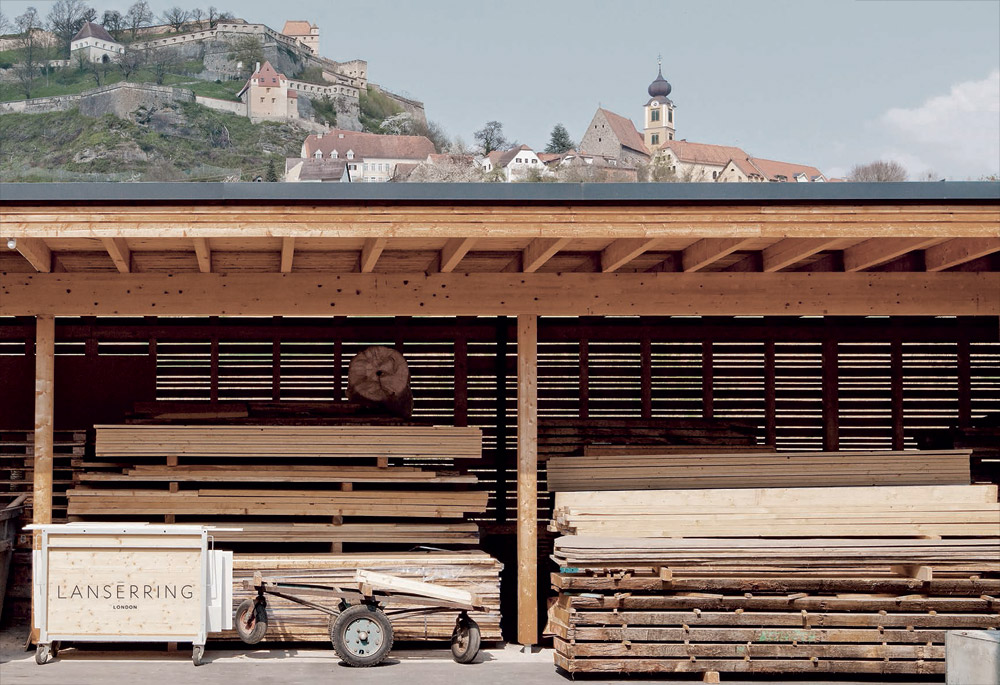
Wood, sourced largely from the surrounding area, maturing in the Lanserring workshop in the shadow of Riegersburg Castle

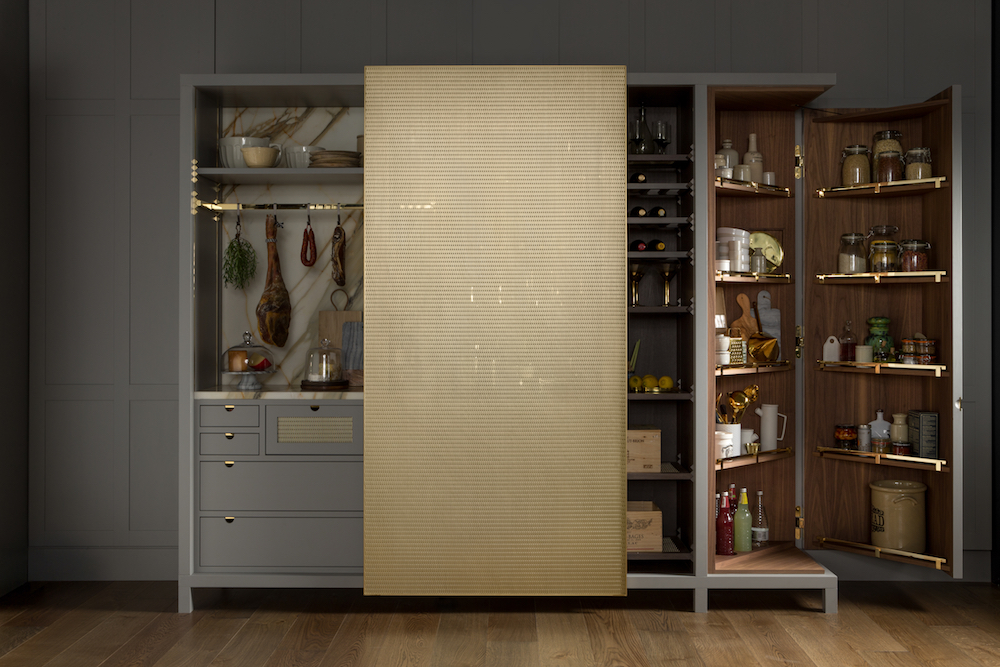
Lanserring is a joint initiative by the Radaschitz brothers and celebrated designers Andrew Hays and Kimm Kovac, who, alongside their architectural training and experience with kitchen brands, bring an understanding of opera, television and theatre design. That sense of drama and spectacle is apparent throughout Lanserring, from being named after an 18th-century woodcutter who, according to local folklore, still wanders the forest protecting villagers from hostile spirits, to the dynamic sliding panels and glints of gold in the brand’s first product, Tradescant.

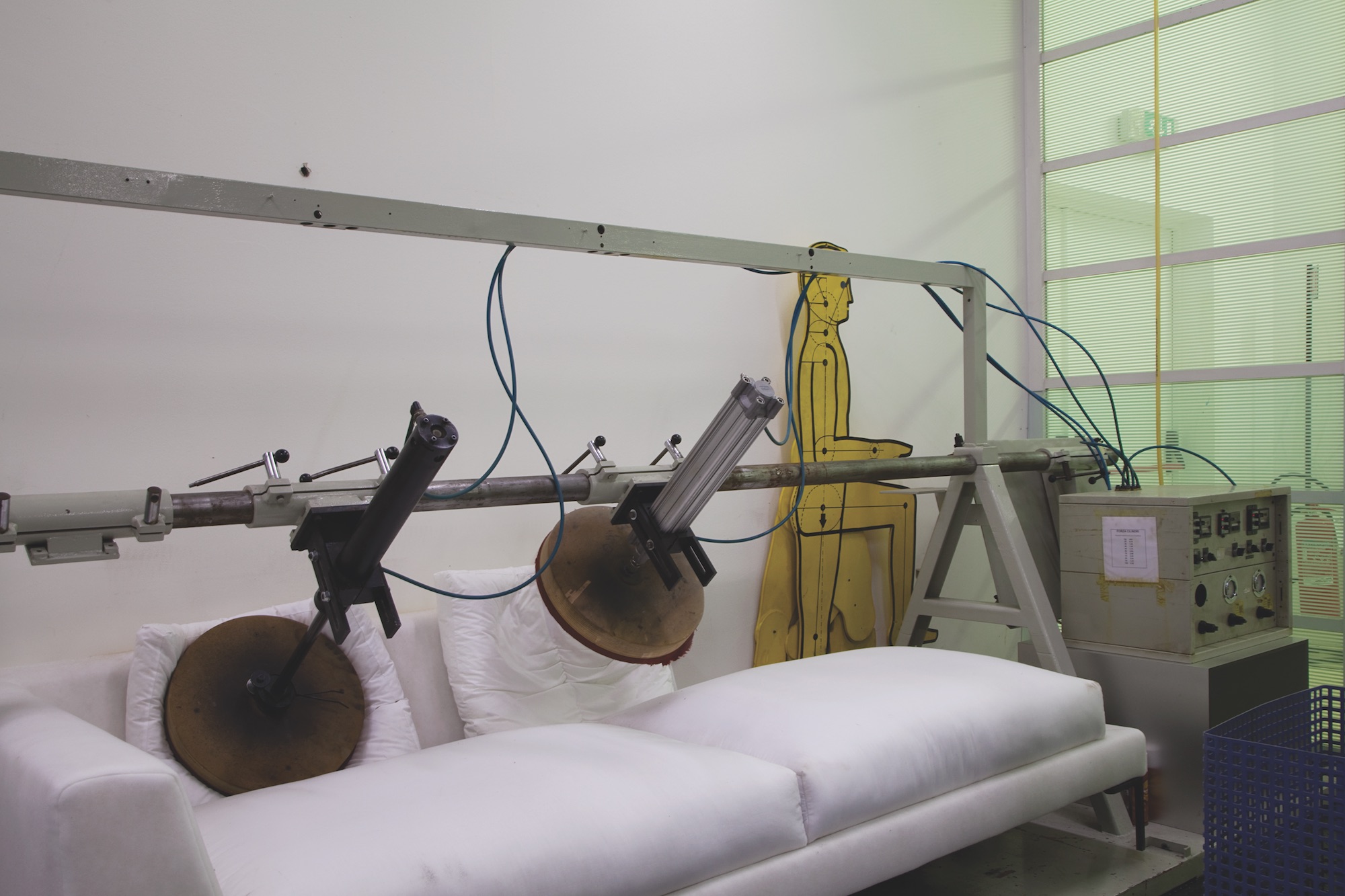
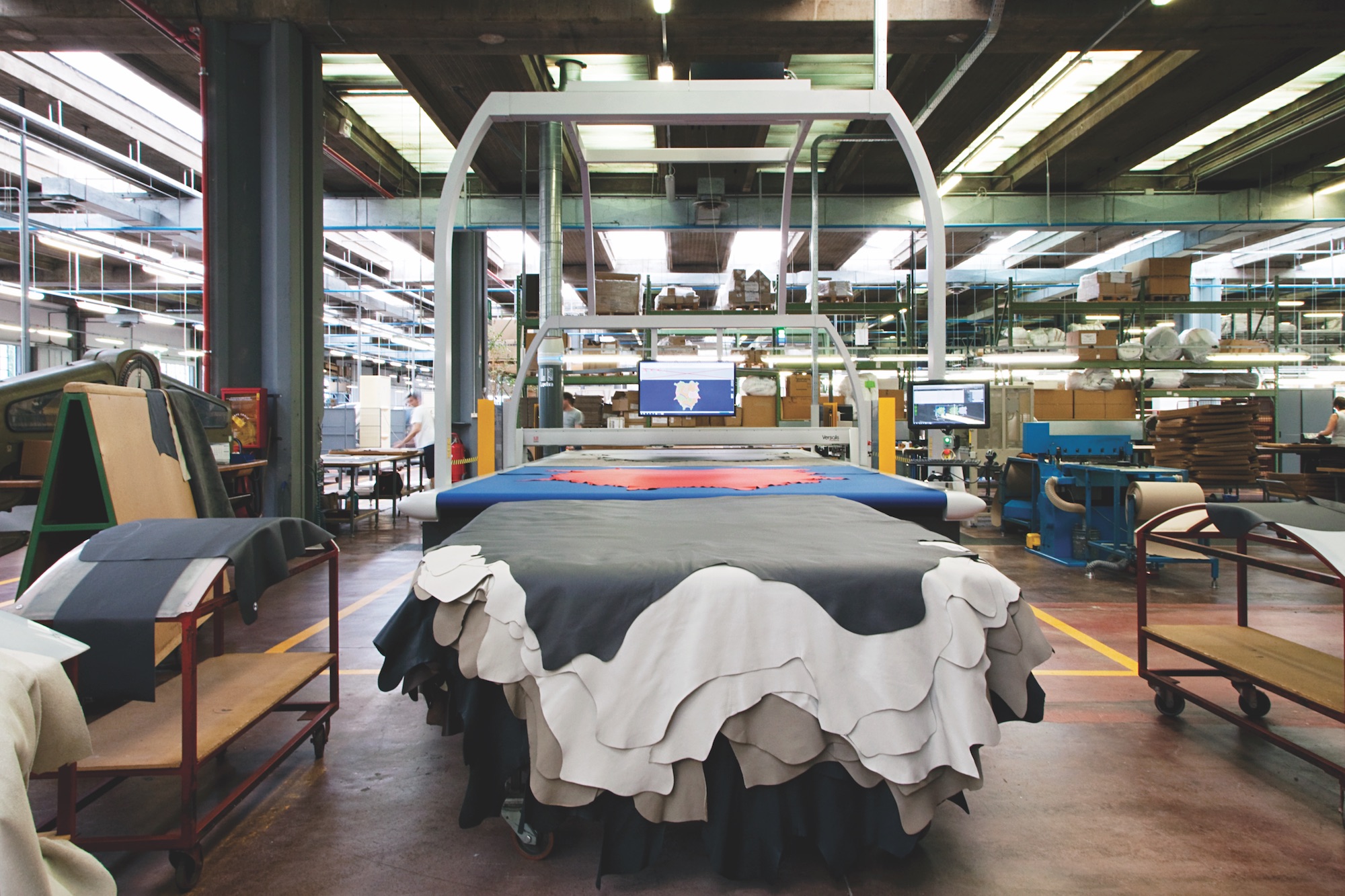
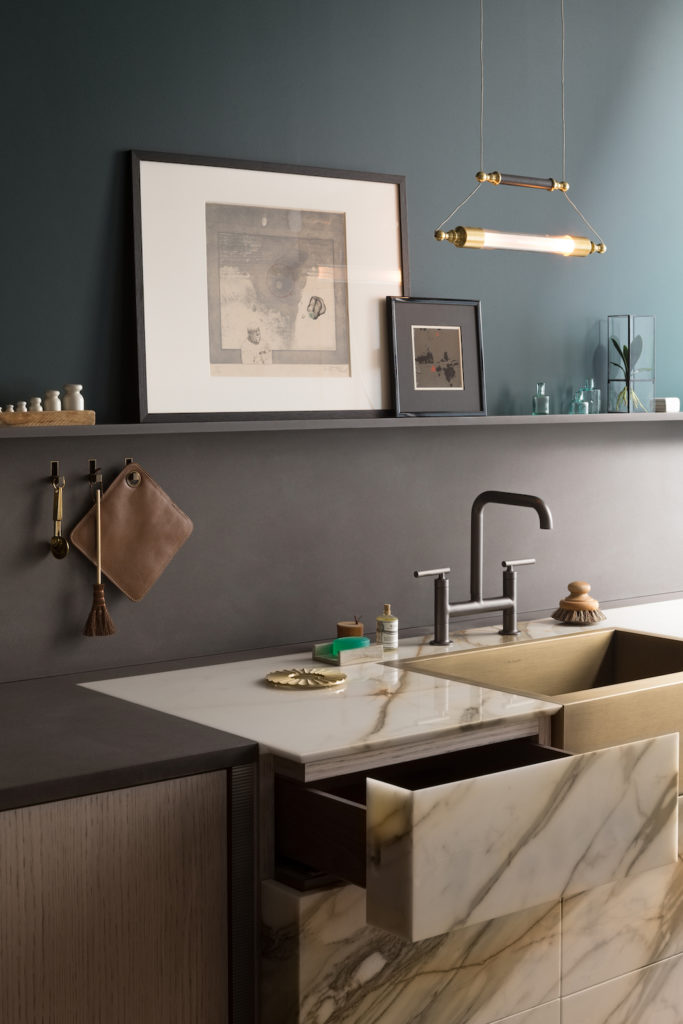
In addition to taking full advantage of the traditional knowledge and skills of the Radaschitzs’s state of the art workshop and 37 skilled craftsmen, Tradescant is a wholly modern product, using, among other processes, precise CNC-cutting to cut marble. It enables the design to go beyond simply well-crafted kitchen solutions to be clever and surprising, integrated and innovative, as is the case with the Sink Block, with its efficient, concealed drawers. It’s also evident in what has become Lanserring’s most talked-about feature, the foraging drawer.

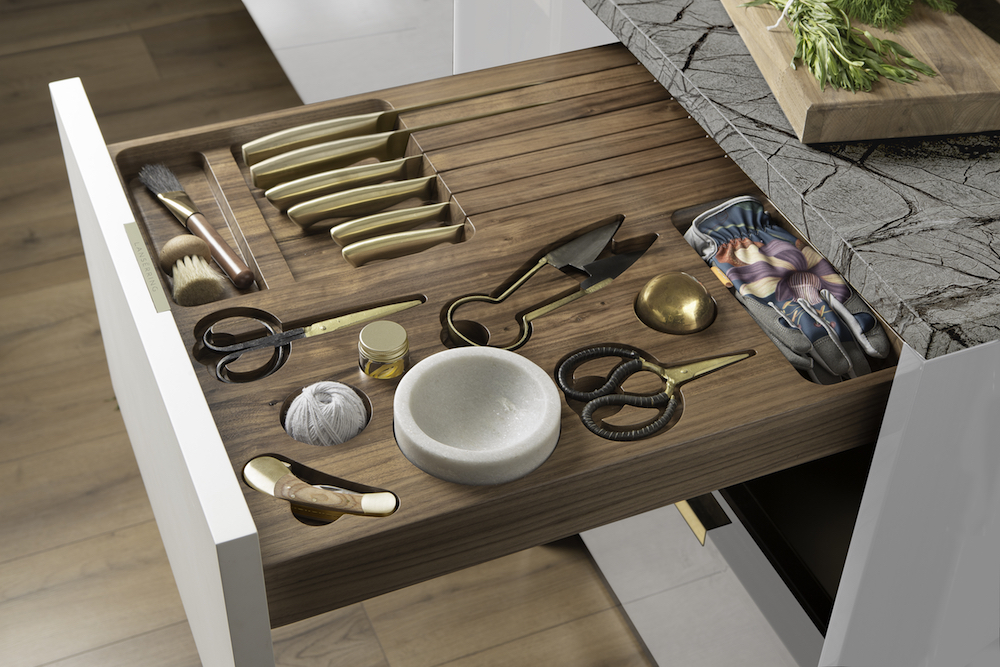
The Lanserring foraging drawer

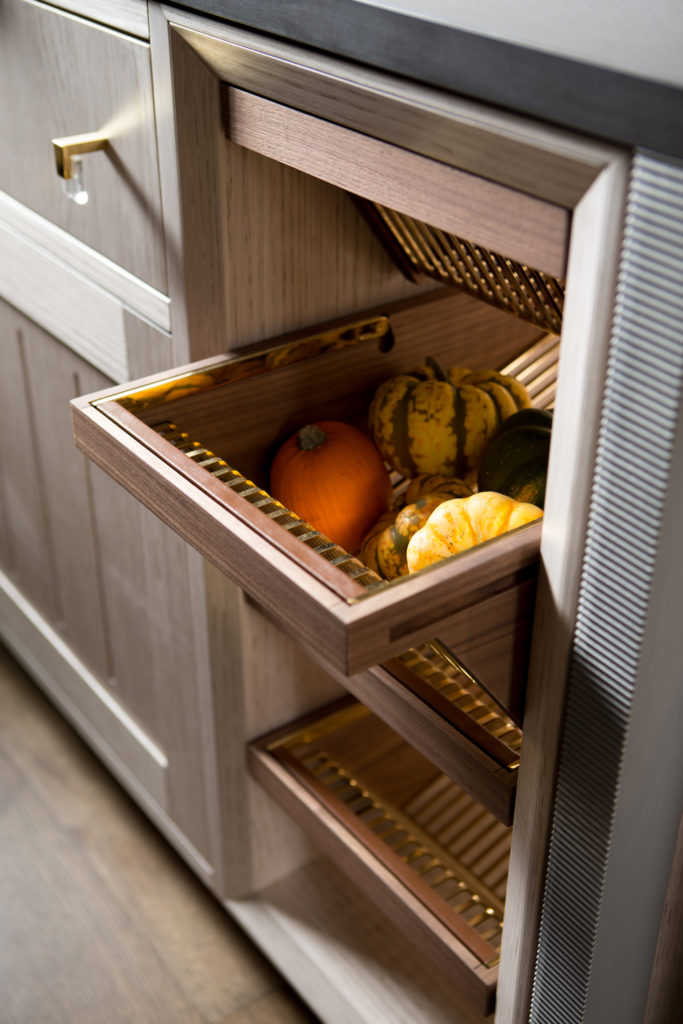
Milled from a single block of sustainable walnut, the drawer was designed for a client who wanted to store her foraging tools in a practical and unique way. With the sizes and proportions of the tools transferred to Lanserring’s drawing system, the drawer was sculpted using computer-automated cutting technology and finished by hand. Like the trug, which is angled so that produce slides to the front when slotted into its housing, but can be removed and carried around the garden, or the seamless, wrap-around marble of the centre kitchen island, Lanserring’s design is a testament both to the innovation and imagination needed to conceive the design, as well as the technical competence to realise it.

The brand’s focus on the kitchen is undoubtedly a result of the rise in popularity of cooking in recent years, motivated by programmes on television and greater emphasis on quality and good produce, but it is perhaps also because it allows the team to demonstrate their craft in a way that other rooms would not. How the Lanserring team will come to interpret and innovate in other spaces remains to be seen, but it is certain that, whatever form it takes, it will produced in Riegersburg.

Though Lanserring is headquartered in London, it is this quiet, unassuming town – a 90 minute drive from Vienna through thick rolling forest – that is setting the standard for kitchen design. It is, at first, a surprising place to encounter high-end manufacturing but, as Bernd explains, the local area has a rich tradition of craftsmanship, with some of the leading luxury centres of production, from yachts to cars, being based there. It’s partly being able to draw on this tradition, and the proximity of talented craftsman and women, that enables Lanserring to develop and produce products of such high quality, but the success of Lanserring’s design is also down to being able to use this tradition in a completely new way.

“It’s a new world,” as Bernd and Johann’s father, Johann Radaschitz III, says when asked what he thinks of the latest development in the family business. “I could never have imagined anything like this.”

lanserring.com

An Hour with Jean-Michel

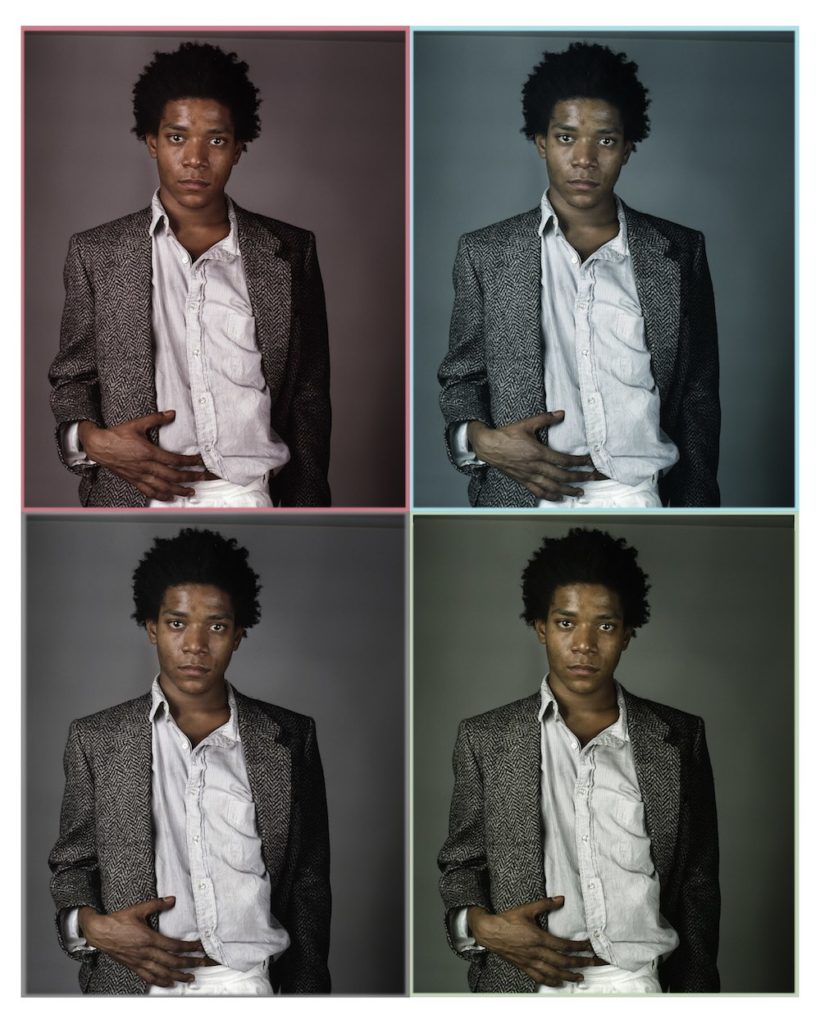
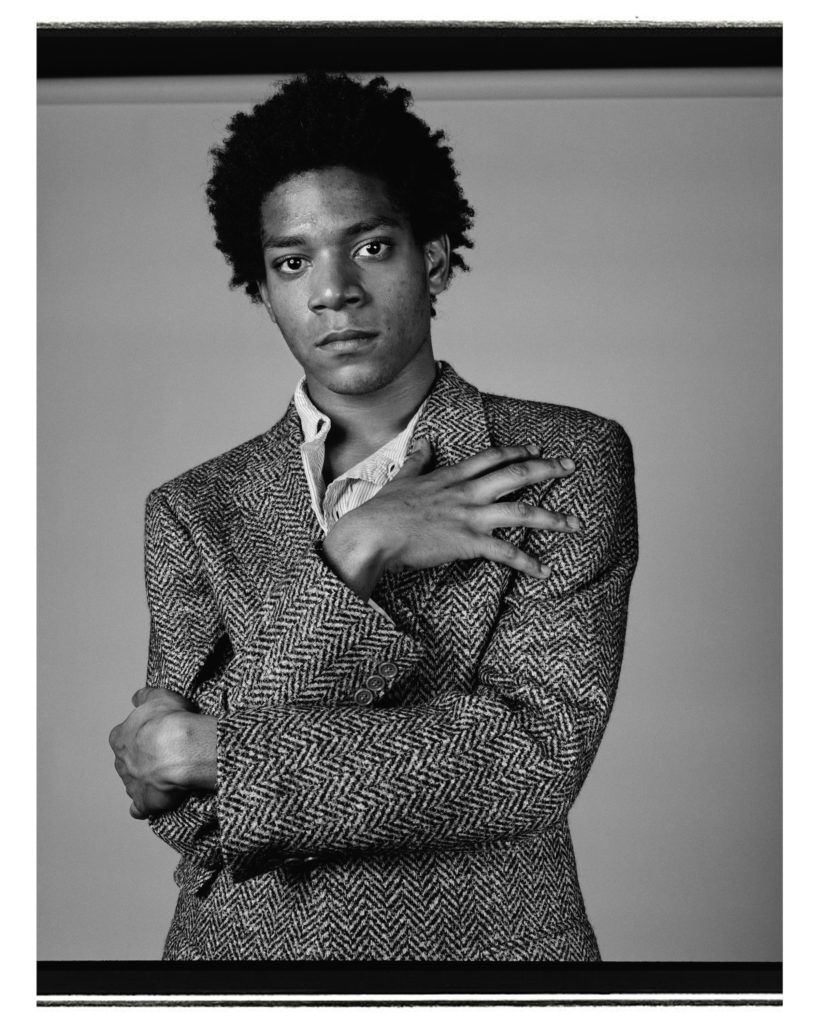
Photographer Richard Corman reflects on his brief acquaintance with Jean-Michel Basquiat, culminating in a set of unpublished photographs shot in a New York studio during the summer of 1984

Although still somewhat of a cult figure at that time, I was definitely aware of the unique canvas of Jean-Michel Basquiat, as his poetry, painting and culturally poignant vision moved so many of us at the time. When I stepped into his studio on 57 Great Jones St., the room was a swirl of people, creative energy and smoke, and Basquiat was submerged and almost invisible in a corner, taking it all in.

I think by nature, Basquiat was extremely vulnerable, and he wore that sensibility on his sleeve. Yet I remember feeling his curiosity, his intensity, his anger and his honesty in his eyes as his body language shifted from frame to frame. I placed him in front of grey paper in order to remove him from the surrounding confusion and to create a simple setting where I would hopefully see a piece of his humanity. I think I was more of a voyeur on that day than a director – I did not want to interrupt the process.

As with most photography, and mine in particular, I leave it up to those viewers who look into the eyes of these portraits to determine their own truth about the man, the artist, the genius. I have tried to create a portfolio that was indicative of that moment in time with an individual who, in many ways, is more relevant today than ever. With the world in such confusion, we need the honest voice of a dreamer like Basquiat.

www.njgstudio.com 

The Constructivist: Varvara Stepanova

Jacob Charles Wilson reflects on the influential figurehead of the Russian avant-garde and often-overlooked pioneer of Constructivism, Varvara Stepanova

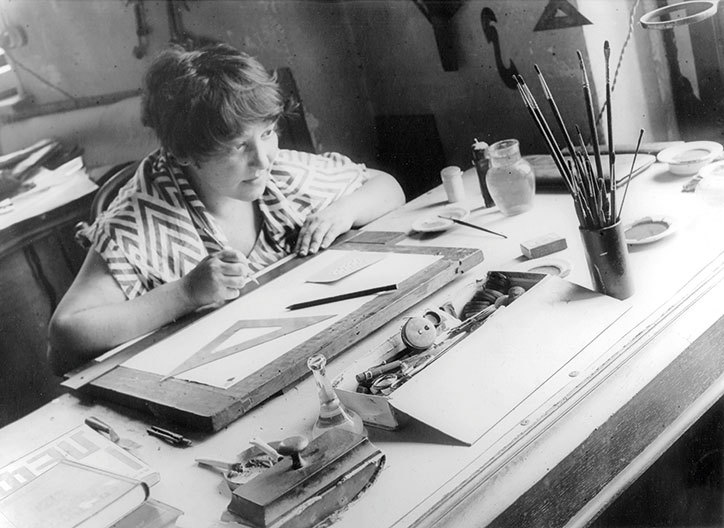
The Soviet fashion designer Varvara Stepanova, born to a peasant family in 1894, was one of the greatest creative forces of the revolutionary years. By her 20s, she was already a central part of the Russian avant-garde, alongside the poet Vladimir Mayakovsky, the abstract painter Olga Rozanova and the cutting-edge photographer – also her life partner – Alexander Rodchenko. Her work remains influential today, if under-recognised.

Stepanova was never content for her work to sit in galleries – real artwork was made in the streets, factories and laboratories – and in 1921 she cofounded the Constructivist Group, which set out to direct its artistic efforts towards designing functional yet beautiful products for everyday proletarian life. Stepanova produced photomontages, book covers, posters and theatrical sets, before concluding that her vision would be best realised designing fashion for work and leisure.

The workers of the new world would live and play in the very best materials and designs: casual jumpsuits and overalls that drew on both traditional peasant clothing and the latest modernist artistic trends of futurism and cubism. Stepanova’s designs use dynamic shapes that emphasise the human body in action, with sharp angular forms, printed abstract patterns and contrasting colours: bold reds and blacks. Her clothes would enhance the flexibility and comfort of moving through the streets and the city, in the factory and on to the playing field, while unisex clothing patterns would no longer confine men and women to stifling gender norms.

Before heading the textile design course at the Vkhutemas art school, Stepanova had spent a year working at Tsindel, the state textile factory, producing over 150 designs. Unfortunately, due to wartime shortages and the complexity of her visions, many of these would never be realised, but her work lives on. It is from her pioneering designs and radical reimagining of clothes and the body that our own contemporary approach to sportswear and streetwear has been created: the technologically innovative fabrics and bold use of colour and pattern that dominate Western fashion shows today – having been forged among the passions, ideals and dynamism of the early Soviet years.

This is an excerpt from issue 21 of Port, out now. To buy or subscribe click here.
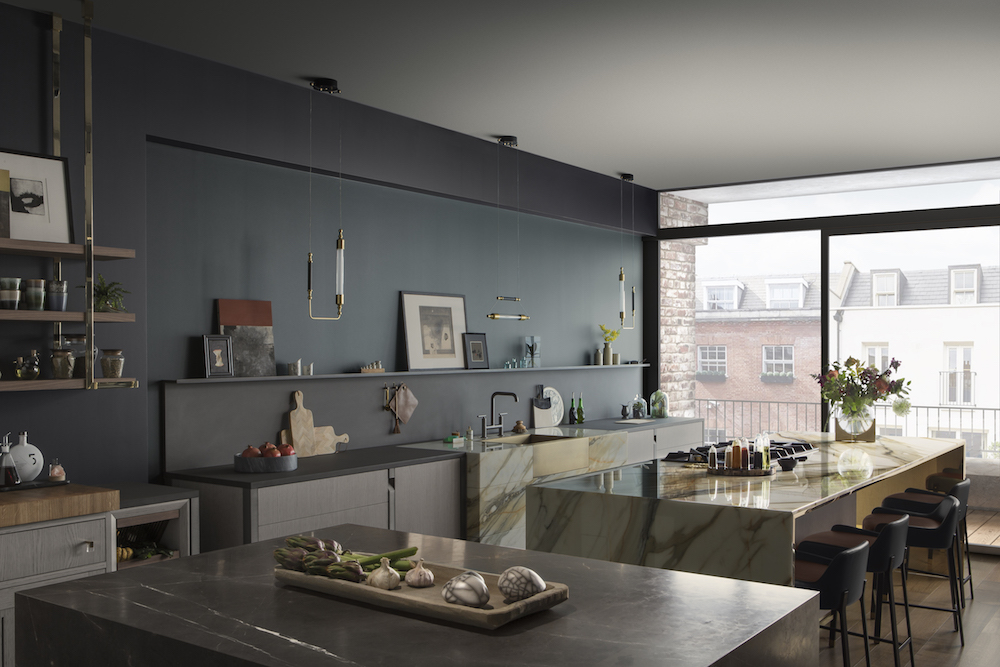
Tumi: The Global Citizen

Creative Director of lifestyle brand Tumi, Victor Sanz, chats to Port about the role of technology in luggage design, keeping the customer at the forefront, and what to expect from the Spring ’18 collection

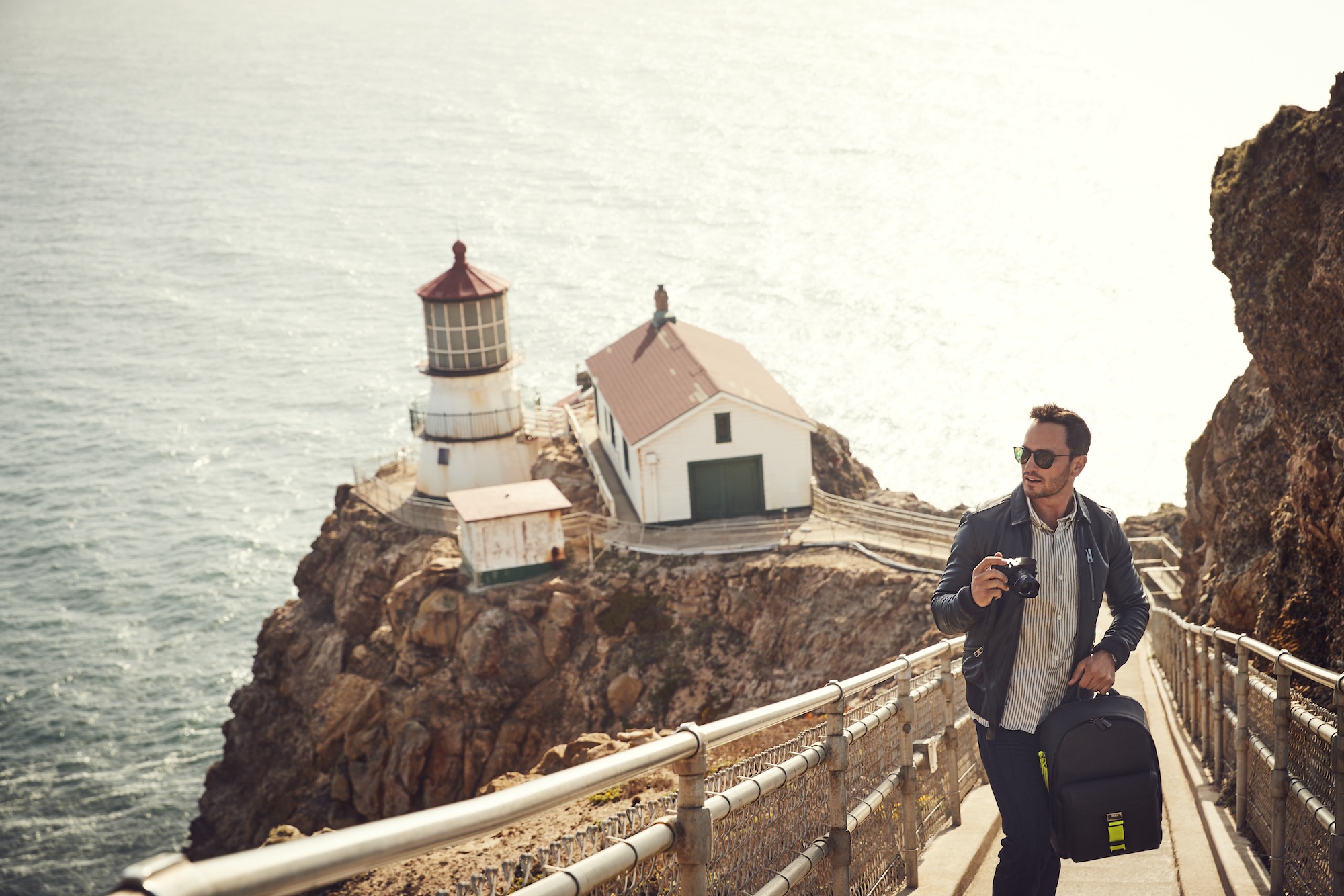
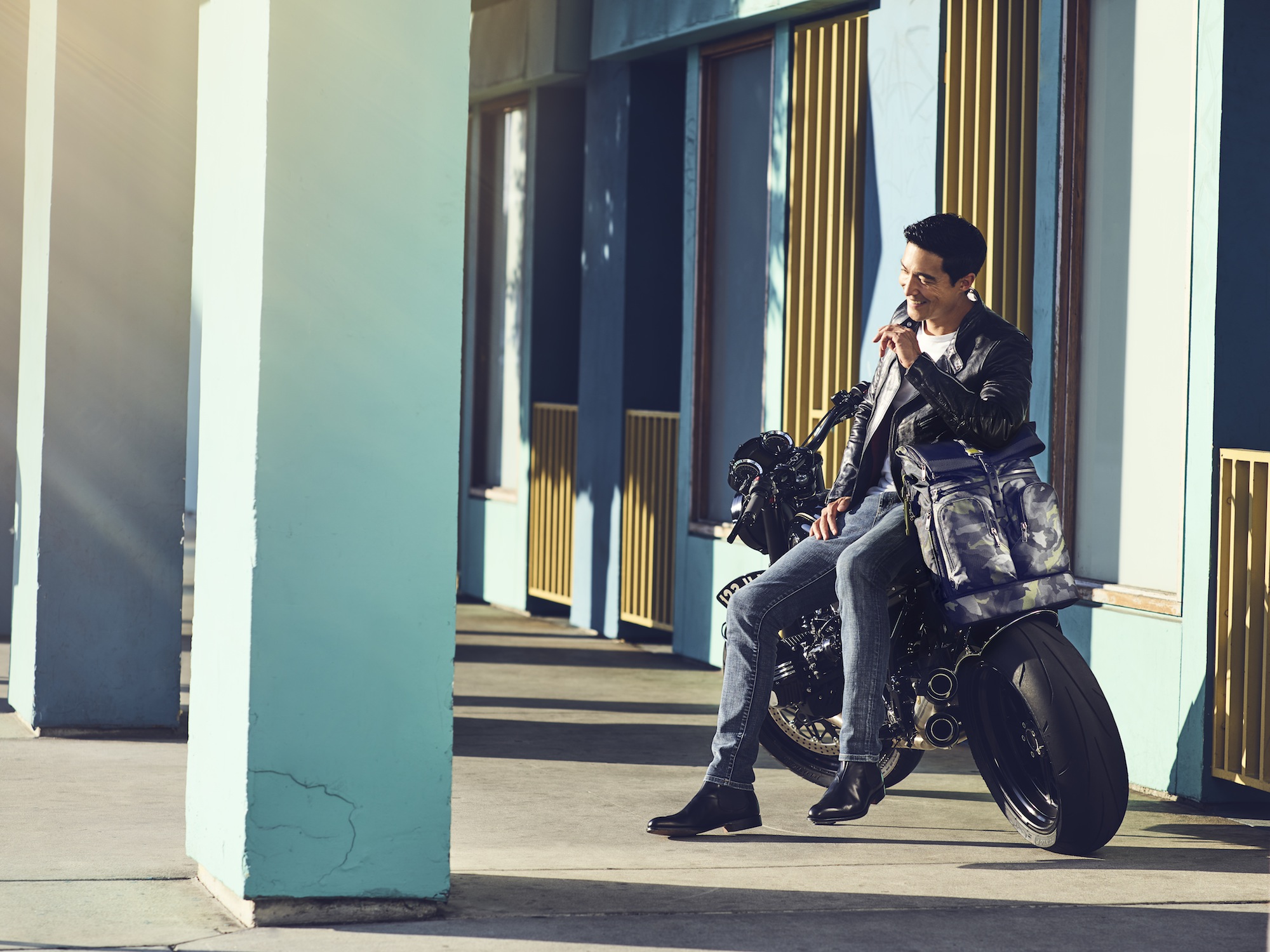
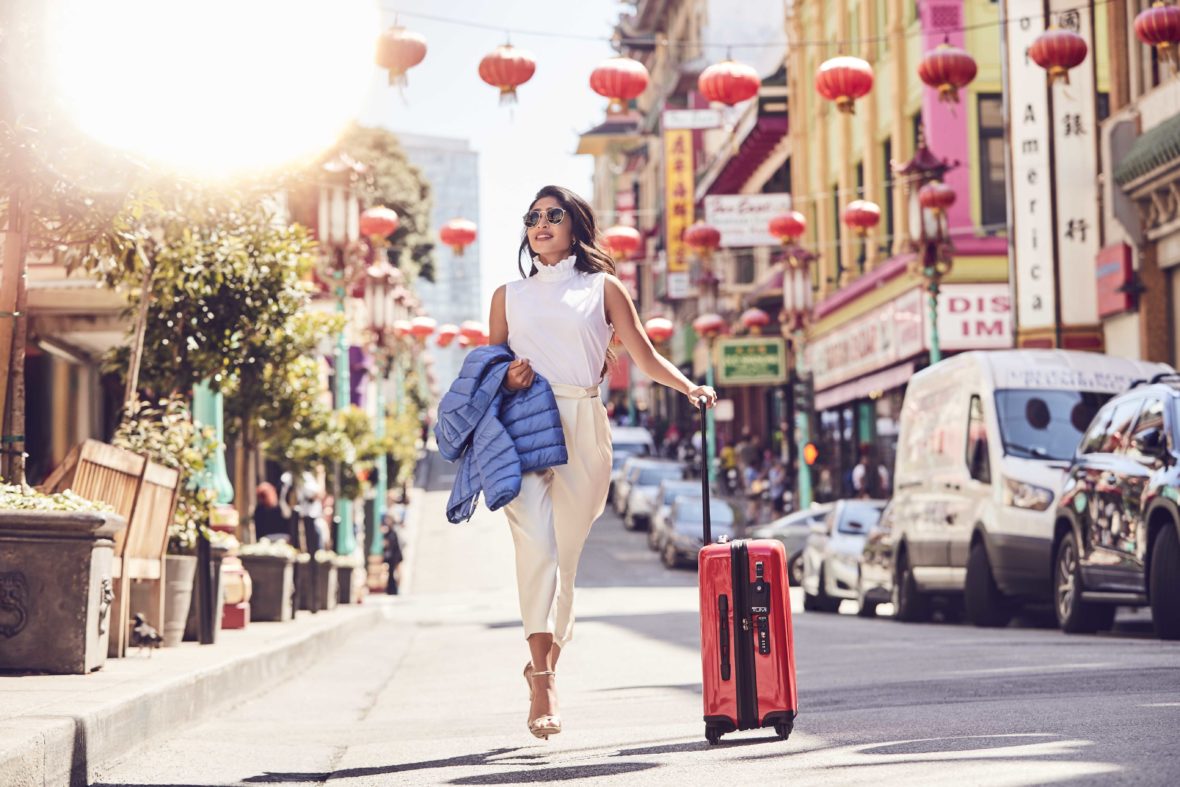
When creative director Victor Sanz joined Tumi in 2003, the company was very much focused on luggage. Founded in 1975 by a Peace Corps volunteer, Tumi had its origins in importing leather bags from South America before moving into designing its own luxury executive travel cases and bags. Yet it was not till Sanz joined that Tumi could position itself fully as a lifestyle brand – a move that saw the company leading the premium-luggage segment of the industry and, last year, being acquired by Samsonite.

Sanz, who trained as an artist before finding himself drawn to product design, worked at Kodak designing award-winning digital cameras in the early 2000s, but he felt “the itch” to try fashion. Tumi arrived conveniently and, apart from a brief hiatus working at Olivet International, designing collections for Tommy Hilfiger, Nicole Miller and Joseph Abboud, he has been with the company ever since. As he launches the new Spring collection, Port caught up with Sanz in London to discuss designing for the global citizen, collaborating with MVP stars, and sending suitcases into space.

Would you say Tumi was a luggage brand, or is that too restrictive?

I see Tumi as a lifestyle brand for the global traveller, the global citizen. It’s about giving people the tools to make their lives easier, keeping them elevated and inspired and able to push themselves.

How new is this within the industry? What is Tumi doing which is different to other brands?

I think the key has been understanding the customer. That is at the heart of what the brand has been about, looking at how the customer’s life is changing, how travel is changing, how business is changing, and creating the solutions for that. For me, that’s been one of those things that has kept me at the brand, the world is changing with it. And now we’re creating products that are more fashion forward and lifestyle driven, it’s not just about the functionality. 

It’s interesting to see how people’s lives are changing. How do you think technology is going to impact what you do in the future?

The rise of the iPad and the smartphone represents a global, cultural shift in how we handle business and communicate with one another. People aren’t carrying so many heavy products, laptops are getting lighter, more work is being done on our phones. People want a bag to go to the office and then to the gym afterwards, it needs to suit both places. People want things that are reliable, durable and lightweight, that are an expression of themselves, that are stylish, that are refined. We’re three dimensional individuals.

Tell me about your market.

In the past, we were very focused on the business traveller segment of the market. Yet, the more we learned and understood, the more we realised that DJs and CEOs were also carrying our bags. Our customers are interested in art, music, architecture, food, travelling – their world is much larger than just the particular city they’re living in. It’s really about this world experience. We collaborated with Russell Westbrook, a professional athlete, the MVP of the NBA, a fashion icon, but he’s also a Tumi fan.

How do your collaborations come about, and what form do they take?

Collaborations always start off with a conversation: about life, culture, food, music, the way we live our lives. That ping-ponging of ideas is very fluid, it’s never one-sided. At the end of the day the product needs to be born out of both people, we’re not able to do it on our own, and neither are they. So it’s the best of both worlds. When we did a collaboration with Eva Fehren, a jewellery designer, the bag is true to how she travels, with a hidden compartment underneath for jewellery. That’s why it has this leather drape to it, these oversized details, this hardware, the functionality of it ties directly into what she does. That’s very Tumi. We work with people who are trailblazers in their industry, whether it’s MBA stars or jewellery designers, fashion icons like Public School or artists like Anish Kapoor.

How important are collaborations for you as a designer? How useful are they in inspiring new designs, new ways of thinking?

The best part about collaborating is the conversations with people outside your own field. They spark new energies, new ideas, new flow, new ways of looking at the process. The customer also appreciates seeing something different, something unexpected. I think that’s why you see so many collaborations out there in the marketplace as well, it’s a great way to generate new creative energy.

What are some of the challenges that you face, in terms of innovation?

We never sit still, we’re always looking to improve the collections. We like to reach out to other industries for material knowledge, to understand different engineering techniques, to make the product work at a higher level than ever before. That’s an ongoing challenge because materials are always developing. For example, the aerospace industry is going through its second phase, like what Elon Musk is doing. We’re thinking about how to tap into that knowledge of material and technology, and how to get that into products like luggage.

I wonder what a suitcase that you’d take into space would look like.

You’ll have to wait and see! We’ll be there sooner rather than later, as the human race progresses… So we might as well prepare for that now.

In the less distant future, what’s the idea behind the spring collection?

As a brand, we’re still grounded in travel, so we definitely look to different destinations as everybody gears up each season. So, for our spring collection we’re looking to go to some warmer places, looking for energy and some life. That’s what you’re going to be seeing in the new collection, there’s a lot of bright colours and freshness. The world has had a very interesting 2017, and I think everyone needs this kind of refresher. 

tumi.com

Kanaal: Living in Art

Kanaal, the brainchild of Belgian art and interiors behemoth Axel Vervoordt, provides cutting-edge new exhibition and residential spaces at the forefront of design 

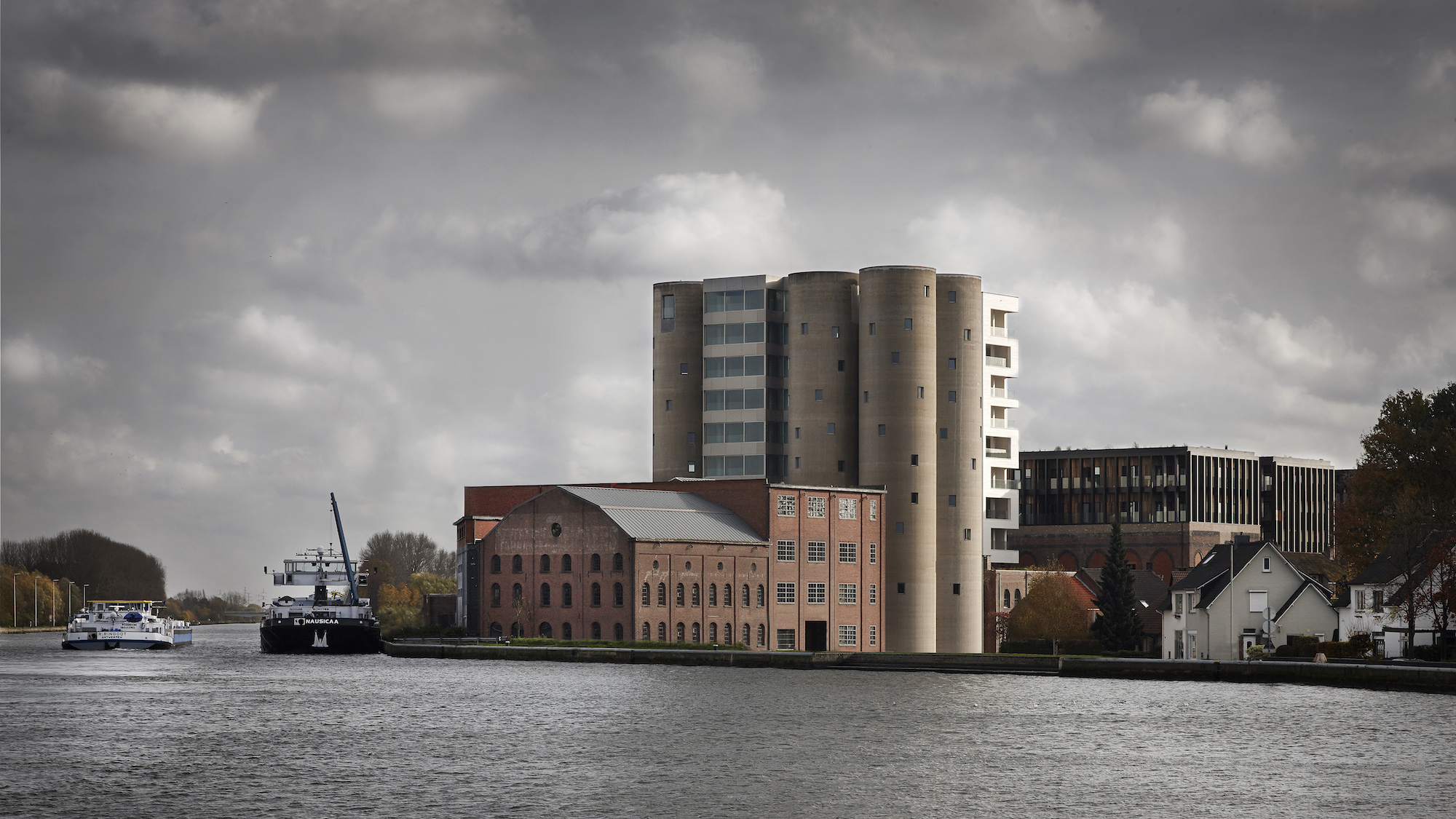
Kanaal. Photo © Jan Liégeois

The Kanaal complex, originally an old malting distillery and grain storehouse, lies just on the outskirts of Antwerp. It’s here, over the last two decades, that Axel Vervoordt – the interior designer and art collector who designed the Manhattan penthouses of Robert de Niro and Kanye West – has been gradually acquiring land and derelict agricultural buildings. Today, the recently opened, 55,000sq m site offers custom designed and sympathetically restored exhibition space, featuring permanent installations from luminaries including Anish Kapoor and Marina Abramović, as well as rotating showcase exhibitions for emerging artists. 

The complex also includes luxury apartments available for commercial sale, conceived by long-term Vervoordt collaborator, the architect Tatsuro Miki, and with interiors designed by Vervoordt himself. He envisages a close community here, brought together by a love of art and design – the site already hosts award-winning French bakery Poilâne and a restaurant, with daycare facilities in the pipeline. It’s a project that is truly a family affair, with Axel’s two sons, Boris and Dick, taking responsibility for new art acquisitions and real estate, respectively.  

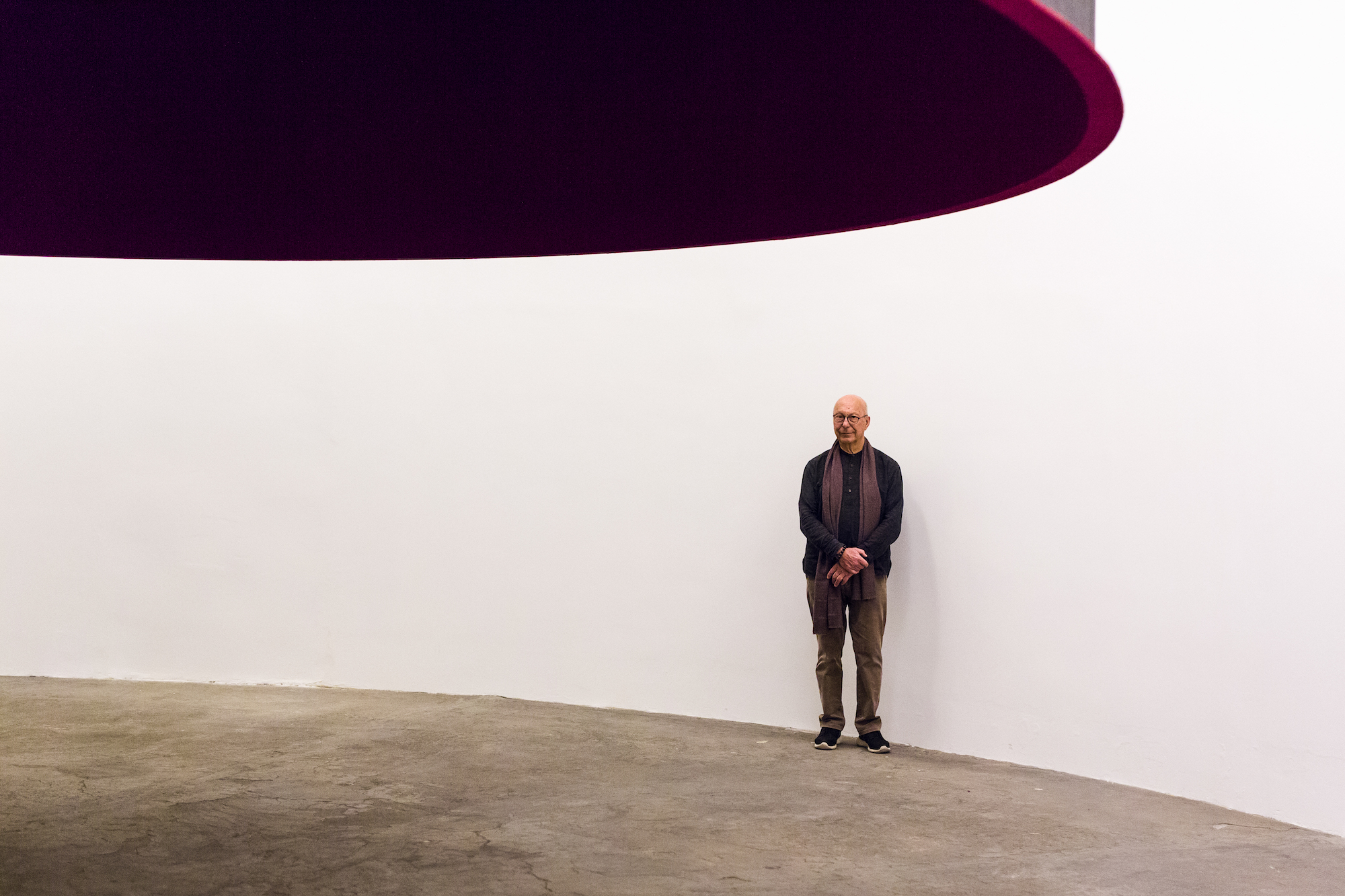
Anish Kapoor’s At the Edge of the World, installed at Kanaal in 2000 and created before the artist achieved global fame, represents the “red beating heart” of the project, as Vervoordt explains to me at the event’s opening. “I wanted the space, which used to be a building where grains were sorted, to be like a Rothko chapel, a room for universal peace and harmony.” Recently, an opera was performed in the space.  

Axel Vervoordt standing underneath Anish Kapoor’s ‘At the Edge of the World’. Photo © Zoemin

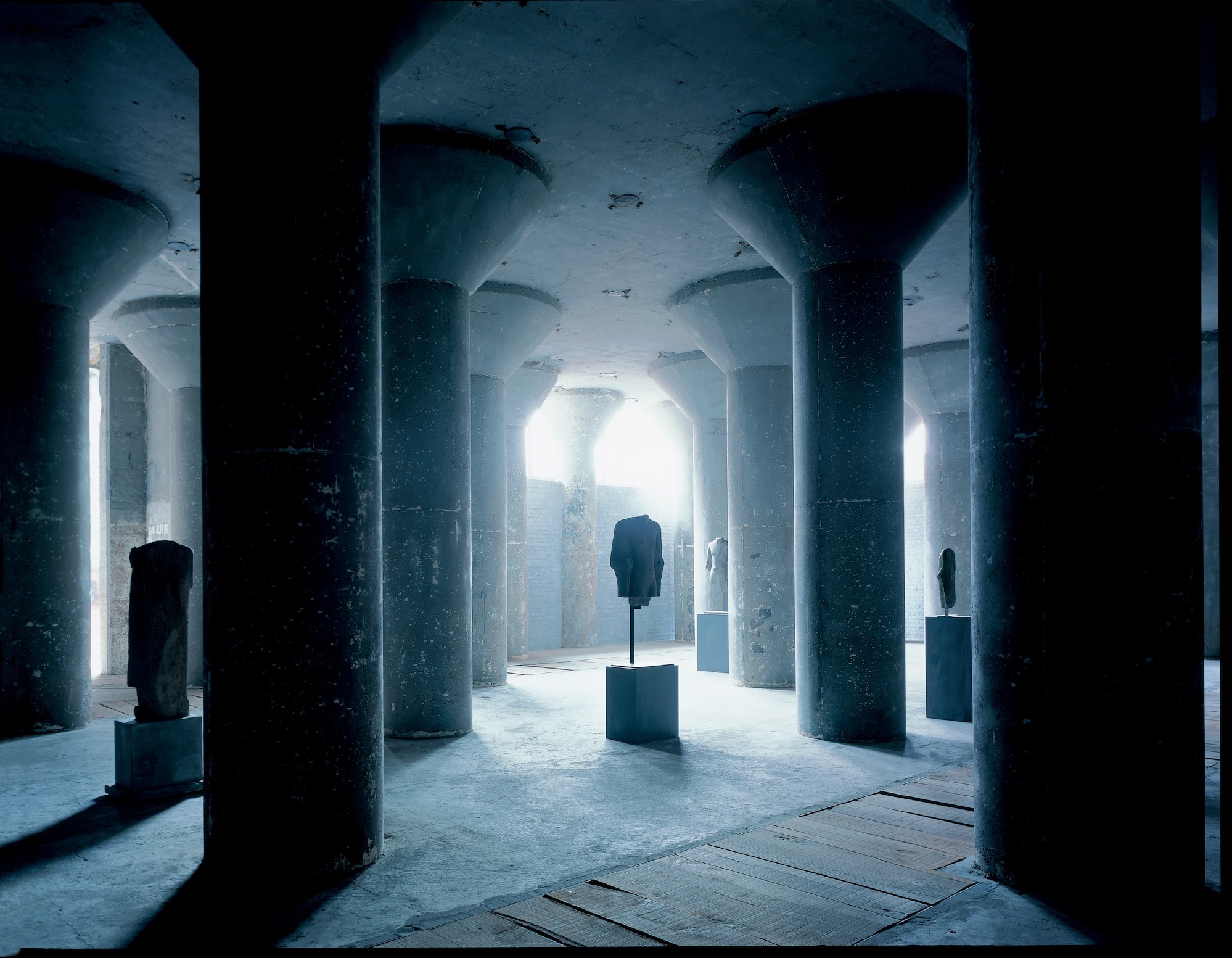
Nearby, the Henro gallery houses Axel Vervoordt’s permanent collection, moved from its previous exhibition space in the heart of Antwerp. In Karnak, an ascetic space with the original solid concrete columns intact, works by Gutai artists are installed alongside Japanese sculptures dating from the Endo period. Literally meaning ‘concrete’, Gutai was a radical artistic movement that emerged in postwar Japan, its proponents aspiring to transcend the abstract painting of the time in favour of pure materiality.

The strength and legacy in the room is palpable: the columns once supported 60 litre silos. “When I first saw it, the columns reminded me of an Egyptian temple,” says Vervoordt. “The power is still amazing – almost religious. Industrial architecture is not made to be beautiful, it is made to serve.”

Karnak © Laziz Hamani courtesy of Axel & May Vervoordt Foundation

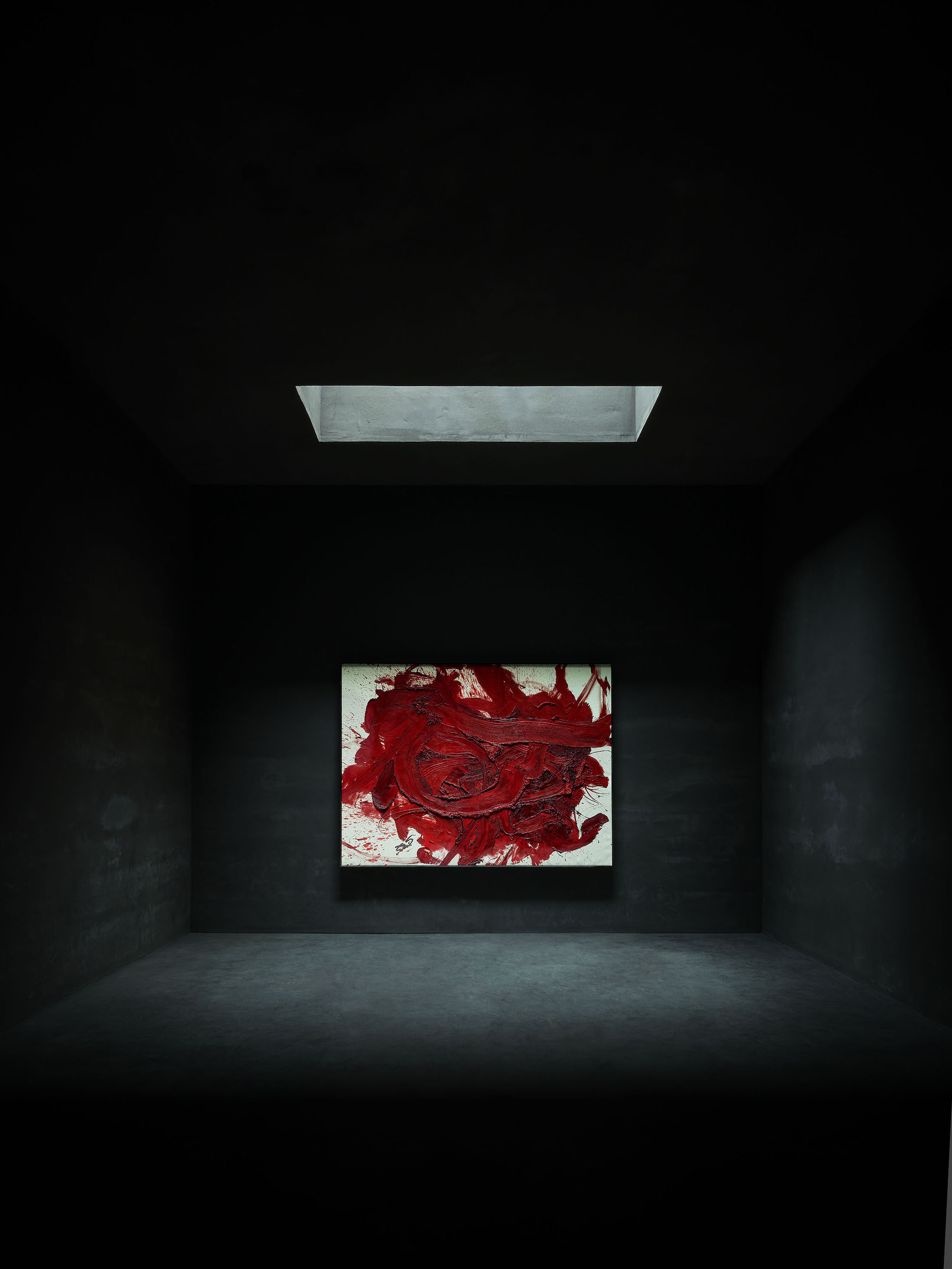
The room next door is dedicated to three paintings by Gutai artist Kazuo Shiraga, who descended from a prominent samurai family. The three ‘warrior’ paintings convey a primal violence reminiscent of Shakespearean tragedy, the scarlet spattered canvases hovering, eerily suspended in the slate-grey gloom. When Vervoordt visited the artist at his home in Kobe in 2003, he witnessed an equally elemental mode of preparation.

“He would contemplate the empty canvas, until he became one with the emptiness. His wife would then pour the paint, and he would create the painting in a few gestures, without hesitation. This for me is the origin of life, that which comes out of emptiness. This is the big bang.”

Suiju, Kazuo Shiraga. Photo © Laziz Hamani courtesy of Axel & May Vervoordt Foundation

“Now we go into the light”, Vervoordt jokes, as we exchange the shadowy gallery for comparatively blinding Flemish daylight. Though lighthearted, this is an apposite remark: at Kanaal, the levels of luminescence in each gallery are carefully weighted for optimum atmosphere.

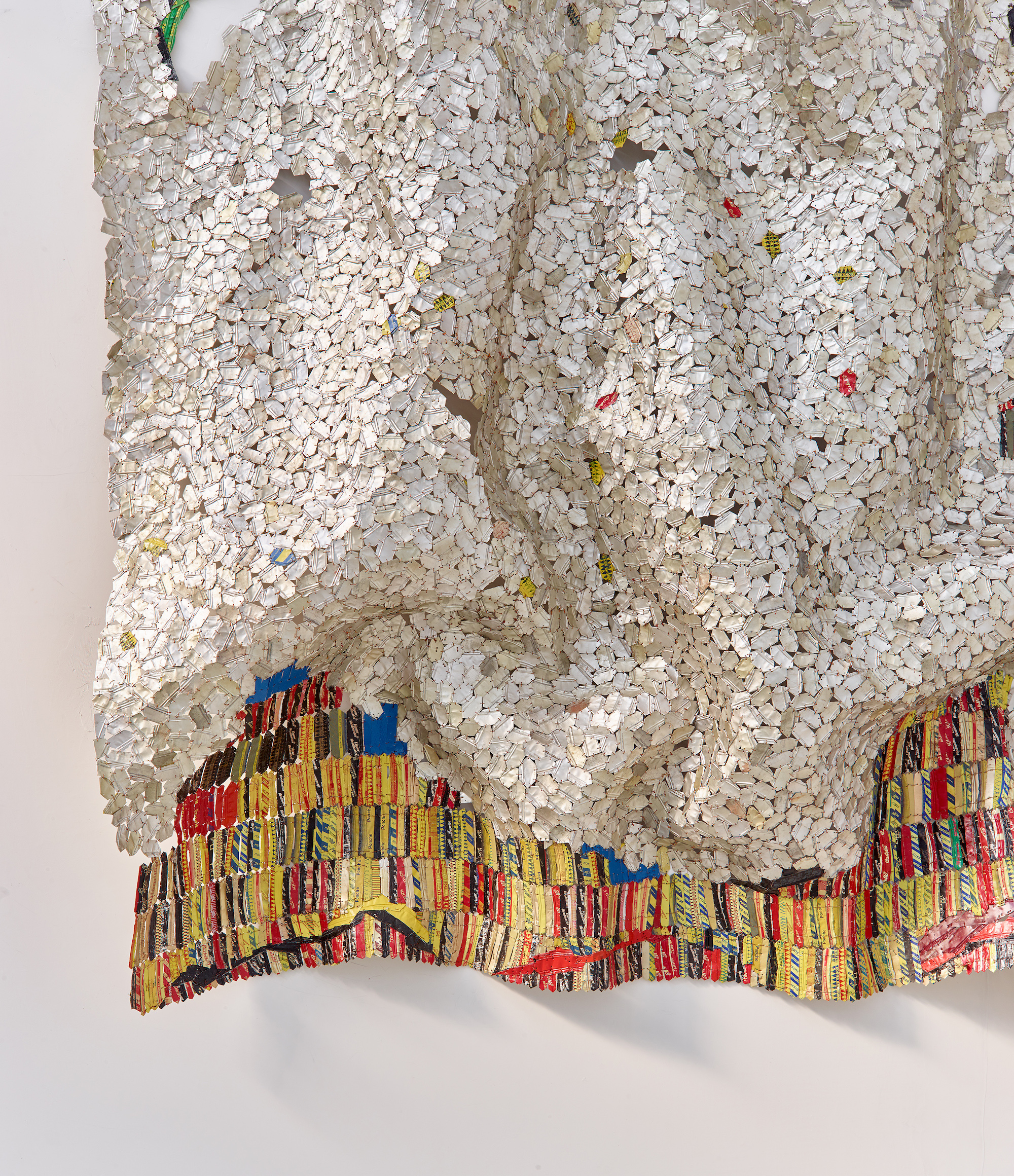
Installation El Anatsui, ‘Proximately’. Photo © Jan Liégeois

The Patio Gallery, a space for temporary exhibitions, is currently showing Ghanaian artist El Anatsui’s ‘Proximately’, and is drenched in natural light. Anatsui’s tactile sculptures, vast quilts of scrap metal that have been washed, hammered flat and sewn together using copper thread, hang on the walls like glittering patchwork quilts. Vervoordt first discovered Anatsui’s work in Toyko, and presented the artist at the Venice Biennale in 2007, draping one of his sculptures over the facade of Palazzo Fortuny like a chainmail tapestry designed with the palette of Gustav Klimt.

Lucia Bru exhibition, Escher Gallery. Photo © Jan Liégeois

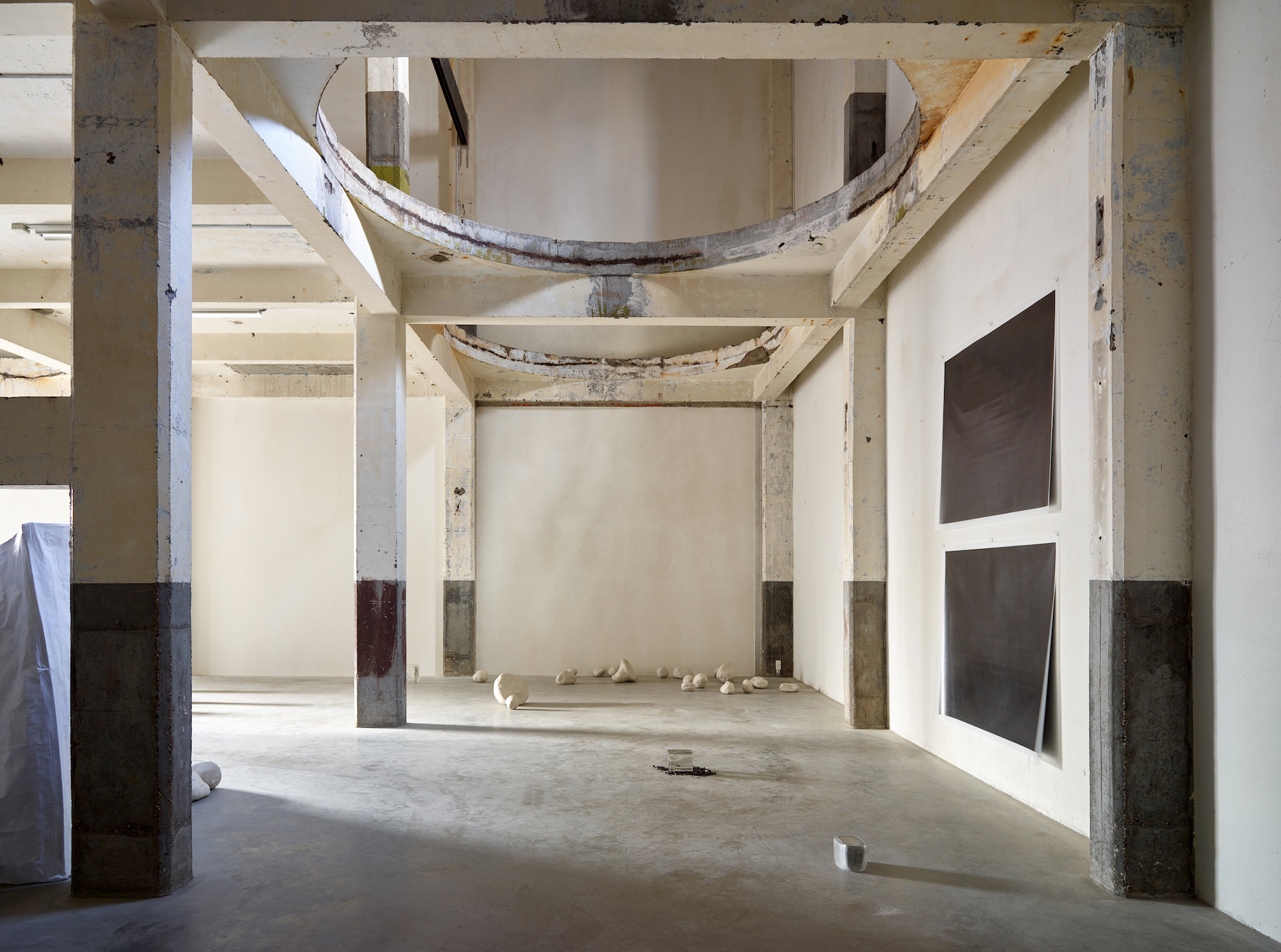
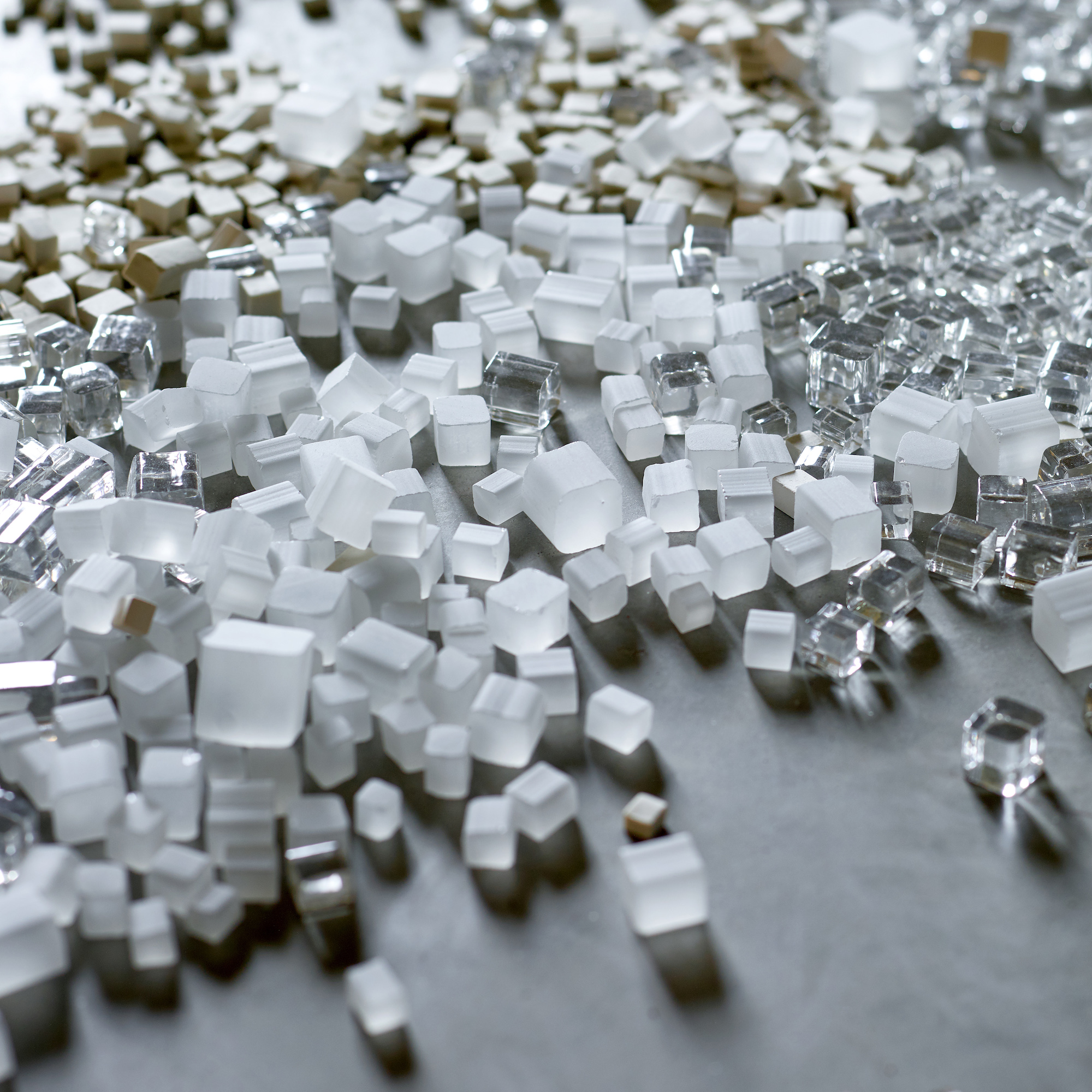
The industrial legacy of the Escher Gallery, a former brick warehouse and now another temporary exhibition space, remains clear. Though the machinery and grain silos have been removed, vast cylindrical concavities remain carved in the space. The sculptures of Belgian artist Lucia Bru that inhabit the gallery were not made in accordance with the space, but feel like a part of its industrial heritage. Fragments of crystal and milky porcelain with rounded edges, as though smoothed by waves, lie in glimmering piles. When I note the sculpture’s resemblance to sea glass, Bru emphasises the integrality of water to her work. “The elements of water and earth are part of the same family, they have a relationship, they fight, they reconcile,” she explains. Bru’s larger sculptures, which resemble pale rocky islands, are ceramic, a famously un-pliable, difficult material with which to work. “It has a mind of its own”, she notes. “I don’t like it when I control the material too much. I like it to surprise me.”

Detail of movidas, Lucia Bru. Photo © Jan Liégeois

Not all the structures at Kanaal are original, though it is often difficult to tell what has been newly built. Tatsuro Miki’s design celebrates this assimilation. “It’s important to preserve the existing quality of a place,” Miki says. “The first concept for the additional buildings at Kanaal was to create something as if it was already there. Once things have aged, we want them to be part of the same landscape. We prefer harmony to noise.”

Kanaal represents a continuation of Vervoordt’s design vision that has endured since his earliest restoration projects in the 1960s, to create an environment in which everyday life and art coexist harmoniously: a philosophy of living in art.


Kvadrat: A Design Family

Port travels to the new Copenhagen showroom of renowned textile designer Kvadrat, to learn more about the brand’s philosophy and conceptions of space

Kvadrat – the Danish textile company founded in 1968, beloved of architects and interior designers – prides itself on a focus on quality and heritage, just not at the expense of innovation. This unique mix of classic design and originality is evident in the brand’s new showroom in Pakhus 48, an old warehouse in the former freeport area of the Copenhagen docks, outfitted by the Bouroullec brothers, the renowned French design duo.

Having studied industrial design and modern art, Ronan and Erwan have been working together as product and interior designers since 1999. When we speak at the opening of the new showroom, Erwan tells me how they’ve fostered a relaxed and organic relationship. “We are brothers, we’ve been in the same place, and we’ve been drinking or eating the same things, so our relation to shapes and material are pretty similar. Yet, with our way of working, sometimes one of us can be much more inside something, while the other one can be in more of the surroundings.”

The Bouroullecs are long-time collaborators with Kvadrat. Since their first project with the brand, designing a display space in Stockholm 11 years ago, they have fostered a continuing partnership. The pair were asked to design Kvadrat’s original showroom in Copenhagen, as well as a number of products now sold by the brand – Clouds, a system of flexible panels, and Ready Made Curtain, a set of pegs that turns any fabric into a curtain, were originally bespoke products for Kvadrat’s offices.

The closeness of the relationship between the brand and the brothers is such that neither Erwan, nor Kvadrat CEO Anders Byriel, can remember when they first brought up the idea of the new showroom. “Anders never exactly asked, because we saw each other all the time,” says Erwan. Together, they seem to understand each other’s needs and interests and talk simply of how natural it was that they would work with each other.

During the time that the Bouroullecs have been collaborating with the brand, Kvadrat has grown from a handful of office staff to nearly 30: they outgrew their old offices and display rooms, and simply needed more space. This was the challenge for the Bouroullecs, how to set everyone at ease and return the focus to the materials at hand. Erwan tells me the first step was to set up the backdrop for the space by turning to the natural light, which floods in from two walls of south-facing glass, overlooking the expanse of the harbour and the low-lying city beyond.

Inside, the space is carefully divided up by panels of fluted glass and low lying brick walls, the physical weight and textural surface of which ground the space. Erwan points out the slight imperfections in the bricks and glass: for him, it highlights the hands that have gone into its production. The slight irregularity, as an example of resistance to industrial processes, is pleasing, even if it doesn’t please the German engineers that made them. These divide the open office space, which is filled with furniture upholstered in Kvadrat’s minimal Basel and Hallingdal 65 fabrics, and includes smaller, more intimate areas for cutting lengths of cloth. This brings a sense of humanity to what Erwan worried could have been a very empty, cold space.

Byriel and the Bouroullecs talk highly of the new typologies of bespoke products they’ve designed for Kvadrat, many of which have now entered into large scale production, for Kvadrat and for others. Here, they designed a modular and movable rail system to hang display fabrics from the ceiling. These finely machined aluminium links can be set to different heights and moved throughout the showroom to open up or close off areas. Strong enough to hold metres and metres of raw textiles with no cutting and stitching, the system presents the fabrics ready to be touched and inspected.

It’s hard not to see it as a gallery – over its history, Kvadrat has worked with artists and designers including Peter Saville, Olafur Eliasson, and Miriam Bäckström. But Byriel and Erwan are keen to emphasise the working aspect of the space. Byriel notes that a third of the entire showroom is dedicated to working space for architects and specifiers. “We have lots of people coming here every day, maybe you come with drawings, maybe you come with clients, you stand or sit and work. It’s a little bit more of a space where you interact and you touch the goods… You’re not allowed do that in art galleries.”

From the way Erwan talks, it is clear that the Bouroullecs work isn’t simply a case of installing parts to please a client. Rather, he espouses a philosophy of materiality and honesty: “It’s important to make sure that you embed inside objects a kind of a self-learning process, so that people can find out what it is… Materials have to express what they are, where they come from, they have to express if they’re fragile or if they’re strong, they have to express if they’re here forever or not, in order that people properly behave with things that are given to them, especially when they are customers.”

It seems that many people share this philosophy. Kvadrat textiles are seen all over the world, in hotels, offices, aeroplanes and recently, a concept car by BMW. Kvadrat have also worked with David Chipperfield architects to upholster the entire headquarters of Amorepacific cosmetics in Seoul, opening later this year. Likewise, Byriel has high words for the Bouroullecs work too. “In 100 years there will be four or five people who defined our times, and I really think the Bouroullecs will be one of them. Like Eames defined the mid-century, I feel they’re defining our time.”

Levi’s: Made & Crafted

On the back of their Hygge-inspired AW17 collection, Levi’s Made & Crafted designer Nick Rendic spells out the brand’s design DNA and what Iceland has got to do with premium denim

There are instances when a brand becomes the product they make. They define the market in such a holistic way that the brand name is synonymous with one product, even though countless other manufactures sell the same thing. Levi’s, and their world-famous jeans, is a prime example: known and worn all over the world, the jeans have been around since late 19th century, long enough to hammer home a message that simply says: jeans equals Levi’s.

Ironically, such dominance is not without problems and challenges. How do you move on from there? How do you continue to develop and improve the product? When you are world No. 1 it’s easy to rest on your laurels. In the case of Levi’s, the answer – or at least part of the solution – was to push on and elevate the brand. Levi’s Made & Crafted, which originally launched in 2009, is a premium line of Levi’s jeans and apparel that caters to anyone who wants more than a great fit from their jeans.

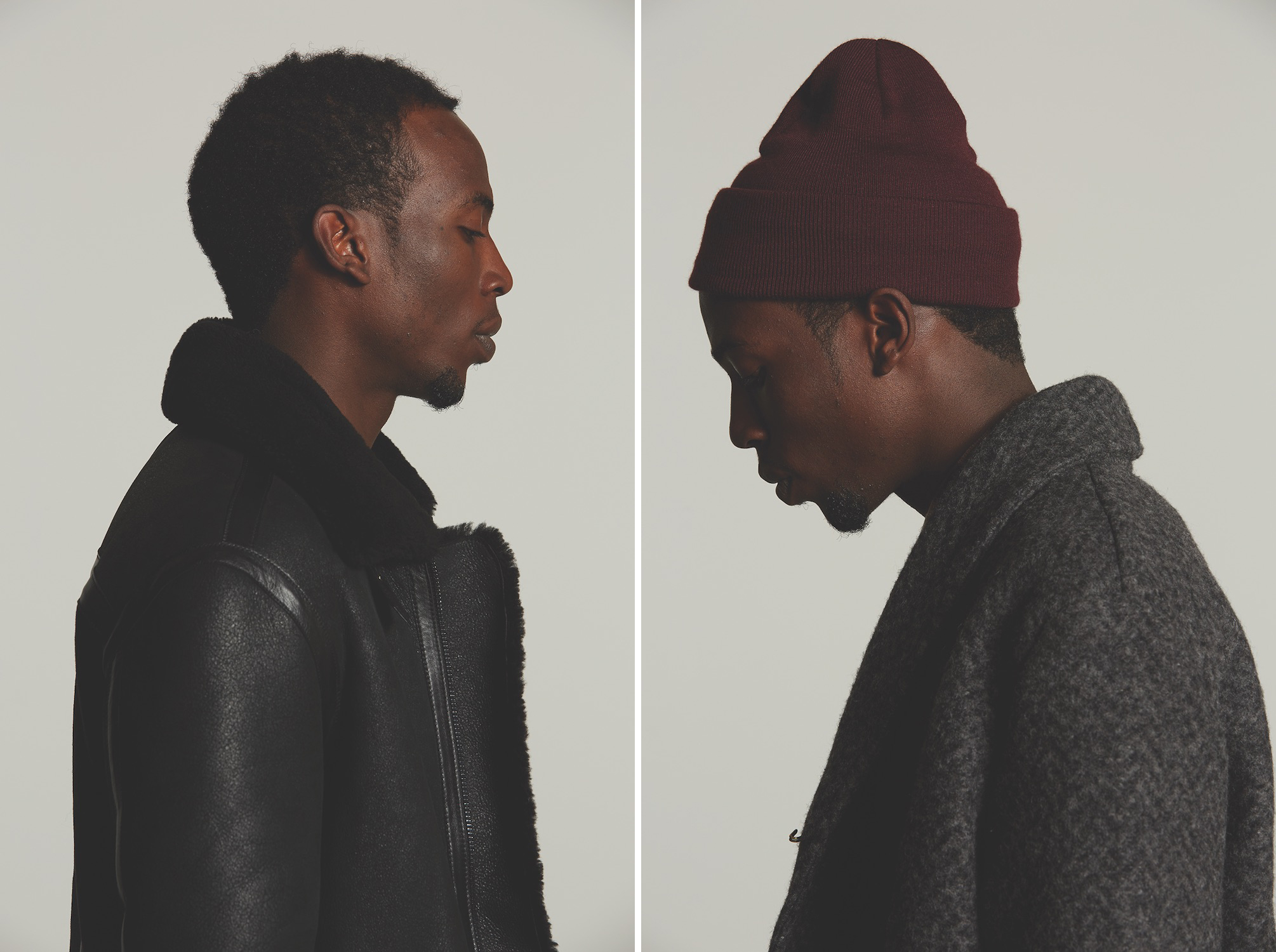
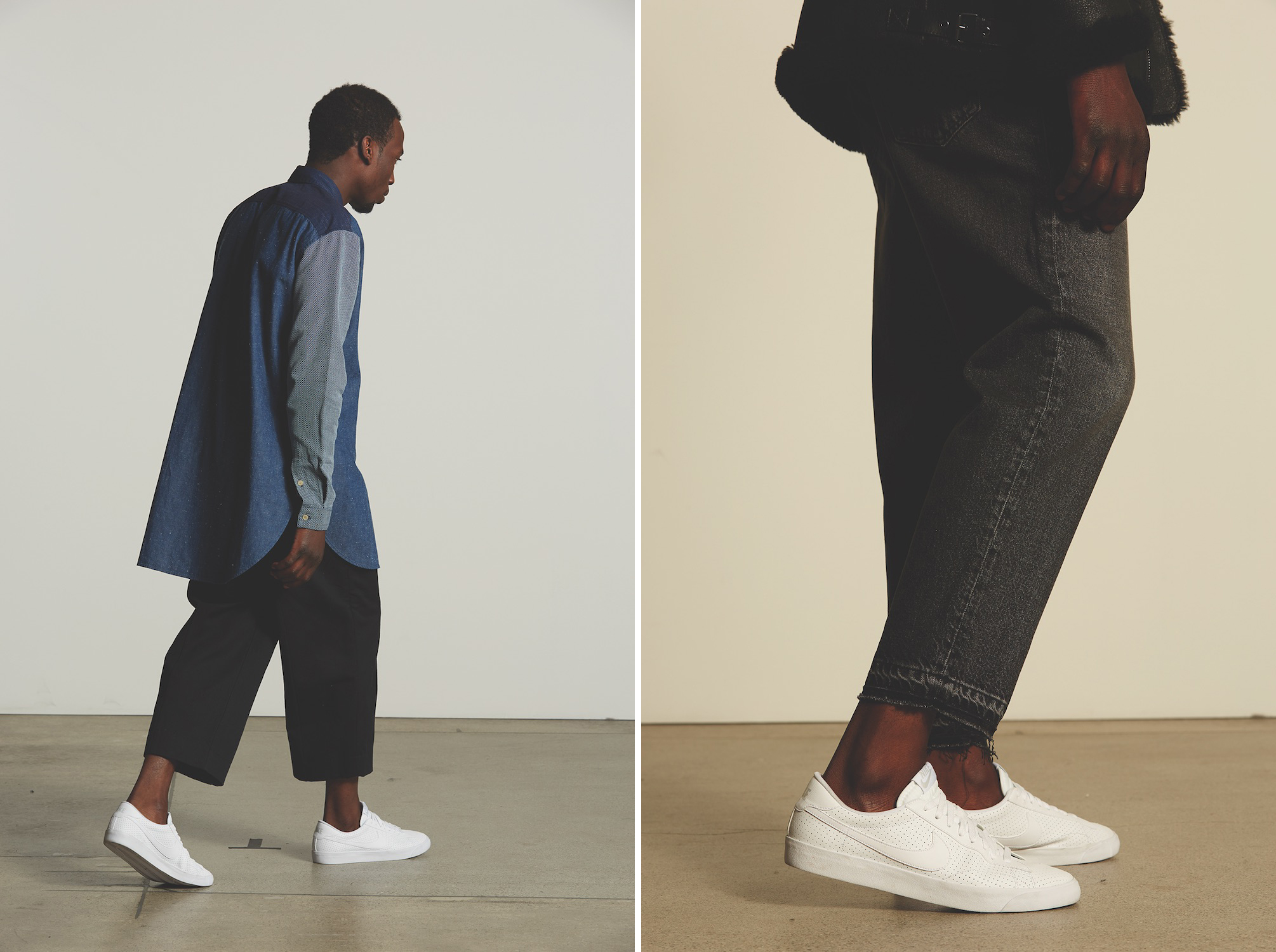
Like any fashion brand, Made & Crafted and its seasonal collections are built on themes and concepts. Each season, together with the design directors, menswear expert Nick Rendic and womenswear designer Nicolle Arbour look to the world for inspiration. Quite literally. Travel is a big part of the brand as it resonates with the nomadic 21st century lifestyle of its customers. For AW17 the duo went to Iceland and investigated the Nordic Hygge phenomena. The result is a collection of Levi’s staples with added ‘statement pieces’, the type of garments you need in order to add personality to the basic denim foundation of any wardrobe. Here, Nick Rendic explains the reasoning behind the brand and the collection…

What defines Made & Crafted, and makes it different from other Levi’s lines?

Levi’s Made & Crafted acts as a modern expression of the Levi’s brand that stands out as an elevated member of the Levi’s family through styling, price point and placement. We also make our jeans using more elevated construction techniques while making sure the collection is still rooted in classic Levi’s styling.

What is the design process like?

We travel to trendsetting destinations that inspire us to experience firsthand not only the (sometimes extreme) elements but to explore the culture, try the food, meet locals and immerse ourselves in the country. By doing this, we get such a strong sense of the silhouettes we are planning to introduce for each season as well as the textures and fabrics we want to use and how products can be styled. For us, each season, it’s an incredibly humbling yet satisfying experience.

How much is Made & Crafted a denim line, and how much a lifestyle brand? You obviously carry jeans, but it’s not the focus?

This is a collection with the soul of the Levi’s brand: it’s firmly rooted in California and builds on the Levi’s legacy by designing tomorrow’s classics. It’s design-obsessed. Levi’s Made & Crafted embodies artful construction and elevated details and of course denim is always a focus. We have our own proprietary Indigo selvedge and our own sundries, a blue tab, distinctive back patch as well as a hidden arcuate which reveals itself as you wear in the denim: it builds upon the notion that denim gets better with age. We also use the finest construction techniques and materials. For example, our denim comes from Japan’s renowned Kaihara and Nishinbo Mills and the Orta Mill in Turkey and Candiani in Italy.

What was the thinking behind the AW17 season?

It started by exploring the art of the everyday and its attitude: Hygge, a Nordic term evoking a sense of total ease and community rooted in coziness. Exploring this further, the collection sought inspiration in Iceland, which is known as the land of ice and fire.

What does Hygge mean to you?

For me, Hygge is the art of building sanctuary and community to create well-being, connection & warmth. Hygge is about celebrating the everyday in total ease and enjoying the good life – comfort as a whole.

How was that worked into the clothing?

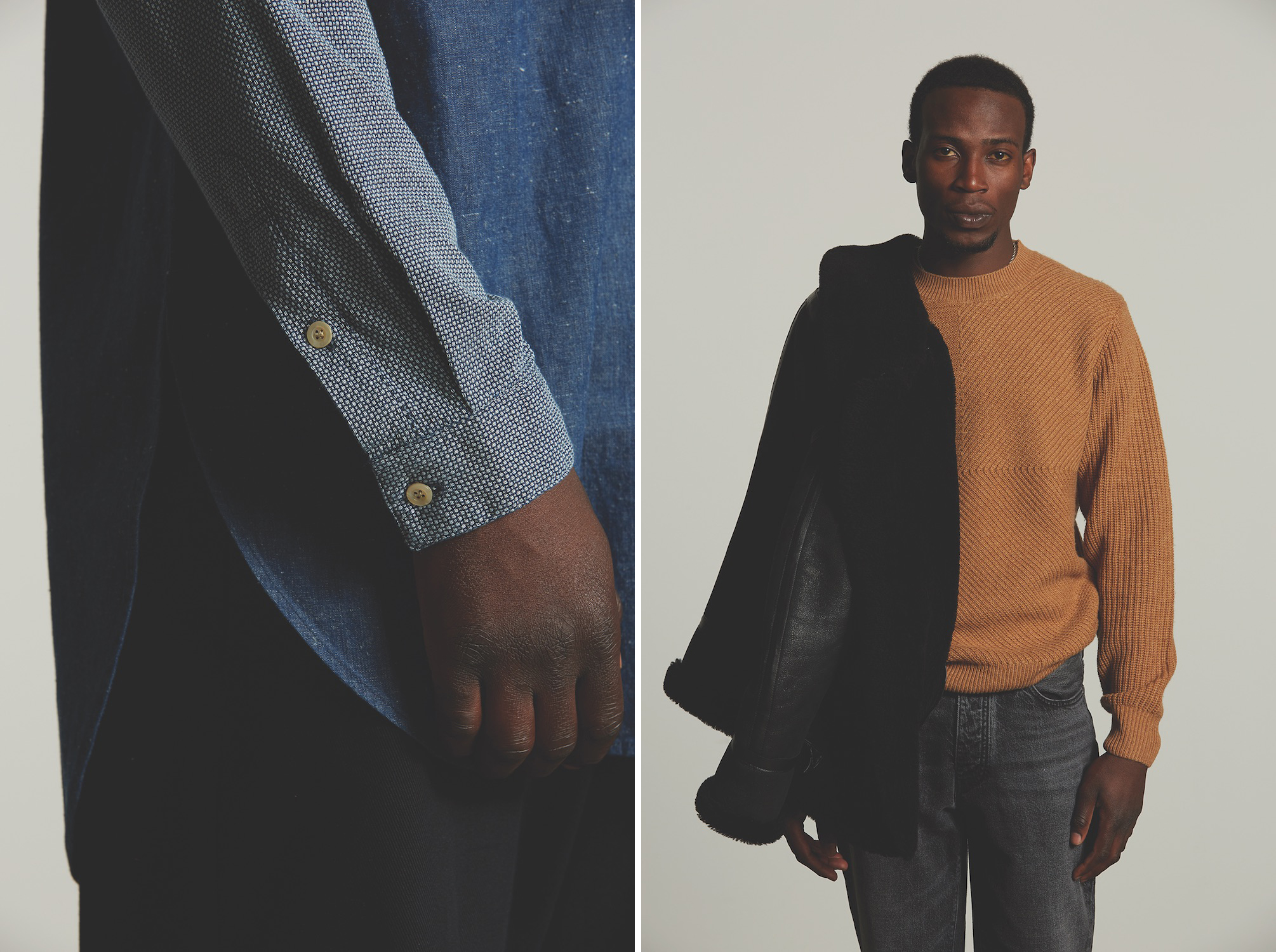
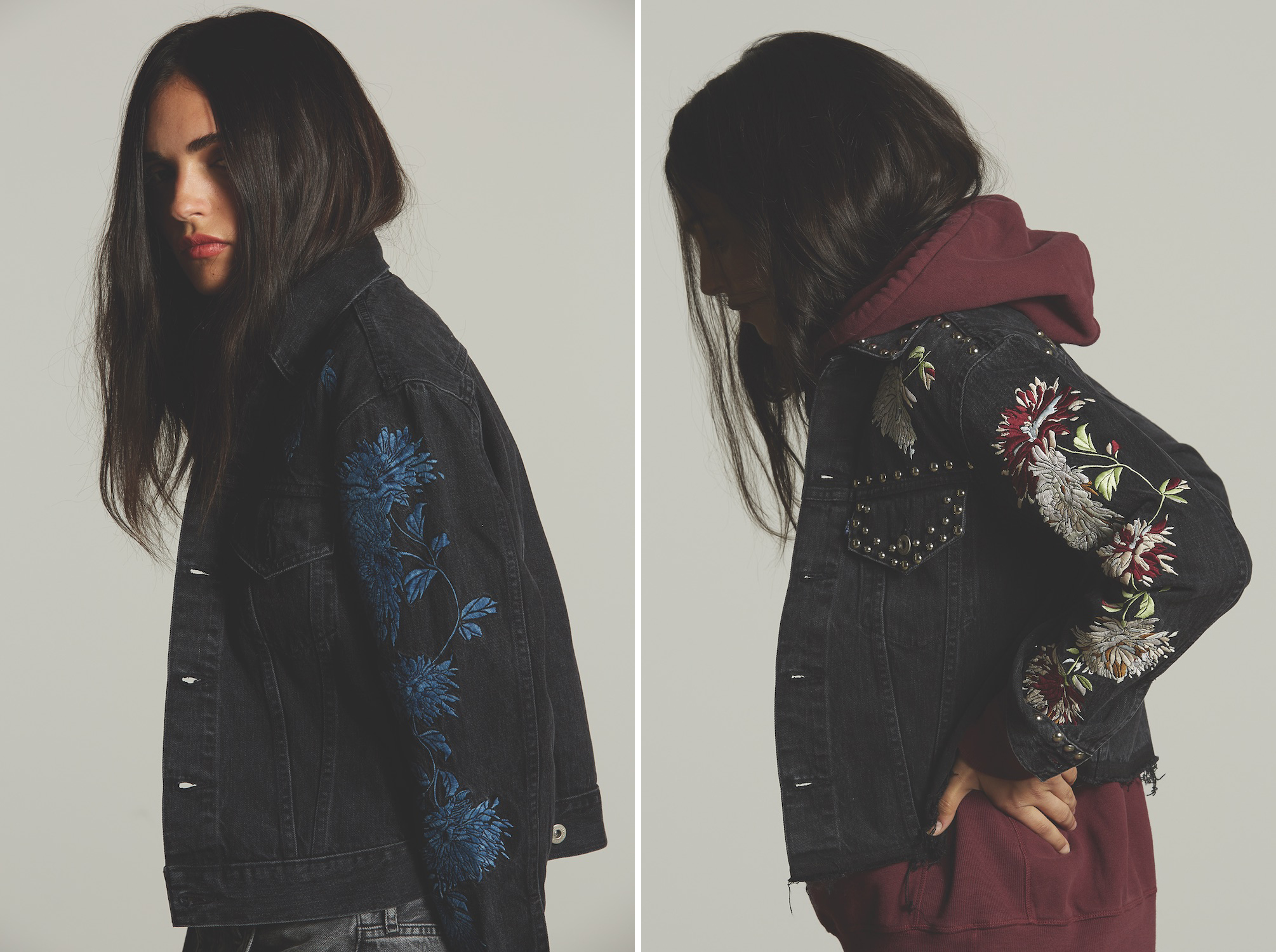
We were charmed by the attitude of Hygge and Iceland captured our imagination with its mystical and otherworldly essence, so we poured that into the collection. From mossy hills and steaming springs to volcanic terrain and soft, snowy glaciers, these are some of Iceland’s awe-inspiring extreme elements that are reflected in the colours and textures of the collection. Icy blues and crisp blacks set the tone for a beautiful range of denim with heavyweight fabrications for an authentic feel and wool blends add texture. In tops, cotton cashmere knits and fleece exemplify premium quality and luxury fabrication. Further Nordic details come from organic indigo dyed embroidery that mimics the snow flowers of Iceland.


Made & Crafted is seasonal, but would you describe it as fashion, or style?

It’s a mixture of style and heritage! We take what everybody knows and loves about the Levi’s brand and celebrate it in an updated way. We utilise a heightened level of craftsmanship and mix it with more progressive silhouettes and premium fabrications. Artful construction, elevated details rooted in California. This is the mission of Levi’s Made & Crafted.

What item best sums up the season?

I wouldn’t go for just one item but a complete look to sum up this season’s collection: Our tack slim jean is my favourite. It’s such a great-fitting pair of jeans that sits at the waist with a tapered leg for an exceptionally clean look. On top, our cotton cashmere T-shirts – I never want to take them off, they’re so good – and the shawl collar Sherpa Trucker fuses nostalgia and modernity.

Levi’s Made & Crafted A/W collection is available now

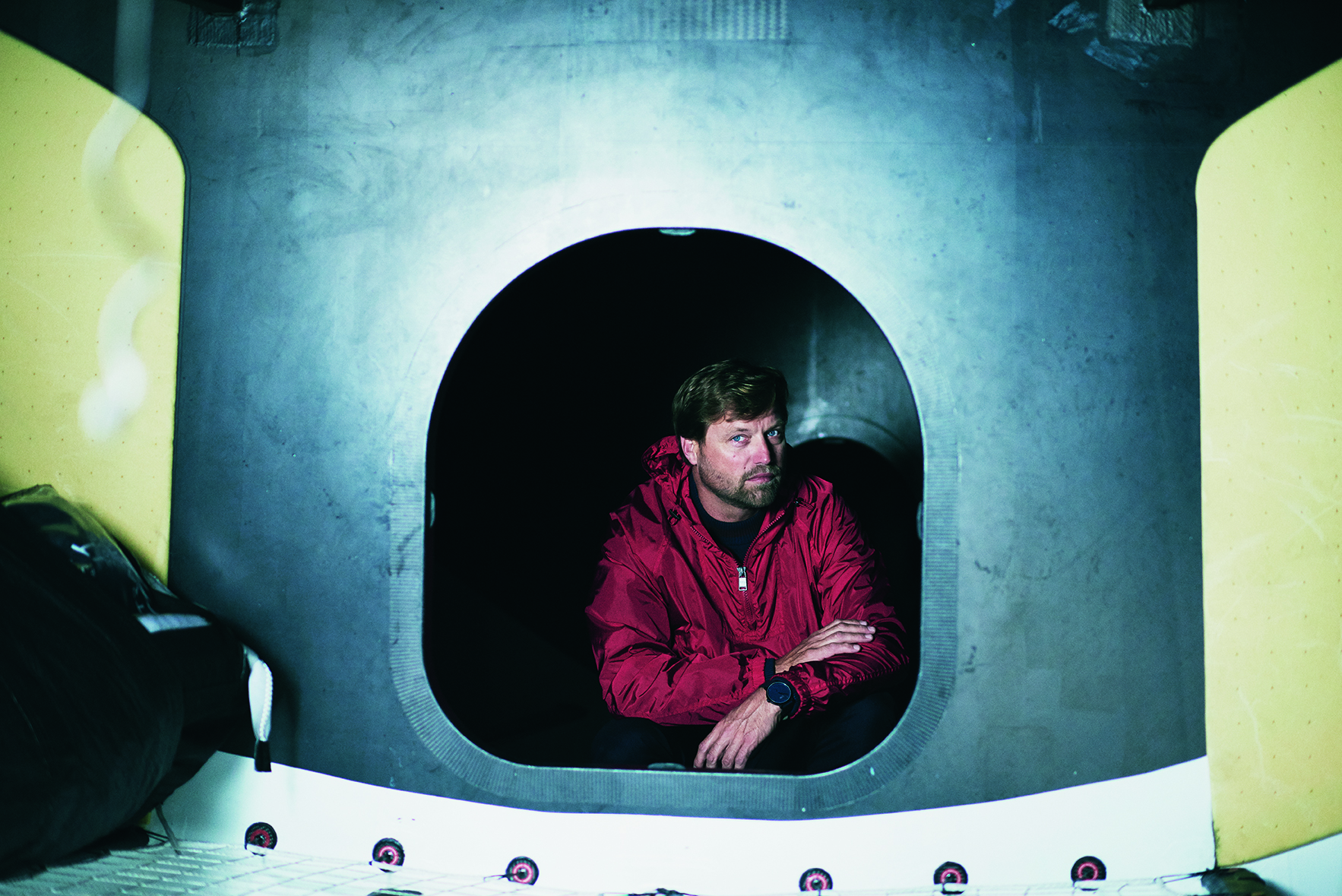
Alex Thomson: 74 days, 19 hours and 35 minutes

In 2017, Alex Thomson became the fastest British sailor to complete the Vendée Globe. Here, Thomson and designer Konstantin Grcic reflect on their unique nautical partnership

On 20th January 2017, after 74 days, 19 hours and 35 minutes alone at sea, Alex Thomson reached the finish line of the Vendée Globe – the gruelling, round-the-world solo yacht race. Although he arrived in the harbour of Les Sables d’Olonne, on the west coast of France, in second place, 16 hours after Frenchman Armel Le Cléac’h, Thomson became the fastest British sailor to complete the course, despite having lost one of his foils – the wings that lift the boat out of the water to minimise drag – on day 13.

Established in 1989, and running every four years since 1992, the Vendée Globe is the most demanding boat race on the planet – on average only half of the entrants will reach the finish line. An extreme test of endurance as well as of seamanship, Thomson – for whom this was his fourth attempt, having retired from the race in 2004 and 2008, and coming third in 2012 – had to snatch between 20 and 40 minutes sleep every three to five hours. Despite consuming up to 7000 calories a day, he would lose nearly eight kilograms over the course of the race.

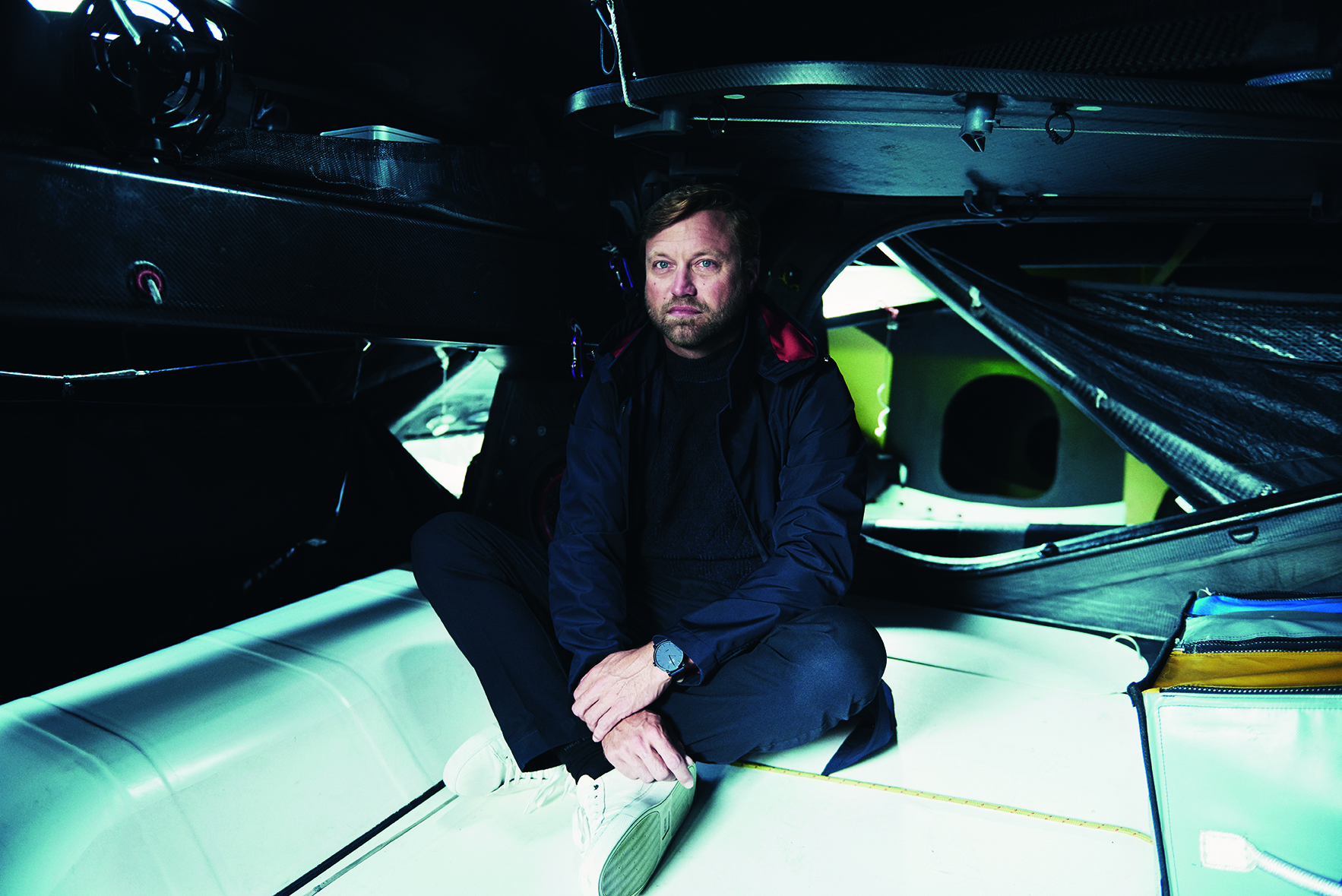
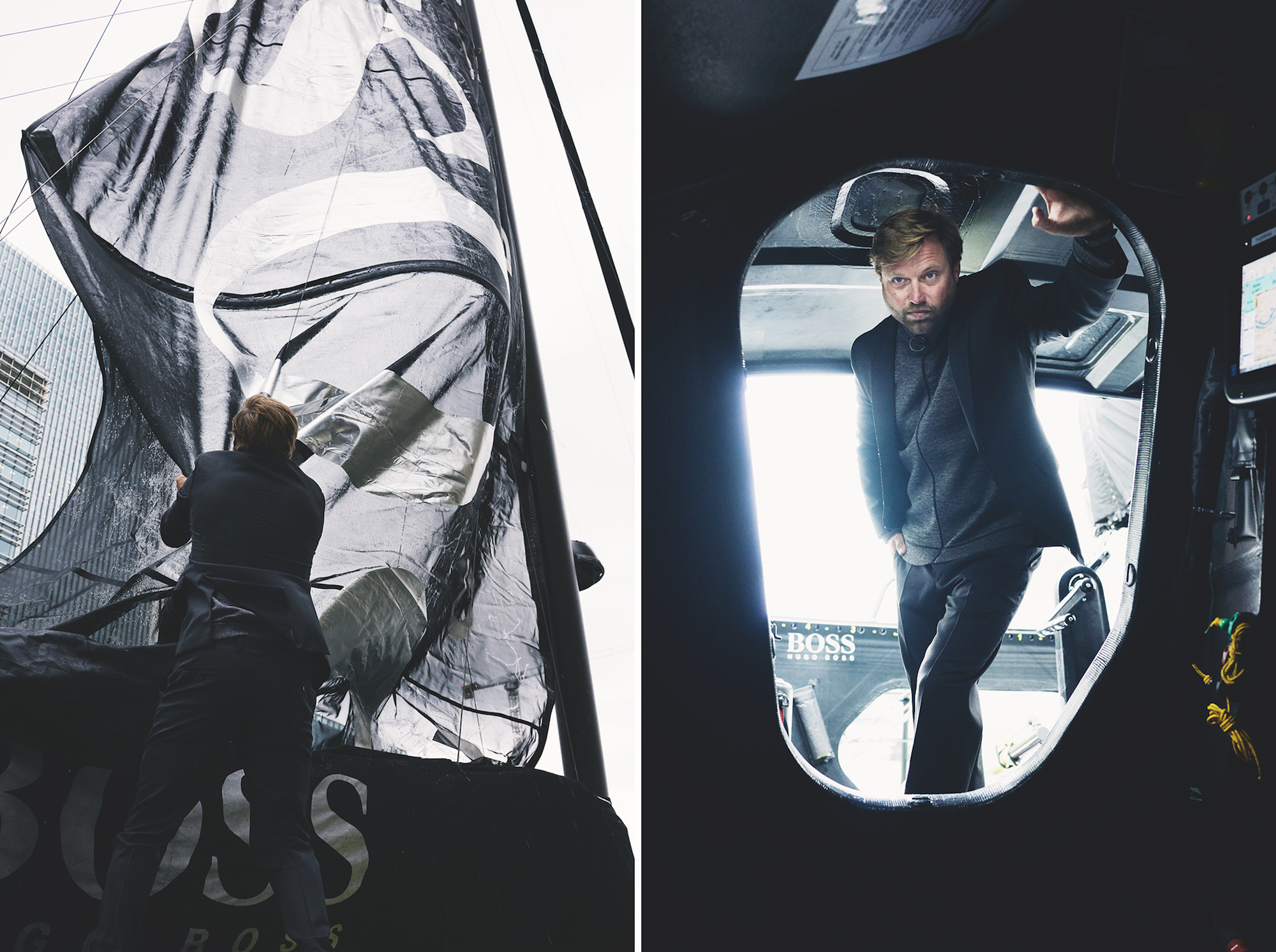
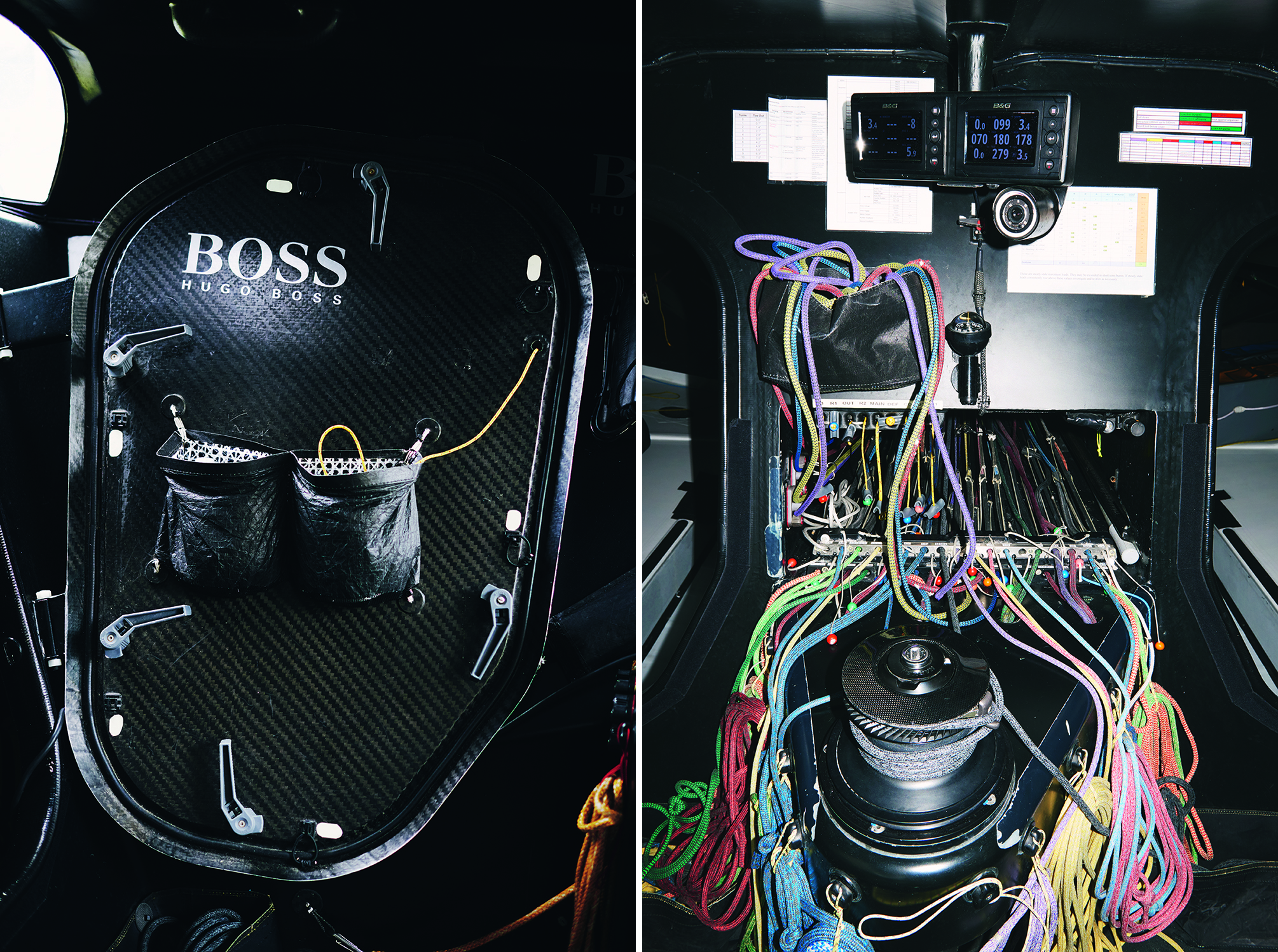
For the most recent edition, Thomson and his sponsors, Hugo Boss, took the unusual step of partnering with the London-based German designer Konstantin Grcic. In addition to being responsible for the boat’s distinctive aesthetics, Grcic, who has produced work for some of the world’s leading design companies, was also instrumental in remodelling the cockpit area, an innovation which became essential for Thomson’s comfort and maintaining his morale. Here, for the first time since the race, Thomson and Grcic reflect on their unique collaboration.

Konstantin Grcic: I loved following the race via the videos you made on board explaining everything. You were very unlucky to have lost the foil, and that one in particular – I know most of the racing is done on that side for the Globe. You would have had a great chance of winning with two foils rather than one!

Alex Thomson: The videos were a great thing to do. When you communicate in that way you get feedback. Every time I put a video on Facebook, I would get thousands of comments from the team about how I had inspired other people, who in turn inspired me.

It feels like such a long time since we first met in New York. I remember back then I didn’t really know whom I would be meeting. I thought it would be an ‘artist’, someone who would come up with a completely impractical idea, not someone down-to-and humble. We connected immediately.

KG: The conversation was there straight away – but then not many people can speak so clearly, and in a way that creates a great enthusiasm about what they do. That conversation, in the restaurant, gave me the first clues for this project.

AT: I remember being so happy with you and your ideas. People often say to me that the way the boat looks is not important, but I think it’s critical. Our boat was voted the most beautiful in France, which is a big deal when it’s an English boat with German sponsors and a German designer. It created this impression that we were peerless and I can’t tell you what that means to the team. Obviously they are involved in the physical side with the build, but the look of the boat and how other people see it creates an emotional bond that you wouldn’t have with most boats.

KG: I take that as a huge compliment. The colour, the logos and the style aren’t just decoration. They have to hit the right tone, to capture something in this design that the team really identifies with. And it has to have this psychological element that when you’re on the starting grid, you’ll feel powerful with your boat. Of course, this is something I’m familiar with as a designer – the psychology of form, of design. It’s fascinating what a difference it makes. It was such a challenge to follow your last boat, the completely silver one. But then we found a way to make the new boat all black. Technically it was challenging [the boat is glued together with a resin which is cooked at 80°C; if the boat reaches this temperature, which is possible in the tropics, it could begin to fail structurally]. We worked with a company to develop paint that could reflect light in the same way white paint would. It was nice how an initially purely aesthetic decision actually became a project that we developed together, creating something special and unique.

AT: And then there was the cockpit too. We spent so much time and energy in the previous Vendée Globe trying to make the boat go fast that the last thing we thought about was the comfort of the skipper. Yet the more comfortable you make the skipper the harder they will work. So we brainstormed how to make it more comfortable, how to make the internals work in an effective way. It took six months or so of refining, but what we have now is not so far from what we originally discussed. It was so beneficial to work with someone from a different background who can bring different considerations to the table. It’s definitely something we will do more of next time.

KG: Likewise! It was such a rich experience for me. I’m not an athlete but I love sport and to be able to see behind the scenes, to see the whole process from cladding and building the boat, raising the funds, the discussions you had and the dark hours of failure where you have to pick yourself up, as well as the successes, was something I’ll keep with me for a long, long time. It was unique.


Photography Benjamin McMahon
Styling Dan May
All clothing AW 2017 collection BOSS
Grooming Lee Makin

This is an extract from issue 21 of Port, out now. To buy or subscribe, click here.

Remembering Ettore Sottsass

Carlotta de Bevilacqua, vice president of lighting brand Artemide, reflects on the legacy of architect and designer Ettore Sottsass and his unique relationship with the company

When he died in 2007 at the age of 90, the architect and designer Ettore Sottsass left a remarkable legacy. Having turned his hand to most disciplines in design, including furniture, jewellery and glassware, as well as to many designs for buildings and interiors, Sottsass is perhaps best known for his iconic Olivetti typewriters and his work with Memphis, the experimental group of designers he founded in 1980.

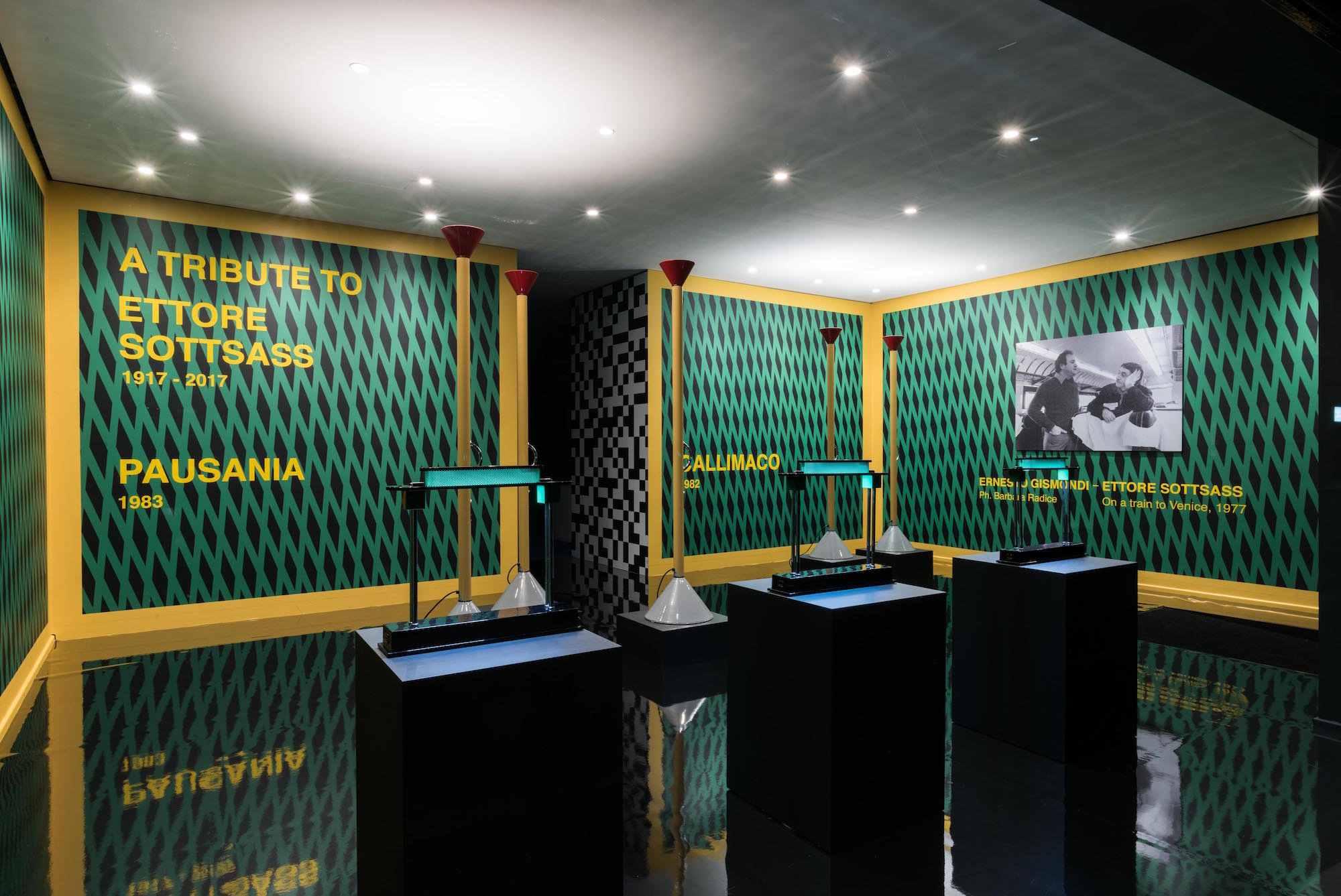
To celebrate the centenary of his birth, the lighting brand Artemide is rereleasing two of Sottsass’s most memorable designs for the company – Pausania and Callimaco – as part of their Masters’ Pieces collection. Here Carlotta de Bevilacqua, the vice president of Artemide, reflects on the designers relationship with the company, and with Artemides founder, Ernesto Gismondi.

Sottsass is remembered as a true trailblazer in late twentieth century design because of his commitment to the plight of freedom of expression in design. Memphis, which he founded in 1980, became a laboratory of experimentation and creativity where designers could feel totally free from the technical and aesthetic restraints of functionalist design.

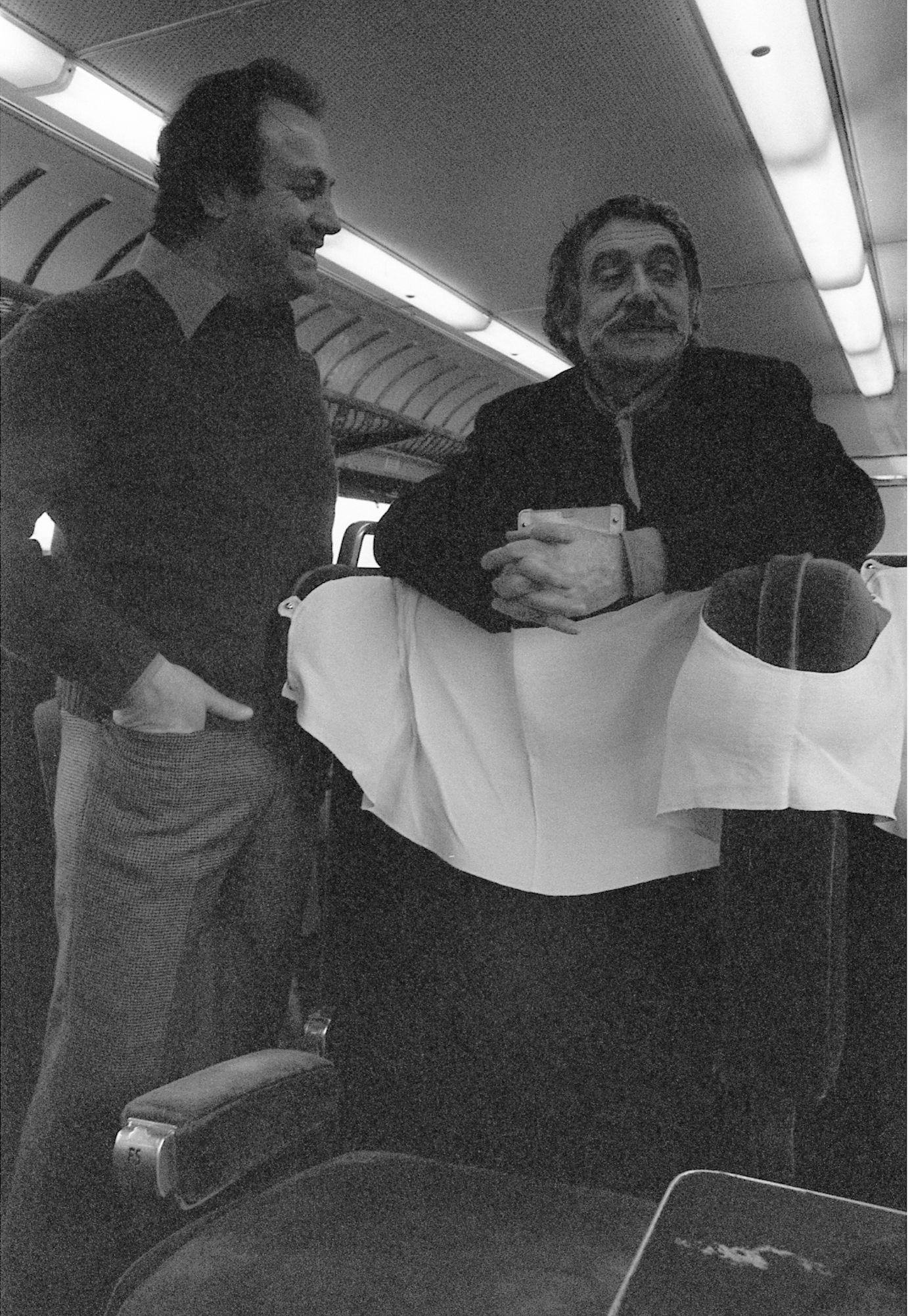
Ernesto Gismondi, the founder of Artemide and my husband, worked with Sottsass for several years in the Memphis group. Sottsass was involved in the creative part whilst Ernesto oversaw the various editions and managed the Memphis collective. It was during this time that a friendship was born and they discussed the idea of working together on projects for the company. Artemide and Memphis were fundamentally different – they always had different aims and logic – but Sottsass was able to bring this element of experimentation to his designs for Artemide.

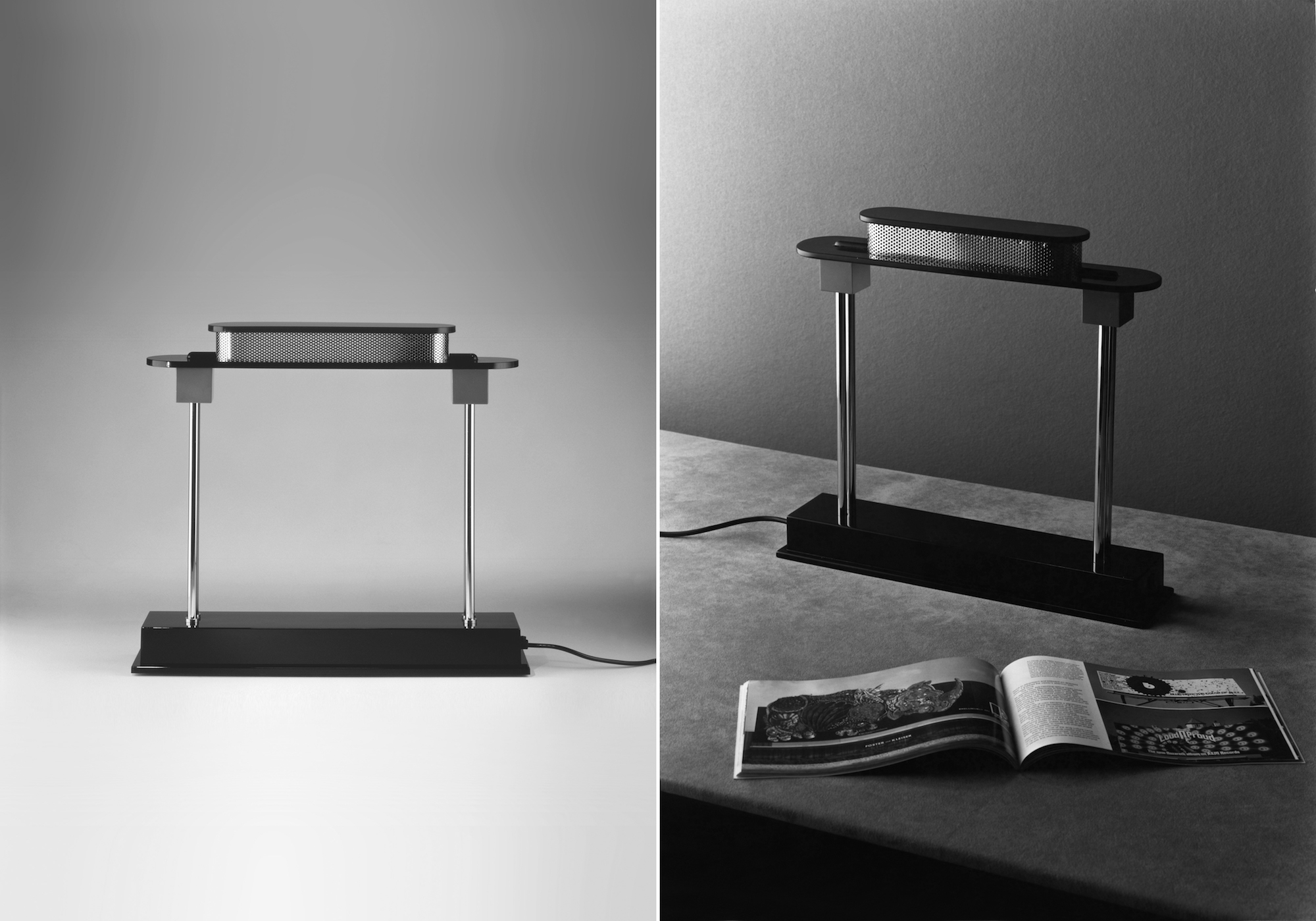
The Pausania light

The Pausania and Callimaco lights, designed in 1982 and 1983, are still in our catalogue today as part the Masters’ Pieces collection of contemporary design classics. In Pausania, Sottsass took the classic banker’s lamp and experimented with the shape and colour in order to produce a Memphis take on the traditional design. Today, Pausania’s technology has been reimagined not only to adapt to contemporary standards of intelligent, eco-friendly and energy efficient LED lighting, but also to provide a new quality of perceptive experience.

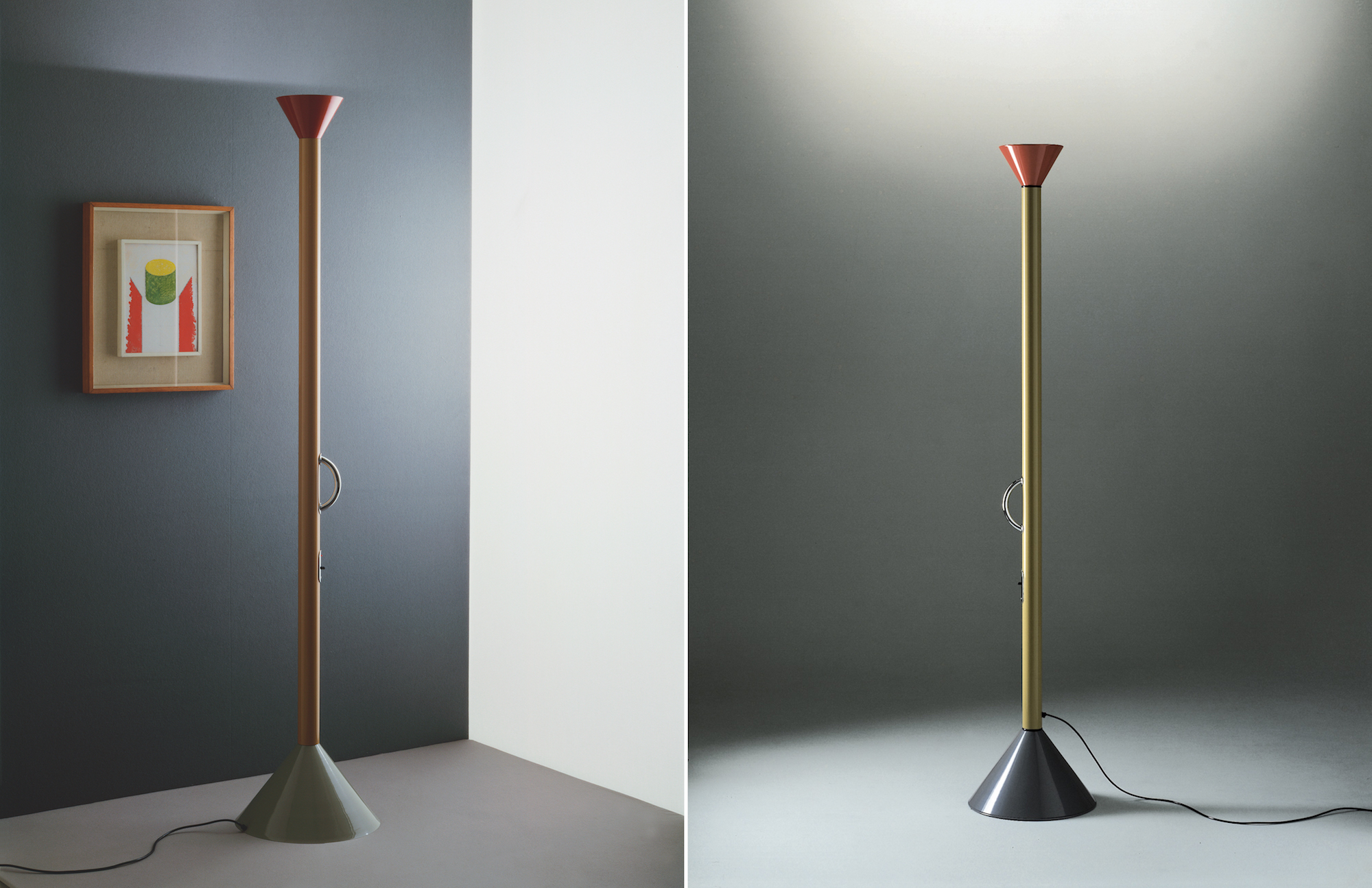
The Callimaco lamp

Callimaco is amongst the most original of Artemide’s designs, unique in its own quest; it is a fusion of industrial and lighting design and a powerful statement piece. It too has been reimagined with retro-like features such as a LED lighting and a touch dimmer.

Ernesto Gismondi and Ettore Sottsass © Barbara Radice

Beyond the professional path, I remember Ettore as a family friend, with whom Ernesto communicated and exchanged ideas even after the Memphis movement. He designed many pieces that went on to become icons, but some of my favourite Sottsass designs are from his glass and crystal collection, where he utilised traditional Venetian glass blowing techniques while also finding a new way to work with glass by studying the quality of material. Through this perfect mix of tradition and innovation, he produced surprising combinations of shapes and colours that had never been seen before.


Postcards from Pyongyang

Nicholas Bonner reflects on his first visit to Pyongyang and his collection of vibrant North Korean visual ephemera

Pyongyang was, and remains, a more beautiful capital than Beijing. It is a planned city that sprung up following the devastation of the Korean War (1950–53) – locals say that only three buildings were left standing. The Taedong River and its tributary the Potong River run through the city and, together with various parks, give Pyongyang an admirably high proportion of green space. Early Soviet-style utilitarian apartment blocks and more modern prestige streets were interspersed with peculiar and original public buildings: theatres, gymnasia, cinemas and libraries, all with quirky but wonderful interiors. I had more questions than answers, and it only dawned on me on return to Beijing just how unusual it had all been.

The Monument to Party Foundation that was built on the fiftieth anniversary of the creation of the Worker’s Party of Korea (1945–1995). The residential buildings behind are both topped with the slogan ‘One Hundred Battles, One Hundred Victories’. © Nicholas Bonner

This curiosity-driven jaunt was the first of hundreds of visits, a decades-long enduring fascination with North Korea and its people; its art, products, oddities, mysteries and banalities. These combine to create a whole that remains murky beyond the parts that ‘they’ want you to see, but, with enough persistence and stubbornness, reveals itself incrementally. I have seen the contradictions and controversies, the surprise of normality, the well-off and the desperate, and the emergence of familiar elements from out of the seemingly alien. I still regularly get blindsided by unexpected occurrences; from surprising revelations from old friends, and the excitement of visiting a newly available part of the country, to the swing between sub-zero winters and sweltering summers. It isn’t a place to tire of easily.

Postcards from a 1973 set that depict scenes from the revolutionary opera Song of Mount Gumgang-san. © Nicholas Bonner

As a countryside ranger taking school groups on walks through the green fields and moors of England, I saw that kids stuffed their pockets with stones or flowers, and a similar magpie-style of collection started with me as soon as I began visiting North Korea. I was charmed and simply taken by the graphic design elements of the products there. Many were not technically or legally ‘available’ to me, a foreigner. So I would buy Korean sweets and keep the wrappers and the hoarding eventually became several large boxes stuffed with what others might, justifiably, call junk. When I was approached to publish a collection of North Korean graphics, this rubbish (which I did at least keep in labelled envelopes) suddenly transubstantiated into a carefully curated collection of expertly selected design ephemera.
Cards from a presentation pack of postcards of famous sites in Pyongyang. Pictured here, the May Day stadium, previously home of the Arirang Mass Games but renovated in 2015 and now a football stadium. © Nicholas Bonner

Nicholas Bonner is a documentary filmmaker, screenwriter, and co-founder of Beijing-based travel agency Koryo Tours, who organise trips to the DPRK.

This is an extract from the introduction of Made in North Korea: Graphics From Everyday Life in the DPRK, available now, published by Phaidon.