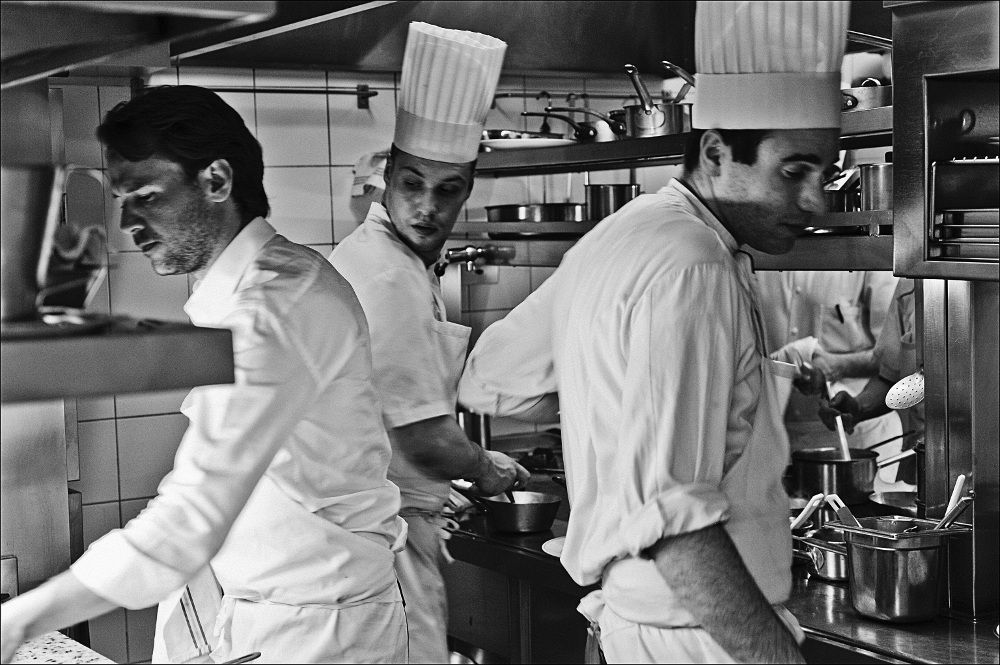
Questions of Taste: Alex Atala

The multiple Michelin-star chef and Jiu-Jitsu brown belt talks sustainability, success and the riches of São Paulo

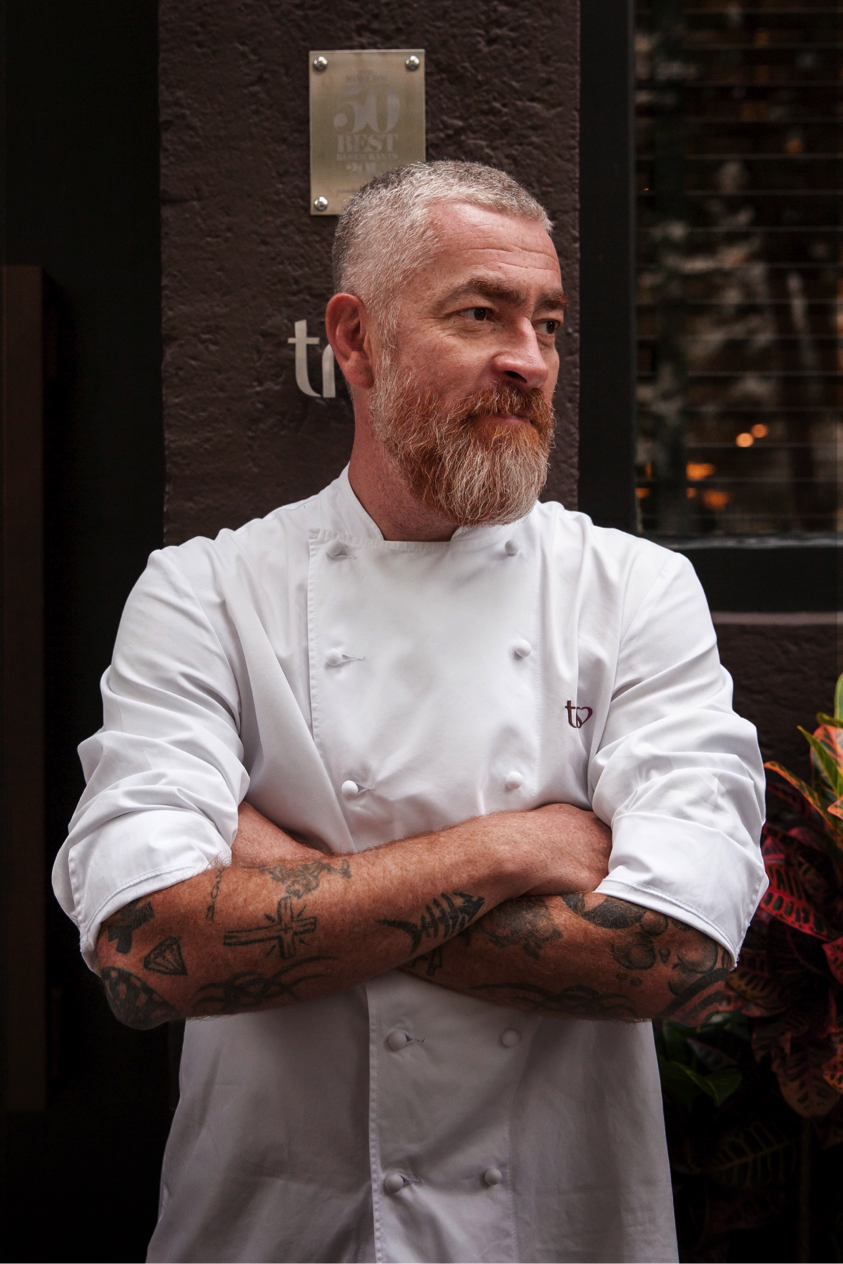
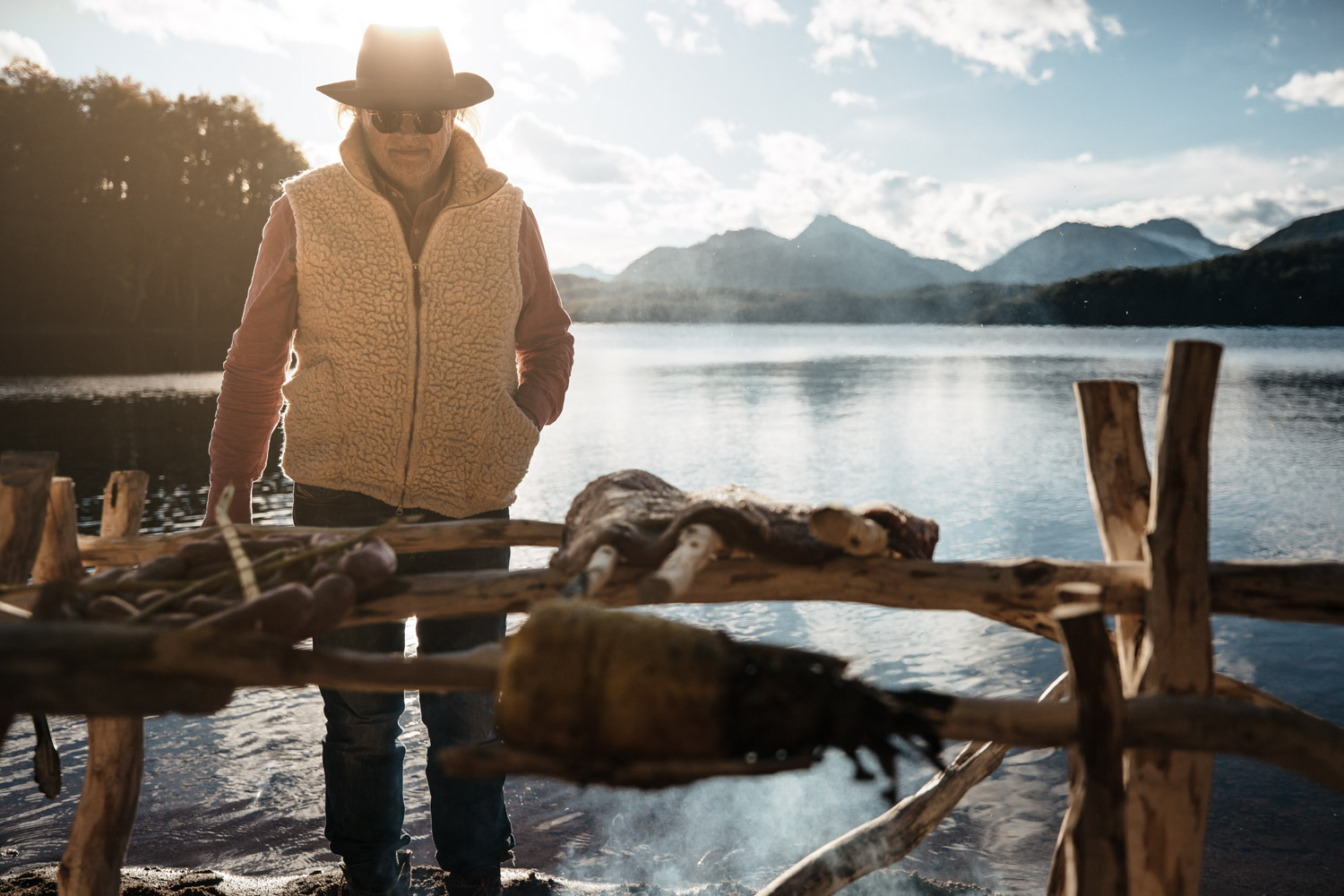
There are few chefs as wedded to the land that they sprung from than Alex Atala. After years of travelling Europe, acquiring the skills he would later use to storm the global gastronomical league table, Atala returned to his roots to prove that Brazil’s cuisine was worthy of international attention.

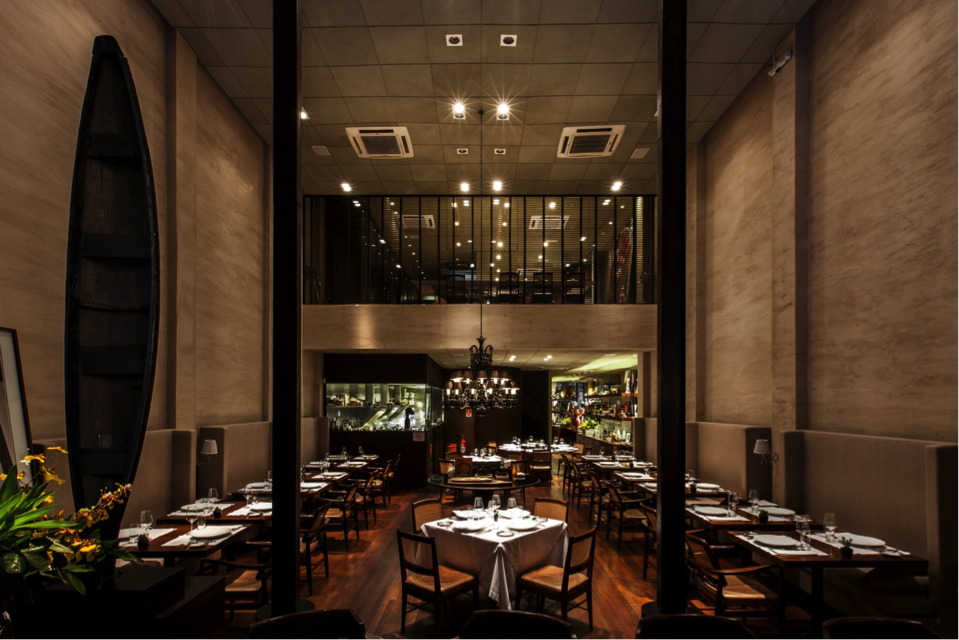
For over a decade D.O.M., the restaurant Atala founded in the Jardins neighbourhood of São Paulo, has consistently appeared in the prestigious San Pellegrino World’s 50 Best list. But the critical acclaim has not compromised its founding principles of celebrating all things native and authentic. Using previously marginalised techniques and ingredients, Atala has reinvigorated Brazilian cooking and raised the region’s culinary status. It is no exaggeration to say he is adored, from South America’s toughest critics to the greengrocers of São Paulo.

Having conquered fine dining, Atala has his sights on greater challenges. With the number of people on earth thought to rise to around 8.6 billion in 2030, feeding an ever more insatiable world could be one of the greatest challenges of this century. To confront this, together with his food diversity organisation the ATÁ Institute, and chef Felipe Ribenboim, he will soon be holding a symposium called FRUTO to discuss the issue.

To find out more, I caught up with Atala to discuss success, sustainability and the food scene in São Paulo.

D.O.M. is currently ranked as the 16th best restaurant in the world

After years of living abroad – what called you back to your roots?

I’ve been connected with Amazonian cuisine, ingredients and flavours since my earliest childhood. I believe that its this richness that comes from the forest and other Brazilian areas that forms the backbone to all my work. Brazil is so vast – almost the size of a continent – and there’s a huge diversity in many aspects. In just one country, there are so many different ways to deal with food, in both terms of the culture towards food and the produce available.

For decades, Brazil resisted fine dining, almost feeling that the national cuisine was ‘unworthy’ – what changed?

It’s not something that happens overnight. It is largely the result of an effort by all the Brazilian chefs that defend our gastronomic culture on a daily basis, even with all the difficulties we have to deal with, such as the lack of support from the government and the lack of structure for family-run agriculture and the indigenous and riverside communities that survive by cultivating these ingredients. The government needs to recognise the work of these young and talented chefs. They are the true ambassadors of this brand called Brazil.

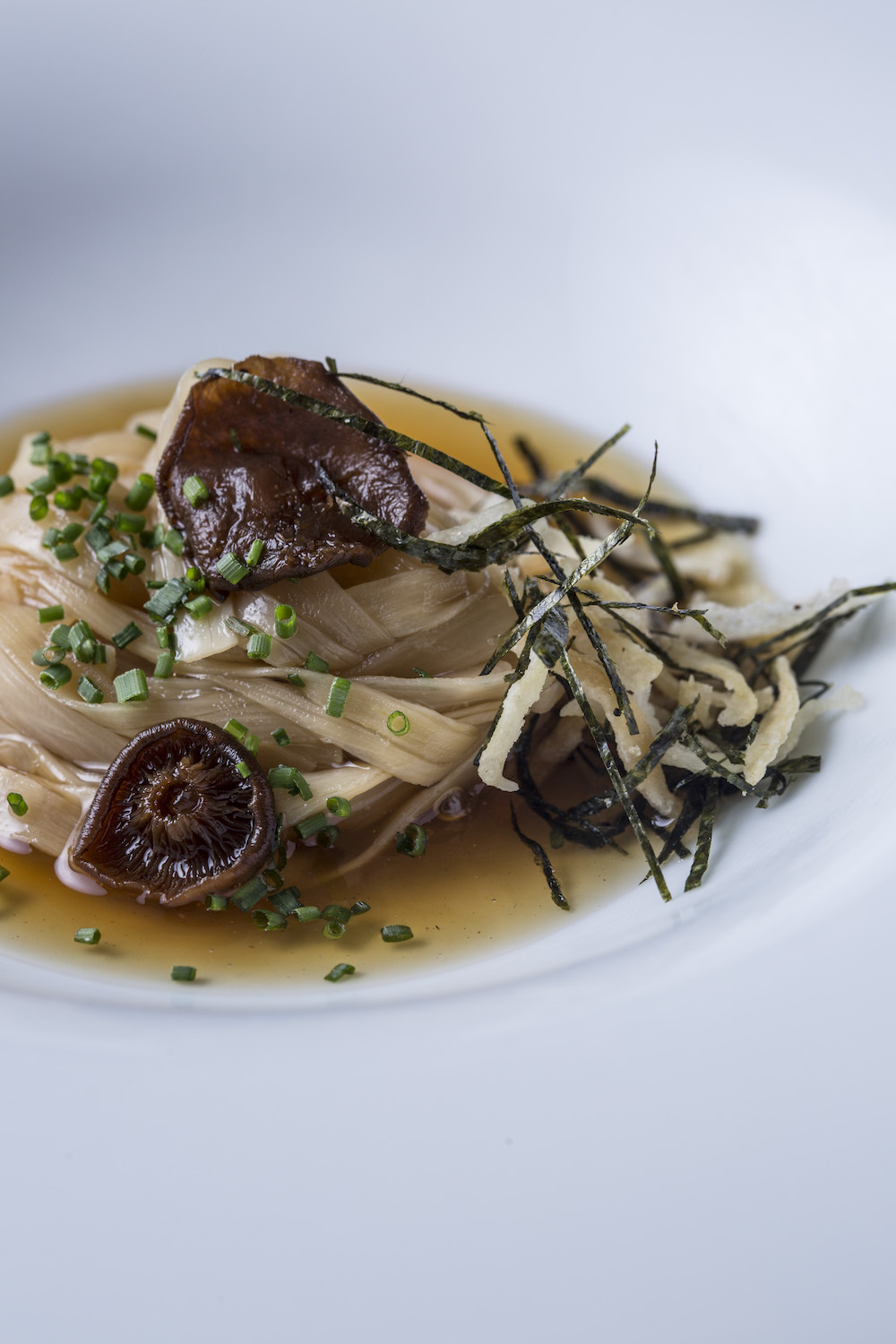
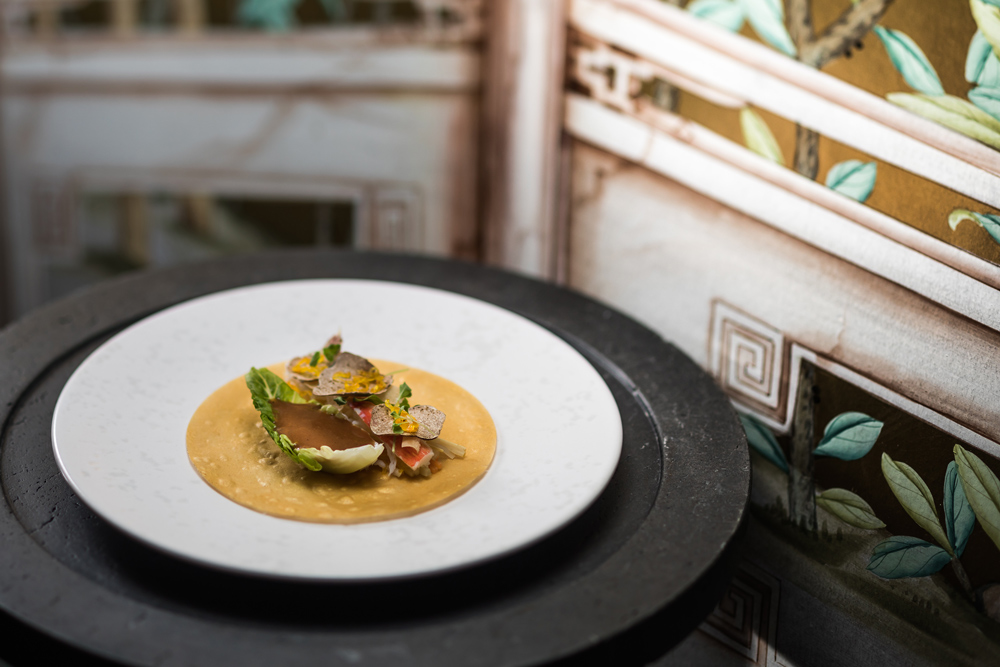
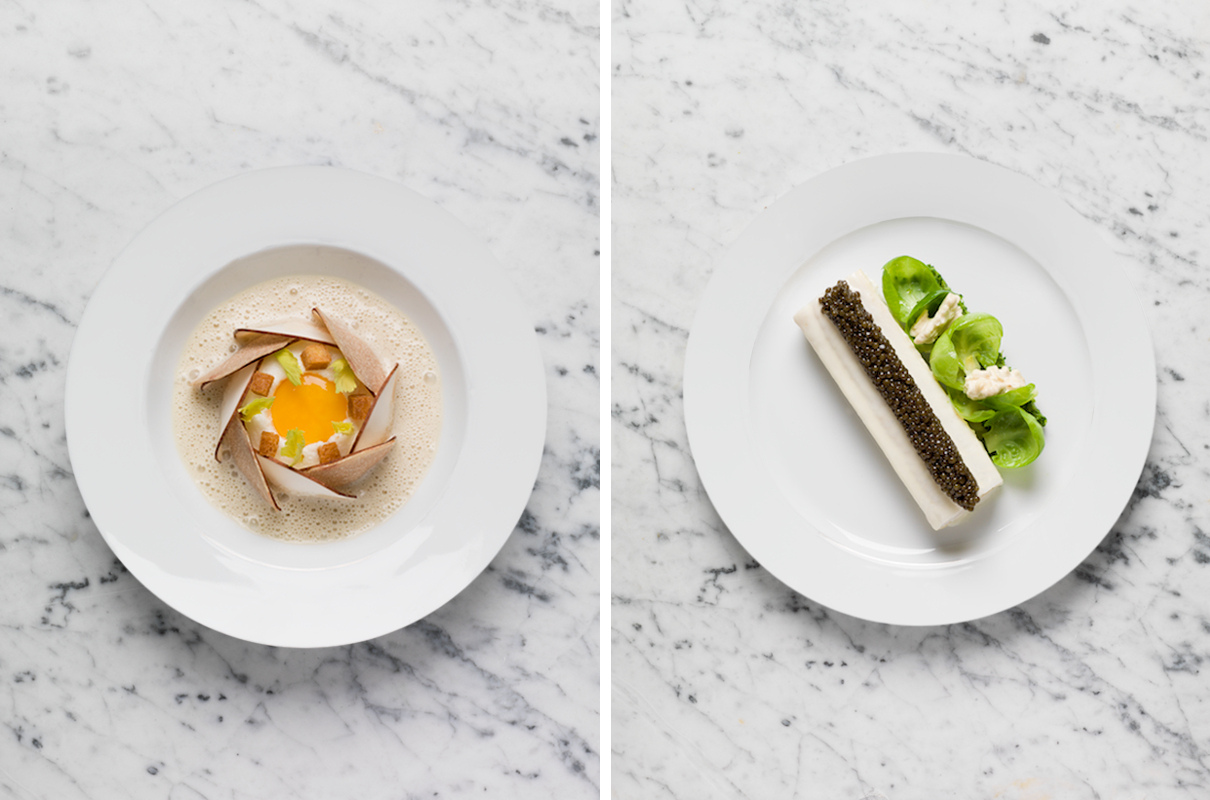
Pupunha heart of palm fettuccine with Yanomami mushrooms

What are your hopes and fears with FRUTO?

Food waste and over consumption have always been two of the main concerns of the D.O.M. Group as a whole. And lately these concerns have led to launching the FRUTO congress, which the ATÁ Institute is organising in January 2018.

One of the most tangible and possible ways to solve these problems is to use 100% of the ingredients we have. That is the main guideline in both Açougue Central and Bio, the two newest additions to the D.O.M. Group. In both these restaurants we show people that it is possible to use the whole ingredient. For example, in Açougue (our meat-speciality restaurant) we receive a whole bull carcass every week and, of that carcass, we use everything: meat goes to grill, oven or pan; bones are used for broths; fat is used to deep fry other ingredients.

Things are very similar in Bio. The menu provides healthy dishes, with quality ingredients, in an attempt at conscious consumption. The Canastra cheese is maybe one of the most delicious cheese varieties currently produced in Brazil. In Bio, it is used as a cream to compose the fruit and Canastra salad, and its peel, which would usually go to waste, is used in pastry to provide the final crunchy topping to the Dulce de leche pudding. 

The reason for all of this is simple: we want to help raise awareness in our clients. It is possible to use the whole ingredient and for there to be no waste – you don’t need to buy more than you are going to eat. And it is important that not only chefs consider this but that all of us as individuals are aware – we can be the turning point for everything. Eating today is not simply feeding, it is a political, economical, biological, social and cultural act.

That is exactly how the idea of FRUTO was born. A congress divided into three axes (social, cultural and biological) that will bring together thirty of the most important minds in the fields of sustainability, science, gastronomy and industry to discuss alternatives on how to bring quality food to a world population that could reach 8.6 billion people by 2030.

Can you give me a good example of ATÁ in action?

I believe our work alongside Instituto Socioambiental (ISA) with the Baniwa chili deserves to be mentioned. The Baniwa are an indigenous people living in 200 communities across Brazil, Colombia and Venezuela. They produce the Baniwa chili, a unique product made with a variety of native peppers that are dehydrated, milled and mixed with a bit of salt to form a potent spice. It didn’t get to the market because we didn’t know about it and the Baniwa people didn’t have the structure to commercialise it. Today, thanks to the partnership between ISA and ATÁ, that chili can be found in Mercadinho Dalva e Dito, at our stands at Mercado de Pinheiros, and in dishes at D.O.M. and Dalva e Dito. Because of that, many Baniwa people prefer to work producing the chili instead of working in mining, for instance.

Is there an ethos behind D.O.M? Could you define it in one sentence?

Creativity, with Brazilian soul.

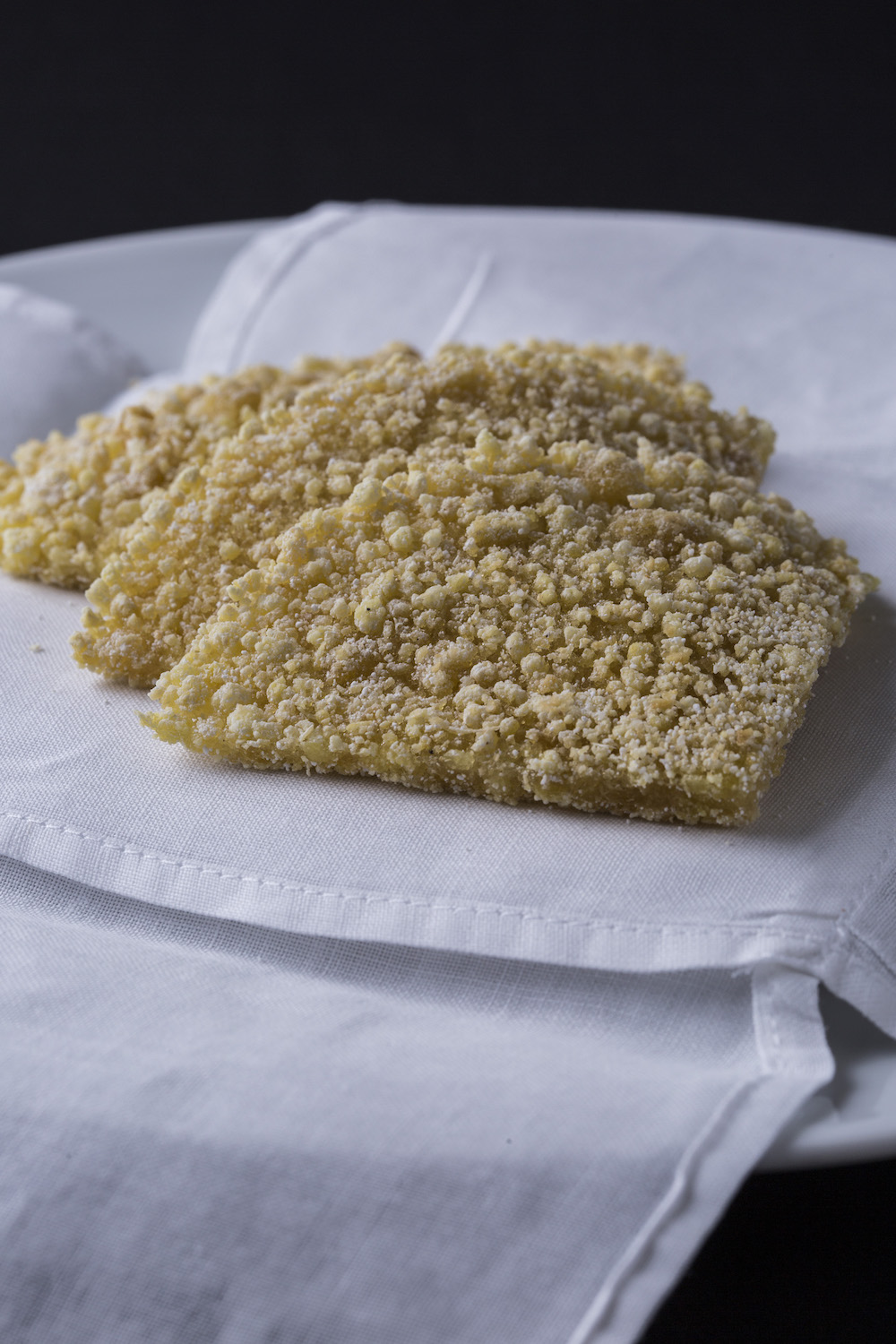
Manio beiju pancake


How do we begin to re-establish a meaningful connection between humankind and the natural world?

We must revisit our relationship with ingredients and nature itself and understand that there is no point in only protecting the rivers, seas and forests. We can only ensure the defense of our biodiversity if we also protect the humans that make their living from that which the rivers, seas and forests provide. The food chain is a powerful tool to support those people. That is our job in the ATÁ Institute. We work on several projects to strengthen all points of the productive food chain. The more we understand and develop that relationship, the more space and demand the market will have.

Photography Rubens Kato, Ricardo D’Angelo and Sergio Coimbra


Kombu: Chris Denney & 108 Garage

Chris Denney, head chef and co-founder of 108 Garage, reflects on his favourite ingredient, kombu

The whole umami thing, the fifth taste, really started to become popular around 10 years ago. People were talking about the inherent properties of umami, the savoury taste that you find in Parmesan or Marmite, and it brought a lot of Japanese chefs and their cooking into the light.

This is when I discovered kombu. A type of seaweed, it doesn’t have the most typical flavour – it’s so light you almost don’t realise you’re eating it. But it’s a very clever engineering tool: You can use it to elevate a peach or detract from a note of cherry in a cream, or even make it into a butter to eat on sourdough. At 108 Garage, the restaurant I founded with Luca Longobardi in autumn last year, we make a pickle with the kombu in five-litre batches at the start of the week.

We use it a lot because our menu is constantly in flux and it lends depth and structure to our dishes. It’s almost a given now that all restaurants should be designing their menus seasonally, but there are always slight differentiations – a tomato at the beginning of a season is different to a tomato at the end of a season. Hence, we use things like the kombu pickle. As in the recipe below, it’s a great balancer; we can add some acidity to the peaches and level the butterscotch if it’s too salty, no matter what stage the produce is at.

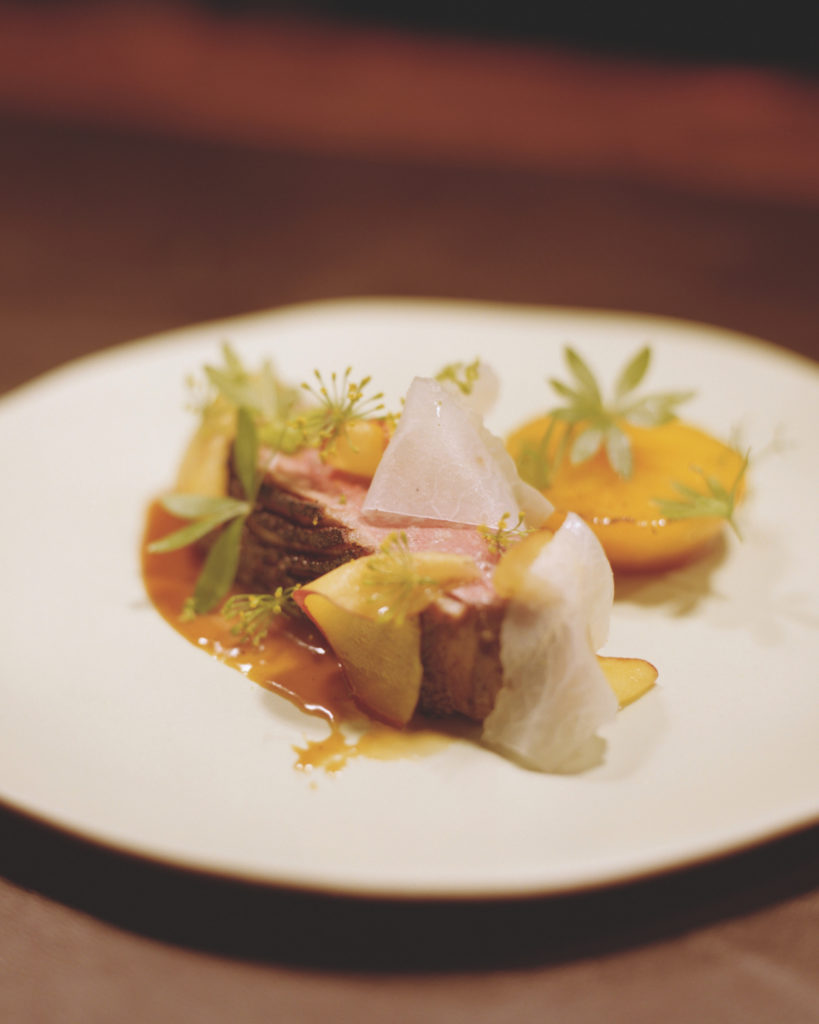
DUCK, PEACH AND KOMBU PICKLE

(FOR 4 PEOPLE)

INGREDIENTS

20cm2 kombu
350ml rice wine vinegar
80g castor sugar
150ml carbonated water
4 ripe peaches
250g white miso paste
80g diced unsalted butter
100g muscovado sugar
80g black sesame honey
1 piece (approx 200g) white radish
1 large duck breast
Malden sea salt

KOMBU PICKLE

Bring the ingredients to just under a simmer (boiling will destroy the flavour of the kombu) and leave for 50 minutes. Remove from the heat, cover with cling film and leave to infuse for a minimum of two hours. Pass the mixture through a sieve before leaving to cool to room temperature in a plastic container and storing in the fridge.

PEACH

Thinly slice the peaches into crescents and bring 150ml of the kombu pickle to just under a simmer. Place the sliced peaches into a plastic container, pour over the pickle and leave to macerate in the fridge for a minimum of 12 hours.

MISO BUTTERSCOTCH

Bake the miso paste on parchment paper for 12 minutes at 180 degrees until slightly burnt at the edges. Remove from the oven and allow to cool. Melt the sugar and honey on a medium heat, gradually introducing the butter, before adding the miso paste and finally 120ml of kombu pickle. Pour into a piping bag or squeeze bottle and chill until required.

PICKLED WHITE RADISH
Peel the radish and slice into fine medallions. Place on a tray, season with salt and bring 100ml of kombu pickle to just under a simmer. Pour over the radish and leave for a minimum of two hours.

DUCK BREAST

Lightly season the skin with salt, place skin side down in a frying pan at medium heat and render for 12 to 15 minutes until golden brown. Turn the duck over for a minute, place on a tray and finish in the oven for 10 minutes at 180 degrees. Rest for a further 10 minutes before combining with the peaches, miso butterscotch and radish, and serve.

Photography Tori Ferenc

This is an extract from issue 21 of Port, out now. To buy or subscribe, click here.

An Introduction to Eating Insects

Slowly but surely, the idea of eating insects is being introduced to European countries thanks to insect-based food projects and recipe books hoping to put an end to the ‘creepy-crawly’ taboo 
The concept of entomophagy, as its known, was once almost impossible to fathom in the West, but in the last few years there has been a growing interest in insects as an alternative food source. Very slowly, supermarkets are beginning to stock insect-based snacks, while chefs and restaurants are experimenting with insects as ingredients. 

Two billion people across the world already eat bugs regularly. Countries including Africa, Australia, Thailand and even the Netherlands incorporate insects into their diets, so why has it taken so long to catch on in the UK? The answer is arguably a combination of convention and unfamiliarity, but the reality is that eating insects is no different from eating shellfish. There are more than 2037 edible insects in the world and many contain a vast number of minerals, protein and good essential fats that Westerners have overlooked.  
 
“It is reported there are over 2000 edible insect species on the planet so that’s essentially 2000 different flavours,” explains Neil Whippet, co-founder of Eat Grub, an edible insect source that produces insect-based snacks and hosts food events in London. “People just need to get over the psychology of it. That’s what our company ethos is all about. We’re just trying to be a brand that welcomes people to eating insects.” 
 
In addition to selling snacks, energy bars, and cooking packs containing crickets, grasshoppers, Mealworms and more, Eat Grub also develops new recipes to try at home. These include grasshopper stir fry, buffalo worm fried rice, spicy grasshoppers with beansprouts and chocolate cherry cricket brownies. “Crickets are related to shellfish so if you like prawns, you’ll like crickets,” Whippet says. “They’re high in protein and calcium, plus the protein is complete so it has all nine essential amino acids and they’re high in vitamin B12 and fibre. We call them the original superfood.”  
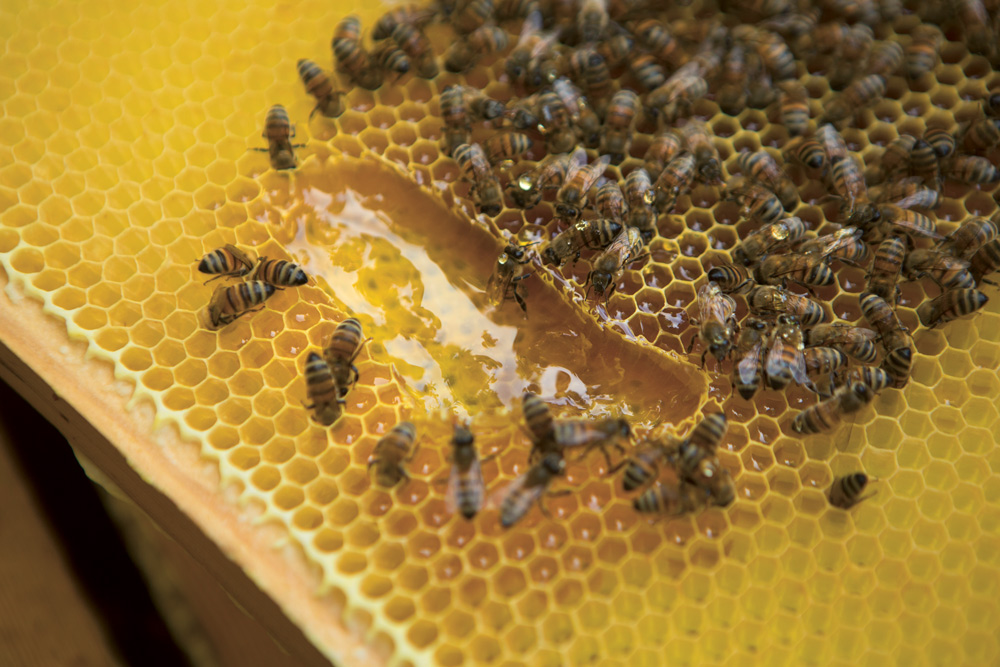
Bente’s bees, Denmark.
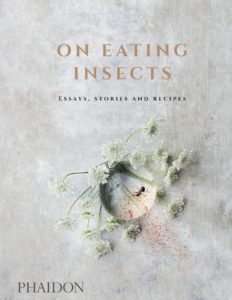
As further evidence of the trend, a new book produced by the non-profit, open-source organisation Nordic Food Lab, On Eating Insects, is the first publication to take a comprehensive culinary view on eating insects and how to prepare, cook and enjoy them. 
 
Inside, Michael Bom Frøst – a sensory scientist and director of Nordic Food Lab – discusses his first experience eating insects. “Through tasting them I learned why we should eat them,” he writes. Many have interesting and unusual flavours that he claims we are missing out on. Frest looks back on his first taste of an Amazonian ant (apparently similar to lemongrass and ginger) as an almost religious experience that he found mind-changing. 
 
By 2050 the world could have a population of over nine billion people and according to research, food production may be forced to increase by 70 per cent. In preparation, we need to develop a more sustainable approach to food. It follows that eating insects could very well be the answer. And for those still struggling with the idea of eating insects whole, products like ground cricket flour can be a softer introduction.  
 
“When people talk about wanting to eat more healthily and sustainably, eating insects ticks both those boxes,” Whippet explains. “And they taste great too which is key for any food product.”
 
On Eating Insects: Essays, Stories and Recipes by Josh Evans, Roberto Flore, Michael Bom Frøst, published by Phaidon, is out now
 
Find out more about Eat Grub 
 
Photographs by Chris Tonnesen
 

Francis Mallmann on Gaucho Grilling

From the wilds of Patagonia to the English countryside, the Argentine chef best known for his appearance on Chef’s Table muses about his roving lifestyle and his love of cooking over open wood fires

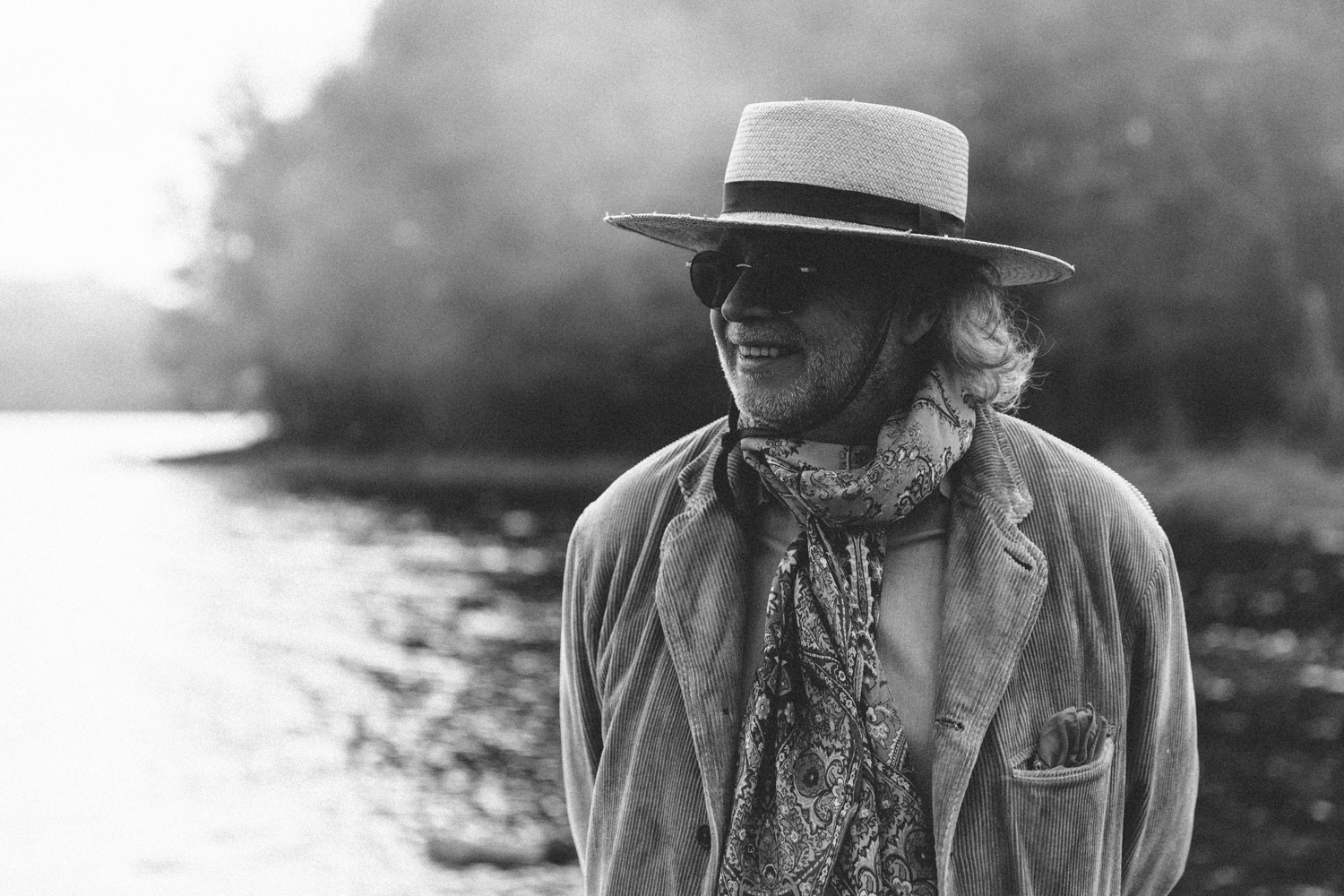
It would be easy to roll your eyes at Francis Mallmann. The 61-year-old Argentine super chef, who came to global attention after appearing on Netflix’s Chef’s Table, speaks in gravelly, earnest platitudes. When I meet him in London in June, he sits there, all silk cravat, linen suit and grizzled white beard and doles out lines about freedom and the power of nature. It would be easy to scoff, sure, but the thing is, you’d be hard pressed to prove any of this was inauthentic.

Mallmann practises what he preaches. The chef, born in 1956 in Buenos Aires but raised in the wilds of Patagonia, has long eschewed any semblance of a normal life. In any one week, he can be in five different countries, he sees his wife two weeks a month, has “lost respect” for most of his sedentary friends, and lives mostly on a remote Patagonian island, where he long ago rejected the kitchen for vast fire pits outside.

“I’ve created a life for myself in which I am constantly moving,” he muses. “I’m in love with so many places but surface-level sightseeing is a beauty that passes through your heart, it doesn’t stay. If you really want to know a place, or a country, you have to nurture that relationship.”

Bizarrely, it all began in the ‘60s when he heard The Monkees. Something about their music proved a catalyst for his sense of adventure and he flew off to Paris to study under Michelin-starred chef Alain Chapel. There, he began to learn his craft, but his efforts to master traditional French cuisine were not met without criticism. It took an unimpressed French business man – the head of Cartier to be exact – to tell him his food was, well, lacking. “This is not French food” were his exact words.

This seemingly catastrophic encounter was actually exactly what Mallmann needed to find his own culinary signature. “I went back to my memories of childhood,” he says. “Slowly I started creating this language of cooking with fire that I think represents the naked cooking of South America so much.” One of Mallmann’s favourite ways to cook is in a pit dug out of the earth, a technique he grew up with and one that goes back thousands of years.

He now has 11 restaurants across South America, France and Miami, with a London outpost coming next year. This July, he will be collaborating with Krug for their Into the Wild festival in the English countryside.

So how does this self-possessed wandering chef find himself cooking at a luxury festival for a high-end Champagne house? Set in the grounds of the Grange, a romantic 19th century estate in Hampshire, this is a luxury event, yet it oddly chimes well with Mallmann’s philosophy.

“This will be a beautiful event, outside with big, big fires for the cooking, all in the grounds of this old haunted house,” he says, growing wistful about fire and its power to command a ‘stillness’ from people. “The most important thing for me is not the champagne or the food, it’s sharing the experience of being outside amongst the trees and the music. That’s luxury”

Indeed, Mallmann has a curious irreverence for the hushed worship of food and wine, especially the latter. “I find it very boring, all this talk about wine. It’s like ‘shut up and drink’,” he laughs. “There’s this magic that happens with a great bottle of wine and a great conversation. That’s what I like about wine, as opposed to writing a poem about the bottle.”

This thinking carries over into the very food he eats himself. What he would cook on his last day on earth? “A simple cabbage salad with white rice and a nice bottle of wine,” he says. I ask him where he would be but the answer is obvious: “On my island in Patagonia, in the middle of nowhere.” 

The Unlikely Chef: Harry Gesner

At his Malibu beach house, the influential Californian architect introduces Julia Sherman to a signature dish set to feature in her new cookbook 

Photography by Julia Sherman
Harry Gesner’s architecture heightens your awareness of the sun, the horizon, the water, the overwhelming improbability of being perched on the edge of a cliff. His work is an homage to the earth itself. He sketched his most famous project, the Wave House, directly on his handmade balsa-wood surfboard, bobbing in the ocean and looking back at the land that was his to adorn.
 
I first learned of Harry when I stumbled upon the little-known Scantlin House (referred to now as the Trustee House), which remains hidden behind a grove of trees on the Los Angeles Getty Museum grounds. It was built in 1965 and features a swimming pool that reaches under a rock wall and into the living room, an indoor waterfall and fern garden, two fireplaces, and sweeping views of the city. As soon as I stepped foot in this mysterious building, I accepted my mission to find its creator. 
 
Harry stopped surfing a couple of years ago (in his eighties), but he swims in the Pacific Ocean every morning. He has adventured around the world, befriended the most eccentric of characters, and loves to tell a good story. When I finally finagled my way into Harry’s Malibu beach house, a cylindrical building anchored by a cavernous central fireplace, he put on his chef’s hat (literally) and got to work. 
Harry Gesner’s Red Fresh Dates, Marcona Almonds, and Upland Cress Salad
Serves: 4 to 6
  
For the dressing
 
1 teaspoon flavourful honey such as buckwheat
2 tablespoons sherry vinegar
1 teaspoon minced shallot
3/4 teaspoon grated tangerine zest 1/2 teaspoon Dijon mustard
3 tablespoons olive oil
 
For the salad
 
2 cups (360 g) fresh whole dates
1/2 cup (55 g) chopped salted Marcona almonds
1 tablespoon olive oil
1 head Red Ruffles or Red Oak leaf lettuce
Sea salt and freshly ground black pepper
 
1. Make the dressing: Dissolve the honey in the vinegar in a large salad bowl. Add the shallot, zest, and mustard and stir to combine. Add the oil to the dressing in a slow stream, whisking to emulsify. 
 
2. Make the salad: Remove the base of the dates’ stems. Smash the dates with the broad side of a chef’s knife to crack them. Remove and discard the pits and toss the fruit in the bowl with the dressing.
 
3. Preheat the oven to 350°F (175°C). Toss the almonds with the oil and spread them on a baking sheet. Bake for 10 minutes, until golden brown. 
 
4. Wash and spin the lettuce and tear it into bite-size pieces. Toss it in the salad bowl, season with salt and pepper, and toss to coat with dressing. 
 
5. Sprinkle the almonds on top of the salad and serve immediately.
 
This is an excerpt from Julia Sherman’s forthcoming book, Salad for President: A Cookbook Inspired by Artists, available May 16. For more information, click here. 

Questions of Taste: Douglas McMaster

Meet the pioneering chef and restaurateur behind the UK’s first zero-waste restaurant 
 
Douglas McMaster has to think more creatively than many chefs today. With his Brighton restaurant Silo, the 27-year-old is leading the country’s zero-waste movement. From sourcing to serving, his mantra is: ‘Waste is a failure of the imagination.’ Everything arrives to the restaurant directly from the farmers, cutting out processing, packaging and food miles. Compost machines are used to turn scraps and trimmings into compost that is then used to support the growth of even more produce. Given his uncompromising approach, the finesse of his dishes is even more impressive.
 
McMaster dropped out of school and, for him, the kitchen was the only place to go. He found it an environment he could be himself. ‘It was liberating as I hated that school made me feel like I was just another brick in the wall,’ he says. Since then he has gone on to win BBC Young Chef of the year and has worked at a handful of high profile restaurants such as St. John Bread & Wine in Spitalfields, London. He also ran a pop-up restaurant called Wasted in Sydney and Melbourne where he trialled his zero-waste techniques before opening Silo in 2014. ‘I worked under the grandmaster of zero waste – Joost Bakker. It was his idea, I just made it happen from day one,’ he explains. ‘I believe it is my mission to continue carrying the flag and I love to see other innovators in the industry doing the same.’

McMaster’s menus are driven by season and the environment. ‘If there is a large crop of cucumbers, we put cucumbers on the menu. If the forager finds mushrooms, then mushrooms it is. We don’t dictate nature, nature dictates us.’ Recently, he collaborated with Patron Tequila for a Secret Dining Society event, and alongside Mr Lyan founder Iain Griffiths, presented a zero-waste cocktail pairing menu. ‘We even printed the menus on 100% recycled agave to save the agave fibres from tequila production going to waste,’ he says. 

The Nottinghamshire native is intent on spreading the zero-waste message and believes that even small actions can be effective in making a difference. ‘Start by looking at every purchase as a vote. If you buy fast food you are voting for fast food to exist, if you buy organic food you are voting for an organic future, if you buy something with no packaging you are voting for zero-waste.’ 
 
Silo is located in Brighton’s North Laines
 
Photography by Xavier Buendia 

Questions of Taste: Tong Chee Hwee (Hakkasan Group)

As Chinese New Year celebrations begin, Michelin-starred chef Tong Chee Hwee talks to PORT about the importance of competition, using tradition to create contemporary Chinese dishes and learning from a master

Set up by Alan Yau OBE, the Hong Kong-born restaurateur behind the successful high-street chain Wagamama and the Yauatcha dim sum eateries, the Hakkasan brand has become synonymous with high-end Cantonese fine dining around the world, having first taken root in London’s West End 16 years ago.

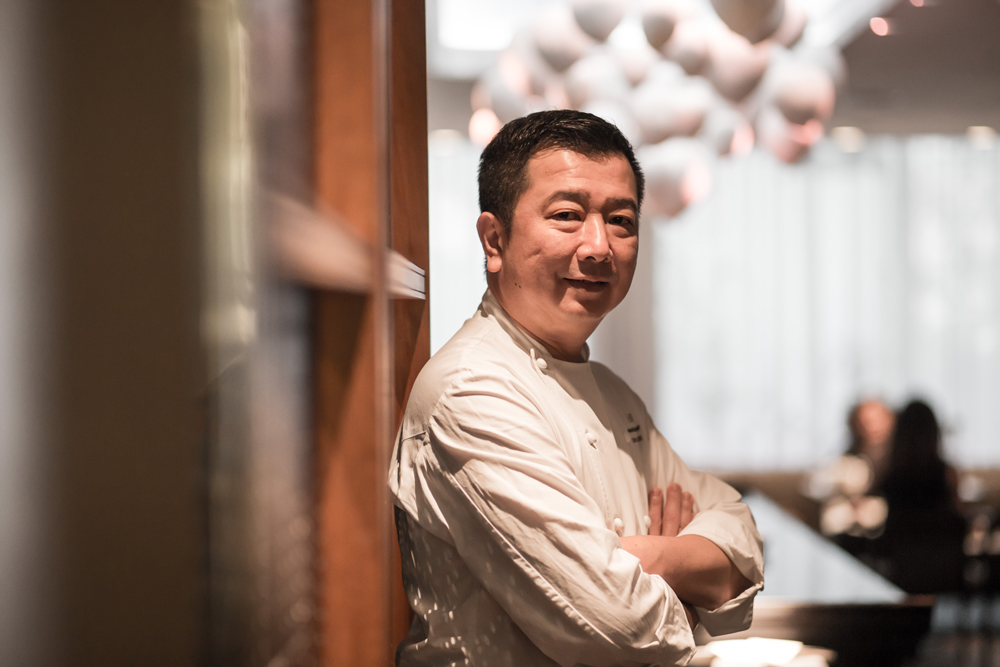
Although the commercial accomplishments may be attributed to Yau (who sold Hakkasan and Yauatcha to Emirati investors in 2008), Hakkasan’s reputation for crafting modern interpretations of traditional dishes from southeast China is surely owed to the ongoing efforts of executive head chef Tong Chee Hwee.

After working for 18 years under “master of Cantonese cuisine” Cheng Hon Chau in Happy Valley Singapore and Malaysia, Chef Tong came to London to set up Hakkasan in 2001, and quickly earned a Michelin star within just two years. Building on this, Hakkasan has since ballooned into something of an empire, with outposts in New York, Mumbai, Las Vegas, Doha and beyond.

Today, Chef Tong bases himself in HKK, the group’s City of London restaurant whose mission is to “celebrate the true diversity of Chinese cuisine”. It’s in HKK that Chef Tong and his team experiment with new creations which, if successful, are rolled out to the other restaurants in the Hakkasan network.

Here, we sit down with Chef Tong to discuss how he created the Emperor’s Feast menu to celebrate Chinese New Year, competing with top international chefs and why he’s passionate about using Western ingredients in his cooking.

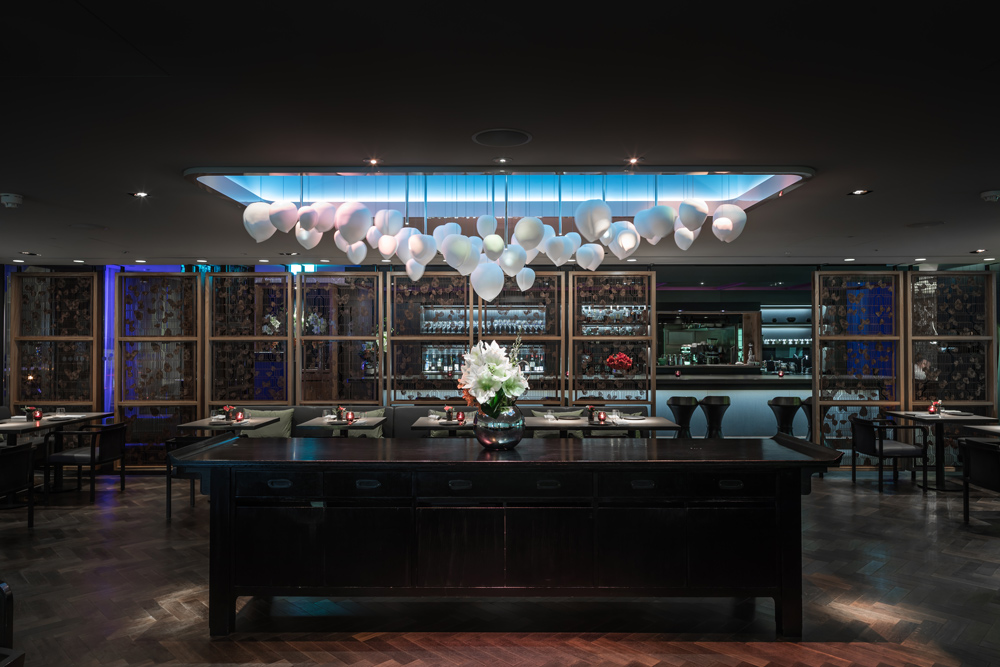
Inside HKK, Worship St, London

What memories do you have of celebrating Chinese New Year from your childhood? What food would have been around the family table?

I remember the delicious meals my Hakka grandmother used to cook during Chinese New Year celebrations. She had such a talent, and she passed that talent on to my mother.

Prosperity toss salad with raw fish, Pen Cai or Big Basin Feast, roast duck or chicken and dumplings are the most popular and traditional to commonly serve during Chinese New Year. My grandmother always cooked them for family. Now I always cook for my family, I am most happy when cooking for them and watching them enjoy the food when everyone is gathered around the table.

What sets HKK apart from the other restaurants in Hakkasan Group?

Hakkasan focuses on modern Cantonese cuisine, whereas HKK is modern Chinese cuisine; the reason behind HKK is to further improve the standard of Hakkasan. I found that Cantonese and Chinese cuisine in London lacked the individual fine dining standard, and HKK is a restaurant that combines quality Chinese cuisine and French fine-dining service.

What are the biggest challenges of creating Chinese fine dining for a diverse London palette?

I think the biggest challenge for me during these 15 years is that I’ve seen lots of international cooking, with international chefs coming from all over the world with new dishes and new cuisines. We as chefs and restaurants are now forced to offer something new and interesting to meet consumer’s needs. They expect it. But, for me, it’s a great improvement and I look forward to this continuing in the future.

' Touch of the heart' from the Emperor's Feast: lobster and pickled Chinese leaf dumpling, king crab with XO sauce dumpling, sea bass and shrimp dumpling
‘Touch of the heart’ from the Emperor’s Feast: lobster and pickled Chinese leaf dumpling, king crab with XO sauce dumpling, sea bass and shrimp dumpling

At what point in your career did you feel that you had mastered your craft?

I began working under my master Chef Cheng Hon Chau. He was known as a master of Cantonese cuisine, and it was under his mentorship that I honed my own skills and techniques. After four years, I became a master chef to run the restaurant [Happy Valley]. It is hard to find the point in my career because I am always learning and improving.

What are the key lessons you’ve learned in your career, which you often pass on to your junior chefs?

First, the UK is a highly global society; you can find food from all over the world very easily. Therefore, positive competition can definitely encourage people and help people to improve their ability to create a better restaurant with a unique style. Second, change your [perspective] and consider yourself as a guest – would you be experiencing well-prepared hospitality and concepts? No matter where they are, in the UK or anywhere else in the world, if customers receive the best service and best quality food what is not to like?

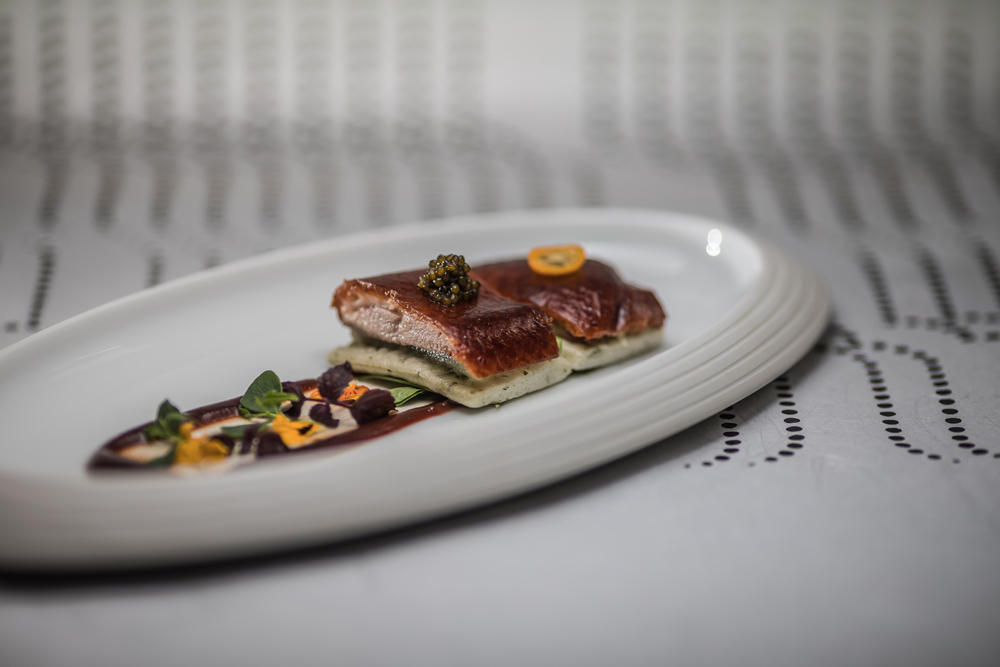
Cherry Wood Roasted Peking duck I
Cherry Wood Roasted Peking duck

HKK’s Peking duck has often been recognised as a standout dish from HKK’s menu. Can you tell me how you adapted it for the Emperor’s Feast menu for Chinese New Year?

For this special Cherry Wood Roasted Peking duck I presented it with the combination of imperial caviar, foie gras, and kumquat as a bite of the soul for the menu. We have plated the dish beautifully to make it feel even more luxurious and with the background of the jade and gold emperor banners I think guests have really enjoyed it.

What is your process for finding the right drink pairings, both alcoholic and non-alcoholic, for your tasting menus?

We have a very strong beverage team to find the rights drinks pairings. Our cocktails and wines choices are definitely superior. The beverage team all taste the menu and work together to build a drinks flight that not only works with the [usual] menu, but also the entire Chinese New Year campaign.

How have you integrated Chinese ingredients like sea cucumber and yu fungus into your food?

We are always trying to introduce authentic Chinese ingredients and add innovative elements into our newly designed dishes. We want to offer guests a new experience and surprise them with new flavour combinations that they haven’t tasted before. I used sea cucumber in the Chinese New Year dish ‘Monk jumps over the wall’, which is one of the culinary dishes for Chinese people and dates back to the Qing Dynasty.

This dish contains 18 kinds of main ingredients including sea cucumber, abalone, scallops, dang ginseng, mushrooms, ham, chicken stock and more. Rather than a clear soup, I blended the ingredients to form a thick soup which makes the flavours more balanced. Moreover, the scallop noodle dish with yu fungus featured in the Chinese New Year menu uses a jade coloured chive sauce symbolising immortality.

Chef Tong preparing 'Eight treasure chicken', with guinea fowl, ginko nut and mangalica ham
Chef Tong preparing ‘Eight treasure chicken’, with guinea fowl, ginko nut and mangalica ham

How important to you is using local British ingredients?

It emphasises the point that with HKK we are taking guests on a culinary journey. I like to use lots of Western ingredients to have a nice combination of Chinese food with Western cultures. There are lots of different cultures surrounding food in northern and southern China, and also for Chinese people in different countries as well. That is why I think using local ingredients is a part of culinary culture.

We get most of our ingredients locally. We’re really lucky in the UK, as we have such a variety of local producers. For example, the Dingley Dell Pork we use is from a rare breed of pig originating from Suffolk; the lamb is from the Welsh Rhug Organic Far; and we use local seasonal shellfish and vegetables too.

Can you explain the reason for the names behind some of the dishes, including ‘Emperor’s bite of spring’ and ‘Monk jumps over the wall’?

Spring rolls are hugely variable in today’s Chinese cuisine but the actual story of the spring roll comes from the season of the spring where it was traditional to welcome the arrival of spring and pray for good luck at the start of the new year. They gathered a variety of different spring vegetables and seasonal ingredients to be placed on one plate and rolled into a pancake. The spring pancake has also been used as one of the royal dishes, which emperors offer to his ministers as a reward in the beginning of the spring to welcome the season.Our ‘Emperor’s Bite of Spring’ takes this inspiration and uses authentic ingredients such as sea cucumber but also black truffle.

The reason why the other dish you mentioned is known as ‘Monk Jumps over The Wall’ is there was once a scholar was cooking and preparing this dish next to a temple. The strong aroma of the dish spread over to the temple and one of the monks of the temple, who was meditating, was tempted with the nice aroma and jumped over the wall just to try this dish.

For more info on the Emperor’s Feast tasting menu, visit hkklondon.com/our-menus

Elements: Hélène Darroze

The two-Michelin starred chef shares her lifelong fascination with a rare pepper that has become the cornerstone of Basque cuisine

Photography – Benjamin Swanson

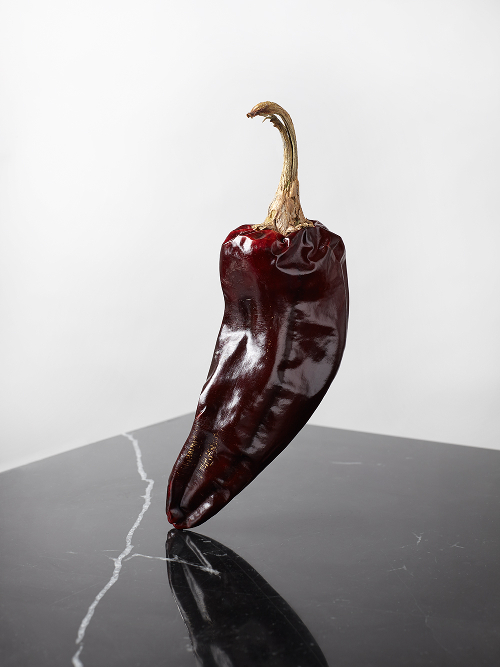
In the Basque country you never use black pepper, you always use piment d’Espelette (Espelette pepper) to season ingredients. That’s our culture, so I have always cooked with it.

It’s not a very strong pepper; it’s piquant, a strange combination of sweet and spicy flavours. I get mine from a little provider in Espelette, in the Labourd province.

It’s a small and very unique culture, and in order to be sold as piment d’Espelette, farmers have to follow some strict rules. For example, you can only water them once after planting. After that, they’re only allowed rainwater, unless the grower is given special permission from France’s agricultural regulator.

We worked with a small dairy producer to create an Espelette pepper butter, which is now on the table at the beginning of lunch and dinner at all of my restaurants. It’s ideal for seafood too – poached lobster in this butter is amazing.

It’s a really nice pepper that’s very flavoursome. Once tried, it is never forgotten; you will never want to cook with anything else.

Hélène Darroze’s eponymous restaurant at The Connaught hotel, London, has two Michelin stars.

This article is taken from PORT issue 19, out now.

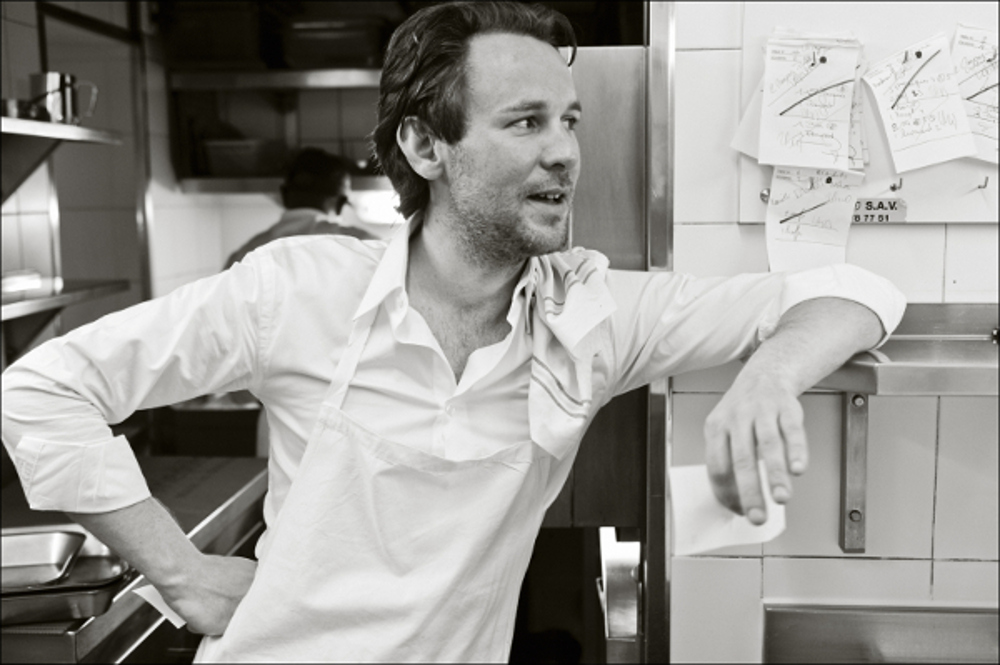
Questions of Taste: Mathieu Pacaud

The son of three-Michelin star chef Bernard Pacaud chats to PORT about reviving an iconic French eatery under his father’s guidance

Mathieu Pacaud
Mathieu Pacaud

Mathieu Pacaud was just 15 years old when he started to learn the strict discipline of the haute cuisine. Despite being so young, he was fortunate enough to gain a place at the respected restaurant Le Jamin in Reims, France, under the watchful command of esteemed Benoit Guichard – once labelled ‘the world’s best chef’, by the French Government at the time.

Pacaud took this experience with him and embarked on a seven-year stint at the three-Michelin star L’Ambroisie. It was here where he really forged his reputation, working his way up to reach the position of Chef, giving him the privilege of working alongside his father, the venerable Bernard Pacaud.

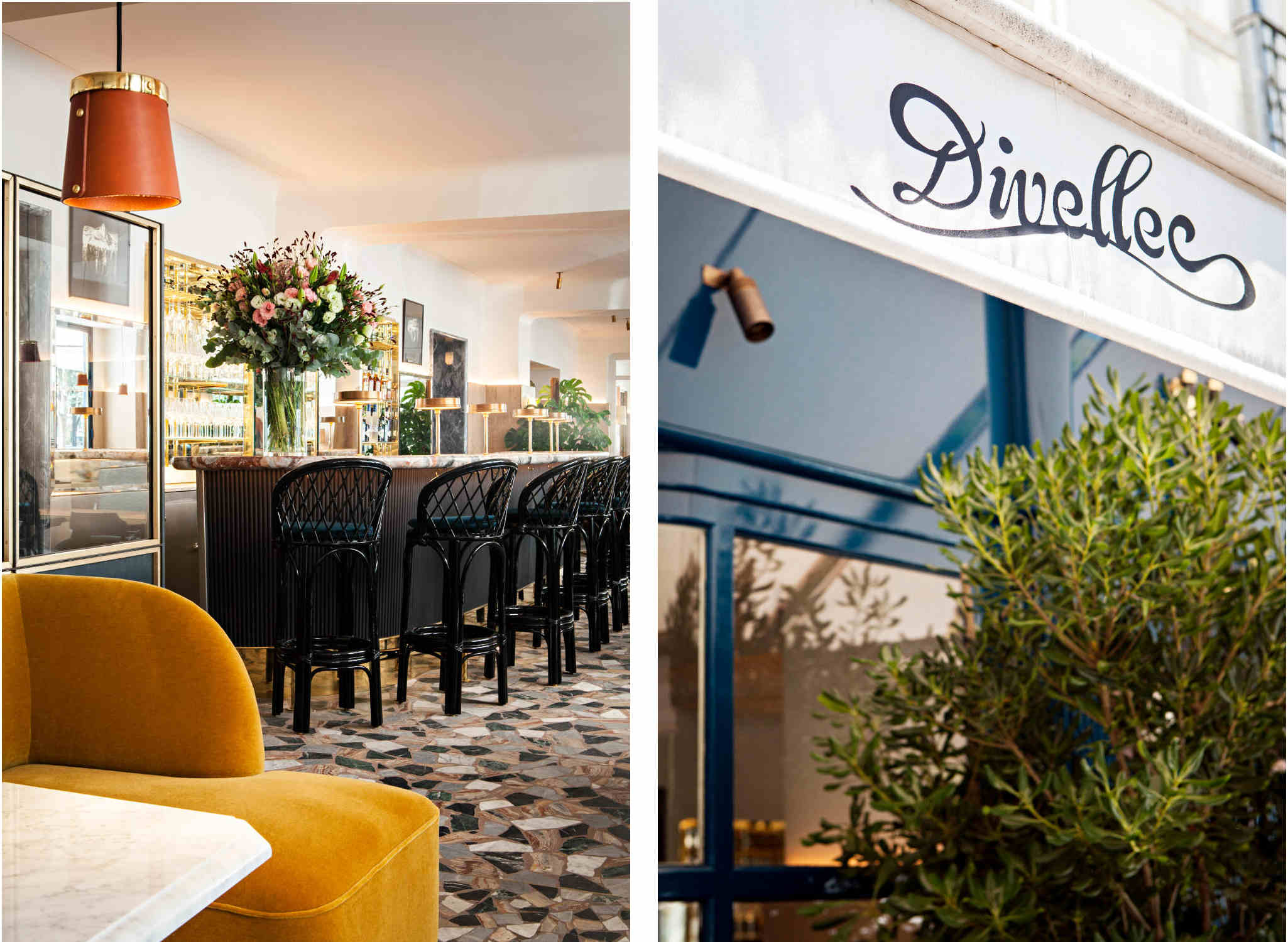
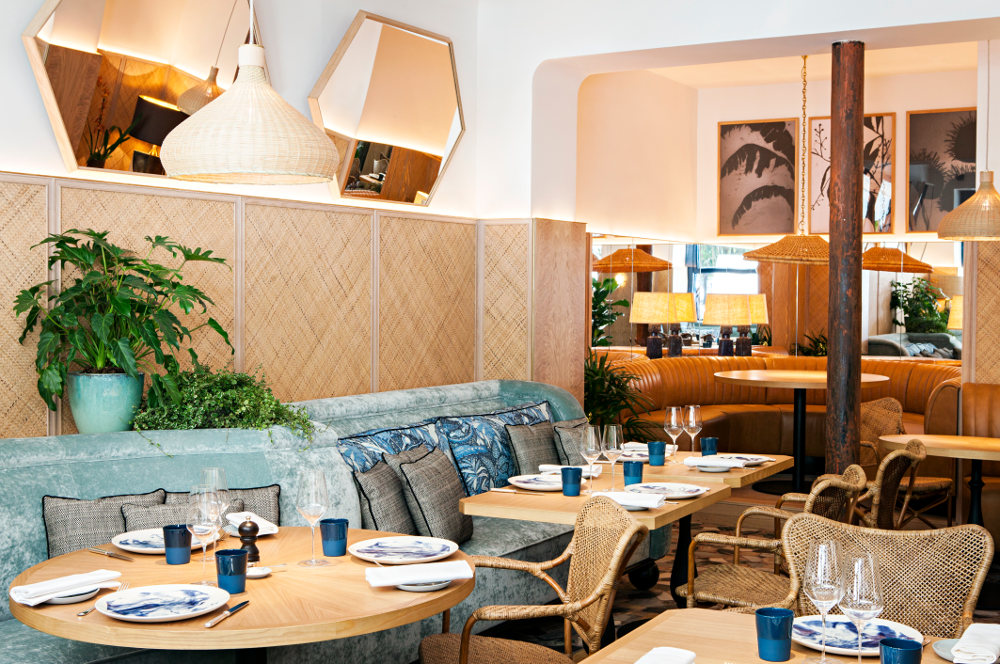
Today, Mathieu is one of the masterminds behind the rebirth of historic restaurant Le Divellec (reborn as simply Divellec). Here, we chat with Pacaud about Divellec’s novel menu, reinventing French cuisine, and bringing the traditional atmosphere of L’Ambrosie to Asia.

Inside Divellec, Paris

You started your career at age 15. What do you recall from that early beginning and the key lessons you learned?

My father sent me to the restaurant Le Jamin thinking I needed to be confronted with a tough experience, as I was bored and unruly at school. It was a tough experience indeed, but I loved every bit of it, maybe because of the adrenaline you have when you are part of a brigade, or maybe because I felt that it was changing me for the better.

I learnt my first recipes and techniques a LeJamin. But, more importantly, I learnt the importance of being organised, of keeping my area spotless, of obeying to the chef, which are the first essential steps of learning the job.

What drove you to move to Beirut at the age of 20?

I felt that it was time for me to go abroad, I had the urge for living a new experience. I wanted to taste foods and dishes I had never heard about…I wanted to hear a language I did not understand. Beirut seemed far from anything I had known before: it was both exotic and unusual.

pacaud-7

What have you learned working alongside your father, the laureled chef Bernard Pacaud, at L’Ambroisie?

It’s not easy to work in the restaurant of your father, especially when the place is considered to be an institution. My father was aware of that and he wanted me to earn the respect of the other brigade members, so he placed me at the bottom of the ladder. It took me seven years to work my way up and to reach the position of chef alongside my father.

During this time, I learnt the pillars of French cuisine: how to make a proper jus de viande, how to get the seasoning right, or why it is just impossible to do three-Michelin star cuisine without exceptional products. I think there is no better place than L’Ambroisie, and no better chef than Bernard Pacaud to understand the importance of such knowledge. They both embody the respect for French cuisine and the respect for the best products.


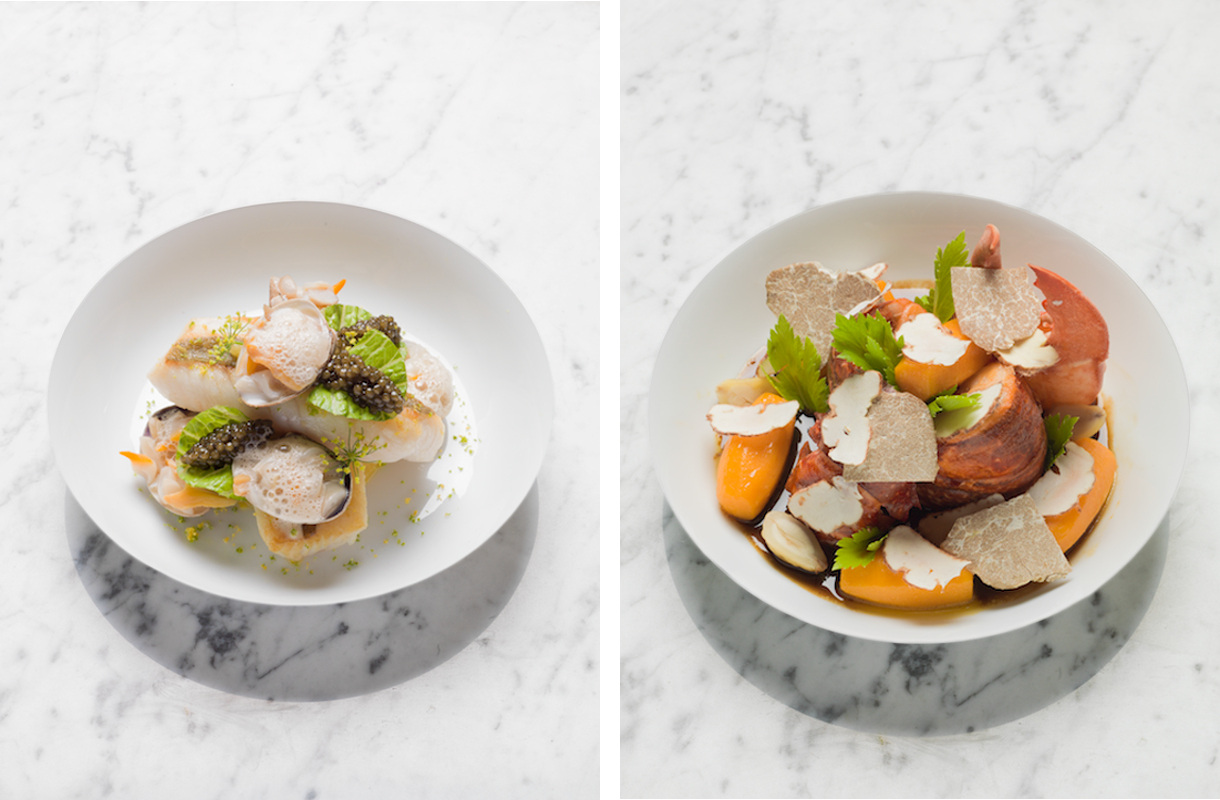
Right: John Dory with mace, shells and razor clams mariner. Left: Lobster fricassee with pumpkin, FRICASSÉE WITH PUMPKIN, Devilled style sauce.
Left: John Dory with mace, shells and razor clams mariner – Right: Lobster fricassee with pumpkin, FRICASSÉE WITH PUMPKIN, Devilled style sauce.


Le Divellec is one of the most famous seafood restaurants in Paris. How does it feel to be part of the reopening of a place with such a decorated history and role in French cuisine?

It is really a privilege to be part of the second birth of such an institution. Aside the political legend that the restaurant embodies, we also have to remember that Jacques Le Divellec was a leader and precursor in his field – he was the first chef to serve carpaccio and ceviche in Paris, for instance. I would like Le Divellec to keep this leading role in the reinvention of French cooking.

What was the process of transforming Le Divellec into a contemporary restaurant and the thinking behind it?

We wanted to bring something new and reinterpret the whole concept. At Divellec today, vegetables are as central to the menu as seafood is, as it is a part of my personal cooking style.

We are very lucky to have our vegetables grown and delivered directly from the gardens of our summer restaurant in Corsica, located in the world-class Domaine de Murtoli estate. We also wanted the restaurant to be more contemporary and relaxed, which is why we tried to decorate it as an architect would decorate his own apartment.

Mathieu Pacaud (left) and members of his team


Le Divellec’s menu is a co-creation with your father. How did you both contribute?

We really worked together on the menu. It would have been a disaster to have some dishes created by my father on one side, and some dishes created by me on the other side. We knew we had the same priorities, which was to source amazing products, to do our best to sublimate them and to give them a modern twist.

What is your favourite dish on the menu?

We have recently added to the menu a salmon-based dish – sorrel salmon, Paimpol beans and Mostarda di Cremona – that I think reflects the spirit of our restaurant perfectly well. The sorrel gives a traditional touch, as it is a combination of flavours that has been working well in the kitchen for decades, while the Mostarda di Cremona and Paimpol beans provides a sense of novelty and completeness in the flavours. We have been working a lot on this dish to try and find the perfect way to cook it.

Right: Egg marquise, white truffle and cep fan, Divellec version. Left: Sole blanc  - mange glazed with arlay wine, golden caviar.
Left: Egg marquise, white truffle and cep fan, Divellec version. Right: Sole blancmange glazed with arlay wine, golden caviar.


You are also planning to duplicate L’Ambroisie in Macau, Asia, inside The 13 hotel. How do you plan to adapt the traditional atmosphere of L’Ambroisie to a hotel-casino?

Our goal is to present the guests with the possibility to be transported to Paris for lunch, or a dinner. We have asked our suppliers to recreate the same plates, cutleries, glasses. The executive chef and the restaurant manager of L’Ambroisie Macau have worked for several years at L’Ambroisie Paris and are familiar with the atmosphere we want to create. Our goal is truly to recreate the experience one could have in Paris.  

divellec-paris

Craft Works – Ollie Dabbous

Port and Levi’s® Made & Crafted™ meet Michelin-starred chef Ollie Dabbous to discover how he’s using simple techniques and unearthing unique British ingredients to shape the future of the food industry

Ollie wears Wool cashmere lined Type II Pile Trucker, Heavyweight 8oz cotton T-shirt, Italian selvedge chino pant in After Thought Levi’s® Made & Crafted™ – photo by Pani Paul

In a technology-obsessed age, where over-designed furniture and deconstructed food dishes snapped from above can command more online coverage and ‘likes’ on social media channels, how do modern-day creatives resist the lure to overcomplicate things, while still continuing to develop? To answer this, we meet Michelin-starred chef Ollie Dabbous, who is styled in Levi’s® Made & Crafted™. Like Dabbous, Levi’s® Made & Crafted™ – the contemporary, sophisticated collection within Levi’s® – is creating tomorrow’s classics by building on a successful reputation for quality product, using meticulously sourced materials (like Italian hand-waxed leathers and proprietary selvedge denim) and state-of-the-art production techniques. Here, we sit down with the ‘chef’s chef’ and delve into his approaches to innovation.

Pea and mint – photo by Pani Paul

When Ollie Dabbous first opened his eponymous London restaurant in 2012, he couldn’t have predicted just how successful his first few years in business would be, given that he was relatively unknown (despite having trained under Raymond Blanc at Le Manoir), in a crowded sector. Following gushing reviews from some of the UK’s leading critics, such as AA Gill, the bookings wouldn’t stop coming. But what made it all the more surprising is that he built such a rapid following with restrained, British cooking that refused to latch itself on to any food trends of the time. “It’s harder to be good than original. Anyone can be original; it’s easy to be original,” Dabbous tells me confidently, before explaining why he feels there’s more skill in making a classic lemon tart from scratch than placing the deconstructed elements on a plate. Sure, the latter may make for a better photo, but it’s unlikely to taste as good as the original. “I think nowadays people don’t really want food that’s ‘chefy’ and technique driven. I think they want something a bit more natural, a bit more seemingly effortless,” he adds. “Yes it’s nice to be wowed, but equally I think people just want a tasty plate of food rather than a showcase of the chef’s skills.”Earning a Michelin star just eight months after opening only strengthened his resolve, and in the years that followed, he has injected more and more British produce into his restaurant’s lunch, dinner and tasting menus.

Dabbous Restaurant – photo by Joakim Blockstrom

“I’m happy to say we work more with British farmers and butchers ; you get a more tailored service,” he says. And the treatment of the ingredients after sourcing is, of course, just as important to Dabbous. “The more you process food, the more you can actually detract from it. If you get an amazing organic sand-grown carrot, and the flavour’s phenomenal, or an amazing rib of beef – just put it on the barbeque. You don’t need all this refining.” It appears to be a proven formula, given the accolades he’s received. But winning the plaudits of gastronomes and critics alike must bring with it a pressure to constantly develop new dishes, techniques and toy with the ‘new’. Not so, according to Dabbous. “A lot of young chefs are guilty of thinking they can kind of reinvent the wheel, but I think the role of the chef is to take great produce and make it better,” he says. “Sometimes you don’t have to do a lot to it. Sometimes, to make it as good as it can be, it might mean that you’re actually doing something quite classic.” And that’s because, ultimately great taste endures over great presentation.

Wild strawberry tartlet with camomile & rose petals – photo by Joakim Blockstrom

“You remember great steak, great fish and chips, a great lasagna,” Dabbous continues. “None of these things are aesthetically pleasing or photogenic, it’s all kind of basic, but they’re things that give pleasure. And that’s a thing that people come back to – it’s why basic food, done well, will always going to exist.”

This self-assuredness and insistence on championing simple British produce is likely why Dabbous has become the ‘chefs’ chef’. But more than that, he seems to have a deep understanding of what really drives customers through his doors, week in, week out. “Whether now, whether in 20 years’ time, value for money is always going to be important to customers [as well as] friendliness and good service,” he says. “With food, yes everyone has different opinions on things, but there’s something quite brutally honest about flavour – something is either delicious or it isn’t.” Simple, really. 

Ollie wears Crewneck Jumper, Levi’s® Made & Crafted™

Styling Scott Stephenson, Alex Petsetakis
Photography assistant Liberto Filo
Grooming Davide Barbieri at Carenusing Bumble and bumble

Levi’s® Made & Crafted™

This story appears in PORT issue 19, out now.