Norlan: A glass to change the whisky industry

PORT meets the New York-based team behind the Norlan Whisky Glass, a tumbler-glass hybrid concept that has raised $800,000 on Kickstarter and is already gaining support from drink industry experts

Marinó Thorlacius for Norlan

WHISKY WEEK: The Norlan Whisky Glass has a lot to live up to. The brand’s Kickstarter page, which has raised a total of $807,452 through crowdfunding in the 50 days since it was launched, contains a bold opening statement: ‘Meet the glass that will change whisky’.

By fusing ‘design, science, and sociology’, the Norlan team (comprised of Brian Fichtner, Sruli Recht and Shane Bahng) hopes to create ‘the perfect whisky drinking experience’. Between them, the trio can rely on three decades of experience in the design and retail industries, and have a substantial amount of whisky enthusiasm to match. And although it seems as though they’ve set themselves a high bar, the concept has gained a lot more attention than expected, raising ten times the original goal of $75,000 before even going into production.

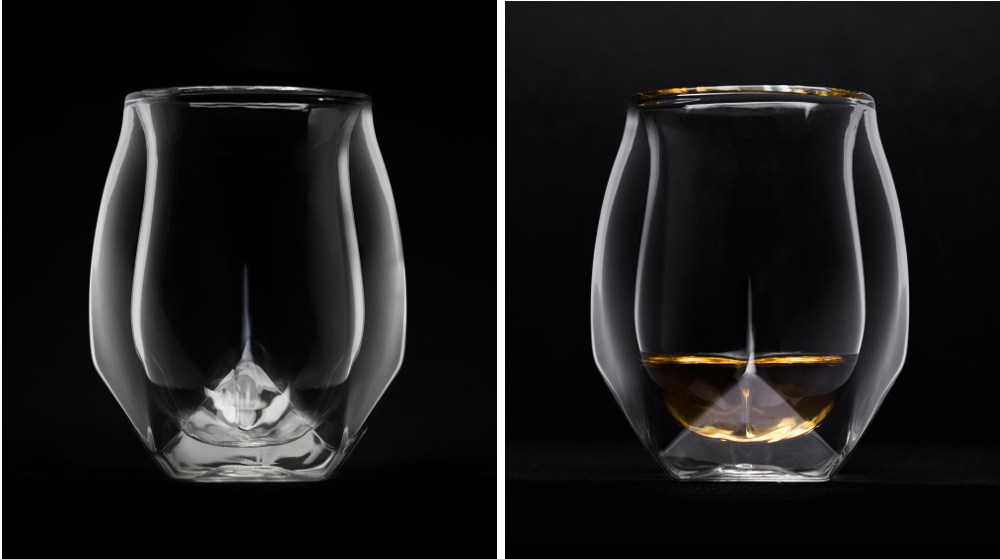
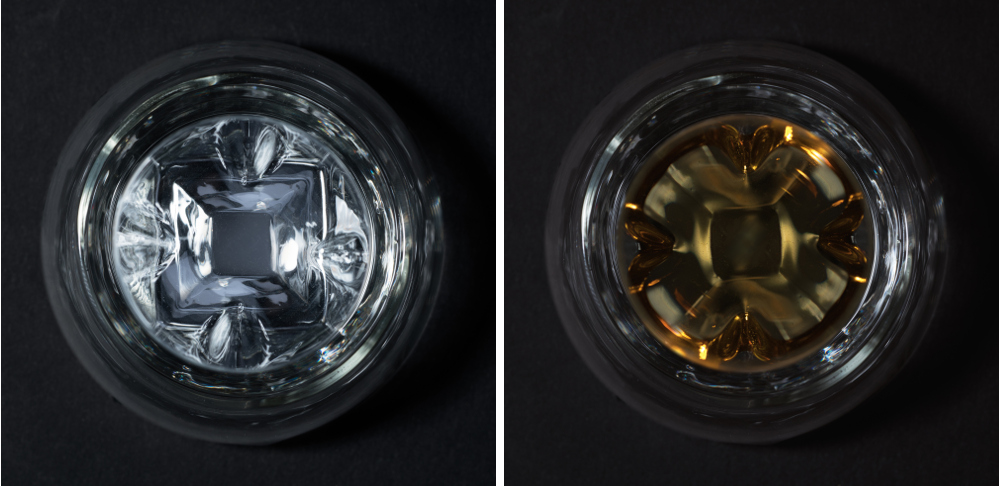
Fichtner, Recht and Shane Bahng’s creation – an amalgamation of a whisky tumbler and a traditional nosing glass – is primarily scientific. Based on a principle of ‘ultimate aeration’, the glass channels prime aromatics directly to the drinker’s nose when swirled, while the unwanted ethanol is quickly dispersed.

The project has been 18 months the making and has included the use of 3D printing, as well as discussions with some of the oldest and most established distillers around the world. On the eve of the Kickstarter campaign’s conclusion, we caught up with the trio to ask about the glass that, from the support and praise it continues to receive, looks like it may well live up to that big claim.

The Norlan Whisky Glass – Image by Marinó Thorlacius

Where did the concept for the Norlan Whisky Glass come from?

Norlan was founded on the idea of addressing deficiencies in the whisky drinking experience. This was mainly that the world of whisky is dominated by two distinct types of glassware: nosing glasses and classic tumblers. Hence, ‘the glass that will change whisky’.

Changing whisky is obviously a big statement. We mean this both specifically (how whisky tastes, smells, and looks in a glass) and broadly (how whisky is marketed and presented to the consumer). Regarding the broad change, there are so many things about the industry that we feel are not only stagnant, but regressive.

Whisky is not simply about the latest rarity and it certainly shouldn’t be consumed out of just one glass; it is primarily about experience. Of course, we think one’s experience of the spirit is improved by drinking from the Norlan glass, but homogeneity is not what we’re after.

Why the focus on whisky in particular?

We are complex men, with irrational passions, stirred volatile by the potent aged spirit presented in well packaged bottles, for slow consumption, and demonstrable pondering. It picked us. We didn’t pick it… And on one moonless eve, we were united by ‘The Glass from The North’.

Can you talk us through the science behind the glass?

Our intrepid designer found himself face to face with a glass of aromatic force, and visual farce. How could it be the only option for a drinker of stature? It pretty much started from there.

At first, the designer didn’t realise he was approaching the glass from scientific standpoint at all, but an inherent design problem: how do I improve this experience? The science came in when the intuitive approach had taken it to a certain point.

While considering the aroma focus, our designer was watching the waves and thinking about how to get more of that air down into the whisky.

Whisky is made up of over 400 flavour-bearing compounds, and it is suspected that an equal number have yet to be identified. With aeration, the undesirable compounds will evaporate faster than the desirable, aromatic and flavourful ones, which increases the concentration of the aromatics. And thus, a solution was required to agitate the fluid as it swirled in the glass.

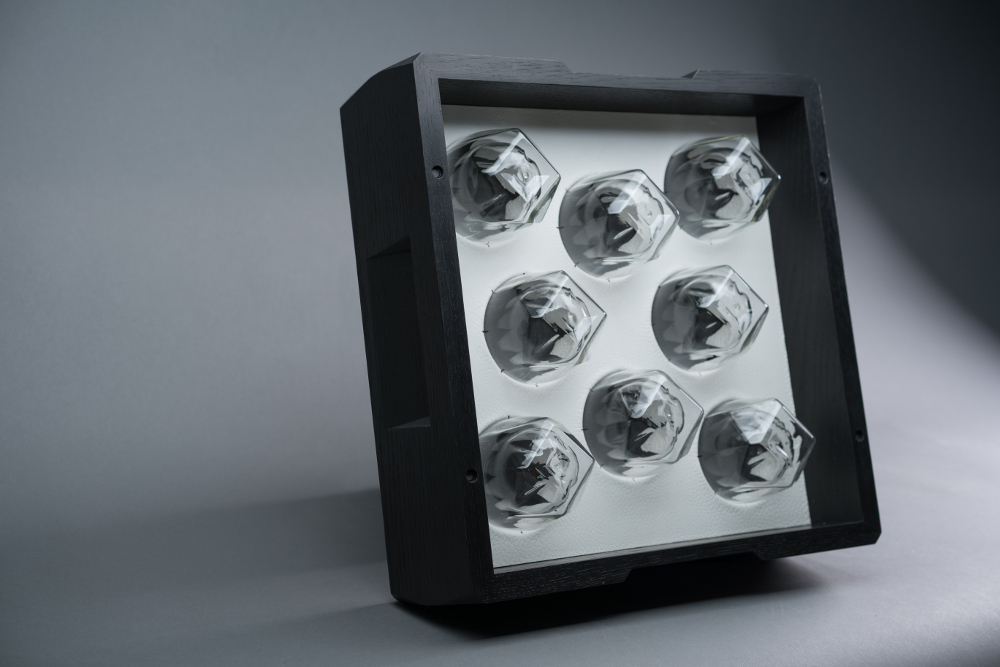
 The Kist Edition, a special limited edition case of eight Norlan Whisky Glasses, designed exclusively for Norlan's Kickstarter campaign – image by Marinó Thorlacius
The Kist Edition, a special limited edition case of eight Norlan Whisky Glasses, designed exclusively for Norlan’s Kickstarter campaign – image by Marinó Thorlacius

You have successfully crowdfunded your Kickstarter nine times over. Was this reaction something you expected?

It’s hard to say. One can only hope a project like this gets traction and takes off. We really are trying to improve whisky and not just add a gimmick to the endless product roster — this is a project with scope, research, and heart. We worked super hard to cover all the angles before launching. A lot of the success is to do with timing, and very likely it helps that whisky is having its moment now.

How much innovation have you seen in the today’s whisky glass market?

In terms of design innovation, what you see in today’s market is generally iterations and evolutions of existing products and ideas. Our glass innovates in key areas, yet it is at the end of the day a glass. A glass with some inventions in and around it, but a glass nonetheless. So it’s an interesting thing to think about; is it innovation that is being rewarded, is it hard work, is it persistence, or is it just a popularity contest?

Why did you feel crowdfunding the glass was right for you?

There has been a rapid change for the creative, the consumer, and the producer since the e-commerce explosion. The bar for quality, narrative, and design has definitely continued to rise, pushing people to competitively innovate. What’s most interesting today is how these things have converged in crowdfunding, which has in turn created a new forum for design, innovation, and the power of consumer demand. The latter has the potential to take over the decision making process from manufacturers, distributors, and wholesale buyers.

Crowdfunding can empower consumers to decide what is made, instead of designers and manufacturers forcing a product into existence when there may be no market. Right now, anyone can produce anything, anywhere, anytime. And as consumerism speeds up, aided by the power of e-commerce, this does not make a sustainable situation.

We spent 18 months developing this glass at first because we were simply compelled to. The market potential wasn’t something we thought too much about until we were ready with the prototypes. Yet, without the innovative platform of crowdfunding we would have had a very different route to market. Of course we are super happy that people have gotten behind our project and rewarded its innovation.

What’s next for Norlan?

As we’ve become more involved in the world of whisky, we’ve discovered a myriad opportunities for modernising and evolving the whisky drinking experience. We now have dozens of products in development that will delight the whisky drinker.

In the future, as we release each new product that we have been working on, we plan to address the different issues that we have come across in this lifestyle. Whisky has been around for hundreds of years, and will likely be around for hundreds more, and so, it is ripe for innovation, change, and a breath of fresh air.

The Kickstarter campaign for the Norlan whisky glass ends on December 15

De Padova: Redesign for Living

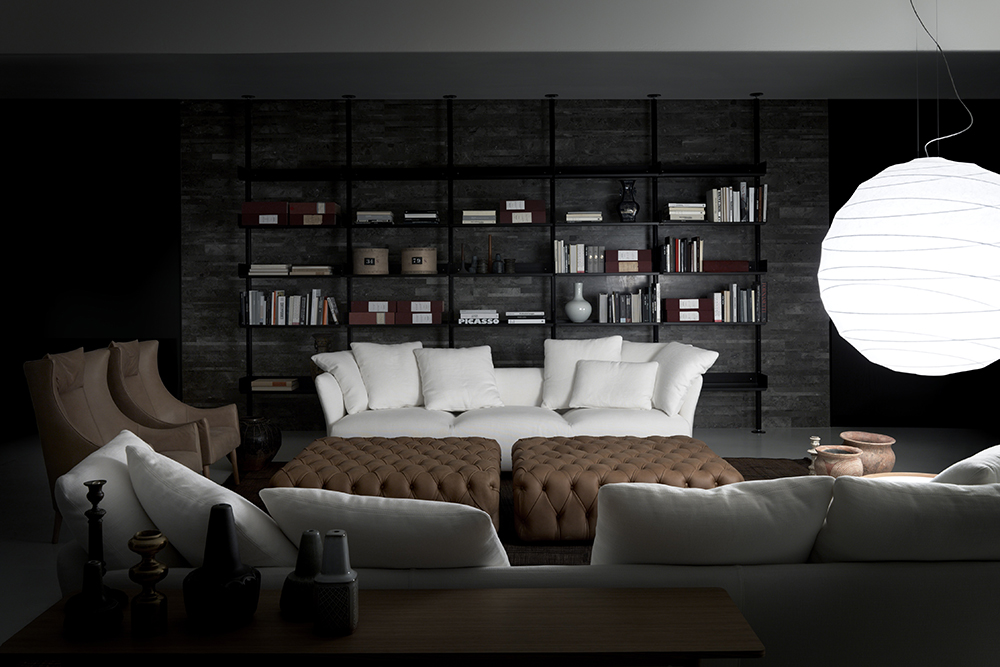
PORT travels to Milan to experience the new Piero Lissoni-designed showroom of 60-year-old furniture brand De Padova

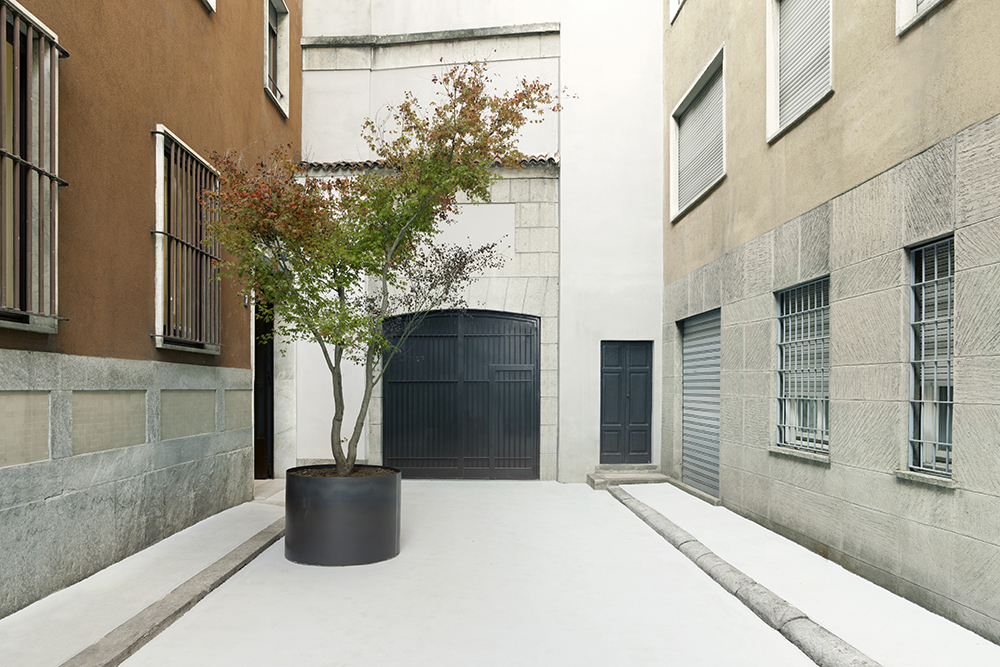
When its showroom on one of Milan’s most prestigious streets, corso Venezia, became unsustainable, the iconic Italian furniture company De Padova was determined to turn the need to relocate into a strength. After 50 years on the old site, the brand that first introduced Scandinavian minimalist design to Italy decided to exchange its vast, double-heighted display windows on a busy street corner, for a discrete, intimate setting at the end of a quiet road. It’s a move that signals a real change for the 60-year-old company, which survived turbulent times following the recent financial crisis.
Earlier this year, De Padova merged with Italian kitchen and bathroom brand Boffi, but, as Roberto Gavazzi, CEO of Boffi says, it was not a merger driven completely by a need to save the company. “I had been courting De Padova for some time,” he tells me, “and was convinced that the union of our two companies would create something extraordinary.”

DePadova_showroom_10

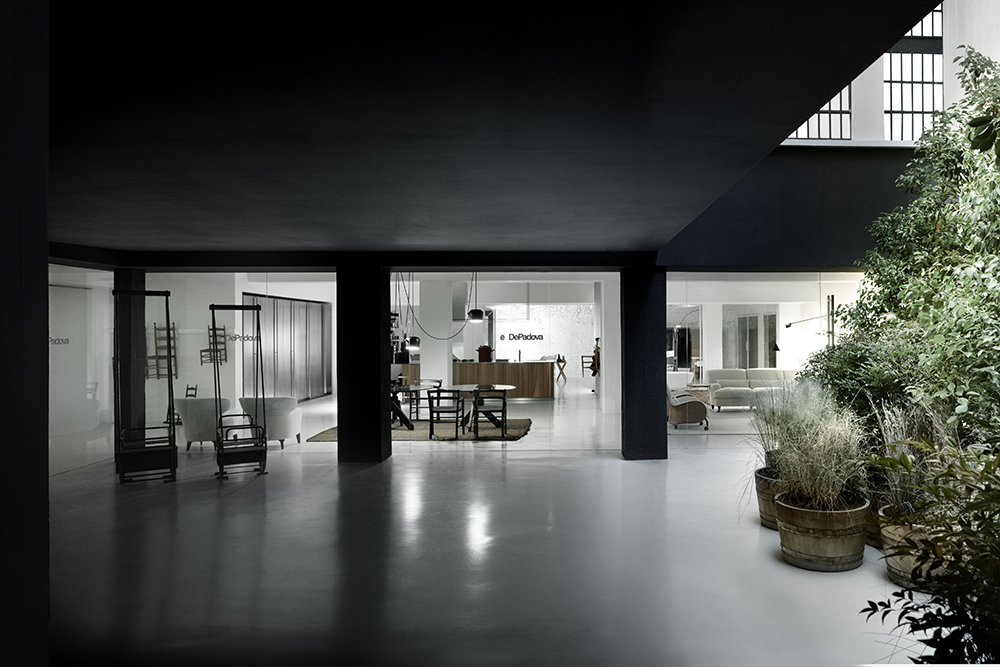
The new showroom is, arguably, the antithesis of the previous store. The old 2000sqm space that the brand moved to in 1965, before the street had gained its reputation, no longer reflected how people engaged with the brand. Despite the large street front, two thirds of people who visited the store entered from the courtyard behind. Now hidden at the end of an unassuming cul-de-sac called via Santa Cecilia, the De Padova showroom – identifiable only by small sign – reflects the way that the company has come to be patronised by loyal, informed and curious customers.

“I am relieved now not to be in corso Venezia,” explains Luca de Padova, the director and son of founders Fernando and Maddelena. “It had become a nightmare. We now have the chance to try and convey a contemporary message.”

De Padova is a paradox – it is part of a quintessentially Italian design culture and yet is defined by its international scope. Curiously, its origins lie in an impulsive change of holiday plans. One year, Fernando and Maddalena were sitting in their car in the cathedral square in Milan with trunks packed for a two-week holiday on the Italian coast. But, inspired by the Scandinavian furniture she had discovered at the Milan Trienniale, Maddalena suggested they go north instead, to Copenhagen. The clothes they had packed were little use in the Nordic summer, but the furniture they discovered there inspired a lifelong passion for international design. The bookcase, table and sofa the couple shipped back became their first collection, and the first pieces of Scandinavian furniture in Italy.

“It was a revolution and also a risk, but there was such a deep desire for change in those years,” says Maddalena. “The urge to wipe out the past, the war, to have fun. And so homes, the way people lived, also changed.”

DePadova_showroom_02

It seems that throughout De Padova’s history a worldly passion has always been present – one that is driven by an eclectic style and Maddalena’s ‘instinctive aesthetic sense’, as she once described it when speaking to Didi Gnocchi in 2005. It’s this personality that celebrated Italian architect and designer Piero Lissoni has attempted to channel in his vision for the new showroom. Lissoni, who acts as creative director of both De Padova and Boffi, took inspiration from the first De Padova showroom that Maddalena established in via Montenapoleone in the 1950s.

“I had invented those shop windows as if they were the rooms in a house, seeking connections between things, suggesting a way to combine furniture, carpets and fabrics,” Maddalena says of the innovative displays squeezed into the original showroom – an element that Lissoni was anxious to continue in the new store at via Santa Cecilia.

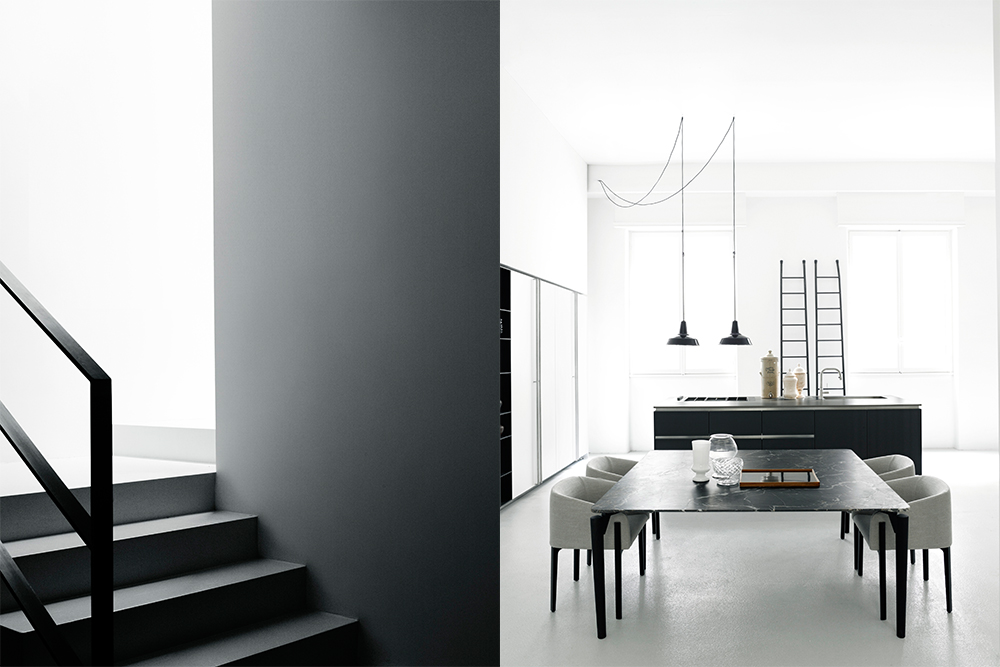
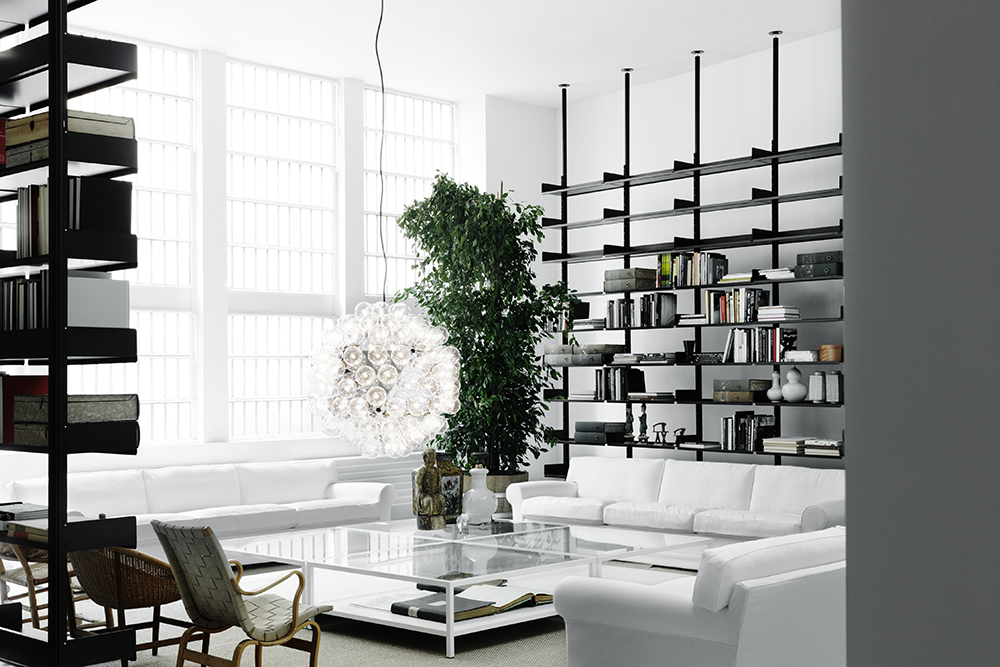
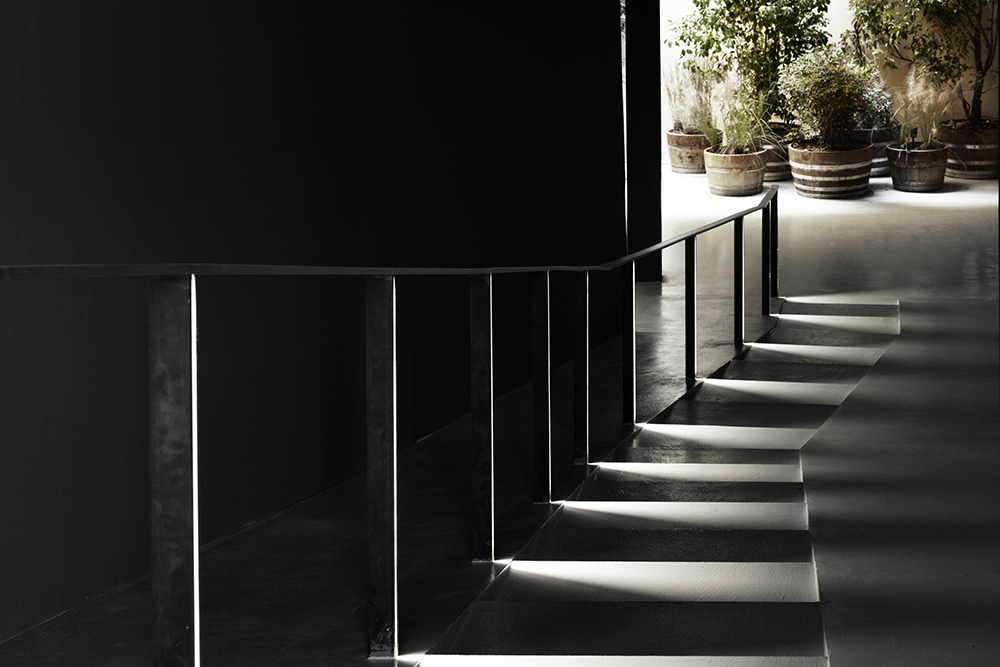
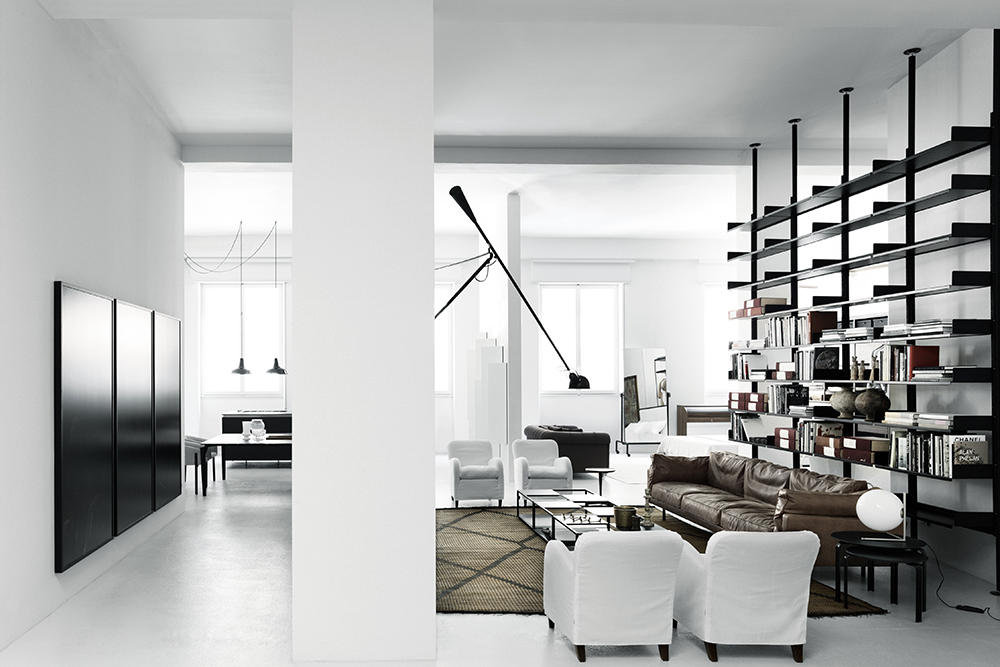
At the new site, a converted car ramp leads to a sunken, glass-walled courtyard, at once acknowledging the vast shop fronts of corso Venezia and at the same time the intimate domestic setting that defines the brand. Inside, the store is split over two levels that Lissoni has divided into convincing domestic areas. Despite the airy, high-ceilinged space, the store has the feeling of an open-plan house; each room is different yet works together as a whole.

DePadova_showroom_03

This coherency, as Luca tells me, is a key theme at De Padova. The brand’s collection is so eclectic, both in terms of its origin and the styles, that I wonder what the criterion could be when selecting new pieces.

“This year it may be Scandinavian design or Japanese minimalism and next year it may be something completely different,” explains Luca, “but it will always go together.”

One the first floor, a long table covered with books provides inspiration for customers with images from throughout De Padova’s history and material samples from De Padova’s ‘partners’. The use of partners is an innovative and original aspect of the showroom. The brand’s furniture is not only contextualised in different domestic settings with Boffi’s wardrobes, bathrooms and kitchens, but also with various elements sourced from the brand’s affiliates. In what De Padova terms ‘a 360° consulting service’, the store showcases some of the its favourite rugs, ceramics, lighting, and even art from other companies that shares De Padova’s design ethos including Flos.

DePadova_showroom_18

Maddalena’s De Padova was once a small company. For her it was all about collecting together the best furniture and she never indicated an interest in expanding abroad. But, as Luca observes, that is not so feasible in today’s world.

The new showroom is helping to reiterate De Padova’s contemporary position, and one Lissoni hopes can be emulated as De Padova and Boffi expand internationally in the coming years. Though as much as it signals a new era for De Padova, the new showroom also preserves the style and reputation of the company which, as Luca tells me, is vital. “The Milanese will always come and see what De Padova is doing,” he says. “I think people like De Padova because we keep our own identity.”

Celebrating Gio Ponti: Molteni&C

We take a look at the new Molteni&C furniture that celebrates the genius of the pioneering modernist Gio Ponti and eight decades of Italian design

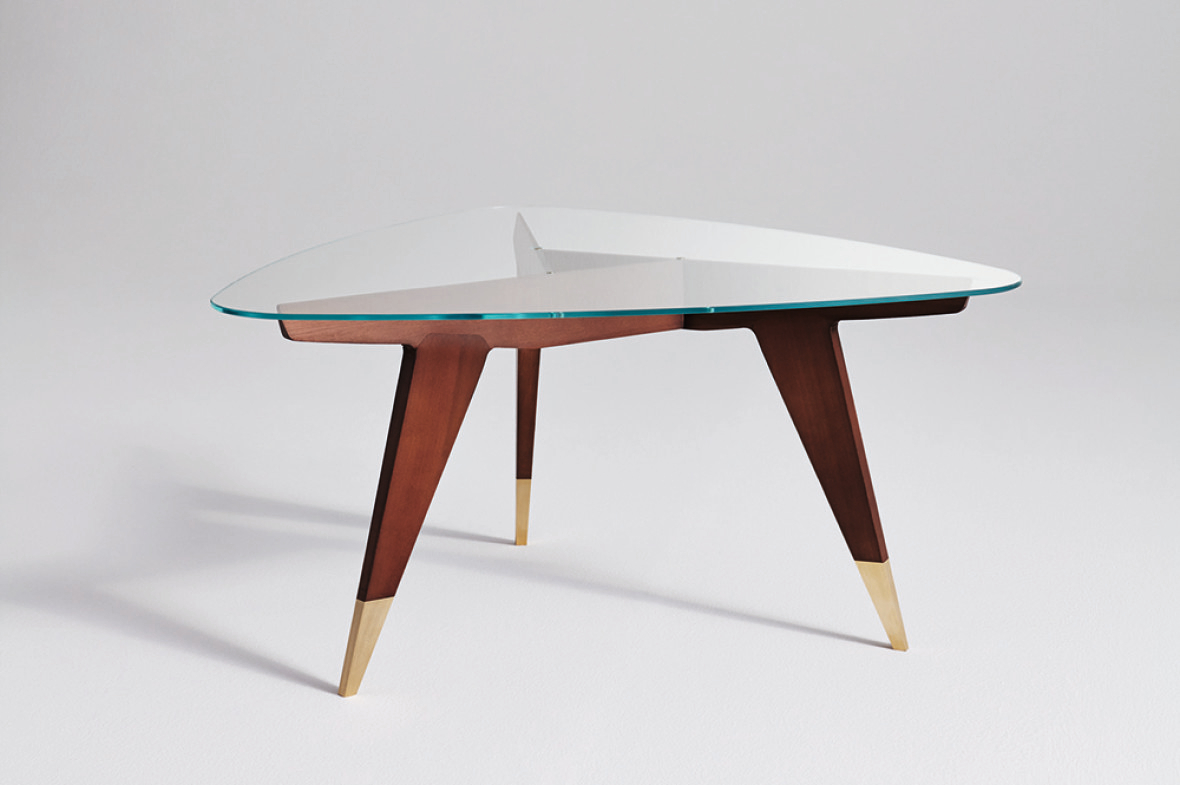
Small Table D.552.2 by Gio Ponti for Molteni&C

In 1929 the designer and architect, Gio Ponti, founded the magazine Domus. Focussing on ‘the cultural debate of architecture and Italian design in the 20th century’, Domus and Ponti would become some of the key figures that established Italy as a centre of modernist design. They were also the driving force behind one of the country’s largest design houses, Molteni&C.
Until the Second World War, Molteni&C had manufactured reproduction Louis XIV chairs, but with peace came economic growth. “After the war there was a need to furnish Italy,” says Giulia Molteni, the granddaughter of founders Angelo and Giuseppina Molteni. “Following the war, my grandfather found designers and architects who had a different idea of modernity like Le Corbusier and Gio Ponti. He thought it would be a great adventure and believed in it. On the appointed day they simply stopped producing the reproduction furniture, threw away everything they were working on, and started anew.” It was an audacious move, but one that worked.

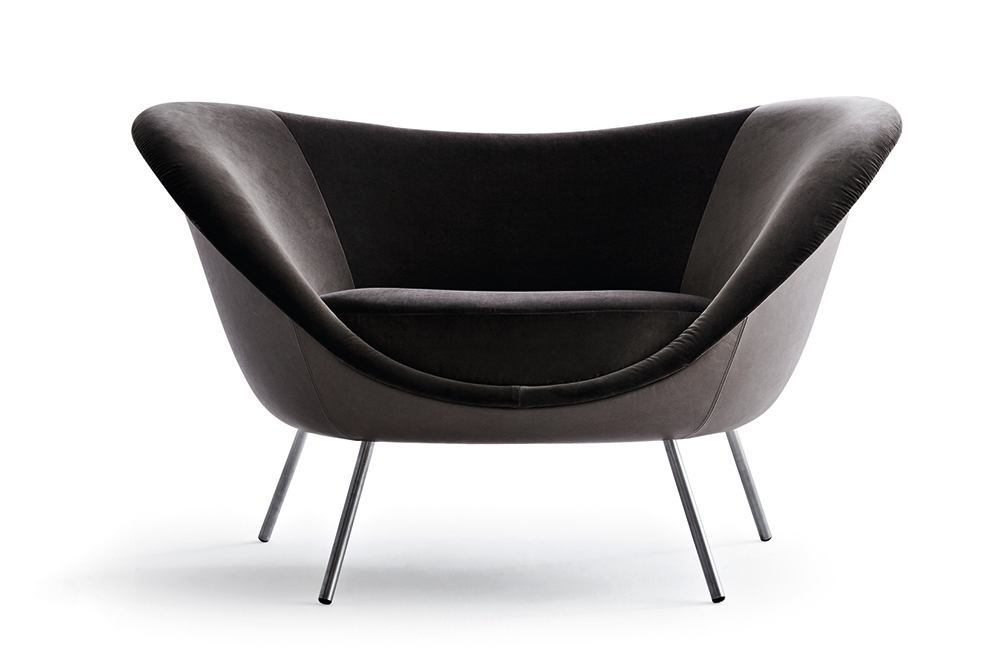
Armchair D.270.2 by Gio Ponti for Molteni&C
Armchair D.270.2 by Gio Ponti for Molteni&C”

Today, Molteni&C comprises four subsidiary companies that are currently celebrating 80 years in business. Fittingly, in collaboration with Gio Ponti’s heirs, Molteni&C has recently reissued a selection of Ponti’s designs that reflect on their history within Italian design and give a potted history of Ponti’s illustrious career. The first, Small Table D.552.2, is made of solid rosewood with bronze legs and a transparent triangular top and was designed for the American market in the 1950s. Joseph Singer, of Singer&Sons, travelled to Italy from New York in search of new designs and ideas and it was his patronage of Italian designers that helped to establish the reputation of Ponti, Carlo Mollino, Ico Parisi and many others in America.
The second piece, Armchair D.154.2, was commissioned for the Caracas villa of the collectors Anala and Armando Planchart – “a game of spaces, surfaces and volumes offered in different ways to those who visit”, as Ponti wrote in Domus. Ponti had travelled to Latin America in 1952–3 and his conception of both the villa and the furniture was inspired by what he had found there; Italian art and design was mixed with a Venezuelan vernacular. This armchair, despite being explicitly Italian in design, embraces a softer, more organic form, enclosing the sitter and reflecting its domestic purpose. It is this sensitivity to the object’s destination, to the requirements of the modern home, that is at the root of Molteni&C’s post-war transformation.
Molteni&C continues to innovate and experiment with its products, a strategy remains at the core of the business’ ethos. “We put at least 5 per cent of our profits into research and development,” explains Giulia. “And we try to ensure that we find international designers so we are not too Italian.” Perhaps this is best evinced by Patricia Urquiola’s Night and Day collection for Molteni&C – a series of sofas, chaise longues and single beds that can be configured for the needs of the user and, as Giulia puts it, the “varying needs of modern homes”.

Mark Wilkinson: The printmaker and the fox

PORT travels to Lincolnshire to meet printmaker Mark Wilkinson to discuss the timeless appeal of wood engraving and how he created a Gothic-inspired logo for new watch brand Sekford

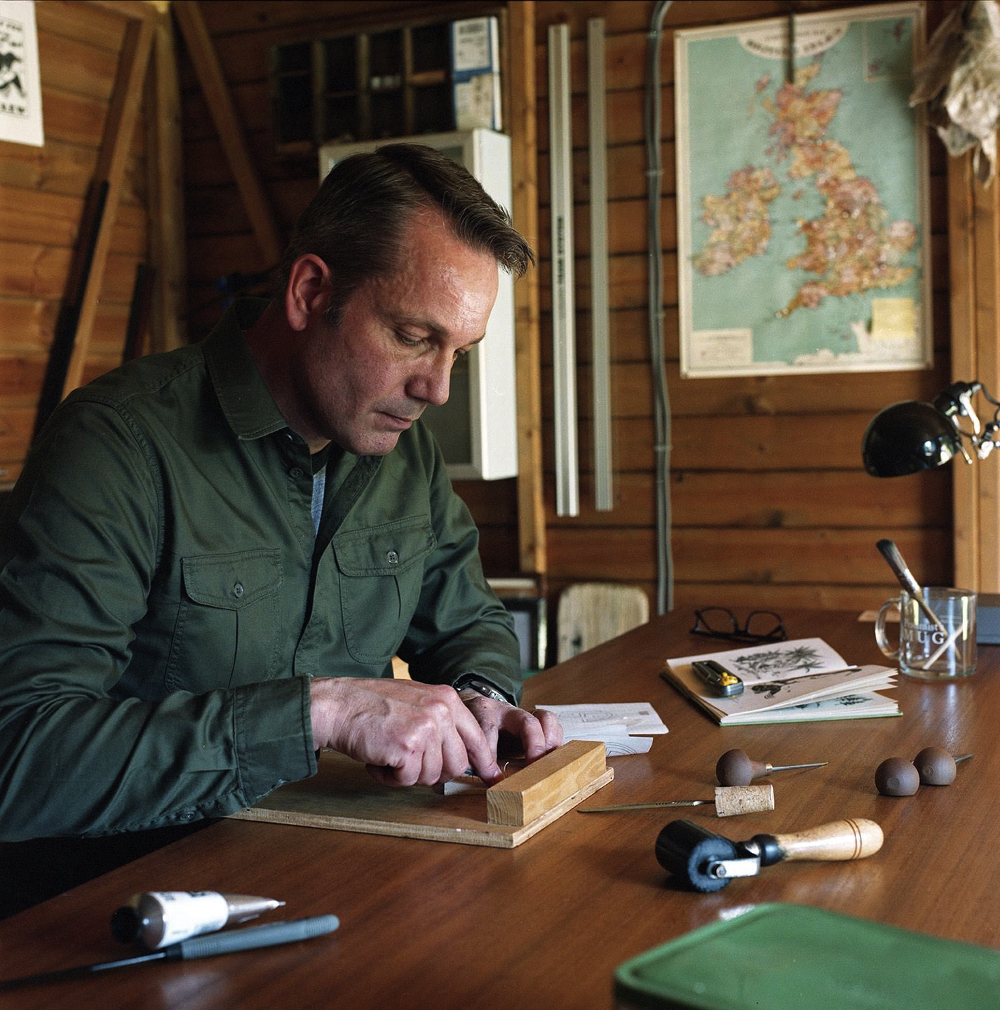
mark wilkinson 1000 pixels

Mark Wilkinson’s work is limited edition by necessity. As a Lincolnshire-based printmaker specialising in linocuts, his entire creation process – from wood-carving to ink-print – is done by hand. Once the print run is complete, he scores his lino block, ensuring no further images can be produced.

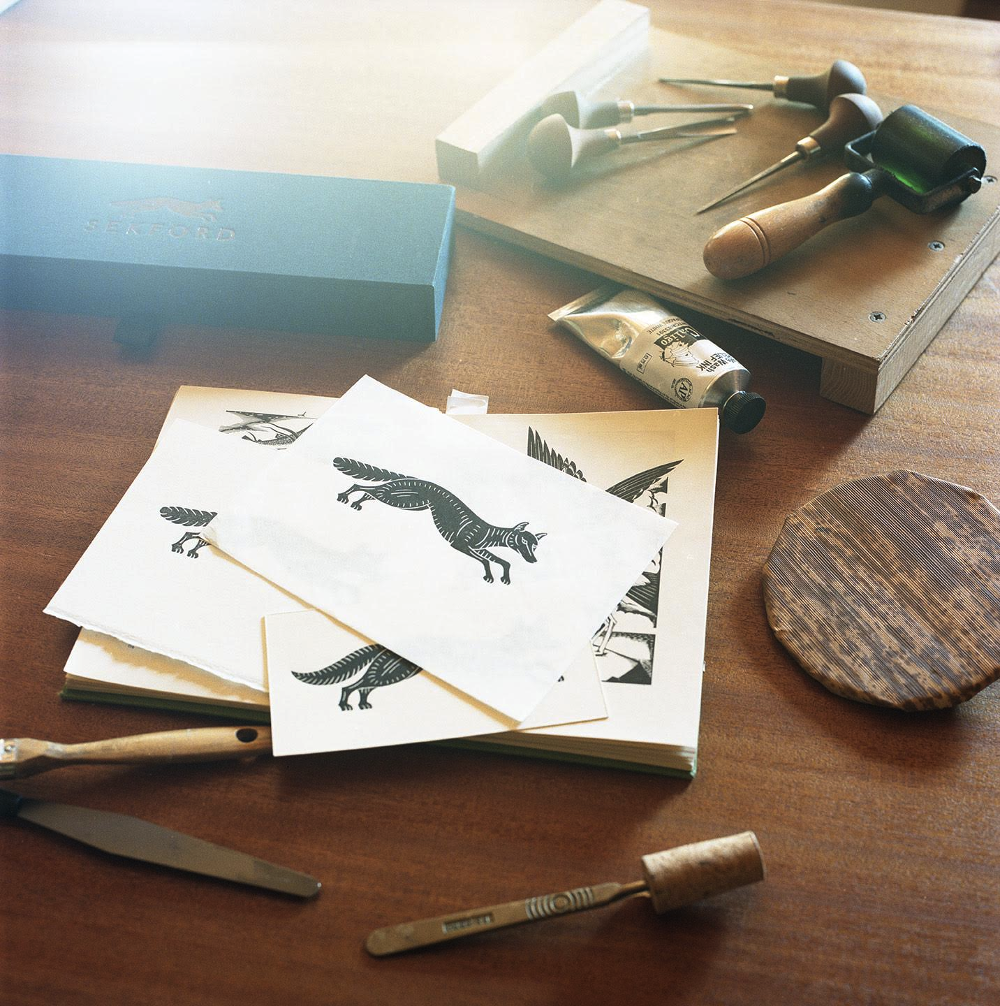
Wilkinson’s work has roots in many places – from Japanese woodblock prints to the art scene of 1930s Europe. After a career with the RAF, Wilkinson discovered printmaking when he unearthed an old book and went on to find his own company, Inkshed Press. As part of a recent collaboration with new English watch brand, Sekford, Wilkinson created a Gothic-inspired fox, which has since become the brand’s logo and is engraved on the back of its debut watch series, the Type 1A.

We caught up with Wilkinson to chat about his craft, the printmakers he values, and the inspiration he draws from the skies of northern England.

What brought you to printmaking?

I was looking for a new direction to take in life having just left the Royal Air Force and a ‘thoughtful’ present for my wife’s birthday. I was on the verge of applying for a job collecting trolleys in a supermarket car park (and buying a bunch of petrol station flowers), when I rediscovered an old book I had of Eric Gill’s engravings. The pure, clean and deceptively simple lines inspired me to go out right away and buy a woodblock, a cutting tool, an ink roller and a tube of ink. The result was a dreadful woodcut of a letter L and a enduring love of printmaking.

Why do you think wood engraving endures in popularity?

For the same reasons that first drew me to it; its timelessness and the deceptive simplicity of line and form it allows. To my eye, it’s clean, pure, deeply satisfying and, when done right, completely beautiful.

What inspires your work?

The British and Irish wood engravers of the 1930s are at the core of everything that inspires me. Printmakers such as Eric Ravilious, Eric Gill and Edward Bawden are justifiably well known today, but others, such as Robert Gibbings, Leonard Beaumont, John Farleigh and Reynolds Stone, are, I think, deserving of much more recognition.

For the rest, my influences are eclectic and range from medieval woodcuts and 18th-century engravings to Japanese woodblock prints.

What brought you to Lincolnshire?

It was fortunate circumstances that brought me to Lincolnshire. I originally bought my house here as a result of being stationed whilst in the RAF, but I’ve kept it because of the big skies, wide open spaces, relaxed pace of life and beautiful mellow limestone villages.

sekford fox design

How did designing the Sekford fox differ from your other recent projects?

The Sekford logo was the first truly collaborative project I’ve undertaken.
With the Sekford fox, what I was trying to create was central to the company’s identity, and I felt the responsibility keenly. Thankfully the brand’s founder, Kuchar Swara (also a co-founder of PORT), had a very clear idea of what he wanted and, even more thankfully, we saw eye to eye on most things.

His input helped lead the project in directions it might not necessarily have gone otherwise, but with rewards that I hope are self-evident in the finished logo.

What’s next for Inkshed Press?

I’ve just completed a commission for a range of Christmas cards that will be shortly be hitting the streets and I’ve been invited to exhibit at the prestigious annual Fry Art Gallery Exhibition and Sale in Saffron Walden, which I’m hugely excited about.

Beyond that, Christmas is always a very busy time of year, with commissions already backing up, but in the New Year I hope, for what seems like the first time in an age, to be able to get on with some new original work of my own…

Photography Tobias Harvey

Sekford watches launched in autumn 2015. Prices start at £695

Design Guide: Alvar Aalto’s Helsinki

PORT visits the Finnish capital to discover Helsinki’s lesser known architectural gems and design highlights shaped by the city’s favourite son, Alvar Aalto

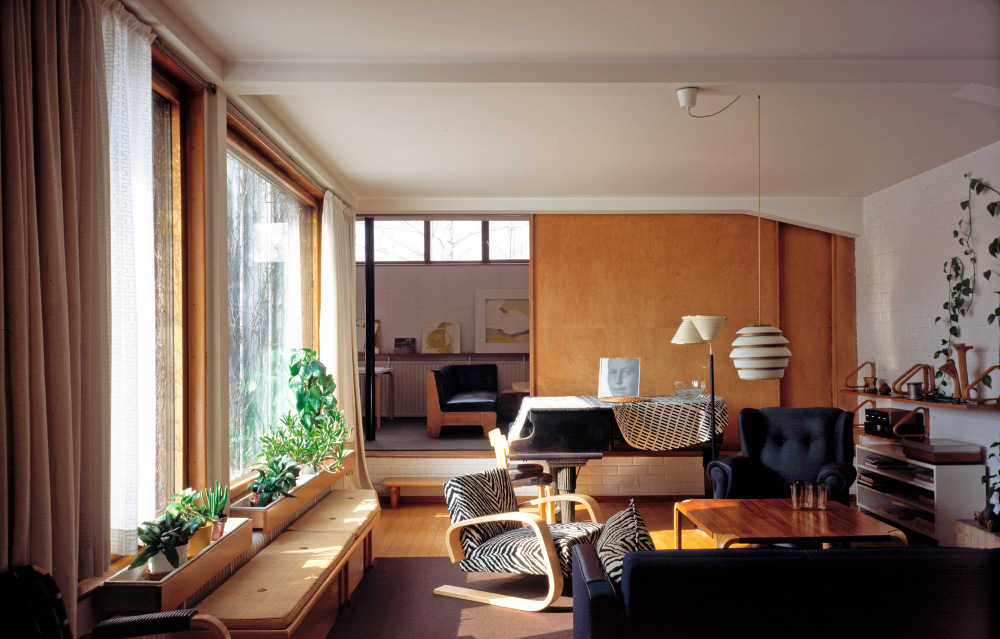
The Aalto House living room with a sliding door to the studio behind – Photo by Maija Holma © Alvar Aalto Museum

Visiting Helsinki is not unlike visiting Brasilia or Florence. Climate and cultural differences aside, these cities share a debt to the vision of designers and individuals whose influence is tangible around every corner. Just as the urban landscape of Brasilia is dominated by the sensual contours of civic buildings created by Brazilian architect Oscar Niemeyer, and any visit to Florence is incomplete without encountering the masterpieces of Michelangelo, Helsinki is imbued with the functional beauty of its most famous son: Alvar Aalto.

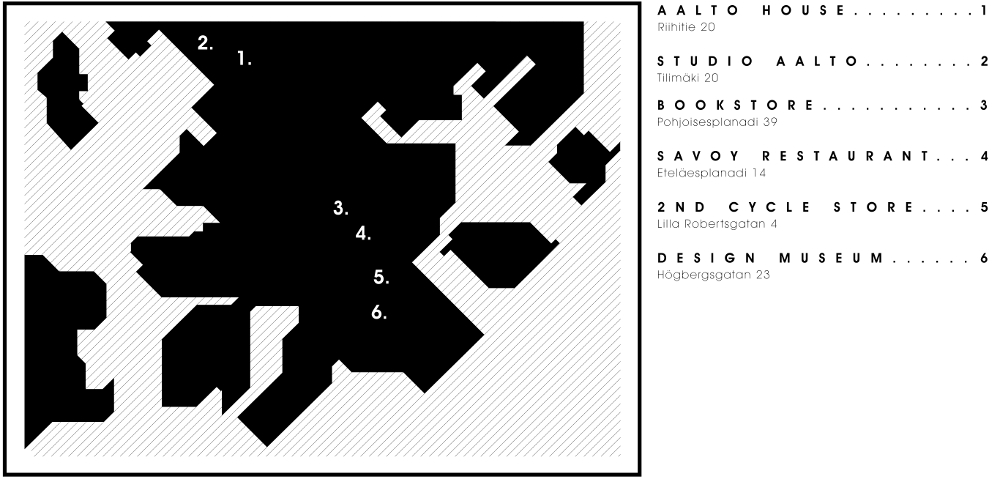
Map of Helsinki illustrated by Guy Smith

From the iceberg angles of Finlandia Hall to the ubiquitous curves of his iconic L-leg furniture, Aalto’s presence in the city is inescapable. Visiting the landmarks of Aalto’s life and work is to discover the principles of functionality, a devotion to natural materials and a minimalist beauty that have all helped characterise Scandinavian design since the 1920s, and continued to drive its popularity to this day.

Here, PORT visits the Finnish capital on the 80th anniversary of Artek – the design brand co-founded by Aalto in 1935 – to learn more about the history behind the iconic architect and designer, and to experience the subtle pleasures of one of Scandinavia’s lesser-known metropolises.

The Aalto House, exterior – Photos by Maija Holma © Alvar Aalto Museum

1. Any tour of Alvar Aalto’s Helsinki ought to begin at The Aalto House, a family home and working studio built by Aalto and his first wife, Aino, in 1936. Nestled in the residential neighbourhood of Munkkiniemi, the home is in largely the same condition as it was when Aalto lived here up until his death in 1976. The very fact that he inhabited this house for over 40 years speaks volumes about the philosophy that informed his attitude towards life and design. Never one for indulgence or over-embellishment, The Aalto House was constructed around ideas of comfortable functionality that would last for years. “Alvar could have built another house, but he was just happy with this,” explains architect Jonas Malmberg, while giving us a tour of the residence.

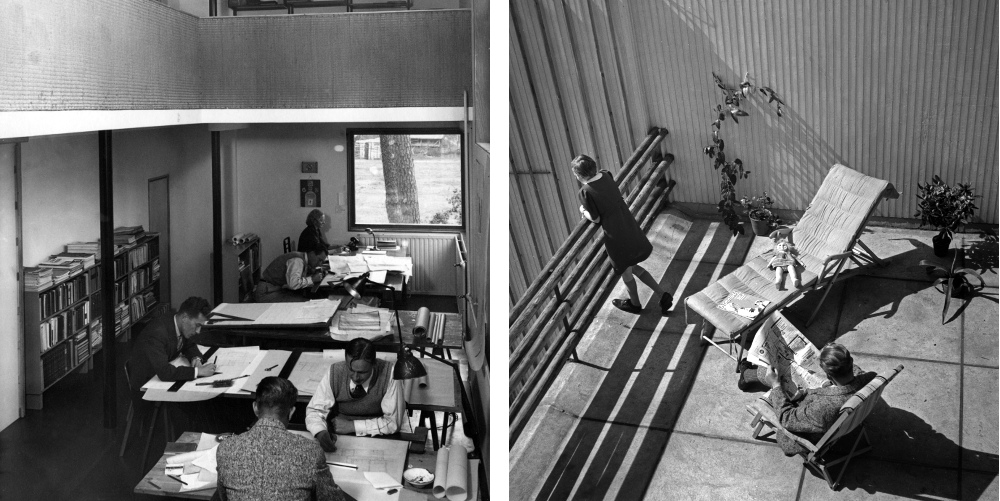
Left: The Aalto House studio in the 1930s © Alvar Aalto Museum – Right: Family life at the Aalto House in the 1930s Photo by Eino Mäkinen © Alvar Aalto Museum © Alvar Aalto Museum
Left: The Aalto House studio in the 1930s Photo by Wolfgang Heine © Alvar Aalto Museum – Right: Family life at the Aalto House in the 1930s Photo by Eino Mäkinen © Alvar Aalto Museum

This said, the simple appearance of the house masks a complex, even experimental, structural framework that incorporates load-bearing brick walls, timber cladding, steel columns and a concrete structure supporting the ceiling – a mishmash of architectural ideas that is counterbalanced by the stylistic coherence of the building’s interior. As expected, wood dominates inside, from the living room floorboards through to the 1920s Italian dining chairs (purportedly bought on Alvar and Aino’s honeymoon) and the large sliding screen that separates the house’s domestic area from the studio space. The studio was the home of Aalto’s architectural practice from 1936 to 1955, until the gradual growth of the business rendered the space obsolete and the team was forced to move five minutes away to a new location named Studio Aalto.

“Alvar’s idea for a studio at The Aalto House represented an important change in ideas of workspace for an architect in the mid-30s,” explains Malmberg. “This is like an artist’s studio, with a large window facing north providing uniform light, whereas the newer space [at Studio Aalto] has windows on all sides to maximise the sunlight coming in.”

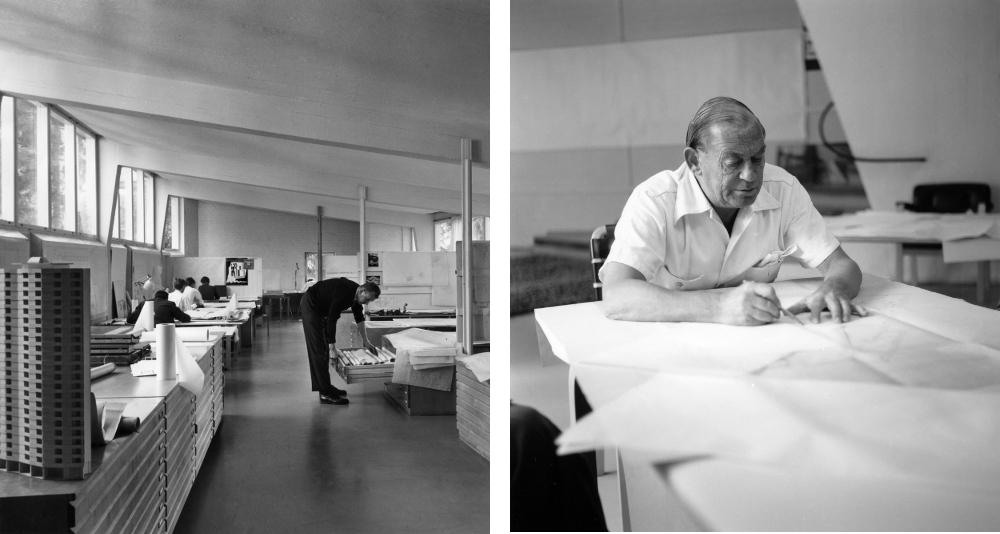
Left: The fully functioning Studio Aalto in the 1960s Photo by Heikki Havas © Alvar Aalto Museum – Right: Alvar Aalto at work

2. Studio Aalto is reminiscent of a modern architectural workspace with large desks, computer screens and scale models. Despite Aalto’s death in 1976, Studio Aalto remained as a working practice until the Alvar Aalto Foundation took over the building in 1994. A small group of architects still work there today maintaining Aalto’s built legacy, which includes nearly 200 major projects.

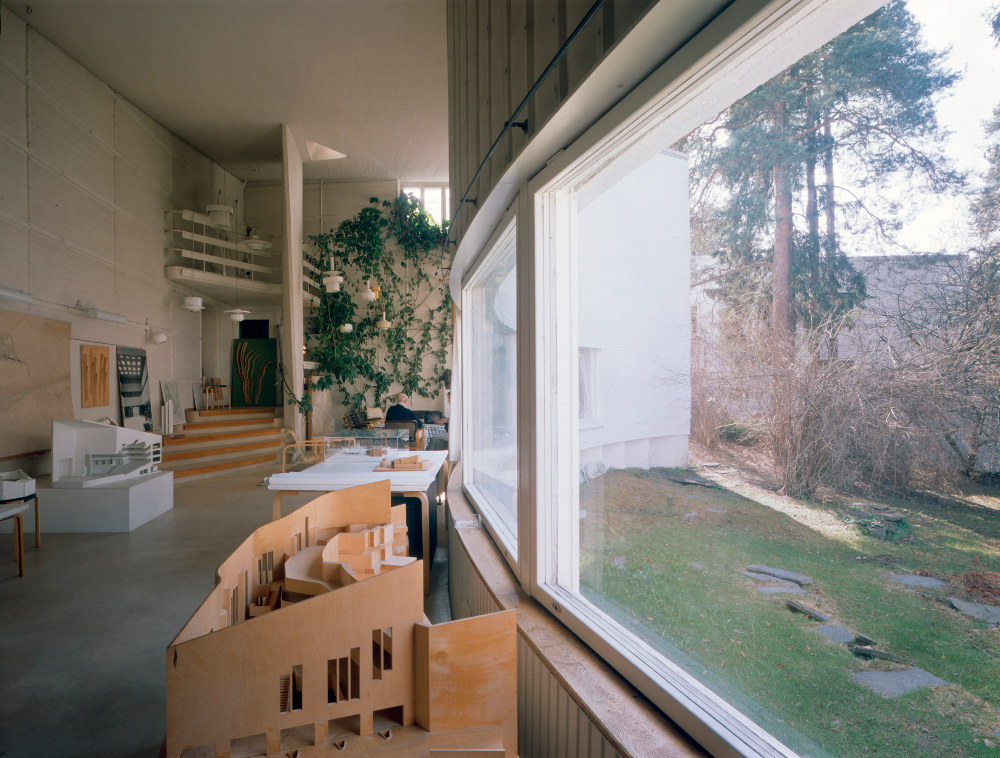
Like the Aalto House, Studio Aalto is experimental in its form. The only office in the nearby residential area, the building seems to, quite literally, turn its back on the neighbourhood, merely revealing a white wall to the street. Inside, the structure curves around a courtyard and amphitheatre (used for film screenings in Aalto’s day), revealing one of the crucial ideas behind the designer’s architectural practice.

Aalto Studio today – Photo by Maija Holma © Alvar Aalto Museum

“One of Alvar’s principals was to never build on the best spot in the plot. He would leave that open and build around or beside it,” explains Tommi Lindh, director of the Alvar Aalto Foundation. “‘Don’t spoil the best spot’, he would say, ‘leave it open so you can admire it in the future’.”

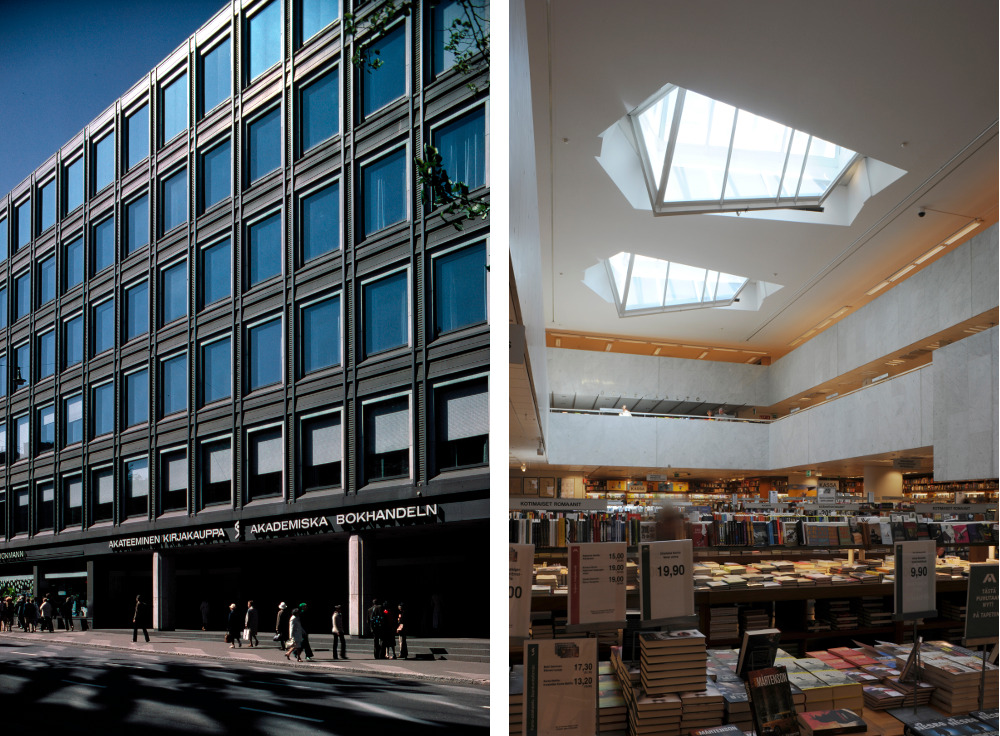
Akateeminen Kirjakauppa (Academic Bookstore) – Akateeminen Kirjakauppa (Academic Bookstore) – Photo of exterior by Martti Kapanen © Alvar Aalto Museum. Photo of interior by Maija Holma © Alvar Aalto Museum
Akateeminen Kirjakauppa (Academic Bookstore) – Photo of exterior by Martti Kapanen © Alvar Aalto Museum. Photo of interior by Maija Holma © Alvar Aalto Museum

3. It is from this studio that Aalto designed some of his most celebrated works, including the Akateeminen Kirjakauppa (or Academic Bookstore) in the heart of Helsinki’s commercial district. Completed in 1969, the bookstore is fronted by a rectilinear shell of dark copper – a somewhat austere contrast to the atrium space of the bookshop’s ground floor, which is flanked by white marble staircases and sits below stunning, angular skylights. It is the largest bookshop in Helsinki and features an extensive English language books section, which contains work by Finnish writers.

The Academic Bookstore lies at one end of the Esplandi (esplanade), which consists of two major shopping strips full of essential Finnish design stores including Marimekko, Iittala and Aalto’s own Artek.

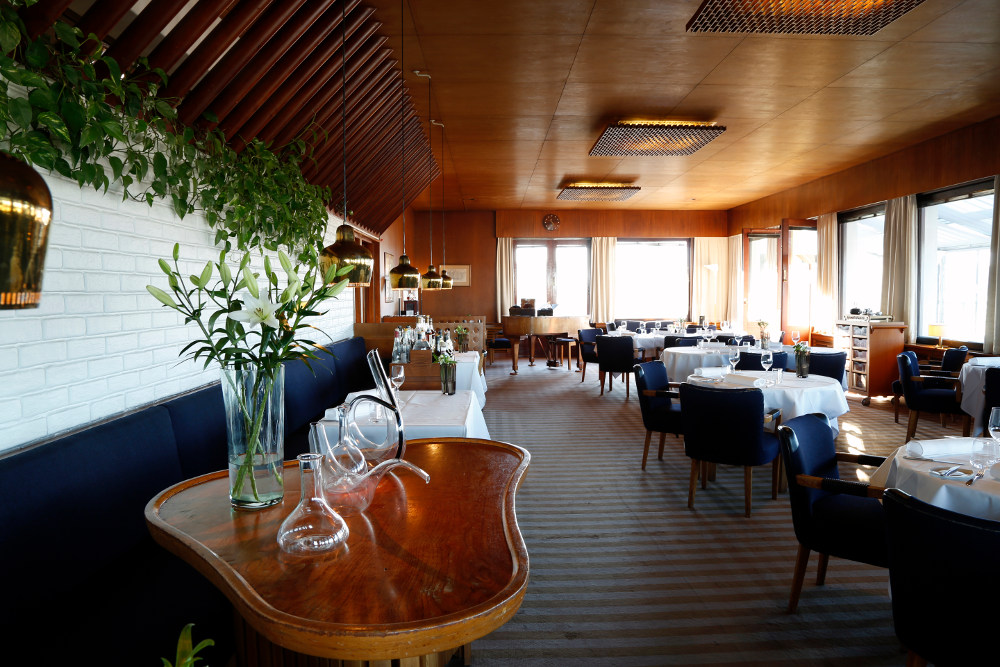
Ravintola Savoy (Savoy Restaurant) © Restaurant Savoy

4. On the south side of the promenade, Ravintola Savoy (Savoy Restaurant) sits atop the Industrial Palace building, where it has overlooked the city since 1937. The bespoke furniture designed especially for the site by Aalto and his first wife Aino combined with the views over Helsinki make the Savoy a special site in itself. And that’s all before you taste the authentically Finnish menu by head chef Kari Aihinen, whose dishes include octopus carpaccio, fillet of deer and cloudberry pastries.

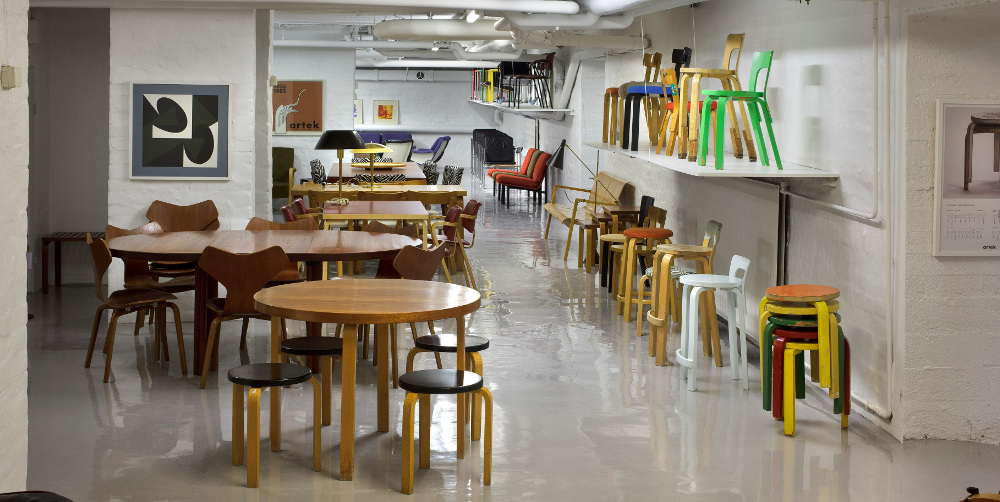
Artek 2nd Cycle Store – Photo by Rauno Träskelin © Artek (www.artek.fi)

5. Another pit stop for furniture enthusiasts is Artek 2nd Cycle Store, a veritable Aladdin’s cave of vintage stools and armchairs. The store was set up in 2011 to refurbish and repurpose pre-owned pieces of furniture from Artek and other classic designers besides Aarto, including Ilmari Tapiovaara and Charles and Ray Eames.

“These products have been out in the world for nearly 80 years,” explains Juhani Lemmetti, one of 2nd Cycle’s team of furniture ‘hunters’. “They’ve been used in public buildings and private homes, and they’ve shared other people’s lives. But sometimes these buildings are changed or people move on, so why not give these products a second life?”

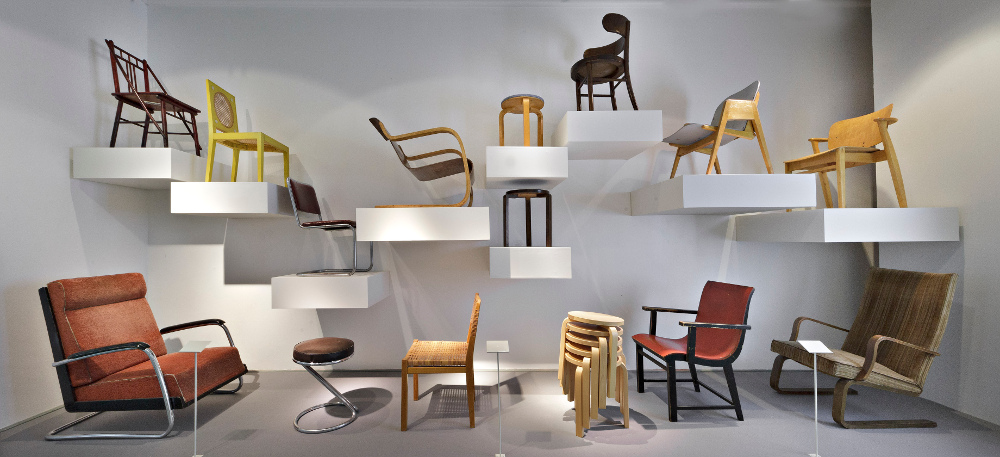
Artek stool 60 (centre display and stacked) at the Helsinki Designmuseo © Rauno Träskelin.

6. You don’t need to be an expert to appreciate the simple, lasting quality of Aalto’s designs. The iconic stool 60 (“a very important piece of furniture,” says Lemmetti) is a prime example of this. Stool 60’s three minimalist legs curve beneath a circular seat – a design that has remained unchanged since its conception in 1933.

The stool is among a number of other prominent Finnish furniture pieces that have made their way into the permanent collection at the city’s Designmuseo, alongside Tapiovaara’s Domus chair and Kaj Franck domestic products, which are now a ubiquitous part of Finnish life and, like Aalto’s buildings, the fabric of Helsinki.

www.artek.fi

PORT’s top 10: London Design Festival

PORT’s design editor, Alyn Griffiths, picks his top 10 from the 400 events and exhibitions than ran across the capital during London Design Festival 2015.

© Ed Reeve
© Ed Reeve

Curiosity Cloud by mischer’traxler at the Victoria & Albert Museum

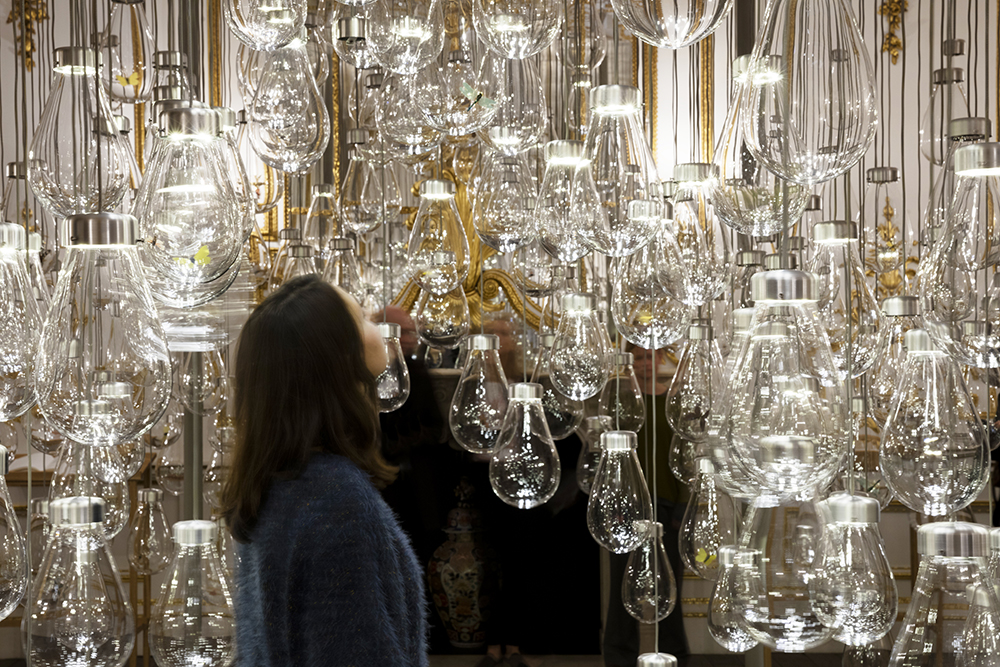
A highlight of this year’s strong programme at the Victoria & Albert Musuem was the Curiosity Cloud installation created by Austrian duo mischer’traxler for champagne house Perrier-Jouët. Two hundred and fifty mouth-blown glass globes were suspended in the museum’s Norfolk House Music Room, with each one containing a hand-made insect. Sensors that identified the presence of visitors in the room triggered a mechanism within the globes that caused the insects to flutter around and collide with the glass, creating a cacophony of noise and motion.

© Ed Reeve
© Ed Reeve

The Cloakroom by Studio Toogood at the Victoria & Albert Museum

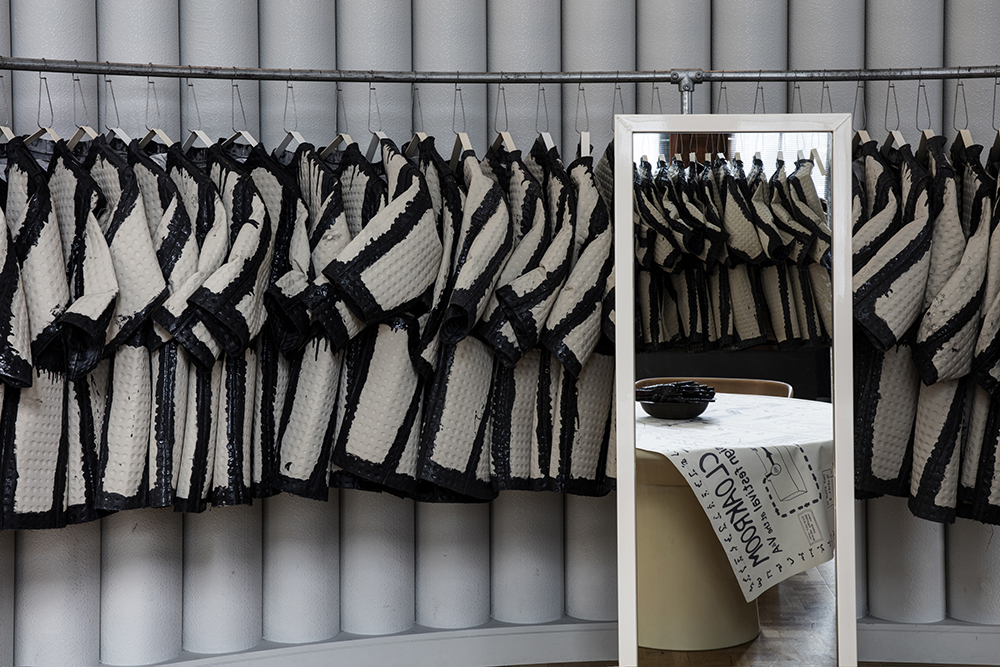
Elsewhere in the V&A, Faye and Erica Toogood produced a participatory installation that encouraged visitors to don a utilitarian-looking garment made from Kvadrat’s Highfield fabric, which incorporated a sewn-in map of the museum. The map led them on a trail to discover sculptural representations of coats that responded to their setting in various galleries. Fusing Studio Toogood’s core competences of fashion and design, the project highlighted craft skills by reinterpreting the coat motif in materials including wood, marble, fibreglass and metal.

© Marius W Hansen
© Marius W Hansen

Ready Made Go at Ace Hotel London Shoreditch

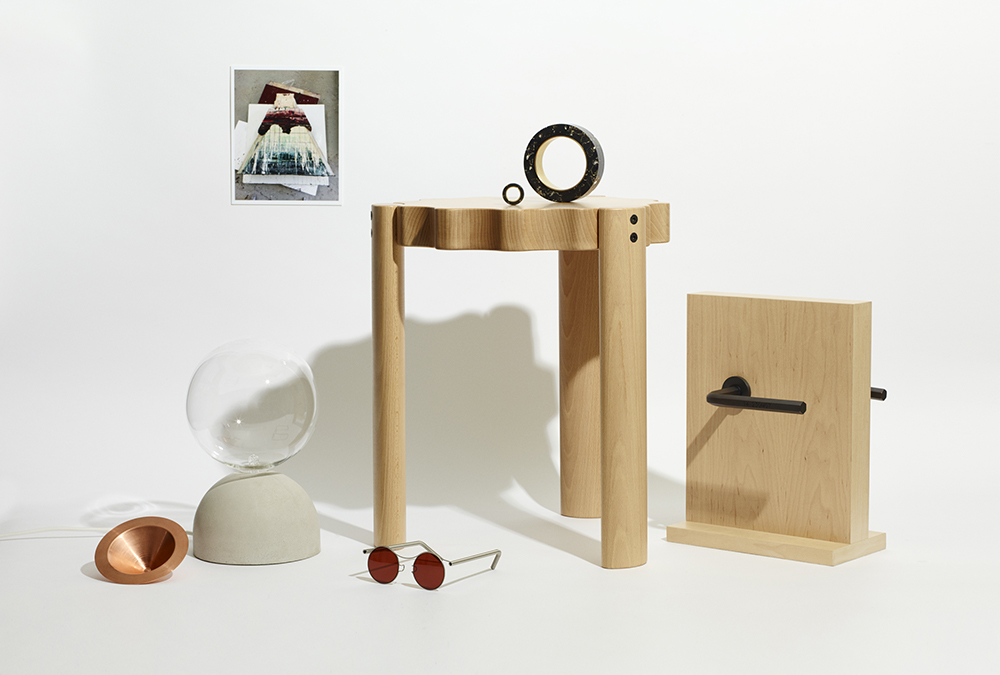
In east London, the Ace Hotel is establishing itself as one of the festival’s key venues – for both exhibitions and late-night entertainment – and this year it presented the results of a project that invited local designers to produce items for permanent use in its communal spaces. Organised by Laura Houseley of Modern Design Review magazine, the outcomes of Ready Made Go included a door handle, a stool, ashtrays, lights and decorative objects that, unlike much of the more speculative design on display during the festival, will remain in use long after the event has ended.

04 Brandub_Designed and made by Tom de Paor_Bandub 03_www.makersandbrothers.com

The Souvenir Project at the Rochelle School

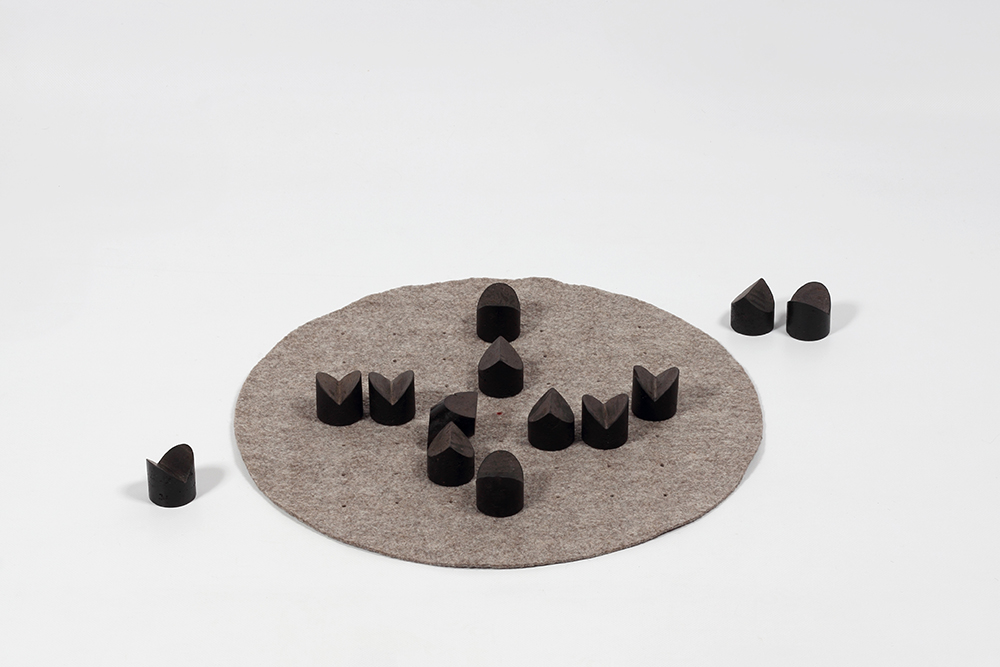
Nine objects designed to challenge perceived notions of Ireland were displayed at The Souvenir Project, an exhibition curated by Jonathan Legge of online retailer Makers & Brothers. The esoteric products were intended as alternatives to more conventional souvenirs and included a towel printed with a graphic pattern based on dry stone walls, a solid bronze paperweight shaped like a potato and a board game with pieces made from compressed peat sitting on a felt mat. According to the organisers, “each souvenir embodies cultural and material characteristics unique to Ireland and of each of their designers and makers.”

Rochester sofa by Michael Anastassiades for SCP

Sofa in Sight at SCP

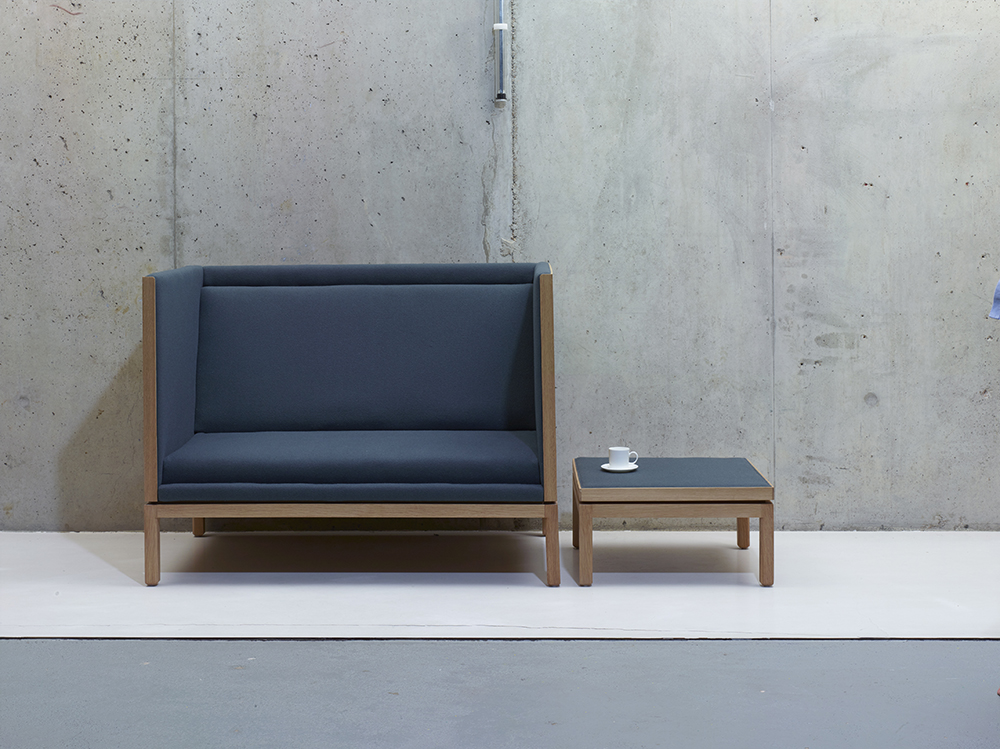
Shoreditch design store store SCP celebrated its 30th anniversary by launching a collection of six sofas designed to utilise the expertise of staff at its upholstery factory in Norfolk. Among them was a boxy timber-framed design suited to commercial projects by first-time SCP collaborator, Michael Anastassiades, and a comfortable hammock-inspired sofa by Lucy Kurrein, featuring a canvas sling supporting its plump cushions.

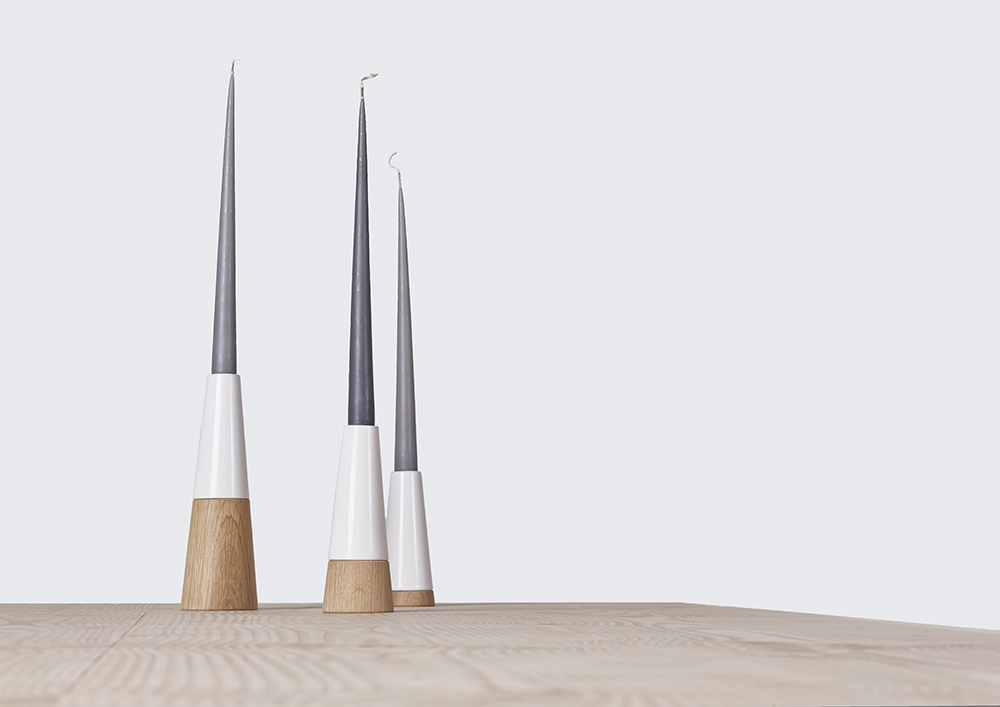
Factory candle by Benchmark and 1882Ltd

Benchmark and 1882 at The Future Laboratory

At The Future Laboratory in Spitalfields, furniture brand Benchmark and ceramics manufacturer 1882 collaborated on a candlestick that is part wood, part porcelain. The products were being produced in a makeshift workshop, with visitors invited to get involved in the making process. Benchmark also presented a range of simple furniture with concealed storage by British designer Max Lamb. The Planks collection uses boards of different sizes to create functional furniture that reduces waste.

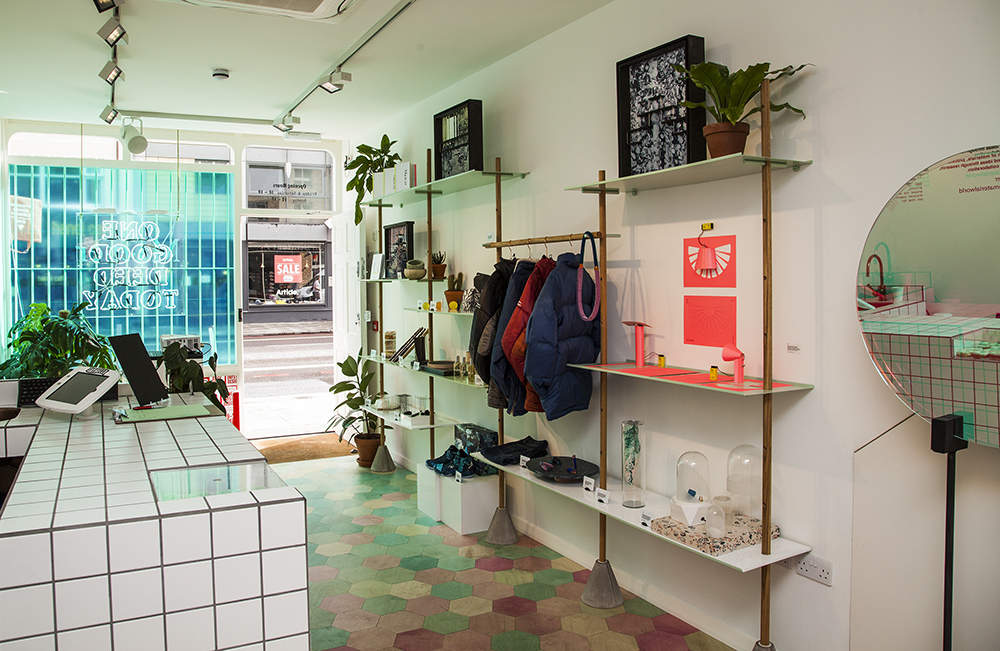
Matter_Living in a Material World exhibition at One Good Deed Today

Matter at One Good Deed Today

Artist and designer Seetal Solanki launched her new materials research consultancy Matter at a shop in Shoreditch with a group show that demonstrated different approaches to exploring materials through design. The exhibition included Amy Radcliffe’s “scent camera”, which captures the scent of an object so it can be distilled and translated into a perfume, and edible materials by Miriam Ribul that can be cooked in an everyday kitchen. “It’s about challenging the perception of materials,” said Solanki, who hopes to help people from different industries understand how they can use and adapt materials in new and innovative ways.

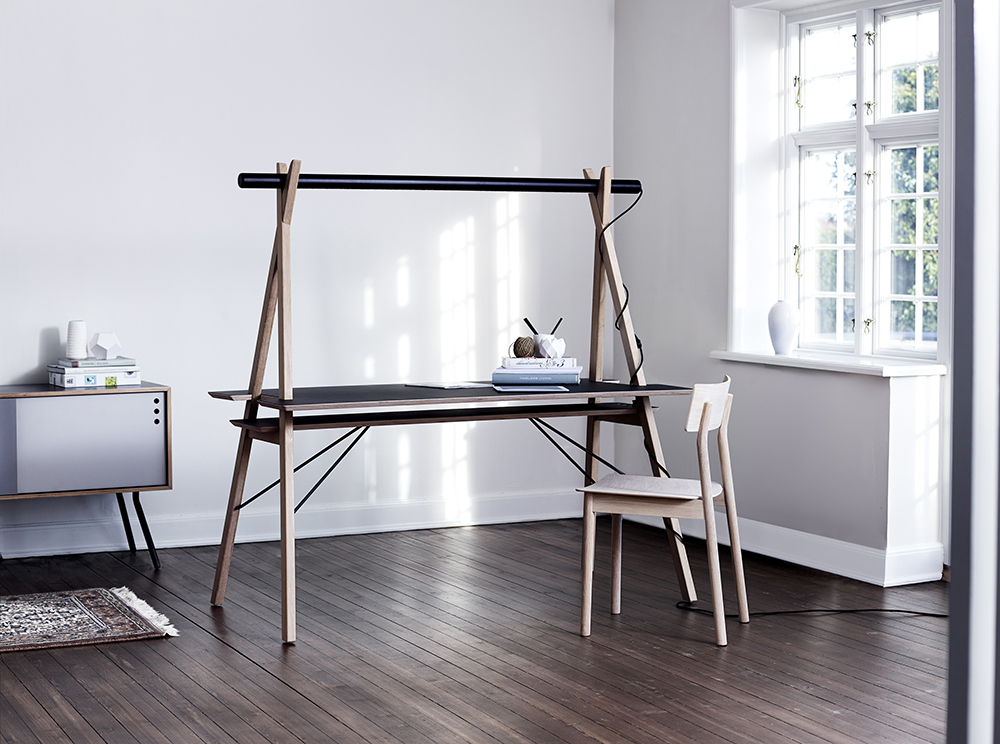
AA Desk by Spant Studio for Woud

Woud at Designjunction

The Designjunction trade fair relocated this year to the former home of Central Saint Martins art school. Within its maze-like corridors and rooms I came across Danish brand Woud, which launched earlier this year and was showing pieces from its debut collection. The company focuses predominantly on working with emerging designers to develop products with a Nordic sensibility. That means pared-back, elegant forms combined with refined materials and characterful details.

© Ed Reeve
© Ed Reeve

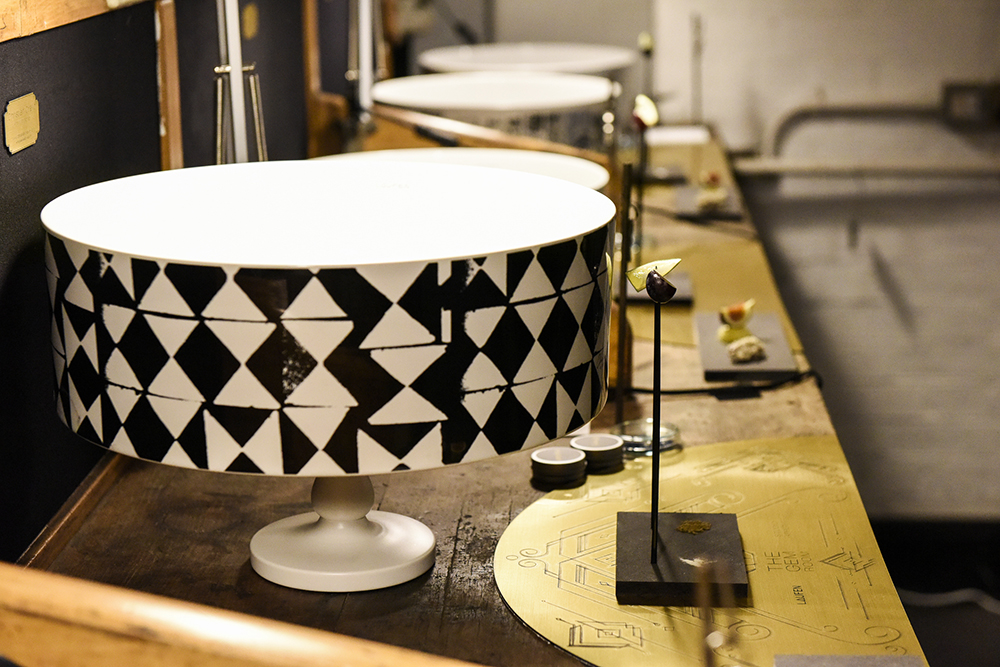
The Gem Room by Studio Appétit and Laufen

Also at Designjunction, Ido Garini of Studio Appétit created an experiential eating event for Swiss bathroom brand Laufen that challenged ideas about the value of various foods. Situated in the school’s old jewellery workshop, The Gem Room took inspiration from Laufen’s SaphirKeramik material, which contains a mineral also found in sapphires to enhance its hardness. Among the unusual foodstuffs devoured by the guests were highly concentrated cheese and oysters in a powdered form, crystals made from pure sugar and a chocolate bar with no nutritional value spray painted in gold.

© Chris Tang
© Chris Tang

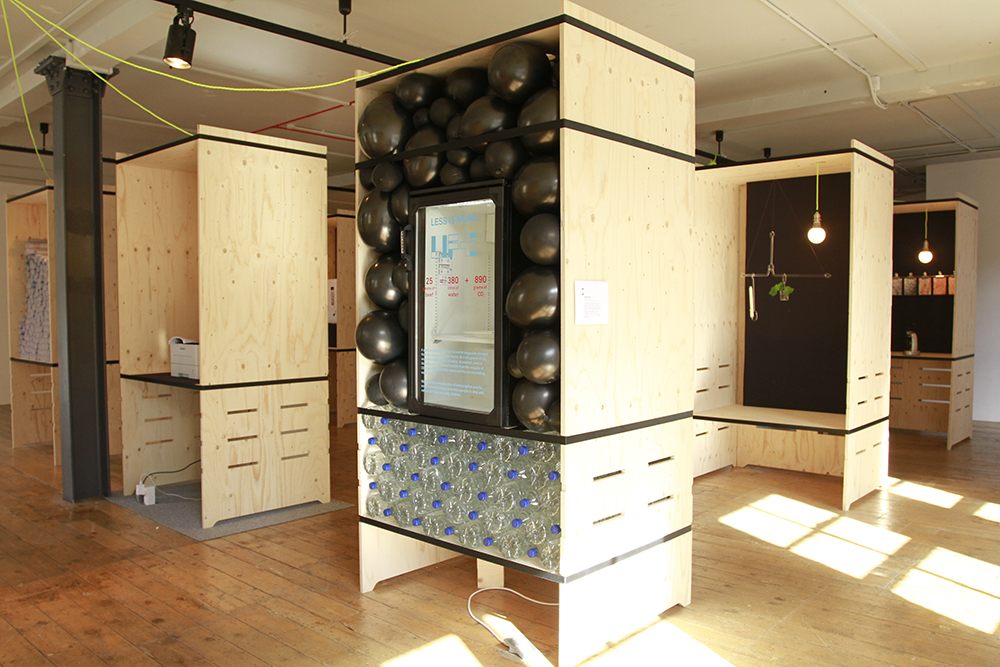
2°C: Communicating Climate Change at The Aram Gallery

One of the more thought-provoking events during the festival was an exhibition at The Aram Gallery that explored the possible implications of climate change. Organised by design publication Disegno and curated by The Aram Gallery’s Riya Patel, the exhibition included contributions from 10 designers and studios who were each given an identical booth in which to communicate issues associated with this pertinent global issue. Local firm PearsonLloyd used balloons and bottled water to represent the 890 grams of CO2 emitted and 380 litres of water used to produce a small morsel of beef.

Dante Ferretti: Dreams of Fellini

Port meets Italian production designer and Scorsese collaborator Dante Ferretti, who recalls his work with Federico Fellini and discusses his elaborate yet timeless film sets

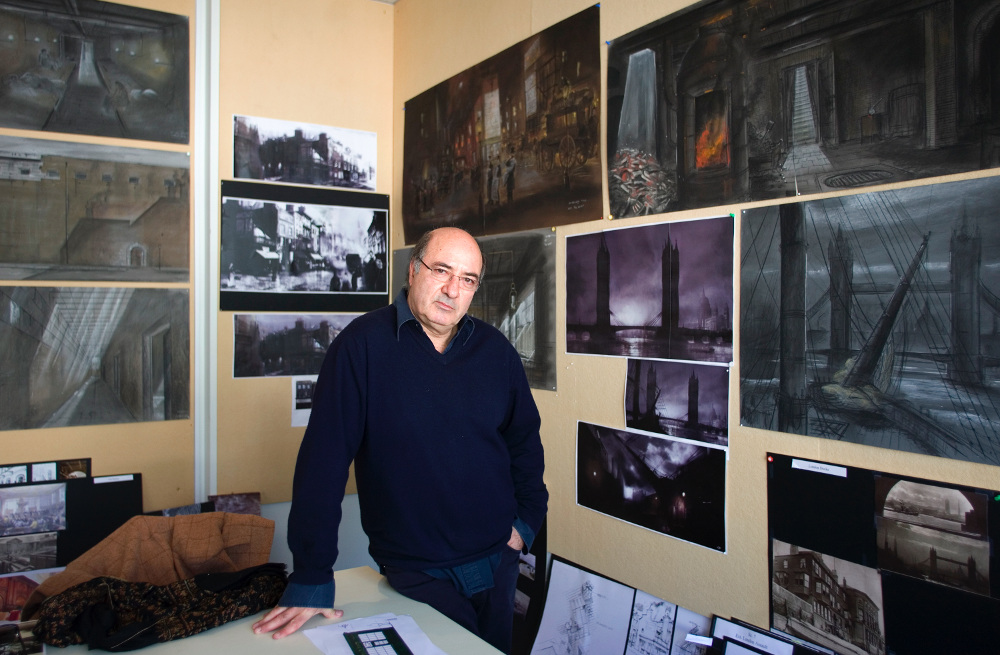
Dante Ferretti in his studio

No matter the size or stature, all structures decay. That is, with one possible exception: film sets. Film sets don’t decline. They don’t wither, wane or weaken. Once committed to celluloid or digital, they are timeless. And none more so than the sets of Dante Ferretti. The works of many great Italian architects have already crumbled, but Ferretti’s sets will remain. They may only stand constructed for a brief time but they will live on in film, immortal.

Ferretti is one of the most distinguished production designers in the history of cinema, who is best known for his work with Martin Scorsese and Federico Fellini, but has also designed sets for the likes of Terry Gilliam, Tim Burton and Brian de Palma. Born in Macerata, Central Italy, in February 1943, Ferretti moved to Rome to study and began working on the early films of Pier Paolo Pasolini. His work on Medea (1969) caught the attention of Fellini and sparked a collaborative relationship that would span two decades. According to Ferretti, working as a production designer for Fellini was, quite literally, a ‘dream come true’.

“Fellini was my maestro,” he says with a sigh. “Working with Fellini was very, very important because he awakened le mie fantasie – my fantasies. He always made movies about his fantasies. He would often ask me, ‘Dante, what did you dream last night?’ And I’d say ‘I can’t remember.’ Then, a couple of days later, he would ask me again. Again, I’d say ‘nothing’. Eventually, I’d just invent the dreams. I had to do something!” Ferretti roars with laughter. “He knew I was a liar, but he liked my fantasies anyway.” He laughs again and then pauses, apparently lost in thought.

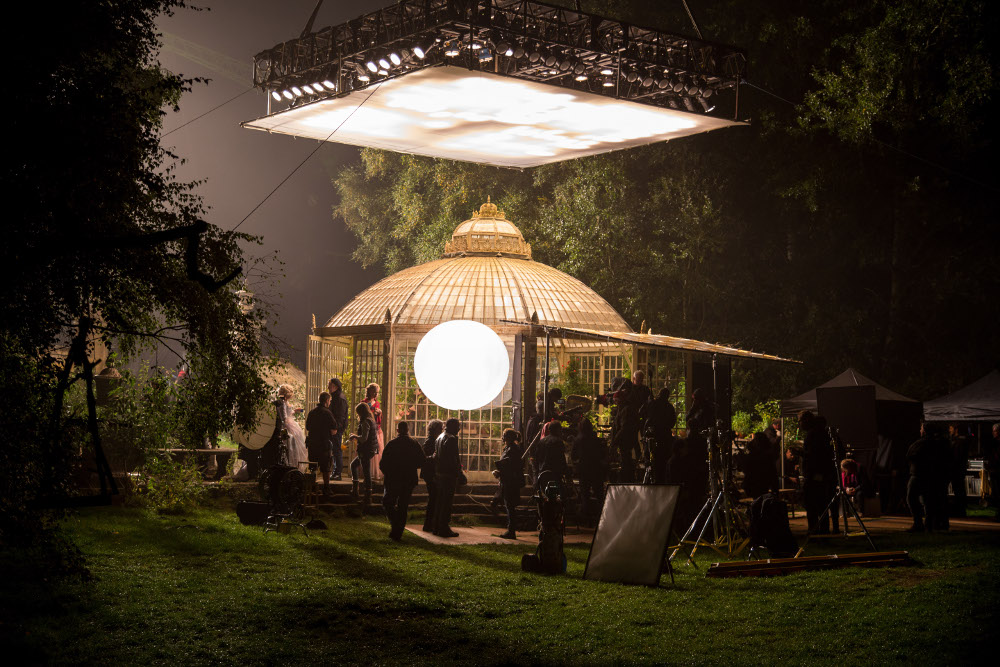
Preparing Dante's Cinderella set for action
Preparing Dante’s Cinderella set for action

Ferretti and Fellini worked together on six films including the critically acclaimed Orchestra Rehearsal and the multi-award-winning City of Women, starring Dustin Hoffman. Despite the respect with which he talks about his maestro today, Ferretti described feeling like “a prisoner” to Fellini’s vision at times. Their collaborative relationship ended in 1990 with Fellini’s final film, The Voice of the Moon, closely followed by his first partnership with Martin Scorsese on The Age of Innocence, an adaptation of Edith Wharton’s bourgeoisie tragedy and a far cry from Fellini’s surrealist tropes.

Since then, Ferretti has worked with Scorsese on nine films over 22 years, including Casino, The Aviator and Shutter Island. Of all their collaborations, Ferretti remembers Gangs of New York as the most challenging. “We built almost everything without CGI,” he says. “I think there are only two or three shots in the entire film that use CGI. Everything else was built in the Cinecitta studios in Rome. We even constructed a makeshift Hudson River, complete with a full-scale ship.”

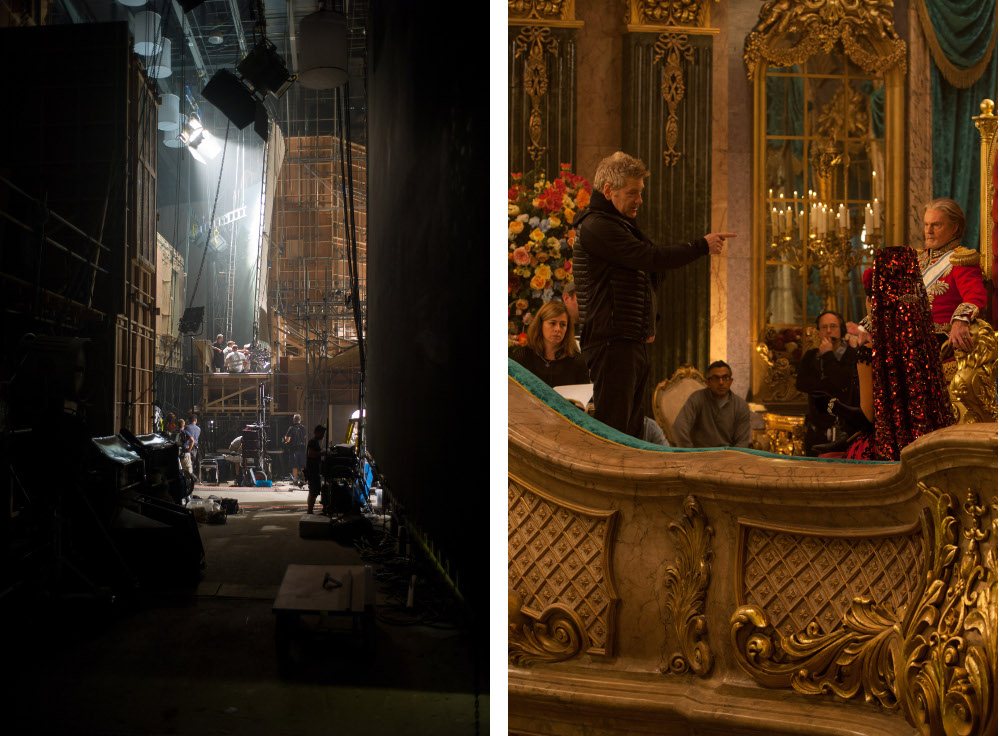
Left – Behind the scenes on the set of Cinderella. Right – Kenneth Branagh directing Derek Jacobi as the King in Cinderella

Despite the financial and logistical benefits of CGI, Ferretti swears by the benefits of his hand-built approach. “I don’t like CGI. I know that you have to be very clever to use CG technology, but it’s not my generation,” he says. “With CGI, you can make whatever you want. But I have to check what we’re doing, set-by-set, because it’s essential to create something that no one has ever seen before.”

This approach has paid dividends. Ferretti has won three Oscars, four BAFTAs and countless other international prizes, which he often dedicates to his wife and long-time collaborator, Francesca Lo Schiavo. The pair have worked together for over 25 years and have established something of a telepathic working relationship. “My wife and I don’t even need to discuss our work. We just look at each other and we know what we have to do,” Ferretti explains. “She’s been fantastic on all of the movies I’ve done with her, including Cinderella.”

This latest collaboration, a live-action remake of Walt Disney’s 1950 classic, features some of Ferretti’s most dazzling designs to date. The film boasts custom-made Venetian chandeliers, opulent frescoes and a 30-foot high ballroom lit by 5,000 oil candles. His upcoming project for Scorsese is equally ambitious. Silence, a historical drama due for release in 2016, is set to feature a reconstruction of 17th century Nagasaki and the Chinese port of Macau.

With a career spanning 55 feature films over 45 years it would be understandable if Ferretti was reluctant to highlight a single crowning glory, but his answer is simple: “My greatest achievement? I’m happy.”

Cinderella is available on Disney Blu-Ray TM & DVD now.

James Irvine: a life dedicated to design

Conor Mahon speaks to Marialaura Rossiello, the widow of influential British designer James Irvine, about the forthcoming monograph celebrating his body of work

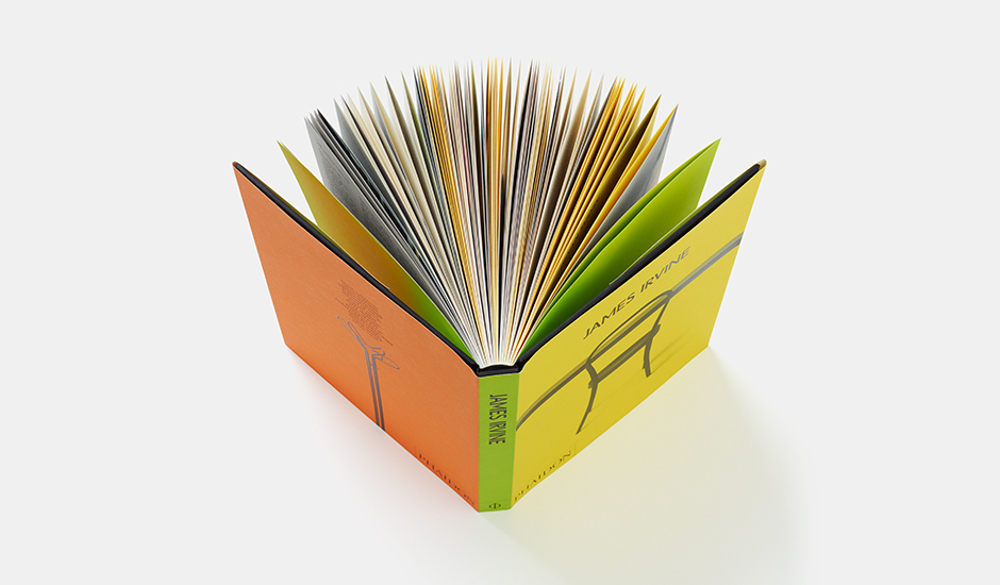
James Irvine's monograph
James Irvine’s monograph

On the third floor of an apartment on Pannierstraße in Berlin is a sofa designed by the late James Irvine. It has been two years since I sat on that piece of furniture, which sits adjacent to a balcony window, and although during those 24 months there have probably been changes of tenants, owners and décor, I would be very surprised if that ‘Lunar’ sofa had been removed. It is both simply constructed and beautifully functional. As the apartment’s owner deftly flattened the sofa into a bed with her right foot, hands occupied by a plate and a piece of toast, the design etched itself into my memory.

The monograph of James Irvine’s life, compiled by his wife Marialaura Rossiello and released through Phaidon this month, is full of similar testimonies to the beauty of Irvine’s products, processes and character. The book details the life and works of Irvine who studied design at Kingston Polytechnic (now Kingston University) and the Royal College of Art, before moving to Milan to work with the Italian design company Olivetti. In 1988 he founded Studio Irvine, which worked for a number of established publishers and design brands, and even devised a fleet of Mercedes-Benz busses for the city of Hannover in Germany. To find out more about Irvine’s story, I spoke with Rossiello about the experiences of producing the book, James’ time in Milan and the future of his studio.

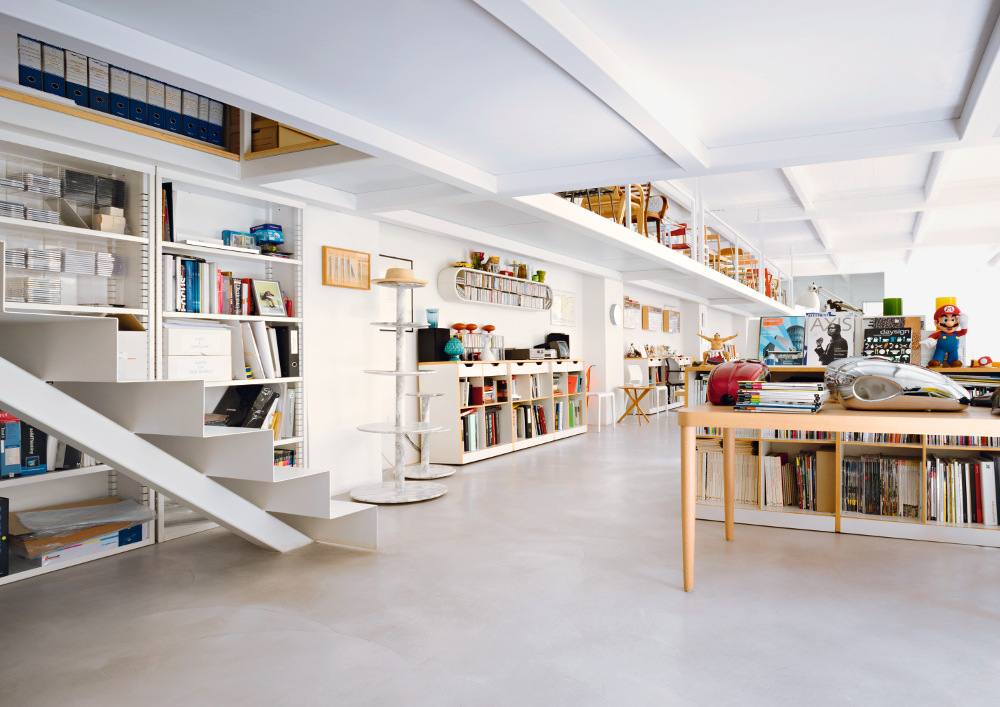
Studio Irvine, 2013 – photograph by Santi Caleca

Why did you decide to release this monograph now and how did you find the creative process of producing this book?

We very much wanted to tell the story of James. Emilia Terragni, who was a great friend of James’, had always wanted to do a monograph, but James was horrified by the idea of putting his whole career as a designer into a book. He didn’t feel up to it. Emilia got in touch with me shortly after his death and the book had to go ahead. We immediately thought of Francesca Picchi as one of the few who could take on such a delicate and intimate task by my side.

The book took a year and a half to complete, what with archiving, research, reading, interviewing…it kept us tremendously busy. We constructed each piece, gathered information and material, working on it in perfect harmony as an all-female team. Francesca interviewed all of James’ friends and put together a story beginning from the 1980s. It was a period of discovery and great enthusiasm, and it also involved some very emotional moments. The result is the story of a life dedicated to design, told through anecdotes, sketches, ideas, projects and stories; a constant source of inspiration and cheerfulness, as James was.

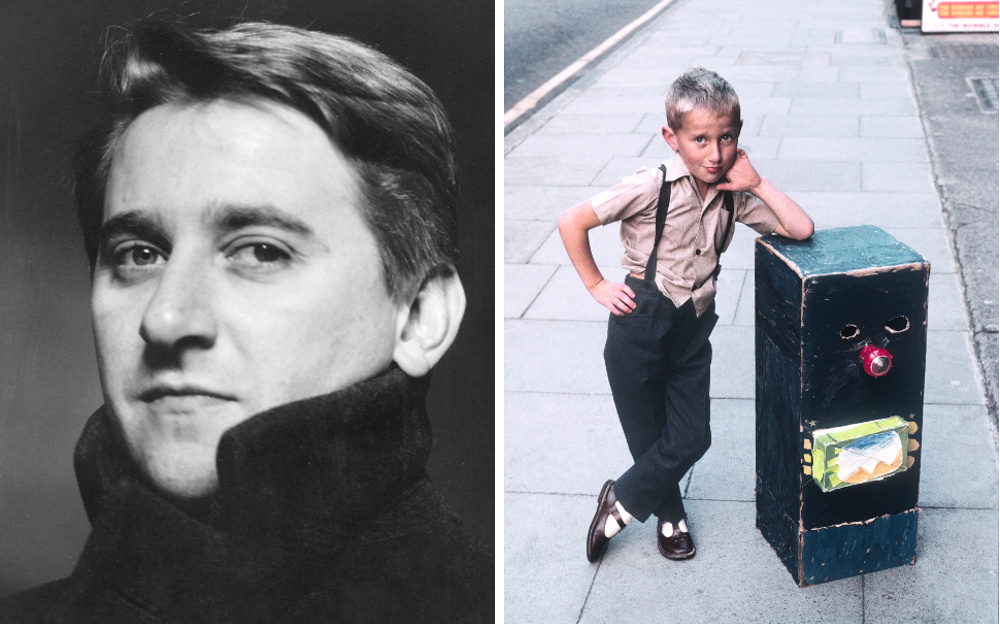
Left: Portrait of James Irvine. Right: Picture of Irvine aged seven with his handmade robot costume ©Santi Caleca  1965
Left: Portrait of James Irvine. Right: Picture of Irvine aged seven with his handmade robot costume ©Santi Caleca
1965

Who do you think influenced James the most during his career?

James was curious about everything: people and things, human relationships and their relationship with objects. He was influenced by everything that surrounded him. Ettore Sottsass was a major inspiration for him, as he had been for all his friends, like George Sowden, Jasper Morrison and Stefano Giovannoni… but James had his own, strong personality – a unique outlook and touch. He found his way and his idiom with ease, while inwardly digesting and elaborating his experiences.

How would you describe James’ approach to design?

Rigorous, generous and ironical. Nothing was left to chance. Every millimetre was scrutinised all the way through, every small detail checked and double-checked; his was a truly open and meticulously precise approach.

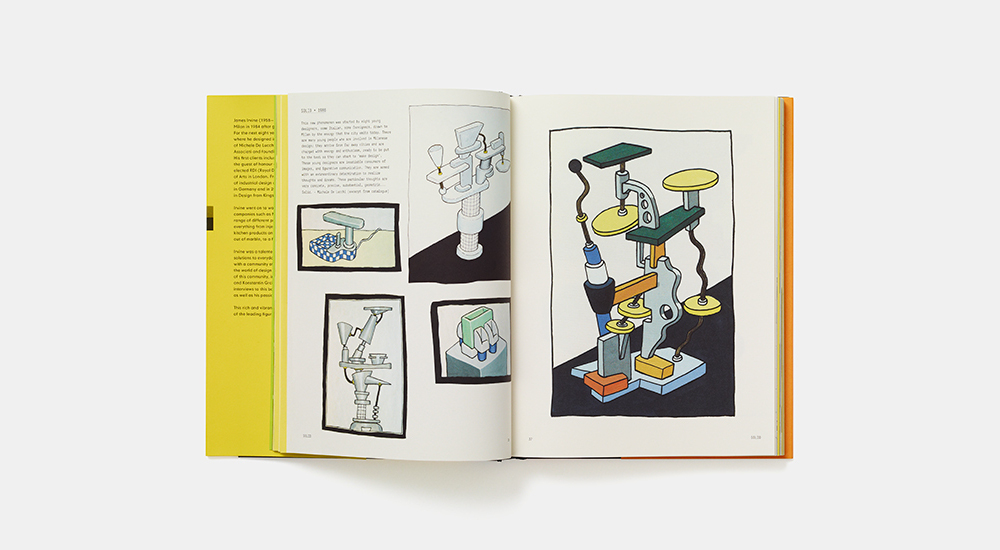
The mongraph features a large number of Irvine's colourful and often humorous sketches
The mongraph features a large number of Irvine’s colourful and often humorous sketches

The book features some wonderful sketches by James. Do you have any favourites?

The Designer Dance is, for me, a hymn to the joy of being a designer, as is the Antibody of Design. Every action, project or drawing of his always ended with his particular little smile. Each expressed the exuberance of his life as a designer.

How did the relationship between James and Jasper Morrison affect their respective developments as designers?

James and Jasper were the best of friends and had known each other since they were 20 years old. They often compared notes and, as always between close friends, they influenced each other. Today, Jasper is,for me, very much a part of James and a constant reference for my children and I.

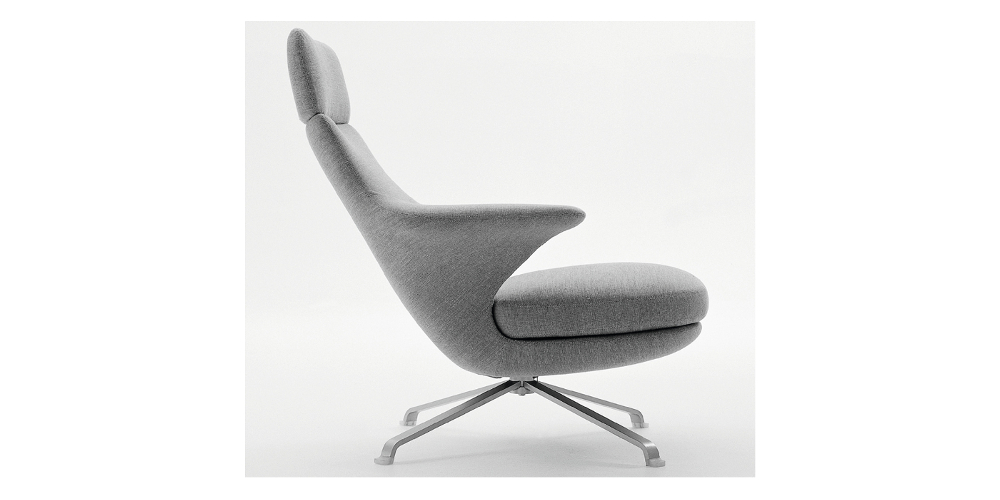
Radar Armchair for B&B Italia, 2001 – photograph by Fabrizio Bergamo

To what extent do you believe that Milan was James’ home?

Milan was his adopted home, he wouldn’t have changed cities for the world. It has sun, the sea only is two hours away and the mountains are even closer. It’s half an hour from Brianza, which has the best prototype makers and suppliers. All around is the Italian entrepreneurship of the most enlightened design makers. James loved being in the midst of the ‘debate’ and Milan was its perfect hub, even though he had always remained absolutely British.

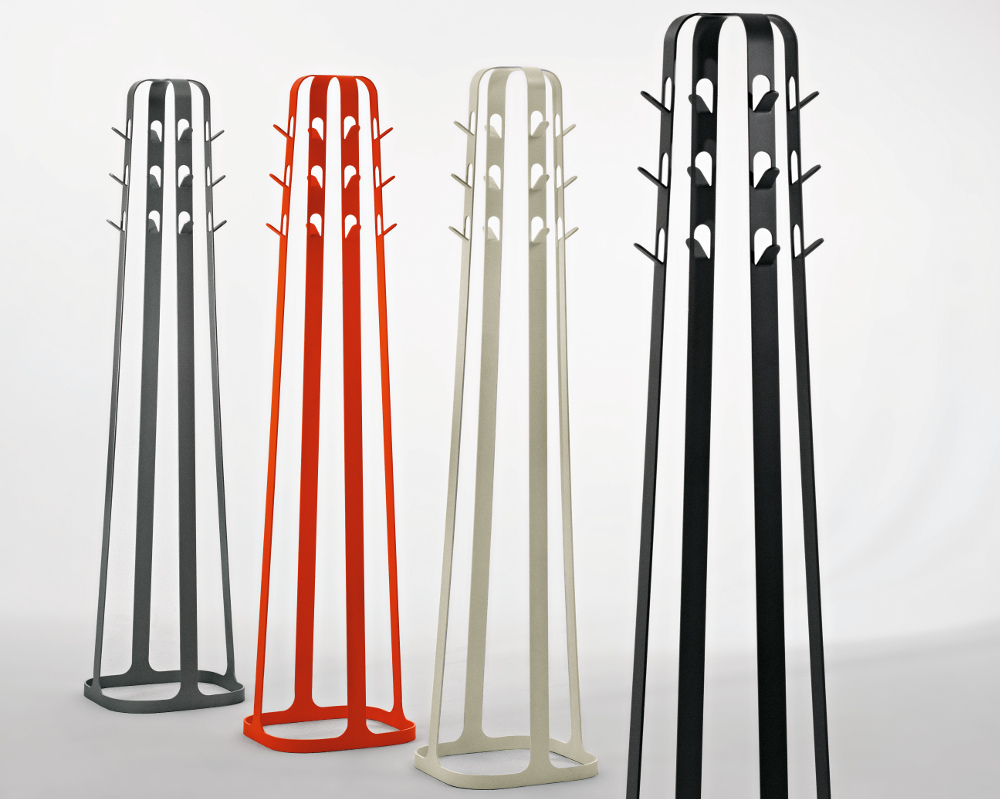
Dodici Coat Stand, 2005 – image courtesy of Van Esch

What is the future of Studio Irvine?

Studio Irvine has never stopped working. The book captures the story of a gentleman designer, whilst the studio’s present approach asserts and pursues a precise design philosophy. Thanks to the book we have brought our design heritage into focus, which will help ensure its continuity. Today, with Maddalena Casadei at my side, we continue our long-standing collaborations, for example with Marsotto and Muji, and have embarked on others with Offecct, Hem, Kettal. Meanwhile we foster young entrepreneurs and enterprises, like Matteo Brioni and Foof, and prompt them to embrace new ideas for industry. We are ready to face the future, with curiosity and lots of fun.

James Irvine’s monograph is out now on Phaidon

The Spaces In Between: Malaika Byng

Port meets Malaika Byng, editor-in-chief of new digital magazine The Spaces, which aims to uncover extraordinary interiors, architecture and design

Rainmaking Loft, Copenhagen – Photography by Mathias Bojesen

The Spaces is a new, online-only publication dedicated to architecture, design, art and property, created by the people behind popular music blog FACT Magazine. Headed up by Wallpaper*’s former online editor Malaika Byng, The Spaces will explore new and innovative ways that designers, architects and other creative people are reshaping the places that they live and work in. Here, Port’s Deputy Editor and Online Editor Ray Murphy chats with Byng about the story behind the new title.

Homepage

How would you describe The Spaces magazine and what is its aim?

The Spaces is a digital publication that brings together architecture, design, art and property in a very visual fashion. We want to ask questions about our built environment and explore the way that people inhabit space and how that is changing.

Definitions of the word ‘home’ are blurring; offices are becoming increasingly like domestic spheres and retail spaces are no longer just for shopping in. We want to inspire people to use design as a tool to rethink how they live their lives.

“We want to inspire people to use design as a tool to rethink how they live their lives”

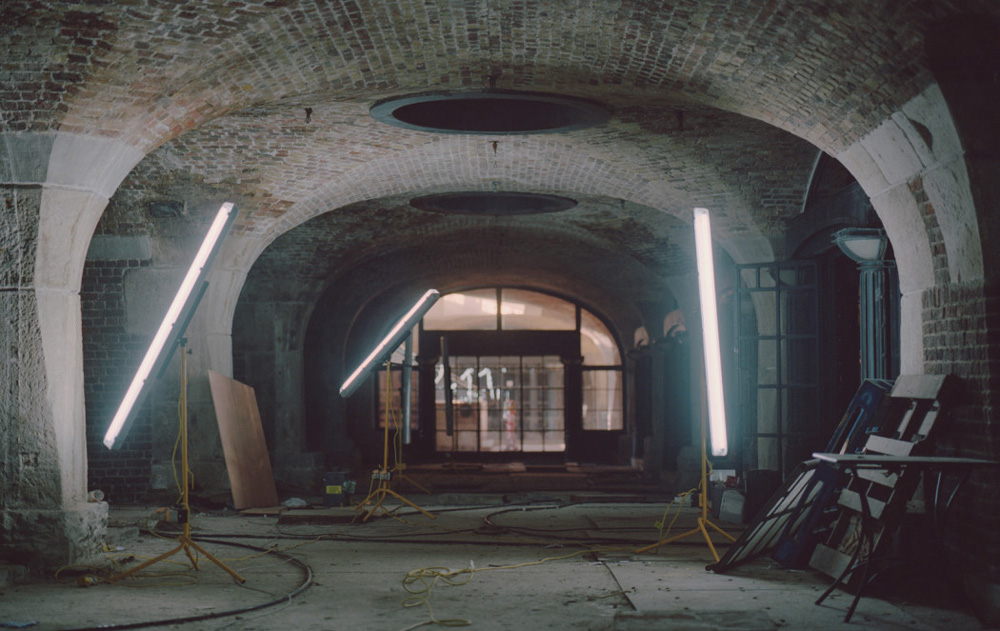
Tobacco Dock Vaults, which appear in a feature on <em><figcaption class=The Spaces about co-working environments” width=”1000″ height=”631″ class=”size-full wp-image-59943″ /> Tobacco Dock Vaults, which appear in a feature on The Spaces about co-working environments

What will this exploration look like?

We aim to surprise. We’ll be peering over fences and knocking on doors to discover what’s happening to forgotten historic buildings, bringing you stories about those that are being revived in remarkable ways – or could be. Plus, we’ll be exploring new buildings that respond to today’s complex urban challenges, while keeping an eye fixed firmly on the future.

We will look at private domains, public spaces and everything in between. You might find a story on an artist’s extraordinary home-cum-studio or a new hotel where you can not only sleep and eat, but record music and get a haircut. Of course, with this being a soft launch, you’ll need to keep checking back to see these as we publish them.

What do you think will set The Spaces apart from other architecture and design magazines?

There are many architecture, design and art sites, and numerous property sites, but surprisingly few that join these areas together in the digital sphere, despite the fact that they are so closely intertwined. We want to unite them in a lively, engaging and surprising fashion, with a strong emphasis on photography.

We also have a very discerning eye; we’re more interested in the bones of a building than what’s in it, so the classic trappings of luxury are not for us. To us, the space itself is the luxury.

How does the design of your site mirror this?

The design is simple, clean, fresh and unfussy, which reflects our ethos and makes the most of our photography. The ‘latest news’ sidebar on the left is the backbone of the site and makes it amazingly easy to navigate between stories, without you feeling like you’ve left the page. Hopefully this will encourage people to keep delving.

TheSpacesChrisDyson

Why is now a good time to launch The Spaces?

We’ve seen a gap and we want to fill it. The potential for growth is infinite with a digital publication, which is very exciting. There’s also more scope for creativity i.e. with film content, which we’ll be introducing soon.

It’ll take time and a lot of hard graft to own it, but we come with some pretty strong digital editorial experience. Our sister publication, FACT magazine, now gets around 1.5m unique visitors a month and is still growing fast. That said, we may well explore one-off print possibilities too, further down the line. For us, though, building up a digital presence first seems the way to go.

Vaulted house by vPPR – Photograph by Ioana Marinescu
Vaulted house by vPPR, featured in a story about infill architecture – Photograph by Ioana Marinescu

What articles on The Spaces sum up what the magazine is hoping to achieve?

We have a story on a radical piece of infill architecture, a model for making the most of every scrap of land in our cities; another dissects the anatomy of the best co-working spaces across the globe, while looking at their potential as urban regenerators; and, for a lighter distraction, we’ve brought together a selection of music videos that give a new beat to some pretty exceptional buildings.

What do you hope your readership will look like in a year’s time?

We hope to have amassed a dedicated pool of readers who are passionate about design and architecture.

Read more at thespaces.com

Erik Spiekermann: a master class in type

Madeleine Morley visits the Berlin studio of revered typographer Erik Spiekermann for a master class in letterpress printing

Erik Spiekermann in his Berlin home

Last week, I spent the day with Erik Spiekermann, who invited a small group into his Berlin-based print workshop, p98a, for an introduction to the letterpress. Organised by London branding agency Construct, the session brought together designers, writers and project managers who, like me, spend most of the working day in front of the computer, fixed to their screens or typing away on light, plastic keyboards.

Wood type resting against the wall at p98a

Today, however, we were due to be fixated on another rectangular surface: the bed of a letterpress, crafting words from wood not pixels. The workshop was an opportunity for us to break from the daily monotony, experience the heaviness and precision of typography before it all went digital, and return to a time when rotating a sentence diagonally wasn’t as easy as using the ‘spin’ tool, but required a hand cut wooden wedge instead.

Entrance to p98a, Potsdamer Straße, Berlin

Along a silent yet immense street in Berlin, I found Spiekermann’s workshop nestled in a small green courtyard emerging from the greying road. In the 60s Spiekermann studied nearby, funding himself by running a letterpress in the basement of his house. His studio is now located just a few streets away on a strip of Potsdamer Straße – an empty stretch containing nothing else apart from a hat maker, who designs for the likes of Alexander McQueen, and a few rustic German eateries that sell p98a favourites like spätzel and small beers that arrive in ceramic mugs.

Spiekermann briefs the group on the workshop

Spiekermann greets us at the door, brimming with energy and good humour, wearing a craftsman’s apron and signature circular spectacles. He is a constant source of jokes, anecdotes and ideas, and moves around the solid machinery quickly like a dancer, bouncing from one idea to the next.

The p98a workshop
The p98a workshop

“This is hard work,” he says whenever he sees me struggling to keep up. “You’re not used to standing up all day, but when you’re here, you’re on your feet the whole time – this is manual labour.”

As he explains how the equipment works, his team weave in and out of him like parts of a mechanic clock – they obviously know the dance well. Alexander Nagel, a photosetting expert, hammers letter types into place on the press to keep them from moving around. Meanwhile, fellow p98a director Jan Gassel rolls black paint onto each letter with quick, forward strokes; Spiekermann’s assistant, Ferdinand Ulrich, reaches up to the highest drawers of font sets that no one else can quite stretch to.

The group divides into teams and I work with Tom Wittlin and Dan Jones from Poole creative agency Folk. We’re drawn to a strong typeface called Block, from one of the many drawers and decide on it for our poster. The typeface is bulging, with rounded, assertive sides and ragged edges; it feels solid, like all the machinery around us. Recently, p98a has been experimenting with 3D printing and laser cutting to produce their types. Spiekermann’s new wood type HWT Art, which he designed for the Hamilton Wood Type Museum, Wisconsin, US, is a slicker, more direct and less bumpy version of Block.

Madeleine Morley with Erik Spiekermann and Alexander Nagel

It’s like a modular puzzle where every piece is rectangular and grey

Axel helps me load a tray of the Block type for our print, putting in tiny slits of metal to make the space between each letter, using tweezers to insert and remove the pieces. We have to measure in cicero (a unit of measurement equivalent to 4.5 mm) and then find corresponding blocks to fit into the gaps – it’s like a modular puzzle where every piece is rectangular and grey.

After a sheet has gone through the press, I roll paint on the type again, making sure the colour is thick and evenly distributed . The ‘H’ of our print keeps coming out faded, so we have to raise the type slightly by cutting out a piece of paper and placing it underneath. Once everything is set, we start the process of producing a stack of posters. “You can make around 200 of these an hour… if you’re fast,” Spiekermann says with a wink.

The process of printing is repetitive, slow, and surgical, but also very peaceful and contemplative – like knitting or carpentry. We insert pieces of paper into the letterpress, rotate the handle, stack the print on a drying rack, re-ink the font, then start again. By this point, we begin to develop a consistent and robot-like rhythm, but we’re a clunky, less graceful team in comparison to Spiekermann’s guild of typographers.

I ask Nagel why he prefers this method of design: “It has more… sinne,” he replies, using a German word that is difficult to translate. The term means ‘touch’ or ‘sense’. It refers to the haptic, but also means ‘significance’. This is something people say a lot about the printed page and its physical tangibility, but it’s something you don’t quite appreciate until you’re actually building one of these templates from metal, wood and paint.

From 10am and 6pm, my team and I have only just about finished printing one sentence and it’s in no way perfect or balanced. Hands are bruised, blackened with oil and grease and black paint, and my own are even cut slightly by the paper. My shoulders ache and my eyes are tired, not from being hunched over a laptop all day, but from stretching across the letterpress and putting my eyes up close to the smallest letters and punctuation marks.

We clean the machine with blackened rags, determined to get one more colour on our design. I prime the press with gold paint and then we put a print that we’ve already made through the press again, moved slightly to the right, so that the gold prints on top of the black. Once it’s done, I hold it up to show Spiekermann, who has been our teacher for the day. “A drop shadow!” he energetically shouts across the room. “Yes! Experiment, try different things – that is what this place is about!”

Inside Spiekermann's Berlin home, where he keeps a large collection of products created by industrial designer Dieter Rams
Inside Spiekermann’s Berlin home, where he keeps a large collection of products created by industrial designer Dieter Rams

The word ‘text’ shares its root word with ‘textile’ – a nod towards the shapely, woven and handcrafted nature of words. A day spent at p98a reminds you of the physicality of text, how materials shape an idea. As the workshop comes to a close, I find myself appreciating the complexity of creating a single word in a time when words can be typed and formatted so quickly.

The finished print
The finished print

These days, rewriting a sentence is as simple as hitting the backspace, and colour can be altered with a simple click. At p98a, words aren’t something you simply churn out, and a single world is pleasurable when it fits just right – both in terms of its meaning and its alignment on the page. Returning home to my glaring laptop screen, the quickness of the computer allows me to experiment with sentence structure and rhythm, but the day at the workshop has reminded me to always choose my words carefully.

Photography Nikita Teryoshin