Revisiting Peckham’s Radical Health Experiment 

Thomas Bolger speaks to multimedia artist Ilona Sagar about her latest exhibition Correspondence O, which focuses on the revolutionary Pioneer Health Centre in south London

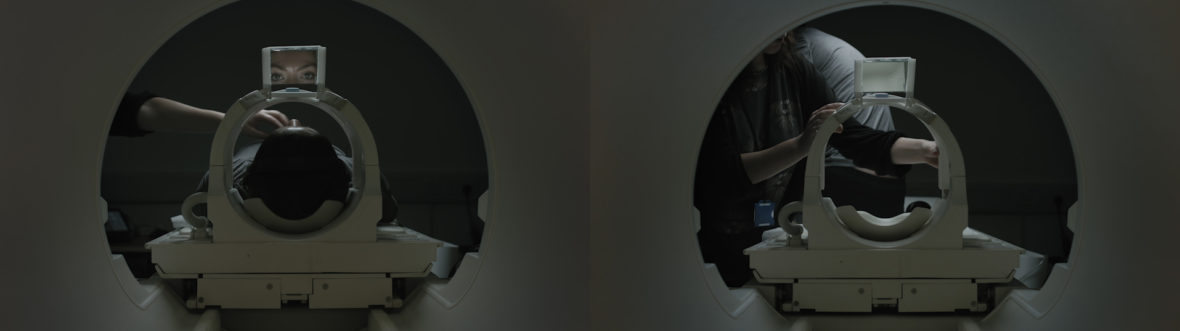
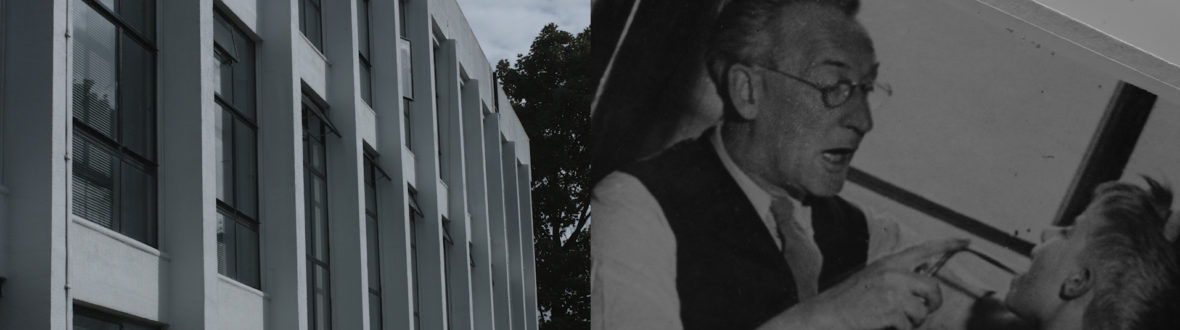
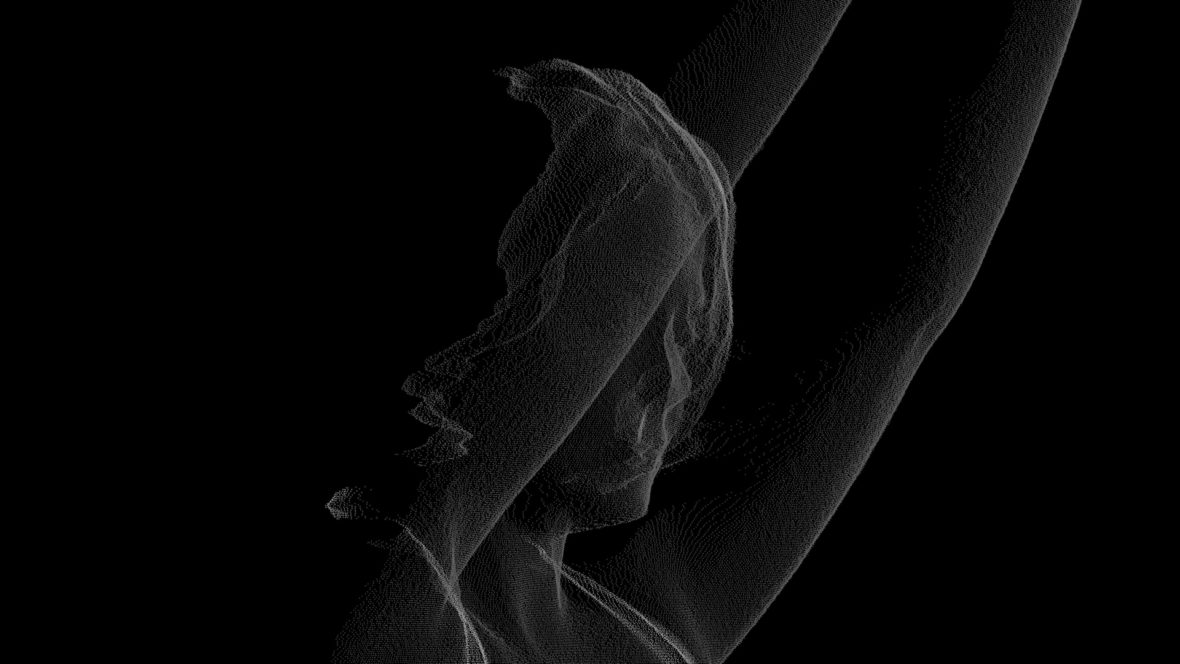
Still from Correspondence O, Ilona Sagar 2017

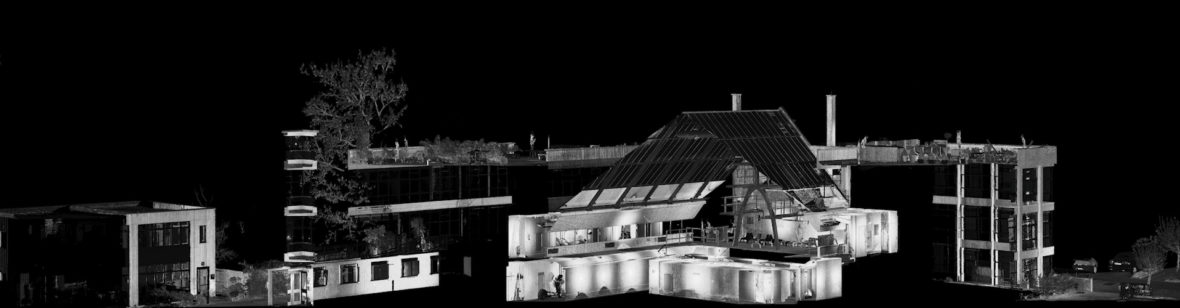
Established in Peckham in 1926, the Pioneer Health Centre was a bold experiment in social connection, preventative medicine and local governance. For over 24 years, working-class citizens of the south London borough paid a shilling a week to be a part of a body greater than the sum of its parts, signing up to a research program that sought to track the relationship between social and physical health.

The centre’s transition from a Socialist reverie to gated community, as it is now, has uncomfortable parallels to an increasingly fraught and privatised NHS. Returning to the site and the principals with which it was founded, multimedia artist Ilona Sagar’s moving installation, Correspondence O, explores this historical microcosm while asking urgent questions about our current public healthcare system.

Here, I spoke to Sagar about the legacy of the Peckham Experiment, the status of community and social welfare today, and the future of the NHS. 

Still from Correspondence O, Ilona Sagar 2017

Why was the Pioneer Health Centre such a revolutionary model and how did the project come about? 

A while ago I came across the building through a friend and was drawn to its iconic architecture, but I was unware of its loaded history. I started to look at the architect Owen William’s designs in the RIBA collection and realised that I had only scratched the surface of a complex archive.

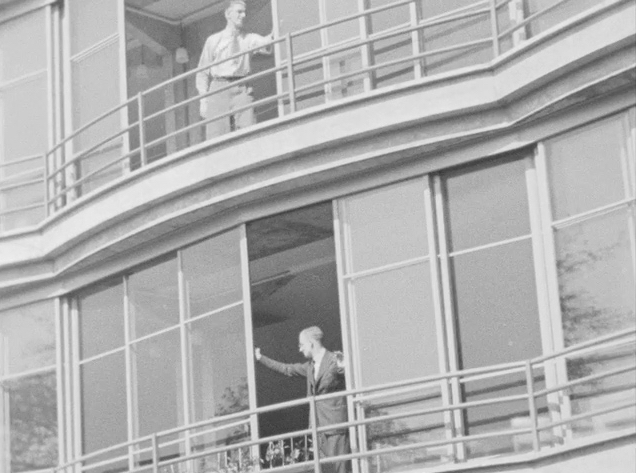
‘The Peckham Experiment’ was at the forefront of a dramatic shift in the public perception of health, yet its significance has been historically overlooked. Biologists George Scott Williamson and Innes Hope Pearse established it privately in 1926, long before the foundation of the NHS in 1948. The Pioneer Centre came out of a time of social experimentation and optimistic change, citing similar projects such as the fresh air movement. It promised wide, airy, huge-windowed spaces where people could play, exercise, and be observed and recorded. Built around principles of self-organisation, local empowerment and a holistic focus on social connection as fundamental to health, the learning from the Peckham Experiment is as relevant today as it was then.

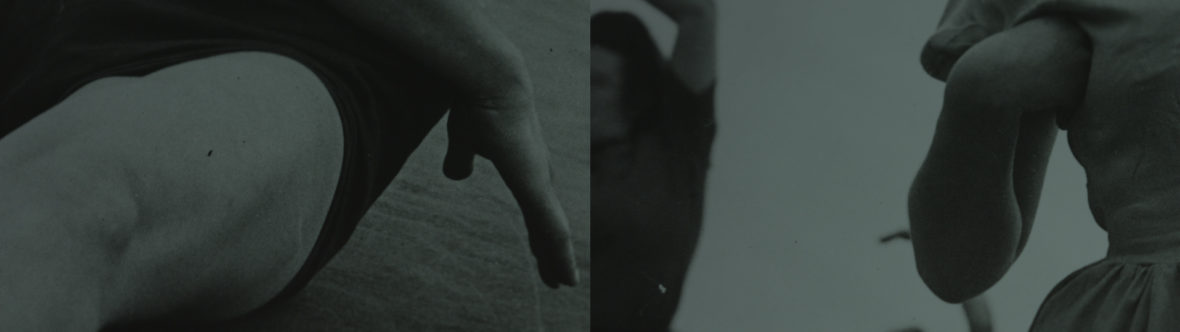
Still from Correspondence O, Ilona Sagar 2017

How important was collaboration for this project?

There is an overwhelmingly comprehensive body of archival material and primary resources surrounding the work of the Peckham Experiment. They appear in a fragmented way across several archives, community groups, charitable foundations and within the building itself. 

The first material I came across was at the Wellcome Trust archives, where I found a series of very unusual black and white silent films. The lack of an experienced camera operator and the method used to transpose the material to archive results in films which are a disjointed mesh of body parts, glass, water, rope, architecture, small moments of interactions and activities. Through accident they almost appear as a structuralist film rather than a medical document. I was struck by how much these films resonated with contemporary editing methods. So this footage became a key overarching structure for Correspondence O, reflected in a rhythmically edited sequence of rapidly changing events and bound by the layered use of sound design and voice-over.

Correspondence O is not simply a historical account, it is a darkly speculative installation that examines our uneasy and increasingly precarious relationship to public health, labour and wellbeing. During a site visit at the Pioneer Centre, by chance I met Tom Bell, an architectural surveyor, and James Hardy, a personal trainer, who are both residents of the centre today. Their professions became emblematic material components of the film, echoing the legacy of the Peckham Experiment. 

Still from Correspondence O, Ilona Sagar 2017

Could we see this sort of self-organised, locally empowered social-health centre in the future as an antidote to the status quo? What is the tension between public and private in the work?  

The inspiring yet unsustainable ideologies established by biological and social reform groups like the Peckham Experiment has in many ways shaped our expectations of public resources. The failed big society agenda and neoliberal localism have redefined notions of the common good. Correspondence O is not a didactic illustration of the current political climate. I didn’t want the work to become a worthy polemic, but through the film and exhibition, open up a dialogue with my audience and offer a space for discussion. 

Political populism, identity politics and fundamentalism have distracted us from the privatisation of public life. Silently the definition of public interest and welfare have been rewritten, leaving us with an increasingly private and economically driven health sector, redefining health as a consumer asset rather than as an innate human right.

Still from Correspondence O, Ilona Sagar 2017

AI can now diagnose scans for cancer with incredible accuracy and at a fraction of the cost compared to human doctors – could emerging technologies like AI be the thing that saves the NHS?

There are amazing innovations in health and care using advance forms of human-computer interactions and assistive technologies, and I have no doubt that they will have a positive and lasting impact on our health in the future. Yet I have concerns about how private health companies shape our access to these technologies. Algorithms, neural networks and data forests are increasingly trusted and relied on to manage all aspects of our everyday activities. In recent years we have seen a surge of innovation in the commercial sector for products that allow users to self-manage their health and wellbeing without outside human intervention. Internationally we are seeing governments trialling new E-health initiatives in a desperate bid to solve growing structural and fiscal challenges within public health provision. 

I am deeply troubled by the contraction of companies such as Babylon Health Care, who are currently piloting the ‘GP in Hand’ digital app for the NHS. The app promises ‘efficiency’ to take pressure off an over-stretched NHS. Yet it features ‘queue-jumps’ and faster testing pay bands, piggy backing us into a ACA style system. Although there is a substantial commentary surrounding the gamification and quantifying of our health, labour and wellbeing, there has been sparse empirical analysis. 

Courtesy of the Wellcome Collection and Pioneer Health Foundation

Do you think the British public will eventually reject privatisation in their healthcare system?

I would like to think we have a power to resist, but whether we have a choice to reject the privatisation that is already legislated for is difficult to assess. Evidence of the silent shift to a US style system of insurance is embedded in the announcement by Jeremy Hunt of the launch of “accountable care organisations”. It is a system of health management directly transplanted from the US that bring private, corporate health interests deep into the structure of public welfare. Aspects of privatisation are very much in the public interest, yet corporate partnerships remain opaque and little known to the general public. 75 years after the Beveridge report, we are further than ever before from the founding notions of social insurance. We should take every opportunity to question and challenge policy and increasing health inequalities. Once it’s gone, its gone. 

Correspondence O runs at the South London Gallery until the 25th February. A panel discussion with Owen Hatherley, Nina Wakeford, Lisa Curtice and Ilona Sagar takes place at 6pm on 25th February. For more information click here.

Jules de Balincourt: Precision and Abstraction

Franco-American painter Jules de Balincourt ruminates on abstraction, utopia and the accessibility of art, at the opening of his latest exhibition

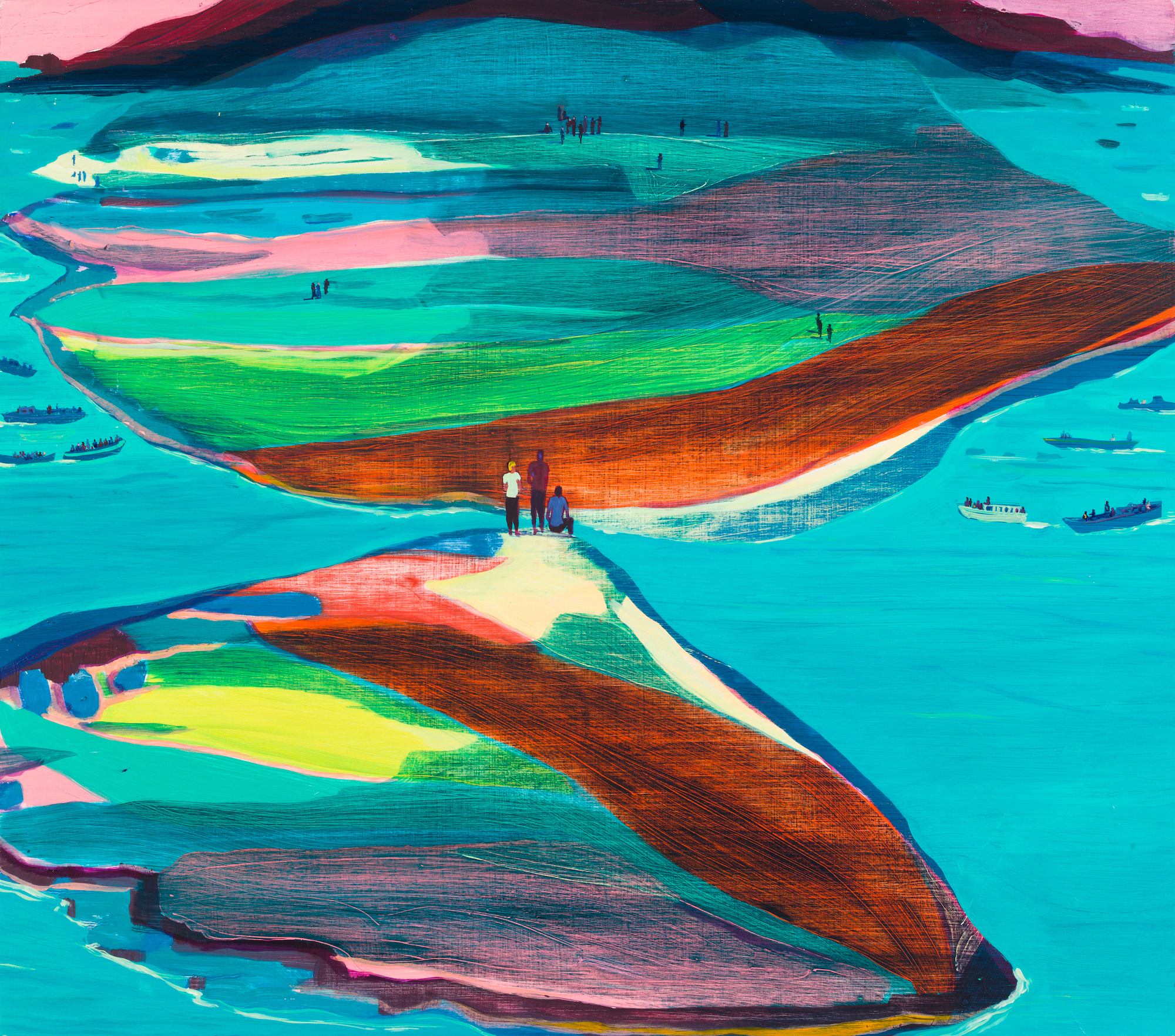
Another Divided Island, 2017 © Jules de Balincourt. Courtesy the artist and Victoria Miro, London / Venice

If contemporary art is frequently found to be conceptually obscure, exasperatingly self-referential or weighed down with lofty ideals, then the vibrant works of Brooklyn-based artist Jules de Balincourt may be just the antidote. With nothing more new-age than oil on panel, he has produced paintings that project a powerful radiance from within an abstracted haze. Imposing landscapes inhabited by roaming communities, each work is arrestingly aestheticised in a way another artist might find beneath them, but De Balincourt owns it. “Art for me, it always was about beauty and seduction at a certain level, the first thing that draws you to art is to be pulled into it, seduced by it.” He hurriedly adds, “but it can’t just be sugar-coated sweetness, I need an edge or tension or… I like the idea of these paintings standing at a crossroad where it could go either way. I like to leave that suspense.”

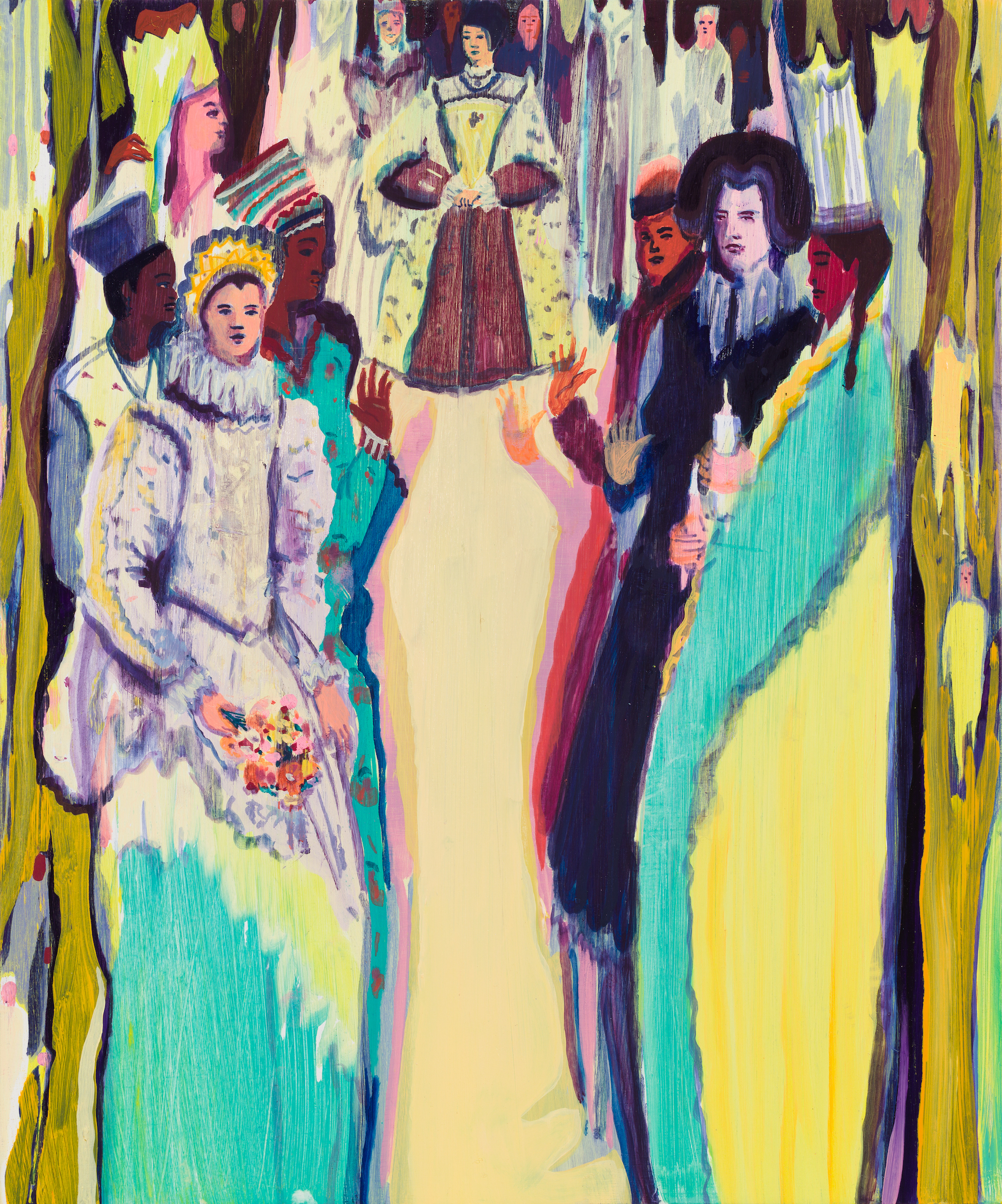
If Queens Ruled 2017 © Jules de Balincourt. Courtesy the artist and Victoria Miro, London / Venice

De Balincourt was born in Paris, although from the age of nine he was raised in Malibou Lake, California. He has stated in interviews that he doesn’t identify as either entirely French or American, although with France recently voting in Macron over the far-right, populist Le Pen, it is clear that his mind is very much focused on the troubled and divided times facing the United States. It is almost a year since Trump’s inauguration when I meet him at the installation of his new show, They Cast Long Shadows, at Victoria Miro in Mayfair. Perched on stools in the main gallery, we are surrounded by these new works, and he gesticulates energetically whenever he seeks a point of reference.

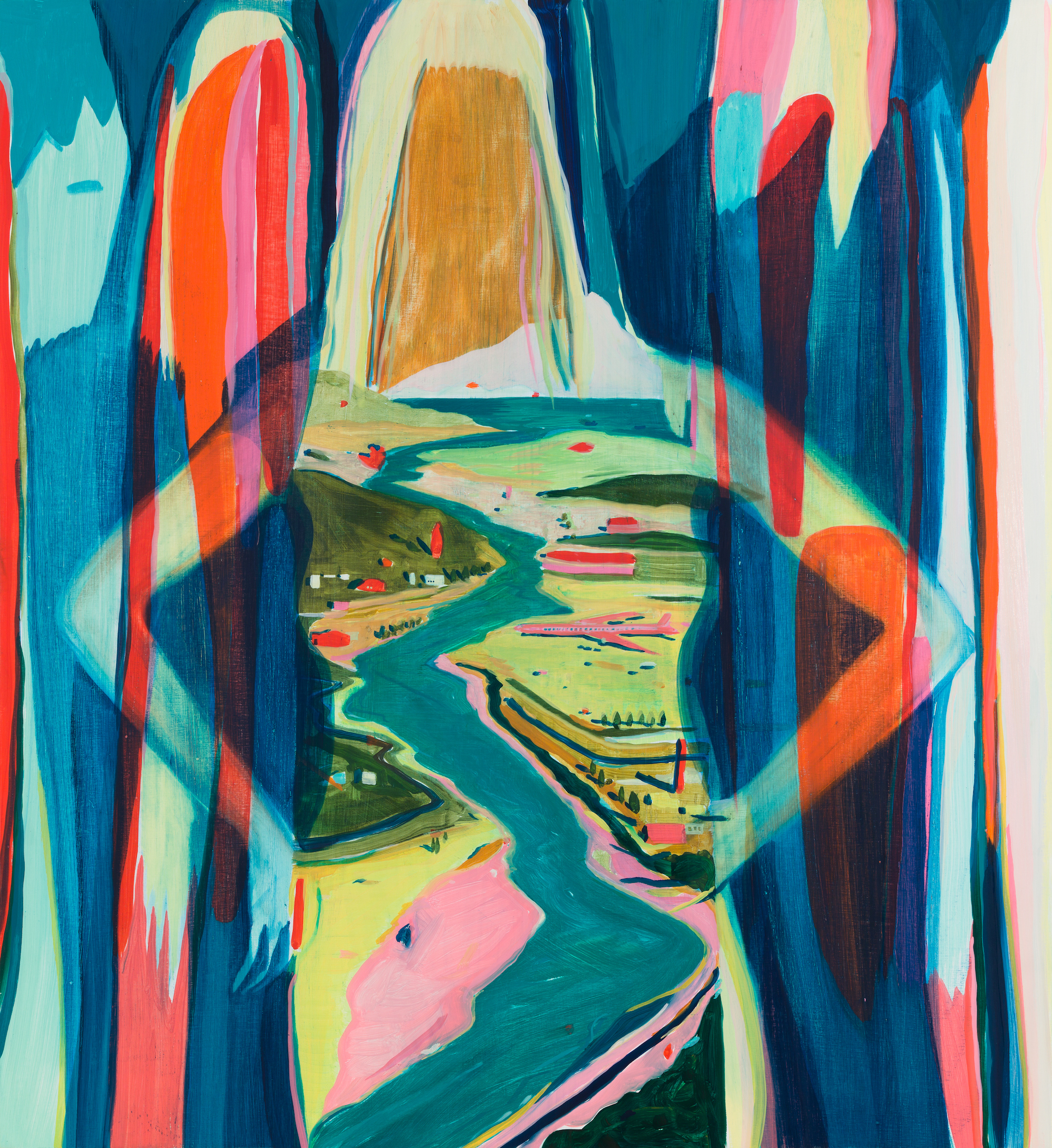
Troubled Eden 2017 © Jules de Balincourt. Courtesy the artist and Victoria Miro, London / Venice

The show is an accumulation of activity from only the past few months, although this is in fact an arbitrary marker. “It’s just a continuation of what I’ve always done in some ways. There’s never a big drastic shift… I consider each show like another page in the same book.” De Balincourt is very precise about his process, if only to articulate its imprecision. Each painting is begun in abstract until, floating in the brushstrokes, “I find something to grasp onto and it eventually becomes figures.” These little populations in turn create a landscape from the floating impressionistic forms by transforming their surroundings into a coherent space. It is unplanned and instinctive, and de Balincourt eschews the use of photography or preliminary sketches. “I’m always working intuitively and unconsciously, I’m interested in my own self-discovery through making this work.”

This approach has informed the show’s installation process too, “I’m interested in the free-associative elements that come up when two completely different images are juxtaposed but I know they still somehow relate.” For all their chance origins, De Balincourt’s landscapes are highly expressive and their metaphorical power leaves them steeped in narrative potential.

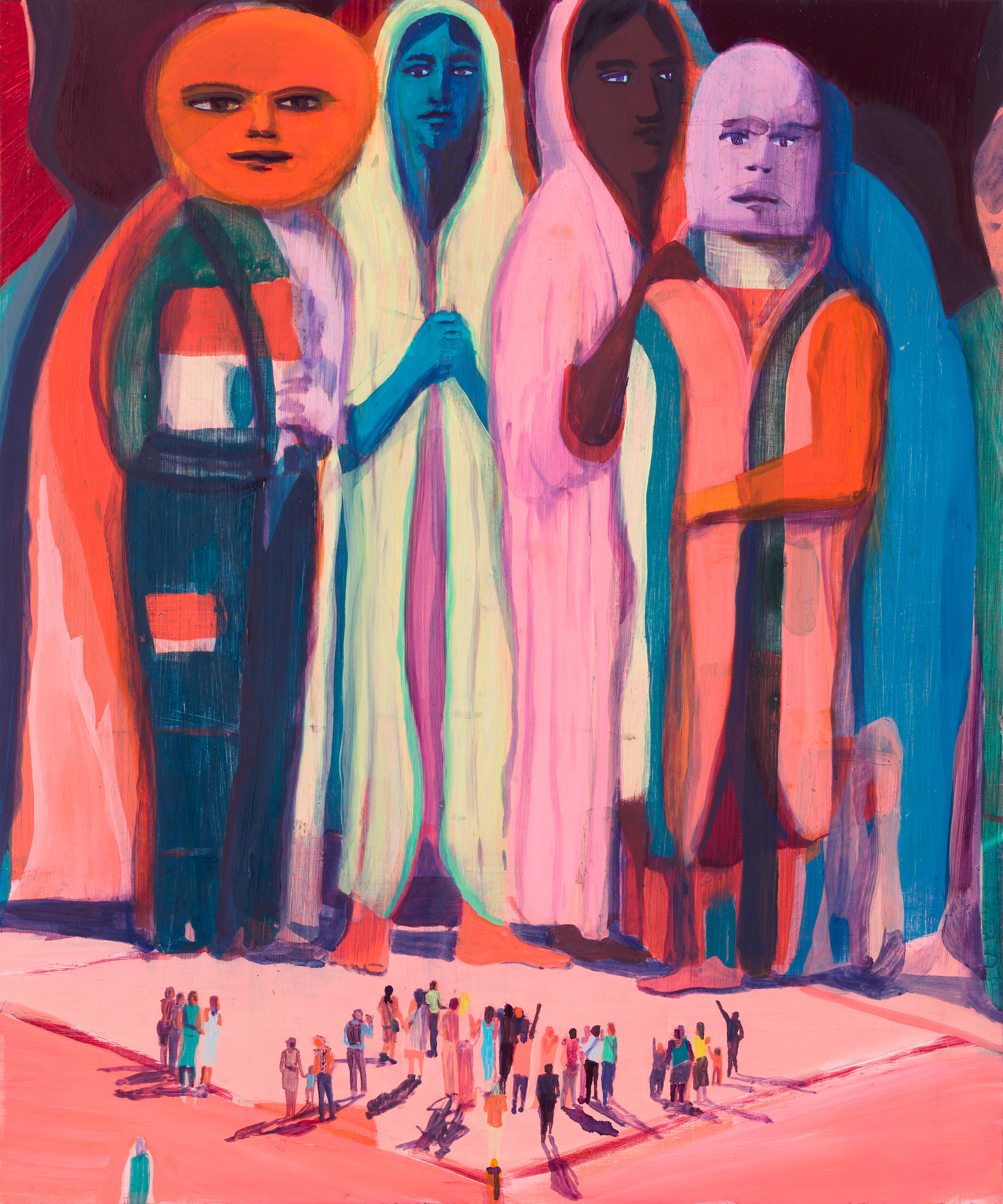
Big Little Monsters 2017 © Jules de Balincourt. Courtesy the artist and Victoria Miro, London / Venice

The island, a recurrent motif for the artist, who is also a keen surfer, has unfixed and shifting applications. In Island People the pastel pink island is an ‘Edenic comfort zone’ or a sanctuary where people freely congregate. In Divided Island, however, a gathering perches on one island and stares across a channel to another larger land mass that recedes into the distance. It speaks of islands that are insular and isolating with a resonance that is at once timeless and timely, as de Balincourt confirms – “it’s a subtle jab at Brexit”.

His work has long toyed with a tension between the utopian and dystopian, although he admits, “I think my work, when I was younger, was a little bit more direct. Now I push myself to delve more into the unconscious, the abstract, the intuitive and see what comes up.” This is inevitably influenced by real world events, which have recently loomed in the minds of many. “The real challenge under the Trump administration is how to confront the current situation at all… I don’t really know how to address it directly but I know that subconsciously I am concerned about what’s happening in America.”

Repeated Histories 2017 © Jules de Balincourt. Courtesy the artist and Victoria Miro, London / Venice

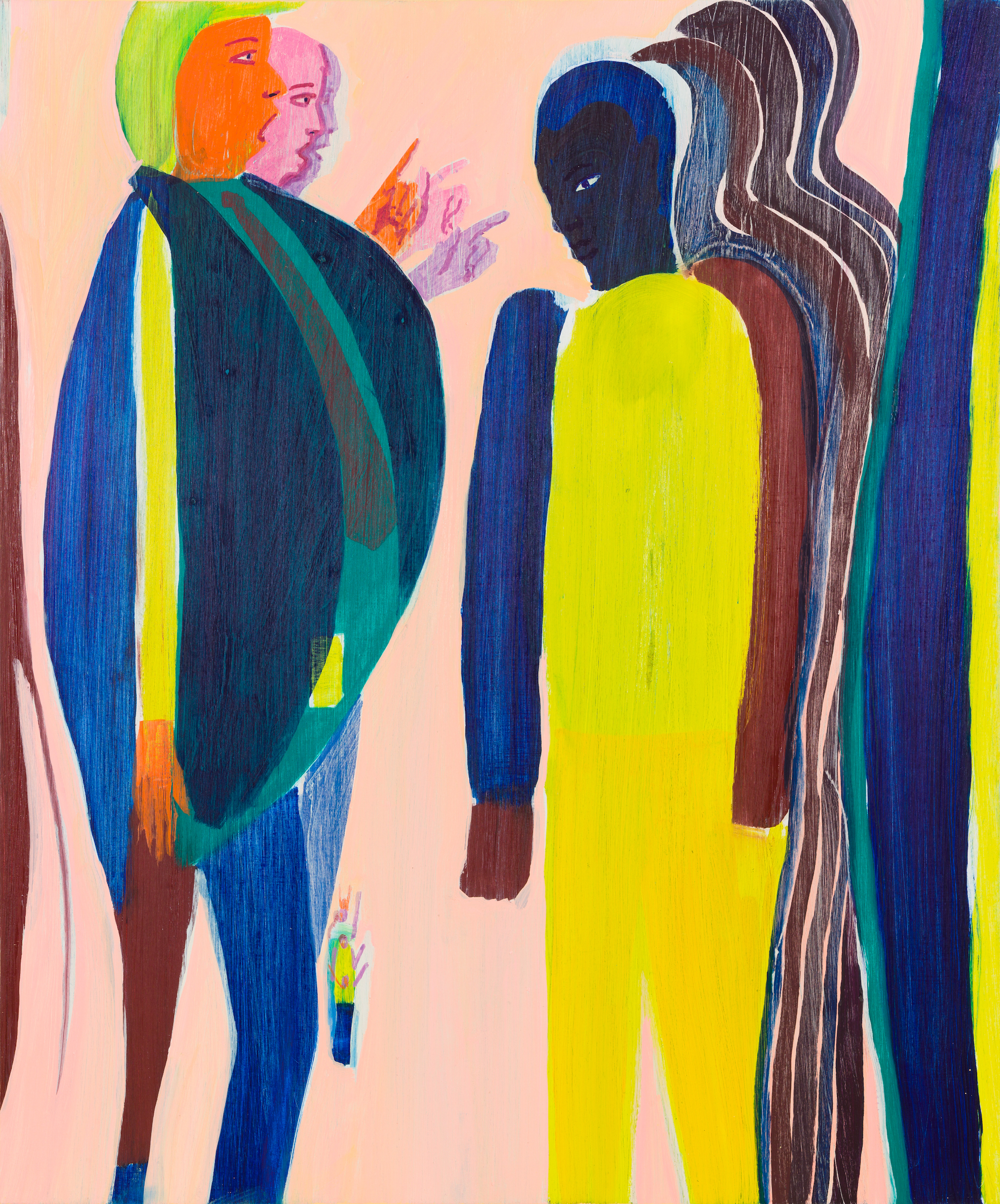
In his recent move towards greater abstraction, de Balincourt has found avenues to address those issues. Even the most obvious work, Repeated Histories, in which a robust orange-faced man directs a small accusatory finger towards a row of black men, makes use of abstracting techniques such as repetition and distorted scale to reflect real power structures. Other works in the collection take a softer approach, and one that is distinctly undogmatic. The art is deliberately accessible, with de Balincourt entirely unconvinced by the social or political impact of art that he considers “convoluted and hyper-conceptual… completely wrapped up in a hermetically sealed corner of the art world. My work is in a weird way a resistance to that pretentiousness and elitism,” he stares intently at a canvas across the room before turning to me with a grin, “but then again, you know, I’m starting to sound like a Trump supporter.”

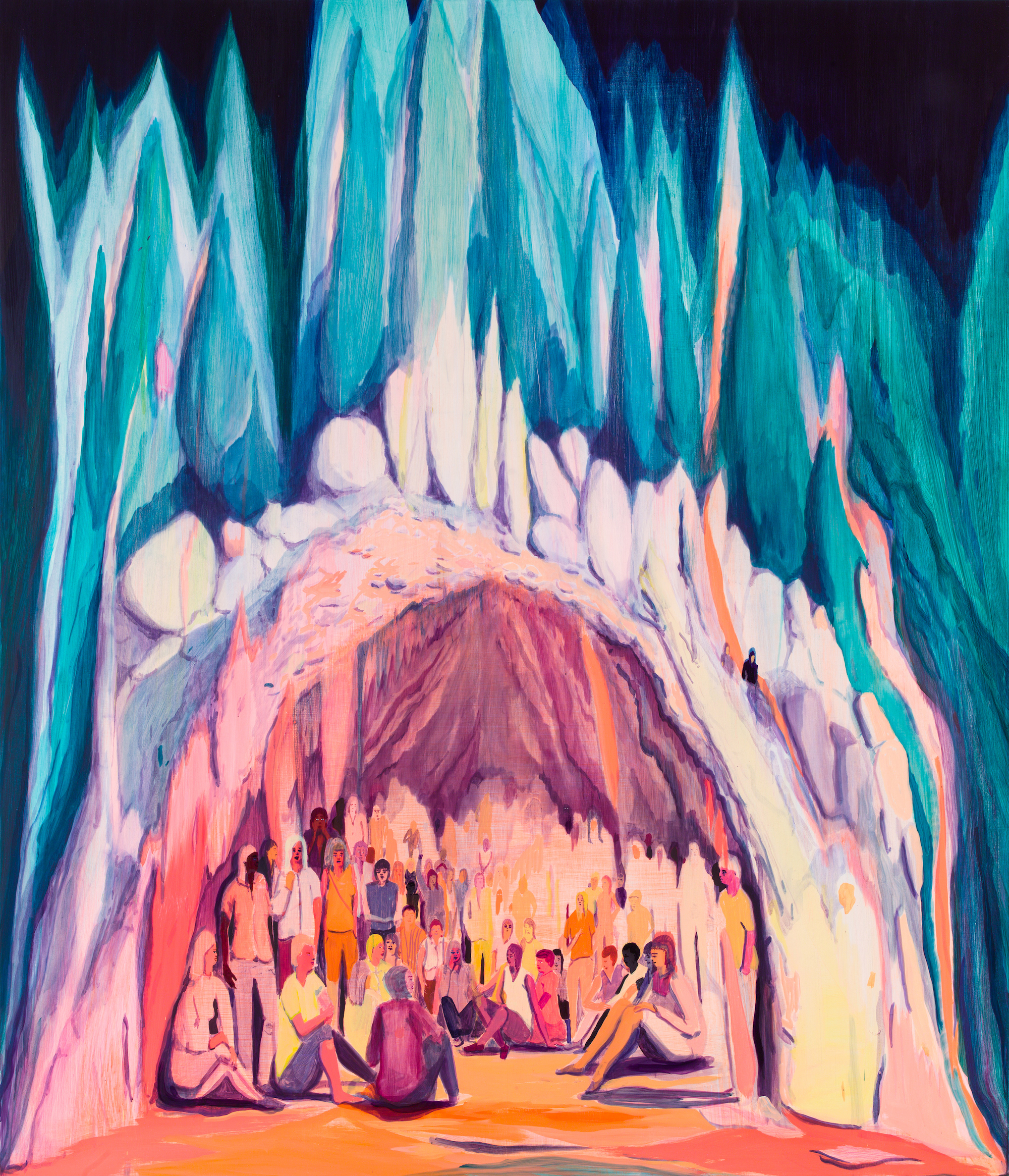
Cave Country, 2017 © Jules de Balincourt. Courtesy the artist and Victoria Miro, London / Venice

De Balincourt’s work seems simple, yet strikes to the core of a complex conversation. In these dreamy worlds, at least, the utopian defeats the dystopian and de Balincourt announces, “I wanted to be optimistic. I wanted to still give hope.” At one point he gestures towards Cave Country, a large canvas in which a deep crevasse of hot oranges and warm pink cuts into a turquoise rock to house a crowd seeking refuge. He pauses carefully before declaring, “I like to think of it as a place away from the chaos of the rest of the world.”

They Cast Long Shadows is at the Victoria Miro Gallery until 24 March 2018.

An Hour with Jean-Michel

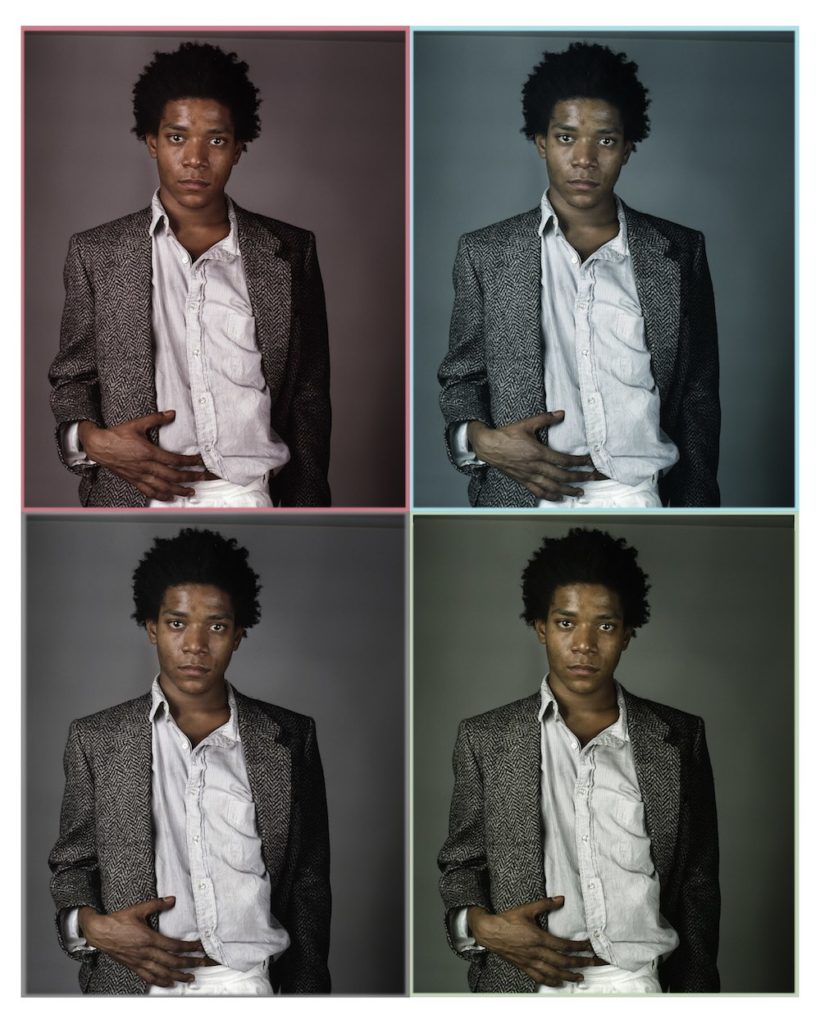
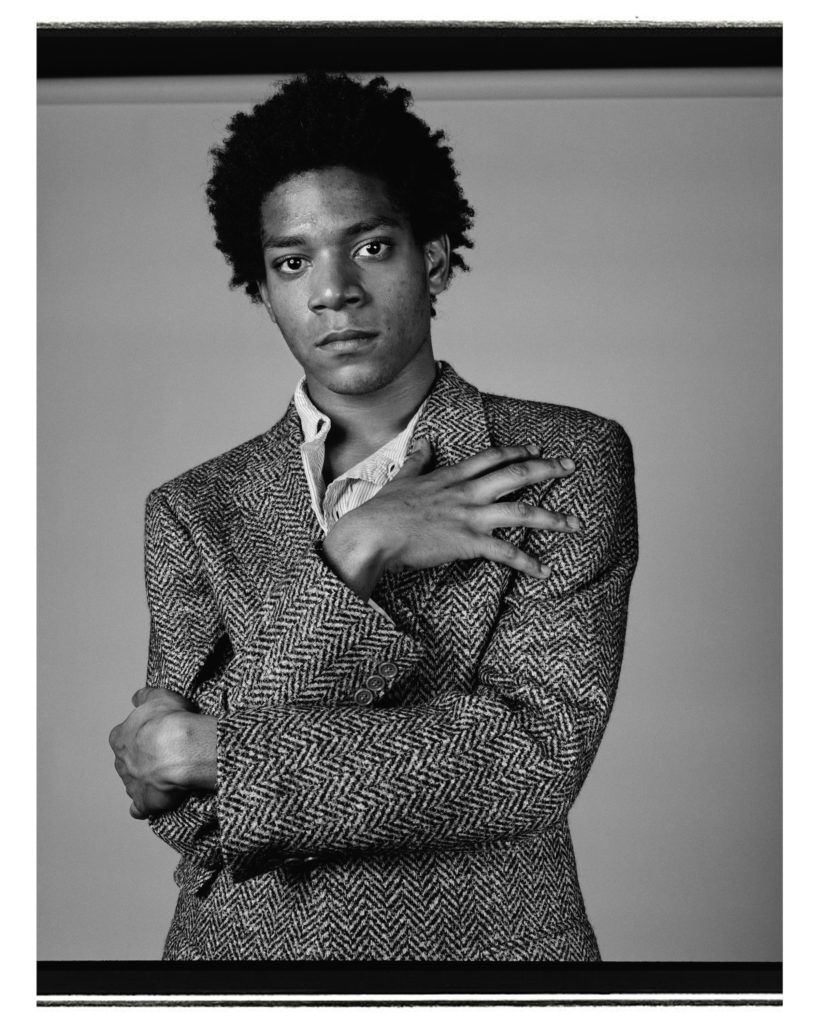
Photographer Richard Corman reflects on his brief acquaintance with Jean-Michel Basquiat, culminating in a set of unpublished photographs shot in a New York studio during the summer of 1984

Although still somewhat of a cult figure at that time, I was definitely aware of the unique canvas of Jean-Michel Basquiat, as his poetry, painting and culturally poignant vision moved so many of us at the time. When I stepped into his studio on 57 Great Jones St., the room was a swirl of people, creative energy and smoke, and Basquiat was submerged and almost invisible in a corner, taking it all in.

I think by nature, Basquiat was extremely vulnerable, and he wore that sensibility on his sleeve. Yet I remember feeling his curiosity, his intensity, his anger and his honesty in his eyes as his body language shifted from frame to frame. I placed him in front of grey paper in order to remove him from the surrounding confusion and to create a simple setting where I would hopefully see a piece of his humanity. I think I was more of a voyeur on that day than a director – I did not want to interrupt the process.

As with most photography, and mine in particular, I leave it up to those viewers who look into the eyes of these portraits to determine their own truth about the man, the artist, the genius. I have tried to create a portfolio that was indicative of that moment in time with an individual who, in many ways, is more relevant today than ever. With the world in such confusion, we need the honest voice of a dreamer like Basquiat.

www.njgstudio.com 

The Bistro: Art and Eating

George Upton reflects on the bistro, the humble eatery that has spawned revolution, some of the most important artistic movements of the 20th century, and a uniquely Parisian way of life

Bystro! Bystro!

It’s 30th March 1814 and the streets of Paris are ringing with the cries of Cossack troops. For almost two years, following Napoleon’s failed invasion of Russia, the soldiers have been chasing the French army back across the continent, and now they are in the capital, victorious and hungry. “Quickly! Quickly! Bystro! Bystro!” they shout impatiently, quite possibly becoming the first foreigners to complain about Parisian customer service, as well as inadvertently coining the name of one of the most important social, cultural and, of course, culinary institutions in French history.

At least that’s one theory; the ranks of France’s gastronomic historians are yet to agree on the etymological heritage of the humble bistro, though there is a consensus that these cheap, informal eateries – part bar, part café, part restaurant – have been central in shaping French culture. After all, not long before the impatient Cossacks, it was in these simple Parisian dining rooms that – fuelled by inexpensive, traditional fare – debate and discord would boil over into the revolution of 1789.

Later the bistro would help foster some of the most important artistic movements of the 20th century. Still cheap and unassuming, it was at this time that the bistro would come of age: jacketed, white-aproned waiters floating through tables of solitary readers and rowdy drunks, carrying casserole and carafes of wine, the bustle of the street half muted by curtains pinned just above eye level. It was here, amidst the pimps and anarchists of the Lapin Agile in Montmartre, that Picasso would talk and drink and define the course of modern art with Modigliani and Maurice Utrillo, as Satie and Debussy sat at the piano. Or where, across the Seine at the Polidor, Hemingway would write – recording the trials of his lost generation and fellow literary expats, James Joyce and Henry Miller – and drink, and fight.

Today, the number of bistros has dwindled – 8,000 in Paris, down from 50,000 at the turn of the century – and many of those that remain have moved away from their uncomplicated culinary origins, but the tradition of the bistro remains strong. Immortalised in the ideas they fostered, still populated by thinkers and drinkers, the bistros are a living museum to a uniquely Parisian attitude to life, art and eating.

This is an extract from issue 21 of Port, out now. To buy or subscribe, click here.

Miró on Miró

In an excerpt from a new book of reflections by the iconic Spanish surrealist, Joan Miró, the artist considers his work, his career and his influences

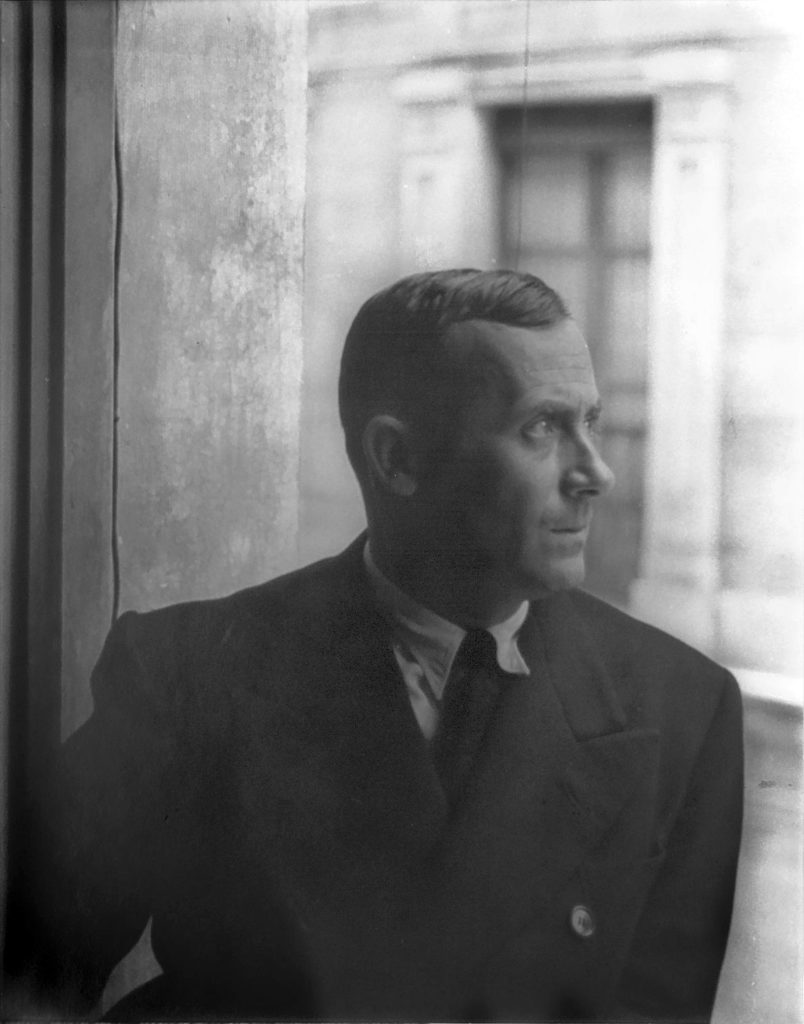
Joan Miró, shot by Carl Van Vechten in Barcelona, June 1935

A voice. For days and days my inner ear was attuned to this voice, which I’ve tried to recreate using the notes I took. These words, which started slowly, but grew bit by bit in speed and in number, ending on the afternoon of November 25, 1958 — how to capture them without freezing them? Miró himself was clear and precise. But speech, by its very nature, seems so different to me from writing that I wondered whether the conversion from one to the other would even be possible, until a phenomenon, which I hoped for intensely but surprised me all the same, occurred. 

To describe it, we luckily have Miró’s own words: it is, in fact, a seedling, a new growth. Something in my memory sets down roots, throws up a trunk, branches, leaves. In short, it’s as if some part of me became the garden workshop he talked about where his work grows. A tree of written words, whose image I set in motion and recorded in its spoken version, is born.

Having arrived at this point, I realise that what grows, in me and on paper, traces itself too: there is a kind of drawing, of a figure, of a face. In other words, I also fulfil the requirements of a portrait artist. “Now,” I said to myself, “portraitists don’t usually add their own portrait to that of their subject.” As a result, I’ve tried to suppress any questions that represent myself and which I put to Miró, to leave nothing more than the face, the tree, or the monologue of one of the greatest painters of our times – Yvon Taillandier. Paris, 1963.

The spectacle of the sky overwhelms me.
          I’m overwhelmed when I see, in an immense sky, the crescent of the moon, or the sun. There are, in my pictures, tiny forms in huge empty spaces. Empty spaces, empty horizons, empty plains — everything bare has always greatly impressed me.
          In the contemporary visual climate, I like factories, nighttime lights, the world seen from a plane. I owe one of the greatest emotions of my life to a night flight over Washington. Seen from a plane at night, a city is a marvellous thing. From a plane, you can see everything. A little person, even a very little dog, can be seen. And this takes on enormous importance, like one or two lights from peasants in the absolute darkness, during a night flight over the countryside.

The simplest things give me ideas. A bowl from which a peasant eats his soup; I prefer this to the ridiculously sumptuous plates of the rich.
           Folk art always moves me. In this art there is neither cheating nor faking. It goes straight to the point. It surprises, and is rich in possibilities.

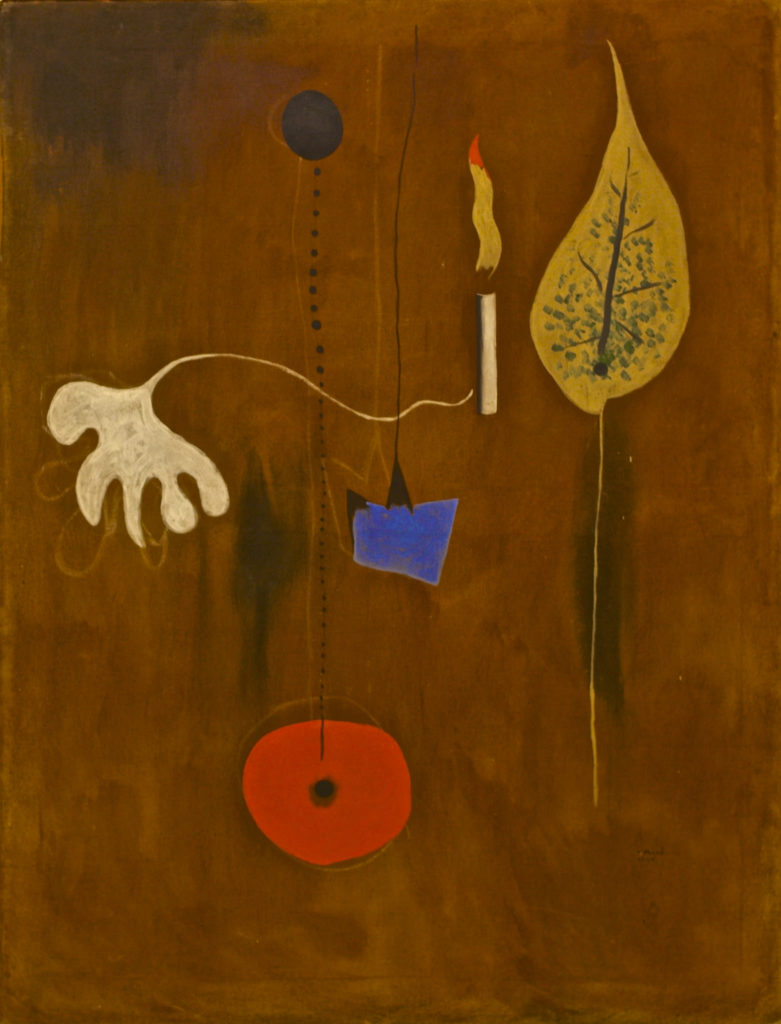
Figure à la bougie, 1925

When I began, the painters who made a strong impression on me were Van Gogh, Cézanne, and Le Douanier Rousseau. In loving Rousseau, I already loved folk art. The older I grow, the greater importance this art has for me. A hayfork well carved by a peasant is very important to me.

For me an object is alive; this cigarette, this matchbox, contain a secret life much more intense than that of most humans. I see a tree, I get a shock, as if it were something breathing, talking. A tree, too, is something human.

I work in a state of passion and frenzy. When I begin a canvas, I obey a physical impulse, a need to act; it’s like a physical discharge.
          Of course, a painting can’t satisfy me right away. At the beginning, I feel the distress I described. But as I’m a great fighter in these sorts of things, I throw myself into the struggle.
          It’s a battle between me and what I’m doing, between me and the canvas, between me and my distress. This struggle is passionately exciting to me. I work until the distress leaves me.

I work for a long time, sometimes years, on the same canvas. But all this time, there are periods, sometimes quite long, when I’m not doing anything with it.
          The important thing for me is that its point of departure — the shock that determined it — must be felt.
          It doesn’t worry me if a canvas remains in progress for years in my studio. On the contrary, when I’m rich in canvases that have a point of departure vital enough to set off a series of rhythms, a new life, new living things, I’m happy.
          I think of my studio as a kitchen garden. Here, there are artichokes. There, potatoes. Leaves must be cut so the fruit can grow. At the right moment, I must prune.

I work like a gardener or a winemaker. Things come slowly. My vocabulary of forms, for example — I didn’t discover it all at once. It formed itself almost in spite of me.
          Things follow their natural course. They grow, they ripen. I must graft. I must water, as with lettuce. Ripening goes on in my mind. So I’m always working at a great many things at the same time. And even in different fields: painting, engraving, lithography, sculpture, ceramics.

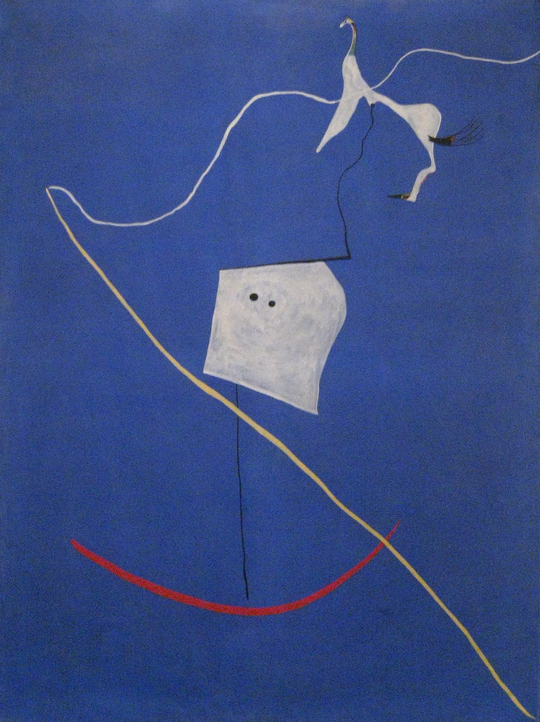
Circus Horse, 1927

In an artwork, you should be able to discover new things every time you see it. But you can look at a picture for a week and never think of it again. You can also look at a picture for a second and think of it for the rest of your life. For me, a picture should be like sparks. It must dazzle like the beauty of a woman or a poem. It must have radiance; it must be like those stones that Pyrenean shepherds use to light their pipes.

An artwork must be fertile. It must give birth to a world. Whether you see it in the flowers, people, or horses matters little as long as it reveals a world, something alive.
          Two and two don’t make four. They only make four to an accountant. But we mustn’t stop there; the picture must make everything clear; it must fertilise the imagination.
          I don’t rule out the possibility that a businessman, looking at one of my pictures, might discover the means of doing a deal, or a scholar, the means of solving a problem.
          The solution offered by a picture is a solution of a general order applicable to all sorts of other fields.

More than the picture itself, what counts is what it throws into the air, what it exhales. It doesn’t matter if the image is destroyed. Art can die; what matters is that it scatters seeds on the ground. I liked surrealism because the surrealists didn’t consider painting as an end. With a painting, in fact, we shouldn’t care whether it remains as it is, but rather whether it sets the germs of growth, whether it sows seeds from which other things will spring.

Joan Miró: I Work Like a Gardener by Joan Miró, preface by Robert Lubar (Princeton Architectural Press, £14.99) is available now

Translated by Joyce Reeves, with additional translation by Kevin Lippert

We select an evening wear edit inspired by the Surrealist movement

The Constructivist: Varvara Stepanova

Jacob Charles Wilson reflects on the influential figurehead of the Russian avant-garde and often-overlooked pioneer of Constructivism, Varvara Stepanova

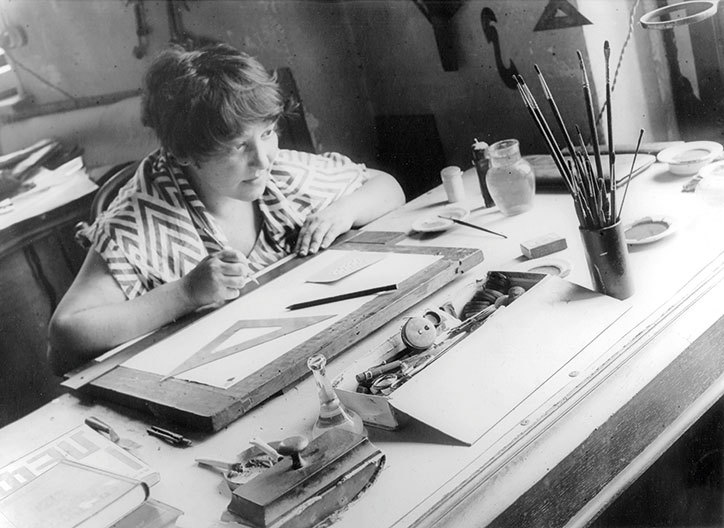
The Soviet fashion designer Varvara Stepanova, born to a peasant family in 1894, was one of the greatest creative forces of the revolutionary years. By her 20s, she was already a central part of the Russian avant-garde, alongside the poet Vladimir Mayakovsky, the abstract painter Olga Rozanova and the cutting-edge photographer – also her life partner – Alexander Rodchenko. Her work remains influential today, if under-recognised.

Stepanova was never content for her work to sit in galleries – real artwork was made in the streets, factories and laboratories – and in 1921 she cofounded the Constructivist Group, which set out to direct its artistic efforts towards designing functional yet beautiful products for everyday proletarian life. Stepanova produced photomontages, book covers, posters and theatrical sets, before concluding that her vision would be best realised designing fashion for work and leisure.

The workers of the new world would live and play in the very best materials and designs: casual jumpsuits and overalls that drew on both traditional peasant clothing and the latest modernist artistic trends of futurism and cubism. Stepanova’s designs use dynamic shapes that emphasise the human body in action, with sharp angular forms, printed abstract patterns and contrasting colours: bold reds and blacks. Her clothes would enhance the flexibility and comfort of moving through the streets and the city, in the factory and on to the playing field, while unisex clothing patterns would no longer confine men and women to stifling gender norms.

Before heading the textile design course at the Vkhutemas art school, Stepanova had spent a year working at Tsindel, the state textile factory, producing over 150 designs. Unfortunately, due to wartime shortages and the complexity of her visions, many of these would never be realised, but her work lives on. It is from her pioneering designs and radical reimagining of clothes and the body that our own contemporary approach to sportswear and streetwear has been created: the technologically innovative fabrics and bold use of colour and pattern that dominate Western fashion shows today – having been forged among the passions, ideals and dynamism of the early Soviet years.

This is an excerpt from issue 21 of Port, out now. To buy or subscribe click here.

Kanaal: Living in Art

Kanaal, the brainchild of Belgian art and interiors behemoth Axel Vervoordt, provides cutting-edge new exhibition and residential spaces at the forefront of design 

Kanaal. Photo © Jan Liégeois

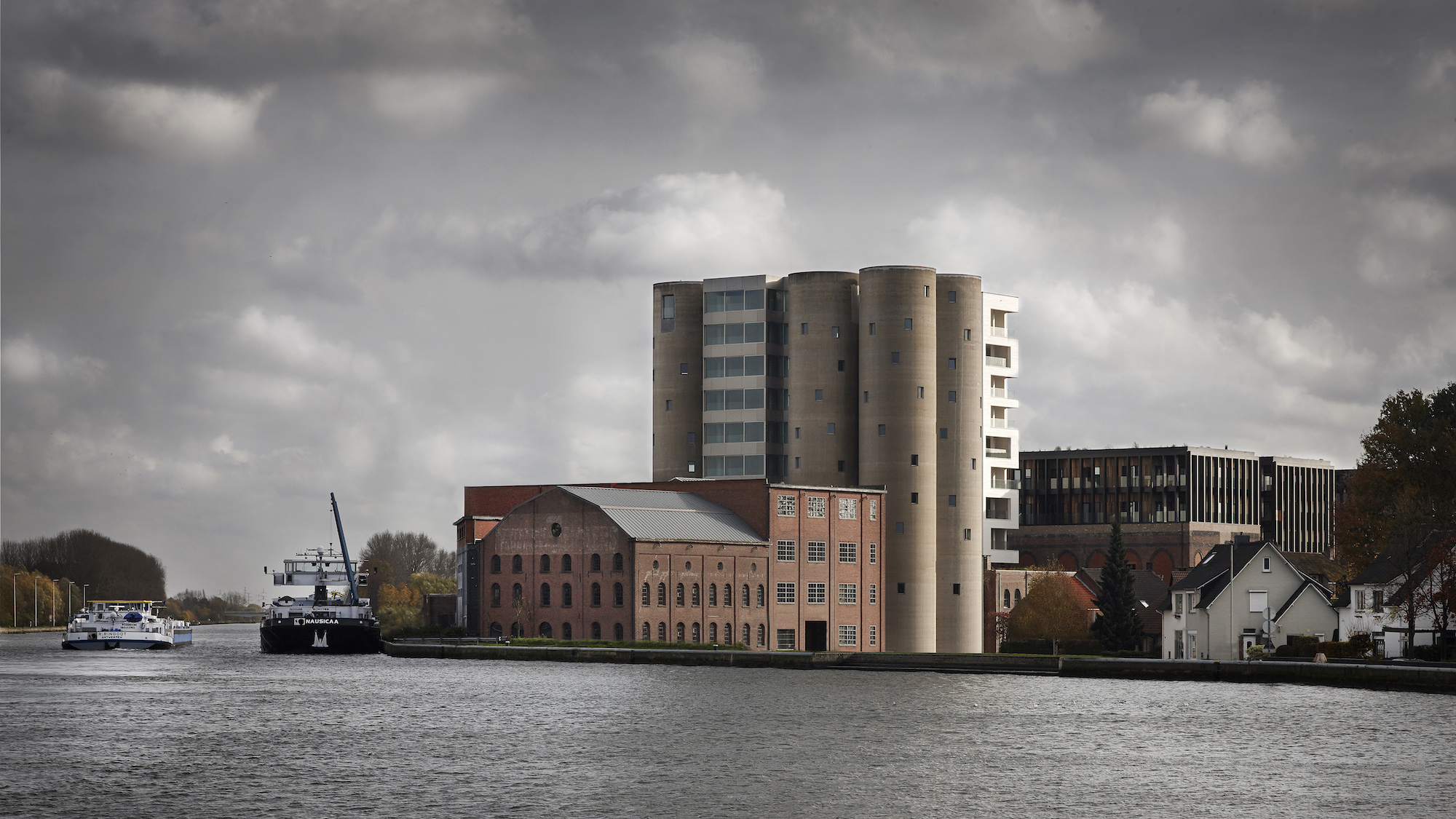
The Kanaal complex, originally an old malting distillery and grain storehouse, lies just on the outskirts of Antwerp. It’s here, over the last two decades, that Axel Vervoordt – the interior designer and art collector who designed the Manhattan penthouses of Robert de Niro and Kanye West – has been gradually acquiring land and derelict agricultural buildings. Today, the recently opened, 55,000sq m site offers custom designed and sympathetically restored exhibition space, featuring permanent installations from luminaries including Anish Kapoor and Marina Abramović, as well as rotating showcase exhibitions for emerging artists. 

The complex also includes luxury apartments available for commercial sale, conceived by long-term Vervoordt collaborator, the architect Tatsuro Miki, and with interiors designed by Vervoordt himself. He envisages a close community here, brought together by a love of art and design – the site already hosts award-winning French bakery Poilâne and a restaurant, with daycare facilities in the pipeline. It’s a project that is truly a family affair, with Axel’s two sons, Boris and Dick, taking responsibility for new art acquisitions and real estate, respectively.  

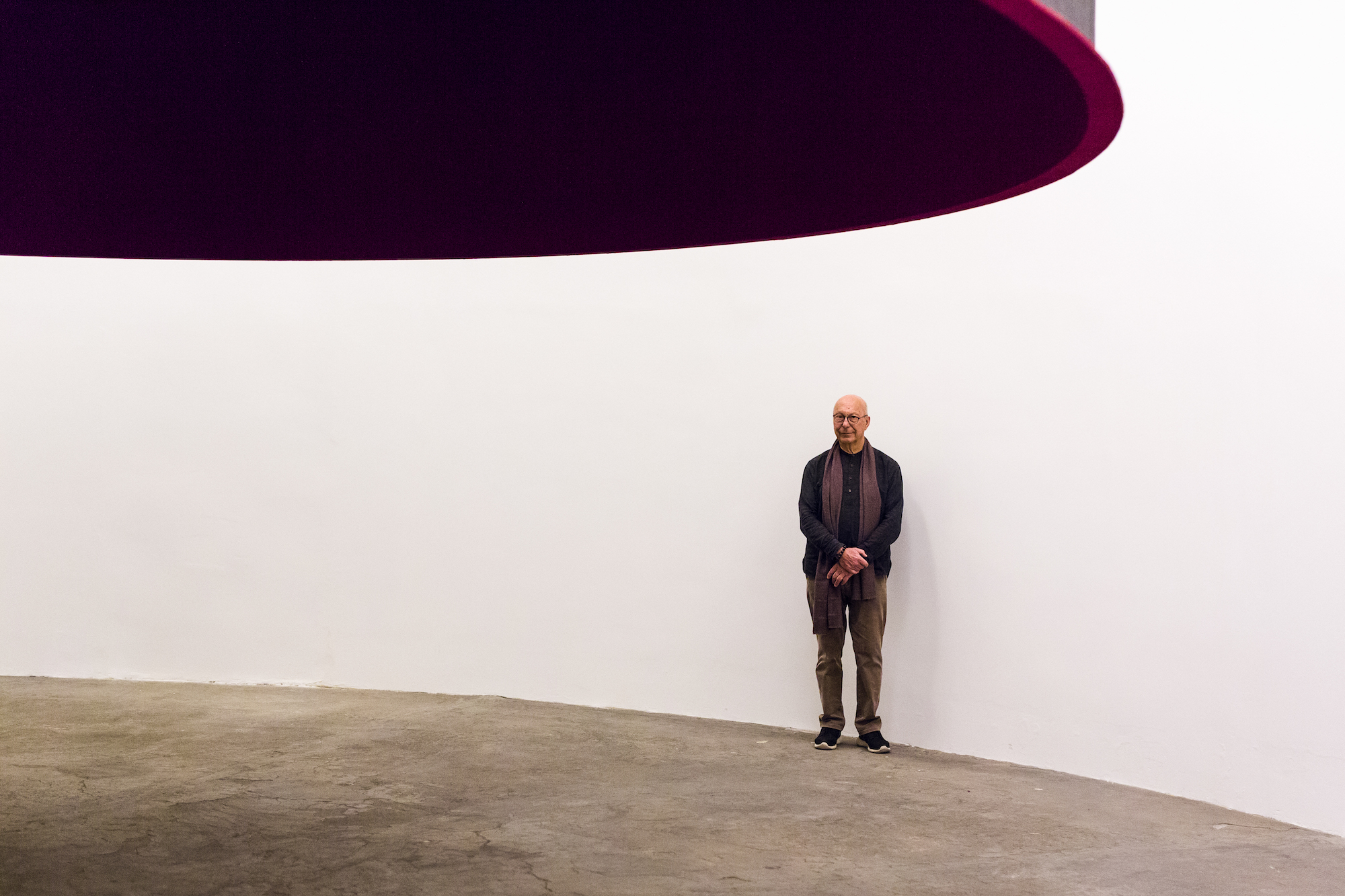
Anish Kapoor’s At the Edge of the World, installed at Kanaal in 2000 and created before the artist achieved global fame, represents the “red beating heart” of the project, as Vervoordt explains to me at the event’s opening. “I wanted the space, which used to be a building where grains were sorted, to be like a Rothko chapel, a room for universal peace and harmony.” Recently, an opera was performed in the space.  

Axel Vervoordt standing underneath Anish Kapoor’s ‘At the Edge of the World’. Photo © Zoemin

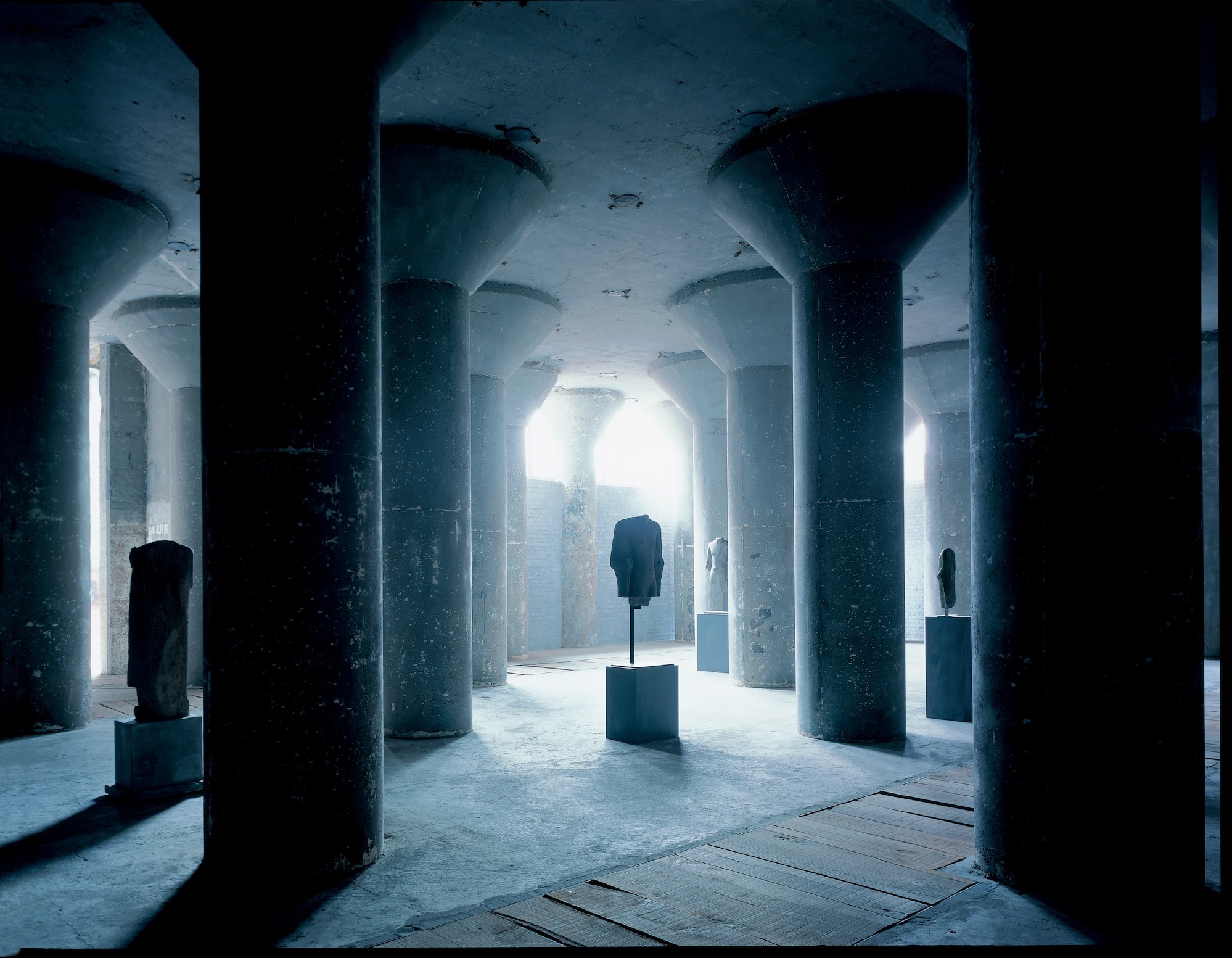
Nearby, the Henro gallery houses Axel Vervoordt’s permanent collection, moved from its previous exhibition space in the heart of Antwerp. In Karnak, an ascetic space with the original solid concrete columns intact, works by Gutai artists are installed alongside Japanese sculptures dating from the Endo period. Literally meaning ‘concrete’, Gutai was a radical artistic movement that emerged in postwar Japan, its proponents aspiring to transcend the abstract painting of the time in favour of pure materiality.

The strength and legacy in the room is palpable: the columns once supported 60 litre silos. “When I first saw it, the columns reminded me of an Egyptian temple,” says Vervoordt. “The power is still amazing – almost religious. Industrial architecture is not made to be beautiful, it is made to serve.”

Karnak © Laziz Hamani courtesy of Axel & May Vervoordt Foundation

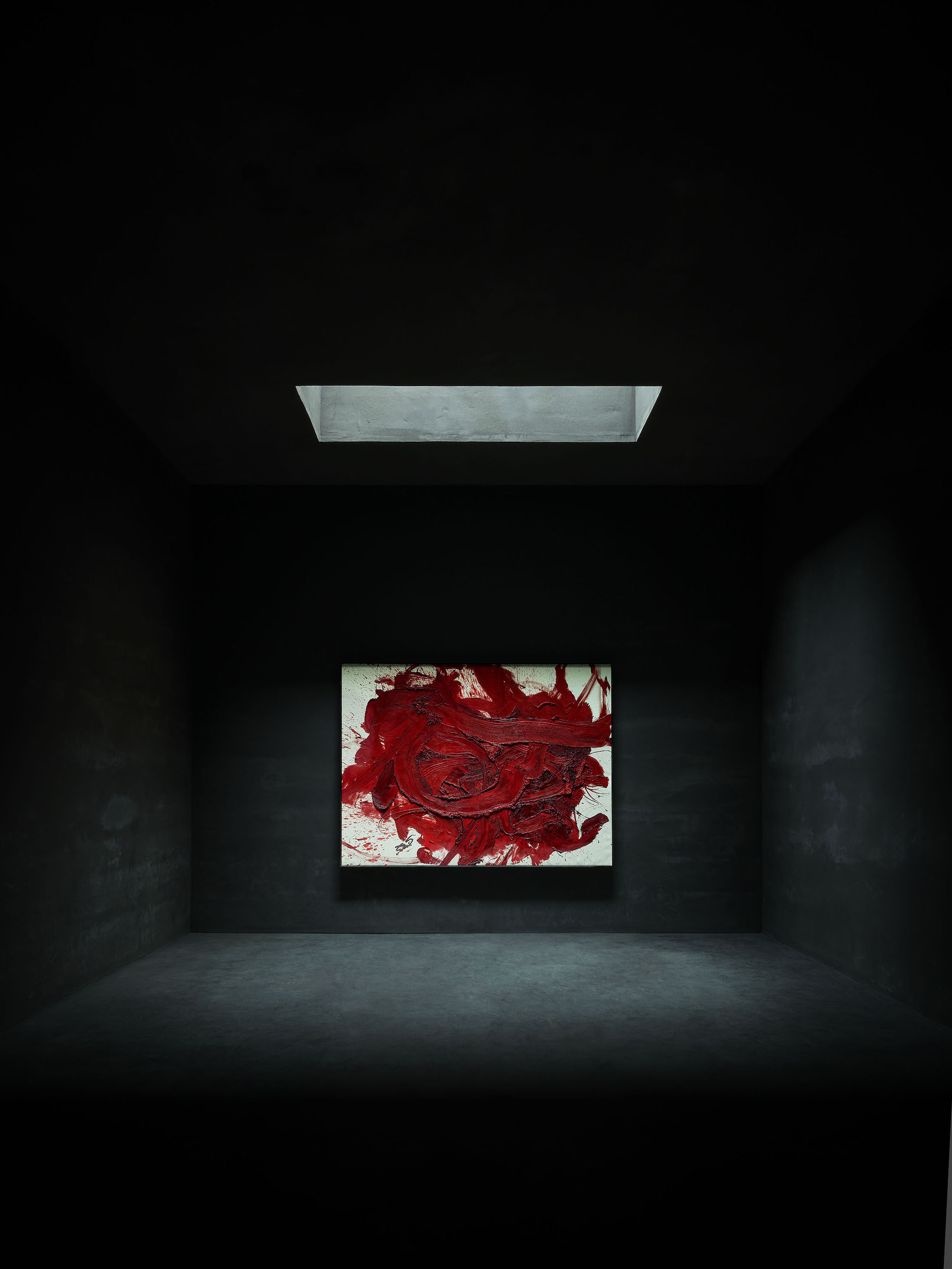
The room next door is dedicated to three paintings by Gutai artist Kazuo Shiraga, who descended from a prominent samurai family. The three ‘warrior’ paintings convey a primal violence reminiscent of Shakespearean tragedy, the scarlet spattered canvases hovering, eerily suspended in the slate-grey gloom. When Vervoordt visited the artist at his home in Kobe in 2003, he witnessed an equally elemental mode of preparation.

“He would contemplate the empty canvas, until he became one with the emptiness. His wife would then pour the paint, and he would create the painting in a few gestures, without hesitation. This for me is the origin of life, that which comes out of emptiness. This is the big bang.”

Suiju, Kazuo Shiraga. Photo © Laziz Hamani courtesy of Axel & May Vervoordt Foundation

“Now we go into the light”, Vervoordt jokes, as we exchange the shadowy gallery for comparatively blinding Flemish daylight. Though lighthearted, this is an apposite remark: at Kanaal, the levels of luminescence in each gallery are carefully weighted for optimum atmosphere.

Installation El Anatsui, ‘Proximately’. Photo © Jan Liégeois

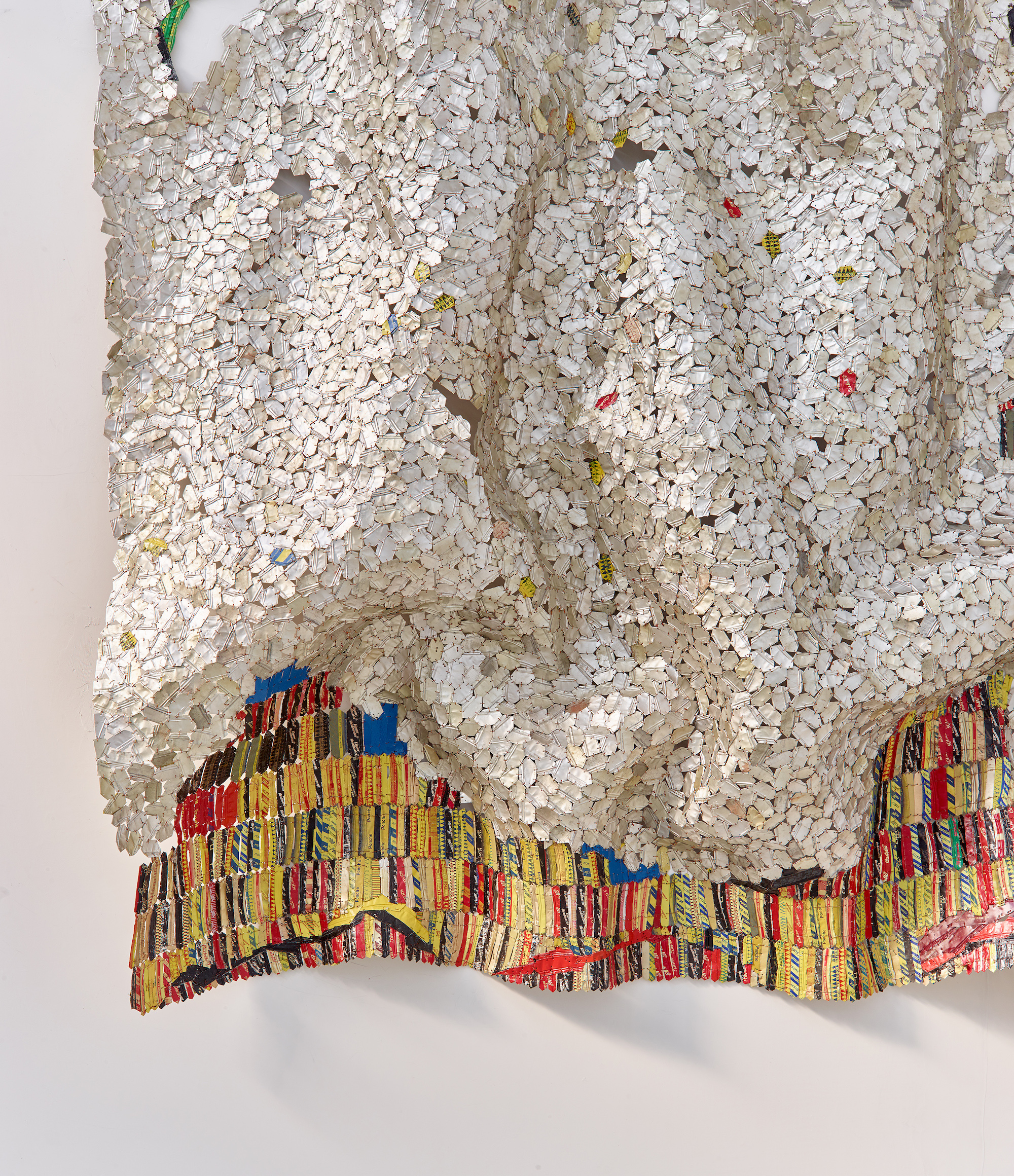
The Patio Gallery, a space for temporary exhibitions, is currently showing Ghanaian artist El Anatsui’s ‘Proximately’, and is drenched in natural light. Anatsui’s tactile sculptures, vast quilts of scrap metal that have been washed, hammered flat and sewn together using copper thread, hang on the walls like glittering patchwork quilts. Vervoordt first discovered Anatsui’s work in Toyko, and presented the artist at the Venice Biennale in 2007, draping one of his sculptures over the facade of Palazzo Fortuny like a chainmail tapestry designed with the palette of Gustav Klimt.

Lucia Bru exhibition, Escher Gallery. Photo © Jan Liégeois

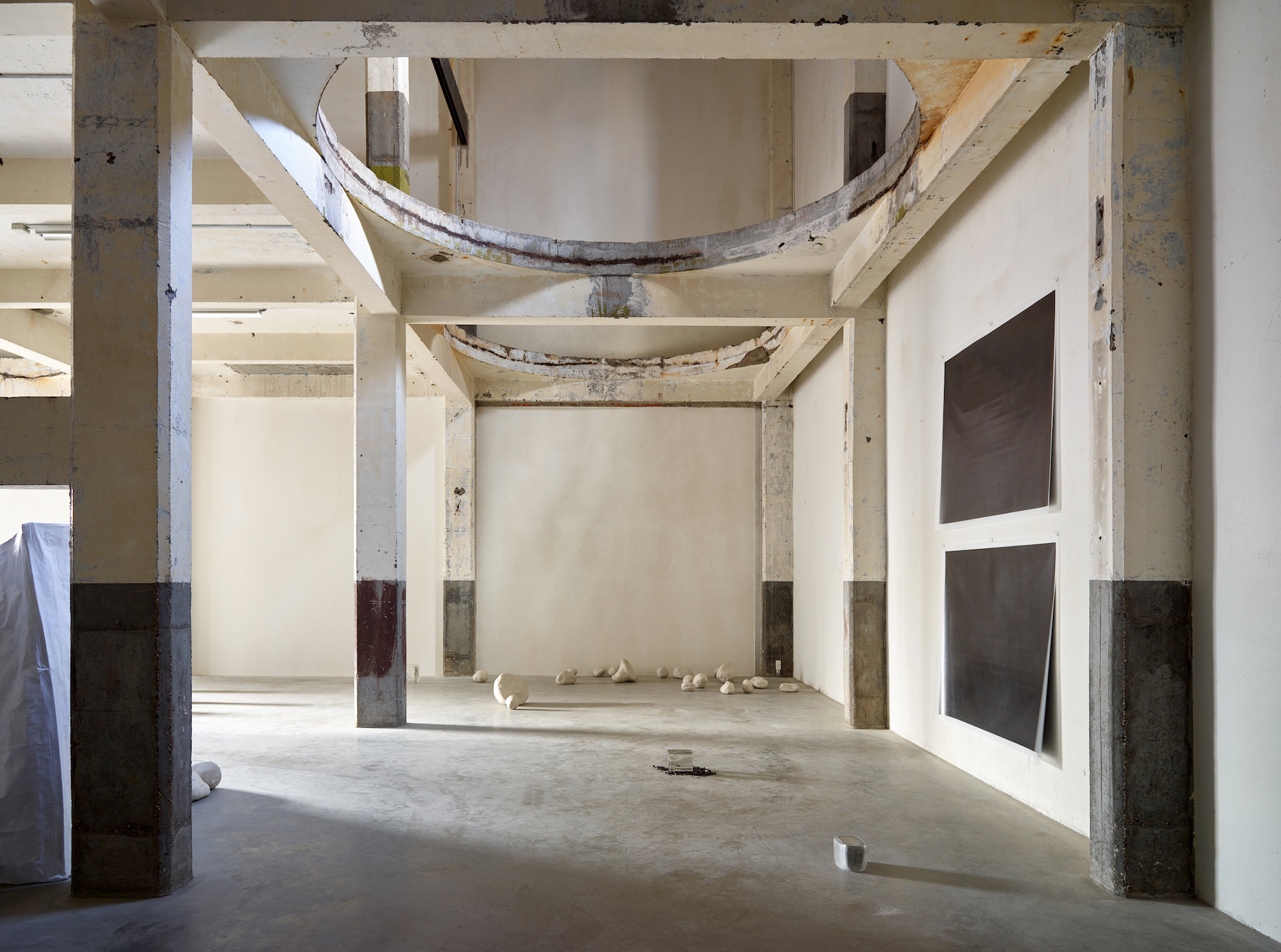
The industrial legacy of the Escher Gallery, a former brick warehouse and now another temporary exhibition space, remains clear. Though the machinery and grain silos have been removed, vast cylindrical concavities remain carved in the space. The sculptures of Belgian artist Lucia Bru that inhabit the gallery were not made in accordance with the space, but feel like a part of its industrial heritage. Fragments of crystal and milky porcelain with rounded edges, as though smoothed by waves, lie in glimmering piles. When I note the sculpture’s resemblance to sea glass, Bru emphasises the integrality of water to her work. “The elements of water and earth are part of the same family, they have a relationship, they fight, they reconcile,” she explains. Bru’s larger sculptures, which resemble pale rocky islands, are ceramic, a famously un-pliable, difficult material with which to work. “It has a mind of its own”, she notes. “I don’t like it when I control the material too much. I like it to surprise me.”

Detail of movidas, Lucia Bru. Photo © Jan Liégeois

Not all the structures at Kanaal are original, though it is often difficult to tell what has been newly built. Tatsuro Miki’s design celebrates this assimilation. “It’s important to preserve the existing quality of a place,” Miki says. “The first concept for the additional buildings at Kanaal was to create something as if it was already there. Once things have aged, we want them to be part of the same landscape. We prefer harmony to noise.”

Kanaal represents a continuation of Vervoordt’s design vision that has endured since his earliest restoration projects in the 1960s, to create an environment in which everyday life and art coexist harmoniously: a philosophy of living in art.


Anti-Morality Tales: Famous Artists from Chicago at Milan’s Fondazione Prada

An exhibition at Milan’s Fondazione Prada, curated by Germano Celant, unites a group of radical Chicago artists whose work explored the grotesque, hysterical and at times psychotic nature of life in post-war America

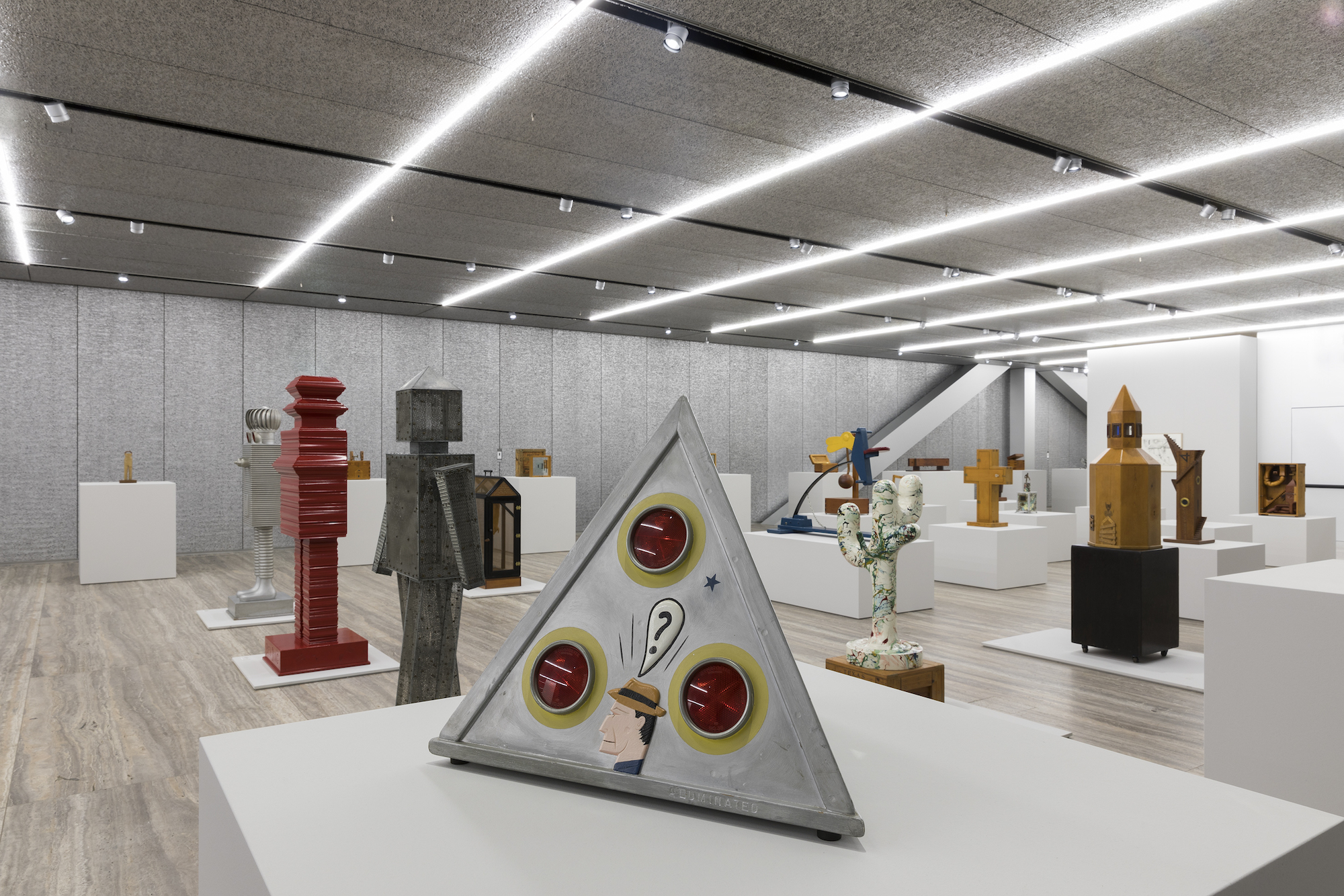
View of the exhibition “Famous Artists from Chicago. 1965-1975” Artworks by Roger Brown, Ed Flood, Art Green, Gladys Nilsson, Jim Nutt, Ed Paschke, Christina Ramberg, Suellen Rocca and Karl Wirsum. Photo Roberto Marossi. Courtesy Fondazione Prada

Artist and curator Don Baum had been teaching at Chicago’s Hyde Park Art Center for close to a decade when he started exhibiting the work of under-represented Chicago artists. It was the early 1960s and Baum’s exhibitions – a mix of group shows, with themes including Animal, Vegetable, and Mineral – were put together on a shoestring, the focus being on the community that surrounded the artists, as well as the work itself.

The Hairy Who (and/or The Monster Roster, Nonplussed Some and Chicago Imagists, as they were also known) was founded as a group – and as an exhibition title – when Baum offered Jim Nutt, Gladys Nilsson, Suellen Rocca, James Falconer, Art Green and Karl Wirsum a show at the Art Center in 1966. Their work was both aesthetically and thematically in opposition to the New York School, and while those artists were delving further into abstraction and although satirical, nonetheless glossy, escapist Pop; the Hairy Who, and their Chicago contemporaries, were engaging with the grotesque, hysterical and at times psychotic nature of life in post-war America.

View of the exhibition “Leon Golub.” Photo Roberto Marossi. Courtesy Fondazione Prada

For the Art Center exhibition, The Hairy Who – and later their 1969 exhibition, Don Baum says ‘Chicago Needs Famous Artists’ at the Museum of Contemporary Art, Chicago – the artists covered the walls with a flower-patterned linoleum, with the express intention of having their audience experience the work in visually complex circumstances. For Fondazione Prada’s newly opened exhibition, Famous Artists from Chicago, the curator – and the Fondazione’s Artistic Director – Germano Celant mirrored the original setting.

On entering the gallery, you are met with a secondary route through to a room that has been built within the gallery walls, in which the group’s work is shown as a collective entity. A mass of wobbly, naked, fuzzy bodies; psychedelic stagings of suburbia; elaborate, flaming dreamscapes; and graphic expressions of delusion and dare; beyond the collective introduction, the exhibition peels off into individual sections, in considerably more ordered, traditional gallery settings. In doing so, each artist is given their moment at centre-stage, but the calm belies what was the strength of The Hairy Who: their focus on collective, noisy social commentary.

In an interview for the accompanying exhibition publication, Germano Celant spoke of how: “They did not passively accept reality like mechanical recorders in the manner of Warhol, but rather explored contemporary society with malice and irony.” He continues, “… they created visual subversions that contemplated the destruction of the body, and the ambiguity of existence leading to inhuman transformations. They focus solely on a moral argument, but attempt[ed] to push forward, awake and aware…”

View of the exhibition “H.C. Westermann.” Photo Roberto Marossi. Courtesy Fondazione Prada

In the surrounding galleries, above and adjacent to Famous Artists from Chicago, Celant curated concurrent exhibitions of the work of Leon Golub and H. C. Westermann, both of whom lived and worked in Chicago after the second world war. Westermann, born in 1922, studied applied arts at the School of the Art Institute, Chicago, after serving in the U. S. army as a Marine. Initially stationed in the South Pacific, and later in Korea, through his work Westermann recorded his traumatic experiences and anti-war politics. Working predominately in wood, in which he carved parts and images of boats, as well as assemblages and hallucinatory narratives, the forms in his work, as they are described in Celant’s essay in the exhibition catalogue: “oscillate between humour and ambiguity”. “On one hand, between a diving airplane and an atomic bomb, a penetrating penis and a figure with arms open in a gesture of surrender; and on the other, between a collapsing building and a book immersed in a void, heralding the end of the world and a return to the life of a savage.”

View of the exhibition “H.C. Westermann.” Photo Roberto Marossi. Courtesy Fondazione Prada

As is the case in Famous, the interior architecture of the Fondazione is utilised here, too. Westermann’s larger, sculptural works – in wood, metal and enamel – form a sort-of army, or front, defending the more revealing narrative works in wood and on paper, which are mostly hidden on entry. His practice embodies both a criticality of the brutality of war and its motivations, and a nostalgia for the fantastical stories of old Hollywood; and Westermann’s titles speak to that. They include, A Piece for the Museum of Shattered Dreams, Swingin’ Red King and the Silver Queen, Coffin for a Crooked Man and Where Angels Fear to Tread; and while his work is known for its craftsmanship, Westermann qualified in an interview with gallery director Martin Freedman and art critic Dennis Adrian in 1966, that: “To me craftsmanship is very secondary, actually”. “As I said, I like quality, but I like quality of ideas first, quality in politics, or quality in business. What the hell’s the difference?”

View of the exhibition “Leon Golub.” Photo Roberto Marossi. Courtesy Fondazione Prada

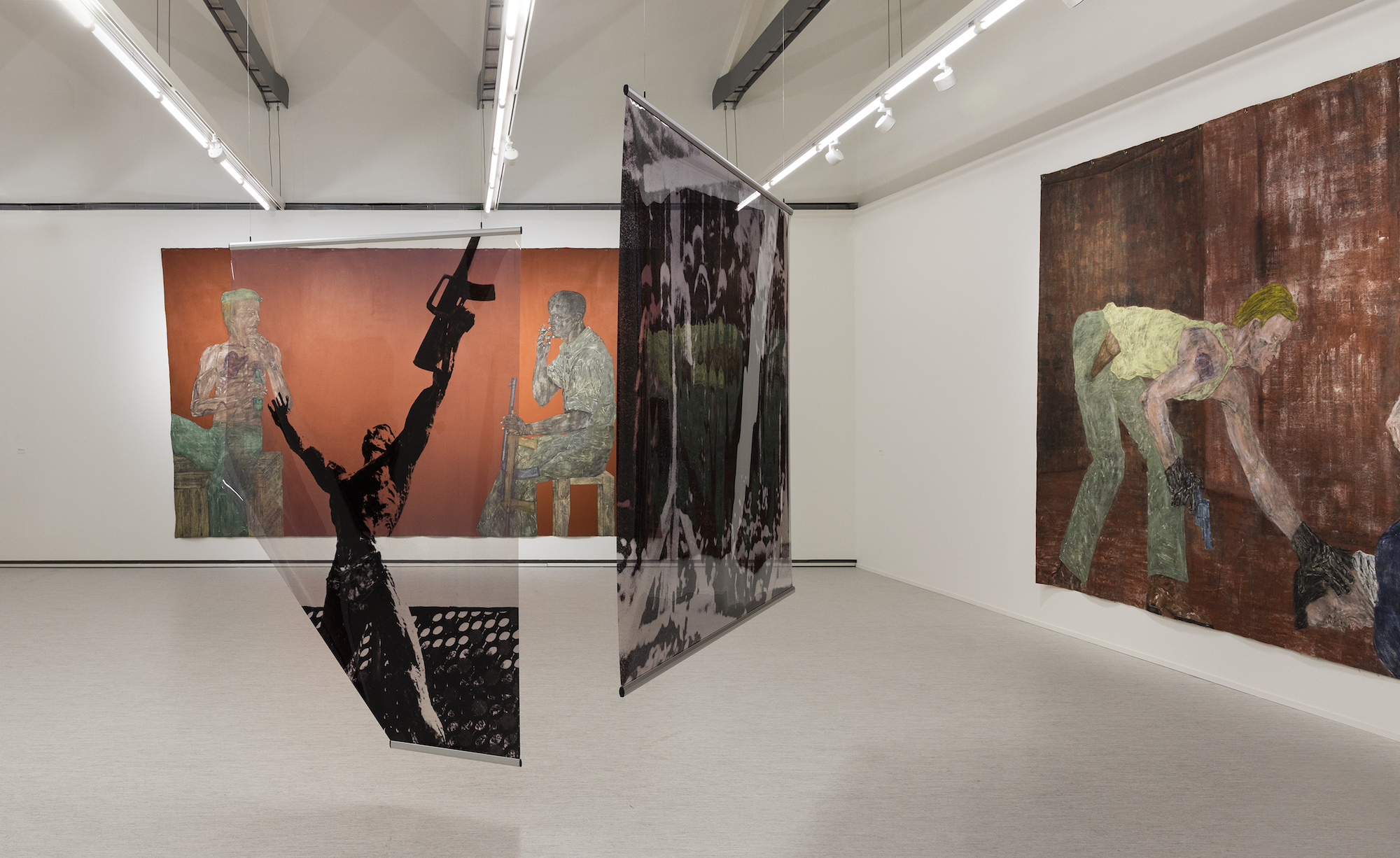
Golub’s concerns were rooted in his experience of American imperialism, but not limited to the conflicts the U.S had been involved with. He was equally interested in those that had gone unnoticed, developing timelines of concurrent wars and conflicts through his lifetime, and proving the interchangeability of the global paramilitary condition. In his installation works – where he manipulated and altered images of conflict, and presented them on layered photographic transparencies – Golub spliced recognised historical narratives, from the tragedies of the antiquity to the first televised war.

At the close of the second world war, figurative, expressionist practice was conflated with Socialist Realism and, particularly in the U.S, an aesthetic was sought that would assert the concepts of individual freedom and personal enterprise (i.e. The American Dream). This saw the onset of New Abstraction and Pop, and a so-called “depoliticised radical practice”. But Golub, as Celant describes: “Avoid[ed] the whisper in order to denounce loudly the terrible and dark situation in which the world itself.” And with H. C. Westermann, The Hairy Who, and countless other artists working outside of the New York School, he avoided the futile and the frivolous.

Although, “I would dare to claim that despite the apparent pessimism or negativity of the subject matter, in the reportage, retains a residual optimism”, as Golub said in 1996. “It’s in the very freedom to tell. In the freedom to make and exhibit these paintings.”

Famous Artists from Chicago. 1965-1975′ will be shown at the Fondazione Prada, Milan, until 15 January 2018

Julian Rosefeldt: An Artist’s Manifesto

Port speaks to director and artist Julian Rosefeldt about his film Manifesto, a meditation on modern artistic manifestos in which Cate Blanchett plays 13 different characters

FLUXUS / MERZ / PERFORMANCE, Manifesto © Julian Rosefeldt

Julian Rosefeldt’s Manifesto, a feature length film derived from an art installation of the same same name, is a tough sell on paper. The film is divided into thirteen sections, each with a different main character played by Cate Blanchett (a la I’m Not There, in which Bob Dylan is embodied by six actors, including Blanchett) who recite excerpts from over fifty individual manifestos of art, from Dada to Dogma 95. Alongside a touring exhibition of the sections simultaneously projected onto separate screens in an overwhelming sensory soundscape, the more conventionally structured film of Manifesto, in which the sections are stitched together into a 90 minute feature, premiered at Sundance Festival in January, and has its general UK release later this month.

SURREALISM / SPATIALISM, Manifesto © Julian Rosefeldt

What relevance do these artistic credos, some of which are approaching their centenary, have for people not in the art world? “The art world is a bit of a closed circle,” explains writer, director and producer Julian Rosefeldt from his home in Berlin. “We’re imprisoned in a white cube where we always speak with people who don’t necessarily have to be convinced, because they agree with everything we have to say already. We consider these important issues, but we don’t talk to the right people about them.”

STRIDENTISM / CREATIONISM, Manifesto © Julian Rosefeldt

In different hands, this cerebral mixture could easily have produced quite a dry film: one to be cautiously admired, rather than enjoyed. Yet, Rosefeldt and Blanchett pull off the impressive feat of making these scholarly manifestos digestible, comprehensible and almost conversational.  In Blanchett’s portrayal of a dizzying range of characters – including a homeless man, a single mother and a ballet choreographer – century old texts written almost exclusively by dead, white men, go through a certain democratisation. “I wanted to depict a kaleidoscope of society,” Rosefeldt says.

SITUATIONISM, Manifesto © Julian Rosefeldt

The film is also tonally diverse. The second section features a wild-eyed homeless man, screaming through a microphone with only a post-apocalyptic wasteland to act as witness. This is immediately followed by a stockbroker extolling the virtues of speed and technology that complicated the Futurist movement with overtly Fascist overtones. In Manifesto’s most arresting sequence, Blanchett presides over a Dadaesque funeral mourning (and simultaneously celebrating) the death of art. This scene was filmed in the dying light of a brief winter afternoon in Berlin, Blanchett nailing the eviscerating speech in just one or two takes.

DADAISM, Manifesto © Julian Rosefeldt

This palpable sense of unease and impending catastrophe is punctured by scenes of surprising comedy, such as sculptor Claes Oldenburg’s ‘I Am For An Art’ recited with reverence by a Southern mother saying grace. “I am for an art that is political-erotical-mystical, that does something other than sit on its ass in a museum,” she intones solemnly, her three children and husband (played by Blanchett’s actual family) propped up on steepled fingers around a rapidly cooling Sunday roast.

SURREALISM / SPATIALISM, Manifesto © Julian Rosefeldt

The dashes of humour in the film often arise from such ironic distance between text and situation. A manifesto of conceptual art, parroted by an aggressively made-up, Elnett-haired parody of a Fox News reporter, cannily raises the spectre of fake news: “Good evening, ladies and gentlemen. All of current art is fake.”

CONCEPTUAL ART / MINIMALISM, Manifesto © Julian Rosefeldt

Bar the opening lines from the Communist Manifesto, the texts are artistically apolitical – though between the lines such declarations are always political. “In Q&As after the screenings, people again and again refer to the political circumstances of today”, Rosefeldt explains. “When the first Futurist manifesto was published on the front page of Le Figaro in 1909, it acted as a kind of an ignition, a spark, that infected a lot of artistic manifestos at the time. We are living in a moment that is, in a way, comparable to the tension felt between the wars. The world is upside down and people read in those manifestos a kind of call for action, or an anti-populist call.”

FLUXUS / MERZ / PERFORMANCE, Manifesto © Julian Rosefeldt

Audaciously, Rosefeldt combines manifestos from decades apart in the same section, bringing Wassily Kandinsky (1912) and Barnett Newman (1948) into conversation. “Of course, it’s quite disrespectful towards the original writing,” Rosefeldt says bluntly. “Within these circles there is as much contradiction as agreement. But in art, as in history and fashion, everything repeats itself. Ideas come up, disappear for a while, and then forty years later have their rebirth.”

FILM, Manifesto © Julian Rosefeldt

In the last section, in which the manifestos of cinema’s auteurs including the Dogma 95 duo Lars von Trier and Thomas Vinterberg are coalesced into a lesson, the lively contradiction between different authors is more explicit. Through Blanchett’s earnest teacher, the director Jim Jarmusch writes “Nothing is original” on the blackboard and instructs a class of ten year olds to “Steal from anywhere”; a sentiment that the firmly tongue-in-cheek Dogma manifesto contradicts in the next sentence. “That’s a bit how I remember school,” Rosefeldt chuckles. “From the same person, you get both complete bullshit, and things that actually make sense.”

Manifesto: Live From Tate Modern takes place across the UK on Wed 15 November. Manifesto goes on general release on 24 November. See manifestothefilm.com for full details.

Paris Photo 2017

Port visits the 2017 edition of Paris Photo to discover stories of the African diaspora, the nude reinterpreted and disaffected youth on the streets of Los Angeles 

Nanny et Quao, Jamaïque, 1720 2017, © Omar Victor Diop. Exhibited by MAGNIN-A

With over 180 galleries and publishers represented, Paris Photo is the largest international art fair dedicated to photography. As such, when I visit the Grand Palais in Paris, just off the Champs-Élysées, is full to its ornate Rococo rafters with photographers, curators and art-lovers from around the world. It was even possible to catch a glimpse of the elusive Patti Smith, one of this year’s guest curators. Here, we take a look at the highlights of the fair.

An artist who immediately catches the eye is Omar Victor Diop, a Senegalese photographer who takes elaborately staged photographs of people (including himself) presented in various historical guises. These allegorical portraits focus on stories from the African diaspora over time, and his subjects, formally composed and framed against a background, have the air of oil paintings. When I mention this to him, Diop laughs. “Good. If I had the skill to paint, I would never touch a camera.”

Untitled, from the series ‘Halo’, 2017, © Rinko Kawauchi/ Courtesy Christophe Guye

Over at the Christophe Guye gallery, Rinko Kawauchi’s serene images of cherry blossom, migrating birds and candy-coloured fireworks are peaceful and dreamlike. The recipient of the Annual Infinity Award in 2009 from New York’s Centre of Photography, Kawauchi makes everyday scenes and objects extraordinary.

‘Oh man’, from the book Oh Man, 2013. © Lise Sarfati. Exhibited by Steidl

Algerian-born French artist Lise Sarfati’s large-scale panoramas of disaffected youth are set against the streets decaying inner-Los Angeles. Her images of aloof, solitary young men have echoes of William Eggleston in their faded pastel palette and emphasis on the minutiae of American life. 

Yellow Passage by James Casebere, © Galerie Templon

James Casebere’s sundrenched, angular photographs offer a vision of modern architecture devoid of all human life. Casebere’s deserted, hectically coloured rooms combine a striking visual sensibility with an uncanny sense of foreboding.

Cherry Tree from The Appearance of Things, 2016, © Jocelyn Lee and Pace/MacGill

At Pace/MacGill, two of the artists exhibited focus on reinterpreting the female nude. Jocelyn Lee’s flame-haired women among the cherry blossoms feels inspired both by the cinematography of Sofia Coppola, and the verdant imagery of the Pre-Raphaelites, though the washed-out tones and slightly blurred focus seem to promise something more unwholesome. Richard Learoyd’s Freya offers an entirely stripped-back depiction of femininity, the shaven-headed model reclining on a moth-eaten sofa, her pose communicating uneasy rest.

Freya, Nude horizontal, © Richard Learoyd and Pace/MacGill

Heading upstairs to ‘Prismes’, the sector of the fair dedicated to exhibiting large format photography, video installation, or otherwise exceptional work, the Sator gallery is the only area of the Grand Palais completely shrouded in darkness. Greek visual artist Evangelia Kranioti’s startling video installation stills gleam in the dim light, the saturated, oozing colours and fantastical imagery evoking both fairytale and nightmare.

L’extase doit être oubliée (Still), by Evangelia Kranioti. © Galerie Sator

Elsewhere, in a more illuminated area of ‘Prismes’, Nadav Kander’s sombre, gray scale images of rough seas and deserted beaches – including an exquisite triptych of raging water taken from his Thames Estuary series – quietly demand the viewer’s complete attention. 

Water I, Shoeburyness towards the Isle of Grain, by Nadav Kander, 2015. © FLOWERS

Cover image courtesy of Paris Photo

Paris Photo 2017 runs at the Grand Palais until 12th November 2017