X is Not a Small Country

What does a post-global world look like? MAAT show curator Aric Chen explains

Photography by Bruno Lopes

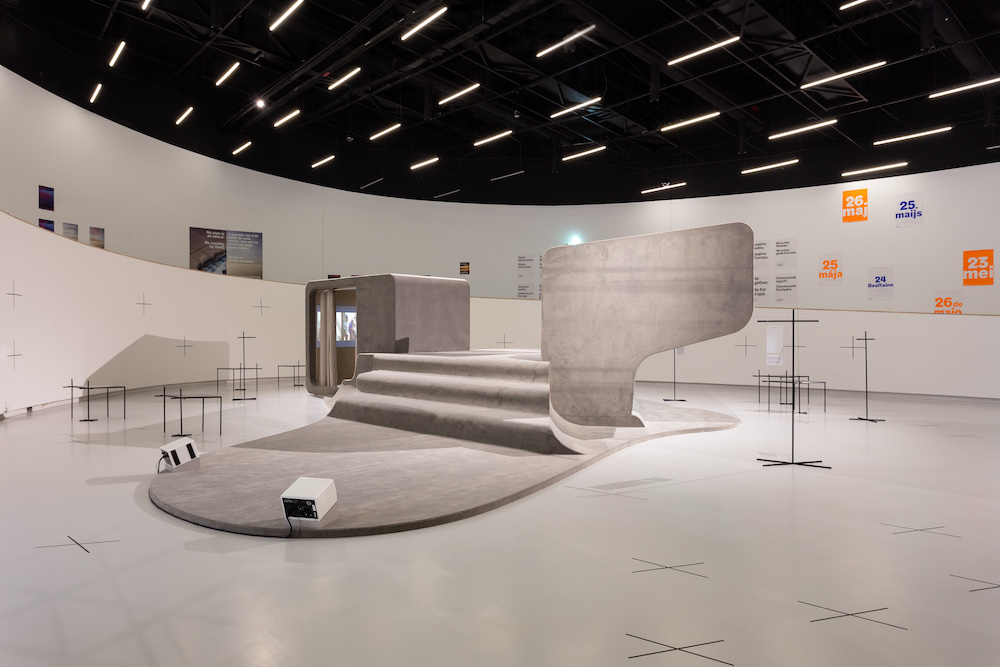
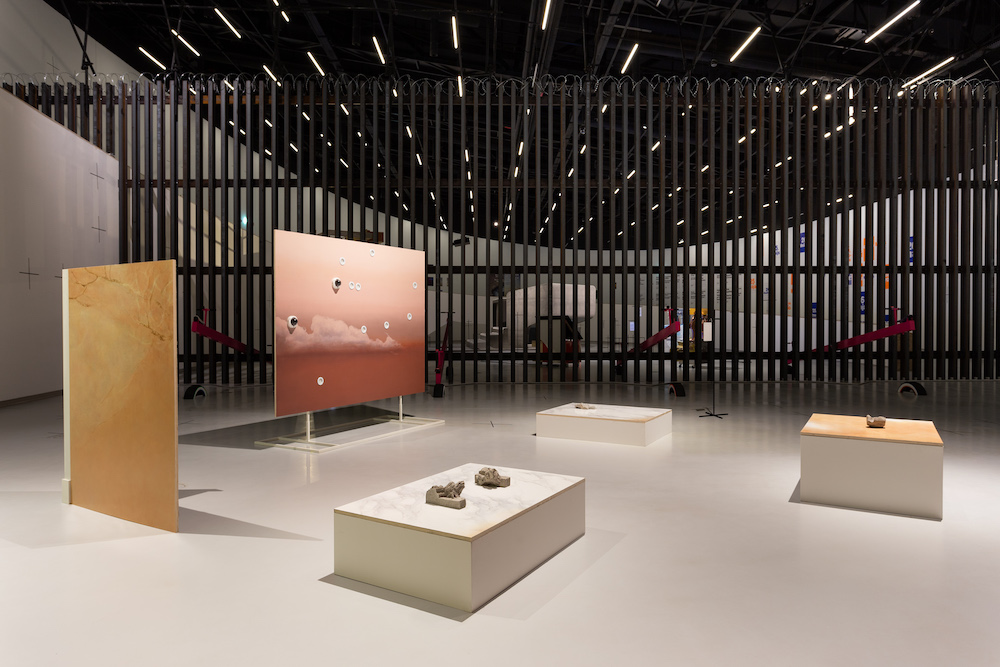
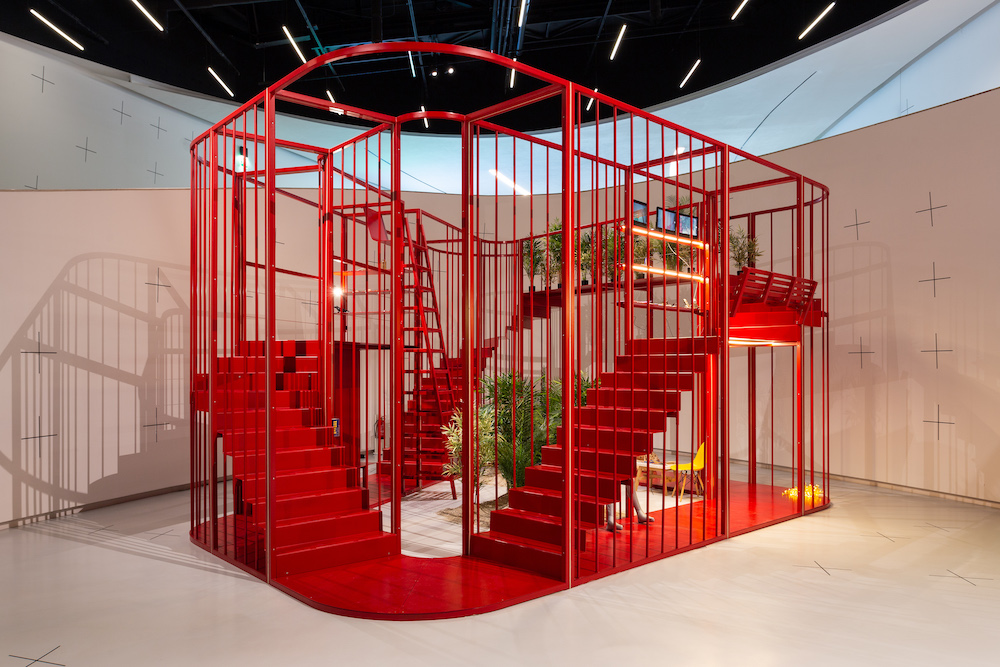
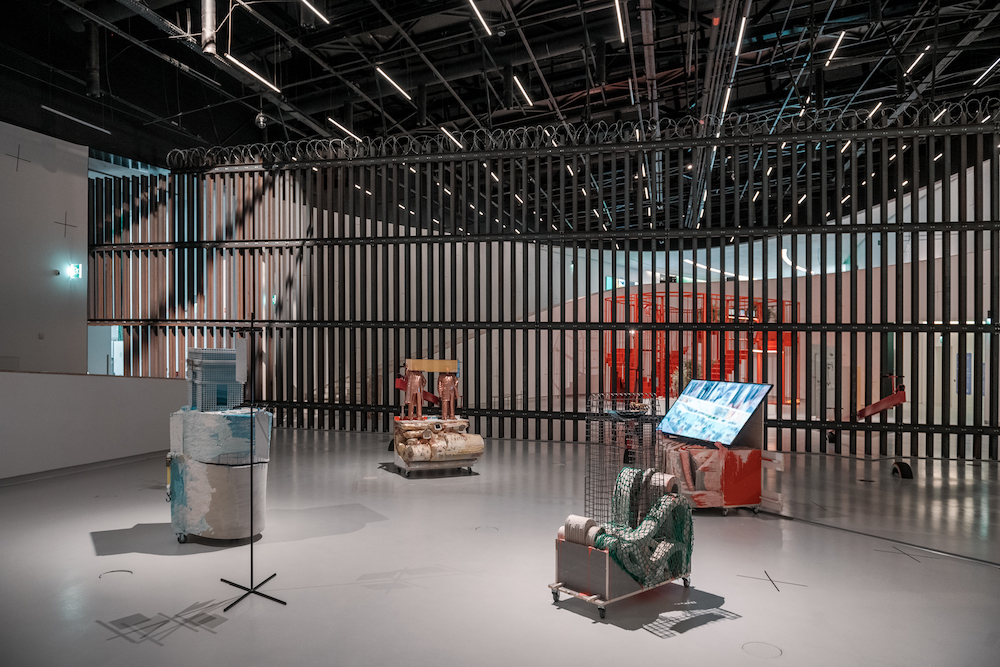
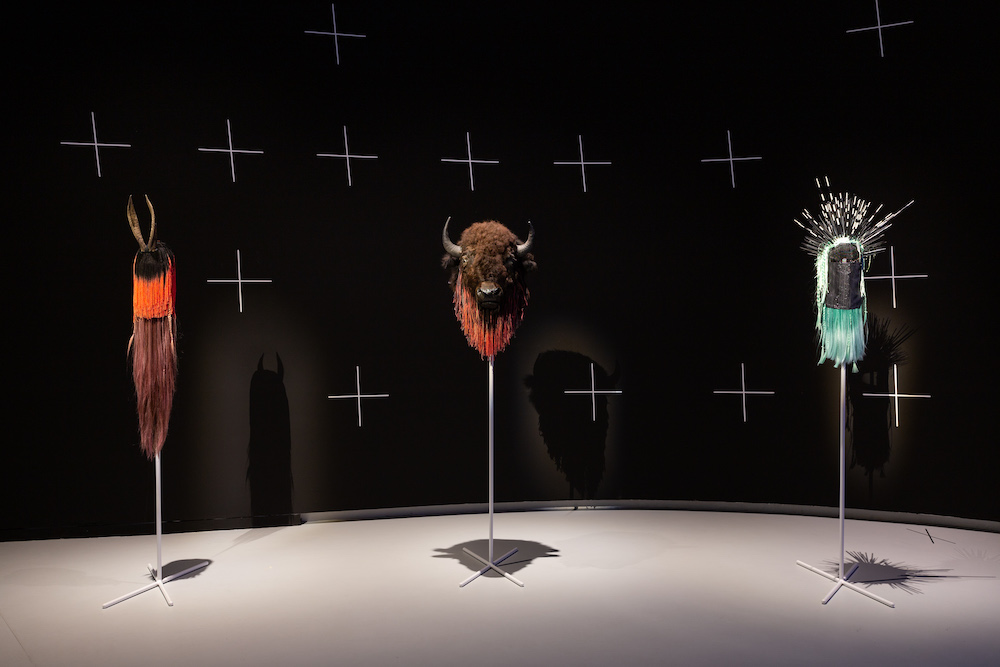
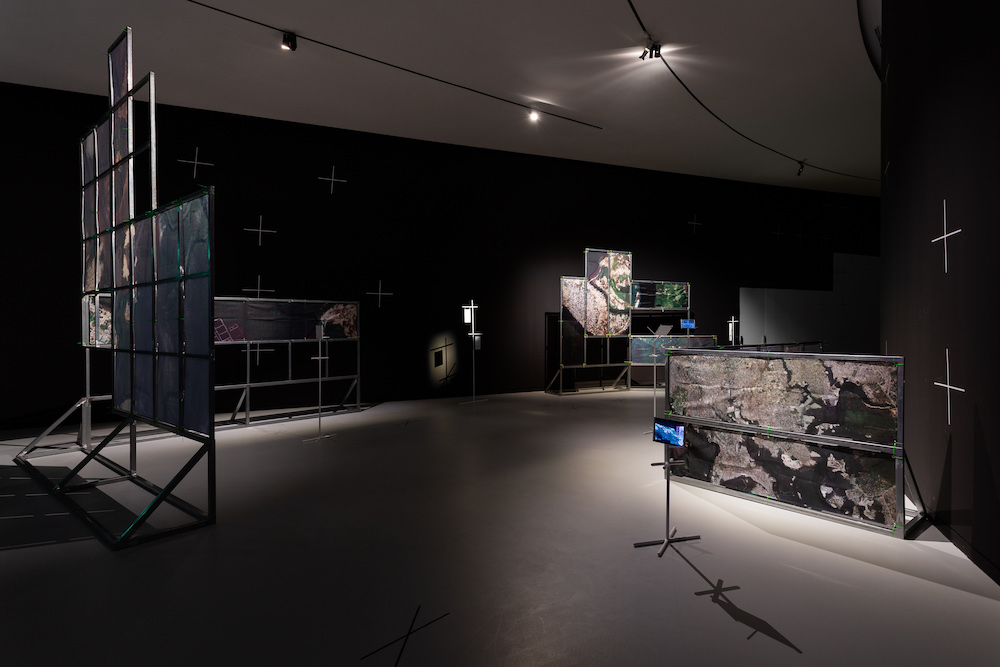
What does it mean to live in a “post-global” world? Posing this question – and also answering it – is a new exhibition presented by Lisbon’s MAAT (Museum of Art, Architecture and Technology), named X is Not a Small Country – Unravelling the Post-Global Era. Curated by Aric Chen alongside designer, curator and educator Martina Muzi, the show compiles nine large-scale installations from international practitioners spanning design, architecture and art. All of which explore a post-global landscape, providing examples of how this new world might look and function. 

It’s a vast, detailed and oftentimes dizzying display of the current state of affairs. Previously, the rapid rise in globalisation had accelerated us into new and bountiful territories. Then after Brexit, trade wars, refugee crises and rising nationalism, we were faced with a new hurdle: a pandemic. Travel was disrupted and many switched to digital communications and exchanges; thus increasing the social and cultural gap between those with or without access to the internet. But, as Aric puts it, a “post-global” world isn’t the result of globalisation “unravelling”, and rather it’s a state of contradiction and fluctuation. With every door that shuts, another one is bound to open, so to speak. 

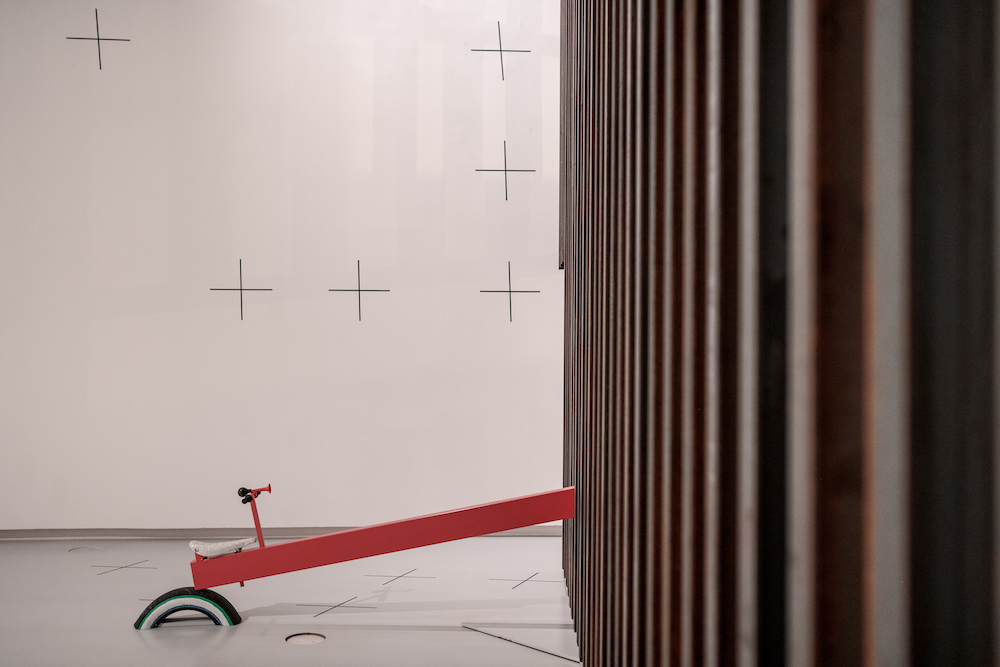
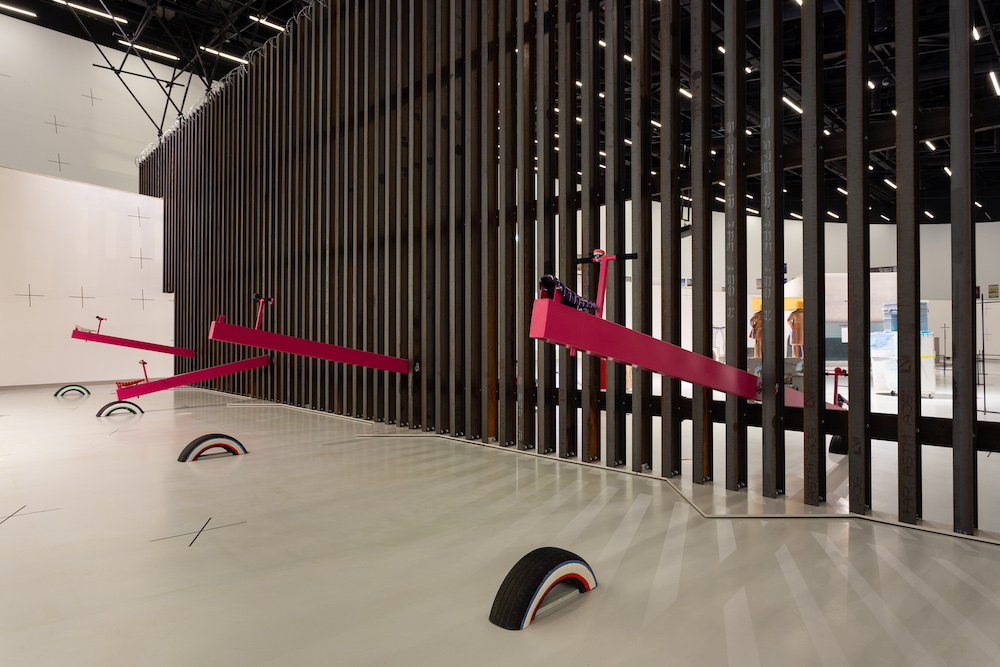
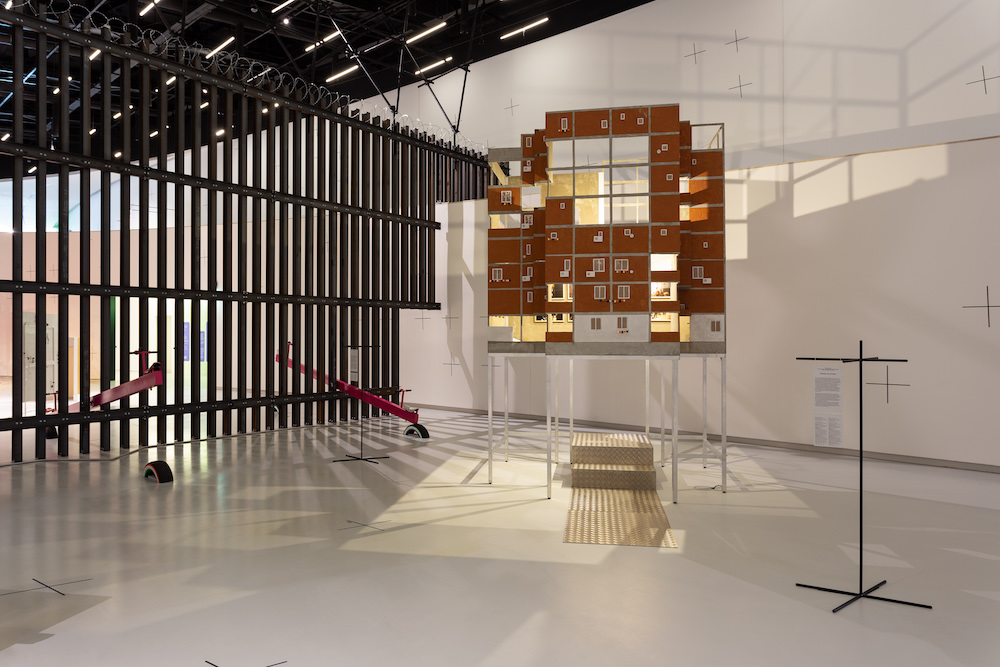
In this new exhibition, which was surprisingly conceived prior to the pandemic, MAAT opens up the “post-global” conversation with a series of site-specific installations. Beginning with Wolfgang Tillmans, who’s contributed his anti-Brexit campaign of EU posters, the show navigates through a plethora of international pieces, like that of architect and director Liam Young, who’s made a film titled Planet City – a fictional tale that calls for urgent examination of the environment. Others include the recreation of the recognisable Teeter-Totter Wall, a seesaw installed at the border fence between the USA and Mexico in July 2019, as well as the more speculative contributions such as the analysis of gambling in Macau.

Aric is a Shanghai-based curator, writer and professor, who’s been appointed general and artistic director of Het Nieuwe Instituut in Rotterdam. To paint a more concise picture, and to perhaps give a definition as to what “post-global” really means, I speak to Aric to find out more about the show.

Photography by Bruno Lopes

What inspired you to launch this exhibition, why tell this story now?

The world is clearly changing, and globalisation as we’ve known it since the 1990s is giving way to a new condition that’s developing right before our eyes. This is something I’ve felt acutely as an American living in China, given the transforming relationship between those two countries through trade wars and other signs of a growing “great power” competition. 

But we, of course, see how global networks and relationships are becoming increasingly convoluted everywhere. We see liberal democracies giving us Brexit and rising nationalism, while Saudi Arabia opens itself up in once inconceivable ways – just as Israel establishes diplomatic relations with Bahrain and the UAE, who until now didn’t even formally recognise Israel’s existence as a country. Doors are both opening and shutting in ways that would have been hard to imagine just a few years ago. And they’re doing so at the same time: right now, as China and the EU slap sanctions on each other over Xinjiang, they’re also trying to push through a new trade deal. There are multiple, overlapping and often contradictory logics operating simultaneously. We need to understand this in order to navigate it, and the implications of – and for – architecture and design as manifestations of these global processes. 

Photography by Bruno Lopes

Talk me through the works involved and how you’ve curated the show.

Designers, architects and artists have been investigating in “the global” for a long time. But our aim was to, as concisely as possible, capture the complexity of the “post-global” that we’re now observing through just nine projects. All of which address the forces of post-globalisation at scales ranging from objects and individuals to societies, species and the planet, from an array of geographical perspectives, and in both concrete and speculative ways. 

So for example, as you enter the show, you’ll see an installation by Wolfgang Tillmans of his pro-EU posters – something very immediate that most visitors will easily relate to – before confronting a re-creation of Rael San Fratello’s Teeter-Totter Wall, for which the American architects, in 2019, inserted see-saws through the US-Mexico border wall in order to allow children on both sides to play with each other.

From these very “real” installations, we get into more research-based and speculative projects ranging from Revital Cohen and Tuur van Balen’s examination of the links between gambling in Macau and the construction of Israeli settlements in the West Bank via a casino that mimics London, to Ibiye Camp’s augmented reality speculations about a post-petrol future in the Niger Delta, to Liam Young’s video about a planet in which the entire human population is concentrated in a single city. 

We also have Tactile Cinema, an installation by Jeddah-based Bricklab that evokes the evolution of cinema spaces in post-World War II Saudi Arabia – from informal to illicit to now being legal again – while hosting a film program of artists from across the Arab world organised by Art Jameel. 

Photography by Bruno Lopes

How exactly has globalisation been impacted by the pandemic, and how has this affected the design and architecture industries?

As many have said, the pandemic has accelerated processes that were already underway, be it the use of digital communication or the widening of social inequality. It has also accelerated “post-globalisation” and its impact on design and architecture. Not just through the reordering of supply chains, but also the flow of people and ideas, and the culture and meanings that are embedded in, and produced by, the designed world. In ways large and small, design and architecture will both be shaped by, and used to help shape, how this new world will look and operate.

Photography by Bruno Lopes

Do you think the pandemic has forced the world to re-think pre-existing structures?

I should emphasise that “post-global” is not the same as “de-globalisation.” It’s not that globalisation is ending or totally unravelling. It’s that the idea that we were inevitably heading towards ever-more openness and intertwinement has to be discarded for a future of more unpredictable fluctuations of both restriction and access. This means we not only have to be more nimble and flexible in order to navigate this, but we also perhaps need to rethink our approaches and world views if we are to constructively, and peacefully, function and coexist. 
To the extent that the pandemic has forced us to re-think pre-existing structures, these are things that we should have already been re-thinking: the social and economic systems that have caused such injustice, to say nothing of ecological disaster. 


The full list of contributors include Bard Studio (Rupali Gupte e Prasad Shetty), Bricklab (Abdulrahman Hisham Gazzaz and Turki Hisham Gazzaz), Ibiye Camp, Revital Cohen and Tuur van Balen, He Jing, Liam Young, Paulo Moreira, Rael San Fratello Studio (Ronald Rael and Virginia San Fratello) and Wolfgang Tillmans.

X is Not a Small Country – Unravelling the Post-Global Era is currently on show at Lisbon’s MAAT until 2 September 2021. Head here for more information, and tickets can be purchased here.

Photography by Bruno Lopes

Plastic Ocean

Dutch photographer Thirza Schaap has long been foraging plastics from our ocean, and now she’s collated her findings into a new book

Japonais

The world is at a tipping point, and no longer can we continue to litter our seas, earth and air with the debris of our human existence. In 2018, for example, the United National Intergovernmental Panel on Climate Change (IPCC) issued a warning stating that we have only 12 years to prevent the catastrophic impacts of climate change, which includes an increase of global warming of 1.5 degrees Celsius. We’re now in 2021, and there’s less than a decade on the clock. We’ve already seen the 20 of the hottest years on record; there’s been an increase in adverse weather and wildfires; we’re in the midst of a mass species extinction; and our oceans are at great risk too. So much so that a truckload of plastic enters the ocean every single minute, while the UK supermarkets produce 800,000 tonnes every year – and counting. 

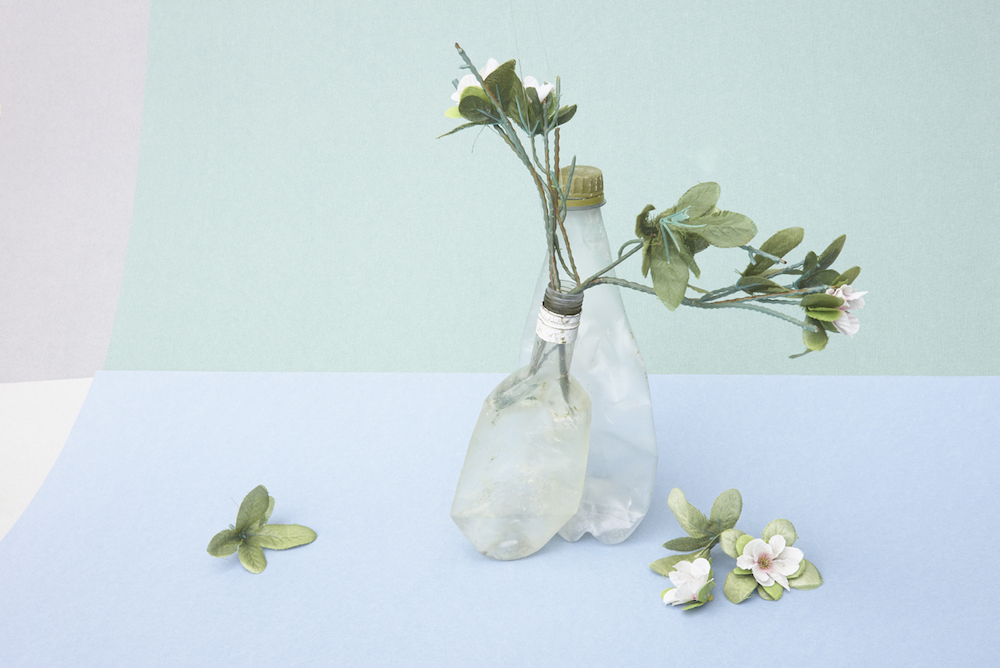
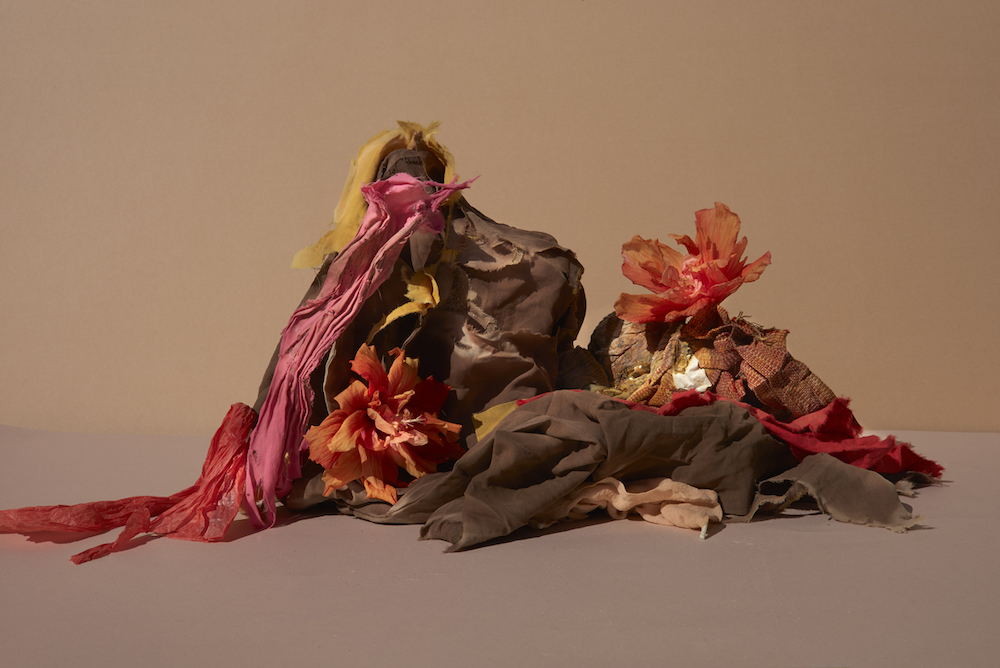
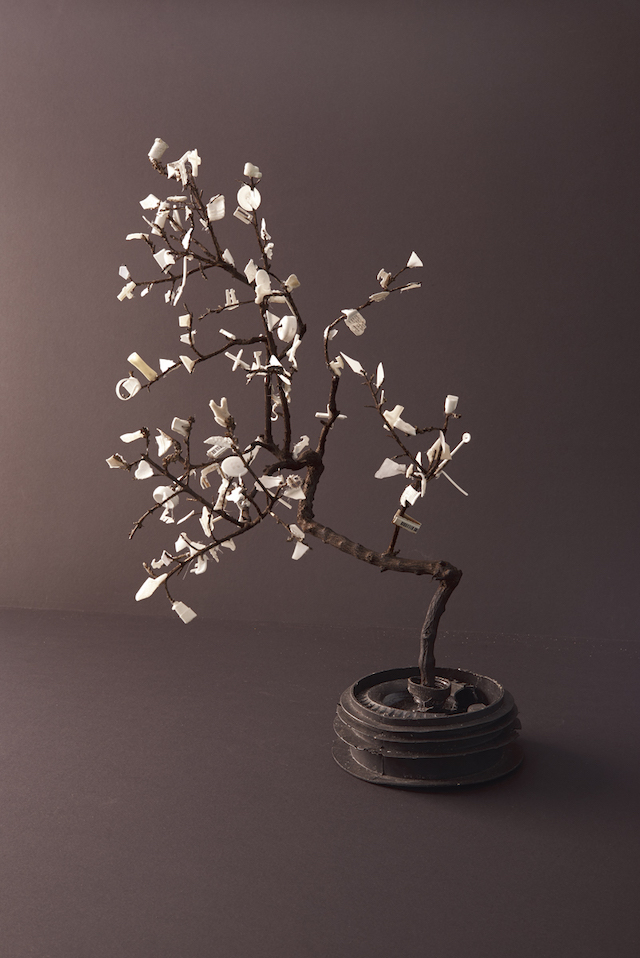
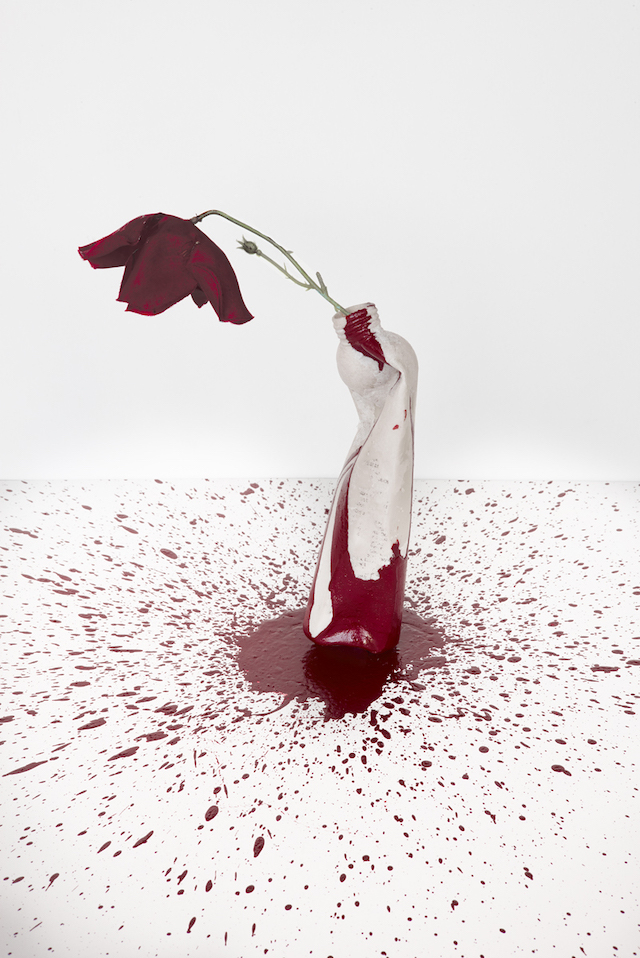
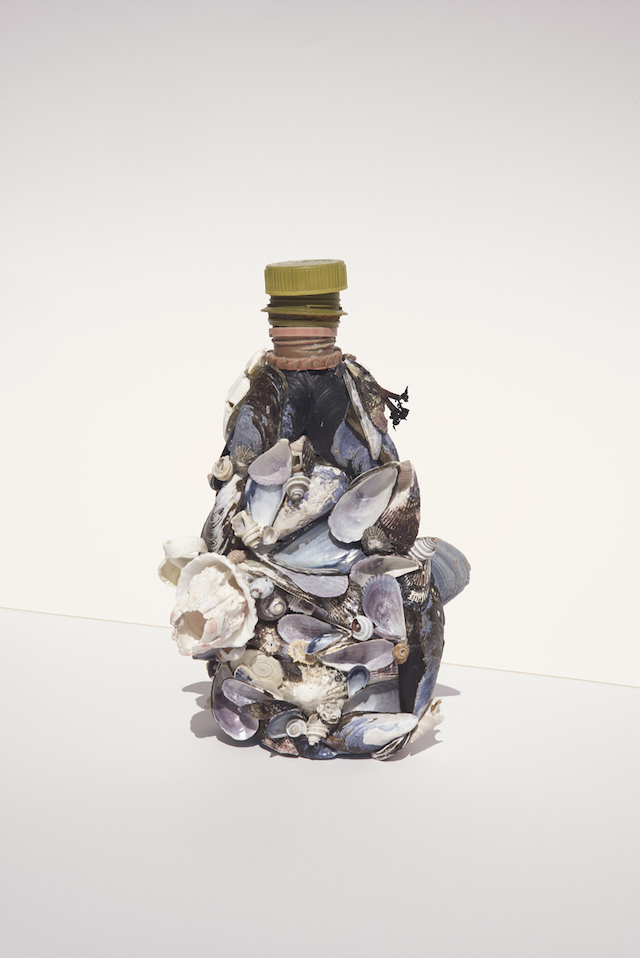
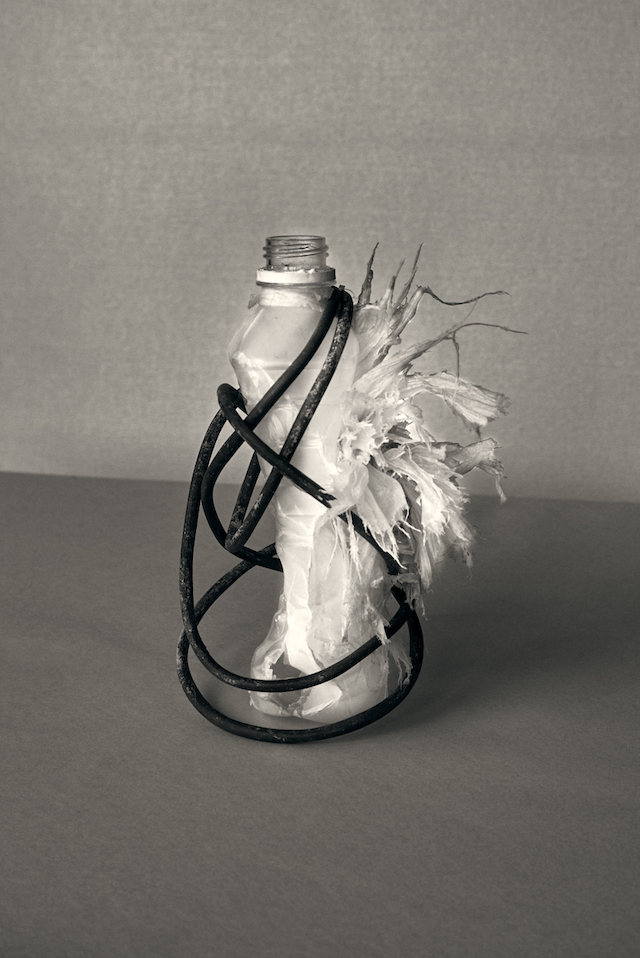
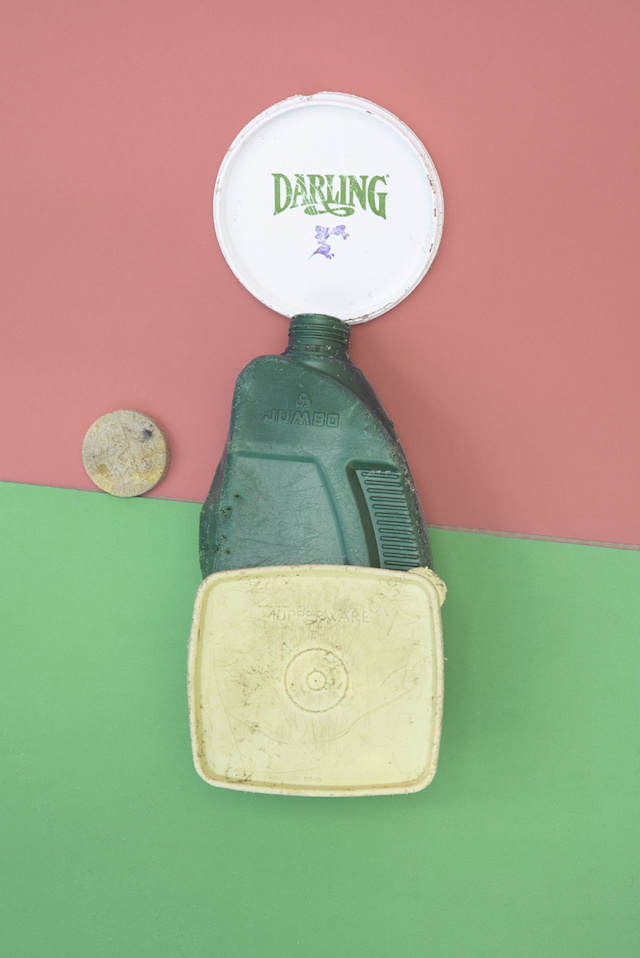
Dutch photographer Thirza Schaap has long been drawing a lens on these issues. To such lengths, that for the last eight years, she’s been collecting trash from beaches along the coast of South Africa, turning the washed up plastic items into remarkable pieces of art. Aptly named Plastic Ocean, her ongoing project has now been formed into a new book by 1605 Publishers. Within its pages, observers can become witness to a wide-spanning collection of still lives and sculptures, and art that’s been crafted from discarded bottles, shopping bags, toothbrushes and straws. 

Fatal Flowers

It all started a few years ago as she headed to her local beach with her dog, quickly to realise the abundance of rubbish flooding the shores. Picking up the aftermath of human consumption, there was something about the plastic formations in their masses that inspired her to start taking things further. “Astonished by what I found in a disgusted way,” she says, “I was touched by the beauty of the objects I’d found. They looked faded, old, worn by the sea and I presumed they’d travelled for a long time in the ocean.” Thirza knew she wanted to share her findings with others, and to “tell the story which is often hidden by the myth of recycling,” she adds, stating how only 10% of the plastic is recyclable. Shockingly, half of the world’s plastic is designed for single use, for it to then be tossed away like an afterthought. And this equates to around 79% of waste ending up in landfills, dumps or in the natural environment. Just 12% of it gets incinerated.
The realities of our polluted planet fuels both the creative and activist side of Thirza. She now has such a vast collection of rubbish, that she keeps it all stowed away in an archive for when the idea for a new piece arises. “I’ve collected so much that I can work from an idea and source from my storage. We go on plastic hunts to desolated beaches, which is where I find the old ‘long travelled’ objects and pieces. On the tourist beaches, I usually find ‘yesterdays trash’. Unbelievably, people still bring food and drinks, consume everything and leave it on the beach.”

Divine

Within Plastic Ocean, the audience are granted access into Thirza’s world of advocacy, pining and promoting for a better (and cleaner) world. It collates pieces from across the entirety of her project, including the “early shadow play” and more graphic photographs, right through to her more recent sculptural ensembles. Working closely with her publisher to edit and select the pieces involved in the book, they’d decided to proceed with an experimental approach to the layout, where repetition and colour palettes drove the overall feel of the publication. 

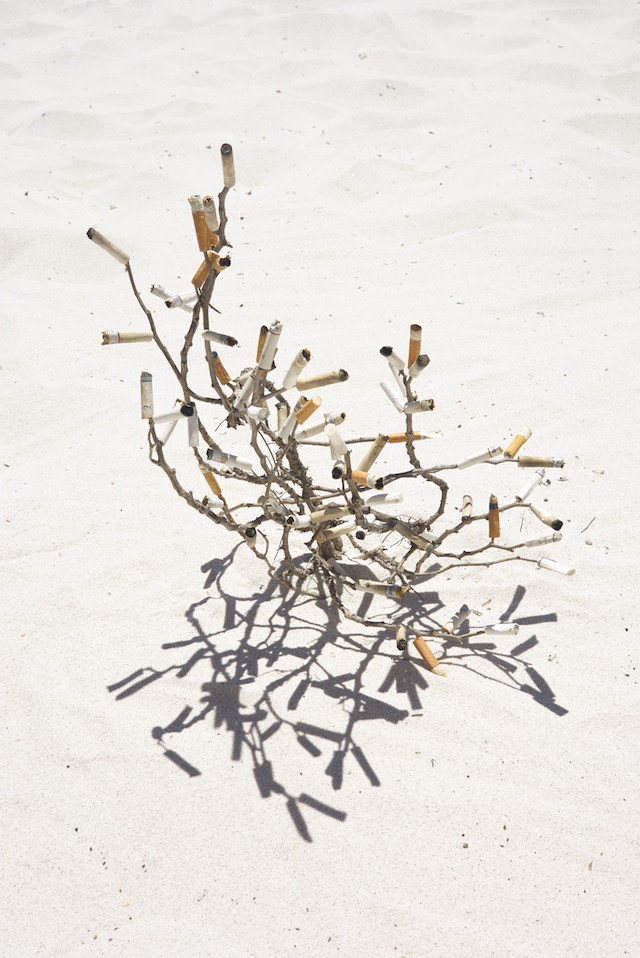
For example, in two pieces named Oxygen and Oxygen en Boubou, you’ll see both images paired for their spindly compositions and beige, muddy hues – both of which are built with disused plastics. The first is a cigarette tree, composed from butts found on the beach. Oxygen en Boubou, on the other hand, is a sculptural piece built on a table outside and under some trees. “While I was making it, a Boubou bird (a large robin) came to sit on me. I love birds and was so taken aback by it, that I hadn’t realise the bird took the small bits of plastic for food. I felt so bad, but I literally saw what happens in the ocean; when a fish mistakes plastic for its food, or a bird feeds on the beaches.”

Boubou

There are numerous stories to be told from Thirza’s creations. Another is Cloack, a piece created after witnessing an octopus disguising itself with shells in the film My Octopus Teacher, shot near the bay in Western Cape of South Africa. “She was picking them up and placing them rapidly on her body to hide form the Pyama shark. This movie haunted me for weeks and that is why I made this sculpture of a bottle hiding in its cloak of shells.”

However, these harsh and tearful stories are told in notes of soft pastels, earthy greens and crisp white backdrops. It’s quite the contrast to your typical display of rubbish and climate change activism, and Thirza hopes to draw her audience in with these juxtapositions – that of beautiful imagery sat inline with ugly, disregarded plastics. Although most of all, she hopes that this will raise awareness to the catastrophic effects of our polluted ways. It’s an ethos that’s never been more vital. “I believe we are ready for a change but we need to unite and work together,” she concludes. “As we have proven during the pandemic, it is possible to do so, we just need to see the agency of the plastic problem.”

Thirza Schaap’s Plastic Ocean is available to purchase here

Oxygen
Crime Passionnel
Cloak
Bondage
Honey

Lifelines

Eric Rhein’s new book tells the personal story of an artist’s life during the time of AIDS

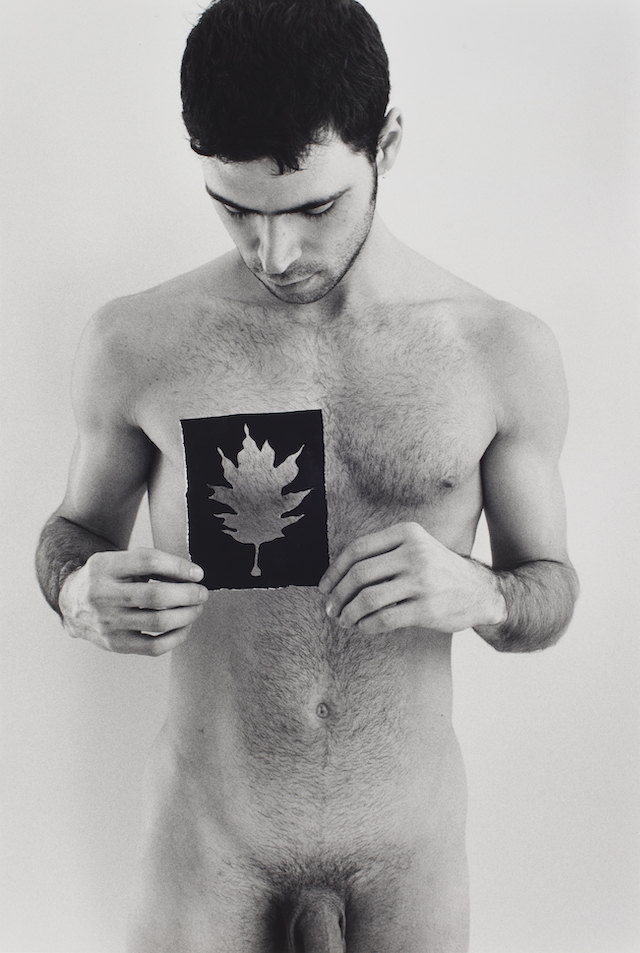
Company, Self-Portrait (1998)

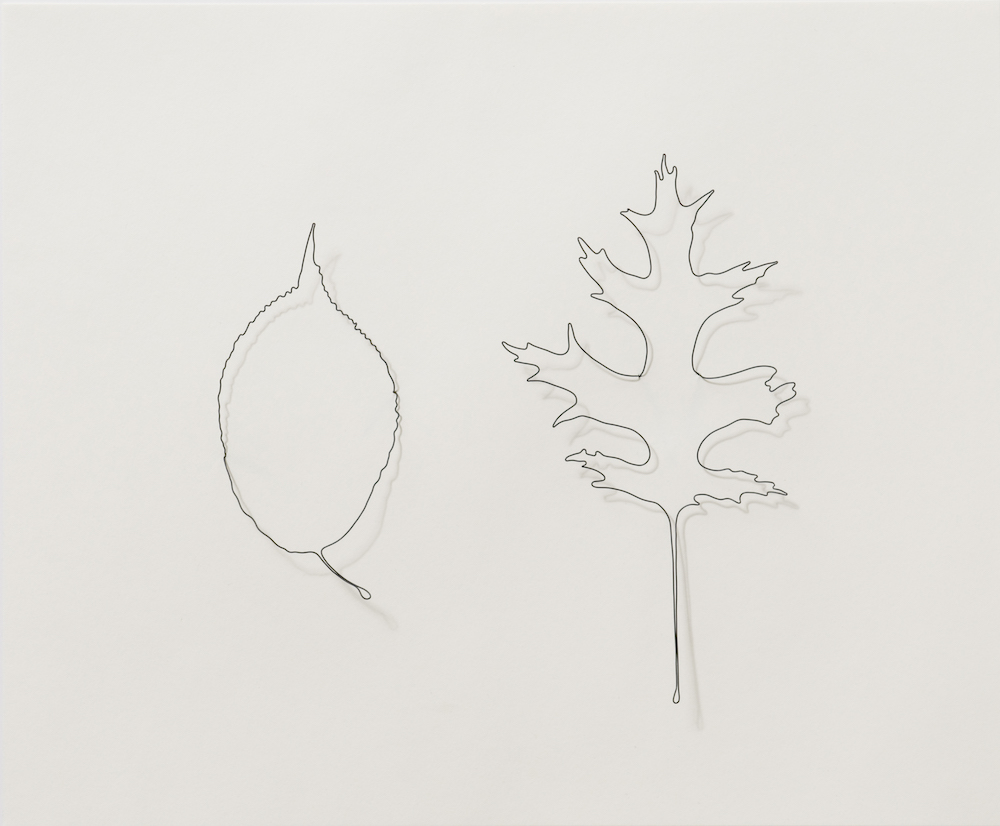
There always tends be a few key moments that drive every creative’s practice. For Eric Rhein, a multimedia artist who grew up in New York’s Hudson Valley, it was the childhood summers spent between the Ohio River Valley and the Appalachian Mountains of Kentucky. “These fertile regions are richly linked to the natural world,” he says, “and are influences that emerge throughout my artwork.” So much so that Eric has long explored these naturalistic tendencies through a broad mix of mediums, flitting effortlessly from wire drawings and sculpture, to photography and collage. His works have now been exhibited widely in the US and internationally, with countless features in The New York Times, Huffington Post, Artnews, Vanity Fair and Art in America to name a few.

Another defining moment for Eric arose when he moved to New York City in 1980, aged 18. Pursuing a scholarship at School of Visual Arts, he began to explore new artistic outlets, like that of building butterfly puppets for George Balanchine’s production of the ballet, L’Enfant et les Sortileges (which translates to The Spellbound Child). “I became saturated in the vital East Village arts scene,” he says. “It was a unique community that permanently altered the city’s cultural and creative landscape, which was in turn deeply altered by the AIDS crisis.” Eric tested HIV positive in 1987 at the age of 27, and with his diagnosis, all of these previous inclinations towards the natural world – alongside themes of resilience, vulnerability and transcendence – grew with even more pertinence. This manifested into a new body of work, titled Lifelines. 

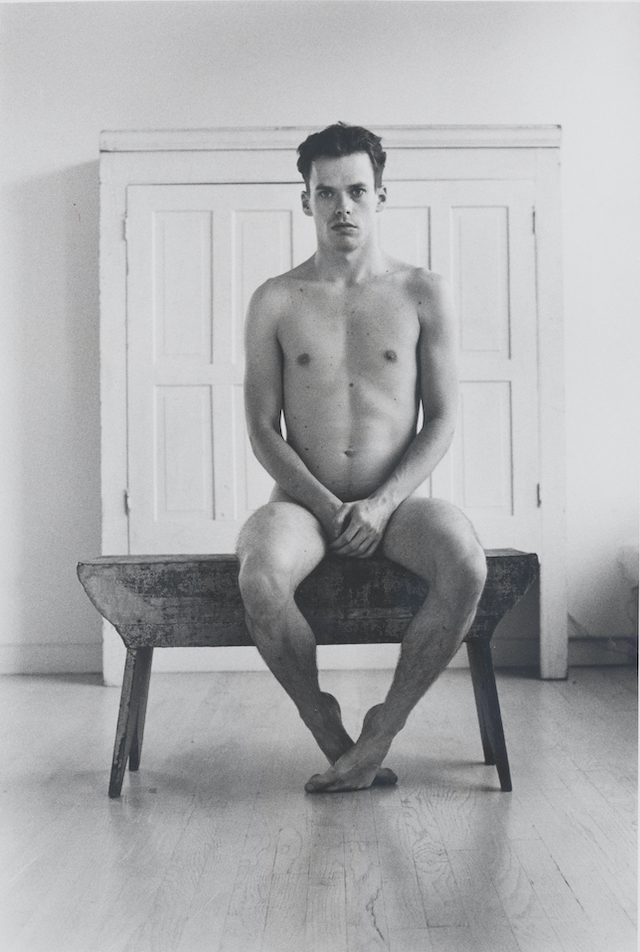
Seated, Self-Portrait (1992)

A compilation of tonal, monochromatic photography and mixed-media, Lifelines is a series of artworks taken and collected between 1989 and 2012, now published as his debut monograph by Institute 193 and featuring essays from Mark Doty and Paul Michael Brown. The project emerged after shooting his first self-portrait, named Seated, captured in 1992 after this mother had gifted him a Nikon 35mm film camera. At the time, he wasn’t quite aware of the fact that he was about to embark on a three-decades-long piece of work, lensing his own experience of living through AIDS, as well as his friends and lovers. But in doing so, he ended up recording an important and personal period of history.

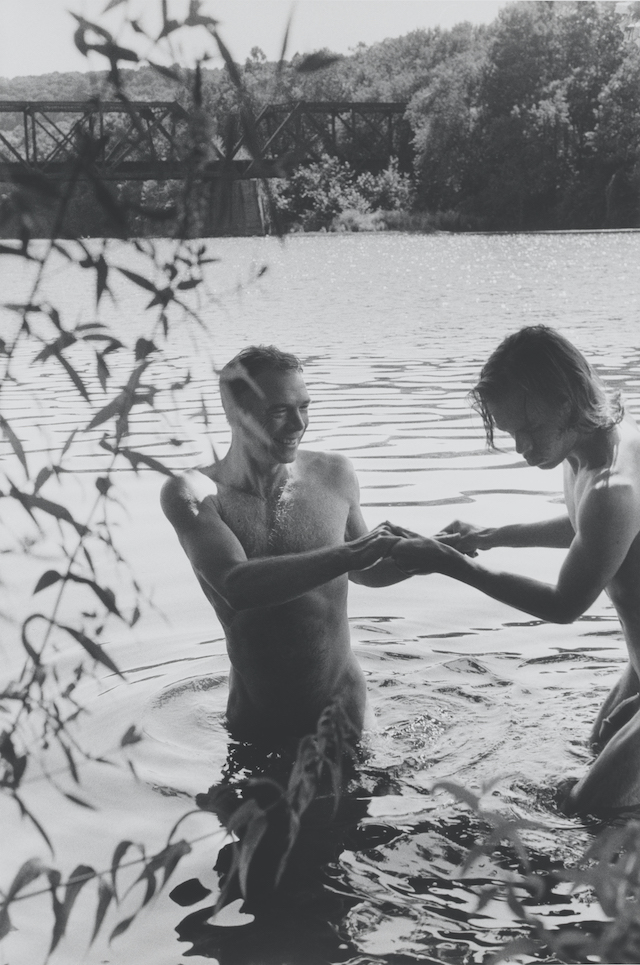
River, Self-Portrait with Russell Sharon (1994)

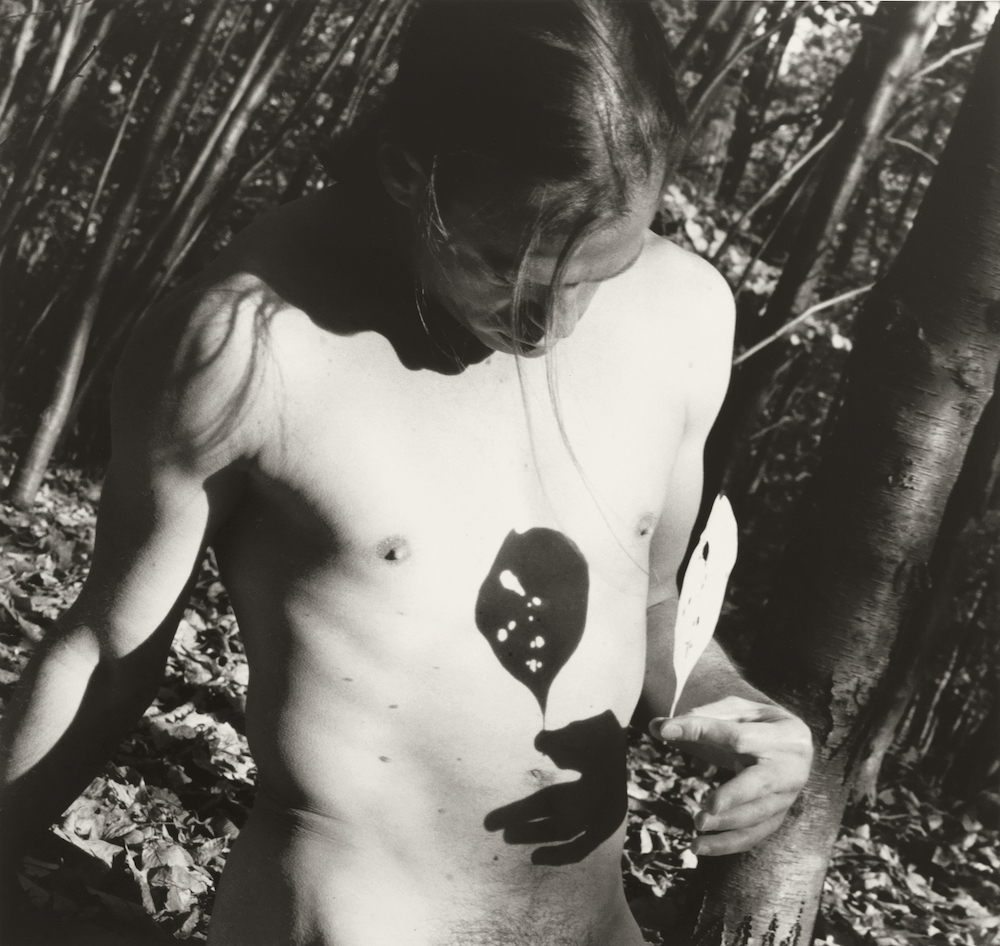
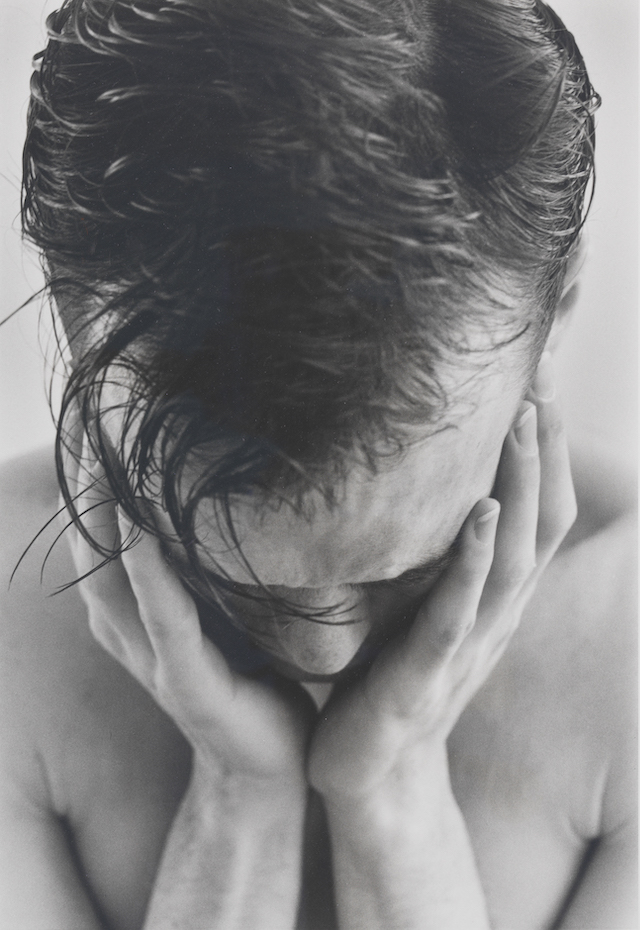
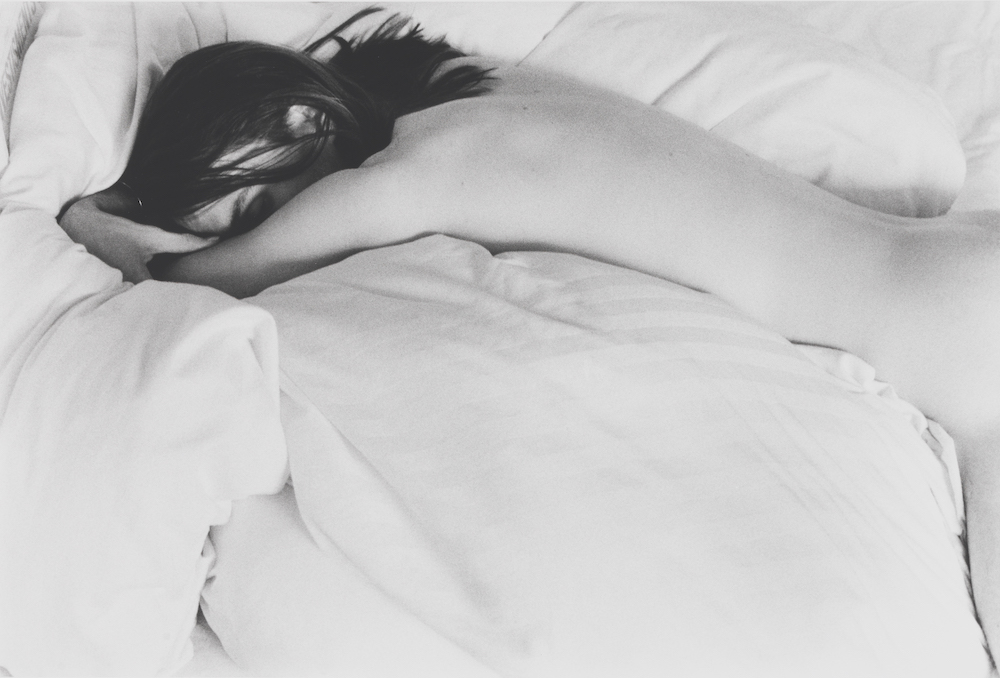
The photographic work featured in Lifelines was shot over many years and in a variety of circumstances. To detail as such, Eric was sure to include marked dates with each corresponding image, building a comprehensive timeline of an artist’s life during the time of AIDS. All of which is processed as silver gelatine prints, whereby the grain protrudes with a diffused, dream-like quality, endorsed by the photographer’s reliance on natural light. “In some of the photographs, our bodies, enveloped in sheets, are illuminated within sun-drenched interiors,” he notes, “while in others, photographs were lit through windows, doorways or tree branches.”

Having held back on publishing this work previously, Lifelines now depicts the full breadth of Eric’s experience: starting from the diagnosis, right through to his “return to life” brought on by the arrival of protease inhibitors in 1996 – a class of antiviral drugs that are now widely used as a treatment. “Some of the photos show me at moments when I was physically fragile, and others were taken after my ‘renewal’, when I was more robust,” he says. Meanwhile, several of Eric’s subjects within this project are no longer with us, and many of which were HIV positive when their portraits were taken. 

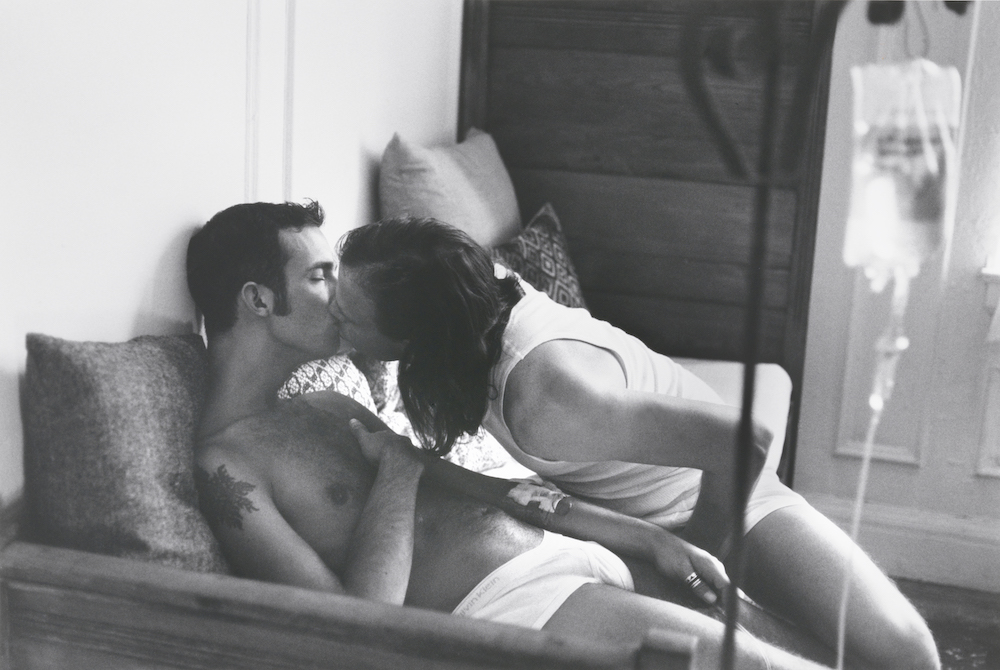
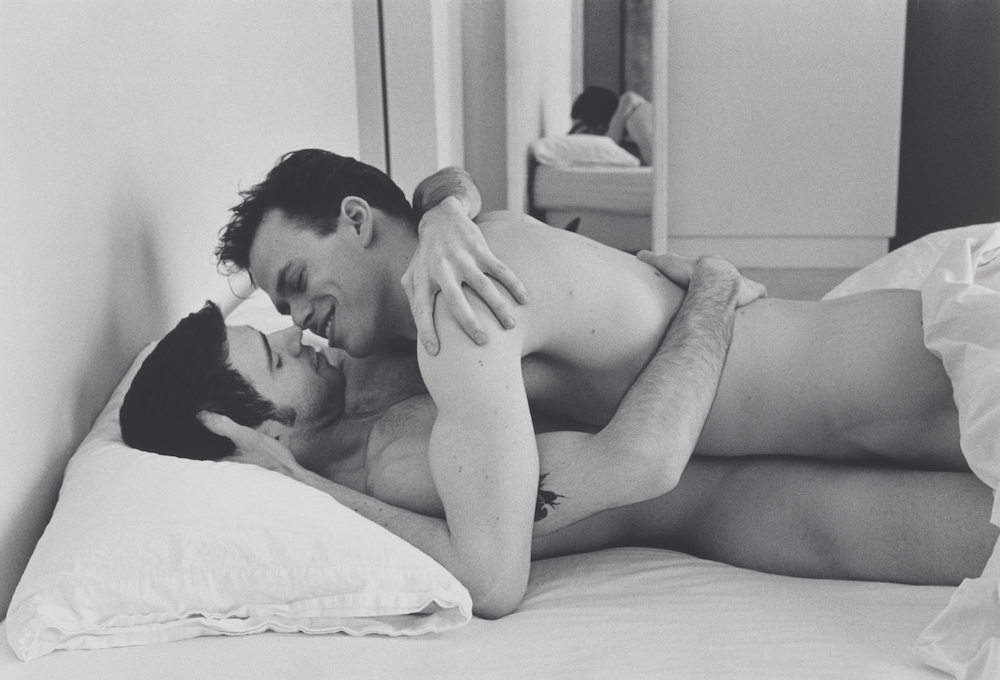
Kissing Ken (1996)

One image in particular, William – Silhouette, is a photograph of William Weichert, captured in 1992 during a summer spent on Martha’s Vineyard. Eric reminisces of how his lover wanted to be a pop star: “he wrote songs with lyrics like Hair Like Oprah, Butterfly Kisses, Love From Above and What About Tomorrow”. He passed away from complications of AIDS in 1996 at the age of 28, not long after the lifesaving protease inhibitors were released, which sadly weren’t effective for him.

Negative Space is a further picture shot in 1993 of his then-boyfriend Jeffery Albanesi. The title is suggestive of the fact that Jeffery was HIV-negative during this time – and still remains so – and looks at the tricky (and reassuring) relationship of being with a HIV-positive man. Meanwhile, Kissing Ken, from 1996, was lensed over the summer while Eric was part of a study for the incoming protease inhibitors, which successfully lowered his viral load, causing it to become undetectable. “While I was rapidly gaining health, my then-boyfriend Ken Davis had yet to be accepted into a study and was in declining health, which necessitated him having daily HIV medication drips. We’re shown in the apartment that I shared with I’m in East Village.”

Jeffery, Negative Space (1993)

These intimate and autobiographical works are housed amongst a complimentary mix of material-based pieces – like water-splashed marks and collaged findings. Each was composed from his hospital bed in 1994, while his health was extremely fragile. The AIDS memorial leaves, too, are of great significance to the artist, notably as they honour the people who Eric has known to have died with complications from AIDS.

It becomes evident throughout Lifelines, and with all of his activist-driven endeavours for that matter, that Eric is devoted to telling the difficult narratives around AIDS. He was close to death, and he wants nothing more than to put this new body of work in front of an audience who will appreciate his story.

Lifelines is published by Institute 193 and can be purchased here.

Photography by Eric Rhein.

Loving, Self-Portrait with Jeffrery Albanesi (1993)
Jeff and Tim (1996)
Rain, Self-Portrait (1993)
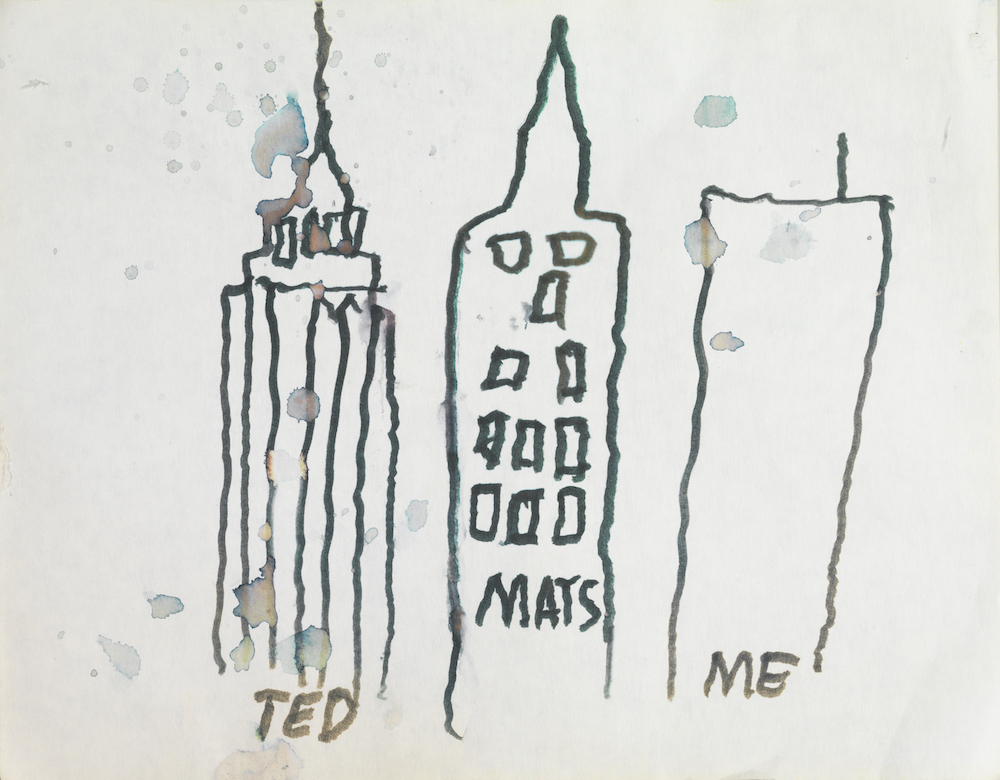
Ted Mats Me
Dodge, Slumber (1994)

The Bowers Of Bliss

Radical feminist photomontage artist Linder discusses her latest work for Art on the Underground, the importance of reclaiming public space and uncovering lost stories

Featuring Londinium sex workers in AD 43, an 1815 illustration of the Night Queen from Mozart’s opera The Magic Flute, and the first female underground porter in 1944, Art on the Underground’s latest public commission by British artist Linder demands to be seen. Eyes, flowers and a tangle of female figures combine and contrast, overlap and bleed into one another. A bright palimpsest of artefacts, paintings and photos.    

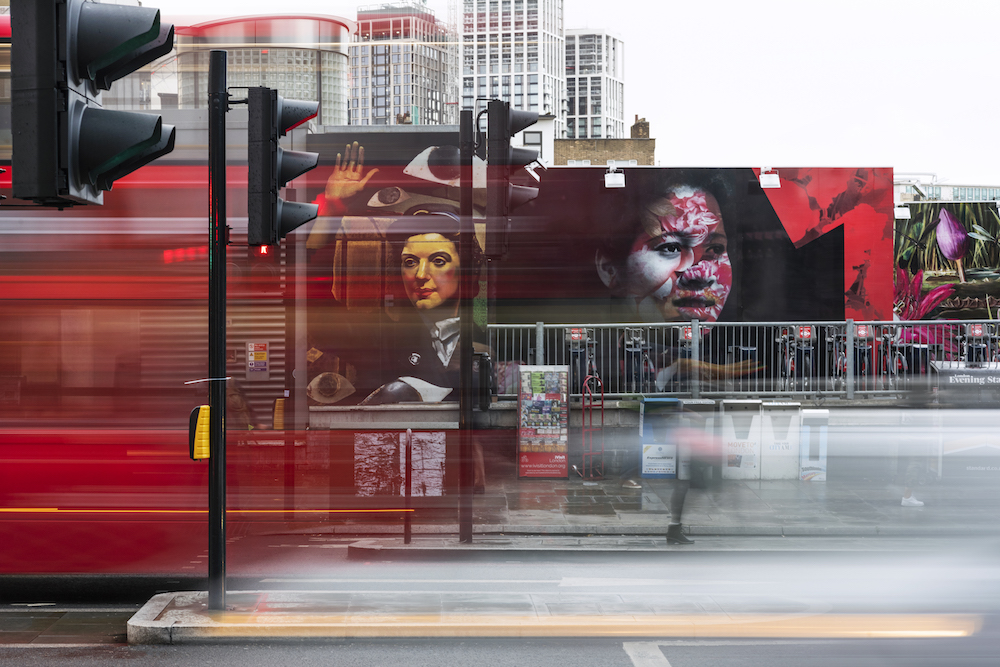
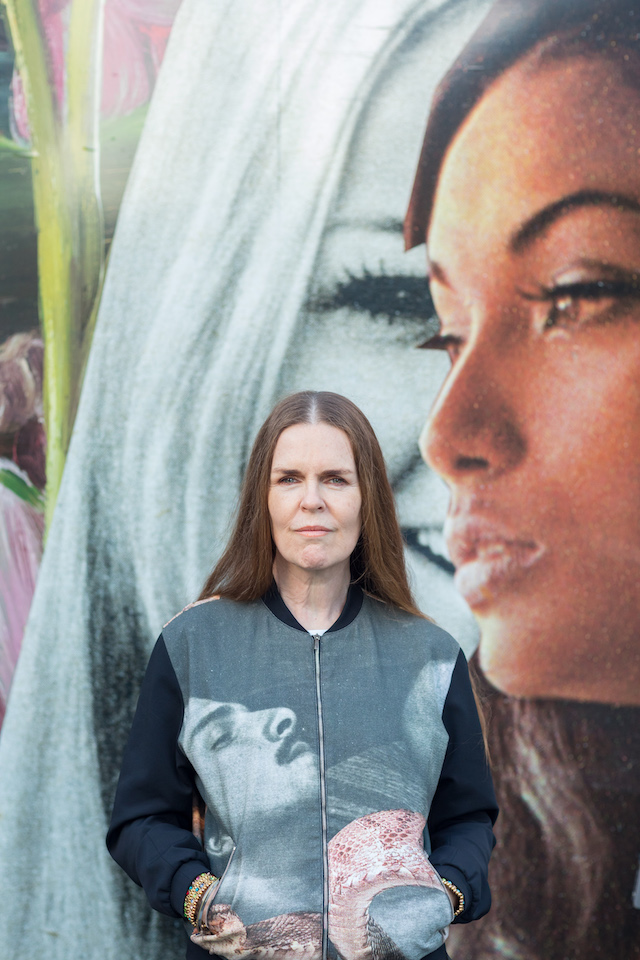
Displayed on an 85 metre-long billboard at Southwark station, ‘The Bower of Bliss’ is the result of four months of research into the history, myths and fables of the women who lived in the south London borough. Intending to ‘reclaim the representation of women from the male gaze to form a picture of empowerment for women everywhere’, the work’s title wryly nods to both the tube station’s English landscape garden inspired architecture and Victorian slang for the female form. Drawing on source materials from the Cuming Museum Collection, the London Transport Museum Collection and lost property offices, the billboard will continue to change seasonally until October 2019, each new layer building on the previous collage. Completed in conjunction with the Mayor of London’s Behind Every Great City campaign, it forms part of Art on the Underground’s 2018 programme of exclusively female artists.     

Linder is best known for her radical feminist photomontage, combining domestic imagery from women’s fashion magazines with pornography and other archival material. Her work is direct and disruptive, explicitly challenging assumptions on gender and commodity, and the implicit relationship between the two. Port talked to her about the ambitious project, as well as the importance of reclaiming lost stories and public space.  

Photography Benedict Johnson

What draws you to photomontage?

Every day in London we’re bombarded by the photographic image. Photographs are experienced at all sorts of scales via the billboards and hoardings of the cityscape, right down to the intimacy of the selfie on a smart phone. It gives me immense pleasure to work with photographs generated over the last hundred years or so – I carefully select each photograph so that it faithfully depicts the times in which it was taken. I work with a surgeon’s scalpel to cut up the photographs that I find, and each cut-out then becomes a small cultural biopsy. All sorts of new meanings are created when a cut-out of a “glamour model” from 1968 is glued onto a photograph of a painting from 1880 of red water lilies in southern India. The latter was painted by Marianne North, a woman with an extraordinary biography, in full contrast to the glamour model about whom we know nothing. This is just one of several billboard photomontages at Southwark, the same billboard also includes a cut-out of a teenage girl’s backpack with its contents barely contained. The backpack still lies unclaimed in TfL’s lost property department amidst tens of thousands of umbrellas, mobile phones, children’s toys, musical instruments and other seemingly precious belongings now abandoned by their owners.

What kind of city would we live in if artwork replaced adverts?

Oh, if only this could happen! London would then become an illustrated book of sorts, with its architecture, people and traffic mingling within the insides of artists’ heads, rather than being held at the mercy of the tropes of advertisers. The impulse to buy, to acquire, to escape the city, would be visually muted. Daily life would become enriched, puzzling and inspirational, plus London would have instant international renown for its radicalism!

During your research residency, how did you select the women of Southwark? Are there any stories that really stood out?

I thoroughly enjoyed the long periods of research within Southwark’s archives and collections. At the Cuming Collection, for example, the curator there opened box after box of delights. I saw the eyes of Egyptian mummies, a 1920s “mutton bone” doll from the back streets of London, a Roman votive in the shape of a womb, plus a carved figure whose breasts are the very opposite in shape to the breasts that we see in all contemporary advertising i.e. her breasts point down and not up. All of this imagery and more can be seen on the billboards at this very moment, the visitor can also see photographs of other treasures that hide away in local collections patiently awaiting discovery.

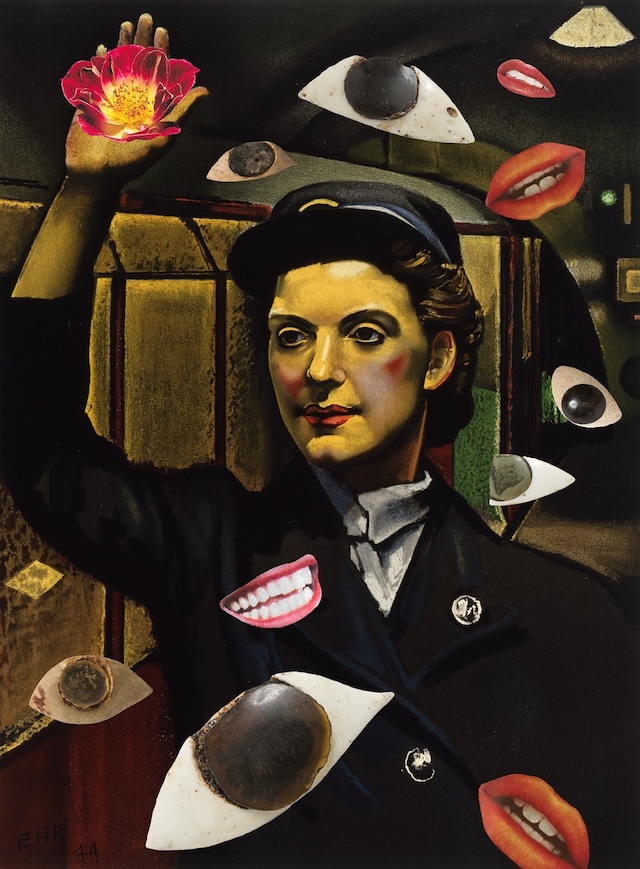
From the archive at Transport for London, I wanted to show images of women that would help to weave a narrative around the station. The key figures that I feature from the archive are that of a porter, a driver and a conductor. As you approach the entrance of Southwark station, you see Eric Henri Kennington’s painting of Elsie Birrell from 1944. Elsie Birrell was one of the first ever female porters to be recruited to work on the underground, we can only imagine now what a moment of great empowerment it must have been for those women. Likewise, there’s a photograph from 1962 of a bus conductor, Agatha Claudette, and an unnamed woman driving a bus in the late eighties. I like the idea of featuring known and unknown women on the billboards, hinting at how even recent histories can so easily be lost.

Detail of The Bower of Bliss, Linder, 2018

Why is it important for Art on the Underground to run a programme of exclusively female artists?

Your question is as telling as my answer. For decades, posters on the underground were designed predominantly by male designers and artists. TfL was unusual amidst its contemporaries though in that it included posters designed by women from as early as 1910 – Ella Coates designed a poster for Kew Gardens that year and many other women followed in her footsteps in the subsequent decades.

For centuries though, no one ever questioned or remarked upon galleries and institutions that featured only male artists, and as a result we now have a long way to go to redress that imbalance. Art On The Underground are pioneering in this respect and this year’s programme has meant that myself and the other commissioned female artists have been able to respond to the landscape in which we find ourselves with an awareness of each others individual response.

How can London reclaim its public space?

I think that reclamations of public space can happen via a wide spectrum of action, from the individual to the collective, from the civic to the personal. The imagery that a city allows to be paraded on its many billboards is a good place to start, introducing more green spaces is another. An awareness of how we all contribute to making cities into safe and pleasurable spaces is of paramount importance in such potentially divisive times, ‘The Bowers of Bliss’ play their small part in this.

art.tfl.gov.uk

Renovation & Education: Margot Heller

The director of the South London Gallery discusses transformative renovation, social responsibility and unlocking creativity

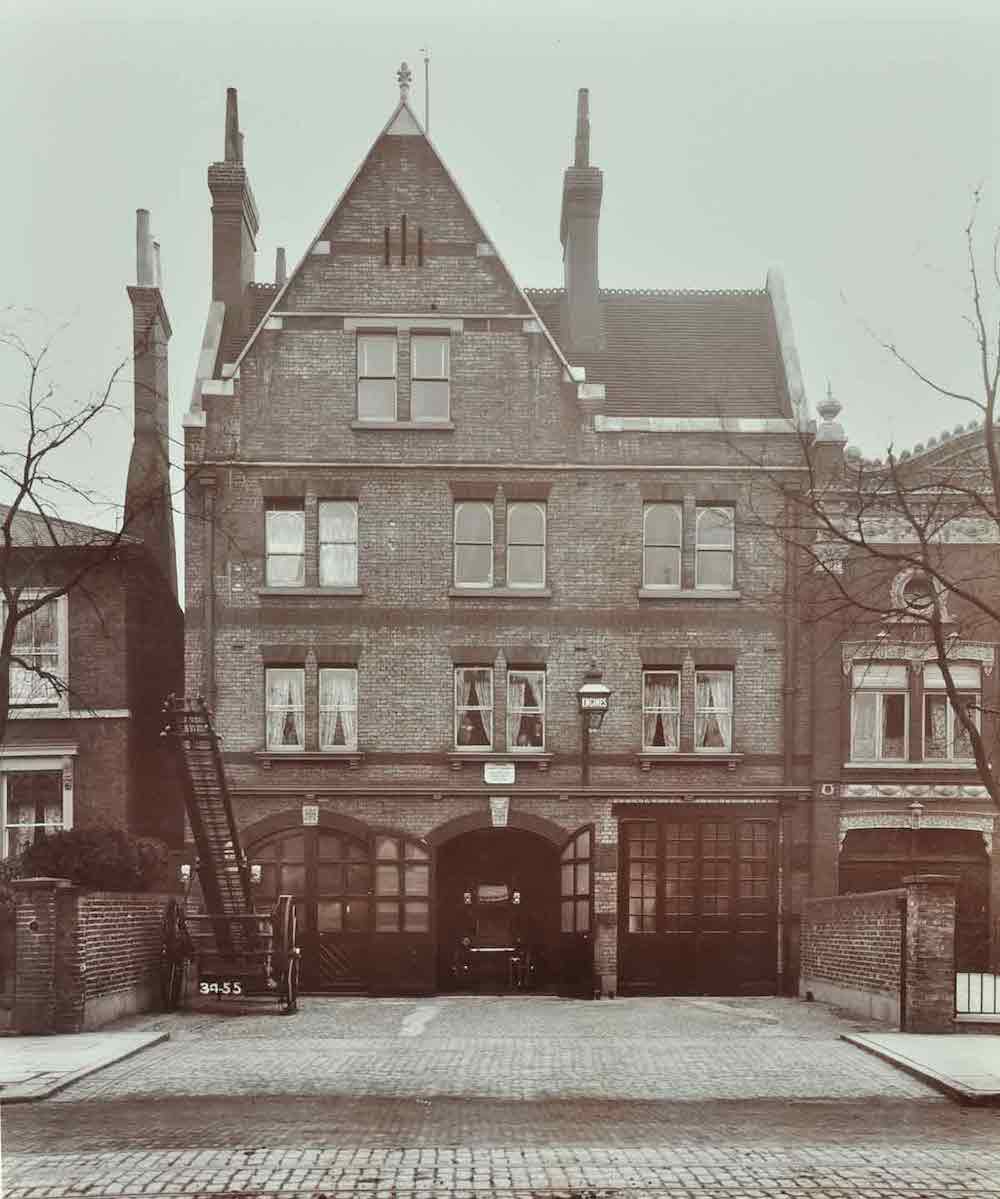
Peckham Road Fire Station, 1905. London Metropolitan Archives, City of London

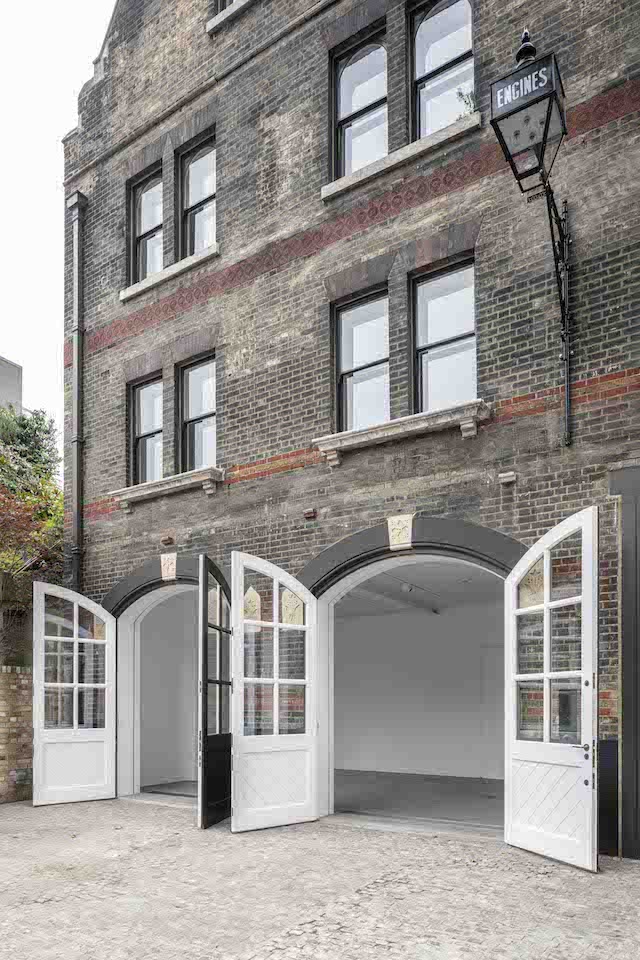
Three years ago, Margot Heller was invited to visit London’s oldest surviving purpose-built fire-station. By the end of the surprise tour, it had been gifted to her gallery. Donated by an anonymous benefactor, Peckham Road Fire Station has since been transformed by 6a architects (who Port met for issue 22) into a new exhibition space for the world-renowned South London Gallery, effectively doubling its capacity.

For over a century, nestled squarely between Peckham and Camberwell, the gallery has been showcasing the very best of British and international contemporary art. Established on its current site by philanthropist William Rossiter to “bring art to the people of South London”, entry remains completely free, providing an opportunity to experience the controversial work of Young British Artists Tracey Emin, Damien Hirst and Sarah Lucas – as well as contemporary artists from further afield, such as Alfredo Jarr, Oscar Murillo and Rivane Neuenschwander – for those whom central London galleries might appear inaccessible.

Here, Tom Bolger talks to Heller about the opportunities the Fire Station will bring, the social benefits of an expanded arts program, and the first exhibition to span the two new spaces, KNOCK KNOCK, which explores humour in art.

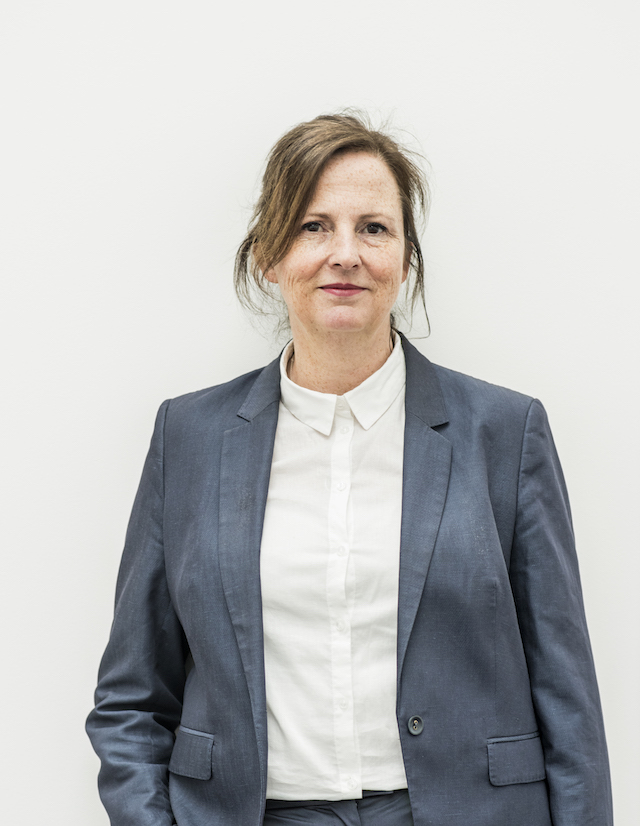
Margot Heller

How can the South London Gallery encourage everyone, from all backgrounds, to walk through the door?

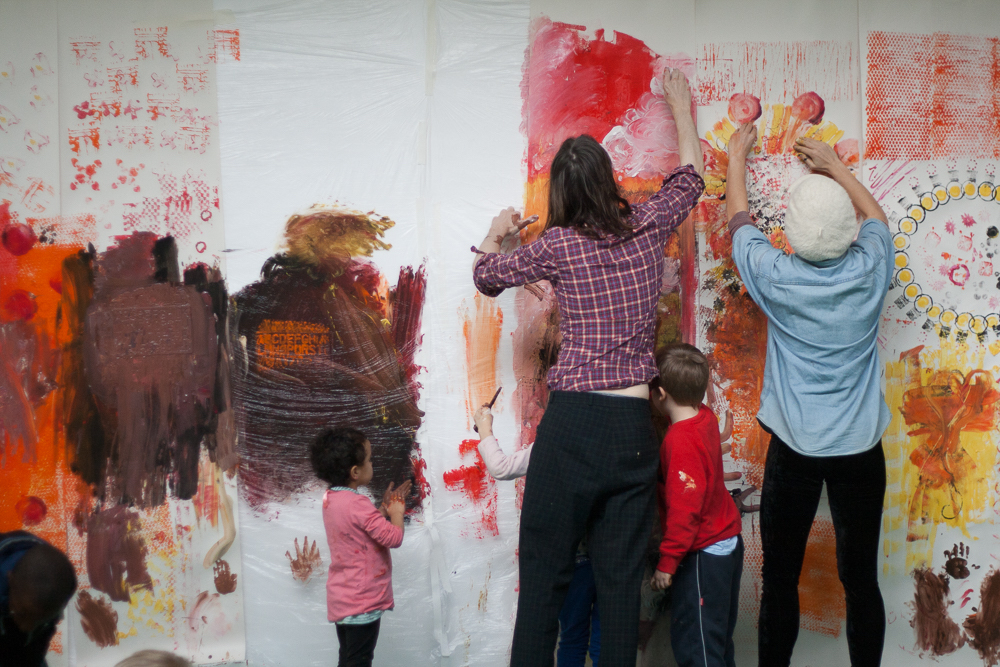
Being a welcoming place is absolutely fundamental to our ethos, and it has been from the first day I started. Part of that is to openly communicate what you’re doing and we’re very proactive in providing opportunities for people to get involved. We’ve been running children’s art programs on the Sceaux Gardens Housing Estate behind us for more than ten years, developing long-term relationships with residents who will often then go on to our Young People’s Programme. Because I’ve worked here for seventeen years, I’ve seen a generation come of age. We’ve just hired a play worker to help run our Art Block sessions who came as a child, we have people working at the gallery who grew up on the local estate. Making sure a child’s initial encounter with art is natural changes their dynamic with galleries and artists for life.

Sunday Spot with Philippa Johnson. Photo Zoe Tynan Campbell

What does the Peckham Road Fire Station expansion mean for the gallery?

The Fire Station will be completely transformative for the South London Gallery, doubling us in size and allowing us to be much more ambitious in our exhibition programming – we can have group shows that span both buildings. It will enable us to more experimental in a curatorial sense, further establishing our artists residency program now that there’s a dedicated studio. We’ll also be able to work with different communities in new ways through our education and digital archive spaces.

The South London Gallery and Fire Station are effectively time twins – the origins of the former lie in the South London Working Man’s College which opened in 1868, while the Fire Station opened in 1867. So this new relationship between the two closes a 127 year loop, bringing the social, architectural and cultural history of the local area to life in a completely fascinating way.

South London Gallery Fire Station, Photo Johan Dehlin, Courtesy 6a architects

I’m always surprised with how versatile the main gallery space is. How much freedom do you give artists to change it?

I work very closely with artists and encourage them to be as ambitious as possible. Those that do completely transform it tend to have the greatest resonance. In the grand scheme of things, it’s a relatively small space at 200 square metres, but that’s one of the things I love about it. It slows down the time between the viewer and the artwork, concentrating their experience. It doesn’t always have to be about scale.

Tell me about your upcoming exhibition, KNOCK KNOCK.

There are laugh out loud works in the show but there are also pieces that examine humour as a subject, something fundamental to human existence. They explore how humour is a cover sometimes, the dark underbelly of reality – it’s the melancholy of the clown figure. It’s a huge cross section of different types of practices, creating a surprising encounter with a broad range of artists who use humour as a device. We’re pitting works by quite established names like Maurizio Cattelan alongside newly commissioned work by young artists to reflect the gallery’s curatorial approach, which often creates a dialogue between the two.

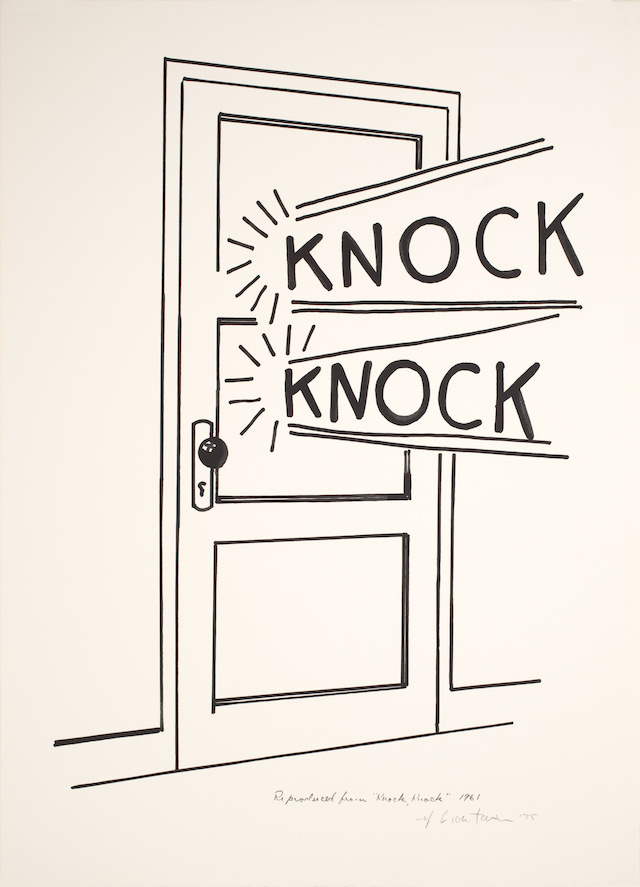
Roy Lichtenstein, Knock-Knock, 1975

The UK has endured substantial arts education funding cuts in the past decade and yet it still produces world class talent, why do you think that is?

The UK has such outstanding museums and galleries, in London and around the country. We also have some of the best art schools in the world, so those two factors are absolutely vital. However, cuts do have an impact and that cannot be sustained. If they continue, they will have a very real impact on young people’s choices. Art GCSE entries have already been reduced by 28% since 2010. The impact of this has yet to filter through, but it will.

Can you teach creativity?

You can definitely reveal it to someone. You can unlock it, nurture it, develop it, redefine what it means to people who might not have conventional skills associated with creativity. If an arts education is too conservative, as it was for me, it’s easy to turn your back on it. Because I couldn’t draw properly by the age of 7 I thought I was ‘uncreative’ and gave up. I think that’s a common story. Education should provide skills that channel innate creativity. 

South London Gallery Fire Station, Photo Johan Dehlin, Courtesy 6a architects

Peckham and Camberwell are changing rapidly. How can they continue to grow but resist commodifying their culture?

The word ‘gentrification’ is used negatively, whereas ‘regeneration’ is positive. Often those two things go together, which can be challenging. There’s a lot of social housing in this part of London, and it’s so important to keep that in the public sector. Secondly, it’s crucial we have free, public spaces, open to all. That’s why the development of the fire station is so positive. I’ve always felt very keenly our responsibility to run a space that is a public social space, as well as an art space. 

The South London Gallery’s new annexe in the former Fire Station opened to the public on the 22nd September. The first exhibition there, KNOCK KNOCK, runs until 18th November and explores humour in contemporary art.

Laure Prouvost’s Garden of Earthly Delights

Nikita Dmitriev, assistant curator of the Musée d’Art Moderne in Paris, reflects on the latest exhibition by the French Turner Prize-winning artist, Laure Prouvost 

Exhibition view of Laure Prouvost, “Ring, Sing and Drink for Trespassing”, Palais de Tokyo
(22.06.2018 – 09.09.2018) Courtesy of the artist and Nathalie Obadia (Paris / Brussels), carlier | gebauer (Berlin), Lisson Gallery (London / New York) Photo: Aurélien Mole

Folly; maniacal delirium – these words best describe the atmosphere of Laure Prouvost’s videos, where orgiastic and surreal scenes follow one another at a frantic pace: the sound of flesh on flesh and infernal murmuring, sweaty ground and bloody callouses exploding. Historically, Prouvost is part of a long tradition of intellectuals and creators who build on hallucinations – Deleuze and Guattari’s Anti-Oedipus, Ezra Pound’s Cantos, Burroughs’s Naked Lunch, Gaspar Noé’s Sodomites, Antichrist by Lars von Trier, without going back to the Homeric Hymns or the writings of St. Teresa of Avila – but it is with Hieronymus Bosch that Prouvost has the deepest connection.

Bosh and Prouvost are successful outsiders, working separately to the dominant aesthetic of their time, and at the same time they have been accepted and celebrated. Bosch’s pieces found their place in the princely castles and cathedrals of Flanders; those of Prouvost are exhibited at the Tate Modern, Palais de Tokyo and, soon, at the Venice Biennial.

Exhibition view of Laure Prouvost, “Ring, Sing and Drink for Trespassing”, Palais de Tokyo
(22.06.2018 – 09.09.2018) Courtesy of the artist and Nathalie Obadia (Paris / Brussels), carlier | gebauer (Berlin), Lisson Gallery (London / New York) Photo: Aurélien Mole

The artists share many motifs: labyrinths, insects and arthropods, animals outside of their natural environment, breastfeeding, castration, copulation. And, it is not only the imagery or the institutional position, but also the intuitive worldview, the “apocalyptic glamor of the condensed life”, as Prouvost herself defines it, which parallels her with Bosch. Nature – as a titanic unified mass of mineral and biological entities oppressing people – is the main common theme. It is a nature that is animated, cruel and libidinous; it is destructive, with a violent eroticism, pleasure and suffering going hand-in-hand; nature in heat, a beast with a thousand faces and a thousand feet, flowing with blood, milk and sperm; Medusa, seducing, dementing and assassinating.

With all the might and immediacy provided to the artist by the contemporary technologies, Prouvost awakens the most chthonic phobias of human consciousness, immersing her audience in a Greek tragedy, the horror of life in the world under the domination of dark and inhuman destiny, the horror of one who is subject to the forces of chaos, without hope of ever escaping. For Prouvost, and Bosch in his Garden of Earthly Delights, hell is here on Earth, and not below.

Exhibition view of Laure Prouvost, “Ring, Sing and Drink for Trespassing”, Palais de Tokyo
(22.06.2018 – 09.09.2018) Courtesy of the artist and Nathalie Obadia (Paris / Brussels), carlier | gebauer (Berlin), Lisson Gallery (London / New York) Photo: Aurélien Mole

The artistic effect of Prouvost’s videos, such as It, Heat, Hit (2010), We Will Go Far (2015), Lick in the Past (2016), and especially Swallow (2013), eliminates the border between the imaginary and the real; instinctive and dynamic – they exceed art itself, leading us to the metaphysical elsewhere. All this is made even more disturbing in her latest Parisian solo shows, Looking At You Looking At Us at Nathalie Obadia Gallery (2017) and Ring, Sing and Drink for Trespassing, currently at the Palais de Tokyo, where the video – the medium in which she excels the most – does not play the major role.

Exhibition view of Laure Prouvost, “Ring, Sing and Drink for Trespassing”, Palais de Tokyo
(22.06.2018 – 09.09.2018) Courtesy of the artist and Nathalie Obadia (Paris / Brussels), carlier | gebauer (Berlin), Lisson Gallery (London / New York) Photo: Aurélien Mole

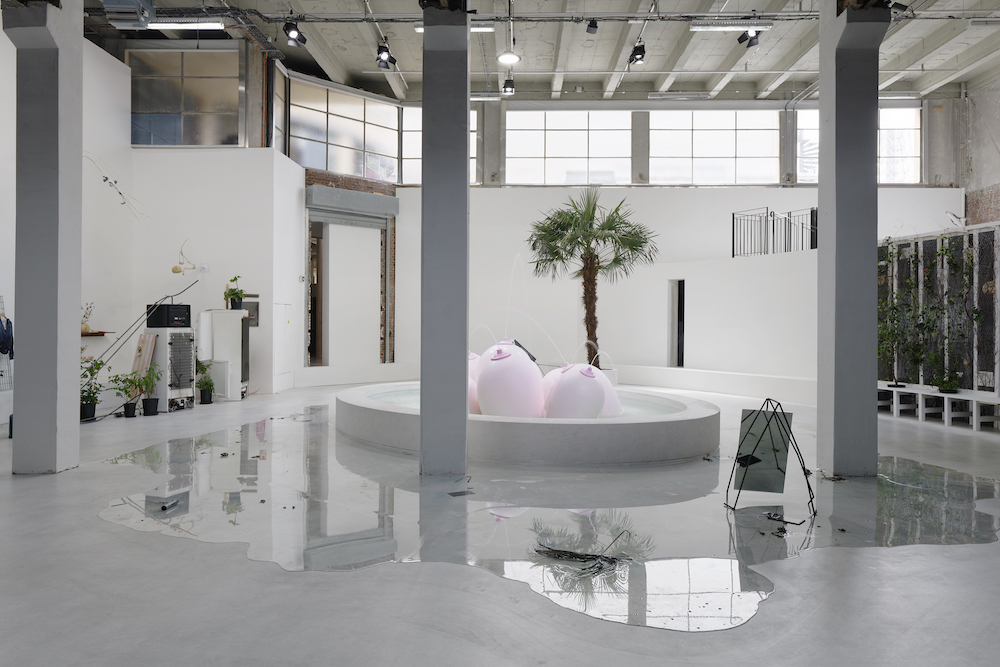
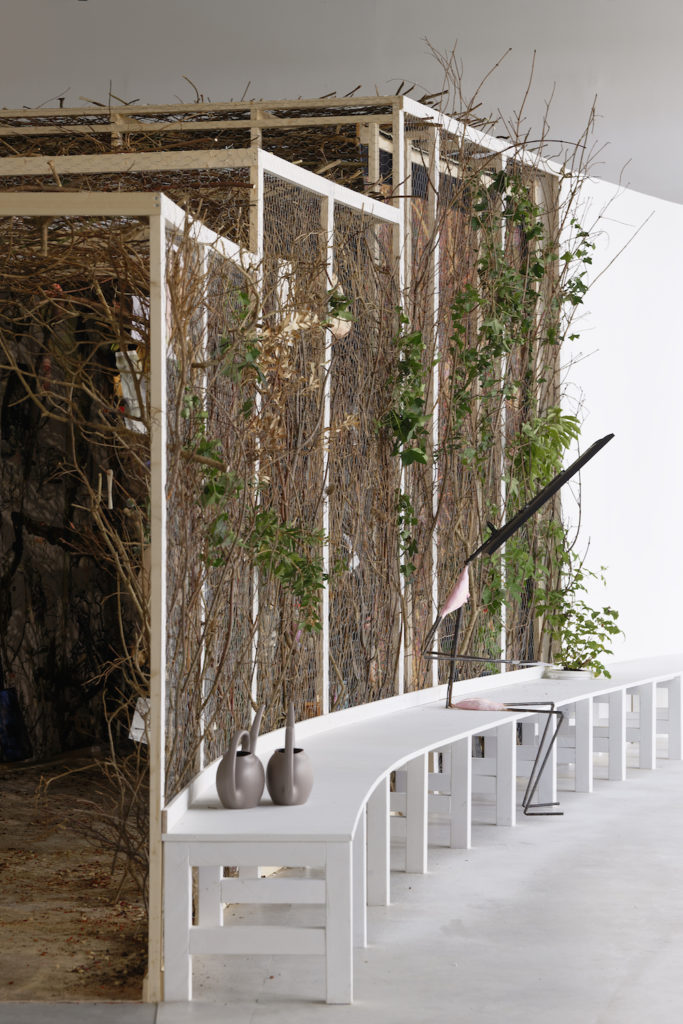
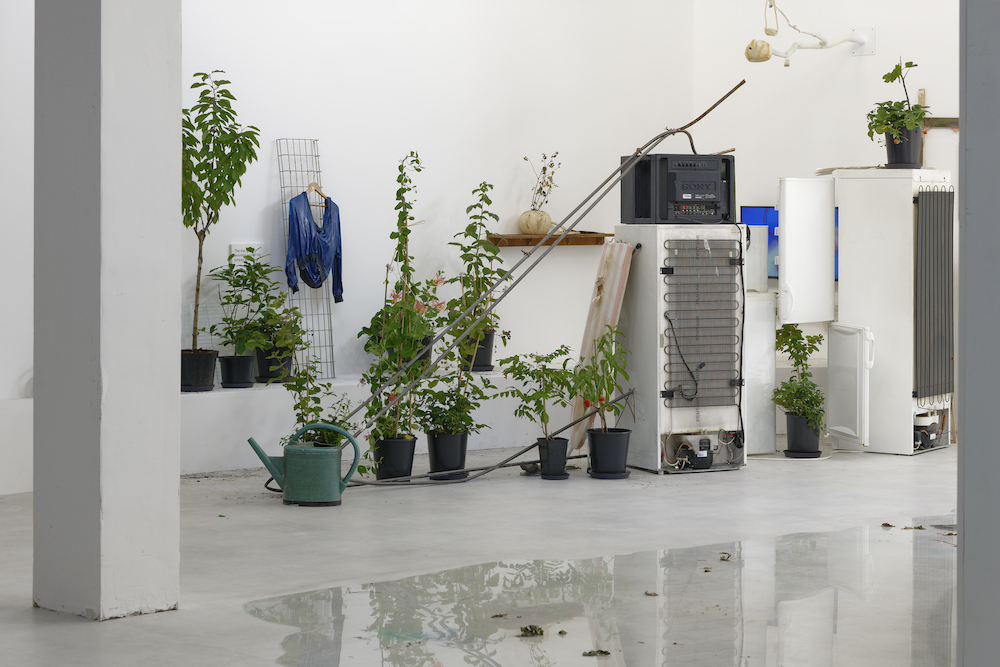
Prouvost’s Obadiah Gallery show consisted of a series of nudes, some older short films, vases with cacti, and stick figures made from iron rod who hold screens that flash incantations and wander from one work to another. At the Palais, it’s a massive arte povera installation – a labyrinth divided into several sections with a fountain in the shape of several massive female breasts. Sculptures, already exhibited at Obadiah Gallery, and most of Prouvost’s longtime totems – twigs, raspberries, vegetables, buttocks and nipples – constitute the rest of the show. As for the fountain, it doesn’t have enough visual presence to articulate such a vast space – the strong, direct lighting kills the mystical, shadowy ambience so peculiar to Prouvost, and no new video, capable of redeeming these weaknesses, has been created on this occasion.

Exhibition view of Laure Prouvost, “Ring, Sing and Drink for Trespassing”, Palais de Tokyo
(22.06.2018 – 09.09.2018) Courtesy of the artist and Nathalie Obadia (Paris / Brussels), carlier | gebauer (Berlin), Lisson Gallery (London / New York) Photo: Aurélien Mole

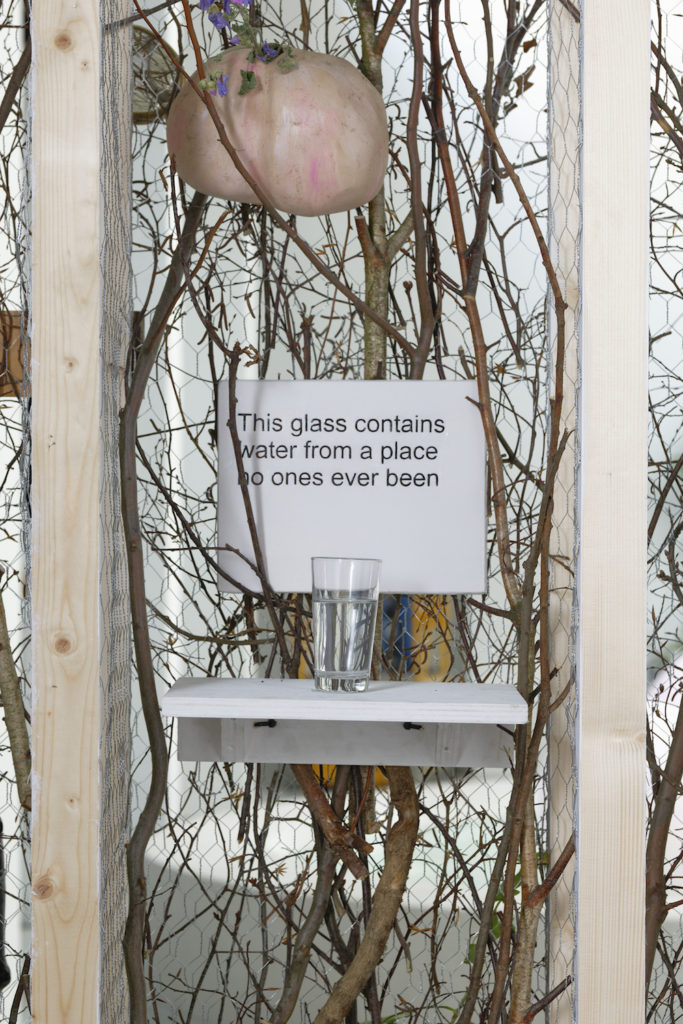
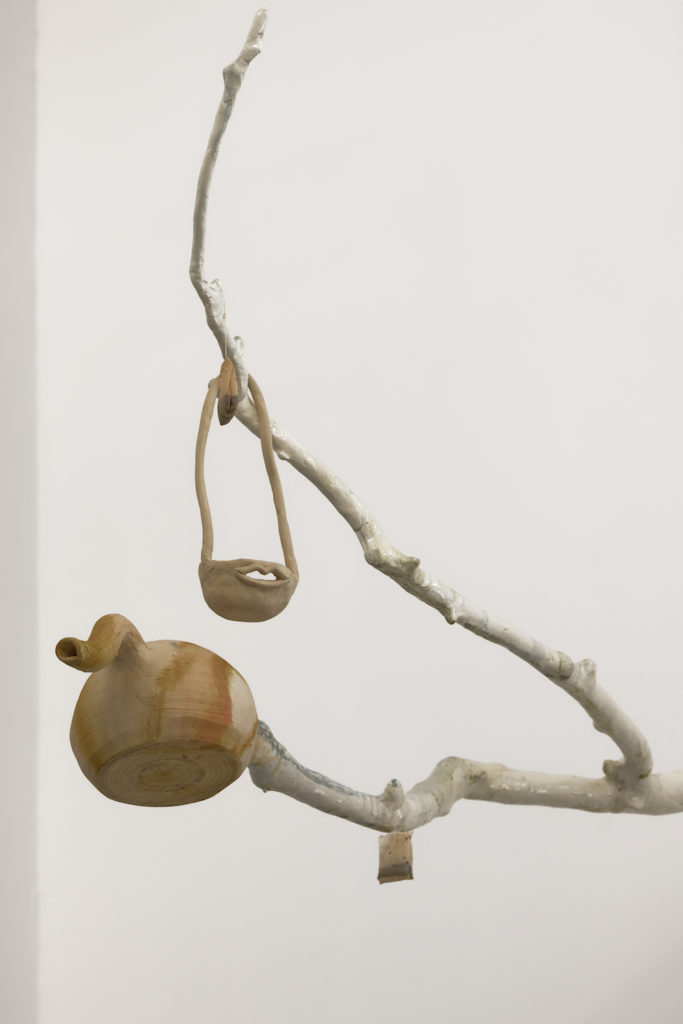
For the first time in her career, Prouvost even seems to bow to political conjuncture: beside a wet jacket she writes, mockingly perhaps, that global warming has caused it to become damp. The show’s entrance corridor, dominated by dry branches, iron sticks and ceramic pots, is very similar to the work of the ultra-fashionable Kosovar artist Petrit Halilaj, exhibited nearby; the corner with old refrigerators and TVs reproduces almost word by word The Toilet – Ilya and Emilia Kabakov’s 1992 iconic installation. In one of the corners of Ring, Sing and Drink for Trespassing, next to the fragile staircase, which shakes and make noise when someone climbs up and down, a glass of water is accompanied by the inscription: ‘This glass contains water from a place no one’s ever been’. Let’s hope that Laure Prouvost will be able to go there again one day.

Ring, Sing and Drink for Trespassing runs at the Palais de Tokyo until 9th September 2018

palaisdetokyo.com

Human Connections: Noritake Kinashi

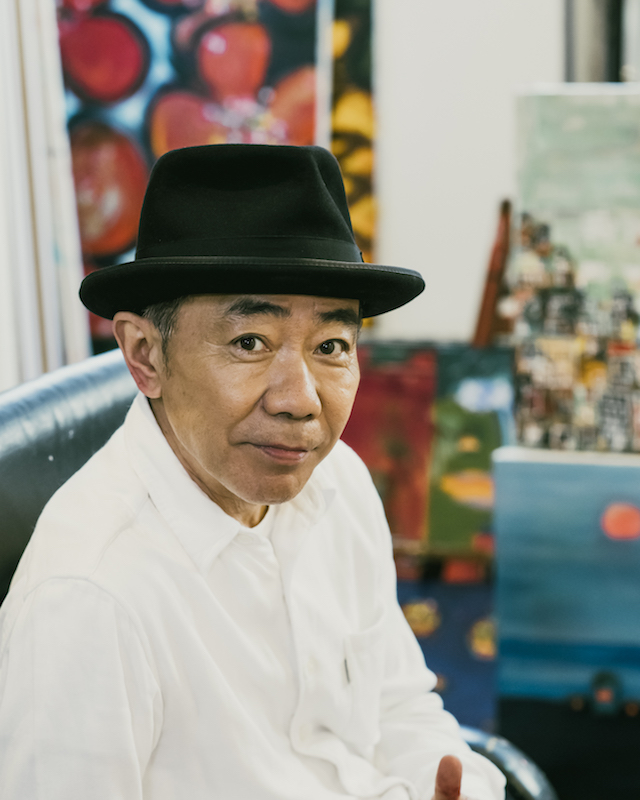
Japanese artist Noritake Kinashi speaks to Port about his transition from comedian to artist, and the peaceful message he hopes to convey at his London show

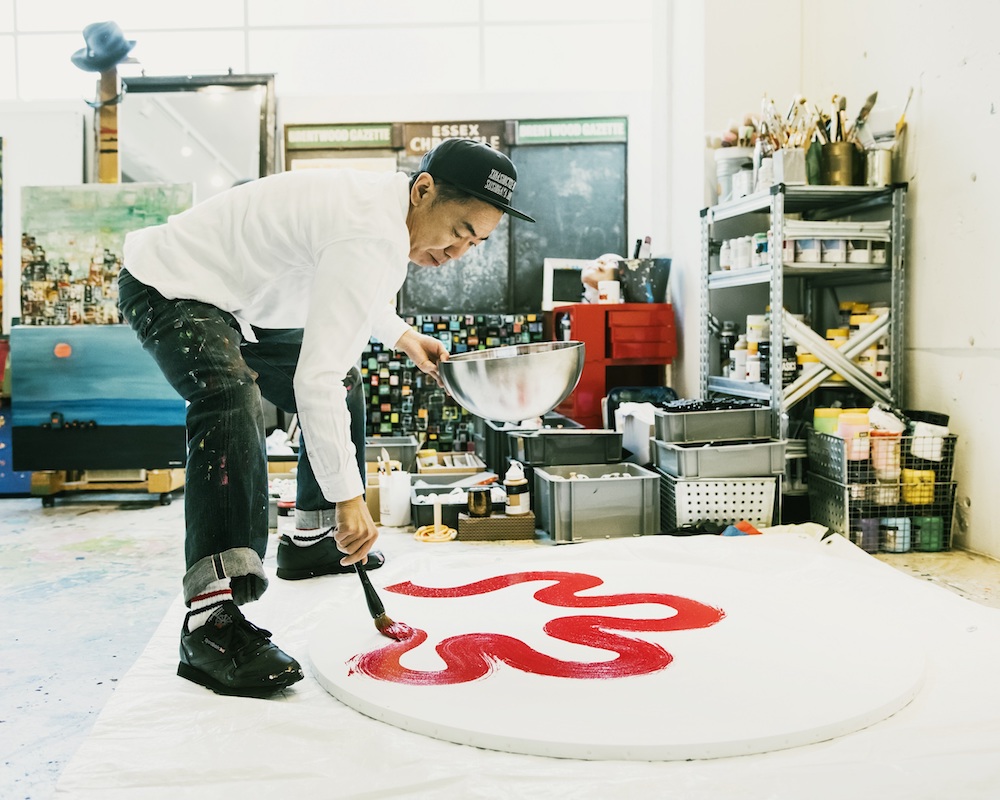
The most accidental route into art ever taken might be that of Japanese artist Noritake Kinashi, who began his artistic career when he was working as a comedian in 1994, and was asked to spontaneously draw the landscape along the river Seine in black marker for a TV programme. Kinashi remembers it as a “creative turning point”, for although he’d enjoyed drawing as a child, it was in this moment that he rediscovered his interest and produced a body of work large enough to hold a solo exhibition that same year. Balancing multiple jobs was something Kinashi, who has also worked as a musician and actor, felt comfortable doing and found highly compatible: “I perceive them all as the same. It’s just a matter of expressing them in a different form in the end.”

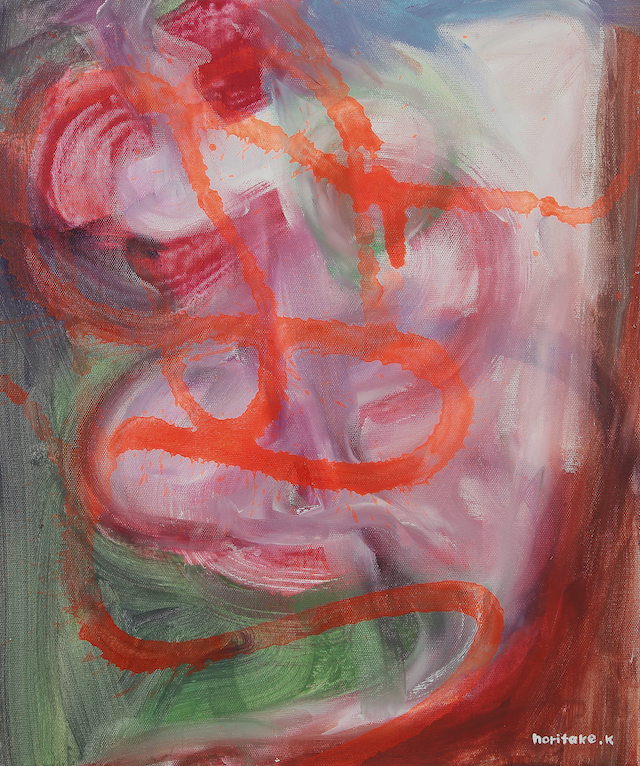
There certainly are traces of his comedic persona in the drawings he produces, which have a simple, almost childlike aspect that belies their non-conformist and satirical take on humanity. The brushstyle is clear and linear, producing stylised motifs that are repeated across large areas. For Kinashi it is an intuitive process, “I draw without revisions and I especially enjoy doing improvisational drawing.”

Following a solo show in New York in 2015, Kinashi has been preparing -moment-, a unique exhibition filled with colourful, almost psychedelic, painted hands, which appeared in London and was organised by Kyoto’s imura art gallery. The show forms part of a larger project, REACH OUT, which centres the motif of the hand in a gesture that Kinashi believes refers to “chains of ‘human connection”, or more simply “approaching people, connecting with people and extending a helping hand to people”.

It’s a simple idea that Kinashi has chosen to focus on, but by repeating it into proliferating webs the many hands soon become a mesh of impenetrable links. It is a visual metaphor through which Kinashi hopes “the audience feel the power of peace that goes beyond the barriers of race and cultural differences”.

Kinashi was excited by the opportunity to bring his art to London for the first time, saying he has often felt “inspired by the raw energy and creativity that London offers”. His roots however, remain very much in his comedy, and he explains how these various professions are connected: “I have always believed in the power of laughter, which encouraged peace within oneself. Therefore, I express the same thought on canvas. That is my message.”

-moment- was on at Protein Studios from 21st to 24th June.

Werner Büttner: Humour in Darkness

Port speaks to artist Werner Büttner about growing up in East Germany, the experience of moving to West Berlin just before the wall fell, and his new show at the Marlborough Gallery

Viel Raum für allerlei Glück , 2017 © Werner Büttner, Courtesy Marlborough Fine Art

Provocative art tends to take a post-modern form, whether that be film, installation or performance art. In transgressing the boundaries of traditional media, it signals its subversive tendencies. But for Werner Büttner, once a member of Germany’s Junge Wilde or ‘wild youth’, figurative painting holds far greater expressive potential in all its narrative lucidity and metaphorical inference.

Büttner relishes each brushstroke, applying the paint in layers until he has built a thick crust. Every inch feels powerful and deliberate, yet Büttner insists he has no emotional relationship to paint, “I try to enslave it [only] to end up in splendid arbitrariness.” The images themselves are astutely observational with a dark, comic edge. “Humour is the only appropriate reaction I have found facing what’s now 64 years of the ‘condition humaine’.”

At his latest London show, Plenty of Room for all Sorts of Happiness at the Marlborough Gallery, works from Büttner’s early years fill the downstairs gallery, with more recent painting hung on the upper level. “I liked the possibility of walking around one floor and seeing works by an author in his thirties and then seeing the same author in his sixties on a different floor,” Büttner says of the strict division. Creepy and caustic, surreal but incisive, the early works are tonally dark in every sense. In the Vineyard, a painting from 1981, readily evokes a desolate graveyard with a monstrous, ghostly, almost illegible figure emerging from a wild gale that ravages the landscape.

Ein geschundener Gaul [A Flogged Horse], 2016 © Werner Büttner, Courtesy Marlborough Fine Art

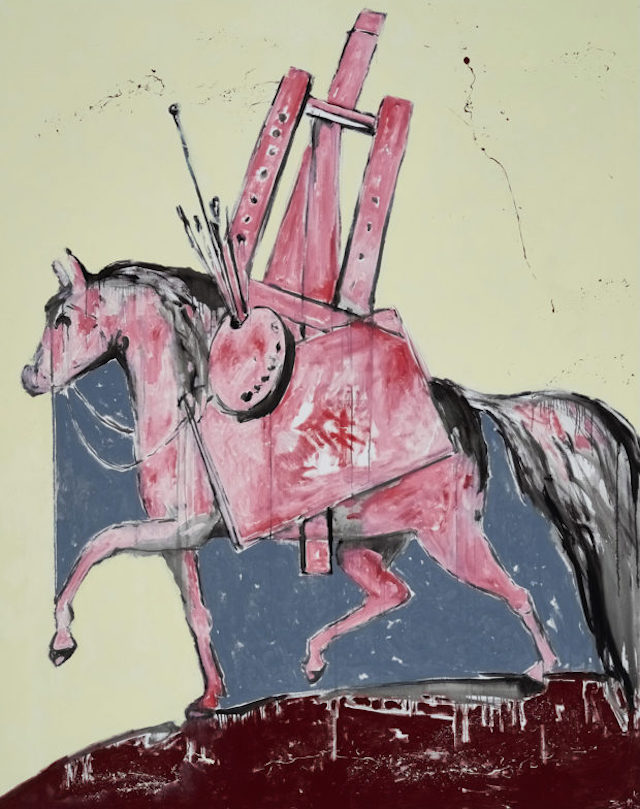
His contemporary paintings are lively and less perverse – a bright pastel pink brings ambiguous meaning to A Flogged Horse (2016), while the streaks of orange in Holding Loop in the Void (2015) are positively kaleidoscopic. In Büttner’s recent work, his social commentary of the 1980s is as present as ever but he more freely dabbles in the ridiculous and the mundane. He admits that “the guy who did the paintings on the ground floor seems a bit more mournful and upset than the guy upstairs… I like my most recent work best.”

Born in 1954 in Jena, East Germany, Büttner spent the first seven years of his life living under the Soviet-controlled German Democratic Republic until his mother took him to Munich, just before the construction of the Berlin Wall. Büttner’s childhood is addressed in On Thrones and Entanglement, an unusually solemn self-portrait in which Jena is foregrounded by a young boy on a pony. The painting’s title refers to Martin Heidegger’s theory of ‘throwness’, the idea that we are thrown into existence without our consent and must attempt to exercise autonomy over our lives.

Danke Frankreich (für Monsieur Monet und Hhle Lascaux) , 2017, © Werner Büttner, Courtesy Marlborough Fine Art

Once thrown into the world, as Büttner says, “you are immediately entangled in many calamities… in a landscape and a language, in a climate and social order, in a political and economical system… all this limits somewhat your freedom to design your own fate”. Appearing to ride away from the town that is neatly bordered off into the background, the painting depicts an alternate existence that was left behind, at the last moment, but whose legacy endures. For Büttner, living under the regime was formative but his escape was liberating in more senses than one – “the delight of having two opposing systems made me flee all systems, made me distrustful, sceptical and melancholic.”

By the late 1970s, Büttner was employed as a social worker at the Berlin-Tegel Prison, despite having studied Law at university. He broke onto the art scene in 1979 when he took part in Elend, a group exhibition in the Büro, a loft space set up by Martin Kippenberger and inspired by Warhol’s Factory. He went on to appear in a string of fringe shows with other members of the Junge Wilde. Belonging to the avant-garde community was extremely seductive – Büttner joined after a chance meeting with Albert Oehlen, the flatmate of a one night stand.

Diet – Geißel der Postmoderne , 2017 © Werner Büttner, Courtesy Marlborough Fine Art

In romanticised recollections he describes the shared “hunger to be heard, the same heavenly pubs, the urge for attractive and digestible company”. Ultimately however, he saw the group’s activity as “foolish dalliance” rather than a guiding force in his art: “I was more influenced by dead colleagues like Magritte, de Chico, Ensor or Goya.” As Büttner became increasingly recognised, the inevitable forces of establishment took over and within a decade he was appointed Professor of Painting at the University of Fine Arts in Hamburg. It marked the start of a new phase for Büttner, with the groups he belonged to disbanding.

When pressed on his motivations he offers only a cryptic hint: “My laughter is self-sufficient; in other words, extremely clever. By this you avoid the silly longing for applause.” Plenty of Room for All Sorts of Happiness reveals that, three decades later, the irony of his youth endures.

Plenty of Room for all Sorts of Happiness runs at Marlborough Gallery, 6 Albemarle Street, London until 23 June 2018.

Visiting Gavin Turk

Work, viewership and art today: in the studio with the influential Young British Artist

Gavin Turk was never awarded his postgraduate degree from the Royal College of Art. Presenting only one, controversial, work for his graduate exhibition, Cave – his whitewashed studio, empty but for a blue English Heritage plaque stating ‘Gavin Turk worked here, 1989–1991’ – he drew the ire of his tutors, but established himself as an artist who confronts fundamental questions of authorship and artistic identity with an incisive irreverence and wit.

Exhibited as part of Charles Saatchi’s notorious 1997 exhibition Sensation, alongside other Young British Artists, like Damien Hirst and Rachel Whiteread, Turk’s eclectic body of work has come to include repurposed artworks, realistic bronze sculptures of Styrofoam cups and bin bags, and the use of rubbish as readymades.

Port went to Turk’s east London studio to meet the artist who continues to inform the direction of British contemporary art.

Why did you start making art?

Some people have a story, a narrative; they can remember a moment when everything became clear for them and they wanted to be an artist. I never really had that. I went to art school to figure out whether I would like making art or not, but I still haven’t worked it out; I’ve just got a much more sophisticated sense of not knowing the answer.

To what extent do you identify as a YBA?

I mean, the YBAs wasn’t an art movement like futurism or the surrealists. It was much more a movement created by the media, which my name was associated with. There were positive benefits to that; it worked as a form of marketing, but it provoked a lot of questions about the audience of the work: Who am I making the art for? How relevant is my work to the audience?

Do you feel you know your audience better now?

It’s hard to say. I make quite a diverse range of work, and I’m always surprised at how that which I find awkward or embarrassing does well, while the work that I know and have controlled, people don’t really like.

Do you mind that?

No, I try to be quite pragmatic. The audience will always bring their part of the deal into it. I don’t want to make art that is totally dogmatic. I’m not saying ‘Here’s the artwork, it equals this,’ and, of course, the time and the context changes. People today look at my work differently to how they did 20 years ago.

You came to prominence at a time of great energy and activity by young artists. How does that compare with the situation now?

I’m very nervous. There doesn’t seem to be much freedom for young artists to play and experiment. It costs so much money to study art today. The artists I meet who have just graduated want to know how to make money to pay their debts; they feel like they have to play the game, and it’s not helped by the galleries. Young artists either see artists who have sold out to some degree, and think it is success, or feel that if they’re creative and experiment they won’t be rewarded for it.

How important is your studio to the way you work?

My current studio in Canning Town, where I moved a few years ago, is surrounded by recycling plants, which is exciting for someone like me who is into recycling on lots of different levels. I spend a lot of time watching what people throw away. I want to look at the point at which something achieves value, and I think the easiest way is to look at the point that it achieves no value, when it’s just something someone wants to get rid of. With my studio, I’ve created a space that lets you take things apart, or go around the local area to collect rubbish and arrange it in cabinets, or archive ideas that you can return to later when they actually make sense.

Do you conceive new ideas in your studio?

I get asked to do the occasional public work and to be part of various gallery exhibitions or museums and institutions, which can have an effect on the work you’re going to make… how it’s going to go. And then I’ve got a backlog of work that I would still love to make. But I don’t really have ideas in my studio. They usually come to me when I’m doing something else, reading a book or riding my bike or half asleep. But, eventually, half-formed ideas will join up with each other to become something I can’t resist making. It’s this wonderful thing of being an artist: You’ve got be clever enough to have an idea and then stupid enough to actually make it.

Photography Suzie Howell

 
This is an extract from issue 22 of Port. To buy or subscribe, click here.

Hong Kong Soup: Mandy Barker

Award-winning photographer Mandy Barker discusses the submerged but ever-growing problem of plastic pollution in our oceans

The world has only recently turned its attention to plastic pollution in its waters, but one artist has been focusing on this crisis throughout her career. Mandy Barker is an award-winning photographer whose work on marine plastic debris highlights the vast scale of a problem that affects everything from habitats to food chains. Alien, overwhelming and immediate, her photo series present the familiar as strange and what we discard as beautiful. Here, she discusses the ethics of her work, the tension between science and art, and why the public must act on the facts today, not tomorrow.

Increasingly, natural objects have been taken over by man-made waste, especially plastic. I began to notice household appliances such as fridge-freezers, computers and TVs on the beach and begun to wonder how they got there. I felt this was an environmental concern that others should know about, and this is what stimulated my work – to spread awareness of this experience to a wider audience.

Hong Kong Soup -1826 – Lotus Garden (The artificial flowers were recovered from various beaches in Hong Kong over the past three years. Includes; lotus flowers, leaves & petals, peony, carnation, rose, blossom, holly, ferns, castor & ivy leaves)

I believe photography and art can change people. It can transcend the barrier of language. It provides a visual message when sometimes overly-complicated statistics or articles are difficult to understand. 

It is essential to the integrity of my work that I don’t distort information for the sake of making an interesting image and that I return the trust shown to me by the scientists who have supported my work. Although aesthetics are important, it has more to do with representing the facts of how we are affecting our planet and changing environments. Science is not subjective as it is factual, with no room for aesthetics or emotion, so in that sense the work of an artist and a scientist are opposed in approach, but in some way are seeking to achieve the same outcome.

‘PENALTY – Europe’ (633 marine debris footballs (and pieces of) collected from 23 countries & islands within Europe, from 104 different beaches and by 62 members of the public in just 4 months)

My work visually represents the issue whilst being true to the facts, and raises awareness amongst people who perhaps would not get to read such articles or have the opportunity to visit affected areas, like the middle of the North Pacific. In this way my work can help to give science a visual voice whilst hopefully connecting with the viewer’s social conscience. If stimulating an emotional response is what is required to get a reaction to this critical environmental issue I have no problem in doing this.

SOUP – Refused (Ingredients; marine plastic debris affected by the chewing & attempted ingestion by animals. Includes; toothpaste tube. Additives; teeth from animals)

The aim of my work is to create a visually attractive image that initially draws the viewer in, and then shocks them with the caption and facts of what the work represents. It is intended that this contradiction between beauty and information will combine to make people question, for example, how their food packaging, computer, or shoe ended up in the middle of the ocean. If photography has the power to encourage people to act, to move them emotionally, or at the very least make them take notice, then this must surely be a vital element to stimulate debate, and ultimately, change. If I didn’t believe my work did any of these things then I wouldn’t be motivated to continue.

If at best my work can educate people to change their habits, and lead them to positive action in tackling this increasing environmental problem, or at the very least cause people to think, then I will have achieved my aim.

As told to Thomas Bolger

mandy-barker.com