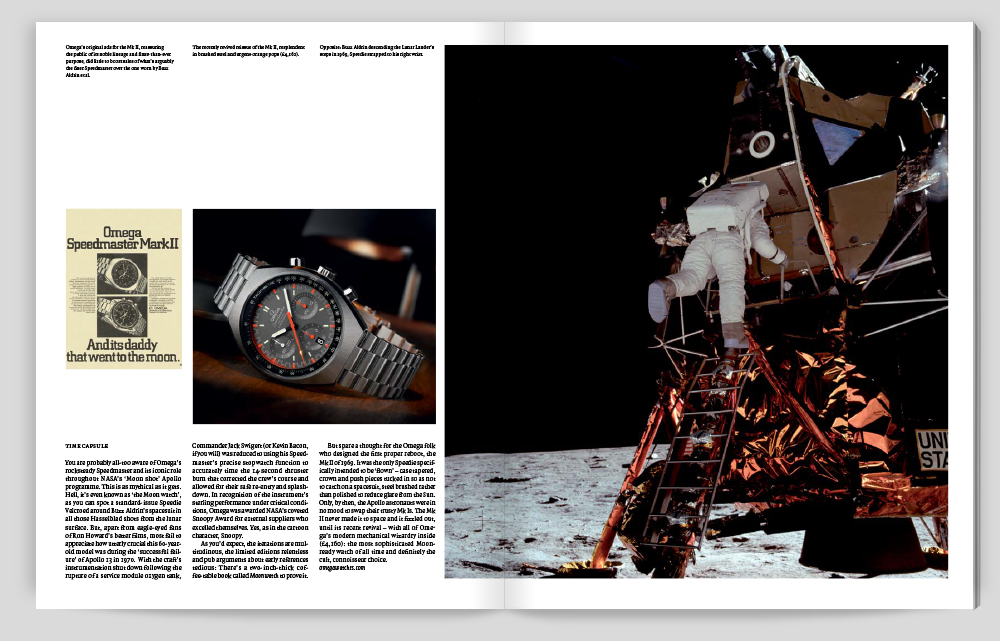
In our latest edition of TenTen, we explore the stratospheric reach of luxury horology from the time-keeping tale of a record-setting aviator, to the role of the Omega Speedmaster in the NASA Apollo space program, and much more…
For our second annual edition of Port’s watch special, TenTen, we’ve gone for a globetrotting theme. As the nautical name of our magazine indicates, we have a penchant for tales of seafaring. Precise, reliable ways of portable timekeeping have their roots in the oldest means of global travel: by sea. In this issue of TenTen, we discover how global exploration shaped the art of watchmaking.
TenTen remembers Walter Lange, 1924-2017, the watchmaker who fled the East German uranium mines in 1948, and returned to his home country when the Berlin Wall fell to re-establish Germany’s fine-watchmaking reputation.
We also discover the horological legacy of Charles A. Lindbergh, who in 1927 set records for the first and longest non-stop transatlantic flight from New York to Paris. Famous horloger Longines was present to time his voyage, and the adventurous duo then collaborated on a revolutionary navigational instrument that enabled precise timekeeping. Coming back down to earth, TenTen discover the subaquatic resilience of the Rolex ‘Submariner’; and the carbon innovations in horology that combine strength with feather lightness.
Elsewhere, TenTen investigate the crucial role of the Omega ‘Moon watch’ in the ‘successful failure’ of Apollo 13 in 1970; unite man’s best friend with man’s best accessory in our playful canine editorial; investigate the quintessentially Roman brand making waves in bespoke Swiss watchmaking; and recall the cameo role played by the Rochefoucauld watch in ‘80s screwball comedy Trading Places.
TenTen is the supplement of issue 21 of Port, out now. To buy a single issue or to subscribe, click here
With the traditional wind-up wristwatch more popular than ever, we explore how the Swiss are staying at the cutting edge with high-tech, lightweight materials science
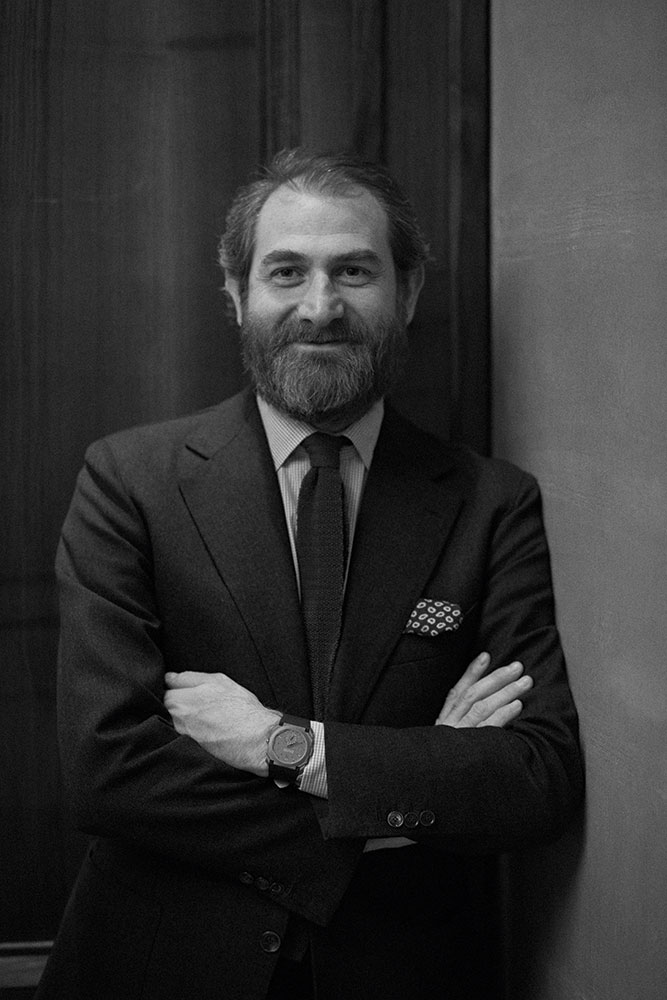
With speculation whirling about who will play the next James Bond, you’d be forgiven for mistaking the portrait featured here for a particularly dramatic teaser – 007’s scheming, megalomaniacal nemesis standing menacingly by his weapon of global destruction. But Senad Hasanovic is very much fact, not fiction, and he couldn’t be more self-effacing if he tried.
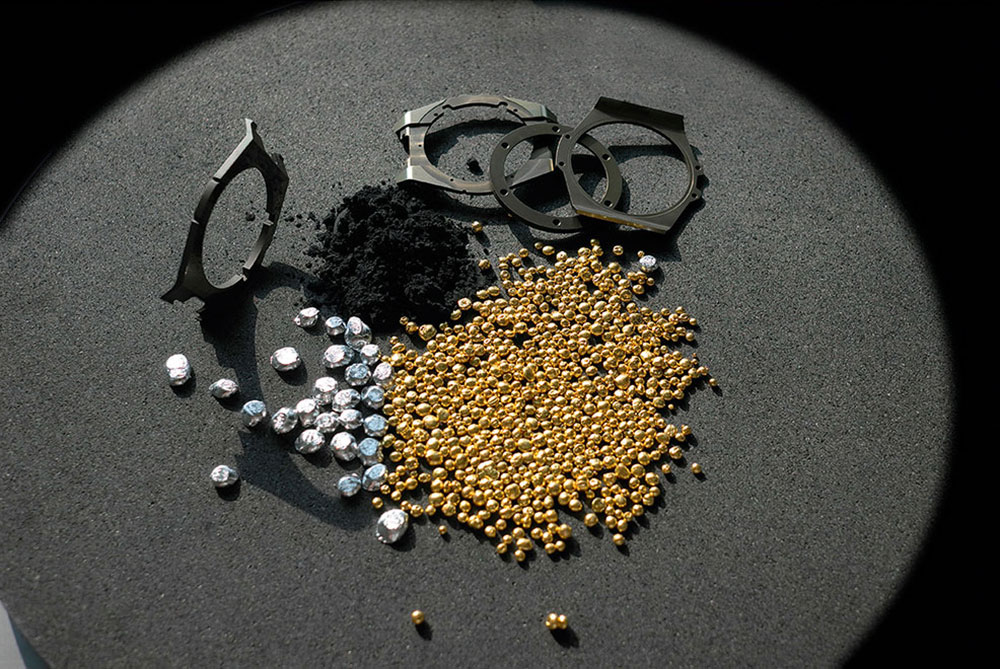
The 33-year-old has been installed at Hublot’s factory on Lake Geneva for almost four years now, as, in his words, “part of the technology transfer” from Lausanne’s École Polytechnique Fédérale (EPFL). He’s no mere accessory to his elaborate equipment – Hasanovic worked for two years at EPFL on Hublot’s tough commission to the school: to develop an 18-carat gold that wouldn’t scratch. Hasanovic’s resulting Magic Gold was made by fusing 24-carat gold with a porous ceramic substrate under tremendous pressure and temperature, to give a scratch resistance of 1,000 Vickers. Normal 18-carat gold is 400 Vickers, by comparison. Thus, Hublot’s Metallurgy and Materials division was born, and Hasanovic was installed in-house at the watch factory, lock, stock and barrel.
“Magic Gold offered me a great opportunity,” enthuses Hasanovic, who originally joined EPFL after completing a master’s degree, majoring in carbon fibre. “Hublot is the watchmaker for materials – we’re now doing some crazy things with red ceramics, aluminium and carbon fibre…”
“Why do we go to these lengths?” he adds. “It’s because, as a young brand, we can’t talk about heritage, so materials are the thing that differentiates us. And now we have the foundry in-house, the cool thing is that we can continue to experiment.”
A finely made timepiece is a baffling anachronism. For starters, no one really needs a watch these days, finely made or not. Second, a finely made watch is still driven by a delicate concoction of wheels, springs and levers – 200-year-old technology that keeps worse time than the placky digital that fell out of your cereal packet this morning. So what’s tying Switzerland’s lab-coated boffins to their workbenches, tweezers in hand, when they could easily be enticed down from Watch Valley by any of Geneva’s micro-tech firms?
The plasma oven at Rado’s Comadur case-making facility
What’s keeping the Swiss watch positively Alpine fresh isn’t so much the clockwork ticking inside, as its packaging. The anachronism that is the mechanical watch is increasingly being spiked with lightweight yet super-durable materials, some of which are more at home in the suspension wishbone of an F1 car.
From ceramic cases on the outside, to self-lubricating silicon micro-mechanics ticking away inside, watches are fresher and more cutting-edge than ever. Not through the efforts of classically trained watchmakers, however, but because of canny watch CEOs with a hotline to Switzerland’s finest minds, scattered throughout neighbouring micro-tech facilities. And while you might think it’s evolution for evolution’s sake, scratch beneath the surface and you’ll soon discover otherwise.
Scratching won’t get you very far in the seminal case, however, as Rado’s breakthrough in the ’60s explicitly set out to resist such abuse. Its egg-shaped DiaStar Original looked like something Captain Kirk would wear, and for good reason – the case was formed not of steel, but a newfangled hard metal called tungsten carbide. It defined Rado’s ultra-futurist manifesto and by the ’80s, Rado had mastered and pioneered the use of ultra-light and ultra-tough ceramic. It’s a material that’s now found in watches from (but not necessarily made by – third-party tech facilities are notoriously secretive) IWC, Bell & Ross and Panerai, plus fashion darlings Ralph Lauren and Chanel, whose monochrome ceramic bracelets just happen to echo Mademoiselle Coco’s iconic quilted handbag (and really are made by Chanel’s own ceramic facility in La Chaux-de-Fonds).
Rado’s sister company, Comadur, makes all of its ceramic components and has recently innovated so-called ‘high-tech plasma’ ceramic. Gases activated at 20,000°C raise the temperature of finished white ceramic to a sizzling 900°C, transforming it into an otherworldly material with a mysterious metallic glow, without using any metal at all.
“Beyond the sheer novelty of using ceramic for our cases,” says Rado CEO Matthias Breschan, “more and more newcomers to the brand are realising that ceramic is nice to wear. It’s super comfortable, and thermally balanced with your skin.”
At the highest end of the luxury market, however, you have a much harder job convincing dyed-in-the-wool collectors that anything not encased in gold or platinum is a genuinely luxurious product. But a certain Frenchman called Richard Mille has proved most convincing in this argument.
The sintering oven at Rado’s casemaker, Comadur, in which ceramic components are baked for 24 hours
Mille has been experimenting with the concept of weight reduction in haute horlogerie since the conception of his brand in 2000 – a revolutionary exercise in no-compromise technicality. He treated his cases like racing car chassis, the ‘engine’ suspended from it, with nothing as superfluous as a dial to obscure its inner workings.
“When I first produced tourbillons with titanium and ALUSIC cases and carbon base plates, I was fighting against perceived value,” Mille recalls. “A titanium watch could not be a luxurious timepiece as it did not weigh enough. However, mentalities rapidly changed and gradually amateurs soon appreciated my watches for their extreme lightness associated with the best technology.”
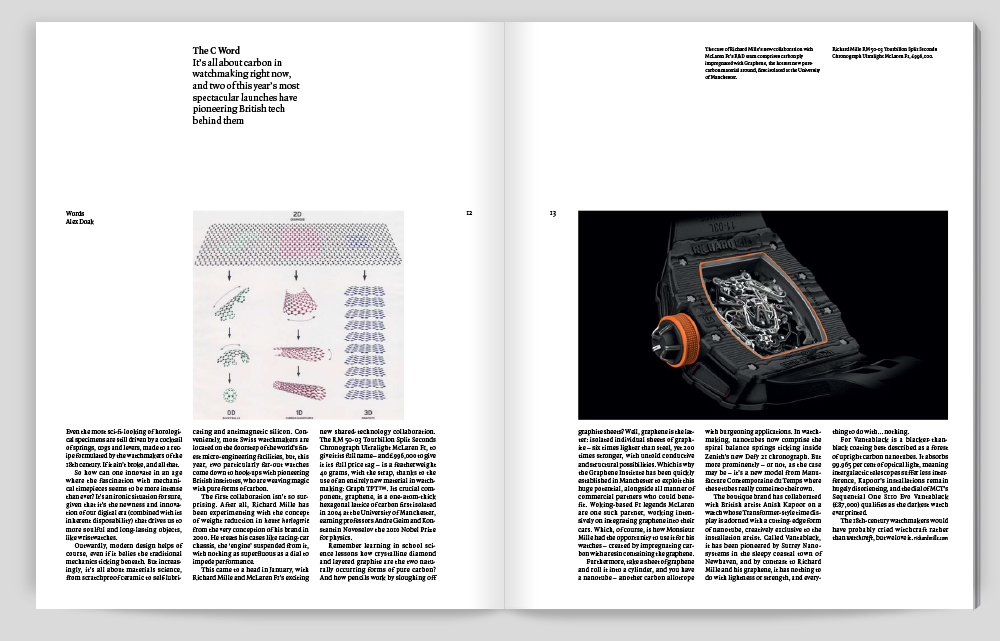
It wasn’t just amateurs, but leading sportsmen too. Handling Rafael Nadal’s Richard Mille RM 27 watch for the first time provoked laughter. Not just because its delicate mechanics kept good time despite Rafa’s punishing swing, but mainly because it’s so surreally light – less than 20 grams, strap included – that it actually floats in water, thanks to the use of lithium-alloy, usually used in satellites and F1 cars. The case of Rafa’s latest version, the RM 27-02, is a cocktail of carbon and quartz, weighs just 19 grams, and costs a princely $800,000 (give or take a few grand).
Increasingly, the smart money is on new, proprietary composites. The latest and greatest is Breitlight, which, as the punning name suggests, is exclusive to Breitling. It packages a 50mm beast of a 24-hour chronograph, the Avenger Hurricane (£6,450), which wouldn’t look out of place on Batman’s utility belt. Like a Swatch, it’s plastic, but plastic as you’ve never known it. It’s a polymer composite spiked with carbon fibre, similar to that used for Glock’s signature pistol. The upshot of which is that it’s 3.3 times lighter than steel, yet almost impossible to dent, scratch or corrode.
Smartwatches may be (temporarily) snatching all the attention from ‘proper’ watches, but, for now at least, traditional watches are proving that the use of high-tech materials can keep them relevant in the 21st century, as well as smart in their own right.
No one expected the world’s thinnest chiming watch to come from Roman jeweller Bulgari, least of all for it to be hewn from deeply resonant titanium. Here, creative boss Fabrizio Buonamassa reveals how this remarkable timepiece came to be
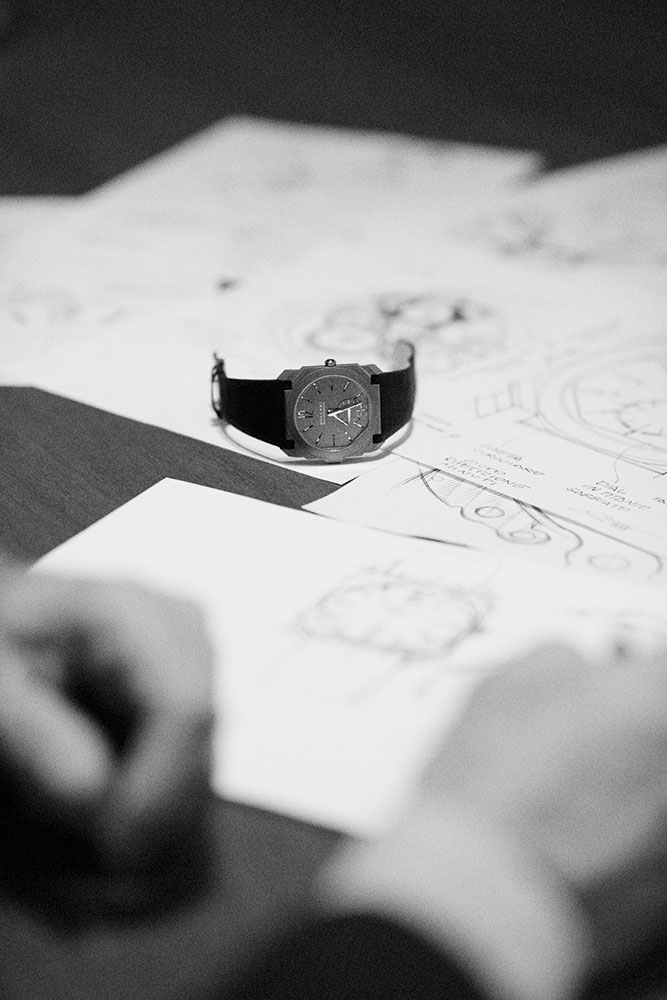
Records in watchmaking generally feel like a way of brands marking territory, rather than something that benefits the buyer. However, Bulgari’s Octo Finissimo Minute Repeater is a record-breaker with a difference – it may be the world’s thinnest minute repeater, but it was also designed to be an ‘everyday wearer’.
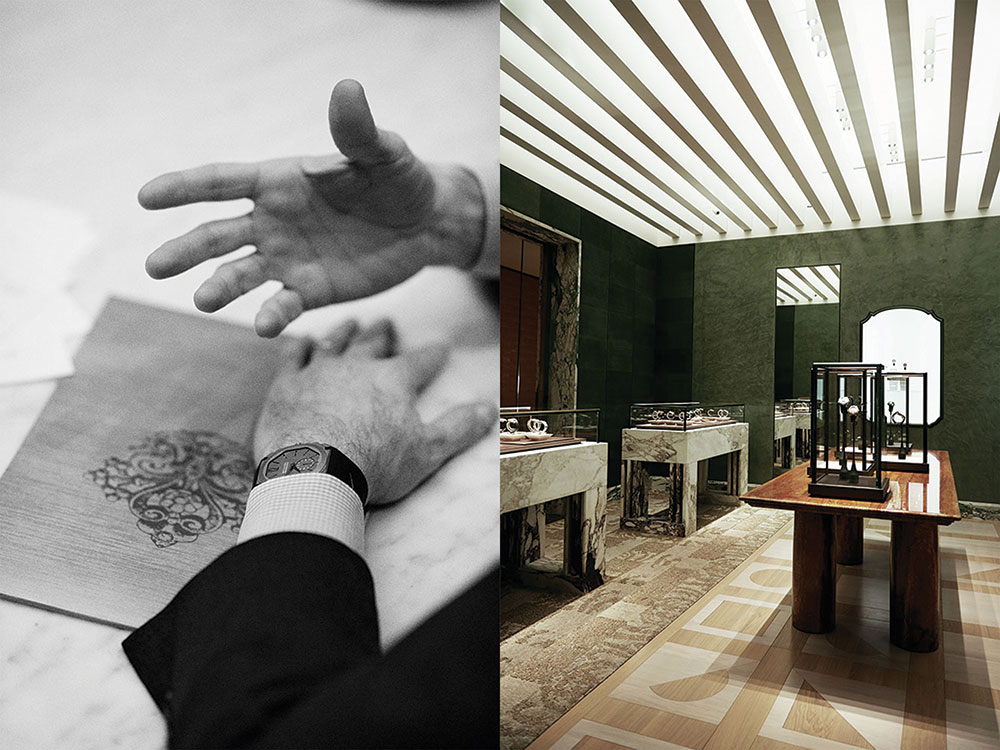
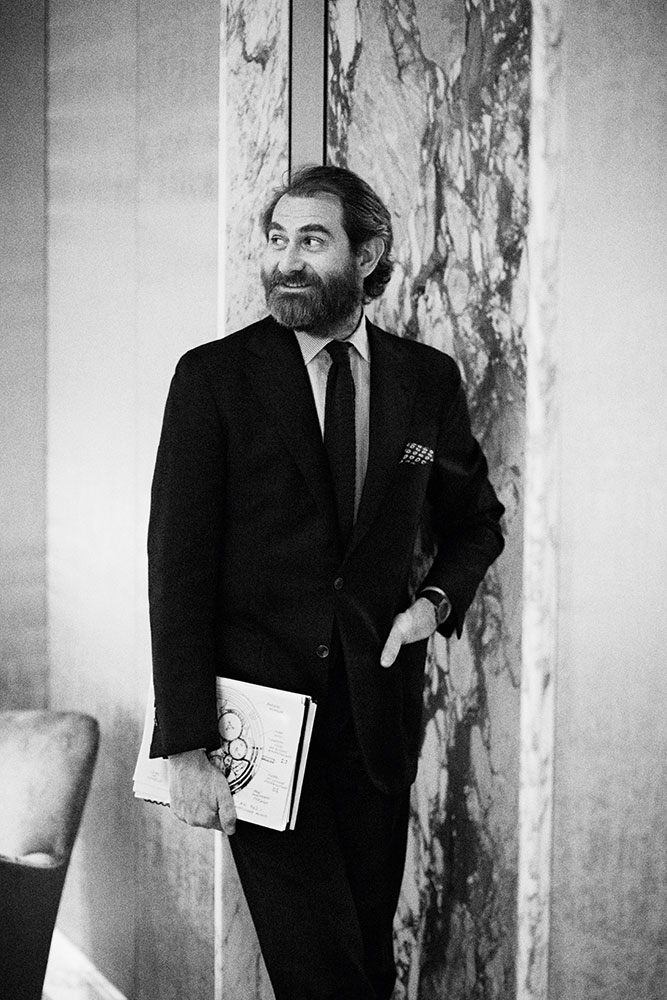
“It is a stealth watch with a stealth complication,” explains Fabrizio Buonamassa, Bulgari’s charismatic chief watch designer. “It is an industrial design product; something that should be worn every day and that isn’t exclusive.
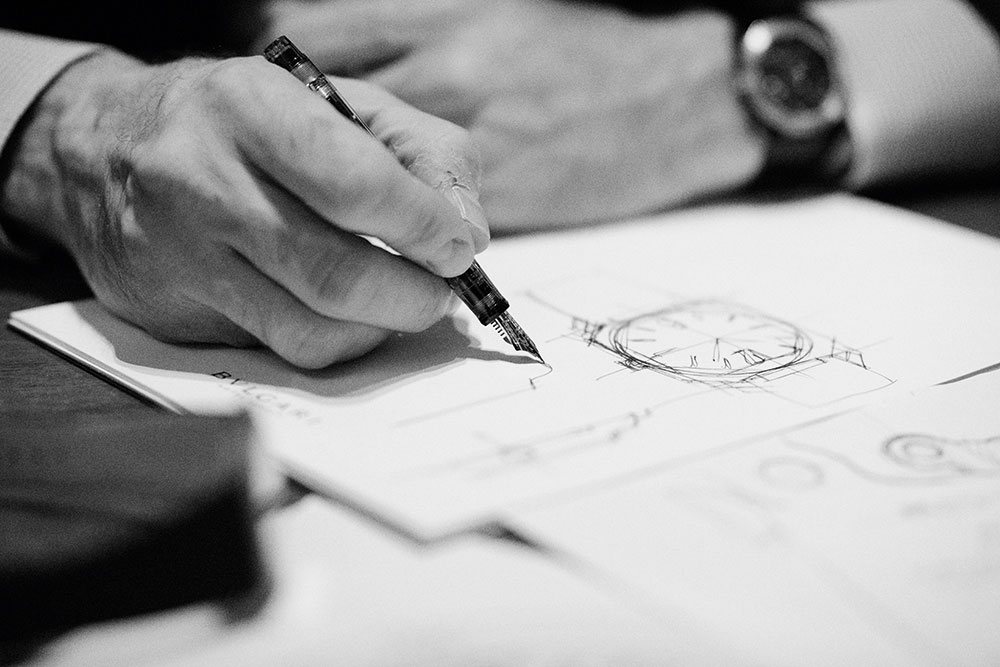
“Essentially, we needed a new Finissimo iteration and I’ve always thought that the minute repeater was one of the most noble complications,” he adds, “so I started sketching.”
This, perhaps, belies the sheer level of technical mastery at play here, of which its thinness is only a part. In this world, there are very few thin minute repeaters – so-called for their ability to read-out the time to the nearest minute, by striking the hours on a low-tuned metal wire ‘gong’ encircling the movement, followed by the quarters with a ‘ding dong’ on both a second high-tuned gong and the low-tuned gong, followed by the remaining minutes within that quarter on just the high gong. Prior to this year, Jaeger-LeCoultre held the record with its Hybris Mechanica 11, which comes in at 7.9mm thick, though it does also house a whirling ‘tourbillon’ complication.
Bulgari has excelled that record by squashing its movement down to 6.85mm; something it achieved by attaching the winding barrel to the bottom plate rather than placing them under their own bridge, as well as using a totally flat balance spring.
However, the innovation doesn’t stop there.
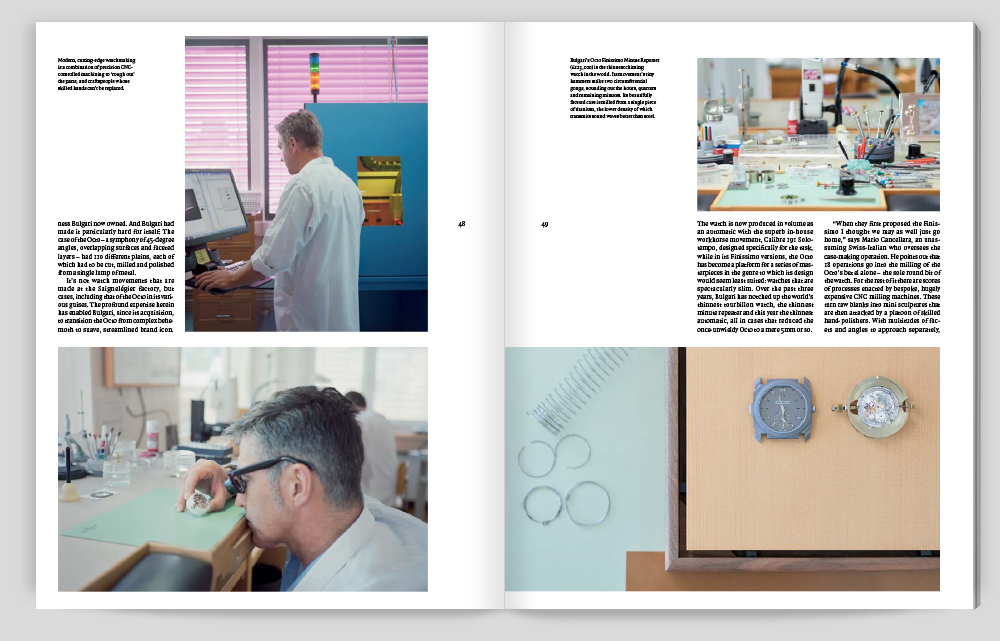
“I wanted the watch to be made in titanium,” says Buonamassa, “because it would give space to the movement.” What he means is that by using titanium instead of luxury watchmaking’s stock-in-trade gold or steel, the metal’s richer resonance reduces the need to use so much of it for a similar audible effect. But achieving a 30m-water-resistant case with all its unforgiving tolerances while using such a brittle material is a real headache, as the Octo’s case design is already notoriously tricky in something as soft as gold, thanks to its jigsaw puzzle of 110 facets, edges and angles – all milled from a single lump of metal over the course of 18 operations and plenty of rejects.
The other major difference about this minute repeater is that it is a ‘digital’ minute repeater. So, rather than chiming the hours, quarters and then subsequent extra minutes, once the push-piece at nine o’clock is depressed, a single hammer ‘dongs’ the hour, then two hammers take it in turns to ‘ding dong’ however many 10-minute intervals have elapsed since the top of the hour. Finally, a single hammer ‘dings’ out the remaining minutes. You can just about see this mechanical ballet dancing away beneath the dial, thanks to its stencilled indices – a titillating peep show of horological delights, which also happens to amplify the sound a touch more.
But this isn’t just a horological masterpiece; in keeping with Buonamassa’s guiding principle that, at Bulgari, “beauty follows function, not form,” it also looks incredibly elegant on the wrist.
“When I was sketching the design, I thought it would be perfect for the Octo shape, especially as the tuxedo and thin watch trends have been very strong for us,” he says. “And it is also down to Bulgari to break the rules in this arena, which isn’t easy when people’s expectations of us are so high.”
Bulgari has certainly challenged people’s expectations of what a high-complication watch should be by making something wearable, rather than something designed to be kept in a safe; it’s a watch for the customer, rather than for the record books. That it has managed to garner the title of ‘world’s thinnest minute repeater’ seems to be, for Buonamassa at least, merely a delightful coincidence.
This article was originally published in our new horology supplement TENTEN, available with PORT issue 19. Out now.
Italian watchmakers Panerai celebrate 156 years of craftmanship with a sprawling exhibition in Florence including vintage pieces and a new collection
Many of Europe’s great painters, thinkers and poets have called Florence home at one time or another. It’s a city imbued with a rich cultural history, but through its prestigious Accademia di Belle Arti di Firenze and events like Pitti Uomo, it continues to nurture the next generation of creative talent. So for Officine Panerai, the Florentine brand with a heritage routed in making diving watches, its hometown was the ideal place to celebrate both its past and its future, through an exhibition and launch of a brand new range.
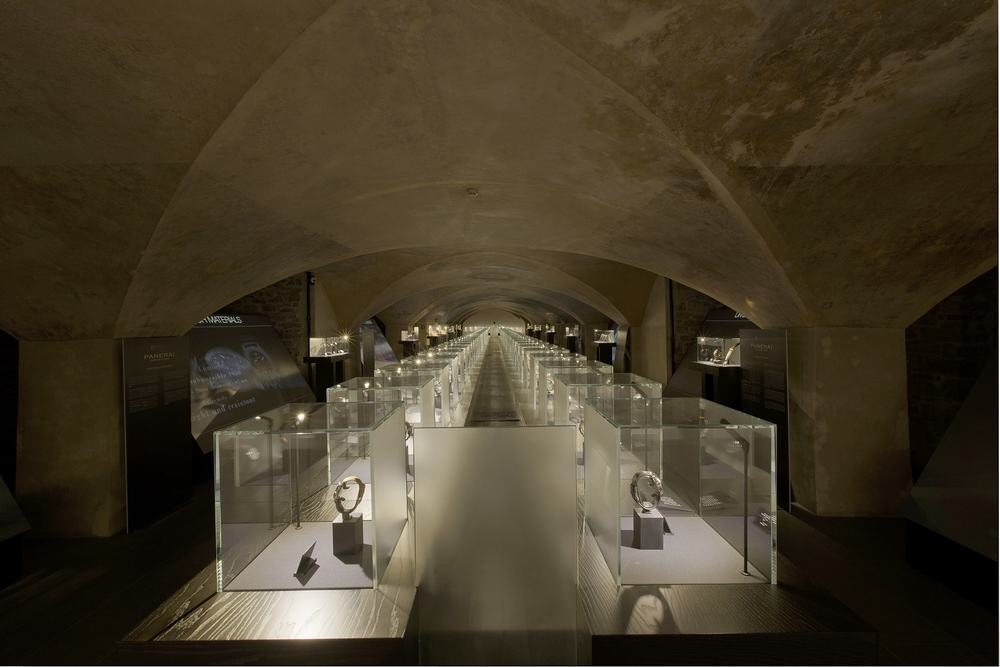
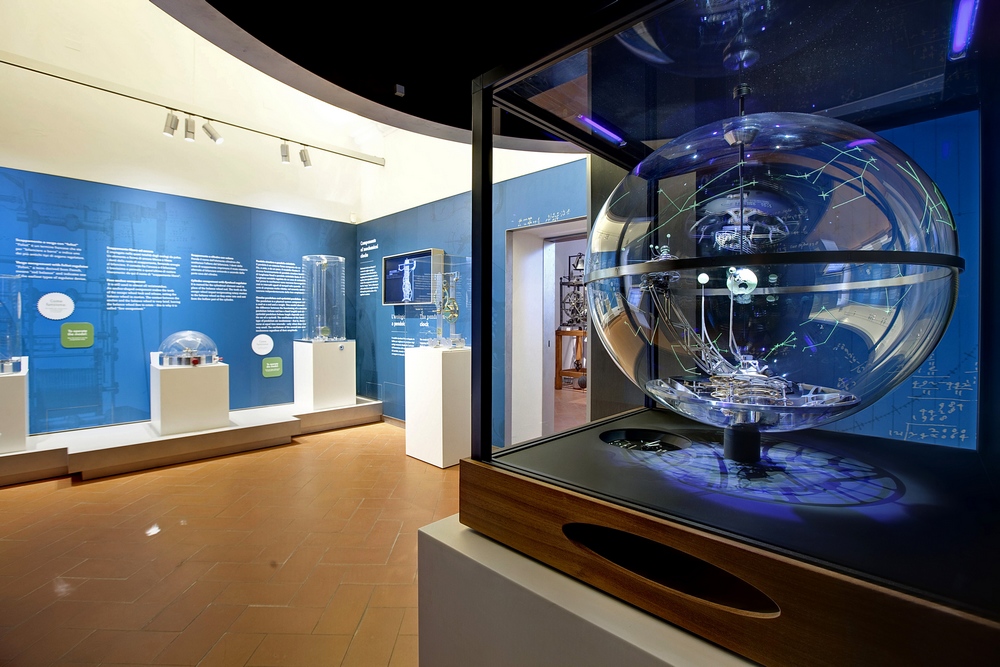
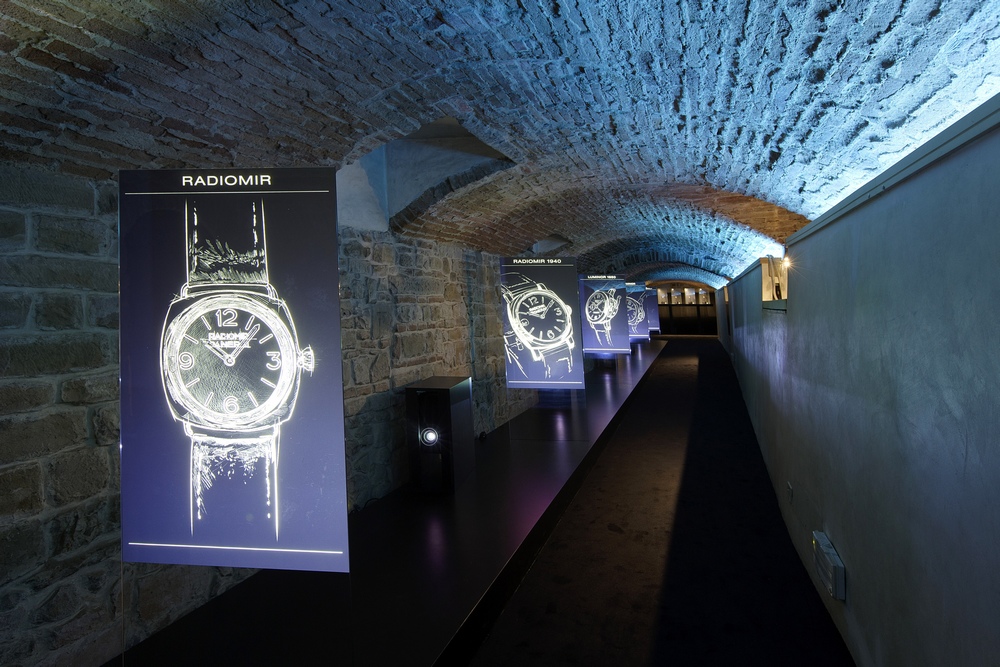
Set across 1000sqft in the crypt of Museo Marino Marini – a converted Basilica that houses works by the modern sculptor of the same name – ‘Dive into Time’ brought together a broad variety of Panerai’s most memorable pieces, from diving instruments, including flashlights, depth gages and compasses, to the now-iconic watches built for the Royal Italian Navy from the 1930s to the 1950s (most notably, the Raidomir 1936).
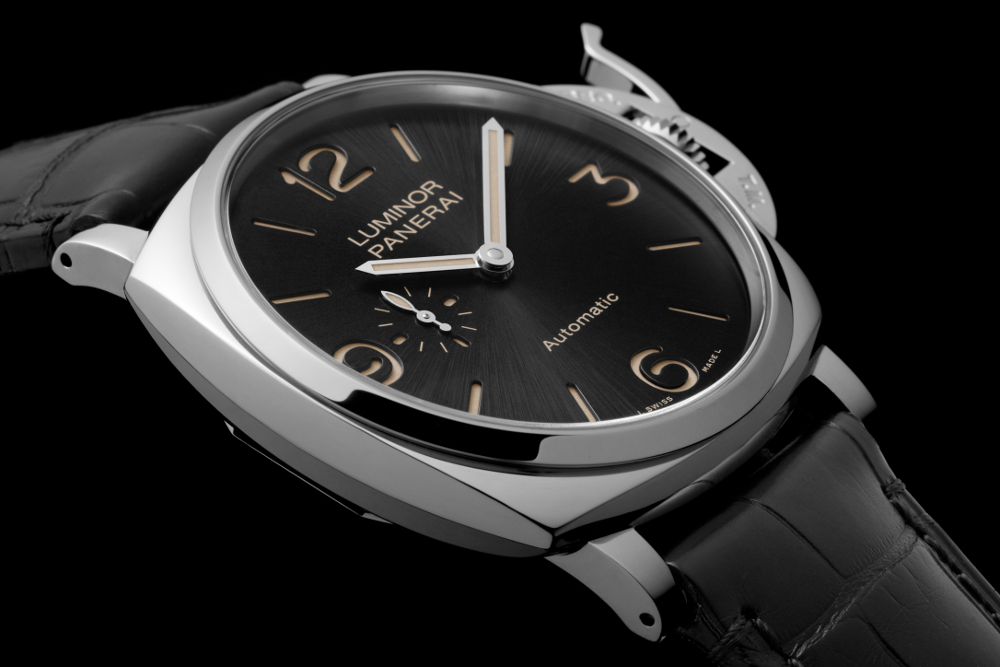
The new Luminor Due in steel. Also available in red gold.
Attendees were taken through an immersive history of the brand’s heritage, with one area dedicated to ‘buried treasures’ from Panerai’s pre-Richemont years (1936-1997), to their more recent collections and then a further section of the crypt was given over to the company’s in-house movements. All of this provided a fitting backdrop to launch Panerai’s brand new line, Luminor Due – four slimmer, more modern interpretations of the famed 1950s Luminors – as well as six new models of the Luminor Marina (featuring the brand’s in-house P.9010 automatic movement) and, finally, the impressively complex Radiomir 1940 Minute Repeater Carillon. And with 2017 set to mark two decades under the Richemont umbrella, it’s likely that Panerai has plenty more surprises to come.
Port meets former White Cube Bermondsey director Sara Kay, whose non-profit organisation POWarts aims to support women working in the art industrySara Kay wearing a Ladies’ Parmigiani Fleurier Tonda 1950
The Professional Organisation for Women in the Arts (POWarts) was set up in 2008 to advance women in the business of art. The non-profit was co-founded by Sara Kay, a curator and gallerist from New York, who was recently honoured as a ‘woman of excellence’ by Swiss watchmakers Parmigiani Fleurier. Kay’s impressive career has seen her hold positions including director of White Cube Bermondsey in London and Jan Krugier gallery in her native New York. In receiving the award, Kay joins an esteemed group that features film giant Nadia Dresti, restauranteur Hélène Darroze and entrepreneur Sarah Wiener. Port caught up with Kay in London to talk childhood dreams, Old Masters, and supporting women in the business of art.
How did you get into the art business?
My mother is an artist and when I was a child she put me in every single art class possible. I didn’t tell her how much I disliked it because I just wanted to make her happy that I was in art school. Eventually, I got into an animation class and was so stressed out that I finally said ‘Mom, please… I can’t do this anymore. I can’t be an artist anymore’. But I told her, I love business and I love art. So I was a little girl and I wanted to be an art dealer. I don’t even know how I even understood it, especially the commercial side of it. I had it in my head that I wanted to work for Christies and many years later… I did!
You specialised in Old Masters at Christies. What did you learn about them while you were there?
Learning about Old Masters never ends. That’s what’s wonderful about them. The debates over attributions that are constantly changing, the research that it takes, the amount of looking that it takes. I had a great mentor there and a lot of my clients were mentors too. Collectors of Old Masters are connoisseurs, they are very serious about it.
One of my clients was the late Jan Krugier, who had one of the greatest collections of Old Master drawings in Europe. At one point, he asked me to go join his company in New York. I didn’t really want to leave Christie’s’ lovely little department of Old Master drawings, but it was also an amazing opportunity to go and work for him. He was the agent to the Picasso estate and I got to work directly on that, as well as Jan’s private collection and the amazing inventory of Impressionist and Modern pictures he had amassed over decades. It quickly became clear that I couldn’t turn down the job.
Did working closely with the Picasso estate change your views on him as an artist?
Yes it did. Of course I knew about Picasso before, but it became my life when I was working with the estate. We had the largest collection of Picasso in private hands at the time, so it became everything. What I saw and learned was invaluable. It was a fantastic experience.
How did you end up working for the White Cube gallery in London?
In 2008 Jan passed away. We kept the gallery open in New York for two more years, but eventually both the gallery in New York and the gallery in Geneva had to close. At that point I wasn’t sure what I wanted to do. Having worked there with that collection, with that man… where do you go? I thought I had to go in a different direction and to work in the area of contemporary art. That’s why I moved to London to join White Cube. I’d never worked with living artists, so it was a completely different experience. It sounds very basic and simple, but coming from Old Masters was a great change.
After White Cube you helped set up POWarts. What is the aim of the organisation?
It’s very specific – we’re all in business and we’re all in the business of the visual arts, but it’s education and business orientated, so we don’t actually talk about art. Talking about art is easy for us… I don’t need another resource to talk about art. A lot of us studied art history or conservation, so we don’t have MBAs. The art world is not like finance or legal where there’s a defined path. For us, there are a million opportunities and it’s very much undefined. This means that we also don’t have typical resources. If you work for a gallery you may not have HR, you may not have a retirement plan and you may not have the things larger companies in other fields do.
Our mission is three-fold. The first part of our mission is education in business, the second part is to have peer groups and mentor groups to be used as a platform to leverage from and the third part is community service.
Can you tell us about this emphasis on community service?
I’m really lucky: I’m educated, I’ve had all the opportunities, I sat with Picassos. Life is good for me. But for many women life is not great. I feel a responsibility to do something because if women are not going to look out for other women, I don’t know who will. The third part of our mission is to align ourselves with other non-profit organisations that support women and to get our members involved with these organisations.
We’re also trying to reach the point where we can provide resources as well. When you’re working in a luxury business you often have access to greater wealth and power. We have access to these things and we should use them for good.
What does it mean to you to receive Parmigiani’s Woman of Excellence award and why are initiatives like this important?
When I founded POWarts it was never about me. It was never about us as individuals. So when I get an award like this it doesn’t feel like it’s just mine. For me, it’s about this organisation. Yes, it’s about my achievements, which is lovely, but what’s more interesting for me is that this organisation is thriving and is being recognised. That’s wonderful.
I also love the fact that Parmigiani celebrate very normal women; I’m not a supermodel, I’m not in film, I’m a kid from New York that worked really hard, had a clear vision and went for it. I want to keep doing that, so when I have support like this it certainly gives me an extra boost.
Judith Borowski, head of design and branding at NOMOS Glashütte’s in-house agency, discusses the German watchmaker’s newest timepiece: the Lambda 39
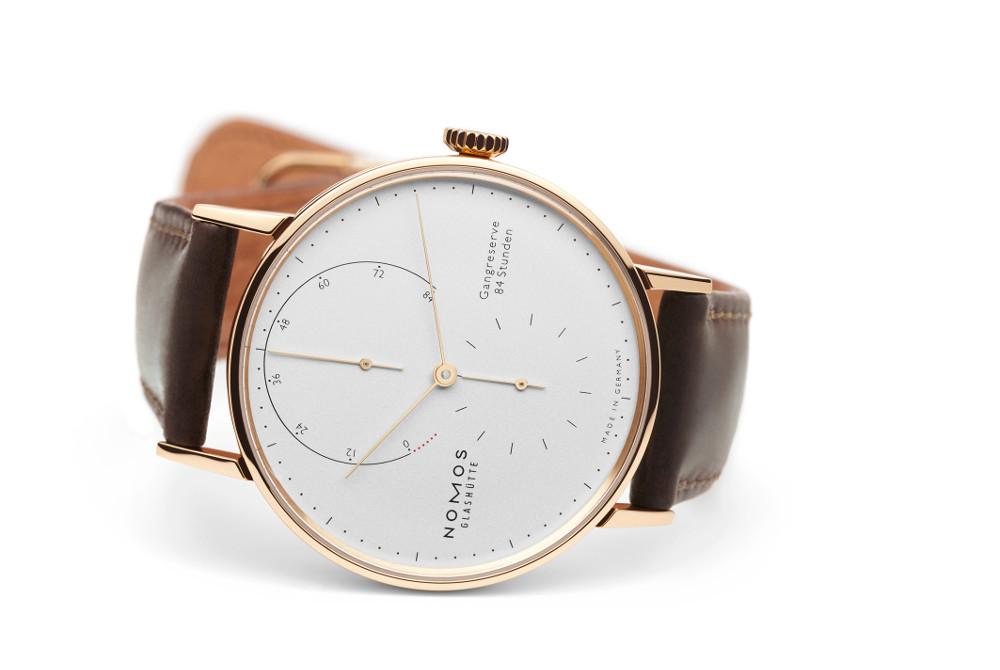
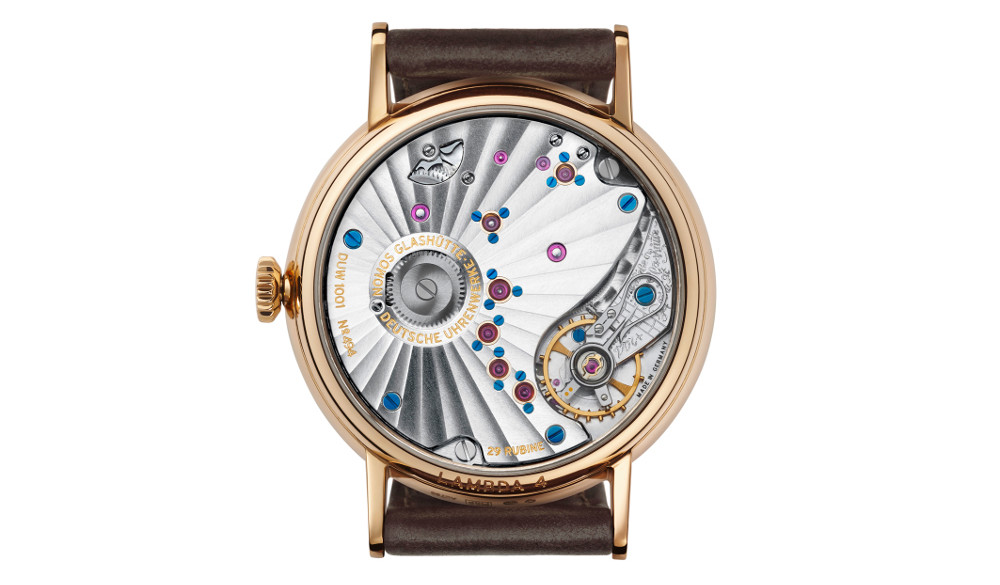
NOMOS Lambda 39
Despite being in production for a modest 25 years, NOMOS Glashütte has established itself as a mainstay among German watch brands. Inspired by Bauhaus design and functionality, models such as the Tangente are already considered classics.
The latest addition to its collection is a reinterpretation of the Lambda watch, first launched to great acclaim in 2013. The new Lambda 39 maintains the sophistication of the original but is more compact in form, with a slender 39mm gold case. We caught up with the design team at NOMOS to discuss the inner workings of the Lambda 39, the values behind the NOMOS collection and the future of analogue timepieces.
The Lambda has been hugely successful – what was the motivation behind releasing a smaller model?
Introducing smaller versions of our successful Lambda model gives our designers the opportunity to reinterpret this design with new proportions and in new colors. These new watches extend the appeal of the watch model to new customers who may have found 42mm a touch too large – since every wrist is different – or those who wanted to see Lambda with a ruthenium-coloured dial.
How do you go about scaling down the previous version? Did you have to start from scratch?
Creating a smaller version of an established watch model is both easier than starting from scratch and, in a way, more difficult. On the one hand, you have the opportunity to work with design decisions that have already been made. On the other hand, scaling down a design creates new challenges as it changes the overall proportions, which can in turn change the character of the design and the watch. In Lambda’s case, however, we were able to maintain the overall elegance of the original version in this new 39mm size.
How have you updated the inner workings of the watch?
The manually wound DUW 1001 movement, which is handcrafted in the dedicated NOMOS Atelier, is still at the heart of our Lambda model. We are so proud of it that we saw no need to change it for these new watches.
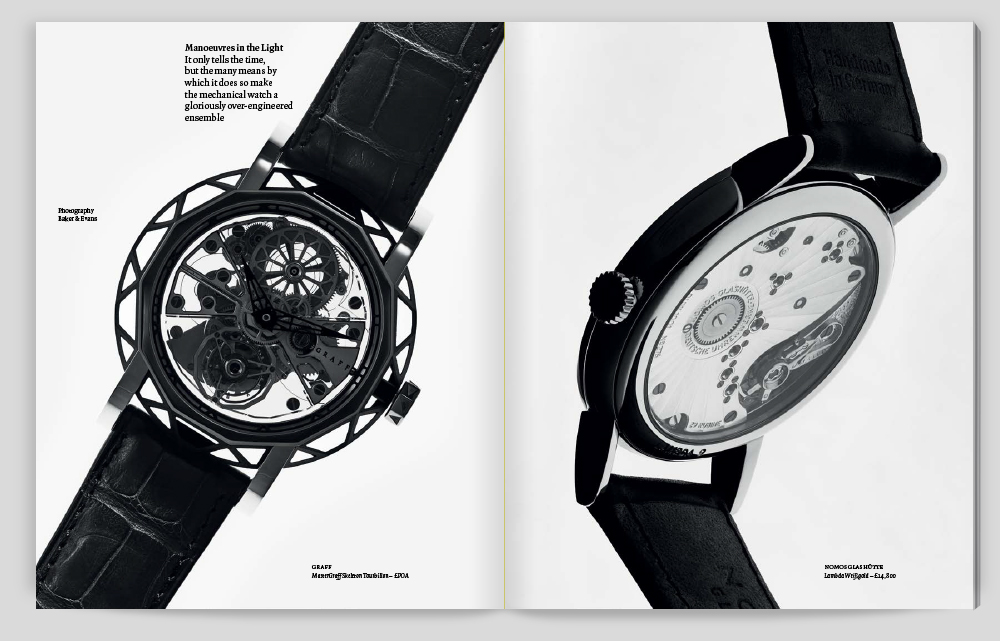
The movement boasts a power reserve of 84 hours and many of the features that characterise fine mechanical watchmaking, including screwed gold chatons, a twin mainspring barrel, swan neck fine adjustment, fine sunbeam polishing, and a hand-engraved balance cock that reads ‘Mit Liebe in Glashütte gefertigt‘ (‘lovingly produced in Glashütte’).
How do you see the new Lambda models fitting in with the rest of the NOMOS collection?
We envision these new timepieces will both complement and enhance the existing NOMOS range, by offering more choice to our customers. Our Lambda model now comes in eight slightly different versions — each with its own character, and strikingly beautiful in its own way.
The NOMOS Lambda 39 is made with a DUW 1001 caliber with manual winding and power reserve indicator, which is produced in-house
What key characteristics define a NOMOS timepiece?
NOMOS timepieces are crafted in the world-famous town of Glashütte, the birthplace of fine mechanical watchmaking in Germany. All of them feature movements manufactured in-house and are characterised by a unique combination of German engineering and German product design.
As a member of the Deutscher Werkbund, a predecessor of the Bauhaus movement, NOMOS Glashütte aims to make beautiful and functional products designed with the most suitable production techniques. Our watches are renowned for their restrained dials, slender hands, and narrow bezels, with precision being a defining feature of the movement contained within.
How do you see the place of the analogue watch changing as smartwatches become increasingly popular?
While we can only speak for ourselves and not for the watchmaking world as a whole, we believe that mechanical watches simply offer something different to smartwatches. Our products draw from a long history of craftsmanship, giving customers an elegant timepiece that underlines their aesthetic and values. For this reason, we certainly do not see smartwatches as a threat to traditional watches.
In fact, the increasing interest in smartwatches among the younger generation means that they are thinking more and more about what they are wearing on their wrists – something that we are, of course, delighted about! After a while, smartwatch wearers will realise that their wristwear keeps becoming obsolete after a few years. With a mechanical watch, by contrast, they have a fine timepiece for life that is always repairable.
The Lambda 39 is available in 18k rose gold, with gold-plated or blue steel hands, and 18k rose gold with ‘black velvet’ dial and gold-plated hands
Bell & Ross co-founder Carlos A. Rosillo talks to Port as the luxury French watch brand opens its members’ club-inspired boutique in Mayfair
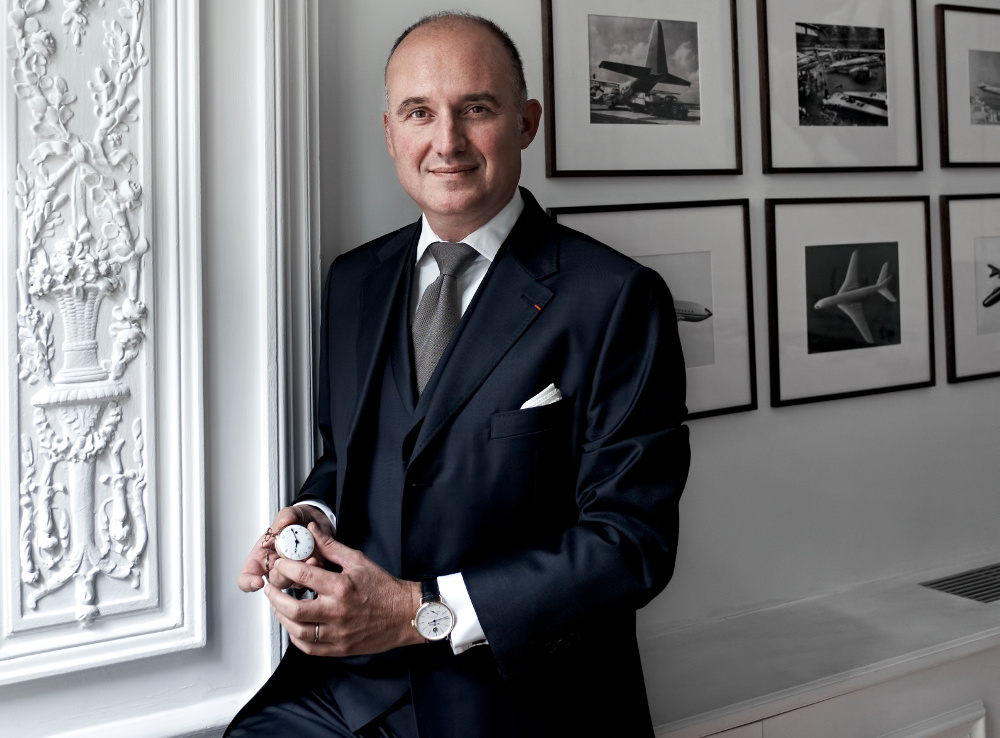
Carlos A. Rosillo, co-founder of Bell & Ross
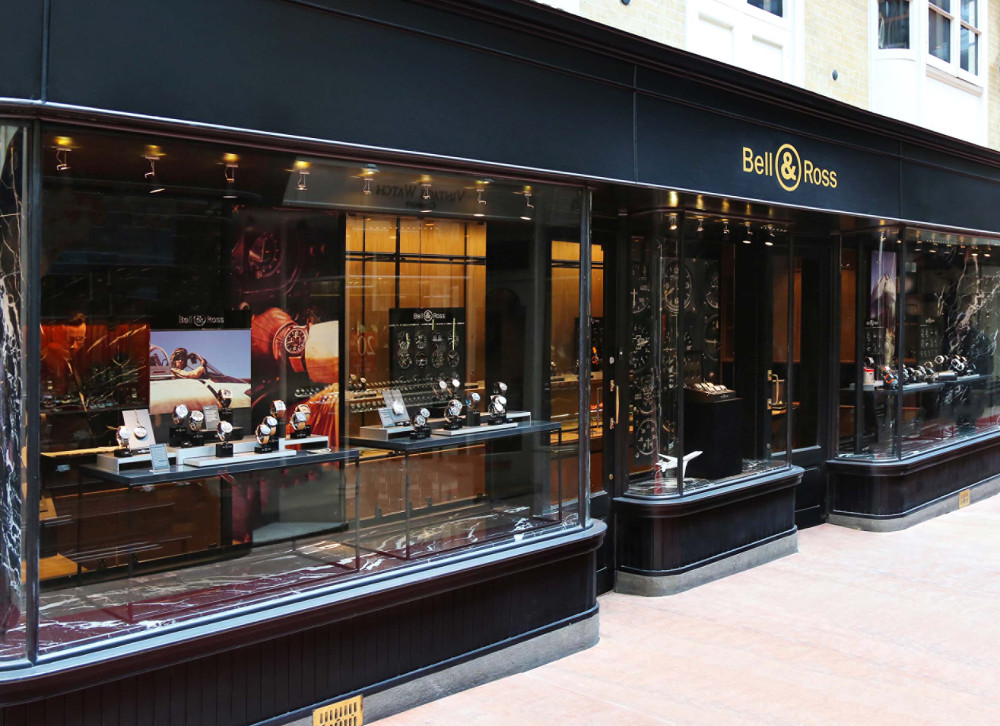
Twenty three years after drafting plans for the luxury watch company Bell & Ross, its co-founders Carlos A. Rosillo and Bruno Belamich have opened their first London boutique in Mayfair. It’s a space that evokes a club-like atmosphere, combining the brand’s aviation industry roots and a fondness for the English gentleman’s lifestyle.
Businessman Rosillo co-founded the company alongside designer Belamich with the intention of producing watches that were engineered for pilots and divers, but made available to a wider commercial audience. In doing so, they have created created a brand that reflects these demanding professions and derives its aesthetic from functionality. As a Franco-British inspired outfit, Bell & Ross also draws its philosophy from the intertwined histories and militaries of the two nations.
We caught up with Rosillo on the day of the launch to discuss the new boutique, his fascination with British military history and what makes an iconic timepiece.
Bell & Ross boutique
Why did you choose Mayfair’s Burlington Arcade as a home for your first London boutique?
When I hit the age of 10 I discovered the concept of an English gentleman, just by being in the Mayfair area. This neighbourhood has always had that very British elegant style; it’s a style that’s long lasting, but also has a sense of modernity to it…It’s tradition with a twist.
The rooms in this arcade look alike and the brands are also similar. When you look at who’s around us – Eres, La Perla, Chanel and Maison Michel – all of them are very Franco-British with an elegance you don’t find everywhere. The stores in this gallery have a soul. It’s a great club to be a part of.
Why have you set up shop now?
The reason we chose the 18th of June for our opening is to celebrate Franco-British relations. First, it is the date of the Battle of Waterloo and, by acknowledging this date, we point out the ups and downs between the two nations. It is also the date of Charles de Gaulle’s appeal to the French people from London, 70 years ago. So we’re seeing a historical battle date, but also the day that began the liberation of the French people and later the world.
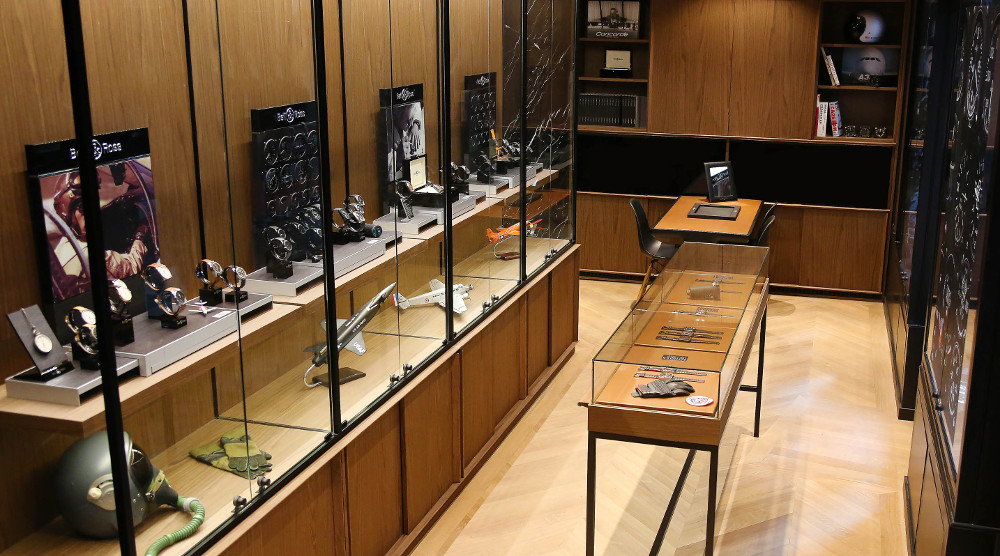
The interior of Bell & Ross’ boutique, ground floor
How do military ideals inform Bell & Ross’ ethos?
I think that militaries are a big source of inspiration because they show courage and a sense of strategy. The epicentre of Bell & Ross is the confluence between the designer, the engineer and the professional user, many of whom are in the military. Inspiration also comes from the professional users, we speak to them and we are happy to listen to them. We respond according to their requirements and so when they choose us it’s a testimony; their endorsement reflects our capacity to respond.
As a relatively young brand in watch-world terms, why have you chosen to place so much emphasis on history?
A company is like a person. Whether you are 21 or 80 years old it’s very important to know where you come from. We put a lot of emphasis on history so we can understand the values that correspond to our philosophy. Being young is also something that gives you assets. There is a kind of personality and strength that you get when starting something new without heritage. This boutique is a real mix of new and old: when you look at the façade it’s quite traditional, but when you are inside you see that it is something with modernity.
How has the brand evolved over the past 21 years?
We have created and maintained a definitive style. When you look at our products – whether it’s the classic pocket watch or something more modern – there is a style that is easy to recognise at a glance. This is the magic of an iconic watch. This style is important because it helps develop the ‘club spirit’. That is also why it was so important to have a boutique, because a club without a place to join is not a club…
The first-floor lounge at Bell & Ross’ Mayfair boutique
Do you think it’s a good time to be a watch collector?
I think so. If you have the eye and you know how to select then yes. The beauty of watches is that there’s a mix of craftsmanship, culture and art, but that means you need to know those precise facets and where the value is going to be concentrated. The houses that are smart will protect the investor. In time, prices must go up if you’re going to call your product an investment.
What do you think are the defining characteristics of a Bell & Ross watch?
They are very readable from the first glance. You know what time it is, even with the highly sophisticated models. We have four key principles: readability, functionality, reliability and precision. We want to have the balance between all of these focuses: between design and engineering, between watch manufacturing and professional users. I’ve heard it said that a good plane is a beautiful plane… I think you can say exactly the same for a watch.
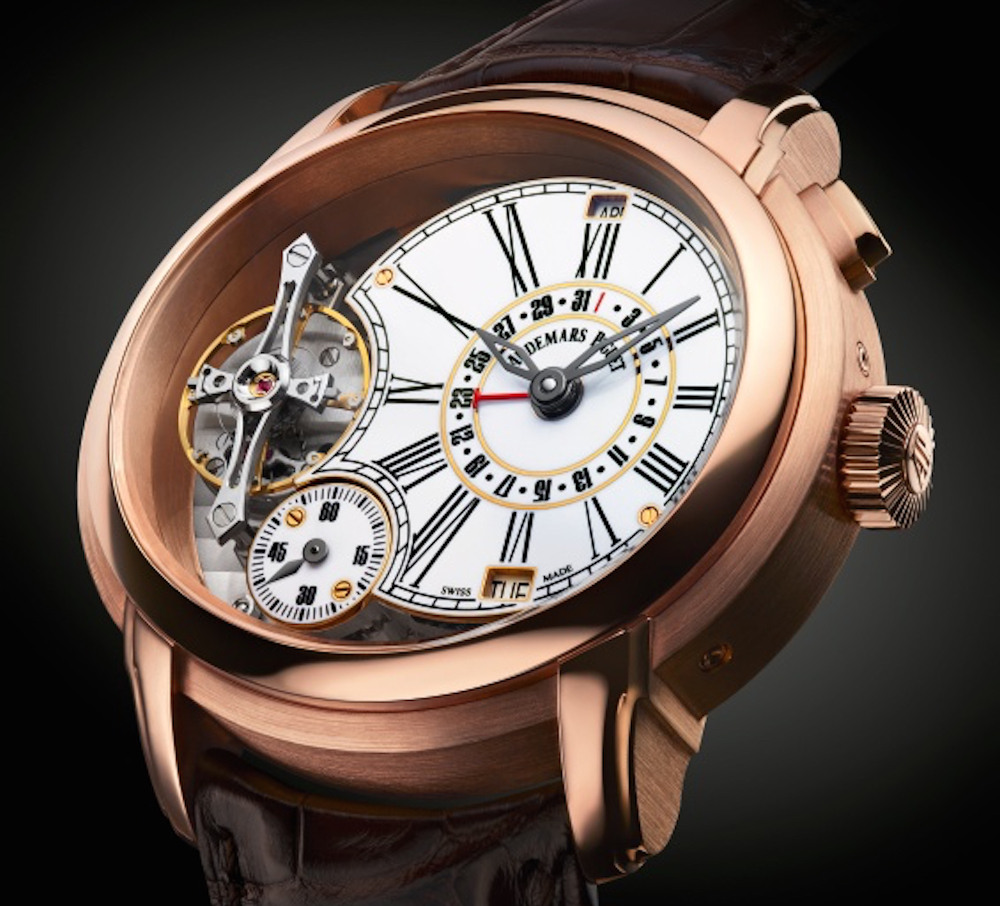
Designed by AP’s former art director, Octavio Garcia, the Quadriennium follows the layout of previous Millenary watches, which feature oval cases and specially made movements. Measuring 47mm wide and 42mm high, it features sculpted lugs and a raised bezel; its unusual shape cuts an imposing figure in the cabinet, but once worn on the wrist it becomes an extremely well balanced timepiece.
The Quadriennium derives its name from its calendar that needs to be adjusted just once every four years, as opposed to every month on the 30th or 31st. Built from more than 250 parts, the watch benefits from advanced precision due to the AP escapement and double balance spring, which helps to mitigate any loss of time caused by shocks encountered through wear.
Its sleek, 18-carat pink gold case is flanked by a hand-stitched brown alligator strap and matching 18-carat pink gold AP folding clasp, all converging to beautifully complement the gold white enamel dial, black Roman numerals and blackened gold hands. Time precision, elegance and its unique construction make the Millenary Quadriennium a sound choice for those wanting something aesthetically different whilst maintaining exceptional standards of technical sophistication.