Questions of Taste: James Baron

We meet British chef and Fat Duck alumnus James Baron to discuss how he went from being a waiter in his hometown to a head chef at a top Austrian hotel

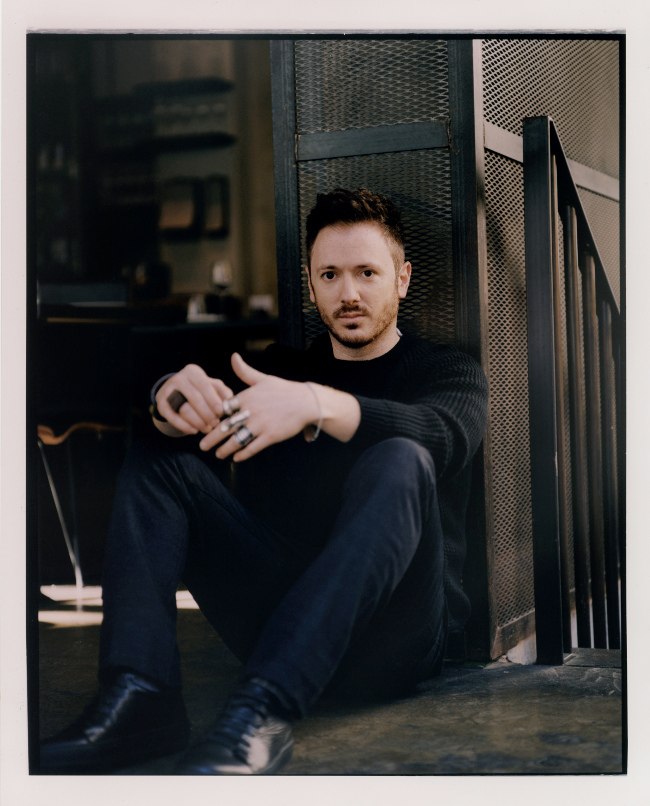
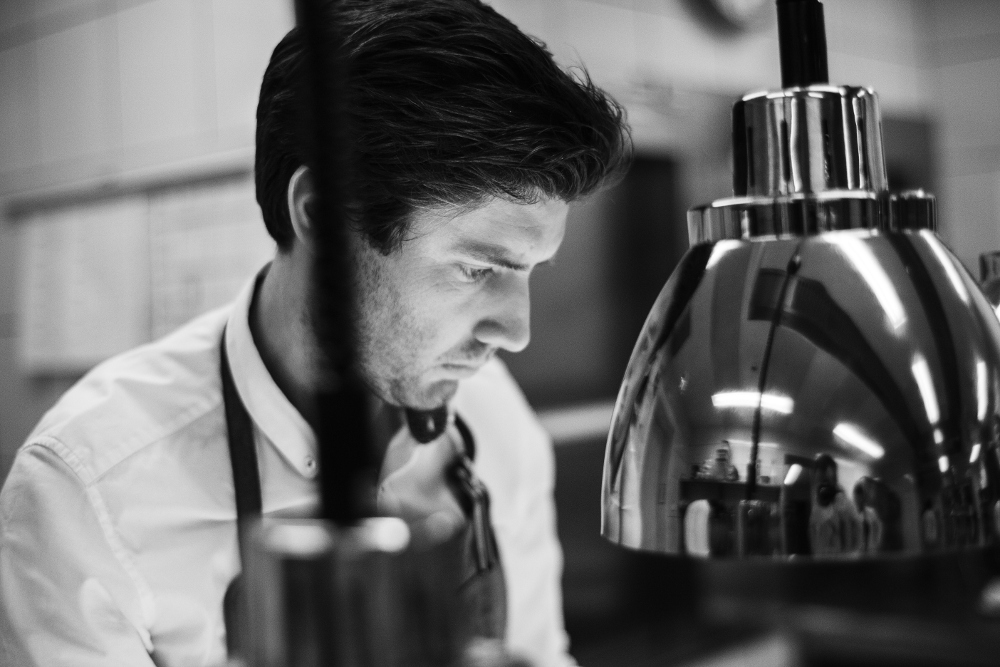
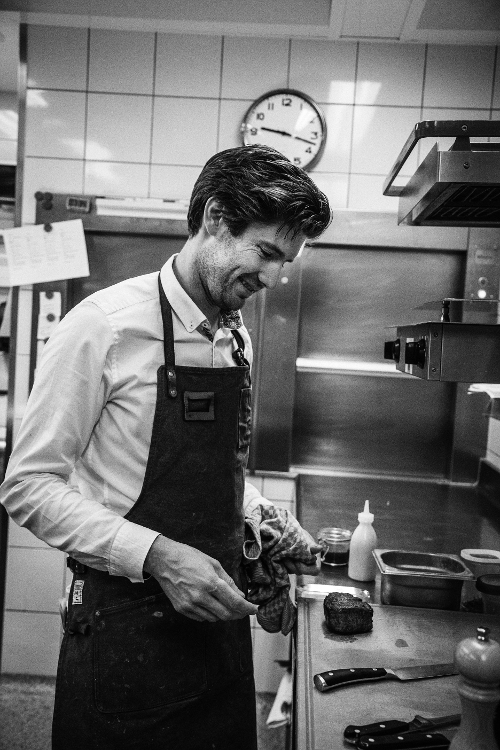
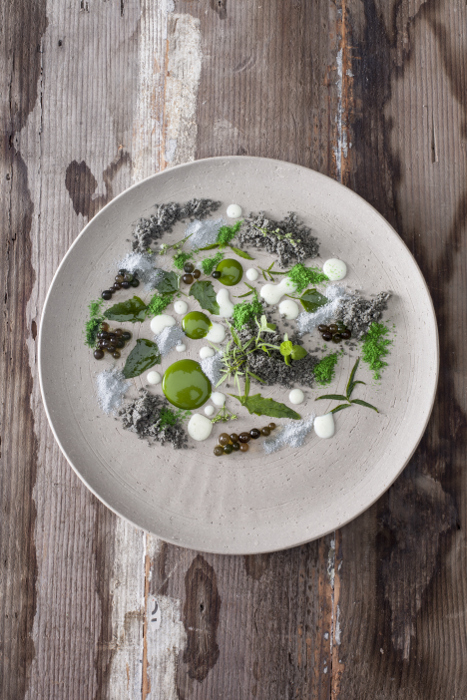
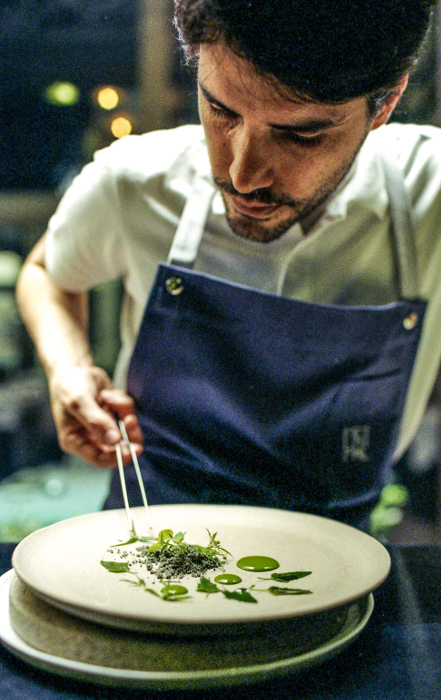
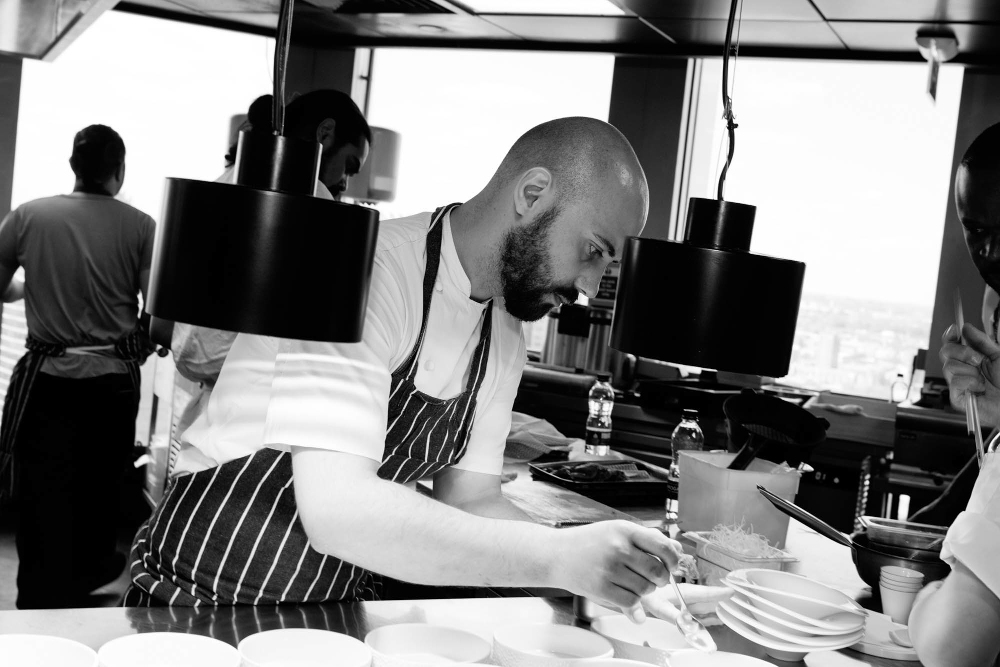
James Baron in is kitchen at Hotel Tannenhof

The dining room at Hotel Tannenhof, where British chef James Baron has recently come to reside, looks out onto a panoramic of mountains. It is located in the scenic St. Anton – a dichotomous ‘town’, which balloons to a city of 25,000 in the winter for the ski season, and shrinks to a village of 2,500 in the summer. The location is ideal for a creative chef: the mountains are not only beautiful themselves, but provide immediate access to traditional Tyrolean ingredients. Alpine herbs are easily foraged from within a 20-minute radius, and the cowbells from the local dairy can be heard clanging from the hotel’s reception desk.

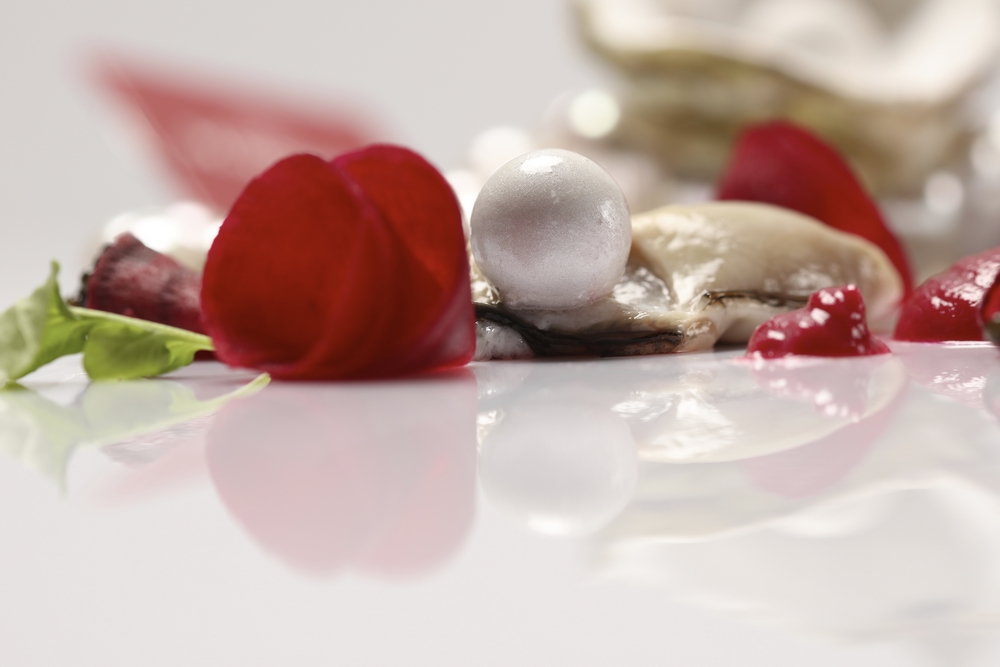
James Baron began work at Michelin-starred JSW in his hometown, Petersfield, England, before completing work experience at Heston Blumenthal’s Fat Duck (his job was assembling a dish of oysters, passion fruit, and black pepper). Encouraged by a desire to travel, he turned away from the London restaurant scene and worked his way up in Michelin-starred kitchens across the Continent, and learning both French and German along the way. In late 2015, he was announced as head chef at Hotel Tannenhof, a five-star residence in the Tyrolean Alps that contains only seven suites. Within his small team, Baron is responsible for providing consistently excellent and imaginative services for the hotel’s diners, whether that’s a barbecue on the mountains or an eight-course evening menu. The hotel insists that no returning guest can be served the same dish twice, meaning Baron must often come up with menus on a quick turnaround.

Here, we sit down with James to discuss his local suppliers on the mountain, the benefits and challenges of running a kitchen in a five-star hotel, and why he gave up a potential career in architecture for food.

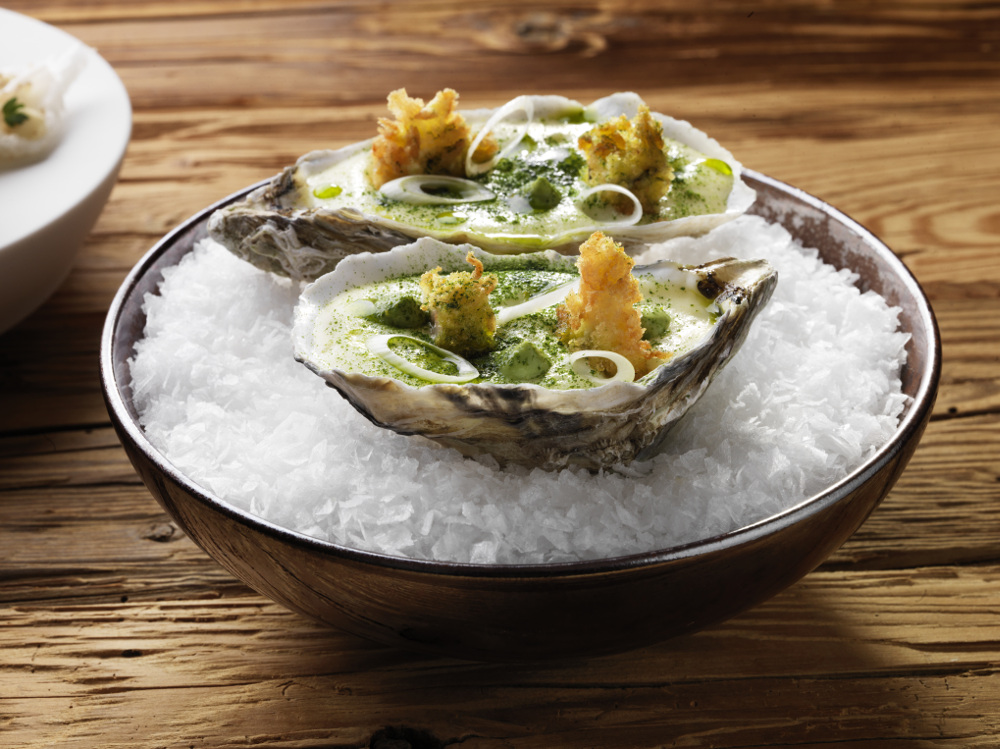
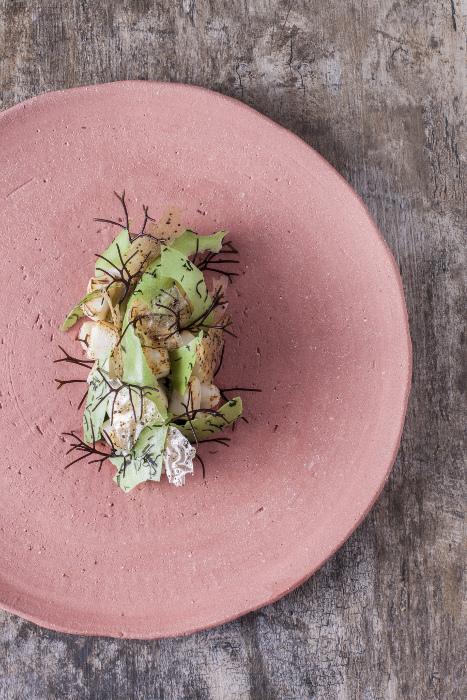
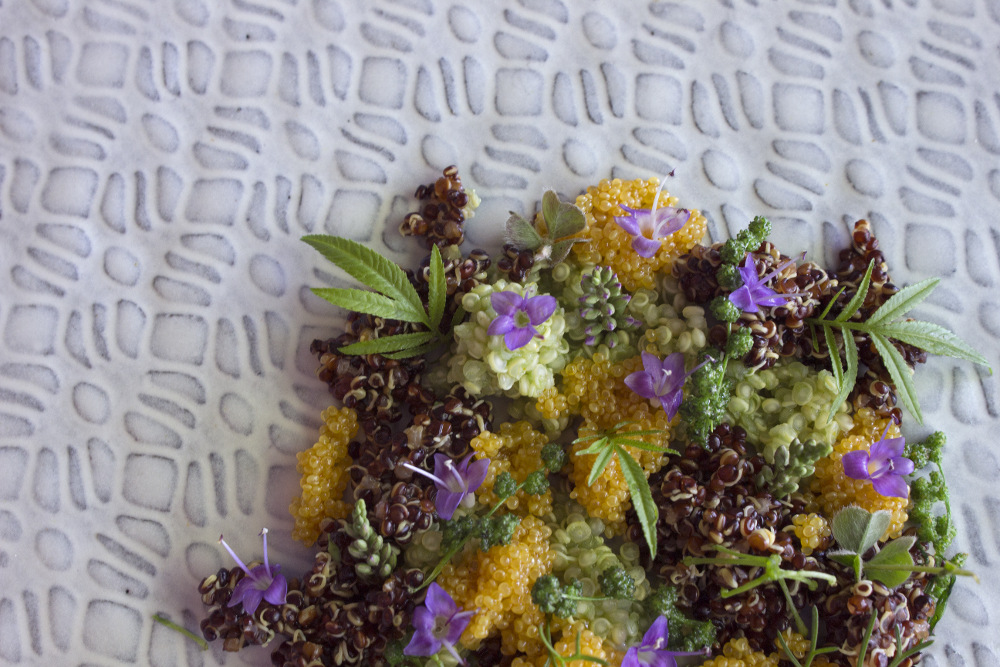
Fried oysters, leek, and potato Photography René Riis

When did you start cooking?

I had a position at university to go and study architecture. I was working at a Michelin-starred restaurant, JSW, when I was doing my A-levels as a waiter. I decided out of the blue that I didn’t want to go to university, much to the shock of my parents, and that I wanted to be a chef. I had a year out and started as an apprentice at JSW, then stayed there for almost four-and-a-half years.

The first time I worked there was in the kitchen, because the head chef, Jake Watkins, was on his own. He didn’t have a Michelin star at the start, and on a Friday and Saturday night, he just had a student to help him out – I was that student. I got the bug from that, but I was always interested in cooking… how my parents cooked, how my grandparents cooked, etc. I suppose that was the real thing that lit the fire.

What did you do after that?

After that, I knew I wanted to travel. I had a few choices of where to work in London – there was a place in New York, but I knew I wanted to do something completely different, and learn a language. That’s why I ended up in Switzerland. As a chef, you have a great opportunity to travel and learn new languages, because it’s a craft you learn with your hands. If you can’t speak the language at the start, people are patient. And you can still do the job.

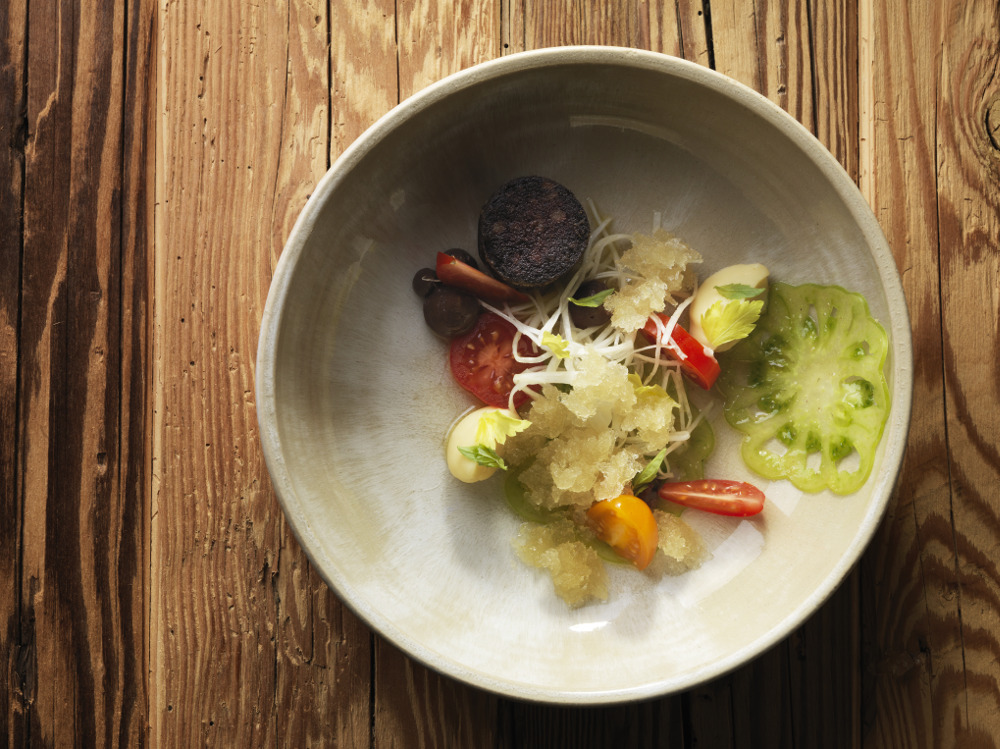
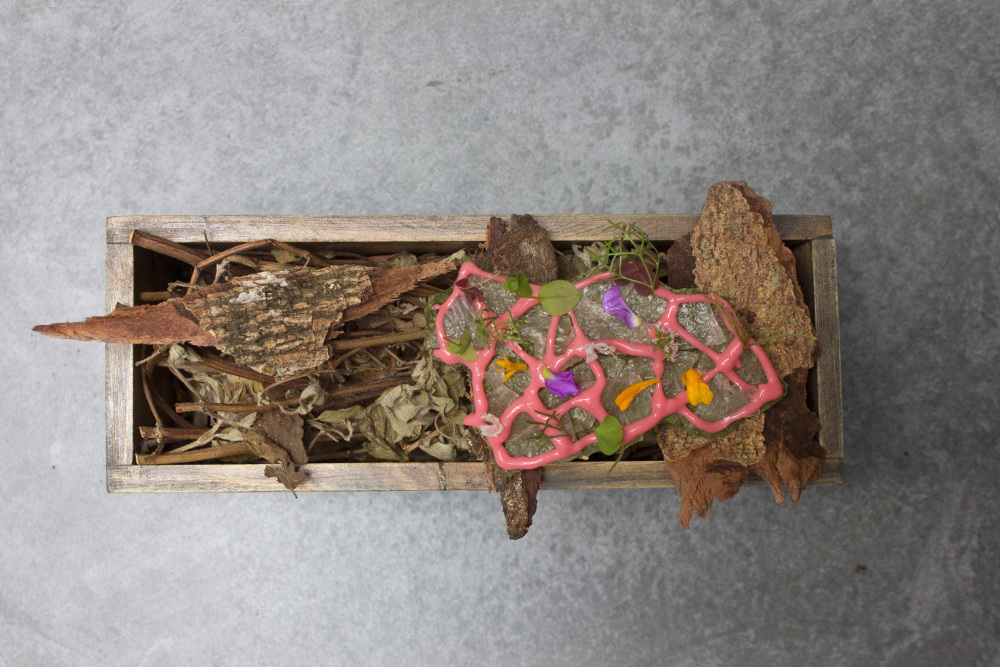
Black pudding, celeriac, and tomato Photography René Riis

How do you find communicating with suppliers?

When you talk to suppliers, then it gets hard. You really have to speak the language. We only use local suppliers. My German is now perfectly fluent, and I’ve got a very good relationship with them. Tomorrow morning, I’m going to the top of the mountain here to meet the man who makes cheese. He supplies us with our cream to make butter, which we churn at the table when serving. We have our own cow up there too: Liza.

We have a guide who does a tour of the mountains. She knows all the herbs that grow around here, or, she says she knows 90 per cent of them because there’s so many. It’s impossible to know them all, there’s so much to learn.

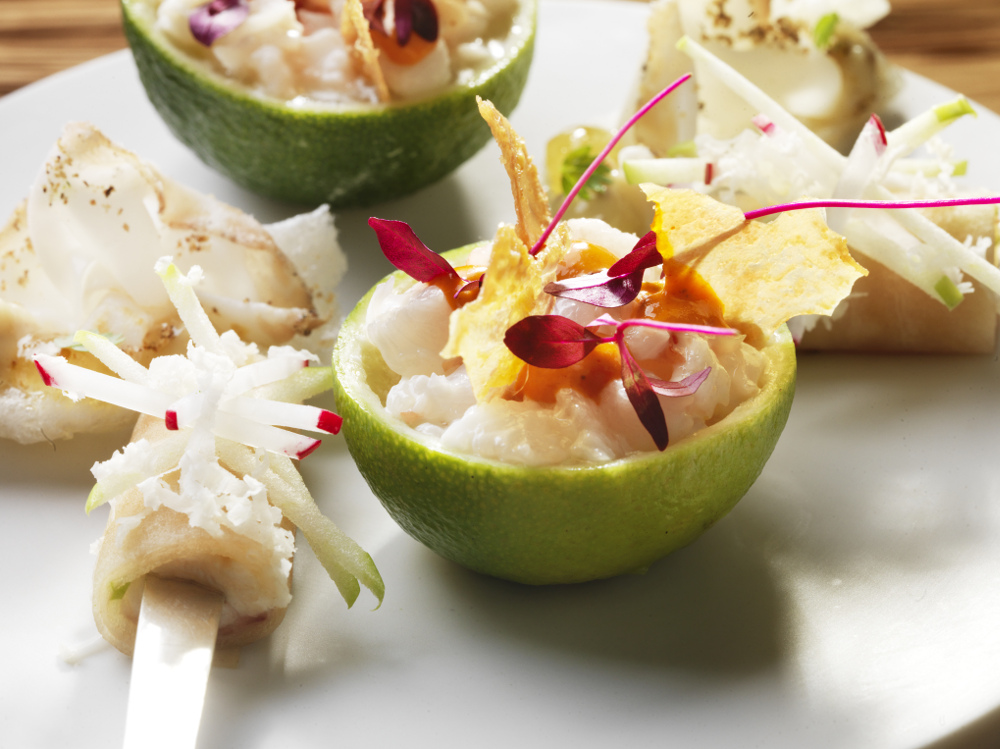
From left to right: Lime, crayfish, chicken skins and piri piri, Eel, apple, radish and horseradish. Sourkraut chip, lardo and juniper Photography René Riis

How do you create a dish?

I start with a blank sheet of paper – I draw, I write notes. I don’t think anyone could understand it except me. It goes up, down, round the other side, then back again. I think everyone has their own unique way of working. You can be creative anywhere. Sometimes it just comes to you, and you take advantage of it.

Often, I start with an ingredient or two. The tortellini dish is a good example, as it began with a walk on the mountains and I wanted to have one dish that represents the mountains rather than the whole menu. We got everything from within a 20-minute radius, so the idea of that dish is that it’s everything from here.

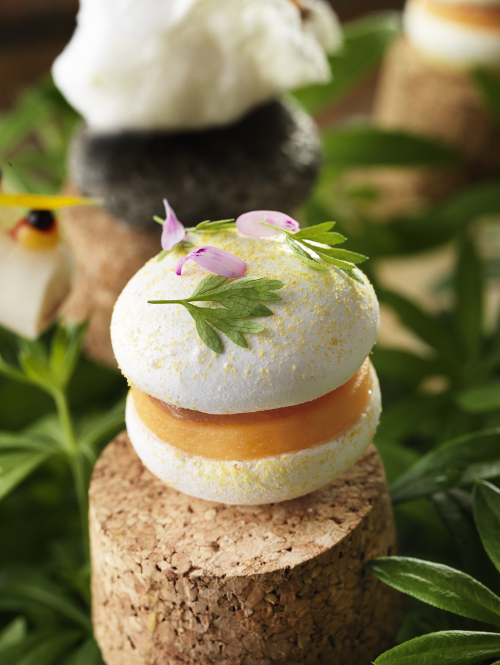
Sea buckthorn, melon, and Char macaron Photography René Riis

What specific Tyrolean influences can you see on the menu?

We try and use a few traditions. In winter, a big tradition here is a doughnut filled with sauerkraut. Sweet and sour, basically. I had one at the Christmas market in St. Anton – I think the owner here gave it to me – and at first I thought, this can’t be good. And then I tasted it, and it was great! We made our own version, a mini one. We used our own sauerkraut, and made a vinegar powder which we rolled the sweet dough in. It’s a classic thing in this region. With what we create in the kitchen, we want to evoke memories for people eating here, relating moments to when they were at a Christmas market.

We try and use products from here, but I believe that we need to have broader sources – so we can keep the consistency, and keep surprising people. I feel a responsibility to deliver something quite special every evening. I don’t want to just say, ‘it’s herbs again’, so it’s a challenge. We try to use the Alps – from Nice to Vienna. That’s the area we try to source a majority of our products from.

james baron 8

How do you think taste and visual senses work together?

I like art and design, but at the same time, there’s a happy medium to be found. My food has got to look nice, but it’s got to be warm too. There’s no point having three chefs round the plate with tweezers putting different herbs on a dish. I’d rather it look rustic, but still in an interesting way.

I really admire a few Swiss architects, particularly Valerio Olgiati – I’ve got lots of books of his. Photographers, I had a really good photo shoot recently with Rene Reiss. He’s also a big influence on me – his work and his person. We spoke for hours, and it reaffirmed my feeling of not too much fuss around the plate. The most important thing for me apart from the taste is that it’s hot as well – sometimes people forget the basics.

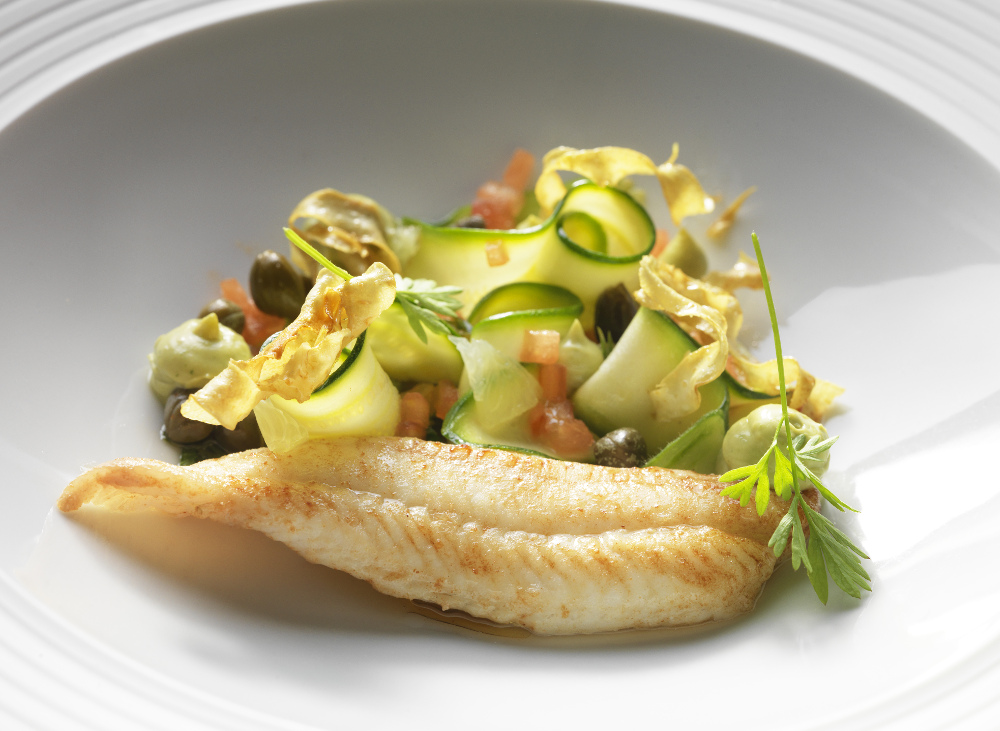
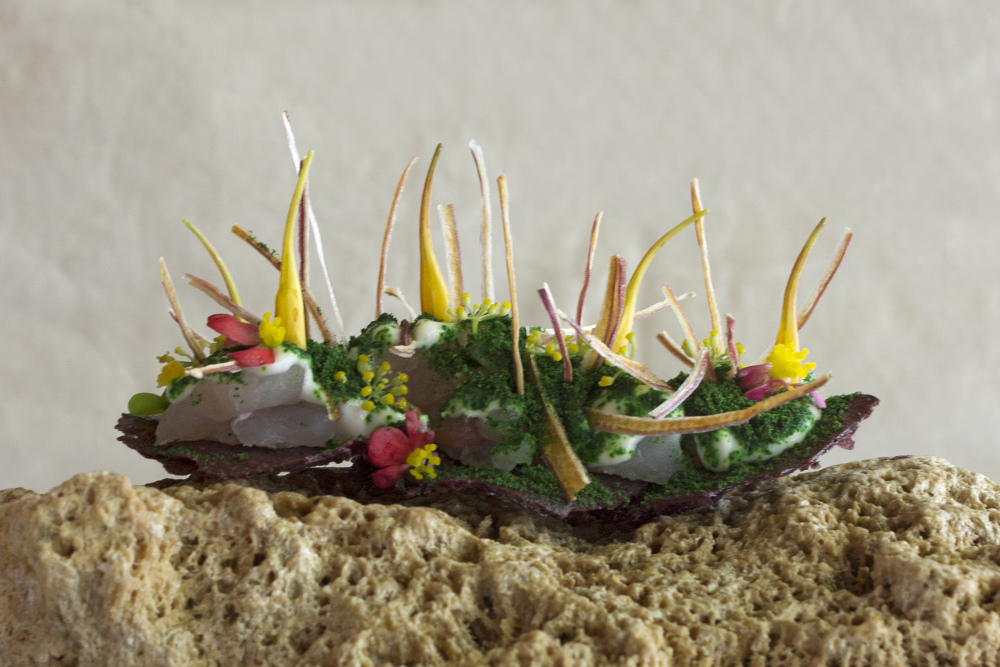
Sole, courgettes, lime and tarragon Photography René Riis

How do you find working in a hotel kitchen as opposed to a restaurant?

There are so many five-star hotels you can go to, and they’re so big that the head chef cannot see everything. Here, everything is in my line of sight. It’s easy to control and we make fewer errors.

We try to have a working environment where it’s friendly: we want creativity and we need creativity. We want to be innovative in what we do too. I think it’s really important not be shouting and screaming, because there’s no one who’s going to want to be creative in that atmosphere. Of course there’s times where there has to be discipline, that’s very important in a kitchen. But discipline can be achieved through normal methods.

It’s strange working in a hotel so small. There’s only seven rooms, so there’s a massive personal feeling and a personal touch. When the guests arrive, I talk to them directly, ask what their preferences are. One evening they might have the full eight courses, the second or third, I might ask if they have any special wishes. That’s all part of the challenge. Someone might ask for a barbecue on the side of the river, and we think, okay, let’s do it! It’s all part of the planning and the execution. We enjoy it and look forward to it. There’s not many hotels of this size and this standard around, so it’s a very unique place.

James Baron’s seasonal eight-course tasting menu is available from the Hotel Tannenhof restaurant in St. Anton, Austria

Elements: Turin Pasta

In the first of a new food series entitled ‘Elements’, we speak to the experts from east London pasta restaurant Savurè about the history of the staple ingredient in northern Italy

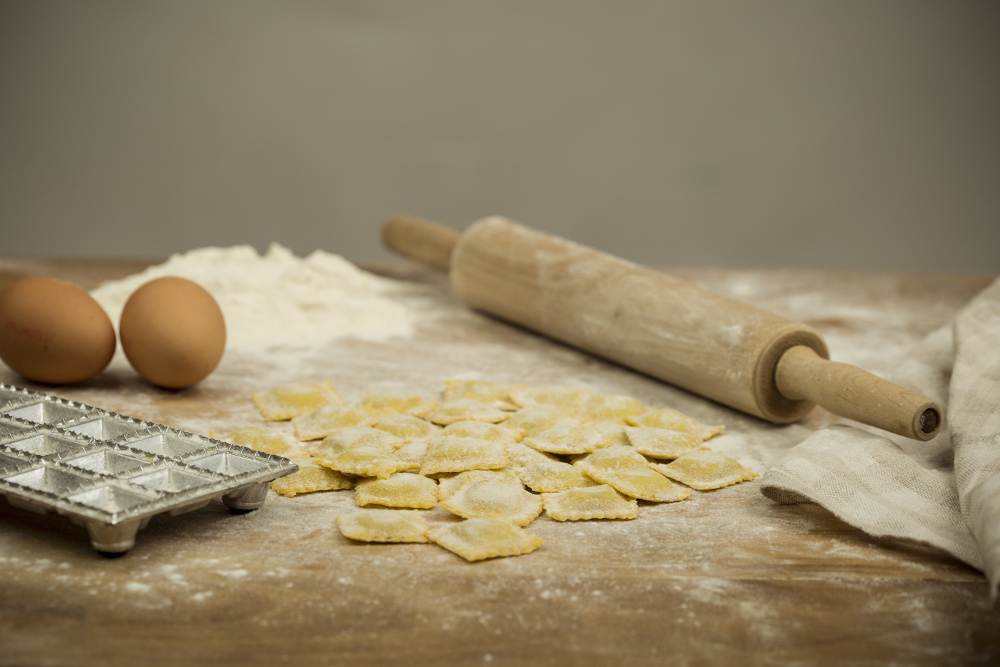
pasta picture

“Out of Italy’s 20 regions, Piedmont has a culinary tradition that is coloured by a history of kings and peasants. Historically, noble men ate northern Italy’s version of noodle, tajarin – knife-cut long pasta made with soft wheat flour and up to 40 egg yolks per kilo of flour; agnolotti, filled with roasted meats and seasoned with butter and Alba white truffle; or lasagne with ragù.

“A humbler pasta was favoured by the ‘lower classes’ — normally prepared with only four eggs, or potato gnocchi, leaving the use of meat (often giblets) for the feast days. Their regular pasta would be stuffed with ricotta cheese and vegetables.

“Northern Italy’s pasta is mainly prepared with soft wheat flour and eggs (sometimes only egg yolks). The main sauces are butter, which is perfect with the very expensive Alba white truffle, or butter and sage, roasted meat gravy, ragù. Modern times have enriched our centuries-old tradition of pasta-making with new ingredients such as tomatoes, fish, spices.

“The Piedmont region eventually saw the proliferation of new types of pasta made with durum wheat, semolina and water, such as spaghetti. This evolution was the result of massive immigration in the ’60s and ’70s, when a huge number of southern Italians came to Torino seeking jobs. They brought their spaghetti tradition to this foreign and northern Italian land.”

Savurè in Shoreditch, London, serves agnolotti, tajarin, and spaghetti, with 200 different combinations of pasta and sauce available

Interview Dizz Tate

Questions of Taste: Virgilio Martínez Véliz

We meet Virgilio Martínez Véliz, owner of the ‘Best restaurant in Latin America’ and the first Peruvian chef to win a Michelin star in Europe

Virgilio Martínez Véliz
Virgilio Martínez Véliz – Photo by Jimena Agois

Chef Virgilio Martínez Véliz has garnered many accolades from his fast-paced career. His flagship restaurant, Central Restaurante (Central), opened in 2008. In 2012, it became the ‘50th best restaurant in Latin America‘, but by 2014, it made a significant jump, being named the ‘best restaurant in Latin America’, and the 4th best in the world. His popular London-based endeavour, Lima London, was awarded a Michelin star the same year, making him the first Peruvian cuisine to achieve the honour.

Véliz’s menus reflect the diversity of Peru’s cuisine. Next to each of his dishes he prints the ‘altitude of origin’ for the ingredients used, which, due to the geographical variance of Peru, can range from the highest point in the Andes, to the depths of the Amazonian forest and down to sea-level of Lima’s crystalline coast.

In addition to running his award-winning eateries, Véliz also oversees a side project Mater Initiative –a research organisation dedicated to registering all indigenous Peruvian ingredients, in order to communicate their value to chefs and their guests around the world.

We sat down with Véliz to discuss his unique career in a conversations spanning his passion for skateboarding, cheffing in kitchens around the world, and finally, his decision to return home to Peru.

virgilo extreme stems - tallos extremos
Extreme Stems – Tallos Extremos

You almost became a professional skateboarder until you were injured. How does one go from skateboarding to cooking?

I truly wanted to become a professional skateboarder, however the injuries convinced me otherwise, and made me realise there were other ways to escape from conventional Lima in a turbulent ’90s Peru. In those times I felt I needed to experience other things; I wanted to travel, and cooking would allow me to do so. So I started studying and then working for a living.

One day, I stepped into the kitchen of a fine dining restaurant in London and I just knew – I felt the same positive feeling I felt with skateboarding. Quickly becoming obsessed with this world, I started reading a lot and practicing all day after my working hours… And I loved it.

dining room salon
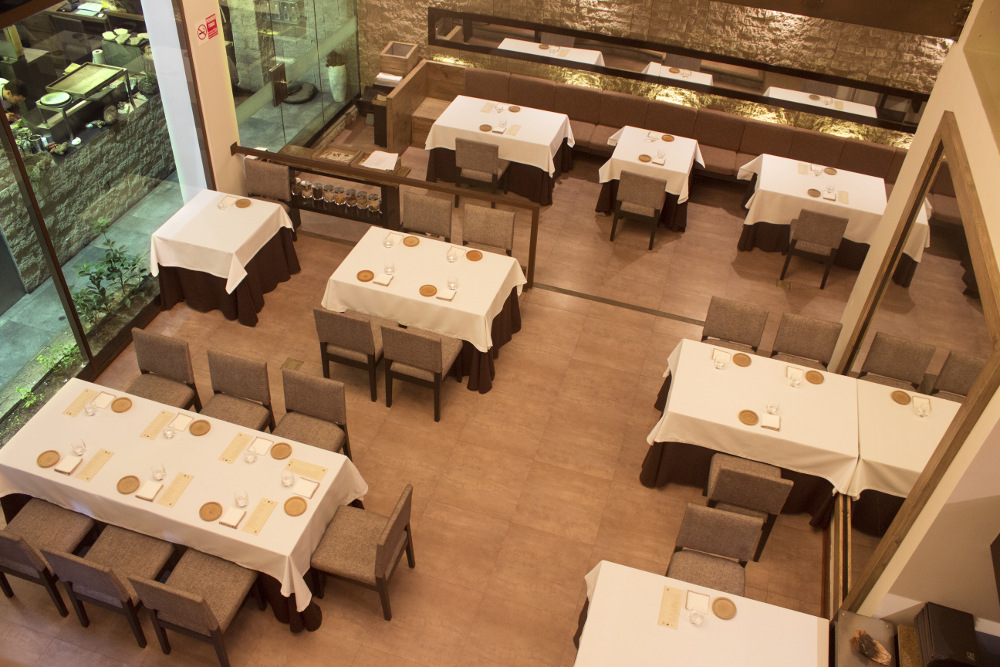
Dining Room –Cental Restaurante, Lima, Perú

After your experience working in restaurants run by Spanish chef, Santi Santamaria, you went back to Peru to open Central. What prompted you to branch out on your own?

I actually worked for great Peruvian chefs before this, for example Lutece in New York, travelling around the world cooking for different chefs such as Gastón Acurio. And then, feeling mature enough to do so, I opened my own restaurant in Lima.

I am still learning how to grow and how to maintain the same passion of my early training years, and to inject that into my team, with Pía León (my wife and Chef de cuisine at Central).

virgilo green highlands
Green Highlands – Alturas Verdes

On your menu, you show the altitude of origin of your dishes, some as high as 14,000 feet. What are the benefits of using food that’s farmed at high altitude?

We felt the need to state altitudes when talking about ingredients, to show how diverse our country is. Also, in this territory, you could be at 200m above seal level and be in a coastal valley, or at 200m above sea level and be in a surreal Amazonian forest. As a result, much of the food is reflected in the ecosystems as well.

When you go higher, up in the mountains of the Andes, you find ingredients that won’t grow anywhere else because they belong there. Only at these altitudes do some of the potatoes, ocas and mashuas develop. They say in the Andes, the higher you climb, the deeper you have to dig for precious things.

virgilo harvest and collection - cosecha y recoleccion
Harvest and Collection – Cosecha y Recolección

What is your relationship with your suppliers? How do you go about finding new ones?

Our team at Mater Iniciativa plan trips according to seeding and harvest seasons. Also, they look for sources of ingredients to collect (ones that are somewhere specific with no human intervention as algae, cushuros, wild plant species, etc).

We believe in the idea that every ingredient becomes richer when a community nearby the origin tells you about it. So we have been working on making these communities our suppliers. Even with the difficulties it may represent, such as access routes, logistics, and preservation of products, we still think it’s totally worth it.

Photo by Jimena Agois

What are your main culinary influences besides Peruvian food?

There is traditional Peruvian food, of course, and also Peruvian ingredients. Both types have received influences from various immigrants: Spanish, Italian, Chinese, Japanese, African, Arab, among others.

Peru’s natural resources have been diversified thanks to our geography, and those cultures, as well as our own cultural heritage. When I travelled, I learnt more about other civilisations’ food, but always kept connected to where I belong.

Lake Floor - Suelo de Laguna
Lake Floor – Suelo de Laguna

What makes Latin American cooking stand out and how do you tailor it for a British audience?

I think all Latin American food has an identity of its own; every country has something special to offer. Peruvian chefs talk a lot about our ingredients and I guess London is a great example of how it is possible to achieve Peruvian flavours outside the borders of this country.

Using our main ingredients, and some other local fresh products, Peruvian food can be made beautifully.

virgilo pseudo cereals - pseudocereales
Pseudo Cereals – Pseudocereales

Why did you set up Mater Iniciativa?

Mater was created to register Peruvian ingredients in their origin, and to showcase our diversity, which responds to all things I mentioned before. There is a human intervention that has been fundamental and so Mater tries to gather stories, and offer inspiration and information.

virgilo river scales - escama de rio
River Scales – Escama de Río

Peru has an abundance of fascinating ingredients. Can you tell me a little about cushuros, tuntas and some of your other favourite indigenous Peruvian ingredients?

Cushuros are cyanobacteria that collects in altitude lakes and ponds, and have been consumed for a long time in communities of our Sierra. These blue and green pearl-like spheres have been part of dishes that incorporate ingredients form highest altitudes, like potatoes, wild aromatics, roots like mullaca, etc.

Tuntas, on the other hand, are one great example of a preservation method taken from an old Andean tradition. Freeze-dried by intercalating cold river water immersion with sunlight exposure, these potatoes may be kept for years to be used rehydrated in soups or other hot preparations.

the sixty miles fish - pesca de 60 milas
The Sixty Mile Fish – Pesca de 60 Millas

In early August 2016, you will be hosting a banquet at Wilderness festival in Oxfordshire, which brings together food and music in a very unique way. What part does music play in your life both inside and outside of the kitchen?

I think it is great how artists get inspired and create in every possible way. I am guessing music, as cooking, integrates elements to create a finished result. I am very much looking forward to be part of this event.

What will your next venture look like?

We have been working extensively in Mater to build a structured team that continues to search and inform. And we want to list more producers as suppliers, not only for one restaurant, but to help expand their markets.

We have a cookbook about Central coming up that will show our work and details of some trips this year. And we have more projects in parallel, but it may be too soon to report on those…

Virgilio Martínez Véliz will be preparing the Long Table Banquet at this year’s Wilderness Festival

Interview Cécile Fischer

Questions of Taste: Alex Craciun

We sit down with Jason Atherton protégé, Alex Craciun, to discuss why he has chosen to focus on Japanese cuisine at his new London venture, Sosharu

alex craciun on own edit

Romanian chef Alex Craciun began his career in a somewhat diverse fashion, trying hairdressing and engineering before ending up in the kitchen. He decided to pursue haute cuisine in full force, becoming an inimitable chef on the London restaurant scene and in spring 2016, he helped open his first restaurant as head chef. Sosharu — a contemporary Japanese eatery located in Farringdon, has been well received by the city’s food critics and had paved the way for the soon-to-be opened Kisetsu, a 10-seater offering a unique ‘chef to table’ experience, where the chef prepares the meal in the same room as his guests.

Having worked as a chef in Romania, the UK, Brazil, and Asia, Craciun has stored away a vast variety of techniques and tricks. Before opening Sosharu, he spent a year in Japan (under strict instructions from Jason Atherton) working in a different restaurant every season. This influence can be seen across the restaurant, from design choices to service style and, of course, the menu. This also extends to the atmosphere the head chef hopes to create in both restaurants. Craciun explains he wants his guests to fully experience the food, and to avoid the lure of everyday distractions; in Kisetsu, a curtain enclosing the room includes pockets for mobile phones, although the plates may be Instagram-worthy.

Here, we meet Craciun to discuss his trips to some of the top international kitchens, working under Gordon Ramsay, and how his love for Japanese cooking started with a Tonkatsu meal in central London.

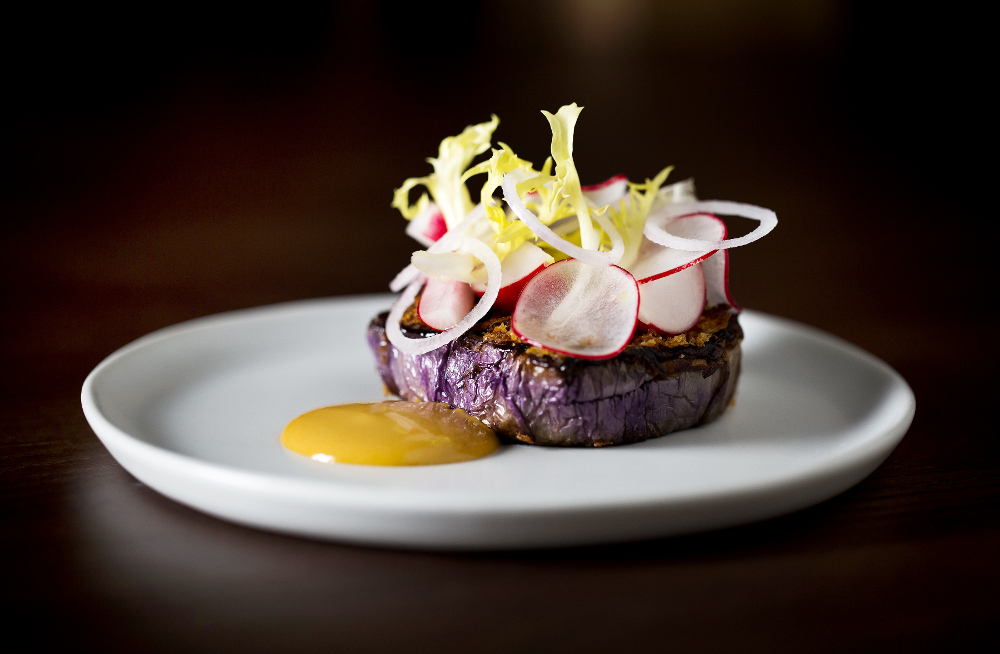
Pale aubergine, crispy shallots, aka miso glaze, herb salad

How did you get started in cooking?

For me, it was never, ‘my mum cooks, my father’s a chef’ – it was nothing like that. I studied electronic engineering and then I started to work in a massive factory. I didn’t like it, so I did a hairdressing course. I didn’t like that either, so I did a masseuse course. And then I didn’t like that…

I did a cooking course when I was about 19 or 20, still searching. At first, I didn’t like cooking either, to be honest. But I was lucky to work for someone who was very passionate: he was a young Romanian chef. I stuck with him for a couple of months and everything started from there.

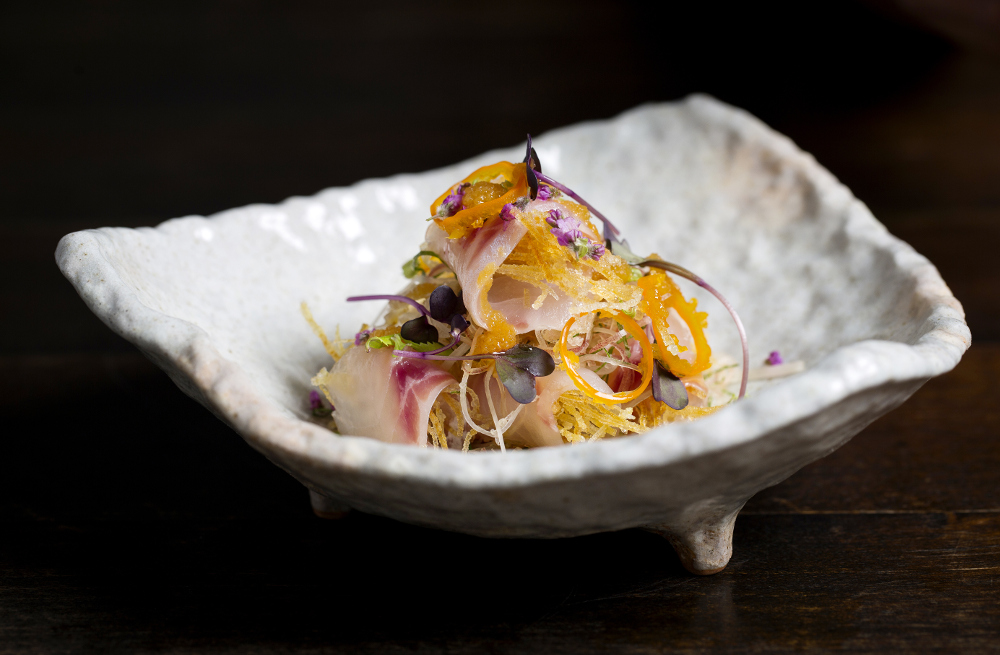
Sea bass sashimi salad with myoga and shiso, apple oroshi, ponzu dressing

What kind of food were you cooking with him?

It was very traditional Romanian cuisine – very different from what I do now – all slow roasting and slow cooking. Back home, the majority of cooking is very slow: pigs, stocks, etc.

What happened next?

I left after a year and came to the UK. I started in Newcastle in a small pub, which was quite painful; I didn’t understand the accents, I didn’t speak the language. I wanted to go back home straight away, but I didn’t have the money to do it. So I said to myself that I needed to stay, in order to make enough money to go home. After 10 years, I’m still here!

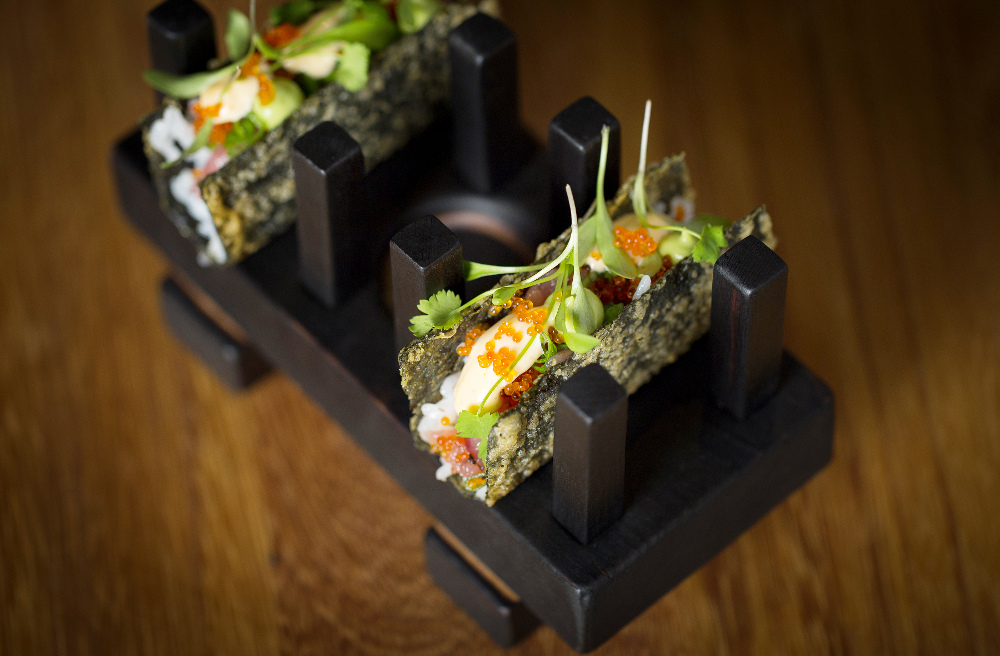
Open temaki of toro tartare, scallion tobiko, sushi rice, spiced mayonnaise

How did you end up in London?

I worked for Gordon Ramsay first. It was very different from where I worked before, there was much more pressure. Everyone was concentrating on the food, what they can do, what they can bring that’s new, etc. It was a push for me to get better.

On my days off, I started to work at the Maze with Jason Atherton, which is how we got to know each other. I worked there one or two days a week for six or seven months. And then I asked for a job, and they said: ‘Yes, no problem, you know the menu!’ So it was easy. I stayed at the Maze for three years, then went to Brazil for a month, and back to Eastern Europe. Two years ago, I went to work in Japan.

Can you tell us about your time in Japan?

I was there for a year, so I did every season, eadh in a different restaurant. The majority of techniques that we do here at Sosharu, we take from Japan. We concentrate on vegetables. There’s no butter or cream anywhere in the restaurant. Everything is very healthy.

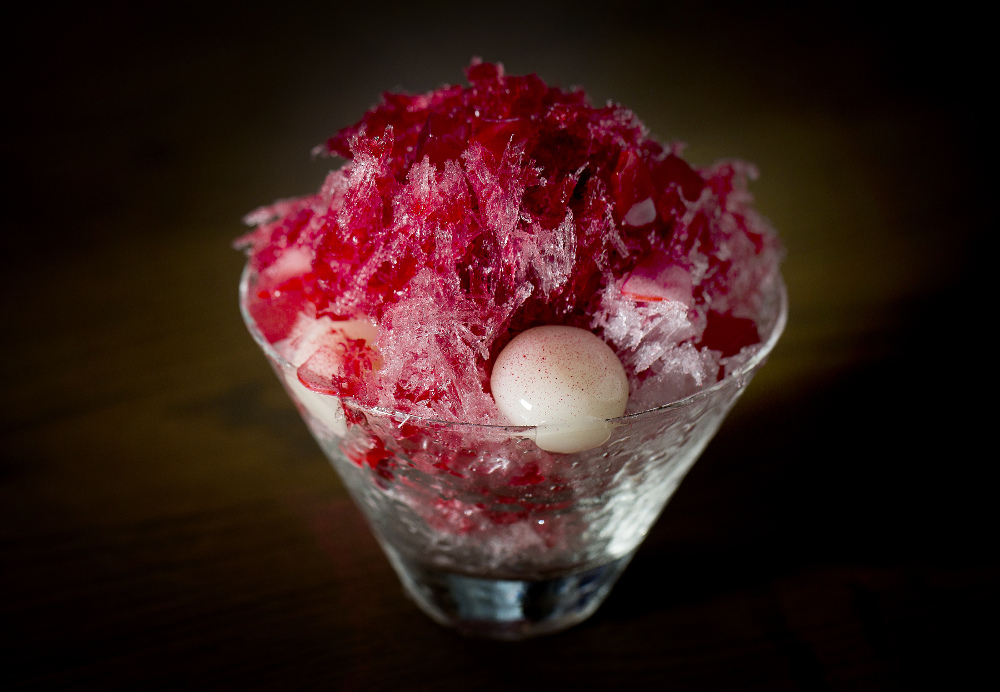
Rhubarb, hibiscus, mochi kakigori

What brought you to Japanese cooking?

I only tried Japanese food for the first time five years ago – it was nothing special, but I still remember it. I wanted to identify the taste, and know how they had done it. It was a Ton Katsu, rice, with a Japanese curry. That was the start.

It’s a massive change from Romanian food, and the UK – a completely different culture. Every recipe is different. I love Japanese cuisine for the taste and the flavours. I love something new, challenging. It was the right moment, at the right time.

What did you learn in Japan?

It opened my eyes, being in Japan, working with local chefs. It’s a different philosophy: they are very clean and they’re not crazy on doing totally ‘different’ flavours.

At Sosharu, we try to use more British produce, and then blend the flavours to make it Japanese.

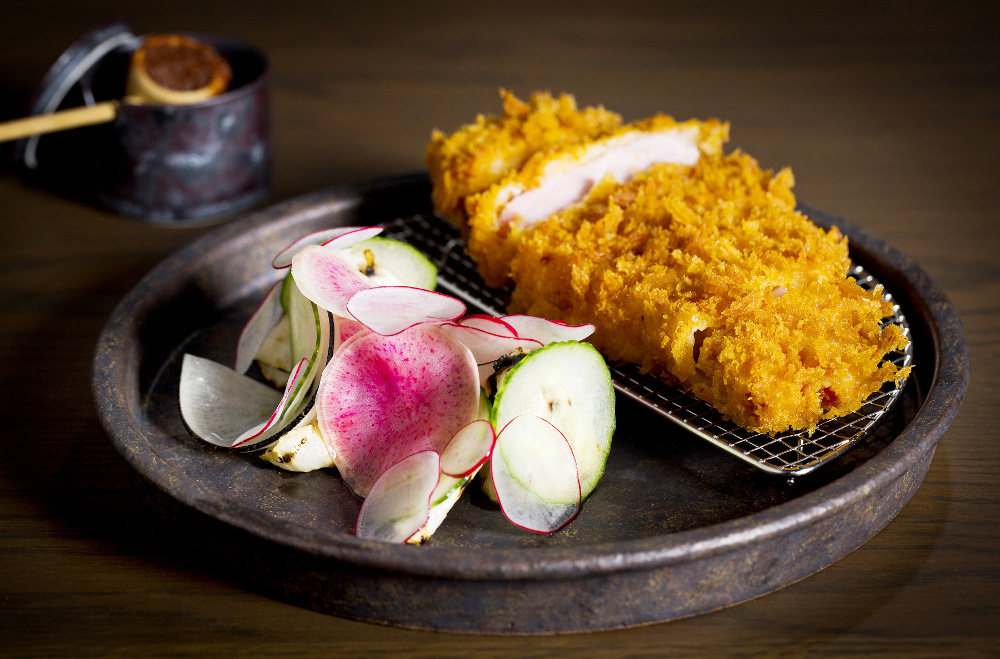
Ton katsu crumbed pork, seasonal radishes, kombu dressing

How has your new restaurant been since opening?

It’s been very busy, which is good. We have a lot of work to do, but everyone is positive and supportive. Being a chef, you have your own idea of what is amazing, but you need to listen to your guests. That’s the most important thing – they come in, and we need to make them happy. Not just us in the kitchen.

Alex Craciun’s new restaurant Sosharu is now open. A 10-seater restaurant, Kisetsu, will open soon.

Questions of Taste: Fernando Pérez Arellano

PORT visits Zaranda, the only two Michelin-starred restaurant in the Balearic Islands, to meet Fernando Pérez Arellano and discovers how hard work can trump talent

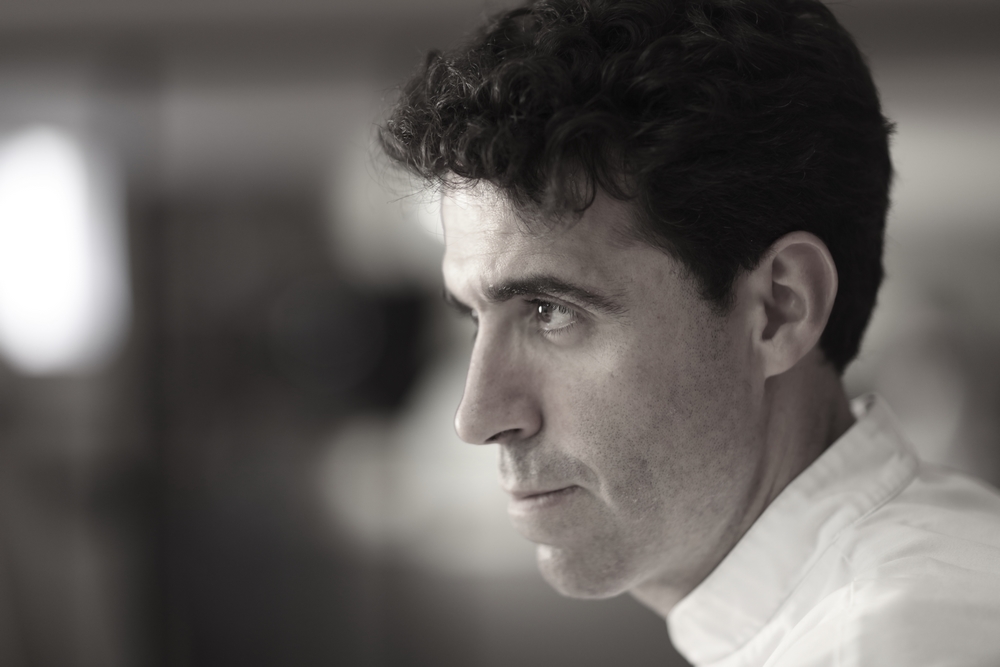
Fernando_B&W1

I’m sat in the kitchens of Zaranda, the two Michelin-starred restaurant at Castell Son Claret, a hotel on the Spanish island of Mallorca, half way through an eight-course, four-and-a-half hour long dinner.

Framed by the kitchen’s surfaces and the row of heating lamps, the scene playing out before me is one of a precisely controlled chaos. It’s an organised, frenetic rush from fridge, to stove, to plate; the chefs only relenting to carefully place each ingredient on the plate with long-handed tweezers.

Earlier that day the restaurant’s head chef, Fernando Pérez Arellano and I had been sitting on the terrace of hotel, discussing his career and how he worked his way up through kitchens at Patrick Guilbaud in Dublin, Le Gavroche in London, and Can Fabes in Barcelona, before setting up Zaranda in Madrid in 2005, earning a Michelin-star just one year later.

I had asked him what, above all else, he had learned from over two decades of experience. “A discipline and a drive to find perfection,” he tells me.

Here, Arellano discusses how he came to haute cuisine almost ‘by accident’, his unceasing search for the perfect dish and why, even after his second Michelin star, he won’t be resting on his laurels.

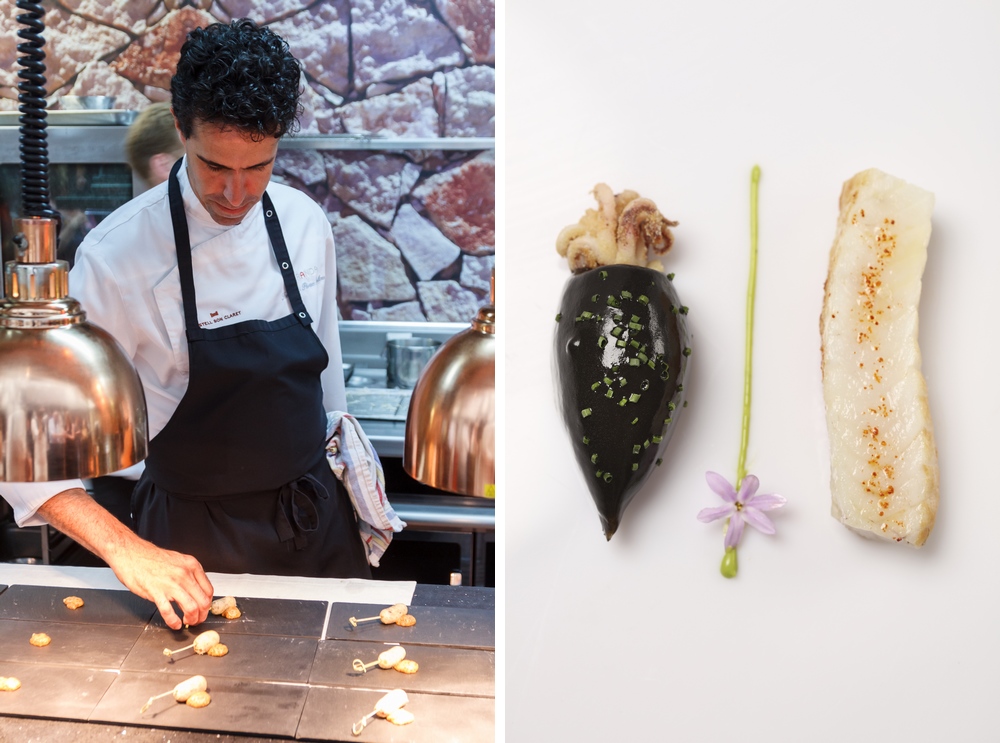
Left: Arellano in the Zaranda kitchens – Right: Filet of John Dory, calamari, onion and spring garlic allioli

How did you first get into the kitchen?

I used to go to Dublin as a teenager to study English and, when I was 18, without having a better idea of what I should do with my life, I decided to move to Ireland and started washing dishes to get me by.

It was meant to be only for a few months but I liked the place. I was living alone, cooking simple things for myself, so started asking the chefs around me how they did certain things, recreating them at home, and that’s how it all began. I also felt that I had to find a job that didn’t mean I had to go home and that would also make my mother proud. I never did convince her…

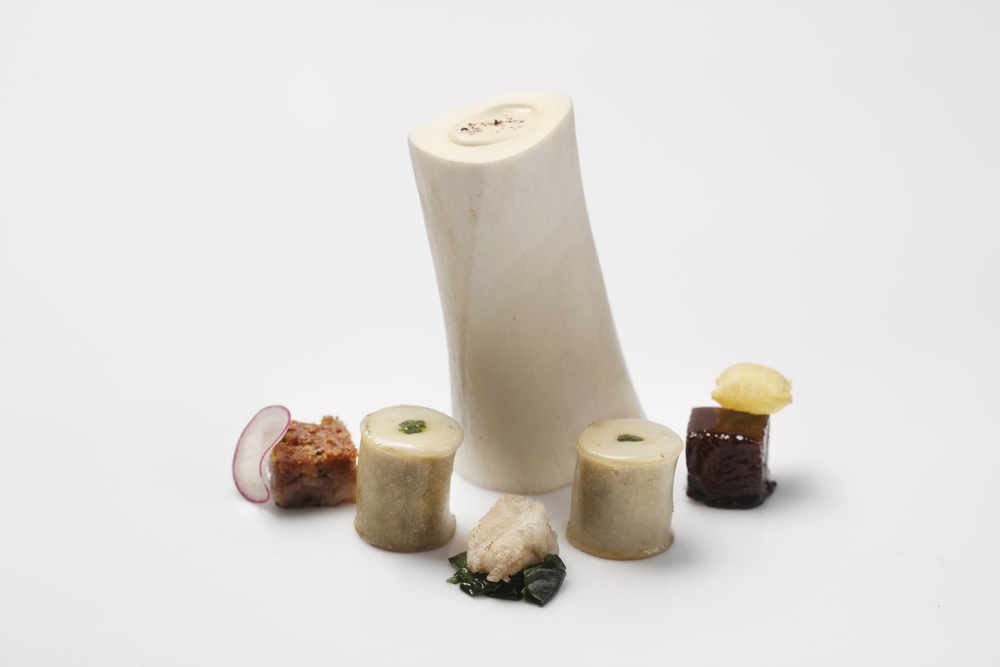
Bone marrow, other hidden secrets of beef and Jerusalem artichoke

If you hadn’t gone to Dublin, do you think you would have become a chef?

Probably not: I don’t believe in such a thing as talent. I had passions for women, for music, for going out and I always liked to eat well, but it was never crucial for me – it’s not like I was raised in a Michelin-starred restaurant.

I’ve seen a lot of people who think they have a passion for cooking, but they get in the kitchen and it’s clear they’re better off staying at home, because they don’t like the environment and the atmosphere. So I don’t really see talent as being particularly important; in the kitchen, there’s a lot of things you put up with that are far from any talent or passion.

Majorca oyster, beetroot, caviar and pearl

You were only 27 when you opened Zaranda in Madrid…

Yes, but I had been in the trade for about 10 years by then and, at that moment, I had the chance to open a restaurant, so I did it. We managed to get a Michelin star pretty quickly. To win a star in one year and to have come from nowhere… It’s not that we weren’t very good, but we were very lucky – that first star was key.

When you start in this business in a place like Madrid, it’s not easy to keep an operation open without winning a Michelin star.

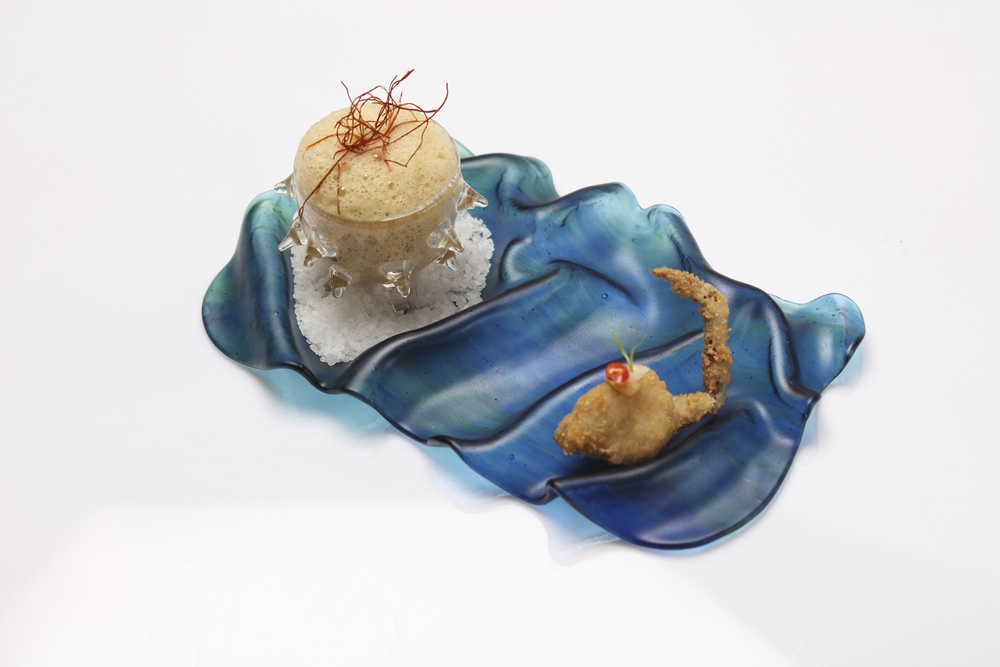
Chilli Crab – spicy crab broth and croquette

How much of your produce is sourced locally?

We source as much as we can locally, especially when it comes to fish. With the exception of the oysters and the mussels, which you can’t find here, we try not to use any fish that come from outside the island of Mallorca. I don’t pretend to be a flagship of local produce or local cuisine – partly because I’m not local – but I believe in what we have here, especially when it comes to fish. I honestly don’t think I have seen better fish markets anywhere else.

That said, if the local product is not great I prefer not to use it. Some people might compromise on certain flavours or the quality so that they can stick to using locally sourced food – especially if this is a marketing tool for them. I simply try to develop a menu without losing the bond I have to this place.

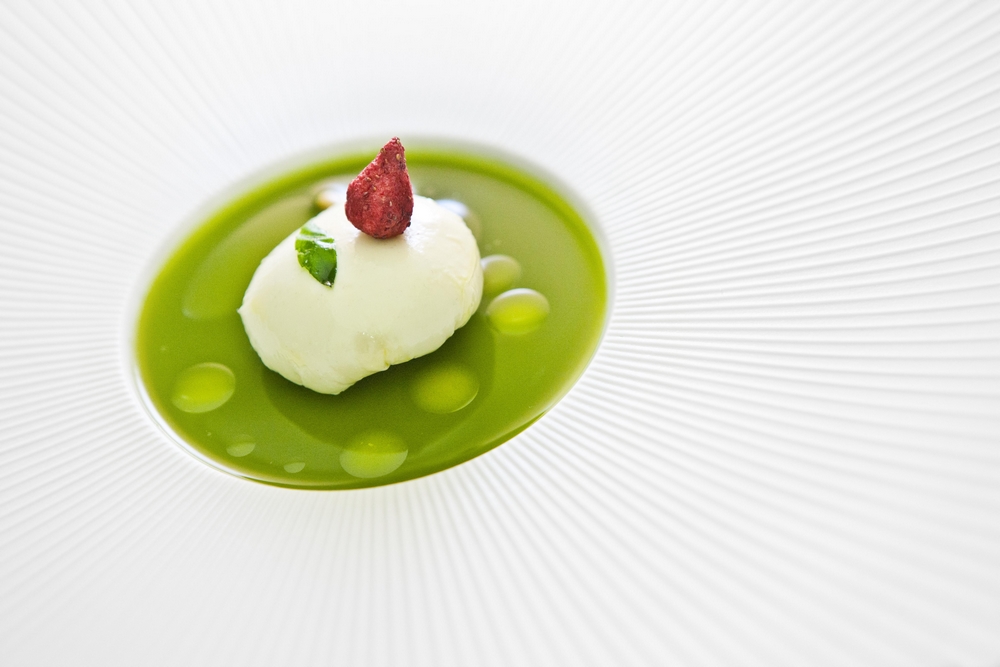
Burrata Zaranda – creamed goat’s cheese, strawberries and basil coulis

What does the future hold for you and Zaranda?

I think I am at a moment in life when I still have a lot to say and there’s still room to grow, especially from the creative point of view. I would love to have three stars: I dream of three stars, and I will always work for that.
Fernando_Hand_Web_Feature

So you’re not going to rest on your laurels?

Of course not, I’m forty years old, and it’s silly because I don’t see these laurels. It’s always so easy to say the word ‘success’, but what is success? I don’t really believe that having two stars is success… It’s certainly very good for someone who has been searching for two stars, but I have drawn a road that I want to follow in my life and two stars is only one of the stops.

Zaranda is located at Castell Son Claret, Carretera Capdella – Galilea, Km. 1,7, 28010 Es Capdellà, Mallorca

Jozef Youssef: Kitchen Theorist

PORT visits the kitchen of experimental chef Jozef Youssef for a lesson in manipulating the senses

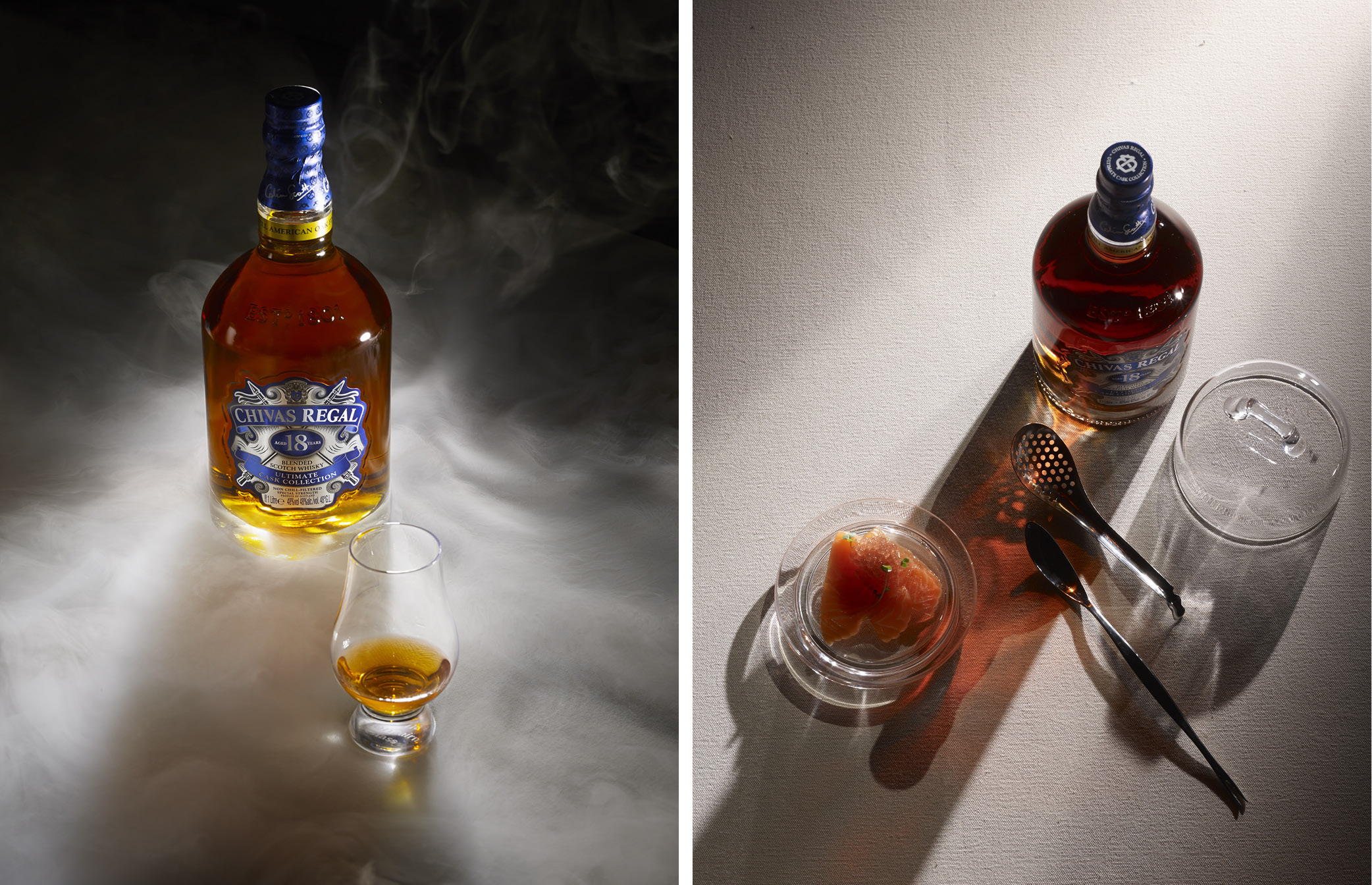
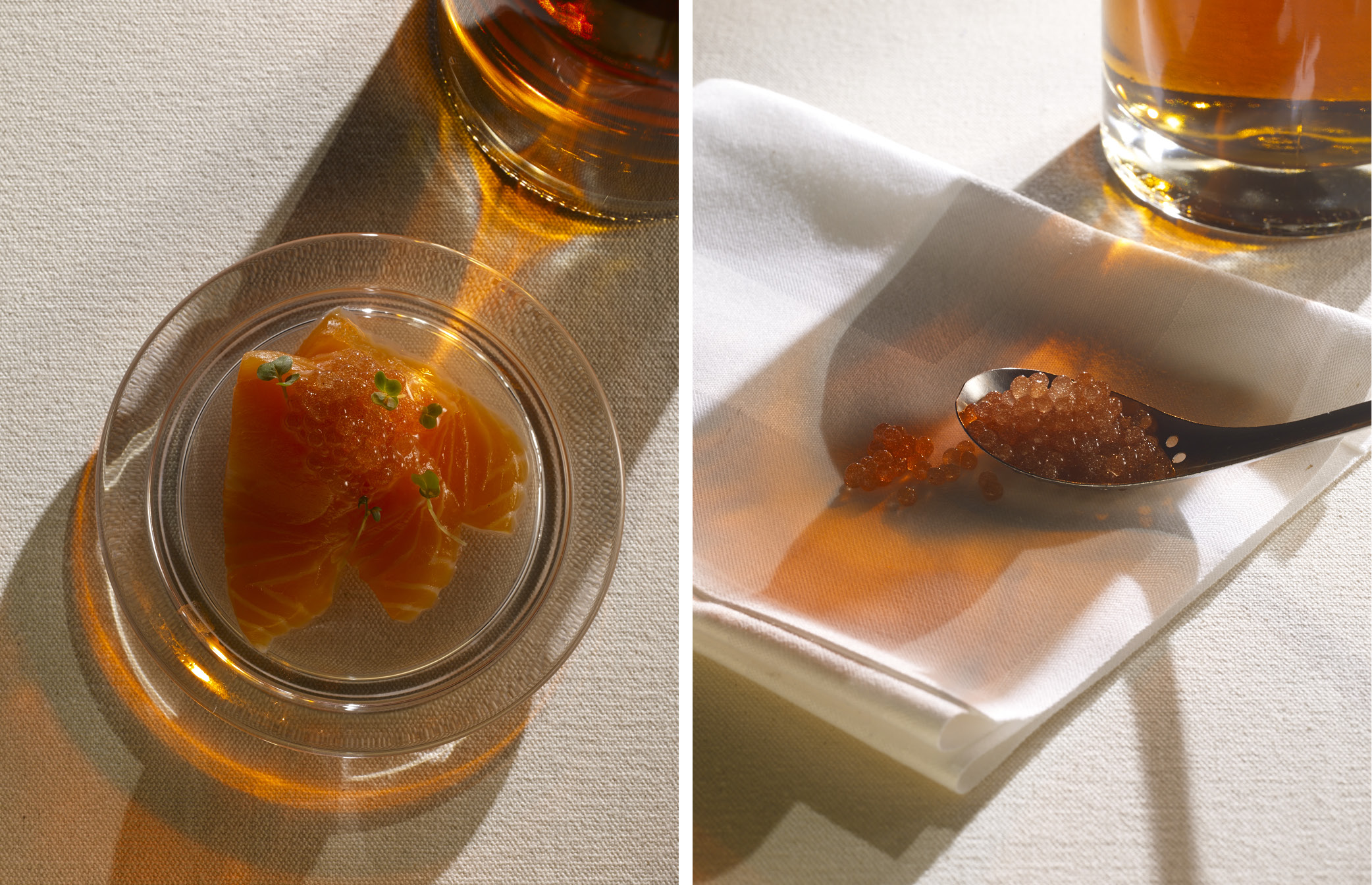
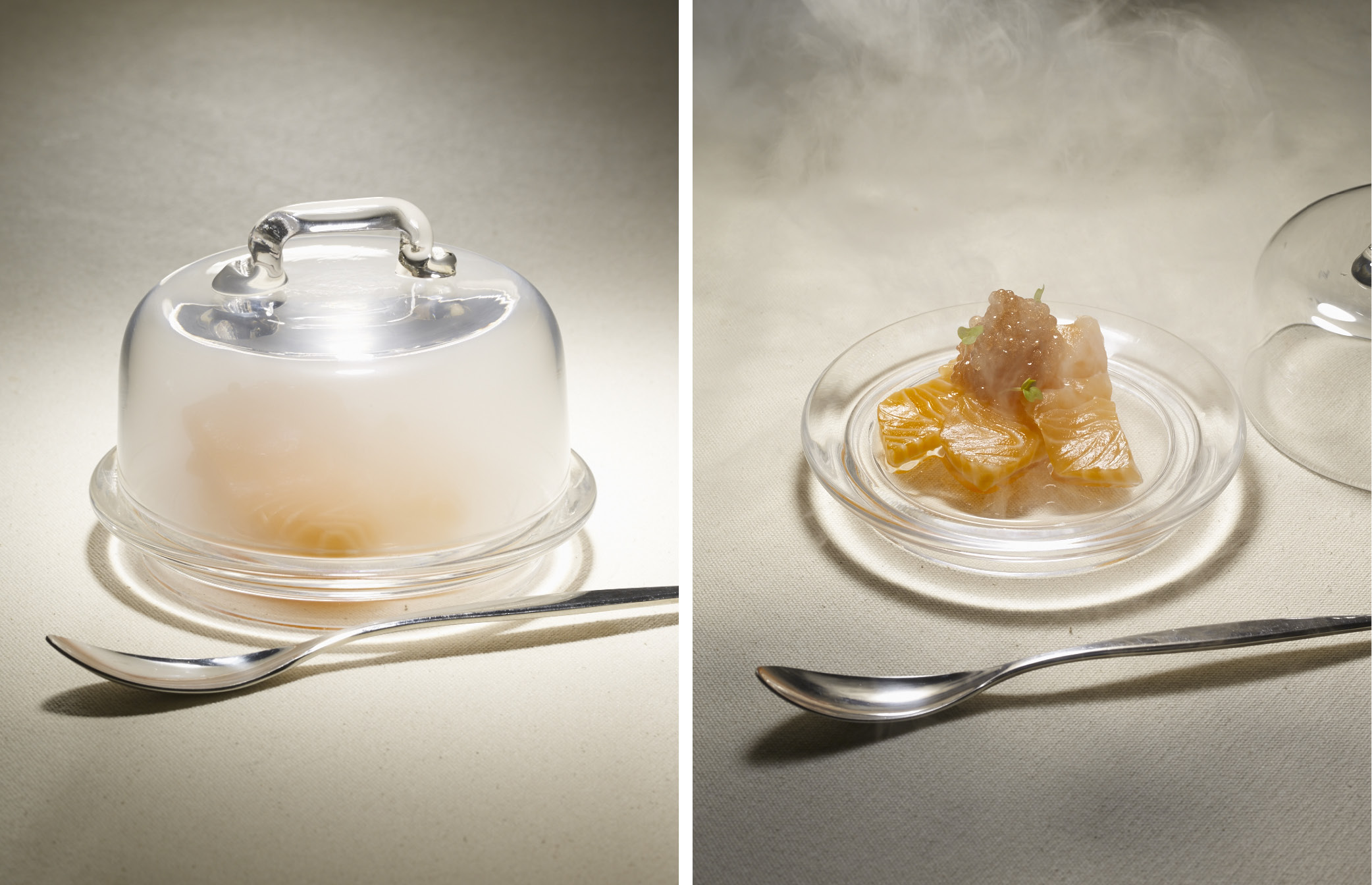
Left: Chivas 18 Ultimate Cask Collection First Fill American Oak – Right: Chivas 18 Ultimate Cask Collection First Fill American Oak with Youssef’s salmon sashimi

More than a chef, Jozef Youssef is an ‘experimental chef’. What sounds like an inflated job title to some, may be the only accurate descriptor of a man who has gone from cooking at The Fat Duck to conducting research with Oxford University’s Crossmodal Department. “I have an interest in the art, science, philosophy and history of gastronomy in all its amazing regional and cultural forms,” Youssef explains in our interview.

Youssef believes the five senses should lead when choosing, cooking and eating food, and manipulating them can elevate the culinary experience to new heights. For his latest project, he has created a sensory guide for Scotch whisky Chivas Regal, to maximise the understanding of the character of its Chivas 18 Ultimate Cask Collection First Fill American Oak release. In it, he suggests that picking the right light, drinking glass, and music, can accentuate or soften tastes we once thought we knew.

In addition to the guide, Youssef has created a tasting menu to accompany the drink, featuring onion veloute served in a fragrant dry ice ‘cloud’ of Chivas, and salmon sashimi is topped with ‘caviar’ made from the whisky. Here, Youssef discusses working between the worlds of food and science and shares a unique whisky cocktail recipe.

Left: Youssef's salmon sashimi – Right: caviar made from Chivas Regal 18 Ultimate Cask Collection First Fill American Oak
Left: Youssef’s salmon sashimi – Right: caviar made from Chivas Regal 18 Ultimate Cask Collection First Fill American Oak

What interests you about the intersection of food and science? How does your cooking tread the line between the two?

I guess my interest stems from the fact that when you are passionate about something, in my case gastronomy, then you want to explore as many aspects of it as you can. I have an interest in the art, the science, the philosophy and history of gastronomy in all its amazing regional and cultural forms. The two go hand in hand; for me the artistry allows for expression and storytelling, while the science allows us to refine our craft. Both contribute to the creativity in their own ways.

What was your approach to pairing this whisky with a dish?

By studying the aroma profile of Chivas Regal 18 Ultimate Cask Collection First Fill American Oak, I became familiar with the main aroma compounds – caramel, vanilla and orange, which gives this particular expression its distinct character – we began to understand how to pair it. From here we built a picture of ingredients that share similar compound ingredients, which would complement those flavours and make sense. From there it is all trial and error, until we find those truly perfect matches.

Higher-Res Composites4

What other tasting notes did you pick up on in Chivas 18 Ultimate Cask Collection, and how do they complement the dishes you’ve prepared?

For the salmon sashimi dish, we were focusing on the wonderful delicate aromas of the Chivas. We all know how well salmon and smoky flavours work together, and I had thought of using smoked salmon, but then realised we wanted a much lighter and delicate smoke for the salmon, as the Chivas already brings so many of these same notes. So we decided to use fresh salmon sashimi that we cold smoke in its serving dish just before it is presented.

The ‘Chivas caviar’ is made using the new Scotch whisky, and a process known as ‘spherification’. The unique texture of the ‘caviar’ lends an interesting mouth feel and allows the flavours of the Chivas to linger in the mouth and combine directly with the salmon.

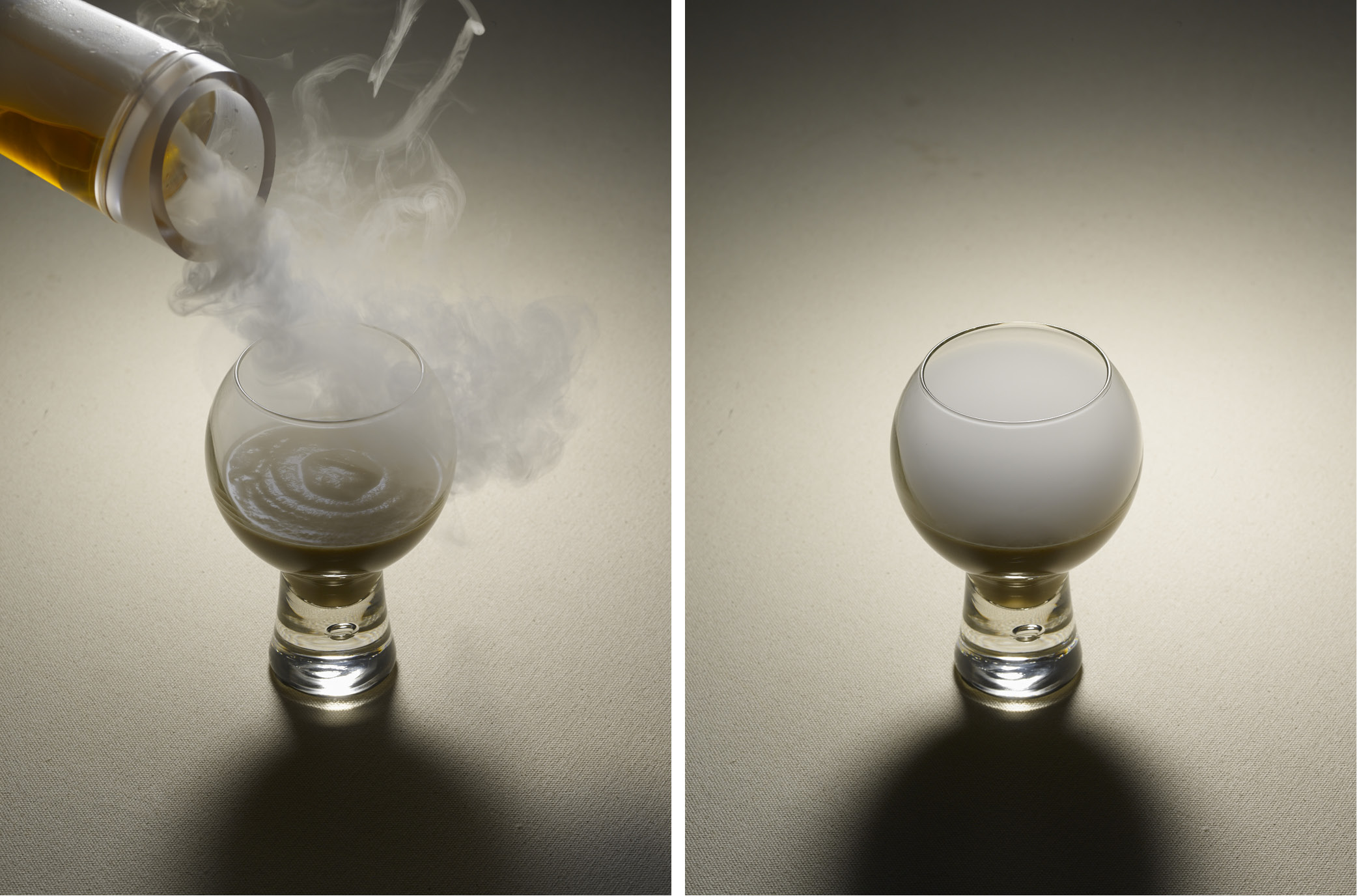
The caramelised onion veloute came about as we wanted to highlight the caramel notes in a savoury context. The combination of dark sweet caramelised onion with the Chivas works beautifully. Aside from deglazing the caramelised onions with the Chivas, we also wanted to capture many of the Scotch whisky’s top notes which are lost when it is subjected to higher temperatures. So we captured these aromas by creating a ‘Chivas cloud’, a technique which simply involves warming the Chivas gently and using dry ice.

Can you tell us more about the ‘spherification’ process?

The process involves enriching the Chivas solution we make with calcium, then using a syringe to drip this solution into a water and sodium alginate (natural seaweed extract) solution. When the sodium alginate and calcium come into contact they form a gel membrane around the individual droplets. The Chivas caviar complements this dish by adding a unique texture, allowing it to combine directly with the salmon.

Higher-Res Composites3

Which of the five senses have you engaged or tried to heighten with the dish of salmon sashimi and Chivas caviar?

The latest academic research shows that anywhere between 80 and 90 per cent of what we perceive as flavour actually comes from our sense of smell. For this particular dish we wanted guests to be mindful of, and engage their sense of smell, appreciate the textures of the fatty ‘melt in your mouth’ salmon and the unique Chivas caviar texture.

How did you go about creating the sensory guide to enjoying Chivas 18 Ultimate Cask Collection?

We began by looking at all the sensory aspects stimulated when one is enjoying Chivas. Some aspects are directly focused on the whisky’s attributes (e.g. temperature and dilution), while others are indirect (e.g. shape, weight and texture of the glassware and the environmental factors such as sound and lighting). We explored all these areas and more, looking at how one can truly heighten their appreciation.

Onion veloute served in a fragrant dry ice ‘cloud’ of Chivas
Onion veloute served in a fragrant dry ice ‘cloud’ of Chivas Regal

How do you hope the guide will change the usual whisky drinking experience?

The guide was developed for those who truly want to heighten their appreciation of the Chivas, and explore its many unique flavours and textures, all of which are impacted by adjustments in temperature, glassware, dilution, lighting, sound, etc. Encouraging such mindfulness towards the sensory details we hope will allow whisky drinkers to find their own personal and unique way of enjoying Chivas.

Whisky cocktail recipe: Chivas 18 Ultimate Cask Collection Smash

– 50ml Chivas 18 Ultimate Cask Collection First Fill American Oak

– 10ml Vanilla Sugar syrup*                  

– Eight Mint Leaves

– Crushed ice

– Old Fashioned Glass

– This recipe can be made inside the glass and does not require any additional tools apart from a spoon.

Method: 

Place the mint leaves in the base of the glass and add the Vanilla Sugar syrup. Stir (without breaking the leaves to allow the mint to infuse into the sugar) for 20 seconds then add the Chivas 18 Ultimate Cask Collection First Fill American Oak. Half fill the glass with crushed ice and using a spoon fold the mint from the base and stir slowly allowing the ingredients to mix thoroughly at the same time chilling and diluting the drink. Continue to do this until the ice has become slushy and then fill the glass with more crushed ice. Now the liquid should be almost at the top. Take a large fresh sprig of fresh mint and slap it against the dry palm of your hand to release the oil and freshen up the aroma. Place this into the glass at the top alongside a thin straw. When you sip the drink the fresh aroma should enhance the taste.

Jozef is the founder and chef patron of Kitchen Theory

The Dining Clubs of San Sebastián

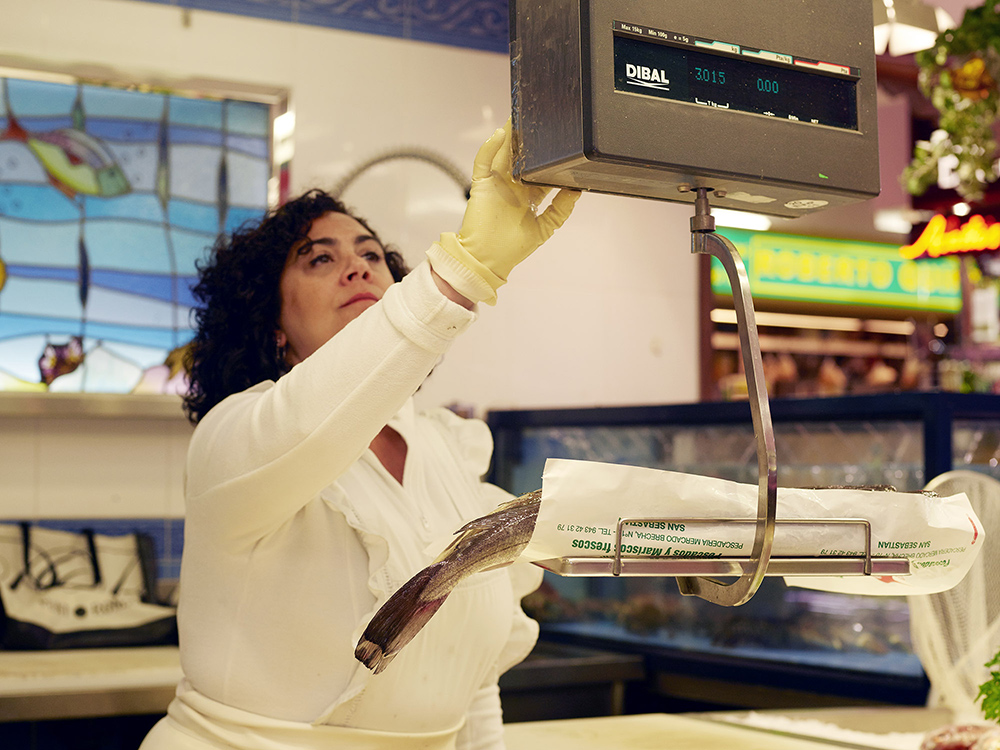
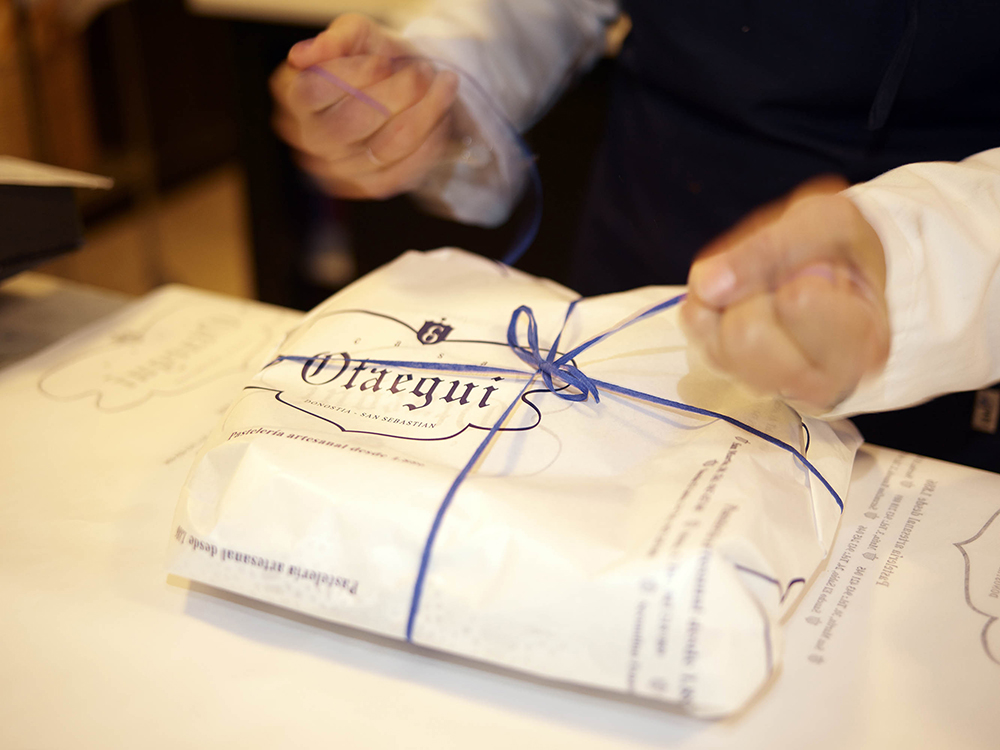
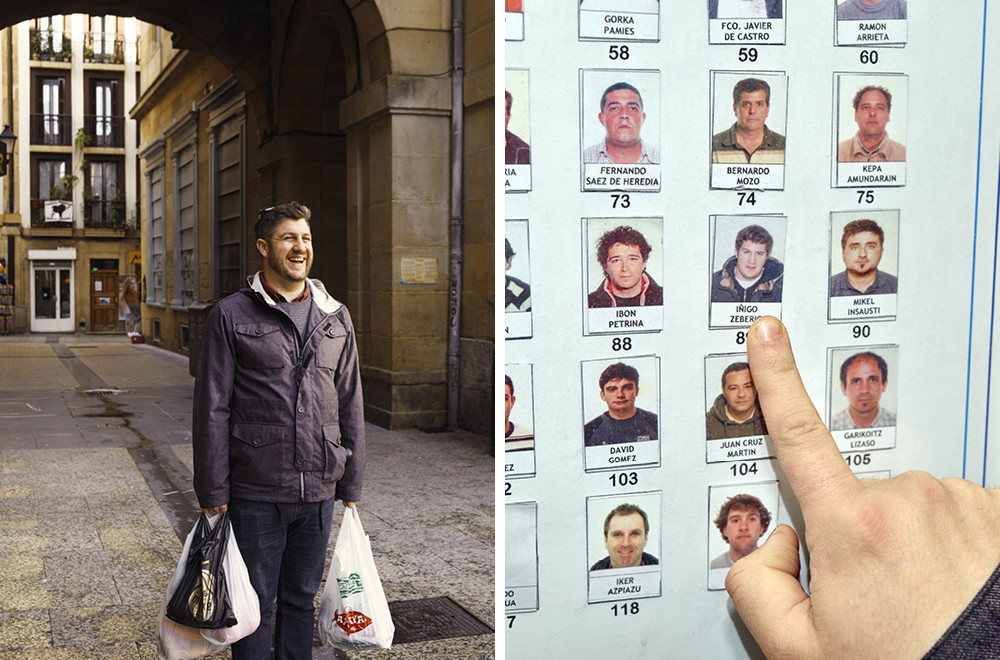
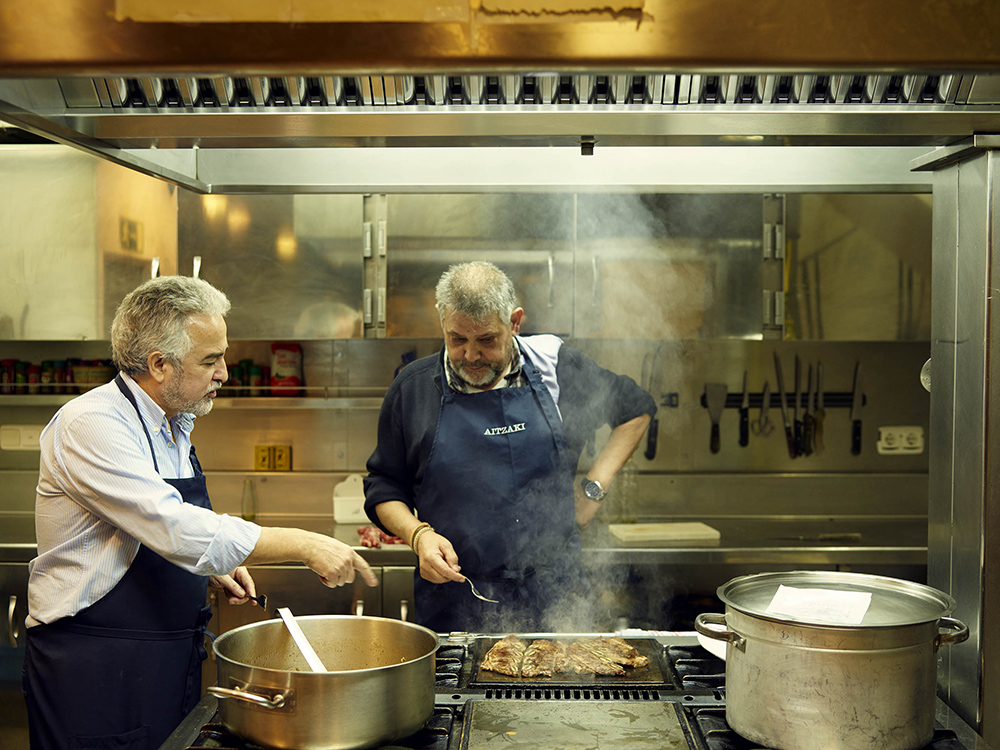
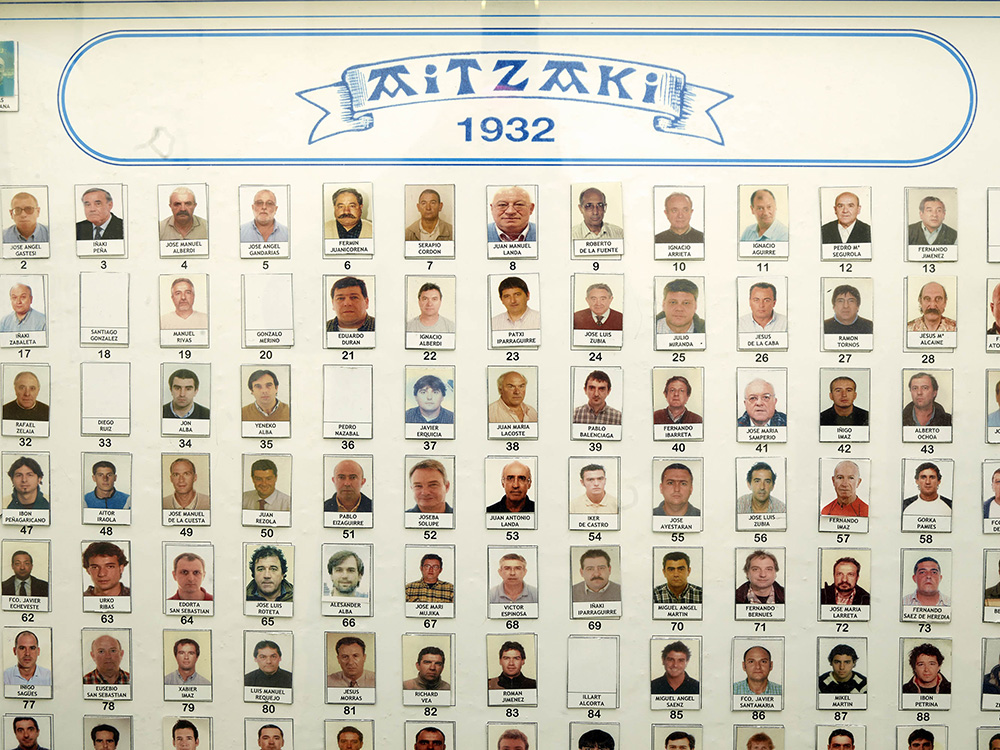
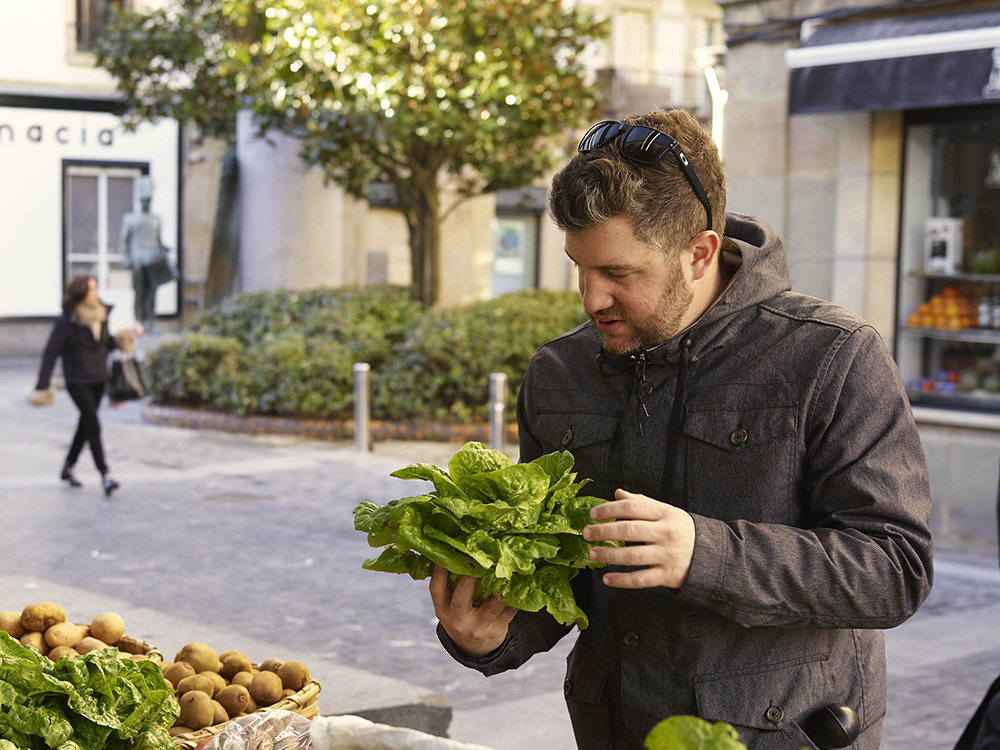
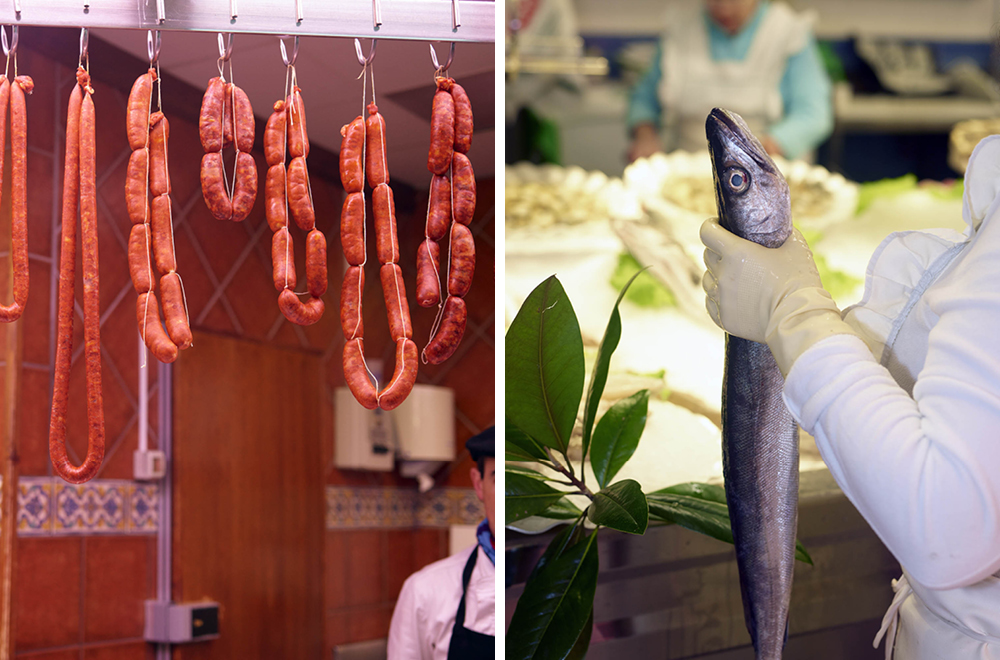
PORT gets a rare glimpse into the secret world of the txokos, the closed Basque dining clubs, as we follow chef Iñigo Zeberio from the markets of San Sebastián to his club, Aitzaki

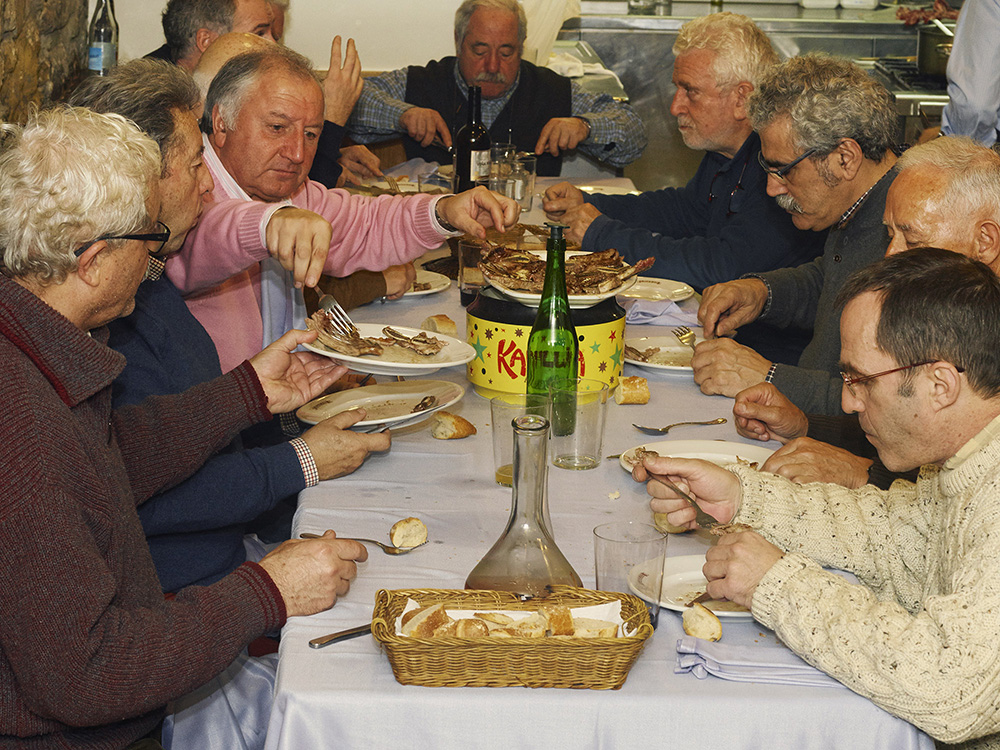
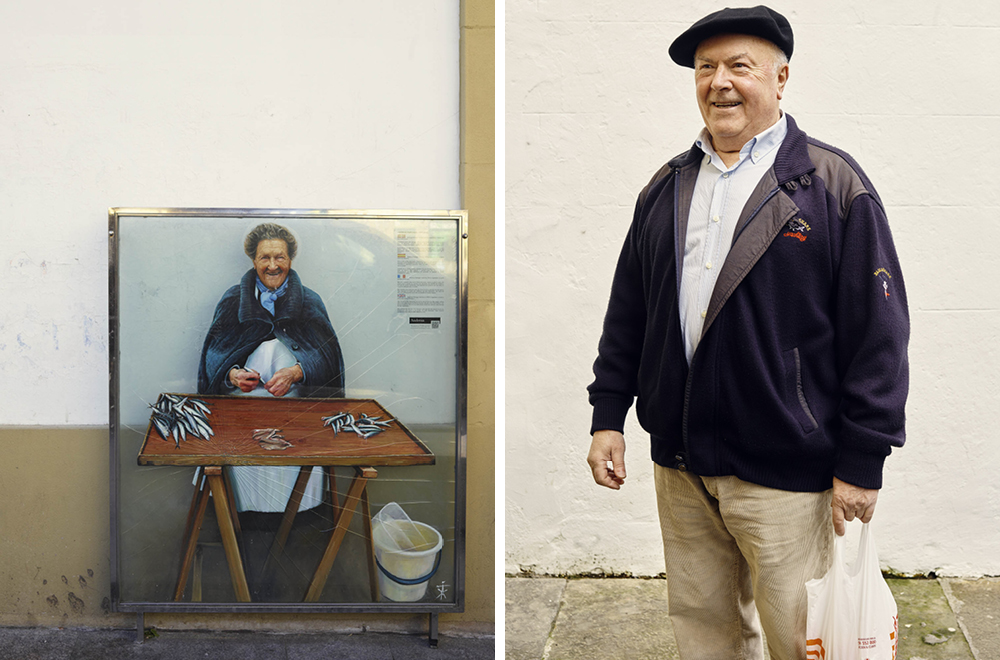
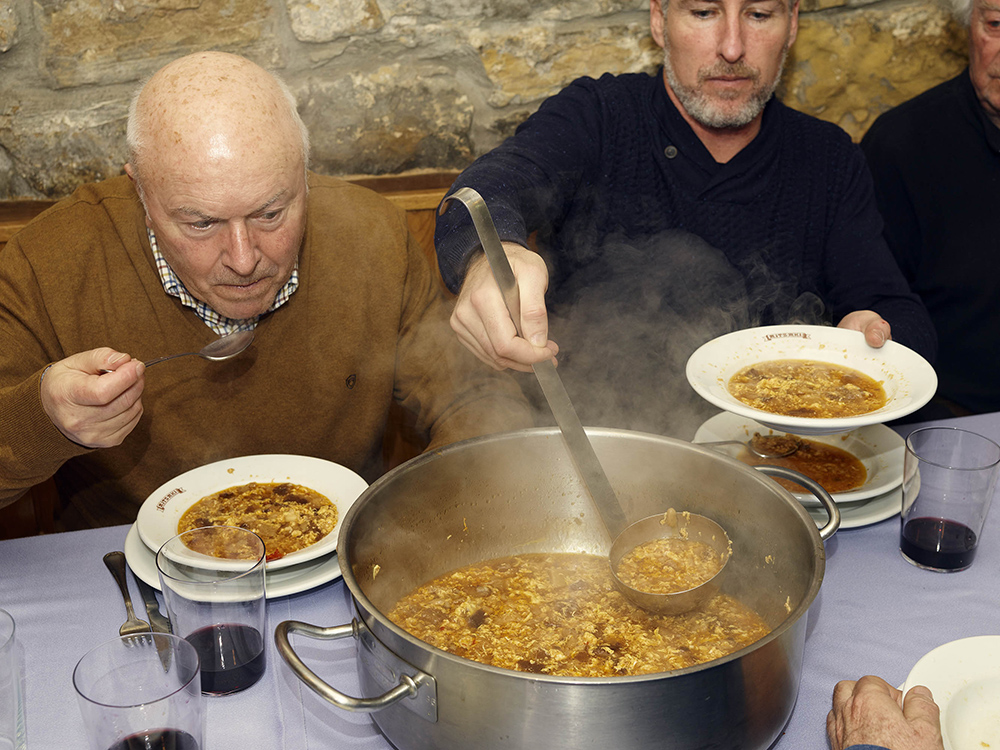
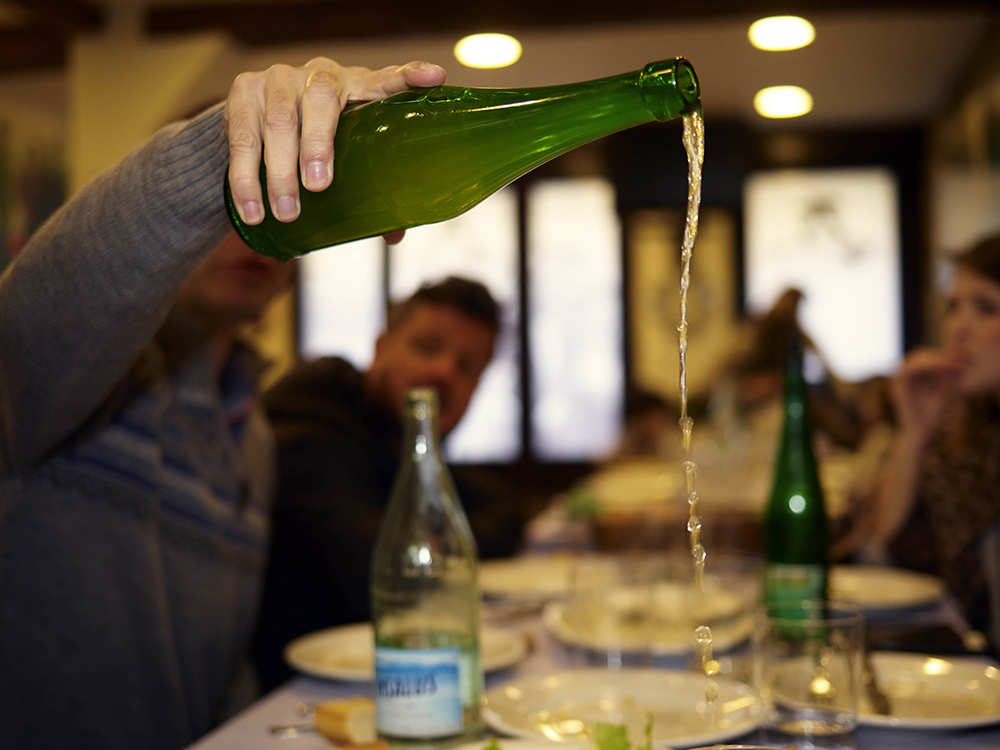
The closed gastronomic societies of San Sebastián, Spain, are a uniquely Basque phenomenon. Established at the end of the 19th century as a place of refuge for men to socialise and cook away from their ‘domineering’ wives, the Sociedades gastronómicas have come to encapsulate and preserve the culture that they were born out of.

“Unlike the rest of the country, the Basque society is matriarchal,” Gabriella Ranelli, a culinary tour guide and club member, tells me when I ask her why these eating clubs exist only in this autonomous region of northern Spain. “Women ruled the house and there really was no role for the men, domestically, apart from stopping by to hand over their pay.”

05 San Sebastian 0478

Since the first sociedad opened in 1871, food has been at the centre of life in the societies. Simple, classic fare – hake in green sauce with clams, or squid in its own ink – is preferred over complicated haute cuisine that the sophisticated kitchens and skilled cooks could potentially produce.

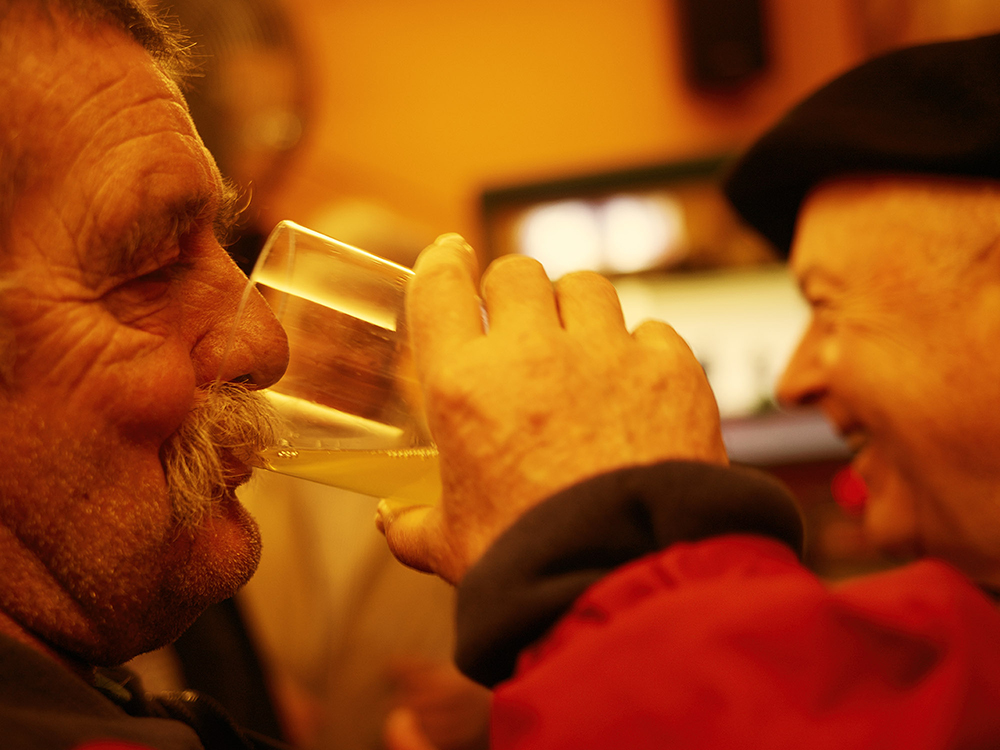
Most sociedades are constitutionally apolitical – meaning that conversation stays light hearted. Instead, the members discuss recipes, exchange advice on the best sources of local produce and chat about Basque football and horse racing.

“Regardless of differing creeds or social classes, inside the sociedad we are all equals,” explains Iñigo Zeberio, a chef who cooked for PORT at his own club, Aitzaki.

14 San Sebastian 0643

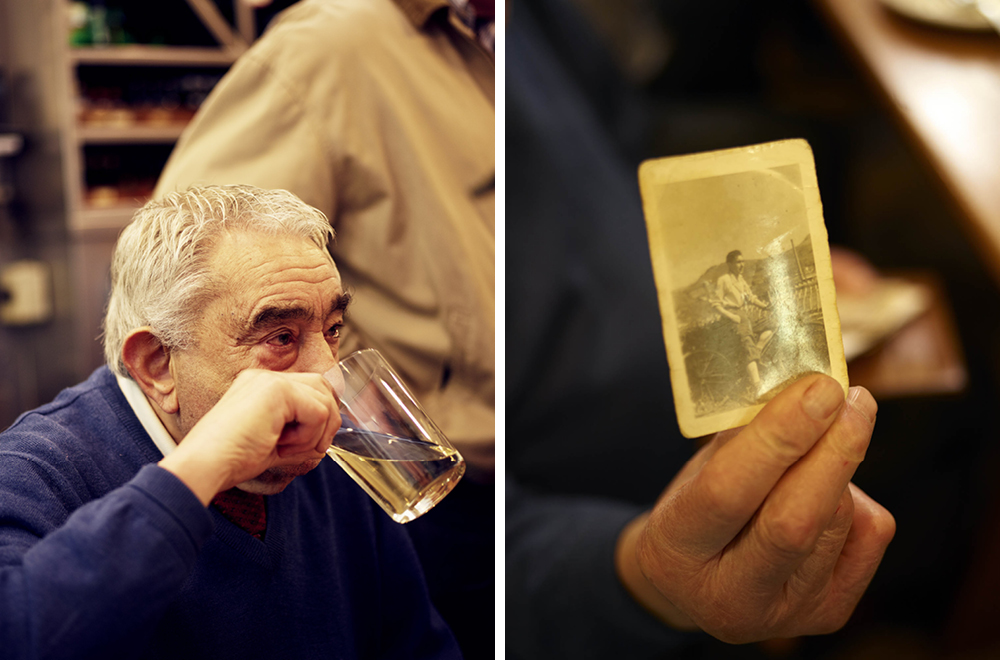
While the clubs are not “hotbeds of nationalistic activity”, as Ranelli tells me, they have played a vital role in preserving the Basque language and historic traditions. Under the dictatorship of General Franco, the societies provided a space to speak Basque and sing without state control, but after his death the clubs declined.

“Spain went through a lot of social change in the 1980s. The sociedades were considered old fashioned for not opening up to women,” says Ranelli. Now, thankfully, many societies do admit women (though often not to the kitchen), and there are long waiting lists for membership. I’m told by members that although the clubs are not secret like a masonry and guests are regularly allowed entry, there are still strict rules for membership.

new

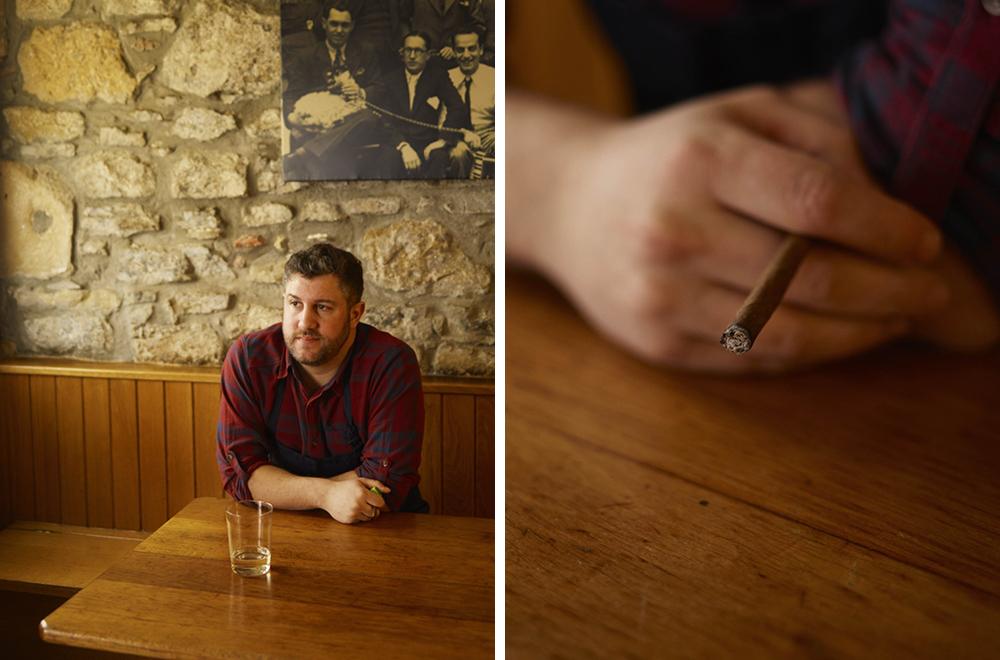
“You have to be invited in and then, in most cases, you have to be voted in unanimously, because everyone has to trust one another,” Ranelli explains. The Basques are “scrupulously honest” but the societies go to great lengths to ensure that nothing will spoil the food. “I know a case,” Ranelli adds, “where there was a man that everyone liked, he was great fun, but a member had had a conflict with him years before, so he wasn’t admitted.”

San Sebastián’s sociedades have come to play a vital role in developing Basque cuisine – both domestically, as it gives younger members the chance to cook in a large, well-stocked kitchen and learn from older members, and professionally. It is in the sociedades that Juan Mari Arzak, found the perfect place to develop the recipes that would earn him three Michelin stars for his eponymous restaurant, currently 17th on the World’s 50 Best Restaurants list.

43 San Sebastian 0916

Today, San Sebastián is an international capital of fine dining, partly due to these dining societies. The city even boasts the second-highest density of Michelin stars by population, losing out only to Kyoto, Japan.

But for Zeberio, these humble clubs are important for the sense of community and tradition that food can bring. “I am fortunate to be a member,” he tells me. “The sociedades make me feel part of the culture of my city.”

Photography Mariano Herrera

This article is taken from PORT issue 18. Click here to buy single copies or to subscribe.

Questions of Taste: Ben Tish (Salt Yard)

We chat to the head chef at Salt Yard, Ben Tish, about his charcoal-smoked dishes livening up London tapas and his new book on Basque-style barbecue

ben tish pink tshirt

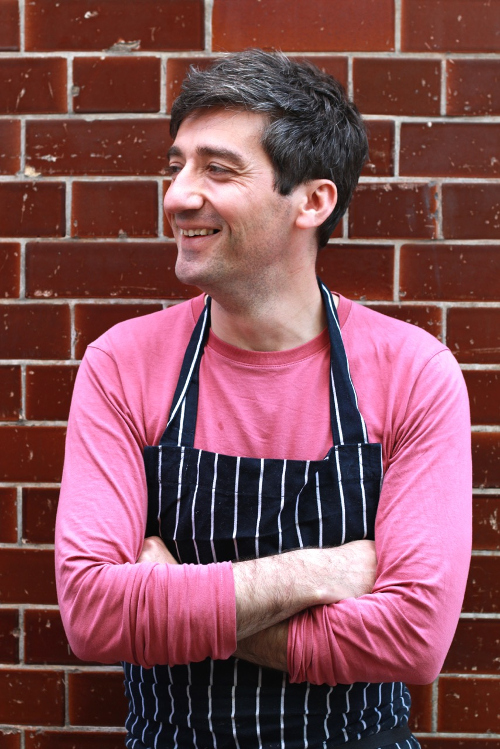
Ben Tish made his name on the London restaurant scene with his Mediterrean twists on tapas. After establishing himself under another Skegness original, Jason Atherton, at the Maze and a stint at the Ritz, he earned the top job, head chef, with Salt Yard restaurant group. Now, he is a partner with the group and his influence can be seen across the four award-winning restaurants they own (Dehesa and Ember Yard in Soho, Salt Yard in Fitzrovia, and the Opera Tavern in Covent Garden).

Tish has just finished his second book, focussing on the charcoal-smoked dishes that have proved such a success at the Ember Yard (the restaurant has a custom built, Basque-style grill). Although his influences come from overseas, he promotes seasonality and local produce with most of his vegetables provided by an organic school farm in Shepherd’s Bush. If your take on barbecue is English summer-soggy, or else burnt to a crisp, Ben is here to help: his take on smoked cuisine is inclusive, simple and designed to be an option all year round.

PORT sat down with Ben to discuss the lighter side of barbecuing, getting away from its macho image, and why we should be all be treating our outdoor grills as just an extension of the kitchen.

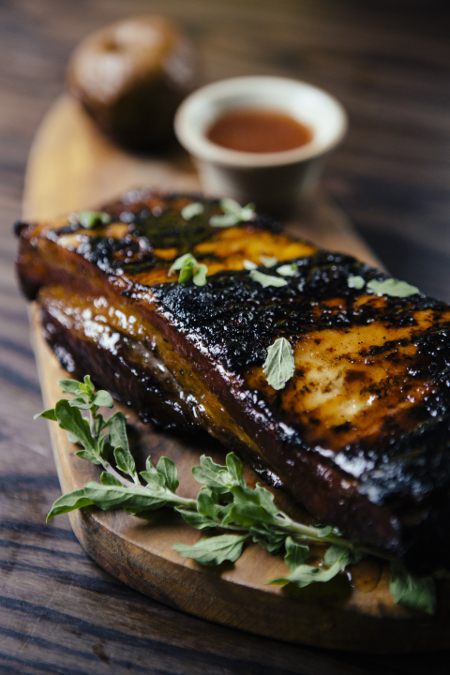
Hot smoked belly of Old Spot with Basque cider

When did you start cooking?

I started cooking professionally 21 years ago but had a few sessions with my dad back in the day. Friday nights at the Tish household were often based around me and my dad getting up to all sorts experimenting in the kitchen. There was often a flambé or two.

I was born and bred in Skegness, Lincolnshire – no food culture as such but both my Grans were amazing cooks in very different ways. I’ve always enjoyed good tasty food though and good quality produce. Working for different chefs and travelling has shaped my style over the years and now I cook a range of Mediterranean inspired dishes with a focus on Spain and Italy.

Ember Yard restaurant in Soho

What brought you to barbecue?

I’ve always liked the theatre and occasion of cooking outside on a barbecue but travelling to Spain and Italy inspired me to do what we do but over charcoal and wood. I think the Spanish Basque country in particular has been a real inspiration and I love the grill restaurant Extebarri for its refined grilling and smoking techniques. It’s not just about meat – not at all actually. It’s really about the barbecue as an extension of the kitchen and harnessing its smokey qualities.

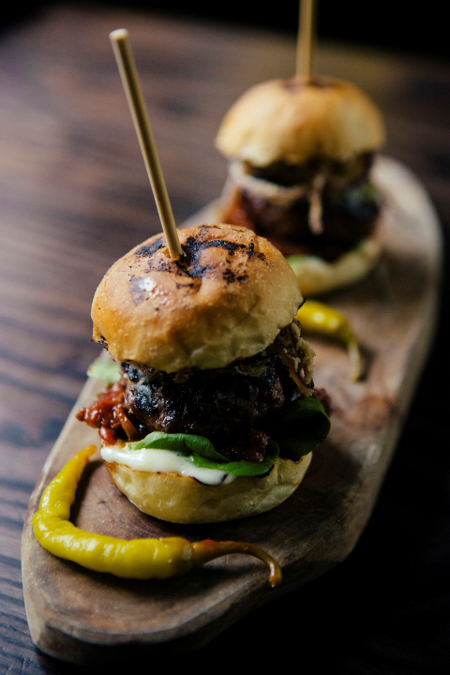
Smoked Basque burgers

Were there chefs that you trained under that taught you any techniques you now use?

No, not really. Although I’ve learned a lot about cooking form various chefs, we didn’t cook over charcoal. I learnt mainly from travelling and eating at restaurants that used the charcoal method. Every house and restaurant in Tuscany and the Basque country has an outdoor grill to cook on as part of the kitchen. They understand that something cooked like this has amazing flavour and texture. Jacques Fourie our chef at Ember yard is a barbecue nut – I also learnt a great deal from him.

How can barbecuing be more flexible?

When I wrote the book I wanted to shift away from the perceived machoism and testosterone of barbecuing. Yes, there’s hunks of meat but they sit side by side with delicate fish and vegetable dishes with just a faint hit of smoke. I want this book to appeal to everyone who likes to cook not just those who are barbecue fanatics. There’s so much more to it. I also want to move away from the ‘summers here, wheel out the barbecue’ mentality. Think of it as an extension of the kitchen and when you want a delicious smokey, charred dish then get the barbecue lit and cook.

Quince-glazed Iberico ham with celeriac pureé

What are some of your favourite recipes from the book?

I think the desserts are surprising and interesting, and all very achievable at home to boot. I also love the whole brill grilled with seaweed butter and the chicory with pomegranate molasses – not your usual barbecue fayre. The cuttlefish dish is also a winner.

Ben Tish is the executive chef of the Salt Yard Group, with restaurants including Ember Yard and Dehesa. His latest book Grill, Smoke, BBQ is available the 21st April

Chef Nobu & Japan’s Porcelain Island

Having established his eponymous restaurants on all five continents, PORT meets acclaimed chef Nobuyuki Matsuhisa as he turns his hand to tableware

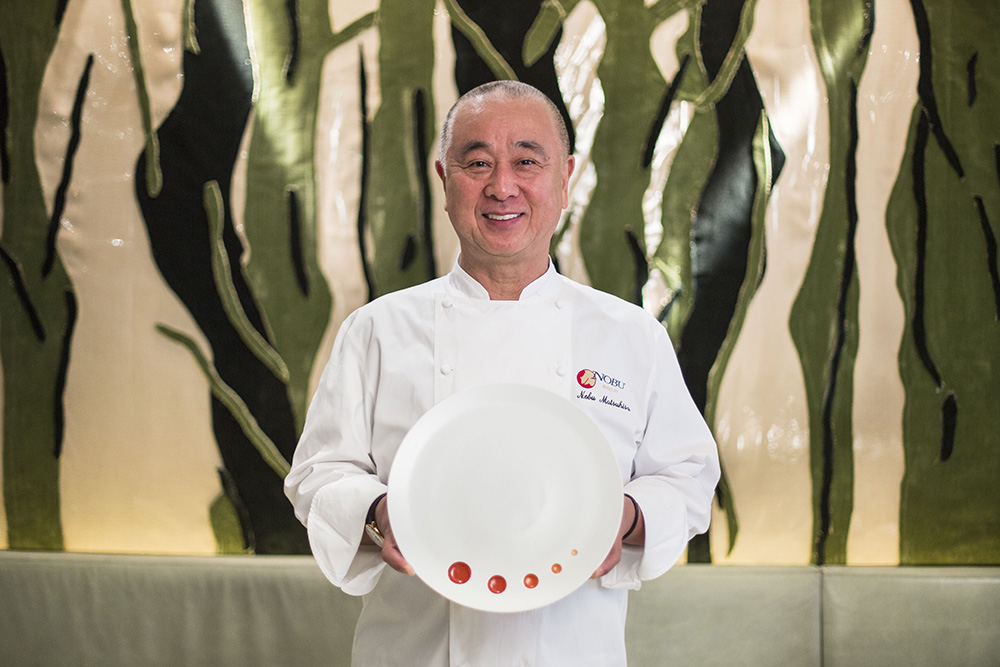
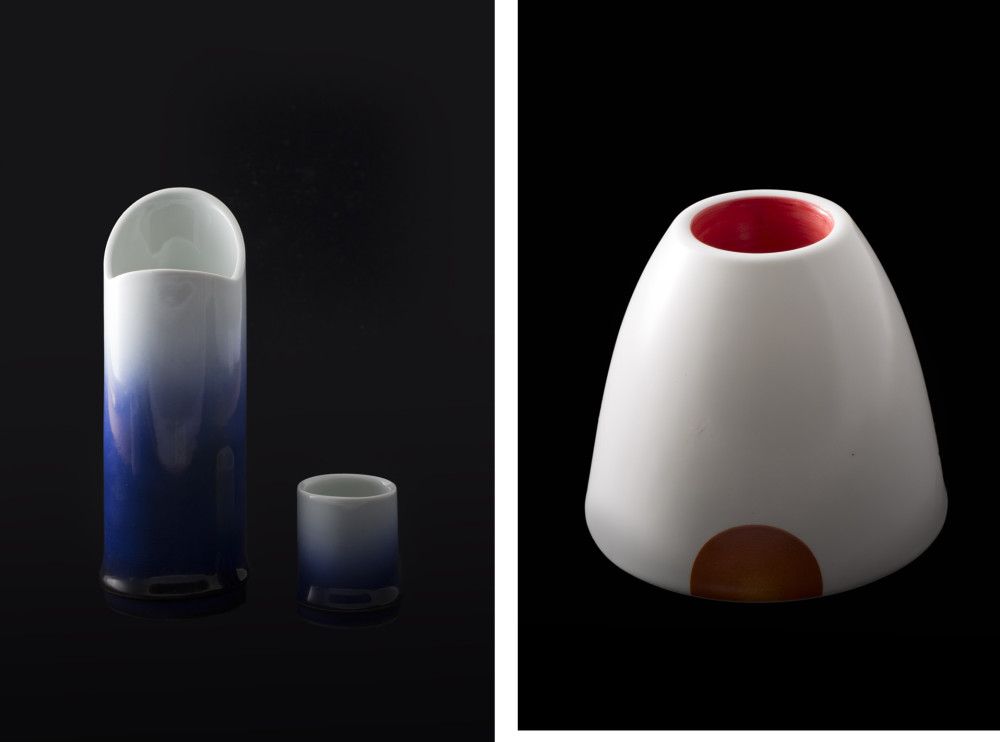
Chef Nobu holding the Arita X Nobu Dessert Plate

This year marks the 400th anniversary of the discovery of kaolin, the essential raw material used in the production of porcelain that was first found in Arita – a small town on the southernmost of Japan’s four main islands. The porcelain has a long and influential history, having been traded to the West at prices similar to gold and it’s also thought to have inspired Messien and Chantilly potteries. To commemorate this past, Japanese porcelain producers Arita Plus has collaborated with acclaimed chef Nobuyuki Matsuhisa on a new tableware collection.

Designed by Nobu to be used throughout his eponymous, Michelin-starred restaurants across the world, the Arita Plus x Nobu tableware range is based on the concept of Wa – the Japanese idea of harmony, peace and teamwork, which is central to the Nobu philosophy. Just as Nobu’s restaurants reflect their locality while being grounded in a Japanese tradition, so too does the collection, which includes plates, sushi roll holder, sake set and a matcha bowl.

Here, PORT sits down with Nobu at his Mayfair restaurant to discuss the collaboration with Arita Plus, maintaining quality across worldwide restaurants and what he does on his rare days off.

Left: Arita x Nobu Sake Set – Right: Arita x NobuSushi Roll Holder

How do you ensure there is consistency across your restaurants around the world?

My first restaurant was opened in 1987, almost 30 years ago. Then I opened in New York, 21 years ago, and even Nobu London has been open 18 or 19 years. When I start a restaurant they become part of the Nobu family. Like children, the restaurants and the people who work in them grow up to understand the Nobu philosophies and now I feel confident for these people to travel in place of me when I’m too busy.

How did the collaboration with Arita come about?

Arita approached me because I have almost 40 restaurants in five continents and thought I was uniquely placed to introduce its porcelain to the world. I was also very excited to make my own plate – I saw it as my canvas, as my own design, and it’s a huge honour to be part of 400 years of history.

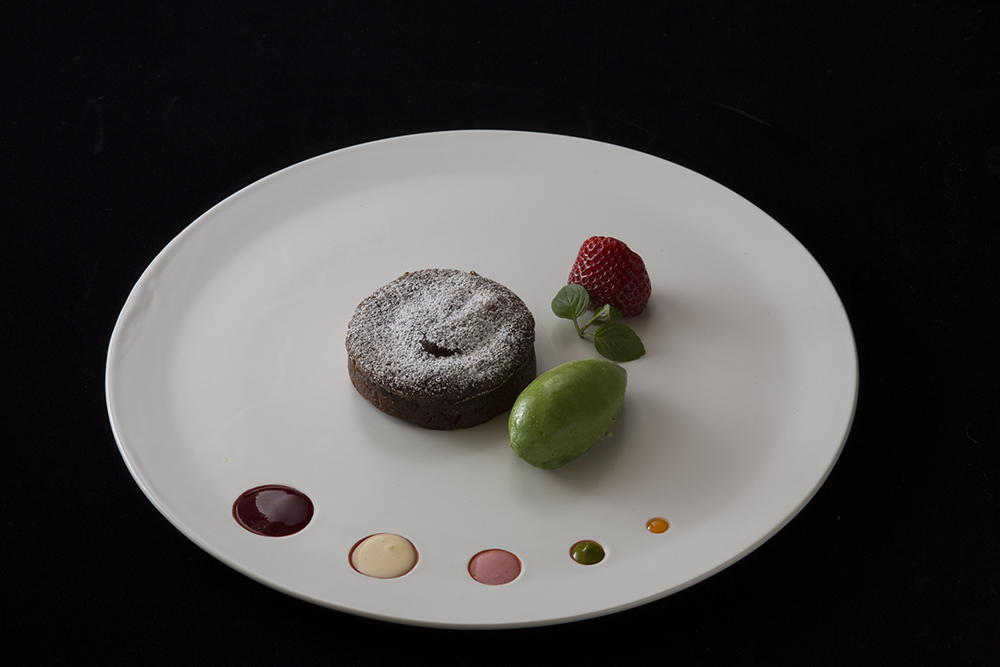
The Arita x Nobu Dessert Plate features 5 sauce holders

What were your key concerns when creating this collection?

It is impossible to use very high-end porcelain in restaurants, but I still appreciate top quality products. The design is important too; I am Japanese so I wanted to introduce some elements of Japanese culture in the porcelain.

The Arita plates have circles and half circles painted in a gradient, which represents the morning sun but also recalls the Japanese flag – a symbol you can immediately recognise. I also dislike seeing fingerprints on the edge of a plate so I specified that a special type of matt glaze should be used.

What do you do when you’re not in the kitchen?

When I cook, I create, I design, it goes to the tables and customers love it. But when I’m not cooking I like to paint. When I’m working on a canvas – whatever the design, the colour, or the style – I don’t have to explain anything I do. When they see my painting on the wall, some will say it’s good, others will say they don’t like it, but I don’t mind. I just want to present myself.

Questions of Taste: Tom Aikens

British chef Tom Aikens discusses his fast-paced career and the ethical approach behind his award-winning restaurants

tom aikens

Tom Aikens’ career took off fast. At 26, he had already won two Michelin stars, and remains the youngest British chef to ever achieve such an accolade so quickly. He attained yet another star with the first of his self-titled restaurants, the much-loved ‘Tom Aikens’, and in 2006, he took a chance opening the more relaxed, brasserie-style ‘Tom’s Kitchen’. It was a busy and encouraging start for what looked like a promising career. However, it wasn’t all plain sailing.

In 2008, Aikens ran into some financial difficulty after an ill-fated fish and chips restaurant went out of business after six months, leaving the chef with a less-than-desirable reputation with his suppliers. In the years since, that reputation has been carefully rebuilt, with Aikens taking close care of his brand and his chosen projects. He’s also stuck firmly to a code of ethics across his restaurants, which has come to define his cuisine.

The principles behind his chain of ‘Tom’s Kitchen’ restaurants – now four in London and another in Istanbul – are simple: use the best, seasonal, and local ingredients to create classic and comforting food. Way before the ‘Buy Local’ trend was a staple in your typical restaurant’s menu, Tom’s Kitchen was completely open about its food sources, and insisted on working with local suppliers.

We caught up with Aikens to discuss his early introduction to the idea of ‘grow-your-own’, the discipline he learned as a young chef in some tough kitchens, and his commitment to supplying food ‘at its best’.

Tom's Kitchen, photography by David Griffen
Tom’s Kitchen Chelsea, photography by David Griffen

How did you first begin cooking?

For as long as I can remember – probably the age of eight or so – my twin brother and I were helping out in the kitchen with my mother. She would involve us in making cakes and home baking, or just weighing things out, but we were always on hand to help to eat the occasional sticky raw cake mix that was left in the bottom of the bowl. I have a great memory of her making milk bread, the smell was so incredible.

Living in Norfolk, England, we had a large back garden where we grew a lot of our own fruit and vegetables. As a result, from an early age I got to learn about seasonality and how to grow and cook great produce. We grew lots of soft fruits – strawberries, gooseberries, blackberries and so on – that were mostly turned into jams. My mother kept them all in a large larder, which was full of things that we had made.

You began in Michelin-star kitchens under Philip Britten and Pierre Koffman. How were these chefs and kitchens an influence on your culinary style?

They have both been real inspirations to my cooking and certainly have influenced my style. Working in their kitchen was not easy, that’s for sure, but that’s probably where I learnt the most – from discipline, to solidarity and cooking techniques.

When did you first break out on your own as a chef and restaurateur?

I became the youngest British chef ever to be awarded two Michelin stars, aged just 26, so that was a huge part in my chef’s career. I remained at Pied-à-Terre for five years, then went on to open Tom Aikens restaurant in Chelsea, which won a Michelin star and rising 2 star in 2009.

What inspired you to open Tom’s Kitchen with a brasserie style menu?

It was just something that I wanted to do and there was a huge gap in the market for all-day dining. This was a concept I came up with myself and with no real inspiration from other places, that’s for sure. It was utterly unique for its time back then and still is. We were definitely the first to openly share and promote our suppliers too.

Tom's Kitchen, photography by David Griffen
Tom’s Kitchen Canary Wharf, photography by David Griffen

Can you talk about joining Hong Kong restaurant The Pawn? What drew you to the city?

I had an existing relationship with one of the co-founders at Press Room Group, which owns and manages The Pawn. When I was introduced to the revamp project. it was a no-brainer really.

I’ve always loved Hong Kong and this seemed like the perfect opportunity for me to make my footprint in Asia. With the culinary scene there being so vibrant, it is giving me the opportunity to experiment a lot with Asian ingredients like yuzu, miso, mitsuba, wasabi, different types of Asian mushrooms and more. I always find myself exploring different produce in Hong Kong and try to eat local and Asian as much as possible, to learn more about the ways of cooking and different flavour profiles.

I have also started working with new Asian suppliers, which was a new experience for me, but I have been really impressed with the produce I am getting. We just switched to a Japanese supplier for our mackerel, it’s so fresh. The pork I source locally and have been amazed with the quality… it’s so tender.

Can you tell us more about your food-sourcing and grow-your-own policies?

I’m passionate about cooking with fresh seasonal produce. I love going to markets and meeting with our suppliers to see what is on offer. The ethos of Tom’s Kitchen is to use the very best seasonal and locally sourced ingredients, therefore all Tom’s Kitchen restaurants work with British suppliers and farmers that are as passionate about growing as the chefs are about cooking.

What will your next restaurant venture look like?

I love to open new restaurants as it is always a different adventure and a great challenge. I am looking into a new restaurant in London in the coming year.

Abroad is a lot of fun as you get to discover a new environment, new produce, new tastes, etc., which are all very good for my cooking style and developing it further.

Below, Tom Aikens shares his recipe for Baked Alaska, a crowd favourite at Tom’s Kitchen

baked alaska edit 2

Baked Alaska SERVES 4

INGREDIENTS
Baked Alaska
1 x panettone
Four scoops of vanilla ice cream
Meringue
70ml water
35g glucose
300g Caster Sugar
150g Egg Whites

METHOD
1. Slice the panettone about 2 cm thick and then place in the base of the copper pan or ovenproof dish, then scoop in approximately 4 scoops of vanilla ice cream, covering the base of the panettone. To make the meringue, put the sugar, water and glucose in a thick based sauce pan. Place over a moderate heat and stir until it boils. Skim the surface and wash down the crystals with a clean brush dipped in water. Increase the heat so that the syrup cooks rapidly. When the syrup temperature reaches 110 °C beat the whites until stiff. When the syrup temperature reaches 115°C slowly whisk it into the whites in a thin stream taking care not to let it run onto the whisk. Continue beating until completely cold (approx. 15 minutes).

2. Pipe the meringue on top of the ice cream using a star nozzle till the ice cream is completely covered and the meringue is piped up into a dome shape.

3. Place in a 220˚c oven till the meringue is golden in colour, you may need to turn the meringue around half way through cooking to get an even colouring.

4. Once baked serve immediately with a small shot of Grand Marnier.

Tom’s Kitchen restaurants are located in Chelsea, Canary Wharf, St Katharine Docks and Somerset House