Spacey & Gyllenhaal: the first shot

PORT travels to Hollywood to meet Kevin Spacey and Maggie Gyllenhaal, who discuss their roles as mentors in Jameson’s First Shot competition for budding directors
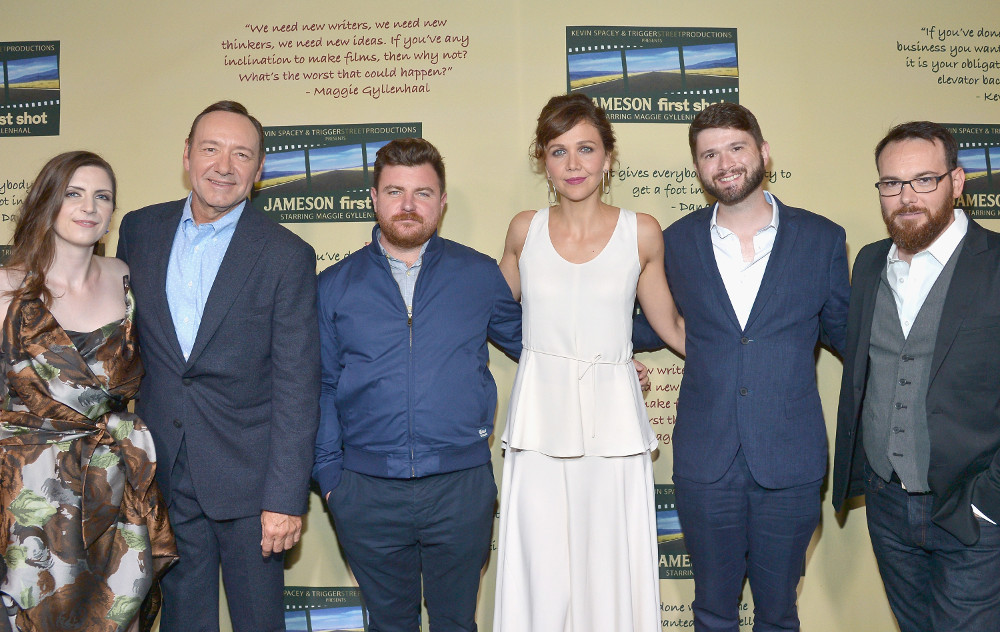
From left: Kat Wood, Kevin Spacey, Jason Perini, Maggie Gyllenhaal, Cameron Thrower and Dana Brunetti – Photo by Charley Gallay/Getty Images for Jameson / Pernod Ricard

When I arrive at Paramount Studios, Maggie Gyllenhaal is sitting in her trailer as crowds gathers outside the iconic Bronson Gate, waiting for the premiere to start. It’s a familiar environment for the 38-year-old Hollywood actress, whose filmography includes a swathe of blockbusters – Dark Knight and Crazy Heart – and modern cult classics, such as Donnie Darko and Lenny Abrahamson’s Frank. But for the three young directors sitting opposite her, this is unfamiliar territory.

As joint winners of Jameson First Shot 2016 Cameron Thrower (USA), Kat Wood (UK) and Australian Jason Perini (Australia) are at the beginning of an exciting road. Now in its fifth year, the competition is a collaborative project between the whiskey brand and Spacey’s Trigger Street Productions, and provides a platform for budding writer-directors to bring their scripts (strictly limited to 5–7 pages long) to the silver screen.

“I’m a product of someone believing in me early on, giving me opportunities, putting me under their wing, nurturing me – so to now be in a place in my life where I can do this sort of thing is so important to me,” Spacey tells me, on the eve of the premiere. “I’m so proud of what they’ve done and the films they’ve made.”

Besides benefitting from the mentorship of Spacey, now 57, and the use of a Hollywood-standard production team, each winner was able to cast Gyllenhaal as the lead in their films. Starting in 2012 with Spacey filling the main role, the First Shot series has seen Willem Defoe (2013), Uma Thurman (2014) and Adrien Brody (2015) all take centre stage. All actors essentially ‘went in blind’, as the winning scripts wouldn’t be picked until after they’d signed up. But this didn’t deter Gyllenhaal, who instead saw an opportunity to work with emerging talent.

“When they asked me [to do First Shot], they sent across a few of the previous films that had been made and I thought they were really good,” Gyllenhaal explains. “I just thought, ‘what a cool way to do something generous’.”

“I’m incredibly grateful to Maggie. Normally, an actor knows a script and a director [beforehand], and they make a judgement about whether they’re going to do something based on that,” Spacey says. “But we’ve asked them to not only to take that leap of faith with one movie, but to take a leap of faith with three.

“The fact that the actors have done this every year is really valuable,” he adds, “because it sends a message that it’s important for the film industry to be really cognisant.”

The three winning shorts — Home by Wood, Beauty Mark by Thrower and The New Empress by Perini — all show a level of filmmaking experience and storytelling prowess well beyond the years of their respective directors. Given that nearly 20,000 scripts were submitted to the competition, I was curious to find what it was about these three that caught the judges’ eyes.


Home by Kat Wood sees Gyllenhaal take on a somber role as Ruth – a homeless woman who has been living in a tent on a beach (for reasons that are never explained to the viewer) until it is destroyed as part of a prank by passers by. A good Samaritan soon comes to her aid, but has trouble convincing Gyllenhaal’s character to accept a generous offer.

Home was very different to the other two projects – I was immediately drawn to the script,” Gyllenhaal says. “It was the simplest in terms of shooting; when there’s a simplicity to the story, and space in it to express many things, I can give it a piece of myself.”

“I’ve never directed anything before, so to go from being a screenwriter for a few years to directing my first film with an Academy Award-nominated actress and working with such talented people was absolutely amazing,” Wood says, before revealing that she’s just been giving funding by Creative England to fund her first feature-length.

“It was great to be able to talk to Maggie about her ideas for the character’s backstory,” Wood says. “I found it really rewarding just to be able to have that collaboration.”


Eccentric in its plot and playful in its execution, The New Empress by Perini is the light relief among the three productions, and reveals a promosing comedic writing talent in the young Australian actor-turned-director. It opens with Gyllenhaal’s character, Olive, being dumped in a kitsch Asian restaurant, and the viewer can’t help but feel sorry for her. The oddly matched pair soon realise they’ve lost their wallets and can’t pay the bill, but after some quick thinking on Olive’s part they manage to get away with it. The night then spirals into a bizarre freeloading tour across town, before she elopes with an even more unlikely partner.

“I picked [Perini’s] script out of the 20 shortlisted because it was so unconventional,” says Gyllenhaal, “I hadn’t read anything like it before.”

“I was intimidated before meeting Maggie, and anxious about it, because how could you not be?,” Perini says. “But very quickly she was so open and warm, and really friendly towards me, so I felt confident that I could collaborate with her on this.”

“The thing I learned most by watching her was what a freakishly good actor she is. She brought new and interesting things to each take, while being really true to what I had written,” he adds.

“This experience has been so positive, and people have been so kind and generous, and I’ve worked with such talented people, it’s made me think I’d love to be able to do this for the rest of my life.”


Creator of Beauty Mark, Cameron Thrower, is undoubtedly the most experienced out of the trio, having spent several years making indie films. But winning the Jameson First Shot competition afforded him the opportunity to work with a professional crew and to finally realise the film he “wanted to make.”

The short sees Gyllenhaal play Valerie Williams, a door-to-door cosmetics saleswoman, who changes one customer’s life forever by helping them reveal a side of them they’ve been concealing. Perhaps the most polished of the three shorts, Thrower’s script is expertly brought to life by Gyllenhaal and her co-star, Connor O’Farrell.

“Maggie was so professional, I learned so much from her,” Thrower tells me. “I feel like she treats big blockbusters that same way she treated each of our three films. She just wanted them to be the best that they can be.”

“In my experience, the most experienced and the most talented directors I’ve worked with are also, without exception, the most collaborative,” says Gyllenhaal. “The people who are least collaborative are the ones who are scared.”

“One of the things that was so nice about working with all of these directors was that it was a collaborative experience,” she adds, “and that is a mark of confidence, I think, in all of them.”
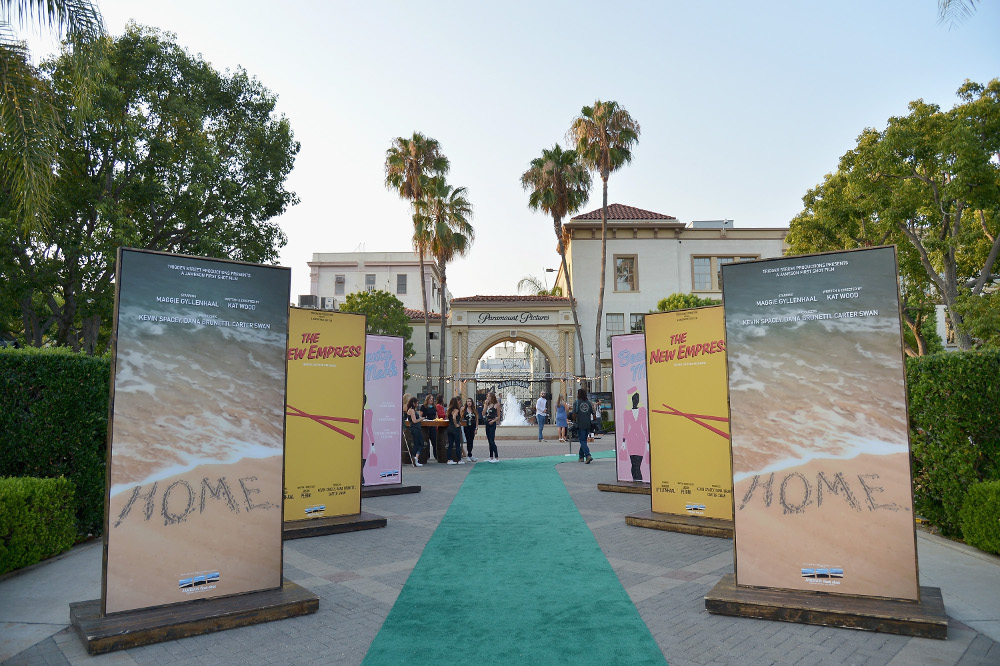
Posters for the winning films of Jameson's First Shot Short Film Competition sit alongside the green carpet at Paramount Pictures Studios – Photo by Charley Gallay/Getty Images for Jameson / Pernod Ricard
Posters for the winning films of Jameson’s First Shot Short Film Competition sit alongside the green carpet at Paramount Pictures Studios – Photo by Charley Gallay/Getty Images for Jameson / Pernod Ricard

When asking the winners if they had any words of advice for those hopefuls considering entering Jameson First Shot next year, there was a common thread among their responses: be willing to take risks and don’t let rejection deter you.

“All they can say is no, and then you enter next year,” says Wood. “I was shortlisted in 2015, but I thought I’d try again. You’ve just got to keep going, it doesn’t matter if you get rejected.”

Despite their own stardom and Hollywood success, it’s encouraging to see that the importance of grassroots competitions like this is not lost on Gyllenhaal or Spacey, who seem happy to shoulder the responsibility of mentoring the new wave of directors and screenwriters.

“It’s not that [the three directors] just won the money to make their movies,” says Gyllenhaal, “it’s that they won the interaction with people who have been doing this for a long time and have that experience.”

“We have to support emerging talent, trailblazing filmmakers, the next generation, because not enough of it is done,” Spacey tells me, “so I’m very happy that we’re able to do this.”

“We’ve had filmmakers that did our films and then before you know it, they were getting their first feature produced and supported in their own country,” he concludes. “We hope it’s a leg up. And the beginning of what will be a very fruitful career for them.”
jamesonfirstshot.com

The Judoka: George Kerr

In this exclusive short film, one of the world’s top Judo champions, George Kerr CBE, recounts travelling from Edinburgh to Tokyo in 1957 to attend the ultimate training academy

In this short film, we meet one of the world’s top-ranked Judoka’s, George Kerr CBE, who invites us into his home and dojo in Edinburgh, Scotland. Created by Richie Georgie – a film making collaboration between Rich Round-Turner and George Daniell – the mini-documentary forms part of a wider series called In Their Time – a collection of vignettes that capture a day spent in the company of retired athletes and former national champions, who each reflect on their experiences on the competitive world stage.

“George is regarded as one of Judo’s greatest competitors,” Daniell tells me. “In 1957 he ventured from Edinburgh to Tokyo, taking over a month to travel by train and ship. It’s a story of adventure.”

george kerr feature
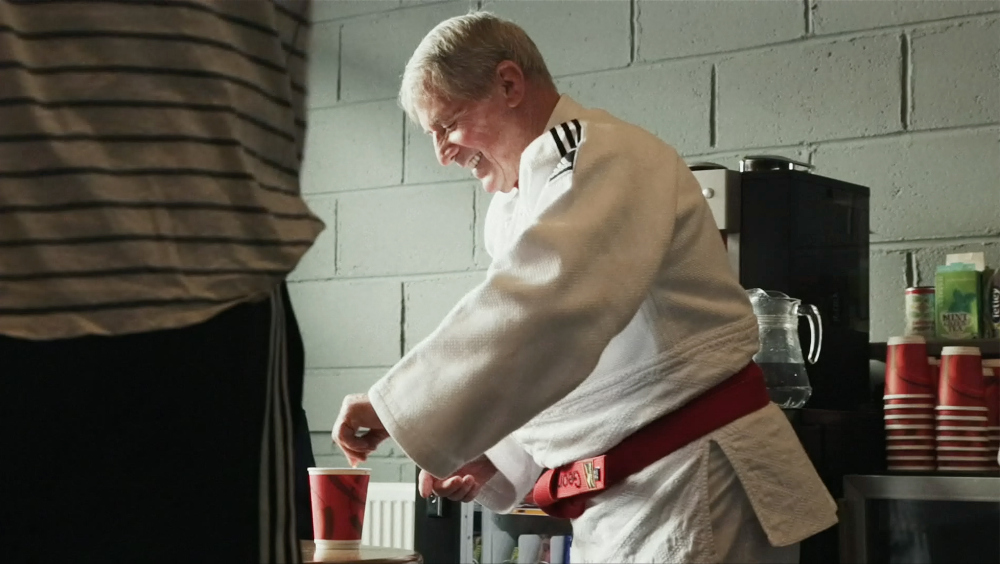
George Kerr in his Edinburgh dojo – film still taken from ‘In Their Time’

The film’s charm stems from Kerr himself as he recounts his journey from working-class life to spending four years in a top Japanese Judo academy, before becoming one of the most important Judoka’s in the world.

“The excitement for us was the discovery of little-told stories, some which have been forgotten and some which were never told,” explains Daniell. “So far we have documented the life of a north London-born boxer; a champion cyclist whose professional career began at the Herne Hill velodrome in south London; an Olympic gold-medal winning bobsledder who now farms in Devon; and a lady from Northern Ireland regarded as the all-time greatest lawn bowls player.”

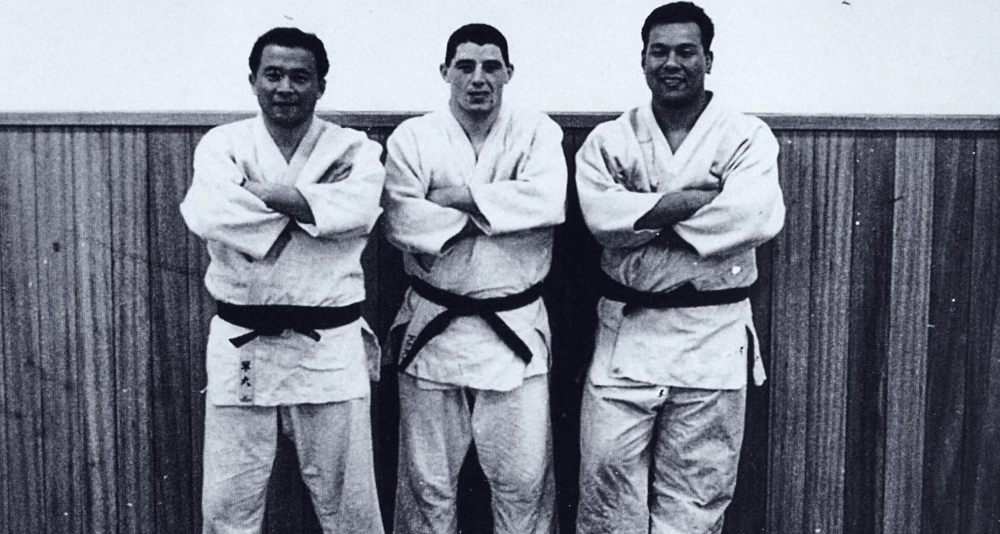
George Kerr and his training partners Osawa and Daigo at the KODOKAN Institute Tokyo, Japan, 1958

“The sports stars we have met so far were champions before mass media. They have stories of greatness which were never broadcast widely,” Daniell says. And these stories of greatness are all the more fascinating due to the simple and generous way they are told by the champions themselves.

“Kerr cares about the past, present and future of Judo. We wanted to hear him talk about this in person,” Daniell concludes. “We want to unearth the stories and give these sportsmen and women a chance to recount their adventures, looking back on what it means to them now.”

All five films from the ‘In Their Time’ series will be shown at an exhibition at Dream Bags Jaguar Shoes, beginning 7 July 2016

When I Run

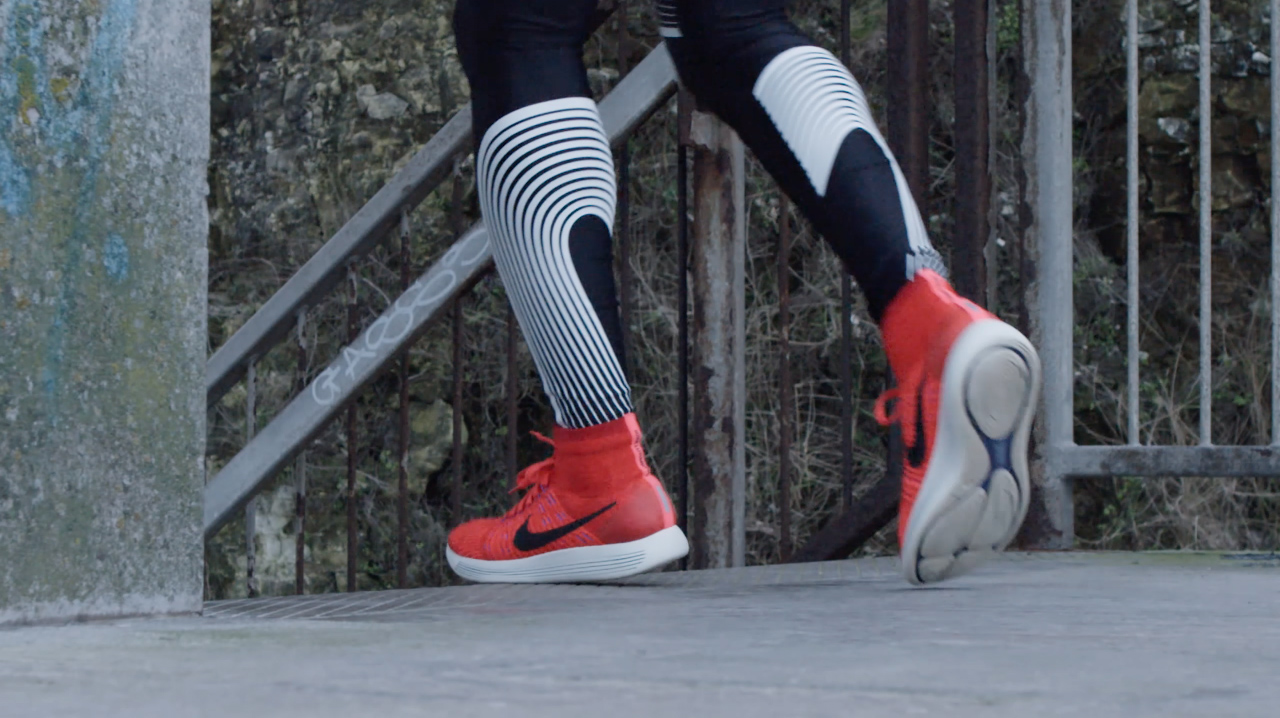
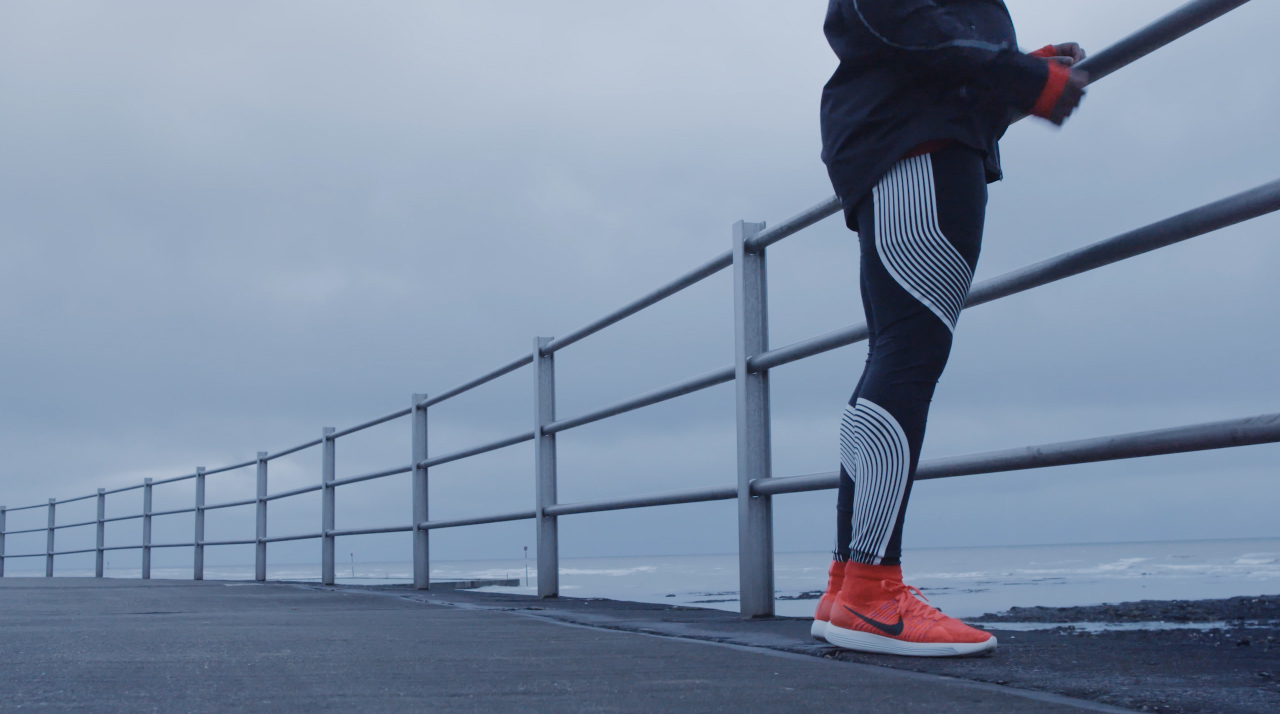
To celebrate the launch of their new LunarEpic Flyknit trainer, PORT teams up with Nike to present a new short film inspired by the motivation and dedication of the lead coach of the Nike+ Run Club in London and founder of TrackMafia, Cory Wharton-Malcolm

Running is the simplest and yet, perhaps, the most difficult form of exercise. When it’s just you on the road, alone, how far, how long and how hard you run depends entirely on yourself and your ability to push, to keep going, to keep mind over body, and keep running.

It’s this moment of motivation, of pushing oneself, that provided the inspiration for Nike’s innovative new running shoe, the LunarEpic Flyknit. Borrowing the ankle collar from the Mercurial football boot, already championed by the likes of Cristiano Ronadlo and Zlatan Ibrahimovic, and integrating their light and strong flyknit technology, at once flexible and supportive, the LunarEpic is designed to make running feel as natural and effortless as possible – all to help the wearer feel they can push themselves further, to keep running.

For Cory Wharton-Malcolm, who started running ten years ago and is now lead coach of the Nike+ Run Club in London, it was this self-motivation that led him to work his way up to running his first marathon. Now with over ten marathons and 25 half marathons to his name, he shares his techniques and what keeps him running in this short film, directed by David Ryle.

Below, Wharton-Malcolm spoke to PORT about why he started running, his work encouraging more people to run and whether he will ever stop running.

NIKE 3

Why did you start running?

I went to see a friend run the London Marathon in 2006. I was inspired and wanted to run it the following year but, at the time, I didn’t run, was overweight and incredibly unfit. Slowly but surely, though, I ran further and further, lamppost by lamppost, road by road, and then finally block by block. Eventually I managed a 5k, then 10k, then a half and finally my first marathon, a year later.

What motivates you when you run?

The people around me, my city, being a better version of myself and, weirdly, that feeling I get when I’m running on the edge yet I’m in control of my body and know exactly what it’s doing.

I keep running because if I stopped I’d miss that feeling I get when I move. I’d miss my lifestyle, my friends, my travels and, most importantly, I’d miss the sound of my breathing being completely in tune with everything else.

NIKE 2

Can you talk a little about TrackMafia and your involvement with it?

I founded TrackMafia with two friends. Our aim is to revolutionise the way that track is viewed by ordinary people. Based at Paddington Recreation Ground, we meet every Thursday to offer knowledgable advice on running technique, strength, conditioning, nutrition, apparel, races, footwear and facilities.

With our experienced coaches we aim to change the mindset of those that believe that track is a place where only elite athletes run when, in fact, the track is perfect place for runners of all abilities to build both their confidence and consistency.

Can you ever see a time when you would stop running?

Realistically, no. I see people still running marathons in their 80s and 90s. Why would I be any different?

Cory Wharton-Malcolm is a lead coach with the Nike+ Run Club, editor of the running magazine The Black Print and runs bespoke fitness sessions

Director David Ryle
Art Direction and Production StudioMM
Director of Photography Jorge Luis Dieguez
DIT James Goldsmith
Sound Recordist Lewis McCarthy
Stylist Laurie Lederman
Colourist Jack McGinity
Editor Ben Boullier
Original Music Jean-Gabriel Becker

The New Persol Generation

As eyewear brand Persol launches its new collection, PORT presents the UK premiere of a short film featuring emerging actor Scott Eastwood

Novelty is key in fashion and stagnation is its biggest enemy. New people, products and collections are constantly introduced and it’s that energy and attitude that rule the shelves. If you can link this innovation to a classic product or iconic person, while presenting a newness that people recognise, then you might just be on to a winner.

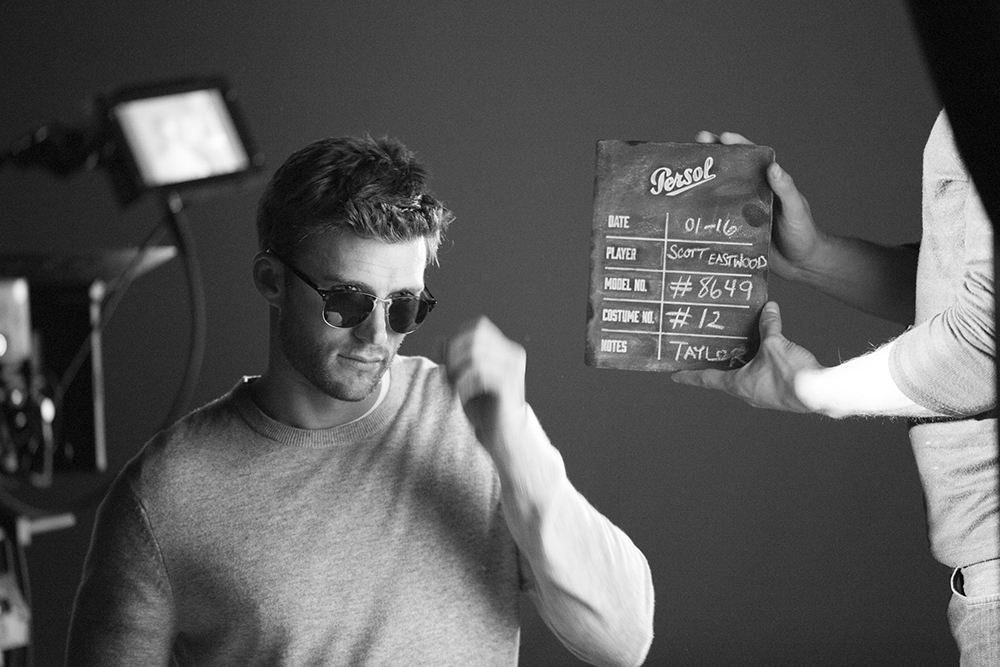
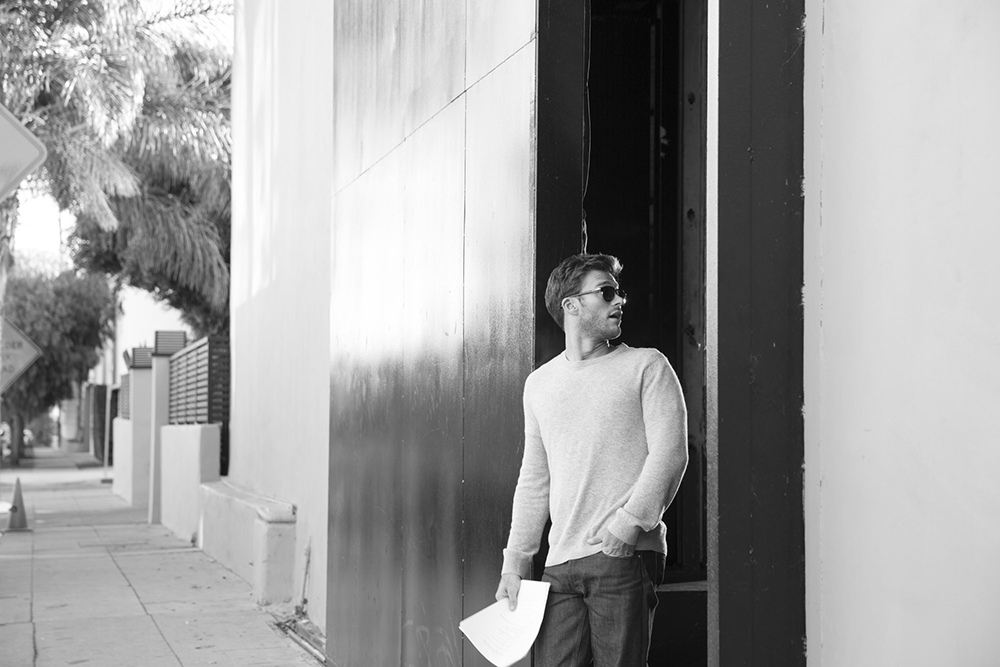
So it goes for sunglasses as for actors, and that’s why Scott Eastwood – son of Clint – is the new face of Italian sunglass experts Persol.

Scott Eastwood, behind the scenes of the Persol film

Synonymous with Italian style, the famous ‘sprezzatura’ – meaning a studied nonchalance – the campaign serves to emphasise Persol’s longstanding relationship with cinema. Steve McQueen’s appearance in 1968’s The Thomas Crown Affairbeing a prime example of this, where the iconic American actor sported a pair of yellow framed, blue-lensed 714s.

Persol_Scott Eastwood_Behind the Scene Pictures (20)

Directed by Andrew Dominik, the short film highlights Persol’s interest in the next generation of rising stars, like Scott, who have become the brand’s new icons (Clint’s youngest son is set to star in the upcoming ‘Snowden’ biopic and the superhero action/thriller Suicide Squad).

Persol.com

Anomalisa: Charlie Kaufman and the Animator

We talk to the animation supervisor behind Anomalisa, the Oscar-nominated stop motion drama from director Charlie Kaufman

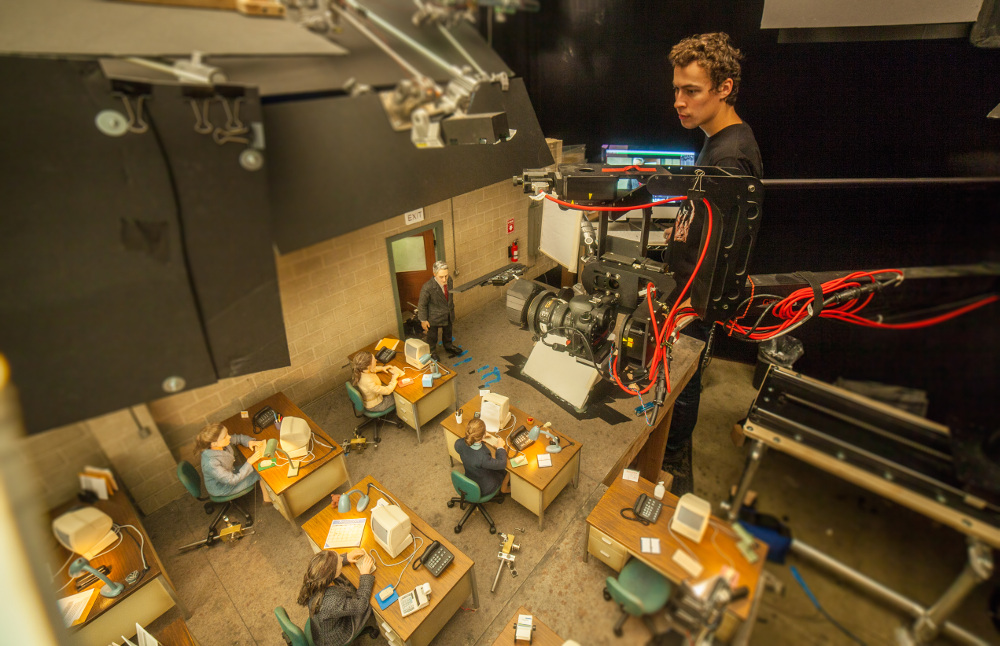
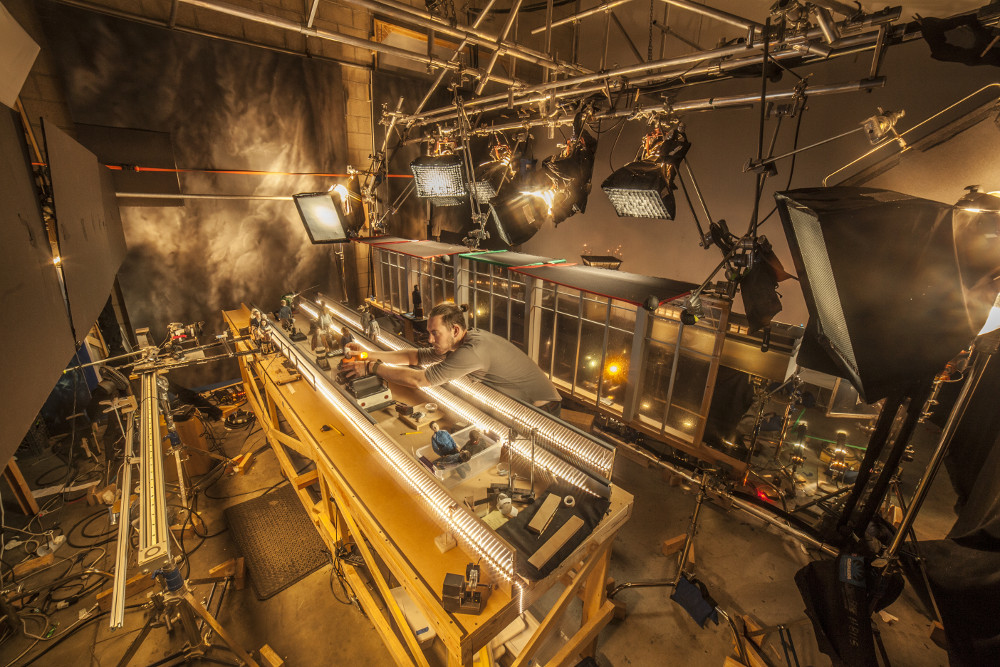
On the set of the animated stop motion film, ANOMALISA, by Paramount Pictures Photo Credit: © 2015 Paramount Pictures.  All Rights Reserved.
On the set of the animated stop motion film, ANOMALISA, by Paramount Pictures Photo Credit: © 2015 Paramount Pictures. All Rights Reserved.

Anomalisa, the stop motion drama from Charlie Kaufman and Duke Johnson, defies any expectation an audience might hold for an animated feature. The film does not elicit any chorus of ‘Aw!’; the landscape is a bleak palette of grey and beige, and the R-rating confirms that this is a film for adults only. It’s a world away from the sweet, but moralistic, Pixar canon.

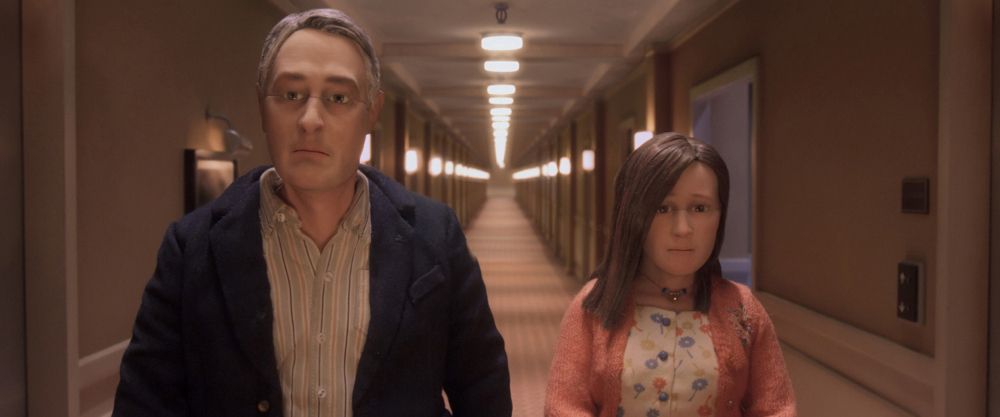
The film follows a day in the life of Michael Stone, an unmotivated motivational speaker who lands in Cincinnati to deliver a speech on customer service. The majority of the action unfolds on an airplane, a taxi, a fancy hotel, and in a car. Within these transient settings, Stone experiences a series of disappointments as he fails to connect with everyone he meets: from an overeager taxi driver, to the ex-girlfriend he had left heartbroken.

David Thewlis voices Michael Stone and Jennifer Jason Leigh voices Lisa in the animated stop motion film, ANOMALISA, by Paramount Pictures Photo Credit: Paramount Pictures © 2015 Paramount Pictures.  All Rights Reserved.
David Thewlis voices Michael Stone (left) and Jennifer Jason Leigh voices Lisa (right) in the animated stop motion film, ANOMALISA, by Paramount Pictures Photo Credit: Paramount Pictures © 2015 Paramount Pictures. All Rights Reserved.

The lack of meaning in these interactions, and Michael’s increasing desperation, is emphasised by the fact that everyone he comes into contact with is voiced, by actor Tom Noonan, in the same robotic manner. Luckily, Lisa enters, a character whose singsong voice erupts in irresistible idiosyncrasy, and Michael’s hunt for connection reaches a pinnacle.

The real star here, however, is the animation: the slightly off-kilter masks; the incredible softness of expression; each wince and crinkle of Michael’s beer belly; and the way Lisa trips and falls in a hotel corridor. The film is a reflection of craft – from the cotton-woven clouds outside an airplane window, to the many faces of the puppets. But it’s not just the physical detail that required accuracy. For example, in one scene a nervous-drinking Michael downs a Martini, which was the result of days of work by the animation team.

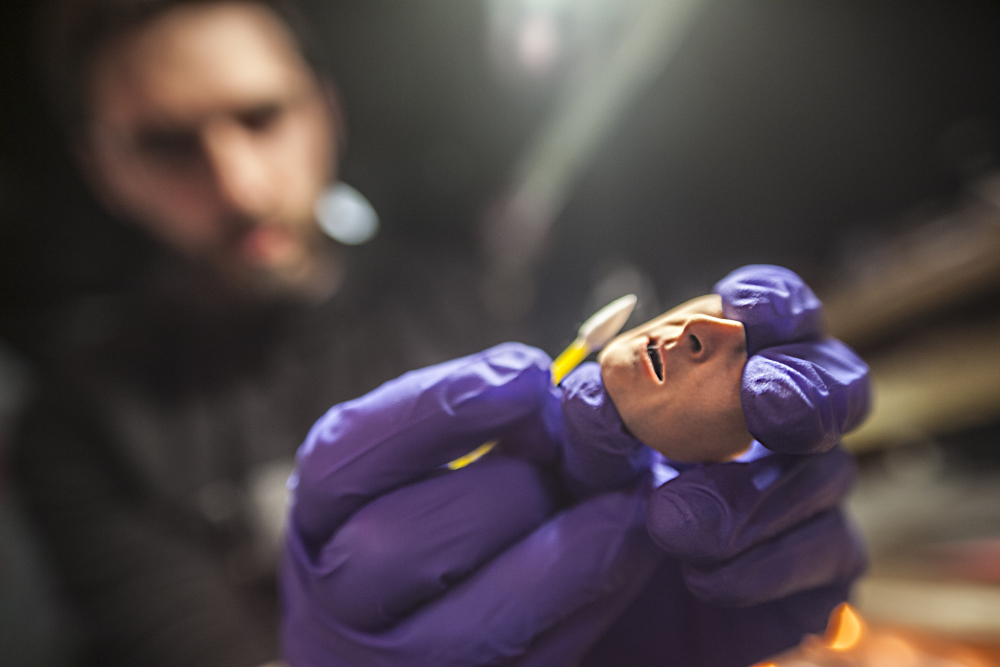
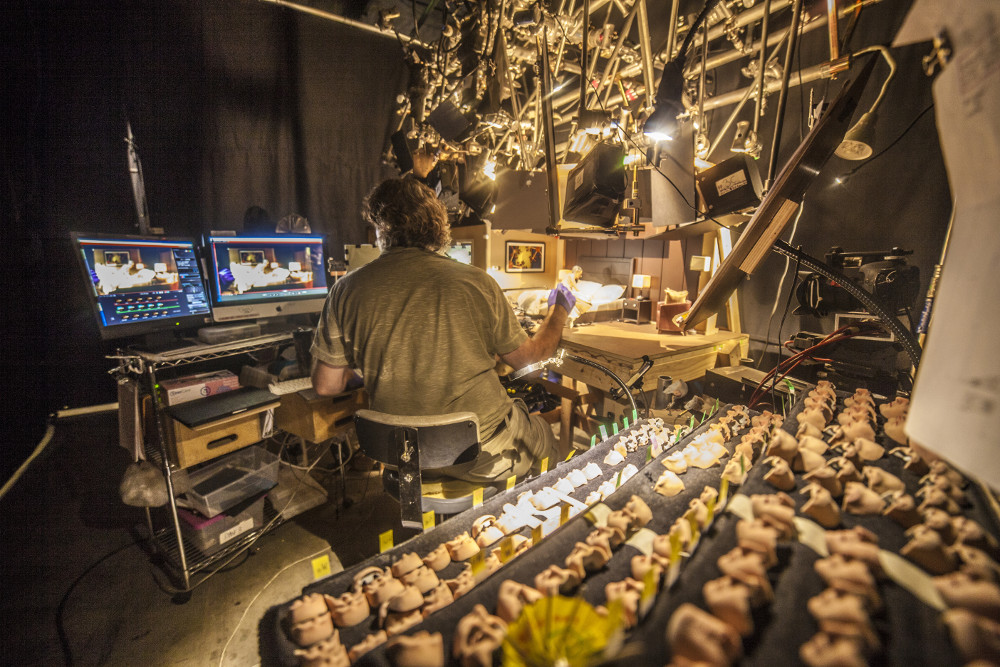
Animator, Dan Mackenzie on the set of the animated stop motion film, ANOMALISA, by Paramount Pictures Photo Credit: © 2015 Paramount Pictures.  All Rights Reserved.
Animator, Dan Mackenzie on the set of the animated stop motion film, ANOMALISA, by Paramount Pictures Photo Credit: © 2015 Paramount Pictures. All Rights Reserved.

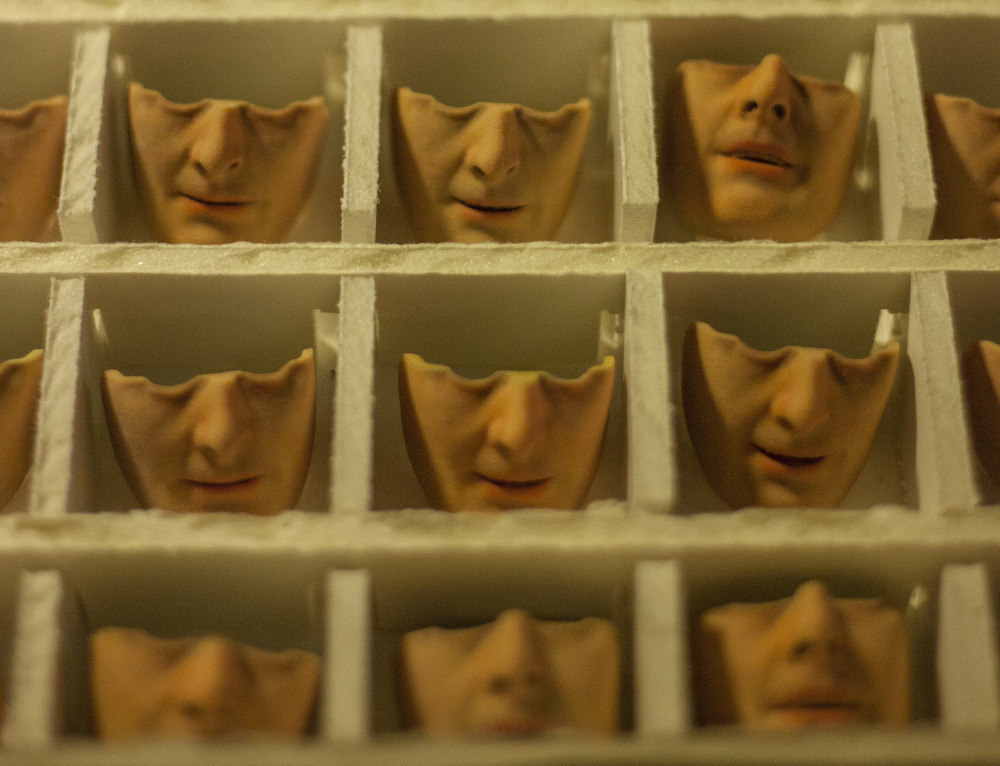
No CGI was used in the making of Anomolisa, instead, a form of stop motion animation – defined as the physical manipulation of an object that appears to move on its own – is used throughout. Specifically, the team used a notoriously time-consuming technique called replacement animation. Each of the characters’ faces was manipulated on a computer, 3d-printed, and physically swapped out by an animator for each frame. Twenty-four frames equals one second of film. The animators had a goal of two-and-a-half seconds per day. The final film is 90 minutes – or 5,400 seconds overall.

Ahead of the 88th Academy Awards, PORT speaks to Anomolisa supervising animator Dan Driscoll about his role in creating one of the most unusual films of the year.

On the set of the animated stop motion film, ANOMALISA, by Paramount Pictures Photo Credit: Chris "Toots" Tootell © 2015 Paramount Pictures.  All Rights Reserved.
On the set of the animated stopmotion film, ANOMALISA, by Paramount Pictures Photo Credit: Chris “Toots” Tootell © 2015 Paramount Pictures. All Rights Reserved.

How were you first pitched the idea of Anomalisa?

The pitch for Anomalisa was always: ‘We will make something beautiful. We will make something no one has ever seen before. It will be the most difficult thing we will ever attempt’. Charlie Kaufman would never directly say what he thought the film was about. I believe that for him, one of the most important things is that the audience reaches conclusions on their own.

What do you think is the different effect achieved by animation as opposed to live action?

I think Anomalisa is atmospheric in a way many live action movies are not. The textures of the puppets and sets, lighting, and the way the actors are represented (as puppets) requires a certain investment from the audience. There is always some suspension of disbelief when watching a movie, and possibly more so in an animated film. Combined with a very emotional piece of art, like a Charlie Kaufman script, I believe that the audience was sucked into Anomalisa as a stop motion film more than if it would have a live action movie.

On the set of the animated stop motion film, ANOMALISA, by Paramount Pictures Photo Credit: © 2015 Paramount Pictures.  All Rights Reserved.
On the set of the animated stop motion film, ANOMALISA, by Paramount Pictures Photo Credit: © 2015 Paramount Pictures. All Rights Reserved.

What were the hardest actions to animate and how did you make them realistic?

One of the challenges when animating Anomalisa was finding a balance between animations that were too subtle, and stiff – which risked falling into the uncanny valley – and over-animating, resulting in the actions becoming too cartoony. It was one of my main responsibilities to maintain consistency between shots, but all the animators are extraordinary artists and it is their experience and talent you see on the screen.

What new technology has changed animation and stop motion?

In the last decade, stop motion animation has grown because of advancements in 3D printing and image capturing software, such as Dragon Frame. Being able to build and print multiple props and dozens of faces at one time is an amazing time and cost saver. Shooting digitally using DSLRs and Dragon Frame helps streamline the process too.

On the set of the animated stop motion film, ANOMALISA, by Paramount Pictures Photo Credit: © 2015 Paramount Pictures.  All Rights Reserved.
On the set of the animated stop motion film, ANOMALISA, by Paramount Pictures Photo Credit: © 2015 Paramount Pictures. All Rights Reserved.

What other animators have influenced your work?

Like a lot of people, I grew up with the Rankin Bass Christmas specials, and loved the stop motion in the Star Wars movies. I’ve always been a fan of the Brothers Quay and Jan Svankmajer, I’ve enjoyed the textures and worlds they’ve created. Jiri Trinka is amazing. As a kid it seemed like King Kong was on television a lot, so Willis O’Brien, even though I was too young to know it at the time. Without question Ray Harryhousen’s films are very impressive. MTV also had a lot of stop motion station IDs in their early days which were always fun and odd. I am also continually amazed by the work my friends do. It’s an amazing opportunity to work with so many talented people, producing amazing work.

Anomalisa is nominated for an Academy Award for Best Animated Feature, and won the Grand Jury Prize at Venice Film Festival. It is being released in the UK by Curzon from the 11th March 2016

Sherpa: Life And Death On Everest

Filmmaker Jennifer Peedom discusses her BAFTA-nominated documentary Sherpa, which follows the aftermath of one of the greatest disasters in Everest’s history

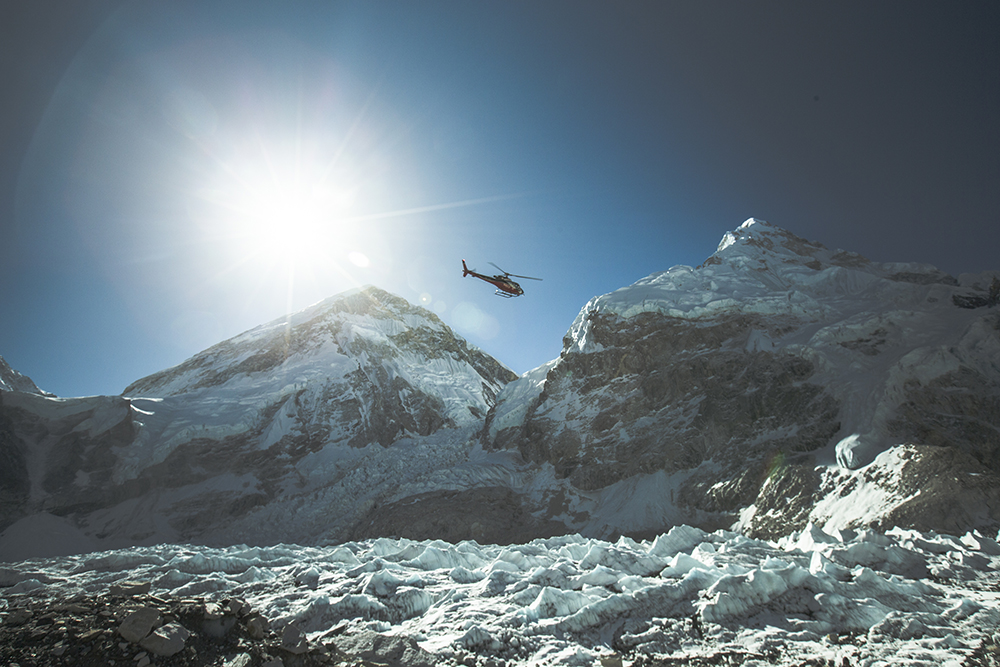
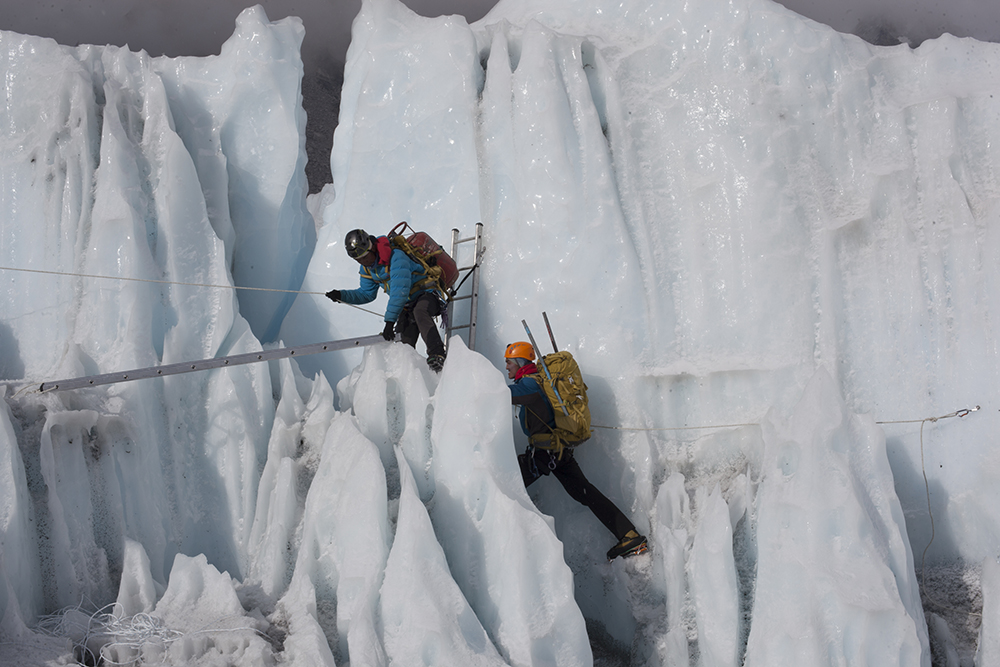
In April 2014, Mount Everest bore witness to the second worst human tragedy in its history: 16 guides from Nepal’s Sherpa community lost their lives in an avalanche while scaling the world’s highest mountain. Sadder still, the Sherpa guides were climbing Everest’s notoriously treacherous Khumbu Icefall to prepare a route for scores of foreign climbers, who had paid huge amounts to fulfil their lifelong ambitions of reaching the summit. The number of deaths since 1922 is astonishing. 

Australian filmmaker Jennifer Peedom was on Everest at the time of the disaster, and captured the trauma that followed. It was an event which shook the mountaineering community the world over, and caused Nepal’s Sherpa guides to take the unprecedented move of striking for the rest of the climbing season.

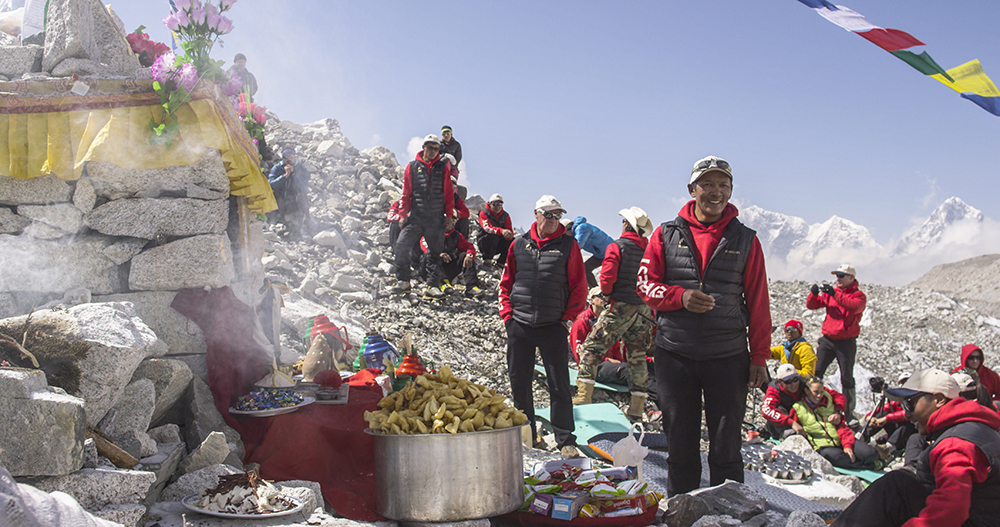
Peedom had initially set out to document the fraying relationships and tensions between Western climbers and the Sherpa, which had threatened to boil over in 2013, when a European mountaineer launched a barrage of expletives at a Sherpa guide, sparking off a fight at Base Camp, 5364m above sea level. Instead, Peedom found herself at the centre of a monumental disaster, caught between grieving Sherpas, indifferent Nepalese government officials and self-interested Western climbers. 

The result is Peedom’s new BAFTA-nominated documentary, Sherpa – a stark and beautifully shot account of life on Everest for Sherpas, as well as the travellers and tour operators who populate the relatively luxurious tents surrounding Base Camp. Here, Peedom talks to PORT about life after the disaster, filming at altitude and what drives the Sherpa people to continue risking their lives on Everest for the benefit of others.

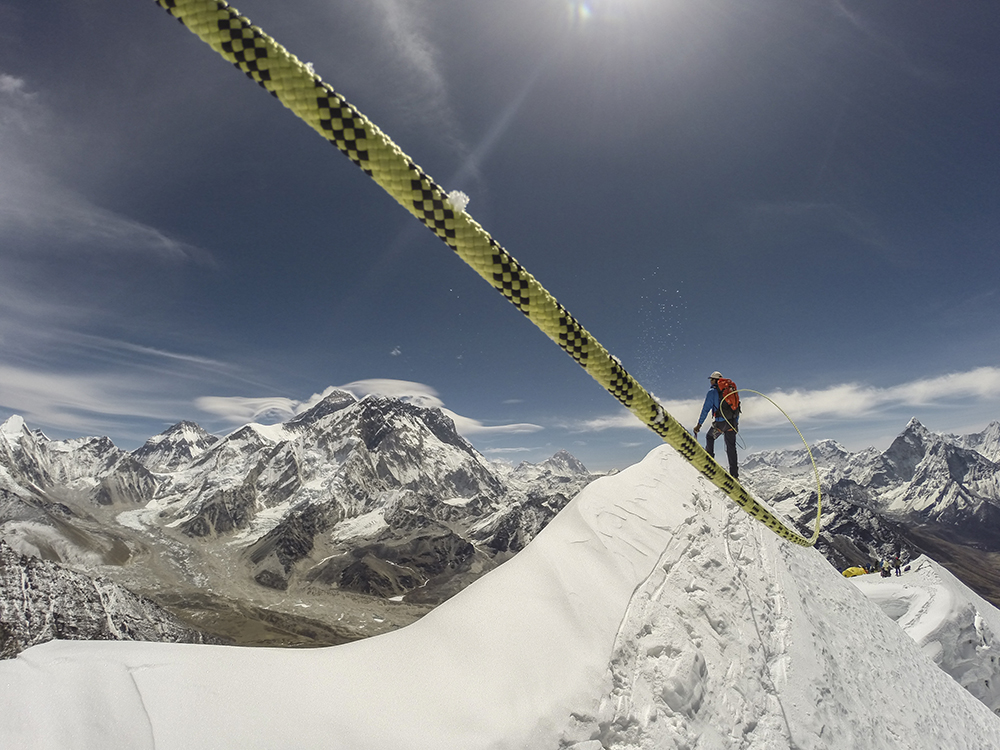
Sherpas training in Khumbu Icefall

You initially set out to explore the lesser-known side of the Sherpa-Western climber relationship. Why was this and what had you hoped to discover?

In my 20s and early 30s, I had spent a lot of time working as a climbing camera operator and ‘high altitude’ director. I’d worked three Himalayan expeditions and all with the same Sherpa team at the heart of the film. The change I witnessed over that time, and the intervening years was really interesting. For the Sherpas, expeditions brought prosperity, and with it, education. During that time, the internet also came to the Khumbu Valley. With access to information, they started to notice that they were being left on the cutting-room floor of the films, and their heroic pursuits – saving foreign climbers from certain death – being conveniently erased from foreigners’ accounts of their expedition. Initially, they would laugh this off, but I started to notice that, particularly for the younger Sherpas, many of whom had received training overseas, it started to bother them.

When a fight broke out between foreigners and Sherpas in 2013, I felt that it was an indication that this tension had reached a tipping point. I felt they had reached a stage where they realised they wanted more acknowledgement and respect for the dangerous job they were doing, getting foreigners to the top of Everest and back down safely.

I thought the best way to observe this was to follow an Everest expedition from the Sherpa point of view. Given my relationship with the Himalayan Experience (HIMEX) Sherpa team, it was an obvious choice to follow that particular expedition.

You happened to be there while a great tragedy hit the Sherpa community. How did that change the narrative of the film and your relationship with the Sherpa community?

When the avalanche struck, it wasn’t immediately apparent how this would change the narrative of the film, but I immediately knew that this was an event that would put the cat among the pigeons. This was something that we had to continue to shoot.

I knew that whatever happened, whether the season would be cancelled or not, was now the main story. It was an event that was going to go right to the heart of the issue that the film explored, which, in the end, could all be boiled down to respect.

I was already embedded closely with the HIMEX Sherpa team and the Sherpa community at Khumjung Village, and had made some relationships with other Sherpa leaders on the mountain, but the events forced me to expand that reach. The Sherpas I knew helped us gain access to the broader Sherpa community at Base Camp. I’d spent my days traipsing up and down the glacier at Base Camp, talking to and interviewing as many Sherpas as possible. But after a while the word spread and some started to come to our camp to be interviewed and share their feelings. By the end of the season, I’d have Sherpas pushing people out of the way so I could get a better camera position to film the various meetings that were going on at Base Camp. It felt like they knew what I was doing and wanted their story to get out there.

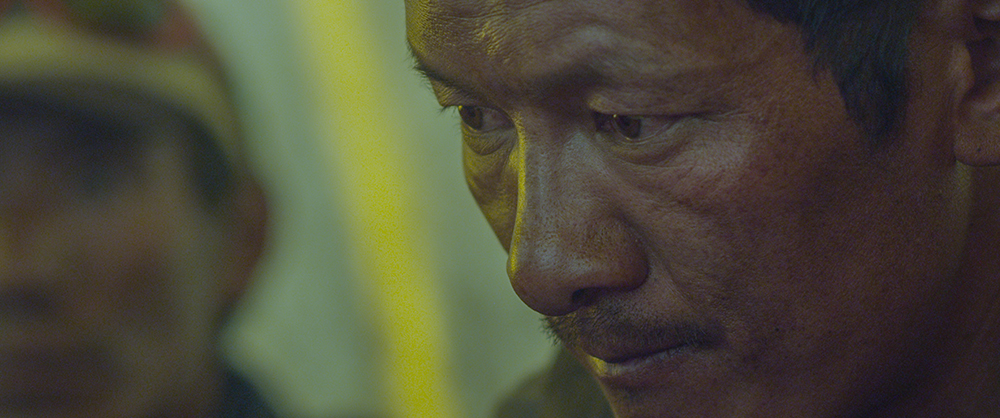
Phurba Tashi
Phurba Tashi

How did this event affect the Sherpa community’s morale and attitude towards tourism?

It was a tough blow for the Sherpa community. They are Buddhist people and very superstitious about events like this. I can’t speak for them, but what I gauged is that they felt as if the mountain was angry. And when foreign operators and climbers then pushed for expeditions to continue, they felt disrespected. They also felt very angry towards the Nepalese government for their lack of support, and for the paltry compensation that was being offered to the victims families (the equivalent of US $400), where most of these guys could have earnt up to US $5,000 for the season.

What do you think drives Sherpas to continue working after such a disaster?

Sadly, it’s money. There really aren’t any other jobs available that come close to earning the same amount of money. The alternative is to move to the cities (as many already do). Like any of us, they just want to feed their families and educate their kids.

What were the biggest physical and technical challenges you faced filming Sherpa?

Altitude always presents the biggest physical challenges, as it makes any physical activity more arduous. Certain people adapt better to the altitude than others, so some of the crew were more able to work than others. Once you get sick at altitude, it can take a long time to get better, so we had a couple of crew members who were struck by illness. It is also a real motivation-sapper, so you need to really steel yourself to get moving each day.

The technical challenges are largely related to power for downloading cards and charging batteries. The cold is also a drain on batteries and computer equipment. Our laptops all had to be packed away each night by the data wrangler, given hot water bottles and put in sleeping bags! We didn’t have enough power (or time) for me to watch rushes during the shoot, so I really had no idea what we were getting until we got back to the edit suite.

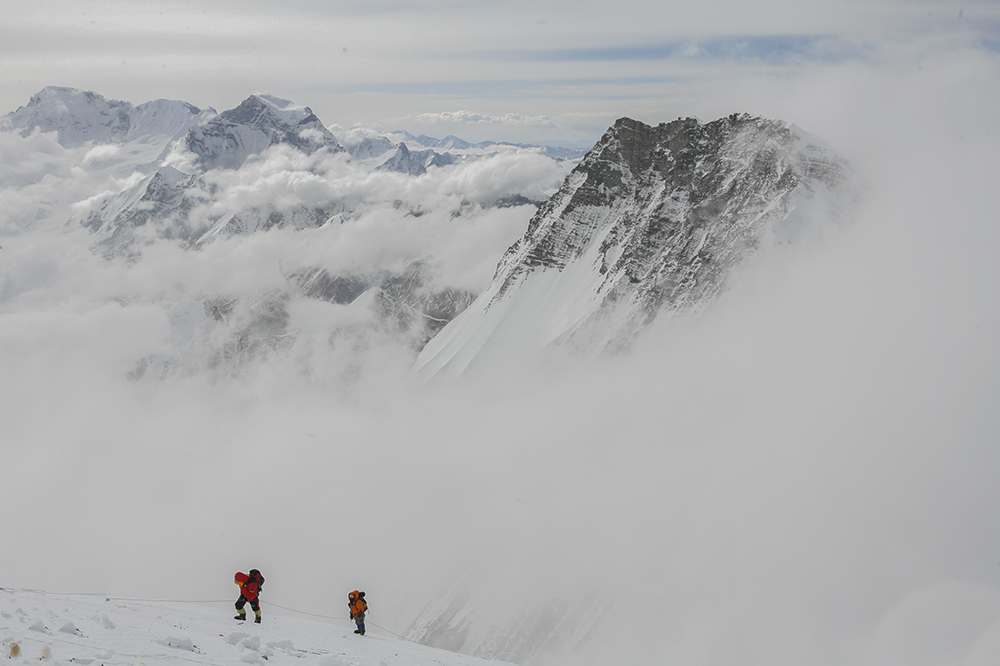
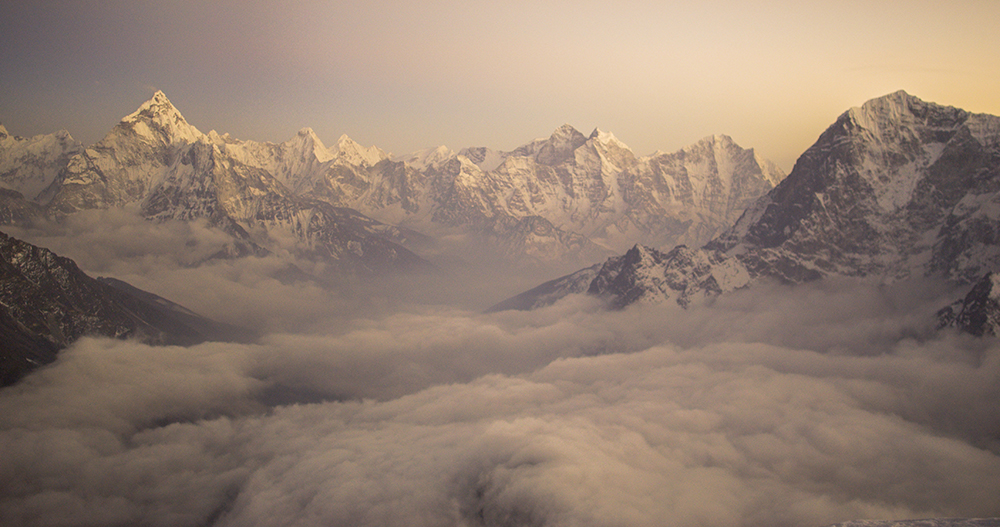
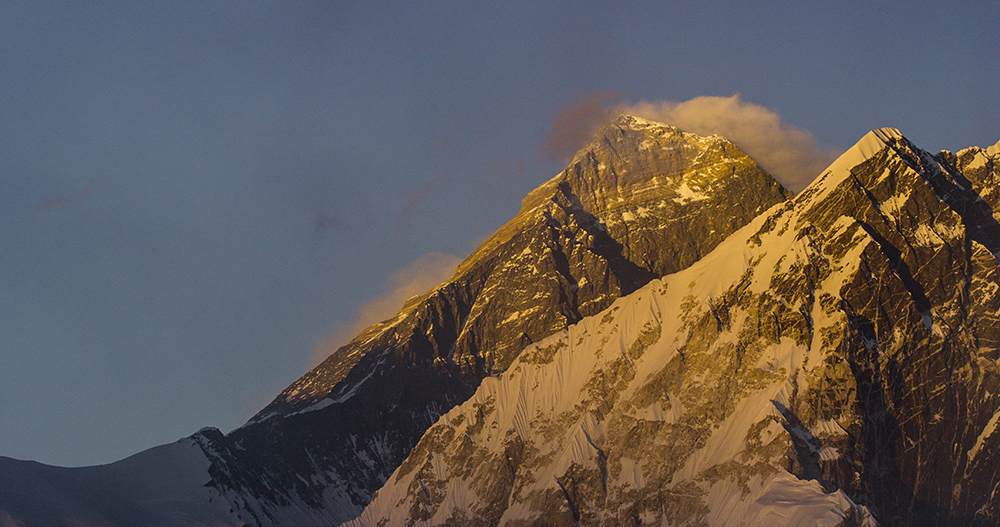
Mount Everest
Mount Everest

How did you physically prepare for the film?

Having been at altitude a number of times before, I know how my body responds. Best training for me is just running, which I do with my dog, and running up and down steep stairs.

What, if any, Western attitudes or preconceptions about Sherpas are you hoping to challenge with this documentary?

I would hope that people would leave the film, understanding that Sherpas are an ethnic group, not just people who carry bags up a hill. I guess I’d also like to think that if people were considering climbing Everest, they’d have a deeper understanding of what they are asking other people to do, and risk, on their behalf.

What was your approach to cinematography?

It was really important to me that this film look different to other Everest films (and I’d worked on a couple). I wanted the camera to really observe the mountains and the natural environment in a different way. That helped imbue it with the spiritualism that the Sherpas feel for their environment. For them, their surrounding landscape is a very important part of their spiritual beliefs.

I also know how hard it is to achieve a beautiful look in such a difficult environment, so I handpicked a really experienced team of guys, including the amazing climber, and cinematographer Renan Ozturk. For Renan, the mountains are his natural habitat and he has spent a lot of time in Nepal over many years. This meant that he was able to operate almost as normal in those conditions. He really shared the vision of the film too, so it meant we could be in different places (as became necessary with this film) and he’d be able to self-direct.

Given that the geography of the area is eye-catching, how did you ensure that the story focused on the Sherpa people without focussing too much on ‘the mountain’?

Finding that balance really came down to the edit. We were spoilt for choice with the visuals, but we also had such amazing access to our Sherpa characters, particularly Phurba Tashi Sherpa and his family. They really welcomed us into their village and their homes and trusted us.

What do you think the future has in store for the relationship between Sherpas and Western climbers?

Only time will tell I guess, but cancelling the season after the avalanche was a big deal. It really showed that the mountain can’t be climbed without Sherpa support.

I think it made the Sherpas realise that they have more power than they previously knew. But the Sherpas need foreign climbers to come, so they can earn an income, so I hope it leads to a more co-operative, mutually respectful relationship in the end.

SHERPA is nominated for Best Documentary BAFTA and will broadcast globally on Discovery Channel in 2016 sherpafilm.com

Yuri Ancarani: Myth, Malady and Machine

PORT chats to the Italian filmmaker about the relationship between man and machine, and how passion can be more important than professionalism

An exclusive cut from Yuri Ancarani’s award-winning short film, Il Capo

For over 2000 years the marble quarries in the Apuan Alps above Carrara in Italy have been a hive of activity. Methodically decapitated, the mountains have provided stone for The Pantheon, Michaelangelo’s David and Snøhetta‘s 2008 Oslo Opera House and has been exported as far as India, for the Akshardham in Delhi, and the United Arab Emirates for the monumental Sheikh Zayed Grand Mosque in Abu Dhabi.

Prized for its tranquil, translucent whiteness, Carrara marble belies the physically draining and dangerous work of the quarrymen that extract it. Even though the marble is the oldest and most successful material to be exported from Italy, by the end of the 19th century conditions in the quarries were so terrible for the few desperate enough to work there that they become a hotbed of anarchism.

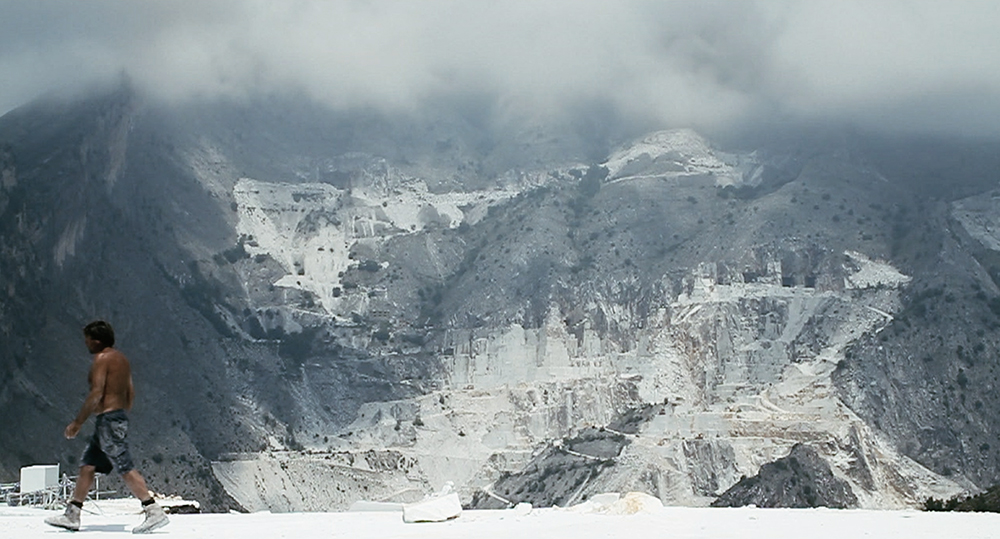
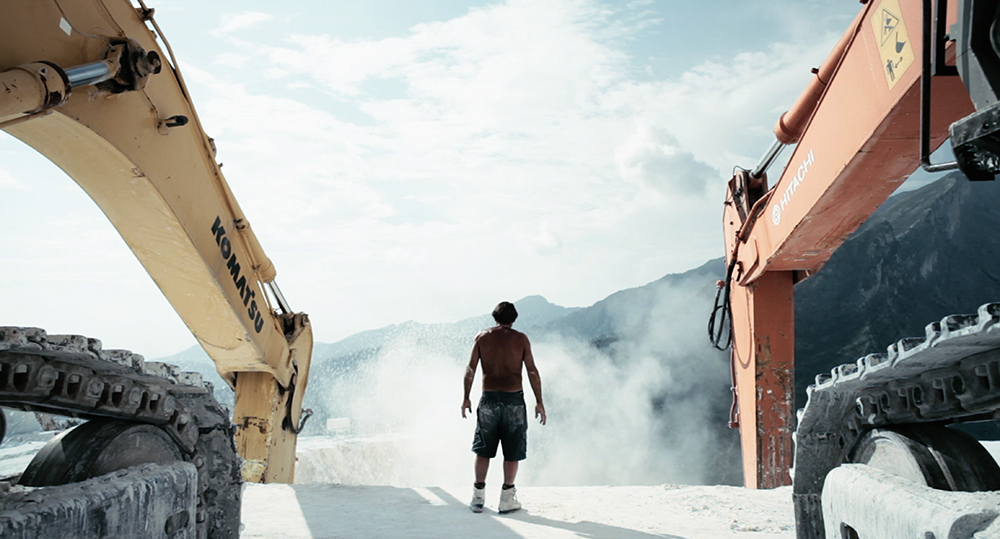
Still from Il Capo
Still from Il Capo

Today, life in the quarries has improved, but it remains dirty, deafening work; the day before Yuri Ancarani, a filmmaker from Ravenna in north Italy, arrived in Carrara, a worker had lost his leg. Initially attracted by the beauty of the quarries – a gleaming white wound on the mountainside – Ancarani quickly realised the true beauty lay in the people who worked there. The first in a trilogy of films, Il Capo focuses on the chief of the Monte Bettogli quarry, the patriarch of what are still mostly family owned businesses.

Having learned their jargon, Ancarani was eventually accepted by the quarrymen and resolved to film with a small crew to gain intimate access to quarry life. The result is a beautiful short that marries documentary filmmaking with art. As we premiere this exclusive cut from Il Capo, Ancarani speaks to PORT about the process of filming in the quarry, the concept behind his La Malattia del Ferro film trilogy and exploring the relationship between man and machine.

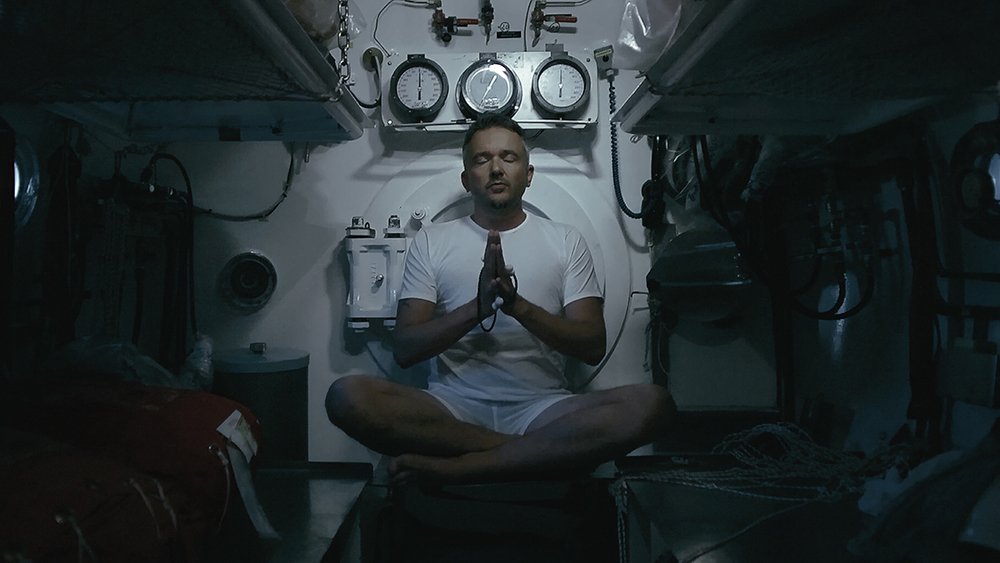
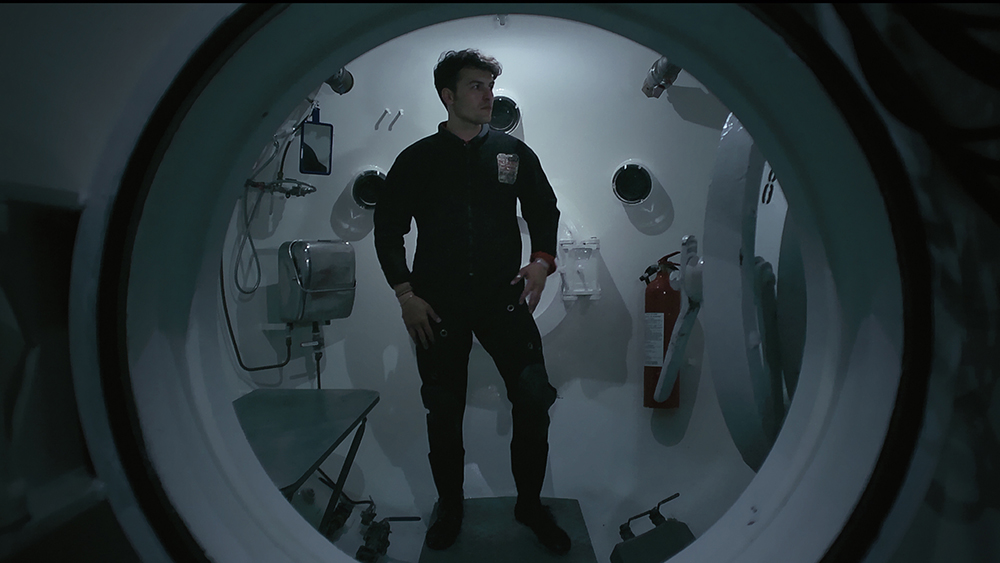
The second film in Ancarani's The Malady of Iron series, Piattaforma Luna (Moon Platform), follows the day-to-day existence of six deep sea scuba divers in a hyperbaric chamber 100 metres below sea level
The second film in Ancarani’s The Malady of Iron series, Piattaforma Luna (Moon Platform, 2011), follows the day-to-day existence of six deep sea scuba divers in a hyperbaric chamber 100 metres below sea level

How do you define your films?

I am interested in experimenting, in working with the moving image, throughout every situation – art, cinema, music, architecture. I am often advised to take a firm position on my films, but I don’t like being confined by genres. However, we live in a moment in which genres are falling and I think it is necessary to ride the wave. And of course when something cannot be fitted into a delineated space, it is probably something new.

How do you find the subjects for your films?

I start with the tales of my friends, of people that I meet on the street, in bars. They are often strange tales, little-known themes. I base a lot on my rapport with people, on what I discover by observing them. I examine them, and, when I like them, the film is born.

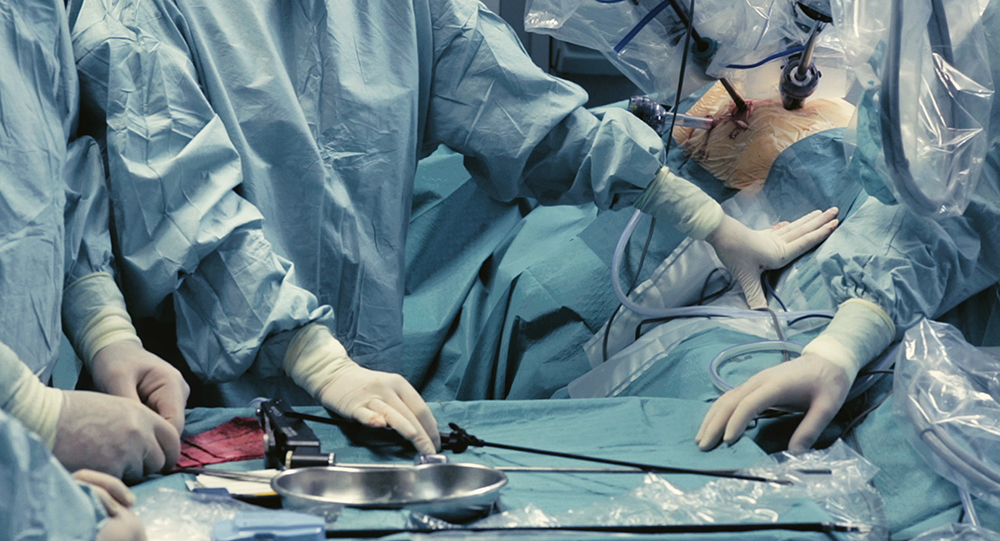
The third film in the trilogy, Da Vinci (2012), centres around the operation of a surgical robot controlled remotely by a surgeon
The third film in the trilogy, Da Vinci(2012), centres around the operation of a surgical robot controlled remotely by a surgeon

Could you explain the concept of the trilogy La Malattia del Ferro (The Malady of Iron)?

The trilogy La Malattia Del Ferro includes: Il Capo (2010), Piattaforma Luna (2011) and Da Vinci (2012), three films centred around the direct confrontation of certain individuals with environments and situations that could overwhelm them. In these three films the protagonists are confronted with the power of nature (Il Capo), of technology (Da Vinci), and with an environment at the limit of endurance (Piattaforma Luna).

In this trilogy I talk about myth and heroism, but without a rhetoric, instead considering what stimulates the desire to move forward, to live. In the same way, I try to make people think about the fractures provoked by technology in the relationship between man and the machine, between work and the natural environment.

The movements of the capo cava (quarry chief) in Il Capo, who directs the excavators involved in the irreversible operations on the mountain through simple hand gestures, are reminiscent of a conductor and can be likened to the surgeon’s work in Da Vinci. The surgeon, performing a surgical intervention with the help of a joystick, creates a powerful juxtaposition between a vital medical operation and a frivolous video game.

Piattaforma Luna, 2011

How much time did you spend in the quarry for Il Capo?

I stayed in the quarry for a long time and for days on end I filmed the slabs of marble that the quarrymen pulled from the mountain. I waited every day to see these blocks fall exactly at the centre of the scene that I had designed in my head. This is a part of my work that requires great patience, but equally readiness – I was filming on an active construction site, so I often had to be ready in an instant.

I shot for one year, filming all the work in the quarry, then I had a long post-production process. Amongst everything that I had seen and filmed, the most interesting moment seemed to me to be when the quarry chief directs the fall of the slabs of marble.

The Carrara quarry chief directs extractors in Ancarani's 'Il Capo'
The Carrara quarry chief directs extractors in Ancarani’s ‘Il Capo’

Why did you focus on the men working in the quarry?

Over the year that I was filming, I tried to establish a relationship with the workers, waking up at four in the morning to follow their usual working hours – I had to win their trust, to become a little like them. When I was in the quarry, everyone made fun of me because I didn’t have the physique. Interestingly, they didn’t see me as a filmmaker, just a bad quarryman, so I managed to make myself accepted and assimilated.

I believe it is fundamental to create this kind of relationship, and luckily I think I was quite good at it. More than professionalism, I think what you have to demonstrate is passion, and then people will be able to trust you.

Il Capo will be screening as part of the UC Berkeley Art Museum and Pacific Film Archive’s Architecture of Life series from 31st January to 29th May

Wim Wenders: Vai Paparazzo!

PORT meets the enigmatic German filmmaker to discuss the movies that influenced his career, his penchant for 3D film and a recent collaboration with Italian eyewear brand Persol

Wim Wenders
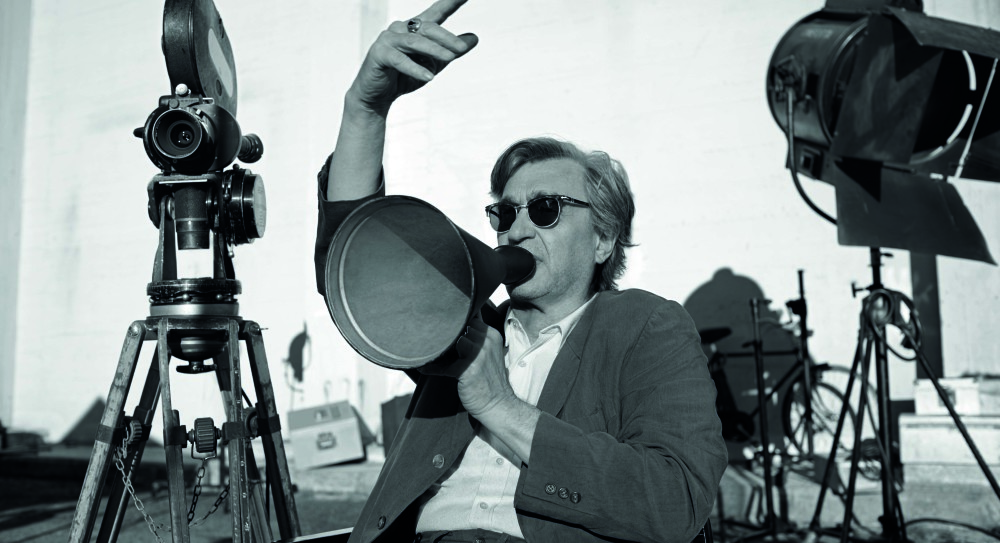
Wim Wenders on the set of Vai Paparazzo!

Wim Wenders isn’t so much a director, as a polymath. The 70-year-old German filmmaker, best known for his BAFTA-winning Paris, Texas, is also an author, playwright, painter, producer, actor, photographer, cinematographer and editor. He has a wicked sense of humour too.

It’s early evening in Milan and Wenders is getting ready to unveil his latest project: Vai Paparazzo, a film for the Italian eyewear brand Persol. In the brief time we have been chatting, there are brilliant flashes of Wenders’ classic wit and the first arrives at an unlikely juncture.

“My most challenging film was Until the End of the World,” Wenders says, perched on the edge of his armchair. He’s wearing a beige suit, white button-up shirt, and his signature eyewear, horn-rimmed glasses. He looks formal, that is until you spot the red Converse trainers.

Until the End of the World was the most ambitious film I’ve ever done, and the most expensive,” he tells me. It’s no secret that Wenders’ passion project was a big undertaking. The film took over 15 years (and $23 million) to produce. And, to make matters worse, it was heavily edited by the film’s distributors. “We had to release the film in a ‘Reader’s Digest’ version”, he says. “That sucked,” he says, trying his best to suppress a smirk.

It wasn’t until the 1960s, when he was in his late 20s and working as an engraver in Montparnasse, that Ernst Wilhelm ‘Wim’ Wenders truly discovered film. And one film, in particular. “I found a movie that was so close to my own childhood,” he says. “So close to all the ruins and debris of war that I had grown up in, and that was Vittorio De Sica’s The Miracle in Milan.” This was to inspire one of Wenders’ most popular productions, Wings of Desire – both films feature ravaged postwar cities, their impoverished denizens clinging on to hope and angels intervening with the natural order. But make no mistake, Wings of Desire is still very much a Wim Wenders film: poetic, bleak and with a beautiful black and white aesthetic that was created by using a filter made from the stocking belonging to the grandmother of French cinematographer Henri Alekan.

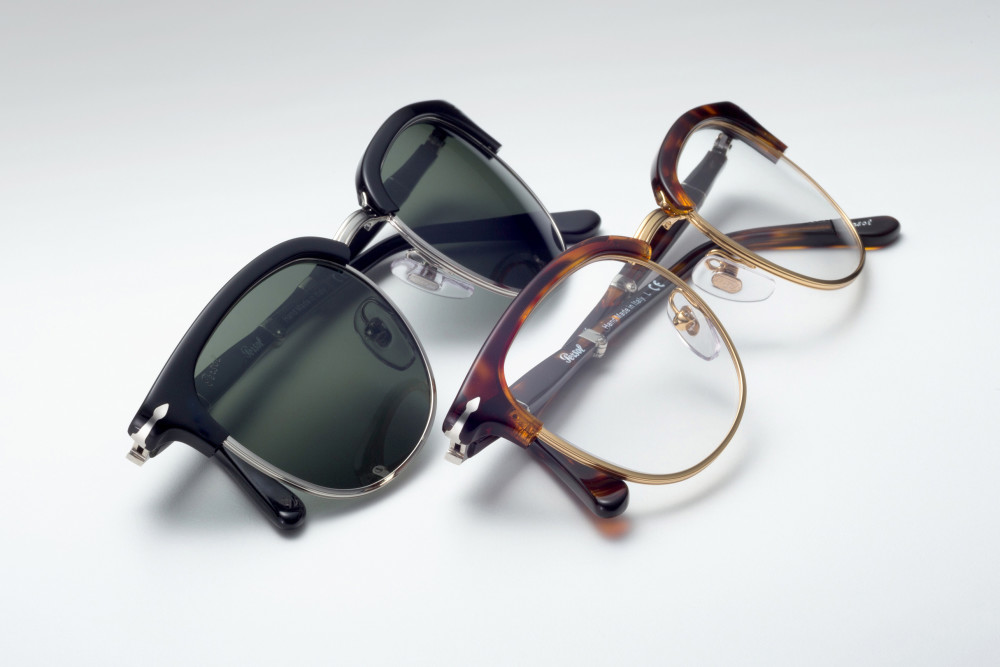
Cellor by Persol
Cellor by Persol

Wings of Desire was preceded by the critically acclaimed Paris, Texas in 1984, but four years later, Wenders’ career took a turn for the worse with Until the End of the World. Wenders sci-fi flick grossed a paltry $752, 856 at the US box office. However, the director assures me that there’s still hope for his dystopian epic. “It’s still a project that I’m extremely attached to,” he says with a sigh. “I’m very proud of it. And now, a quarter of a century later, I can show and release the real film, which is my cut, the original length.” And how long is the original? Just short of five hours.

Two years after Until the End of the World, Wenders hit back, this time with his Wings of Desire sequel, entitled Faraway, So Close! which was awarded the Grand Prix de Jury at Cannes Film Festival. In 1999, Wenders’ career soared to even greater heights with the release of Buena Vista Social Club. The Academy Award-nominated film documented Wenders’ long-time friend and collaborator, Ry Cooder, reuniting the legendary the Cuban musicians to perform for the first time since Fidel Castro’s reign. The film made an impressive $23 million at the box office, but Wenders wasn’t going to rest on his laurels.

In 2011, Wenders returned to cinema yet again, but this time, making his first foray into 3D filmmaking was the Oscar-nominated documentary Pina about the contemporary dance choreographer Pina Bausch. The film was met with universal acclaim and altered Wenders’ entire approach to filmmaking. “I’m so into 3D now that it’s almost an effort to think in two dimensions, let alone in black and white,” he says, laughing.

His latest film, Every Thing Will Be Fine, starring James Franco and due for release in December, is Wenders’ fifth film in 3D. It’s also his first full-length dramatic feature in seven years. In the interim he’s directed various shorts and documentaries, including the Oscar-nominated The Salt of the Earth, about the Brazilian photographer Sebastião Salgado. And then there’s his most recent triumph Vai Paparazzo!, which Wenders shot for Persol’s re-launch of the Cellor, a series of collapsible frames first released in the 1950s.

The short is a sumptuous homage to the golden age of Italian cinema and evokes the work of Italian directors such as Roberto Rossellini, Federico Fellini, and De Sica, whose grandson, Brando, was even on hand to direct the behind-the-scenes video. “He’s a very talented young man with a very heavy burden,” Wenders says. “It’s not easy to carry that name, but he carries it elegantly.” He smiles, gently pushing up his horn-rimmed glasses.

Vai Paparazzo! is also Wenders first time acting in four years. “I still feel much more comfortable behind the camera,” he explains with a self-deprecating laugh. “You’re so self-conscious when you’re in front of the camera. You can’t even watch yourself at the same time.” He rolls his eyes, feigning vanity. Then, all of a sudden, there’s a sly grin. “But it was fun!” It seems that even after 70 years and 59 films, the director hasn’t lost his touch. Or his wicked sense of humour.

persol.com/usa/wim-wenders-for-cellor-film

Onwards and Outwards: Britain’s female filmmakers

George Kafka speaks to some of the directors and film programmers behind Onwards and Outwards, a UK-wide celebration of women in British cinema

The Arbor, Clio Barnard, 2010

Onwards and Outwards begins today at London’s Institute of Contemporary Arts (ICA), and brings with it a programme that will challenge prevailing cinematic narratives both on and off the silver screen. Curated by the ICA’s film programmers Jo Blair and Nico Marzano, Onwards and Outwards pulls together some of the finest British women filmmakers of the last sixty years, providing a vital forum for discussion about the presence – or asbence – of women in the UK film industry today.

“Onwards and Outwards is about the conditions of production for women looking to express themselves through film,” explains Blair, “and it is about filmmakers who want to push themselves to their creative edges and be active forces, telling their stories.” Aside from their focus on female directors, Marzano and Blair sought to construct an engaging programme that plays to the unique strengths of each of the directors featured in the film series, while exploring narratives centred around female protagonists. “Each of the films has a female protagonist, which seemed to happen quite naturally,” says Marzano. “All the protagonists, whether in documentaries like The Alcohol Years or The Arbor, or fiction like Morvern Callar and Exhibition, are quite wild and interesting.”

The Alcohol Years, Carol Morley, 2000

The decision to focus Onwards and Outwards around these stories is important, especially considering that just 12 of the top 100 films in 2014 had female protagonists. But the programme pushes the room for discussion further by choosing films that challenge our understanding of human experience and take us to the darker sides of life in the UK. This is certainly the case with director Carol Morley, whose films have tackled obsessive compulsive disorders, her own past alcoholism and the tragic tale of Joyce Vincent – a Londoner whose death went unnoticed for three years until her decomposing body was found in her flat – as portrayed in the 2011 docudrama Dreams of a Life. “I’m interested in shining a light into the dark areas of life,” she tells me. “I’m drawn to those areas, but in a way that I want to understand them and find meaning in them.”
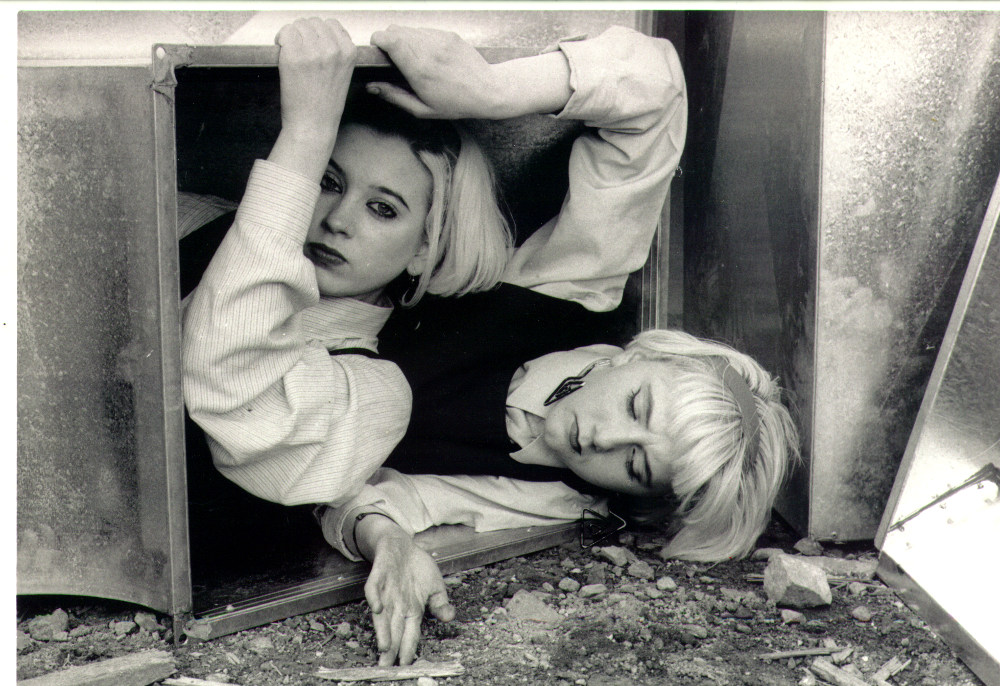
Dreams of a Life, Carol Morley, 2011

Morley’s involvement in Onwards and Outwards stems from a desire to see greater discussion around the work of women in film. “It’s important to profile work in a way that can create discussion and debate with an audience.” One such discussion will centre on Under the Skin, Carine Adler’s 1997 exploration of traumatic loss, which was produced as a result of a ‘positive discrimination’ programme at the British Film Institute. Although met with critical acclaim, it remains Adler’s only film to date. “It should be illuminating to hear the story of its production, but also what happened afterwards,” says ICA programmer Jo Blair. “Why nothing after it?”
Examples such as Adler’s demonstrate how female filmmakers have historically fallen through the cracks of an industry that privileges male narratives and has grown accustomed to male-dominated crews. This has become particularly pronounced for those such as Morley, who have worked their way into directing: “The caterer on one of my shoots thought the male runner was the director and never assumed I was,” she recalls.

Red Road, Andrea Arnold, 2006

For Morley, Blair and Marzano, the solutions to this imbalance lie in confronting deep-set beliefs that are embedded in our attitudes towards cinema. “We need to recognise the influence that women have had upon this medium if we are to alter the perceptions that exist within the present,” argues Marzano. Films like Andrea Arnold’s Red Road and Lynne Ramsay’s Morvern Callar – both screening as part of Onwards & Outwards – demonstrate the talent that exists among women making films in the UK and the extraordinary stories they tell us. For the British film industry to progress, much needs to be done to allow more of these stories to be heard. As Morley asserts: “The only way for the industry to change is for female stories to be acknowledged as vital for cultural life, and as something that people actually want, and need.”

Onwards and Outwards runs at the ICA from September 1-10 2015 and at venues across the UK until the end of the year. Carol Morley will be presenting her autobiography, 7 Miles Out, at the ICA on the first day of the programme.

Dante Ferretti: Dreams of Fellini

Port meets Italian production designer and Scorsese collaborator Dante Ferretti, who recalls his work with Federico Fellini and discusses his elaborate yet timeless film sets

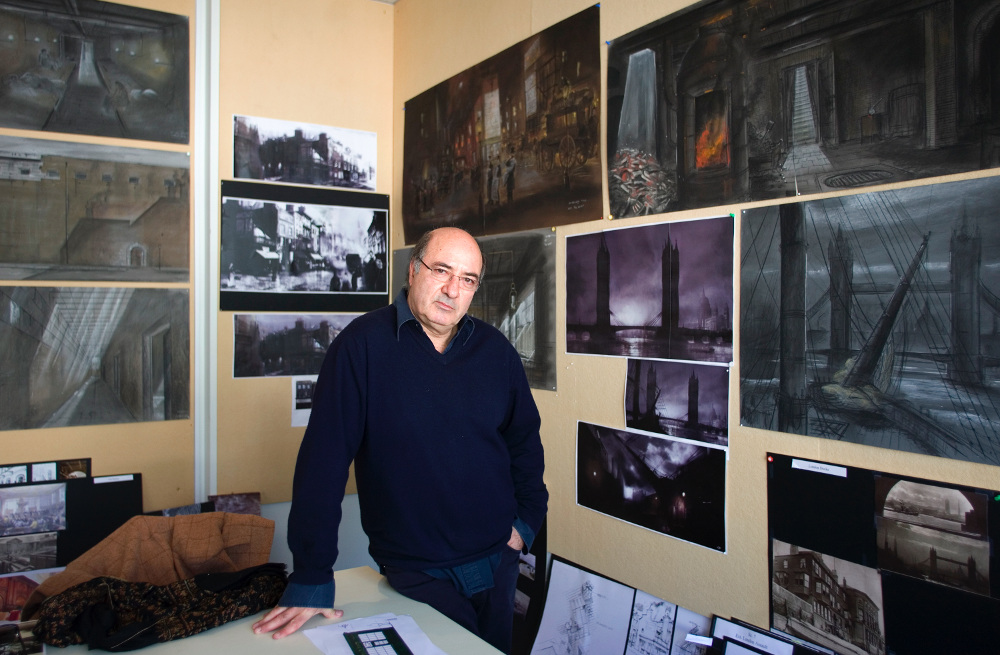
Dante Ferretti in his studio

No matter the size or stature, all structures decay. That is, with one possible exception: film sets. Film sets don’t decline. They don’t wither, wane or weaken. Once committed to celluloid or digital, they are timeless. And none more so than the sets of Dante Ferretti. The works of many great Italian architects have already crumbled, but Ferretti’s sets will remain. They may only stand constructed for a brief time but they will live on in film, immortal.

Ferretti is one of the most distinguished production designers in the history of cinema, who is best known for his work with Martin Scorsese and Federico Fellini, but has also designed sets for the likes of Terry Gilliam, Tim Burton and Brian de Palma. Born in Macerata, Central Italy, in February 1943, Ferretti moved to Rome to study and began working on the early films of Pier Paolo Pasolini. His work on Medea (1969) caught the attention of Fellini and sparked a collaborative relationship that would span two decades. According to Ferretti, working as a production designer for Fellini was, quite literally, a ‘dream come true’.

“Fellini was my maestro,” he says with a sigh. “Working with Fellini was very, very important because he awakened le mie fantasie – my fantasies. He always made movies about his fantasies. He would often ask me, ‘Dante, what did you dream last night?’ And I’d say ‘I can’t remember.’ Then, a couple of days later, he would ask me again. Again, I’d say ‘nothing’. Eventually, I’d just invent the dreams. I had to do something!” Ferretti roars with laughter. “He knew I was a liar, but he liked my fantasies anyway.” He laughs again and then pauses, apparently lost in thought.

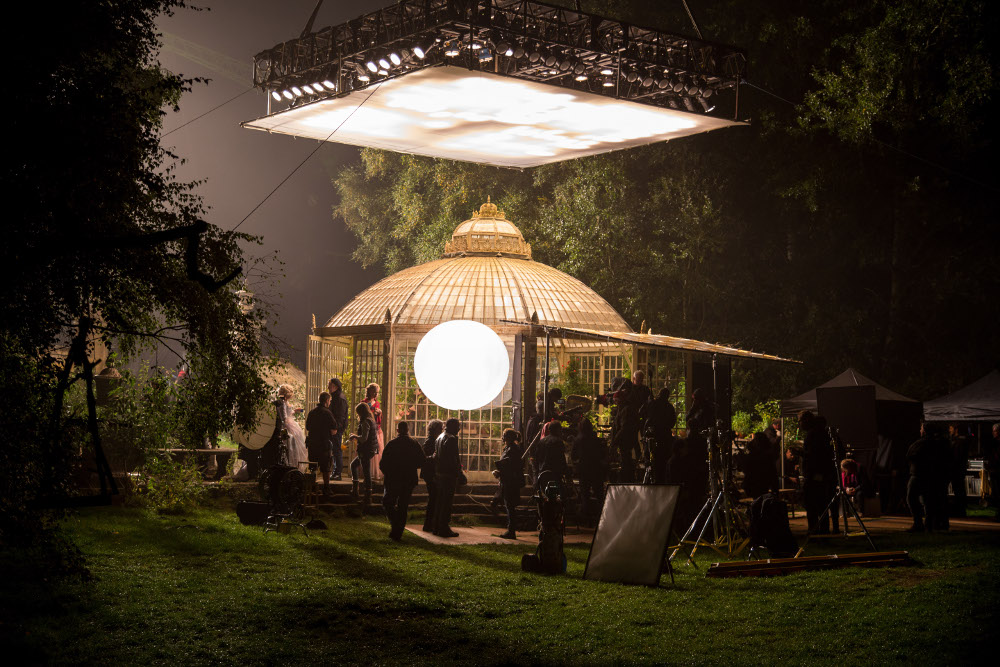
Preparing Dante's Cinderella set for action
Preparing Dante’s Cinderella set for action

Ferretti and Fellini worked together on six films including the critically acclaimed Orchestra Rehearsal and the multi-award-winning City of Women, starring Dustin Hoffman. Despite the respect with which he talks about his maestro today, Ferretti described feeling like “a prisoner” to Fellini’s vision at times. Their collaborative relationship ended in 1990 with Fellini’s final film, The Voice of the Moon, closely followed by his first partnership with Martin Scorsese on The Age of Innocence, an adaptation of Edith Wharton’s bourgeoisie tragedy and a far cry from Fellini’s surrealist tropes.

Since then, Ferretti has worked with Scorsese on nine films over 22 years, including Casino, The Aviator and Shutter Island. Of all their collaborations, Ferretti remembers Gangs of New York as the most challenging. “We built almost everything without CGI,” he says. “I think there are only two or three shots in the entire film that use CGI. Everything else was built in the Cinecitta studios in Rome. We even constructed a makeshift Hudson River, complete with a full-scale ship.”

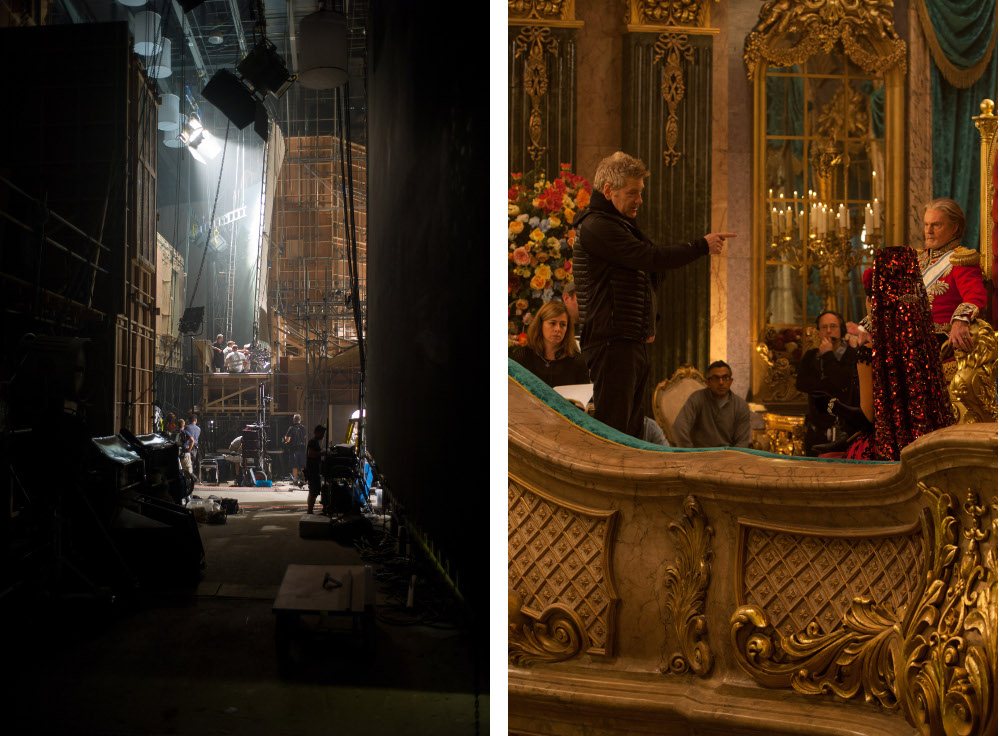
Left – Behind the scenes on the set of Cinderella. Right – Kenneth Branagh directing Derek Jacobi as the King in Cinderella

Despite the financial and logistical benefits of CGI, Ferretti swears by the benefits of his hand-built approach. “I don’t like CGI. I know that you have to be very clever to use CG technology, but it’s not my generation,” he says. “With CGI, you can make whatever you want. But I have to check what we’re doing, set-by-set, because it’s essential to create something that no one has ever seen before.”

This approach has paid dividends. Ferretti has won three Oscars, four BAFTAs and countless other international prizes, which he often dedicates to his wife and long-time collaborator, Francesca Lo Schiavo. The pair have worked together for over 25 years and have established something of a telepathic working relationship. “My wife and I don’t even need to discuss our work. We just look at each other and we know what we have to do,” Ferretti explains. “She’s been fantastic on all of the movies I’ve done with her, including Cinderella.”

This latest collaboration, a live-action remake of Walt Disney’s 1950 classic, features some of Ferretti’s most dazzling designs to date. The film boasts custom-made Venetian chandeliers, opulent frescoes and a 30-foot high ballroom lit by 5,000 oil candles. His upcoming project for Scorsese is equally ambitious. Silence, a historical drama due for release in 2016, is set to feature a reconstruction of 17th century Nagasaki and the Chinese port of Macau.

With a career spanning 55 feature films over 45 years it would be understandable if Ferretti was reluctant to highlight a single crowning glory, but his answer is simple: “My greatest achievement? I’m happy.”

Cinderella is available on Disney Blu-Ray TM & DVD now.