In a small alleyway in Kuching, the capital of Sarawak, Malaysia, an 80-year-old coffee shop becomes a site of memory and rediscovery
Photography Amani Azlin
It was the first time coming back to Kuching after my father died. Each year I’d return to eat at the places that were his favourites, to fit into his schedule (he’s busy, I’m on holiday), to make the annual trip to reconnect with his side of my Indigenous Bornean identity, and to eat the durian he always found for me even when out of season.
I haunt the places we went the last time I saw him, six months before the world closed down and a virus took him along with millions. I find that they are still the best: laced with nostalgia, the taste is sweeter. Being in the city that was his but without him is both dislodging and full of discovery. I have no schedule but my own to eat by.
Central Kuching, on the waterfront, is one of the oldest parts of town. It has become touristy, with its old shopfronts and small, winding streets. I sometimes forget that it’s still a place for locals. Friends of mine, cultural academics who are also coffee nerds, tell me about a spot in an alley, ironically named Hiap Yak Tea Shop. A Chinese kopitiam (‘coffee house’) that serves coffee and kaya toast is one of the oldest in Kuching, and it has been run by the same family for over 80 years. It is small, with a few tables and plastic chairs. It reminds me of childhood, when travelling upriver with my dad and stopping at riverside towns.
They serve a particular type of coffee, or kopi. It’s hot and served in small, cream ceramic cups with a green pattern and a knob of butter, a tradition that few places still do. The coffee is roasted dark, rich with chocolate and caramel flavours, and very often has sweetened condensed milk sitting at the bottom to be stirred. Everything about it is straight from a Malaysian and Singaporean’s nostalgia fever dream.
Sarawak’s food, drink and coffee culture is exciting, innovative and delicious – where traditions meet modern approaches that feel organic and natural. Specialty coffeeshops are rethinking the kopitiam, and are introducing Indigenous fine dining and traditional rice wines brewed by Gen Z. Yet these snapshots of the past are not about romanticising Sarawak: they are about remembering the rich and complex culinary heritage of this part of the world. This little kopitiam was a rediscovery of how my past sits beside my present and my future.
Photography Amani Azlin, shot on location at Hiap Yak Tea Shop in Kuching, Malaysia
This article is taken from Port issue 37. To continue reading, buy the issue or subscribe here
A landmark exhibition in Madrid explores Joel Meyerowitz’s formative journey across Europe, centred on the months he spent living and working in Málaga
“What is that feeling when you’re driving away from people and they recede on the plain till you see their specks dispersing? – it’s the too-huge world vaulting us, and it’s good-by. But we lean forward to the next crazy venture beneath the skies.” –Jack Kerouac, On The Road, (London: Penguin Classics, 2000), p. 141.
With fading light on the horizon, and the tranquil waters of a ship’s wake flowing gloomily under an overcast sky, ‘Europa 1966-1967’ begins with the first photographs from Joel Meyerowitz’s epic journey of self-discovery, as he sails across the Atlantic headed for England’s south coast. Taking centre stage at PHotoESPAÑA, the annual festival of photography held in Madrid, ‘Europa 1966-1967’ draws from the thousands of photographs Meyerowitz made during his time away from the United States and traces the arc of a year-long journey that would shape the trajectory of one of the 20th Century’s most distinguished street photographers. As a testament to the enduring significance of his photographic legacy, Meyerowitz was recently awarded the PHE Prize, the festival’s highest honour.
My entry point for the exhibition is one of the earlier photographs Meyerowitz made during his road trip along the western seaboard of Britain. A giant green and red car-sized lump, with a door on the side of it, sits by the roadside opposite an exposed cliff face. Looking like the discarded prop from a production of James and the Giant Peach, this bizarre concrete ball is in fact a small kiosk selling ice creams and beach toys. I know this because I often drive along this same stretch of road to go surfing at Langland Bay, and I can confirm that it is still there to this day. In Meyerowitz’s photograph a sage green Ford Zodiac and a suited man give both a sense of scale and period to this otherwise confusing scene. It is in these uncanny moments that Meyerowitz is able to find, that I think attest to the best of his work.
There is both wit and mystery found within his most captivating imagery, such as in a photograph from Turkey, where a headless and armless man walks along the road, reminiscent of a scene from the film adaptation of H. G. Wells’ The Invisible Man. As well as his more humorous takes, there are also moments of quiet beauty. In one particular photograph the fading sunlight, in a great rectangular gleam, falls against the gathering shade on a wall. On the left-hand side of the image a man’s silhouette is partially lit up by the sun catching the heel of his raised shoe. Something about the scale of the scene is seemingly off, it appears almost like a doll’s house with immoveable plastic plant pots and a stone basin, which looks not unlike an enormous soap dish.
Meyerowitz’s Málaga images form the backbone of the exhibition and are an obvious focus, given its setting in Madrid. One aspect that looms large over the work is the Franco dictatorship Spain was under at the time. Armed police, or “Grises” (Spanish for “gray ones”) as they were known, with their tricorne hats and tight buttoned blazers, pepper Meyerowitz’s street photographs from Málaga. In one image, “FRANCO – 98.95% – SI” lights up the entire façade of a building in ghostly neon letters. The political undertones to Meyerowitz’s work are an interesting footnote, in an otherwise entirely buoyant and life-affirming set of photographs. His focus quickly shifts to a family of gypsy flamenco performers, whom he set about making both a visual and acoustic recording of. What seems like an unending party of singing, drinking and dancing bursts out through the exhibition’s central section.
After six months in Andalusia, Meyerowitz and his wife decided it was time to push on and see more of the continent. Arriving in Paris with a newfound confidence in his photography, Meyerowitz’s roving street scenes are a carnival of chaos and colour. Seemingly on every corner Meyerowitz finds captivating scenes packed with action, from straw hats flying off in the wind, to fire-breathing street performers or, as in one of his most iconic scenes, a man collapses in the street and passersby either gawp or skirt around him. These spontaneous photographs are the mimetic language of experience, Meyerowitz seems to have found a stylistic approach in part inspired by the tangled, overlapping dramatism he discovered in the flamenco performances he was recording in Málaga.
The exhibition closes with a video interview of Meyerowitz recalling anecdotes from his time spent in Europe and the impact it had on him both spiritually and artistically. Describing the trip as his coming-of-age – “It was the journey of my life, it was a dream” – Meyerowitz’s bold gamble proved a palpable success. In extricating himself from the influences of other New York street photographers at the time (such as his friends Garry Winogrand, Tony Ray-Jones and Tod Papageorge), the journey of self-discovery Meyerowitz undertook seems to have been a catalyst for refining his approach to photography. This exhibition and the accompanying catalogue offer a fascinating insight into how Joel Meyerowitz’s year of travelling Europe helped to shape his visual style.
Europa 1966-1967 is on view at PHotoESPAÑA until 13 July 2025.
The road trip never ceases in becoming a muse for photographers. For Geoffrey Leung, a photographer born in Saint Paul, Minneapolis, he recently satisfied an itch to visit Utah’s National Parks with his father by means of the car. Resultantly, he birthed a documentary series capturing the mountainous landscapes, rocky hillsides and creeping fauna of the American state. “Seeing Utah’s National Parks was the reason for this road trip and the photos that came from it were incidental to the good fortune I had to spend time with my father as an adult,” he shares. “It feels vulnerable for me, but it’s a story about heritage and habit.”
Growing up in what he deems a “great place” with top tier photography in the area, Geoffrey was influenced by his “practical” parents and was particularly good at maths. More in the way of academia, it wasn’t until around 2018 that he started picking up a camera seriously. “Up until then I was another liberal arts grad (Carleton) playing at being a professional,” he adds. Now based in New York, the photographer has rooted himself in the medium of image-making, to such lengths that his portfolio encompasses all sorts from motion to videography, personal series to commissions. All of which is influenced by the “sacrifice” of his practical parents, and their parents before them, as well as the essays from Susan Sontag, words from John Berger and many others who “take risks and are afraid to follow their gut but still do both anyways”. And Prince, of course.
So when it came to Geoffrey’s own excursion across the desert roads of Utah – with his father by his side – he proceeded to create something that was immensely personal to them both. Not least a risk of their own as they ventured into the unknown. Although the road trip isn’t a new or surprising subject matter, to Geoffrey (and his father), it’s a narrative that they hold closely. “I think that doesn’t make this story unique, but the more personal the photos are, the more relatable they may be,” he says. Taking a picture is more like an experience for Geoffrey, who marks the process as an “interruption of experience”. Whether it be formulated in the studio or on the road, each picture crafted through the eye of this photographer is one that’s been created with rawness, care and love. “I want to photograph instinctually to avoid thinking about a moment, or worse, changing it,” he adds. “The story can only be true if I did not really influence its capturing.” In this regard, the longer he spends with a subject, the more he’s able to learn and “deeply see” about their character and being. “Experiencing something beyond its physical appeal is necessary for conveying anything beyond aesthetics.”
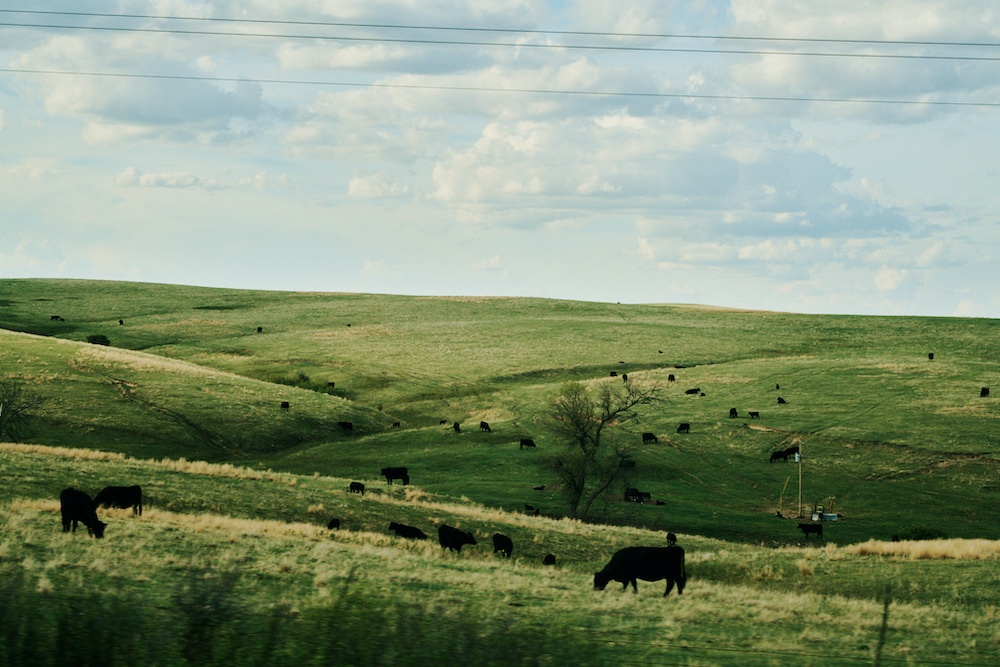
Speaking of some favourite moments from the trip, Geoffrey points us in the direction of two photographs : “one with people spreading across a rocky outlook, one of cows grazing in a green field.” Both are luminous in their depictions of greenery, emphasised by the photographer’s decision to up the contrast and focus on the finer details. But, there’s more to these works that beautiful landscapes. “I’m not saying that people are like cows, but it is a funny trickery of language that one might consider,” he explains. In another entitled Sharing a View, Geoffrey has captured his father standing on the popular Zion hike. “This is the only frame I made of this moment,” he says. “But it expresses his youthful side, which I have never really known since he’s been a parent as long as I’ve been alive.”
Not only does Utah depict the wild and uninhibited lands of the the Mountain West state – where bushes grow free and water is somewhat scarce – it also portrays the relationship between two kins, a father and son. Geoffrey plans to turn the work into a book and will continue to build on this “instinctual experience” found in his photography practice. “One of my lifelong photographic goals is to make the women in my life feel beautiful, so I’m working on that too.”
Henerico Rossi captures the sun-drenched faces and places of his home country
2020 was the year of alterations, with many fleeing the cities in search for space, greenery and calm. Henerico Rossi was one of those, having abandoned his post in London (he’s lived abroad for 13 years) to return back to Italy. “Since then, it has been like looking at my home country for the first time,” he tells me. “What a stunning place on earth.”
Sometimes a little space for reflection is all you need to view the world with a different lens. This is exactly the case for Henerico, a photographer who’s released an ongoing series named Images from Italy, a tranquil and sun-drench project documenting the faces and places of those living across Sicily, Puglia, Tuscany, Emilia Romagna, Liguria and Friuli. After returning to the country, it was like a flash back in time as he began mingling with the local kids that “would spend their days at the beach until the sun sets,” just like he did. The project is still in the works and, enlivened by his new found inspiration, what keeps him going is “the idea of creating a body of work that can be timeless.”
There’s something so effortlessly nostalgic about Images from Italy, which, by the way, is an apt title for such a series. Doing what it says on the tin, so to speak, Henerico has angled his camera at the daily lives, moments and meetings of the local people around him. The style of which is saturated, rich and sensory; even the occasional monochrome piece evokes a feeling of warmth, as if we too are bathing under the rays of the Italian sun. It’s a skill that not all can achieve, but Henerico does it with ease. “Inspiration comes from everywhere,” he adds, “you just need to look at it. I love digging into my roots as much as I love exploring local communities. The energy of a place can also play an important role in my images. But these are all foreplay of a picture – what ultimately strikes is the emotions that are embedded with it.”
While out shooting, Henerico finds himself drawn towards people with a narrative. Rather than pinpointing an aesthetic or photographing someone for the way they look, he instead prefers to “speak the truth” and portray the encounters he has with his subjects – either friends, creatives he admires or those he meets on the off-chance during one of his trips. “I tend to prefer people who have a story to tell rather than people based on the way they look,” he explains. By working this way, Henerico strives to combat the often surface-deep aesthetic that’s typically displayed in fashion photography. “I am all about images that are able to transcend the mere aesthetic.”
There are a handful of tactics that Henerico adopts in order to achieve such emotive and honest imagery. The first is talking to people, approaching each subject with an open mind. There’s a black and white portrait that defines this , where a man gazes almost sternly into the lens with the hard working lines of his face exaggerated by the beaming sun. The photo was inspired by Henerico’s family roots after he travelled to Mount Etna in Sicily while working on a cover story for Primary Paper. “While driving around, I stumbled onto a cave where the stonecutters were carving the lava stone from the nearby volcano. I asked them if I could take their photograph; they replied to me and they kept doing their thing. I though of waiting and carried on by asking them questions about their craft. The conversation went on. We spoke about how it feels to be a creative soul and how every day isn’t the same. After that moment I knew it was time for me to get my camera out.”
The series presents the intuitive and quick thinking mindset of the photographer, who’s able to capture fleeting moments on the go – like two local boxers who were taking a break from set and sharing a plate of paste together. He also knows when to take a step back from the work and reassess which, at the beginning of his career, was a vital move in determining his future process, “I felt that all my photos looked pretty much the same as if there was no room for inventiveness,” he shares. “I thought that if I wanted to take a great portrait, I had to get close enough to my subject. Later on, I realised that only 50 per cent is true.” After learning this, Henerico snapped a vibrant coastal image of beach-goers joyfully soaking up the rays and salty water – which is perhaps pinnacle to the way in which he views the world and his practice. “The moment I was able to step away while still maintaining a good connection is when I understood something greater was possible,” he concludes. “So although some could say this is a landscape photography kind of picture, for me it is as simple as a portrait taken from afar; a portrait of a place.”
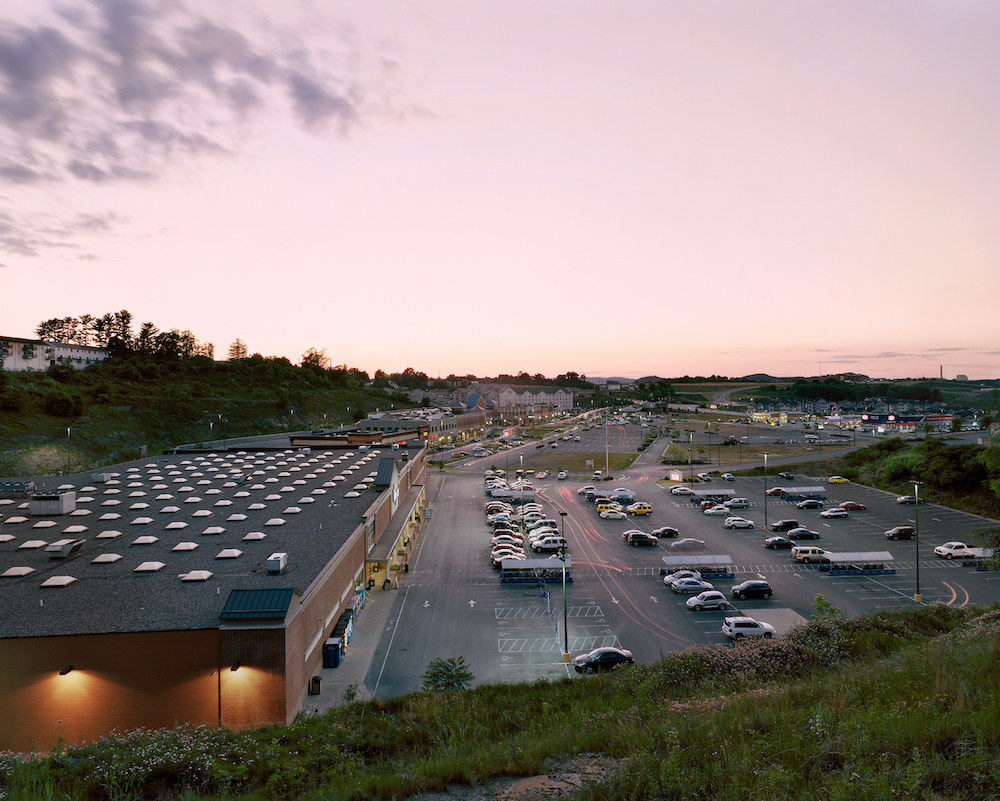
In 2011, Michael Sherwin uncovered a piece of history: he came to learn that his local shopping centre had been built atop a sacred burial ground. Located in what’s now western Pennsylvania, western Maryland, eastern Ohio and West Virginia, the area is linked with the Monogahelan culture – what Mary Butler had named in 1939 after the Monongahela River, which runs through the vast majority of the culture’s sites. Known for practicing maize agriculture, building villages, pottery and structures, the culture disappeared, evaporating along with around six hundred years’ worth of history.
Michael was born and raised in Southwestern Ohio on “unwed and stolen territories”, which includes the Hopewell, Adena, Myaamia (otherwise known as Miami), Shawandasse Tula (known as Shawanwaki or Shawnee) and Wazhazhe Maⁿzhaⁿ (Osage) peoples, “who have continuously lived upon this land since time immemorial,” he tells me. This is where he studied for a BFA in Photography from The Ohio State University during the late-90s, followed by an MFA from the University of Oregon a few years proceeding. After nine years spent working deep in the American West, he returned east for a position at West Virginia University in Morgantown – which is where he currently works as a coordinator, and professor of photography and intermedia.
So upon discovering the roots of the Monogahelan culture, Michael was predisposed to unearth more of its mystery; he shopped at the centre regularly, too, so this slice of information undeniably transformed the ways in which he viewed the landscape. “Reflected in the scene in front of me was an ancient, spiritually important and hallowed landscape clouded by the tangible constructions of modern Western culture,” he shares. “I’m really interested in the stories the land holds, both seen and unseen, and in the contrast, or intersection of spiritual beliefs between indigenous and colonial, native and non-native traditions.”
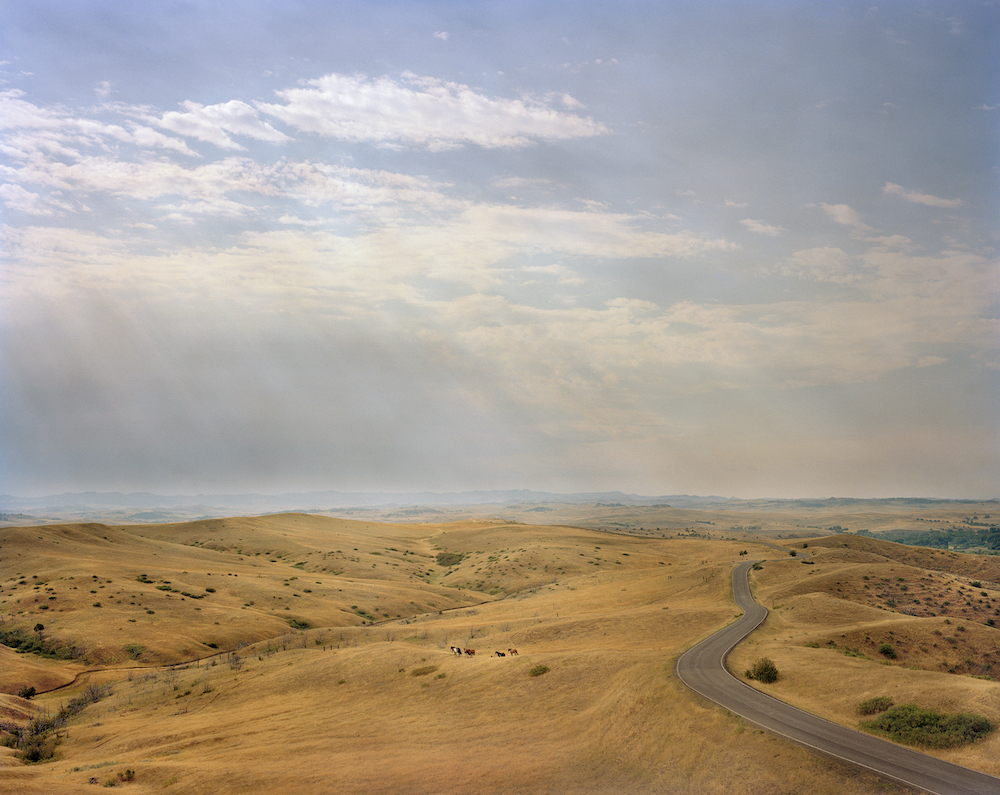
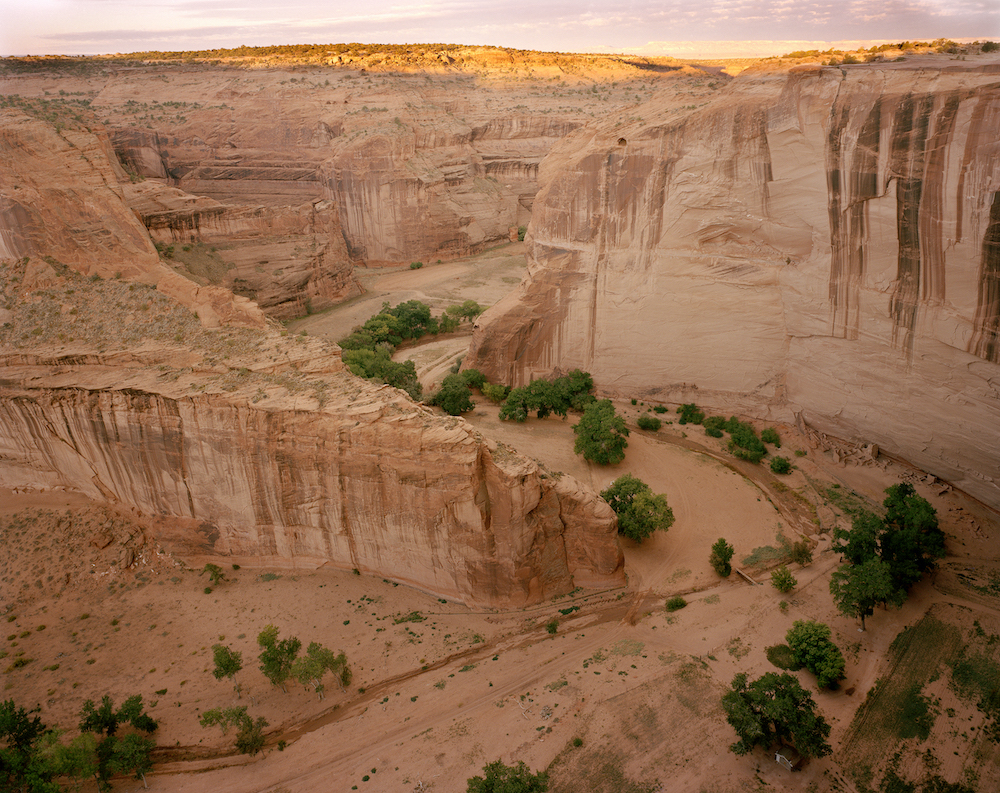
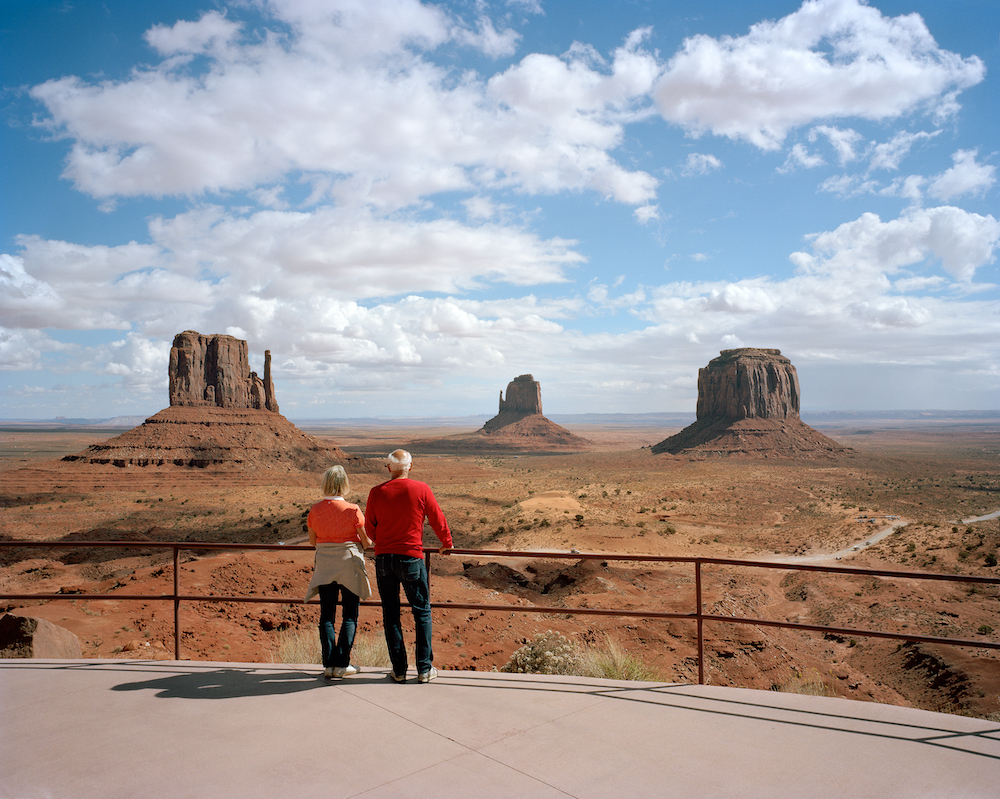
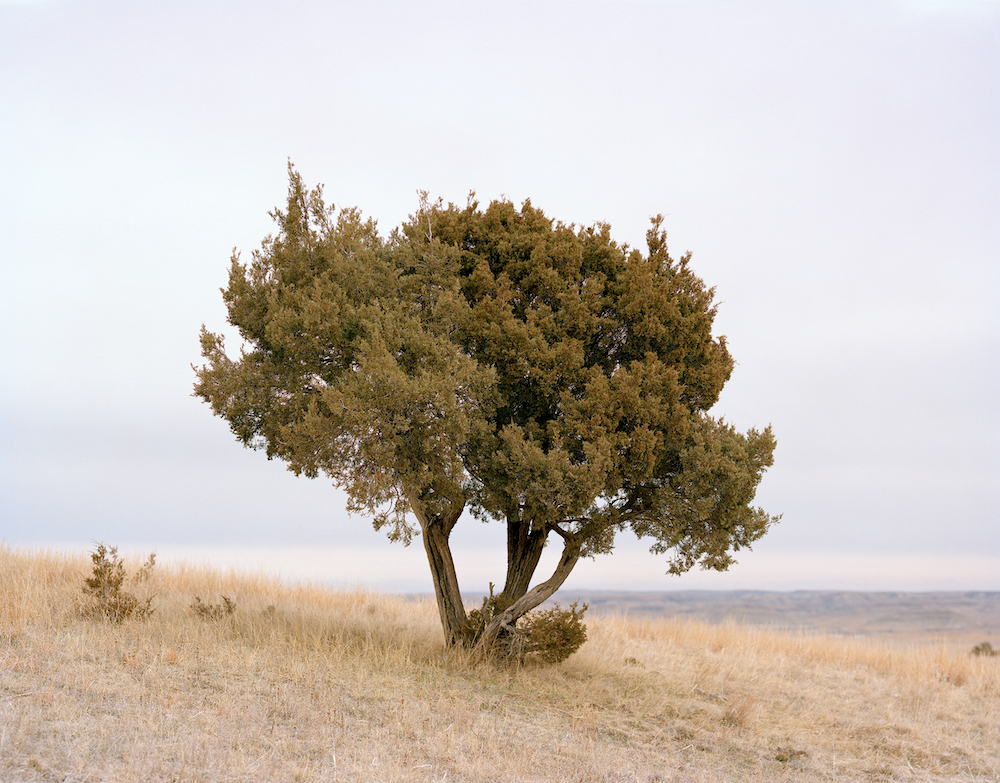
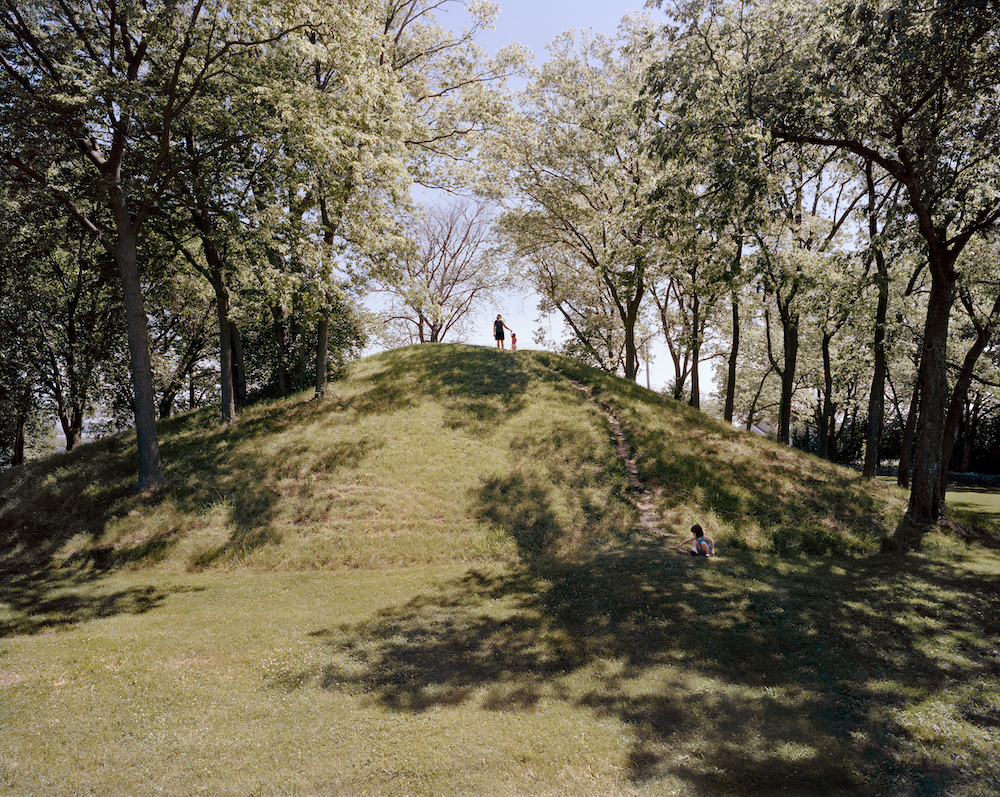
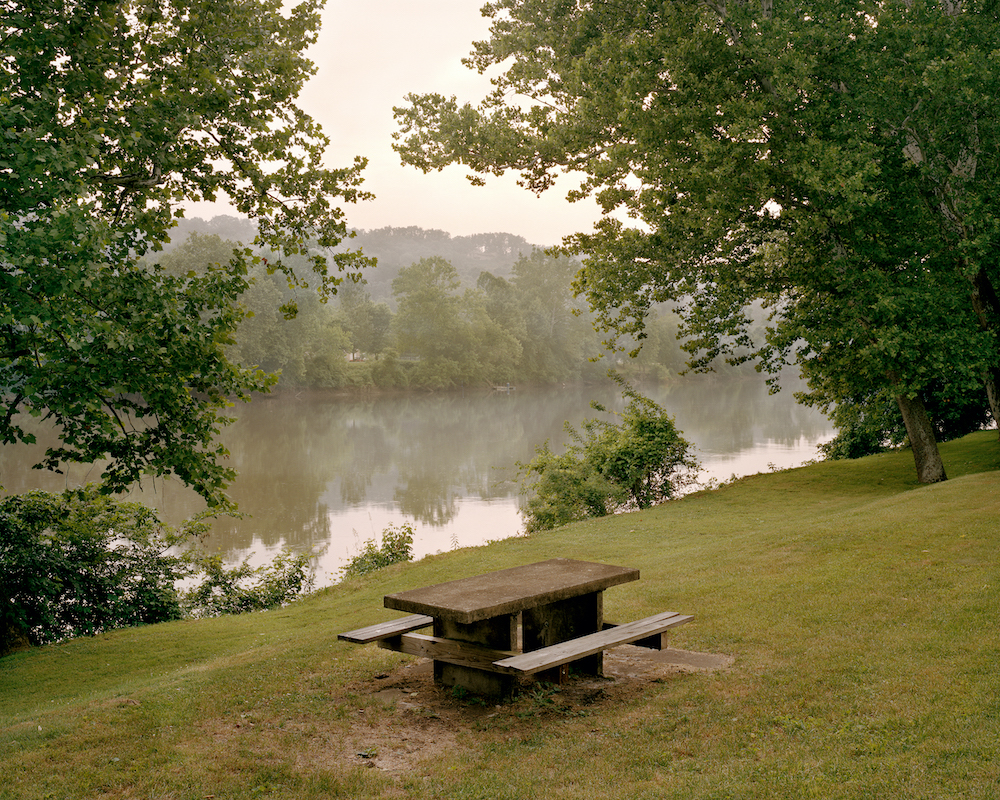
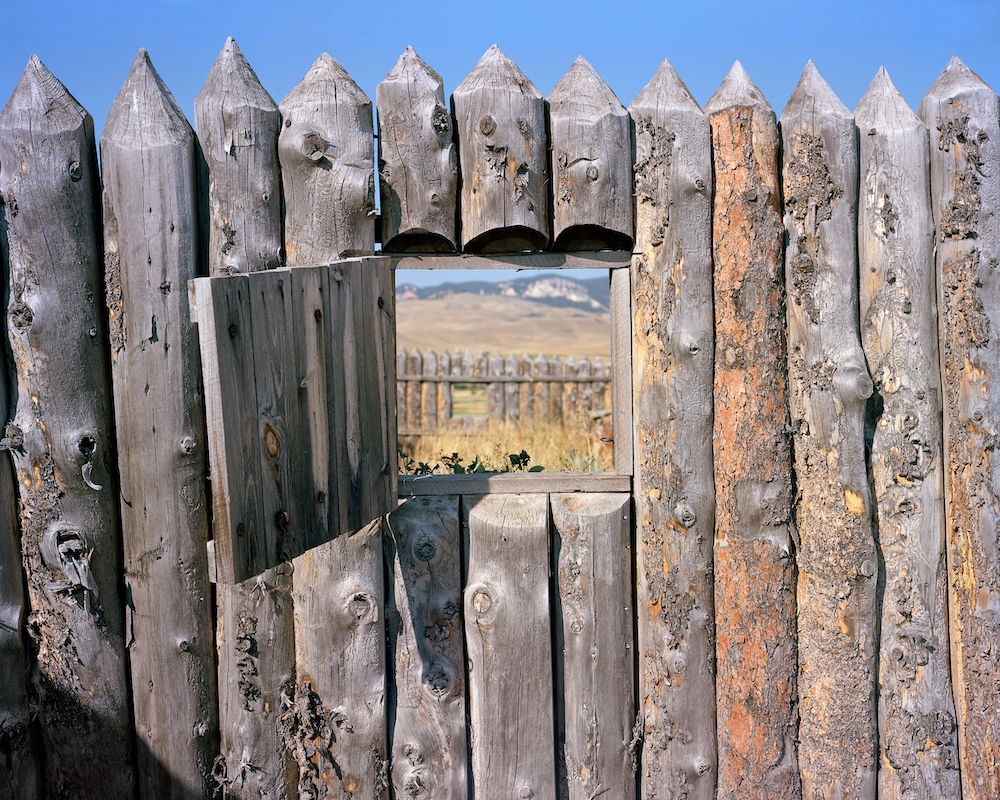
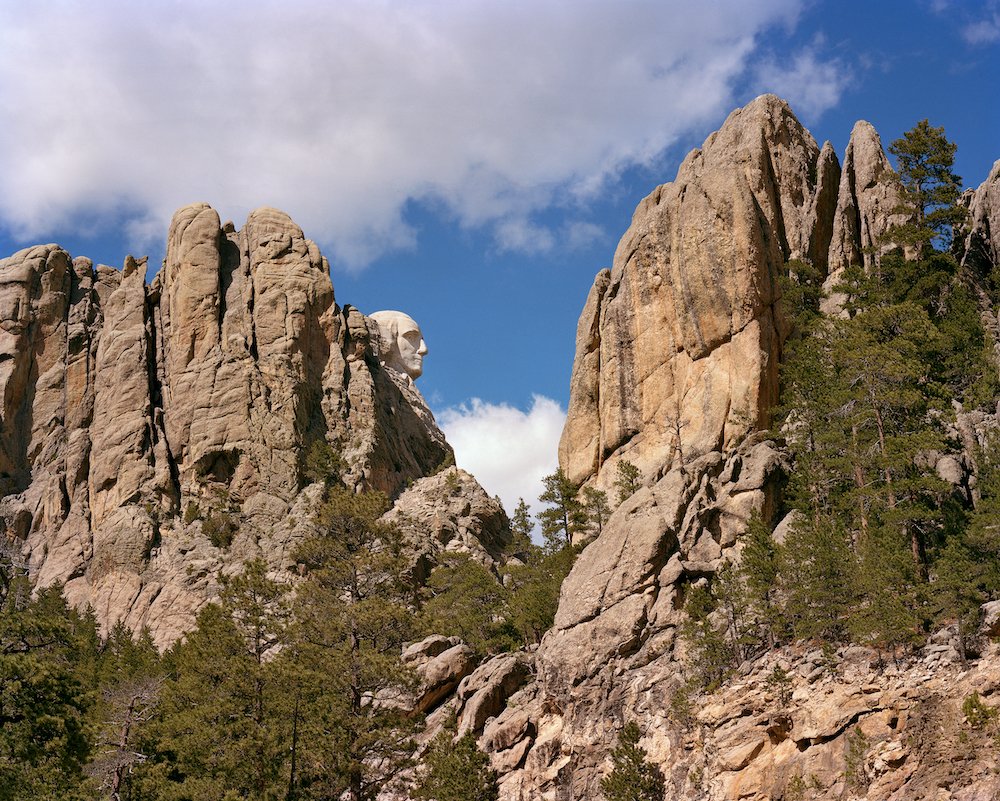
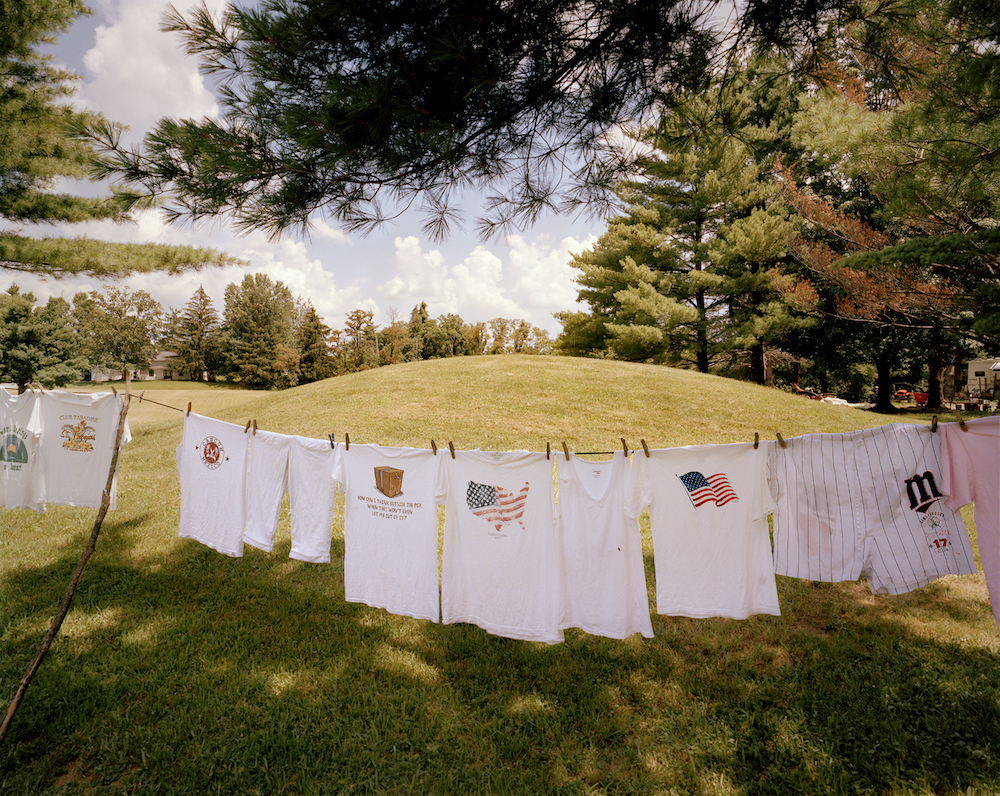
Having always fostered an interest in the physical world, Michael was more than intrigued after exhuming the origins of his hometown. To such lengths that it inspired him to pick up his camera, harvesting the books and historical research on the mid-Atlantic and Ohio River Valley region. The more he read, the more he was pushed to find out more. And that’s exactly how Vanishing Points came into fruition – a long-term photography project of nine years shot on a large format Wista field camera throughout significant sites of indigenous American presence. Composed over several trips to southern and central Ohio, the project took him to the Cahokia Mounds State Historic Site and various nearby spots in Illinois and Missouri, during which he’d traverse across the American West and visit sites in South Dakota, North Dakota, Wyoming, Montana, Arizona, New Mexico, Colorado and Utah.
Michael never set out with a clear intention in mind, and rather, the project arose from a mix of personal and cultural catalysts. Paired with an undulated interest in the project’s history, Vanishing Points also references his quest for a deeper connection to the ancestry of the land, “acknowledging and challenging erasure and exploring complicated histories,” he notes. “It’s an effort to form a new understanding and perspective of the place I call home.” The photographs, in this sense, represent a kind of duality. One that documents the earth as we see it, as well as the stories hidden beneath the rocky terrains, grasslands and buildings.
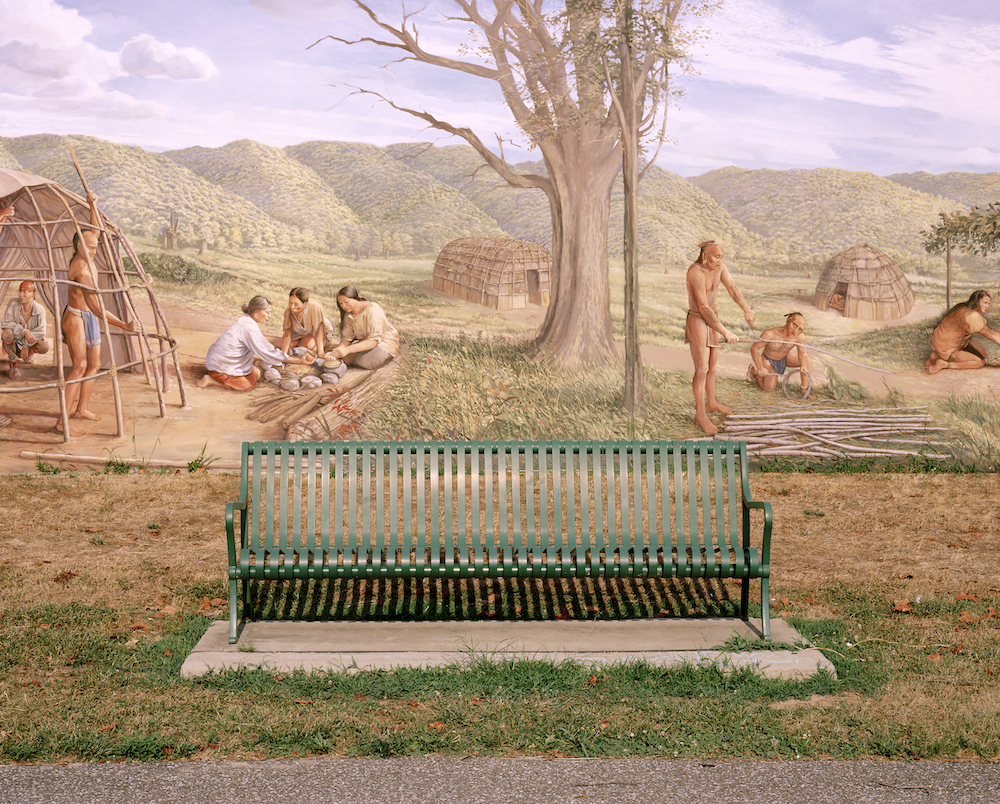
Past and present are equally exposed throughout these pictures, where man-made structures, picnic benches and entertainment venues are built above the lands that were once occupied by prehistoric cultures. But rather than addressing or respecting these histories, mankind has constructed a new narrative; the type of story arc that monopolises such sacred locations. This gives the work – and even the title – an incredibly powerful meaning. It’s a double entendre, he says, “referencing the literal visual aid used to depict depth on a two-dimensional plane, while also suggesting sites in the landscape where the traces of events, or remnants of a previous cultures’ existence has all but faded from view. I’m certainly not trying to suggest that the indigenous American people have vanished, but I am interesting in highlighting how many have been removed from view, especially here in the East.”
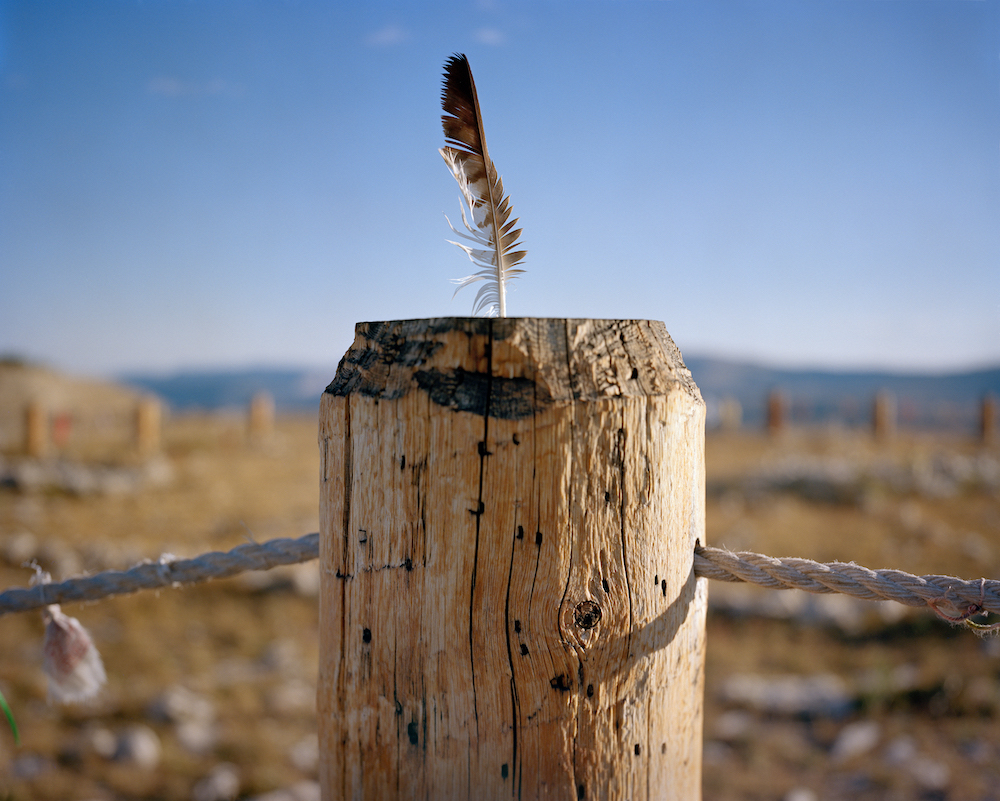
Vanishing Points certainly provokes a sense of questioning from the viewer; a motive that forces us all to question our roots and links with colonialism and the imposition of western civilisation. And throughout Michael’s own journey – one that’s lasted for a lengthy nine years – he’s set foot into many wonderful encounters as he progressively learned about the land. For example, one of the sites he was most excited about visiting was the Bighorn Medicine Wheel, located over 10,000 feet high in the mountain range of northeastern Wyoming. “I drove for two pitch black, predawn hours without seeing another vehicle and dodging all sorts of wildlife to reach the trailhead,” he recalls, hiking for two miles with nearly 50 pounds of camera gear strapped to his back, before eventually reaching “the wheel” at sunrise with the entire landscape to himself. “Before setting up my camera, I walked the full circle of the wheel as the sun crested the horizon. Being present and experiencing the sensations of a place that warrants so much reverence and wonderment is more important to me than the actual photograph.” The resulting image from this memory presents a feather stuck onto a post – a seemingly simple event that signals to heaps more than just a beautiful composition.
“With these photographs,” he continues, “I am not attempting to tell you how to live, or what we’ve done wrong, but rather to reckon with my own belonging in the physical and spiritual world. Having said that, I think this work can also promote awareness of indigenous land rights and the importance of protecting cultural and historical sacred sites. Spending time with these images may encourage one to reconsider their own presence in this country and the land they live and work on. There are still countless stories to be told and lessons to be learned as long as we are willing to sit quietly and listen.”
Michael Sherwin’s Vanishing Points is available here.
Photographer Giulia Mangione reflects on a month travelling over 9000 kilometres and across 10 time zones, on one of the most famous stretches of track in the world, the Trans-Siberian Railway
This summer I travelled on the Transsibirskaya Zheleznodoroznaya Magistral, better known as Trans-Siberian Railway, which runs for 9000 kilometres across Russia, from Moscow to Vladivostok. Having chosen to travel in the platscart, the third class carriage – where I talked to soldiers on leave, families on their way back from holidays which can not afford to travel by plane, and students travelling home for the summer holidays – I photographed the trip and the people I met along the way.
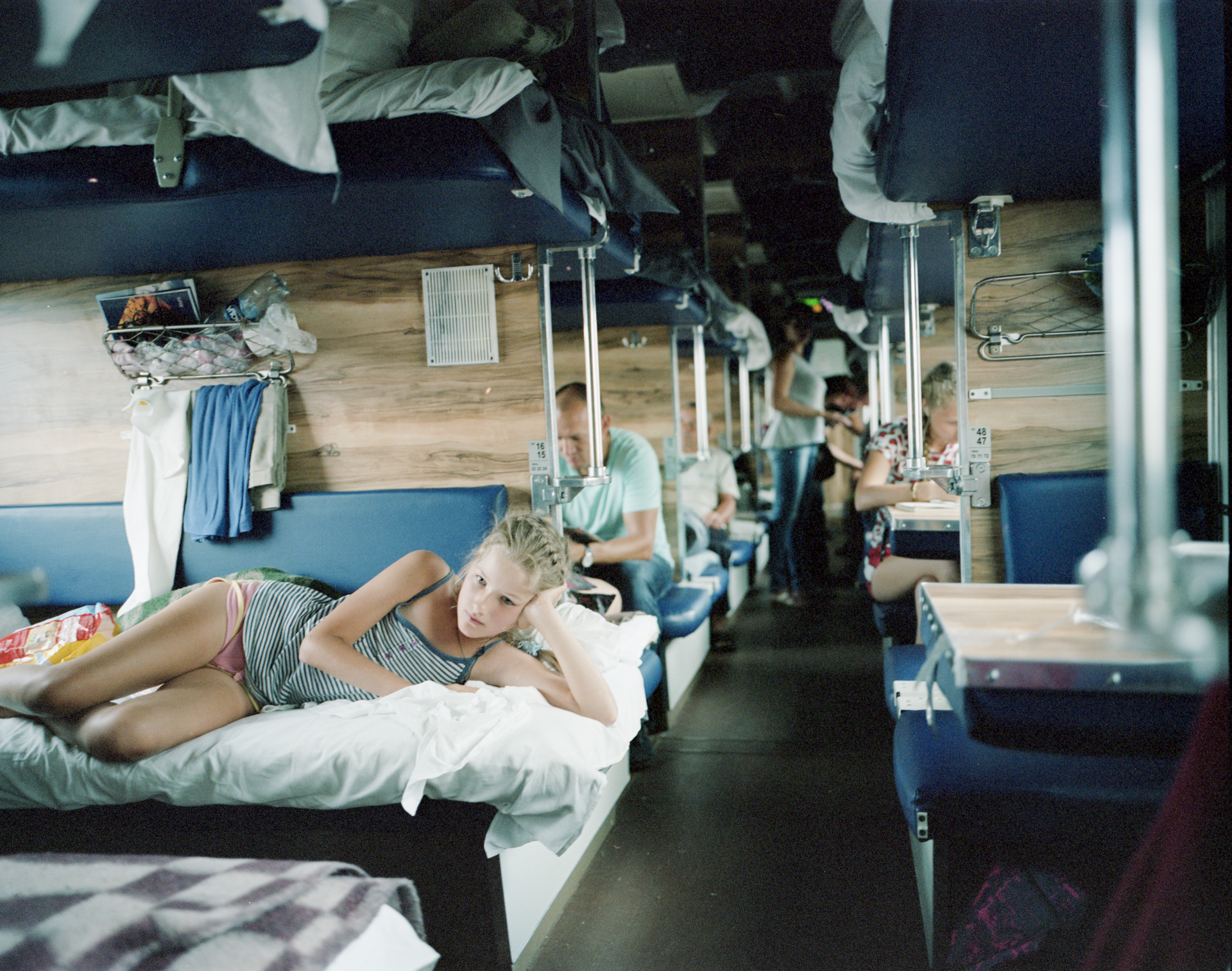
A girl on the train from Chita to Birobidzhan. On the whole Moscow-Vladivostok line during summertime, it is very common to see students going home for the summer break, or boys and girls travelling to reach their holiday destinations with their families.
If one never gets off the train, the journey from Moscow to Vladivostok lasts 6 days. The train’s speed is on average 90 km/h, about the speed of a regional train. It makes multiple stops and at the stations, waiting on the platforms, all kinds of things are sold. Usually the sellers are women and they sell scarves or waffles filled with condensed milk and blueberries. Some of them carry a metal hanger of smoked fish, hung by the eye socket.
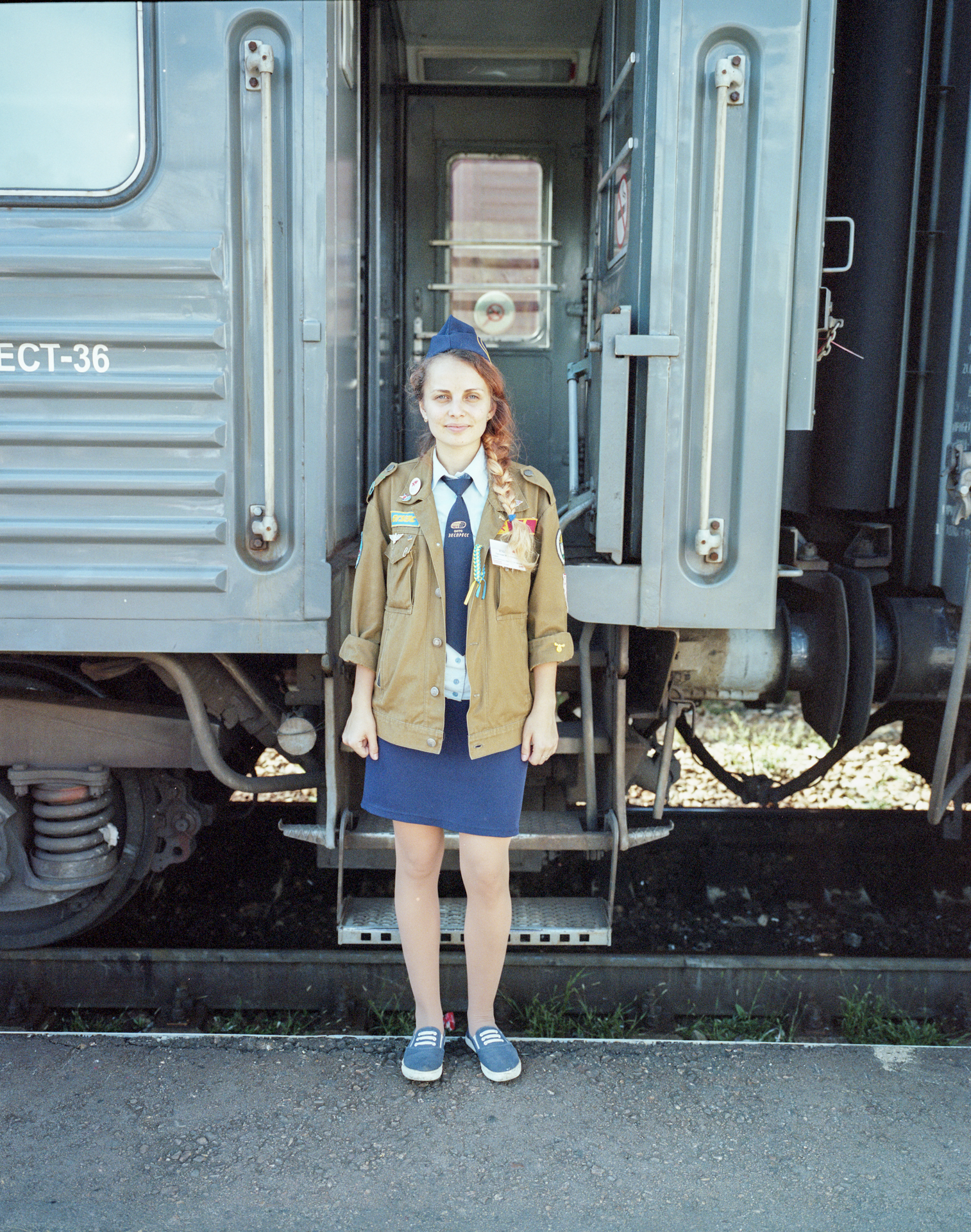
Each carriage is managed by a key figure, in most cases a woman, called provodnitsa.She is responsible for maintaining the order on the train, checking tickets and passports, and handing out bed sheets, and she is also the person that wakes you up 30 minutes before you need to get off the train.
A young provodnitsa in her special student uniform. During summer, students who want to work in the hospitality sector at national railway can have an internship where they can sample life as a provodnitsa.
Third class carriage. Immediately after checking passports and tickets, the provodnitsa provides each passenger with a bag containing fresh bed-sheets and a small towel. Thirty minutes before getting off the train each passenger is requested to roll back the mattress and hand the used bed sheets back to the provodnitsa.
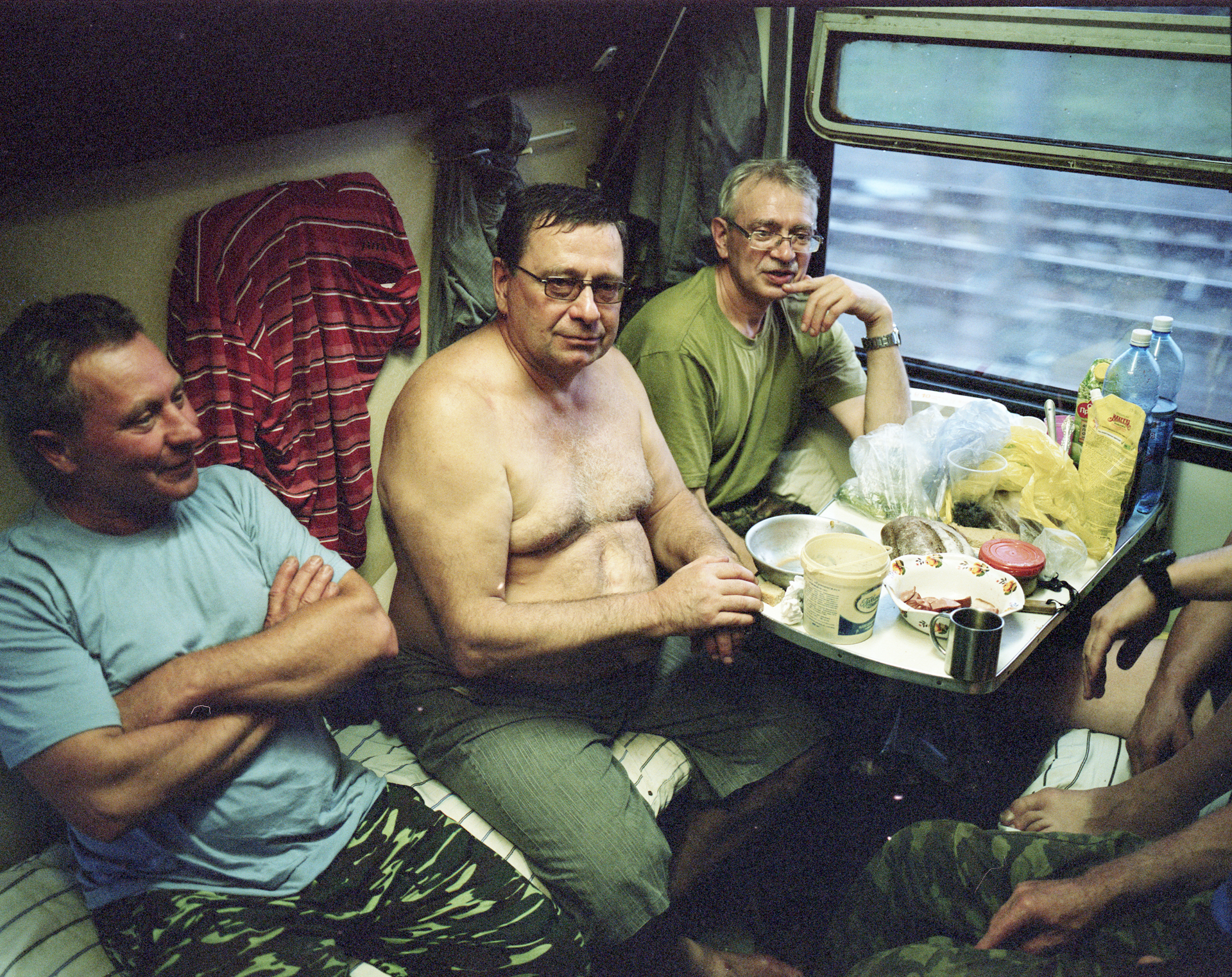
A group of Russian men on their way to their holiday resort. They are going to camp outdoors, fish and cook handmade pelmeni, Russian dumplings.
I decided to get off the train multiple times, so my trip lasted a month. The first stop was Ekaterinburg, a city located close to the Ural Mountains, which separate eastern and western Russia. Here begins Siberia, an immense region extending to the Pacific Ocean. After Ekaterinburg, I got back on the train and then stopped in Krasnoyarsk, Irkutsk. I then stayed for five days on Olkhon Island, on Lake Baikal, the largest lake in the world.
During an unexpected stop in the middle of the countryside people get off the train to get some fresh air. An old lady picks flowers and herbs while her granddaughters play on the tracks.
I then went back to Irkutsk, where I caught a train to Ulan Ude. After Irkutsk the landscape and the people started to change, their features beginning to look more and more Mongolian. The only thing that still makes you feel you are in Russia is the language. Around Ulan Ude Buddhist temples can be found, and a strong tradition of shamanism too.
A village in the Ivolginsky region in the Republic of Buryatia (a federal republic of Russia), 23 km outside of Ulan Ude, its capital city. This region is famous for its Buddhist temples (datsan), which has been the only Buddhist spiritual centre of the USSR since 1945. In the datsan many spiritual activities are carried out daily, such as temple rites, medical practice and traditional Buddhist education.
After Ulan Ude I went to Chita, Birobidzhan, the capital of a Jewish autonomous region, Khabarovsk. Finally at dawn, I arrived in the Far East, in Vladivostok.
Behind the station is the Golden Horn Bay, a sheltered horn-shaped bay of the Sea of Japan. The bay shares the name of the Turkish bay, due to its similarity.
“The magic of mountaineering has died with the disappearance of the ‘unknown’ and the ‘impossible’. Progress has deleted these words; one of man’s fantasies has been extinguished, his poetry destroyed.”
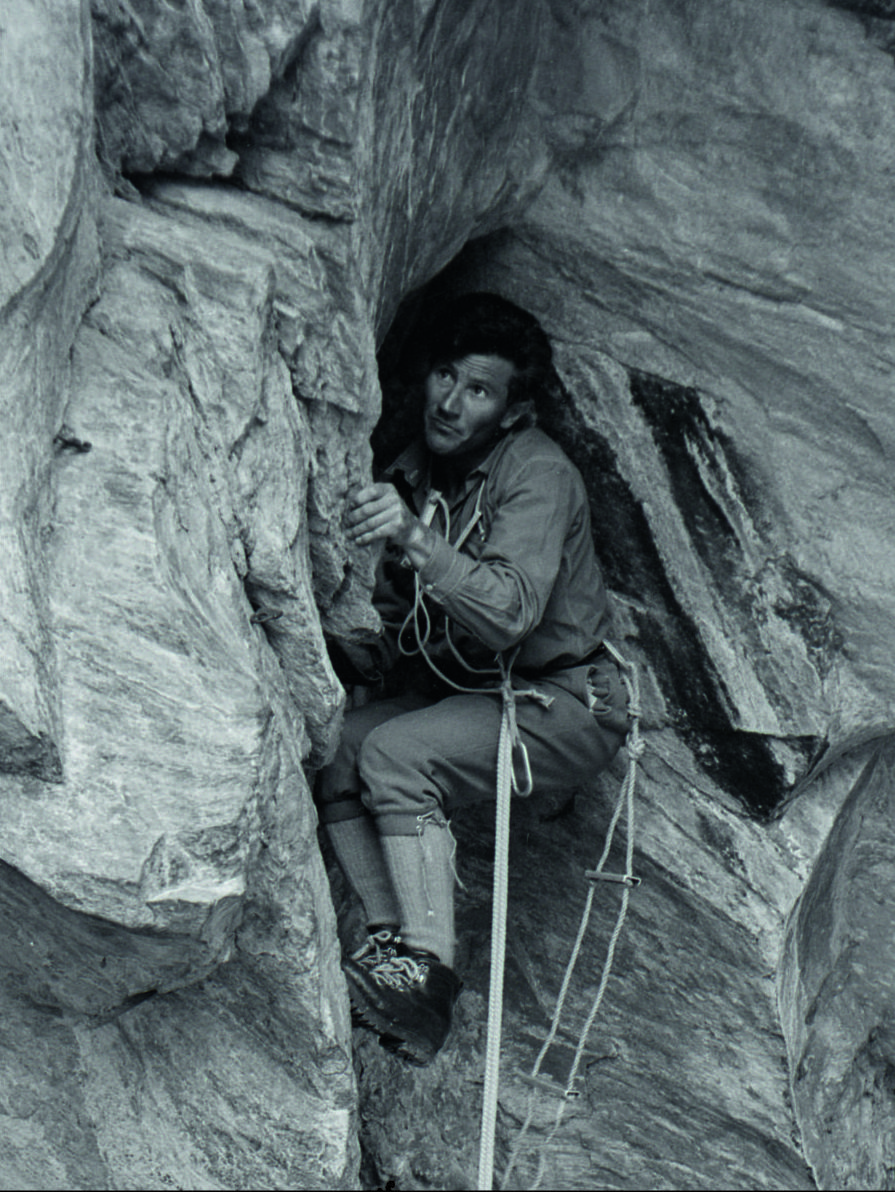
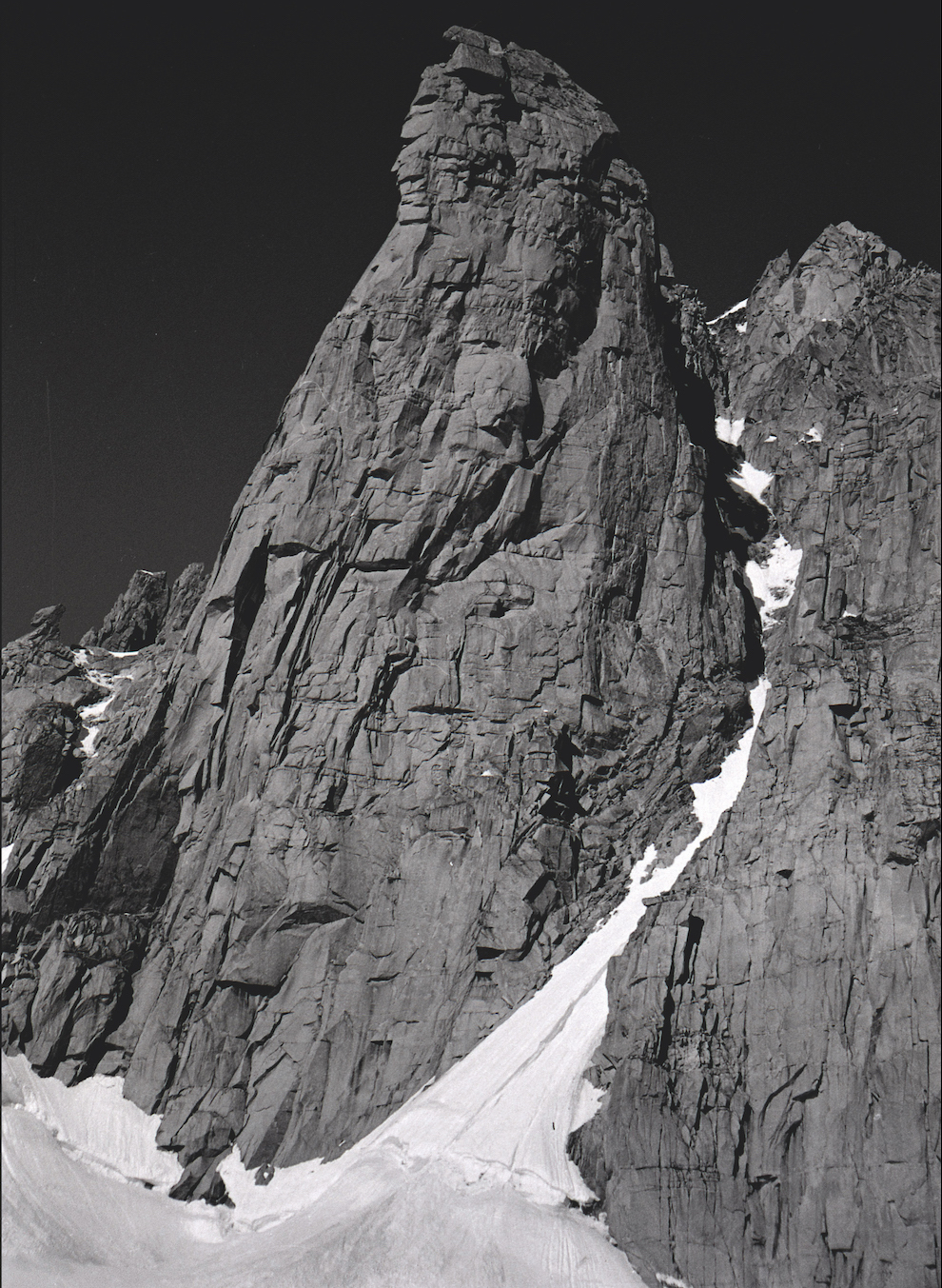
So declared the Italian mountain climber Walter Bonatti in February 1975. Ten years earlier, at the age of 35, after four days of solitary climbing at -30°C, Bonatti set foot on the summit of the Matterhorn in the Alps, becoming one of only a handful of mountaineers to have scaled the challenging north face in winter.
Born in Bergamo in 1930, Bonatti died in 2011, but remains one of the greatest mountaineers of the 20th century. Were he alive today he would explain how, on his many successful first ascents and solo climbs, he never used mechanical equipment – no expansion or pressure nails, no drills, no pulleys or fixed lanyards. He used nothing that would have been unavailable to the great climbers of the past, such as Edward Whymper, the English mountaineer who made the first ascent of the Matterhorn a century before Bonatti’s climb, and the Italian, Riccardo Cassin. It is only by using the same basic equipment as them, Bonatti would reason, that it would be possible to compete on the same level, and attempt to pass where everyone else had stopped.
Many would say this made Bonatti a fool, but he would have preferred to have described himself as honest. Eschewing the lightweight advantages of modern kit, he would take on the rock, ice and frost, foothold after foothold, pitch after pitch, with a huge backpack that threatened to pull him back into the valley, at times even carrying a climbing partner on his shoulders. While his fellow climbers were increasingly dependent upon technical clothing, energy bars and safety equipment, he would achieve his incredible feats encumbered by old heavy boots, ropes soaked with water and frost, sustained only by bread, water and a canteen of wine.
Bonatti’s solo ascent of the Matterhorn would mark the last act of his brief, 17-year career, but his achievements are still as remarkable now as they were then. Though he would be plagued by tragedy and controversy – accused of attempting to jeopardise the 1954 Italian expedition to K2 by his fellow climbers, it later emerged that Bonatti, the strongest climber of the group, was the victim of a conspiracy to prevent him from making it to the summit first – today, in an era where no climb is off limits to those with enough money and equipment, Bonatti continues to be conspicuous as an icon of great talent, strength and determination.
This is an extract from issue 21 of Port, out now. To buy or subscribe, click here.
From the wilds of Patagonia to the English countryside, the Argentine chef best known for hisappearance on Chef’s Table muses about his roving lifestyle and his love of cooking over open wood fires
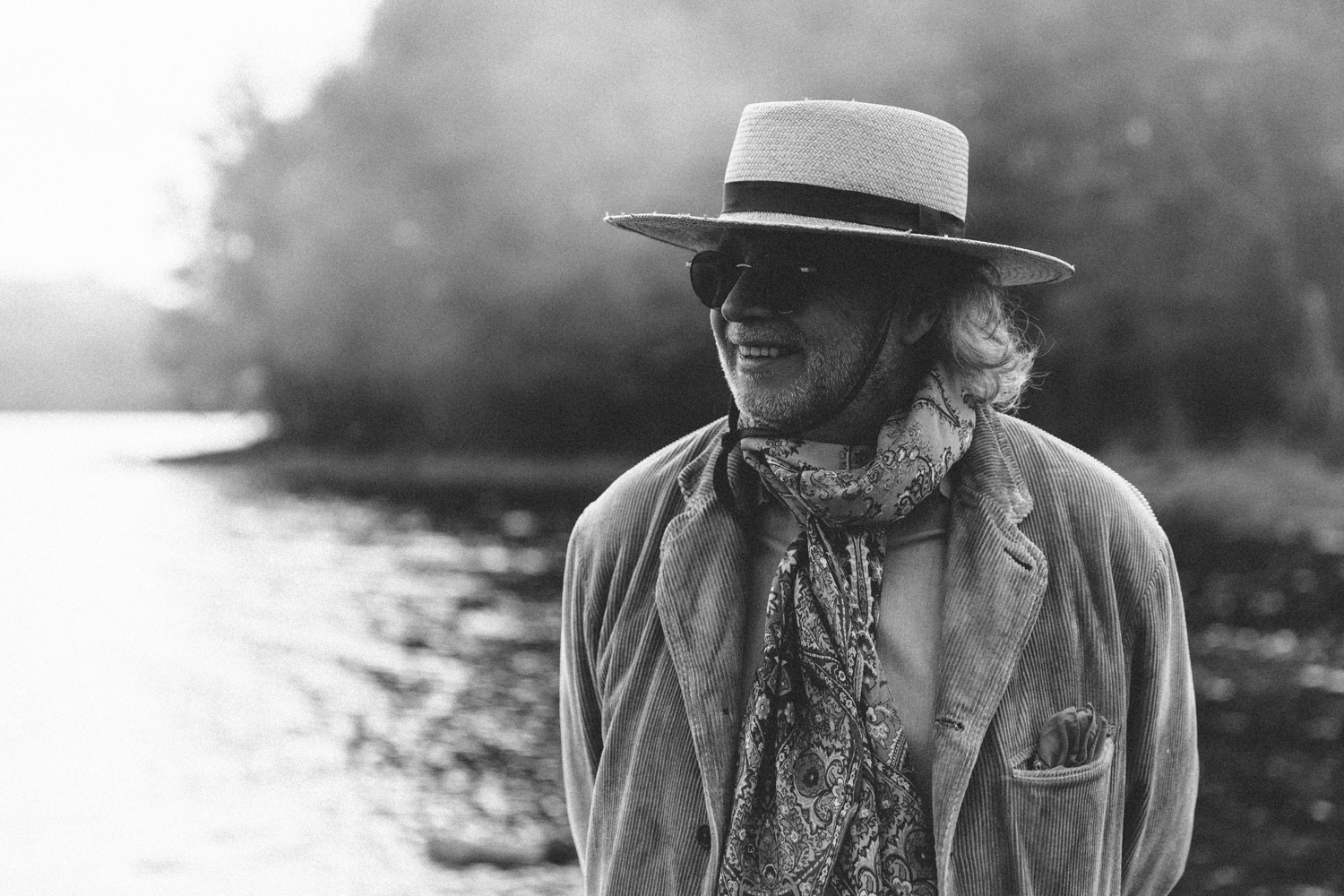
It would be easy to roll your eyes at Francis Mallmann. The 61-year-old Argentine super chef, who came to global attention after appearing on Netflix’s Chef’s Table, speaks in gravelly, earnest platitudes. When I meet him in London in June, he sits there, all silk cravat, linen suit and grizzled white beard and doles out lines about freedom and the power of nature. It would be easy to scoff, sure, but the thing is, you’d be hard pressed to prove any of this was inauthentic.
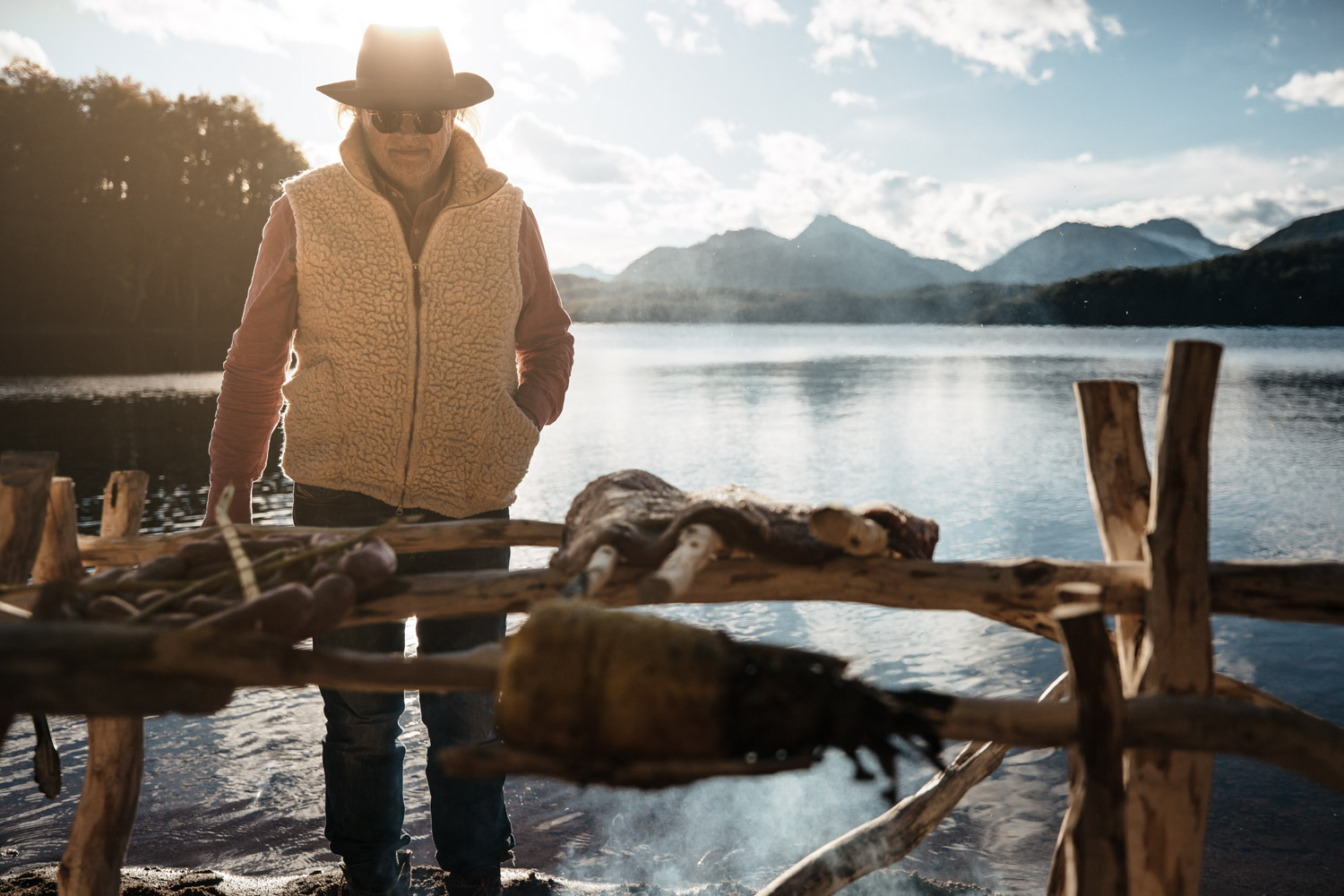
Mallmann practises what he preaches. The chef, born in 1956 in Buenos Aires but raised in the wilds of Patagonia, has long eschewed any semblance of a normal life. In any one week, he can be in five different countries, he sees his wife two weeks a month, has “lost respect” for most of his sedentary friends, and lives mostly on a remote Patagonian island, where he long ago rejected the kitchen for vast fire pits outside.
“I’ve created a life for myself in which I am constantly moving,” he muses. “I’m in love with so many places but surface-level sightseeing is a beauty that passes through your heart, it doesn’t stay. If you really want to know a place, or a country, you have to nurture that relationship.”
Bizarrely, it all began in the ‘60s when he heard The Monkees. Something about their music proved a catalyst for his sense of adventure and he flew off to Paris to study under Michelin-starred chef Alain Chapel. There, he began to learn his craft, but his efforts to master traditional French cuisine were not met without criticism. It took an unimpressed French business man – the head of Cartier to be exact – to tell him his food was, well, lacking. “This is not French food” were his exact words.
This seemingly catastrophic encounter was actually exactly what Mallmann needed to find his own culinary signature. “I went back to my memories of childhood,” he says. “Slowly I started creating this language of cooking with fire that I think represents the naked cooking of South America so much.” One of Mallmann’s favourite ways to cook is in a pit dug out of the earth, a technique he grew up with and one that goes back thousands of years.
He now has 11 restaurants across South America, France and Miami, with a London outpost coming next year. This July, he will be collaborating with Krug for their Into the Wild festival in the English countryside.
So how does this self-possessed wandering chef find himself cooking at a luxury festival for a high-end Champagne house? Set in the grounds of the Grange, a romantic 19th century estate in Hampshire, this is a luxury event, yet it oddly chimes well with Mallmann’s philosophy.
“This will be a beautiful event, outside with big, big fires for the cooking, all in the grounds of this old haunted house,” he says, growing wistful about fire and its power to command a ‘stillness’ from people. “The most important thing for me is not the champagne or the food, it’s sharing the experience of being outside amongst the trees and the music. That’s luxury”
Indeed, Mallmann has a curious irreverence for the hushed worship of food and wine, especially the latter. “I find it very boring, all this talk about wine. It’s like ‘shut up and drink’,” he laughs. “There’s this magic that happens with a great bottle of wine and a great conversation. That’s what I like about wine, as opposed to writing a poem about the bottle.”
This thinking carries over into the very food he eats himself. What he would cook on his last day on earth? “A simple cabbage salad with white rice and a nice bottle of wine,” he says. I ask him where he would be but the answer is obvious: “On my island in Patagonia, in the middle of nowhere.”
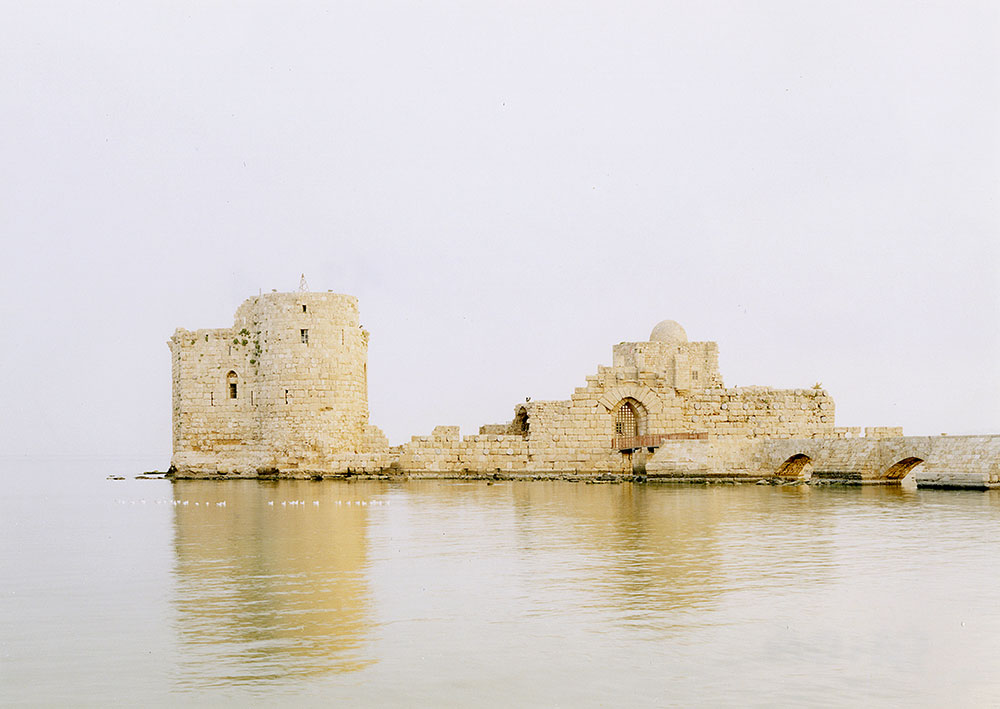
The German artist offers a new perspective on the Near East with a romantic series of photographs taken during his extended travels
The overwhelming effect of Elger Esser’s photographs is one of stillness. Nature and the landscape tradition are the backbone of the Düsseldorf-based artist’s work and just beneath the surface of his large-format photographs is a sense of the sublime. For more than ten years, Esser has travelled between Lebanon, Egypt and Israel and, in his first solo exhibition in the UK, he presents painterly photographs of shorelines, traditional feluccas and dahabiya sailing boats, all scaled up to monumental effect.
‘Morgenland’ is an old German term for the Middle East, meaning ‘morning land’, and the hazy, white-hot light that saturates Esser’s images explains the artist’s chosen title. Captured using an 8 x 10 camera, these luminous and unpeopled landscapes see glassy waters, still horizons and ancient ruins presented as heroic images.
Esser’s intuitive eye for beauty is immediate but a subtle political edge still runs through the Morgenland series. The photographs quietly resist the pitfalls of cultural colonialism by subverting media depictions of the Near East as a zone of endless conflict. Instead, they offer something more sensitive, more neutral.
As Edward Said wrote in his 1978 landmark, Orientalism: “The more one is able to leave one’s cultural home, the more easily is one able to judge it, and the whole world as well, with the spiritual detachment and generosity necessary for true vision. The more easily, too, does one assess oneself and alien cultures with the same combination of intimacy and distance.”
Elger Esser: Morgenland is on show at Parasol Unit in London until 12 May
Celebrate the capital through the eyes and minds of an architect, a chef, an entrepreneur and an adventurer, each with a unique story to tell about their city
This month, dunhill has partnered with Port to present a series of four films exploring London through the eyes and minds of an architect, a chef, an entrepreneur and an adventurer.Chung Qing Li, Michel Roux Jr., Robert Scott-Lawson and Matthew Robertson are men of style and substance, each with a unique story to tell about their city.
Watch the full films from the Our London series here.
Michel Roux Jr. – Chef
Michel Roux Jr. is a Michelin-star chef and patron, and a man of classic taste and style. His restaurant La Gavroche, in London’s Mayfair, is one of the finest in the country. The name Roux is synonymous with French haute cuisine in Britain.
Matthew Robertson – Adventurer
Adventurer and filmmaker Matthew Robertson is a Londoner that finds peace in the wilderness. As the founder of Momentum Adventure, he scours the earth seeking out unique experiences and environments.
Chun Qing Li – Architect
Architect and entrepreneur Chun Qing Li is the founder of China Design Week and KREOD, an award-winning interior design and architecture practice in London. Standout designs include the China International Trade Pavilion built for the Rio Olympic Games 2016.
Robin Scott-Lawson – Entrepreneur
Robin Scott-Lawson is an established entrepreneur and has called London home since he was 18 years old. His London-based agency My Beautiful City specialises in high-end art direction, experiential marketing and event production.
Watch the full films from dunhill’s Our London series here.
A Port Creative production
Photography: Christophe Meimoon at Quadriga Management
Styling: Dan May
Grooming: Grooming by Tyler Johnston @ One Represents using Moroccanoil and Givenchy La Make Up