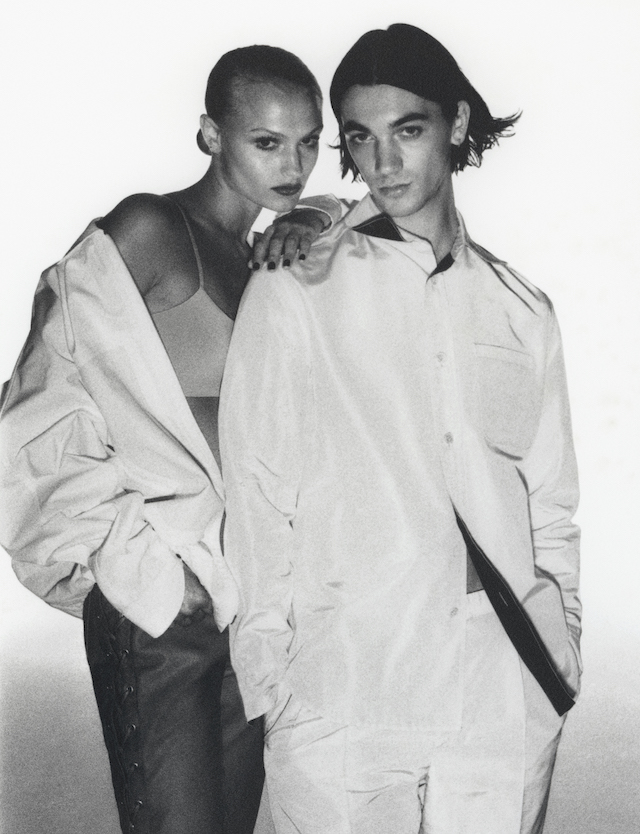
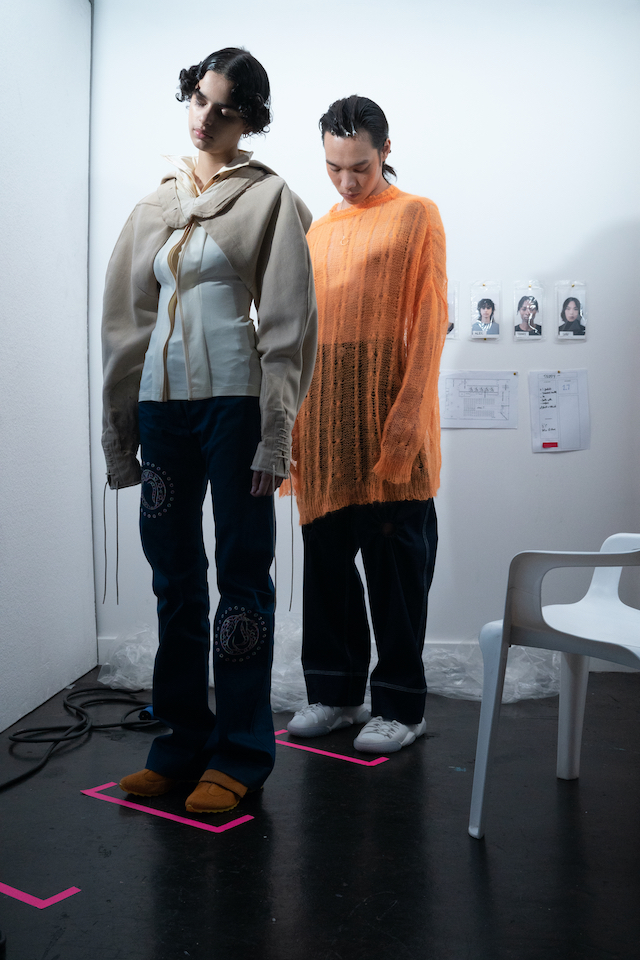
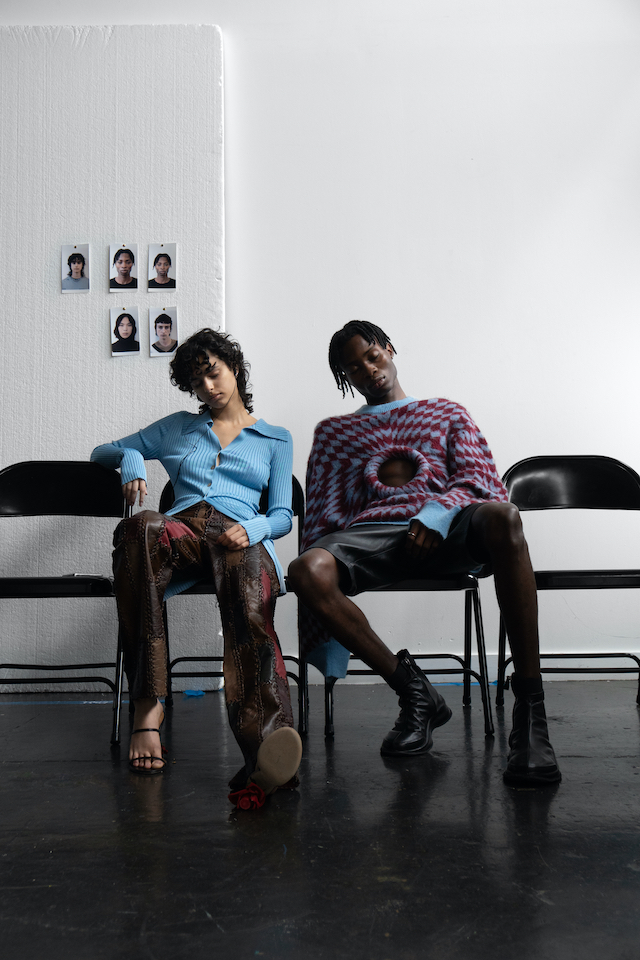
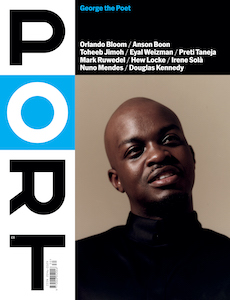
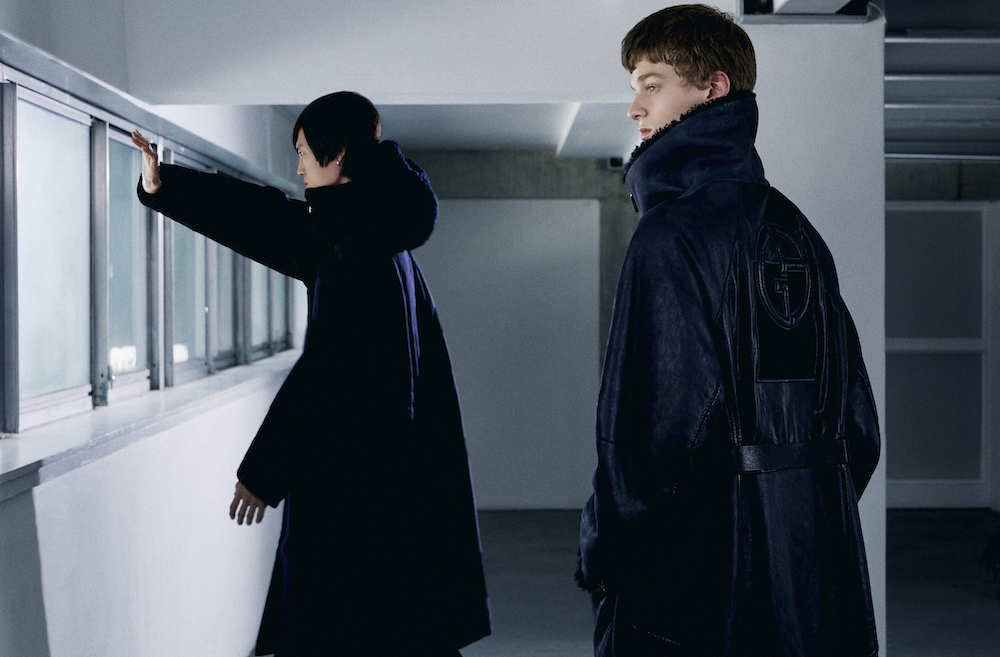
Thomas Rousset and Julie Velut’s stripped back shoot for issue 31
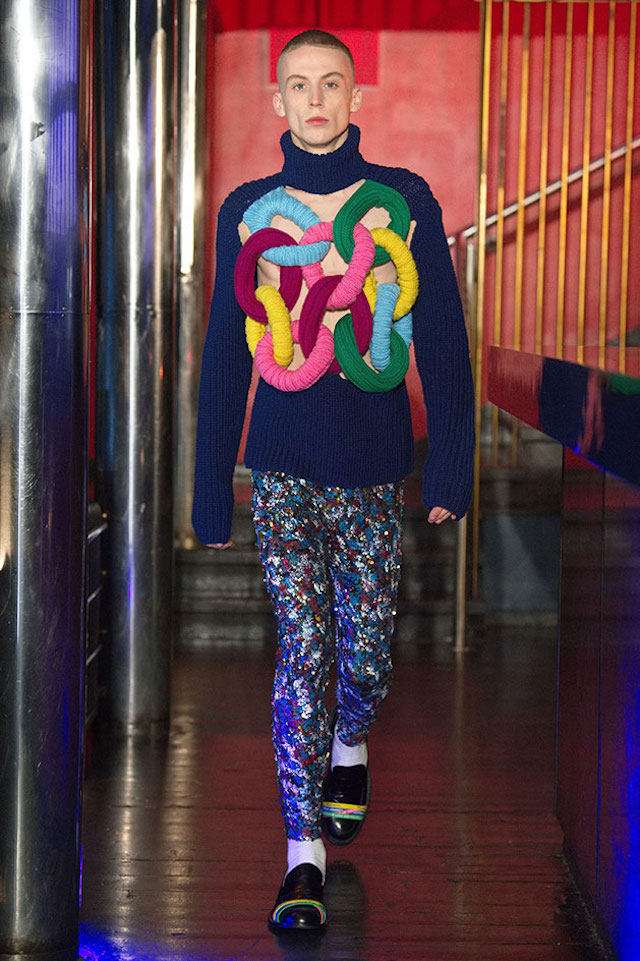
Camille Top Stylist’s Own Skirt HERMÈS. Saydefine Full look SAINT LAURENT BY ANTHONY VACCARELLOTop NAMACHEKO Trousers DUNHILLShirt PRADA Trousers HERMÈS Belt HERMÈSCELINEDress SOPHIA SCHWITZKE Shoes BOTTEGA VENETAJacket DUNHILL Shirt NAMACHEKO Tie GUCCI Gloves SAINT LAURENT BY ANTHONY VACCARELLO Trousers AMIJacket SUPRIYA LELE Trousers CORMIOALEXANDER MCQUEENTop STEFAN COOKE Trousers GUCCI Bracelet MODEL’S OWNNAMACHEKODress LOEWE Top JEANNE FRIOTBOTTEGA VENETAJW ANDERSONTop PRADA Belt STEFAN COOKE Skirt ICHIYO Shoes GIVENCHY
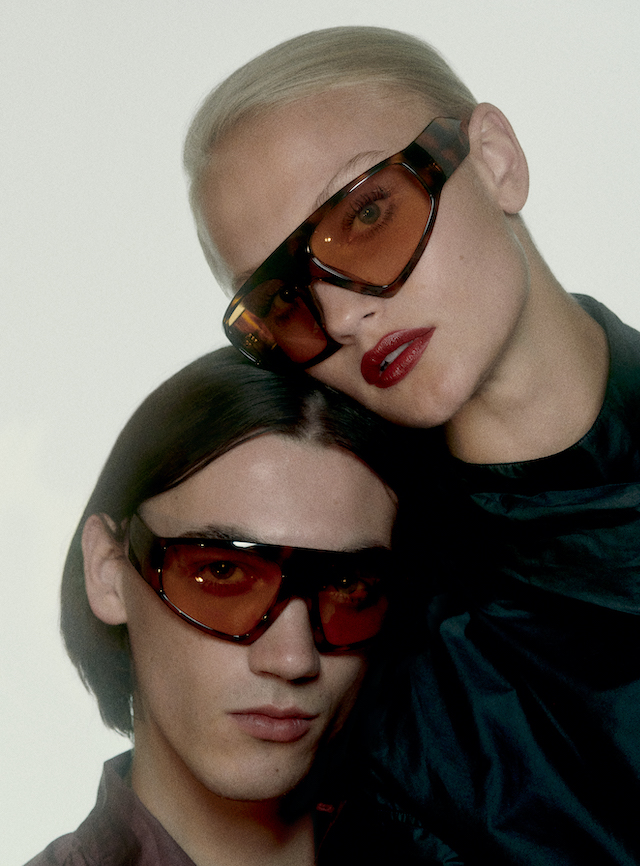
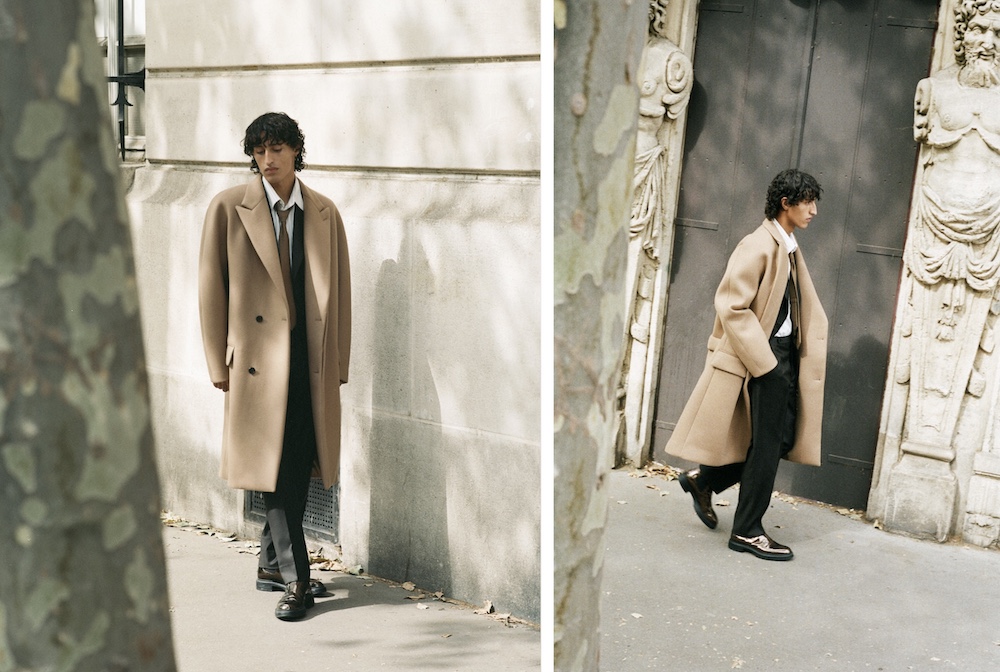
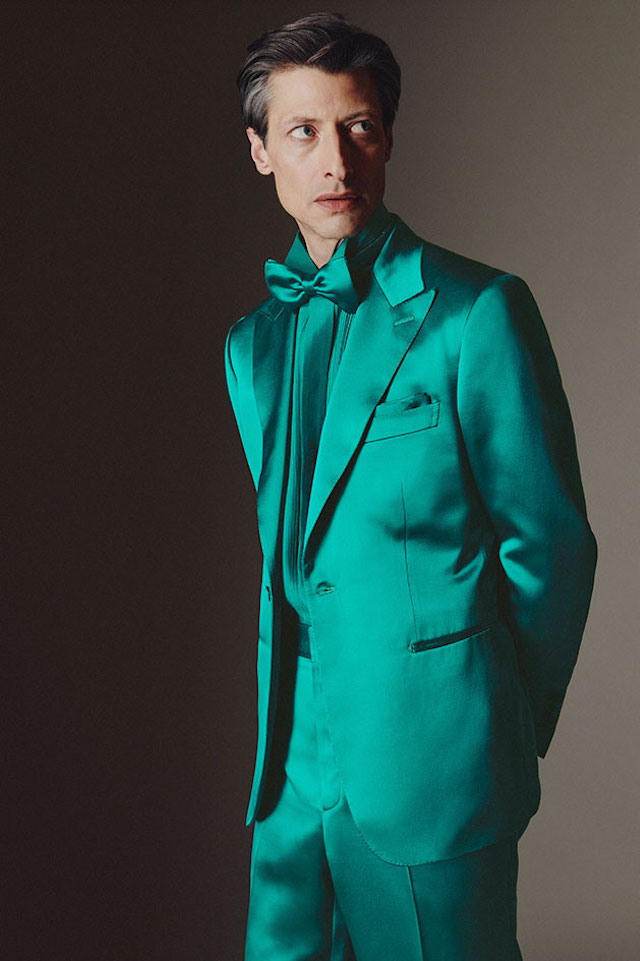
Valentin Hennequin and Georgia Thompson’s sleek shoot on the streets of Paris
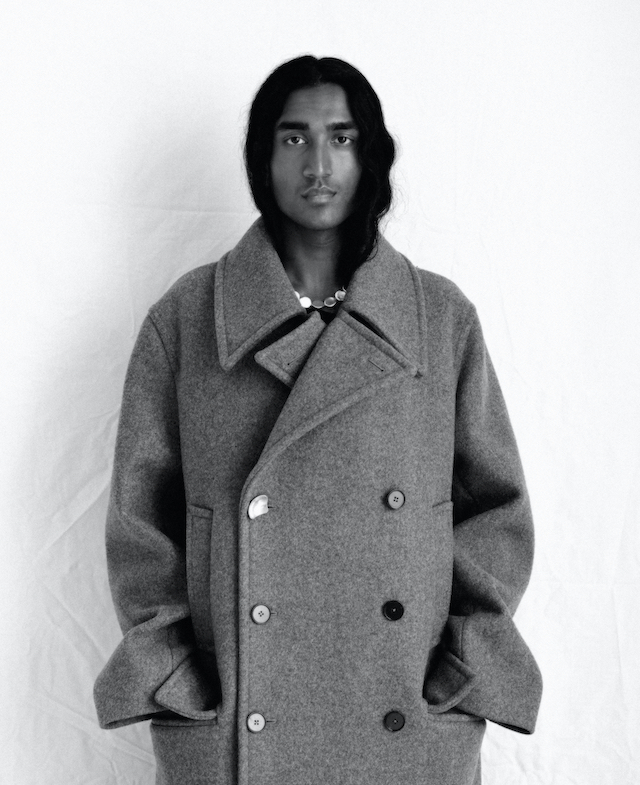
Full look Lemaire, additional under shirt Dries Van Noten, briefcase by Berluti L: Shirt, jumper, jacket and bag Dior Men, trousers Zegna, shoes Lemaire. R: Full look Bottega Veneta Shirt Ernest W.Baker, suit Brioni, coat and tie Dunhill, shoes Hermès L: Full look Louis Vuitton, tie Dunhill. R: Shirt Ernest W.Baker, suit Brioni, tie Dunhill, shoes Hermès Full look Miu Miu, roll neck stylists own, trousers Zegna Full look and scarf Hermès, shoes Prada Full look Prada Full suit Celine, coat GmbH Full look Givenchy
BORSALINO X AMI LOUIS VUITTON BURBERRY GIORGIO ARMANI CELINE NANUSHKA BERLUTI DIOR HERMÈS PRADA STEFAN COOKE SAINT LAURENT BY ANTHONY VACCARELLO MARGARET HOWELL HUGO BOSS
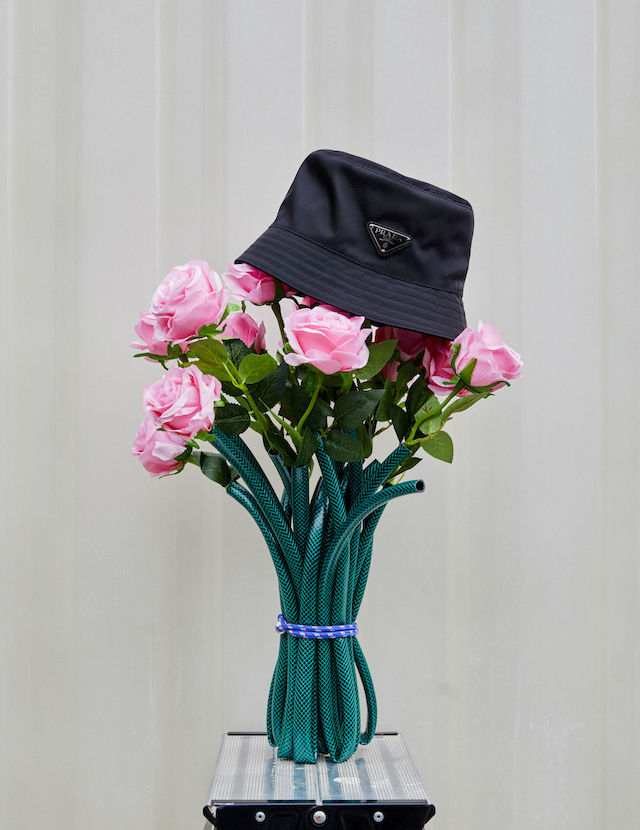
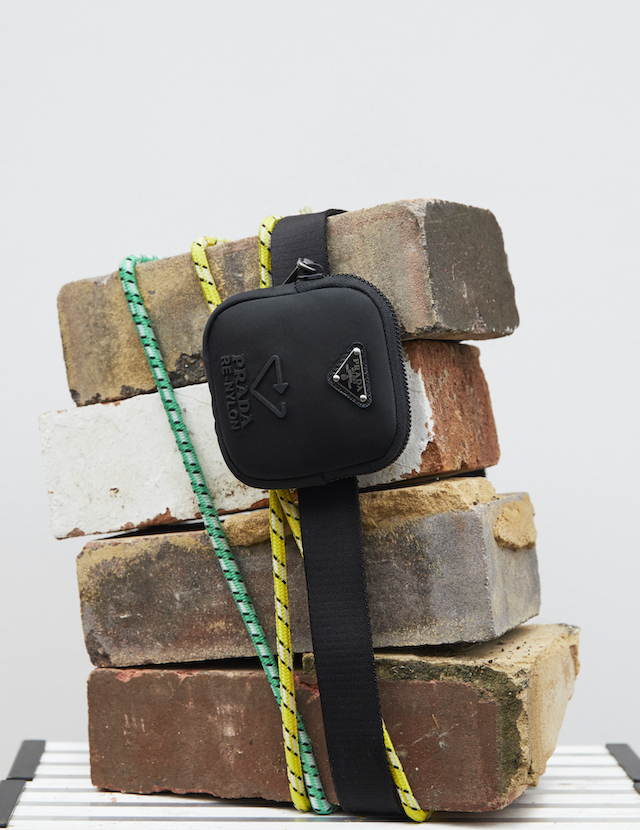
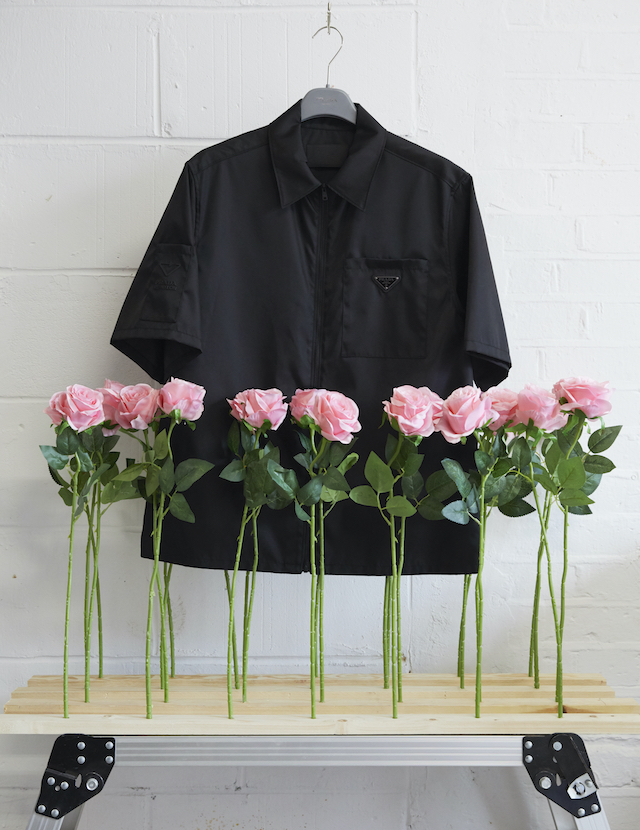
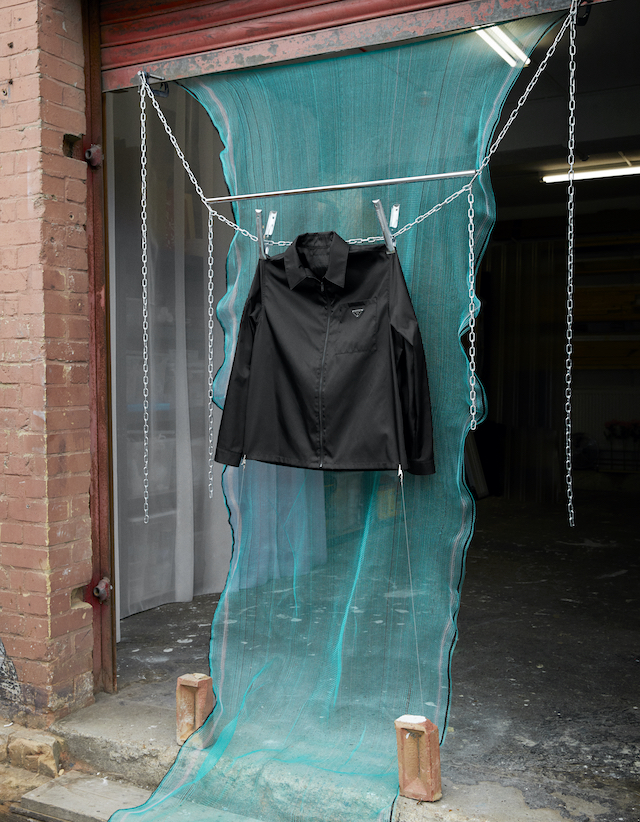
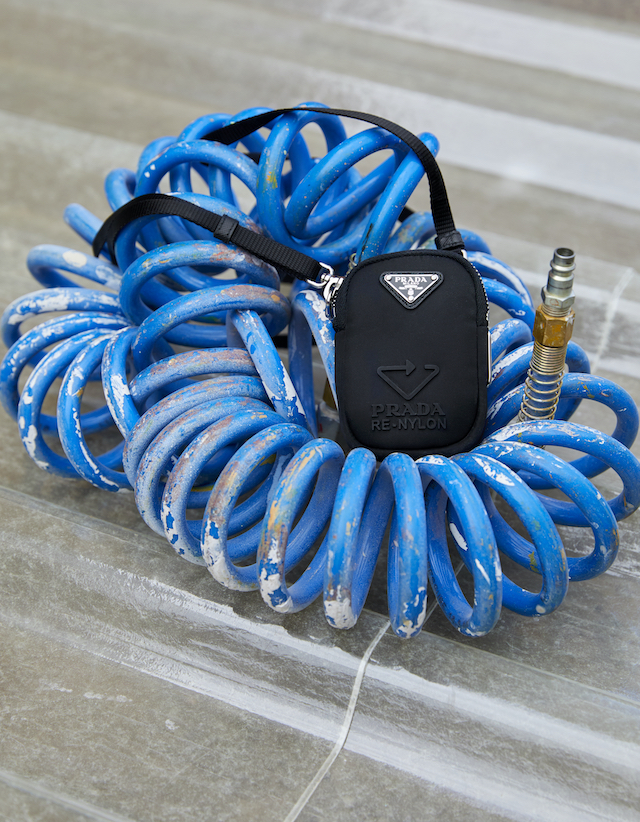
Jamie Waters investigates the global launch of Prada’s versatile fibre range
Clothing and accessories Prada Re-Nylon range throughout
Nylon owes a great deal to Prada. Back in 1984 Miuccia Prada, the brand’s creative director and co-chief executive, unveiled the Vela, an unfussy black-nylon backpack that instantly changed consumer perceptions of the synthetic material from cheap to covetable. It challenged long-held ideas of what a luxury item looked like and inspired a new era of minimalist, practical dressing. It was also Prada’s first ‘It’ bag, catapulting the family-run brand to new heights of fame and desirability. The textile has remained a linchpin of Prada collections ever since.
So it makes sense that, more than three decades on, the Milanese house has made clear its intentions to reduce waste and tackle sustainability by zeroing in on nylon. Re-Nylon, launched in 2019, is a line of classic Prada pieces redone in a special type of recycled nylon. It started out with six bag styles for men and women, yet the plan is to go big: Lorenzo Bertelli, Prada Group head of marketing, has said the company is aiming to replace all of its virgin nylon with recycled nylon by the end of 2021. For a company that uses 700,000 metres of nylon annually, it’s a massive aim.
The latest step in Prada’s Re-Nylon venture was a collection first unveiled in September at Selfridges. Part of Project Earth, a new sustainability initiative by the Oxford Street department store, the Prada pop-up featured accessories like bucket hats, cross-body bags, totes, belts and hightop trainers – plus ready-to-wear collections for men and women. In this ground-floor space, agenda-setting Londoners could be found poring over clean-lined jackets with studded buttons, slim-cut trousers, Bermuda shorts and puffer jackets. Rendered in a strict palette of black or white, these eco-friendly garbs look much like Prada’s beloved mainline pieces – which is precisely the point. The monochromatic medley was presented against a backdrop of short films produced by National Geographic that spotlight sustainability pioneers, including a Chinese factory specialising in upcycling garments, a fishing-net-recycling enterprise in Cameroon and a factory in Arizona transforming old carpets into high-end materials.
All Prada’s Re-Nylon designs are made from Econyl, a trademarked ‘regenerated nylon’ created via a complex process of recycling fishing nets and bits of carpet, rope and other synthetic cast-offs. Aquafil, a family-run Italian textile firm, is behind the material; after years of producing virgin nylon, it worked with scientists to figure out how to break down synthetic waste to its core chemical elements and rebuild it into a greener substance. Spun at a factory in Slovenia’s Vipava Valley, the resulting yarn is basically the same as virgin nylon – in how it looks and feels – but is a chemically different material. Crucially, unlike regular nylon, Econyl’s manufacturing process doesn’t produce enormous nitrous oxide emissions; plus, the fibre can be endlessly recycled without its quality diminishing. It’s a noteworthy – albeit more expensive – alternative.
In recent years, as sustainability concerns have skyrocketed, Econyl has become a darling of the fashion industry. The fibre is now featured in the collections of luxury and sportswear brands alike, who appreciate its light footprint and striking likeness to regular nylon. Rather unusually for a textile, Econyl has become a powerful brand in its own right. Designers advertise its use in their collections and, according to the hype-tracker Lyst, in 2019, internet searches for ‘Econyl’ were up 102 per cent on the previous year.
Nonetheless, Prada’s Re-Nylon project is surely the most high-profile embrace of Econyl seen to date, and it promises to springboard the fibre into a new level of public consciousness. The initiative fits into a broader effort by Prada. Last year the house made its green intentions clear, publishing a sustainability strategy that’s guided by the UN’s Sustainable Development Goals, and covers environmental policies (including the footprint of stores and clothing production), as well as social issues such as diversity in hiring and promoting art and culture.
Furthermore, in a first for a luxury brand, it inked a €50 million sustainability-linked loan with Crédit Agricole Group, meaning the interest rates will change if it hits certain eco targets. It also joined the environmentally focused G7 fashion pact initiated by French president Emmanuel Macron and banned fur from its collections. More recently, Prada launched Sea Beyond, an educational programme created in partnership with UNESCO’s Intergovernmental Oceanographic Commission, and funded by Re-Nylon proceeds, which involves presenting webinars about ocean waste to high-school teachers and students from cities including Berlin, Johannesburg and Shanghai.
Viewed together, this phalanx of projects signifies Prada’s intentions looking forwards. Green is the goal – and Re-Nylon is the most emphatic emblem of this commitment to change. By swapping the brand’s signature material for an eco-friendly alternative, it’s showing that it is determined to shift its mindset from the inside out, one thread at a time.
Carlo Capasa, chairman of Camera Nazionale della Moda Italiana, discusses MFW and the future of fashion
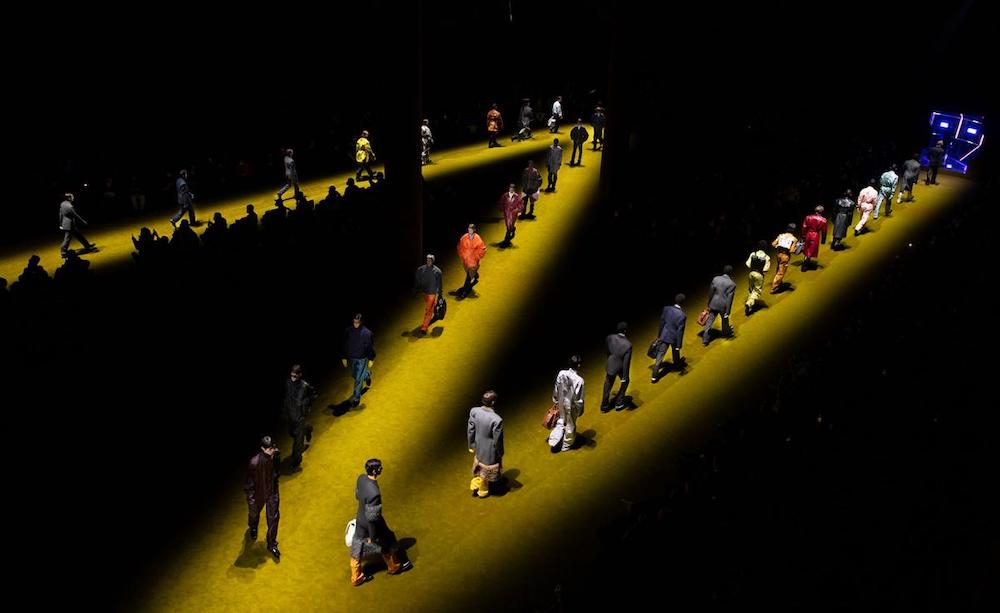
Prada AW22
Apolitical and not-for-profit, the aims of Camera Nazionale della Moda Italiana (CNMI) have remained largely the same since its inception in 1958: to “represent the highest values of Italian fashion, and to protect, co-ordinate and strengthen the image of Italian fashion in Italy and abroad, as well as the technical, artistic and economic interests of its Associates”. Representing more than 200 companies across the sector, it plays a vital and global role in setting the fashion agenda, most visibly through Milan Fashion Week. January’s menswear offering remained on tenterhooks, unsure whether it would even be able to go ahead three days before launch, but in the end delivering 23 shows and 47 brand presentations. It was a week of Italian staples expressing themselves confidently – Prada, Zegna, Brioni and Fendi deserve special mention – as well as striking debuts, with brands like JW Anderson and 1017 ALYX 9SM presenting for the first time in the calendar of shows.
Conducting such an orchestra year on year (and through a pandemic) would shave years off my life, I confessed to Carlo Capasa, the charismatic chairman of CNMI. Capasa is simply too busy (and optimistic) to worry, and caught up with Port to discuss the association’s active work in upskilling Italian workers, fostering greater diversity and inclusion, and how covid has accelerated its digital capabilities.
Carlo Capasa
Congratulations on a fantastic week, have you had a moment to relax or is it onto the next thing?
We’re deep into, of course, the next fashion week! Women’s is complex to organise because there’s more brands, more presentations, but we’re hoping the covid situation in Europe will have improved slightly. Men’s was very successful, but it was stressful not knowing whether it was going to go ahead three days before we started… We are excited for February and hope we can deliver an even better week this time.
Before any of the shows, you started with a tribute to Giovanni Gastel, the photography legend who sadly passed away. This felt like a personal and moving way to begin.
He was an incredible, brilliant man. Charming, creative, unique. He was not only part of the Italian community, but to the global fashion community. Not only a great artist, but a great person. I thought it was quite natural to celebrate the first fashion week without him, with him. He was a friend of mine, and really a friend of everyones. We started with the heart.
Fendi, Brioni, Zegna and Prada in particular delivered striking collections, were there any others that surprised you?
All collections this season were particularly creative. During this crisis fashion has reacted with creativity, trying to break out of the pandemic and the restrictions it brings. Taking all this pressure and turning out something fresh, a new dream, new feeling, some positivity. I think it was one of the strongest collections in a creative sense, and I appreciate this approach, this attitude everybody brought.
Brioni AW22
Pressure makes diamonds. There definitely seemed to be a note of elegance, people being keen to dress up, go out, feel luxurious. I suppose it is only natural after what we’ve gone through.
Yes, it is an appropriate reaction to the time we are living through, where many are confined to their homes…
In the same trousers, every day…
Yes, let’s take it to the next level, capture that energy of going out, of feeling good!
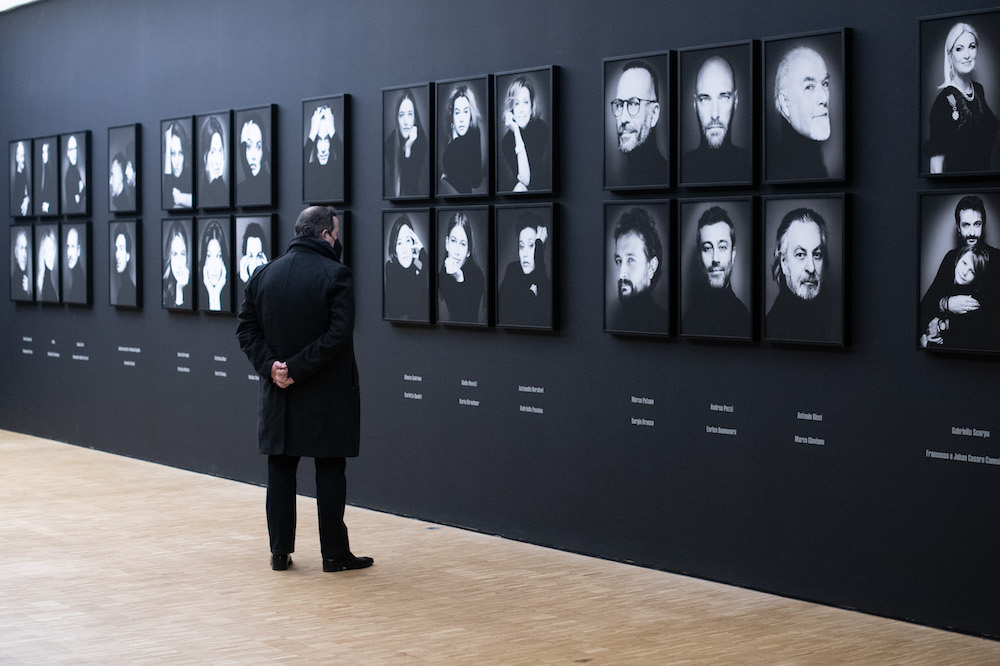
‘I gioielli della fantasia’ exhibition of the late photographer Giovanni Gastel
Throughout the last couple of years, MFW has been recognised as an industry standard, how have you found navigating this new terrain and making sure people are protected, whilst still showcasing what’s next?
We were forced to be very resilient, to react and adapt very quickly to any situation. There were weeks where we were almost 90% digital, which was completely new. In February 2020, we organized, in a few days, a new idea for a digital platform exclusively for China showcasing all that would happen in Milan. We made a deal with Tencent – allowing for direct streaming, essentially 24 hours of digital communication – and immediately hit 18 million people watching the week. Since then we’ve understood that the digital side of our offering was just as important as the physical. Last September, we had 56 million people watching and these dual tracks will remain, even when we’re out of the pandemic. Because although the experience of seeing a fashion show in the flesh is something you cannot miss – meeting other people, talking to the designers – with strong digital organisation, we are able to bring another kind of experience to everyone in the world, enlarging our community. With travel impossible, we found a way to travel, as it were. This idea of digital was already there, dormant, but was accelerated, meaning we gained five years of growth in six months. We’ve caught up on virtual collections, 3D pattern-making and printing, all these new frontiers that impact the production chain, in such a short time.
Ardusse AW22
I know making sustainable changes to the industry and supporting young Italian talent is a focus area for CNMI, could you expand on this a little?
For many years we’ve been asking, what do we really need? Does fashion need to be so fast? The consciousness of people has been growing over the past two years, especially in the first year of the pandemic. Should there be limited production for some collections, so we’re not over producing, trying to be closer to actual consumer demand? Do we need constant sales, over consumption? Let’s change the idea of fashion, whether that’s a better understanding of recycling, reusing or renting vintage, using less plastic, having a say in the chemicals used in our industry. Beyond building a more circular economy, we’re trying to push a greater understanding on the human, social element. We’re talking to our community about rules and values, because we cannot ignore the people and hands that produce our garments. We’re therefore controlling more of our production chain and have just conducted an important survey to analyse the wages and work conditions of fashion workers in Italy, so we improve their conditions. All the brands we work with have embraced these recommendations, and we are proud to say we very recently signed an agreement with the ministry of labour and social policies, allowing us to digitally upskill and retrain 40,000 workers in the industry over the next five years. Amidst change, we want to make sure no one is left behind.
JW Anderson AW22
You have also been looking to encourage greater diversity and inclusion?
The fashion community has the opportunity to communicate at a high level some of these values, in some cases more so than the government can. It is an incredible responsibility because incredible change is needed, but we cannot hide. We have to stand up for what we think matters, and diversity is a value. I would like to think that fashion is open, that we do not judge by culture, religion, sexuality, race. For me, fashion was always a place where you could be a little more accepted, whoever you were. But, we have work to do. We published our manifesto on inclusiveness in 2019, following a great many roundtables with Bottega Veneta, Brioni, Dolce and Gabbana, Gucci, Zegna, Fendi, Armani, Moschino, Prada, Salvatore Ferragamo, Valentino and Versace, among others, all working together to layout structural and concrete changes needed. Whether that’s ensuring proper stylists can treat different hair textures before the runway, or working with charities such as Mygrants, a platform providing free training for refugees. Many of the those participants now have full time work. Fashion, by definition, is projected into and concerned with the future. So we are responsible in shaping and contributing to that future through diversity, which is the natural balance of things. The planet, our ecosystem, is rooted in it. Diversity is the beauty of difference. Unfortunately that is sometimes not obvious to our society.
What role do you think the pandemic will continue to play in your world?
As mentioned, fashion is always presenting what is next, in some way, always looking forward. Designers think about next seasons, new possibilities, and projected timelines. They are always putting hope that we are the end of the tunnel, that something will change. That we are emerging into something new. They think beyond lockdowns and try to capture another mood. This is the visionary side of fashion: anticipating wishes, our dreams of tomorrow.
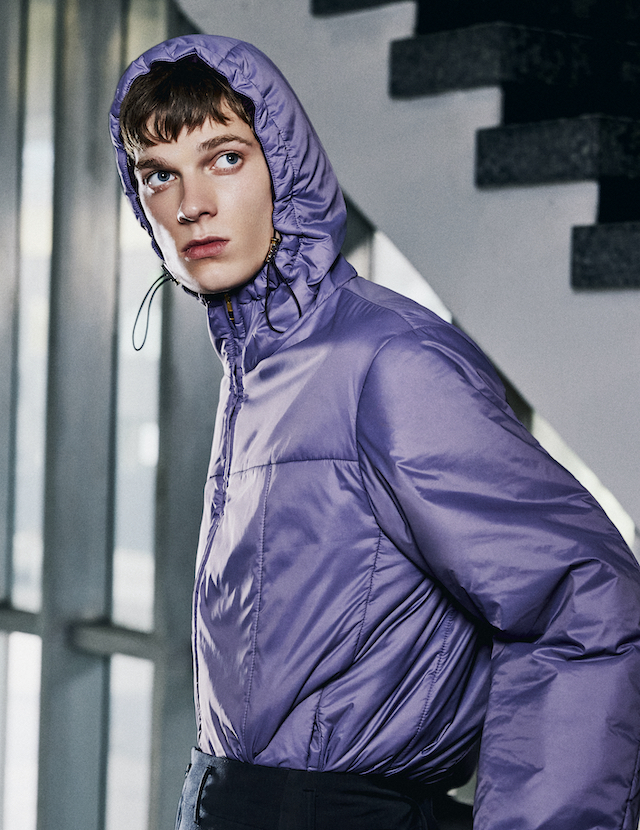
Earring ACNE STUDIOS Jacket, roll-neck and trousers PRADA, Choker LUDOVIC DE SAINT SERNIN Jumper and necklace HERMÈS Suit and necklaces SAINT LAURENT BY ANTHONY VACCARELLO, vest HANRO Jacket, shirt, roll neck, trousers and brooch DIOR Roll-neck and earring CELINE BY HEDI SLIMANE Coat SALVATORE FERRAGAMO and bracelet SOPHIE BUHAI VIA WHITEBIRD Jacket, roll-neck and trousers ERMENEGILDO ZEGNA, Necklace AMBUSH Roll neck and trousers VALENTINO and necklace LE GRAMME Bracelet LE GRAMME Shirt and necklace GUCCI Suit, roll neck and belt DRIES VAN NOTEN Cuff BOTTEGA VENETA Coat and necklace JIL SANDER BY LUCIE & LUKE MEIER
Prada launches the second iteration of its ocean education partnership
Last month, June 8th, marked World Oceans Day. An annual reminder they are the lungs of our planet, a critical part of the biosphere, and that their health is our own. 2021’s theme in particular – Life and Livelihoods – is wholly relevant to the UN Decade of Ocean Science for Sustainable Development, which aims to strengthen international cooperation to develop the research and technologies that can connect ocean science with the needs of society.
Seven outcomes outline where we need to arrive by the end of 2030; a clean ocean where sources of pollution are identified and reduced or removed, a resilient ocean where marine ecosystems are understood, protected, restored and managed, a productive ocean supporting sustainable food supply, a predicted ocean where society can respond to changing conditions, a safe ocean where life and livelihoods are protected from ocean-related hazards, an accessible ocean with open and equitable access to data, information technology and innovation, and finally, an inspiring ocean where society understands and values these bodies of water in relation to human wellbeing and sustainable development.
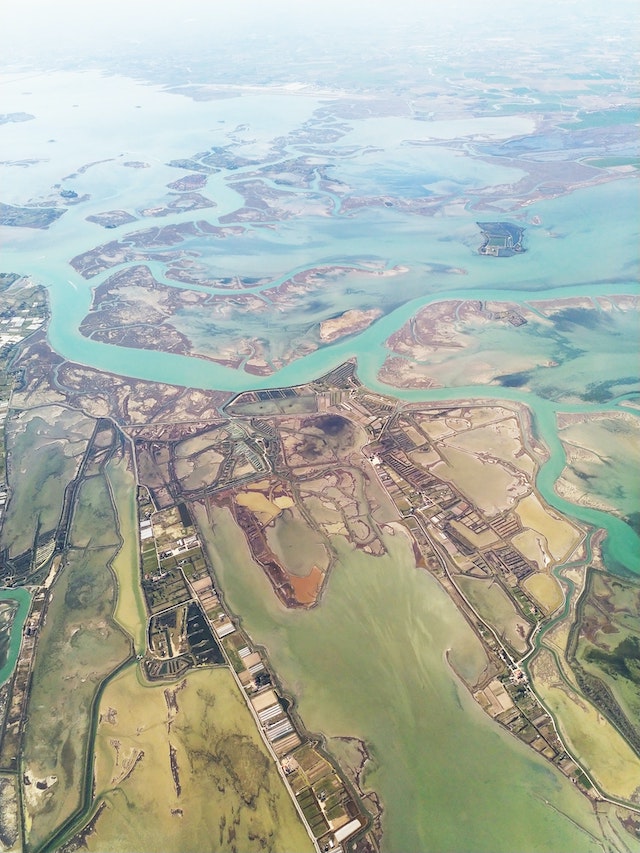
Venice Lagoon
Running parallel to the day, Prada, the IOC-UNESCO, and project office of the Regional Bureau for Science and Culture in Europe, have announced the launch of the second edition of Sea Beyond, a tailored education programme built around ocean preservation and sustainability. Originally debuting in 2019 with support from a percentage of proceeds from the sales of the Prada Re-Nylon collection, the newest iteration will see the partners design an original educational module for secondary school students around the world, continuing to work with the same countries which took part in the first edition, but also adding nations such as Brazil, Peru and Namibia. Prada’s 13,000 strong workforce will also have more resources available via webinars, as well as an app, while the ‘Kindergarten of the Lagoon’ (Asillo della Lagoona) initiative in Venice will launch next year, with over 20 children taking part in the experimental site built around outdoor education principles from ‘Blue Schools’.
“This partnership has led to the successful implementation of ocean literacy projects; it has also supported the activities of museums during the pandemic,” notes Ana Luiza M. Thompson-Flores, Director of the UNESCO Regional Bureau for Science and Culture in Europe.
“Promoting public-private partnerships, such as this one, is critical for the successful implementation of the Agenda 2030 for Sustainable Development. The Ocean Decade provides an unparalleled opportunity to promote and enhance the way we study and understand the ocean; it can revolutionise public engagement towards the protection and safeguarding of the ocean. Ultimately, these new initiatives promoted in collaboration with Prada will constitute an important step forward towards the achievement of the ocean we want.”