Spike Lee

In a rich and rollicking conversation, longtime friends and collaborators Spike Lee and John Turturro reflect on their first film together, Do the Right Thing, the influence of Akira Kurosawa and Lee’s remaking of High and Low, and a shared creative history shaped by trust, teaching and time. From stories of Sinatra and Spielberg to lessons passed down in Lee’s NYU classroom, the two trade memories from their lives in cinema

Lee wears Stone Island throughout, photography by his daughter, Satchel Lee

John Turturro: I know you’re a Kurosawa fan, even before you got involved with High and Low.

Spike Lee: That’s my guy.

JT: Is that one of your favourite Kurosawa films?

SL: Yes. But I also have to give love to Rashomon, because I saw Rashomon during my first year in graduate film school – Ang Lee and Ernest Dickerson were my classmates. The way Kurosawa did it, with people telling their version of a rape and a murder? That really stuck with me.

JT: That’s a big influence. Do you remember the second Kurosawa film you saw?

SL: To tell the truth, I saw Kurosawa films before I even knew who he was. I had an older friend who would take me to see Kurosawa’s samurai films. I loved the action, the blood squirting. It wasn’t until my first year of film school that I really understood who the great master Kurosawa was.

And just the other day, we found out Highest 2 Lowest was selected for the Cannes Film Festival. We’re out of competition, but I’m just happy. This will be the first time Denzel Washington has a film at Cannes. He’s been to Cannes before, for The Mighty Quinn, but this is his first time with a film in the festival.

JT: I’m excited to see it! So when you came to this new project, you had seen High and Low probably a long time ago?

SL: A long time ago. I’ve shown High and Low several times in my New York University classes – this is my 30th year teaching at the graduate film school. Denzel was already attached, and he reached out to me and said, “Do you want to do this?” This is our fifth time working together: Mo’ Better Blues, Malcolm X, He Got Game, Inside Man and now this.

But the crazy thing is, I didn’t even realise Inside Man was 18 years ago. Time goes fast. Sometimes you have that kind of relationship where you don’t need to see somebody every day. You’ve got that connection. It’s just there. We’ve got history.

JT: Was Denzel a fan of the original?

SL: Oh, absolutely. He wouldn’t have done it otherwise. And it’s a real collaboration, like Kurosawa and Toshiro Mifune – they did 16 films together. That’s how I feel about me and Denzel. That kind of creative partnership is like a marriage. Would you agree with me, my brother?

JT: Yeah, that’s right. You’ve got to have a good friendship to survive all of that.

SL: You can say that again.

JT: You’ve been a professor for 30 years now. I know your mother was a teacher.

SL: My father taught bass too. My grandmother was an art teacher in Georgia during Jim Crow. She taught for 50 years, never had a single white student. Van Gogh was her favourite painter. She saved every Social Security cheque to pay for her grandchildren’s education. I was the oldest, so she put me through Morehouse and NYU and gave me the seed money to start.

JT: That’s incredible. You really are the child of teachers.

SL: I just love it. What I’ve done over 30 years is just tell the truth about the industry, and introduce to the films, artists, directors and actors they might not have seen. And I learn from them, too. If you’re a professor and not learning from your students, you’re doing it wrong.

JT: It’s a hard business to make a living.

SL: I tell them this ain’t no joke. This is hard as fuck. Last week I took my class to see Sunset Boulevard on Broadway. Next week we’ll watch Billy Wilder’s film version. Before that, we watched A Face in the Crowd. That film was made in 1957 and it predicted everything.

JT: You met Billy Wilder, right?

SL: He kept an office at Paramount and I cold-called him saying, “Mr. Wilder, this is Spike Lee.” He said, “Oh, I like your things very much.” I asked to come by – he left my name at the gate. We had lunch. He signed two things for me. I also met Elia Kazan. I got On the Waterfront signed by both of them.

I also got a beautiful self-portrait signed by Kurosawa – he signs autographs with a paintbrush and white paint. We’ve met some great people who are no longer here. Let me ask you this – when you put in the work and meet these people and they know who you are, not just from the press, and they saw your work – that shit is, woo!

JT: I don’t think it gets better than that. They influenced you, and you gave that back.

SL: That’s why I love having guests like you in my class. One time I brought in Spielberg. I didn’t tell the class. We snuck in the back. They were bugging out.

JT: Is there one person, musician or writer that you haven’t had the chance to work with yet?

SL: I’ve had the pleasure of working with Stevie Wonder, Michael Jackson, Prince, Miles Davis, Aretha Franklin… the one person I wish I’d met was Frank Sinatra. I did a film called Do the Right Thing.

JT: I’ve never heard of it! Must be a cult classic or something.

SL: You were in it, playing Pino, who didn’t get along with Mookie, but I got along with your brother. There’s that scene in Sal’s Famous Pizzeria where Bugging Out asks why there are no brothers on the wall. Eventually, my character Mookie throws a garbage can through the window, and Sal’s place burns down with all the celebrity photos on the wall, including Frank Sinatra.

Of all the people on that wall – De Niro, Shields – Frank was the only one who had a problem. Years later, I was making Jungle Fever (you were in that too) and I wanted to use three Sinatra songs, including ‘Hello, Young Lovers’. I reached out to Tina Sinatra, his daughter, and she told me flat out: “Spike, I’m sorry, but you can’t have them. My father’s still mad that you burned his picture.”

JT: I never heard that before. That’s still funny, though.

SL: It went on for months. Tina just kept saying, “My father says no.” Eventually she told me, “Spike, you’re wearing me out. Why don’t you write him a letter?” So I wrote a 10-page letter telling him how much I respected him and loved his music. And we got the songs. Later, I heard that Sinatra screened Malcolm X in his home theatre in Palm Springs. Pierce Brosnan told me Frank really loved the film. That meant the world to me. I never met him, but that moment stayed with me.

Oh, and let me tell this story. I’m getting ready to do the casting for Do the Right Thing. I’m thinking about who I want to play Vito. I see this guy in Five Corners, I don’t know who he is. He’s dancing with his mother, doing the waltz, then he throws her out the motherfucking window, then he sneaks into the Bronx Zoo and beats a penguin with a baseball bat. I said, “That’s my guy!”

JT: I was in Venice, California, and I remember getting the script from Studio Duplicating on vinyl leather, a beautiful dark print. I read it and thought, this is the guy who did She’s Gotta Have It. I was excited. I remember meeting you at 40 Acres . You had a desk and you had scripts piled up really high, I could barely see your face. You asked who I wanted to play. I said Pino would be better. It felt like the right role.

SL: Richard Edson wanted to play Pino too. But that role – you rode the subway with it.

JT: Is there a movie that you feel didn’t get the proper love when it came out?

SL: Bamboozled.

JT: That’s what I was going to say. You showed me a rough cut. It stayed with me.

SL: People thought I’d lost my mind. But look, plenty of great works get pissed on when they first come out. Then, as time goes by, stuff gets rediscovered. You lick your wounds, keep stepping. That’s what I tell my students.


Lee wears Stone Island throughout

Photography by Lee’s daughter, Satchel Lee

Production Juice House

Executive Producer Jackson Lee

Executive Producer E. “Kellogg” Kellogg for Juice House

Producer Sasha Yimsuan for Juice House

Producer Zena Khafagy

Production Coordinator Max Acrish

Director Satchel Lee

Photographer Assistant Rowan Liebrum

Lighting Assistant Josua Jimenez

Stylist Moses Zay Fofana

MUA Tatiana Menendez

Retoucher Migjen Rama for Atelier 99

222 Production Assistant Sakib Hossain

This article is taken from Port issue 36. To continue reading, buy the issue or subscribe head here

Epicly Later’d

Patrick O’Dell’s blog Epicly Later’d was a chaotic archive of skateboarding, New York nightlife and everything in between. Now, almost 20 years later, it’s back in book form, published by Anthology Editions

Before social media algorithms dictated what we saw or liked, blogs were where individuality thrived – spaces for unfiltered content, often paired with 300-image photo dumps and your favourite song on autoplay. The early 2000s internet felt like the Wild West: chaotic, lawless and open to anyone with a camera, a few lines of code and a vision.

Platforms like Myspace, Blogger and LiveJournal were fertile ground for niche communities to grow, and Patrick O’Dell’s blog, Epicly Later’d, thrived in this arable landscape. Launched in 2004, Epicly Later’d quickly became the go-to for skaters, artists and downtown New Yorkers alike, documenting the mayhem of youth culture, city nightlife and behind-the-scenes stories of pro skaters with his raw and gritty lens. His camera froze moments from parties, skate sessions and whatever else caught his eye, with familiar faces like Chloë Sevigny, Benjamin Cho and Tino Razo appearing in the frames. O-Dell was inspired by Amy Kellner’s blog Teenage Unicorn, and wanted to approach his own work with the same spontaneous and personal ethos, while avoiding anything too polished. Skate magazines like Thrasher were also dominating the mainstream at the time (to which O-Dell was the photo editor), and Epicly Later’d provided the counter-narrative: the messy, the in-between, the real. 

Now, nearly two decades later, Epicly Later’d has taken on a new form – a photography book published by Anthology Editions. Edited by Jesse Pearson and featuring an introduction by Amy Kellner – the Teenage Unicorn, who’s also a writer, editor and photo editor – the book compiles some of the best images from the original source. In this Q&A, Port chats to Patrick O’Dell about the origins of Epicly Later’d and why, after all these years, the time felt right to bring this project back to life.

How did you become interested in skateboarding and photography – what sparked it and the relationship between the two?

I took a few photography classes in school, but my interest really took off when I started skateboarding and reading skate magazines. At that time pro skaters were measured by their photos just as much or even more than contest placing. Spike Jonze shot the best skate photos in my opinion at the time, so all the skaters he shot with were who I liked the best. And mimicking him was what I was trying to do when I went out skateboarding.  

How did you come to develop this snapshot, ‘unfiltered’ aesthetic?

I think at some point I got into Nan Goldin, Jim Goldberg, or Richard Billingham’s book Ray’s a Laugh. I had some photography teachers that were complaining about some of them saying “they use the cheapest film and the worst cameras” and I identified with trying to shoot like that.


You debuted Epicly Later’d at a time when the internet was in its infancy, how did you come up with the idea?

I was copying Amy Kellner’s blog Teenage Unicorn. I was obsessed with looking at it every day and I basically asked her how to do it. Which camera to buy, which programs to use, how to get a domain name.  

The book is being released almost 20 years after the blog’s debut. Why was now the right time to compile these moments into a publication?

I was kinda between jobs and had some free time. Originally I was going to self publish a set of books, one at a time, maybe a few hundred copies. But Jesse Pollock from Anthology saw what I was doing and offered to publish. I liked Anthology because they did a book with Tino Razo and one with Jerry Hsu and I wanted to be next to them.  

Can you talk about the process of selecting the images for this book? 

I went through every photo I ever took from that era and dragged them into a folder, I eliminated film photos as well as anything for work. I stopped when I got to iPhone photos. Jesse Pearson edited the book and helped me narrow it down further and Su Barber laid it out.  

What did you seek to capture in your photos? 

I guess I wanted the book to be fun, and also kinda wholesome. No one is doing drugs on camera and no one is doing anything embarrassing other than dated fashion. I guess I wanted to make life seem fun and adventurous. I also wanted to tell a daily story.  

The blog and book both capture a sense of raw, unfiltered emotion. What approach do you take in your photography to maintain that authenticity, especially when photographing friends and peers?

I’ve found that it usually comes out naturally with the pictures of friends, or if you admire the person or want to communicate what it is you love about the person. I’ve had jobs or projects that I wasn’t as connected to and the pictures sometimes came out stiff.  

The blog predated social media’s explosion. How do you think Epicly Later’d would have been received if it were launched today in the age of Instagram and TikTok?

I’m not sure it would have been so big. I had an advantage of being an early adopter. There were very few other ways of looking into NY nightlife everyday like that, or looking at what pro skaters were doing in between skate sessions.  

What’s next for you?

I’m currently working on new episodes of the unrelated Vice show called Epicly Later’d, it’s a show about Skateboard History. It’s on Vice’s Youtube channel. Our next episode is about Atiba Jefferson, who is an amazing photographer that needs to come out with a 500-page oversized book asap.

Epicly Later’d is published by Anthology Editions and available here

Hari Nef

Catching up with the model, writer and actress

HARI NEF AT IMG WEARS CELINE THROUGHOUT

Let the record show that at 9am on a bright March Monday, Hari Nef attended her first day of jury duty – ever – at the Manhattan courthouse on Centre Street. Our interview could not be put off, on account of a tight deadline, so we agreed at the last minute to meet during her lunch break. I selected a Cantonese restaurant on Canal based purely on its auspicious name: August Gatherings. I’ll confess to picturing a restaurant packed to the gills with influential figures celebrating success or hashing out deals, so much so that I wondered if we’d have trouble snagging a table. But when I arrived the place was half-empty, and Nef, having been released for lunch earlier than expected, was already seated. She had courteously ordered a dim sum sampler intended for sharing.

“It’s like going to the DMV, it’s boring,” said the 31-year-old actress, model and writer when I asked for any initial reactions to her mandated morning of video watching and form filling. She’d brought a book with her to pass the time (Cyrus Dunham’s memoir A Year Without a Name) and had just finished it before lunch. She said, of jury duty, that “it’s been knocking for me for a second now and I just want to get it done.” Now, the timing was right: she’d returned to her apartment in the Meatpacking District from a whirlwind four-city fashion month and Oscar weekend. There, Nef had bidden farewell to the protracted promotional tour that accompanied Greta Gerwig’s box office hit Barbie, in which Nef played one of the dolls. In the past year she had also portrayed the (very cool, exciting, yet self-deflating) role of magazine profiler in Sam Levinson’s show The Idol, a glossy fantasia about a modern-day pop star living in LA, and starred alongside Parker Posey in Thomas Bradshaw’s play The Seagull/Woodstock, NY.

Nef was never as big a reader as she was a movie-goer, although she enjoys both. She got her start doing internships and writing gigs in and around the fashion industry. The first kind of writing she did, outside of school (Nef grew up in Newton, Massachusetts amidst a vigorous academic milieu where she was “encouraged to write from all different points of view”), was her prolific posting on fashion forums. She moved to New York to do her undergrad at Columbia and started writing here and there about fashion, dating and art. The first pieces she ever published were her sex columns for the now defunct Adult Magazine. “I was really trying to be some kind of self-styled Carrie Bradshaw,” Nef told me.
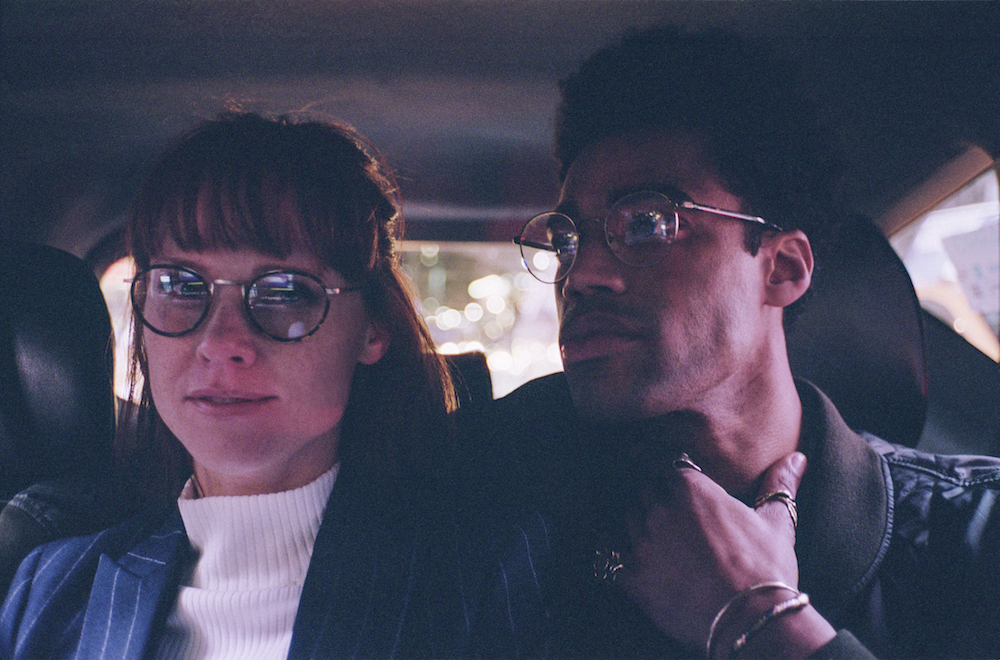
It wasn’t until 2015, when she became the first trans woman to sign with IMG Worldwide and booked a recurring role on Transparent that her screen career really began to take off. It was around this time that I started to keep an eye on her as well. The modelling and acting work kept coming, but I paid at least as much attention to the outfits she wore on red carpets and the movies she added to her Letterboxd. When her name cropped up on playbills for off-Broadway productions of of Jeremy O Harris’s Daddy and Denis Johnson’s Des Moines, I was one of many who rushed to get tickets. She’s a star in the classic sense: not just a talent who lights up the screen, but a personality you crave fashion tips and enigmatic judgments from.

Suit Model’s Own

During the professional lull in which I encountered her – between two sessions of waiting for her name to be called, or not, and the bigger lull of waiting on backers for her next acting projects – Nef told me, “I don’t exactly know what the next thing is, honestly.” In other words, it was the perfect time to get some writing done and talk about said writing with me. But she couldn’t tell me much, except that she’s working on a screenplay, and has entered the research-overload phase of drafting. “I feel like I’ve done enough and that I’ve been delaying the actual writing process for a while now by just doing more research,” she said. “I like to sit down to it and have the day. I’m still kind of finding my process, for sure.” This is her second major attempt at a screenplay. The first focused on New York City culture workers in early 2017, an era characterised, according to Nef, by “the rabid search for certain voices that could rise in opposition to other voices. Money being thrown around and thrown at people who probably didn’t have that much or probably never expected to make that much.” The project moved along for years before fizzling out. Nef referred to the experience as “the definitive professional heartbreak of my 20s”.

I asked Nef if she felt there was some crucial connection between the two arts – writing and acting. She said she doesn’t think they relate much at all, that writing, for her, is more like painting, or any other creative activity one does alone. “I don’t really enjoy writing as much as I enjoy acting because it’s so solitary,” she said. “I find it easier to get things done through collaboration, and I guess I just find it easier to be accountable to other people than to be accountable to myself.” She went on to elaborate what this means to her from an artistic and industry standpoint: “A working actor has to be really skilled at unsheathing, offering, and protracting their intimacy in a way that’s probably not intuitive. You have to compartmentalise.”

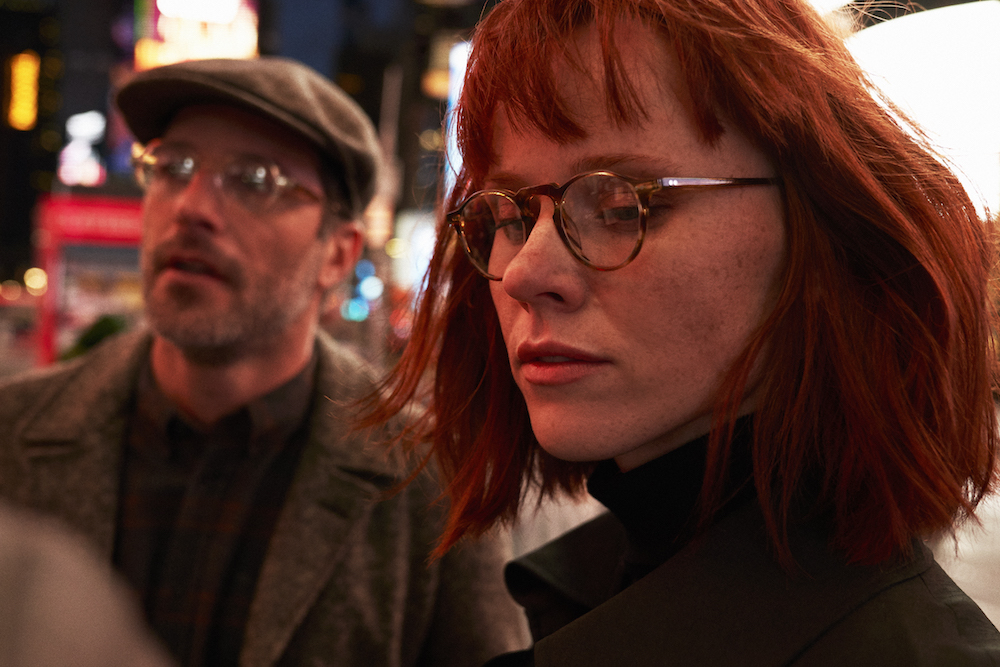
As if in demonstration of this flexibility, Nef wore to our meeting a variation of day-to-night (or audition-to-club) look: black blazer over black T shirt, little-to-no makeup, brown roots now dominating the carroty-red bob she’s preferred for the better part of two years. I commented on the smartness of her self-styling (“very professional future jury member”) and asked if she was trying to get a seat in that juror pen. “I don’t want to be selected,” she replied slowly, making room for each word, “but I won’t navigate that at the expense of my dignity – ever.”

Based on the evidence of Nef’s demeanour available on the Internet – including witheringly funny tweets and YouTube videos of the actress displaying quicksilver wit as she gets ready for events – I had prepared myself for the possibility of fast-talking blitheness. But the version of Nef I encountered was subdued, comfortable with silence, and took her time answering my questions. Perhaps sitting in the lawful quiet of the courthouse had contributed to this disarmingly attentive state, but that didn’t make it seem any less real. Her words always had intention behind them and registered as deeply considered rather than laboriously practiced (although why not both?). Nef frequently spoke in pithy, playful, slyly analytic sentences of the sort most authors would be happy to begin or end their stories with. Sentences, certainly, that no profile writer would ever want to waste:

On recently rewatching Paul Verhoeven’s Showgirls: “I can’t stop thinking of the scene where Elizabeth Berkley and Gina Gershon are bonding over both having eaten dog food before.”

On Joan Didion’s novel Play It as It Lays: “I mean, obviously I can’t resist an actress, I can’t resist show business, I can’t resist a self-destructive schism between fantasy and reality – I love all that stuff.”

On Sally Rooney’s Conversations with Friends: “Just straightforward enough and just nuanced enough to read – and succeed.”

She was particularly eloquent on the subject of Candy Darling, the legendary trans actress and Warhol superstar whom Nef will be portraying in an upcoming biopic. I asked her whether, after years of playing rabbis and culture workers, shifting to such a rebellious, underground, glamorous figure as Candy felt like a significant change. Objecting to my use of the word “rebellious”, Nef explained that she doesn’t see Candy as a rule-breaker at all. “Trust me,” said Nef, “she would rather have been Kim Novak than a downtown queen who could do a really great Kim Novak at a dinner party. She was, in her work, trying to make that miracle happen on the screen or on the stage for however long she had. Candy came up amid the civil rights movement and the earliest days of gay liberation – she was not interested in any of that. She was interested in Hollywood, and actresses, and acting. I think she wanted to be a star as much as she wanted to be a woman.”

It was not the only time that Nef spoke admiringly of an actress whose work is grounded in a kind of sublime stubbornness. “It was Isabelle Huppert’s birthday the other day,” said Nef. “She’s one of my favourites. There’s this video of hers I retweeted where she’s doing the actress roundtable that year she was nominated for Elle, and the moderator asks ‘has there ever been a role that’s changed you,’ and she very quickly was like ‘no.’ I love that.” I asked Nef if a role has ever changed her. “No.” She went on, “I love the idea that is not going home and twisting herself into a knot, allegedly, writing pages and pages about her character’s history or what she ate for breakfast that day. That you can get such a raw, powerful, and psychologically complex performance just by staging an encounter between yourself and a mindset, or a situation, or a character, or a physicality.”

Time and again our conversation returned to this tension between what an actress shows in her performance or to her public, and what she withholds. Oblique entryways into this subject matter ranged from Todd Haynes’ wonderful new film May December (which – to put it chastely – is about an actress researching a role) and rampant social media use (“there are parts of myself that I’ve shown to everybody that I’ll never get back,” said Nef). Over further courses of dim sum and chicken with broccoli, Nef told me she is less online now than she used to be – or, at least, she’s relocated her more personal content to private accounts.

“That sounds great!” I exclaimed, doing my best to sound affirming with an entire shrimp dumpling in my mouth, “More and more people are making that choice, and I support it, always!” “Sorry, shrimp,” I added. “Yeah, they’re not easy to eat, these things,” said Nef, generously.

At a certain point our conversation drifted from discussing the vision of Hollywood portrayed in Play It as It Lays, to Nef suggesting it would be her first choice of book to adapt for screen, to my suggesting that Sofia Coppola should direct, and Nef sensibly countering: “I feel like the Sofia Coppola movie is, like, while Maria was still booking acting roles when she was in her 20s and just starting to perceive the panic, and pain and hopelessness that she is fully mired in in Play it as it Lays.”

I like this reading. Coppola, after all, is one of those artists – like Huppert, like Nef – who does not seem much transformed from job to job. Or who at least wants to project steadfastness. Perhaps what I’m describing is something like artistic integrity, though fierce determination seems even more apt. These are women who would sooner see the world warp around their desires – their vision – than change themselves. “I think the idea of someone like Sofia making films about women in constrained environments kind of looking outward onto the world around them and through some kind of mirror back at themselves, wrestling with the idea of piercing it, there’s a grace to that,” mused Nef. “I just threw a rock at the glass. What else could I do?”

These days, it appears that the mirror is intact again. Nef has gone private. There are parts to play, boundaries to marvel at and wrestle with, at least for now. She is the comic actress, the cool customer, the holed-up writer, and – mere hours after we settled up and parted ways – just another New York City chick who wasn’t chosen for jury duty.


Photography BRUCE GILDEN AT MAGNUM PHOTOS

Styling IAN MCRAE

Hair BLAKE ERIK at FORWARD ARTISTS using ORIBE

Makeup OLIVIA BARAD

Nails SONYA MEESH at FORWARD ARTISTS using MANUCURIST

Special Thanks to SATELLITE SPACE

Production PRODUCTION FACTORY

Producer SAM GRUMET


This article is taken from Port issue 34. To continue reading, buy the issue or subscribe here

Fishing in New York

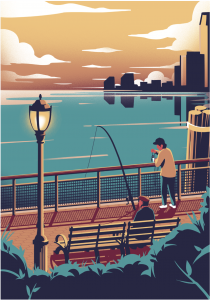
New York may not seem the obvious place to indulge the pastoral pastime of fishing, but then it isn’t a city known for following the rules. Taken from Issue 20, our special issue on the city

Illustration by Eric Chow

The New York angler may be the most misunderstood outdoorsman of them all, because what could be more vile than someone who fishes in the dark polluted waters of New York?

Live here long enough and you’ll see us, perched along the East River, or in Sheepshead Bay, using shrimp or clam as bait, waiting for our hooks to set, and avoiding irritation from the city dwellers who inevitably stop to ask:

“You really go fishing in this water?”

“Do you eat what you catch?”

“Ever caught a body part?”

“Can I take your picture?”

My answer to #3 is No: although I have caught mattress chunks and human hair. But the questions are eye-roll inducing because we’re well aware that fishing in New York is not the same as casting for trout in the crystalline streams of a freshwater river. But like many aspects of New York, from sunbathing on its sooty beaches to playing catch in wilting parks, fishing is an exercise in compromise, and one with an idiosyncratic culture all of its own.

I started fishing around the city last summer when I moved to Chinatown and noticed a local angling community. Men pedalled around the neighbourhood on bikes equipped with fishing rods and tackle boxes, and they pedalled back home with plastic bags containing thrashing fish. The fish were caught from the East River – possibly the filthiest New York waterway of them all – where the men would post up with cigarettes and reel in striped bass, blackfish, bluefish, sea robins and writhing eels. I’d enjoyed fishing in the past, so I decided that with an open mind, I could give it a shot.

I bought my first rod from an aquarium supply store on Delancey Street that maintains a small bait and tackle operation behind its counter front. I got lucky with my first cast into the river. After reeling in the hard bite, the striped bass hit the concrete, instantly collecting street dirt. An old man rushed to my aid. A paper bag was produced and the fish slipped inside. I let him keep it. A local jab at Chinatown’s fish markets is that certain specimens probably come from the brackish waters just a few blocks away.

Some New Yorkers eat fish that comes from city waters. Bottom feeders like eel, sea robin and flounder are found all around New York Bay, and it probably isn’t wise to eat them, but it happens. On the other hand, one of the most prized eating fish in North America, the striped bass, is found in the same waters.

Stripers are prized for their fight and their taste, and they engage in an annual spring run up the Hudson River, considered one of the great migrations of the East Coast. It starts in Lower New York Bay, near the financial district, and makes its way up the Hudson, where it eventually concludes in the northern reaches of the state. At peak, the rush of fish is so intense that one can cast a hook just about anywhere and land a striper. From spring until late summer, a striper caught near the World Trade Center could be the same striper caught off flashy East Hampton, where it would be served for $50 with a squeeze of lemon. Try explaining this to a fellow New Yorker, however, and you’ll get concerned stares. (I don’t eat city fish, and practice catch-and-release.)

For all the indignities that city anglers endure, like crowds watching them reel in what ends up being a car tyre, there are moments that transcend the concrete.

The best-known fisherman in my neighbourhood may be a man I call Prescription Bottle Tony. He’s in his 80s, his name is Tony, and he uses a prescription bottle wrapped in monofilament line as a rod. A metal washer on the line serves as a weight, and clam is his bait of preference. On summer afternoons, I fished with him, and, as he jigged on the prescription bottle’s line, he told me what it was like fighting in the Korean War.

Another afternoon, seagulls started feasting on the waters just off Catherine Street. This is a good sign because it means a school of fish has arrived, which means large apex predators – like big striped bass – are lying nearby in wait. Practically everyone caught something that day, including an old Greek man who spoke no English and watched from afar with envy. Eventually, I invited him to join me and we traded casts for over an hour without exchanging a word. Later, we reeled in a plump striped bass as the sun started to set.

Battery Park, at the foot of Manhattan, has one of the most popular fishing sites in the city, because its waters are closest to the Atlantic. This boulevard of park benches is crowded with boom boxes playing Cuban jazz and men chomping cigars. One afternoon, I sat on the moorings and dangled my legs over the water. I held my rod loosely, lost in the vast expanse of ocean ahead of me. After a while, it was easy to forget a metropolis was behind me at all. I caught nothing that afternoon, but it didn’t bother me.

Inevitably, you become an advocate for the maligned hobby, and you find that the stereotypes of fishing still ring true in New York. Even below skyscrapers, fishermen stretch yarns about the size of their fish, they swear by lucky lures, and they guard locations of fishing holes closely. I didn’t think I’d adopt any of these clichés, but I picked up all of them, including an urban fishing hole of my own.
As the season started to wind down, my friend Sam and I went to Staten Island. We took the ferry from Manhattan, armed with our rods, and visited Liedy’s on arriving, which is the oldest bar on the island. I asked the owner if he had any suggestions on where to fish. He divulged we should try the waters behind a lonely gas station two miles down the road.

It was a scene of dilapidation. Old warped train tracks ran behind the gas station, and past them, a pebble beach littered with trash. The Manhattan skyline loomed quiet and small in the distance. We followed the warped track until we encountered a rocky chasm. A concrete structure stood in the waters and a creaky plank led to it.

We crossed carefully and then made ourselves at home, setting up sandwiches and beers. A group of striped bass fed right below us. We spent an hour trying to game them with our bait. Large oil tankers rolled past and a full moon started to glow. After a while, it became bright and huge. I stopped caring about the fish, and started casting out over and over again as far as I could, just for the joy of it.


Spotlight One

Little Wing Lee reflects on the inaugural exhibition from Black Folks in Design at the Ace Hotel Brooklyn

All photography Kelly Marshall

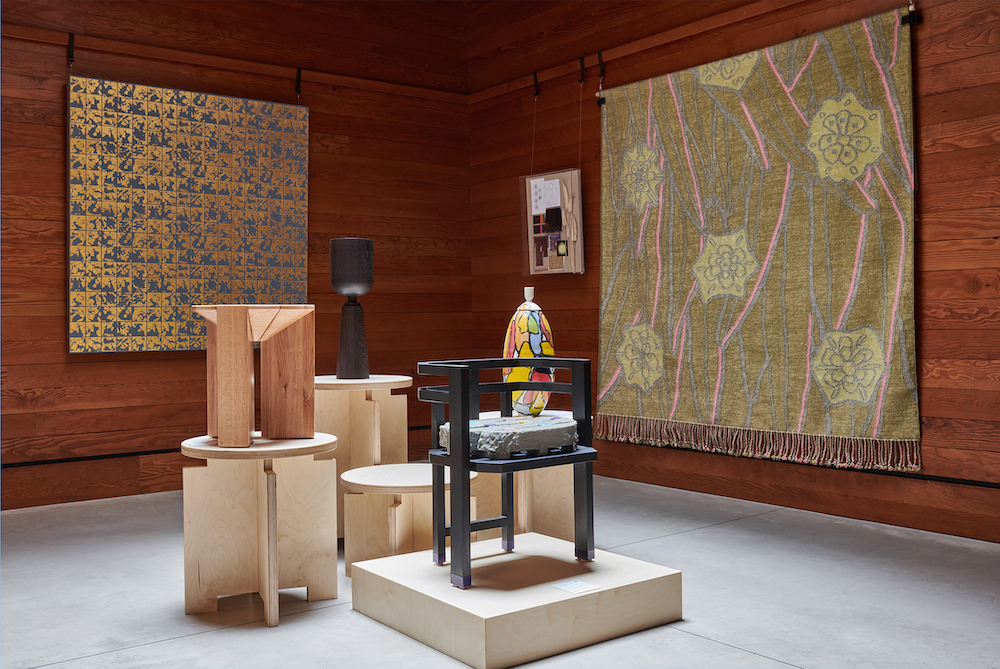
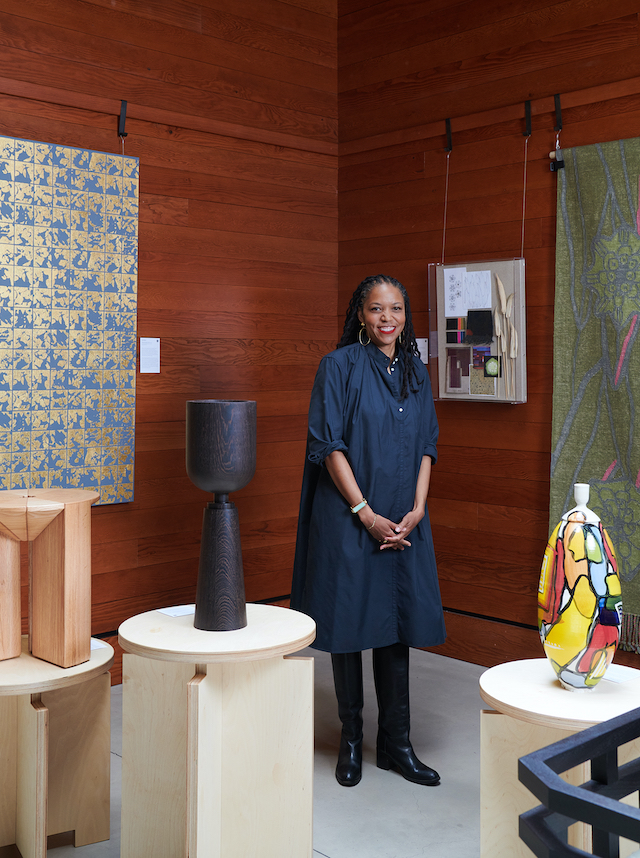
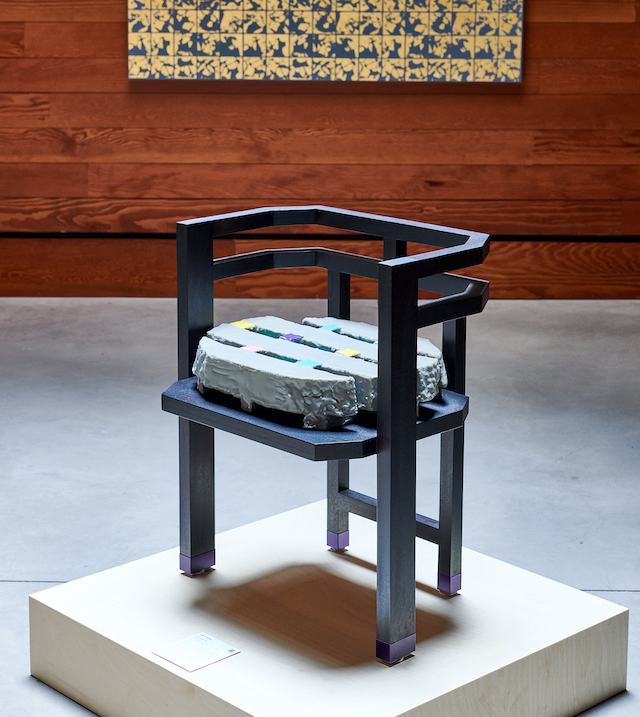
A hand turned vessel is finished in hardy wenge wood; the bruised-lilac of the okra plant is woven into wool; an ideally proportioned chair nods to early 20th century Viennese architecture. These collected items are a glimpse of the works currently showing within the Spotlight One show at Ace Hotel Brooklyn, New York. The inaugural exhibition from Black Folks in Design – a collective of Black designers from an array of disciplines – showcases deftly created furniture, sculpture and textiles from the likes of Garth Roberts, Kyle Scott Lee, Lisa Hunt, Luam Maleke, Studio ANANSI and Studio & Projects. Interior, architectural and environmental designer Little Wing Lee founded the art and design network in 2017 to create economic opportunities for Black creatives and help forge a world that “recognises their cultural contributions, excellence and importance”. With a keen eye, she has curated a show that does exactly that, celebrating the nuances of material, craft and form.

Here, she reflects on the exhibition, discussing how to create welcoming spaces, the Black designers who inspire her, and the strength of a collective. 

Little Wing Lee

How does your practice – as an interior, architectural and environmental designer – inform your worldview? 

Actually, I would say that my worldview informs my practice. 

Spaces that are designed and considered should be for everyone. Design can be in service to all people and I believe that beautiful and functional spaces impact people’s lives. A space can make you feel at ease, energised or focused. A well designed space amplifies its function, whether it’s feeling welcomed and relaxed in a hotel, or a school that inspires you or a museum to educate you.

And a follow up, how does it shape your approach to creating spaces, whether that’s physical exhibitions or digital networks? 

My work takes a narrative approach to design. I always think about the story and connection behind the design decisions I make.

As an interior designer, I am not only concerned with the interior space of a project. The experience as you approach a space can be an important part of your experience of an interior. It can work to set the tone and mood. Similarly, a view within the space will affect how you experience a room – think of a view into a garden or cityscape in the background and/or foreground of the interior. 

It’s important to me for people to feel comfortable in a space – to feel that all of the components were considered for them.

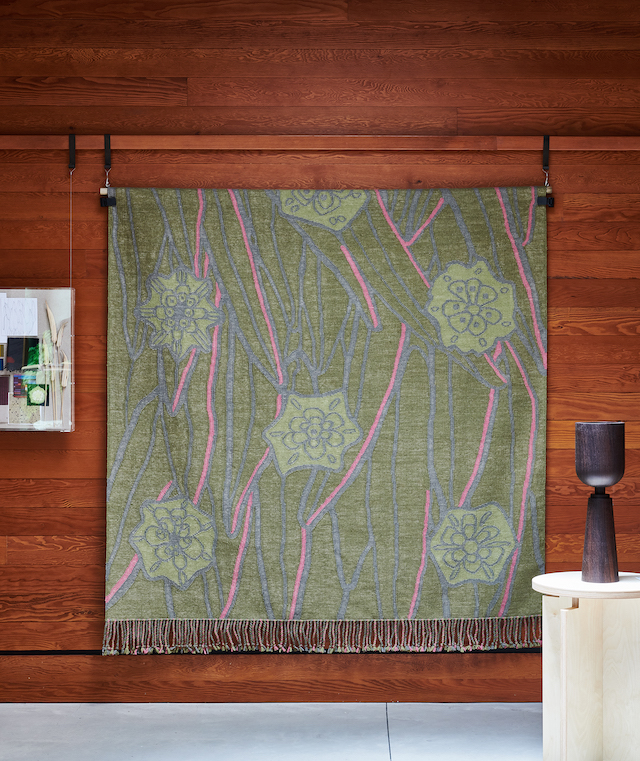
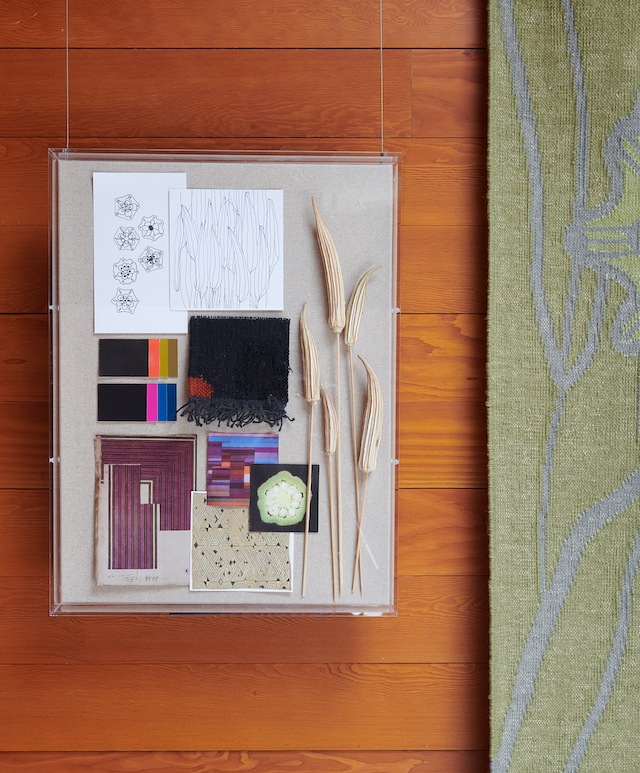
OKRA rug by Studio & Projects in collaboration with Odabashian

Why did you establish Black Folks in Design, and what are the strengths of a collective such as this?

I was an exhibition designer for the National Museum of African American History and Culture in Washington DC. The exhibition and design team was primarily made up of Black designers. Having worked in other design offices, I was often the only Black designer. The experience of being in a room with other Black architects, interior, graphic and interactive designers working together on the concept of this museum was incredible. After the NMAAHC was completed, I thought, “When will I have the opportunity to work alongside so many talented Black designers?” I looked for an organisation where Black designers could meet one another, share opportunities or ways to collaborate. Since that space didn’t exist, I decided to create it myself. In 2017 I launched Black Folks in Design (BFiD) as a network that connects Black designers within and across disciplines to support each other and share professional opportunities. We help people understand the excellence, contributions and importance of Black designers and we create economic and portfolio-building opportunities for Black designers.

What was the curation process for Spotlight One? Why were you drawn to these particular designers? 

For the inaugural exhibition for BFiD I wanted to exhibit a variety of aesthetics and mediums, to show the range of approaches and visions of Black designers. The exhibit space itself was modestly sized, so I wanted to be sure each piece carried its own weight. In pulling together the show and meeting the exhibitors it was wonderful to discover the connections between so many of us – past and current collaborations, mutual friends, and colleagues.

Framework chair by Luam Melake

There are nods to Europe (Luam Melake’s chair) and plenty to Africa (Wenge Wood used in Studio ANANSI’s Ode vessel, the okra plant represented on Studio & Projects x Odabashian’s rug), how does Spotlight One interpret and play with these geographies through material and aesthetics, what is their relationship to them? 

We are all influenced by the context in which we live and work and by our own personal histories. But of course, we’re all global citizens and our lens extends globally. I can say in the case of the rug Studio & Projects created for the show, the construction of the rug is rooted in Asian traditions, while the pattern is grounded in African American culture with connections to West Africa. 

I know you’re not meant to have favourites, but what work would you take home and keep?   

Oh, that’s a really tough question! I really couldn’t pick just one. Each piece would work in my home and I would be honoured to own it. If I were to place them, I would hang Lisa Hunt’s wall piece in the dining room, Studio ANANSI and Kyle Lee’s objects on my mantle or nestled on my book cases and use Garth Roberts’ stool and Luam Melake’s chair in my living room to compliment the Studio & Projects rug. I love the true aesthetic variety they represent. 

Research for the OKRA rug by Studio & Projects in collaboration with Odabashian

Who are some of the Black designers (past or present) that inspire you?

As a part of Spotlight One we have a digital slideshow of Black designers from the past and present. It was important for me to try and give the context of the long legacy of designers and current designers working today. I’ve always been inspired by the work of Philip Simmons from Charleston, SC. I recently bought a book about his life and work and love seeing his process of hand sketches for the design of his ironwork. Another would be the work of Walter Hood. I started my path to design through my love of landscape architecture. I appreciate his sculptural and historic approach to landscape design. There is meaning and beauty in all of his projects.

Given that Spotlight One is Black Folks in Design’s inaugural exhibition (congratulations), what have been some of your learnings? And, are you excitedly thinking about the next one?

Spotlight One is the first exhibition for BFiD and my first time curating a show. I’ve learned so much in the process and am excited by the possibility of doing another one. The reception to the first show was more than I could have hoped for and we’ve been approached from galleries in the US and abroad for future exhibits. I’m also excited by the idea of having other designers in the network curate shows and to have the excellence of Black designers shown around the world.

Spotlight One exhibits at Ace Hotel Brooklyn until June 29th, 2022

Photography Kelly Marshall

acehotel.com/brooklyn

blackfolksindesign.com


Common Place

In his ongoing series, Scott Rossi highlights the importance of public space for building community

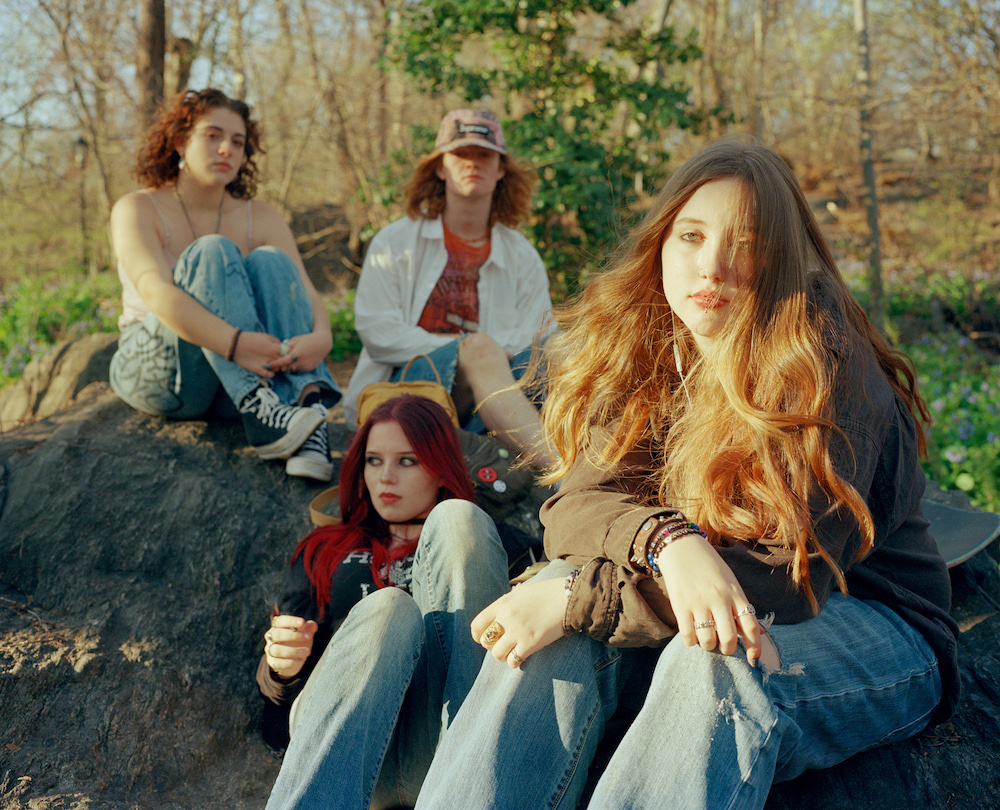
Lily, Reef, Kane, and Luci, Central Park, New York, USA 2022

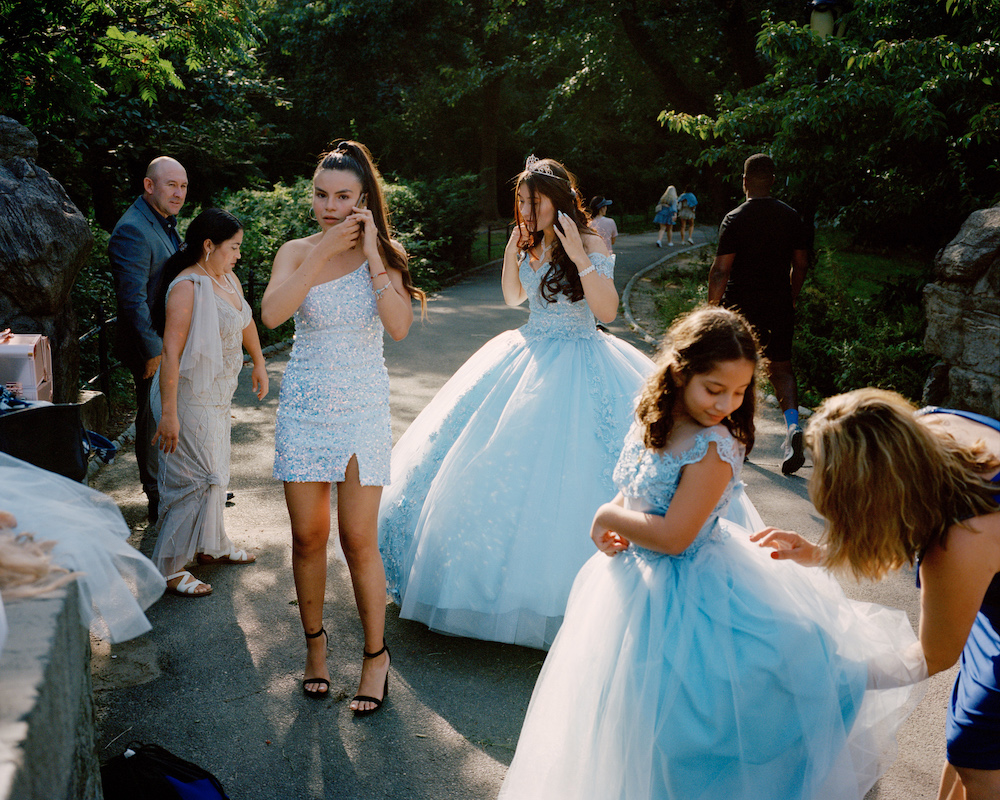
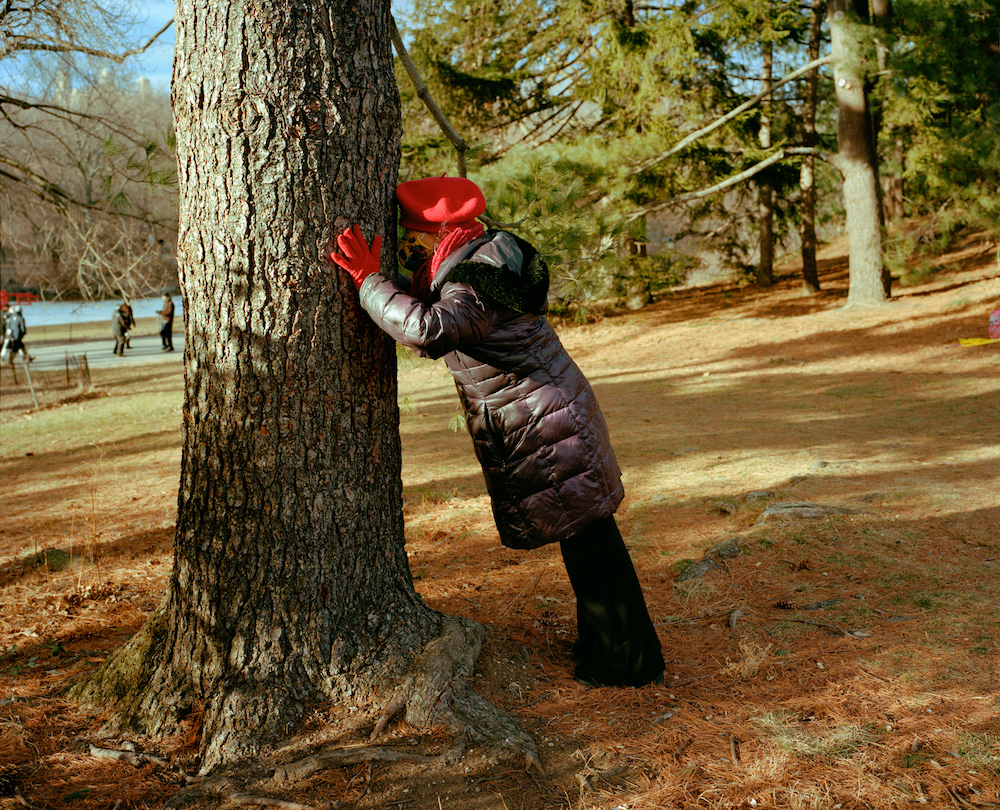
Capturing the world around you is one thing, yet doing so in a way that’s not only mesmerising and memorable but also rich in context and history is another. Scott Rossi, a Canadian photographer based in New York, does this utterly well in his photography work. With an ability to lens the moments of daily life around him, Scott draws from the quieter parts – those that are smaller and often missed to the untrained eye – to build stories about the people of the world. In this regard, subcultures and public spaces are the two key pillars to his practice, which have naturally informed his latest series, Common Place. A project that commenced during the pandemic while out and about on his daily walks, Scott set out to photograph the local community in Central Park and their relationship to the natural world. Below, Scott tells me more about the series and the importance of public space – a relationship that will continue in the future.

Untitled, Central Park, New York, USA, 2021

What’s your journey into photography like?

I grew up in the suburbs of Vancouver, B.C. When I was five years old, my father arrived home one evening with a go-kart. I spent the next 13 years racing go-karts around the world, from British Columbia to the streets of Monte Carlo. 

Photography was not always on the cards for me. After my dreams of becoming a professional race-car driver were over, I studied Psychology at university. I only began taking photographs in my final year by chance. In that elective photography course, my professor introduced me to the work of Garry Winogrand and Joel Meyerowitz, which derailed my plans. I couldn’t shake photography away. It gave me a new purpose. I spent the next two years primarily photographing my surroundings without much intent or reasoning behind my actions. I simply wanted to capture beautiful, fleeting moments. 

In 2018, I started making long-form projects. In them, I discovered the power of visual storytelling. I began to value not just the results, but the process of engaging with my subjects, establishing an intent to the work that previously lacked. In the first two projects I worked on, Burned Out (2018-19) and Jazz House (2018-20), I documented coming-of-age stories. Whereas Common Place (2021), which I began shortly after moving to New York City, explores the history of Central Park and the relationship between New Yorkers and the public space in the context of a global pandemic. 

Quinceañera, Central Park, New York, 2021.

What inspired you to start working on Common Place, what stories are you hoping to share?

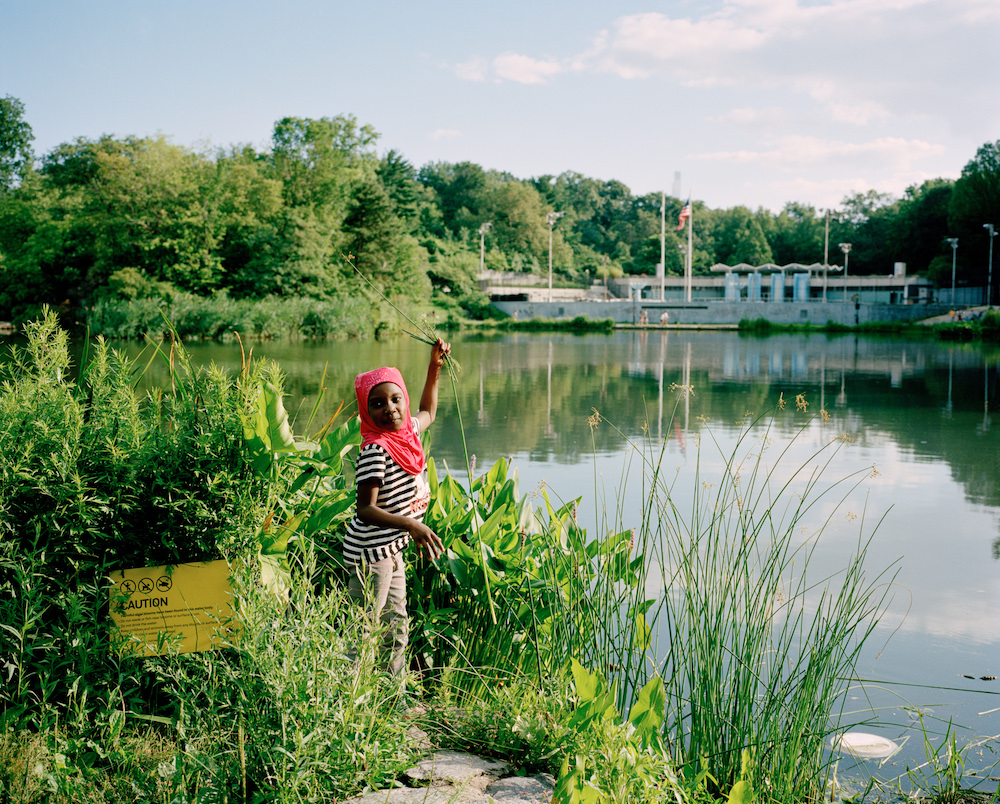
In Vancouver I was surrounded by nature. After I arrived in New York City, in the height of the pandemic in 2020, I began to miss nature and felt lost and uninspired, so I started going on long walks through Central Park. I began photographing during those walks with a point-and-shoot camera. I was studying at ICP at the time, and I thought this point-and-shoot idea would be a good side project to my thesis, which was still undecided. Eventually, I realised the side project was worthy of the main thesis idea. I bought a new pair of shoes, switched to a medium format camera, and began photographing Central Park every day. I hoped to share the stories of the people I met there through photographs. 

The work highlights the importance of public spaces, especially in a city like New York, for the overall wellbeing of its people. This city and Central Park, have a complicated but also rich history. Today, despite its history, I think the Park is seen as a sanctuary and a place to be yourself and I hope that comes through in my photos.  

South of Sheep Meadow, Central Park, New York, 2021.

Who are your subjects? Did you spend much time getting to know them?

I meet all my subjects while wandering around the park and typically photograph them as they were. It is that level of comfort and intimacy that piques my interest in the first place. Most of my subjects happened to be New Yorkers, with a few exceptions. 

How long I spent with them really depended on the person. With some people we would spend hours talking, while others gave me only five minutes. Regardless of how long, I was always transparent about what I was doing.

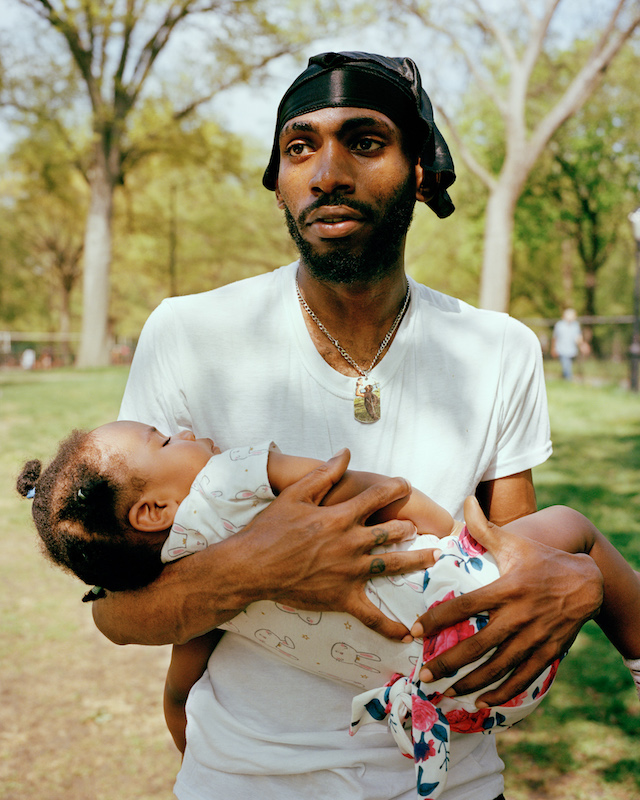
Aaron and Eralissa, Central Park, New York, 2021.

Can you share any personal favourites from the series?

Aaron holding his baby daughter Eralissa has always been a favorite. There is subtext in this image, but for me, the cutest part is thim holding his daughter on his dog tag necklace. Once I noticed that, my heart melted. 

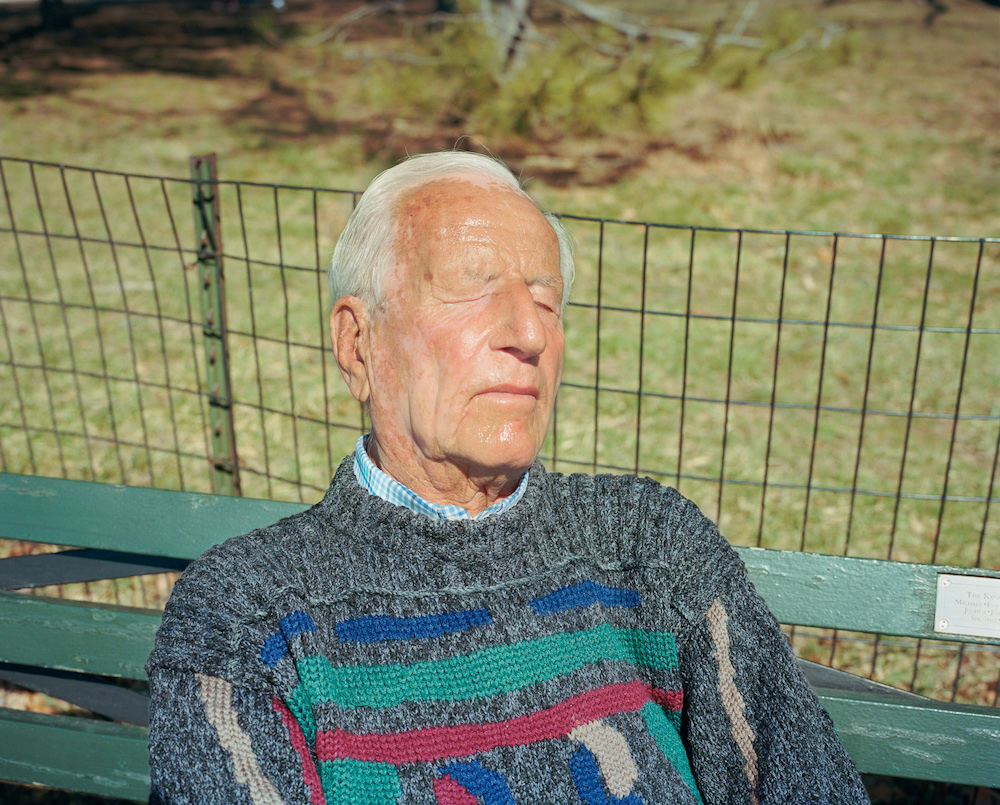
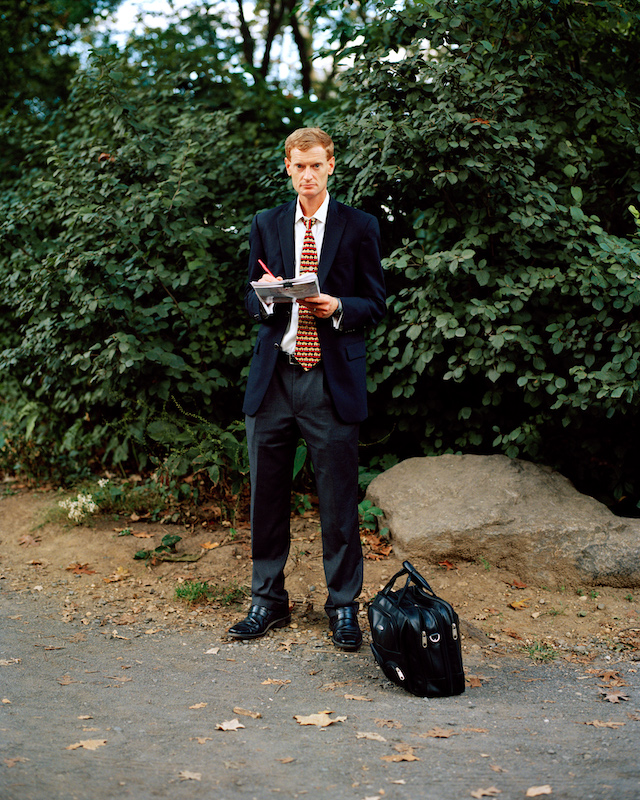
Then of course, Dave. He is a Latin professor and track and field coach at an Upper East Side high school. I think it’s his oversized tie and baggy suit that made it all come together so well, along with the fact that he is marking student’s papers while they run laps around the reservoir. 

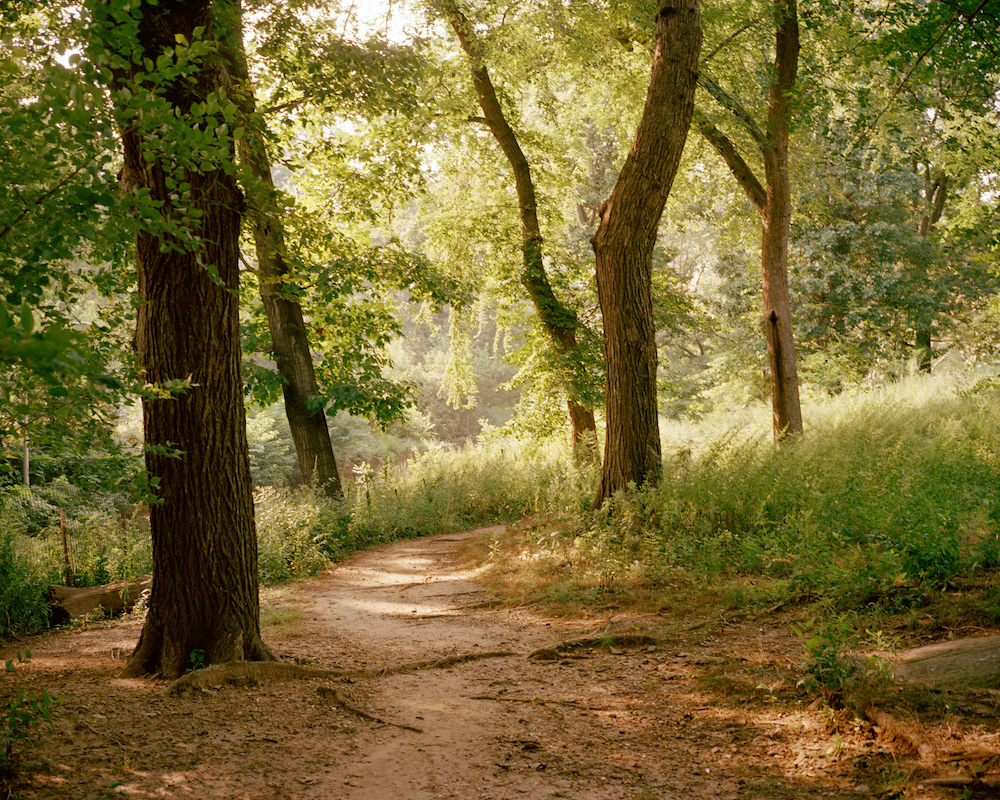
A third favourite of mine is the trees with afternoon light passing through. This is exactly how I feel about Central Park. It has been my home away from home. I feel a warmth when I am there and am constantly “invited” down new pathways. This picture, with the pathway leading us into it, invites the viewer. 

Spring Bloom, Central Park, New York, 2021.

How do you hope your audience will respond to this project?

I hope people feel something when they look at the images. Whether they feel love, hope, or sadness, it doesn’t really matter. I just hope people feel something. As with all photography, for me, an emotional response is the most important.

Untitled, Central Park, New York, USA, 2021

Dave, Central Park, New York, USA, 2021

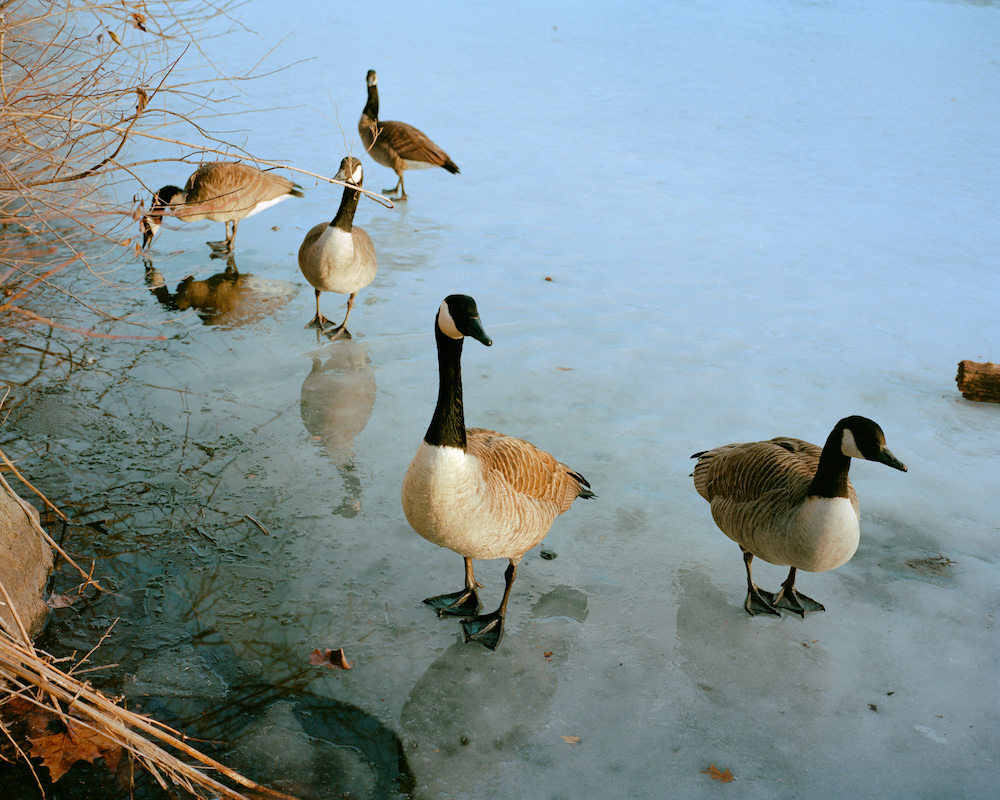
Geese, Central Park, New York, 2021.

Untitled, Central Park, New York, USA, 2021

Dirk Braeckman: LUSTER./

The first NYC solo show in 15 years at GRIMM, the photographer challenges our perspectives of reality with nine years’ worth of boundary pushing imagery

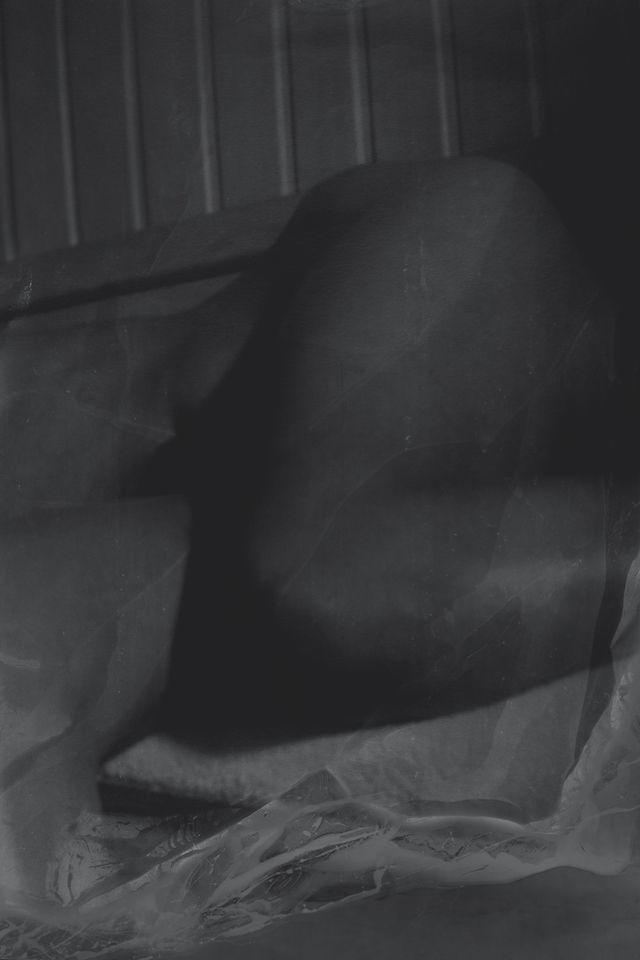
Dirk Braeckman: S.N.-U.N.-21, 2021. Ultrachrome inkjet print mounted on aluminium in stainless steel frame Framed: 90 x 60 x 3 cm | 35 3/8 x 23 5/8 x 1 1/8 in Edition of 5 plus 1 artist’s proof (#1/5) (c) Dirk Braeckman. Courtesy Zeno X Gallery, Antwerp, Galerie Thomas Fischer, Berlin and GRIMM, Amsterdam and New York

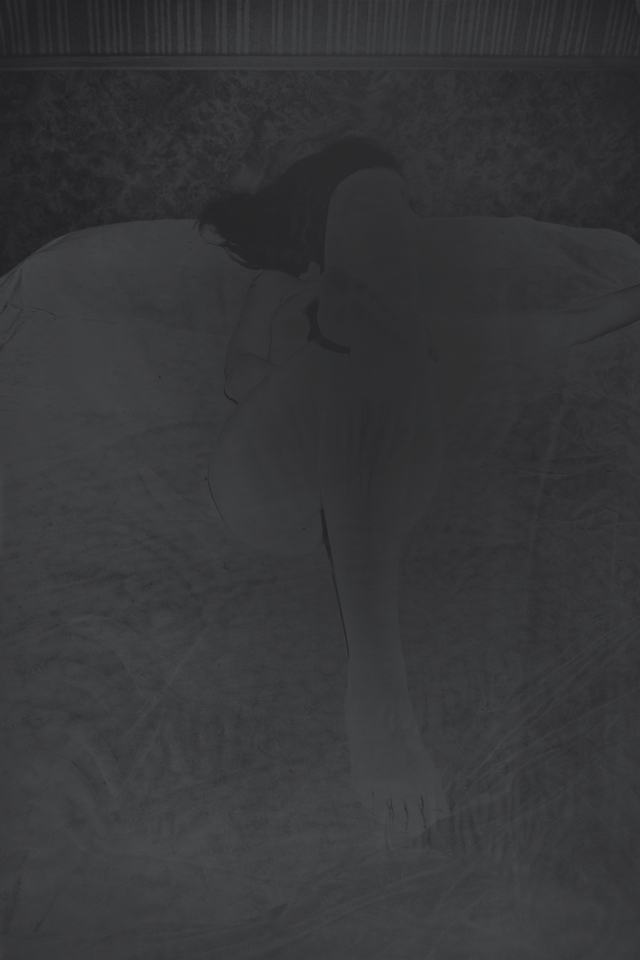
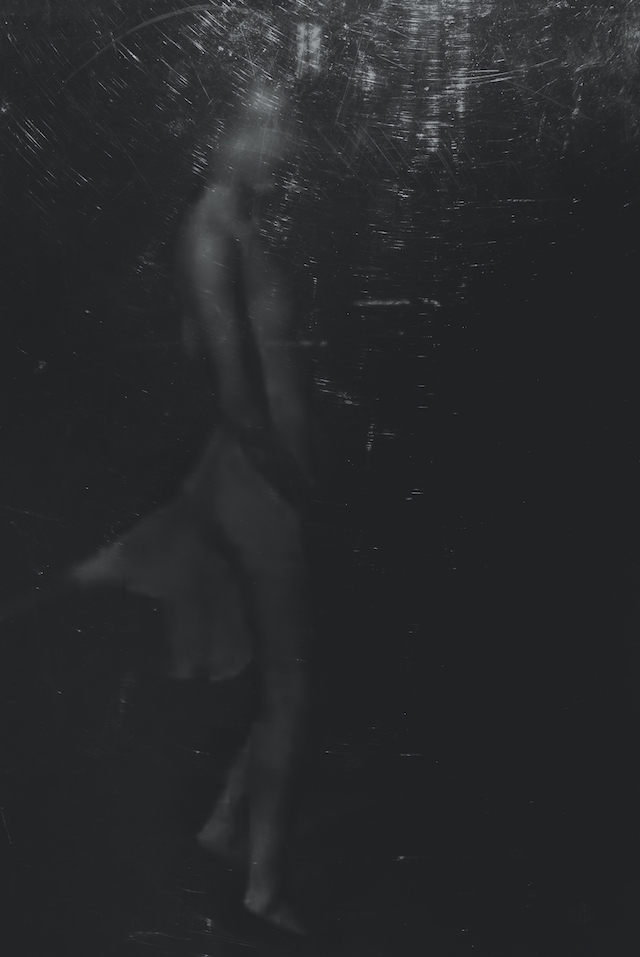
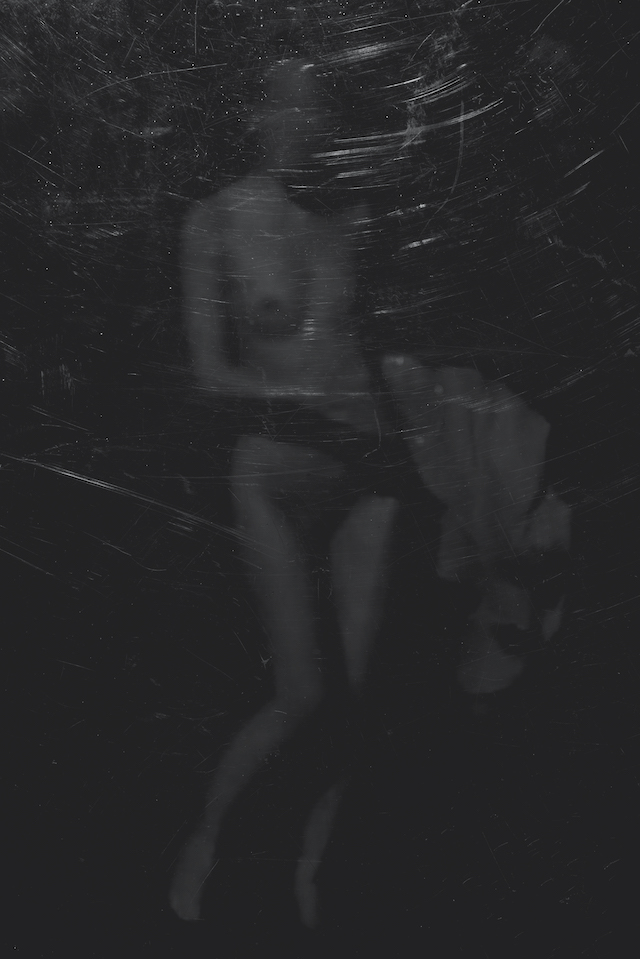
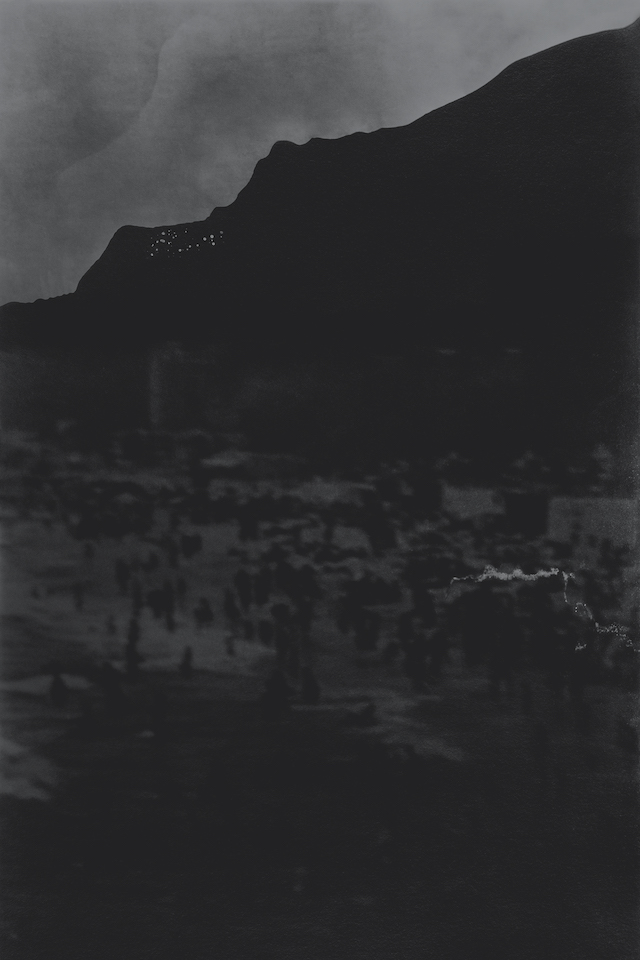
The opening image of Dirk Braeckman’s first solo show of 15 years is quintessentially Dirk Braeckman. This photo greets you with a stark uneasiness; a body-like composition appears to be cradling itself amongst some crispy sheets and materials, the colours printed in a signature tone of ashy monochrome. Sombre, dark and melancholy, the name – S.N-U.N.-12, 2021 – is just as allusive as its subject matter, where you’re not quite sure of its offering, let alone its narrative and context. But one thing we do know is that the piece is an ultra chrome inkjet print, mounted on aluminium and hung in a stainless steel frame; a technique widely employed throughout the photographer’s boundary pushing practice. 

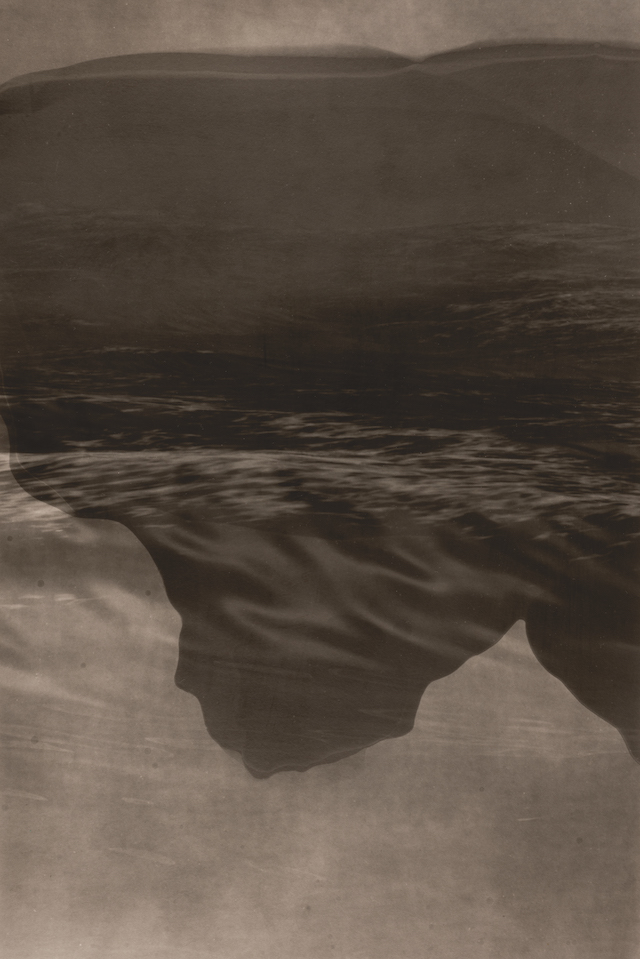
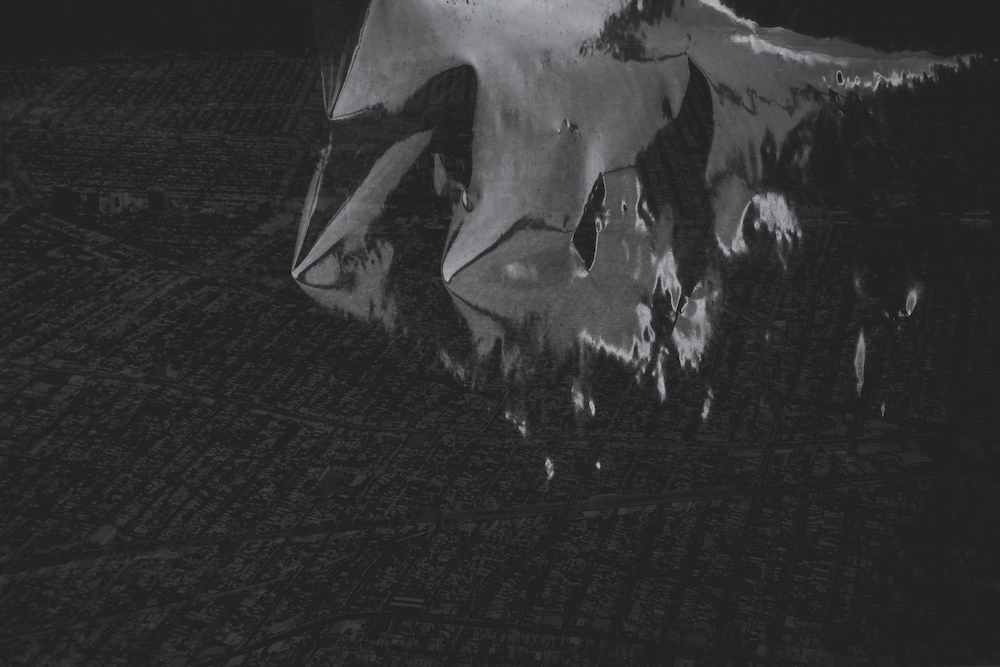
Minutes later and you’ll float quietly past the image titled U.M.-V.P.-16, an almost opaque depiction of a subject laying on a a bed – their face obscured from the camera’s gaze and the lines of the body only just visible to the audience. Similar to when a bright flash goes directly into your eye and your pupil rapidly adjusts to its surroundings, this gelatine silver print is hauntingly mysterious. What follows next is a series of landscape explorations, the sea crashing against the sepia-tinted cliffs and the dynamic ripples of the ocean reflecting the small amount of light available to the lens. You might not have come across anything so considered and technical before, where layers of life and perspective have been thoughtfully composed into a dystopian depiction of the world. 

Dirk Braeckman: U.M.-V.P.-16, 2016. Gelatin silver print mounted on aluminium, aluminium support & frame Framed: 180 x 120 x 3 cm | 70 7/8 x 47 1/4 x 1 1/8 in Unique in a series of 3 (#1/3) (c) Dirk Braeckman. Courtesy Zeno X Gallery, Antwerp, Galerie Thomas Fischer, Berlin and GRIMM, Amsterdam and New York

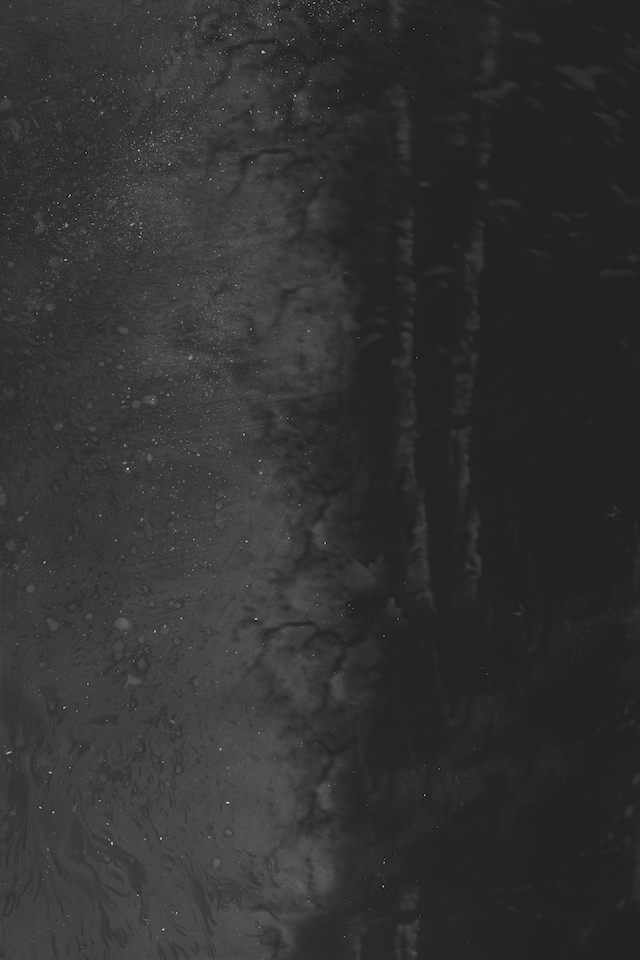
Based in Belgium, Dirk has spent the last 40 years as a photographer. Over this time, he’s continued to build on his impressive portfolio replete with recognisable and undeniably expressionistic artworks, that of which have garnered him a credible name in the field. Instead of offering up his stories and motives on a platter for the hungry viewer to quickly ingest, Dirk contrastingly leaves a sense of mystery throughout all that he creates. He’s a suckler for the darkroom, too; he works like a painter as he experiments with the creative process, altering negatives through various tools and double exposure techniques. The result of which is almost unrecognisable, from altered seascapes, darkened bedrooms, wallpapers and nudes awash in a tone of grey. What is reality, when conceived through the eye of this knowingly stirring photographer?

Toying with the unknown, Dirk’s photography is very much the case of ‘show don’t tell’. It’s an illusion ready to be found out – like the moment of uncovering a magician’s trick. Whether we find this book of secrets, though, is something we can only hope for. But for now, revelling in the beauty of the imagery at hand is more than enough. 

Dirk Braeckman: U.C.-T.C.I #2 -21, 2021 Ultrachrome inkjet print mounted on aluminium in stainless (series of five works) 180 x 120 x 3 cm | 70 7/8 x 47 1/4 x 1 1/8 in (each) Edition of 3 (#1/3) (c) Dirk Braeckman. Courtesy Zeno X Gallery, Antwerp, Galerie Thomas Fischer, Berlin and GRIMM, Amsterdam and New York

The exhibition features a wide-spanning collection of his works from 2012 to 2021 that not only give the audience a firm understanding of the breadth of his practice, but also his commitment to his artistic language. There’s a synchronicity between each piece, where fluid movements of nature meet with the candid postures of his subjects. What I find particularly interesting, too, is the omnipresent feeling of light. In many of his photos, there’s a glimmer of light presented in the frame. This is either portrayed as a more obvious ray of the moon or the more allusive, like the moment someone tries to photograph an artwork in front of them, only to have been met with the light bouncing off the frame. Other times, the light is more finely sprinkled than it is all-encompassing, but it’s always there – keeping you in check with the reality.

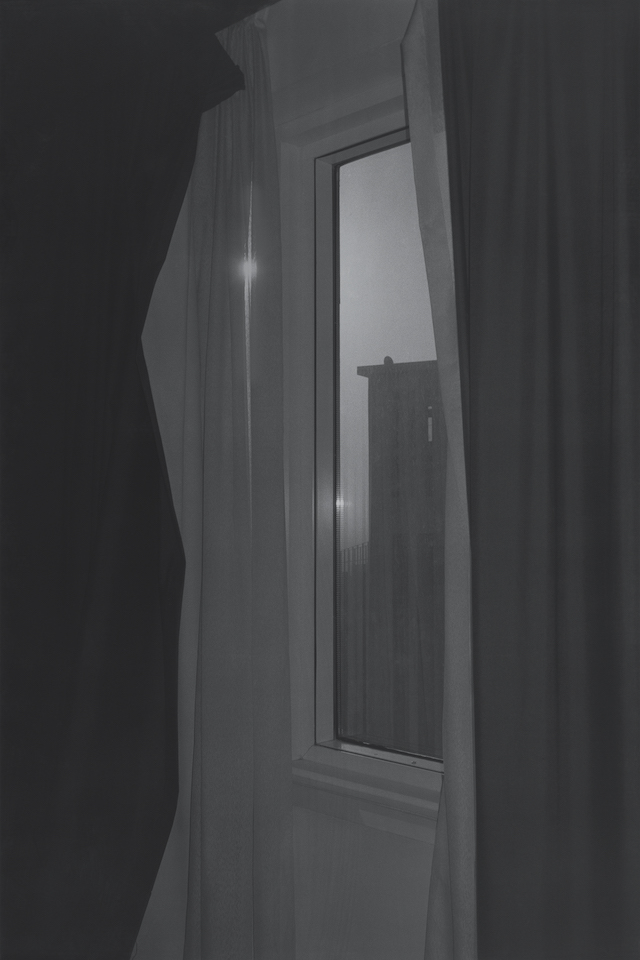
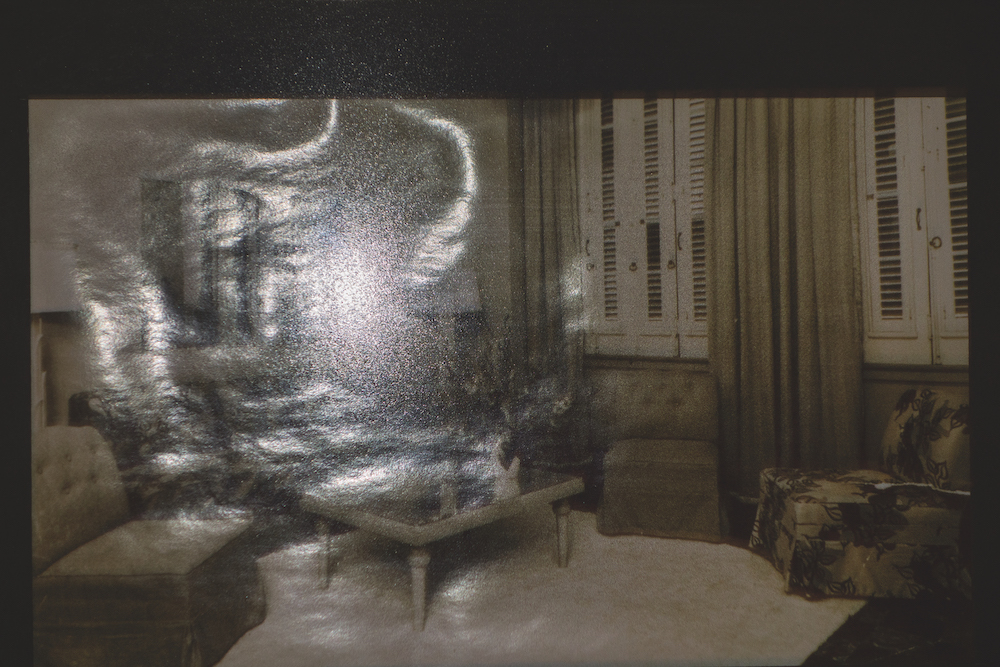
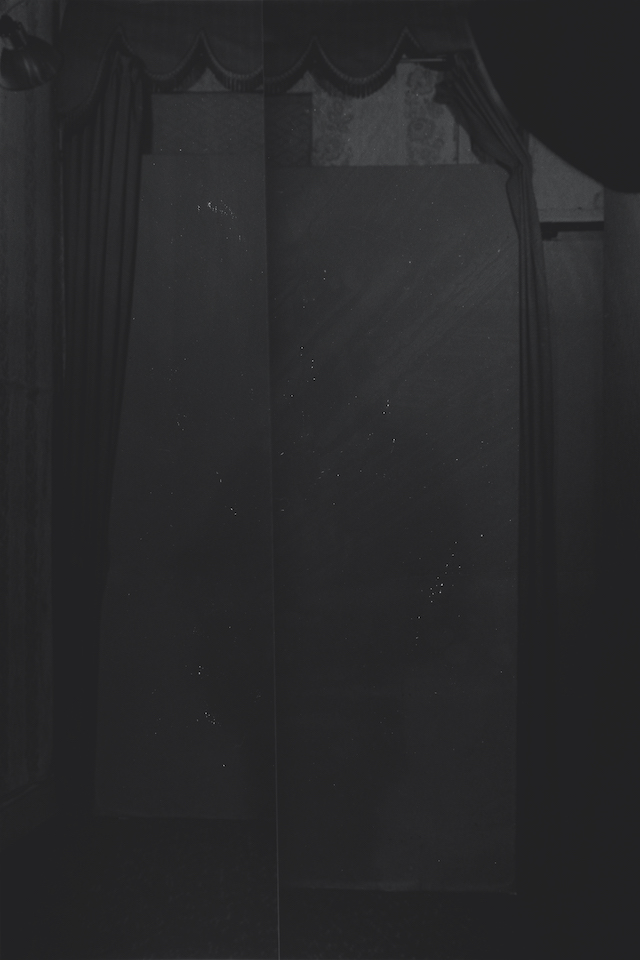
Towards the final moments of the exhibition, you’re then met with a piece named T.S.-O.S.-18. There’s a familiarity about this one – the darker palettes, handing drapes and wallpaper. Yet what’s different this time around is that there’s no subject to be seen, no-one cradling their own body in the dimly it room. The absence of a person leaves you wondering whether what you’ve just been looking at was ever there at all; that art and photography a subjective, illusive thing. 

LUSTER./ is currently on show at GRIMM New York until 26 February 2022. 

Dirk Braeckman: B.J.-D.U.-12, 2012. Gelatin silver print mounted on aluminium, aluminium support & frame Framed: 180 x 120 x 3 cm | 70 7/8 x 47 1/4 x 1 1/8 in Edition of 3 plus 1 artist’s proof (#2/3) (c) Dirk Braeckman. Courtesy Zeno X Gallery, Antwerp, Galerie Thomas Fischer, Berlin and GRIMM, Amsterdam and New York

Dirk Braeckman: B.S.-S.B.-18 #3, 2018. Gelatin silver print reversibly mounted on aluminium 180 x 120 x 3 cm | 70 7/8 x 47 1/4 x 1 1/8 in (c) Dirk Braeckman. Courtesy Zeno X Gallery, Antwerp, Galerie Thomas Fischer, Berlin and GRIMM, Amsterdam and New York

Dirk Braeckman: R.N.-W.S.-21, 2021. Ultrachrome inkjet print on matte paper 180 x 120 cm | 70 7/8 x 47 1/4 in Edition of 3 plus 1 artist’s proof (c) Dirk Braeckman. Courtesy Zeno X Gallery, Antwerp, Galerie Thomas Fischer, Berlin and GRIMM, Amsterdam and New York

Dirk Braeckman: F.W.-S.V.-21, 2021. Ultrachrome inkjet print mounted on aluminium in stainless steel frame Framed: 180 x 120 x 3 cm | 70 7/8 x 47 1/4 x 1 1/8 in Edition of 3 plus 1 artist’s proof (#1/3) (c) Dirk Braeckman. Courtesy Zeno X Gallery, Antwerp, Galerie Thomas Fischer, Berlin and GRIMM, Amsterdam and New York

Dirk Braeckman: L.U.-A.L.-21, 2021. Ultrachrome inkjet print mounted on aluminium in stainless steel frame Framed: 180 x 120 x 3 cm | 70 7/8 x 47 1/4 x 1 1/8 in Edition of 3 plus 1 artist’s proof (#1/3) (c) Dirk Braeckman. Courtesy Zeno X Gallery, Antwerp, Galerie Thomas Fischer, Berlin and GRIMM, Amsterdam and New York

Dirk Braeckman. 27.1 / 21.7 / 045 / 2014, 2014 Ultrachrome inkjet print mounted on aluminium support & frame Framed: 120 x 180 x 3 cm | 47 1/4 x 70 7/8 x 1 1/8 in Edition of 3 plus 1 artist’s proof (#2/3) c) Dirk Braeckman. Courtesy Zeno X Gallery, Antwerp, Galerie Thomas Fischer, Berlin and GRIMM, Amsterdam and New York

Dirk Braeckman: R.N.-W.S. #2-21, 2021. Ultrachrome inkjet print mounted on aluminium in stainless steel frame Framed: 180 x 120 x 3 cm | 70 7/8 x 47 1/4 x 1 1/8 in Edition of 3 (#1/3) (c) Dirk Braeckman. Courtesy Zeno X Gallery, Antwerp, Galerie Thomas Fischer, Berlin and GRIMM, Amsterdam and New York

Dirk Braeckman: S.G.-B.S.-21, 2021. Ultrachrome inkjet print mounted on aluminium in stainless steel frame Framed: 180 x 120 x 3 cm | 70 7/8 x 47 1/4 x 1 1/8 in Edition of 3 plus 1 artist’s proof (#1/3) (c) Dirk Braeckman. Courtesy Zeno X Gallery, Antwerp, Galerie Thomas Fischer, Berlin and GRIMM, Amsterdam and New York

Dirk Braeckman: T.S.-O.S.-18 (1_1), 2018 Gelatin silver print reversibly mounted on aluminum 180 x 120 cm | 70 7/8 x 47 1/4 in Unique in a series of 3 (#1/3) (c) Dirk Braeckman. Courtesy Zeno X Gallery, Antwerp, Galerie Thomas Fischer, Berlin and GRIMM, Amsterdam and New York


Cindy Sherman – Contact

A new book by Jeannette Montgomery Barron presents a different, less fictionalised side of the American photographer 

© Jeannette Montgomery Barron

In some ways, we’re all familiar with the face of Cindy Sherman, an American photographer known for her self-portraiture adorned with wigs, prosthetics and elaborate makeup. For the last four decades, Sherman has turned an inquisitive eye onto the concept of identity, deconstructing its codes into varying pastiche of art, gender and self. 

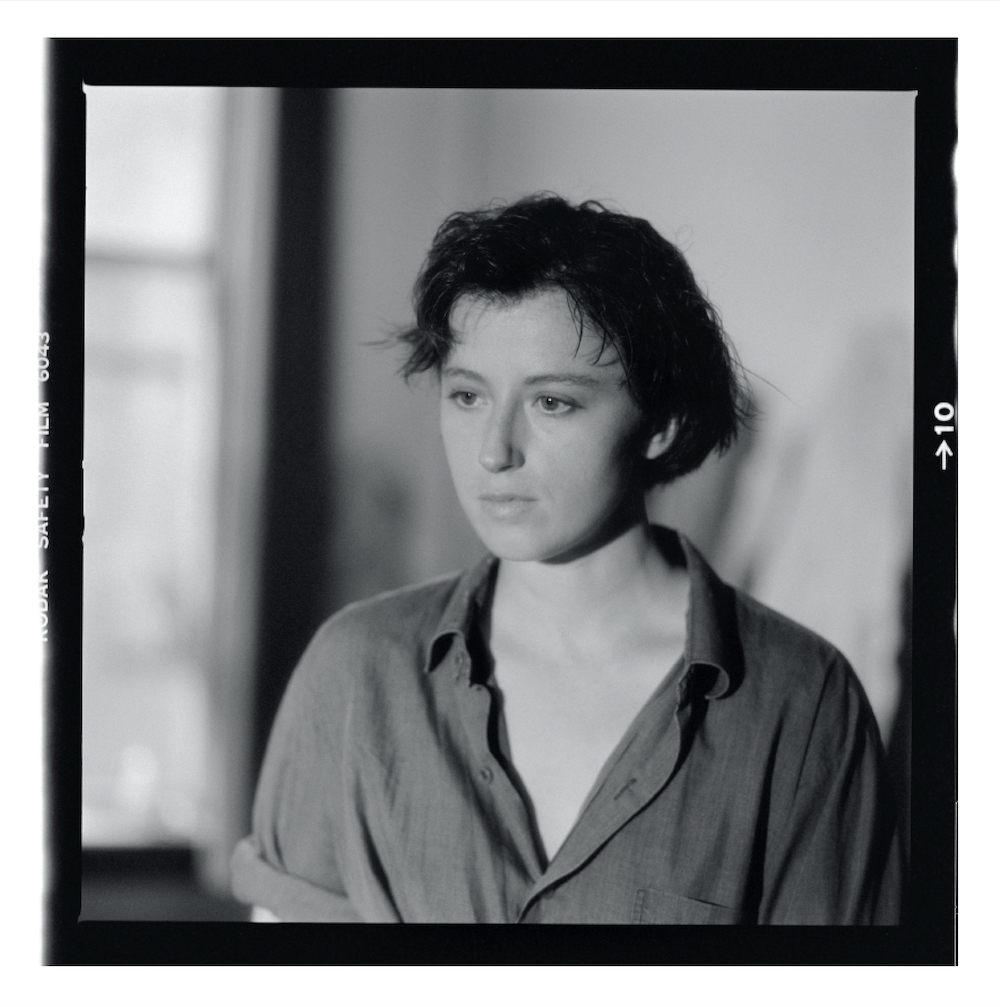
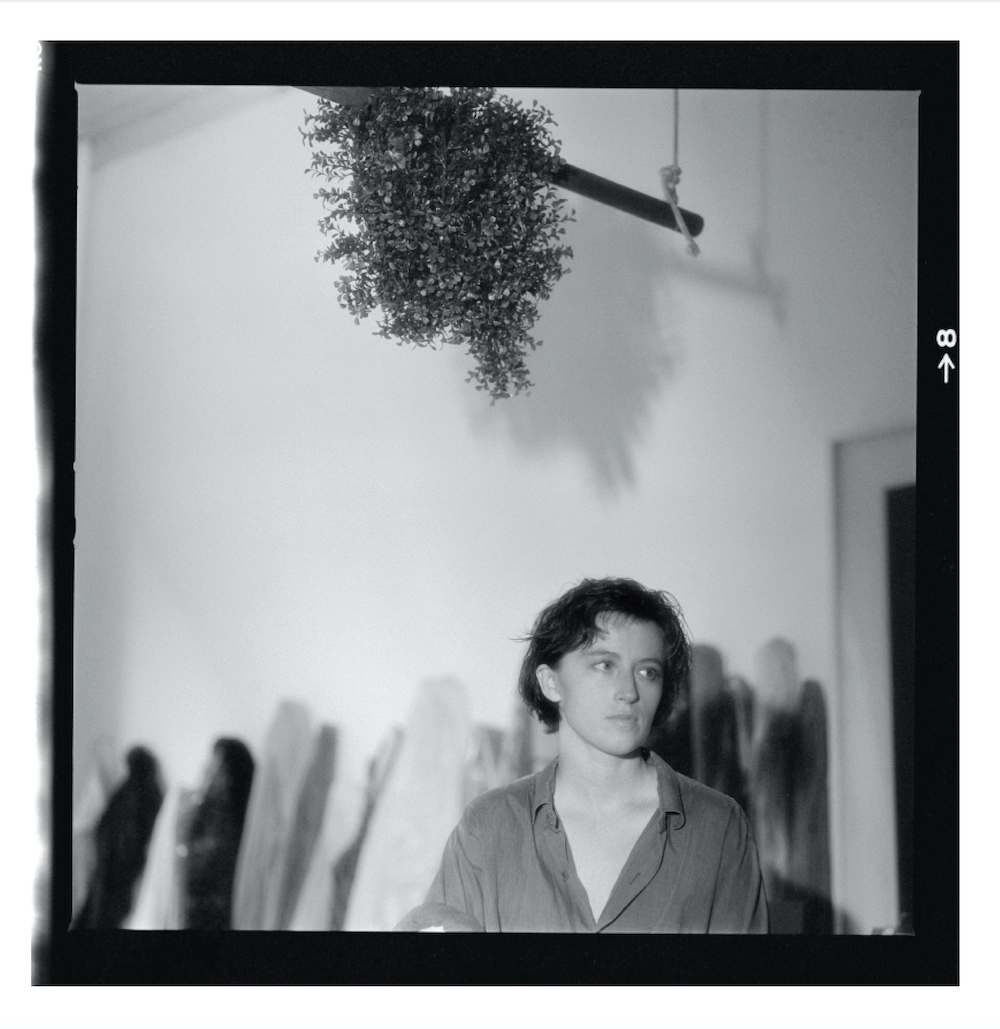
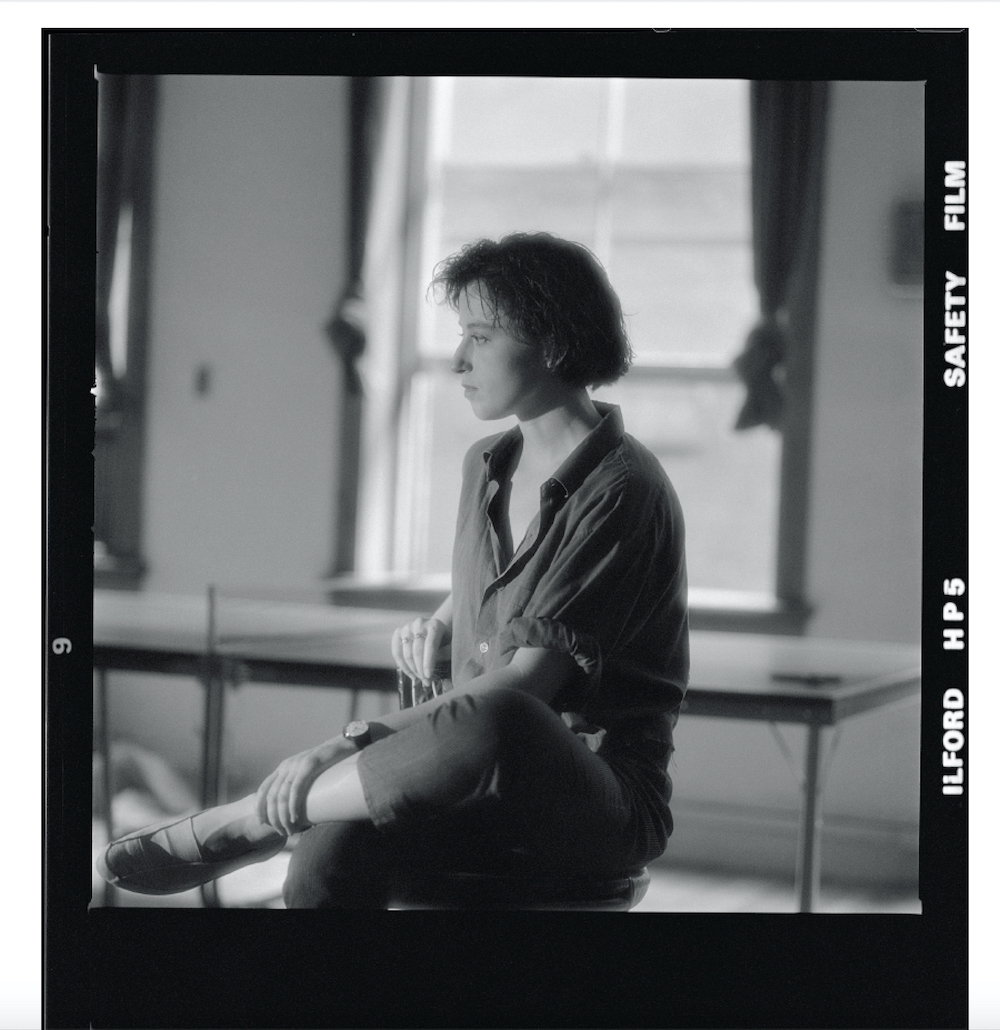
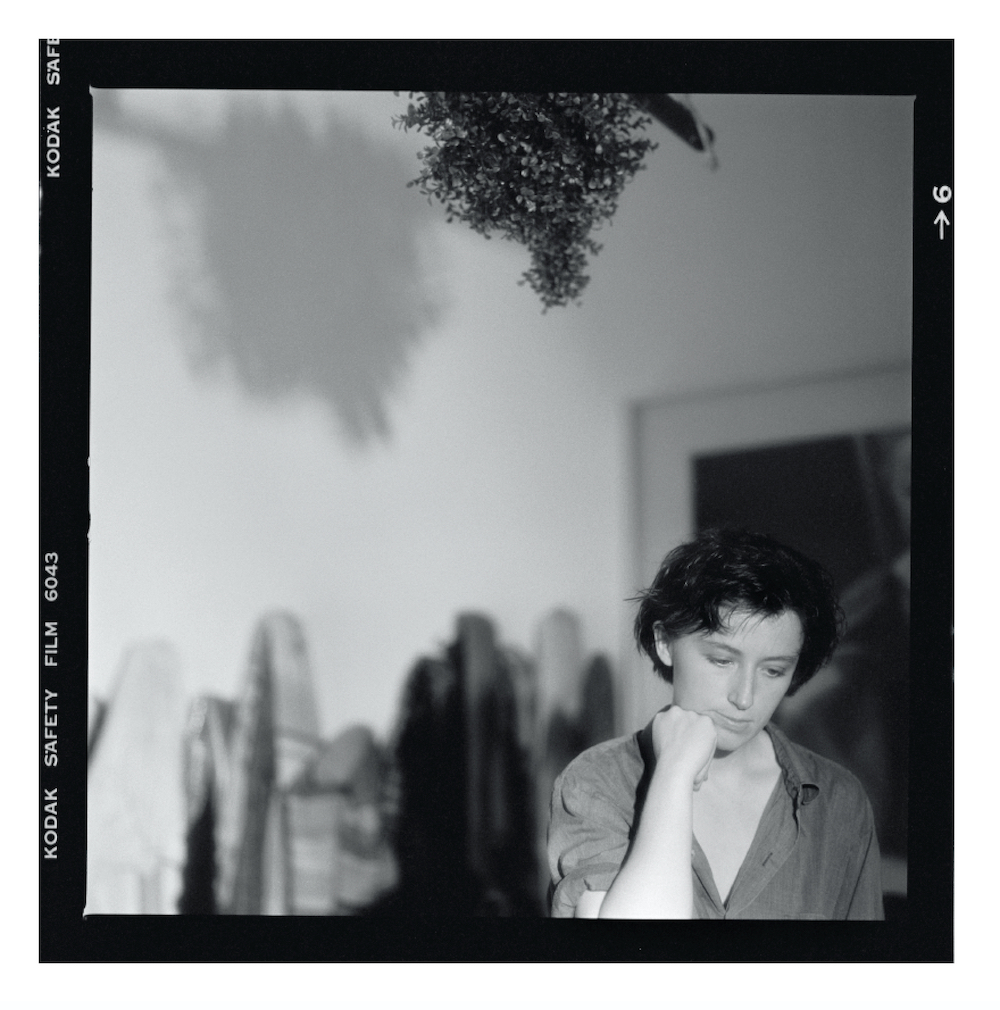
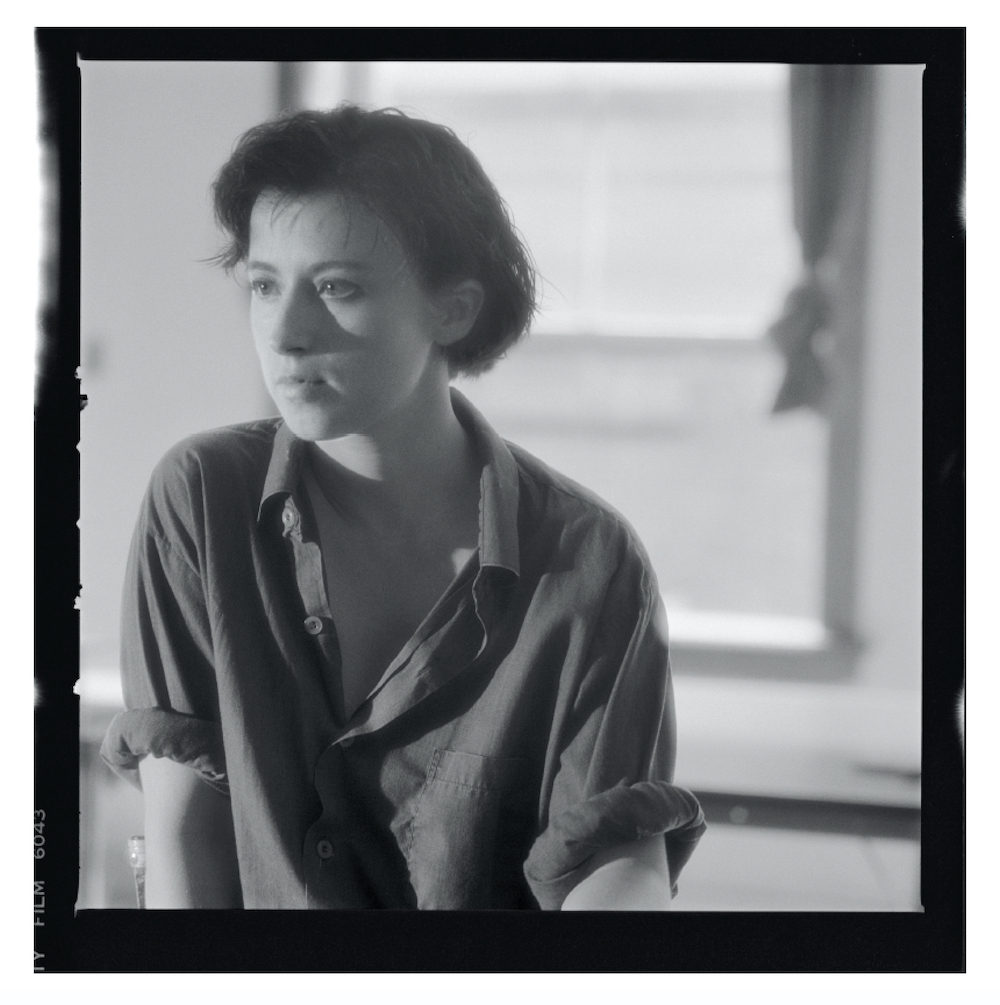
In a conversation with John Waters for MoMa in 2012, she said, “I wish I could treat every day as Halloween, and get dressed up and go out into the world as some eccentric character.” So it’s somewhat fitting, then, that Jeannette Montgomery Barron would end up photographing Sherman on Halloween in 1985, an annual event that sees America congregate in partying mass and embellished in fancy dress. Jeannette was invited to Sherman’s studio in the city, and it was in this very moment that she sat herself in front of the camera as her own subject – revealing a face without all the typical costumes and fictional characterisations.

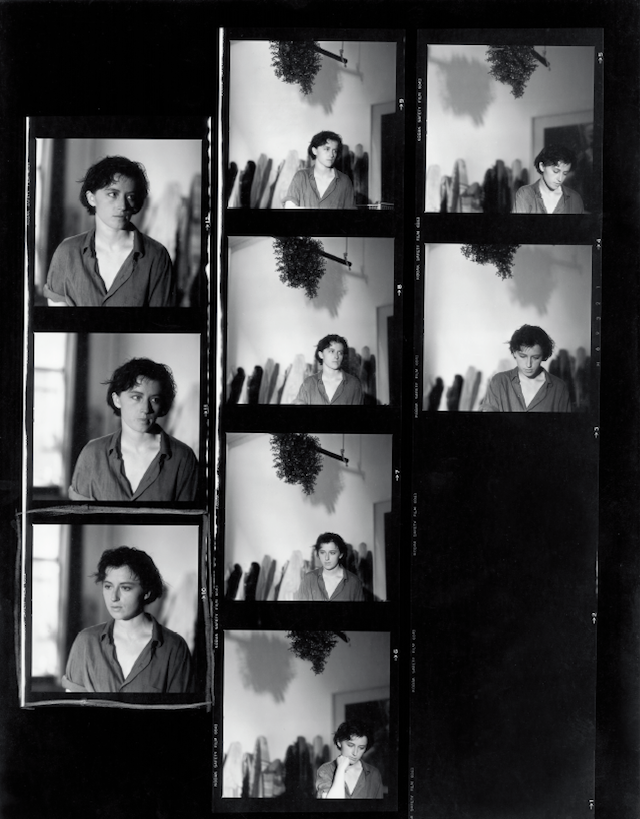
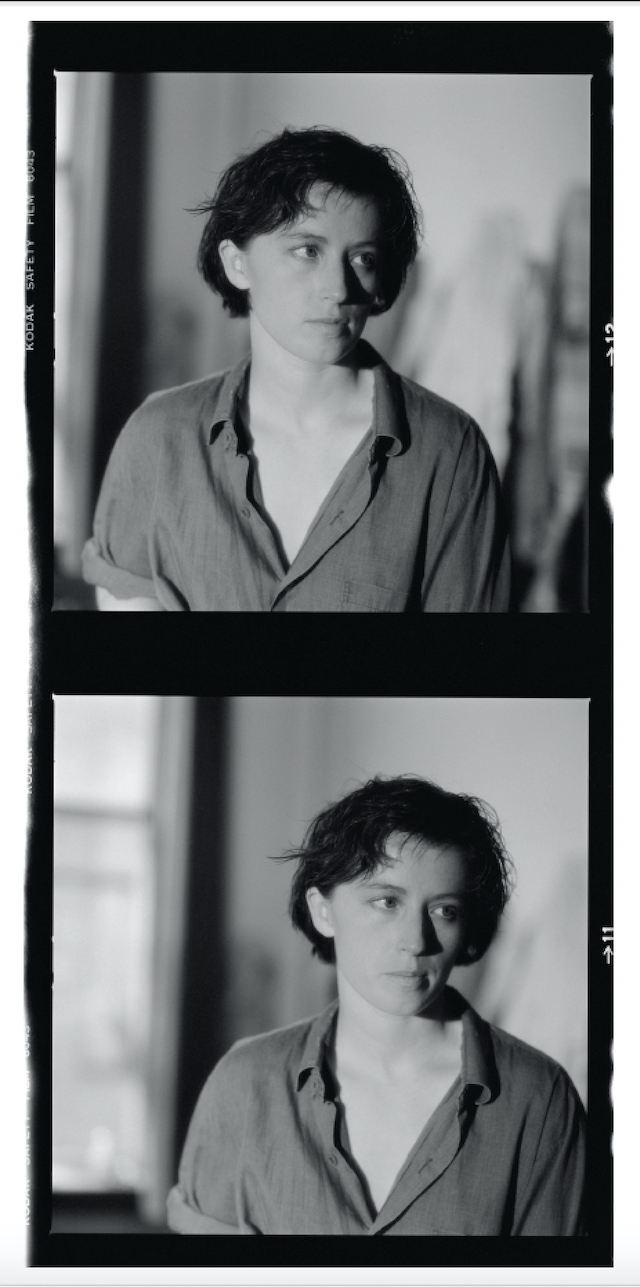
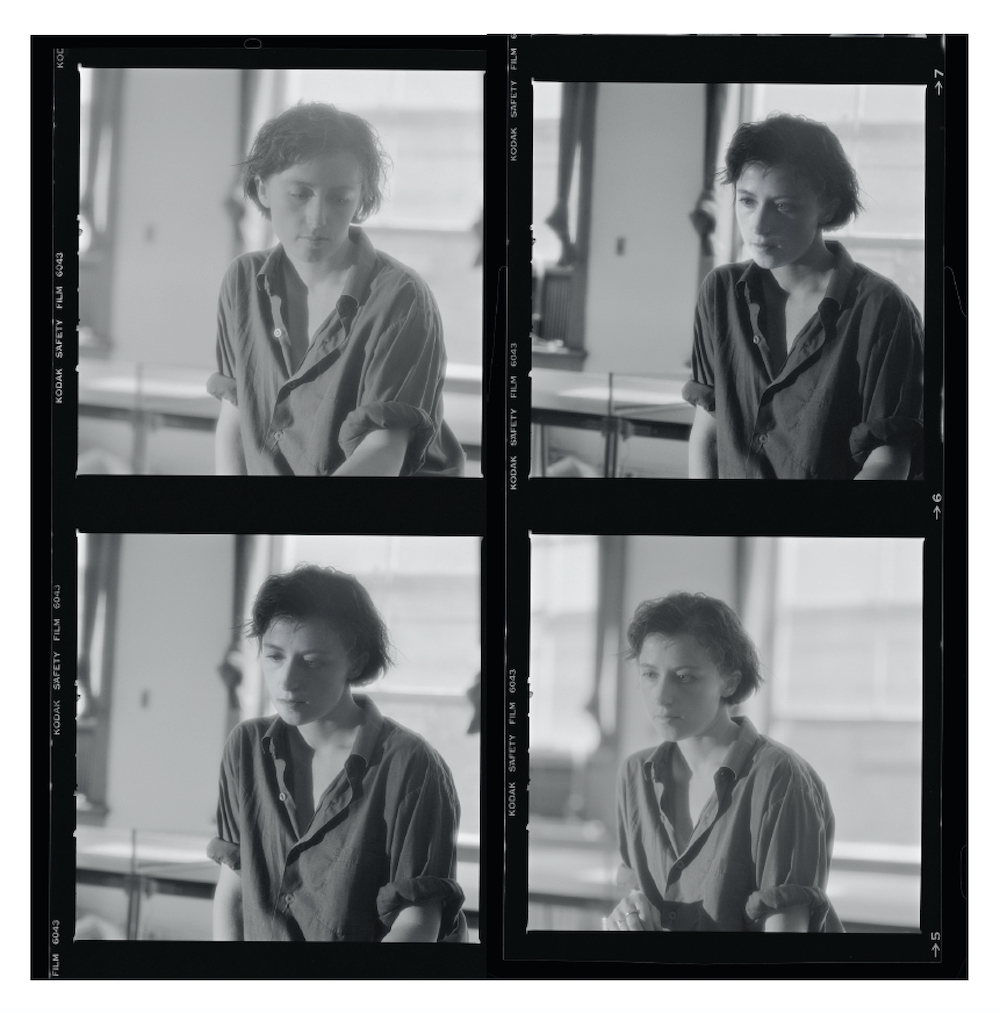
This was nearly 30 years ago, and the pictures have now been brought into light with a new book, Contact, published by NJG Studio. A compilation of 40 images and four contact sheets, the visual tome presents a different side of Sherman, as seen through the eye of Barron who’s known for capturing portraits of many notable names from New York City during the 80s. Below, I chat to Barron to learn more about this meeting.

© Jeannette Montgomery Barron

Having lensed many renowned personalities over the years, what was it that captivated you to photograph Cindy Sherman?

When these portraits were taken in 1985, I had already photographed many people in the art world. Cindy was an artist whose work fascinated me. I just really wanted to photograph her. 

How did the shoot come about; was she happy to be photographed?

I called her up on the phone and asked if I could photograph her – that’s the way it worked back then. If someone wasn’t home, I’d leave a message on their answering machine and they would hopefully call me back. 

She seemed happy to be photographed. I really hope she was. 

© Jeannette Montgomery Barron

Was there a specific reason for photographing on Halloween in 1985? Does this date have much significance?

I’m pretty certain the date, 31 October, was chosen randomly. And I never really thought about the significance of the date until recently. 

What was the art landscape like in New York at this time?

Well, you know, we all tend to romanticise the past. But I remember Soho still being a bit rough and wonderful back then. One vivid memory was walking around a corner onto West Broadway and always smelling fresh pepper; there were warehouses still down there.  

I’d always stop by and say hello to Mary Boone when I was downtown, and also pop across the street to Leo Castelli’s gallery. I had two good friends who moved to a loft in Tribeca in the early 1980’s. If you can imagine, there was not one grocery store down there back then; it was kind of like the wild west. 

© Jeannette Montgomery Barron

What can you tell me about Sherman’s real-life character and persona? And how did this compare with your expectations?

Cindy was very quiet and reserved as I recall. I’m not sure I expected her to be any other way, even though her work may have led one to expect differently.              

What was the process like; was it much of a collaboration between the two of you – between a photographer and subject? How exactly did you want to portray her in the photographs?

My process was always much the same: I would arrive exactly on time with my Hasselblad 500 C/M and usually Tri-x 400 film (although for these portraits I used Ilford film, which was unusual). I had two Lowel Tota Lights with stands I always brought along. And I always used a tripod for my Hasselblad. 

I would usually find a spot where I want to photograph the subject and move around a bit, getting closer, going further away. Then sometimes I would change location and go somewhere else in the studio or apartment. 

I wanted to portray Cindy as Cindy without all of the costumes on. I imagine that’s what she wanted too, since she answered the door in her normal clothes.  

© Jeannette Montgomery Barron

What’s it like looking back on this moment in time; how does it feel to revisit these pictures again?

I have to say it feels just like yesterday. It’s been great to rediscover some of the images I never printed before.  

And how do you hope your audience will respond to the work?

I hope it will be a fun ride for those who were not around in the 1980’s, and a blast from the past for those who were. 

© Jeannette Montgomery Barron


David La Spina

An exclusive portfolio by photographer David La Spina explores the hidden patterns and intimate moments of New York street life

All you need to know about David La Spina is in the first picture of this portfolio. He is motivated when the light is hot and strong and the contrast is high. He frames chaos within chaos. He picks up on signifiers of how we live. Two women grip cell phones with ferocity. Are they hostage takers or hostages? One of the women listens intently to one phone while holding another. What does it mean to have two phones?

La Spina’s photos are full of everyday mysteries and nuances. The uncanny waits for him. With quick reflexes he snags the splatter of light and shade on their faces. The smudgy shadows tumbling down the side of the woman’s face as she steps into sunlight could not be more perfect if he drew them in with a charcoal stick.

As the women come towards us, La Spina also registers the back of a man walking towards them. And then he re-raises the ante by lassoing the leafy shadows on the gentleman’s shoulders, and then the shadow of yet another person falling across the man’s back. Is it La Spina’s shadow? Can this be the portraitist inserting a self-portrait among the pedestrians on an ordinary day of extraordinary Manhattan light? The man’s bent fingers at the edge of the frame add to the choreography of hands. A ‘Parking’ sign descends in the background, testament to La Spina’s love of vernacular typography. La Spina is the equivalent of a studio musician laying down all of the tracks in a song, all at once.

La Spina’s images savour the urban elegance of stairs, wrought iron railings and fire escapes. The angles, edges, reflective surfaces and intersecting shapes of urban buildings inspire and delight him. His eye owes its rigour and discipline to his love of architecture. Later on in the story, laundry hanging behind two buildings stands out. The clothes hang from a grid of bars that echoes the grid of windows in the background. One can imagine the windows and bars aligned and matching perfectly. Does every walk La Spina takes down a city street on a sunny day result in a moment of visual ecstasy?

After years of working with sophisticated cameras, La Spina started shooting with his smartphone, liberating him to make pictures quickly – usually when he is in transition: on his way to the subway, heading to work or pushing his daughter in a stroller. At first he was “very insecure about these pictures and thought they were second fiddle”. Then he realised “they were getting better than the pictures I thought were my serious pictures.” These vividly beautiful, impatiently captured and elegantly rendered photographs are proof of the irrepressible power and pleasure of great street photography.

Kathy Ryan is director of photography at The New York Times Magazine

MOSCOT: Keeping It in the Family

The father and son team behind the New York eyewear institution reflect on family, tradition and working together

Harvey and Zack Moscot

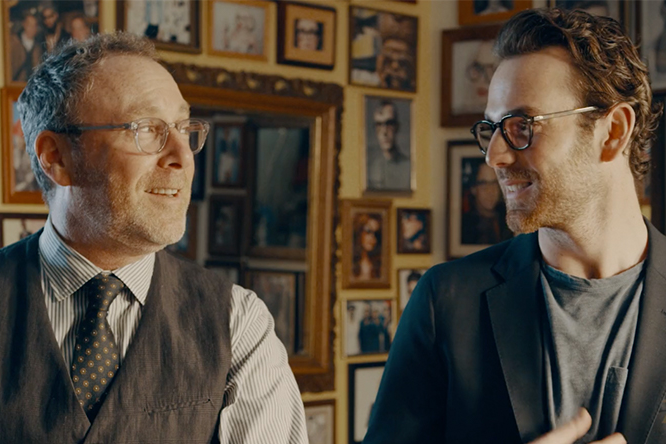
When, at the turn of the century, Hyman Moscot started selling ready-made eyeglasses from a pushcart on New York’s Lower East Side, he had little idea that he was founding a family business that would continue to this day, five generations later. Having crossed from Eastern Europe to disembark on Elis Island in 1899, Hyman would establish his eponymous brand on Rivington Street in 1915, before, in 1936, moving across the block to Orchard Street where MOSCOT would stay, the company being handed down through the generations: from Hyman to Sol to Joel to the current CEO and doctor of optometry, Harvey, and his son, chief design officer, Zack.

With the eyewear industry today dominated by the Luxottica Group, MOSCOT offers an enduringly intimate experience based around the quality of the products, an expert understanding of the science of eyewear and a tactile, physical encounter with the brand. Though they do sell online, their shops have become destinations in their own right – a central part of the family’s offering is in their ability to test your eyesight, proscribe and manufacture bespoke lenses on site. It’s an approach that has made the brand an institution in the market – patronised by the likes of Leonardo DiCaprio and Jake Gyllenhaal –  as well as, with their yellow-fronted corner store, an institution in their neighbourhood.

As MOSCOT launches their new collection for AW18, Port asked Harvey and Zack to reflect on the heritage of their brand, the evolution of New York, and working together as father and son.

Zack: What’s the secret to success when running a family business with over 100 years of heritage?

Harvey: The secret is to stay true to what our predecessors have always preached: provide a memorable experience to our loyal customers. It’s always important that we do things for the right reasons, and that we are a place that our customers want to come back to and enjoying being a part of. 

Zack: I remember Grandpa Joel always told me how we’ve been known for some of the most classic designs since the Grandpa Sol days. People from around town always came to MOSCOT for round shapes and I really feel that I have captured some of our most timeless round silhouettes in our new models, giving them some MOSCOT character with subtle accents using detailed filigree, unique bridge designs, or intricate temple features. 

What’s the legacy that you want MOSCOT to be known for in years to come?

Harvey: I want to ensure that our brand message and our ethos is properly conveyed as we continue to tell our story to the world. We must never forget where we came from and if we can do that we will always know where we are headed! It’s also very important to me that our level of customer service is maintained and held to the highest standard. My father, and your grandfather, Joel, and my grandpa Sol, always strived to make all customers’ visit to MOSCOT memorable and special. I would expect the same legacy to be carried out by you.

Zack: I really see an opportunity to tell our story through new channels. We’ve always been known for our expertise in the optical field and our timeless designs and through direct to consumer strategies I want to inform existing, new and future fans about our heritage and expertise.

How do you think New York has changed in the last 30 years and how has MOSCOT evolved in this time too?

Harvey: With our roots deeply planted on Orchard Street in Manhattan’s Lower East Side in the early 20th century from a pushcart we certainly have seen lots of changes to the neighbourhood… and not just in the past 30 years! Orchard Street’s gentrification, like in other parts of Manhattan, is evident. Once a hotbed of artists, musicians, poets, we now see many new developments – hotels, restaurants, and upscale condos. Despite this the Lower East Side still retains a lot of its authenticity and we like to think we help contribute. MOSCOT has had to adapt to these changes by looking at digital initiatives but we are so thankful we still attract customers to our shop for eyewear, music, and a fun experience for whatever you visit us for.

How do you feel about working close to your father in a family business with a legacy like ours?

Zack: Honestly, it’s a true honour. I’ve wanted to be in the business my entire life, the trouble was just finding my way in. All my predecessors were opticians and you are an optometrist, but I was never intrigued by eyeballs or optics. My passion has always been design and relationships between humans and objects. Eyewear represents something truly special because its fashion but also a needed, functioning medical device that helps one see. To be able to build on this emotional connection through design and my namesake, with you by my side, is one heck of a ride to be on! Here’s to the next five generations….

moscot.com