Rhyging Sun

Jazz Grant’s collage animation addresses themes of identity, displacement and escape
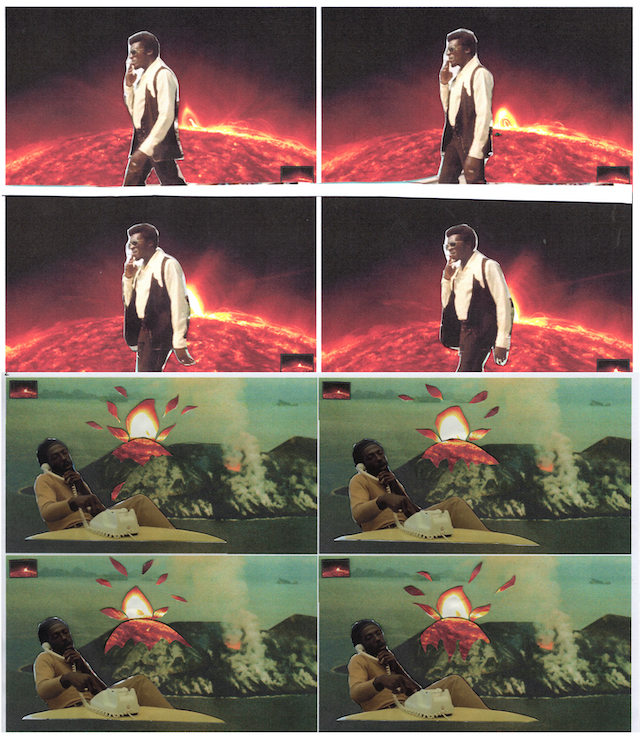
Rhyging Sun, Film Still © Jazz Grant (2020). Courtesy of the artist

In 1973, Jamaican filmmaker Perry Henzell produced his cult hit, The Harder They Come. Starring singer Jimmy Cliff, who plays the protagonist named Ivanhoe Martin, the film follows a country man as he leaves his rural home for Kingston in a quest to become famous. Things don’t go as planned, and he ends up battling against all-things music industry, police corruption, religion and drug dealers. The film also rose to acclaim for its reggae soundtrack, with some stating that it “brought reggae to the world” – featuring the likes of Toots and the Maytals, Desmond Dekker and, naturally, some songs by Jimmy Cliff.

It’s this very film that informed the latest accomplishment of London-born artist Jazz Grant. Known for her cut-and-paste works and animations, she was recently commissioned by print publication and platform Boy.Brother.Friend to work on an animated film, titled Rhyging Sun – a name taken from ‘Rhyging’, a variant of ‘raging’ in Jamaican Patois. Riddled in signature collage style, the work is composed from imagery sourced from Henzell’s The Harder They Come, ignited by Jazz’s flare for hand-cut processes, research and the arduous (and most enjoyable) method of stop-motion animation. “It was an immensely difficult task,” she says of the film’s initiation, “but I saw it as an opportunity to create something really ambitious.”
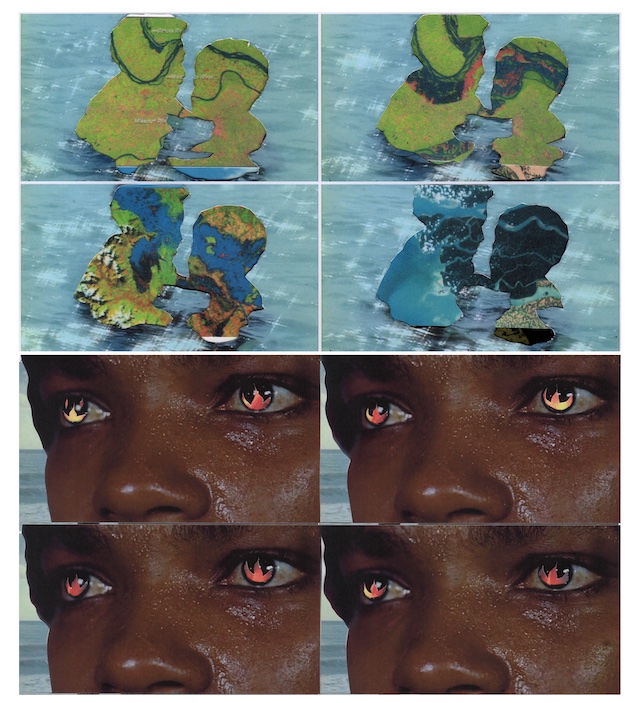
Rhyging Sun © Jazz Grant (2020). Courtesy of the artist

The Harder They Come is a film that Jazz has always thought of fondly. “It’s one of the most iconic films and had such a big impact on me when I first watched it,” she says. “It still does.” In this regard, the film manifests as a window into a place that leaves her feeling both connected and disconnected – especially from having to explain her Jamaican roots to others, even if she feels physically distanced from the country. But not too long ago, Jazz found herself at a literary festival in Jamaica and ended up meeting Justine Henzell, the director’s daughter, before asking permission to incorporate the film’s clips into a collaged animation. “She was enthusiastic about it, which came as a really incredible surprise to me. Actually, it was one of the most exciting moments in my life when she said yes. I’ll always treasure that.”

With the project underway, Jazz continued to watch the film “over and over” to seek out the most prominent visuals. It was an interesting take no less, having to observe the film she knew so well with a different angle – or, as she puts it, “with the eye of viewing a still, found image”. Downloading the selected moments as frames per second, she then went on to lay each of these snippets out on A3 paper as if they were a contact sheet or film reel. This was shortly followed by the printing and collage process, where each individual frame was artfully composed with intricate, detailed composure. She then scanned the sheets into her laptop and layered each of them in Photoshop as a stop-motion animation, using Premier Pro as her tool for piecing all the bits together. Dan Hylton-Nuamah was onboarded to work on the score for the film. 
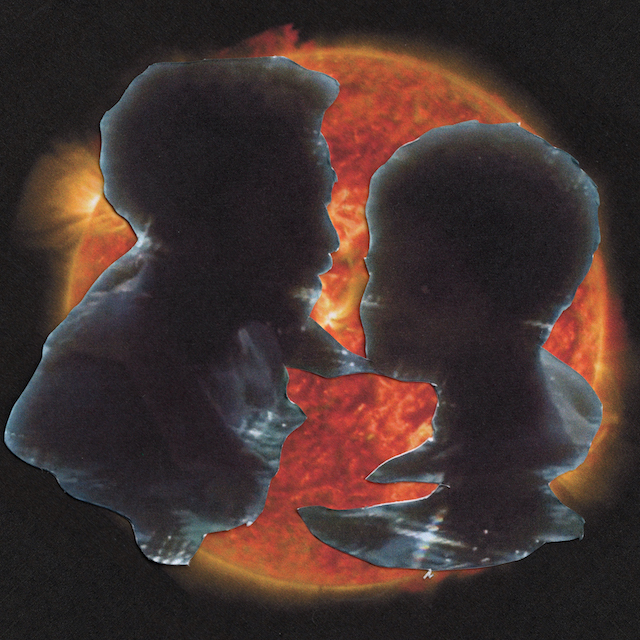
Sun Kissed Sweethearts, Rhyging Sun © Jazz Grant (2020). Courtesy of the artist

The final composition sees the merging of many cinematic moments, each framing the journey of a meteor as it gradually edges close to earth. Signalling the demise of the world, Jazz pinpoints Sun Kissed Sweethearts as one of the key moments from her animation. It’s a piece that references the original film’s protagonist, Ivan (or Jimmy Cliff) and Elsa (Janet Bartley), as they embrace in the water “rebelliously, against the preacher’s wishes – who’s also her guardian.” She adds: “The scene is cut between the both of them singing at church, with them naked in the water. It’s such a visually beautiful and cheeky moment in the film. The water and the lovers are almost indistinguishable; the quality is loose and dreamy. It can feel wrong to mess with an original image, but I cut them out, placed them on top of a rotating sun. Something in the liquid-like quality of the NASA image allowed for a similar texture to the original, yet a completely different feeling occurs. It’s really simple and often the best collages are. It just resonates.”
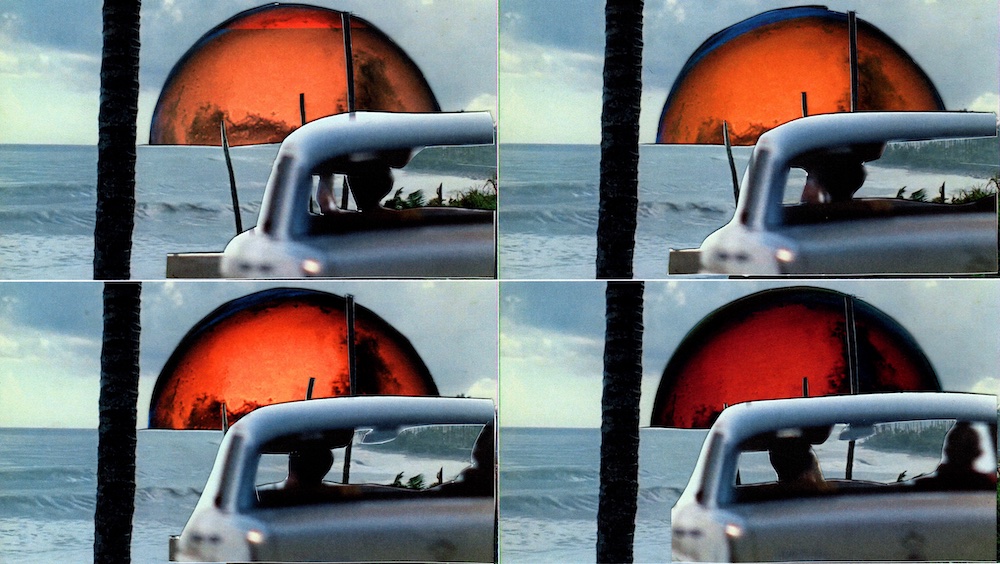
Sunset Car, Rhyging Sun © Jazz Grant (2020). Courtesy of the artist

The art of collage is a widely used technique, chosen mostly for its ease of telling stories and ability to blend different – sometimes opposing – ideas into one unified approach. For Jazz, it’s a way of making sense of her identity, as well as addressing a reoccurring dream she’s been having: one that centres on the end of the world. “There is lava crawling down my street, the same height as the buildings that surround it. Or, the water levels are rising and increasingly large waves are crashing through the house, and I’m always relatively subdued in them. I’m trying to escape but there’s also a feeling that there is no escape, so I simultaneously marvel at the beauty in the impending doom caused by extreme natural disaster.” 

Perhaps this is why Rhyging Sun has such a wildly illusory manner out it. Because, after all, it’s reflective of a dream. But more importantly, Jazz’s animation has been created as a means of understanding more about herself – which is just what Ivan set out to do in Henzell’s The Harder They Come.

You can watch Jazz’s Rhyging Sun below.
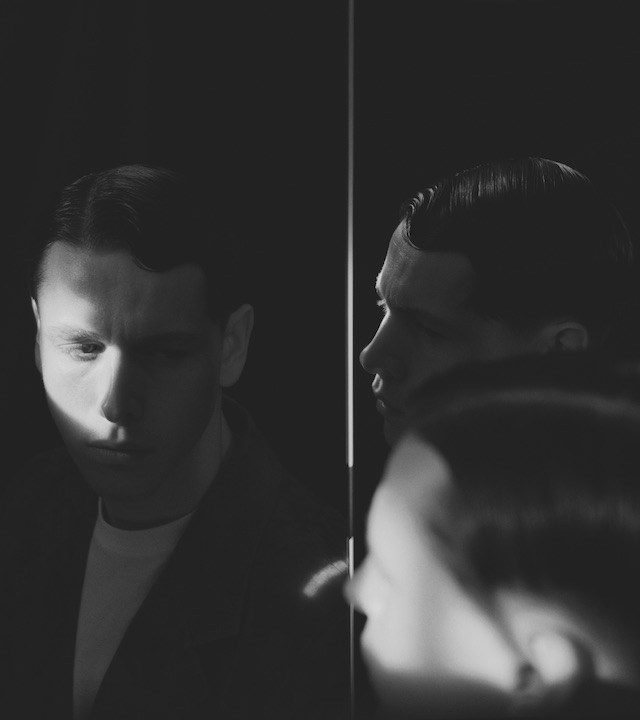
 

Uncharted Territory

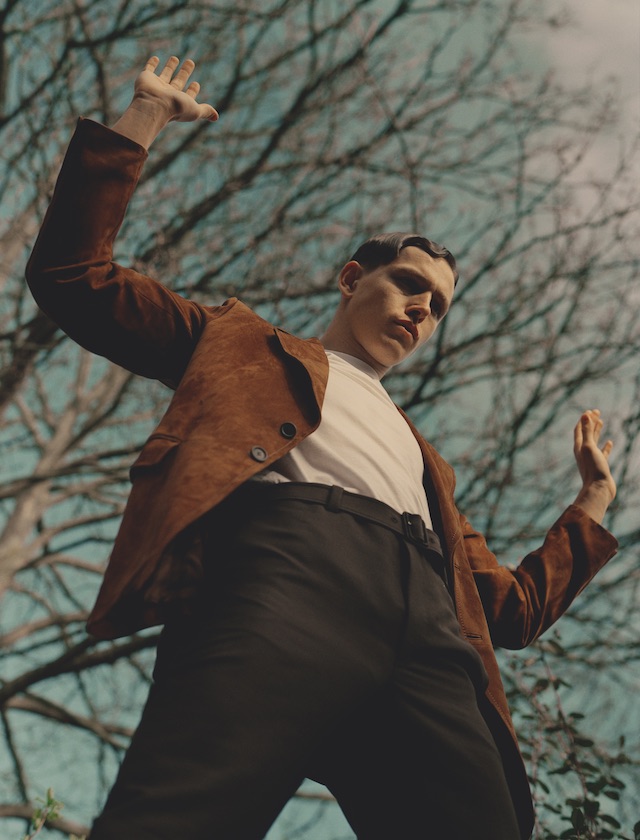
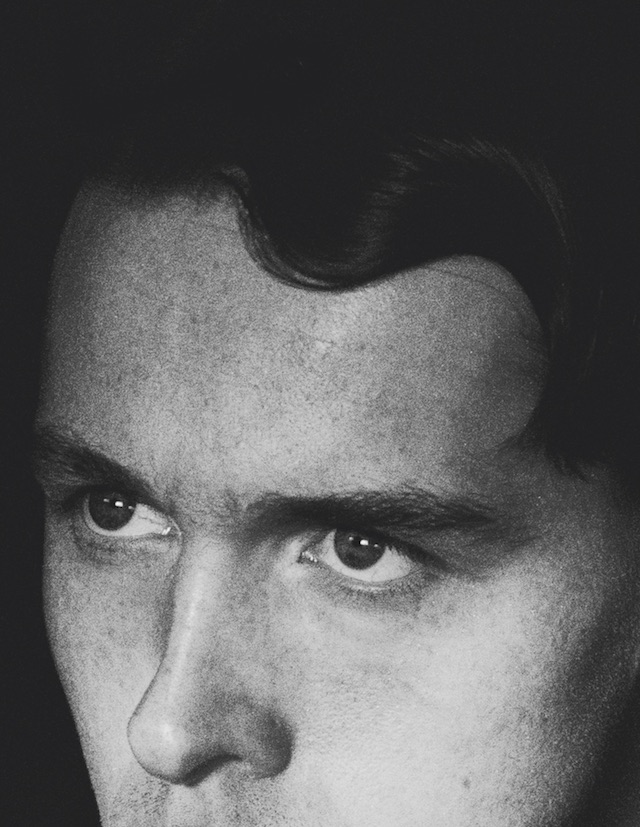
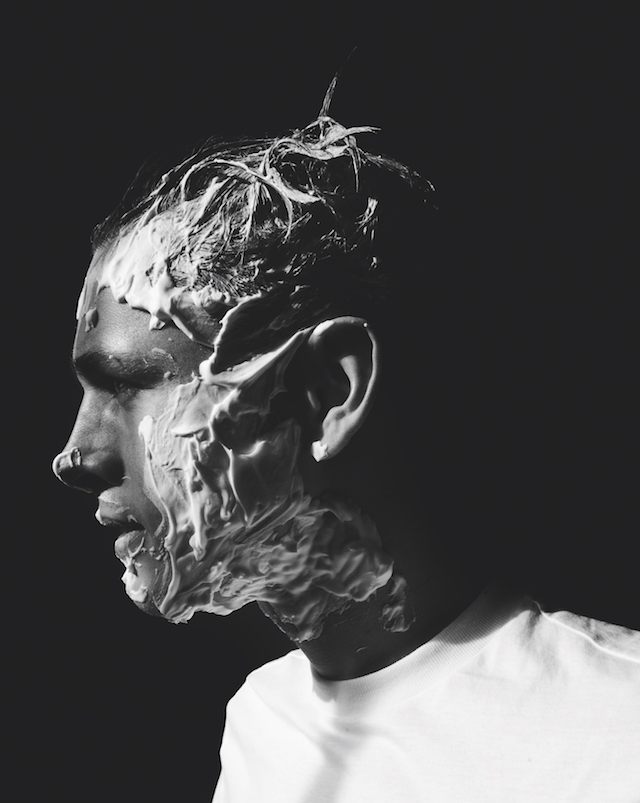
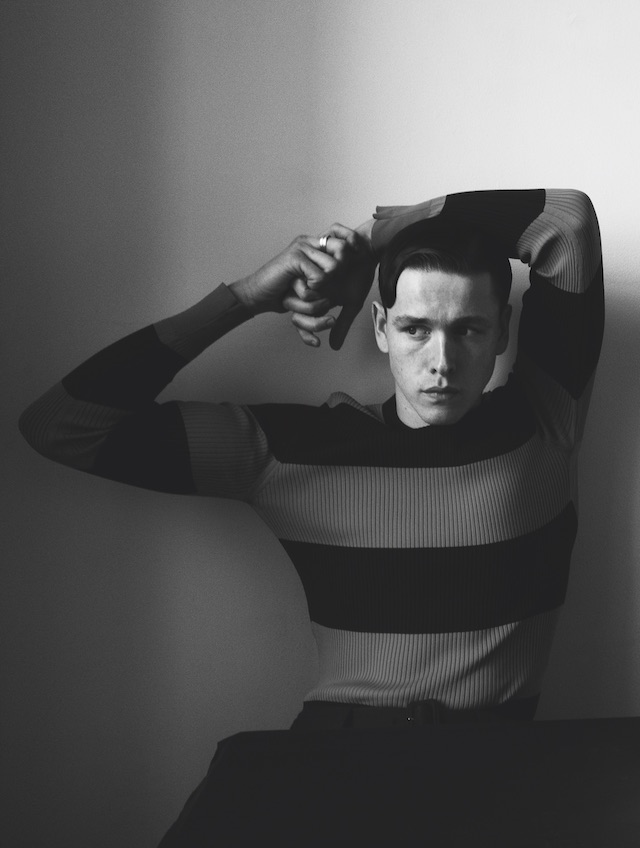
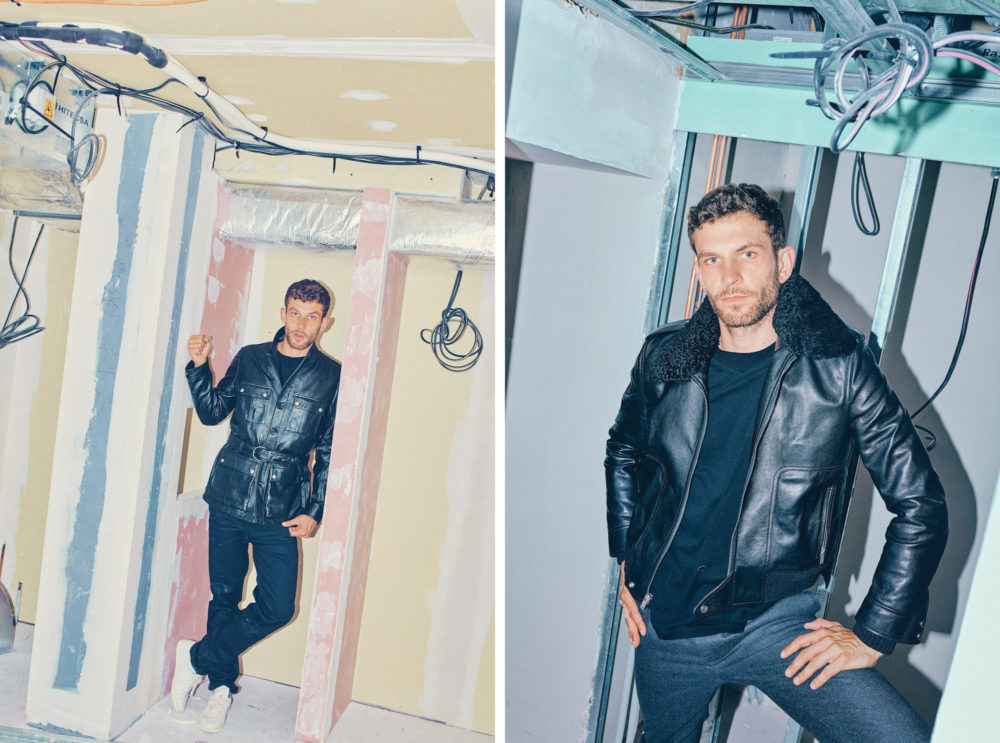
Harris Dickinson is one of the most exhilarating actors to emerge in recent years – his leading-man appearance belying a multifaceted talent. For issue 24, we talked to the breakout star of 2017’s Beach Rats about acting inspiration, his desire for uncomfortable work and how to strike a balance

A bright and sunny Sunday in central London. Dickinson and I meet in Green Park. The Houses of Parliament – in crisis, as is usual now – are partly visible through swaying willow trees. We sit on recently mown grass with clusters of daffodils erupting all around. The Andrea Bocelli hit ‘Por Ti Volaré’ is being performed on a Chinese erhu nearby. Dickinson says he feels like we’re in a Haruki Murakami novel.

He plays with the grass as we talk, and we discuss how the city is different, calmer, at weekends. I ask him if he always imagined being an actor: “I didn’t grow up dreaming of Hollywood,” he replies, “but I did make a lot of little films when I was young [in east London]. Mostly me orchestrating my mates. I never acted in my own stuff but I got a taste of it.” Technology, of course, and the Internet has helped: “I had this show with my friend when I was 11. We would upload weekly videos to YouTube. Spoofs of various other films. Then my own material came after that… short films I’d written. I was somehow completely okay with the idea of asking companies for money to make them. I got 1,500 pounds when I was 15 to make a film. I was hustling, man!”

Dickinson wears PRADA throughout

Now, only a few years on, he is acting in films with 100 million dollar budgets. Talent emerging from acting school or the theatre can be taken up quickly, but this is meteoric. How does he feel about it all? “Things feel good man!” he enthuses. “There have been some overwhelming moments lately… I met Gary Oldman. He’s…” Dickinson pauses for a moment and looks away, as if words aren’t sufficient. “Gary’s very cool. And acting alongside Ralph Fiennes [in part three of the Kingsman series, in production] is a masterclass.”

Dickinson seems adept at maintaining balance in his life, with a calmness that doesn’t feel engineered for an interview setting. “I think my way of dealing with life, in general, is to stay on an even plane. Best to take it as it comes, rather than think about it too much. I just want to continue to explore extreme characters – roles that force me to change, to feel uncomfortable.”

The conversation turns to where he may have acquired this desire for uncomfortable work. Could it be his time training, on weeknights and weekends, over the course of several years, in the Royal Marines’ cadet corps (a profession he very nearly entered)? “I think the cadets helped a bit, perhaps, with self-discipline. But Daniel Day-Lewis is such an inspiration for me here; he’s shaped my idea of what acting is, helped forge my view of the industry… how one behaves in it.” He continues: “I find, with acting, you get to learn with each character, and that comes from uncharted territory, which is humbling. It makes you less selfish; that’s what I love about it. You need to feel what these characters think… to understand their psychologies and characteristics, which feeds into your own life. I think that’s why I go for those roles: that, and the need to push myself.”

Taking on the feelings and thought processes of someone else and living by them is, we agree, quite a peculiar thing. Dickinson is suddenly gripped by how strange his job is: “It’s getting the chance to live life through other people. It’s really quite weird isn’t it! A lot about acting is feeling it; and once you feel it, it’s actually part of you…” He marvels at this apparent magic. “And then you have to shake it off afterwards, other- wise you lose your marbles, and I need those,” he smiles.

It feels like Dickinson could go either way: progressive art-house cinema or Hollywood hero. It’s a wonderful mixture to have; a promise of great range. We talk about how masculinity has changed in movies, from the ’50s teenager to the hardmen of ’80s action films, and I ask him if he thinks things are still changing. “Those films were great for sure – Gene Hackman and Paul Newman being the tough guys; they are amazing actors. But a lot of characters now are being written with much more range, more emotion and depth. Not just for men. I think things are still changing a lot.”

How does he feel about the blockbuster action stuff? “As much as people want escapism, they also want to be immersed in a detailed story. That idea of the hardman just isn’t real anyway. Audiences don’t need a dumbed-down version of the world: It’s complicated. And that’s what I want to be part of.”

Dickinson sometimes tweets his dreams. They often include walk-on parts by directors and other actors, such as one in which he asked Lynne Ramsay for a hug in his local corner shop. “I was on the cusp of tech, so I didn’t grow up on Instagram as such,” he says of the apps that are a fundamental part of kids’ lives today. “My childhood was playing in a forest. I didn’t have a phone until I was 14. I really value that time before the social media explosion. I totally get tech, and use it all the time, but I think it can be really harmful. It’s twisted… social media. You’ve got to strike a balance with it.”

I mention a tweet I read earlier, by Mark Frost – co-writer, with David Lynch, of Twin Peaks – which pointed out that there is a single falcon feather on the moon: An astronaut performed the feather-and-heavy-object-falling-at-the-same-rate test and left the feather behind. It could be there, in the vacuum of space, for millions of years. “That’s incredible man! That’s the amazing thing about the Internet, about social media. All these little bits of information you wouldn’t normally have noticed. It can bring something unexpected to your life,” he says equitably. “I had a dream about David Lynch recently: He rang me while I was skiing. Dreams can be so cinematic.” I venture that some of these dreams may come true, and Dickinson asks, with disarming sincerity, “Do you really think so?”

As we leave the park, I suggest dropping by a nearby restaurant to use their facilities. Approaching the entrance he stops, figuring out faster than me the inappropriateness of my plan; it’s a particularly fancy establishment. He starts to gently mock me: “You can’t just go in there, walk past the diners and use the toilet!” His inner actor kicks in and he animates himself into a proper cockney geezer, arms swinging up and down: “Let me in, yeah? Alright, cheers mate…!”

I see a snapshot of him in full flow: open, funny, confident… a young man at the beginning of an extraordinary journey.

Photography Jack Davison

Styling Rose Forde

Hair and makeup Jody Taylor at Premier Hair and Makeup

Styling assistant Christina Phillips

Photography assistant Maxwell Tomlinson

Set design Gemma Tickle at East Photographic

Set design assistant Leonie Wharton

Production Mini Title

This article is taken from issue 24. To buy the issue or subscribe, click here

Driver Radio: Jamaica

Two twins, Don and Ron Brodie, explore their Jamaican heritage through a four-part docuseries

Don Brodie: Driver Radio Studio

There’s nothing more enchanting than the relationship between two twins; their comparable mannerisms, ability to bounce off one another and communicate with a blank stare or a gentle glance. Don and Ron Brodie, two twins based in New York, find their similarities in more than just their looks and matching quirks: they creatively work together, too. 

Having nurtured interests in film and visual arts from a young age, they both attended Howard University in Washington DC. Ron leaned into the emerging film program and later pursued videography, shifting towards freelance as an independent filmmaker and commercial director. He’s now repped by production company 1stAveMachine and enjoys “every day and every project”, he says. Don, on the other hand, found his niche in photography. After a short hiatus travelling the world, he continued his studies at Parsons The New School for Design before working for distinguished figures such as Nathaniel Goldberg, Steven Klein, Lachlan Bailey and Benjamin Lennox, among others. 

In most recent times, not only have they deciphered their own production and brand, called Fun With Ron or Don (FWRD) – a collaboration formed to work with like-minded creatives and on projects about culture and heritage – they’ve also just completed their first docuseries, Driver Radio: Jamaica. An exploration into their Jamaican heritage, the four-part series chronicles the brothers’ adventures across the island, exploring the culture and people through the lens of taxi drivers. Below, we chat to the brothers to hear more about this three-year-long project and what it’s really like to work with your twin.


What’s your relationship like, have you worked together before? 

Ron: Over the years, we’ve partnered on different projects. Most notably with a small collective I used to manage, called Project Fathom. We would produce music videos and commercial projects collaboratively with three other colleagues. Don was often our ‘photographer of choice,’ and I would commonly produce projects that incorporated both stills and motion. Over the last few years, we’ve partnered to curate galleries, host debates, screenings, parties and even produce strange art installations. We’ve even gone as far as to pitch each other to our respective circles if a need for our crafts would be useful. 

Don: In my experience, being a twin in a related field has always required me to be ready to pitch to different people with the same amount of enthusiasm. I really take pride in knowing what my brother has been up to. It still feels like working with my idol when we get the chance to work on projects together, which can create a lot of passion and energy. I wouldn’t say we have our own language when we are teamed up. However, there is a non-verbal and very verbal communication that happens – whether it’s unexplained laughter, hands-on intense focus in silence, or Jamaican pride. It’s easy to tell beyond our appearance that we are cut from the same cloth. 

R: Agreed, our pairing is an art form unto itself! 


How did the idea for Driver Radio: Jamaica first come about, what sparked it?

D: For me, this project was a personal adventure in creating something culturally authentic, for which I had creative conceptual influence and control. I started this project shortly after my graduation from Parsons, and at that time, I was working at the studio solely as a photographic study. The project did not have a clear direction or timeline, although it did encompass any and everything around a loose concept: taxi drivers! 

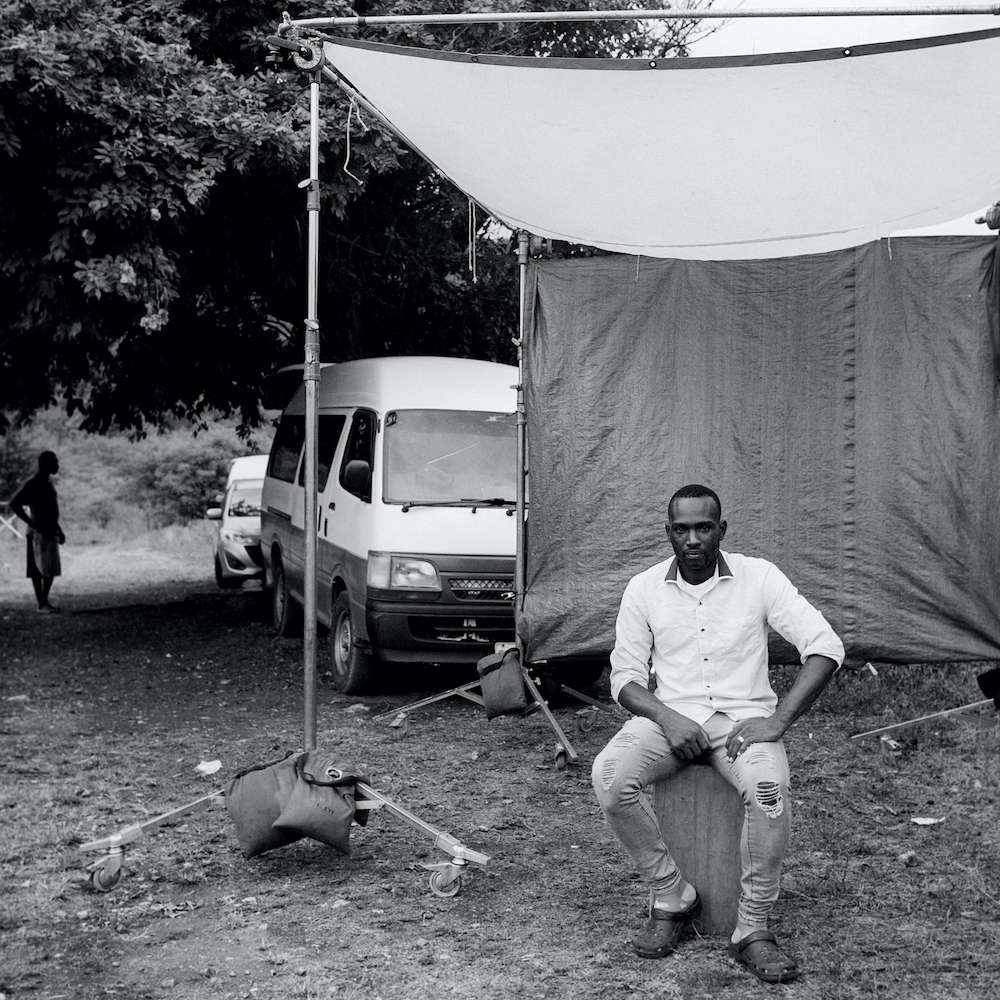
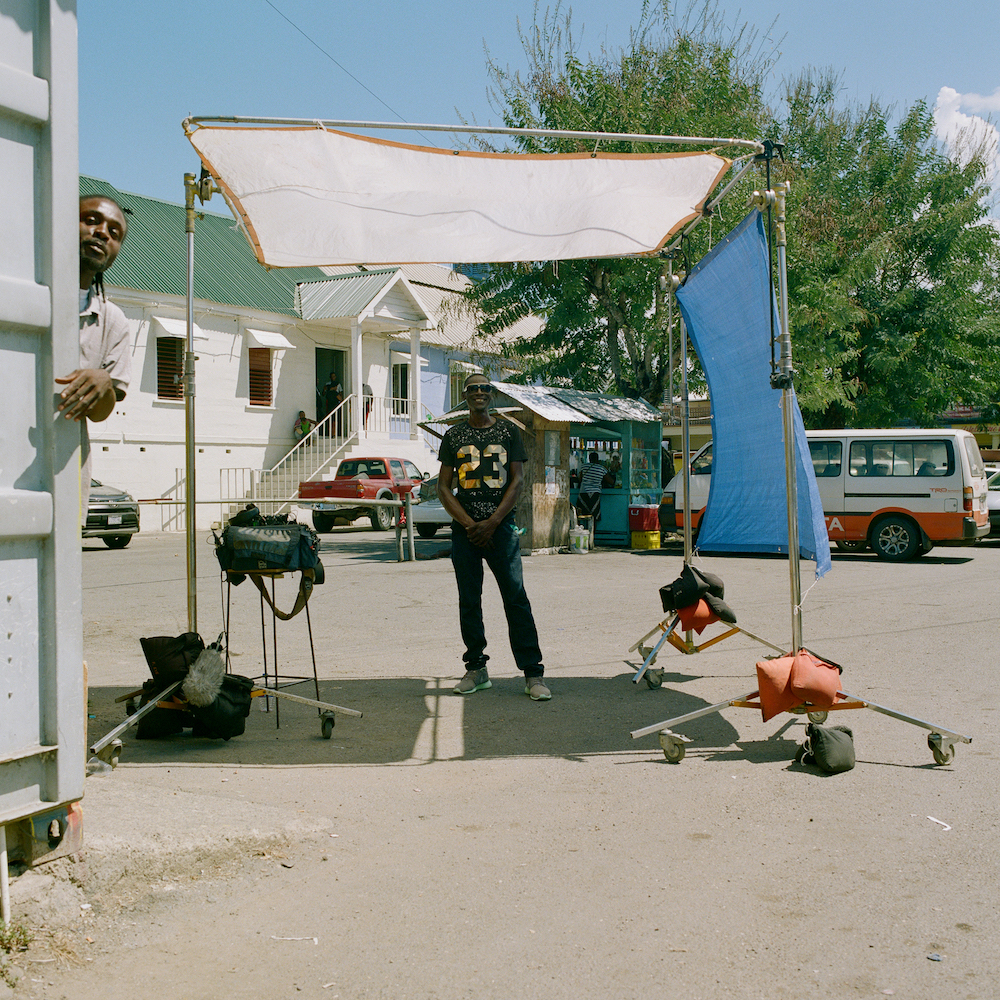
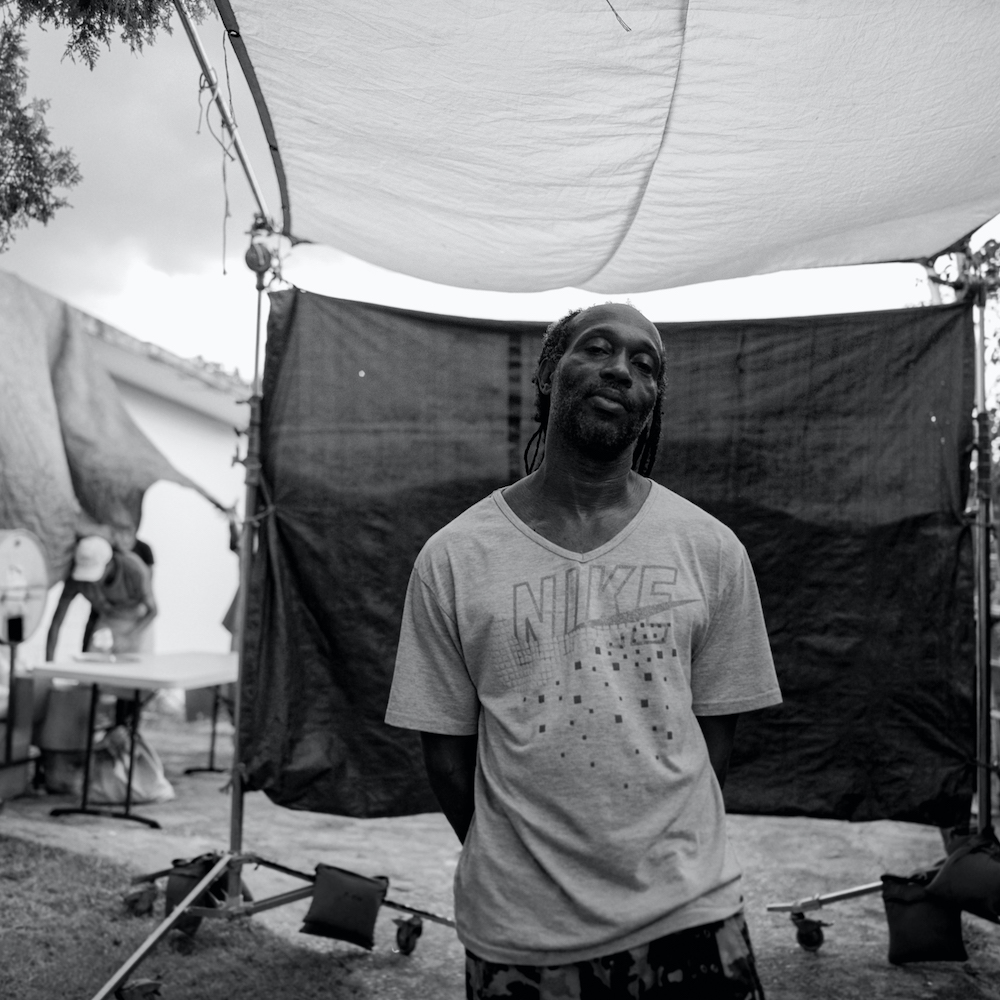
Growing up, we saw friends in Jamaica take on driving as a way to join the tourism industry. They were tending to cars (some on blocks), under the hood, tinting the windows or wiring sound systems. We had the experience of seeing their hobbies and interests in cars develop to careers and independent businesses. 

We also learned so much about life in Jamaica through the storytelling and adventurous excursions. After a few family trips where I was taking pictures, Ron joined in and we discussed creating an independent documentary film and how this project could evolve, and its deeper meaning. We wanted to provide a window to an experience we were having while growing up uniquely different from our American peers. 

Don Brodie: Driver Radio Studio

R: As curious kids visiting Jamaica, Don and I took up an interest in a group of guys who by day worked with our aunt at Sangster International Airport in Montego Bay, and by night turned vehicle sound systems, paint, decal style and expressions to hit popular strips and parties. Growing up, we became friends as we frequently visited the island, and they often transported us to and from various family functions. When we were old enough, we’d hit the road with them, and every ride became an adventure. The experiences we had and the places we’d go provided us a broader understanding of Jamaica. As we got older, we became interested in observing other drivers in different communities and discovered the tremendous value in unfiltered culture across the island. 

It’s been about six years now since Don proposed interest in documenting these adventures. Over time, we became interested in speaking with a variety of drivers to discover more about our own heritage. We were a little lost in encapsulating this concept within a two-hour feature; the docuseries result is from my approach as a filmmaker to incrementally sharing these stories. 


What types of adventures did you have while making this series?

D: My biggest adventure was to Gut River and I still remember the excited expression on Ron’s face upon arrival – the same “kid-in-candy” reaction I had the first time I found it. The beautiful oasis was miles deep on a broken, overgrown road that had no signs of paradise. I had to direct our whole crew back as it was such an uncommon location for Jamaicans from the city. I remember the first day I was taken, my driver jumped out to look for a crocodile in the bushes – he was a mad man! That experience was not in the series but it is totally one I will treasure forever.

Don Brodie: Driver Radio Studio

R: Visiting our grandfather’s grave in Mandeville was very moving. We had visited as children, but returning as adults and reflecting on all we have and to appreciate our Jamaican heritage was quite profound. There was a saddened sense that we had never met him in person, but an overwhelming level of accomplishment and pride that only a flash rainstorm could restore.

It was by chance that we got an exclusive with Orville Hall at the Dancehall Hostile. The phone call came late in the afternoon off schedule and after an already late night in Kingston. He only had availability because another film crew did not show up, so we jumped on the opportunity; and as the series demonstrates, it was more than worth it!

We also ran into Beenie Man, of whom many locals say haunts the dancehall because he is at every party. His talent and love of music and culture is energising at any hour!


How do you hope your audience will respond to the work? 

D: The series has made it beyond friends and family; it feels like a good part of Jamaica is hip to it (as perceived from being in the States). People from around the world have reached out and said that it was the first time they had ever seen a story about real country living – it’s not just about the beautiful beaches and party one may seek when traveling to paradise for an escape. For the tourist, it is an opportunity to see the country and not just an island. It starts the conversation of more to explore. It also provides insight into a human condition that is relatable and foreign. 

For the nationalists, I hope it provides a feeling of being seen as more dynamic than pop culture portrays. There are a lot of impressions out there, especially about daily life in Jamaica. Hopefully this provides another or an additional perspective to the beautiful tapestry of our culture. 

R: I hope the series can serve as a conversation starter surrounding what it means to be first-generation, while encouraging others to go back to explore their own heritage. Both Don and I feel as though we are a part of a broader middle culture that is not quite domestic but still not quite a foreigner – which holds a lot in common with any other first-gen person from Trinidad, or Brazil, or Germany or even Korea. Hopefully, Driver Radio could exist all over, and the concepts “FWRD” or moving ahead with no limitations or looking back, can be embraced around the world. 

The full series can be viewed on Independent Lens

Peckhamplex: Social Cinema

The chairman of London’s favourite cinema, Peckhamplex, reflects on community, authenticity and independence

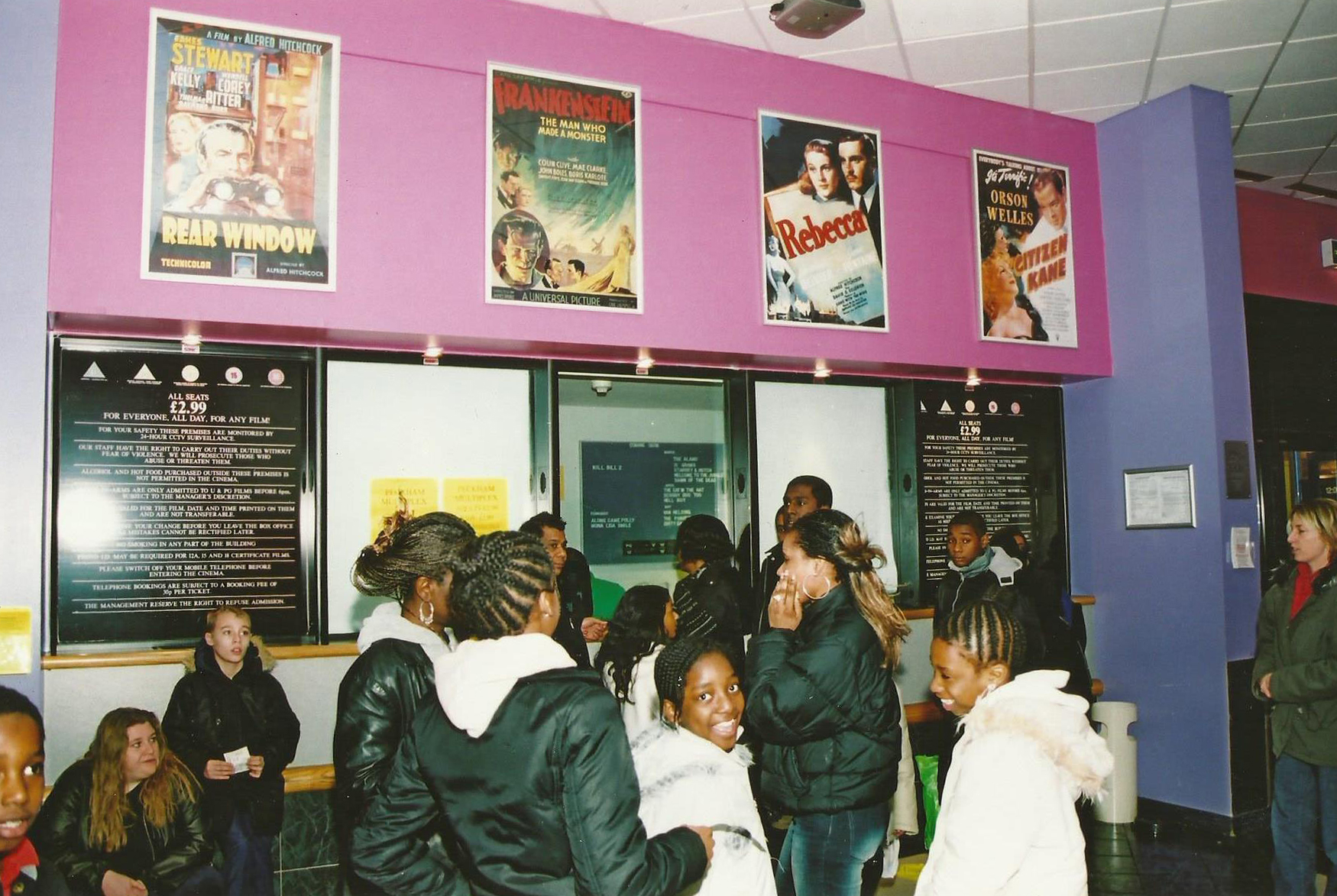
The cinema is a sacred space, for casual and devout worshippers alike. Few, however, inspire the level of devotion as Peckhamplex, London’s most affordable and down-to-earth cinema. Founded in 1994 and two-time winner of Time Out’s Love London awards, its nostalgic bubble-gum interior has authentic sticky floors to match. Where else would you find free charity screenings of Marvel’s Black Panther on the same schedule as a 70mm cut of Kubrick’s 2001: A Space Odyssey?

Port caught up with the chairman of Peckhamplex, John Reiss, to discuss the responsibility and authenticity that comes with running a thriving independent cinema.

Was does cinema offer the viewer that on-demand tv simply can’t?

There’s a place for both, but for the social experience, cinema is excellent. An audience produces live feedback to what you are watching and we’re social animals, going out is part of the experience. That’s one of the reasons we’ve kept the price low at £4.99. It’s probably the most affordable cinema in London, so that you can visit regularly and families can come without it breaking the bank. As a result, we have a diverse and growing audience, in a good week with blockbuster films we’re welcoming 10,000 through the door. There are people who’ve had their first date here and they’re coming back with their grandchildren! For many, it’s like going home.

How does it feel to have been voted the Most Loved Local Cinema in London in the 2018 Time Out Love London Awards?  

We’ve had a couple of awards from Time Out over the years, but what matters above all to us is that they are voted for by the readers. It’s very encouraging.  

How can Peckham grow and develop, whilst resisting gentrification that potentially harms long-time locals?

I’ve been involved in Peckham for the past 14 years and I don’t feel it’s changed a huge amount – apart from the cost of housing. The wonderful thing about it is that it’s always been mixed. I think ‘gentrification’ is often a politically motivated word and a balance can be determined by planning policy – there’s room for modern and traditional activities to live side by side in Southwark. It’s a big enough area. 

Why is being independent important?

Having an independent shareholder board means we can be very responsive to the local and wider market, which can be difficult when you’re a big chain. We can be flexible about programming, it means we can make the decision to give space to a one-off special screening or for a charity fundraiser with no fuss.

What joint work do you undertake with the council and residents? 

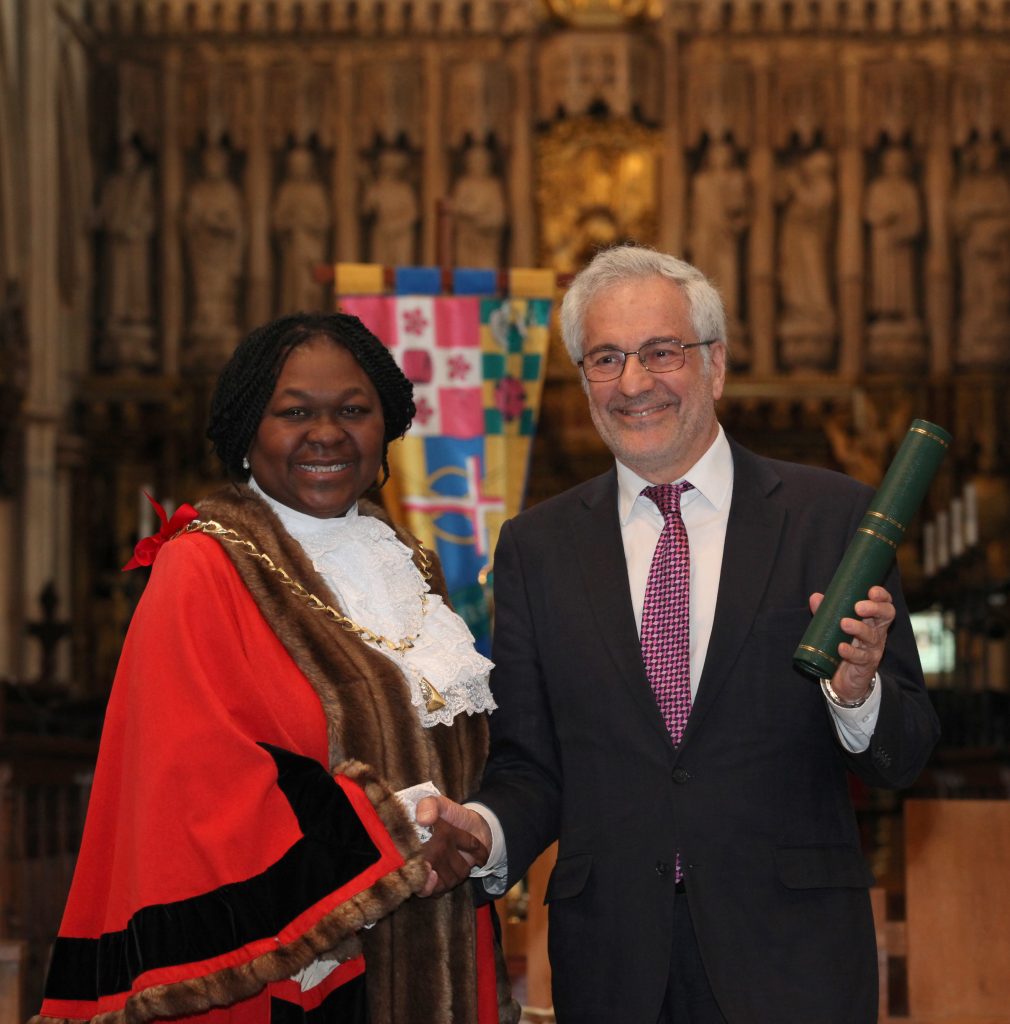
We regularly participate with the community, whether that’s helping to launch the local newspaper Peckham Peculiar, supporting the Peckham Coal Line project, the South London Gallery, or the annual Peckham Festival. We won’t do anything that takes a religious or political slant though – we’re firmly neutral. For our contribution to the community and, unusually for a commercial business, we were awarded by London Borough of Southwark their Honorary Liberty of the Neighbourhood of the Old Metropolitan Borough of Camberwell – we were chuffed to bits!

Why is affordable cinema so important?

At the end of the day, we’re a commercial business, we have to make a profit but we want to be fair to people walking through the door, and also to our employees. So unlike certain cinemas, we pay everybody at least the London living wage and give bonuses several times a year. There are people who have worked here since the very beginning and we want to share the success. 

What does the future hold for the Peckhamplex? 

We have a lease of over 75 years left to run and our understanding with the council is that if they demolish the building, they would relocate us in the local area, knowing that we’re an important social contributor. The board has big plans over the coming years, expanding the foyer, putting more screens in upstairs so we can show films for longer and introduce even more variety. We want to keep our style comfortable and welcoming – we’re not trying to be Curzon or Everyman. We expect to carry on as long as possible. I’m no spring chicken, but I’ll make sure it keeps running. I love the place.

What was the best film you saw in the cinema recently?

Cold War by Pawel Pawlikowski. Very atmospheric.

Revisiting Peckham’s Radical Health Experiment 

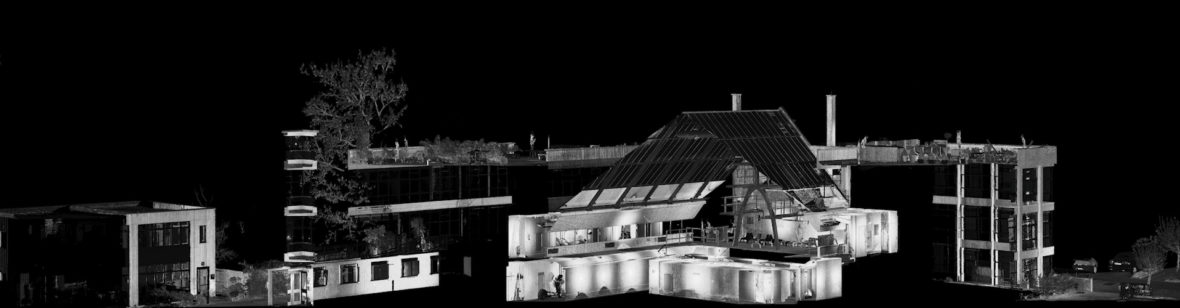
Thomas Bolger speaks to multimedia artist Ilona Sagar about her latest exhibition Correspondence O, which focuses on the revolutionary Pioneer Health Centre in south London

Still from Correspondence O, Ilona Sagar 2017

Established in Peckham in 1926, the Pioneer Health Centre was a bold experiment in social connection, preventative medicine and local governance. For over 24 years, working-class citizens of the south London borough paid a shilling a week to be a part of a body greater than the sum of its parts, signing up to a research program that sought to track the relationship between social and physical health.

The centre’s transition from a Socialist reverie to gated community, as it is now, has uncomfortable parallels to an increasingly fraught and privatised NHS. Returning to the site and the principals with which it was founded, multimedia artist Ilona Sagar’s moving installation, Correspondence O, explores this historical microcosm while asking urgent questions about our current public healthcare system.

Here, I spoke to Sagar about the legacy of the Peckham Experiment, the status of community and social welfare today, and the future of the NHS. 

Still from Correspondence O, Ilona Sagar 2017

Why was the Pioneer Health Centre such a revolutionary model and how did the project come about? 

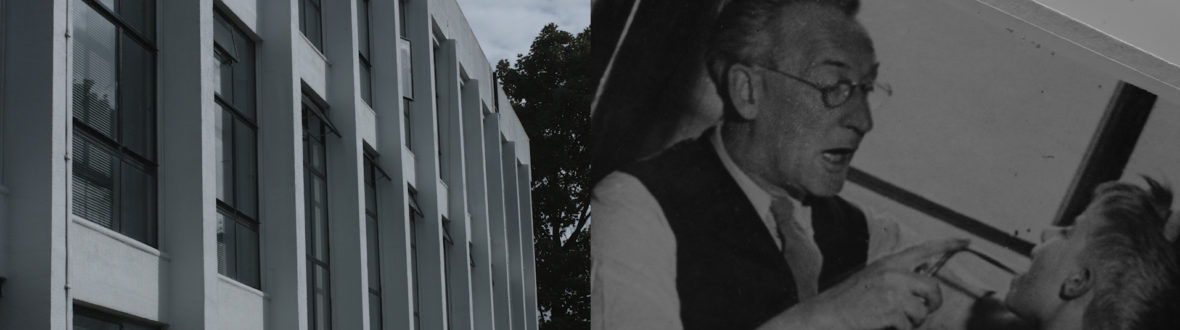
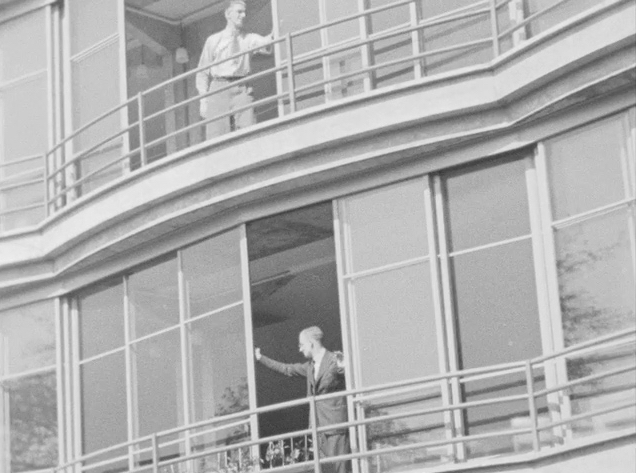
A while ago I came across the building through a friend and was drawn to its iconic architecture, but I was unware of its loaded history. I started to look at the architect Owen William’s designs in the RIBA collection and realised that I had only scratched the surface of a complex archive.

‘The Peckham Experiment’ was at the forefront of a dramatic shift in the public perception of health, yet its significance has been historically overlooked. Biologists George Scott Williamson and Innes Hope Pearse established it privately in 1926, long before the foundation of the NHS in 1948. The Pioneer Centre came out of a time of social experimentation and optimistic change, citing similar projects such as the fresh air movement. It promised wide, airy, huge-windowed spaces where people could play, exercise, and be observed and recorded. Built around principles of self-organisation, local empowerment and a holistic focus on social connection as fundamental to health, the learning from the Peckham Experiment is as relevant today as it was then.

Still from Correspondence O, Ilona Sagar 2017

How important was collaboration for this project?

There is an overwhelmingly comprehensive body of archival material and primary resources surrounding the work of the Peckham Experiment. They appear in a fragmented way across several archives, community groups, charitable foundations and within the building itself. 

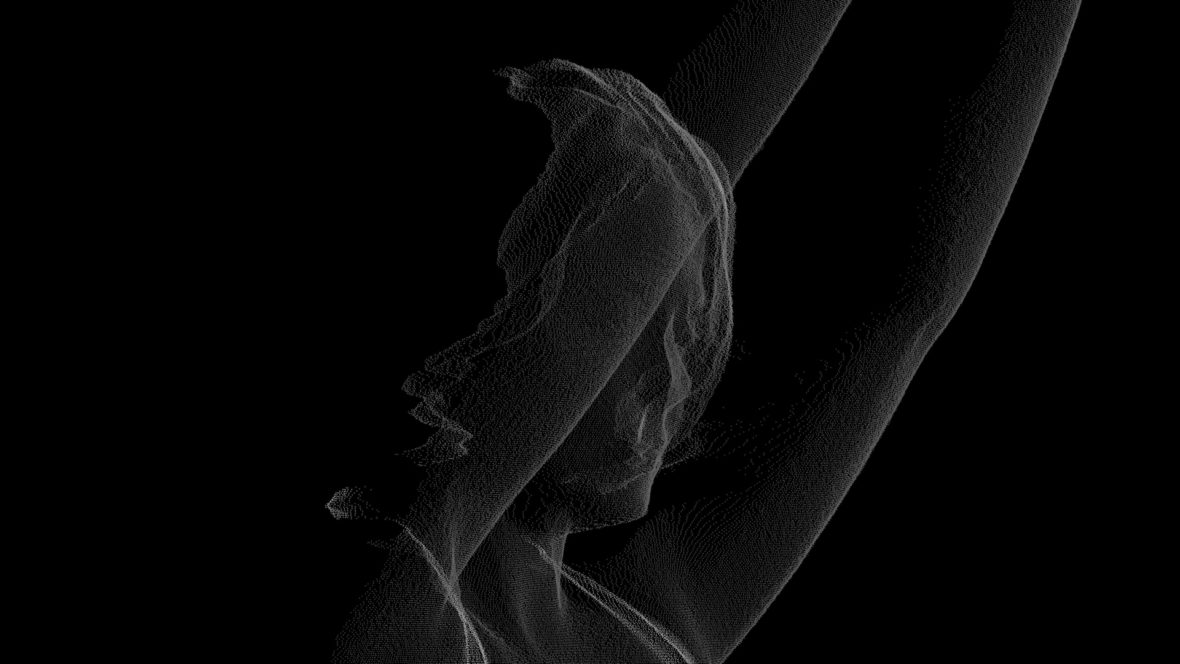
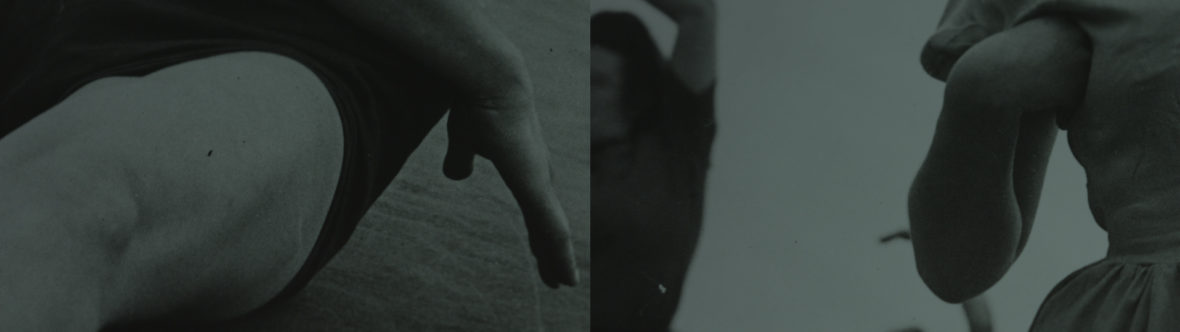
The first material I came across was at the Wellcome Trust archives, where I found a series of very unusual black and white silent films. The lack of an experienced camera operator and the method used to transpose the material to archive results in films which are a disjointed mesh of body parts, glass, water, rope, architecture, small moments of interactions and activities. Through accident they almost appear as a structuralist film rather than a medical document. I was struck by how much these films resonated with contemporary editing methods. So this footage became a key overarching structure for Correspondence O, reflected in a rhythmically edited sequence of rapidly changing events and bound by the layered use of sound design and voice-over.

Correspondence O is not simply a historical account, it is a darkly speculative installation that examines our uneasy and increasingly precarious relationship to public health, labour and wellbeing. During a site visit at the Pioneer Centre, by chance I met Tom Bell, an architectural surveyor, and James Hardy, a personal trainer, who are both residents of the centre today. Their professions became emblematic material components of the film, echoing the legacy of the Peckham Experiment. 

Still from Correspondence O, Ilona Sagar 2017

Could we see this sort of self-organised, locally empowered social-health centre in the future as an antidote to the status quo? What is the tension between public and private in the work?  

The inspiring yet unsustainable ideologies established by biological and social reform groups like the Peckham Experiment has in many ways shaped our expectations of public resources. The failed big society agenda and neoliberal localism have redefined notions of the common good. Correspondence O is not a didactic illustration of the current political climate. I didn’t want the work to become a worthy polemic, but through the film and exhibition, open up a dialogue with my audience and offer a space for discussion. 

Political populism, identity politics and fundamentalism have distracted us from the privatisation of public life. Silently the definition of public interest and welfare have been rewritten, leaving us with an increasingly private and economically driven health sector, redefining health as a consumer asset rather than as an innate human right.

Still from Correspondence O, Ilona Sagar 2017

AI can now diagnose scans for cancer with incredible accuracy and at a fraction of the cost compared to human doctors – could emerging technologies like AI be the thing that saves the NHS?

There are amazing innovations in health and care using advance forms of human-computer interactions and assistive technologies, and I have no doubt that they will have a positive and lasting impact on our health in the future. Yet I have concerns about how private health companies shape our access to these technologies. Algorithms, neural networks and data forests are increasingly trusted and relied on to manage all aspects of our everyday activities. In recent years we have seen a surge of innovation in the commercial sector for products that allow users to self-manage their health and wellbeing without outside human intervention. Internationally we are seeing governments trialling new E-health initiatives in a desperate bid to solve growing structural and fiscal challenges within public health provision. 

I am deeply troubled by the contraction of companies such as Babylon Health Care, who are currently piloting the ‘GP in Hand’ digital app for the NHS. The app promises ‘efficiency’ to take pressure off an over-stretched NHS. Yet it features ‘queue-jumps’ and faster testing pay bands, piggy backing us into a ACA style system. Although there is a substantial commentary surrounding the gamification and quantifying of our health, labour and wellbeing, there has been sparse empirical analysis. 

Courtesy of the Wellcome Collection and Pioneer Health Foundation

Do you think the British public will eventually reject privatisation in their healthcare system?

I would like to think we have a power to resist, but whether we have a choice to reject the privatisation that is already legislated for is difficult to assess. Evidence of the silent shift to a US style system of insurance is embedded in the announcement by Jeremy Hunt of the launch of “accountable care organisations”. It is a system of health management directly transplanted from the US that bring private, corporate health interests deep into the structure of public welfare. Aspects of privatisation are very much in the public interest, yet corporate partnerships remain opaque and little known to the general public. 75 years after the Beveridge report, we are further than ever before from the founding notions of social insurance. We should take every opportunity to question and challenge policy and increasing health inequalities. Once it’s gone, its gone. 

Correspondence O runs at the South London Gallery until the 25th February. A panel discussion with Owen Hatherley, Nina Wakeford, Lisa Curtice and Ilona Sagar takes place at 6pm on 25th February. For more information click here.

Julian Rosefeldt: An Artist’s Manifesto

Port speaks to director and artist Julian Rosefeldt about his film Manifesto, a meditation on modern artistic manifestos in which Cate Blanchett plays 13 different characters

FLUXUS / MERZ / PERFORMANCE, Manifesto © Julian Rosefeldt

Julian Rosefeldt’s Manifesto, a feature length film derived from an art installation of the same same name, is a tough sell on paper. The film is divided into thirteen sections, each with a different main character played by Cate Blanchett (a la I’m Not There, in which Bob Dylan is embodied by six actors, including Blanchett) who recite excerpts from over fifty individual manifestos of art, from Dada to Dogma 95. Alongside a touring exhibition of the sections simultaneously projected onto separate screens in an overwhelming sensory soundscape, the more conventionally structured film of Manifesto, in which the sections are stitched together into a 90 minute feature, premiered at Sundance Festival in January, and has its general UK release later this month.

SURREALISM / SPATIALISM, Manifesto © Julian Rosefeldt

What relevance do these artistic credos, some of which are approaching their centenary, have for people not in the art world? “The art world is a bit of a closed circle,” explains writer, director and producer Julian Rosefeldt from his home in Berlin. “We’re imprisoned in a white cube where we always speak with people who don’t necessarily have to be convinced, because they agree with everything we have to say already. We consider these important issues, but we don’t talk to the right people about them.”

STRIDENTISM / CREATIONISM, Manifesto © Julian Rosefeldt

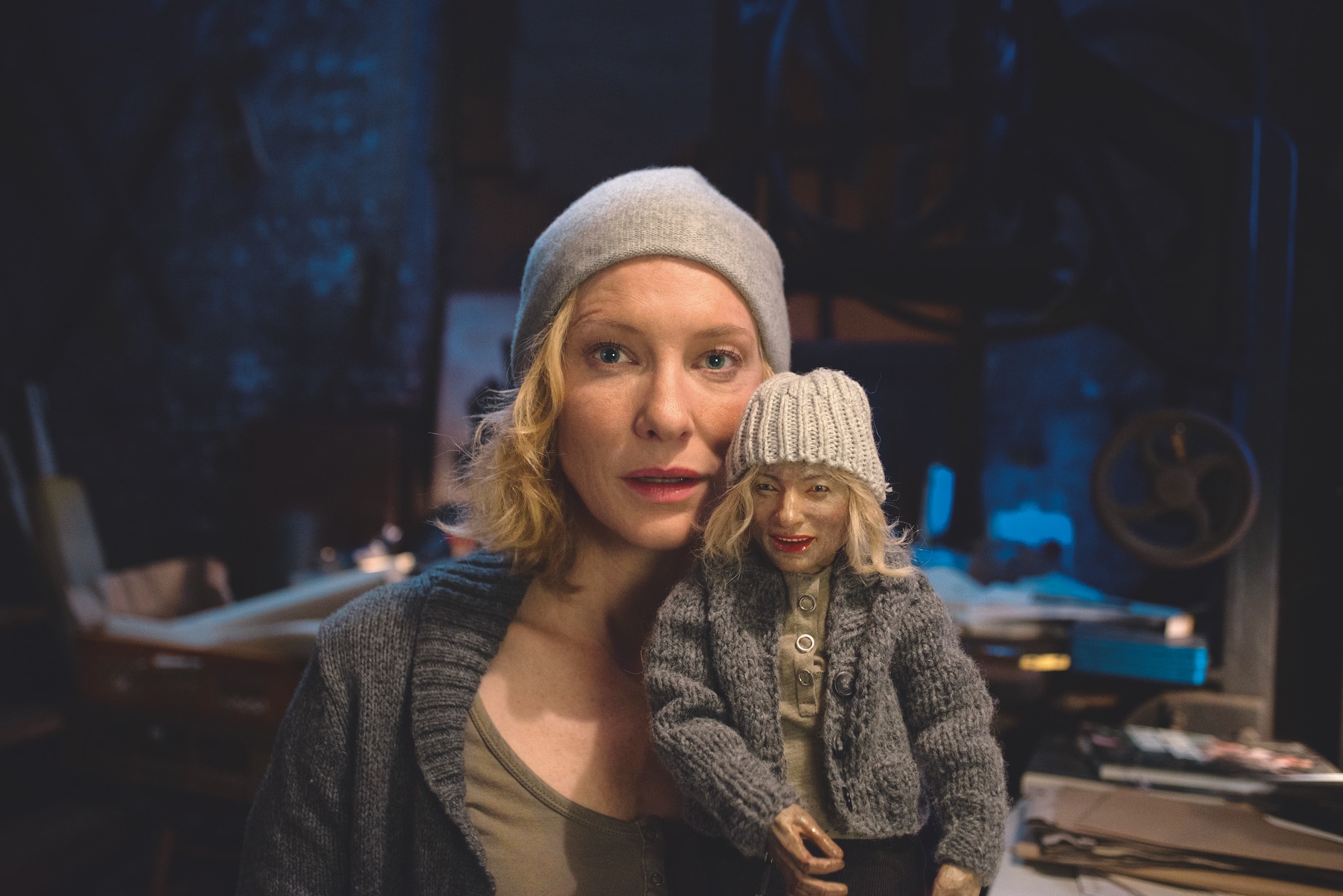
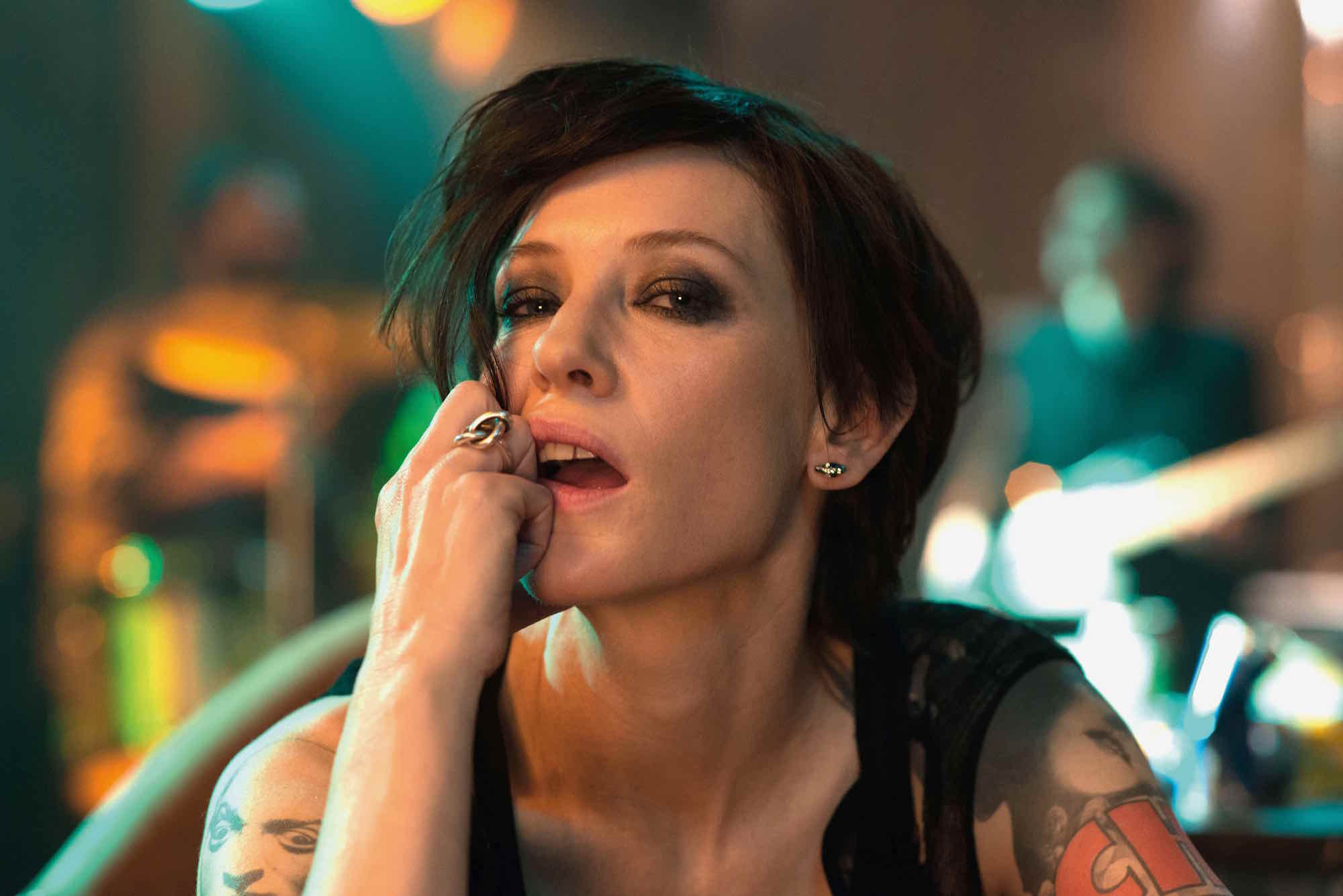
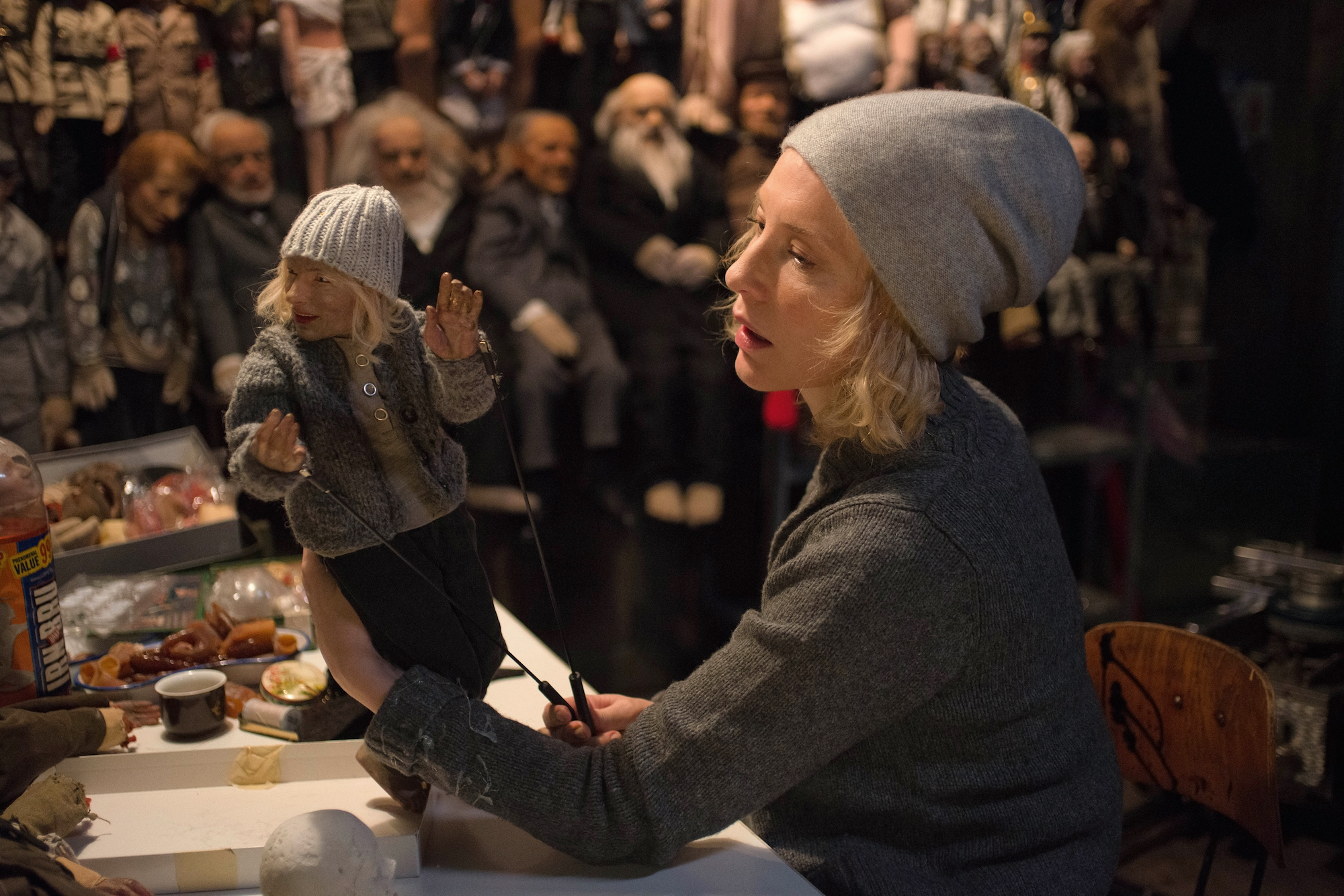
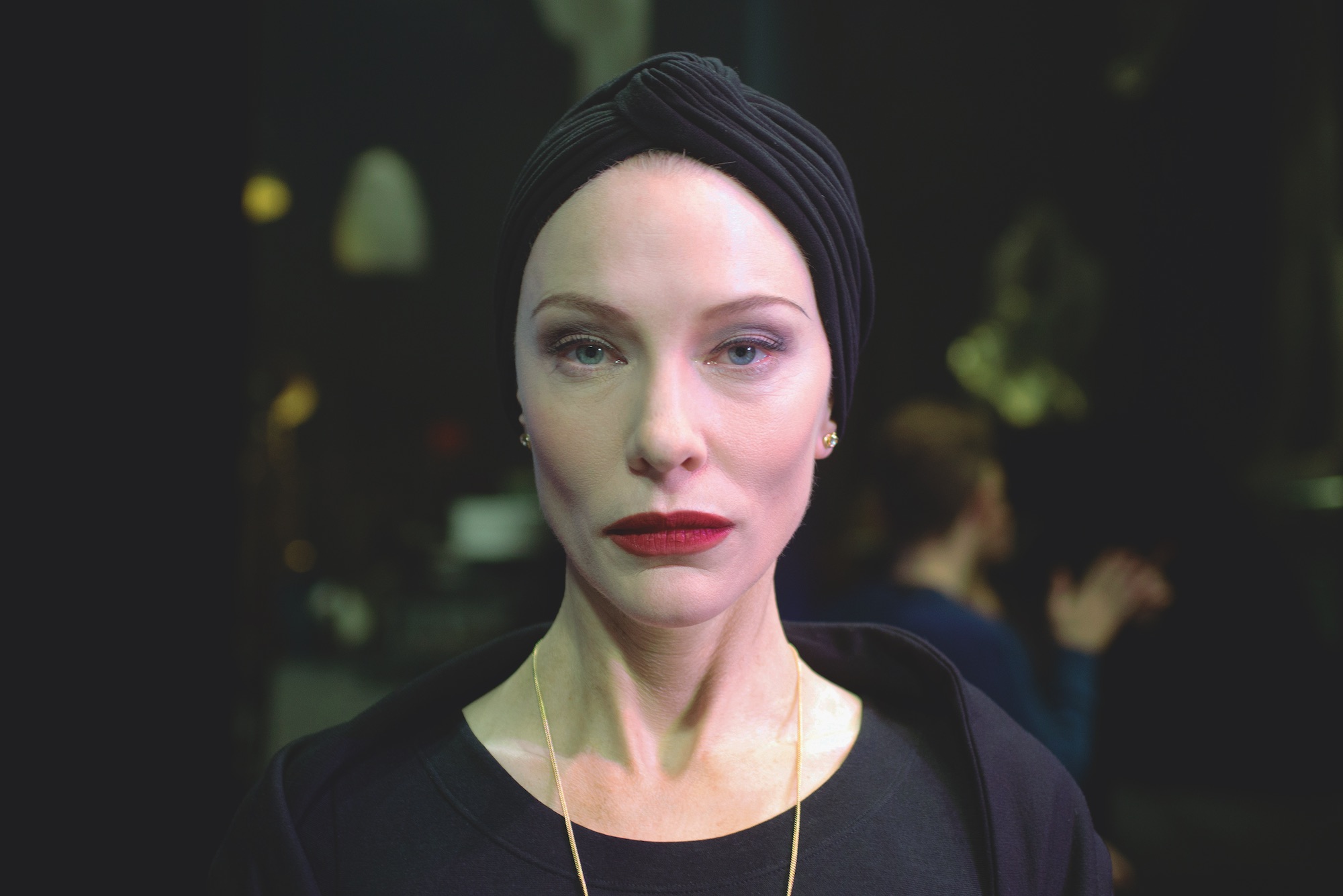
In different hands, this cerebral mixture could easily have produced quite a dry film: one to be cautiously admired, rather than enjoyed. Yet, Rosefeldt and Blanchett pull off the impressive feat of making these scholarly manifestos digestible, comprehensible and almost conversational.  In Blanchett’s portrayal of a dizzying range of characters – including a homeless man, a single mother and a ballet choreographer – century old texts written almost exclusively by dead, white men, go through a certain democratisation. “I wanted to depict a kaleidoscope of society,” Rosefeldt says.

SITUATIONISM, Manifesto © Julian Rosefeldt

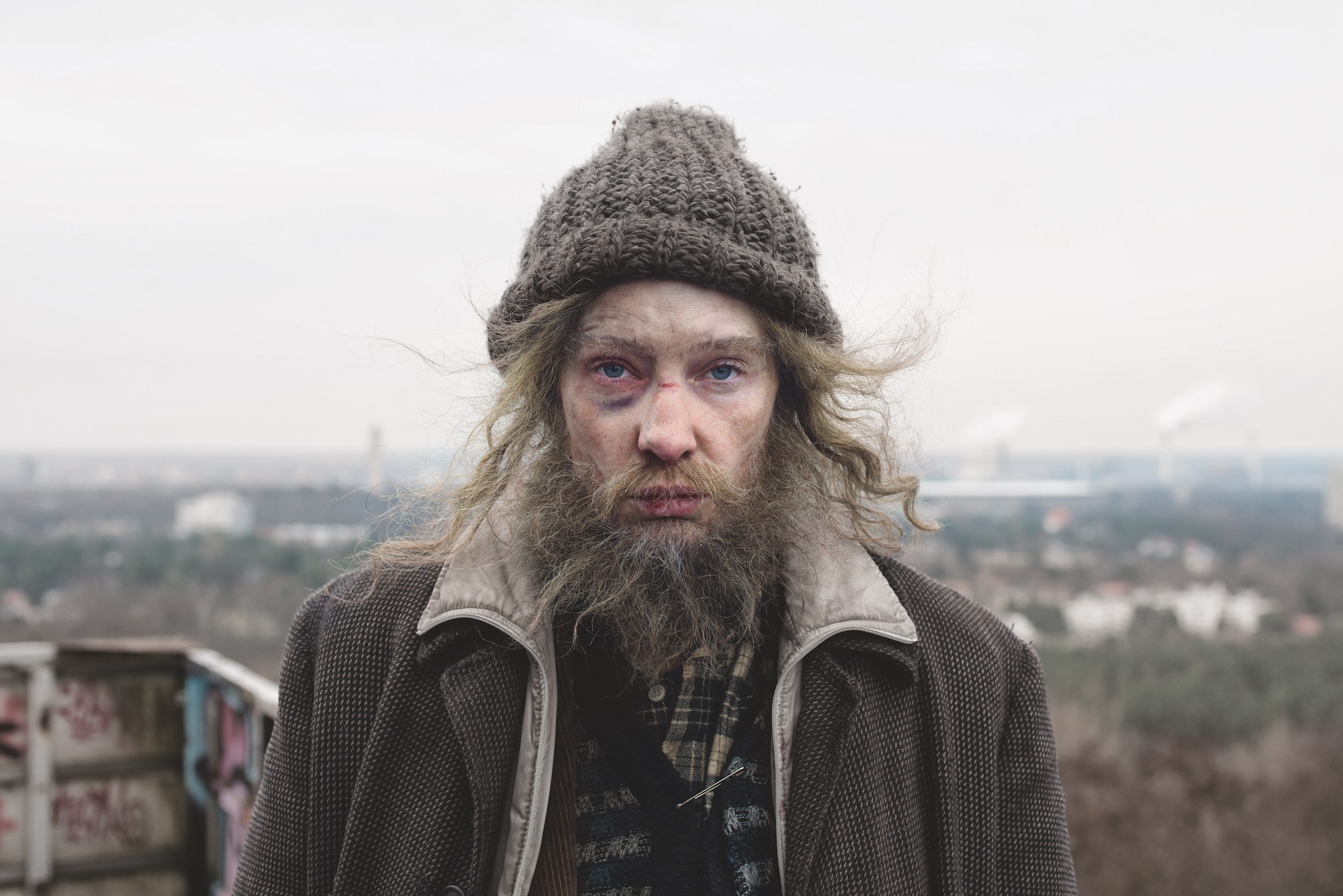
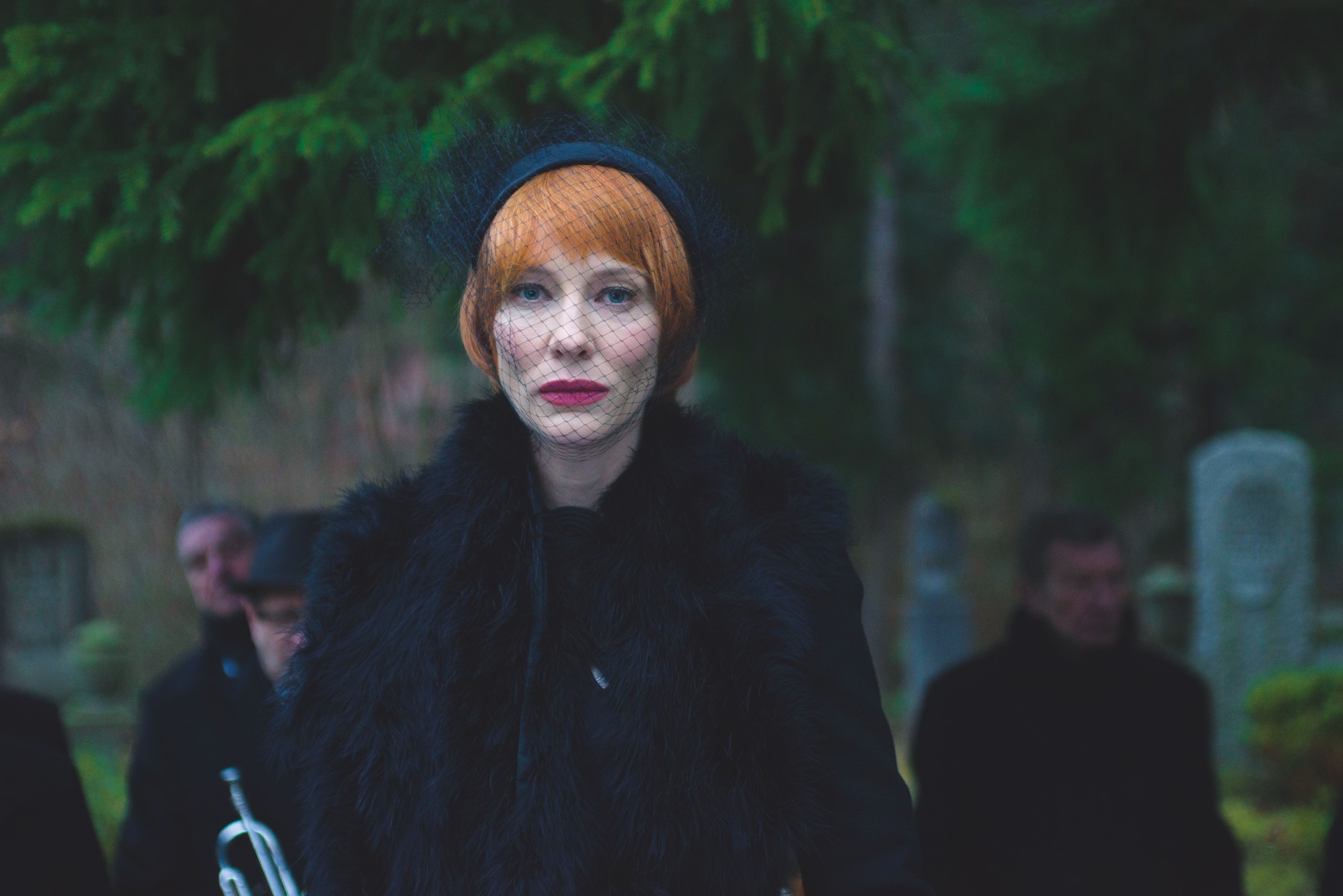
The film is also tonally diverse. The second section features a wild-eyed homeless man, screaming through a microphone with only a post-apocalyptic wasteland to act as witness. This is immediately followed by a stockbroker extolling the virtues of speed and technology that complicated the Futurist movement with overtly Fascist overtones. In Manifesto’s most arresting sequence, Blanchett presides over a Dadaesque funeral mourning (and simultaneously celebrating) the death of art. This scene was filmed in the dying light of a brief winter afternoon in Berlin, Blanchett nailing the eviscerating speech in just one or two takes.

DADAISM, Manifesto © Julian Rosefeldt

This palpable sense of unease and impending catastrophe is punctured by scenes of surprising comedy, such as sculptor Claes Oldenburg’s ‘I Am For An Art’ recited with reverence by a Southern mother saying grace. “I am for an art that is political-erotical-mystical, that does something other than sit on its ass in a museum,” she intones solemnly, her three children and husband (played by Blanchett’s actual family) propped up on steepled fingers around a rapidly cooling Sunday roast.

SURREALISM / SPATIALISM, Manifesto © Julian Rosefeldt

The dashes of humour in the film often arise from such ironic distance between text and situation. A manifesto of conceptual art, parroted by an aggressively made-up, Elnett-haired parody of a Fox News reporter, cannily raises the spectre of fake news: “Good evening, ladies and gentlemen. All of current art is fake.”

CONCEPTUAL ART / MINIMALISM, Manifesto © Julian Rosefeldt

Bar the opening lines from the Communist Manifesto, the texts are artistically apolitical – though between the lines such declarations are always political. “In Q&As after the screenings, people again and again refer to the political circumstances of today”, Rosefeldt explains. “When the first Futurist manifesto was published on the front page of Le Figaro in 1909, it acted as a kind of an ignition, a spark, that infected a lot of artistic manifestos at the time. We are living in a moment that is, in a way, comparable to the tension felt between the wars. The world is upside down and people read in those manifestos a kind of call for action, or an anti-populist call.”

FLUXUS / MERZ / PERFORMANCE, Manifesto © Julian Rosefeldt

Audaciously, Rosefeldt combines manifestos from decades apart in the same section, bringing Wassily Kandinsky (1912) and Barnett Newman (1948) into conversation. “Of course, it’s quite disrespectful towards the original writing,” Rosefeldt says bluntly. “Within these circles there is as much contradiction as agreement. But in art, as in history and fashion, everything repeats itself. Ideas come up, disappear for a while, and then forty years later have their rebirth.”

FILM, Manifesto © Julian Rosefeldt

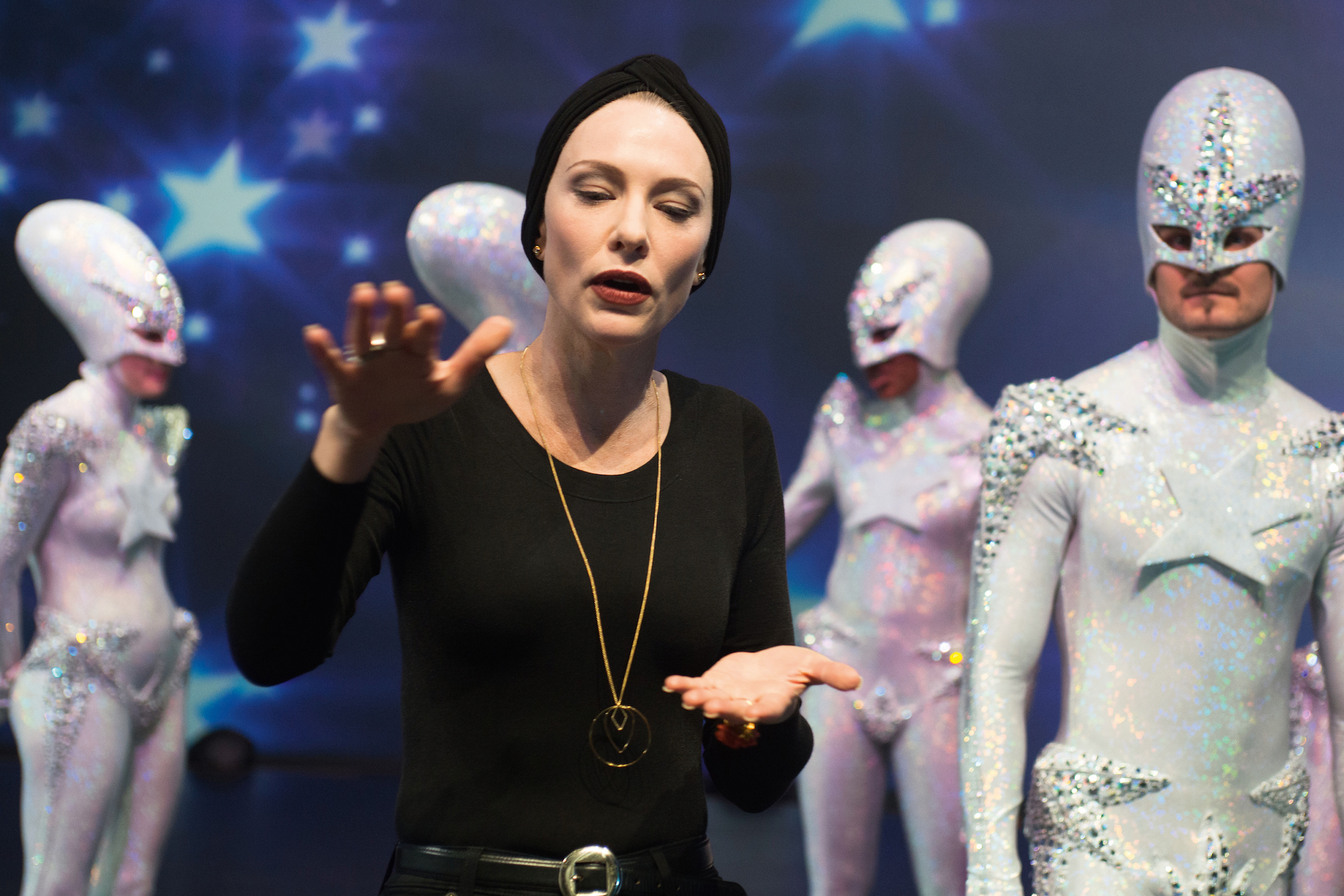
In the last section, in which the manifestos of cinema’s auteurs including the Dogma 95 duo Lars von Trier and Thomas Vinterberg are coalesced into a lesson, the lively contradiction between different authors is more explicit. Through Blanchett’s earnest teacher, the director Jim Jarmusch writes “Nothing is original” on the blackboard and instructs a class of ten year olds to “Steal from anywhere”; a sentiment that the firmly tongue-in-cheek Dogma manifesto contradicts in the next sentence. “That’s a bit how I remember school,” Rosefeldt chuckles. “From the same person, you get both complete bullshit, and things that actually make sense.”

Manifesto: Live From Tate Modern takes place across the UK on Wed 15 November. Manifesto goes on general release on 24 November. See manifestothefilm.com for full details.

Instant Stories: Wim Wenders’s Polaroids

Clare Grafik, curator of a new exhibition of Wim Wenders’s photographs, talks to Port about the director’s creative vision, connections between art and technology, and the Polaroid aesthetic

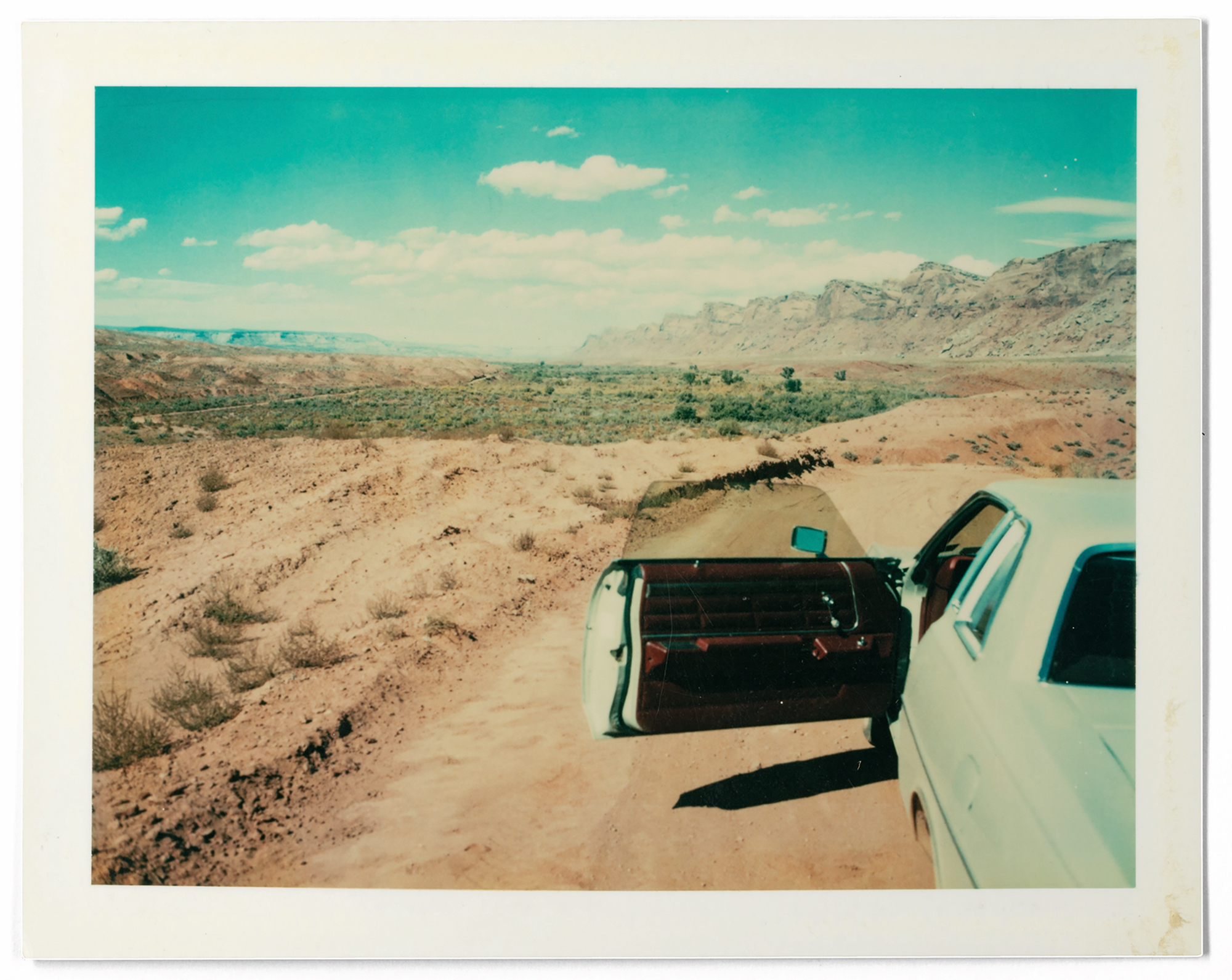
Valley of the Gods, Utah, 1977, Courtesy Wim Wenders Foundation

When Clare Grafik, the head of exhibitions at the Photographers’ Gallery, discovered that the Wim Wenders foundation had recently unearthed boxes of Polaroids that had been untouched for thirty years, she was immediately inspired. “If we work with an artist who is already well known, we’re interested in asking what part of their oeuvre is less familiar. I remember thinking, ‘I don’t even know what the Polaroids are like, but I want them.’”

Wim Wenders, the celebrated director of Paris, Texas (1984), is best-known as a filmmaker, though his photographs of large-scale, panoramic landscapes have also been widely exhibited. For Grafik, Wenders’s unassuming collection of Polaroids, amassed over nearly twenty years, represented a completely new direction for the artist. “He’s such a polymath, his creative vision is so versatile. It’s very unusual, I think, to be able to move between different mediums…  I think he’s genuinely carved out quite an individual voice in each.” 

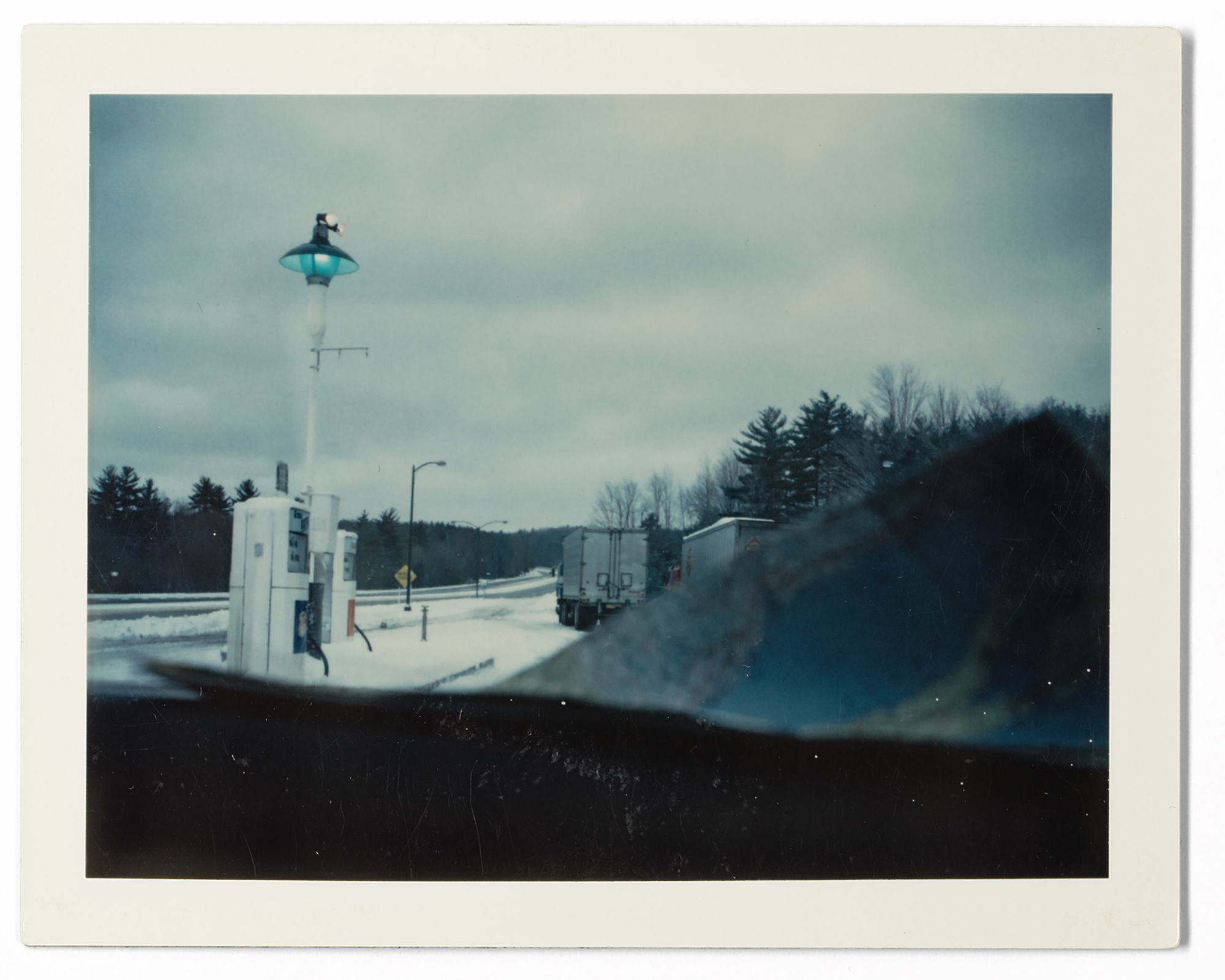
On the Road to New England, 1972, Courtesy Wim Wenders Foundation

In the intimate gallery space hosting Instant Stories: Wim Wenders’ Polaroids, over 200 photographs have been subtly framed on the walls, grouped under poetic, evocative titles: ‘Alice in Instant Wonderland’, ‘A Man Named Dashiell’, ‘Looking For America’. “For Wim, the process of collating the images moved from being a visual to quite a diaristic experience,” explains Grafik, and the chapter headings dictated the structure of the exhibition. ‘Alice’, for example, refers to Wenders’s early film, Alice in the Cities (1974), about the wanderings of a young European man in America, who becomes obsessed with photographing the strange things he sees.

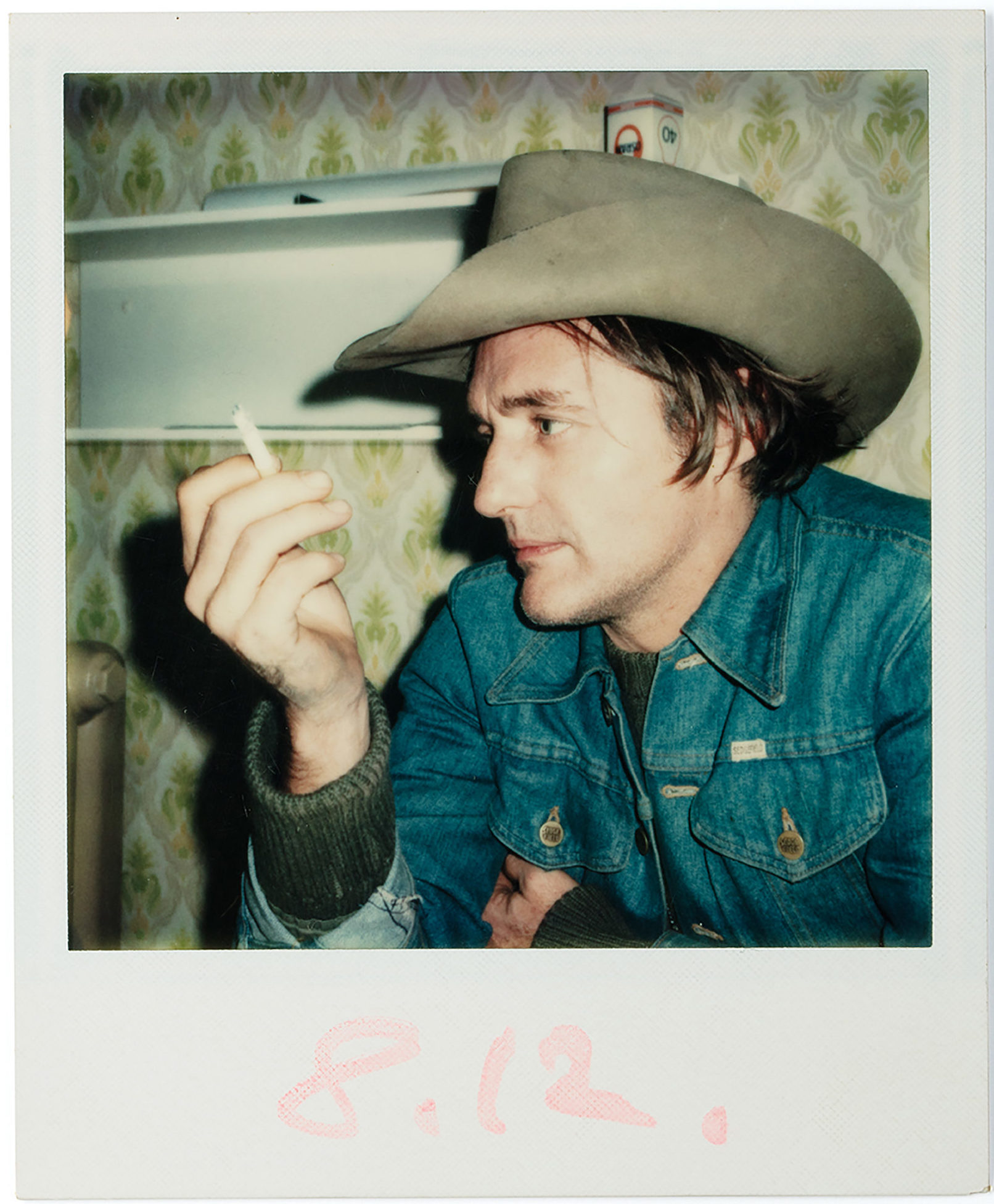
Dennis Hopper, Courtesy Wim Wenders Foundation

Shortly before filming Alice, Wenders was given a prototype of the Polaroid SX70 which would become so prominent in the film. Making the film was also Wenders’s first experience of America; he had arrived, like many Europeans, with preconceived ideas of the landscape. The exhibition section ‘Looking for America’ depicts Wenders’s outsider’s gaze, taken to an extreme as he scouted for locations. The section details his “disappointment at not finding what he had in his mind”, Grafik says. This disillusion was, however, a key part of the process. “What I enjoy about Wim is that he’s got a centre of gravity to his vision, which allows for those cracks in the iconography. He’s in no way an idealist about these things.”

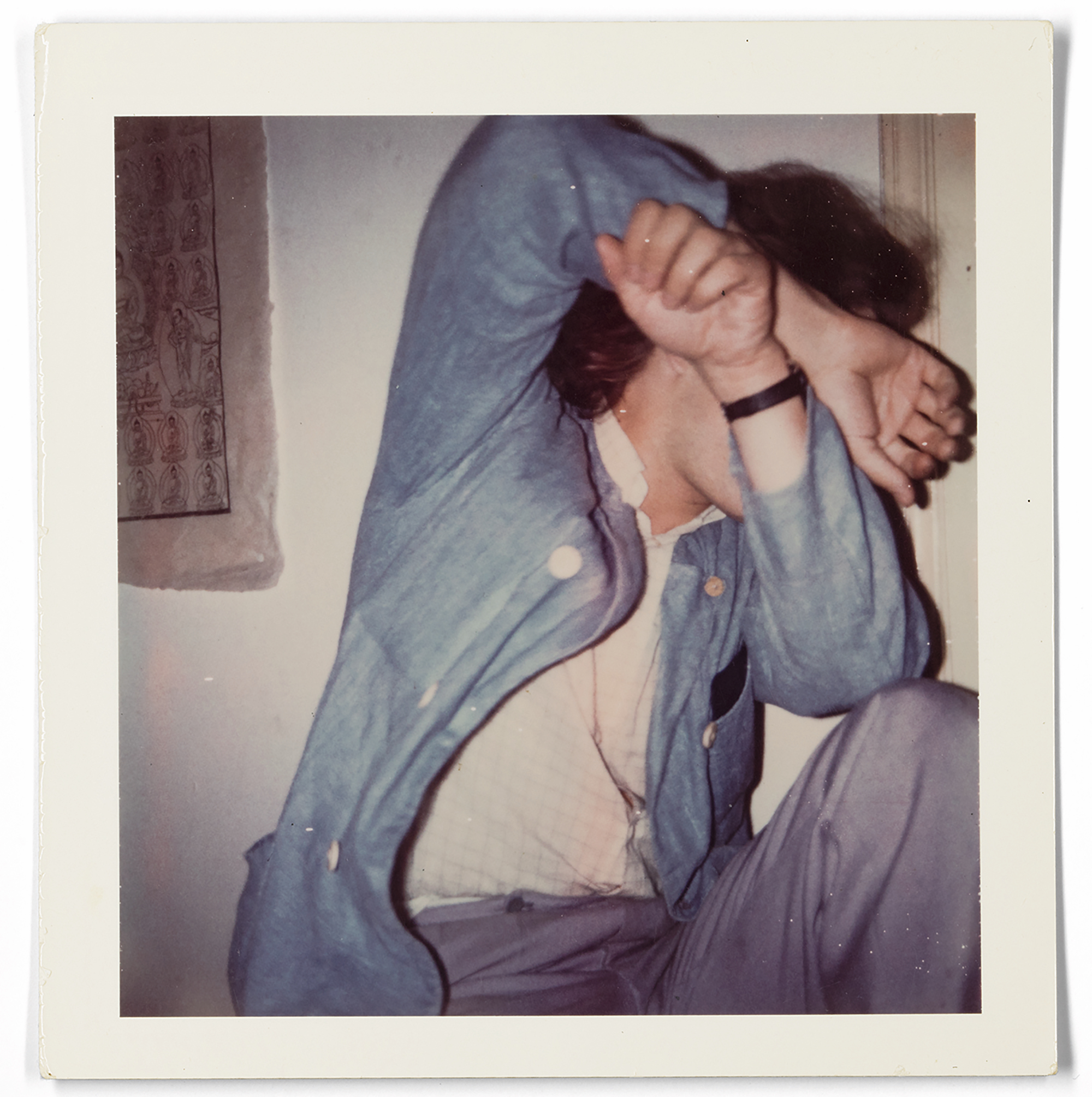
By an unknown photographer, 1971, Courtesy Wim Wenders Foundation

Wenders considered the restrictions and informality of the Polaroid – it’s limited technological abilities, and inability to take panoramic pictures – to be a breath of fresh air. “The way people treated the Polaroid wasn’t burdened with history in the same way as a medium format camera, there was no expectation that you would create great art works with it, unlike film,” Grafik explains. “The idea that Polaroid was like a toy, was really freeing for him.” 

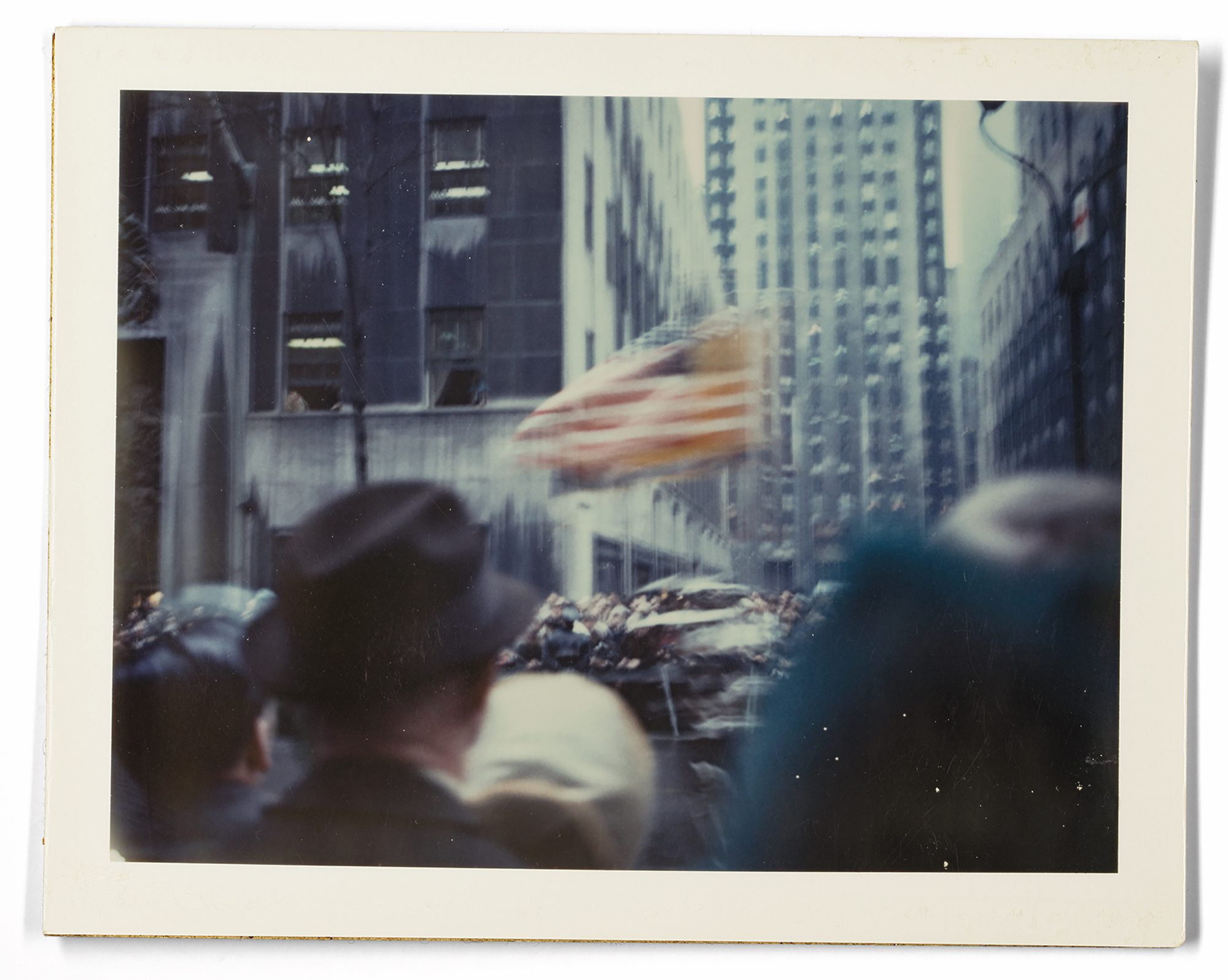
New York Parade, 1972, Courtesy Wim Wenders Foundation

Printed on a wall in the exhibition is an excerpt written by Wenders from Instant Stories, the book published by Thames & Hudson which accompanies the exhibition.

It was a little magic act each time – nothing more, nothing less.

I don’t think I’m romanticising when I allege

that Polaroids were the last outburst of a time

when we had certainty, not only in images.

We had nothing but confidence in things, period.

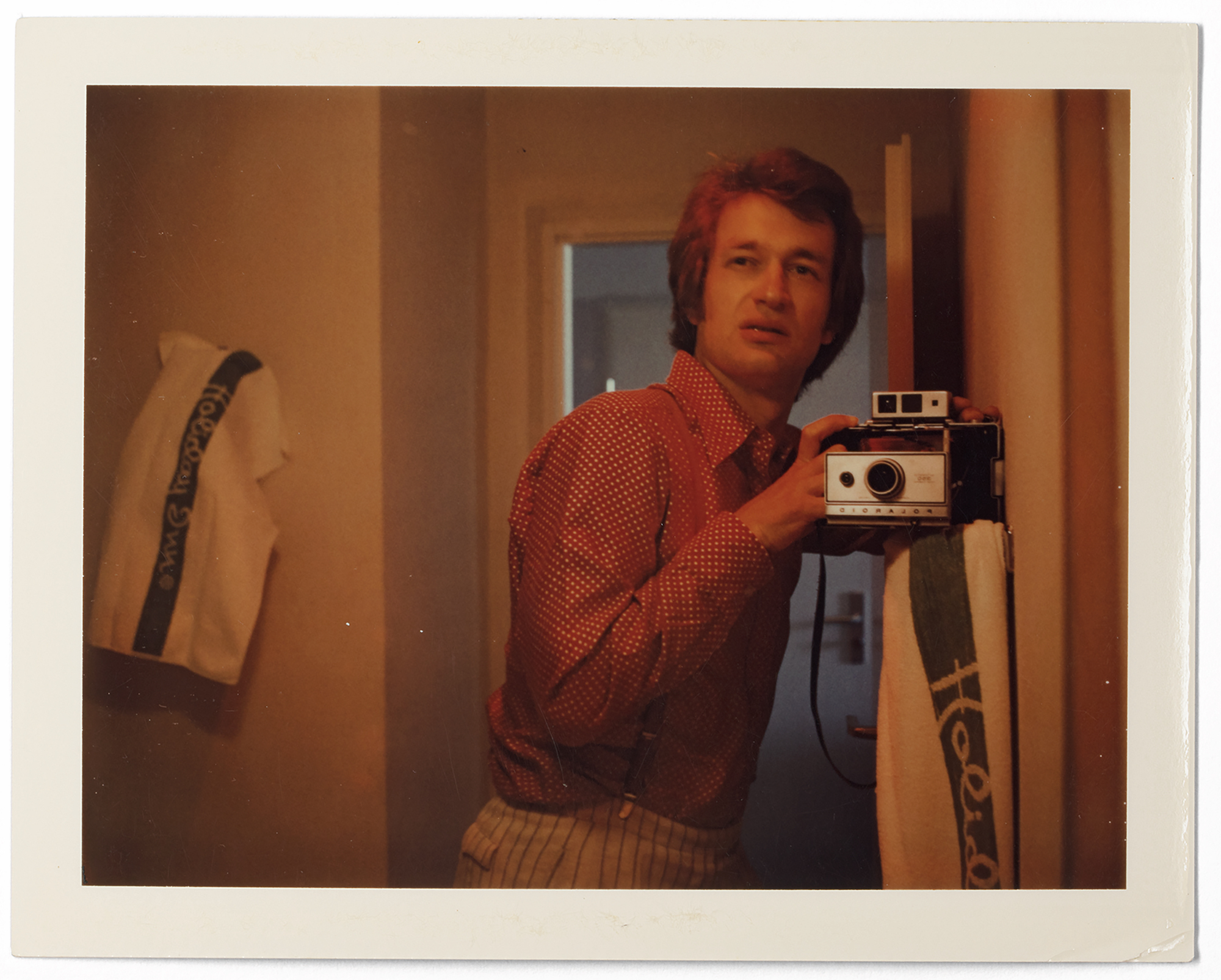
Self Portrait, 1975, Courtesy Wim Wenders Foundation

After 1984, Wenders returned to shooting with film. The Polaroid had served its purpose. What made him decide to just stop? I wonder. Grafik pauses. “I think for Wim, there was a period when Polaroid did just what he needed it to do,” she says thoughtfully. “It provided exactly what he needed at that point, and then it just didn’t work for him any more. At some point technology moves on and continuing it would seem somehow a conceit.” 

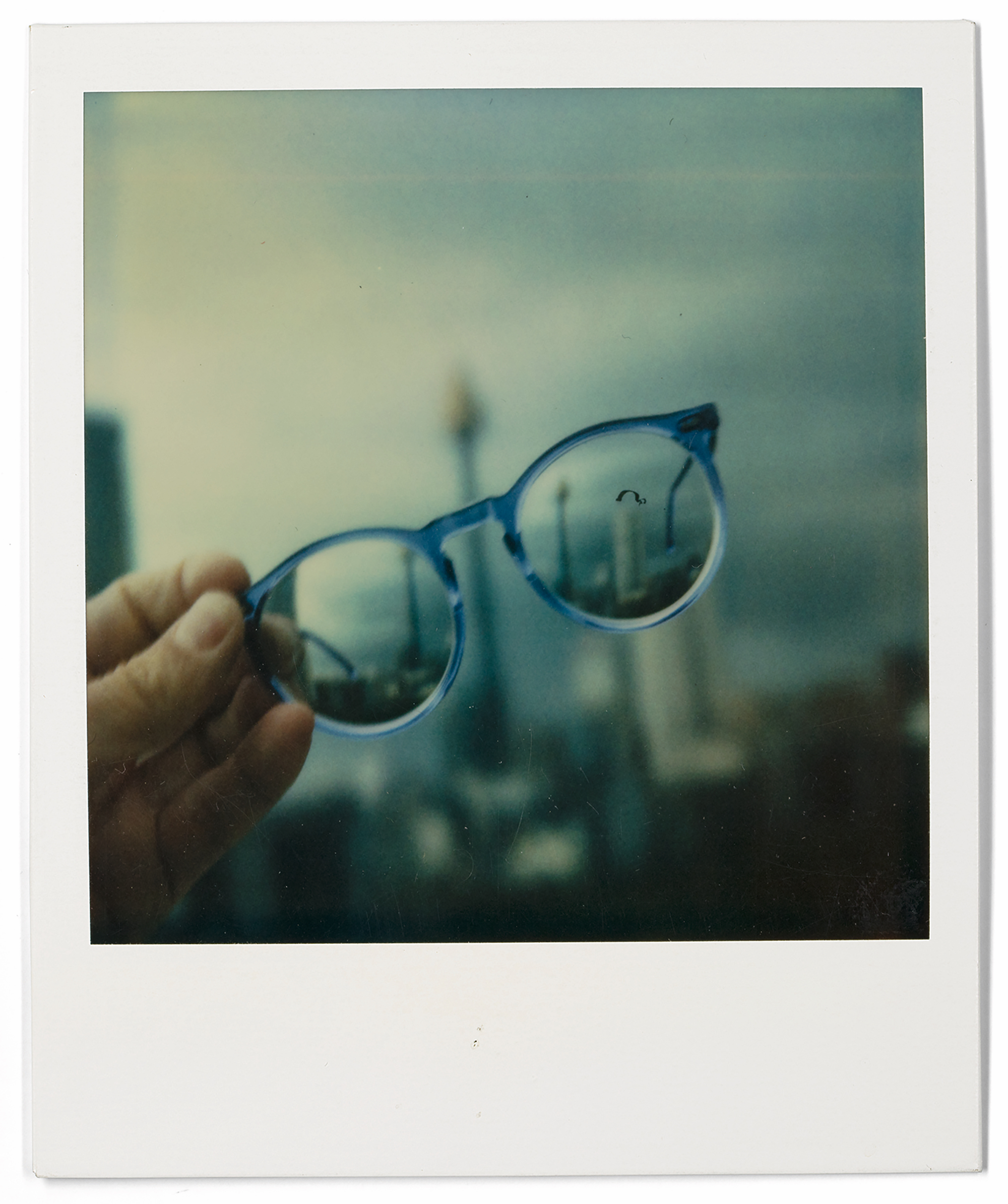
Sydney, Courtesy Wim Wenders Foundation

Wenders may not have considered his off-the-cuff images as art at the time they were produced yet, since then, as an art form the Polaroid has been wholly legitimised. Will photography considered equally ephemeral in 2017, such as selfies on Instagram, feature in exhibitions thirty years from now? “That’s a massive question!” Grafik laughs. “It’s open as to whether the taking of imagery now functions in the same way as photographs taken in the 70s were. There’s the practical question of archiving: how these images are archived, whether they even should be. It’s hard to say what will exist thirty years from now, what visual culture will mean to us.”

Instant Stories: Wim Wenders’ Polaroids, will be showing at The Photographers’ Gallery until 11 February 2018

Interview: Arnaud Valois

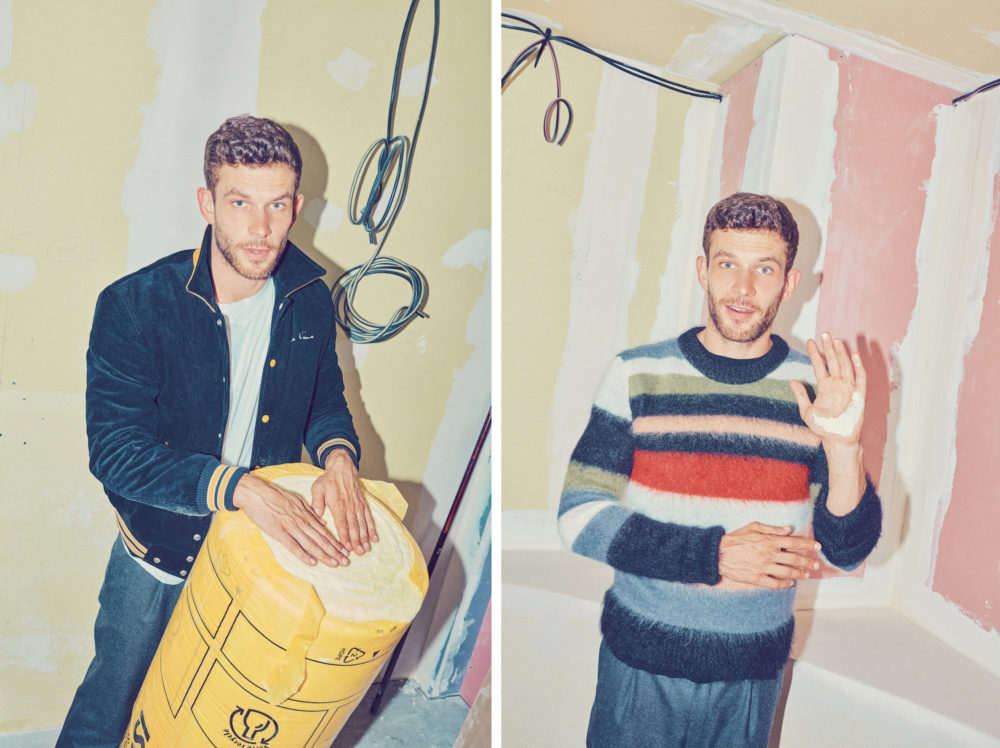
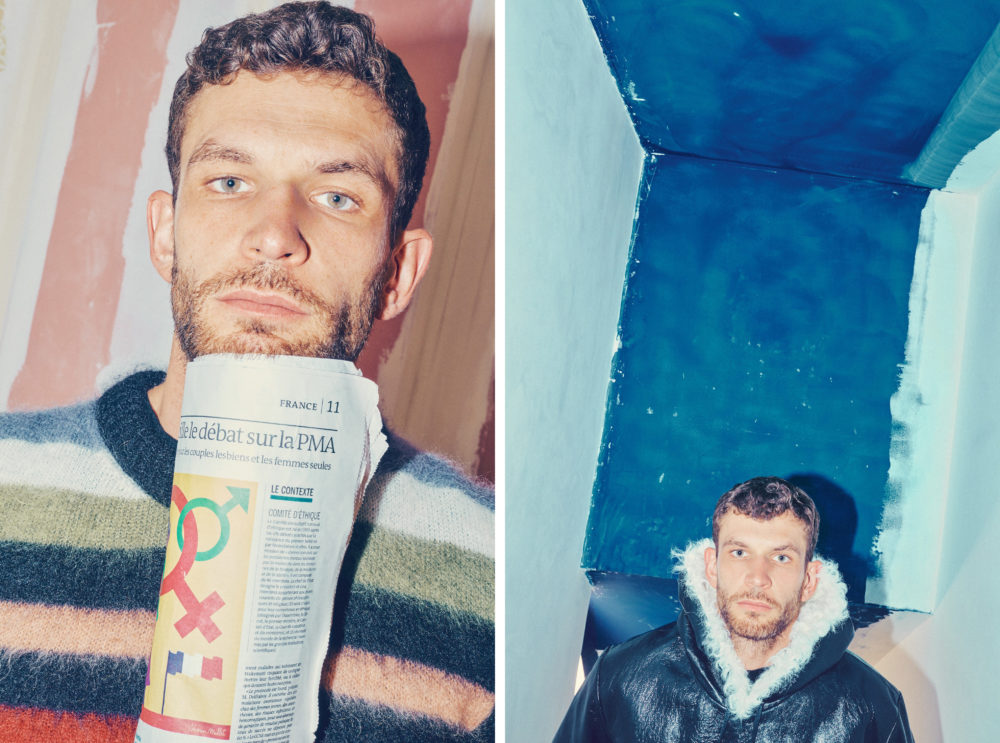
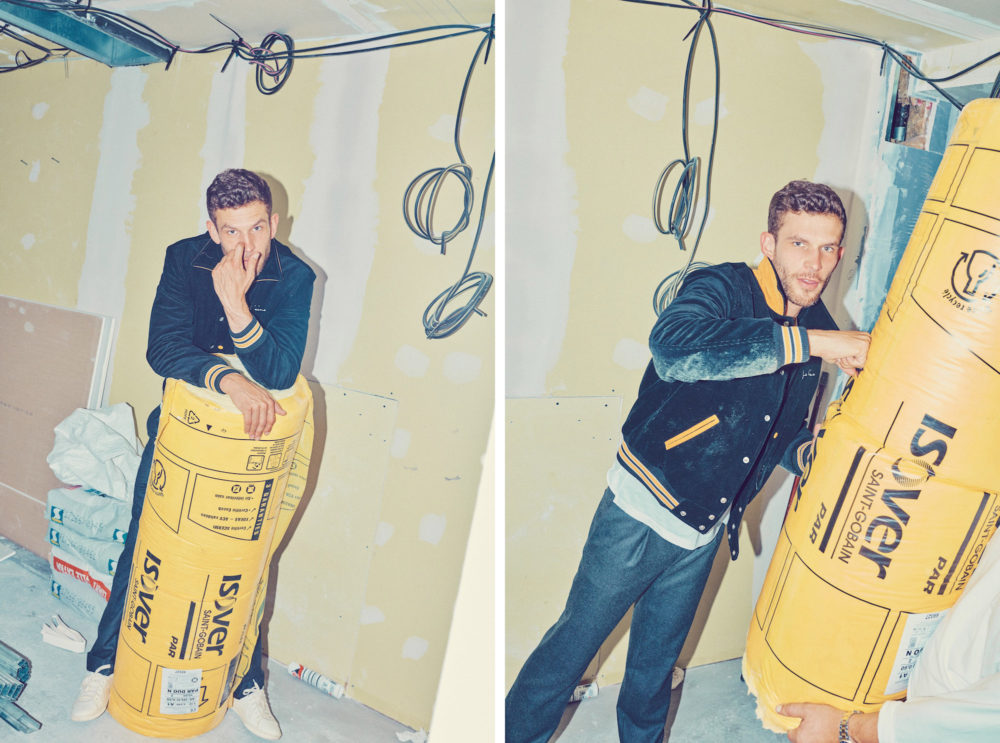
Port meets the reluctant actor whose understated talent owes as much to a passion for holistic therapy as it does to stage school

Arnaud Valois wears Saint Laurent AW17 throughout

In the 1980s, the gay community was being mercilessly decimated by a disease that the straight world was doing its best to turn a blind eye to, but there was a boisterous hotbed of active Parisian resistance which had other ideas. It’s this loose panoply of lovers, friends and rebels, forming the core of the activist group Act-Up, that acclaimed director Robin Campillo has brought to the big screen in the searing, personal and sometimes dreamlike fresco, 120 Beats per Minute. The film marks a return to the public eye for reluctant acting talent Arnaud Valois. Although he chooses not to define himself as an actor, his fragile yet powerful screen presence sublimely communicates the tragedy and beauty of a love that rages against both the machine and the dying of the light.

In the film – which has been lauded for its candid, unapologetic portrayal of gay sexuality, alongside the fervent activism of one of the most important movements of the ’80s – Valois plays Nathan, the HIV-negative lover of HIV-positive Act-Up firebrand Sean (a role played with startling verve by Nahuel Pérez Biscayart). “We are very lucky in Europe to have people who fought for us, struggling for rights of all kinds – but we need to be vigilant,” Valois tells Port over an intimate coffee in the Marais. “It’s very important to stay aware.” When did Valois become aware of Act-Up’s activism? “I was watching TV one morning with my family and said, ‘Oh, what is that?’” he says, with a smile. “Act-Up had put a condom on the obelisk in the Place de la Concorde. They also organised a big TV show in the ’90s called Sidaction, and it was on all the six main channels.”

Sidaction remains one of the most respected and successful charity organisations raising awareness of HIV and AIDS. It’s an interesting prospect for an actor to portray a docu-fiction version of recent history, especially when, to some degree, that actor’s psychogeography has been personally affected by the related events. How much did those memories shape Valois’s approach to his reticent and quietly sensitive character? “Robin said to us, ‘Please, don’t go too much on documentation or read, like, 20 books on the period. Trust me and trust yourselves. You are young people, so put your imagination in action and let’s work together.’” Given that Campillo is a seasoned Moroccan-French director whose own story and talent is steeped in the history of gay counterculture – as was shown in his 2013 classic Eastern Boys – one can only assume that such trust comes easily. “Absolutely. It was easy and comfortable to work with someone who likes telling his own story,” continues Valois. “It was interesting. The other thing is that he is a really good acting director. He has such a powerful vision of what he wants, so for an actor it’s quite easy. You need to learn your lines and be focused.”

Valois is somewhat playing down his exceptional talent. His propensity for switching mood with an endearing, nuanced grace is stunning, and perhaps somewhat surprising given that he turned his back on acting for a decade after graduating from drama school. “I don’t have two personalities, but there are maybe two sides to myself,” he says. “One is attracted by strong, powerful emotions and the other is driven by soft- ness and peace and calm. I don’t really consider myself to be an actor. I play a part in this movie – which I’m very proud of – but it feels strange for me. I see myself as a massage therapist and sophrologist who sometimes makes films.”

Sophrology is a relaxation technique, combining small movements and deep breathing to help control emotions and fears, and Valois’s commitment to the practice took him away from acting for a number of years. “I studied acting at Cours Florent for two years when I was 20 and was discovered by a casting director for my first movie, Charlie Says by Nicole Garcia. I started an acting career but it wasn’t what I expected,” he says. “I wanted to realise myself in another way. I wanted to be active, to do something with my life, so I went to study in Thailand. It was a personal journey, and then it became about other people – to heal people, first of all you have to heal yourself.” So how did it come to pass that his journey of self-actualisation should witness a return to the screen at all? “This casting director I used to work with 10 years ago called me and said, ‘I’ve got a project for you: Are you still an actor?’ I said no, not at all. But once she explained to me about the politics and historical side of what 120 BPM was, I said okay, I’ll give it a try…”

For Valois, ‘giving it a try’ means excelling in the communication of an extreme and tortuous emotional journey; perhaps his detailed understanding of the body, required for him to work as a practitioner of sophrology, underpins the utterly unique physicality he communicates as an actor. “European people usually separate head and body, but with Asian people their head and the body go together. So learning sophrology, which is a combination of head and body, helped me to redefine my vision of the human identity,” he says. “In France, we are very intellectual and it’s all about the brain. Robin Campillo is an exception because he considers the body and the head together. It’s very important for him, the way you move, the way you act, the way you position yourself on the screen…”

There is an intense physicality about Valois’s performance in 120 Beats per Minute that has been well documented in the press. The sensuality that pours through the screen doubtlessly owes a debt to his devoted practice as a therapist. “It has had a really big impact,” he explains. “When I receive clients at my studio as a therapist, I’m in a particular mode that requires being in empathy with people. I think when you’re an actor you need to be in empathy with your character and partners, so there is a similarity,” he continues. “It also helped me a lot after the filming to refocus, to get back to my life and not stay too much in the fiction of the movie.”

So are we to expect another prolonged retreat from the screen for the therapist-cum-actor, or can we hope to see him on film again soon? “I have an agent and we’re reading scripts together, so hopefully we’ll find an interesting one,” he says, thoughtfully. “I would like to do a biopic, something inspired by a real person – learning about someone and trying to not do an imitation, but instead creating another life for the character,” he says, before a pause. “It was such an intense and magnificent experience to make this film, and I was not really hoping for a return to acting. It would be interesting to do again, but I know this was a unique adventure.” We can only look forward to his next move, knowing that whatever it is, it will be deeply considered and profoundly authentic.

Words John-Paul Pryor
Styling Dan May
Photography Arnaud Pyvka
Clothes Saint Laurent AW17

This is an extract from issue 21 of Port, out now. To buy or subscribe, click here.
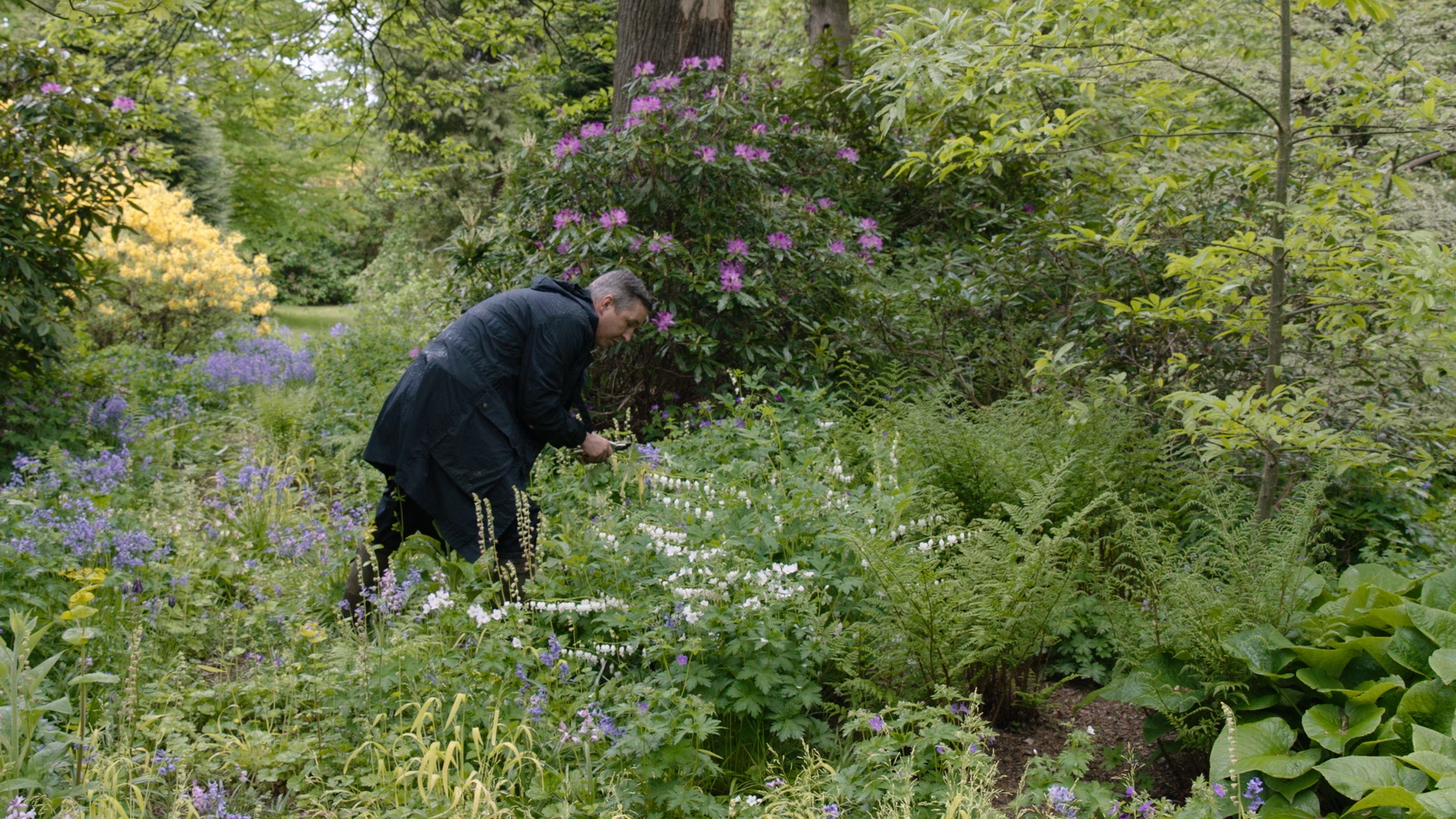
The Vision of Dries Van Noten

An intimate documentary directed by Reiner Holzemer follows a year in the life of the Belgian designer as he reveals the creative process behind four collections

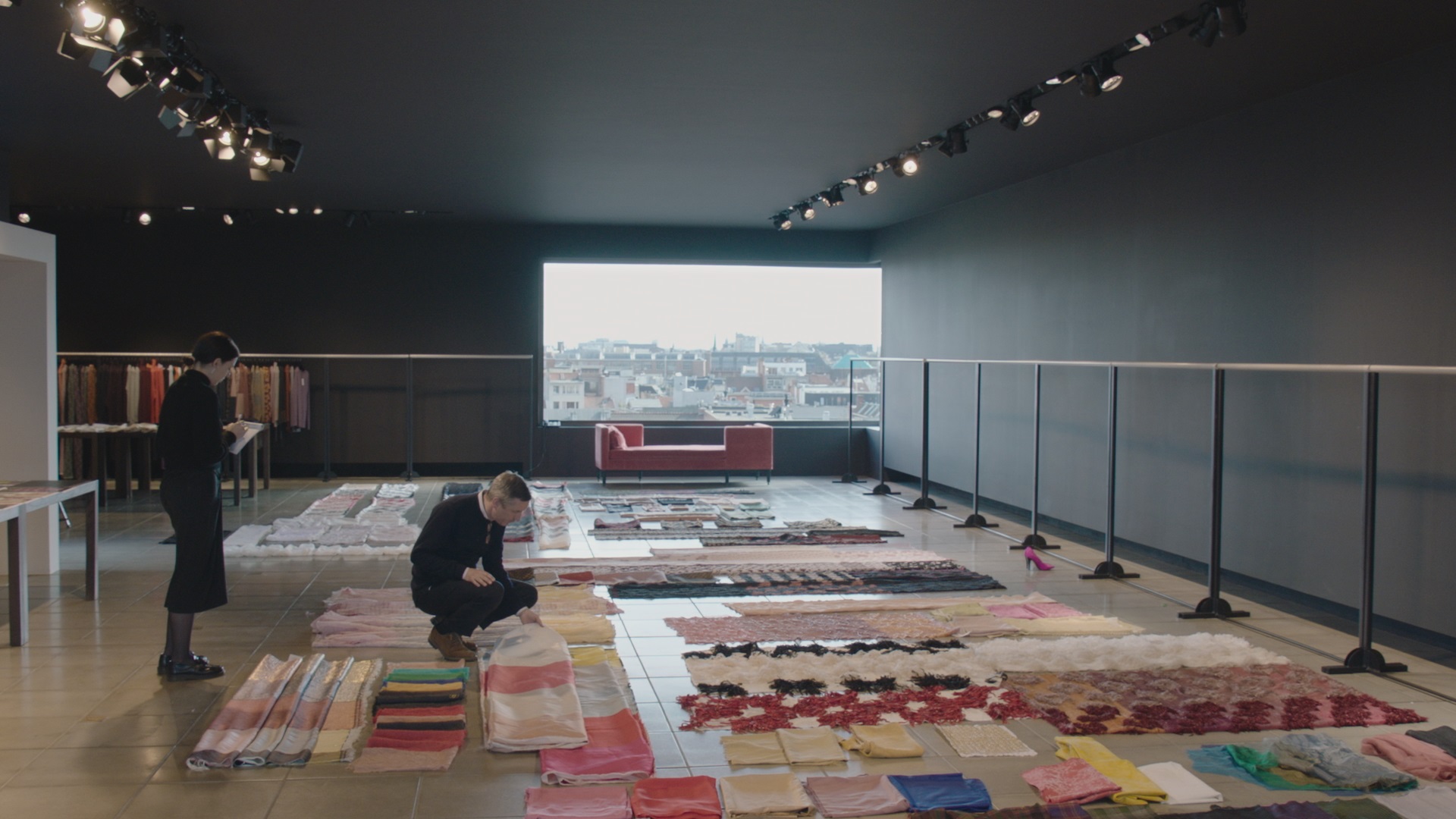
Dries Van Noten selecting fabrics in his studio in Antwerp

Dries Van Noten is one of the most unassuming figures in fashion. In an industry which otherwise moves at an impossible pace, he is a thinking, feeling designer, and for more than 25 years, he has remained independent in the face of fashion’s runaway globalisation. 

Despite his relatively low profile, Van Noten is a veteran designer and celebrated his 100th show in March this year. A master of print, pattern and texture, he emerged from Antwerp’s Royal Academy of Fine Arts in the early ‘80s as part of a group of designers including Walter van Beirendonck and Ann Demeulemeester, often referred to collectively as the Antwerp Six. Since launching his namesake label in 1986, he has become widely respected as a designer who has forged his own path.

In a new documentary directed by Reiner Holzemer – whose past films include portraits of artists and photographers such as David Lynch and Juergen Teller – the Belgian designer gives rare access to his home and work life. Over the course of a year, Dries documents the makings of four collections, from his studio in Antwerp to backstage at his fashion shows in Paris. In doing so, it offers a glimpse into the world of “one of fashion’s most cerebral designers”, as The New York Times has described him.

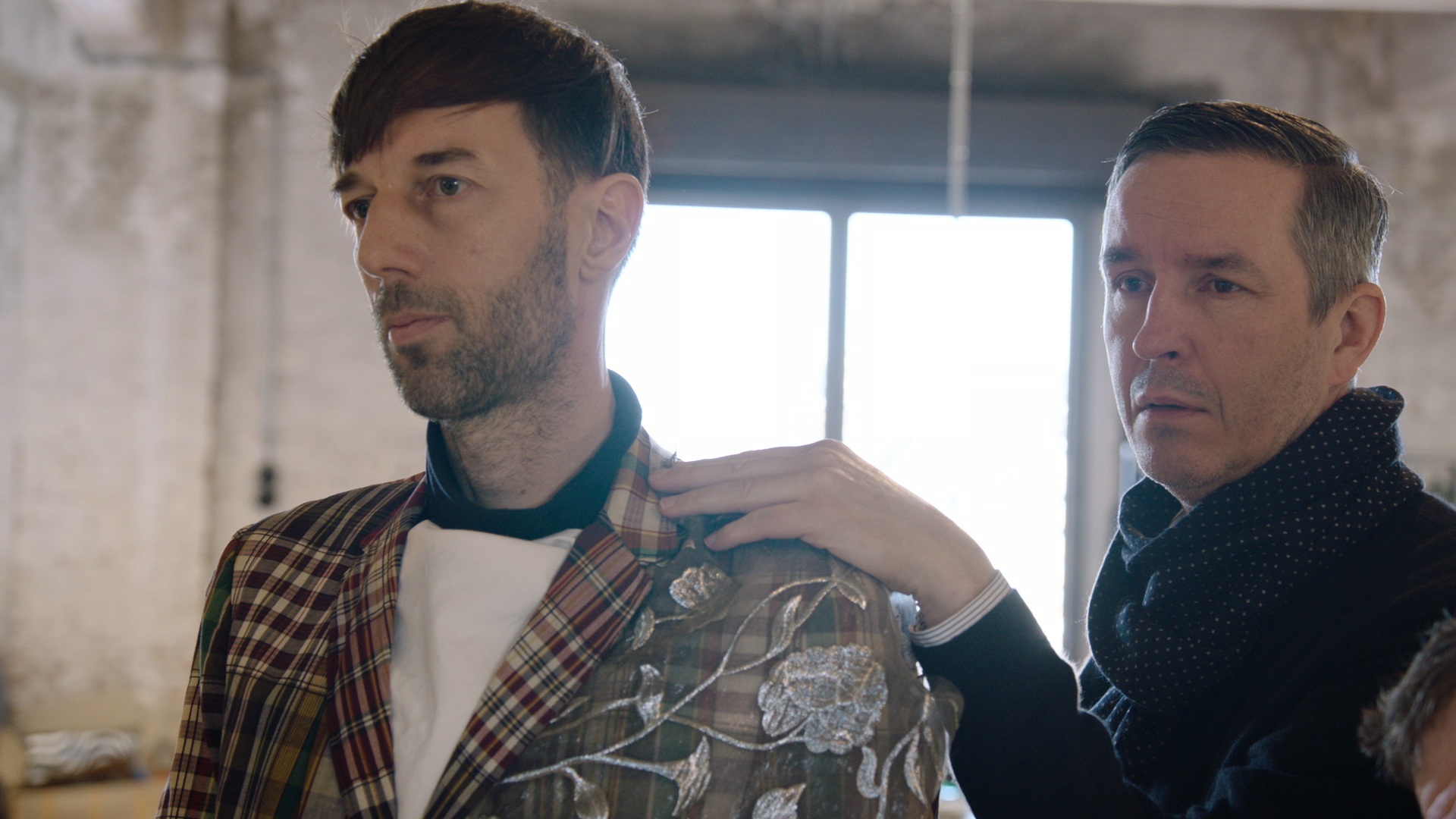
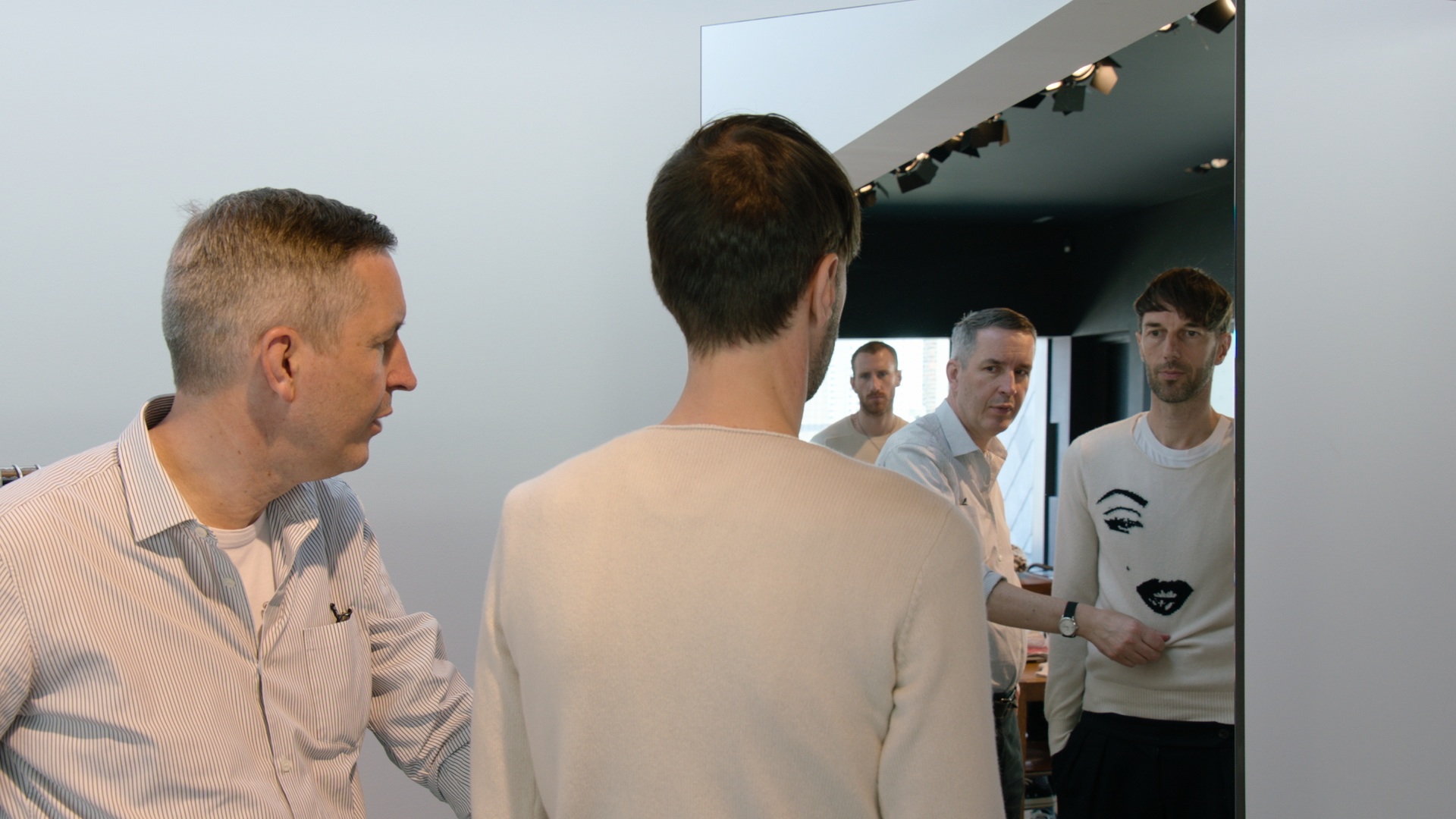
Dries Van Noten with Jürgen Sailer, head of men’s design in his studio in Antwerp

Holzemer, himself a relative newcomer to the inner workings of the fashion industry, met Van Noten while filming his 2011 documentary on Juergen Teller. Immediately taken with the designer’s intuitive approach, it took the German filmmaker three years to convince a camera-shy Van Noten to be the subject of his next film. While the designer had outright turned down the proposals of other directors, Holzemer was spurred on by the fact that he never said no. Twice a year, they would meet at Van Noten’s shows and each time, Holzemer would ask again.

“I think what encouraged him, or interested him in my work, was that I was not coming from the fashion world,” Holzemer explains. “I wasn’t a fashion filmmaker and he saw some of my films as portraits of artists, and I think he liked that approach.” After this prolonged game of cat and mouse, Van Noten agreed to open up his work and home to Holzemer and a small crew.
Dries Van Noten with Jürgen Sailer, head of men’s design in his studio in Antwerp

Holzemer’s genuine affection for Van Noten comes across in conversation and his respect for designer is more than apparent in his portrayal. Fashion documentaries often capitalise on moments of drama and the frenzy of the eleventh hour, but Holzemer cites examples such as The September Issue and Dior and I as precisely the type of fashion film he wasn’t looking to make. With Dries, he insists he wasn’t interested in playing up to the same stereotypes; the appeal was the person, not the industry. 
An important aspect of the film is its depiction of Van Noten’s life in Antwerp, where he continues to live with his long-term partner, Patrick Vangeluwe, and his dog, Harry. The choice not to live in Paris, where his collections are shown, is a considered one. “There’s less distraction and he can really concentrate on his work,” says Holzemer. “It’s important for him to live his own rhythm, to live in his own world. And that’s why he’s always creating something new and unexpected.”

Dries Van Noten in his garden in Lier, picking flowers for the house

In Dries, Van Noten touches on what he calls the “rat race” of fashion. Speaking of the immense pressure placed on designers today, many of whom are tasked with producing a growing number of mid-season collections, Holzemer says, “In a way he’s an exception and in the same way he’s typical, I think.” Yet, while contemporaries might produce in excess of eight collections a year, Van Noten has refused to compromise the quality of his ideas.

“When he designs something, when it’s too beautiful, he adds something distracting or something ugly to make it more interesting, and that’s an ongoing process all the time,” Holzemer explains of his process. “I found that Dries doesn’t draw. He works like a sculptor, working with the fabrics on a live model, more a less. That was very hard for him to show – how he works – because he was always a little bit afraid of showing something that was not perfect, and might even look a little banal in the eye of the audience.”

As seen through the eyes of Holzemer, the designer’s high-profile admirers, and Van Noten himself, what comes together is a portrait of a man who strives to bring the same artfulness to all areas of his life. “Do you think people like Dries are disappearing in the world today?” Holzemer asks Iris Apfel as the documentary draws to a close. “Not disappearing, darling – they’ve disappeared,” she says. “He’s a treasure and has to be treated as such.”

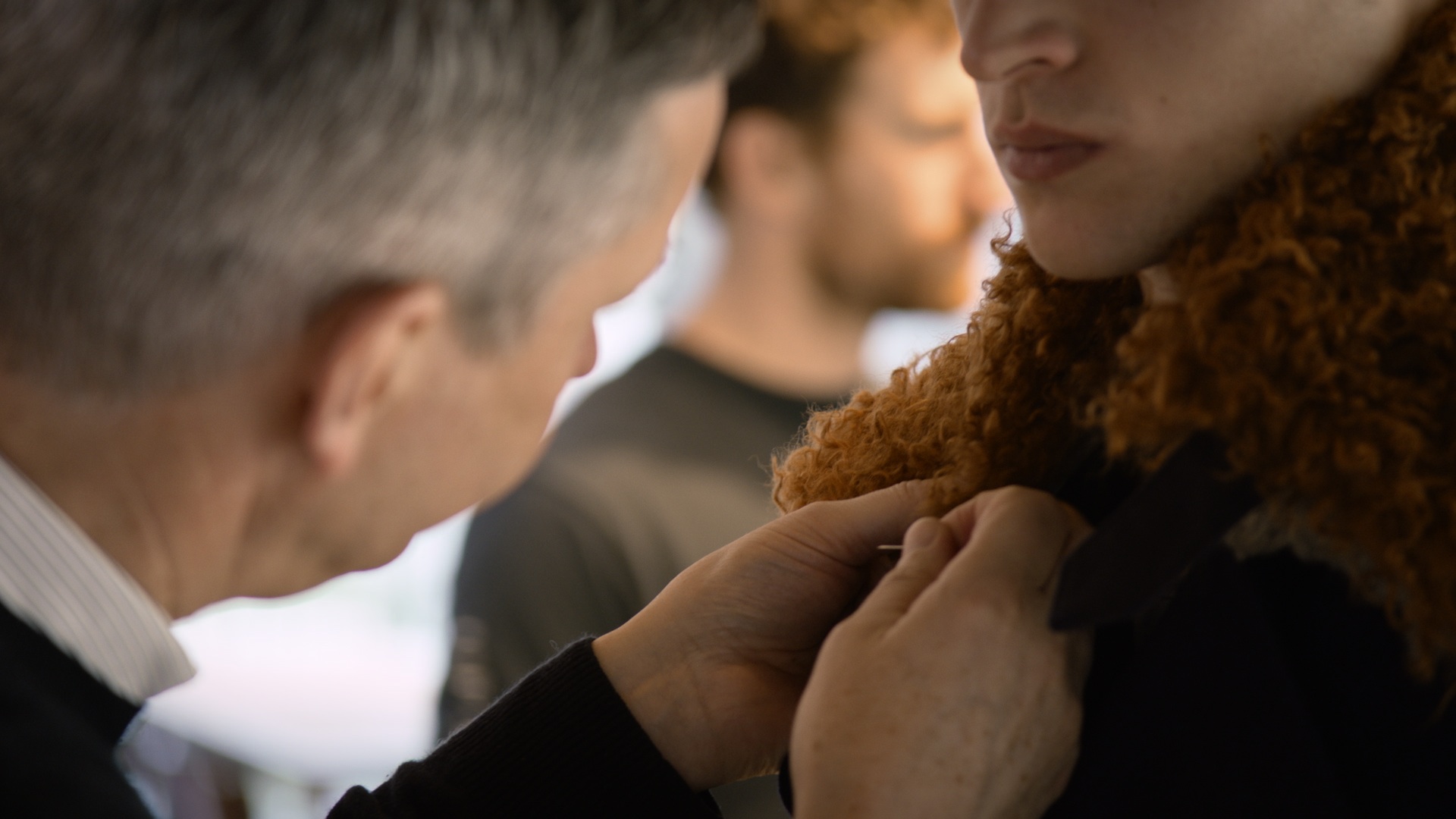
Dries Van Noten working on a collar for the Men’s Winter 2016 collection

Dries, directed by Reiner Holzemer, is out now on DVD 

Defining Moments: Robert De Niro & McCaul Lombardi

A new film campaign by Ermenegildo Zegna sees actors McCaul Lombardi and Robert De Niro come together to consider the moments that made their careers

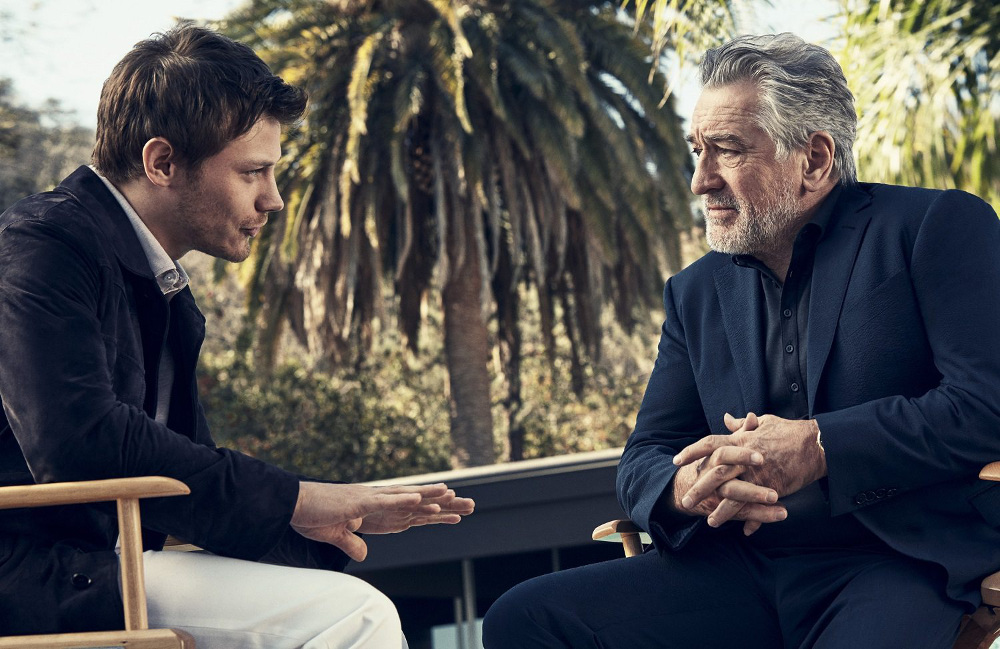
McCaul Lombardi and Robert De Niro in Ermenegildo Zegna's 'Defining Moments' SS17 campaign
McCaul Lombardi and Robert De Niro in Ermenegildo Zegna’s ‘Defining Moments’ SS17 campaign

Ermenegildo Zegna’s SS17 video campaign opens with two actors riding a convertible in downtown Los Angeles. One is an Academy Award-winning veteran, with a career spanning over almost half a century and a filmography including Goodfellas, Raging Bull Taxi Driver. The other is a relative newcomer, earning his big break in 2016 with Andrea Arnold’s free-spirited drama American Honey.

Created by director Francesco Carrozzini, the three-minute long Defining Moments sees Robert De Niro and McCaul Lombardi reminisce about some of the key turning points in their lives and careers in cinema; McCaul Lombardi remembers the period he spent living in his car, while De Niro shares memories of working with Marlon Brando.

“I always tell people don’t be afraid to take a chance, for a part or something else,” says Robert De Niro, imparting some simple advice for making your way in Hollywood. “Even if it looks like you won’t get it…If you don’t go, you’ll never know.”

defining-moments.zegna.com

Additional text Sanjeeva Suresh