In Good Company

A new book by Liz Johnson Artur opens up three decades of sketchbooks, revealing the messy, tactile process behind her celebrated Black Balloon Archive, and reminding us that photography, at heart, is about the people we keep close

Liz Johnson Artur, I Will Keep You in Good Company (SPBH Editions / MACK, 2025). Courtesy of the artist, SPBH Editions, and MACK

It’s early September in south London, and sunlight pours through the windows of Liz Johnson Artur’s flat. On the other end of the Zoom call, she tilts her head, her eyes catching the light, a friendly smile flickering across her face. Behind her, shelves overflow with books, prints and works in progress. Loose images are pinned to the walls, while fragments of paper and materials are stacked like cairns. This is equal parts home, studio and living archive. A scaffolding for a practice that has kept herself – and those she photographs – in good company.

Johnson Artur is best known for documenting the intimacy in public life, whether that’s churches or club nights, street corners or carnival crowds. Her photographs are tender and alive, and have formed what she calls the Black Balloon Archive, a three-decade-long practice of collecting moments across the African diaspora. Now, with I Will Keep You in Good Company, a new publication from MACK’s imprint SPBH Editions, she turns inward, opening the covers of more than 20 workbooks she has kept since the early 1990s. Part diary, part scrapbook, these volumes show where her photographic language was formed and how it’s constantly being remade. “I have never separated my work from my life,” she tells me, her voice steady but reflective. “To start the journey that I’m still on, I had to involve myself. It’s me who wanted these pictures – me who wanted to meet people.”

Liz Johnson Artur, I Will Keep You in Good Company (SPBH Editions / MACK, 2025). Courtesy of the artist, SPBH Editions, and MACK

Born in 1964 in Bulgaria to a Russian mother and a Ghanaian father, Johnson Artur grew up moving between Eastern Europe and Germany. Writing had once been her outlet – “I could put thoughts down, but I didn’t feel like it was the tool to express what I wanted to say.” When she moved to London in 1991 to study at the Royal College of Art, language, she says, felt limiting. “I suddenly realised I wasn’t in a place where my English was up to scratch, and it moved me into this place where I had to talk with pictures.”

Photography became her voice, and what began as a personal impulse soon developed into the Black Balloon Archive, an ongoing project that traverses locations from south London to Russia, Ghana, Jamaica, New York and the Caribbean. The name is taken from a 1970 song by Syl Johnson, who describes a black balloon dancing in the sky that’s difficult to catch but impossible to ignore – an apt metaphor for Johnson Artur’s practice, that is attentive to what others might miss. “I go out and I am bound, no matter where I am, to catch a black balloon,” she says.

Liz Johnson Artur, I Will Keep You in Good Company (SPBH Editions / MACK, 2025). Courtesy of the artist, SPBH Editions, and MACK

I Will Keep You in Good Company is made from the bulging, timeworn sketchbooks that have accompanied her practice from the start. They are, as she puts it, “a space where I can do whatever I want without anyone else looking”. They mix her own photography with magazine cuttings, notes, fabric scraps and flyers, which are annotated, ripped, smudged and punctured with holes, staples and dots. The visual conversations of a restless, curious – and before now, very private – mind.

For years she had them in a box, untouched. It was only when Bruno Ceschel, publishing director at SPBH Editions, suggested making a book that she revisited them. “There is a certain privacy about them, as they weren’t made for the public,” she admits. And yet, she also reframes that privacy as a gift: “It was a good reason to go back. And I think that’s a privilege of keeping a record – that you can go back and see where you were.”

Liz Johnson Artur, I Will Keep You in Good Company (SPBH Editions / MACK, 2025). Courtesy of the artist, SPBH Editions, and MACK

On the cover, there’s a portrait of a woman with her eyes closed, overlaid with a dotted surface that makes the image feel both familiar and shielded, as if memory itself has been imprinted. The picture only came to light when a negative was digitally reversed during the book’s design process – an image Johnson Artur had made decades earlier but had never seen as a photograph until recently. Inside, the first page shows a taped-in snapshot of Johnson Artur holding her camera; its edges frayed, the word ‘book’ faintly typed above. From there, vibrant, joyful scenes of gatherings and community unfurl. “You open the book and you see people, you see life, you see all these things that I’ve been part of,” she says. 

Amongst them is a photograph at Notting Hill Carnival in 1995, the audience pressed tight around the stage. Instead of naming the faces she photographed, Johnson Artur scrawled ‘Foxy Brown’ and ‘Case’ across the page – the performers the crowd was looking at. “I was mesmerised by the audience, wedged in between,” she recalls. “I put these names there because that’s what they were looking at. I was looking at them, but they were looking at the stars.” In another image, a Madonna-like woman painted white, whom she often passed on the streets of Camberwell, reappeared suddenly behind her at a festival. “It felt like a present,” Johnson Artur says. “I took the picture, and it was the last time I saw her.” Elsewhere, there’s a friend’s father in Moscow in the late 1980s, and a rare photograph of her with her own father, whom she never properly met. Each is folded into the archive as a moment of acknowledgment. “It’s nice to be recognised and seen,” she reflects.

Liz Johnson Artur, I Will Keep You in Good Company (SPBH Editions / MACK, 2025). Courtesy of the artist, SPBH Editions, and MACK

By the final spreads, the tone shifts. Made while living in Brighton during the pandemic, these closing images are monochromatic, negative prints of the sea and fields that read like a subtle wave goodbye. “It’s dark, but not in a heavy way,” she notes. Those pictures were a response to a world where people were absent from the street – “ghostless”, she says – and the camera turned from people and communities to landscapes and silence. The back cover carries a handwritten injunction: “take what is close at hand to reach what lies most distant.” Addressed to both her mother and her daughter, Anna, it threads her family directly into the fabric of the archive.

Crucially, the book resists chronology. “I didn’t time the book. I didn’t say, ‘Oh, this is the beginning and this is the end.’ In a way it’s reflecting how I work with my archive, because I don’t put down dates and places. For me, the proof is that I remember the moment.” Readers are invited to jump in anywhere, to linger on a page or skip 10 pages ahead.

The pace is intentional. Where her exhibitions have often staged the Black Balloon Archive in public – If You Know the Beginning, The End Is No Trouble (South London Gallery, 2019), Dusha (Brooklyn Museum, 2019), Get Up, Stand Up Now (Somerset House, 2019) and You Know I Am No Good (Biennale of Sydney, 2020) – the book offers a different register of time and intimacy. In the gallery, her archive becomes architectural and immersive: in If You Know the Beginning, she suspended images on four bamboo cane structures, integrating photographs printed on paper, fabric, tracing paper and cardboard, creating semi-transparent layers to walk between and behind. In Dusha, she layered sketchbooks, video, sound and photographs so the viewer sees faces and their movements behind them. The installations extend the workbooks into three dimensions, while the book, by contrast, invites you to leaf through those same gestures in private, to pause and linger.

Liz Johnson Artur, I Will Keep You in Good Company (SPBH Editions / MACK, 2025). Courtesy of the artist, SPBH Editions, and MACK

That slowness, and a refusal of the speed at which most images circulate online today, is central to I Will Keep You in Good Company. “We reduce ourselves to swiping and having friendships on the screen. That’s not the way human bodies, human minds, are created. You can only have empathy and value when you have some kind of eye contact. You need to see other human beings, you need to feel them – otherwise you start demonising,” she adds. “I hope that my book encourages people to mess about.”

For Johnson Artur, the archive is something that will only keep growing. “My archive has a lot of chapters, things that I’ve gone through,” she says. Those chapters extend beyond the people she photographs, to the music, books and fabrics she surrounds herself with. Her practice is less about fixing moments in time than about staying attentive to encounters, materials and the company she keeps. Even the room behind her testifies to this: books, records, clipped prints and experiments acting as companions that keep her practice in motion – an extension of the archive itself.

“When I take a picture, I’m part of it – I don’t just take, I also have to give,” she says. “A lot of the time, people gave me something I couldn’t give back, and that’s where the title comes from. Someone once asked me: ‘What are you going to do with these pictures?’ and I said, ‘I keep them’. Because in a way, you create an accumulation of people, their presence. And when you are in good company, you appreciate those around you – that’s what these photographs represent for me.”

Liz Johnson Artur’s I Will Keep You in Good Company is published by SPBH Editions and Mack and available here

This article is taken from Port issue 37. To continue reading, buy the issue or subscribe here

Liz Johnson Artur, I Will Keep You in Good Company (SPBH Editions / MACK, 2025). Courtesy of the artist, SPBH Editions, and MACK


Liz Johnson Artur, I Will Keep You in Good Company (SPBH Editions / MACK, 2025). Courtesy of the artist, SPBH Editions, and MACK


Free The Stones

Documenting Stonehenge’s solstice and equinox celebrations, Freddie Miller’s latest project strives to restore free festivals and keep ancient rituals alive

Freddie Miller: Free The Stones, Girls

Every solstice, thousands of people from all walks of life flock to Stonehenge, whether it’s druids, pagans, travellers or families taking their kids out for a magical sunrise celebration. On a usual day, the site is guarded by ropes, but for two hours during the solstice or equinox, the English Heritage lets everyone roam freely around the historic stones as they have done for decade’s past. However, this protected space and its ancient rituals are now under threat.

When Freddie Miller, a Bristol-born London-based photographer, attended a Beltane druid ritual last year while doing research for a project, he met a new friend named Sid Hope. He was passing around flyers which Miller thought looked like a “trippy cross between acid rave posters and DIY cut’n’paste punk zines”, with the words ‘Stonehenge Festival Campaign’ printed on the top. “A subculture clash if you will.” They exchanged a few words and Miller came to learn about Hope’s campaigns to reinstate a free festival at Stonehenge where, back in the 70s, up to 60 thousand people could gather for the solstice. That was until Thatcher wagged her wand and put a stop to the celebrations at the ‘Battle of the Beanfield’ in 1985, a brutal police crackdown which stopped the festivities in a flashpoint. Yet many, like Hope, are pushing to keep these ancient rituals alive.

Freddie Miller: Free The Stones, Hug
Freddie Miller: Free The Stones, Acid House

Miller first visited the site in the winter solstice of 2014, and he’s always wanted to do a project on the subject. He’s long been interested in subcultural studies and counter-culture, particularly people subverting the mainstream with ideas and philosophies about life – whether that’s drill rappers, truckers, bikelife kids, mudlarkers, pagans, or those attending solstice at Stonehenge. “I think this is more important than ever in our increasingly alienating world,” he explains. “So I often find myself trying to tell stories to celebrate different subcultural movements in an aesthetically driven way.” So it was a match made in collaborative heaven, and Miller began documenting Hope and his campaign to create a sunset-drenched new photo project and film, titled Free The Stones! 

The series began in 2023, and throughout you’ll see people hugging rocks; waving a British flag with an acid house smiley; wearing mediaeval outfits; sporting pagan skulls as headdresses; enjoying a sense of community, togetherness and energy. Girls gathering nearby the rocks, families enjoying their outing. A mobile home pausing for a quick pitstop roadside. People getting lost in the magic of the stones, wearing ancient garb, and caught in freeze frames that could have been taken thousands of years ago. “I wanted to celebrate Stonehenge, its magnetic pull, the primal energy it gives people,” says Miller. “I was really interested in the crossover of subcultures that around it too, whether it’s pagan, free festival, new age traveller.” Miller worked with Josh Homer and Peter Butterworth on the film, alongside Hope – of course – and the people he’d met at Stonehenge. 

Freddie Miller: Free The Stones, Standing Stone

Speaking of his subjects, Miller recalls meeting a guy named Mad Alan outside the Royal Courts of Justice at a save Stonehenge protest. “He had tattoos all over his face and even in his eyes,” he says, “He was really nice.” There was also someone with a pet crow, and apparently he met Ronnie Wood from the Rolling Stones at the equinox and was “none the wiser when introduced – he’d have been a great addition to the project.”

The project was built on a few pillars, one of which is to shed light on the people who attend the solstices, showing freedom of thought and a point of difference to the way they live their lives – the other side that is often ignored in modern civilisation and its portrayal in the media. Miller adds, “I learnt traveller culture is real and met people from the community who are dedicated to pursuing their own way of life, on the road and away from a ‘normal’ society. I admire their spirit, warmth and self-sufficiency. It didn’t seem like an easy way of life (at least to me) and I respect their commitment to living that way.” The other pillars include elevating Hope’s campaign in order to bring back the Stonehenge free parties, and lastly, raising awareness of how the site is more than just a hotbed for tourism. It’s a place of “real energy where people can revert to their primal roots – even for a few hours”, he says.

It’s been recorded by English Heritage that Stonehenge was built in stages; the first monument around 5,000 years ago, and the stone circle around 2500 BC. For comparison, it’s several thousand years older than the pyramids. Many visitors have been visiting the archaeological site of Stonehenge for years, yet its future is looking precarious due to plans to widen the A303 road which runs adjacent to the stones – people are petitioning to devoid these plans and, if absolutely necessary, build a tunnel instead to avoid destruction. “I learnt that over and above Stonehenge being a tourist hotspot and sometimes a political bargaining chip with the ongoing A303 road tunnel debate, it is a sacred space for modern day pagans, travellers and free festival rebels,” says Miller. “It occupies such a space in our national consciousness, cutting across our culture, and everyone has their own interpretation of what it’s about, which I find fascinating.”


Freddie Miller: Free The Stones, Home
Freddie Miller: Free The Stones, King Arthur
Freddie Miller: Free The Stones, Mad Alan
Freddie Miller: Free The Stones, Sid
Freddie Miller: Free The Stones, Sid at Home
Freddie Miller: Free The Stones, Protest
Freddie Miller: Free The Stones, Pagan Chieftain
Freddie Miller: Free The Stones, Two Druids
Freddie Miller: Free The Stones, Travelling Family

Pictures from a Punk

DB Burkeman speaks to Port about rediscovering his lost archive, turning it into a book, and capturing icons like the Sex Pistols and Iggy Pop

CRASH BANG: Pictures from a Punk, Photography by DB Burkeman

Many may know DB Burkeman as an early pioneer of electronic music. The British DJ, who went by the moniker DJ DB, moved from London to New York in the late-80s, co-founded Breakbeat Science, the first record store in the US to specialise in drum and bass, and was credited for introducing the genre to America. Fewer, however, may be aware of his work in photography. 

Since stepping away from DJing in 2010, Burkeman has ventured into the art and publishing worlds, authoring books that explore the intersections of popular and counterculture. He launched his own publishing company, Blurring Books, with an aim to ‘disrupt’ traditional publishing practices through releases such as a peel-out art sticker book, which brought museum artworks from the likes of Andy Warhol, John Baldessari and Linder Sterling into the public domain via laptops, skateboards and phones. 

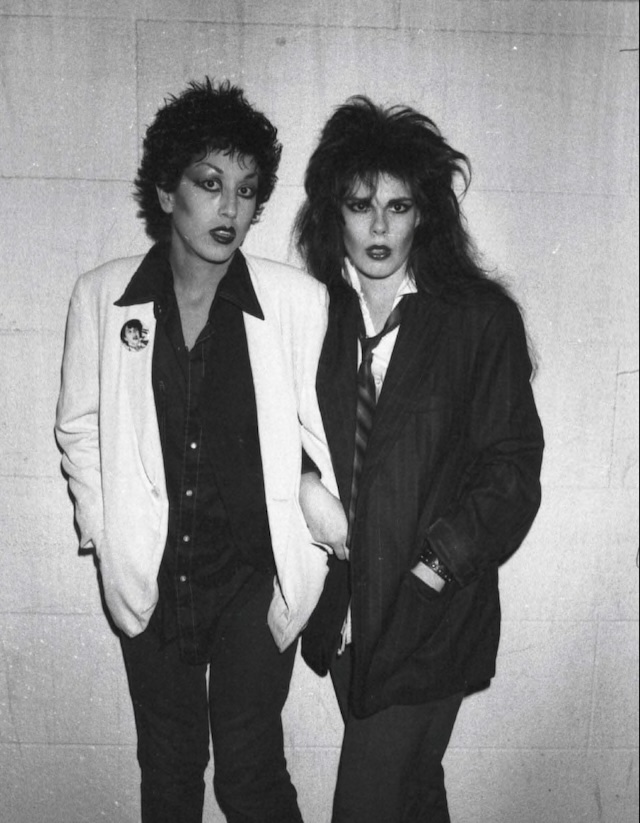
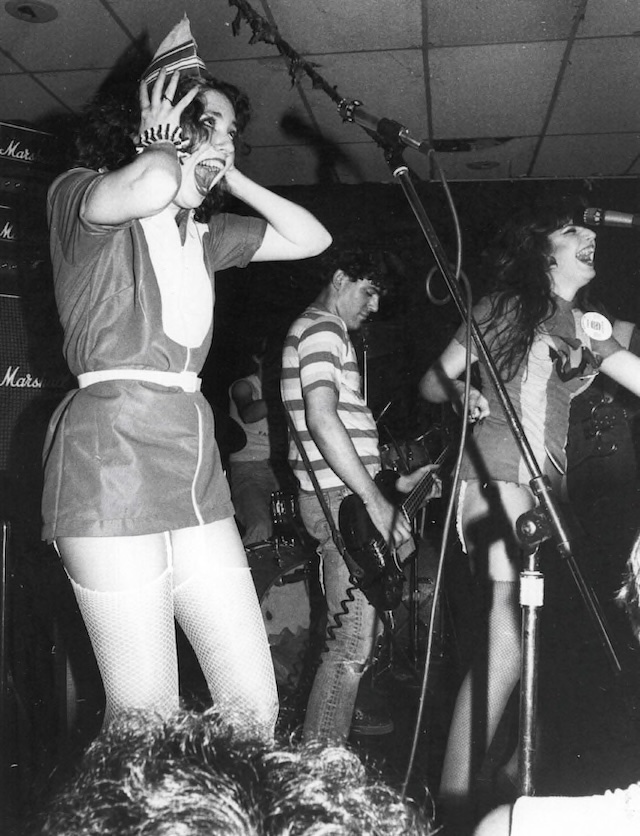
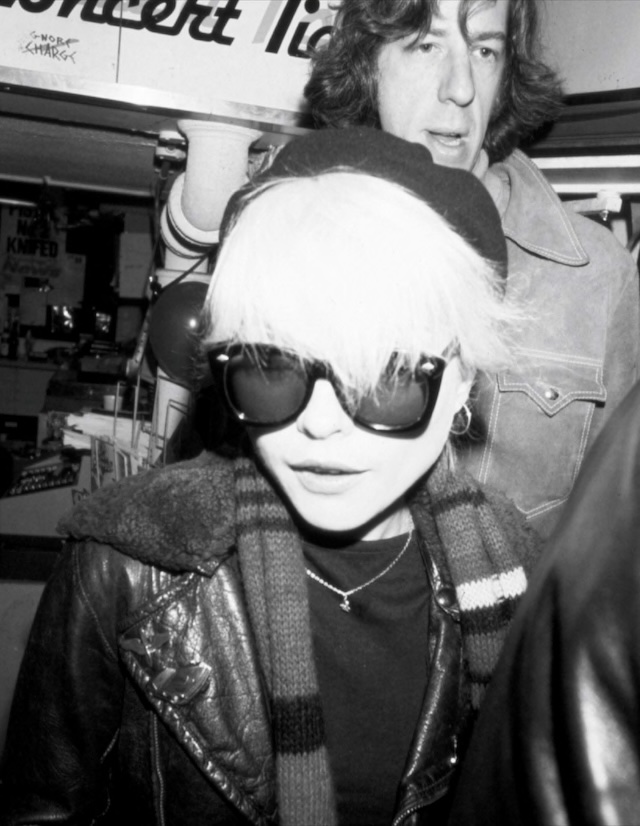
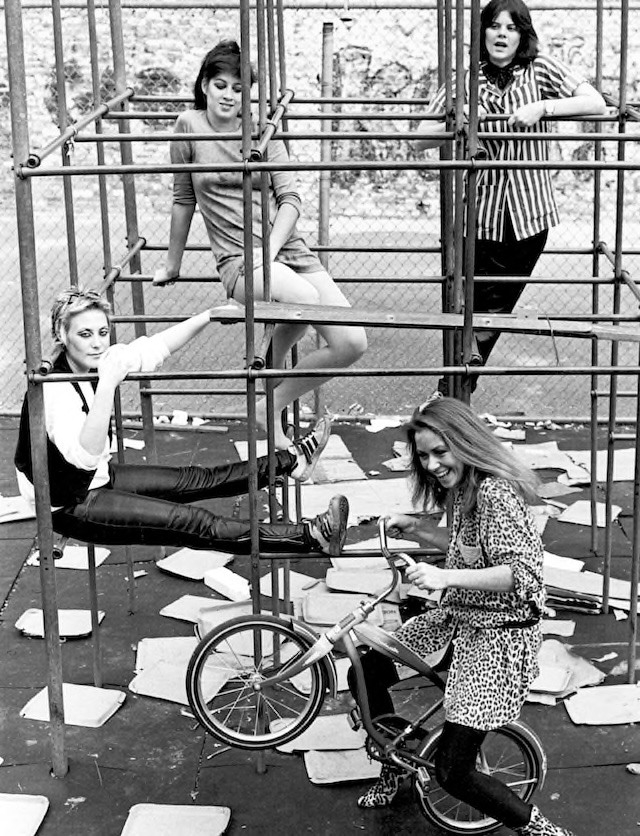
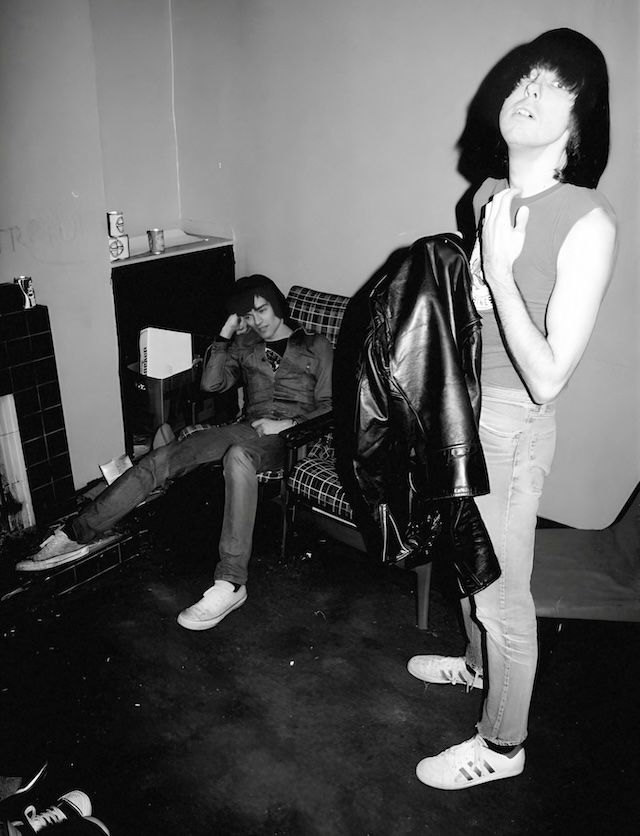
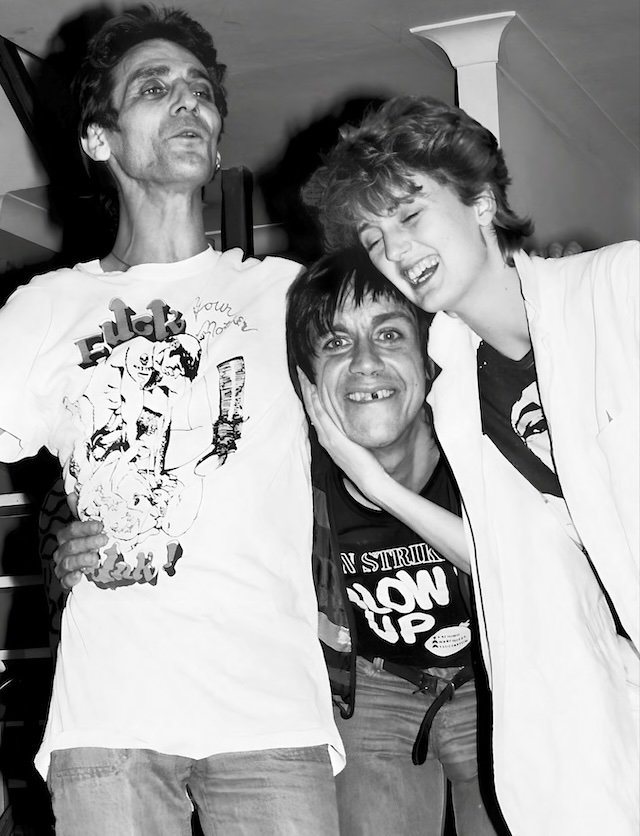
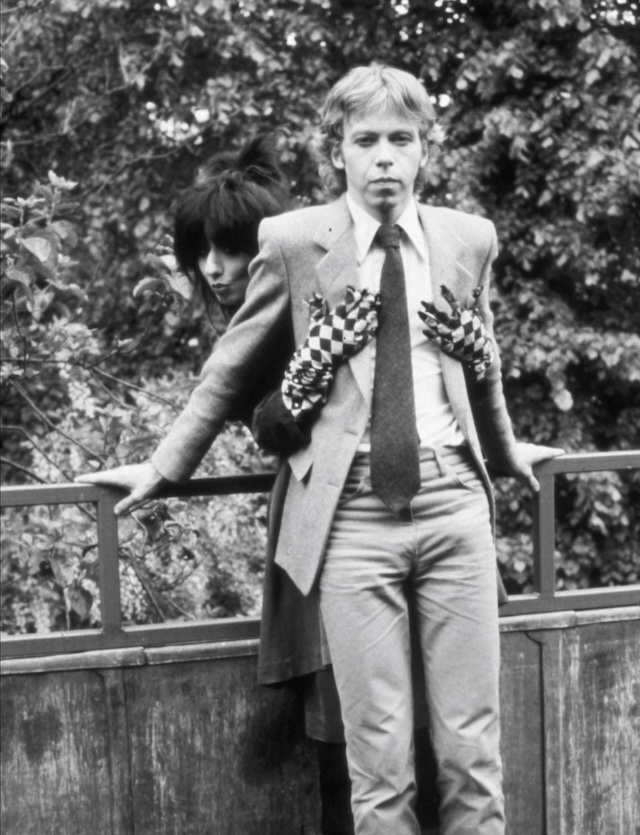
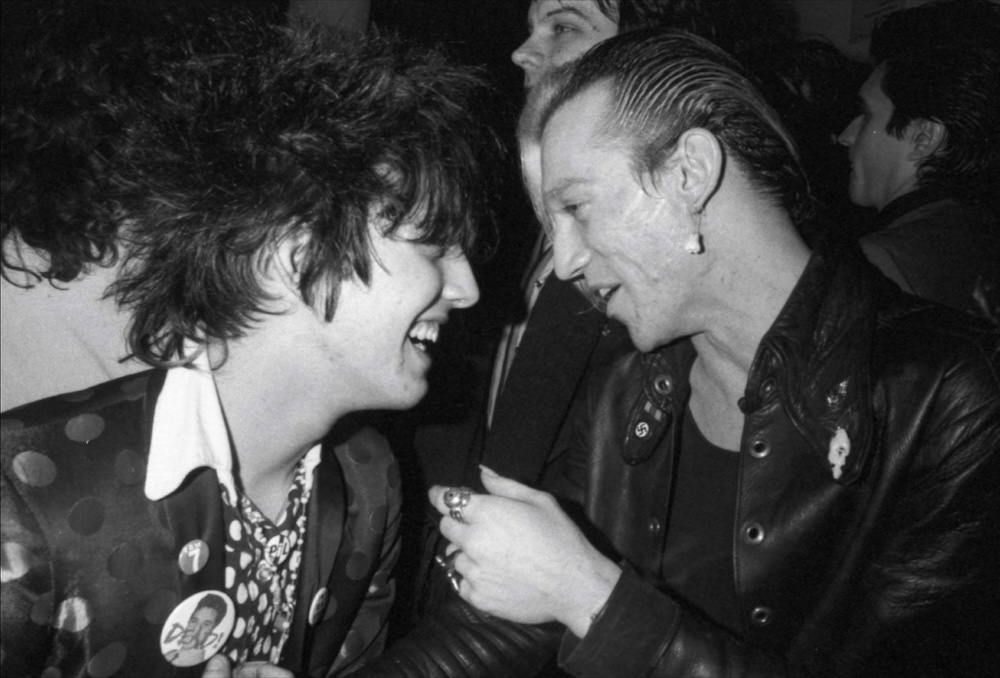
His latest book, CRASH BANG: Pictures from a Punk, is a collection of 125 photographs that document the heyday of punk. Shot by Burkeman between 1976 and 1982 across London, New York and Los Angeles, the publication offers a behind-the-scenes glimpse into the lives and gigs of The Camps, Sex Pistols, Ramones, Debbie Harry, Iggy Pop, Siouxsie and the Banshees and more, who are snapped candidly backstage and in dressing rooms. “First off, I want to be clear,” asserts Burkeman, “I’m not fronting as being a photographer! I was a high school dropout who failed the one O-level exam I took (photography) but had ridiculous and grandiose ideas about being the next David Bailey or Helmut Newton.”

These photos – charmingly unsharpened and grainy in their appearance due to the film expiring – were left to gather dust for 40 years before being rediscovered. Below, Port chats to Burkeman about uncovering the lost archive, the musicians he met, and the moments that defined this iconic epoch.

Your new book compiles a collection of photos that were ‘forgotten’ for 40 years. Can you tell us about the moment of rediscovering them and what inspired you to turn them into a book?

Well, here’s how this all came about. When my mum died about eight years ago, my sister needed me to come home to clean out my old bedroom. Bedside drawer, I found a bag of about 20 undeveloped rolls of 35mm black and white film. I brought them back to New York to the best lab in the city, and asked them to develop them. 

They asked how old they were and when I said 40 years; they said chances are there would be nothing on them. I asked them to develop them anyway, and about half of them were completely blank. 

But then I saw the contact sheet for a Ramones show at the Rainbow, from Christmas Day 1977, which became their iconic live album It’s Alive. Then I saw the sheet for The Cramps at Mudd Club, a show that I’d completely forgotten I was even at. I couldn’t believe it – it was a very exciting moment!

For a while, I was thinking I wanted to make a zine of these photos (very punk etc.). But my friend Erik Foss told me I was a fucking idiot, and that the photos were important and deserved a real book. I had recently met Sammie Purulak, a young and very talented designer, who saw the photos and said, “Let me design the book!”.

Siouxsie and the Banshees

The images are shot between 1976-1982 in London, New York and LA – otherwise known as the ‘heyday of punk rock and new wave’. What can you tell us about this period? 

People will argue about when and where punk rock originated, but it caught fire in 1976. That’s when I started taking photographs because I left school and wanted to be a photographer. 

These bands and this scene were the most exciting thing to be a part of. Part of it was simply a backlash towards the pompous, progressive music scene of the early 1970’s, when you could never get close to those musicians. Punk gave young people the confidence to try doing stuff themselves. I believe rave culture came out of that same DIY ethos, in the UK anyway.
Debbie Harry

Can you tell us about some of the musicians you’ve captured and your relationship with them?

For most of the bands in the book, I did not have any relationship with them, other than going to see them at gigs. But there are two or three that I was friends with for various reasons, the first being a band called The Tourists.

They lived in a squat above a record store called Spanish Moon in Crouch End, North London. As a 15-year-old, I had worked at Camden Lock Market selling records for Paul Jacobs, who went on to open Spanish Moon. The Tourists featured Annie Lennox and Dave Stewart before they formed Eurythmics. The band used me as their photographer and I had my first (and only) photo printed in NME because of them.

I was also friends with Patti Palladin. When she teamed up with David Cunningham of the experimental pop group, The Flying Lizards, Patti asked if I would do a proper photo session for their label Virgin Records. Those pictures are possibly the best and most professional photos I ever took.

What was your photography approach like – were you on the ground and getting involved, or were you more fly on the wall?

Mostly a fly on the wall for sure. I was painfully shy and socially very awkward.

You’ve mentioned that it was your drug use that allowed you into these intimate spaces with the bands, like dressing rooms etc. How does it feel looking back on this body of work, especially now that you’re clean? Would you have been granted such access if it wasn’t for the drugs?

Looking back at this period of my life is strange, and a little hard to describe emotionally. In fact, it’s almost emotionless. When I think about how crazy things got and how close to death I was, more than once, it’s similar to watching a film about someone else, not me. 

I do believe that being in the mix of other very druggy people and bands did give me access to some places I would probably not have been invited to if I’d not been a fucked-up druggy myself. I consider myself very lucky to have gotten out of addiction. I have a bit of a dark sense of humour and was thinking of calling the book, Lots of Dead Friends. Not a very commercial title 😉

Ramones

Can you pick out a favourite image and explain why it’s a favourite?

That’s like asking, “Who’s your favourite child?”! There are a few shots I really love. 

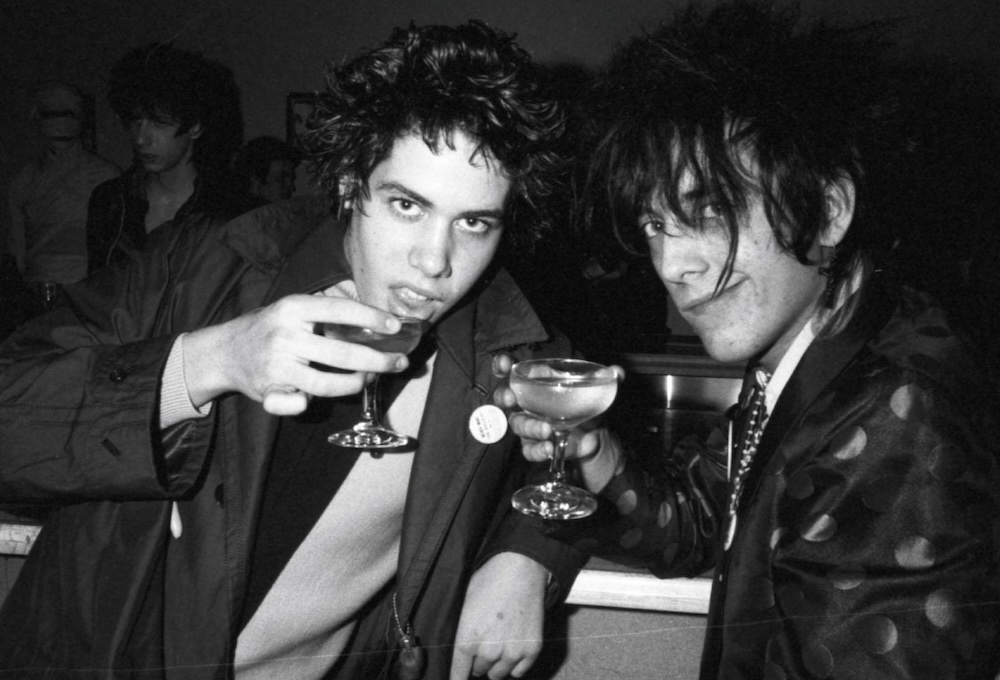
The image we used on the cover was shot at my first girlfriend Kate’s 16th birthday party. These two kids, Danny and Nick just showed up and gate-crashed. They were the first two kids we’d met with ‘the haircut’. I’m told that one of them is still alive. I hope he sees the book.

For one photograph, Patti Palladin and I stayed up all night and she parked her car outside the gates of Buckingham Palace at 5am. I don’t think you could even get that close nowadays, you’d probably be shot if you did.

I love the couple of photos of Magenta Devine (RIP) and Tony James, dressed to the nines. The photograph shows the two super stylish guys strolling Portobello Road like it was a catwalk.

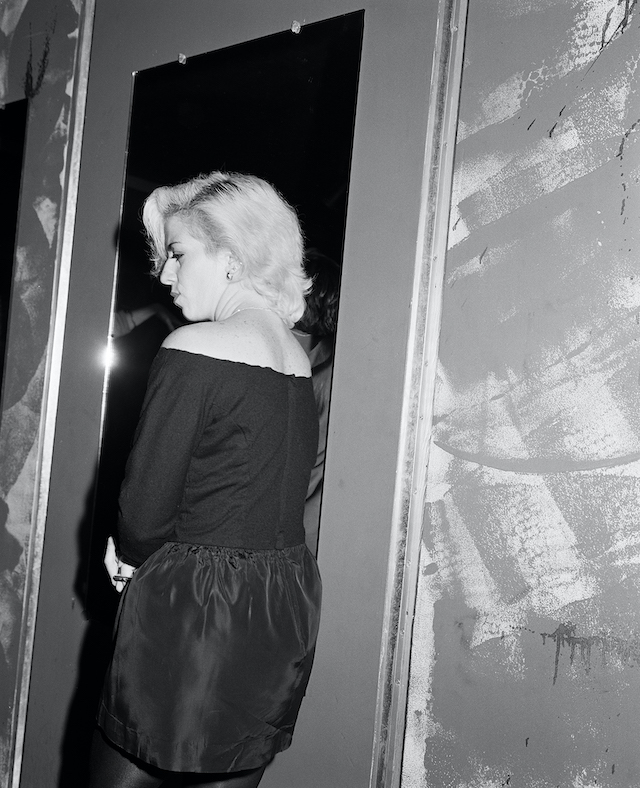
There is also a photograph of my then-girlfriend Sara, whose headshot was taken while we were living at the Chelsea Hotel in NY in 1979. People would mistake her for Poison Ivy from The Cramps. 

Of course, the fact that I saw the Pistols and managed to capture those images is pretty cool. There are so many photos I could talk about … 

Boy George

The book certainly acts as a time capsule into this era. How do you hope your audience responds to this body of work? 

I just hope people like it. I’m not one for preaching or messages, but if like me, you found the lure of drugs irresistible and then couldn’t stop, just know it is possible to have a fulfilling life without them.

CRASH BANG: Pictures from a Punk is available to pre-order here

Iggy Pop
Flying Lizards

Stay In Between

Leafy Yeh on how photography can be used to understand identity, culture and place 

American Home

Photography has many purposes. For Leafy Yeh, they make use of the camera as a means of exploring their identity. Born in China and currently based in LA, Leafy studied Media at The State University of New York and pursued roles as a designer and freelance photographer while working on their own art practice (not to mention the fact that they’ve recently joined Activision as a game capture artist). At the very beginning, Leafy centred their image-making on the more conceptual. Further down the line, however, and as they started to “grow”, Leafy began to steer more towards documentary, transfixed by its ability to “slow down and observe life more closely”. 

Applying this to practice, Leafy’s ongoing series Stay In Between encompasses their ethos as a photographer – and ultimately the reasons why they take pictures. It’s a long-term project that explores their traditional Chinese and Chinese American identity, having spent a decade in the US and constantly feeling adrift between these two cultures. Toeing the line between familiarity and disconnect, Leafy responds to feelings of unsettlement by taking pictures, using their lens to produce almost surrealist photography that channels their interests in heritage, place and the environment. Below, I chat to the photographer to find out more about the series. 

Chinese Takeout

What inspired you to start working on this project, what stories are you hoping to share?

This project comes from my experience as an immigrant. I live and work in the United States but China will always be my home. When I first came to America for college, I allowed myself to be very westernised so I could blend in. I started to loose a big part of myself and this has brought me a lot of pain. As I grow, I am embracing a unique space – where I am in between traditional Chinese culture and Chinese-American culture. My photos reflect the complexity of this journey through abstract forms in natural and urban settings. 

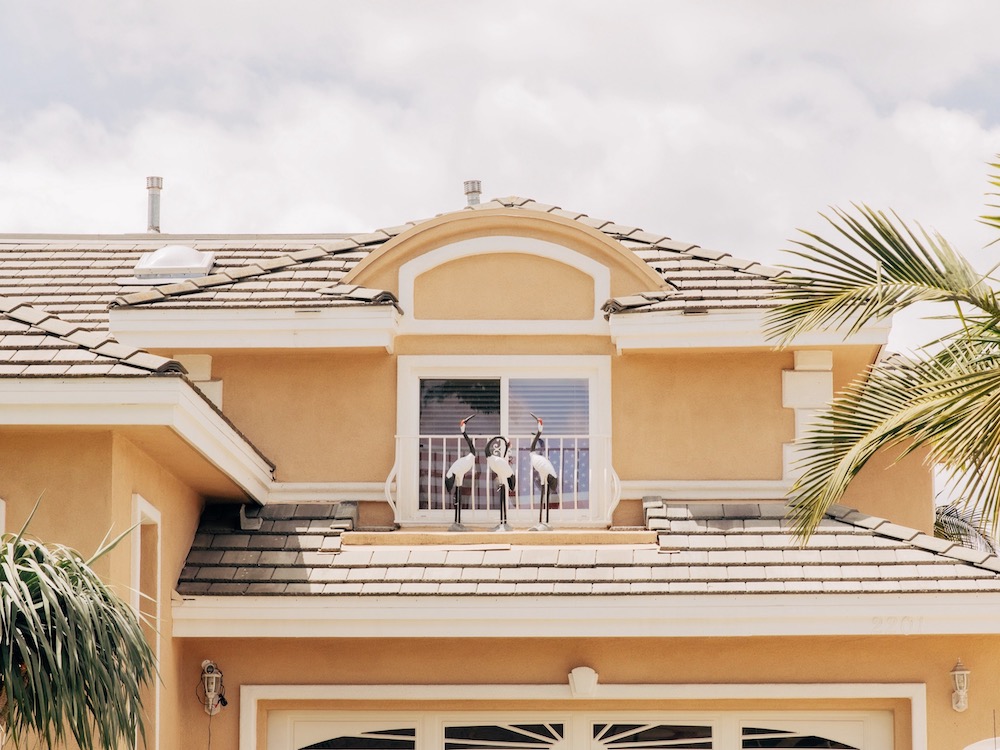
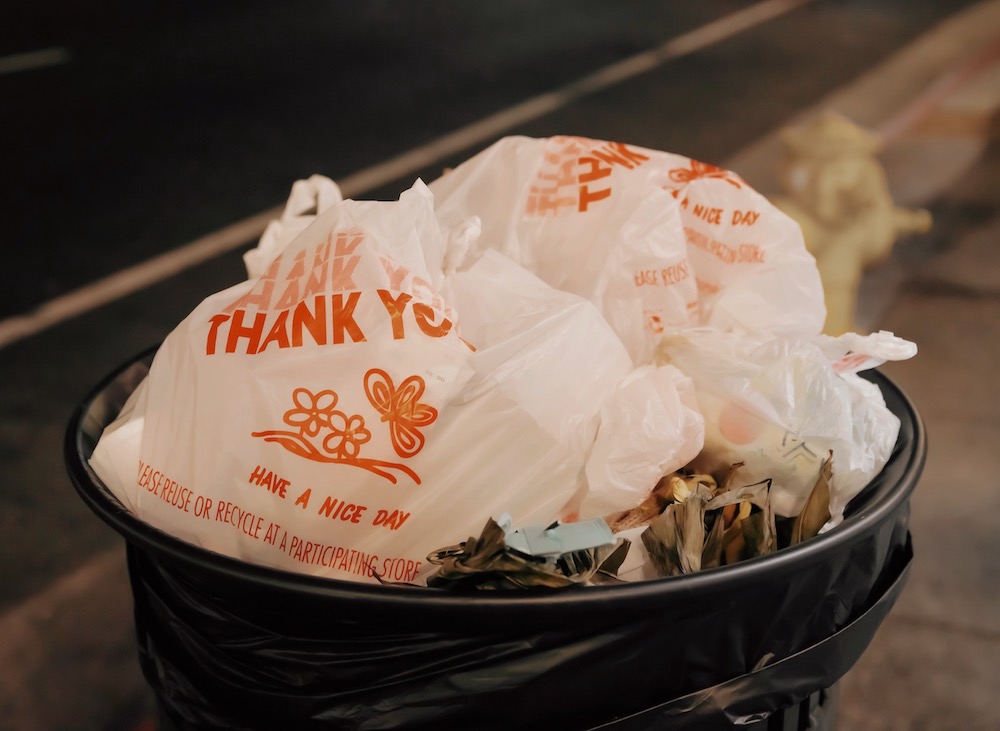
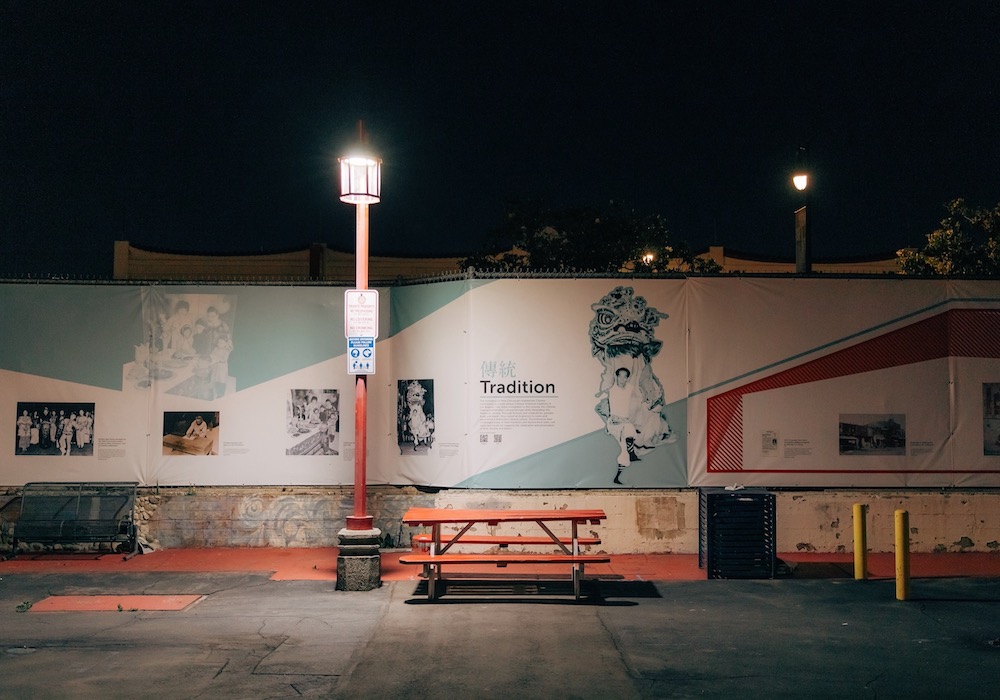
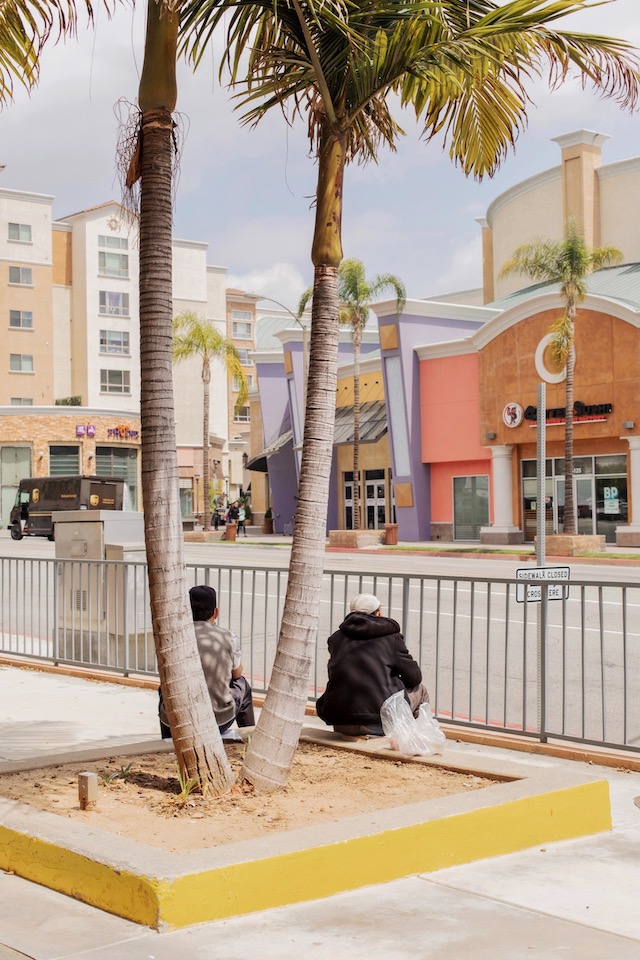
Having not been back to China for three years due to Covid-19, I’ve spent a lot of time at San Gabriel Valley and Chinatown to feel the familiarity again. Documenting these places evokes a lot of memories of my childhood, from ordinary objects to the architecture and language; they are reminiscent of China in the 80s. Based on my memories, I photograph this liminal space to imply concepts of continuity, isolation, transition and the overlapping of two cultures. This project is a way for me to navigate through them in search of a reconciliation of my inner juxtaposition: a home and a trip into normality. 

Courtyard

Can you share a few key moments from the series and explain their significance?

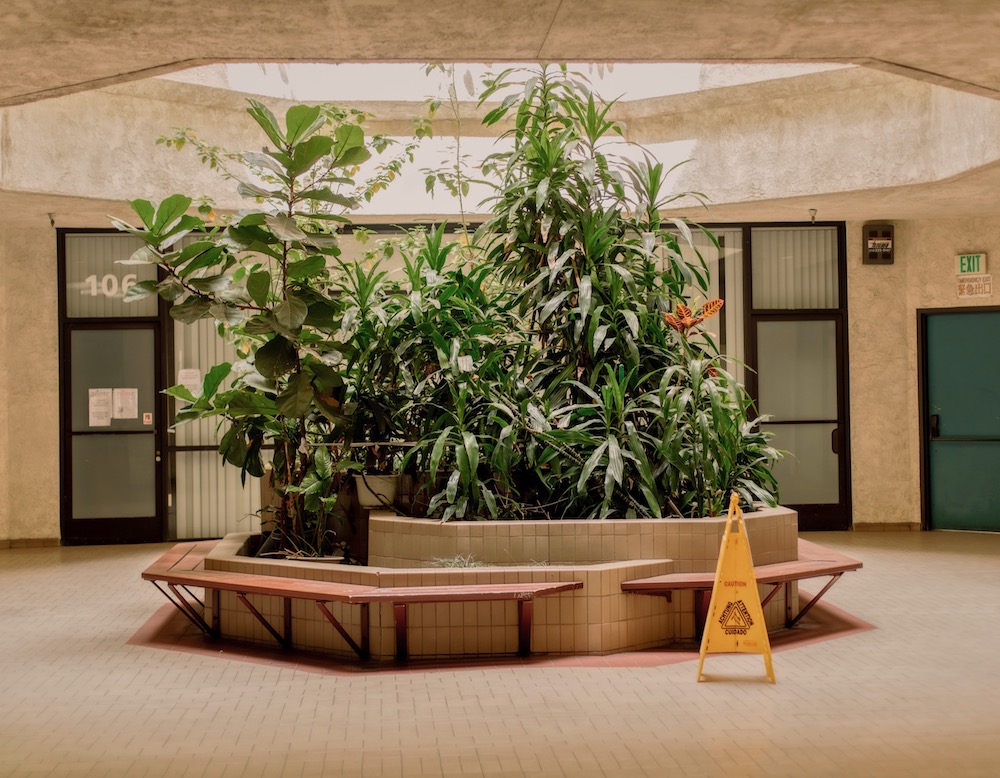
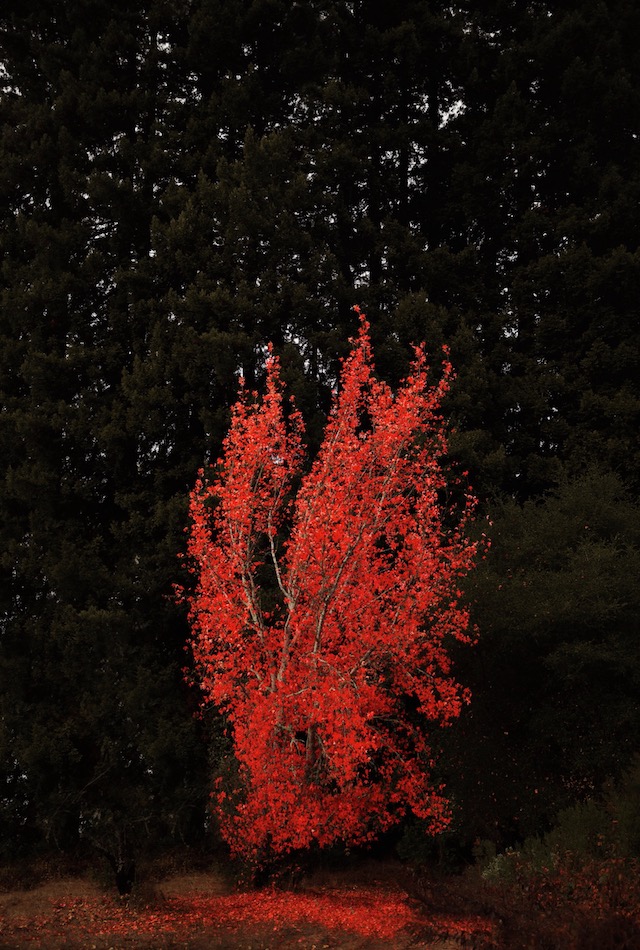
My favourite combinations are the bright red tree in the forest and the centre planter inside an office building in Chinatown, occupied by Chinese businesses. They’re the opposite of each other. One is so alive and outside, while one is trying to breath through the open air from inside. I love the connection and contrast between the two. 

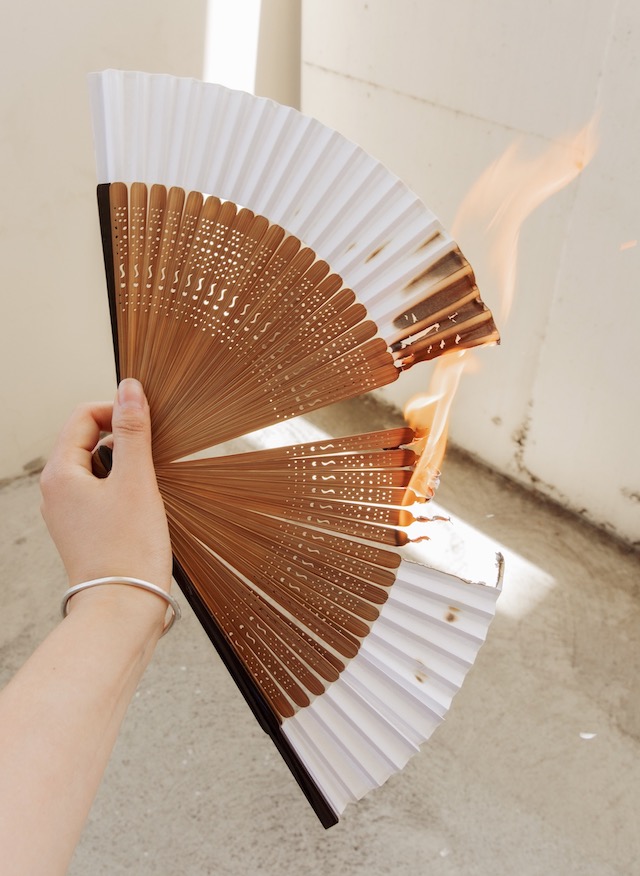
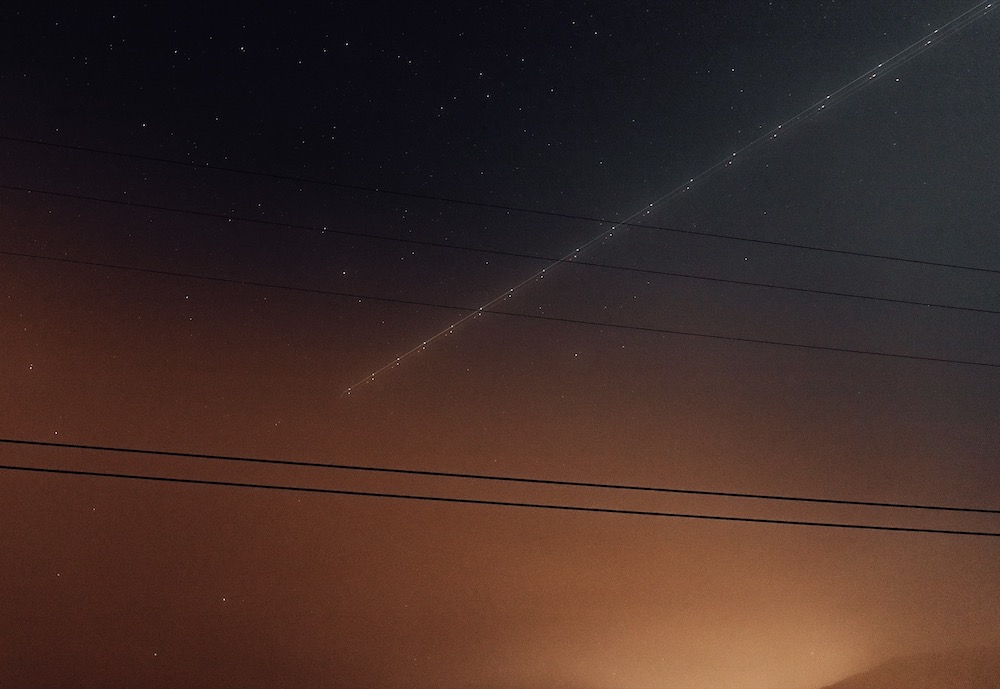
Another two photos I really like are the long exposure of an airplane flying through electrical lines and the fan on fire. They share a sense of surreal-ness in reality. I photographed the fan when it was just lit so the original form is still showing. As the fan is burning away, the fire is opening up a gap. It’s reminiscent of the light beam slicing through the electrical lines and the sky over time. Both of the photos have a feeling of division – the power to break through space. 

Fan on Fire

How important is the environment and sustainability to your practice, is it something that you consider while making imagery? 

I try to keep a minimal impact on the environment when I am going into the nature. If I create something, I make sure it’s not harmful and very easy to remove. As I photograph more landscapes, the smaller I feel and the clearer I see the space inside. Environment and sustainability are more metaphorical elements in my practice – about finding balance in internal and external worlds. 

I think a good balance is finding a flow that overlaps the two worlds; I keep these themes in mind when I work on projects. But this could be a roadblock if I am overthinking. For a while, I didn’t know how to move forward, and I learned to let go and photograph with instinct. The action of photographing brings me inspiration later on when I see the connection to other photos in the series. I think if you are overthinking about the meanings, the photos lack flow. Overtime, as I go deeper into the project, some meanings change or I encounter other perspectives to talk about it differently. This is what I am still learning from this project. 

Cultural Publicity

What message do you hope to evoke from the work?

Most of my projects focus on looking inwards and finding a sense of home from within. The narrative of this project is a process of accepting and finding beauty where I am. I hope this project can speak to others that are like me – feeling in between things. When you can find a place inside, you can reflect that onto the outer world. There will be people telling you that you can only be one thing, but that’s very limiting. I hope you can find that space for you. 

What’s in the pipeline for you?

I am working on a story about a Shanghai hair salon located in a strip mall in San Gabriel. Strip malls are quite unique to American urban planning in my opinion, so it’s interesting to see how the Chinese community adapts the look of the architecture and turn that into a mixed style. I want to use this hair salon as a centre to document the people and surroundings as they look like they are stuck in time from when they immigrated. 

Lunch Break

Overtime

Self-Portrait

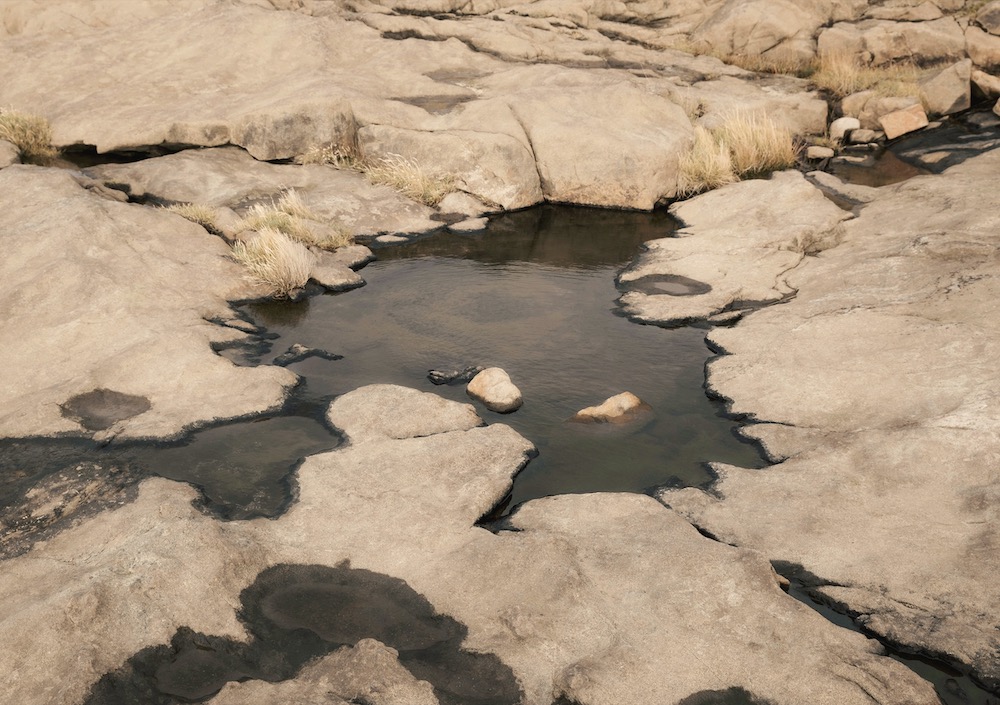
Water Pond

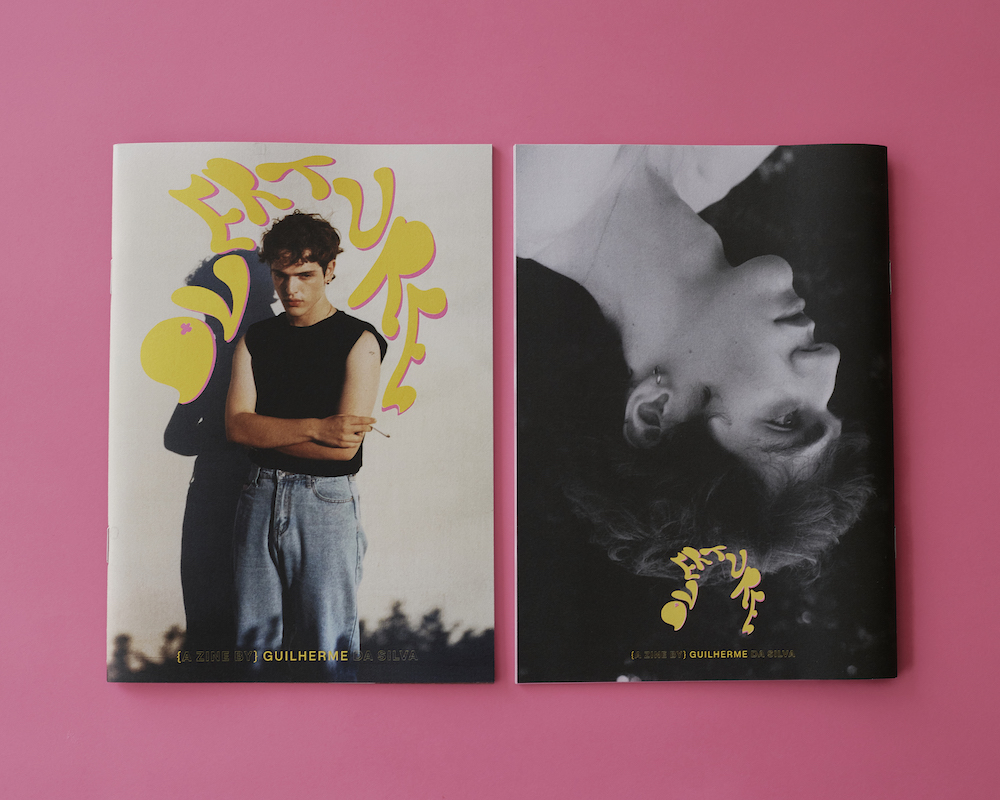
Overture

Guilherme da Silva’s new zine provides a vision of utopia and safe space for the LGBTQ community  

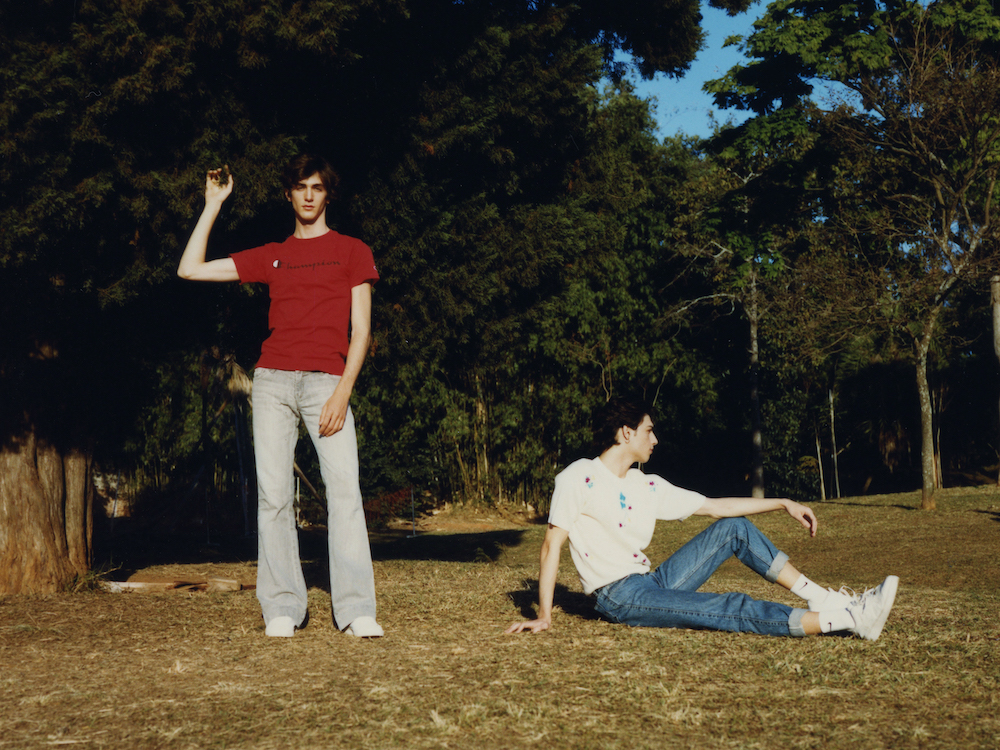
In 2019, when Guilherme da Silva took a picture of his friend in Venice, he knew instantaneously that he needed to build a wider series. Perhaps it was the aftermath of being broken up with by his boyfriend – enduring a somewhat sensitive outlook on the world – or maybe it was more of an inherent drive hidden deep inside, that only needed a little nudge (or picture) to be let out. Either way, it was this very moment that sparked the idea to produce what would later become Overture, a zine which encapsulates Guilherme’s deep truths both as an individual and as a photographer: to support and provide a safe space for the LGBTQ community.

Nodding to the concept of Arcadia – a vision of utopia – and inspired by the work of Thomas Eakins, Guilherme has collated an intimate documentation of queerness in Brazil. As a country that’s less than accepting of the LGBTQ community, Guilherme turned towards photography as a way of understanding his own identity and experiences; he urges those who see themselves in his pictures, and those observing this works, to do the same. It’s not been an easy ride for the photographer, having experienced LGBTQ-phobic attitudes in the industry which sparked a bout of depression. But having self-published his own zine, Guilherme is taking matters into his own hands and hopes to continue building on this empowering body of work. In fact, it’s in the zine’s name Overture, which alludes to the opening of an opera. This edition is an introduction to a longer body of work in the future. I chat to Guilherme to find out more below. 

Dries at the park, 2021

What’s your ethos as a photographer, and what stories excite you?

I think it’s diversity to say the least. When it comes to my work, everything is so deep inside me that sometimes I can’t explain in words. But what has been driving me to create since the beginning is the people that I’ve met throughout the years; the connection I created with them. Part of what I’ve been doing lately in my work (and what I did with the zine) is creating this sort of tribe of young people who live in this utopian land away from the corruptions of society. And this is not just in the pictures; we ended up creating a community where everyone supports each other. What excites me about being a photographer is what comes after the photography.

Ayrton and Matheus at the park, 2021

What inspired you to make this zine?

Well, when I’m not doing my personal projects, I work as a very commercial fashion photographer in Brazil. What inspired me to start the zine was the frustration I had with people who wanted to shape the way I was supposed to be photographing – not just the technique, but also who I was photographing. I heard so many LGBTQ-phobic speeches during meetings and work that sometimes I felt like I was not welcomed, that I was there just to press a button. I ended up with anxiety and depression and, to pull me out of that dark place, I knew I had to find a place to be safe. During the process, the pandemic hit and I had to postpone the beginning of the project. The situation in Brazil has been awful because of the government and I knew this was another reason why I should start this project. The zine is about this group of queer people that I wanted to portray in this place that nobody knows where it is but everyone wants to go there. It’s Arcadia, it’s a scape. 

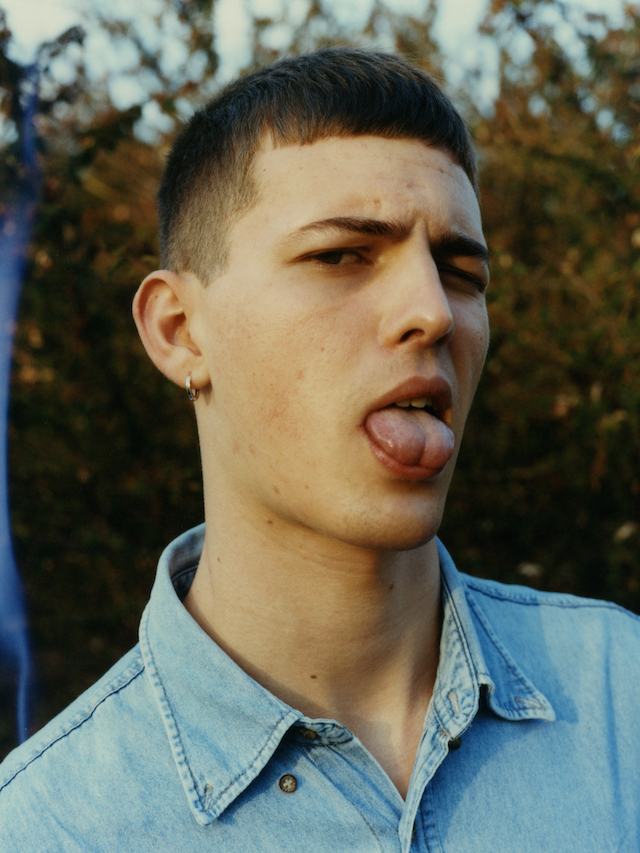
Heart-shaped tongue, 2021

Who are we meeting in the zine, where are we visiting, what stories are we hearing?

All of my personal work feels like a self-portrait to me, so the zine is pretty much about the feeling I was talking about in the answer above. We are meeting this group of queer people who lives in this utopian land, like the concept of Arcadia. I was very inspired by the ‘Arcadian’ paintings of Thomas Eakins, the political view behind the work of Justine Kurland in her book Girl Pictures, and also the works of Nan Goldin and David Armstrong. 

Tell me more about the people you’re photographing in your zine, and how you strive to represent them? 

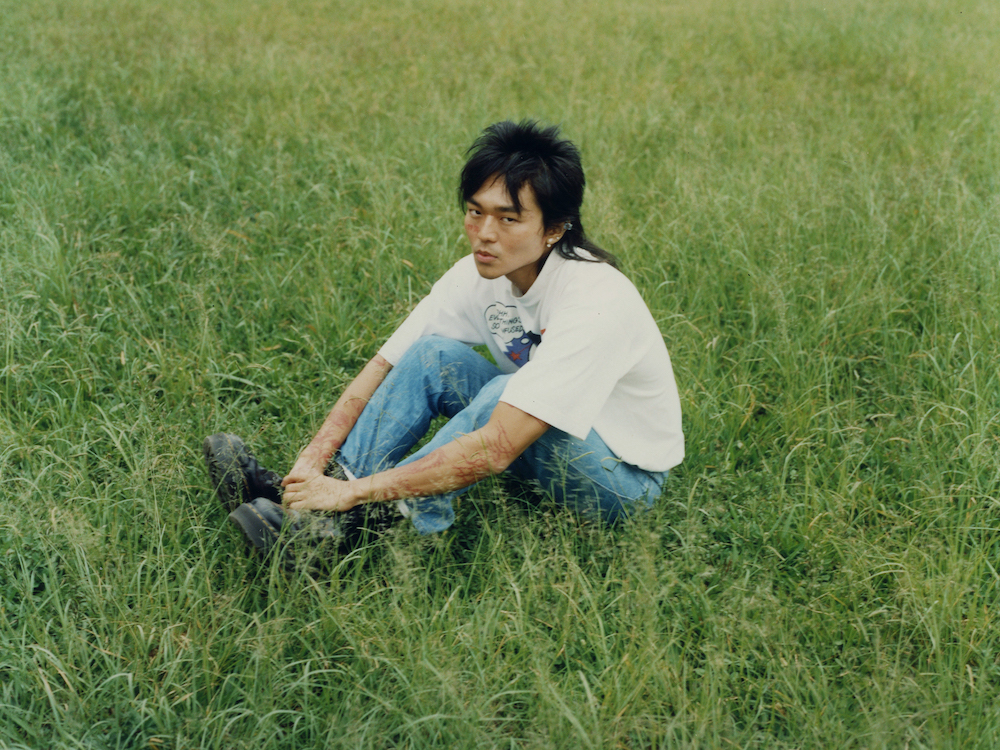
I think everything happens so effortlessly. Most of them I meet online first and then we meet to take the pictures, most of the time with their own clothes, sometimes I use some of mine. It’s so simple and beautiful.

What does photography mean to you, what’s its purpose?

Photography for me is my joy, it’s what allows me to understand more about the world and more about who I am. It’s what makes me feel sane.

Kenzo at the park, 2022

What can your audience learn from this zine?

They can learn how important it is to create communities when you are LGBTQ+, where you can meet people and talk about your experiences. It’s important to have this safe place where there’s no judgement and you learn more about who you are. We spend so much of our lives trying to hide ourselves when we were kids that when we are adults we have to discover our true selves. Being inserted into a community that protects you can help a lot.

What’s next for you?

The title of zine means this one is just the first, I’m already working on my next publication and I definitely want to work more collectively with stylists, make-up artists and creative directors who are open to accept my view. 

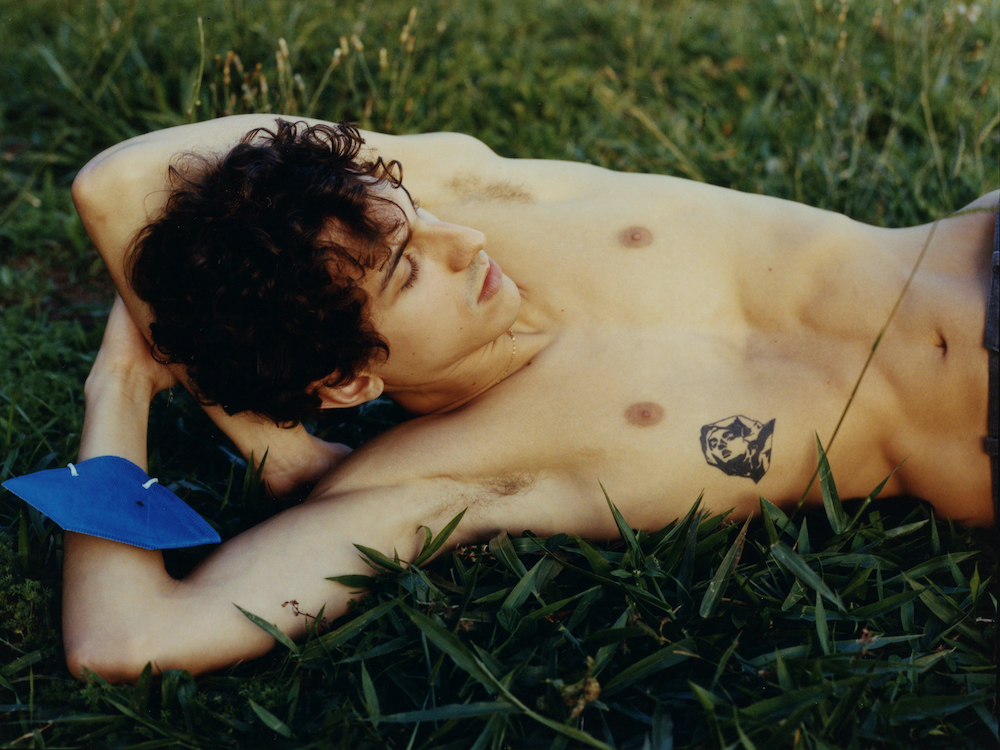
Leo at the park, 2021

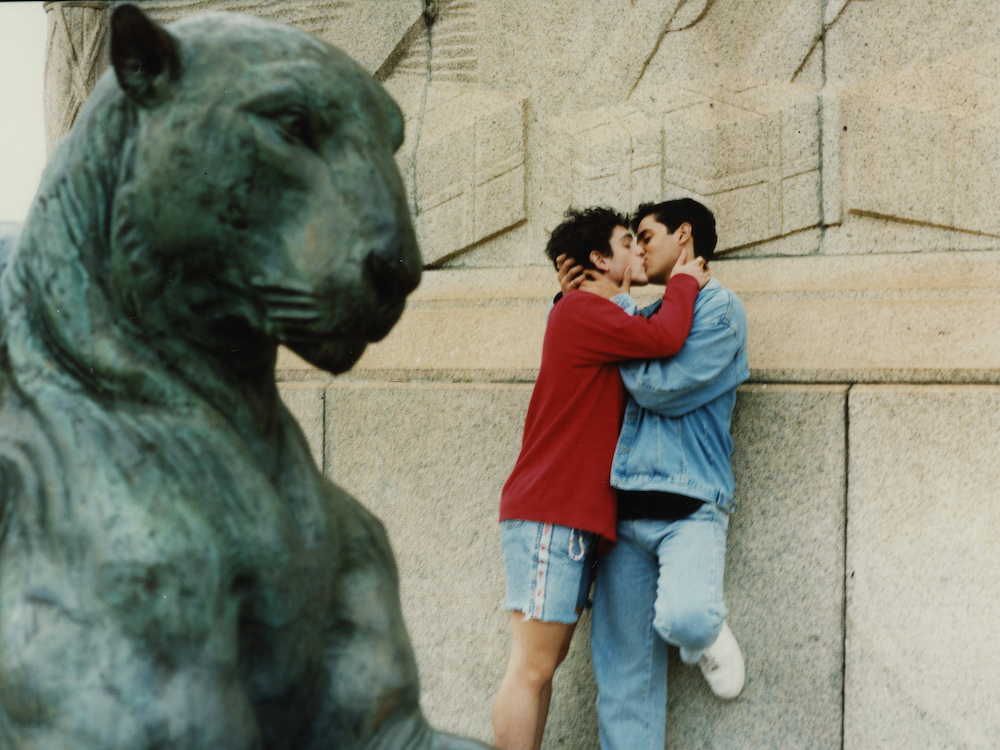
Lucas and Leo kissing at the monument, 2021

Pedro at the park, 2022

Common Place

In his ongoing series, Scott Rossi highlights the importance of public space for building community

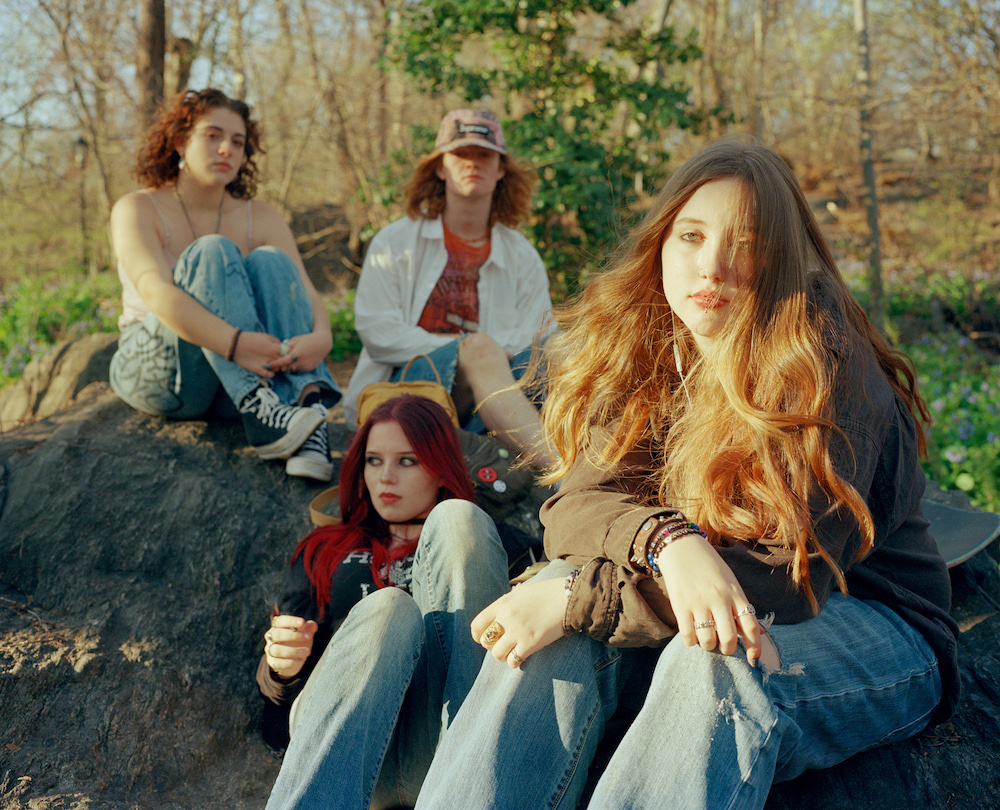
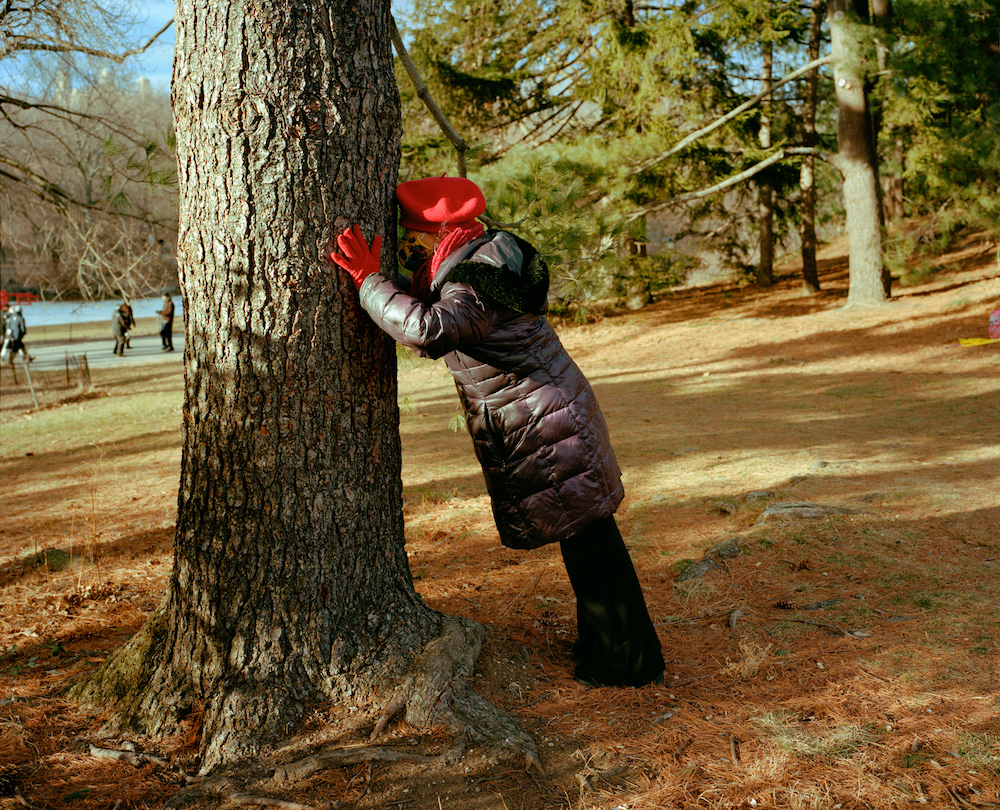
Lily, Reef, Kane, and Luci, Central Park, New York, USA 2022

Capturing the world around you is one thing, yet doing so in a way that’s not only mesmerising and memorable but also rich in context and history is another. Scott Rossi, a Canadian photographer based in New York, does this utterly well in his photography work. With an ability to lens the moments of daily life around him, Scott draws from the quieter parts – those that are smaller and often missed to the untrained eye – to build stories about the people of the world. In this regard, subcultures and public spaces are the two key pillars to his practice, which have naturally informed his latest series, Common Place. A project that commenced during the pandemic while out and about on his daily walks, Scott set out to photograph the local community in Central Park and their relationship to the natural world. Below, Scott tells me more about the series and the importance of public space – a relationship that will continue in the future.

Untitled, Central Park, New York, USA, 2021

What’s your journey into photography like?

I grew up in the suburbs of Vancouver, B.C. When I was five years old, my father arrived home one evening with a go-kart. I spent the next 13 years racing go-karts around the world, from British Columbia to the streets of Monte Carlo. 

Photography was not always on the cards for me. After my dreams of becoming a professional race-car driver were over, I studied Psychology at university. I only began taking photographs in my final year by chance. In that elective photography course, my professor introduced me to the work of Garry Winogrand and Joel Meyerowitz, which derailed my plans. I couldn’t shake photography away. It gave me a new purpose. I spent the next two years primarily photographing my surroundings without much intent or reasoning behind my actions. I simply wanted to capture beautiful, fleeting moments. 

In 2018, I started making long-form projects. In them, I discovered the power of visual storytelling. I began to value not just the results, but the process of engaging with my subjects, establishing an intent to the work that previously lacked. In the first two projects I worked on, Burned Out (2018-19) and Jazz House (2018-20), I documented coming-of-age stories. Whereas Common Place (2021), which I began shortly after moving to New York City, explores the history of Central Park and the relationship between New Yorkers and the public space in the context of a global pandemic. 

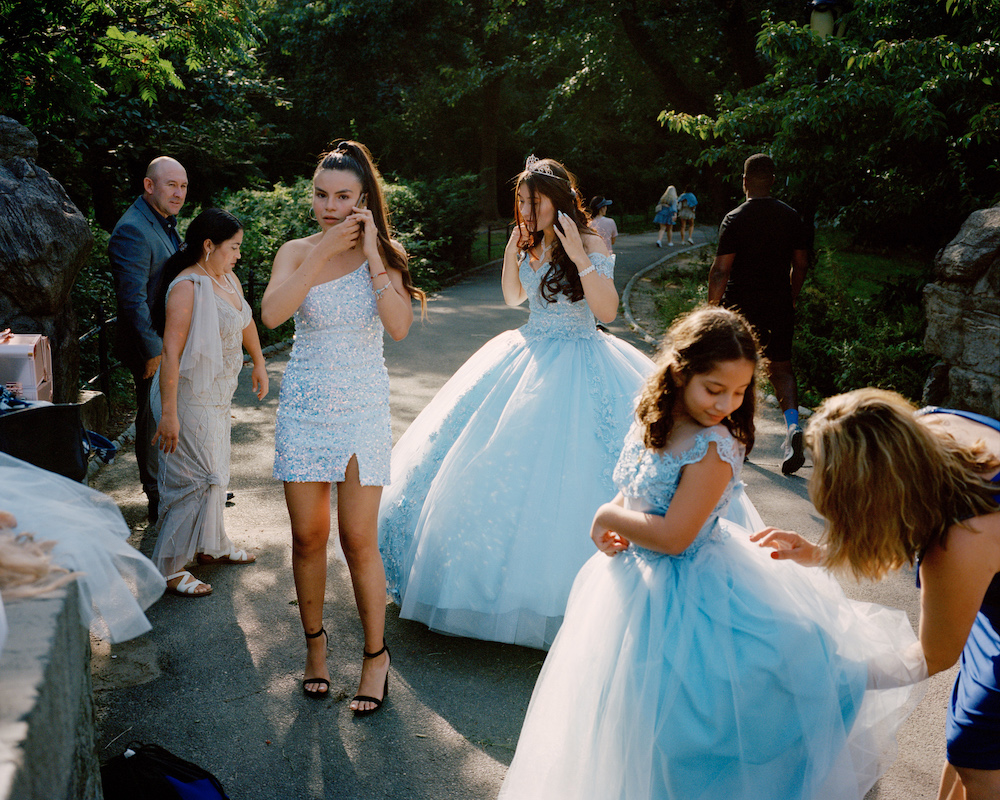
Quinceañera, Central Park, New York, 2021.

What inspired you to start working on Common Place, what stories are you hoping to share?

In Vancouver I was surrounded by nature. After I arrived in New York City, in the height of the pandemic in 2020, I began to miss nature and felt lost and uninspired, so I started going on long walks through Central Park. I began photographing during those walks with a point-and-shoot camera. I was studying at ICP at the time, and I thought this point-and-shoot idea would be a good side project to my thesis, which was still undecided. Eventually, I realised the side project was worthy of the main thesis idea. I bought a new pair of shoes, switched to a medium format camera, and began photographing Central Park every day. I hoped to share the stories of the people I met there through photographs. 

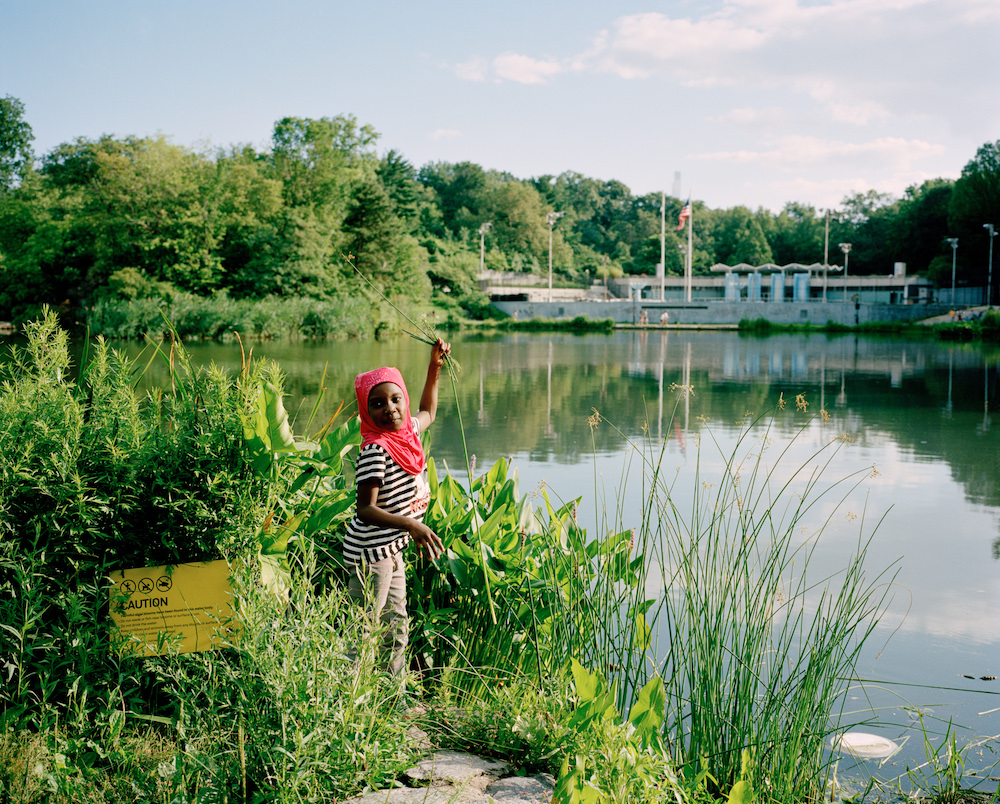
The work highlights the importance of public spaces, especially in a city like New York, for the overall wellbeing of its people. This city and Central Park, have a complicated but also rich history. Today, despite its history, I think the Park is seen as a sanctuary and a place to be yourself and I hope that comes through in my photos.  

South of Sheep Meadow, Central Park, New York, 2021.

Who are your subjects? Did you spend much time getting to know them?

I meet all my subjects while wandering around the park and typically photograph them as they were. It is that level of comfort and intimacy that piques my interest in the first place. Most of my subjects happened to be New Yorkers, with a few exceptions. 

How long I spent with them really depended on the person. With some people we would spend hours talking, while others gave me only five minutes. Regardless of how long, I was always transparent about what I was doing.

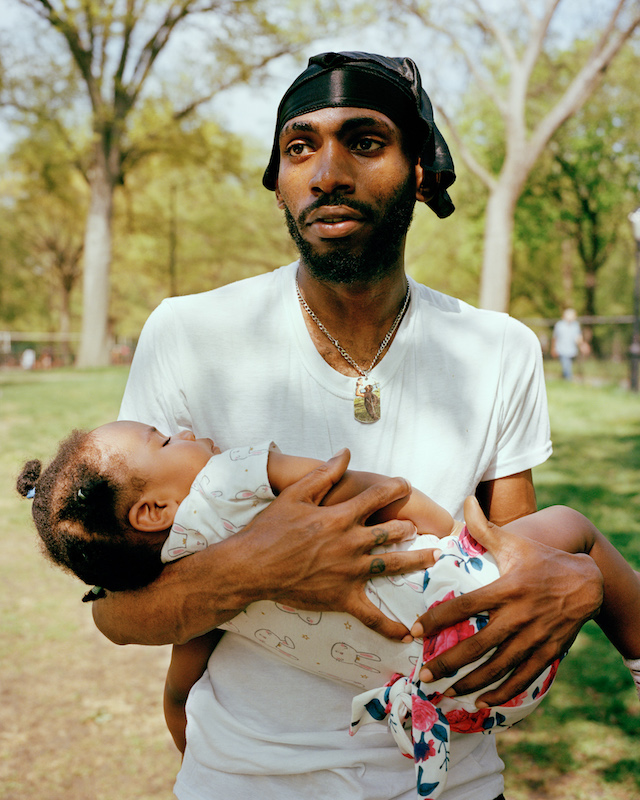
Aaron and Eralissa, Central Park, New York, 2021.

Can you share any personal favourites from the series?

Aaron holding his baby daughter Eralissa has always been a favorite. There is subtext in this image, but for me, the cutest part is thim holding his daughter on his dog tag necklace. Once I noticed that, my heart melted. 

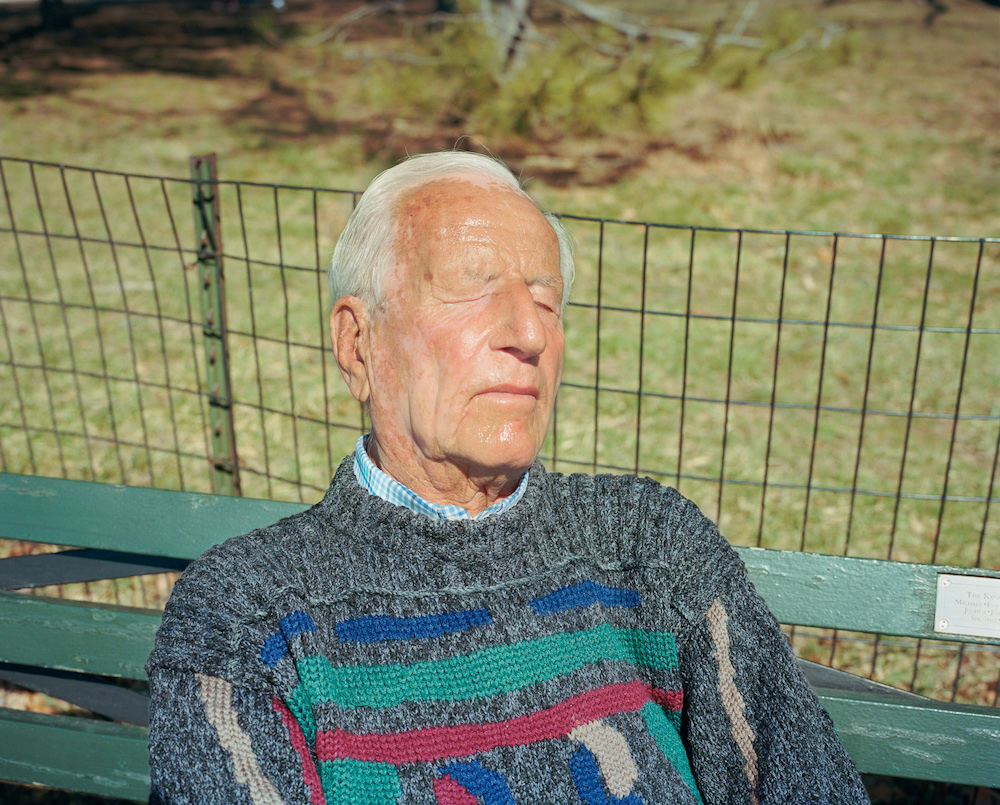
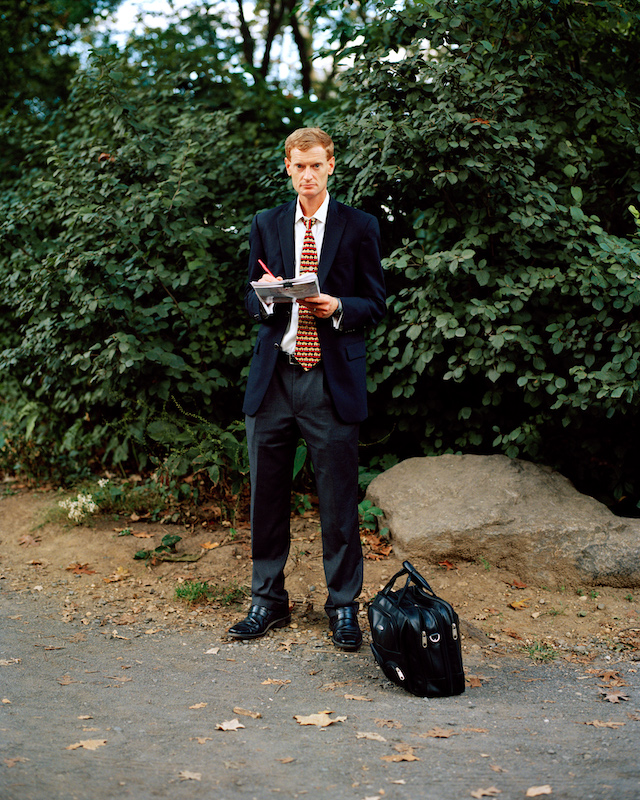
Then of course, Dave. He is a Latin professor and track and field coach at an Upper East Side high school. I think it’s his oversized tie and baggy suit that made it all come together so well, along with the fact that he is marking student’s papers while they run laps around the reservoir. 

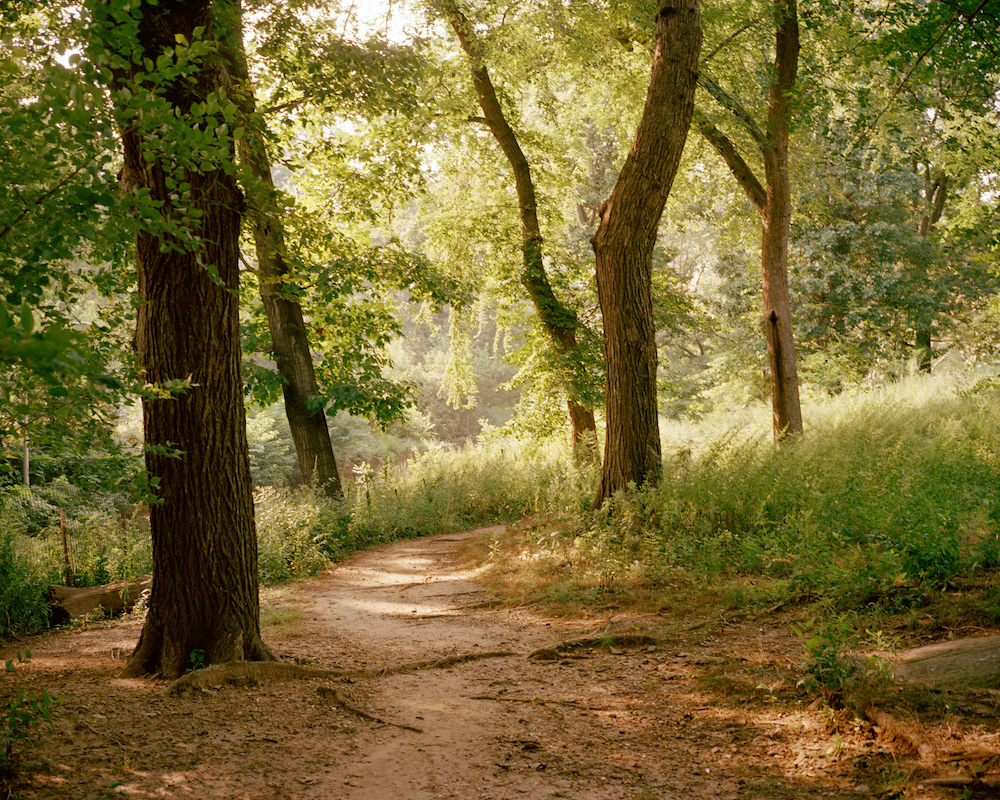
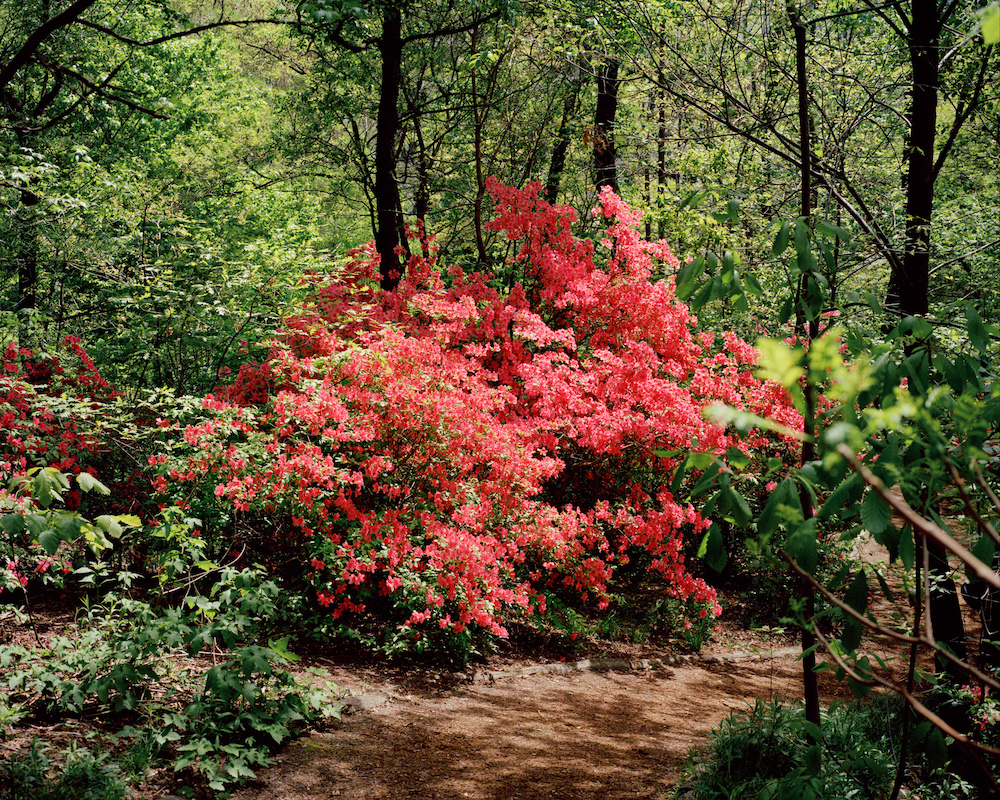
A third favourite of mine is the trees with afternoon light passing through. This is exactly how I feel about Central Park. It has been my home away from home. I feel a warmth when I am there and am constantly “invited” down new pathways. This picture, with the pathway leading us into it, invites the viewer. 

Spring Bloom, Central Park, New York, 2021.

How do you hope your audience will respond to this project?

I hope people feel something when they look at the images. Whether they feel love, hope, or sadness, it doesn’t really matter. I just hope people feel something. As with all photography, for me, an emotional response is the most important.

Untitled, Central Park, New York, USA, 2021

Dave, Central Park, New York, USA, 2021

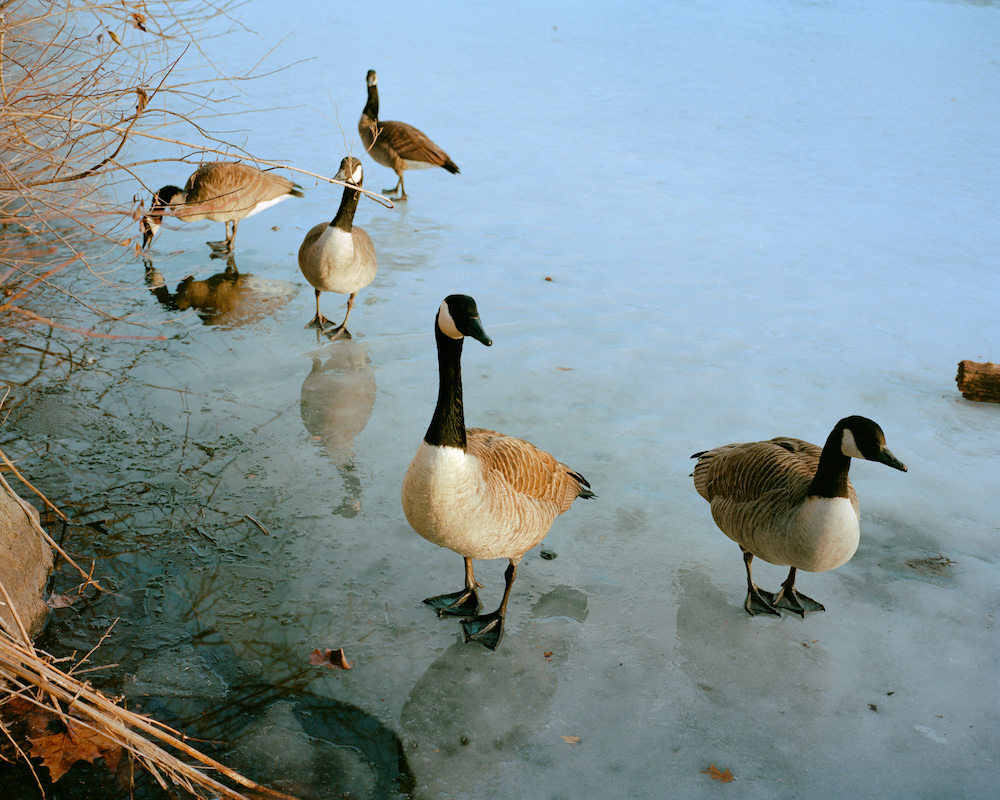
Geese, Central Park, New York, 2021.

Untitled, Central Park, New York, USA, 2021

Geoffrey Leung: Utah

On the road with his father, the photographer documents the rocky landscapes and sprawling hillsides of the mountain state

Cloud, uncropped © Geoffrey Leung

The road trip never ceases in becoming a muse for photographers. For Geoffrey Leung, a photographer born in Saint Paul, Minneapolis, he recently satisfied an itch to visit Utah’s National Parks with his father by means of the car. Resultantly, he birthed a documentary series capturing the mountainous landscapes, rocky hillsides and creeping fauna of the American state. “Seeing Utah’s National Parks was the reason for this road trip and the photos that came from it were incidental to the good fortune I had to spend time with my father as an adult,” he shares. “It feels vulnerable for me, but it’s a story about heritage and habit.”

Growing up in what he deems a “great place” with top tier photography in the area, Geoffrey was influenced by his “practical” parents and was particularly good at maths. More in the way of academia, it wasn’t until around 2018 that he started picking up a camera seriously. “Up until then I was another liberal arts grad (Carleton) playing at being a professional,” he adds. Now based in New York, the photographer has rooted himself in the medium of image-making, to such lengths that his portfolio encompasses all sorts from motion to videography, personal series to commissions. All of which is influenced by the “sacrifice” of his practical parents, and their parents before them, as well as the essays from Susan Sontag, words from John Berger and many others who “take risks and are afraid to follow their gut but still do both anyways”. And Prince, of course.

Sharing a view © Geoffrey Leung

So when it came to Geoffrey’s own excursion across the desert roads of Utah – with his father by his side – he proceeded to create something that was immensely personal to them both. Not least a risk of their own as they ventured into the unknown. Although the road trip isn’t a new or surprising subject matter, to Geoffrey (and his father), it’s a narrative that they hold closely. “I think that doesn’t make this story unique, but the more personal the photos are, the more relatable they may be,” he says. Taking a picture is more like an experience for Geoffrey, who marks the process as an “interruption of experience”. Whether it be formulated in the studio or on the road, each picture crafted through the eye of this photographer is one that’s been created with rawness, care and love. “I want to photograph instinctually to avoid thinking about a moment, or worse, changing it,” he adds. “The story can only be true if I did not really influence its capturing.” In this regard, the longer he spends with a subject, the more he’s able to learn and “deeply see” about their character and being. “Experiencing something beyond its physical appeal is necessary for conveying anything beyond aesthetics.”

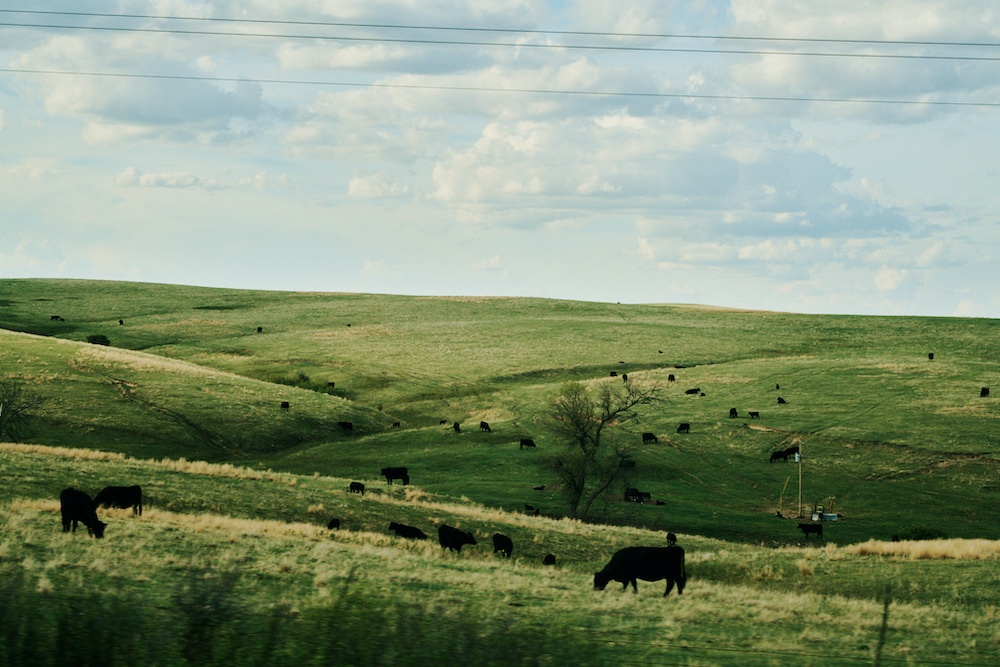
Pastoral 1 © Geoffrey Leung

Pastoral 2 © Geoffrey Leung

Speaking of some favourite moments from the trip, Geoffrey points us in the direction of two photographs : “one with people spreading across a rocky outlook, one of cows grazing in a green field.” Both are luminous in their depictions of greenery, emphasised by the photographer’s decision to up the contrast and focus on the finer details. But, there’s more to these works that beautiful landscapes. “I’m not saying that people are like cows, but it is a funny trickery of language that one might consider,” he explains. In another entitled Sharing a View, Geoffrey has captured his father standing on the popular Zion hike. “This is the only frame I made of this moment,” he says. “But it expresses his youthful side, which I have never really known since he’s been a parent as long as I’ve been alive.”

Not only does Utah depict the wild and uninhibited lands of the the Mountain West state – where bushes grow free and water is somewhat scarce – it also portrays the relationship between two kins, a father and son. Geoffrey plans to turn the work into a book and will continue to build on this “instinctual experience” found in his photography practice. “One of my lifelong photographic goals is to make the women in my life feel beautiful, so I’m working on that too.”

Family friend’s end table © Geoffrey Leung

Famous for its pies © Geoffrey Leung

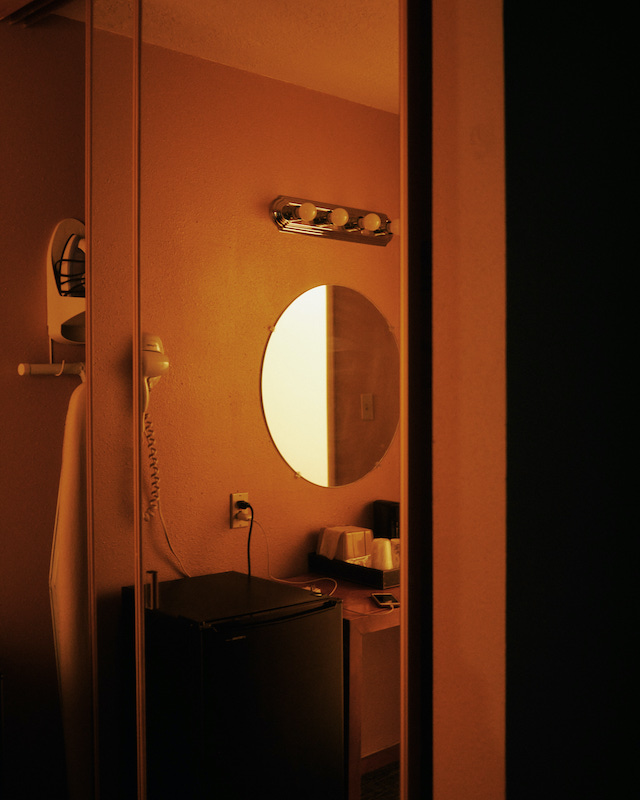
Motel objects © Geoffrey Leung

Our van leaving Zion © Geoffrey Leung

Sioux city diner © Geoffrey Leung

Utah campsite © Geoffrey Leung

Badlands © Geoffrey Leung

A Certain Movement

Soft and meditative, Sam Laughlin captures the ebb and flow of the natural world

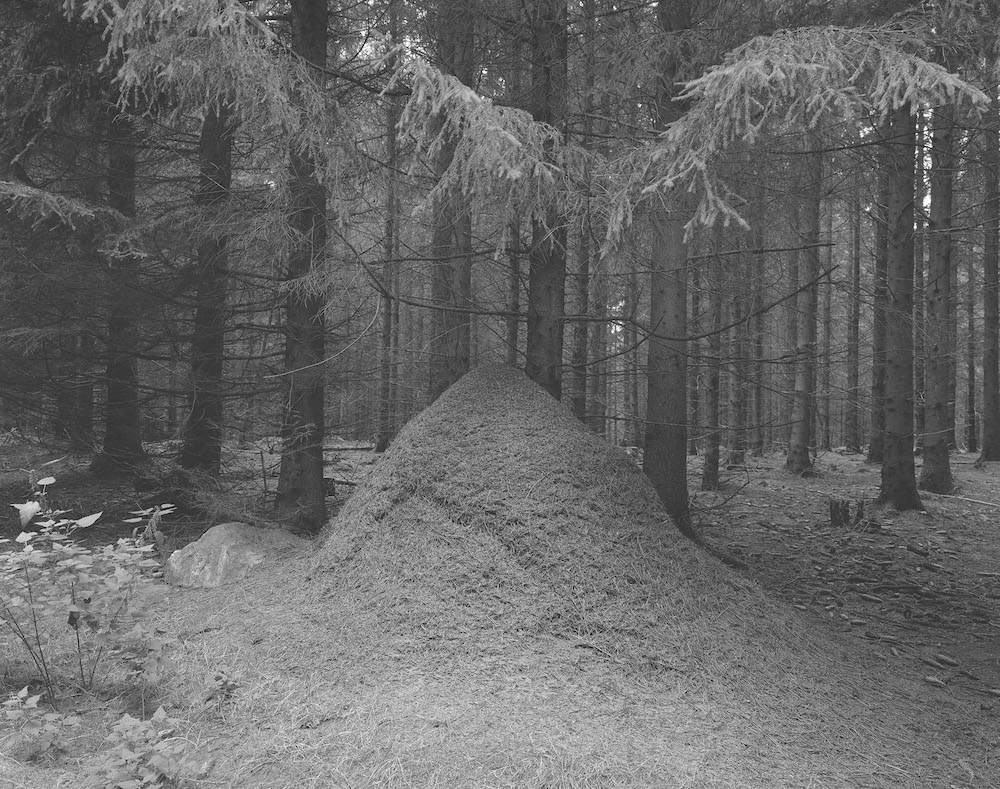
Wood Ants (Formica rufa), 2017 ©Sam Laughlin

It’s not uncommon to hear of an artist’s key influence as being that of a parent or familial figure. Growing up, Sam Laughlin’s father, a zoologist, would hand over an abundance of field guides for him to look at – Sam would sink into the contents, memorise the illustrations, and identify the different species of insects in the process. His dad would also joyfully spout out many interesting facts about the natural world which, inevitably, had a large impact on Sam – later inspiring him to study documentary photography at university. What’s somewhat surprising, though, is that although nature has been a primary pillar for Sam, it wasn’t until 2014 that he started working creatively in this field. “I found my way back to that childhood fascination through books and walking,” he tells me, “and my work quickly followed suit. Now, I can’t imagine my life without walking and birdwatching.”

Alongside various photography commissions, Sam pays extra attention to his personal work – the side of his practice that enables him to explore his deep-rooted interests in nature. He also cites The Jerwood/Photoworks awards as being hugely catalytic for his photography, which is how he debuted his most recent accomplishment: a project named A Certain Movement. Lensing topics of the environment and how animals interact with the space, the work is a quiet, meditative depiction of the world, albeit a curious contemplation of the cyclical nature of earth and its inhabitants – the type of relationship that’s in a constant rhythm, flow and movement. Currently on show at Serchia Gallery in Bristol, I chat to Sam about the project, what his personal relationship is like with the environment, and why it’s such nature has become such an enduring muse.

Adders basking (Vipera berus), 2017 ©Sam Laughlin

How would you describe your own personal relationship with the environment?

My personal relationship with the environment is probably a blend of love, fascination and obsession. Some of the experiences I’ve been lucky enough to have border on the ‘religious’, like listening to a dozen nightingales singing in the dead of night last week, or standing in a vortex of 5,000 terns forced into flight by a peregrine falcon. These are just some of the ‘happenings’ in nature that go beyond words and enter the realm of the profound. The world is – for now and despite us – still full of such happenings and most go unseen. I think essentially I walk around in awe half the time, simply because I always try to be receptive to what’s happening around me day-to-day, particularly in relation to birds. Incredible things happen all the time which it seems most people miss entirely.

Nature is an enduring subject for me because my fascination only deepens the more I discover and experience it. But the word ‘subject’ is slightly problematic for me; I take great pains not to turn nature into a ‘subject’, but rather try to let things speak for themselves through my pictures. 

I continue to focus on it out of love, but also concern, at the rate of disappearance and decline – the ‘thinning out’. 

Deer browse-line (various species), 2017 ©Sam Laughlin

And similarly, tell me more about the relationship between animals and the environment. Can you describe the synergy and how they affect and shape each other?

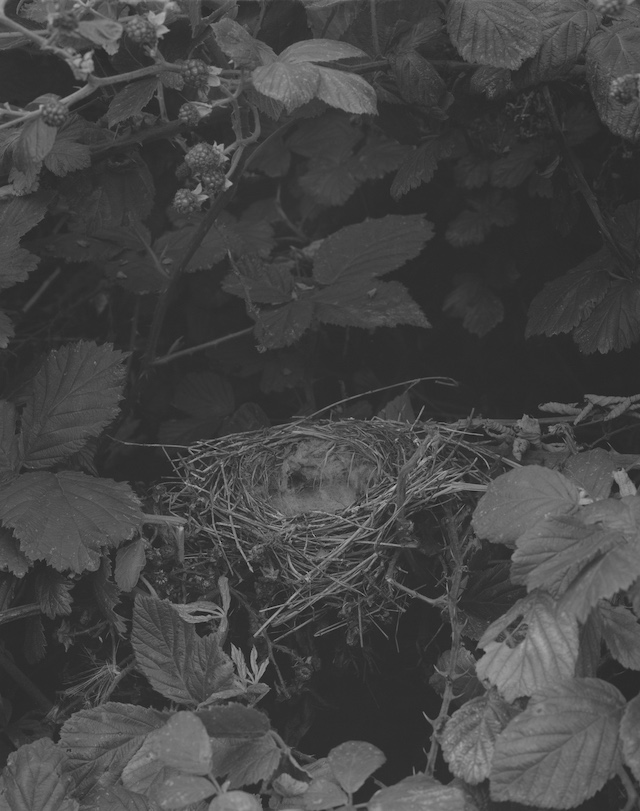
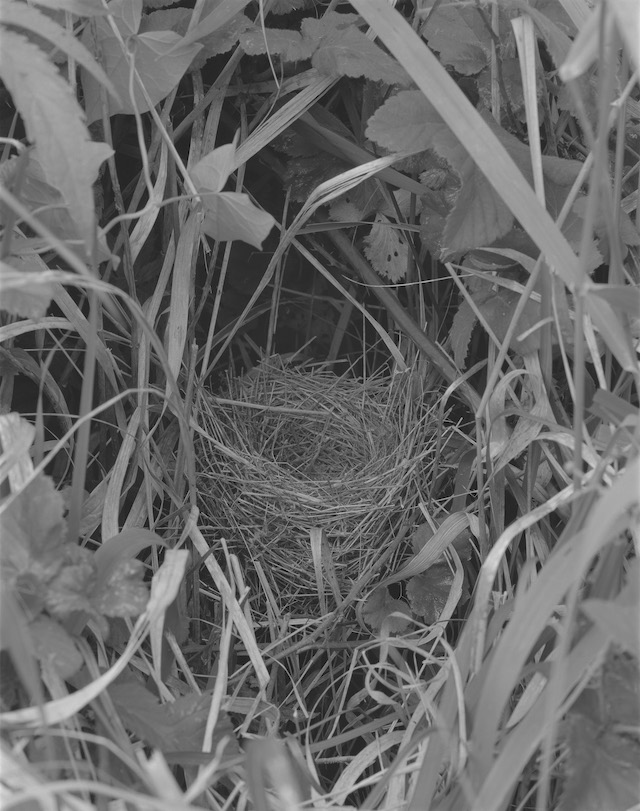
The myriad relationships between animals and their environments can be almost overwhelmingly complex. In simple terms though, as I see it, other animals are ‘at home’ in the world in a way which we humans no longer are. We radically alter the surface of the earth to suit our needs, taking far more than we need. But most animals live in such a delicate balance with their environments that they are inseparable from them–  they live within and are part of their surroundings, usually altering them only in subtle ways that are actually a natural extension of the places themselves. Birds nests are one perfect example of this: materials gathered from the immediate area are made into a structure that supports life there. A manifestation of the bird’s way of living, its behaviour and a material expression of the locale and of the bird’s relationship with it. Then, when you’re talking about migratory birds, the nest is also an expression of those annual cycles of movement, and by extension the tilt of the earth on its axis and the seasonality this causes.

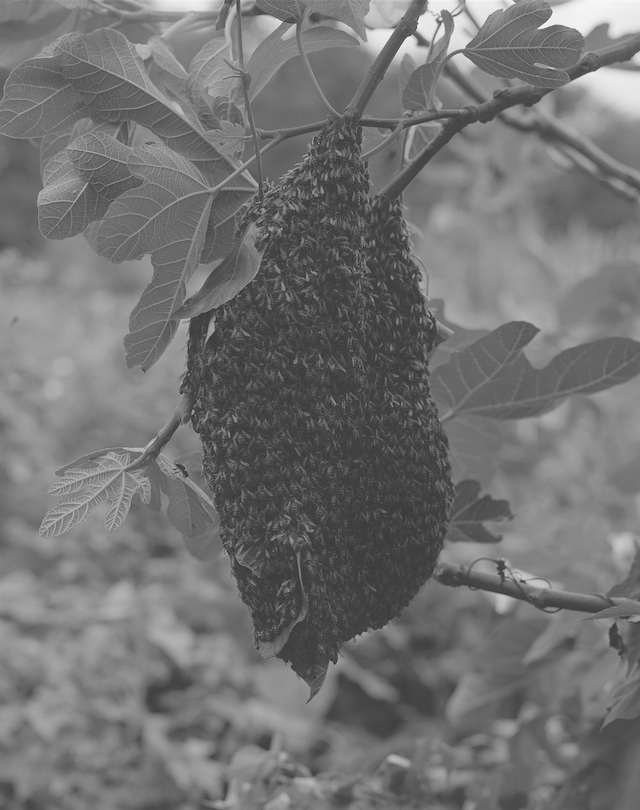
A snail could be seen as an expression of a set of relationships, and so could the song thrush which feeds upon the snail by first breaking its shell on a rock, which it uses as an ‘anvil’. The snail is, in a sense, made of plants, just as the song thrush is made of snails, but that rock is part of the equation too. It’s all inseparable and this is what interests me. So I try to make pictures where interconnections express themselves, often manifested through the movements of animals and the traces these movements leave behind. 

Honeybee swarm (Apis mellifera), 2017 ©Sam Laughlin

Can you give some examples from A Certain Movement, are there any favourite pictures that you could tell me more about?

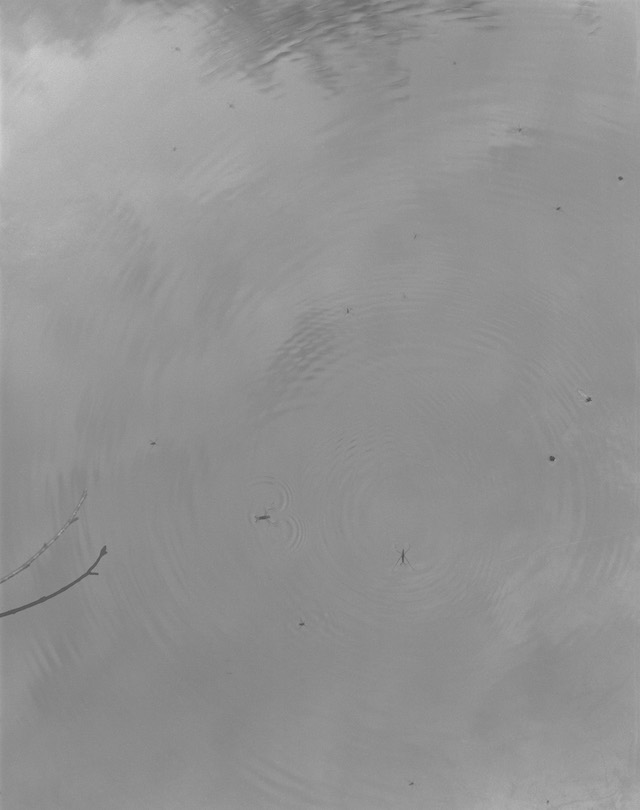
Water Striders (Gerridae) is a favourite picture of mine, chosen for its subtlety and for certain elements of the composition, but mostly for what it symbolises. Water Striders (also known as Pond Skaters) live much of their lives on the water. Their lives are defined by surface tension, which prevents them from sinking. If one looks closely at the picture you can see the ‘meniscus’ around each of their legs. Their movements cause ripples in the water; each one represents a movement and moment in time, with a significance that is briefly visible before it dissipates, rippling out, as I feel all things do. The title of my new exhibition comes from a text written by Adam Nicolson to accompany the project, in which he references this picture and all that it symbolises about the quiet events unfolding through time – Ripples in the Surface of Things.

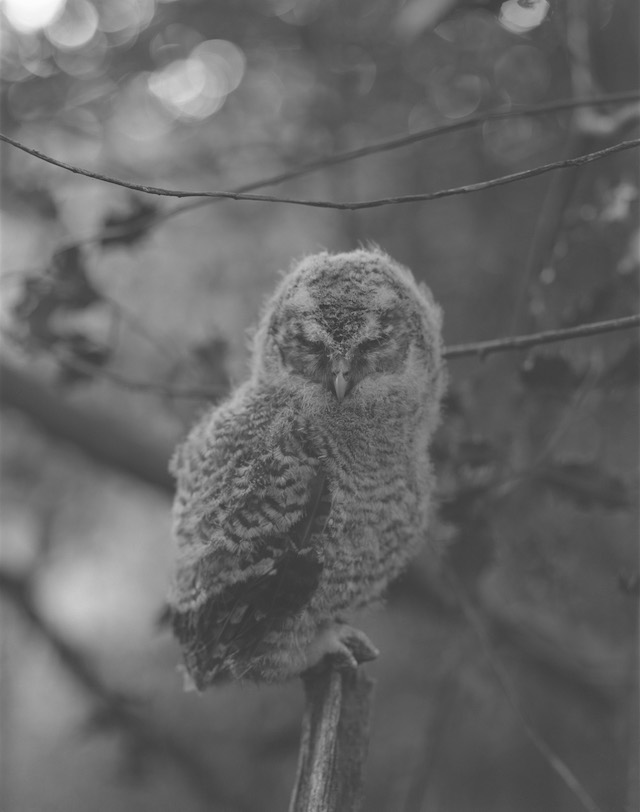
Then there is a picture which is more ‘obvious’: Tawny Owlet Branching (Strix aluco). I love this picture because it results from one of the purest and most beautiful experiences I’ve ever had. After hearing some unusual bird calls emanating from a thicket, I ventured inside and found two fledgling tawny owls (owlets) perching on branches. A phase of their lives known quite poetically as ‘branching’, where after leaving the nest they wait on nearby perches to be fed by the adult. One of the owls was in a good position for a picture, but I had to edge very close to it. I work mainly with large format film and therefore don’t use ‘zoom’ lenses. In those moments as I made the photograph, the owlet was no more than two or three feet away from me, but remained completely still. Time stretched out, and although I didn’t linger so as not to disturb the birds, it felt like an eternity as I stood face to face with it.

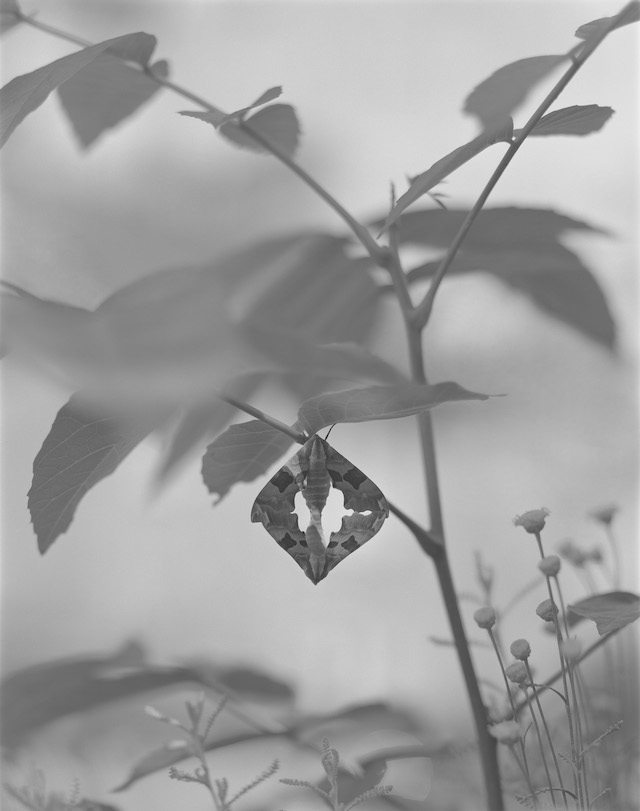
Lime Hawk-moths Mating (Mimas tiliae), 2021 ©Sam Laughlin

What’s the purpose of the project, what can the audience learn?

I hope that my audience will feel the same sense of quiet awe that I do. There’s a kind of reverence in the way I approach my work, which stems from the way I feel about the natural world, and I want the viewer to feel that; not a ‘quick fix’ of the spectacular, but a slow-burning sense of wonder. My work has been called melancholy, but I simply don’t see that. That’s the nice thing about art though; people can get different things from it.

I don’t really want to reduce my pictures to ‘illustrations’ with captions that say ‘here is X doing Y and they do this because… ’, but I do want people to understand better the beautiful intricacies of the lives that are lived all around us, that go on regardless (or despite of) our human activities or our awareness. I think if people understand more, and are more aware, then they might cherish these small things as I do, and hopefully try to do a little more to stem the tide of losses.

A Certain Movement is on show at Serchia Gallery until 17 July. All photography courtesy of Sam Laughlin

Linnet (Linaria cannabina), 2018 ©Sam Laughlin

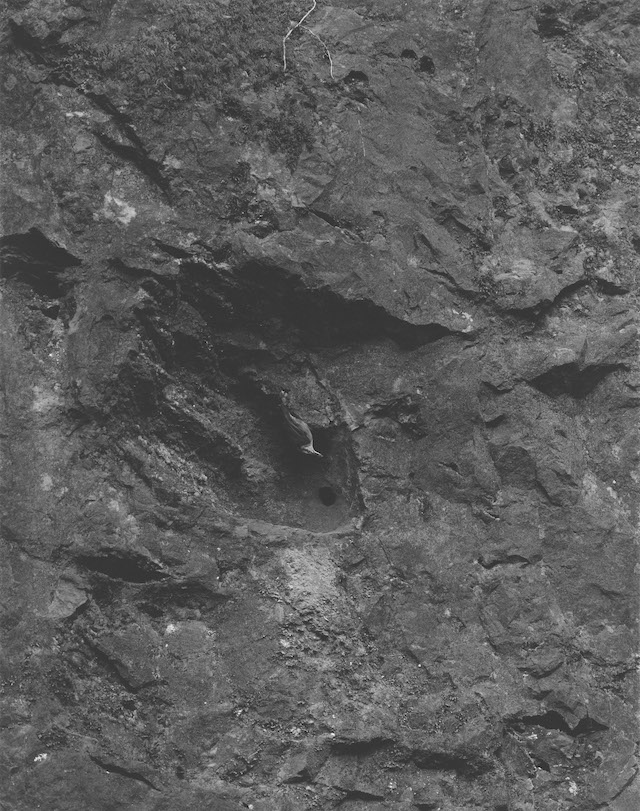
Nuthatch at nest (Sitta europaea), 2020 ©Sam Laughlin

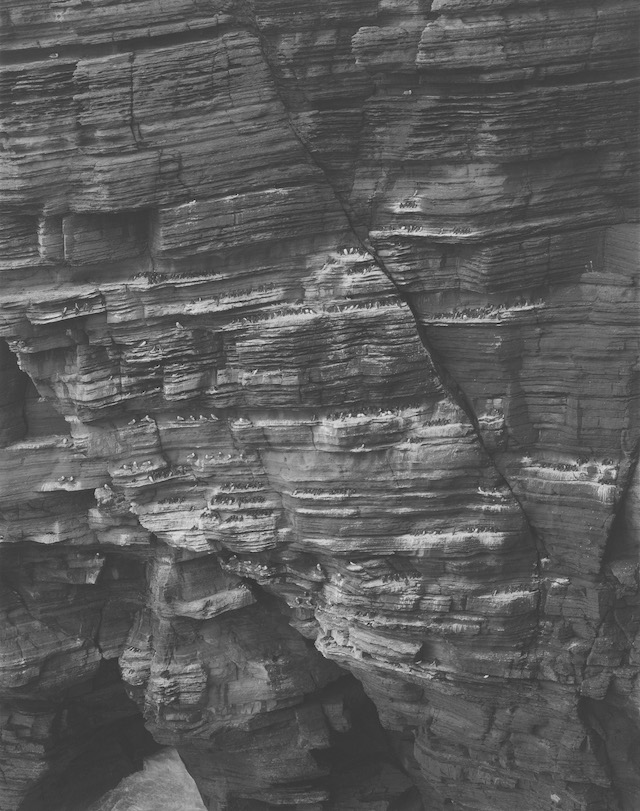
Seabird Colony #2 (four species), 2017 ©Sam Laughlin

Tawny Owlet Branching (Strix aluco), 2018 ©Sam Laughlin

Water Striders (Gerridae), 2019 ©Sam Laughlin

Whitethroat (Sylvia communis), 2021 ©Sam Laughlin

The Golden City

Mimi Plumb’s new book documents a world grappling with climate change, war and poverty

©Mimi Plumb The Golden City

There are countless reasons why someone might refer to San Francisco as The Golden city – the consuming, orange sunsets; the constant rolling fog that heats up the air between the buildings; or its involvement in the California Gold Rush. But even before it was nicknamed The Golden City, San Francisco wasn’t even called San Fransisco. It was only in 1847 that it was given its title, just a year before the Gold Rush which sparked a surge in the population. Then, in 1906, California experienced what’s deemed the worst earthquake of all time, shaking miles upon miles with impact reaching the Bay area. In fact, it’s noted that some remember it as the fire that ripped through the city, giving it a misleading title of San Fransisco Earthquake. San Francisco has an interesting past – its history still looms and is felt in the hills, landscapes and even the people.

©Mimi Plumb The Golden City

Mimi Plumb, is an American photographer currently based in Berkley, California, beholds distinctive memories of the area of San Fransisco. So much so that she’s now compiled these past thoughts and snapshots into a book, aptly named The Golden City and published by Stanley / Barker. Mimi grew up on the edges of the city, where the rents were cheap and humdrum of city life was more diluted and dispersed. “San Francisco, known as The Golden City, truly is a golden city,” Mimi tells me. “But, as with most cities, it has an underbelly, which is where I lived and what I photographed in the 1980s.” The city during this time was rife in radical activism, with inhabitants taking to the streets in opposition of gentrification and the policies coming from the White House. It was a tumultuous time for politics and society, which caused sharp contrasts to those living in a gentrified, inner-city world and those on the fringe. Protests and anarchism subsequently forged and the arrival of a more underground, DIY culture, music and art stared to grow. But it wasn’t without its downside. 

“I was an art student working at a minimum wage job,” explains Mimi of the time. “I lived on the edge of the city where the rents were cheap. I photographed the environment around me, often taking daily walks in my neighbourhood of Bernal Heights; Dog Patch, along the bay; and the Mission District.” In one part of the neighbourhood named Warm Water Cove, located on the bay, Mimi observed captured a pile of tires and abandoned cars. In another spot, she climbed the chimney of a power station that was positioned above the 25th Street Pier – she’d sit and watch the planes swooshing above. Mimi is an observer and this becomes explicitly clear in her photography, that which steers from bleak landscape shots to the more intimate, candid portrait. All of which is shot in signature black and white and features a distinctive luminous tone – an ominous hue that probably couldn’t be captured anywhere else apart from The Golden City. “I actually began this project in the early 1980s using colour film,” says Mimi, “but the blue skies didn’t convey the edgy content of the work.”

©Mimi Plumb The Golden City

To accurately (and artfully) tell her stories, Mimi has divided the book into sequences. The first half features notes from The Golden City itself, “predominantly of landscapes in and around the city,” she says. The work in this part is particularly distinguished as she documents the link between “wealth and power to climate change and poverty” – that which is pictured through angular cliff edges framing the city, almost like a colony of concrete ants in the distance; or busy streets peppered with suited city dwellers juxtaposed with the stark, deteriorating landscapes. Then, you reach the middle point: “The breaking heart and the two spreads that follow represent the heart of the book for me,” she adds. “The second half of the book, mostly portraits of both friends and strangers, reflects the psychological angst that I felt in myself and my community, both then and still now. One of the last pictures in the book – the girl in the polka dot dress hiding her head – is a stand-in for me not knowing what to do about it all. And my cat, Pearl, waiting and crouching is a portrait of me, as the world grapples with climate change, war and poverty.”

What’s most interesting, however, is that although the work in The Golden City was shot between 1984 and 2000, the topics, themes and issues explored are especially relevant today. The world over continues to tackle the warming climate, the dangerous policies imposed by the government and increasing poverty, not least in San Francisco. Mimi’s work, then, reminds us of the cyclical nature of things – that life and history tends to repeat itself. She concludes: “I see this book as a testament to the time and place that we are all experiencing.”

Mimi Plumb’s The Golden City is published by Stanley/Barker

©Mimi Plumb The Golden City

©Mimi Plumb The Golden City

©Mimi Plumb The Golden City

©Mimi Plumb The Golden City

©Mimi Plumb The Golden City

©Mimi Plumb The Golden City

©Mimi Plumb The Golden City

©Mimi Plumb The Golden City

©Mimi Plumb The Golden City

Road to Nowhere

Robin Graubard’s debut book is a stark documentation of Eastern Europe following the dissolution of the USSR

© Robin Graubard 2022 courtesy Loose Joints

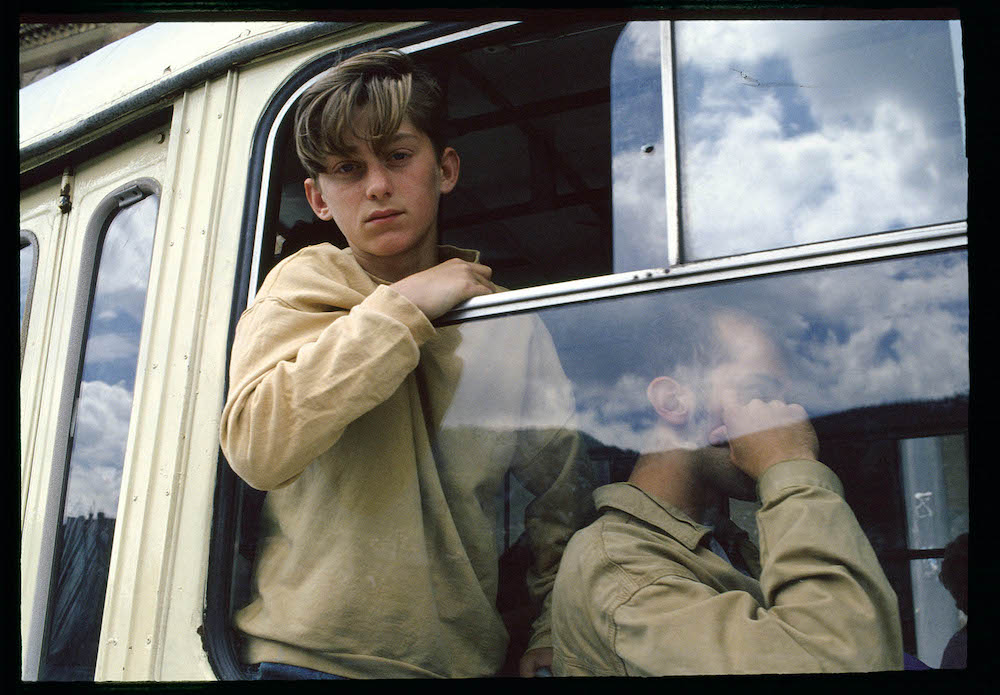
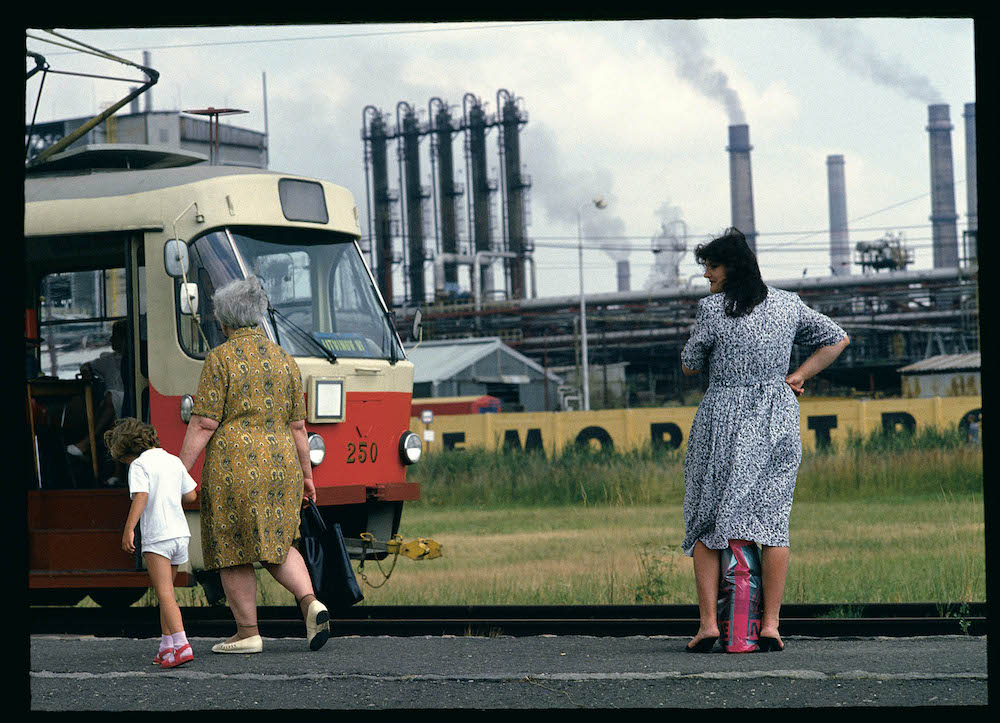
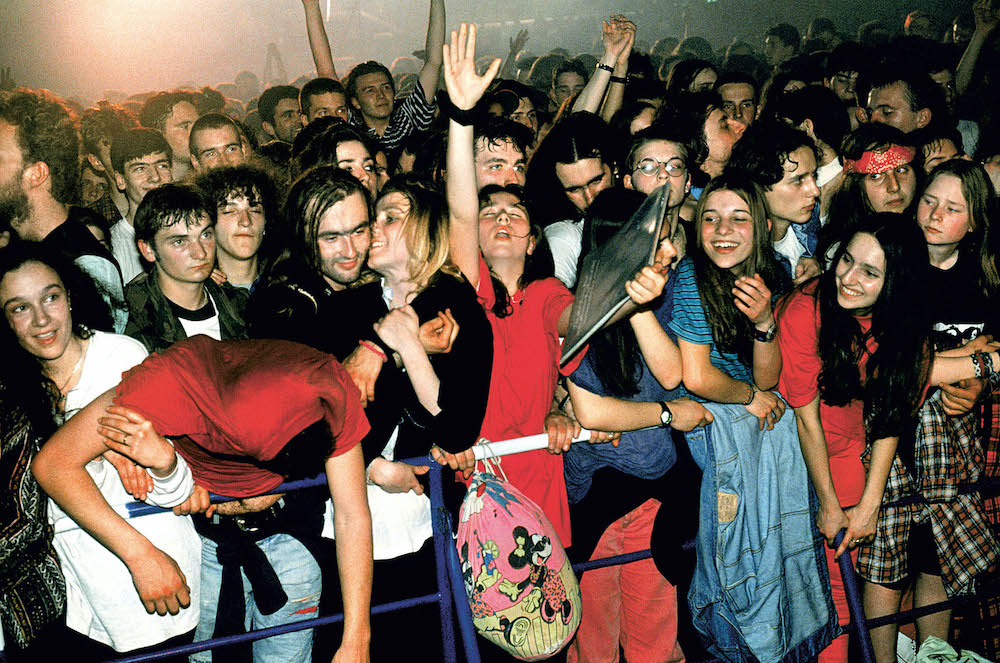
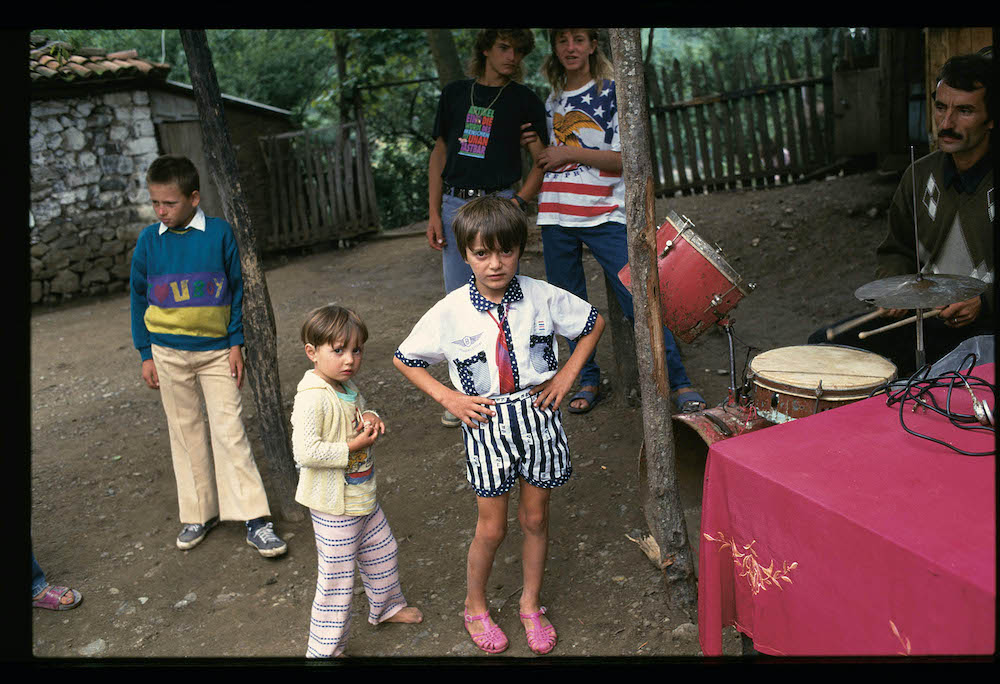
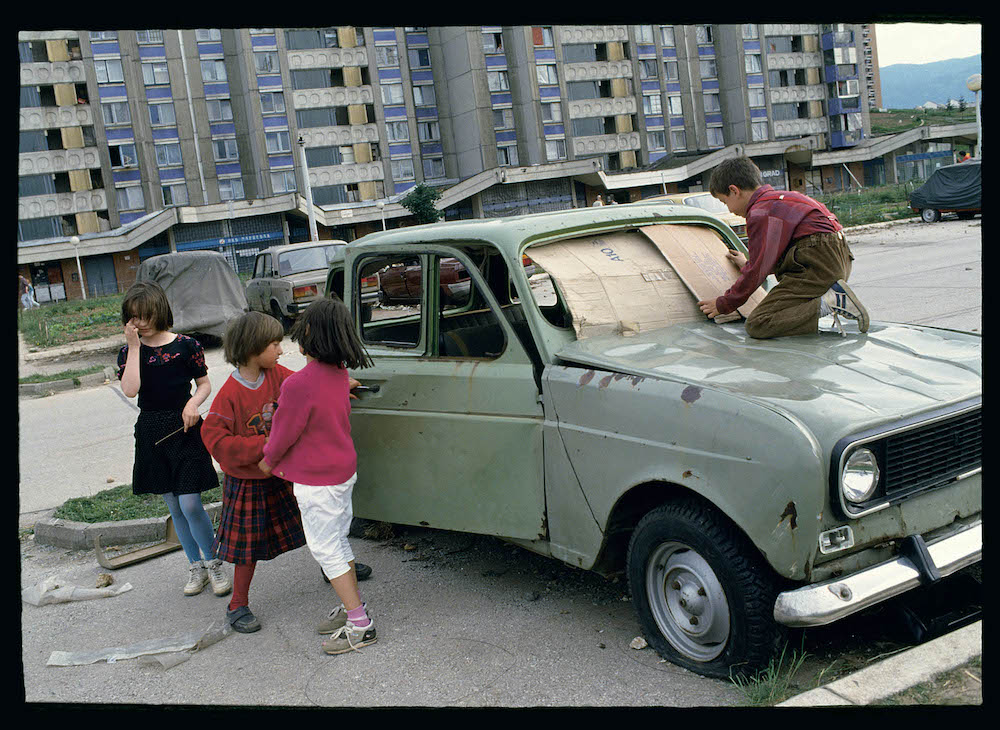
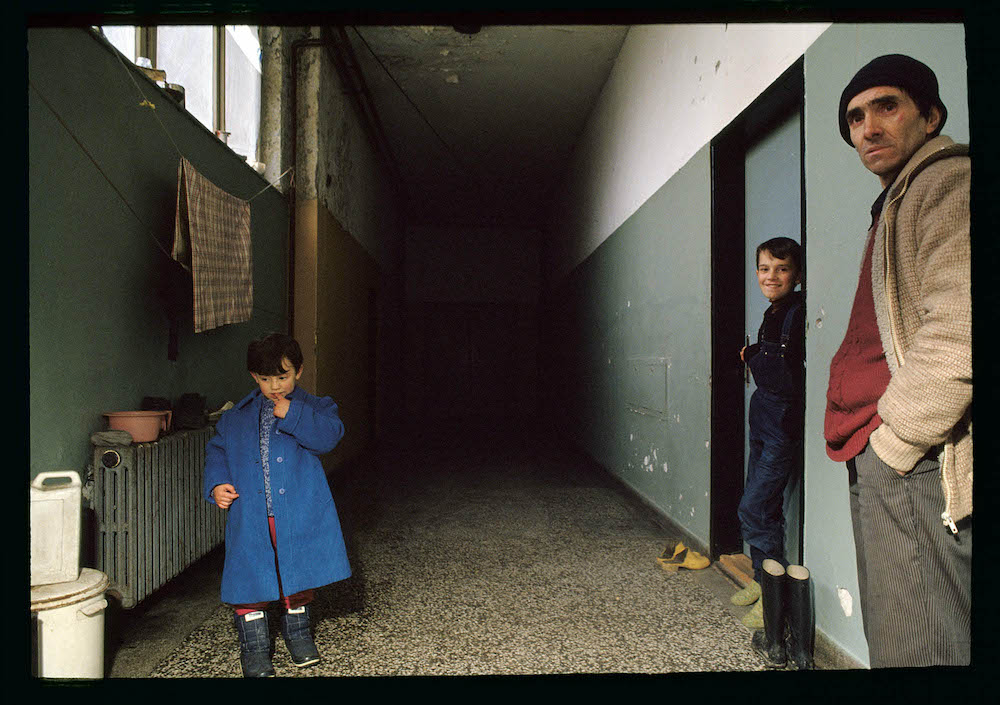
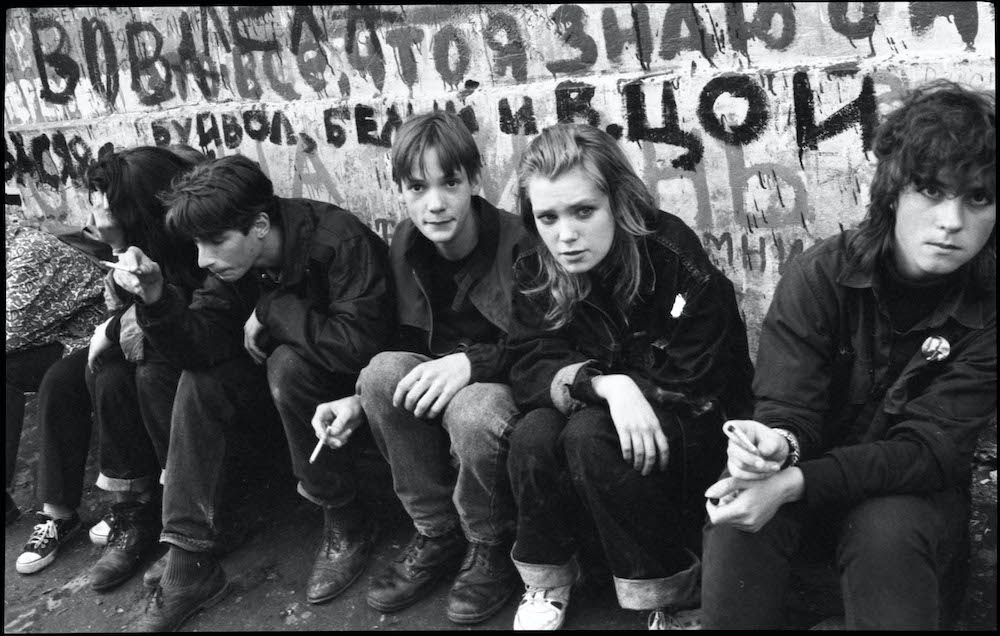
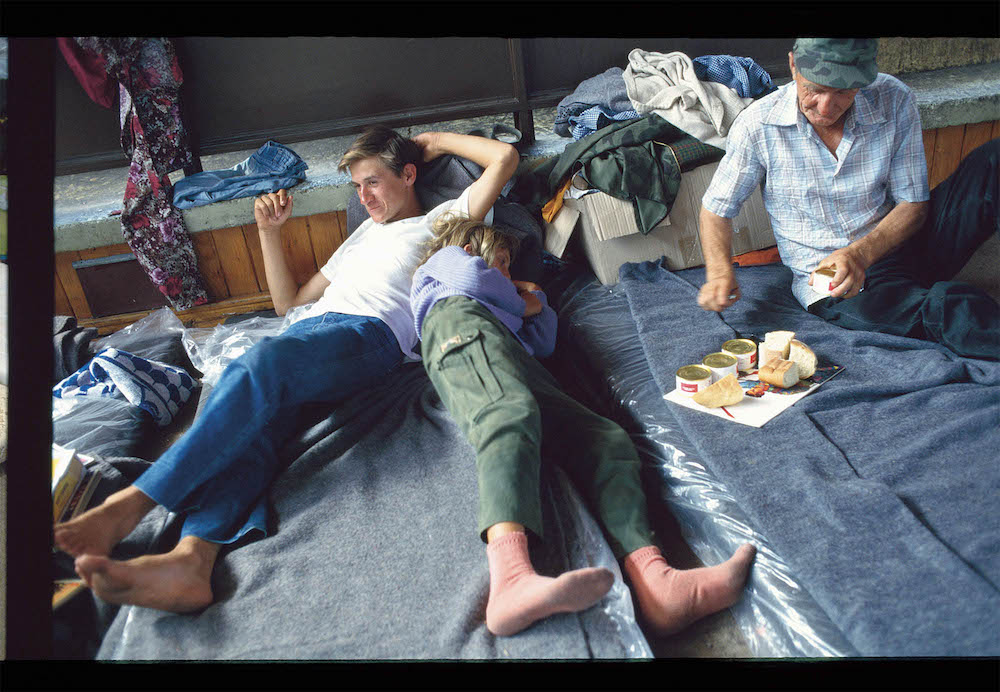
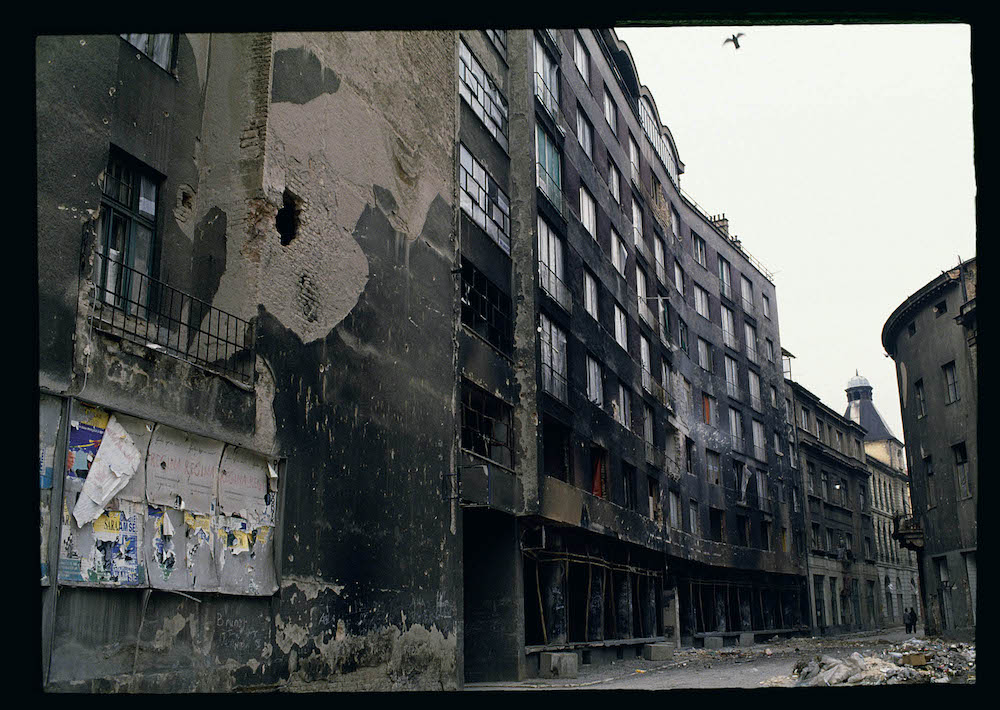
Besides the long, paisley dresses and other vintage fashions, there really isn’t much dissimilarity between today and the events documented in Robin Graubard’s Road to Nowhere. The first major book of the photographer published by Loose Joints, Road to Nowhere is a stark documentation of Eastern Europe during the 90s following the dissolution of the USSR, conceived through a diaristic manner in which Robin bore witness to the Yugoslav War, Bosnian genocide and Kosovan uprising. She journeyed to Russia, Czechoslovakia, Bulgaria, Serbia, Bosnia and others, lensing and telling stories of hardship, suffering, war and hunger. And what with Russian invasion of Ukraine and ongoing conflict in Afghanistan, these pictures show that history does indeed tend to repeat itself.

© Robin Graubard 2022 courtesy Loose Joints

Road to Nowhere features primarily unseen imagery shot over the 90s, yet the visuals themselves appear timeless – they could have been taken yesterday, just a few years back or even decades. She worked solo and sought out stories that were close to her heart, revealing the difficulty of these lived experiences and powerfully juxtaposing them with the emerging subcultures of post-Soviet life, such as those seeking joy and normalcy amongst it all. Chores, games or dancing at a concerts are therefore comparatively sequenced alongside the deteriorated urban landscapes and buildings impacted by shelling. It’s a devastating depiction of conflict, but equally one of resilience. 

© Robin Graubard 2022 courtesy Loose Joints

With a career spanning 40 years, Robin’s work is often seen merging the autobiographical, editorial and documentary. She came of age in the counterculture and punk scenes of the 60s and 70s in New York, set against the urban backdrop of revolt and rebellion. She worked as a photographer at a newspaper; there was a strike and it was shut down. Consequently she bought a flight to Prague and met a group of women outside a UN building, who were discussing how no one was covering the war in Sarajevo. Receiving the press credentials from Newsweek, she set up base in Prague and stayed for three years.

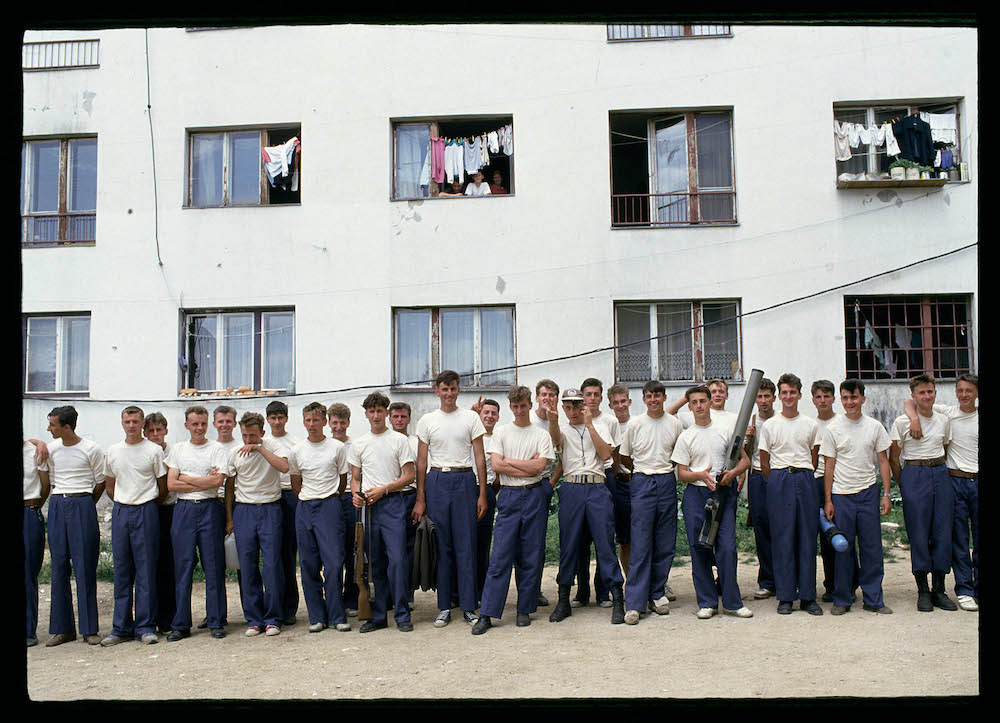
“I photographed the war in Yugoslavia, oil smuggling in Rumania, runaways and orphans living in train station tunnels in Bucharest, and a school for girls in Prague,” she writes in the book. Proceeding to travel alone throughout the Balkans, she’d met families, lovers, translators, bus drivers and soldiers. In Belgrade during 1995, for instance, she spoke with a group of soldiers, some “dogs of war” who were the “most elite Serb and Russian mercenary soldiers on the front line”, she writes. “They seemed young and bedraggled.” She spent time photographing them and they were posing with peace signs. “Most of the soldiers in the picture died during the war.”

Robin was often on the front line and at the heart of conflict. Not only did she experience heavy shelling at night in her apartment while in Sarajevo, she also had a near miss when a bullet shot past her head during check in. “The man at the front desk seemed to be in some sort of trance and just ignored it,” she pens. On one occasion, she was walking to the hospital in Sarajevo through what was sniper alley, accompanied by a translator who’d been shot four or five times. Usually walking around on foot through Sarajevo, Robin recalls, “Somehow, I made it out”.

An impactful debut from the photographer, Road to Nowhere sees 130 photos compiled over 228 pages. The book is published by Loose Joints.

© Robin Graubard 2022 courtesy Loose Joints

© Robin Graubard 2022 courtesy Loose Joints

© Robin Graubard 2022 courtesy Loose Joints

© Robin Graubard 2022 courtesy Loose Joints

© Robin Graubard 2022 courtesy Loose Joints

© Robin Graubard 2022 courtesy Loose Joints

© Robin Graubard 2022 courtesy Loose Joints