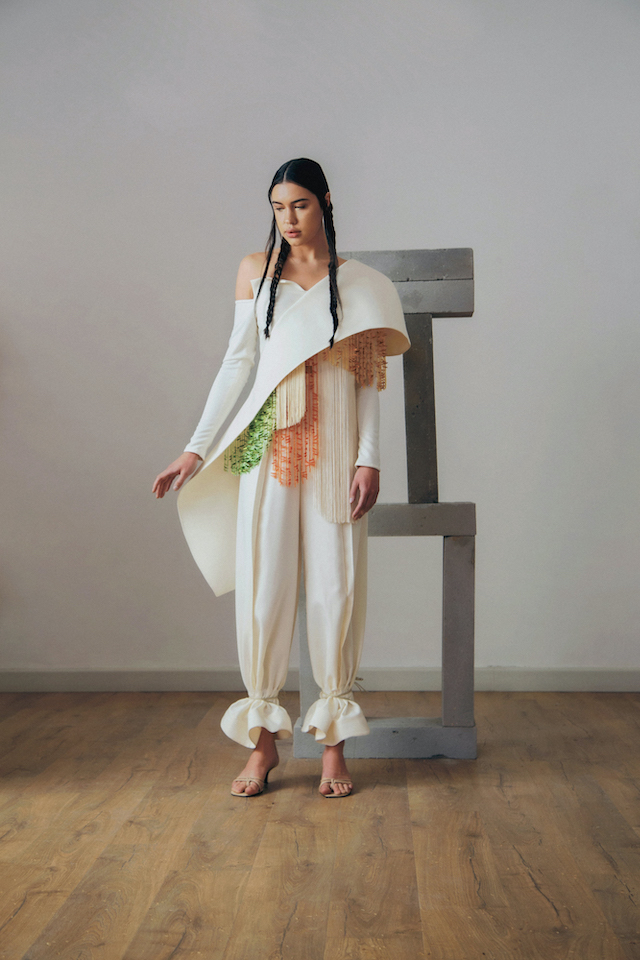
The designer and label founder uses upcycling as a sustainable alternative to the current fashion system
What will the future hold for sustainable fashion? With Glasgow’s COP26 prompting goals and recommendations for a more environmentally conscious world, now has never been more crucial to reassess our relationship with the planet – and our clothing. When it comes to the fashion industry, there’s much to be learnt and adopted in order to reduce the impact it has on the environment. This includes net-zero emissions by 2050 latest, to waste elimination and erasing the global supply chains – not to mention increasing education of how to better address the climate emergency through manufacturing and more conscious and sustainable business models.
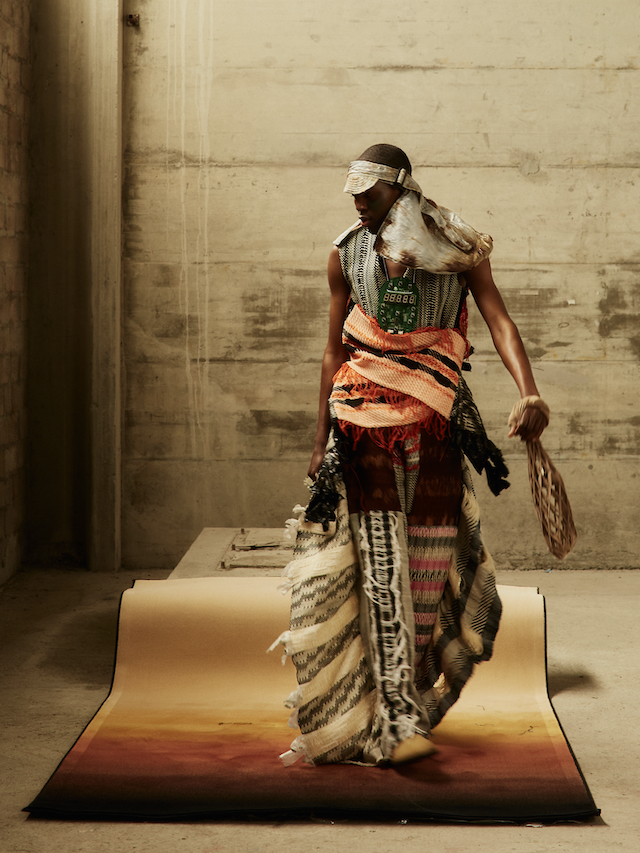
The anticipation for change is heartfelt across the globe, but now, perhaps it’s time to shine light on the industry folk who are already doing their bit. Like Rafael Kouto, a fashion designer who launched his own avant-garde fashion label with the environment in mind. Conceived with upcycling at its core, the label of the same name aims to tackle textile waste, dead stock and other materials in the creative and production lifecycle. “The goal since the beginning has been about cultivating an uncompromised approach to sustainability as it exclusively uses the technique of pre and post-consumer upcycling to create new clothes and accessories,” he tells me.
Rafael grew up on the Italian side of Switzerland in Ticino to a Togolese father and Swiss mother. He studied fashion design at FHNW-HGK in Basel, followed by an MA in fashion matters from the Sandberg Institut in Amsterdam. From working at Alexander McQueen to Maison Martin Margiela, Carven and Ethical Fashion Initiative, he garnered the necessary experience to excel in his profession. Equally, these past roles enlightened an alternative fashion system and proved that a more sustainable and viable option was possible; this is the moment he decided to focus his practice on upcycling and sustainable strategies, “with a particular focus on open source and craftsmanship,” he says.
In 2017, Rafael therefore decided to launch is own fashion brand, which has now gone on to win numerous awards such as the Swiss Design Awards in the Fashion & Textile category for both 2018 and 2019 (he was also the finalist in 2020), plus the Gerbert Ambiente Design Preis 2020 and 2021. To date, he’s also been published in the pages of magazines such as Vogue, Harper’s Bazaar and Dazed. He also applies his knowledge and know-how to a series of upcycling workshops in collaboration with various institutions, alongside teaching as an associate professor in Fashion Design at the IUAV in Venice.
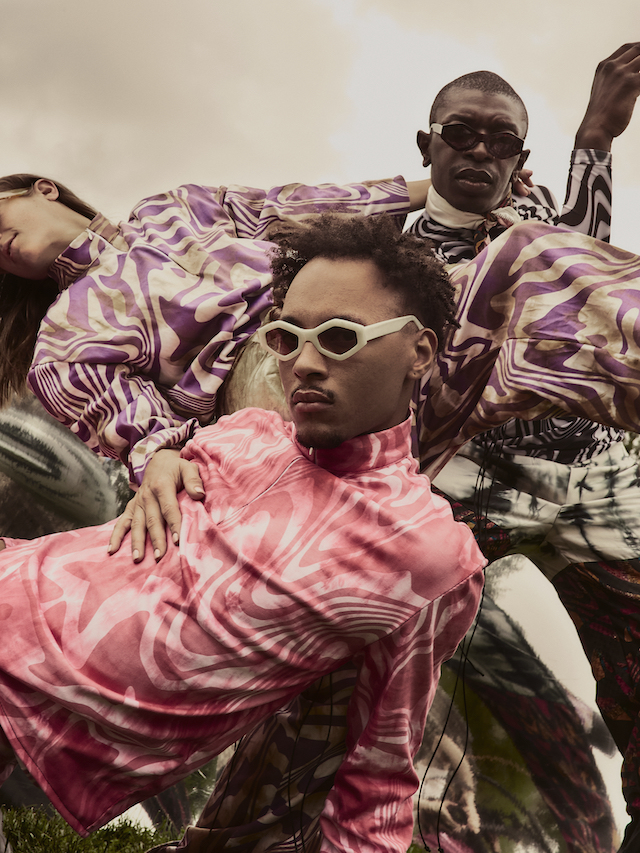
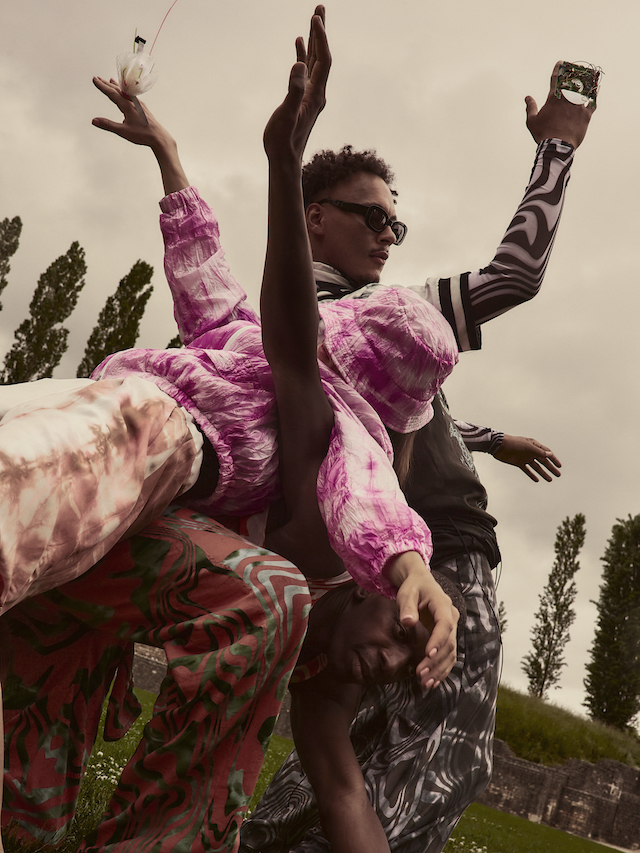
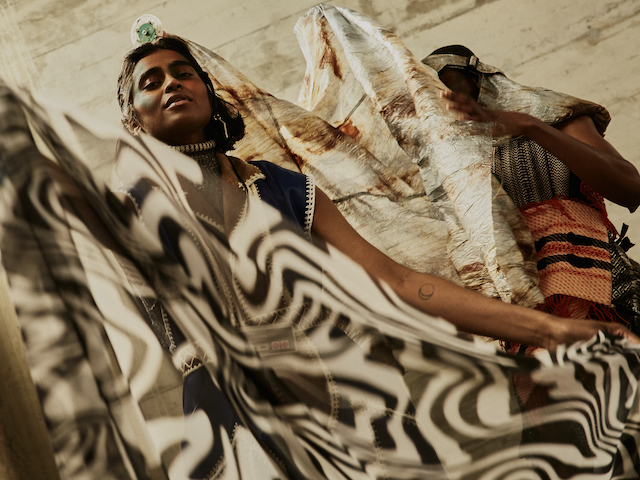
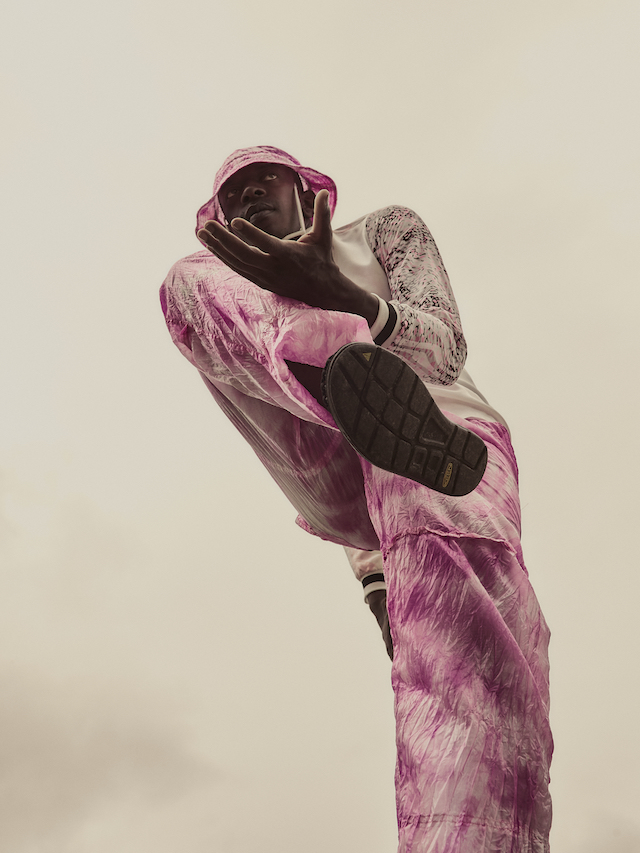
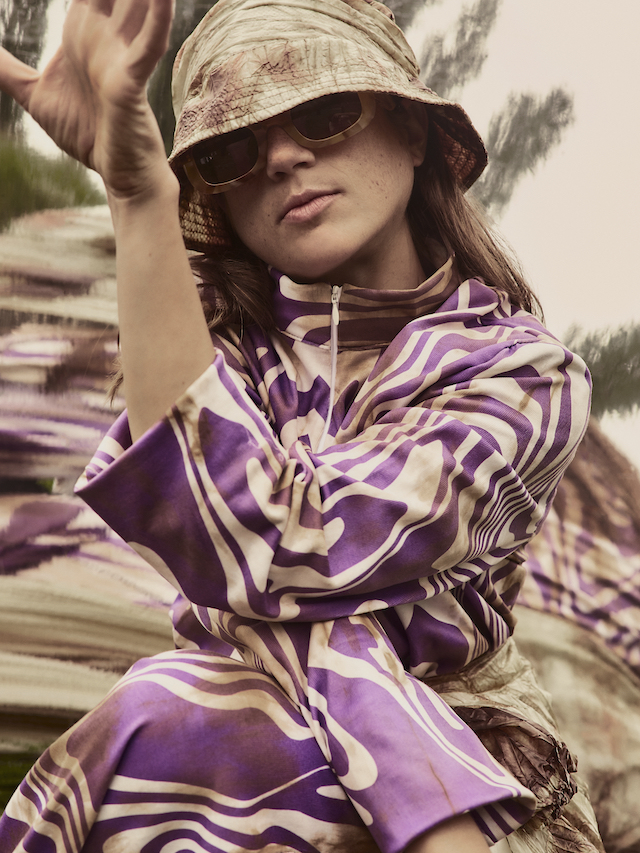
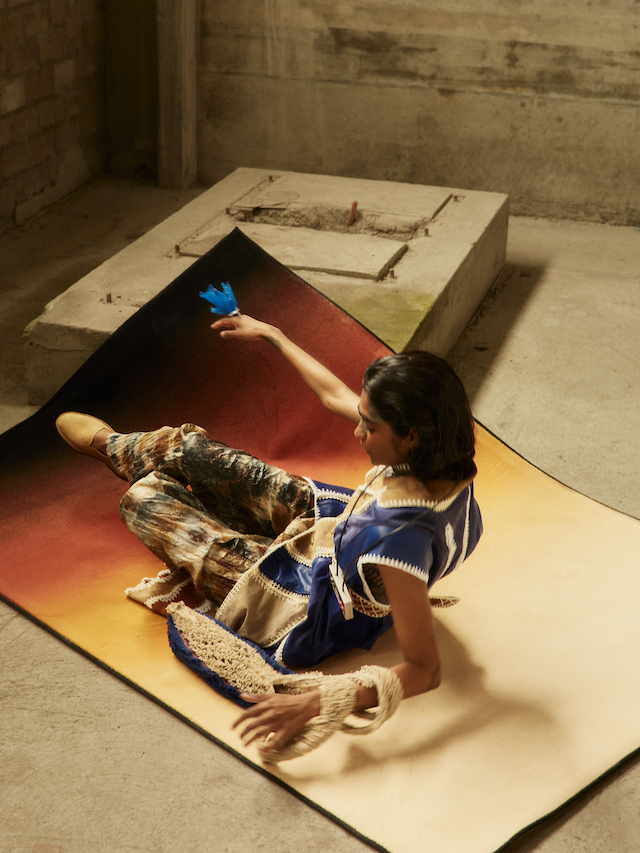
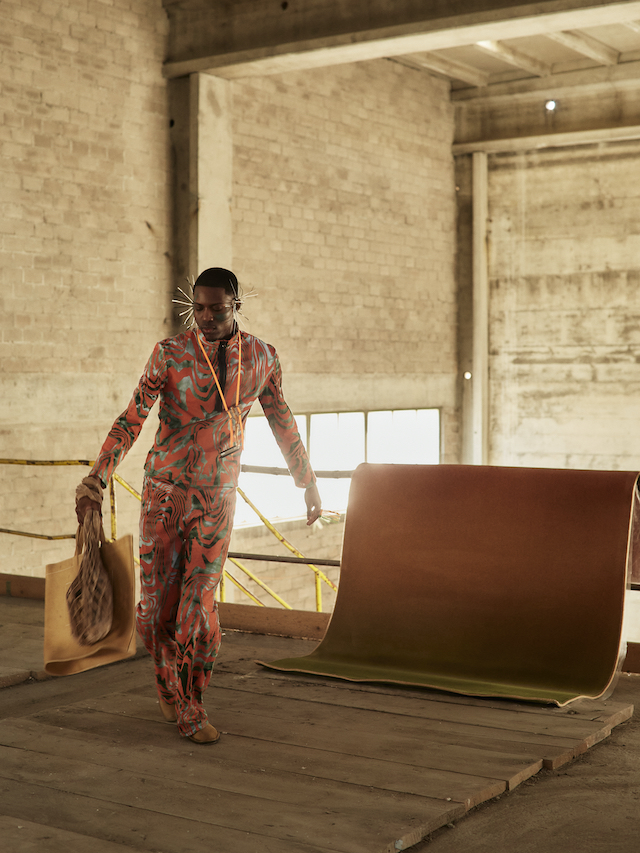
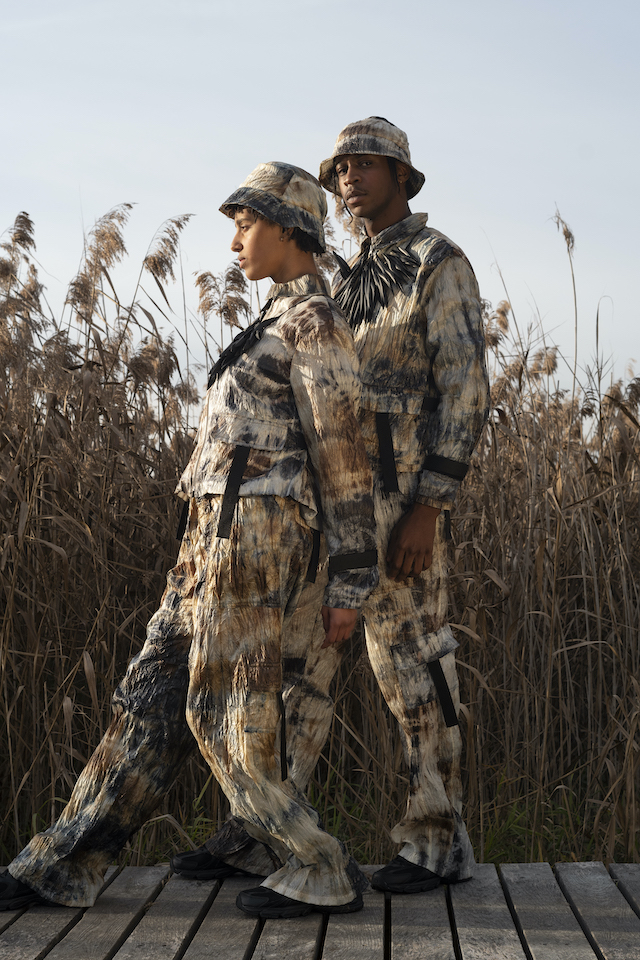
Throughout all of Rafael Kouto’s output, garments are construed with utmost credibility to materiality, source and process. Amassing in timeless collections abound with pattern and colour, everything is created in Switzerland through the upcycling of existing dead stock garments or fabrics, “with different traditional couture techniques as crochet, screen printing and knitting,” he says. The result of which is a consciously designed label replete with bespoke clothings for the wearer, bound in a post-modern blend of tie-dye, 70s swirls and traditional African prints. “The collections have a hybrid aesthetic between African and the West, therefore I envision the Afro descendants community embodying those values and all the loves of the aesthetic of course.”
Rafael’s approach to fashion design and manufacturing is commendable. The industry – and our planet – is so awash with garments that they’re bursting at the seams of landfills and our wardrobes. There’s simply too much in the world and, along with more sustainable business practices, our consumer habits need to adapt. “With the brand, we are contributing on a small scale, but I think that the most important part is about proving that a sustainable alternative to the current system is possible and to engage the users through upcycling workshops and other activities into the creative and production process,” explains Rafael.
So what does Rafael aspire for the future? “My hope is that fashion will head into a more sustainable, local, social, ethical and community direction,” he says. “I think that idea of expanding as the biggest fashion houses and bands will be replaced by small scale and niche businesses. In this case, I think the mind set of the industry still needs to change and not be based on a constant need to consume compulsively. But, it’s something that has to change also from the brands’ perspective.”
What makes a furniture designer? Martino Gamper has been a chef, a carpenter, a hitch-hiker. From the mass-produced to the individual crafted object, Deyan Sudjic profiles the multifaceted creator
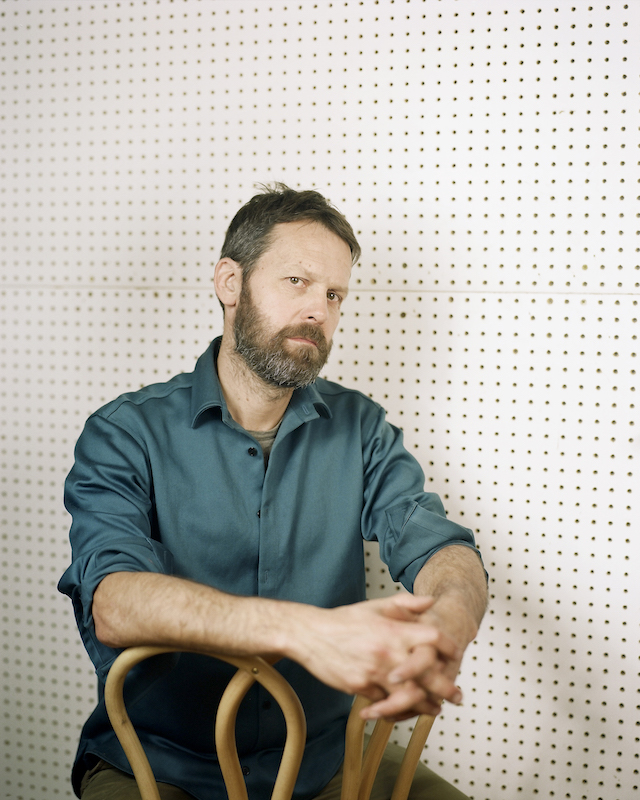
Defining Martino Gamper is not easy. Having attended four very different art schools in several different countries, he studied in departments that ranged from sculpture and ceramics to design, and used three languages, before finally deciding what he wanted to be. He is in the gallery world, but also designs for mass production, and is interested in what he calls “making as a means of thinking”.
Gamper was born in the German-speaking Italian province of South Tyrol, in the small city of Meran – Italians call it Merano – in 1971. Now he lives in London, but spends several weeks of every year in New Zealand, where his wife, the artist Francis Upritchard, is from; and he has a residency at Maja Hoffmann’s foundation in Arles.
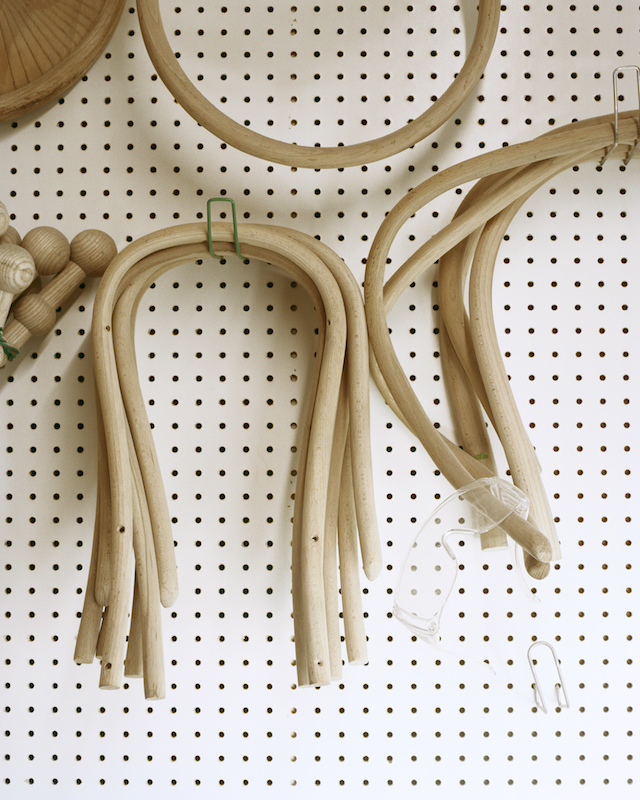
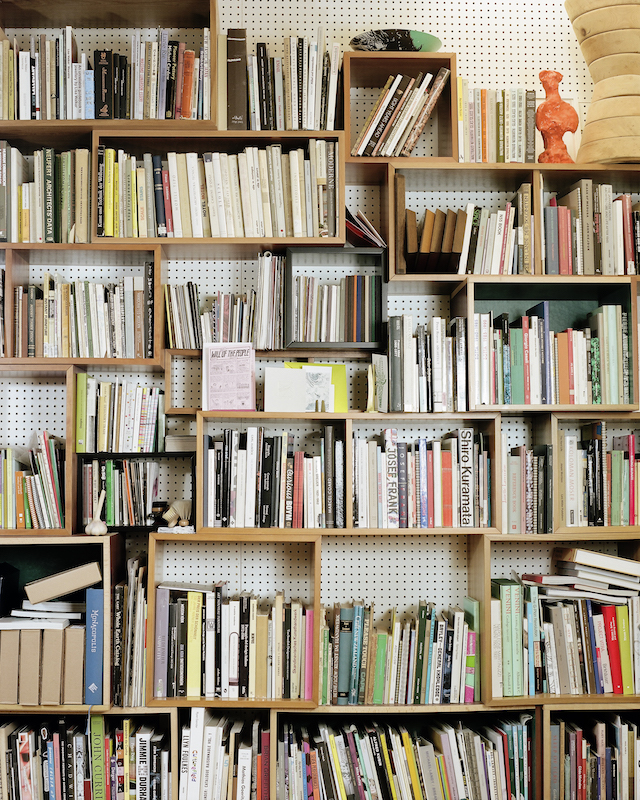
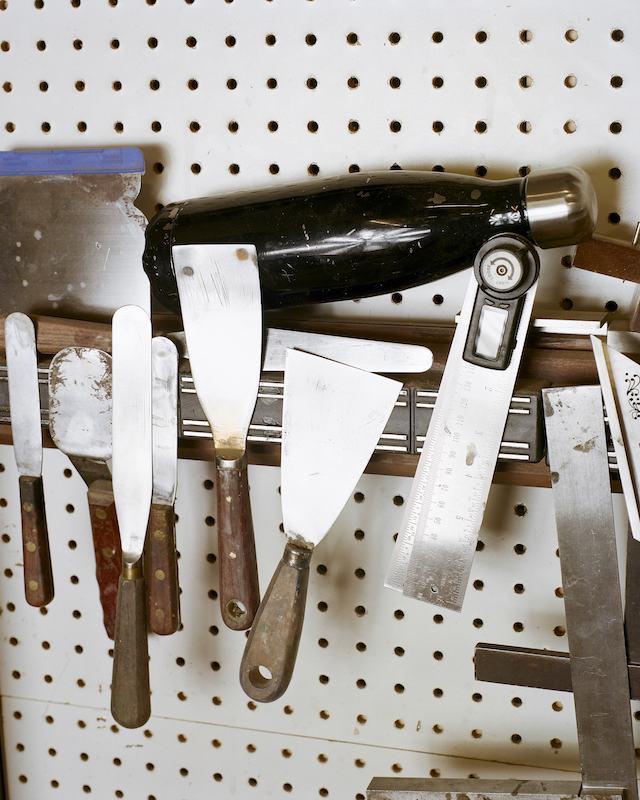
Gamper considered the life of a maker in his teens. He enrolled at a craft school when he was just 14. An apprenticeship came next. If you take a quick look behind the ragged façade of the building where he has his studio, in a still-ungentrified corner of Hackney, you would be forgiven for assuming that Gamper turned out to be a carpenter. There are neat rows of chisels and saws arranged on the walls, and carefully ordered work benches on which pieces of wooden furniture wait to be completed. But there is more to his work than skill – enough, in fact, to render the debate around craft and design, and art and design, redundant.
Taking up almost as much space in the studio as his carpentry tools and the chair production line is a long table flanked by the kitchen that takes up much of Gamper’s energy. It’s not that he is a chef, but food is a fundamental for him. “Early on, with no clients or commissions, I had to find an alibi to get started on a project, and that alibi was food.” “Cooking is similar to design,” he says. “In order to design a table you need food, and food without a table does not work. I create food events in order to design tables; it is an excuse.” On the day I am there, the studio is working on a meal to celebrate Christmas, but Gamper uses food much in the way the artist Rirkrit Tiravanija does, to explore the ways in which we interact with each other.
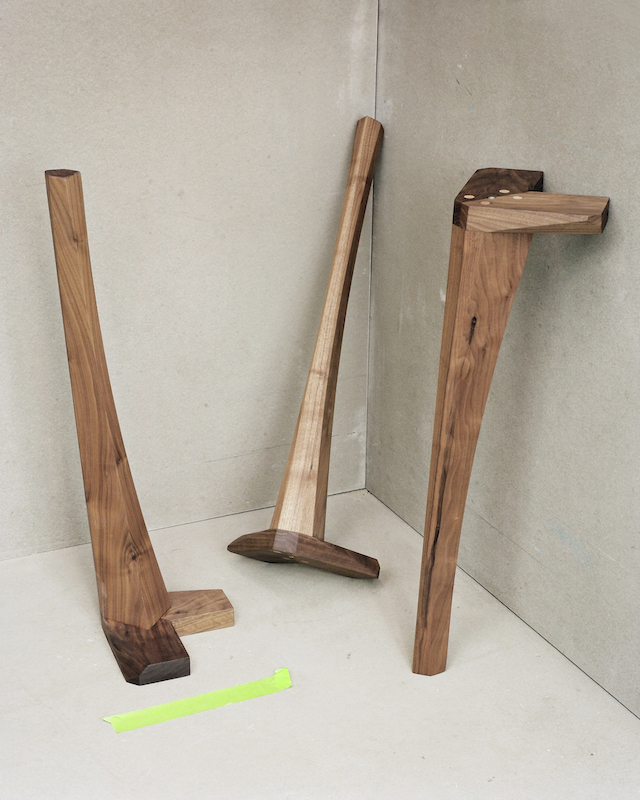
Workshop tools
He completed his apprenticeship at 19, then went travelling. After a summer in Switzerland financed by selling bags made out of old inner bike tubes, he tentatively began to think about becoming an artist. He secured a place at the Art Academy in Florence in 1990, but left almost immediately – repelled by the endless reproductions of Michelangelo’s statue of David and the shortcomings of the Italian educational system, where students copied each other’s essays and professors failed to show up. He moved to Vienna – where he talked Michelangelo Pistoletto into giving him a place on the sculpture course at the Academy of Fine Arts. Pistoletto, one of the founders of Italy’s arte povera movement, was interested enough in the objects that Gamper made. Gamper was also spending a lot of his time at the University of Applied Arts, on the other side of the city. It was the school where Josef Hoffmann had once taught, which was rooted in design, rather than art. Pistoletto suggested that he made up his mind between the two, and he chose design. Gamper gravitated to what was nominally the ceramics masterclass, led by Matteo Thun, once an assistant to Ettore Sottsass and a member of the Memphis group. Despite learning very little about ceramics, Gamper impressed Thun enough to get hired to work in his studio in Milan. Thun not only paid him – unusual in the intern-exploitative climate of the time – but also covered his fares to and from Vienna in order to allow him to continue with his studies. The experience of working in a well-organised commercially orientated design practice was something that Gamper found useful, even if it did not leave him wanting to design in Thun’s post-Memphis postmodern manner, or even to run a large studio. The early 1990s were not Milan’s best years: “The masters were dying out, the place looked grey, and postmodernism did not appeal,” Gamper says. While Thun was spending most of his time in Italy, a group of his more enterprising students in Vienna, Gamper among them, hijacked their absent professor’s office and turned it into their private workspace. When Thun finally departed, Enzo Mari took his place.
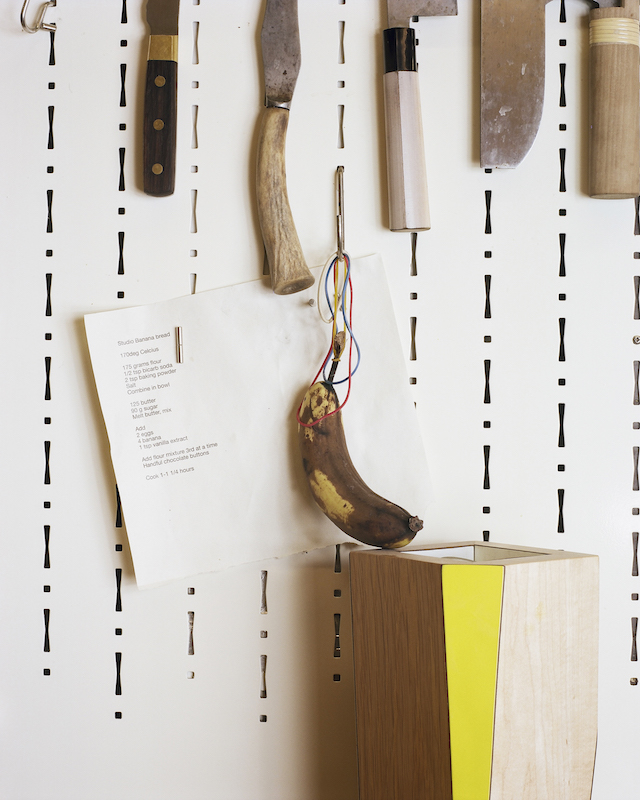
Studio knives, recipes, Off-Cut Vase detail and vintage banana (eaten now)
For Gamper, studying with Mari was as important an experience as meeting Pistoletto. Both have an interest in humble, found materials; Mari’s blueprints for self-made open-source furniture designs have continued to fascinate designers. Even more interesting was Gamper’s time spent in London at the Royal College of Art as an Erasmus student. It was there that he encountered a tutor who disabused him of the notion that his precocious technical ability with a band saw would be enough to get him through: “I am not interested in your practical skills, I am interested in your thinking about the idea.” This was an approach that stayed with him. And he returned to the RCA, once Ron Arad had established the design-product course.
Arad used to say that his job at the RCA was to make his students unemployable. Partly, he was suggesting that his course would give graduates the independence to set up on their own. But he was also conscious of the realities of a world in which the traditional idea of big industrial clients looking to hire designers to work on specific briefs no longer applied. His students had to be able to make their own way. If they couldn’t work on an industrial scale, then they had to make the most of what they could find, just as Arad himself had once made his Rover chairs with car seats salvaged from a scrap yard.
Gamper’s graduation project was an exploration of corners. “I was living in a corner of a loft at the time, and my project was about the corner as a spatial entity between architecture and furniture. I made a corner light inspired by Flavin.” Afterwards, Gamper made a living scavenging from skips in order to improvise readymade objects: ‘Designing without designing’, he called it. He was selling lights made from footballs. The Umbro football was the only one that had the right degree of transparency, and he had a stall at the V&A selling pieces he made on the spot for 25 pounds each. From out of this exercise came the 100 chairs in 100 days project, which turned a spontaneous exercise into a conscious performance: He put together fragments of broken and abandoned chairs to create altogether new chairs. A polypropylene seat, teamed with a bentwood back, a pressed metal shell and an upside-down back. Each individual chair is ingenious, and is more than a piece of sculpture, but is based on an understanding of what is involved in manufacturing and design- ing a chair: “I learned a lot by taking chairs apart.” Keeping up the pace was demanding, but the project immediately attracted attention, and has been exhibited in museums and galleries around the world.
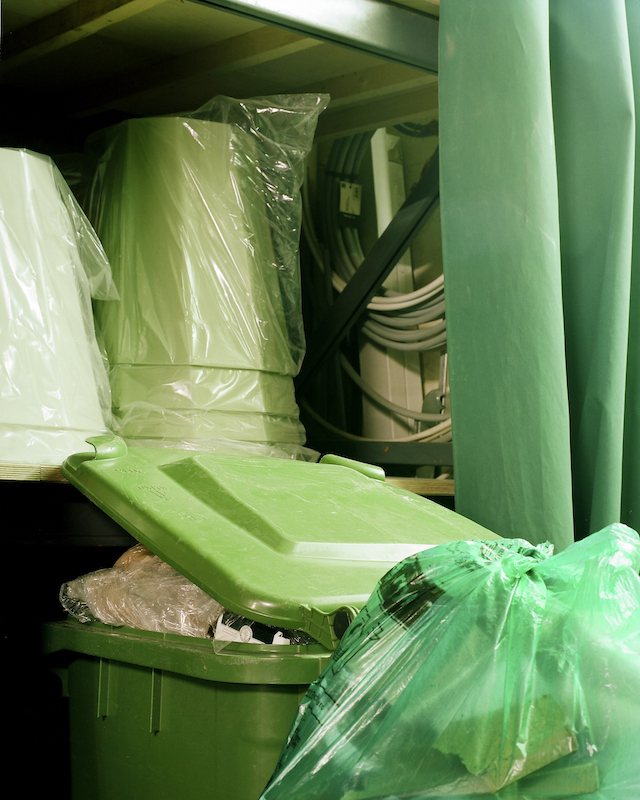
Recycling bin and Arnold Circus Stool storage
Commissions started to come Gamper’s way: some for conventional pieces of mass-produced furniture, others for interiors. There was work from the fashion world: windows for Miuccia Prada, displays for Anya Hindmarch and interiors for Peter Pilotto, a friend with a similar Austrian-Italian background. The Serpentine asked him to curate an exhibition, which he based on the seemingly unpromising idea of the shelf, but filled it with pieces that made you consider the humblest but most ubiquitous of objects in a new way. Most recently, he designed the AlpiNN, a restaurant for a chef in the South Tyrol who has a commitment to rooting his food in the specifics of the place. “He doesn’t use olive oil, because you can’t find it in the mountains, so I wanted to design the place using only things that you could see in the area: wood from the valley, lamps using parchment from sheep that graze nearby.” Like all of Gamper’s work, his design avoids the obvious. He has no predictable signatures. Instead, his material grows out of the material from which it is made, and from quietly observing how we use spaces and objects.
Britain is no longer quite the place that it was at the end of the 1990s, when a special set of circumstances that included open borders and low rents made London a specially fertile place for designers. On the rain-soaked day of Britain’s 2019 general election, Gamper wore a badge to proclaim his hope that Britain would choose a government that made it possible to stay in the European Union. He had taken the citizenship test that would qualify him as British but did not yet have the right to vote. London has become a place in which it is possible for a designer who can work anywhere, as he can, to be successful. What is not so clear is how attractive it would be now to a young and unknown Gamper.
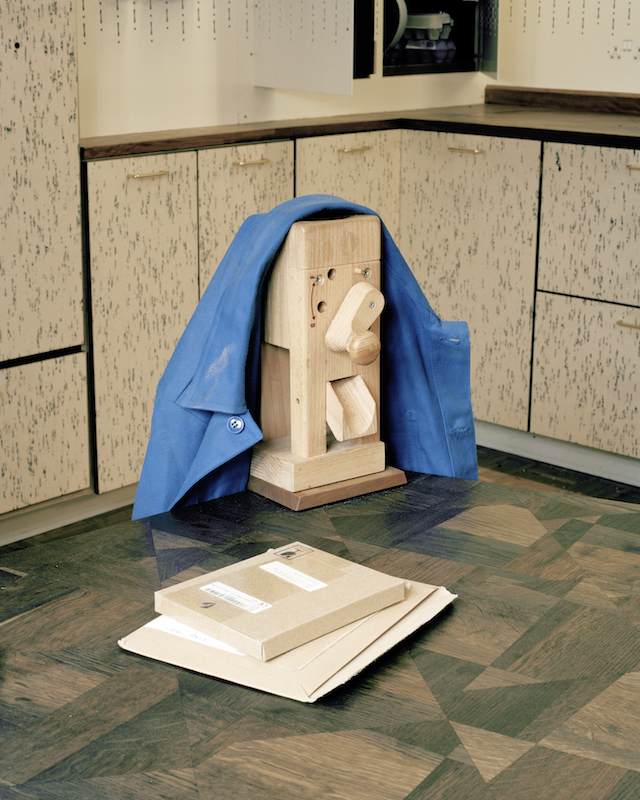
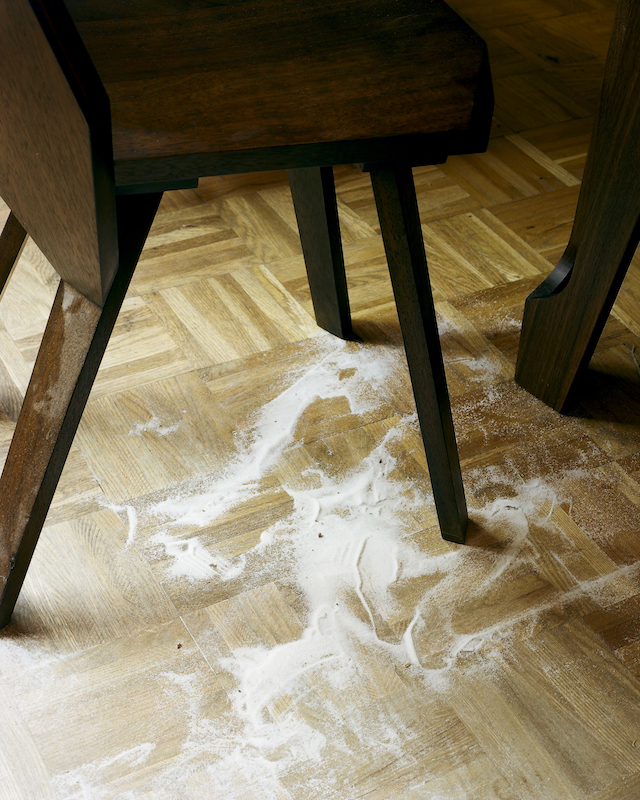
Bella Vista Chair, reclaimed teak, pasta flour on floor
Melda Auditia’s structural, hand-crafted graduate collection seeks to examine the notion of femininity
Growing up in Indonesia, Melda Auditia was surrounded by craft. From pottery and textiles to jewellery and ceramics – plus the rich, natural fibres used to build them – needless to say that this exposure would steer the work of Melda, affecting both the composition and themes addressed in her own creations.
The designer, who’s now living in Tokyo, learnt to appreciate the process of handcrafting from a young age. “That’s what made me fall in love with fashion in the first place,” she tells me. The skill of making a quality garment or object from hand takes mastery, time and patience, which is a welcomed contradiction to the constant hum-drum of city life in Tokyo. “Life in Tokyo is incredibly fast-paced, so it’s super easy to forget that there are so many beautiful little details in my surroundings. But one thing I’ve learnt to do is to carve out the time to slow down and take in the little details, because when I let myself absorb everything, that’s when I get inspired.”
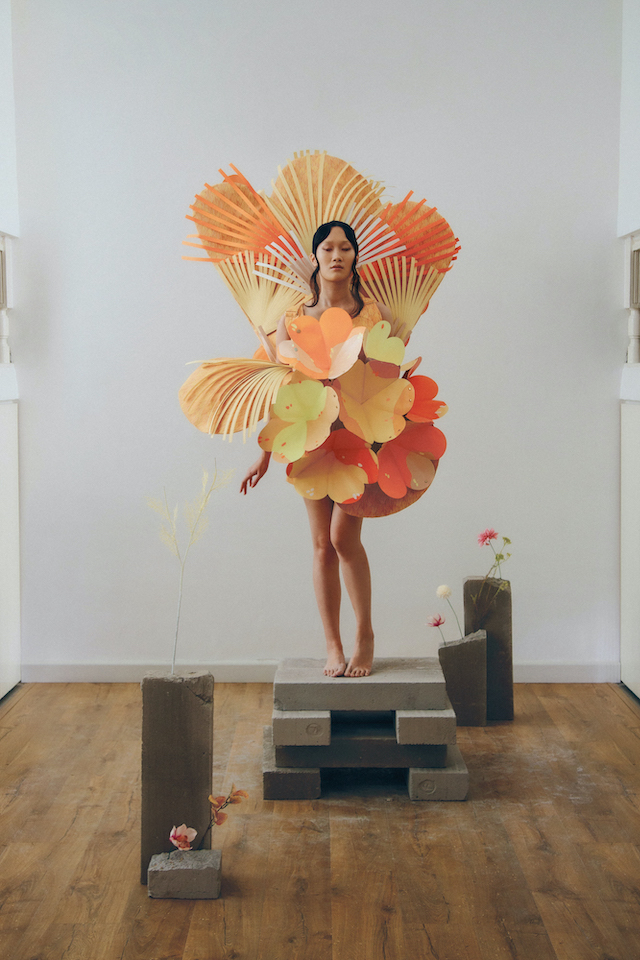
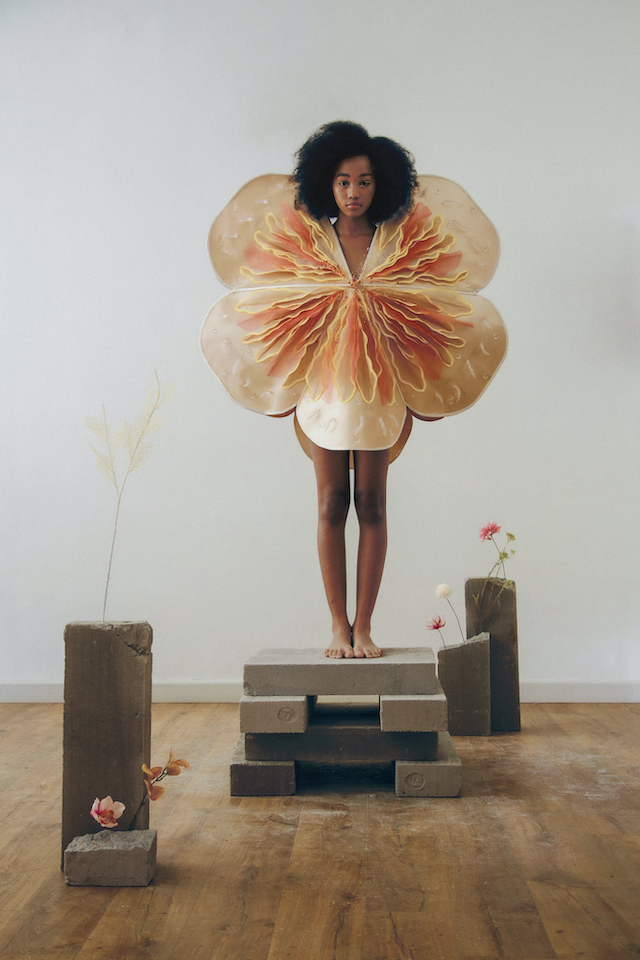
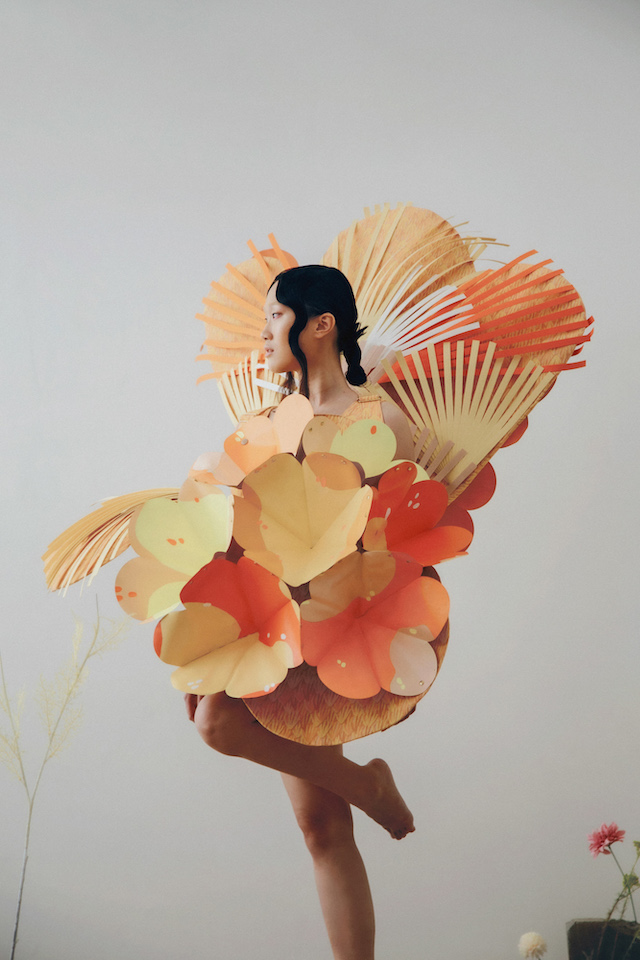
While pursuing a degree in fashion design at Bunka Fashion Collage in Japan, Melda began to employ the use of textiles and fabrics as a way of exuding her love of handcrafted processes. But, equally, it was also perceived as a way of discussing cultural and social issues that were greatly affecting the world. And this is exactly how Bloom was borne; a collection comprising large-scale flower dresses that seek to examine the subject of femininity.
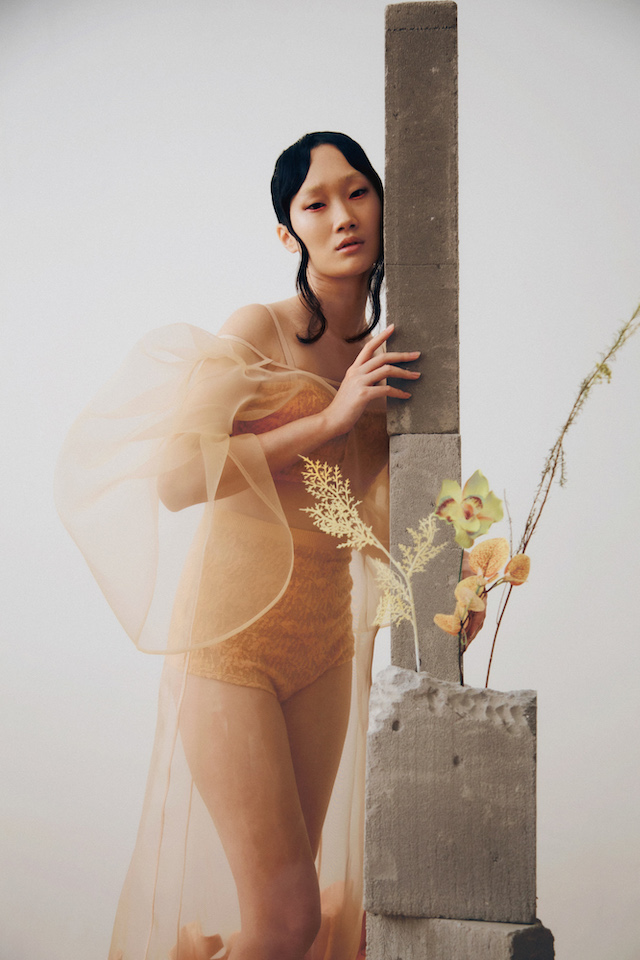
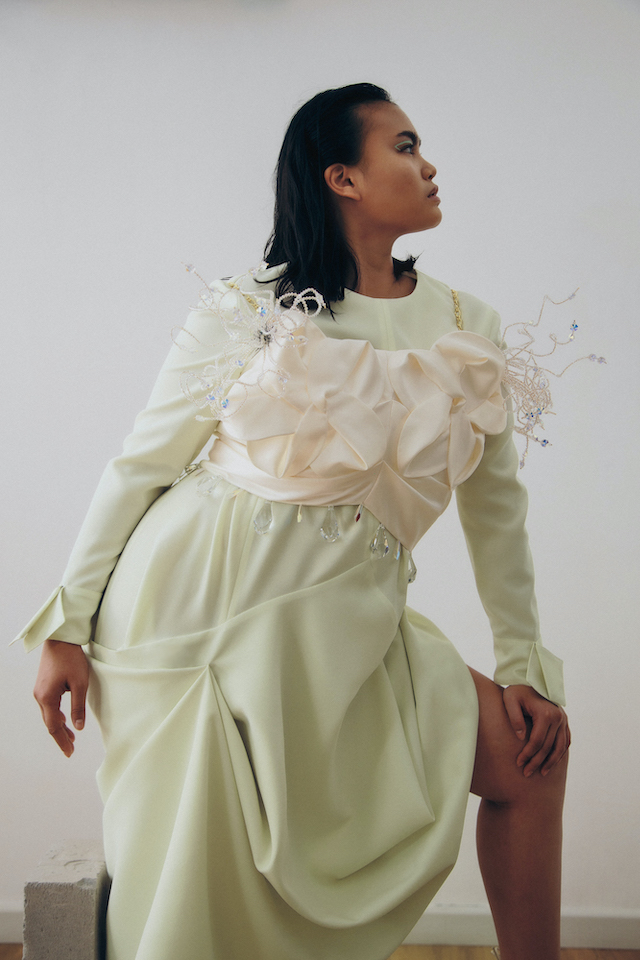
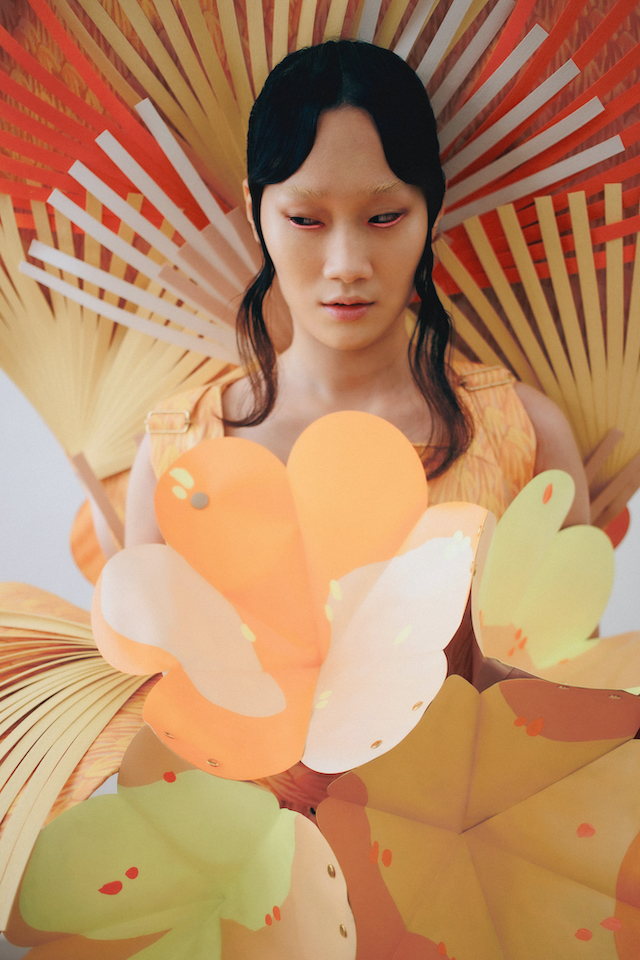
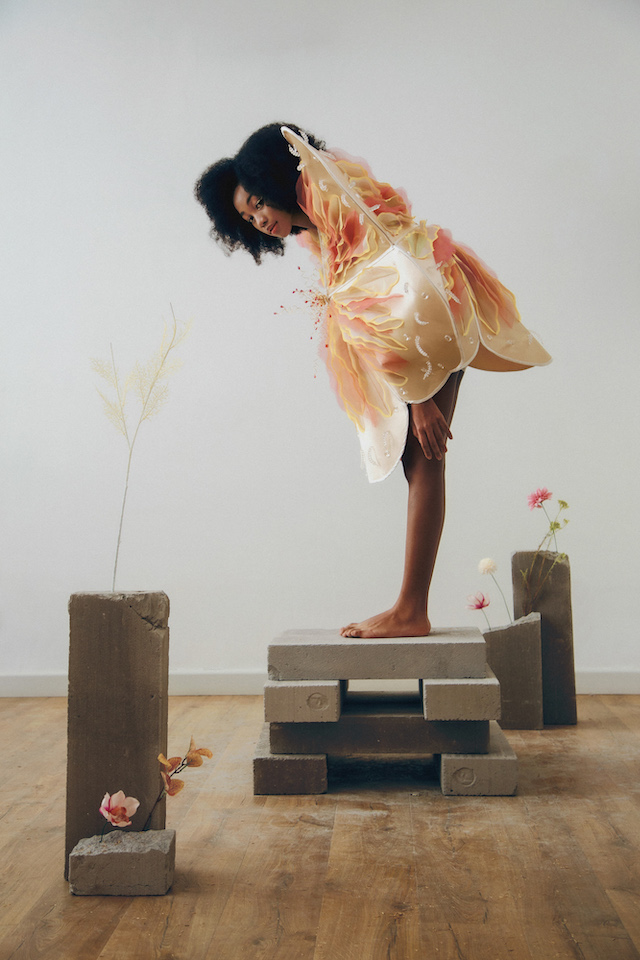
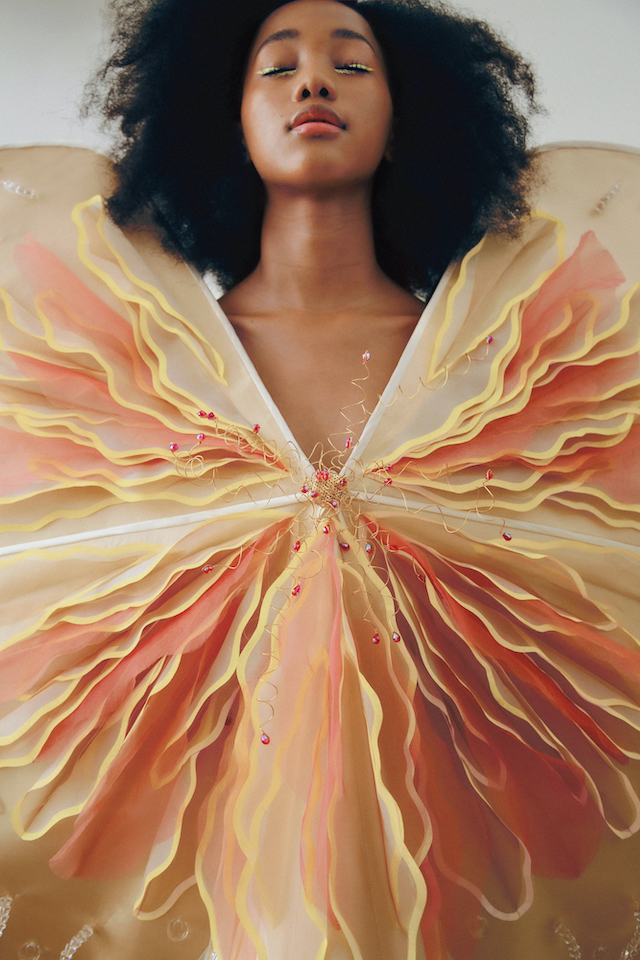
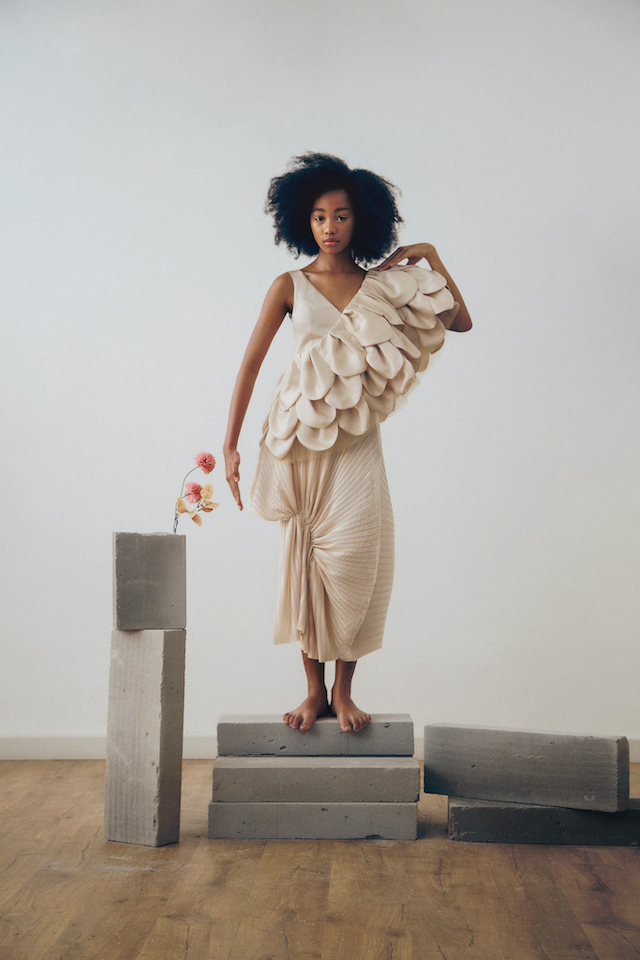
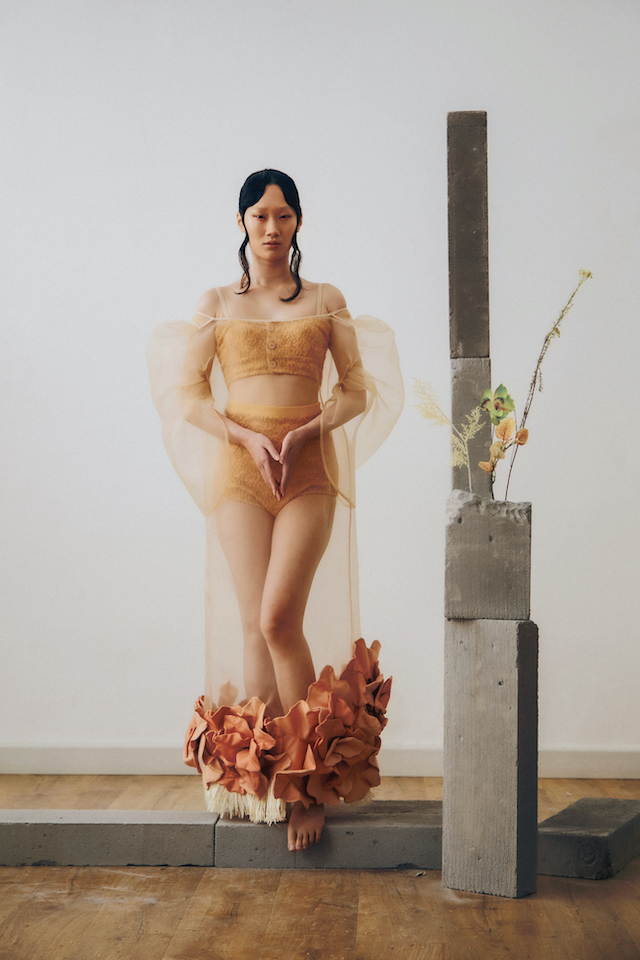
Shrouded in soft pastel tones and textual wefts hanging from the shoulder, the artfully delicate compositions found in Bloom are paired with structural elements, like the panels that hang from arm to hip, cinched in corsets, sashes and, most characteristically, the structural – almost sculptural – addition of flowers and petals. Construed from subtle silhouettes and an “explosion” of colours, Melda’s use of materiality is just as important as the meaning attached to it. From sturdy high pressure laminate (HPL) to soft organdy, she toys with different processes and marries them into her own unique vision: using hand-painting, silkscreen, hand-cut petals to form the blooming flowers to achieve her goals.
Not just a beautiful foray into nature and form, the collection also turns a sharp eye onto the concept of femininity and how this is perceived throughout daily life. “Growing up, I realised that society has all these gender boxes and its own definition of what it means to be a woman or a man,” she says. “Since we were little, we have grown accustomed to suppressing our feminine sides: ‘stop crying like a little girl’. That is what they would say to us women when we show the slightest emotion, or to men when they express themselves outside the box of gender we are all put in. But we often forget that, regardless of our gender, we all have a feminine side inside us.”
The symbol of the flower, then, has great importance in Bloom as well as in the wider context of gender and identity. By merging the natural form with a floral petal, for instance, the collection sings as a reminder that “no matter what gender we identify with, or how we look, there is that feminine side that lies within ourselves and there is no right or wrong way to express it,” says Melda. The flower is widely interpreted as a feminine form, varying between cultures, place and time. “Throughout our lives, flowers have always been the symbol of femininity. Even as a kid, it was one of the first few things we came across that’s immediately associated with femininity – no matter the colour and form.” Rich in context and history, it makes for the ideal symbol to spread her messaging within this collection.
“But,” she continues, “this collection is also about the journey of discovering out feminine sides, embracing them and letting them bloom. I want every piece to embody that journey as well, and the process of growth is very much similar to how flowers come to bloom.”
So who can we envision wearing these pieces, which are artistic and bold to the typical fashion barer? “There are some pieces that you can definitely wear on a day out, but there are also some pieces where I just went all out and let my creative freedom flow,” she says. “But they’re all very personal pieces, not just to me, but it can also be for whoever is wearing them. There is no one single person that I’ve made these pieces for. I feel like everyone has their own story, so I want these pieces to give whoever wears them the freedom to tell their personal story and experience it too.”
The Vancouver-based artist and designer publishes his first monograph, replete with experiments in lighting, sculpture, design and architecture
86.3. Fahim Kassam
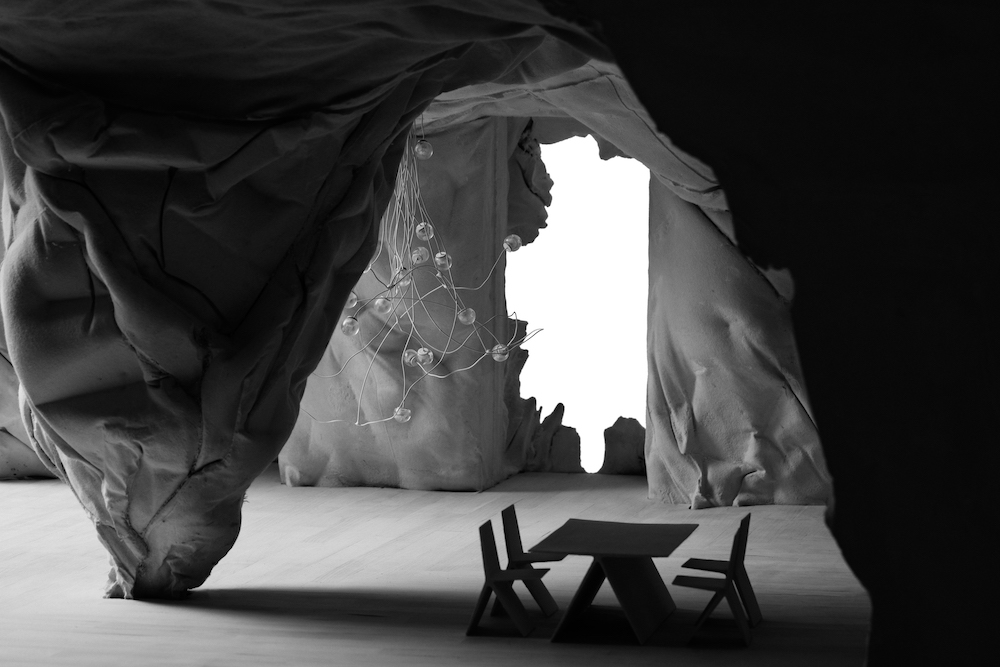
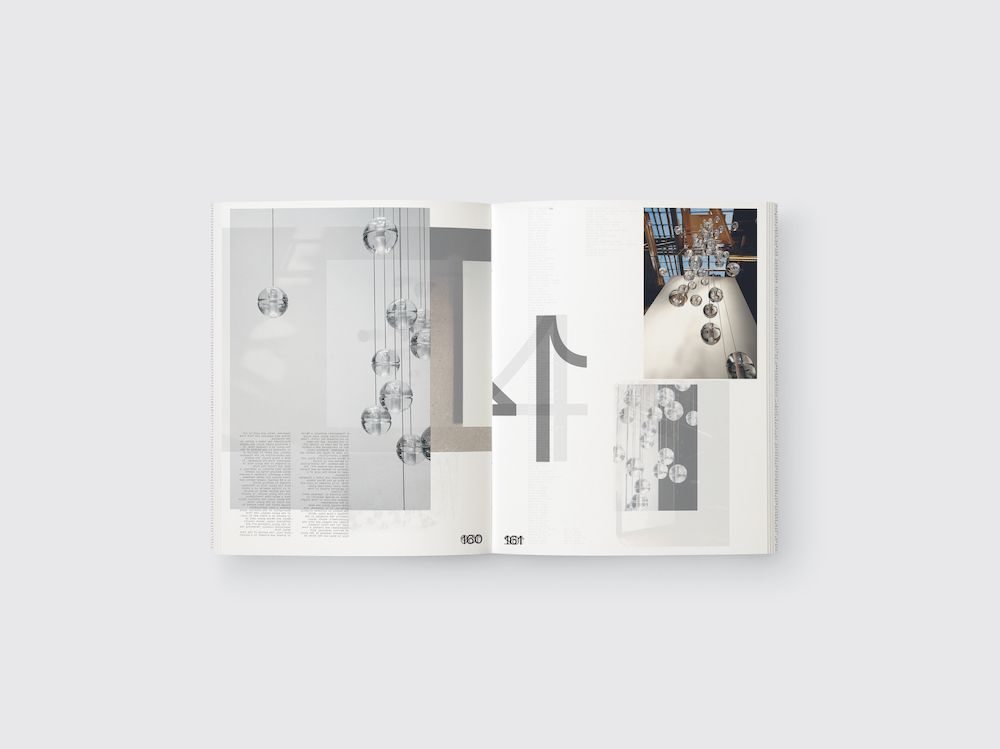
Spherical glass as fierce as molten lava; an angular furniture set cocooned amongst a cave-like canopy; a nest of elongated, spindly arms attached to a series of bronzed bulbs; these are all but a few elements making up the portfolio of Omer Arbel, a Vancouver-based artist and designer known for his experimental approach to processes and materiality. Reaching acclaim for his work across sculpture, industrial design and lighting – and let’s not forget his co-founding of design and manufacturing company Bocci – his lengthy tenure has now been dissected in form of his first monograph, aptly named Omer Arbel, and published by Phaidon.
Omer himself has many titles: an architect, artist, inventor, designer and, perhaps the most unlikely, a competitive fencer. The latter a sport he enjoyed during this younger years, it was a close marriage of strategic play and discipline that enabled him to propel into more creative pursuits later on. “I always knew architecture and making things would be my path, and fencing was a cool side gig. There are lessons I carry with me from that era that come up almost everyday,” he says. “People describe fencing as ‘sprinting and playing chess at the same time’, but I think it is more like backgammon: intuition and willpower play an outsized role, with strategy, perhaps, secondary. Everything happens so fast, there is little time for analysis, so responses are intuitive and must be decisive. Maybe I’ve carried that method of decision making forward into my career, though its relevance is questionable given that projects take years to mature now, not seconds.”
23.2. Fahim Kassam
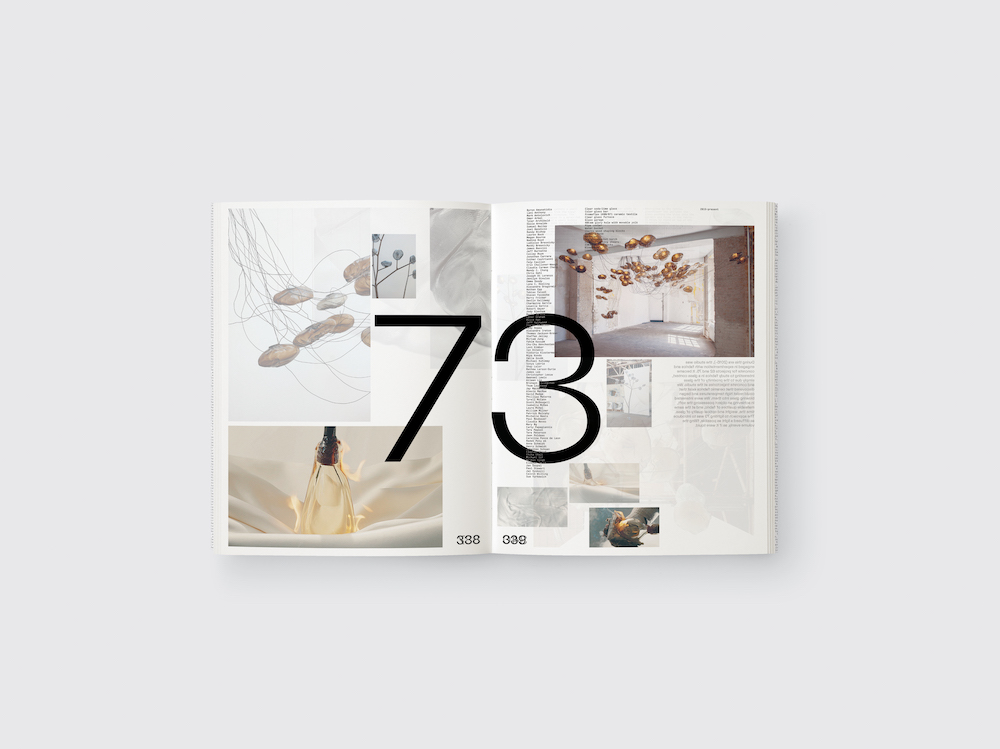
Even if Omer’s work currently adheres to a much slower pace, his decisive (and thoroughly disruptive) attitude shines through fully. This becomes clear within Omer Arbel, a publication housing his broad and experimental projects spanning lighting, industrial design, sculpture and architecture. Each of which is marked in a characteristic identity system of numbers – something he’s incorporated since the dawn of his practice. A “great tool for introspection”, the numbering also means he can skip over the menial and oftentimes tricky task of naming the projects.
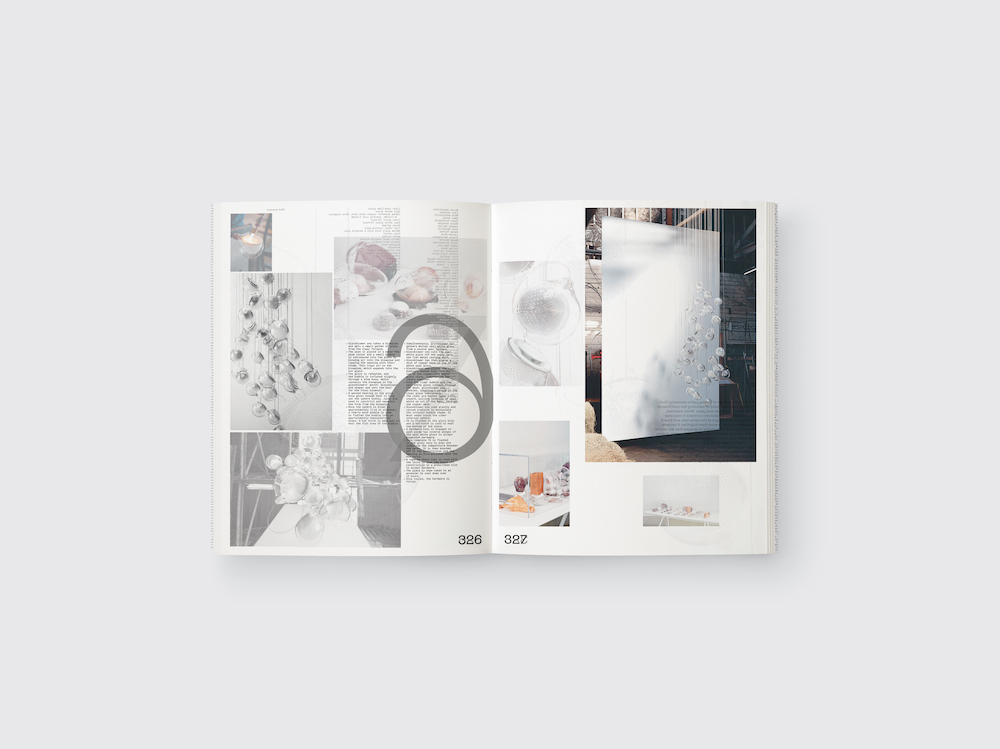
Omer has now reached a “mid-career” point, so not only does he delegate more of the workload to his trusted team, but he’s started to reflect. “The nature of the monograph is to offer a survey that covers the entire output of the practice,” he explains, “to invite the reader into our ecosystem of ideas.” Designed by Derek Barnett, the book is constructed with transparent paper, allowing the viewer to identify texts and imagery through its layers – a kind of visual maze that gives a glimpse as to what’s coming next. “This felt true to our process, in which ideas are always infecting other ideas in the studio,” he notes. Meanwhile Stephanie Rebick edited and worked on the curatorial process, organising the chapters and content as well as a collection of excerpts. “Together these strategies offer a scrapbook quality,” says Omer, “at odds with the formality of the monograph trope, which I like.”
93. Fahim Kassam
Flick through the pages and you’ll notice the studio’s immense attention to detail and investigation, whether that’s in the literal sense of approaching a brief or through the use of materials, mechanics and applications of light. 64 is pinnacle to this, a project conducted over several experiments with hot beeswax and water set at different temperatures. Omer was inspired to work in this manner after reading Rudolf Steiner’s Nine Lectures on Bees – a philosopher who predicted the declining population of the honeybee. “It is a celebration of a long ritual of transformation, beginning with the bees making the wax and ending with lighting the candle,” says Omer. “Even the transportation of the object is part of the ritual.” The result is this metamorphic object, where twiggy formations of wax amount to a delicate candle structure. All previous associations of how a candle should look and behave are tossed away happily with this creation, and there are many of this kind.
75.9 Model. Fahim Kassam (22)
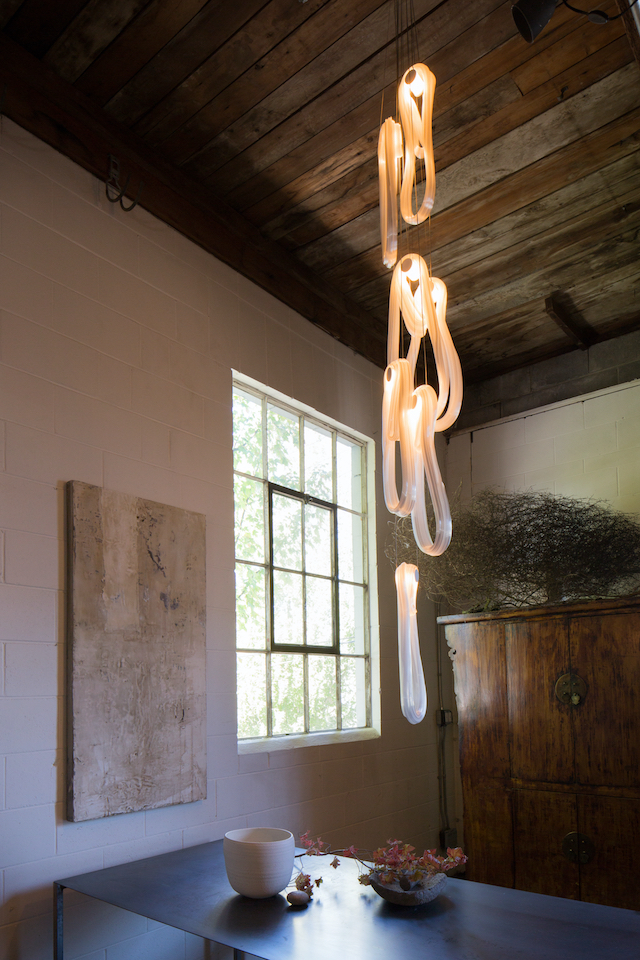
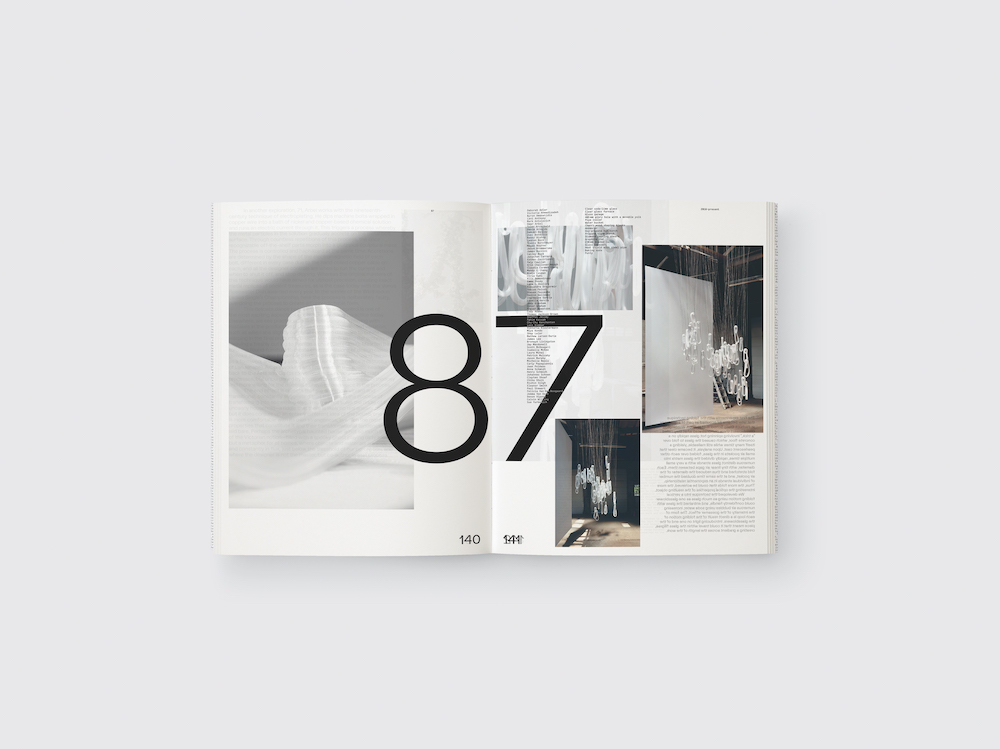
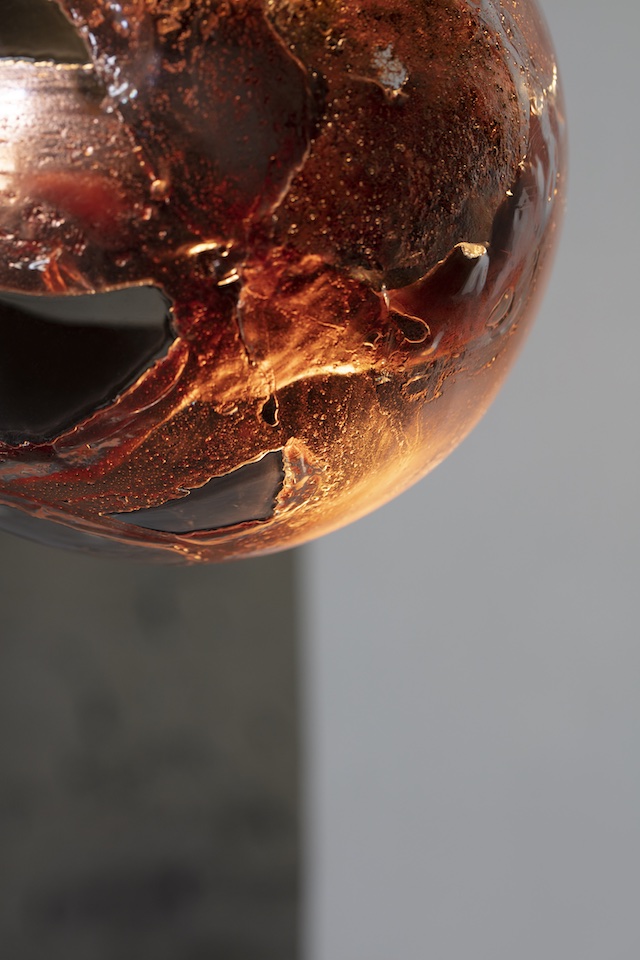
87, for example, is one of the first experiments the studio made with the folding glass technique, presenting the sheer durability of the material. The technique arose from a residency at Pilchuck Glass School in Washington: “Glassblowers there demonstrated what they called ‘a trick’, involving spinning hot glass rapidly on a concrete floor, which caused the glass to fold over itself many times while still malleable, yielding a pearlescent cast. Upon analysis, it became clear that small air pockets in the glass, folded and folded again numerous times, rapidly divided the glass matrix into numerous glass strings with a very small diameter. Each fold stretched and thus reduced the diameter of the air pocket and doubled the number of individual strands in an exponential relationship; thus, the more folds could be achieved, the most interesting the optical properties of the resulting object.”
The method involves a careful “vertical folding motion”, done so with just the right mount of glass for it to be well-handled by the glassblower, before filling it up with air bubbles with soda water, “increasing the intensity of the gossamer effect.” He adds: “The form of each loop is a direct result of the folding motion of the glassblowers. Introducing light on one end of the piece meant that it could travel within the glass filigree, creating a gradient across the length of the piece.”
Throughout the book, these more intricate structures are paired with more large-scale architectural pieces. But no matter the size, each protrude with the creators signature language: one of variety and skill. Omer is a designer who knows no boundaries. In fact, the term inventor might be better suited as his ultimate title.
Omer Arbel is available to pre-order here and will be published at the end of the month
31.3. Fahim KassamJanaki Showroom, 87. Fahim Kassam75.9 Work in Progress
As VIU open up their first London store, creative director Fabrice Aeberhard explains what it means to be Swiss and how geography has an aesthetic impact on the brand’s acetate and titanium frames
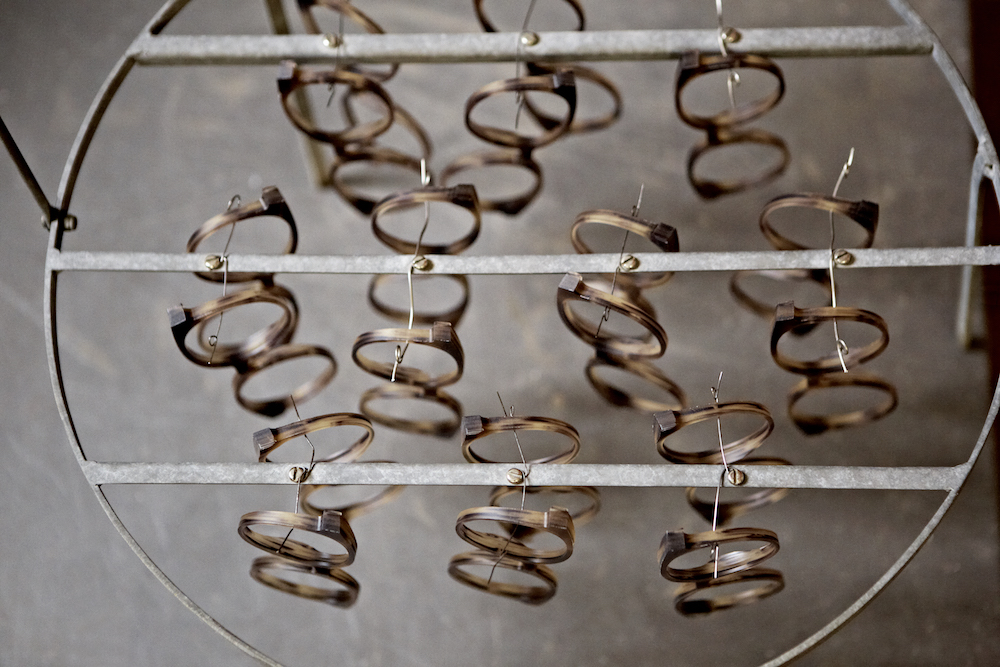
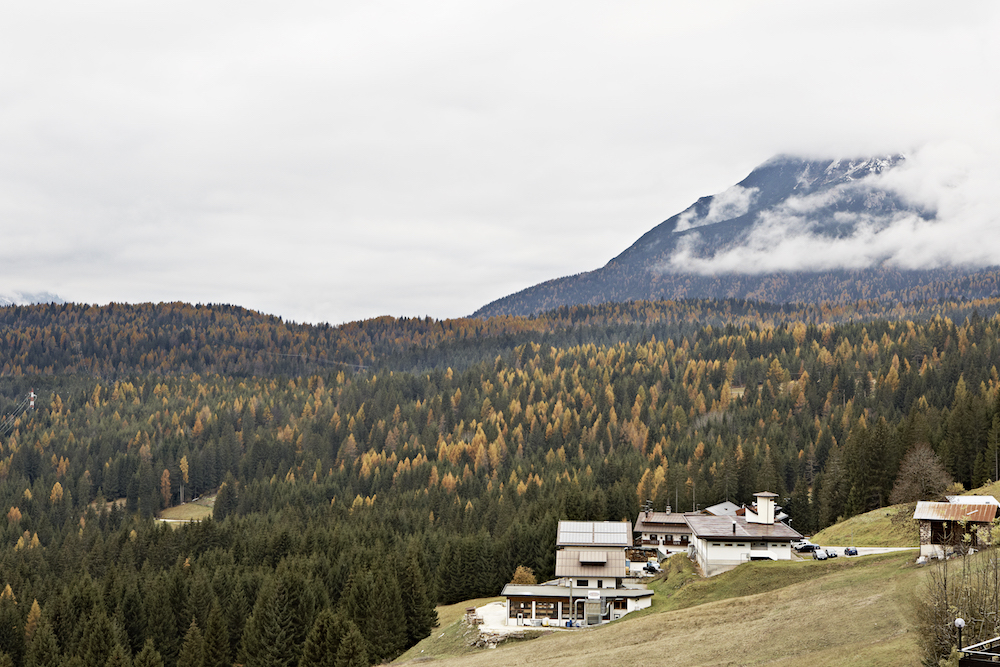
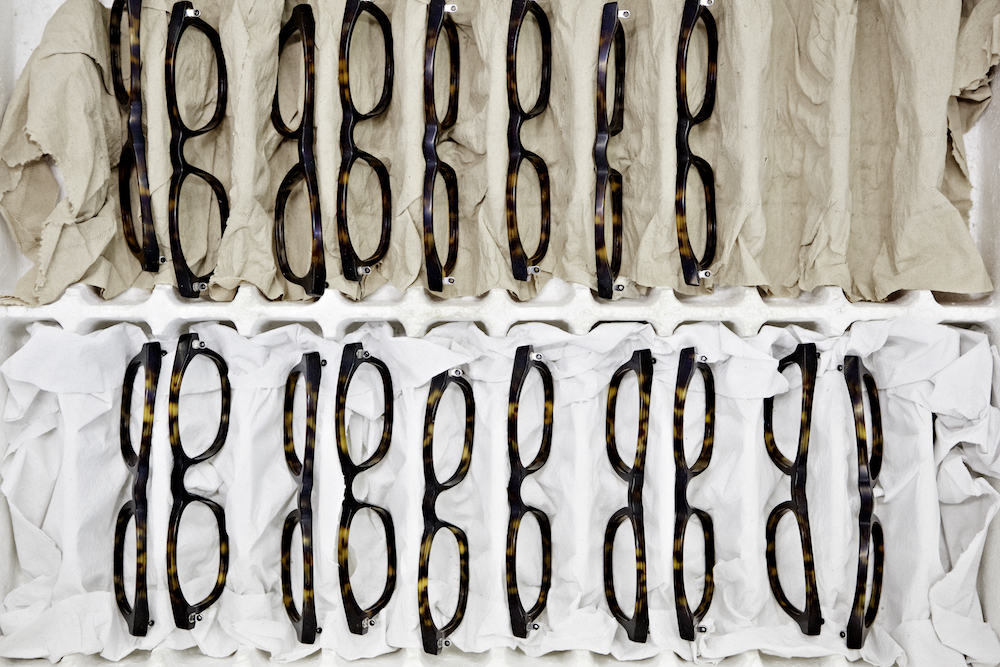
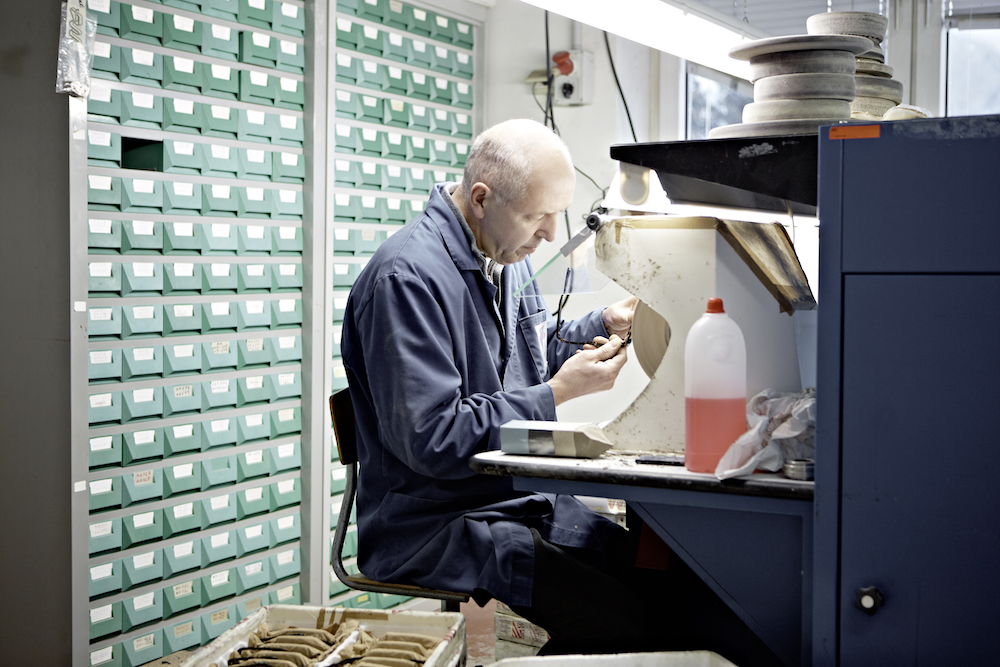
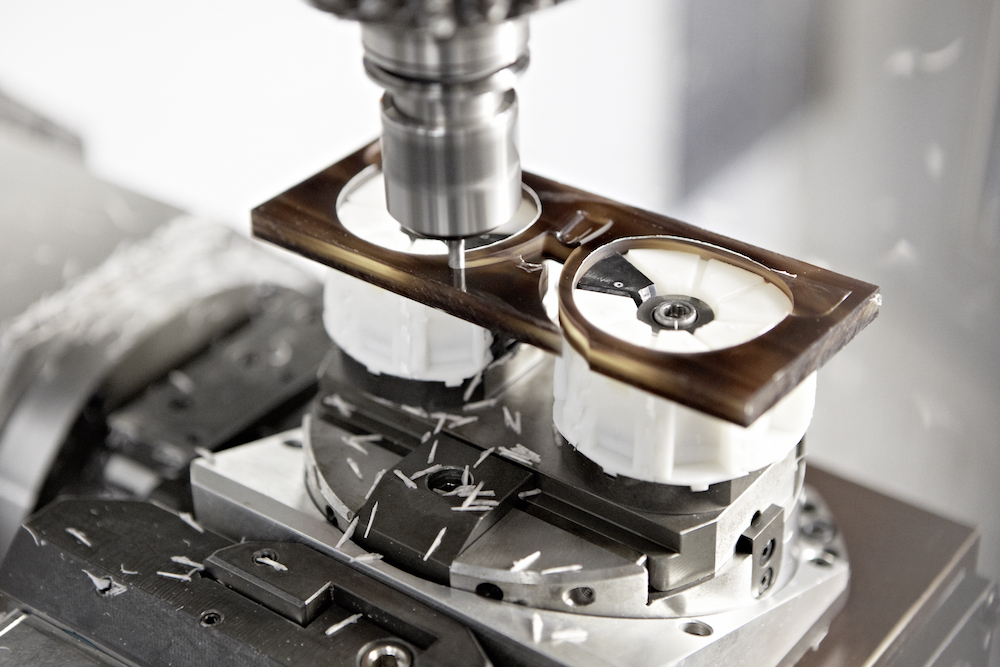
Somewhere in the Dolomites, Northern Italy’s majestic mountain ridge, there’s a family owned factory producing hand-made acetate frames. I can’t tell you exactly where we are: the name of the village is secret, not for public consumption. That makes sense: eyewear production is like anything else, you don’t give out your sources. This area of Italy is home to countless factories, producing spectacles for both large fashion conglomerates but also smaller niche and independent brands, like VIU.
The Dolomites have 20 peaks that are 3,000 metres or higher. It’s perfect for seasonal adventure activities, like skiing in the winter and hiking in the summer. But eyewear production, that’s an all year around job for the 13 people working in this factory. Touring the space you get a feel for the challenges of scaling hand-crafted quality into a sizeable business. Zurich-based VIU seems to have nailed it: though only founded in 2012 they have over 50 stores – including a new London location opening up this week in Soho.
VIU makes their acetate frames here. The titanium ones are produced in Japan. In fashion, those two countries are the very best for manufacturing in, and the same goes for eyewear. Add to that the perceived minimal design and efficient quality that comes with a Swiss passport, and VIU ticks a lot of boxes. There’s an old school classicism to the brand, at least its backbone offering, that cements VIU as a wardrobe staple, the kind of pieces you can wear wherever and whenever.
Creative director Fabrice Aeberhard’s vision is clear-cut: the classic designs are a foundation to stand on while experimenting with more directional looks going forward. Based on innovative techniques and raw materials such as acetate, titanium and stainless steel, VIU has managed to navigate a market that is often dominated by large global luxury brands and high street opticians by finding the right balance in terms of both design and price points. VIU isn’t cheap, but it’s certainly not expensive considering you get frames designed in Switzerland and made in Italy or Japan. Ahead of the store opening, Aeberhard explains why making frames is as much about making people feel comfortable as making them look good.
Why did you get into the eyewear business? What do you find fascinating about frames?
If you look at the everyday products we use, what is more extreme than something that sits in the middle of your face all the time? You need to get it right, or people will look strange and not feel right. It’s quite the responsibility!
Yeah, there’s a lot of trust put into you because not only is it an aesthetic thing, there’s a medical side to it, it really has to work … people depend on their frames for survival. Or at least I do, as I’m severely short-sighted
Me too! But I’m always trying not to give the full potential to my eyes because I want them to have to work a bit. So, I wear my frames maybe a third of the time that I should. I don’t have strong correction in my eyes. I need them for when I’m driving or watching TV. But for moments like this it’s OK that it’s not 100% focused … I like not seeing everything super sharp because sometimes when you walk around it’s quite sad how dirty everything is.
I’ve heard it from a few people actually, that they like living in a sort of fuzzy world…
Yeah, life becomes a mix of colours, like a Jackson Pollock artwork.
Yeah exactly. Well, when you put it like that it’s quite nice. Life is like one constant artwork
I think frames have something very magical about them. You can either emphasise a character, making them stronger, making a man more male or women more female.
You say that but if you look at the VIU offering it’s a very classic type of eyewear?
That is the beginning. When we built VIU, I always said our first three collections should be contemporary classics. Just because if you start with an edgy collection it’s very hard to survive. But if you start with something that has more of a classic character, the foundation becomes more stable. That was my logical approach to building a base that we can actually make a business out of. We can build stores, we can build a strong machine and then we can start to create character and edge lines. So this is what we have been doing for three years, based on Italian classical art and languages and the natural approach of things.
When you design frames it seems to be very much in the twilight zone between fashion and product design. Would you ever want to work with clothing?
What is very interesting about clothing is that it’s basically about reinventing yourself every season, which is sick, but in a certain way there really is the need to actually reinvent everything.
There aren’t that many Swiss fashion brands around, at least comparatively. How do people perceive Switzerland and, as a consequence, your brand?
Switzerland is seen as a humble place; it’s very simple, structured and it’s focused on the essential question of what defines something. To be Swiss also means to be very secure, always projecting five years ahead. And obviously that mindset has an impact on how we run our company.
It’s also a very fortunate country from a geographic point of view – you can borrow the pragmatism of your northern German neighbours but also the flare of the Latin countries
Yes, geographically, the surface that we are covering is very small, the longest distance measured in a line is around 400km. But in this very compact world you have so many cultures clashing together; we have a French part, an Italian, German and Austrian part that are all quite big, but also a Latin background that is still part of our culture. But once again, it just shows, you know that Switzerland cares about the future.
You know, if you look at politics, it is also our way of thinking of the future, as being neutral, as being negative but also a very positive side, we would never be too strong in one direction, so it means that when we move on it is quite secure and the population decides on the big topics. We do not have one guy at the top that is just shouting around, deciding on the direction of things. We have the “Bundesrat”. We have seven Presidents, and one is always elected for one year as being the one ahead but he is not the one deciding, he is more like the leader of all seven for one year. And the departments are exchanging every year. This is also part of our system, that you cannot create a system that is corrupt. So with politics as with everything else, we are quite slow in changing, but that can also be a good thing.
As a brand, where do you position yourself? Your price point is not cheap but it’s not too expensive either; it’s affordable I suppose?
I would say the most important thing for us is talking about prices being fair. It’s not about being expensive or being cheap, it’s a lot more than that. It’s about being fair and conscious, and explaining to people what they are paying for.
Is there a frame, that you would say sums up the brand?
Our titanium frames are very strong and it was also one of those moments where other brands saw us in a very specific way, because what we achieved in titanium was competing with the very best ones, like Dita and Thom Browne. So having that approach, that quality and that sense of lifestyle, but interpreted in quite a classical way of building and expression of the frame, that’s a good way to describe VIU.
What does a post-global world look like? MAAT show curator Aric Chen explains
Photography by Bruno Lopes
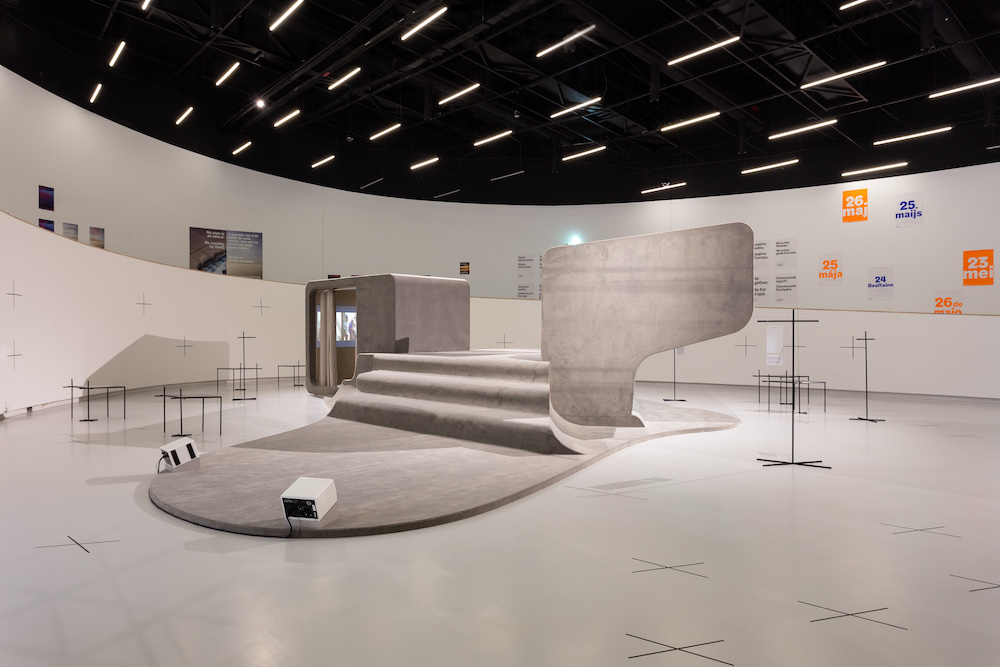
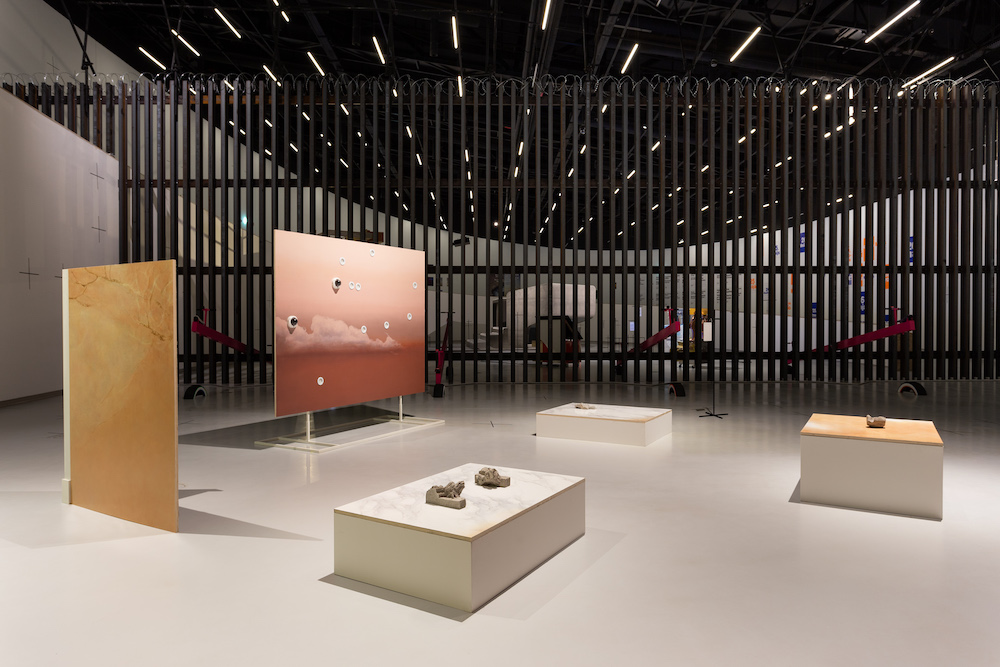
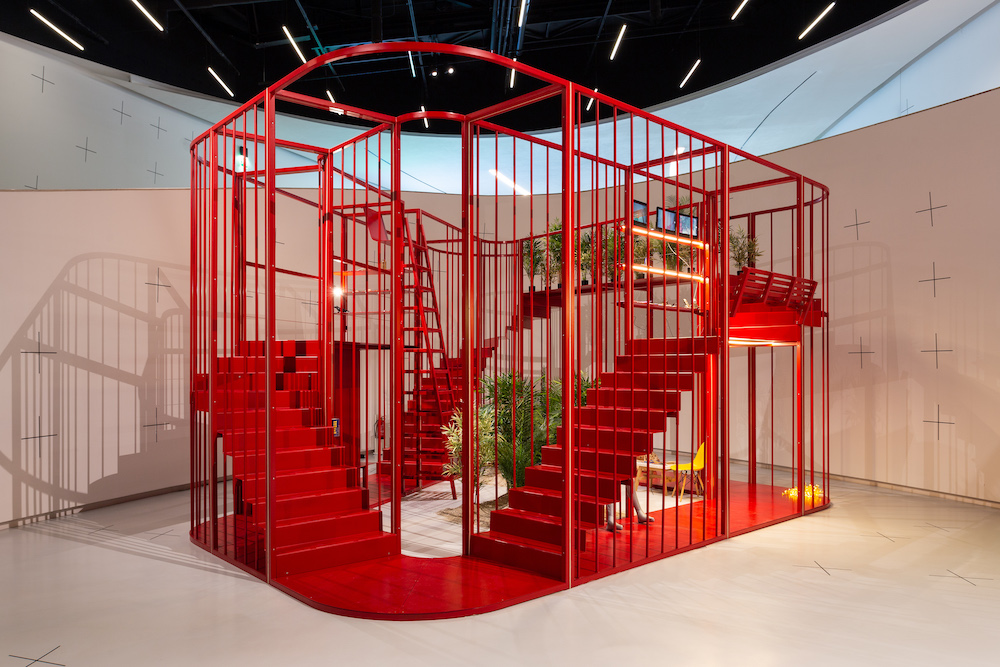
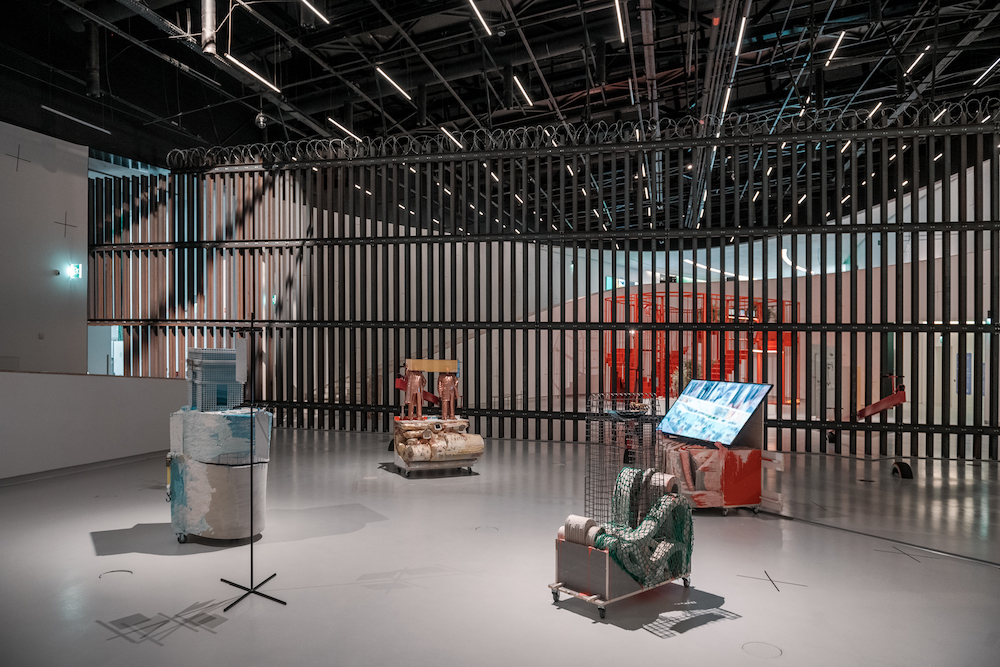
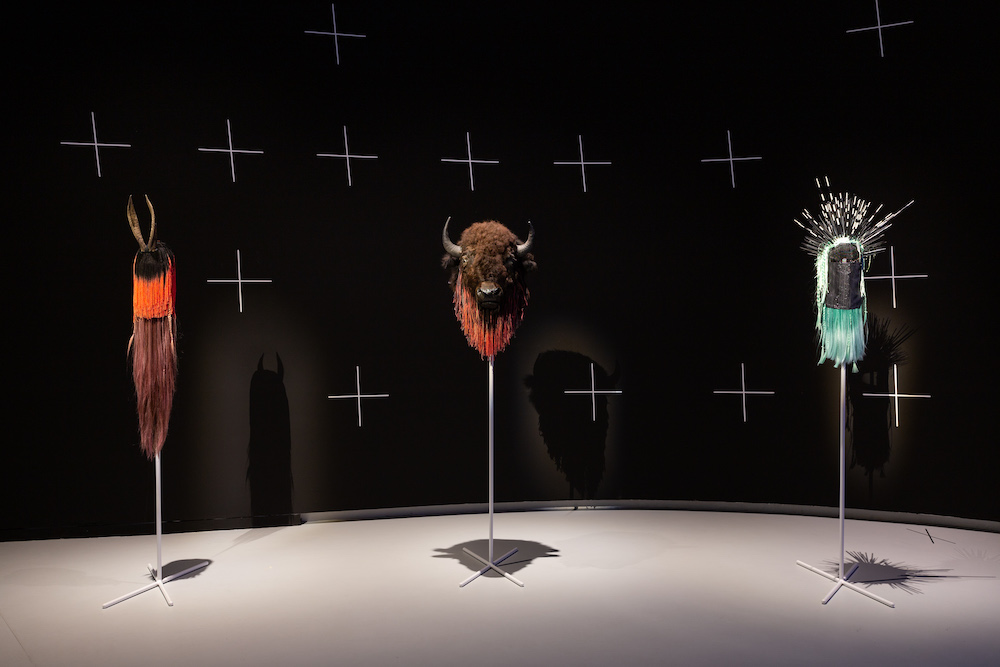
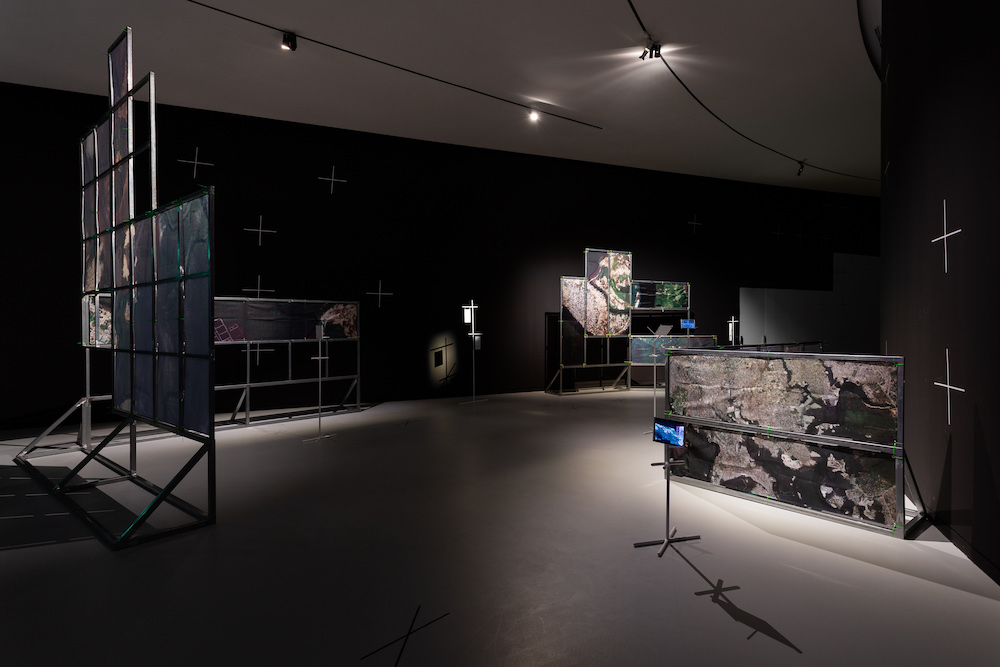
What does it mean to live in a “post-global” world? Posing this question – and also answering it – is a new exhibition presented by Lisbon’s MAAT (Museum of Art, Architecture and Technology), named X is Not a Small Country – Unravelling the Post-Global Era. Curated by Aric Chen alongside designer, curator and educator Martina Muzi, the show compiles nine large-scale installations from international practitioners spanning design, architecture and art. All of which explore a post-global landscape, providing examples of how this new world might look and function.
It’s a vast, detailed and oftentimes dizzying display of the current state of affairs. Previously, the rapid rise in globalisation had accelerated us into new and bountiful territories. Then after Brexit, trade wars, refugee crises and rising nationalism, we were faced with a new hurdle: a pandemic. Travel was disrupted and many switched to digital communications and exchanges; thus increasing the social and cultural gap between those with or without access to the internet. But, as Aric puts it, a “post-global” world isn’t the result of globalisation “unravelling”, and rather it’s a state of contradiction and fluctuation. With every door that shuts, another one is bound to open, so to speak.
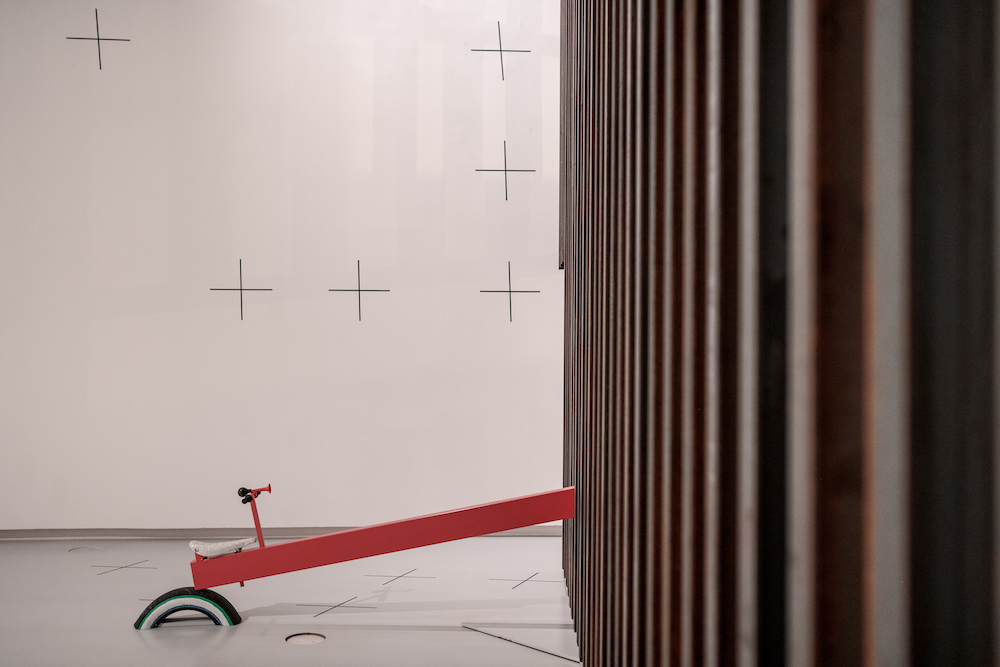
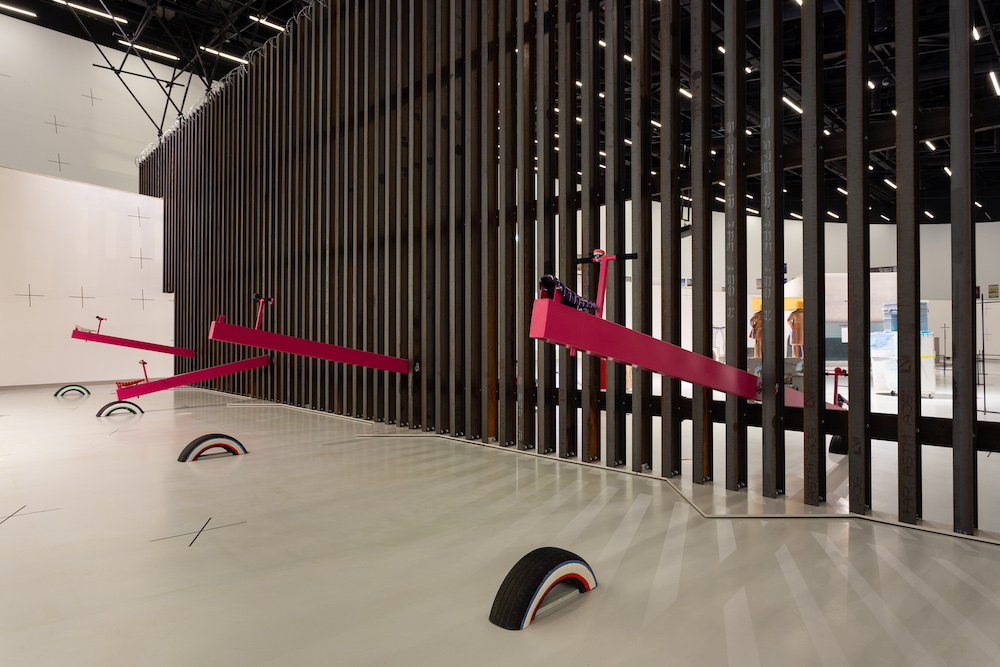
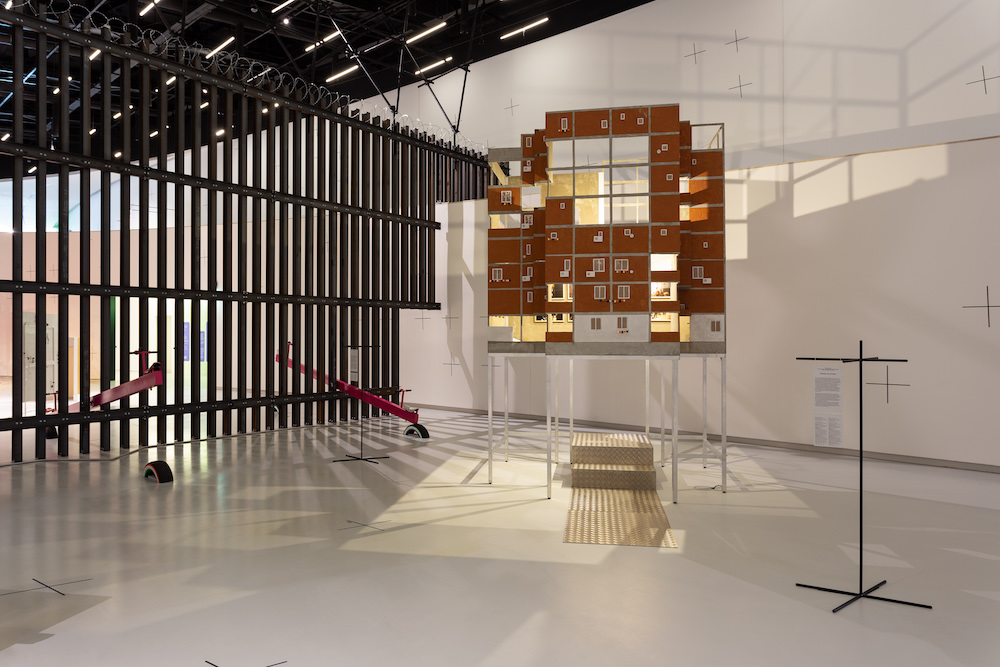
In this new exhibition, which was surprisingly conceived prior to the pandemic, MAAT opens up the “post-global” conversation with a series of site-specific installations. Beginning with Wolfgang Tillmans, who’s contributed his anti-Brexit campaign of EU posters, the show navigates through a plethora of international pieces, like that of architect and director Liam Young, who’s made a film titled Planet City – a fictional tale that calls for urgent examination of the environment. Others include the recreation of the recognisable Teeter-Totter Wall, a seesaw installed at the border fence between the USA and Mexico in July 2019, as well as the more speculative contributions such as the analysis of gambling in Macau.
Aric is a Shanghai-based curator, writer and professor, who’s been appointed general and artistic director of Het Nieuwe Instituut in Rotterdam. To paint a more concise picture, and to perhaps give a definition as to what “post-global” really means, I speak to Aric to find out more about the show.
Photography by Bruno Lopes
What inspired you to launch this exhibition, why tell this story now?
The world is clearly changing, and globalisation as we’ve known it since the 1990s is giving way to a new condition that’s developing right before our eyes. This is something I’ve felt acutely as an American living in China, given the transforming relationship between those two countries through trade wars and other signs of a growing “great power” competition.
But we, of course, see how global networks and relationships are becoming increasingly convoluted everywhere. We see liberal democracies giving us Brexit and rising nationalism, while Saudi Arabia opens itself up in once inconceivable ways – just as Israel establishes diplomatic relations with Bahrain and the UAE, who until now didn’t even formally recognise Israel’s existence as a country. Doors are both opening and shutting in ways that would have been hard to imagine just a few years ago. And they’re doing so at the same time: right now, as China and the EU slap sanctions on each other over Xinjiang, they’re also trying to push through a new trade deal. There are multiple, overlapping and often contradictory logics operating simultaneously. We need to understand this in order to navigate it, and the implications of – and for – architecture and design as manifestations of these global processes.
Photography by Bruno Lopes
Talk me through the works involved and how you’ve curated the show.
Designers, architects and artists have been investigating in “the global” for a long time. But our aim was to, as concisely as possible, capture the complexity of the “post-global” that we’re now observing through just nine projects. All of which address the forces of post-globalisation at scales ranging from objects and individuals to societies, species and the planet, from an array of geographical perspectives, and in both concrete and speculative ways.
So for example, as you enter the show, you’ll see an installation by Wolfgang Tillmans of his pro-EU posters – something very immediate that most visitors will easily relate to – before confronting a re-creation of Rael San Fratello’s Teeter-Totter Wall, for which the American architects, in 2019, inserted see-saws through the US-Mexico border wall in order to allow children on both sides to play with each other.
From these very “real” installations, we get into more research-based and speculative projects ranging from Revital Cohen and Tuur van Balen’s examination of the links between gambling in Macau and the construction of Israeli settlements in the West Bank via a casino that mimics London, to Ibiye Camp’s augmented reality speculations about a post-petrol future in the Niger Delta, to Liam Young’s video about a planet in which the entire human population is concentrated in a single city.
We also have Tactile Cinema, an installation by Jeddah-based Bricklab that evokes the evolution of cinema spaces in post-World War II Saudi Arabia – from informal to illicit to now being legal again – while hosting a film program of artists from across the Arab world organised by Art Jameel.
Photography by Bruno Lopes
How exactly has globalisation been impacted by the pandemic, and how has this affected the design and architecture industries?
As many have said, the pandemic has accelerated processes that were already underway, be it the use of digital communication or the widening of social inequality. It has also accelerated “post-globalisation” and its impact on design and architecture. Not just through the reordering of supply chains, but also the flow of people and ideas, and the culture and meanings that are embedded in, and produced by, the designed world. In ways large and small, design and architecture will both be shaped by, and used to help shape, how this new world will look and operate.
Photography by Bruno Lopes
Do you think the pandemic has forced the world to re-think pre-existing structures?
I should emphasise that “post-global” is not the same as “de-globalisation.” It’s not that globalisation is ending or totally unravelling. It’s that the idea that we were inevitably heading towards ever-more openness and intertwinement has to be discarded for a future of more unpredictable fluctuations of both restriction and access. This means we not only have to be more nimble and flexible in order to navigate this, but we also perhaps need to rethink our approaches and world views if we are to constructively, and peacefully, function and coexist.
To the extent that the pandemic has forced us to re-think pre-existing structures, these are things that we should have already been re-thinking: the social and economic systems that have caused such injustice, to say nothing of ecological disaster.
The full list of contributors include Bard Studio (Rupali Gupte e Prasad Shetty), Bricklab (Abdulrahman Hisham Gazzaz and Turki Hisham Gazzaz), Ibiye Camp, Revital Cohen and Tuur van Balen, He Jing, Liam Young, Paulo Moreira, Rael San Fratello Studio (Ronald Rael and Virginia San Fratello) and Wolfgang Tillmans.
X is Not a Small Country – Unravelling the Post-Global Era is currently on show at Lisbon’s MAAT until 2 September 2021. Head here for more information, and tickets can be purchased here.
Photography by Bruno LopesPhotography by Bruno LopesPhotography by Bruno LopesPhotography by Bruno Lopes
Port speaks to the award-winning designer about the intersection of art and design in his work, and his latest project with Ligne Roset
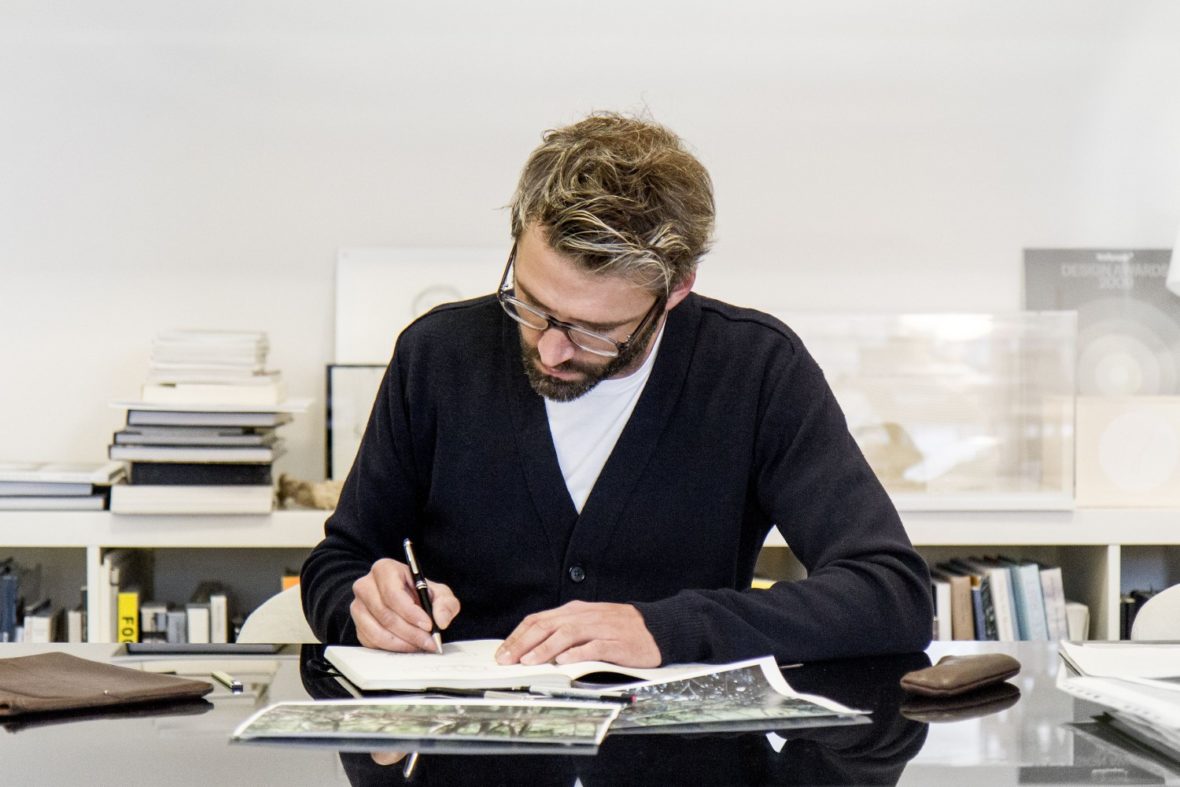
Noé Duchaufour-Lawrance took an unorthodox route into design. Having initially trained in sculpture in Paris before starting creating furniture and interiors, he rose to prominence after being chosen as Designer of the Year by Maison & Objet in 2007 and has designed pieces for leading brands such as Hermes, Dior and the French lifestyle-design brand Ligne Roset, as well as interiors, such as at Sketch in London, where he was artistic director. With his work not restricted to one form or material, Duchaufour-Lawrance seeks to re-model and modernise existing templates, and he has become known for the variety and contemporary feel of his pieces.
Here, he talks to Port about the possibilities of design, why he’s not an industrial designer and his new sofa for Ligne Roset.
How does your training in sculpture come to inform your work as a designer? Why did you move away from sculpture towards something more functional?
Sculpture is very open, very free, and it has given me a certain sense of freedom in my work. I learned not to be limited to certain techniques or particular aspects of the production process, and it’s allowed me to go from one field to another without being limited by a lack of imagination. There is a French word for that, plastician – someone who can work with a variety of skills without having an exact knowledge of any of these. I’m not an architect, but I know how to design a volume and the sensation of a space, as well as the material I want to use and the goal I want to achieve. I just don’t know exactly the specifics of how you can build this or that.
I moved from that to creating functional objects, and it was interesting because it pushed me to consider the boundaries of function and abstraction. Yet, because of my lack of formal training, perhaps I have less technical skills and I’m less interested in the pure industrial aspects of design. I’m not fascinated by a coffee machine, for example. I think that the object is not limited to these technical elements. Furniture in a way is much more poetic and sensible than a pure industrial project. With furniture, we have to create things for people which have to be used and create a strong relationship with a person.
Where do you take your influences from?
When I was young I had a limited access to sculpture because I was growing up in a small village in Brittany, but my mother was a professor of art, so my main introduction to sculpture and art was through books.
I remember one of the first books I saw was of Andy Goldsworthy. He really impressed me in his work because there is a strong relation with the context, he is using only what he finds, and there is respect in his interaction with nature.
Your work has been quite varied, but is there a consistent approach that you have to your different projects?
I’m not an industrial designer because, to me, it doesn’t mean anything to produce an object. To re-do an object which is already there in so many various forms doesn’t mean anything. So I try to ask myself what we are going to give through the object. That’s very hard to know, but what I’m trying to do is see how the object I’m designing interacts with the user, how we can create this relation which is based on a sensual, or sensitive, interaction with the objects.
With Sintra specifically, how did that project begin? What were the initial ideas you had for it?
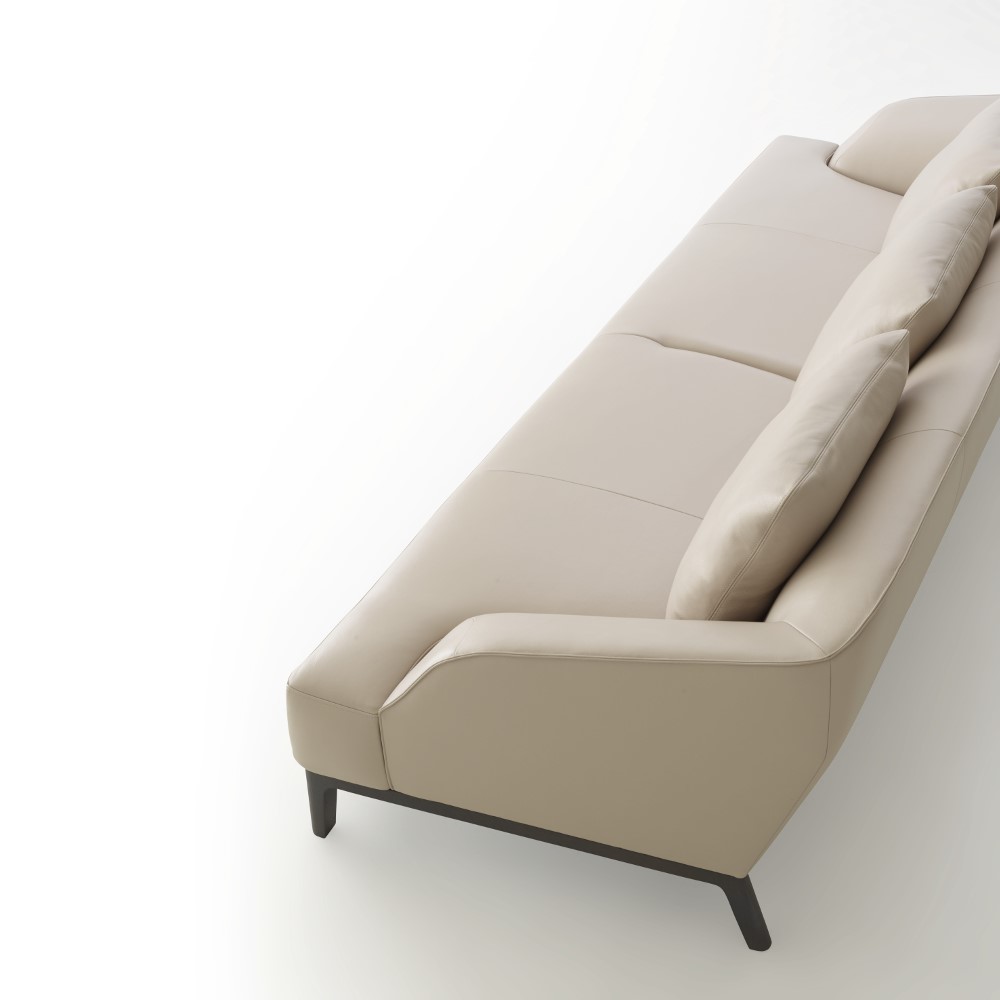
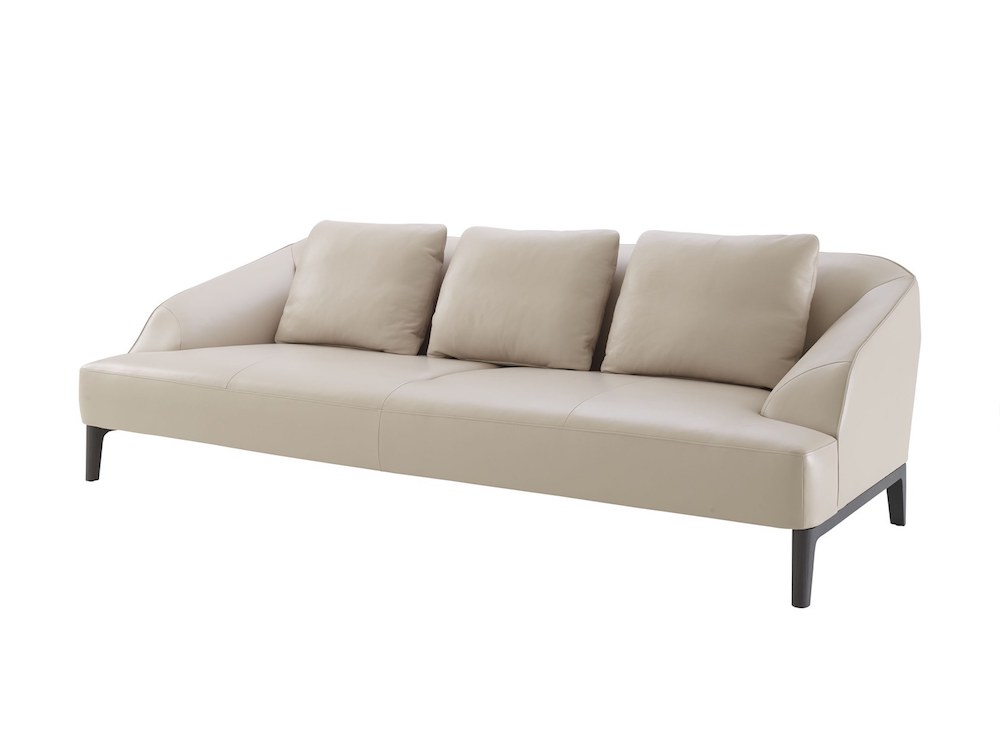
That was not at all about sculpture and an idea of an abstract environment, it was much more about Ligne Roset who were looking for this kind of project – an object which took its roots from a classic sofa. The question was how can we use these shapes and codes which people know about with the sofa, but integrate them into something more contemporary and progressive. There was a duality to the project, aiming to create something timeless – both modern and classic.
I found the starting point for the form in classical shapes, such as sofas from the 1940s, and then we moved to these deeper, more generic sofas – the kind which are made for country houses. We took all this language and re-appropriated it – thinking about how these traditional signs can become something with more tension, and more graphic strength.
It was also important to work for Ligne Roset because I designed this for them, not for somebody else. That’s why I talk about the context of a piece, because I want to have this very strong relation with the people I’m working with. We have to understand each other, to speak the same language and to have the same view, otherwise it’s going to be compromise.
Helena Fletcher explores an exhibition celebrating the styles of the jungle and UK garage scenes, and the first instalment of RTRN II JUNGLE
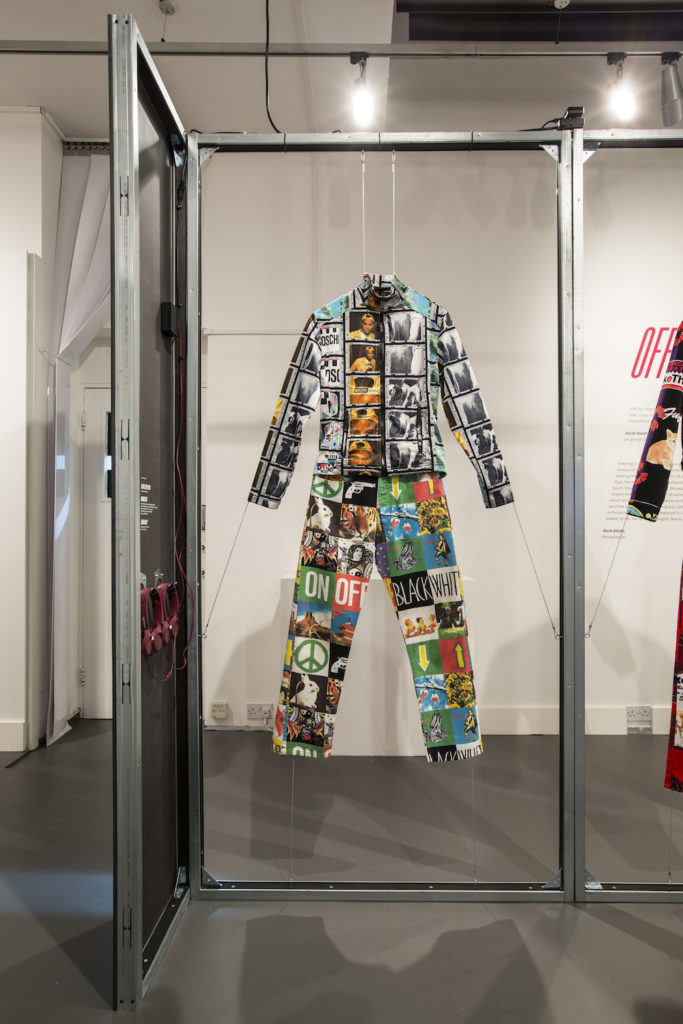
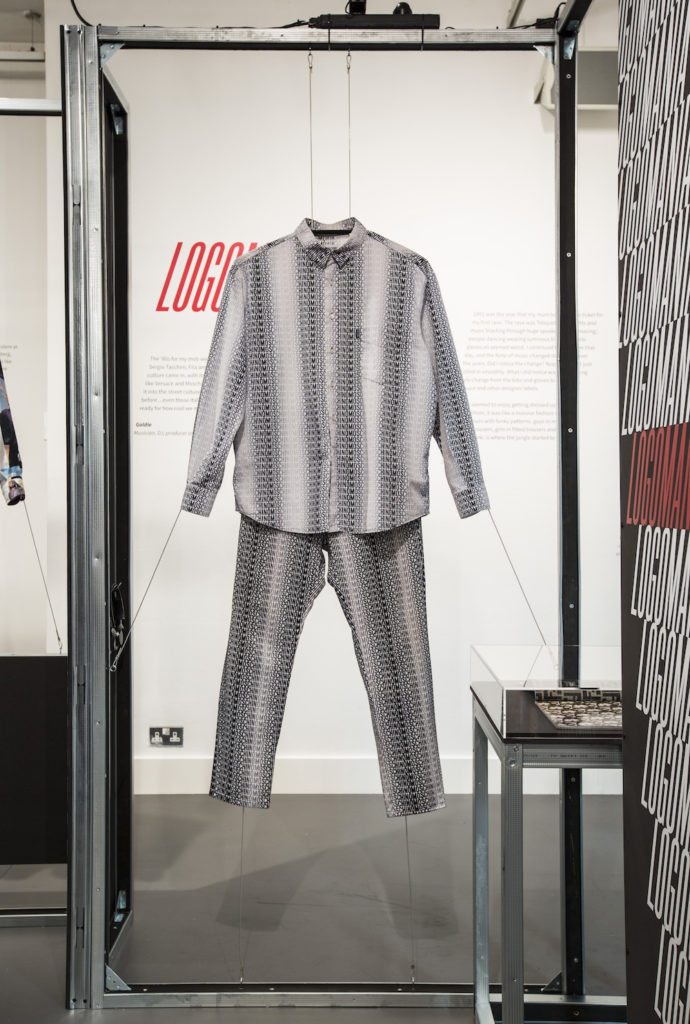
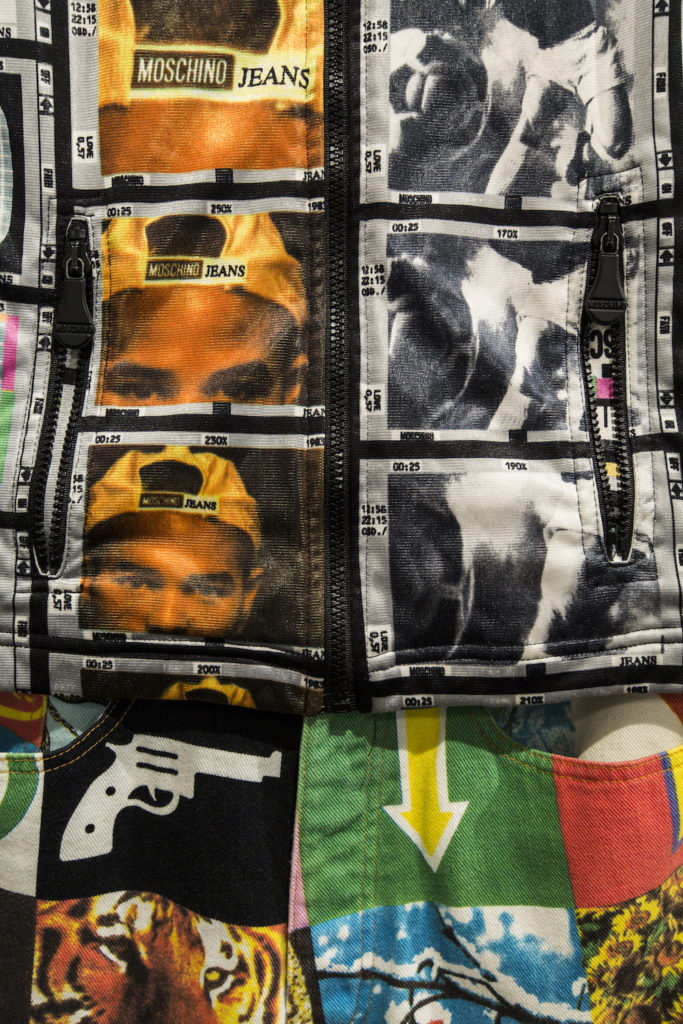
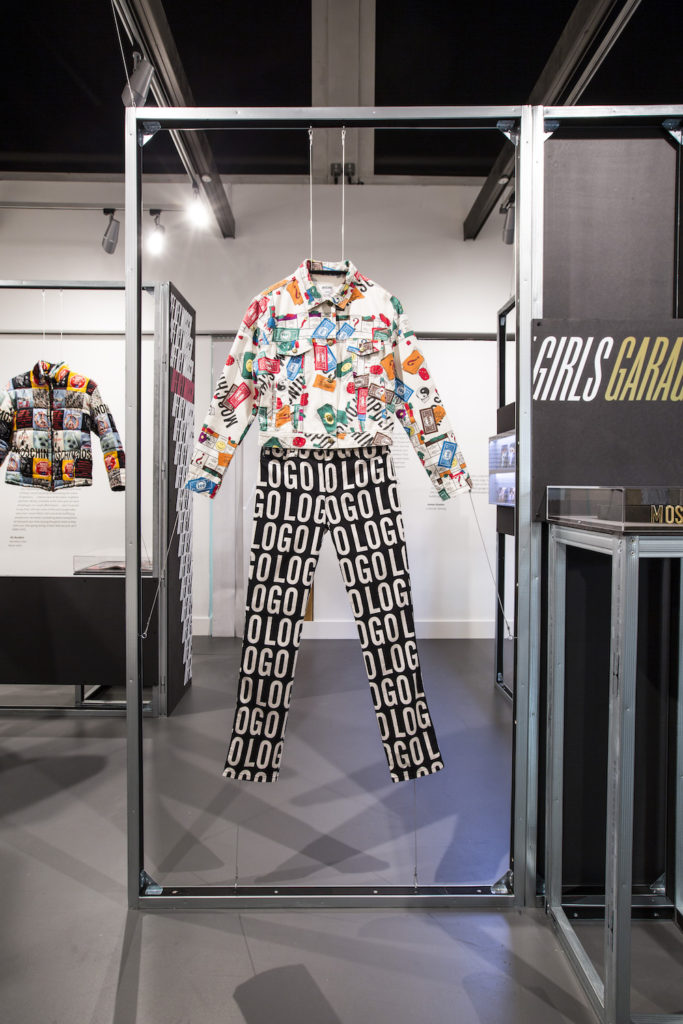
Archivist and curator Tory Turk and DJ, producer and one half of Chase & Status, Saul Milton, first crossed paths in 2014 when Turk was curating 89:14 – A Street Style Journey. For the street style exhibition, Turk enlisted Milton in styling a jungle mannequin for the display, as she recalls of time: “It was then that Saul told me about his impressive Moschino collection and that he was interested in putting together an exhibition incorporating it.” Four years on, a selection of pieces from Milton’s collection form the centrepieces of exhibition Super Sharp on display at London College of Fashion’s Fashion Space Gallery, delving deep into the subcultural styles of the jungle and UK garage music scenes.
Jungle and garage fashion definitely wasn’t for the shy or faint hearted – the clothes were bold, brash and bright, and worn with a large helping of bravado. With raves no longer taking place outdoors or in crusty warehouses, the club venues germinated a new uniform. Still holding on to the colourful look that first defined rave culture, the style became a more dressed-up amalgamation of urban combat gear, coupled with fantastically flashy designer fashion.
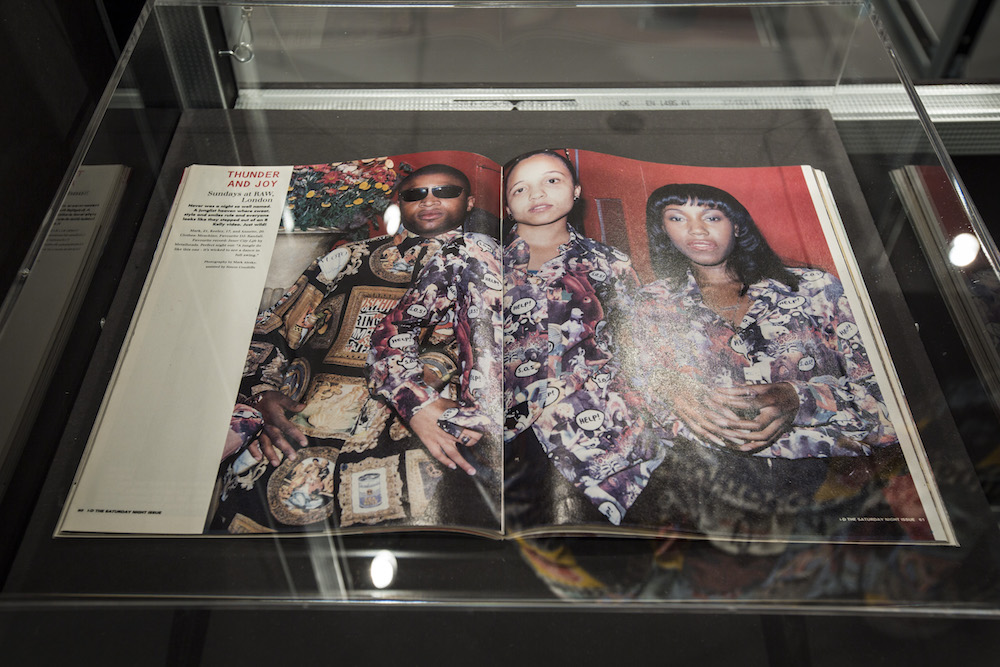
In no way understated and completely at odds with the Berghain-ian black that has swept the London underground scene for the last few years, logo-heavy Italian luxury designer labels like Versace, Iceberg, Gucci and Dolce & Gabbana ran rife across the dance floors. Moschino printed jeans, jackets and shirts (often all worn together) became synonymous with the look of the epoch, and were known as ‘off-key Mosch’, ‘pattern Mosch’ or ‘crazy Mosh’; depending on where you were in London.
“In the jungle scene peacocking and showing your worth by the designer label on your back went hand-in-hand with the time,” says Milton. “Designer labels certainly weren’t the norm for youth to wear so having Moschino and Versace for all to see was a big statement. The loud, garish colours and patterns were also very much in sync with the music and the vibe that was happening at the time.”
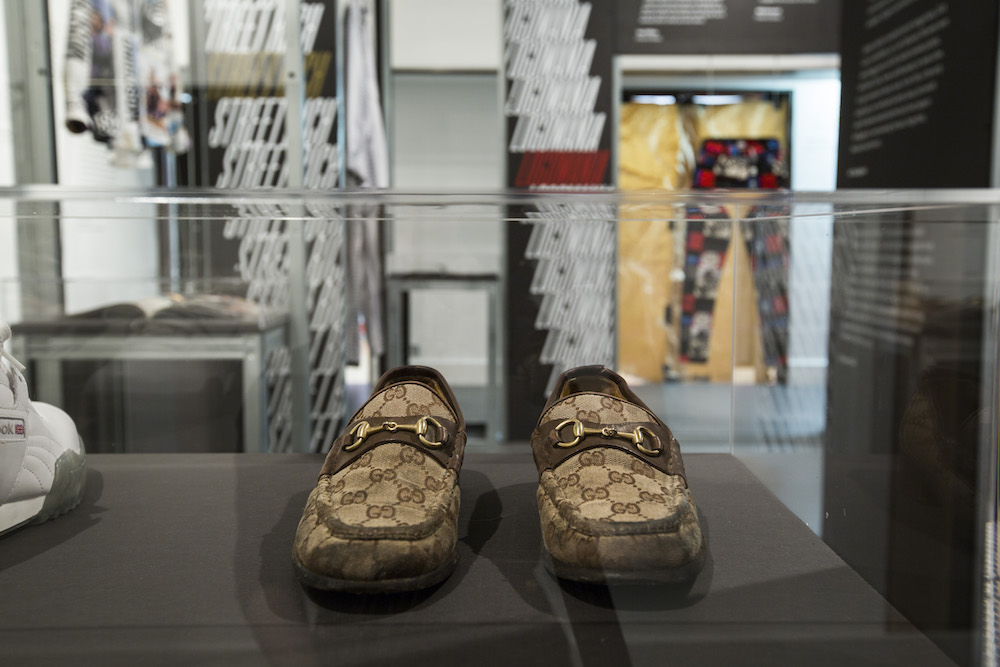
What started with the jungle scene became even more exaggerated and famous with garage. The use of soulful house and R&B vocals in the tracks attracted a more female audience, which changed attitudes within the club. Door policies and dress codes tightened and dancing became sexier. It was all about flaunting affluence – the drink of choice was either brandy or champagne (a Moët & Chandon official once paying a visit to Twice as Nice due to the suspiciously high champagne consumption). Looks would be accessorised with a fresh pairs of Gucci loafers or Patrick Cox Wannabes, and clubbers would leave the cardboard swing tags on their clothes to show that they hadn’t been worn before.
Milton’s own obsession with Moschino, which now fills a room in his home, started in 1998 when his grandfather bought him his first Moschino shirt: “That was what really began my love for Moschino and wearing clothes of that ilk,” he remembers. “When I was younger, I used to go to jungle raves; everyone would be head-to–toe in Moschino, Versace, D&G, Gucci loafers and the rest. That is when I guess, in my life, I was most inspired and when I had the dream of being a DJ, to make tunes and be part of the scene – that stayed with me for many years.”
Whilst working on the third Chase & Status album in 2012, Milton became eager to reignite his passion for making music again. “I really wanted to get inspired, and I thought when was I most inspired? When I was young, seventeen/eighteen years old, going out wearing head-to-toe Moschino,” he continues: “I really wanted to re-discover that passion again, so I rummaged through my wardrobe, found some of my old pieces and went on the hunt looking for other old pieces, just to recreate what I had.” From then on his collection grew: “The next thing you know, I’ve got 1,500 pieces of vintage Moschino. And now I dress and look exactly the same as I did when I was eighteen; I am inspired and still making jungle.”
Super Sharp is just the tip of the iceberg and Milton’s extensive archive of both men’s and womenswear forms the core of RTRN II JUNGLE, a series celebrating 15 years of Chase & Status with an array of events and exhibitions focused on exploring the music and fashion that made 1990s British rave culture, and culminating in DJ tours and new musical releases. “The next exhibition will house my entire 1500 piece vintage Moschino collection and will delve much deeper into the story we began with Super Sharp,” he enthuses.
Alongside Milton’s archive pieces, magazine spreads from Dazed, i-D and The Face, documenting the fashion and culture, pepper the display. Magazines would often turn up to club nights just to photograph the style of the people waiting in the queues to get in. “Magazines such as i-D did catch on to the posy nature of the jungle and garage scenes,” Turk explains. And the style is captured in a selection of never before exhibited photographs taken at jungle raves such as Helter Skelter, Roast and One Nation by Tristan O’Neill, who shot for underground dance magazines such as Eternity, Dream and Atmosphere. “It was amazing to unearth imagery that features jungle ravers wearing the designer label style that was made famous by the media representation of garage,” says Turk.
It is almost impossible to ignore the wave of nineties nostalgia that is currently sweeping the internet, and with it comes a revival of countless aspects of pre-millennial culture, including renewed interest in jungle and UK garage sounds and style. “Today, there is a special nostalgia for these pre-social media pockets of history, and millennials have been referencing the style for quite a few years now,” notes Turk. While on the internet the lines between the two genres are often blurred or confused by hindsight, Super Sharp aims to document and examine the nuances of the two styles not only through the fashion and printed media but through the recollections of those who experience the scenes first hand. The clothes are contextualised by quotes, testimonies and memories of key jungle and garage musicians, journalists, academics and enthusiasts including Goldie, PJ & Smiley (Shut Up & Dance), MC Nyke and Fabio & Grooverider.
Two decades on, why is the style and sounds of jungle and garage making a comeback both in the clubs and on the catwalk? “I think we’re in a very similar climate to the 90s – uncertainty, unrest and a feeling that a change is in the air. In these times people always turn to music and fashion and that’s usually when the most ground breaking and forward thinking music is made,” offers Milton. “The kids today look back at the 90s and want to experience ‘it’ themselves and they put their own twist on it; they see the style and they make it their own. Everything’s come back around.”
The inimitable fashion designer on innovation, representing a diverse vision of modern Britain and pushing the boundaries of design
In the history of style there are a handful of fashion designers whose work goes far beyond the parameters of attire and moves into the realm of high art; McQueen, Galliano and Gaultier being perhaps the most obvious of the avant-garde vanguard. However, it is worth noting that what those names share in common is the fact that their groundbreaking aesthetic provocations punctuated a very narrow and clearly delineated mainstream – theirs was a time that existed before the information avalanche and tortuous art directed hashtag distractions of the social media landscape. In the current paradigm, punctuating the dizzying multiplicity of cultural streams to genuinely stand apart and be noticed is no easy feat, which is why the British designer Sadie Clayton is a genuinely inspiring 21st century figure.
Born in Yorkshire to mixed race parents, Sadie is earmarked to become the Westwood of her generation. It is testament to her unique aesthetic that she was chosen by the Department of International Trade to represent Britain at this year’s AltaRoma festival in Rome, a distinctive niche in the fashion calendar presided over by the legendary Sylvia Venturini Fendi. It’s a hopeful sign in an era in which right-wing ideologies seem to be on the rise across Europe that the chosen representative of the UK is a plain-speaking, no-nonsense northern woman unafraid of challenging fashion industry clichés.
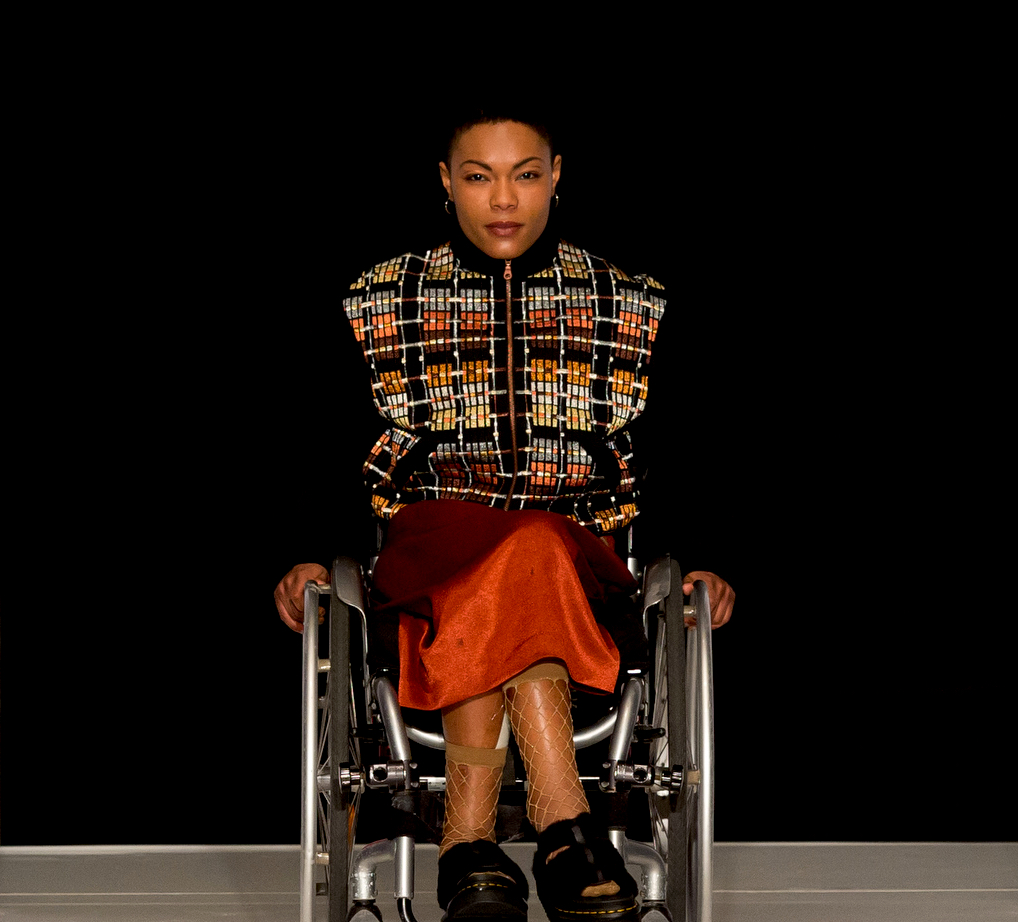
Suffice to say, her show at Villa Wolkonsky, the residence of the British Ambassador in Rome, celebrated profound diversity on the runway. A beautiful, striking black woman rolling down the runway in a wheelchair provided stark opposition to the more common albino-skinned waifs in the fashion firmament. Given her penchant for provocation and punk positivism, it is perhaps unsurprising to learn that fashion is just one spark of Clayton’s fiery creative vision, and that her ambition is nothing short of boundless. We caught up with her after the show at Villa Wolkonsky to discuss her enthusiasm for conceptual innovation and to find out why fashion should be leading the charge for equality.
Was there any particular thing as a child that inspired you to want to create?
I grew up in a society where I was very much in a minority being mixed race. I looked very different to my friends, so had the choice to either follow cultural stereotypes or embrace who I was, have fun with it and take advantage of my cultural fusion. The decision to take the route of individuation began at a young age – I’d buy fabric from Ikea and make a dress by draping fabric on a mannequin, jazzing it up by adding buttons from my very large vintage buttons collection. Back then, as now, everybody wore the same clothes, and followed the same trends, but I wanted to wear avant-garde interesting clothing and create my own trends, so studying fashion and moving to London and creating my own label was a way to actualise this. I am a creative who is inspired by bringing vision to life first and foremost.
Why did you choose to work in copper and metals?
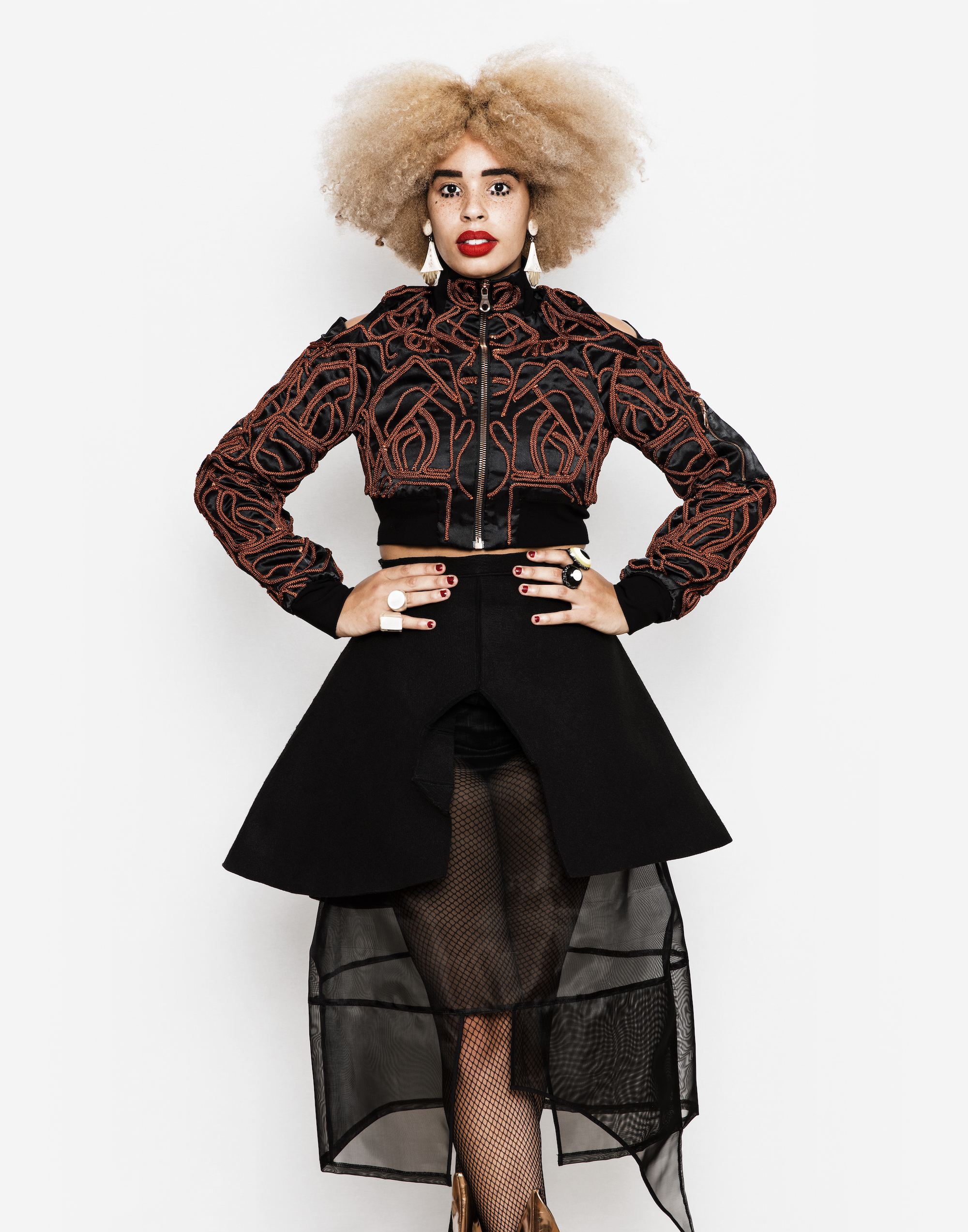
I always knew that I wanted to work with lots of different materials, not just fabrics, and metal was one of them – I was naturally drawn to the depth and richness of copper, and I love the way that copper can transform into a range of colours, oxidising into blues and greens, and as it ages it mellows. The core essence of my copper work is the creation of a beautiful piece of armour in a sense – something to protect and shield, and how I work the copper comes, for me, to reflect the texture of life. I have a very holistic approach to life, and copper is the element which brings not only health and good luck, but is symbolic of speed and technology and change, all concepts that inspire me.
Who has been your greatest inspiration from the world of art?
That’s hard to answer because I have some many favorite pieces – one of my favorite artists is Ron Arad, I tend to love whatever he produces, whether it be a chair, a hat or a structure in Kings Cross Station. I am also very inspired by sculptural genius of Rachel Whiteread, Barbara Hepworth and Anish Kapoor – artists who challenge the system and fight for change through creating beautiful thought provoking exhibitions and installations.
Talk to us about your teaching – what do you most enjoy about mentoring?
I believe in giving back, whether it is in the field of fashion or beyond, that’s why I teach and also why I participate in events such as those held at Tate Britain where we show hundreds of young people how to sculpt and create for themselves. It is a big way to unlock creativity and stimulate vision. When I speak, I speak openly about the challenges and realities of building a brand, especially in the fashion industry. For too long students have been focused just on the design and creative side but it’s a tough world out there and you need to be prepared and taught how to improve your likelihood to succeed.
What has been the most fulfilling moment for you so far?
I just presented my AW/18 collection at AltaRoma, which was my first solo catwalk since my commercial launch in-front of the international media, supported by the UKDIT with the intention of drawing attention to diversity in fashion and hopefully the world. It was an amazing moment and privilege at so many levels.It’s very different to the kinds of brands often prevalent at AltaRoma. My brand is strong and feminine, but it’s not all about fashion for me. I don’t want to be defined as one thing, I hate boundaries and want the women who wear my clothes, or people who buy my accessories, or eventually drive my boats, even, to personalise and interpret my work so that they feel energised and complete wearing or living with a big or little piece of Sadie Clayton in their lives.
What are the key principles you stick to when designing?
From a fashion perspective, I would say Thierry Mugler, Claude Montana, Alexander McQueen, JPG and Comme des Garcons, as they epitomise a similar aesthetic purity, and, in their own way, stand for similar aspirational objectives for women. From a personal perspective, it was my mother who was instrumental in creating a woman who was hardworking, professional and tenacious. The key design principles I stick to are a strong silhouette, power and elegance. I love power, I love strength, I love ‘wow’, so if I can capture that in my major pieces then the job is done.
Why do feel you want to expand the brand beyond the horizon of fashion?
I just strongly believe that my vision of the world is not just one with a fashion focus. I would love to design the interiors of hotels, or super yachts or furniture, for example. I am passionate about the role of younger creatives in innovation, and I think my brand shows this in the way I have worked with, and continue to explore technology, whether in holographic form, through AI or 3D. Up until now, that has all been focused on fashion but we can always push the boundaries of design through technology and creativity, and I want to champion this.
What is your personal definition of beauty?
I was asked this recently by the Edinburgh Museum of Art. Beauty, for me, is the act of expression of one’s authentic identity – seeing somebody look a certain way, any particular way, that is really expressing their personality is beautiful. We are in a world now where you can wear what you want, and more and more people are taking advantage of that, whether it be in terms of cross dressing or the trend for gender neutral attire, or being wildly eccentric – it’s all a way of expressing who you are.
Alyn Griffiths discovers the moulds, machines and methods of Italy’s most innovative furniture brand
B&B Italia’s introduction of cold-foamed polyurethane revolutionised the manufacturing processes of upholstered furniture. Here the mould of the ottoman Up6, part of the Up5_6 furniture suite designed by Gaetano Pesce, stands in front of the foaming department.
What does it take to be a leader in your industry? Business experts will tell you that the key is to be either the first or the best, but the measure of true success is whether you can be both. This has always been the approach of Italian firm B&B Italia, which last year celebrated 50 years as one of the country’s foremost furniture producers. Renowned for having pioneered many features and technologies that are now commonplace in contemporary furniture, the company’s quest for innovation has continued into the 21st century.
To understand the lengths B&B Italia goes to in its pursuit of fresh ideas and technological excellence, it is helpful to visit the firm’s headquarters in Brianza, around 25 kilometres north of Milan. The area has a long history of furniture production, with several influential global brands based there, having evolved from traditional family-run ateliers during Italy’s manufacturing boom following the Second World War. The legacy of craftsmanship, and a supply chain that provides top quality materials to the region’s furniture makers, remain intact, but Brianza’s current residents also utilise the latest industrialised production methods to meet demand from clients around the world.
The foaming department, featuring the mould for the Amoenus sofa designed by Antonio Citterio. The application of this technology to furniture was inspired by a visit to a factory that produced rubber ducks.
Situated close to the A9 highway that links Milan with Como, B&B Italia’s factory building and headquarters offer the first hints that this is a company with progressive design at its core. The factory, by architects Afra and Tobia Scarpa, was completed in 1968, while the headquarters – designed by Renzo Piano and Richard Rogers in 1971 and finished in 1973 – showcase the high-tech aesthetic the pair would later revisit for the Centre Georges Pompidou in Paris. The architecture of the campus serves as an important signifier of B&B Italia’s values, but it is inside the factory that the firm’s innovative credentials become truly apparent.
The facility’s 20,300-square-metre floor area is divided into zones dedicated to the various stages of the manufacturing process. Skeletal metal frames resembling wireframe drawings of the company’s iconic sofas and chairs stand in clusters along one side of the building. Welded by trusted Italian suppliers, the frames are delivered to the factory and placed into moulds, which are injected with a polyurethane foam that expands to take on the form of the product. Once the foam has cooled, the pieces are moved to the upholstery area to be covered in the customer’s choice of premium leather or fabric.
Foamed products recently extracted from the moulds. Each product is cleaned of any excess foam before it is ready to be upholstered.
It’s an approach to furniture production that was groundbreaking when it was first developed in the 1960s by B&B Italia’s founder, Piero Ambrogio Busnelli. Having already established a successful business with his brother Franco in 1953, Piero dreamed of industrialising what at the time was still a predominantly artisanal process. During a research trip to London, Busnelli visited a trade fair where one exhibitor was showing rubber ducks produced using moulded polyurethane – a process he believed could be applied to furniture manufacturing. In 1966, he left Fratelli Busnelli and set up his own company to pursue this new direction, teaming up with industry leader Cesare Cassina to form C&B. The company would go on to collaborate with leading designers including Marco Zanuso, Vico Magistretti, Mario Bellini and the Scarpas, to develop products that would revolutionise the furniture industry.
The B&B Italia laboratory, where upholstered products are tested during the development phase. Here, the Febo chair, designed by Antonio Citterio, is tested for strength and durability, the equipment recreating in a short time the strains and stresses of several years of use.
C&B grew rapidly, eventually reaching a point where it was operating on the same level as the core Cassina brand. In 1973, Busnelli bought out Cassina’s shares and renamed the company B&B Italia. As the firm continued to expand, responsibilities were passed on to the next generation, with Busnelli’s sons Giorgio, Giancarlo and Emanuele taking on leadership positions. Over breakfast at the Park Hotel, a short distance from the headquarters, the current CEO, Giorgio, explains how his father put in place systems to ensure the company would continue to innovate and remain one step ahead of the competition.
“One of the first things my father did when he teamed up with Cassina was create a centre of research and development,” he recalls, “because he started working with architects and designers and needed to develop prototypes away from the factory setting.” This facility, which moved into the third and final building to be completed on the campus, by Antonio Citterio and Patricia Viel in 2002, remains the place where new products, materials and technologies are explored, tested and refined.
Upholstered products being tested during the development stage.
Today, many leading designers visit the Piero Ambrogio Busnelli Research and Development Centre to develop new products, hoping to emulate the success of the company’s most famous icons. These include the Coronado armchair and sofa by Afra and Tobia Scarpa – the first piece of upholstered furniture designed entirely for industrial mass production. It features four pieces (a seat, back, and two armrests) that can be assembled with just two screws, making it ideal for shipping internationally. In 1969, the Up series by Gaetano Pesce demonstrated the truly disruptive potential of polyurethane technology, offering an anthropomorphic form without any internal framework, which was delivered vacuum packed. Mario Bellini’s 1972 Le Bambole was the first sofa to be manufactured purely as a padded cushion without an internal frame, while Paolo Piva’s Alanda sofa bed from 1980 emphasised the importance of the R&D centre to the company, with its patented mechanisms for adjusting the headrests, armrests and bedside table.
Several other bestsellers followed in subsequent years, with one of the most significant breakthroughs occurring in 1995 with the launch of Antonio Citterio’s Harry sofa system, followed by the Charles sofa in 1997. By raising the sofa off the ground on cast-metal feet placed delicately at the corners, the designer created a new furniture archetype that has been endlessly copied due to its timeless simplicity. By that point, Citterio was already established as one of the brand’s key designers, and he has been responsible for developing and coordinating the collections of B&B’s luxury sister brand Maxalto since 1993.
An entirely computerised leather-cutting machine, boasting a scanner that can be configured according to the shade of hide, enabling it to detect minute flaws in the material.
By offering designers the opportunity to work with nascent technologies and supporting them in their endeavours to explore entirely new directions for familiar furniture archetypes, B&B Italia has consistently been able to attract top talent, from Patricia Urquiola and Naoto Fukasawa, to Zaha Hadid and Vincent Van Duysen. The collaborations between these designers and a team of 25 experts at the R&D centre are crucial to the company’s continued creative and economic progress. Every product undergoes a thorough process of detailed design and refinement, based on prototypes built by specialists in woodwork, metalwork and foam technology. “When we receive a design idea, we don’t waste our time trying to understand its real potential on paper, we start the prototyping process straight away,” says Giorgio’s son, Massimiliano, who also works at the R&D centre.
Giorgio and the head of the R&D centre, Rolando Gorla, regularly travel to major global cities where they spend time in the latest hotels, museums and galleries to identify new architectural ideas or cultural directions that might inform future projects. Gorla, who has been at the company for over 40 years, explains that the quest for innovation has become more challenging in recent years. “We’re not in the ’60s when everything needed to be done – now almost everything exists,” he says. “It is becoming more difficult to invent something new, so more often designers look to the past for something that might be worth updating.” In this context, the focus of the R&D centre has switched towards sustainability and the evolution of existing technologies to improve performance and efficiency. B&B Italia is at the forefront of identifying ways to allow materials to be separated and reused or recycled, as well as trying to develop a more environmentally friendly alternative to polyurethane. It is also working on ways to make its furniture more lightweight, so it uses less material and is easier to ship.
The B&B Italia headquarters, created by Renzo Piano and Richard Rogers in 1973, shortly before their design for the Centre Georges Pompidou in Paris brought them worldwide fame.
Inside the factory, the injection-moulding manufacturing process is consistently challenged by ambitious and complex products such as Zaha Hadid’s Moon System sofa, and the SAKé sofa by Piero Lissoni, which requires 19 separate moulds. Alongside this technology, which has remained largely unchanged in 50 years, the company continues to add new machinery that helps to improve the efficiency of production. It recently invested 750,000 in an automated laser cutting machine and accompanying software that optimises the process of cutting high-quality leather hides into precise sections, ready for upholstering.
“It is a hugely complicated piece of equipment and the sort of investment that not many companies would make,” claims Busnelli, adding that it will take a few years before the machine’s efficiencies provide any return. This, however, is the spirit in which the firm has always operated, since the early days when its founder paid for a pneumatic press capable of producing 1,500 tonnes of force, instead of the 500 tonnes necessary to produce the items currently in the collection. “This was another thing inherent in Dad’s strong character,” Busnelli adds. “He actually completely changed the way to produce; we now had a company with industrial processes.”
In today’s hyper-competitive global market, innovation and risk-taking in business is as important as it is in design and manufacturing. In 2015, Busnelli made the decision to sell a majority stake in the company to a subsidiary operated by Andrea Bonomi’s Italian investment company, Investindustrial, which part-owns and supports a range of premium brands, including Aston Martin and lighting firm Flos. With a healthy turnover of over 180 million, Busnelli could have been satisfied to remain one of Europe’s largest furniture brands, but he recognises that continuing international expansion requires more risk and investment than a small family-run company could cope with. “For many years people were saying small is good – it’s nice; it’s craftsmanship. But in the end if you want to play globally you need to compromise a lot to be represented in the market,” he insists.
Giorgio Busnelli, B&B Italia CEO and son of founder Piero Ambrogio Busnelli, began working for the company in 1973. Here, Busnelli sits on a unique edition of the Up5_6 chair piece, constructed out of wood.
With backing from Investindustrial, B&B Italia purchased a majority stake in high-end kitchen producer Arclinea in 2016, with the aim of accelerating its international expansion. “I like the idea that it is possible to create a conglomerate like Louis Vuitton has done in fashion,” adds Busnelli. “So the idea is to create a group of the best companies of high-end design in the world.” This ambitious plan will see the Busnelli family adding to its portfolio of brands in the coming years, enabling it to expand into new markets and apply its knowledge of materials, processes and technologies to a broader range of products.
With around 500 staff working for the company across design, production, contract projects, sales, marketing and distribution, B&B Italia is now firmly established in the international furniture market and will continue to extend its influence through key strategic partnerships and investments. As Busnelli finishes breakfast and prepares to dash off to a meeting with the management of Arclinea, he offers a final insight into the mindset that has formed the basis of the company’s success. “One of the most important things my father taught me is to be curious,” he says, “because curiosity is really fundamental for everything you want to do in your life.”