Machines in Motion

At his new studio on a former military airfield, James Capper designs kinetic sculptures powered by hydraulics

His first piece, Tread Toe, uses hydraulic arms to dig into the earth. Photography Oskar Proctor

James Capper recently moved his studio from Bermondsey to what used to be RAF Wroughton, a military airfield in Wiltshire that is now an outpost of the Science Museum. Capper is in the old fire station, which may not be at the gigantic scale of Wroughton’s original hangars, built to handle the 100-foot wingspan of Lancaster bombers, three at a time, but it is certainly big enough to reflect the industrial scale of his work. And it makes manoeuvring a forklift truck easier.

Over the last 15 years, Capper has built a series of what the critic Richard Cork once described as “self-propelled sculptures,” beginning with a piece called Tread Toe in 2010. It’s a work fabricated from steel I-beams painted bright yellow. At each end there is a pair of legs connected by a runner. Positioned between them is a motorised hydraulic arm welded to a third steel runner. Cork watched as Capper clambered up into the sculpture, manoeuvred himself into the control cabin, and started the engine. He pulled a lever, and the hydraulics punched the central arm down into the earth with enough force to lift the whole piece off the ground, propelling it a few feet forward. He repeated the manoeuvre, and Tread Toe lurched a bit further forward. Each jump left a distinct trace on the ground, which is why Capper assigns it to what he calls his ‘Earth Marking Division’.

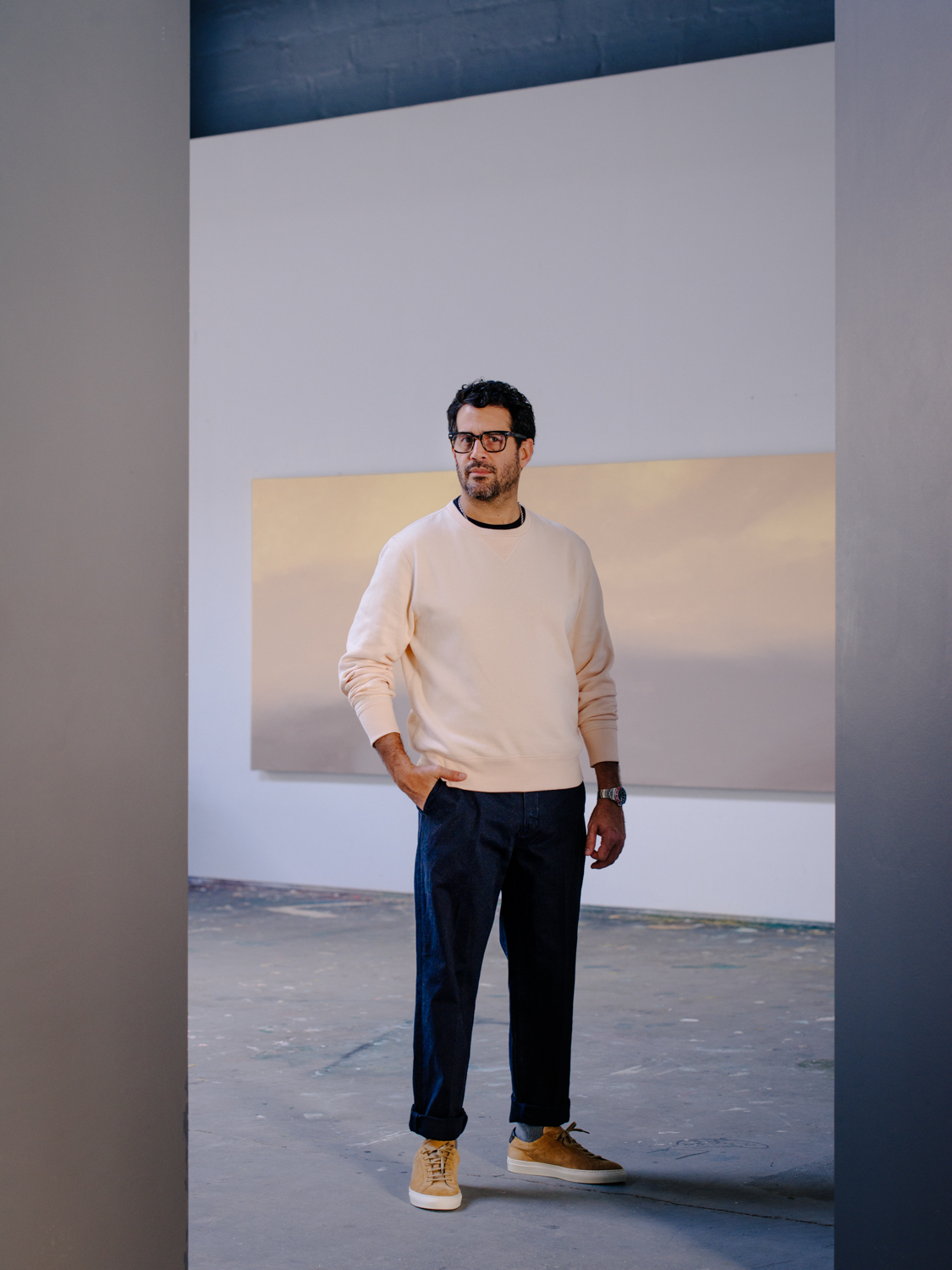
James Capper at his studio, a former RAF military airfield in Wroughton. Photography Oskar Proctor

Tread Toe is a piece that works on multiple levels. Its assemblage of steel I-beams uses the vocabulary of Antony Caro’s sculpture in his period of classical abstraction. It can also be understood as a performance piece. And then there are the ephemeral traces it leaves behind as it moves. His Rotary Paintings series reverses the emphasis to make permanent marks on paper. Like Tread Toe, these paintings are the product of a specially designed and fabricated hydraulic mechanism. They are the result of a performance that starts when Capper switches on the machine and distributes industrial marine paint in standard RAL colours in concentric rings.

He has been working with the Hydra Painter – a hydraulic painting machine – on these artworks since 2015. Some of them were the subject of an exhibition that, unlike marks in the mud left by Tread Toe, could be comfortably accommodated in the pristine setting of the Albion Jeune Gallery in London.

There is another aspect to Capper’s work, hinted at by his use of the word ‘division’, that refuses to be constrained by the confines of any gallery. He has designed and built several other earth-marking machines that use a variety of steel blades and claws. There is also what he calls an ‘offshore division,’ of which the most substantial expression so far is the Mudskipper, a 14.5-ton, nine-metre-long boat that has been retrofitted to allow it to walk.

Industrial tools and machines are used to create his large-scale kinetic sculptures. Photography Oskar Proctor

In the summer of 2021, Capper sailed it up the Thames from Battersea Power Station towards the Royal Docks and demonstrated the ability of its twin hydraulic jacks, each equipped with a circular tread pad foot, to lift the boat out of the water and make its way up the mud banks. “Have you seen Fitzcarraldo?” he asks me, referring to Werner Herzog’s epic film from 1982 that has Klaus Kinski playing the part of a rubber prospector hauling an ocean steamship through the Peruvian jungle. Capper spent 18 months on the project which, at times, was almost as demanding.

The rest of the offshore division’s products are even more ambitious, though they are still at the research and development stage. They include turning a bulk carrier into a sunken power plant. Then there is the aviation division, which speculates about heavy lift helicopters, and the ski-mounted Aero Cab which he tested on the ski slopes at Verbier. “I am less of a formal sculptor and more of a speculative engineer,” Capper says. He has spent enough time working with cars to understand exactly what is happening to an engine, but he is also the product of the art school system, having studied at Chelsea College of Arts and the Royal College of Art.

Structuring his work into divisions reflects his wider ambitions; his work is about more than the individual objects. It made me think of the architect Jan Kaplický, whose early practice with Future Systems speculated about houses transported by helicopters, inflatable structures, and robotic manufacturing. Capper knows and admires his work, but he refers more to Robert Gilmour LeTourneau, who was a prolific inventor of huge earth-moving equipment. With wheels 12 feet high designed for off-road use, they looked more like fantastical mechanical creatures than commercial products. But he was able to turn his ideas into a large industrial corporation.

Capper’s projects depend on hydraulics-based systems which is, by most measures, an old technology, whereby mechanical movement is produced by pumping liquid through hydraulic cylinders to move pistons. But Capper is also fascinated by evolving technologies. He is working on an autonomous tree planter, using seed drills built into a six-legged, electrically powered hydraulic machine, charged off a solar array that would use artificial intelligence to place saplings.

A mix of projects underway at his studio, including an autonomous tree planter that uses seed drills, solar power, and artificial intelligence. Photography Oskar Proctor

Capper works in a way that uses the practices of an industrial designer. He makes forensic drawings of complex mechanisms, each designed with a specific purpose. They have a functional as well as an aesthetic aspect and are the starting point for Capper’s iterative design process. Capper loses patience with suggestions that he is simply welding together pieces of recycled agricultural equipment. They will become a set of manufacturing instructions for Capper and his collaborators to produce prototypes and subassemblies. These are carefully planned and considered objects. The visual resonances go beyond machinery; Capper’s work with claws and beaks and flippers has zoomorphic characteristics. The idea of a boat walking out of the water is a kind of reflection on evolution.

Capper calls the divisions “Idea Fields,” and uses them as a conceptual framework to realise some projects without losing track of his wider ambitions. “Some fields move faster than others. If you divide them, you can cross-pollinate between fields, and use prototypes as sub-assemblies for larger pieces. What divisions do is keep the idea on the horizon.”

Photography Oskar Proctor

This article is taken from Port Issue 35. To continue reading, buy the issue or subscribe here
Limbo Accra

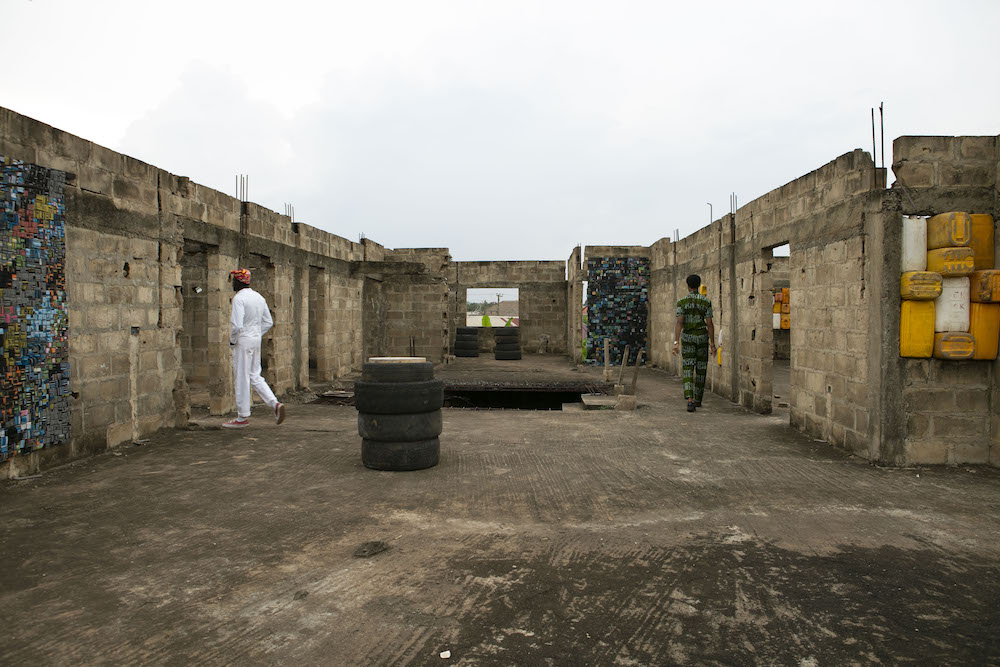
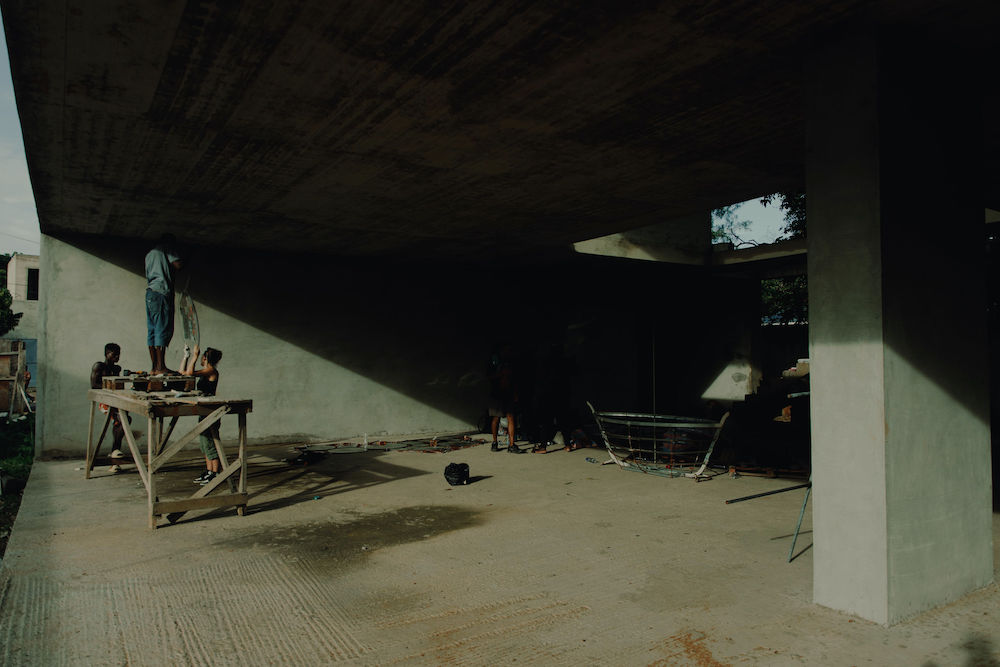
The spatial design studio infuses architecture with art to transform unfinished structures in West Africa

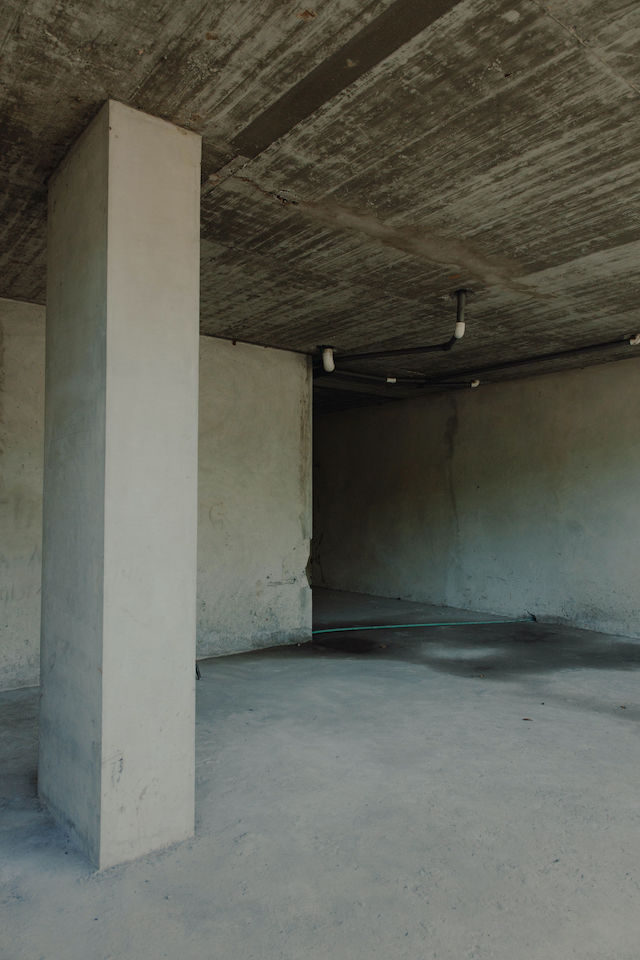
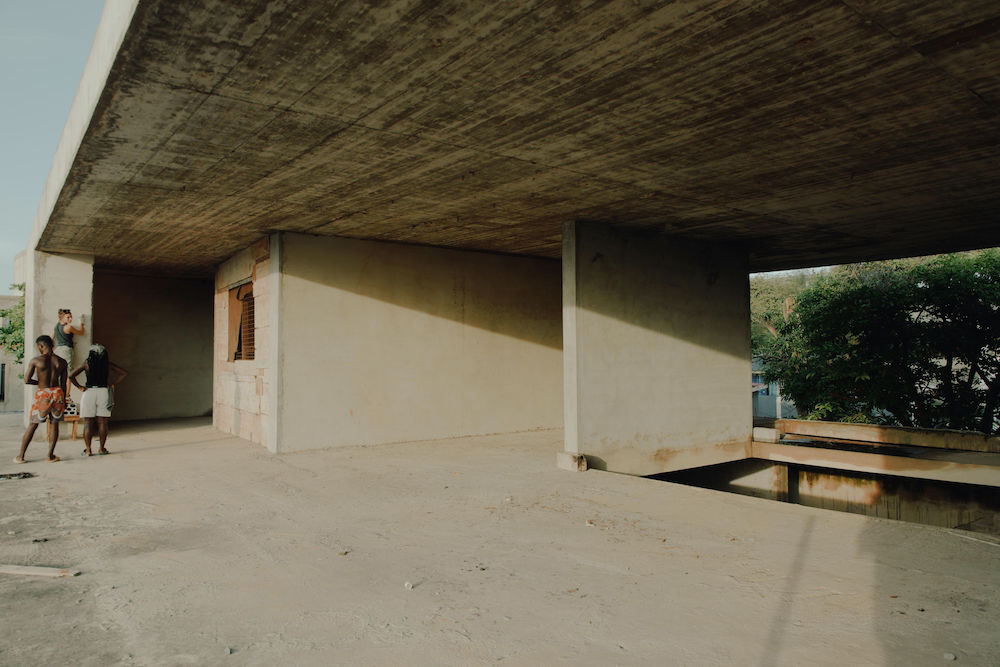
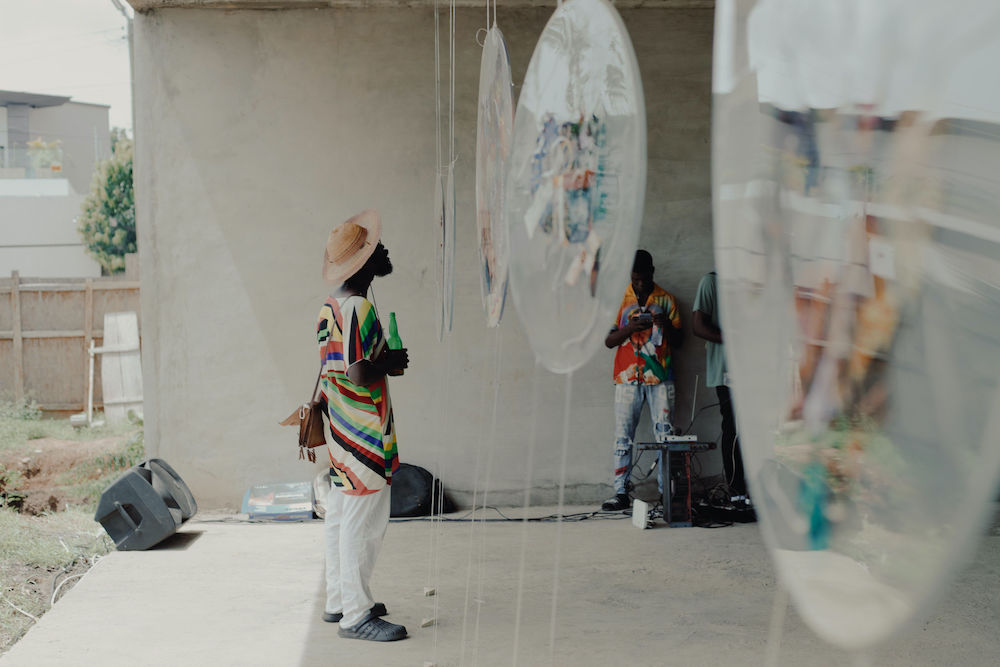
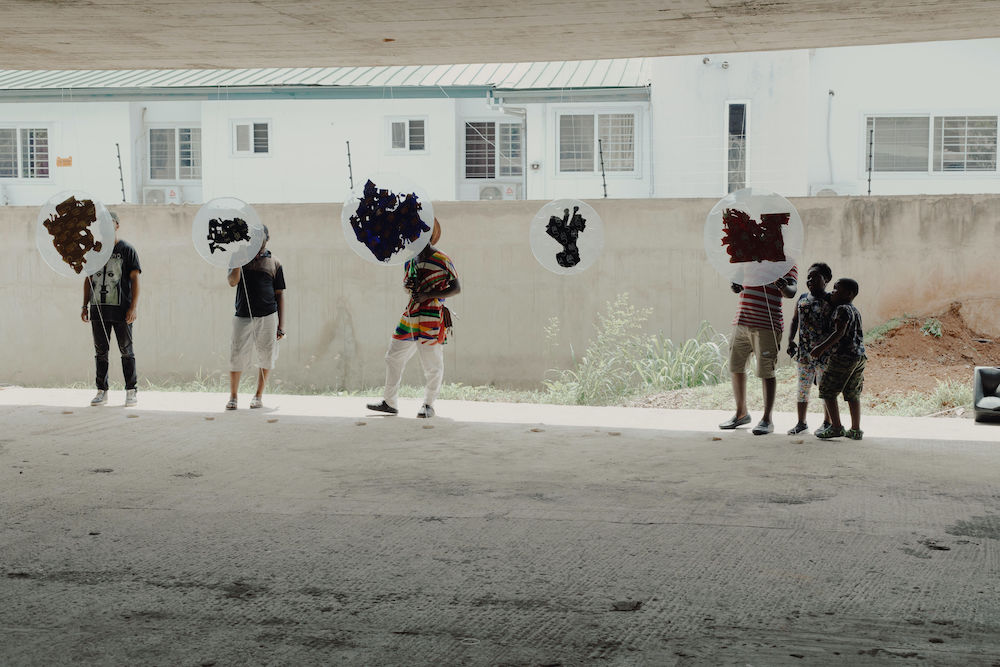
WET exhibition in collaboration with artist with Araba Ankuma. Photography by Komla S. Darku

“We all need each other” is a phrase that suitably defines both the output and ethos of spatial design studio Limbo Accra. Founded by Dominique Petit-Frère and Emil Grip in 2018, the work of Limbo Accra is cyclical and non-wasteful as it operates amongst unfinished structures in West African cities; it puts the planet and its people first. By doing so, decaying buildings are given new narratives, while public spaces are provided for the local communities. Below, I chat to Dominique and Emil to find out more about their impactful work.

Can you begin by telling me a little about your backgrounds?

Our backgrounds are within urban development and education – so our approach to design and architecture has always been from an intuitive and autodidact perspective. The whole process for us has always been informed by the multicultural essence in our relation to each other, since we are constantly moving between Accra, Copenhagen and New York. We met in Ghana in 2014, but we didn’t form Limbo until 2018. In that sense Limbo is a culmination of all the experiences and ideas we had over those four year. 

WET exhibition in collaboration with artist with Araba Ankuma. Photography by Komla S. Darku

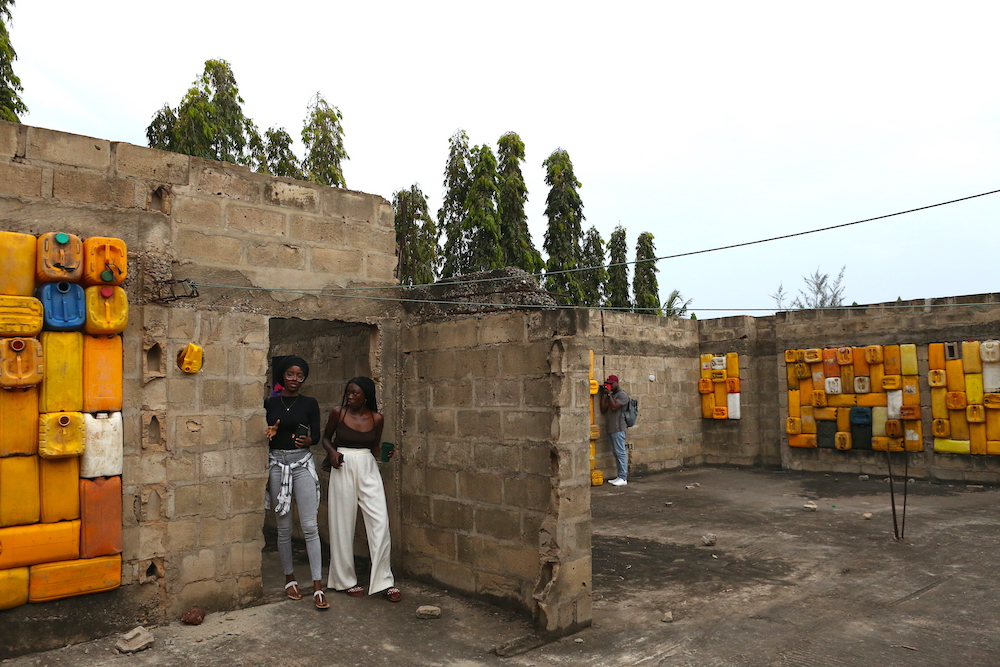
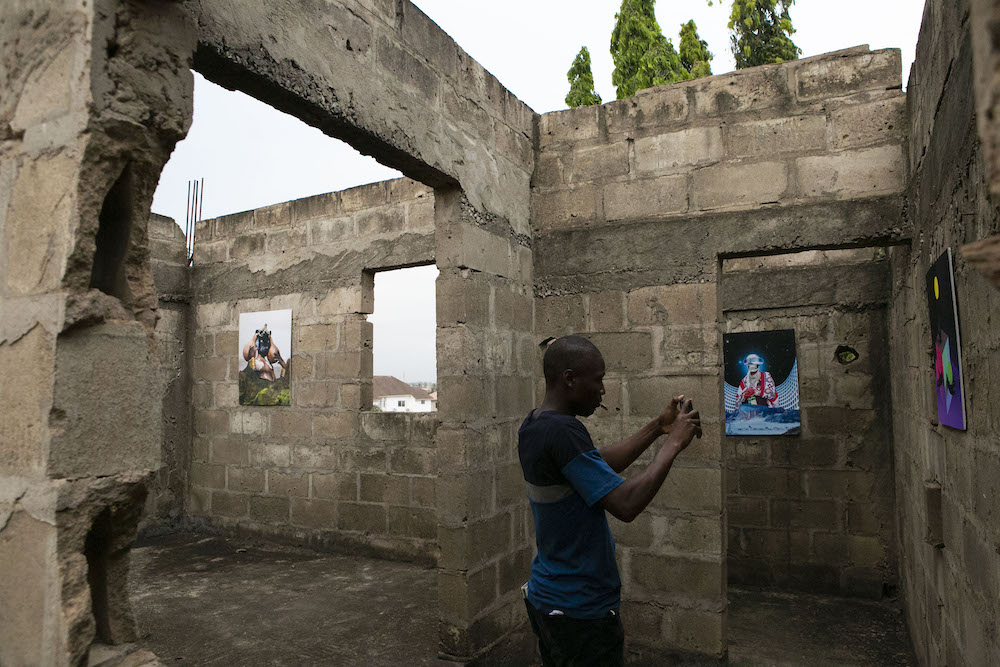
When we started Limbo Accra it was out of pure curiosity to transform and investigate the architectural and built conditions of modernising West African cities as we were keen on exploring the intersection between art, architecture and sustainability within this new-age context. The studio’s name is a nod to the many incomplete and since-abandoned buildings in Accra and other West African cities. 2018 was a truly transformative period in Accra and we both felt compelled to take action in that transformation. For us it was very evident that this large scale of uncompleted property developments littered around the city of Accra held a vast amount of opportunities for activations and conversation among the growing creative community and city at large. 

WET exhibition in collaboration with artist with Araba Ankuma. Photography by Komla S. Darku

WET exhibition in collaboration with artist with Araba Ankuma. Photography by Komla S. Darku

What’s your ethos as a studio, what types of projects do you usually like to work on? 

It’s not like we have a stiff value set at the studio, but more a set of current observations from society in general and the spaces we navigate in, that we choose to act and react to. Our practice exists in this fluid space between juxtapositions, because we never allow ourselves to be stagnant; Limbo is constantly evolving, morphing and growing. Essentially, we are simply here to question and investigate the reality of the world we see, and how we can be more intentional about our role within in it as spatial practitioners. 

We are quite selective about the projects we engage in. At the core of any of our projects is a story. We honestly see Limbo as a way of communicating stories through architecture. The fascinating thing about telling stories using architecture is the opportunity to materialise an idea in a simultaneously expressive and material way. That impact on society is immaculate. 

WET exhibition in collaboration with artist with Araba Ankuma. Photography by Komla S. Darku

You operate within unfinished buildings in Ghana and beyond, which is super interesting. Can you tell me more about this? 

So the Limbo sites are interesting for us in an African context because it poses the opportunity to bridge two societal issues within the urban landscape: extensive voided structures and lack of public space. Essentially we are experimenting with the idea of using these sites as soft activations for people to question the neighbourhoods and cities, asking “how are we being intentional in the way we design and create spaces for people?” 

How important is sustainability to your practice, and what does this mean in terms of how you approach a brief and the design process? 

Sustainability is important. We try to think of our approach to a project as regenerative. Our logic from the very beginning has always been to work with what already exists – to maximise the re-usage of what we already have, simply re-adapting what already is into a new meaning. 

WET exhibition in collaboration with artist with Araba Ankuma. Photography by Komla S. Darku 

Can you talk me through a recent project of yours?

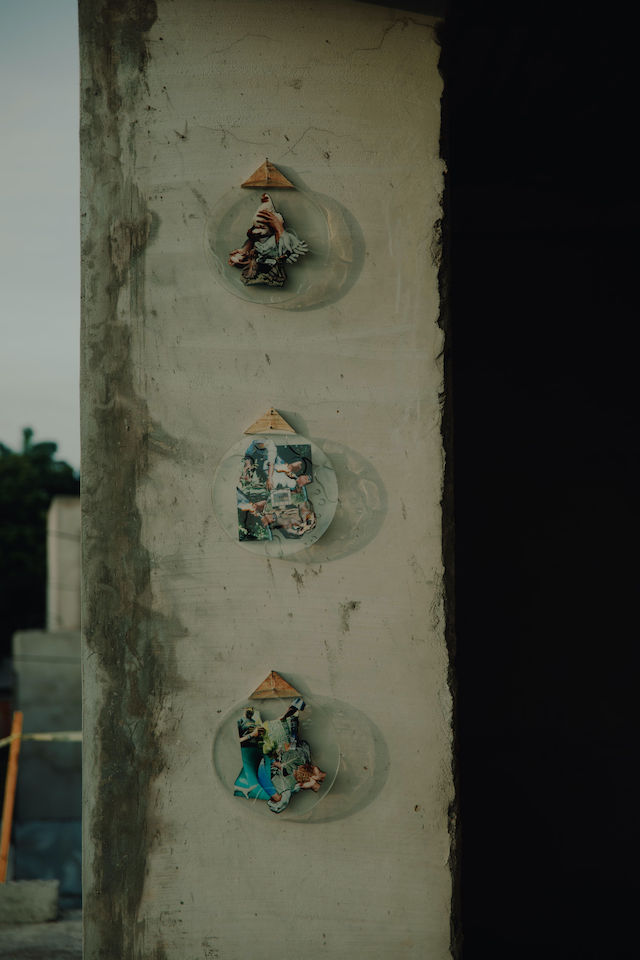
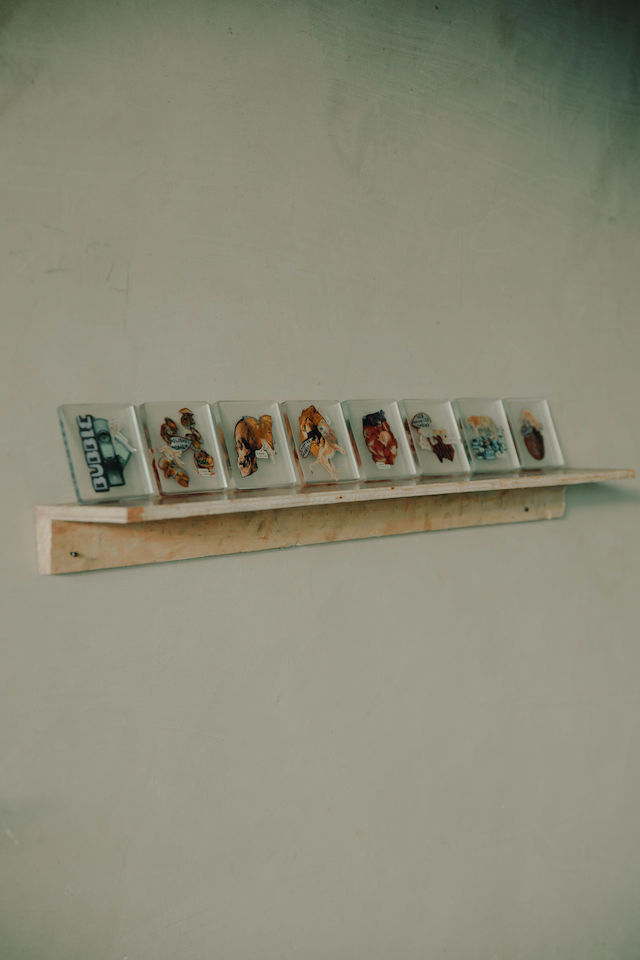
We just wrapped up an amazing exhibition titled WET by Ghanaian-American artist Araba Ankuma. As an artist working internationally, Ankuma’s stories focus on the importance of perception and the need to shift it in order to illuminate the invisible narratives that bind us as human beings. Composing narrative through photography and collage, Ankuma acts as a tour guide, transporting viewers from existing perspectives to new perceptual ground. Our studio is always about collaborations and working together. The whole logic is that we all need each other, and that we all need a space. This is what we offer as Limbo. Everyone has something to gain by working together. 

WET exhibition in collaboration with artist with Araba Ankuma. Photography by Komla S. Darku

WET exhibition in collaboration with artist with Araba Ankuma. Photography by Komla S. Darku

Do you think the design industry is currently doing enough in terms of sustainability and the environment? Are you hopeful about the future? 

I mean, how can we define that? The world is such a big place with so many different spaces each within their own context. It’s obviously a part of the current discourse within the industry, which is positive, but the question of how intentional the movement is remains. The interesting thing about the environment and sustainability within architecture and design is the fact that it’s hard to see how anyone can ignore addressing those issues. People are starting to feel some of the consequences of the world changing, so the simple need for change will only increase. In that sense I’m hopeful. 

What’s next for you, any upcoming plans or projects that you can share?

Right now we are doing a few things with the Brooklyn Museum that will come out this summer. So stay tuned! 

Photography by Anthony Combder Badu

Photography by Anthony Combder Badu

Photography by Anthony Combder Badu


The World of José Parlá

Opening the doors to his studio, the Cuban-American artist discusses identity, underground culture and art as politics

José wears long sleeve tee and tack slim selvedge rigid denim Levi’s® Made & Crafted™

Artists’ studios are always personal spaces. Hidden in plain sight in warehouse lofts or behind pull-down steel grates, they don’t reflect their residents’ personalities and practices until you get inside and see what’s on the walls.

The studio of the Cuban-American artist José Parlá is no different. A single-storey industrial building in the southerly Gowanus neighbourhood of Brooklyn that’s surrounded by mechanics and manufacturers, the facade is completely nondescript. But once you’re in the door, everything changes.

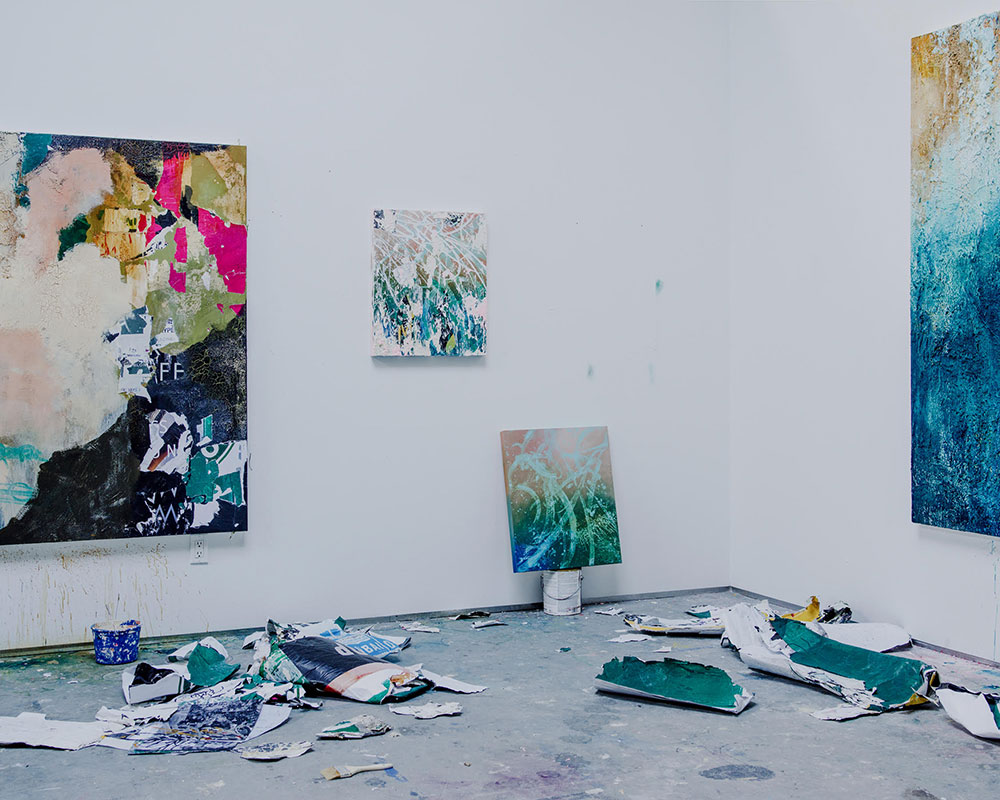
Parlá, who bought the building in 2014, works in the centre of the space, a wide sky-lit arena hung with the artist’s vibrant, gestural paintings in progress, which recall urban walls as much as art historical reference points like Cy Twombly and Ed Ruscha. The paintings have been shown in galleries and museums from New York to Tokyo; a mural of Parlá’s can now be seen in the new One World Trade Center.

Above the studio arena off to one side of the space is what Parlá calls the ‘nest’: a lofted aerie that holds an office with a wide desk; a circle of sleek chairs; a couch for meetings; and a DJ setup currently spinning Marley Marl, an artefact of the energetic New York culture that first brought the artist to the city. Records spill on to the floor: Celia Cruz, the Last Poets, the Warning. ‘In terms of the quality of rhythm in my work, a lot of it is informed by music,’ Parlá tells me.

Below the ‘nest’ is a neat box composed of a library, bathroom, and full kitchen. Light is plentiful, even on a dull day, and the walls and fixtures are painted a warm industrial grey. Altogether, the studio forms a perfect machine for art, life and anything in between.

‘I don’t live here, but I pretty much feel like I do,’ the artist says (his apartment is in nearby Fort Greene). In his paint-spattered black jacket and jeans, Parlá looks as comfortable as he would holding court at home.

The studio’s design was the result of a collaboration with Snøhetta, the buzzed-about Norwegian architecture firm responsible for such structures as the San Francisco Museum of Modern Art’s recent iceberg-like expansion, and the Oslo Opera House, which won the 2009 Mies van der Rohe award.

Parlá met the firm’s co-founder, Craig Dykers, at a Pecha Kucha slide-presentation event in 2010. The two appreciated each other’s talks and Dykers invited the artist to his office to see if they might collaborate. The first result of the partnership was a piece installed at North Carolina State University’s Hunt Library. The intention is to team up for spaces like a public library in Queens and the Obama Presidential Center in Chicago. But Parlá’s studio is the biggest collaboration so far.

‘When I bought the property, I was having a beer with Craig and he started drawing right away,’ the artist says. The space’s openness, both in terms of scale and the presence of other cultural forms, is perfect for Parlá’s practice, which draws on influences as diverse as graffiti and the French situationists.  

Joaquin, Parlá’s studio assistant, brings two Cuban coffees, the kind that you can only get outside of Miami if you know someone who can make it for you. He serves them in espresso cups emblazoned with Cuban flags. ‘As a kid we weren’t allowed to go to Cuba,’ the artist says.  ‘I was born in Miami and grew up in Puerto Rico, so I understand the culture from the perspective of being a Latin American and of being from Cuban parents.’ The country itself was still off limits, however.

After President Obama opened Cuba to United States citizens in 2014, change came in earnest. The country’s cultural landscape is changing, too. Parlá is now becoming a public creative force in the homeland he didn’t know until later in life. He participated in the 2012 Havanna Biennial in a collaboration with his friend, the French photo-based street artist, JR. Parlá had just returned from Havana to work on new projects two weeks prior to our meeting.

During this gradual transformation, the Cuban identity has persisted. ‘Cuba’s still Cuba culturally,’ Parlá says. Not everything has changed, certainly not like the overhaul Brooklyn has seen since the artist moved here decades ago. ‘You see one or two hotels refurbished, some young people opening up their own restaurants. It’s not at the scale you see in the first world.’

However, Cuba is not the easiest political environment for artists. ‘There’s still a lot of tension. It depends on how far you take your message with the art, how much you can get away with,’ Parlá says. Making art there is an opportunity, however, ‘to go back and have a dialogue with my soul country.’

In 1980s Miami, Parlá was exposed to the nascent movement of street art and graffiti that was growing in New York and Philadelphia. Friends and family passing between the two cities would bring back photos and art books. He started painting walls when he was 10 years old, learning from older writers on the scene. ‘It was really important to be original,’ Parlá says. ‘We used to say, this guy “bit” somebody; somebody’s a “biter”. That was a big no-no, to copy somebody. If you didn’t have a respectful attitude, you might get beat up.’

José wears crewneck sweatshirt and chino pants Levi’s® Made & Crafted™

Parlá followed the trail of hip-hop and wall-painting to the Bronx in 1995, then moved to an empty loft in downtown Brooklyn in 1997, all the while writing under the name Ease. The energy had shifted downtown with DIY exhibitions. The scene, as Parlá describes it, became an international export. ‘I started out showing in galleries and doing bigger projects in Japan, Hong Kong and London,’ he says. ‘There was an appreciation for New York underground culture there. Here, the museums weren’t really trying to look at what we were all doing.’

Parlá doesn’t appreciate the label of “street art”. To him, the work is all part of an art historical continuum. The abstract expressionists were urban artists, after all, responding to the street. Parlá is as likely to reference artists like Joan Mitchell or Antoni Tàpies, as the graffiti legend Kase 2. As for the Banksy-style boom, ‘We got grouped in with artists who were painting a bunny rabbit hopping over a dragon. That was not the same,’ he says.

Today, the artist shows in estimable galleries like those of Mary Boone and Bryce Wolkowitz – the latter being the New York gallerist who walks into the studio during my visit to check on work for upcoming art fairs. Exhibitions are coming up in Italy and London, as well as a project at the University of Texas, Austin. Parlá is entrenched in the art world, reinforcing a now well-established path from graffiti to museums, just as Keith Haring, Jean-Michel Basquiat and KAWS have before him.

Yet Parlá is still focused on reaching a wider audience, particularly through his murals and other “public art”. ‘You’re having a connection with the public that’s different, than with someone who’s searching for art,’ he says. ‘They might discover that they really love art.’ One can easily imagine the next generation of painters arriving in New York inspired by Parlá’s work, just as the city once drew him in.

For its SS17 collection, Levi’s® Made & Crafted® has channelled the rich colour palette and flamboyance of Havana, with guaybera shirts, tropical prints and camouflage details all harking back to the nation’s enduring revolutionary spirit.

See more from Levi’s® Made & Crafted® here.

Photography by Mark Mahaney
Styling by Yety Akinola