Port, the biannual style magazine with a focus on beautiful and intelligent content for the modern reader, is looking for an experienced fashion editor to join our award-winning team
We are looking for an experienced and talented fashion editor with strong industry, PR and photography contacts to work alongside Port’s fashion director and the editorial team on a freelance basis. You will be responsible for helping to coordinate fashion content for print, digital and Port’s creative agency, conceiving and styling strong, industry-leading editorial, and representing Port at industry events and fashion weeks.
Essential skills
– At least three years’ experience of working in a fashion role for a fashion or lifestyle magazine
– Excellent contacts within the industry
– Proven experience in styling fashion editorial and conceiving dynamic stories
– Experience collaborating with brands
– Great communication skills and highly organised
– Ability to work independently as well as part of a team
– Experience of working on commercial projects
– Understanding of digital environment and active across social media
Key Duties
– Assisting with overseeing fashion content for print and digital
– Manage and implement editorial and commercial projects together with the Port editorial and production team
– To attend and represent Port at relevant press days, fashion shows and industry events. Some of these may be evening events
– Maintain and develop relationships with brands and creatives
– Work alongside commercial team and brands to deliver supported content
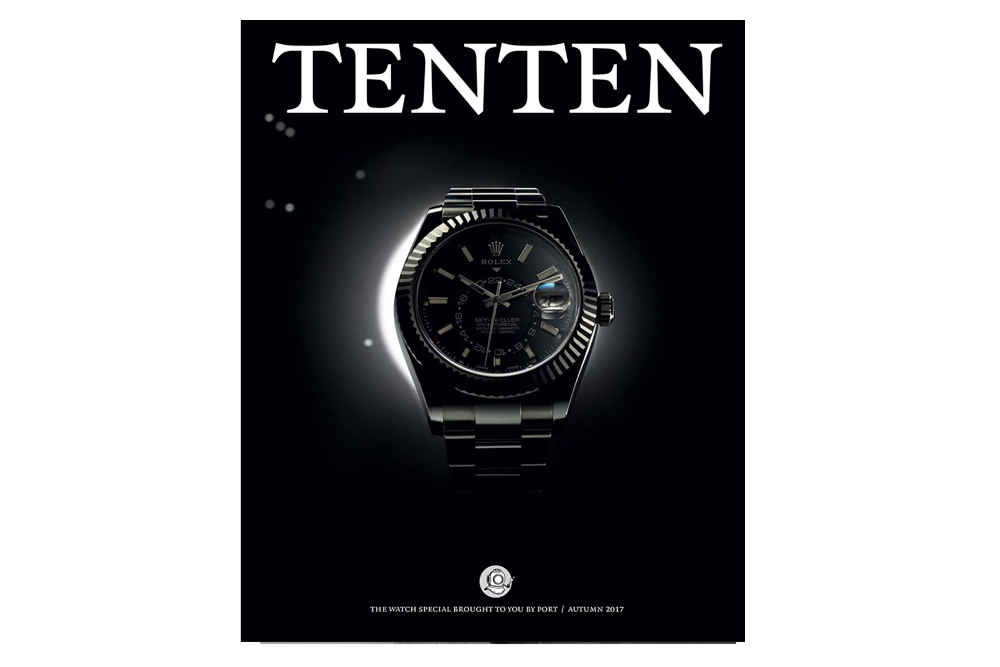
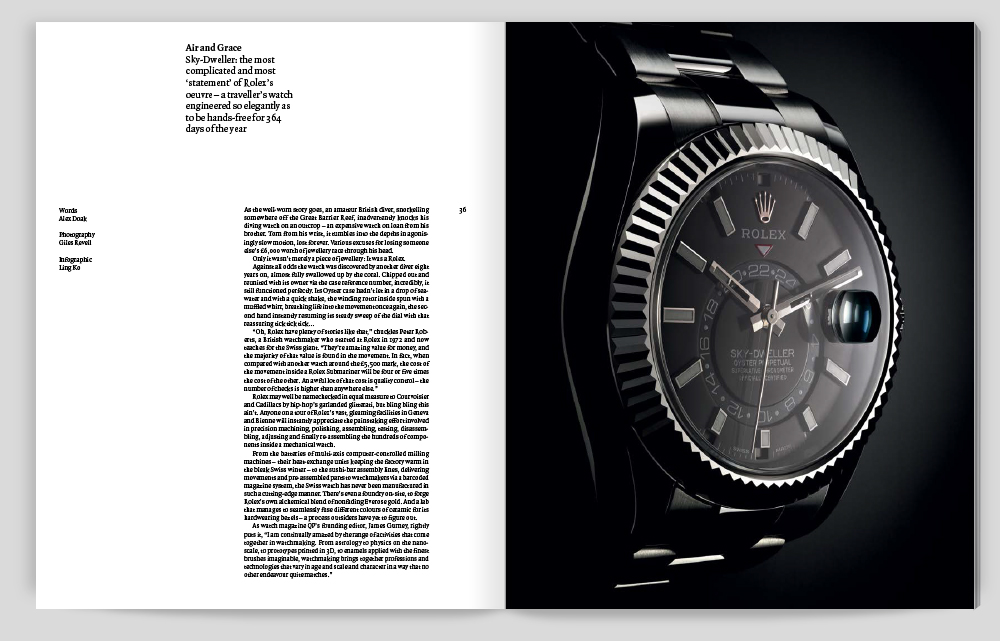
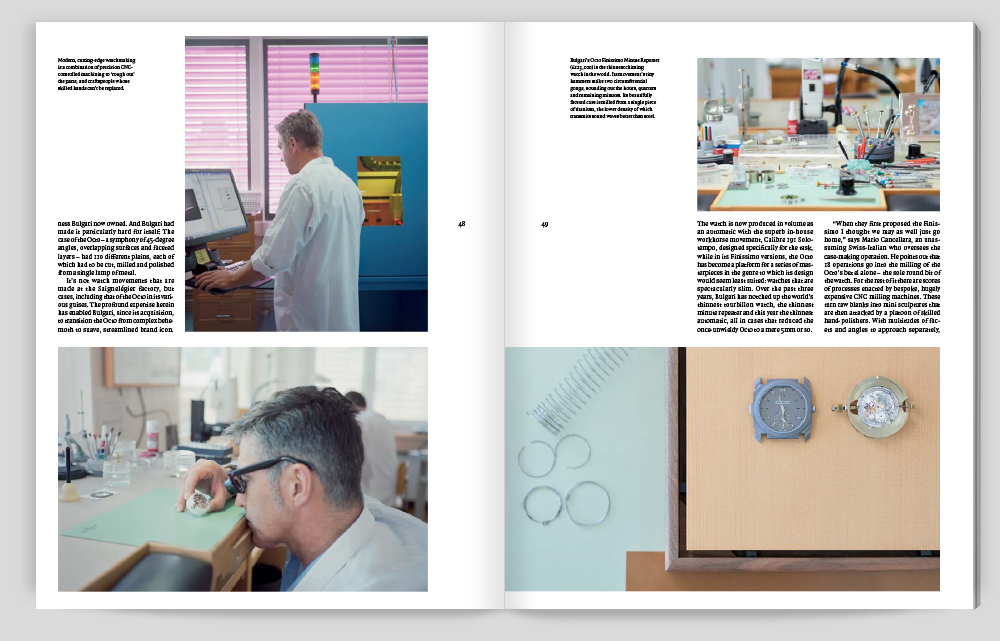
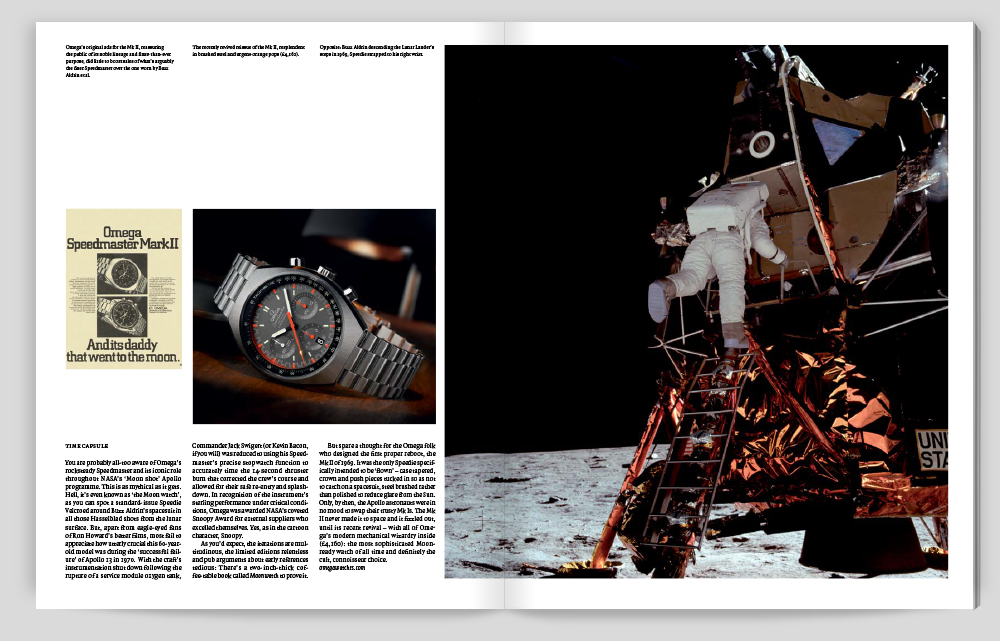
In our latest edition of TenTen, we explore the stratospheric reach of luxury horology from the time-keeping tale of a record-setting aviator, to the role of the Omega Speedmaster in the NASA Apollo space program, and much more…
For our second annual edition of Port’s watch special, TenTen, we’ve gone for a globetrotting theme. As the nautical name of our magazine indicates, we have a penchant for tales of seafaring. Precise, reliable ways of portable timekeeping have their roots in the oldest means of global travel: by sea. In this issue of TenTen, we discover how global exploration shaped the art of watchmaking.
TenTen remembers Walter Lange, 1924-2017, the watchmaker who fled the East German uranium mines in 1948, and returned to his home country when the Berlin Wall fell to re-establish Germany’s fine-watchmaking reputation.
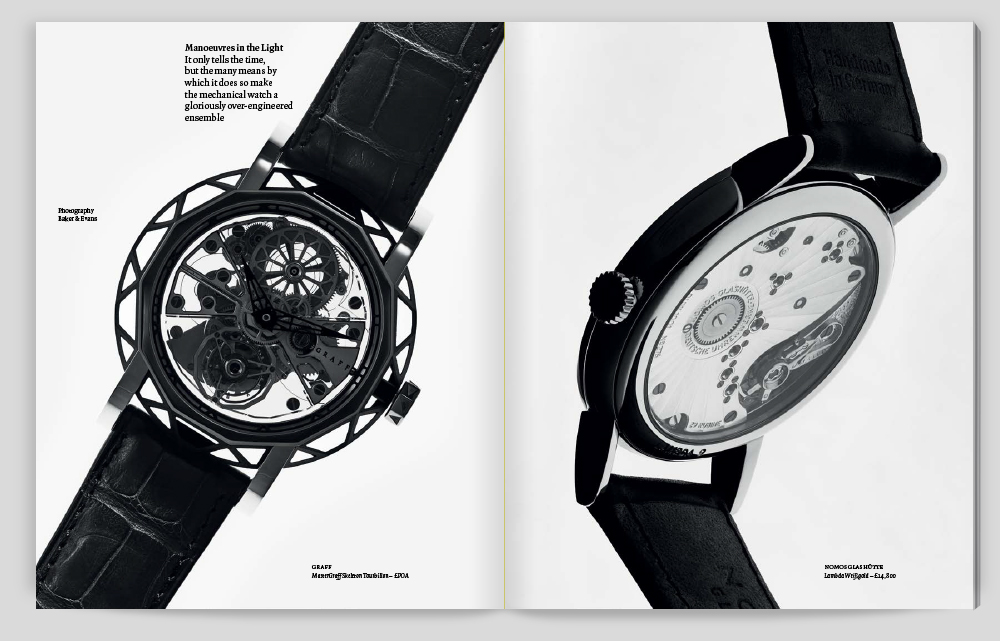
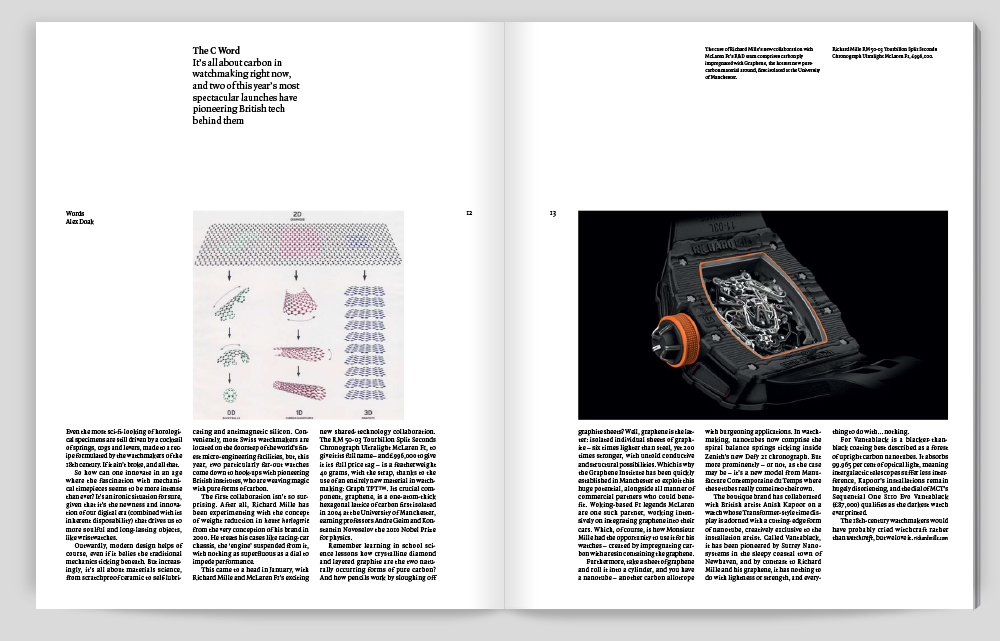
We also discover the horological legacy of Charles A. Lindbergh, who in 1927 set records for the first and longest non-stop transatlantic flight from New York to Paris. Famous horloger Longines was present to time his voyage, and the adventurous duo then collaborated on a revolutionary navigational instrument that enabled precise timekeeping. Coming back down to earth, TenTen discover the subaquatic resilience of the Rolex ‘Submariner’; and the carbon innovations in horology that combine strength with feather lightness.
Elsewhere, TenTen investigate the crucial role of the Omega ‘Moon watch’ in the ‘successful failure’ of Apollo 13 in 1970; unite man’s best friend with man’s best accessory in our playful canine editorial; investigate the quintessentially Roman brand making waves in bespoke Swiss watchmaking; and recall the cameo role played by the Rochefoucauld watch in ‘80s screwball comedy Trading Places.
TenTen is the supplement of issue 21 of Port, out now. To buy a single issue or to subscribe, click here
Slowly but surely, the idea of eating insects is being introduced to European countries thanks to insect-based food projects and recipe books hoping to put an end to the ‘creepy-crawly’ taboo
The concept of entomophagy, as its known, was once almost impossible to fathom in the West, but in the last few years there has been a growing interest in insects as an alternative food source. Very slowly, supermarkets are beginning to stock insect-based snacks, while chefs and restaurants are experimenting with insects as ingredients.
Two billion people across the world already eat bugs regularly. Countries including Africa, Australia, Thailand and even the Netherlands incorporate insects into their diets, so why has ittaken so long to catch on in the UK? The answer is arguably a combination of convention and unfamiliarity, but the reality is that eating insects is no different from eating shellfish. There are more than 2037 edible insects in the world and many contain a vast number of minerals, protein and good essential fats that Westerners have overlooked.
“It is reported there are over 2000 edible insect species on the planet so that’s essentially 2000 different flavours,” explains Neil Whippet, co-founder of Eat Grub, an edible insect source that produces insect-based snacks and hosts food events in London. “People just need to get over the psychology of it. That’s what our company ethos is all about. We’re just trying to be a brand that welcomes people to eating insects.”
In addition to selling snacks, energy bars, and cooking packs containing crickets, grasshoppers, Mealworms and more, Eat Grub also develops new recipes to try at home. These include grasshopper stir fry, buffalo worm fried rice, spicy grasshoppers with beansprouts and chocolate cherry cricket brownies. “Crickets are related to shellfish so if you like prawns, you’ll like crickets,” Whippet says. “They’re high in protein and calcium, plus the protein is complete so it has all nine essential amino acids and they’re high in vitamin B12 and fibre. We call them the original superfood.”
Bente’s bees, Denmark.
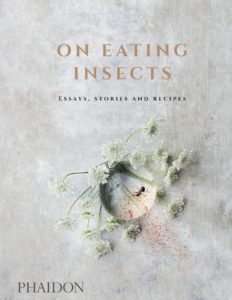
As further evidence of the trend,a new book produced by the non-profit, open-source organisation Nordic Food Lab, On Eating Insects, is the first publication to take a comprehensive culinary view on eating insects and how to prepare, cook and enjoy them.
Inside, Michael Bom Frøst – a sensory scientist and director of Nordic Food Lab – discusses his first experience eating insects. “Through tasting them I learned why we should eat them,” he writes. Many have interesting and unusual flavours that he claims we are missing out on. Frest looks back on his first taste of an Amazonian ant (apparently similar to lemongrass and ginger) as an almost religious experience that he found mind-changing.
By 2050 the world could have a population of over nine billion people and according to research, food production may be forced to increase by 70 per cent. In preparation, we need to develop a more sustainable approach to food. It follows that eating insects could very well be the answer. And for those still struggling with the idea of eating insects whole, products like ground cricket flour can be a softer introduction.
“When people talk about wanting to eat more healthily and sustainably, eating insects ticks both those boxes,” Whippet explains. “And they taste great too which is key for any food product.”
On Eating Insects: Essays, Stories and Recipes by Josh Evans, Roberto Flore, Michael Bom Frøst, published by Phaidon, is out now
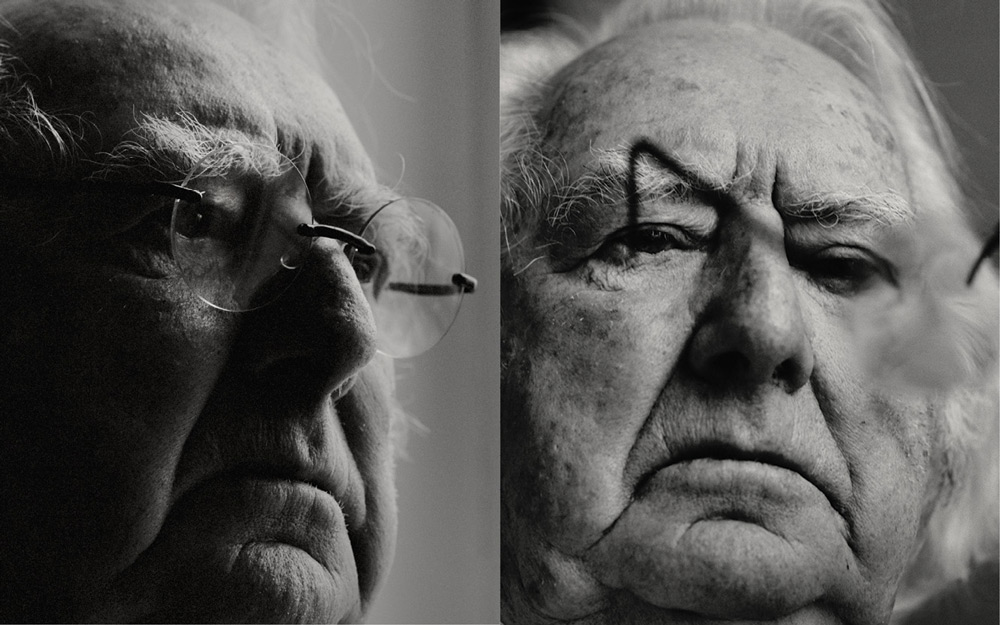
The American architect – part of the New York Five and one of the city’s most iconic modernists – talks to Port about his body of work and branching out from his beloved colour white
Richard Meier by Joss McKinley
“It began quite innocently,” says RichardMeier of the events that propelled him to fame. In 1972 he was a young architect practising in New York, and teaching at Cooper Union with John Hejduk, the educator and theorist who would later become the school’s dean of architecture; Charles Gwathmey, another architect, was working in the same building. Meanwhile Michael Graves and Peter Eisenman were teaching at Princeton. All the men were near the start of their careers – they had built little, and not much building was going on in New York, which was mired in ever-deepening economic and social crisis.
“We all knew one another. We taught together; we were friends, and we decided to get together and sort of criticise one another’s work,” Meier recalls. “So we went to a neutral space, the conference room at the Museum of Modern Art, everyone bought one work that they were currently involved with and the others gave their opinion of it. We had a really good, friendly discussion. And afterwards we said, that was really good – we should make a little pamphlet to commemorate the event.”
That pamphlet became, in the hands of George Wittenborn – an art books publisher on Madison Avenue – a slim book called Five Architects, and the architects became known as the New York Five. Each architect included two of their houses in the publication, and Arthur Drexler, MoMA’s influential director of architecture, contributed a pugnacious introduction, praising the five for remaining true to the “rational poetry” of pure modernism, as opposed to the “proletarian snobbery” of brutalism and the “elegant but arbitrary” pure structure of Mies and his followers. For a such a slender volume, the effect was electric – even explosive.
“At the time, most architectural discourse, if you can call it that, was around issues of social responsibility… and perhaps the very faint beginnings of postmodernism and reaction against modernist orthodoxy,” says Paul Goldberger, the Pulitzer-winning architecture critic for Vanity Fair, formerly of the New York Times and the New Yorker. “And then, into this mixture, come these young architects who were interested in modernist form and continuing to develop and refine it, and push it forward, and did not feel it was a dead end, but felt it was very much relevant. In the context of the architectural culture of the 1970s, it felt very fresh… very much oriented around pure aesthetics and pure forms and making a shape and making a space as an end in themselves.”
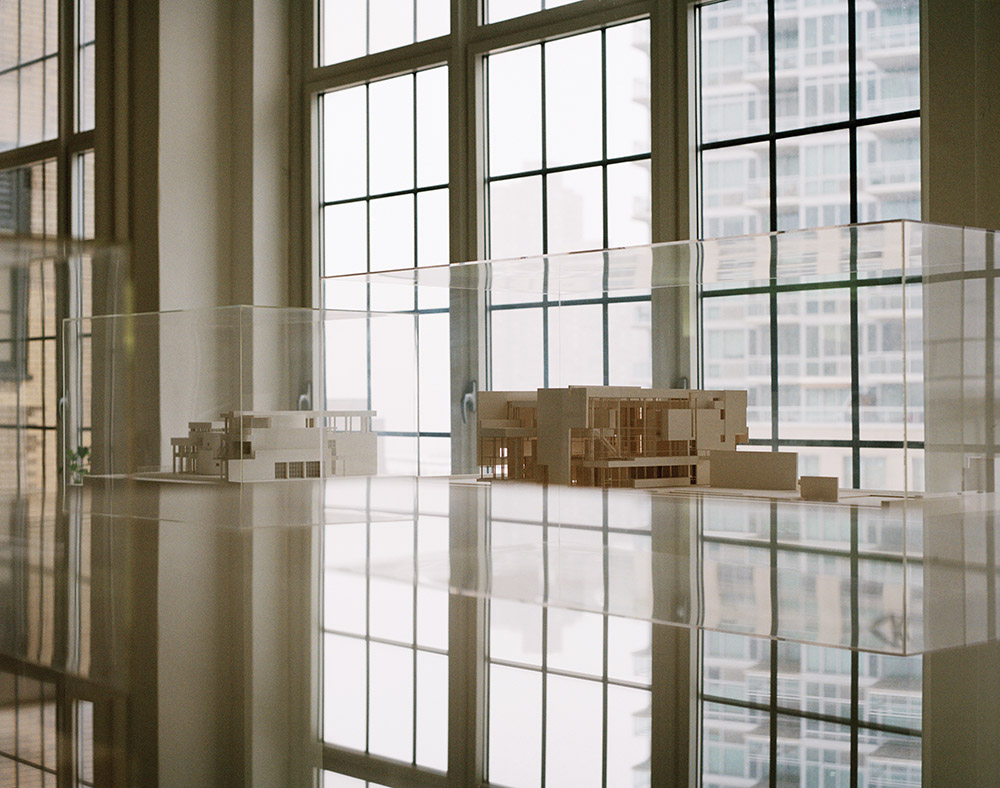
Left to right: presentation model of the Ackerberg House and presentation model of the Rachofsky House in the North Gallery of the New York office.
“I was surprised how much was written about it,” Meier says. “It made people think about architecture in a different way, which was very positive.” But with modernism divided and falling from grace, this clarion call was controversial. The New York Five became known as the “whites”, and were attacked in the pages of the Architectural Review by a rival grouping of proto-postmodernists and neoclassicists, the “greys”. “People certainly read it as a manifesto of some sort, and it provoked other events,” Meier says, although he denies that the aim was polemic. For him, the value was all in those initial meetings: “It was really a wonderful coming together. We knew one another; we had dinner with one another, but this was something different. It was just sitting in a room, talking about the work – not only one’s own work, but also the work of the other four.”
Meier was born in Newark, New Jersey, in 1934, and established his office in New York in 1963. “White” was an entirely apt label for his work. He is associated with the colour like no other architect. The Five were always divergent in style, and their architecture went in radically different trajectories: Eisenman into deconstructivism, Hejduk into sui generis idiosyncrasy, Graves into monumental postmodernism. But Meier has remained loyal to white-walled modernism. One monograph of his work opens with an essay by him in praise of the colour: “White is always present but never the same, bright and rolling in the day, silver and effervescent under the full moon of New Year’s Eve. Between the sea of consciousness and the earth’s vast materiality lies this ever-changing line of white.”
In interview, however, he’s far more restrained – at times, frustratingly taciturn. “I felt that we were part of a tradition and respected that tradition, and showed the way it could be expanded,” is pretty much all he will be drawn to say about his relationship with his modernist forebears. But his meaning is spelled out in his work. His crowning achievement is the Getty Center in Los Angeles, a hilltop complex of galleries the size of a small town, developed over more than a decade at a cost of $1.3 billion. Few architects get this kind of opportunity; even fewer could make such consummate use of it. He has built other cultural landmarks in the United States as well, including the High Museum of Art in Atlanta; and he is one of continental Europe’s favourite Americans, with major projects such as city halls for The Hague in the Netherlands and Ulm in Germany. Dazzling white is sometimes cut into by pale stone and apertures of sky; grids and purist geometry are kept from sterility with surgical curves and deviations from the orthogonal.
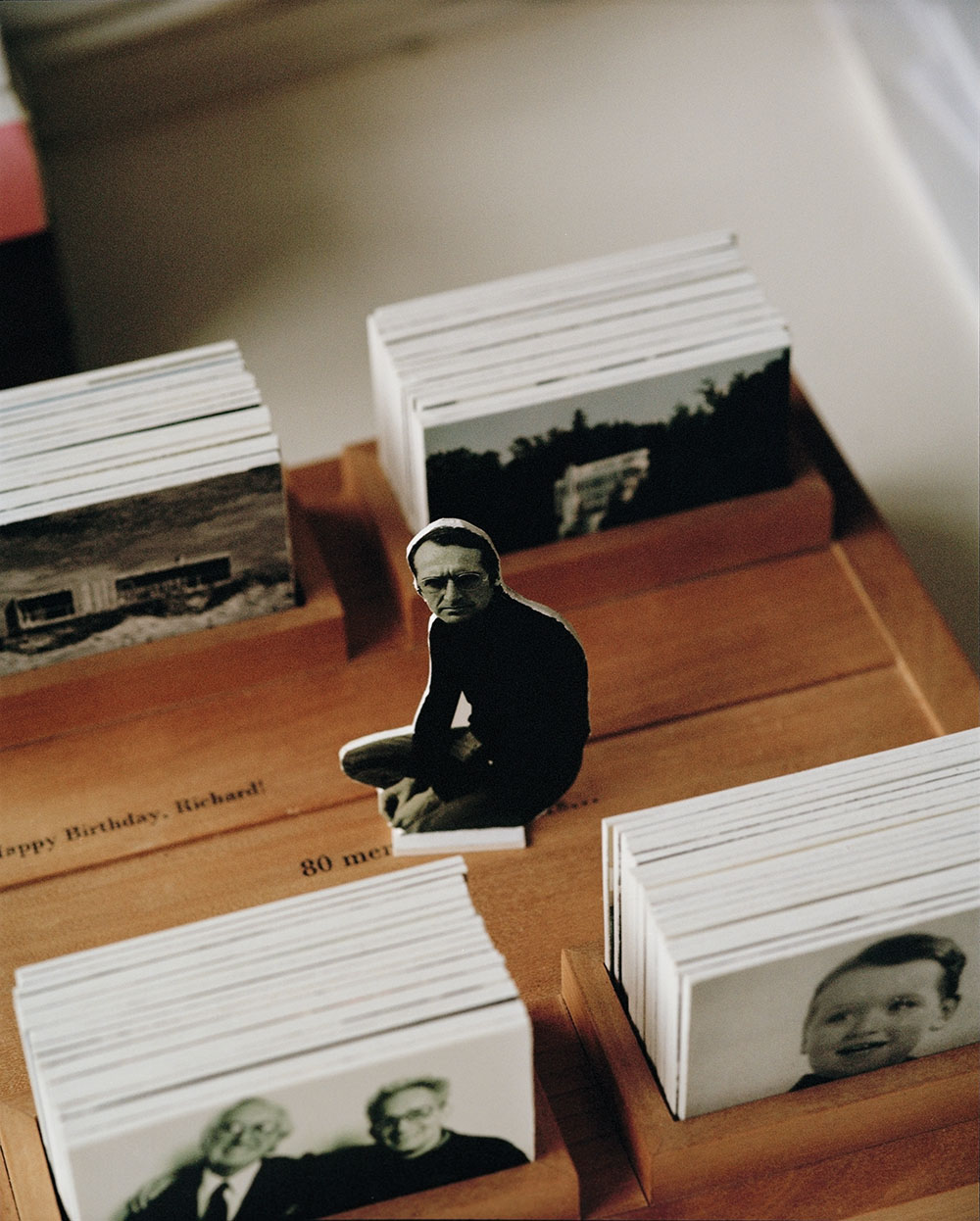
Photo cards with images from the Richard Meier Archive to commemorate and celebrate Richard Meier’s 80th birthday created by the staff from his New York office.
“What he has done is distilled a kind of elegant purist essence out of modernism,” says Goldberger. “But his works are very much compositions; they’re about balance and weight and lightness and solids and voids, all very beautifully balanced together into compositional wholes that are elegant and serene. That is not what modernist orthodoxy has prioritised so much as what he has prioritised. He has been pursuing his own private version of modernism, consistently, his entire career.”
Some of Meier’s earliest projects in the late 1960s and early ’70s, were in New York. After that, for more than a quarter of a century, he was overlooked in his home city. But with the turn of the century, that changed. Between 1999 and 2006, he built a trio of short, elegant towers on Perry Street and Charles Street in Greenwich Village, a decorous little riverfront group that deftly combines variation and restraint. “To have three buildings together, three blocks on the river, is really unique. It makes me proud,” Meier says. “And they’ve really transformed an area, given it a new life.”
They also created demand for Meier’s architecture among condominium developers. In the early years of the 21st century, with his catalogue heavily focused on houses, civic centres and galleries, Meier had more than once expressed a desire to design a skyscraper. Since then, a few Meier spires have appeared in locations around the world, and now one is under way in New York: an apartment tower at 685 First Avenue. The site is a couple of blocks south of the United Nations building on the East River, and Meier expresses his satisfaction that his own tower is much the same height and orientation. “It’s like they’re a pair of buildings,” he says. “That context gives me great pleasure.”
Senior Associate Hans Put working on the design of a new private residence in East Hampton.
However, once it’s finished the uninformed eye might not recognise 685 First Avenue as a Meier: it’s black, clad in a “very taut, very striking” curtain wall of shadowy glass. It is a remarkable rupture with the Meier trademark. What made him break the practice of a lifetime and make a black building? Typically, his reply is a little… well, a little colourless. “ came to me and said ‘I like your work; I like the buildings that you did downtown, but would you do a black building?’ So I thought about it a while, and I said sure. So that’s what we’re doing.”
To break up the mass and highlight the blackness and tautness of the curtain wall, there’s a sliver of white about two thirds up the tower: one apartment, different to the others, with clear glass to reveal its pristine interior. An interesting place to live, I say. You’ll be able to point it out from across the river.
Another first: Meier laughs, and permits himself a dry joke. “We should tell the sales people that they should charge more for it.”
From his south London home, the celebrated chef, restaurateur and food writer speaks to The Modern House about what modern living means to him
I lived in Shoreditch for 20-odd years, as well as Notting Hill, and I wasn’t considering south London before I bought this place. My friend Richard, who’s a search agent, showed it to me on The Modern House website, and I zipped straight over on my scooter to take a look. I said yes straight away. I didn’t even come for a second viewing because I knew I was going to redo it.
Space was the main consideration, but I’ve found that Bermondsey is a really interesting area. It’s also easy to get to any of my restaurants… I nip over London Bridge to get to the Oyster & Chop House. I’m close to lots of bridges here! I visit at least two of my restaurants every day. I’m not really in the kitchen any more; I’ve got lots of other things to look at, mostly overseeing the creative side.
This place is my home, and I also do some work from here: writing and experimenting. I might start doing some cookery demonstrations, like I do in my Kitchen Library at the Tramshed.
I worked with Tekne on the refurbishment. Originally they’re shop fitters, but they’ve fallen into doing hotels and restaurants. They did my Bankside restaurant, Hixter, and the one in Soho. I recently put them in touch with my friend Robin Hutson, who owns The Pig Hotels, so they’ve done the last two projects for him. When Robin buys old buildings for the hotels he clears them out, and he’s given me a few salvaged things for the flat – a shower and some old Crapper loos.
I designed the space, and then Tekne worked as the contractors and architects. I gave them the ideas, and they put it all on paper. We gutted the whole thing, taking it right back to the bare bricks. We played around with materials: the wine racks are made out of scaffold planks picked up from building sites around here – some we paid for and others we were given for nothing. The same with the bookcase. Because they’re old, they’ve got a bit of character.
The kitchen counter is made from liquid metal. You can pour it over MDF to create curves at the edges, and you don’t get joins. Underneath are pieces of cast concrete from Retrouvius; I think they were originally columns in a mid-century office block. I wanted simple, natural oak units, something that would wear in naturally. Cooker hoods are normally so boring, so we went to a foundry and made a semi-industrial-looking unit that’s wrapped over the top of a normal extractor. We went back to the natural brick on the wall behind, which would have been the end wall of the original factory.
The spoon on the wall is a Michael Craig-Martin – it’s the cover of one of my books, The Collection. The ‘Vacancies’ neon piece is a Peter Saville art piece that he made. The fridge came from an antiques shop in Paris. It was made in the 1800s – originally they would have put a block of ice in the middle compartment to keep the whole thing cold. The refrigeration guy that I use for my restaurants converted it and made the top bit to match the bottom. It’s got different sections: dairy, wine, glasses, negroni cabinet!
I buy a lot of stuff from junk shops and reclamation yards. The kitchen lights are from Trainspotters in Gloucestershire, and I’ve collected midcentury Stilnovo lights over the years.
I bought the cocktail cabinet years ago at the Paul Smith shop. It had a horrible Chinese painting on the front, so I got my artist friend Mat Collishaw to make a replacement. The taxidermy mice in bell jars are by Polly Morgan, and the Bridget Riley is one of the first pieces I ever bought. There’s a shop across the road – a sort of Lithuanian shop – and they were selling what I thought was a mandolin, but I couldn’t work out why it was so big; it turns out it dates from 1903 and was used for slicing white cabbage.
The guitar comes from an event in Lyme Regis called Guitars on the Beach. A friend of mine said: ‘If I get a Fender guitar sponsored, can you ask Tracey Emin to draw on it?’, and she did. I thought it was going to be a silent auction, but it ended up being a raffle at a pound a ticket. So I bought a thousand tickets for £1,000 to narrow the chances down! It’s signed by Paul McCartney as well. I go back to Lyme Regis maybe three weekends a month. I’m part of the local community, I suppose. I get involved in local charity work and I do a food festival, which brings quite a few people to the area.
I made the garden room because the little terrace is quite small. In the summer you can open the doors up and feel like you’re inside and outside. I put the bi-fold doors in, and then got lots of crazy plants from Covent Garden. It’s a nice place to have tea in the morning. I found the old plantation chair on eBay. The artwork is by my mate Henry Hudson, who works in plasticine. That’s an Australian Moreton Bay Bug [on the ceiling]: it’s a sort of prehistoric crab. Then this is an old python skin I found rolled up in a box in a junk shop. I guess there’s a touch of the macabre, but really I just thought this room was crazy enough that you could put anything in it.
I’ve got a fishing and shooting cupboard here. The wallpaper is by one of the guys who works in the gallery, Tom Maryniak; he’s done a few different types of wallpaper in the loos at my Bankside restaurant. And then the wallpaper in the main bathroom is by Jake and Dinos Chapman.
The photographs above the bed are by Susannah Horowitz – she was one of the winners of the Hix Award. Every time we do the award I end up buying something. And this one isn’t from the Hix Award: it’s just two fucking flamingos with a little bird watching… I forget what its name is! The rooflight was already here; it was quite a weird space before, with a pool table and not much else.”
This feature is an excerpt from The Modern House, read more here
Spanning fine art, fashion and advertising, the author of Feast for the Eyes discusses the rich history of food photography through the lens of five influential images
The first-ever photograph of food was taken in 1827 by photography pioneer Nicéphore Niépce, who captured a set table within a ten-hour exposure time using a camera obscura, commonly referred to as a pinhole camera. Over the last two centuries, food photography has continued to evolve. Since the emergence of digital cameras in the 1980s and the internet in the 1990s, it has remained a focus in photography, although rarely has it been recognised as an important subject. Meanwhile, the rise of social media and blogging culture has meant that food is in fact being photographed more than ever.
In response to this, writer and independent curator Susan Bright’s book Feast for the Eyes is the first publication to explore food photography’s significant history. Bright’s book traces the development of the genre and celebrates photographers who have played a critical role in conveying ideas that go far beyond the food they have captured. Irving Penn, Stephen Shore, Wolfgang Tillmans, and Martin Parr are just a few names featured. “We understand what it means to photograph food more than ever before,” she explains. “It’s never just about the food, it’s about everything else. It’s about the person, always. Food is a symbol.”
Here, Bright discusses five photographs from Feast for the Eyes taken between 1947 and 2008.
Victor Keppler, (General Mills advertising campaign—Apple Pyequick), 1947 “Keppler was amazing at advertising and colour photography. This image is made up of only four colours but it is instantly recognisable as apple pie. He was so good at paring down colours in advertisements. It is very American and nationalistic; nothing is more American than apple pie. It is about the atomic age of American shortcuts which we can understand immediately. I think it is complete genius, using photography to short circuit the brain.”
Harold Edgerton, Milk Drop Coronet, 1957
“This photograph is just fantastic. Edgerton was a scientist and would claim he was never an artist, but there is a joy to this photograph. There is a mixture of science, art, wonderment and entertainment. I’ve seen this picture a million times and I still go: ‘wow’. We tend to look at the history of art through art photography but it was in science and commercial photography where huge innovations were being made.”
Jo Ann Callis, Black Table Cloth, 1979
“This is a very puzzling image, you’re not sure where you are. It’s not a diner, it’s not a home; it feels very curious. We question why there is an empty bowl and strawberries in milk. There is something illicit and cinematic about Callis’ work, a tenseness and obsessiveness about it that I really like. Her use of colour is extraordinary.”
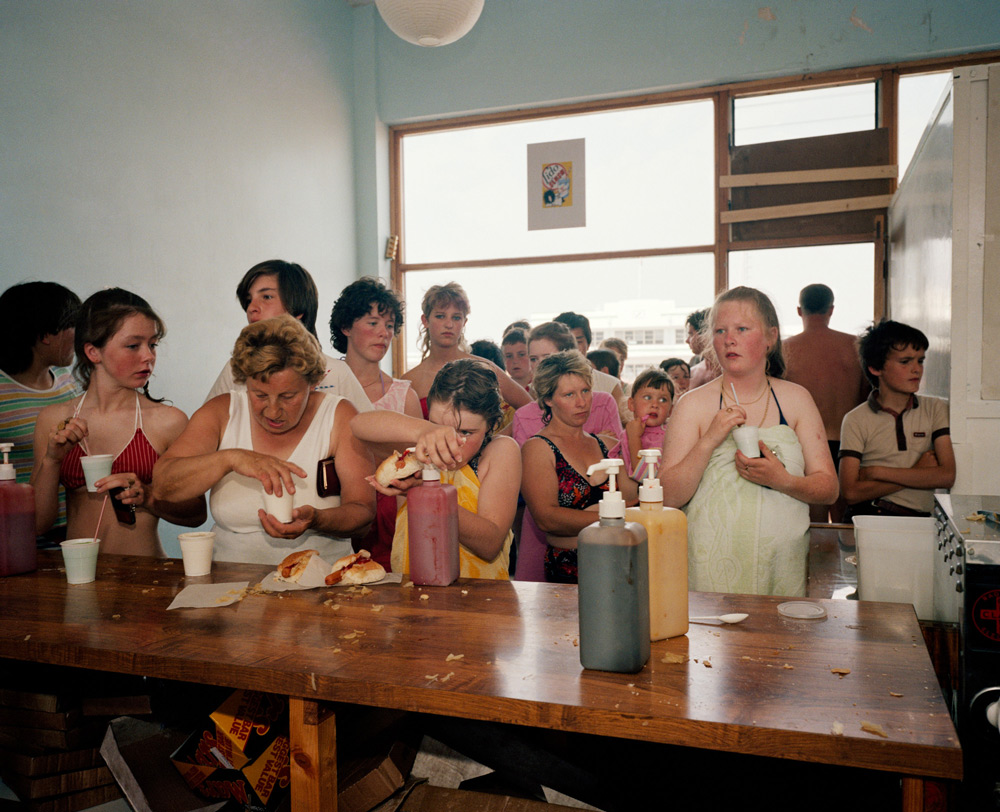
Martin Parr, Untitled (Hot Dog Stand), 1983–85
“There is a tenderness to Parr’s images of Britain, but this photograph is quite humorous. The Last Resort was his strongest body of work for me, where he manages to smash through certain British stereotypes as well as rely on them. It was really important to show the idea of the ritual, whether it be a birthday party or going to the cinema and having popcorn, or going to the beach and getting a hotdog.”
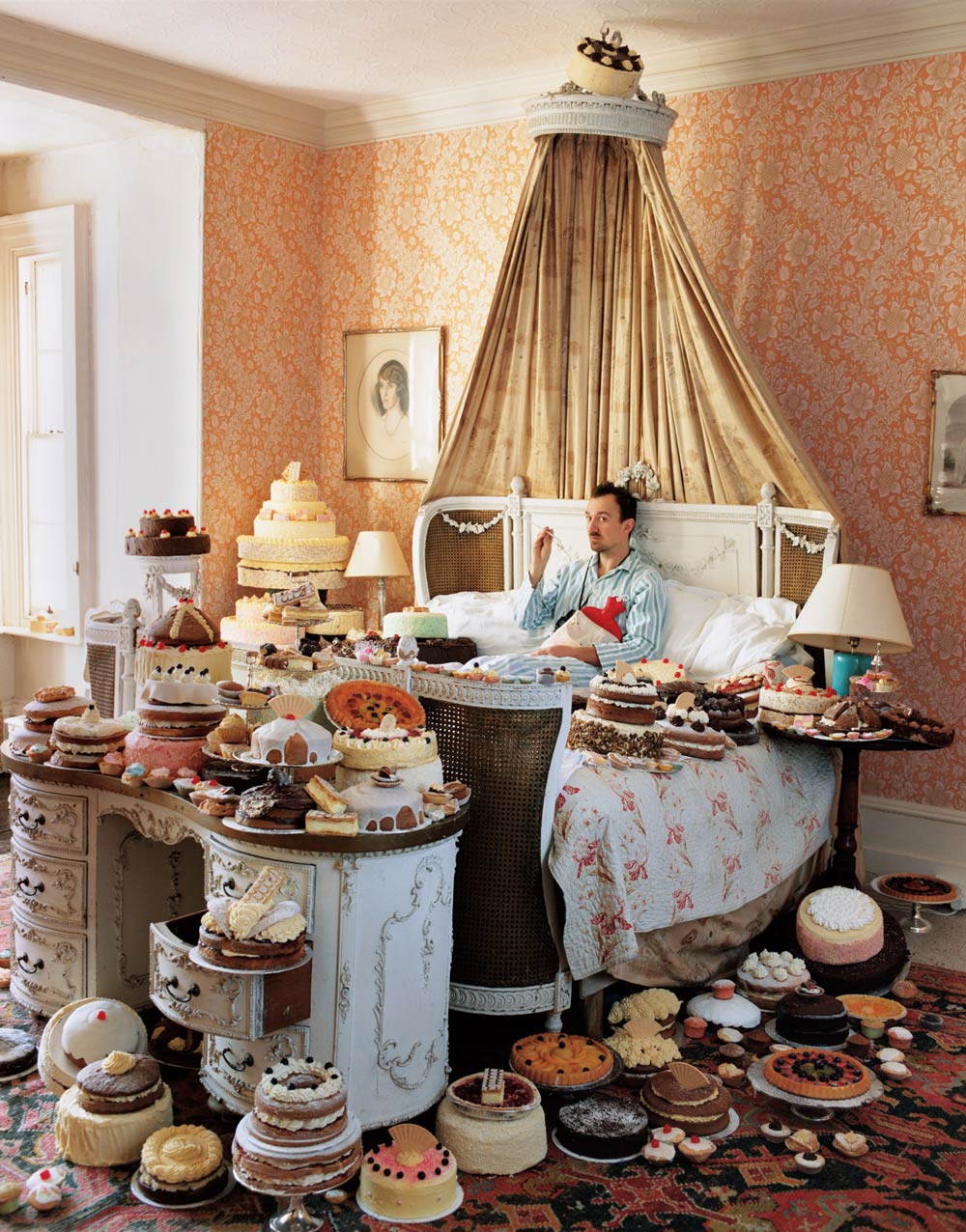
Tim Walker, Self-Portrait with Eighty Cakes, 2008
“Tim Walker manages to tap into the childlike quality in us. When you see a Tim Walker photograph you just know its him because he pushes fantasy further than anyone would in a very sweet way. It’s completely fantastical and joyful. He includes food in his photographs because it adds another layer of fantasy and narrative. It reminds me of kids stashing their sweets under the bed but he’s just putting it out there.”
Feast for the Eyes is out now, published by Aperture
Discover Australia’s lesser-known Brutalist architecture with a guide to the raw concrete wonders of Sydney and its suburbs
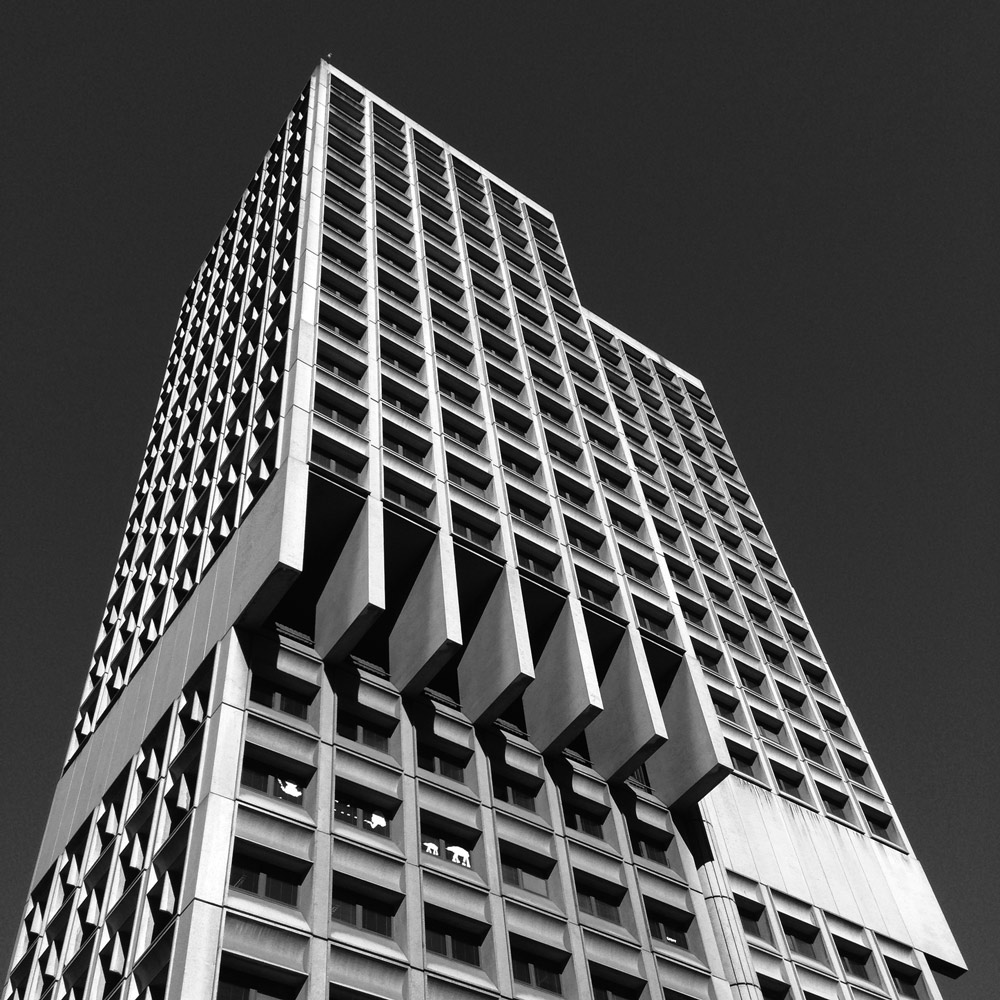
“In giving physical form during the last vestiges of architectural modernism, Sydney’s Brutalism, which finished late by international standards, manifested in a variety of building types for a confident Pacific-rim city,” writes Sydney-based architect and urban designer Glenn Harper in his introduction to the Sydney Brutalist Map. Harper has a passion for Australia’s lesser-known Brutalism and since receiving a travelling scholarship for his Sydney Brutalist Project, has recently collaborated with independent map publishers Blue Crow Media to create an architectural map of the city, which also includes his own photographs.
“Having a direct and truthful exposure of material in either béton brut finish, precast concrete or textured brickwork, the uniqueness of Sydney’s Brutalism responded to a city of distinct topographic and urban character,” Harper explains. “With the first Brutalist buildings dating to the early 1960s and being houses within steep ‘bushland’ settings or educational buildings within new university campuses, the later projects of the 1980s were monumental and distinctly civic.”
Sydney is the latest city spotlighted in a series of Brutalist maps, joining London, Paris and Washington. The map features 50 of the most inspiring examples of Brutalist architecture in Sydney and its suburbs, from Pennant Hills to Sutherland and Curl Curl to Penrith.
From Northern Soul to Grime, look back at the defining styles of five youth movements from the last 70 years
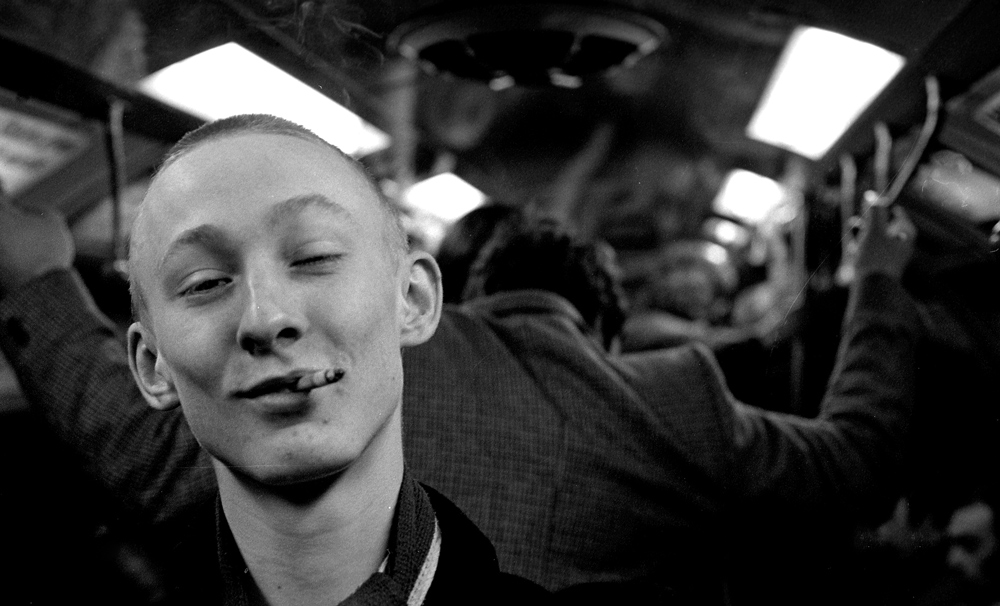
Skins & Punks by Gavin Watson
“People said subcultures died with punk, teds, mods, skins and new romantics but that’s ridiculous,” says Jim Stephenson, founder of photography organisation, Miniclick. “You have rave and hip-hop, you have garage and grime, and they are equally as energetic as any of the subcultures that have gone before them,” he continues.
“Fashion is arguably the most significant element of all these scenes as that is the outward way of expressing the group these young people are choosing to identify with. When you say ‘punk’ you have an image immediately of what that means. Subcultures encompass a style and a language.”
Presented as part of Brighton’s Fringe Festival, Stephenson has curated Behind the Beat, a group photography exhibition exploring British subcultures from 1955 to 2017. Running every weekend throughout May, the show and a programme of talks are investigating the fashion, music, politics and stories that have defined subcultures in the UK. Ten photographers including Elaine Constantine, Derek Ridgers, Ken Russell, Dean Chalkey and Olivia Rose share their work documenting some of these iconic youth movements.
Here are five of Port’s favourites.
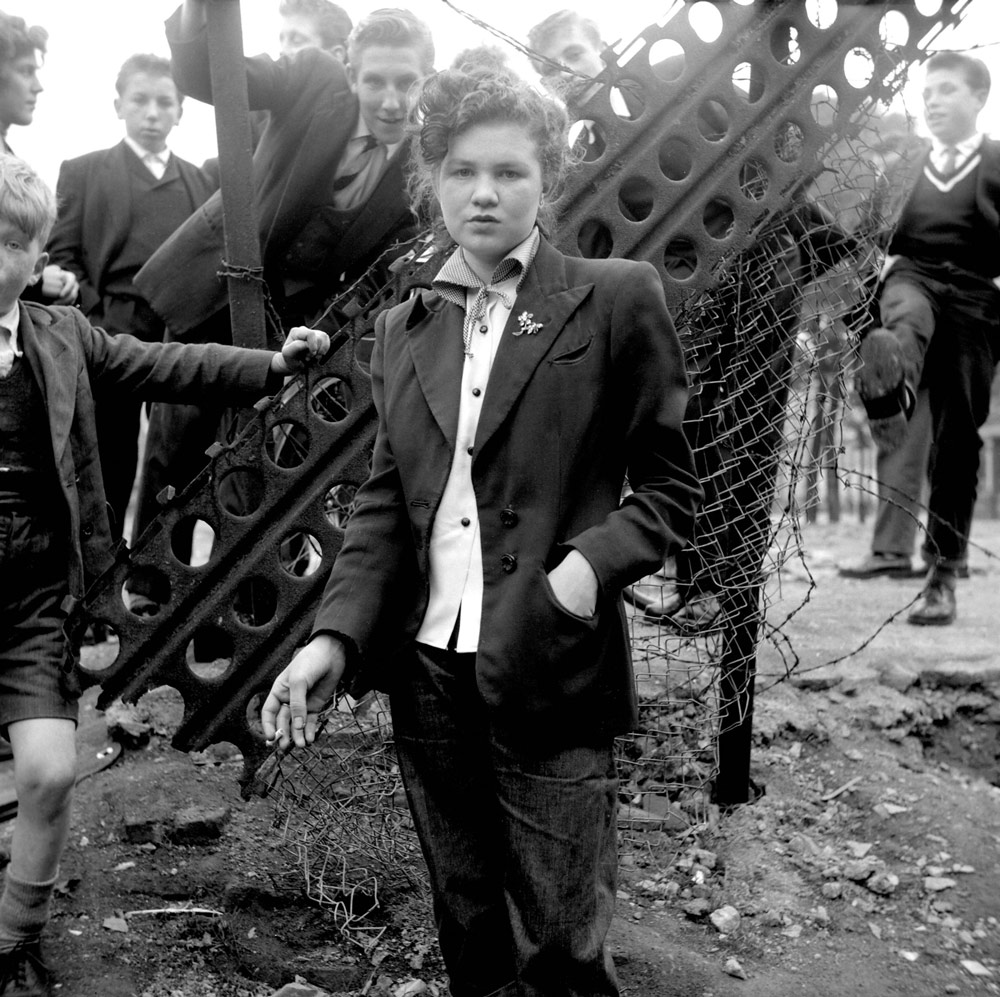
Teddy Girls
Teddy Girls by Ken Russell
Ken Russell’s 1955 photographs of one of the first female youth cultures to exist are some of the only documents of the teddy girls from the time. Russell photographed them on the streets of Notting Hill, at funfairs, on derelict East End bomb sites and outside the Seven Feathers Club.
Teddy fashions were inspired by the Edwardian period during the early years of the 20th century, their dress included loose fitting, velvet-collared jackets and narrow trousers. Some teddy girls would put a feminine spin on the typical teddy style with straw boater hats, brooches, espadrilles and elegant clutch bags. They collected rock’n’roll magazines and records, attended dances and went to the cinema with the teddy boys. Most would also carry closed umbrellas but often would not open them, even in the rain.
Northern Soul
Northern Soul by Elaine Constantine
Northern soul was a music and dance movement that grew out of the British mod scene in northern England in the late 1960s, largely inspired by the faster tempo and darker sounds of mid-60s American soul music. Records emerging from the Northern Soul scene became known as ‘stompers’ for their soulful vocals and heavy beats.
Early northern soul fashion included strong elements of classic Mod style, including button-down Ben Sherman shirts, blazers with centre vents and an unusual numbers of buttons, and brogue shoes. Later northern soul dancers began wearing lighter, loose fitting clothes for easier movement on the dance floor. This included high waisted baggy Oxford trousers and sports vests with leather-soled shoes.
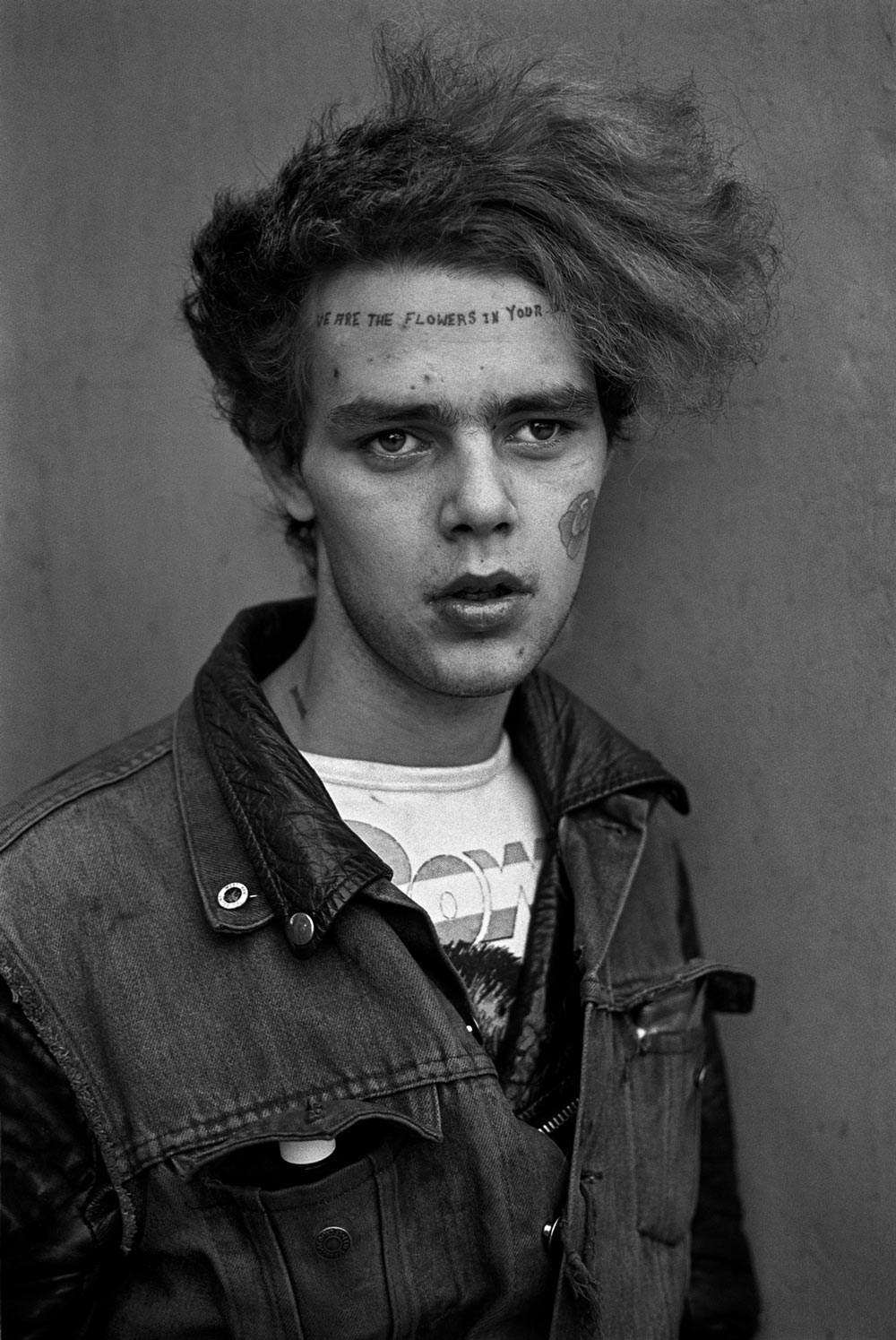
Skins & Punks
Skins & Punks by Gavin Watson
Gavin Watson grew up in High Wycombe in Buckinghamshire taking photographs of his friends and acquaintances. As a result, Watson captured two of the most iconic subcultures in 1980s Britain, which have become some of the defining documents of this period. Director Shane Meadows cited Watson’s photographs as an inspiration for his film This is England.
Ripped T-shirts and safety pins became a punk staple, as well as zips, studs, badges and armbands that were being used to make political statements. Towards the 1980s, punk fashion became even more politicised with mohawks, tattoos, studded chokers, Dr. Martens boots, and tartan. Women would wear leather skits and ripped fishnets, writing slogans and band logos on their t-shirts. Fashion designer Vivienne Westwood took punk to the mainstream with her fashion designs in the 1970s.
78/87 London Youth
78/87 London Youth by Derek Ridgers
Derek Ridgers started photographing London’s youth in the early 1970s with his documentation of the new romantics and the Blitz kids in London streets and clubs. His series of images 78/87 concentrates on the decade after punk, when youth culture in London was full of diversity. As the punk rock era developed in the late 1970s, Ridgers devoted his time to the photographing London’s decadent club scene in its prime, capturing ravers, goths, punks, skinheads and fetishisits and various fashions that developed from these subcultures.
Grime
This is Grime by Olivia Rose
Grime music emerged in the early 2000s and has now become one of the most prominent British music subcultures. Grime evolved from previous electronic music such as UK garage and jungle, and is also influenced by hip-hop and dancehall music. As a new genre, it spread through pirate radio stations and underground scenes until the mid 2000s, when prominent artists brought their music into the limelight. Fashion is often minimal, and tracksuits and trainers are kept sharp and clean. Nike Air Max trainers have been a defining item in grime style and are still worn by many grime MCs.
Behind the Beat is open every weekend in May, 10am to 6pm at Spectrum Photographic, Brighton
At his Malibu beach house, the influential Californian architect introduces Julia Sherman to a signature dish set to feature in her new cookbook
Photography by Julia Sherman
Harry Gesner’s architecture heightens your awareness of the sun, the horizon, the water, the overwhelming improbability of being perched on the edge of a cliff. His work is an homage to the earth itself. He sketched his most famous project, the Wave House, directly on his handmade balsa-wood surfboard, bobbing in the ocean and looking back at the land that was his to adorn.
I first learned of Harry when I stumbled upon the little-known Scantlin House (referred to now as the Trustee House), which remains hidden behind a grove of trees on the Los Angeles Getty Museum grounds. It was built in 1965 and features a swimming pool that reaches under a rock wall and into the living room, an indoor waterfall and fern garden, two fireplaces, and sweeping views of the city. As soon as I stepped foot in this mysterious building, I accepted my mission to find its creator.
Harry stopped surfing a couple of years ago (in his eighties), but he swims in the Pacific Ocean every morning. He has adventured around the world, befriended the most eccentric of characters, and loves to tell a good story. When I finally finagled my way into Harry’s Malibu beach house, a cylindrical building anchored by a cavernous central fireplace, he put on his chef’s hat (literally) and got to work.
Harry Gesner’s Red Fresh Dates, Marcona Almonds, and Upland Cress Salad
1. Make the dressing: Dissolve the honey in the vinegar in a large salad bowl. Add the shallot, zest, and mustard and stir to combine. Add the oil to the dressing in a slow stream, whisking to emulsify.
2. Make the salad: Remove the base of the dates’ stems. Smash the dates with the broad side of a chef’s knife to crack them. Remove and discard the pits and toss the fruit in the bowl with the dressing.
3. Preheat the oven to 350°F (175°C). Toss the almonds with the oil and spread them on a baking sheet. Bake for 10 minutes, until golden brown.
4. Wash and spin the lettuce and tear it into bite-size pieces. Toss it in the salad bowl, season with salt and pepper, and toss to coat with dressing.
5. Sprinkle the almonds on top of the salad and serve immediately.
This is an excerpt from Julia Sherman’s forthcoming book, Salad for President: A Cookbook Inspired by Artists, available May 16. For more information, click here.
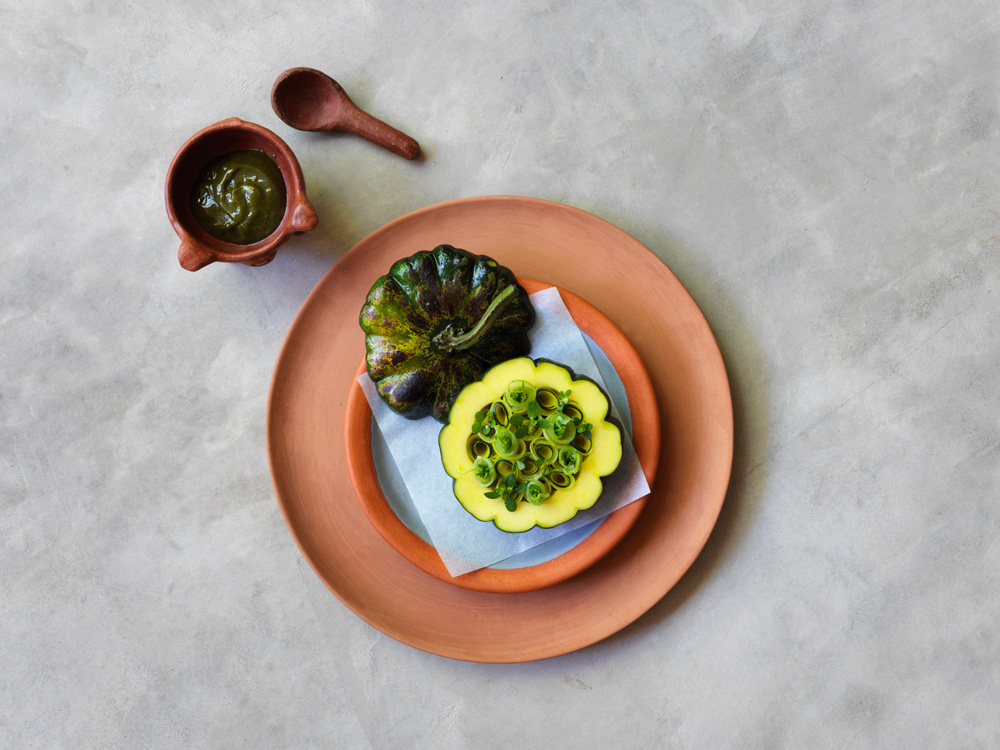
Whole grilled pumpkin with a kelp and avocado fudge
Inspired by Mexico’s rich food history, Copenhagen’s most famous restaurant has opened a temporary outpost in Tulum
Noma in Copenhagen has been voted the world’s best restaurant three times. Since 2003, head chef and co-owner René Redzepi has taken an innovative approach to Nordic cuisine, with items like deep fried moss, edible flowers and ants all making appearances on the menu. While the original restaurant is relocating to Copenhagen’s Christiania neighbourhood, Redzepi has transported Noma to Tulum in Mexico for a seven week residency.
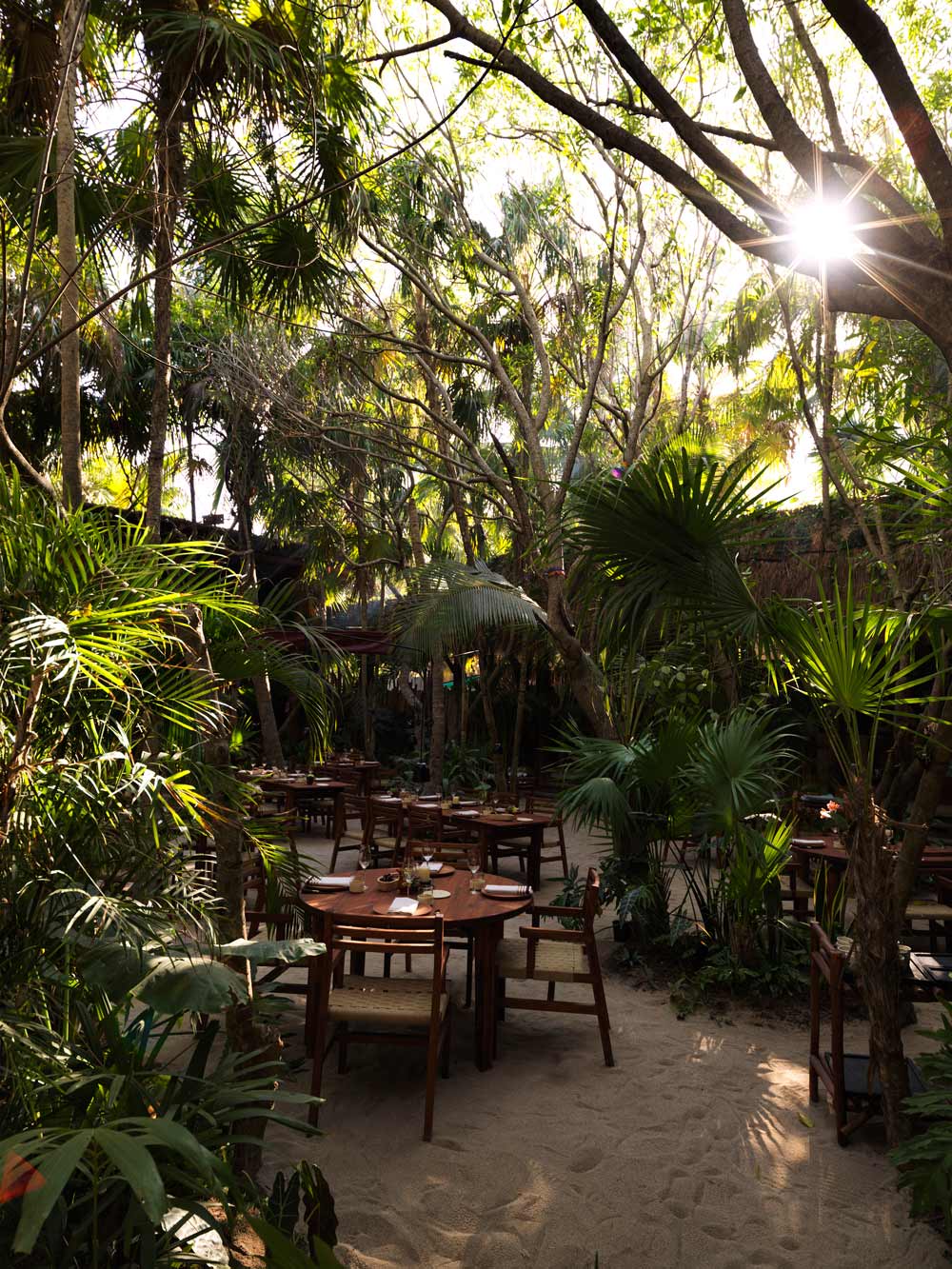
Staging successful pop-ups in Tokyo and Sydney, Redzepi and the team at Noma have been on the road for the last two years, but Noma Mexico is the third and most ambitious venture yet. Conceived as an open-air restaurant nestled between the jungle and the beach, it offers a meticulously researched tasting menu based on Mexican ingredients and traditions. For Redzepi, this was an opportunity to pay tribute to a country that has excited him for over a decade. Noma Mexico
When the concept for Noma Mexico presented itself, Noma’s former sous chef, Rosio Sanchez, was the first person Redzepi asked to join the endeavour. She was brought up in Chicago by Mexican parents, from whom she learned a great deal about Mexican cuisine, ingredients and flavours.
“For the last 6 months, Rosio, a small team and I have been traveling all throughout the country from Merida to Ensenada, from Oaxaca to Guadalajara, and everywhere in between,” says Redzepi. “We searched to find that special chile, to understand the seafood, to taste just a few of the infinite variations of mole, and to find inspiration in the vast and wonderful culture.”
To create new and compelling dishes, Redzepi and Sanchez also teamed up with Traspatio Maya – a nonprofit group of 15 Mayan communities situated across the Yucatan Peninsula – who provided them with hyper-local ingredients. Indigenous delicacies such as rare wild bee larva, pure sweet and sour melipona honey from the Calaukmul reserve, white naal teel corn and pumpkin seeds have been used to create an incredibly diverse 15-course menu. Other items include pinuela, tamarind, crickets, grasshoppers roasted in garlic, chile peppers, jackfruit, mangoes and Yucatan limes. Spice also appears throughout, with dishes ranging from cool masa broth with droplets of habanero oil to pasilla peppers with chocolate sorbet boiled in melipona honey.




 Slowly but surely, the idea of eating insects is being introduced to European countries thanks to insect-based food projects and recipe books hoping to put an end to the ‘creepy-crawly’ taboo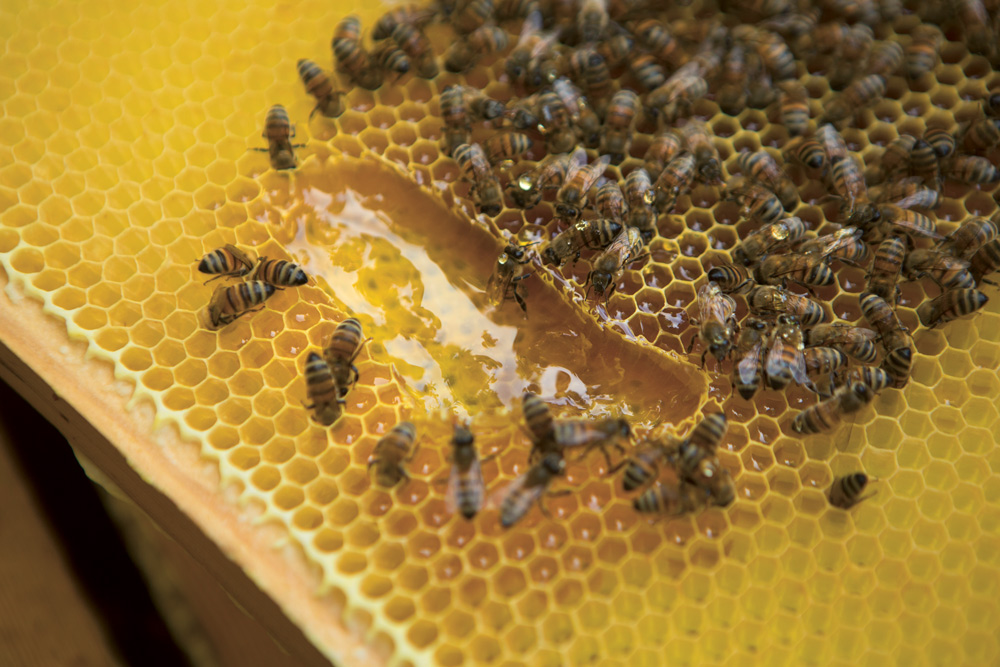

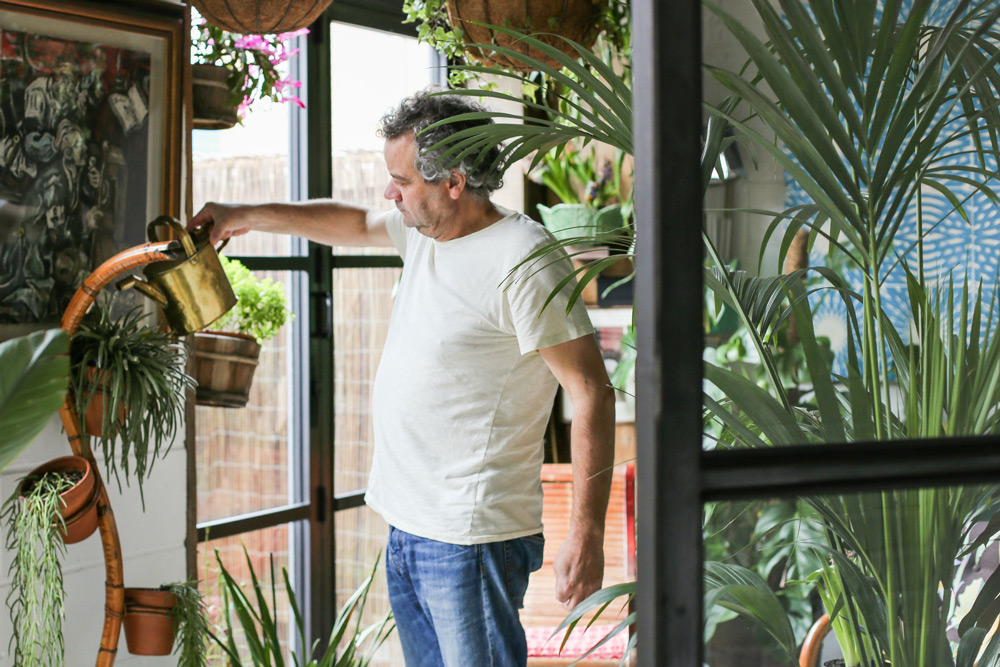


 From his south London home, the celebrated chef, restaurateur and food writer speaks to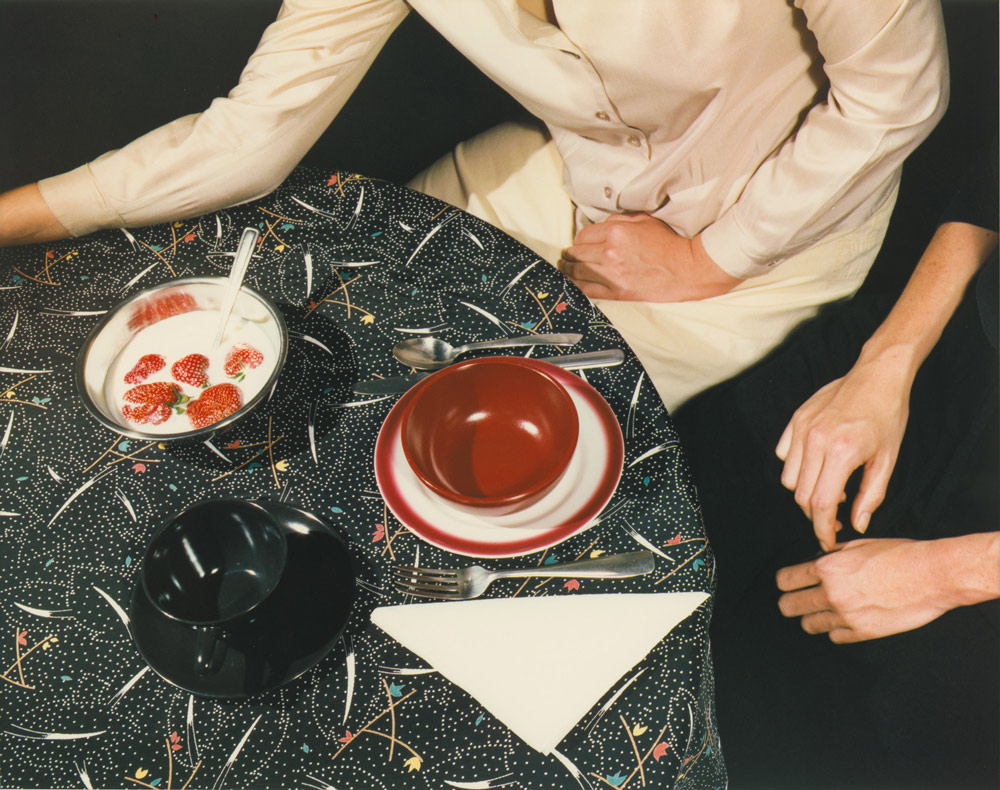
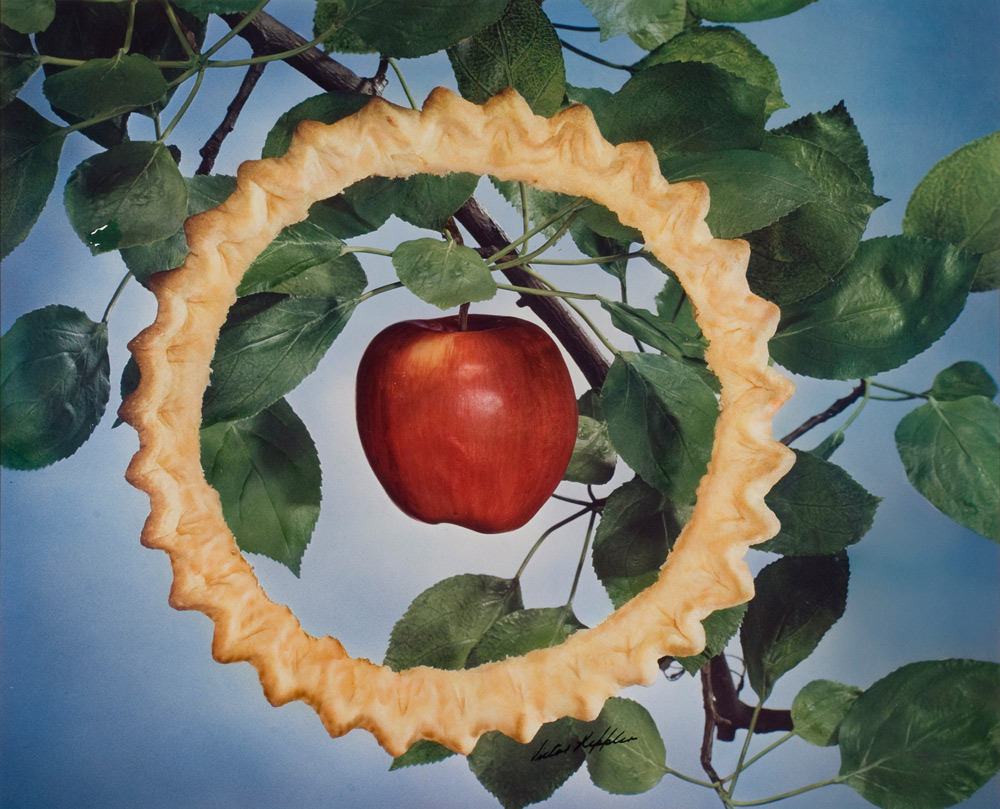 Victor Keppler, (General Mills advertising campaign—Apple Pyequick), 1947
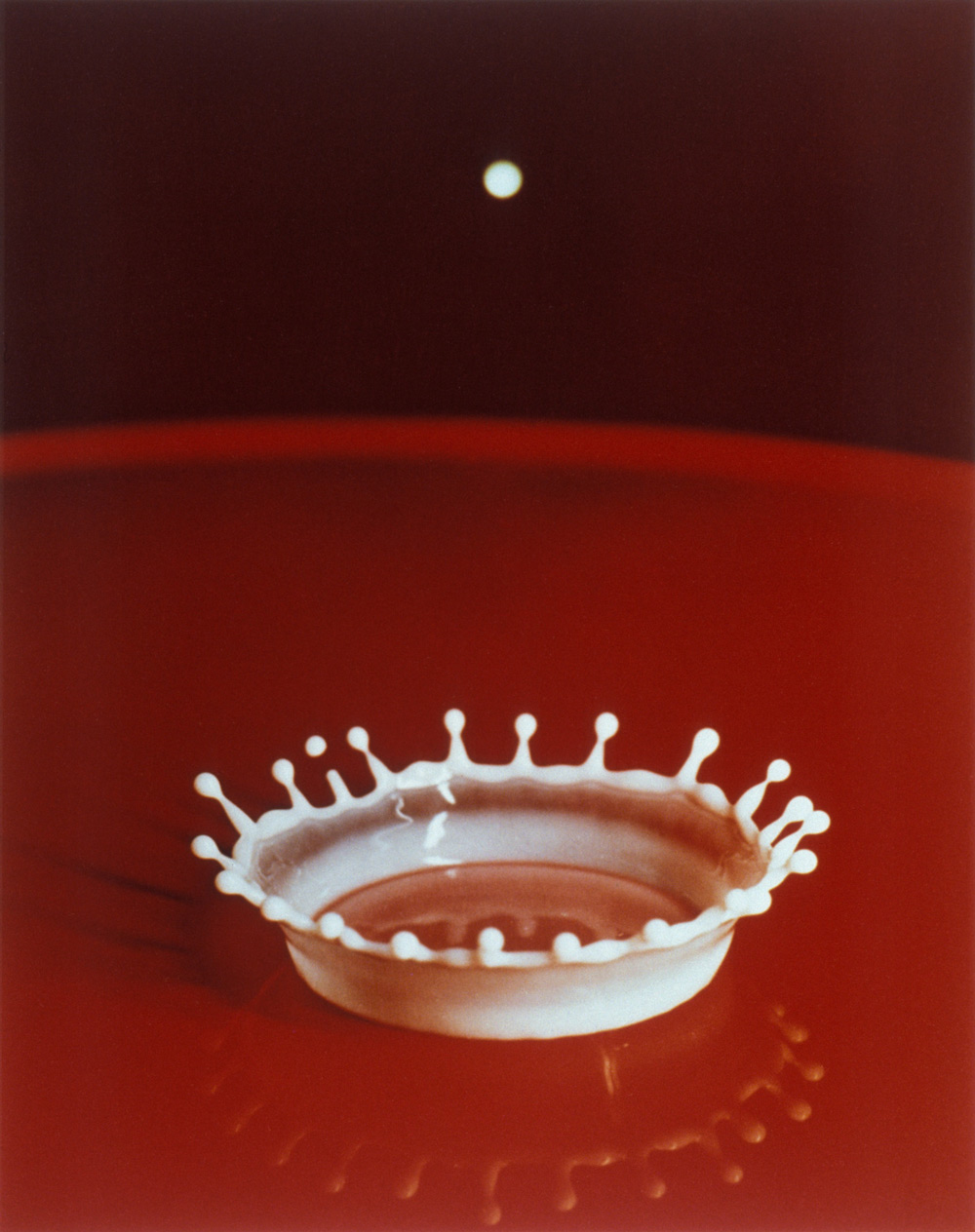 Harold Edgerton, Milk Drop Coronet, 1957