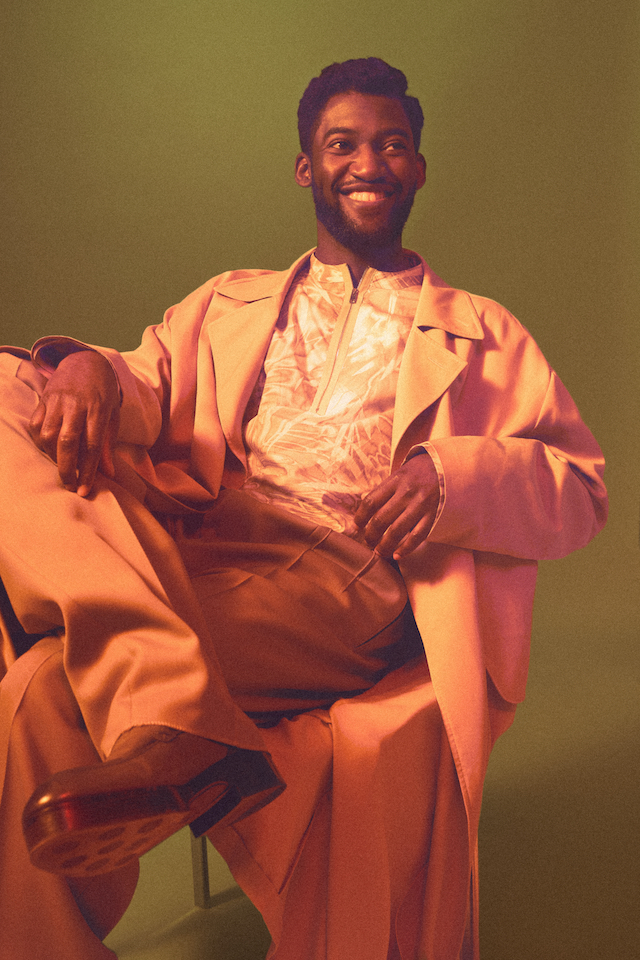
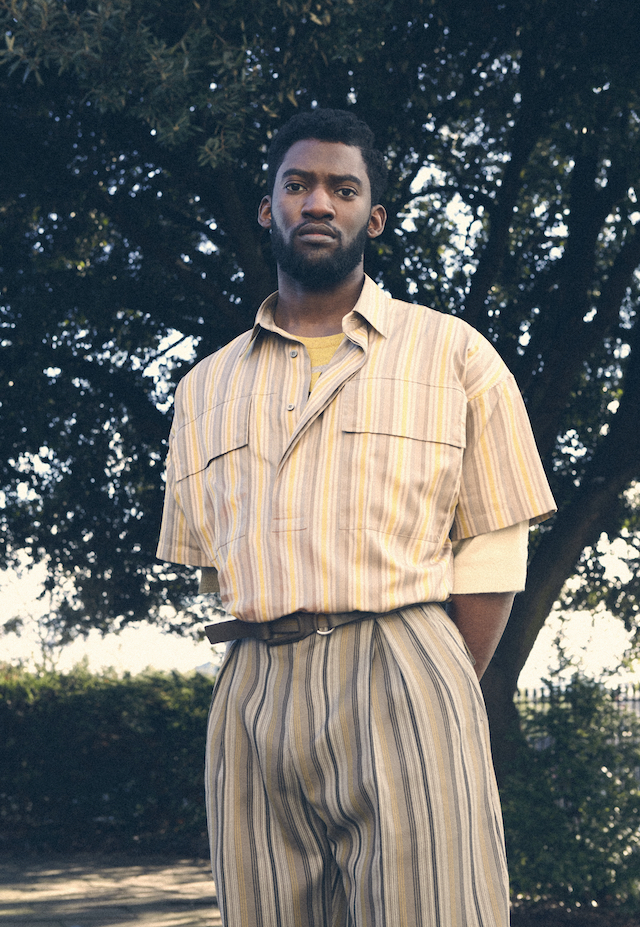
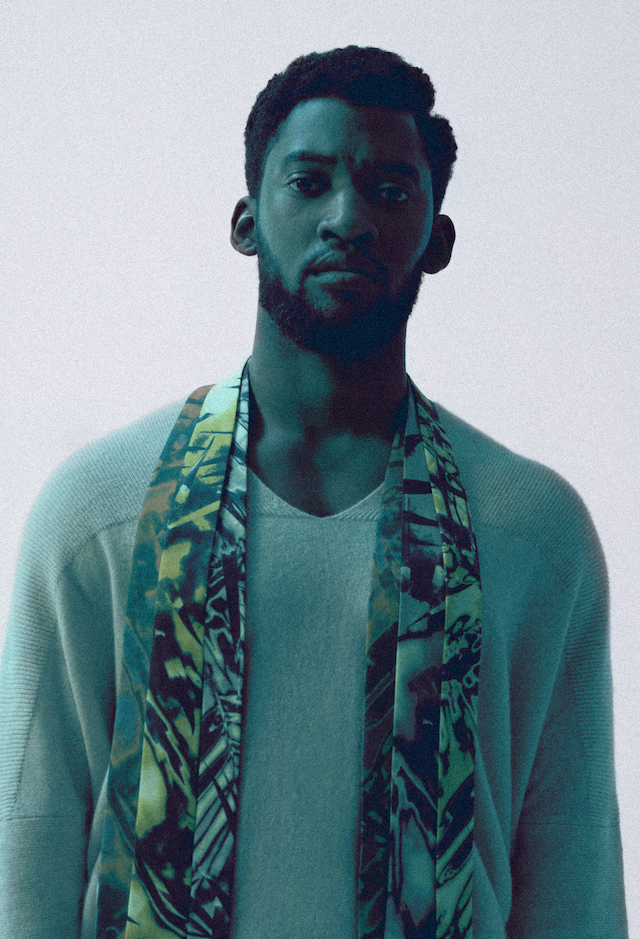
Photography Valentin Hennequin, styling Stuart Williamson
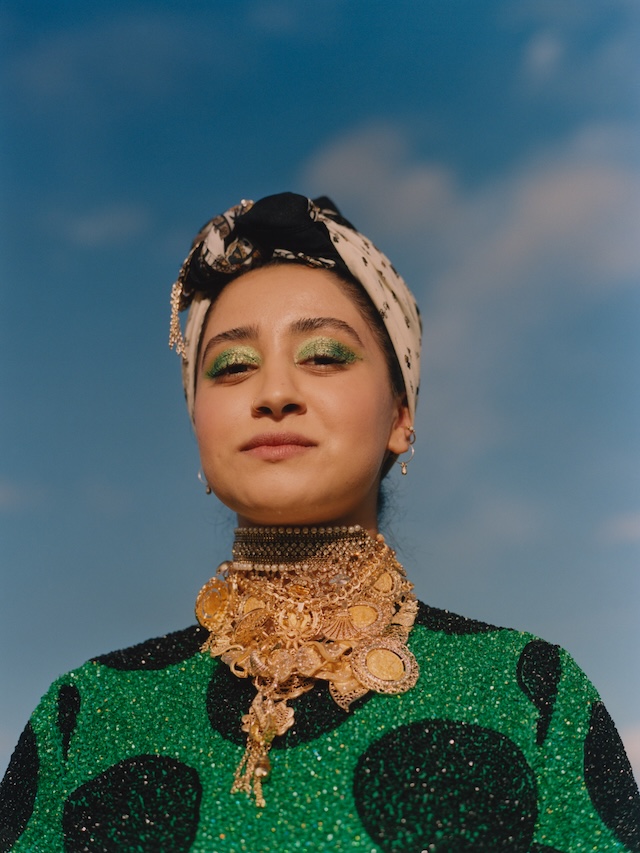
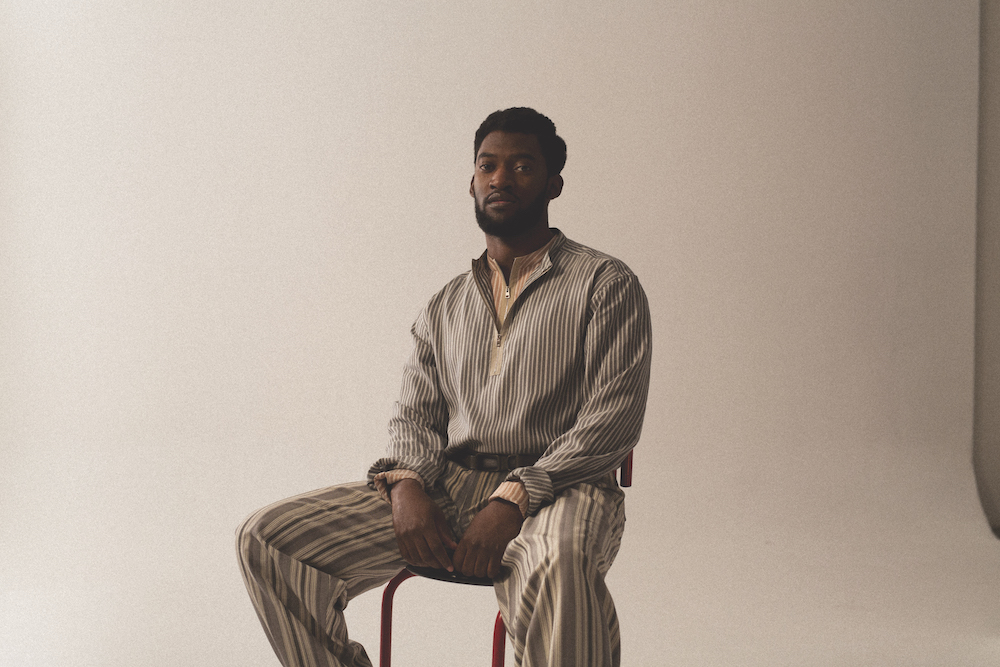
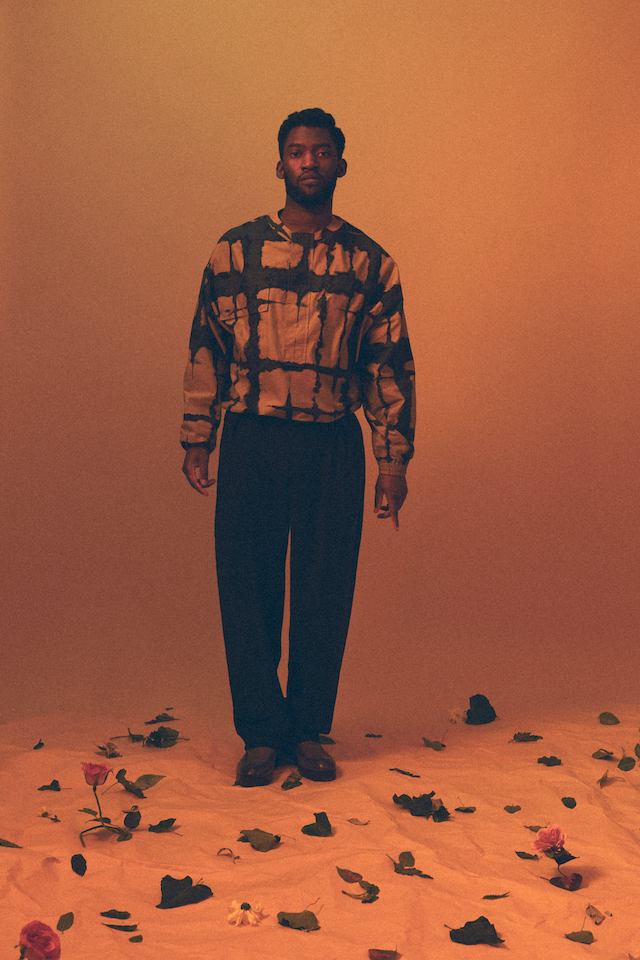
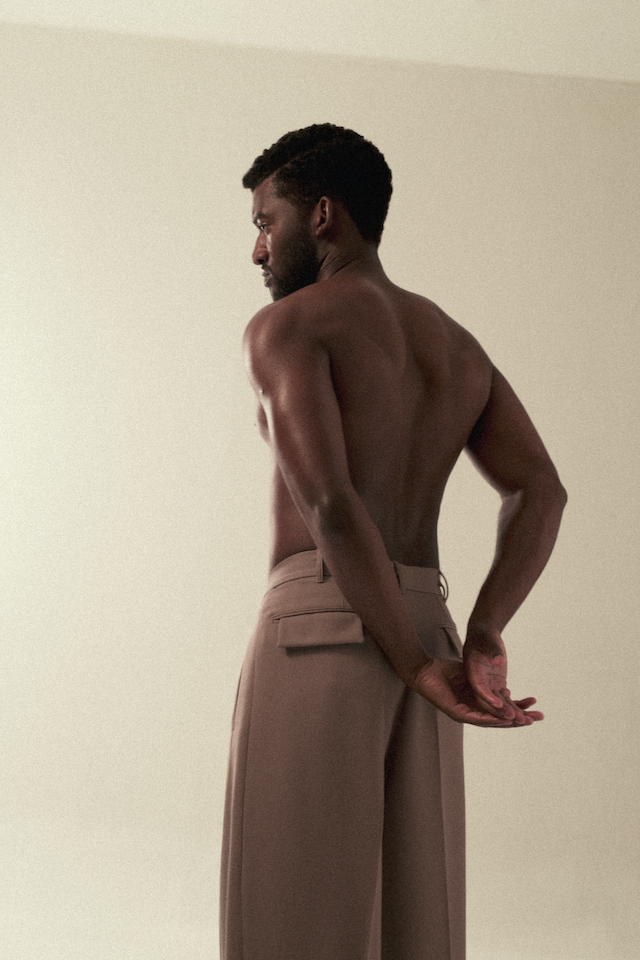
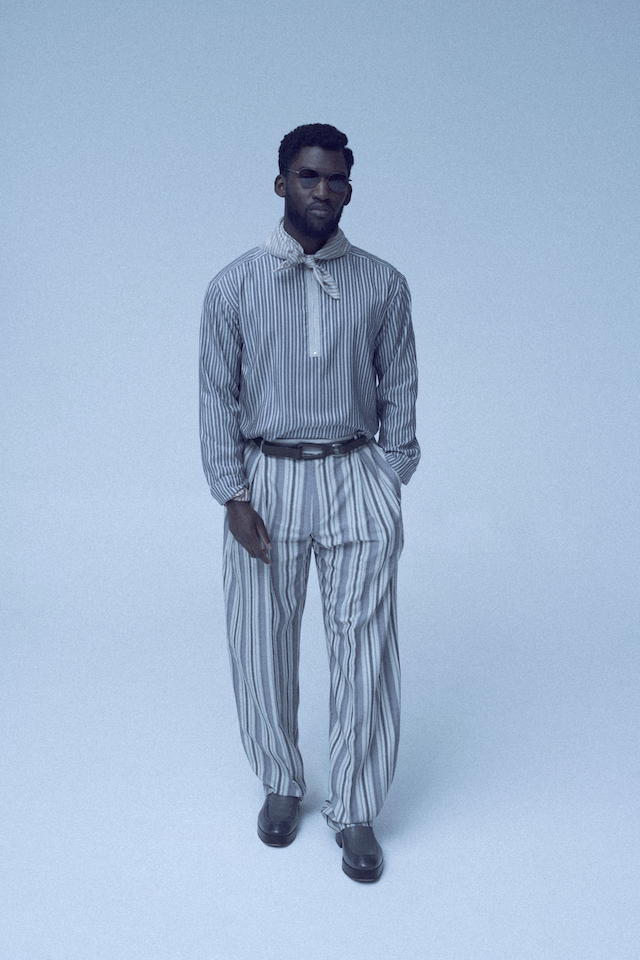
Sekou (left) Blazer THE VINTAGE SHOWROOM Shirt L.E.J. Tie CELINE Trousers CRAIG GREEN Socks LONDON SOCK CO Shoes CRAIG GREEN Adria (Right) Blazer FENDI Shirt FENDI Tie FENDI Trousers CRAIG GREEN Socks LONDON SOCK CO Shoes CRAIG GREENPolo GUCCI Shorts GUCCI Socks CORGI Shoes AMI PARISAdria (left) Knit PRADA Shorts PRADA Belt ALLEVOL FROM CLUTCH CAFE Shoes PRADA Sekou (right) Shirt PRADA Stripe Polo THE VINTAGE SHOWROOM Trousers PRADA Shoes PRADA Socks BRESCIANISekou (left) Jacket LOUIS VUITTON Shirt HERMÈS Trousers WALES BONNER Belt ANDERSON Adria (Right) Blazer LOUIS VUITTON Shirt COMMISSION Trousers COMMISSION Belt BELAFONTE RAGTIME CLOTHING FROM CLUTCH CAFEAdria (left) SAINT LAURENT BY ANTHONY VACCARELLO Sekou (Right) Hat LORO PIANA Coat LORO PIANA Blazer DUNHILL Shirt LARDINI Tie CELINE Trousers DUNHILLFull Look BOTTEGA VENETATop BALLY Vest BALLY Trousers BALLY Boots BALLY Belt CELINE Glasses BOTTEGA VENETASekou (left) Shirt COMME DES GARÇONS SHIRT Shorts MIU MIU Trousers HERMÈS Adria (Right) Full Look LOEWELayered Top CRAIG GREEN Top EMPORIO ARMANI Trousers FERRAGAMO Jacket FERRAGAMOAdria (left) Blazer CELINE Top DIOR Jeans THE VINTAGE SHOWROOM Sekou (right) Jacket MARTINE ROSE Polo CELINE Shirt CELINE Trousers CELINESekou (left) Outerwear Vest HERMÈS Vest L.E.J. Trousers WALES BONNER Adria (Right) Top DRIES VAN NOTENSekou (left) Blazer LARDINI Shirt LARDINI Trousers LARDINI Shoes JOHN LOBB Adria (Right) Blazer TOD’S Shirt LEMAIRE Trousers LEMAIRE Shoes FERRAGAMO
In Practice is a new series of conversations with artists and photographers, spotlighting what creatives are making and why – from personal histories to creative roadblocks, and the stories shaping their output today. In this first edition, photographer and director Vivek Vadoliya discusses identity, intimacy and inheritance in his most personal work to date
Vivek Vadoliya: & When the Seeds Fell
There are many reasons why a person might be drawn towards the medium of photography. It’s a powerful tool for documenting the world around you – to find meaning in this crazy world, to understand it better, and to showcase the variety of people and communities that live in it. For Vivek Vadoliya, a British Asian photographer and director based between London, New York and Mumbai, he picked up his camera as a way of reflecting his identity, a means of spotlighting the stories that are often untold. “Mainstream narratives often flatten or misrepresent people – especially people of colour or those from marginalised communities,” he says. “I’m interested in nuance, and showing people with complexity and care.”
Whether it’s a series on young Muslim women in Bradford, a project exploring brotherhood in the South Asian diaspora, or turning the camera inwards on his own family, Vadoliya moves with intention and has developed a visual language that’s rooted in softness and strength. His deliciously tonal imagery, oozing with colour and texture, has the ability to both reflect the warmth and vibrancy of India – “the sensory overload you experience walking through Indian streets”, as he puts it – as well as the narratives of those who are often overlooked in British society. You can almost feel the worn foam, the dust or wind in the air – but the images are also sharp in what they reveal. Identity as something constantly negotiated; masculinity in flux; home as an emotional, migratory space.
Vadoliya’s creative journey didn’t begin with a fixed sense of authorship. He studied photography at university but spent his early career producing branded content in an industry that sharpened his eye but left little room for vulnerability. Over time, a need for change surfaced. “I felt like I had something I wanted to say,” he explains. “And I realised that the camera gave me access to spaces and communities where I could ask questions.”
That curiosity and spirit flows through his first solo exhibition, & When the Seeds Fell, currently on view at 1014 Gallery in London. Curated by Jamie Allan Shaw, the work on show is Vadoliya’s most intimate to date, casting his own family in poetic reimaginings of classical portraiture. It examines generational care, the weight of tradition and the elasticity of cultural inheritance – how it stretches, morphs and settles between continents. “The show explores how home isn’t fixed,” he says, “it’s a moving construct, shaped by experience, migration, memory and feeling.”
But to frame Vadoliya’s practice solely through autobiography is to miss its larger reach. For years, he has been carving out a space for people, particularly those on the margins. He resists typecasting, both within his subjects and himself. “I want the freedom to connect with people outside of my immediate identity – because that’s where the most unexpected and meaningful conversations happen.”
In this conversation, Vadoliya reflects on the early parts of his practice, the challenges of navigating a creative industry that still lacks real access, and what it means to hold both the role of son and artist – with all the tension, responsibility and beauty that entails.
Vivek Vadoliya: & When the Seeds Fell
Can you tell me a bit about your background and how you first got into photography and film?
I studied photography at university, but after graduating I spent several years working as a producer in advertising and branded content. At that point, I didn’t have a clear idea of what I wanted to do with photography – I was experimenting. Around 2017–2018, I began to make more personal work, often centred around subjects I felt deeply connected to. I started photographing South Asian men and creating more documentary-style projects while I was living in Berlin. That’s when I realised I loved telling people’s stories through photography. The more I did it, the clearer it became that I wanted to transition fully into making work for myself. That’s when I became a full-time photographer.
What made you leave advertising and start focusing on your own creative work?
I felt like I had something I wanted to say – and I realised that the camera gave me access to spaces and communities where I could ask questions. That was something I’d done as a teenager, using photography to connect with people and understand the world around me. Over time, I found myself craving authenticity. Working on the brand side can sometimes distort your sense of reality, and I wanted to return to something more grounded and meaningful.
How have your Indian and British identities influenced your visual style and the stories you tell?
Tonally, my work is often warm, vibrant and colourful, which I think reflects my Indian heritage. The sensory overload you experience walking through Indian streets – the colours, textures and light – definitely shapes how I see. My British identity plays out more in the subject matter: I’m drawn to quieter, often overlooked narratives – people who live on the fringes. I’m interested in showing a more nuanced view of British identity, spotlighting stories that aren’t always told.
Vivek Vadoliya: & When the Seeds Fell
What draws you to both photography and film, and how do you decide which medium to use?
I’m drawn to both because they allow me to explore different forms of storytelling. Film gives you time and space to develop narrative, and I love the way it unfolds gradually. At the same time, photography lets me work in a more immediate, instinctual way – just me and the camera. Sometimes the story or subject calls for movement and audio; sometimes a still image says more. For me, they’re natural extensions of each other.
Your work often focuses on people and communities – how do you build trust with your subjects?
By being honest and having good conversations. For me, it always starts with listening. I show people my work, explain where I’m coming from, and build trust through connection. The image is often just the result of a meaningful exchange. What excites me most about photography is the relationship you form before the image is made.
Projects like Brotherhood, Sisterhood and Mallakhamb spotlight overlooked voices – why is that important to you?
Because I want to show the world as I see it. Mainstream narratives often flatten or misrepresent people – especially people of colour or those from marginalised communities.I’m interested in nuance, and showing people with complexity and care. Brotherhood explored the full spectrum of South Asian masculinity. Sisterhood was a joyful collaboration with young Muslim women in Bradford, celebrating their beauty and power. Bradford has often been portrayed negatively in the media, and this was about offering a different image – one rooted in pride and possibility.
Vivek Vadoliya: Sisterhood
Your new show, & When the Seeds Fell, feels very personal – what inspired this body of work?
It grew from a desire to understand my family more deeply. Around 2020, I was thinking a lot about structure – how we support each other as a family, what duty looks like and where identity fits into all that. At the same time, I was questioning what Britishness and Indianness meant to me, and how those ideas were shaped by both culture and history. The show explores how home isn’t fixed – it’s a moving construct, shaped by experience, migration, memory and feeling.
The show touches on themes like family, illness and care – how did you explore those visually?
Some of the images are constructed portraits that play with the aesthetics of home – soft furnishings, textiles and objects that hold emotional weight. There’s a portrait of my auntie wrapped in sculptural foam that reflects how we create protective spaces for ourselves, especially when home has been nomadic. Other images explore masculinity and tradition through visual contrasts, like two wrestlers dressed in modern sportswear and traditional attire, caught mid-struggle. There’s tension and delicacy in those poses: each man relies on the other to stay upright. I also recreated iconic art historical images, like Dorothea Lange’s Migrant Mother and Vermeer’s Woman Reading a Letter, with my own family members. These reinterpretations shift meaning, allowing me to centre my family within visual histories that haven’t always included us.
Vivek Vadoliya: & When the Seeds Fell
How has being both a son and an artist shaped the way you approached this new work?
Those roles are completely entangled. Being the eldest son comes with certain expectations, especially within more traditional frameworks. And being an artist requires a lot of vulnerability. With this project, I was carrying both: the responsibility to hold my family and the desire to express what that felt like. The work became a way to process, reflect and share things I couldn’t always say directly.
What are some challenges you’ve faced navigating the creative industry so far?
One challenge is how easily people get typecast in this industry. As an artist of colour, you’re often expected to make work only about your own community. While I love exploring those stories, I also want the freedom to connect with people outside of my immediate identity – because that’s where the most unexpected and meaningful conversations can happen. Access is another challenge. People from working-class backgrounds or communities of colour often don’t see themselves reflected in the creative industries, and that lack of visibility can make it feel impossible to find a way in. That’s changing slowly, but there’s still work to do.
Vivek Vadoliya: & When the Seeds Fell
You’ve spoken about redefining ideas of beauty and masculinity – how has that shaped your work?
I’m not sure I’m redefining them, but I’m trying to make space for different kinds of beauty to be seen. I love portraiture because it lets me show people with care. A big part of my work is about saying: this person is worthy of being looked at, of being celebrated. It’s about expanding the idea of who gets to be visible, desirable, powerful.
What advice would you give to younger artists trying to carve out their own path today?
Start by looking inward. Think about what you want to say and why it matters to you. That kind of clarity is magnetic – it draws people in. Don’t be afraid to fail. Experiment. Not every image has to be perfect. And most importantly: take your time. I used to rush through projects, and I’ve learned that slowing down lets the work breathe. It allows the meaning to shift as you grow.
What kind of conversations do you think we need more of in the creative world right now?
I’d love to see more openness. Right now, a lot of artists are only commissioned to document their own communities. That has value, but it can also be limiting. I think we need more bravery – more artists exploring stories that sit outside their own immediate experience, and more trust from commissioners to support that. There are so many unexpected, beautiful ways people can connect across differences. I want to see more of that.
Escale, the once experimental face of Louis Vuitton’s horological output, has been reimagined as a simple three-hander. But that doesn’t mean it’s lost the ability to astound
Photography Ivona Chrzastek, featuring Louis Vuitton’s Escale
There are few brands, apart from Chanel maybe, who have parlanced their iconography as well as Louis Vuitton. From the Monogram – which was invented in 1896 by George to pay tribute to his recently deceased father Louis and inspired by earthenware kitchen tiles in the family home in Asnières-sur-Seine – to the markedly different Stephen Sprouse graffiti that dominated the early aughts, they are all instantly recognisable as Vuitton.
When, in 2002, Louis Vuitton decided to make a foray into watches, it went back to the maison’s codes to influence the design. The first Tambour – French for “drum” – had a dial in the same shade of chocolate brown associated with its luggage and handbags. Hammering home the connection, the seconds hand and those on the counters at 12 and six o’clock were in the same shade of yellow as their stitching. The brand repeated the approach 12 years later when it unveiled the Escale Worldtime. This dial was a riot of colour, with each of the city markers represented by pictograms and emblems used on vintage Louis Vuitton trunks. Emblems that had also been hand painted; something made possible by Louis Vuitton’s acquisition, in 2012, of specialist dial workshop Léman Cadran. The previous year, in a bid to boost its horological savoir faire, it had also taken into its fold complex-watchmaking company La Fabrique du Temps. Now Louis Vuitton had at its fingertips the know-how of Michel Navas and Enrico Barbasini – men who had spent time working on haute complications at Audemars Piguet and Patek Philippe and who had previously set up BNB Concepts – a kind of skunk works out of which came such mechanical marvels as the Concord C1 Quantum Gravity with its aerial bi-axial tourbillon. And Louis Vuitton certainly used that knowledge to its advantage. The Escale became its watchmakers’ playground. They combined its Spin Time complication, where time is told using spinning blocks in the hour marker positions, with a tourbillon, and added a minute repeater to the World Time. With the Escale, experimentation was the name of the game. In its 10 years, it was never time only. Until now.
You could argue that, given how Louis Vuitton has been positioning itself in the last couple of years, this new streamlined Escale was inevitable. Gone are the fireworks and in their place is refinement as illustrated by the re-imagined Tambour of 2023 – a beautifully proportioned, elegant sports watch where delight is found in every detail, from a dial with three different finishes to the brand-new movement. Named the LFT023, it is a masterclass in movement making – unsurprising seeing as it was developed in collaboration with Le Cercle des Horlogers, a workshop that specialises in “extensively personalised” movements. This movement is also in the new Escale.
Paris HQ has said that this new Escale is part of an elevation, one that brings an added dimension to the collection’s earlier scope of complicated timepieces; one that introduces a profundity in design approach and reinforces the integration of the maison’s heritage and values within the fine watchmaking collection. That integration is so wonderfully subtle, it’s like a 39mm luxury game of Where’s Wally? – except here you’re trying to spot all the little nods to Louis Vuitton’s history.
Louis Vuitton Escale in pink gold – £25,400
The easiest thing to notice is the central disc, which has been given a grainé finish to evoke the grained surfaces of its Monogram canvas. A custom dial stamp was made to create this effect, refined over several material trials before the exact texture was achieved. The minutiae draw the attention next. Dotted around this beautifully brushed, subtly concaved track are 60 tiny gold studs reminiscent of the nails of the lozine, or leather trim, that run along the exterior of a Louis Vuitton trunk.The hand-applied quarter hours are made to resemble the brass brackets on the corners of the trunk, while the crown looks like its rivets. Even the shape of the hour and minute hands, finely tapered needles, are intended to pay tribute to the myriad artisans, all experts in traditional métiers d’art, that have made the maison what it is today. The platinum versions with their meteorite dials, or inky black onyx with a surround of sparkling baguette diamonds showcase the maison’s skills in gem-setting and lapidary. Then there’s the technical things that maybe you don’t see. The seconds hand is shaped to follow the curve of the dial to minimise the possibility of a parallax error. This is a misreading that occurs when an object is viewed from an angle, causing it to appear in a different position to its actual one, like looking at a water level through glass. That same seconds hand appears gold but is actually PVD-treated titanium, chosen for its lightness to improve precision and energy efficiency. Louis Vuitton may have dispensed with obvious signs of R&D budget spend but its new era feels like good cashmere. It doesn’t telegraph how much it costs, but if you know, you know.
Louis Vuitton Escale in pink gold – £25,400
Louis Vuitton Tambour in steel and pink gold – £26,400
Hoodie GUCCI Blouson MARGARET HOWELL Rollneck ISSEY MIYAKE Trousers GUCCI Gloves EMPORIO ARMANIDiorPuffer coat PAUL SMITH Long coat PAUL SMITH Shirt BRUNELLO CUCINELLI Tie PAUL SMITH Socks PRADA Trainers CELINESuit SAINT LAURENT BY ANTHONY VACCARELLO Shirt SAINT LAURENT BY ANTHONY VACCARELLO Tie SAINT LAURENT BY ANTHONY VACCARELLO Coat BRIONICANALIFendiCoat LARDINI Jacket LARDINI Trousers LARDINI Socks ADIDAS Trainers NEW BALANCETrousers CP COMPANY Socks PRADA Socks ADIDAS Shoes TODSCoat WOOYOUNGMI Jacket MARGARET HOWELL Rollneck DOLCE & GABBANA Trousers STUDIO NICHOLSON Boots CELINE Gloves ZEGNAGIORGIO ARMANIDUNHILLAnorak HERMES Knit HERMES Shorts AMI PARIS Leggings REEBOK Hat HERMES Shoes JOHN LOBB
Switzerland’s latest craze places watchmakers in the literal limelight
Panerai’s Submersible Elux LAB-ID, £75,800
From dials to dial markings and even entire watch cases, luminescence is getting glowing reviews in the darkest corners of Switzerland. And it’s thanks to some nigh-on alchemical experimentation that the mechanics ticking inside seem pedestrian.
Bell & Ross’s BR-X5 Green Lum kicked off last year with its photoluminescent polymer-composite case – now mastered in blue for 2024. Still to be commercialised, IWC used Lewis Hamilton’s appearance at the Monaco Grand Prix to unveil a pilot’s chronograph whose ceramic case was fully luminous; while Richemont Group label-mate Panerai put on a light show at Geneva’s Watches & Wonders showcase with its lumed-up Elux Lab-ID, co-opting naval technology first used for WWII signalling lights.
“Even though luminous components seem to be the flavour of the week, I don’t think it’s fair to say that this is anything new in watchmaking en masse,” notes James Thompson, chief of materials at Scandi indie brand Arcanaut who, under his pseudonym Black Badger, was one of the original lume experimenters. “The cool thing about the bigger brands getting to grips with this stuff is how deep their pockets are when it comes to research and development.”
“Luminescence was originally used during WWI to improve legibility,” says Albert Zeller, CEO of RC Tritec. His father, along with Japanese company Nemoto & Co, developed phosphorescent strontium-aluminate-based ‘Luminova’, followed by the industry-standard ‘SuperLuminova’ in the 1980s, getting around the health issues that came with radium- and tritium-painted dial markings used previously.
Unlike fluorescent materials, phosphorescent materials continue to glow when the source of energy fades. Electrons are ‘excited’ from their usual orbit around an atom, trapped in this state, then slowly decay back to their former state by releasing energy, which we perceive as a glow.
Whatever’s in the water, what’s worth celebrating the most is lume’s emergence as an overlooked watchmaking skill in its own right: up there with dials, polishing and gearwork. As Thompson says, “shining a light on things that glow is, after all, always a good idea.”
Panerai’s Submersible Elux LAB-ID, £75,800. Amazingly, the electric current is carried around the Elux’s bezel as you rotate it, thanks to embedded contacts
Rather than lume paint, which has historically glowed through the Florentine military brand’s stencilled-out ‘sandwich’ dials since the 1930s, a button on Panerai’s new Submersible Elux LAB-ID lights up several miniature LEDs beneath the indices, bezel and even the minutes hand on demand. No battery, but rather four spring barrels wound by the timekeeping movement’s usual automatic rotor. Unbraked, a geartrain spins six copper coils within a microgenerator, harnessing Faraday’s law of electromotive induction to deploy a dynamo-driven electric current. Unsurprisingly, it’s the result of eight full years of R&D. And surely something Guido Panerai himself would be proud of. Especially since this dynamo principle draws directly from his early, on-deck landing-pad lighting technology for the Italian Navy, from which Elux takes its name.
10:10 Issue 11 is included with Port Issue 35. To continue reading, order your copy or subscribe here
With star turns in the mini-series Roots, Black Mirror and most recently Steve McQueen’s powerful Small Axe anthology, the issue 28 cover star and London-born actor talks to Jason Okundaye about vulnerability, shunning social media and the joy of sharing Black British Caribbean history
Kirby wears Zegna SS21 throughout
Malachi Kirby has the sage demeanour of an older brother. He feels at once charming and close, but with the evident amour propre and stature that doesn’t permit overfamiliarity or a disrespect of boundaries. Perhaps I say this because, within the opening minute of our two-hour conversation on Zoom, we realise that we had grown up in neighbouring buildings on the same estate in Battersea – the Patmore. “Oh, behave yourself – no one else lived in Patmore!” he says. We become engrossed with describing the architecture of the estate, its adventure playground, and gesticulating to each other as if our hands could beget a holographic map of its geography. As Kirby remarks to me, “This is a special one.” And when I listen back to the recording of our chat, I realise that we are both, at brief moments, notwithstanding his attentive and softened parlance, caught in a storm of each other’s memories, and speaking at breakneck speed.
The relative seclusion and anonymity of growing up on the Patmore – its neighbouring estates in Battersea, like the Doddington and the Winstanley, are more famous – to me, frames the actor’s modesty in the face of his own success. Standout performances in 2016 as Kunta Kinte in the heart-breaking miniseries, Roots, about slavery as America’s original sin, closely followed by his role as the vulnerable soldier, Stripe, who hunts humanoid monsters in the Black Mirror episode ‘Men Against Fire’, have brought him firmly into the limelight. But he admits that fame is not something he relishes, and that as a child, whose primary passion was for words and literature, acting wasn’t even on his radar: “It wasn’t something that I thought was accessible. And even if it was accessible, it wasn’t something I had any interest in. The spotlight for me was somewhere that felt unsafe.”
When he reached year nine of secondary school, his mother brought home a leaflet for a short drama course at Battersea Arts Centre, which remained on their table for a year until he decided to take it up. He describes the course there as life changing, and, like dipping a toe into a bathtub to test the heat of the water, he gradually acclimatised to the space, splendidly populated by total strangers, and eventually felt able to act and perform with freedom. It was at a showcase for friends and family that he received local acclaim. “At the end, someone’s parents came up to me and said I was good. And they didn’t have any reason to say that; it was just kindness,” he tells me. “But it encouraged me. I didn’t go, ‘Okay, I want to be an actor now’, but there was definitely a thrill of, like, ‘Wow, I was just on stage and people watched me and I had everyone’s attention, but I didn’t feel in danger. Okay, maybe this isn’t so bad.’”
This local success found Kirby admitted to Identity School of Acting in late 2007, where he befriended the actress Letitia Wright, who enrolled in 2009. “As soon as she came in the room, I adopted her as my little sister, whether she knew that at the time I don’t know. And I’m having to get to grips with the fact that she’s not so little anymore.” These two titans of Black British acting co-star in Steve McQueen’s Small Axe-anthology film Mangrove, and he recalls auditioning for his role as Darcus Howe in Letitia’s house with a friend, unknowing that she had already been cast in the part of Altheia Jones-LeCointe: “We were recording an audition tape, and she overheard us and said ‘Hey, what are you auditioning for?’, and I replied ‘I can’t really speak about it.’ Anyway, we kept going and she was like, ‘I know what you’re doing; that’s Mangrove!’ I said ‘How do you know?’ She’s like ‘I’m in it, bro!’”
Knowing that he would be starring alongside one of his closest friends amplified the joy in getting the role. But he tells me that his biggest fear for performing as Darcus Howe was mastering the Trinidadian accent, a prospect he had dreaded his entire career. “Prior to this there were two accents that I just thought I was never ever gonna touch. It was Australian and Trinidadian, specifically. I just thought, people are gonna get offended.” However, he describes learning to speak like Howe as one of the most thrilling parts of the role, crediting his voice coach with imbuing him with the confidence to nail it. And so it transformed from a fear to an honour, “To be able to tap into that and enjoy the rhythm of that, and the musicality of his voice, was like eating apple pie.” He emphasises that it shouldn’t be assumed that he could master a Trinidadian accent on the basis of his Jamaican heritage, noting the complexity of the dialect. “A Trinidadian accent is not just Trinidadian; it’s so full of all of these different cultures, and all of these different places in the world, infused into this one voice.” The process of becoming Howe was intensive, and with just three weeks to prepare, he immersed himself in his biography, newspaper articles and old video tapes, noting his luck that Howe was perhaps the most widely and accessibly documented character of the film. He comfortably admits to me that he had been unaware of Howe’s history or that of the Black Panther movement, but rather than responding to this with guilt, he embraced the belated education he was receiving and developed a newfound appreciation of Black British organising. He was particularly impressed to learn that Howe had represented himself in court, something he did not even know was possible. “There was a weight for sure of, I’ve got a lot to catch up on… and not just for my sake, but also because of, I believe, the work that we need to do to progress and move forward.” Before filming, the actor met with Darcus’s son, Darcus Beese Jr, initially intending to “pick his brains” about his father, but instead resolving that his family’s blessing would be enough to inspire his performance.
It’s clear enough that Kirby has a deep appreciation for craft and artistry. He says that from his audition he knew Steve McQueen would stretch him “as an actor, as a human, as Malachi, and as an artist. And that was terrifying.” The vulnerability he felt, though, was soothed by McQueen’s love. “He has a really big heart; he cares, and he is passionate about what he does. I began to realise that he was going to create a safe space for me to be vulnerable.” Indeed, it’s this symbiosis between deep craft and curating spaces for comfort and safety that also defines his perception of his mother, whom he lives with, and whose cooking he celebrates as a kind of artistry. When I ask him his favourite home-cooked meal, he simply says: “Everything. Everything. If she cooked cereal, it would be beautiful; there’s just a way that she makes food that I love.” Kirby has been close to his mother, living with her only since his father passed when he was six years old. As such, despite this early tragedy, he describes his childhood on Patmore Estate as happy: “I always remember it being sunny. My primary school was literally a two minute walk from my house. And I just have really beautiful memories. I have an incredible mum, and there was always a lot of love at home.” In fact, the most special part of performing in the Small Axe anthology for him was being able to share these stories of Black British Caribbean history with his Jamaican mother and grandmother. It was also an important moment for Kirby, as this was the first time he had embodied a Black Caribbean character, as opposed to previous portrayals as African Americans, Africans, or ethnically unspecific Black British people. “We made the decision to go around to my grandma’s every Sunday to watch each episode. And it was so beautiful.” When I ask him his favourite film of the series, other than Mangrove, he immediately replies Lovers Rock, “because for me it was the most familiar. Before I even knew what it was about – as soon as you hear Lovers Rock, memories come flooding in; there was a nostalgia to it. And also the experience of watching that with my family, and them witnessing and remembering the silly games and dancing and singing. It was a whole experience.”
Kirby prefers privacy over the public sphere, so his social-media presence is minimal. We laugh when I note that he follows no one on Instagram, and so is clearly uninterested in what anyone has to post. As an actor he is often met with confusion at his disinterest in social media, but as safety and reclusion are motifs which define him, he’s in no rush to tie his career to it. Though, he’s not against distributing a few follow backs in the future: “I’ve just got this thing about social media where I think, am I being naive? Am I being stubborn? Is this insecurity? Is it against my sense of morality, or is it just not for me? I’m waiting for some kind of clarity, to just either run into it or run away from it.” I’m scrolling through his Instagram at this point, flashing photographs from his various shoots and editorials to him, half teasing, half curious. He tells me that although he’s still grappling with having his picture taken, he feels most comfortable on editorial shoots where he gets to go into acting mode, “I enjoy the ones where I’m not actually being myself… it feels a bit more like a character. Those are the ones I enjoy the most, because I feel the most safe.”
Both the near and distant future will see Kirby exploring his first love, writing. His debut play was meant to premiere at the Bush Theatre in May 2020, but was a casualty of the COVID-19 pandemic, though he hopes that he’ll have a full audience once theatres are able to open again. Before he had even written this play, however, he had been working on a few film projects that he remains excited and hopeful about. He gives little away about the scope and content of his written projects: “They’re not ready! They’re not ready! Genuinely, I don’t know if I’m ready to have this conversation, but I will say that they are all stories that are close to my heart, the play especially.” As for influences in theatre and storytelling, he cites theatre writer Arinzé Kene. “In terms of scripts, I think he was the first writer that I really resonated with in terms of theatre. The poeticism of his language. And I find him very inspiring, especially because he comes from a background similar to mine.” A play that he finds himself constantly returning to whenever it is on stage is Joe Penhall’s Blue/Orange, “I think that play has always just stuck with me. I remember seeing it at the Arcola Theatre in Hackney with an actress called Ayesha Antoine starring in it, and then a second time at the Young Vic with Daniel Kaluuya. Whenever I hear Blue/Orange, I just get excited. But also, on a personal note, my two favourite colours are blue and orange. I’ve come to describe them as two different sides of me. A really deep blue, and a really vibrant orange.”
Depth and vibrancy certainly define Malachi Kirby for me. His kind face, and his relaxed disposition, remind me of the gentle smile and brotherly nods of elder boys on the estate that we shared. Perhaps I, or my brothers, saw him at points, even briefly knew him, even if we didn’t remember now. When our conversation ends, he asks me about Battersea, noting that he left the area at 15 but frequents Clapham Junction. I tell him that the area has changed beyond recognition, the forces of gentrification having displaced many residents and jarred the landscape with the kind of plastic architecture that has the Nine Elms quarter being nicknamed locally as ‘English Dubai’. I ask that he come and visit the Patmore Estate and see Battersea again, promising to send him a recent Guardian article about developments in the area, and he keenly accepts both the invitation and the article link, clearly retaining some emotional concern and connection with the home we both once shared. And hopefully, one day, these two Battersea boys will share space again.
Produced in collaboration with Zegna around its #WHATMAKESAMAN campaign, a communication platform that explores the uniqueness of the stories and experiences of the modern man
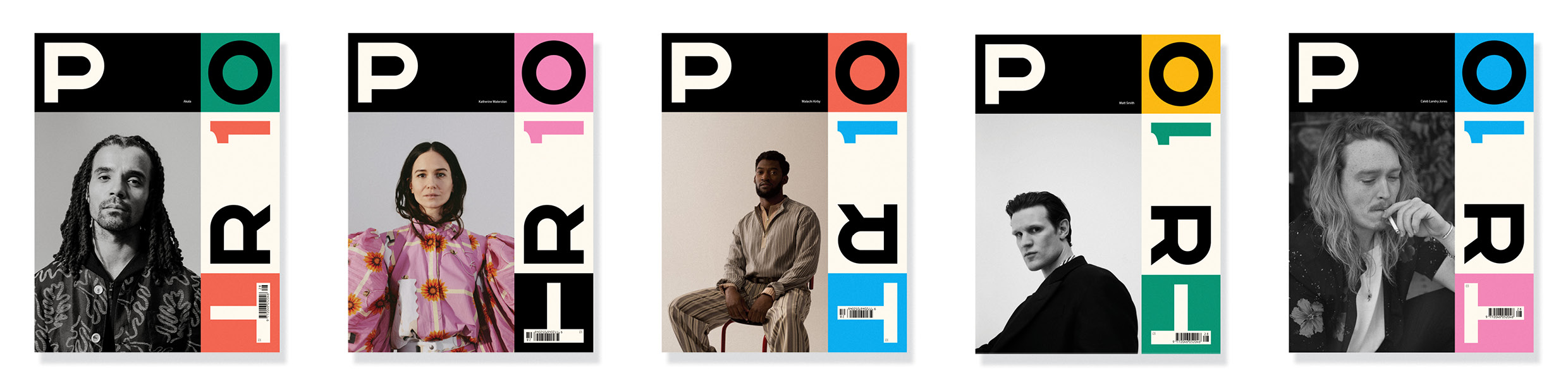
The Autumn/Winter issue of Port – featuring actor Vincent Cassel, Fergus Henderson in the kitchen, and abandoned military infrastructure on the Sussex coast – is available to pre-order now
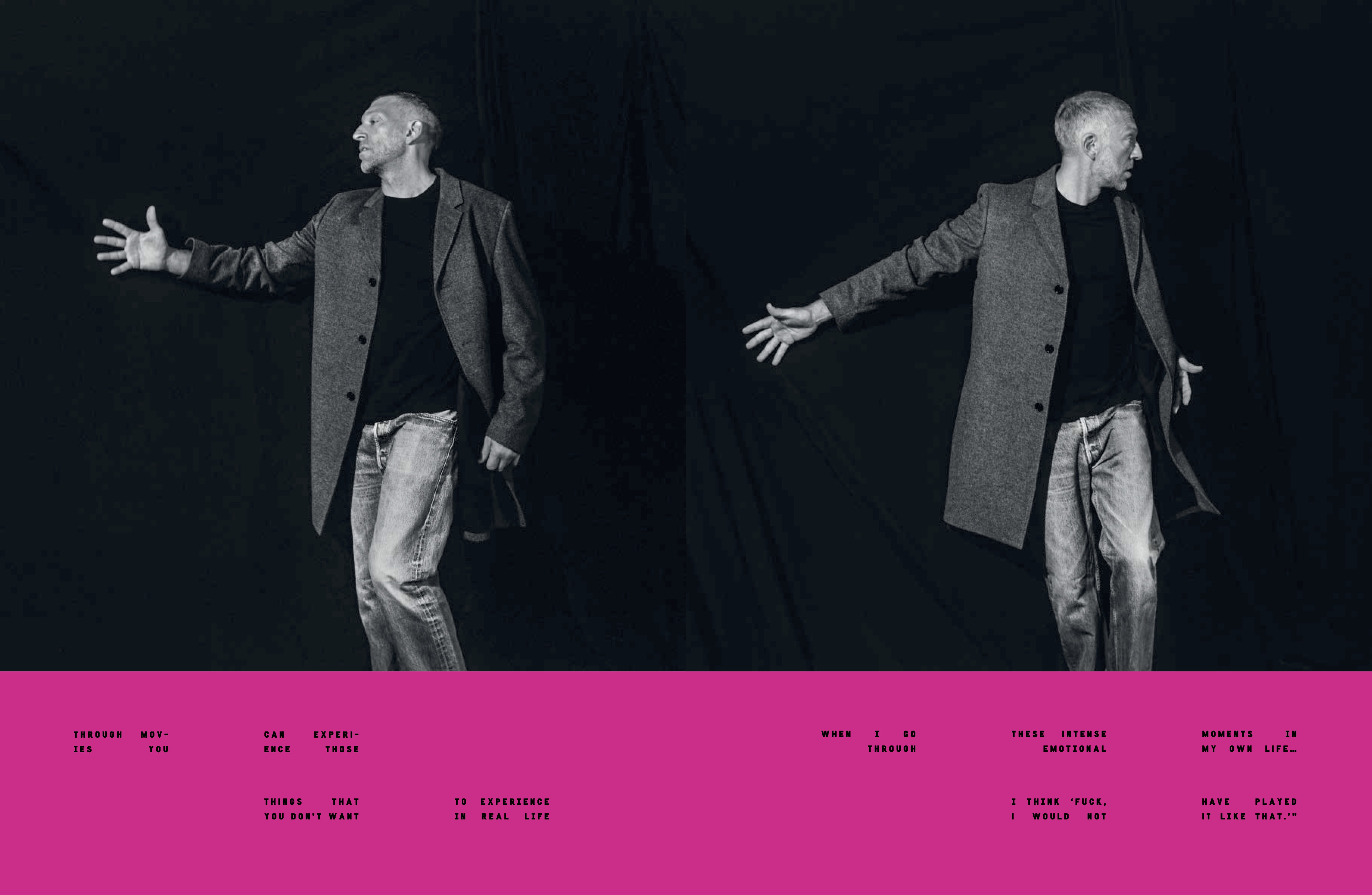
Actor Vincent Cassel, star of arthouse and multiplex alike, is one of the most distinctive and compelling talents working in cinema now. In a career spanning twenty-five years and counting, he has carved out a niche playing complex, troubled and often sensuous characters in critically acclaimed films such as La Haineand Irreversible, alongside box-office hits including Jason Bourne. Having helped to regalvanise French cinema in the long shadow of the nouvelle vague, and after taking Brazil as an adoptive home, he talks to Port’s George Upton in Paris for the cover story of issue 23 about the journey to where he is today, and the joie de vivre he has found in and outside of his work on the way.
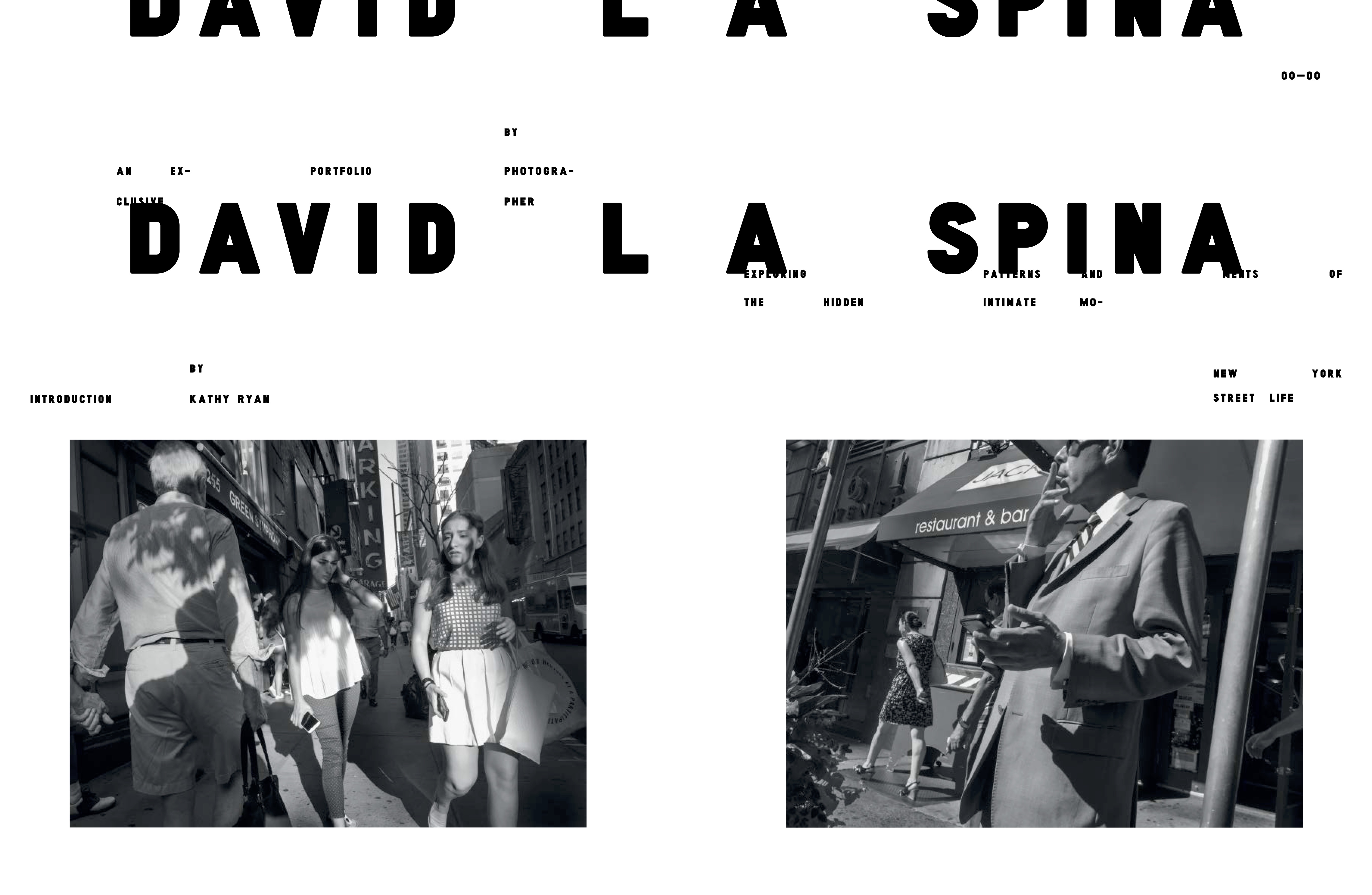
Elsewhere, photographer David La Spinacaptures street life in New York City in an extraordinary exclusive portfolio, introduced by the New York Times Magazine’s Kathy Ryan; 200 years of expertise in saddlery and showmanship is put to the test at the Saut Hermès, Paris; Christopher Turnerprofiles the godfather of modern Italian design, Gio Pontiand photographer Tobias Harvey explores the forgotten secrets of military history, hidden in plain sight on the Suffolk coastline.
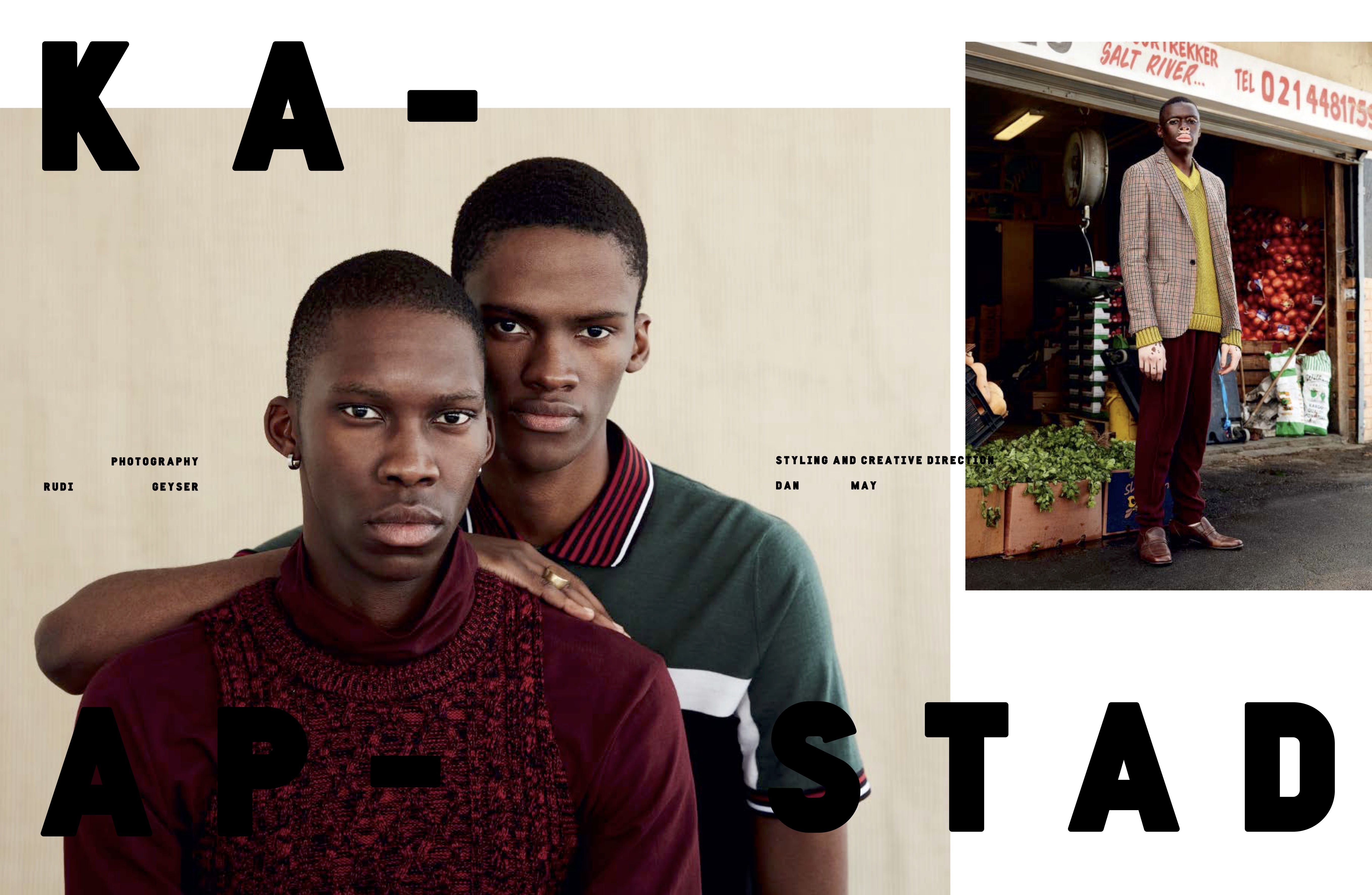
Fashion director Dan Mayand photographer Rudi Geyserbring an extended fashion story from Cape Town, South Africa; Rose Fordestyles new season Manolo Blahnik, plus a photo story from Düsseldorf, 1984 and Scott Stephensoncurates the new season collections.
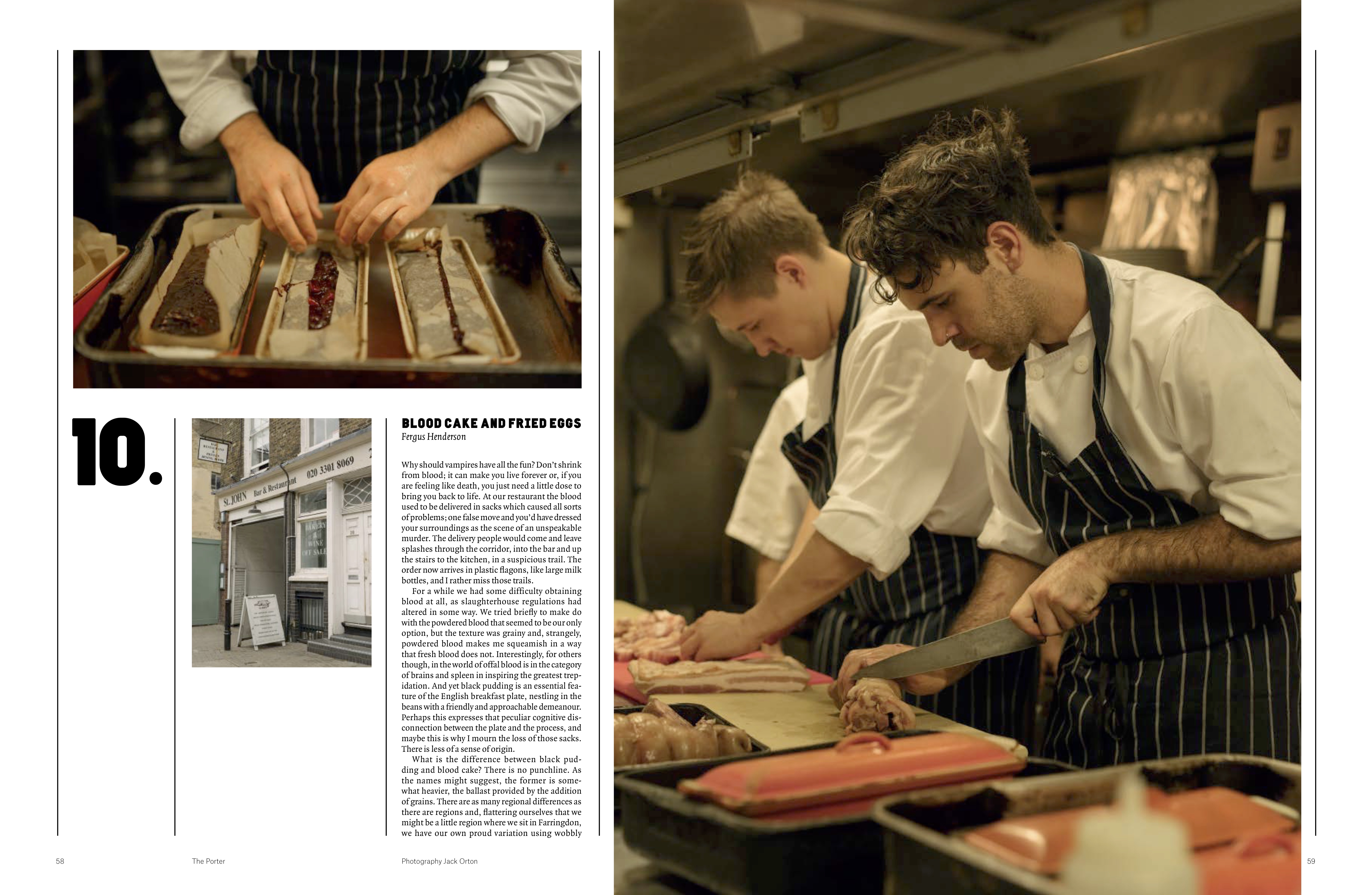
Commentary comes courtesy of Steve Martin, Will Ashonand Don Morrison, alongside an exploration in translation in which Zadie Smith, Ma Jianand Tash Awtranslate Giuseppe Pontiggia. In The Porter, Fergus Hendersoncooks a warming autumnal blood lunch, Konstantin Grcicremembers an unlikely style icon in Joseph Beuys, Carlotta de Bevilacquatalks light inspiration and Michel Roux Jrcelebrates the humble table crumber.
Please note, orders will be sent out from 19th October, when the magazine goes on sale
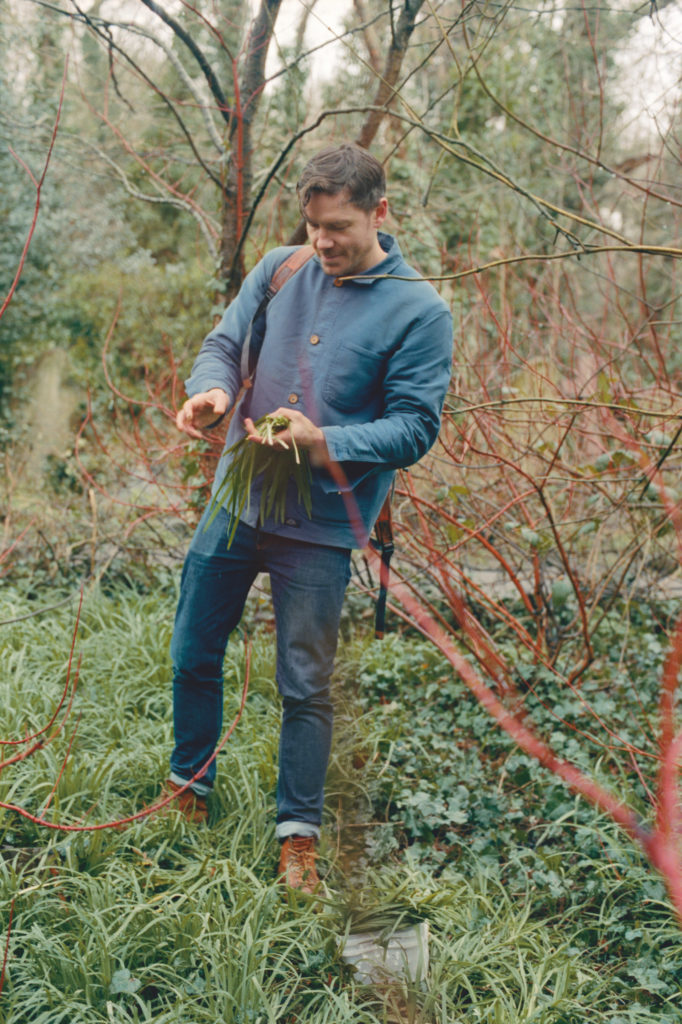
Nicholas Balfe, the founder and head chef of Salon in Brixton, takes Port through a recipe of a foraged herb salad and poached duck egg
Foraging has shot to prominence in recent years with the rise of chefs exploring ancient techniques, ingredients and flavours in their food – but using wild food in cooking is nothing new.
I was introduced to the idea of using wild ingredients by my mum and grandma when I was young. I have vivid memories of picking elder flowers in Dorset and cooking them up in fritters, dusted in icing sugar and served with thick clotted cream.
When I began cooking professionally in my mid-20s, some of the chefs I came into contact with were already using foraged ingredients in their dishes. Back in 2007, the idea of pairing mussels with sea purslane, or pork with fennel pollen and wild herbs seemed mind-bogglingly exotic, yet inherently native at the same time.
When I opened my own restaurant, foraged ingredients became an important part of the food we serve. Being heavily guided by the seasons, it makes sense to look to nature for inspiration. I like to use what’s abundantly available at any given moment, and to source ingredients as locally as possible. If I can pick the ingredients from a local park or hedgerow, then all the better.
There’s no specialist equipment you need to go foraging – just a carrier bag and some rubber gloves if you’re picking nettles. Good foraging etiquette is to never take more than a third of what you see, so there’s some left for the next person, and don’t worry if you don’t recognise everything immediately. Start with one or two types of wild food, keep your eyes peeled, and slowly you’ll build a nice repertoire of things you can pick and use.
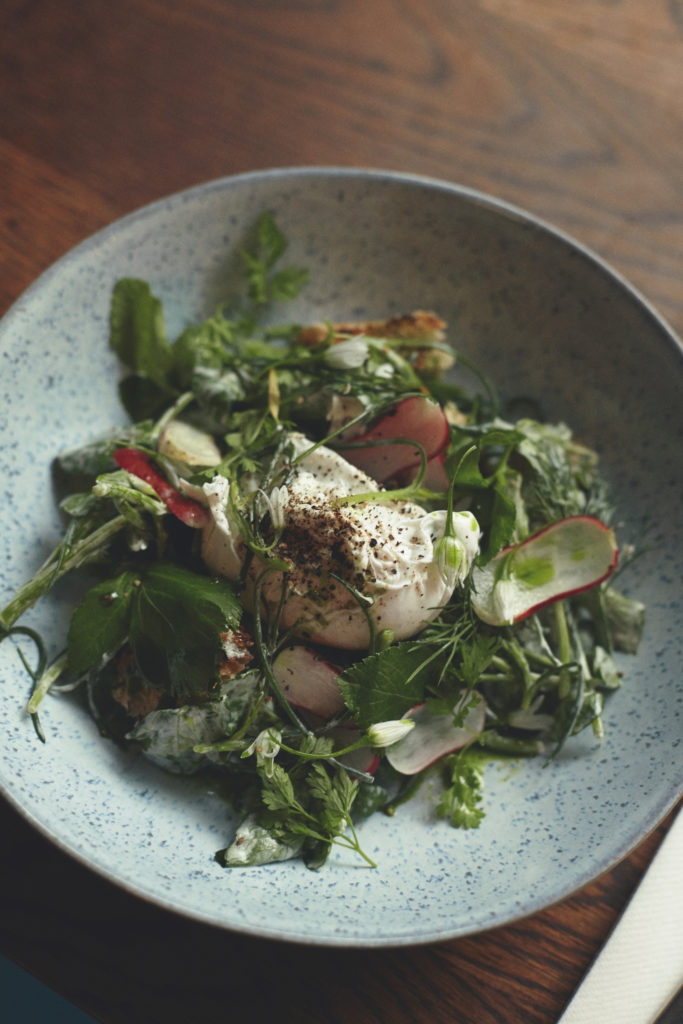
Wild herb salad with poached duck egg, pancetta and fennel
Serves four as a light lunch or starter
This recipe is very adaptable, so feel free to add whatever wild herbs or vegetables you come across (or buy in the supermarket, if worst comes to worst).
Ingredients
For the salad
4 handfuls of any of the following: chopped three-cornered garlic, wild leeks, Alexanders leaves, fennel fronds, nettle tips (blanched), wild garlic (blanched), samphire (blanched), sea purslane or sea aster (blanched), wood sorrel
1 bunch of watercress
1 handful chervil
1 handful dill
1 head of fennel, thinly sliced
1 bunch of radishes, thinly sliced
A dozen or so cooked new potatoes (optional) Two thick slices of good quality bread
A clove of garlic
A drizzle of olive oil
4 duck eggs
100g diced pancetta
Sea salt and black pepper
For the dressing
100g crème fraîche
1 dessert spoonful of Dijon mustard
Juice of one lemon
Pinch of salt and black pepper
Handful of nely chopped three-cornered garlic or chives
Method
Pick through the ingredients you’ve foraged to remove twigs, stems, dead leaves and grass. Wash thoroughly and set aside in a large mixing bowl with the watercress, chervil, dill, fennel, radishes and cooked new potatoes.
Prepare the dressing by whisking together all the ingredients and check the seasoning – you might want to add more salt, pepper or lemon juice.
Sauté the pancetta in a drizzle of vegetable oil until nicely crisped. Drain and add to the bowl with the herbs.
Toast the bread, rub with a clove of garlic, drizzle with olive oil and tear into bite-sized pieces. Add to the herb mixture.
To poach the eggs, put a deep pan of water on the stove on a high heat and add a generous slosh of white wine vinegar. Crack the eggs into four separate cups. When the water reaches a rolling boil, swirl it around with a slotted spoon, add the eggs and immediately turn the heat down. Leave to poach for two minutes. Remove from the water and drain on a cloth. Season with salt and pepper.
Add the dressing to the herb mixture and gently toss together until everything is nicely dressed. Season with salt and pepper and divide into four bowls. Top each bowl with a poached egg and serve immediately.
Nicholas Balfe is the founder and head chef of Salon
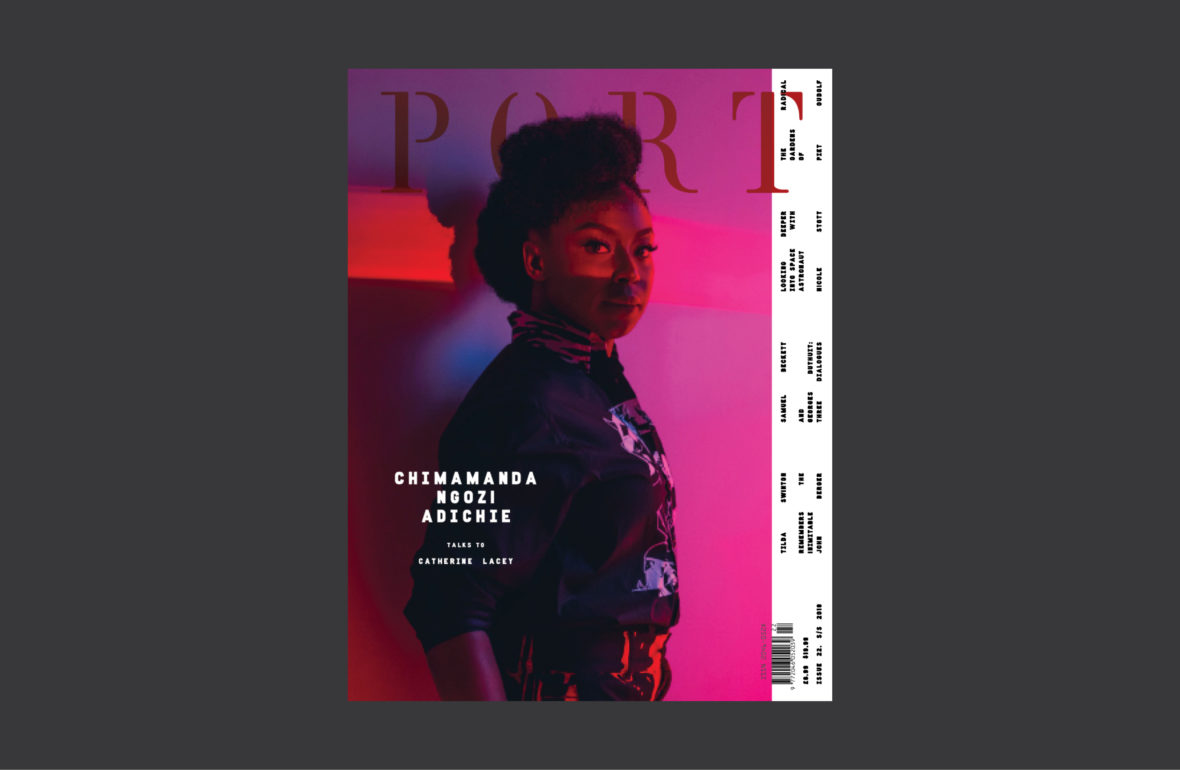
The Spring/Summer 2018 issue of Port – featuring writer Chimamanda Ngozi Adichie, Dutch garden designer Piet Oudolf and David Hallberg, the greatest male dancer of his generation – is out now
Photography Mamadi Doumbouya
Writer Chimamanda Ngozi Adichie is one of the foremost intellectual voices in the United States today. The author of Half of a Yellow Sun, Purple Hibiscus and Americanah – as well as of one of the most-viewed Ted talks ever, sampled by Beyoncé, no less – Adichie transcends the barriers between literature, art and music. For the cover story of Port issue 22, she met Catherine Lacey in Washington DC to discuss her extraordinary books, the complexity of recent gender movements and to give a hint at a next big project.
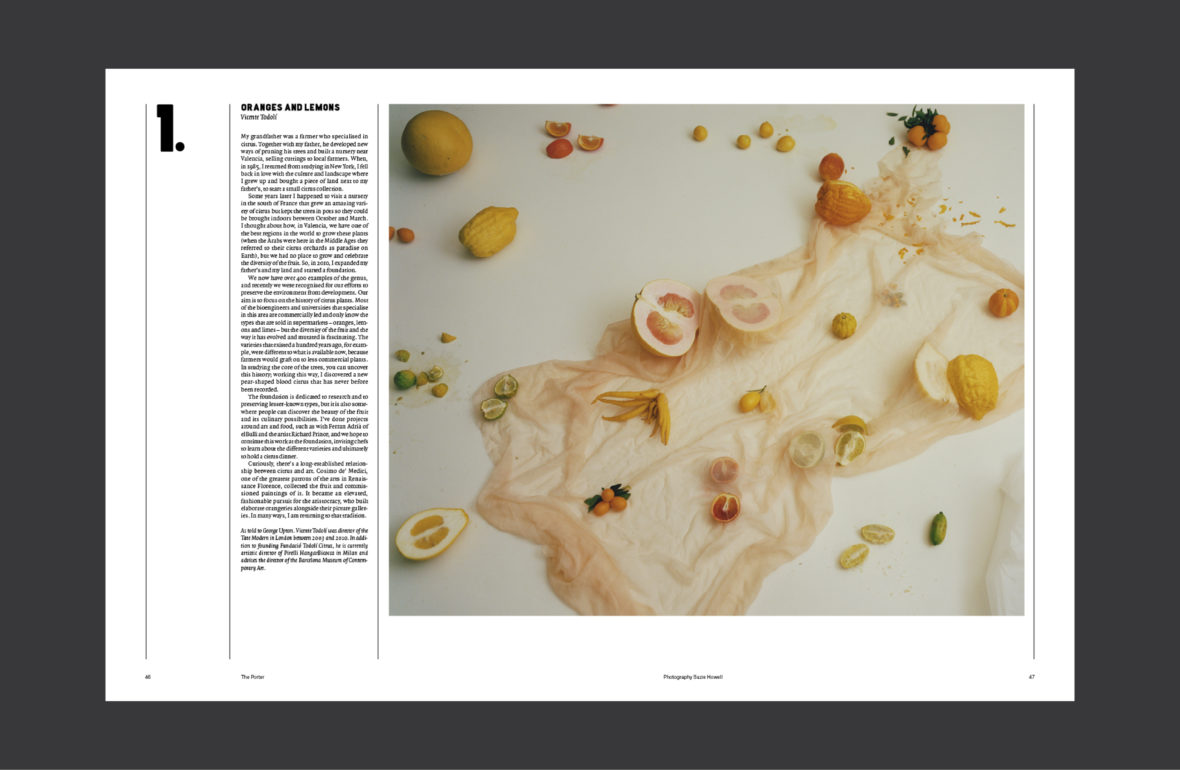
Photography Suzie Howell
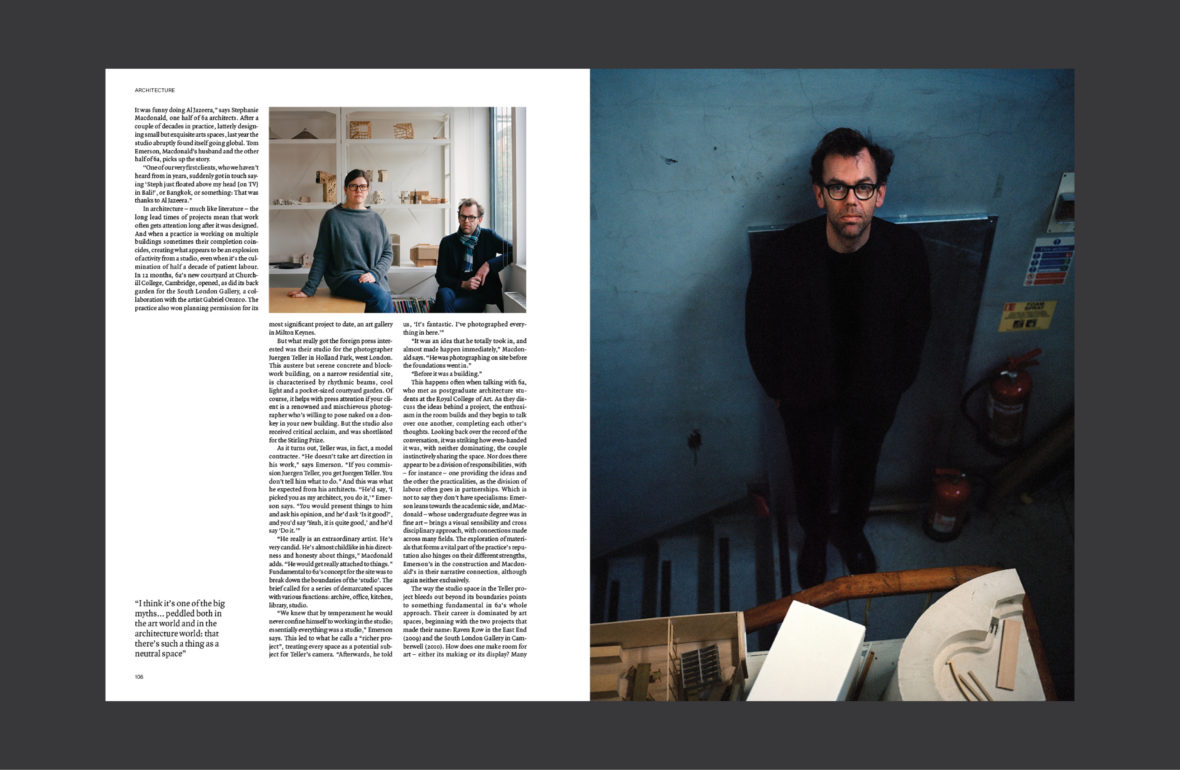
Elsewhere in the magazine, we speak to 6a – the most exciting architecture practice in London; discuss Netflix and race with the director of Mudbound, Dee Rees; and travel to rural Netherlands to meet the pioneering Dutch garden designer Piet Oudolf. Also featured: The photographer Christopher Payne visits one of the largest flag factories in the US, and we uncover the secrets and beauty of space with astronaut Nicole Stott.
Photography Tereza Cervenova
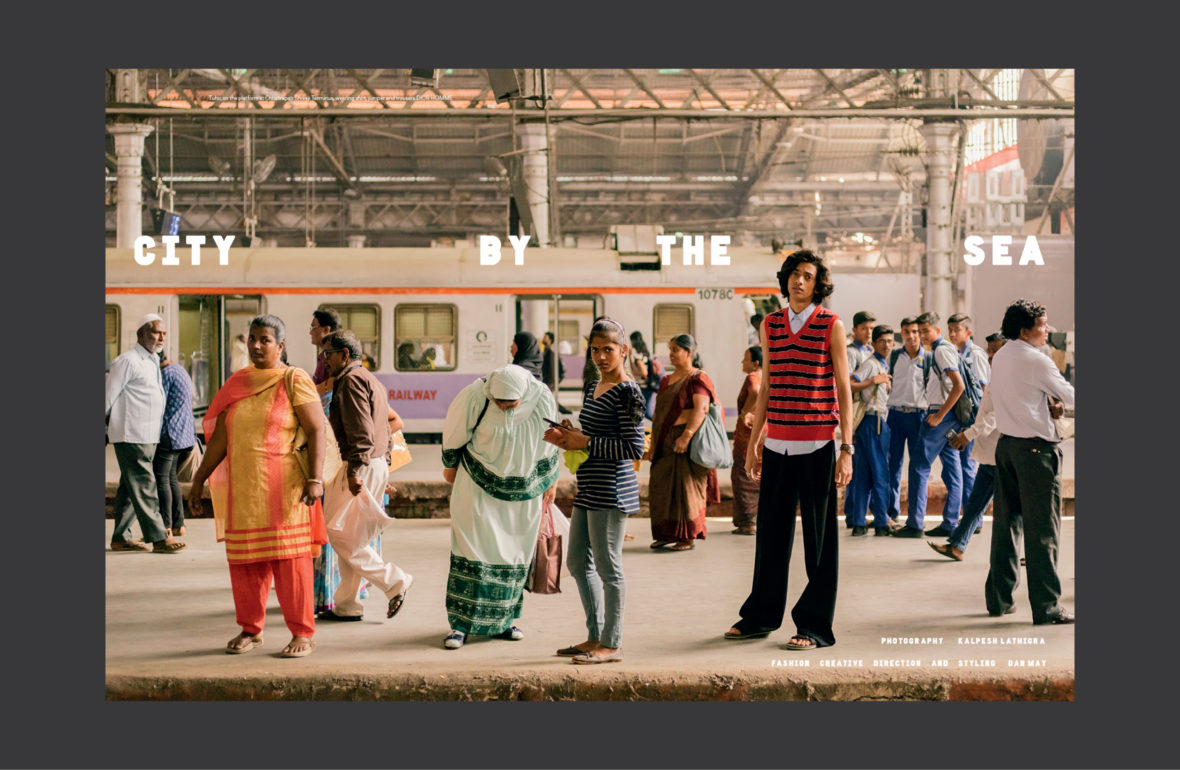
In the fashion section, celebrated photographer Kalpesh Lathigra and Port‘s fashion director Dan May travel to Mumbai to shoot a 40-page story around the sprawling, seaside city; Scott Stephenson styles this season’s collections and Pari Dukovic shoots the greatest male dancer in the world, David Hallberg, wearing Saint Laurent.
Photography Kalpesh Lathigra
Commentary pieces come courtesy of Will Self, Lisa Halliday and Jesse Ball, as well as Samuel Beckett‘s seminal Three Dialogues with Georges Duthuit. Highlights from the Porter include Tilda Swinton remembering her friend John Berger; an interview with the British artist Gavin Turk; foraging with chef Nicholas Balfe; and ex-director of the Tate Modern, Vicente Todolí, on his passion for citrus fruits.