Pal Zileri’s new creative director, Mauro Ravizza Krieger, employs bold visuals for his Milan presentation
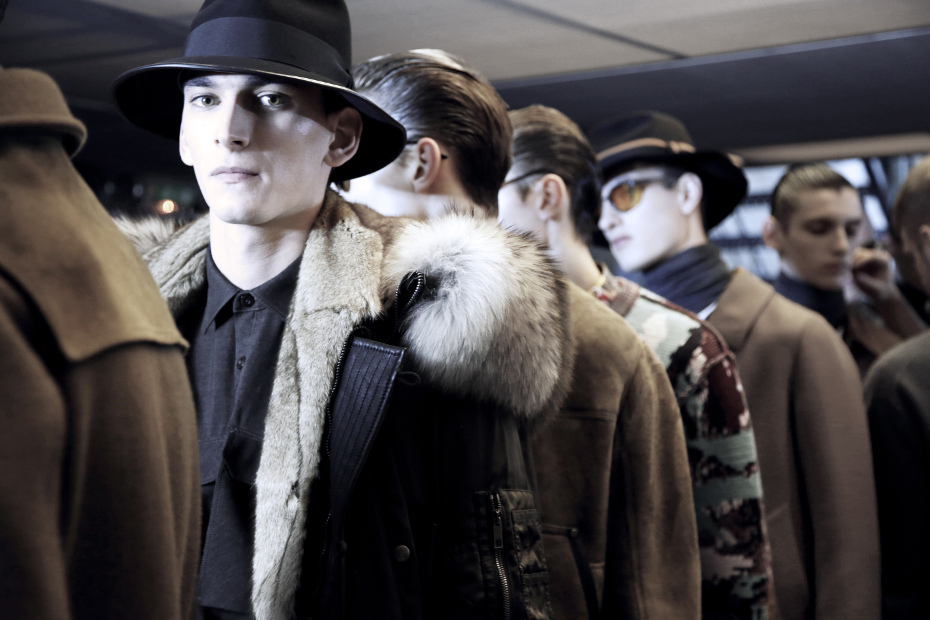
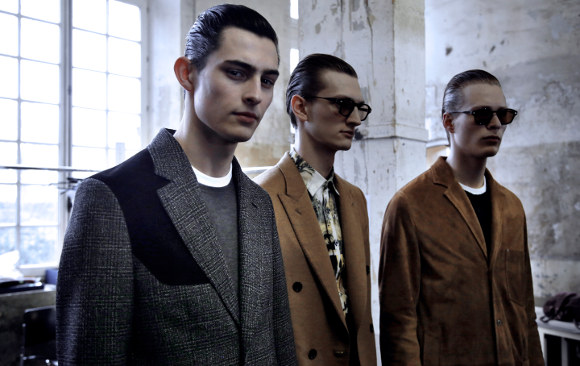
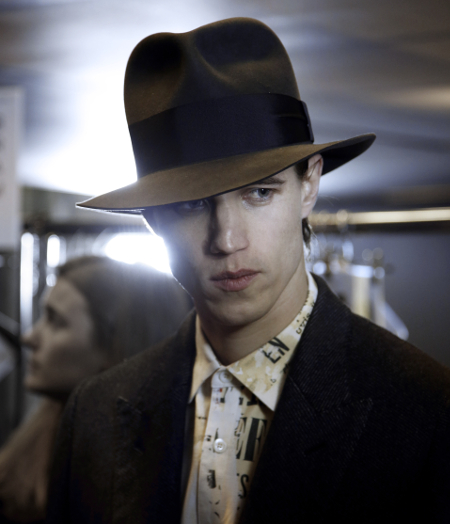
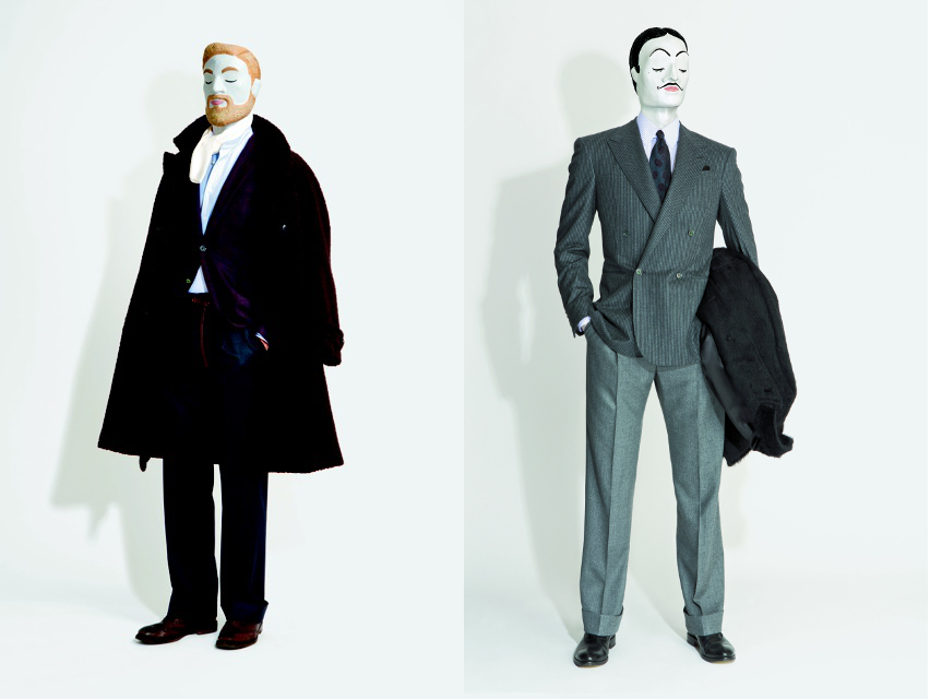
It’s difficult to stand out in Milan; countless brands compete for the attention of buyers, press and, ultimately, the consumer. Most designers take to the catwalk to make an impression and, although it often works out, it’s a big expense for a 10-minute extravaganza. As press, it’s difficult to grasp the finer details of the pieces and to fully appreciate the quality of the garments. That’s why presentations work so well. Whether static or with movement, you get to experience the brand up close. The Pal Zileri AW15 presentation is a case in point. The Italian brand’s creative director, Mauro Ravizza Krieger, took the opportunity to showcase solid wardrobe pieces, the kind of garments that keep on giving… especially when they are made in the finest Italian factories.
“Classicism is the foundation of Pal Zileri’s new language – an urban mix with great personality. A new brand of metropolitan elegance, a cross between tailored garments and sportswear; between holy and profane, without losing a certain sobriety,” Krieger explains. But if the collection was a demonstration in sartorial ‘back-to-basics’ bliss, the presentation firmly grounded Pal Zileri in the 21st century, as this film shows.
Cerruti’s creative director Aldo Maria Camillo explains the reasoning behind his back-to-basics menswear collection for Paris Fashion week
Since my first season at Cerruti, I’ve tried to re-establish the brand’s DNA and vocabulary. It’s something I think has been lost in the last 10 years or so, but I feel that it should be talked about as Cerruti has a beautiful history.
I’ve been working hard to readdress the focus and now the brand is centred around three main ingredients: fabrics, silhouettes and colours. We use the archives for all three, but update it for the 21st century. We research and develop new fabrics, playing with different yarns and weights, to get the perfect balance between the old and new Cerruti. In many ways this collection is a mishmash of those two. The clothes need to be contemporary, but at the same time we have to respect what came before us.
For AW15, I felt an urgent need to re-work classic wardrobe staples and make them more masculine.The pieces aren’t new per se, but we’ve updated the way they look and feel – be it on the inside construction or the texture. For example, suits, duffle coats, pea coats, bomber jackets and blousons were all given this treatment because I feel they define the male wardrobe. I then added the artistic inspiration, which, for this season, came from the German artist Joseph Beuys. I was interested in the way he used felt as a fabric and mixed that with Nino Cerruti’s idea of ‘good fabrics make a good garment’ to find the perfect Cerruti pieces. I also studied old Cerruti ads taken by Paolo Roversi where the guys are wearing fedora hats and long coats, and twisted it all to make it look new, fluid, organic and… a little bit unexpected.
“The clothes need to be contemporary, but at the same time we have to respect what came before us”
I like the idea of adding a touch of workwear; all pieces had to have a sense of functionality. For example, if there’s an elbow patch it’s there because it’s needed. No decoration for the sake of it. Many suits are broken up but in subtle colours. The waistcoats are inspired by either hunting or fishing and feature multiple pockets, which makes them both stylish and utilitarian.
Louis Vuitton’s Kim Jones looked back to London’s 1980s art scene for his Paris show, taking inspiration from the late illustrator and designer Christopher Nemeth
Photographer Patrick Lindblom travelled to the outskirts of Paris to document the Belgian designer’s Fall show
Kicking off Paris men’s fashion week, heavyweight Raf Simons continued his ‘stand up’ policy for his eponymous line. Taking over an industrial space in Ivry-sur-Seine, spectators stood to see the show while photographers shot it from a pit in between the raised catwalks.
Continuing his homage to the past, Simons used graphic messages (words scribbled on lab coats) to maintain levels of sartorial energy while the garments were shown in 70s shapes and colours. Many pieces played with the notion of what luxury fashion really means, as they came out unfinished and with raw hems. All in all, Simons’ AW15 collection perfectly mixed his love for alternative lifestyle cultures with wearable and desirable everyday garments.
Caruso’s creative director Sergio Colantuoni on the brand’s silhouettes for next season
“Allora – the story is very simple, really. When you go around the world travelling, something changes within you. A trip abroad, going to the cinema, or even meeting your friends, all have the possibility of changing you. The idea of the collection is that not only you, but also the clothes, changes after a trip – both a short trip or the trip of your life. The shoulders, pockets, silhouette and whole outfit become a bit loose. And that’s the key theme for the next collection: everything changes.“Since Caruso is a formal brand at the end of the day, we also have a few rigid pieces. The shoulders are bigger, adding structure to the jackets. It’s a sartorial experience, so construction is very important. But that doesn’t mean it can’t be loose and baggy – I love when it’s comfortable.”
Andrea Pompilio is one of Italy’s most exciting and respected designers, having developed, since his first eponymous autumn/winter 2011 men’s start-up collection, a style that is relaxed, but equally sophisticated. Port spoke with him about his inspirations, love of fabric and the wonders of Italian food.
Director – Anthony Austin
Camera – Myles McAuliffe Editor – Jack Williams Graphics – Thomas Malins Executive Producer – Dan Crowe Music – ‘Sketch’ by I Marc 4
Marni’s creative director Consuelo Castiglioni brought out her signature boxy tailoring, but added fur quirks at her Florentine catwalk show
Follow our coverage of Pitti Uomo.
The illustrator selects highlights from his new Thames & Hudson book, and tells David Hellqvist what makes them unique
Peter Turner Sunspel briefs for A Magazine
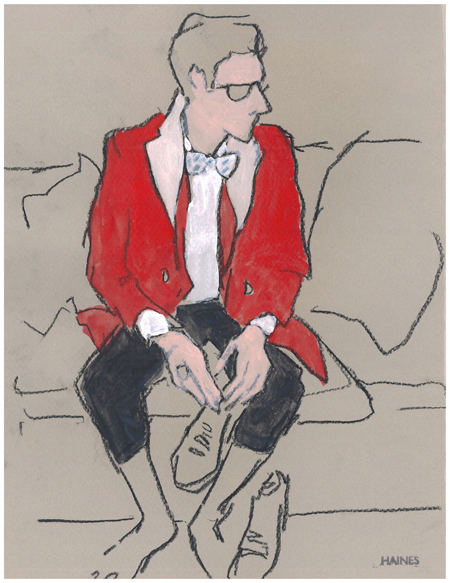
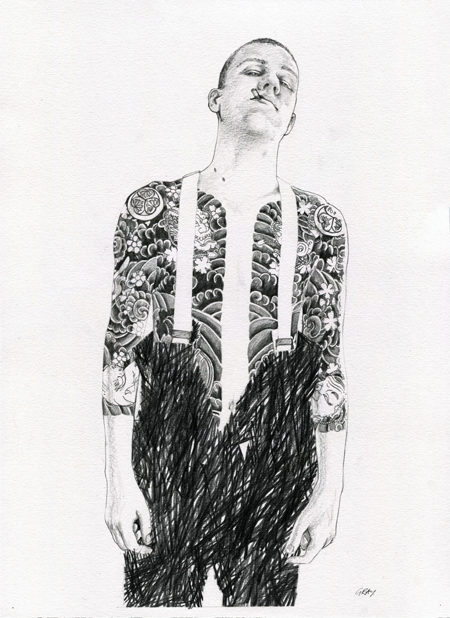
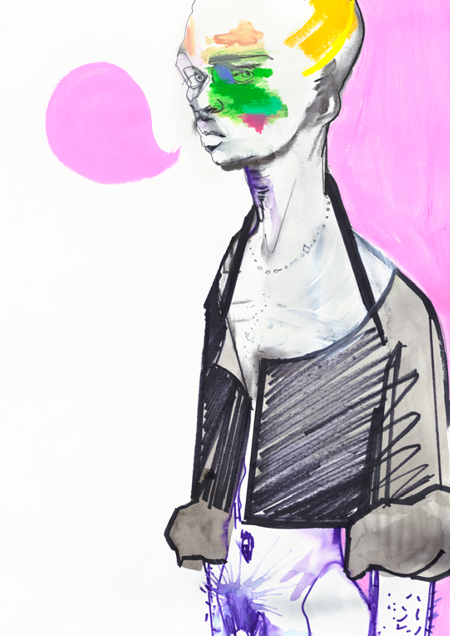
Drawing is instrumental to fashion – it’s how most garments start their lives. The designers sketch out the pieces on proper notebooks or restaurant napkins, if need be. It’s the architectural blueprint for a collection, and a pivotal part of the design process. But it isn’t just the designers themselves that draw; fashion illustration has been a means for magazine and book editors to communicate shapes and forms for decades, though the art form has always been in the shadow of the (arguably) more glamorous world of photography.
But with so many good illustrators around, both established and upcoming, their work is due recognition. Cue Richard Kilroy and his new book, Menswear Illustration. Clearly focused on men’s fashion drawings, Kilroy – himself an illustrator – has compiled a list of some of the best illustrators around, not only showing their work but also explaining their style and what makes them special. Here, Kilroy picks five of the best from the book…
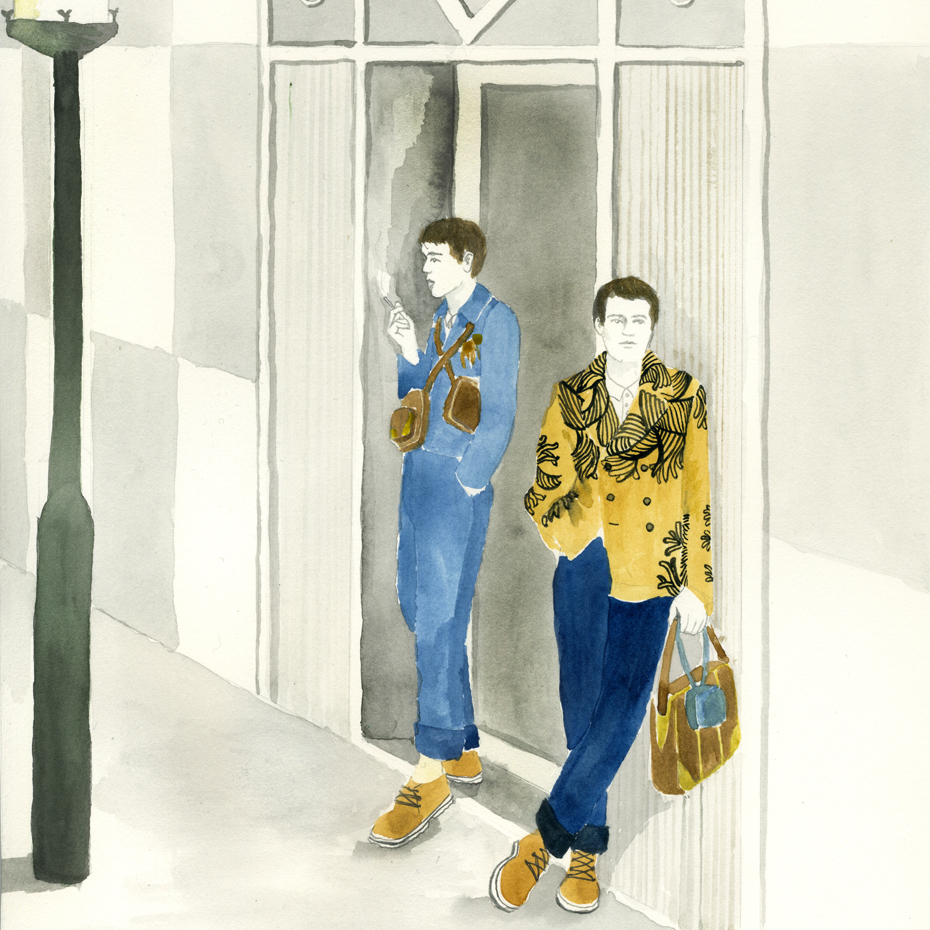
Peter Turner
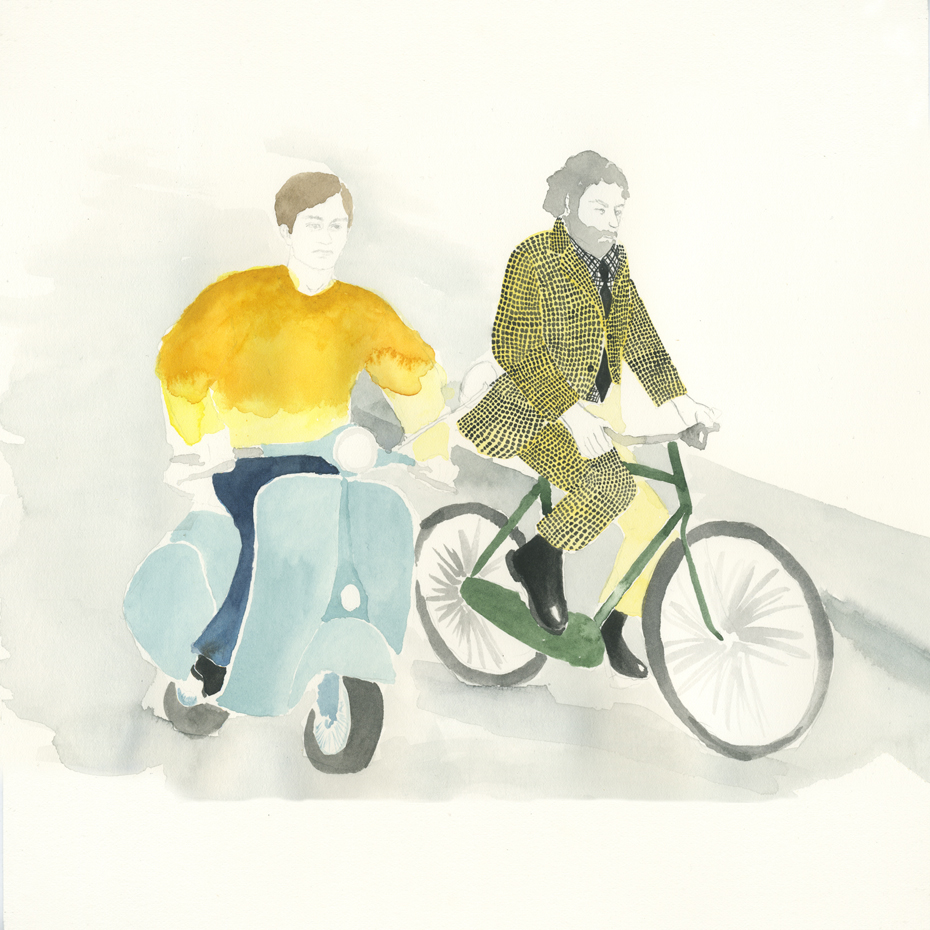
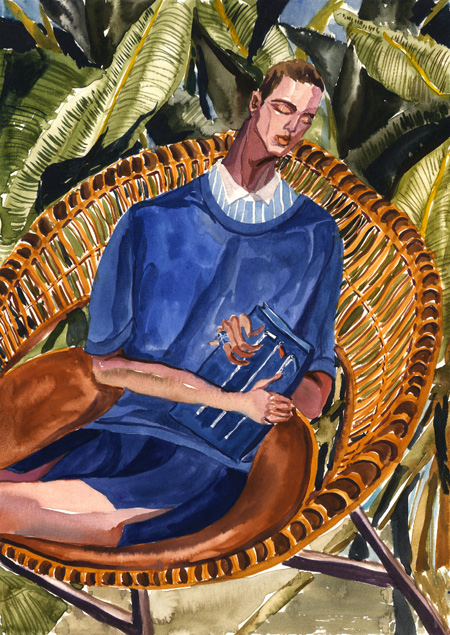
Unlike many of the commercial illustrators featured, Peter was suggested to John Galliano for the role of in-house illustrator at Christian Dior by artist Howard Tangye – his tutor at Central Saint Martins. Peter remained at Dior for seven years, also drawing from Galliano’s Homme collections, and for the most part his work was largely unseen by the press or public. I think a lot of people’s first exposure to him (including myself) was his stunning illustrations for A Magazine Curated By in 2013, which have gotten a lot of us excited about what else will come from him in the future.
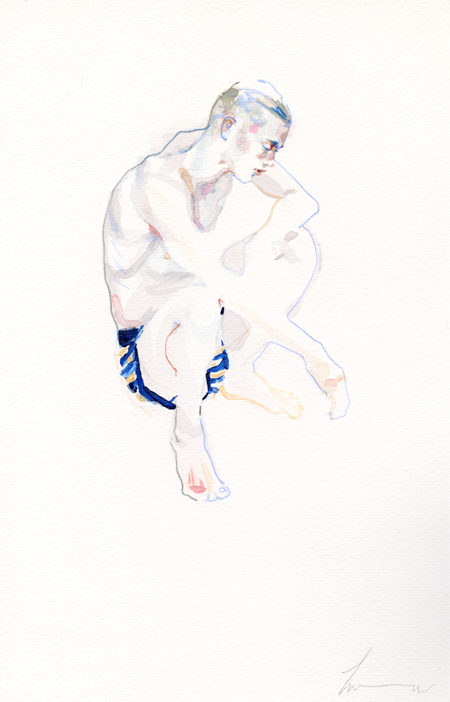
Jiiakuann is relatively new on everyone’s radar, especially to the Western fashion industry. She’s based over in China and Australia, where she is working with titles such as GQ China and L’Officiel Homme China. It will be exciting to see how her work is received over here. There’s a great sensitivity to her men, despite the vibrancy of the works. They always gets a huge response when I post about them; she’s very much one to watch.
Peacock editorial for Dorian magazine by Jiiakuann, 2013
Luigi Tadini wears Dries Van Noten for Paper by Richard Haines
Man of the moment and of the book cover, Richard’s energetic drawings of the best-dressed men of New York have led him to recently work with Dries Van Noten for prints on the SS15 collection, a collaboration with Prada resulting in an original book, and drawing directly onto Siki Im’s clothes for his SS14 show. It’s great to see how influential his style is and also the resurgence of reportage illustration within fashion for online and print coverage, of which Richard is a key figure.
For me it’s a no-brainer to have him in the book, he was the first one I approached. It’s really interesting for me as a fan and a writer to see the evolution in the distinct casting of his men, their erotic overtones and the strength in which he portrays them in his elaborate compositions.
Richard is such a dark horse and incredibly humble. You’ll always see the bio in every article: working with Mcqueen, Boudicca and Westwood, his discovery by Anna Piaggi, etc. He has such a rich and interesting career history to plunder, and fans would no doubt salivate for a standalone book!
It’s great to have Julie in there and also kind of impossible to say anything anout her that hasn’t been said before, such is her monumental following and achievements. We all know her for her humorous and seductive work that questions approaches to femininity, so it will be interesting to see a focus on men. There are two distinct types of male that Julie likes to draw: either an effeminate character of ambiguous gender or an overtly brutish male, full of testosterone and grit. Either way you get the feeling they are both distinctly British and distinctly Julie. Her new installation Whiskers Between My Legs at the ICA is also brilliant and worth going to.
Menswear Illustration by Richard Kilroy is out on 23rd of February 2015 and is published by Thames & Hudson
Illustrations from the book will be on display at Paul Smith, 9 Albemarle Street, London, from 16 February – 6 March