How Not to Skin a Rabbit

Fernanda Eberstadt has published five novels and two books of nonfiction – most recently Bite Your Friends, a memoir on the body as a site of resistance to power. She also writes widely for publications like The New Yorker, Frieze, and European Review of Books. In this original essay, she viscerally revisits a domestic encounter with, among other things, viscera

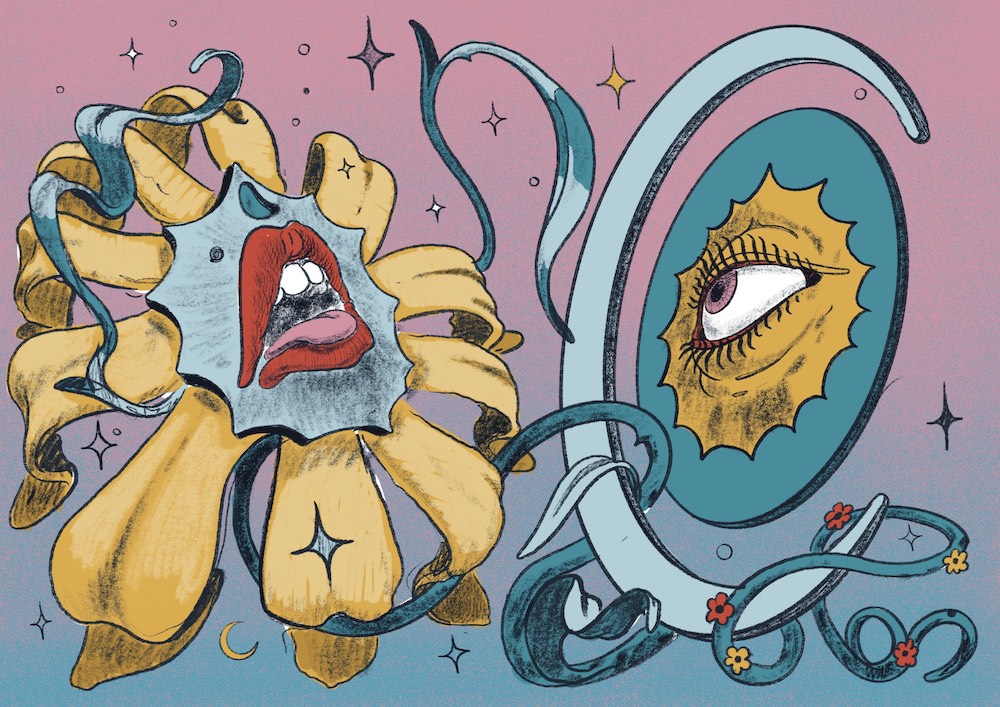
Illustration ALEC DOHERTY

Chez Bascou, tot es bo! was the butcher shop’s cheery slogan.* It was the year 2000. We were living in a house on a vineyard in French Catalonia, a kilometre from the sea. My husband and I were each writing a book about the area, and everything was indeed bo – not just Monsieur Bascou’s sausage which came in long intestinal coils for outdoor grilling, but our new life, where on balmy nights all the neighbours sat out late in the communal courtyard, drinking the vineyard’s potent Rivesaltes and watching our children run free, building forts in the tall reeds and swinging from the rusty thresher.

Not so bo was hunting season, when Monsieur Bascou and his mates wandered across the courtyard, rifles cocked, in pursuit of the rabbits that made their warrens in the sandy soil. French law says you can’t fire within 150m of a house, but French Catalans are a headstrong bunch, and by Sunday evenings the courtyard was littered with spent cartridges. We outfitted our kids in hi-vis fuchsia and marmalade-orange anoraks, but they still looked to me like little bunnies as they scampered through the vines.

“Do you eat rabbit?” Monsieur Bascou asked me by way of a peace offering, when I protested.

“Sure,” I said, imagining neatly filleted columns of oven-ready pink. The following week he presented me with a carrier bag containing two dead furry beasts with long ears.

I’m a Manhattan girl. I was raised on pre-sliced bread and canned spaghetti and restaurant meals. But when I find something unnerving, I can get a little grim and go-it-alone stubborn. These were the days before YouTube could teach you how to tie your shoes or overthrow the government, but that didn’t mean I couldn’t figure out, by myself, how to skin an animal. People always said rabbits were easy-peelers, that their fur comes off like a pair of pajamas, all you needed was a sharp knife. Wasn’t this the second rule of the kitchen – keep your knives sharpened?

I dropped off our kids at pre-school, came home and barricaded the kitchen door. It was an épreuve, according to Foucault’s concept of the ordeal as a test of truth. I laid out the first rabbit on the sacrificial altar of the kitchen table, buried my face in its matted fur that still smelled of earth, autumn rain, vines, and said a little prayer of thanks.

Some day, not too soon, I hoped, other living creatures would have a chance to eat my body too.

+

First I hacked at the rabbit’s head with its accusing eyes and teeth, its impossibly long ears – was that where all its power of survival lay, in supersonic hearing? You made a first cut, so that the furry coat could then peel away, but where was the magic entry point? The feet – all four – all eight of them – needed to come off too, and they were even trickier.

A nursery rhyme that my mother used to sing me started jigging nervously in my head:

Bye baby bunting,

Daddy’s gone a-hunting,

To fetch a little rabbit skin,

To wrap his baby bunting in.

I still thought that if I could only do this thing cleanly, I might possibly wind up with a rabbit skin for each of my baby buntings.

+

Reader, I made a hash of it. No matter how I poked at those rabbits, their luscious fur refused to be parted neatly from the body beneath, the slippery flesh slithered away from my grasp, there was nothing to grip hold of, and the pelts ended up in bloody tatters. And yet even as I botched this basic test of carnivore capability, there was something thrilling in the endeavor. Mostly I remember the reek of it, the hot acrid boil of blood, shit, bile, the undersea coral of intestines, the liver and kidneys so raw and angry and purple, the heart in its opalescent casing. Mammalian life so freshly fled, and the strange fascination, the unease of seeing what should never be seen, a fellow animal’s innards exposed.

By the time the long labour, the slow slog of rending and disembowelling, was accomplished, the two rabbits had begun to resemble something you might actually encounter in Monsieur Bascou’s shop: I was drained but exalted.

Now we were onto firmer, less murderous-ecstatic ground: the question of how to cook these beasts, how to make a feast so royal that it would justify the bloodshed.

+

Back in my 20s, I’d spent six weeks in Palermo, writing about urban restoration and Lampedusa’s The Leopard. I had lived with Gioacchino Lanza Tomasi, an opera director who was Lampedusa’s adopted son, and his wife Nicoletta Polo. Nicoletta was a fantastic cook. She’d taken me around Palermo’s markets, taught me about seasons, and introduced me to those dishes that reveal Sicily’s Arab-Norman-Catalan-Aragonese underbelly, dishes where pasta improbably encounters sardines and currants and wild fennel, or cakes are named after a saint’s severed breasts.

For Monsieur Bascou’s twin rabbits, I chose a Sicilian recipe, featuring an overnight marinade of dark chocolate and red wine, using the cheap, high-octane witches’ brew of Syrah and Grenache produced on the vineyard where we lived. The original recipe  I’ve long ago lost, but when I email Nicoletta Polo, who now runs a cooking school out of her palazzo in Palermo, she sends me her own favorite variant from the Ragusa and Modica area – which “is famous for its extraordinary chocolate,” she writes.

So here you go, the why-not-have-it-all recipe – game, booze, chilli pepper, and bitter chocolate in one pot.

CONIGLIO AL CIOCCOLATO

Serves 4

1 rabbit
70g bitter chocolate
1 onion
1 carrot
Flour
A handful of almonds
1 small glass of dry Marsala
Extra virgin olive oil
Salt
Black pepper or chilli pepper, to taste

For the marinade:

300ml red wine
1 glass of wine vinegar
1 carrot
1 onion
1 celery stalk
A small cinnamon stick
2 cloves
3 juniper berries
2 bay leaves
5 sage leaves
2 garlic cloves
1 lemon, cut in wedges

Method

Clean the rabbit and cut it into small pieces.

Prepare the marinade in a large bowl: put the pieces of rabbit in it and pour in the wine and vinegar, then add the chopped celery, sliced onion and carrot, a pinch of salt, the lemon and all the herbs and spices. Leave to marinate in the fridge for a few hours, preferably overnight, turning occasionally. After this time, drain the rabbit pieces, dry them and lightly flour them.

Chop an onion and sauté it briefly in a saucepan with a few tablespoons of oil. Add the rabbit pieces and let them brown evenly, then add the chopped carrot and salt and deglaze with Marsala wine. Cook for about 10 minutes, then pour in half a glassful of the marinade strained through a colander and add the almonds. Cook, adding more liquid from the marinade if necessary: five minutes before the rabbit is ready, over a very low heat, add the coarsely chopped chocolate and a grinding of chilli (or black) pepper, stir to mix well and cover the pan. Serve the rabbit piping hot.

+

Our feast the next night – a communal dinner, with our neighbors and their kids joining us – is solemn. The children, who when they’d heard the words “chocolate rabbit” had hopeful fantasies of Easter egg hunts dancing through their heads, are puzzled but willing. They are all still young enough to try anything. The stew, with its dark molé-like sauce, its hints of cinnamon and clove, is rich, strange, unsettling. Our dreams that night are fevered.

+

“How could you eat a bunny? They’re so cute,” my friend objects when I tell her the story of Monsieur Bascou’s rabbits.

I ponder. It’s an interesting question. If we are going to eat living creatures, do we avoid the ones we find appealing, the ones that could be household pets? To put it more crudely, should we only eat what we dislike? Is eating an animal an act of violence, disassociation, conquest, or can we also regard our prey with gratitude, respect?

+

After six years living on the vineyard in French Catalonia, my husband and I bought our own house further north.

On autumn and winter weekends, the surrounding fields are overrun with hunters’ wooden high chairs, men in orange vests, baying hounds, the crack of guns. Our new neighbours are more upright, law-abiding than the Catalans, nobody would dream of tramping through your front yard with a rifle cocked.

One Sunday they kill a boar in the cornfield below our house. Gilles, the next-door farmer who is secretary of the hunt, offers us a cut of the spoils. I’m already wondering how to deal with the boar’s bristles, imagining myself barricaded once again in the kitchen, this time with a more fearsome, better-armed opponent. Tusks! I experience the familiar tangle of fellow-feeling and bloodlust; I love boars and I want to eat them. When Gilles delivers us a plastic-wrapped slice of generic flesh, the swell of adrenaline, of dread-terror-excitement, abruptly ebbs away.

In the Garden of Eden, Adam and Eve were vegetarian. Adam was allowed to name the animals, but not to eat them. It’s only after the flood, when God exterminates all creation except for Noah and his crew, that there is a new covenant and God tells Noah, “Every moving thing that liveth shall be meat for you.”**

The biblical God is murderous, and we are too.

You might say that humans are allowed to eat animals precisely so that we don’t eat each other.

As I get older, I find it increasingly hard to explain my own consumption of meat – to justify why another creature should
die just so I can experience for the hundredth time the complex sensory delight of pork-belly ramen. But self-disapprobation only makes my carnivorousness fiercer. Two weeks of vegetables and I’m practically ready to eat my dog.

Some day I’d like to own my bloodiness a little more honestly and learn not just to skin but to raise and kill what I eat. In the carnivore kingdom, as in Bascou’s shop, tot es bo.


* Catalan for “Everything’s good at Bascou’s.”

** Genesis 9 : 3


This article is taken from Port issue 34. To continue reading, buy the issue or subscribe here


Insistent and Beyond Choice

Author and playwright Sheila Heti discusses her latest book, reworking a decade of diaries

Photography MARIUS W HANSEN

Diaries are off-limits, private musings of private minds. To read them would be wrong, insensitive, near-illegal – so I’m told when I put the question to Google. But what about when they’re typeset, bound, in a bookshop?

Sheila Heti began compiling a decade’s worth of her own diaries after writing her wildly original and often amusing 2012 novel How Should a Person Be?. She loaded half-a-million words typed between her mid-20s and mid-30s into an Excel spreadsheet, and ordered the sentences from A to Z. Of course, there was more to it than that – whittling down the wordcount, lending the lines rhythm – but that’s the gist. The result, Alphabetical Diaries, is a compendium of the author’s thoughts, feelings, wonderings. It’s about living. Being with the right and wrong men. Buying and wearing nice clothes. Having or not having children. Lipstick. Love and sex and desire and shame. Money and lack thereof. Reading and writing books. It’s curious, philosophical, funny, earnest.

I ask where the seed for the project came from, and Heti tells me, “Maybe it was that I wanted to see who I’d been all those years. Maybe it was a curiosity about which repetitions would come up or what it would do to the story of one’s life to alphabetise it.” But she says those were secondary concerns. “The primary concern was that I’d just finished a book and I wanted to stay on the computer and keep working.” Which, judging by the number of books she’s published – 11 to date – isn’t something she struggles with.

And yet, when we speak via our screens in early January – Heti from her home in downtown Toronto – she admits she only woke up 45 minutes ago. “Somebody was yelling in the street, and I thought, why is she waking me up at seven in the morning?, and then it turned out it was 10,” she says, laughing – over the course of our conversation, we’ll both do a lot of this. Even so, she has her first coffee of the day in hand, is nestled on a comfy-looking armchair by a window letting in the not-so-early milky morning light, and is fresh-faced, friendly and ready to go.

So, what was it like, revisiting her past self on the page? Emotional? “I don’t think so, for one thing because the sentences are broken up – so I wasn’t looking at my life in a narrative way, going through scenes.” She offers to show me, and together we zip through long lists of isolated sentences on her shared screen. To begin with, she didn’t edit for fear of ruining the experiment, then the experiment became a book. “I never changed the meaning, but I did cut 90 per cent of the words.” The lines that remain resemble scraps and fragments, individual pieces that, as you read, gradually form a semi-complete puzzle, loosely Heti-shaped.

I wonder whether she learned anything new about herself or had any surprises (nasty or nice). “I guess it makes you think about your life more archetypally,” she says, looking towards the window. “When you’re living your life narratively, you think, Okay, there’s this one guy, and he’s different from the next guy, and then he’s different from the next guy, but when you alphabetise it, you realise, Oh no, I’m just always thinking about… a guy.” We laugh. “I think we have this feeling, going through life, of things happening to us, but the repetition makes you appreciate the fact that actually you’remaking things happen to you, over and over again, because your character enjoys or needs them.”

In her deeply personal and formally inventive novels, Heti writes beautifully and honestly about what she’s lived and thought about and felt. Motherhood is an exhilarating meditation on maternal ambivalence, while Pure Colour considers art criticism, grief, God. But she doesn’t think of those books as confessional or particularly exposing: “By the time the experiences are in book form they feel separate from me as a person.” With the diaries, it’s a little more daunting – perhaps because, unlike the characters in her novels, the character she’s putting across to readers here is “more mysterious”. She worried when they were excerpted ahead of publication in The New York Times that they would come across as trivial or narcissistic. Then again, as she points out, “Everyone’s diary is solipsistic – it’s a place to be thinking about yourself.”

Whether she’s working on novels or diaries, Heti’s process is intuitive: rather than thinking about why she’s writing, she just writes. “Everything can be worked out later,” she says. “But if you don’t go with your instincts, there’s going to be nothing to work with.” She doesn’t write to a schedule, and she never has. “But I love working and I feel bad when I’m not thinking about a project, so it gets done.” If there are gaps, she figures they need to happen; maybe she’ll have a dream, and that will spark something. She compares writing to being in a relationship, the way it slips and shifts and one way or another works itself out. “I’m not trying to make myself into a different kind of person in order to write books. I think the trick is to figure out what kind of person you are and then come up with a process that suits you.”

One thing that’s never wavered is her desire to be a writer. A sentence in the first chapter (A) reads: “All I ever wanted when I was younger was to be a writer, to be able to sit in one place and write things forever, and not feel like I had to do anything else.” She isn’t sure what prompted that ambition. She was an artistic child who preferred putting on plays to playing sports. “Sometimes you don’t know where these things come from,” she says, after giving it thought. “They just come strongly, and they’re insistent and beyond choice.”

She’s also managed to fulfil her desire to write in one place. Besides small stints in other places, she’s lived her whole life in Toronto, where she was born to Jewish-Hungarian immigrants on Christmas Day in 1976. Alphabetical Diaries is peppered with the tussle between her hometown – “Toronto felt to me yesterday like putting on soft pyjamas,” – and the life she could be living in New York, “full of parties and glamorous people, never feeling sad, alone, left out, apart”. Does she regret not being there? “I’m happy in Toronto and staying here was the right decision for me for a million reasons,” she says, reeling off a list that includes affordability and healthcare, grants, the absence of noise, having her friends and collaborators around. “If what I most wanted was to be a writer, it made sense to stay.”

Which reminds me of another line in the book: “Everything has to be sacrificed for writing.” Heti clarifies: “I don’t think that’s everybody’s path, but I’ve always loved Kierkegaard, Simone Weil – the people who have sacrificed everything for writing.” She tries to choose experiences that are interesting and will expand her knowledge of what it feels like to live. To go into the emotional stuff with a sense of courage. To use her life as a testing ground and not take herself too seriously. Still, I wonder aloud whether the prospect of sacrificing everything for one’s art could come across to some as bleak. Heti smiles. “I don’t think it’s bleak. I think it’s exciting, thrilling. A bit like being an adventurer on the high seas.”


This article is taken from Port issue 34. To continue reading, buy the issue or subscribe here
The Curtain

Ben Lerner is a novelist and poet, author of Leaving the Atocha Station, 10:04 and The Topeka School, as well as an essay entitled The Hatred of Poetry. This poem is taken from his first new collection in more than a decade, one that comes out of inhabiting art-making, homemaking and crisis

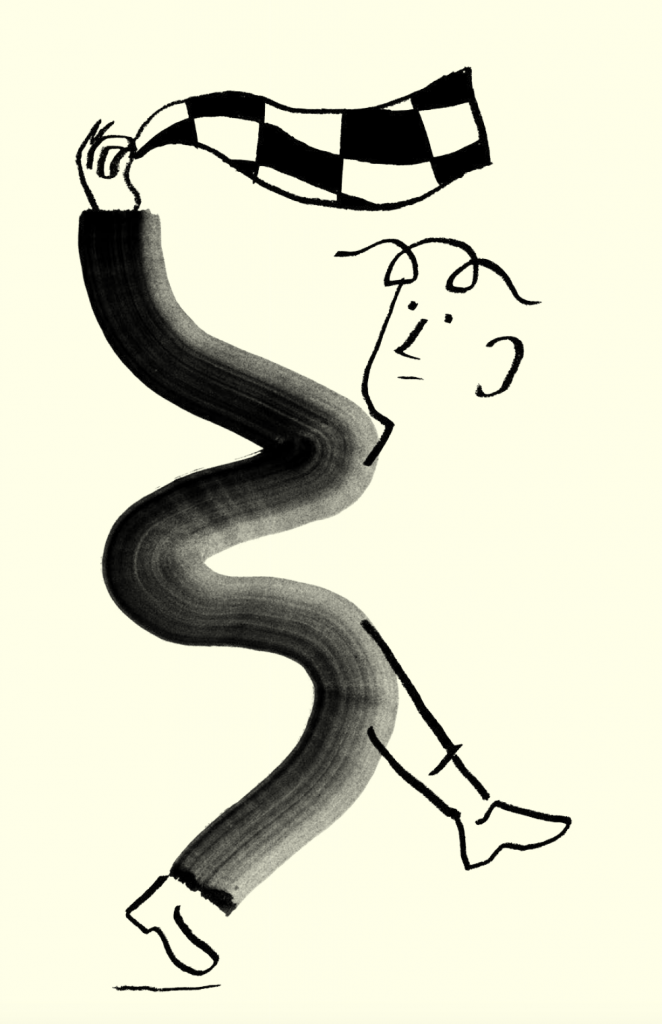
Drawing by Alec Doherty

I think you need either meaning or a sense that it has fled, especially when you look up. You need rudimentary fastening devices, something that binds surfaces, that resists, however ineffectually, their separation. Tar from the dry distillation of birch bark, a piece of music to coordinate work. I personally need cities at night, stars occluded but inferred, abandoned financial districts, underground tunnels where gold is moved back and forth between vaults. I like to imagine that’s my job, that I stack gold on pallets underneath Manhattan and transport them short distances with a forklift, that I literalise the day’s trades, that I have a career in “gold custody.” A world needs gold bars moving underground, although they cannot be pure; if they were pure they’d be too malleable to hold their shape over time and so each bar contains a small amount of other metals – copper, iron, silver, platinum, which gives the gold a whitish shade. Shades and impurities that let us hold our shapes are minimum conditions for a world, but many worlds are brief, a pulse moving through a medium, many worlds collide and recombine as you walk through them, which feels like a succession of webs on the face: plash, plash, plash, but without sound. We need music without sound to coordinate the work of moving through minimal worlds of alders, hazels, hornbeams – trees that rapidly colonise open ground after a fire. I have this dream in which I walk across the bridge after the fire to find downtown covered in even stands of birch with peeling, papery bark on which the names of everyone who has ever lived are written phonetically and I look down to find the pavement is clear glass and the gold is moving underground and I look up at the sky to watch the meaning flee, the patterned flight of meaning; I assume everyone has a version of this dream, but forgets it upon waking. We, at least my friends and I, often describe ourselves as moved by music, at the height of feeling we acknowledge that we are objects passed from one place to another, soft metal, and I think those are the minimal conditions of personhood, necessary but insufficient: we must be storable, impure, capable of movement. Once I was coming back on the Amtrak from Boston with John. He was a mess, and I was basically dragging him back to the city so I could watch him, so you and I could take turns watching him, his fretted neck and hollow body, a gentle custody. We were sitting behind two young women – maybe college students – who were discussing a passage in Dostoyevsky, in which the prisoners in Siberia wanted to put on a play for Christmas. Together they made a curtain out of “pieces of linen, old and new, given by the convicts; shirts, the bandages which our peasants wrap around their feet in lieu of socks, all sewn together well or ill, and forming together an immense sheet. Where there was not enough linen, it had been replaced by writing paper, taken sheet by sheet from the various office bureaus.” Listening to these kids discuss this passage in whispers as John pressed his face into my neck, as we crawled across the Northeast Corridor in winter, industrial ruins in moonlight through the window – it grew acutely beautiful in their paraphrase, how the prisoners painted the curtain black, painted it with stars, hung it from the ceiling, dividing worlds, defeating time, suspending labour. See, I kept whispering to John, see, see. Later, in Penn Station, after we’d taken the escalator up to the main level, we again found ourselves beside the two young readers on the platform for the downtown A. I wanted to say something to them, to thank them, but I didn’t know how. Then John reached into the duffel bag and removed three heavy bars, held them out to me. One was rectangular with rounded sides, indicating it was from the Denver Assay Office; one had square edges, which meant it was cast in New York before 1986; the third conformed to the trapezoidal shape characteristic of the contemporary international standard and had a greenish hue (iron). I tapped one of the women on the shoulder and said, although not in these words, plash, plash, plash. Only then did we hear one busker’s violin, another’s balalaika. A bar for him, for the rats scavenging between the rails, see the gold devour them, and a bar for young men dancing on the train, a hymn to possibility, a few bars of the underground malleable music my friends and I distribute. When we were back on open ground, walking along DeKalb, it began to rain, John began to lose his shape, I didn’t know if we’d reach my apartment in time, let alone in space. When we were nearing the park, these two kids with shaved heads stopped us, blocked our progress when we said excuse me, tried to pass. One of them leaned in and said: Give us your fucking money. And the other kid raised his sweatshirt to show the handle of a gun tucked in his waistband. Give us your fucking money now. But we don’t have any money, I said, as calmly as possible, which was true. Please, I said, we just have this heavy bag of gold bars, which are stamped, which aren’t fungible, cannot circulate. At that point I noticed the bandages around their feet. At that point I realized these two boys were girls, they were the two girls who had been talking about Dostoyevsky on the train. They must have followed us, they must have been following us our whole lives, forgotten upon waking. Their disguises fell away, their skin began to glow, the rain stopped, the rain seemed to hang against the hammered background of the sky. And they said, although not in words, we have come to relieve him of his duffel, to end one world so you can start another. Because a world ends every few seconds and must be rebuilt, worlds end and are rebuilt, a rocking motion. I think what’s hard for me, John said when we were back at my apartment processing the experience, sitting in the window smoking those tiny British cigarettes he always carried, I think what’s hard for me is the feeling that I’m totally without bourgeois respectability – I lost yet another job, Cora and I have broken up, for real this time, over the kid question, I’m certainly no comfort to my parents – but I also have no access to the value or intensities of art, mine or anybody else’s, highs that might make the lows in some sense worth it. We both know my recent sound installations are bullshit. And this sense of being a burden on my friends, on you and Ben in particular. And this sense of the irrelevance of it all given the political situation. And then—Stop, I interrupted, just stop for a second, John, and listen. Listen to the wind in the birches, a stream of alephs, the room tone of the forest, sirens in the distance, folk music, unnecessary but sufficient. I personally need cities at night, clear glass pavement, impurities, writing paper, all forming together an immense patchwork curtain. I’m listening now, John, Jack, Josh, Josiah, James. Tell me what you need.

The Lights by Ben Lerner is published by Granta Poetry, out now

The Road to Nowhere

Dalia Al-Dujaili on identity, storytelling and the importance of providing a platform for second-generation immigrants

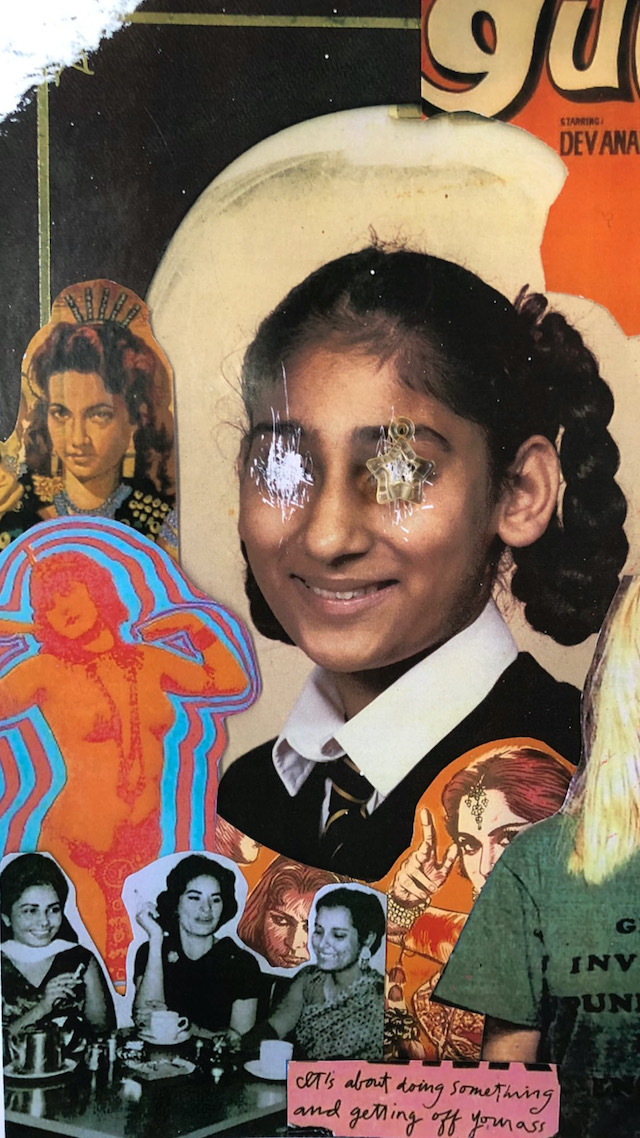
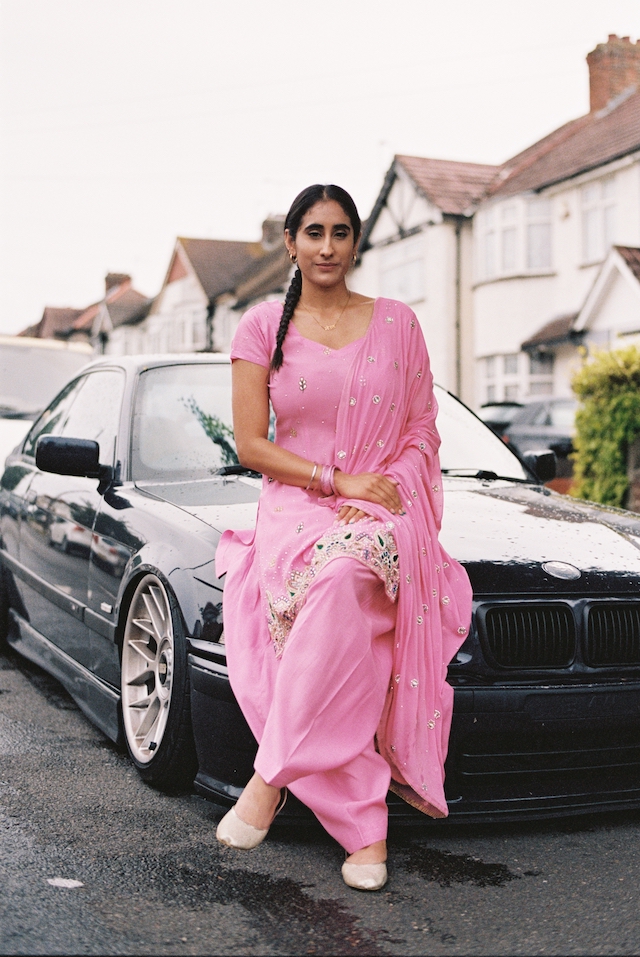
Hark1karan, Zimmers of Southall (Copyright © Hark1karan, 2020-2021)

Identity is complex a complex thing. In The Road to Nowhere, a magazine from Dalia Al-Dujaili, a British-Iraqi editor and journalist, the concept of identity is torn apart, scrumpled and analysed as she addresses her frustration with a lack of accurate representation of second-generation immigrants – where so often are diaspora communities spoken for in the media and therefore turned into a “political issue only”, she says. Where in fact, migration is a vital part of global culture, and The Road To Nowhere – now in its second issue – seeks to highlight this through a celebratory merging of art and writing, told first-hand from “third-culture kids”. She says, “Humans are mosaics of their experiences, their upbringings, the people around them and their personal history. So none of us fit neatly into a box, we’re all so messy and complicated!” Below, Dalia reveals her reasons for making the magazine, what we can expect to find inside the latest issue and her personal thoughts on identity.

Courtesy of Angela Hui

What are your reasons for starting The Road to Nowhere, what provoked it?

Oof, so many reasons… I started it during lockdown of 2020 as a way to pass the time as I was still a uni student then and didn’t have much to do. It was partly a way to raise aid money for the famine in Yemen which remains one of the largest humanitarian crises in history yet receives almost no media coverage. 

However, mostly, I was frustrated at how little agency diaspora communities have over telling their own stories. Representation is few and far between; when we are represented, we are spoken for and don’t get to choose how we’re shown. I was annoyed at how migration was almost always made into a political issue only. Whilst obviously it’s inherently political, it’s so much more than that. Migration creates culture and art, feeds creativity, inspires us, connects communities and reminds us to be human, so I found the constant politicising aspects a bit objectifying, belittling and limiting. 

On the other hand, migration is one of the most important aspects of humankind’s growth and its richness and is the oldest and most natural phenomenon, yet under current policies in the UK and the EU, migration has never been under more scrutiny; immigrants, refugees and asylum seekers are fighting some of the most aggressive and oppressive policies. As children of immigrants, we owe our livelihoods to freedom of movement, so I’m desperate to fight totalitarian control of movement and borders through creativity and joy.

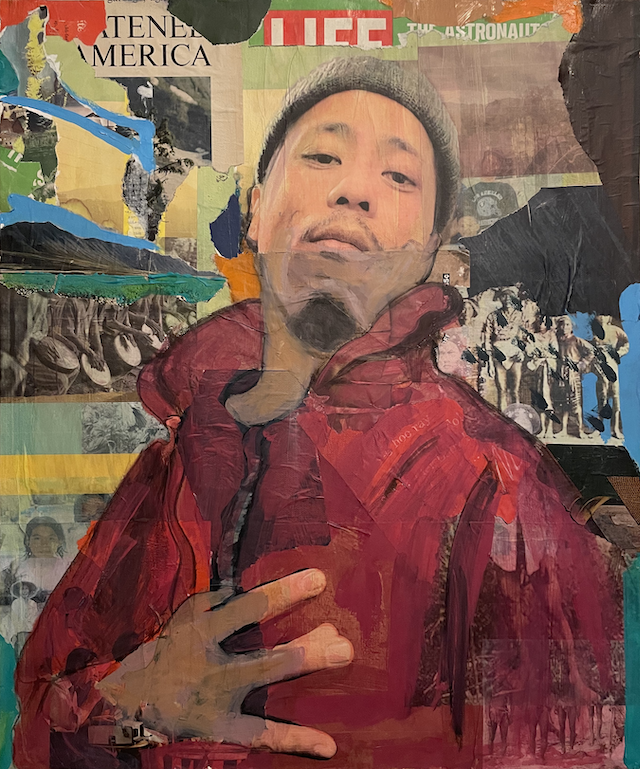
Edmund Arevalo

What can we expect to find inside issue two? How does it compare to the debut edition?

Firstly, it’s so much bigger than the last issue! Almost double the number of pages. And you can expect to find an extremely diverse range of stories; for this issue, we have contributors with backgrounds from Aotearoa, Ghana, Egypt, Turkey, Pakistan, India, Malaysia, Indonesia, Poland, and many more. The contributors use a range of poetry, fiction, personal essays, photography, illustration, digital art and film, and we have several interviews with trailblazers like Rohan Rakhit and Angela Hui. So I really sought out stories which greatly differed from one another but, at the same, were all connected by the same thread of their very human and sometimes even mundane nature. 

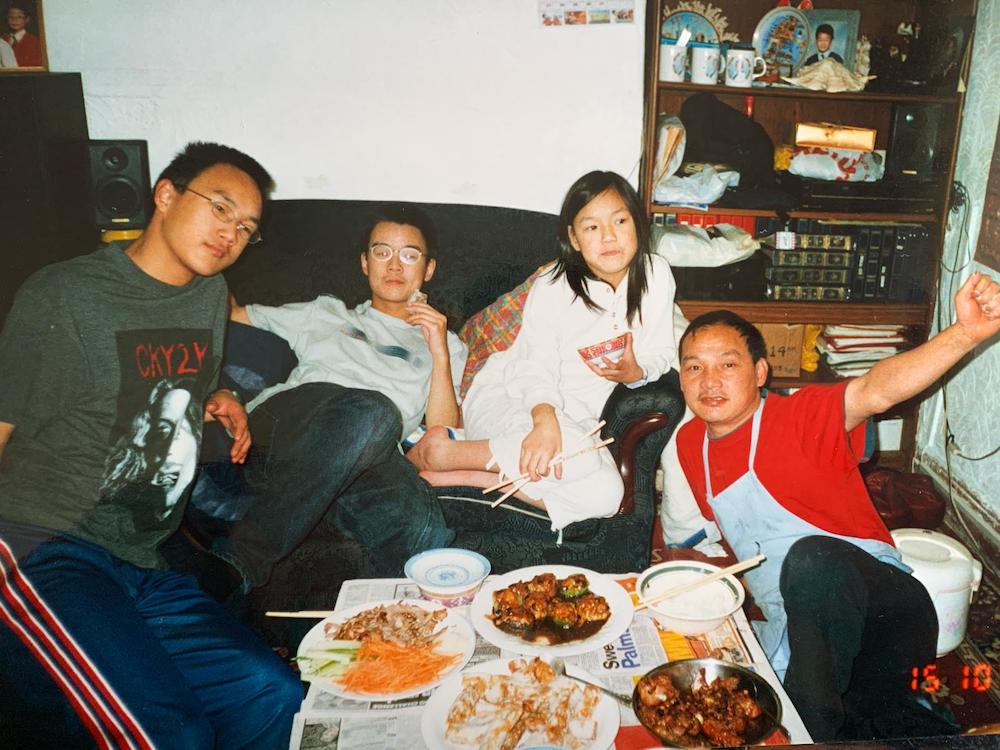
Family meal before service

Can you pick out a couple of favourite stories featured in the magazine and talk me through them? 

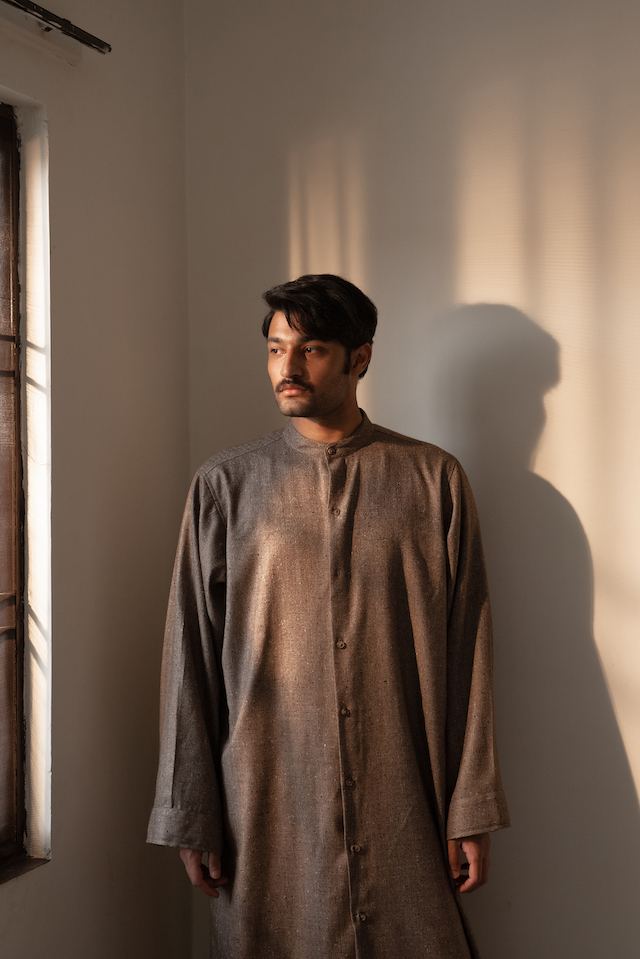
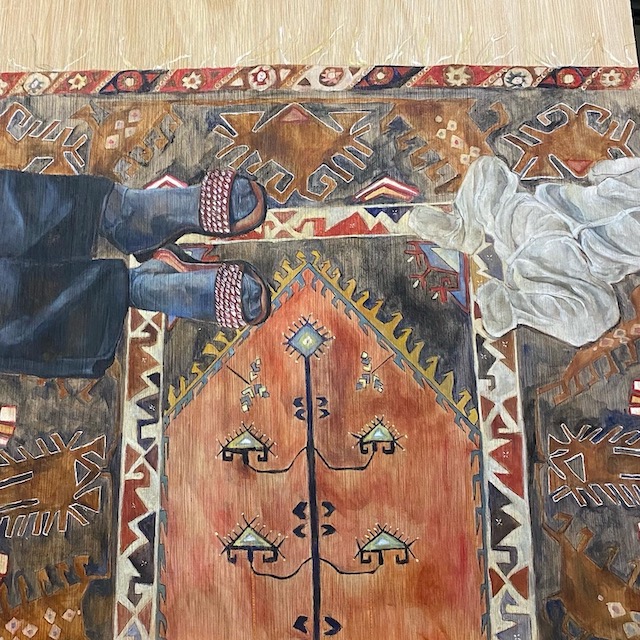
Oh my goodness, very difficult to pick out just a couple. But if I have to… Zain’s story is one that I keep returning to. Not only is his personal story absolutely fascinating – the move from Lahore, Pakistan to East London, then Morecambe – but the way he talks about objects, and clothes especially, as archives of our families’ migration is so relatable and poetic. Again, it’s just a deeply human story that almost any diaspora kid can relate to, no matter their background. Also, Zain’s work is just absolutely stunning. 

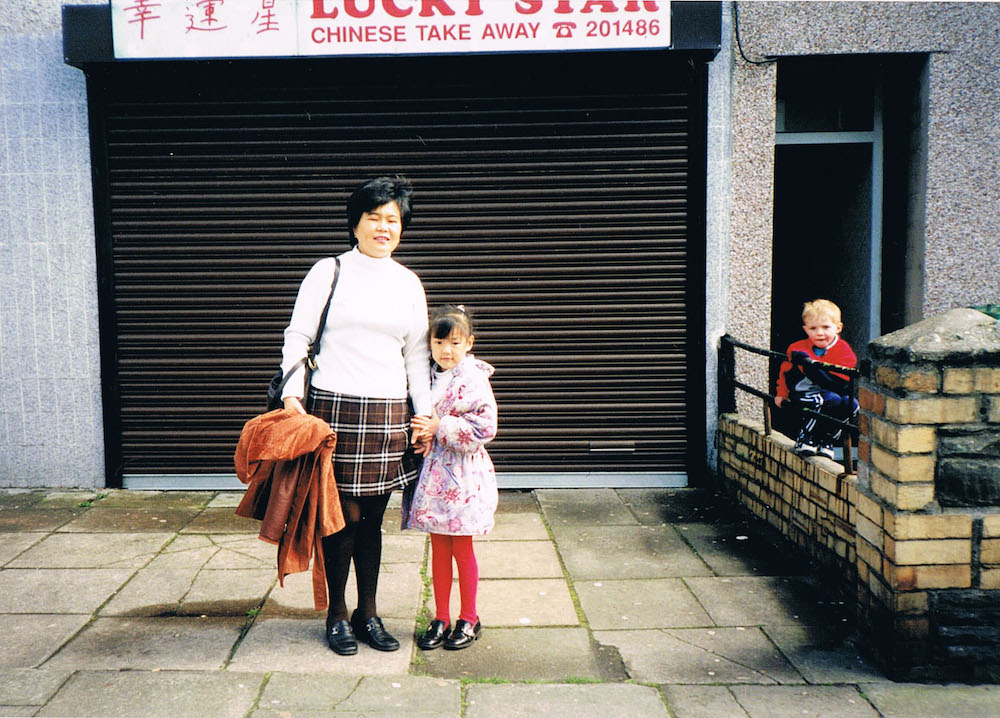
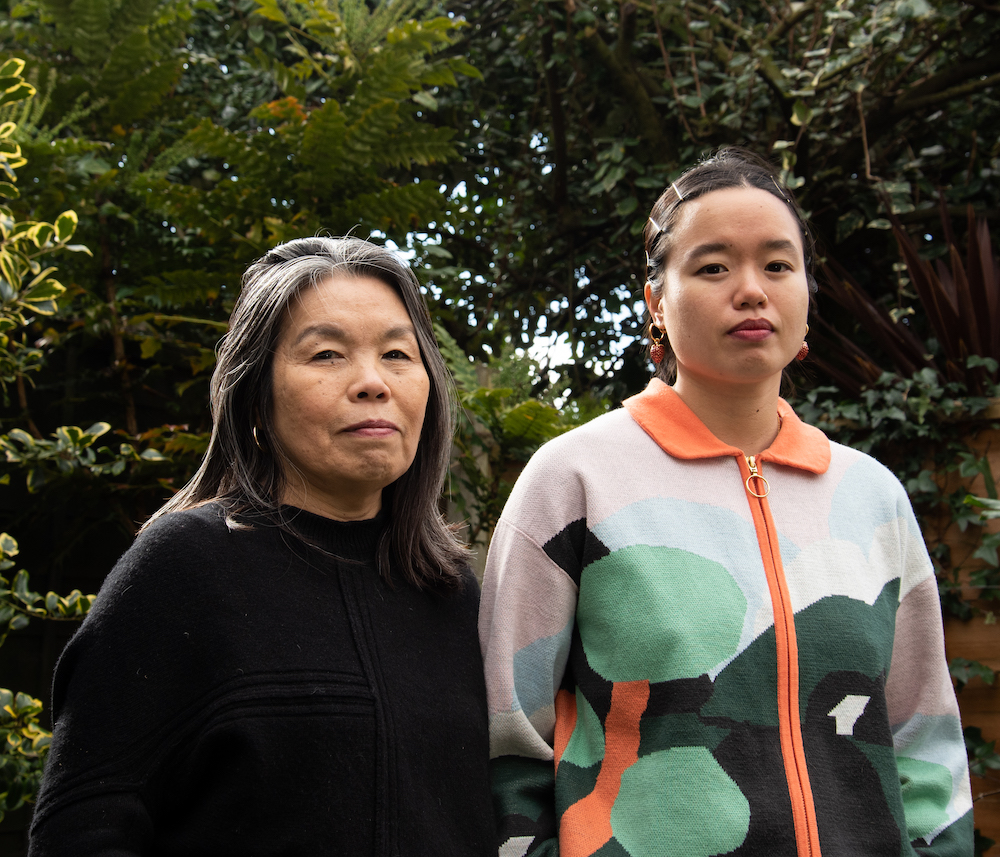
My interview with Angela Hui is another that I really treasure and feel very honoured to have in the magazine. Angela is about to publish her own book, Growing Up in a Chinese Takeaway, and we discussed her upbringing in rural Wales working for her family’s business. What I love about her story is how deeply Welsh and Chinese she feels. It was fascinating hearing her speak so passionately about Welsh culture and a love of Wales. I think people often forget how we do in fact love the countries we grew up in, as well as loving the cultures our parents imported for us from their homelands; Angela’s story is a reminder that we don’t have to ‘pick a side’.

Natasha Zubar

What does identity mean to you? And how have you represented (or scrutinised) the concept of identity in the magazine?

Identity is both everything and nothing. It’s a made-up concept and whist I deeply resonate with my identity as an Arab Brit, I also try to reject rigid notions of ‘identity’ because they can be so limiting. Many diaspora feel the same way because we fit in “everywhere and nowhere at the same time”, to echo Theo Gould in his TRTN piece, Mixed. I also think some aspects of identity politics can be more harmful and divisive than uniting. Identity to me is just being able to express the different parts of yourself without feeling the need to cater to a certain audience or change yourself to fit into other people’s boxes. Humans are mosaics of their experiences, their upbringings, the people around them and their personal history. So none of us fit neatly into a box, we’re all so messy and complicated! 

I think a good example of this in the magazine is Hark1karan’s Zimmers of Southall series (the cover image). Other than being obviously stunning, this series is so refreshing because it’s almost got nothing to do with Sikh culture – it’s about a community which is devoted to classic BMWs and which happens to be Sikh. The subjects of the images are evidently Sikh because of their clothing and appearance, but the series isn’t making their Sikh identity the sole focus, which just really humanises this community and de-exoticises them. Hark, perhaps unintentionally, re-writes this stereotype of South Asians being associated with Bollywood, curry and turbans, but he also shows how this community haven’t rejected their culture either; they manage to fuse their saris and Bhangra with their love of German Whips. I mean, to me, it’s just quietly genius. 

I hope in this magazine I have shown how identity is both a beautiful thing and ultimately a futile exercise – you will never be able to fully embody one identity and the magazine is part of a mission to learn how to accept this as a beneficial and powerful existence instead of it being simply frustrating. 

Rachna, Mom, 2021

What are the key takeaways, what can the audience learn?

Joy! I just want people to feel joy, and feel more open to listening to stories that challenge their views.

What’s next for you?

We have a couple exciting events lined up this year with the magazine, including a sold out screening of shorts at the Barbican, Finding Home, Forging Identity, and we’ll be selling the magazine at Bow Arts with Baesianz Makers Market. 

Currently, I’m just pushing and promoting issue two as best I can. We already have ideas and collaborators for issue three – I’d like to keep growing our online platform to showcase more audio-visual content, and I’d love to keep collaborating with arts collectives, organisations and institutions on in-person events like workshops, exhibitions and screenings/readings. But to be transparent, we need funding to make the next one even better, and the bigger our audience, the easier it is to convince someone to give us money… And as you know, funding is competitive and extremely difficult to attain. So the work starts now in anticipation for next year. 

The Road to Nowhere can be purchased here.

Jyni and Chuey, by Jai Toor, 2022

Marco Russo

Mirror Mother, Lorena Levi, 2021

Mixed, Theo Gould, 2021

Senja, by Maddie Sellers

Yousef Sabry, for The Road to Nowhere, 2022

Zain Ali, by Nancy Haslam-Chance, courtesy of Zain Ali

Hark1karan, Zimmers of Southall, (Copyright © Hark1karan, 2020-2021)

Hark1karan, Zimmers of Southall, (Copyright © Hark1karan, 2020-2021)

Music is a Vehicle for Perceiving

The author, poet and curator Anaïs Duplan shares a thoughtful insight into his recent essay, explaining how he strives to create community and understanding through his work

Photography by Ally Caple

How did you get to where you are today?

I was born in Haiti, i came to the Unites States around H3 and, besides a three-year stint living with my mother in Havana, Cuba, I’ve mostly been on the East Coast, between Boston and Brooklyn. I went to school as an undergrad at Bennington College, which is where I teach now, and I studied poetry and socio linguistics. Then I went to grad school for poetry at Iowa Writers’ Workshop. I was working for visual artists before I went to Bennington, and I transferred from there to RISD art school, and realised that I preferred working for artists than making art myself. 

Even though I’ve worked mostly as an arts worker at different arts organisations, I draw a lot of inspiration from visual artists – Black digital media artists both within visual arts but also music. I had a music journalism period, and I draw inspiration from that in my teaching. I’m a post-colonial literary professor at Bennington, and it’s pretty cool to be teaching where I went to school. It’s a cool way to incorporate some of my background as an artist worker.

What inspired you to become an author, poet and curator? Do you remember the first thing you ever wrote?

I do not remember the first thing I ever wrote, but I will say that, because I transferred to Bennington from another school, I was loafing around for a while between disciplines. Bennington  doesn’t really have majors – you can create your own course of study. So I left the visual arts, so to speak, or realistically it just wasn’t what i wanted to do. I was doing sociology and anthropology and realised I had an interest in language and those areas, so I was hovering around socio linguistics and discourse studies for a while. It was in that moment that I took a poetry class on a whim, and to get into class you had to apply with a packet of poems and I remember scrounging around on my computer trying to see if anything looked remotely poem-like. I found some old diaristic journal writing and put it into some stanzas and I got in. I was surprised to find my professor Michael Dumanis, who I teach alongside at Bennington, saw potential in my work and encouraged me to pursue poetry. I thought it was crazy, but here we are.

What drives your writing? Are there any specific elements, moment or experiences that influence you to pick up a pen and paper?

When I first started writing, it was a lot about having the space to say and think about things that I felt like I didn’t have in the rest of my life – in particular thinking about family dynamics, selfhood, relationships, gender, sexuality and all of that. Later on, I became really interested in writing about work that other artists and writers in my community were doing and my arts worker career path joined with my writer path.

What compelled you to write your essay, Music is a Vehicle for Perceiving (Or, a Foundation for Artful Intervention). What narratives are you hoping to share?

I became interested in writing work in conversation with my community. With the essay Music is a Vehicle for Perceiving, the piece’s statement is in the title; it’s an essay that I hope folks will try to read musically rather than try to read intellectually. By that I mean there’s a body and lineage of Black writers – Édourard Glissant, Fred Moten, Simone Wright to name a few – there’s a bunch who are in this space between poetry and theory. When we’re the space of the poem, we expect to read for affect and emotion; how does this part make me feel? But then, when we get into the world of theory or prose paragraphs, we switch into this way that we’ve been tried to read, which is more of a white, western hierarchal form of knowledge production where there are experts and people who don’t know. If instead we operate through this idea from Glissant, “to consent not to be a single being”, then we’re starting from a plan of already being in a community and already being understanding of one another. Then the writing is just an opportunity to perceive one another and to be together, like a relationality. The essay was about trying to write in a way that was inspired by those writers who I saw doing more affect-driven theoretical writing. 

What’s your personal relationship to music like?

I love music – I don’t make it and I’ve never really tried to make it, except I had an acoustic guitar in high school. I respect music and musicians a lot, and I’m very sensitive to sound which serves the practice of poetry. I hope that the audience will respond to the essay by reading musically, perhaps feeling a sense of relationality, community or finding resonance with the piece – in particular feeling a sense of permission for affect and emotion rather than reading with the mind.

How do you hope your audience will respond to this essay, what can they learn or feel? 

A main goal of mine as a writer is to try to write work that gives people permission to operate through the intelligence of the emotions. I don’t write fiction, I wish I could; I have a lot of respect for fiction writers. But in terms of poetry and essay, and the space in between – which I’ve been playing with lately – I would definitely say that’s a prime space for exploring what it means to understand information through the emotions rather than through the mind.

What’s next for you, any upcoming plans or projects?

Coming up next, I am writing a book for an academic press on the history of Black experimental documents. It’s my first time writing a book for an academic press, so I’m excited to try to explore the tension in the space, staying true to my poetry background but also writing prose that will work for a more academic audience.


An extract of Music is a Vehicle for Perceiving can be read here.

The Fendi Set

In a celebration of history and heritage, this new book serves as a love letter from Kim Jones to Bloomsbury and Fendi

Chapter 2: Paris

“Memory is the seamstress, and a capricious one at that,” writes Virginia Woolf in Orlando. A love letter penned by the acclaimed author in October 1928, the satirical novel was inspired by the family history of Vita Sackville-West, who’s both a friend and lover of the author. A feminist accord and one that rose to great acclaim, the book details Vita’s transition from man to woman as she goes on to live through centuries, thus meeting many names in English literary history. 

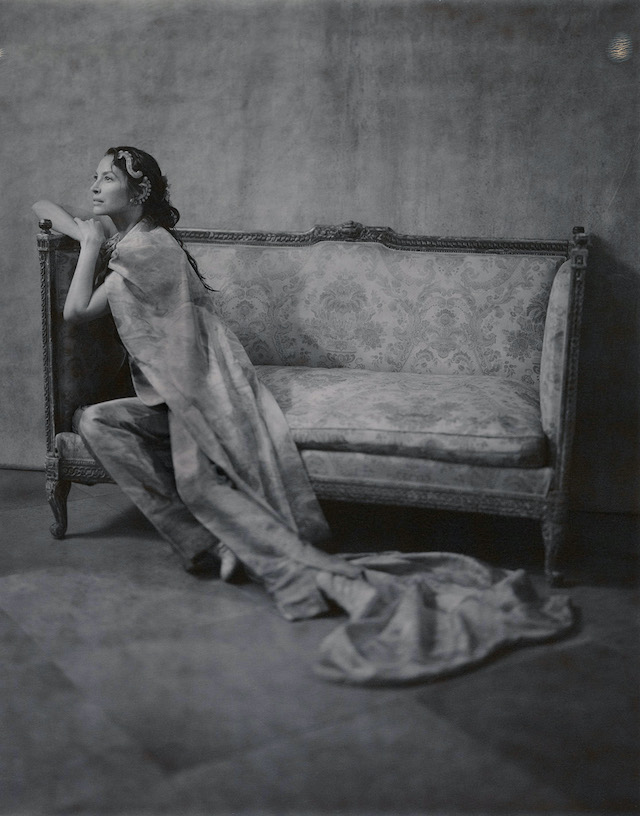
This love letter has inspired the debut Fendi Couture Spring / Summer 2021 collection designed by Kim Jones, the newly appointed artistic director of womenswear and couture. Derived from his adoration for the Bloomsbury, a term used to describe the English artist and literary movement, the pieces within pull references to both the time-travelling words found in Orlando as well as cues from the Bloomsbury Group – a cohort of English writers, intellectuals, philosophers and artists from the first half of the 20th century, which both Virginia and painter/interior designer Vanessa Bell were part of. The collection therefore pays homage to the warping concept of time and gender found in Orlando, which has now been composed into a new publication titled The Fendi Set.

Chapter 1: UK

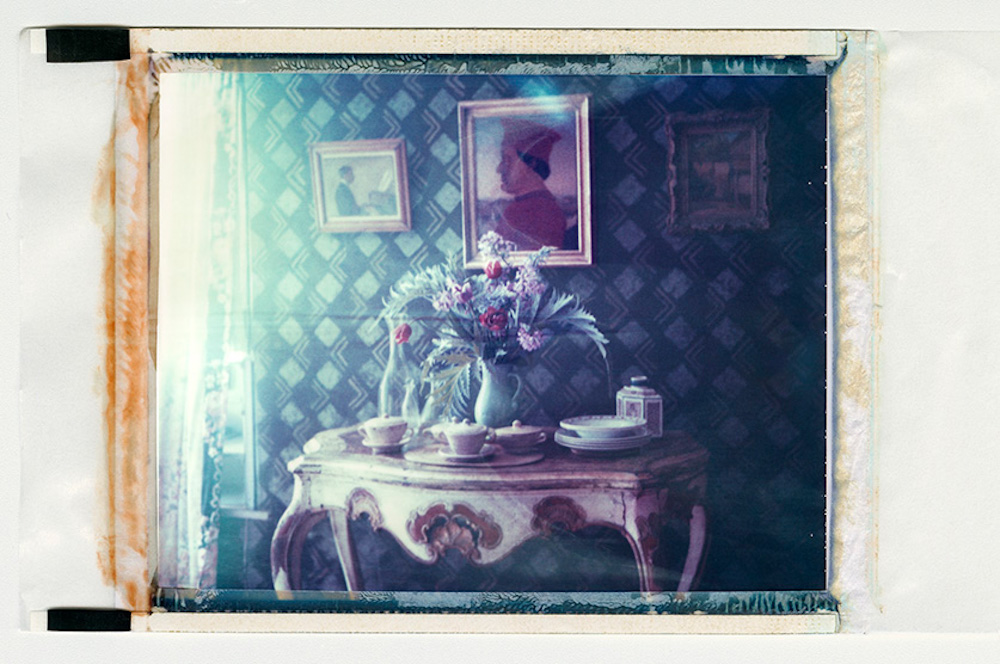
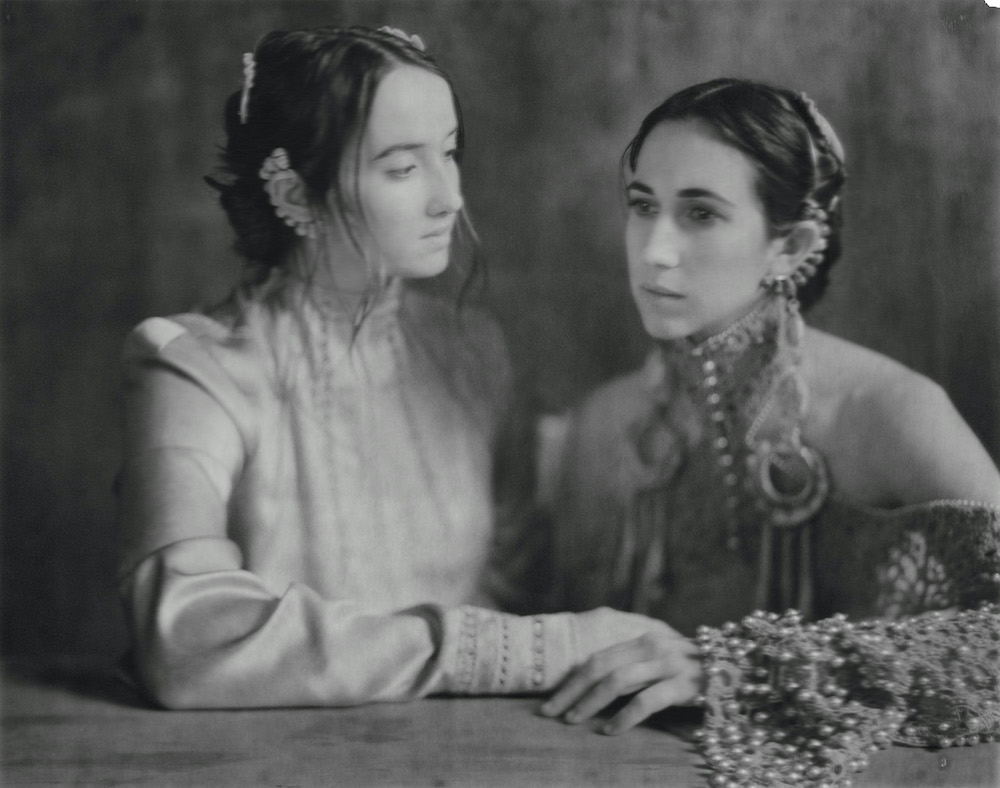
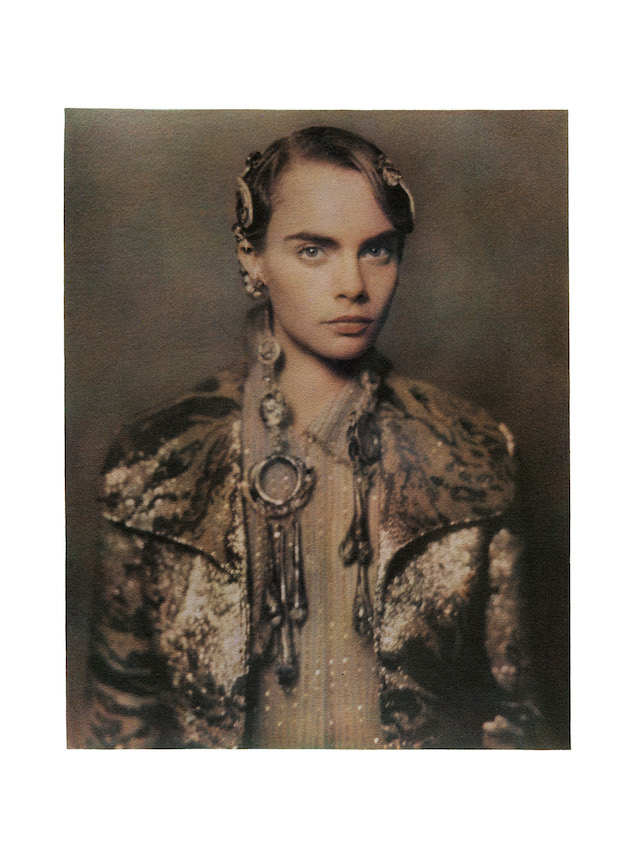
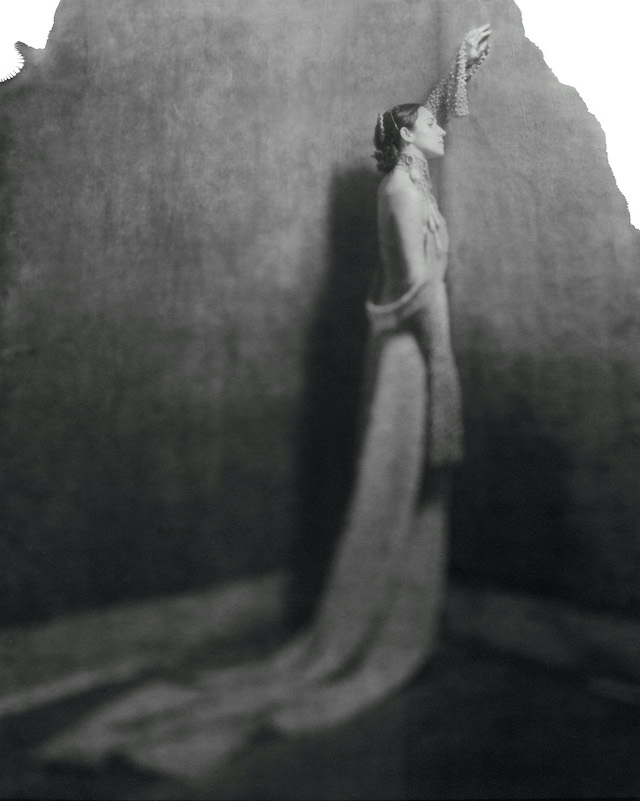
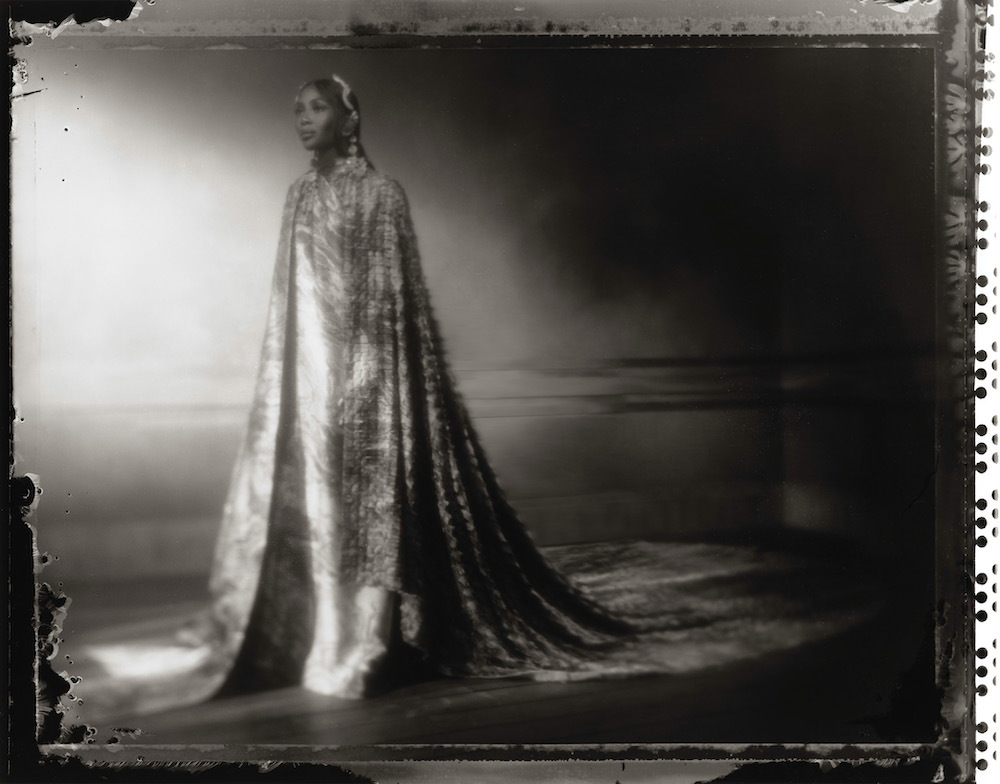
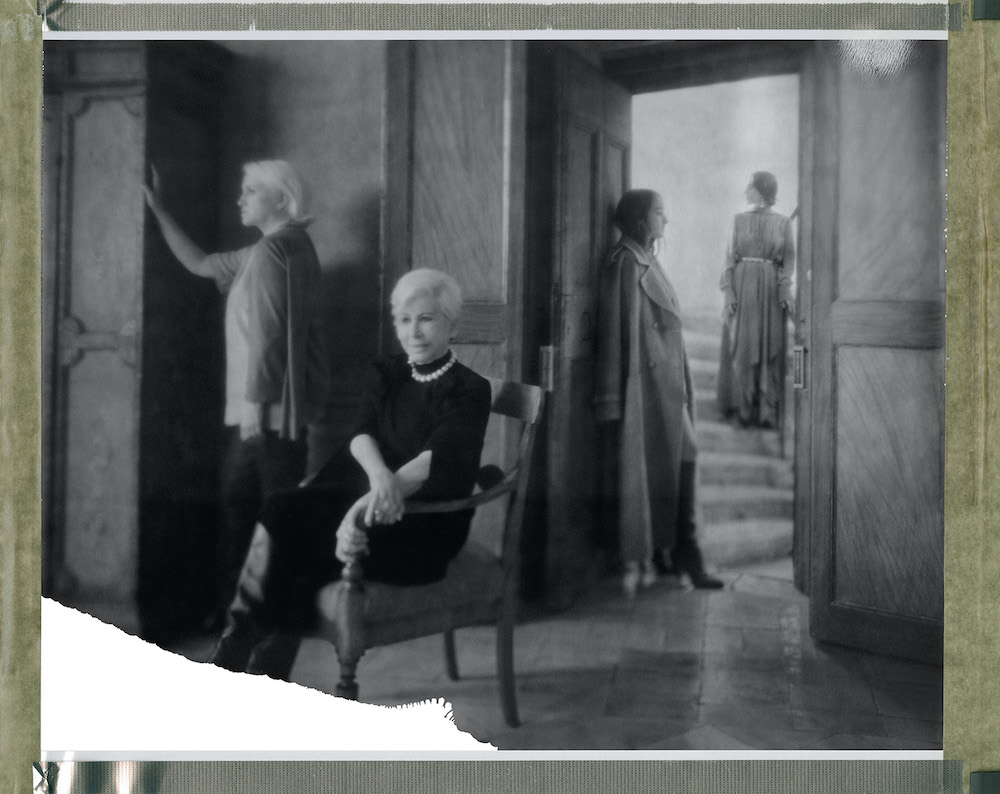
The book, published by Rizzoli, is an ode to the rich heritage of both Bloomsbury and Fendi, as well as the locations shared between them and the two lovers of Orlando. Consequently, the work involved gives a firm nod to the characteristics of both England and Rome – two significant locations visited in the collection and publication. Documentary and portrait photographer Nikolai von Bismarck has collaborated for the release and, concurrently, has created a series of textural collage-esque imagery that alludes to the archaic style of a Victorian-era photograph album. Paired with diary entries and letters written by members of the Bloomsbury Group – such as the love letter correspondence between Woolf and Sackville-West – it’s a significant pairing that allows its viewers to traverse back in time joyfully and momentarily. 

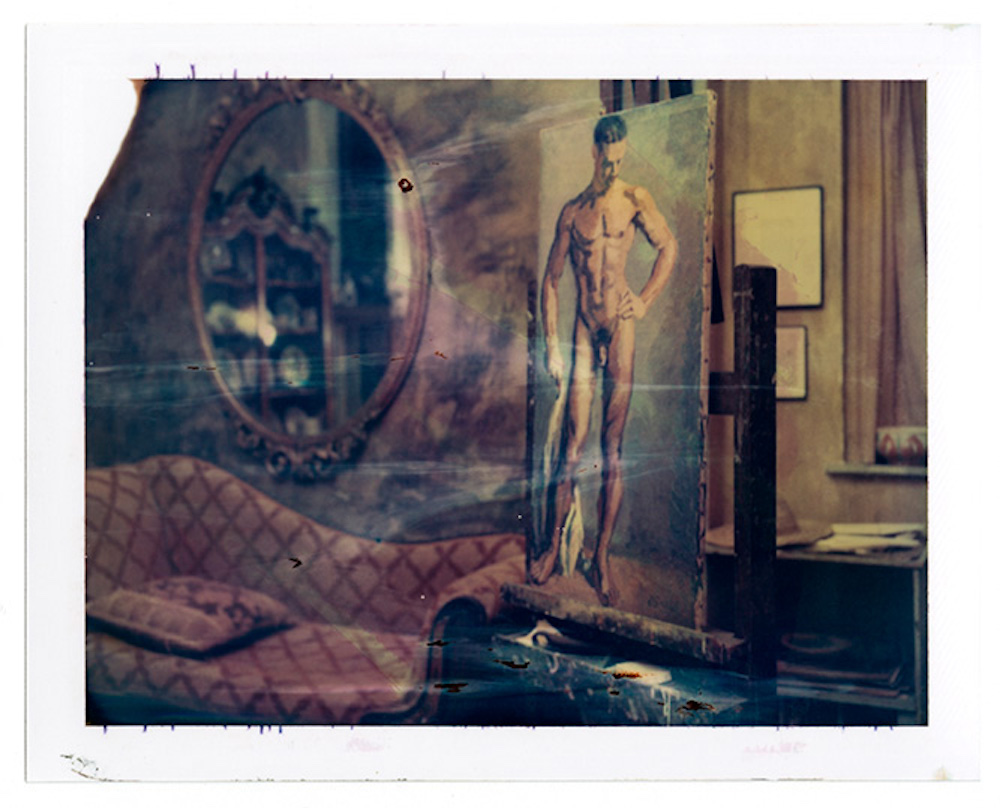
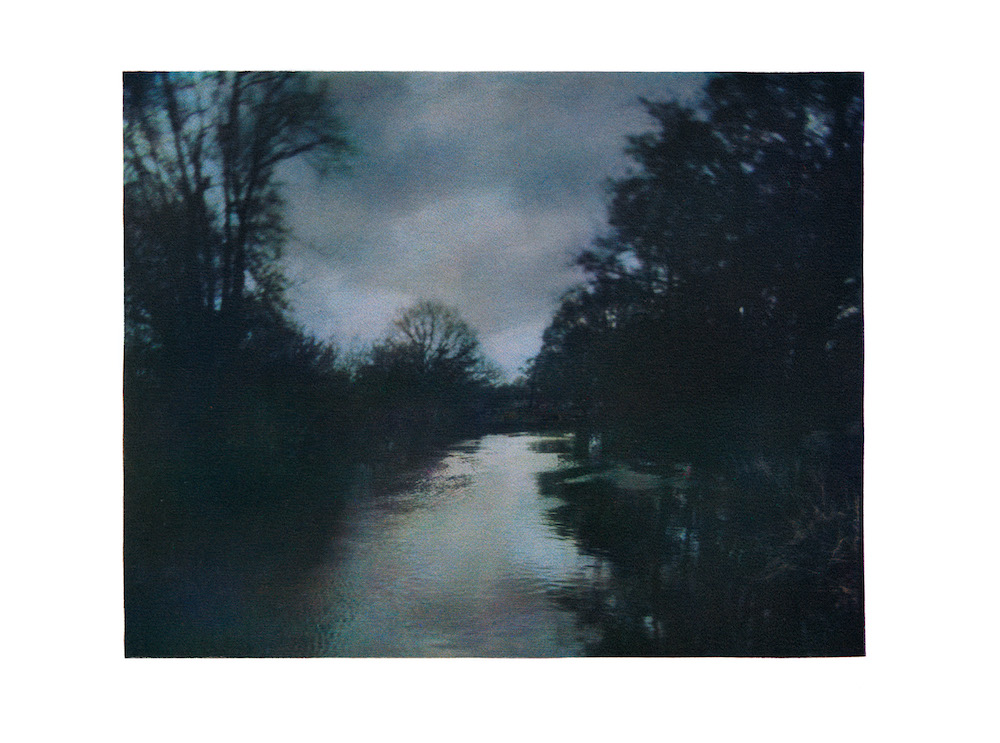
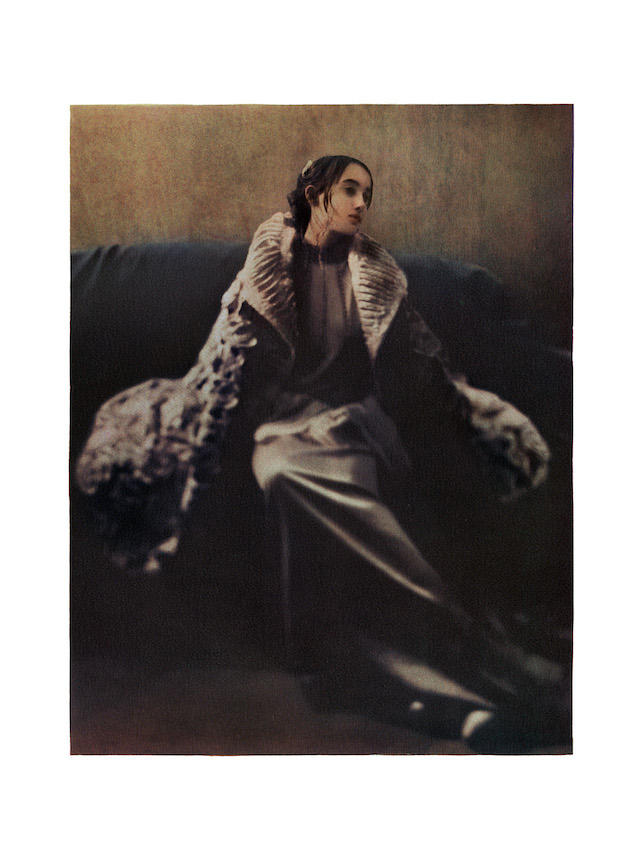
Working with Polaroid, film and Super-8, Nikolai says of his process: “Whether shooting landscapes, interiors or models, I wanted to maintain an ethereal sense of dreaminess, with figures that are occasionally ghostlike and who seem to drift on the page. Sometimes with muted colours to mirror the palette of Duncan Grant and Clive Bell. Sometimes images were dark and moody, textured, layered, soft blurred and sometimes not like photographs at all – images that were above all romantic and true to the characters of the Bloomsbury Group, dark graceful and free.”

Chapter 2: Paris

Structurally, the book journeys through the hilltops of Southern England and traverses to ancient Rome, before landing finally at the aqueducts of Italy. Two family histories are expelled in unison: the artists of Bloomsbury and the dynasty of Fendi. To reveal this synergy, the book is split intro three sections. The first takes its audience to Sussex and Kent, which are two locations associated with the Bloomsbury Group; they’re also referencing Sackville-West’s ancestral home and the fictional family seat of Orlando. Additionally, Sackville-West later lived with her husband Harold Nicolson in Sissinghurst Castle. The second chapter takes place in Paris as it marks the couture presentation abound with Italian Renaissance references; the third travels to Rome to follow in the steps of Bloomsbury artists who spent time there, including Woolf. 

“I wanted a ghostly atmosphere, a dreamlike quality,” states Kim, discussing the book’s unmissable aura. “Orlando is about time travelling and I wanted the work to transience time, to drift between the present, past and future. Nikolai’s photographic language and his exploration of both analogue and other experimental techniques and textures evokes these shifting narratives.”

Other contributors include Tilda Swinton who’s written the preface, as well as Bloomsbury scholar Dr Mark Hussey who’s penned the introduction; Hussey also worked with the archive of Berg Library in New York to curate Woolf’s diaries and letters.


The Fendi Set with photography by Nikolai von Bismarck and text by Kim Jones, Jerry Stafford and Dr. Mark Hussey is published by Rizzoli priced £97.50

Chapter 2: Paris

Chapter 2: Paris

Chapter 2: Paris

Chapter 3: Italy

Chapter 1: UK

Chapter 1: UK

Chapter 2: Paris

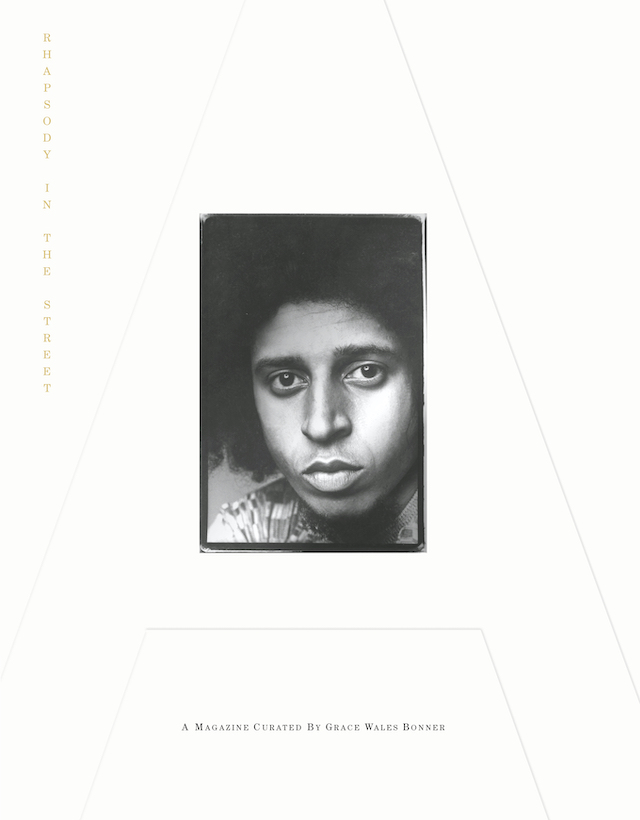
Rhapsody In The Street

A Magazine Curated By onboards Grace Wales Bonner for its 22nd issue, featuring archival and newly commissioned works that respond to the tradition of Black poetry, literature and portrait photography of the 20th century

Anthony Barboza. (1972) Self Portrait Kamoinge

Grace Wales Bonner is a polymath of sorts. After launching the eponymous fashion label Wales Bonner in 2014, the British-Jamaican designer has been actively addressing topics of identity, politics, sexuality and race through a merging of luxury and critical design – that which is informed by research and a hybrid both of European and Afro-Atlantic culture. Her graduate collection Afrique, which debuted in 2014 with a cast of Black male models, received the L’Oréal Professional Talent Award; the AW15 collection Ebonics proceeded and, the same year, she was awarded Emerging Menswear Designer at the British Fashion Awards. It wasn’t long until she was awarded the LVMH Prize of $300,000 for Young Fashion Designers, which was given just after Grace’s SS17 show Ezekiel, featuring a collection of structural works draped in beading and history, drawing inspiration from Emperor Haile Selassie of Ethiopia. Her work often signifies mythology and cultural narratives, and has, since the dawning of her label, continuously challenged expressions of beauty and identity – her recent SS22 collection named Volta Jazz being the latest example.

And now, Grace is wearing a slightly different hat. She was asked to curate the 22nd issue of A Magazine Curated By, entitled Rhapsody In The Street and displaying an academic and visual survey of Grace’s research spanning 200 pages. The Paris-based magazine explores a different fashion designer with each issue, and with this one, Grace responds to the tradition of Black poetry, literature and portrait photography from the 20th century. Within, you’ll find archival work and historical ephemera coupled with newly commissioned essays, poems, paintings and photography from the likes of Ming Smith, Zoë Ghertner, Paul Mpagi Sepuya and Tyler Michell, the latter of whom has captured Wales Bonner’s AW17 collection Ezekiel. It’s a tome to cherish and hold, thought of as a reference point for conversations surrounding topics such as Jamaican dancehall and the Kamoinge photographic group in Harlem, with published archives from previously unseen Ghanaian film photography and poetry by Lynette Yiadom-Boakye to name a few. Grace tells me more about the issue below.

Harley Weir. (2015) Wales Bonner Spring Summer 2015 Ebonics

Curated as a “response to the tradition of Black poetry, literature and portrait photography of the 20th century,” what does this mean exactly? How are you responding to these art forms?

Rhapsody in the Street explores Black style as a lineage and quality of beauty recorded in history by portraiture. I see the issue as a chorus: a hybridity of different voices speaking as one, and an exploration of the archive as a process of recording collective memories.

Talk me through your research process – where did you source your content, who did you seek to include?

I wanted to create a rhythmic and intellectual space underlined with a magical spirit. Starting points for research were Amiri Baraka’s In Our Terribleness and Roy DeCarava & Langston Hughes, The Sweet Flypaper of Life. Both publications explored a mixture of photography and poetry which I wanted to respond to in this issue. 

Zoë Ghertner. (2021) Selena Forrest wears Wales Bonner, Black Sunlight (Autumn Winter 2021) . Adidas x Wales Bonner (Autumn Winter 2021)

Can you pick out a couple of favourite moments from the magazine to look out for? 

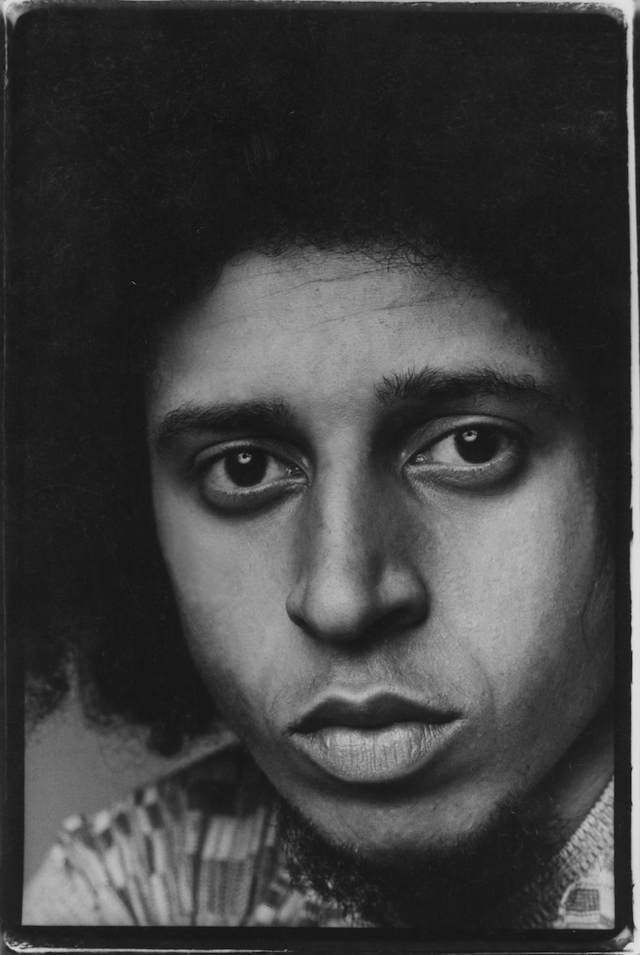
I feel honoured to be able to have included Greg Tate’s reflections on Kamoinge, the photographic group from Harlem, in the magazine. A self portrait by Anthony Barboza, a former member of Kamoinge, is featured on the cover of the magazine. 

How do you hope your audience will respond to the magazine? What stories are you hoping to share?

Rhapsody in the Street is an opportunity to experience, honour and revel in a lineage of beauty that unravels and reveals itself over time. With this, I open the door to new possibilities and the continuous unfolding of our story.

Paul Mpagi Sepuya. (2021) Mirror Study for Grace (0X5A4149)

Ming Smith. (2021) Self-Portrait in Wales Bonner, Black Sunlight (Autumn Winter 2021)

Ming Smith. (ca.1977) Acid Rain – White Socks (Mercy Mercy Me (The Ecology) by Marvin Gaye, Soul Purrfection Version)

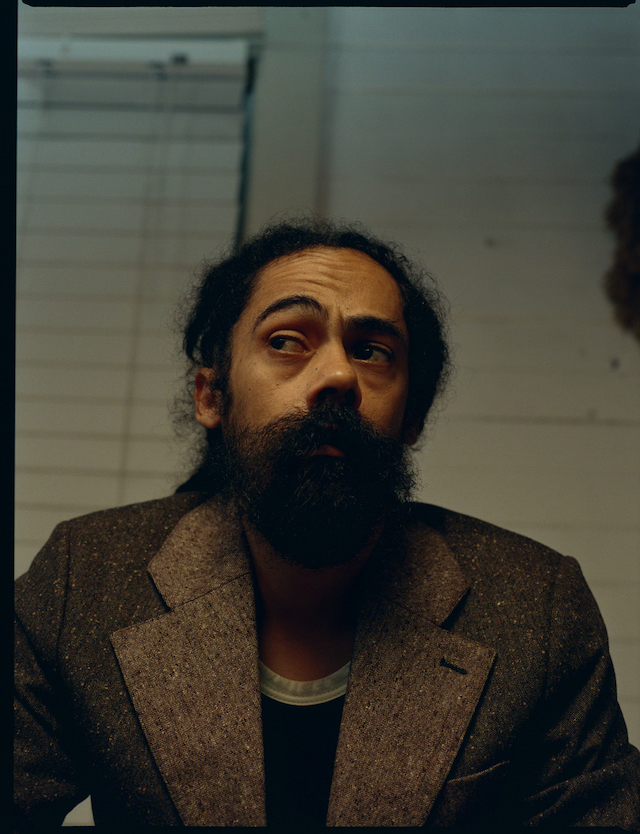
Steven Traylor. (2021) Damian Marley wears Wales Bonner (Autumn Winter 2020) Lovers Rock Judah Two-Toned Tailored Jacket

Cover, A Magazine Curated By Grace Wales Bonner

The Transgender Issue

Shon Faye discusses her landmark book, an urgent argument for justice

Photography Lydia Wilks

“I mean, I didn’t really want to write the book,” Shon Faye leans back and chuckles, while playing with her hair.

Over the last decade in Britain, Faye is one of the few trans women with a public platform writing about trans issues. She has an enviable knack for being both ferociously smart and bitingly funny, in 280 characters, but her sharp wit and analysis extend far beyond Twitter. Faye’s writing moves with ease between topics ranging from Drag Race UK to Opus Dei. No matter the content, her subjectivity as trans and as a woman are often centred in an approach that’s both unguarded and refreshing.

So, I ask across a glitchy Zoom screen, what changed her mind? Faye has a restless energy, shifting often; it feels like her mouth is trying to keep up with the speed of her brain: “There was never enough space in a column to actually talk about the things I want to talk about, the core issues of what is wrong for trans people. I want this to be a corrective.”

Since Faye started writing in 2014, the UK political and social landscape has transformed. We now live in the long shadow of the ghastly Brexit referendum, itself a footnote in the modern global rise of far-right populism. Anybody paying attention will know that trans people have become pawns in the broader ‘culture wars’. In the UK, this has seen rise to a particularly unholy alliance between far-right forces and a small but loud subsect of second-wave feminists, both intent on forcing trans people from public life. The British press have reduced the complexity of the assault on trans lives to what Faye summarises as “a Twitter flame war between us and TERFs” . It is this that she hopes to correct.

She cites Reni Eddo-Lodge, author of Why I’m No Longer Talking to White People About Race, as an inspiration for taking the plunge. As a black woman frustrated with only being asked to speak on white feminism’s terms, she wrote her own book. It wasn’t only taking back her power which inspired Faye, but also how she held that power once successful: “She just wrote a book, but she doesn’t go on Good Morning Britain when they need a black woman – she didn’t become the ‘go-to black woman’. I found it quite chic.”

This reflects a key contention of The Transgender Issue: that representation and visibility won’t liberate trans people, addressing structural oppression and material conditions will. Though in publishing a book on the topic, demands to represent will surely increase? While Faye is careful not to disparage the urge for representation, she doesn’t want to position herself as the spokesperson for her community: “I’m not representative of trans women writ large; in fact, I’m quite unrepresentative in many ways.”

Originally from Bristol, Faye gained a scholarship to public school, followed by Oxford, and spent her first years of graduate life as a lawyer. This, she says, is indicative of why we can’t correct the media with representation: “It’s the case across all minority groups in the media and publishing that it’s often the most structurally privileged ones who end up representing.” But, I wonder, in an internet age which doesn’t allow much space for public fallibility, if there’s some self-preservation there too. She trails off, “Eventually I would disappoint people anyway…”

For those of us who are structurally and culturally disempowered, social media provides a blunt tool with which to speak with a wider reach than our material life provides. Being perceived as a representative can mean being attacked by those who don’t like your kind. It can also mean carrying the burden of a collective’s desire to be seen, heard, and understood perfectly.

In the social-media era, there is an idea that any kind of visibility as a trans person is “resistance”. Faye is critical of such exposure. “This kind of hashtag influencer style activism, which makes it very easy for allies, with ‘Trans women are women’ as a rallying slogan, has very much narrowed the terms of what trans liberation actually looks like. You know, no one talks about housing or poverty as a trans issue.”

This is the substance of the book: shifting the focus of trans lives from Twitter sound bites and reactive media to the real-life issues that shape trans people’s lives in the UK – healthcare; housing; work; sex work; prisons; immigration; LGBTQ+ and feminist spaces. Faye talks about all these areas with eloquence and ease, weaving them through our conversation. From the obsession with trans women in sports – “Everyone’s talking about trans women at the Olympics but no one’s talking about sex and sex workers. Well, globally, most trans women have done some kind of sex work, and very few trans women will ever qualify for the Olympics” – to poverty, “Universal Credit is a scummy austerity policy, and it affects trans people terribly.”

To write about these things as a trans woman means that she’s often labelled an “activist”. I ask her about this: “I hate being called a trans activist especially because it’s got this pejorative use, it’s designed to reduce what I do. Yeah, I’m a writer, and my subjectivity is I can’t not be trans; we’re in the middle of this worldwide backlash, so of course I’m writing about it.” It’s a familiar trap, as a trans writer you’re expected to write about trans issues. But as a trans writer your subjectivity is used against you to undermine both your skills and what you say.

Experienced in navigating this, Faye is clear The Transgender Issue is not a memoir, and she refuses to write one. Women writers are asked to write memoirs more than they are asked for analysis. It’s a perverse system of extracting vulnerability for pay-per-view consumption, a vulnerability trap many minoritised groups are familiar with. Vulnerability is demanded to legitimise your humanity, but the pieces of you shared are scrutinised at best, weaponised against you and people like you at worst. For trans women this is added to by the salacious interest in transition stories, while there’s very little space in public life for trans women’s real vulnerabilities.

“I don’t define being a woman by suffering,” Faye states matter-of-factly. “Sometimes the quickest way women bond is to talk about how men have screwed you over; it’s a classic thing that from a very young age girls and women learn to do. There’s almost a drive to share traumatic experiences because you feel pressure to prove that you have had these experiences because you’re a woman, and then ultimately, the way that transphobia responds to that, it’s just to be like, well no, I don’t believe you.”

This can feel particularly acute when trans people talk about experiences of domestic violence (DV) and the needs of survivors. In 2018, 7.5 per cent of all women in the UK experienced DV, and 16 per cent of trans women had, but anti-trans feminists often divert the conversation to theoretical abstractions about men in women’s spaces. We well know the threat of being denied your own reality is one that keeps many survivors silent; movements have been built around the mantra ‘I believe her’.

To be trans is also not defined by suffering. The book’s epigraph is a quote from performance artist Travis Alabanza: “When I say trans, I also mean escape. I mean choice. I mean wanting something greater than what you told me. Wanting more possibilities than the one you forced on me.” 

So, what would freedom and autonomy mean to Faye? “To be able to move on from trying to explain myself, or the community I belong to, or this political experience we call trans. Or at least, to talk about it in much richer ways, like things that bring me joy. I would want to give expression to that and to be able to rejoice in my writing.”

And what would it be to be liberated? “It’s not just about trans people being liberated; we’d basically have undone binary gender and its bordering structuring principle of power and violence. In a truly liberated future I might not even call myself trans, that word would cease to have any meaning, nor would woman. It’s quite hard to admit that, but I think that trans liberation is actually abolishing ourselves because we wouldn’t need to exist in such a category.”

Neatly, that is reflected in the first line of Faye’s book: “The liberation of trans people would improve the lives of everyone in our society.” What a great place to start.

The Transgender Issue, An Argument for Justice by Shon Faye was published by Allen Lane, Penguin, September 2021 

Photography Lydia Wilks

Hair Louis Byrne

Make up Billie McKenzie

This article is taken from Port issue 29. To continue reading, buy the issue or subscribe here
Bad Form: Caribbean Literature

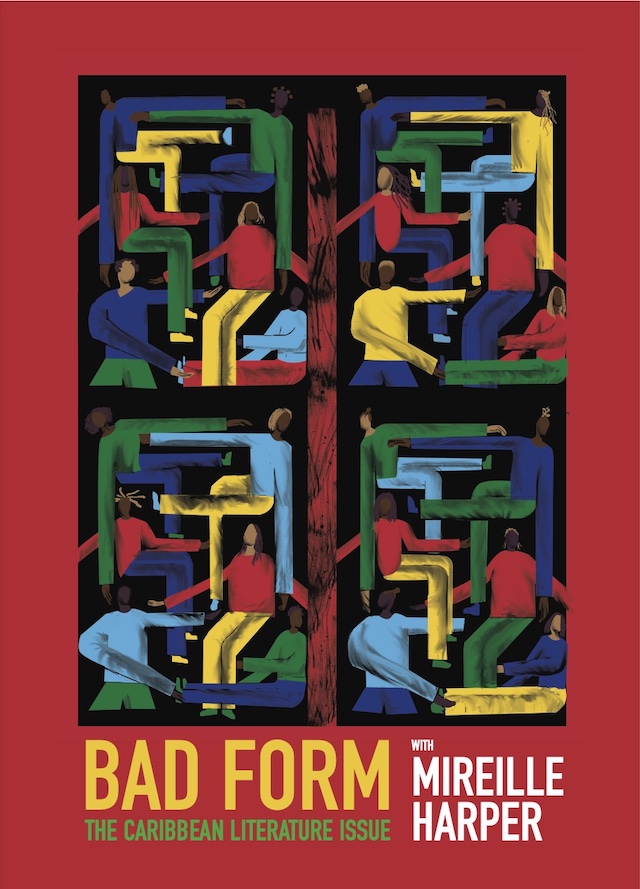
In an excerpt from the literary magazine’s seventh issue, guest editor Mireille Cassandra Harper celebrates the Caribbean through stories, essays, reviews and poetry

Illustration by Tomekah George

I am a second-generation Jamaican. Despite my grandmother moving here in the 1960s, my mother remained in Jamaica, a ‘barrel child’ and spent her childhood in the parishes of Clarendon and St. Catherine, raised by her grandparents and later her aunt. She has often entertained me with stories of her childhood, visiting then-untouched beaches, fond memories of picking fresh mangoes, oranges and cashew fruit (often surreptitiously), the goats, chickens and other animals that her grandparents reared on their farm, and the joys of a rural and idyllic childhood. 

I grew up with an intense love and appreciation of my Jamaican heritage, that was always supported and nourished. Our home was filled with the sounds of Morgan Heritage, Richie Spice, Tarrus Riley and other music icons. From Lover’s Rock Sunday sessions and Vibes FM car journeys (those who are familiar will recall the hilarity of the incessant interruptions declaring that the station was ‘the wickedest in the whole world’) to late nights on holiday in southern Italy, where my parents would drive out to arid, empty locations in the middle of nowhere so we could enjoy open-air reggae concerts with the likes of Jah Mason, my mother and I belting out “My Princess Gone” without a care in the world. Storytelling and literature played a big part too. I was regaled by tales of Jamaican folklore, my favourite being the story of River Mumma, a mythical sea siren. A literary lover from a young age, my mother sought out books that put Caribbean literature front and centre. She travelled far and wide to buy me countless titles about the Caribbean, many of which I still own. My personal favourites, Kwame and Netta’s Story, came from Black River Books, an independent publisher that sought to revive the fullness of Caribbean heritage by telling beautiful stories of the lives of Caribbean children, putting them front and centre of stories, rather than on the sidelines. I was taken to meet my heroes, John Agard and Grace Nichols, and cherish the beloved signed copies I went away with to this day.

As I’ve grown older, more complexities around my heritage have come to light. In recent years, I have grappled with difficult conversations with my grandma – if you have ever tried to persuade your grandma, especially a 92-year-old Jamaican grandma, to consider a different way of thinking, you’ll know how challenging that can be. I’ve also attempted to reckon with the fact that my family is split across towns, states and countries – disjointed in more ways than one, and tried to reckon with intricate and at times, painful family histories and hidden secrets that inevitably have come to light as I grow older. At the same time, I have built deeper connections with family members, expanded my knowledge on my family history and heritage, and both listened and taken in the wisdom of my elders. Outside of my familial relationships, I am seeing what it means to be of the Caribbean diaspora, redefined through music, art and of course, literature.

When I came across Bad Form last year, I felt like I had finally found a literary space that encompassed the richness, vibrancy and sheer brilliance of Black, Asian and marginalised writers. Headed up by the phenomenal Amy Baxter (who will likely own her own publishing house one day, mark my words!) and the stellar team – Morgan, Sophie and Emma who are all immensely impressive in their own right – I found Bad Form’s active and dynamic approach to platforming Black, Asian and marginalised writers a breath of fresh air in what can often be a stagnant, elitist and if I am to speak frankly, institutionally racist industry. I knew instantly that I would love nothing more than to work on an issue celebrating Caribbean writers and so the idea for Issue 7 (my lucky number, what are the chances?) was born.

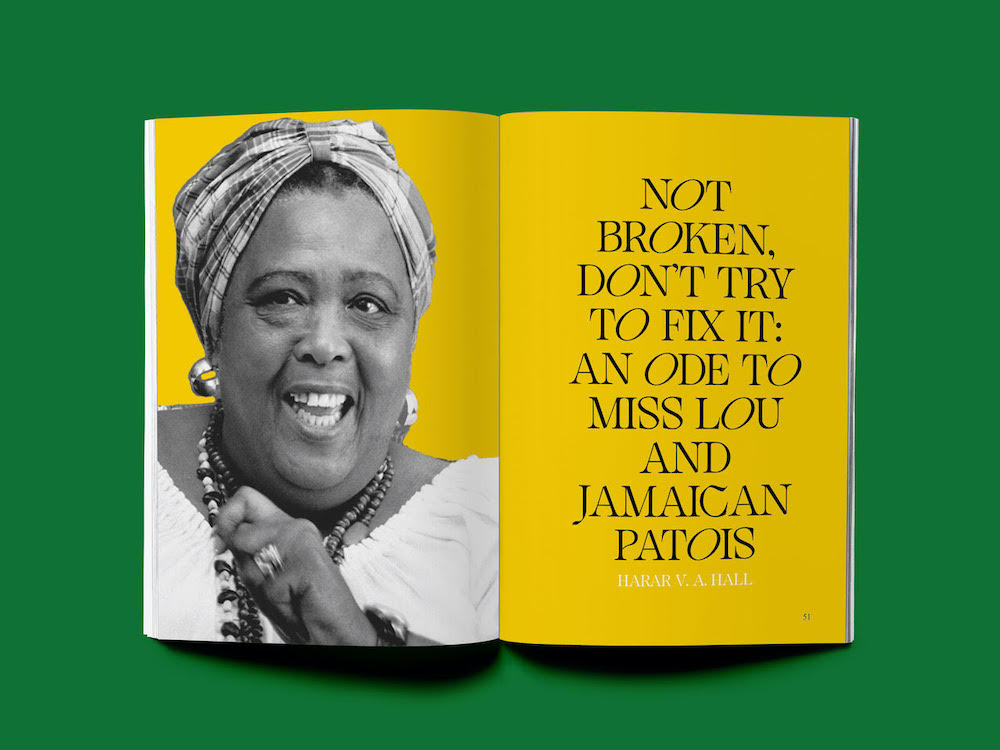
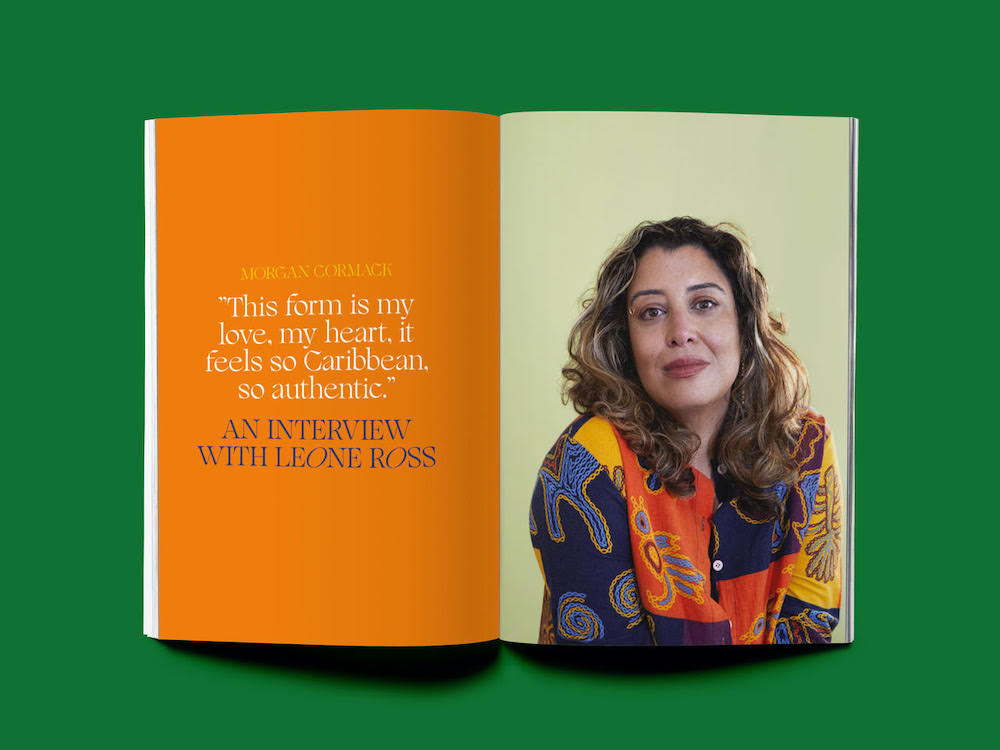
We picked June by chance, but writing now, this publication marks an important time for the Caribbean diaspora. As this issue lands in your hands, Caribbean American citizens are honouring their heritage during Caribbean American Heritage Month and the UK celebrates the 73rd anniversary of the Windrush generation coming to Britain. This feels, in this moment, like a literary ode to what is a month of both remembrance and celebration. A celebration of the Caribbean and all its greatness, this issue boasts 17 stellar writers who each share their stories, essays, reviews and poetry for your literary pleasure. From opinion pieces on Jamaican patois and revelations on queer and non-binary defiance in contemporary Caribbean poetry to literary essays on West Indian revolutionaries and narrative poetry that bring folktales and legends to life, each piece is a gem in its own right.

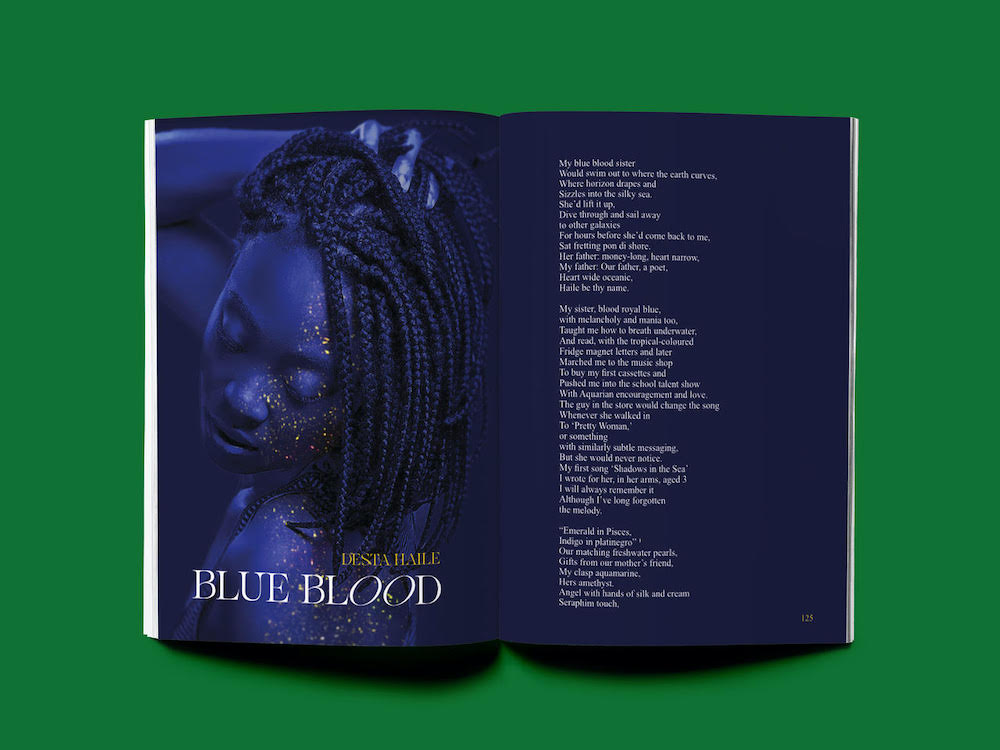
Like Amy, I’m not one for favourites – each of these contributions is equally brilliant – but some left me reeling after reading. Ashley Roach McFarlane’s spectacular piece on the historical development and exportation of homophobia to Jamaica and Desta Haile’s breathtaking poem, Blue Blood – an ode to her late sister and her childhood years spent in Barbados are two I would recommend you devour instantly.

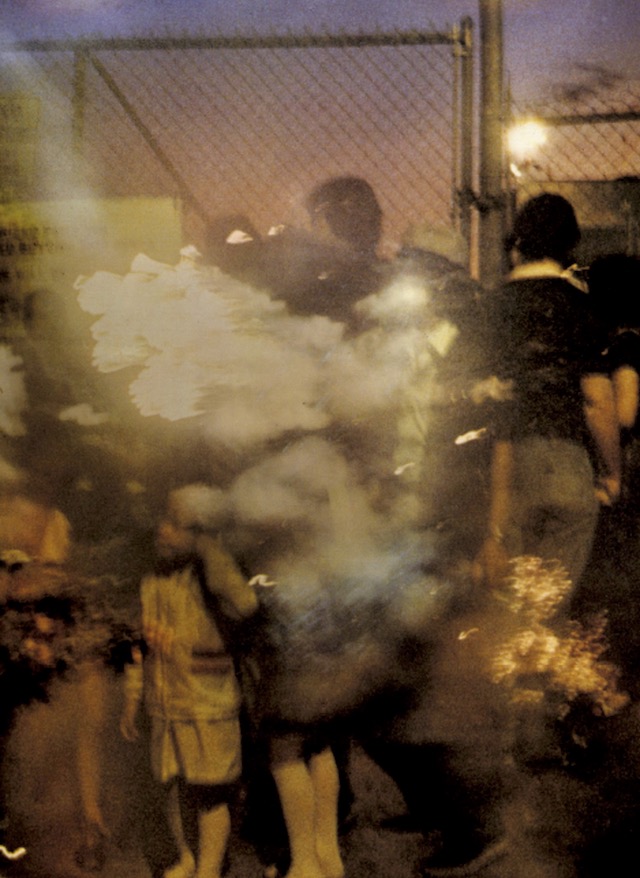
This issue’s mesmerising cover comes from illustrator, Tomekah George, who creates colourful artworks which sit between collages and paintings. Her abstract design pays homage to the diversity of the Caribbean – across its peoples, cultures and landscapes – coupled with the connectedness of its persons. A huge thanks goes to Tomekah, who approached this with such care and love. 

Thanks also to Duppy Share who have kindly partially sponsored this issue. Many brands co-opt Caribbean culture without consideration for its people. It has been a pleasure to work with an organisation that appreciates the labour, effort and time that the team at Bad Form undertakes for each issue, respects how we choose to present our respective cultures and heritages and recognises the value in this work.

And, of course, thank you, Bad Form readers. Without your support, this issue wouldn’t exist. I hope reading this nourishes your spirit. It has been an honour to work on this, to encounter incredible writers, poets and essayists, and to work with such a brilliant team of brilliant women. May you cherish it as much as I have.

Mireille x

Bad Form is available to purchase here
Bibliomania

Antiquarian book dealer and avid bibliophile Simon Finch meditates on the passions and delusions particular to his trade, and reflects on a rare text that eluded him nearly thirty years ago

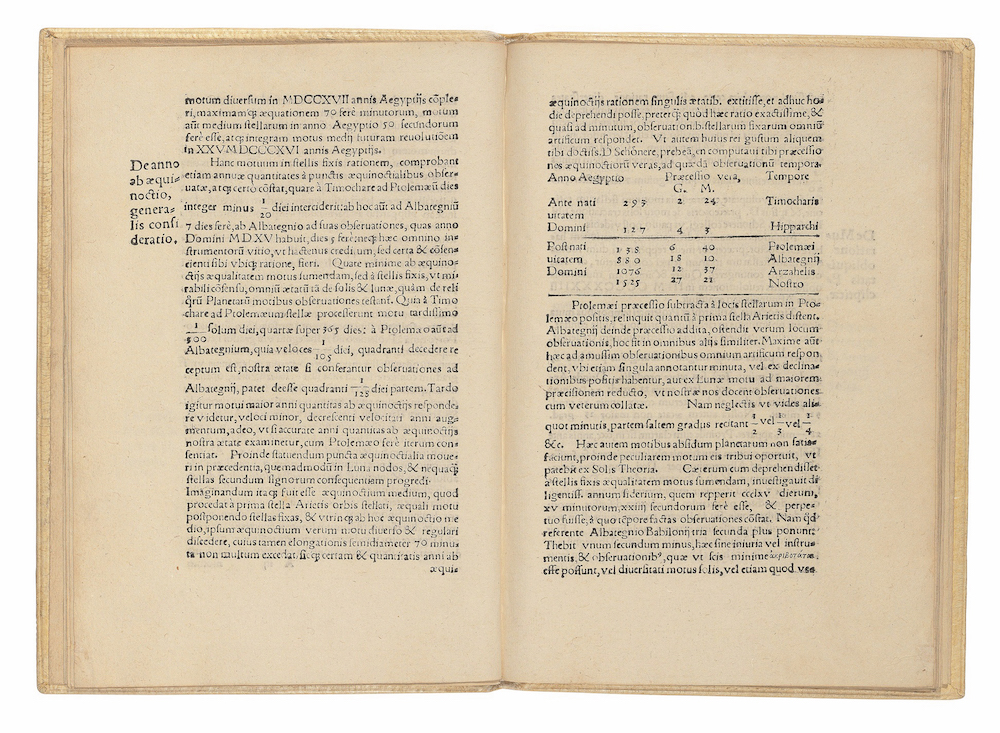
In 1989, my bookselling career was taking off, and I was rabid to attend every auction I could. November of that year saw a fabulous sale of important books in fine condition at Sotheby’s in New York. Among the many remarkable items was a first edition of Don Quixote and a book by Georg Joachim Rheticus called Narratio Prima, one of the rarest and most important books in the history of science, printed in Gdansk in 1540.

Rheticus was the only pupil of Copernicus and his slight publication was the first printed account of the great man’s heliocentric theory of the universe. Its printing gave Copernicus the courage to publish his own book, and the sheets of De Revolutionibus were delivered to him on his deathbed in 1543. Perhaps he checked out at the right time: The idea that the Earth revolves around the Sun was not particularly popular then.
The month of the auction was also the month I got married, and I had to persuade my wife to take a detour on our honeymoon to see the book, which, kindly, she agreed to. But it was all in vain; the Rheticus went for $470,000, way beyond my pocket at the time.

The addicted book collector is motivated by hope and desire. Bibliomania is an ancient affliction, though it was only named in the 18th century by John Ferriar – a physician at the Manchester Royal Infirmary – and it is an affliction without a cure. The acquisition of one particular volume does not satisfy. Delusion is part of the disease. I somehow imagined that the Rheticus might slide between the cracks and be had for a bargain price.

About a decade later I was at a book fair on the continent when a gentleman asked me whether I would like to buy “quite a rare book”. Of course, the answer was “Yes”, but I was not quite prepared for what it was: a copy of the Rheticus and the equally scarce second edition. This time around I was in a position to make a deal – such incredible joy.
I never got the Don Quixote and my marriage didn’t last, but you can’t, as they say, win them all.

This is an excerpt from issue 21 of Port, out now. To buy or subscribe click here.