Wasted but Wanted

Designer Max Lamb and Potato Head turn the detritus of luxury tourism in Bali into furniture and objects of function and beauty

Photography Adrian Morris

When Indonesian property developer Ronald Akili opened his first restaurant in Jakarta in 2009, he called it Potato Head. It was his way of differentiating it from the run-of-the-mill stylish eating in the city. For the initiated, the essential innocence of a Hasbro plastic toy from the 1950s would serve as a paradoxical signal of sophistication. Potato Head turned out to be the beginning of a hospitality brand that spread from Jakarta to become a resort in Seminyak on the island of Bali, and more recently a bar and restaurant complex in Singapore. Given Rem Koolhaas’ fondness for iconoclastic paradox, the founder of the Rotterdam-based architectural studio OMA was not an entirely surprising choice when Akili commissioned him to design the Potato Head hotel, which opened in Bali in 2020.

The Potato Head brand is based on a string of strikingly utopian promises. In the missionary prose of 21st-century marketing, it is based on “a zero-waste ecosystem where good times are reimagined as a catalyst for change – cultivating culture, restoring the Earth and nurturing community. Here, every element has purpose. Food and wellbeing nourish. Music connects. Art inspires. Circular design enables a regenerative way of life.” 

Photography Adrian Morris

We have become so inured to relentless greenwashing that it is hard not to be sceptical. But Potato Head is certainly in it for the long term. Since 2018 it has been working with Max Lamb, the London-based maker and designer, trying to find ways to reduce the negative impact of luxury tourism on the environment and on traditional communities. While OMA were working on the hotel, Lamb made the first of several visits to explore ways in which Potato Head could create a range of products and furniture to equip the building when it was ready. “At first I thought that I would design items, and source remote production. But when I went to see the site, I understood that there is a large craft capability on Bali. Building relationships with what is available was the way to go.” The island’s network of craft workshops might not be able to make a blow-moulded plastic chair or pay for aluminium extruding tools, but they do have the ability to work with a wide range of materials to produce distinctive products. Lamb produced an intriguing range of designs, but once all the bedrooms of the hotel had been furnished, it was clear that it could not be the end of the story. “Everything was high-level quality, and quite desirable. People stole things, which suggested that it was suitable for a homeware collection.”

The Wasted collection is a much larger project than the original range for the guest bedrooms. It was designed to harvest all the various waste streams from the hotel’s activities, and to use the detritus as a raw material that Balinese craftsmen can turn into homeware products designed by Lamb, for sale at the hotel and beyond.

Photography Putu Eka Permata

Every year Potato Head, along with all the other luxury hotels in Bali, produces an apparently unstoppable flow of waste, from uneaten food to broken bottles, from single use plastic to cutlery and crockery. Both Akili and Lamb were acutely aware of the need to make something of this. “Bali is tourism-focused, the generation of waste is an island-wide issue,” says Lamb. “Potato Head is trying to capture waste. It has a sustainability director, and has worked with an outside agency that analysed all the waste streams: going through the statistics, seeing what was accumulating, and to understand what we could do with all of it.” Wasted products are based on eight distinct material families. One uses high-density polyethylene plastics; others are based on cooking oil residues, salvaged ceramics, broken glass, worn-out bed linen, composite waste materials such as polystyrene, and even oyster shells. “Most of the glassblowers source waste from construction sites and broken windows. Potato Head sends them their broken drinks bottles,” says Lamb.

“Bali is not really industrial, it is characterised by small village-based craftsmen; there are weavers, as well as a cluster of glass makers and blowers. They are all families, all multigenerational. It is large volume, but quite artisanal.”

Photography Adrian Morris

Lamb saw his role as devising a range of products using the available materials that would make the most of the capabilities of Bali’s artisans. “My own experience as a maker with my own workshop was helpful. I wasn’t just a designer doing a design on paper, it was a collaboration with each individual maker, so that I could give them what they needed to be able to make pieces. On paper it’s easy to model but making in volume for retail can be very difficult. Each object is singular, they are all quite simple. It’s not high design, it’s not elaborate: it’s functional and humble. The detailing is intentionally minimal, it has been a process of collaboration respecting what they can make well, what they can make consistently. I am singular in my focus on materials. So, every piece is all made in a single workshop.”

The first Wasted collection includes marbled plastic chairs, hand-shaped ceramics and lounge seating. At the time of writing, Potato Head is now waiting to see the results of its launch in the summer of 2025. It’s also working with seven other hotels and restaurants on Bali to process their waste. For Lamb the key to the project is to be agile. “To achieve an equilibrium we must be nimble in our designs and production, we have to follow the waste stream. It is a finite and moving target. If product demand exceeds waste stream, we can’t just buy virgin materials.”

This article is taken from Port issue 37. To continue reading, buy the issue or subscribe here

Photography Anselm Ebulue
Photography Adrian Morris
Photography Putu Eka Permata
Photography Adrian Morris
Photography Putu Eka Permata

An Imperfect Archive

Since its founding in 1985, SCP has nurtured generations of talent, from Jasper Morrison to Andu Masebo. As it marks 40 years with an exhibition tracing its legacy, its influence on contemporary design remains undeniable

Chair by Jasper Morrison for SCP 1986

While London is still a city in which many of the world’s most successful designers live and work, if they want to make furniture on an industrial scale, they have to travel. The influential manufacturers for the upmarket home are mostly Italian or Danish, with some of the best-known names, such as Cassina or Hay, being American-owned. Vitra is Swiss, though its biggest factory is in Germany. 

There are a few exceptions: foremost, Sheridan Coakley, who started making furniture in 1985 when he set up SCP with a showroom in Shoreditch. As a brand name, it showed a certain degree of self-awareness. Coakley had begun his career with a shop located off London’s Portobello Road selling vintage tubular steel chairs made before World War II by Practical Equipment Ltd, known by its initials as PEL. 

Topside stool by Andu Masebo, designed for the SCP Boxed Collection

But Coakley has never been about nostalgia; he wanted to sell new designs, and to make things on his own account. He had seen Café Costes in Paris the previous year, the bar that made Philippe Starck into a design world celebrity, and he opened his own showroom with an exhibition of Starck’s playful furniture designs. Forty years later, SCP is one of the few British brands that is still making innovative design. It is celebrating with an exhibition in its Shoreditch base titled An Imperfect Archive, that includes prototypes and pieces by a remarkable collection of designers, architects and artists, from Jasper Morrison to Rachel Whiteread. At the same time, Coakley has commissioned a range of new work that SCP launched in Milan in April.

Coakley’s imperfect archive, one which was built up almost absent-mindedly, serves to illuminate 40 years of contemporary culture in Britain, a period during which SCP has served as a crossover point between design, art, music and politics.

Now that the 1980s have receded far enough into history’s rear-view mirror to take on a certain period charm, it’s easy to forget that 1985 was a lot less fun than it might look from today’s distance. Margaret Thatcher was halfway through her 11 years as prime minister. The British had gone through a war in the Falklands, 3.4 million unemployed, a confrontation with the miners, riots in Brixton and Katharine Hamnett’s trip to Downing Street wearing a T shirt emblazoned with the message “58% don’t want Pershing”.

Hoop Daybed by Tom Dixon for SCP 1998

Factories were closing, manufacturing was moving to Asia. Students trained as ‘industrial’ designers had no industry to work for, creating a phenomenon documented in a prescient exhibition at the Crafts Council titled Industry of One: Designer Makers in Britain 1981-2001. Jasper Morrison, Ron Arad, Tom Dixon and others tried to unlock the potential of mass production by initiating the manufacturing process themselves, using found objects and technology as best as they could to produce what were essentially one-offs.

Against this background, SCP was almost on its own in being prepared to manufacture the work of a talented generation of young designers. Coakley was the only person in Britain interested in turning Morrison’s ideas into commercial products, or those of Matthew Hilton, or Konstantin Grcic. Thirty years later he was one of the first manufacturers to work with the Canadian designer Philippe Malouin.

In the early 1980s Jasper Morrison was still a student at the Royal College of Art, and started coming to SCP to see what interesting new things Coakley had in stock. The graphic designer Peter Saville had just moved to London from Manchester and was ready to barter a logo design for the pieces he needed to furnish his flat.

Side Tables by Jasper Morrison for SCP 1986

Coakley had the ambition to look beyond the sometimes parochial nature of the London design scene. He took SCP to Milan’s Salone del Mobile. In the 1990s, he made possible a pioneering project (Please Touch) involving artists, including Rachel Whiteread and Michael Craig-Martin, in design.

The endless years of the Conservative government finally came to an end when Tony Blair came to power. Peter Mandelson had already been photographed for Vogue by Tony Snowdon seated in his leather Balzac club chair that Matthew Hilton designed for SCP. When Mandelson became a government minister his department bought another one for his office. Contemporary design became a signifier for Britain and SCP was an essential part of its vocabulary.

In 2003, SCP acquired upholstery works in Suffolk. It was the start of the company’s commitment to manufacturing, and also to phasing out the use of foam, which is both unsustainable, and (because of UK regulations) treated with potentially harmful chemicals. In recent years SCP has made all its own designs foam-free.

Stool by Andu Masebo The Boxed Collection SCP

SCP has been shaped by Coakley’s particular sensibility. He has always been ready to work with a wide variety of voices: Nigel Coates’ anthropomorphism; the reduced-to-the-essentials work of Jasper Morrison, Terence Woodgate and James Irvine. He has worked on textiles with Donna Wilson, and with Reiko Kaneko to make ceramics and fine bone china in Staffordshire. He is open to new ideas wherever they come from. SCP works with graduates of Design Academy Eindhoven, as well as Brooklyn start-ups, such as Piet Hein Eek and Rich Brilliant Willing, Fort Standard and Pearson Lloyd.

Coakley has continually set out to find new things, or new ways of doing old things, that interest him. It is perfectly true that we have worked through many conceivable approaches to designing a chair. But that does not mean that we should stop trying, any more than we will stop designing new shirts. Furniture, seen through the lens of 40 years of SCP, is a reflection of the wider sensibility. An interior in 2025 is not the same as an interior in 1985. SCP, and Coakley, have done more than most people to shape both.

This article is taken from Port issue 36. To continue reading, buy the issue or subscribe head here

A Modular Life

Kusheda Mensah’s designs have always encouraged connection. Now, as a mother of two, her practice is shifting

Photography Jo Metson Scott

There’s a semi-circular pouffe that plays a central role in Kusheda Mensah’s home. It’s a simple shape, thigh‑height and thickly cushioned, upholstered in a fine off‑white and brown checkerboard Kvadrat twill. It stands, it rolls, it’s readily repurposed and moves around the room. For her young children Sior and Soleil, who are four and two years old respectively, it’s a seesaw or a step‑stool – another excuse to be always in motion. For Kusheda, the pouffe doubles as an unlikely (but very gorgeous) desk chair; though she has had many studio spaces, she works mostly from home, happy and at ease in the window of her south‑east London living room.

Though it’s far from the best‑known piece her brand, Modular by Mensah, has made, this pouffe is a pleasingly powerful expression of Kusheda’s practice as a designer. Bold, functional and playful. “Things can be so simple,” Kusheda tells me from her spot on it, on a Tuesday morning early in spring. “I’m always thinking about how I want people to feel.”

Modular by Mensah first launched in 2018, as part of a showcase to the great and good of the design industry at Milan’s Salone Satellite, a fair dedicated to the most promising designers under 35. From the moment the doors opened, she drew a crowd. Her first collection, Mutual, harnessed rich, warm colours, tactile textures and expressive shapes to encourage interaction – and in so doing, enhance social wellbeing. “A seat is a seat, a pouffe is a pouffe – people sit down, they get up, they go,” she says. “Modular by Mensah is about creating shape that changes the flow in a room. In public spaces – a foyer, say, or a gallery – it’s hard to feel like ‘I’m here now, let me just relax.’ I want people to feel able to be still, to engage with their environment, but also to engage with one another.” This aspect – creating a focal point that encourages conversation, interaction, exchange – is crucial for her. “Without community, who are we?” she asks. “A big part of why Modular by Mensah exists is to bring people together. That is so important to me, personally, and my practice was born out of wanting to do that for other people too.”

Now, seven years since it was founded, the spirit at the core of Modular by Mensah is stronger than ever – but Kusheda’s practice as a designer is growing, evolving and deepening around it. She has grown, birthed and nurtured two small children in that time – a seismic shift that feels all the more tangible because we are friends and neighbours, and I’ve been doing something similar, sometimes together with her, in my own home two doors down. (She is the kind of comrade that an expectant parent dreams of sharing the toddler years with: warm, thoughtful, fun, real – generous with her time and energy, always, even when both are in short supply.) In early motherhood, life becomes an elaborate rear‑ranging; the pieces are painstakingly carved out, set next to one another, then thrown up into the air to scatter and reorganise again. Where once the ‘modular’ in her name spoke to the way objects coexist in a space, now it speaks to something greater, more abstract, and rich with possibility. Different materials. Different fabrication techniques. Different people. There are so many different parts that make up the whole.

Kusheda came to furniture design by way of textile design, which has always been her first love. Born to Ghanaian parents and raised in London, texture and print are embedded in her cultural identity. “When I was growing up, my mum was always picking out fabrics for a particular occasion, looking at colours, textures, symbols,” she says. She studied Surface Design at London College of Communication, where she was drawn first to printmaking, before she began exploring the ways structures could disrupt or redirect how a space is used. Lately, she’s been experimenting with printing again. “How can one symbol be broken down and multiplied through printmaking to create an immersive experience?” she asks, thinking aloud and talking loosely through some recent tests. Printing offers her a welcome return to process, absorption and experimentation.

Symbolism plays out in her work in larger ways too. Last year she began exploring language, creating large‑scale sculptures inspired by Adinkra – visual symbols that represent concepts, proverbs and aphorisms in language in Ghana. “There are so many symbols that the Ghanaian community and the culture relate strongly to,” she explains. “I was exploring phrases in Twi [a variety of the Akan language] and there was one that stuck out to me: onipa ya de. It means, ‘being human is sweet’. It’s a reminder to embrace humanity and enjoy one another.”

This phrase became the title for a seating installation that she exhibited last summer as part of the 2024 edition of the Harewood Biennial, an event which celebrated craft and connection while elevating artisanal heritage. In the collection, angular and curved pieces slot into one another to create seating, exhibited within a library room. Visitors could curl up solo inside a curved form, or perch next to strangers and loved ones alike, on functional objects which represented communication and interaction on both a micro and macro level. It’s a space she’s excited to continue exploring.

A few months after the Harewood show opened, Modular by Mensah debuted another new collection at London’s V&A, as part of the London Design Festival. Against the backdrop of one of the museum’s majestic Medieval and Renaissance rooms, Unhide showed seating which combined metalwork with fine, sustainably‑sourced leather provided by Bridge of Weir Leather, to create an elevated and ambitious new collection.

Still sculptural, still playful, but with new structure – another hint of things to come. At the Festival’s opening night, Sior and Soleil clambered gleefully over the banquette‑style elements, as if modelling to the mostly adult crowd how their mum’s work could be used.

Their joyful and intuitive interaction with these rigorously crafted pieces was a powerful reminder of the ways in which raising children can expand a creative practice. Kusheda’s vision is dynamic, innovative, vital and bold because of, and not in spite of, the ways that parenting shapes her point of view. The work is harder to get done, certainly – but it’s infinitely better for it. “I give so much to motherhood. I give so much to my career. Both are part of my identity,” she says. It’s exhausting and enriching work, but she always has one eye on the legacy she’s building. “As a Black designer, as a mum, I’m creating that representation for my children – or any precious little child, honestly, that deserves a leg‑up somewhere. My peers and I are opening the doors. It’s hard work. But one day, other people will be able to just stroll through.”

The accolades reinforce the point. In 2022, Kusheda was one of eight designers to be nominated for the coveted Hublot Design Prize. A few weeks ago the World Design Congress named her one of 25 trailblazers leading the Design for Planet movement. There’s an exciting collaboration with independent design brand Hem in the works, due to launch later this summer.

And in spite of all the spinning plates, the competing deadlines, the drop‑offs and pick‑ups and unexpected sick days, there’s a sense of space in Kusheda’s design practice right now: a fertile ground in which she’s trying out new things. Screenprinting. Textile design. Ideas for education. Books. A studio space, maybe.

These new building blocks are all becoming part of her approach – strong, flexible, always evolving, always growing. This is modularity, in practice.

Photography Jo Metson Scott

This article is taken from Port issue 36. To continue reading, buy the issue or subscribe head here

A New Kind of Contemporary

Antonio Citterio’s imagined worlds for Maxalto

 
The apartment, viewed from outside

In the world of furniture, there is nothing else quite like Antonio Citterio and his 30-year relationship with Maxalto. What began as a casual conversation with Giorgio, the son of B&B Italia’s founder, Piero Ambrogio Busnelli, about reviving the company’s defunct artisan timber range has become a significant brand in its own right. Each piece of furniture made for Maxalto is designed by Citterio. But over 30 years, time has seemingly stood still. In every catalogue it is never quite clear which pieces are new, and which were designed in 1995. Perhaps it’s more accurate to say that it is not so much that time has stood still, but that a new generation has caught up with an idea that took shape in Citterio’s mind a long time ago. When he started on Maxalto, Citterio had an instinctive sense that there might be a moment when a new generation would become more interested in a way of living that was more formal than his own, and which he had begun by designing for.

Maxalto – which had a false start in the 1970s and came back to life in the 1990s – now has a unique identity. The architects Tobia and Afra Scarpa, who were from Venice, came up with the name; Venetian dialect for ‘of the highest quality’. They designed some exquisite craftsman-made chairs that were impressive in themselves but did not present a broader point of view.

Citterio has turned Maxalto into a complete and convincingly imagined world. If Ralph Lauren conceived a world of WASP privilege and made the clothes that brought it to life, Citterio has made the furniture for a way of life inspired by progressive, cultured, bourgeois Parisians. For Citterio it’s not nostalgia, but an alternative form of the contemporary. You can imagine the invisible occupants of the rooms portrayed in successive Maxalto catalogues reading Sartre and Les Cahiers du Cinema, listening to jazz, collecting African art and waiting anxiously for their teenage children to come home unscathed from the Boulevard Saint-Michel, protesting against the colonial war in Algeria.

The first idea had been to produce a few pieces of furniture using oak or wenge wood, and see what happened. The design language would be contemporary, but as Citterio puts it, with perhaps with a warmer atmosphere than the work that Citterio himself, and many other designers, from Gaetano Pesce to Mario Bellini, were producing for B&B Italia at the time.

Some of Citterio’s preparatory drawings

In fact, what Citterio had in mind was to follow the example set by Jean-Michel Frank, the gifted French designer who died in New York during World War II aged just 46. Frank belonged to the same generation as Le Corbusier but did not feel the need to make his furniture look like a piece of mechanical equipment. Citterio has never replicated specific pieces of other designers’ work, but for those who share his encyclopaedic knowledge of the evolution of 20th-century furniture from Charles and Ray Eames to Jean Prouvé, the quotations and references are part of what gives Maxalto its character.

“The beginning was casual. It was not totally clear what it would be. OK, some wood, a little bit traditional, but it was not yet a total concept, or a new brand. Certainly it was not yet the possibility to create a complete 160 piece collection. In 1995 Maxalto was just five products,” Citterio says. “It was modern, not traditional. Traditional is when you design scenery. I am doing something for real people.” His thinking began to crystallise after he rented a classic Parisian apartment for a three-week shoot for the first Maxalto catalogue.

Filling a real apartment with chairs and tables got Citterio focussing on the lives of the people who would be using them. “After two or three years we understood it would be the real idea of the scenography. We had a family in mind.” He continues to use the same apartment for catalogue shoots to this day.

Furniture exists in the context of an architectural framework. Citterio came to see Maxalto’s essential character as rooted in the concept of equipping individual rooms. He characterises B&B’s furniture as designed for “contemporary space, which is to say, a series of fluid spaces, with no separations between one and another. You don’t distinguish where you eat from where you relax.” In clear contrast, Maxalto furniture is designed for distinct rooms, each with a defined, formal character. “Maxalto has a dining room, with a table, it has walls and cabinets that are all arranged symmetrically in space.”

Citterio has always seen that the best way to design furniture was to think about the people who would be using it, and their way of life. In his early days, he used himself as his own model. “To do a new sofa you must imagine somebody. For B&B’s Sity sofa, I imagined myself, partying. I thought what are all the things I can I do on this sofa, and I tried to imagine all the different things that can happen on a sofa. The new generation of my son is more formal than I was, they invite people home. You are served with a perfectly arranged plate, not just some salami, red wine and a bit of gorgonzola the way I did it. Now they like a little formality. They like Maxalto, they like the ritual that it implies, and the symmetry.” Maxalto gave him the chance to think about other lives. In making each successive catalogue, he saw himself as working like a film director, evoking life through spaces, images and objects. The photographs showed the way that Citterio expected his pieces would be used, but he was also beginning to design for the specific spaces evoked in the Maxalto catalogues.

The still photography for the catalogue has been brought to life in a series of short videos that reflect Citterio’s cinematic ambitions. One of them opens with the camera confronting the elaborate double doors of a Parisian apartment building. Twin cast iron lion’s heads holding brass rings in their jaws fill the screen. The camera pulls back suddenly and cuts to show a French hero on top of a column in the middle of some nameless square in a fashionable bourgeois quartier of Paris. There is a jerky tilt up to the sky, revealing the facades of a couple of Haussmann’s boulevards. Then you are back inside the building in a glass elevator rising in the stairwell, glimpsing stained glass. The door to the apartment opens, and you find a sequence of enfilade rooms, parquet floors, panelled plaster walls and a ceiling that is ornate, but not too ornate. In the background is a pair of double windows, each one reaching down almost to the floor. Cast iron fireplaces sit within marble surrounds. On the console table is a polished Cambodian head looking out over the cast iron balcony towards what is not the Seine or the Eiffel Tower, but the presence of both is implied. The head shares the console with Anton Corbijn‘s book, The Living and the Dead, and a heavy slab of an Eileen Gray monograph. The camera lingers on the stitched leather of a sofa, the grain of a solid oak table, the texture of the wool upholstery of the sofa. Later, a glimpse of the railings on the Rue de Rivoli next to the gardens of the Jeu de Paume hint at its actual location.

We briefly see a writing desk. The urge to look inside what, in itself, is a highly suggestive piece of furniture – given that most people have given up handwriting – to learn more about occupants temporarily in another room, is all but irresistible.

Inside the desk there is a diary and clutch of pencils, but no computer. In fact, nowhere in the apartment is there a television, or a music system, or any other piece of technology, not even a telephone. There is an Art Basel catalogue, but no newspapers. There are suggestions of a meal on the table, but young people aren’t much in evidence, not even seen-but-not-heard children. There are no toys to be seen, but you can spot a Bauhaus teapot, what seems to be a constellation of Fornasetti plates on the wall, Tom Dixon candlesticks and Achille and Pier Giacomo Castiglioni’s Taccia table lamp, to suggest occupants with eclectic tastes.

Citterio has maintained the Maxalto idea with a remarkable singlemindedness. On occasion he was ready to abandon the project, rather than compromise it. “I believe in it. In the muddle of 30 years, it’s not always easy to keep the direction, and there have been different owners. Over the years I have been asked ‘why is it always black and white, why is it always the same approach, why can’t you change?’ I always said ‘no, I can stop if you want.’ Now they understand. If I tried a colour, or changed the house, or did other kinds of furniture, it would destroy the idea of the movie.”

Where can Maxalto go next? “I still think that I am a contemporary architect,” he replies. “But in designing furniture there is a lot of memory involved. Maxalto is another version of contemporary. If I ever did another Maxalto, I would need to find another house. In the future it’s going to be virtual, but I could imagine an indoor-outdoor house in Brazil.”


This article is taken from Port issue 34. To continue reading, buy the issue or subscribe here

Mario Tsai Studio

The Hangzhou-based research studio on conscious craft, manual processes and why most sustainable design is “pseudo and gimmicky”

Origin Collection by Xu Xiaodong

2019 was an especially prominent year for Mario Tsai, a furniture designer born in Hubei and currently based in the western suburbs of Hangzhou, China. It was the year that he and his design team of four held their first solo exhibition in Milan Design Week, presenting his “masterpiece” Mazha Lighting System that caught the eye of international media and brands. This led to two solo exhibitions the following year called Poetic Light, and in 2021, he set up his brand Mario Tsai. Under guise of this new title, Mario Tsai now sells lighting and installations designed and developed by the design team of Mario Tsai Studio. 

But it’s not just the tight-knit team and eye for structure, composition and materiality that paved the way for such large success in his business. Mario Tsai is a keen advocate for sustainability – and not the green-washing kind that’s only surface deep. “I believe that sustainability should no longer be just a concept or a gimmick in our work life,” he tells me, “I personally want it to be in my works as a guideline and a responsibility that binds me.” For Mario, sustainable design must be timeless, and designers – himself included – have a responsibility in thinking about the life cycle of a product. “But also if it can be easily recycled or repaired at the end of its life cycle,” he continues. “Whether the production process, packaging and exhibition presentation related to the work can be sustainable should be our concern as designers.”

Origin Collection by Mario Tsai

Sustainability therefore guides all that Mario Tsai Studio puts its mind towards, whether it’s a product, installation, strategy or exhibition. To achieve as such, the studio is driven by research, innovative thinking and, of course, eco-design processes, which resultantly forms a poetic depiction of what a  product should ultimately be, do and look like. “Personally,” adds Mario, “I prefer projects that can fully present the ins and outs and clear logic, and can deeply explore the essence. I hope the projects we are pushing can bring new thinking, design methods or social responsibility guidance to the public. Often such projects require a lot of effort, but the income will be relatively small.” On the business side of things, the studio prefers companies that share the same ethos, goals and ideals, “whether they are well-known, big or small”.

When beginning any given project, the team will first begin by using the “brain”.  Second of all, they will decipher the best techniques and technologies needed for the project – those that are more “advanced and difficult”. This means it will modernise the product they’re designing, and equally it will “build up technical and production barriers,” explains Mario. Before diving in with the pieces, though, the team will set up production, a mass production method and cost consideration. “We only use computers and simple models to test the new designs in the studio,” he says. “After many years of development, and also thanks to a strong supply chain in China, our studio was able to find suppliers for the production of any material and technology.”

Mazha Lighting System by Xu Xiaodong

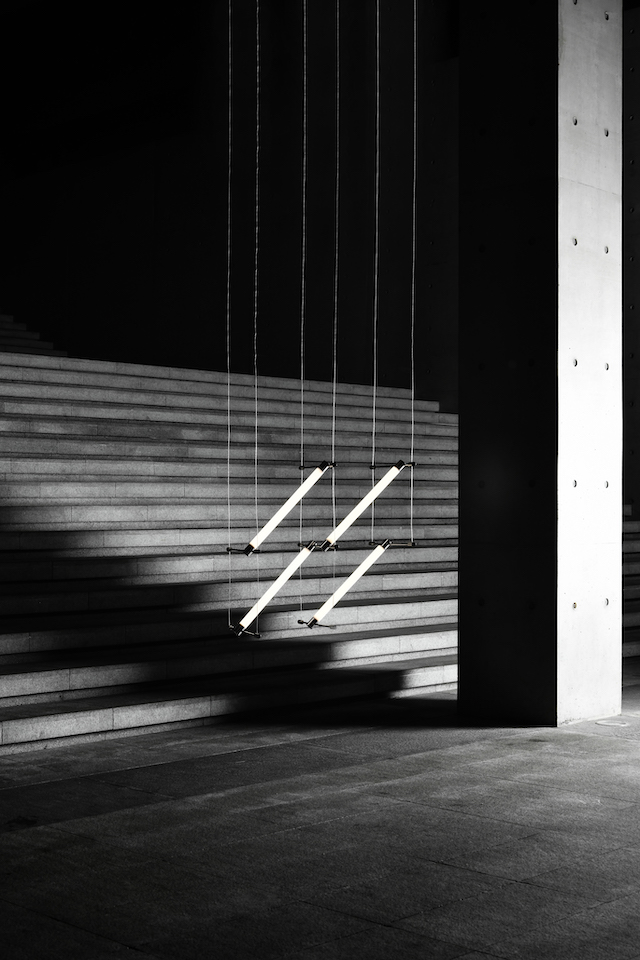
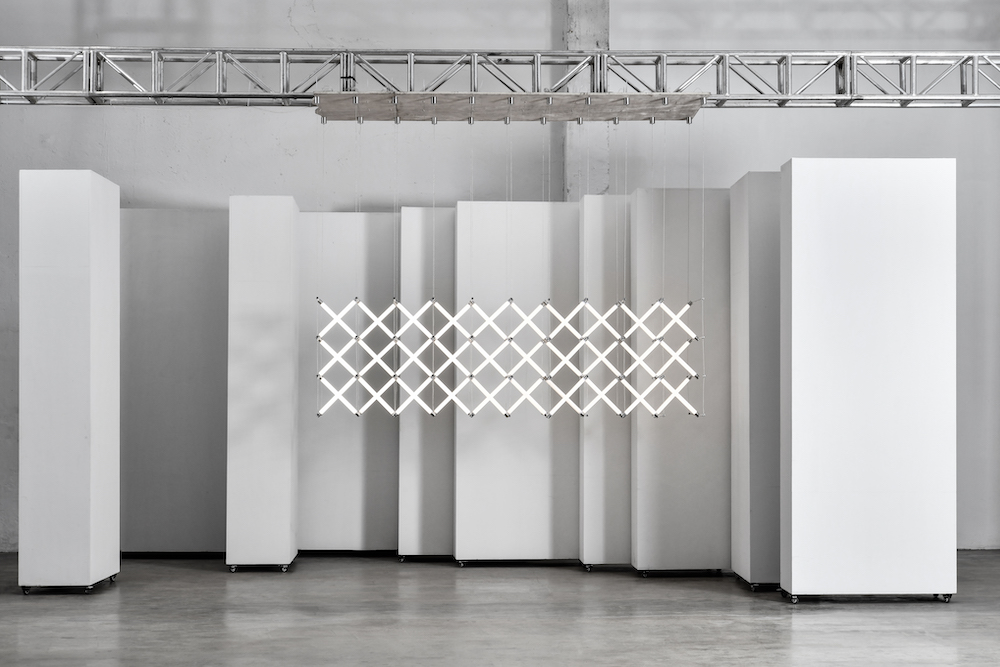
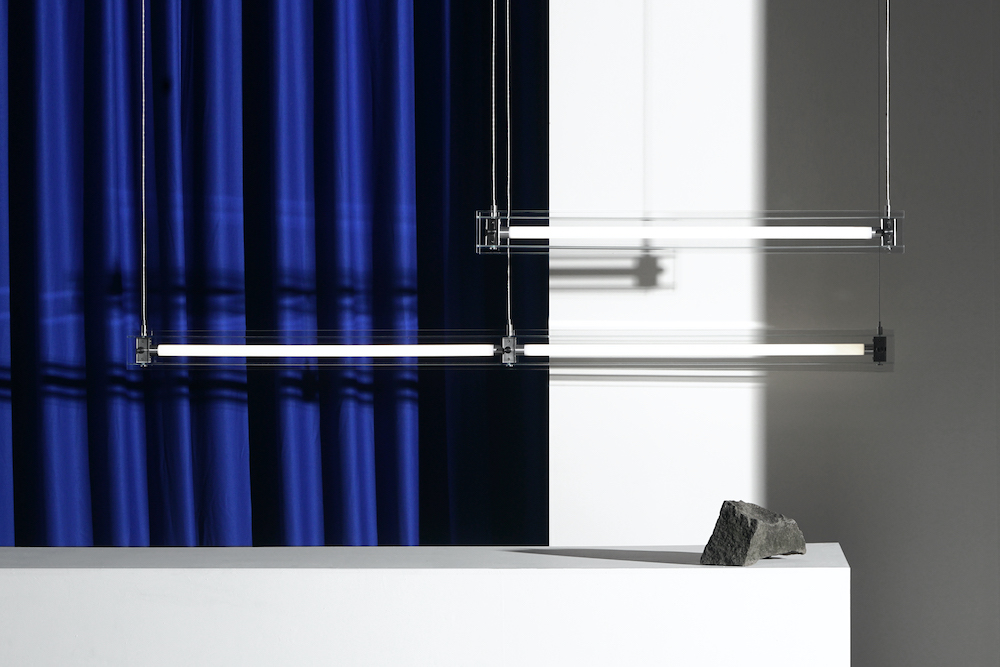
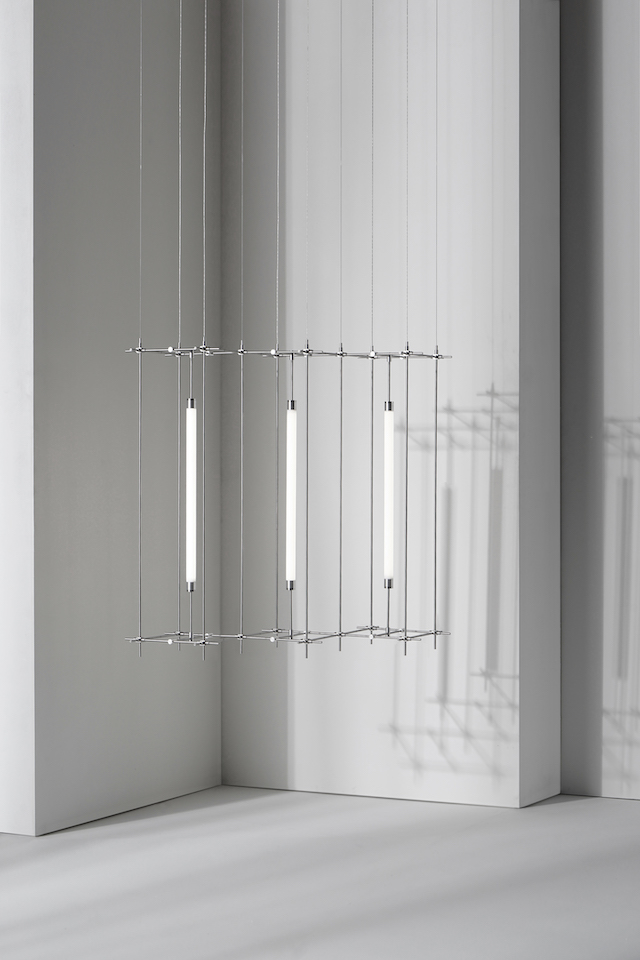
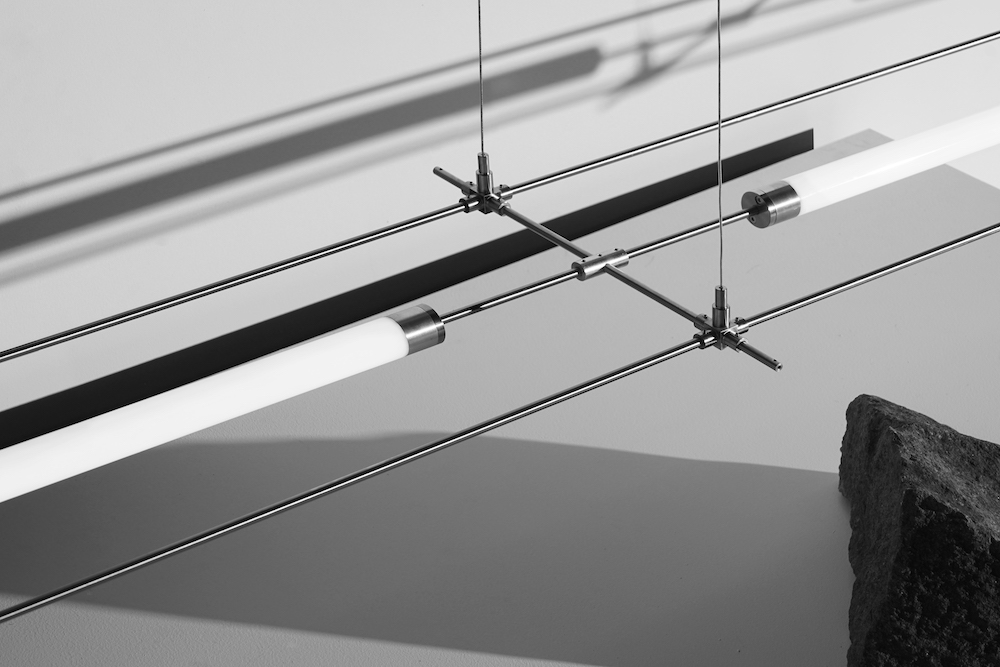
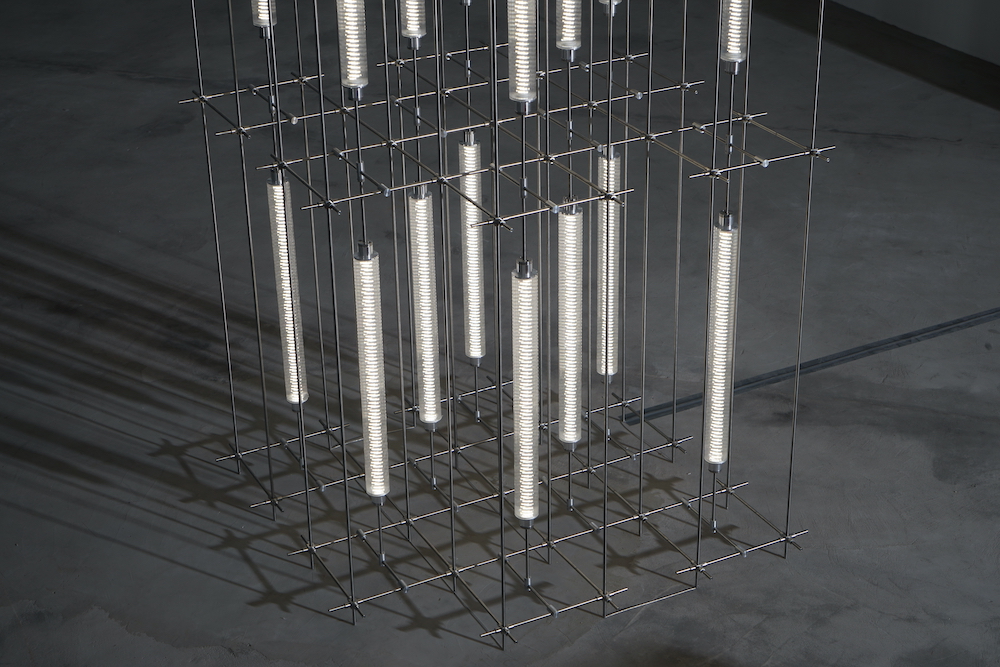
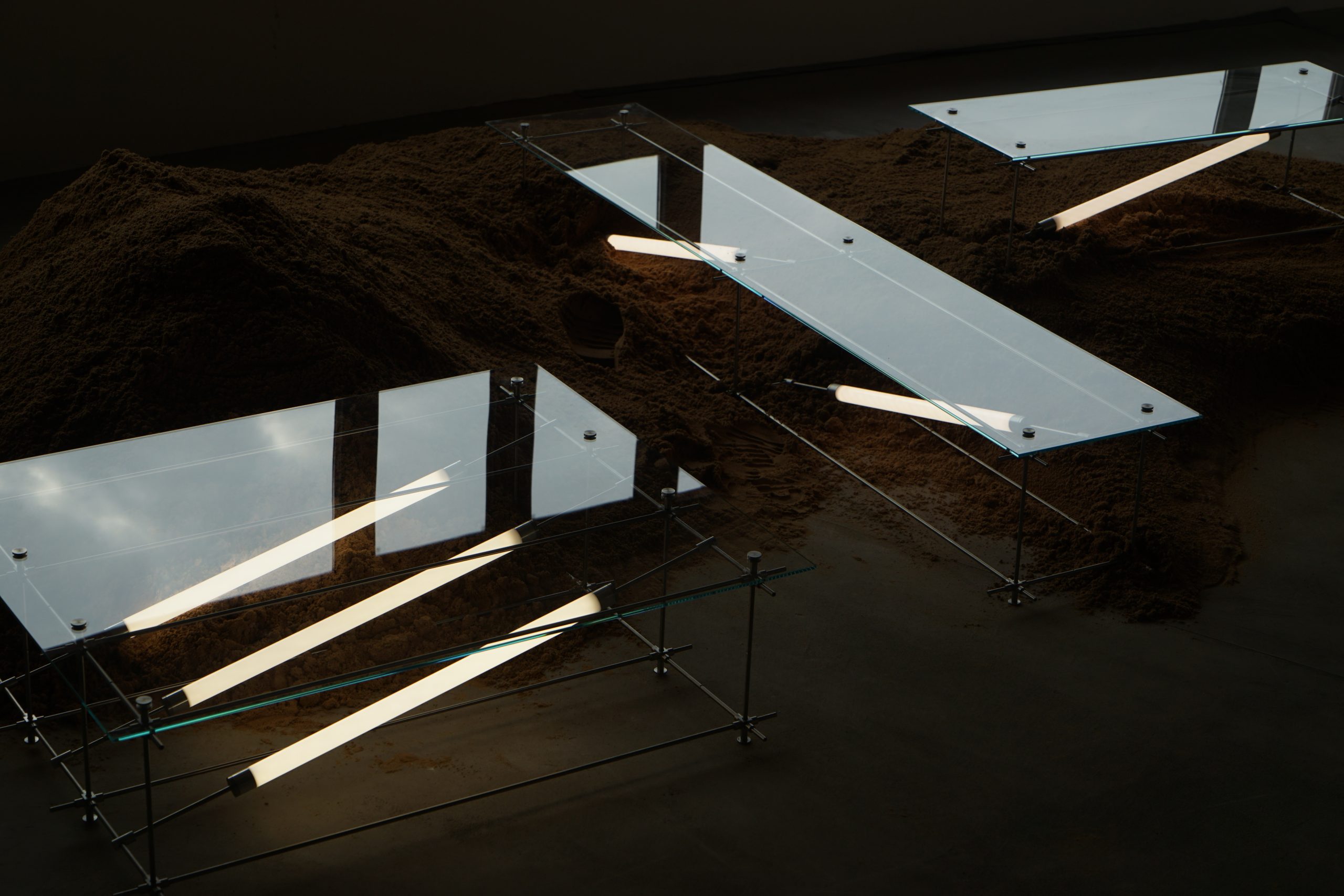
Because of the studio’s detailed and research-guided approach, this means the team are able to test their hands at a plethora of different pieces; the portfolio is diverse as anything. One example can be seen in its Mazha Lighting System, in what Mario deems as the “most representative work” of the studio’s. Designing for eternity, the system has been made to last. “Low voltages can be transmitted electrically through the structure of the lamp, allowing the lamp to be free of wires and to build diverse and endlessly changing systems as a free unit,” explains Mario. The first iteration of the modular lighting system was inspired by traditional Chinese seating apparatus, composed to give a “more diverse expression” and renew its circularity; it’s how the Mazha Lighting System was borne. 

Each generation thereon consists of tube lights, a metal pole or metal connector, plus the wire ends. “Without the slightest intention to hide the structure, each component is extremely delicate and independent,” says Mario. “When a part of the product is faulty and needs to be replaced, only the point of filature news to be replaced, not the whole lighting.”

Mazha Lighting System by Xu Xiaodong

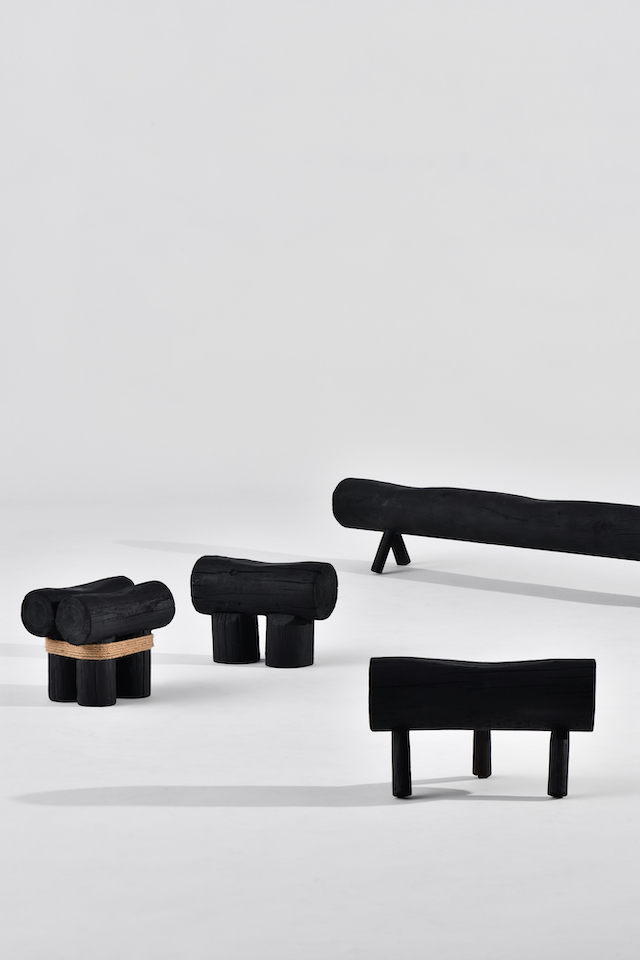
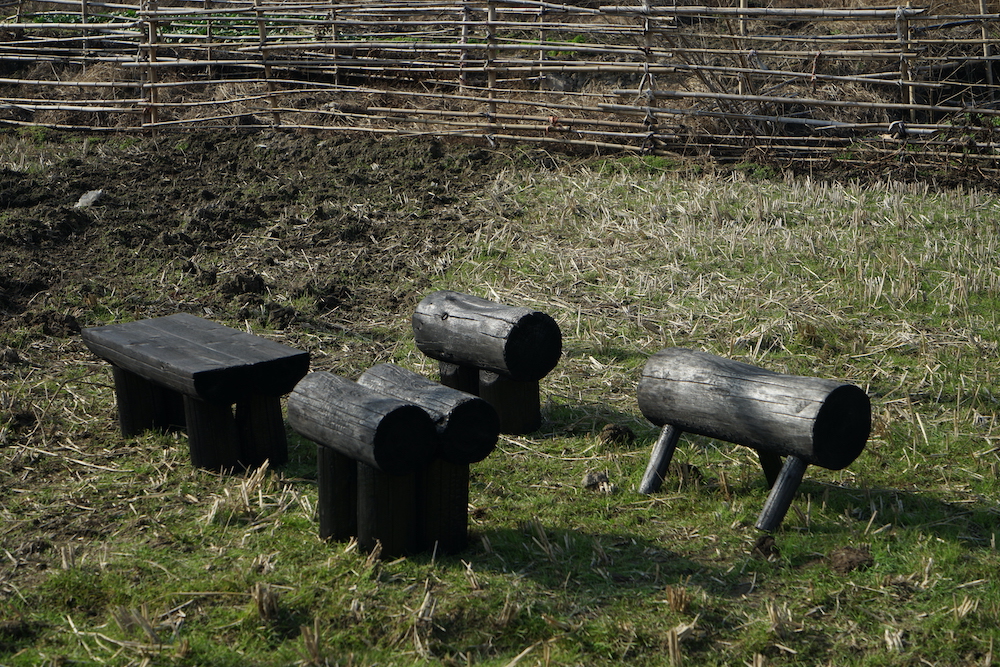
Origin Collection is a comparatively different project yet one that succinctly aligns with the Mario Tsai ethos entirely. A design performance piece, Origin Collection reflects on the idea of using modern technology and tools to make life and work more convenient. But on the other side, according to Mario, “they also gradually hinder our human instincts and sensitivities”. In response,  Mario hired a carpenter from the Hangzhou countryside to structure the furniture through manually processes like log-cutting and fire burning – the antitheses to digital methodologies and one that equated to a refreshing design experiment to inspire people to rethink their footsteps. “All the processes used to complete The Origin are based on instinctive human wisdom. The process of creating tools to carry out the project, using native materials and existing conditions, was also the best way of expressing the idea of locality in contemporary design.”

Clearly, Mario Tsai and the team go beyond the expected when diving into a project, be it a more critical or conceptual piece or one that’s more functional. Shying away from the wishy washy displays of ‘sustainable’ design, Mario Tsai Studio strives to be honest, functional and long-lasting. Speaking of whether the design industry is currently doing enough in terms of combatting climate change, Mario says: “I think it’s far from enough. A lot of sustainable design is pseudo and gimmicky, and many people use the concept of sustainable design with the ultimate goal of business and personal fame. I hope that sustainability can be incorporated as a norm in the way people live and work.”

Mazha Lighting System by Mario Tsai

Mazha Lighting System by Mario Tsai

Mazha Lighting System by Mario Tsai

Mazha Lighting System by Mario Tsai

Mazha Lighting System by Mario Tsai

Origin Collection by Mario Tsai

Art and Design: Noé Duchaufour-Lawrance

Port speaks to the award-winning designer about the intersection of art and design in his work, and his latest project with Ligne Roset

Noé Duchaufour-Lawrance took an unorthodox route into design. Having initially trained in sculpture in Paris before starting creating furniture and interiors, he rose to prominence after being chosen as Designer of the Year by Maison & Objet in 2007 and has designed pieces for leading brands such as Hermes, Dior and the French lifestyle-design brand Ligne Roset, as well as interiors, such as at Sketch in London, where he was artistic director. With his work not restricted to one form or material, Duchaufour-Lawrance seeks to re-model and modernise existing templates, and he has become known for the variety and contemporary feel of his pieces.
Here, he talks to Port about the possibilities of design, why he’s not an industrial designer and his new sofa for Ligne Roset.


How does your training in sculpture come to inform your work as a designer? Why did you move away from sculpture towards something more functional?

Sculpture is very open, very free, and it has given me a certain sense of freedom in my work. I learned not to be limited to certain techniques or particular aspects of the production process, and it’s allowed me to go from one field to another without being limited by a lack of imagination. There is a French word for that, plastician – someone who can work with a variety of skills without having an exact knowledge of any of these. I’m not an architect, but I know how to design a volume and the sensation of a space, as well as the material I want to use and the goal I want to achieve. I just don’t know exactly the specifics of how you can build this or that.
I moved from that to creating functional objects, and it was interesting because it pushed me to consider the boundaries of function and abstraction. Yet, because of my lack of formal training, perhaps I have less technical skills and I’m less interested in the pure industrial aspects of design. I’m not fascinated by a coffee machine, for example. I think that the object is not limited to these technical elements. Furniture in a way is much more poetic and sensible than a pure industrial project. With furniture, we have to create things for people which have to be used and create a strong relationship with a person.
Where do you take your influences from?

When I was young I had a limited access to sculpture because I was growing up in a small village in Brittany, but my mother was a professor of art, so my main introduction to sculpture and art was through books.

I remember one of the first books I saw was of Andy Goldsworthy. He really impressed me in his work because there is a strong relation with the context, he is using only what he finds, and there is respect in his interaction with nature.

Your work has been quite varied, but is there a consistent approach that you have to your different projects?

I’m not an industrial designer because, to me, it doesn’t mean anything to produce an object. To re-do an object which is already there in so many various forms doesn’t mean anything. So I try to ask myself what we are going to give through the object. That’s very hard to know, but what I’m trying to do is see how the object I’m designing interacts with the user, how we can create this relation which is based on a sensual, or sensitive, interaction with the objects.

With Sintra specifically, how did that project begin? What were the initial ideas you had for it?

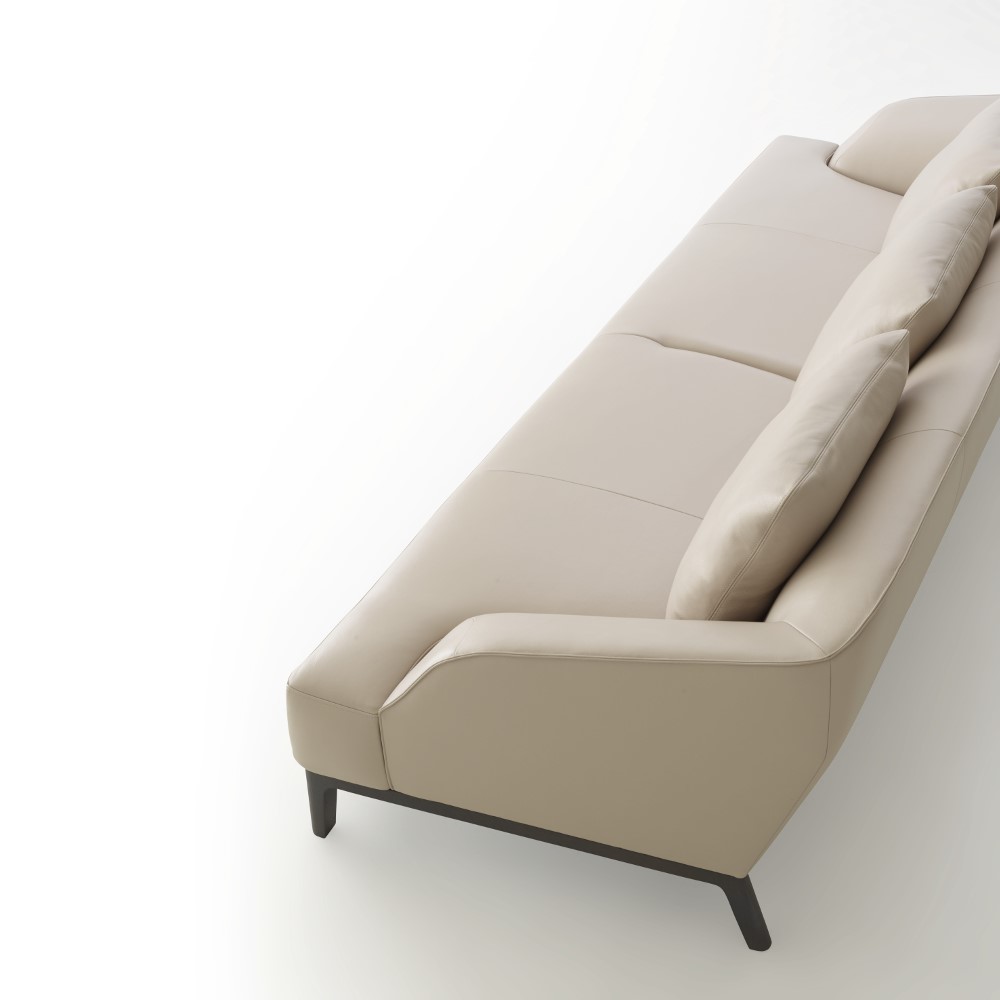
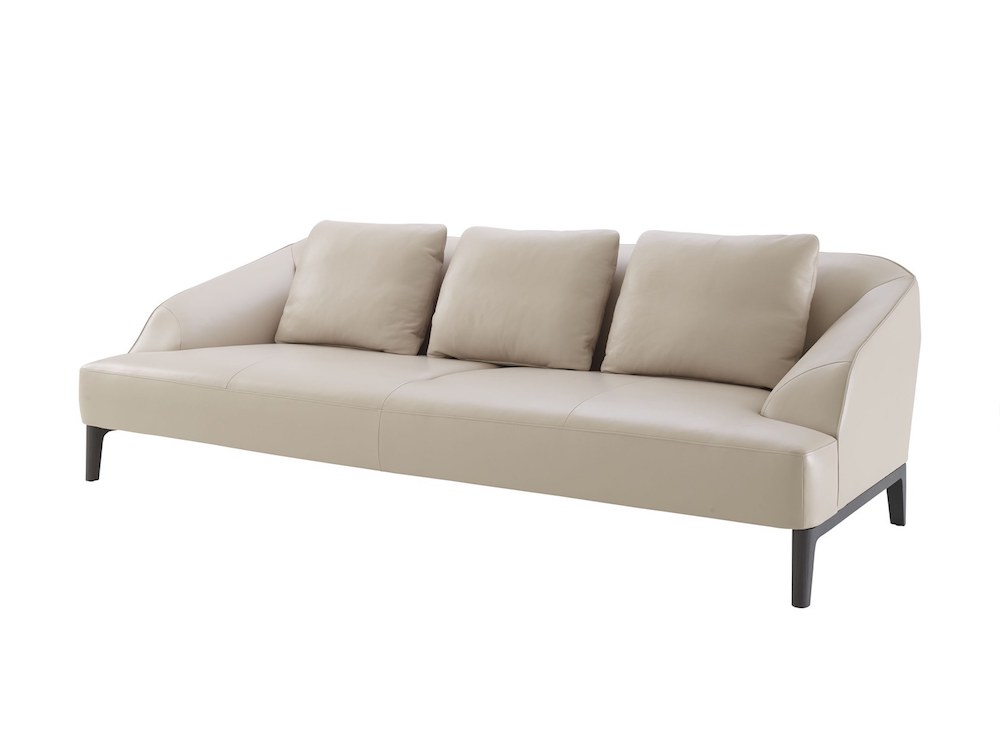
That was not at all about sculpture and an idea of an abstract environment, it was much more about Ligne Roset who were looking for this kind of project – an object which took its roots from a classic sofa. The question was how can we use these shapes and codes which people know about with the sofa, but integrate them into something more contemporary and progressive. There was a duality to the project, aiming to create something timeless – both modern and classic.

I found the starting point for the form in classical shapes, such as sofas from the 1940s, and then we moved to these deeper, more generic sofas – the kind which are made for country houses. We took all this language and re-appropriated it – thinking about how these traditional signs can become something with more tension, and more graphic strength.

It was also important to work for Ligne Roset because I designed this for them, not for somebody else. That’s why I talk about the context of a piece, because I want to have this very strong relation with the people I’m working with. We have to understand each other, to speak the same language and to have the same view, otherwise it’s going to be compromise.

ligne-roset.com

Remembering Ettore Sottsass

Carlotta de Bevilacqua, vice president of lighting brand Artemide, reflects on the legacy of architect and designer Ettore Sottsass and his unique relationship with the company

When he died in 2007 at the age of 90, the architect and designer Ettore Sottsass left a remarkable legacy. Having turned his hand to most disciplines in design, including furniture, jewellery and glassware, as well as to many designs for buildings and interiors, Sottsass is perhaps best known for his iconic Olivetti typewriters and his work with Memphis, the experimental group of designers he founded in 1980.

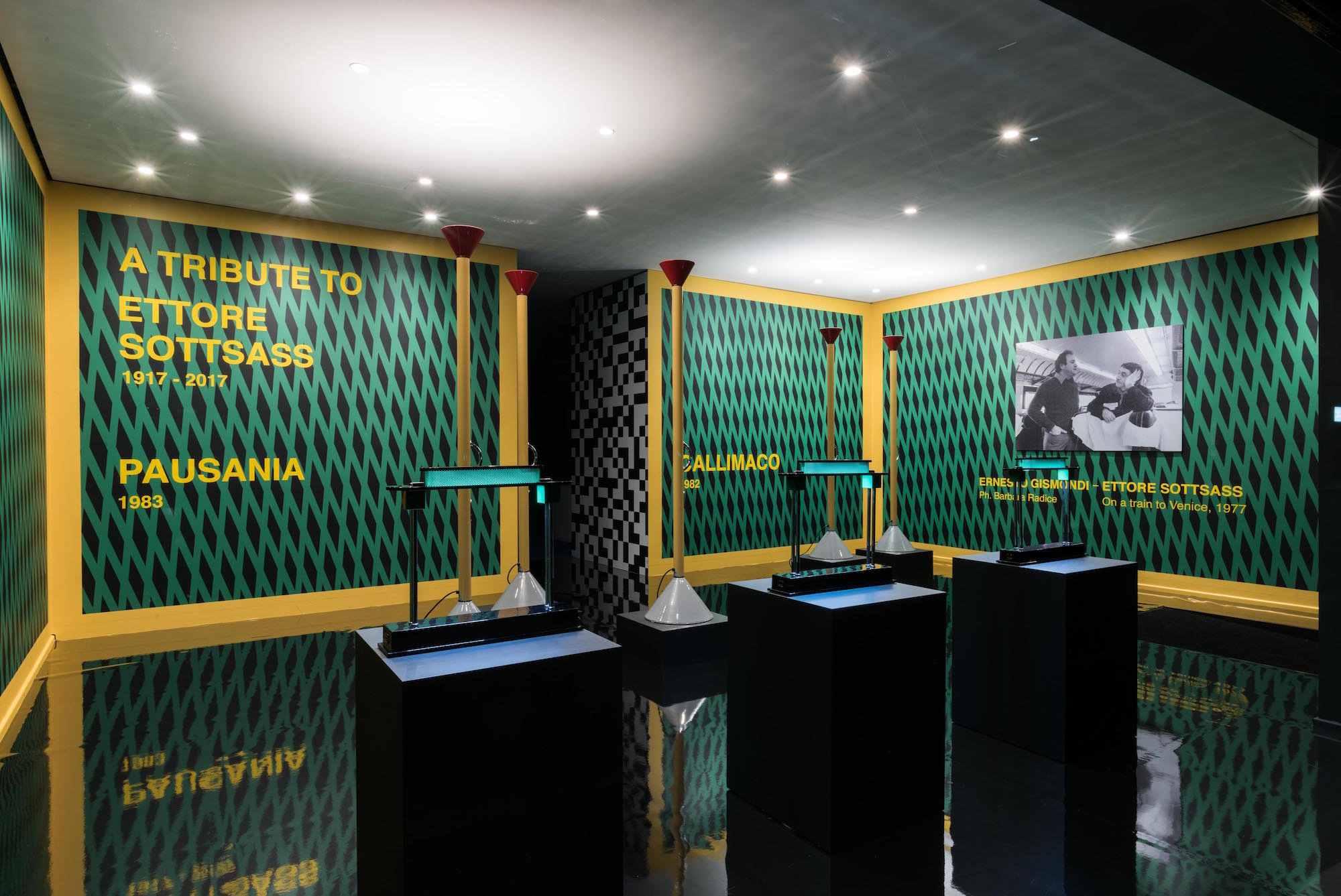
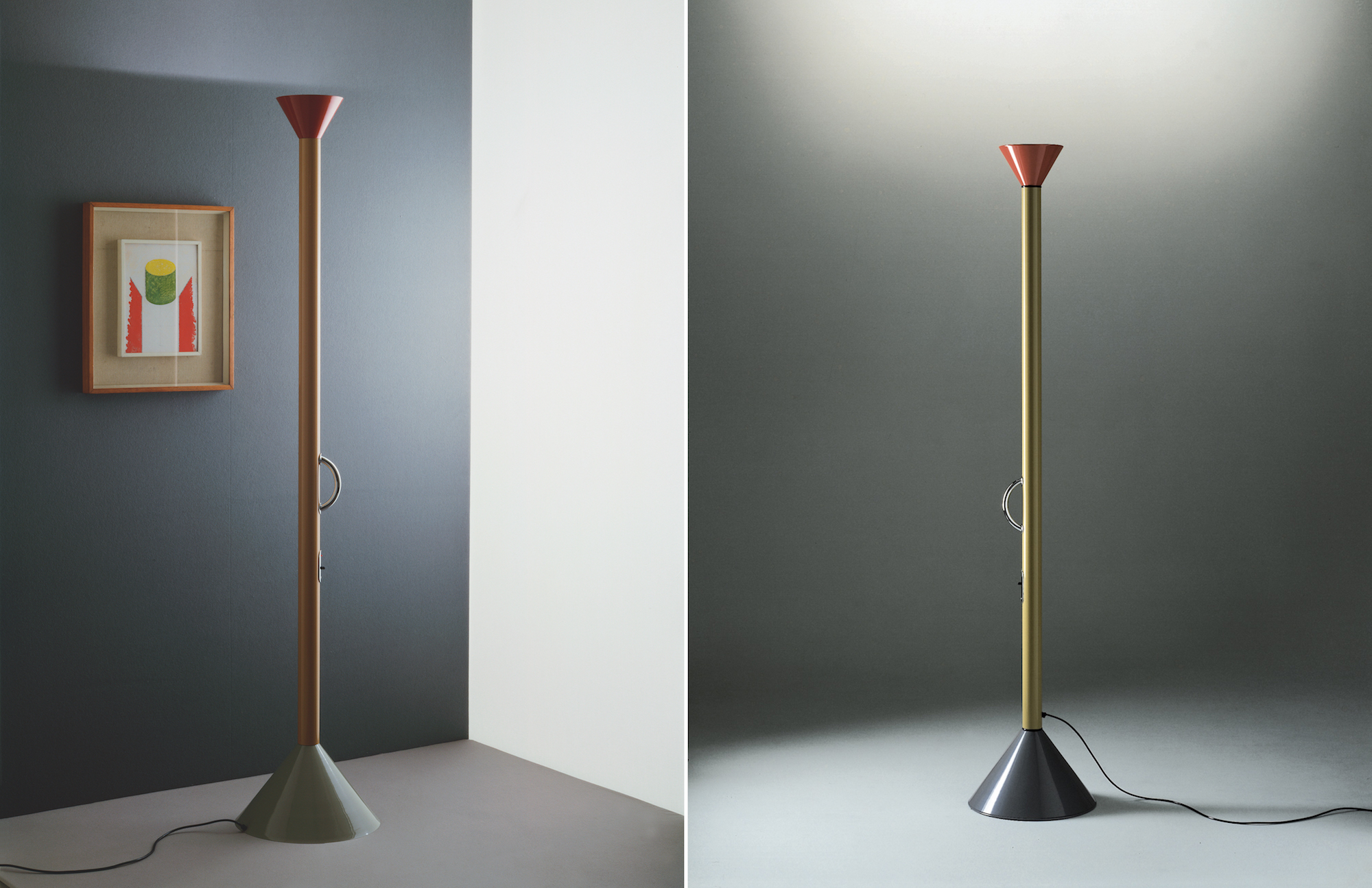
To celebrate the centenary of his birth, the lighting brand Artemide is rereleasing two of Sottsass’s most memorable designs for the company – Pausania and Callimaco – as part of their Masters’ Pieces collection. Here Carlotta de Bevilacqua, the vice president of Artemide, reflects on the designers relationship with the company, and with Artemides founder, Ernesto Gismondi.

Sottsass is remembered as a true trailblazer in late twentieth century design because of his commitment to the plight of freedom of expression in design. Memphis, which he founded in 1980, became a laboratory of experimentation and creativity where designers could feel totally free from the technical and aesthetic restraints of functionalist design.

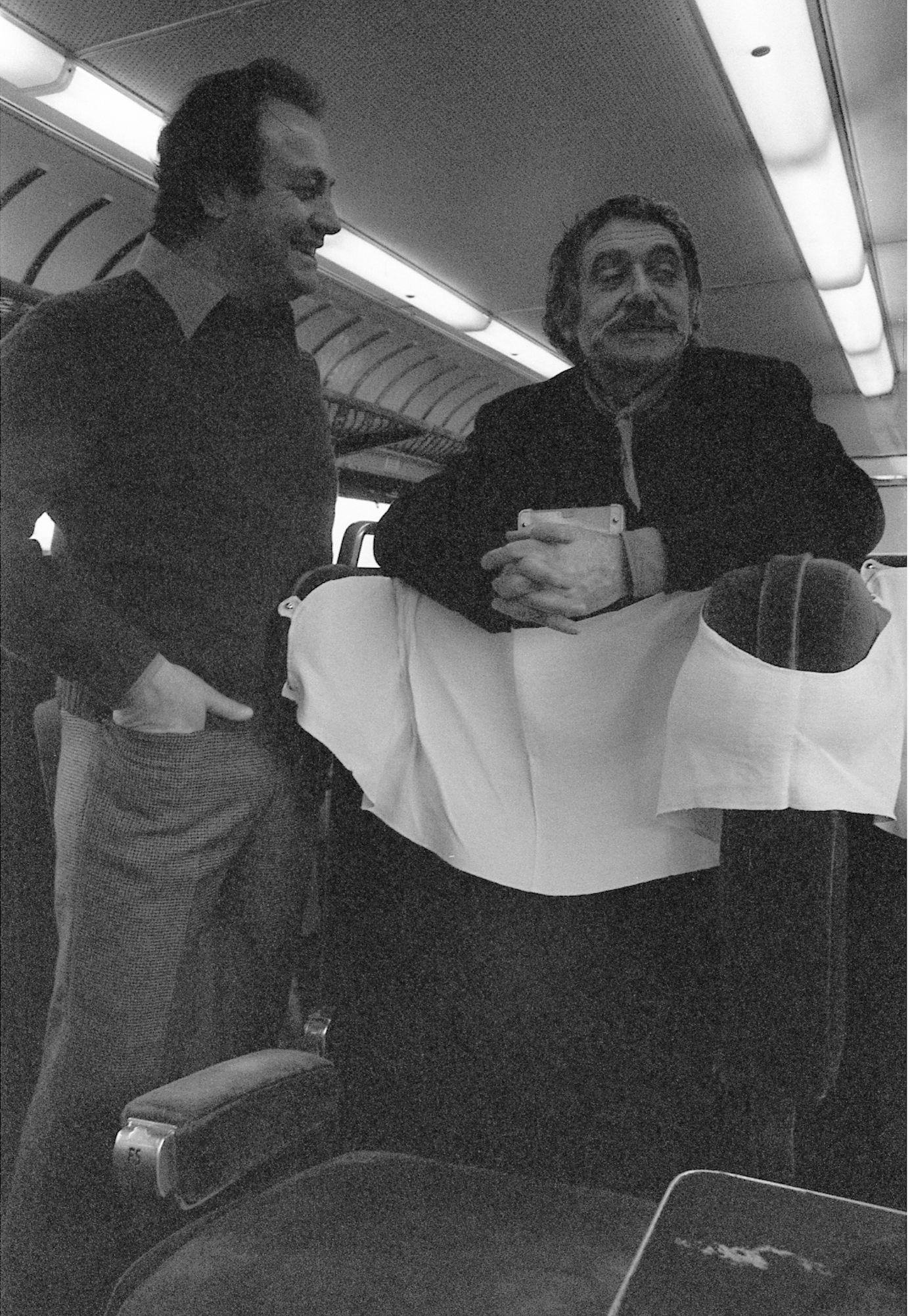
Ernesto Gismondi, the founder of Artemide and my husband, worked with Sottsass for several years in the Memphis group. Sottsass was involved in the creative part whilst Ernesto oversaw the various editions and managed the Memphis collective. It was during this time that a friendship was born and they discussed the idea of working together on projects for the company. Artemide and Memphis were fundamentally different – they always had different aims and logic – but Sottsass was able to bring this element of experimentation to his designs for Artemide.

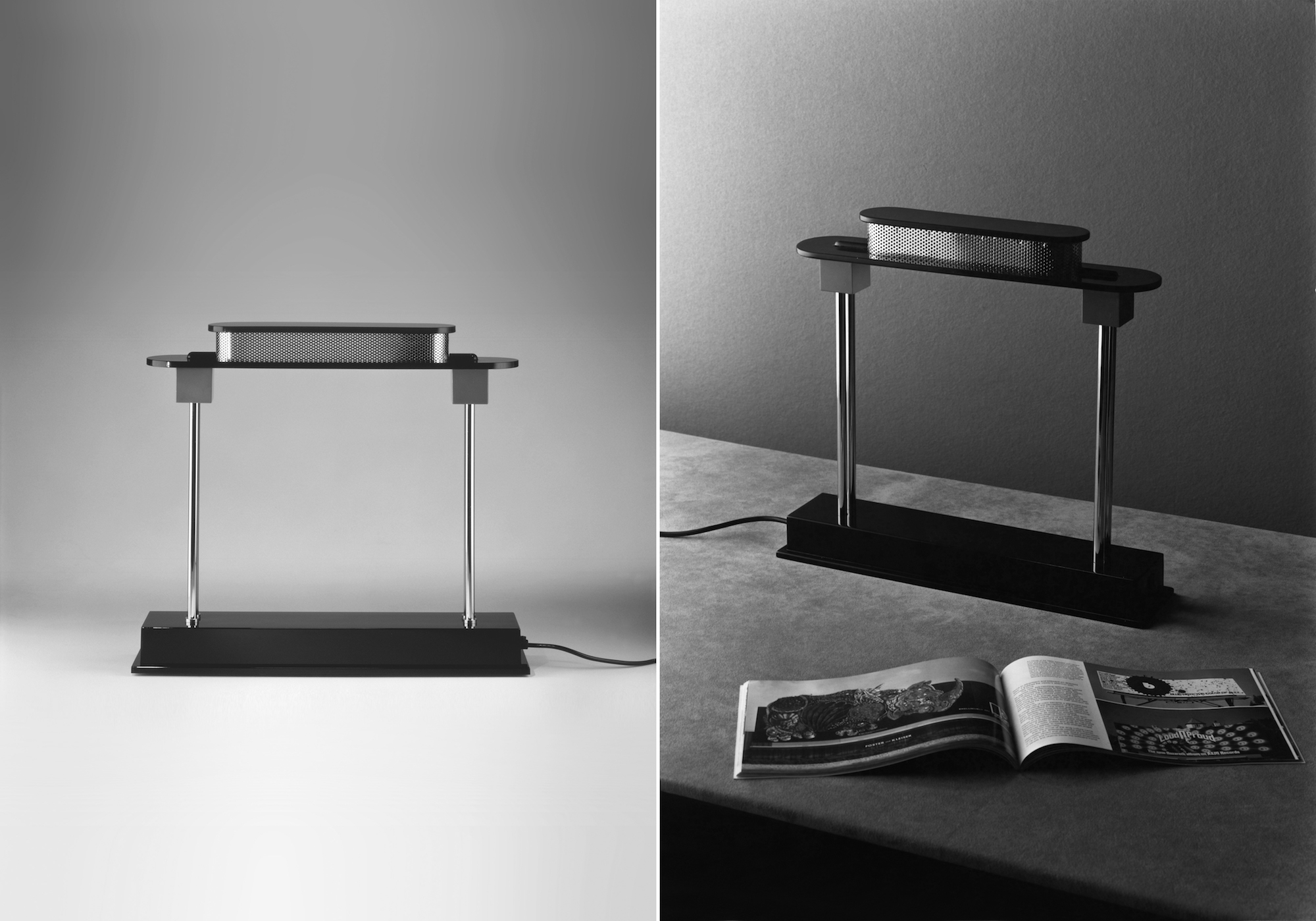
The Pausania light

The Pausania and Callimaco lights, designed in 1982 and 1983, are still in our catalogue today as part the Masters’ Pieces collection of contemporary design classics. In Pausania, Sottsass took the classic banker’s lamp and experimented with the shape and colour in order to produce a Memphis take on the traditional design. Today, Pausania’s technology has been reimagined not only to adapt to contemporary standards of intelligent, eco-friendly and energy efficient LED lighting, but also to provide a new quality of perceptive experience.

The Callimaco lamp

Callimaco is amongst the most original of Artemide’s designs, unique in its own quest; it is a fusion of industrial and lighting design and a powerful statement piece. It too has been reimagined with retro-like features such as a LED lighting and a touch dimmer.

Ernesto Gismondi and Ettore Sottsass © Barbara Radice

Beyond the professional path, I remember Ettore as a family friend, with whom Ernesto communicated and exchanged ideas even after the Memphis movement. He designed many pieces that went on to become icons, but some of my favourite Sottsass designs are from his glass and crystal collection, where he utilised traditional Venetian glass blowing techniques while also finding a new way to work with glass by studying the quality of material. Through this perfect mix of tradition and innovation, he produced surprising combinations of shapes and colours that had never been seen before.


Wool Works: ercol x Solidwool

PORT catches up with Edward Tadros, chairman of furniture brand ercol, to discuss heritage materials and hybrid influences

Deeply woven into the fabric of British heritage design is a certain utilitarianism. When one thinks of British tweed, the subtly flecked texture of the material is, of course, a factor, but just as important is the protection it provides against the elements. Heritage design also appeals to a sense of sustainability, of utilising every part of the material so nothing is wasted. The resurgence of ‘up-cycling’ – transforming unwanted by-products or materials into something valuable – also speaks to this tendency at the heart of heritage.

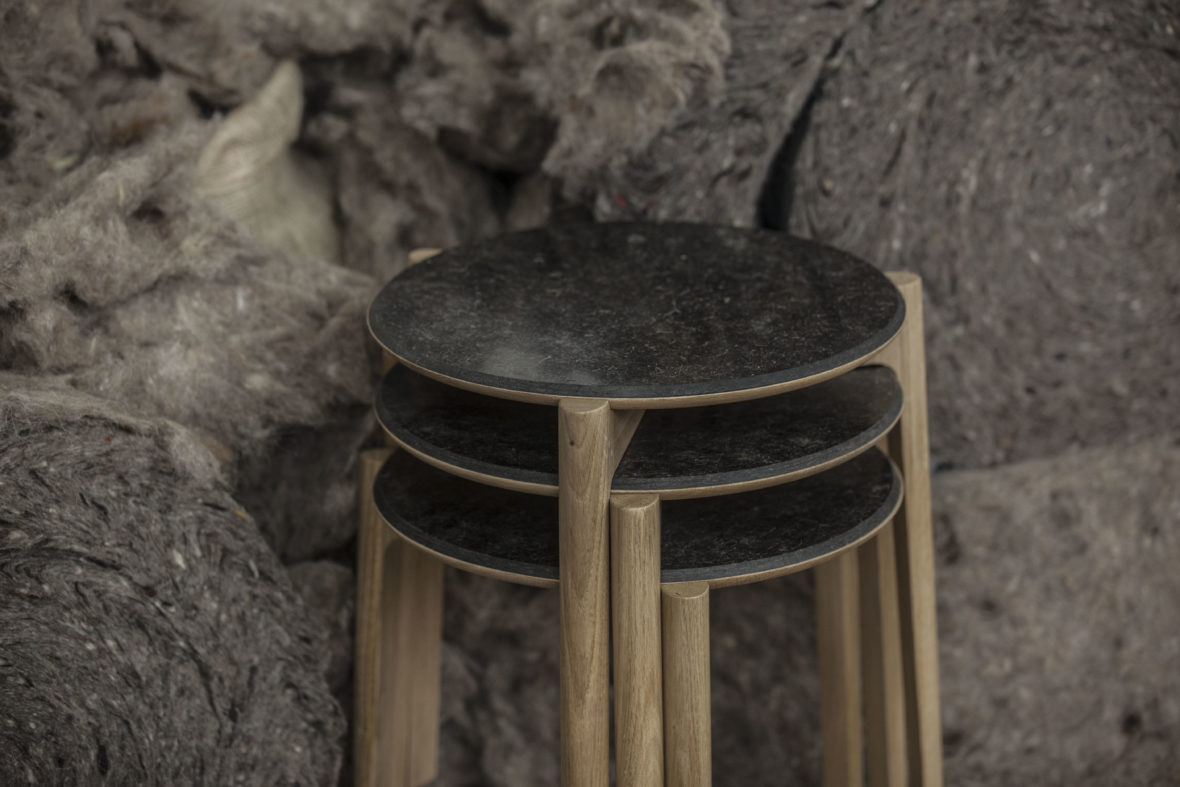
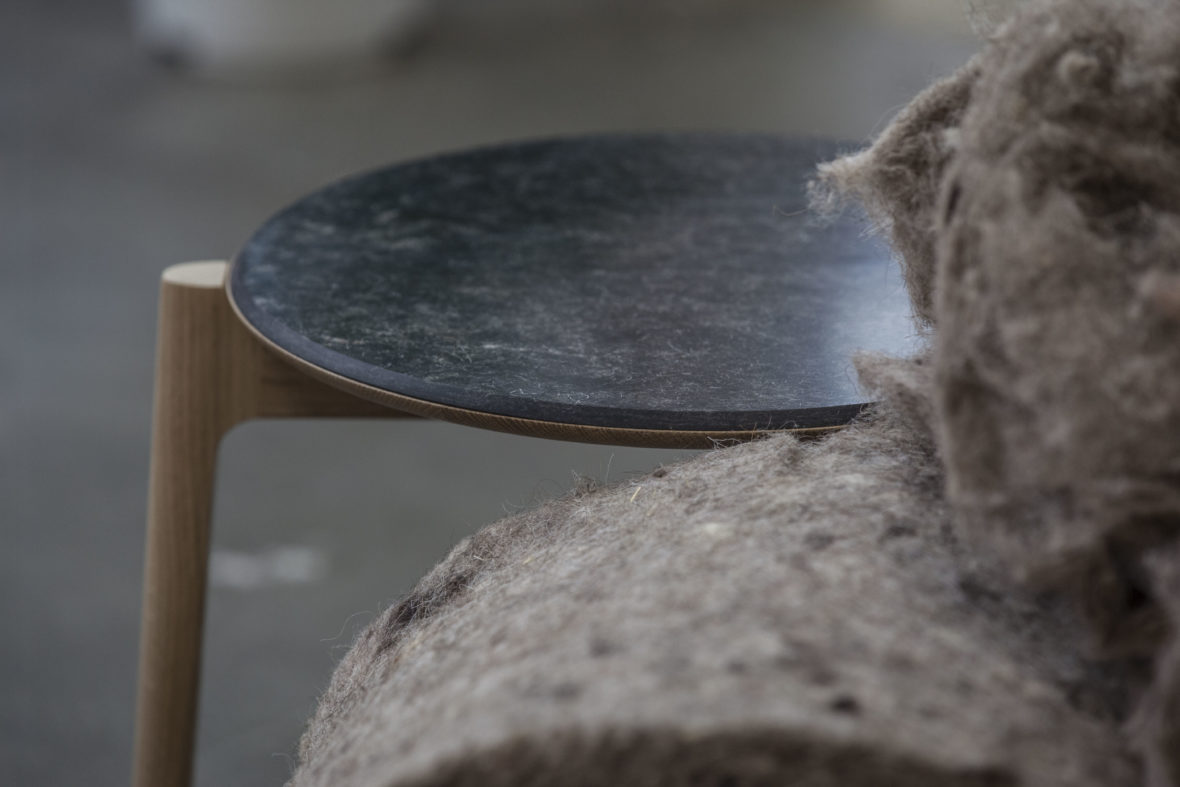
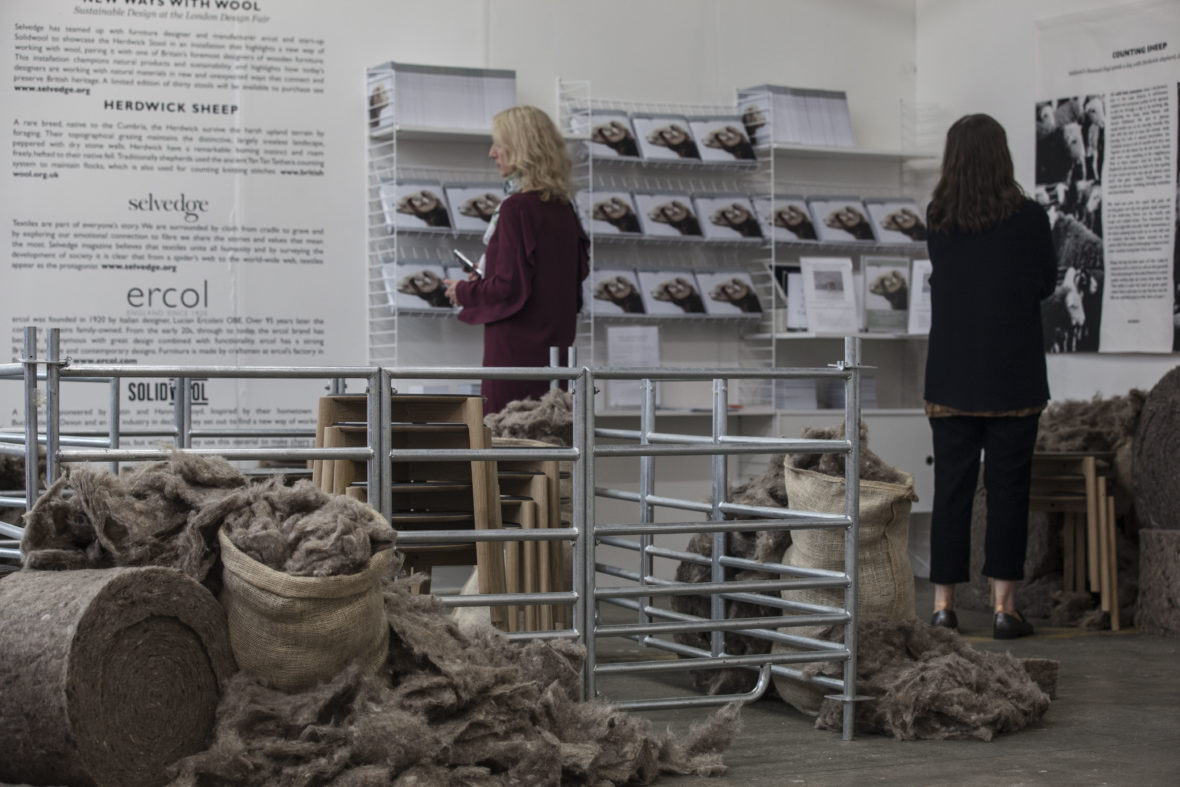
Mid-century furniture behemoth ercol’s collaboration with textiles magazine Selvedge and start-up Solidwool uses the coarse fleece of Herdwick sheep – a breed synonymous with the landscape of the Lake District – to create an elegant, raw and irreducibly British piece of furniture. Their updated Svelto stool combines a solid oak frame with a cover designed by Solidwool, featuring a unique composite material comprising of bio-resin and the coarse fleece of Herdwick sheep that creates a subtle, marbled effect. Port caught up with Edward Tadros, ercol Chairman, fresh from the London Design Festival, to talk about the peculiarities of English heritage design.

Herdwick sheep’s wool on display at the London Design Festival

How did your collaboration with Selvedge and Solidwool come about?

We were interested in creating a piece centred around sustainability, using this wool that is difficult to use for anything else. We were all interested in the longevity of this material, and combining it with our timber, but it’s hard to say exactly how the project came together – it really developed through so many different conversations and discussions.

What attracted you to the project, and how does it fit in with the ercol brand?

What attracted us was the naturalness of it. This unusual way of using wool is all about British heritage, making use of a material that has been part of the English countryside over the years. This combines with our own heritage and use of timber, making furniture that has its roots in English vernacular design. Using English countryside wool was, I suppose, a loose looping together of different ideas.

The exclusive ercol x Solidwool stool

It’s interesting how that plays into ercol’s own history. Do you consider the brand to be British?

My grandfather was Italian, but he had this extraordinary recognition of English craft. He had an innate sense of the simplicity of the design and construction of a Windsor chair, and perhaps that was because he wasn’t born in the Buckinghamshire countryside. Maybe it does take someone from a different country, with a different perspective, to recognise some of the often unseen strengths of English heritage. We are a bit of a mixture, an Italian background with an English story.

Is it important for ercol to use British materials and to produce in Britain, both in terms of the timber you use and the wool for this project?

We’re quite global, in many ways, we do also source materials and manufacture overseas. However, the bulk of our manufacturing and our thinking comes from this country. It’s important – as with most things – not to be blinkered, to be open and international. It is also important to have roots and a solid base. I think that manufacturing, designing and being based in the UK, the Englishness of it, gives us our authentic roots. We’ll be 100 years old in 2020, and we talk a lot about maintaining that authenticity, but also about developing different ways to express those roots.

The Future of Fabric

Danish trailblazer Kvadrat is turning end-of-life textiles into furniture with the help of Max Lamb and upcycling initiative Really

Benches by Max Lamb, images courtesy of Angela Moore

“Some of the very first designers for Kvadrat were artists and architects,” says Njusja de Gier, head of branding at Denmark’s leading textile manufacturer. “That has always been a huge part of our identity.” Creative partnerships have driven the company’s reputation for innovative design since it was founded 1968 and, through collaborations with figures such as Raf Simons, Peter Saville and Olafur Eliasson, Kvadrat has advanced textiles beyond the modish world of product design and into the realm of experience. “We want to inspire people and show that you can do more with textiles than just upholster a sofa or a chair,” she says. “We’re trying to push the boundaries.”

Despite Kvadrat’s roots in the Scandinavian design tradition, one reason for the revolving roster of collaborators is to forge an international outlook. In-house engineers regularly team up with designers who have a technical understanding of yarns and weaving, such as Asa Pärson, or designers who work conceptually, such as Patricia Urquiola. These partnerships ensure that Kvadrat remains relevant, furnishing architectural landmarks such as MoMA, Guggenheim Bilbao and the Oslo Opera House, while also remaining popular in private homes, hospitals, airports and public transport.

After launching its fourth collection of soft furnishings with Raf Simons at the Academy of Design in New York in March, Kvadrat has now teamed up with ‘upcycling’ initiative Really, and designers Max Lamb and Christien Meindertsma to present a collection of furniture made entirely from end-of-life wool and cotton. The launch exhibition at Salone del Mobile will detail the making of the solid textile board using cut-offs from the fashion and design industries, as well as unwanted household textiles. 

“Upcycling is necessary,” says Njusja. “We saw this as the next step in Kvadrat’s sustainability strategy. Naturally, we have a lot of cut-offs, and this is a way to do something beautiful with them.” The solid textile boards come in four colours – blue, white, slate and brown – based on their textile source, and can be used in many of the same ways as solid wood. 

“We approached Max because of his material research. He’s already experimented with engineered marble so we knew he would take an interesting approach,” Njusja explains. “He has designed 12 benches for us in such a way that we can recycle each piece and make new textile boards with it. It’s completely closed-loop.” 

Max Lamb and Christien Meindertsma’s designs, along with their research and prototypes, will be on display from 5 April at Salone del Mobile 2017