The hamburger. An enduring staple of American fast food and a much-loved addition to menus across the globe. Not an item one would usually associate with the glistening world of jewellery, but for Singapore-based designer Nadine Ghosn, it has proven to be the ultimate muse to inspire her playful talismans, rendered in solid gold and colourful, vibrant combinations of gemstones.
Her bestselling jewel, the Veggie Burger, is a shiny stack of six rings – including a gem-dusted ‘gluten-free’ top bun and a burger patty – that puts a high-end twist on everyday food with diamonds, sapphires, tsavorites and rubies. “I loved the idea of taking an ordinary universal food that reminds us of our childhood: the famous burger. It was an unexpected fine piece of jewellery at the time because it was stackable and colourful. We all can relate, and it often puts a smile on our faces,” says Ghosn. “The stackable component – so people can customise their burger – was an arduous manufacturing practice, to make sure they fall in the right place once stacked.” Ghosn, who founded her namesake brand in 2015, has long brought a light-heartedness to the fine jewellery space with collections inspired by different foods, like her edamame, sushi and croissant charms, as well as her YOUtensils line, that applies a golden touch to the humble fork, spoon and disposable straw. Today, she is one of a handful of jewellery-makers working up appetites with food-inspired designs that riff on the work of artists like Hayden Kays and Andy Warhol by translating commonplace objects into precious trinkets, while paying subtle homage to heritage jewellers like Carl Fabergé, whose exquisite, bejewelled eggs have delighted and intrigued since the 19th century.
Mish Tworkowski, the founder of the US-based label Mish Fine Jewelry, is a leading name in the niche market today. Playing with size and scale, Tworkowski dreams up tasty jewels like his Strawberry Flower collection, which brings precious expression to his favourite fruit, the strawberry. On earclips, bracelets and pendants, every detail of the strawberry, from its dainty seeds to its stalk, has been replicated in gold, lending each design a delightfully tactile and vibrant appeal.
Much like Tworkowski, Dolce & Gabbana has paid recent homage to the delicacy of berries with one of its most spectacular jewels to date. The Cherries set, unveiled as part of the Italian fashion giant’s Alta Gioielleria offering, includes a high jewellery necklace and bracelet modelled with two ruby-encrusted cherries and yellow gold leaves. Enamelled by hand, the pieces recreate the atmosphere of an enchanted forest with a lustrous pavé of emeralds, rubellite tourmalines, peridots and rhodolite garnets set into twisted gold wire.
Meanwhile, for Rosh Mahtani, the founder of the London-based jewellery line Alighieri, creatures from the sea provide ample inspiration. Sculpted in bronze and plated in the brand’s signature 24-carat gold, her Gone Fishing earrings celebrate the wonders of the seaside with a shimmering gold fish suspended on a single hoop. Other delicacies include Alighieri’s Olive earrings (pictured), which replicate the oval fruit in freshwater baroque pearls from London’s Hatton Garden, and the Flickers of the Sea necklace, a bronze fishbone pendant on Indian cotton cord.
And who could forget the candy-coloured creations of Rosie Fortescue? Founded in 2015, the London-based demi-fine jewellery brand specialises in failsafe jewels that can be styled from day to night, like her silver pendants and mix-and-match charm hoops that hug the lobe with gem-set treats, from sweets to zirconia-studded chillies.
With its mood-boosting colour palette and talismanic qualities, the trend for food-inspired bijou speaks to a shelving of old styling rules and traditions. In 2024, jewellery should spark joy, and as our love of playful treasures shows no sign of abating, we can expect many more delectable trinkets to infiltrate our jewellery boxes in the coming years.
A chat with the founders of Kera, a startup reimagining food industry waste
Photography ELEANOR WASHINGTON
By the time I board the bus, sodden from the driving rain and a forgotten umbrella, I’ve had time to digest how I feel about Kera. Over six courses in South London Louie, a supper-club locale nestled beneath the wing of South London Gallery, I’ve tried this novel protein in various guises – deep-fried, minced, and most memorably, constituted into a faux-chicken nugget. While meat substitutes are hardly novel fare, what piques the interest in Kera is its provenance: by-product chicken feathers.
Developed from Sorawut Kittibanthorn’s MA project, A Lighter Delicacy, Kera functions as the commercial evolution of Kittibanthorn’s exploration into feather-based protein. Founded with Tom Washington, Kera aims to develop a viable gastronomic use for feather by-product, positioning itself as a nose-to-tail foodstuff; crucially however, the vision of the future of Kera is as a high-quality meat substitute, as opposed to a generic by-product. Kittibanthorn and Washington view the supplement industry as oversaturated, and an experimental protein suitable for both commercial and residential applications as the future of new protein.
The South London Louie menu was set and executed by Laam, Northern Thai supper club extraordinaires; their attempt to showcase Kera in a range of dishes was, for the most part, a success. A high-ceilinged garden room, softly lit, held about twenty guests – food writers, experimentally-minded vegans, and even representatives of the Thai embassy. Looping video on a television screen against one wall showed the story of Kera so far, while feathers and leaves decorated each of the tables. The food was varied, and the sort of warming, cleansing, spices, carbohydrates, and fresh green herbs you’re looking for on an unseasonably cool spring evening.
I sat down with Kittibanthorn and Washington a couple of weeks after the event to discuss how they feel Kera’s public debut went, the provenance of the company, and how they’re hoping to break through to everyday dining tables.
Gus Wray: Well, to begin, thank you very much for taking the time to talk to me.
Tom Washington: And thank you.
GW: Thanks again for last week, I had a great time. I really enjoyed getting to try Kera and experiment with a new protein – a revolutionary protein. How did you feel the event went? Were you happy with it?
TW: Yeah, we were really happy. It’s been a big step for us. And it was a big stress thinking about it, how people are going to react, and are they gonna have a good time? Is everyone going to show up? So we’re really happy with the way it turned out. And the way it was all presented in the end. But um, yeah, we were also pleased to see everyone’s reactions to the food, everyone liked Laam’s cooking. Everyone seemed to enjoy the protein. And the biggest feedback that we got was that they couldn’t tell that it wasn’t meat, which is exactly what we wanted to hear. I mean, some people didn’t even know what the project was about, and they found out after finishing the meal – they thought it was just conventional meat. So yeah, from my perspective, it was a success. How about you Sorawut?
Sorawut Kittibanthorn: Yeah, I mean I’m happy to see, eventually, people eat it. Because, I’ve been experimenting with this for a few years, just waiting to launch it to the public for the first time. Luckily everyone is enjoying the product that we’ve been developing, and also, yeah, it’s quite nice to see everyone leave good feedback, positive feedback – to the product, and also to the event that we’ve hosted.
GW: From my perspective as a guest that seemed to go very well. Everyone seemed to be very interested in trying the protein. I was surprised, pleasantly so, that there were some vegans who were taking part; is that something you expected? Or did you know that they were going to be there?
TW: There was a funny story about that, actually. So a vegan [at the event], she bought the tickets and then was kind of half-requesting a refund, because she was like, “Oh, we’re vegans, we didn’t realise, we thought it was just a normal alternative protein.” But then we started talking to her about the ethics of it. And she decided that she did want to come. Even though it wasn’t necessarily plant based – in fact, it’s an animal based protein that she would consider consuming – because of the sustainability aspects of it, which is really interesting, because we do see the product as a bit of a compromise between being vegan but also being animal-based. So it’s kind of an ethical way that you can be animal-based. Yeah, so you can get into the vegan community a little bit and the plant-based community, especially through an ethics and sustainability argument.
GW: It seems to me that this sort of approach is very, very much a big reason why people are going to plant-based diets, especially to flexitarian diets. Do you see Kera as something to be used on ameat-free Monday for those following a more flexitarian diet? Are you trying to go after converts? Possibly even vegetarians? Or are you focusing mostly on, you know, people who eat meat, who want to eat meat in a more sustainable and environmentally friendly manner?
SK: From my perspective, I feel like at the moment people convert into vegan[ism] because of not just their religions, or beliefs, but it’s just that they care about it, the planet, they care about the environmental aspects. Mostly a new generation.We did some blind testing with people. And surprisingly, one of the audience that test[ed] our product, she was saying, okay, she’s vegan, but because she doesn’t want to produce waste – when she heard about this project, our idea, she didn’t mind our product. To go back to your question, I will say we are targeting both of them. And also people who still enjoy eating meat – we still like providing a new alternative for them, an alternative way of consuming meat. We still can use products from animals, but we mostly want to use by-products.
TW: So we’re not limited by it being purely plant-based, which means we can kind of make it a bit more delicious. You can add those fats and the gelatin, for example, that makes it extra juicy, that you can’t get in other alternative proteins. Lots of vegans do struggle to get all the nutrients when they switch to a purely vegan diet. And I think this is a kind of compromise where they can still feel ethical, but get those nutrients from animal-based products. To form alternative proteins, you’re using 100% new material, you’re still having to source material, whether it be from farms, etc. This protein [keratin] already exists, you know, it’s just going to waste at the moment. So that’s a major advantage – it’s just sitting there.
GW: I wanted to ask you about how you source your feathers, because obviously Kera is a feather-based protein, the main part of that is keratin. So firstly, wherever there can be the process used for Kera, can it be used for other keratin sources like wool or hair or hooves or nails? And where you’re sourcing your feathers from and how you’re expecting that to scale as Kera grows as a company, where do you see this moving in terms of where your base products come from?
SK: Yeah, so now we are sourcing the chicken feather powder from a slaughterhouse back in Asia. So when I was in Asia, I was working with a lab in university. I was working with the university and the labs [were] helping me do a small batch of the extraction, [which] I’m still using now. I reached out to some slaughterhouses in Thailand to source it now, and throughout that process, what I take from them is small. Each day they kill about 10,000 birds. One batch I take from them is about 10 kg, each time that I visit the slaughterhouse – I think in a day, they produce about 50 kg. So I just took one fifth of it. And then [I] give it to the lab, and the labs help me dry it out, clean it out and store it.
TW: In terms of scalability as well, we are in talks with a biotechnology company at the moment. They have the ability to scale the project, they already have the technology – what we need to do is work with them to get the patented process, to achieve the food certifications. There’s something called the novel food certification in the UK, and each country has their own certification, but these can be quite difficult to get. Once we get it, you know, we’ll be the first to the market with the product. It was quite a coincidence, it was actually unrelated to the event, but we got contacted by this technology firm that had the capability and they can do large scale manufacturing right now.
GW: I believe, Sorawut, that this came from your MA project, your dissertation project. I was wondering if you could tell me about how the idea behind it came around in the first place, and how you then met Tom, founded Kera, and then come to a point where you’re at now – where, like you say, you’re talking to larger scale companies about the future of the product.
SK: Sure. Okay. So the background of the project; I did my MA degree at Central Saint Martin’s. And the course that I joined was called Material Futures. So basically it’s interdisciplinary design; you take out a scientific paper, and study what scientists have done in the paper, and then the designer part is you finding [an] application to that research: like to speculate, or find out what, how, we can make use of the research. I came across keratin as a material I was interested in working with. So at first I just looked at the waste streams that are available, what’s happening in the world. I saw, okay, chicken feather protein. Chicken feather is a problem in every region, in every part of the world, because people like to consume chicken a lot and also there is no restriction; every religion can consume chicken. So I see this problem, and I go through all the research, what they have done with this waste before. I will say, most people when they looked at chicken feather waste, they were looking at the physical property of it and they try to make bioplastic, they try to make containers or make, like, a brick block, just compress the chicken feathers into a brick, and use it in construction. I was researching that and I made bioplastic out of keratin powder, which came out quite nice.
The first application that I was looking at was keratin leather. So I incorporated chicken feather powder protein with bio-plastic binding agents. It came out quite well, it picked up the texture – similar to leather, you can see where the logos are, it kind of gives a similar effect to the real deal, real leather. When you engrave a letter, it creates the same texture, the same colours. When I use the keratin powder it increases the strength of the bioplastic, and also it’s increased the water resistance for the bioplastics, because, as chicken feathers, it’s not soluble in water – even though it’s been extracted into a powder. Somehow, when you put it in bioplastic, it keeps the bioplastic stronger.
GW: So the keratin is an integral part of this bioleather, it’s not just a filler additive? It actually creates better properties than the bioleather that’d be made with mycelium or seaweed or an alternative source?
SK: Yeah, I would say that. But a lot of people are doing that already. Bioplastics, there’s so many options, almost every waste stream they’ve found can turn into bioplastics. I want to find a new thing, a new application, because even if you turn it into bioplastic it’s not gonna solve the problem of chicken feather waste throughout the world. So I had an idea: rather than looking at the physical aspects of the chicken feather, I just looked at the chemical part of it. It just blew my mind that chicken feathers have a lot of protein, 91% by weight. Only 9% of the chicken feather is water. And when you look at the type of the protein that’s contained in chicken feathers, it’s amino acids that people need in everyday life. So what if we can access those amino acids? Then we can make it accessible for people, then we can get extra protein from each chicken. When I came across that I just thought, like, ok, I want to make chicken feathers edible. So then it was kind of my journey to research how to extract it.
[Sorawut shares his screen to show me a presentation from him and Tom]
Yeah, this is a picture of when I was visiting the slaughterhouse, you can see, that’s the amount of chicken feather waste that they produce every day. One chicken has a few thousand feathers each. And if we can access that we can get a free protein source. So then, okay, how can we break that down into a digestible form? We were interested in using an enzyme to break it down, because fewer harsh chemicals are involved, and also, it doesn’t require as much energy. The thing that you need is time. It’s a similar process to fermentation, you put the enzyme in the solution and then you put chicken feather in there. And we will start degrading the chicken into the amber solution, as you can see in the picture. And then, after it extracts, it’s going to become like the picture on the left hand side. But for easier storage, we can just suck out the water, and then it becomes a powder. Once we actually have the powder, we start applying it into food form, we bind it with the other food binding agents.
TW: So we use enzymes and the process is called hydrolysis, enzymes are used to break it down in a solution. So, full name, enzymatic hydrolysis.
GW: And then from that–
SK: From that, we kind of start our journey to Okay, how we can form the product? What kind of texture, what kind of product? Or, we’re gonna do a food application, but what kind of product is it that we need to design? When we talk to people about alternative protein, they think about something that replaces meat. When people talk about chicken feather protein, they say things like, “this is going to be like a cheap protein source, it’s going to be dirty, it’s not going to be that clean.” So I just want to review that – what if we came up with the outcome, or the product that shows that, okay, this product is equivalent to normal meat or normal vegan meat. That’s the initial idea, we want to market the texture and the taste of the chicken feather protein as normal meat.
GW: So I remember during the tasting last week, you told me about the cloud nuggets you’d designed – a sort of chicken nugget, coated in a cornflour batter, and how you’d used goose fat and gelatine to achieve a new texture and flavour dimension. Is that something you’re looking to continue doing? Kera as a flavour by itself had that very umami taste, almost fish-sauce like taste, are you looking to lean into that? Or to use Kera only as a protein source, and then get flavour and texture from other means?
TW: Yes, I mean, we need to add the flavour to get that meaty flavour and texture. The powder on its own gives more of a bitter taste, and it’s not going to replicate meat exactly. So there’s various seasonings [to use], and then for the nuggets, we wanted to create a really juicy product where we sealed in the fat and gelatin. But for example, the sliced product, which can also be fried and it can almost resemble, depending on how much you cook it, crispy bacon, or even a bit of chicken breast – that actually doesn’t have any other additives than the plant-based food binding agent and the protein powder, there’s no fats, there’s no gelatin. That’s just the raw product. We kind of see it as more of a blank slate protein, a bit like a chicken breast; chicken breast doesn’t have too much flavour to it. it’s just a good source of protein that could replicate meat in a meal, and you add it into any sort of recipe. And the point of the event was also to show the versatility, the chefs managed to integrate it in all these different ways.
GW: You’re talking just then about the use of protein powder in forming this, and it is, once you’ve broken it down, a keratin powder. Protein powders are used throughout a lot of life, but I think especially whey powders. I was wondering if there’s any sort of use for a keratin powder by itself? Does it improve your nails and your hair, as you’d expect from keratin, or does it have muscle-building properties, like whey proteins? Or is it more of a sort of general protein source? Is there any specific advantage to keratin as a protein over other forms of animal protein or plant based protein?
TW: Yeah, so keratin focuses primarily on hair, skin, and nails. So it’s associated with the repair and regrowth of hair, skin and nails, it’s taken as a supplement, and is added into things like shampoos and creams already. It hasn’t been used in foods yet. And it’s sourced by other means, through animal hides, for example. But none of which really embody the kind of zero waste ethos that we have. I mean, animal hides are still a waste product, but they’re not as heavily wasted globally as chicken feathers. And there are also other applications for those. But another advantage of it being keratin specifically is the high levels of antioxidants. So, yeah, combined with the hair, skin and nails, positive attributes, we see it as almost more of a kind of general health protein, almost a beauty protein, rather than a muscle growth protein, although it does have some muscle growth capabilities. It’s mainly associated with those more cosmetic perks.
GW: So in terms of filling out a meal, would you use Kera as the main protein source, would you use it as supplementary powder or dressing, or some other element of a dish alongside another protein source, in terms of getting your daily protein requirement? Can it fulfil that, or is it better suited as a condiment, for example?
TW: I would say it could be either. I wouldn’t necessarily say you’d have a huge steak of it, although you could have quite a lot of it. I would say it integrates best as a kind of chicken substitute, in my opinion; you could mix it into a stir fry, for example. I think it works very well like that.
SK: We did experiment a lot – it could turn into a lot of forms. We tested it out: making it as a caviar, making feather crisps, making it as zero carb pasta, where we extrude the pasta by using food binding agents. We put keratin powder in it. So when they consume this pasta, it’s gonna be high protein, and also there’s the antioxidants. This is kind of the initial idea, I was thinking, okay, a lot of people struggle to eat meat, especially the elderly, and also kids, they don’t have the ability to chew tough meat. So that’s why I came to this prototype as, what if, in terms of the nutrition aspect it’s equivalent to animal protein, but they don’t need to chew it? Basically, this kind of meat could melt in their mouth, and the protein that they get is from keratin. So we experimented, we made feather crackers, we made a burger, with a spongy-like form. We did it as a crouton. I got excited to do a protein bar, but when I do I don’t want to do a square protein bar – what if we can make a delicate protein bar out of chicken feather powder?
GW: And obviously here you’re using professional chefs and kitchens, how have you found it in terms of cooking at home? Is it easy to cook with, to store it? Obviously it has benefits in terms of storage, in terms of pathogen transmission compared to raw meat for example. How easy is it to overcook or to burn or to really screw up – are you finding that in the protein form you provide it as, as slabs, it’s an easy protein to work with in a home kitchen?
SK: I would say at first when I cooked with it it took some time to understand it a bit, but after say two times cooking with it it’s similar to vegan protein already available on the market.
TW: I would say yeah, in terms of storing it and eating it and cooking with it, it cooks very quickly, and as a matter of fact it’s precooked – part of the process is that we steam it before, so it’s kind of safe to eat “raw”, but we suggest at least giving it a light fry, I suggest it’s best when it’s been lightly fried, particularly the slices. We literally chuck it in the pan for a couple of minutes and it’s done.
SK: It gets dry easier than animal meat, but I’d say when you put some sauce to cook with it it works quite well.
TW: It depends on the product, the slices get dry quite fast because they haven’t got any fat in them, so you need butter or something, or to incorporate it within a sauce, but the cubes can be quite juicy and the nuggets definitely, they seal everything in.
GW: We spoke earlier about how there were vegans at the supper club you hosted with Laam, and Kera as an alternative protein source for people who are vegan or vegetarian for sustainable reasons rather than necessarily ethical ones; I was wondering if you had a view on Kera in terms of its allergens, could you use it as a non-allergenic ingredient in comparison to other proteins or other sources of protein, is there anywhere you’ve expressly found or targeted where Kera is a viable alternative for everyone without any allergic reactions?
TW: I mean we still use the conventional binders which have soy and cereal products, but I mean it doesn’t have any whey protein, so I suppose there’s no lactose risk. I wouldn’t necessarily say being anti-allergenic is its strength. It’s very similar to other alternative proteins in terms of allergens because it’s just soy and cereal.
GW: Would you explore using other binders or other fillers that aren’t soy or cereal based, to create other protein sources?
TW: We haven’t experimented it with being an anti-allergen protein, but we wouldn’t rule it out.
GW: There’s lots of different ways that you used Kera, in your experiments, especially in different foodstuffs, lots of different presentations. That, I find quite interesting. I was just wondering, taking it from that point, are you looking to do more collaborations with restaurants and supper clubs again, are you looking to move more into marketing it at a consumer level as opposed to a professional level?
TW: Yeah. So I’d say the end goal is definitely consumer level, we do want this to become a viable product that eventually makes profit and can come to the market so everyone can access it. But in the meantime, we are focusing on doing these kinds of marketing events. We want to do more collaborations, like the one that you attended. But also we’ve got an event coming up in June with the Thai embassy, they’re putting on a showcase of Thailand, Thai innovation, Thai technology, Thai culture in London. So we’ll be participating in that. [this happened in early July]
The reason we conceive these events is to change the perceptions of consuming what is, essentially a waste product. So what we really wanted to do was associate the protein with high end cooking. So that’s why we partnered with the chefs from Laam, who are really good at putting on these food events. They do really interesting and innovative food, and we wanted to, rather than it being associated with being cheap, and being a waste product, we wanted it to be oh no, this is an innovation, rather than those negative connotations. It’s something new rather than something that’s thrown in the bin.
GW: I was going to ask, because it seems like a very similar analogue in the past 10, 15 years in terms of using under-extracted resources of protein that are more environmentally sustainable than your traditional animal proteins would be insects, and especially how Western audiences have reacted to insects as a protein source. Some have been very happy to be experimental, some have been a lot more squeamish and unwilling to experiment. I don’t know if you’ve had any of these experiences with Kera, obviously, so far it has been mostly an internal review. With the Louie event a couple of weeks ago, and then any other tastings you’ve done, has there been anyone taking issue with the idea of consuming feather protein at all? Or have people been more welcoming and receptive to the idea of it?
TW: People are definitely hesitant. They’re interested, but they’re often hesitant. And yeah, some people do reject it at first. But I think they need to taste it. Because I think as soon as you taste one of the nuggets, I think you just treat it as another alternative protein. And it’s about breaking down those perceptions. It’s still a very large barrier, but I think what’s interesting is that you mentioned that in the last 15 years or so that we’ve been moving to this idea of more sustainable proteins. I think the perception of sustainability has also changed in the last few years, where it’s not just going vegan or just the idea of sustainability, it’s this kind of zero waste concept. I mean, I’ve seen it a lot on social media, of people living this zero waste lifestyle, and this new idea of sustainability – of actually, rather than just putting solar panels on your roof or something like that, you can integrate it into your lifestyle, don’t throw anything away, upcycle. And I see that as more of a growing trend now. And we’ve had this new concept of sustainability, like restaurants like Silo, in London, literally being a zero waste restaurant, hardly anything going to waste, that’s really trendy. We see ourselves aligning with that culture.
SK: Yeah. I think our project falls into the circular economy in a way, it’s not just being sustainable, but you create more value in the raw material that’s available.
TW: We’re solving a problem, and we think that’s what the best businesses do, is they solve a problem, and we’re trying to quite literally intervene and create from what is currently an expense that farmers have to pay to get rid of. We’re turning that into an asset.
GW: Are you looking for Kera to exist as a way to reduce carbon emission by that way? Or is it more of a method of increasing the efficiency per slaughter? If that makes sense to you, looking to do both, to have Kera as a product which means there needs to be less of a demand for animal protein, and therefore fewer animals slaughtered, and so on and so forth?
TW: I’d say both, because currently, it goes into landfill or is incinerated. So yeah, it would take the burden off just the raw animal protein itself. So for every 10 chickens, you can get an extra chicken’s worth of protein, essentially. So it means less animal deaths, and optimising an animal-based diet, and rethinking old ideas of the nose-to-tail diet, which is also a growing trend now. Through new technology, we’re able to now apply that to feathers, we see it like that. But then also, literally just not wasting the feathers, not chucking them away, or burning them. So in two dimensions, it’s more sustainable.
GW: Obviously with feathers as a byproduct – or resource, depending on how you look at it – it’s one that is only accessible to you after the slaughter, you can’t really harvest it from a living chicken. Are there other keratin sources that you’d be looking at that could be used to make a vegetarian Kera, where you’re using animal resources, but ones that don’t require slaughter in order to be created? Because I know that the feathers you use, there’s such a massive amount of them as a byproduct. Are there any other byproducts that you might use, that don’t require the death of an animal in order to produce?
TW: So in terms of implementing it into the protein, we can implement any kind of protein powder into our food form. So we actually have some pea protein in our product as well, just to enhance the protein content. I know being an animal product can be limiting for some people because yes, the chicken does still have to die. But I mean, we see this [feather waste] as the biggest existing problem. However, there’s no reason why wool, for example, couldn’t be converted in this way. The trouble with wool is that there’s other applications that are perhaps more efficient. And yeah, it’s –
GW: – itself a resource rather than a byproduct.
TW: Exactly.
SK: I researched the sources of keratin, which is mostly derived from animals, or humans. I don’t think plants can produce keratin, unless there’s synthetic keratin that they can do in a lab. But that’s not the main purpose of us doing that. I mean, if there is a new resource or byproduct that could deliver keratin from plants, or so it doesn’t harm animals, I think we can incorporate that into our product. Definitely.
TW: I think the trouble is, though, that the chicken is always going to be a relevant food source around the world, because, as Sorawut mentioned earlier, particularly in developing countries, chickens are highly relied upon, and actually, they have a very small carbon footprint anyway, relative to things like beef. So there’s always going to be feathers being disposed of, so why not use them? That’s kind of our philosophy. If you are plant-based, it’s a nice idea to not consume anything and not prop up any industry. But the reality is, the feathers are going to be generated one way or another. And I think, particularly in developing countries, where chicken is such a big part of the culture, it’s not going to change for a long time.
SK: Interestingly, when the project was exposed to the public, it wasn’t just chicken slaughterhouses that contacted me. We have one of the factory owners, he owns a tannery factory. When people talk about cows, they don’t think about the hairs of the cow that much. But he’s dealing with a lot of cow hairs in the tannery factory. So he was reaching out, “Okay, do you think, the extraction process turning chicken feather to a powder, could it be applied to the cow hairs?” Which, when I researched it, yes. I mean, it’s the same thing as it contains keratin. But there’s not as many amino acids as are available in the chicken feather.
GW: And those amino acids and other mineral and vitamin sources, are they ones that you wouldn’t be able to find in a plant-based diet without supplements? Or are they more available in other plant-based proteins, but this is sort of a meat based protein alternative to those?
TW: As far as I’m aware, keratin isn’t available in plant-based protein. You can supplement with other forms of protein, but you’re never gonna get the raw keratin; the antioxidants can be met with things like blueberries. But again, the perk of an animal-based diet is that you get nutrients but in higher concentrations. So yeah, the exact protein that you’re getting isn’t replicable, unless some new technology comes out.
SK: I mean, when you talk to the scientists as well, because, when they heard for the first time how much protein is available in the chicken feather by weight, when I say, okay, 91 [percent] they’re just impressed with the level of the protein inside of that. Even pea protein, or whey protein that they extract from milk, when it’s compared that ratio is better.
GW: So you get more for your money?
TW: It’s a very high yield, essentially.
GW: And with those feathers, you’re saying that the farmers are paying for them to be taken away or to be incinerated or to be put into landfill. I know this is still at the small scale that we talked about earlier – are you expecting this to be a reciprocal agreement where feathers are given to you for free as a waste management solution, or are you going to be sourcing your feathers and paying for them? Basically, in terms of the pricing of a product, How much are you expecting to collect, and are you going to get these feathers, hopefully for free, as a waste solution?
TW: The plan is they will be at least for free. But in actual fact, if the deal works out with the technologies company we’re working with, they already have a partner that gives them the feathers. So they’ve dealt with that all by themselves, they have some form of agreement, I’m assuming it’s at least for free, but in fact, they might actually get paid to take them away.
GW: And so in light of that, how are you looking to market in terms of value? A lot of your marketing is about Kera as a high-end market, high value, high-quality protein source, are we looking for it to be comparable to other protein sources like that, like chicken breast or even steak, or are you going to be comparing it more to plant-based proteins? Or because of the nature of the initial product, the feathers, and like you say, either getting them for free or being paid to receive them, are you looking to use Kera as a way of undercutting protein competition in the marketplace?
TW: I think definitely at first, we’ll go for the high end approach, even if it is affordable, to scale it and to undercut. I think the biggest problem at first is to break down the associations [of feathers]. So I think when we’ve talked about this and done our initial marketing studies, we were thinking of playing on it being an innovation and more of a kind of exotic protein. So you see, you can get ostrich burgers, things like that. And it could be branded in such a way and priced in such a way that you’d see it as more of a novelty, and it being more exotic than just a cheaper meat.
GW: It seems to me that the difficulty with the novelty attitude is that the market can be very, very limited. And when we’re talking about 40 million tonnes of feathers annually, that’s a lot of market that you can capture – initially looking at it as a novelty, and an innovative product, are you then expecting to change your marketing strategy to try and catch more of a market or is that something that you’re not in the place of working out yet?
TW: I mean, it depends entirely on our scalability. And it’s something that we definitely need to work out. We know we can extract the actual protein at a large scale but then it’s also about the food-forming process and then how that works to deliver the final product but I think eventually, I see no reason why it couldn’t be more affordable. But the big trouble is, I think if we price it too low, people are just going to treat it as literal waste: they’ll think it’s a wasted protein source and then it won’t be valued very highly.
SK: We’re trying to follow the pattern of how they introduced insect protein into the market. There’s a lot of research saying the reason why they marketed insect eating in a fancy restaurant, or by having a celebrity test it first, is because it breaks down the social barrier. t’s aligned with the cost of production as well, because we are now doing it at the small lab scale, where the costs of producing the feather powder is still quite high. At first we want to break down social barriers, we want to make it look more beautiful or fancy, have well-known people try it, and start talking about that, and then it’s gonna break down the barrier to the broader audience. Eventually, yes, the purpose of doing this business is like, we’re doing a food application but at the same time we want to provide a new way of managing waste in the West, in the food industry – in a way, we propose a new way of managing chicken feather waste in the food industry.
GW: To me, what I’ve been reading about Kera, and from my experience of it, it seems like you have two products almost: you’ve got the finalised Kera protein, the one that you’ve turned into a meat substitute, the one you’re using for cooking and you’re using for producing these fantastic meals and dishes with, and then the other one is the Kera protein itself. I can’t help but feel like that is very similar to gelatine as a product, it’s a large scale industrial slaughter byproduct. The provenance isn’t really there in terms of where it’s sourced, because it doesn’t really matter as a byproduct; you’re not asking where the hooves in your gelatine are coming from, you know? I’m just wondering how you are finding marketing that gap between the large scale protein source that you’re producing, and then the high-end foodstuff that you are marketing as a final product, how is it bridging that divide between the two?
TW: So, I mean, the reason why we focused on the food product is because it’s the most appealing, it’s kind of the sexiest product that garnered the most attention. People have the most emotional reaction to it being food, they’re like, “wow, it’s meat from feathers”. And we’ve gone off from that. We think this is the best way for it to enter the market. But essentially, we see Kera as a waste management solution at the end of the day. So we want to be the middleman between the powder producers, and the actual market. Scientists and technology labs, they’re the experts, and they have the facilities to create the powder. They have the know-how and the capability to do that. But our background, as designers, we can think of ways of turning that into something of value. Okay, you can use the powder as a supplement or something if you’re not as creative, which is an oversaturated market, although it’s still a possibility. But we think we can add value by packaging it in a way that will make it more appealing to the consumer, whether that be the food form, or some kind of cream, or just different forms, and presenting it as a way for large companies to turn their expense into an asset and a revenue stream.
GW: Based on what you’ve said, the final foodstuff is what you say is most marketable. Would you consider using the protein and the processes that you’ve developed for these feathers, rather than in the final foodstuff, as you know, an ingredient or an additive in protein powders or in other foods elsewhere? There could be a requirement for keratin protein that can’t be addressed through consumption – are you dead set on it being a foodstuff, that’s a protein, that’s a meat substitute?
TW: Definitely, we would definitely want it to be used, particularly consumed. Because once we remove the barriers of the food certifications, all these things are possible. And we definitely want to do that. But it’s more about how we differentiate ourselves from the competition. The supplement industry is so competitive, and yeah, you can get pills for anything, and there’s 100 brands doing it. It’s very difficult to stand out because I mean, a pill is a pill, whereas alternative proteins vary so much in texture and taste. There’s also the narrative behind it.
SK: I would say that we are considering other applications of the keratin, but it’s just like, okay, the first kind of activity we need to do, is if people are open minded to eat meat from chicken feather, I think other applications of the keratin powder are going to be a lot easier to make people accept. So obviously, if we achieve this milestone, I will say yes, we can achieve the other applications. So we’re doing the most difficult part first.
GW: Well, thank you very much for explaining it to me. I just wanted to ask, where are you taking Kera next? At the Supperclub you showcased Kera in a whole variety of manners – deep fried, turned into nuggets, turned into something that resembles scrambled eggs, mixed into sauces. Are there any novel foodforms or systems you’re interested in pursuing in terms of creating Kera, creating that higher-end protein source that you are looking for? What’s the next step of that?
TW: Well, I think in terms of food forms, yes, we want to keep experimenting with those. For example, we want to launch a crisp, we think that’d be a really nice idea, like a protein crisp. But in the background, the big to-do on our list is the novel foods certification. This process can be quite lengthy and expensive. And we want to invest our time and money into achieving that to remove future barriers. And it has to be done now, in terms of our timeline. But in the meantime, we’re exploring other ideas, such as integrating the protein into a pet food or a dog food. What this would be able to do is get us some income, whilst we’re achieving the novel food certification: to get it into pet food is far easier. And it could be a way of establishing the business earlier on and supporting the novel foods application, etc. So everything that we’re doing now is in the context of achieving the larger goal of commercialising the product. So, yes, we want to keep doing these events, we want to keep creating new marketable products, but no-one’s going to be able to buy these in the supermarket unless we do these other things in the background. So everything’s in the context of that, everything we’re doing now.
It’s been some time since Jeremy Lee, Fergus Henderson and Margot Henderson all ate together, though in the 90s, when they were all making names for themselves as London cooks, that used to happen all the time.
Fergus guest-edited Port’s first food special, back in 2013. His nose-to-tail approach to cooking, popularised at St John, doesn’t seem as revolutionary as it might have done in the 90s, simply because it’s been so influential. We’re speaking in Rochelle Canteen; the restaurant Margot runs with partner Melanie Arnold.
Jeremy Lee: We skirted each other’s lives forever, so it would seem, amazingly. Because Ferg’s the same age as me, bar a few months. And both of us fell into cooking and the restaurant business. And I think when I started at Euphonium, because we only opened for dinner, I used to go down and buy bread at St John every day.
Margot Henderson: We were living in Earlham Street, which was quite a social gathering spot, wasn’t it? Literally, dinner party every week. I’d be on the phone, calling people, and then they would leave messages. I’d drop the kids off at school and stop in telephone boxes on the way, inviting people. And you wouldn’t know really how many people were coming.
Samir Chadha: You were working in kitchens all day and then hosting dinner parties at night?
MH: I did both. I mean, I was in the kitchen, but I wasn’t just in the kitchen, because I had small kids.
JL: There was still a lovely hub of food community in the West End, still, even then. A lot of which has moved on.
MH: But there is a new hub of restaurant community. They’re young.
JL: Yes, the youth, the next generation, who we love.
MH: But sometimes I feel that they think there never was, and they will think that it’s just all started. Yeah, I’m really sorry guys, it was there before we were there, and it keeps on going.
JL: You have 400 years or so of restaurant history and food community, and growers and producers and makers. Particularly back then, if we weren’t cooking in kitchens, we were eating in restaurants. That’s what we seemed to do our whole time – or around the Earlham Street flat, and on occasion at mine. Yes, that always starts with a couple of pals, and then the next thing you know, you’re actually putting piles of magazines round the table and getting people to sit on them and going “I do need to get a few more chairs.” It was always an adventure.
MH: Building friendships, it’s often, for us, about sitting at the table. I always feel if you’ve invited somebody to your home, and they sit down at the table, that is sort of gelling the friendship. We were hungry for community, and we wanted all of that. And it’s fine to bump into people in bars and things, but if you really want to build on your friendship, you have to work on it, and it’s hard work. And to sit down, and once you’ve sat down and gathered like that, I think that is when you’re building on what is to come into the future.
JL: St John took off like a rocket. And this extraordinary thing, when folks suddenly realised there was such a thing as British food and produce and cooking. And what was so significant was this idea of – which had been bandied around forever – about keeping it simple, and seasonal, and use all of an animal. That strange thing, the Brits would go abroad and they would tuck into anything in Italy, in France, and then come back and go, you couldn’t possibly do it here. And what was Fegato alla Veneziana in Venice would be ‘liver and onions’ here, no one could eat liver and onions here. Call it Fegato alla Veneziana and they just tuck in with gusto, and you’re like, really?
MH: Do you sell much offal?
JL: We do, but we had to rein it in. You can have an offal starter and an offal main course, so long as there’s a balance, you know, of some other dishes. That’s what the pie is great for. It offsets everything.
MH: Fergus was really one of the first people to get the pie on the menu – back then, with his bone marrow, Trotter Gear, do you know about Trotter Gear?
JL: I love Trotter Gear, it was genius.
MH: Out of trotters, you make this sort of sauce, and that can go into things like your guinea fowl. So, [it can go] into more dry things to bring in moisture and succulence. And we have blocks of it frozen in the freezer.
JL: Infinitely better than an OXO cube.
MH: It was meant to go into Waitrose.
JL: It did for a while, didn’t it?
Fergus Henderson: About two days, it was.
MH: I’m worried about the pastry now coming with the pie. Jeremy’s about to eat it. Oh, my God.
JL: No! Delicious.
SC: What are your favourite places to eat these days?
MH: Noble Rot, Ciao Bella, Kiln, Canton Arms, it’s our local pub. I love Koya.
JL: Nick Bramham , Black Axe Mangal, Hoppers! You know, touch wood, but restaurants in London – they’re doing pretty well.
FH: You can come and stay anytime you like. You’re a good eater.
SC: It’s delicious and I will eat constantly, forever. Favourite pie, all of you?
FH: Pheasant and trotter, bone marrow in the middle.
MH: I always love a mutton pie.
JL: Guinea fowl and porcini, which we’re going to put on the menu at the pub next week.
MH: We make amazing rough puff at the pub. And it’s really good. And we use this incredible flour from Landrace. Which I’m going to show you. I want to buy their flour here. They bring it up to London – Leila’s gets it all.
MH: What’s your last meal?
JL: Grouse. Langoustines. Raspberries. And freshly churned ice cream.
FH: Sea urchins.
SC: What was yours going to be?
MH: I always feel like boiled ham and parsley sauce. It’s something I learned from Fergus and his mother. His mother was an amazing cook. You have a whole ham and then it’s poached really gently, with onions. And then you slice it thinly, parsley sauce.
JL: This is such a delightful, rare treat, to be sitting down properly and have some time with you. It’s the one thing – keeping up with your pals now is really hard. That’s a full-time job in itself.
MH: And if you’re not careful, they disappear.
SC: It’s a lot of work!
JL: Do it. You need it. These are important. Some of the most important people in my life.
This article is taken from Port issue 34. To continue reading, buy the issue or subscribe here
When they tell you about the banya, they usually start by explaining that you will get beaten. The Slavic sauna, they say, is like every other sauna except that, at some point, a man will pick up a bundle of birch twigs and tell you to lie down.
He will press some cold wet leaves on your face, then he will gently whip you, back and front, as others watch. They tell you that afterwards the man will make you jump into an ice bath, and you will not want to put your head in the water, but he will make you do it. You will, in time, realise that he was right, and had your best interests at heart. You will get very hot then very cold, and you will feel great.
What they do not say is that the odd, not wholly unerotic experience will not end there. Once you have recovered from your beating, you will sit at a table in a restaurant, on a wipe-clean couch, and you will eat without putting any clothes on. Some sour cream may well end up over your naked thigh, or on your damp swimsuit. A slippery pickle may land on your wet stomach. Again, not wholly unerotic.
Is the banya a sensual place? Yes, without a doubt. Is it a sexual one? Even Russia isn’t sure. Then again, what would Russia know? As academic Ethan Pollock wrote in his book on the topic, “before there was Russia, there were banyas”. When Herodotus wrote of the tribes north of the Black Sea in 440 BCE, he noted their fondness for baths. Ibn Rusta, a Persian geographer and explorer, did the same in the 10th century.
Around two hundred years later, the Primary Chronicle – a history of the people of Kievan Rus, the eastern and northern European state which eventually gave birth to, among others, Ukraine and Russia – was written. In it, the unknown author spoke of hot, humid rooms, birch beatings and cold water. The banya, as the saying goes, is older even than the tsar.
For a millennium it was a conflicted and conflicting place, where people went to cleanse themselves after sex but also to have sex with each other. The steam both purified people and led them back towards sin.
Banya No.1, hidden away near Old Street in east London, has not existed for a thousand years, and it is not a den of sin. It opened in 2012 and is a rather more sedate affair. You must book a slot in advance, then be guided to your personal booth. Treatments are also sorted ahead of time and run like clockwork.
Still, there is something quietly thrilling about eating a meal when so much flesh is on display. Back in 2000, Anthony Bourdain filmed an episode of A Cook’s Tour in Russia, where he visited the banya. In one of the scenes, he and his guide are sitting topless, towels around their waists, sharing food and alcohol.
“Some smoked meats, country bread, some smoked…” he tells the camera. He pauses. “What kind of fish is that?” he asks. The question doesn’t get a definitive answer. Bourdain still tucks in, gnawing on pieces of skin with his teeth, his chest glistening with sweat.
Back in London, the fish is definitely herring, and it is salted and served with slices of sharp, raw onion, a marriage made in heaven. The mushrooms are pickled too, as are the Georgian gherkins.
Other cold foods include Ukrainian salo, which struggles to look appetising. What is salo? Simple: it’s pure pork fat. Sometimes it also features pig skin, or is marbled with meat. Here, it is neither. The slabs are white as snow, naked as the day they were born. Italian lardo can, at least, rely on its slices being paper thin, but now is not a time for subtlety – you are recovering from being very hot and very cold and what you need is thick slabs of fat, placed on even thicker slabs of rye bread.
Some may wash it down with beer, but here that feels like the wrong choice. An ice-cold shot of vodka, downed in one, cleanses the back of your throat and prepares it for what is to come. A bite from the pickle that was placed on top of the glass acts as a palate cleanser.
While the kitchen gets to work on the other dishes, you may as well go spend some more time in the sauna. Sweat out the salt, sweat out the booze, watch as others get beaten in front of you, jump in the ice pool, return to your seat. Somehow life feels lighter than it did 20 minutes ago. “Steam your bones and your whole body will be cured,” the Russians say, and you will come to believe that they are correct.
If you require more convincing, you may turn to the works of Fyodor Dostoevsky, Alexander Pushkin, Nikolay Karamzin, and countless others. In Notes from the House of the Dead, the former writes of convicts being let out at Christmas and allowed to go to the banya, much to the horror of a nobleman. As Pollock writes, “Dostoevsky’s Siberian banya was a no-man’s land, a liminal space, beyond good and evil and thus well suited for his exploration of morality.”
The banya turns up in The Brothers Karamazov as well where, Pollock continues, “Dostoevsky’s banya represents ambiguity – a place of sinful birth and disgust, as well as sanctity and wonder.” Conflict, always conflict, but never mind that. More food is here to be eaten.
There are now pelmeni in front of you, pillowy dumplings made of thick dough and “meat”. The menu did not reveal which animal it comes from. Eating them doesn’t either, but it doesn’t really matter, as long as you dip them in melting sour cream first. They’re meant to be eaten with a fork but, if no-one is watching, you can and should pick one up with your hand and lick your fingers afterwards. Be careful – some dill may end up under your fingernails.
The red, nearly burnt-orange borscht should be eaten with a spoon. There is no other way to pick up the pieces of beetroot and cabbage, and all that sour cream hiding at the bottom of the bowl. That’s the secret of Slavic cuisine: about half the dishes are vehicles for sour cream. No one is complaining.
To wash it all down you should be drinking Banya No.1’s homemade kvass, a fermented drink made from rye bread and honey. It is sold by the half litre and the litre but really, you could drink it by the gallon. If you want to imagine the taste, picture a Breton cider and subtract the apples. It’s sour and fizzy. People have been drinking it for over a thousand years.
In fact, people have been eating all of this for centuries and centuries. Salo, it is said, was first eaten in ancient times. Pickles predate Jesus Christ. Northern Europeans ate salted herring in medieval times. No-one quite knows when humans started putting meat in dough, but it isn’t a recent development. Borscht was written about as a staple in Kyiv in the 16th century by merchant and traveller Martin Gruneweg. “Ruthenians rarely or never buy borscht,” he recounted in his diary, “because everyone prepares it at home, as it is their everyday food and drink.”
The banya isn’t really sexual but it is sensual, in the way that very old things can sometimes be. We have always had flesh and skin and heat and steam and food. It is reassuring to be reminded that we will always have those things.
There are tensions in the banya but that is the point. As anthropologist Dale Pesman wrote while researching Russian life in the 1990s, “the fact that baths are a locus for meeting and promiscuity, dirt and purity, power and equal- ity, heat and cold, sobriety and drunkenness, health and illness, communion with others and contact with one’s own ‘deepest’ needs, as well as drink, song, and healing, makes them dushevnyi – anything that unites things is.”
A Russian friend of Pollock’s once told him that “a person in a banya today might experience something akin to what a person experienced in a banya one hundred, or two hundred, or even one thousand years ago. Nothing here is new. The banya is eternal.” It has outlived millions, and it will outlive you. Long live the banya.
This article is taken from Port issue 34. To continue reading, buy the issue or subscribe here
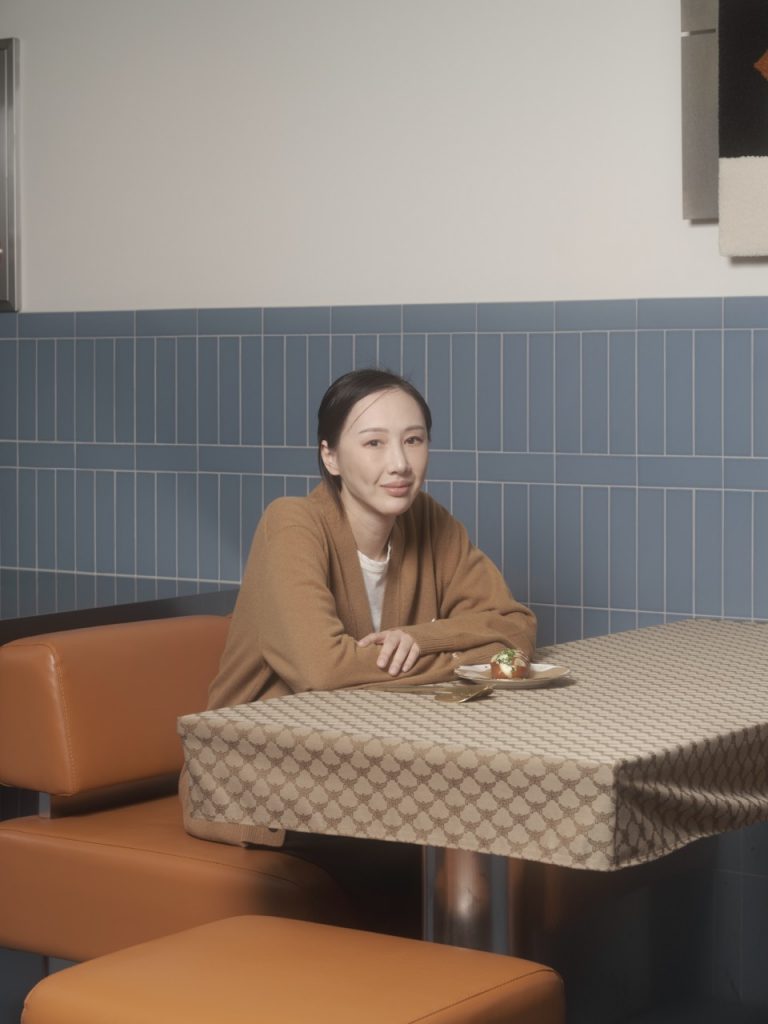
In Katie Chung’s favourite restaurant, the walls are lined with vinyl LPs. The health-conscious creative director of MCM doesn’t indulge in much, but at Buto – a European-Korean fusion restaurant and Hansik bar in Seoul’s Yongsan District – she’ll treat herself to a fried delight: a hot, fragrant order of Eggplant Menbosha. “Unlike other restaurants, they wrap shrimp into eggplant instead of bread, and colour it with squid ink,” she tells me. “There’s this vintage, classic ambiance where, regardless of where I sit, I feel a real sense of comfort during the meal.”
A Central Saint Martins graduate, Chung started designing for her mother’s label Wooyoungmi: “I naturally assumed I had to pursue this path from a young age.” She doesn’t see this as a “particularly glamorous starting point” (though it arguably is) but rather “one that felt natural and familiar”. Now at MCM, she likens her career to that of a musician. “I always think of brand directing as akin to conducting an orchestra. Just as each orchestra varies in size, instruments, and the people performing, directing a fashion brand entails a great deal of understanding and adapting to unique circumstances and requirements.” Her approach is “not about rigidly adhering to my own methods or style, but rather comprehending the working methods involved in conceptualising each brand’s core products, and suggesting areas for change.”
Having lived in both London and Paris before settling in Seoul, Chung feels that certain localities have had their time in the sun as cultural and artistic hubs. “What I’ve come to realise is that there are cities capable of exerting significant cultural influence on the world, during their own eras.” In years past, she says, “cities like London, Tokyo, Antwerp and New York had periods of prominence for creatives”. But times change. “Personally, I feel that Seoul is experiencing such a period now.”
The city’s vibrant food culture is just one indicator of sound cultural health, and Seoul’s is particularly compelling. While she aims to prioritise low-sugar, high-protein foods overall, Chung’s policy is to – at a minimum – sample everything. “When something new is launched, I’m inclined to give it a try out of curiosity, at least once. Myself included, Koreans often enjoy dining at casual eateries like chimaek,” she says, referring to the heavenly pairing of fried chicken and beer served in the evening by many South Korean restaurants, as well as a few specialty chains, some of which have made their way across the world. But the company is often the best part: “I love to get together with friends or family to indulge in those experiences. It’s important to have unique spaces for people to socialise over food,” she adds, “and shared moments”.
This article is taken from Port issue 34. To continue reading, buy the issue or subscribe here
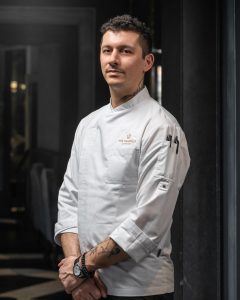
Talking to Roberto Roncolato as he settles in at The Franklin, in Knightsbridge
Roberto Roncolato grew up in Italy, where he studied cookery, but moved to London not long after graduating. Since then, he’s spent time in acclaimed, Michelin-starred kitchens including that of DeGusto, but also overseeing kitchens as a development chef for restautants including Bella Italia and Happy Fish. The first Hell’s Kitchen in Europe, in Sardinia, opened under Roberto. Here in the UK, he’s turned his eye to The Langley in Berkshire and Texture, as well as Gordon Ramsay’s three-Michelin-star restautant.
Since earlier this year, Roncolato has been applying his culinary skills, both on the large and the small scale, as Head Chef at The Franklin, in Knightsbridge. The hotel, part of the Starhotels Collezione, sits in a quiet patch of the area, next to Egerton Gardens. Roncalato is joining Executive Chef Alfredo Russo. It’s appointed, inside, by Anoushka Hempel, and everything is kept intimate; the restaurant seats 30, and the grey velvet leaves room for the food to do the talking.
Port caught up with Roncalato – reflecting on his culinary paths so far and his hopes for The Franklin – as the weather in London began to cool.
What are some of your earliest food memories?
Every Sunday my family and I would visit my grandparents and prepare the usual baked lasagna. I would hide under the table and eat the raw pasta sheets. That’s my first memory, the taste of fresh egg pasta, the smell of the Bolognese sauce and béchamel.
How did you start cooking, and what’s your journey been up to The Franklin?
I studied at the Hospitality High Cookery School in Montagnana (PD), and during school I started to work as a pizza chef on weekends.
Straight after school I started work in a fine dining restaurant in the city centre of Verona. After a year I moved to London, where in a few months I was able to become Sous Chef in an Italian AA 3-rosette restaurant.
I was hungry to discover different cuisines and London is the perfect place to do so, I had experience with French and Scandinavian cuisine at Harvey Nichols then, and I was curious to learn more about French cuisine, so I spent some time at the Royal Hospital Road by Gordon Ramsey.
It was, easily, the toughest experience ever, but opened many doors for me, like being a consultant chef for a restaurant in LA, and becoming the head pastry chef of a 2-star Michelin restaurant, where I met my partner Alessandra. After that, we moved to Friuli, in the north of Italy, and I worked in a 1-star Michelin restaurant as Sous Chef.
I helped a restaurant in Italy reach its first Michelin star, and in the meantime, I became a father. Then, for three years, I taught in a Hospitality High School, close to home and family, collaborating with different restaurant groups. Among that, I became a Sous Chef for a fine dining restaurant at Forte Village Resort in Sardinia, and opened the first Hell’s Kitchen restaurant in Europe. Obviously, I always brought my family with me.
After three years of teaching, we decided to move back to the UK. I was Sous Chef for a five-star Luxury Collection Hotel – we were pushing to get our Michelin star, but the pandemic changed everything. I ended up Group Executive Chef for a family run restaurant and now from, September 1st, 2023, I am the Executive Chef for The Franklin Restaurant by Alfredo Russo and the Pelham Hotel with some really exciting projects to come.
I’m excited to be able to blend my track record of executing exhilarating dishes and techniques with those of Chef Russo’s bold approach and Piedmont roots – to present guests a classic Italian experience in a modern twist. I think the combination of his experience and my creativity will lead to a truly innovative experience for guests.
You’ve worked on the very small scale, in individual Michelin star restaurants as well as a Development Head Chef for several restaurants. How do those scales of working compare?
They are obviously different environments, but as a chef and as a person I always have been keen to learn something new. I love new challenges!
Is there a single dish that captures your approach to cooking at The Franklin?
I’m hoping to continue The Franklin’s success so far, as well as to craft new and exciting menus. I couldn’t choose just one dish! Things that come to mind are our sourdough, panzanella and red prawns imported from Mazara del Vallo, in Sicily, the Tortelli, the milk, the lamb, even our roasted peach. I cook everything we eat with love.
The surprise tasting menu sounds exciting – what’s the thinking behind it, how has the response been?
I think the best thing to hear, as a a chef, is a guest saying: “do what you want for us”. It means I can play with the food, and give every dish my personal touch, bringing the guests on a personal journey of taste with me. It’s meant to give guests a sense of the quintessential Italian spirit in hospitality.
What’s inspired you, in terms of food, recently?
Currently everyone is focused on what I call “Instagram food” – gorgeous, amazingly colourful dishes that are completely tasteless and boring.
I take inspiration from the ingredients. My philosophy is “if you respect the food, the food will respect and amaze you”. I want to prove that we can deliver a top quality experience from a great work environment. It’s essential for me.
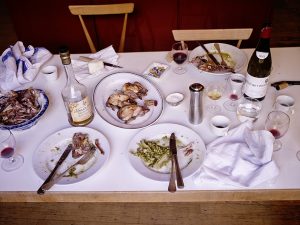
A long lunch, cooked by Fergus Henderson at his home in Covent Garden, for long-time friend and gallery owner Sadie Coles, leads to a suitably messy table. Here’s how to achieve it.
Photography Tobias Harvey
Ingredients
To serve four
Sea salt and black pepper
1o quails (there are always those who eat 3)
Extra virgin olive oil
Wine
St. John Boulevard Napoléon
(2011) Grenache, Minervois
Method
The quail, unfortunately, falls into a kind of bird purgatory; it is not a game bird, though some describe it as such; it is now thoroughly farmed, so not glamorous enough to warrant the ‘hands on’ battling that people exert on grouse and partridge and is denied from joining the chickens’ gang, as it is seen as too fiddly to eat. Then finally, to kick the quail while it’s down, people say it has no flavour.
Put all this behind you and let me put forward the case for the joys of a bowl of thoroughly roasted quails.
Season the quails inside and out very well, being especially heavy on the salt. In a hot frying pan, with a small splash of olive oil, brown the quails all over. When you are satisfied with their colour place them on a lightly oiled roasting pan and place in a hot (425°f) oven for 20 minutes or so.
Despite the quail’s fragile reputation, it is robust when it comes to cooking, not having the drying out potential of the partridge or the angst of getting that perfect moment of blush in a grouse breast. The quail wants plenty of cooking, to the point that its legs can be pulled easily from the ribcage and the flesh sucked off the leg bone. Serve the quail salty and well done in a bowl in the middle of the table and encourage some hands-on eating.
Serve with a bowl of lentils or simply a watercress salad.
Since the late ’80s the legendary chef has been serving authentic Italian food at London’s iconic River Café. For Issue 24, she told Port what she cooks with at home
When Rose and I started The River Cafe we had a tiny kitchen with a four-burner oven, a fryer and a chargrill.
We both had our roots in Tuscan cooking where the grill plays an essential role – for fish, meat and vegetables.
As a substitute at home, I use a cast-iron grill pan, which gives the same intense heat. I have various sizes; the pan here is perfect for a whole fillet of beef – which I marinate first in Chianti and rosemary – or, in the summer, a side of wild salmon. The smaller one I use when there are just a few of us, for veal chops, a whole small red mullet, vegetables or sometimes just a piece of sourdough bread for bruschetta.
Quite simply, I cannot imagine my kitchen without this grill, nor cooking without it.
This article is taken from issue 24. To buy the issue or subscribe, click here
Umami Journal explores the culture, history and ancient methods of food
The history of food is rich and fascinating; it betroths a shifting timeline that sees seasons, cultures and discoveries affect the very ingredients that enter the fridge, pot and mouth. In a time before now, the meals that were consumed were much determined by the weather and geography, meaning that palettes were in some cases limited and dependable on supply. But equally, they were in synchronicity with the environment. Now – with advanced technology, globalisation and travel – we have ingredients and cuisines at our finger tips. The immediacy and expectation of what arrives on a plate has overshadowed its roots, diminishing the thought and consideration that comes with its origin and meaning. How often do you spend a moment to observe and appreciate what you eat, and more importantly, learn where it comes from?
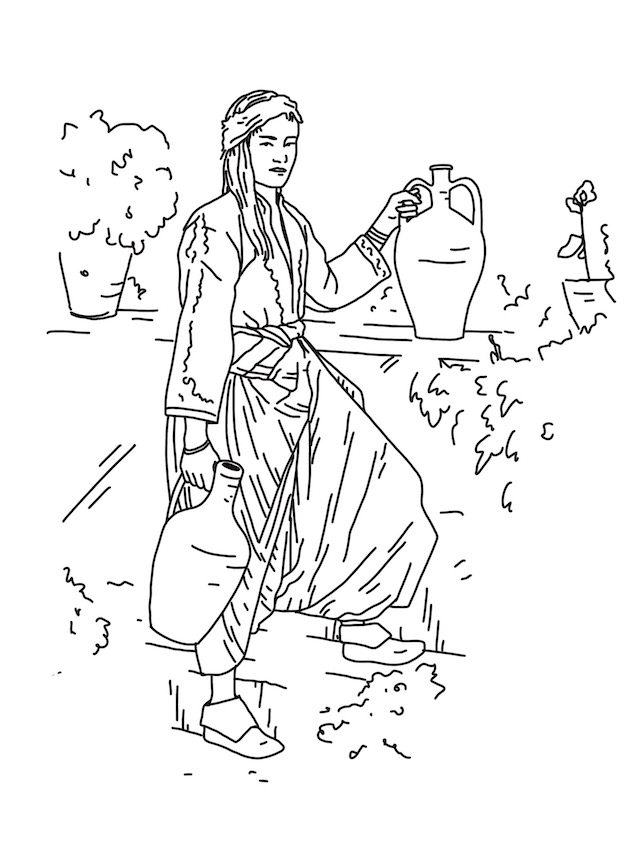
Umami Journal takes its readers beyond the recipe as it delves into the culture of food, looking at its history as it celebrates ancient methods of eating – as well as the new. Sustainability is therefore intertwined with Umami’s ethos, where vegetarian or vegan sourced ingredients make up the entirety of its menu. Not to mention its delectable illustrations created by London-based multi-disciplinary artist Diogo Rodrigues which further exemplify its attention to craft. Here, founder and editor in chief Poppy Mist discusses the relationship between food and culture, the importance of sustainable cooking practices, and her favourite dishes published on Umami Journalto date.
Who makes up the team, and what led you to set up Umami Journal?
I’m the founder and editor in chief. Growing up with a mother who was a chef, I have always been passionate about food and cooking. I have a background in anthropology, specialising in migration studies, and have a particular interest in how the movement of people shapes food culture. I launched Umami Journal during the pandemic as an attempt to bring these passions together.
Diogo Rodrigues is the illustrator. Originally from Northern Portugal, Diogo’s background in sculpture is the foundation of his later works, with current expressions focusing on illustration and tattoo art – particularly influenced by Japanese and tribal imagery.
What does Umami Journal stand for, what’s your goal?
Umami Journal is an online platform that takes people beyond recipes, investigating their cultural nuances and history. Every recipe has a story, whether that’s related to the style of cuisine, a particular ingredient, or the dish itself. We also feature other types of articles that celebrate ancient methods of eating whilst simultaneously recognising new, innovative techniques and ideas, and have recently begun curating events as well.
What is sustainable eating, how does this translate through the ingredients and methods you use to cook?
Consuming less animal-based products, and eating more local produce are both vital to tackling climate change. All of our recipes are vegan and/or vegetarian and aim to utilise seasonal produce as much as possible. My aim is to produce delicious vegetarian recipes where people won’t miss the meat.
Can you pick out a couple of favourite recipes and tell me how they’re sustainable, how they’re made and their history?
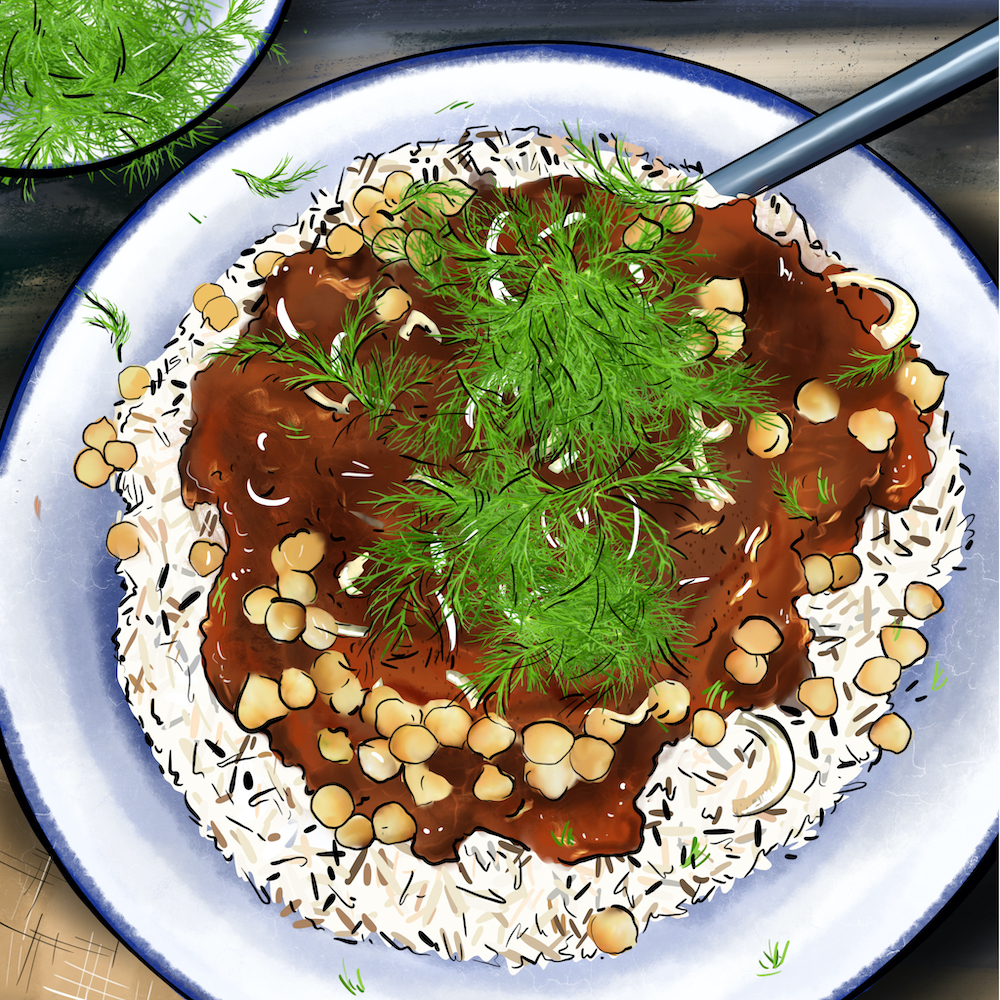
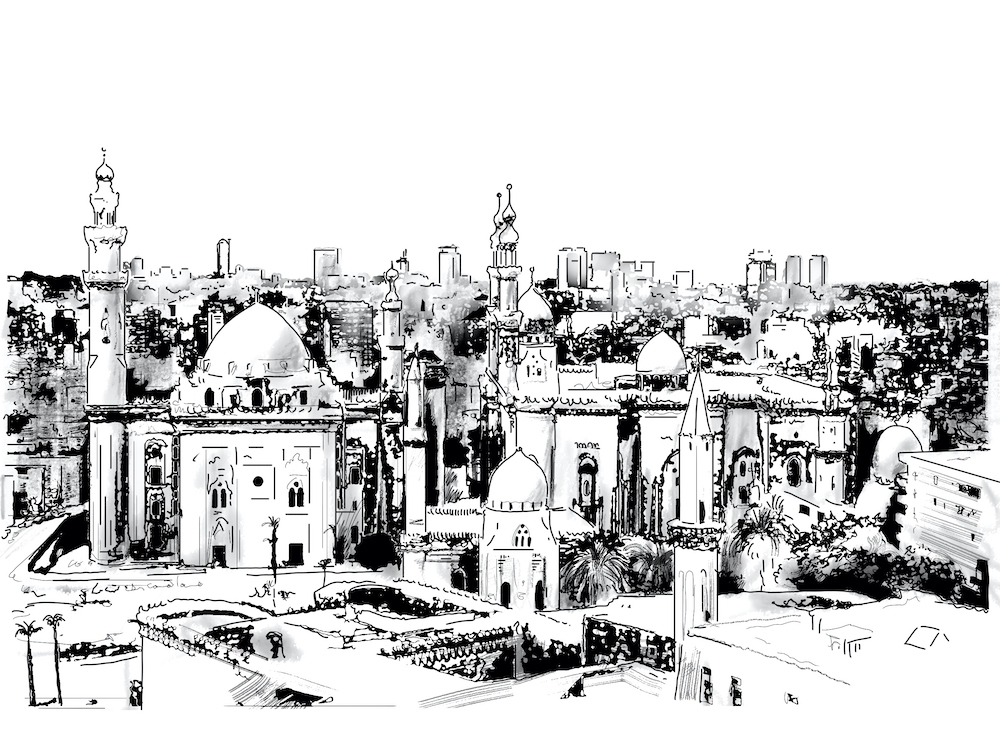
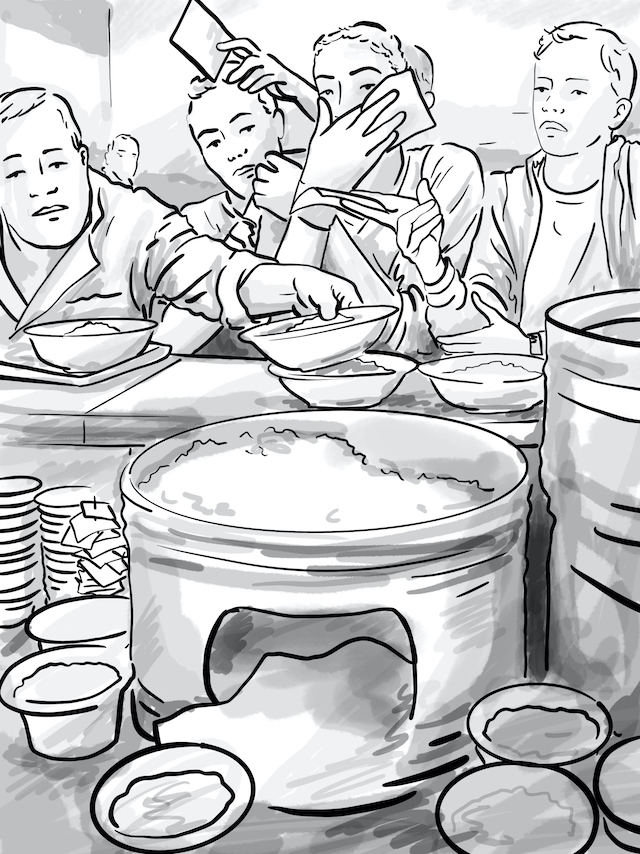
One of my favourite recipes at the moment is Koshari, Egypt’s national dish. Its origins emblematise the country’s cultural history. It consists of a marriage of Arab, Indian and Mediterranean flavours, a hearty blend of rice, lentils, chickpeas and macaroni, topped with a rich tomato sauce and finished with crispy fried onions.
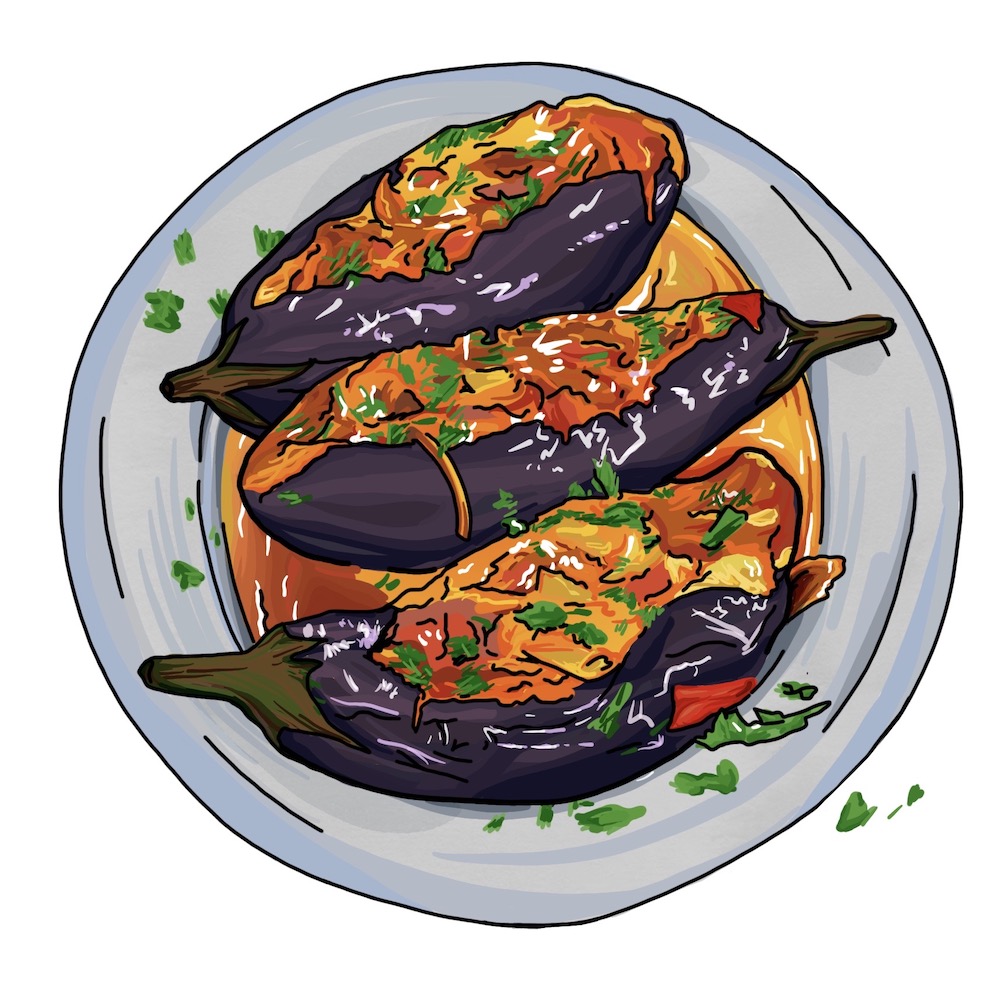
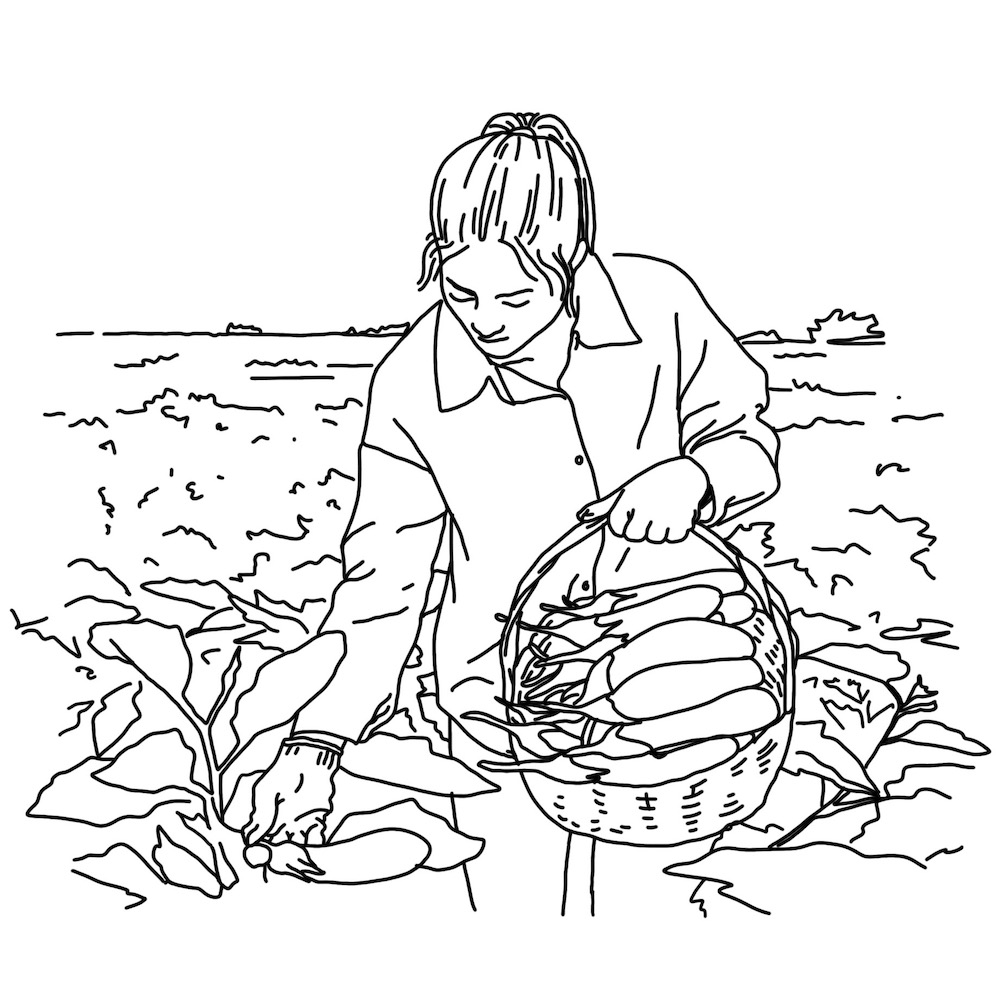
Imam Bayildi, otherwise known as ‘the priest fainted’, is a classic Turkish dish that comprises whole stuffed aubergines, tomatoes, peppers, Urfa chilli flakes and spices. I have such fond memories of my grandmother making it for me when I was a child. Although its exact origins are unknown, it dates back to the days of the Ottoman Empire, and the name ‘İmam bayıldı’ translates as fainting priest, referring to a Turkish legend in which an elderly Imam fainted after eating the dish, apparently due to its abundance of olive oil.
Besides cooking delicious meals following your recipes, how do you hope your audience will respond to this project – do you hope they’ll switch to more sustainable food habits, for example?
I definitely think people should eat less meat, but I’m not one to impose my beliefs on others as I think this is incredibly polarising. No doubt, not all dishes have been historically plant-based, and I’ve had to adapt them. But I think this is part of food evolving!
Ultimately, I want to get people thinking more about the historical and cultural context of food. It’s constantly evolving and this is really exciting. This is largely influenced by migration which should be celebrated.
What’s next in the pipeline?
We recently collaborated with HOME by Ronan Mckenzie to host an event titled Walls Have Ears. This featured a multi-sensory journey into the ancient art of the tea ceremony presented by tea sommelier and R&D chef, Genevieve Lenette, and musician Cassidy Hansen. Blending ancient tradition with modernity, this improvisatory event utilised a synthesis of abstract sound and traditional movement as a medium, in order to investigate how an age-old ritual manifests within an unconventional setting. I’m hoping to do more events and supper clubs, and write more features on exciting and innovative producers and cooks.
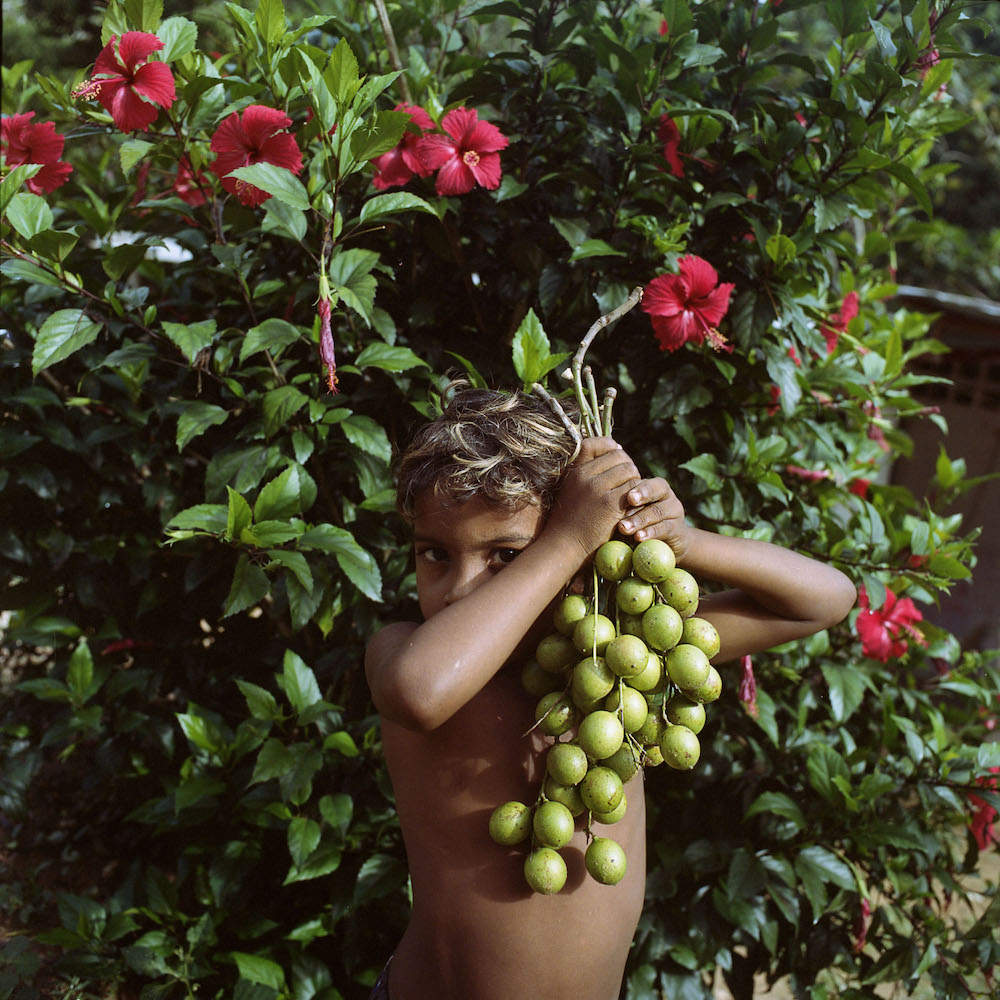
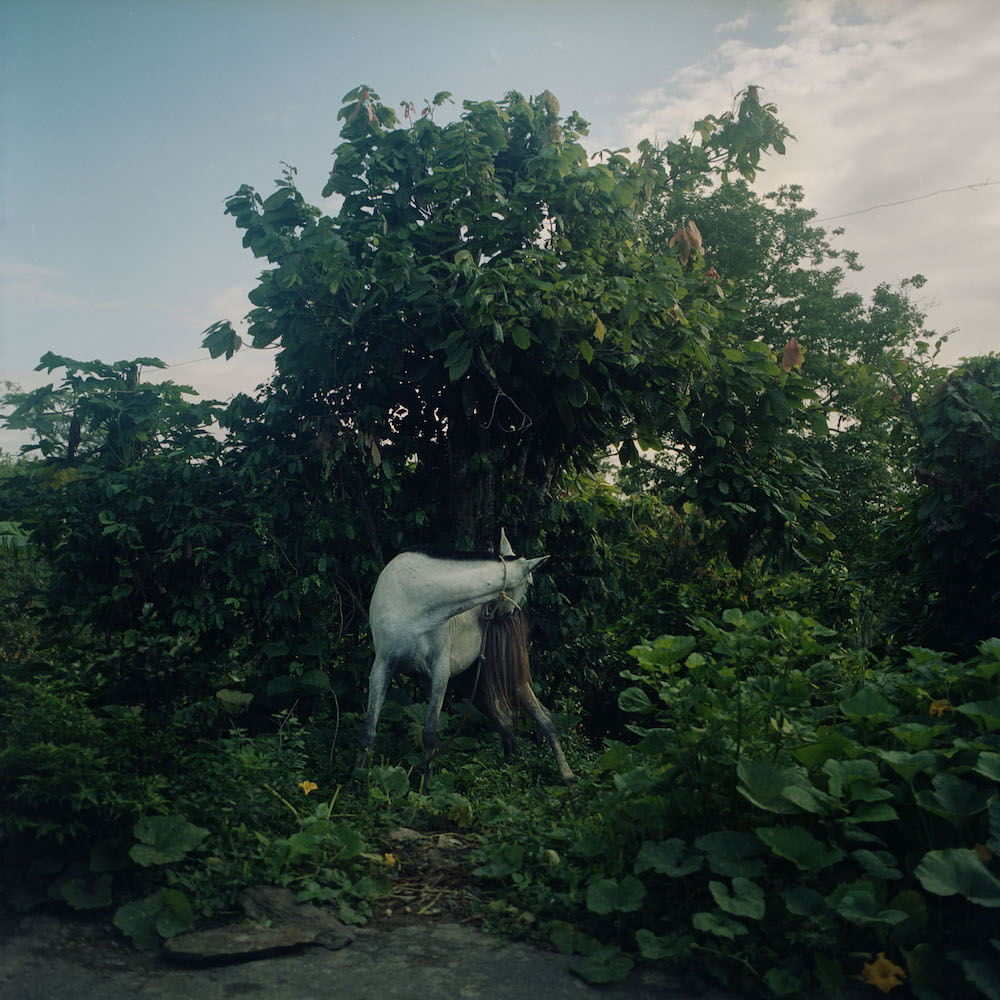
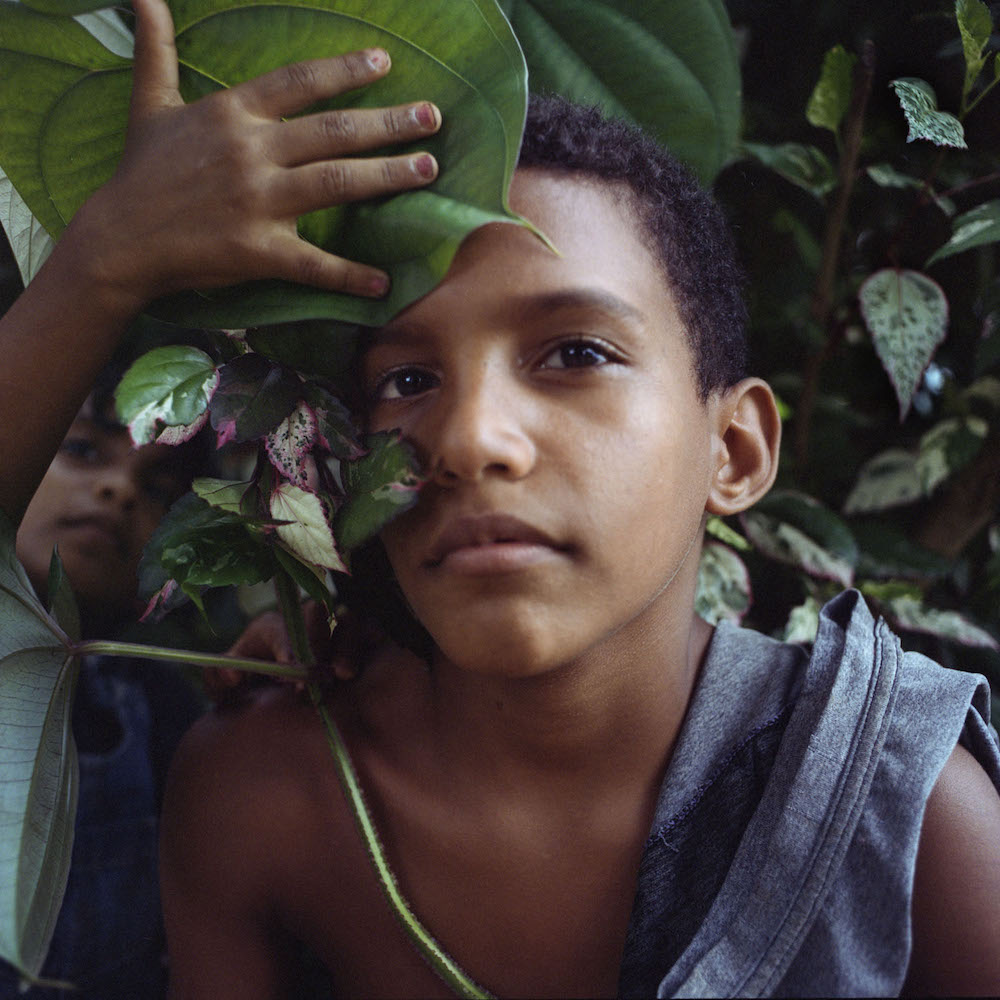
Launching this month is the fourth edition of the annual Latin American Foto Festival, hosted by The Bronx Documentary Centre and featuring large-scale photographs throughout the Melrose community. Within, and available to view online, the festival sheds light on a collection of notable image-makers, including Venezuelan photographers Andrea Hernández Briceño and Rodrigo Abd. Both of whom reflect on humanity’s relationship with nature, particularly focusing on the country’s fragility with oil industry, economic decline and the climate. Other photographers involved are Florence Goupil, Cristóbal Victor Peña, Pablo E. Piovano, Victoria Razo and Carlos Saavegdra.
Andrea, in particular, is a visual storyteller based in Caracas who’s “interested in many things, but especially in everything that touches the social sphere, migration and women’s issues.” After graduating from a Mass Communications major with a specialism in journalism, she continued her education at the International Centre of Photography in New York with a scholarship in Visual Journalism and Documentary Program. After which she decided to return to Venezuela, kicking off her career in the arts and forming part of the collective of women photographers united by Latin America, named Ayün Fotógrafas.
While back in Venezuela, Andrea started work on a photography project entitled Mango Season – delving into the annual dry season in which fruits begin to fall from the trees in all their sweet and generous abundance. Mango season, for many in the country, is a lifeline, and The United Nations’ World Food Program has reported that one-third of Venezuelans are suffering from food insecurity. Coupled with the pandemic and oil shortages, the country is in crisis. Below, I chat to Andrea to find out more about her work and what she hopes to achieve through her colourful and impactful imagery.
What’s your ethos as a photographer, and what stories do you strive to tell?
The stories that move me the most are the one’s where I can clearly convey the dignity of the people that I’m portraying. I believe that this connects the audience to the people portrayed and feel very satisfied when I think I’ve achieved it.
I’m a storyteller and one of the biggest and most transversal stories now is food insecurity. It affects more than 90% of Venezuelans.
Can you give some more context into the mango season in Venezuela, how is it celebrated?
The mango season lasts about four months and during this time, people have a little bit of food guaranteed. It is not exactly celebrated because we used to think of the mango season as a problem: when they fell, they could break a windshield or dent the hood of a car, they also rotted on the floor and brought flies and disease. But today, its meaning is changing to something good. They don’t rot anymore on the floor because there’s always someone that picks them up.
How has mango season changed over time, has it been affected by climate change and the pandemic?
Climate change hasn’t affected the mango season very much. These trees actually bear fruit during the dry season.
For the last six years, the mango season has changed its meaning into something good because of the social, political and economic crisis. So when the pandemic began, it just felt as if another element was added to the whirlwind of terrible living conditions (we also have fuel shortages now, ironically in an oil producing country). But it shifted my perspective and made me think of a different way to make this abstract story into something visual: it made me look for moments that showed the beauty, strong will and dignity of Venezuelans in this adverse situation.
Do you have any personal anecdotes or stories to share about mango season?
At the beginning of the pandemic, everything stopped. It felt as if we were suspended in the air. There was so much free time. So I went almost every day at my parents house. They have a big backyard with mango trees and they had just put some seeds for grass. I talked a lot with my dad; about love, family and expectations. We sat there drinking coffee or something stronger in the afternoon, watching the grass grow. Literally.
In terms of your imagery, from what I’ve gathered you’ve shot in quite a colourful and joyous manner – which is a contrast to the important topics addressed. Is this intentional, perhaps to make harsher topics more digestible?
The collective imagery of Venezuela is quite different to this body of work. My country is almost always portrayed as a sad, miserable place because there is a crisis going on. I’ve also added to this imagery because it is real, necessary and important for our history. But I also think that it is essential to show the in-between moments of calm, joy and connection. It is a different way to portray our humanity. I think it makes the audience feel a little bit closer to us because they can see themselves in the magic of everyday life and nature.
As your work’s now part of the Latin American Foto Festival, what do you hope to achieve? What can the audience learn about Venezuela, nature and the environment?
Being part of this festival has been a dream of mine since I came four years ago. I thought it was an amazing way to bring the power of photography into a community. With this work I hope to broaden the horizons of the people that look at Mango Season. I wish to make it easier to recognise the humanity in others, even if they are in far away places. And I also hope to bring the people that I photographed In Caracas, Patanemo, Choroní, San Antonio de Los Altos and Chuspa closer to the people in The Bronx and the US. It’s just a dream, but I think it can come true because my dream of exhibiting at this festival came true.