How the considered design principles of Norway, Denmark, Sweden and Finland reflect thoughtful ways of living
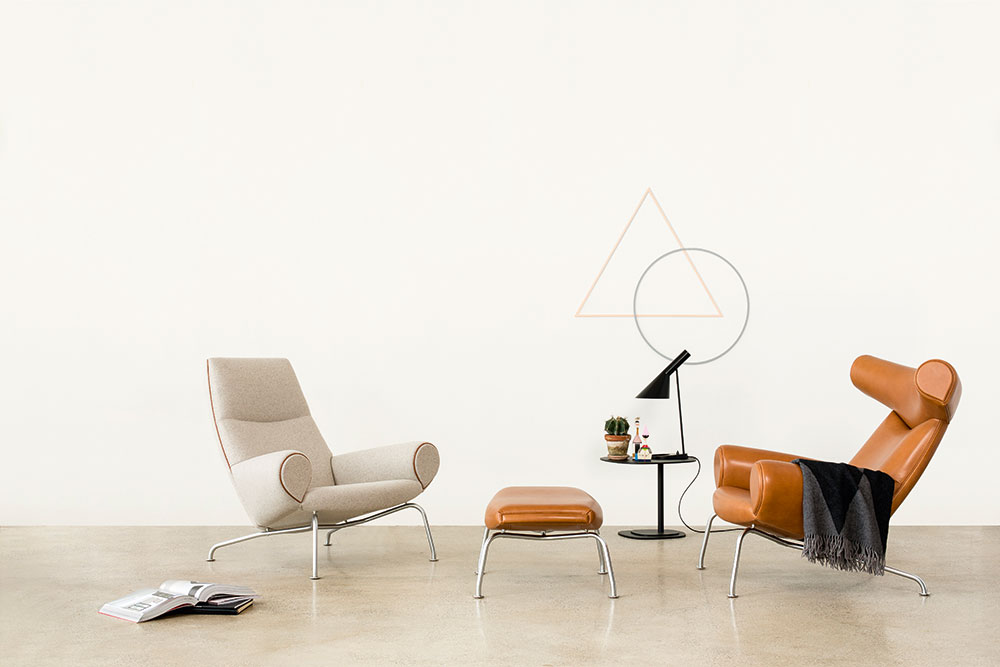
Ox chairs and footstool, Hans Wegner, AP Stolen, 1960 / Currently manufactured by Erik Jørgensen / Insula table, Ernst & Jensen, Erik Jørgensen, 2009; AJ Table lamp, Arne Jacobsen, Louis Poulsen, 1960. Picture credit: Erik Jørgensen
The Swedish have an expression, den röda tråden (the red thread), which they use to describe the essence of something. The ‘red thread’ might run through a particular style, cultural identity or shared experience. In other words, it is a through line; a narrative device and one thatspeaks to our impulse for storytelling. In a new book that borrows its title from the saying– The Red Thread: Nordic Design – the authors write: “In no other practice is this red thread brighter, tauter and more apparent than in Nordic design.”
Looking at the stellar design legacy of Norway, Denmark, Sweden and Finland, such a claim is hard to deny. Lifestyle is Scandinavia’s greatest export. This is in part because the region’s design is all-encompassing. From furniture to lighting to tableware, design in this part of the world reflects thoughtful ways of living, and is marked by functionality, simplicity and an emphasis on natural materials. Most of us are familiar with some of its prototypes: three-legged stools from Finland, sheepskin rugs from Norway and Denmark’s innumerable armchairs. Each is a studied reminder of the power of design in everyday life.
Taken from the pages of The Red Thread, here are some words of wisdom which highlight the significance of the Nordic approach.
“When Nordic designers sit down to work on a thermos flask, a set of cutlery or a frying pan, they will likely approach the task with the same degree of seriousness as they would bring to designing a motorway overpass. Every single detail is considered and many different solutions are tested; the Nordic designer’s common mission is to investigate how to make an object as streamlined, safe and user-friendly as possible.”
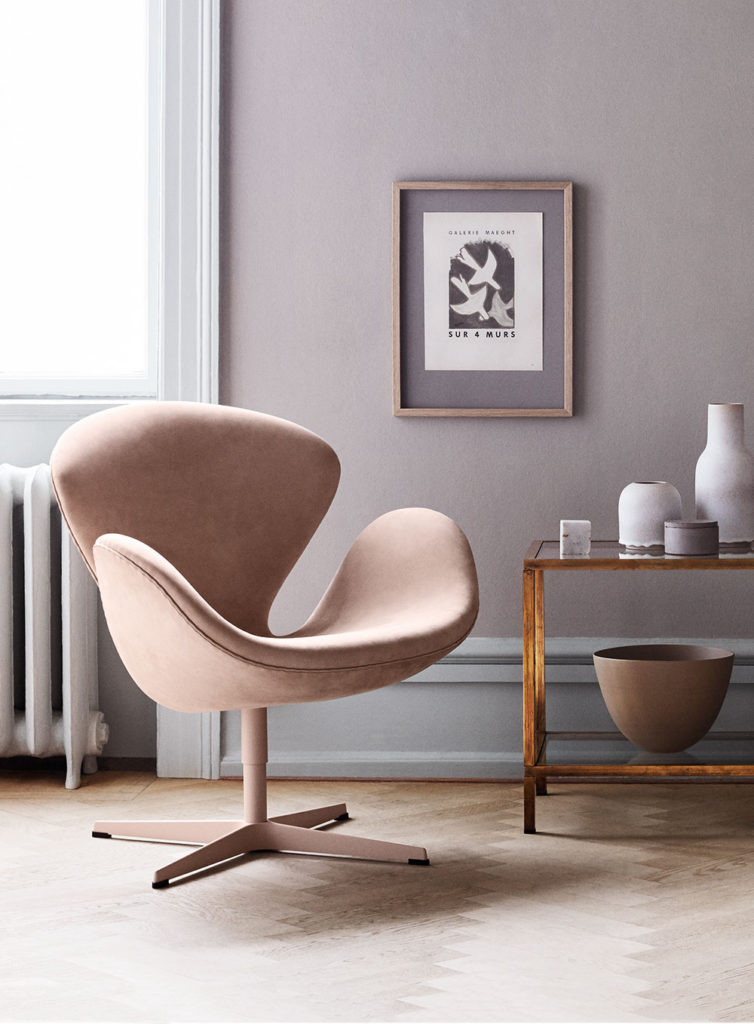
Swan chair, Arne Jacobsen, Fritz Hansen, 1958. Picture credit: Fritz Hansen A/S
Design to Improve Spaces
“The Nordic interest in holding onto good things and passing on heirlooms is explained, in part, by practicality, not necessarily sentimentality. Things are kept because they are useful and, although there are exceptions, the rest is largely jettisoned. A Nordic home must have a sense of clarity; there should be space between furniture as well as underneath it it; walls are often left bare and, even when more furniture could be squeezed in, restraint is practised. Rather a few good pieces than many mediocre ones.”
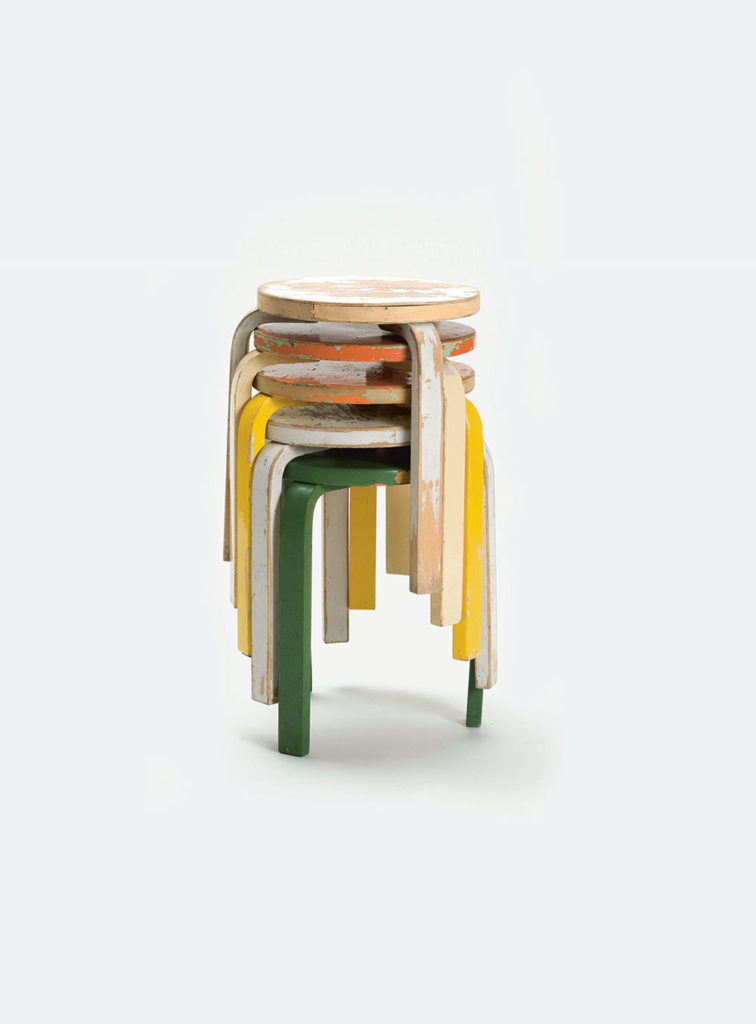
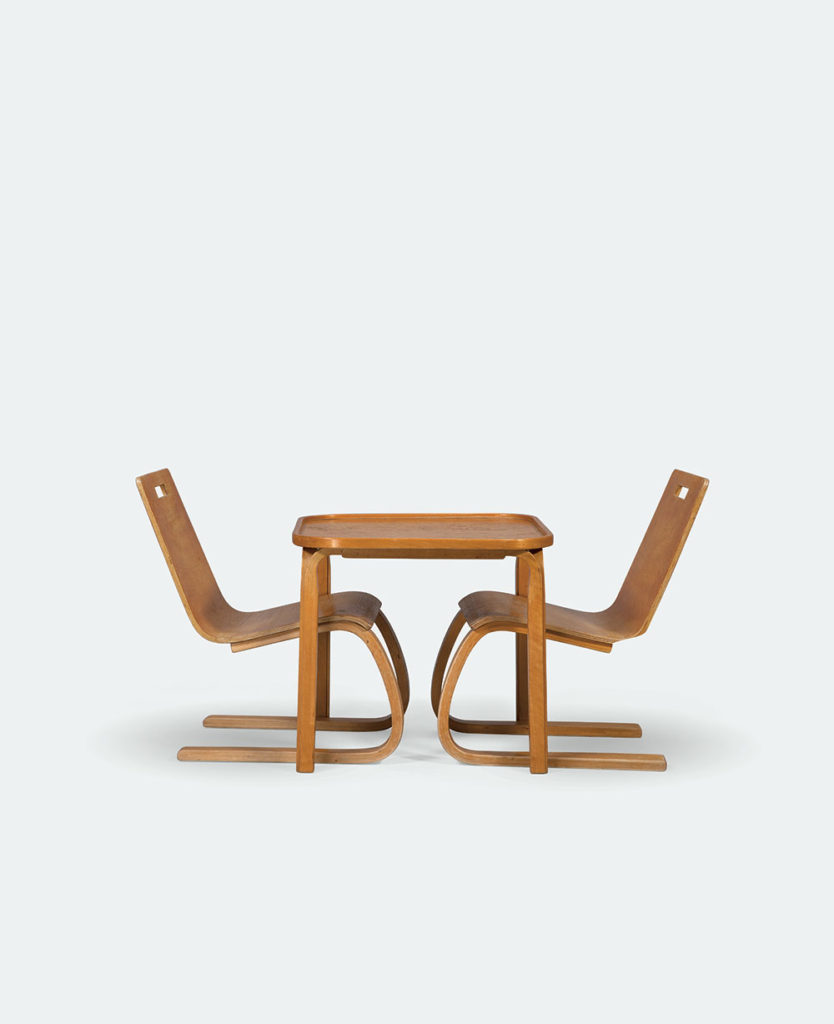
Children’s Furniture, Alvar Aalto, 1940s. Image courtsey Jackson Design
Design to Improve Relationships
“Nordic designers are known for their social commitment. This concern became particularly prominent in the twentieth century, when many were intrinsically involved with forging the region’s welfare states, designing objects to make everyday life easier, more balance and more beautiful. Seeing design as a process of ‘problem solving’ has become commonplace in the industry today; but it was architects, designers and indeed even craftsmen from Norway, Denmark, Sweden and Finland who set the precedent for this, long before think tanks and design labs came along.”
The Red Thread: Nordic Design by Oak Publishing is out on 22 May, published by Phaidon
The Milan-based architect invites The Spaces into his eclectic apartment overlooking Politecnico di Milano
Architect Hannes Peer set up his own practice from the comfort of his apartment in 2009. From within its walls he has designed homes for fashion designers and art collectors in Milan and beyond, as well as retail spaces from brands like N°21. His apartment overlays 1960s Modernist details – like the window frames – with Neoclassical sculptures and contemporary lighting that picks out details in the fabrics and artworks. ‘A home is where you feel comfortable and in Milan I feel accepted,’ he says. ‘I’ve lived and worked in many cities – in New York, Berlin and Rotterdam for Rem Koolhaas – but Milan always pulls me back.’
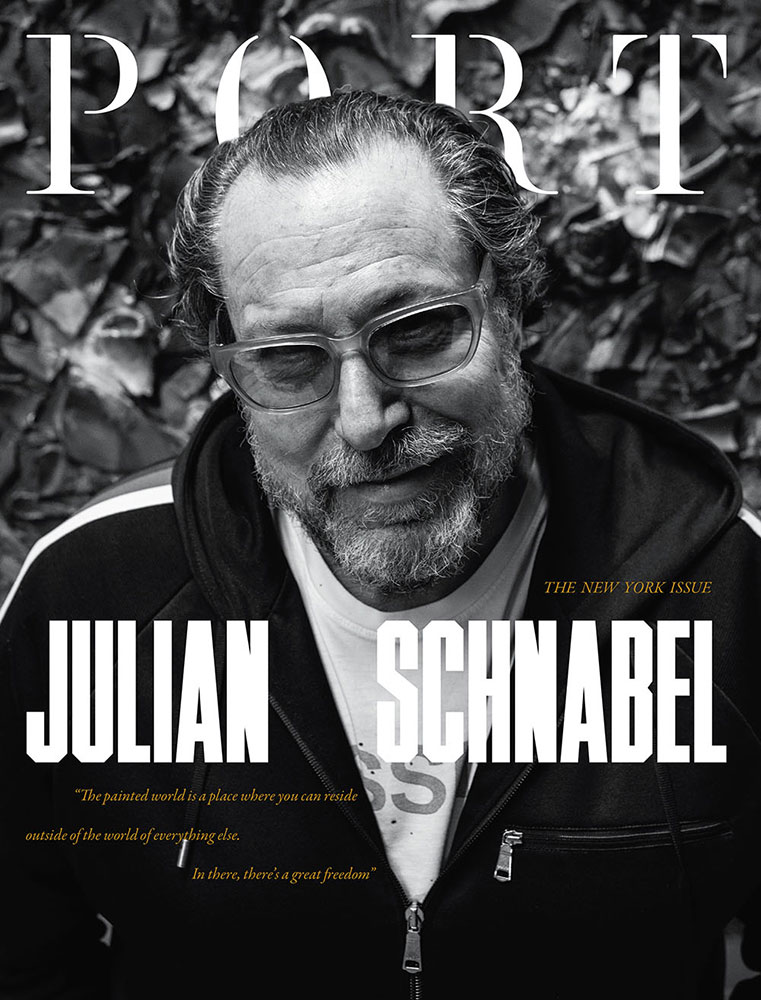
The New York issue is now on sale, featuring artist Julian Schnabel, the New Yorker’s Adam Gopnik, Olympic fencer Peter Westbrook and more
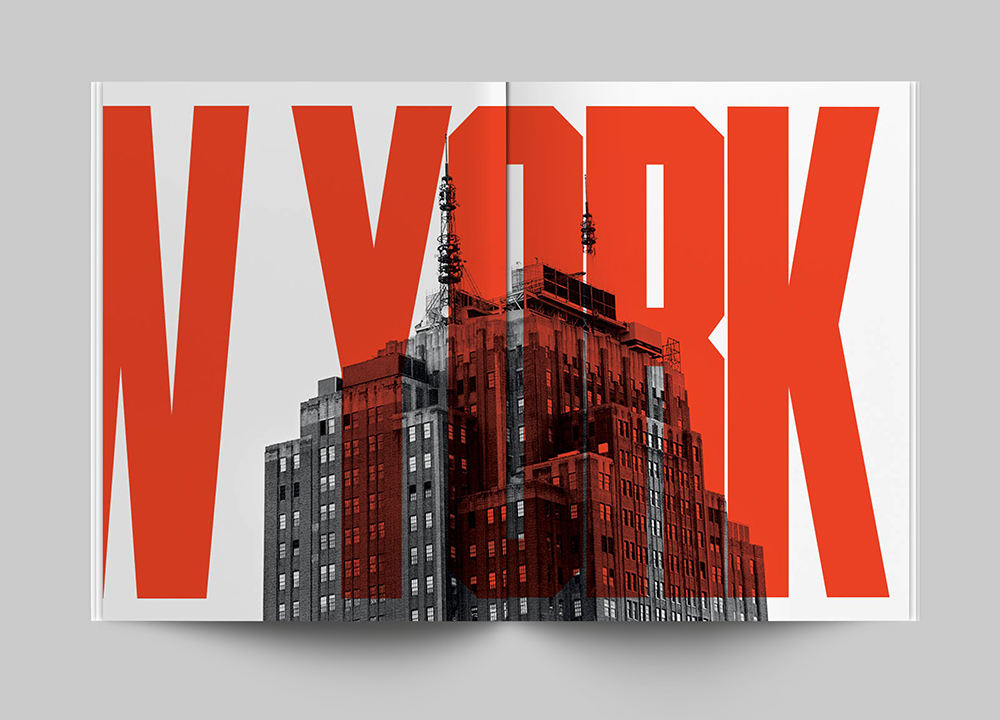
Issue 20 of Port is our tribute to New York – a city that looms large in politics and popular opinion and larger still throughout style, culture and design. In it, we have gathered people and portrayals as big as the Big Apple itself.
Mounting a successful return to New York, our cover star for issue 20 is Brooklyn-born artist Julian Schnabel, who speaks to Kyle Chayka about his reputation as “the carnival man of contemporary art”, his recent exhibition at Pace Gallery and a film in the works.
In the style section, we include our favourite looks from the Spring Summer 2017 Collections, and an editorial styled by Alex Petsetakis captures the colourful spirit of David Hockney’s poolside paintings with stripes and soft focus. Elsewhere, a design still-life shoot sees New York-native birds from the Wild Bird Fund photographed with organic designs including an Eames mobile for Vitra and a silver branch broach from Louis Vuitton.
In the feature well, our design editor Will Wiles and photographer Robin Broadbent explore New York’s architectural motifs – from water towers to fire escapes – in a sprawling 38-page photo essay. Next, Adam Gopnik, a staff writer for the New Yorker for over 30 years, invites us into his home and shares an excerpt from his forthcoming memoir, At the Stranger’s Gate. We also meet Peter Westbrook, the first black fencer to win an Olympic medal and founder of the Peter Westbrook Foundation.
Highlights from the Porter include a intimate guide to New York, with recommendations and anecdotes from Port readers and contributors including designer Philippe Starck, writer Will Self and restaurateur Alessandro Borgognone. Also in this section, Studio 54 legend Giorgio Moroder shares his experience producing Donna Summer’s ‘I Feel Love’, Matthew Combs considers the city’s relationship with rats, and architect Daniel Libeskind muses on the drama and energy of the subway.
Port Issue 20 is available from 12 April. To subscribe, click here
A look at Patricia Urquiola, the Campana Brothers and Raw Edges’ designs for a collection of objects inspired by travel
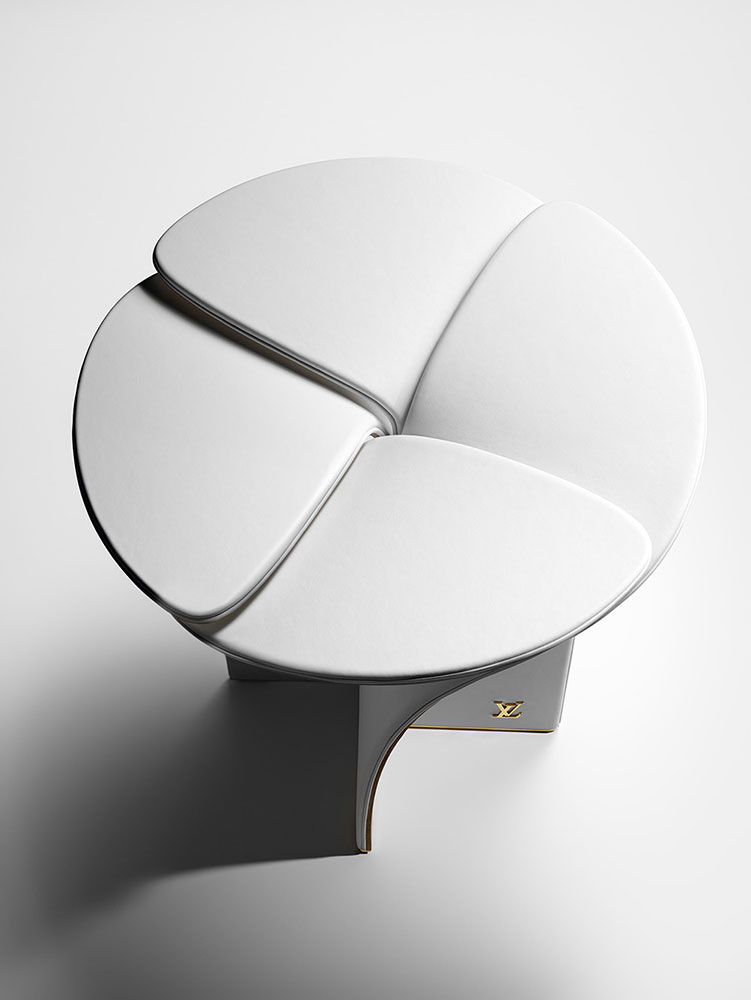
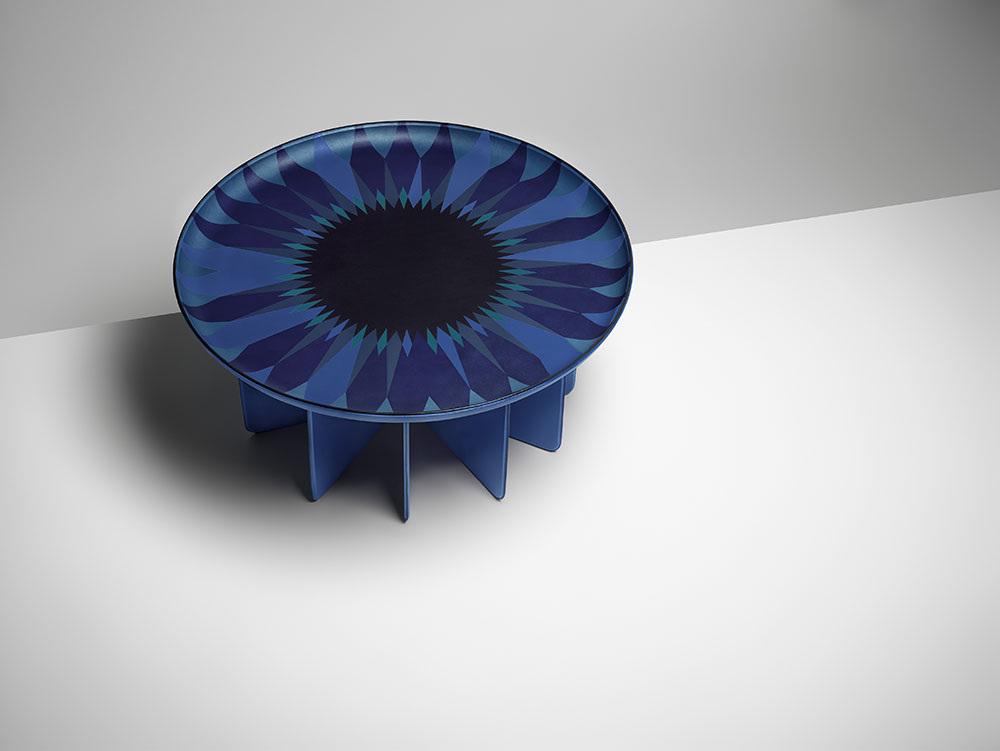
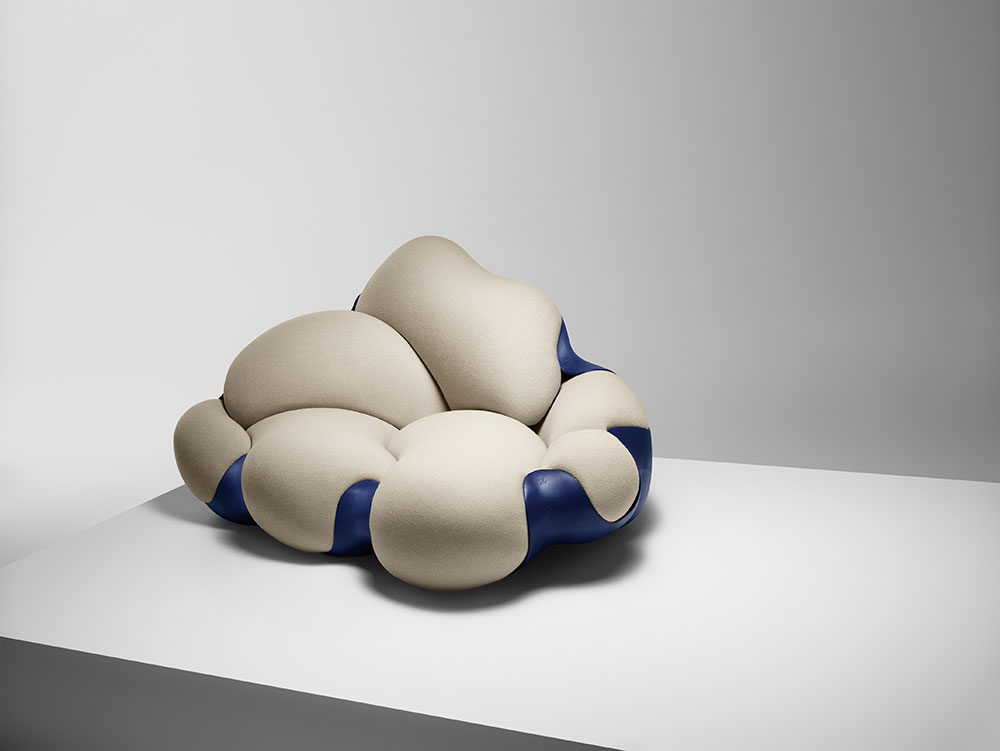
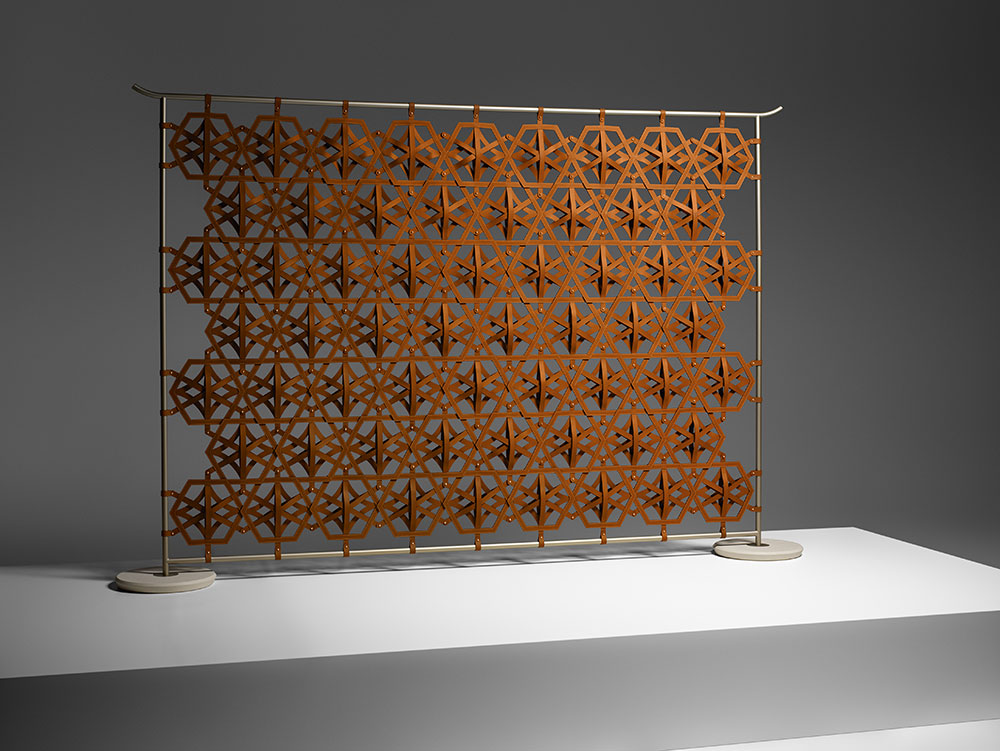
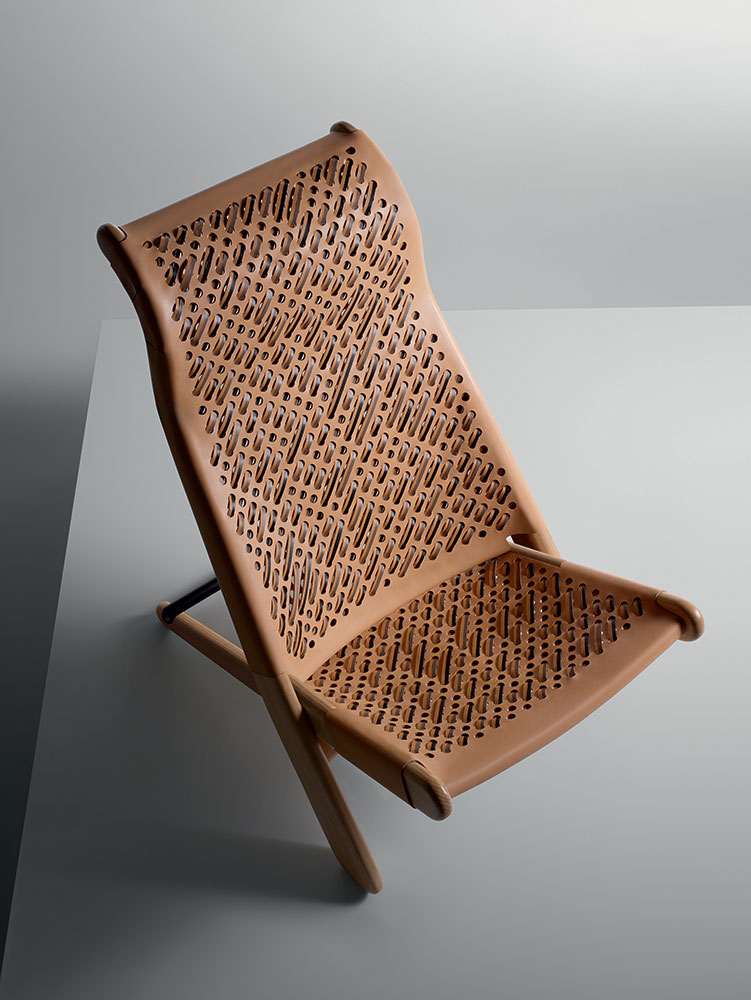
Now in its fifth year, Louis Vuitton’s Objets Nomades has seen some of the design world’s best and brightest interpret ideas about travel through an evolving collection of homewares, from a swing to a foldable stool. The project has been an ongoing opportunity for the French fashion house to partner with design talent from around the world, including Spanish architect and designer Patricia Urquiola, London studio Raw Edges and, most recently, India Mahdavi and Tokujin Yoshioka. Designers are given free rein, resulting in pieces as outlandish as the Campana Brothers’ cloud-like Bomboca sofa, but an emphasis on leatherwork and craftsmanship nods to Louis Vuitton’s heritage throughout. With the addition of 10 new designs, the collection now totals 25 objects imagined by 13 collaborators.
Louis Vuitton’s Objets Nomades is at Palazzo Bocconi, Corso Venezia 48, Milan until April 9
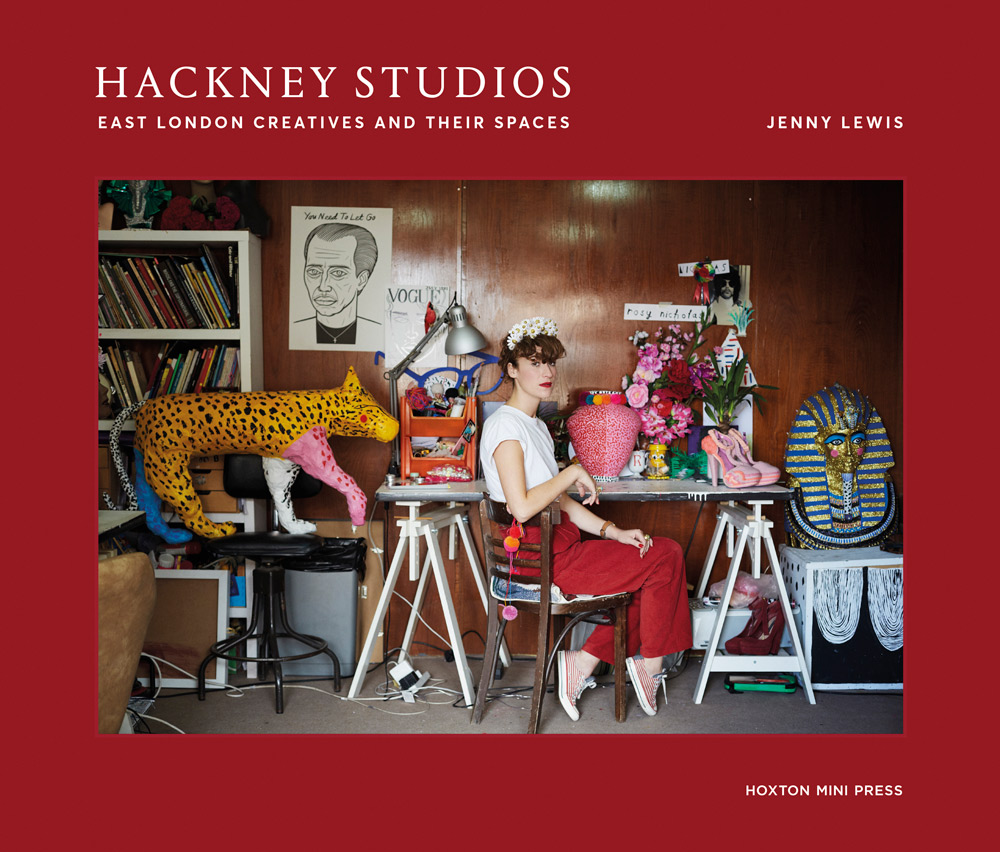
Hackney’s community of artists and designers intimately documented by photographer Jenny Lewis
Jenny Lewis has been photographing artists and designers in their east London studios for four years. Firstly, as a way to celebrate their creativity, but also to understand her own place as an artist within her community, and to pay tribute to the area’s fading studio culture. ‘I wanted to explore the creative world of Hackney and to discover who these people were,’ she says.
After an encounter with fashion designer Isobel Webster, the project took on a life of its own. Each subject nominated someone they thought was exceptional and, by word of mouth, the series flourished into a “family tree” of Hackney’s creatives. By viewing their studio set-up, their paints, materials, sketches or storyboards, Lewis has captured their inner workings.
When photographing her subjects, Lewis took a conversational approach so as to put everyone at ease. ‘The focus wasn’t solely on them,’ she explains. ‘We were talking about the person that recommended them and discussing who they might nominate.’ With 20 years of experience behind her, she believes the success of a portrait depends on a connection with her sitters. ‘It takes the ego out of the picture. They are much more relaxed, much more intimate and authentic.’
The series, which has been newly published as a book, does away with creative hierarchies, and painters, sculptors, musicians and film-makers sit side by side. ‘It’s not about established artists – even though some of them are very established – it’s about the integrity and passion for their work and admiration among their circle.’ Artists would nominate their assistants, tutors would nominate their students and vice versa.
Hackney Studios began as a celebration, but a year into the project came clear signs that things were changing. Over half of Lewis’ subjects have now been forced out of their studios due to redevelopment or rising rent prices. ‘It gives a different tone to the whole series. It’s such a fragile ecosystem and we all need each other to survive, but this support network is crumbling and disappearing.’ Many creatives have moved to other areas, including Margate and Tottenham. Others have had to give up their studios to work from home.
Despite challenges faced by the community, Hackney Studios is ultimately a salute to the spirit of creativity, and Lewis now calls many of those photographed close friends. ‘They deserve to feel celebrated,’ she says. ‘There’s a lot of pride and soul in this project.’
Hackney Studios is available from 6 April, published by Hoxton Mini Press
Danish trailblazer Kvadrat is turning end-of-life textiles into furniture with the help of Max Lamb and upcycling initiative Really
Benches by Max Lamb, images courtesy of Angela Moore
“Some of the very first designers for Kvadrat were artists and architects,” says Njusja de Gier, head of branding at Denmark’s leading textile manufacturer. “That has always been a huge part of our identity.” Creative partnerships have driven the company’s reputation for innovative design since it was founded 1968 and, through collaborations with figures such as Raf Simons, Peter Saville and Olafur Eliasson, Kvadrat has advanced textiles beyond the modish world of product design and into the realm of experience. “We want to inspire people and show that you can do more with textiles than just upholster a sofa or a chair,” she says. “We’re trying to push the boundaries.”
Despite Kvadrat’s roots in the Scandinavian design tradition, one reason for the revolving roster of collaborators is to forge an international outlook. In-house engineers regularly team up with designers who have a technical understanding of yarns and weaving, such as Asa Pärson, or designers who work conceptually, such as Patricia Urquiola. These partnerships ensure that Kvadrat remains relevant, furnishing architectural landmarks such as MoMA, Guggenheim Bilbao and the Oslo Opera House, while also remaining popular in private homes, hospitals, airports and public transport.
After launching its fourth collection of soft furnishings with Raf Simons at the Academy of Design in New York in March, Kvadrat has now teamed up with ‘upcycling’ initiative Really, and designers Max Lamb and Christien Meindertsma to present a collection of furniture made entirely from end-of-life wool and cotton. The launch exhibition at Salone del Mobile will detail the making of the solid textile board using cut-offs from the fashion and design industries, as well as unwanted household textiles.
“Upcycling is necessary,” says Njusja. “We saw this as the next step in Kvadrat’s sustainability strategy. Naturally, we have a lot of cut-offs, and this is a way to do something beautiful with them.” The solid textile boards come in four colours – blue, white, slate and brown – based on their textile source, and can be used in many of the same ways as solid wood.
“We approached Max because of his material research. He’s already experimented with engineered marble so we knew he would take an interesting approach,” Njusja explains. “He has designed 12 benches for us in such a way that we can recycle each piece and make new textile boards with it. It’s completely closed-loop.”
Max Lamb and Christien Meindertsma’s designs, along with their research and prototypes, will be on display from 5 April at Salone del Mobile 2017
Kyla McCallum, the founder of east London design studio Foldability, talks to PORT about being “geekily obsessed” with origami
Founded in 2013, Foldability is the product of a competition. It was the kind of entrepreneurial challenge you see advertised all over east London – ‘pitch a brilliant business plan to win £10,000’.
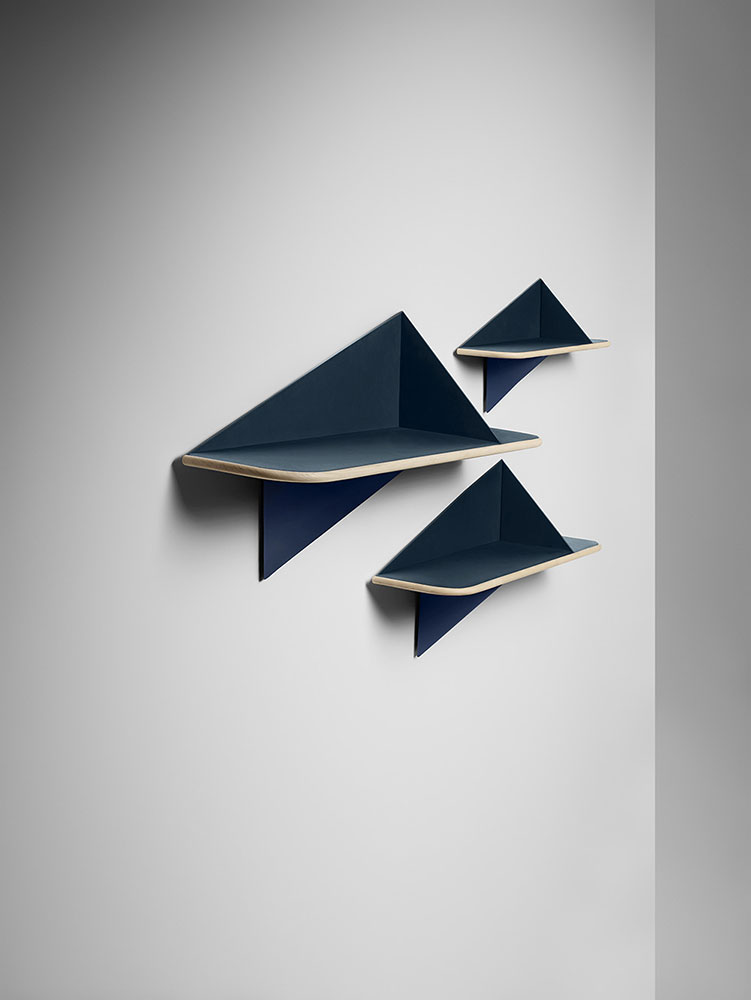
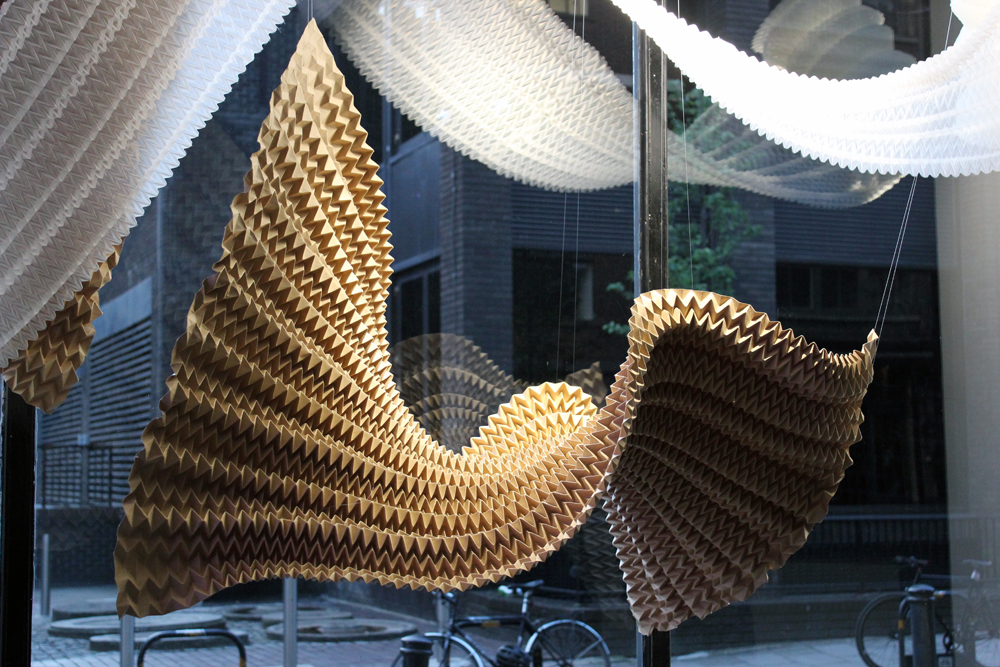
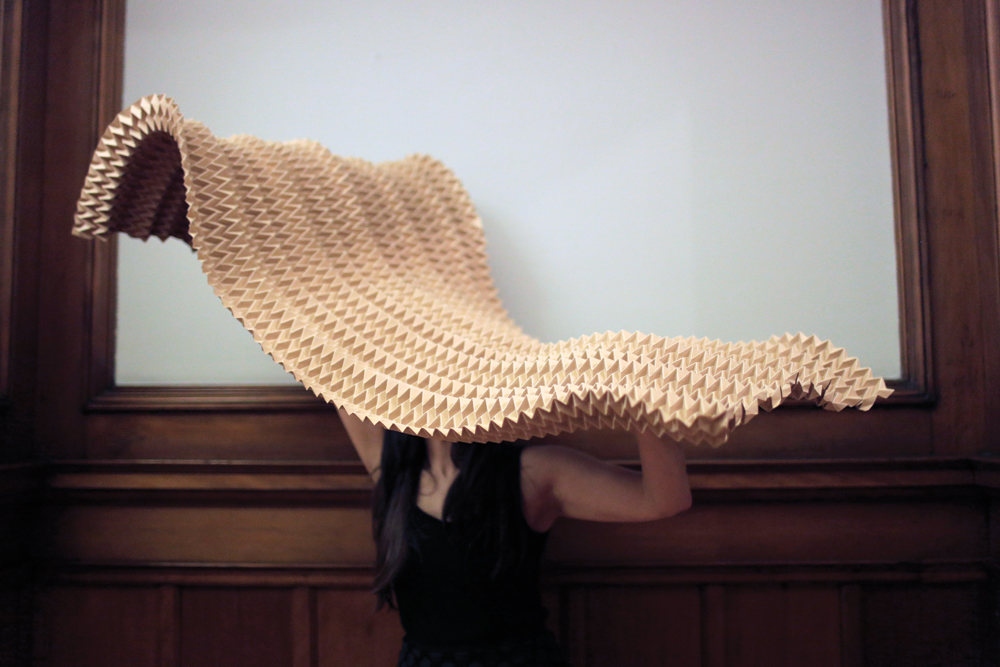
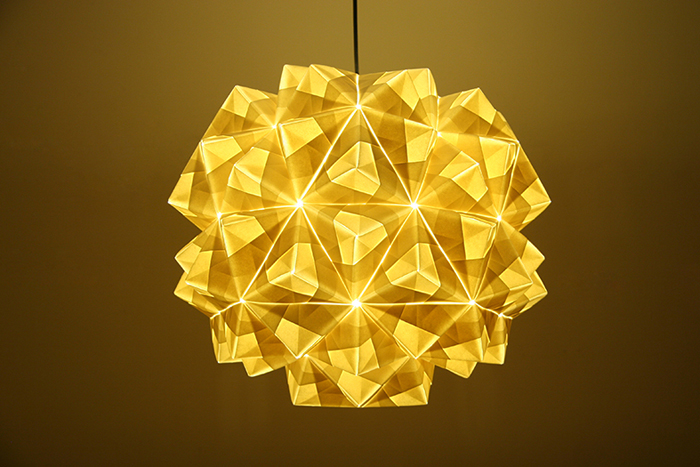
Although Scottish designer Kyla McCallum didn’t win the funding, the award gave her the impetus to set up Foldability – a design studio that creates geometric, origami-inspired products. Since then, the designer has worked for Burberry, been commissioned by ELLE Decoration for an origami-inspired cover, and created over 2000 hand-folded flowers for H&M’s flagship store. Here, we chat to London’s ‘Queen of Origami’ about her age-old craft.
How has Foldability developed since it began in 2013?
The business began with a range of origami pendant lights, but now I create a large variety of things, including set design, packaging, invitations, window displays and installations. Every project is very different – one day I could be making a giant folded advent calendar for a still-life shoot and the next day a range of bespoke light fittings for a retail fit-out.
Leah Pendant
How collaborative is your design process?
As each brief is so varied, it helps to keep a level of flexibility so that I can bring in the best people for each project. I work with architects, engineers, industrial designers, fabricators, graphic designers, project managers and pleaters.
How long do you usually spend on a piece?
I love to fold and every project is so different, so I still have a lot to learn and explore. It’s very therapeutic and relaxing. If anything, I wish I could spend more time folding and less time on all the other aspects of running a business!
I often work on a few different projects at the same time: some can be just a few days and others weeks, months or even years. The actual folding aspect is often not the thing that takes the most time; I spend a lot of time on design, product development, testing materials and refining production techniques.
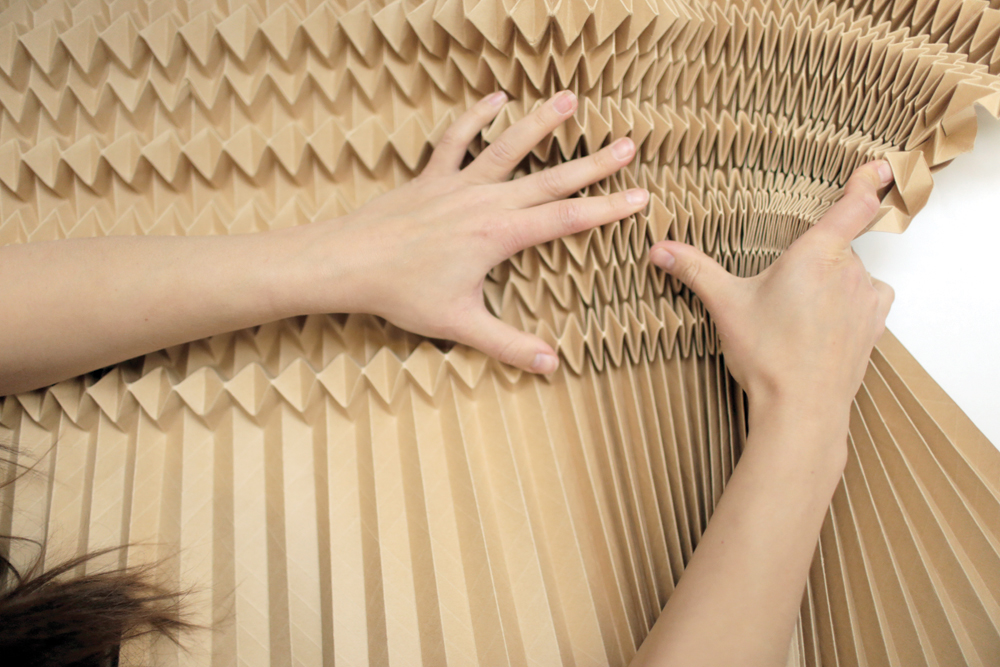
The making of ‘Transitions’
How does your work challenge perceptions of origami?
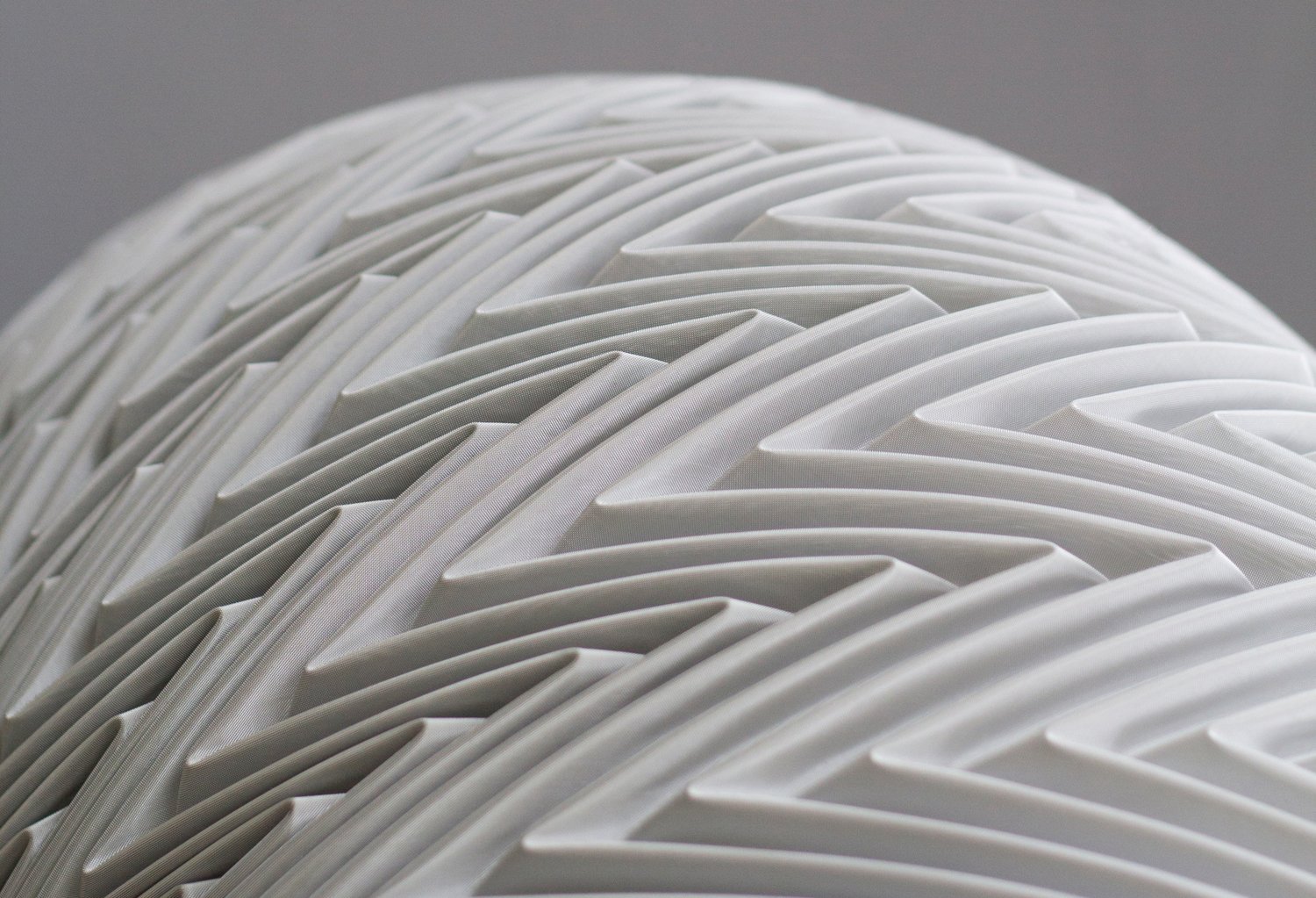
Often people think origami is limited to paper but almost everything is foldable. So far I’ve worked with paper, fabric, metal, composites and ceramics. It’s possible to use a fabric pleating process to fold all sorts of things from dried fish skin, to metal mesh and dried flowers. I’ve also been exploring machine techniques for speeding up the folding process and opening up the possibilities to use more rigid materials such as metal.
Jack Morrison contemplates the pioneering spirit of Christopher Dresser: a designer ahead of his time
The Alessi teapot, 1879. Originally designed by Christopher DresserChristopher Dresser (1834–1904) was an industrial designer before the term had even been invented. A true visionary, his work would not seem out of place alongside the modernist creations of the Bauhaus era or postmodern curios of Ettore Sottsass and The Memphis Group. Quite simply the man was a genius, and he refused to let the period in which he lived limit his thinking or creativity.
Dresser’s academic achievements almost parallel those of his design. In 1850, he received a doctorate for his work on botany from the University of Jena, Germany, and subsequently went on to produce several works of authority on design and ornament.
Having worked for Tiffany & Co, Linthorpe Art Pottery, and Liberty of London, Dresser aimed to fulfil his mantra with each project: “The cheapest and commonest of things need not be ugly.”
Conceived by Dresser and produced by James Dixon and Sons, this astonishingly prescient Alessi teapot from 1879 embodies a simple philosophy that remains just as relevant today.
Where I grew up in Sheffield, we didn’t even have a zoo. At around 13 years old I saw one of Attenborough’s first BBC documentaries, and it was a break from the bubble of my home and school life — I was blown away. Watching the deserts of Africa unfold before my eyes, and learning how people had adapted to survive in 50°c heat ignited my fascination with nature and adventure. It was through him that I learned about things such as the speed of a hummingbird’s wings, and a bat’s incredible use of sonar to communicate. His wealth of knowledge is peerless.
It inspired a trip I once took to Yellowstone National Park in the US, where I wandered for days without seeing a single person. The notion of wilderness is particularly fascinating to me, and I would love to visit somewhere like Patagonia one day too. Such a vast expanse of uninhabited nature truly captures the intrepid side of my personality.
This idea of discovery, and sense of finding out why, has a direct relevance with designing products. Just as Attenborough has championed awareness of global causes through his work, I feel good design also has the power to inspire profound change. We should be using our creativity to have a positive effect on nature and the world around us. Maintaining the balance of the world is so important, as we too are a part of nature — we should be doing all that we can to keep it on its course.
Aston Martin’s new strong on 8 Dover Street store, designed by Marek, is open now.
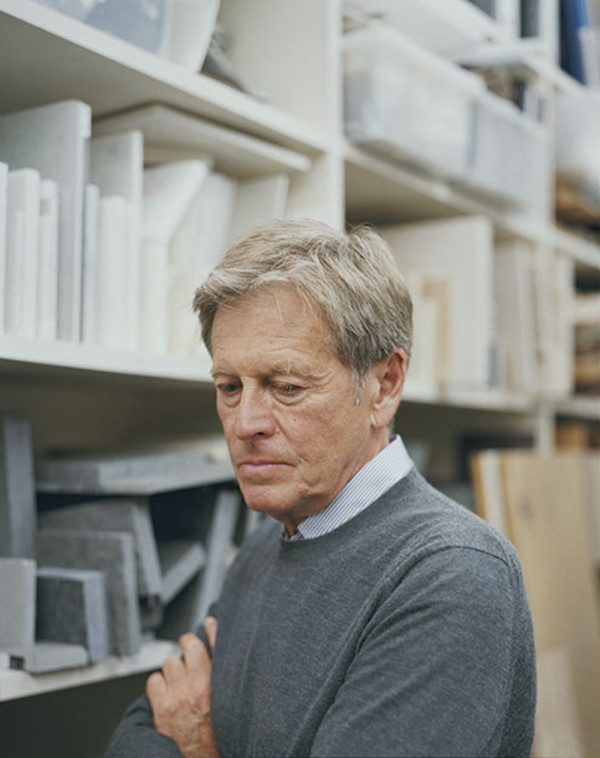
John Pawson is a rebuke to the stereotype of minimalist architecture as icy and joyless. Now, at last, Britain might be warming to his work. We meet the architectural designer as he completes a spectacular home for London’s new Design Museum
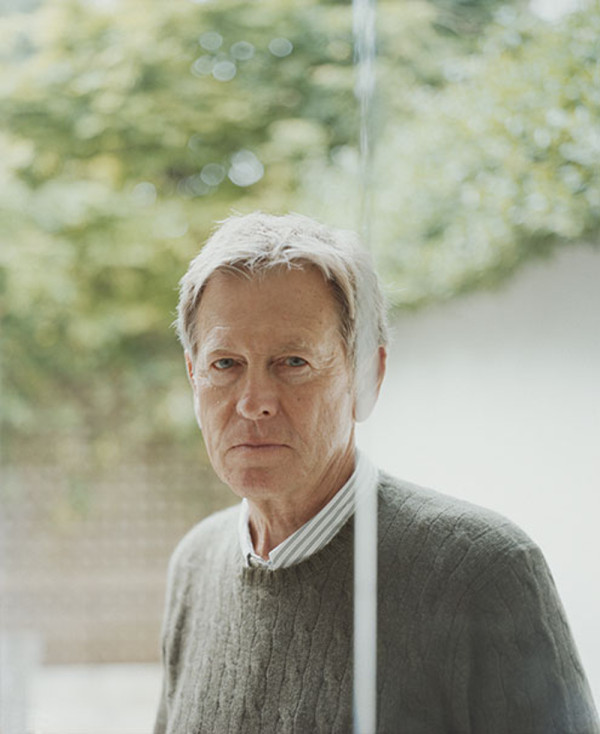
John wears cashmere jumper and striped cotton shirt BRUNELLO CUCINELLI
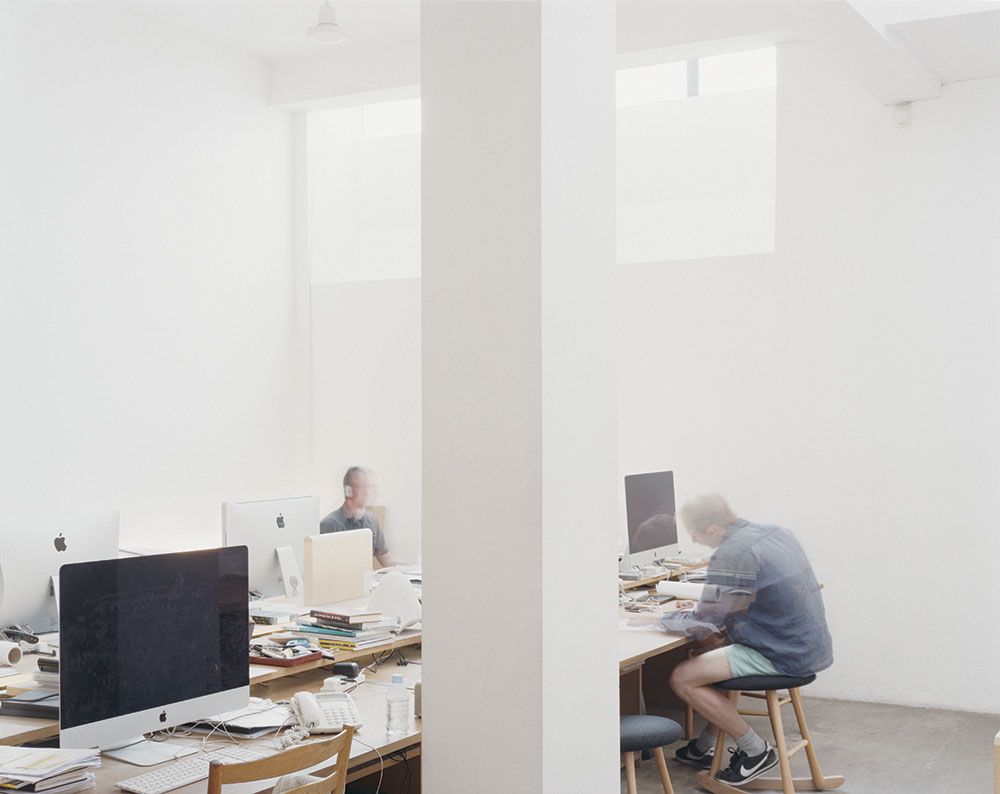
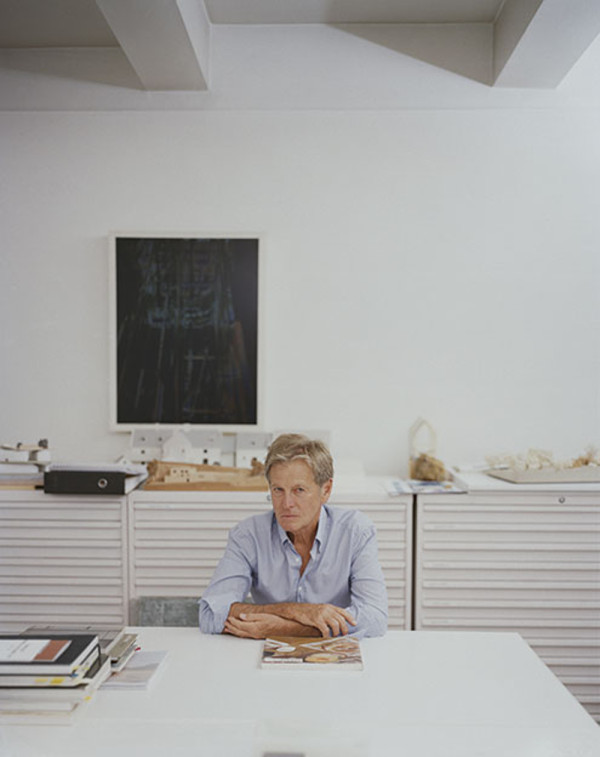
It’s a hot summer’s day in London, and the ground floor of John Pawson’s office in King’s Cross is ablaze with light. But the man himself keeps his desk downstairs, below street level.
“I let the others look out of the window,” he says cheerily. “I prefer to look at the blank wall.”
‘Perfect!’ I think. He has said something ‘minimalist’ before I have even had time to get out my notebook or recorder. This is John Pawson, you see – there are rules. Pawson is not Britain’s most famous architectural designer. However, he is its most famous minimalist architectural designer; indeed, famous for being minimalist.
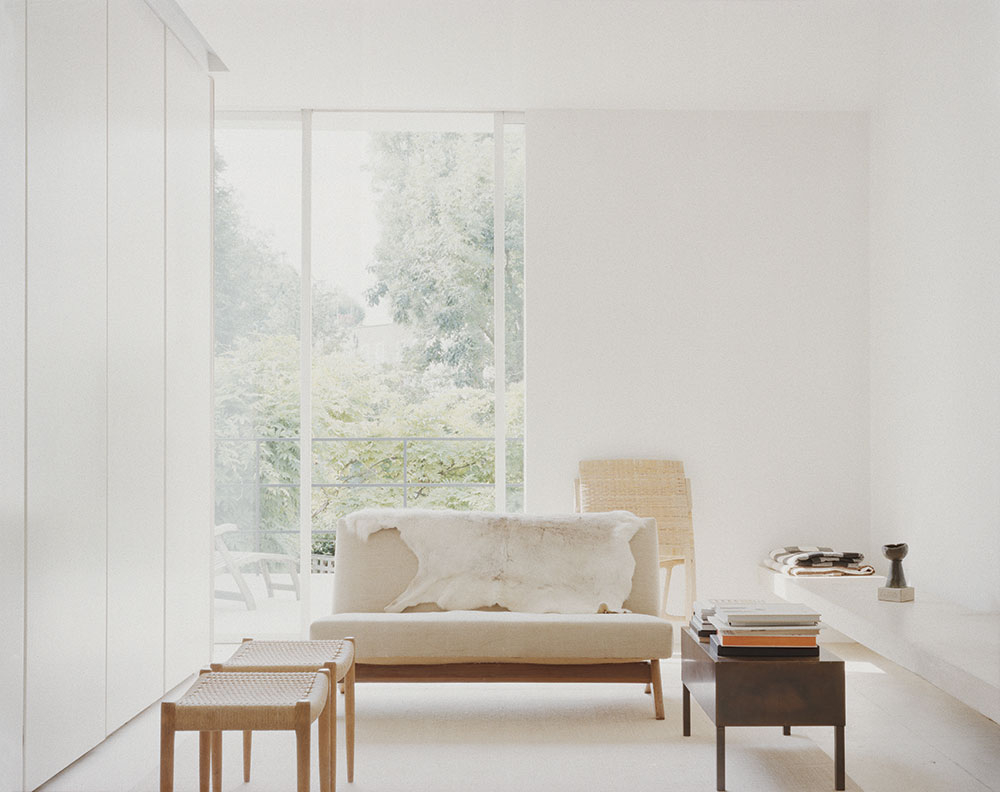
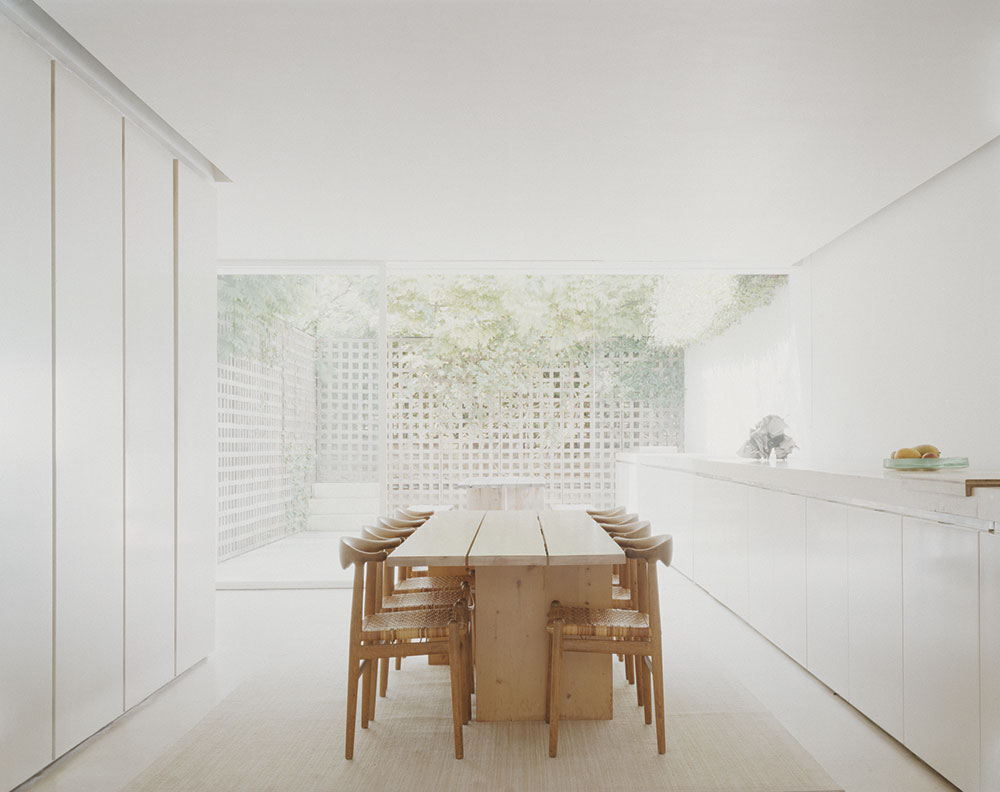
Inside John Pawson’s Notting Hill home, London
Interviews with him fall into a pattern. The author must feign trepidation, and ham up the expectation of Pawson being a chilly zealot, ready to pass judgement on their dress, their home, their timekeeping, because that’s what minimalists are like, right? This is a man who, according to legend, was thought to be a bit on the austere side by Cistercian monks. And then – surprise! – he turns out to be pleasant and un-supervillain-like.
“It always comes as a shock to me. People say to me ‘What’s the worst building that you know?’,” Pawson says when asked if this ever becomes tiresome. “I’m not interested in the negative. And how other people live, I just find fascinating. People expect a shaved head, wearing black…” Neither of which is true of Pawson, who repeatedly has to blow a stray lock of fair hair out of his eyes, and who is wearing a white shirt, open at the neck.
Inside John Pawson’s Notting Hill home, London
Within architecture, where the minimalist mystique doesn’t have the same force, Pawson has a reputation for affability and charm, and he doesn’t disappoint: he’s easy-going, reflexively self-deprecating and drily witty, despite being horribly jet-lagged after a nightmare flight from Hokkaido in Japan. On the day of his departure, a typhoon hit, and he was stuck on the tarmac for six hours as the plane shook in the wind.
“Luckily for me they very kindly served drinks while we were waiting,” Pawson says. Considering the circumstances, serving drinks sounds like a given – it’s typical of Pawson’s graciousness to describe the act as “very kind”.
Pawson was in Hokkaido for a job – a resort hotel. His 35-year career has always involved an element of jet-setting: his big breaks were designing the Cathay Pacific business class lounge at Norman Foster’s Chek Lap Kok airport in Hong Kong in 1998, and designing Calvin Klein’s flagship store in New York. But lately, the projects have been getting bigger. This includes his highest-profile work to date: the transformation of the former Commonwealth Institute in London’s Holland Park into a new home for the Design Museum. On a smaller scale, he is adapting a farmhouse in the Cotswolds into a new home for himself – an unusually significant job, as it was homes for himself, friends and family that founded his reputation. This is not yet on site, which he describes as “a sore point”. “It’s obviously taking much longer than any of our other projects, he says. “I can’t make my mind up.” The Design Museum is, by contrast, on the cusp of completion.
Cable-knit cashmere jumper POLO RALPH LAUREN at MR PORTER Washed striped cotton shirt MARGARET HOWELL
Designed by Scottish firm RMJM and completed in 1962, the Commonwealth Institute was a much-loved local landmark with a distinctive finned copper roof. Although its original purpose had withered away in the 21st century, there was outcry when its demolition was proposed, and the intervention of the Design Museum in 2009 was widely welcomed as a way of saving an unusual outcropping of jet-age modernism.
Pawson isn’t concerned that his first major project in the UK is within someone else’s shell – instead, he sees opportunity.
“It’s always a problem in Britain finding a piece of clear land in the right location to build something new,” he says. “You get a better location in an existing building, and in a pretty spectacular building. We would never have been allowed to build in a park, or a roof that allows you such a sense of space. I was interested to see what could be done with the existing building. It’s a challenge in itself.”
Inside John Pawson’s studio in King’s Cross, London
When the institute’s conversion was first put forward, there were some concerns that dividing its remarkably open interior into gallery spaces might dilute one of the special qualities of the building: its cavernous, open interior under that soaring copper paraboloid, which, as Pawson puts it, had a “Star Wars Galactic Convention feel”. He’s confident that the specialness has been preserved. The stairs now circle the central well of the building “like an open-cast mine”, and each of the three main exhibition spaces is visible wherever you are.
“Everything is sort of… there,” right in front of the visitor, Pawson says. “The roof is untouched, and it’s visible – in fact it’s slightly higher.”
Some souvenirs of the original institute are retained, for example a world map, marble floors and stained glass. The rest will be classic Pawson: all plain, unadorned materials, woods and white walls. Here, there’s a touch of minimalist concern – there will be a lot of visitors, of course, perhaps more than in any other Pawson environment. A lot of unwashed hands. “I didn’t want white anywhere you’d touch,” he says. “The public can’t touch any white, it’s out of reach. Just to be practical.”
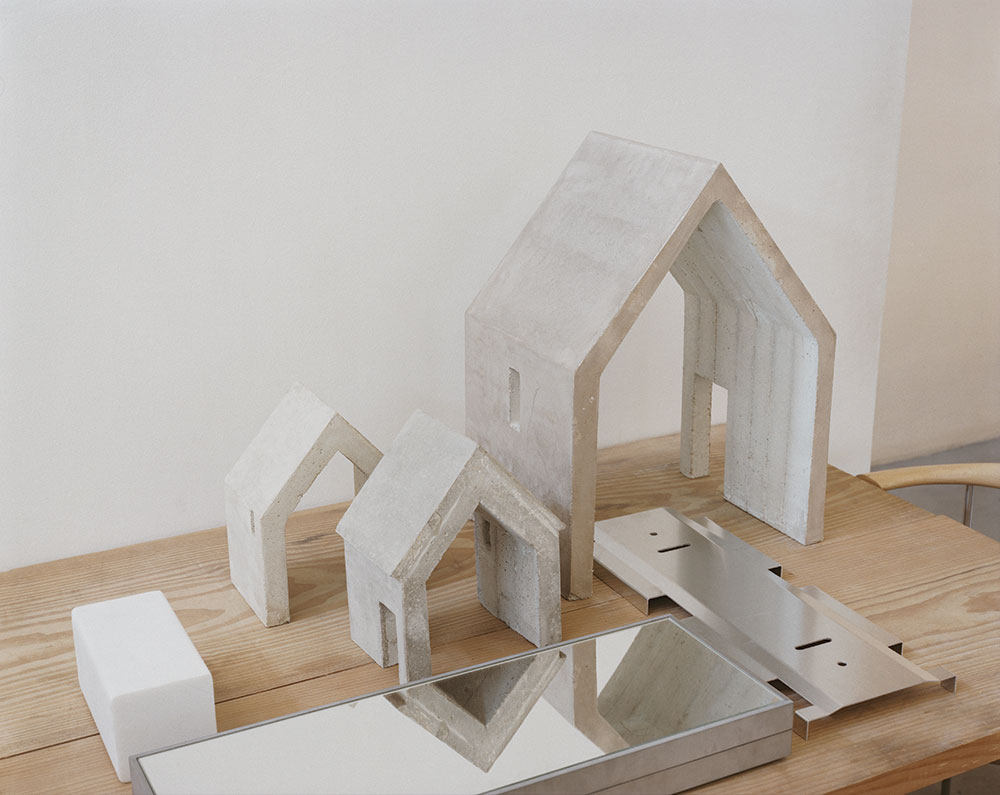
Study models and prototypes on a table in Pawson’s studio
Pawson was born in Yorkshire, in 1949. When did his taste for minimalism develop? “I’ve always been obsessional,” he says, and attributes his liking for unadorned simplicity to his Methodist parents, and to the plain stone architecture of Halifax, his home town. He studied at the Architectural Association in the 1970s, and under Shiro Kuramata, the Japanese designer who fused minimalism with postmodernism. One of his earliest commissions was a small apartment interior for the travel writer and novelist Bruce Chatwin, who had visited a South Kensington flat Pawson had designed for Hester van Royen, Pawson’s first wife.
“I had turned a two-bedroom flat that she was renting into a one-bedroom flat, without permission,” he remembers, amused. “I was slightly economical with the information about what was happening… I just thought that the result would be so spectacular.
“I was driven by this terrible urge to just clear everything out, this spectacular Georgian 12ft-ceiling room with corniced ceiling and fireplace. Very nice, but of course there was nothing else, it wasn’t very practical but it was a very nice space,” he adds. “Bruce came around and got very excited, he said he felt freed.”
The result was not just Chatwin’s small apartment, but also a famous essay, ‘A Place to Hang Your Hat’. It’s hard to imagine a greater compliment, or a better recommendation.
Striped cotton shirt BRUNELLO CUCINELLI
“What’s nice about writing is that it describes places, I think, much better than photographs,” Pawson says. “I know most people only see my work through pictures, I do notice that when people walk into places that I’ve done, they change physically, they…” He straightens his shoulders and raises his head, looking up. “Bruce was a prime example of that. He went slightly bonkers, walking around and around.”
This sounds like an example of the peculiarity of minimalist architecture, the reason it is regarded with something close to superstition. It is held to have almost magical properties to elevate its inhabitants, but that comes with a perceived edge of moral castigation. (Don’t touch the white!)
I must admit to being guilty of this myself, having written a novel in which the minimalist apartment of an obsessive modernist composer drives a flat-sitter insane. He finds this amusing.
“I don’t design what I do because I want to try and live the way it’s telling me to,” suggesting there’s no effort to control himself or anyone else. “It’s just how I want things. It’s a reflection of who I am and what I am, but that doesn’t mean that I don’t like eating. I’m not an ascetic – it’s not asceticism, it’s aestheticism.”
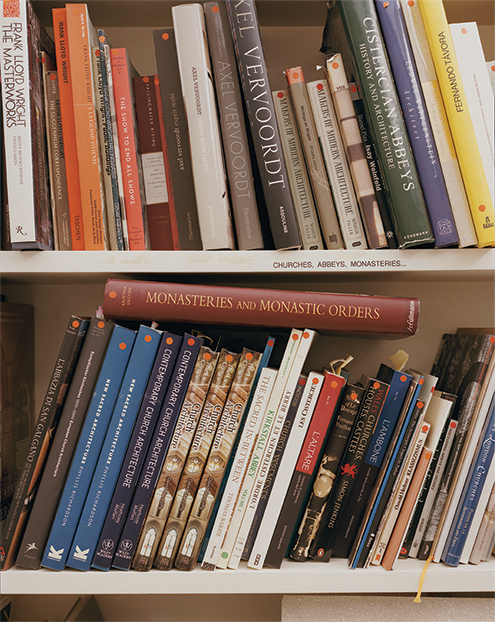
The story about the Cistercian monks finding the monastery he designed for them, in Novy Dvur in the Czech Republic in 2003, rather too austere is, it seems, at least partly a myth. In his re-telling, some monks found the exceptional quality of his building too extravagant, rather than too plain, when all they needed was four walls and a roof. Pawson, meanwhile, disclaims any connection between minimalism and godliness.
“When it comes to the church, you do your best to get the proportion and the materials right, and you hope it becomes sacred,” he says. “You can only give the monks the best that you can do… It won’t turn a novice into a monk.”
Nevertheless, there does seem to be some influence. Does Pawson have any belief in what’s called ‘architectural determinism’ – the power of a designed space to make you better, or worse, as a person? He did say that people stood up straighter when they walked into one of his buildings, after all…
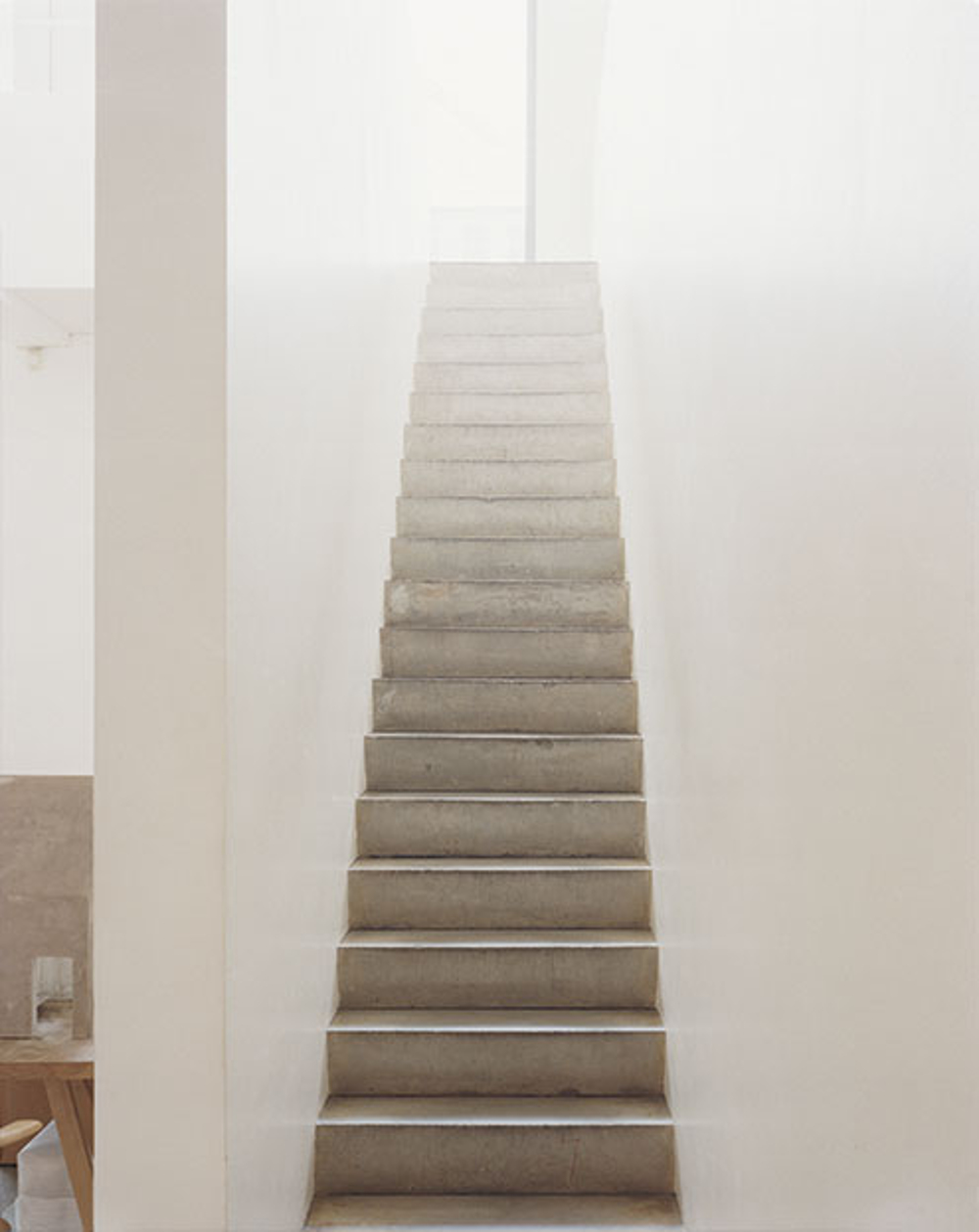
These stark concrete stairs in Pawson’s studio are typical of his signature brand of minimalism
“I’d say they relax, actually,” he says, gently. “You go somewhere and you feel good. That’s what I first noticed as a boy. It’s the difference between a building that’s just a building and architecture that’s special.”