Wasted but Wanted

Designer Max Lamb and Potato Head turn the detritus of luxury tourism in Bali into furniture and objects of function and beauty

Photography Adrian Morris

When Indonesian property developer Ronald Akili opened his first restaurant in Jakarta in 2009, he called it Potato Head. It was his way of differentiating it from the run-of-the-mill stylish eating in the city. For the initiated, the essential innocence of a Hasbro plastic toy from the 1950s would serve as a paradoxical signal of sophistication. Potato Head turned out to be the beginning of a hospitality brand that spread from Jakarta to become a resort in Seminyak on the island of Bali, and more recently a bar and restaurant complex in Singapore. Given Rem Koolhaas’ fondness for iconoclastic paradox, the founder of the Rotterdam-based architectural studio OMA was not an entirely surprising choice when Akili commissioned him to design the Potato Head hotel, which opened in Bali in 2020.

The Potato Head brand is based on a string of strikingly utopian promises. In the missionary prose of 21st-century marketing, it is based on “a zero-waste ecosystem where good times are reimagined as a catalyst for change – cultivating culture, restoring the Earth and nurturing community. Here, every element has purpose. Food and wellbeing nourish. Music connects. Art inspires. Circular design enables a regenerative way of life.” 

Photography Adrian Morris

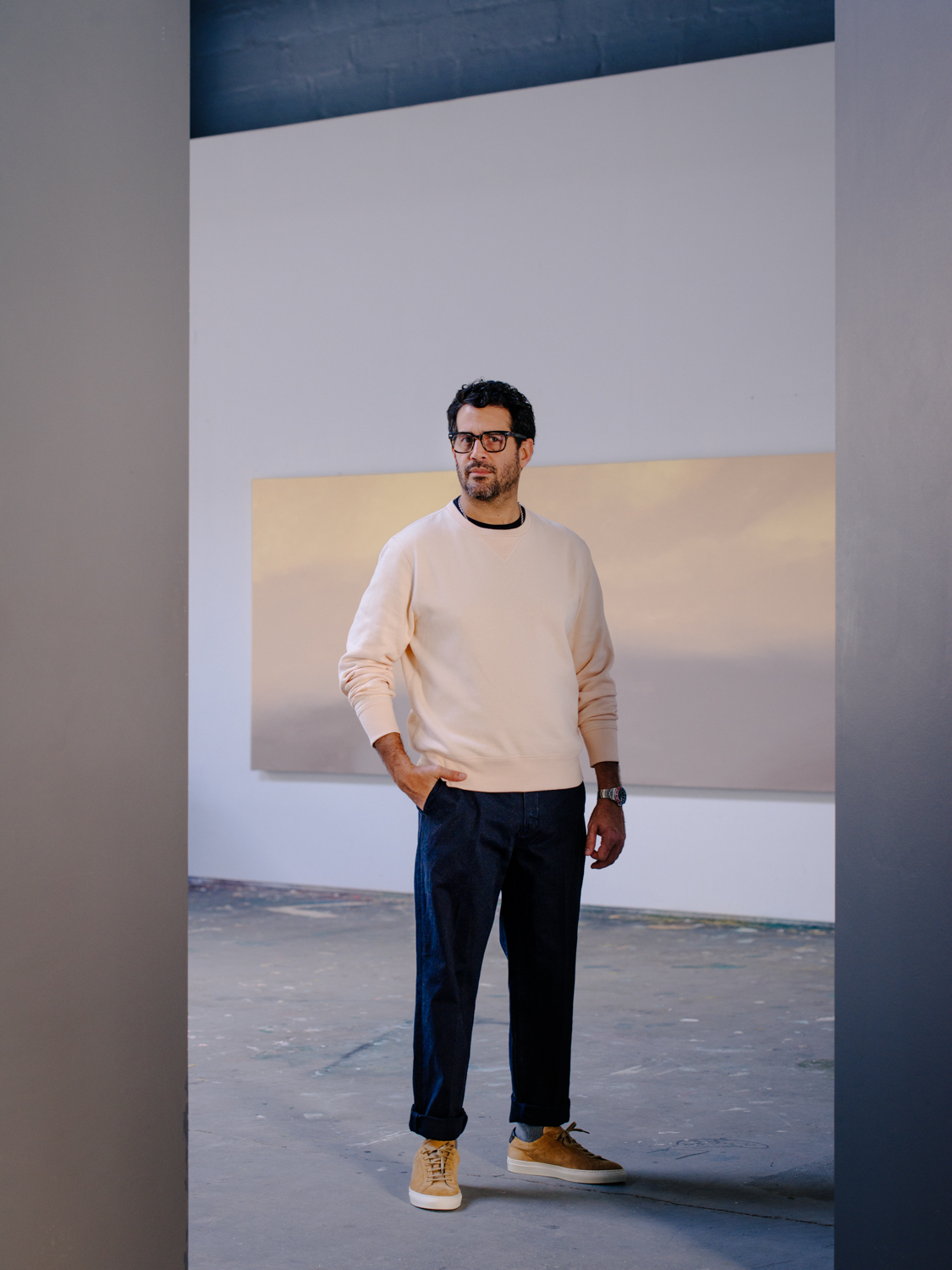
We have become so inured to relentless greenwashing that it is hard not to be sceptical. But Potato Head is certainly in it for the long term. Since 2018 it has been working with Max Lamb, the London-based maker and designer, trying to find ways to reduce the negative impact of luxury tourism on the environment and on traditional communities. While OMA were working on the hotel, Lamb made the first of several visits to explore ways in which Potato Head could create a range of products and furniture to equip the building when it was ready. “At first I thought that I would design items, and source remote production. But when I went to see the site, I understood that there is a large craft capability on Bali. Building relationships with what is available was the way to go.” The island’s network of craft workshops might not be able to make a blow-moulded plastic chair or pay for aluminium extruding tools, but they do have the ability to work with a wide range of materials to produce distinctive products. Lamb produced an intriguing range of designs, but once all the bedrooms of the hotel had been furnished, it was clear that it could not be the end of the story. “Everything was high-level quality, and quite desirable. People stole things, which suggested that it was suitable for a homeware collection.”

The Wasted collection is a much larger project than the original range for the guest bedrooms. It was designed to harvest all the various waste streams from the hotel’s activities, and to use the detritus as a raw material that Balinese craftsmen can turn into homeware products designed by Lamb, for sale at the hotel and beyond.

Photography Putu Eka Permata

Every year Potato Head, along with all the other luxury hotels in Bali, produces an apparently unstoppable flow of waste, from uneaten food to broken bottles, from single use plastic to cutlery and crockery. Both Akili and Lamb were acutely aware of the need to make something of this. “Bali is tourism-focused, the generation of waste is an island-wide issue,” says Lamb. “Potato Head is trying to capture waste. It has a sustainability director, and has worked with an outside agency that analysed all the waste streams: going through the statistics, seeing what was accumulating, and to understand what we could do with all of it.” Wasted products are based on eight distinct material families. One uses high-density polyethylene plastics; others are based on cooking oil residues, salvaged ceramics, broken glass, worn-out bed linen, composite waste materials such as polystyrene, and even oyster shells. “Most of the glassblowers source waste from construction sites and broken windows. Potato Head sends them their broken drinks bottles,” says Lamb.

“Bali is not really industrial, it is characterised by small village-based craftsmen; there are weavers, as well as a cluster of glass makers and blowers. They are all families, all multigenerational. It is large volume, but quite artisanal.”

Photography Adrian Morris

Lamb saw his role as devising a range of products using the available materials that would make the most of the capabilities of Bali’s artisans. “My own experience as a maker with my own workshop was helpful. I wasn’t just a designer doing a design on paper, it was a collaboration with each individual maker, so that I could give them what they needed to be able to make pieces. On paper it’s easy to model but making in volume for retail can be very difficult. Each object is singular, they are all quite simple. It’s not high design, it’s not elaborate: it’s functional and humble. The detailing is intentionally minimal, it has been a process of collaboration respecting what they can make well, what they can make consistently. I am singular in my focus on materials. So, every piece is all made in a single workshop.”

The first Wasted collection includes marbled plastic chairs, hand-shaped ceramics and lounge seating. At the time of writing, Potato Head is now waiting to see the results of its launch in the summer of 2025. It’s also working with seven other hotels and restaurants on Bali to process their waste. For Lamb the key to the project is to be agile. “To achieve an equilibrium we must be nimble in our designs and production, we have to follow the waste stream. It is a finite and moving target. If product demand exceeds waste stream, we can’t just buy virgin materials.”

This article is taken from Port issue 37. To continue reading, buy the issue or subscribe here

Photography Anselm Ebulue
Photography Adrian Morris
Photography Putu Eka Permata
Photography Adrian Morris
Photography Putu Eka Permata

Sculpting Air

Inspired by côte&ciel designer Emilie Arnault’s sculptural approach, architect and spatial artist Alberto Simoni of asprostudio.eu has created an installation that frames the FW25 collection as weightless, architectural forms

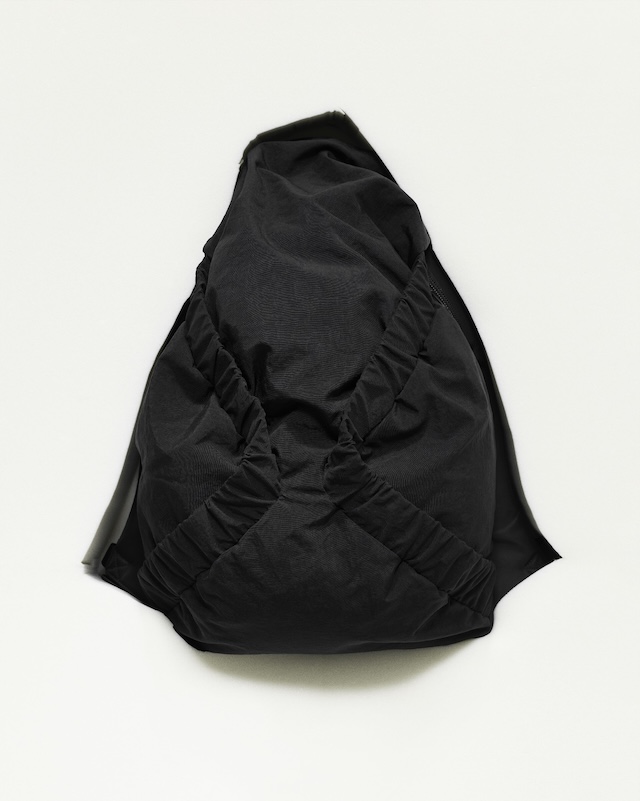
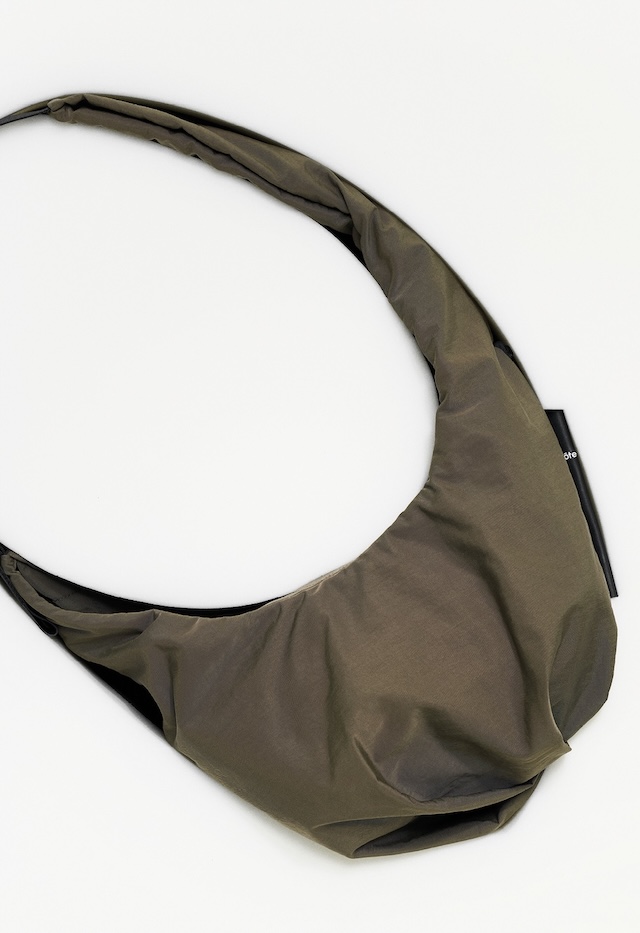
Emilie Arnault, head of design at côte&ciel, names Antoine de Saint Exupéry, the French pilot and author of The Little Prince as the inspiration behind Stratus, the brand’s new collection. “I pictured a puzzle made of sky, clouds, aircraft and parachutes through the eyes of a child.” Some bags fold like origami; others appear deconstructed, stripped to their bare bones. There’s an ethereal sense of weightlessness about them – a balance between volume and form, as if each piece had been caught in mid-air, billowing before flight.

Since its founding in 2008, Arnault has been at côte&ciel from the very beginning, guiding the design of its collections. Over the years, the brand has also embraced the philosophy of “bags to wear, not to carry”, as explained by Arnault. Their bags interact with the wearer, adapting to the body like a garment. “The more abstract the body looks, the deeper you feel the connection, as if the bag was a part of the outfit,” says Arnault. Previous examples include the cocoon-like Isar backpack, the circular Moselle and the hooded Nile.

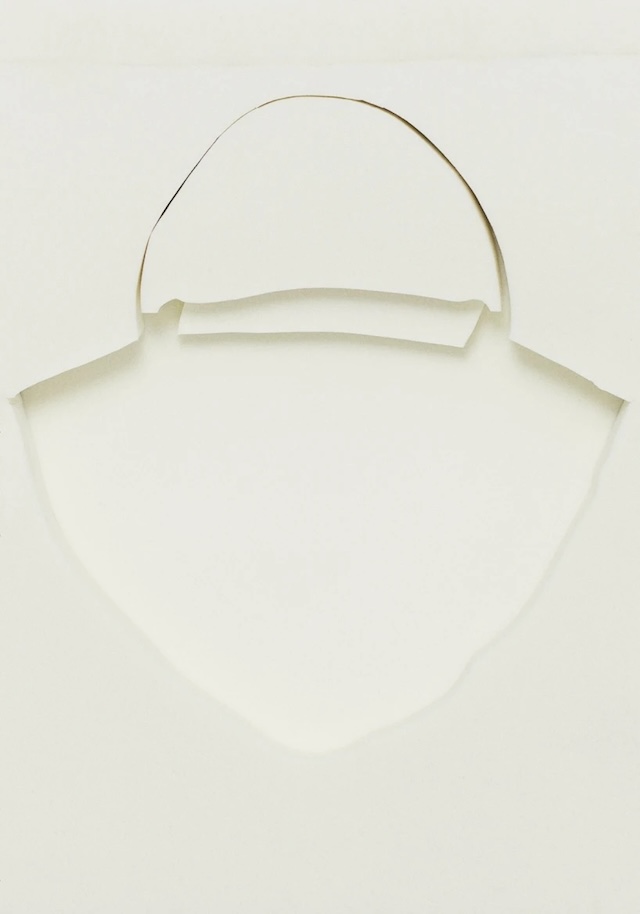
To introduce the Fall/Winter 2025 collection, côte&ciel unveiled Soft Sculptures during the Paris Fashion Week, an installation with Milan-based architect Alberto Simoni of asprostudio.eu. Over 30 foam sculptures were constructed and presented as columns of yielding material supported by wooden frameworks: without the foam, the structures would sway. “The core idea was to bring attention to the design itself,” says Simoni. “côte&ciel bags incorporate many details that emerge naturally from the construction process – details that are deduced rather than deliberately selected or positioned. While the bags appear rigid and structured, they are actually built on a soft framework.” The squishy foam blocks, sculpted to house the negative space of the bags, create an illusion of solidity, mirroring the way that the côte&ciel bags are formed.

“Emilie explained that she approaches bag design from a sculptural perspective, building the volume from two-dimensional textiles and refining it through prototyping. This was a key insight for the project,” Simoni says. Polyurethane, an everyday material, took on a key role. “Inspired by Emilie’s process, I imagined a sculptural approach – tracing the extraction of the bags from a solid block of material and displaying the negative space left behind. The negative space, shaped around the body, defines the bag’s actual volume when it is worn on the body.” Seeing her designs presented as sculptures was a moment of affirmation for Arnault. “When Alberto dared to showcase the bags as if they were sculptures, it worked so well that for a second, my impostor syndrome vanished,” she says. “That’s what happens when you meet someone who sees the world as you do – pure, selfless satisfaction.” Simoni hopes the installation offers the same sense of openness. “The sculptures are intentionally imperfect, the images are intentionally off-centre, things aren’t ‘designed’ specifically for a space. We wanted to create something without too many preconceived barriers or limitations; exactly how Emilie designs her bags.”

This article is taken from Anima Issue 3, to purchase a copy or subscribe head here

Art direction and Sculptures design Alberto Simoni asprostudio.eu

Photography Gabriele Rosati

Video Francesco Saverio Costanzo

Production asprostudio.eu

Brand creative Joe Goodwin

Production assistant Camilla Longhi

Project design assistant Rebecca Biagini

Set design assistant Mari Gianna

Digital operator Gill Lemon

Light assistant Luca Chiapatti

Retouch Mia Gianini

Myth and Material

Feng Chen Wang’s Fall/Winter 2025 collection reimagines the landscapes of Shan Hai Jing through sculptural tailoring, experimental textiles, and a dialogue between the ancient and the avant-garde

Look 1

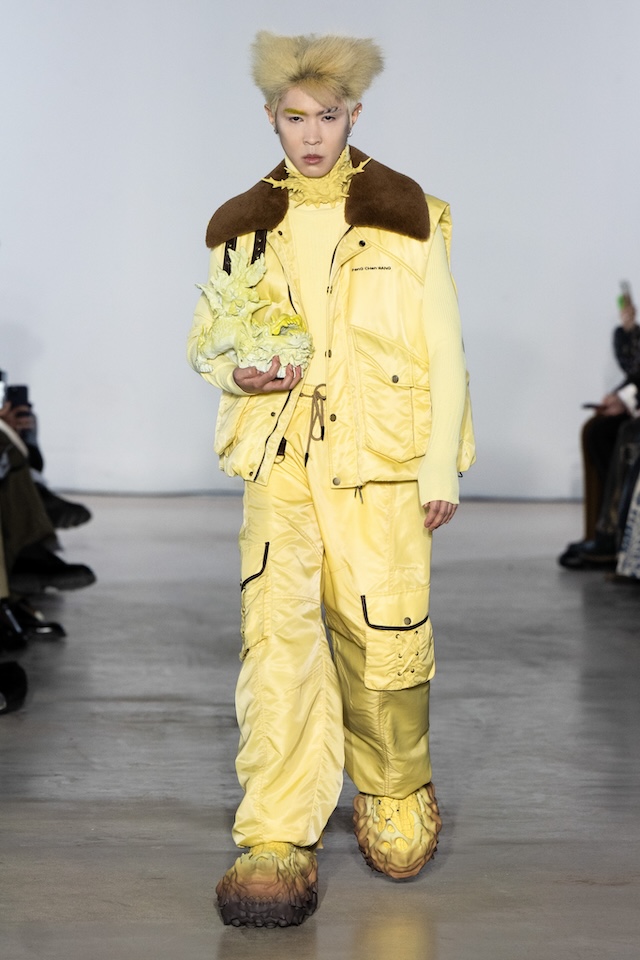
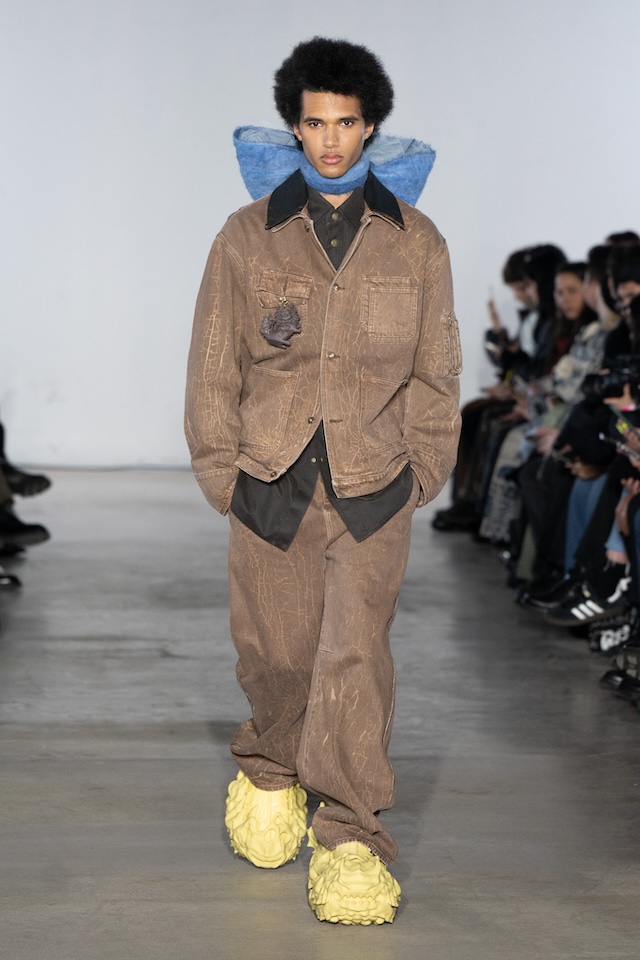
A sculptural jacket in bonded neoprene, its surface alive with intricate prints of mythical creatures. A crackled, high-gloss coat that mirrors the delicate imperfections of handcrafted ceramics. These are just two of the standout pieces in Feng Chen Wang’s Fall/Winter 2025 collection, which draws inspiration from Shan Hai Jing, a 2,500-year-old text filled with fantastical landscapes and folklore.

Wang is a Chinese-born, London-based designer known for her avant-garde approach to menswear, often fusing deconstructed tailoring with experimental fabrication. A graduate of the Royal College of Art, she launched her eponymous brand in 2015 and quickly gained recognition for her conceptual storytelling and technical craftsmanship. Her designs frequently explore themes of heritage and futurism, drawing inspiration from traditional Chinese aesthetics, personal narratives and innovative fabrics. Previous collections include Spring/Summer 2024, where she reinterpreted her childhood memories of her grandmother through the use of an ancient botanical contact printing method; and Spring/Summer 2019, which explored themes of love and connection through draping and graphic representations of the ‘other half’.

For Fall/Winter 2025, Wang has deepened her exploration of mythology and materiality, translating the mythical creatures and landscapes of Shan Hai Jing into bold, sculptural and imperfect forms. From hand-painted fabrics inspired by Chinese ink painting to bonded neoprene that mimics traditional textiles like twill denim and wool, the collection is a fine example of what can happen when you let your imagination run free – and when fabric becomes a painterly canvas. Here, she discusses the inspirations behind the collection, the craftsmanship behind each piece, and how she’s transformed an ancient tradition into something wearable, structural yet otherworldly. 

Look 6

Is fashion always something you’ve always wanted to pursue?

Growing up in China, Fujian, I was fascinated by the way clothes could transform, express individuality and tell stories. However, I was always dabbling in art – from traditional calligraphy to watercolour painting, since I was young. Fashion for me was a canvas where I could present my ideas as a collection. Over the past years, my canvas has expanded across garments, footwear, objects, spaces and even vehicles!

Can you tell me more about your deconstructed aesthetic, and what inspires your work?

The approach of challenging traditional notions of perfection and celebrating the imperfections that arise from my creative process, has always been an integral element to the brand’s design language. This “combination of contradictions” – the process of sewing and unsewing different fabrics and silhouettes, exposing raw edges and hidden seams – always inspires me, and even surprises me at times.  

You strive to spotlight Chinese heritage and traditional craft in your designs. Can you explain more about this and how it appears in your work?

I draw inspiration from diverse sources, from my childhood of growing up in Fujian, visiting different cities and provinces in China which taught me about the traditional Chinese crafts, heritage techniques and philosophies as well as my travels across the globe. The human form is also a constant source of inspiration, and I strive to create garments that move and flow with the body. 

What’s your creative process like?

My creative process is often intuitive and exploratory. I begin with a memory, a mood or a feeling, and then I start to experiment with different materials, techniques and forms. Then the process of research and exploration leads to further sketching and experimentation. Collaboration has always been integral – from my design team to the local artisans and craftspeople who are part of bringing designs to life.

What themes or ideas define your FW25 collection, and how does it build on past work?

For FW25, I was intrigued by a Chinese classic text titled Shan Hai Jing, or the Classic of Mountain and Seas. It painted vivid pictures of majestic landscapes, mythical creatures and cultural accounts of early China. I took inspiration from the swirl of fantasy and reality, into the colours, fabrics and silhouettes of the collection that is timeless yet reminiscent of the traditional.

Can you pick out a favourite piece from the FW25 collection?

I would have to say look 1 and 6. We experimented with the visual elements of reality and fantasy and introduced a new fabrication in bonded neoprene. That allowed us to make jackets which resemble twill denim, and trousers which imitates traditional wool. 

What’s next for you – any upcoming projects or collaborations?

I am currently exploring several exciting projects, with several collaborations we have been working with long-term and new partners due to be launched this year. We’re always exploring initiatives for material sourcing and minimising waste, as well as diversifying experiences with the brand. 

Defining Decades

Canali marks 90 years of tailoring with a heritage-inspired capsule collection

Giacomo and Giovanni

Canali was founded in 1934 by brothers Giovanni and Giacomo Canali, each bringing their expertise to the table – Giovanni as a fabric magnate and Giacomo as a master tailor. By the 1950s, the brand’s ownership transitioned to the second generation of the Canali family, cementing its reputation as a cornerstone of Italian menswear. In the 1970s, Canali became the first Italian tailoring brand to introduce mechanised cutting machines, marrying tradition with innovation. By the 1980s, its reach was global, with half of its sales coming from international markets.

Now with 90 years under its belt, Canali is in its third generation and has continued as a pioneer of Italian luxury for men, bringing tailor-made craft, artisanal techniques and comfort to the modern wearer. The design and manufacturing group has five production locations in Italy and more than 1,500 employees over the world. What’s more is there are 190 boutiques and the brand can be found in 1000 retail stores in more than 100 countries worldwide. “Good manners and kindness are two words that occupy a special place in Canali’s history. They have always reflected an essential trait of our family, an unostentatious way of showing interest and passion for what we do and the story we tell,” writes Stefano Canali, president & CEO of Canali, on the brand’s website. 

To say that Canali has a rich heritage would be an understatement. The brand’s distinct aesthetic is immediately recognisable: sharp tailoring and luxurious fabrics are easily spotted amongst the masses. Not to mention the soft-shouldered jackets, perfectly balanced proportions and classy blend of formal and contemporary garments that it has become well-known and loved for. Canali’s collections often feature neutral palettes and patterns like pintrips and checks, excluding a quiet confidence that speaks to the brand’s Italian heritage and focus on the future.

In celebration of nearly a century in the business, Canali has launched its anniversary capsule collection featuring two of its most cherished garments: the overcoat – i.e. the piece that’s at the core of the company – and the suit. The brand has also updated its logo to feature a swan, which is better known as a ‘waterproof animal’ due to the fact its feathers remain dry while going for a swim. The swan is fittingly pictured holding a waterproof overcoat in its beak, which represents the themes of “grace, loyalty, spiritual growth and transformation”, as stated in the brands press release about the launch. The team have placed the swan logo on the custom labels inside the garments, as a nod to “inner beauty”, which guides the ethos of Canali. 


Among the overcoats and suits are knit cardigans, cashmere zip-up hoodies and drawstring trousers. All of which encompass the signature silhouette of Canali, where soft lines meet artisanal tailoring. Internal shoulder straps and detachable linings also bring an element of functionality to an otherwise sharp and formal aesthetic, while the footwear in the collection feature snazzy removable fringes and leather accessories with textile inserts. The colour scheme features a typical medley of greys alongside Brianza green, which is a quintessential shade from Canali’s history – and also nods back to the timeless style of the 1930s. The Prince of Wales check is also reworked into the Canali aesthetic, while a chevron pinstripe gives a tactility and texture to the garments. 

The materials have long played a key character in the tale of Canali and the garments it produces. For this collection, worsted wools and lighter versions of archive materials have been applied to each piece, from the suits to the waterproof membrane of the overcoats, as well as the bags and footwear. Meanwhile, the hoodies are all composed of cashmere or cashmere-silk blends. The pièce de résistance, however, is a subtle but poignant detail inside each garment: a Cimosa (selvedge) inscribed with “Canali 90th,” like a penned signature – a subtle reminder of Canali’s enduring legacy.

Past Meets Future

Mercedes-Benz, Moncler and NIGO reimagine the iconic G-Class

The Mercedes-Benz x Moncler by NIGO collaboration presents the art piece “Project Mercedes-Benz G-Class Past II Future”. Image by Thibaut Grevet for Mercedes-Benz

Since its inception in 1979, the Mercedes-Benz G-Class, also known as the G-Wagen (short for Geländewagen, or “terrain vehicle” in German), has become a recognisable name in the automotive world. It was originally designed as a rugged, military-grade off-roader, with a noticeably boxy, utilitarian design that reflected its origins in German military and government use. 

Yet despite its successful evolution in the contemporary luxury space over the years, the G-Class has managed to retain its signature off-road aesthetic and technicalities. Such is the case with a new collaboration between Mercedes-Benz and Moncleran Italian brand known for its jackets, clothing and quilting – who has partnered with NIGO, artistic director of Kenzo and creative director of Human Made. The result of such a partnership is Project G-Class Past II Future, which features a new brand campaign and art piece, a limited-edition G-Class and capsule fashion collection, which debuted at the City of Genius event in Shanghai. 

The Mercedes-Benz x Moncler by NIGO collaboration presents the art piece “Project Mercedes-Benz G-Class Past II Future”. Image by Thibaut Grevet for Mercedes-Benz

The art piece – titled Project G-Class Past II Future – is based on the iconic 1990s G-Class model, yet its previously aesthetic has been sprinkled with new design elements created by NIGO. One key detail is in the pairing of Moncler’s signature padded textures and Mercedes-Benz’s rugged, angular design cues, fusing a retro-futuristic aesthetic with the gritty energy of 90s street culture. Following in the footsteps of PROJECT MONGO G, launched at Moncler’s The Art of Genius show in London February 2023, this is the second art piece created by NIGO for Mercedes-Benz and Moncler. 

Additionally, the release features a refreshed new model with a limited run of 20 cars inspired by the art piece. The G-Class is renowned for its robust ladder frame, three locking differentials and impressive ground clearance, meaning it’s extremely capable in handling off-road duties and extreme conditions, from rocky mountain trails to deep snow. Now, the G-Class has been updated with Mercedes-Benz’s latest technology, including advanced suspension and safety features, allowing it to keep up with more modern SUVs when it comes to performance and adhering to the luxury market.

The Mercedes-Benz x Moncler by NIGO collaboration presents the art piece “Project Mercedes-Benz G-Class Past II Future”. Image by Thibaut Grevet for Mercedes-Benz

This new G-Class model retains iconic G-Class elements – such as the rear-mounted spare wheel and foldable windscreen – and has been peppered with additional touches like black steel wheels and a bold gold-coloured fuel can. Devon Turnbull, who’s known for immersive audio installations, has created a custom sound system, incorporating “boom boxes” which are mounted on the convertible (and removable) top linkage. 

The gender-neutral fashion collection incorporates 90s influences with street style elements. Following the City of Genius show preview, a capsule collection will be available for purchase starting in April 2025. Image by Thibaut Grevet for Mercedes-Benz

In parallel, Moncler and Mercedes-Benz presented a capsule fashion collection in Shanghai as part of the release, which is set for a global launch in April 2025. This gender-neutral collection incorporates 90s essentials like souvenir jackets, hoodies and checked shirts, all of which feature the signature puffed design from Moncler and Mercedes-Benz’s modern brand motifs, in a colour palette of classic blacks, greens and blues with pops of orange. What’s more, the campaign’s ‘Past Forward’ theme, captured by photographer Thibaut Grevet, imagines a cityscape where the aesthetics of past and future coexist, represented through the metallic backdrops and industrial tones.

The gender-neutral fashion collection incorporates 90s influences with street style elements. Following the City of Genius show preview, a capsule collection will be available for purchase starting in April 2025

In short, this Moncler-Mercedes-Benz-NIGO collaboration signals a broader movement in luxury automotive design – one that cherishes the past without losing sight of innovation. 

“NIGO’s immense creative talent and our co-creation with Moncler are taking us into an exciting urban setting,” says Bettina Fetzer, vice president communications and marketing Mercedes-Benz AG. “The Mercedes-Benz G-Class Past II Future is a very special new ‘twist’ on our icon. This limited edition is a fresh take on 90s style and the character that’s made the G-Class a timeless favourite. Going from inspiring art to engaging products marks an important step in our creative cooperation and offers a new brand experience captured by the zeitgeist.”

The Mercedes-Benz x Moncler by NIGO collaboration presents the art piece “Project Mercedes-Benz G-Class Past II Future”. Image by Thibaut Grevet for Mercedes-Benz

The Mercedes-Benz x Moncler by NIGO collaboration presents the art piece “Project Mercedes-Benz G-Class Past II Future”. Image by Thibaut Grevet for Mercedes-Benz

The Mercedes-Benz x Moncler by NIGO collaboration presents the art piece “Project Mercedes-Benz G-Class Past II Future”. Image by Thibaut Grevet for Mercedes-Benz
The gender-neutral fashion collection incorporates 90s influences with street style elements. Following the City of Genius show preview, a capsule collection will be available for purchase starting in April 2025. Image by Thibaut Grevet for Mercedes-Benz

Making Strange: The Chara Schreyer Collection

DelMonico Books’ new publication asks us to rethink the world through art. Its curator, Chara Schreyer, tells us more

Carrie Mae Weems

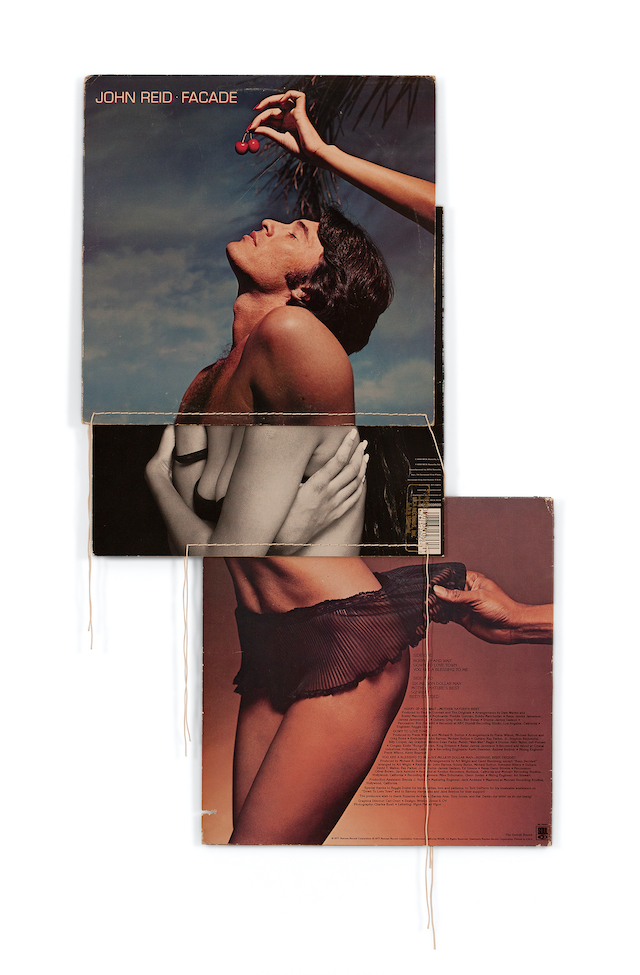
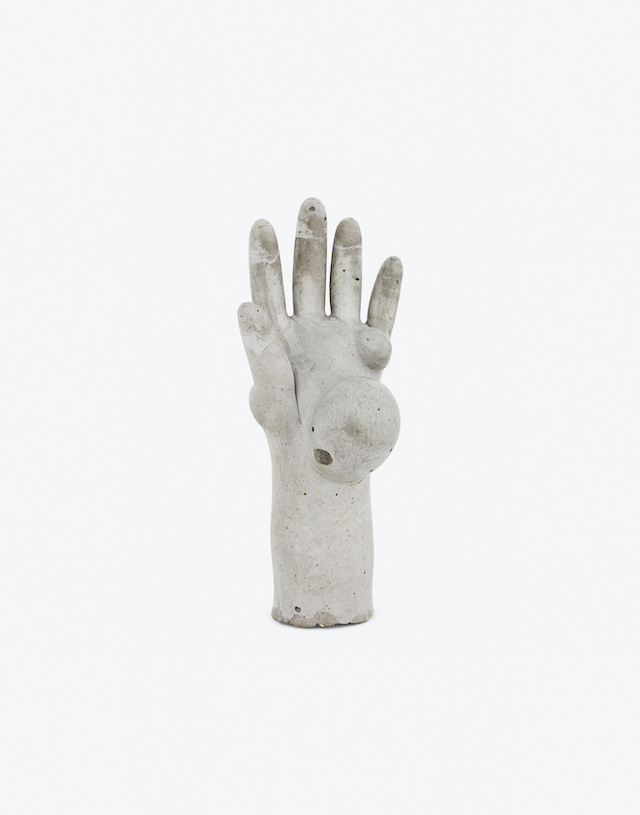
In a new publication from DelMonico Books, the viewer – moreover the whole of society – is tasked to see the world through a refreshed lens. Entitled Making Strange: The Chara Schreyer Collection, the magnanimous tome collates nearly 250 artworks that span over 100 years, formulating a deep and comprehensive study brought to us by Chara Schreyer, the curator of the project. Compiled over three decades, Chara examines the definition of perception, where we, the audience, are encouraged to rethink the everyday in accordance to the trailblazing and irreverent work of French painter Marcel Duchamp plus the Russian literary critic Viktor Shklovsky and his conception of ‘making strange’.

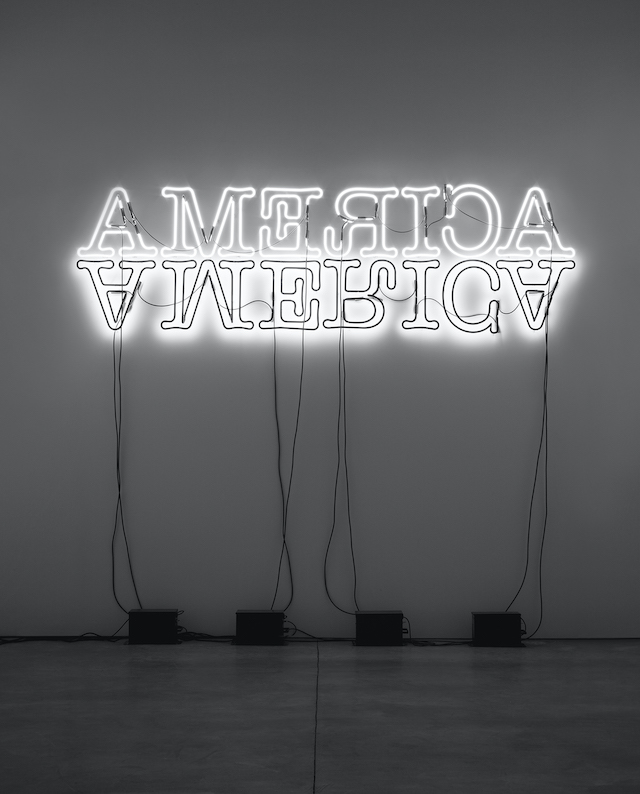
A multitude of works on this topic are brought to the fore, including Andy Warhol, Glenn Ligon, Lawrence Weiner, Jenny Holzer, Diane Arbus, Cindy Sherman among many others. The book is edited with text by Doulas Fogle, Hanneke Skerath and includes a foreword by Chara Schreyer with an introduction penned by Fogle. Additionally, the tome features newly commissioned essays by Geoff Dyer, Briony Fer, Russell Ferguson, Elena Filipovic, Bruce Hainley, Eungie Joo, Sarah Lehrer-Graiwer, Annie Ochmanek, Jenelle Porter, Joan Rothfuss, Lynne Tillman, and Mika Yoshitake. Below, I speak to Chara on the topic of the collection, how she curated such a vast project and the specific ways in which art can be used to change the course of history: “We all really need to be challenged today whether it’s by visual artists, poets, or musicians. The world needs artists to shake us up.”

Richard Artschwager

What inspired you to start working on this book and collection, was there a reason or moment that sparked it?

Regarding Making Strange, I was motivated to commission a book about the collection for two reasons: one, the works in the collection are spread out over five different locations, so I was curious about what the works that are not in the same house might say to each other when brought together in a book format; and two, I realised that, one day after I’m gone, these works will be dispersed with a number of them promised to museums, and so on. I wanted to have a record of their intimate relationship with each other together in this collection before they one day go on their own individual journeys to new homes.

Having worked with the collection for 30 years, what challenges or surprises did you encounter?

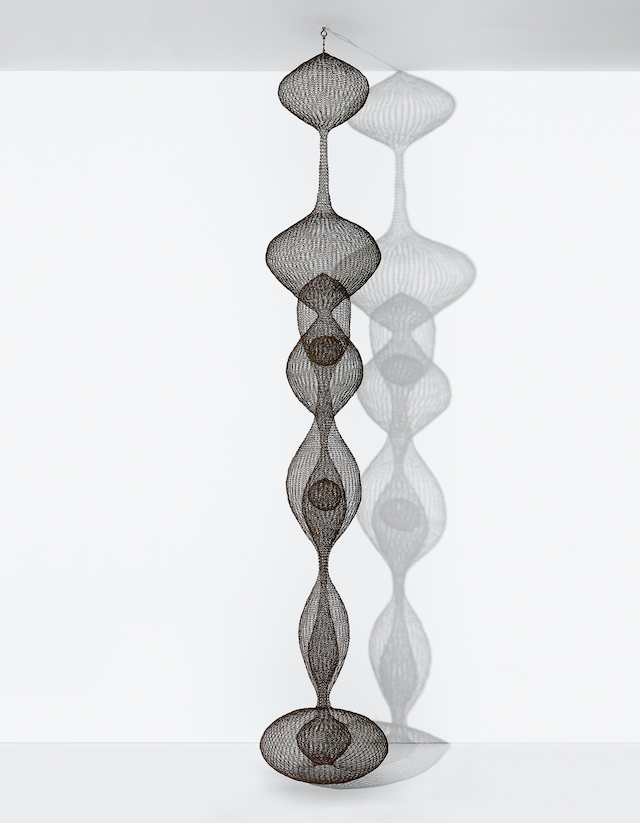
One of the most interesting things for me in seeing the works brought together in Making Strange were the serendipitous synergies and unexpected conversations that came about from bringing these works together virtually in a book format. I really loved seeing how the authors Douglas Fogle and Hanneke Skerath brought very different kinds of works together under provocative curatorial propositions. It was really thrilling, for example, to see Ruth Asawa’s hanging wire sculpture Untitled S.437 (Hanging, Seven-Lobed, Two-Part Continuous Form within a Form with Two Small Spheres) (1956) in a chapter called ‘Minimalism and Its Discontents’ with Donald Judd’s Untitled stack (1969), Catherine Opie’s landscape photograph Untitled #5 (Icehouses) (2001) and Felix Gonzalez Torres’s light string sculpture Untitled (Tim Hotel) (1992). And there are many more surprising moments in the book.

Renate Bertlmann

What was the curatorial process like over this period; where did you source your artworks? What did you seek to include and what didn’t you?

The motivating factor in all my collecting has always been one simple idea: I’ve always wanted to collect works by artists that changed the course of art history. Early on, I worked with an advisor with whom I had a fantastic curatorial relationship. We purchased a number of core works in the 1990s including an example of Marcel Duchamp’s Boîte-en-valise (1935-41) that was once owned by Andy Warhol (who is also in the collection), a classic stack by Donald Judd and Robert Gober’s iconic Deep Basin Sink (1984) which turns the Duchampian readymade on its head by recreating an unplumbed sink fixture completely by hand. In a sense, everything in the collection flows from, around, or into the work of Duchamp. Even Georgia O’Keefe and Arthur Dove, two American modernist painters we would never think of as ‘Duchampian’, were friendly with and often showed together alongside Duchamp at the time. But it’s not just Duchamp’s contemporaries. The lineage extends in all sorts of ways up through the likes of Andy Warhol to younger generation of artists from Kaari Upson, Glenn Ligon to Rirkrit Tiravanija.

Dan Flavin

What artworks can we expect to find inside, can you pick out a few favourites or key pieces?

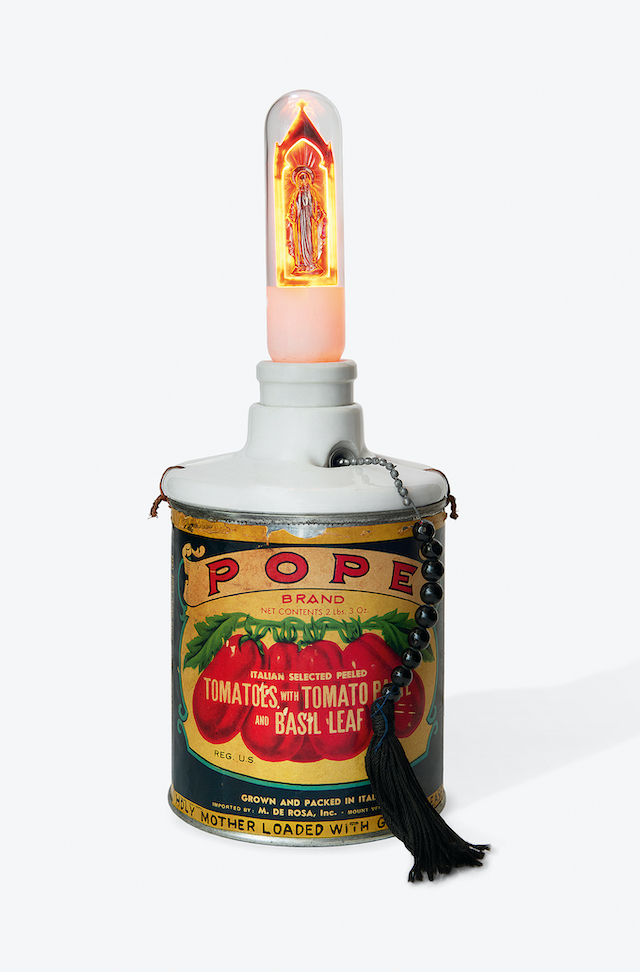
As I always say, choosing your favourite works is like choosing between your children. It’s really impossible as you love them each in different ways. With that said, I do find myself continually enamoured with Eva Hesse’s Top Spot (1965) and Robert Gober’s Basin Sink (1984). Is Top Spot a painting or a sculpture? It pushes itself outside of the boundaries of the canvas into the space that you’re inhabiting. Hesse exploded the boundaries between sculpture and painting and did it as a woman in an art world still dominated by men in the 1960s. Gober’s sink also asked all the right (or maybe wrong?) questions. It is proudly hand-crafted as opposed to machine made. It was created as a non-working sink with all the melancholia that this suggests. It’s ghostly. As the artist created it in the middle of the AIDS crisis its lack of functionality also became a metaphor for the individuals whose bodies were no longer working correctly and who ended up losing their lives to the disease. This work has so many levels.

In many ways though, the spiritual guiding force of the collection (and of the book Making Strange) is Marcel Duchamp’s Boîte-en-valise (1935-41) as it is a collection/retrospective in its own right with its miniature reproductions of the artist’s major works including his ready mades. In some ways, this work, which is the inspiration for the title and first chapter of Making Strange, is the defining core of the collection. Many other artists in the collection can be seeing as operating in the conceptual wake of Duchamp.

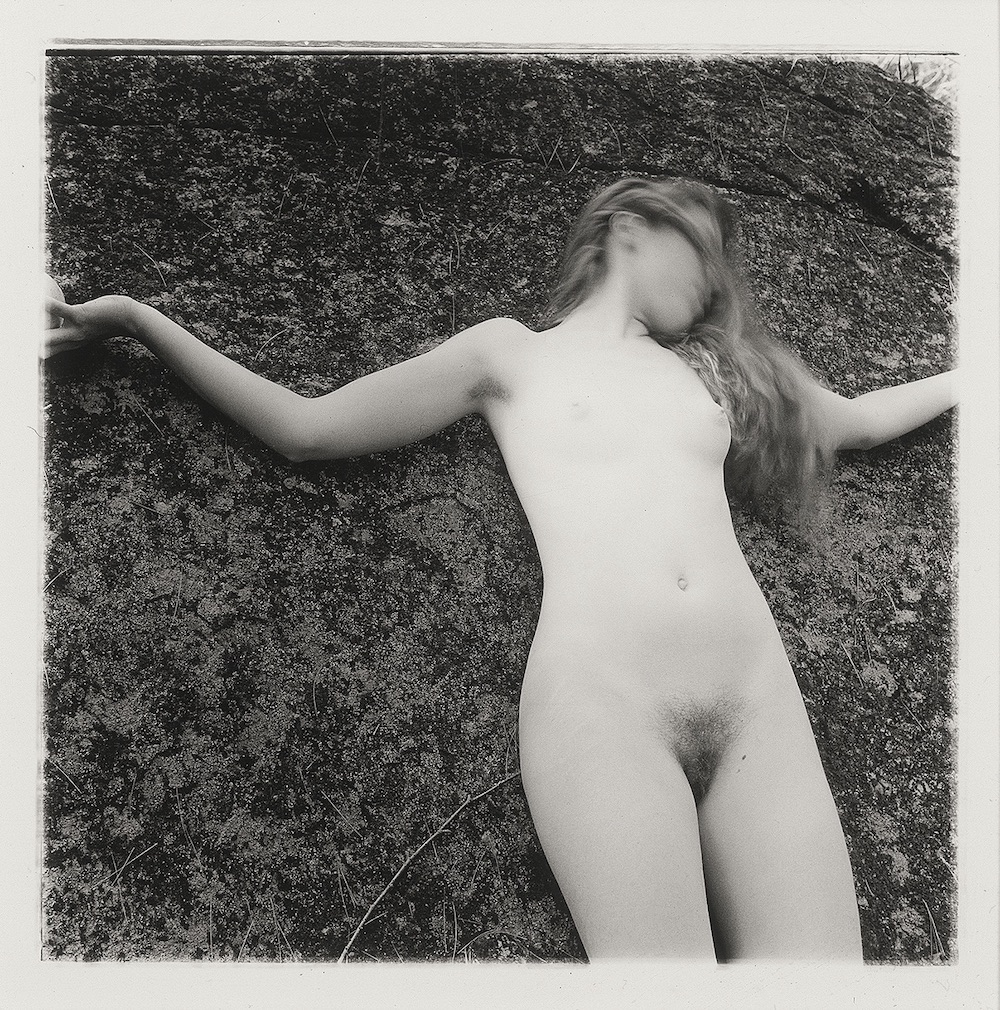
Francesca Woodman

The topic of defamiliarised art is an interesting one. In what ways can art help us rethink the world? How can this be applied to a modern context?

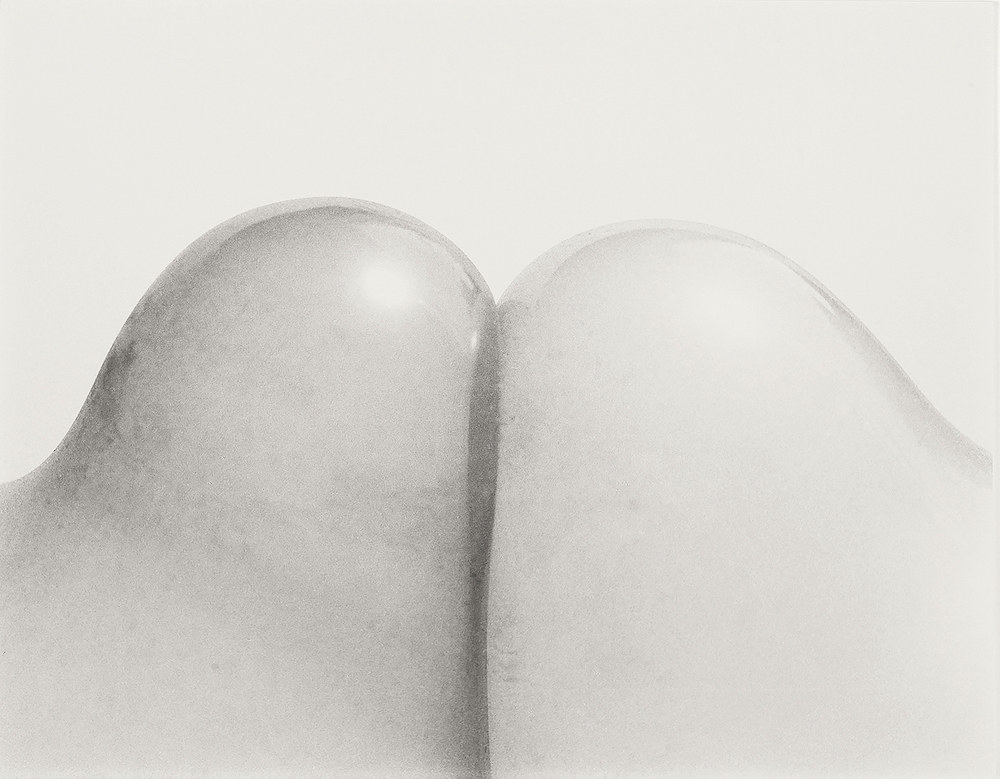
I think a lot about many of the women artists in the collection and the way in which they’ve made the body strange, from Hannah Wilke’s vulvic ceramic sculptures, Renate Bertlmann’s photograph of the tips of two condoms that seem to resemble a pair of knees to Alina Szaponikow’s lamp sculpture Lampe-bouche (Illuminated Lips) (1969) with its alien-like disembodied mouth or Louise Bourgeois’s abstracted marble female torso Harmless Woman (1969). Each of these artists was working in a way that we might call defamiliarised. They really questioned the role of the female body in culture and how we objectify it. They made the body strange in a way that challenged us to rethink our relationship to gender. It’s clearly an extremely relevant way of looking at the world still today. In the end, I love art that has that edge that makes you get out of your comfort zone. We all really need to be challenged today whether it’s by visual artists, poets, or musicians. The world needs artists to shake us up.

How do you hope your audience will respond to this book, what can they learn?

I really hope that the readers will enjoy seeing the art historical connections between the various works in the collection. I also love how Douglas Fogle and Hanneke Skerath edited the book as a series of visual essays. The works speak to each other and have conversations that run parallel to the wonderful commissioned texts on individual works in the collection by 14 art historians, curators and critics around the world. 

Ruth Asawa

Lee Friedlander

Gilbert & George

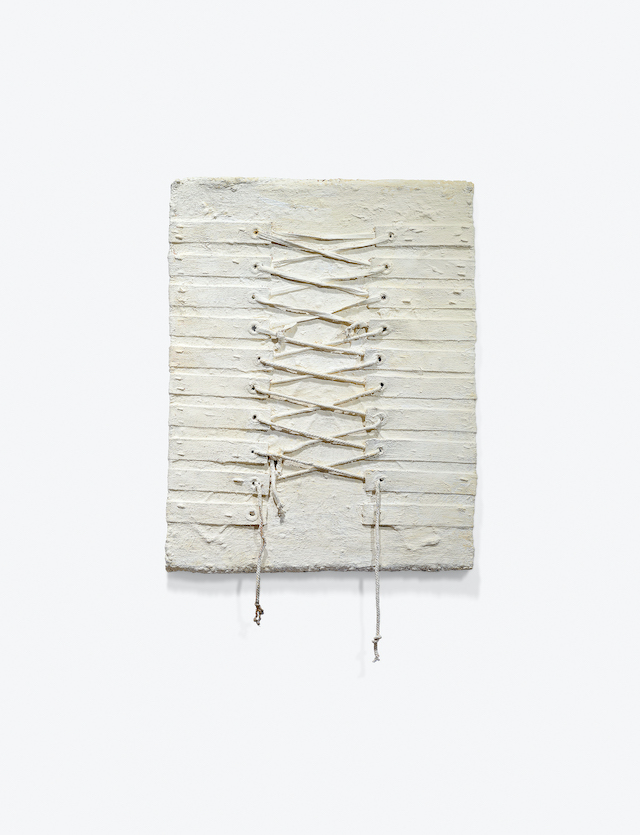
Harmony Hammond

Glenn Ligon

Christian Marclay

Jean-Luc Moulène

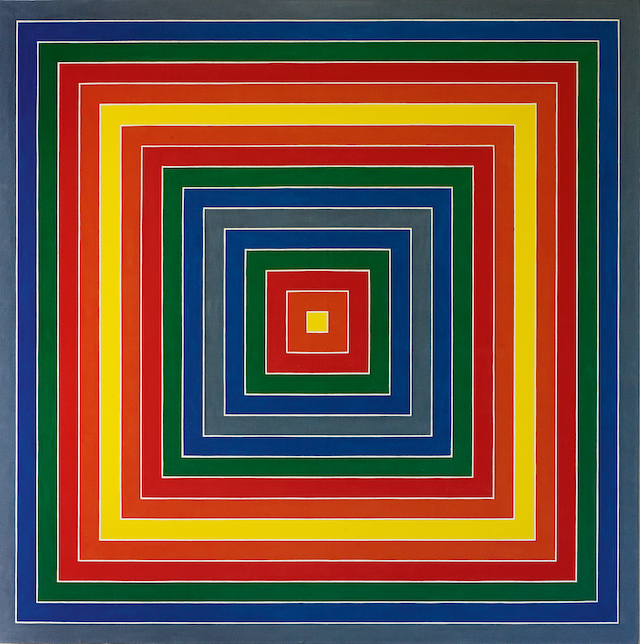
Frank Stella

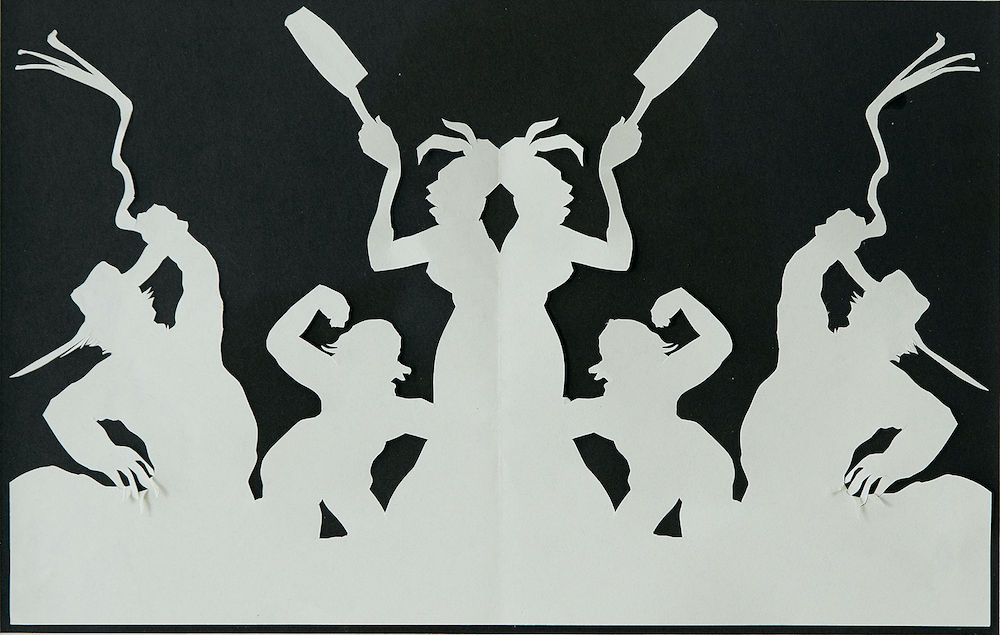
Kara Walker

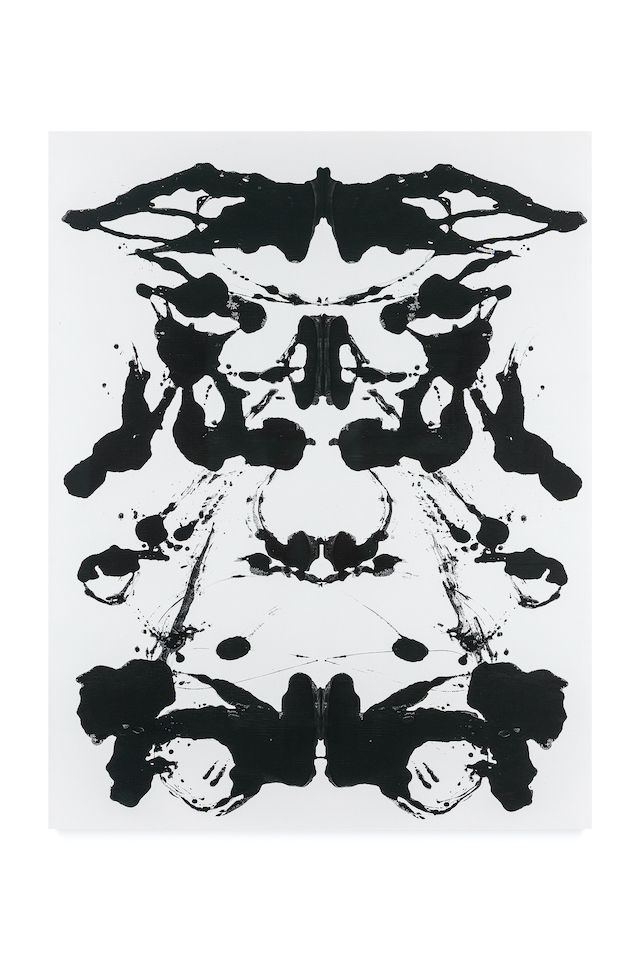
Andy Warhol

Making Strange: The Chara Schreyer Collection is available here.

The World of José Parlá

Opening the doors to his studio, the Cuban-American artist discusses identity, underground culture and art as politics

José wears long sleeve tee and tack slim selvedge rigid denim Levi’s® Made & Crafted™

Artists’ studios are always personal spaces. Hidden in plain sight in warehouse lofts or behind pull-down steel grates, they don’t reflect their residents’ personalities and practices until you get inside and see what’s on the walls.

The studio of the Cuban-American artist José Parlá is no different. A single-storey industrial building in the southerly Gowanus neighbourhood of Brooklyn that’s surrounded by mechanics and manufacturers, the facade is completely nondescript. But once you’re in the door, everything changes.

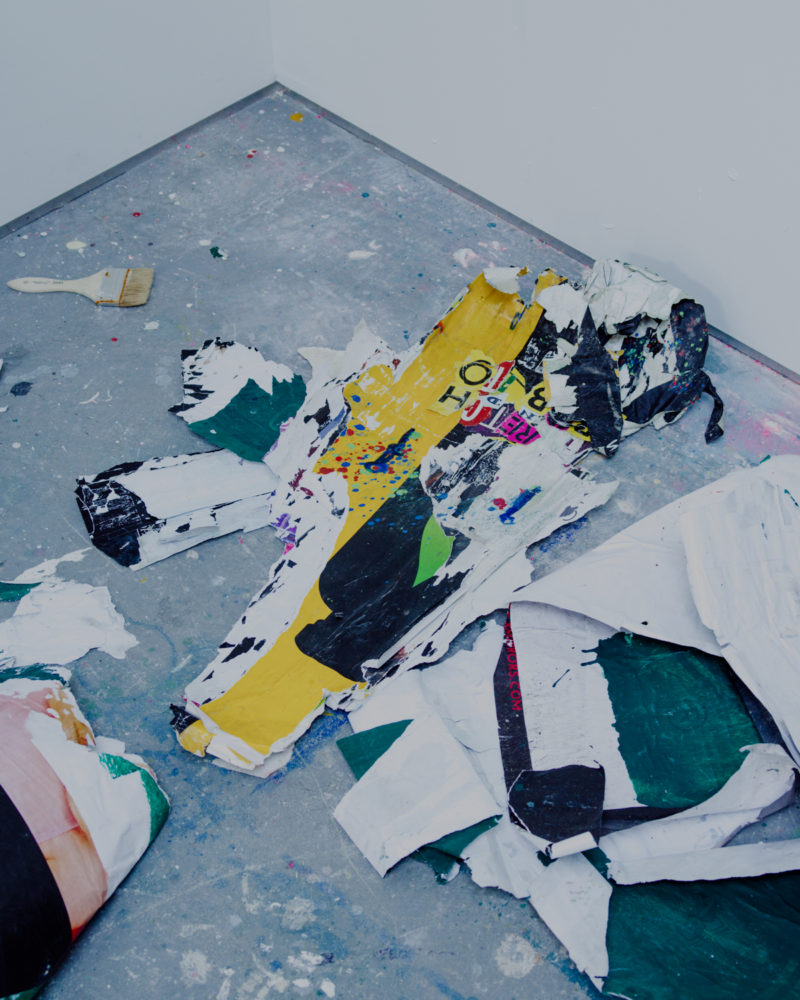
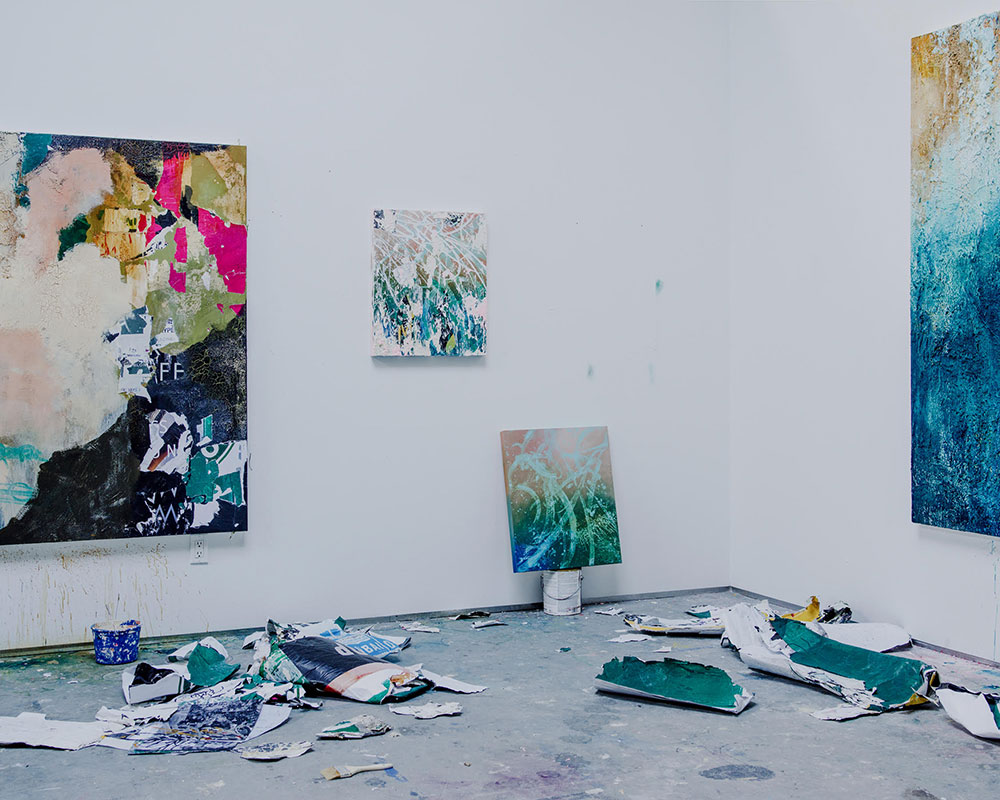
Parlá, who bought the building in 2014, works in the centre of the space, a wide sky-lit arena hung with the artist’s vibrant, gestural paintings in progress, which recall urban walls as much as art historical reference points like Cy Twombly and Ed Ruscha. The paintings have been shown in galleries and museums from New York to Tokyo; a mural of Parlá’s can now be seen in the new One World Trade Center.

Above the studio arena off to one side of the space is what Parlá calls the ‘nest’: a lofted aerie that holds an office with a wide desk; a circle of sleek chairs; a couch for meetings; and a DJ setup currently spinning Marley Marl, an artefact of the energetic New York culture that first brought the artist to the city. Records spill on to the floor: Celia Cruz, the Last Poets, the Warning. ‘In terms of the quality of rhythm in my work, a lot of it is informed by music,’ Parlá tells me.

Below the ‘nest’ is a neat box composed of a library, bathroom, and full kitchen. Light is plentiful, even on a dull day, and the walls and fixtures are painted a warm industrial grey. Altogether, the studio forms a perfect machine for art, life and anything in between.

‘I don’t live here, but I pretty much feel like I do,’ the artist says (his apartment is in nearby Fort Greene). In his paint-spattered black jacket and jeans, Parlá looks as comfortable as he would holding court at home.

The studio’s design was the result of a collaboration with Snøhetta, the buzzed-about Norwegian architecture firm responsible for such structures as the San Francisco Museum of Modern Art’s recent iceberg-like expansion, and the Oslo Opera House, which won the 2009 Mies van der Rohe award.

Parlá met the firm’s co-founder, Craig Dykers, at a Pecha Kucha slide-presentation event in 2010. The two appreciated each other’s talks and Dykers invited the artist to his office to see if they might collaborate. The first result of the partnership was a piece installed at North Carolina State University’s Hunt Library. The intention is to team up for spaces like a public library in Queens and the Obama Presidential Center in Chicago. But Parlá’s studio is the biggest collaboration so far.

‘When I bought the property, I was having a beer with Craig and he started drawing right away,’ the artist says. The space’s openness, both in terms of scale and the presence of other cultural forms, is perfect for Parlá’s practice, which draws on influences as diverse as graffiti and the French situationists.  

Joaquin, Parlá’s studio assistant, brings two Cuban coffees, the kind that you can only get outside of Miami if you know someone who can make it for you. He serves them in espresso cups emblazoned with Cuban flags. ‘As a kid we weren’t allowed to go to Cuba,’ the artist says.  ‘I was born in Miami and grew up in Puerto Rico, so I understand the culture from the perspective of being a Latin American and of being from Cuban parents.’ The country itself was still off limits, however.

After President Obama opened Cuba to United States citizens in 2014, change came in earnest. The country’s cultural landscape is changing, too. Parlá is now becoming a public creative force in the homeland he didn’t know until later in life. He participated in the 2012 Havanna Biennial in a collaboration with his friend, the French photo-based street artist, JR. Parlá had just returned from Havana to work on new projects two weeks prior to our meeting.

During this gradual transformation, the Cuban identity has persisted. ‘Cuba’s still Cuba culturally,’ Parlá says. Not everything has changed, certainly not like the overhaul Brooklyn has seen since the artist moved here decades ago. ‘You see one or two hotels refurbished, some young people opening up their own restaurants. It’s not at the scale you see in the first world.’

However, Cuba is not the easiest political environment for artists. ‘There’s still a lot of tension. It depends on how far you take your message with the art, how much you can get away with,’ Parlá says. Making art there is an opportunity, however, ‘to go back and have a dialogue with my soul country.’

In 1980s Miami, Parlá was exposed to the nascent movement of street art and graffiti that was growing in New York and Philadelphia. Friends and family passing between the two cities would bring back photos and art books. He started painting walls when he was 10 years old, learning from older writers on the scene. ‘It was really important to be original,’ Parlá says. ‘We used to say, this guy “bit” somebody; somebody’s a “biter”. That was a big no-no, to copy somebody. If you didn’t have a respectful attitude, you might get beat up.’

José wears crewneck sweatshirt and chino pants Levi’s® Made & Crafted™

Parlá followed the trail of hip-hop and wall-painting to the Bronx in 1995, then moved to an empty loft in downtown Brooklyn in 1997, all the while writing under the name Ease. The energy had shifted downtown with DIY exhibitions. The scene, as Parlá describes it, became an international export. ‘I started out showing in galleries and doing bigger projects in Japan, Hong Kong and London,’ he says. ‘There was an appreciation for New York underground culture there. Here, the museums weren’t really trying to look at what we were all doing.’

Parlá doesn’t appreciate the label of “street art”. To him, the work is all part of an art historical continuum. The abstract expressionists were urban artists, after all, responding to the street. Parlá is as likely to reference artists like Joan Mitchell or Antoni Tàpies, as the graffiti legend Kase 2. As for the Banksy-style boom, ‘We got grouped in with artists who were painting a bunny rabbit hopping over a dragon. That was not the same,’ he says.

Today, the artist shows in estimable galleries like those of Mary Boone and Bryce Wolkowitz – the latter being the New York gallerist who walks into the studio during my visit to check on work for upcoming art fairs. Exhibitions are coming up in Italy and London, as well as a project at the University of Texas, Austin. Parlá is entrenched in the art world, reinforcing a now well-established path from graffiti to museums, just as Keith Haring, Jean-Michel Basquiat and KAWS have before him.

Yet Parlá is still focused on reaching a wider audience, particularly through his murals and other “public art”. ‘You’re having a connection with the public that’s different, than with someone who’s searching for art,’ he says. ‘They might discover that they really love art.’ One can easily imagine the next generation of painters arriving in New York inspired by Parlá’s work, just as the city once drew him in.

For its SS17 collection, Levi’s® Made & Crafted® has channelled the rich colour palette and flamboyance of Havana, with guaybera shirts, tropical prints and camouflage details all harking back to the nation’s enduring revolutionary spirit.

See more from Levi’s® Made & Crafted® here.

Photography by Mark Mahaney
Styling by Yety Akinola