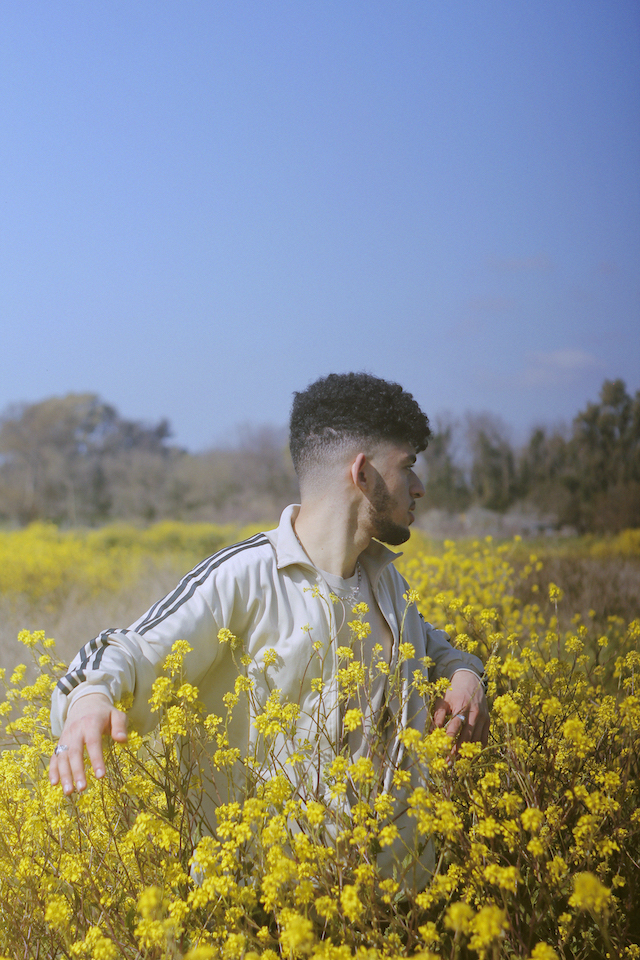
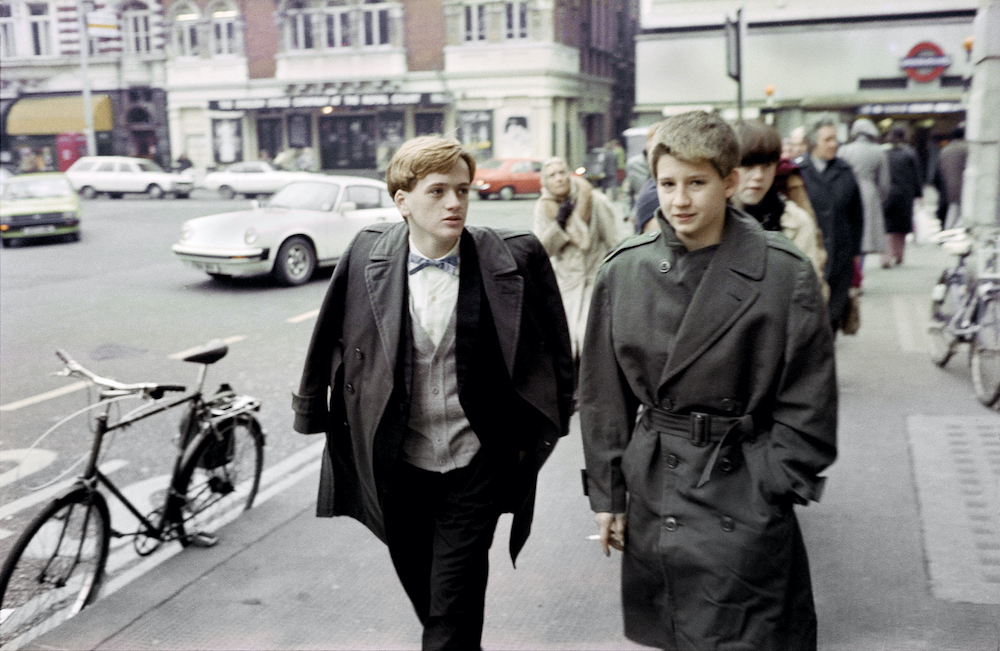
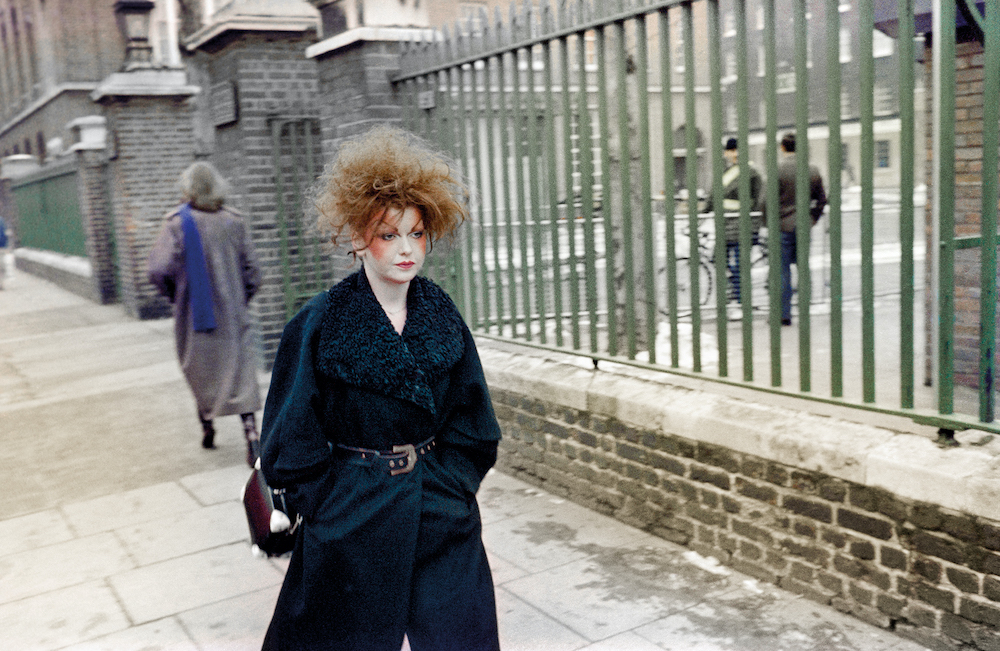
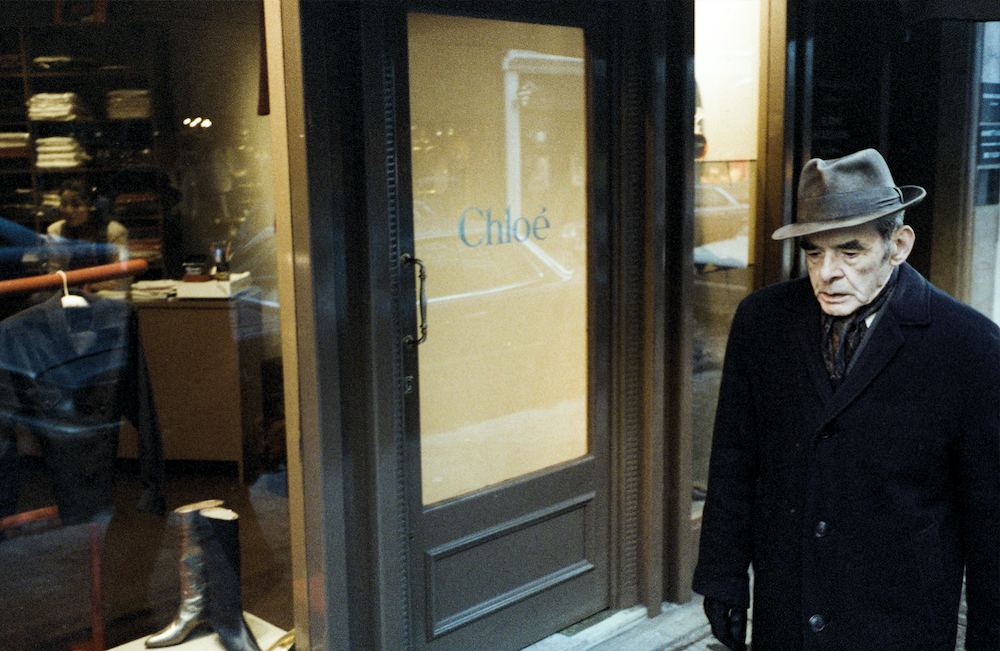
Mustafa

After the release of his 2021 debut When Smoke Rises, Mustafa reached acclaim for his personal songwriting exploring themes of love, loss and conflict. As he launches his forthcoming album, the Sudanese-Canadian musician sits down with friend and collaborator Dev Hynes, of Blood Orange, to reflect on his creative process, the importance of preservation, and the making of Dunya, which translates from Arabic to “the world in all its flaws”
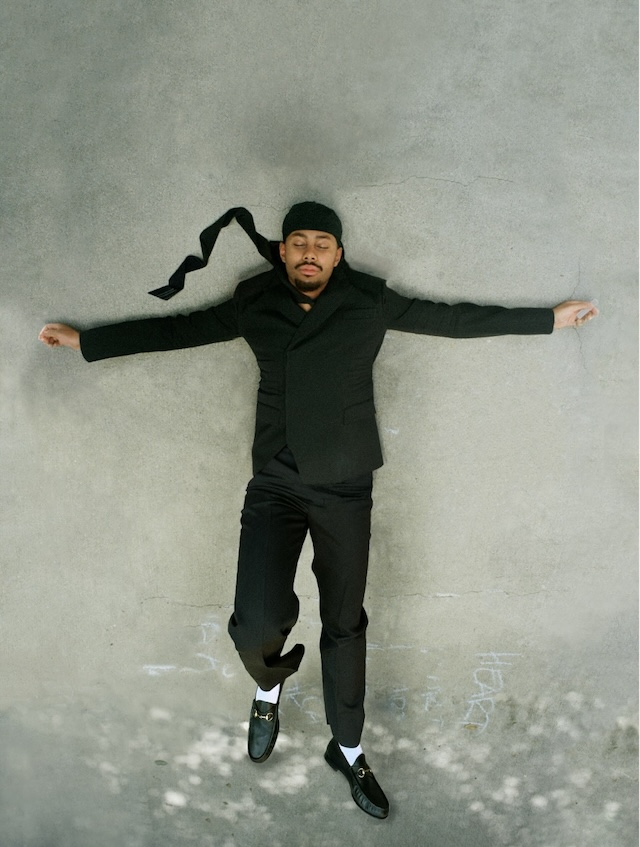
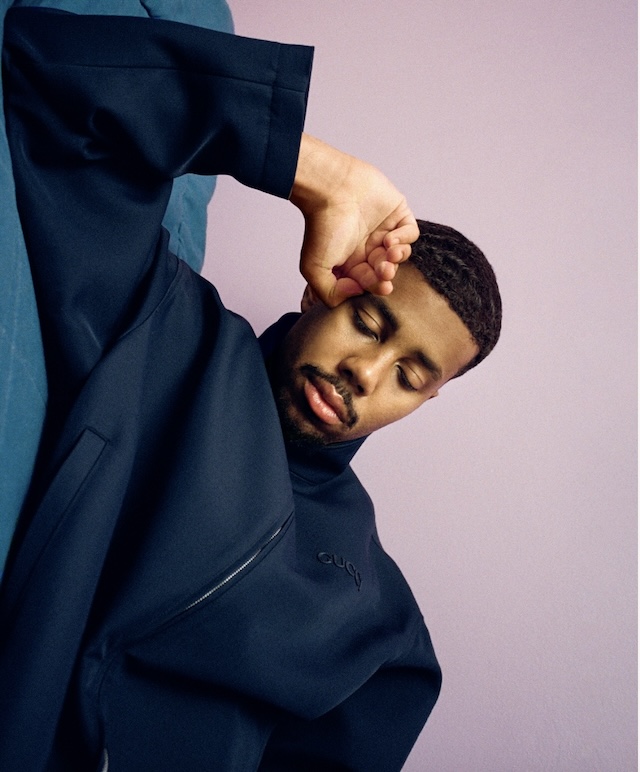
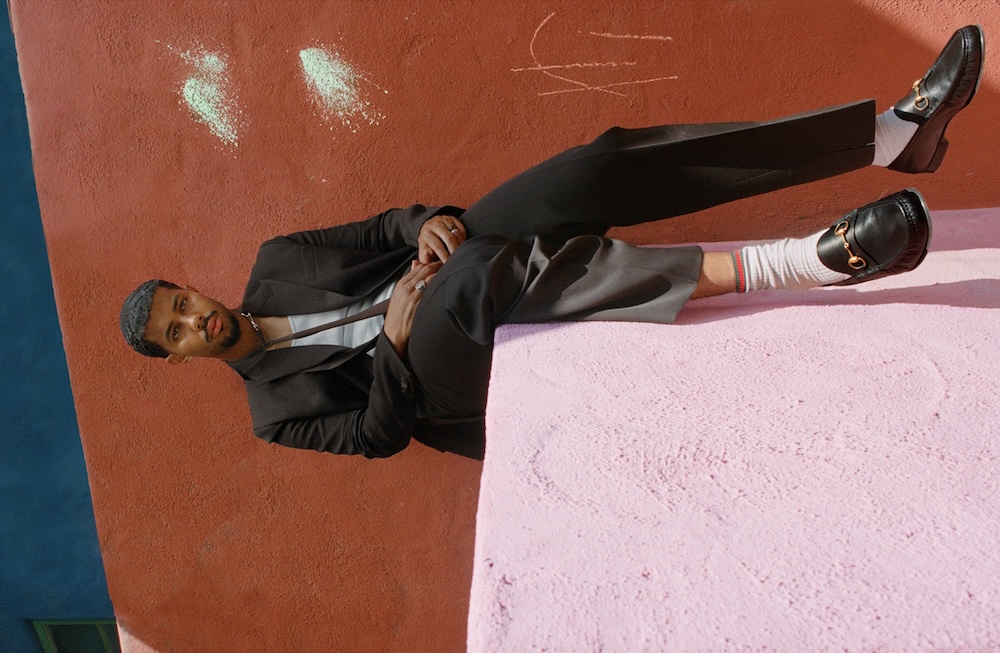
Mustafa wears Gucci Autumn Winter 24 throughout. Photography Arielle Bobb-Willis 

Dev Hynes: Your new record is sick, it’s fire.

Mustafa: Thank you, man; that means a lot. You’re the first friend that has the full record, which is wild. But it’s good, and it comes out in about a month. I’ve got to start tearing myself into this new period.

DH: It’s funny because when you’re working on music that people will obviously hear, it still feels weird when you realise people are going to hear it.

M: Yes, absolutely.

DH: How old is the oldest song on the record?

M: The oldest songs are maybe four or five years old when I recorded them in Egypt. The writing is the oldest; some of it is eight years old. Concept is always first for me, and the writing has always reigned supreme.

For so long in my life, I had to develop a sonic identity – something that felt intrinsically connected to me. And luckily, Nubia had so much for me to pull from, like in Sudan and Egypt.

When I was a child, I listened to very sparse music and many of my favourite records didn’t have much production, they were so desolate. I remember referencing Sun Kil Moon and the song Carissa. There is nothing but really lonely guitar lines, and everything was riding on the story being told. When I’m writing, I’m pulling from poetry that I would have written when I was 20 years old. Of course, it would be refined and reimagined in relation to the lyrics.

DH: Do you know what you want to talk about and then write it, or is it more that the writing informs the general feeling?

M: I would say it’s more the former than the latter. I know what it is that I want to say and I’m able to identify things that I want to talk about, but it’s usually so broad that the writing needs to narrow it down. I thought I wanted to write about God, and then I realised that God is in everything I could talk about; I couldn’t have chosen a more general idea. But then it grew with its own footprint, because it’s about Islam, and Islam in the context of the hood. It became more of a secret as I began writing it.

DH: Are you a title-first person?

M: I couldn’t find a title to save my life. I struggled in such a way I can’t even describe to you. I don’t know why, but I’ve always been really bogged down by the idea that songs have to be restricted by a title. Also, I’ve noticed that some of the most expansive titles are never in English. Growing up, I was constantly learning about the limitations of the English language, and I think that’s why I ended up choosing an Arabic title for the album. But I have a really hard time naming anything. I wish I was better at it.

DH: The titles are so direct, I love that so much – like ‘Beauty, End’ and ‘Hope Is a Knife’. I love that energy.

M: Thank you, man. I have some audacity to be that definitive. Sometimes I really enjoy titles that are contemplative, that fill a lot of space and have their own kind of bravery because they’re so specific. There are so many titles that I love that have a different kind of power. You have to be confident in your decision when choosing titles. But it means a lot. Your titles are beautiful.

DH: Thank you, I struggle with that too.

M: No, you chose one of the greatest band names of all time. Blood Orange is one of the best.

DH: That’s sick. I wonder sometimes…

M: No, it definitely is. There are some bad ones, and it doesn’t even matter if they’re bad or not. I mean, arguably the best band of all time is called The Beatles for goodness’ sake. But we don’t even think about it, because they’re so good.

DH: Exactly – I always think about that. Band names are a funny thing, because depending on what they do, the connotation gets entirely stripped.

So Rosalía and Aaron Dessner are on the album… Who else am I missing?

M: There are a lot of people on the record. Nicolas Jaar worked on a few songs, and Rosalía came in on I’ll Go Anywhere, and she fucked with the arrangement a little bit and re-sang some parts, but that was written in Egypt already. Dessner is such a prolific player when it comes to indie folk records, and he replayed a lot of the songs with some musicians in upstate New York. I then reimagined those renditions again. It wasn’t the most ideal post-production process, but it got me where I needed to go. I was following my intuition.

While working on the record, I knew something was missing, and then I heard the masenqo played by this young Ethiopian musician. I returned to nights spent by the Nile River when I was really young, and I remember hearing it seep through the open atrium to the sky, where my family used to gather in a village in Sudan. I realised it was necessary to have the masenqo on the album alongside the oud, so I brought in a young East African player to play it.

It wasn’t even a matter of what was good and what wasn’t. I was trying to be as careful as possible, because I was removing a lot of production that people did. It was less about what I imagined was great and more about what I imagined was true to the story that I was trying to tell. So much of it is rooted in longing for this part of me and this place that my family escaped from that I want to return to. A lot of the sonic decisions are a returning, in a way.

DH: Another reason why I really like the album is that it sounds like it’s landed somewhere.

M: That means so much to me, man.

DH: It’s a really beautiful feeling. You don’t get that from a lot of records, they’re usually very particular. Your record has its own world, it’s like a real thing.

M: That’s the largest compliment I could have received from you. For me, it was not for the sake of having my own world, or some attempt at having agency over a space. There was a space in the world that I didn’t feel was reflected, and much of that was the space that I grew up in. I really wanted to soundtrack what that felt like and try to develop some sort of sonic foundation or memory.

Also, the diaspora as an idea is going to transform. When I think about that, it’s like a fire beneath me, because I’m of this Sudanese diaspora. Sudan is experiencing the worst refugee crisis in the world where 10 million people have been displaced. Everything that I say and write now, that becomes, for better or for worse, this sonic memory. I realised that I needed to place a flag in the ground of what that feeling is just for this archival sake.

My issue is never about being forgotten. It’s more about being remembered in the wrong way or being misrepresented in the course of history. So I really appreciate you saying that about its own world. I think it’s a world that lives and breathes. My biggest fear is that I do it justice.

DH: I totally got that. Did you ever lose drive and need to find it again while working on the record?

M: Yeah, for sure. There were so many periods where I started to question the importance of music.

DH: I relate.

M: It’s wild. It just feels like deification has become an intrinsic part of music now. It’s almost as if, without this praise from the larger world, music doesn’t have the same function. I wish it was more casual, that it was just another form of expression that didn’t have this capitalist edge or uppercut in the way that it does. We all know that music is being monetised. We used to exchange it for our survival and now it blurs the lines of what makes a true artist. I think about that all the time.

I try to remember that I began with aspirations of being a poet when I was 12 years old, and that I chose that because I needed an outlet for the pain. I wanted to quit so many times. I didn’t feel like I had time to make the record without the grief interrogating me over and over again, where old wounds were being reopened. It’s this weird concept of wanting to remember the pain without having to relive it, and wanting to remain open to what comes in without having to open the wound. It’s definitely my brother’s murder that really derailed me . I remember sending my manager a message and saying that I didn’t want to put out the record. Immediately after, I thought there was no hope around anything that I wanted. Hope is such a critical part of the writing.

When my brother passed, it took three or four months for me to be able to return to these songs and to feel any kind of connection to them. That definitely set me off my path, but I realised that so much of why I create is about preservation. Sometimes I don’t feel like I have what it takes to tell anybody who someone was, and I get afraid that I won’t do their memory justice. That’s the thing that I tussle with, maybe more than anything.

DH: The fact you’re thinking about it means that you are doing it.

M: I appreciate that.
DH: I’m trying not to sound like an old head, but one thing that is real across the board is how the monetisation of music has somewhat stripped away how powerful music can be. It’s being consumed in a very different way but people are still affected by it. It’s done this weird thing where people that create music now question it and think, well, why am I doing this? I’m very happy that you pushed through and did it because it’s so beautiful, and I think a lot of people will feel very comforted by what you’ve made.

M: Thank you. I’m energised by what you tell me, and that’s always been fuel for me in the past as well. I realised that it doesn’t matter how much you think you know yourself, what you believe in, what you’re willing to fight for and what your moral stance is on all things moving in the world. If you are in any kind of proximity to someone that has conflicting beliefs, it begins to infringe upon the thing that you think you know. It’s so important to be around people that can reaffirm to you the path that you’re on, especially now with the kind of collapse that we’re living in. It’s like all that I have are the people that I respect, reminding me that the path that I’m on is clear and I’m there. I think that’s always been the litmus test.

I remember you writing Negro Swan when you were writing about grief. It’s wild because I would have met you in that period, and I felt so moved by what you were saying. The crazy thing is I wasn’t going to release another song for another six years but, at that time, the violence in my community was at a high that I’ve never seen since I was really young, and I was beginning to internalise it. For Negro Swan, I remember you writing a note about grief in relation to Blackness. I remember probably the first ever text I sent you was about how that impacted me. I really do remember periods like that where I listen to a record, and I read a letter around the record, and it means such a great deal to me.

Sometimes I try to remove myself from the equation and think about the possibility of what a song can be. I think about the hood and how I grew up in it, and what it would mean to my dogs. I’ll get calls from my friends in jail – they have so much time for themselves that it could become their enemy if they’re not using it and finding a rhythm in it. That’s when they could really hear my music; they’re in the horror of a judicial system that doesn’t recognise them in their humanity, so when they get a period to listen to music, I’ll get a call every now and again. And it really impacts me. What it tells me is that it’s not even for them when they’re still in the grip of the kind of violence that we grew up in, but that they’ll be able to find it once they leave it. That I pray one day that it’s not a call I get from prison, but it’s a call I get from a kind of solace that they find far outside of the hood.

Those aren’t the kind of calls I get as of yet. But this is maybe telling of a future that I’ll be able to move into. I try to believe in what the music can serve and who the music can serve a decade from now. That’s what I try to think about.
DH: Did the sonic sound of your album develop naturally as you worked on the songs, or did you always envision where you wanted it to go?

M: I listened to so much American folk music and was inspired by you and everyone from The Roches – I love The Roches so much – to Cat Stevens who was, of course, a very large reference point for me. Even Leonard Cohen, this Canadian giant, and how free he was in his writing. I knew I had a responsibility to link it to my homeland. But all the while I knew that there were flourishes and swells that had to come from a place that wasn’t entirely my own, so that’s why I went to Egypt. When it started to formulate, it didn’t make sense in my mind. I didn’t hear it completely, because I didn’t know what it was going to sound like. It was almost like painting in the dark, and I didn’t know what the painting would be until the lights were on. All I could do was be patient and see what would come as a result of it.

Also, the oud is a main character. It’s not an instrument that traditionally makes space for a top line – but in this album, the oud leads the way and you follow suit. I also included Sudanese string arrangements which are really abrasive and they take up a lot of space. I wanted the oud to follow these guitar lines, while also having the guitar play in the nature of the oud. So much of it was trial and error in arriving at a place.

Moving forward, I’m still very much exploring this intersection, and I think it’s going to take me a lifetime. One of the most inspiring things for me about you is that you’re a great artist, and you’ve been a great artist for so long. You’ve been patient, measured and integral, and that’s all I’ve ever wanted for myself. I was so impatient for a spike. This lifetime journey as an artist, to me, is the greatest luxury. So much of it is about arrival and about existing as an artist. I can’t wait for the moment where I’ve put out multiple records, but right now I’m just in this constant state of exploration.

I remember going to your concert in Toronto with two friends of mine who had never heard your music before. The only concert they had ever gone to was for this guy named Rylo Rodriguez. The most beautiful thing about it was it felt like I had invited them into a secret; there were thousands of people that had this intimate relationship with your music and with these records, and that was a conversation that they got into. They were guests to an experience.

DH: That’s the best.

M: Eventually, as things continue to form, I want to develop this secret conversation with an audience. Sometimes I sit among an audience of people, and there are so many young Muslims in the crowd that have never been to a concert before. I think to myself about how I’m going to be able to grow with them, and how I’ll be able to sharpen all of my theory around my belief system as a young Muslim person navigating this music space.

Did I imagine this sonic bed for the music that I’m making? I’m not entirely sure, but I’m still trying to reach it – it’s still over there, on the horizon and I’m going to keep reimagining it until it’s perfect. I don’t think it ever will be, but I’m going to try.

Photography Arielle Bobb-Willis 

Styling Georgia Thompson

Production Mere Studios 

Groomer Johnnie Sapong

Skin Homa Safar 


This article is taken from Port issue 35. To continue reading, buy the issue or subscribe here
Sebastian Stan

Beloved for Captain America, I, Tonya, and his recent Emmy-nominated role in Pam & Tommy, Stan reflects on a career shaped by diverse characters. Now, with A Different Man and The Apprentice, he’s exploring deep questions about identity, ambition, and the complexities of portraying one of America’s most influential (and controversial) men, Donald Trump

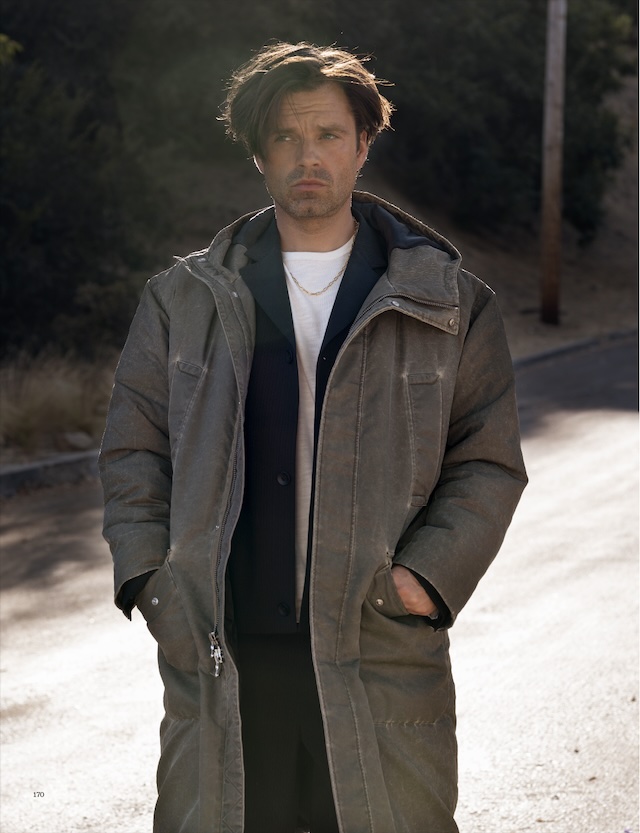
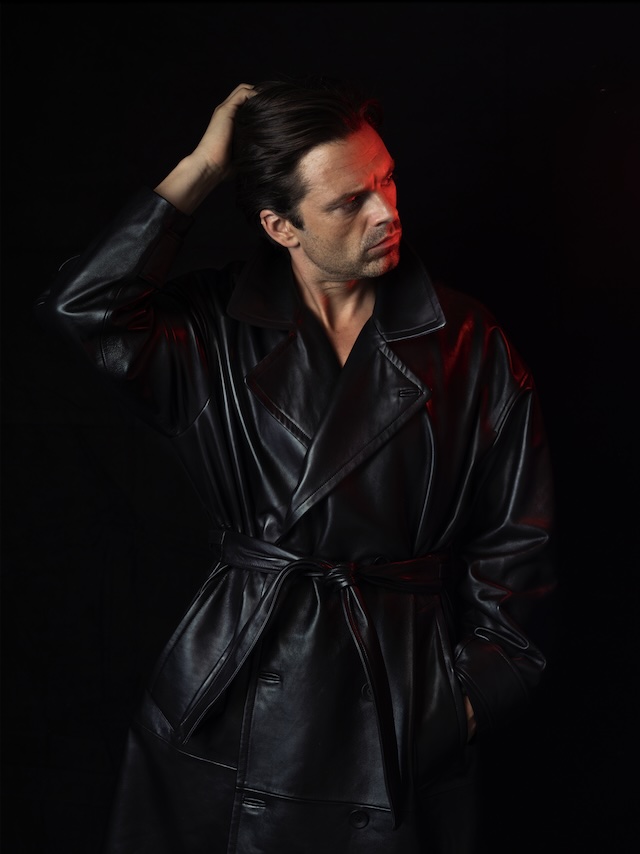
Sebastian Stan wears Rag & Bone throughout. Photography Jim Goldberg

The first time Sebastian Stan tried acting, he hated it. At 9 or 10 years old, he played a Romanian orphan in an Austrian film called 71 Fragments of a Chronology of Chance (1994). Between the waiting around, night shoots, and general pressure-cooker energy, the whole experience had been pretty anxiety-inducing. “I think the idea of a set was just really terrifying,” he recalls. The 42-year-old mainstay admits to being a Leo, but a rather reluctant one, he says, not that extroverted or hypersocial. “I know my mom always thought I was creative simply because I would impersonate the people in our family, or birds or whatever I would see around me.” Nowadays, when he does speak, it’s with the compelling ease of someone who’s spent equal time commanding impressive rooms and in their own head trying to crack the great questions of the world – sounding off passionately about the perils of social media (“there’s so much noise in today’s world”) or the last incredible film he watched (Sing Sing and it was “pure heart”).

Born in Romania and raised in Vienna until he was 12, it wasn’t until immigrating to America as a preteen that Stan found his way back to the craft at all. Attending Stagedoor Manor summer camp aged 15, in the Catskill mountains of upstate New York, his spark was reignited. “That place was really magical and made me fall in love with (acting again); I couldn’t think of anything else as exciting to me as performing was,” he says. “Some of it was about not ever being sure of what to be when I grew up. I kept thinking that you could be a lot of things if you did this.”

So far, he’s been a wayward socialite, a cannibal, a space surgeon, a ski patrol villain, a heavy metal drummer, a supernatural student and a World War II veteran turned brainwashed Soviet operative, to n ame but a few. He’s not an actor you’ll find in the same role twice. With that said, his name has reached household status through a decade-long Marvel stint, with the two films Stan finds himself at the helm of this year being his most ambitious forays yet. 33 years on from his awkward beginning, the actor’s commitment to film appears to still be very much in bloom. “I think I’m at a point in my life where I’m trying to understand things on a deeper level,” he explains. “I can’t say I know everything, you’re always growing, always having to explore. I think it’s important to stay curious, to stay in a certain degree of healthy discomfort… I want to be part of important storytelling that’s asking important questions and reflecting our time.”

In A Different Man, an A24 production directed by Aaron Schimberg, Stan takes on the role of an aspiring actor called Edward with neurofibromatosis, a genetic condition that results in the extensive growth of benign tumours. He undergoes a clinical trial that cures him of his physical symptoms, but his new life turns out to be far from what he dreamed for himself. It’s a winding surrealist investigation into the social impacts of disability, alienation, representation and self-image: its gaze is unflinching, its narrative self-referential and its humour pitch-black. Stan has already won the Silver Bear for Best Leading Performance at the Berlin Film Festival for A Different Man.

The second release, The Apprentice, follows a wildly different arc. Directed by Iranian-Danish filmmaker Ali Abbasi, it tracks a young Trump as he falls under the nefarious mentorship of infamous legislator Roy Cohn. Dubbed ‘an American Horror Story’, it’s a sobering yet deeply entertaining snapshot of the making of one of America’s most influential men. Yet even within the dynamic, prescient story, the actor’s take on Trump is subtle and human, and the tone of the film is less moralising and more matter of fact.

Though the narratives of these two projects are starkly different, you can’t help but find the common threads. Both are set in New York and document a transformation, and both centre a feverish pursuit of some ideal imagined self. A Different Man was filmed back in 2022, and The Apprentice only wrapped in February of this year, but Stan agrees it’s a curious double-header. “I’m weirdly finding parallels between them that I never thought I would. Identity, self-truth, self-abandonment. This idea that we’re always chasing in America, whether it’s image or status or an inability to accept failure and to take ownership over mistakes.”

For the Trump film, that real-life denial was almost the ending of their work of fiction. After years of false starts, Trump’s legal team attempted to block the film’s release in the US altogether and they struggled to find a distributor willing to take on the risk of pissing off a potential President. “For to edit it and get it to Cannes in some finished version itself in five months was just insane. There was no idea if the movie was going to come out,” Stan says. On an individual level, the task felt equally murky and intimidating at first. “You’re trying to tell a story about somebody that’s so famous, who everyone has an opinion about: either extreme love and adoration or hate and animosity. And everyone’s got a version of the guy, so you think, well what do I…” he shrugs, “how do I find my way into it?” Ultimately, they landed on this film as a means of peeling back the layers of one of the most polarising figures of our time. It’s less caricature and more character study as it explores his relationship with his father, his ambitions, the man he was before the slogans and affectations.

Executive producer Amy Baer has spoken about the choice to call on a non-American director to provide a new lens on the intricacies of American culture, propaganda and patriotism. With Stan’s own immigrant story, his perspective adds another dimension to that prism too. Memories of walking down Fifth Avenue in awe and wonder as a kid, staring up at all the big buildings – he tapped into a hunger and drive to portray early Trump as a young man desperately trying to be a part of The Club. “I guess with my experience coming to this country, it was communicated to me even from Eastern Europe that this is the place where you can make something of yourself, you can have a good idea… and you could just succeed,” Stan says. The Apprentice asks, “but at what cost? What happens to a person’s humanity?”

Throughout the film, you witness Trump espousing about “bringing back New York”, even remarking on Reagan’s campaign slogan ‘Let’s Make America Great Again’ towards the end, an ideology he would go on to repurpose for his own candidacy. It’s a fascinating yet depressing origin story of a nationalistic rhetoric that echoes today as a Trojan horse for corruption and greed. “It’s complicated. That’s why I think there’s value in exploring it,” Stan urges. “This American Dream idea is a really powerful driving force that also comes with consequences.”

Perhaps the most complex part was the toxic relationship with his sometimes-partner-in-crime played staggeringly by Jeremy Strong. “I think he was the best partner I’ve ever had in anything I’ve worked on,” Stan declares with a smile. “You know when you’re standing in front of a fire and you feel the heat of it and there’s crackling in the air? That’s how it felt.” Amidst quite a gruelling, isolating filming schedule, it’s the aspect Stan speaks about most fondly.

Clothing Fendi, Necklace & Bracelet Cartier, Boots Givenchy

Swinging between dominant and intimate, transactional and paternal, from comical to devastating, both stayed in character throughout the shoot and undertook a colossal amount of research to be prepared for infinite possible improvised routes. “Creatively, makes things interesting is when you’re not in control. You do all this preparation to be prepared to be surprised,” Stan says. Shot documentary-style in moments, Abbasi might give each of them notes in private to shift the tone of a scene, and they’d find themselves responding instinctively within their roles. “The only way you can achieve that is if, to some degree, you find that person in you. And I can certainly tell you,” he pauses briefly to consider his landing. “There is a version of Trump that existed in me. And I’ll make the argument that there’s a version of Trump that exists in all of us. And that part of our job, part of our interest, should be figuring out what that is. I think we have to acknowledge and expose the things in us that are not so easy to admit, in order to further protect the things we need to fight for. You can’t ignore it.”

In that moment, it’s clear that it’s an argument as true of our discourse on Trump as it is of Stan’s other role in A Different Man. His character Edward is driven to obsession and madness when he witnesses the thriving life of a person with the same disfigurement he was quick to shed, the very thing he believed to be the root of all his misfortune. Right before his transformation, Edward has been ignoring a leak in his ceiling for weeks, and the damage is getting worse. When he’s finally forced to call for a repair, the super arrives and is appalled at how bad he’s allowed it to get. He tells Edward frustratedly, “you should have fixed this sooner”. In that moment, it feels as though he’s talking about a hundred things at once. From Edward’s own issues with doubt and self-acceptance that cling to him even when he is no longer ‘different’ to our own society’s discomfort with, and the misunderstanding of disability altogether. We cannot be afraid to look.

“Edward makes a decision that he thinks is going to improve his life, but he’s not making it for himself. He’s making it because he’s watched other people and he’s grown up in a society that’s told him this is what works,” Stan explains. “Essentially, he abandons himself and he spirals down trying to further live with that painful acknowledgement. I think we have to be conscious of when we’re making decisions that go against who we are and what we truly want.”

In true indie style, squeezing in around the schedule of their makeup artist who was on another project at the same time, Stan had some hours to kill most mornings in prosthetics before filming which he’d spend navigating the city he calls home: “one of the gifts that I was given which I’m very grateful for was the experience that I had walking around New York City as Edward.” With reactions to him ranging from invisibility to hypervisibility, it shifted his entire understanding.

“I’ve been there like everybody else thinking, oh, if I had that. Or you see someone on Instagram and you’re like, oh my God, look at that life, they have the best life; you get caught up in these things.” It’s both reassuring and a little disheartening that, unlike his superhuman alter ego, a star like Stan is still not immune to the very human insecurities us civilians face of joy-stealing comparisons. “There’s this idea I’ve been thinking about a lot with my therapist actually,” he laughs. “He was saying ‘I am me and you are you.’ I was like… yeah! But you forget. We have to understand our own experience and then understand someone else’s. But we have to try to understand it not through our own emotional… vomit.”

When I ask Sebastian what he does for fun, to unbecome his characters and shed their existential weight, he cites reading (mostly non-fiction) and travel (to see other cultures). “I always feel like I’m not learning enough,” he laughs. You get the sense that this year is a juncture for Stan, always revered for being grounded and likeable, but perhaps waiting for opportunities like these to enrich and express other sides of himself as an actor and voice within culture. “Both of these films came at an interesting time where I’m thinking about if I’m at mid-life, this second half of my life. What is it that I want to be a part of and one day look back and be proud of?”

And that’s not to say fun is off the table for Stan. He’s passionate about laughter as a release in a difficult world. “I think it’s just as important, we have to protect humour,” he tells me with an urgency. “I love comedies, romantic comedies, action.” In fact, there’s a top-secret action movie passion project that he has in the works and hopes will come together in the right way. “There are also things in Marvel I want to do and explore with ol’ Bucky Barnes,” he smiles, presumably in reference to the new Marvel film Thunderbolts, slated for a 2025 release, in which he stars alongside Florence Pugh, Harrison Ford and David Harbour. “Otherwise I just want to keep learning how to be a human being. I’m telling you,” he laughs, “I feel like it’s pretty hard.”

Photography Jim Goldberg

Styling Reuben Esser

Production Hyperion LA

Hair Jamie Taylor using Augustinus Bader

Hair Erica Adams

Represented by A-Frame Agency


This article is taken from Port issue 35. To continue reading, buy the issue or subscribe here

Five artworks exploring India’s changing landscape

The Imaginary Institution of India: Art 1975-1998, an exhibition organised by the Barbican in collaboration with the Kiran Nadar Museum of Art, explores pivotal moments in India’s socio-political history through nearly 150 artworks. Below, assistant curator Amber Li highlights five standout pieces from the show, each revealing powerful narratives of identity, resistance and change during late-20th century India

Gieve Patel, Off Lamington Road, 1982-86 Collection Kiran Nadar Museum of Art, New Delhi © Gieve Patel Courtesy Galerie Mirchandani + Steinruecke and Kiran Nadar Museum of Art

Gieve Patel – Off Lamington Road, 1982–86

This epic painting captures a crowd moving through a busy alley, located off an important road in Mumbai where Gieve Patel worked as a doctor. 

Across the painting, men and women stand or squat in small groups to talk. On the right, musicians accompany young people dancing, some dressed in colourful clothes. Celebration is side-by-side with destitution: two bandaged, leprous children beg for alms, and a woman lies naked and bleeding in the foreground. Patel’s work often depicts people on the fringes of society. The painterliness with which these figures are portrayed verges on abstraction, conveying the transience of the crowd.

Madhvi Parekh, Village Opera-2, 1975 © Madhvi Parekh Courtesy DAG

Madhvi Parekh – Village Opera-2, 1975

Madhvi Parekh’s oil paintings provide, for her, a way back to the idyll of village life. They depict remembered landscapes from both her childhood village of Sanjaya, Gujarat, and her subsequent travels. She painted Village Opera-2 after attending an artist’s camp organised by artist G. R. Santosh in Kashmir in 1975. The copper pots she saw there inspired the black anthropomorphic figures at the centre of this work. Working first with oil paint, Parekh then used oil pastels to add small, vibrant creatures which resemble birds, fish, snakes and amphibians. The scene floats in a colourful net of dots and lines, patterns drawn from the folk crafts of Rangoli and embroidery that she had practised as a child. 

Arpita Singh, My Mother, 1993 © Arpita Singh, Courtesy Talwar Gallery

Arpita Singh – My Mother, 1993

Arpita Singh’s monumental painting, My Mother, records the chaos of communal violence exploding across India in the early 1990s. The artist’s mother looms dignified and stoic in the foreground, while militiamen in bottle-green uniforms enact scenes of devastation behind. Shrouded bodies line the streets and victims lie stripped on the ground.

Singh had started work on a portrait of her mother when riots erupted in Bombay (Mumbai). Unable to keep these two elements from spilling into one another, the painting represents collapsing boundaries between home and nation, private and public, and the real and the imagined.

Vivan Sundaram, House, 1994, from the series Shelter, 1994-99 Photo by Gireesh G.V. Photo courtesy The Estate of Vivan Sundaram

Vivan Sundaram – House, 1994

Vivan Sundaram was concerned throughout his career with the urgency of using art to confront political realities. After the demolition of the Babri Masjid, a 16th century mosque, by right-wing Hindu militants in 1992 and the ensuing Hindu-Muslim communal violence in the early 1990s, Sundaram, like some other artists at this time, turned towards making installations. The walls are made from handmade paper, derived from a handmade fibre called Khadi which Mahatma Gandhi promoted as an indigenous fabric which symbolised anti-colonialism. Although the walls are thin and fragile, they are also a call to resistance against violence and a commitment to peace. 

Nalini Malani, Remembering Toba Tek Singh, 1998 Installation view, World Wide Video Festival, Amsterdam, 1998 © Nalini Malani

Nalini Malani – Remembering Toba Tek Singh, 1998

Nalini Malani made this work in response to nuclear tests carried out by the Indian government in Pokhran, in the Rajasthan desert in 1998. In this installation, a woman from Pakistan and a woman from India fail to fold a sari together while footage plays of the aftermath of the nuclear bombings of Hiroshima and Nagasaki. The video installation builds on Toba Tek Singh, a short story by Pakistani author and playwright Saadat Hasan Manto about forced displacement during Partition, which you hear Malani reading from in the film.

The work conveys the artist’s searing anger at India’s nuclear tests, and at the absurdity and senselessness of ‘one set of people killing the other only because there is some land that you want, or there is some religion that is considered to be more superior than the other’.

The Imaginary Institution of India: Art 1975-1998 opens at Barbican Art Gallery on Saturday 5 October 2024. Entry to the exhibition will be free on 26-27 October as part of the Barbican’s Open Gallery weekend

The Road to Nowhere

Dalia Al-Dujaili on identity, storytelling and the importance of providing a platform for second-generation immigrants

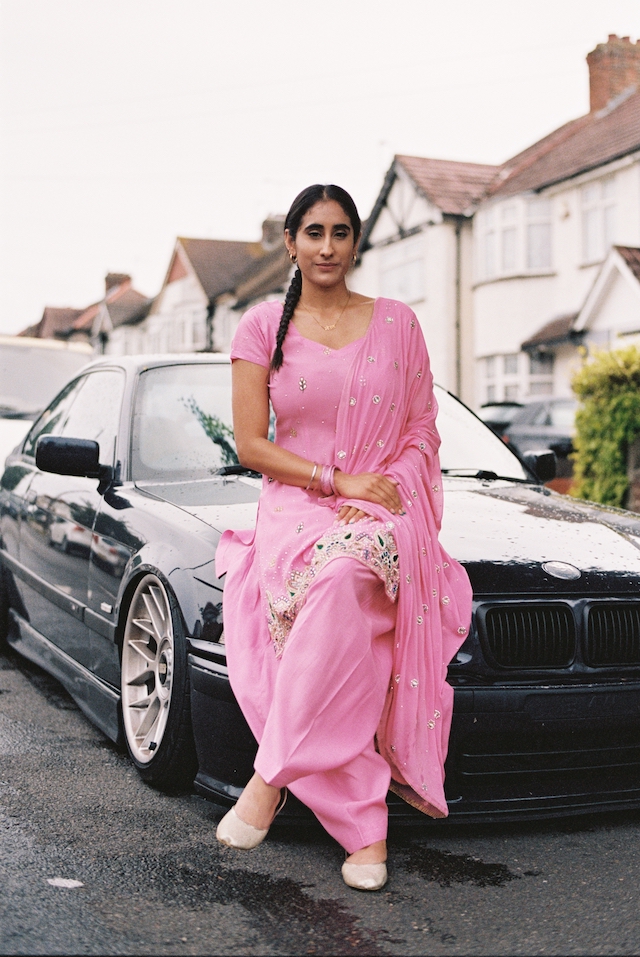
Hark1karan, Zimmers of Southall (Copyright © Hark1karan, 2020-2021)

Identity is complex a complex thing. In The Road to Nowhere, a magazine from Dalia Al-Dujaili, a British-Iraqi editor and journalist, the concept of identity is torn apart, scrumpled and analysed as she addresses her frustration with a lack of accurate representation of second-generation immigrants – where so often are diaspora communities spoken for in the media and therefore turned into a “political issue only”, she says. Where in fact, migration is a vital part of global culture, and The Road To Nowhere – now in its second issue – seeks to highlight this through a celebratory merging of art and writing, told first-hand from “third-culture kids”. She says, “Humans are mosaics of their experiences, their upbringings, the people around them and their personal history. So none of us fit neatly into a box, we’re all so messy and complicated!” Below, Dalia reveals her reasons for making the magazine, what we can expect to find inside the latest issue and her personal thoughts on identity.

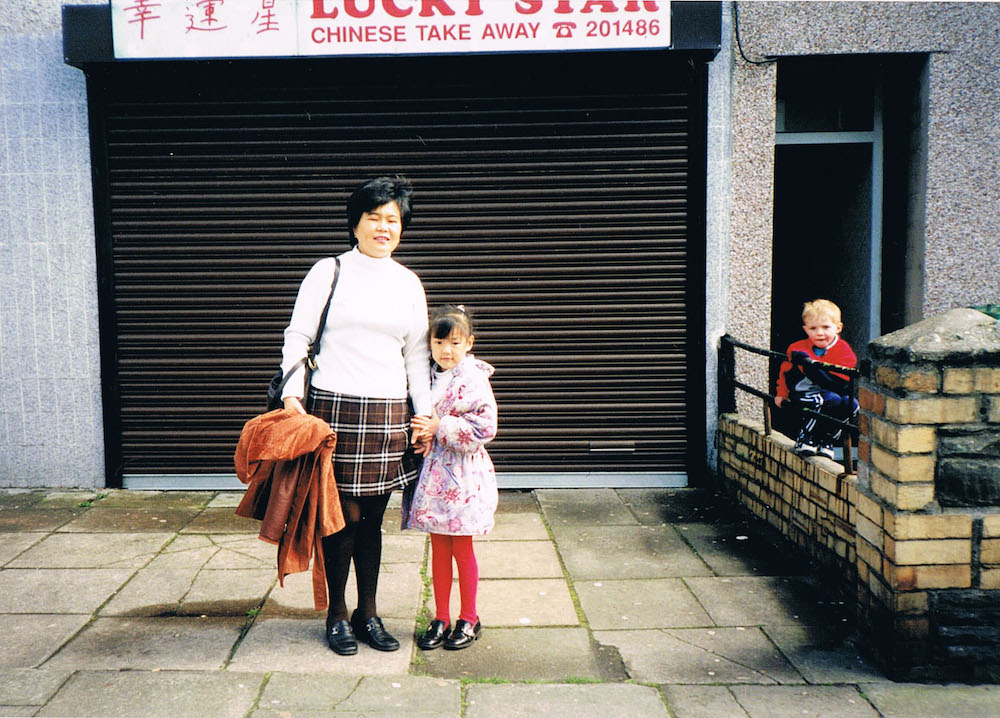
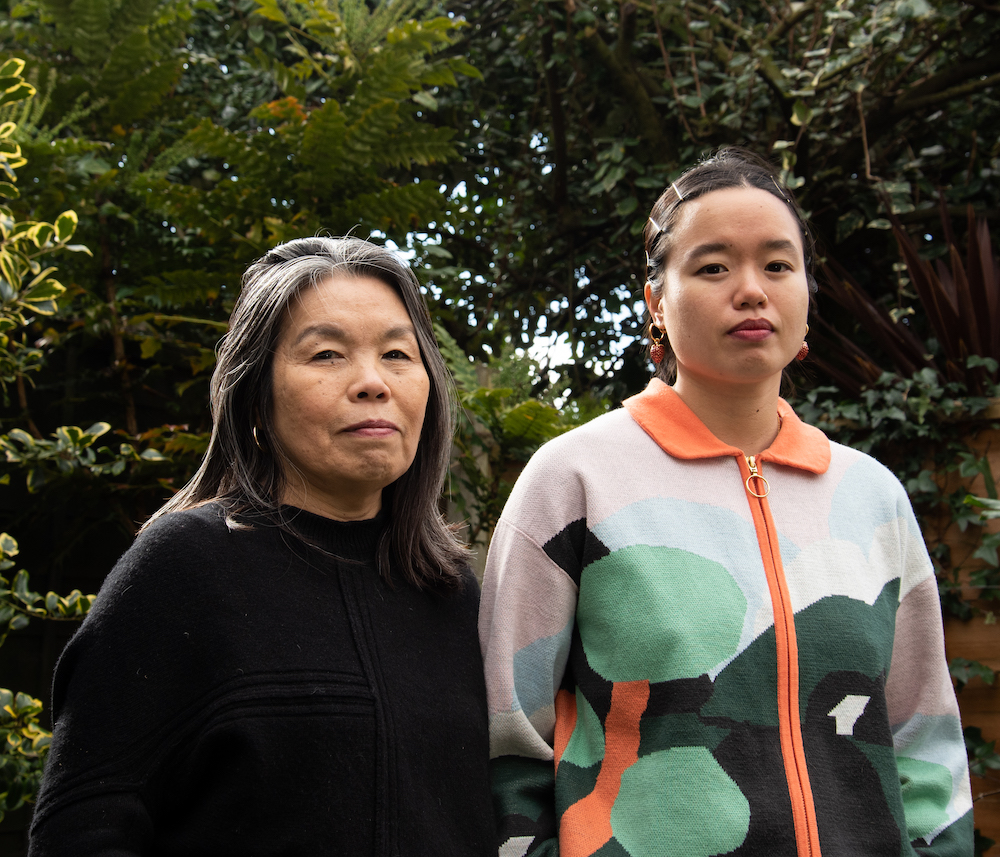
Courtesy of Angela Hui

What are your reasons for starting The Road to Nowhere, what provoked it?

Oof, so many reasons… I started it during lockdown of 2020 as a way to pass the time as I was still a uni student then and didn’t have much to do. It was partly a way to raise aid money for the famine in Yemen which remains one of the largest humanitarian crises in history yet receives almost no media coverage. 

However, mostly, I was frustrated at how little agency diaspora communities have over telling their own stories. Representation is few and far between; when we are represented, we are spoken for and don’t get to choose how we’re shown. I was annoyed at how migration was almost always made into a political issue only. Whilst obviously it’s inherently political, it’s so much more than that. Migration creates culture and art, feeds creativity, inspires us, connects communities and reminds us to be human, so I found the constant politicising aspects a bit objectifying, belittling and limiting. 

On the other hand, migration is one of the most important aspects of humankind’s growth and its richness and is the oldest and most natural phenomenon, yet under current policies in the UK and the EU, migration has never been under more scrutiny; immigrants, refugees and asylum seekers are fighting some of the most aggressive and oppressive policies. As children of immigrants, we owe our livelihoods to freedom of movement, so I’m desperate to fight totalitarian control of movement and borders through creativity and joy.

Edmund Arevalo

What can we expect to find inside issue two? How does it compare to the debut edition?

Firstly, it’s so much bigger than the last issue! Almost double the number of pages. And you can expect to find an extremely diverse range of stories; for this issue, we have contributors with backgrounds from Aotearoa, Ghana, Egypt, Turkey, Pakistan, India, Malaysia, Indonesia, Poland, and many more. The contributors use a range of poetry, fiction, personal essays, photography, illustration, digital art and film, and we have several interviews with trailblazers like Rohan Rakhit and Angela Hui. So I really sought out stories which greatly differed from one another but, at the same, were all connected by the same thread of their very human and sometimes even mundane nature. 

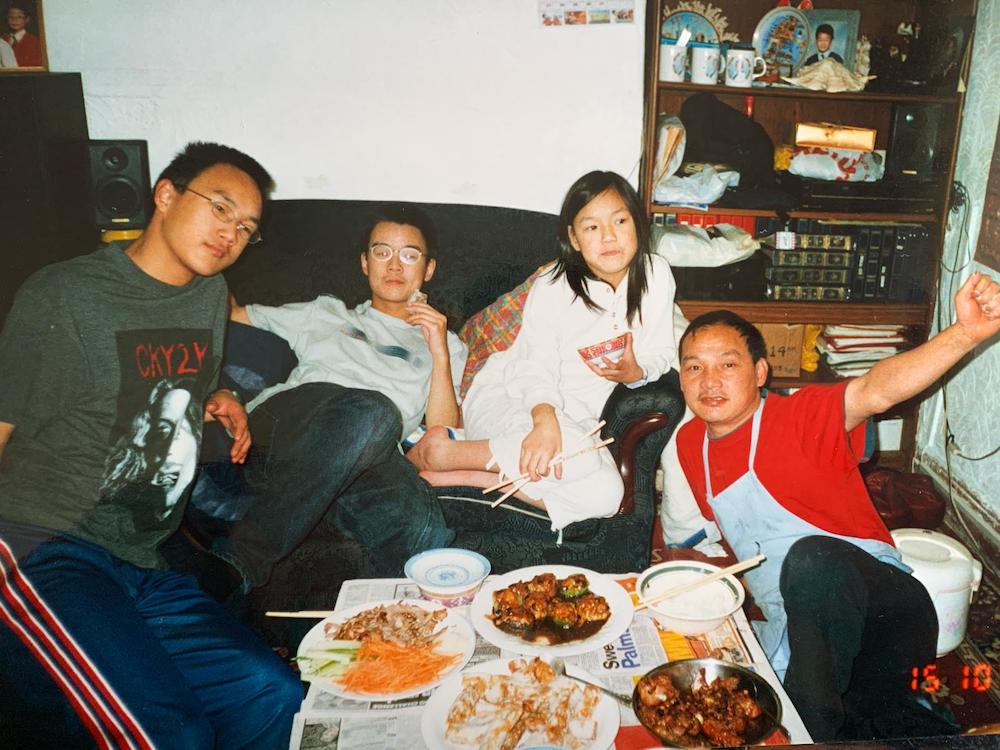
Family meal before service

Can you pick out a couple of favourite stories featured in the magazine and talk me through them? 

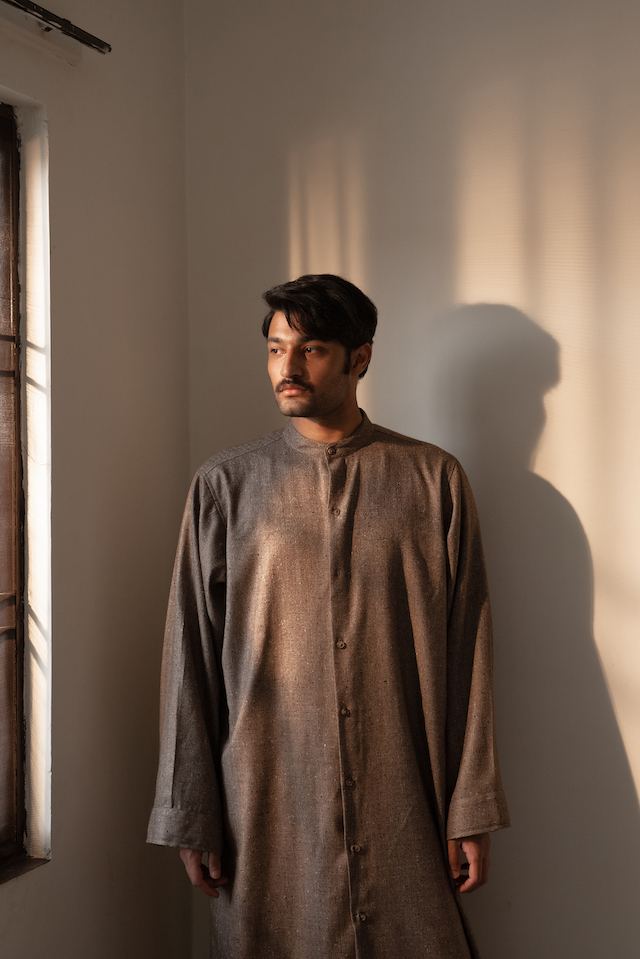
Oh my goodness, very difficult to pick out just a couple. But if I have to… Zain’s story is one that I keep returning to. Not only is his personal story absolutely fascinating – the move from Lahore, Pakistan to East London, then Morecambe – but the way he talks about objects, and clothes especially, as archives of our families’ migration is so relatable and poetic. Again, it’s just a deeply human story that almost any diaspora kid can relate to, no matter their background. Also, Zain’s work is just absolutely stunning. 

My interview with Angela Hui is another that I really treasure and feel very honoured to have in the magazine. Angela is about to publish her own book, Growing Up in a Chinese Takeaway, and we discussed her upbringing in rural Wales working for her family’s business. What I love about her story is how deeply Welsh and Chinese she feels. It was fascinating hearing her speak so passionately about Welsh culture and a love of Wales. I think people often forget how we do in fact love the countries we grew up in, as well as loving the cultures our parents imported for us from their homelands; Angela’s story is a reminder that we don’t have to ‘pick a side’.

Natasha Zubar

What does identity mean to you? And how have you represented (or scrutinised) the concept of identity in the magazine?

Identity is both everything and nothing. It’s a made-up concept and whist I deeply resonate with my identity as an Arab Brit, I also try to reject rigid notions of ‘identity’ because they can be so limiting. Many diaspora feel the same way because we fit in “everywhere and nowhere at the same time”, to echo Theo Gould in his TRTN piece, Mixed. I also think some aspects of identity politics can be more harmful and divisive than uniting. Identity to me is just being able to express the different parts of yourself without feeling the need to cater to a certain audience or change yourself to fit into other people’s boxes. Humans are mosaics of their experiences, their upbringings, the people around them and their personal history. So none of us fit neatly into a box, we’re all so messy and complicated! 

I think a good example of this in the magazine is Hark1karan’s Zimmers of Southall series (the cover image). Other than being obviously stunning, this series is so refreshing because it’s almost got nothing to do with Sikh culture – it’s about a community which is devoted to classic BMWs and which happens to be Sikh. The subjects of the images are evidently Sikh because of their clothing and appearance, but the series isn’t making their Sikh identity the sole focus, which just really humanises this community and de-exoticises them. Hark, perhaps unintentionally, re-writes this stereotype of South Asians being associated with Bollywood, curry and turbans, but he also shows how this community haven’t rejected their culture either; they manage to fuse their saris and Bhangra with their love of German Whips. I mean, to me, it’s just quietly genius. 

I hope in this magazine I have shown how identity is both a beautiful thing and ultimately a futile exercise – you will never be able to fully embody one identity and the magazine is part of a mission to learn how to accept this as a beneficial and powerful existence instead of it being simply frustrating. 

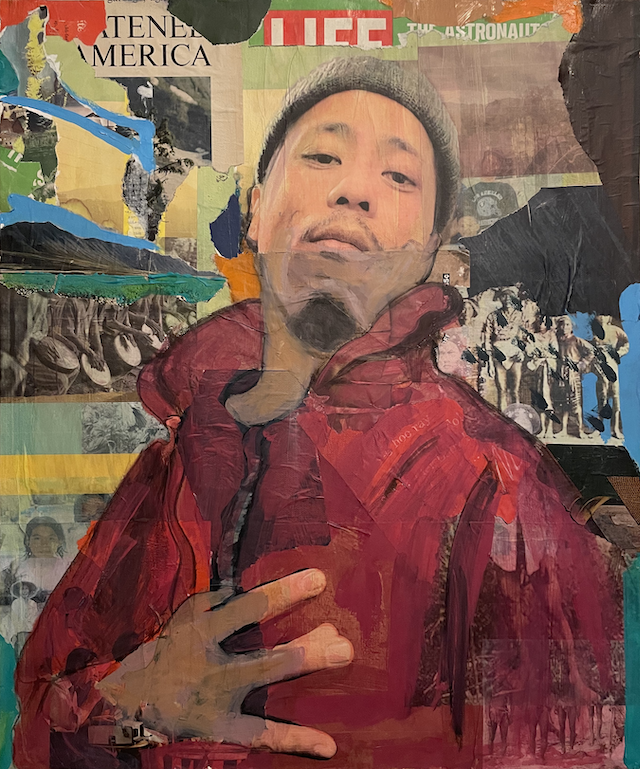
Rachna, Mom, 2021

What are the key takeaways, what can the audience learn?

Joy! I just want people to feel joy, and feel more open to listening to stories that challenge their views.

What’s next for you?

We have a couple exciting events lined up this year with the magazine, including a sold out screening of shorts at the Barbican, Finding Home, Forging Identity, and we’ll be selling the magazine at Bow Arts with Baesianz Makers Market. 

Currently, I’m just pushing and promoting issue two as best I can. We already have ideas and collaborators for issue three – I’d like to keep growing our online platform to showcase more audio-visual content, and I’d love to keep collaborating with arts collectives, organisations and institutions on in-person events like workshops, exhibitions and screenings/readings. But to be transparent, we need funding to make the next one even better, and the bigger our audience, the easier it is to convince someone to give us money… And as you know, funding is competitive and extremely difficult to attain. So the work starts now in anticipation for next year. 

The Road to Nowhere can be purchased here.

Jyni and Chuey, by Jai Toor, 2022

Marco Russo

Mirror Mother, Lorena Levi, 2021

Mixed, Theo Gould, 2021

Senja, by Maddie Sellers

Yousef Sabry, for The Road to Nowhere, 2022

Zain Ali, by Nancy Haslam-Chance, courtesy of Zain Ali

Hark1karan, Zimmers of Southall, (Copyright © Hark1karan, 2020-2021)

Hark1karan, Zimmers of Southall, (Copyright © Hark1karan, 2020-2021)

The Golden City

Mimi Plumb’s new book documents a world grappling with climate change, war and poverty

©Mimi Plumb The Golden City

There are countless reasons why someone might refer to San Francisco as The Golden city – the consuming, orange sunsets; the constant rolling fog that heats up the air between the buildings; or its involvement in the California Gold Rush. But even before it was nicknamed The Golden City, San Francisco wasn’t even called San Fransisco. It was only in 1847 that it was given its title, just a year before the Gold Rush which sparked a surge in the population. Then, in 1906, California experienced what’s deemed the worst earthquake of all time, shaking miles upon miles with impact reaching the Bay area. In fact, it’s noted that some remember it as the fire that ripped through the city, giving it a misleading title of San Fransisco Earthquake. San Francisco has an interesting past – its history still looms and is felt in the hills, landscapes and even the people.

©Mimi Plumb The Golden City

Mimi Plumb, is an American photographer currently based in Berkley, California, beholds distinctive memories of the area of San Fransisco. So much so that she’s now compiled these past thoughts and snapshots into a book, aptly named The Golden City and published by Stanley / Barker. Mimi grew up on the edges of the city, where the rents were cheap and humdrum of city life was more diluted and dispersed. “San Francisco, known as The Golden City, truly is a golden city,” Mimi tells me. “But, as with most cities, it has an underbelly, which is where I lived and what I photographed in the 1980s.” The city during this time was rife in radical activism, with inhabitants taking to the streets in opposition of gentrification and the policies coming from the White House. It was a tumultuous time for politics and society, which caused sharp contrasts to those living in a gentrified, inner-city world and those on the fringe. Protests and anarchism subsequently forged and the arrival of a more underground, DIY culture, music and art stared to grow. But it wasn’t without its downside. 

“I was an art student working at a minimum wage job,” explains Mimi of the time. “I lived on the edge of the city where the rents were cheap. I photographed the environment around me, often taking daily walks in my neighbourhood of Bernal Heights; Dog Patch, along the bay; and the Mission District.” In one part of the neighbourhood named Warm Water Cove, located on the bay, Mimi observed captured a pile of tires and abandoned cars. In another spot, she climbed the chimney of a power station that was positioned above the 25th Street Pier – she’d sit and watch the planes swooshing above. Mimi is an observer and this becomes explicitly clear in her photography, that which steers from bleak landscape shots to the more intimate, candid portrait. All of which is shot in signature black and white and features a distinctive luminous tone – an ominous hue that probably couldn’t be captured anywhere else apart from The Golden City. “I actually began this project in the early 1980s using colour film,” says Mimi, “but the blue skies didn’t convey the edgy content of the work.”

©Mimi Plumb The Golden City

To accurately (and artfully) tell her stories, Mimi has divided the book into sequences. The first half features notes from The Golden City itself, “predominantly of landscapes in and around the city,” she says. The work in this part is particularly distinguished as she documents the link between “wealth and power to climate change and poverty” – that which is pictured through angular cliff edges framing the city, almost like a colony of concrete ants in the distance; or busy streets peppered with suited city dwellers juxtaposed with the stark, deteriorating landscapes. Then, you reach the middle point: “The breaking heart and the two spreads that follow represent the heart of the book for me,” she adds. “The second half of the book, mostly portraits of both friends and strangers, reflects the psychological angst that I felt in myself and my community, both then and still now. One of the last pictures in the book – the girl in the polka dot dress hiding her head – is a stand-in for me not knowing what to do about it all. And my cat, Pearl, waiting and crouching is a portrait of me, as the world grapples with climate change, war and poverty.”

What’s most interesting, however, is that although the work in The Golden City was shot between 1984 and 2000, the topics, themes and issues explored are especially relevant today. The world over continues to tackle the warming climate, the dangerous policies imposed by the government and increasing poverty, not least in San Francisco. Mimi’s work, then, reminds us of the cyclical nature of things – that life and history tends to repeat itself. She concludes: “I see this book as a testament to the time and place that we are all experiencing.”

Mimi Plumb’s The Golden City is published by Stanley/Barker

©Mimi Plumb The Golden City

©Mimi Plumb The Golden City

©Mimi Plumb The Golden City

©Mimi Plumb The Golden City

©Mimi Plumb The Golden City

©Mimi Plumb The Golden City

©Mimi Plumb The Golden City

©Mimi Plumb The Golden City

©Mimi Plumb The Golden City

Sem Langendijk: Haven

In an exclusive chat with the photographer, Sem reveals the details behind his new book documenting the effects of gentrification across post-industrial cities of the Western world

Look around at your local dwelling and you’ll likely notice change of some sorts. And not just the seasonal kind – the blossoming trees or sprouting bulbs, for example – but more in the way of concrete; the gentrification of our cities. Whether it’s the increasing density of luxury flats, the growing peaks of the buildings or the demolition of community-led spaces, our environments are becoming dispersed, pushing those unable to afford its increasing prices out onto the edges. We’re in the height of long-term displacement and our cities are becoming sterile.

This is the crux of Sem Langendijk’s new book Haven. An in-depth study into the displacement of urban citizens, the project is shot in an atypical documentary style and told through the distinctive lens of the photographer. Having grown up in the “hinterland” of Amsterdam, he witnessed first-hand the effects of gentrification over the years, inspiring him to start researching the disused docklands in his home country, as well as the harbours of New York and London. This was between 2015 and 2020, during which he published a three-part, site-specific series named The Docklands Project, telling “stories about those specific communities and district”the backbone to this latest accomplishment, Haven.

An unavoidably autobiographical book, Haven is a coming-of-age tale that sees the narrator, Sem, navigate adulthood amongst the growth of the world around him. It feels personal just as much as it does activist, achieved through a mix of intimate portraits and stark (although oddly warming) imagery of the urban landscape. Yet surprisingly, less so is it about the places specifically, and more is it an open-ended project structured around the lives of the people, published for infinite interpretations. We see subjects building their own structures on the waters edge, posing in front of the lens with might and force; empty buildings and forgotten facades left to decay; the children growing up here. Each element throughout Haven has its own chronicle, its own history.

What we do know, though, is that what Sem has experienced is something of a universal one. We’ve all witnessed the mass evolution of the modern world and the effects it’s had on the civilians. But some might just not be aware of it yet. And through Haven, these matters are revealed and confronted head on. Below, in an exclusive chat with Sem, he shares the details about the project, what displacement means to him and what he hopes to achieve from the work.

What does displacement mean to you and how have you addressed this within Haven?

As fringes of the city are redeveloped into waterfront districts, which are to attract high incomes and offer luxurious housing, the displacement that occurs here is that of the communities that had previously been cast to these abandoned areas, where no one else wanted to live. Often these communities are referred to as city nomads, people who only temporarily live somewhere. But the fact was, these people ended up staying in these fringes for decades due to the postponement of redevelopment. It’s enough time to build a home, have a family and get grounded there. One of the environments I photographed for the project is very similar to where I lived as a child. In the book, this is where portraits are dominant. In the later stages of the book, the portraits are less frequent and become more anonymous. The people are replaced by the urban fabric of a modern city; glass, concrete, hard shadows. I wanted to gradually change the atmosphere of the book, and through doing so, address the issue of communities being forced out of the city. 

You’ve also described the book as being autobiographical, how so? In what way have you tied this in with your own personal experiences?

In the edit for Haven, I decided to build a narrative around a boy who grows up simultaneously with the city’s transformation. Gentrification is a general phenomenon occurring in a lot of Western, former industrial cities. My motivation to make this work was very personal, and the voice I wanted to use was my own, the subjective one. Who am I to make this project and what is my relation to it? 

As someone who has lived through 30 years of city renewal, it is an autobiographical story. The opening image of the book is a portrait of Tommy; when I made this photo it felt as if I was looking at myself, 25 years back in time. The edit jumps to different environments, from an industrial ship wharf turned into an experimental living site, to the areas where we encounter metal and wood workers, garage shops and other businesses that relate to the harbour. It comes to an end in a financial district, which is a completely different world from where it started. These all share the history that they were once the docklands where ships were built, and relate to the different stages of gentrification. 

Can you give some more detail about the places you visited?

I picked the places I photographed and researched specifically. I wanted to trace back the timeline of the change I witnessed, and compare how former ship wharf areas were used. 

The Docklands Project is divided into three different series. The first is dedicated to a community that had lived on an abandoned ship wharf for over twenty years; I lived in an abandoned rail station next to the Central Station in Amsterdam, which was a similar place. I had stayed with this community over winter in a caravan, two years prior to starting this project (2013). From 2017 to 2019 I visited the community frequently, up to the point when they had to vacate the land, after legal procedures were lost. 

For the second chapter, I looked for a ship wharf in Red Hook, a former Dutch settlement, and found a lot of resemblance with the area I lived in during my teenage years. The second series deals with its contrasts in architecture and the increase of wealth to the area. The public space is changing, I encountered a more privatised use of the space around houses. In some cases, the architecture almost seems to turn its back on the street, with blind walls which make it less inviting for visitors to enter the area. The urban landscape is becoming more structured and planned, with less options for the citizens to shape and alter their environment. The final chapter looks at the Docklands of London, a city which early on invested into these areas and saw a potential. Now a new financial district, these docklands are private lands, managed by corporate companies from overseas. Instead of police, private security patrols the streets. In some areas you’re asked for ID and proof of address. It is almost dystopian to me, but it is the direction that regeneration has resulted to that’s steered by capitalistic ideals. In Haven, the work is brought together and mixed, to create the idea of one city that transforms over time. 

Who did you meet while photographing? Tell me more about your subjects.

I’ve photographed a number of people who I thought were inspiring, often young adults who were still discovering their place in the city, attracted to the buzz, whether it were artists, musicians or high school kids that were having a lunch break. I’m photographing strangers, people whom I’ve never met before, but I am intrigued by people who, sometimes distinctively, express they’re out of the norm. Whether it’s as small as an earring or tattoos, or more expressive hairstyles, I tend to turn my camera to people who show some type of resistance. At least, that’s my interpretation of it, what I project on them. 

The work deals with freedom and the freedom to be different – to be present in the city’s demography. One effect of gentrification in an increasingly more homogeneous demography of the citizens, and more segregation. The people I photographed for Haven are part of marginalised communities. By making a book about place, but including the portraits as a significant element of the work, I mean to amplify their existence and presence, and importance within the city. I believe diversity and inclusivity are essential for the city’s dynamic. If we lose these elements, we might create cities that lose their importance in our society. It is here that innovative (new) ideas are born, often by looking at something from a different perspective, fuelled by the input of the unexpected.

What are the main causes of displacement and what can be done to preserve our environments? 

I think that is difficult to answer. The systems that are resulting into displacement are not so easy to separate into main causes, besides maybe rising rent. Something I’ve experienced is the dispersing of communities and the vast demolition of old parts of the city. When a large part of a community is replaced by different people, the social infrastructure is disrupted. Your neighbour moves, but if all your neighbours move, why would you stay? 

Next to the people, the urban fabric is something we relate to, as anchors and reference points. In many cases, large parts of the industrial buildings were demolished, to make way for apartment blocks, with different materials. I feel like the aim should be for a more diverse type of urban fabric in regenerated areas. Leave some of the old, both physical as socially – not everyone needs the same luxury. Keep these affordable, so people can stay. Integrate the new into the old. In a way, would it not be beautiful if everything that is present in Haven, can co-exist in the same time, the same area? Cross-pollination is key for the city’s progressive nature. I think this can be increased, or at least preserved within cities, by being more aware of the potential of some old areas. 

What are they key takeaways from Haven, what can the audience learn?

The intention of the book is to leave things open for the viewer to interpret. The second chapter is more informative: a short history of harbour areas after the 1980’s, with additional perspectives from sociologists who studied our cities in length. But there is a focus in the book on people that shape their own environment, that re-invent space for new, needed purposes. In today’s cities we face scarcity of affordable housing, while office buildings sit empty. There is a need for experimental solutions. Certain communities and their way of life can be valuable to how we think about city renewal. 

All photography courtesy of Sem Langendijk. Haven is available to pre-order here.

A Symbol of Love

Strength and resilience rise to the fore through the first major UK exhibition of artist Robert Indiana, currently on show at Yorkshire Sculpture Park 

Robert Indiana, LOVE (Red Blue Green), 1966–1998, installation view at Yorkshire Sculpture Park, 2022. Photo: © Jonty Wilde, courtesy of Yorkshire Sculpture Park. Artwork: © 2022 Morgan Art Foundation Ltd./ Artists Rights Society (ARS), New York/DACS, London

Arriving at Yorkshire Sculpture Park on a cloudless morning in March, it was strange to think that just days ago one of the worst storms in years had wreaked havoc here. The 500-acre park had lost three of its ancient trees; the grounds were left muddy and the branches bare. But, in a moment of respite, there was a refreshing sense of hope and resilience in the air, as well as the welcomed scent of spring exuded through the dozens daffodils sprouting from the earth.

Celebrating its 45th anniversary this year, the park has been at the epicentre of contemporary sculpture for the past four decades. There are currently more than 80 works from major sculptors peppered amongst its grounds including Phyllida Barlow, Ai Weiwei, Joan Miró, Damien Hirst and Barbara Hepworth, with site-specific works from Andy Goldsworthy, David Nash and James Turrell. It’s a treasure trove for art lovers, nature enthusiasts and dog walkers alike; there’s something for everyone whether it’s a leisurely stroll, a picnic, a gawk at the 18th-century Bretton Hall estate, or to revel in the work of some of the world’s best-known sculptors. 

Robert Indiana, Exploding Numbers, 1964-66, installation view at Yorkshire Sculpture Park, 2022. Photo: © Jonty Wilde, courtesy of Yorkshire Sculpture Park. Artwork: © 2022 Morgan Art Foundation Ltd./ Artists Rights Society (ARS), New York/DACS, London

There’s much to explore, not least in the park’s ongoing exhibition programme located in six indoor galleries and the outdoors. For 2022, the YSP opens the doors to the first major UK exhibition of American artist Robert Indiana, spanning 60 years of his magnanimous sculpting career with many works previously unseen. Additionally, there’s a selection of drawings by sculptor and land artist David Nash presented in The Weston Gallery and Bothy Gallery, while Yukihiro Akama’s miniature wooden houses are shown in the YSP Centre. A common denominator throughout it all is a profound feeling of love and strength, addressed through the key topics of the major exhibitions – that being politics and sustainability. This is oozed through the works entirely but most prominently at the entrance of the site, Indiana’s iconic Love (Red Blue Green) (1966-1998), stands proudly as if it were watching over us all, reminding us of one of the most universally felt emotions.

Clare Lilley, who’s recently been appointed the new director of YSP, spoke of the “incredible coincidence” of making this exhibition at this point in time. The moment she saw Love being installed at the park, for instance, she sobbed. The invasion of Ukraine had just been announced and – holding back her tears greatly – she remarks how “love is symbolic for the current world”. Love couldn’t be more symbolic or more pertinent, despite the fact that it was crafted decades ago. 

Robert Indiana, LOVE WALL, 1966-2006, installation view at Yorkshire Sculpture Park, 2022. Photo: © Jonty Wilde, courtesy of Yorkshire Sculpture Park. Artwork: © 2022 Morgan Art Foundation Ltd./ Artists Rights Society (ARS), New York/DACS, London

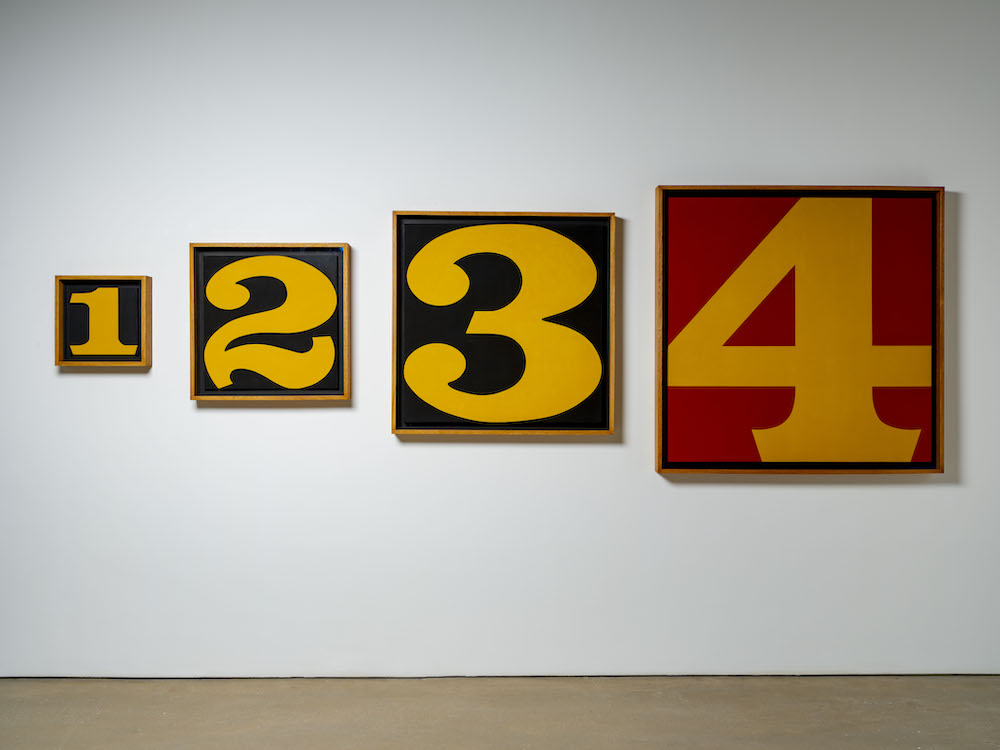
The tone was set for the remainder of the day as Clare took us on a guided tour of the park, first beginning with Indiana’s outdoor structures allude to his fascination with the graphic, numerical form. “Numbers fill my life,” he stated, penned in the release. “They fill my life even more than love. We are immersed in numbers from the moment we’re born.” Heading indoors, we gazed at the surprisingly mixed-media works; brass pieces constructed to look like wood, earlier collage forms, or phallic columns addressing the impact of the AIDS crisis to name a few. Tracing six decades through 56 sculptures, we saw the artist’s practice in full swing as he depicted his own version of the American Dream – a darker one at that. Forging a connection between politics, society and art, Indiana’s momentous career has poked hard at the world for its discrimination of LGBTQIA+ communities and racism. It’s a hopeful reminder of love and unity. 

The day continued as we strolled through the luscious grounds, inhaling the fresh air and either avoiding or ingesting the Marmite pieces from Hirst in the nearby distance. David Nash was our next stop – a painterly depiction of our relationship with nature perceived through an evolving study of trees – before heading to witness James Turril’s Deer Shelter Skyspace, a moment of calm as we peaked through the cut out roof of an 18th-century Grade II Listed building (an old deer shelter). Swapping the foot for a sturdy Land-rover, the final steps of the day were observed through the window as the helpful guide navigated us through the on-site sculptures and artworks. A personal favourite being the biodegradable pavilion created by Studio Morison, where timber, thatch and compacted earth has been constructed to allow visitors in for a moment of peace and quiet. Eventually, the piece will fall in on itself and decompose. It’s a stark comment on the fragility of nature, echoed by the fallen trees and bent branches from the storm.

YSP is undeniably a tranquil setting, and the final moments of the day were with concluded with calm, wind-hit faces and an unanimous feeling of contentment. Consumed by nature-rich parklands and the evocative artworks on display, I couldn’t think of a more apt location for discussing themes of love, resilience and our relationship with the planet – a greater reflection of what’s happening in the world right now.


Robert Indiana: Sculpture 1958-2018 is on show at YSP’s Underground Gallery and Open Air between 12 March 2022-8 January 2023

Robert Indiana, American Dream # 5 (The Golden Five), 1980, installation view at Yorkshire Sculpture Park, 2022. Photo: © Jonty Wilde, courtesy of Yorkshire Sculpture Park. Artwork: © 2022 Morgan Art Foundation Ltd./ Artists Rights Society (ARS), New York/DACS, London

Robert Indiana, AMOR (Red Yellow), 1998-2006, installation view at Yorkshire Sculpture Park, 2022. Photo: © Jonty Wilde, courtesy of Yorkshire Sculpture Park. Artwork: © 2022 Morgan Art Foundation Ltd./ Artists Rights Society (ARS), New York/DACS, London

Robert Indiana, Ash, 1985, cast 2017, installation view at Yorkshire Sculpture Park, 2022. Photo: © Jonty Wilde, courtesy of Yorkshire Sculpture Park. Artwork: © 2022 Morgan Art Foundation Ltd./ Artists Rights Society (ARS), New York/DACS, London

Robert Indiana, Love Is God, 1964, installation view at Yorkshire Sculpture Park, 2022. Photo: © Jonty Wilde, courtesy of Yorkshire Sculpture Park. Artwork: © 2022 Morgan Art Foundation Ltd./ Artists Rights Society (ARS), New York/DACS, London

Robert Indiana, Monarchy, 1969, installation view at Yorkshire Sculpture Park, 2022. Photo: © Jonty Wilde, courtesy of Yorkshire Sculpture Park. Artwork: © 2022 Morgan Art Foundation Ltd./ Artists Rights Society (ARS), New York/DACS, London

America in Crisis

A group exhibition at London’s Saatchi Gallery explores decades of social change in the US

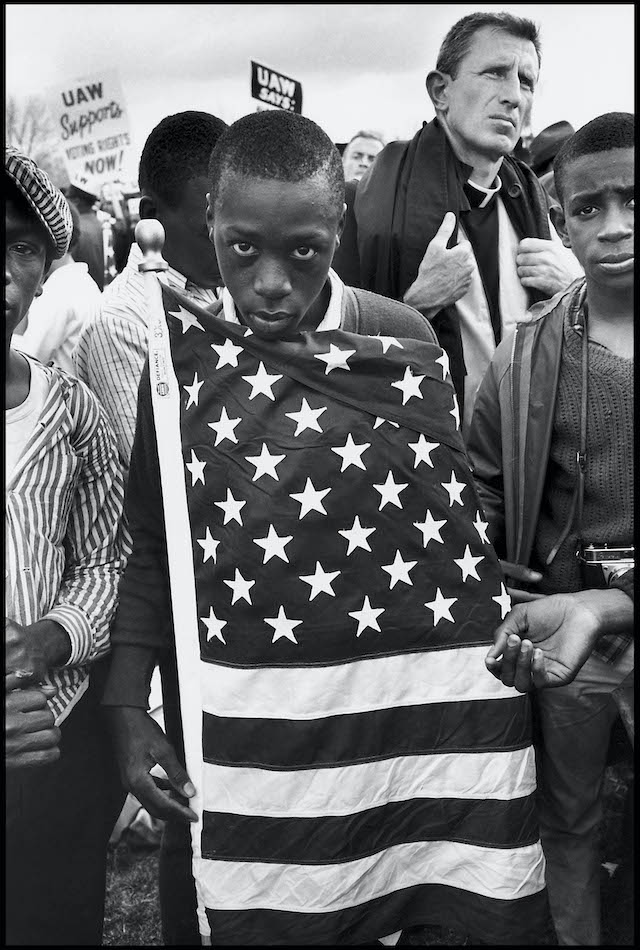
The Selma March, Alabama, USA, 1965. © Bruce Davidson, Magnum Photos

In the 60s, a project entitled America In Crisis was released into the world conceived by photographer Charles Harbutt and Magnum New York’s then-bureau chief Lee Jones. Featuring imagery from 18 photographers, the show, book plus accompanying short film and installation explored the issues prevailing in the country at the time. This was decades ago and little has progressed, point blank. In a new revisiting at London’s Saatchi Gallery, an exhibition of the same name sheds light on social change in the US with a group exhibition of 40 leading American photographers such as Bruce Davidson, Zora J Murff, Kris Graves, Stacy Kranitz and Mary Ellen Mark. Multiple similar themes from the work proceeding have been brought to the fore: inequality, racism, poverty and the demise of the American Dream to name a few, which are coupled with the more modern-day markers like Covid-19 and the rise of Black Lives Matter.

Curated by Sophie Wright, Gregory Harris and Tara Pixley, the exhibition – which runs until 3 April 2022 – illustrates many deliberate comparisons towards the original project. This includes the same chapter structure as before, with titles such as The Streak of Violence, The Deep Roots of Poverty and The Battle of Equality making appearances. It also consciously sheds light on a diverse and contemporary presentation of photographers today, featuring honest and thought-provoking imagery from those who are actually embedded in the stories – like Zora and his mixed-media narration of power, race and privilege, or Stacy Kranitz who’s spent years documenting a community in Appalachia. Below, I chat to Sophie, one of the show’s curators, to discuss the danger of repeating history and the wavering power of the image in today’s digital world.

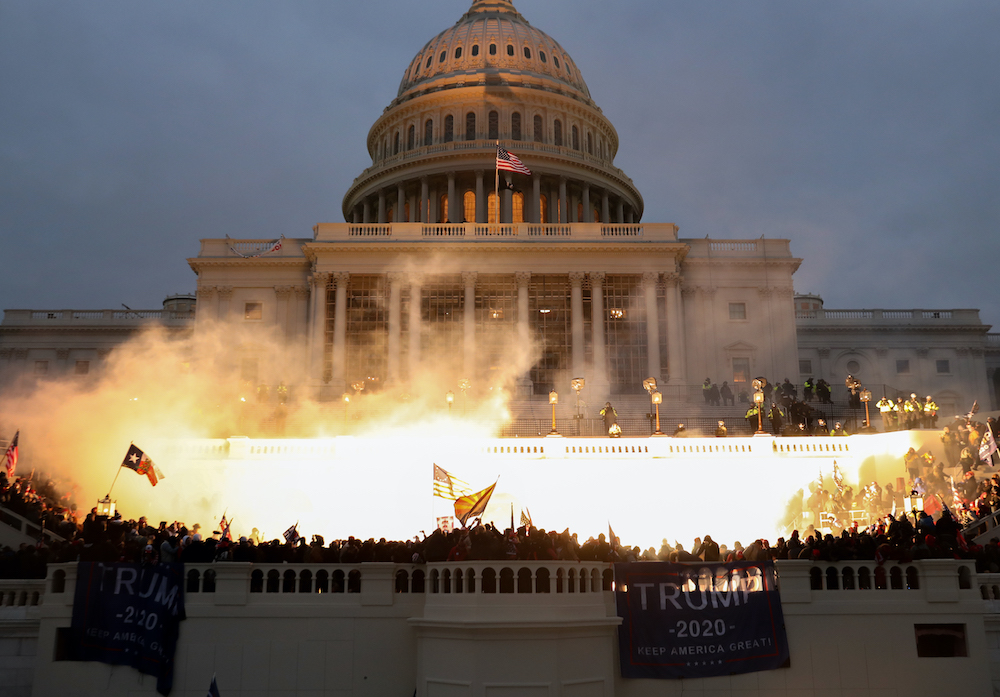
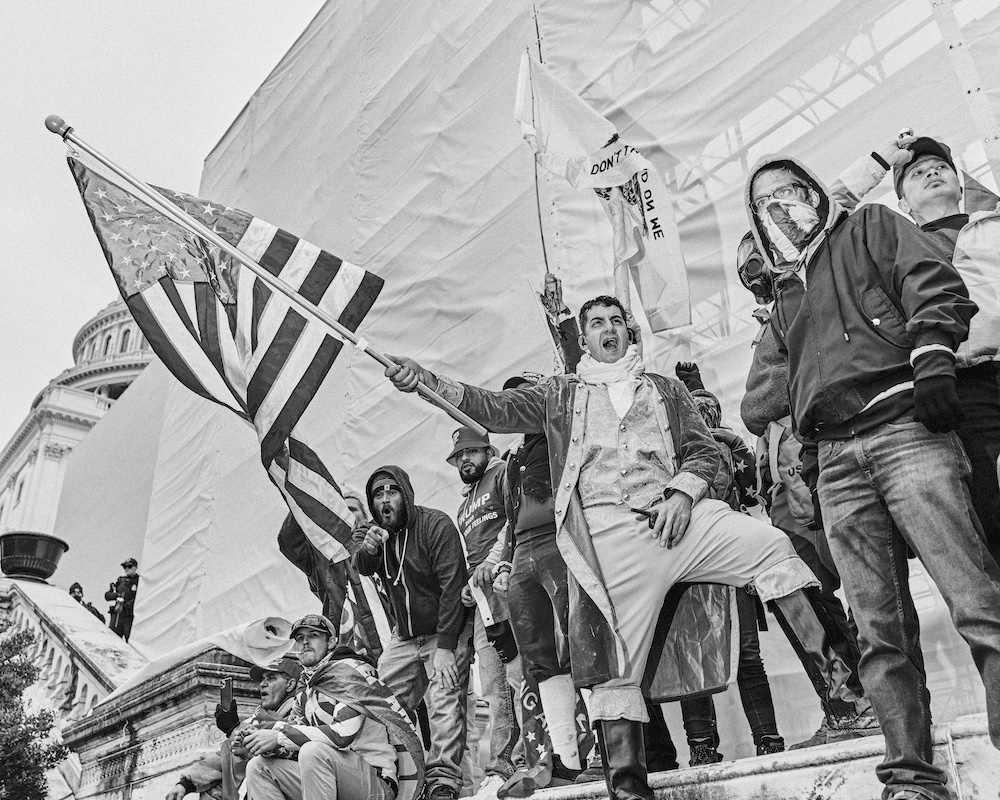
The Capitol, 6 January 2021. Washington D.C. © Reuters/Leah Millis

Can you tell me about the parallels between the new and old exhibition with Magnum Photos?

Clearly, things have changed. I studied history and history of art college, but in my day and age, you were told that there was an idea of history of progress. Maybe it’s just getting older, but it all becomes a bit circular after a while. 

In 1968, it was a massively tumultuous year globally. Charles Harbutt felt there was an opportunity and a need to create the original project, and it was that same period of time leading up to an election that he and the Jones had the instinct it was going to be quite a pivotal moment. 

We’ve used the original framework, but we involved all chapter headings except one; a chapter on the unwanted Vietnam war in 68. We didn’t replicate that into the contemporary project, because we felt that there isn’t an unwanted war or any contemporary equivalents. Now, you could say Afghanistan, but honestly, we felt that there was so much going on with the domestic policy issues that we were addressing, that to bring that in would have made it too complicated. 

In 2020, there was the unlawful killing of George Floyd, and that was really the catalyst for the explosion on the streets of Black Lives Matter. And there’s Covid-19, which was a very different experience to the original exhibition. There are a number of different catalysts and contexts. However, the core premise is the American Dream versus reality on the ground, and the long form issues within, the founding of America, the slavery and the issues around equality; all of these things are long-form issues. The Deep Roots of Poverty being another section that addresses the fact that, despite it being such a wealthy country, there’s a lot of people below the poverty line. So there were a number of things that we felt still resonated 50 years after the original project.

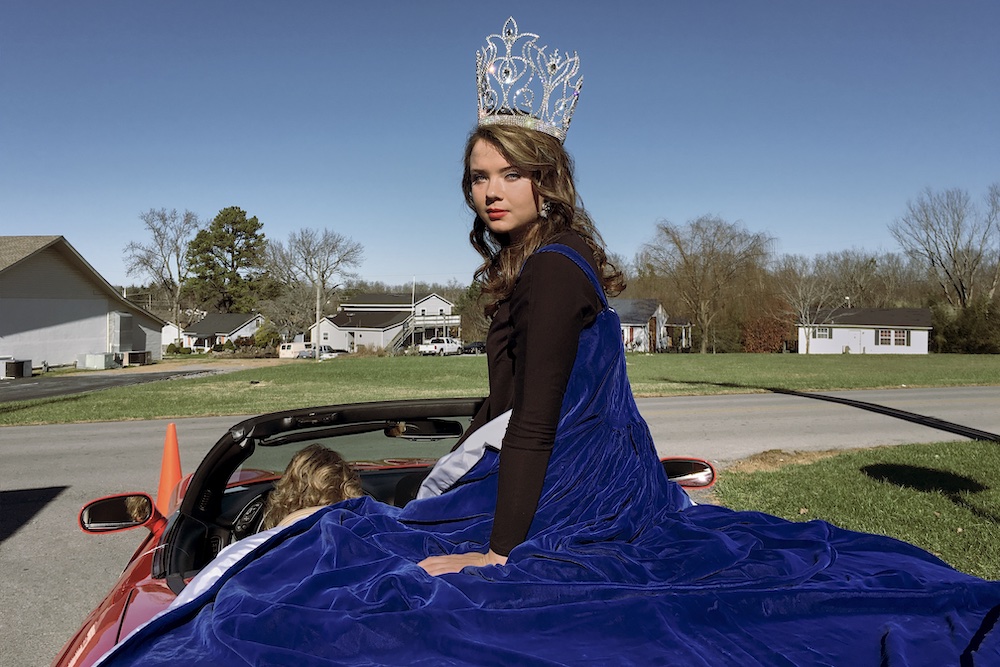
Smithville, Tennessee, 2015 © Stacy Kranitz

How do you think photography can impact social change? And how does this exhibition highlight that?

I don’t think photography changes things by itself. I think the days of believing in that are long gone. We all take photographs but it is a very slippery medium; I think it can be re-contextualised in lots of different ways. That’s what the third room deals with – the fact that people tell stories with photographs that sometimes shift the meaning of that image completely. 

What I do think, though, is that because it’s a recognisable medium, we all know how to take pictures and there’s a way to gain a better understanding the world around us. I think it is a language, despite its mutability, and it does inform us about and gives access to points of view; it’s all about acknowledging that it provides a window into different perspectives on the world. 

I think there’s also something to be said for the still image. There’s so much visual noise out there; we’re all hopelessly addicted to our phones. I think there’s something quite meditative about standing in front of an individual picture and just engaging. I really feel this is a project to be seen in the space that it’s shown. It gives you time to pause for thought. It’s also telling that there’s a lot of different strategies within the show from the individual practitioners, in terms of how they choose to communicate using their photographs. 

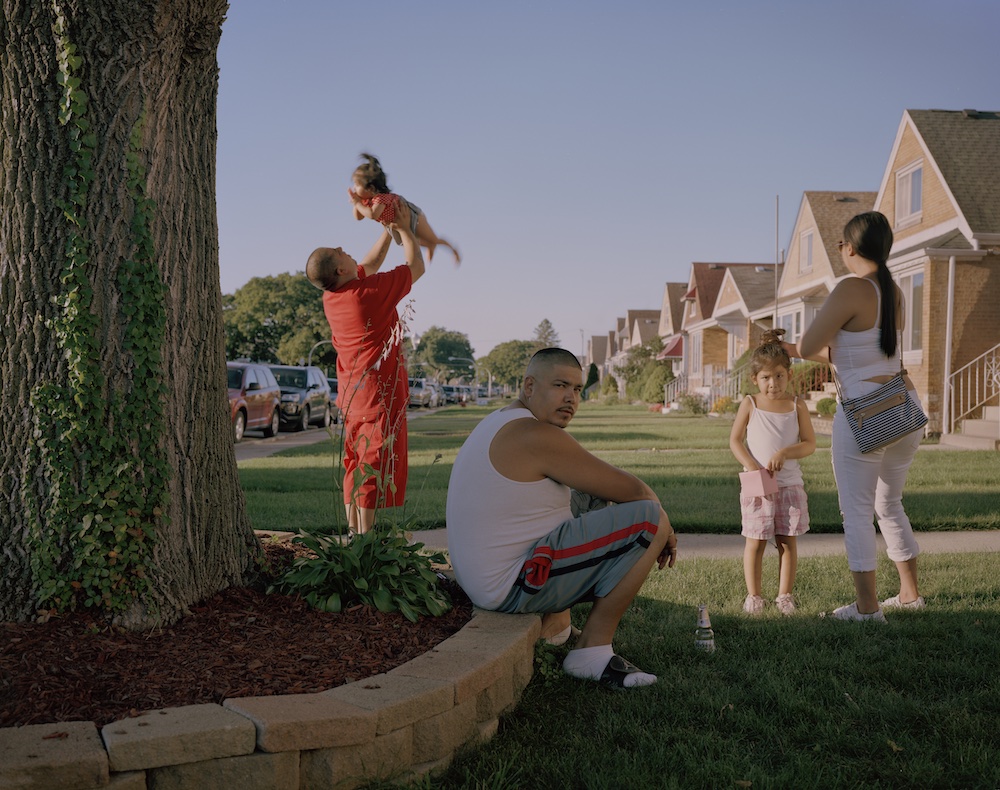
Bungalow Family with Last Ash Tree, Midway, Chicago, USA, 2018. © Paul D’Amato

What would you say are the key takeaways for visitors of the exhibition – to educate, to steer away from the noise of the digital world?

It’s interesting to see how history can repeat itself. I don’t want to oversimplify, but I want people to be more conscious of how they read images, the power of photography and the importance of it as communication as well as an artistic medium. 

Some of these earlier images would have been viewed by the original audience in 1969 as news photographs, and now they’re almost iconic, which I hate as a word. But something like Bruce Davidson and the Selma Marches, they have such a power as images; they’re almost talismanic because they’ve been reproduced multiple times. Then the reboot was referenced a lot during the Black Lives Matter protests pre-2020 as a kind of seminal protest image. Photography is an incredible, aesthetic medium. I want people to enjoy the layers of the show and how we encounter photography. The top line is to engage with the issues that have allied between both eras, but also to be conscious of photography, how we encounter it and read it and to do it in a considered way.

Facebook CEO Mark Zuckerberg testifying before a joint Senate Judiciary Committee and Commerce Committees hearing regarding the company’s use and protection of user data, on Capitol Hill in Washington, U.S., April 10, 2018. © Reuters/Leah Millis

Grant Park, Chicago, 1968 © Charles Harbutt

Lee Square, Richmond, Virginia, 2020. Courtesy of Sasha Wolf Projects © Kris Graves

Pink Sidewalk, Florida, 2017. From the series Floodzone. © Anastasia Samoylova

Massive Support for Richard Nixon at the Republican Convention. Miami, Florida, USA, 1968. © Elliott Erwitt/Magnum Photos

The Capitol, Washington, USA, January 6th, 2020 © Balazs Gardi

America in Crisis, organised by Saatchi Gallery, opens from 21 January to 3 April 2022. The exhibition is curated by Sophie Wright, Gregory Harris from Atlanta’s High Museum of Art, and academic Tara Pixley. Tickets from £5. Members go for free.

My Hijab Has a Voice

Jodie Bateman’s empowering series raises awareness of the difficulties Muslims face in the West

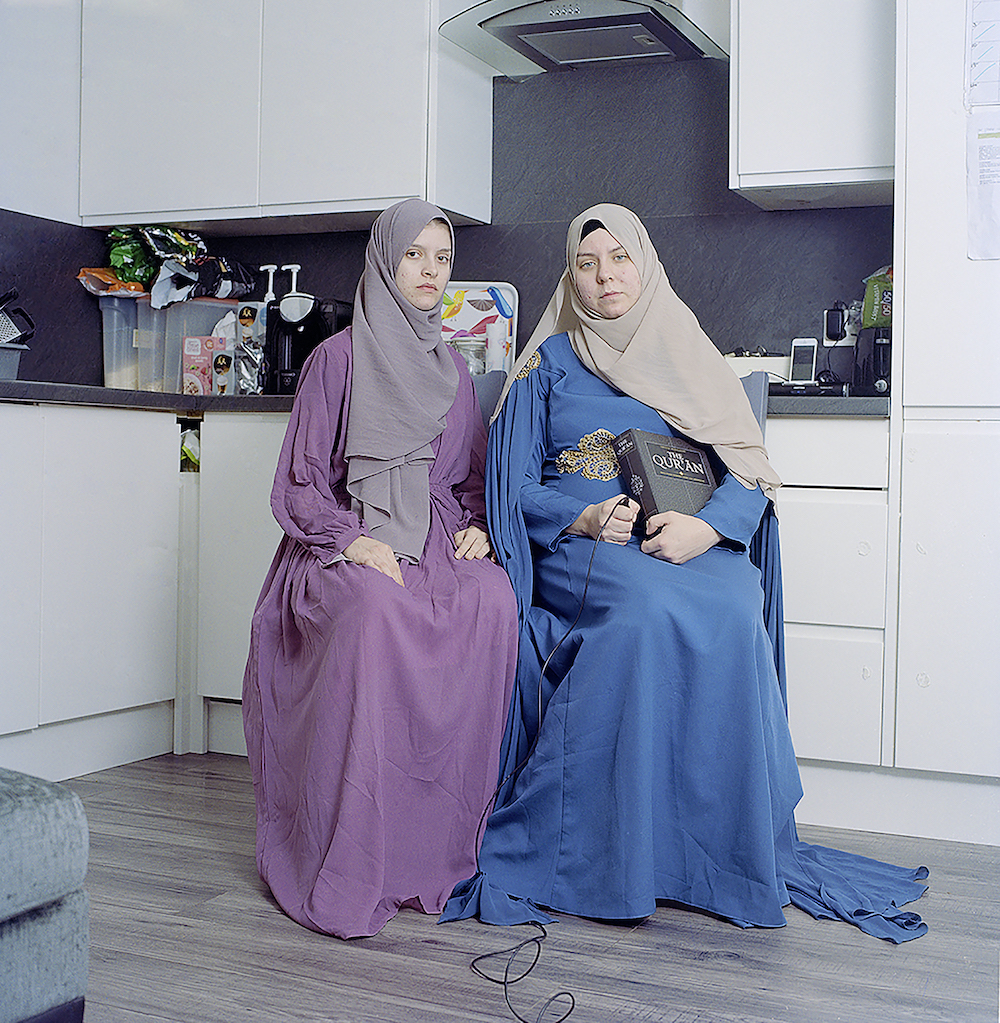
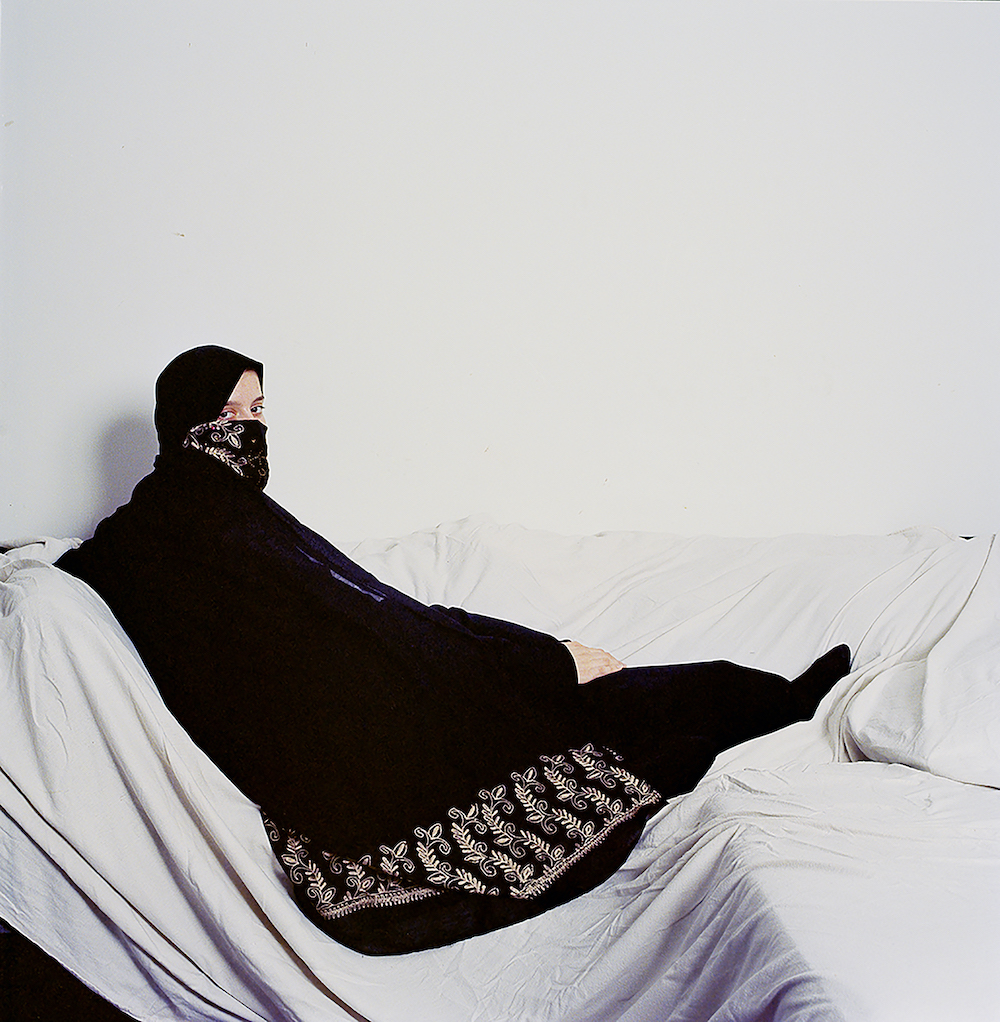
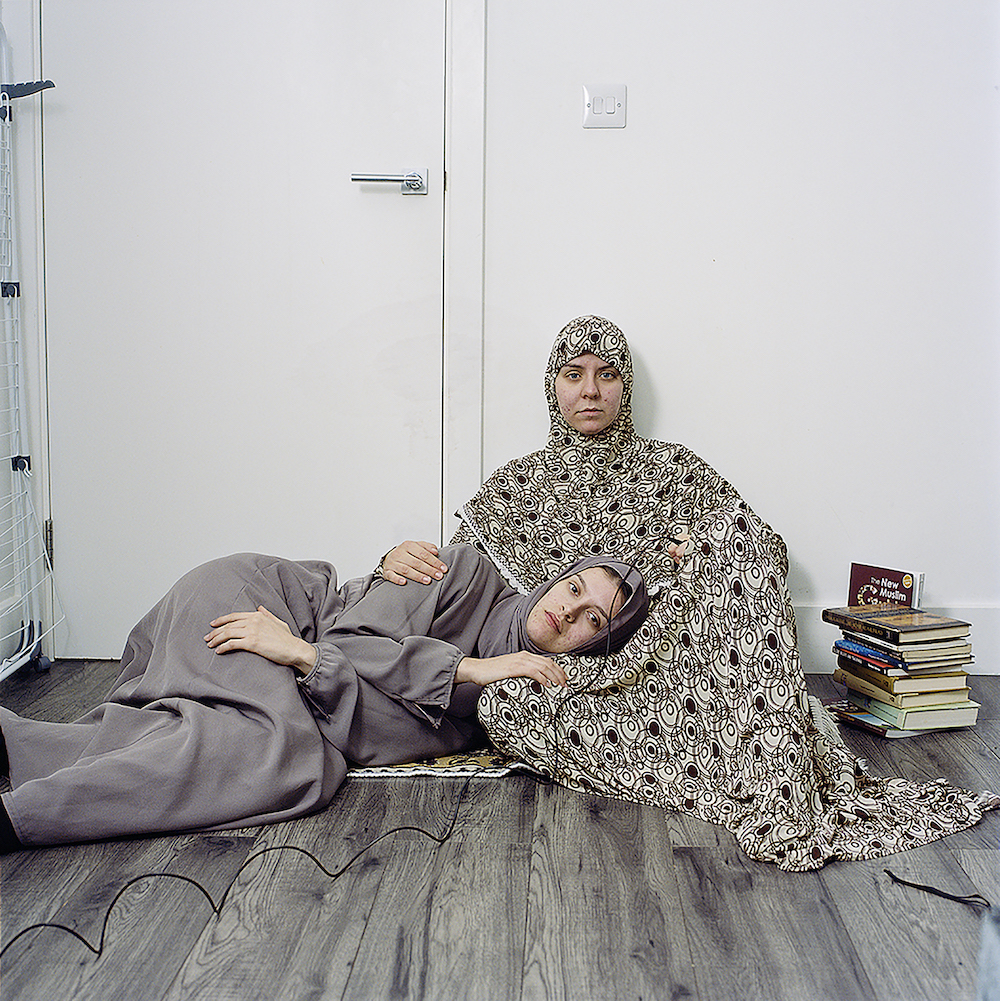
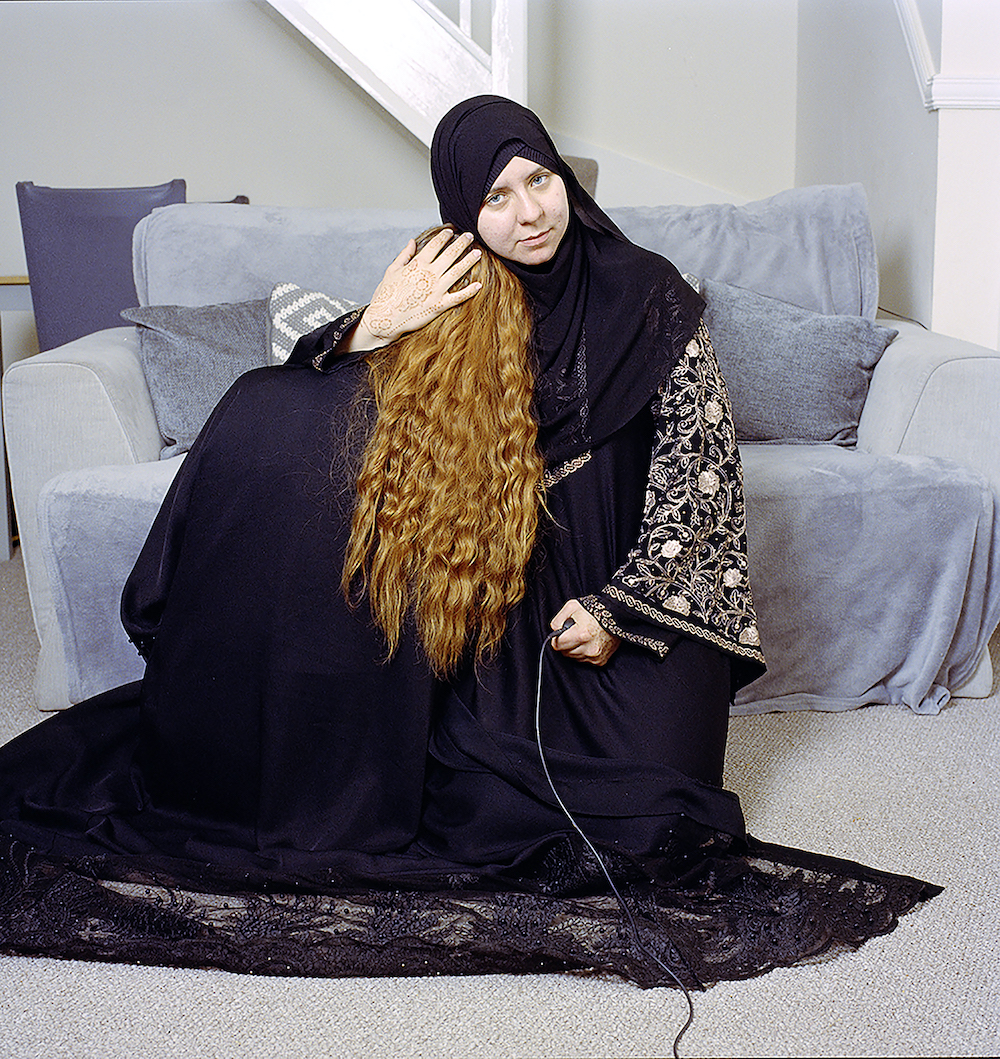
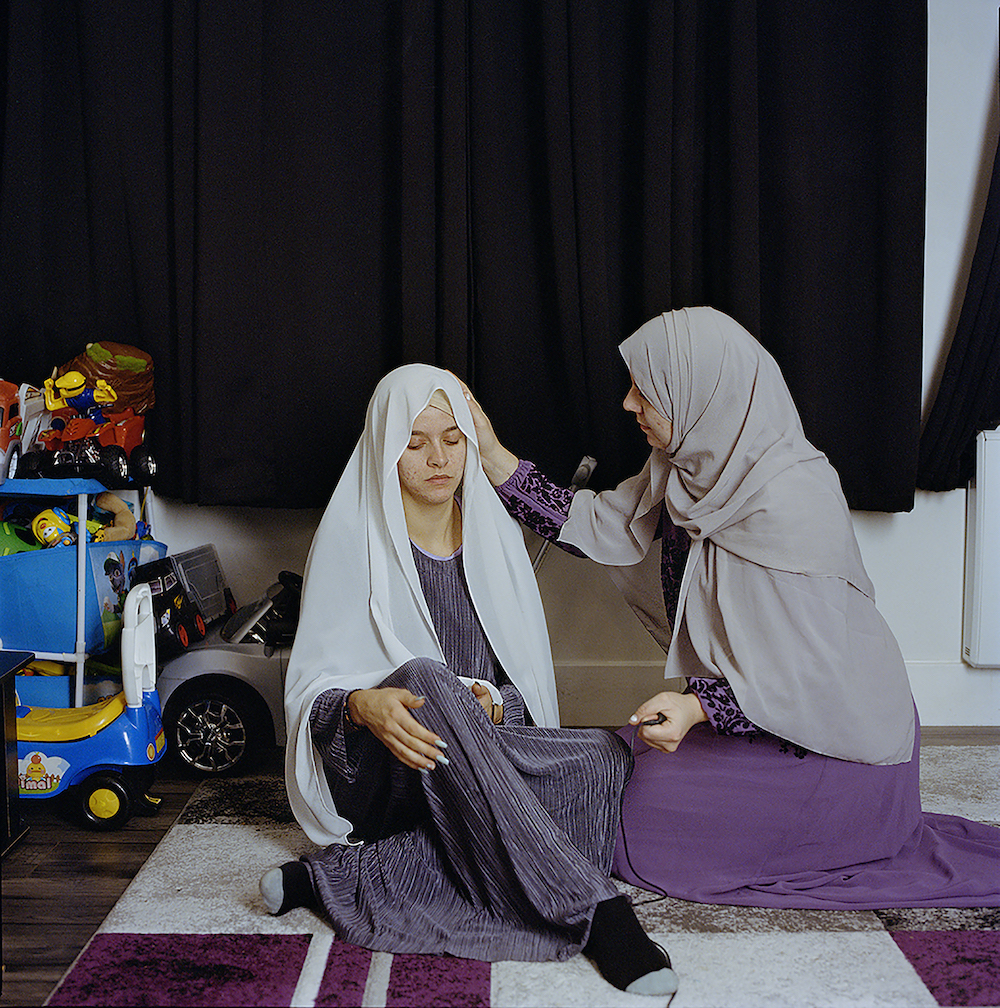
Jodie Bateman, a photographer who grew up in Earlsfield, London, converted to Islam in December 2017. During this period of her life, Jodie began questioning the stereotypes often pinned with being Muslim and living in Western society. Deciding to record these experiences with her lens, Jodie commenced work on My Hijab Has a Voice: Revisited – an authentic and autobiographical series that both challenges and empowers her subjects. Within the project, she takes predominantly self-portraiture with the odd portrait tossed in for good measure, placing herself and younger sister in the frame as they replicate historical paintings, those that often objectify women. The work is captivating, poised and provoking for the ways in which it demands attention from the viewer; she hopes to share a new perspective, to realign the stigma and to raise awareness of the difficulties Muslims face in the West. Below, I chat to Jodie about her journey into photography, her experiences with converting to Islam and what she strives to achieve through her imagery.

First, it would be great to hear about your journey into photography, what inspired you to pick up a camera?

I first fell in love with photography when I discovered my mum’s boxes of photographs as a little girl. She used to have loads of photographs printed from the little disposal cameras; she always had so many of them and I was always mesmerised by the photograph as a document or object. I remember holding it, looking into its information and then, when I got my first camera phone as a young girl – I think I was around 13 – I started shooting made up shoots with my sisters. That’s how it started. I knew from then on that I loved photography and taking pictures, so I decided to study it at college and so on.

What stories are you hoping to share in your work?

So far, it’s been a personal story about my journey and experiences, especially around the hijab and converting to Islam. Through my work, I’m trying to put a different narrative out there. I hope to take this further in the future and share other Muslim women’s experiences with the hijab too; I just want people to see it from our actual point of view and direct from our voices.

Can you tell me more about your personal experience with converting to Islam, and how this impacted your photography?

It changed my whole style. I found myself, and I realised the stories I wanted to tell and the issues I felt were important to me had changed. It’s had a huge impact on how I feel and how I am able to use photography. It’s such a powerful tool to be able to tell stories and raise awareness of issues, and being able to have your own unique voice with it.  

What’s it like photographing your family, are they happy to be involved? How do you want to represent them in your imagery?

It’s easy because I am so comfortable around them, so I can really just be myself and be free in directing my project how I want to. I’ve never actually gone out of my comfort zone and not shot my family, but they are happy; they’re used to it and they like to take part and support my work In any way.

I guess it depends but, for my project, my little sister is like my muse. I have also done documentary photography with my family, representing them as they are at home as well as our relationships and bonds with each other.

Can you pick out a couple of favourite shots and talk me through them? 

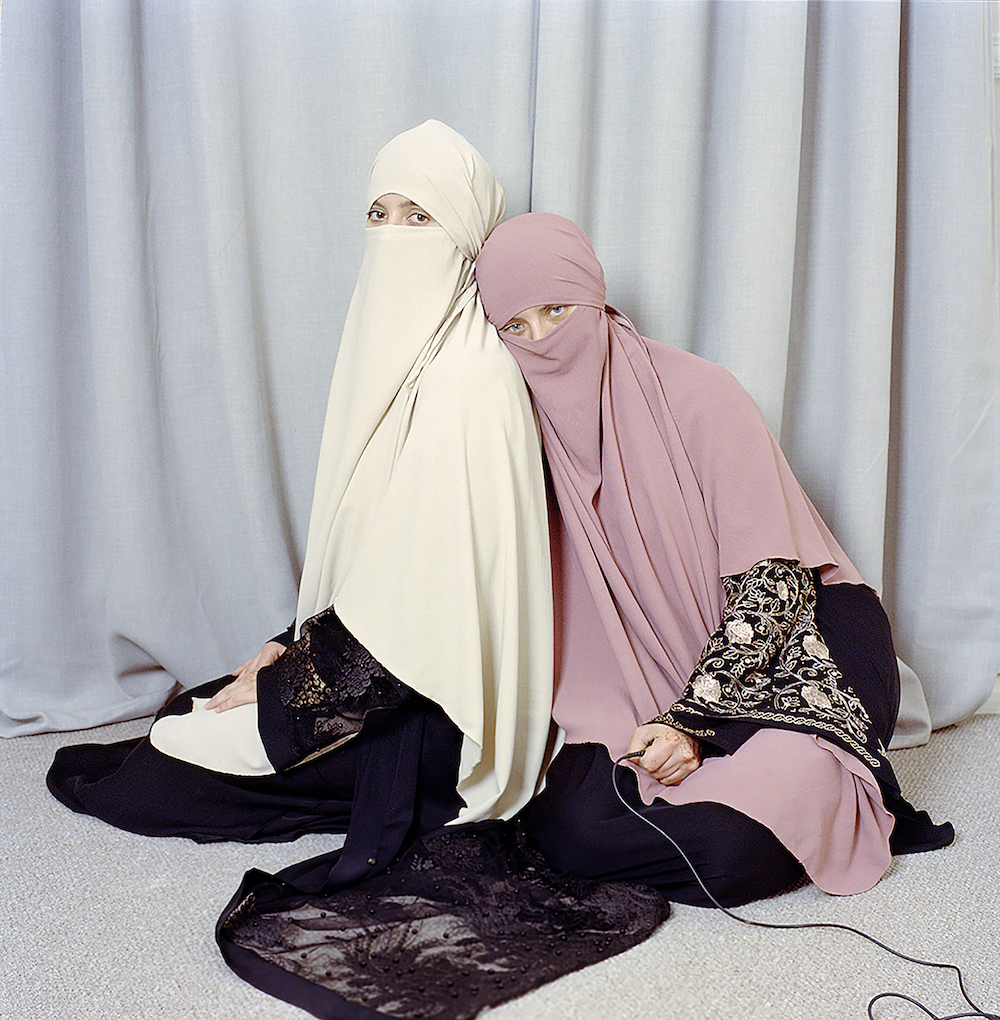
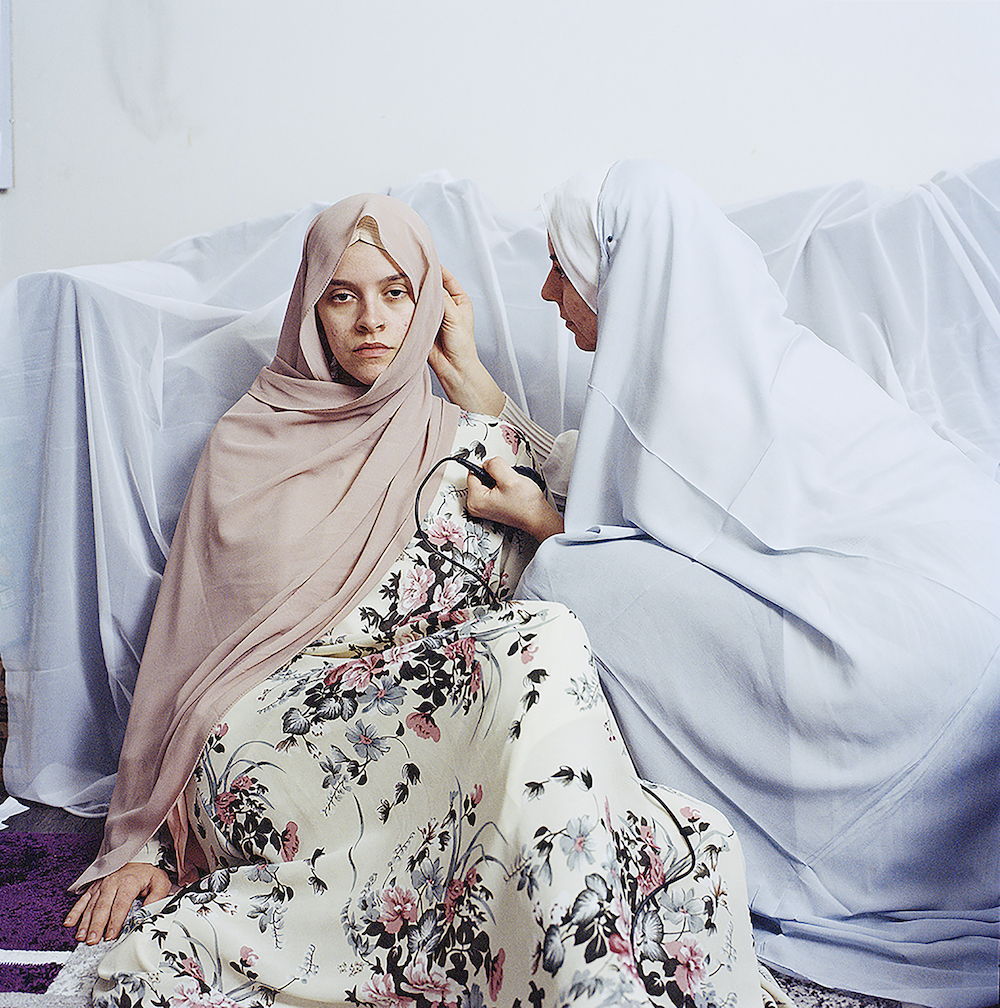
This image is my favourite image from my recent project My Hijab Has A Voice: Revisited. It’s inspired by the painting La Grande Odalisque; it was known for being unnatural in how the nude woman is painted, and in my image she is posed in a similar manner but fully veiled. It may seem unnatural, as paintings and the objectification of women started as being fully nude only for the purpose of pleasing the male viewer – so it’s about reclaiming our bodies. Being fully veiled mimics these types of paintings whilst also showing the beauty in being veiled; our bodies concealed from eyes seeing us in this objectified way.

In this second image from my project My Hijab Has A Voice: Revisited, myself and my sister are fully covered. She is laying on my lap and we are connecting; it’s not sexual, it’s supportive and there are books which convey the message that, as a woman, I am educated. I always get asked if I converted for a man or if I was brainwashed, as if a women cant make an educated decision to be a certain way. it also mimics paintings, as usually they leave bits of information around like mirrors and brushes to convey this vain message that women are in competition and compete against each other.

The last image is another favourite of mine again from my project My Hijab Has A Voice: Revisited. I am holding her head, her hair is out and we are both covered wearing black. This image concept is based around the idea that all women suffer from being told what to wear; whether we are being forced to cover or being forced to uncover, we are constantly being managed by men. This image is like a symbol of support from women to women, no matter what race or religion or how we dress. We should stick by each other and not against each other.

What are the key takeaways for your audience?

I hope it’s a positive reaction and that they are interested in listening. My message is that, as a woman, I can be educated enough to make my own decisions. I don’t need to be influenced by a man, that Islam is not what the media portrays and if people take time to listen to Muslim women especially, they can learn a lot and see a more meaningful side to our stories.


London 82

Traverse back to London in the early 80s, as seen through the eyes of photographer Sunil Gupta

The last time I indulged in the work of Sunil Gupta was during his major retrospective at The Photographers Gallery in London last year, during which he presented his politically charged – and narrative heavy – portraits and street shots on topics such as family, race, migration and sexuality. Sunil, who’s an Indian-born Canadian photographer based in London, has become widely acclaimed for his image-making, particularly his documentary work in New York and the lensing of injustices suffered by gay men globally. He tells stories through a merging of honest portraiture, candid street photography and the more intentionally staged, which in turn raises awareness of gay rights plus the struggles and complexities that the LGBTQIA+ community has experienced over time. It was in this very retrospective that I began to understand Sunil’s career-long goal and subject matter: he’s a visual storyteller, an activist and political voice of a generation.

And now, I’m given the opportunity to observe the photographer’s work once again, this time composed as a new book from Stanley/Barker and entitled London 82. The publication marks the moment in which Sunil began experimenting with colour, a time when he enrolled at the Royal College of Art in London and started playing around with the processing facilities. With an aim of capturing gay life around the UK’s capital during the early 80s, what first commenced as an inquest into an exclusively gay subject matter soon evolved into a wider exploration of life in the city – encompassing all sorts of characters from gay men, the elderly, migrants and people of colour. Here, Sunil tells me more about this momentous collection, the types of people he sought to photograph and what life was like as a gay man when he arrived in London.

Can you describe what London was like in 1982?

I had come to London as a young gay man at the end of the 1970s from New York with an interest in photography. It felt like a cold and unfriendly place for gays. Also, there was hardly any photography scene worth mentioning at the time. And of course it was so much shabbier than it is nowadays but then so was New York City. London felt depressed, cold, dark and lonely. It was also a place where I acquired a race problem by being South Asian. There were counter cultures like punk, the left, and of course the emerging gay disco scene but most of that was closed off to non-whites. It was the time when I felt very alienated.

What inspired you to pick up a camera in the first instance and start shooting this body of work?

I was in art school and I was learning to make work by project. In between the projects, however, I would do street photography as a way of exercising my camera skills and also of discovering a new city. I had the experience of shooting a specific street, Christopher Street, in New York as the centre of gay public life. However, I could not find anything similar over here, so in the end I settled on a route between where I lived in Fulham, my classes in South Kensington and my outings to the West End. Being in college allowed for some experimentation with colour negatives as equipment and processing were available for free.

What sort of person caught your eye while out shooting?

All kinds of people caught my attention when I was out shooting; gay men, of course, Black and Asian people, various OAPs who appeared randomly amongst the better off in West London. I wasn’t really trying to make any kind of sociological commentary, just some juxtapositions and formal arrangements that caught my eye. Of course all the backgrounds were very much part of the scene.

Can you share some anecdotes from working on this project?

I’m trying to remember if there had been any encounters with people whilst shooting these pictures. Mostly there weren’t, as people really did not want to be spoken to. In that sense, it was very different to my earlier experience of New York. I had to rein myself in and not appear too aggressive whilst I was photographing, as I had to learn to approach people directly and instigate encounters with my camera. People in London didn’t seem to like that very much. One of the things that really struck me was the extremes of wealth and poverty on display amongst the people on the streets. 

How does it feel looking back on this body of work, and how does it compare to the West End today – particularly in terms of queer culture?

What I didn’t realise was that, in a way, I had had a very sheltered life in those few years centred on my very privileged life as a photo student at the RCA in South Kensington. I hadn’t seen these pictures again until very recently when they got scanned. I’m amazed at the kind of naïveté they have from my point of view, since I’m giving everything equal weight; most of my projects were heavily weighted towards some critical stance or the other. London also seems curiously white and the Asians seem to be newly arrived. Contrary to now, when that is certainly not the case, as the West End has become much more diverse. And although London never developed a Christopher Street, it does have a small, touristy version around old Compton Street – a version that was palatable enough to be shown as advertising on airlines promo videos where the city is diverse and tolerant, despite having an appalling record number of arrests of gay for cruising in the 70s.

What can the audience learn from London 82?

I hope the audience can see that, in 1982, London was much less brash and more economically mixed in the centre. People had their own styles of dressing and that seemed to be fine. The streets seemed messy and lived in but that seemed fine as well. Gay men had become clones and were beginning to emerge from the fearfulness of the 1970s. I suppose the key takeaway is that it’s the moment that Thatcher swept into power with her mantra that society does not matter, only individuals do, and that it was every man for himself. That was going to define the 1980s.

What’s next for you, any upcoming plans or projects?

There are several projects online; a new commission is underway that is being organised by Studio Voltaire and the Imperial Health Trust. I’m researching the experiences of long-term users of the HIV OPD at St Mary’s as well as people who have recently had gender reassignment surgery at Charing Cross Hospital. An edited version of this new work will hopefully be on display at those hospitals by the end of February 2022. I am continuing to work with my archives, the next publication will be a text-based one. I am gathering all of my writing on photography over the last 40 years into one publication that will be launched by Aperture in the autumn of 2022. My retrospective exhibition that was at The Photographers Gallery earlier this year is opening at the Ryerson Image Centre in Toronto and will run from January to April 2022.