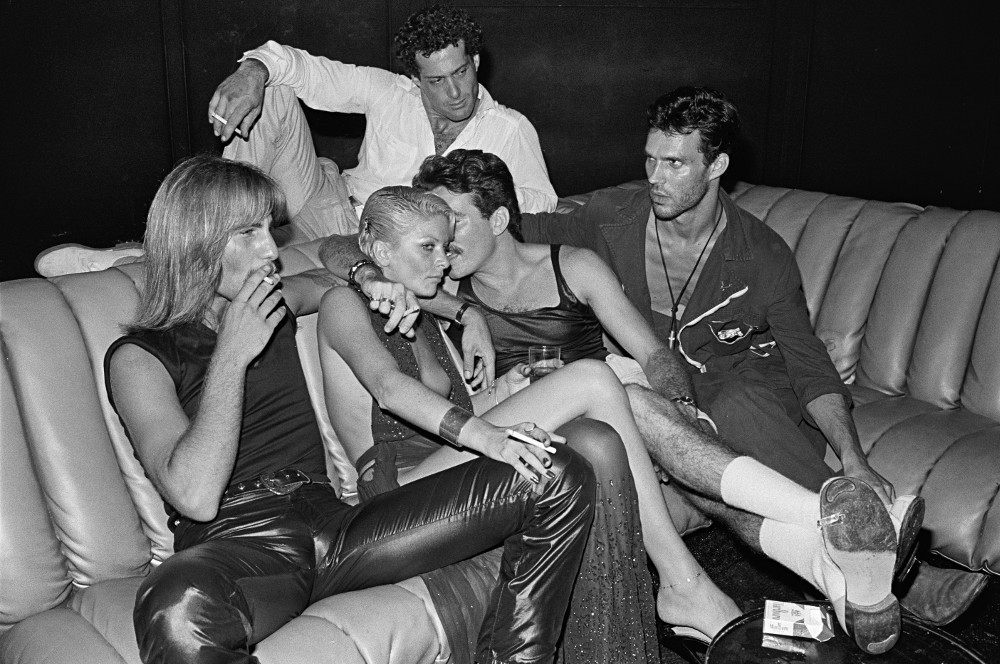
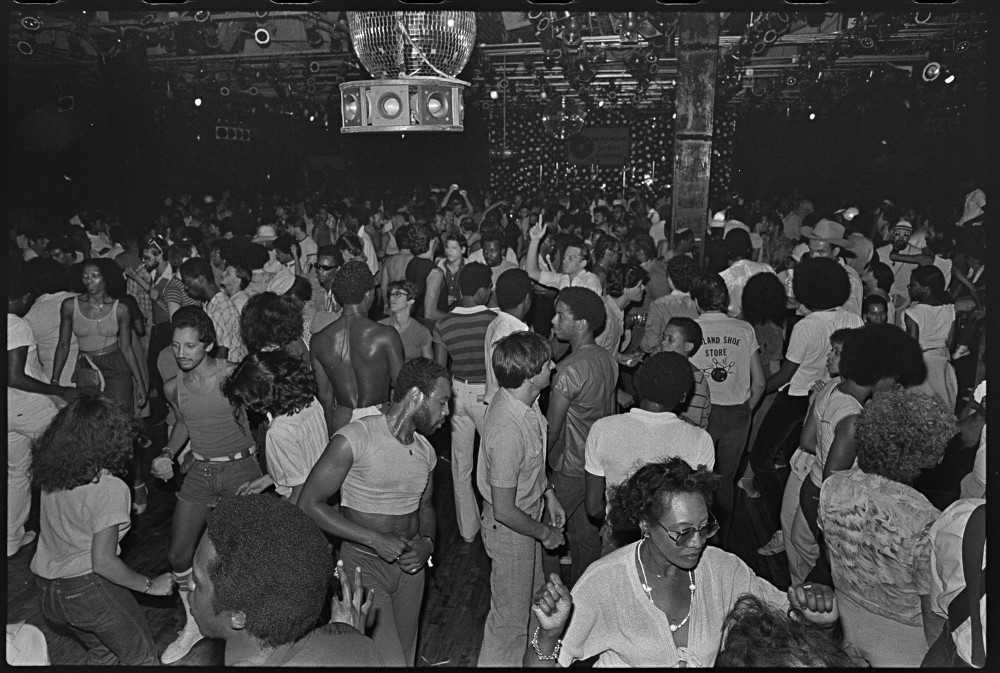
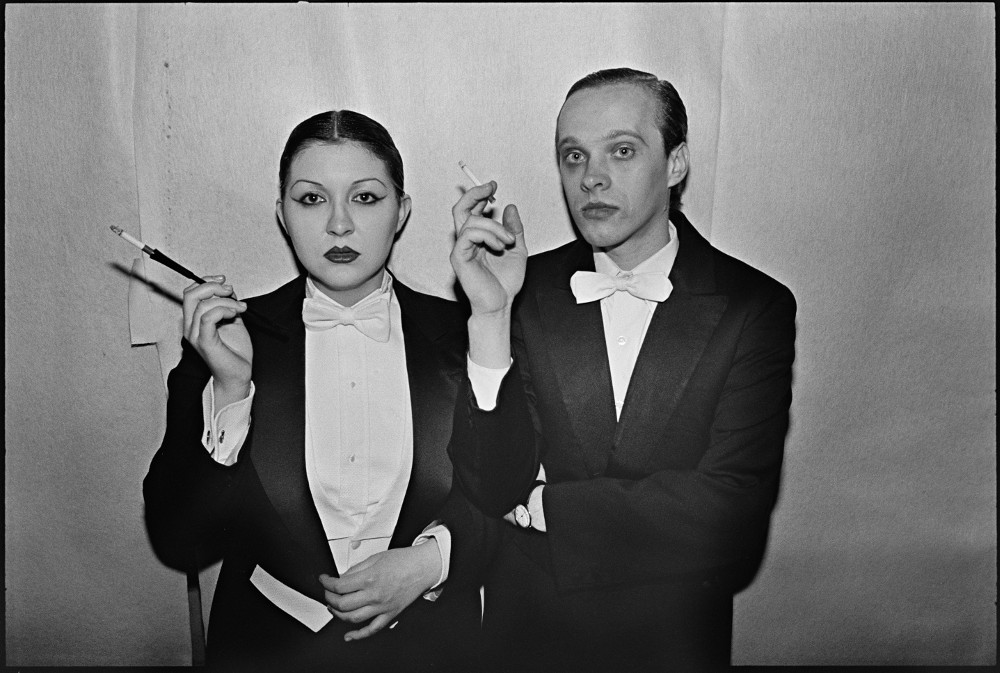
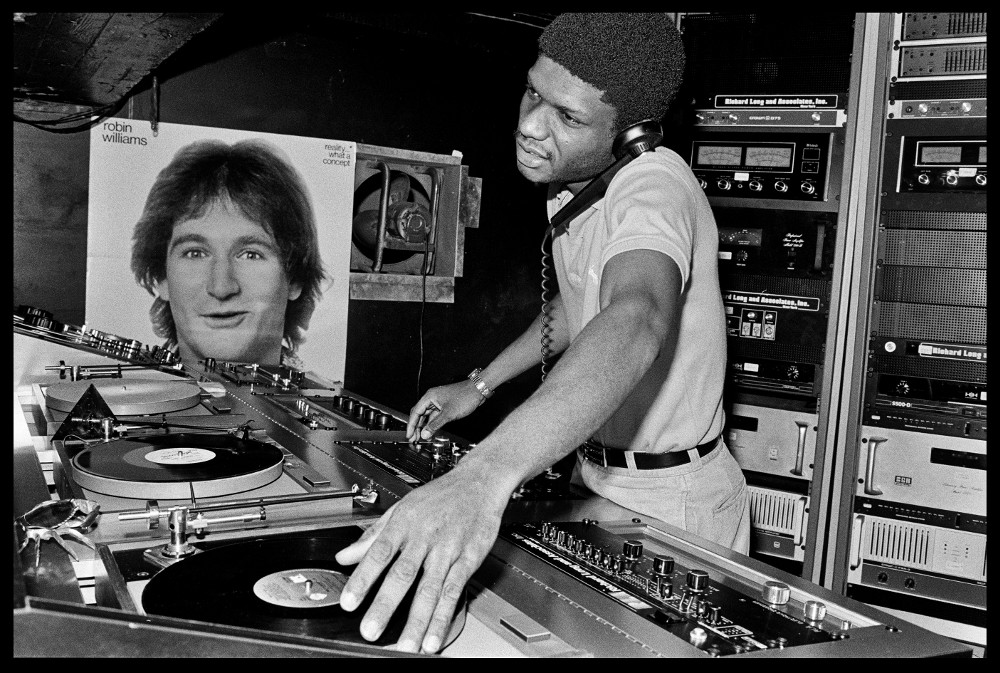
US photographer Bill Bernstein writes exclusively for PORT about capturing the offbeat venues and colourful characters of New York’s disco scene in the 1970s
I never danced, took drugs, drank or had any other dalliances during my months of photographing the NYC disco scene in the ’70s for my project, DISCO. Not that I don’t do those things, but for this particular period, even with those temptations all around me, I stayed focussed and true to my art form: photography. Although I was never really swayed by the music – I was much more of a rock ‘n’ roller, although I did like some of it – I was fascinated by the people and imagery all around me.
I decided to try to hit as many clubs as I could in ’79. Of course Studio 54, Xenon, Paradise Garage, but also 2001 Odyssey out in Bay Ridge Brooklyn – home of “Saturday Night Fever” where the “craze” all began. I remember this club being in the middle of nowhere in Brooklyn. A small building with a tacky movie poster from the film hanging between the restroom doors. Cutout figures of John Travolta Scotch-taped to the mirrored walls. And that illuminated dance floor… I spoke with the manager of the club for a while and he complained that he had never been paid his location fee for the movie, but nonetheless, it brought in traffic from all over the world.
One of my favourite places was GG’s Barnum Room in mid-town Manhattan. It was a transgender male and female haven, and the only club with an acrobatic show above the dance floor. And of course, Paradise Garage, the downtown club with the world’s best Dj, Larry Levan. I loved how Larry worked the crowd. He played whatever he thought would keep the momentum going. He loved Pat Benatar’s ‘Love is a Battlefield’ and would play it over and over again. He didn’t care. He just did his own thing, and that’s what made him, and the club so great.
The book’s release will coincide with an exhibition running 3 December 2015 – 24 January 2016 at Serena Morton Gallery, 343-345 Ladbroke Grove, London W10 6HA
Musician and composer Nitin Sawhney reflects on Protection, the bold Massive Attack album that helped shaped his career and caused him to reconsider the power of sound
Nitin Sawhney
Protection by Massive Attack was sonic psychotherapy for me. It inspired me to look for a better voice.
My first reaction to the album was visceral, it was far more than just a fresh assault on my senses. It was as if somebody had crawled into my head and shown me a whole different part of my brain – the main part, the bit I’ve been focussing on since.
Don’t get me wrong about this: I’m proud of what I can do, musically. I’ve composed for the London Symphony Orchestra, dj’d at Fabric, scored 60 odd films, sold out the Royal Albert Hall as a solo artist and released many albums. But when I hear that Massive Attack album I feel like a beginner… like someone who has yet to learn about the raw power of sound.
Protection by Massive Attack – image courtesy of Virgin Records
To open an album with the title track is a bold statement. When that first beat drops you are immediately in a place beyond music. The hi-hats are like nothing you’ve heard before and the kick and snare fall like the ominous intent of a serial killer… but then Tracey Thorn’s voice softens everything and draws us into a beautiful, nostalgic melancholy that remains throughout the album.
‘Karmacoma’ follows and somehow, between one of the most recognisable beats in the history of electronica and a bansuri [an Indian flute] that rises above the dub-style sounds like the whistle of a steam train at night, we find ourselves drawn into Tricky’s dark stream of consciousness.
I could carry on waxing lyrical about the ensuing performances of Horace Andy, Craig Armstrong and Nicolette, or emphasise how every beginning of every track has become a milestone in musical history, but what I feel isn’t about a eulogy.
I had an epiphany listening to Protection; it was a masterpiece of mellifluous, dark and minimal eclecticism. Every track begins with instrumentation or soundscapes, using whatever digs deepest into the psychology of the music. And I have heard those track intros used over and over in countless trailers, films, adverts and dj sets ever since.
I have met the guys from Massive Attack a few times since hearing the album (even at my own gigs!) and I always find them gracious and friendly, which counts for a lot with me.
With each of my own albums, I try to take a step closer to what three artists captured in that one record… Pure sonic expression. Timeless.
Nitin Sawhney’s new album, Dystopian Dream, is out November 6 on Postiv-ID
Gabriel Jones visits Steinway & Sons’ German factory to discover its latest innovation and meet ‘the ear’, the person responsible for maintaining the brand’s iconic sound
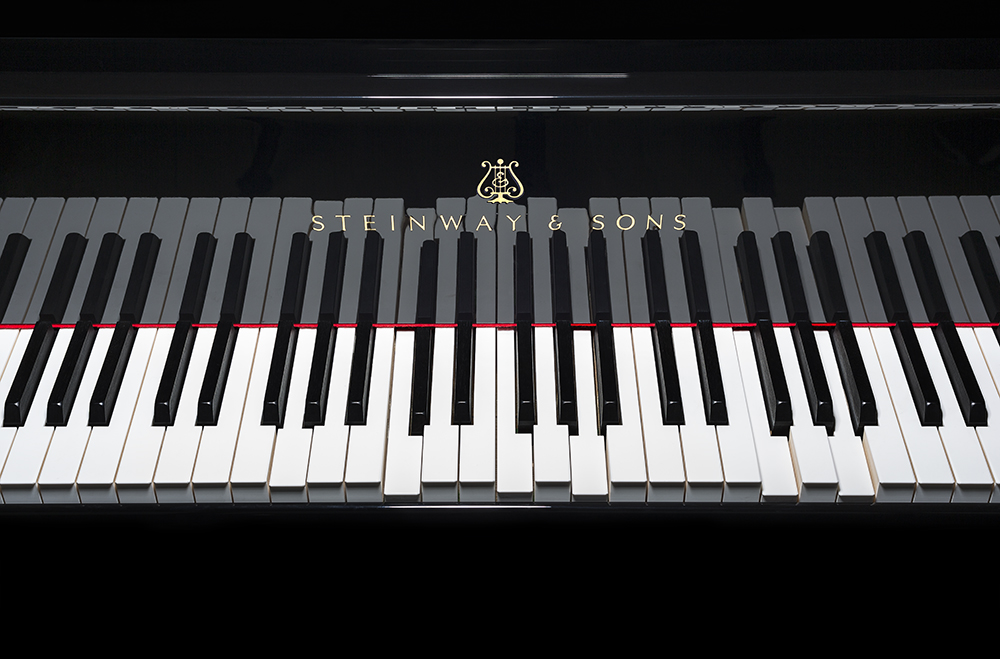
Spirio player piano by Steinway & Sons
In the last classical music season, a staggering 98 per cent of international solo pianists chose to perform on a Steinway & Sons piano. It’s a market domination secured by generations of business acumen, unerringly high standards of production and commitment to technological innovation. Steinway’s latest product, which epitomises these ideals and seeks to further cement its place as the world’s leading piano manufacturer, is the Steinway Spirio: a high-resolution digital player piano for the home.
While digitised player pianos have been around for a decade or more, Yamaha’s Silent System being the most notable example, the Spirio sets a new standard for accuracy, giving the most precise reproductions possible via cutting-edge digital technology, so that it is now virtually impossible to distinguish a reproduced performance from that of a live artist.
With each Spirio, Steinway has included an extensive library of recordings, drawing from its 1700-strong roster of leading world pianists, and preloaded them onto a complimentary iPad. Musicians as diverse as classical pianist Olga Kern and jazz musician Bill Charlap have already contributed exclusive performances, with many more to follow. But the Spirio’s pièce de résistance – as with each and every one of the company’s instruments – remains the Steinway sound.
But how is this trademark sound manufactured? To gain an insight I visited the Steinway factory in Hamburg to meet chief voicer Wiebke Wunstorf, who 36 years ago became their first female apprentice, aged just 17. Today she is known simply as ‘the ear’, as she is responsible for ensuring that the tone of every instrument is perfect before it leaves the factory.
In her workshop, each string is rapidly tested against its neighbours while she listens attentively for the desired marriage of “power, brilliance, and clarity”. The felt of each hammer is then delicately filed until the sound is deemed perfect. String by string and note by note she gets through, on average, seven pianos a day; only when her ear is satisfied can the instrument be released for sale.
“Steinway runs in my blood,” Wunstorf says. “My mother, my brother and my ex-husband all worked here, so it’s my life.” More than any other employee, she seems to embody Steinway’s perfectionism – a perfectionism mirrored by the Spirio’s reproductions, which themselves epitomise the marriage of exacting craftsmanship and technology that has made the company’s name.
This article has been taken from issue 17 of PORT. To buy a copy or subscribe, click here
PORT discovers how the latest offering from British audio brand Bowers & Wilkins, the 800 Series Diamond, continues a culture of research and development instilled by its founder, John Bowers
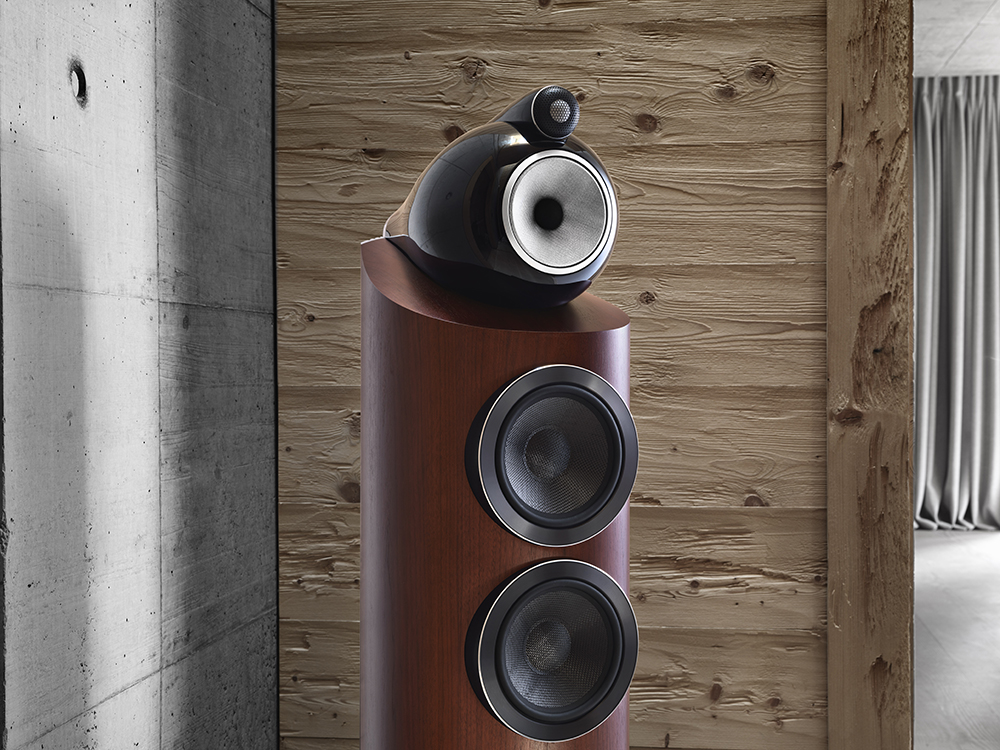
804 Series in Rosenut
In 1974, Bowers & Wilkins (B&W) revolutionised hi-fi equipment by taking inspiration from technology designed to stop bullets. The brand’s distinctive kevlar speaker cones offered greater rigidity and less distortion than conventional aluminium and visibly marked B&W systems as higher quality products. Four decades on, B&W is moving away from its iconic yellow speakers and even reconfiguring its manufacturing plant in West Sussex for the sake of continued innovation and the latest iteration in its flagship 800 series.
Apart from the 800 series’ synthetic diamond tweeter (the small speaker that produces the highest frequencies), B&W engineers have set about redesigning the loudspeaker from scratch. In addition to replacing the kevlar mid-range cones – the culmination of eight years of research – the bass unit and the speaker’s housing have been completely rethought. The new 800 Series is a testament to the spirit of constant research and development that stems from the founder, John Bowers, who produced the company’s first speakers by hand in 1966 at the back of an electrical shop in Worthing, a coastal town in south England.
Here, we to chat to B&W’s product manager, Andy Kerr, to hear how the company has evolved since then and learn more about John Bowers’ philosophy of ‘True Sound’.
Bowers & Wilkins 802 Series Diamond in White
It’s been five years since you last updated the 800 Series Diamond. Why is now a good time to renew it?
With every new model or series we introduce there’s always an element of ‘life-cycle management’ in our thinking, but the primary reason driving us in this instance has been our success in breaking new ground in drive unit and loudspeaker technology.
The engineers at our Steyning research and development facility have made some significant breakthroughs in the course of the past few years and of course, we wanted an opportunity to incorporate them into a new product as soon as was practical. As our flagship range, the 800 Series Diamond is the perfect vehicle for that.
What makes the 800 Series B&W’s flagship reference speaker?
Our aim is always to make a better loudspeaker. Of course, the more demanding your aspirations for that loudspeaker, the harder you have to work to make it better. And with the 800 Series, we have some pretty stringent demands. It’s always been our technology statement – the best that we are able to deliver at any given point in time.
With each new iteration, we’ve always tried to raise the performance bar as high as we possibly can… We hold nothing back. To put it another way: if you wanted to define Bowers & Wilkins, listen to an 800 Series loudspeaker.
Can you talk us through the basic steps of the redesign process? How long did it take?
The project itself took three years, but some of the research work behind several core technologies took much longer; we began work on the Continuum cone back in 2008.
Our benchmark for performance is always ourselves. Over time, we have developed or adopted more advanced measurement and simulation equipment that gives us greater insight into the behaviour of our loudspeakers. So, we began the process of developing the new products by accurately measuring and modelling our existing loudspeakers and identifying areas where we could improve.
803 Series in Rosenut
Why do you use synthetic diamond for the tweeters?
We want our high frequency drive units to preserve the correct ‘pistonic’ shape without distortion. Diamond is an exceptional material to help us deliver that. It’s phenomenally stiff and light, so it stays in the optimum shape for far longer than any normal drive unit. As a result, we get clearer, more accurate treble.
Can you tell us more about John Bowers’ ‘True Sound’ philosophy and how it applies to this new 800 Series release?
John was a passionate music lover and regularly attended concerts. He started designing and building speakers because he couldn’t buy an off-the-shelf design that could replicate the same sound experience in the home.
True Sound is simple to explain. Our loudspeakers should not change, colour or in any way obstruct the intent of the original artist or performance. We want you to hear what was recorded, pure and simple. Another way of expressing the same sentiment is John’s adage, “the best loudspeaker isn’t one that adds more – it’s the one that loses the least.”
What are the main challenges with designing a speaker system that works for the home, but also in a professional studios like Abbey Road?
There’s actually no specific challenge to it at all. We just make the best loudspeaker we know how to make, one that fits with the principles of True Sound. That’s why our loudspeakers are often used by professionals as well as home enthusiasts.
Nicolas Godin, one half of downtempo French band Air, writes about the iconic Stevie Wonder album that influenced his career, exclusively for PORT
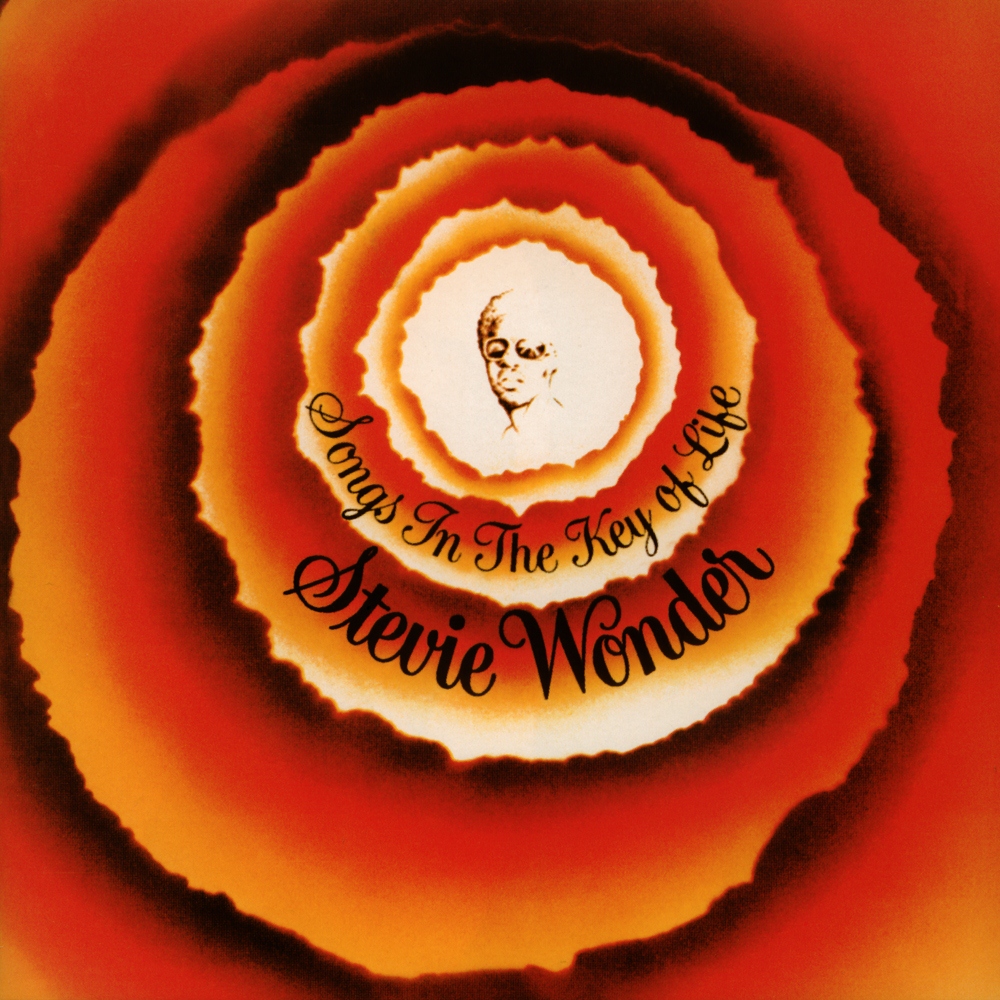
Image courtesy of Motown Records
Many albums are in my pantheon of legendary music. One of them is Stevie Wonder’s Songs in the Key of Life
It sums up all the things I like about music because it sounds like the best of all worlds, combined. There are the melodies, solid songwriting, the groove that I love in soul records, his amazing voice, etc. But on the top of this is the production. Stevie Wonder uses electronic synthetisers in such a warm and experimental way, which really made me think that machines can sound both soulful and sentimental.
At the beginning of my career, before I decided to record using vocoders and Moogs, I instinctively associated machines with the robot world. I admired Kraftwerk so much at the time but, inside of me, I wanted to make a sensual record, so I gave up the industrial-shaped sounds… I started to buy new equipment by looking at the back of Stevie Wonder and Herbie Hancock record covers, because everything they used was listed on there.
I think that hip hop and R&B records are the most avant-garde forms of electronic music that you can find – they are much more adventurous than any so-called ‘electronic’ records that I hear these days. If I want to hear highly experimental music made with computers and samplers, I always turn to the production of R&B artists. And I think Stevie Wonder is the one who started this phenomenon.
Nicolas Godin’s new solo album, Contrepoint, is out now on Because Music
The Horrors synth player, Tom Furse, discusses some of the tracks he picked from the Southern Library of Recorded Music for his new project based on the exotica genre: Tom Furse Digs
This is the opening track of the compilation and features many of the hallmarks of exotica, without actually being exotica. The flutes, tune and Latin percussion are all totally reminiscent of Martin Denny, whom I believe coined the term in the first place. I guess I’ve always had a bit of a soft spot for the kitsch, I think it was being into The Cramps and B-52s when I was young and impressionable. They embraced the trashiest aesthetics and turned them into something weird and alien, just as John Waters did in his films. Some people use the term ‘elevator music’ when they hear this, but that’s bollocks – show me the elevator that plays this and I’ll immediately take up residency in that building… I hope that by listening to the compilation people might be able to move beyond such crass terms for music and maybe start to appreciate what beautiful sound worlds this kind of music invokes.
When I went to the Universal Publishing Production Music archive, where they keep all the vinyl library records, I was expecting to find a library full of fat drum breaks and proto-techno Moog nonsense. Instead, I was confronted with tracks like this, simmering hot beds of jungle jazz. That suited me just fine. I’d been into exotica and surf since The Horrors began and here was a chance to do something a bit different within the library compilation world. A lot of this music had never been publicly available before, so it was like being an explorer in an uncharted land. Like all my musical activities, putting this compilation together started to filter through into my own music-making. Library music is all about creating an atmosphere, about lending a scene the perfect soundtrack. When I was making my ‘Child Of A Shooting Star’ EP, that idea was very important. Each track had to have a scene, a story, even if was just imagined. Through that the music took on a meaning beyond musicality, for me anyway. The listener has to make their own scene up, but hopefully I’ve given them a push in the right direction.
Following the release of his latest album Covered, Bluenote pianist Robert Glasper shares three influences that inspired his choice of tracks on the record
Robert Glaspar Trio – image by John Rogers
Miles Davis – Kind of Blue
I didn’t really get into Miles until I was in high school or college, but once I did I realised that he’s the ‘Dr. Dre of jazz’. He was a master and not only in terms of his music. Away from his instrument he was still Miles Davis. He was like an idea, there was an aura around him… he was not just a guy who played trumpet really well. He changed with the times and was a master at getting the right people around him. He was just an amazing guy. Every 10 years he changed his style and approach. No one has evolved as much in their career as Miles Davis has, especially not in the jazz world.
Kind of Blue is one of the greatest Miles Davis albums – if not the greatest album – of all time. I just love the way they recorded it and the honesty of it. My favourite track on the album is probably Blue in Green. It’s my favourite jazz ballad and probably the shortest too… It’s only eight or ten bars, but the chord changes are just so dope. I love minor, dark sounding songs. Especially the ballads.
Radiohead – In Rainbows
When I first put on In Rainbows I couldn’t take it off. It’s one of those albums that you can play all the way through. That’s rare these days because people don’t make albums anymore, it’s all about track-by-track. It’s not a complete box anymore. So, it was great that Radiohead came out with an album that you can actually put on and not turn off. It’s one of my favourite albums of all time. I just love the way it sounds, how it flows, the writing. Reckoner is such a dope tune. I love that the melody is so simple and meaningful.
Joni Mitchell – For The Roses
For the Roses is a great album. I think a friend of mine hit me with the record when I was at college. Barangrill was what pulled me in, he played me that song first and it’s definitely my favourite tune on the record. I love the song’s poetry and its changes… I love what she’s singing about.
Joni’s very blue with her lyrics. She’s talking about everyday shit and not trying to be particularly deep. She’s just like ‘Hey, I work for the gas station dude. I was pumping the gas and singing Nat King Cole.’ She just tells you what happens. I love that. I also love Joni Mitchell as an artist because she has changed so much over the years. Early Joni Mitchell has got that light, creamy voice but now you listen to her and she’s super dark, super melancholy and rough yet beautiful at the same time. In her music you can see her life and her transitions. I love artists who put that out there for you to see.
British musician and vocalist Ghostpoet discusses the lasting influence of Badly Drawn Boy’s debut album The Hour of Bewilderbeast
I was a mere seventeen-year-old when The Hour of Bewilderbeast was released and knew nothing about Damon Gough, who was also known as Badly Drawn Boy. I had never heard a note of his music, but one random visit to Woolworths on Tooting Broadway caused our worlds to collide and my life would never be the same again.
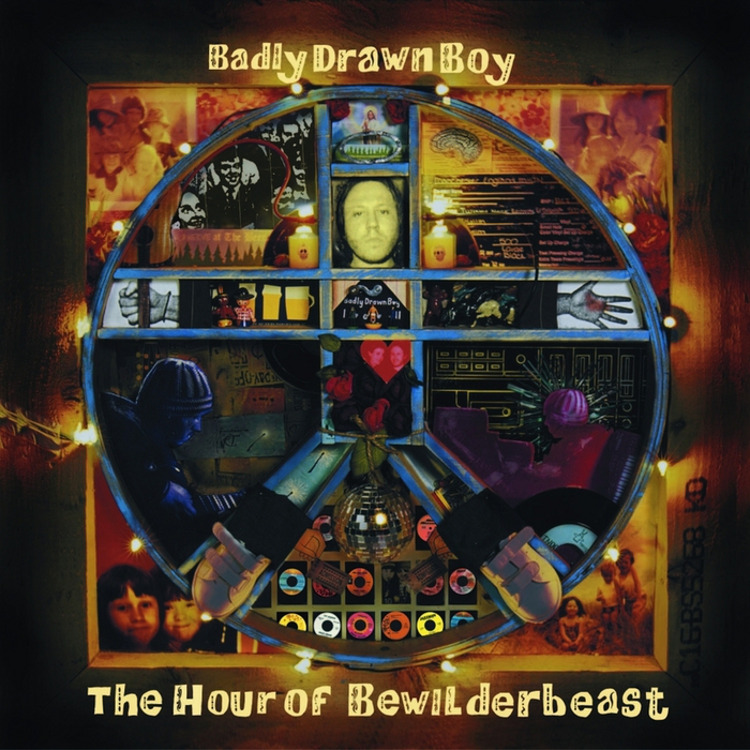
I purchased this record purely off the strength of the album artwork, designed by Andy Votel. It felt like there was a world full of mystery behind that cover waiting for little old me to discover…who was I to resist?
The Hour of Bewilderbeast album cover – courtesy of XL Recordings/Twisted Nerve Records
From the opening cello of The Shining ’til the birdsong outro of Epitaph I was mesmerised. Here was a record encompassing so many genres I had yet to discover and so many emotions I had yet to fully understand. It was as deep as the ocean; layered, intertwining, experimental, honest and thought provoking.
It sounds as fresh today as it did fifteen years ago and I love it now more than ever. It’s hard to comprehend my world without this album in it, to be honest. It’s a masterpiece that still shines bright in my eyes and, every so often, brings a tear to them.
San Fermin founder Ellis Ludwig-Leone on penning music for the New York City Ballet and composing with motion in mind
Ellis Ludwig-Leone, founder of baroque pop band San Fermin
Recently, I’ve written an unexpected amount of music for dance. I am just now sitting in the back of the tour bus finishing a piece for the New York City Ballet, my fifth piece for dance in the past two years. In this short period of time, it has been a steep learning curve. Even now I am not sure of the shape of things until I’m sitting in the audience on the night of the premiere.
Writing music meant for motion – running, jumping and impressive feats of athleticism – requires a constant awareness of that purpose. No matter how many notes I jam into a piece, it’s going to take a backseat to the dramatic and very physical things happening onstage. Often, it’s best to leave some space and not clutter things up. This is secretly great news for me, as it’s a sort of get-out-of-jail-free card; even if the music gets stuck, the dance whirls on, keeping things moving. It relieves some of the burden of getting from point A to point B.
When I write for dance, I’m looking for the moment where sound and movement are locked in a give-and-take… the sense of two things inhabiting and weaving through the same space. When this happens, it is a gratifying thing. To hear the music and simultaneously see it listened to and understood (by the choreographer and dancers) is surprisingly personal.
Usually, the scariest thing about hearing your own music performed is the fear that the listeners aren’t experiencing it the way you do i.e. the way you did when you wrote it. A bored audience is a gut-wrenching ordeal. Each little cough or shuffle of a programme is magnified a hundred times in your mind, and by the end of the piece you are so mired in insecurity that you never want to hear the thing again. But when there are dancers onstage, so clearly involved in the music, it feels like there’s someone up there translating things for you, a reassurance that you didn’t mess it all up. This reassuring feeling runs through the entire process of writing the piece.
When I work with New York City Ballet’s Troy Schumacher, I’m constantly sending him demos and drafts. As he choreographs, he spends so much time listening that he learns the contours of the piece possibly better than I do. As I finish it, it’s helpful to have him asking important questions I might not have thought to ask myself. By the night of the performance, the piece has been worked on from so many angles that it feels like a lived-in document… marked up, cut up, sped up and slowed down, spliced, reduced, counted to, stopped and restarted endless times. Arranged and rearranged and moved around until everyone feels like they own some part of it, which is always the best kind of musical experience.
Port pays a visit to The Vinyl Factory in west London and speaks to its creative director Sean Bidder about his connection with the physical record
I’ve always been fascinated by records. My parents lived in New York in the 1960s and used to travel up to Harlem every week to go see the best musicians play. They were into jazz and amassed a pretty decent collection of jazz albums, with some wonderful artwork. I particularly remember the classic Blue Note stuff – John Coltrane, Thelonius Monk, etc – but also lots of psychedelic sleeves by jazz-fusion bands like Weather Report. I remember flicking through them as a kid and freaking out; I was more inspired by the artwork than the music at that age.
The first records I bought were Adam and the Ants’ Prince Charming and the Manchester United FA Cup theme tune, in the same shop, on the same day – I must have been about eight. I guess the collecting and buying bug started a lot later on, with dance music and house music in particular. Going into Soho, with a list of records to buy gleaned from reading magazines like i-D or The Face, hunting them down, meeting other people, discovering new music, it was the start of a great adventure.
What sets vinyl apart from other formats is the physicality, the tangibility, the uniqueness of a record as an object, as well as the pleasure in actually putting one on a turntable. Sitting back and playing it… or setting it up and manipulating two records with a mixer, getting creative with it. It’s fun. FLAC as an audio format is a perfectly good, sound-wise, but it’s a digital file. Where’s the fun in that?
Most musicians and producers I know want to release their music on vinyl and a lot of passionate music fans still want to continue purchasing vinyl. I think it’s less about the industry and more about the artistry. And at the end of the day that’s what music is: an art form.
We’ve pushed vinyl in some exciting new directions, collaborating with visual artists and designers to create some incredible releases on The Vinyl Factory label. I’ve never really been a fan of unusual shaped vinyl, that feels like a gimmick. For me, it’s more about creating a beautifully crafted object and being as creative as possible with the format, wether it’s the artwork or the concept. And, of course, having fun.
There’s always been a passionate core of vinyl collectors, enthusiasts and evangelists, be they people like Jack White or independent labels that have consistently put their music out on vinyl. What’s been surprising and encouraging is that a whole new generation of young music fans are buying vinyl, kids who have grown up knowing that they never actually have to pay for music. I think it’s more than a fad, it’s a pleasurable hobby, and – like slow-cooked food – perhaps investing more time into something you enjoy reaps greater rewards.
How The Vinyl Factory makes records
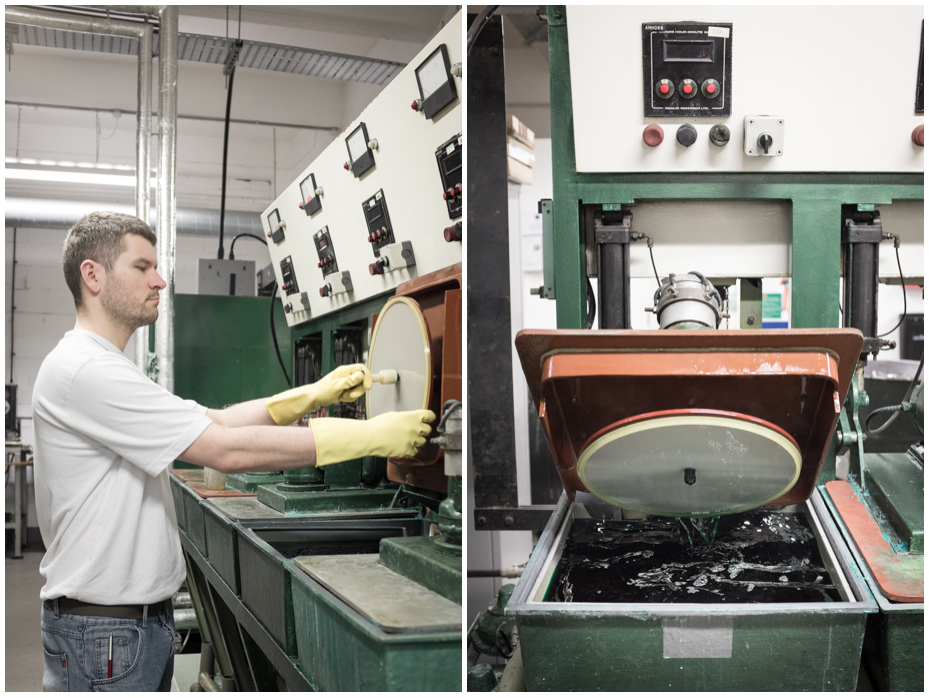
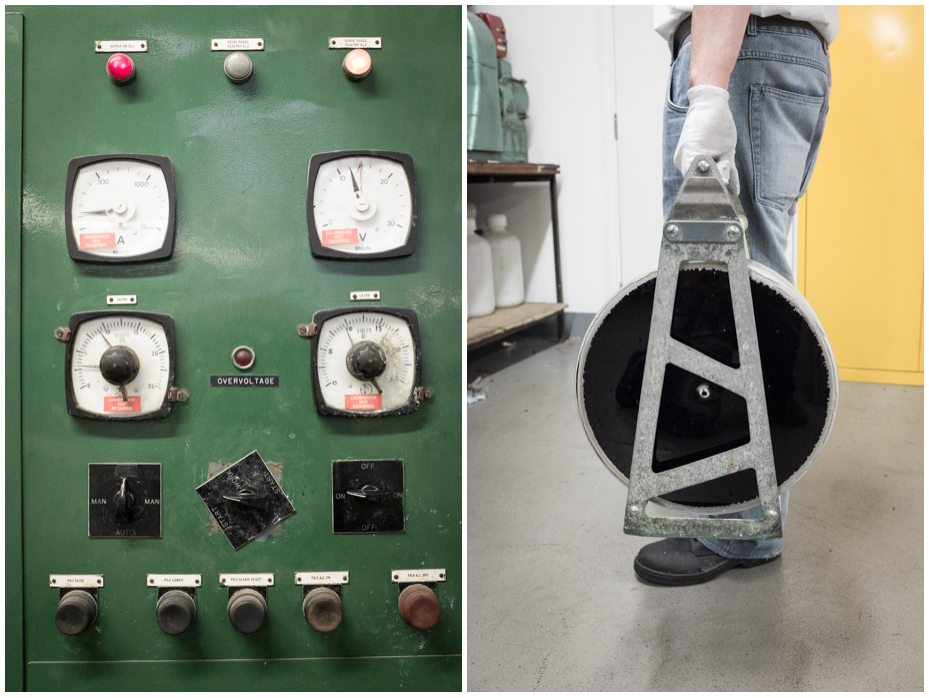
1. A blank record, or ‘lacquer’ is visually inspected, de-greased and sprayed with a silver nitrite to form an electrically-conductive silver layer on the surface. It is then submerged into an electro-plating bath consisting of nickel pellets and chemicals to form a ‘master’ – a negative of the original music master.
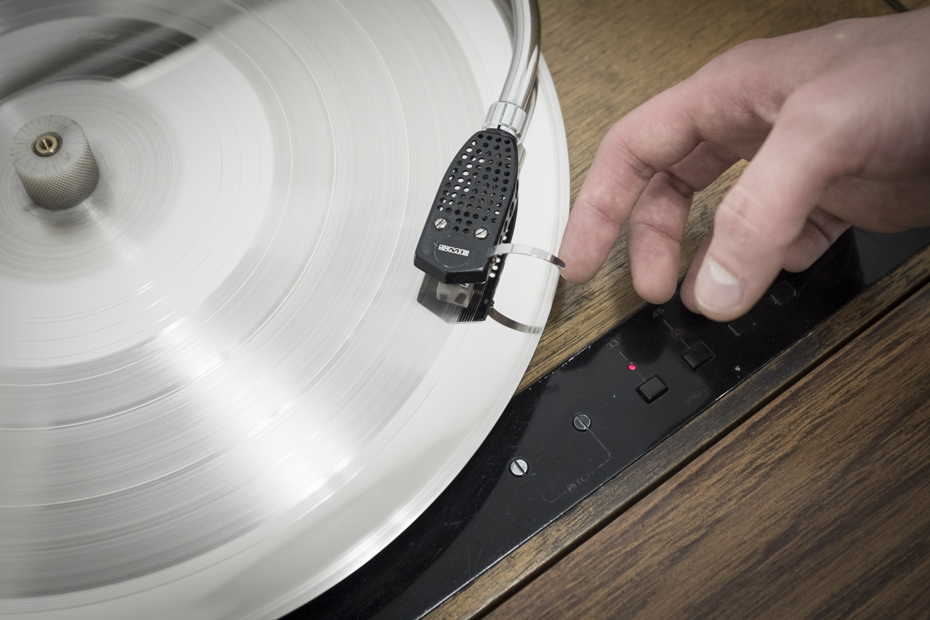
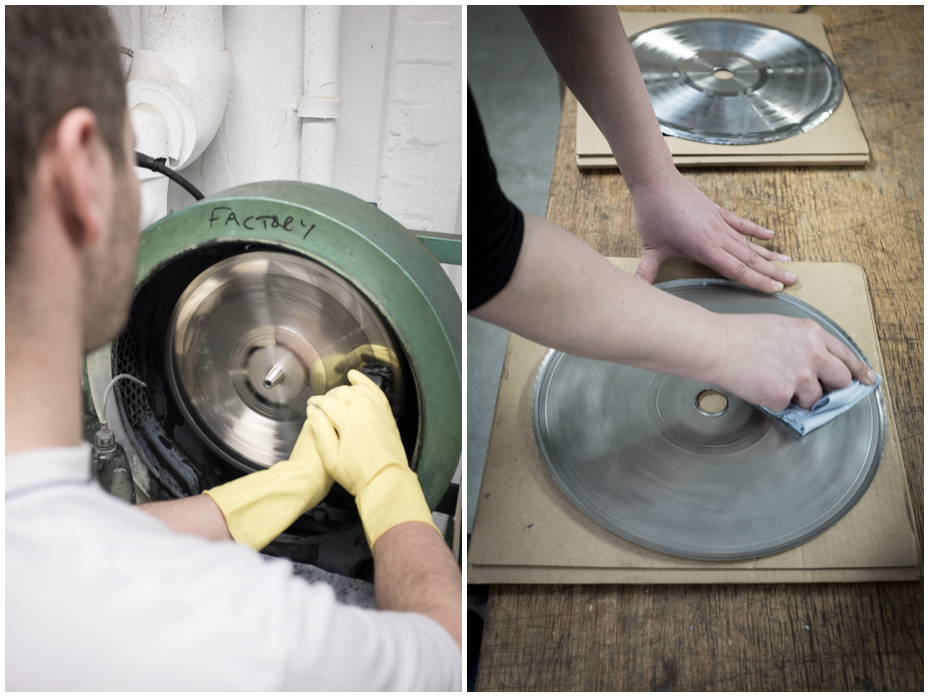
2. The resulting master is now cleaned, desilvered and again plunged into a nickel-plating bath to form a ‘positive’ – a nickel replica of the original lacquer. This positive version is polished to remove ‘spurs’ (lacquer debris) and played in a listening booth in order to detect any aural defects. Any imperfections at this stage can then be corrected.
3. Once tested and approved, the positive record is now put back into the nickel-plating bath to form another negative, called the ‘stamper’. Once the metalwork is carefully separated again, the stamper is then coated with a protective plastic film and ‘formed’ to the shape of the pressing machines’ mould blocks. Each stamper can press around 1000 records, before needing to be replaced by simply growing another from the positive.
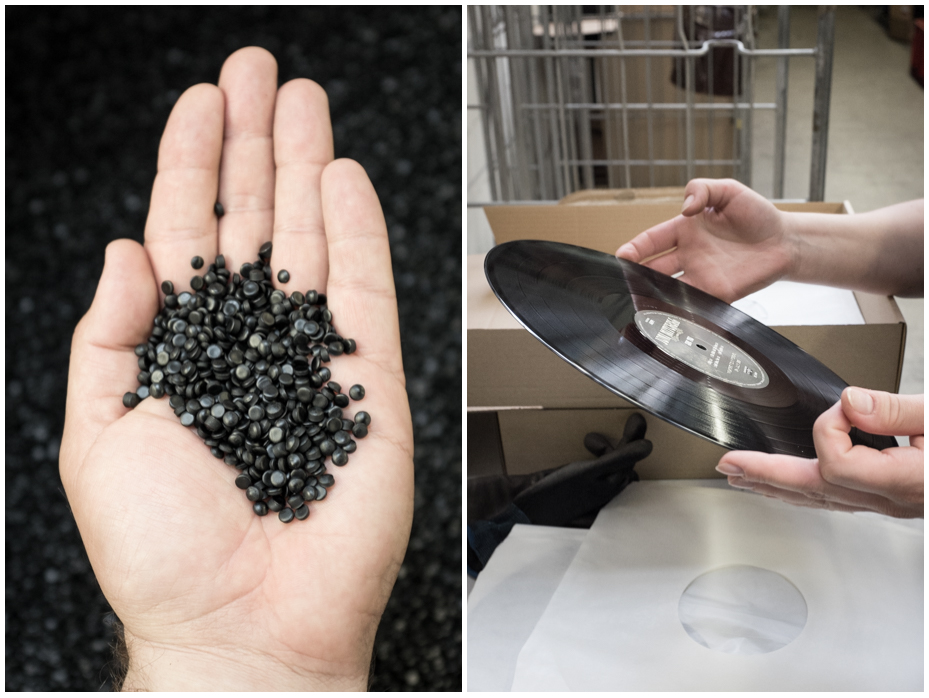
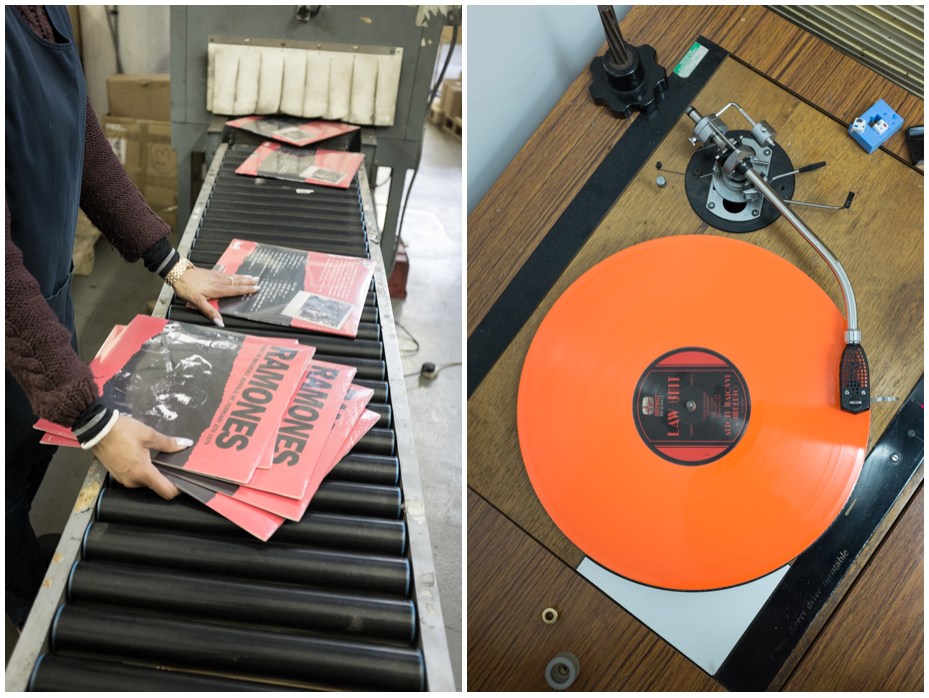
4. Once pressing commences, the records are visually and aurally inspected, periodically, to detect any imperfections. Each record is automatically machine-packed into an inner sleeve to ensure that it isn’t handled during the making process, maintaining the quality of the record.
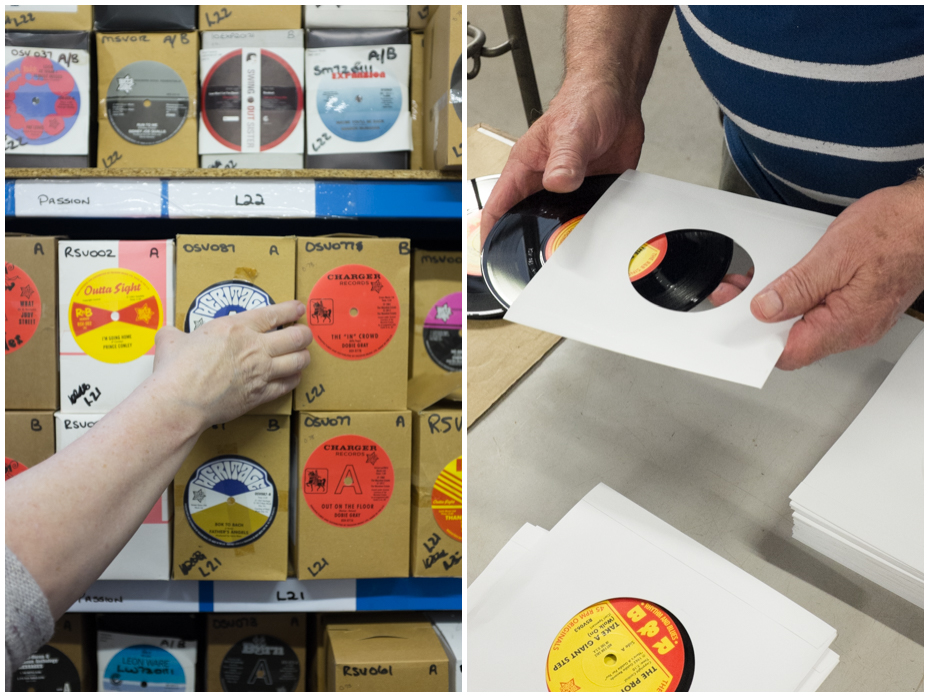
5. The records and inner sleeves are then hand-packed into outer sleeves before undergoing one final quality check. After that, they are shrinkwrapped and stickered (if needed) by hand, before being sent to the distributor, and eventually finding their way onto the shelves of record shops around the world.
PhotographySteve KenwardSpecial thanks Stephen Galton