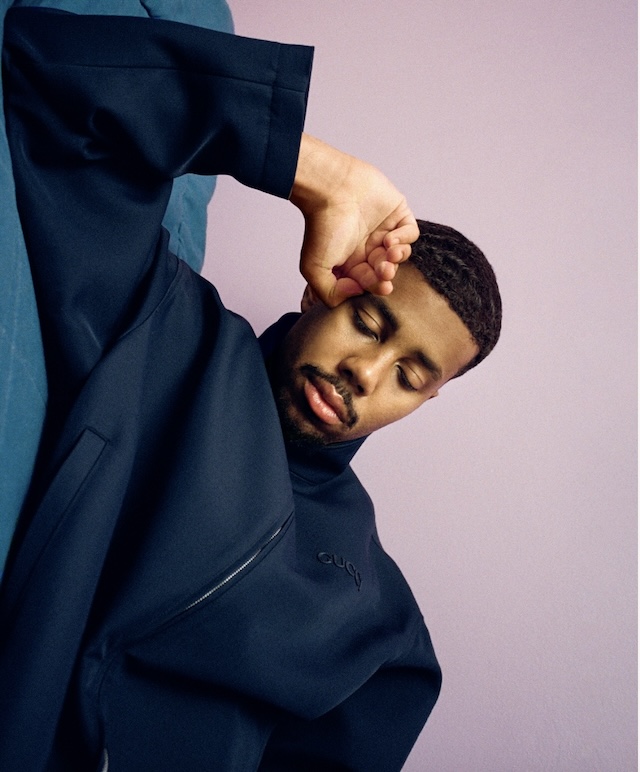
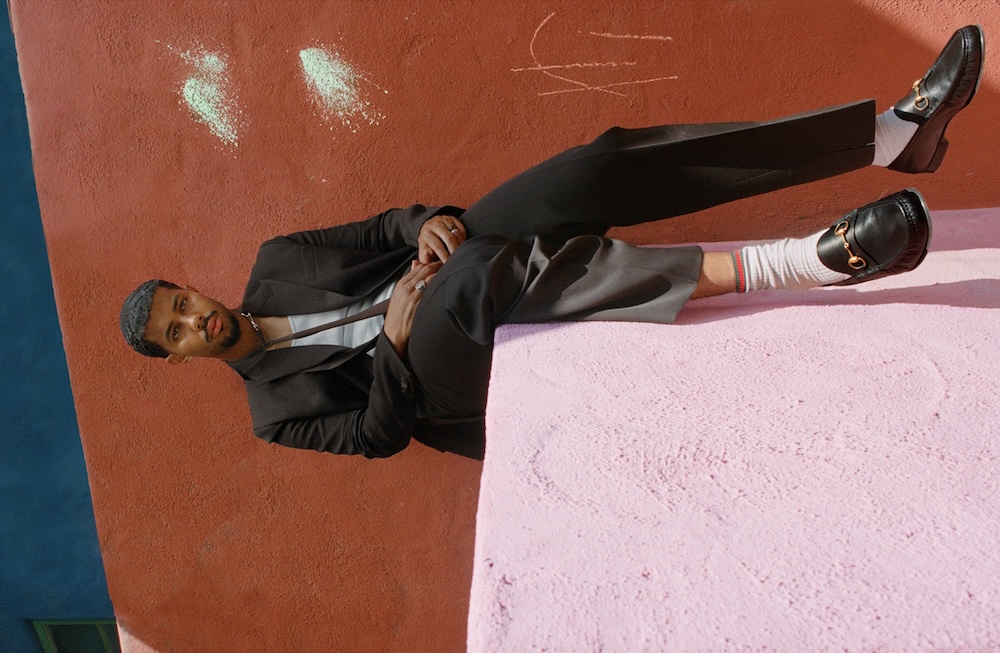
The Long Weekend

From sweaty club nights to pyjama-clad family festivals, Rob da Bank has spent three decades shaping the UK’s music landscape. Below, the DJ, broadcaster and Bestival founder reflects on the rise and fall of rave culture, and why slowing down might be the most radical thing he’s done yet

For those lucky enough to have danced through the 1990s, club culture then looked like it was about total surrender. You lost yourself in the music, guided by strobes and basslines rather than the flash of an iPhone. No one was filming you mid‑groove; there was no next‑day feed, no meme risk for cutting shapes badly. Just the moment, in all its sweat‑soaked, genre‑fluid glory. Today, around 400 night clubs in the UK have closed, which is more than a third of the total number. Clubs are too expensive, people aren’t going out as much, and the younger generation are more focused on health and wellness than they are drinking. And for those who do go out, they likely have their phones tethered to their hands. As Rob da Bank puts it, “Everything’s recorded”. He’s not mourning the death of clubbing so to speak, but he recognises that there has indeed been a shift. “Maybe it will just shrink to a smaller, stronger scene – like vinyl did. People said it was dead, and now it’s booming again. It’s cyclical.”

Rob da Bank, also known as Robert John Gorham, would know. A DJ, broadcaster and festival founder, he has helped shape the UK’s music landscape from the ’90s onward. He co-founded the Sunday Best club night in 1995 in south London, launching legends like Basement Jaxx and Fatboy Slim. In 2000, he co‑established Sunday Best Recordings with Sarah Bolshi, releasing artists including Groove Armada, Lemon Jelly and Max Sedgley. From 2002-2006, Rob da Bank and Chris Coco presented The Blue Room on BBC Radio 1, a late‑night sanctuary for chill‑out, electronica and undiscovered gems. And, in 2004, he co‑created Bestival with his wife Josie – a utopian, costume-loving four‑day festival that transformed the Isle of Wight into a playground of weirdness, wellness and world-class lineups (Roxy Music, Björk, The Cure, Elton John, The xx and Stevie Wonder being just a handful of my own personal favourites I was fortunate to see). At its peak, it drew 50,000 people and scooped multiple UK festival awards before folding in 2018.

But the party didn’t end there. The couple’s offshoot event, Camp Bestival, launched in 2008, continues to thrive as a family-first affair with just as much heart. Now in its 17th year, the next edition (held on 31 July-3 August at Lulworth Castle, Dorset) features a pyjama party theme and sets from Basement Jaxx, Sugababes, Sir Tom Jones, Goldie and a healthy dose of glitter-fuelled chaos for all ages.

In this interview, Rob da Bank reflects on the early days of DIY parties, the rise and fall of Bestival and his current chapter that still includes DJing and festival-throwing, but now also ice baths, saunas, self‑discipline and slowing down with his wellness brand Slomo

You’ve had quite the journey – from clubs to festivals to wellness ventures. Let’s rewind a bit. Was it university where things really started taking shape?

I suppose I was always a bit of a party starter. I wasn’t the class comedian, I wasn’t sporty and I wasn’t academic, so by the time I was 15 or 16 I was looking for how I could stand out. That’s when I started putting on beach parties. Then when I got to London, I became more and more into it. I didn’t have a plan – I wasn’t thinking I’d become a DJ, be on Radio 1 or run festivals. I’ve stumbled into everything I’ve done. But I think it all stems from me and Josie loving making people happy, whether through music, festivals or wellness. There’s something in both of us that just loves creating good vibes for others – that was always the ethos at Bestival. You walked onto that site and knew we’d made an effort to give you the best weekend ever.

Do you remember the first night you put on or your first DJ gig?

Not the very first, but I do remember early DJ sets in Southampton, where I grew up. Then later I was known for the club Sunday Best, which became the foundation for Bestival. It was in a rundown tearoom on Wandsworth Road. A bit grimy, kind of cool. Entry was £1.99 – partly a joke. At the time, pubs were still old man boozers and clubs were playing either trance, techno or hip hop. No one was mixing it up. I was like, “Why not?” That became Sunday Best’s thing. We’d play anything: house, electro, pop, funk, Bollywood. People loved it.

Were you raised around music? Or was that something you found for yourself?

I grew up in a little village, played in my dad’s brass band, so quite traditional. But my escape was listening to John Peel on Radio 1. In the ’90s, I got into the whole Manchester scene – Stone Roses, Happy Mondays – even down in Portsmouth. I got my first record decks when I was 15 or 16 and started DJing a bit. It all grew from there.

Sunday Best launched in the early ’90s – what was that scene like at the time?

I’m super nostalgic for the ’90s. It was when whole genres were being born – jungle becoming drum and bass, rave culture exploding. I’d go out six nights a week to everything: from trance raves to Fabio & Grooverider, to the Whirligig and Sunday Best, to the WAG club to see Gilles Peterson. London was incredibly eclectic. There was no internet yet – you found out about nights from flyers in record shops or listings in NME. I remember broadcasting on one of the first pirate internet radio stations called Interface in a little spot in Smithfield. They were like, “You’re broadcasting to the world!” There were probably ten listeners, but it was magical.

Who came to Sunday Best? Was it an eclectic crowd too?

Massively. Jazz heads, crusties, punks, New Romantics, pop kids. David Byrne dropped in. Björk came by a few times. Portishead played one of their first gigs there. Morcheeba were next door and used to swing in. But it never felt starry – it was just people coming for the music. We had residents like Andrew Weatherall and Harvey, which is wild to think about now. We never paid more than 20 or 30 quid, our door income was crap. It was ramshackle. Some nights were packed; other nights it was ten people and a dog.

Groove Armada played there too, right? You were clearly supporting new talent – is that what led you to start the label?

Yeah. Looking back, my life moved in phases. I started Sunday Best the club, then Sunday Best the label, then joined Radio 1, DJed more, did music journalism – all at once. I was assistant editor at a music mag for nearly a decade. I never wanted to just do one thing. I was never a good enough DJ to just go and be a club DJ. I was never on Radio One for more than one show a week, so that wasn’t a full-time career. The festival wouldn’t have kept me going all year round. I don’t know whether it’s that I’ve just got short attention span, or whether I actually just wanted to do lots of different things. I’m 51 now, and it probably drives my wife, Josie, a bit around the bender. I’m still trying to push myself into loads of new areas. Life is just so exciting. I want to climb mountains, sail ships, do saunas and contrast therapy, meditate… the lot. 

What memories really stand out from those early years?

So many. Walking into Radio 1 every week and seeing John Peel, Pete Tong, Annie Mac, Zane Lowe. Being on that poster with all the Radio 1 DJs. And obviously Bestival. Running it with Josie and then starting Camp Bestival, which is still our day job. The label’s still going 25 years later, and I still DJ now and then. I love that I can dip in and out of all these different worlds.

What was the initial goal when starting Bestival?

We were obsessed with other festivals like Glastonbury, WOMAD and Reading. At the time, there weren’t loads like them. Then new ones like Secret Garden and Boomtown popped up. We didn’t exactly spot a market gap – we just thought, “Why don’t we do this?” We’d been throwing parties for years, had hosted the Radio 1 stage at Glastonbury, and we were really into the idea of dressing up for festivals, which no one else was doing yet. So we hatched Bestival, not realising how big it would become or how much work it would be. It was amazing, but it was also a beast.

How did you curate the lineup each year?

Because I was on Radio 1, I was always looking for new music. That was Bestival’s DNA, to have strong headliners and a big undercard of breaking acts. Ed Sheeran, Florence, Friendly Fires, alt-J – we gave them space when they were coming up. I wouldn’t take credit for breaking anyone, but I think we definitely helped some acts reach new audiences. I didn’t even realise Stormzy had played until someone showed me footage. We were the first to really embrace grime, with a dedicated grime stage before anyone else was doing it. We liked pushing boundaries.

Was curating a festival like curating a radio show?

Definitely. I just dug into my musical brain. I didn’t overthink it, I just booked what I loved. Having a budget to bring together Lee Scratch Perry, John Martyn, OutKast or Aphex Twin was a dream. We went after my fantasy list. Elton John and Stevie Wonder were near the top, and we got them. Others we chased but didn’t land – Kate Bush, Prince, Dolly Parton. But we had an incredible hip hop run too like Beastie Boys (twice), Snoop, Missy Elliott, Wu-Tang Clan. That was a proud chapter.

What led to the end of Bestival?

Festival culture became saturated. There were more and more events like us, and our audience had other options. We started losing that “flavour of the month” feeling. That coincided with some financial trouble – liquidations and horrible business stuff. It got dark. We never got into it for money, so it felt like a sad way to end. Luckily, we’d already started Camp Bestival in 2008. As we had kids, we wanted a family festival where you could still have fun, but without the 5am bedtime and chaos.

Is that why Camp Bestival has lasted?

If Bestival hadn’t hit financial trouble, it could still be going like Parklife or Boomtown. But Camp Bestival suits where we are in life. It’s not easier, but it’s more wholesome. It aligns with how we live now. Our kids have grown up with it – from our 19-year-old in London to our youngest who’s eight. It’s a family thing now.

Let’s talk about your latest chapter: wellness. You’ve launched a sauna project on the Isle of Wight. What inspired that shift?

We’ve always been into wellness. Josie and I learned yoga and meditation in our early 20s. It’s not like we hit 50 and thought, “Let’s go woo-woo.” But hedonism did start to catch up with us, and we needed more balance. That’s how our project Slomo started, originally called Slow Motion. It’s about slowing down. Saunas, ice baths, contrast therapy – it’s huge in Scandinavia and we’re just catching up. It’s not just about sweating and freezing, it’s about meditation, yoga and daily rituals. We want it to become one of the UK’s most respected wellbeing platforms, both physically and digitally. It’s a lifestyle, like Bestival was, just with a different focus.

Would you say festivals also contribute to wellness, in a way?

Absolutely. It’s still escapism. Festivals are about stepping outside real life, entering another world, connecting. That’s why we still do Camp Bestival and still love it. I still DJ in Ibiza, still go to Glasto. We’re not saying, “Give up drinking, sit in a sauna and be holy.” It’s all about balance. I’ve struggled with it, but I think I’ve found a pretty good one now.

Do you think club culture is in danger? Has it changed too much from when you started out?

Of course it’s changed. But not necessarily for the worse. Back then, people were having mind-bending times – for better and worse. If my kids lived like I did, I’d be worried. There’s more awareness now about drinking, mental health and anxiety. Social media adds pressure. In the ’90s, you could go out for four days and no one would know. Now everything’s recorded. I don’t think it’s the death of clubbing. Maybe it’ll just shrink to a smaller, stronger scene – like vinyl did. People said it was dead, and now it’s booming again. It’s cyclical.

Do you think the constant filming in clubs is affecting how people party?

Yeah. People are too self-conscious to let go. Some clubs now ban phones, which helps. But I’m not being fuddy-duddy – phones are everywhere. Still, if you’re being filmed all night, it kills the vibe. People need freedom to lose themselves, not perform for cameras.

What are you excited about for the upcoming Camp Bestival?

This year’s fancy dress theme is pajama party, so everyone’s in PJs all day. Headliners include Basement Jaxx, Tom Jones and Sugababes. It’s fun and for all ages. But what I love most is seeing people arriving who’ve never camped before, never done a festival. Families pop so many cherries that weekend. It’s wholesome, full of free stuff like tree climbing, woodcraft and sculpture building. Not just a beer tent and bouncy castle – it’s a dream world for kids and grown-ups alike.

How do you usually find new talent now? Has social media changed the process?

Weirdly, it’s made it harder. Back in the day, I’d get bags of records delivered, and that was it – a finite amount to listen through. Now it’s endless. Spotify, SoundCloud, Bandcamp… it’s overwhelming. Everyone and their dog’s releasing music. I love discovering new artists, but it’s harder to filter. Still, with Sunday Best and our electronic imprint Silver Bear, we’re putting out some really cutting-edge stuff. That’s still a buzz for me.

Any new ventures on the horizon?

I’m trying not to take on more, but I’ve just started managing an artist – a young female singer-producer I’ve become obsessed with. Never managed anyone before, so there’s a new string. Life should be varied. It’s not for everyone, but it keeps things exciting.

Last one – what’s the story behind your DJ name, Rob da Bank?

I wish there was a good story. I was DJing at the tea rooms where Sunday Best started, and I needed a name for a flyer. I asked the barman, Ben – I’d love to find him again – and he said, “Call yourself Rob the Bank.” It got misprinted as “Rob da Bank” and stuck. A stupid joke that’s lasted decades.


Remembering Leigh Bowery

From clubland to the art world, Leigh Bowery shaped culture in ways that are still felt today. As Tate Modern stages a retrospective, his longtime friend and muse, Sue Tilley, recalls their nights out, the making of an icon and the quieter moments beyond the theatrics


Sue Tilley, photography Maisie Cousins

“I get myself in a muddle saying things I shouldn’t,” is among the first utterances out of artist and model Sue Tilley’s mouth. Of course, oversharing only gets you in trouble if the stories you’ve got to spill are good – and that’s certainly the case in this instance. She might now live by the seaside, but she’s a London legend. A staple of the capital’s avant-garde nightlife scene, her social circle has included notables like Stephen Jones, Boy George, Princess Julia and, of course, the late Australian multimedia artist Leigh Bowery, who I’m here to talk about today. Fittingly, for two club kids, they met on a night out at the LGBTQ+ venue Heaven, shortly after Tilley moved to London from St Albans. “I met this lovely boy with a very cheeky face and not normal clothes, but same as everyone else’s, you know,” she recalls. “I mean, he wasn’t Leigh Bowery as such, he was just a boy on the scene. We made friends straight away.”

Despite having a day job – the dancer Michael Clark, with whom she lived with in a house share, “thought I was a bit boring because I worked in the Jobcentre” – Tilley spent many evenings immersed in London’s clubs as both a punter and front-desk cashier. It was in these hedonistic, experimental environments where Bowery’s creative spirit was able to flourish. While he would go on to co-found the infamous club night Taboo, he first attracted attention for his outrageous fashion sense. “When Leigh and I would go out, at first he was just one of the crowd. Then he started inventing looks,” Tilley explains. “He put his first look on Trojan because he was too nervous to wear it. When he saw the attention Trojan got, that was it, he was wearing it. Then his whole life changed.”

Fergus Greer, Leigh Bowery Session 3 Look 14 August 1990 © Fergus Greer. Courtesy Michael Hoppen Gallery

From there, Bowery gained the confidence to embody a larger-than-life persona that would launch him from the “boy on the scene” whom Tilley first met, to nightlife phenomenon and later art world darling. His multifaceted career would see him stage surreal art performances, craft colourful, kitsch costumes that scrambled the boundaries of gender and personhood, showcase his work as far afield as New York, and perform as part of the art-pop band Minty. Tilley sees Bowery’s rebellious spirit living on in the zeitgeist – particularly in today’s shape-shifting queer culture. “I see his influence in the fashion shows, I see it everywhere. Most of the people in the music charts are non-binary, lesbian, gay… people underestimate Leigh’s position in popular culture. He made dressing weird and being gay more acceptable.”

Now, Bowery’s energetic work is the subject of a major Tate Modern retrospective, a chance to bring together the ephemera of his career. Tilley features in the shadows – through letters, a painting she did of Bowery, holiday snaps and postcards. But her influence can be felt in other ways. Tilley recalls having gone with him to meet the musician Boy George for the first time, helping her artist friend to soothe his nerves as he met 80s music royalty. She also shares that Bowery’s iconic ink drip look was informed by her own practical nature. “You know, I helped him make . He was just using ink. I said, ‘I watch Blue Peter, you should add Copydex, like a rubber solution glue. Then it’ll stay and you can rip it off at the end of the night’.”

Fergus Greer, Leigh Bowery Session 7, Look 37 June 1994 © Fergus Greer. Courtesy Michael Hoppen Gallery

Some of Bowery’s best works, in Tilley’s opinion, are his visceral birthing scenarios, which he would perform as part of Minty. In these electric, shocking performances, he would carry his future wife Nicola Bateman (positioned upside down) in a harness attached to his front. Then, in an elaborate sequence, she would slither on stage covered in lube, sausage links and fake blood – as if she was being pushed out of a cervix. During these performances in the 1990s, Bowery was already ill with HIV. Looking back, Tilley is astounded at his physical resilience. “I think about the fact that he was ill at the time and how he had the strength to do it,” she recalls. “She’s only small, but it’s still heavy to have her hanging upside down. It was just an amazing thing they did.” As she notes, the performance has proved to be a rich reference in the world of fashion. “The look was copied by Rick Owens, you can see influence in the fashion shows.”

Despite the power of Bowery’s presence on the club circuit, Tilley points to his stint modelling for Lucian Freud as a major turning point in his career. “Nobody really takes club kids seriously, you have to have something more behind you,” she explains. “Lucian helped make Leigh more accepted in the art world.” It was Bowery who set up a meeting between Tilley and Freud. “Leigh thought I should work for Lucian, to be glamorous,” she laughs. “Leigh was a control freak and Lucian was a control freak. Leigh had to be the bigger control freak so he put the idea of me modelling into Lucian’s head, so that Lucian thought it was his idea.” Despite receiving advice from Bowery on how to navigate her first meeting with the celebrated portraitist, Tilley characteristically did her own thing: “I completely ignored Leigh’s instructions and did what I wanted.” Tilley would go on to become the subject of a series of arresting Freud nudes. Notably, one of the paintings – Benefits Supervisor Sleeping – broke the world record for the highest price paid for a painting by a living artist at the time of its sale in 2008 for $33.6 million.

Lucian Freud, Leigh Bowery 1991 © The Lucian Freud Archive. All Rights Reserved 2024
Sue Tilley, Me and Leigh Bowery at Wayne Shires’s club Bar Industria for the opening of S&M night Smact c.1990 © Sue Tilley

In 1994, just three years after Tilley began sitting for Freud, Bowery passed away on 31 December, aged 33. Decades later, the memory is still fresh in her mind. “We heard the news in the clubs on New Year’s Eve, such a big, strong person going like that. No one could believe it, because no one knew he was ill – he didn’t want them to,” she recalls. “I can’t believe, in 30 years, how much has changed. Even if he lived about six months longer, he’d probably still be alive now, because they found new HIV treatments.” Following Bowery’s passing, Tilley was approached by The Guardian to write his obituary, an article which would cause editors to take notice of her passion and dedication to her friend’s legacy. Shortly after, she was entrusted to write Leigh Bowery: The Life and Times of an Icon, a 1997 biography of his life which includes interviews with his social and creative circles, all of whom were eager to dedicate his effervescent talent and wit to the page.

The book gathered cult status among Bowery fans, and has been recently reissued by Thames & Hudson. This has offered Tilley a chance to revisit the book, while the Leigh Bowery! retrospective at Tate Modern has reaffirmed her friend’s importance to contemporary art history.

But the Bowery commemorated in books and art galleries is not the only Bowery who Tilley remembers. While he was powerfully, formidably creative, Tilley liked him best as a “daytime friend”. “To be honest, when he was all dressed up, I didn’t really like going out with him, it was so difficult to chat to him,” she says. “I was more of a daytime friend. People think he was really peculiar but he was perfectly normal and he was so funny, hilarious even. If you had troubles and tribulations, he’d help. He’d always be there for you.” The kind-hearted boy who would sometimes get nervous or starstruck, who was generous to a fault, and who would spend hours on the phone with her talking about nothing – that’s the Leigh Bowery which Tilley will know and hold dear forever.

Nigel Parry, Photoshoot at home © Nigel Parry

Leigh Bowery! is on view at the Tate Modern until 31 August 2025, find out more here

Leigh Bowery: The life and Times of an icon can be purchased at Thames & Hudson here

This article is taken from Port issue 36. To continue reading, buy the issue or subscribe head here

Celeste

From Brighton to the Brits, Celeste’s voice has always carried weight. As she prepares for the release of her long-awaited sophomore album, the singer-songwriter reflects on the complexities of identity, creative intuition and reclaiming her narrative

Jewellery by Cartier throughout, photography Clare Shilland

Celeste Epiphany Waite has spent a lot of time in the studio lately. She’s working dedicatedly on her new album which is due out in September, but when we speak she’s taken the day off. “I was singing last night and I was there till really late,” says Celeste with a tired chuckle, before remarking that I remind her of her half-sister. “Even the way you finish your words is similar, it’s so nice. I was thinking, I need to call her.”

It’s a clichéd trope to define someone as an old soul but Celeste has a perceptiveness about her that’s difficult to define otherwise. She’s more softly spoken than I anticipated, considering she sings with a rich vocal timbre reminiscent of a time long before the 30-year-old was born. After performing at the Queen’s Platinum Jubilee in 2022, she met Diana Ross’ creative director. “Apparently, said to him that I reminded her of Lady Day, meaning Billie Holiday,” Celeste mentions with noticeable humility. It’s her emotion-laden voice with its distinctive rasp that led her debut album Not Your Muse to be nominated for both the Mercury Prize and Album of the Year at the BRIT Awards in 2021. Just listening to the lead single ‘Strange’, where she details the unravelling of a romantic union, had me longing for a past love with a visceral ache that only heartbreak can conjure.

Her mother is the person she credits for her intuitive nature. “My mum sought out a freedom that wasn’t necessarily the norm for where she was growing up,” Celeste explains, describing her mum as having an unconventional “bohemian lifestyle” while living in Romford, during the 1980s. After venturing to Hong Kong and Thailand at 21, on a subsequent trip to Los Angeles her mum met Celeste’s Jamaican father. “They didn’t stay together very long,” Celeste says. She and her mother then moved to Dagenham in east London – which is in close proximity to Romford – to live with her maternal grandparents.

After a few years, by happenstance, a former boss offered her mum a job and flat in Brighton. “That was where my mum found her healing. It was about the aftermath of breaking up with someone and finding your confidence,” she says. The two of them “had our own independent bubble there,” Celeste sentimentally remarks, noting that it was the first time she found real friendships. Now settled in London, she reflects on those formative years as influencing, but not defining, who she presently is. “Identity is ever-growing and ever-changing for me because it’s something I find within creativity more so than in a place.”

It’s this tendency to feel into her artistry that makes her songwriting so affecting. “I have to keep this very specific openness. It’s an alignment down to the gut,” she says. “I’m accessing a stream of emotional information and memory that exists within me. It’s from my own experiences but also being a witness to other people’s experiences.” She explains that she can pick up a vibe from passing a stranger on the street. “Sometimes, a form of body language can tell as much of a story without needing to be verbalised.” Suddenly, the roles shift between us. “Do you ever have something like that?” In the act of turning the question around, she demonstrates this propensity to seek out the inner worlds of those around her.

Despite thinking she had a late start breaking into the industry, Celeste’s songwriting talent got her noticed at age 17. She wrote the grief-imbued song ‘Sirens’ about the passing of her father a year prior and uploaded the track to YouTube, which caught the attention of a manager. At age 18, the record and publishing deals came flooding in. “I didn’t take any of it because it was all geared towards me working with certain musicians and I just knew it wasn’t quite who I was.”

The choice wasn’t without consequences. “All of these offers came to me within a year of focusing on music, so I had this idea as a young, naive person feeling a bit cocky that these opportunities would come again in three months’ time.” Essentially, her unawareness of the industry back then and “how fickle it can be” stalled her dreams.

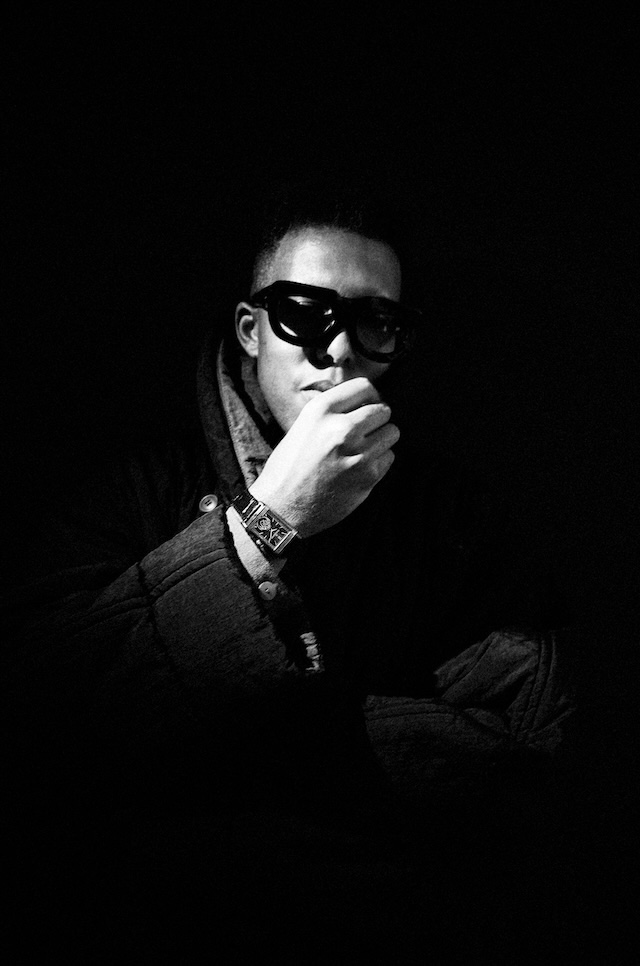
Years passed while Celeste worked at her local pub in Brighton, hoping for a change in circumstances. She moved to London in 2017 with £100 to her name and promptly got fired from her new job for spending as much time as she could making music. Her diligence eventually paid off; in 2016, she secured a record deal with Lily Allen’s Bank Holiday Records, and in 2017 she released her EP The Milk & The Honey before signing with Polydor in 2018. “At 23, I was still super young but I felt a bit more aware and knew who I wanted to be and what not to say yes to just to get somewhere.”

Although she now feels more well-versed regarding the convoluted nature of the music industry, she says it’s a continuous balancing act between herself and her label. She recalls a time when she had to convince her team to allow her to play ‘Strange’ over another song at the BRITs. “You have to let other people feel trusted but also know when to be like ‘I need to shine here, so let me have this piano chord like this’.” She describes the negotiation process as a journey towards greater creative freedom and self-belief. “I have that feeling of ‘Let me be careful because I don’t want to fuck this up and end up with nothing’ but I find my moments and just try to let my singing do the talking at the right times.”

Celeste’s self-confidence is still susceptible to the opinions of others. “I felt like all of the accolades and all of the excitement around my voice came before the album release. Then when it came out, I felt like people didn’t feel it was very good.” She’s convinced that most people only like her best-known song ‘Strange’, which has undeservedly become her Achilles heel. “When people think success has come to you instantaneously because a record label is pushing it, they’re a bit cynical about how talented you must be,” she says. Celeste tells me about a review in The Guardian that came out after her debut. “The writer said I had no backbone in my songwriting.” The way she recounts the story suggests the hurt lingers.

Momentum slowed after the album release. “I went from that high moment of everyone being interested to feeling like very few people were,” she explains. It was when director Steve McQueen cast her in his film Blitz (2024) that Celeste’s confidence had an upswing. “I’d been depressed for quite a long time, so it was great that people could see that someone like that would want me in their film.” McQueen’s conscientiousness has left a lasting impression on Celeste. “When I saw him being very specific on set, I thought, ‘don’t compromise on your sense of intuition and values within your work’.” Although she still feels sensitive to outside opinion, she’s working on reframing the narrative. “I remember Skepta used to speak about underdog psychosis, where people thought he was the shit but he didn’t think they did. He always had to be proving himself, so I feel like maybe I’m that person.”

Celeste sees a clear opportunity to prove herself in the making of her sophomore album, which admittedly comes later than she’d hoped. She’s working with Matt Schaeffer, who previously partnered up with Kendrick Lamar, and another producer who’s collaborated on two albums Celeste holds in high esteem: Kanye West’s My Beautiful Dark Twisted Fantasy and 808s & Heartbreak. Although there have been teething problems, the songs are taking shape. “The album is about womanhood and recognising ourselves as complex beings. Even if you can’t undo the riddle of exactly what that means, it’s at least about taking the first step and acknowledging that you’re a person with complicated feelings.” This time around, there’s less worry about how her output will be received. “I trust that I will perform my songs live and that’s where people will hopefully understand my intent and the weight of the pieces of music.”

While she’s currently preoccupied with working on the album, Celeste has bigger long-term plans. “My sense of wanting to express emotions has shifted onto other mediums a bit,” she says. Earlier this year, she directed her first video for ‘This Is Who I Am’, the theme tune for the thriller series The Day of the Jackal. “It wasn’t acting, it was just about going outside and screaming,” she tells me, the result a disturbed, short film noir. This project seems to be just the beginning. “I still have this greater ambition, even if it’s not the most attractive thing to mention,” she says, her most confident comment so far. “You can’t decide what people’s perception of your artistry will be,” she notes, before adding in true empathic fashion, “but it’s about always trying to be more authentic.”

Jewellery by Cartier throughout

Photography Clare Shilland

Styling Natasha Wray

Studio Lock Studio 5

Producer Thea Charlesworth

Hair James Catalano for The Wall Group

Make up Fey Carla Adediji using Elemis

Nails Saffron Goddard

This article is taken from Port issue 36. To continue reading, buy the issue or subscribe head here

Spike Lee

In a rich and rollicking conversation, longtime friends and collaborators Spike Lee and John Turturro reflect on their first film together, Do the Right Thing, the influence of Akira Kurosawa and Lee’s remaking of High and Low, and a shared creative history shaped by trust, teaching and time. From stories of Sinatra and Spielberg to lessons passed down in Lee’s NYU classroom, the two trade memories from their lives in cinema

Lee wears Stone Island throughout, photography by his daughter, Satchel Lee

John Turturro: I know you’re a Kurosawa fan, even before you got involved with High and Low.

Spike Lee: That’s my guy.

JT: Is that one of your favourite Kurosawa films?

SL: Yes. But I also have to give love to Rashomon, because I saw Rashomon during my first year in graduate film school – Ang Lee and Ernest Dickerson were my classmates. The way Kurosawa did it, with people telling their version of a rape and a murder? That really stuck with me.

JT: That’s a big influence. Do you remember the second Kurosawa film you saw?

SL: To tell the truth, I saw Kurosawa films before I even knew who he was. I had an older friend who would take me to see Kurosawa’s samurai films. I loved the action, the blood squirting. It wasn’t until my first year of film school that I really understood who the great master Kurosawa was.

And just the other day, we found out Highest 2 Lowest was selected for the Cannes Film Festival. We’re out of competition, but I’m just happy. This will be the first time Denzel Washington has a film at Cannes. He’s been to Cannes before, for The Mighty Quinn, but this is his first time with a film in the festival.

JT: I’m excited to see it! So when you came to this new project, you had seen High and Low probably a long time ago?

SL: A long time ago. I’ve shown High and Low several times in my New York University classes – this is my 30th year teaching at the graduate film school. Denzel was already attached, and he reached out to me and said, “Do you want to do this?” This is our fifth time working together: Mo’ Better Blues, Malcolm X, He Got Game, Inside Man and now this.

But the crazy thing is, I didn’t even realise Inside Man was 18 years ago. Time goes fast. Sometimes you have that kind of relationship where you don’t need to see somebody every day. You’ve got that connection. It’s just there. We’ve got history.

JT: Was Denzel a fan of the original?

SL: Oh, absolutely. He wouldn’t have done it otherwise. And it’s a real collaboration, like Kurosawa and Toshiro Mifune – they did 16 films together. That’s how I feel about me and Denzel. That kind of creative partnership is like a marriage. Would you agree with me, my brother?

JT: Yeah, that’s right. You’ve got to have a good friendship to survive all of that.

SL: You can say that again.

JT: You’ve been a professor for 30 years now. I know your mother was a teacher.

SL: My father taught bass too. My grandmother was an art teacher in Georgia during Jim Crow. She taught for 50 years, never had a single white student. Van Gogh was her favourite painter. She saved every Social Security cheque to pay for her grandchildren’s education. I was the oldest, so she put me through Morehouse and NYU and gave me the seed money to start.

JT: That’s incredible. You really are the child of teachers.

SL: I just love it. What I’ve done over 30 years is just tell the truth about the industry, and introduce to the films, artists, directors and actors they might not have seen. And I learn from them, too. If you’re a professor and not learning from your students, you’re doing it wrong.

JT: It’s a hard business to make a living.

SL: I tell them this ain’t no joke. This is hard as fuck. Last week I took my class to see Sunset Boulevard on Broadway. Next week we’ll watch Billy Wilder’s film version. Before that, we watched A Face in the Crowd. That film was made in 1957 and it predicted everything.

JT: You met Billy Wilder, right?

SL: He kept an office at Paramount and I cold-called him saying, “Mr. Wilder, this is Spike Lee.” He said, “Oh, I like your things very much.” I asked to come by – he left my name at the gate. We had lunch. He signed two things for me. I also met Elia Kazan. I got On the Waterfront signed by both of them.

I also got a beautiful self-portrait signed by Kurosawa – he signs autographs with a paintbrush and white paint. We’ve met some great people who are no longer here. Let me ask you this – when you put in the work and meet these people and they know who you are, not just from the press, and they saw your work – that shit is, woo!

JT: I don’t think it gets better than that. They influenced you, and you gave that back.

SL: That’s why I love having guests like you in my class. One time I brought in Spielberg. I didn’t tell the class. We snuck in the back. They were bugging out.

JT: Is there one person, musician or writer that you haven’t had the chance to work with yet?

SL: I’ve had the pleasure of working with Stevie Wonder, Michael Jackson, Prince, Miles Davis, Aretha Franklin… the one person I wish I’d met was Frank Sinatra. I did a film called Do the Right Thing.

JT: I’ve never heard of it! Must be a cult classic or something.

SL: You were in it, playing Pino, who didn’t get along with Mookie, but I got along with your brother. There’s that scene in Sal’s Famous Pizzeria where Bugging Out asks why there are no brothers on the wall. Eventually, my character Mookie throws a garbage can through the window, and Sal’s place burns down with all the celebrity photos on the wall, including Frank Sinatra.

Of all the people on that wall – De Niro, Shields – Frank was the only one who had a problem. Years later, I was making Jungle Fever (you were in that too) and I wanted to use three Sinatra songs, including ‘Hello, Young Lovers’. I reached out to Tina Sinatra, his daughter, and she told me flat out: “Spike, I’m sorry, but you can’t have them. My father’s still mad that you burned his picture.”

JT: I never heard that before. That’s still funny, though.

SL: It went on for months. Tina just kept saying, “My father says no.” Eventually she told me, “Spike, you’re wearing me out. Why don’t you write him a letter?” So I wrote a 10-page letter telling him how much I respected him and loved his music. And we got the songs. Later, I heard that Sinatra screened Malcolm X in his home theatre in Palm Springs. Pierce Brosnan told me Frank really loved the film. That meant the world to me. I never met him, but that moment stayed with me.

Oh, and let me tell this story. I’m getting ready to do the casting for Do the Right Thing. I’m thinking about who I want to play Vito. I see this guy in Five Corners, I don’t know who he is. He’s dancing with his mother, doing the waltz, then he throws her out the motherfucking window, then he sneaks into the Bronx Zoo and beats a penguin with a baseball bat. I said, “That’s my guy!”

JT: I was in Venice, California, and I remember getting the script from Studio Duplicating on vinyl leather, a beautiful dark print. I read it and thought, this is the guy who did She’s Gotta Have It. I was excited. I remember meeting you at 40 Acres . You had a desk and you had scripts piled up really high, I could barely see your face. You asked who I wanted to play. I said Pino would be better. It felt like the right role.

SL: Richard Edson wanted to play Pino too. But that role – you rode the subway with it.

JT: Is there a movie that you feel didn’t get the proper love when it came out?

SL: Bamboozled.

JT: That’s what I was going to say. You showed me a rough cut. It stayed with me.

SL: People thought I’d lost my mind. But look, plenty of great works get pissed on when they first come out. Then, as time goes by, stuff gets rediscovered. You lick your wounds, keep stepping. That’s what I tell my students.


Lee wears Stone Island throughout

Photography by Lee’s daughter, Satchel Lee

Production Juice House

Executive Producer Jackson Lee

Executive Producer E. “Kellogg” Kellogg for Juice House

Producer Sasha Yimsuan for Juice House

Producer Zena Khafagy

Production Coordinator Max Acrish

Director Satchel Lee

Photographer Assistant Rowan Liebrum

Lighting Assistant Josua Jimenez

Stylist Moses Zay Fofana

MUA Tatiana Menendez

Retoucher Migjen Rama for Atelier 99

222 Production Assistant Sakib Hossain

This article is taken from Port issue 36. To continue reading, buy the issue or subscribe head here

A home for creativity

Since launching in 2022, Young Space has cultivated an environment where artists collaborate and thrive. Below, we ask some of its residents to highlight their favourite objects in the space, and the role these items play in their everyday lives

Photography Dan Tobin Smith

Young’s founding principle – that a good space can facilitate great, surprising creative work – isn’t necessarily new. Its approach, though, might be. Launching in July 2022, the UK indie label Young (formerly known as Young Turks and founded by Caius Pawson) built Young Space as an incubator for creatives, sitting in a former millinery works in east London’s De Beauvoir Town, hemmed in by housing on either side.

When stepping into the late 19th-century structure, which was redesigned by British architect John Pawson, visitors will likely see singer Sampha recording in one of its five studios, or Grace Wales Bonner designing her latest collection in a workspace. But for the most part, it’s “for artists and people who support artists”, as stated on its website, spanning freelance and company-based residents across fashion, music, visual art, furniture, food and publishing.

Practically, freelancers occupy a core and yet precarious position in the creative world, acting as iconoclastic sources for new creative thinking some of the time, or at other times as the glue or the oil in a creative engine. The problem with that duality is that they’re scattered, often isolated, but inextricable from exciting creative work – a freelancer commissioned this story, another freelancer photographed it. Yet another freelancer will have combed through these words before you read them.

It’s not in Young’s mission to set out a goal for itself or its residents – one gets the sense that’s exactly what they’re trying to avoid. If we were to apply one to what’s been built so far, though, it might be to bring freelancers together under one roof with as few prescriptions as to what they do there as possible. On the day I visit, there’s an A&R meeting for the label, a visiting dog, a delicious communal lunch and a reading in the evening. You can do pretty much anything here, Beth Davies, Young Space’s strategist and development consultant, tells me, “as long as you put the tables back”. To dig into some of what happens there, we asked residents to contribute objects as well as explanations around them.

Kwes Darko, producer – Palo santo

Young is a space built on the energy of creative fluidity, as well as a safe space for all to freely connect and grow creatively; a space for all to feel comfortable from the moment they step in the building. That ethos runs through all parts of the space, including the studios – mine is a sacred room of free flow and spirituality. The palo santo stick is an important part of my studio, as it provides calm and a cleanse of any bad energy that may try to interfere with the core foundation and comfort of being. The scent complements the aura of Young and emits positive vibrations and peace.

Sienna Murdoch, artist, (gelines, 2024)

Prompts for fantasy, amplifying elements of things we consume every day. They feel familiar but they are something else now. They could transform you if only you could touch them, which is happily encouraged.

Clem Macleod, founder – WORMS, Bookworm candle

We believe that a sense of calm is imperative for the creative process. At Young Space, we begin each of our writing workshops with a meditation. Light a candle, get comfortable and ignite the flow state.

John Glacier, musician – Microphone

In relation to this space, the microphone is one of the most crucial objects. It’s as important to me as it is to others. It’s where sounds are transmitted to give life to a space called Young.

Luc Wilkinson, musician – Dungeons and Dragons Dice Sets, various

I love all things fantasy. As adults, we don’t often get to truly remove ourselves from reality and indulge in the freedom of make believe. Dungeons and Dragons allows you to do just that: play. It’s fun to bring this game to the space and play with people you’d normally interact with in a professional context. You see different sides of people.

Rhys Coren, artist – Sample of ‘Filter Sweep’, a table by Rhys Coren and Peter Noyce created for the Young Space Garden

‘Filter Sweep’ references feedback loops and resonance, mirroring the cross-pollination at Young Space. This piece is the first of a new series of works, and is created using Italian marble and granites from India and Brazil.

Luke Pryde, manager and A&R – Chess Board

Chess is an unfiltered conversation between two people’s minds, it can tell you a lot about a person and about how they think. It’s a fun way for two minds to come together and challenge each other, not unlike that of Young Space. Every day, we meet new people and are challenged by others’ thoughts and ideas. This brings out the best in people – food for thought nourishes the mind.

Charlie Hedin, co-founder and creative director – Tekla Tekla red mohair blanket, by John Pawson

At its core, the blanket draws from the specific visual memory of a graphic interaction between architectural space and light. Through its function, it transfers feelings of home to Young Space.

Mafruha ‘Maf’ Ahmed, chef, and Nancy Andersen, chef and musician – Rings, St Christopher, Best Friend Charm and Taja Guirey Chain

Wearing jewellery in the kitchen is somewhat forbidden but holds so much identity for myself and Nancy. Whilst cooking at Young Space, we wear our jewellery as a statement of our individualism. The dining room at Young Space is a minimal communal area and, though we take our jewellery off to cook and mix with our hands, we show it off whilst serving lunch, as an extension of our personalities.

Milo Cordell, head of A&R Young and founder Open by Appointment – Jack Lamp by Tom Dixon

The space is a minimalist haven, a place where conversation, community and calm take precedence over anything else. Sometimes I just want to spray paint over all the walls and let the chaos in. I see the lamps as pieces of physical graffiti.

Foundation FM, music label – Butterfly T-shirt designed by Dolly

Dolly’s name kept appearing at Young Space, literally in large type on the leg of her signature baggy shorts. You’d see it worn by radio show guests, by our friends at WORMS publishing and in the kitchen. When we were talking about designers who we should collaborate with, she was first on the list.

Caius Pawson, co-founder and board of trustees chair, Murmur – ClientEarth book
This book was co-written by James Thornton, a poet, Zen Buddhist and tough-as-nails climate lawyer. James founded ClientEarth, and both the organisation and the book have been a point of reference and an inspiration for Murmur.

Photography Dan Tobin Smith

This article is taken from Port Issue 35. To continue reading, buy the issue or subscribe here

Tokio Myers

From a Kilburn flat to the global stage, pianist and composer Tokio Myers reflects on his personal journey, his 2024 album, and his partnership with Jaeger-LeCoultre

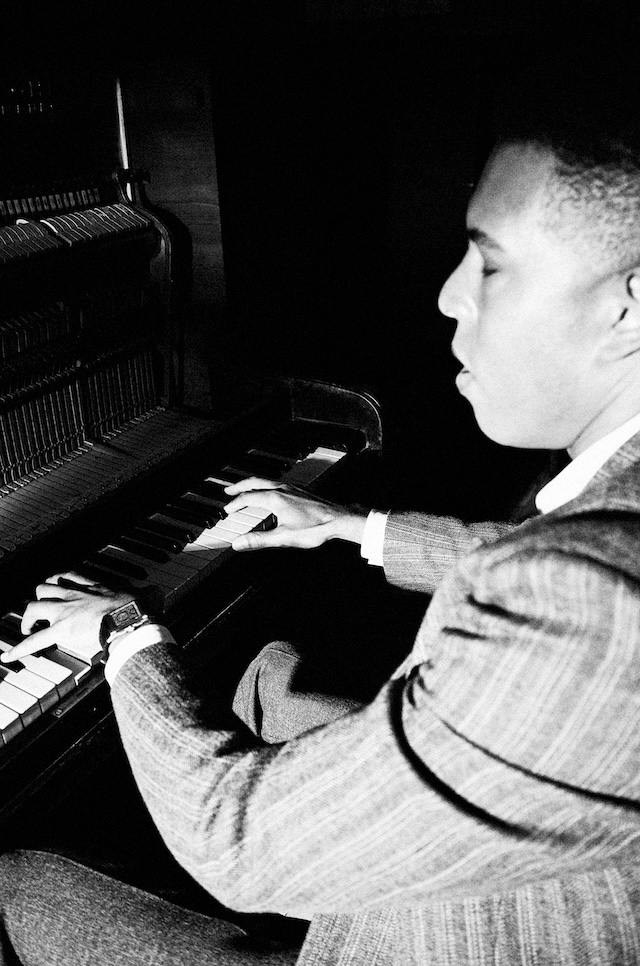
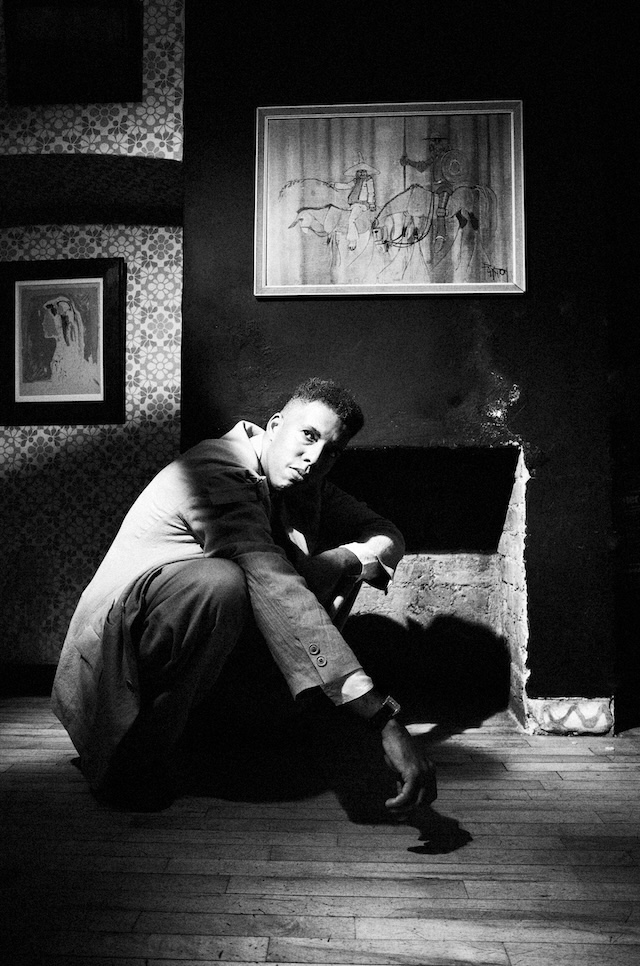
Photography Chieska Fortune Smith. Suit Dior, shirt Dunhill, Jaeger-LeCoultre Reverso Tribute Chronograph

“I can still remember that day ever so clearly,” reflects contemporary classical musician Tokio Myers of the pivotal moment he was given his first keyboard as a nine-year-old boy. “I was the only child to two busy working-class parents, and we lived in a very poor area in a one-bedroom tower block flat. It was so small that all of us slept in the same bedroom.”

He pauses for a second, obviously choked up with emotion: “But that moment with the keyboard changed everything. It became my therapist, my temple of worship; the instrument was like a divine intervention. I never looked back.”

Jacket Yohji Yamamoto, trousers Yohji Yamamoto, shirt Katharine Hamnett from La Nauseé Archive, shoes Tod’s, watch Jaeger-LeCoultre Reverso Tribute Chronograph

Look back he certainly hasn’t, with the 40-year-old musician arguably establishing himself as one of the UK’s most recognisable pianists following his victory on ITV’s Britain’s Got Talent competition back in 2017. However, while the careers of other artists from the Simon Cowell stable have tended to stagnate, Myers has refreshingly taken the kind of creative leaps that suggest he’s more interested in experimentation than adhering to the status quo (in the past he’s collaborated with UK political rapper Akala as well as dance group Clean Bandit).

The creation of his new 2024 album, Awake but Dreaming, coincided with two life-changing events: the death of Myers’ father, and also the birth of his daughter, Malaya. Subsequently, the music carries a sombre yet celebratory tone – a lot like attending a memorial service where you don’t know whether to cry or smile, or even do both simultaneously. Myers also tends to play between speeds of 55 and 65 BPM, with his slow playing style giving off the feeling that no note is wasted, and that every bit of tension is properly considered.

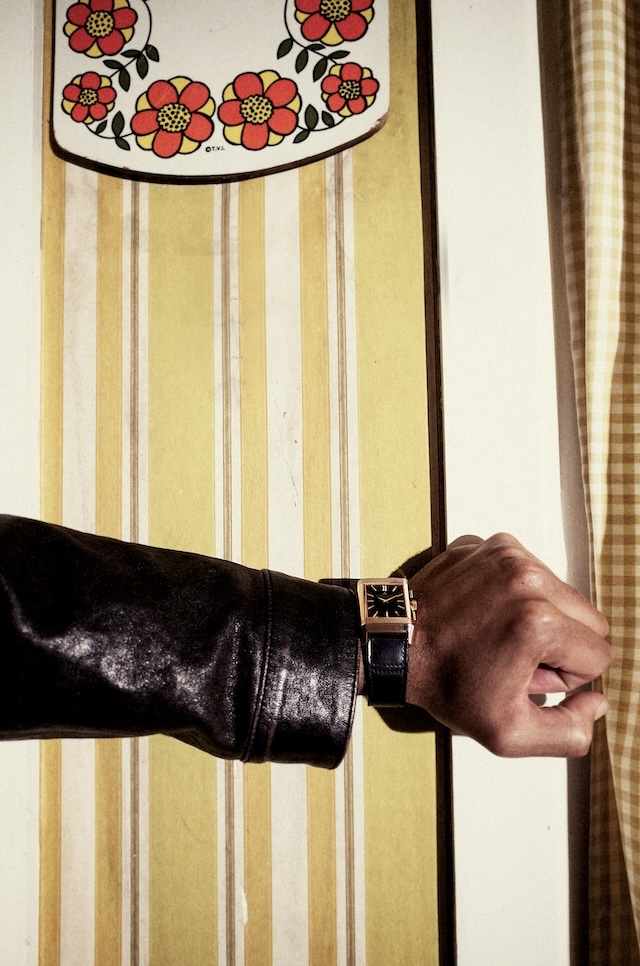
Jaeger-LeCoultre Reverso Tribute Chronograph

Myers’ elemental playing style thoughtfully taps into the wind and waves for inspiration, with the loose, cleansing key structure of new song ‘Waves Étude No. 1’ replicating the movement of free-flowing water. Meanwhile, ‘Spirit in the Wind’ and its soaring harmony imagines what it would be like if a lost soul suddenly hit full flight beyond the clouds. Throughout these songs, there are little embedded voice notes of Malaya freestyling on her dad’s piano, which gives everything a hyper-personal, time-capsule feel.

“I wanted to imagine what it would sound like to interpret the spirit leaving one’s body and flying off into the next realm. I’d also spent a lot of time around water, so I got to the point where I could close my eyes and let that wave sound come through into my playing,” Myers explains. “When you spend your whole life sitting at the pedal, you get to the point where you can literally hear the piano’s strings breathing. It becomes your second voice. You’ve got 88 keys and 10 fingers, but the possibilities are endless.”

Jacket Our Legacy, watch Jaeger-LeCoultre Reverso Tribute Chronograph
Jacket Our Legacy, knit Zegna, watch Jaeger-LeCoultre Reverso Tribute Duoface Tourbillon

Another key inspiration for the new project was 1916’s The Planets by English composer Gustav Holst, which famously made sonic characters out of our solar system. “I grew up listening heavily to classical music,” Myers adds. “When you listen to The Planets, you really feel the energy in your stomach. Mars sounds like going to war. Jupiter is big, lush and beautiful.”

He goes on: “I also love the Russian composer Sergei Rachmaninoff. His work was very romantic and always built gradually to this big climax.” Rachmaninoff was famous for being able to span a 13th interval on the piano with just one hand. So, can Myers do this too? “I wish!” he laughs, humbly. “I can just about do a 10.”

The reason we’re speaking is due to Myers’ new collaboration with luxury watchmaker Jaeger-LeCoultre. It’s part of the watch brand’s ‘Made of Makers’ campaign, where artists, designers and craftsmen from outside the watchmaking world start a dialogue that aims to show the natural symbiosis between horology and art. Myers even composed an original composition for this campaign.

Jaeger-LeCoultre Reverso Tribute Duoface Tourbillon

Keeping time is everything for a pianist, and Myers believes musicians and watchmakers are essentially kindred spirits. “The hours we spend in the studio, the meticulous attention to detail,” he explains of some of the similarities. “When the sound engineers were working at Abbey Road, they were wearing white laboratory coats. The first thing they asked me to do at the Jaeger-LeCoultre factory was to wear one! Composing for Jaeger-LeCoultre was so natural for me because we’re looking for the same thing: to reinvent the classic and find what is universal and timeless.”

Another key influence of Myers’ is Joe Hisaishi, the celebrated Japanese composer and pianist behind the scores in the Studio Ghibli anime films. Beyond producing for other artists, Myers says moving into film composing feels like the natural next step in his career. “That’s a big dream of mine! I feel like my music already fits so well with movies. Whenever I compose or write, I tend to have visuals on the screen behind me in the studio for inspiration.”

Despite tending to look forward artistically, Myers is so easy to talk to because of his penchant for nostalgia and examining his roots – it’s like reminiscing with an old friend. He says one pivotal moment in his career was being introduced to Amy Winehouse back in the mid-2000s while touring as a musician as part of the band Mr Hudson and The Library (who supported the late Back to Black singer). She taught Myers so much about the pitfalls of fame. “Amy gave me lovely big sister energy,” he remembers.

“I was only young, so she would give me a lot of supportive hugs. She taught me how to wear your heart on your sleeve and to get into that zone musically, but I also learned there’s a thin line, too. You have to find the right balance and always have the right people around you. Maybe she didn’t quite find that balance, but I will cherish our time together forever.”

Coat Issey Miyake from La Nausee Archive, shirt Toogood, glasses Toogood × Cubitts, watch Jaeger-LeCoultre Reverso Tribute Duoface Tourbillon

As our conversation winds down, we return to Myers’ modest beginnings. An era where he and his parents were crammed into a small flat, with that keyboard providing an escape from an area where knife crime was prevalent and many of the artist’s fellow pupils at school were drawn into gang life. So, what advice would Myers give to his teenage self today? “Always follow your heart,” he concludes. “A lot of people will try to distract you and maybe even put you down, but you’ve got to listen to you! Don’t be afraid of failure or to try new things musically, because the worst thing in life is to wonder: What if?”

Real bite enters his voice as he repeats the same phrase from the start of our phone call: “Never look back!”

Photography Chieska Fortune Smith

Styling Guy Miller

Set design: Gemma Tickle

Grooming: Jinny Kim

Production: Art Engine

This article is taken from Port Issue 35. To continue reading, buy the issue or subscribe here

Infinite Loops

Observing the music of Steve Reich

Photography Geordie Wood
  1. Having immersed myself in the music of minimalist composer Steve Reich for several months, I considered how to capture the stringent, almost unfriendly, ascetic surface and the emotive classicism behind his work. How do I portray a “gradual musical process,” which, he says, resembles “turning over an hourglass and watching the sand slowly run through to the bottom”? Writing’s time is abstract, while music’s temporality is violent, deathly. I have therefore structured this essay into discrete pulses like those in Reich’s pieces. There are 18 pulses herein, a sentimental homage to Music for 18 Musicians, Reich’s most famous piece and perhaps his best.

  2. Minimalism is the ill-fitting moniker given to a musical movement started in California in the mid-1960s and which towers above post-war classical music. Two currents exist: Terry Riley’s In C, from 1964, was the first great minimalist piece produced through rhythmic, repetitive pulses of sound. The droning infinity stretches pioneered by LaMonte Young lay out the other possibility. Minimalism demands attention to detail, does away with quick evolution and dynamic transformation in favor of slow, intimate revelation. The two leading minimalists are Philip Glass – the most famous composer since Stravinsky – and Steve Reich, both pulse composers.

  3. The works of Steve Reich, now 87 and still writing, were born of rigour and emotional intensity. The pieces could go on forever, with sublime evenness slowly giving way to human depth. I met Reich at his home about an hour from New York City, which he left in the mid-2000s. He had no doorbell, but did have a small yellow tile with a triangular face reminiscent of a Picasso. I knocked, wondering whether he’d hear me, and he was immediately at the door with a scraggly beard, a black baseball cap and slippers. His living room was ample, sparse and not particularly colorful, with an almost cavernous triangle roof, a conversation pit and a fireplace, a wall-size window, and a bookshelf teeming with Jewish religious texts. He laughed often in the couple of hours that we shared but spoke with great seriousness.

  4. Reich was a central participant in the debut performance of Riley’s In C, shaping the minimalist canon from the start. As a composer, he was first feted in the mid-1960s for two pieces that scrambled and reconstructed snippets of speech: from a Black Pentecostal preacher named Brother Walter who was speaking in San Francisco’s Union Square; and from Daniel Hamm, one of the Harlem Six, a group of Black men wrongly accused of murdering a white woman. He explains: “A lot of people were doing this at the time because it was a new technology, and it was relatively inexpensive to get a tape recorder. It became a kind of folk technology.” These pieces espoused the mathematical precision of 12-tone serialism, which was dominant in academic music – Schoenberg, Stockhausen, Boulez, Babbitt – without disdaining tonal harmony and rhythm, at once poetic and exact.

  5. For It’s Gonna Rain, Reich set two analogue tape players next to each other with the titular phrase spliced into a loop. When he hit play, he said, “by chance or through divine inspiration the two loops were absolutely lined up, because I hadn’t carefully timed them. I began to hear the sound move to my left ear, which basically means that the machine that was feeding the left ear was a little bit faster than the other one. It began to creep down my left arm and out across the loops.” The piece, teeming with Cuban Missile Crisis eschatologia, features parallel, identical loops going out of sync and shimmering into echoes and repetitions that jaunt through the machine before, finally, reuniting. He called the effect, critical to his early work, phase shifting. In Come Out, from 1966, Reich edited a sound documentary for the Harlem Six retrial campaign. In lieu of payment, he requested permission to “create a piece if I found something interesting.” In the snippet Reich chose for Come Out, Hamm describes cutting open a bruise left by police beatings so the pooled blood could “come out to show them” he had been brutalized. Reich then left tape loops behind, exploring that same effect with other instruments from pianos to the rhythmic clapping of hands.

  6. Susan Sontag, in Against Interpretation, argued against the pursuit of “meaning” in art and saw minimalist visual art as the vanguard of a “flight from interpretation.” Reich was close with leading minimalists like Sol LeWitt and Richard Serra as well as Pop artists like Roy Lichtenstein, who mocked morose notions of “meaning” by painting like a comic book artist. Like Sontag, they all rubbed shoulders in Downtown New York, and he insisted that his was “a generation where the artists and the musicians were really in contact with each other.” Minimalist musicians like himself and Glass were, he says, “certainly aware of Pop but much more in tune with LeWitt and Serra.” Lichtenstein even painted the cover of Reich’s album The Four Sections, and that painting, together with a few from LeWitt, now hangs in Reich’s home. Musical minimalists also took the sounds of jazz – the adolescent Reich saw Coltrane dozens of times at Birdland and revered bebop drummer Kenny Clarke – and early rock ’n’ roll to rescue academic music from serialist combinatorics.

  7. In the words of musicologist Robert Fink, Reich’s music “addressed itself to the ubiquitous subject… to influence everyone and be fully attended to by no one.” It was the counterculture’s smarter predecessor, an act of faith in music-listening as transmission of an influence, and as world-creating background noise in the age of mass-media advertising. Everything, as the cybernetic theorem goes, is information traveling within a series of closed systems – your brain, a loft, an art gallery, a music venue. Art’s function was to produce diffuse effects or states of mind by transmitting information, and media like tape loops could encode the world through waveforms and binary code.

  8. In his 1968 essay-manifesto, Music as a Gradual Process, Reich insisted that his interest was in setting up a “musical process” and observing its unfolding. “Focusing in on the musical process makes possible that shift of attention away from he and she and you and me outward toward it.”

  9. After an interview about Reich’s work with longtime Village Voice critic and composer Kyle Gann, he told me: “I’d love to just have a conversation about Reich not mentioning Glass, it’s just that the two of them are such good foils for each other.” Glass and Reich have helmed contemporary classical music since the early 1970s and were once close collaborators. Their aesthetics are similar, with Reich leaning avant-garde and Glass more commercial. Their disdain for the academic world in which contemporary classical music still lives bound them together. When the two were neighbours downtown (but not successful enough to pay the bills), they started a moving company together and did odd jobs as plumbers and cab drivers. Yet, by the mid-70s, they had broken up: Glass retitled his piece Two Pages for Steve Reich to remove all mention of his former friend, who may have never accepted Glass’ commercial success.

  10. Nowadays, one of Reich’s “best musical friends” is David Lang, co-founder of the prominent classical music organization Bang on a Can in the 1980s. Eli Greenhoe, Lang’s student, described Reich’s sense of harmony to me as “tectonic,” making the “room just change its atmosphere” with every chord change. The repetitiousness of Reich’s Four Organs, premiered in 1973 at Carnegie Hall, aggravated audience members until one lady stomped her feet on the stage to demand the performance cease. The resemblance to Stravinsky’s The Rite of Spring premiere must have delighted Reich, who said, chuckling with a smile and leaning back, some had described Four Organs as “the longest five-one cadence in the history of Western music.” The piece sounds variations of one chord for around 14 minutes, and only resolves into another chord in the final 10 seconds.

  11. Reich’s early style peaked with Drumming, composed around 1970, and Music for 18 Musicians, composed in the mid-70s, whose recording was a hit in classical music terms, selling over 100,000 copies. Their sound is patient, exploratory, and completely anticlimactic, rendering exhilarating minute shifts in melody and rhythm. Reich opted for acoustic instruments like marimbas and glockenspiels, and ad hoc instrumentations far from a standard orchestra, giving his pieces a singsong, even pop quality. His training as a percussionist came to the fore in those years, as did his exploration of Ghanaian and Balinese drumming music. He took inspiration carefully, but without apology: “I didn’t want to sound Balinese, I wanted to think Balinese. Musical structures can be applied to all kinds of instruments or voices. Think of a canon (or round) in Western music. It could sound like Bach or Webern or a kid’s tune or Jim Tenney’s electronic glissando piece, For Ann (rising), which I used to call ‘Afternoons at JFK’.”

  12. Reich is sometimes accused of extracting sounds and ideas from Black traditions and sounds, not to mention Black men’s voices themselves in his tape pieces. His accusers are not wrong, though for Reich it’s just the reality of his biography: “If you grew up as an American, you grew up in a multicultural society, period.” Born in New York City in 1936 to a Jewish family, Reich was awash in the post-war “culture of repetition” that Fink diagnosed. His music mirrors the world in which he was born, including its relentless extraction of Black people’s labour and humanity. Reich feels and sounds deeply American: “I am definitely an American composer. It couldn’t have happened anywhere but America. That’s just plain old reality, because of the jazz influence and the way we approached non-Western sources. And because of rock ’n’ roll.” 

  13. Reich is also Jewish, though he was mostly indifferent about it until his late 30s, when he’d developed an interest in yoga. “The idea of following a discipline which comes out of a religion – obviously yoga comes out of Hinduism – appealed to me very strongly,” he says. A cursory excursion into Kabbalah with a book published by Straight Arrow Press (of Rolling Stone magazine) started a chain reaction after his wife and collaborator Beryl Korot’s father saw him with the book under his arm: “How can you study Kabbalah if you haven’t studied Torah? And I thought Zing! This is a good question.” By the mid-80s he considered becoming a rabbi and began keeping Sabbath. Searching for his own musical tradition, Reich was not interested in Eastern Europe but told me: “the cantillation of the Torah is still going on, 3,500 years later. I find this particularly attractive in the Middle Eastern Sephardic tradition, but the structure of cantillation with fixed melodic patterns is used worldwide.” For somebody so open to using musical structures not remotely his own, such emphasis on spurious ideas like ancientness and authenticity – not to mention the focus on a tradition that bears no clear connection to his own genealogy – rings off-key. Reich wrote his first Jewish piece in 1981: Tehilim, a setting of four psalms – a kind of prayer once sung though now read. Different Trains, one of his most famous compositions, premiered in the late 80s and juxtaposed Reich’s personal experience riding trains from New York to LA in the late 1930s and early 1940s with the “different trains” that European Jews rode in those years. Reich returned to the spoken voice, though now it’s closer to documentary: he recorded his ageing governess, train workers, and Shoah survivors. Snippets of language vibrate throughout a meditative, plaintive piece that, for all its virtues, lacked the concussive originality of the 60s and 70s.

  14. Religious experience – particularly prayer – has been at the core of Reich’s work from the beginning. He’s long admired the 12th-century medieval musician, Pérotin, associated with the Notre Dame cathedral in Paris. “The part that has stayed with me to this day, is [Pérotin] didn’t just have the chant line going up and down, he extended this melodic tone to become a drone… The idea that something which is melodic can be slowed down to the point where it becomes the tonal center for other voices in the texture is remarkably fruitful for me.” Drones and lentitude were a mode of prayer, a way to invoke God in an era utterly unlike our own.

  15. I asked Reich about “innovation.” Minimalism, which was found in technologies like the tape loop and a futuristic sound palette – not to mention its origin in the countercultural tech mecca of San Francisco – begs the question. Reich was categorical: “I never think of the word at all… I do what attracts my ear… it’s a very personal feeling, otherwise the work will not be very interesting to anybody. If it doesn’t really move me, how is it going to really move you, or anybody else?” He understood that technologies like the tape loop had opened new possibilities in the 1960s, but insisted: “In retrospect we can say that what Pérotin did was innovation, but it’s based on observing the music of his predecessor and thinking spontaneously or gradually: What if I add two more voices? What if I took one of the four tenor voices, and stretched it like a rubber band? If you want to call that innovation, it’s how music develops over the centuries. It doesn’t make any innovation necessarily better than what preceded it.”

  16. I attended a performance of Radio Rewrite, a Reich piece from 2012 inspired by Radiohead. Conductor Brad Lubman’s Ensemble Signal, Reich said, was one of his preferred interpreters of his work. Radio Rewrite takes two songs that Reich found compelling, Everything in its Right Place and Jigsaw Falling into Place, and explodes them into alternating movements of light and dark, speed and lentitude, major vitality and minor obscurity. Reich kept the momentum and chord progression of Jigsaw…, which rings crystalline through marimbas and vibraphones, while the shooting star melancholy of Everything… drags violins into stunning depths that barely resemble the Radiohead original. It’s as close to pop as Reich has come, and a reminder that pop was never far from his remit.

  17. The ends of Reich’s pieces are remarkable: Four Organs is only justified in its conclusion when a second chord finally appears; It’s Gonna Rain and Come Out only cohere as the process of phase shifting runs its course and synchronicity returns. Others simply fade into nothingness, their internal logics no longer tenable and Reich’s patient observation exhausted. Reich’s music bears the imprint of a lifetime performing his music; he gave up playing live at age 70. I asked if he missed performing, which surprised him, and he thought quietly for the first time in our conversation. He recounted a recent encounter with old members of his ensemble at which they listened to a recording of Music for Mallet Instruments: “As I was listening to it, I was back there, you know, back there in it. But I couldn’t do it now. I can listen to old recordings and get into a state of mind where I think, wasn’t that wonderful. But it’s past, and it’s sad.” Then again, he said, “there’s a lot of sad things about getting old but there’s a lot to rejoice about. I couldn’t have written [2009 Pulitzer Prize winner] Double Sextet when I was younger. Now, my music is played and recorded by others all over the world, so my passing won’t mean that much… the music has a life of its own.”

  18. Warning against nostalgia for youthful dexterity, Reich counsels: “That person isn’t here. I replaced him. Like you replaced the kid who was sick rolling on the floor.” The avant-garde is for the young, and his work now brims with grandeur and the comfort of a life lived looking ahead. Creations sent onward, left for others. Reich’s goal was once to leave behind “he and she and you and me,” to find some “it” to dissolve into. Whether he succeeded is for you, the reader, my alias, my twin, to decide. 

Photography Geordie Wood

This article is taken from Port Issue 35. Continue reading, buy the issue or subscribe here

Mustafa

After the release of his 2021 debut When Smoke Rises, Mustafa reached acclaim for his personal songwriting exploring themes of love, loss and conflict. As he launches his forthcoming album, the Sudanese-Canadian musician sits down with friend and collaborator Dev Hynes, of Blood Orange, to reflect on his creative process, the importance of preservation, and the making of Dunya, which translates from Arabic to “the world in all its flaws”

Mustafa wears Gucci Autumn Winter 24 throughout. Photography Arielle Bobb-Willis 

Dev Hynes: Your new record is sick, it’s fire.

Mustafa: Thank you, man; that means a lot. You’re the first friend that has the full record, which is wild. But it’s good, and it comes out in about a month. I’ve got to start tearing myself into this new period.

DH: It’s funny because when you’re working on music that people will obviously hear, it still feels weird when you realise people are going to hear it.

M: Yes, absolutely.

DH: How old is the oldest song on the record?

M: The oldest songs are maybe four or five years old when I recorded them in Egypt. The writing is the oldest; some of it is eight years old. Concept is always first for me, and the writing has always reigned supreme.

For so long in my life, I had to develop a sonic identity – something that felt intrinsically connected to me. And luckily, Nubia had so much for me to pull from, like in Sudan and Egypt.

When I was a child, I listened to very sparse music and many of my favourite records didn’t have much production, they were so desolate. I remember referencing Sun Kil Moon and the song Carissa. There is nothing but really lonely guitar lines, and everything was riding on the story being told. When I’m writing, I’m pulling from poetry that I would have written when I was 20 years old. Of course, it would be refined and reimagined in relation to the lyrics.

DH: Do you know what you want to talk about and then write it, or is it more that the writing informs the general feeling?

M: I would say it’s more the former than the latter. I know what it is that I want to say and I’m able to identify things that I want to talk about, but it’s usually so broad that the writing needs to narrow it down. I thought I wanted to write about God, and then I realised that God is in everything I could talk about; I couldn’t have chosen a more general idea. But then it grew with its own footprint, because it’s about Islam, and Islam in the context of the hood. It became more of a secret as I began writing it.

DH: Are you a title-first person?

M: I couldn’t find a title to save my life. I struggled in such a way I can’t even describe to you. I don’t know why, but I’ve always been really bogged down by the idea that songs have to be restricted by a title. Also, I’ve noticed that some of the most expansive titles are never in English. Growing up, I was constantly learning about the limitations of the English language, and I think that’s why I ended up choosing an Arabic title for the album. But I have a really hard time naming anything. I wish I was better at it.

DH: The titles are so direct, I love that so much – like ‘Beauty, End’ and ‘Hope Is a Knife’. I love that energy.

M: Thank you, man. I have some audacity to be that definitive. Sometimes I really enjoy titles that are contemplative, that fill a lot of space and have their own kind of bravery because they’re so specific. There are so many titles that I love that have a different kind of power. You have to be confident in your decision when choosing titles. But it means a lot. Your titles are beautiful.

DH: Thank you, I struggle with that too.

M: No, you chose one of the greatest band names of all time. Blood Orange is one of the best.

DH: That’s sick. I wonder sometimes…

M: No, it definitely is. There are some bad ones, and it doesn’t even matter if they’re bad or not. I mean, arguably the best band of all time is called The Beatles for goodness’ sake. But we don’t even think about it, because they’re so good.

DH: Exactly – I always think about that. Band names are a funny thing, because depending on what they do, the connotation gets entirely stripped.

So Rosalía and Aaron Dessner are on the album… Who else am I missing?

M: There are a lot of people on the record. Nicolas Jaar worked on a few songs, and Rosalía came in on I’ll Go Anywhere, and she fucked with the arrangement a little bit and re-sang some parts, but that was written in Egypt already. Dessner is such a prolific player when it comes to indie folk records, and he replayed a lot of the songs with some musicians in upstate New York. I then reimagined those renditions again. It wasn’t the most ideal post-production process, but it got me where I needed to go. I was following my intuition.

While working on the record, I knew something was missing, and then I heard the masenqo played by this young Ethiopian musician. I returned to nights spent by the Nile River when I was really young, and I remember hearing it seep through the open atrium to the sky, where my family used to gather in a village in Sudan. I realised it was necessary to have the masenqo on the album alongside the oud, so I brought in a young East African player to play it.

It wasn’t even a matter of what was good and what wasn’t. I was trying to be as careful as possible, because I was removing a lot of production that people did. It was less about what I imagined was great and more about what I imagined was true to the story that I was trying to tell. So much of it is rooted in longing for this part of me and this place that my family escaped from that I want to return to. A lot of the sonic decisions are a returning, in a way.

DH: Another reason why I really like the album is that it sounds like it’s landed somewhere.

M: That means so much to me, man.

DH: It’s a really beautiful feeling. You don’t get that from a lot of records, they’re usually very particular. Your record has its own world, it’s like a real thing.

M: That’s the largest compliment I could have received from you. For me, it was not for the sake of having my own world, or some attempt at having agency over a space. There was a space in the world that I didn’t feel was reflected, and much of that was the space that I grew up in. I really wanted to soundtrack what that felt like and try to develop some sort of sonic foundation or memory.

Also, the diaspora as an idea is going to transform. When I think about that, it’s like a fire beneath me, because I’m of this Sudanese diaspora. Sudan is experiencing the worst refugee crisis in the world where 10 million people have been displaced. Everything that I say and write now, that becomes, for better or for worse, this sonic memory. I realised that I needed to place a flag in the ground of what that feeling is just for this archival sake.

My issue is never about being forgotten. It’s more about being remembered in the wrong way or being misrepresented in the course of history. So I really appreciate you saying that about its own world. I think it’s a world that lives and breathes. My biggest fear is that I do it justice.

DH: I totally got that. Did you ever lose drive and need to find it again while working on the record?

M: Yeah, for sure. There were so many periods where I started to question the importance of music.

DH: I relate.

M: It’s wild. It just feels like deification has become an intrinsic part of music now. It’s almost as if, without this praise from the larger world, music doesn’t have the same function. I wish it was more casual, that it was just another form of expression that didn’t have this capitalist edge or uppercut in the way that it does. We all know that music is being monetised. We used to exchange it for our survival and now it blurs the lines of what makes a true artist. I think about that all the time.

I try to remember that I began with aspirations of being a poet when I was 12 years old, and that I chose that because I needed an outlet for the pain. I wanted to quit so many times. I didn’t feel like I had time to make the record without the grief interrogating me over and over again, where old wounds were being reopened. It’s this weird concept of wanting to remember the pain without having to relive it, and wanting to remain open to what comes in without having to open the wound. It’s definitely my brother’s murder that really derailed me . I remember sending my manager a message and saying that I didn’t want to put out the record. Immediately after, I thought there was no hope around anything that I wanted. Hope is such a critical part of the writing.

When my brother passed, it took three or four months for me to be able to return to these songs and to feel any kind of connection to them. That definitely set me off my path, but I realised that so much of why I create is about preservation. Sometimes I don’t feel like I have what it takes to tell anybody who someone was, and I get afraid that I won’t do their memory justice. That’s the thing that I tussle with, maybe more than anything.

DH: The fact you’re thinking about it means that you are doing it.

M: I appreciate that.

DH: I’m trying not to sound like an old head, but one thing that is real across the board is how the monetisation of music has somewhat stripped away how powerful music can be. It’s being consumed in a very different way but people are still affected by it. It’s done this weird thing where people that create music now question it and think, well, why am I doing this? I’m very happy that you pushed through and did it because it’s so beautiful, and I think a lot of people will feel very comforted by what you’ve made.

M: Thank you. I’m energised by what you tell me, and that’s always been fuel for me in the past as well. I realised that it doesn’t matter how much you think you know yourself, what you believe in, what you’re willing to fight for and what your moral stance is on all things moving in the world. If you are in any kind of proximity to someone that has conflicting beliefs, it begins to infringe upon the thing that you think you know. It’s so important to be around people that can reaffirm to you the path that you’re on, especially now with the kind of collapse that we’re living in. It’s like all that I have are the people that I respect, reminding me that the path that I’m on is clear and I’m there. I think that’s always been the litmus test.

I remember you writing Negro Swan when you were writing about grief. It’s wild because I would have met you in that period, and I felt so moved by what you were saying. The crazy thing is I wasn’t going to release another song for another six years but, at that time, the violence in my community was at a high that I’ve never seen since I was really young, and I was beginning to internalise it. For Negro Swan, I remember you writing a note about grief in relation to Blackness. I remember probably the first ever text I sent you was about how that impacted me. I really do remember periods like that where I listen to a record, and I read a letter around the record, and it means such a great deal to me.

Sometimes I try to remove myself from the equation and think about the possibility of what a song can be. I think about the hood and how I grew up in it, and what it would mean to my dogs. I’ll get calls from my friends in jail – they have so much time for themselves that it could become their enemy if they’re not using it and finding a rhythm in it. That’s when they could really hear my music; they’re in the horror of a judicial system that doesn’t recognise them in their humanity, so when they get a period to listen to music, I’ll get a call every now and again. And it really impacts me. What it tells me is that it’s not even for them when they’re still in the grip of the kind of violence that we grew up in, but that they’ll be able to find it once they leave it. That I pray one day that it’s not a call I get from prison, but it’s a call I get from a kind of solace that they find far outside of the hood.

Those aren’t the kind of calls I get as of yet. But this is maybe telling of a future that I’ll be able to move into. I try to believe in what the music can serve and who the music can serve a decade from now. That’s what I try to think about.

DH: Did the sonic sound of your album develop naturally as you worked on the songs, or did you always envision where you wanted it to go?

M: I listened to so much American folk music and was inspired by you and everyone from The Roches – I love The Roches so much – to Cat Stevens who was, of course, a very large reference point for me. Even Leonard Cohen, this Canadian giant, and how free he was in his writing. I knew I had a responsibility to link it to my homeland. But all the while I knew that there were flourishes and swells that had to come from a place that wasn’t entirely my own, so that’s why I went to Egypt. When it started to formulate, it didn’t make sense in my mind. I didn’t hear it completely, because I didn’t know what it was going to sound like. It was almost like painting in the dark, and I didn’t know what the painting would be until the lights were on. All I could do was be patient and see what would come as a result of it.

Also, the oud is a main character. It’s not an instrument that traditionally makes space for a top line – but in this album, the oud leads the way and you follow suit. I also included Sudanese string arrangements which are really abrasive and they take up a lot of space. I wanted the oud to follow these guitar lines, while also having the guitar play in the nature of the oud. So much of it was trial and error in arriving at a place.

Moving forward, I’m still very much exploring this intersection, and I think it’s going to take me a lifetime. One of the most inspiring things for me about you is that you’re a great artist, and you’ve been a great artist for so long. You’ve been patient, measured and integral, and that’s all I’ve ever wanted for myself. I was so impatient for a spike. This lifetime journey as an artist, to me, is the greatest luxury. So much of it is about arrival and about existing as an artist. I can’t wait for the moment where I’ve put out multiple records, but right now I’m just in this constant state of exploration.

I remember going to your concert in Toronto with two friends of mine who had never heard your music before. The only concert they had ever gone to was for this guy named Rylo Rodriguez. The most beautiful thing about it was it felt like I had invited them into a secret; there were thousands of people that had this intimate relationship with your music and with these records, and that was a conversation that they got into. They were guests to an experience.

DH: That’s the best.

M: Eventually, as things continue to form, I want to develop this secret conversation with an audience. Sometimes I sit among an audience of people, and there are so many young Muslims in the crowd that have never been to a concert before. I think to myself about how I’m going to be able to grow with them, and how I’ll be able to sharpen all of my theory around my belief system as a young Muslim person navigating this music space.

Did I imagine this sonic bed for the music that I’m making? I’m not entirely sure, but I’m still trying to reach it – it’s still over there, on the horizon and I’m going to keep reimagining it until it’s perfect. I don’t think it ever will be, but I’m going to try.

Photography Arielle Bobb-Willis 

Styling Georgia Thompson

Production Mere Studios 

Groomer Johnnie Sapong

Skin Homa Safar 


This article is taken from Port issue 35. To continue reading, buy the issue or subscribe here

The new voice of AI

In their debut UK solo show at the Serpentine, Holly Herndon and Mat Dryhurst explore how AI can become an active collaborator in human creativity

Portrait courtesy Herndon Dryhurst Studio

We all know that AI is reshaping creativity in ways that are both exciting and uneasy. On one hand it streamlines tasks once considered solely for the human hand – writing, composing music, creating art. On the other, artists are now competing with machines capable of mimicking their styles, while filmmakers and animators are being priced out of their jobs by tools that quickly generate images and scenes without human input. Music is also feeling the influence, with AI-driven systems composing melodies, cloning artists’ voices or engaging in traditional practices like ‘call and response’ – a vocal technique that works like a conversation, which has been used for centuries to build community, preserve stories and share information across the ages, whether in work, rituals or protests. But now, we don’t even need a singer to do the singing.

Holly Herndon and Mat Dryhurst (of Herndon Dryhurst Studio) are long-term collaborators and partners, working at the centre – or perhaps the sweet spot – of AI and human experience. Music, art and tech tends to be their bread and butter, of which they’ve developed numerous projects that tussle with the idea of who and what should be creating art, often handing that role to the machine. Herndon, for example, is known for using AI in her music and blending her voice with the algorithm; Dryhurst is a researcher and technologist interested in how tech can reshape creative practices. Together, they’ve created Spawn, an AI vocal ensemble trained on Herndon’s voice, which debuted in 2016 on her album PROTO. Another key project, Holly+, allows users to manipulate Herndon’s voice via deepfake technology. 

Their latest project, The Call, expands on these themes and is being presented in their debut UK solo show at Serpentine North, running until February 2025. Developed in collaboration with Serpentine Arts Technologies, the project involves AI models trained on datasets of hymns and singing exercises from 15 UK-based community choirs. Just as call and response historically built collective experiences, AI is used to augment human creativity and as a tool for collective creation. This begs the question: what happens when machines become part of these deeply human traditions? 

By making AI an active participant in the creative process, The Call opens up an entirely new conversation about authorship and agency in the age of AI. Below, Port chats with Herndon and Dryhurst about the project’s development, its collaborative nature and the ongoing conversations surrounding AI’s role in creativity.

Holly Herndon and Mat Dryhurst conducting a recording session with London Contemporary Voices in London, 2024. Courtesy: Foreign Body Productions

Port: What are the current societal concerns with AI and how have you addressed them in this show?

Herndon and Dryhurst: People are concerned about data provenance, model ownership, IP, creative displacement and human agency. We hope to address those issues with our practice in art and AI and this show.

Why pair with music? Can you explain how the process of training AI models with choirs became an art form in itself?

We like the choir analogy to AI as group singing is an example of early human coordination technology that produces emergent effects. We see AI models similarly, collective creative accomplishments that produce results greater than the sum of their parts. It’s important to situate AI as part of a much longer historical arc of coordination and expression. It is very human. Artificial means made by humans. AI is just us, coordinated in peculiar ways.

© Leon Chew, The Call, Holly Herndon and Mat Dryhurst with sub, Serpentine, 2024

How did it all come together, can you give some specific details around the process/creation?

We’re thinking of the creation of the data, the training of the model, and its output all as works of art. For the show, our idea was to collectively train an AI model. This is important for a couple of reasons. People will be able to interact with the model, get an interesting insight into how a model is put together, but also the people who are contributing to the model will be able to govern and have some self-determination over their data moving forward.

We spent months training a choral AI model on voices from 15 choirs based throughout the UK and creating a training protocol to accurately capture these voices throughout the tour. The audio was captured in multichannel using ambisonic mics, lavalier mics, and a four-channel surround – not only to have really great audio that we can play back in the gallery, but also for the model itself. We can then create many different mixes from all of these channels and then create more data for an even more high-fidelity model.

The songbook created can then be used by other people to train their own models. So really thinking about the full range of things necessary to train an AI model fairly and openly has been a big part of the project. The reason we describe it as a protocol is that this is something that can be picked up and taken by others.

© Leon Chew, The Call, Holly Herndon and Mat Dryhurst with sub, Serpentine, 2024

The concept of ‘call and response’ plays a big role in this exhibition. Why did you choose this as a framework?

Singing practices such as call and response have helped to build spaces and structures for gathering, processing and transmitting information. Group singing is one of our oldest coordination technologies and we wanted to take inspiration for the show to explore what new protocols we want to nurture for the newest of our coordination technologies, AI. We are inspired by the UK’s rich choral tradition, putting out a call to invite choirs across the country to perform music from a new songbook that contains musical exercise and hymns that we specially developed for the purpose of training the AI model to synthesize the sound of a choir singing. 

With audience participation being a key element, how do you think involving the public in these choral models impacts their perception of AI?

Choirs, and many religious practices, serve a convening role for people to check in with one another and discuss matters. The hope is that by showing all steps of the model creation process people become more curious about the field. The training recordings served the purpose of capturing voices for the model, but also became nice opportunities to speak about how people feel about these new developments.

Holly Herndon and Mat Dryhurst conducting a recording session with London Contemporary Voices in London, 2024. Courtesy: Foreign Body Productions

Your work positions AI as a tool for empowerment rather than extraction. How do you see artists maintaining control and agency over their work in an AI-driven world?

We started a company with some friends to address this matter, and will have some open models this year to help people take more control over their work and identity in this new landscape. We follow the principle we invented with Holly+, where artists should encourage people to build on their work and identity, but do so by offering their own models and protocols for interacting with them. It will soon not be strange to interact with a consenting model of someone.  

How do you see AI influencing or reshaping art/art making in the future?

We think AI is a bigger deal than the internet, but it is hard to make specific predictions. What we can say is that it is unlikely our media environments or habits will stay the same, and so now is a great time for artists to get involved in imagining different ways to make and share art, and themselves, with others. This is a great time for art because the future is uncertain, so there is a lot of room for artists to have ideas.


The Call is on view at At Serpentine North until 2 February 2025

Holly Herndon and Mat Dryhurst conducting a recording session with London Contemporary Voices in London, 2024. Courtesy: Foreign Body Productions
© Leon Chew, The Call, Holly Herndon and Mat Dryhurst with sub, Serpentine, 2024

Pictures from a Punk

DB Burkeman speaks to Port about rediscovering his lost archive, turning it into a book, and capturing icons like the Sex Pistols and Iggy Pop

CRASH BANG: Pictures from a Punk, Photography by DB Burkeman

Many may know DB Burkeman as an early pioneer of electronic music. The British DJ, who went by the moniker DJ DB, moved from London to New York in the late-80s, co-founded Breakbeat Science, the first record store in the US to specialise in drum and bass, and was credited for introducing the genre to America. Fewer, however, may be aware of his work in photography. 

Since stepping away from DJing in 2010, Burkeman has ventured into the art and publishing worlds, authoring books that explore the intersections of popular and counterculture. He launched his own publishing company, Blurring Books, with an aim to ‘disrupt’ traditional publishing practices through releases such as a peel-out art sticker book, which brought museum artworks from the likes of Andy Warhol, John Baldessari and Linder Sterling into the public domain via laptops, skateboards and phones. 

His latest book, CRASH BANG: Pictures from a Punk, is a collection of 125 photographs that document the heyday of punk. Shot by Burkeman between 1976 and 1982 across London, New York and Los Angeles, the publication offers a behind-the-scenes glimpse into the lives and gigs of The Camps, Sex Pistols, Ramones, Debbie Harry, Iggy Pop, Siouxsie and the Banshees and more, who are snapped candidly backstage and in dressing rooms. “First off, I want to be clear,” asserts Burkeman, “I’m not fronting as being a photographer! I was a high school dropout who failed the one O-level exam I took (photography) but had ridiculous and grandiose ideas about being the next David Bailey or Helmut Newton.”

These photos – charmingly unsharpened and grainy in their appearance due to the film expiring – were left to gather dust for 40 years before being rediscovered. Below, Port chats to Burkeman about uncovering the lost archive, the musicians he met, and the moments that defined this iconic epoch.

Your new book compiles a collection of photos that were ‘forgotten’ for 40 years. Can you tell us about the moment of rediscovering them and what inspired you to turn them into a book?

Well, here’s how this all came about. When my mum died about eight years ago, my sister needed me to come home to clean out my old bedroom. Bedside drawer, I found a bag of about 20 undeveloped rolls of 35mm black and white film. I brought them back to New York to the best lab in the city, and asked them to develop them. 

They asked how old they were and when I said 40 years; they said chances are there would be nothing on them. I asked them to develop them anyway, and about half of them were completely blank. 

But then I saw the contact sheet for a Ramones show at the Rainbow, from Christmas Day 1977, which became their iconic live album It’s Alive. Then I saw the sheet for The Cramps at Mudd Club, a show that I’d completely forgotten I was even at. I couldn’t believe it – it was a very exciting moment!

For a while, I was thinking I wanted to make a zine of these photos (very punk etc.). But my friend Erik Foss told me I was a fucking idiot, and that the photos were important and deserved a real book. I had recently met Sammie Purulak, a young and very talented designer, who saw the photos and said, “Let me design the book!”.

Siouxsie and the Banshees

The images are shot between 1976-1982 in London, New York and LA – otherwise known as the ‘heyday of punk rock and new wave’. What can you tell us about this period? 

People will argue about when and where punk rock originated, but it caught fire in 1976. That’s when I started taking photographs because I left school and wanted to be a photographer. 

These bands and this scene were the most exciting thing to be a part of. Part of it was simply a backlash towards the pompous, progressive music scene of the early 1970’s, when you could never get close to those musicians. Punk gave young people the confidence to try doing stuff themselves. I believe rave culture came out of that same DIY ethos, in the UK anyway.

Debbie Harry

Can you tell us about some of the musicians you’ve captured and your relationship with them?

For most of the bands in the book, I did not have any relationship with them, other than going to see them at gigs. But there are two or three that I was friends with for various reasons, the first being a band called The Tourists.

They lived in a squat above a record store called Spanish Moon in Crouch End, North London. As a 15-year-old, I had worked at Camden Lock Market selling records for Paul Jacobs, who went on to open Spanish Moon. The Tourists featured Annie Lennox and Dave Stewart before they formed Eurythmics. The band used me as their photographer and I had my first (and only) photo printed in NME because of them.

I was also friends with Patti Palladin. When she teamed up with David Cunningham of the experimental pop group, The Flying Lizards, Patti asked if I would do a proper photo session for their label Virgin Records. Those pictures are possibly the best and most professional photos I ever took.

What was your photography approach like – were you on the ground and getting involved, or were you more fly on the wall?

Mostly a fly on the wall for sure. I was painfully shy and socially very awkward.

You’ve mentioned that it was your drug use that allowed you into these intimate spaces with the bands, like dressing rooms etc. How does it feel looking back on this body of work, especially now that you’re clean? Would you have been granted such access if it wasn’t for the drugs?

Looking back at this period of my life is strange, and a little hard to describe emotionally. In fact, it’s almost emotionless. When I think about how crazy things got and how close to death I was, more than once, it’s similar to watching a film about someone else, not me. 

I do believe that being in the mix of other very druggy people and bands did give me access to some places I would probably not have been invited to if I’d not been a fucked-up druggy myself. I consider myself very lucky to have gotten out of addiction. I have a bit of a dark sense of humour and was thinking of calling the book, Lots of Dead Friends. Not a very commercial title 😉

Ramones

Can you pick out a favourite image and explain why it’s a favourite?

That’s like asking, “Who’s your favourite child?”! There are a few shots I really love. 

The image we used on the cover was shot at my first girlfriend Kate’s 16th birthday party. These two kids, Danny and Nick just showed up and gate-crashed. They were the first two kids we’d met with ‘the haircut’. I’m told that one of them is still alive. I hope he sees the book.

For one photograph, Patti Palladin and I stayed up all night and she parked her car outside the gates of Buckingham Palace at 5am. I don’t think you could even get that close nowadays, you’d probably be shot if you did.

I love the couple of photos of Magenta Devine (RIP) and Tony James, dressed to the nines. The photograph shows the two super stylish guys strolling Portobello Road like it was a catwalk.

There is also a photograph of my then-girlfriend Sara, whose headshot was taken while we were living at the Chelsea Hotel in NY in 1979. People would mistake her for Poison Ivy from The Cramps. 

Of course, the fact that I saw the Pistols and managed to capture those images is pretty cool. There are so many photos I could talk about … 

Boy George

The book certainly acts as a time capsule into this era. How do you hope your audience responds to this body of work? 

I just hope people like it. I’m not one for preaching or messages, but if like me, you found the lure of drugs irresistible and then couldn’t stop, just know it is possible to have a fulfilling life without them.

CRASH BANG: Pictures from a Punk is available to pre-order here

Iggy Pop
Flying Lizards