Constructed Landscapes

Dafna Talmor’s spellbinding landscape series encourages a more active way of looking from the viewer
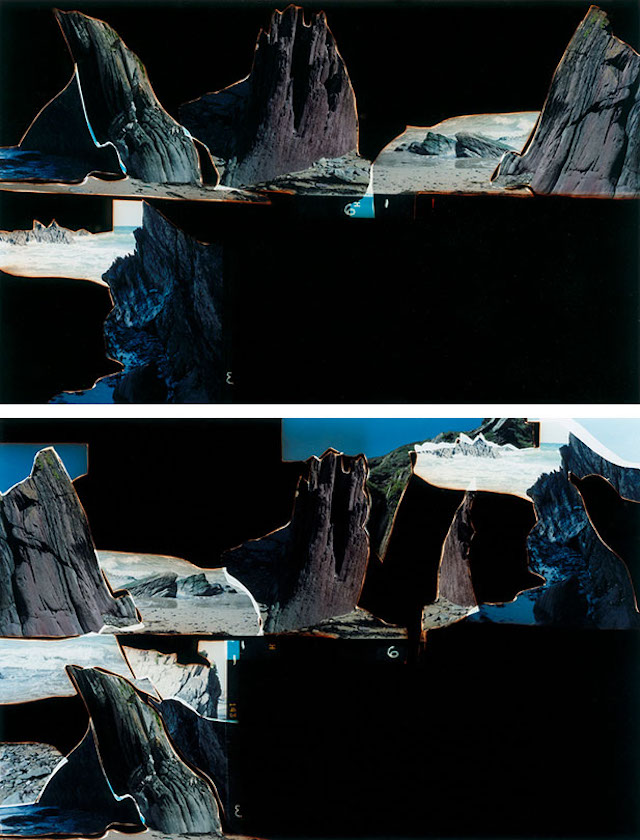
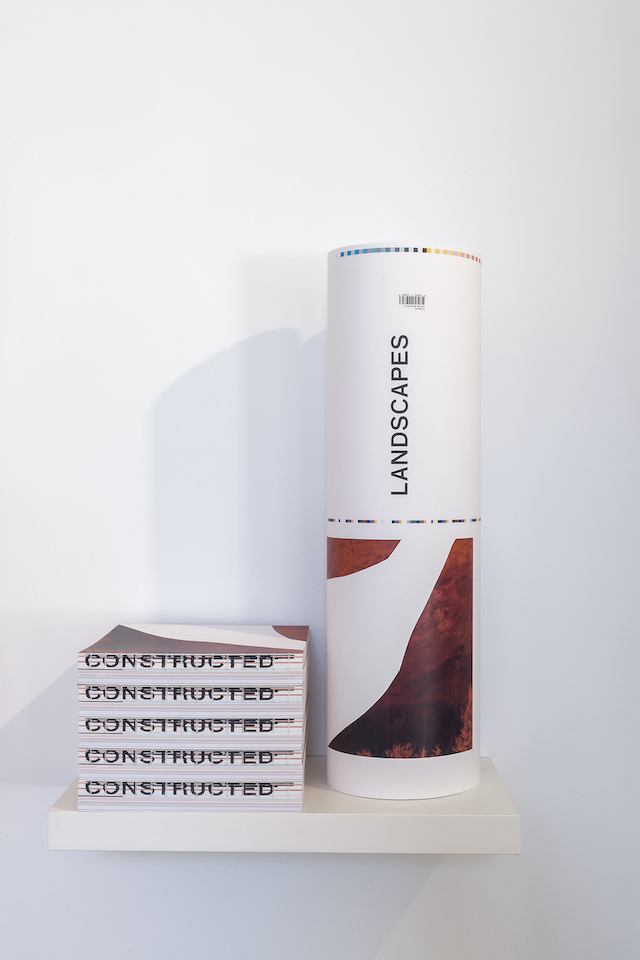
You can immediately tell that this collection of imagery isn’t a literal depiction of a place. But how they’re crafted – so spellbindingly weird and off-kilter – might remain a mystery. These are the works found in Dafna Talmor’s Constructed Landscapes, an ongoing project conceived through a unique process of slicing and splicing. The work is housed over three sub-series and developed over 10 years, the result of which is a collection of remodelled environments shot over various locations in Venezuela, Israel, the US and UK. What’s interesting, though, is its merging familiarity and the unknown; maybe you’ll recognise a tree or lake, before it slowly it morphs into an experimental yet staged recreation.

Dafna is an artist and lecturer based in London whose work spans photography, video, education, fine arts, curation and collaborations. Her works have been exhibited wildly, and her pictures have been included in private collections internationally as well as public, including Deutsche Bank, Hiscox. Through her practice, she tosses all preconceptions of the photographic medium in the fire and asks us all to question the role and methods behind taking and constructing an image. Constructed Landscapes does just that as it features transformed colour negatives, alluding a version of utopia – somewhere far away from a concrete reality. 

In terms of the process, Dafna condenses multiple frames and collages the negatives. It’s a technique that enables her to re-centre the focus point of the photograph, placing more emphasis on the technique of layering and assembling, rather than an obvious subject matter. By doing so, elements from differing frames crossover and interact with one another, causing fragments to collide and, in essence, create a new version of itself. In somewhat of a succinct summary of her alluring methodology, this is how her hypnagogic photographs are formed. 
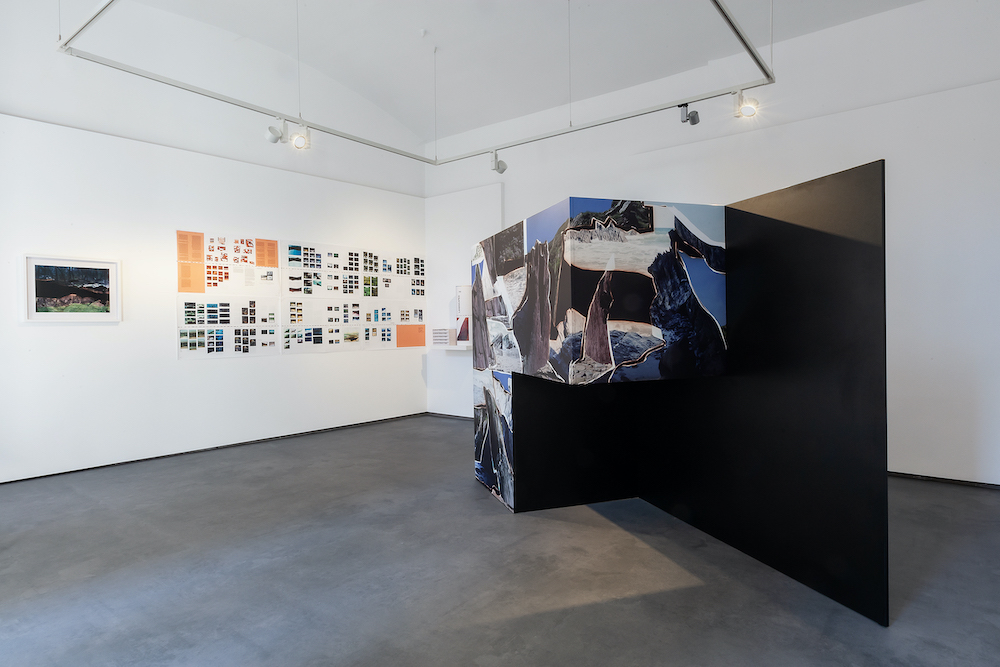
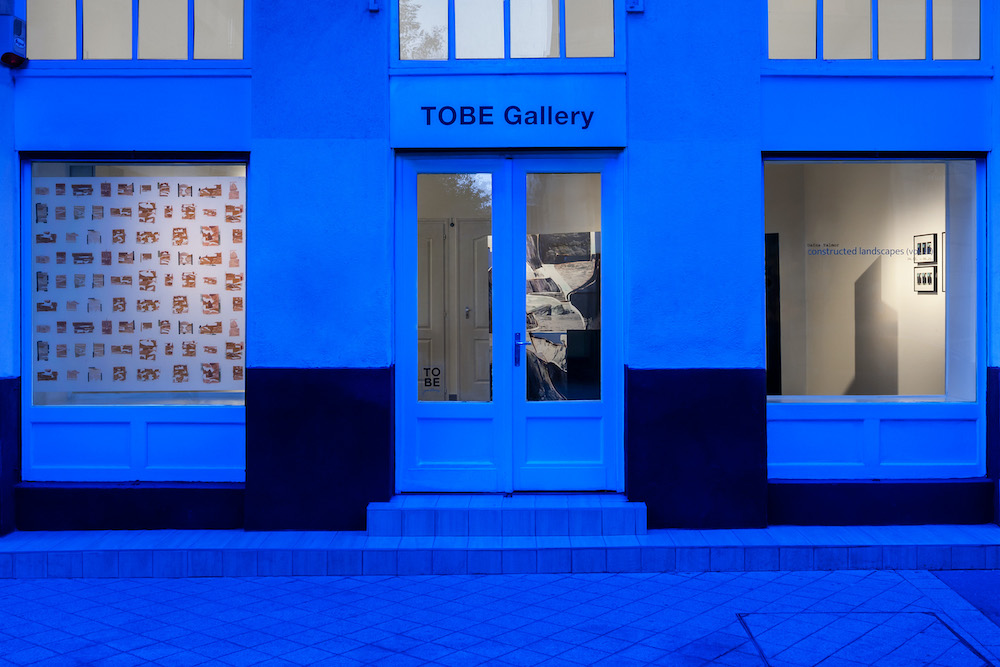
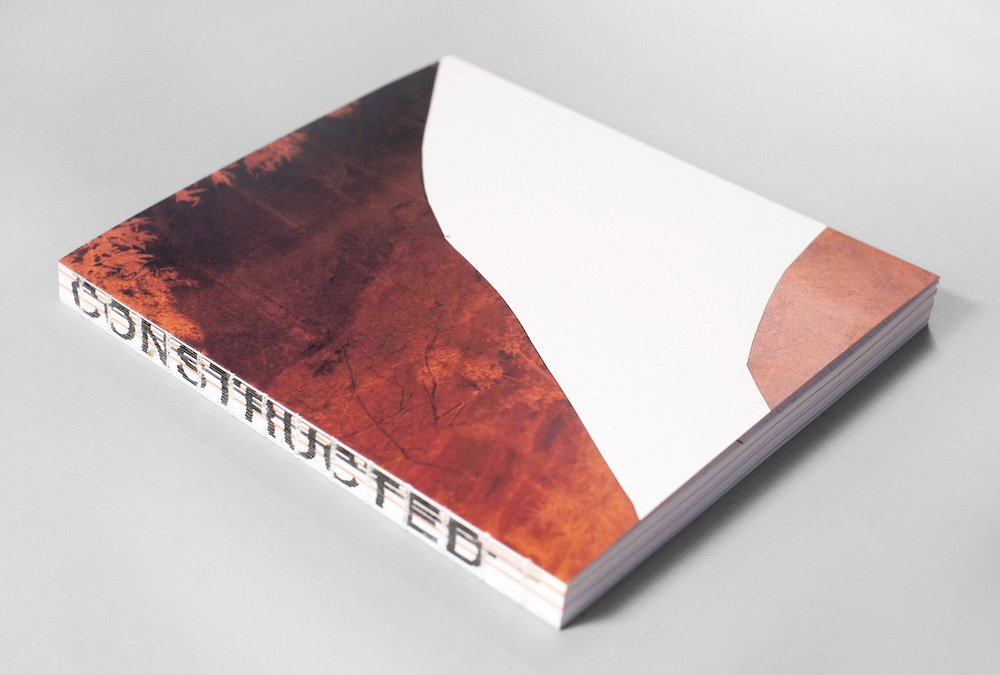
However, Dafna’s work goes far deeper than the intriguing process. In fact, the series references moments of photography history, such as pictorials processes, modernist experiments and film. Wonderfully allegorical, this opens up a dialogue about the role and study of manipulation, pointing the viewer at the crossroad of the analogue and digital divide. Yet aside from the questions that will arise, the work is simultaneously a beautiful merging of fact and fiction where burnt out hillsides, rusty toned bushes and treetops are combined. It’s a vision; one that transcends the 2D image into site specific vinyl wallpapers, spaces, photograms and publications. Not to mention the numerous exhibitions, including a recently closed show at Tobe Gallery in Budapest, accompanied by a book. 

Speaking of the works involved in this show, Dafna writes in the release: “Site-specific interventions have consisted of several iterations of a flatbed scan of a clear acrylic board – used to cut my negatives and protect my light box since the inception of the project – as source material. Over time, I became interested in the object beyond its practical function and the way in which the residue and traces of the incisions allude to the manual process in an abstract yet indexical way. Like a photographic plate, the embedded marks represent the manual labour and passing of time, acting as a pseudo document that continually evolves with each new incision.”
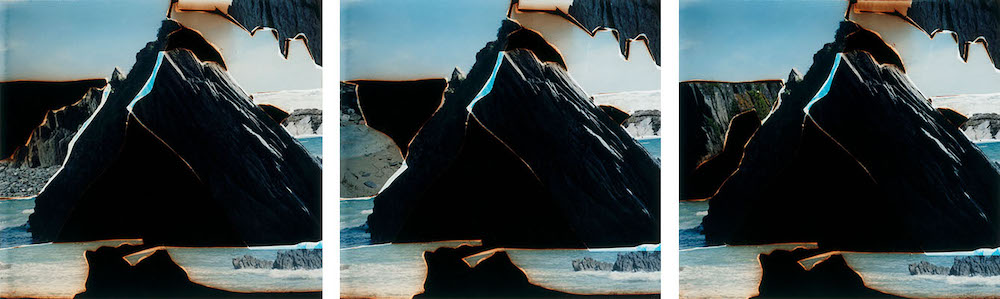
“Besides a series of spatial interventions, the cutting board has been used to produce several editions of direct colour contact prints to date,” she adds. “Alluding further to its subtle transformative nature, one could say the colour photograms bear a more analogous relationship via the preservation and reproduction of the one-to-one scale of the incisions. When printed, the orange reddish hues are in dialogue with the red flares – consequently transposed and scaled up from the cuts on the negatives – in the main exhibition prints.”

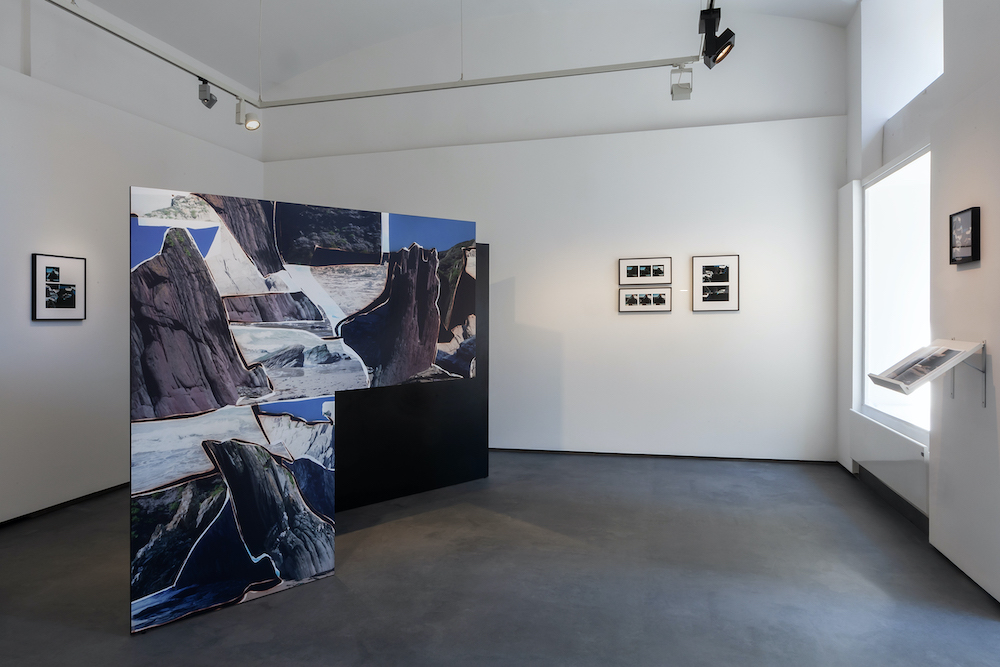
“Through the various components of the project, an intrinsic element of the work is embedded, suggested and explored within the photographic frame in a myriad of ways; diverse forms of reproduction, representation and notions of scale that get played out aim to defy a fixed point of view, in terms of how images of – and actual – landscapes, are experienced and mediated. Inviting the viewer to move in and out of the frame, aims to encourage a more active way of looking and perpetuate a heightened awareness of one’s position as a viewer.”
Painting: Toshio Shibata

Chose Commune unearths 16 previously unpublished works from the contemporary Japanese photographer, best-known for his painterly depictions of rural landscapes

Photography and painting have an undeniably tender relationship. In a time before the camera, realistic imagery would be produced by artists, employing a brush to hand and putting to use a mastering eye of realism. Now, in a world over-saturated with imagery, it’s hard to imagine a time when the long and intricate process of painting was the only format of replication – witnessing the skill and patience it would take to craft each stroke, gesture and expression. But the influence of both mediums works twofold, and the earliest practitioners of photography turned towards painting to find their subjects, be it a still life, landscape, nude or portrait. 

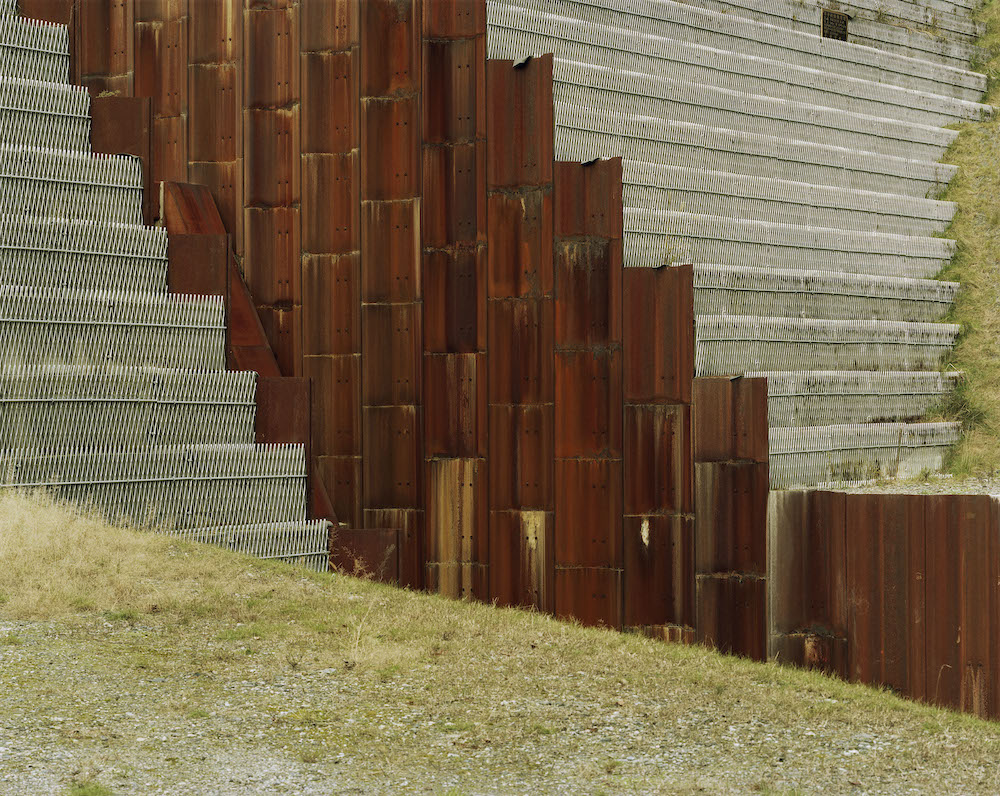
So when photography presents itself in a way that correlates highly with the process of painting, something wonderful happens. Your mind is instantaneously transported into otherworldly places; the locations which seem unfathomable, too scrumptious, too perfect, too colourful or vivid. Toshio Shibata is a photographer who’s mastered this canon, and he’s spent a healthy career perfecting the marriage of abstraction and realism through his camera. A contemporary Japanese photographer, he’s best-known for his large images of civil engineering in rural Japan, where manmade constructs are paired eloquently with notes from the natural world, causing ripples in light and sheds of water as they pass and flicker through the structural compositions of humankind. Dams, lakes and water ways are synced with the earthy notes of the environment; but rather than viewing these opposites as two juxtaposed elements in his work, Toshio depicts them in unmatched harmony.

You’d be unsurprised to learn that Toshio’s career first began in painting, having graduated with a BA and MFA in the subject from Tokyo National University of Fine Arts and Music. After leaving Japan in 1975 to pursue his studies at the Royal Academy in Ghent, Belgium, that’s when Toshio decided to test his hands at painting and printmaking, later discovering his interests in photography. Gas stations were his primary subject while making his debut into the medium, but it wasn’t long until he’d moved onto the landscapes of Japan, documenting the fine moments where the artificial and natural collide. To such success that Toshio received the Kimura Ihei Award in 1992, and he’s also had works exhibited internationally since 1971, including a solo show at Tokyo Metropolitan Museum of Photography; the Sprengel Museum in Hanover; the Centre National de Photogoraphie in Paris and many others.

In a new book published by Chose Commune, 16 previously unpublished colour works are brought to the surface in an artful curation of his finest and meticulous compositions. Aptly titled Painting, the publication turns an ultra-fine lens onto the more abstract and painterly of his pieces, and is designed in concertina format – to represent the kakemono, a Japanese unframed scroll painting. Below, I chat to Cécile Poimboeuf-Koizumi – director and co-founder of Chose Commune alongside Vasantha Yogananthan – to hear more about the publication. 

What inspired you to make this book?

I had been looking at Toshio Shibata’s work for a while but the idea of making a book came quite late. When I decide to reach out to an artist and propose a book, the intention has to be quite strong. When artists have never made a book before, it’s easier. The lack of an existing book on an important work is a good enough reason to make a book. In the case of Toshio Shibata, he had already made quite a few monographs. I asked myself: “why would it be relevant to release yet another book?” Including new and/or unpublished photographs can be a good reason. But I thought it would make even more sense if the concept was innovative and strong. I started selecting over 50 images and in the end, I kept only 16 and imagined this very tightly edited book that can also be turned into a kakemono (a Japanese unframed scroll painting made on paper or silk and displayed as a wall hanging).

What is it that you enjoy about Toshio Shibata’s work specifically; is it the subject matter, the aesthetic or process, for example?

I have always admired Toshio Shibata’s work for the quality of the composition in his photographs, as well as his prints. His colour work is fantastic. Also, although Toshio Shibata is best known for his landscape photographs, I was more drawn to the more abstract ones, when Toshio Shibata’s lens is closer to his subject matter and the photographs become a mysterious abstract composition. 

The book unearths 16 unpublished colour photographs, why bring these into light now?

Bringing those 16 unpublished colour photographs is a personal choice. It could have been any 16 other images, and my only guide was to choose the most abstract ones. This was also a reference to Toshio Shibata’s interest in painting, which he studied before he took on photography. This intention gave its title to the book as well: painting, as in the act of painting. For me, Toshio Shibata photographs the landscape as a painter would paint it: carefully choosing his colours from a palette, and bringing a lot of detail and texture to his compositions. 

Talk me through the design of the book, why make the comparison to a concertina and kakemono? What does this add to the presentation and interpretation of the artwork?

The book was designed as a concertina book, which means that one can unfold the book and discover the whole sequence. It’s a very different experience from actually turning the pages of a traditional book. The sequence is uninterrupted. 

But I thought it would also be interesting to give a vertical reading to the images, as a hint to Japanese scroll paintings. When hanging on a wall, the eight images on each side become something else. One doesn’t really read them as eight single images anymore but as one larger abstract image. The multiple readings of the images add an interesting layer to the interpretation of the work. 

What about the structure, was there much consideration to the order and placement of each image?

Yes, the order and placement were carefully thought through. My partner, the photographer Vasantha Yogananthan, pitched in for that. It was like a puzzle: we moved around the pieces, and found the harmony and connections between the shapes and colours. It was like composing another image from existing images.

Can you pick out a couple of personal favourites from the book and talk me through them?

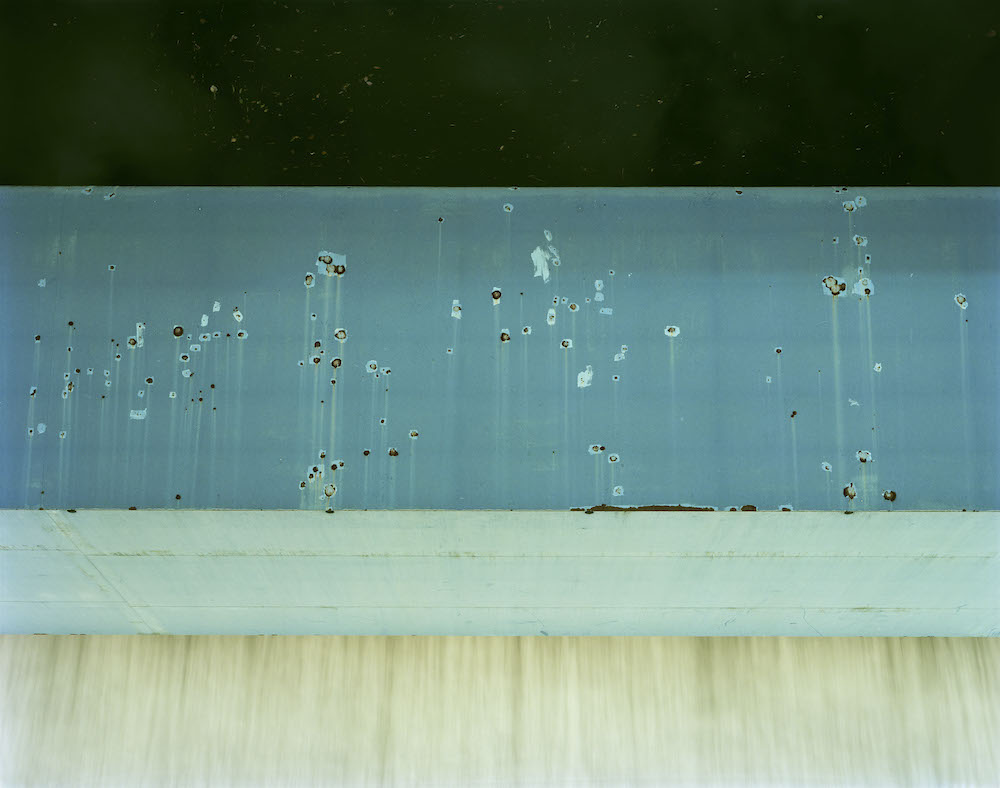
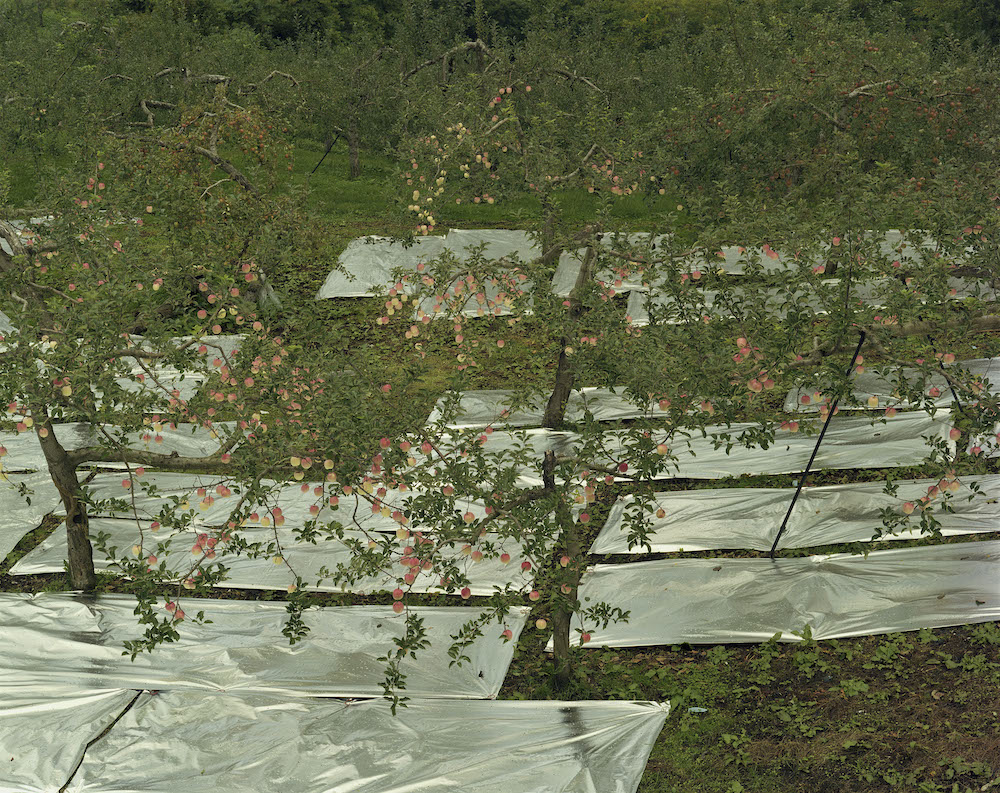
16 images isn’t much, so I guess they’re all favourites. But if I had to pick only two, I would say the apple tree and what I call the “blue canvas with holes”. I wouldn’t know how to explain it. I think I like how the apple tree is a figurative photograph, but the bright apples looking like distinct dots of colour in the branches make it look almost like “pointillism”, the painting technique branching from Impressionism. And the blue canvas is the photograph that looks the most like a painting, almost like a Mark Rothko who’s one of my favourite painters of all time. 

How do you hope the audience will respond to the work?

As a publisher, it’s always impossible to predict the response to a book and the work inside. It’s daunting and magical at the same time. 

Painting is available here.

Geomancy

Michael Lundgren questions the impact of humanity in a celestial series shot in the deserts of the American southwest, Mexico and Lebanon

A photographer’s inaugural picture can speak plenty, perhaps setting the tone, the subject matter or direction addressed in the future. Michael Lundgren, a USA-based photographer known for his visual pilgrimages into the deserts of Mexico, Arizona and Utah, first picked up a camera at the age of eight. Using an old twin lens, he recalls wandering outside and observing the ferocious vision of a tree in autumn. Deciding to capture it, he framed the tree on a waste level finder and, despite thinking he’d heard the shutter sound, he never found out if the tree actually appeared to be on fire in his image. He hadn’t put any film in the camera. 

Although this isn’t the case for all photographers, Michael’s debut into the medium – by means of a tree on fire, not so much the lack of film – undeniably hit a chord with the young creative. To such lengths that he chose to constantly surround himself in the wonders of the environment, capturing earth’s glory and preciousness with the delicacies of his frame and eye for the supernatural. “I grew up immersed in the natural world and found my time there to be as so many have described it: a spiritual experience,” he tells me. “Time in the landscape felt more like coming home than travelling far. As I became a young man, I watched the fields and woods that surrounded my home transform into suburbs and parking lots – my awareness of the earth as a limited resource grew side by side with these changes. On a few journeys to western United States, I feel deeply in love with the desert, its extremities of light and dark, and a certain vastness of space only found in arid places.”

Having worked in his profession since the 90s, Michael has gone on to publish three monographs: Transfigurations, Matter and Geomancy, all of which illustrate the otherworldliness of the desert through an exploration of both the artificial and the natural, perceived through his signature non-documentary style of fantasy blended with environmentalism. Geomancy, in this instance, comprises a book and new exhibition of the same name, currently on view at The Museum of Photography in Seoul, Korea, and running until the end of the month. The series itself pulls together 39 photographs in total and explores the artist’s deep inquest into the subject matter of desert located in the American southwest, Mexico and Lebanon. 

Eery, crystal sharp, and minutely detailed in its approach, each and every photograph appears to have been plucked from a film of science fiction. Its theatricality and alien representation – achieved through zoomed in photos of prickly cacti, metallic sheens of rock faces, and hauntingly desolate landscapes – gives the work an unnerving feel, like the scenes themselves have come from a world far from our own. Familiarity is a distant word throughout Michael’s Geomancy, and that’s precisely his aim with the entire body of work; because he himself started out slightly bemused. “Geomancy began with a handful of pictures I didn’t understand,” he says, citing this as the way he always kicks off a project. “When a picture confronts me that I don’t understand, a shift occurs, one that I’m barely conscious of. A new line of questioning is formed.”

“With this work,” he continues, “I began to see the earth as a series of messages that wouldn’t offer up their meaning easily. From the geologic to the human traces found there, the earth itself began to feel like a surface drawn upon over and over again, each layer a sign of something both knowable and unknowable. A palimpsest.” The latter being something that’s been reused or altered but still visible of its earlier form, which is an apt description of Michael’s photographic tendency to manipulate the landscape. “The desert and arid lands in general have a different relationship with time. As my brother Erick Lundgren says, ‘The desert remembers, the forest forgets.’ The notion here is that what has happened and what is happening is simultaneously present in the desert. As if there is a continuum of awareness. My hope with Geomancy was to create a body of work where the earth itself oozed with memory.”

Crafted over the course of four years in multiple countries, the majority being deserts in Mexico and the USA, Geomancy indeed sings with a life of its own. The desert has rich visual connotations; aliens, droughts, beaming sun, the lack of wind and rain, road trips or tornados. In an American context, for example, the term Great American Desert was used in the 19th century to name the western part of the Great Plains, located just shy of the Rocky Mountains in the north. Today, the land is more commonly referred to as the High Plains, and sometimes used to describe North America and parts of Mexico. These treeless, uninhabited lands have made appearances throughout art for decades, the more obvious in Western films or dystopian thrillers. 

In Michael’s Geomancy, these desolate ecosystems are given an equally as incongruous meaning as they float between the supernatural and the manmade. “I’m interested in the place in our experience that exists just before conscious recognition, where the world is unrecognisable to degree and then suddenly there is a shift and our brain registers the world,” he adds on the matter. “Think of waking up from a shallow nap and not fully understanding where you are, or taking a walk in the dark of night. What we see in these spaces is not the literal confirmed world but an abstract one where our imagination is able to function. Photography has this wonderful ability to somersault from the abstract to the literal and I hope the images sit within this liminal space.”

Achieving just that, Geomancy opens up the enclave of consciousness, where the viewer is unintentionally asked to make sense of what’s in front of them: an image that appears to be from both the past, present and the future. With such a profound grasp of time and travel, Michael’s work gives an affirmed nod to the celestial, but more so does it raise awareness to the impeachable – and enduring – impact of humankind. Speaking of a memorable story from making the series, Michael turns me to a trip in Campeche, Mexico: “I hired a Mayan guide to take me into a series of caves. We set off in the mid-afternoon, which turned into a five-hour journey through the narrowest passages you could imagine. Deep in the heart of these caves, he brought me to a reliquary and gestured to a ledge of ochre stone before us – 

‘These are the bones of my ancestors who dies here hiding from the Spaniards’. 

What struck me was that even the inside of the earth holds the memory of the human.”

Michael’s Geomancy is currently on view at The Museum of Photography, Seoul, until 26 June 2021. All photography courtesy of the artist.

The Ravine, the Virgin, & the Spring

Juan Brenner documents the oddities and geography of his hometown in Guatemala City

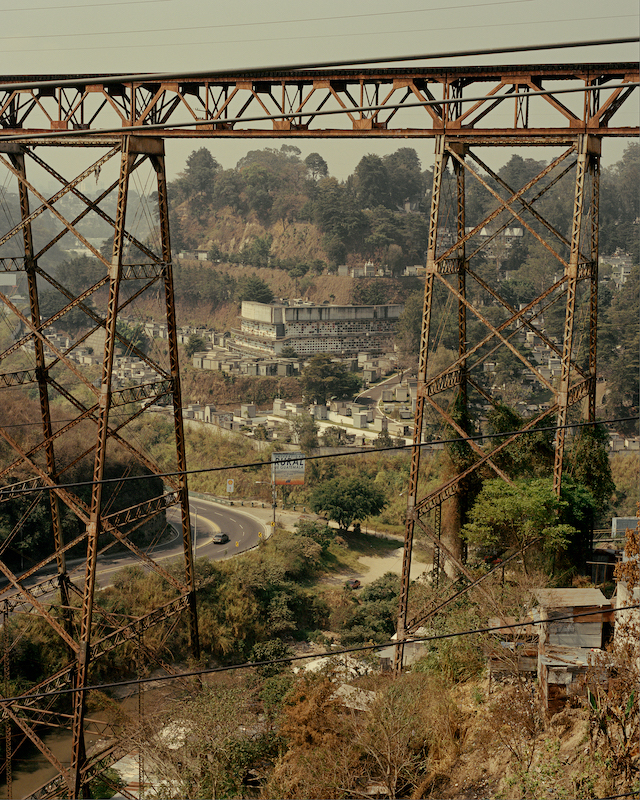
Guatemala is a mountainous country with vast and hilly valleys, where sand dunes and deserts make up all but a small fraction of its landscape. It’s also home to 30 volcanoes, three of which still remain active. But it’s not just the eruptions that have continued to cause concern. Alongside years of war and colonisation, Guatemala endured a catastrophic earthquake; one that shook the city and left the majority of its structures in ruin.  

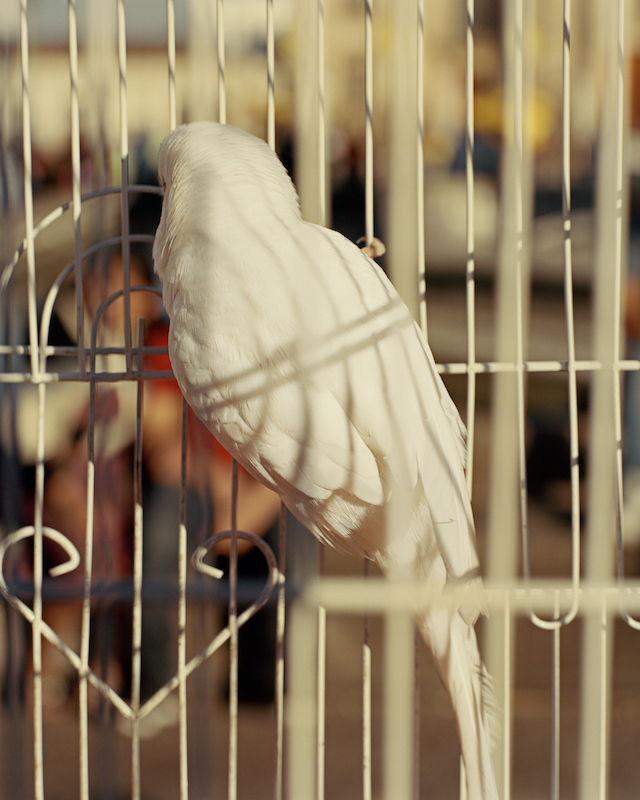
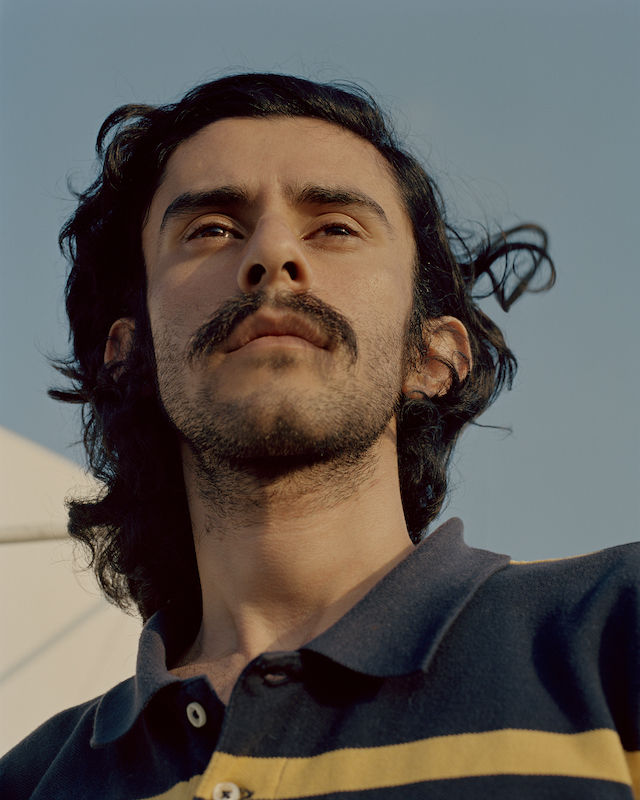
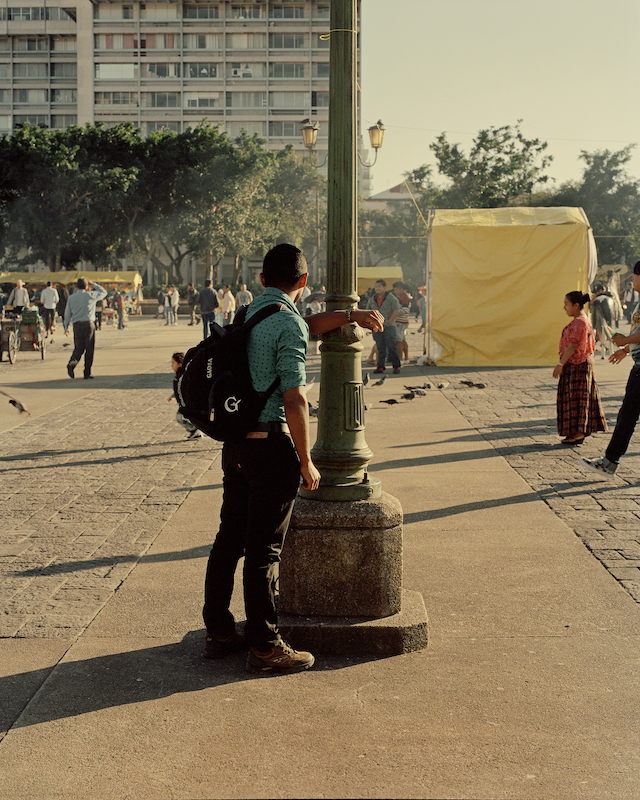
Within Juan Brenner’s book The Ravine, the Virgin, & the Spring, he seeks to capture this voluptuous and shattered geography of his hometown, Guatemala City. An ode of some form, the book, published by Pomegranate Press, arrives as his latest instalment of work in the Central American country – following his debut publication Tonatiuh, and Genesis, a series lensing the highland’s younger generation.

Guatemala is a location that Juan could spend days talking about, let alone photographing. “But being pragmatic,” he says, “I could say Guatemala City is the result of bad planning and beautiful weather.” In the early 1700s, for example, the city was designed to house 100,000 people and its horses. Socio-political decline meant that the planners decided to insert the city into a small valley, surrounded by ravines and mountains. So instead of your typical stream or waterway, there was a growing population in its banks. “Now, there are almost three million people here, so it’s pretty hectic. Our internal conflict really made our urban development stagnated and if you add a massive earthquake that destroyed more than half of our infrastructure to that mix… ”

“… It’s beautiful though,” Juan continues. “The old part of the city has amazing neoclassic architecture (some of it is really run down), beautiful churches (Catholic presence is essential in our landscape) and probably the best weather in the world (Guatemala is called ‘the land of eternal spring’). It’s odd and dangerous; gorgeous and inspiring.”

Born and raised in the municipality, Juan is a photographer who hails from a “very typical middle-class Central American family,” he tells us. He began making images during his teenage years in the 90s, snapping his friends and those he’d be intrigued by on the street. Although, he had a strong inkling that his style wasn’t quite going to make the cut in the Guatemalan photography scene, which provoked him to pack his bags for New York to work as a fashion assistant. Almost 12 years later, Juan was a fully-fledged fashion photographer and, as events go, life got a little hectic: “the whole NY thing kind of got the best of me; I had to change my lifestyle and decided to come back to Guatemala for a while, then I decided to stay for the sake of my rehab process and also kind of abandoned the idea of photography. I took a seven year hiatus from shooting personal projects, and I started shooting again three years ago.”

Even though Juan came into his medium almost by accident, it’s something that he relies on wholeheartedly. Or, as he puts it, it’s given him a “second chance”. He adds: “I’m trying to stay away from whatever makes me feel comfortable and just exploring new ways of capturing images.” Plus, having been away from the city for some time, his comeback was almost like an awakening: “I intentionally kept away from my territory and my upbringing in order to blend in the international market, but it was about time to come back and experience my reality.”

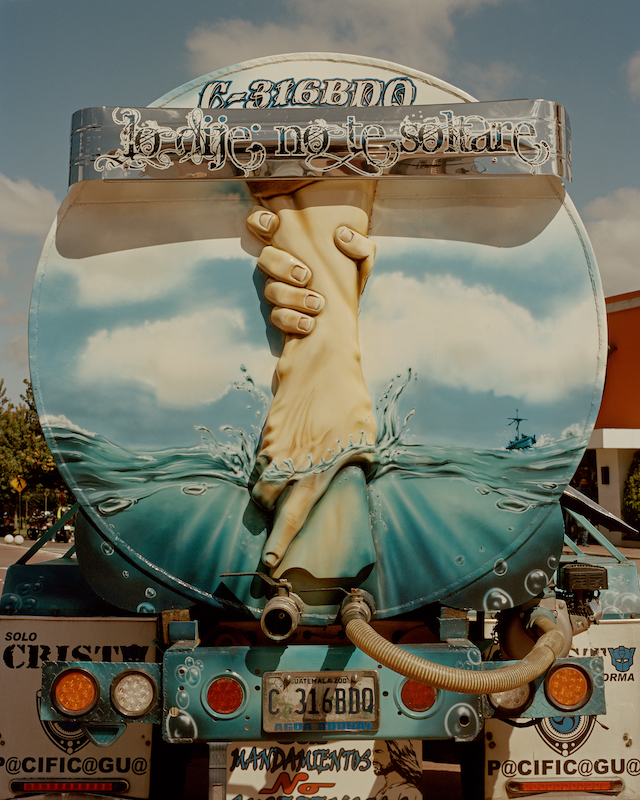
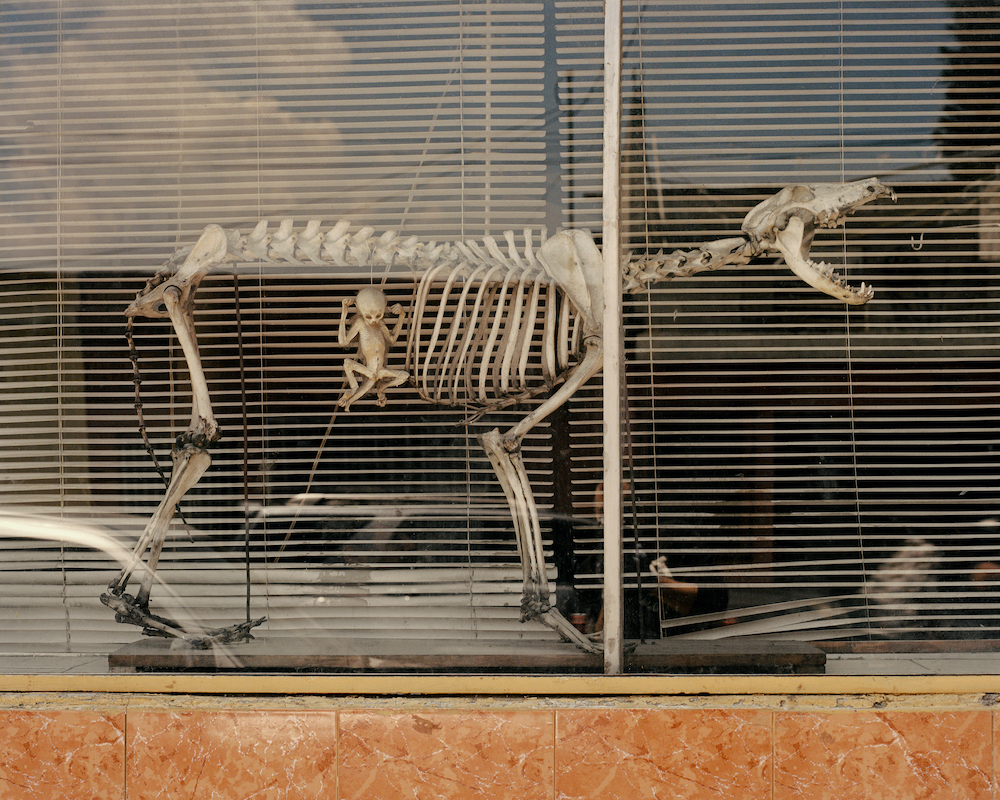
As such, The Ravine, the Virgin, & the Spring is more than just your typical documentation of sorts. It’s characteristically sun-drenched, littered with unexpected and discrete occurrences – the type that the untrained eye would usually miss. And what at first might be perceived as a typical marriage of street photography paired with artful landscapes, is in fact Juan’s own personal meanderings through a place that he knows too well, and one that he documented for months with his large analogue camera at hand. The project was also created as a means of comfort; he’s made himself a “bubble”, or a safe space, in which he feels “numb” to the oddities and realities around him.

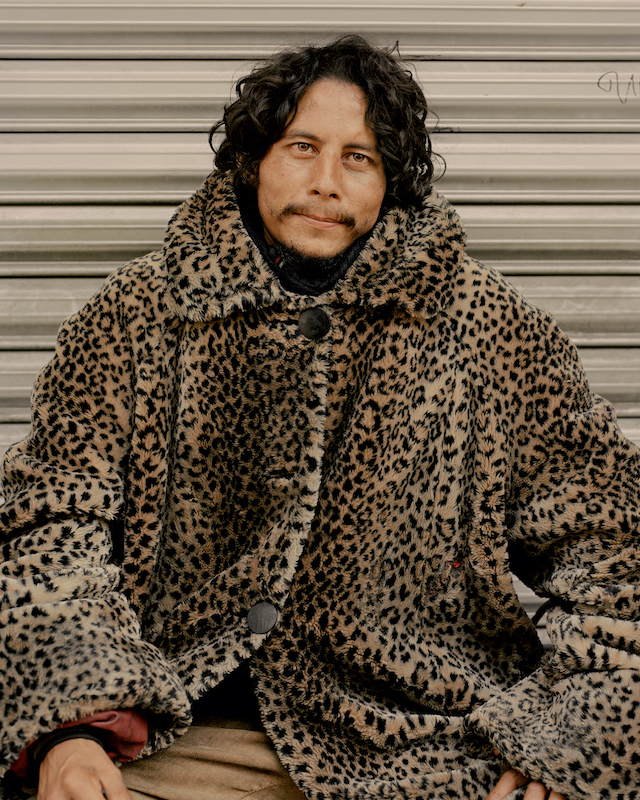
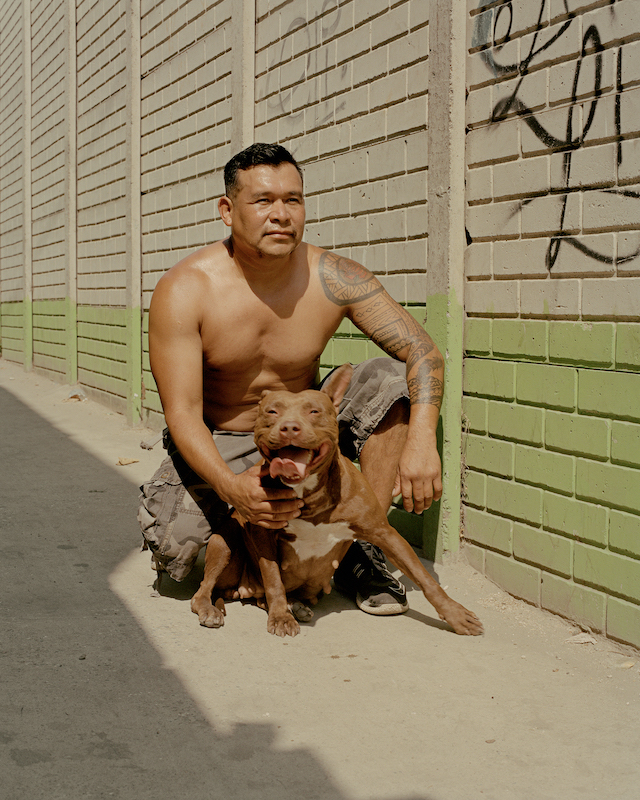
Shot between the seams of the hilltops and its architecture, you’ll notice the daily goings on with the city’s inhabitants. This includes a “dude” sporting a leopard coat, a man that regularly strolls this historical part of the city. “He is really mellow but evidently in trouble, both physically and mentally; I feel really connected with him, and I see myself in that portrait. He’s also so stylish!” 

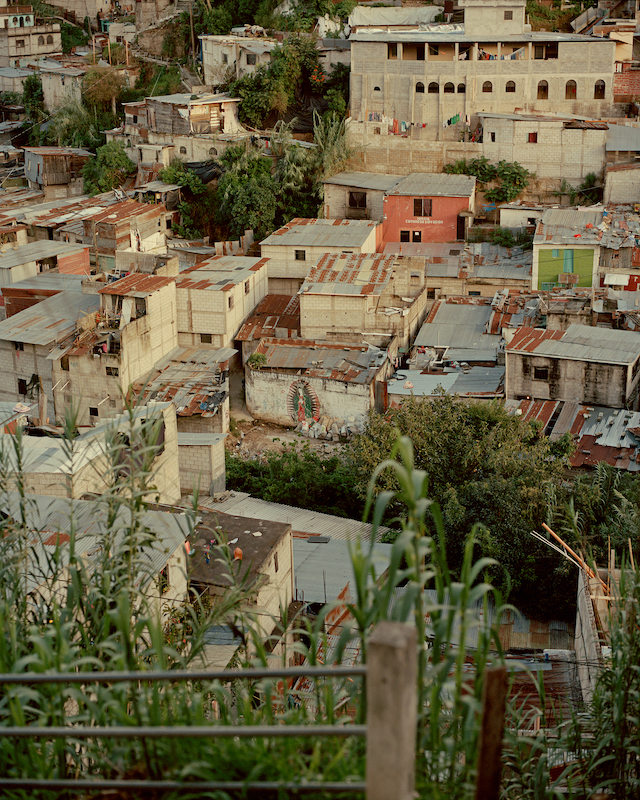
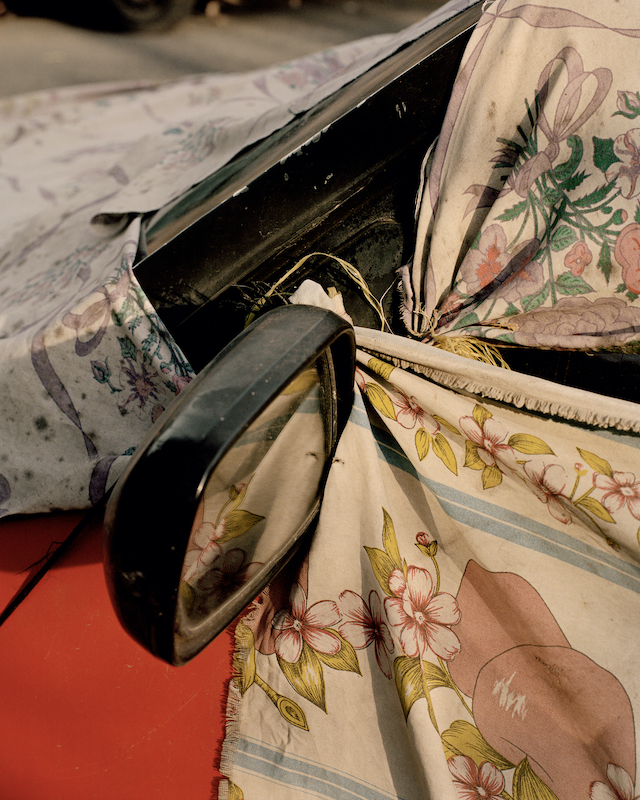
A further shot presents a piece of fabric tied to a vehicle’s rearview mirror, which visually paints a narrative of how the photographer views the city. “We’re not super rich and we don’t shine, but somehow we improvise to make everything work. We might not be the prettiest but we function; it is an extremely fragile rhythm but we have it down.” Elsewhere, there’s a photo of the slum, featuring the virgin mural. “The small valley where the city is built is called ‘The Valley of the Virgin’, so it’s a magical and perfect metaphor for our reality.”

Since Juan returned to the city, it’s safe to say he’s experienced a fresh start. He’s also now represented by Rocket Science, and enlists a medley of projects in the pipeline. And let’s not forget an additional upcoming book set to release at the end of the year, a project that’s connected to Tonatiuh – looking at the conquest and invasion of his home country, plus “the terrible repercussions of the colonial process in the Americas.” 

Yet despite all of this, Juan’s reasons for leaving in the first place still remain closely in tact, and he’ll always be battling against the barriers laid in front of him in terms of artistic freedom and expression. “It’s complex,” he explains, “on the one hand I’m doing everything for me. I’m trying to execute ideas that make me a better person and ground me, but on the other hand I want people to see where I come from and my view; my work is not 100% welcomed in Guatemala, the topics and that ‘numbness’ I mentioned before keep most of the people away from my work, especially the ‘elite’. My work is definitely more appealing to American and European audiences and I’m aware of that. I feel comfortable with what I have to say and conscious of the responsibility it carries.”