Land-ho!

Rolex has launched a new collection, but that’s not the only remarkable thing about it

Photography Adam Goodison. Land Dweller, 40mm, Oystersteel with white gold bezel. Rolex at David M Robinson, £13,050 davidmrobinson.co.uk

Rolex is a brand that likes to do things slowly. Small changes, little shifts, it doesn’t deal in revolutions. You just have to look at the furore when it moved a crown from the right to the left on the GMT-Master II a few years ago – a sure sign that incremental changes at the Crown pack a rather large punch. So, you can imagine the levels of excitement in the halls of Palexpo – the space in Geneva where Watches & Wonders is annually held – when rumours rippled through that Rolex was not only announcing a brand-new collection, but one that contained a brand-new movement housing Rolex’s new escapement.

This is the first new watch from Rolex for 13 years. As its name – Land-Dweller – indicates, it joins the ‘Dweller’ family, following on from 2012’s Sky and 1967’s Sea. However, it is not a combination of these two nor does it really share much of their DNA, apart from a fluted bezel, looking good in steel, and a crown on its dial. This is an entirely new beast with its own unique heartbeat.

Reportedly the brief was first handed down from management five years ago. The team was tasked to design a timepiece that was modern, but which took inspiration from the integrated bracelet style of two specific timepieces. The first was the ref. 5100, a Datejust Quartz from 1969, the other the rare ref.1630 from 1974 – a two-tone Oyster Perpetual Datejust that looks like the famed Oysterquartz but preceded it by three years and is, in fact, automatic. The new addition also had to have a movement that ran at 5Hz (or 36,000 oscillations per hour), as opposed to the usual 4Hz (28,800p/h) speed that is typical at Rolex. There is a logic to raising the oscillating rate – the number of times the balance wheel swings back and forth. A higher frequency means a watch that is less sensitive to shock and accelerations. To do this however, Rolex had to redesign its regulating system.

What Rolex has done with its new escapement, which it calls Dynapulse, is completely overhaul the Swiss lever escapement. This method, by which the release of power from the mainspring is regulated, was invented in 1754 by Thomas Mudge and uses a small fork attached to the mainspring that, in turn, through a back-and-forth rocking motion, moves the escape wheel around as the prongs alternately come into contact with its teeth. Most of the watchmaking world uses this system. And now Rolex has come up with an alternative.

With the Dynapulse, two interconnected wheels that look like sci-fi flowers enmeshed together, take turns in flicking a two-pronged fork between each other as the balance wheel swings. The wheels are made from silicon using the DRIE (deep reactive-ion etching) process, which means that the tooth tips are polished, and their surface is curved not flat, so there is no sliding friction as the wheels connect and pass, but more of a rolling motion. This means that there is little need for oil, which is used but dispensed using a curved precision needle and on a nanolitre scale. Add in an extremely strong white ceramic balance staff that has been polished smooth on a nanometric scale, an ‘optimised brass’ balance and a hairspring in Rolex’s proprietary silicon, Syloxi, and you have a movement that is upgraded to the max.

That alone would have been enough newness for anyone, let alone Rolex, for whom a tiny adjustment is newsworthy. However, the Land Dweller also comes with a brand new bracelet design. The last time Rolex put a watch on some new links was the President – a three-link design with semi-circular components created especially for the launch of the Day-Date in 1956. Before that there was 1945’s Jubilee and prior to that the Oyster, which had been in the collection since the 1930s. For the Land-Dweller, we now have the Flat Jubilee – so named because it is basically the flattened underside of the Jubilee, with its same construction of two larger outer pieces and three internal links – except here, instead of being beaded, they are flat. As an added extra, Rolex has reinforced it using ceramic inserts at the first articulated link, limiting stretch over time.

The result is a bolder and more geometric Rolex than people are maybe used to. It isn’t a ‘professional’ watch but sits in Rolex’s ‘classic’ category sartorially somewhere between the DateJust and Day-Date; a refined design with a sporty vibe that feels destined to spend time on the deck of a yacht or in a bar with a night-time view of a cinematic skyline. The finishing on the case is unusual for Rolex, given that it has gone for a satin finish on the flat surfaces, polished sides and chamfers on the case. The honeycomb dial is a new pattern as well, for which Rolex has used a femtosecond laser – an ultrafast precise beam – to etch the pattern, which gives it its texture.

All of which adds up to Rolex’s decision to enter the integrated bracelet club; something it has not been a part of for many years. And it has certainly entered it with aplomb. This is a 10-strong collection in 36 or 40mm, with everything from steel with white-gold bezel to full platinum with a diamond-set dial and bezel. Obviously, it’s been a hit. This is Rolex’s world; everyone just lives in it.

Photography Adam Goodison

Set design Maya Angeli

10:10 Issue 13 is included with Port Issue 37. To continue reading, order your copy or subscribe here

Scaling New heights

Escale, the once experimental face of Louis Vuitton’s horological output, has been reimagined as a simple three-hander. But that doesn’t mean it’s lost the ability to astound

Photography Ivona Chrzastek, featuring Louis Vuitton’s Escale

There are few brands, apart from Chanel maybe, who have parlanced their iconography as well as Louis Vuitton. From the Monogram – which was invented in 1896 by George to pay tribute to his recently deceased father Louis and inspired by earthenware kitchen tiles in the family home in Asnières-sur-Seine – to the markedly different Stephen Sprouse graffiti that dominated the early aughts, they are all instantly recognisable as Vuitton.

When, in 2002, Louis Vuitton decided to make a foray into watches, it went back to the maison’s codes to influence the design. The first Tambour – French for “drum” – had a dial in the same shade of chocolate brown associated with its luggage and handbags. Hammering home the connection, the seconds hand and those on the counters at 12 and six o’clock were in the same shade of yellow as their stitching. The brand repeated the approach 12 years later when it unveiled the Escale Worldtime. This dial was a riot of colour, with each of the city markers represented by pictograms and emblems used on vintage Louis Vuitton trunks. Emblems that had also been hand painted; something made possible by Louis Vuitton’s acquisition, in 2012, of specialist dial workshop Léman Cadran. The previous year, in a bid to boost its horological savoir faire, it had also taken into its fold complex-watchmaking company La Fabrique du Temps. Now Louis Vuitton had at its fingertips the know-how of Michel Navas and Enrico Barbasini – men who had spent time working on haute complications at Audemars Piguet and Patek Philippe and who had previously set up BNB Concepts – a kind of skunk works out of which came such mechanical marvels as the Concord C1 Quantum Gravity with its aerial bi-axial tourbillon. And Louis Vuitton certainly used that knowledge to its advantage. The Escale became its watchmakers’ playground. They combined its Spin Time complication, where time is told using spinning blocks in the hour marker positions, with a tourbillon, and added a minute repeater to the World Time. With the Escale, experimentation was the name of the game. In its 10 years, it was never time only. Until now.

You could argue that, given how Louis Vuitton has been positioning itself in the last couple of years, this new streamlined Escale was inevitable. Gone are the fireworks and in their place is refinement as illustrated by the re-imagined Tambour of 2023 – a beautifully proportioned, elegant sports watch where delight is found in every detail, from a dial with three different finishes to the brand-new movement. Named the LFT023, it is a masterclass in movement making – unsurprising seeing as it was developed in collaboration with Le Cercle des Horlogers, a workshop that specialises in “extensively personalised” movements. This movement is also in the new Escale.

Paris HQ has said that this new Escale is part of an elevation, one that brings an added dimension to the collection’s earlier scope of complicated timepieces; one that introduces a profundity in design approach and reinforces the integration of the maison’s heritage and values within the fine watchmaking collection. That integration is so wonderfully subtle, it’s like a 39mm luxury game of Where’s Wally? – except here you’re trying to spot all the little nods to Louis Vuitton’s history.

Louis Vuitton Escale in pink gold – £25,400

The easiest thing to notice is the central disc, which has been given a grainé finish to evoke the grained surfaces of its Monogram canvas. A custom dial stamp was made to create this effect, refined over several material trials before the exact texture was achieved. The minutiae draw the attention next. Dotted around this beautifully brushed, subtly concaved track are 60 tiny gold studs reminiscent of the nails of the lozine, or leather trim, that run along the exterior of a Louis Vuitton trunk.The hand-applied quarter hours are made to resemble the brass brackets on the corners of the trunk, while the crown looks like its rivets. Even the shape of the hour and minute hands, finely tapered needles, are intended to pay tribute to the myriad artisans, all experts in traditional métiers d’art, that have made the maison what it is today. The platinum versions with their meteorite dials, or inky black onyx with a surround of sparkling baguette diamonds showcase the maison’s skills in gem-setting and lapidary. Then there’s the technical things that maybe you don’t see. The seconds hand is shaped to follow the curve of the dial to minimise the possibility of a parallax error. This is a misreading that occurs when an object is viewed from an angle, causing it to appear in a different position to its actual one, like looking at a water level through glass. That same seconds hand appears gold but is actually PVD-treated titanium, chosen for its lightness to improve precision and energy efficiency. Louis Vuitton may have dispensed with obvious signs of R&D budget spend but its new era feels like good cashmere. It doesn’t telegraph how much it costs, but if you know, you know.

Louis Vuitton Escale in pink gold – £25,400

Louis Vuitton Tambour in steel and pink gold – £26,400

Photography Ivona Chrzastek

10:10 Issue 12 is included with Port Issue 35. To continue reading, order your copy or subscribe here

Light Fantastic

Switzerland’s latest craze places watchmakers in the literal limelight

Panerai’s Submersible Elux LAB-ID, £75,800

From dials to dial markings and even entire watch cases, luminescence is getting glowing reviews in the darkest corners of Switzerland. And it’s thanks to some nigh-on alchemical experimentation that the mechanics ticking inside seem pedestrian.

Bell & Ross’s BR-X5 Green Lum kicked off last year with its photoluminescent polymer-composite case – now mastered in blue for 2024. Still to be commercialised, IWC used Lewis Hamilton’s appearance at the Monaco Grand Prix to unveil a pilot’s chronograph whose ceramic case was fully luminous; while Richemont Group label-mate Panerai put on a light show at Geneva’s Watches & Wonders showcase with its lumed-up Elux Lab-ID, co-opting naval technology first used for WWII signalling lights.

“Even though luminous components seem to be the flavour of the week, I don’t think it’s fair to say that this is anything new in watchmaking en masse,” notes James Thompson, chief of materials at Scandi indie brand Arcanaut who, under his pseudonym Black Badger, was one of the original lume experimenters. “The cool thing about the bigger brands getting to grips with this stuff is how deep their pockets are when it comes to research and development.”

“Luminescence was originally used during WWI to improve legibility,” says Albert Zeller, CEO of RC Tritec. His father, along with Japanese company Nemoto & Co, developed phosphorescent strontium-aluminate-based ‘Luminova’, followed by the industry-standard ‘SuperLuminova’ in the 1980s, getting around the health issues that came with radium- and tritium-painted dial markings used previously.

Unlike fluorescent materials, phosphorescent materials continue to glow when the source of energy fades. Electrons are ‘excited’ from their usual orbit around an atom, trapped in this state, then slowly decay back to their former state by releasing energy, which we perceive as a glow.

Whatever’s in the water, what’s worth celebrating the most is lume’s emergence as an overlooked watchmaking skill in its own right: up there with dials, polishing and gearwork. As Thompson says, “shining a light on things that glow is, after all, always a good idea.”

Panerai’s Submersible Elux LAB-ID, £75,800. Amazingly, the electric current is carried around the Elux’s bezel as you rotate it, thanks to embedded contacts

Rather than lume paint, which has historically glowed through the Florentine military brand’s stencilled-out ‘sandwich’ dials since the 1930s, a button on Panerai’s new Submersible Elux LAB-ID lights up several miniature LEDs beneath the indices, bezel and even the minutes hand on demand. No battery, but rather four spring barrels wound by the timekeeping movement’s usual automatic rotor. Unbraked, a geartrain spins six copper coils within a microgenerator, harnessing Faraday’s law of electromotive induction to deploy a dynamo-driven electric current. Unsurprisingly, it’s the result of eight full years of R&D. And surely something Guido Panerai himself would be proud of. Especially since this dynamo principle draws directly from his early, on-deck landing-pad lighting technology for the Italian Navy, from which Elux takes its name.

10:10 Issue 11 is included with Port Issue 35. To continue reading, order your copy or subscribe here

Lift Off

Out of the blue, out of this world, Vanguart’s UFOs for the wrist prove there’s still plenty of space in Switzerland

A unique feature of Vanguart’s Orb is the sloped black PVD-coated titanium track for the winding rotor. When you switch from manual winding to automatic via the crown, the orbital mass begins revolving, appearing to float around the mechanics of the timepiece, and only perceptible thanks to a single diamond set in it

Internationally, it’s neutral. Nationally, something of a trilingual melting pot. But whether you speak French, German or Italian, Switzerland bears one partisan belief: it’s the true home of horology, with history proving it’s their way or no way.

Thanks to its famed neutrality, Switzerland’s watch industry thrived during the war while others were repurposing their tools for bomb timers and cockpit instruments. As Orson Welles’ character Harry Lime quipped in Carol Reed’s 1949 film noir The Third Man, Switzerland became the “home of the cuckoo clock.”

Following the 1980s quartz crisis, Switzerland reinvented the humble mechanical watch as an eternal investment, which inherently harks back to the quaint cottage industry of the Jura mountains – a region in western Switzerland known for its limestone peaks, dense forests and horology hub La Chaux-de-Fonds. This revival rested firmly on the foundation of prestigious heritage brands.

But that’s changing. Since the 1990s, French startup Bell & Ross, for example, dared to disrupt the puritanical codes of the pilot watch. While still relying on Swiss know-how and resources, they revolutionized the design and proved there’s room for new faces in a familiar field. This encouraged stripped-back techno startups like Richard Mille in 2000, MB&F and its steampunk creations, the flying saucers of Ulysse Nardin’s Freak series, Urwerk et al. Even indie brands like the Grönefeld brothers have decamped wholesale back to their Danish homeland.

So where in this brave new galaxy does that leave an upstart like Vanguart? Positioned at the ‘vanguard’ of conceptual horology, as its portmanteau attests, Vanguart is bravely advancing the sci-fi experimentalism of kinetic sculpture in timepieces.

It’s also brave for standing on the shoulders of Swiss giants, but with none of the hoary mentality that so often shackles the established brands to their heritage. Take Vanguart’s debut, the Black Hole: a planetary body spinning above its apex in the form of a flying tourbillon carriage, regulating the flick of its mesmeric, concentric hours and minutes rings. For 2024, Vanguart pares things back to that flying saucer of a tourbillon, hovering centre stage and powered by a rotor like no other – a ceramic ring orbiting the circumference, whose orbit is only discernible thanks to a single diamond-set satellite.

Mehmet Koruturk (chairman), Axel Leuenberger (CEO), Jérémy Freléchox (chief technical officer) and, last but not least, Thierry Fischer (creative director) revealed to 10:10 how they brought the future back to horology’s heartland, with a wilfully artistic, less academic attitude.

10:10 You have quite the dream team, it appears.

Mehmet Koruturk We have the dream team. Axel started his watchmaking career at Audemars Piguet’s APRP hothouse, by the side of Giulio Papi himself , while Jeremy worked for Girard-Perregaux before joining APRP.

MK I was a complete outsider! Whilst I have extensive experience in broader luxury (fashion, automobiles), my professional work in high-end watchmaking was just beginning when I met these guys. I discovered the haute horology world in a deeper way while working for Genii Capital and more specifically through the sponsors of its flagship asset: the Lotus F1 Team.

Axel Leuenberger We had a dream to make a ‘black hole-vortex’ type of tourbillon a reality few years ago. Beautiful encounters and shared visions have made us become partners and grow the project.

10:10 That’s an interesting way in – how, exactly?

MK I created and founded the creative agency Magnat as a hobby to link watch brands with brand ambassadors: the first collaboration we set up was between Axl Rose of Guns N’ Roses. It’s through this collaboration I first met Axel and Jeremy. Long conversations over two years ended up with all of us (Thierry joining too) exiting our jobs and founding Vanguart in 2017. I was truly inspired by what they had already achieved.

The central in-house-crafted flying tourbillon whirrs within a full 10.5mm height of architectural Grade 5 titanium

10:10 The design of the Black Hole: inspired by the Millennium Falcon, perhaps?

Thierry Fischer There isn’t really an obvious transposition of one universe or another. All four of us are from the generation of the 80s and 90s who were immersed in sci-fi and fantasy, cars and spaceships. I think anyone who looks at the shape of the Black Hole case sees something from that imagination that many share in common.

10:10 Was the concentric jumping display module an evolution of an existing style of mechanism? Or a totally new concept?

AL That was a totally new concept, based on a design of Thierry. The entire movement is dedicated to this particular complication, started from a blank page.

Jérémy Freléchox From a blank page. Proprietary, and entirely conceived and assembled in our atelier.

The Orb’s futuristic case shimmers with a veritable mosaic of hand-applied textures and polish, including microblasted, satin- finished, ‘black-polished’ and hand-bevelled

10:10 What sort of set-up is Vanguart HQ? Don’t most new high-end brands necessarily rely on the cottage industry of parts suppliers in and around the Jura mountains’ historic cradle of horology, La Chaux-de-Fonds?

JF Once again, the planets aligned when we became partners. A mutual friend had to hand over his premises in La Chaux-de-Fonds. It was a video creation office for Breitling, in fact. We then moved into a place full of history, a place renovated with great taste. Moreover, it was previously the old Vulcain brand’s building – where so many of their famous alarm wristwatches rang-out for the first time! So, we are now emerging from startup mode, fully fledged…

TF The Black Hole was an ideal launch; it allowed us to push our collective vision as far as possible. We’ve now been able to carry the purity of its design aesthetic forth – to evolve into the Orb. And beyond, of course…

Vanguart Orb from CHF180,000 plus VAT; Vanguart Black Hole from CHF290,000 + VAT; vanguart.com

Photography George Harvey

10:10 Issue 11 is included with Port Issue 35. To continue reading, order your copy or subscribe here

Fly-half passed

Rugby wunderkind Marcus Smith is a play maker in league with an equally precise watchmaker

Marcus Smith wears Tissot’s brand-new carbon-case version of its PRX – a design revived from the 70s whose phenomenal success now finds itself core catalogue. Top Saul Nash / watch Tissot

The ‘fly-half’ in rugby union is a pivotal position. The player forms the link between the forwards and the backs, and by virtue of their passing decisions dictates nigh-on every play. American football’s equivalent would be the quarterback, which – outside of the rugby crowd or, whisper it, the privately schooled patriarchy – is arguably the better-known role. Certainly the more glamorous, if we’re being honest.

However, rugby’s rather dusty, institutionally British reputation is starting to feel fresher than ever.

There is no finer example of this than the London Harlequins’ very own fly-half Marcus Smith, who’s making waves on the pitch right now. Cosmopolitan, social-media-savvy, better half to doting west London model Beth Dolling and at just 25 years of age already steering the English side to world dominance.

‘Steering’ being the operative word, since Smith exacts better leverage than most on the global stage. Something that a car company, fashion label or energy-drink manufacturer might clumsily wield – but instead, something that a historic Swiss watchmaker has had little trouble in aligning with.

Jumper Ferragamo / watch Tissot

Like the tightly coordinated components of Tissot’s horological squad (three examples of which Smith proudly sports here), Twickenham’s premier playmaker is known for his precise control over his team’s possession. Whether he’s dictating the tempo with a well-timed pass, placing a kick into space, or executing a snap tactical decision following a scrum, Smith reads and orchestrates, then adjusts on the fly, just as a watch movement’s oscillating, ticking escapement mediates the flow of energy through its geartrain. It’s a deceptively delicate role that rugby’s often-dismissed brutishness belies.

Born in Manila to a rugby-mad British father and a Filipina mother, Smith started playing rugby at the age of six for the Nomads club, before his family relocated to Singapore. He moved to the UK at the age of 13 and subsequently received a sports scholarship to attend Brighton College, where he captained the school’s 1st XV. He enjoyed an exceptional first season sporting the Harlequins’ famed quartered colour shirt, scoring 179 points in 26 appearances, and being included in Eddie Jones’ England training squad for the Autumn Internationals and the Six Nations, as well as being nominated for BBC Young Sports Personality of the Year.

The Seastar diving collection from Tissot includes Marcus’ favourite, the 1000, good down to 1,000ft or 300m below the waves, and leant a stealthy look by ‘physical vapour deposition’ (PVD) coating (£750). Top Saul Nash / shorts Nike / shoes Nike / watch Tissot

Smith shone once again in the 2020/21 season leading Harlequins to the Premiership title, finishing the season as the Premiership’s top scorer with 278 points (his eight tries in the season was the most by any fly-half). A meteoric rise that shows no sign of abating – one week on from securing the Premiership title with the ‘quins, the fly-half made his full England debut and scored a try as England defeated the USA. A pinpoint performance against Canada followed a week later, and shortly after coming off the pitch, Smith learned of his call-up to the British and Irish Lions squad in South Africa. You wouldn’t know any of this from Marcus Smith’s Zoom window, though. The man is fresh from a Tuesday-morning training session – and this is long before joining his teammates; he’s still self-training at the height of a hot British summer, which illustrates the drive that got him here.

“I’m privileged to be in a league that’s ultra-competitive,” he says. “My dad used to play but not at professional level,” Smith remarks of the parent who drove him to matches and practice. “These days the rules of the sport are constantly evolving, the guys are taking more pride in their physicality, I have to constantly adapt and suit… I’m just honoured to have a brand like Tissot to support me, to inspire me – as they do themselves – to improve my precision, my efficiency.

“At this level, I’ve quickly learned the best thing is to be myself and enjoy it. I wouldn’t define myself ‘just as a rugby player’ but I’m honoured that role gives me a vehicle to showcase whatever talent I have.”

Top Saul Nash / shorts Nike / watch Tissot

Adding to his quick wit on the pitch, Marcus Smith’s footwork is unusually elegant and deceptive – just like the smooth motion of a seconds hand sweeping across the dial. Smith’s nimble creativity allows him to slide past defenders, evoking a sense of grace that masks the sheer muscle now underpinning every position in rugby’s modern game. Given Tissot’s 170-plus years of quiet agility, adapting to every technological turn and economical up or down affecting Switzerland, we’d say their partnership with Smith is fitting. Tissot pioneered the touchscreen watch with its 80s icon, T-Touch long before ‘smartwatch’ was even a word. But if you think that’s what Smith defaults to, you’d be wrong – as one glance of his Instagram account attests – infinitely more tailoring on show than tries.

“I’ve been in tracksuits and training gear all my life,” he says, “and, on the run, of course it’ll always be my T-Touch Sport on my wrist. But it’s so nice to be with a brand that allows me to switch up, to smarten things up.

“That’s what my Tissot PRX chronograph is for – I just love its intricate, light blue subdials. Or the new three-hander – the first PRX in carbon, all-black and great with a suit.”

Tissot’s PRX Powermatic 80 Carbon boasts antimagnetic mechanics with an 80-hour power reserve, plus a case literally forged from marble-pattern carbon-fibre strands (£960). Top Fendi / watch Tissot

Photography Alex F Webb

Styling Lauren Rucha

 10:10 Issue 11 is included with Port Issue 35. To continue reading, order your copy or subscribe here

Master of the Air

Since 1955, ‘GMT’ has been an iconic Rolex zero-hours launchpad across 24 time zones… and beyond

Photography Jess Bonham, set design Hana Al-Sayed

The same year that Rolex, Geneva’s pre-eminent watchmaker, officially partnered with Pan American World Airways, NASA was embarking on an experimental programme with the US Air Force, the Navy and North American Aviation. Between 1959 and 1968, 199 hypersonic flights were undertaken by three rocket-powered X-15s, with the goal of testing human ability to withstand the effects of extreme velocity and pressures and temperatures in suborbital conditions. The elite test pilots were drop-launched from the wing of a B-52 bomber at the edge of space, reaching unofficial speed and altitude records of Mach 6.7 (4,520mph) and 354,200ft.

In October 1967, Colonel William J Knight set the still-unbroken speed record of Mach 6.7 while flying his X-15 over the Mojave Desert. Strapped around his silver spacesuit? His very own Rolex GMT-Master. Meanwhile, throughout the 1960s, the same watch ticked beneath the gold-brocade cuffs of Pan Am’s long-haul Boeing 707 and DC-8 captains.

In 1972, 13 years after the X-15 programme began, a total of 12 men had walked on the surface of the Moon. Bringing home the last two of them on 17th December that year was Captain Ronald Evans, who conducted a spacewalk lasting over an hour during the return journey. This marked the final mission of NASA’s Apollo programme, Apollo 17. On his wrist? A Rolex GMT-Master. You get the idea.

In short, Rolex’s groundbreaking – or should that be skyscraping? – traveller’s wristwatch has been the go-to for ‘the best of the best’. Even Jack Swigert relied on his GMT-Master throughout the stricken Apollo 13 mission, only briefly switching to Commander Lovell’s NASA-issued Omega Speedmaster when he needed a stopwatch to time a thruster burn for re-entry.

Since 1955, when time-zone-hopping jet travel blasted passengers to new continents in the space of hours (and Rolex’s boffins into keeping their track of time back home as well as away) their sector-defining cocktail of wrist gadgetry was so on-target that it has barely evolved since. The Rolex GMT-Master, for instance, has remained virtually unchanged due to its precision. The waterproof Oyster crown is unscrewed, then carefully pulled out to one of three positions to adjust the main hours hand in hourly jumps to local time, while the fixed GMT 24-hours hand points to the time back home, read from the day/night colour-coded bezel. A separate crown position allows for fine-tuning both hours and the minutes hands with the movement paused, plus adjusting the date, should you find yourself beyond the International Dateline somewhere over the Pacific.

This version of 2024’s black-and-grey-bezel GMT-Master II (£9,550) is fitted with a ‘Jubilee’ bracelet: a supple five-piece-link design engineered for the Datejust back in 1945. Its clasp’s patented ‘Easylink’ allows the bracelet length to be increased c. 5mm in hot weather, or for strapping over a wetsuit

Weary businessmen of the 60s rejoiced accordingly, having suddenly found themselves being thrust hither and thither to board meetings around the globe. That guilt-ridden bedtime call to the kids back home need never again jangle one’s wife awake at 3am.

If you’re feeling particularly peripatetic, you can also use the bezel as a third hours indication. As long as you’re confident about your ability to remember what the second 24-hours hand would be pointing at once you’ve twizzled the ring off zero to align with the local hours hand according to another time-zone.

Confused? You won’t be – because Rolex are notoriously good (AKA glacially iterative) at getting things just right. In the 80s, Rolex introduced the GMT-Master II – the ‘II’ suffix denoting the new functional update: the ability to adjust the hour hand independently of the GMT hand, allowing for easy time zone changes.

It was the ref 6202 Turn-O-Graph of 1953 that almost nonchalantly coined the enduring tropes of Rolex’s modern-era sports watches, adding to the brand’s screwed-down Oyster case of 1926 a broad rotating timing bezel plus a screw-down crown, ensuring 100m water proofness as well as bold luminous numerals. It’s easy to see how James Bond’s go-to Submariner diving watch tumbled out of this the following year. But it’s especially impressive that, just another year later, Rolex thought to adopt and adapt the dive-time bezel as the defining feature for its new GMT-Master.

On the original GMT-Master, the conventional hours hand, the minutes hand and the 24-hours hand were synchronised; you had pull the crown out to the second position and rotate the hours and minutes hands to set the date and the 24 hours hand, then pull the crown out to the third and final position to set the local hours hand. But now, with the GMT-Master II, in the third position you set the GMT hours and minutes, then push the crown to the second position to set the local hours and date – a far easier and more intuitive mode of operation.

Modern progress has been more about the mighty Crown and its restless honing of the mechanics driving proceedings, rather than the original, revolutionary travel-time system itself. That and the durability of its outward-facing materials. Originally in plexiglass, then harder-wearing anodised aluminium, the GMT-Master’s famed 24-hour rotating bezel and its dual-colour denomination of day and night has been in proprietary ‘Cerachrom’ since 2013, fusing a seemingly endless rainbow of ceramics via a closely guarded alchemy at its Biel/Bienne laboratories.

What you see here is 2024’s latest combo, in never-before-seen black and grey. Look closer-up and, much like the blue and black of 2013 or brown and black of 2018, it boasts two perfectly crisp colour interfaces. This is despite its one-piece ‘monobloc’ design and the contrasting physical properties of each silicate substrate, which are fused together at extreme temperatures to achieve near-total scratch resistance.

We’re talking about the most cult of Switzerland’s brands here, in an already cultish world. So it’s no surprise that these duotone variants have earned a Rolexicon of fond nicknames. The 1955 original’s blue (night hours) and red (day hours) 24-hour bezel configuration was almost-instantly the ‘Pepsi’. The red of which proved especially tricky when it came to the Cerachrom version of 2014 (alumina was the answer).

The aforementioned 2018 iteration is ‘Root Beer’, and 2013 – initially nicknamed ‘Bruiser’ – was dubbed as ‘Batman’. Now, with the pleasing symmetry of 2024’s black and grey combination, both collectors and fans have unanimously settled on a fitting name: ‘Bruce Wayne’.

The test pilots of NASA’s X-Plane programme would have no doubt pledged their allegiance.

Photography Jess Bonham

Set Design Hana Al-Sayed

10:10 Issue 11 is included with Port Issue 35. To continue reading, order your copy or subscribe here

World First

By adding a date, Patek Philippe has engineered the next evolution in world timing

The 24-hour disc of Patek Philippe’s latest and greatest World Time (Reference 5330G; £65,600) is subdivided into day and night zones, identified respectively by a small gilt sun on a silvered background (symbolising noon), and a gilt crescent moon on blue-gray (symbolising midnight)

Taken at face value, the fact that Patek Philippe has added a date to its latest World Time doesn’t sound like the most exciting innovation in watches right now. When you have Chanel adding headphones to a watch that you can wear as a necklace and IWC making a perpetual calendar whose accuracy will outlast humanity, adding a date to a watch appears pedestrian. That is until you realise that Patek Philippe hasn’t just added a date, it has added a date that is coupled with local time and can, if the international date line is crossed, be adjusted backwards. All using a monopusher crown.

For the first time, Patek Philippe has made it so the date comprises a transparent hand made of glass with a hammerhead tip in red lacquer. It moves along a circumferential scale from 1 to 31, to avoid this relatively static hand occluding an otherwise busy dial

It’s fitting that Patek Philippe should engineer the latest development in world timing. The marque has been synonymous with this function since the 1930s when it asked watchmaker Louis Cottier to downsize his world-time movement, previously only used in pocket watches, for a wristwatch. Despite being this early to the game, it was another moment in time that made this function a must-have for the travelling elite.

Initially launched as a limited edition at the Patek Philippe Watch Art Grand Exhibition in Tokyo, World Time has now entered the brand’s regular collection with a patented differential mechanism that couples the date wheel with the one that controls local time. This allows it to be altered backwards as well as forwards should the international date line – a temporal line of demarcation located halfway around the world from the prime meridian, separating two consecutive calendar dates – be crossed. In a traditional world-time set-up, two contradicting pieces of information, in this case set date forward or set it backwards, would get sent to the same date star-wheel in the movement, and block it. Patek Philippe’s engineers found a way to process these two pieces of information in parallel. The date hand is kept static until the local city is changed, then the date can either remain the same or goes back a day if the wearer passes the international date line – all done using a second finger that is able to hook the date wheel backwards. And you can operate all this technical wizardry with the monopusher crown that activates the city disc, 24-hour disc and centre hand, which Patek Philippe innovated back in 1999.

In answering the challenge posed by Patek’s top brass, its engineers realised a date display for the new caliber 240 HU C adjustable back and forward according to local time, regardless of whether you’ve just advanced past midnight or hopped over the International Dateline from west to east

This is just the sort of thing one expects from a name like Patek Philippe. Small adjustment, incredible technical advancement. It’s not something that, on paper, looks exciting but, in an industry where progress seems to mean creating something that will garner column inches and Instagram likes, it is rare to find brands actually taking the time to use their R&D departments to address functional problems. Granted, the travails of transatlantic travel might not be on everyone’s list of problems, but if you’re able to wear the whole world on your wrist, shouldn’t you also be able to time it at the touch of a button?

Photography Rowan Corr

 10:10 Issue 11 is included with Port Issue 35. To continue reading, order your copy or subscribe here

Old Hands of Time

Every brand has its ‘halo’ piece, the same applies to watchmaking, of course – as documented by these iconic timepieces, distilling Switzerland’s profligate permutations of heritage and ingenuity on to just four centimetres of your wrist

Tudor Pelagos Blue

£3,440, tudorwatch.com

Hans Wilsdorf founded Tudor in 1946, a full 40 years after launching an even more familiar outfit called Rolex. He promised “a watch that our agents could sell at a more modest price”, which basically meant kitting-out watertight Rolex Oyster cases with outsourced mechanics. Today, it’s a little different: Tudor has its own movement-making facility for a start. But away from the more popular Black Bay throwbacks, its new Pelagos stands in its own right as the very quintessence of a modern diving watch. Lightweight (thanks to titanium), crisply contemporary and still affordable. It’s as if Tudor has been building to this since 1946.

Cartier Tank Louis Cartier

£11,100, cartier.co.uk

The clue is in the title. While brothers Pierre and Jacques built their father’s Parisian jewellery empire in Paris, Louis’s passion for watches drove Cartier’s other craft, whose dainty but far-out shapes were fuelled by its affinity for design and gold, plus gentlemen’s growing interest in wristwatches over pocket. The latter stemmed from the trenches of the First World War, when men started strapping on their pocket watches for convenience, and appropriately Louis’s first true icon was Tank, inspired by British Army tanks and the mark left by their caterpillar tracks.

Patek Philippe Calatrava ref. 5227J

£25,610, patek.com

Geneva’s watchmaker nonpareil may be best known for auction-record-smashing ‘high-complications’, such as perpetual calendars (flick back to the Porter for more), but this particular Calatrava is arguably Patek Philippe at its finest. Coined around the time the Stern family took over the business in the ’30s, it’s difficult to imagine a more pure and perfectly balanced watch. From the Dauphine blade hands to the pared-back numeral batons and gently merged lugs, the Calatrava’s unbroken production since 1932 is down to timeless, understated elegance.

Rolex Oyster Perpetual Datejust 41

£10,500, rolex.com

If you were barking “Buy!” and “Sell!” into a massive carphone while pounding Wall Street’s sidewalk back in the ’80s, chances are this watch would have been peeping from your two-tone French cuff. Bicolour bling – such as steel and yellow gold – is most definitely back, red braces and all. And Rolex is embracing its reputation as the go-to boardroom watch brand with this subtle but effective reboot of its classic Datejust, in its Rolesor metal combo, smelted on-site in Rolex’s very own Geneva foundry. Up to 41-millimetre diameter to suit contemporary tastes, it also features every recent innovation from Rolex’s constant fine-tuning. Most definitely, “Buy!”

Vacheron Constantin Historiques Triple Calendrier 1942

£18,100, vacheron-constantin.com

Switzerland’s longest-running watchmaker can always be forgiven for raiding its formidable archive of natty dress watches. But, with its brace of gorgeous Triple Calendriers, Vacheron is being refreshingly honest about its Now That’s What I Call…greatest-hits approach. “A deliberately vintage look (…) reinterpreting the creativity and the aesthetic of the iconic timepieces born in the 1940s,” reads the press release – and long may it continue. Our favourite has to be this steel 1942 model, boasting Arabic numerals worthy of an old Manhattan cocktail menu, voluptuous claw-type lugs and circumferential date calibration picked out in a burgundy luscious enough to pair with cheese.

Audemars Piguet Code 11:59 Selfwinding Chronograph

£41,300, audemarspiguet.com

Now the vapours have dispersed, the controversy of last January’s Salon International de la Haute Horlogerie launch feels nowhere near as divisive. Audemars Piguet’s most significant new collection since the octagonal Royal Oak sports watch of 1972 is a borderline classic already – the round hero it always needed, still imbued with enough reassuring oakiness thanks to an eight-sided caseband, but with everything else defiantly future-forward (just like back in ’72, come to think of it). The messy acronym still needs to change (challenge, own, dare, evolve, since you ask), but in chronograph form you have Audemars ‘The Disruptor’ Piguet at its technical best.

Rado True Thinline Les Couleurs Le Corbusier

£1,780, rado.com

Ceramic may be super comfy and super tough, but it’s the flawless, unfading colour that makes it particularly desirable – if you can colour it in the first place. With monochrome and primaries commonplace today, the watchmaker that pioneered ceramic back in the ’80s almost nonchalantly remained ahead of the game last year by teaming with Les Couleurs Suisse, which holds the licence for Le Corbusier’s Architectural Polychromy. From the palette comprising 63 shades that complement any interior in any combination, the nine examples Rado chose to reproduce in watch form match the swatch precisely.

Panerai Luminor 47mm

£7,700, panerai.com

Back in 1915 Florentine naval supplier Guido Panerai patented a super-luminous substance made by combining radium with zinc sulphide. Radiomir was so bright that, allegedly, when Panerai modified cushion-shaped Rolex pocket watches for Italy’s commando frogmen, they had to cover the dials with cloths to stay incognito. Originally painted on the dials, by 1942 Panerai had developed the ‘sandwich’ – a disc pasted with as much radium as possible, glowing through stencilled-out dial numerals. Seven years later, the radium was replaced by the decidedly less-lethal Luminor, glowing just as bright.

Chanel J12 Classic Black

£5,200, chanel.com

The brainchild of Chanel’s late, great creative director, Jacques Helleu, J12 – androgynous, monochrome, revolutionary, just like Coco herself – was named after Helleu’s favourite yachting class. Over 20 years on, it’s breezier and splashier than ever, thanks to subtle tweaks from the fashion giant’s resident watch boss, Arnaud Chastaingt. Beneath the streamlined ceramic case (still fashioned in-house at Chanel’s Swiss atelier), J12’s precision mechanics adapt that of Tudor and its Kenissi workshops – 20 per cent of which Chanel acquired last January. Monsieur Helleu would surely have approved.

Hublot Big Bang Unico Blue Magic

£17,300, hublot.com

Modern-day horological iconoclast Hublot celebrates its 40th birthday this year – four decades after Carlo Crocco earned enfant terrible status for being so crass as to mount a luxurious gold watch (designed after the eponymous porthole style) on a rubber strap. Since LVMH’s takeover and marketing drive, the steroid-injected Big Bang is now synonymous with football, hip-hop and Middle Eastern glitz. But that’s to overlook Hublot’s formidable technical expertise, developed in parallel: high-tech ceramic, for example – blue being a particularly tricky colour to bake, to the sort of minute tolerances demanded by a water-resistant watch case.

Photography William Bunce

Creative direction and styling Paulina Piipponen

This article is taken from issue 26. To buy the issue or subscribe, click here

Chrono Loco

A question hangs over whether there’s a place for traditionally hand-crafted mechanical timepieces in our digitally entwined universe, but that’s precisely the point – their anachronism is a defiance of everything that will eventually be obsolete

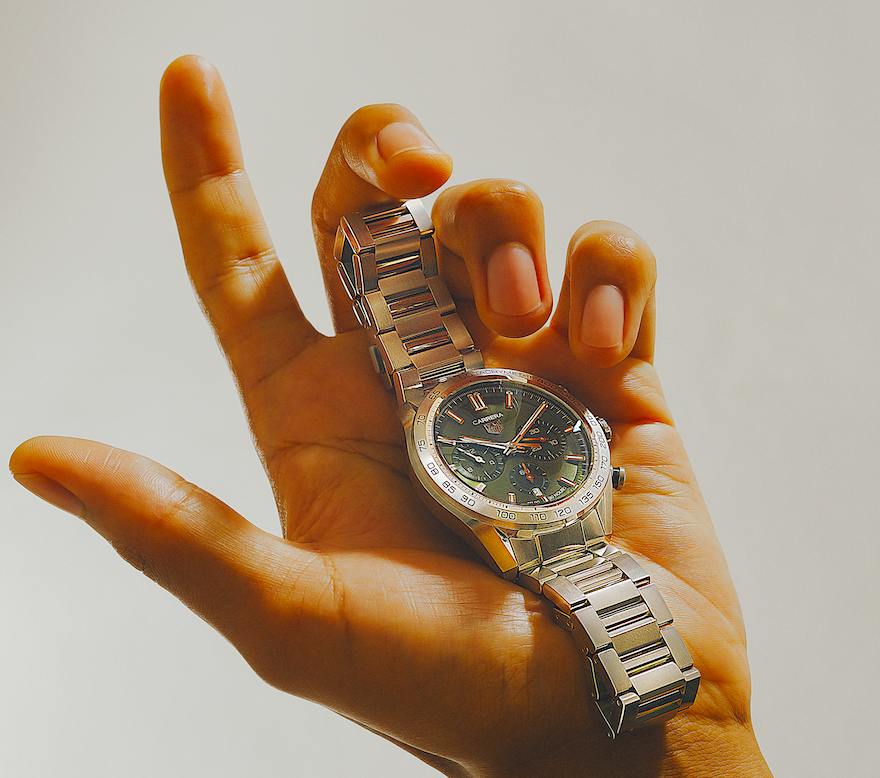
TAG Heuer Carrera Sport Chronograph in steel. £5,500

Chanel J12 Phantom in ceramic and steel. £5,500

Audemars Piguet (Re)Master01 Selfwinding Chronograph in steel and pink gold. £51,800

IWC Portugieser Yacht Club Chronograph in steel. £11,600

Breguet Classique Tourbillon Extra-Plat Automatique in platinum. £140,500

Hublot Big Bang Sang Bleu II Blue Pavé in titanium. £36,500

Tudor Black Bay in steel. £2,840

Bvlgari Bvlgari Cities Special Edition, Roma in carbon-coated steel. £3,810

Breitling Superocean Heritage ’57 in steel. £3,400

Rado True Square Open Heart Automatic in ceramic. £2,090

Photography Nhu Xuan Hua

Photography assistant Karolina Burlikowska

Set design Paulina Piipponen

Styling Rudy Simba Betty

Hand models Paul Darnell Davis Thomas, Malcolm Yaeng, Piotr Jarosz

Mentor and Protégé: Mia Couto & Julián Fuks

Authors Mia Couto and Julián Fuks reflect on their respective roles in the Mentor and Protégé Arts Initiative, founded by Rolex to foster communication and development across the arts

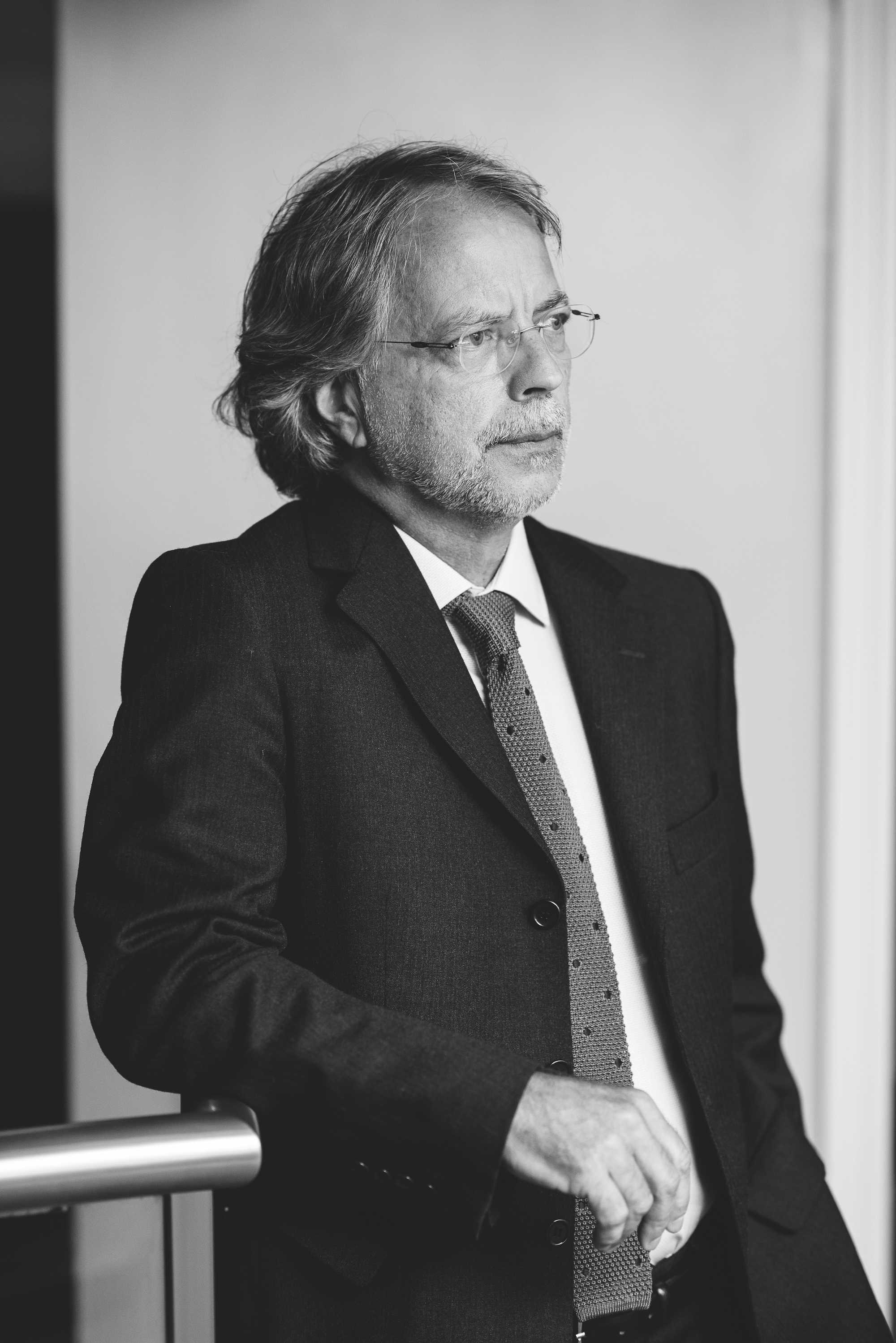
Mia Couto

The unique relationship between mentor and protégé has been crucial to some of the most significant developments in art and science. Plato’s dialogues with his master Socrates, for example, laid the foundation for much of Western philosophy, while Humphry Davy’s mentorship of the young, impoverished Michael Faraday ensured he had the education and experience to go on to invent the electric motor.

Founded in 2002 by luxury watch brand Rolex, the Mentor and Protégé Arts Initiative seeks to continue this rich tradition by pairing and supporting a new set of mentors and protégés across dance, film, literature, music, theatre, visual arts and architecture in each two year cycle. With previous participants including the architect Sir David Chipperfeld, the director Alfonso Cuarón and the composer Philip Glass, the initiative has helped to enrich the dialogue between artists of different generations and cultures, as well as to revive the essential relationship between the mentor and protégé. 

In literature alone, it is clear that the programme has played a pivotal role in developing new talent. Naomi Alderman, for instance, who was the 2012-13 protégé, and whose mentor was the celebrated writer Margaret Atwood, this year won the world’s leading prize for English-language fiction by women. Also this year, the 2010-11 protégé, Tracy K. Smith, received the highest honour for poetry in the United States of America, having been appointed Poet Laureate to the Library of Congress. Here, some of the latest participants in the programme – Mozambican writer Mia Couto and Brazilian author and translator Julián Fuks – reflect on why they became involved in the programme and what the roles of mentor and protégé mean to them.

The Mentor – Mia Couto
The main thing I can pass on as a mentor is to not be afraid of making mistakes. Sometimes beauty is born of failure and without mistakes we wouldn’t have life. Young writers are so obsessed with writing well, but nobody really knows what writing well involves.

I chose to work with Julián specifically because he wanted to explore other territories and to change his practice. Our approach to writing is completely different. I’m driven by beauty and a passion for characters, characters who are far away from me. In Julián’s case, he is the character. He thinks before he dreams. These differences make a good combination in our roles as mentor and protégé. Julián and I speak the same language and of course there is both a familiarity and some sense of foreignness, but that allows us to venture deeper into our relationship.

I don’t necessarily see the role of the mentor as someone in a superior position, with more knowledge to pass on. Nobody really has any experience when it comes to writing; it’s just a process of beginning over and over again. Instead, what is useful for the protégé is in gaining insight into the processes of a more seasoned writer. I wanted to show Julián the early stages of my writing process: my hesitations, fears and my corrections.

We exchanged material at its raw stage, which was useful for both of us. The relationship of the mentor and protégé can be reciprocal, and in many ways Julián is also my mentor. He is a good judge of what is excessive, for example. I’m a poet as well as writing prose, and sometimes I write with too much poetic freedom. He helps me to know when to stop, which is just as important as knowing where to start.

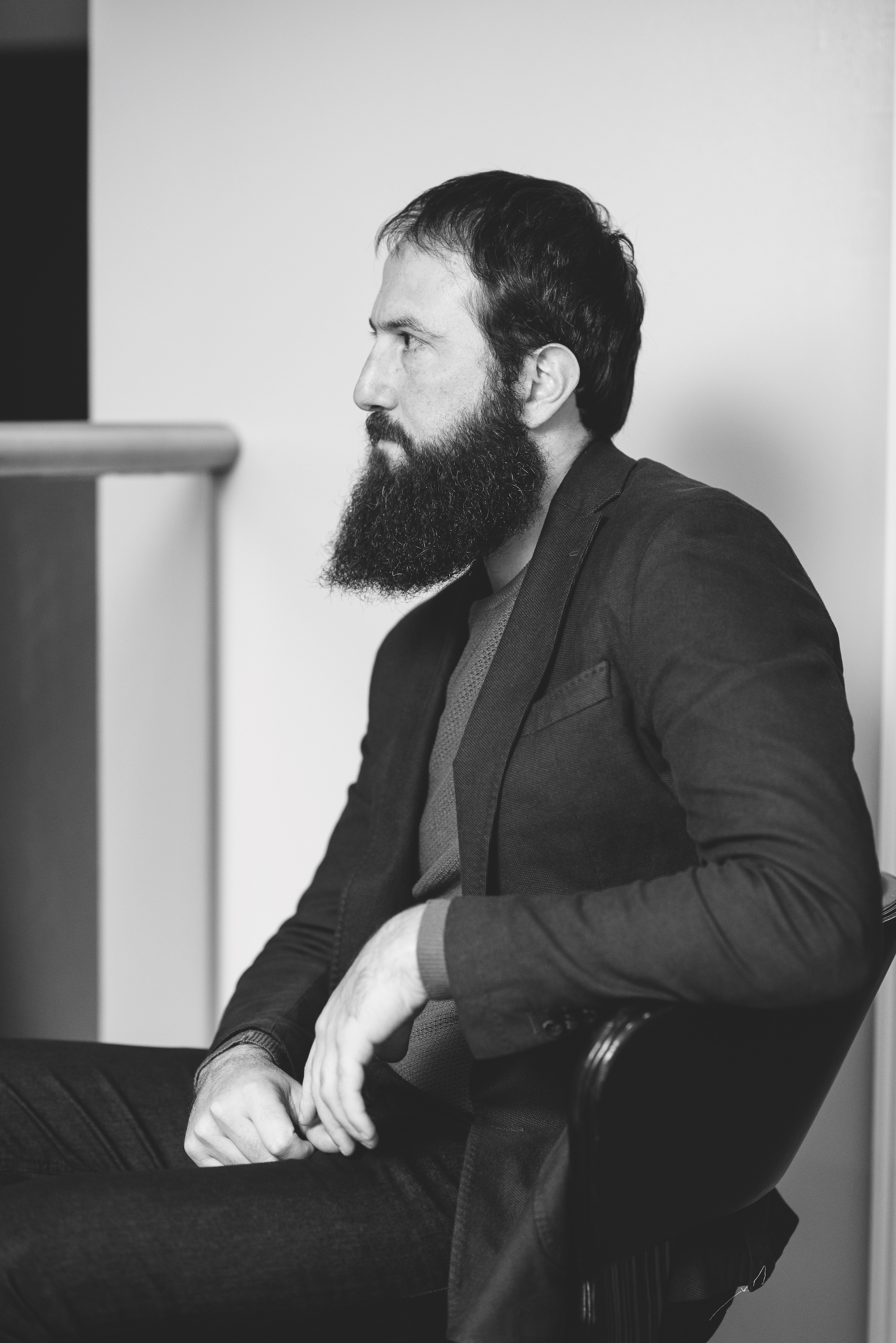
Julián Fuks

The Protégé – Julián Fuks
A writer should always be attempting to transform themselves. I thought this programme was a good opportunity to become a different kind of writer, to become more creative and poetic, and Mia is the perfect person to help with this. Although there are differences in the way we write, we are similar in the way we relate to the world ideologically. I was born in Brazil during my parents’ exile from Argentina and Mia was born during his parents’ exile from Portugal. Brazil and Mozambique are very different countries, but because of colonisation and the fact that we are both linked to Portugal, there is some common identity.

At the beginning of my relationship with Mia, I was used to writing in a very obsessive and rigorous way, trying to bring precision to every sentence, every paragraph I wrote. But rather than developing this, I discovered that Mia doesn’t have this kind of control; as he says, most of the time he doesn’t know where he is going. He kindly showed me his first drafts, which often look nothing like his final work, and showed me how I could loosen my control, to free my writing from my meticulous processes. It’s something you could only do with such an accomplished writer and someone with so much experience.

I don’t think I’ve ever thought about having a mentor before I was approached for the programme. When I began to write, I just wrote and tried to learn from reading; there weren’t really any schools or teachers for writing. But then working with a mentor is not a simple process of teaching; it’s much more than that. It becomes a different type of experience, another way of looking at things. Creating this dialogue between writers has been important not only to exchange visions of literature, but visions of the world.

This is an extract from issue 21 of Port, out now. To buy or subscribe, click here.

The Rolex Arts Weekend – featuring public events, including world premieres, with the programme’s participants, including Mia Couto, Philip Glass and Sir David Chipperfield – will take place in Berlin on the 3rd and 4th February 2018.