PORT meets Alessandro Zambelli andStudio Uufie to discuss the London Design Festival 2016 partnership between luxury lifestyle hotel ME London and creative studio Matter of Stuff
London Design Festival regularly leads to collaborations between designers and unlikely clientele, often with varying degrees of success. This year saw the coming together of ME London and creative studio Matter of Stuff, who commissioned six international designers – Alessandro Zambelli, Nina Cho, Olga Bielawska, Tim Vanlier, Tomas Libertiny and Studio Uufie – to produce elegant furniture in marble and metal . The collection displayed not only the distinctive styles of the designers involved, but a progression in their own skills as a result of the project. Here, PORT catches up with designers Alessandro Zambelli and Studio Uufie, as their creations went on display at ME London.
Alessandro Zambelli
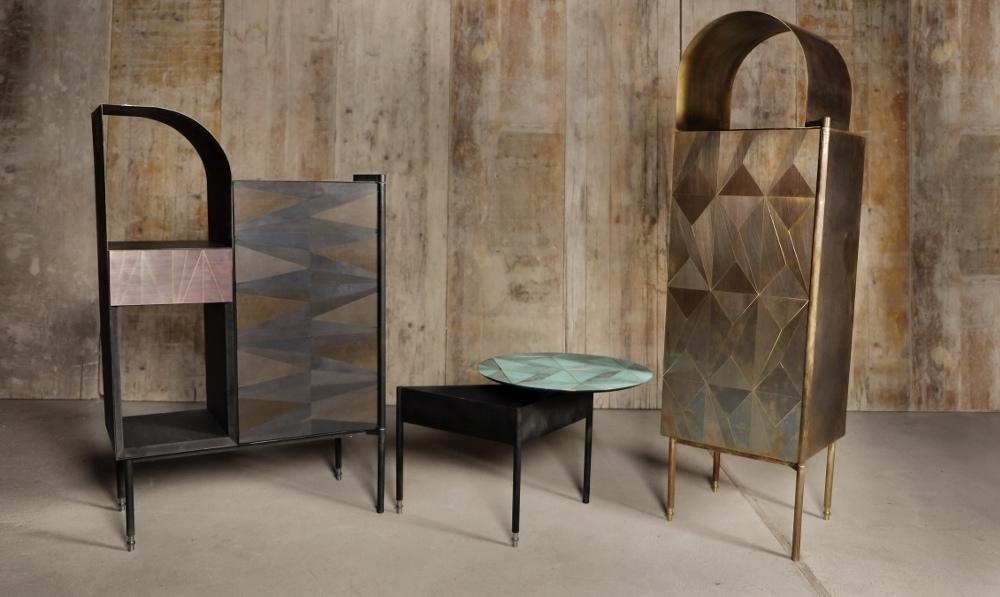
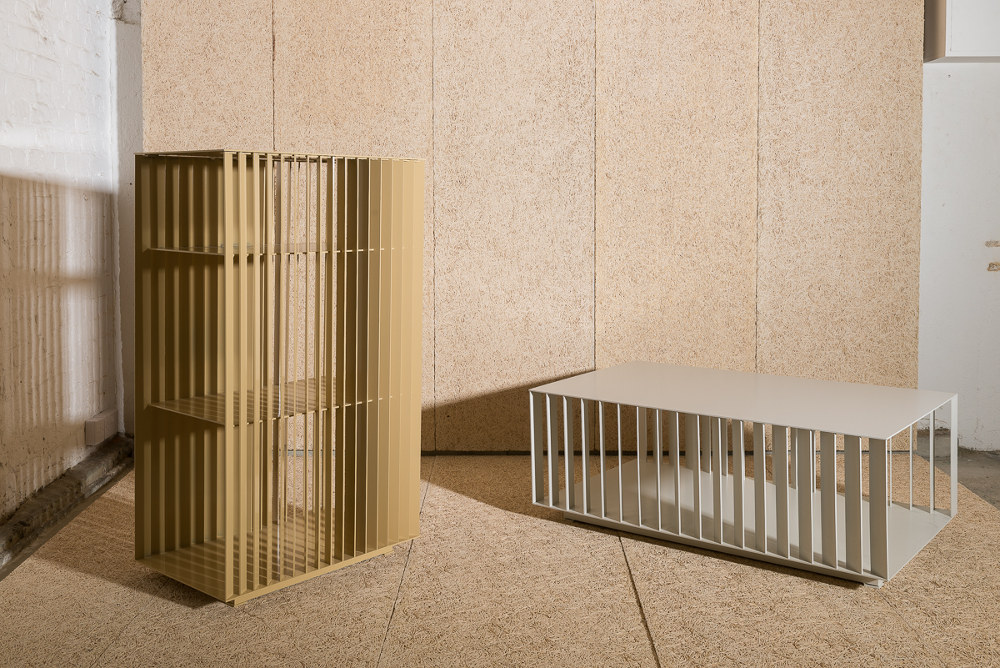
Alessandro Zambelli for ME London
What is your philosophy when it comes to design and approaching collaborations like this?
Alessandro Zambelli: Every time I try to explore new processes; I am particularly interested in doing research through my work. I have found inspiration for Marque’ in the Art Decò, preserving the principles of ebonistic inlays, translated in metal.
How did you ensure that ‘inner-soul’ enlivened this project?
AZ: I am pleased that this project unveils an inner soul. It’s very much a personal process that makes me look for new form and concepts, while reminiscing about old memories.
Why did you choose to bring oxidation into your process of design for this project?
AZ: I find the oxidation of metal a very fascinating process and it is one that I have never approached before. It has been interesting not to have the complete management over the process of transformation of the material. While in the past we used to plan every result, in this case the essence of metal has dictated the chromatic and decorative rules. I have simply given order to this freedom.
Studio Uufie
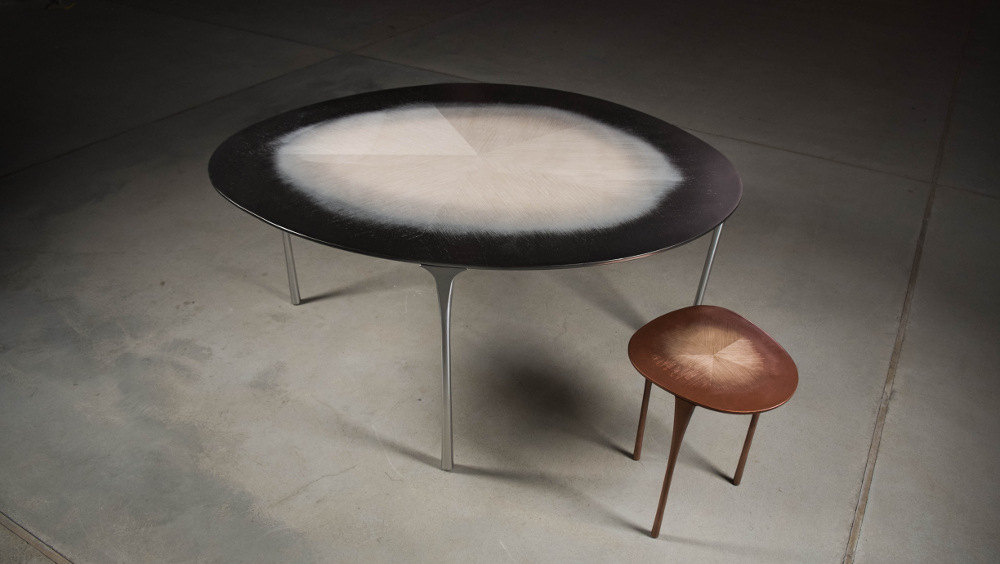
Studio Uufie for ME London
What did you hope to achieve in your collaboration with Matter of Stuff?
Studio Uufie: It gave us the opportunity to focus on pieces that would reflect our experience of being in a concentrated environment with five other designers in the picturesque countryside and seaports of Italy. The collaboration allowed us to have pieces that were both experimental, but highly detailed in production through Italian craftsmanship.
How did you utilise the metals that were made available to you?
SU: We used several metal production techniques (welding, spinning, CNC cutting) to produce three different tables in copper, brass and aluminium. Using both solid wood and solid metal, liquid metal application is used to blend the two materials seamlessly. By pushing the quality of both materials, there is a sense of unreality in how the table is made.
Why did you choose the echo as a source of inspiration for your collection?
SU: The table is inspired by many sources, such as nature, but mostly by our shared experience during the residency in Italy. We used the analogy of ‘echo’ to show how the design is reminiscent of this feeling of serenity and astonishment. Also, how the two materials (wood and metal) can ‘echo’ each other to create harmony.
The collaboration between ME London and Matter of Stuff is on display at ME London, 336-337 Strand, London WC2R 1HA until 27th September 2016
Rauni Higson, chair of Contemporary British Silvermsiths, talks to us about mastering the precious metal
Rauni Higson in her Snowdonia-based workshop
I was always a bit torn between art and science at school, but art won. I went to art college, but didn’t last long. I ended up working as a lab technician, took up jewellery as an evening class, and was instantly hooked on metalwork. I started making things to sell, and working with my teacher, but soon realised I had an awful lot to learn. I started my business straight after graduating, with help from the Prince’s Youth Business Trust, 19 years ago, in Snowdonia, where I seem to have taken root in the mountains.
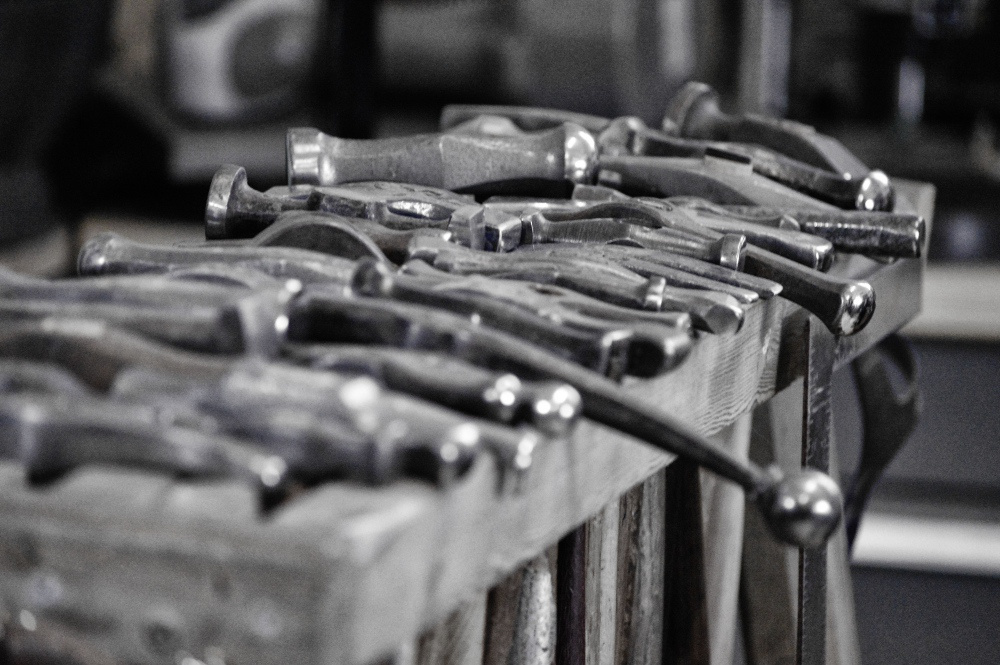
I can honestly say every single day of silversmithing is a learning experience. It’s such a vast and complex set of skills. There are always multiple ways to approach a challenge; if you ask three silversmiths how they would do a particular thing, you’ll likely get three different answers. It’s a case of predicting what might happen, and figuring out the most effective way to get the job done, which is all about experience. If it looks like it was effortless, it has worked.
My work marries sculpture with function. I aim to create pieces that are striking enough to stand alone, but intended to be brought alive by use. I tend to do lots of flowing forms, which reference water, or growth patterns, like plants, seaweed or fungi. At the moment, I’m fascinated by rocks – especially cracks and fissures, which is all a lot more angular. I’m a climber, so it’s inevitable that getting up close to rock faces is bound to come out in my work, but it’s early days, I’m just experimenting with that.
It’s the most fascinating time in silversmithing, right now. The creativity of contemporary silversmiths, especially in the UK, is just astounding. Without the constraints of commerciality, it really is an artform, and the breadth of expression is extraordinary. The individuality of makers today is exceptional, and it’s a really exciting movement to be part of. The traditional craft is evolving. The challenge is to maintain the traditional skill base, which is still absolutely crucial for a broad creative palette.
Mastering the craft is an ongoing ambition. I have made a point of doing courses or work experience with a master silversmith at least every two years since graduating, which has been crucial. I love working with smiths who were apprentices aged 15 in big, busy, commercial workshops, as well as artist smiths with quirky individual approaches. It’s a really rich field.
Rauni Higson is part of the Idea to Object exhibition, curated by Corinne Julius, at the V&A, which runs until 2 July 2017
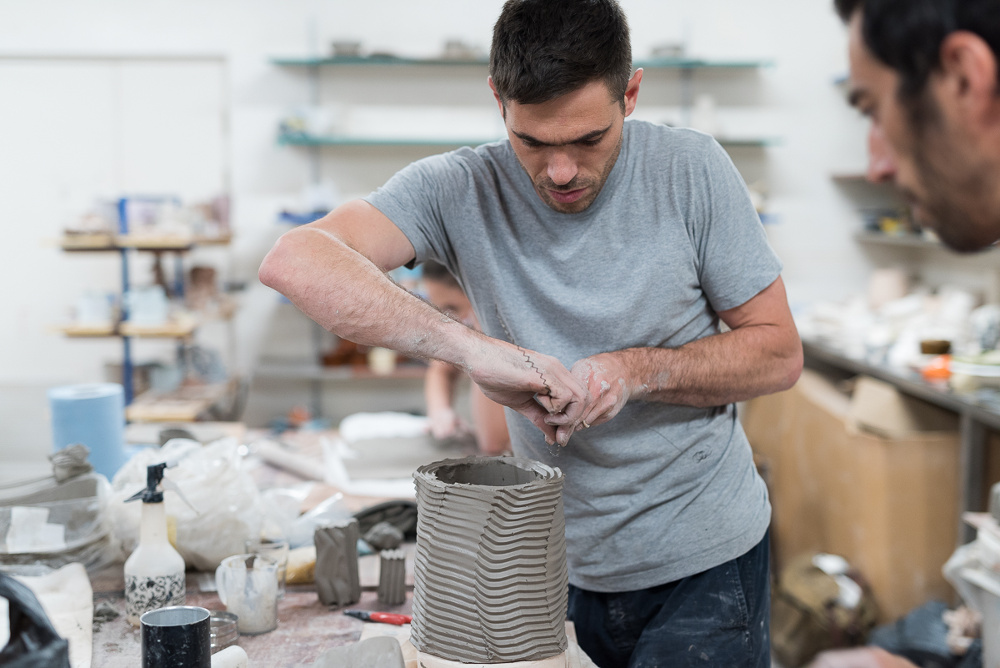
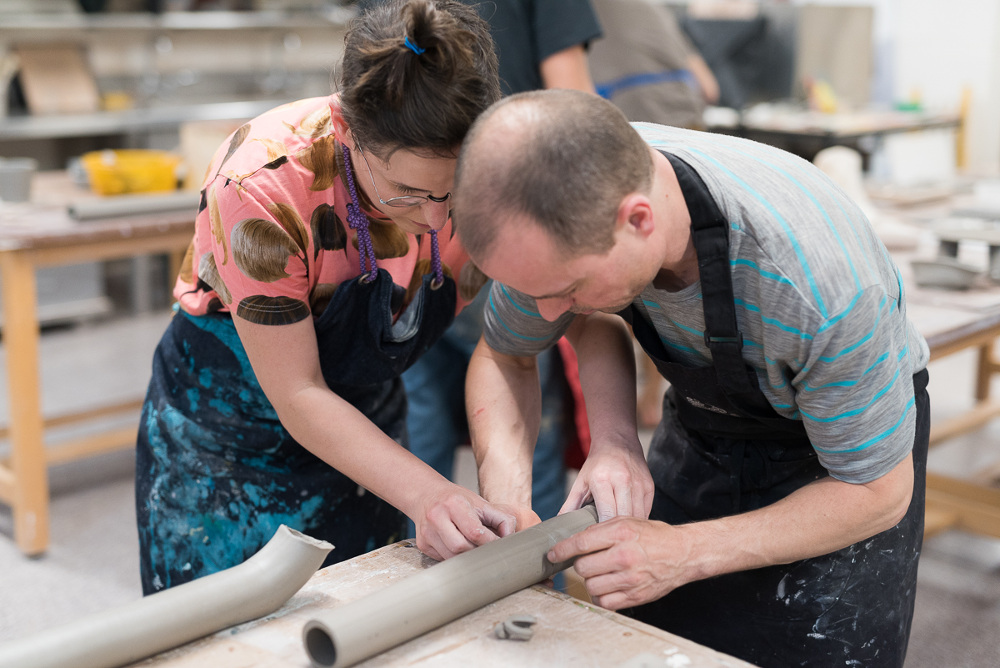
Italian designer Martino Gamper delves into his design process, and explains why his latest project brought 10 creatives including Max Lamb, to a pottery class in west London
Martino Gamper has made a name for himself in recent years for furniture design that is bold in form and unapologetic in its challenge of the status quo. In 2015, he proved his assertion that “there is no perfect chair” through a demanding project that saw him create ‘100 Chairs in 100 Days’, using scrap materials.
Opening during London Design Festival 2016, Gamper’s latest exhibition entitled ‘No Ordinary Love’ continues his rebellious nature and provokes the unwritten regulations of commercial design through a pottery class containing participants including Max Lamb, Gemma Holt, Bethan Wood and Faudet Harrison. Here, we chat to Gamper about the exhibition, his career, and why he believes “clay is a very social material”.
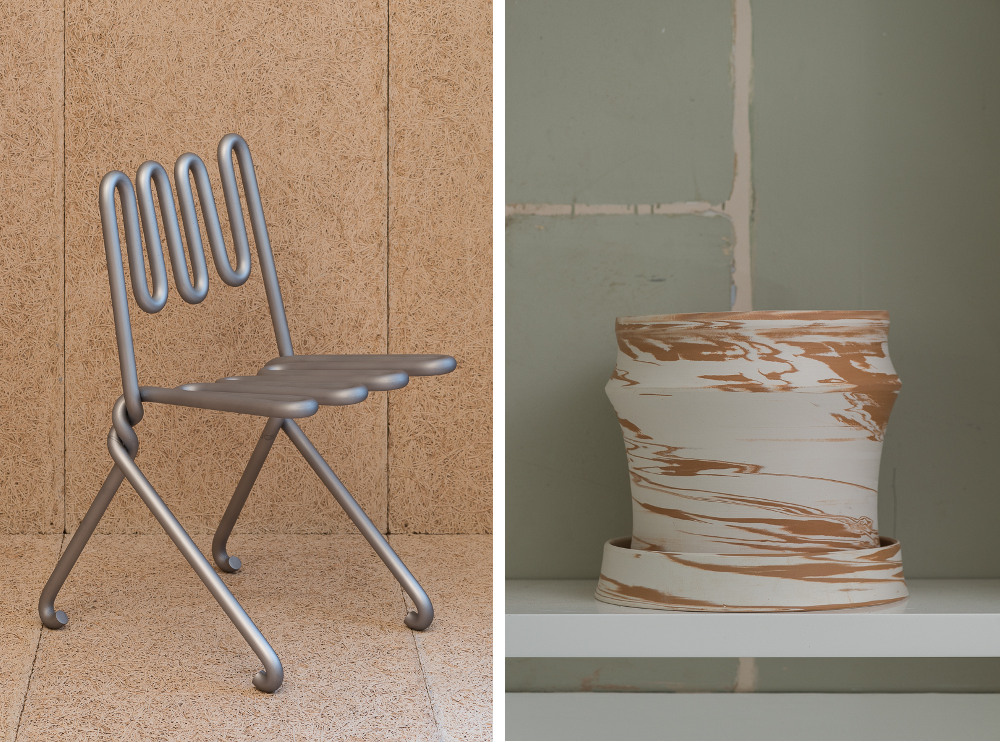
Left: Ali Bar Chair by Max Lamb. Right: Duo Tone Duo by Martino Gamper. Photo credit – Damian Griffiths
You trained under Ron Arad whilst at the Royal College of Art. How has he influenced your own work and what are the key lessons he taught you?
Ron Arad was my longest professor, we met in Vienna at The Angewandte (University of Applied Arts Vienna) and later he taught me at the RCA. His style was to create a course with a great diversity of teachers and platforms – his key lessons were to play, try new things, not to give up to early, believe in yourself, and find your own voice.
Do you think that design should be created with the artisan in mind, or the artisan should adapt to create what the designer requires?
I had a very early start with crafts and artisans, because I had an apprenticeship at the age of 14 years old with a local cabinetmaker in my hometown in Italy. So from very early on, I was thinking with my hands. For me, the thinking and making need to be equal in the design progress.
Faudet Harrison ‘Transient Collection’
Photo credit – Damian Griffiths
How important is the customer in the process of design?
The customer is a fictional character: he or she doesn’t take part. Somehow, I haven’t got an image of my ideal client. But when I work on private commissions, I like to include the client in the process.
How can design act as a tool to bring people together?
Design does not always manage to bring people together – that would be amazing. Some design, however, is very egocentric and singular, but the mix between food and design can help.
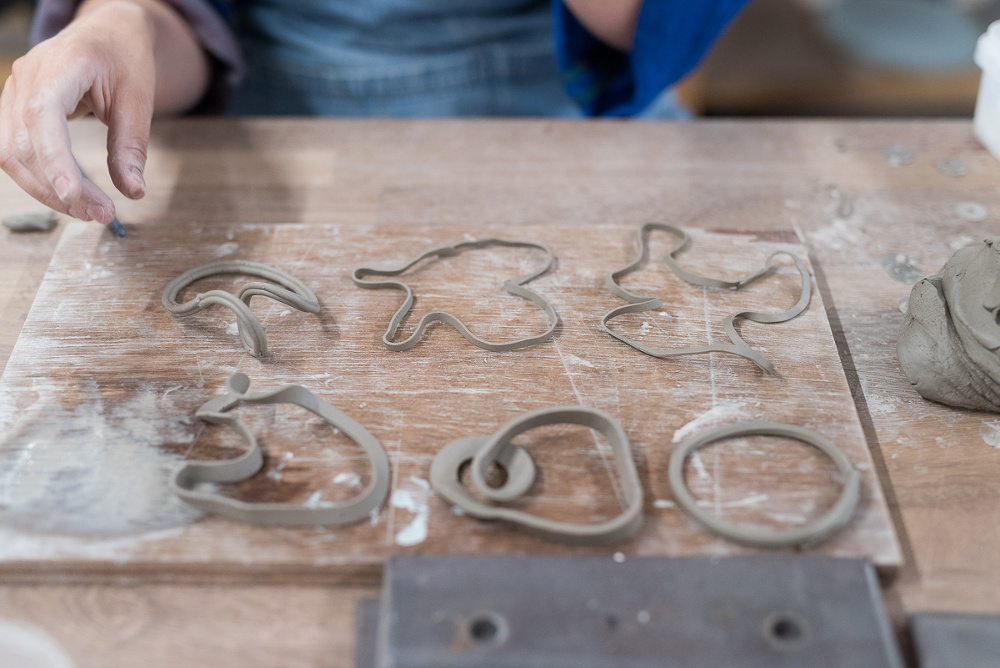
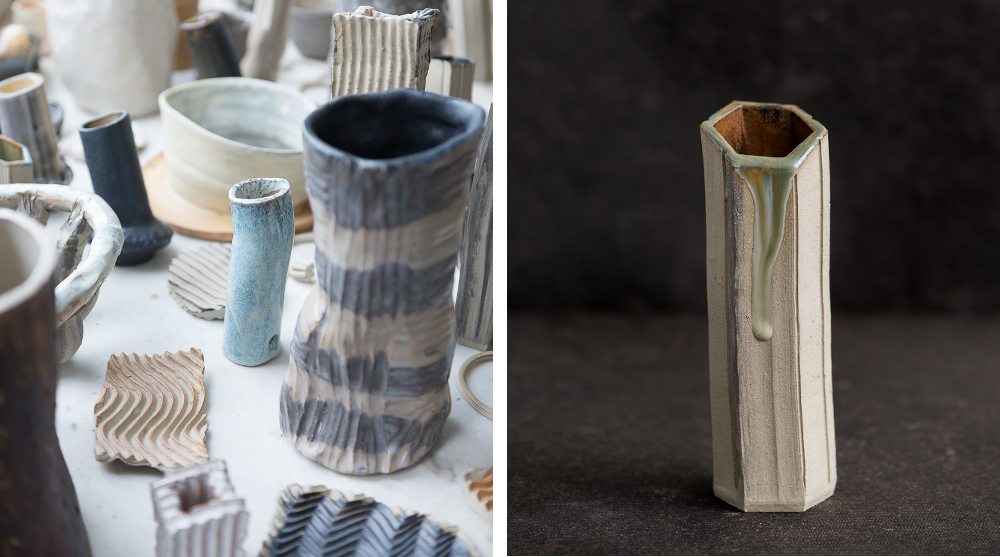
Collection of ceramic pieces from ‘No Ordinary Love’
Photo credit – Damian Griffiths
How did you come up with the concept for ‘No Ordinary Love’?
I like to bring people together and to share experiences, in this case it’s to work with friends on a new show where we can play and have fun together while designing and making new work.
Why did you decide to bring the designers together in a pottery studio?
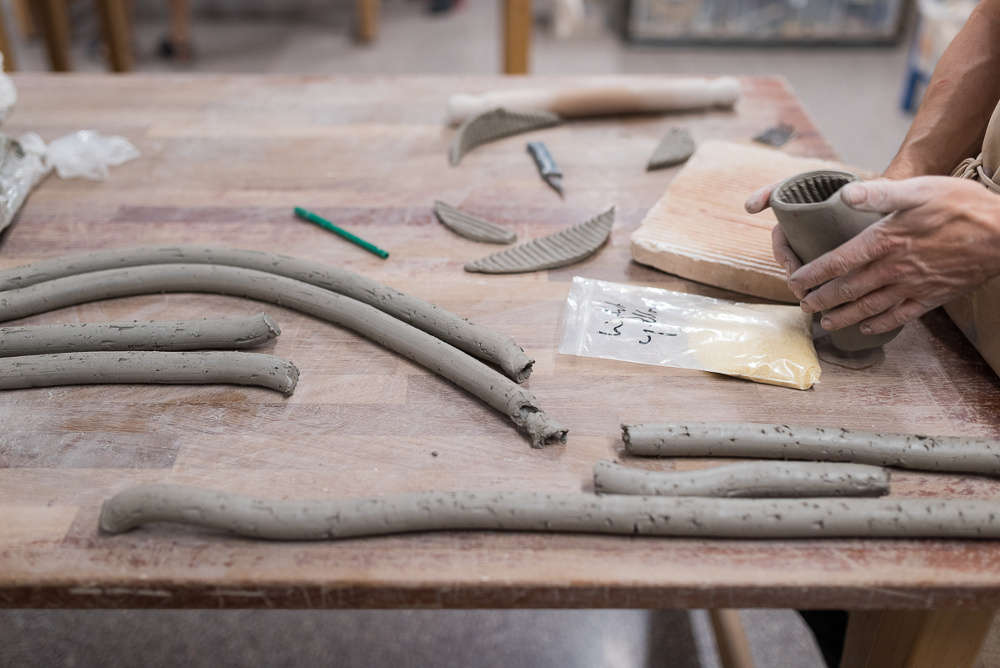
Clay is a very social material, it’s a very fast and slow material at the same time. It doesn’t need many tools and can be worked very spontaneously. I wanted to share some time with my friends in a space while making work.
What’s next for you?
The Vienna Design Week, where I’m working on a glass project with the great Viennese Glass Manufacture Lobmeyr. Then I have a show in Rome at the Quadriennale, and then we’ll see…
No Ordinary Love is on display from 17 September 2016 – 20 Jan 2017 Sept at SEE••DS, Brompton Design District
British artist Wolfgang Buttress reveals his design process, where he finds inspiration and the philosophy behind The Hive in London’s Kew Gardens
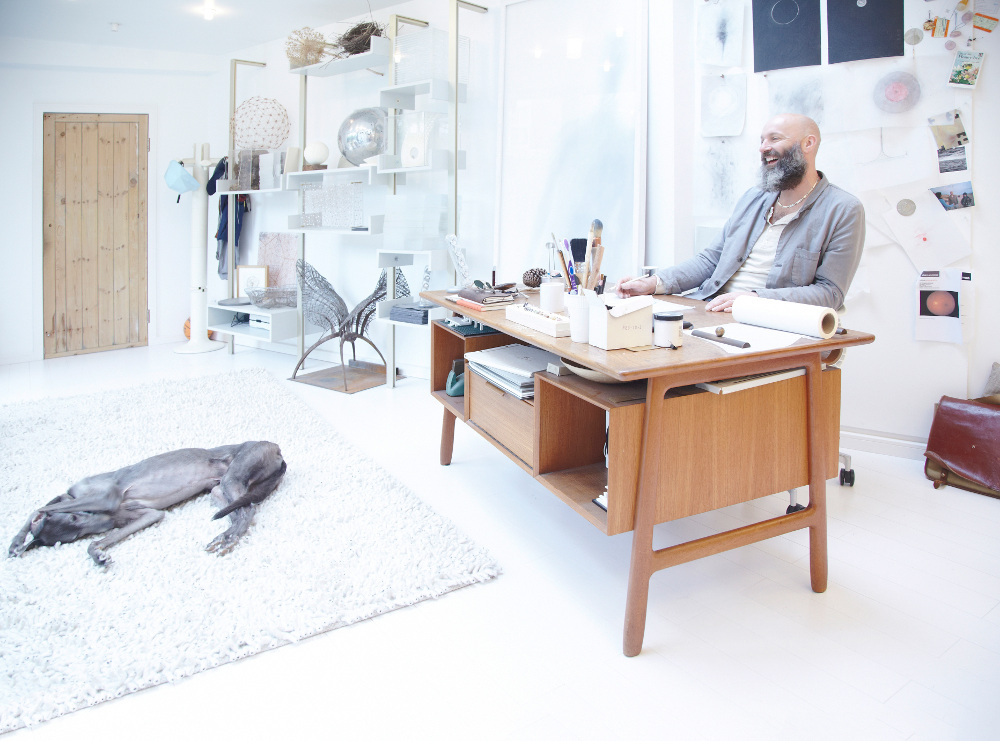
Wolfgang Buttress in his studio, Nottingham, UK – photo by Barney Melton
I have made art for as long as I can remember, I cannot imagine my life without it. It’s a two-way conversation, it defines me yet, at the same time, I create it.
The desire for me to create is as natural as breathing. I think one is influenced by what is around one all the time; the things that emotionally resonate with you, possibly go in deeper and last longer.
My first step in the design process is to see and feel the space and then dream of what can happen there. Context is essential to me; it is important that my work harmonises or responds to context. Everything then starts with a sketch. A sketch can be a primal connection between your head, heart, eyes and hand… a moment transcribing what you can see and what you cannot, what you can feel and what you’d like to.
This is then usually modelled in 3D in a CAD programme with the ability to change the form, parametrically. What happens in the digital realm is often as instrumental a part of the ‘discovery’ process or generation of concepts, as it is in the later task of refinement and realisation.
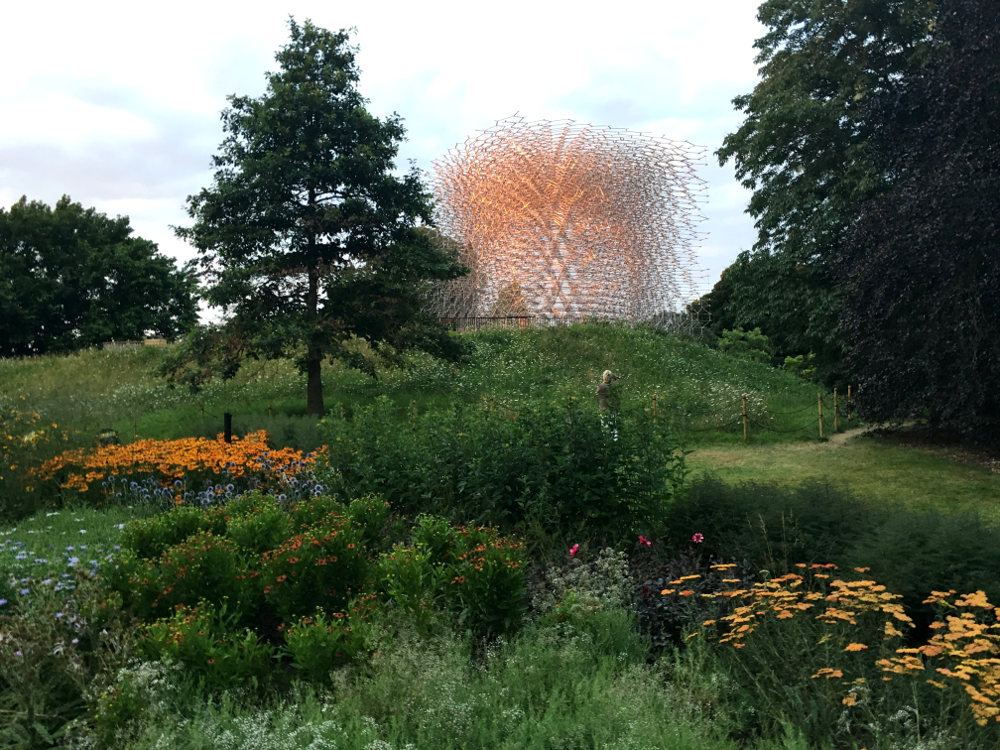
The Hive at Kew, designed by Wolfgang Buttress – photo by RBG Kew
I use 3D printing to create maquettes or details that need to be seen or felt in the round. I like to use materials which patinate naturally – corten steel, mill-finished aluminium or something reflective that mirrors the world and context it finds itself in. When this works, a harmony between art, structure and nature can be found.
Inspiration can be felt from a smell, a song, a memory, a building, an idea, a story, a landscape…The eureka moment usually comes when you least expect it and you are not trying too hard. The thoughts are always there, sometimes they present themselves when I swim or drive, or at the point just before sleeping or just after waking.
My approach to a sculpture seeks to frame nature so it can be experienced more intimately. The space and the void inside The Hive at Kew Gardens is as important as what can be seen. The Hive is an immersive experience; when one is inside The Hive, it can act as a lens with which one can view and contemplate the outside world.
Lucent (2015) at the John Hancock Center, Chicago, designed by Wolfgang Buttress – Photo by Mark Hadden
The process behind the thinking has been evolutionary and the path felt natural. The idea of harmonising context, form and different disciplines to create an atmosphere and meaning greater than the sum of its parts, has been incredibly satisfying and enjoyable. I am realising that art and science share common ground – a search and expression of what it is, and what it feels like, to be human in a world where we are more connected, yet increasingly disconnected from nature.
DIMORESTUDIO founders Britt Moran and Emiliano Salci reveal how they transformed the interior one of Paris’ historical buildings into an Art Déco haven
Set up in 2003 by Britt Moran and Emiliano Salci, Milanese interior design outfit DIMORESTUDIO has come a long way since making its first ever presentation at Salone del Mobile 13 years ago. In the time that has passed, the duo has worked on numerous private homes, concept stores for Australian skin care brand Aesop, site-specific furniture for the Musée Delacroix, and more recently, the Hotel Saint-Marc in Paris.
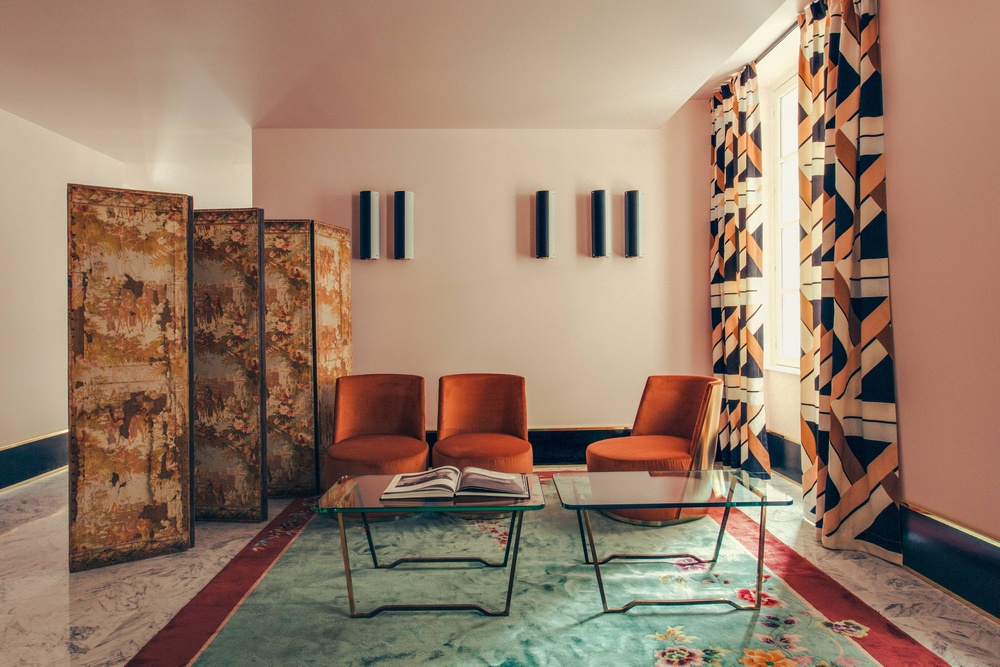
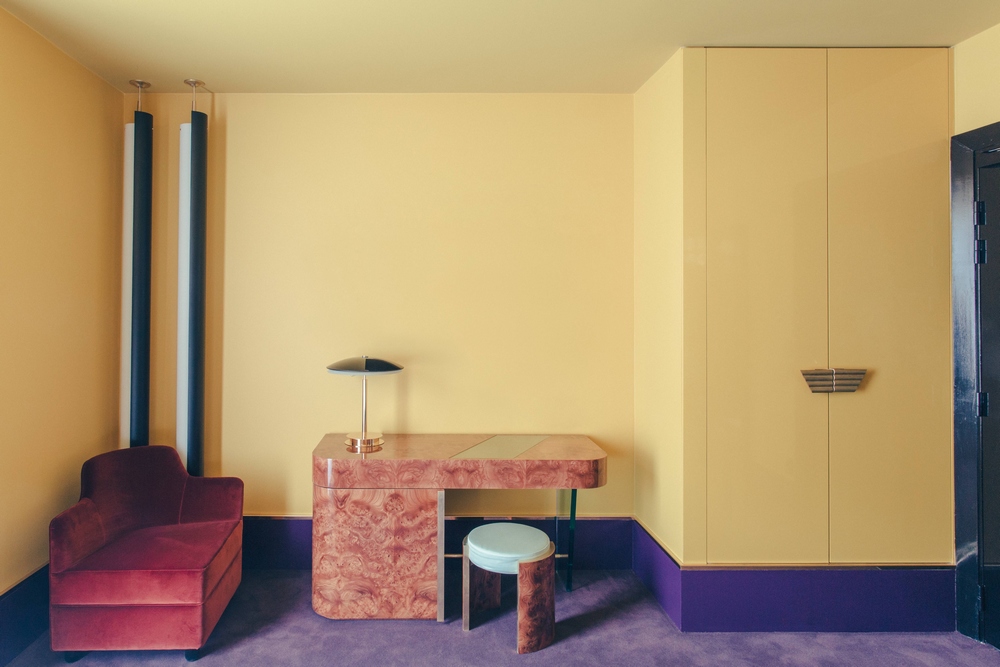
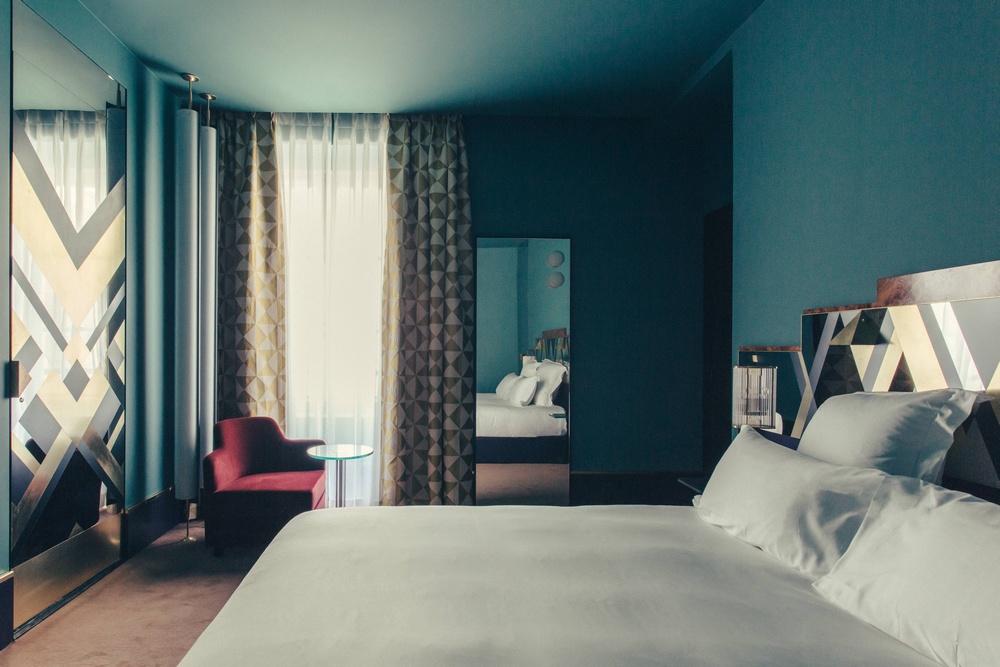
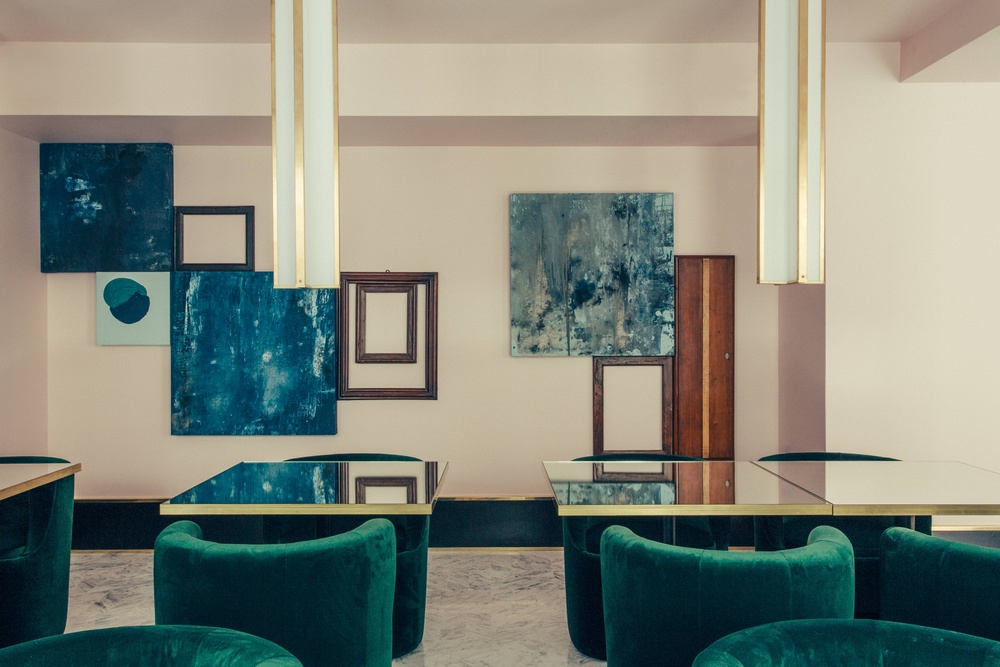
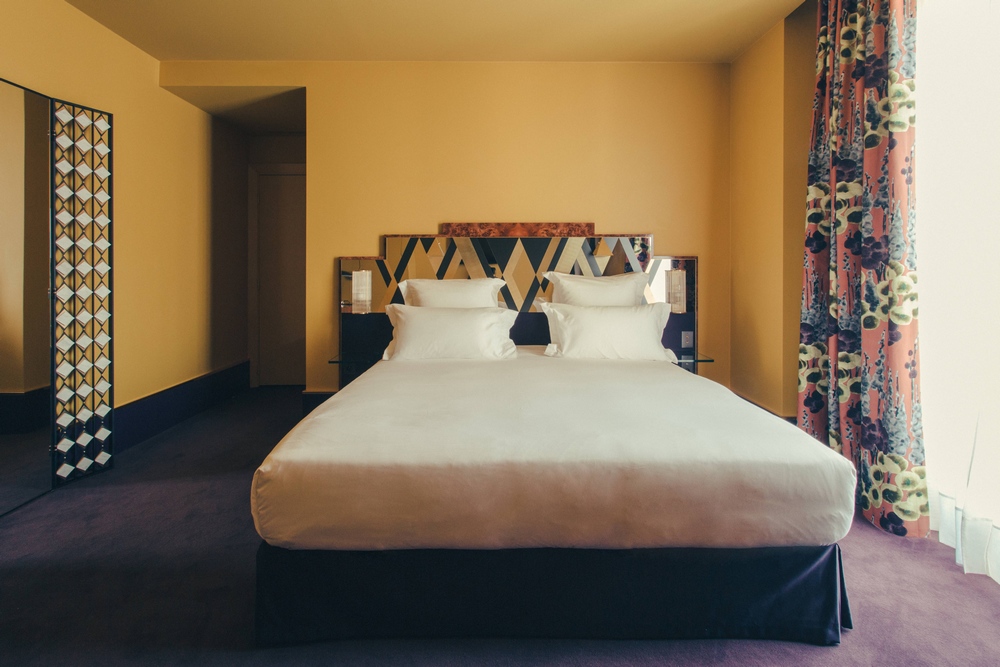
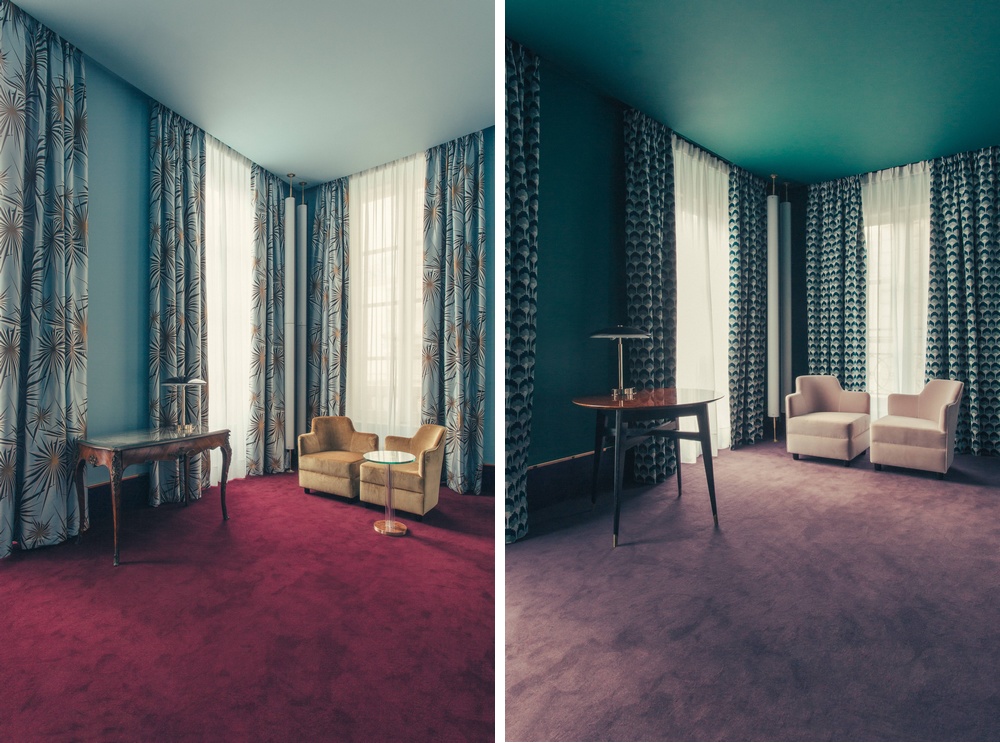
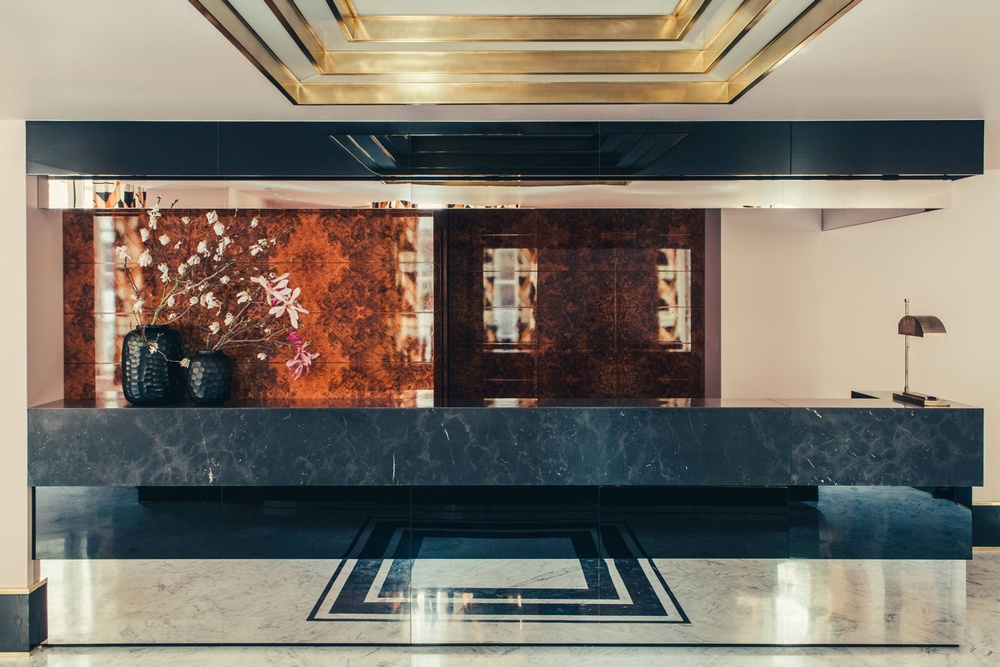
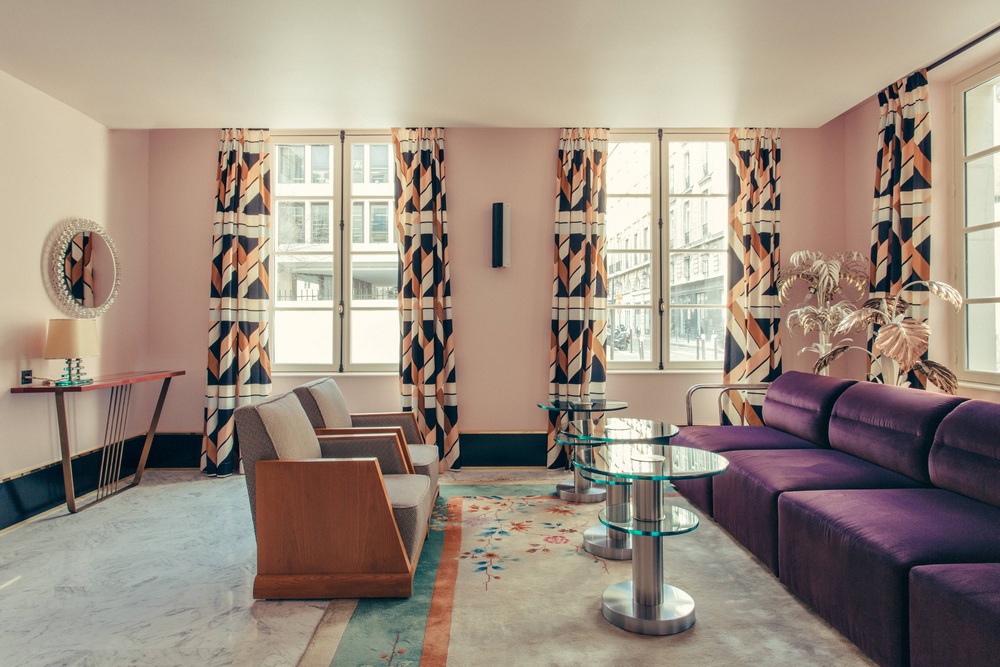
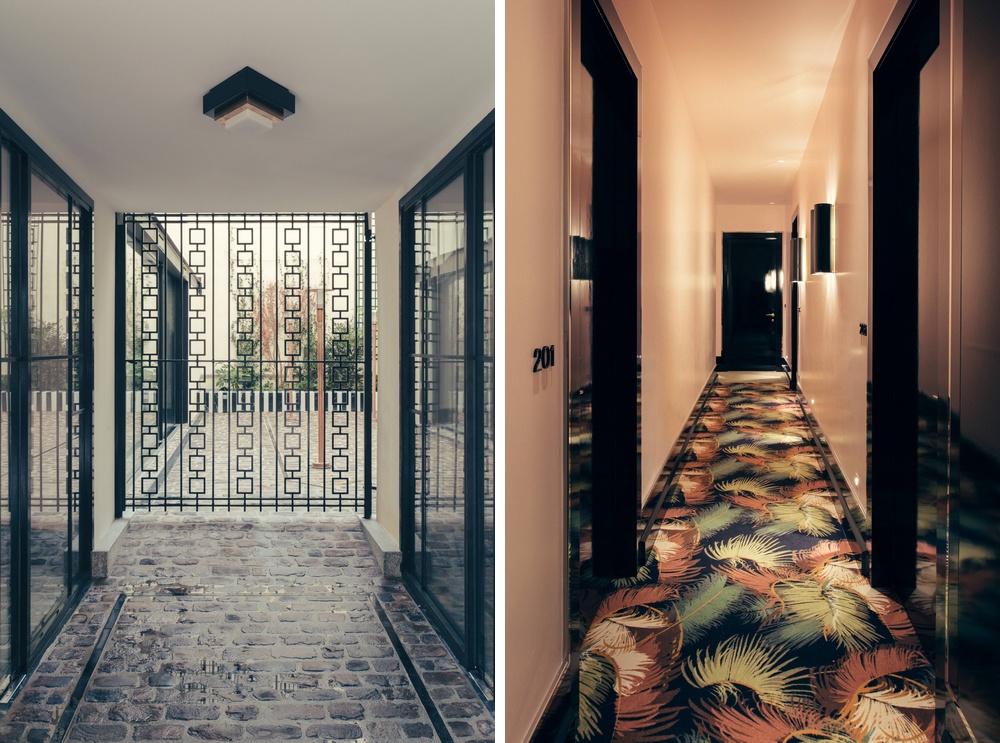
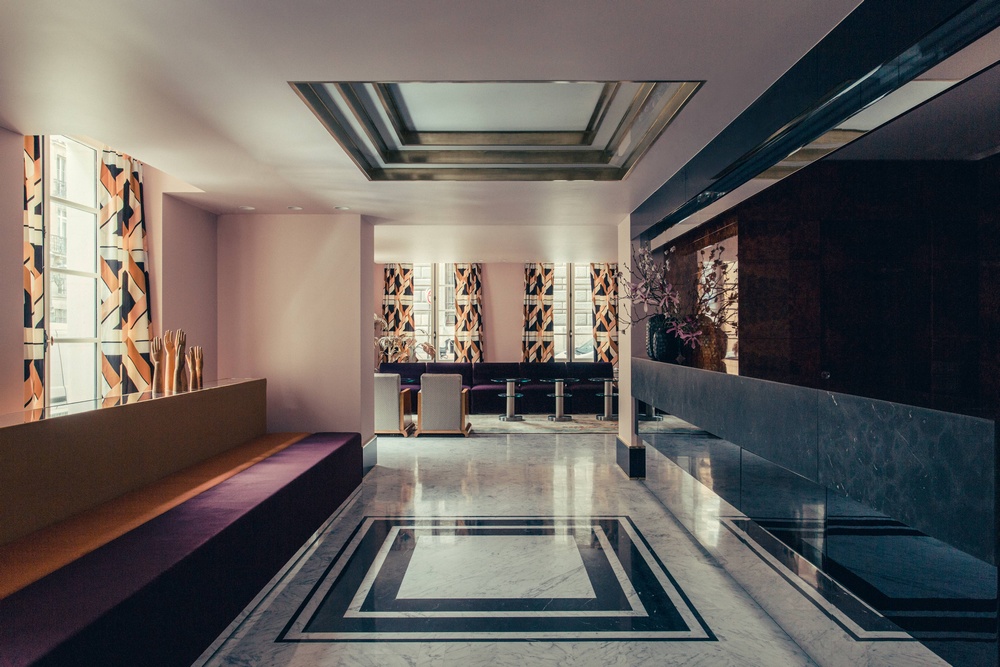
Built in 1791, the Hotel Saint-Marc was once the home of the Duke of Choiseul and later the headquarters of Le National newspaper, a title that had a pivotal role in the French Revolution of 1830. In 2013, the hotel was purchased by Nadia Murano and Denis Nourry, who later commissioned DIMORESTUDIO to oversee the refurbishment. Over the course of two years, Moran and Salci overhauled the five-storey building with a distinctive Art Déco-inspired interior, and designed each of the 25 bedrooms to look and feel like private apartments.
Here, we talk to the design duo about reconciling modernity with legacy and tradition, bringing together past and present, and how they create unique and unusual environments.
Where did your working relationship begin?
We met in Milan in 2000. Common friends who knew about our passion for design and interior decoration introduced us, and then we became business partners. Emiliano is in charge of the creative team, whereas I’m involved in the client relations and administration side. For every project, we exchange views and ideas, and work in a complementary way.
Why did you set up DIMORESTUDIO?
We decided to set up DIMORESTUDIO to apply our longtime passion and skills to a work scenario. Our first presentation at Salone del Mobile was a pivotal moment, as the interest generated led to our first commissioned works, for interior projects (for private homes and hospitality) and furniture.
How would you define the DIMORESTUDIO aesthetic?
The trademark style of DIMORESTUDIO’s work is that of a design practice constantly moving between design, art, architecture and fashion. It is a widely recognised vision in that it allows the co-existence of different materials and different periods – a constant dialogue between past and present, tradition and contemporaneity – in order to create and shape a specific atmosphere in every project.
You have a very diverse repertoire. What do you think attracts such a broad range of clients to your practice?
For every space or environment we create, we always try to infuse it with a unique flavour through the use of unusual and unexpected colours, using different materials, and mixing past and present with tradition and contemporaneity. This is what appeals to our clients.
What interested you most about redesigning the interior of Hotel Saint Marc?
It was the fact that the client asked us to preserve the legacy of its history, as well as allowing the co-existence of past and present through the use of iconic objects designed by the masters of design, combined with recovered pieces and new custom-made items.
What were your main influences for this project?
Art Déco with a French touch and a Parisian jazz club with Josephine Baker.
What projects are you working on now?
We’re working on residential projects in New York, London and Vienna, Turin and Florence, and new stores in Paris, Tokyo and London.
PORT travels to Milan to meet the prolific and enigmatic Alessandro Mendini, who has spent the past 50 years at the vanguard of Italy’s design scene
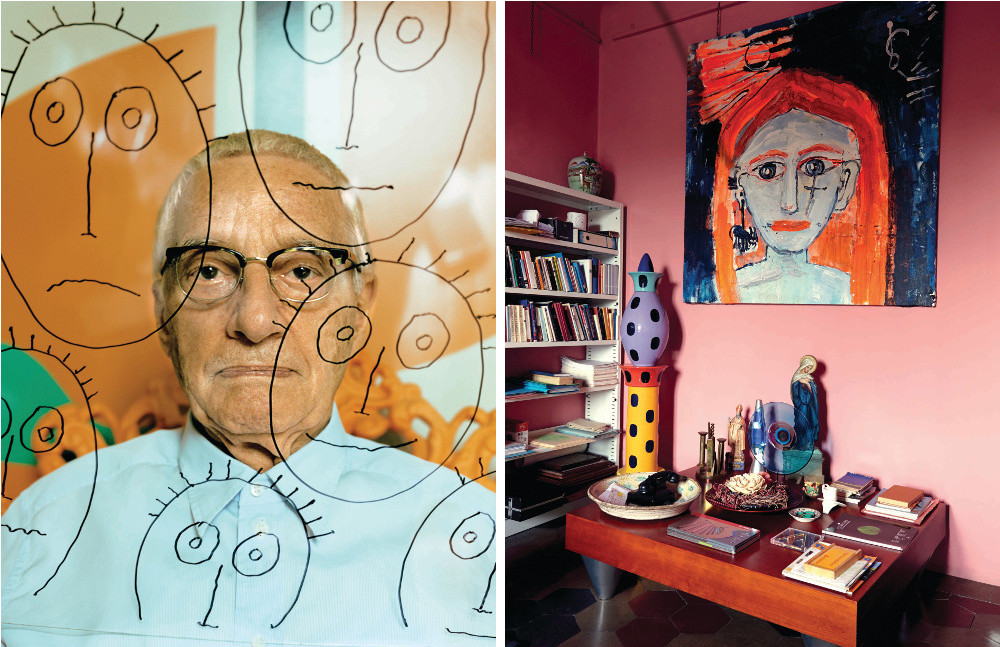
Left: Alessandro Mendini at his studio in Milan, holding a sheet of glass on which he sketched some fans in his signature cartoon-like style – Right: A corner of Mendini’s study with an Alessandro Vignoli painting hanging above the coffee table designed by Giusi Mastro. The ceramic Colonna sculpture is by Maria Christina Hamel.
Every day Alessandro Mendini descends a flight of stairs from his modest apartment in Milan’s Porta Romana district to the studio where he works alongside his younger brother, Francesco, and a team of around 15 designers and architects. The 85-year-old has spent nearly 60 years challenging the way design is developed and perceived, and he’s busier now than ever. “I work a lot,” he admits, with a characteristic grin that suggests he enjoys every minute of it. “Maybe before, I worked less, but now I work a lot.”
Dressed casually in a shirt, chinos, browline glasses and New Balance trainers, Mendini looks every bit the Italian design maestro. But, despite his stellar career and the steady stream of incoming projects that clearly keep him permanently engaged, he sometimes struggles to elucidate exactly what it is that he’s been doing all these years. “I am everything or nothing,” he muses. “I am or am not a designer; I am or am not an artisan; I am or am not a journalist, a writer and an artist.”
Of course, the truth is that Mendini is all of these things, and more, which is why he is used to working so hard. Last year he was awarded the European Prize for Architecture and he is currently preparing for a major retrospective of his work that will open in early October at the Zaha Hadid-designed Dongdaemun Design Plaza in the South Korean capital, Seoul. At the Milan Furniture Fair in April he launched a stool and a wall clock for Italian brand Kartell, and noise-reducing objects for contract furniture company, Caimi Brevetti. This incessant activity clearly helps maintain his vitality, as evidenced by the speed with which he nips around the studio, but it does have its disadvantages. “I have a beautiful house in the mountains near Bergamo but I never go there,” he exclaims from behind his cluttered desk. “I like to work with my imagination and that is my life.”
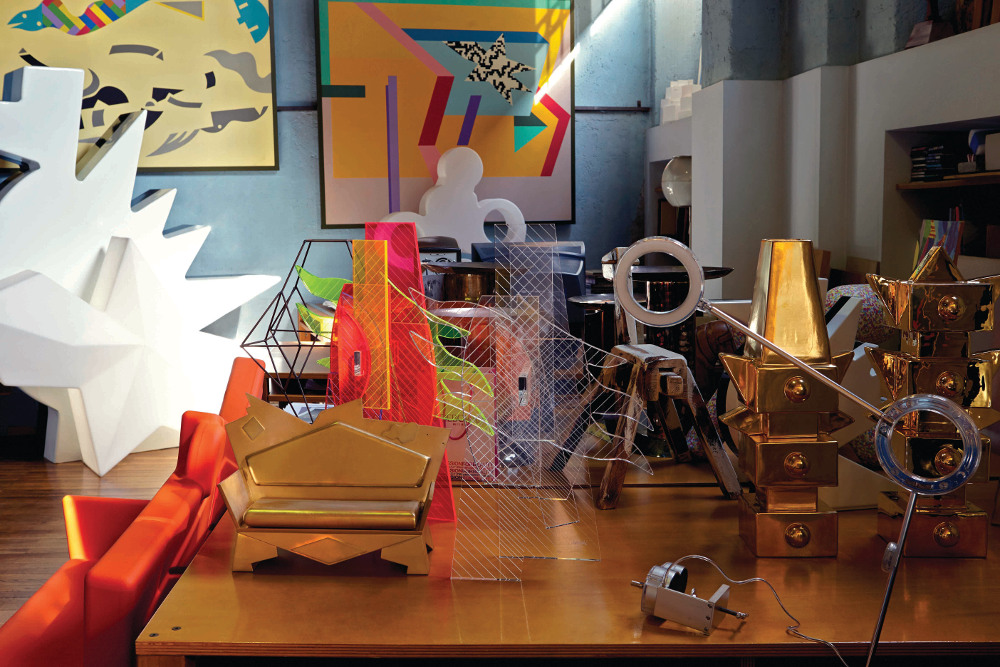
Atelier Mending is filled with colourful products and prototypes, including the Amuleto lamp in the foreground and the plastic K2 Loveseat for A Lot Of Brasil on the left.
Prior to establishing Atelier Mendini with Francesco in 1989, Mendini played a key role in establishing Italy’s position as a global force within international design. He completed his studies in architecture at Milan’s polytechnic in 1959 and spent time in the studio of designer Marcello Nizzoli, before working for 15 years in publishing as editor of three of Italy’s most important design magazines: Casabella, Domus and Modo. It was only at the age of 50 that he received his first architectural commissions, which included the iconic Groninger Museum in the Dutch city of Groningen.
During the 1960s and 70s, Mendini was a prominent member of the Radical Design movement, which rejected the commercial and functional constraints of mass-produced modernist design and instead developed conceptual objects that combined clashing colours and cultural references. In 1979, he cofounded the experimental design collective Studio Alchimia along with Ettore Sottsass, who later left to set up the more commercially focused Memphis group. Mendini’s influential output as a designer, editor and curator during this period helped to form the basis for the postmodern design movement, which continues to influence work today.
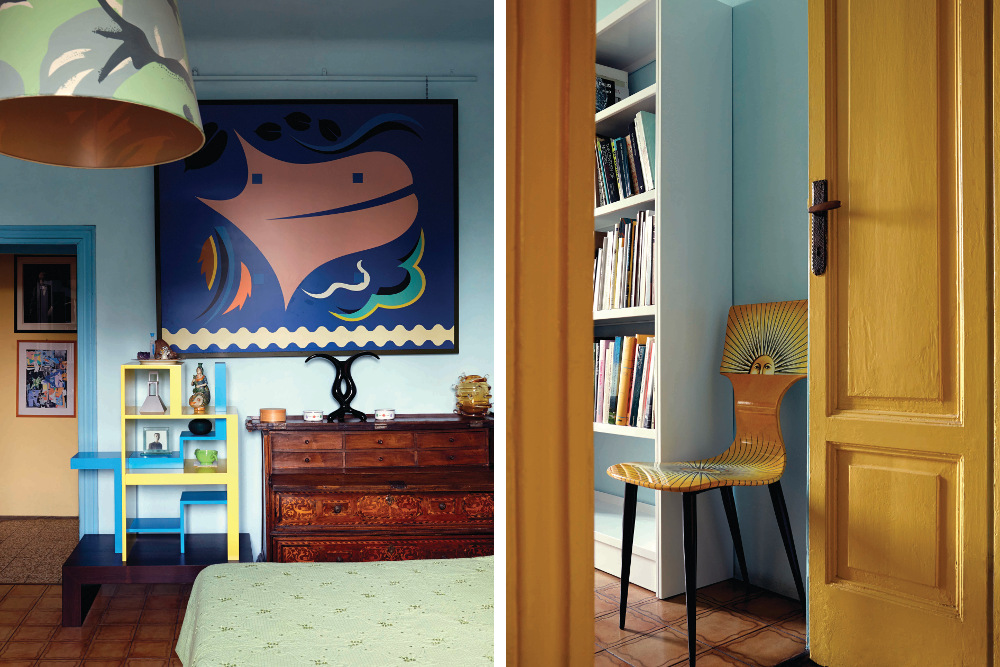
Left: Near the bedroom door are a painting and a prototype for a shelving unit, both produced by Mending in 1996 – Right: A chair by Piero Fornasetti stands next to a bookcase in Mendini’s bedroom.
“He was an intellectual driver, a theorist who also put his provocative ideas into practice,” suggests Glenn Adamson, the director at New York’s Museum of Arts and Design. “In several cases, he blended the roles of editor and designer, putting his own creative work into the context of others’ talent. For me, Mendini exemplifies postmodernism in that he considers authorship as a form of collage and collaboration.” Although Mendini’s output is not as widely recognised as some designers of the time, including Sottsass, he is revered as one of the industry’s greatest thinkers and his every move continues to be studied by those hoping to learn from a true master.
For the past two decades, Mendini’s focus has been on designing furniture, lighting and products for brands including Alessi, Swatch, Hermès and Swarovski. Despite being predominantly produced for the mass market, these objects retain his characteristic sense of wit and aesthetic flamboyance, which is how he continues to express his own radical vision. “The problems in the world at the moment are so many and so difficult to solve that a designer gets crazy,” he proclaims. “I try to be utopian and maybe the beauty [of a product] can be a possibility. I hope those signs in the world can be something positive.”
Most of Mendini’s time is spent talking in person or on the phone to clients, advising students and conducting “hundreds of interviews”. He uses the rest of his time to consult with Francesco, whose office is next door, or with the team in the studio who are working on projects for clients all over the world. The apartment above provides a haven that Mendini can escape to, where he can focus on generating ideas away from the demands of other people. “The most important part of my work is sketching and having ideas,” he explains, pointing to a pile of his enigmatic cartoonish drawings, “so I need to stay alone for a part of the day. Upstairs is my house and I have to be there alone meditating and then here when I talk with people.”
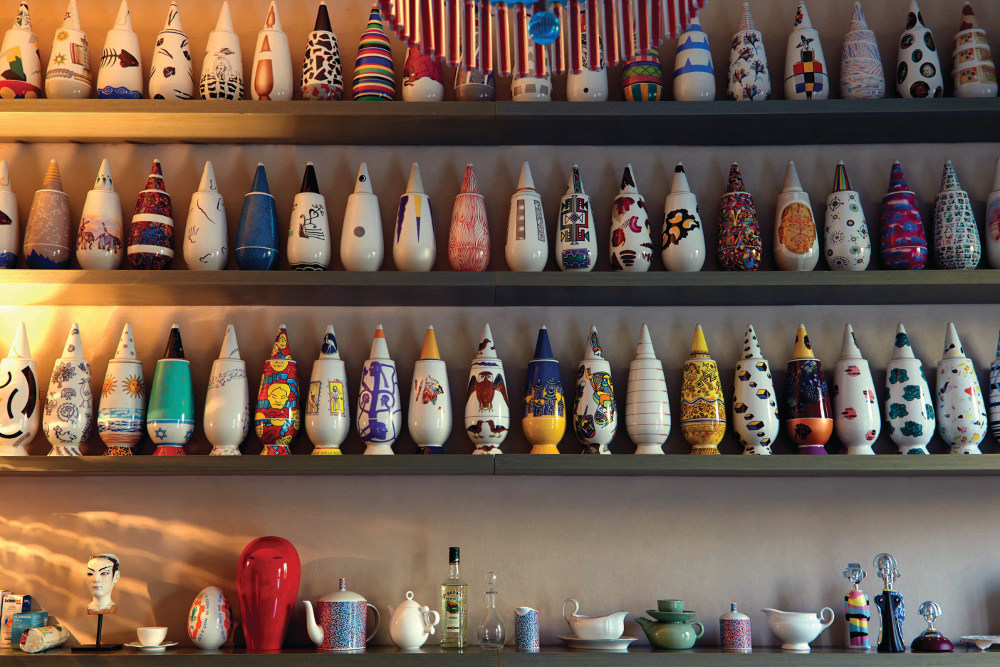
Vases designed by Mending for Alessi in 1992 and decorated by 100 different artists fill shelves in the kitchen.
Mendini’s home is one of dozens of apartments built for workers around the turn of the last century above a factory that produced locomotives. The studio is situated in the adjacent high-ceilinged warehouse, where parts for the trains were stored. The apartment is compact and decorated with an eclectic array of artworks and furniture, but with few of Mendini’s own designs. “In my house in the mountains I have some very beautiful pieces,” he explains, “but my life here is very simple.” Instead, there are artworks by some of his friends and artists he admires, including a chair by British designer Tom Dixon and a wall hanging by graphic artist Massimo Giacon.
Back in the studio, almost every surface is littered with sketches, objects and materials relating to past and present projects. Inevitably, it’s a colourful environment with a friendly, familial feel. Mendini’s daughter Elisa pops in for a quick word and three of Francesco’s grandchildren are watching videos on a computer by the entrance. At two o’clock, everyone in the studio will sit together for lunch around the large table in the kitchen. “This place is very positive,” explains Mendini. “I find a good energy here. The people who come here to work, they always stay.”
A typical example is Belgian architect Alex Mocika, who joined the team in 1988 to work on the Groninger Museum project, and never left. Mocika helped to develop the layout for the upcoming exhibition in Seoul, which will present around 500 products and objects from Mendini’s archive. A consequence of the enduring international interest in his work is that Mendini regularly travels overseas to attend such events, as well as to meet with clients and manage production of his designs. “It’s fatiguing but I like the connection with a very different mentality in places like South Korea,” he explains. Evidence of the demand for his time and his willingness to travel can be found on the landing between the studio and his apartment, where there are three suitcases: “For two days, for three days and for eight days.” It could be a long time before that house in Bergamo sees its owner again; the maestro still has a lot of work to do.
Italian watchmakers Panerai celebrate 156 years of craftmanship with a sprawling exhibition in Florence including vintage pieces and a new collection
Many of Europe’s great painters, thinkers and poets have called Florence home at one time or another. It’s a city imbued with a rich cultural history, but through its prestigious Accademia di Belle Arti di Firenze and events like Pitti Uomo, it continues to nurture the next generation of creative talent. So for Officine Panerai, the Florentine brand with a heritage routed in making diving watches, its hometown was the ideal place to celebrate both its past and its future, through an exhibition and launch of a brand new range.
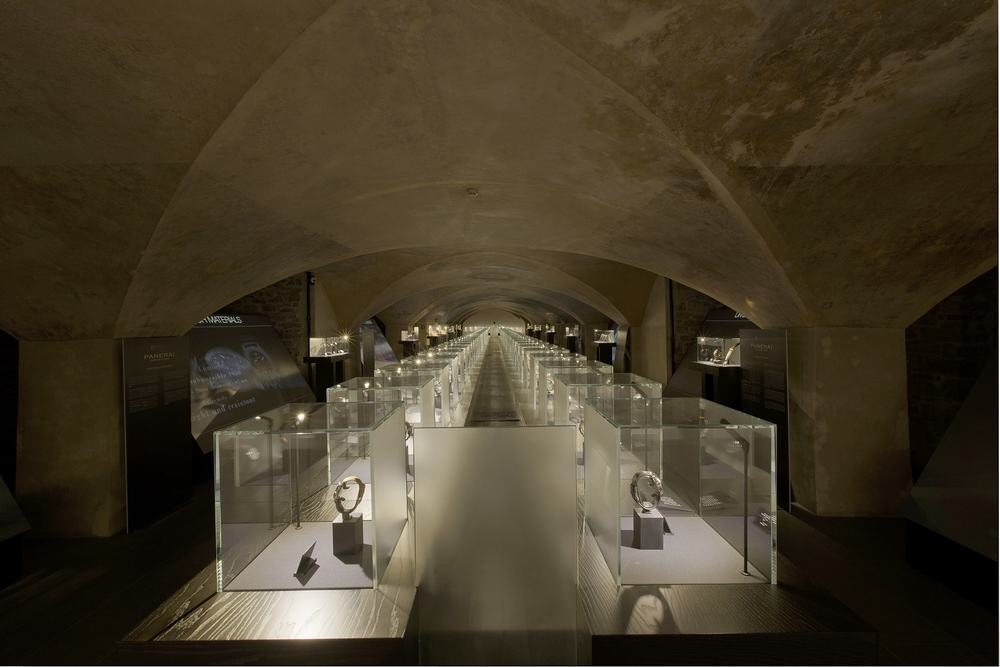
Set across 1000sqft in the crypt of Museo Marino Marini – a converted Basilica that houses works by the modern sculptor of the same name – ‘Dive into Time’ brought together a broad variety of Panerai’s most memorable pieces, from diving instruments, including flashlights, depth gages and compasses, to the now-iconic watches built for the Royal Italian Navy from the 1930s to the 1950s (most notably, the Raidomir 1936).
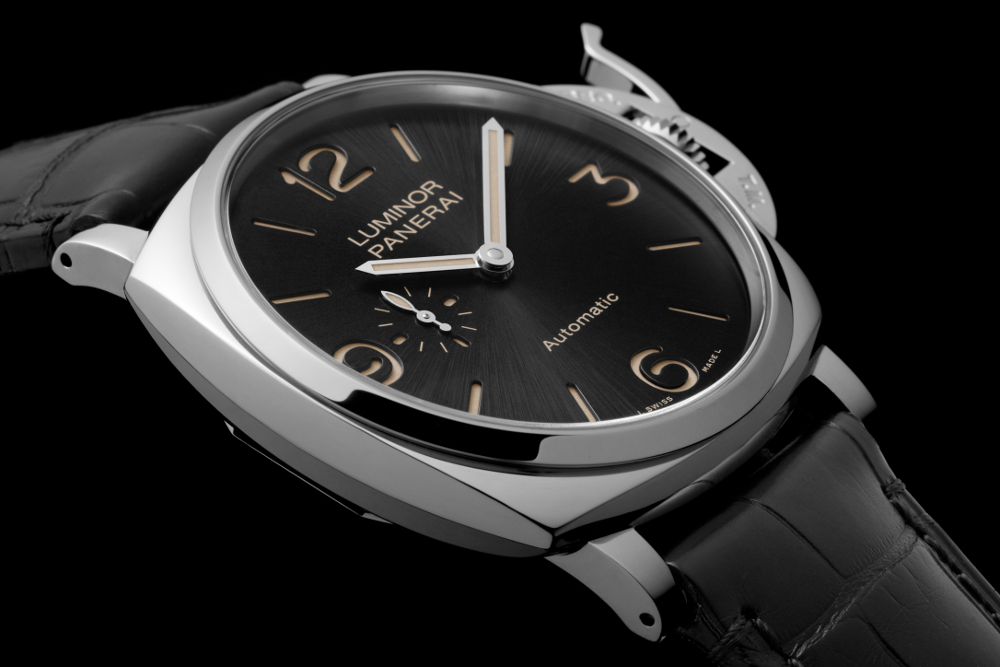
The new Luminor Due in steel. Also available in red gold.
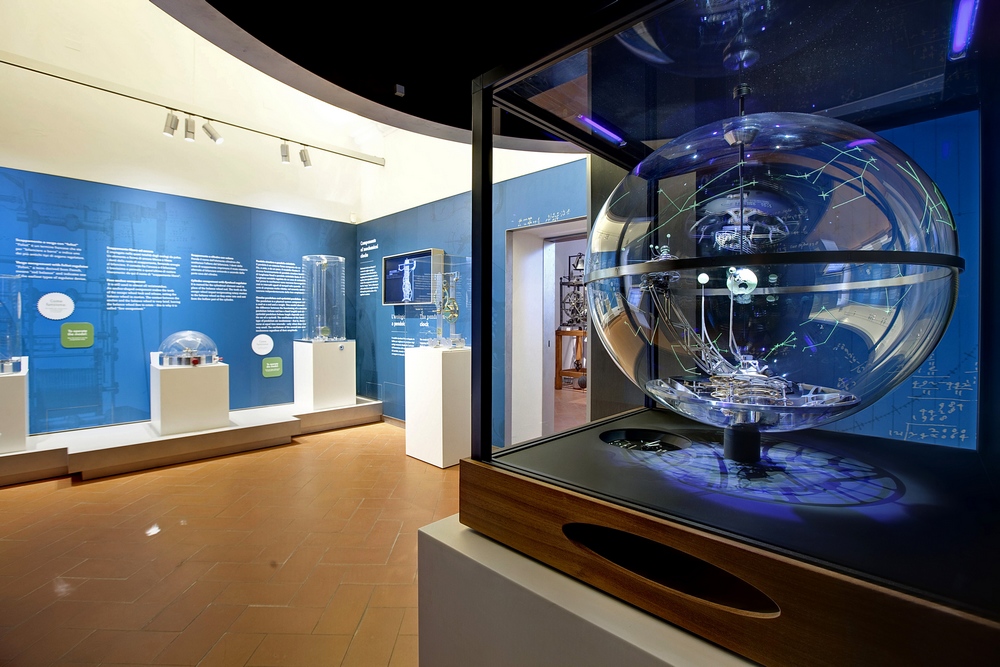
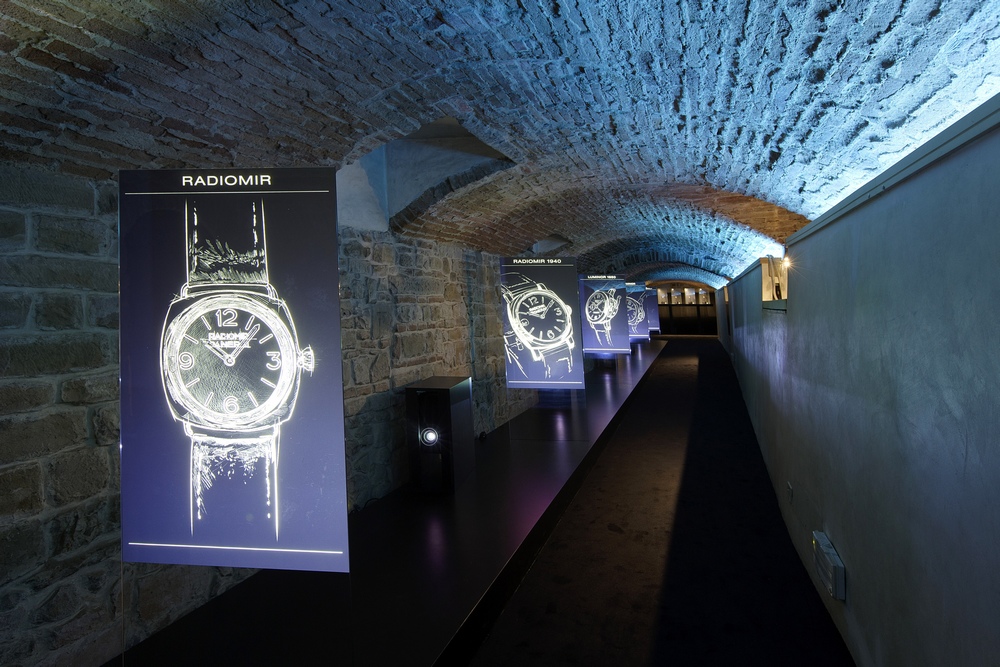
Attendees were taken through an immersive history of the brand’s heritage, with one area dedicated to ‘buried treasures’ from Panerai’s pre-Richemont years (1936-1997), to their more recent collections and then a further section of the crypt was given over to the company’s in-house movements. All of this provided a fitting backdrop to launch Panerai’s brand new line, Luminor Due – four slimmer, more modern interpretations of the famed 1950s Luminors – as well as six new models of the Luminor Marina (featuring the brand’s in-house P.9010 automatic movement) and, finally, the impressively complex Radiomir 1940 Minute Repeater Carillon. And with 2017 set to mark two decades under the Richemont umbrella, it’s likely that Panerai has plenty more surprises to come.
Lighting designer Michael Anastassiades reveals the inspiration behind his Copycat light for Flos
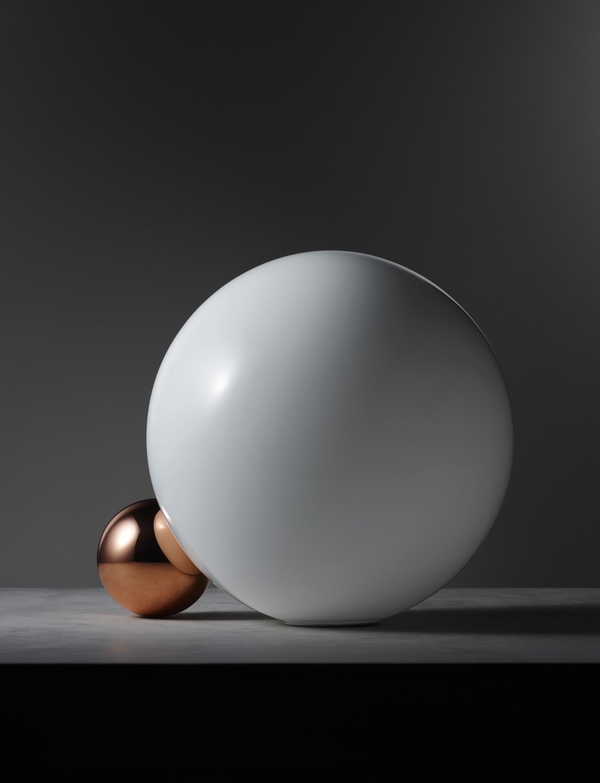
Copycat light designed by Michael Anastassiades
Copycat is very much part of the language of everything else I’ve designed. I was interested in the meeting of two spheres: the large and the small sphere. My obsession with the sphere as a shape comes from seeing it as the ultimate primal form. There are a lot of round objects around us: the planets, the sun… and that familiarity feels very comfortable to me. The small sphere seems more precious because of its position under the shadow of the larger illuminating sphere. Copycat is a simple expression of the moment two spheres touch.
Designed by visionary Italian architect, Paolo Soleri, Arcosanti is a utopian city in progress. Here we meet its residents to see how life has changed after the death of its founding father
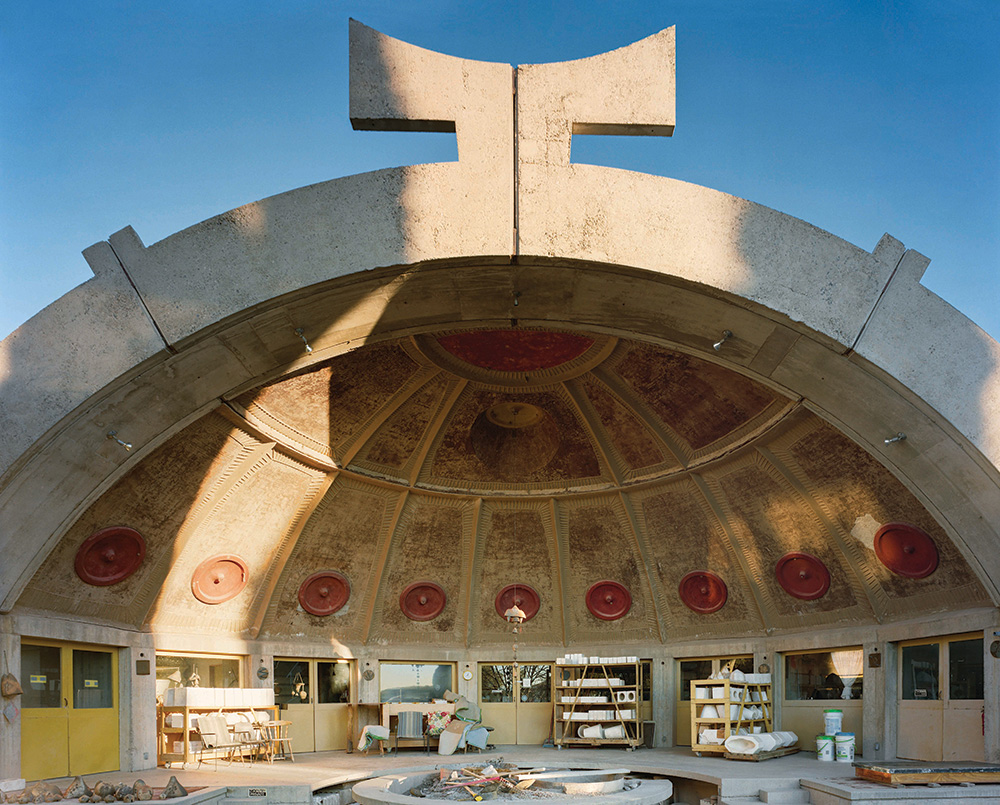
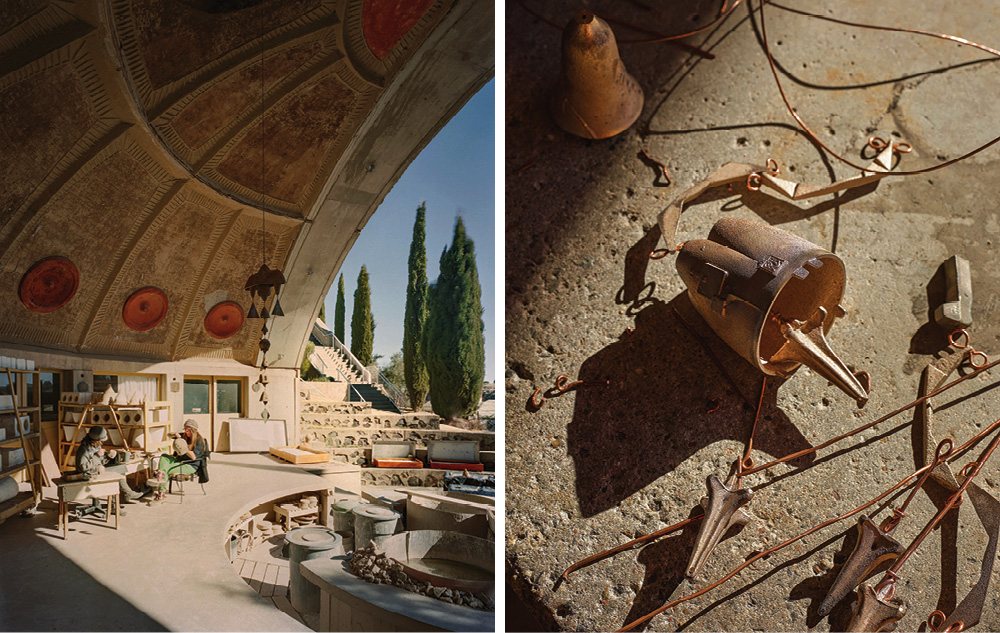
The ceramics studio, housed in one of the many apses of the commune
“I want to gather together about 20 souls and sail away from this world of war and squalor and find a little colony where there shall be no money but a sort of communism as necessaries of life go, and some real decency,” wrote the novelist D.H. Lawrence in a letter to William Hopkin in 1915. Attempts to found a perfect society are fairly common – from failed American transcendentalist projects like Brook Farm to Le Corbusier’s Chandigarh, a now-crumbling post-industrial city in India. Much rarer is the opportunity to stumble across a utopia that already thrives in its own corner of wilderness, away from the world.
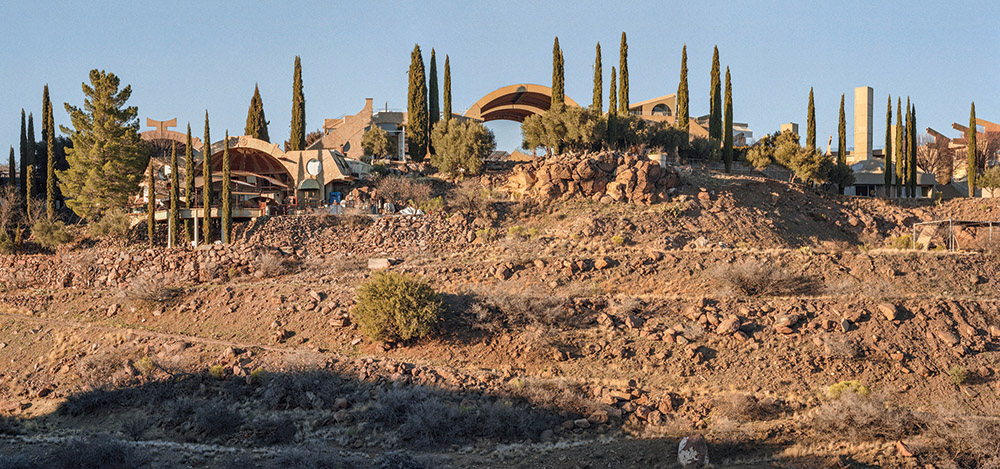
Perched on the edge of a south-facing mesa in central Arizona, more than 7,000 people from around the world have come to build and inhabit the buildings since it was founded in 1970
Its seeming impossibility is exactly what makes Arcosanti so impossible to forget. The 50-year-old experiment in collective living can be found an hour down the highway outside the arid jumble of Phoenix, Arizona. Take an exit that empties out into the middle of the desert and continue down a dirt track that vanishes into what looks like an empty plain. A rusted sign bearing the place’s alien name marks the way. Crest a hill, and here the small city unveils itself, a cluster of curvilinear concrete buildings the same colour as the loamy desert, but painted in daubs of pastel. It’s like The Jetsons crash-landed and decided to settle down.
Though it looks ancient (the name derives from the Italian for ‘before things’), Arcosanti was founded in 1959 when an Italian architect named Paolo Soleri, a disciple of Frank Lloyd Wright who broke from his mentor after trying to open his own architecture school, decided to buy a parcel of barren land and bring a group of students there. The design was based on Soleri’s philosophy of ‘arcology’, a portmanteau of architecture and ecology that sought to combine the dense efficiency of cities with the sustainability of small-scale environmentalist architecture, using strategies like passive solar heating. Above all, the architect opposed suburban sprawl. “My proposition is urban implosion rather than explosion,” Soleri wrote in his 1977 work Earth’s Answer.
Left: The ceramics studio, which doubles as a stage for performing arts and conferences, is positioned so that, by the summer solstice, the workspace will be in shade – Right: Soleri wind bells and their clappers prior to assembly
Arcologies were a solution to sprawl as well as the social ennui of the suburbs: Arconauts, as Soleri called his residents, would work, play and create together. The project drew many artists and architects, and converted many more. In total, over 7,000 residents have passed through, with hundreds more arriving each year. This coming together serves Soleri’s philosophical goal of finding a more sustainable way of life: “Service, number one, to ourselves. Number two, to the biosphere. Number three, to reality,” he said in a 2012 interview. The Arconauts “develop more knowledge, more tolerance, more wisdom, and become aware of what we call love or compassion.”
What sets Soleri’s experiment apart from other communes, cults, or utopian attempts is that it worked. Though it never reached its stated capacity of 5,000, Arcosanti remains self-sustaining, with revenue from student workshops, 50,000 tourists annually and the sale of Wind Bells, beautiful bronze instruments designed by Soleri that are cast on site and ring out everywhere in the gentle desert breeze. “Arcosanti has bootstrapped itself over its 45 years,” says Jeff Stein, a Boston architect and former Arconaut who became the president of the Cosanti Foundation – which manages Soleri’s home in Phoenix, as well as Arcosanti – in 2011.
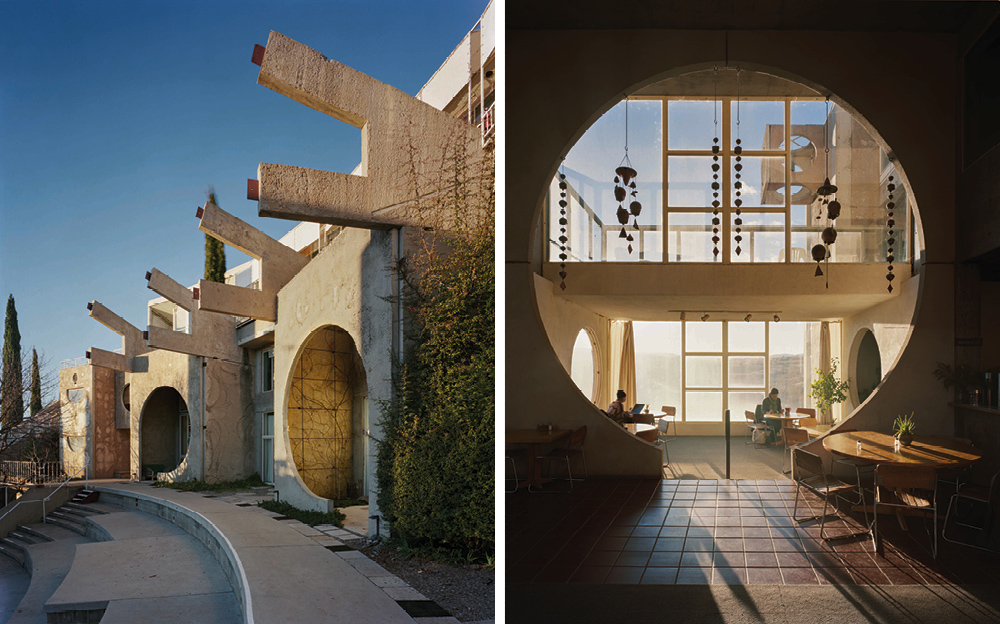
Left: The experimental East Crescent neighbourhood combines apartments, workshops, a library and spaces for students, which all back on to a public amphitheatre – Right: A round window in the Arcosanti cafe frames a balcony and the view to the west
Arcosanti is less a religion than a shared pursuit of a new way of life, and the 70 Arconauts staying in the city at any one time are still actively refining their efforts, even without the help of their patron saint: Soleri passed away in 2013. A quiet stone plaque marks his grave, next to his wife Carolyn’s, a kilometre into the brush outside of Arcosanti proper. Though it began as the vision of one man, the city in the desert is now becoming a self-sustaining enterprise, more utopian than ever.
Today, Arcosanti remains open to any and all comers. Prospective residents first complete a five-week workshop at a cost of $1,750, then graduate into an internship and finally a permanent role, like cooking in the cafe at the heart of Arcosanti, leading tours, or casting bells. The workshops are “incredibly intense, wonderful and sad. Every six weeks a whole new group of people would come in,” says Richard Fox, a gardener who first moved to Arcosanti in 1972, and then back in 1981. In the early days of the city, living was rougher than it is today. “You had to make your own place to live. I found a cave and put a pallet in,” Fox recalls. Workshoppers these days occupy cozy bohemian dorms as well as a more ramshackle camp of cubic buildings down the hill from the main site, living and working together. It’s D.H. Lawrence’s dream come true.
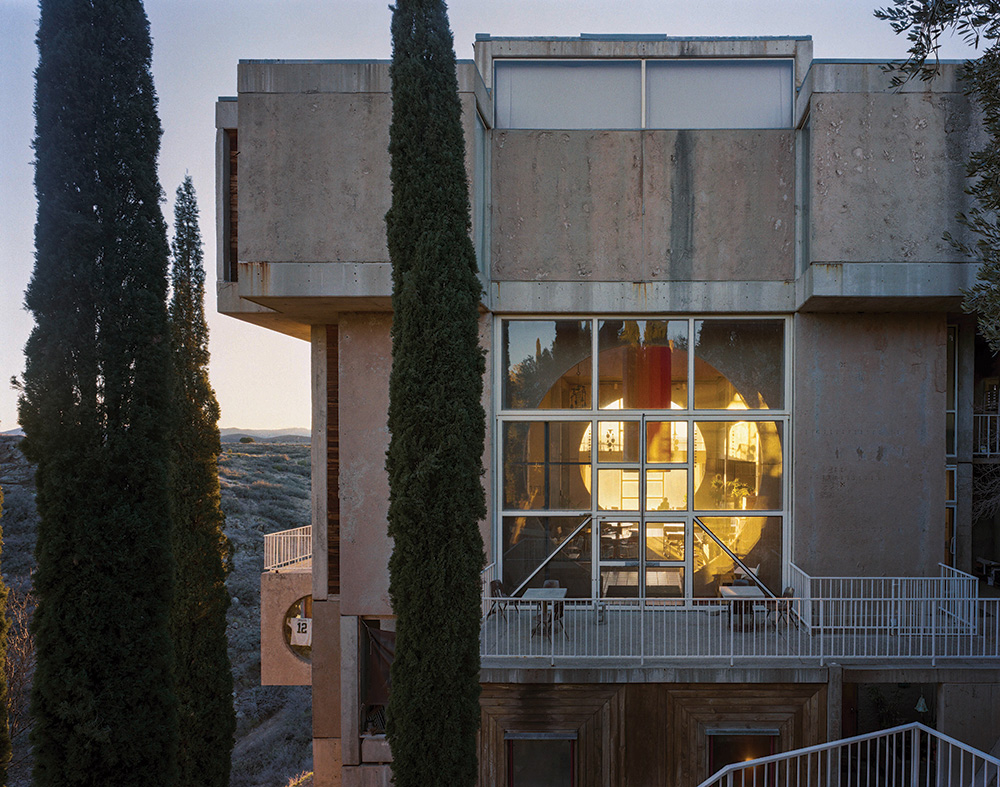
Perched on a cliff, the Crafts III building contains apartments, a cafe and a visitors centre that are kept warm in winter by the low sun on its south side
Soleri’s buildings accomplish the trick of appearing both organic and machine-made, with soft curves decorated in angular flourishes. The Arcosanti residents nestle in apartments that might be mistaken for hobbit dwellings, sunk partly into the ground but generously lit by semi-circular windows (the older the resident, the grander the apartment). The breadth of the city is easily walkable, no more than 15 minutes across, meandering up and down small staircases that connect miniature plazas. On the outskirts, half-built apartments are surrounded by leftover construction equipment, as if a child had suddenly quit playing with her toys.
The community feels increasingly permanent, though the residents tend toward the creative bohemian, committed to their own independence. A few residents have raised young children at Arcosanti, though there’s no formal educational system. Older families have a way of moving to Phoenix or another nearby town and then coming back on weekends to volunteer. Even so, “It’s like an extended family, being here,” says DeeAnn Morgan, a local teacher and Arcosanti tour guide. The site has a way of changing lives in a manner that architecture often aspires to, but rarely manages. “My life has never been the same. I am the person I am today because of the values I learned from Paolo Soleri,” Fox says.
In an age of starchitecture, Soleri chose a different path, and it has paid off. While so many auteur buildings – Steven Holl’s Linked Hybrid, Rem Koolhaas’s CCTV Headquarters – are inert monoliths that hide rather than reveal human life, Arcosanti is a dynamic place, evolving with its residents. “There’s an inclusiveness of attitudes and ideas and voices of people who are here,” Stein says.
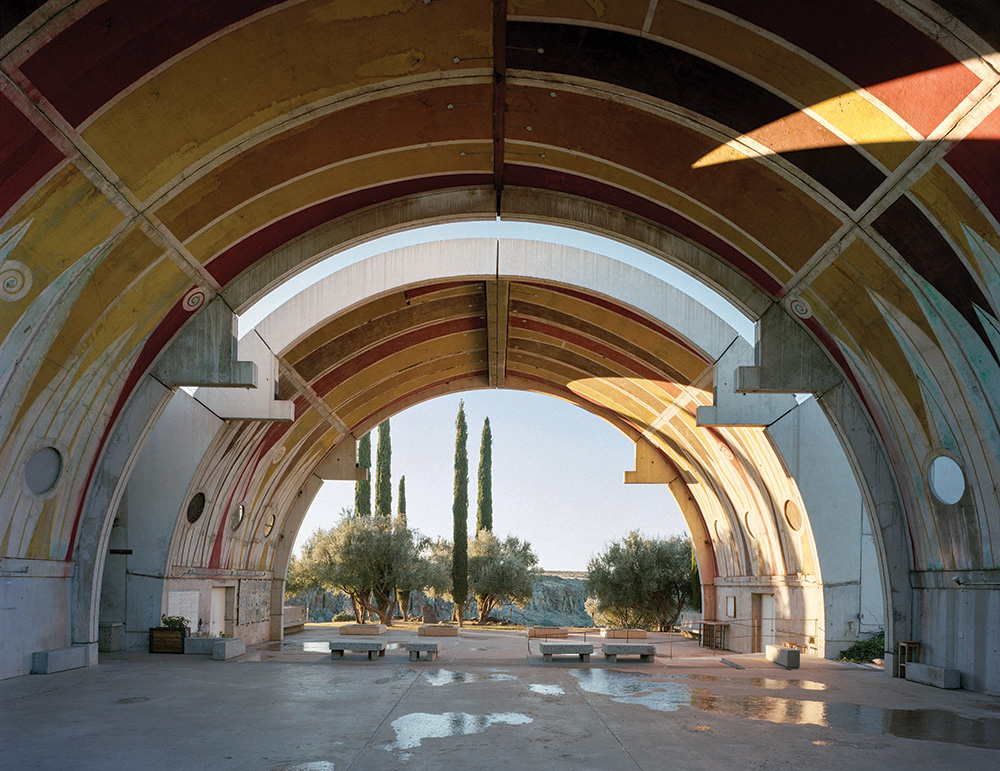
The first structures to be built, the vaulted arches at the centre of Arcosanti were made from thin concrete panels cast on site. They were then lifted into place to form a multifunctional public space for meetings, construction, concerts and dinners, with room for 200 people
This shared spirit will help the city find a way forward after Soleri, striking a balance between preserving his efforts and continuing new construction, which has been functionally stalled for a decade. “I’m hopeful we’ll be able to find a way to transition from the benevolent dictatorship we had with Paolo, to respect the past but make a future,” says Mary Hoadley, Arcosanti’s den mother, who has lived there since the ‘70s. The description of Soleri’s regime might sound like a critique, and in part it is. Residents often note his mercurial nature, though he is remembered with a near-religious fervour. “When he died, I was shattered,” Fox says.
When I first travelled to Arcosanti, for Soleri’s memorial in late 2013, it was unclear how the group would agree on a long-term plan. In years past, the architect made every final decision. As Hoadley said, his leadership style could be dictatorial. “His personality and his vision each morning was the plan for that day,” Stein says. When alumni came together over that weekend, fights broke out over budgets and progress, as well as the residents’ lack of representation in the Cosanti Foundation as a whole. It was easy to feel pessimistic that this one-of-a-kind place could survive. But a few years later, there’s a renewed sense of freedom. Now that the project’s chief visionary has departed, its participants feel more capable of taking matters into their own hands.
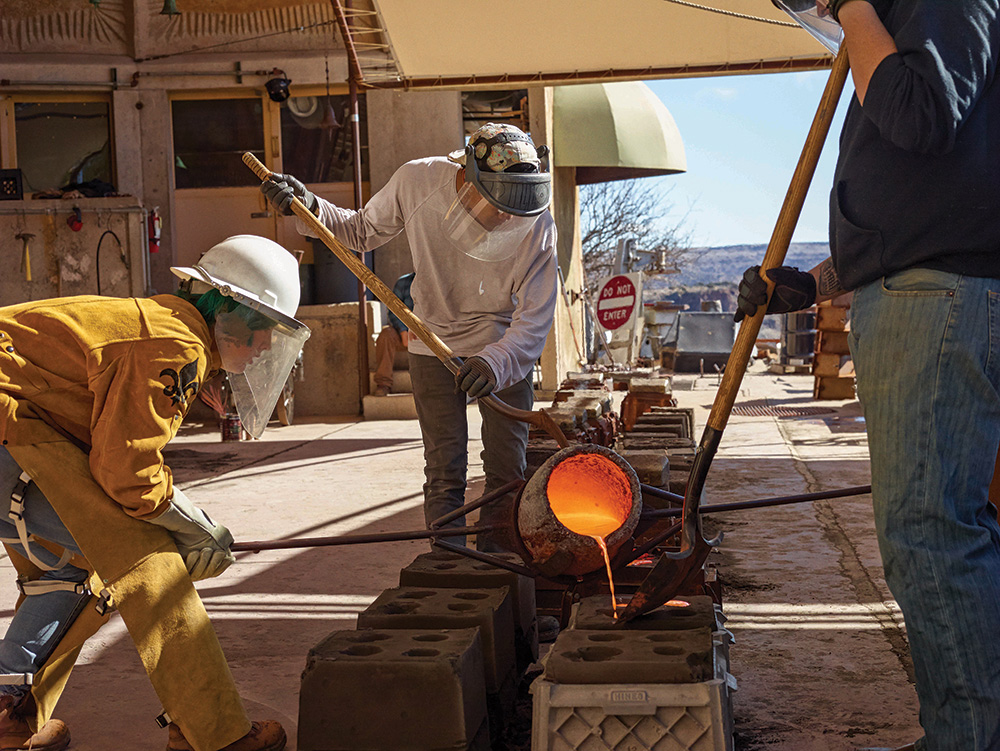
Workers pour molten bronze, heated to 1,315ºC, into sand moulds. The green umbrella in the background collects waste heat from the furnace to warm the surrounding residential apartments
Soleri “left us sketches, thousands of pages of sketchbooks and ideas for how arcologies could be developed,” Stein says. That includes theoretical proposals for residential towers that would loom over the current Arcosanti like skyscrapers.
But it wasn’t all castles in the sky. Soleri also planned for more prosaic concerns, like a hotel and conference centre. “A major part of our income comes from tourism,” Hoadley says. “We’ve needed housing for 30 years, but because of Paolo’s interests, we kept diverting.” Soleri also created an event programme called Minds for History in the late ‘80s, but a lack of residential space kept the series from growing. “We weren’t able to leverage that investment into something bigger,” Hoadley says.
The city needs money to keep growing. The board of trustees is in discussions with investors to provide funding for hotel and conference projects, but new events hosted at Arcosanti are also bringing in revenue, as well as audiences. In 2014, a Florida band called Hundred Waters came across Arcosanti and felt that it was in line with their own intergalactic-hippie aesthetic. “Their music was about connecting people to each other and to place in the same way that Paolo Soleri had in mind that his architecture would do,” Jeff Stein says. The band filmed a music video there, and then their Los Angeles label, OWSLA Records, funded a full-blown music festival called Form.
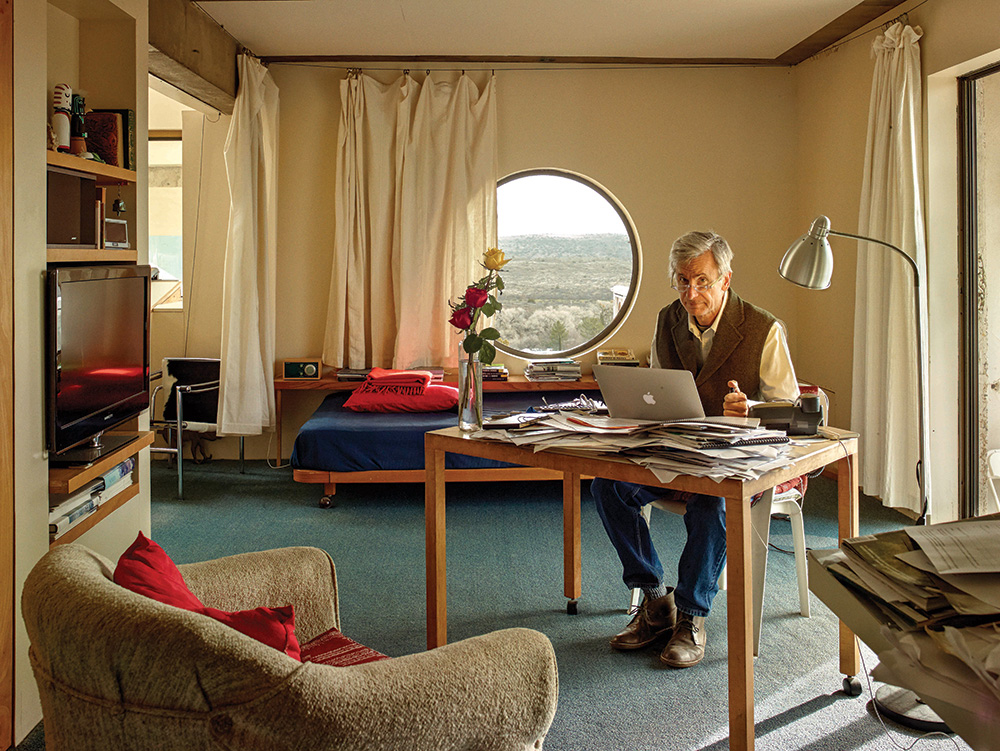
Architect and Cosanti Foundation co-president Jeff Stein working in his apartment in the East Crescent neighbourhood, one level above the main office space at Arcosanti
Tickets to the event were free, subsidised by sponsorships from brands. But the 700 Form attendants had to apply to get in, maintaining both Arcosanti’s character and private, creative atmosphere. Coachella, it was not.
Arcosanti moves slowly, more attuned to the motion of the planets than biennials or TED Talks, but it is modernising in part by becoming more of a functional machine than an architectural improvisation. It’s the only way forward for arcology. “2019 will be the 100th anniversary of Soleri’s birth, the June summer solstice,” Jeff Stein says. “By that point, only a few years away, we look forward to at least unveiling a powerful strategic plan and very likely having begun to build some more large components of Arcosanti.” These might include the long-planned residential towers or a more advanced farming system for the site.
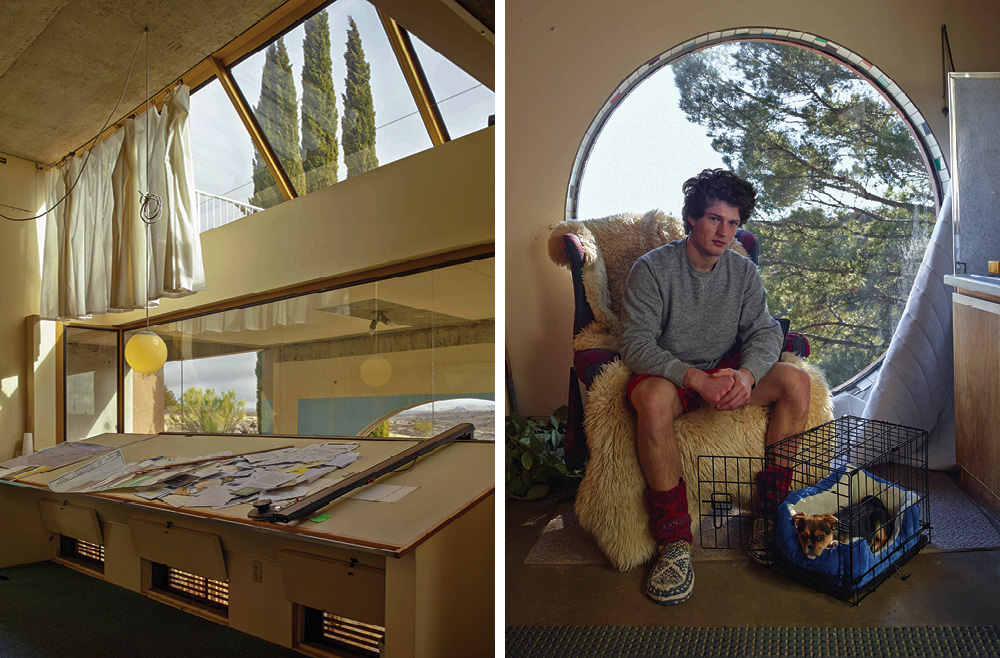
Left: The drafting table of Arcosanti’s founding architect, Paolo Soleri – Right: Resident and college student Tristan Tollas in his room with a view of the 4,000 acre preserve that surrounds Arcosanti
Momentum is building as Arcosanti evolves. After a lull in the early 2000s, workshops are getting bigger every year, averaging 20 new Arconauts each session. As they arrive, the workshoppers also bring with them a new generation of tools. Hildemar Cruz, a geography graduate from USC, first came to Arcosanti just five days after Soleri died in 2013 and has lived there on and off ever since. Cruz pioneered a project to put Arcosanti’s apartments on Airbnb. “This has given us such an opportunity to connect with people who never knew we were here,” she says.
With her technology background, Cruz brings a new perspective to Arcosanti. Beyond Airbnb, she’s a proponent of using chat platforms like Slack to keep in touch with her fellow Arconauts. Soleri might have used lo-fi building techniques and materials, but the Internet could make accomplishing the architect’s goals even easier. “We should be able to use technology to make intelligent decisions to live more efficiently,” Cruz says. Social media “will be connecting us to this whole other world.”
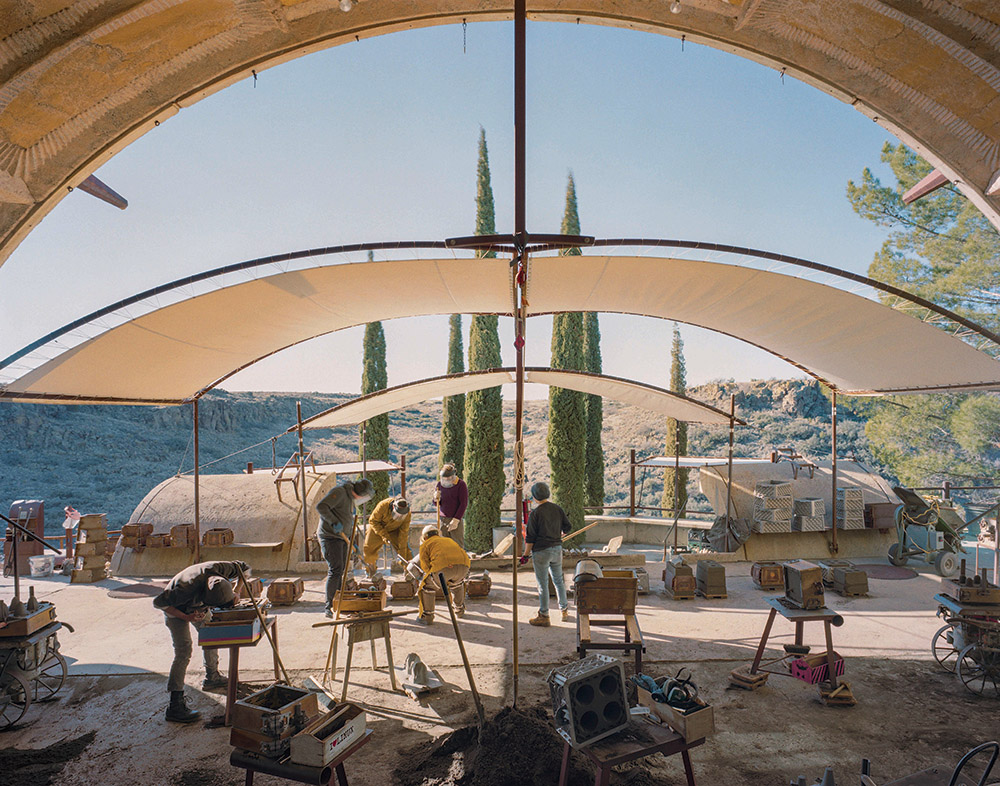
Craftspeople at work in the foundry making the famous bronze Soleri wind bells. Like the ceramics studio, the foundry is sheltered in an apse, open to the south
Still, progress can be difficult. From Soleri’s memorial in 2013, I remembered one particularly intense fight between residents, alumni and the foundation. It was over a greenhouse that was supposed to be completed years ago, but no one could quite trace where $10,000 of funding went. I ask Mary Hoadley if construction had moved forward. “We ran into lots of design and regulation issues that put a halt to the project,” she says. Much of the money was spent on research and planning, with little action. “The actual implementation of such an idea is more technically complicated and expensive than Paolo imagined,” Cruz adds.
Some things about Arcosanti will never change. The city is a labour of love; luxury condos aren’t coming any time soon. The cypress trees that Soleri planted himself will always sway on the edge of the hill that the city perches on, looking out over the flat desert. The Wind Bells will continue to chime out. Most importantly, the Arconauts will continue arriving, drawn by the strength of Soleri’s vision and its real, physical presence, which is as charming and peaceful as any place on Earth.
It’s easy to see what Arcosanti could become, in an ideal world. With the proper funding and support, it could grow into a city of a few thousand residents. Like Donald Judd’s Chinati Foundation in Marfa, Texas, or the international artistic community that grew around Frank Gehry’s Guggenheim Bilbao, Arcosanti has the potential to be an annual whistle stop on the art world’s global circuit, as befits a masterpiece of architecture. It’s already a foray into the future of humanity, a test site where our fate will be determined in the mounting of environmental decay.
In the meantime, being at Arcosanti, one is struck by how it seems that a group of people, as D.H. Lawrence suggested, could come together and build a new world with their own hands. “I don’t think I’ll be leaving anytime soon,” Cruz says. The experiment continues.
As the 99th Giro d’Italia cycling race gets underway, celebrated English designer Paul Smith shares an exclusive excerpt from his new book, in which he recalls designing the leader’s jersey for this iconic, three-week long tour of Italy
Knighted by the Queen in 2000 for services to fashion, Paul Smith is one of the most celebrated British designers working in the fashion industry today. Since he opened his first shop in his hometown Nottingham in 1970, he has been consistently lauded as one of the best menswear designers and is the recipient of many awards in fashion and the arts. His impact on everyday style is also considerable; he has been credited as single-handedly reviving the boxer short as the underwear of choice for men.
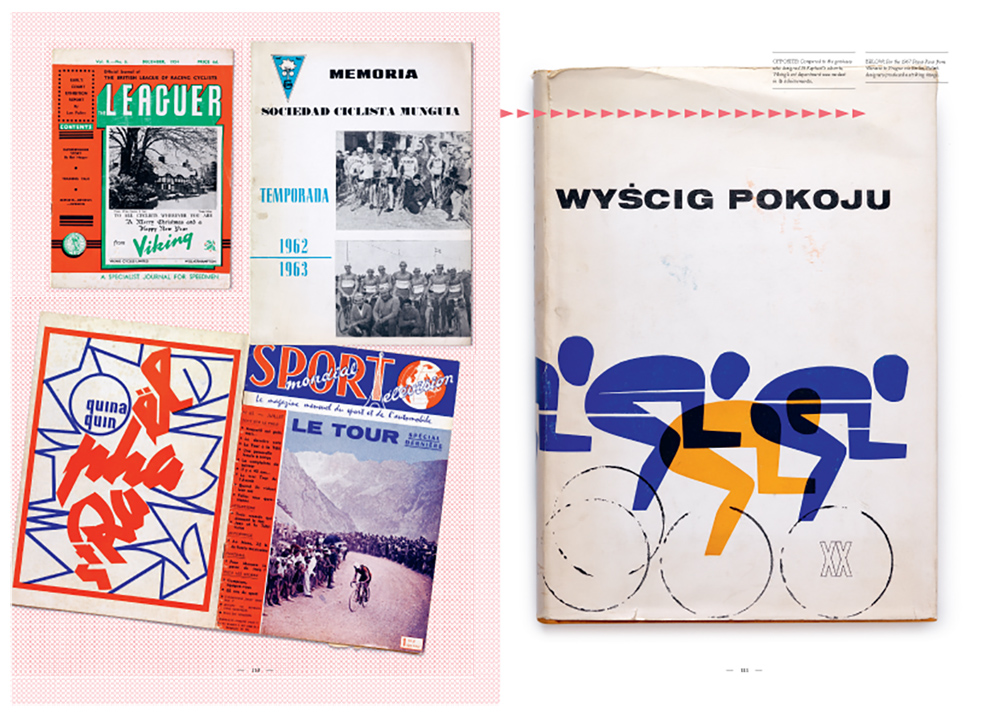
But it was not always going to turn out this way. Smith’s childhood dream was not to be a designer, but a racing cyclist. Were it not for a serious crash at the age of 17, this might have been the case. Convalescing, Smith discovered tailoring and his life took a different path. Despite this, he has retained a real love for the sport (as is evident in his friendships with champion cyclists Bradley Wiggins and Chris Hoy). He also owns a vast collection of cycling memorabilia, most of which is documented in his latest book: Paul Smith’s Cycling Scrapbook, published by Thames & Hudson.
As the first stage of the Giro d’Italia – one of the three central ‘grand tours’ of the road racing calendar – begins, we publish a short extract from Paul Smith’s Cycling Scrapbook.
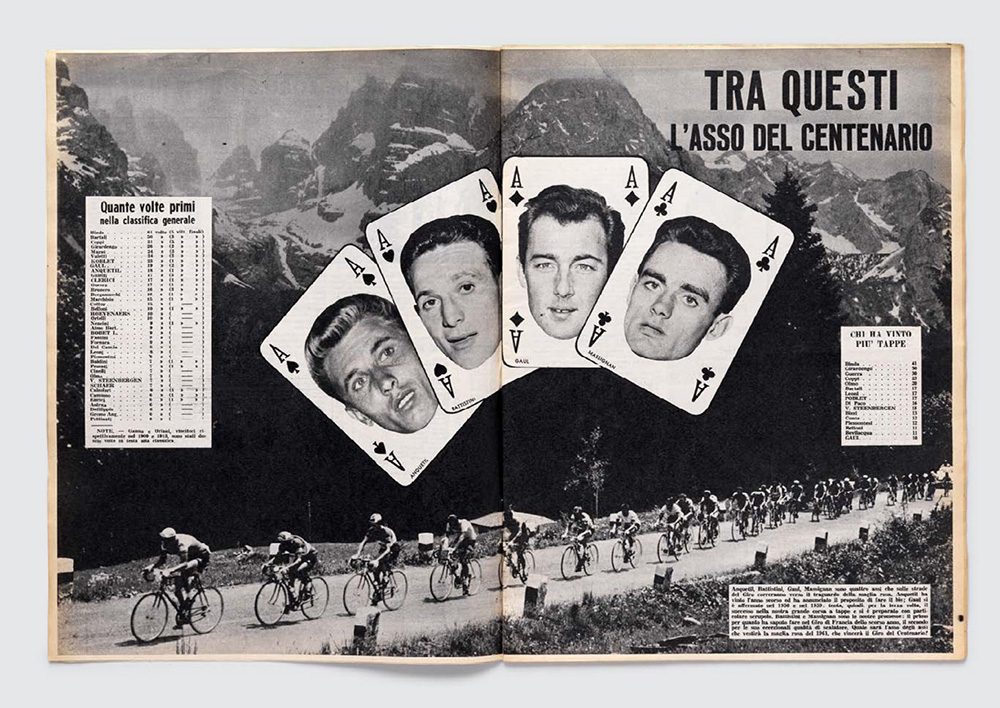
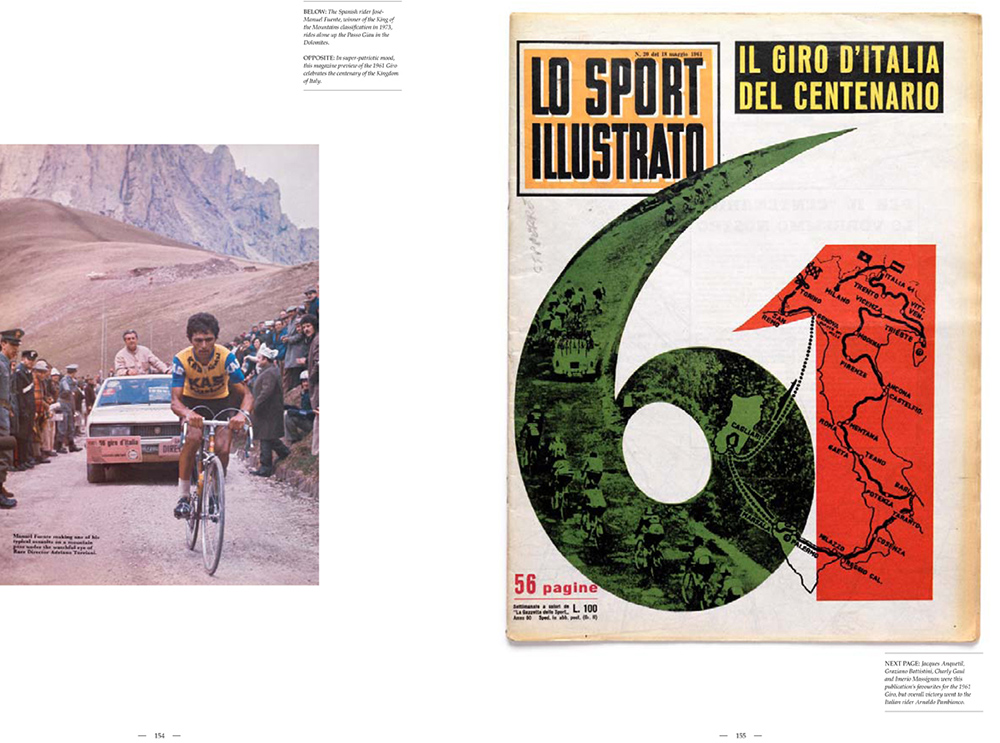
Jacques Anquetil, Graziano Battistini, Charly Gaul and Imerio Massignan were this publication’s favourites for the 1961 Giro, but overall victory went to the Italian rider Arnaldo Pambianco
Paul Smith:
The Giro d’Italia is the first Grand Tour of the year, and the start of all those days from spring to autumn when cycling fans would rather be spending their afternoons watching the riders on television than getting on with their work.
It has been going almost as long as the Tour [de France], but it has a very different feeling. Because of the time of year, the weather is more challenging and can become pretty dangerous. And, of course, it’s very Italian. I don’t know how to explain what I mean by that. Perhaps you could say that it’s a little bit more stylish than the Tour, and maybe more commercial. And some of the places it goes to are magical.
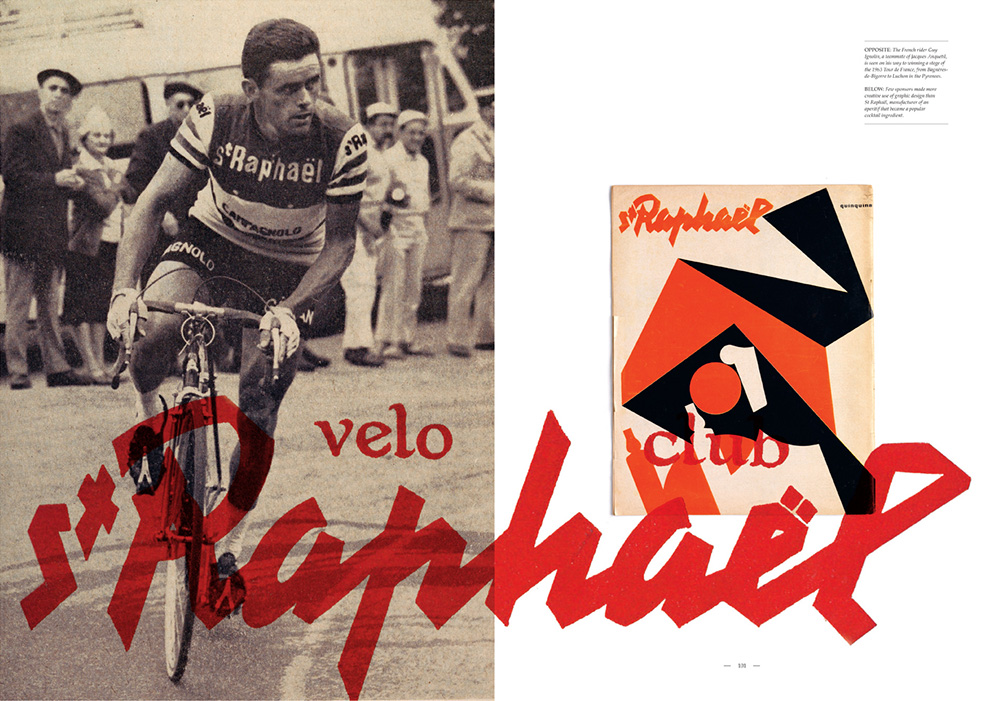
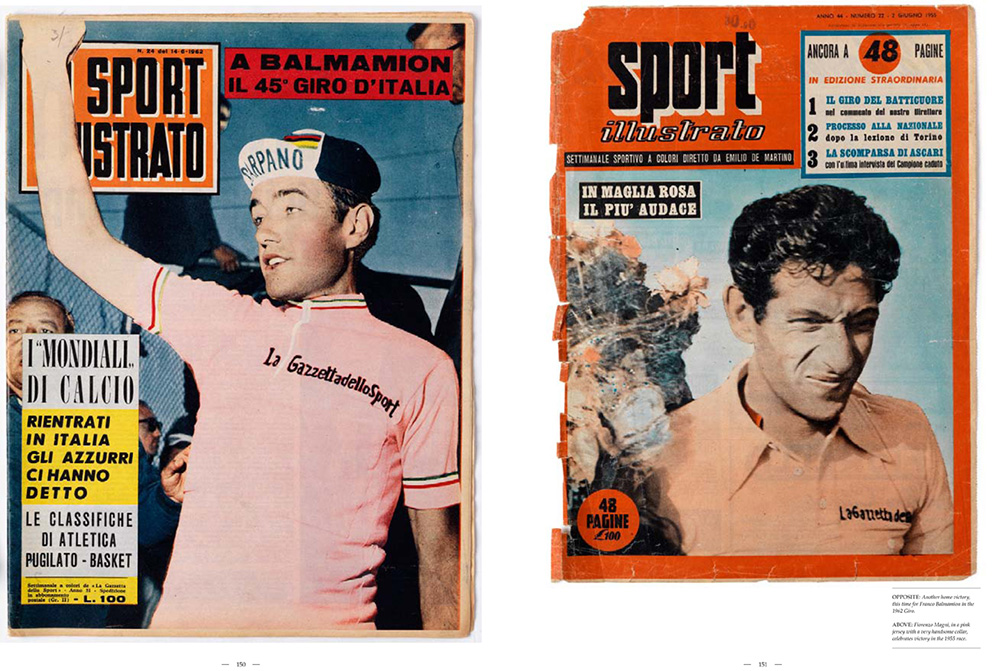
Left: Another home victory, this time for Franco Balmamion – Right: Fiorenzo Magni celebrates victory in the 1955 race
It was founded in 1909, six years after the Tour, to promote sales of Italy’s leading daily sports paper, La Gazzetta dello Sport, which had already been associated with the Giro di Lombardia and Milan–San Remo, founded in 1905 and 1907 respectively. The Giro was to be the crowning glory of Italian cycling – and since the Gazzetta is always printed on pink paper, that became the colour associated with the race. Milan, where the newspaper has its head office, became the Giro’s headquarters.
The pink jersey, awarded to the leader in the general classification, was adopted in 1931, and was first worn by Learco Guerra, a great figure of Italian cycling who won four stages that year but missed out on the eventual victory. Three years later he captured ten stages and took the overall win for the first and only time. After the war he served as directeur sportif for two other Giro winners, Hugo Koblet and Charly Gaul.
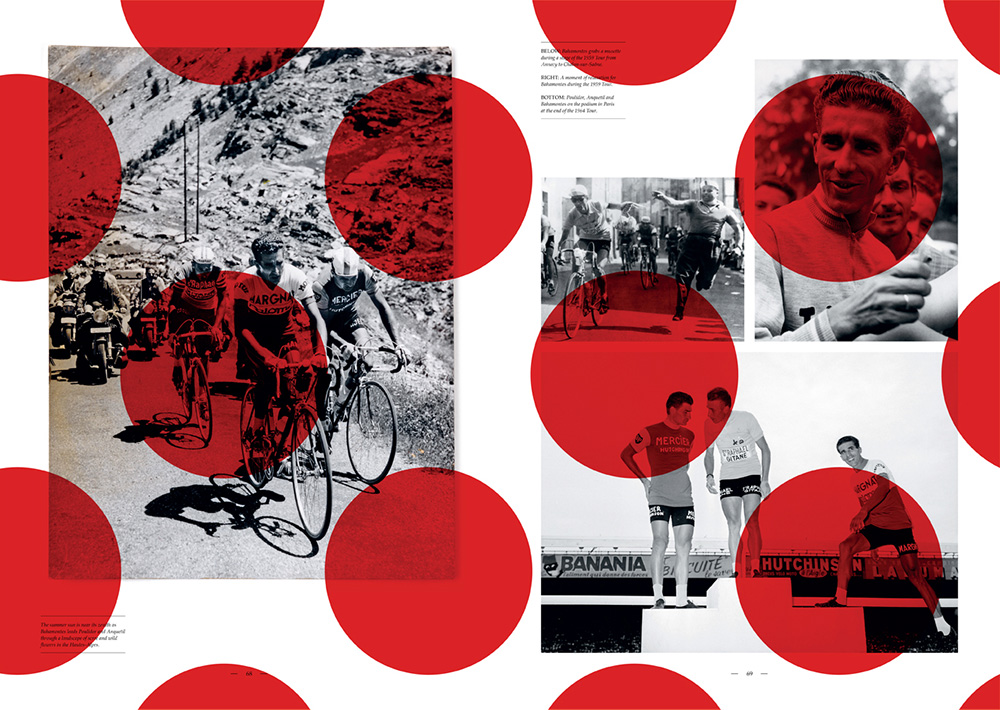
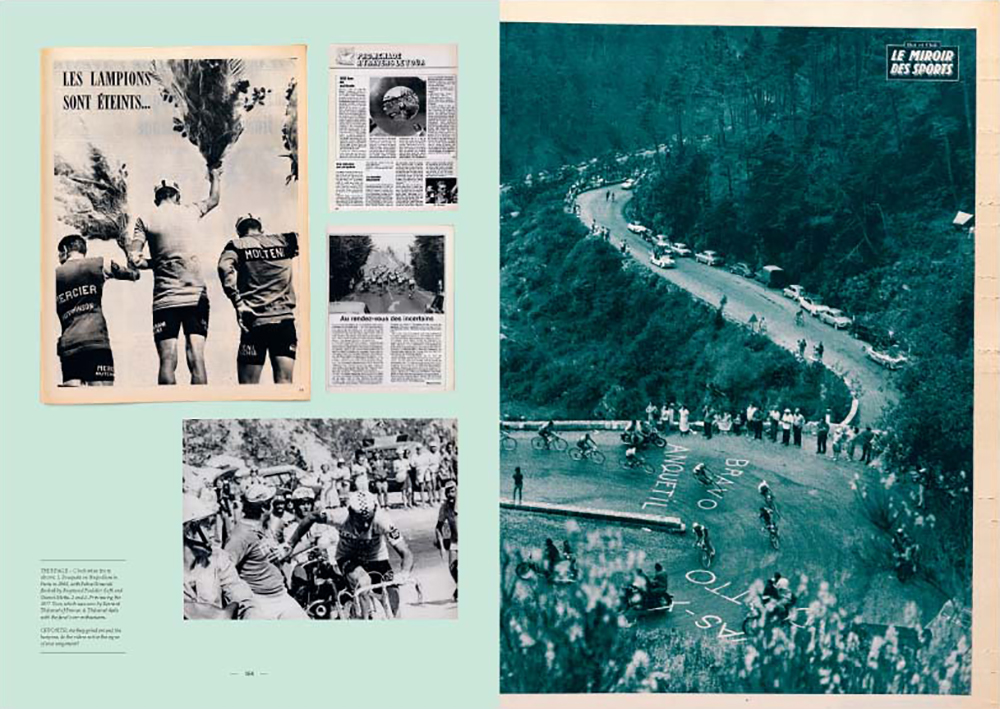
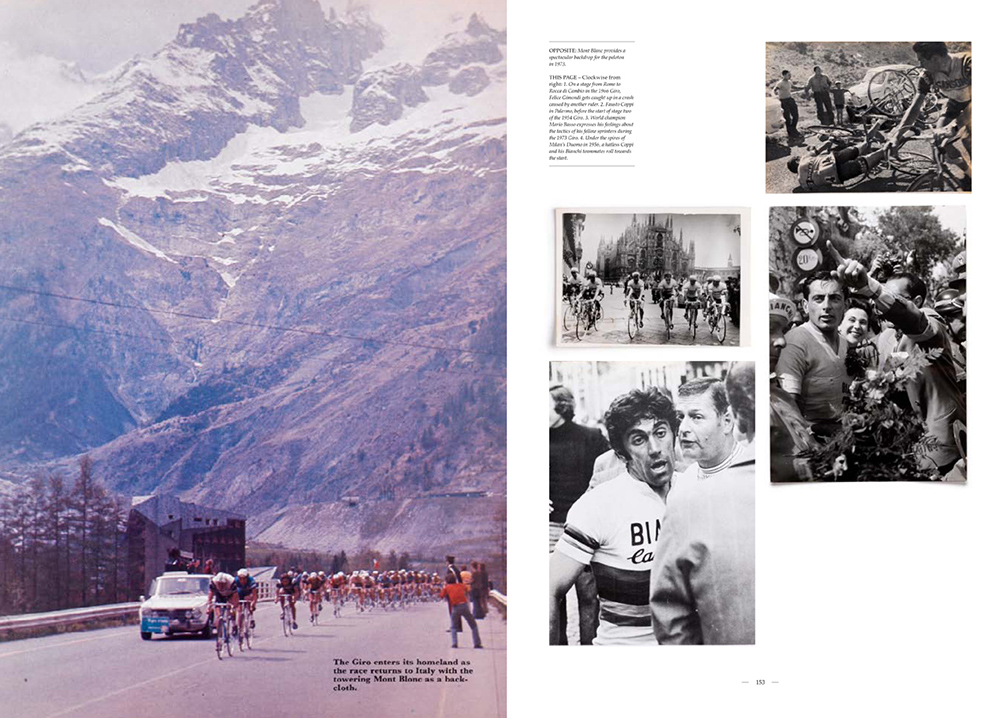
Left: Mont Blanc provides a spectacular backdrop for the peloton in 1973 – Right: Scenes of the Giro between 1954 and 1973 with the likes of Fausto Coppi, Felice Gimondi and Mario Basso
The race had been dominated in the 1920s by Alfredo Binda, another legendary figure, who won the Giro a record five times between 1925 and 1933. In that last year he also won the King of the Mountains jersey, awarded for the first time. Gino Bartali won three Giros between 1936 and 1946, but his younger rival Fausto Coppi came along to take five wins between 1940 and 1953. There were a lot of classy winners in the 1950s and ‘60s – Gaul, Fiorenzo Magni, Jacques Anquetil and Franco Balmamion, who each won twice – before Eddy Merckx came along in 1968, winning the first of his five Giros (including three in a row between 1972 and 1974 – a feat never matched).
Bernard Hinault won three in the 1980s, Stephen Roche became the first English-speaking rider to win, in 1987 (the year he also won the Tour and the world championship), Miguel Indurain won two in the 1990s, and in 1998 Marco Pantani became the last man to complete the double of Giro d’Italia and Tour de France in the same year.
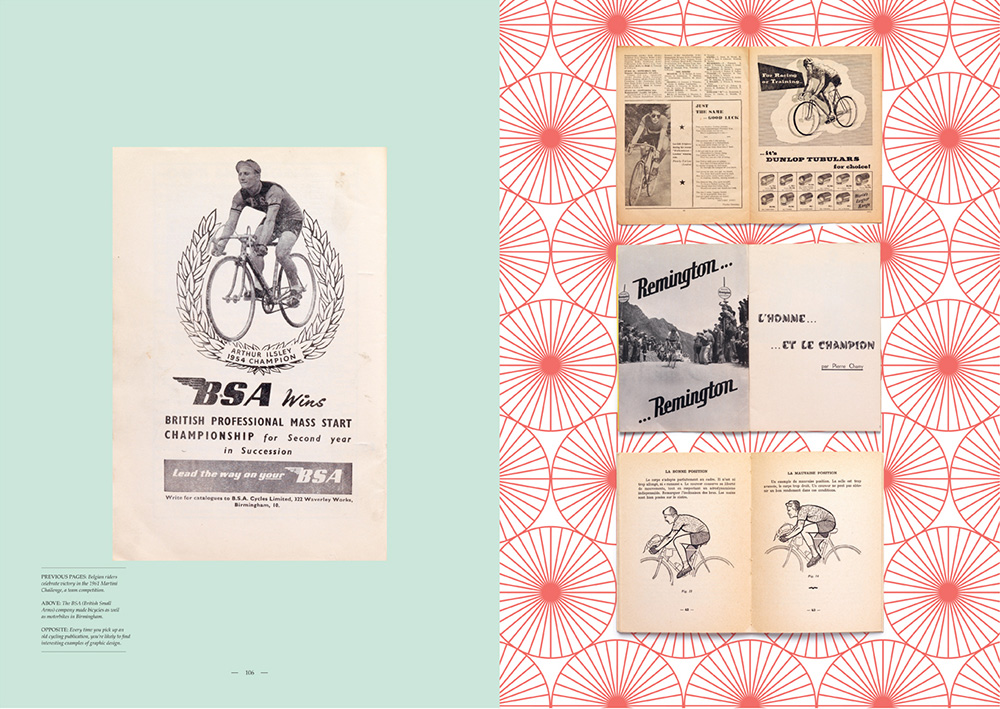
Left: The Spanish cyclist José-Manuel Fuente rides alone up the Passo Giau in the Dolomites – Right: Previewing the 1961 Giro, Lo Sport Illustrato magazine celebrates the centenary of the Kingdom of Italy
Because it’s held in late May and early June, and because the route normally takes in the mountain passes of the Alps and the Dolomites, the riders can usually count on a day or two in which they’ll need every item of weather protection they can lay their hands on. Some years they find themselves riding between high banks of snow, or descending in freezing rain. The conditions can be brutal enough to force some to abandon the race, and to reduce others to tears of pain and frustration, while those who struggle through attain the status of instant heroes.
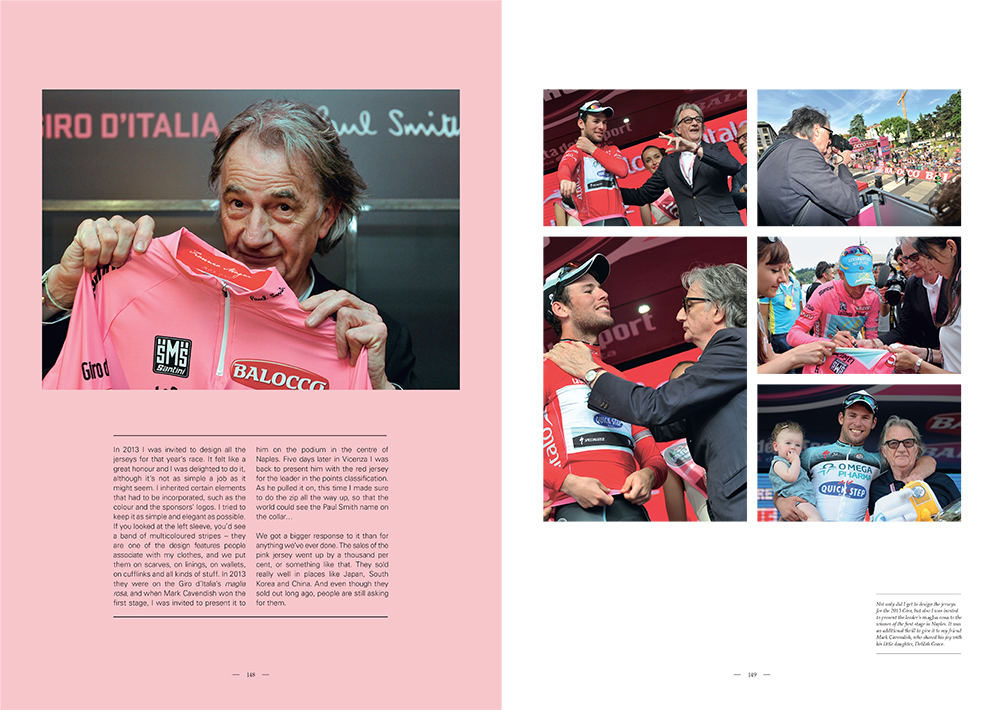
Left: Smith with the jersey he designed for 2013 Giro – Right: Smith presenting the red leader’s jersey for the points competition to his friend Mark Cavendish
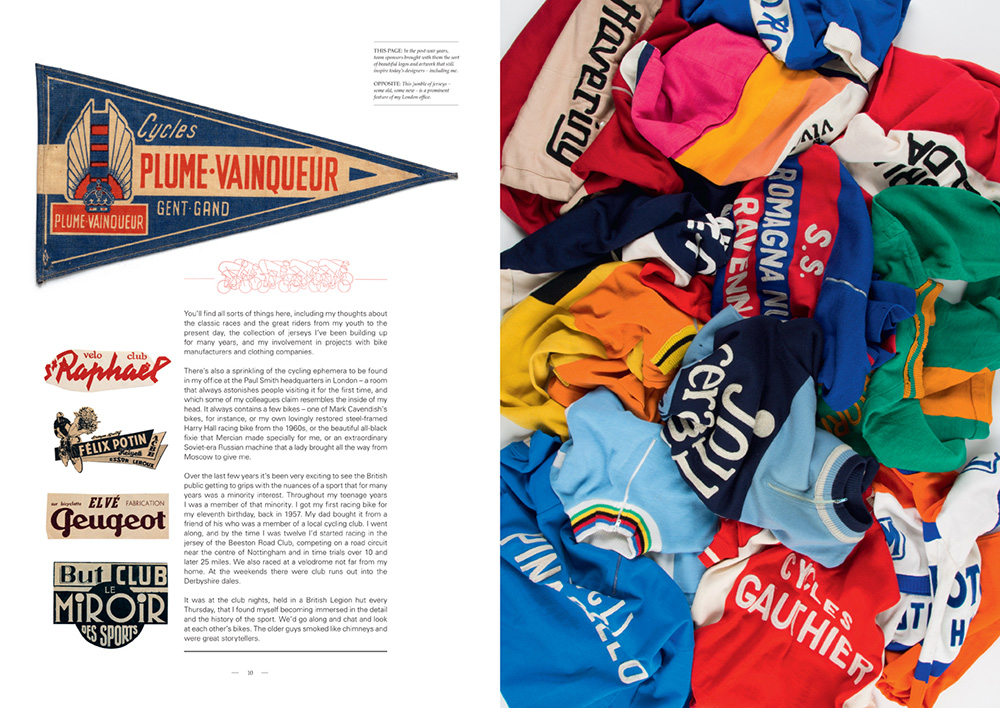
In 2013 I was invited to design all the jerseys for that year’s race. It felt like a great honour and I was delighted to do it, although it’s not as simple a job as it might seem. I inherited certain elements that had to be incorporated, such as the colour and the sponsors’ logos. I tried to keep it as simple and elegant as possible. If you looked at the left sleeve, you’d see a band of multicoloured stripes – they are one of the design features people associate with my clothes, and we put them on scarves, on linings, on wallets, on cufflinks and all kinds of stuff. In 2013 they were on the Giro d’Italia’s maglia rosa, and when Mark Cavendish won the first stage, I was invited to present it to him on the podium in the centre of Naples. Five days later in Vicenza I was back to present him with the red jersey for the leader in the points classification. As he pulled it on, this time I made sure to do the zip all the way up, so that the world could see the Paul Smith name on the collar…
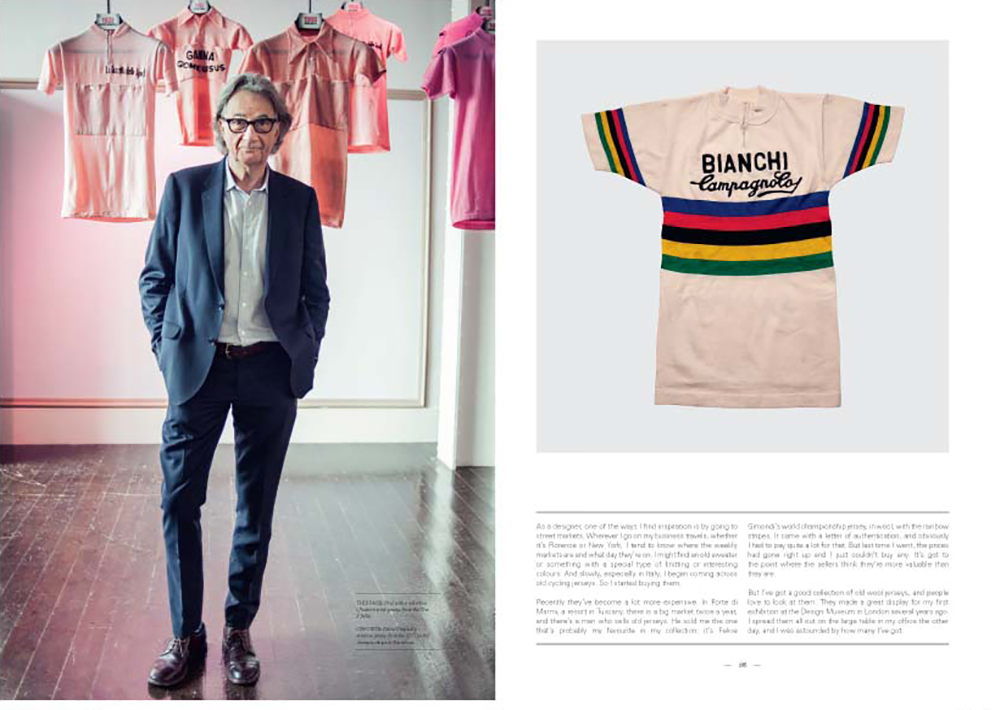
Left: Paul Smith with a collection of historic pink jerseys from the Giro – Right: Felice Gimondi’s world championship jersey from 1973
We got a bigger response to it than for anything we’ve ever done. The sales of the pink jersey went up by a thousand per cent, or something like that. They sold really well in places like Japan, South Korea and China. And even though they sold out long ago, people are still asking for them.
Paul Smith’s Cycling Scrapbook by Paul Smith and Richard Williams, designed by Alan Aboud, will be published by Thames & Hudson on 23 May