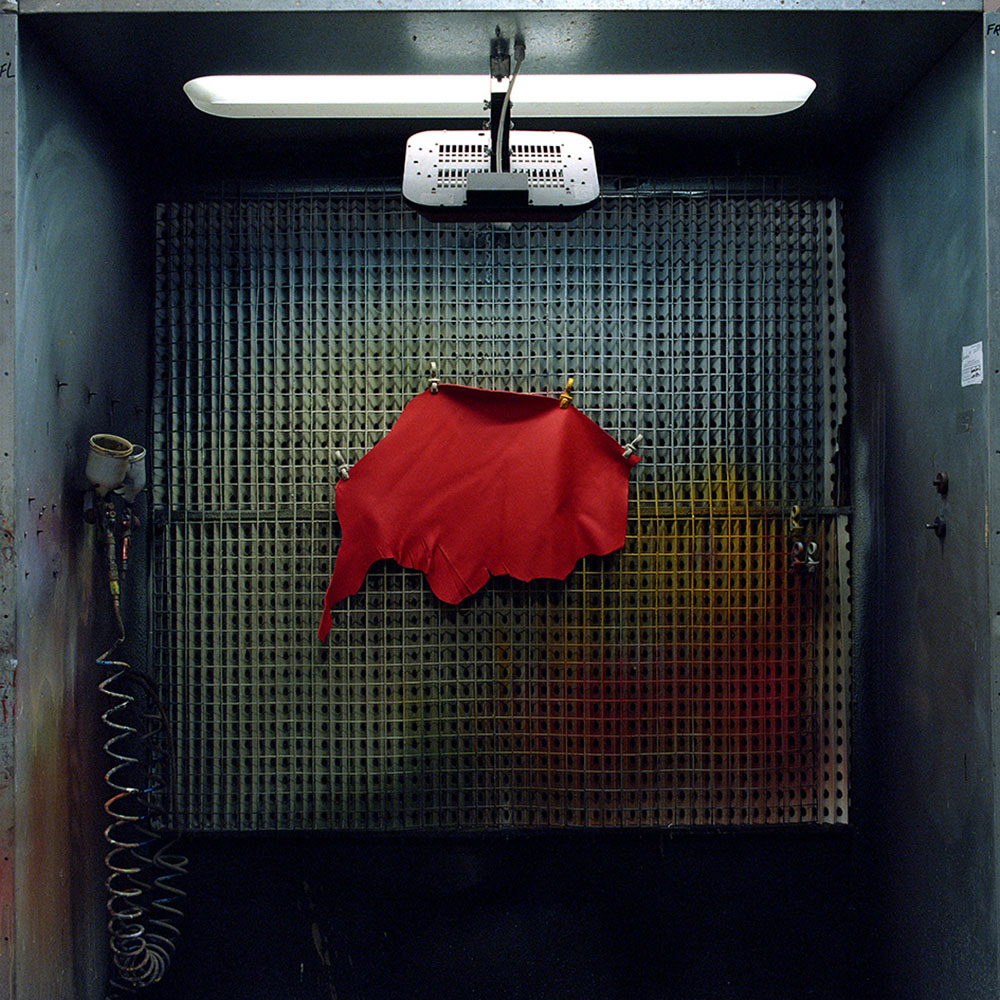
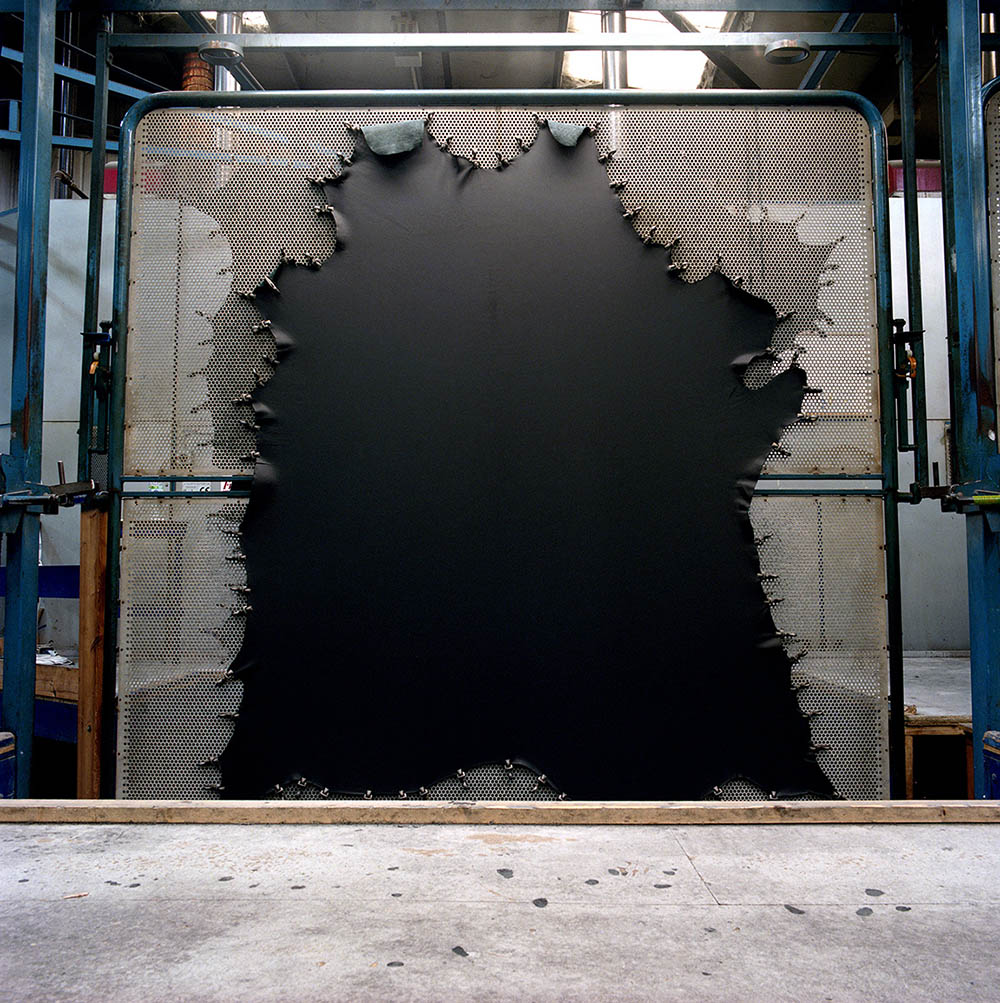
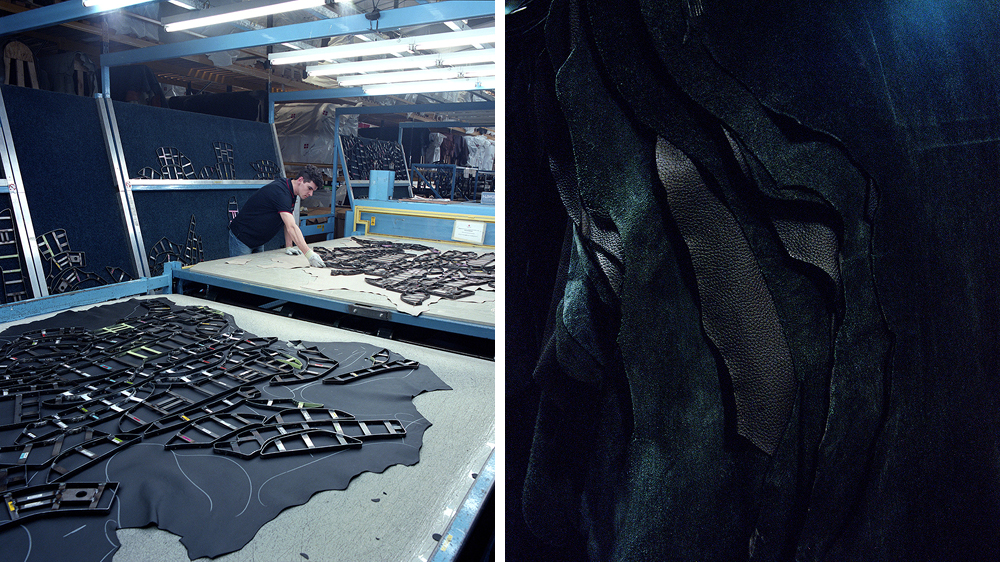
The smell of rawhide is difficult to forget. Looking at the pungent calfskins stacked waist high on top of one another inside a cold Scottish warehouse, it’s hard to imagine that they’ll soon be transformed into the leather used inside high-end Land Rovers and Jaguars. But this is where the centuries of craftsmanship and inherited values behind Bridge of Weir leather – a subsidiary of Scottish Leather Group (SLG) – come into play.
Based 20km east of Glasgow in a village of the same name, the family-owned business has a history stretching back over 250 years. As well as producing the upholstery for the original Charles Eames lounge chair, it once supplied shoemakers Bally and Church’s and fitted out the interior of Henry Ford’s Model T vehicle.
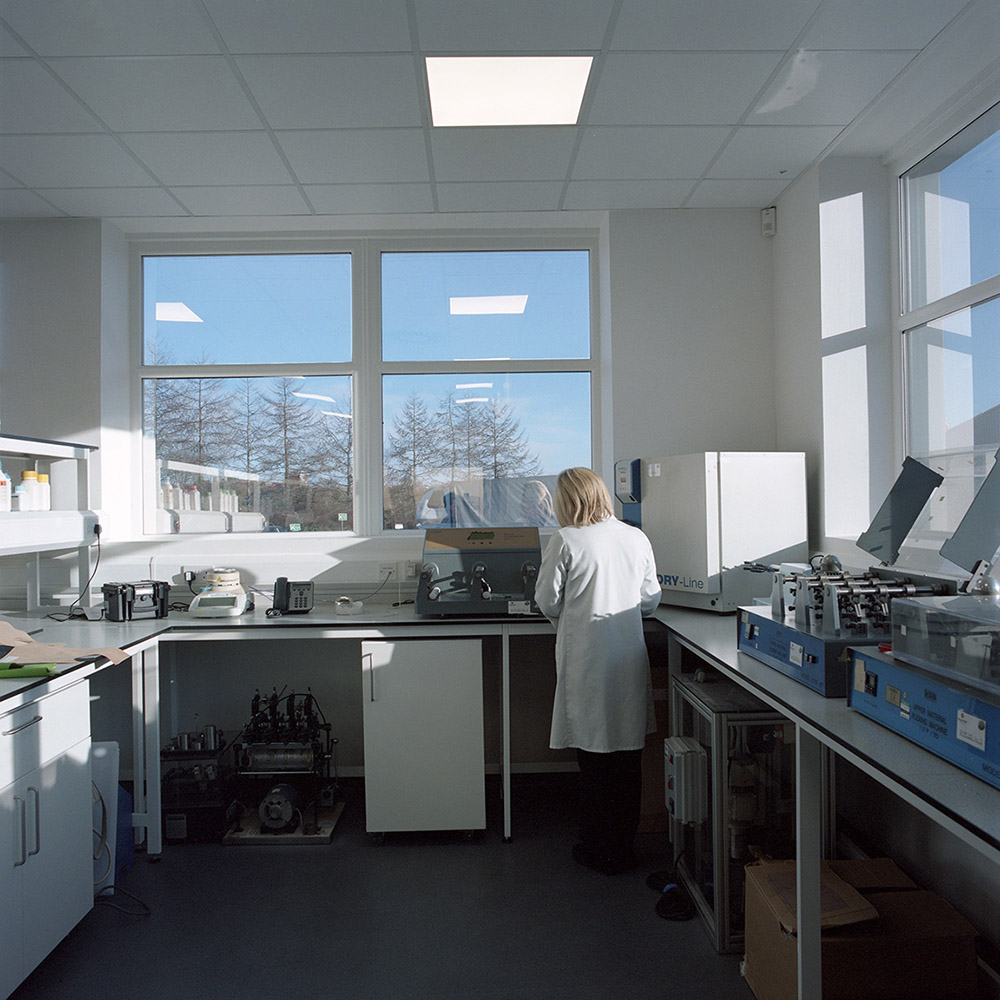
Inside the Bridge of Weir leather factory – Photographs by Tobias Harvey
“It must be in the blood,” suggests Jonathan Muirhead, chairman of SLG. “I joined in 1970 following my father and grandfather… I was flung into it, but worked my way through every machine in the tannery so I knew exactly how each stage of the process worked.”
Today, Muirhead’s sons, Nicholas and James, both work at Bridge of Weir, but were encouraged to cut their teeth on the factory floor. “I was brought up with a focus on automotive and the strict demands the industry puts on suppliers,” he says, before explaining how this shaped the company’s current strategy: creating leather for luxury cars, such as RangeRover’s Autobiography series.
“As a designer, working with a British family-run company that has a long tradition in tanning leather is a wonderful opportunity,” explains Land Rover’s Kim Brisbourne. “British manufacturing is back in favour, which wasn’t the case in the 1970s and 80s,” adds Muirhead. “Now we can all take great pride in it, because British manufacturing is some of the best in the world.”
This article is taken from PORT issue 18. Click here to buy single copies or to subscribe.
As Salone del Mobile 2016 draws to a close, six designers and CEOs of leading design brands reveal their favourite spots in Milan
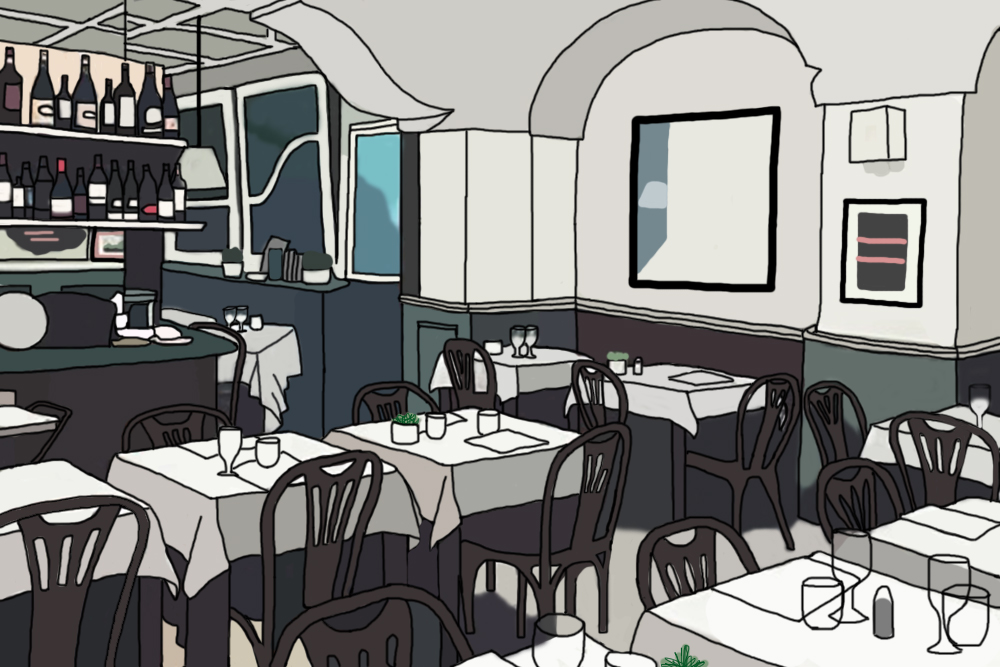
Ristorante Rigolo, Via Solferino, Milan
Milan is transformed in the week of the Salone Internazionale del Mobile. The industrial, financial and commercial capital of Italy, as well as the base for most of the country’s well-established design ateliers, Milan really comes alive in late April for the largest furniture and design fair in the world.
Although the Salone is focused on the Fiera Milano exhibition hall in Rho, a few miles north west of central Milan, the city bustles with the nearly 400,000 visitors to the fair, and there are many exhibitions and events worth seeing elsewhere. Such is the impact of the Salone on Milan that it can sometimes be hard to get away from for respite from the hectic schedule of launches and exhibition openings. With this in mind, we asked six leading designers and CEOs of influential brands for their tips on where to eat, relax and get away from it all during the fair.
Ristorante Rigolo – Massimo Orsini, CEO of Mutina
“I like typical Milanese restaurants that aren’t too fancy or contemporary; the old ones like Rigolo. These places don’t change, they haven’t changed for years. There’s a timelessness to them.”
Read Massimo Orsini’s comments on Mutina’s latest collaboration with British designers Barber & Osgerby here.
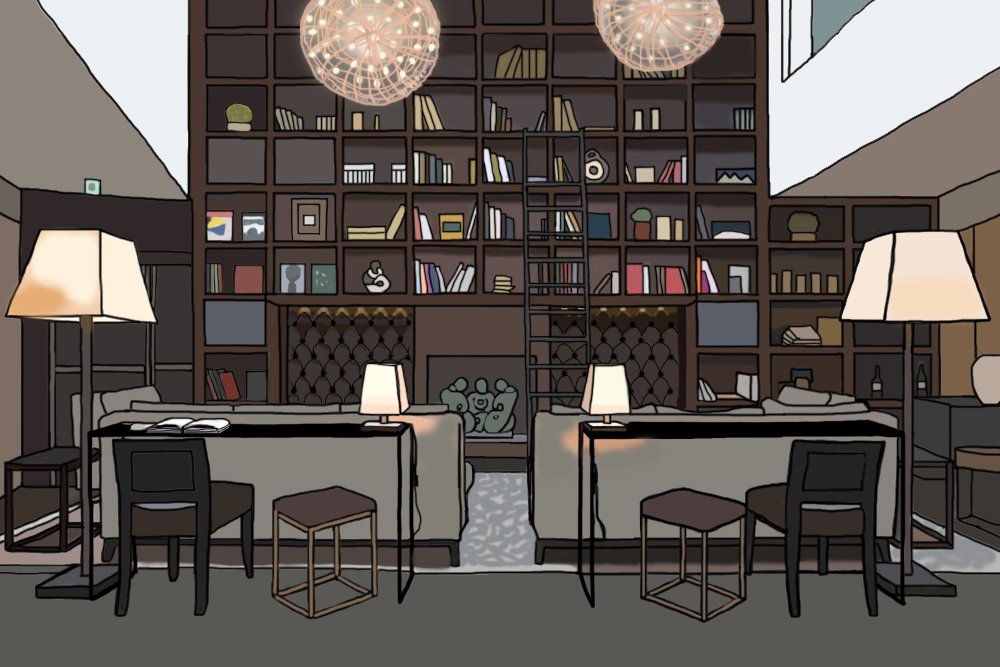
Park Hyatt Hotel – Vincent Van Duysen, designer
“I always have a very intense program when I go away, so I tend to stay in the same hotel, the Park Hyatt. When I’m not at the fair I go to my room and rest. Every year, when I’m here for the Salone or working on projects in Milan, I always have the same room and it has become my home away from home.”
Here, Vincent Van Duysen speaks to PORT about his new collections for lighting brand FLOS.
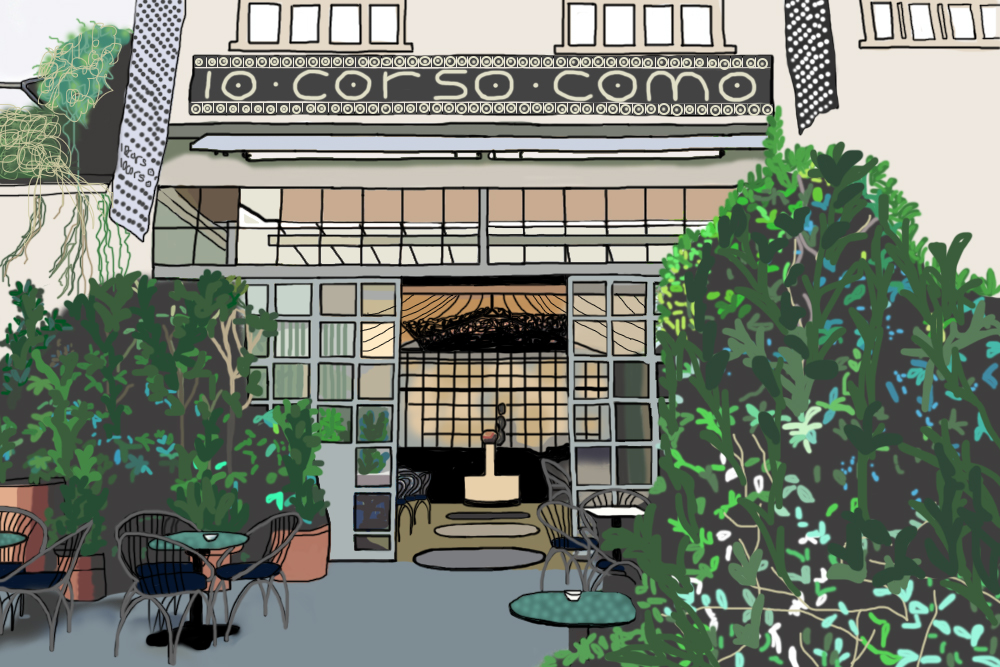
10 Corso Como is one of the main attractions on Corso Como, Milan
Corso Como – Mette Hay, co-founder of HAY
“This year we were so busy that we didn’t have much time to get out and explore, but I have always loved visiting Corso Como. We also have a few friends in Milan we like to visit when we are here, it’s a good way to have a quiet moment away from the exhibition.”
Read our interview with Mette and her husband Rolf Hay, who discuss theSalone del Mobile 2016 and their relationship with the heritage of Danish design.
Di Gennaro – Moritz Waldermeyer, designer
“There’s one place I always like to go to – it’s a pizzeria and a bit of a hidden gem called Di Gennaro. It’s quite close to the Duomo, but most people don’t know about it. What’s lovely is that it’s completely undesigned, it’s never really been refurbished. It’s refreshing to hang out there; it’s a complete antidote to the whole of Milan Design Week.
Here, Moritz Waldermeyer takes PORT on a journey through Milan to visit the three installations he created for Officine Panerai.
Hotel Milan Scala, Via dell’Orso, Milan
Hotel Milan Scala – Ora Ito, designer
“Since I’ve been coming to Milan, I’ve always stayed at the Hotel Milan Scala. It’s very central – you can watch the Milanese going about their daily lives and take in the elegance of Milan. It’s the best place to meet the big guys in design because they all go to this hotel.”
Giacomo Bistrot – Martin Andersson, head of menswear at COS
“I particularly like to go and have dinner at Giacomo Bistrot, it’s one of my favourite places in Milan. It’s always a treat: there’s amazing food, it’s a really beautiful place, the interior is superb, it’s quite buzzy, and just somewhere I love to hang out.”
Read our feature on COS’ collaboration with architect Sou Fujimoto here.
PORT’s design editor Alyn Griffiths reflects on the best collections, exhibits and events from Milan’s Salone del Mobile 2016
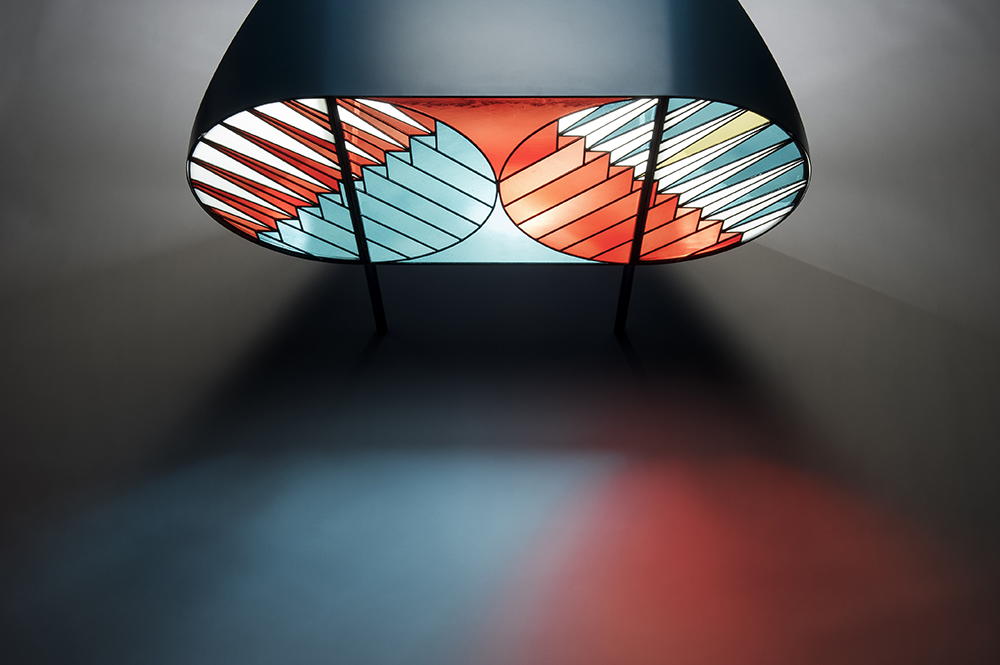
Credenza – a collaboration between designer Patricia Urquiola and artist Federico Pepe for Spazio Pontaccio
Trying to summarise the best events and new releases at Milan’s annual design week becomes increasingly difficult as the volume of shows across the city continues to escalate each year.
At the city’s main exhibition centre, the 55th edition of the Salone del Mobile brought together all of the biggest furniture and design brands, while accompanying satellite exhibitions popped up in grand palaces, museums (Tom Dixon), disused shopping arcades (Wallpaper* magazine) and even custom-fitted delivery vans (Lee Broom).
Some of the biggest names seemed to be everywhere at once, with Patricia Urquiola, Neri&Hu, Nendo and the Bouroullec brothers designing products, stands and overseeing the creative direction for multiple brands.
Companies not typically affiliated with furniture design also had a strong presence during the design week, with Mini, Airbnb, Panasonic and Nike among the many aiming to showcase their creative credentials. It all made for a diverse and exciting event, and here, I pick a few of my highlights.
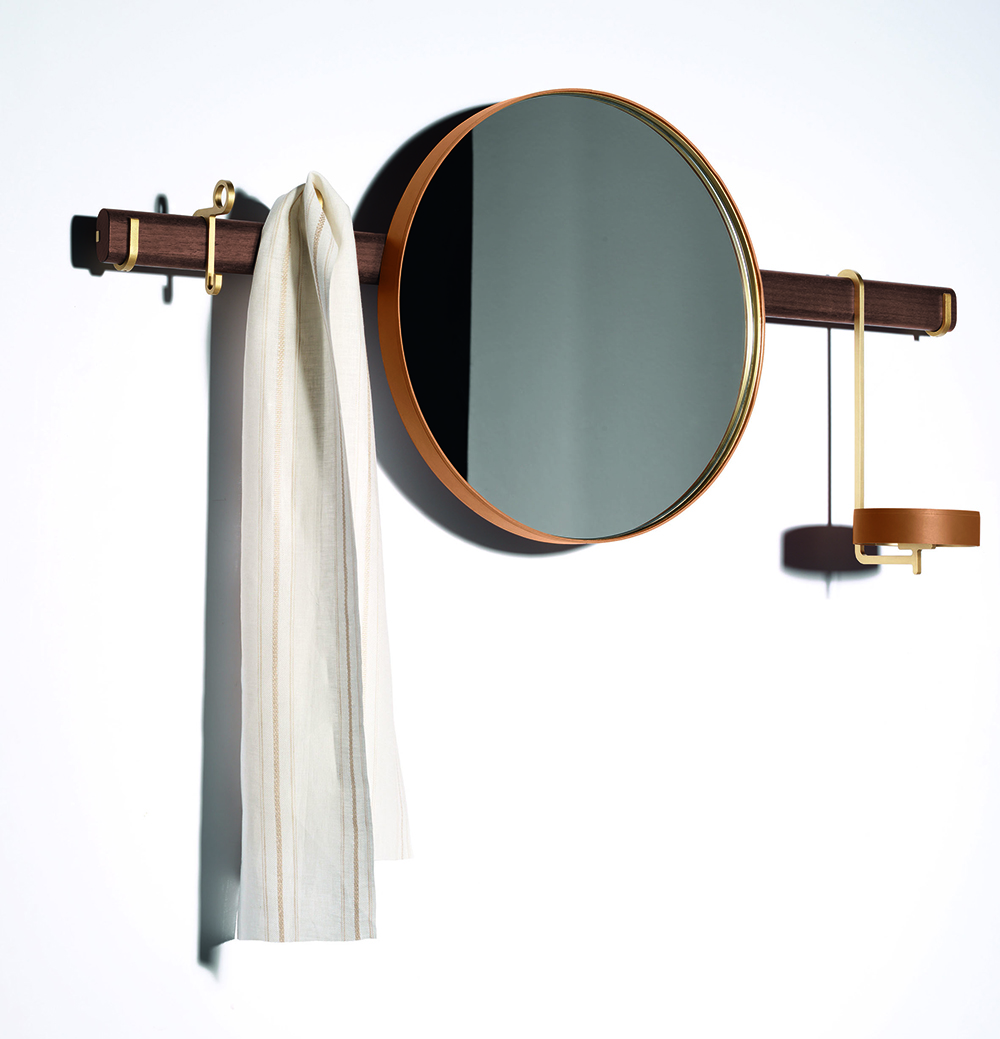
Ren collection by Neri&Hu for Poltrona Frau (pictured above)
For its first collaboration with venerable Italian furniture producer Poltrona Frau, Shanghai studio Neri&Hu chose to focus on an often underused domestic space – the entryway – though the pieces can also be used throughout the home. Rather than designing an addition to the brand’s existing range of fully upholstered leather furniture, Neri&Hu used leather to add tactility to the surfaces of tables, coat racks and a valet stand.
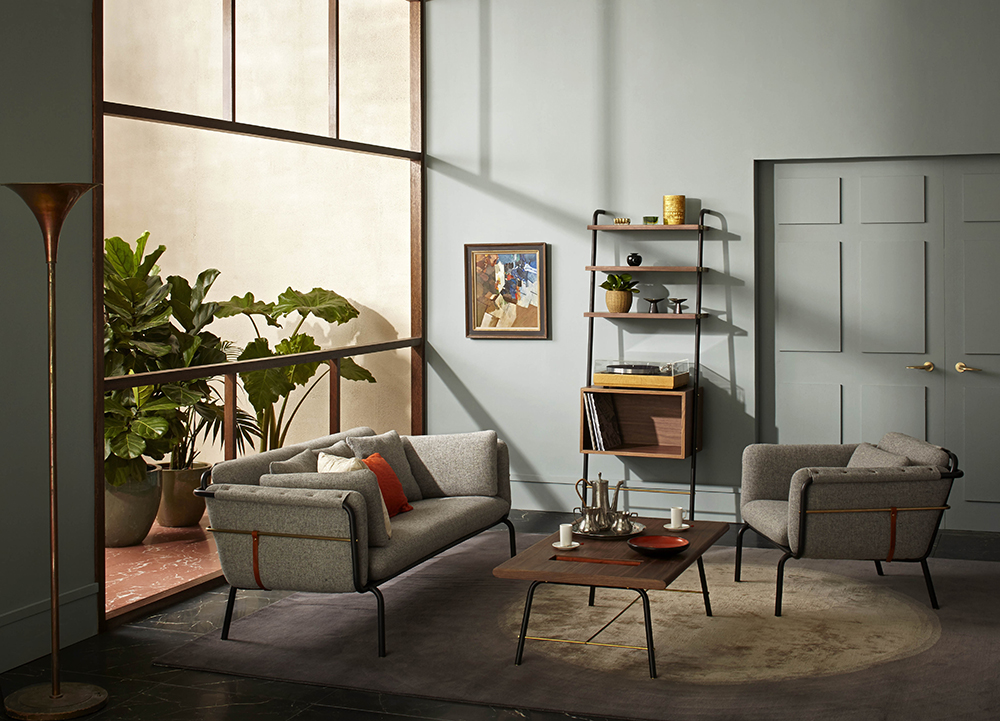
Valet collection by David Rockwell for Stellar Works (pictured above)
Under the creative direction of Neri&Hu, Asian design brand Stellar Works launched American architect and designer David Rockwell’s debut furniture collection called Valet at the fair. Rockwell’s studio developed 14 pieces distinguished by their simple functions and luxurious details, including matte brass and leather cord. “The collection merges expressive materials, craftsmanship, functionality and elements of surprise to activate transitional spaces in residential and hospitality environments,” said Rockwell.
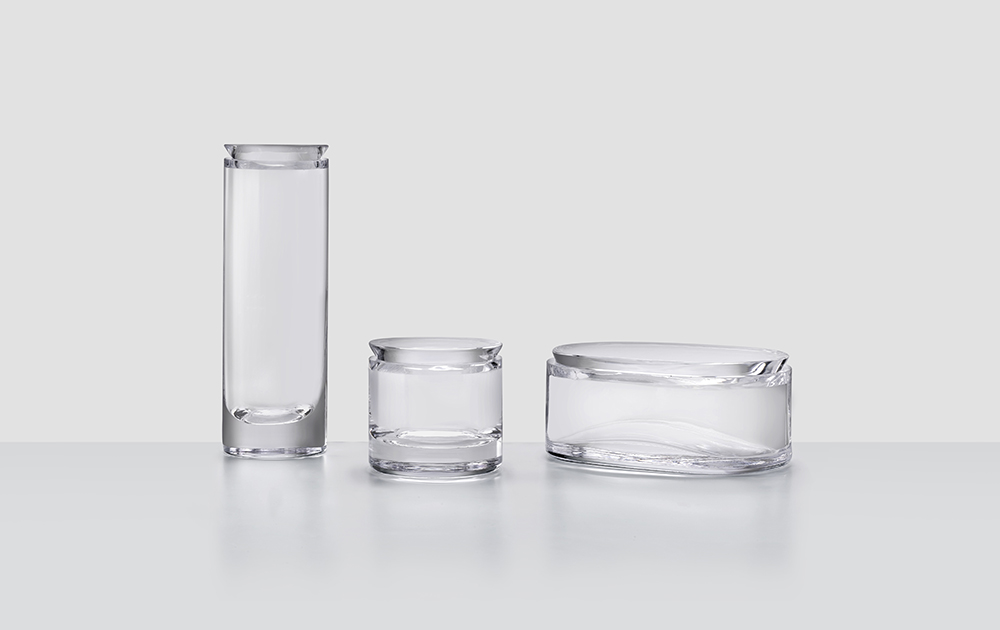
Chamfer by Philippe Malouin for Nude (pictured above)
Within an arcade colonised and curated by Wallpaper* magazine, Istanbul-based design brand Nude presented its latest glassware products, including pieces by Inga Sempe and Joe Doucet. London-based designer Philippe Malouin created Chamfer, a series of glass jars with lids featuring edges cut at 45 degrees so they can be lifted without requiring a handle.
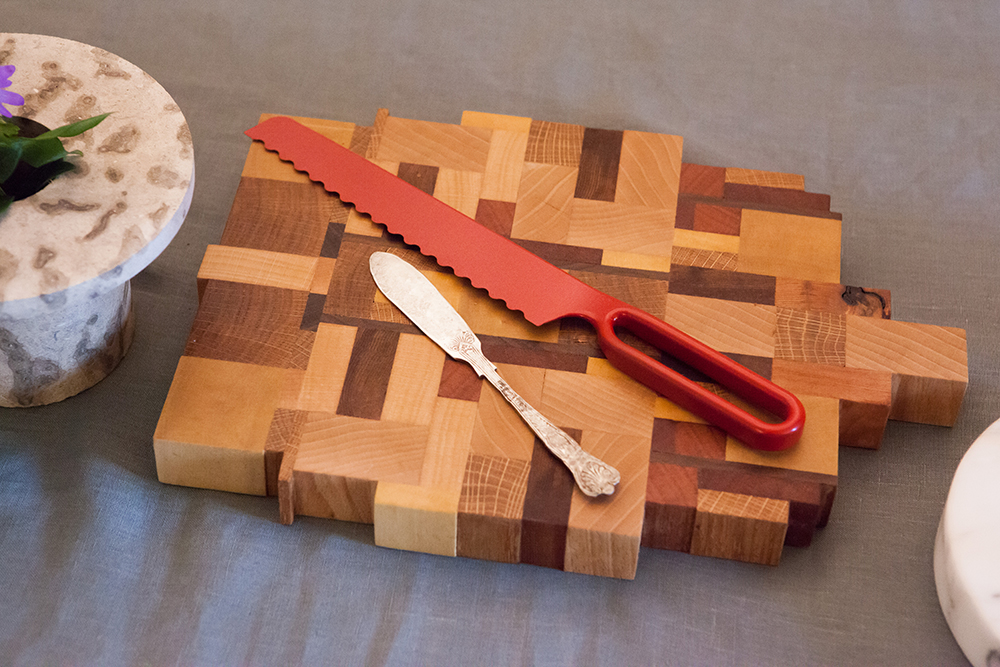
Makers & Bakers, curated by Ambra Medda for Airbnb (pictured above)
As well as fulfilling the role of official “hospitality sponsor” of the Salone del Mobile, Airbnb engaged in its own creative project by inviting curator Ambra Medda to create a pop-up eatery at Ristorante Marta. The project was titled ‘Makers & Bakers’, and featured products designed for a shared table by creatives from 13 different countries. A 3D-printed titanium bread knife by New Zealander Jamie McLellan and a bread board made from wooden blocks by Study O Portable were among the highlights.
Apparatus (pictured above)
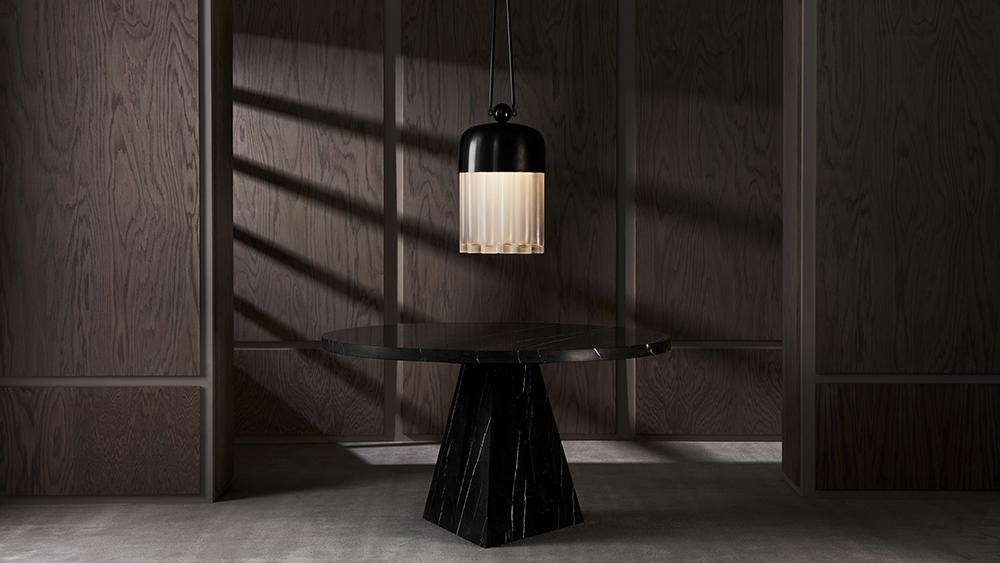
At its showroom in the Cinque Vie district, New York design studio Apparatus showcased new products including a marble version of the existing Portal table and two new lighting collections. Utilising the studio’s signature palette of on-trend materials including leather, marble, aged brass and etched glass, the pieces have a robust yet tactile quality combined with classically influenced forms.
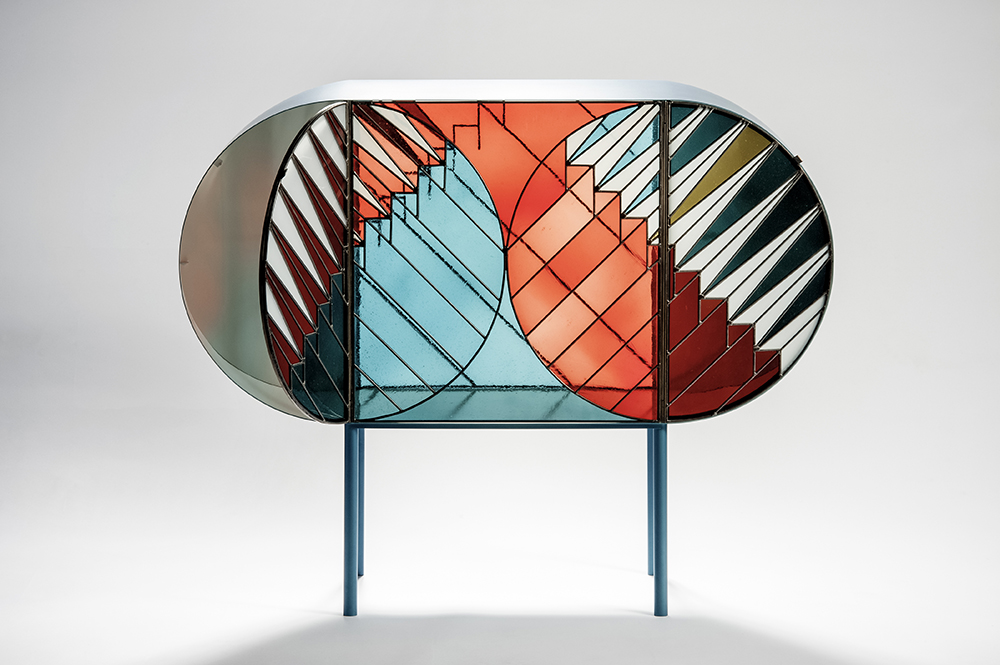
Credenza by Patricia Urquiola and Federico Pepe for Spazio Pontaccio (pictured above)
Patricia Urquiola and artist Federico Pepe combined colour and craftsmanship in their Credenza collection for the Spazio Pontaccio design boutique. The cupboards, screens and low tables feature stained glass surfaces that recall traditional church windows, given a modern twist by Pepe’s graphic patterns. Beautifully detailed and produced using ancient artisanal techniques, the sculptural pieces looked stunning in the Milanese sunlight.
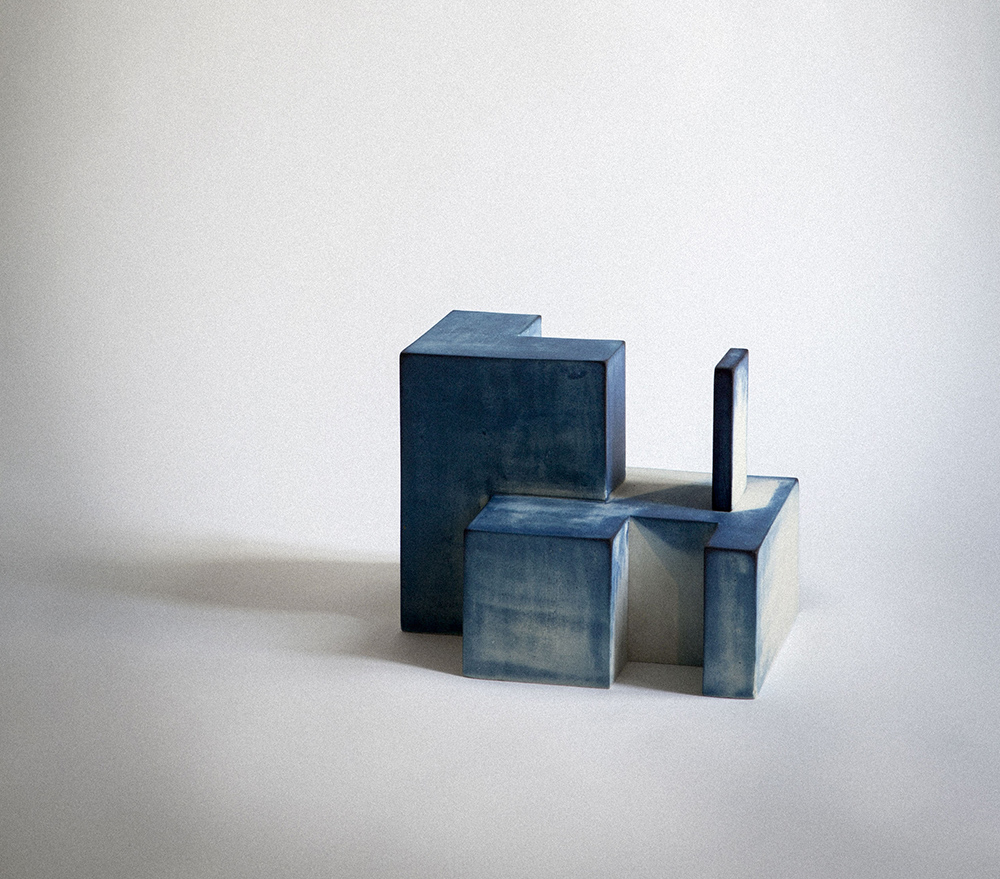
Out of the Blue by Studiopepe (pictured above)
Of the more conceptual works on show, I enjoyed Studiopepe’s series of geometric plaster volumes that had been brushed with a cyanotype solution and then left in the sunlight. The angle of the sun, the length of the exposure and the forms themselves all contribute to the appearance and hue of ‘shadows’ cast upon the objects. This exploration of the relationship between form, light and colour, embodies architectural principles of light and architecture on a compact scale.
Massimo Orsini, CEO of innovative ceramics marker Mutina, discusses the brand’s new collection with Barber & Osgerby
It seems that 2016 is an important year for Mutina. The Italian ceramics brand had already existed for 30 years when, in 2006, it was bought by Massimo Orsini – the current CEO – and three other investors, with a clear and simple plan: to elevate the humble tile to an important object of design.
“It was very important for me to try and bring high-end design into ceramics,” Orsini tells me at the Salone del Mobile in Milan, where Mutina exhibited ‘Puzzle’, a new collection by the English designers Edward Barber and Jay Osgerby. “Ceramic is a fantastic material and we came to Mutina to try to convince other designers to use it to its full potential,” he adds. “We are the only ones in the design world to have a product like this.”
This latest addition to the Mutina collection came about after Patricia Urquiola, the first designer to work with the brand, introduced Barber & Osgerby to Orsini in Milan. “We immediately got on very well,” Orsini says. “I love to work with the people I like, and Edward and Jay’s passion and savoir faire is fantastic.”
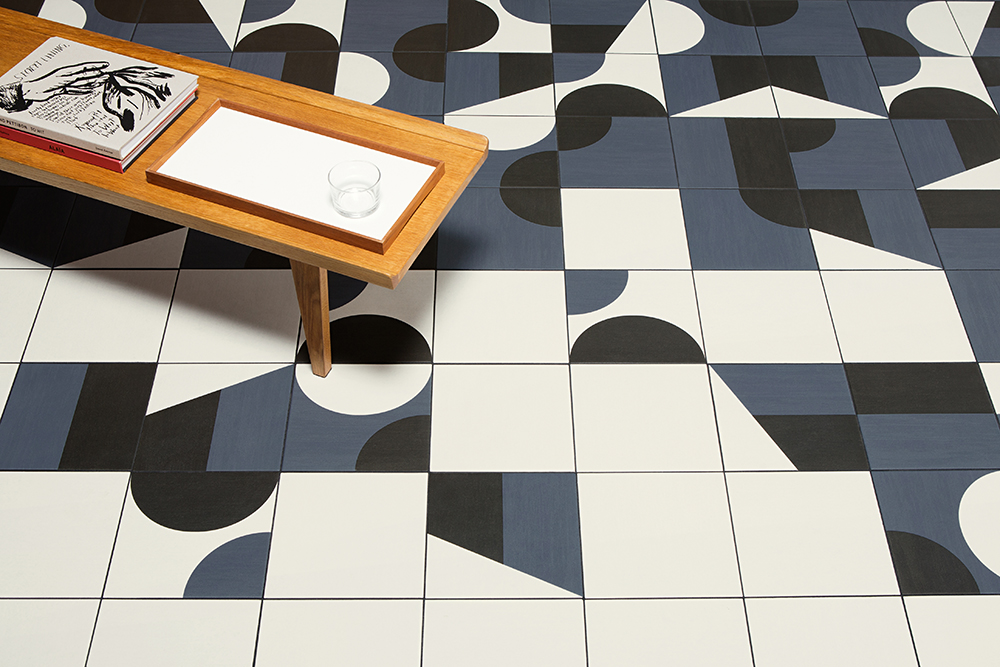
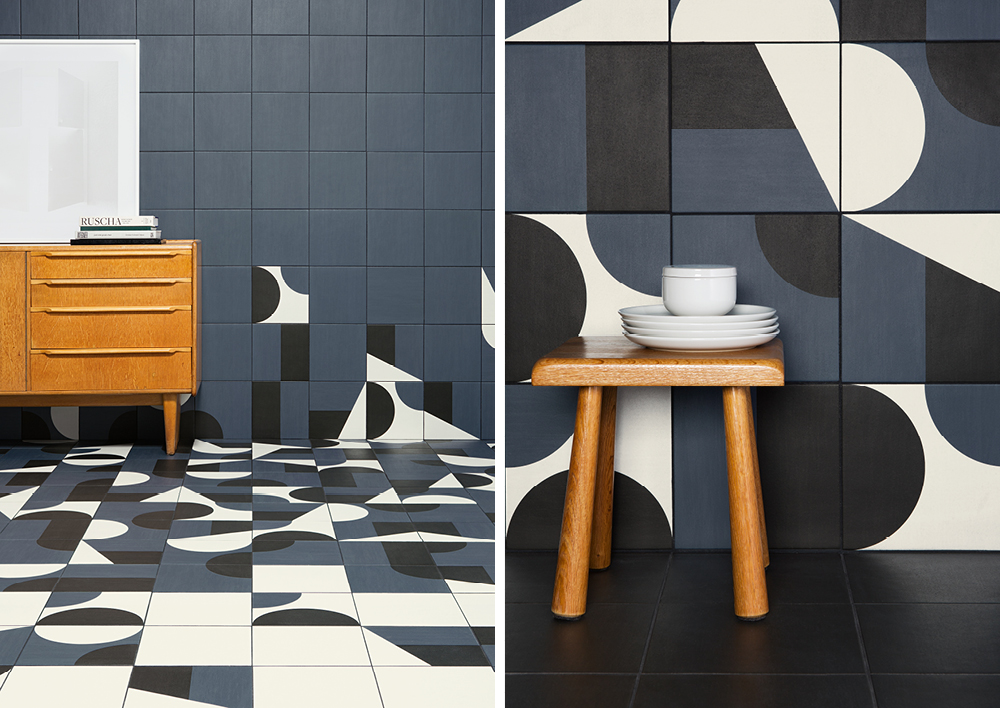
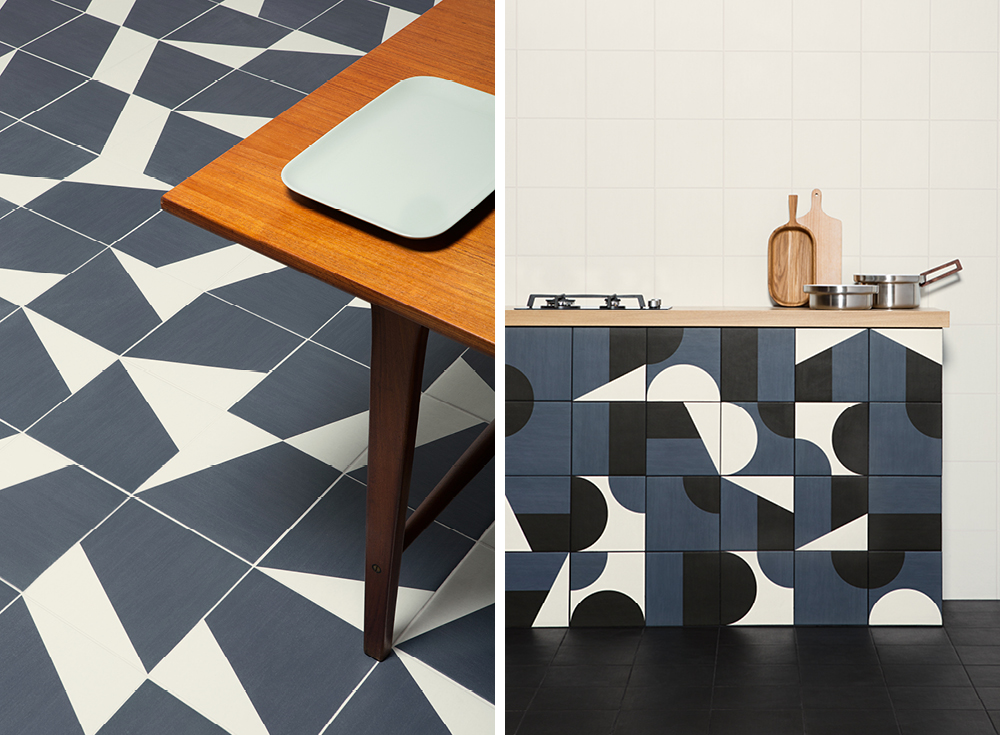
Almost three years in the making, ‘Puzzle’ is described as a “game with infinite possibilities”. Based upon simple geometric shapes, the set of six graphic patterned tiles, three plain tiles and two symmetrical tiles, can be arranged in a variety of configurations. Each permutation forms a pattern that ebbs and flows with every new tile – sometimes abstract, sometimes growing into figuration.
The collection’s eight colourways take inspiration from European islands; the neutral colours of northern European islands of Faroe, Gotland, Aland, Anglesey and Skye and the warmer tones of the Crete, Milos and Murano in the Mediterranean add to the playful, endlessly customisable nature of this collection.
Barber & Osgerby’s ‘Puzzle’ is here shown in the Anglesey colourway
Perhaps it’s because it is breaking new ground, without the restrictions of convention or a long tradition of high-end ceramics design, that Mutina’s collections have been so innovative in the first decade since the brand embarked on a new creative direction. And, as Orsini tells me, he and his team will continue to try to push the potential of this ostensibly simple medium. “In the future we have a strange idea – we want to work with a contemporary artist,” he says. “We want to continue to explore new ways.”
As Salone del Mobile 2016 draws to a close, Rolf and Mette Hay reflect on the success of their eponymous brand and how they deal with the heritage of Danish design
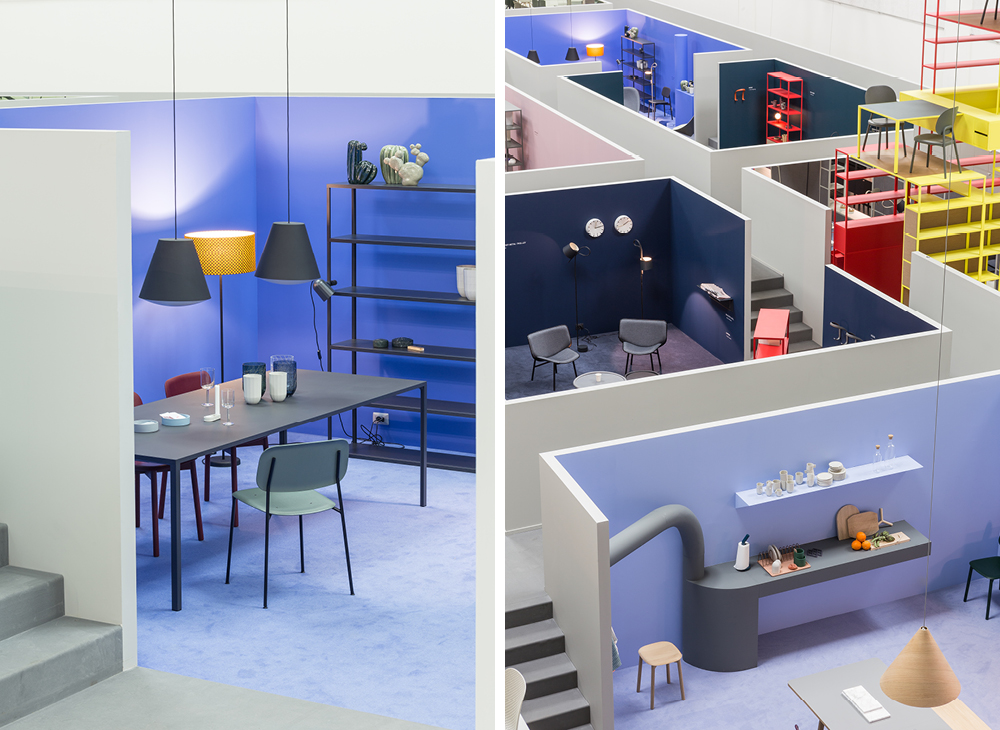
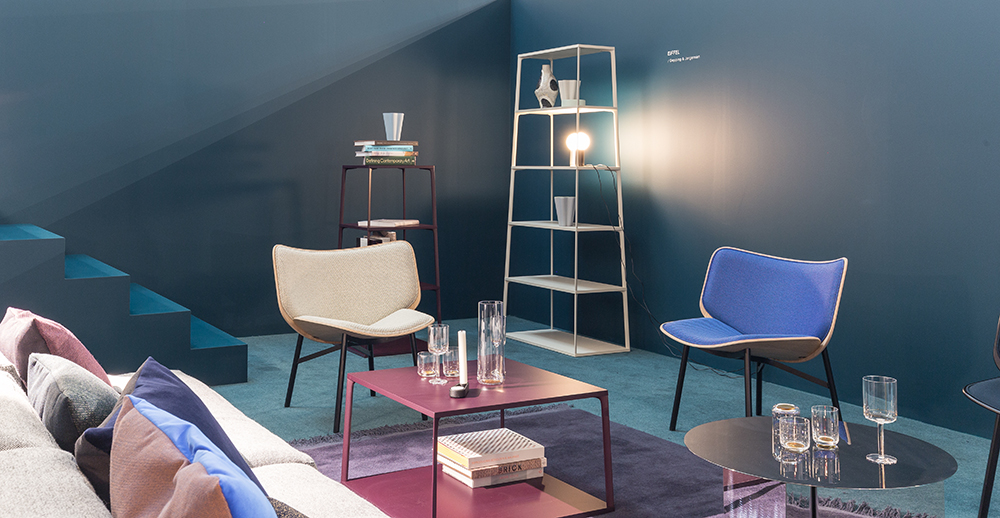
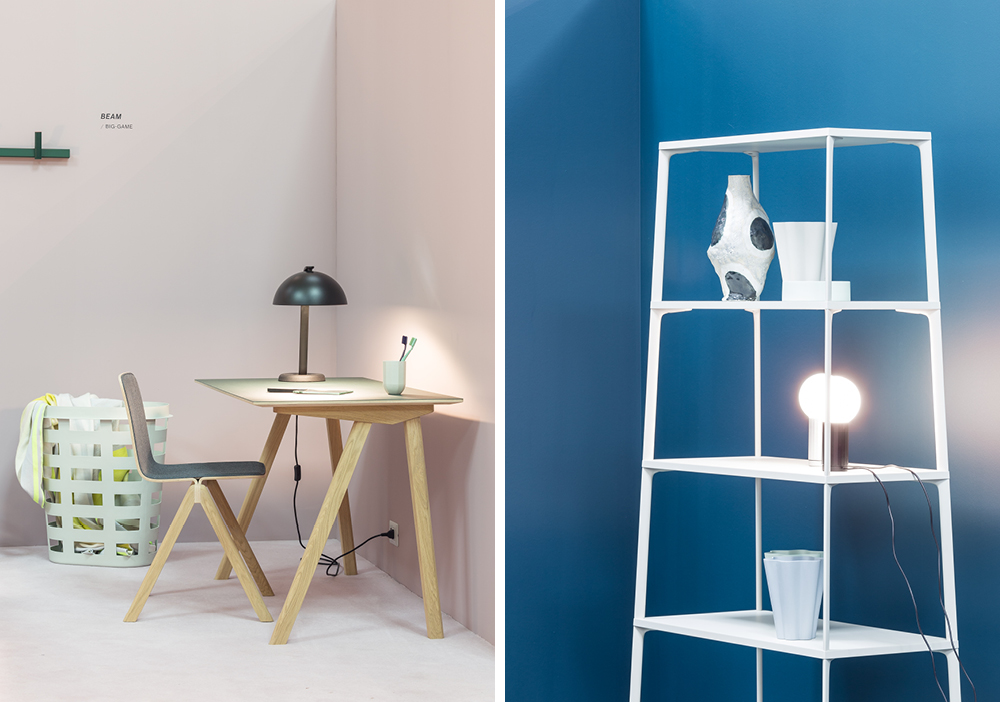
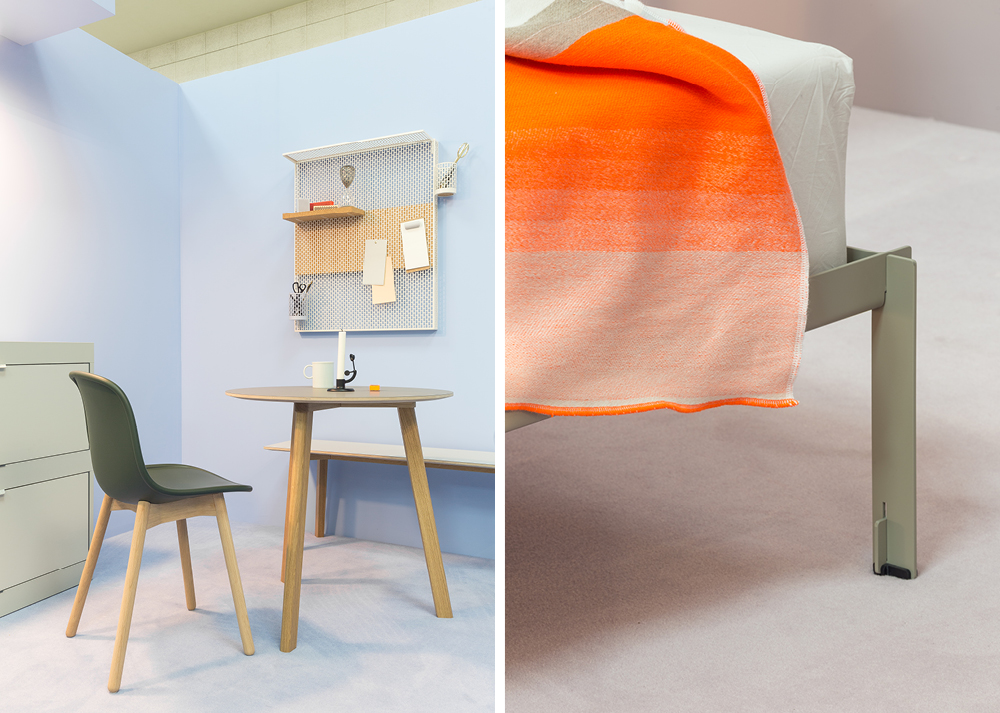
At this year’s Salone, HAY transformed a vast former sports hall into ten individually designed rooms
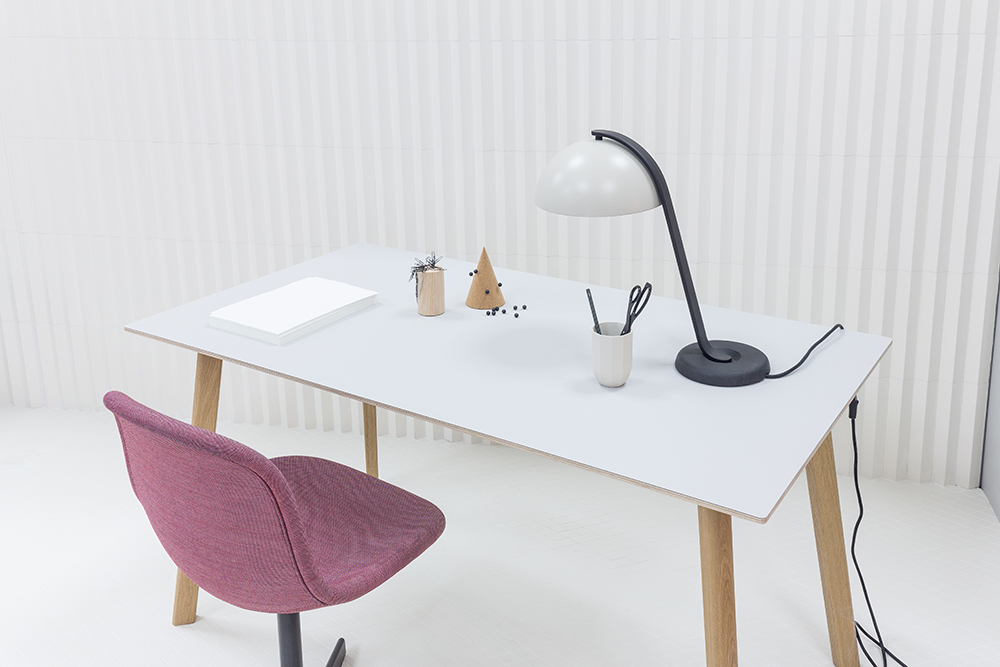
HAY, the Danish design brand founded in 2002 by the husband and wife team Rolf and Mette Hay, has grown rapidly since they presented their first collection at the International Furniture Fair in Cologne. With the launch of the now well-established HAY Mini Market accessories line in 2005, and, more recently, establishing a co-brand, Wrong for HAY, HAY has expanded to produce a wide range of high-end furniture, textiles and smaller items, sold through over 30 stores around the world.
Working with some of the most respected names in product design, such as the French brothers Erwan and Ronan Bouroullec, HAY’s success can be partly attributed to its ability to translate the enduring popularity of Danish design – a clean, minimal and functional aesthetic – into the 21st century. Although Rolf and Mette do not constrain themselves to producing recognisably Danish objects, their approach has done much to reverse the dependence of the Scandinavian design industry on reissuing classic products from the heyday of the 1950s and 60s.
As is clear from the brand’s exhibition at the Salone de Mobile in Milan this year – housed in La Pelota, a spacious former sports arena that HAY has divided into rooms – their collections are not restricted to a particular Danish vernacular of design but attempt to reimagine Danish design in an international context. Here, on the last day of the Salone, Rolf and Mette reflect on how their brand has evolved over the past 14 years, the influence Danish design has played in their work and how they maintain the same approach despite producing such a wide range of products.
How has HAY evolved since you began in 2002?
Rolf: HAY has certainly grown considerably since we started and the idea of evolving is important to us; it is not our intention to have the same style in 10 years. We are very fortunate to work with many great and talented designers, like Erwan and Ronan Bouroullec and Stefan Diez, that are just as aware of the needs and wants of our times as we are.
Our world is constantly changing and with that our habits and lifestyles, as well as the design we choose to fit those needs. We continue to strive towards making products that are straightforward and functional with some of the world’s most talented designers.
How do you choose the designers you work with?
Rolf: There is not one specific way we choose to work with a designer but often we like to work with people we have a strong connection with, or those we admire. But more importantly for us, we have always focused on making a great products. We are not interested in where designers come from, we are interested in what they create.
How much does the heritage of Danish design inform your work?
Rolf: HAY is Danish because we are based in Denmark and it is what we both grew up with, but we work with designers from all over the world. We believe we create universal design that is not specific to a country. We truly believe design is a global language.
What is exciting you most about your new collection?
Rolf: There are so many different things happening right now and we are extremely proud of all the products we have launched in Milan this year. The new CAN Sofa by Ronan & Erwan Bouroullec has been a great project to work on, though. At the moment, HAY is in a great place to move forward into new markets and continue to make strong products that can last a long time.
What is the idea behind the HAY Mini Market?
Mette: The idea was inspired by the small markets you find in India, Turkey, Thailand and China… places where you can buy everything from toothpaste to kitchenware and chewing gum. I’ve always had a dream to create my own market, filled with all products I would want to buy.
You produce and sell such a wide variety of objects. Is there a guiding principle that runs through everything?
Mette: We are extremely fortunate to be able to offer everything from sofas to toothbrushes. The creation of the HAY Mini Market has allowed for us to offer all sorts of smaller items that make up a home, and having the right place to sell the items is equally important. But, when it comes to design, we have the same approach to producing a toothbrush as we do for a sofa or a chair.
At this year’s Salone, designer Ora Ito takes PORT through his new chair for Italian brand Cassina, a project that has been almost four years in the making
Ora Ito’s ‘Ico’ chair for Cassina comes in four different colours
French designer Ora Ito’s new chair for Italian high-end furniture brand Cassina has been a long time coming. As the first furniture brand that Ito was ever aware of, his design, developed over nearly four years, marks the fulfilment of a childhood dream. Inspired by the work of Ico Parisi, a long standing collaborator with the brand, and Cassina’s history of carpentry workmanship, ‘Ico’ pushes the boundaries of what can be produced in wood.
Here, in conversation with PORT, Ito reflects on what it means to be working with a brand he has always respected, the importance of acknowledging where you draw inspiration from and his hopes to have created a new icon of design.
How did you come to work with Cassina?
When I was a younger, we only had Cassina furniture, as did my friends, so I thought it was the only furniture brand in the world! Given its importance to me, since I became a designer it has always been my dream to work with Cassina.
I’ve been waiting 20 years to be asked to work with them, and it is still a huge challenge to be involved with such an important brand – your work has to be iconic, or else it’s not made.
How long was the design process?
It took me more than three years to develop the chair, almost four, because the product we’ve produced together is very complex, even though it appears to be very simple. It’s part of my philosophy of ‘simplexity’.
It took so long because the execution of the wood is really amazing – I wanted to showcase the potential and knowledge of Cassina and it was important for me that the chair represented all the aspects of the brand. At points, because it was taking so long, I got scared that someone else would have a similar idea and Gianluca [Armento, Cassina’s brand director] had to say to me, “don’t worry Ito, nobody can see your drawings, it’s too complex”.
I read that you were influenced by Ico Parisi…
When you work with a brand like Cassina, a brand with such an established history, you need to have a solid starting point. I went into Cassina’s archive and I found that Ico Parisi was one of their designers. He was a very good friend of Gio Ponti and I really love this period of Italian design – so for me it was a good starting point.
The chair is called ‘Ico’ and I think it’s important to pay homage to your inspirations. Too many designers these days copy or get inspired, but they never acknowledge it. I wanted to recognise the influence and importance of Parisi and Cassina in my work.
What do you hope to achieve with the chair?
I wanted to make a very versatile chair. It comes in four different colours [natural ash-wood, black ash-wood, walnut and red] and the seat is very soft and comfortable. This was important – we have been working on comfort a lot because a nice chair can be beautiful, but if you sit on it and it doesn’t feel good, it becomes ugly.
I hope to have made a new classic, but I can’t say that. Only time will tell if that’s the case. Let’s see in 20 years.
At the launch of his two new lighting collections at Salone del Mobile 2016, Belgian architect Vincent Van Duysen talks to PORT about working with Italian lighting brand, FLOS
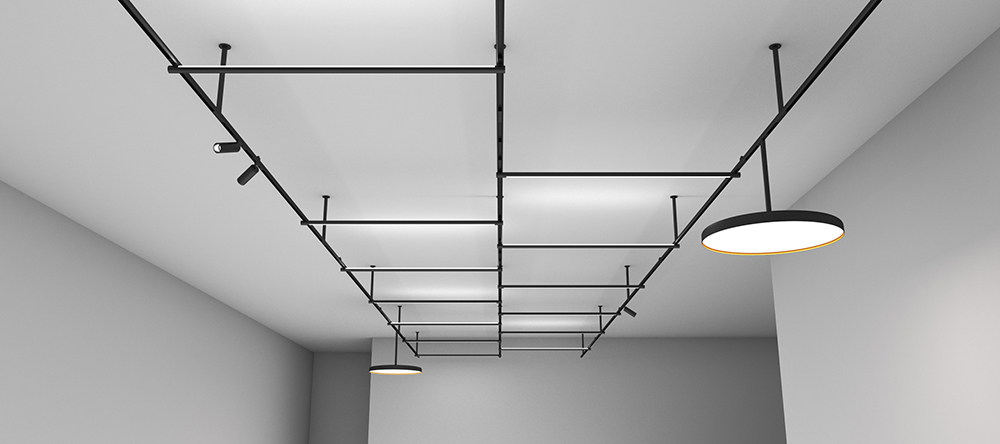
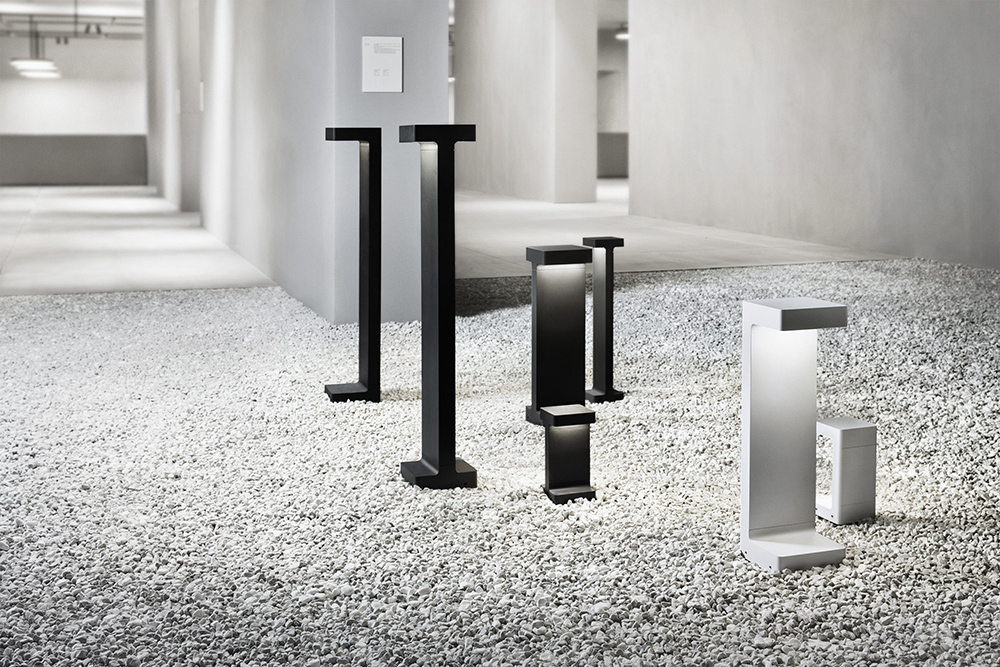
The Belgian architect, Vincent Van Duysen, is a busy man this Salone. Apart from presenting seven different collections at the fair, Van Duysen has recently been appointed as creative director of the Italian furniture and kitchen brands, Molteni&C and Dada. When PORT managed to track him down, it was at the launch of two new lighting collections produced for FLOS – the architectural solution, ‘Infra-Structure’, and the outdoor, free-standing bollard lights, ‘Casting’.
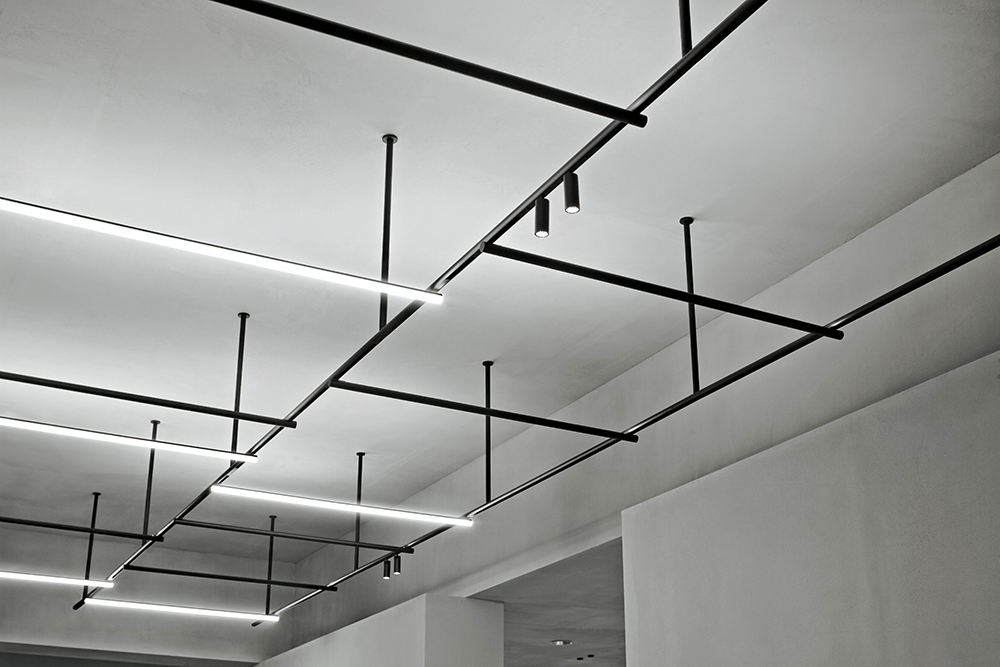
Infra-Structure by Vincent Van Duysen for FLOS
Van Duysen sees his designs for FLOS, a lighting brand founded in 1962 and based in Brescia, near Milan, as being the “jewel” of all of the work he is showing across the Salone this year. Although he describes himself as an architect and not a product designer, when speaking to Van Duysen it becomes clear that the collections for FLOS function as an extension of his architectural practice, developing his pared back, minimal and idiosyncratically Belgian vernacular into these two new lighting systems.
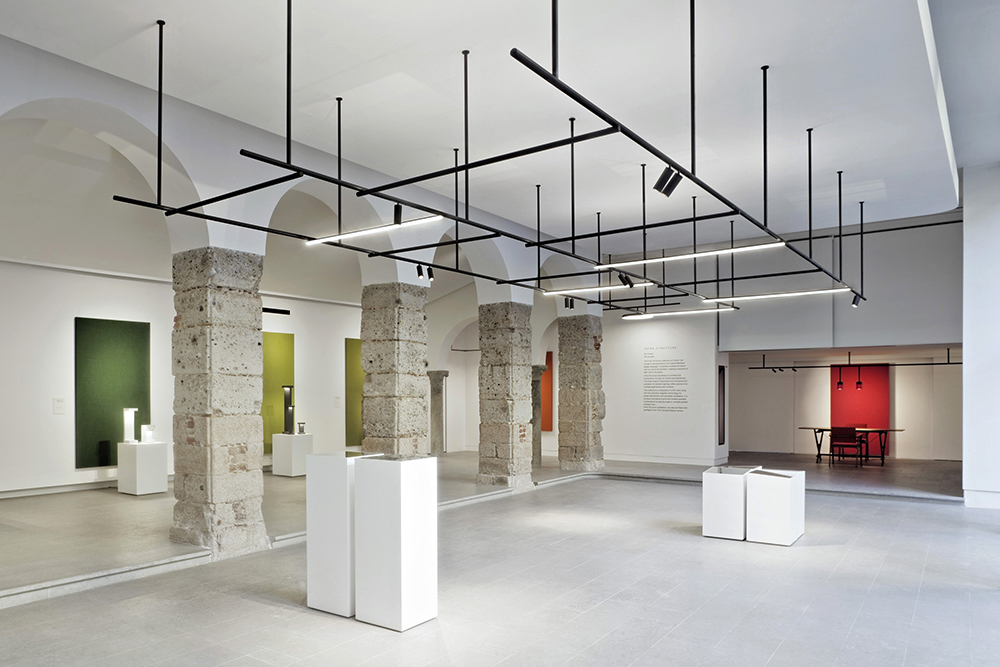
‘Infra-Structure’ was presented at the Frankfurt Light+Building Fair earlier this year in a purpose-built, monolithic booth, designed by Van Duysen to reflect the collection’s Bauhaus heritage, at the FLOS Professional Space on Corso Monforte in Milan, ‘Infra-Structure’ and ‘Casting’ have been brought together in a playful exhibition curated by the designer and artist Ron Gilad. There, PORT spoke to Van Duysen about the new collections, his architectural approach to product design and the vital importance of good lighting.
Van Duysen’s ‘Casting’ series has been designed to be installed outdoors
How did this collaboration with FLOS come about?
I’m very familiar with some of the designers that have worked with FLOS before like Patricia Urquiola. She was very supportive and always said I should design something for them. Then Piero [Gandini, CEO of FLOS] came across my work and said: “Vincent, are you interested? Let’s do something fun, let’s enjoy ourselves”. That’s very much how we both are, not taking things to seriously.
Where did the idea for the design come from?
I came across the idea pretty quickly because when we think about architectural lighting, we think about everything being invisible. This is especially true in Belgium, which is in many ways the base of architectural lighting. We’ve got Kreon, Modular, Delta – all big firms that are very important in this industry, very innovative.
So I came to the conclusion that I’m not going to do something invisible, but reverse the whole situation and create a system that can be applied in rooms where there is no space, without the need for false ceilings – it’s very playful, very honest. Initially, I was inspired in this by Bauhaus. I love Bauhaus because of its honesty and the democratic way of showing everything of the product, of not trying to hide itself, and I think that’s quite evident here.
‘Infra-Structure’ uses FLOS’s innovative magnetic system to allow an endless configuration of spotlights, lamps and ceiling facing strip lights
How did working with FLOS influence the design?
I’m not a lighting expert and the technology from FLOS – the invisible magnet strip that they minimised for the system – is amazing. When I named the product, I had in my mind this idea of engineering, of transport, and how it’s a kind of transport of lighting tubes. The system has a lightness to it and yet this Neo-Industrial look, and also an elegance, which is something FLOS stands for.
How does your architectural practice inform your product design?
People have always said to me that they love the way I integrate the interiors and furniture as part of my architectural language. There was never a moment when I thought I would start designing products, and I still see myself as an architect, not a product designer. It’s about a different approach to a product – I see it in a much broader, architectural context rather than starting on the detail, as many product designers do.
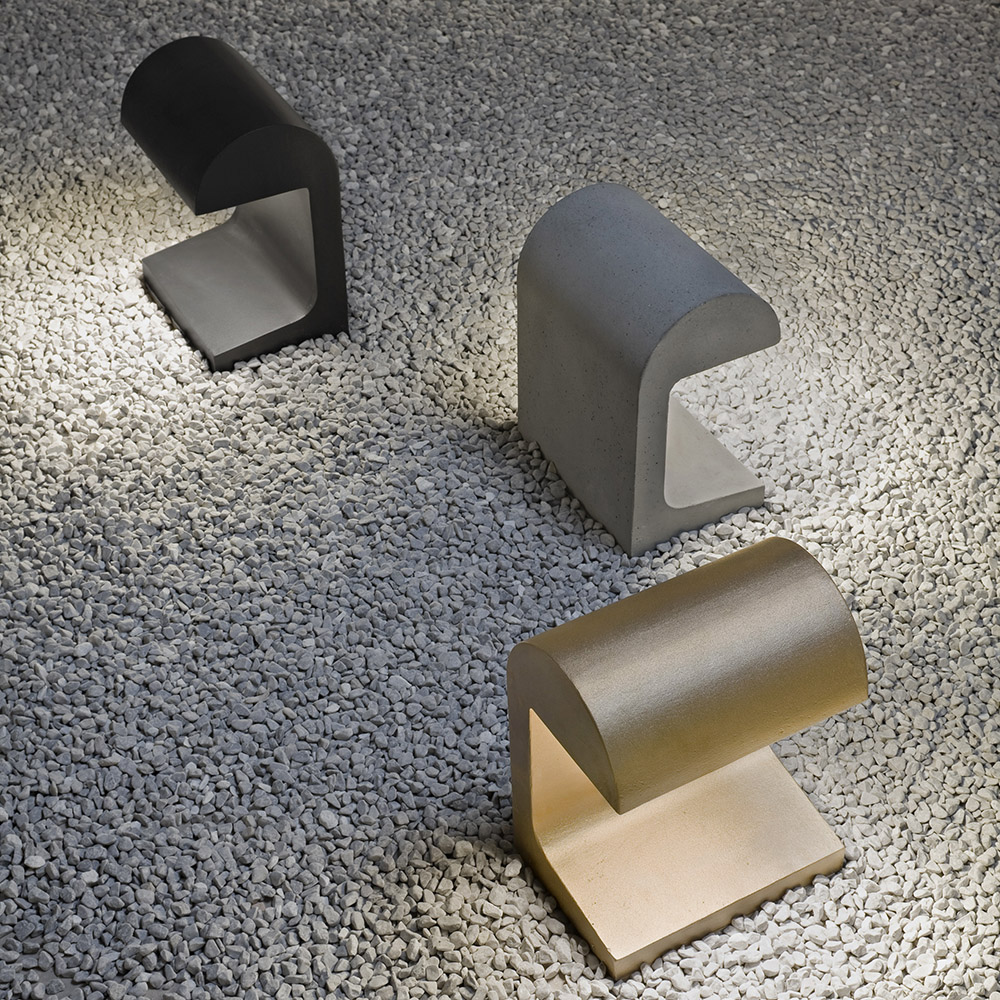
The semi-circular lights from the ‘Casting’ collection are available in oxidised bronze, concrete, cast iron or aluminium
Why is now the right time for you to launch a lighting collection?
I have had opportunities over the years, but it’s about finding the right moment. For me, this year has been very unusual in that I have presented so many projects; as an architect, I prefer one-offs and to do things the right way, with the right people, who I’m feeling connected with. I knew that I wanted to design for FLOS, and to become part of the FLOS family.
What is the importance of lighting in architecture?
Life without light doesn’t exist. Architecture without light doesn’t exist; whether it’s natural light or ambient lighting, it’s an essential element.
Interview conducted by PORT’s design editor, Alyn Griffiths
Japanese architect Sou Fujimoto talks to PORT about his immersive new installation for COS at Salone del Mobile 2016
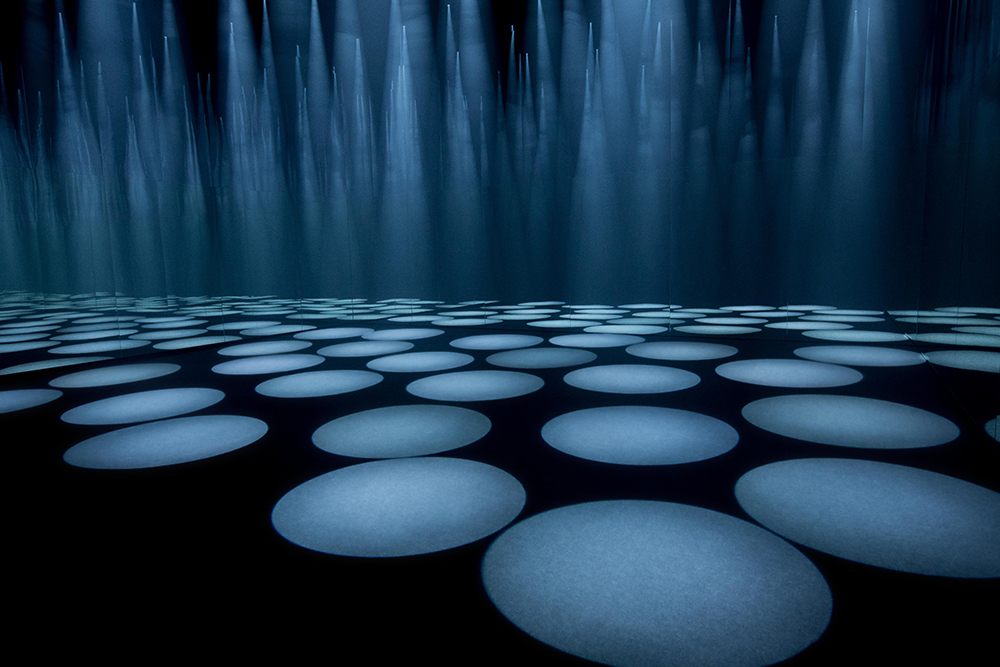
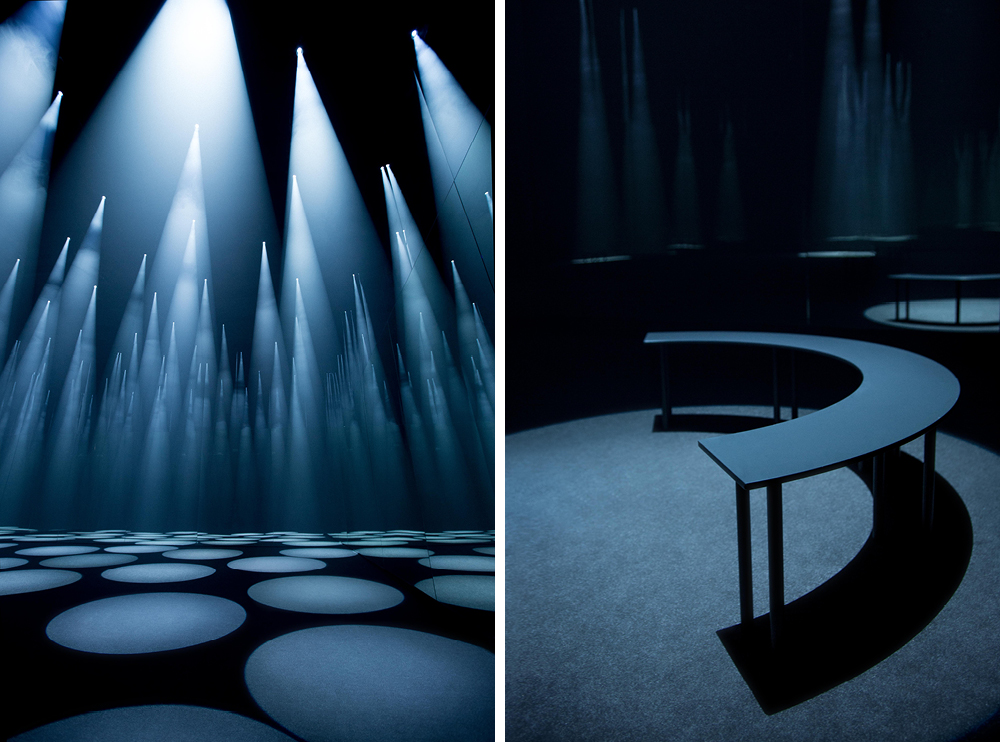
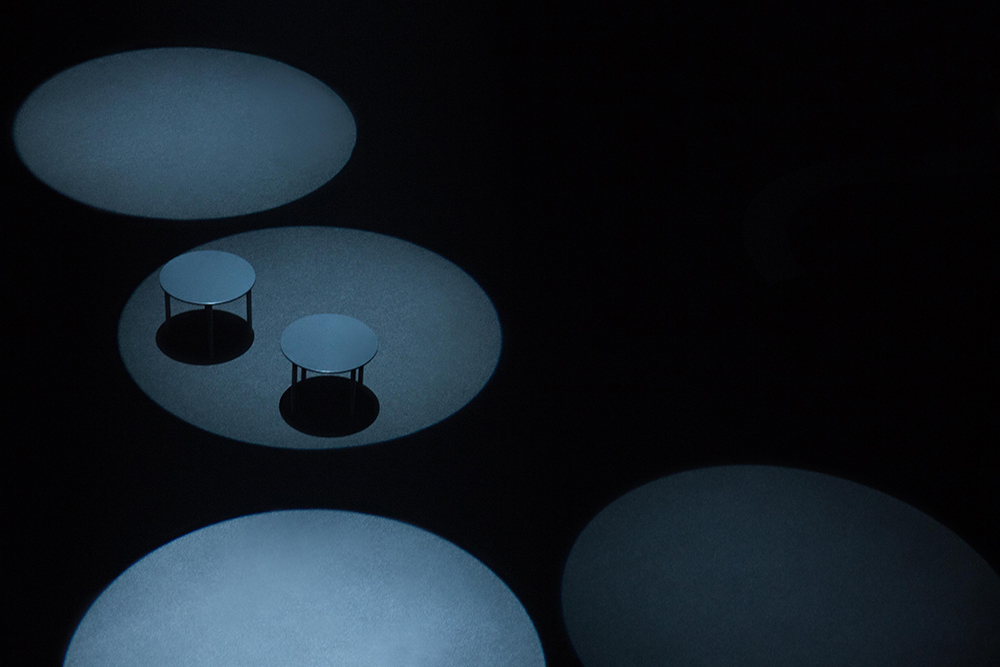
Sou Fujimoto’s Forest of Light for COS, Salone del Mobile 2016
Cinema Arti, in Milan’s San Babila district, screened its last film in 2007. Designed by architect Mario Cereghini in 1935, rebuilt as a cinema as part of the city’s post-war reconstruction and very much a Milanese institution, the building has been largely derelict for years. That is until a collaboration between the architect Sou Fujimoto and international fashion brand COS transformed the space into a spectacular, immersive ‘Forest of Light’.
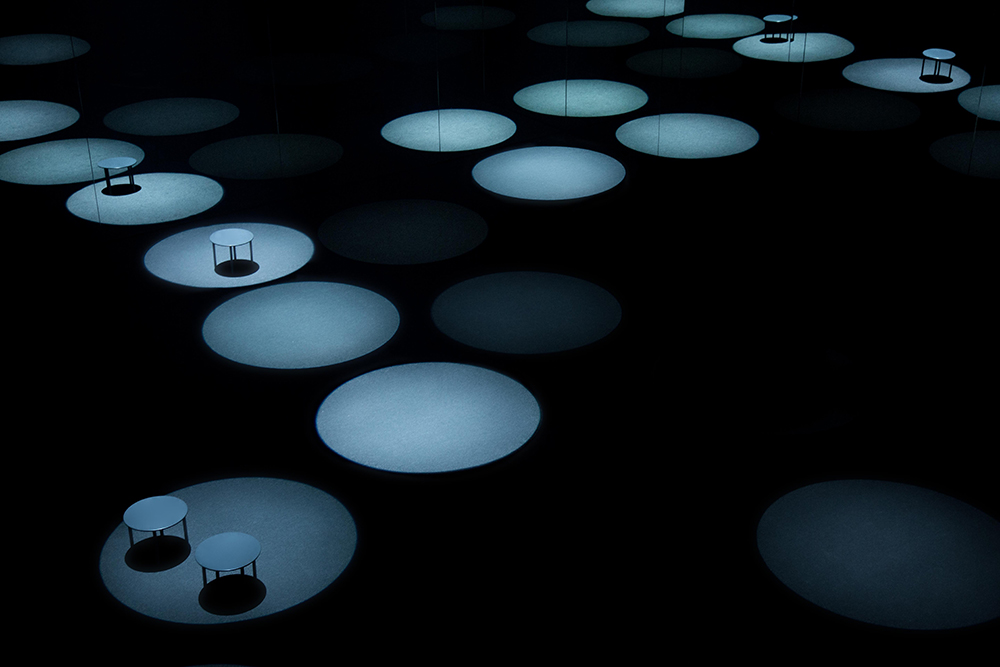
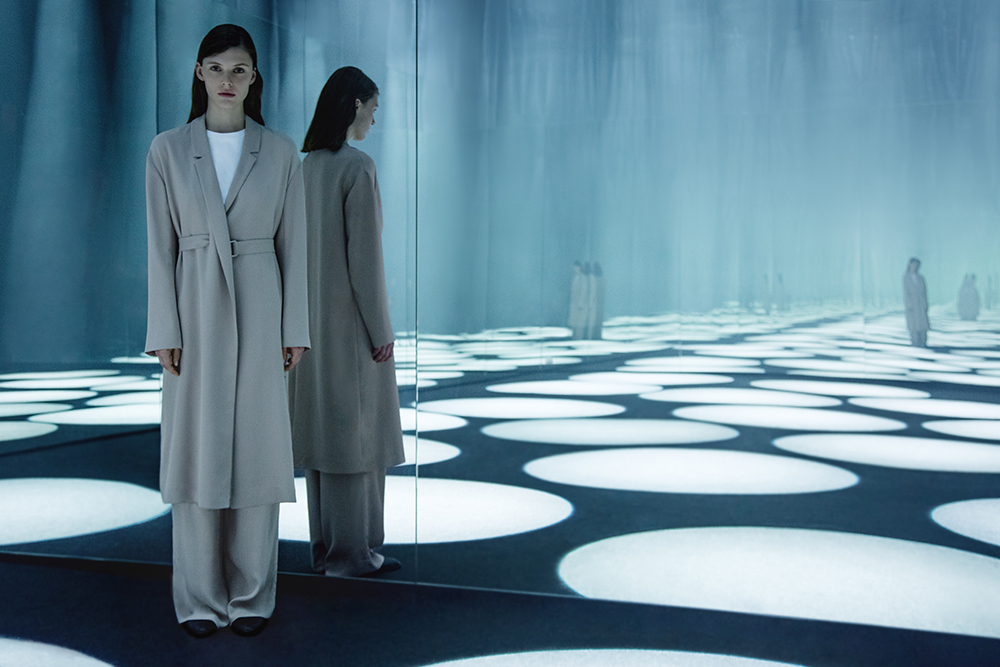
In homage to the building’s history, the spotlights emanating from the ceiling, alternately turning on and off in reaction to the movement of the visitors, echo the cone of light that for over 50 years flickered from the projectionist’s cabin. Apart from a few stools and benches, the space is empty and the simplicity of the installation – consisting solely of an ever-shifting pattern of perfect white circles, appearing and disappearing on the floor of a dark room, reflected ad infinitum by the high mirrored walls – speaks of a shared, contemporary approach to timeless design principles.
“We are always looking to collaborate with the people that we turn to for inspiration, and with whom we share the same values and aesthetics,” Martin Andersson, head of menswear design at COS, tells me when I speak with him and Fujimoto. “We really have a similar starting point,” Fujimoto says in agreement, “but at the same time there is a certain distance between fashion and architecture – so I wanted to make something that linked the two disciplines in a new way, that was not quite fashion and not quite architecture.”
The result is a pared down, abstracted interpretation of Fujimoto’s architectural language, inspired as much by the natural world as by the simple forms of modernist architecture. “To the architect, nature can be quite inspiring,” he says, explaining this decidedly organic approach. “It has so much complexity and yet so much simplicity, order and disorder, a whole range of scales of size,” Fujimoto adds. “My work has always been to question these fundamental, natural things and try to translate them into our contemporary way of life.”
It is this approach, articulated in his pavilion for the prestigious summer architectural commission by the Serpentine Gallery in 2013, that first brought Fujimoto to the attention of COS.
“We loved it and from that moment thought it would be great if we could do something together for the Salone,” Andersson tells me when I ask him what he thought Fujimoto’s pavilion – a nebulous structure of thin white poles that appeared to sit, almost weightlessly, in the landscape of Kensington Gardens, in London’s Hyde Park.
COS first approached Fujimoto last summer, as part of its ongoing artistic and architectural program. It has been increasingly common to see a fashion brands collaborate with artists, architects and product designers. In fact, Andersson sees COS’s involvement with areas that provide inspiration for the brand and its customers, as a logical move. “We look to the fields of architecture and design to find shape, texture, colour,” he says. “We feel that our customers – the COS man and the COS woman – share this culturally aware mindset.”
The ‘Forest of Light’, then, fits perfectly with COS’s cultural program, but I wanted to ask how the project evolved to mirror the brand’s minimal aesthetic. “We eventually reached the idea of using light as a material because it’s simple and pure, and yet can be very rich and diverse,” Fujimoto explains. “I like that there is this duality, that there is a both a calm and dynamic situation in the space.”
This sense of duality also extends to Fujimoto’s architectural understanding of the forest, neatly encapsulating his philosophy of the relationship between the natural and manmade. To him, the idea of the forest references both his childhood, as somewhere he would play, and cities like Tokyo – an over-sized, architectural forest. “It is a place where people can behave more naturally, where they can take their time, find inspiration and interact with each other – for me the forest is a really the basic archetype of our living environment.”
Despite its formal simplicity, Fujimoto’s ‘Forest of Light’ is a conceptually sophisticated and self-reflexive architectural investigation into his own practice. Within the context of the Salone – at times an overwhelming bustle of people, products and objects – this installation, in being composed simply of light and negative space, is certainly refreshing. Navigating around the shifting pools of light, visitors can get a sense of Fujimoto’s conception of the forest, this fundamental structure the defines our relationship with our environment.
The COS x Sou Fujimoto installation will be open until 17th April at the Cinema Arti, via Pietro Mascagni, 8 in Milan. Click here to watch a video of the Forest of Light in action.
PORT speaks with Moritz Waldermeyer, the designer commissioned to create three innovative objects inspired by Florentine watchmaker Officine Panerai for the Salone
Waldermeyer’s COG installation, mirrored to infinity, at the Spazio Rossana Orlandi
At this year’s Salone del Mobile, the Florentine sports watchmaker, Officine Panerai, has commissioned three works by the London-based designer Moritz Waldermeyer. Entitled ‘Light in Time’ and exhibited at different locations across Milan – Spazio Rossana Orlandi, a design exhibition space, the exclusive Park Hyatt hotel and at Panerai’s boutique store on via Montenapoleone – the three works reflect the brand’s history, as a supplier of precision instruments for the Italian navy, while in his designs Waldermeyer pushes the limits of technology available today.
PORT managed to get some time with Waldermeyer during the Salone to talk about the project. Here, he takes PORT on a journey through Milan, explaining the significance of the three locations and the innovative designs he has produced at each.
COG, Waldermeyer’s installation at the Spazio Rossana Orlandi, is exhibited with smaller works by the designer
COG at Spazio Rossana Orlandi
The installation was purposely designed for this space. It consists of illuminated gear wheels that are suspended in a column, mirrored at the bottom and the top so it appears larger than the space itself. As well as this, we’ve used this iridescent film on the gear wheels, so that they appear clear and sharp when you stare at the gears straight in front of you, but as you look up and down the column, the installation dissolves into infinity. It’s a little philosophical – like with life, the further you look back or into the future, the less sharp things appear.
It works well in this space because the Spazio Rossana Orlandi is very playful and I think there’s this playfulness in the installation, especially in its use of colour.
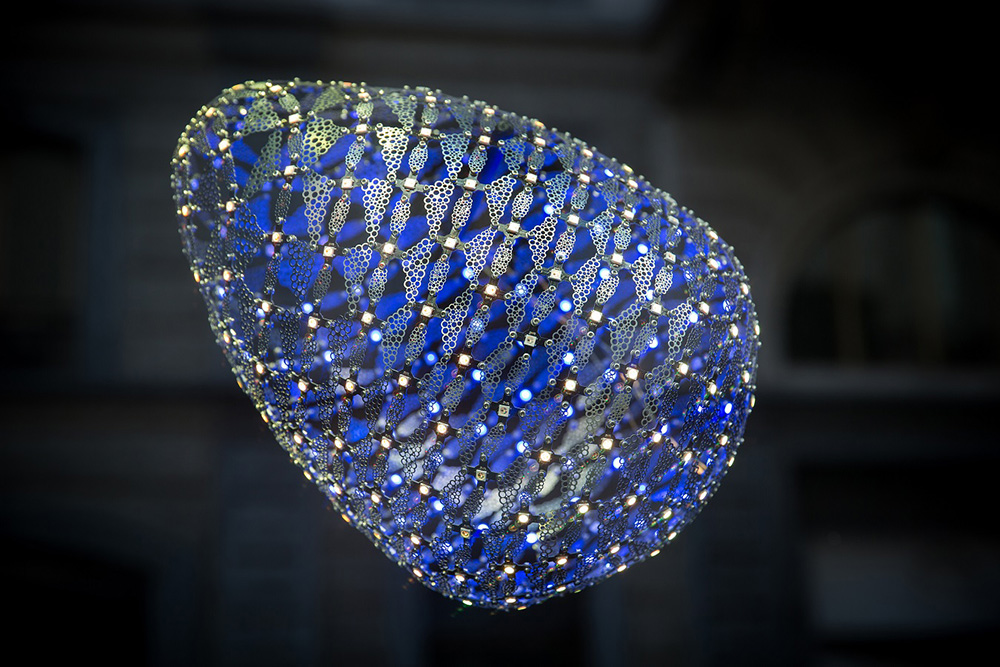
EGG56 innovatively uses the structure of the object to power the LEDs
EGG56 at the Park Hyatt Hotel
The pieces I have in the Park Hyatt Hotel and at the Panerai store are part of an ongoing investigation into luxury objects in history. I took two iconic objects – the Fabergé egg and the Ming vase – and tried to imagine what they would look like in the future.
In the past, these objects were created with the most advanced technology available at that time so, in the same way, I tried to use the most advanced technology available to me. With the Park Hyatt piece, this involved using a very sophisticated algorithmic design method to create its shape, based upon the precise processes and the advanced components used in the electronics industry.
I wanted these objects to appear artisanal though, and what’s very innovative about them is the stainless steel components they are made from. This allows you to power the LEDs in the object without using any wires. While the object is completely visible, at the same time, its function is hidden.
Waldermeyer’s contempoary interpretation of a Ming vase at the Panerai Boutique in Milan
MING at Boutique Panerai Milano
What’s interesting with this reinterpretation of the MING vase is that I created an animation on its surface that gives the illusion that a liquid is being swirled around inside. This links to Panerai’s origins in manufacturing diving watches for the military and to this day they are still very much linked to water sports.
Lighting designer and architect Carlotta de Bevilacqua explains the philosophy behind her technically innovative designs
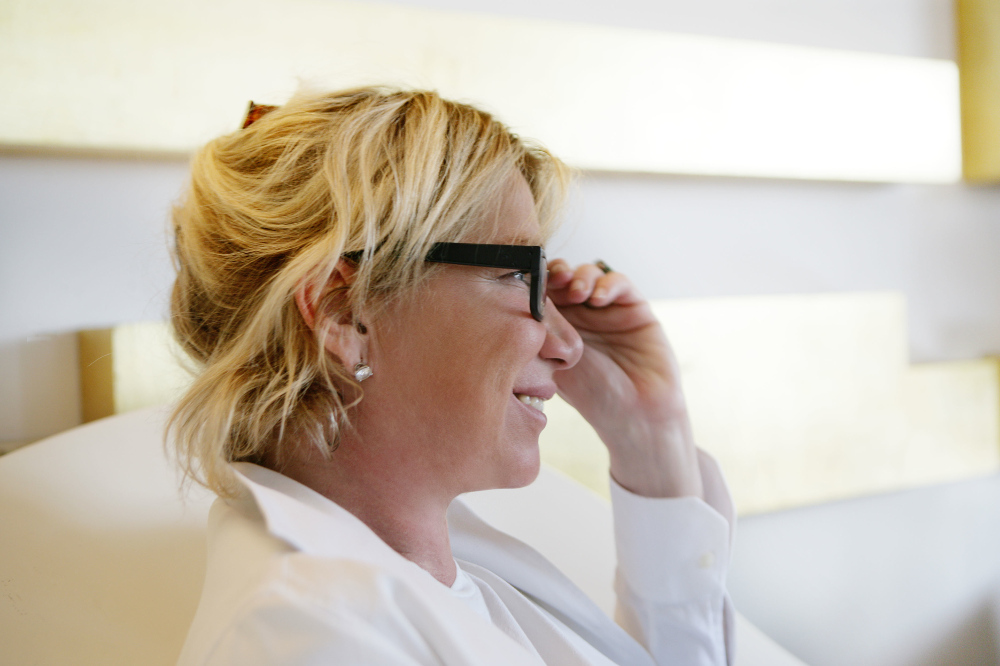
Carlotta de Bevilacqua
Light can be a resource that, in the 21st century, we take for granted. It gets dark, and we flip a switch. But Carlotta de Bevilacqua thinks about it differently. For her, and the brands she works with in her capacity as a designer, light is a powerful force that can (and should) cause a reaction in those that rely upon it.
De Bevilacqua’s chosen subject of expertise is a universal experience. As an entrepreneur, university lecturer and architect, she has used her knowledge to create influential products and spaces, and spread her philosophy on how human beings interact with and experience light.
With a focus on sustainability and technical innovation, de Bevilacqua has taken leading Italian design firms Artemide and Danese to new heights with her ideas. Her latest projects include Incalmo and Incipit; two lighting designs which utilise innovative LED technology while retaining an emphasis on craftsmanship and history. Here, she talks us through her interlinked ideals of light, philosophy, and design.
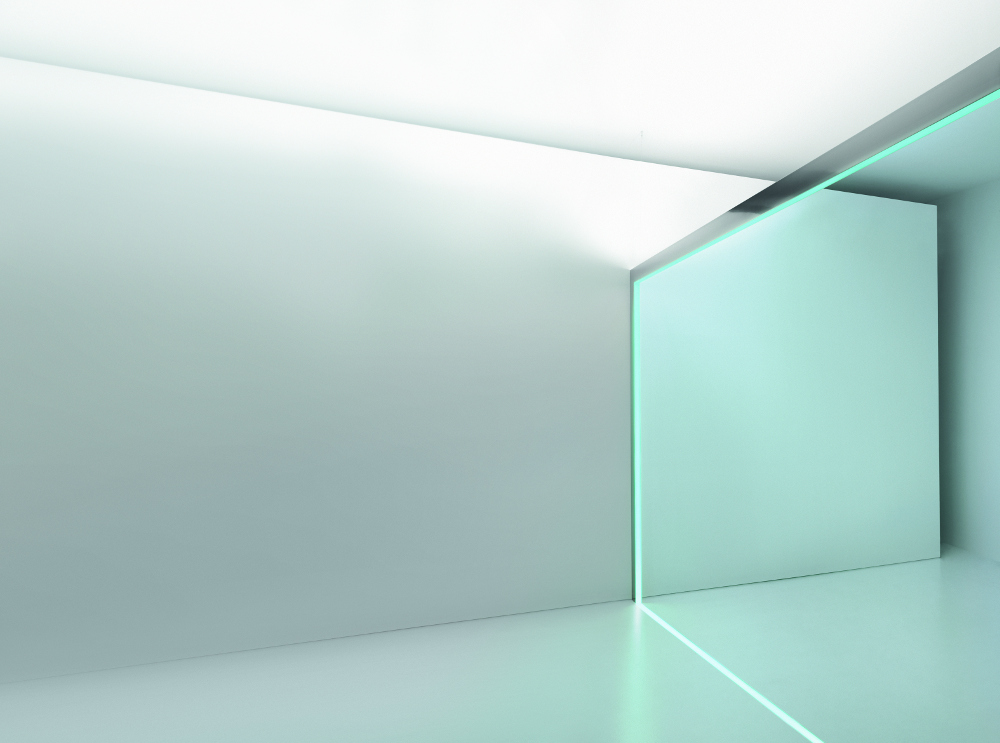
Null Vector collection, courtesy of Artemide
Sustainability is a concept that’s present across all channels of your work – why is this so important to you?
We can’t live without light. Like air and water, light is a crucial element for the planet. Through innovation in scientific and technological fields, a deeper understanding of light allows us to reconsider the environment, its resources and the use of energy in terms of an ecosystem. Light should be designed to serve the wellbeing of human beings and other living organisms.
When we design a light, we have to take care of the life cycle of the product. It’s important to respect the planet’s resources, that’s why the products I design try to obtain the best performances with minimal material waste and consumption during both production and use.
We are at a wonderful moment of technological transition, and LED has opened new possibilities in this direction: it offers low energy consumption yet high optimisation of materials used. When we think about a project, we look for opportunities to create long-life innovative products – expressions of technology that are not subject to fashion.
Copertina Cyan, courtesy of Carlotta de Bevilacqua
You’ve spent a lot of time looking at the impact of lighting on mental wellbeing. What responsibility do you think designers and architects have to ensure they get the most out of lighting?
The focus of my work has always been on man and his relationships, his needs and everyday quality of life. I am also interested in an interaction with products that allows man to manage light in an active way; interaction with light is a way to develop a sense of responsibility for the planet.
Starting with design, informed usage and durability, we can implement a responsible vision of earth’s future. Thanks to the technological innovation that makes integration of light and data possible, we can now have intelligent sensors and new ways of controlling light. Interactive design is the way forward in order to mediate between the frontiers of technology and contemporary culture. Interactivity creates a response – everyone becomes the author of their own spaces, free to make conscious choices about their environment.
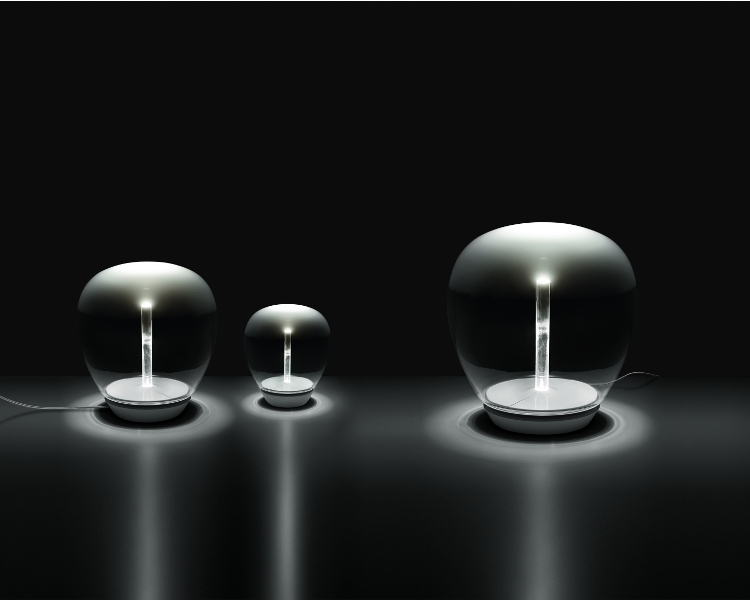
Empatia collection, courtesy of Artemide
Your product designs for Artemide and Danese often use interchangeable optics such as ‘Una Pro’ system (Danese collection) and are flexible in terms of movement. Why is this flexibility important to you?
Lots of my projects are an open platform, designed to be flexible… they are able to respond to different needs when installed. With movements and different light performance you can orchestrate light and shadow freely, colour and colour temperatures, follow rhythms of activity and define spaces.
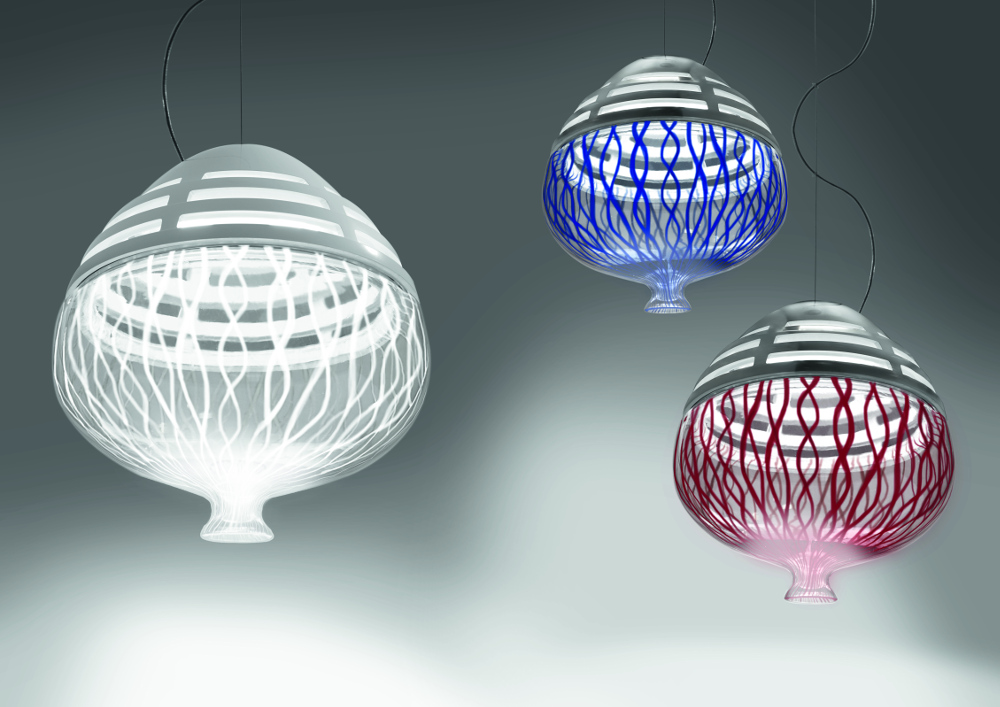
Invero suspension collection, courtesy of Artemide
Many of your projects, such as ‘Un mondo d’amore’ in Milan, have been based in urban spaces with an awareness of public interaction. What kind of response do you hope to elicit from the public in works like this?
Projects such as ‘Un mondo d’amore’ can bring attention to areas from both a social and environmental point of view. The light helps to restore identity to places, and emphasises their value.
Good lighting can offer new experiences and emotions by improving the quality of our common living spaces. Light can be social – it can be the material we use for shared and interactive innovation.
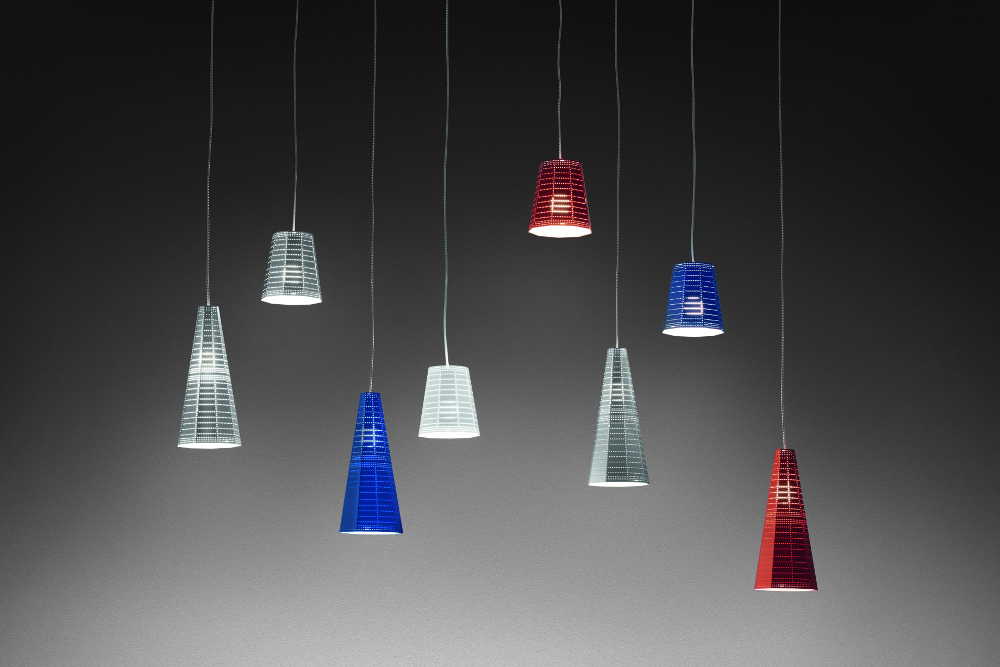
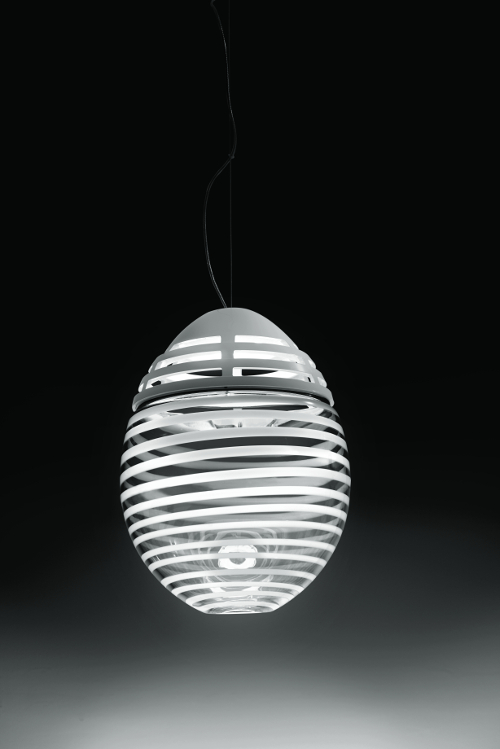
Incalmo collection, courtesy of Artemide
Your recent ‘Incalmo’ and ‘Incipit’ projects use LED lights but refer to a 16th-century glass-blowing process. How do you go about combining historical and contemporary ideas like this?
We can learn from the past and its artisanal excellence, like glass blowing, and interpret the quality of these handmade elements in a contemporary way by paying attention to the interaction between light and matter.
The name ‘Incalmo’ refers to a technique conceived in the 16th century in Murano, the ‘glass island’, Venice, in which two or more different colours are blown into a single glass. ‘Incalmo’ is a metaphor of the attempt to combine the evolving technological innovation of LEDs with a craft skill that is rooted in our history, in order to improve optical performance, increase efficiency, and enrich the object through its presence in space.
‘Incipit’ was derived from the origin of ‘Incalmo’: from the basic idea of an optical, thermal, technological machine, where everything is part of a system. At the same time, we had a wish to restore a human, craft dimension, while observing the beauty of imperfection through a restyling of blown glass.