Gelling the Friendship

Lunch with Fergus Henderson, Margot Henderson & Jeremy Lee at Rochelle Canteen

Photography SOPHIE GREEN

It’s been some time since Jeremy Lee, Fergus Henderson and Margot Henderson all ate together, though in the 90s, when they were all making names for themselves as London cooks, that used to happen all the time.

Fergus guest-edited Port’s first food special, back in 2013. His nose-to-tail approach to cooking, popularised at St John, doesn’t seem as revolutionary as it might have done in the 90s, simply because it’s been so influential. We’re speaking in Rochelle Canteen; the restaurant Margot runs with partner Melanie Arnold.

Jeremy Lee: We skirted each other’s lives forever, so it would seem, amazingly. Because Ferg’s the same age as me, bar a few months. And both of us fell into cooking and the restaurant business. And I think when I started at Euphonium, because we only opened for dinner, I used to go down and buy bread at St John every day.

Margot Henderson: We were living in Earlham Street, which was quite a social gathering spot, wasn’t it? Literally, dinner party every week. I’d be on the phone, calling people, and then they would leave messages. I’d drop the kids off at school and stop in telephone boxes on the way, inviting people. And you wouldn’t know really how many people were coming.

Samir Chadha: You were working in kitchens all day and then hosting dinner parties at night?

MH: I did both. I mean, I was in the kitchen, but I wasn’t just in the kitchen, because I had small kids.

JL: There was still a lovely hub of food community in the West End, still, even then. A lot of which has moved on.

MH: But there is a new hub of restaurant community. They’re young.

JL: Yes, the youth, the next generation, who we love.

MH: But sometimes I feel that they think there never was, and they will think that it’s just all started. Yeah, I’m really sorry guys, it  was there before we were there, and it keeps on going.

JL: You have 400 years or so of restaurant history and food community, and growers and producers and makers. Particularly back then, if we weren’t cooking in kitchens, we were eating in restaurants. That’s what we seemed to do our whole time – or around the Earlham Street flat, and on occasion at mine. Yes, that always starts with a couple of pals, and then the next thing you know, you’re actually putting piles of magazines round the table and getting people to sit on them and going “I do need to get a few more chairs.” It was always an adventure.

MH: Building friendships, it’s often, for us, about sitting at the table. I always feel if you’ve invited somebody to your home, and they sit down at the table, that is sort of gelling the friendship. We were hungry for community, and we wanted all of that. And it’s fine to bump into people in bars and things, but if you really want to build on your friendship, you have to work on it, and it’s hard work. And to sit down, and once you’ve sat down and gathered like that, I think that is when you’re building on what is to come into the future.

JL: St John took off like a rocket. And this extraordinary thing, when folks suddenly realised there was such a thing as British food and produce and cooking. And what was so significant was this idea of – which had been bandied around forever – about keeping it simple, and seasonal, and use all of an animal. That strange thing, the Brits would go abroad and they would tuck into anything in Italy, in France, and then come back and go, you couldn’t possibly do it here. And what was Fegato alla Veneziana in Venice would be ‘liver and onions’ here, no one could eat liver and onions here. Call it Fegato alla Veneziana and they just tuck in with gusto, and you’re like, really?

MH: Do you sell much offal?

JL: We do, but we had to rein it in. You can have an offal starter and an offal main course, so long as there’s a balance, you know, of some other dishes. That’s what the pie is great for. It offsets everything.

MH: Fergus was really one of the first people to get the pie on the menu – back then, with his bone marrow, Trotter Gear, do you know about Trotter Gear?

JL: I love Trotter Gear, it was genius.

MH: Out of trotters, you make this sort of sauce, and that can go into things like your guinea fowl. So, [it can go] into more dry things to bring in moisture and succulence. And we have blocks of it frozen in the freezer.

JL: Infinitely better than an OXO cube.

MH: It was meant to go into Waitrose.

JL: It did for a while, didn’t it?

Fergus Henderson: About two days, it was.

MH: I’m worried about the pastry now coming with the pie. Jeremy’s about to eat it. Oh, my God.

JL: No! Delicious.

SC: What are your favourite places to eat these days?

MH: Noble Rot, Ciao Bella, Kiln, Canton Arms, it’s our local pub. I love Koya.

JL: Nick Bramham , Black Axe Mangal, Hoppers! You know, touch wood, but restaurants in London – they’re doing pretty well.

FH: You can come and stay anytime you like. You’re a good eater.

SC: It’s delicious and I will eat constantly, forever. Favourite pie, all of you?

FH: Pheasant and trotter, bone marrow in the middle.

MH: I always love a mutton pie.

JL: Guinea fowl and porcini, which we’re going to put on the menu at the pub next week.

MH: We make amazing rough puff at the pub. And it’s really good. And we use this incredible flour from Landrace. Which I’m going to show you. I want to buy their flour here. They bring it up to London – Leila’s gets it all.

MH: What’s your last meal?

JL: Grouse. Langoustines. Raspberries. And freshly churned ice cream.

FH: Sea urchins.

SC: What was yours going to be?

MH: I always feel like boiled ham and parsley sauce. It’s something I learned from Fergus and his mother. His mother was an amazing cook. You have a whole ham and then it’s poached really gently, with onions. And then you slice it thinly, parsley sauce.

JL: This is such a delightful, rare treat, to be sitting down properly and have some time with you. It’s the one thing – keeping up with your pals now is really hard. That’s a full-time job in itself.

MH: And if you’re not careful, they disappear.

SC: It’s a lot of work!

JL: Do it. You need it. These are important. Some of the most important people in my life.


This article is taken from Port issue 34. To continue reading, buy the issue or subscribe here

Questions of Taste: Adam Simmonds

Talking to the accomplished chef as he settles into his new position

Adam Simmonds initially turned to cooking as a teenager – something tangible and useful to turn to when struggling at school. That quickly grew into a remarkable career, with stops at the Ritz and Le Gavroche before arriving at the two-Michelin-starred kitchen Le Manoir aux Quat’Saisons under Raymond Blanc.

He’s gone on to win Michelin stars of his own: first at Ynyshir Hall and later at Danesfield House. He left to experiment for a few years – opening Soho’s Test Kitchen alongside a number of head chef roles, but this month finds himself Chef Patron at The Megaro. 

A new restaurant is on the cards for later in the year, but until that opens he’s turned his attention to reinvigorating the property’s existing Italian restaurant, Spagnoletti. Port caught up with Adam on his cooking roots and his budding plans for the future.

What drew you to cooking?

I was not an academic young man and struggled to keep still in class. However, I found home economics incredibly interesting. Truth be told, I loved it because there were more girls than boys, but I genuinely enjoyed the practical aspects of the course. Being actively engaged and not needing to focus on text made me want to pursue this further.

I left school at 16 and went to culinary college, earning my City & Guilds qualifications. During this time, a seed was planted, and my passion began to grow. I realized that I thoroughly enjoyed hands-on work and wanted to chase this feeling, starting a career in the field.

You’ve had quite the route through kitchens – working under Raymond Blanc, winning two Michelin stars: what do you feel are the most important things you’ve learnt along the way?

The hospitality industry has changed since I started! I was working as a Sous Chef in London when I had the opportunity to join Raymond at Le Manoir. I was offered a chef de partie role there, and I gladly took that step, conscious that knowledge is power. I learned as much as I could from him and his brigade and moved on to achieve accolades and participate in competitions on TV shows.

I was only 31 years old when I first had my Head Chef role at The Green Way in Cheltenham. I must admit, I was like a bull in a China shop! I had a massive ego when I was younger, but life taught me that you need to work hard and master your craft thoroughly before you take bigger steps.

I have learned that the key to success is being humble. The team is your biggest asset and treating them all with great respect is paramount to receiving it in return. Shouting or screaming does not lead anywhere. It is vital not to push them but to have an understanding and empathetic approach, mentoring and leading them towards common success by sharing my knowledge.

You’re mixing things up at Spagnoletti as a first move – what’s your thinking behind the changes, and what do you hope people find in it?

First and foremost, I am introducing a new concept that I believe fits perfectly with Spagnoletti. This concept will give the team clear direction and a distinctive personality. I am bringing a lightness of touch to the dishes, promoting sustainability, seasonality, texture, and flavour through modern presentation and consistency. The menu is a journey, starting with light and delicate flavours and moving towards a more robust, richer selection. Similarly, a mix of powerful and more gracious flavours is also present on the dessert menu.

I hope our guests will perceive the quality and honesty of our contemporary Italian cuisine, paired with a slick, friendly, and welcoming environment.

Is there any one menu item that encapsulates what you’re hoping to do at the new Spagnoletti, and could you expand on how, if so?

I believe that the Scallop Raviolo, with its lightness of touch and fantastic produce, represents my style of cooking and what Spagnoletti stands for. Homage to the late Gualtiero Marchesi , the dish embodies clarity, freshness, and simplicity on a plate. The combination of ingredients makes it highly seasonal, and although its appearance may convey straightforwardness, it is a highly technical dish.

It is all about timing and precision with this one: the pasta needs to be rolled thin enough, the scallops must be of the correct thickness, and the morels must be precisely prepared. The chef must work meticulously with the heat during each stage of the cooking process, allowing the pan to do the work.

I know ingredients are important to you – how are you approaching sourcing at The Megaro?

I have a strong relationship with suppliers that I have built along the way. Although I have my trusted ones, I keep an open mind and am committed to staying up to date with new entrants in the market and assessing how they operate. At Spagnoletti, we source as locally as we can while keeping our Italian cuisine connected to its origins by importing specific ingredients, such as our charcuterie selection, which is constantly changing.

It’s a priority for me to work closely with suppliers, understanding where the ingredients are sourced, considering sustainability aspects, packaging, and pricing (of course), but most importantly, ensuring that our partners are as respectful as we are towards the produce itself. It is so much more than just supplying food.

Finally, could you give us any hints about what’s coming later in the year?

Making my mark in London with something new, fresh, and contemporary. I am bringing my renewed self to the forefront… you will have to wait and see.

themegaro.co.uk

Questions of Taste: Endo Katzutoshi

The lauded chef discusses one of his flurry of recent openings, Kioku

When I arrive at Kioku by Endo at the OWO, I am early. To kill time, I decide to take the stairs, which does two things: allows me to observe the straight-backed Edwardian gentility of the Old War Office, all plush red carpets and gilt and gleaming marble; and makes me extremely out of breath; Kioku, it turns out, is at the very top, on the sixth floor. It’s good, then, that when you reach the restaurant, you can catch your breath on the roof terrace outside – and even better that the roof terrace overlooks most of central London, the view stretching over Horse Guards and Whitehall and into the dense, glossy green of St James’ Park. The restaurant even has a little turret, entirely separate from the main space, with 360-degree views over the city.

The food at Kioku mirrors this ebullient sweep, this bold expanse of rooftop and sky. It’s a confident marriage of Eastern and Western sensibilities – a synthesis that occurs not simply in presentation or ingredients, but in shared approaches. There’s a Mediterranean emphasis, for example, on the provenance and sourcing of fresh ingredients, which is paired with a typically Japanese eye for detail. Think Chashu pork ramen ravioli; or aged monkfish, smoked eel, potato rosti, watercress and ginger sauce.

The force behind the restaurant, Endo Kazutoshi is one of the most celebrated chefs working in the UK today. A third-generation sushi chef from Yokohama, he learnt the ropes both as an apprentice at an omakase restaurant in Tokyo and at his family’s restaurant, before leaving to work under Akitoshi Ohno, a renowned sushi master in Nagoya. After this, Endo worked in Madrid before coming to London, where he was selected to lead the sushi bar at Zuma and oversee eight international branches. After stints as a private chef, he opened Endo at The Rotunda in April 2019, which after less than a year earned both a Michelin star and the title of London’s hardest-to-obtain reservation. More recently, the chef opened another restaurant, NIJŪ. There, the food is inspired by Katei Ryori, or Japanese home cooking – if your parents happened to be sushi masters. These are classics done perfectly: diaphanous, nimbic shokupan; tuna tataki that almost dissolves on the tongue.

Can you talk a bit about how your background has influenced your work? You come from a long line of sushi masters, don’t you?

I was pretty much born in a sushi restaurant – my grandpa opened his in 1940. I started as a sushi chef around 30 years ago. I only worked with my father, who was a sushi chef as well, for seven months. But my education – my mental education as a sushi chef – began at five years old. And that was from my mother. She taught me everything: calligraphy, tea ceremony, how to engage with guests. So it’s from her that I was educated in the philosophy of being a chef.

Technique is easy; it’s the mindset that you have to learn – and it’s not easy. Now, Instagram and other social media make it easy to learn that kind of thing. But it’s so direct, there isn’t that wider knowledge. I started thirty years ago, so I didn’t have an iPhone. There were no diversions. To me, that’s why my generation is good – we had to learn everything the hard way.

You came to London in 2007 – how has the sushi scene changed since then?

In the last ten years it’s changed a lot. Many guests have a lot more knowledge in Japanese cuisine – there’s a lot more interest, and Japan’s become one of the top places to travel.

London is so cosmopolitan; it’s the centre of Europe for me. And there are a lot more Japanese restaurants here now – every month there’s a new opening. But now, a lot of them are similar. That’s why we need something unique.

What do you look for in a dish? What does a perfect plate mean to you?

For me, I need a story. I don’t want to just do any single dish ‘made nice’. For instance, you go to a gallery like Tate Modern, and you see these works – without the story behind them, they’re just pictures. But when they have that soul, that spirit, that’s what brings people to tears.

And on that note, are you inspired by art or culture when you cook?

A lot. I love Commes de Garçons. For me, it embodies this idea of challenging both tradition and innovation – asking what, exactly, is innovation? Not simply a twist, not fusion. I love punk music too. It’s revolution, it’s anarchy.

What was the purpose behind your new restaurants? Why do you think they’re needed?

For me, a lot of Japanese food in London is very same-y. That’s why I really want to do something more innovative, something different, in terms of concept. You know, in the beginning, everybody was looking to Zuma, everybody was copying Zuma. There’s a lot of the same stuff. I think there needs to be some kind of pioneering, some kind of option. There needs to be a different kind of Japanese restaurant. It’s always sashimi, sushi, omakase – I don’t do omakase, because everybody does it already! We need something different.

In Japan, you can get the best pizza, the best French food. It’s these cuisines put through a Japanese filter. It’s not a twist, it isn’t fusion – there’s no sashimi with truffle oil – but it’s taking these foods and adding my philosophy, my ‘filter’.

How does Kioku differ from NIJŪ and Endo at the Rotunda – how would you define and differentiate the spaces?

They’re all totally different spaces. Rotunda is just totally me, mine. This isn’t any filter. That’s why there are only ten seats. But at Kioku, there’s more of a sharing atmosphere. It’s more relaxed. And of course the food is different – at Kioku, it’s Mediterranean food, but through my filter. It’s entirely new.

NIJŪ is much more of a home-cooking vibe. It’s the kind of food that I want when I go home and ask my mum what we’re having for dinner that evening – except a bit more elevated, of course. It’s skewers, fried katsu. Whereas Kioku is entirely special occasion food.

The interior of Kioku is so beautiful – incredibly elegant and evocative. Can you talk me through the design?

At Kioku, my concept is my memory; it’s part of my philosophy. Actually, the reason why I chose to design the space in this way is because of a place in my hometown, Yokohama, called Hotel New Grand – they opened 160 years ago, or something. In the Edo period, 180 years or so ago, Japan was completely closed, and there was no trade with the outside world. The first open place was Yokohama –  and even now it’s a really fast-paced, cosmopolitan place – and a lot of British people came there and made a lot of European-style buildings. And one of these was the Hotel New Grand, and it’s my mum’s favourite place.  We’d always go for tea and cake there. That’s why I wanted the interior of Kioku to feel, not similar, but inspired by that place, by my memory of it. That’s why I chose this building; there’s a lot of history to it. I didn’t want somewhere that was just new.

What are your favourite restaurants in London?

Last December I went to Le Gavroche… it was so incredible, the most memorable experience, especially because it’s now closed. Also Ikokyi, with Jeremy Chan, who’s a friend of mine. To be honest, I tend to prefer a much more casual restaurant, often in East London, with natural wine. Of course, I’m looking for something new – that’s why I go – but now I want something a little more relaxed. Yesterday I went to Mountain, which was good, and has that kind of vibe.

What do you like to cook at home?

I never cook…. Cooking is not my hobby. Many chefs say ‘I love to cook!’. But for me, that’s my life; that’s my destiny. I draw a line between my work and my home life.

Kioku by Endo opens on 15th May.

Jozef Youssef: Kitchen Theorist

PORT visits the kitchen of experimental chef Jozef Youssef for a lesson in manipulating the senses

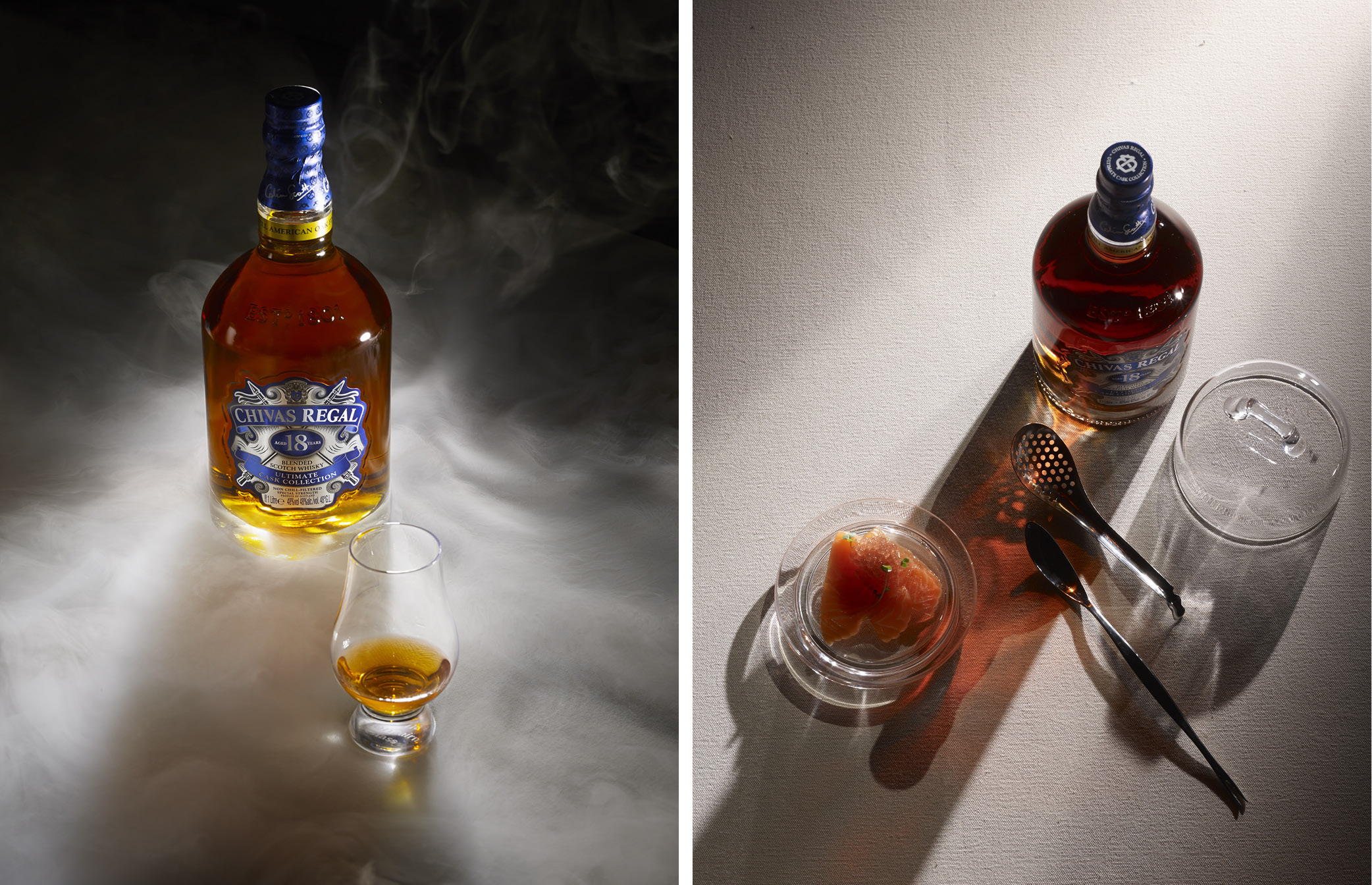
Left: Chivas 18 Ultimate Cask Collection First Fill American Oak – Right: Chivas 18 Ultimate Cask Collection First Fill American Oak with Youssef’s salmon sashimi

More than a chef, Jozef Youssef is an ‘experimental chef’. What sounds like an inflated job title to some, may be the only accurate descriptor of a man who has gone from cooking at The Fat Duck to conducting research with Oxford University’s Crossmodal Department. “I have an interest in the art, science, philosophy and history of gastronomy in all its amazing regional and cultural forms,” Youssef explains in our interview.

Youssef believes the five senses should lead when choosing, cooking and eating food, and manipulating them can elevate the culinary experience to new heights. For his latest project, he has created a sensory guide for Scotch whisky Chivas Regal, to maximise the understanding of the character of its Chivas 18 Ultimate Cask Collection First Fill American Oak release. In it, he suggests that picking the right light, drinking glass, and music, can accentuate or soften tastes we once thought we knew.

In addition to the guide, Youssef has created a tasting menu to accompany the drink, featuring onion veloute served in a fragrant dry ice ‘cloud’ of Chivas, and salmon sashimi is topped with ‘caviar’ made from the whisky. Here, Youssef discusses working between the worlds of food and science and shares a unique whisky cocktail recipe.

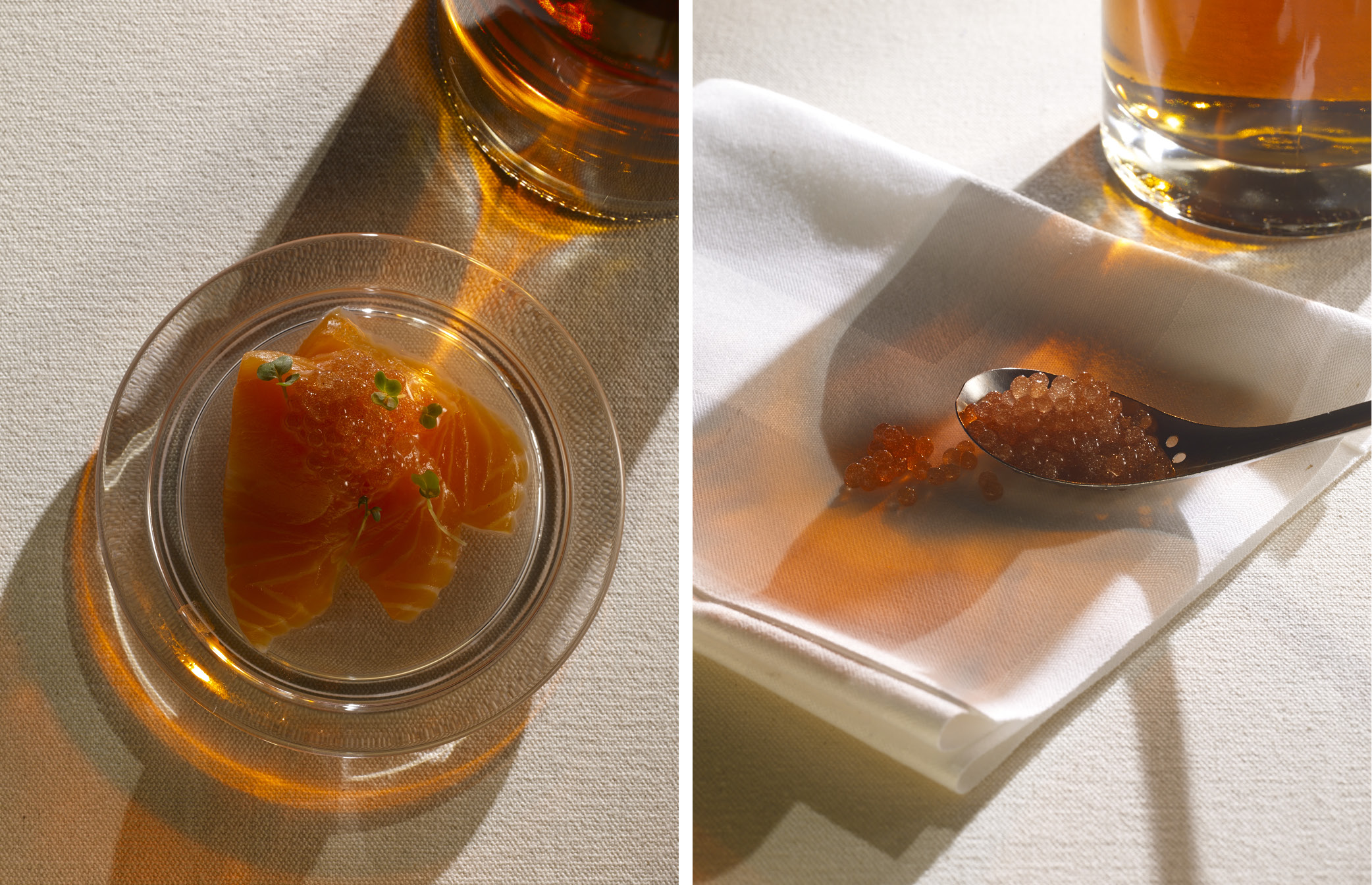
Left: Youssef's salmon sashimi – Right: caviar made from Chivas Regal 18 Ultimate Cask Collection First Fill American Oak
Left: Youssef’s salmon sashimi – Right: caviar made from Chivas Regal 18 Ultimate Cask Collection First Fill American Oak

What interests you about the intersection of food and science? How does your cooking tread the line between the two?

I guess my interest stems from the fact that when you are passionate about something, in my case gastronomy, then you want to explore as many aspects of it as you can. I have an interest in the art, the science, the philosophy and history of gastronomy in all its amazing regional and cultural forms. The two go hand in hand; for me the artistry allows for expression and storytelling, while the science allows us to refine our craft. Both contribute to the creativity in their own ways.

What was your approach to pairing this whisky with a dish?

By studying the aroma profile of Chivas Regal 18 Ultimate Cask Collection First Fill American Oak, I became familiar with the main aroma compounds – caramel, vanilla and orange, which gives this particular expression its distinct character – we began to understand how to pair it. From here we built a picture of ingredients that share similar compound ingredients, which would complement those flavours and make sense. From there it is all trial and error, until we find those truly perfect matches.

Higher-Res Composites4

What other tasting notes did you pick up on in Chivas 18 Ultimate Cask Collection, and how do they complement the dishes you’ve prepared?

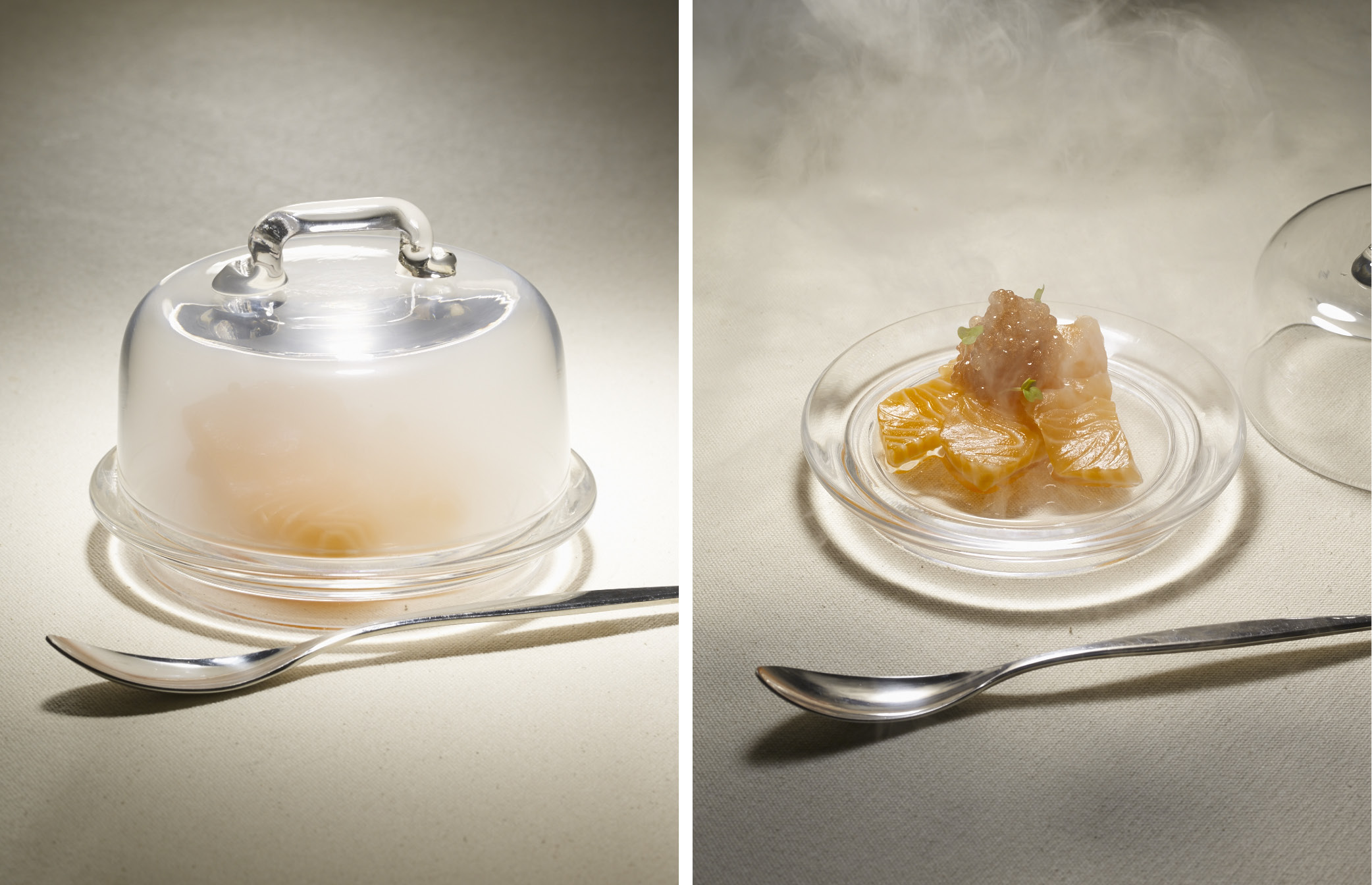
For the salmon sashimi dish, we were focusing on the wonderful delicate aromas of the Chivas. We all know how well salmon and smoky flavours work together, and I had thought of using smoked salmon, but then realised we wanted a much lighter and delicate smoke for the salmon, as the Chivas already brings so many of these same notes. So we decided to use fresh salmon sashimi that we cold smoke in its serving dish just before it is presented.

The ‘Chivas caviar’ is made using the new Scotch whisky, and a process known as ‘spherification’. The unique texture of the ‘caviar’ lends an interesting mouth feel and allows the flavours of the Chivas to linger in the mouth and combine directly with the salmon.

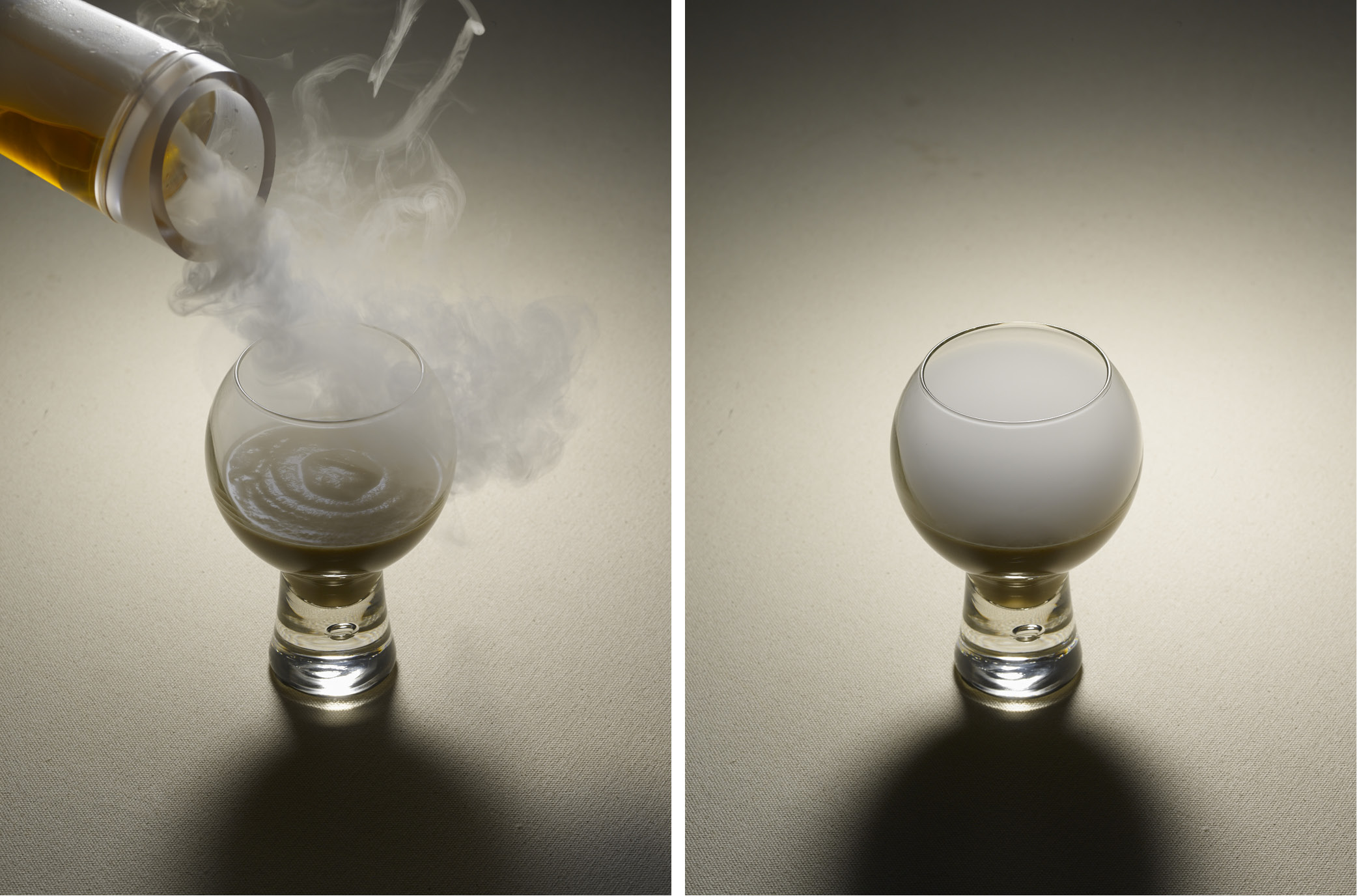
The caramelised onion veloute came about as we wanted to highlight the caramel notes in a savoury context. The combination of dark sweet caramelised onion with the Chivas works beautifully. Aside from deglazing the caramelised onions with the Chivas, we also wanted to capture many of the Scotch whisky’s top notes which are lost when it is subjected to higher temperatures. So we captured these aromas by creating a ‘Chivas cloud’, a technique which simply involves warming the Chivas gently and using dry ice.

Can you tell us more about the ‘spherification’ process?

The process involves enriching the Chivas solution we make with calcium, then using a syringe to drip this solution into a water and sodium alginate (natural seaweed extract) solution. When the sodium alginate and calcium come into contact they form a gel membrane around the individual droplets. The Chivas caviar complements this dish by adding a unique texture, allowing it to combine directly with the salmon.

Higher-Res Composites3

Which of the five senses have you engaged or tried to heighten with the dish of salmon sashimi and Chivas caviar?

The latest academic research shows that anywhere between 80 and 90 per cent of what we perceive as flavour actually comes from our sense of smell. For this particular dish we wanted guests to be mindful of, and engage their sense of smell, appreciate the textures of the fatty ‘melt in your mouth’ salmon and the unique Chivas caviar texture.

How did you go about creating the sensory guide to enjoying Chivas 18 Ultimate Cask Collection?

We began by looking at all the sensory aspects stimulated when one is enjoying Chivas. Some aspects are directly focused on the whisky’s attributes (e.g. temperature and dilution), while others are indirect (e.g. shape, weight and texture of the glassware and the environmental factors such as sound and lighting). We explored all these areas and more, looking at how one can truly heighten their appreciation.

Onion veloute served in a fragrant dry ice ‘cloud’ of Chivas
Onion veloute served in a fragrant dry ice ‘cloud’ of Chivas Regal

How do you hope the guide will change the usual whisky drinking experience?

The guide was developed for those who truly want to heighten their appreciation of the Chivas, and explore its many unique flavours and textures, all of which are impacted by adjustments in temperature, glassware, dilution, lighting, sound, etc. Encouraging such mindfulness towards the sensory details we hope will allow whisky drinkers to find their own personal and unique way of enjoying Chivas.

Whisky cocktail recipe: Chivas 18 Ultimate Cask Collection Smash

– 50ml Chivas 18 Ultimate Cask Collection First Fill American Oak

– 10ml Vanilla Sugar syrup*                  

– Eight Mint Leaves

– Crushed ice

– Old Fashioned Glass

– This recipe can be made inside the glass and does not require any additional tools apart from a spoon.

Method: 

Place the mint leaves in the base of the glass and add the Vanilla Sugar syrup. Stir (without breaking the leaves to allow the mint to infuse into the sugar) for 20 seconds then add the Chivas 18 Ultimate Cask Collection First Fill American Oak. Half fill the glass with crushed ice and using a spoon fold the mint from the base and stir slowly allowing the ingredients to mix thoroughly at the same time chilling and diluting the drink. Continue to do this until the ice has become slushy and then fill the glass with more crushed ice. Now the liquid should be almost at the top. Take a large fresh sprig of fresh mint and slap it against the dry palm of your hand to release the oil and freshen up the aroma. Place this into the glass at the top alongside a thin straw. When you sip the drink the fresh aroma should enhance the taste.

Jozef is the founder and chef patron of Kitchen Theory

Chef Nobu & Japan’s Porcelain Island

Having established his eponymous restaurants on all five continents, PORT meets acclaimed chef Nobuyuki Matsuhisa as he turns his hand to tableware

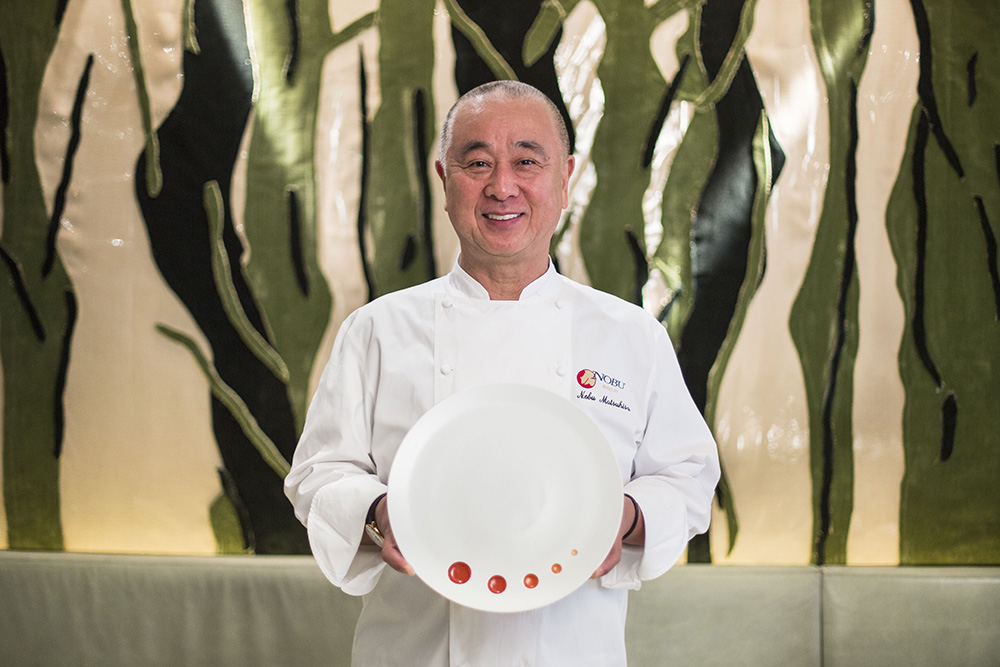
Chef Nobu holding the Arita X Nobu Dessert Plate

This year marks the 400th anniversary of the discovery of kaolin, the essential raw material used in the production of porcelain that was first found in Arita – a small town on the southernmost of Japan’s four main islands. The porcelain has a long and influential history, having been traded to the West at prices similar to gold and it’s also thought to have inspired Messien and Chantilly potteries. To commemorate this past, Japanese porcelain producers Arita Plus has collaborated with acclaimed chef Nobuyuki Matsuhisa on a new tableware collection.

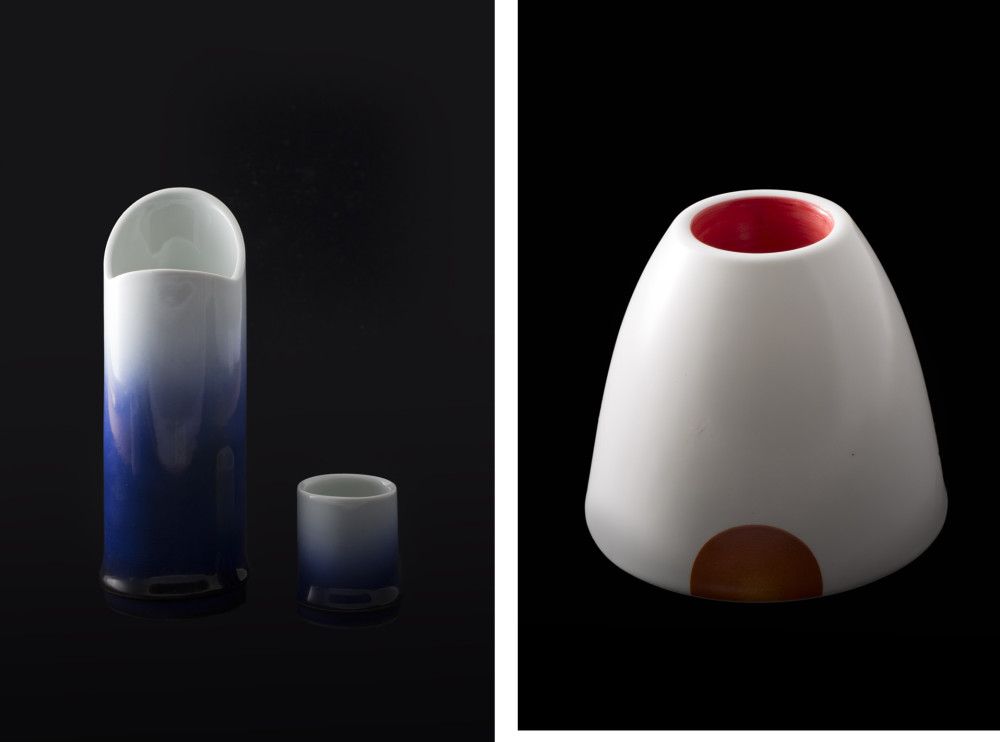
Designed by Nobu to be used throughout his eponymous, Michelin-starred restaurants across the world, the Arita Plus x Nobu tableware range is based on the concept of Wa – the Japanese idea of harmony, peace and teamwork, which is central to the Nobu philosophy. Just as Nobu’s restaurants reflect their locality while being grounded in a Japanese tradition, so too does the collection, which includes plates, sushi roll holder, sake set and a matcha bowl.

Here, PORT sits down with Nobu at his Mayfair restaurant to discuss the collaboration with Arita Plus, maintaining quality across worldwide restaurants and what he does on his rare days off.

Left: Arita x Nobu Sake Set – Right: Arita x NobuSushi Roll Holder

How do you ensure there is consistency across your restaurants around the world?

My first restaurant was opened in 1987, almost 30 years ago. Then I opened in New York, 21 years ago, and even Nobu London has been open 18 or 19 years. When I start a restaurant they become part of the Nobu family. Like children, the restaurants and the people who work in them grow up to understand the Nobu philosophies and now I feel confident for these people to travel in place of me when I’m too busy.

How did the collaboration with Arita come about?

Arita approached me because I have almost 40 restaurants in five continents and thought I was uniquely placed to introduce its porcelain to the world. I was also very excited to make my own plate – I saw it as my canvas, as my own design, and it’s a huge honour to be part of 400 years of history.

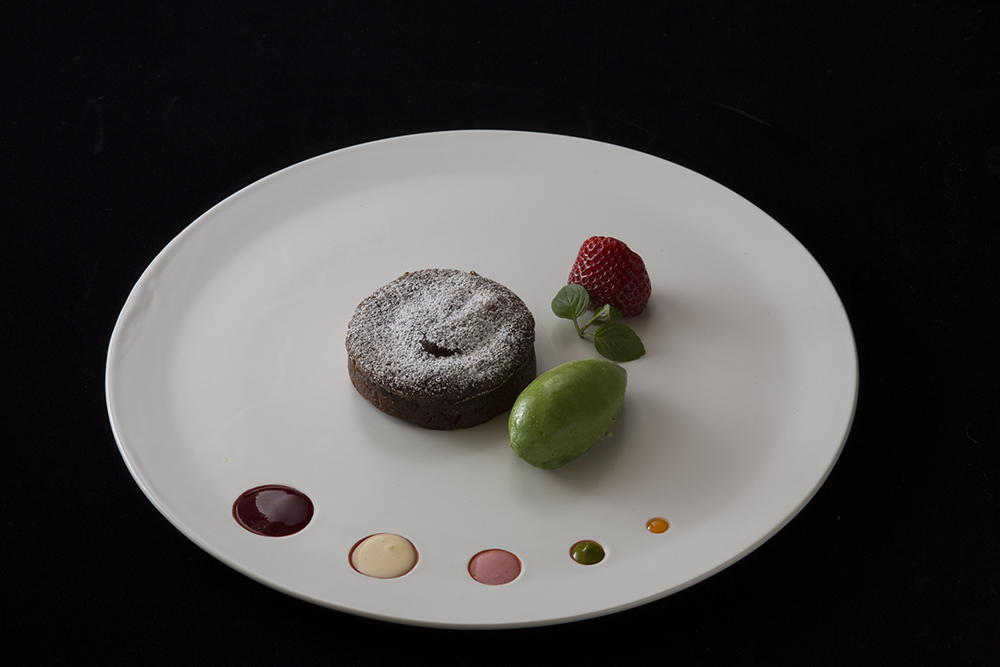
The Arita x Nobu Dessert Plate features 5 sauce holders

What were your key concerns when creating this collection?

It is impossible to use very high-end porcelain in restaurants, but I still appreciate top quality products. The design is important too; I am Japanese so I wanted to introduce some elements of Japanese culture in the porcelain.

The Arita plates have circles and half circles painted in a gradient, which represents the morning sun but also recalls the Japanese flag – a symbol you can immediately recognise. I also dislike seeing fingerprints on the edge of a plate so I specified that a special type of matt glaze should be used.

What do you do when you’re not in the kitchen?

When I cook, I create, I design, it goes to the tables and customers love it. But when I’m not cooking I like to paint. When I’m working on a canvas – whatever the design, the colour, or the style – I don’t have to explain anything I do. When they see my painting on the wall, some will say it’s good, others will say they don’t like it, but I don’t mind. I just want to present myself.