Shrewd Hands

Among all the art at last month’s Venice Biennale sat a new project from Tod’s, celebrating the city’s long history of craftsmanship.

Alongside their support of the Italian national pavilion at the exhibition, Tod’s invited a number of Venetian craftsman to work around and with their iconic Gommino in their own disciplines; from glassblowing to millinery.

Those 11 artists, in full: Roberto Beltrami, glassblower; Romauld Mesdagh & Alessandra Di Gennaro, mosaic makers; Giuliana Longo, hat artisan; Gianpaolo Fallani, screen printer; Marino Menegazzo & Mario Berta Battiloro, goldbeaters; Matteo Seguso, Glass Engraver; Piero Dri E Saverio Pastor, who works with forcolas (traditional Venetian rowlocks); Lucio Bubacco, lamp worker; Sergio Boldrin, mask maker; Federica Marangoni, visual artist and sculptor; and Sebastiano Lundardelli, wood artisan.

Federica Marangoni’s work, placed outside the exhibition

There are plenty of ways to see the pairing as a fitting one. Tod’s history in Italian crafts runs nearly as long as the art exhibition itself – founded more than a hundred years ago. Chairman Diego Della Valle, explains that Venice’s place in history as a home of Italian craftsmanship made it a perfect place to commemorate what he sees as “fundamental vales of the Tod’s universe”. Post-biennale, Tod’s are commemorating the city with a new collection, including a deep blue and bright red Gommino, linking back to the city and its history of craft.

Roberto Beltrami’s work– a delicate reconstructed replica
Sergio Boldrin’s final piece

Every other year, artists descend on the city to add another link in the long chain of its artistic history; building on what’s come before in often inventive and unexpected ways. Tod’s parallel project this year aimed to extend that vision to a similar icon – a footwear staple older than many of the artists exhibiting. The best works know which parts of a long heritage to pay homage to and which ones to play around with.
tods.com

Unearthing Time

Exploring the artistic alchemy of Daniel Arsham

All Photography ANDINA MARIE OSORIO

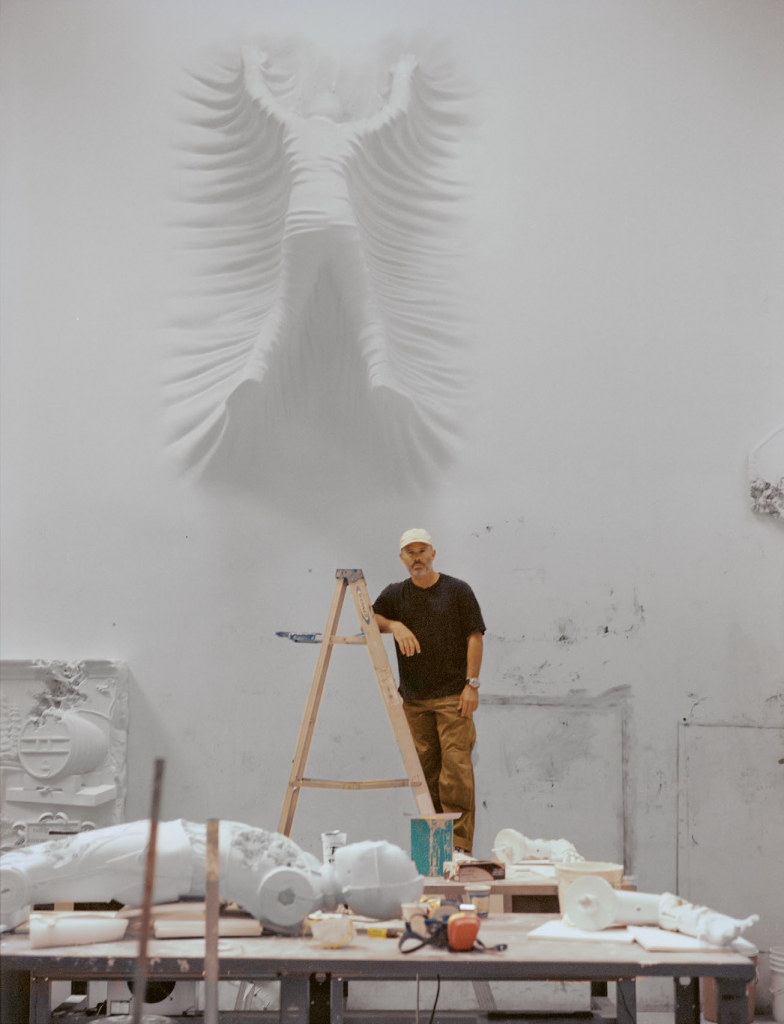
In the realm of contemporary art, where innovation and bravery collide, one name emerges with an irrefutable resonance – Daniel Arsham. An enchanter of temporal dimensions, Arsham has spent the past 20 years transforming cultural objects into eroding artefacts, producing works that could both be plucked from ancient history or from an unfathomable day far, far ahead in a dystopian future.

Much like an alchemist of antiquity, Arsham’s creations sit in what he coins an “archaeological universe” – a civilisation that banishes the clock and is populated by ageless fictional artefacts. Spanning multiple disciplines from sculpture to painting, Arsham’s practice can therefore be likened to an orchestrated symphony that dances on the delicate thread of time. To celebrate Arsham’s momentous career and a two-decade collaboration with gallerist Emmanuel Perrotin, the artist is opening two solo exhibitions taking place simultaneously in Perrotin’s spaces in Paris and New York this September. Debuting multiple series of works inspired by his archive – a project with Star Wars, sketches etched into hotel stationery and updated versions of his antiquity sculptures, for example – all those who set foot into the galleries will be given the chance to observe his evolution over the years. Right now, there’s a deep sense of reflection permeating the air. “A lot of the work that I make today,” he admits, “I don’t think I would have been able to create 20 years ago.”

Born in Cleveland, Ohio, and raised in the sun-stroked streets of Miami, there are a couple of catalytic moments that inspired the practice of the now New York-based artist. In 1992, Hurricane Andrew blitzed its way through Florida and destroyed Arsham’s family home in its path. It’s not an event that he thinks about every day, but certainly one that went on to inform the character and ethos of his work. “A lot of my works have this sense where they appear as if they’re in a state of decay or erosion, or they’re falling apart,” he says. “The idea around destruction and reconstruction is buried in the deep recesses of my subconscious.”

Arsham attended Design and Architecture Senior High School in Miami and was later awarded a scholarship to study a Bachelor of Fine Arts degree at The Cooper Union in New York. Here, he was able to dabble in different mediums including painting, sculpture and photography, and ultimately sow the seeds of his distinctive vision. “The school was really an education about concepts and ways of making rather than the medium in which it sits,” he explains. After this, Arsham travelled back and forth between Miami and New York, which led to the meeting with gallerist Emmanuel Perrotin. “I began my career with him,” he says. Since Arsham joined 20 years ago, the gallery itself has expanded from a single space in Paris to multiple branches in Miami, New York, Shanghai, Hong Kong and Tokyo. “As my work has evolved, the gallery has as well,” he reflects. “I think it’s quite rare today for artists to have relationships with galleries like this. I was 23 when I began with the gallery, and it feels like a part of me, my history and my family.”

Just like time itself, Arsham’s interests in varying mediums have ebbed and flowed. In fact, his journey is not too dissimilar to the way a river ceaselessly carves its course, with the first bend marking his journey as a painter, before the gentle stream ships him off to other disciplines. As Arsham is colour blind, however, he’s always found painting to be a little challenging, “especially in the use of colour”, he says. As such, he turned his focus on the tonalities of colour instead, and all his artworks pre-2010 are swashed in monochrome gradients with hints of blue and green.

For the next 10 years, Arsham became interested in sculpture and began manipulating architecture – ‘Falling Clock’, a sculpture that gives the illusion of time melting off the wall, is one of his best-known pieces from this era. When Covid-19 hit and studios were closed, however, a lack of space and available tools meant that Arsham wasn’t able to work on larger-scale pieces. It was a perfect opportunity to return to painting, which he practised “pretty heavily” in the time proceeding. So much so that the exhibitions launched after 2020 saw an influx of new paintings and revamped ideas from the past that he “hadn’t quite concluded 10 years ago” – such as a series of landscapes “that look like they could have been made thousands of years ago, in the present or some potential future”.

Alongside his personal endeavours, Arsham co-founded design studio Snarkitecture in 2008 with Alex Mustonen and has continued to place collaboration as a fundamental part of his practice. To date, he’s conceived projects with multiple brands including Tiffany & Co., Adidas, Dior and Porsche, and has worked with music producer Pharrell Williams, choreographer Merce Cunningham and designer Hedi Slimane. Throughout his far-reaching work, though, there’s a consistent theme of decay and rebirth. His work is not merely a sanctuary for artistic creation; it’s a sanctum where subjects like ancient Greek busts, cars, film characters or emojis go through a metamorphosis. His Future Relics series sums this up best, which sees time-bending objects excavated from the present. “It’s as if you’re looking at an archaeological object that is from your own life,” he says. “There’s a bit of a confusion or dislocation that you feel; you don’t quite know where the objects are from.”

One of Arsham’s latest displays of timeless decay is a new collaboration with Star Wars, a project he’s dreamt of since childhood. Three years in the making and on view at Perrotin, Arsham was granted licence to turn Star Wars characters like R2-D2 and Darth Vader into archaeological relics, effectively creating a Star Wars universe that’s undergone a time-melting makeover in true Arsham style. This project, as with all of his work, is inherently there to confuse you, to make you question when, why and how it was made. But once you peel away the layer of magic, you’ll see that his
pieces are all created with traditional casting techniques, but constructed from a medley of unexpected materials, like crystal, volcanic ash, patina bronze and stainless steel.

To achieve this eroding effect, Arsham mixes wax with sand and applies it to the affected areas – this causes the material to lose its bond and fall away. “It’s a bit of trial and error because the moulds are sealed, so I cannot see inside them when they’re being cast,” he explains. “Some of the works have to be cast multiple times in order to get them to work properly. But over the years, I’ve gotten better at that process.”

When walking into any gallery space in which he’s exhibiting, there’s an odd sense of dislocation that will arise from the experience. On one side, you have decaying faces, almost rotting structures that have disintegrated over time, and familiar objects that appear to be blowing in a constant state of dizzying movement. On the other side, you have soft, textural paintings and architectural sculptures that melt into the walls. This perplexing state, according to Arsham, can open up new ways of thinking.

“It’s like an invitation to rethink your everyday life and how you interpret time,” he says. “So much of our everyday experience is governed by how many hours we have in the day and what we’re doing next week. The work invites you to escape that paradigm. When things are acting in a way that they’re not supposed to, it’s confusing. And that confusion can lead to productive thinking in other areas.”


This article is taken from Port issue 33. To continue reading, buy the issue or subscribe here

Cai Guo-Qiang

Cai Guo-Qiang’s work has taken many forms, but consistently returns to a sense of place and ephemeral explosions of beauty. We revisit his career around his collaboration with Saint Laurent, ‘When the Sky Blooms with Sakura’

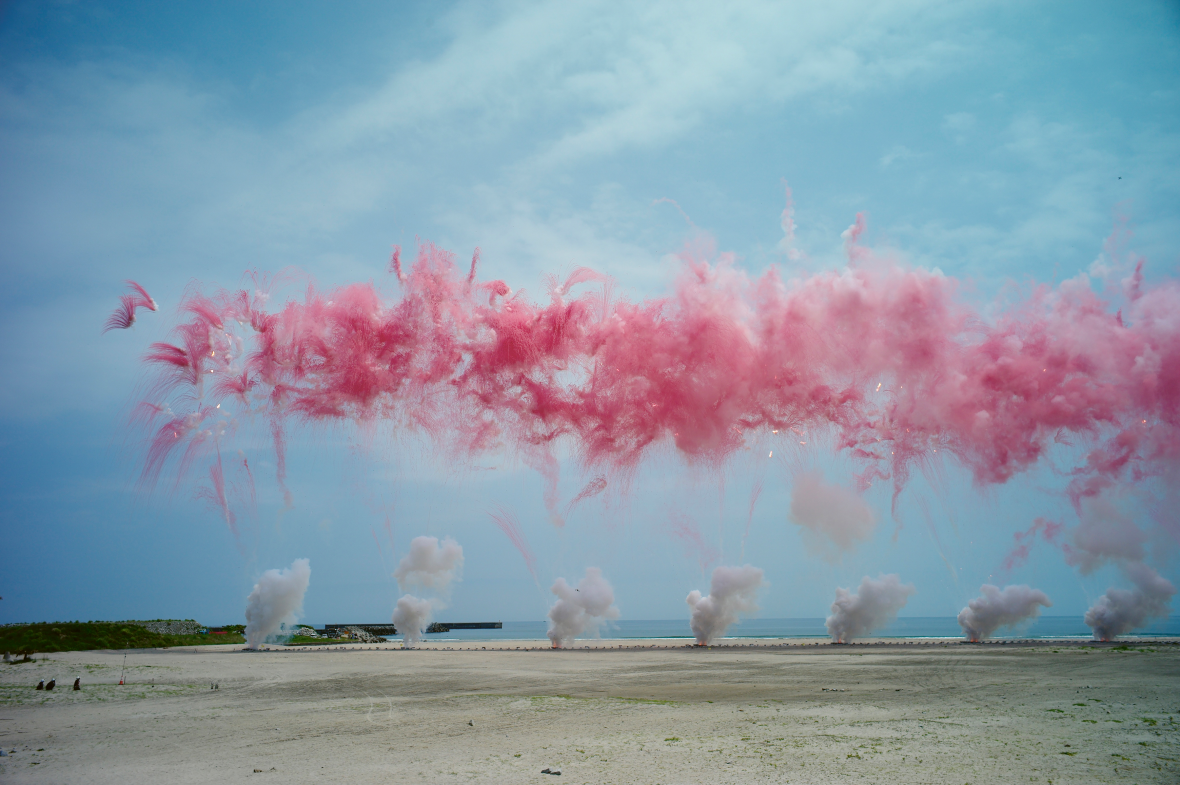
‘When The Sky Blooms With Sakura’ daytime fireworks commissioned by Anthony Vaccarello for Saint Laurent Photography Kenryou Gu, Courtesy Cai Studio

Puffs of pigment leap into the air, the seed of a cloud, an idea feathering out. Airy waves erupt, a forest of trees, a collection of earthborn stars bursting, the colours of the sunset caught in a spiral scattered across the sky.

Transient, ephemeral, evanescent: energy is Cai Guo-Qiang’s instrument. Today, as one of China’s best-known artists, his performances have been viewed by thousands of people around the world (including the spectacular opening displays for the 2008 Beijing Olympics and the 2022 Winter Olympics). His latest, ‘When the Sky Blooms with Sakura’, is the first of its kind in Japan. Sakura is Japanese for “cherry blossom,” derived from saku which means both to bloom and to smile or laugh. The wordplay is key to the work that blossomed across the sky in shades of pink and orange at midday on the 29th of June 2023. 

Photography Masatoshi Tatsumi, courtesy Cai Studio

Commissioned by the luxury fashion house Saint Laurent, the daytime fireworks marked the opening of ‘Ramble in the Cosmos – From Primeval Fireball Onward’ at the National Art Center, Tokyo (NACT). “People think I like fireworks but I actually like explosions,” Cai notes, “with their pure, abstract, unexpected and uncontrollable energy, an obsession with chaos.” As the exhibition’s title suggests, the retrospective weaves through Cai’s practice investigating the constructive and deconstructive potentials of explosions, while the event itself provided a moment of reflection for the artist, staged on a coastline he once called home, and where he had performed 29 years ago.

That artwork from 1994 was simple, almost surgical: ‘The Horizon from the Pan-Pacific: Project for Extraterrestrials No. 14’, lasted just one minute and 40 seconds. Six gunpowder fuses spanning a total length of 30,000m erupted across the night horizon of the ocean facing Iwaki, Fukushima. People living in the city collaborated by turning off their lights, “so the extraterrestrials would see the curve of the Earth from afar”. In returning to the same stretch of land and water, we’re able to see with clarity how Cai’s artistic practice has evolved, together with his relationship to Iwaki. His earlier work sought to echo the lines of the earth, exaggerating and enhancing the natural world. In this new piece we find instead the artist turning to another canvas lying empty before him: the atmosphere itself.

Photography Huafang Lee, courtesy Cai Studio

The towering pillars of pigmented smoke making up this latest half-hour performance came from a staggering 40,000 fireworks. Launched upon the beach they created a surreal bridge between sea and sky, a vast 400m-wide and 120m-high spectacle, shifting through a series of dramatic white and black waves in memory of the victims of the Japanese earthquake and tsunami of 2011 before blooming into resplendent colour: from sadness to joy. The subject speaks to the landscape of the work, echoing the earth-bound project initiated by Cai’s friends in Iwaki after the earthquake and carried out with his support: to plant 10,000 cherry blossom trees as a means of envisioning a future where the contaminated land becomes a vibrant pink sea.

Yet this vast pyrotechnic display is part of a much longer narrative for the artist, one that first began with experimentations of “drawing” with gunpowder in his hometown, Quanzhou. Born in 1957, the artist grew up in the port town looking out to Taiwan. The ocean’s horizon would, in the artist’s own words, “ignite my imagination”. The word ignite is no accident; soon the upheaval and violence of the cultural revolution in China and conflict with Taiwan would come to dominate the landscape of his childhood, both emotionally and physically. Living directly across from the warring state he would hear the gunfire every day.

“Making art is not to liberate society in the first place, but to liberate oneself,” Cai asserts. Through his art he took control of the element that overwhelmed his childhood, repurposing fear into joy, private pain into public beauty. On his works on paper we see trails of gunpowder splinter out into floral motifs, everything from abstract forms to figurative scenes, the central motif that a new creation is brought forth from the act and materials of destruction. “It’s actually another type of cure for my childhood,” he once said, “it purges the violence and destruction from this society and this era into something beautiful.” In gunpowder the artist found a release, the perfect tool to break away from conventions. “It freed me from the social constructions at the time.” The force of these small eruptions set him free, energy unveiled as an essential tool.

Moving to Japan in 1986 inevitably confronted him with the living memory of Hiroshima and Nagasaki, the impact of which could not help but inform his practice as his explorations evolved in scale and form. At one point in 1994 he even used the Hiroshima Central Park near the A-Bomb Dome as a site for his artwork ‘The Earth Has Its Black Hole Too: Project for Extraterrestrials No. 16’. The 30-second spectacle brought together 2,000m of fuse, 3kg of gunpowder, and 114 helium balloons to bring the wonders of a collapsing star into the fabric of our own world just for a moment. This work is one of many “projects for extraterrestrials” the artist has conceived for a double audience, one on earth, another far away. Cai has spoken often about his desire to create “a dialogue with the universe”, creating artworks that are not merely for show but that seek to tap into some greater power. “Art is my time-space tunnel,” he says, “allowing me to travel through which the invisible world communicates with the energy from the unseen world.” Art becomes a portal, a means of puncturing the line between visible and invisible worlds, but how to harness the energy that lies latent within these spaces? With explosions Cai seeks the answer. One event ‘Project to Extend the Great Wall of China by 10,000 Meters’ (1993), saw the artist detonate a six-mile train of explosives to visually expand the monumental construction by the Ming dynasty for 15 minutes. There’s something about this that feels alluringly ancient, Cai cast as a modern Prometheus, fire itself a sacred thing.

When he moved to New York in 1995, where to this day he now lives and works, a change occurred. At the 1999 edition of the Venice Biennale of Arts he won the Golden Lion Award for a quieter, more insidious form of destruction. His striking clay statues that greeted the audience remained unfired, meaning that the material slowly disintegrated in front of the public, cracking as time went on and falling to pieces: not a bang, but a whimper. In this latest performance a shadow of this focus on the aftermath can be found, the radiance of the ripples mirroring how energy lingers in the air, how its impact lives on like a seed taking root.

“Sometimes I have to wait for the work to magically appear on its own, to startle me.” Cai reflects, “It’s not only up to me, but comes in magical moments, when I intersect with myself and gunpowder, with nature and the unseen world to manifest.” The universe started with a bang, that first great implosion of energy that set human life into motion. In Cai’s work we find the memory of this pulse in every start, every shiver. In each explosion there’s a counterpoint to pain, a quest to unearth childish joy and play. “I am a fun artist,” Cai once declared, “like a little boy who never grows up.” Yet for those who know the artist’s past, this Peter Pan-like image holds within it residual trauma. In each explosive artwork the artist relives his past, enacting and reworking the sounds of his childhood, interrogating the forces of the universe.

Yet time passes. Cai knows that the reverberations of those sounds have dictated much of his life and art, as the echoes of the past surge into the present. It’s in the aftermath where the real effect unfurls; it’s the silence after the storm, the way the smoke spreads its wings across the sky when left to its own devices: part of the performance that not even the artist can control. An art, as he says, that brings “infinite surprises…first of all, to oneself!”

This article is taken from Port issue 33. To continue reading, buy the issue or subscribe here

Our Divine Comedy

Purgatory and Paradise: Acclaimed artist Tacita Dean reflects on her debut design work for Wayne McGregor’s balletic interpretation of Dante’s The Divine Comedy. From Issue 29

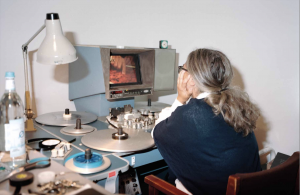
Watching trims from One Hundred and Fifty Years of Painting, 2021, on her 16mm Steenbeck. Photography Muhammad Salah


Tacita Dean is gently cutting strips of paper in her Berlin studio. As we talk, looking into our respective screens, scissors snip, and she sticks schedules into an already-bulging notebook ready for her upcoming trip: New York then London. “Everything that I was supposed to do in the last two years has been put into the last two months, so it’s been a nightmare.” Like many of us, she’s weary, but she’s been anything but idle in lockdown. I’m speaking to the award-winning artist in the run-up to her highly anticipated debut as set and costume designer for Wayne McGregor’s interpretation of The Divine Comedy, which opens at the Royal Opera House this October. The Dante Project, originally planned for May 2020, has been long in the making. “I had perhaps historically thought of working, one day in my life, on a stage, for a stage,” she muses. “It wasn’t an active ambition; it was more of a passive one, so when he did approach me, well, I was up for trying anything once!”

McGregor first asked Dean to work on Woolf Works, inspired by the life and writings of Virginia Woolf, but scheduling made the collaboration impossible. When he approached her the second time, she accepted gladly: “I think in a weird way The Dante Project suited me more.” She’d never read The Divine Comedy, but “there’s an amount of osmosis”, she theorises, smiling. As she worked, she listened over and over again to the audiobook, read by the poet Heathcote Williams. The subject fascinated her: “It has all the ingredients of things that interest me, and purgatory is a state that informs my work. I was a Roman Catholic, so there’s that element to it too.”

Much of Dean’s art deals with exploring the mysteries of life, the unseen world, the limits of things (‘Disappearance at Sea’, 1996), an eclipse (‘Antigone’, 2018), the elusive green ray (‘The Green Ray’, 2001). “I work a lot with travelling in a way, the voyage, the crossing or passage; that aspect was also very interesting to me, and in terms of mediums that was very important.” She describes how she approached the whole ballet as a travelling through the three states of the text, using three different mediums to explore and differentiate between them: “through negative to positive, from black-and-white to colour, from representation to abstraction. I went through the whole gambit.” These spectrums map out a fascinating voyage of their own in Dean’s visual language, tracking the development of her own career, from smudged lines of chalk to rolls of flickering 35mm film. Divided into the three acts of Inferno, Purgatorio, and Paradiso, as resident choreographer McGregor worked with the Royal Ballet on movement and Thomas Adès on the specially commissioned composition, Dean’s set designs came before anything else. “I was really out there alone. So I struggled initially, and I was very self-conscious about it. Then at a certain point I thought, well I just have to do what I do rather than worrying, and as soon as I got to that phase it got much easier for me.” For Inferno she took her cue from Dante. “Hell is cold, which is not how we perceive it; we always think about it as hot – Dante made me think of ice.” Dean returned to her earliest work with chalk, painting large wooden boards with blackboard paint. These became her canvas for a huge landscape with jagged edges, yet rather than simply draw ice in white chalk she chose to draw it in negative. “I could have flipped it digitally; I just knew that psychologically I needed to put myself through the difficulty of drawing. I did an upside-down mountain range.” Dean drew the work back in 2019, listening to discussions of Brexit post-referendum and the proroguing of parliament, with similar political traumas occurring in America. As she worked she found herself writing names into the piece, though most were smudged away: “The only name I kept visible was Mitch McConnell.” For the dancers, sin became a white stain. “I sprayed on chalk in relation to their various sins, so thieves had chalked hands, and Paolo and Francesca have genitals in chalk.” As the dancers move they will transfer this chalk to each other and a dark circle on the floor will fill with the echo of their movements, sin spreading and hell growing at each touch.

Photography Muhammad Salah

For Purgatorio Dean printed a negative image as positive. “You can’t escape hell,” she observes. “You can escape purgatory, through labour, through people praying for you on Earth; there are ways of petitioning. You can rise further up purgatory, but I just saw it as a very static image on the stage that was also a transitional state.” Dean chose the image of a jacaranda tree, a common sight in southern California, near her studio in Los Angeles, famed for its purple flowers, and transformed it into an “otherworldly green”, with the 10 x 8 negative thrown into positive. “[It] means it’s got some strangeness to it, with the whole of LA in negative in the background but whited out with crayon.” Sitting on a bare stage it acts as a freeze-frame, the trunk’s bark like skin, wrinkled yet somehow ageless – an eerie presence, a stasis in which the dancers must roam. When she first heard the music by Adès she was stunned: “It was magical. I thought, oh my god this is like attending The Rite of Spring… It’s so emotional; I don’t think there’ll be a dry eye in the house.”

Inferno premiered in July 2019 at the Dorothy Chandler Pavilion in Los Angeles, and seeing her first set come to life left an impression. “I can see why people get hooked on working live, because there are things that happen… You encounter the reception in a very visceral way; you have to meet your audience.” As an artist she’s aware of the distance she’s usually afforded: “How people think or how they behave at an opening is not remotely what is really going on, but when it’s an audience you feel the response is spontaneous, people clap… You can hear a visible intake of breath, and that is real.” She pauses, almost melancholic, “You never really get that in the art world, that’s not what we trade in, that reaction, that reality. That physical moment is new for me, and that’s both exhilarating and terrifying.” She checks herself, “I want to go back to my world where I don’t have to encounter anybody.” Did she enjoy lockdown then? “We’ve had our own purgatory I think, but it’s now the 700th anniversary of Dante, which it wasn’t when we were initially supposed to do it, so that’s useful as a sort of hook, and a bit of time has been helpful. What the delay has given is a context larger than Dante… all these generic words that we have in our language: This period has been ‘hell’, and we’ve all definitely been in ‘purgatory’ waiting. These terminologies have taken on a whole new meaning because of the pandemic.”

I ask her what the stages of Dante’s afterlife mean to her. “I think we know what hell is really,” her face freezes for a moment. “Hell is physical pain.” She’s put the scissors down, hands clasped in front of her mouth. “Purgatory is more emotional pain, emotional regret, and paradise… Well, paradise is to be without a body.” It’s a sentence that stings; Dean has suffered from rheumatoid arthritis for years.

The elusiveness of Paradiso made it a difficult stage to set, “We all much prefer watching iniquity,” she notes dryly. “Paradise is formless, isn’t it? Whereas the other two are very much a trajectory.” Echoing this amorphousness for the LA premiere, she created an abstract film in a photo studio in Burbank: “There’s no safety in film; there’s no safety in dance, either; people slip, so it’s just bringing another live element to the whole thing.” Despite her worries she makes light of it: “It’s just shape and form and colour, so I’m briefly turning the opera house into a cinema.” Inspired by William Blake’s iconic illustrations of Dante, she made light filters with several different layers of colour: “I really wanted that muddy richness, which is what Blake had, not pure colour at all.” She cut the film listening to Adès’s composition, “It’s really weird: Every time I have to remember how to do it, I can never remember. I think it’s obviously self-imposed, but I get a sort of amnesia. I have to reinvent my process; so I’m not overawed by my past – I don’t remember it.” Where does one even start on a project like this, I ask? “You start in the wrong place; that’s what happens,” she muses. “That’s always the way, and you know it’s the wrong place in your heart of hearts, and that eventually trips you out of it; you realise, that’s not me.”

The Sufi Architect

Suleika Mueller on photographing Nevine Nasser, the beauty of Sufi practices, plus the power of art and architecture

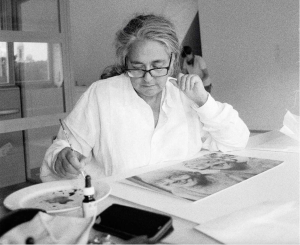
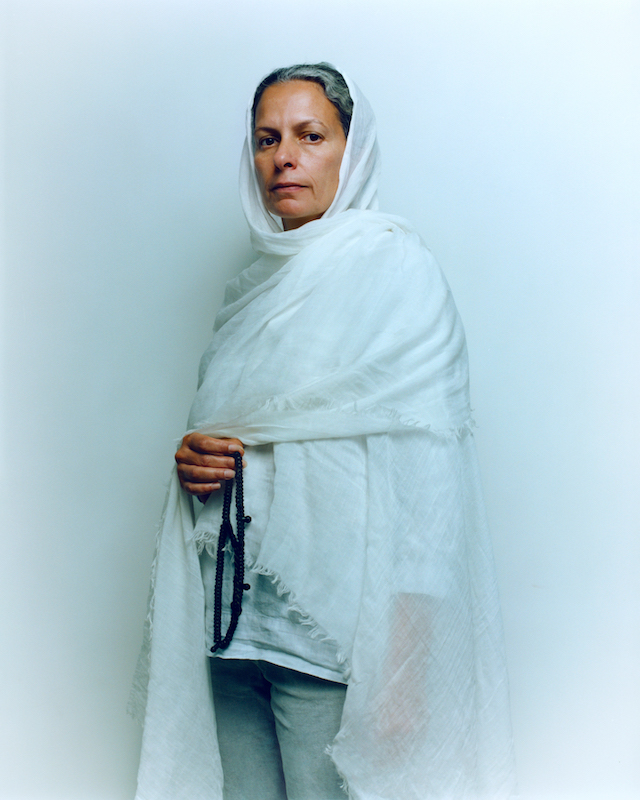
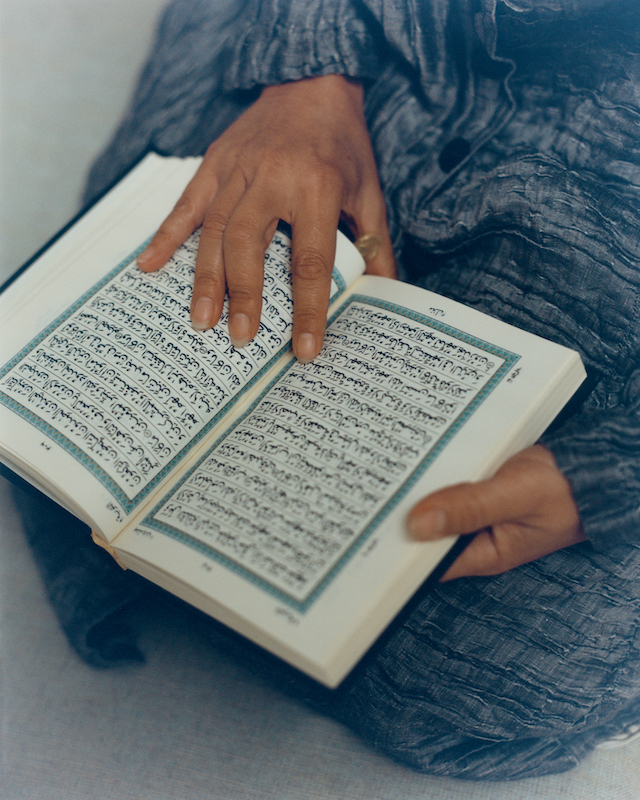
When photographer Suleika Mueller met London-based architect and practicing Sufi Muslim Nevine Nasser for the first time, she was utterly inspired by her work. Born and raised a Sufi Muslim herself, Suleika had often struggled to connect her medium with her spiritual practices. Nevine defies the stereotypes of Muslim Women and integrates her spirituality with creativity, most notably in the form of portraits offering a different perspective of Islam to what’s portrayed in Western media.  Suleika looks up to Nevine entirely, so much so that her work has inspired her “most personal” project yet, The Sufi Architect. Below, I talk to Suleika to understand more about the motives behind the series, the beauty of Sufi practices and the power of creativity. 

What excites you about the medium?

My work is extremely intimate and personal, I use photography to explore

subjects linked to my upbringing, identity, emotions and experiences. It’s a great tool to understand myself, the world and the people around me a little bit better and delve into subjects that I’m curious about. I think my spiritual, cross-cultural upbringing has shaped my artistic vision into a unique blend of Eastern and Western cultural values, traditions and references. My hybrid identity, the feeling of being in the in-between, though isolating as it might feel sometimes, actually has allowed me to understand and empathise with different kinds of people and point of views so I feel quite grateful to have been brought up in such an unusual way. I want to champion people, subjects and communities I truly care about, especially because I never saw any relatable representation of the Muslim community growing up.

What inspired you to start working on this project, why tell this story?

This project is one of the most personal ones to date, just because it is so closely linked to my background and highlights things I deeply care about. Growing up Sufi in the West meant that nobody around me knew anything about my practices and community. My aim has always been to spread more knowledge and highlight the practices, traditions and people I grew up with, challenging Western media’s harmful stereotypes by portraying

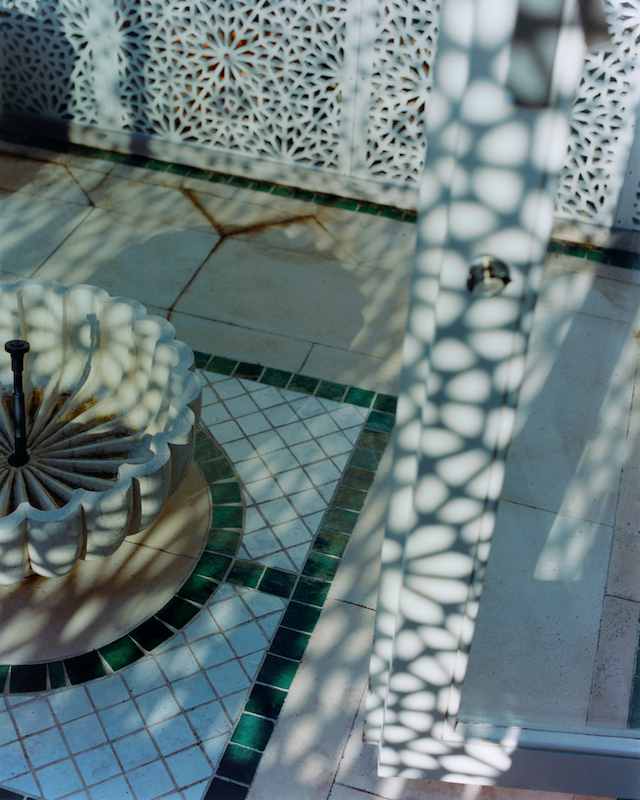
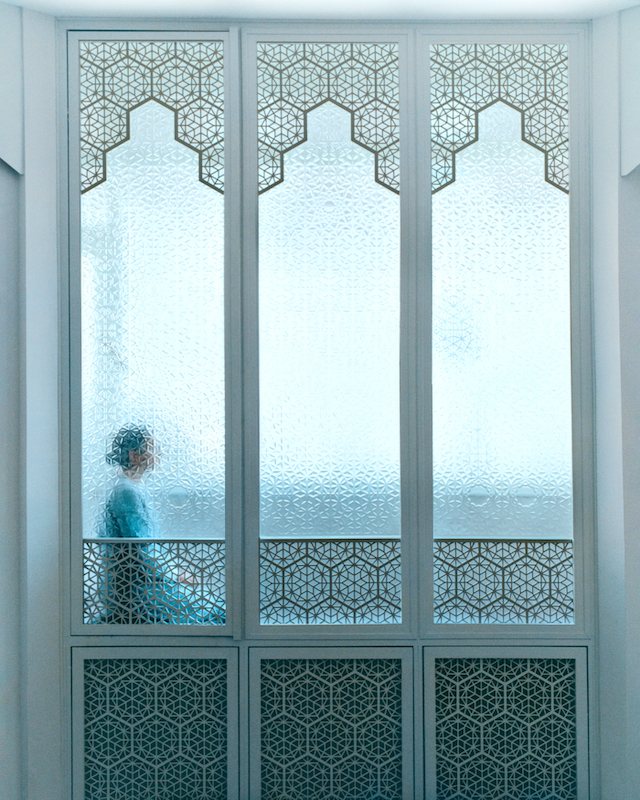
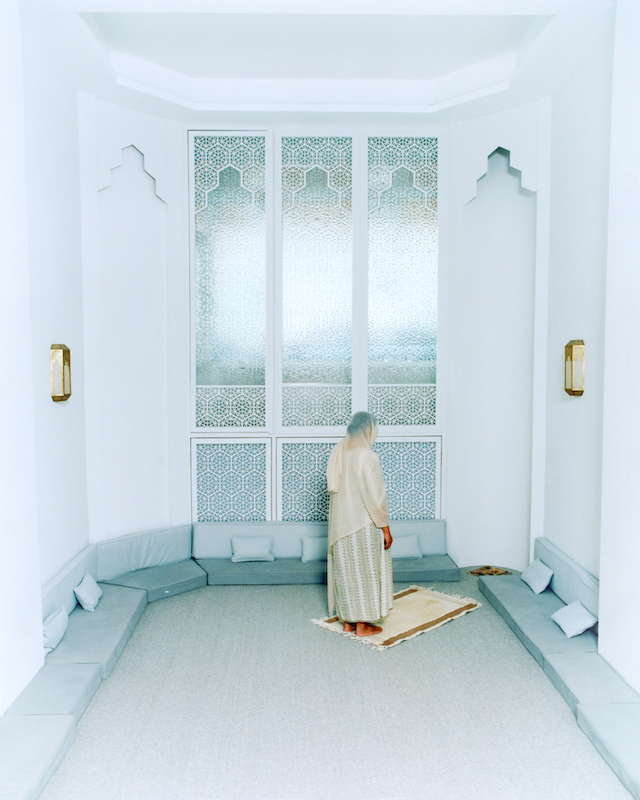
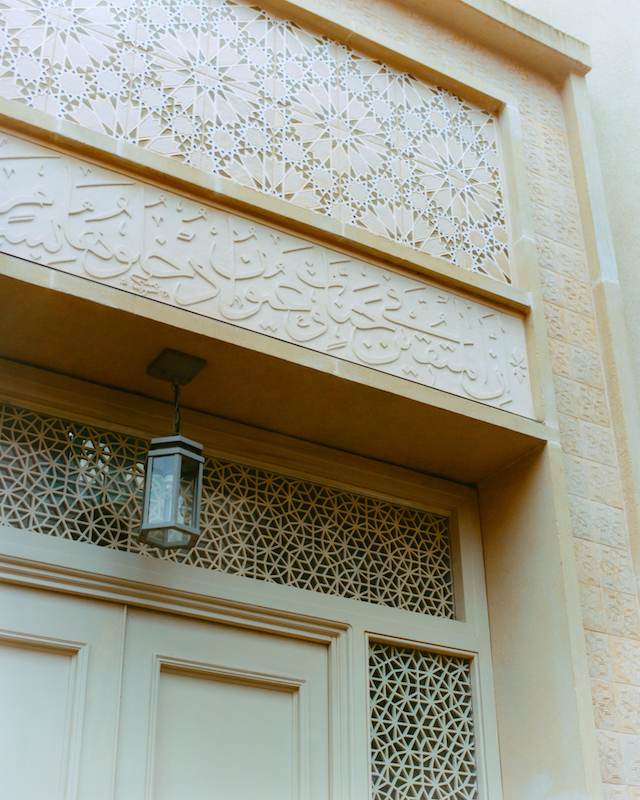
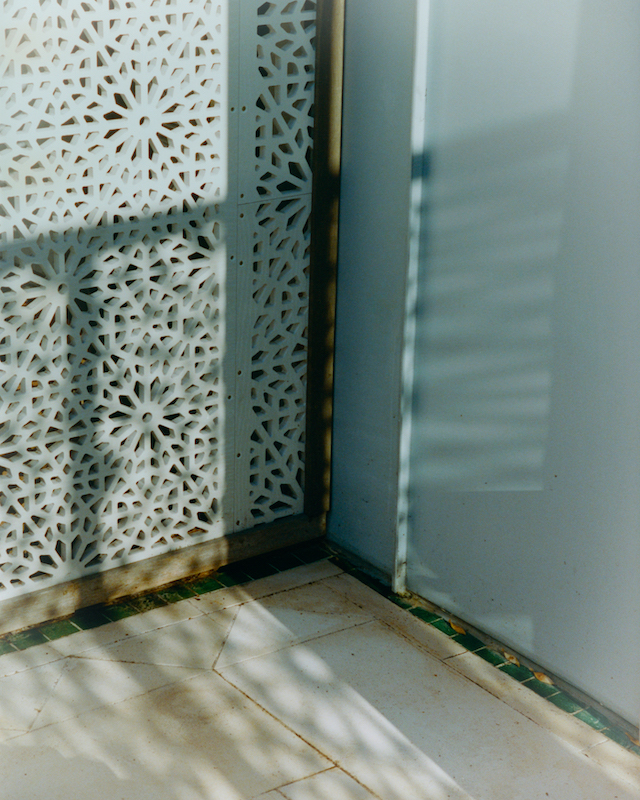
the Muslim community in a much more authentic and nuanced way. I was extremely inspired and touched by Nevine’s beautiful work and the space she designed and was even more so struck by how empowered and committed she is as a person. During her doctoral studies, she developed a methodology for designing transformative contemporary sacred spaces through creating the School of Sufi Teaching, a Sufi community centre in Bethnal Green where members of the Naqshbandī-Mujaddidī Sufi order regularly meet to pray, meditate and practice together. Nevine reclaimed the transformative power of sacred geometry, calligraphy, symbolism and understandings of light in the Quran to underpin and inspire the design of the space in order to support practitioners to turn towards the inner self, preparing them for meditation. This series is as much a celebration of Nevine as a person, as it emphasises and explores the beauty and transformative power of sacred Islamic art and architecture as well as Sufi practices and traditions. I believe it is truly important to tell this particular story as it gives insight into a widely unknown aspect of Islam, whilst at the same time exploring one woman’s intimate spiritual practice.

Traditionally, the majority of religious and spiritual figures are male, and architecture is still a very male dominated industry, so I really love how Nevine breaks all those stereotypes, setting an example of an empowered yet religious woman.

What was the creative process like, did you spend much time with Nevine? Where did you shoot etc.?

Nevine and I met at the community centre and she showed me around the space as we got to know each other better. We hadn’t met before so we talked about loads of different things whilst shooting. It turned out that Nevine and I share a lot of common interests and I could’ve stayed there forever just talking about our experiences, aims, practices and inspirations. I felt an instant connection to her because both our creative practices have very similar aims and goals, Nevine explores and pursues those through architecture whilst I use photography as a medium. I had prepared a few shot ideas in advance and Nevine had many ideas of her own so we just experimented and tried out different things throughout the day. A lot of the shots just emerged from her telling me where and how she usually practices within the space. Portraying Nevine’s intimate rituals felt a bit

like coming home, it brought me back in touch with the sacred traditions

of my upbringing. I’ve always wanted to show how meaningful and peaceful Sufi practices are and I guess this project is a first step in that direction. It was probably one of the most wholesome and effortless shoots I’ve done to this date. Everything seemed to just fall into place and the serenity of the space really infused the whole experience with peace and calm.

Can you pick out a couple of favourite images and talk me through them?

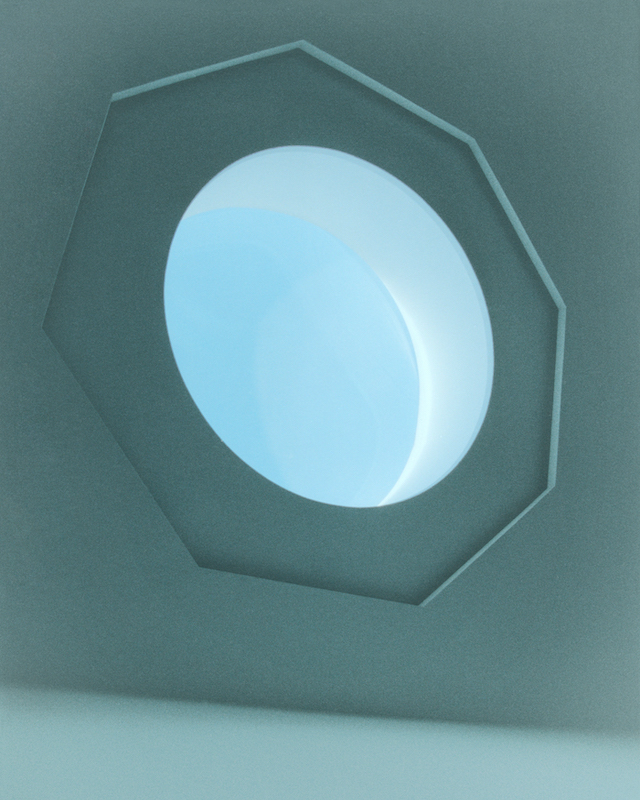
In Islamic culture, sacred geometry is believed to be the bridge to the spiritual realm, the instrument to purify the mind and the soul. Many spiritual and miraculous concepts are represented in the geometrical patterns, oftentimes acting as windows into the infinite, reminding of the greatness of Allah.

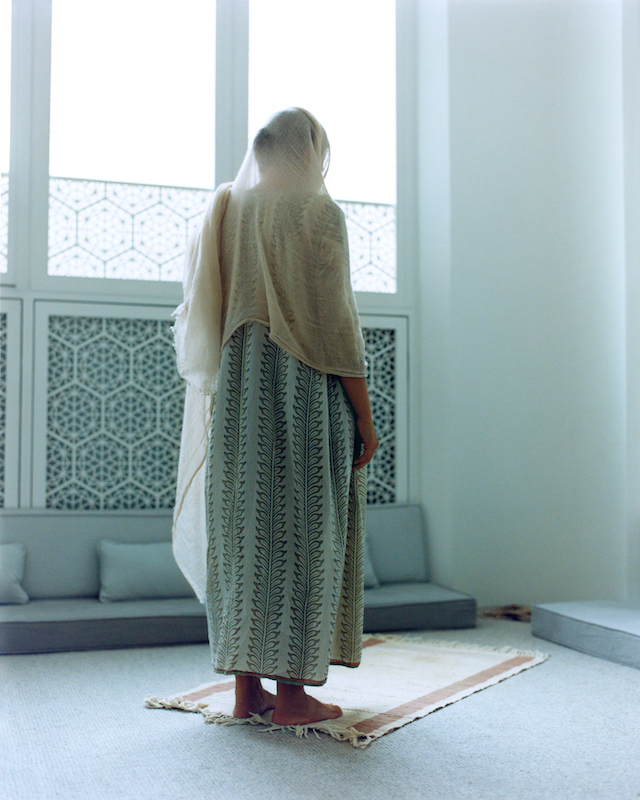
Nevine in meditation. Sufi practitioners regularly observe Murāqabah (arabic, translated ”to observe”). Through Murāqabah a person observes their spiritual heart and gains insight into the its relation with its creator, developing a personal relationship with Allah through self-knowledge and inquiry.

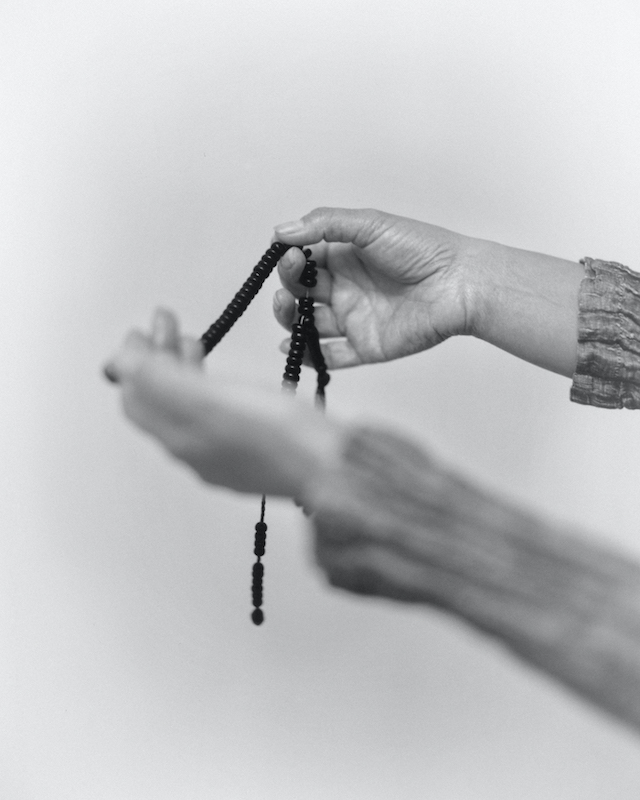
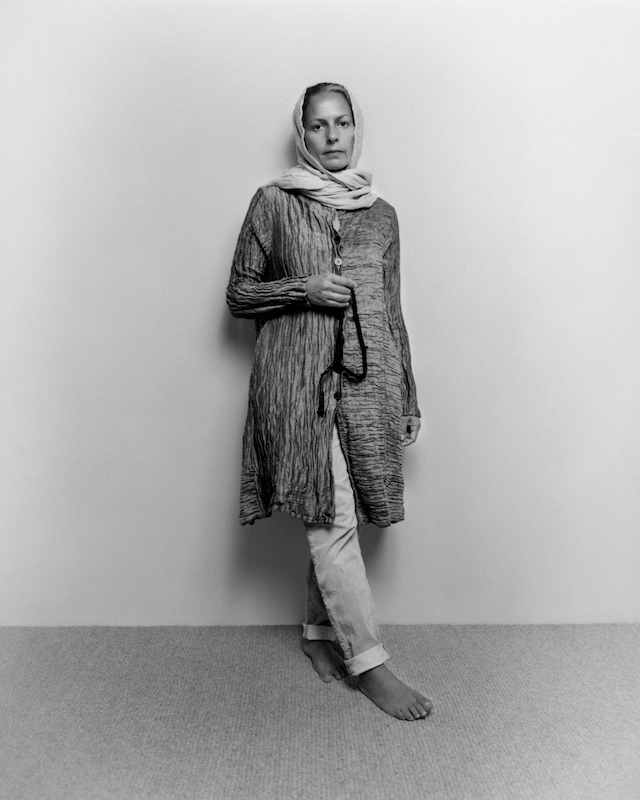
Tasbih is a form of Dhikr (arabic, translated “remembrance”) in which specific phrases or prayers are repeatedly chanted in order to remember God. The phrases are repeated 99 times, using the beads of the Subha (Muslim prayer beads) to keep track of counting.

Nevine praying Zuhr, one of the five daily Islamic prayers, facing the Qibla, the direction of the Kaaba in Mecca.


How do you hope your audience will respond to this project?

I really hope this project gives insight into a community and practice that is usually quite mystical and secretive. My own Sufi order is a very close-knit community but at the same time, it’s quite isolated. I always thought that it was such a shame to keep the culture, community and practices so hidden from mainstream society. I would really love for the series to open the doors a little bit, allowing a glimpse of the beauty, depth and serenity of Sufi traditions and Islamic art. I also hope Nevine’s sincerity, passion and dedication in creating a space that supports spiritual development comes across in the imagery. She is a truly inspiring and empowered woman who’s story deserves to be told.

What’s next for you?

I feel like this project really opened my eyes and made me realise how passionate I am about the subjects it touches upon. I’ve decided to make this an ongoing personal project of mine, exploring women and non-binary people who use their creative practices as an extension of their spiritual ones. I’ve already shot another series with someone from a completely different background, using a completely different art form to connect to their spirituality and I’m very excited for that one to come out later this year. If anyone reading this is interested in participating I’d love for them to reach out to me!

Frank Bowling and Sculpture

In a new exhibition at The Stephen Lawrence Gallery, rare and previously unseen sculptural works from the iconic artist are brought to the fore

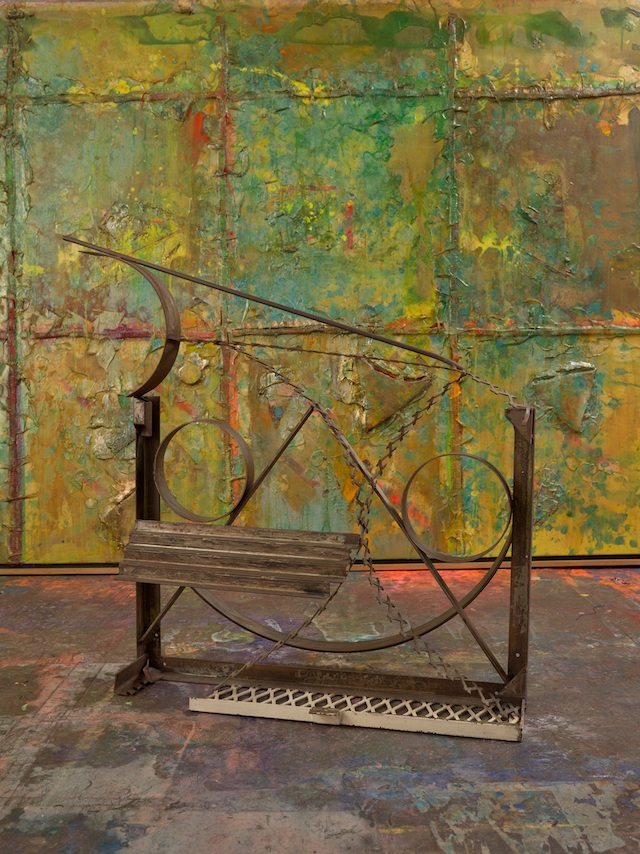
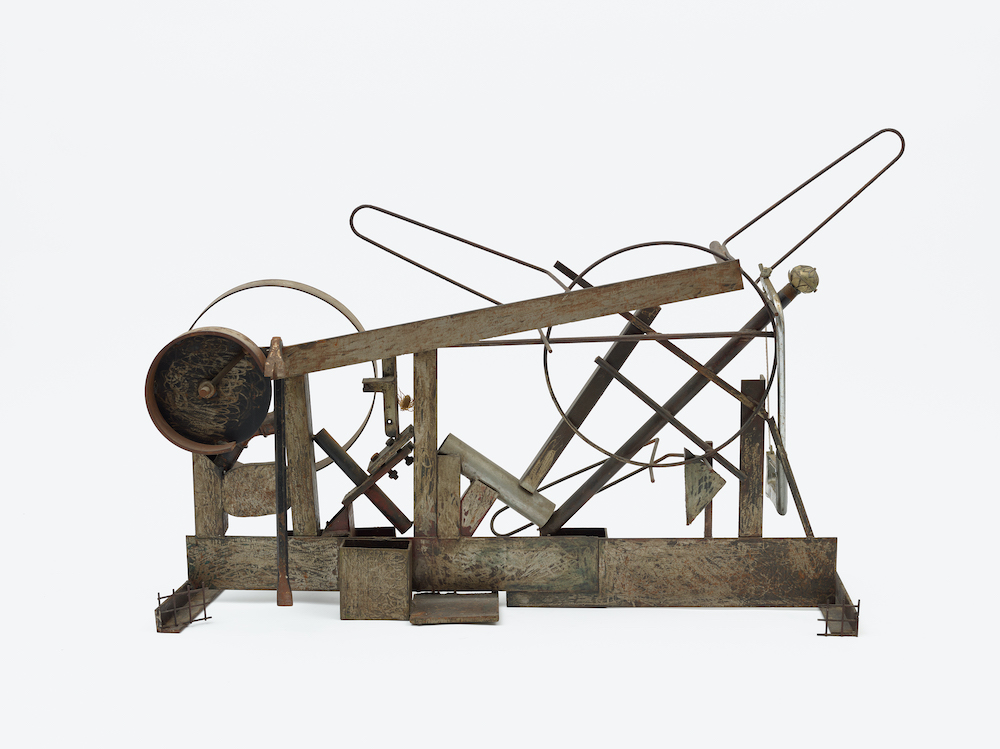
Frank Bowling, Angharad’s Gift Patagonia, 1991, Welded steel, 92 x 94 x 34 cm and Sasha’s Green Bag, 1988, Acrylic, acrylic gel, polyurethane foam and found objects on canvas with marouflage, 180.6 x 294.2 cm. © Frank Bowling, All Rights Reserved, DACS 2022. Courtesy the artist. Photographed by Anna Arca.

There is unlikely a more prominent or influential name in the world of art than Frank Bowling, a painter and sculptor born in Guyana and based in London. Renowned for his use of colour and experimentation, the former RCA grad – who studied alongside the likes of David Hockney and R. B. Kitaj – spent the next 60 years fine-tuning his medium, working his way to masterdom while developing a style that merges new materials and methodologies. From iconic Map Paintings to an artwork (named Tony’s Anvil (1975)) featuring pouring paint dripping down the canvas, perhaps his paintings are what Frank is best-known for. Little does the world know about his sculptural pieces, which is precisely what a new exhibition at The Stephen Lawrence Gallery opening on 15 July aims to address. In a conversation with curator Sam Cornish, we chat about Frank’s enduring influence, his pivotal works, and the reasons why his sculptures have remained in the shadow – until now. 

“Painting has to release certain sculptural aspects, but it also has to retain aspects of the sculptural to hold its own on the wall, in order for it to be a thing.” – Frank Bowling

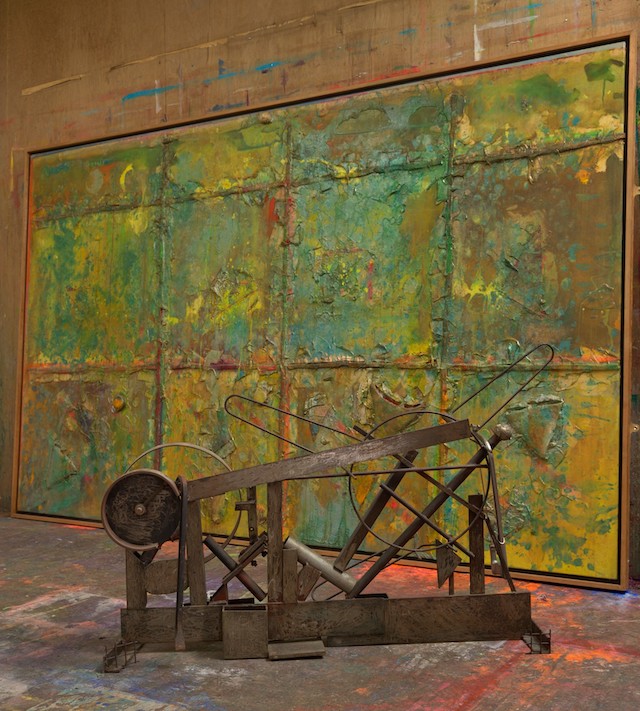
Frank Bowling, Hrund, 1988, Welded steel, 84 x 122 x 40 cm. © Frank Bowling, All Rights Reserved, DACS 2022. Courtesy the artist. Photographed by Anna Arca

This is the first exhibition to focus on Frank’s sculptures. Why have these works been overlooked in the past?

Interest in Bowling’s art has risen vertiginously in the last decade or so. Inevitably there are lots of areas which haven’t been explored, especially given the peculiar complexities and contradictions of his art and attitudes. At the moment interest has been concentrated in his earlier work, his Expressionist pictures, his conflicted Pop paintings and, most significantly his Map Paintings; all areas open to sociological or political analysis. This is all well and good, and in line with the mood of the time, but I think there are lots of aspects of Bowling’s work that these approaches struggle with. Bowling’s making of sculpture has been fairly isolated, so naturally have taken a back seat. His paintings’ interactions with sculpture, or the idea of the sculptural, has been remarked upon before, but my project argues it has a much more central generative role within the trajectory of his work.

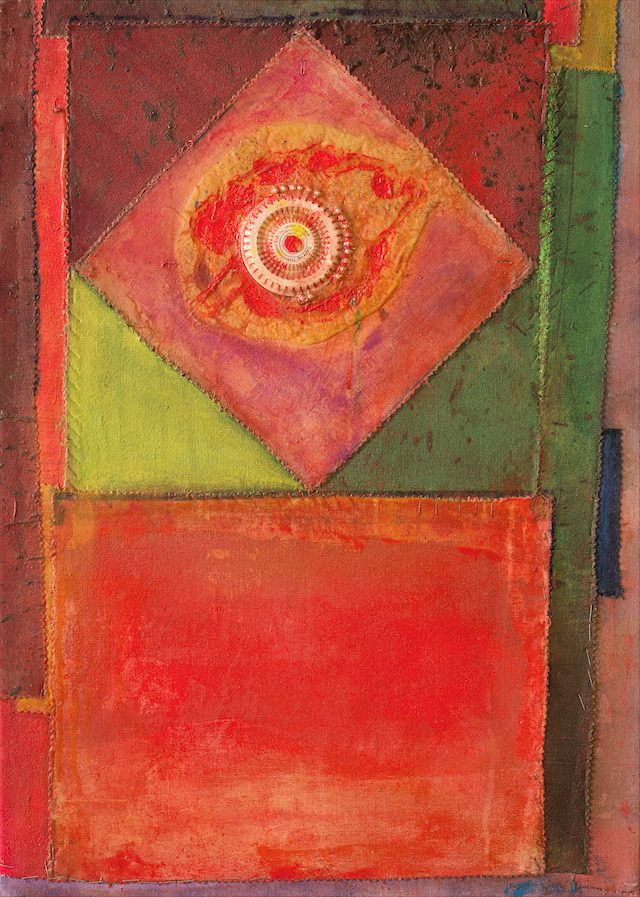
Frank Bowling, Lapwing Eye (Made in Japan), 2000, acrylic and mixed media on canvas, 64.5 x 46 cm. © Frank Bowling, All Rights Reserved, DACS 2022. Courtesy the artist. Photographed by Anna Arca

Can you give some details into Frank’s relationship with sculpture? What defines his style and processes, and how did you want to represent this in the show?

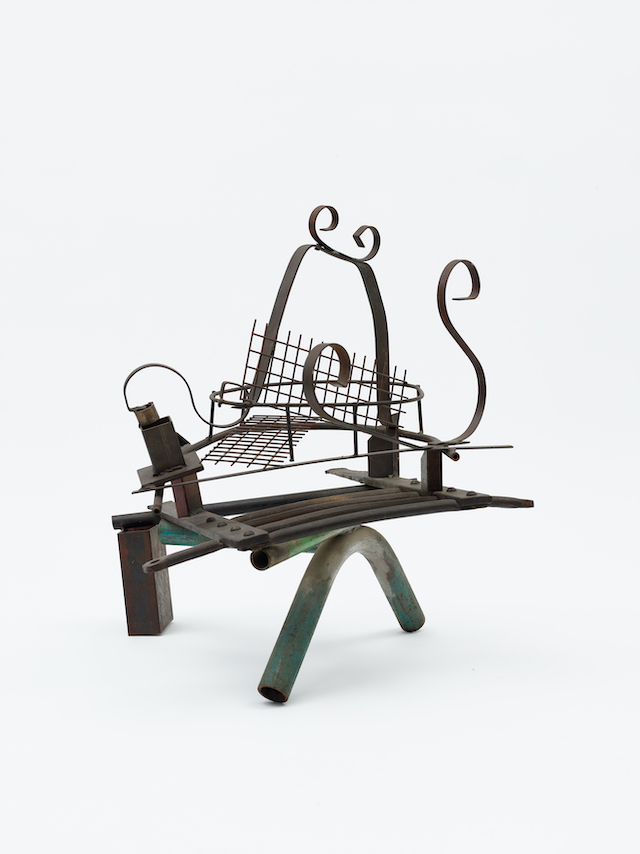
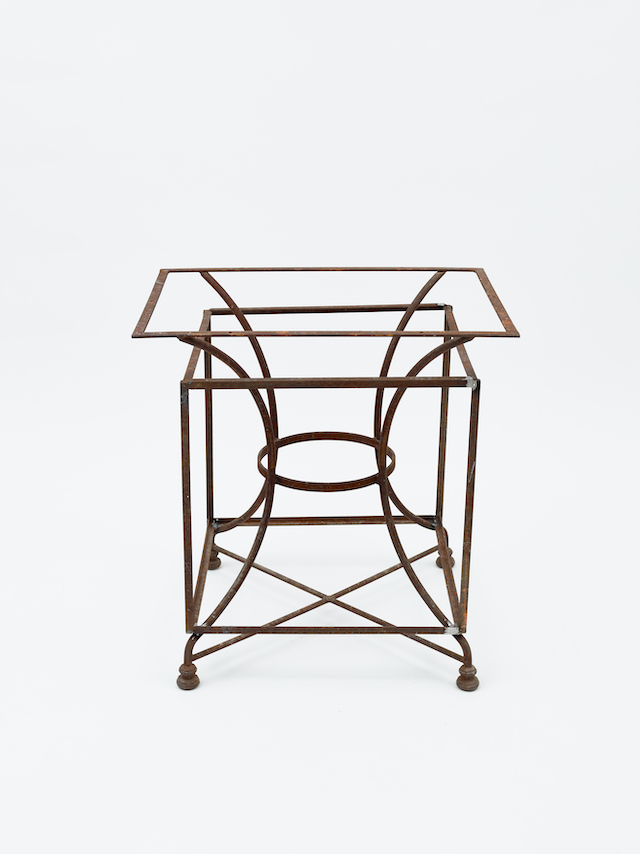
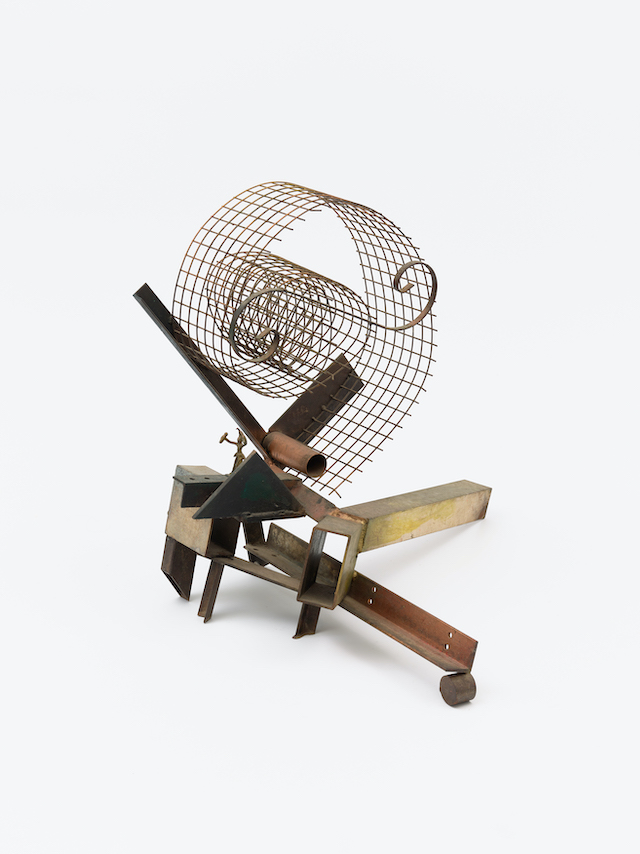
We are showing seven steel sculptures by Bowling, which is probably about half he has ever made, and almost all that survived. Six were made between 1988 and 1991 and the seventh completed this year, for the exhibition. I relate his work in steel to Anthony Caro, to Cubism, to classical African Art and the art of the abstract artists of the early twentieth century of Russia and Eastern Europe. This mix of influences are handled playfully. Bowling makes a virtue of being an amateur, or at least occasional, sculptor: they do not have any tricks, but they do have a direct and in a sense surprising physicality. 

Frank Bowling, Bulbul, 1988, Detail, Welded steel. © Frank Bowling, All Rights Reserved, DACS 2022. Courtesy the artist. Photographed by Anna Arca

What comparison can be made between his sculptures and paintings?

There are many connections and overlaps. One is persistent interest in geometry, one of Bowling’s key concerns from the very beginning of his career. Bowling has commented that he turned to sculpture because he thought Colour Field Painting ‘lacked structure’. Geometry, whether used to determine the overall proportions of his paintings, or more physically present as a kind of substructure, has been crucial for Bowling to help him give his paintings a sense of order. There are a number of instances in the exhibition where similar geometric structures can be seen in painting and sculpture. 

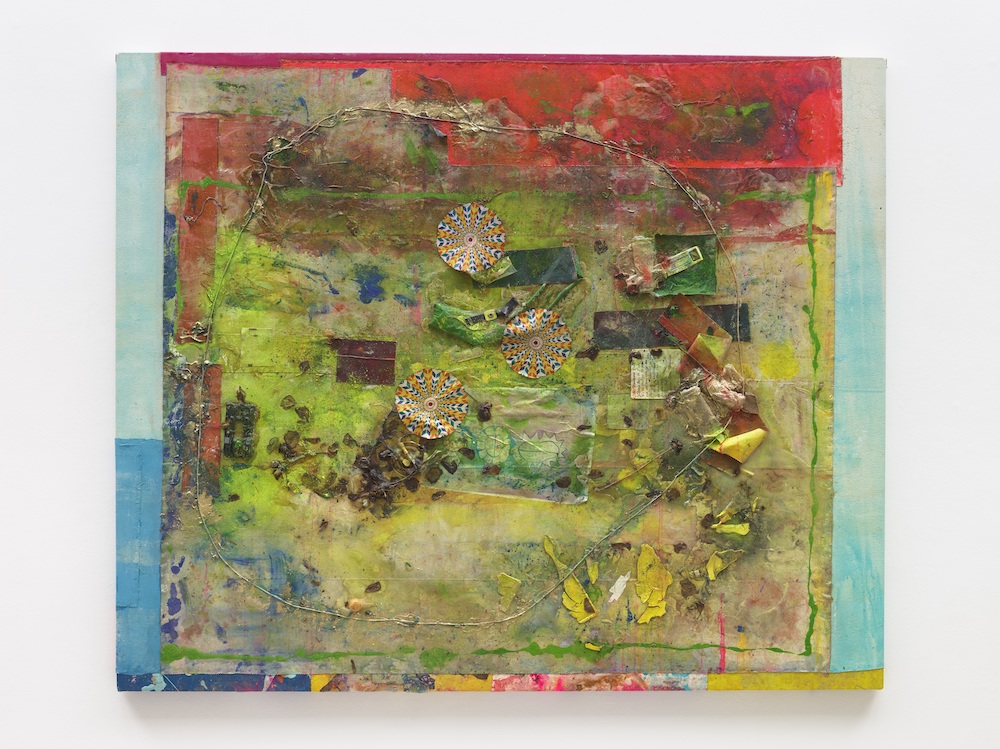
Frank Bowling, Mummybelli, 2019, Acrylic, acrylic gel and found objects on collaged canvas with marouflage, 171.3 x 206.8 cm. © Frank Bowling, All Rights Reserved, DACS 2022. Courtesy the artist. Photographed by Anna Arca

How did you curate the show, what works did you seek to include? Can you pick out some highlights?

The 1988-91 sculptures chose themselves, although I was very pleased that Bowling had What Else Can You Put In A Judd Box completed, so it could be included. And we were very grateful to include a sculpture from a private collection. I could have kept the selection limited to paintings contemporary with the 1988-1991 sculptures, but I decided to include works from across the career, from 1960 until 2019. This gives a broader sense of the different ways his paintings have interacted with sculpture, which also creates an inherently more interesting, and I hope, exciting, display. 

Sentinel, one of Bowling’s Poured Paintings of the mid-70s is a highlight for me. But I also love Brooklyn III, which at first seems monochrome. The way Brooklyn III sits next to the very busy, object strewn and colourful surface of Mummybelli is something I am especially pleased with. The similarities outweigh the differences, which would be difficult to anticipate from photographs. I think the harmony is to do with light and the way a sense of underlying movement is contained by the overall rectangle. Of the sculptures, Angharad’s Gift Patagonia and The Man Who Mistook His Wife for a Hat are my favourites: I’ve looked at both many times before, but they feel very different in this exhibition. The rigour of Angharad’s Gift Patagonia is clearer in the gallery space, while there are a few elements of The Man Who Mistook His Wife for a Hat I hadn’t noticed before. I could go on, because all the works bring something special to the display.

Frank Bowling, King Crabbé, 1988, Welded steel, 68 x 50 x 30 cm. © Frank Bowling, All Rights Reserved, DACS 2022. Courtesy the artist. Photographed by Anna Arca

Any notes about the structure and pace of the exhibition itself? How do you hope the audience will experience it?

The exhibition space is divided roughly in half, with an upper and lower level, separated by a ramp and some partition walls, although with enough space left to easily look from one to the other. The paintings are hung visually, in dialogue with each other and the sculptures, rather than in chronological or thematic order. I wanted to mix large and small works, partly because of the spaces of the Stephen Lawrence Gallery, and partly because some recent displays of Bowling’s art have perhaps overemphasised literal monumentality. The movement from the very small incidents of colour and texture to very large panoramas is hugely important to Bowling’s paintings, so in a way it makes sense that his larger works can sit alongside his smaller. Obviously I had some hunches before I started about how the works would interact but I was pleasantly surprised at how many inter-connections there were, congruences of shape or structure, or materiality, even in a few instances, of colour. I would hope the viewers would pick-up on at least some of these and also notice things I haven’t.

Frank Bowling, Sasha’s Green Bag, 1988, Acrylic, acrylic gel, polyurethane foam and found objects on canvas with marouflage, 180.6 x 294.2 cm. © Frank Bowling, All Rights Reserved, DACS 2022. Courtesy the artist. Photographed by Anna Arca. Frank Bowling, King Crabbé, 1988, Welded steel, 68 x 50 x 30 cm. © Frank Bowling, All Rights Reserved, DACS 2022. Courtesy the artist. Photographed by Anna Arca. 

What’s the main goal with the show, what can the audience learn? 

I hope it’s more pleasurable than didactic. But I guess I want to impress upon people the complexity and range of Bowling’s interaction with sculpture. There has been a lot written about Bowling and landscape. I think that his more fundamental concern is with evoking human presence, and I would be pleased if that were communicated at some level.

Frank Bowling and Sculpture is at The Stephen Lawrence Gallery, University of Greenwich, London from 15 July – 3 Sept 2022. To coincide with the opening of the exhibition a new standalone monograph Frank Bowling: Sculpture has been published by Ridinghouse.

Frank Bowling, The Man Who Mistook His Wife for a Hat, 1988, Welded steel, 75 x 72 x 65 cm. © Frank Bowling, All Rights Reserved, DACS 2022. Courtesy the artist. Photographed by Anna Arca.

Frank Bowling, What else can you put in a Judd box, 2022, Welded steel, 72 x 69.8 x 57.9 cm. © Frank Bowling, All Rights Reserved, DACS 2022. Courtesy the artist. Photographed by Anna Arca.

The Road to Nowhere

Dalia Al-Dujaili on identity, storytelling and the importance of providing a platform for second-generation immigrants

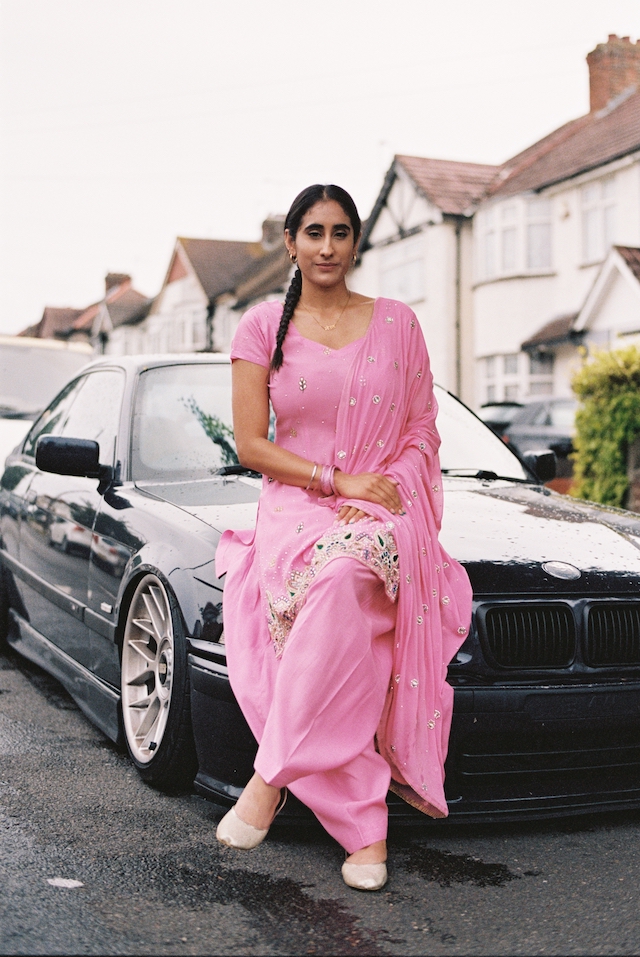
Hark1karan, Zimmers of Southall (Copyright © Hark1karan, 2020-2021)

Identity is complex a complex thing. In The Road to Nowhere, a magazine from Dalia Al-Dujaili, a British-Iraqi editor and journalist, the concept of identity is torn apart, scrumpled and analysed as she addresses her frustration with a lack of accurate representation of second-generation immigrants – where so often are diaspora communities spoken for in the media and therefore turned into a “political issue only”, she says. Where in fact, migration is a vital part of global culture, and The Road To Nowhere – now in its second issue – seeks to highlight this through a celebratory merging of art and writing, told first-hand from “third-culture kids”. She says, “Humans are mosaics of their experiences, their upbringings, the people around them and their personal history. So none of us fit neatly into a box, we’re all so messy and complicated!” Below, Dalia reveals her reasons for making the magazine, what we can expect to find inside the latest issue and her personal thoughts on identity.

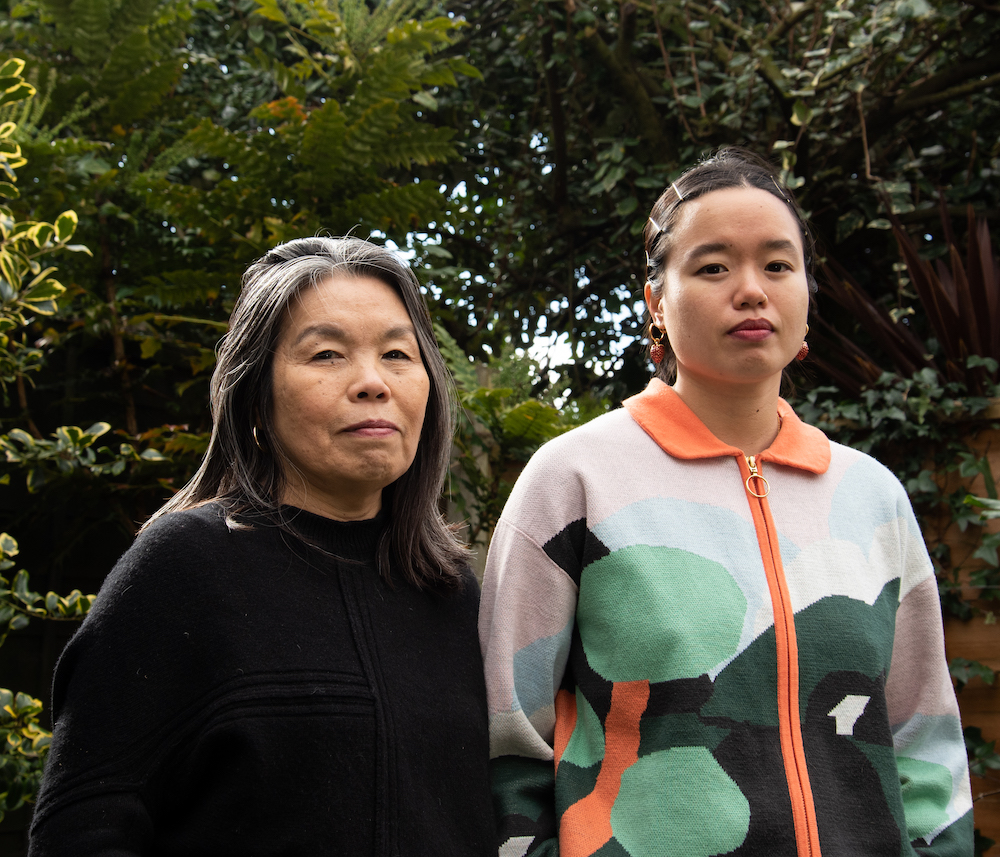
Courtesy of Angela Hui

What are your reasons for starting The Road to Nowhere, what provoked it?

Oof, so many reasons… I started it during lockdown of 2020 as a way to pass the time as I was still a uni student then and didn’t have much to do. It was partly a way to raise aid money for the famine in Yemen which remains one of the largest humanitarian crises in history yet receives almost no media coverage. 

However, mostly, I was frustrated at how little agency diaspora communities have over telling their own stories. Representation is few and far between; when we are represented, we are spoken for and don’t get to choose how we’re shown. I was annoyed at how migration was almost always made into a political issue only. Whilst obviously it’s inherently political, it’s so much more than that. Migration creates culture and art, feeds creativity, inspires us, connects communities and reminds us to be human, so I found the constant politicising aspects a bit objectifying, belittling and limiting. 

On the other hand, migration is one of the most important aspects of humankind’s growth and its richness and is the oldest and most natural phenomenon, yet under current policies in the UK and the EU, migration has never been under more scrutiny; immigrants, refugees and asylum seekers are fighting some of the most aggressive and oppressive policies. As children of immigrants, we owe our livelihoods to freedom of movement, so I’m desperate to fight totalitarian control of movement and borders through creativity and joy.

Edmund Arevalo

What can we expect to find inside issue two? How does it compare to the debut edition?

Firstly, it’s so much bigger than the last issue! Almost double the number of pages. And you can expect to find an extremely diverse range of stories; for this issue, we have contributors with backgrounds from Aotearoa, Ghana, Egypt, Turkey, Pakistan, India, Malaysia, Indonesia, Poland, and many more. The contributors use a range of poetry, fiction, personal essays, photography, illustration, digital art and film, and we have several interviews with trailblazers like Rohan Rakhit and Angela Hui. So I really sought out stories which greatly differed from one another but, at the same, were all connected by the same thread of their very human and sometimes even mundane nature. 

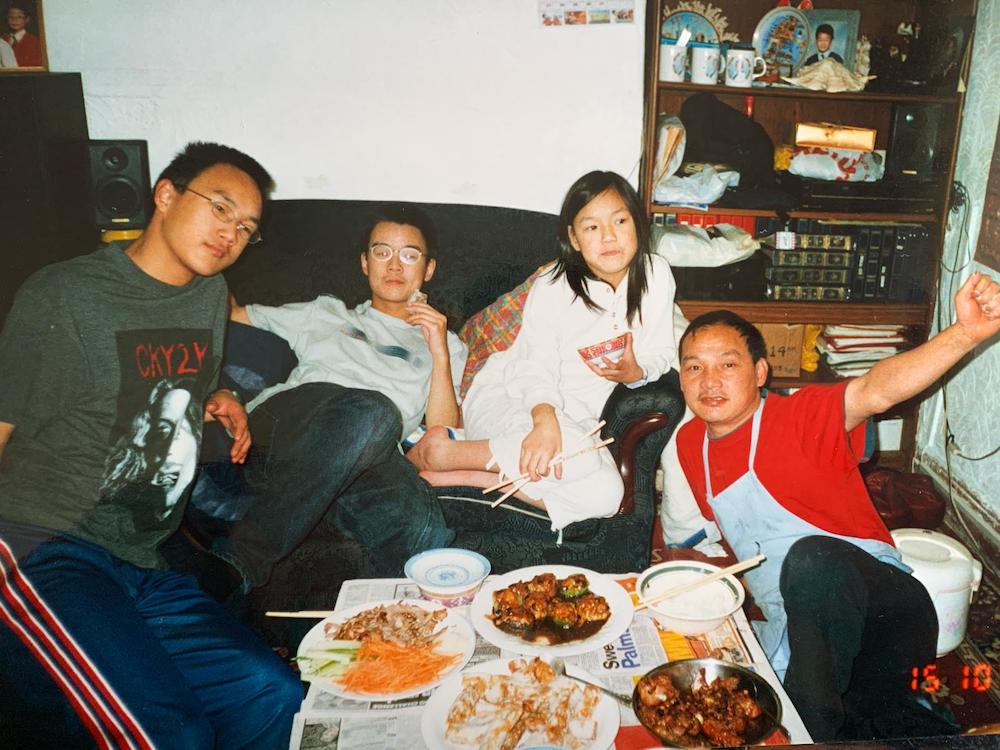
Family meal before service

Can you pick out a couple of favourite stories featured in the magazine and talk me through them? 

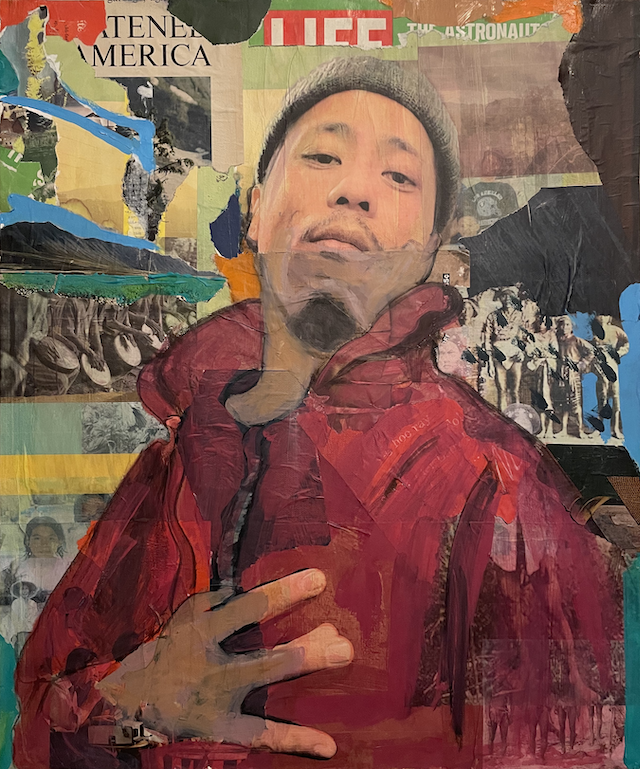
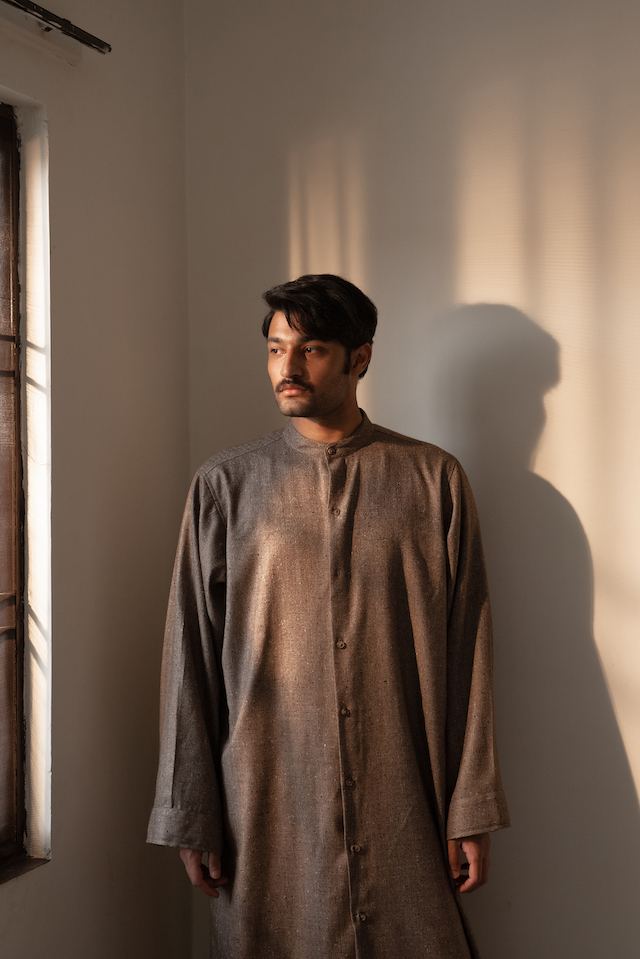
Oh my goodness, very difficult to pick out just a couple. But if I have to… Zain’s story is one that I keep returning to. Not only is his personal story absolutely fascinating – the move from Lahore, Pakistan to East London, then Morecambe – but the way he talks about objects, and clothes especially, as archives of our families’ migration is so relatable and poetic. Again, it’s just a deeply human story that almost any diaspora kid can relate to, no matter their background. Also, Zain’s work is just absolutely stunning. 

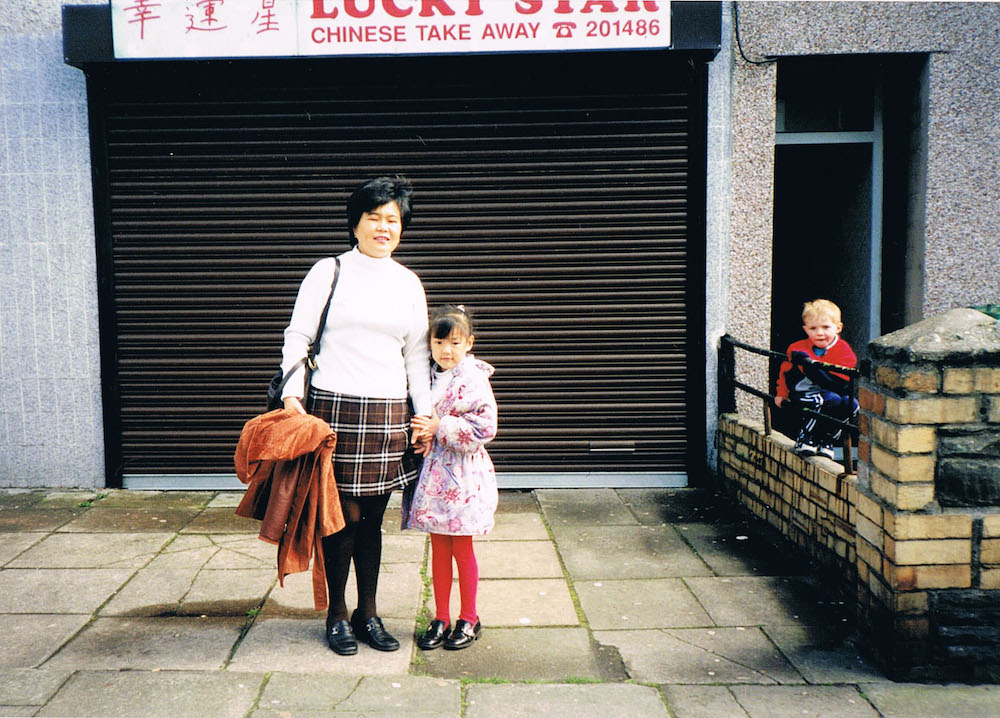
My interview with Angela Hui is another that I really treasure and feel very honoured to have in the magazine. Angela is about to publish her own book, Growing Up in a Chinese Takeaway, and we discussed her upbringing in rural Wales working for her family’s business. What I love about her story is how deeply Welsh and Chinese she feels. It was fascinating hearing her speak so passionately about Welsh culture and a love of Wales. I think people often forget how we do in fact love the countries we grew up in, as well as loving the cultures our parents imported for us from their homelands; Angela’s story is a reminder that we don’t have to ‘pick a side’.

Natasha Zubar

What does identity mean to you? And how have you represented (or scrutinised) the concept of identity in the magazine?

Identity is both everything and nothing. It’s a made-up concept and whist I deeply resonate with my identity as an Arab Brit, I also try to reject rigid notions of ‘identity’ because they can be so limiting. Many diaspora feel the same way because we fit in “everywhere and nowhere at the same time”, to echo Theo Gould in his TRTN piece, Mixed. I also think some aspects of identity politics can be more harmful and divisive than uniting. Identity to me is just being able to express the different parts of yourself without feeling the need to cater to a certain audience or change yourself to fit into other people’s boxes. Humans are mosaics of their experiences, their upbringings, the people around them and their personal history. So none of us fit neatly into a box, we’re all so messy and complicated! 

I think a good example of this in the magazine is Hark1karan’s Zimmers of Southall series (the cover image). Other than being obviously stunning, this series is so refreshing because it’s almost got nothing to do with Sikh culture – it’s about a community which is devoted to classic BMWs and which happens to be Sikh. The subjects of the images are evidently Sikh because of their clothing and appearance, but the series isn’t making their Sikh identity the sole focus, which just really humanises this community and de-exoticises them. Hark, perhaps unintentionally, re-writes this stereotype of South Asians being associated with Bollywood, curry and turbans, but he also shows how this community haven’t rejected their culture either; they manage to fuse their saris and Bhangra with their love of German Whips. I mean, to me, it’s just quietly genius. 

I hope in this magazine I have shown how identity is both a beautiful thing and ultimately a futile exercise – you will never be able to fully embody one identity and the magazine is part of a mission to learn how to accept this as a beneficial and powerful existence instead of it being simply frustrating. 

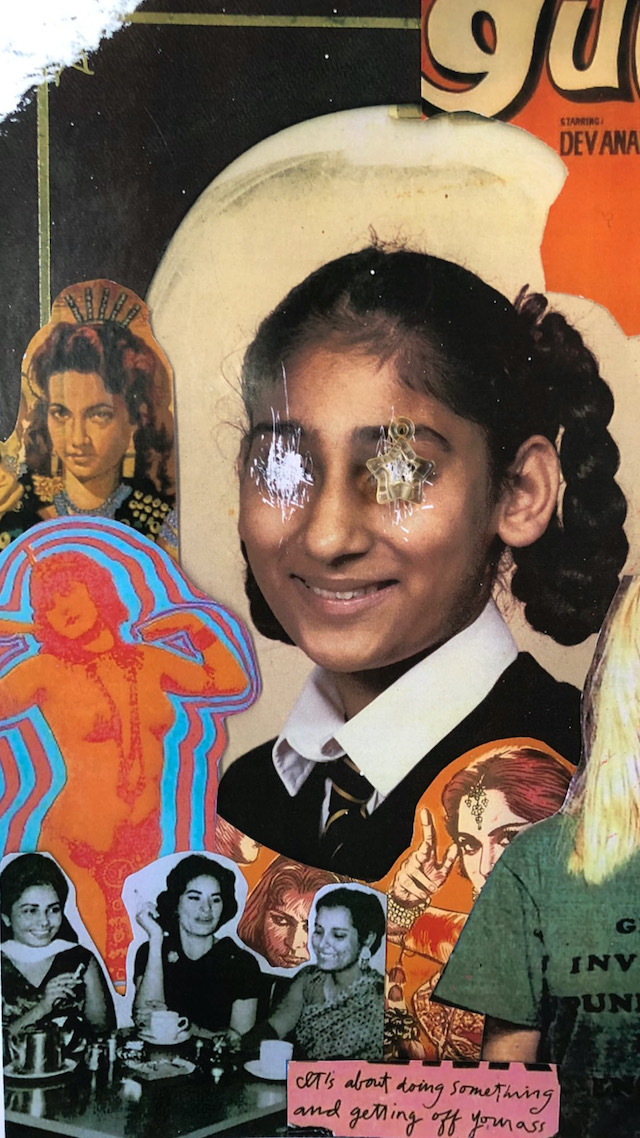
Rachna, Mom, 2021

What are the key takeaways, what can the audience learn?

Joy! I just want people to feel joy, and feel more open to listening to stories that challenge their views.

What’s next for you?

We have a couple exciting events lined up this year with the magazine, including a sold out screening of shorts at the Barbican, Finding Home, Forging Identity, and we’ll be selling the magazine at Bow Arts with Baesianz Makers Market. 

Currently, I’m just pushing and promoting issue two as best I can. We already have ideas and collaborators for issue three – I’d like to keep growing our online platform to showcase more audio-visual content, and I’d love to keep collaborating with arts collectives, organisations and institutions on in-person events like workshops, exhibitions and screenings/readings. But to be transparent, we need funding to make the next one even better, and the bigger our audience, the easier it is to convince someone to give us money… And as you know, funding is competitive and extremely difficult to attain. So the work starts now in anticipation for next year. 

The Road to Nowhere can be purchased here.

Jyni and Chuey, by Jai Toor, 2022

Marco Russo

Mirror Mother, Lorena Levi, 2021

Mixed, Theo Gould, 2021

Senja, by Maddie Sellers

Yousef Sabry, for The Road to Nowhere, 2022

Zain Ali, by Nancy Haslam-Chance, courtesy of Zain Ali

Hark1karan, Zimmers of Southall, (Copyright © Hark1karan, 2020-2021)

Hark1karan, Zimmers of Southall, (Copyright © Hark1karan, 2020-2021)

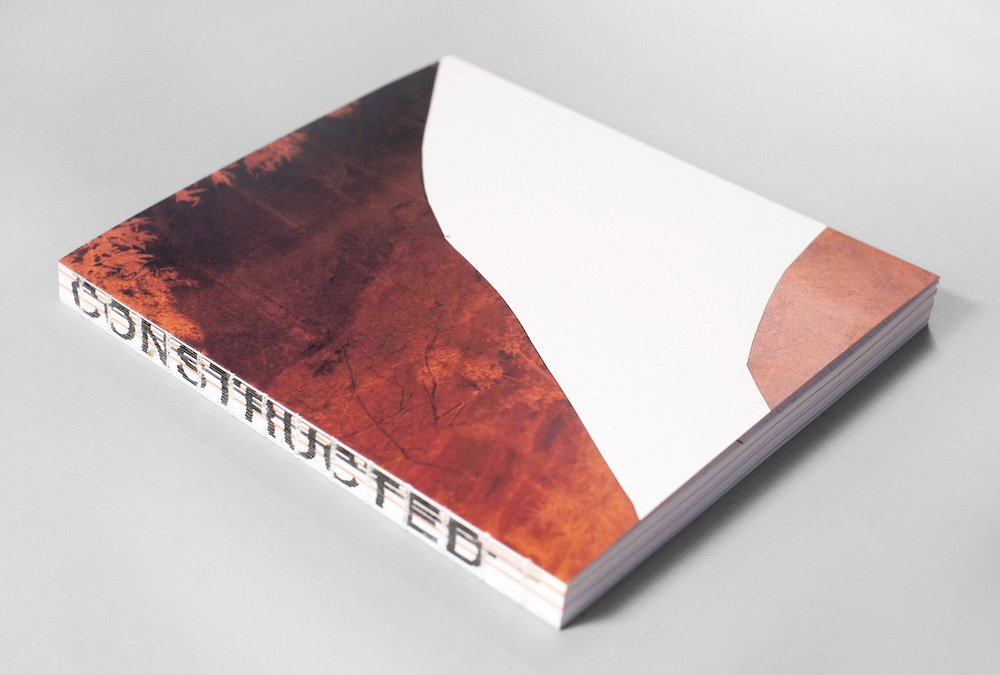
Constructed Landscapes

Dafna Talmor’s spellbinding landscape series encourages a more active way of looking from the viewer

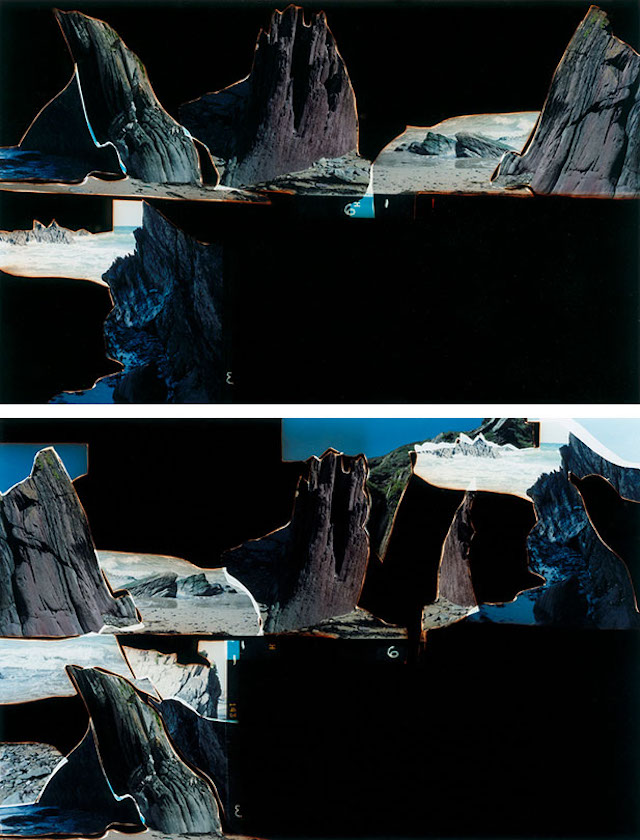
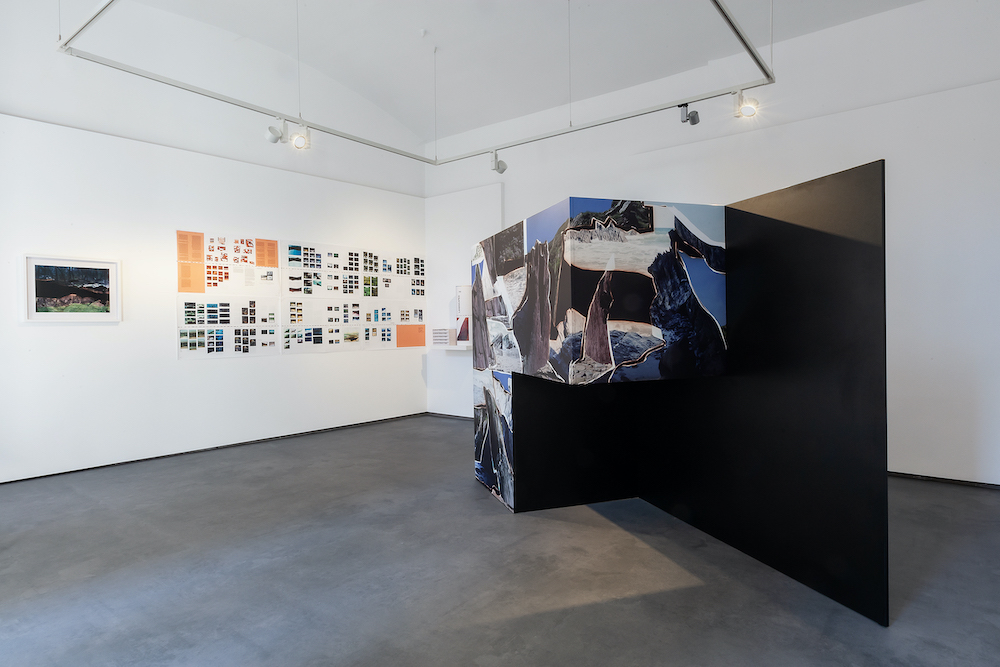
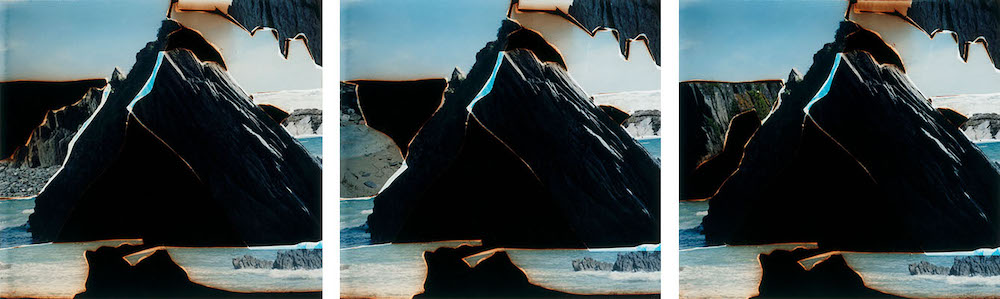
You can immediately tell that this collection of imagery isn’t a literal depiction of a place. But how they’re crafted – so spellbindingly weird and off-kilter – might remain a mystery. These are the works found in Dafna Talmor’s Constructed Landscapes, an ongoing project conceived through a unique process of slicing and splicing. The work is housed over three sub-series and developed over 10 years, the result of which is a collection of remodelled environments shot over various locations in Venezuela, Israel, the US and UK. What’s interesting, though, is its merging familiarity and the unknown; maybe you’ll recognise a tree or lake, before it slowly it morphs into an experimental yet staged recreation.

Dafna is an artist and lecturer based in London whose work spans photography, video, education, fine arts, curation and collaborations. Her works have been exhibited wildly, and her pictures have been included in private collections internationally as well as public, including Deutsche Bank, Hiscox. Through her practice, she tosses all preconceptions of the photographic medium in the fire and asks us all to question the role and methods behind taking and constructing an image. Constructed Landscapes does just that as it features transformed colour negatives, alluding a version of utopia – somewhere far away from a concrete reality. 

In terms of the process, Dafna condenses multiple frames and collages the negatives. It’s a technique that enables her to re-centre the focus point of the photograph, placing more emphasis on the technique of layering and assembling, rather than an obvious subject matter. By doing so, elements from differing frames crossover and interact with one another, causing fragments to collide and, in essence, create a new version of itself. In somewhat of a succinct summary of her alluring methodology, this is how her hypnagogic photographs are formed. 

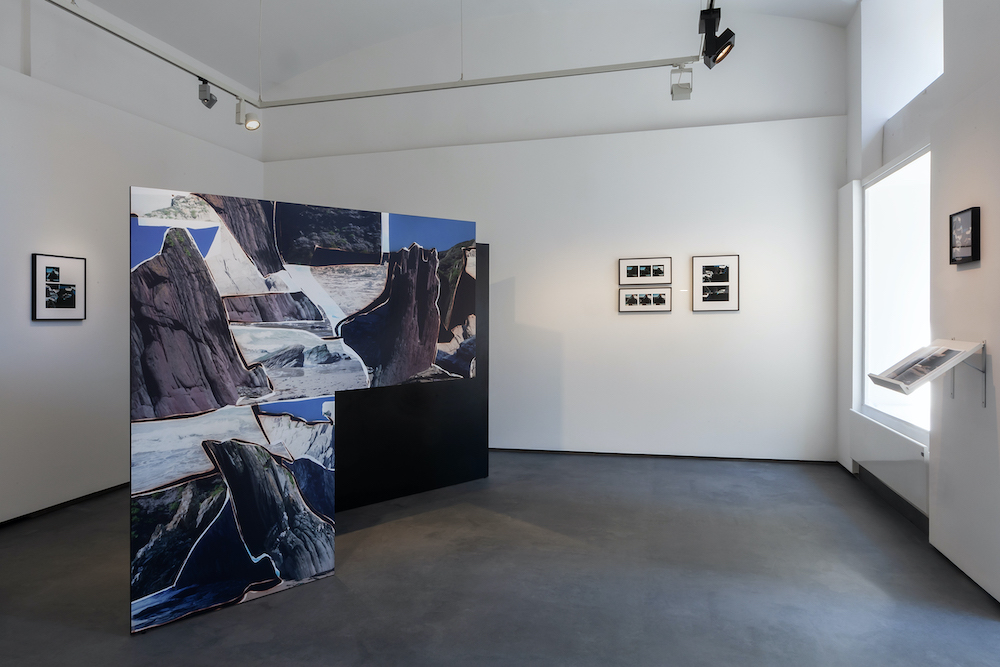
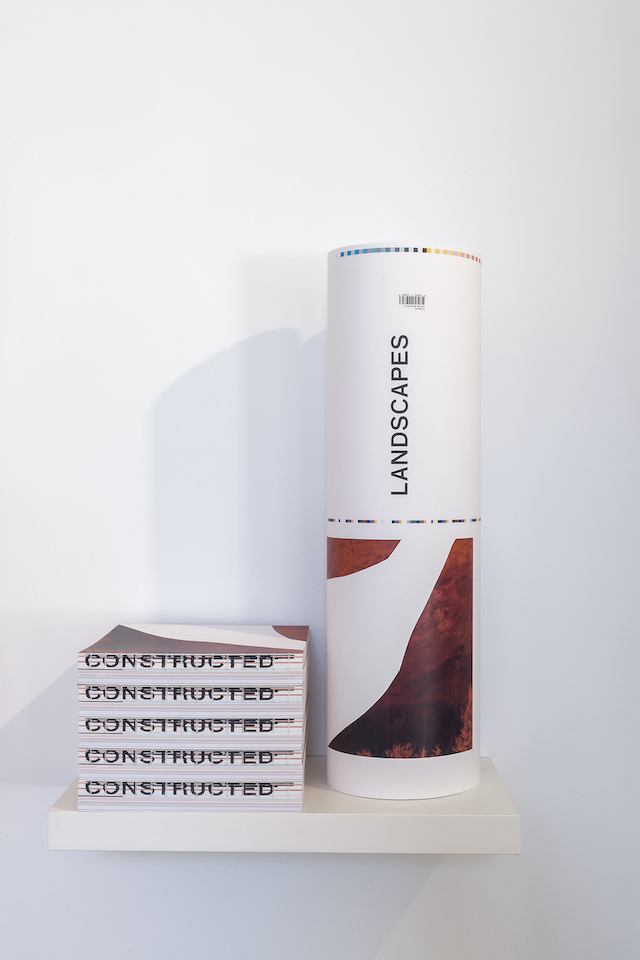
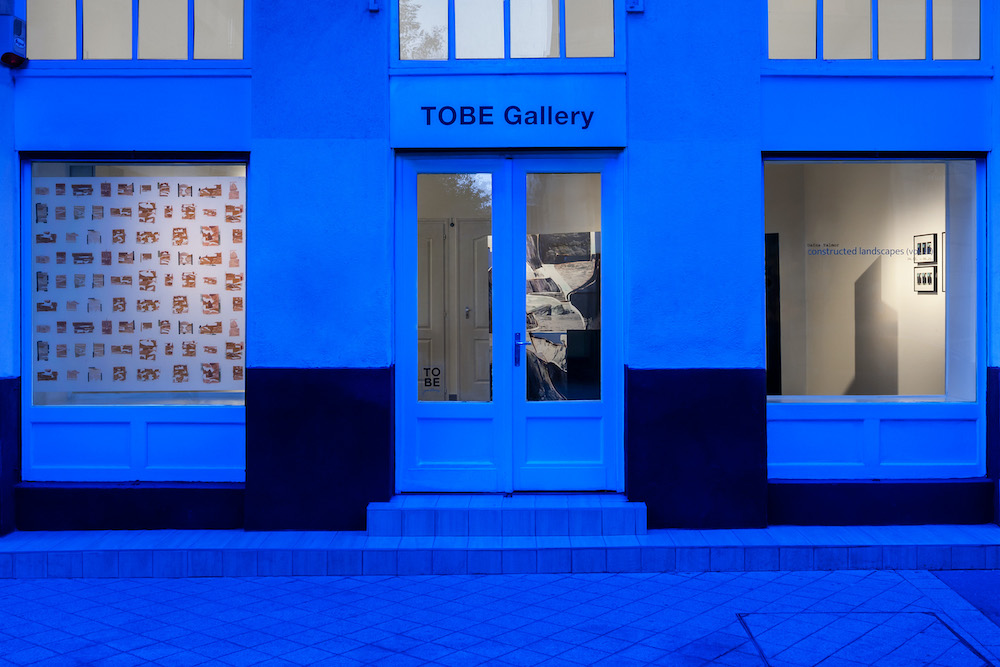
However, Dafna’s work goes far deeper than the intriguing process. In fact, the series references moments of photography history, such as pictorials processes, modernist experiments and film. Wonderfully allegorical, this opens up a dialogue about the role and study of manipulation, pointing the viewer at the crossroad of the analogue and digital divide. Yet aside from the questions that will arise, the work is simultaneously a beautiful merging of fact and fiction where burnt out hillsides, rusty toned bushes and treetops are combined. It’s a vision; one that transcends the 2D image into site specific vinyl wallpapers, spaces, photograms and publications. Not to mention the numerous exhibitions, including a recently closed show at Tobe Gallery in Budapest, accompanied by a book. 

Speaking of the works involved in this show, Dafna writes in the release: “Site-specific interventions have consisted of several iterations of a flatbed scan of a clear acrylic board – used to cut my negatives and protect my light box since the inception of the project – as source material. Over time, I became interested in the object beyond its practical function and the way in which the residue and traces of the incisions allude to the manual process in an abstract yet indexical way. Like a photographic plate, the embedded marks represent the manual labour and passing of time, acting as a pseudo document that continually evolves with each new incision.”

“Besides a series of spatial interventions, the cutting board has been used to produce several editions of direct colour contact prints to date,” she adds. “Alluding further to its subtle transformative nature, one could say the colour photograms bear a more analogous relationship via the preservation and reproduction of the one-to-one scale of the incisions. When printed, the orange reddish hues are in dialogue with the red flares – consequently transposed and scaled up from the cuts on the negatives – in the main exhibition prints.”

“Through the various components of the project, an intrinsic element of the work is embedded, suggested and explored within the photographic frame in a myriad of ways; diverse forms of reproduction, representation and notions of scale that get played out aim to defy a fixed point of view, in terms of how images of – and actual – landscapes, are experienced and mediated. Inviting the viewer to move in and out of the frame, aims to encourage a more active way of looking and perpetuate a heightened awareness of one’s position as a viewer.”

Chambers of Wonder

Renowned artist James Turrell constructs a light-bending installation at Swarovski Crystal Worlds

Photo by Florian Holzherr

The manipulation of light may at first sound like a dumfounded task made only possible by those born into the supernatural. Yet the reality is, James Turrell has perfected it for decades. Recognised world-wide for his installations and holographs, the American artist has long produced light-bending visuals and optical illusions on mass, on site and in situ. Atmospheric and provoking, Turrell’s expansive body of work has therefore garnered reputable status amongst the art world for its momentous depiction of light and how perception can be completely flipped on its axes – from skylight pieces providing a portal into the world above, to projections and constructions offering a new outlook on light and depth.

And now, Turrell’s latest endeavour is an installation of Shadow Space named Umbra, constructed permanently in Chambers of Wonder as part of Swarovski Crystal Worlds. Since opening in 1995, Swarovski Crystal Worlds has welcomed residents including Yayoi Kusama who premiered the infamous Chandelier of Grief, a rotating and immersive fixture composed of Swarovski crystal; or Into Lattice Sun by Lee But, an architectural translation of the utopian landscape. For this latest addition, Turrell was the perfect suitor. Carla Rumler, cultural director of Swarovski and curator of Swarovski Crystal Worlds says how Turrell’s credulous work has “always” been on her mind; “he was on my wish list,” she explains. A “logical” addiction to the site replete with its own iteration of the Seven Wonders of the World, Turrell is the first to avoid the use of crystal entirely. Instead, fragments – or “ingredients”, as Carla puts it – are adorned in such a way that it gives off a similar effect to the glassy composition found in crystals. Whether it’s the contraction of light, the reflection; “Turrell works with spectral colours a lot and in an essential way,” she adds.

Photo by Florian Holzherr

“I am very much taken to how light works in crystal,” says Turrell in an announcement. “Umbra is about the light that is in the soft shadow. In a lunar eclipse, you have the soft light as opposed to the very strong light that you saw reflected off the moon. This is a kind of light that is very soft and filling that I love. If you are looking at this piece, it is not about the light that surrounds the edge, it is the large expanse or panorama of this very soft light that actually comes from the reflection in the room.”

The Turrell and Swarovski pairing is an apt one at least, not only in the attention to detail but also in the likemindedness between both company and artist. “He doesn’t work with everybody,” shares Carla, “we are very honoured that he’s worked with us.” It was a harmonious discussion as to what would be included in the installation, wherein both sides deliberated the medium that would best fit the space and purpose of the artwork. “It turned out that Shadow Space is the perfect one for us,” she adds, taking into consideration the size and audience experience. “We said, ‘what colours would you like to use?’ He said how it was a surprise.” Causing no moment of hesitation or worry – it’s James Turrell, after all – there couldn’t have been a more suited and enjoyable outcome. This is a thought reciprocated from both sides. “He was very happy with the output because most of his forms are made to be temporary,” adds Carla, “so the quality of the room here is so perfect. It’s like approaching an artwork or a picture that will not go away. He was so impressed by the quality of the room because he’s never experienced it so precise.”

Hair of the Future

Zhou Xue Ming explores otherworldly structures and techniques in his crafty hair designs

Land on the Instagram account of Zhou Xue Ming and you’ll be instantaneously enamoured, scrolling and pausing – with curious hesitation – as you start to question the process behind each of his creations. A hair designer by title, Shanghai-based Xue Ming is more of an artist-stroke-wizard as he expels his craft on the artful placement of a do, from the decoratively lavished to the perfectly coiffed. Proving that there’s more to hair than hair itself, Xue Ming has been working in the industry for almost 10 years now. And ever since his first hairdo, he’s since been published on the covers of Nylon China and Modern Weekly Style, and has collaborated with an abundance of makeup artists, from Shuo Yang at Jonathan Makeuplab to Yooyo Keong Ming. 

Xue Ming’s impact is mammoth, not least in the creative application of colour but also in the use of materials. It’s not just hair that’s incorporated into these designs, for there’s also the unexpected addition of metallics, wires, peacock-like feathers, spikes or a material that appears like the cracks in a frosted lake. With a vast “enthusiasm for artificial hair”, he tells me, it’s no surprise that his portfolio succeeds in pushing the boundaries as to what can be worn on the top of a head. Sadly, we’re not going to be getting any answers as to how he makes his pieces – “this is my little secret” – so instead, we invite you to marvel and leave the methodology to the imagination.

One of the most recurring motifs of Xue Ming’s is the periwig, known as a highly styled wig worn on formal occasions, often sported by judges or barristers as part of their professional attire. Explicitly artificial, these wigs usually tend to have unmissable height and weight to them, placed atop a head in a composed and careful manner. The periwig was most popular from the 17th to the early 19th century, typically composed from long hair with curls on the sides. The colours are usually dyed in more realistic hues, whereas Xue Ming’s are quite the opposite. 

In fact, Xue Ming’s take on the periwig is widely juxtaposed with the more traditional concept of the wig. In one design, the hair appears like an explosion of fireworks with its vibrant yellow tones and splaying textures – the type that makes you want to reach out and touch, even though it looks like it could burn you. Others are more multi-toned and soft, displaying a palette of blush pink, sky blue, purple and sunshine yellow; while some – with pointy edges similar to a sea urchin – look completely unwearable. Or so you’d think. Not too long ago, the designer worked with a “young lady called ‘Princess’”, wherein he was “pasting posters with ‘princess’ cartoon images to prepare the periwig”. He ended up covering the entire periwig with these posters; “I was really interested to see the result”.

The work is a wonderful merging of old and new, where traditional headgear has been transformed, warped and lavished in the modern style and technique of Xue Ming. You can easily see some of the silhouettes being worn in the past, most likely the Regency era, while others are drawn from a far-reaching trend found in the future. Perhaps he’s ahead of his time, and world of hair might become little more creative in the years to come.