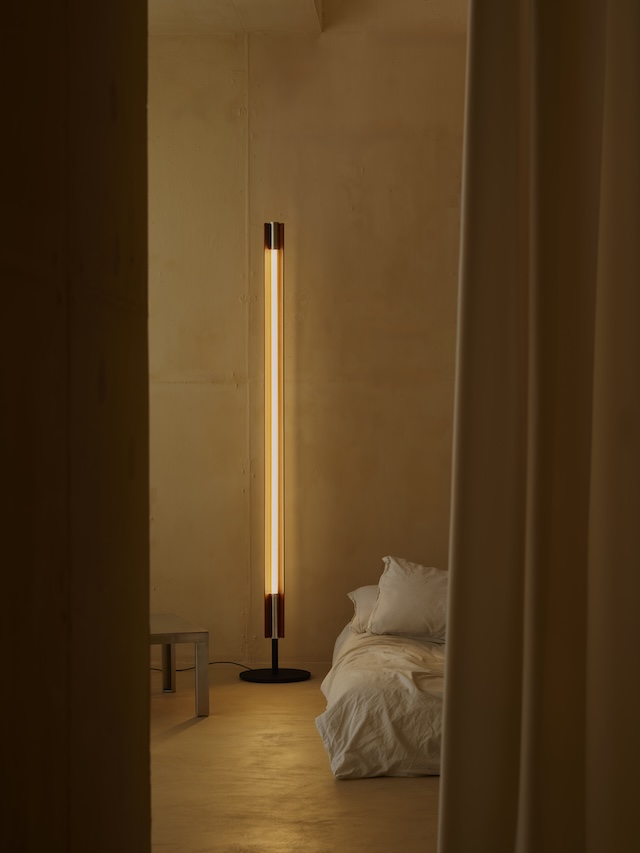
Tobia Scarpa, born in 1935, is one of Italy’s most distinguished architects and designers. The son of Carlo Scarpa and husband to the late Afra Scarpa, he is celebrated for his poetic approach to buildings. He talks to Deyan Sudjic about the Seki-Han, an early design for Flos that followed the Fantasma lamp, which marked the beginning of his relationship with the company. Seki-Han is once again in production, reflecting the continuing relevance of Tobia Scarpa’s work
Tobia Scarpa did not make his first visit to Japan until some years after the Seki-Han light was launched in 1963, but both he and his father were already fascinated by Japanese culture. In the late 1960s Tobia was commissioned to design an exhibition of Italian furniture staged in Tokyo, and travelled to oversee that installation in person. Italy at the time was developing its own version of modernity, filtering a range of influences and at the same time making the transition from skilled artisan workshops to industrial production.
Scarpa, both the father and the son, were born and educated in Venice. They are products of that unique city with its special craft traditions and a very specific historical context shaped by France and Austria – two of the powers that once controlled it. Tobia explains the significance that Japanese culture has had for him: “We need to take a step back to the first half of the last century, during which my father developed his knowledge and artistic sensibility. From the point of view of cultural influences, it was a very complex period. an evolved central structure was emerging, similar to that of France, whose quality of thought Italy aspired to, while the country was simultaneously looking with curiosity at Austrian culture and falling in love with Japanese culture. There still wasn’t sufficient energy or knowledge to bring order, but cultural forms were taking shape that were the sum of many origins, and Italy, all things considered, had a greater capacity to bring all these origins together.
“My father studied the Japanese world in depth, and there were always many publications on the subject at home. I love books, which is perhaps why I was already curious and familiar with this culture even before visiting the country.” In fact, it was the fees from Tobia’s exhibition commission that allowed him to fund his father’s first trip to Japan, “to visit all those places he had so longed for and deeply loved, known until then only through books.”
Carlo Scarpa was an architect and a designer who built comparatively little, but made a remarkably powerful impact with every project. The showroom that he designed for Olivetti in St Mark’s Square in Venice, the Brion family tomb and his work on the historic Castelvecchio Museum in Verona in particular have left an indelible mark on the architecture of his time. It is a tribute to both father and son that Tobia and his late-wife, Afra, established themselves with a body of work that is clearly their own and yet reflects his father’s poetic sensibility. “I learned everything from my father. He didn’t teach me anything, but he took me with him everywhere, and let me ‘steal’ everything from him.”
Seki-Han’s literal meaning in Japanese is ‘red rice’, a dish associated with celebration, and the phrase has taken on that added meaning. The light was launched in 1963, the year that Sergio Gandini took on the management of Flos, founded a year earlier in Brescia by Dino Gavina and Cesare Cassina, two of the key figures in post-war Italian design. “Everything was just beginning then and anything was possible,” says Tobia. “Everything could be invented and built. As a designer, I was able to use a pencil to generate ideas. I proposed things that didn’t exist at the time, and they weren’t always understood by those I proposed them to. We were able to do tests and simulations quickly, and so, through experimentation, products were born and Flos was born, and it grew through the evolution of dialogue with designers.”

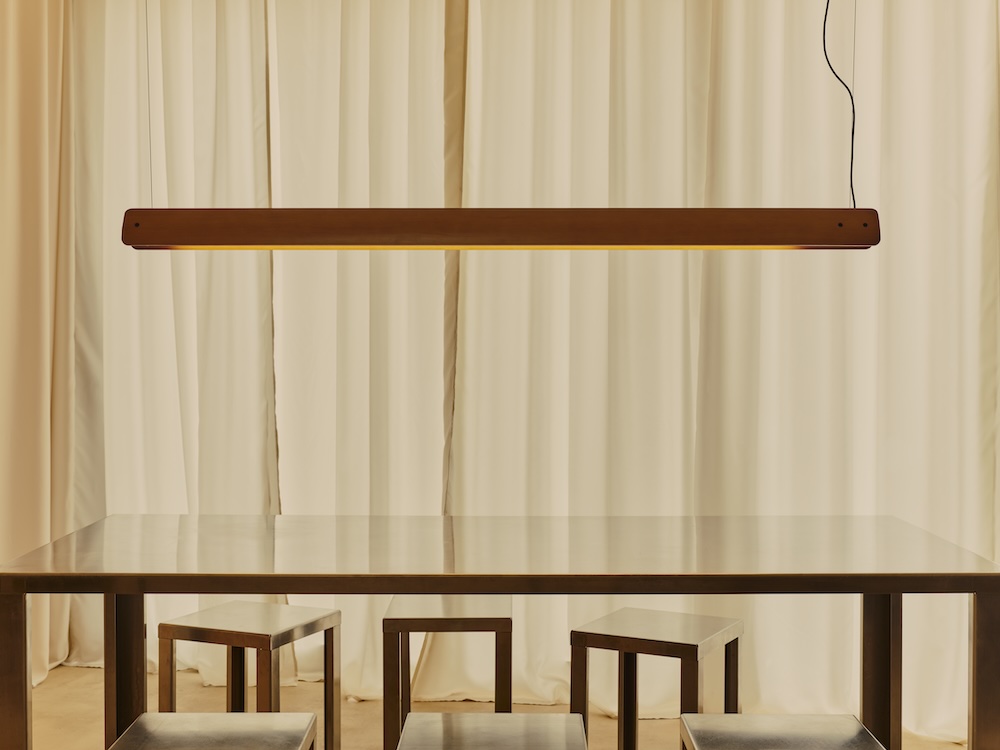
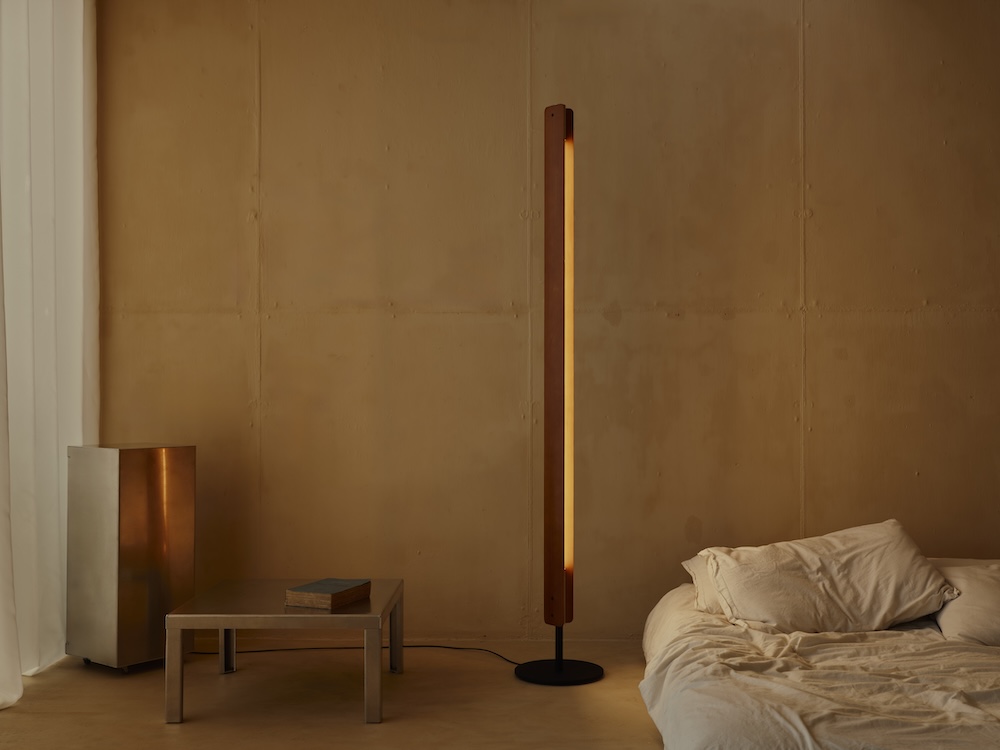
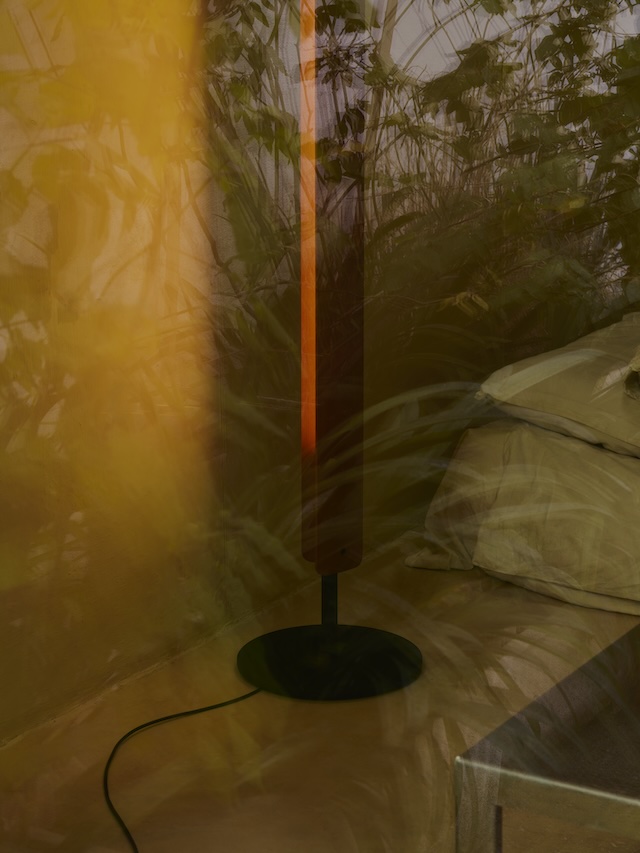
Seki-Han is developed in two versions – a floor lamp and a pendant – designed for use either standing or suspended. “We wanted the extreme simplicity of the design to make it suitable for all situations where a formally essential floor lamp of minimal bulk is needed. The possibility of suspending it horizontally made it suitable for lighting worktables in spaces intended for offices.” Tobia and Afra met as architecture students and set up a studio together that worked on projects that ranged in scale from furniture to the Benetton factories. “Afra and I were always involved in all the projects. The studio was very small, and it still is today.”
Piero Gandini, who took the decision to put Seki-Han back into production, first worked with Scarpa in 1991 when Flos was run by Gandini’s father. Tobia says, “I was working on the Pierrot desk lamp, as Piero himself reminded me during one of his visits to my studio to talk about the Seki-Han lamp. When he first joined the company, he asked his father if he could develop a project independently with the help of a technician. He selected a lamp that I had recently designed. Gandini’s account of it suggests that every time we reviewed the project, I urged him strongly to find better technical solutions, but I can say that, not remembering the events very well, he may have exaggerated a little.” The rate of technological change is much faster for lighting than it is furniture, and the new Seki-Han features modern electronics and an LED light source.
“The impetus to put it back into production came from Piero, who had a childhood memory of this object in a room in his family home. One day he took the lamp, loaded it into his car and rushed to my studio with a proposal to reissue it for the market, updating its technological apparatus. It was the chance to breathe new energy into a dormant – or abandoned – project that over time retains the value of the thinking that generated it. It brings me great joy to see the new vitality of this product and I observe with curiosity the result that emerges from it.”
Photography Robert Rieger
This article is taken from Port issue 37. To continue reading, buy the issue or subscribe here