Land-ho!

Rolex has launched a new collection, but that’s not the only remarkable thing about it

Photography Adam Goodison. Land Dweller, 40mm, Oystersteel with white gold bezel. Rolex at David M Robinson, £13,050 davidmrobinson.co.uk

Rolex is a brand that likes to do things slowly. Small changes, little shifts, it doesn’t deal in revolutions. You just have to look at the furore when it moved a crown from the right to the left on the GMT-Master II a few years ago – a sure sign that incremental changes at the Crown pack a rather large punch. So, you can imagine the levels of excitement in the halls of Palexpo – the space in Geneva where Watches & Wonders is annually held – when rumours rippled through that Rolex was not only announcing a brand-new collection, but one that contained a brand-new movement housing Rolex’s new escapement.

This is the first new watch from Rolex for 13 years. As its name – Land-Dweller – indicates, it joins the ‘Dweller’ family, following on from 2012’s Sky and 1967’s Sea. However, it is not a combination of these two nor does it really share much of their DNA, apart from a fluted bezel, looking good in steel, and a crown on its dial. This is an entirely new beast with its own unique heartbeat.

Reportedly the brief was first handed down from management five years ago. The team was tasked to design a timepiece that was modern, but which took inspiration from the integrated bracelet style of two specific timepieces. The first was the ref. 5100, a Datejust Quartz from 1969, the other the rare ref.1630 from 1974 – a two-tone Oyster Perpetual Datejust that looks like the famed Oysterquartz but preceded it by three years and is, in fact, automatic. The new addition also had to have a movement that ran at 5Hz (or 36,000 oscillations per hour), as opposed to the usual 4Hz (28,800p/h) speed that is typical at Rolex. There is a logic to raising the oscillating rate – the number of times the balance wheel swings back and forth. A higher frequency means a watch that is less sensitive to shock and accelerations. To do this however, Rolex had to redesign its regulating system.

What Rolex has done with its new escapement, which it calls Dynapulse, is completely overhaul the Swiss lever escapement. This method, by which the release of power from the mainspring is regulated, was invented in 1754 by Thomas Mudge and uses a small fork attached to the mainspring that, in turn, through a back-and-forth rocking motion, moves the escape wheel around as the prongs alternately come into contact with its teeth. Most of the watchmaking world uses this system. And now Rolex has come up with an alternative.

With the Dynapulse, two interconnected wheels that look like sci-fi flowers enmeshed together, take turns in flicking a two-pronged fork between each other as the balance wheel swings. The wheels are made from silicon using the DRIE (deep reactive-ion etching) process, which means that the tooth tips are polished, and their surface is curved not flat, so there is no sliding friction as the wheels connect and pass, but more of a rolling motion. This means that there is little need for oil, which is used but dispensed using a curved precision needle and on a nanolitre scale. Add in an extremely strong white ceramic balance staff that has been polished smooth on a nanometric scale, an ‘optimised brass’ balance and a hairspring in Rolex’s proprietary silicon, Syloxi, and you have a movement that is upgraded to the max.

That alone would have been enough newness for anyone, let alone Rolex, for whom a tiny adjustment is newsworthy. However, the Land Dweller also comes with a brand new bracelet design. The last time Rolex put a watch on some new links was the President – a three-link design with semi-circular components created especially for the launch of the Day-Date in 1956. Before that there was 1945’s Jubilee and prior to that the Oyster, which had been in the collection since the 1930s. For the Land-Dweller, we now have the Flat Jubilee – so named because it is basically the flattened underside of the Jubilee, with its same construction of two larger outer pieces and three internal links – except here, instead of being beaded, they are flat. As an added extra, Rolex has reinforced it using ceramic inserts at the first articulated link, limiting stretch over time.

The result is a bolder and more geometric Rolex than people are maybe used to. It isn’t a ‘professional’ watch but sits in Rolex’s ‘classic’ category sartorially somewhere between the DateJust and Day-Date; a refined design with a sporty vibe that feels destined to spend time on the deck of a yacht or in a bar with a night-time view of a cinematic skyline. The finishing on the case is unusual for Rolex, given that it has gone for a satin finish on the flat surfaces, polished sides and chamfers on the case. The honeycomb dial is a new pattern as well, for which Rolex has used a femtosecond laser – an ultrafast precise beam – to etch the pattern, which gives it its texture.

All of which adds up to Rolex’s decision to enter the integrated bracelet club; something it has not been a part of for many years. And it has certainly entered it with aplomb. This is a 10-strong collection in 36 or 40mm, with everything from steel with white-gold bezel to full platinum with a diamond-set dial and bezel. Obviously, it’s been a hit. This is Rolex’s world; everyone just lives in it.

Photography Adam Goodison

Set design Maya Angeli

10:10 Issue 13 is included with Port Issue 37. To continue reading, order your copy or subscribe here

Master of the Air

Since 1955, ‘GMT’ has been an iconic Rolex zero-hours launchpad across 24 time zones… and beyond

Photography Jess Bonham, set design Hana Al-Sayed

The same year that Rolex, Geneva’s pre-eminent watchmaker, officially partnered with Pan American World Airways, NASA was embarking on an experimental programme with the US Air Force, the Navy and North American Aviation. Between 1959 and 1968, 199 hypersonic flights were undertaken by three rocket-powered X-15s, with the goal of testing human ability to withstand the effects of extreme velocity and pressures and temperatures in suborbital conditions. The elite test pilots were drop-launched from the wing of a B-52 bomber at the edge of space, reaching unofficial speed and altitude records of Mach 6.7 (4,520mph) and 354,200ft.

In October 1967, Colonel William J Knight set the still-unbroken speed record of Mach 6.7 while flying his X-15 over the Mojave Desert. Strapped around his silver spacesuit? His very own Rolex GMT-Master. Meanwhile, throughout the 1960s, the same watch ticked beneath the gold-brocade cuffs of Pan Am’s long-haul Boeing 707 and DC-8 captains.

In 1972, 13 years after the X-15 programme began, a total of 12 men had walked on the surface of the Moon. Bringing home the last two of them on 17th December that year was Captain Ronald Evans, who conducted a spacewalk lasting over an hour during the return journey. This marked the final mission of NASA’s Apollo programme, Apollo 17. On his wrist? A Rolex GMT-Master. You get the idea.

In short, Rolex’s groundbreaking – or should that be skyscraping? – traveller’s wristwatch has been the go-to for ‘the best of the best’. Even Jack Swigert relied on his GMT-Master throughout the stricken Apollo 13 mission, only briefly switching to Commander Lovell’s NASA-issued Omega Speedmaster when he needed a stopwatch to time a thruster burn for re-entry.

Since 1955, when time-zone-hopping jet travel blasted passengers to new continents in the space of hours (and Rolex’s boffins into keeping their track of time back home as well as away) their sector-defining cocktail of wrist gadgetry was so on-target that it has barely evolved since. The Rolex GMT-Master, for instance, has remained virtually unchanged due to its precision. The waterproof Oyster crown is unscrewed, then carefully pulled out to one of three positions to adjust the main hours hand in hourly jumps to local time, while the fixed GMT 24-hours hand points to the time back home, read from the day/night colour-coded bezel. A separate crown position allows for fine-tuning both hours and the minutes hands with the movement paused, plus adjusting the date, should you find yourself beyond the International Dateline somewhere over the Pacific.

This version of 2024’s black-and-grey-bezel GMT-Master II (£9,550) is fitted with a ‘Jubilee’ bracelet: a supple five-piece-link design engineered for the Datejust back in 1945. Its clasp’s patented ‘Easylink’ allows the bracelet length to be increased c. 5mm in hot weather, or for strapping over a wetsuit

Weary businessmen of the 60s rejoiced accordingly, having suddenly found themselves being thrust hither and thither to board meetings around the globe. That guilt-ridden bedtime call to the kids back home need never again jangle one’s wife awake at 3am.

If you’re feeling particularly peripatetic, you can also use the bezel as a third hours indication. As long as you’re confident about your ability to remember what the second 24-hours hand would be pointing at once you’ve twizzled the ring off zero to align with the local hours hand according to another time-zone.

Confused? You won’t be – because Rolex are notoriously good (AKA glacially iterative) at getting things just right. In the 80s, Rolex introduced the GMT-Master II – the ‘II’ suffix denoting the new functional update: the ability to adjust the hour hand independently of the GMT hand, allowing for easy time zone changes.

It was the ref 6202 Turn-O-Graph of 1953 that almost nonchalantly coined the enduring tropes of Rolex’s modern-era sports watches, adding to the brand’s screwed-down Oyster case of 1926 a broad rotating timing bezel plus a screw-down crown, ensuring 100m water proofness as well as bold luminous numerals. It’s easy to see how James Bond’s go-to Submariner diving watch tumbled out of this the following year. But it’s especially impressive that, just another year later, Rolex thought to adopt and adapt the dive-time bezel as the defining feature for its new GMT-Master.

On the original GMT-Master, the conventional hours hand, the minutes hand and the 24-hours hand were synchronised; you had pull the crown out to the second position and rotate the hours and minutes hands to set the date and the 24 hours hand, then pull the crown out to the third and final position to set the local hours hand. But now, with the GMT-Master II, in the third position you set the GMT hours and minutes, then push the crown to the second position to set the local hours and date – a far easier and more intuitive mode of operation.

Modern progress has been more about the mighty Crown and its restless honing of the mechanics driving proceedings, rather than the original, revolutionary travel-time system itself. That and the durability of its outward-facing materials. Originally in plexiglass, then harder-wearing anodised aluminium, the GMT-Master’s famed 24-hour rotating bezel and its dual-colour denomination of day and night has been in proprietary ‘Cerachrom’ since 2013, fusing a seemingly endless rainbow of ceramics via a closely guarded alchemy at its Biel/Bienne laboratories.

What you see here is 2024’s latest combo, in never-before-seen black and grey. Look closer-up and, much like the blue and black of 2013 or brown and black of 2018, it boasts two perfectly crisp colour interfaces. This is despite its one-piece ‘monobloc’ design and the contrasting physical properties of each silicate substrate, which are fused together at extreme temperatures to achieve near-total scratch resistance.

We’re talking about the most cult of Switzerland’s brands here, in an already cultish world. So it’s no surprise that these duotone variants have earned a Rolexicon of fond nicknames. The 1955 original’s blue (night hours) and red (day hours) 24-hour bezel configuration was almost-instantly the ‘Pepsi’. The red of which proved especially tricky when it came to the Cerachrom version of 2014 (alumina was the answer).

The aforementioned 2018 iteration is ‘Root Beer’, and 2013 – initially nicknamed ‘Bruiser’ – was dubbed as ‘Batman’. Now, with the pleasing symmetry of 2024’s black and grey combination, both collectors and fans have unanimously settled on a fitting name: ‘Bruce Wayne’.

The test pilots of NASA’s X-Plane programme would have no doubt pledged their allegiance.

Photography Jess Bonham

Set Design Hana Al-Sayed

10:10 Issue 11 is included with Port Issue 35. To continue reading, order your copy or subscribe here

Celebrating 10:10 issue 10 at IWC Bond Street

Celebrating 10 issues of Port’s watch supplement in Mayfair

10:10’s editor Alex Doak. All Photography RICHARD WILSON

This spring issue of 10:10 was a momentous one – resdesigned, and at the milestone of a tenth issue. One of its covers was graced by a legend, IWC’s Portugieser, so it was a pleasure to celebrate it last week at IWC’s flagship space with Portuguese wine and petiscos.

The Portugieser is a rare trailblazer, and 10:10’s editor Alex Doak commemorated it in his speech as the result of a series of miracles: IWC sticking by this marine chronometer through WWII despite demand for pilot’s watches, and a continued appreciation of mechanical watchmaking after the advent of quartz technology. Here’s an excerpt from his speech:

Karan Gill and Nikkita Chadha
“As its launch editor eight years back, it makes me so proud to have seen 10:10 grow from Port‘s fine-watch supplement, pretty much to a magazine in its own right, with a visual ambition unlike any other horological title out there. 
 
Which makes it a true honour to have horological blue-bloods like IWC embrace this ambition – sharing our celebration with an anniversary of its own: the 85th birthday of its Bauhaus icon, the Portugieser.

Nathan Bartholomew
William Solomon and Papii Abz
Ramario Chevoy

 
Back in 1993, the IWC Portugieser’s 42mm diameter was still ludicrously huge; it wasn’t inherently ‘Portuguese’; it was a revival of a back-catalogue oddity made in such vanishingly rare numbers that no one was able to get nostalgic about it, even if they wanted to…
 
And yet, here we find ourselves, in awe of a not-so-tiny trailblazer. With so many more stories beside.
 
Jay Taglè

Riise Peters
 
If you’re interested? I strongly recommend you read my 10:10 cover feature!”
 
Alex Doak, 10:10 editor, speaking on Thurs 6th June at IWC Bond Street

Thank you to IWC for having us.

 10:10 issue 10 is included with Port issue 34. To continue reading, order your copy or subscribe here.

Lift Off

Vanguart’s interstellar Black Hole and brand new Orb show the watch world just how you make a meteoric impact, from left field, out of the blue 

The brainchild of Thierry Fischer, creative director, and two hotshots ex of Switzerland’s Renaud & Papi hothouse, Vanguart’s new Orb pirouettes a tourbillon while its titanium rotor is brought dial-side

Going into 2020, the timing probably  wasn’t what you’d call ideal for launching a high-concept wristwatch brand.  The finer points of any fine timepiece are impossible to convey to clients by
Zoom, even if they have remembered  to turn off ‘mute’. But as the founding  chairman of Vanguart – an ‘artistic’  approach at the ‘vanguard’ of contemporary horology – attests, it was
a blessing in disguise.

“We had two years to prove its  precision and reliability,” Mehmet Koruturk says, “on wrists, every day and in the real world. (“Well, whenever you could venture into the real world,” he adds wryly.)

There was never any real doubt, as the provenance of Koruturk’s nimble-fingered, polymath co-founders  doesn’t come much more golden. Axel Leuenberger and Jérémy Freléchox  both hail from Audemars Piguet’s Renaud & Papi: the bleeding-edge hothouse for 21st-century horological soup-ups since the 90s (Richard Mille’s original one-stop shop, say no more). Concomitantly, it’s a hothouse  for precocious talent and elite splinter brands such as Greubel Forsey with their €200k-plus flea circuses for the wrist.

Controlled back and forth by a ‘joystick’ crown, the debut Black Hole toys with time just as its titular astrological phenomenon does

Vanguart’s opening salvo of 2019  – or a sleeper hit of 2022, however you choose to see it – was the Black Hole, just two years in development. That COVID-enforced testbed certainly guaranteed wearability, since its  ‘fuselage’ as the brand likes to say, rides your wrist imperceptibly, helped by an instantly switchable, flowing rubber strap.

The eponymous vortex-like dial architecture – with a planetary body spinning above its apex in the form of  a flying tourbillon carriage – isn’t just an aesthetic pun. One of what looks like two rocket boosters on the right is what Vanguart calls a ‘joystick’.
And like a black hole, it genuinely distorts time: you can select between normal, reading digitally across three numerals at 9 o’clock, its concentric numeral rings flicking clockwise every passing minute; or you can switch it to a countdown, with time running backwards.

Vanguart may be hip to the game and fashion-forward, but there’s copperbottomed nous rocket-boosting its alien mechanics

Things are now pared back for 2024, with a seemingly conventional three-hander (though still with that mesmeric saucer flying centre stage). But further inspection of the Orb reveals a diamond ‘dot’ on the circumference, orbiting back and forth. It’s the only sign of another feat in circular gymnastics from Vanguart, who’ve managed to engineer the winding rotor dial-side, rather than in its usual position riding the movement’s baseplate: a concave titanium ring spinning  perfectly flush between titanium bezel and dial.


This article is taken from 10:10 issue 10, included with Port issue 34. To continue reading, order your copy or subscribe here.

A New Beat

Louis Vuitton has drummed-up and reimagined its iconic Tambour as a super-luxe, sporty streamliner

LOUIS VUITTON
Tambour, Automatic, 40mm, Yellow Gold
£49,500

It says a lot about a watch launch that the conversation topic is not “how did you get Alicia Vikander, Michael Fassbender and Bradley Cooper in the same room?” But that was the case in July 2023 on the top floor of the Musee d’Orsay on a warm Parisian evening. The three A-listers were playing second fiddle to CEO Jean Arnault’s announcement that, after 22 years, it was time for a new Tambour.
“It has lived through many different life stages and was the only icon created in the 21st century,” he told press earlier that day, “but it is essential for us to make a change.” And what a change it was. Gone were the crazy complications – double compasses, spinning hour markers, and kaleidoscopic world timers. In its place was a sleek sports watch with integrated bracelet, slimmed down 40mm case, brand new movement by La Fabrique du Temps (Louis Vuitton’s hive of watchmaking talent) and a seriously elevated price tag. It wasn’t just the watch Arnault was overhauling, 80 per cent of the entry-level watches were to go, leaving just
the Street Diver, the new Tambour and complications, he said, “to make way for the first step in positioning Louis Vuitton as a super high-end brand”.

LOUIS VUITTON
Tambour, Automatic, 40mm, Steel
£17,500

Despite being ostensibly a sports watch with an integrated bracelet, there is so much to the new Tambour than first glances would discern. In fact, it is the epitome of quiet luxury – unless, of course, you opt for the rose or yellow-gold versions rather than the steel. There’s nothing quiet about those. Of all the components of this reimagined Tambour, it is the bracelet of which Arnault is most proud. And with good cause – so many integrated bracelet designs fall at this hurdle, creating something that doubles as a wrist-hair plucker. Not so here.

“We wanted to make sure it was second to none in terms of finishing and comfort,” he said. “There are no lugs, so it has a tight fit regardless of gender.” To achieve this, it is necessary to decrease the length of the links. This left two options: decrease in a small straight line or with a curve for the last five links. The latter option was more expensive but provided a better fit, so that was the only choice. It is decisions like that that define this new Tambour. Decisions
that may cost more but provide a better watch.

 
LOUIS VUITTON
Tambour, Automatic, 40mm, Rose Gold
£49,500

Take the dial. It looks simple enough. Everything is beautifully proportioned, it’s elegant but then you look closer and realise every detail has been considered to give a depth and dimensionality to it. There are three different types of finishing on it – sandblasting for the minute and hour rings, vertical brushing on the dial centre and snailing on the seconds sub dial – each distinct finish creating a reflective dial that behaves differently depending on the
light. The Super-LumiNova-filled numerals are applied and given added depth and there is also virtually no bezel to speak of, giving a feeling of expansiveness, while the curved caseback ensures that 40mm doesn’t wear large on the wrist.

Flip it over and the attention to detail is even more evident. With La Fabrique du Temps Louis Vuitton has unveiled more than one incredibly complex movement, but this is the first time it has had a proprietary three-hand movement. Michel Navas and Enrico Barbasini, the two men who through La Fabrique du Temps and previously BNB Concepts are responsible for some of the watch world’s most creative complications, worked on it with Le Cercle des Horlogers, renowned movement specialists known for creating such complicated watches as Jacob & Co’s Astronomia Maestro Minute Repeater and CODE41’s Mecascape – a skeletonised travel clock thin enough to fit into a suit jacket’s inside pocket.

It is a thing of beauty. First there is the finishing – micro-sandblasting, perlage, polissage and the beautifully polished edges – that will now be the new standard on all future watches regardless of whether they are entry level or haute horlogerie. The micro-rotor is in 22-carat
gold on which is engraved a repeating LV motif, while the openworked barrel cover references the brand’s monogram flower. And it’s not just a pretty face. It has a 50-hour power reserve and has a chronometer certified by the Geneva Chronometric Observatory, which insists
on an accuracy of between -4s and +6s per day.

It could be argued that the horological world doesn’t need another integrated-bracelet watch, but the new Tambour does add something new to the conversation. It has a panache, and, like its ambassador Bradley Cooper, doesn’t take itself too seriously. I should know: after grumbling about celebrities at watch launches, my friend knowingly approached him at the Musée d’Orsay gala to request he took our photo. To which he graciously obliged.

Like the Tambour he was wearing, Cooper’s portrait of us both was perfectly framed, beautifully executed, and certainly not something many people can boast about owning.

Photography MARLOES HAARMANS

Decked Out

Navigating at sea demands a precision timekeeper, and IWC was by sailors’ sides first

‘Crucible’ is an overused word, as much as ‘icon’. But in the rarefied (oh, there’s another one) world of watches, the expansive cleanliness of IWC’s Portugieser lends itself every which way; especially the chronograph and all its necessarily legible counters

If you want to be pedantic, every mechanical watch in the world is a sailing watch. The pressure to produce a portable timepiece, or ‘chronometer’ accurate enough to navigate the high seas led horologists of the 18th century, such as Yorkshire’s own John Harrison, to invent many of the features that are still whirring away inside your Rolex or Omega. Features like the circular oscillating pendulum, for example, first found in Harrison’s H4 pocket watch, and now present in all modern mechanicals as the tick-tick-ticking ‘balance wheel’.

Despite the best bureaucratic efforts of London’s Board of Longitude, Harrison, H4 and his three preceding clocks secured their hard-fought £20,000 prize, in proving that precise comparison between local and‘home’ time was a far-superior method in reckoning one’s east-west progress than stargazing. That the head of the board was the ‘Astronomer Royal’ gives you some idea of the resistance he encountered for decades.

Nevertheless, Harrison’s clocks are still ticking strong at longitude’s ground zero, the Royal Observatory in Greenwich. By the 1830s, every merchant navy captain setting sail from east London’s docks had a handheld chronometer pocket watch, waiting for the observatory roof’s bright red time ball to drop down its pole at 1pm every day, to finely adjust its accuracy.

Today, the idea of an oceangoing watch stretches a fair few nautical miles beyond the British Empire’s basic need not to lose its dominance of valuable trade routes, let alone countless souls. Weighing anchor and cruising into the blue has continuously inspired horological experimentation such as regatta countdown timers or tide indicators, which – just like motorsport, scuba diving or mountaineering – come with a baked-in thrill factor, irresistible to chequebook-waving landlubbers. (Would two of Switzerland’s biggest aforementioned brands’ otherwise ordinary-looking water babies be anywhere without the endorsement of a certain Royal Naval Commander Bond?)

The movements powering every IWC watch are manufactured in-house at their historic home of Schaffhausen, by the Rhine river. Its torrents no longer power the ateliers’ lathes via paddles, racks and pinions but zero-carbon sustainability still comes to bear in adapting the 50-something, and genuinely iconic workhorse ‘Valjoux 7750’ movement of the 70s, with upped power reserve and column-wheel transmission sophistication; AKA ‘Calibre 69355’

Arguably, IWC was first on deck and – literally – by the side of its captain, in the 1930s. Two Portuguese wholesalers (though not sailors per se) had realised that a handheld chronometer would be handier strapped to the wrist, as per the wholesale switch happening on civvy street post WWI. Not to mention infinitely more readable, no matter how choppy or soggy it was on deck.

Back in 1939, the International Watch Company of Schaffhausen on the Rhine made highly precise pocket watches, powered by hand-wound mechanics with gorgeous, swooping bridgework and oversized, pendulous balance wheels. In other words, perfectly poised to acquiesce to Messrs Rodrigues and Antonio Teixeira of Lisbon, and their local market’s noble seafaring reputation.

Paradoxically the first Reference 325, as IWC records denote, was delivered not to Portugal but instead to a Ukrainian watch wholesaler, L Schwarcz in Odessa, on 22nd February. The first proper Portugieser only arrived in Lisbon three years later – something watch-industry historians reckon had something to do with the rather inauspicious year of launch; Portugal having declared its neutrality during WWII.

Up to 1981, IWC sold just 690 Portugiesers. All cased in broad-faced stainless steel measuring an unheard-of 41.5mm across, not including its large crown, which offered extra purchase when winding-up the capacious spring barrel inside the pocket watch movement.

The mainsprings of IWC’s self-winding automatics are still wound up via a clever pawl-winding mechanism dreamt up by technical director Albert Pellaton in the 50s. The closest you’ll get to perpetual motion, every time your wrist movement swings the internal rotor, two hooked arms nudge the toothed barrel encasing the mainspring, tooth by tooth

All of the above probably explains its low sales. But it also explains skyrocketing sales come 1993, when IWC’s genius boss, Günter Blümlein decided to mark his marque’s 125th anniversary by bringing it back to life.

Blümlein passed away on 1st October, 2001 aged only 58, and the mind boggles at what else he might have achieved if it wasn’t for such a tragic, early blow. Charismatic and well-loved, he was instrumental in the renaissance of the mechanical watch in high-end guise following the quartz crisis of the 1970s and 80s. Sleeves rolled up, Blümlein invested in other names  like Jaeger-LeCoultre and Germany’s A. Lange & Söhne, simultaneously preserving so many crafts on the cusp of extinction, through apprenticeships and training.

IWC’s most famous post-quartz rebirth was its military pilot heritage, articulated via the RAF’s standard-issue Mark 11 and, ahem, the Big Pilot bomber chronometer it made for the other side; Switzerland staying neutral along with Portugal, mind.

But in the Portuguese (renamed for anglophone collectors) Blümlein predicted not only the return of the mechanical, but the early-00s phenomenon of the oversize watch. Blümlein pipped to the post the era’s two other burgeoning beefcakes Panerai and Audemars Piguet with plus-42mm diameters, with historical provenance thrown in for good measure. Now under Richemont Group’s umbrella, IWC saw in the new millennium with an all-new Reference 5000 manually-wound movement, boasting a whopping seven days’ autonomy thanks to a return to authentic pocket-watch proportions. It might have been 1993 for the relaunch, but 2000 truly smashed a bottle of champagne, setting sail an ongoing flotilla of retro-engineered complications like 1995’s split-seconds chronograph stopwatch capable of timing two consecutive events, and a showboating tourbillon carrousel tumbling through a round dial window (ill-advised for actual showboating).

Thanks to the Portugieser’s timeless style appeal, not least modern watchmaking’s increasingly anti-obsolescent, ever-reparable technology, we’ll always have a connection to those salty seadogs of the 18th century… and a reminder of Britannia’s shorter-lived rule of the waves.

All Photography STEVE HARRIES

Peak Twins

It’s been 70 years since Edmund Hillary and Tenzing Norgay became legends at the top of the world, dry-freezing legend status in Rolex’s brace of Explorers

70 years back, Edmund Hillary and Tenzing Norgay’s historic Everest summit crystallised Rolex’s nascent, now-immortal Explorer

As with any story, rumour or urban myth relating to Switzerland’s most cultish marque, you mention the ‘Rolex vs Smiths’ debate at your own risk anywhere near the web or indeed pub. If you must – and we really must, since the Rolex in question, the Explorer, gets a sleek new upgrade this year, on the 70th anniversary of Sir Edmund Hillary and Tenzing Norgay summitting all 8,848 metres of Everest – it’s always best to start with what we know. Not which man peaked first, but more importantly, which watch?

Celebrated during a magical evening in Kensington on June 12th, the thread running through every talk at a packed Royal Geographical Society theatre was anything but the duo’s achievement; rather that of their entire team, whose dynamic all those years ago holds plenty of lessons for the modern breed of alpinist. (Google Nims Purja’s infamous ‘queue for the summit’ photograph, if you don’t already know it.)

Introducing proceedings, the daughter of the expedition’s leader, Charlotte Hunt recalled her delirious mother getting the phone call downstairs while in the bath on the eve of Elizabeth II’s coronation. She also recognised the humility of her father, Sir John’s decision to defer the ultimate accolade to the next pair behind, rather than let hypoxia get the better of him.

Jamling Norgay (Tenzing Norgay’s son) paid tribute to how the expedition’s 25 sherpas were genuine team members, never treated as ‘bag carriers’ while the team members reaped all the prestige.
An accomplished alpinist in his own right, Peter Hillary wryly shared his father’s most potent bit of advice: “Peter, a posthumous success is overrated; what’s most important is getting down safely.”

It’s small beer by comparison, but for #watchnerds the world over, Sir Edmund managed something else extraordinary: to have two competing watch brands bankroll the expedition.

Rolex was the most heavily publicised expedition partner in 1953 (and seemingly most loyal, given the clocks dotted about the Royal Geographical Society’s historic lecture theatre), and Mr Norgay was dutifully wearing his Oyster Perpetual as he stepped onto the top of the world.

Indeed, later that very year, anyone on Civvy Street could pick up their own Explorer. This year its latest iteration drops, the pinnacle of 70 years’ continuous fine-tuning: up to 40mm across, now equipped with the full suite of Rolex’s futureproof bells and whistles, such as the super-precise Chronergy regulator, ticking rocksteadily regardless of swings in temperature or magnetism.

Since the 1930s, Rolex had equipped numerous expeditions, to constantly learn from real-life conditions. With Everest and the Explorer, however, Rolex proved it had arrived at a watch capable of withstanding high humidity and freezing Himalayan temperatures. It was the start of the ‘Professional’ line, and the crystallisation of Rolex as the go-to ‘tool’ watchmaker.

But while Norgay played along, Hillary himself had quietly left his own Explorer back at base camp, choosing instead to wear a Smiths Deluxe to the summit – one of 13 that Britain’s biggest watchmaker had issued, prepared at their Cheltenham workshops with a special lubricant to withstand low temperatures. Sir Edmund presented it in person to the City of London’s Worshipful Company
of Clockmakers in the same year, having reported back to Smiths that the watch had performed “very well”. You can now admire it at the Science Museum, next door to the RGS.

But with Smiths long gone and waiting lists for steel Rolex Daytonas and GMT-Master IIs as they are, what else do budding alpinists have to choose from, with true Everest pedigree, which won’t have you laughed out of Kensington’s esteemed institutions?

It is another Rolex Explorer. Only bearing the suffix ‘II’, demarcating the no-nonsense core model’s upgrade to GMT status: the addition of a 24-hour hand in other words, popping with urgent-orange luminescence thanks to the watchmaker’s proprietary Chromalight paint. And now with the option of an icy-white dial.

Should you be particularly unfortunate on the actual ice, the Explorer II’s GMT function packs another handy tool, in navigating your way home the boy scout’s way. To earn your explorer badge, simply set the 24-hours hand to the local time zone, rather than ‘home’ time (according to the 24-hour bezel, not the 12-hour dial) and point the 12-hour hand at the sun, holding your watch flat. That’s north… sort of.

Godspeed!


Photography Tonje Thilesen

Creative Director Juan Felipe Rendon

Edgy Metal

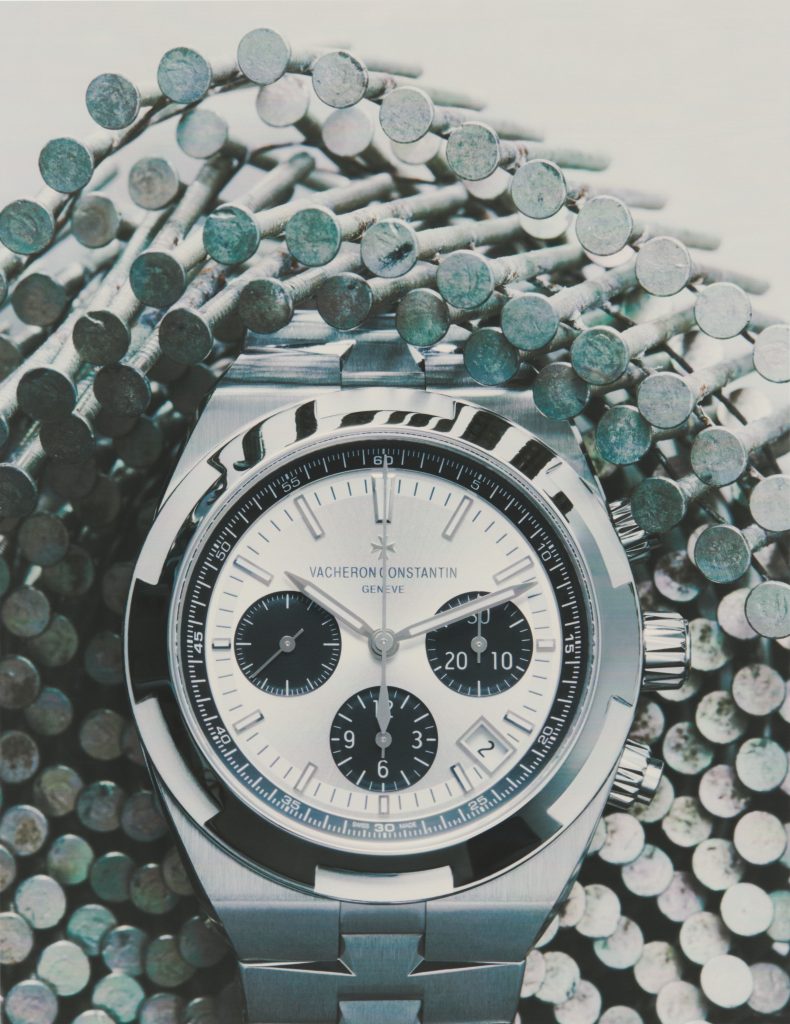
Crisply crenelated, sculpted, polished and burnished: the sporty heft of Vacheron Constantin’s Overseas takes the venerable marque to the ends of the earth, at the cutting edge of its craft

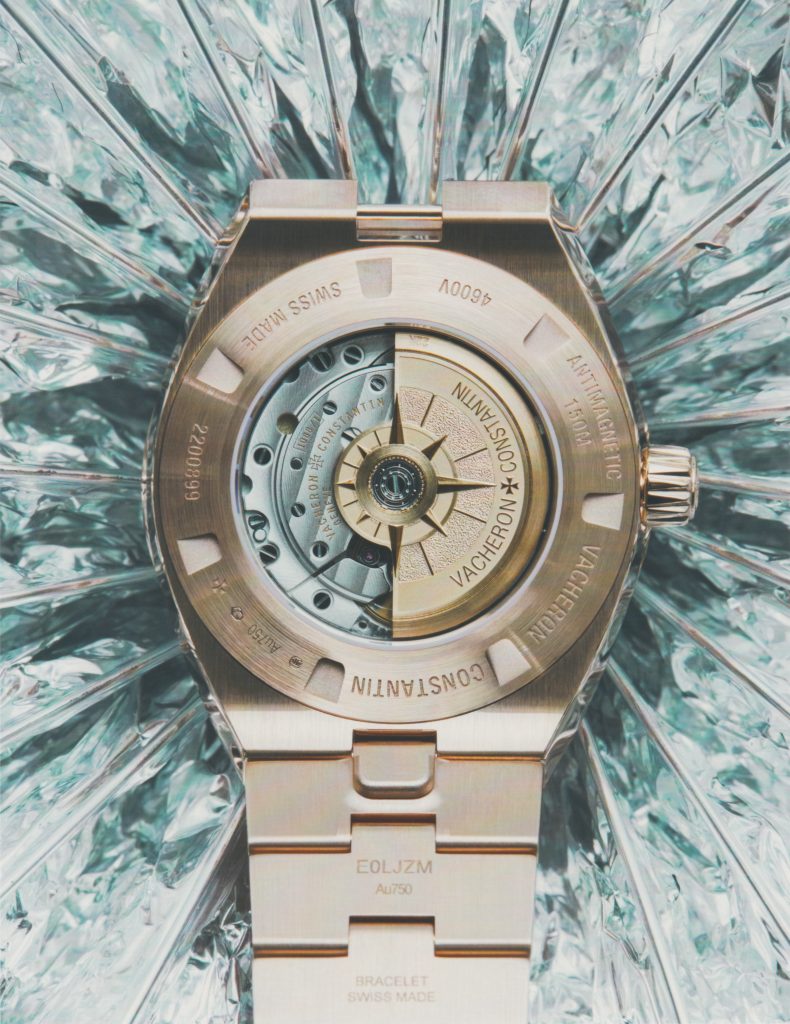
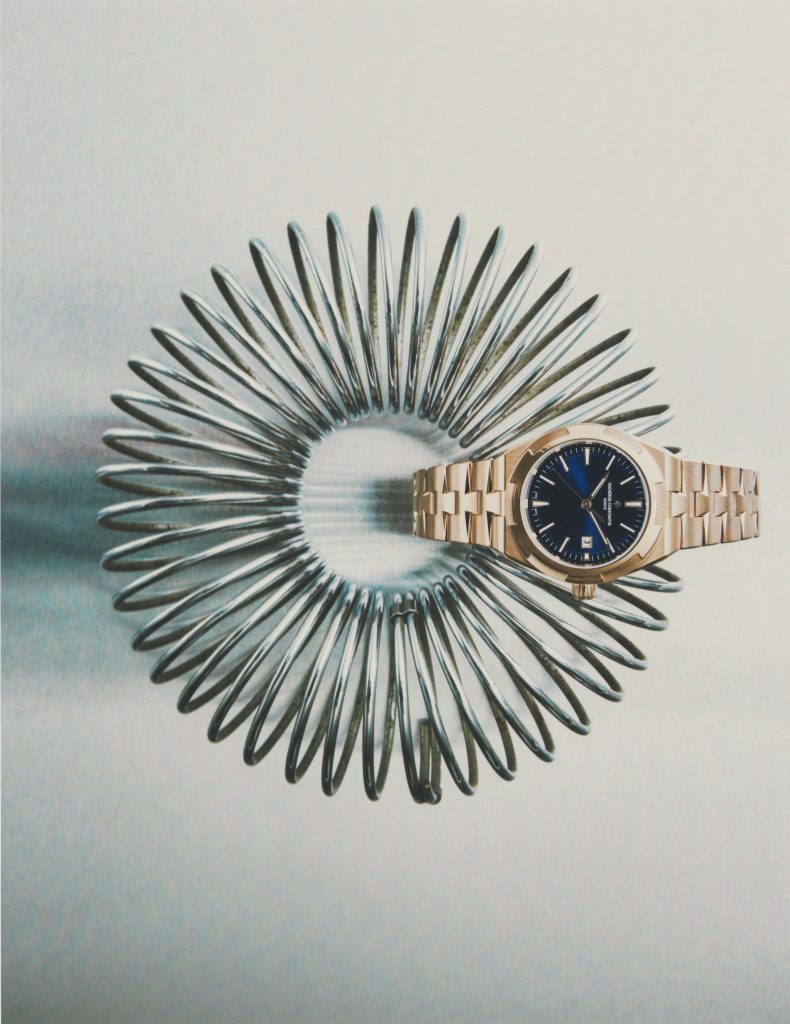
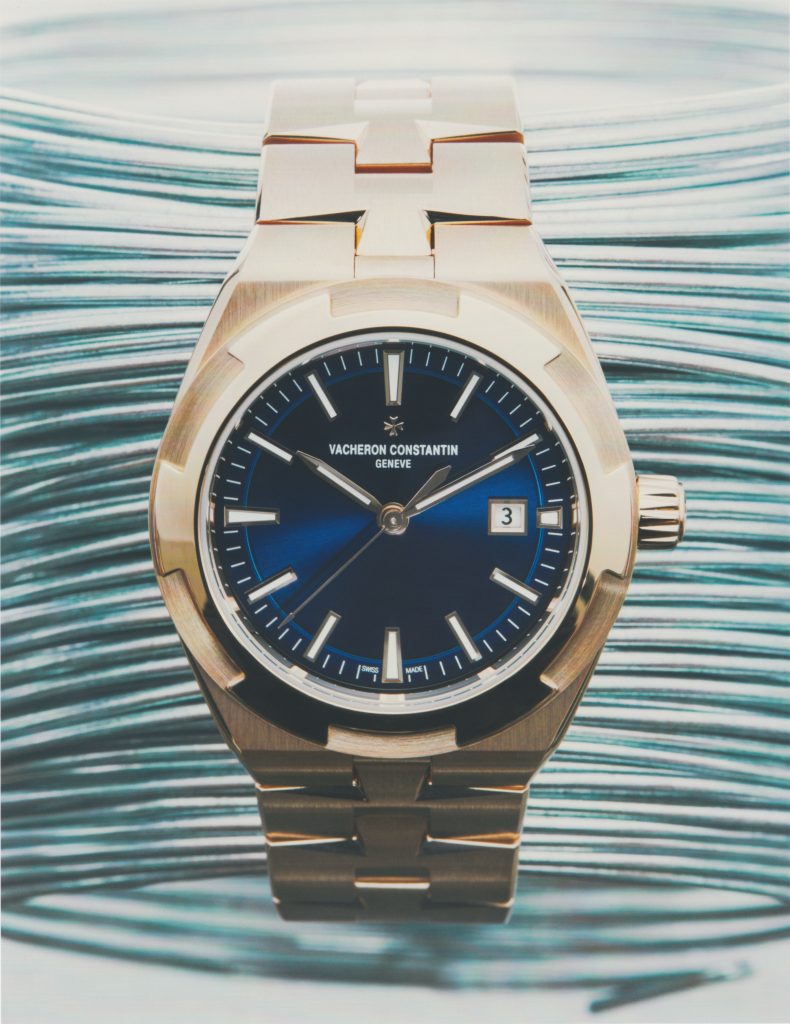
The taut lines of the boutique-exclusive Overseas three-hander in pink gold (£58,500) progress the ’70s rakishness of the historic 222 from ballroom floors to teak decks

Heritage is a priceless commodity in luxury watchmaking, which makes Vacheron Constantin more valuable than most. The Genevese master boasts over 260 years of uninterrupted production – the longest in Switzerland – informing an unwavering consistency in handcraftsmanship, but also an aesthetic beamed from another time; something that feels slightly more ‘Latin’ than its Swiss counterparts.

It’s this firmly entrenched pedigree that means even Vacheron Constantin’s relatively racy line, the Overseas, comes bearing a cosmopolitan élan. And not just because it comes in gold as well as steel (regardless of intended sportiness) let alone £100k-plus ‘price on application’ versions fitted with a highfalutin tourbillon carousing gaily about tuxedo-blue dials.

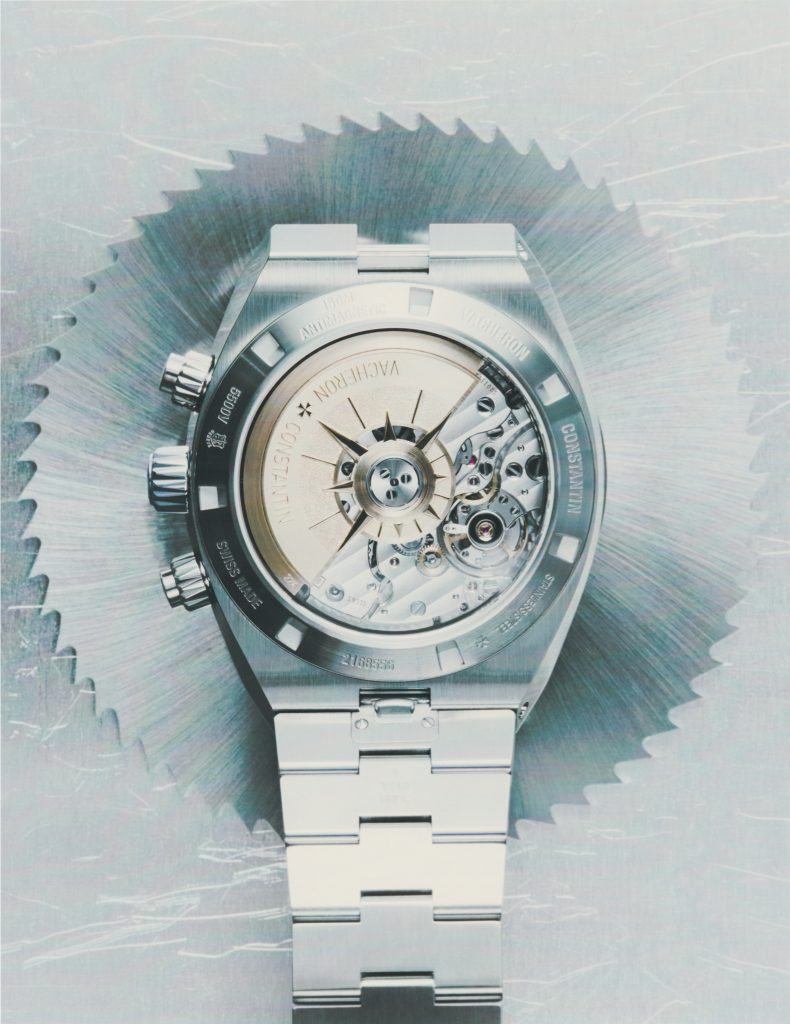
Caliber 5200 ticks proudly through the caseback of all Overseas chronographs, gold rotor, high precision, exquisite Poinçon de Genève-certified hand-finish, the lot

If leading oxygen-eschewing alpinist photographer and National Geographic cover hero Cory Richards sees fit to collaborate on an Overseas in titanium that still looks fit for an evening at a Montenegrin casino, you know the high-horological waters run deep here.

It’s arguably down to the watchmaker’s continued foothold in the heart of Geneva itself, rather than the outlying Jura mountains, where dairy farmers started by just making components during the snowy winters, rather than whole watches. It was on an island where the city’s Rhône river opens into Lac Léman that Jean-Marc Vacheron opened his atelier in 1755. His son and grandson soon came into the business, taking their ornately decorated pocket watches into new markets before hotshot globetrotting salesman François Constantin came aboard in 1819.

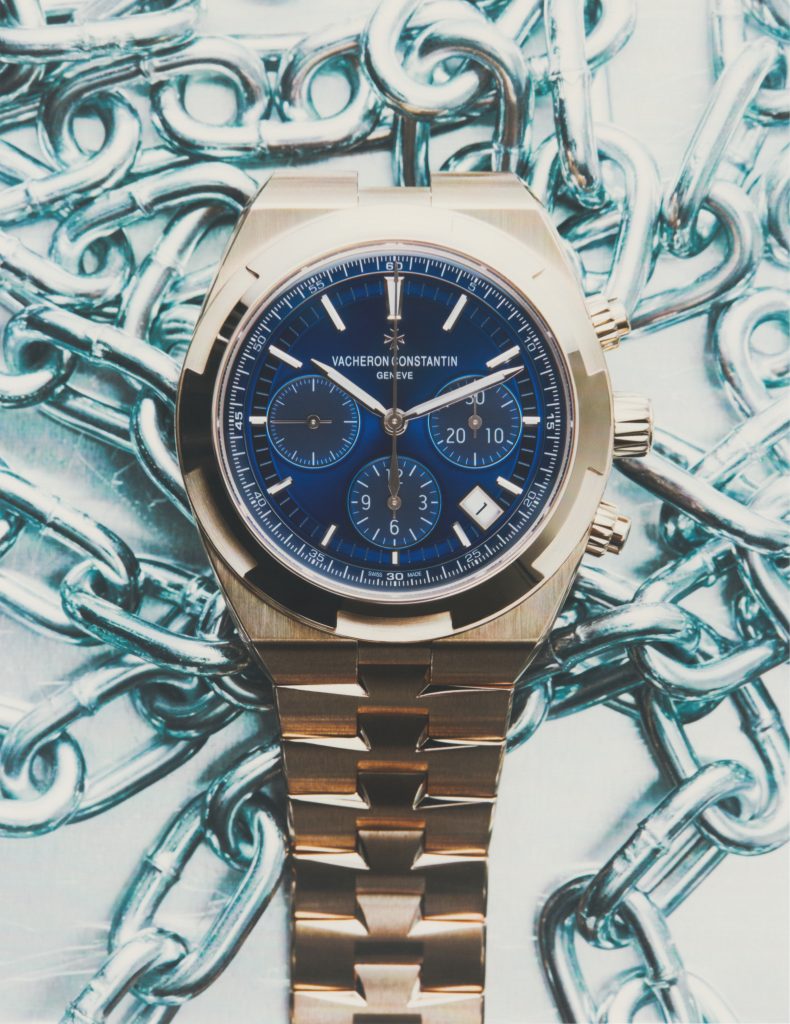
Piercing panda eyes adorn the latest chronograph edition of VC’s Overseas (£34,300 in steel), a classic two-tone configuration harking from the counter arrays of classic ’60s motoring watches like the Autavia and Carrera

François’s motto, “Do better if possible and that is always possible”, first appeared in a letter he wrote to Jacques-Barthélémy Vacheron that year, and it certainly came to bear on things when Vacheron Constantin got down with the sporty luxe scene of the ’70s. It was Audemars Piguet who coined the genre in 1972, with its immortal, octagonal Royal Oak – perfectly pitched at the era’s burgeoning, disco-glitz jet set. Girard-Perregaux and Patek Philippe followed with their own luxurious takes on geometric steel, the Laureato and Nautilus respectively.

But when it came to Vacheron? The virtuoso horloger was, of course, to reinstate more of the ‘luxe’ to the ‘sport’, rendering its own player entirely in luscious gold (as well as steel, as per the genre’s disruptive wont): the slinky, silky-of-bracelet and ever-so-lounge-lizard 222, in celebration of VC’s 222nd anniversary. 20 years on, and 1996 saw a steroidal overhaul, with 222 evolving into Overseas.

Pitched as “an invitation to travel”, Overseas was now framed by a castellated, six-sided bezel, which tightened up the ‘knurled’ ring that crowned Jorg Hysek’s original 222 design (yes, it was Hysek at the drawing board, not the Royal Oak and Nautilus’s more garlanded draftsman, Gérald Genta). It cleverly riffs on the brand’s Maltese Cross logo – itself descended from the shape of a cam that coordinates the 12-month indicator for ‘perpetual’ calendars. More to the point, the bezel pumps things up from VC’s usual classical cool, while at the same time managing to instate a different form of classicism – just as a Roman temple might go for Corinthian columns over Ionic. Sure enough, its inverse Maltese angles flow seamlessly into a robust ‘integrated’ bracelet, whose central links fortify the motif.

In pink gold and royal blue dial, the Overseas Chronograph (£76,500) makes the case for arguably the most lavish iteration of a sportstimer

In 41mm’s worth of boutique-exclusive pink gold (£58,500, yes, but do remember how much metal goes into that bracelet, as well as case), with the option of chronograph functionality (£76,500) – also available in stainless-steel ‘panda eye’ format (£34,300) – the three Overseas featured here are as sporty as it gets for Vacheron Constantin. Which is another way of saying: unlike anything the rest of Switzerland could muster.

That’s what heritage buys you.

Photographer Rosie Harriet Ellis at Artworld

Lighting Director Garth McKee

Production Artworld

Chrono Loco

A question hangs over whether there’s a place for traditionally hand-crafted mechanical timepieces in our digitally entwined universe, but that’s precisely the point – their anachronism is a defiance of everything that will eventually be obsolete

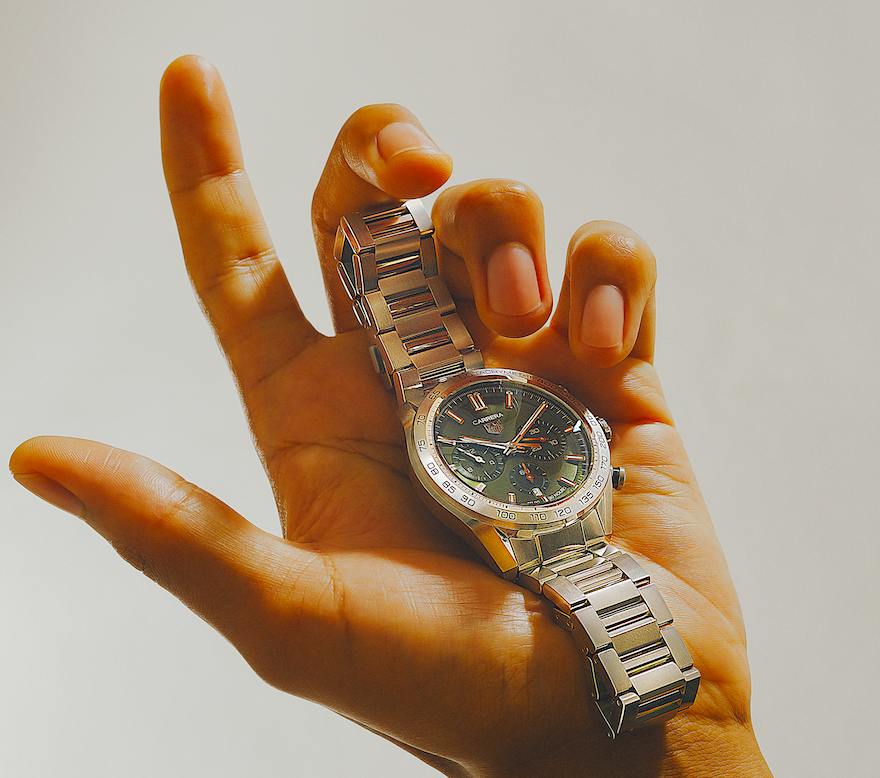
TAG Heuer Carrera Sport Chronograph in steel. £5,500

Chanel J12 Phantom in ceramic and steel. £5,500

Audemars Piguet (Re)Master01 Selfwinding Chronograph in steel and pink gold. £51,800

IWC Portugieser Yacht Club Chronograph in steel. £11,600

Breguet Classique Tourbillon Extra-Plat Automatique in platinum. £140,500

Hublot Big Bang Sang Bleu II Blue Pavé in titanium. £36,500

Tudor Black Bay in steel. £2,840

Bvlgari Bvlgari Cities Special Edition, Roma in carbon-coated steel. £3,810

Breitling Superocean Heritage ’57 in steel. £3,400

Rado True Square Open Heart Automatic in ceramic. £2,090

Photography Nhu Xuan Hua

Photography assistant Karolina Burlikowska

Set design Paulina Piipponen

Styling Rudy Simba Betty

Hand models Paul Darnell Davis Thomas, Malcolm Yaeng, Piotr Jarosz

Time and Light: Candela

Port speaks to the team behind the bold new Panerai design collaboration, Candela, currently on display at the Salone del Mobile in Milan

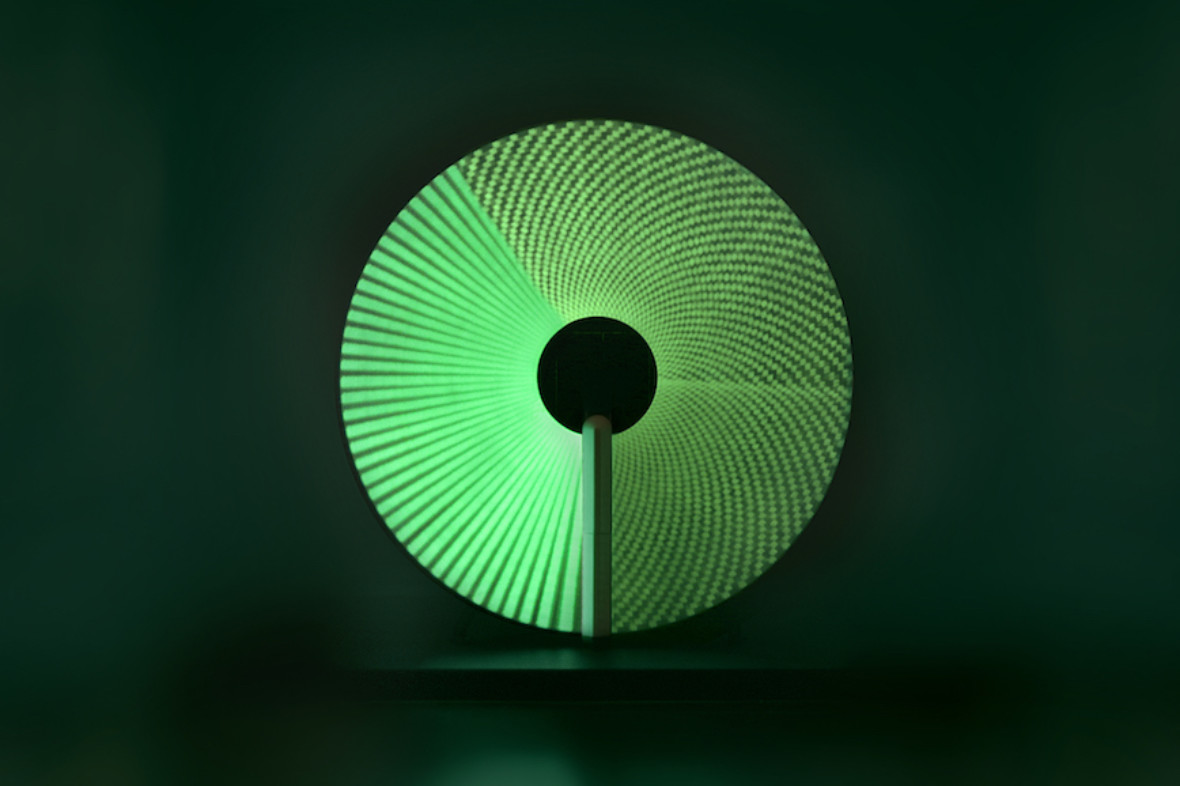
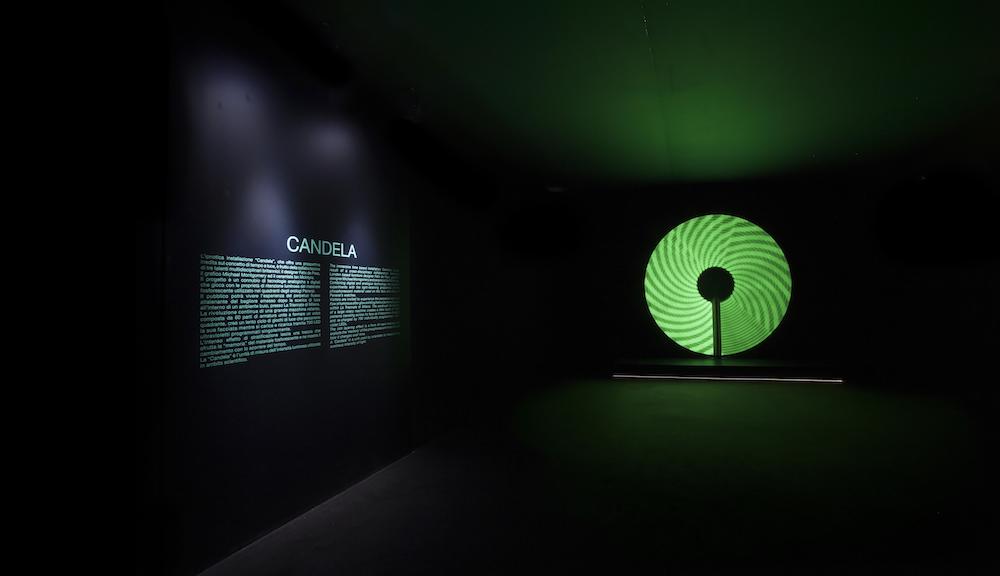
Candela – the hypnotic, slowly rotating, glowing circle, originally produced for Officine Panerai at the London Design Festival – has landed at this year’s Salone del Mobile. Designed to develop the key elements of the historic watch company founded in Florence in 1860, the installation mirrors the brand’s focus on design – which functions as much a vocation as it does for research and innovation – and draws visually on the luminescent dials which, since they began supplying the Italian Navy, have come to characterise the brand’s watches.

Named after the unit used by scientists to measure the luminous intensity of light, Candela was dreamt up by a British design team comprised of designer Felix de Pass, graphic designer Michael Montgomery and ceramicist Ian McIntyre. Now currently exhibited as part of the Salone del Mobile at La Triennale di Milano, an art and design museum in Milan, until 22nd April, it will eventually become part of the permanent display for the exhibition. Here, Port spoke to the team about how the idea developed, the significance of working with Panerai and what it means to be part of the Triennale’s permanent collection.

Could you describe Candela?

Candela is an immersive time-based installation. Combining digital and analogue technology, the project experiments with the light-retaining properties of the phosphorescent material used on the face and dials of Officine Panerai watches. The installation consists of a large mechanical wheel that gently rotates through 700 programmable LEDs housed within a ceramic casing. The face of the wheel is coated with a phosphorescent material that becomes charged by the light sources. The LEDs are programmed to turn on and off in a sequence that creates a perpetual ebb and flow of luminous patterns. The rich layering effect is a form of mark-making that exploits the ‘memory’ of the phosphorescent material and how it changes over time.

Where did the idea for Candela come from and how did it develop?

Panerai asked us to create an experience which offers a new view on the concept of light and time, based around the brand’s key values and philosophy. For us, Candela summarised all of Panerai’s values and at the same time it looks like a design object.

Candela installed in La Triennale di Milano

What did it mean to work with Panerai on this project?

This project gave us the chance to utilise and experiment with specific light-retaining properties, and the material Super-LumiNova typically found on the face and dials of Panerai watches. It was also an exciting challenge to combine the digital with the analogue, applying a high tech approach (using 700 individually programmed LEDs) with a low tech result (light is retained physically within the Super-LumiNova, before fading over time). This is how watch makers must feel all the time!

How did each of your particular disciplines come into play on this project?

We all come from different design disciplines but each of us collaborated equally on every aspect of the project. This created an exciting dynamic and led to unexpected solutions. The form of Candela was carefully detailed, we were able to hide the motor within the base to make it as simple as possible, and the back was just as important to us as the font. Super-LumiNova starts life as a solid ceramic, so this played to Ian’s strength and is why we decided to house the LEDs in a ceramic casing. The graphic patterns were developed by all three of us on site and are programmed through a theatre lighting desk which made it easy for us to play around with what worked.

panerai.com