Rahim Fortune talks to Max Ferguson about his debut book and accessing family history through photography
“It’s hard to put a date on how long I was working on it. As long as I had been making photographs, but as far as the actual intentionality of making a book, about a year.”
I’m speaking with photographer Rahim Fortune via video-link. He’s in Texas. I’m in London. His debut book, I can’t stand to see you cry, has just been published by the now London and Marseille based publishing house Loose Joints. Having been working with Fortune on projects for the last two issues of Port – most recently with him shooting Caleb Landry Jones for the cover of our anniversary issue – I was excited to see his debut book.
I start by asking Fortune about the photographs of people.
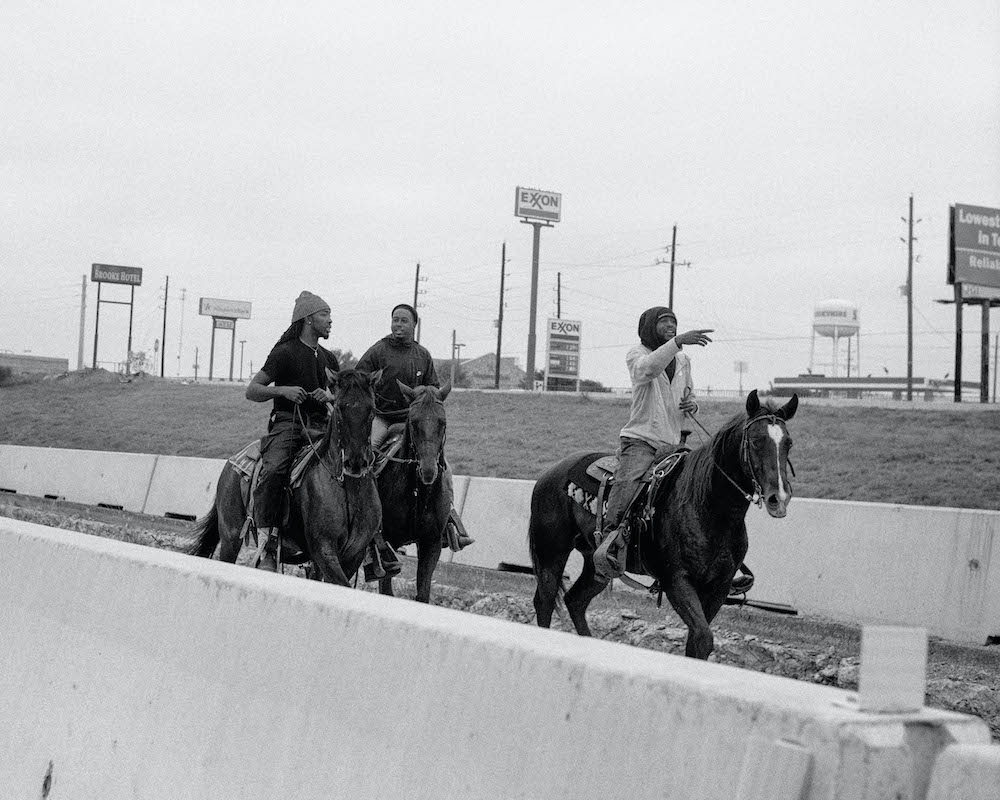
“It’s friends, family and the frequent people you know? I’m at the skatepark and there’s the homie who’s in the carpark and we start chopping it up. You know, there’s just an energy to it and I think that something for me to just chat more candidly that really lends itself to my editorial photography is my street portraiture process, and the way that I relate to people.”
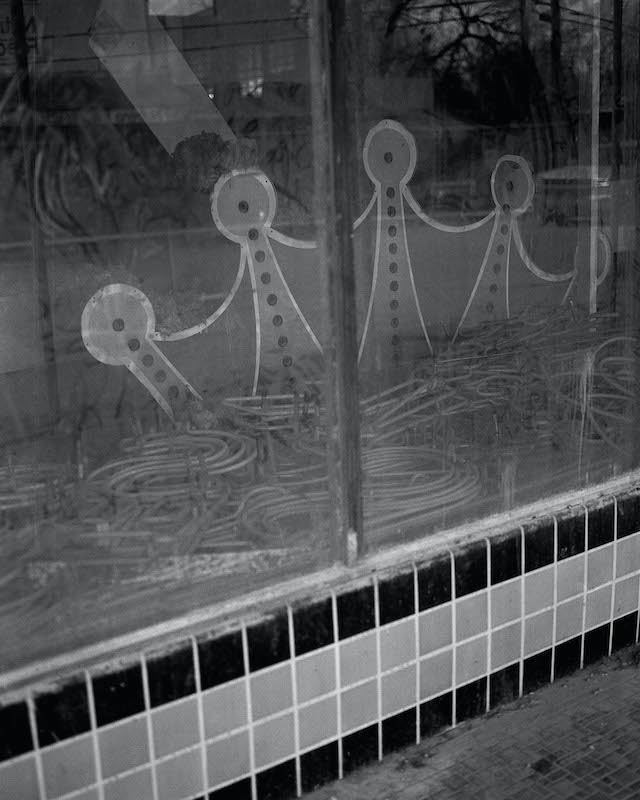
When Fortune talks of his editorial photography he’s mostly speaking about his work for magazines. As someone who commissions photography, and teaches it, I am often considering the overlap between the photographs people are paid to make and their personal work. The conversation mostly goes the other way though – how does the personal tie into commissions. For a photographer to talk candidly about it the other way around is rare and insightful. He’s generous too with his photographic references. Holding up a photograph in the book for me to see he explains that, “there’s multiple things that function here, this one kind of reminds me of Sergio Purtell or Mark Steinmetz who do those very grey black and white photos historical photos.” Fortune goes on to talk more about the effect his commissions have on his photographs saying, “when I photograph someone like a Little Baby or some rapper who is literally a millionaire there is an element of how I also view this person that’s just chilling at the skatepark.”
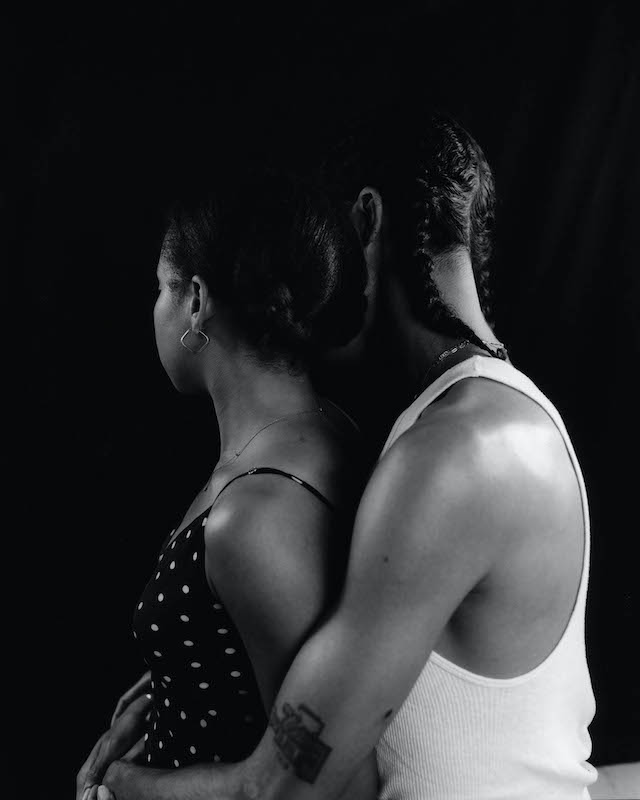
There is one more person who appears in Fortune’s photographs – himself. A self-portrait of him holding his partner, a fellow photographer, has been printed on paper and wrapped around the cover boards that encase the paper bindings. She is positioned just in front of him. Her face is turned away from us and is obscuring his. The tenderness is more than their proximity. The same photograph is repeated in the book – but as a mirror image.
Something I’ve always been struck by with Fortune’s photographs is the way he uses classical black and white photographs, that often seem timeless, in a contemporary way. I asked him about it and believe it’s worth including an extended part of our interview.
*
RF: I guess there are classical elements to it. But that also has to do with my interest in history and the archive more than anything.
MF: The difference is that with most of those older references they’re looking from the outside in, and you’re shooting your family, your community, your friends. That’s the really interesting thing about it for me. It’s using the language of American photography against itself.
RF: It was through the photos that my father and my grandfather took, because it told me a bit about them that was more tangible than a spoken story. Especially as I began to understand photography and how it functions I started to read these images differently. Even down to a detail image that my grandfather took of one of his barracks when he was in the military, it was just like a flash polaroid photo of everything laid out and it was so artistic to me. I think there’s something about the story of black American folks who had to come up through so many tough things, I think that’s why I’m so interested in the archive from that perspective, and then also from my mother’s side of the family, Chickasaw, and going back to Oklahoma and trying to understand that. So much of it is about the archive. My family goes back to the 1800’s there, but before that they were in the Mississippi, and that was a part of a forced migration. So, your actual artefacts are not in the place that you’re considering as your nation. The Chickasaw nation is not the initial place. The B.I.A. moved those people, and that’s the only reason that I spent 5-6 years of my life living on this land”
*
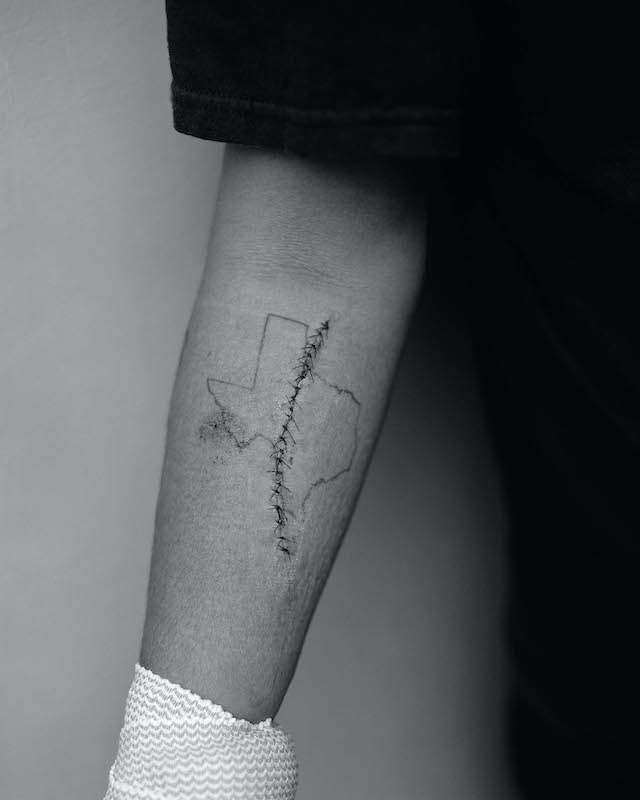
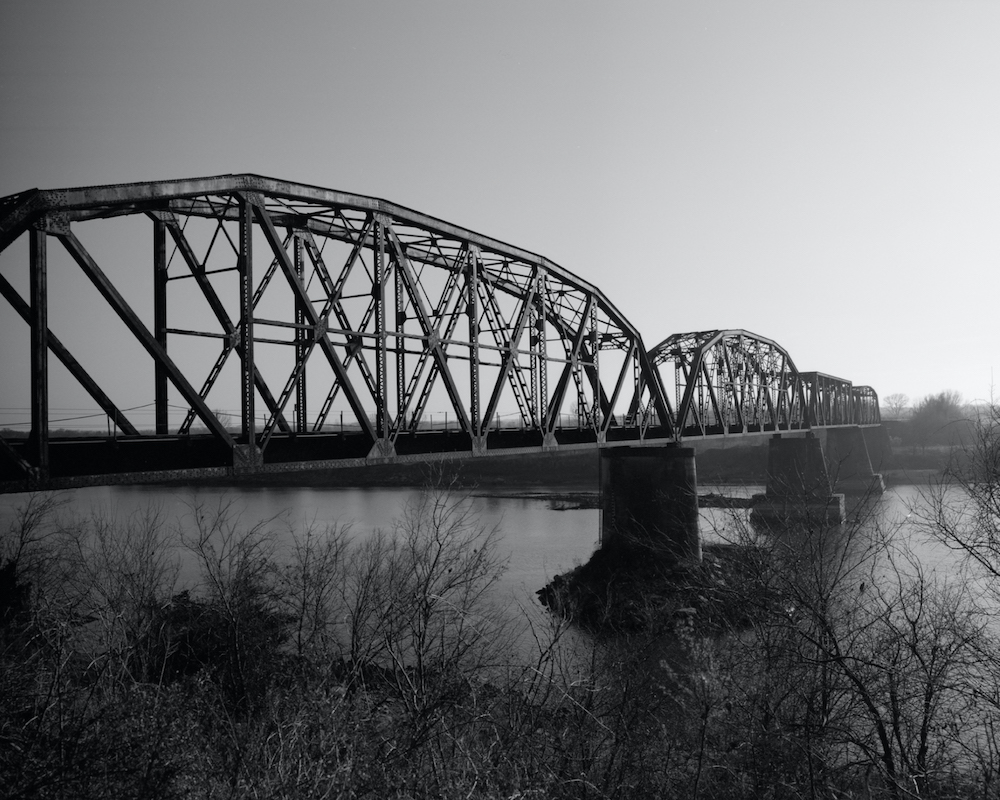
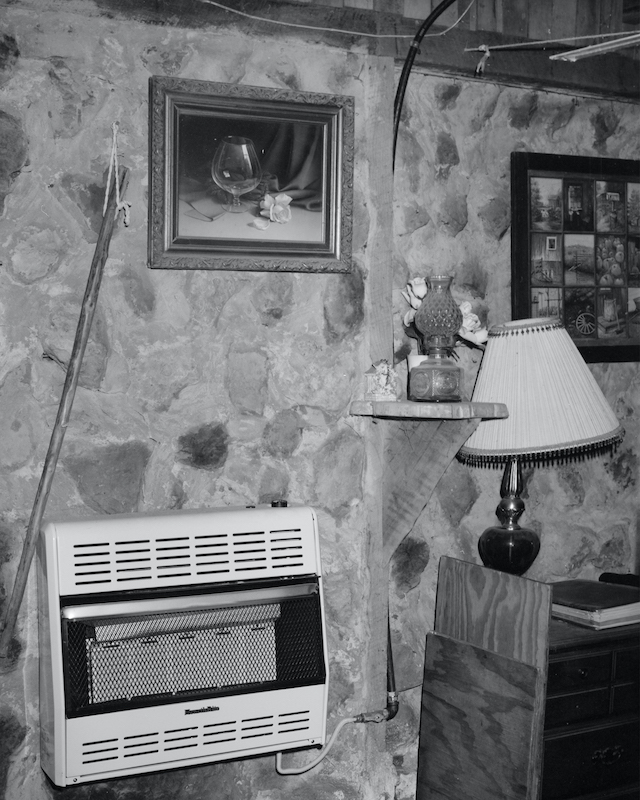
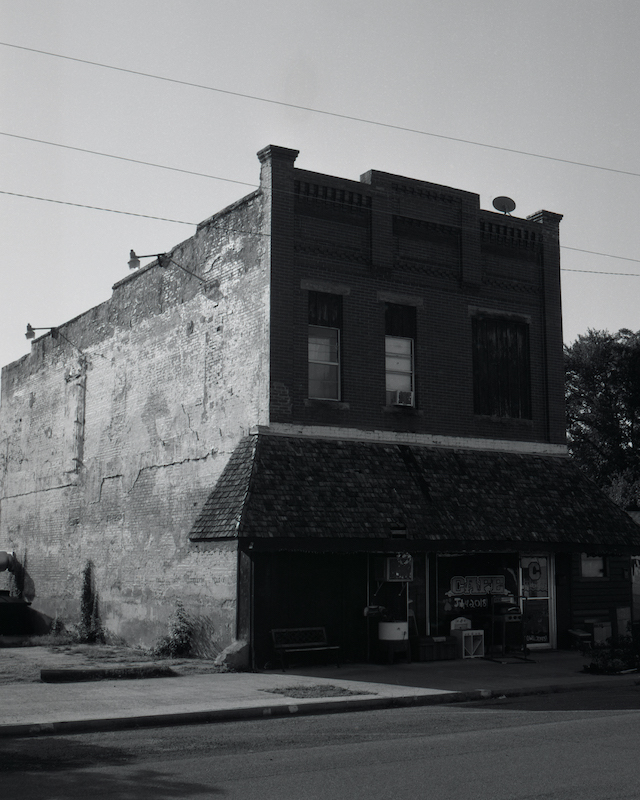
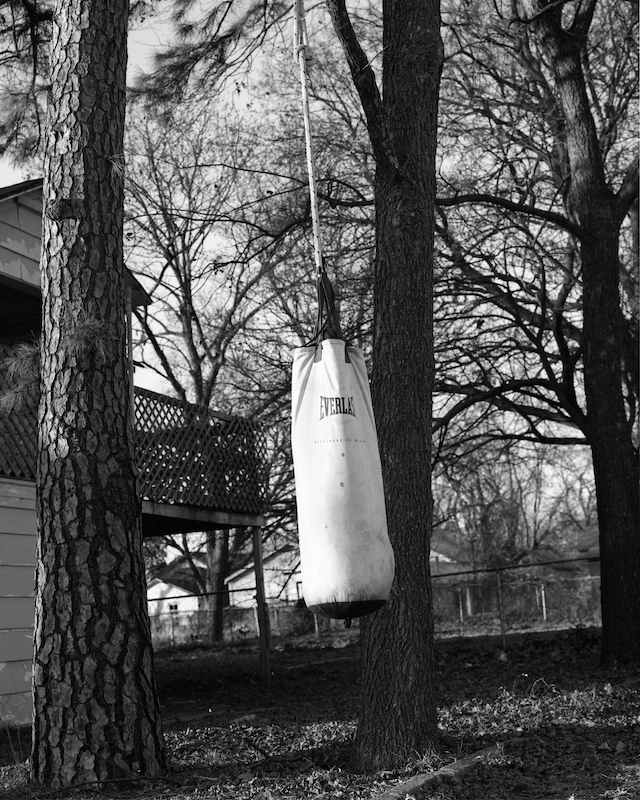
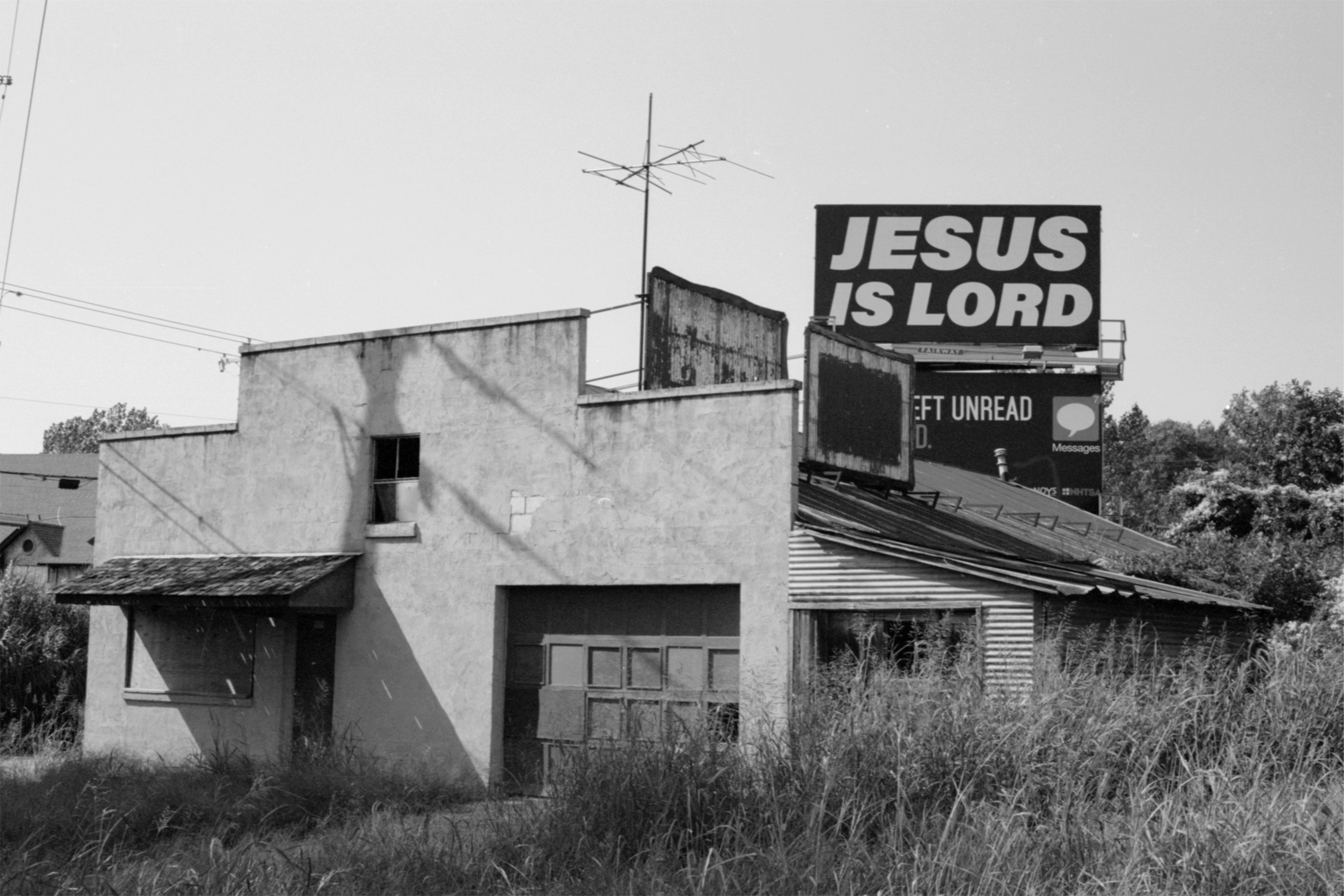
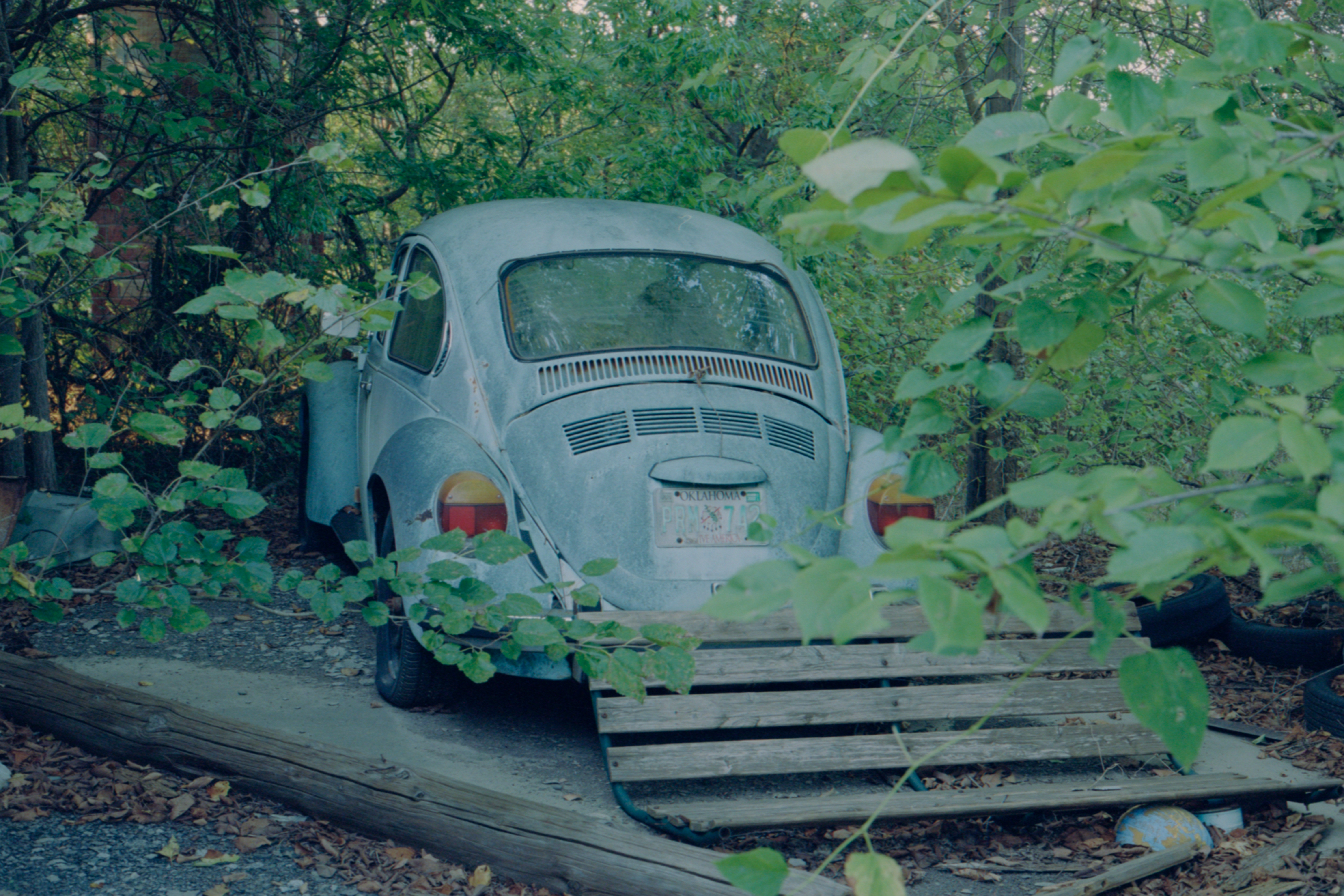
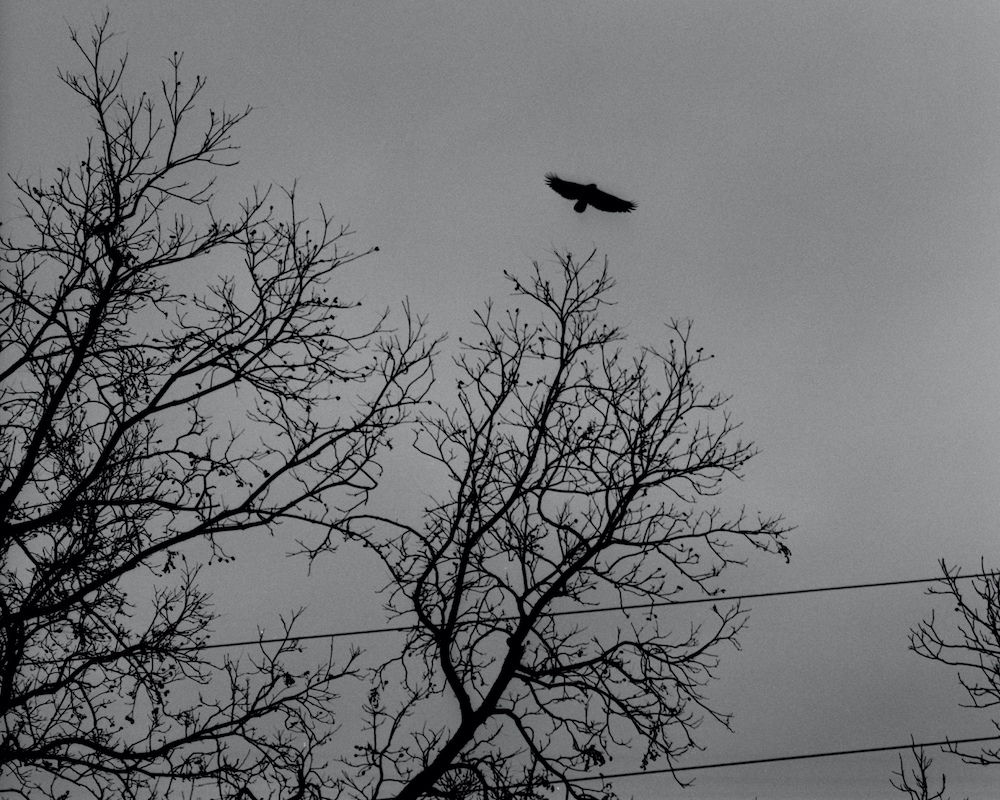
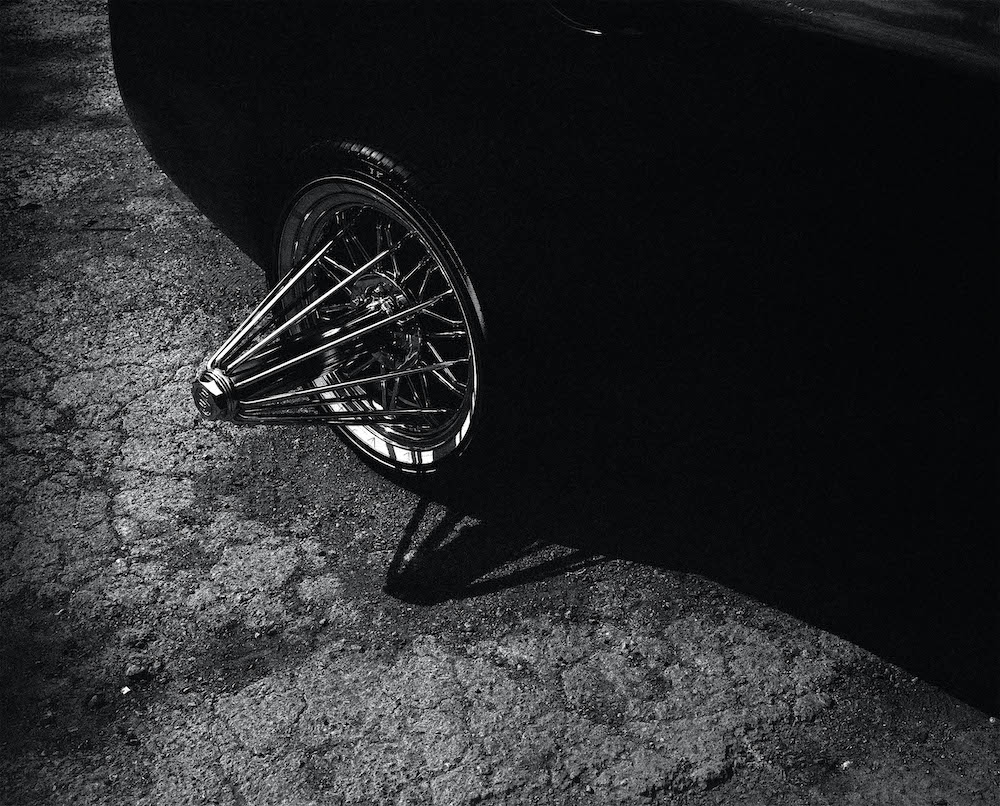
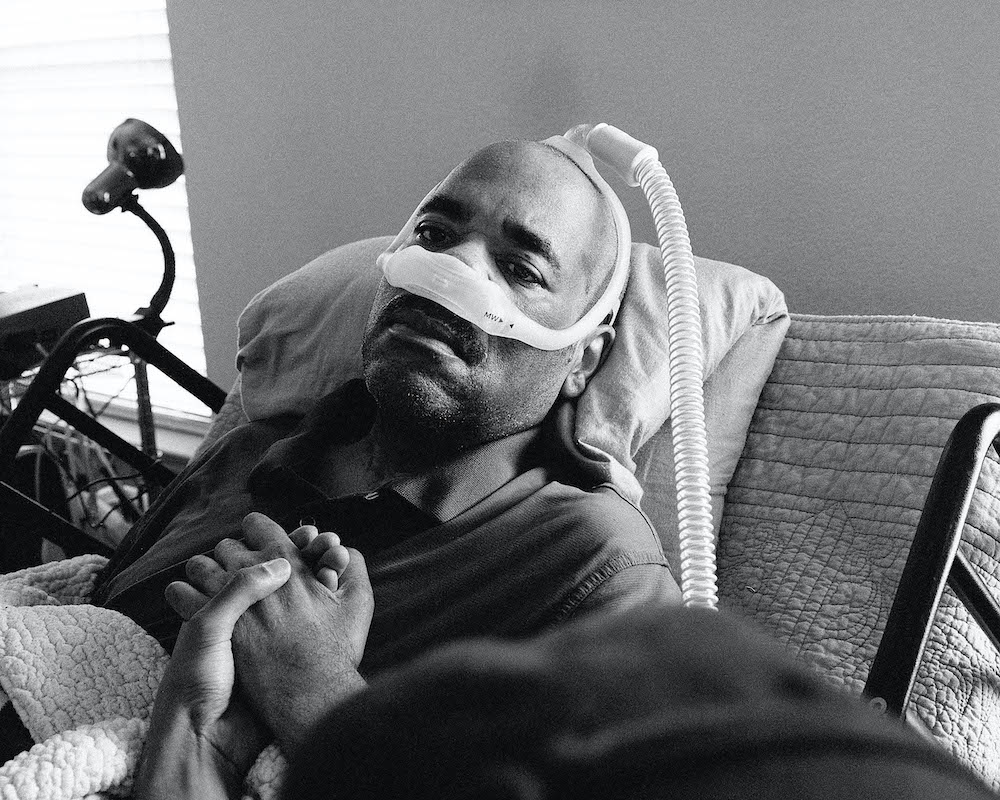
Between every question Fortune pauses to think. Each answer in our hour-long conversation is considered. And looking at the book for what must be the hundredth time I am struck by this thoughtfulness. The edit, layout and sequences are sublime throughout. The rhythm of is set with the portraits of Fortunes family and friends, photographed mostly in their own domestic spaces, other images break this sequence: landscapes that are American, industrial, rural; street portraits of people that show the photographer’s “proximity to other people”; and closer details. The penultimate photograph is a portrait of Fortune’s father, who passed away while he was making this work. The last is of people relaxing in a river – the light refracting off the cool, dark water – reminding us that after death things must heal.
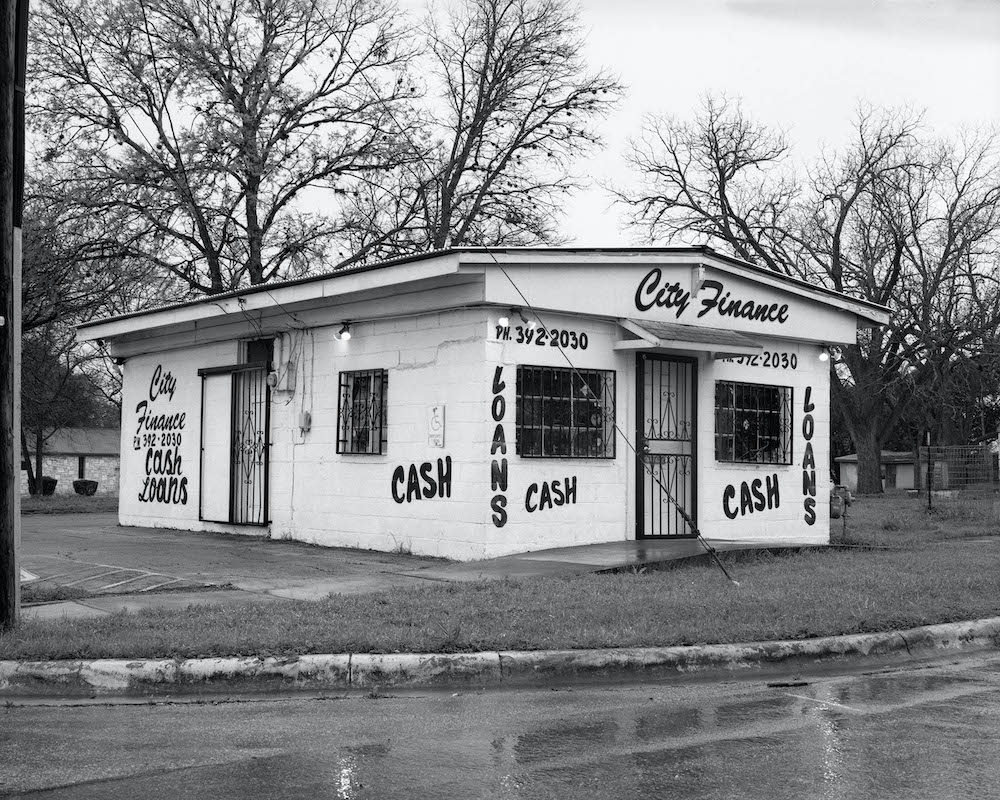
There is so much love in Fortune’s photographs – but there is also darkness under the surface that “hint at certain challenges people are up against”, says Fortune. “Being mixed race in America is another theme that is in the book… because that is my experience so you will have moments of people who are straddling lines of where they are perceived or are allowed to exist.” Holding up the book again he shows me a photograph of squat white building with decorative ironwork bars on the doors and windows. Above the door in cursive script are the words “City Finance” and painted on to the walls the words CASH and LOANS are repeated multiple times. “This photograph of the loan place thinks about finance and capital in a place like this and where that access comes from.” The photograph reminds me of a quote from bell hooks’ poignant essay Earthbound: On Solid Ground, where she talks about her upbringing in rural Kentucky and the kind of place I would only know from photographs: “Our concrete house on the hill, a leftover legacy from oil drilling, from the efforts of men to make the earth yield greater and greater profit stood as a citadel to capitalism’s need for a new frontier.”
During our conversation Fortune told me that he was interested to see what “critiques come forth with this book”, before adding that it was important to have critical engagement with work. I’ve thought about how I could add to that conversation, but my lasting impression of I can’t stand to see you cry is that Fortune has produced a modern classic – paying homage to what has come before it and showing us how it should be done now.
I can’t stand to see you cry is published by Loose Joints