Ethan Hawke

Actor, director and writer Ethan Hawke – known for films such as Boyhood, Before Sunrise and Training Day – talks to longtime friend and collaborator Hamilton Leithauser, frontman of The Walkmen and acclaimed solo artist whose scoring credits include Hawke’s documentary The Last Movie Stars. The pair discuss Hawke’s new show, The Lowdown, his role in Blue Moon, the politics of truth-telling and the power of art to cut through the noise 

Hawke wears J.Crew, photography Ian Kenneth Bird

Hamilton Leithauser: It’s been a minute since we last saw each other. I think I saw your wife the other night, but you’ve been away filming your new show. Tell me about it – I saw the preview on the plane and laughed out loud. 

Ethan Hawke: I appreciated that text. You may not know this, but you’re a huge inspiration to the show. Usually, I get to read a script before I say yes, but with this, it was just, ‘Do you want to do a show with Sterlin Harjo?’ and I said yes before even seeing a script. I told Sterlin, “I want this show to feel like a Hamilton Leithauser performance – when it’s over, you feel like someone gave you a piece of their heart.” I wanted to be sweaty and bloody at the end of this show.  

HL: My wife was at your premiere and said the show is fantastic. 

EH: Your wife is clearly very intelligent. 

HL: She has very good taste – in men and television. 

EH: I’m not sold on the man part. 

HL: I just saw the preview – I think I saw it on your Instagram. I want to hear all about that. 

EH: Well, I’m playing one of the greatest songwriters of the 20th century . I know a lot of his songs: ‘My Funny Valentine’, ‘Blue Moon’, ‘Bewitched, Bothered and Bewildered’ – so many classics. What’s so interesting about the movie is you’re basically watching a human being die of heartbreak in real time. He was part of Rodgers and Hart for 25 years – they were the Lennon and McCartney of their generation. Then Hart, the character I play, his drinking got so incorrigible that Rodgers decided to move on and did a new show with a young fellow named Oscar Hammerstein. They went on to have a 17-year collaboration. So it’s kind of like Lennon and McCartney break up, and then McCartney starts a new band that’s bigger than the Beatles ever were. That’s what happened to Larry Hart. He loved Richard Rodgers – they were best friends for 25 years. He goes to this opening night party to try to convince his old friend that he’s ready to work again, that he’s sobering up and ready to put in the real effort. But it’s too late. The ship already sailed, and his friend has already moved on. He has to sit there at the opening night party for Oklahoma! and try to be a good sport.  

HL: And how long did he live, does the movie go into that? 

EH: It’s a classic Linklater movie. It’s 90 minutes of real time. You watch him walk into the party, meet everybody, and 90 minutes later, you realise he’s going to drink himself to death and he’ll be dead in five months. 

HL: Your hair looks fantastic in the preview by the way, I gotta say. 

EH: Dude, that combover killed my soul. My vanity took such a hit. I had to grow the edges of my hair long, and then I had to shave the middle of my hair so I could do this combover. But if you didn’t do the combover, you looked like Bozo the Clown. Luckily, it was the hardest I ever worked in my life with that part, so I didn’t even go out. 

HL: So you did that after you did the Oklahoma trip? 

EH: No, I did Blue Moon first, and then I went to Tulsa. What about you? Are you on the road with Pulp? 

HL: I’m on the road with Pulp, yeah. 

EH: I love Pulp. There was a time in my life where I wanted to be Jarvis , he just seemed like the coolest guy in the world. 

HL: He is cool. He still is. 

EH: How’s their music?  

HL: It’s great. They put on a really big show every night. And I think people enjoy my show also. Right now I’m in Milwaukee, doing a headline show with my band tonight. Pulp’s taking two days off, so I was like, fuck it, I’ll just do a show here, and then we’re going to play in Minneapolis with them.  

EH: I love Milwaukee.  

HL: Milwaukee is awesome. There’s always something cool to find here. You can still find a huge, really cool bookstore that actually has reasonable prices, which you don’t see anymore these days. I just bought a huge stack of books and art which was totally affordable. And it’s right downtown. There’s nobody on the sidewalk, which is probably not a great sign for the city’s economics, but it’s a pleasure to walk around on a beautiful sunny day.  

EH: I love it. I was there last summer. We screened Wildcat in this old movie theatre, the kind of place that looks like Gone With the Wind premiered out. They have an organ and a balcony, and it’s awesome. 1,000 seats, and the place was sold out, and it rocked and rolled. I just got such a good feeling from that whole city. 

HL: We’ve had some good times here over the years. 

EH: What’s it feel like as you ride around the country right now? 

HL: With the media stuff? 

EH: In the Lowdown show, I’m playing a journalist – a guy who’s hellbent on showing the benefits of telling the truth. It doesn’t matter if it’s within a family: if there’s a problem and you’re not honest about it, you’ll never heal. The same goes for society – if you’re not facing the truth, you won’t grow or heal; you’ll just stay stuck with the same issues.  

Sterlin used to work for a free press in Tulsa and saw the benefits of honest reporting firsthand. In the 1990s, they were covering stories about the Tulsa race massacre, and witnessed the healing that happened in the community when people shared a reality based on truth, instead of covering things up. My character in the show is inspired by a friend and mentor Sterlin had when he was young, a journalist named Lee Roy Chapman. So, my character is based on him. A kind of Don Quixote, going after big money.  

HL: Are you still a journalist in the show? 

EH: In the show, I run a used bookstore but still write for local magazines, trying to expose how the affluent take advantage of the underclass. I keep getting knocked down for it. I was even on Good Morning America this morning, saying to George Stephanopoulos that if you tell the truth, sometimes you get punched in the nose. 

My grandfather’s generation understood democracy and the value of a middle class. Now, with the internet, it’s like the Tower of Babel – so much confusion, and people are afraid to speak honestly. Even in this interview, I’m aware of how I’m speaking, and that fear isn’t good. It’s easy to get distracted by things that don’t matter while ignoring what really does. 

HL: And journalists now face real threats – some need 24/7 security because of the backlash, just for asking tough questions. 

EH: Exactly. Sometimes it feels like, ‘what country am I living in?’ Until people feel the loss of their freedoms, nothing will change. The powers that be profit from compliance, and no one feels motivated to take a stand.  

HL: I want to hear some funny stories from your show – were you having a ball the whole time? 

EH: The sad truth is, I never had so much fun in my life. There’s a punk rock spirit happening in Tulsa. That part of the country has been dealing with all the problems that we’re citing right now for a long time. The state has all of the major issues, from the Native populations, the issue of race, the oil money land barons. They’ve got a history of corruption. The community is very awake to all these issues. They’re very present. The art has a present tense-ness to it, and the music history is great, from the Gap Band and Leon Russell to Bob Wills, Cain’s Ballroom, the Woody Guthrie Center and the Bob Dylan Center. You’ve got Larry Clark . It’s a place that has a high regard for creativity. Apartments are cheap, so our students can find a place to live, create and be wild. You feel that in the film community. We did have fun – we had Killer Mike in the show. 

HL: Oh yeah, Killer Mike. You got so many people in that show. 

EH: [My character] writes for two newspapers. One is a longform magazine and it aspires to be like The Paris Review of Oklahoma. The other one I write for is the Tulsa Beat, which is booty and bad guys, and Killer Mike’s newspaper. I have these two different duelling editors, where if one won’t publish, maybe the other one will. It’s been so fun to watch somebody as smart as Mike is, who has achieved so much success at one artistic medium, but he’s still got a beginner’s mind about acting. He’s so excited by it and so turned on. 

HL: Is it like tongue-in-cheek, or is he fully in character? 

EH: He’s fully in character. I’m not into the tongue-in-cheek thing. We’re trying to create a real world that you can smell. Sterlin likes the same thing. You’re going to love it. And there’s so much JJ Cale and Leon Russell – it’s awesome. The music of the street is very much a part of the show. Then we have Tim Blake Nelson and Jeanne Tripplehorn, who are like Oklahoma royalty. That was pretty fun. 

HL: That’s awesome, I can’t wait to see this thing. When does it come out? 

EH: September 23. My job right now is to tell people the first thing you’re gonna do is you’re gonna get your beautiful wife and watch this. You’re gonna sit down with her and stream the first two episodes, and then you’re gonna text your friend Ethan and say –  

HL: Yeah, dude, nothing but praise. 

EH: Are you hitting the studio anytime soon? 

HL: I got a movie coming out that I scored that I’m really proud of. I don’t know how they’re debuting. I don’t know how stuff works. You know more than me.  

EH: Well, I have this theory that I’m going to put here in print. I hope that you are going to have this whole other act of your career like Randy Newman, who I think is a genius rock and roller, and happens to be one of the best people to score a movie in the history of the world. With your sense of melody and musicianship, you’re ready to take that torch. 

HL: I’m ready. My hand is open and I’m running. 

EH: For those that don’t know, we have been friends for a long time through mutual friends, but we really got to know each other because Ham scored The Last Movie Stars, which was a six-hour documentary about Paul Newman and Joanne Woodward. Ham made the whole thing sparkle and shine. His music is all over it.   

One of the best nights of my life is the night we became friends. It was a New Year’s Eve party where we did an old fashioned guitar pull all night long, and we stayed up way too late. But that’s where I had the idea. Do you remember when Ben Dickey started playing a Blaze Foley song, and I had the idea that he should play Blaze Foley in a movie? 

HL: Oh, that’s where you came up with that. I had been friends with this guy since long before I even knew you. He was not an actor, and then I went and saw Blaze, and he’s up there crying, delivering this crying speech. I couldn’t believe it. 

EH: He’s amazing in the movie. But that gets to my theory about you and a lot of other people – Killer Mike for example – that if you have access to creativity, it can manifest in a lot of different fields, especially if you do it with humility and discipline, which Ben did. He took the idea of acting in that part incredibly seriously. He worried about it morning, noon and night. In Philly, he would be playing with his band, the Blood Feathers, and they were so much fun. I could watch him hold an audience in his hand, and the charisma I knew would translate into his work as an actor. 

HL: You balance big projects with smaller, more personal ones. Do you find yourself turning to those to stay grounded? 

EH: There’s a direct inverse correlation between how much you get paid and how substantive the job is. The more meaningful the work, the less you get paid. But those projects keep me growing and connected to the art. The trick is to focus on what you can give to the profession, not what it can give to you. I had a really great 20s, met a lot of amazing people, and was really idealistic about the power of storytelling and the arts. The arts really represent the collective mental health of a culture. When it’s vibrant, ideas are flowing, and light is shining in all the dark places – you have a healthy culture. When it’s dark, and all anybody’s trying to do is sell cheeseburgers, the whole thing atrophies. My goal was never to be a big shot. 

HL: Sometimes you get lucky and a passion project breaks through. 

EH: Exactly. Every now and then, you thread the needle – like Boyhood, which we worked on for 12 years. Sometimes the crazy, avant-garde projects find their place, and it’s important to keep doing them for the sake of our collective mental health. Every now and then you get absurdly lucky, and it works, and it finds a place in the marketplace, and people really appreciate it. But I think it’s so important that we do those things because sometimes they break through. 

Hawke wears J.Crew

Photography Ian Kenneth Bird  

Styling Mitchell Belk  

Grooming Jennifer Brent at Forward Artists using 111SKIN and Kiehl’s  

Production Hyperion NY

Photography assistants Fallou Seck and Anthony Lorelli 

This article is taken from Port issue 37. To continue reading, buy the issue or subscribe here

Alpha, Milda

Grudova is the author of Children of Paradise and The Doll’s Alphabet, known for her surreal and unsettling fiction. In this original story for Port, we follow Milda, a woman released from prison to marry a stranger as part of a state effort to boost the birth rate. But her new husband has his own agenda – he wants her to join his underground political cell, offering to help find the child she lost when she was imprisoned for murder. Together, they must navigate a society where family is both a performance and a form of control

Milda was put in prison for killing her sweetheart, a foreign diplomat, after seeing him take another woman to the ballet. She met him working at a restaurant popular with diplomats and bureaucrats which served tiny fish sandwiches, thin chicken broths and champagne. It also sold French and Cuban cigarettes, electronic plug converters and thin mittens from behind a counter.

Milda had a baby while in prison, which was taken away and put in a nursery she did not know the name of. The state, realising the population was dramatically falling, put Milda in a scheme where men of the public could write romantic letters to her and other healthy young women, and if they proposed marriage, the women would be released early in order to have children.

Benji had various part-time jobs. He worked in a grocery store specialising in dented and damaged goods, and in a local museum which had a small-scale model of a volcano and a vast collection of human brains kept in glass, once belonging to famous intellectuals, revolutionaries and scientists from the local area. He wrote to Milda that someone broke into the museum when it was closed, and – along with the small selection of dry biscuits in the shop advertised as food eaten by astronauts in space – stole all the brains. There were bits of brain among slobber and broken glass on the floor. Whoever stole them had taken bites on the spot.

Where were the brains now? He asked Milda. Perhaps in stews, casseroles, puddings she replied. The prison food was plain buckwheat porridge, soy sausages, pale juice.

Milda wrote him descriptions of her daily prison life: how they made men’s shoes for a foreign market – hideous long ones in red and purple snakeskin – and some older women there were so lonely they hid love letters in the toes of the shoes. Though Milda thought only cads would wear snakeskin shoes and wouldn’t care for love letters at all.

She didn’t tell him about her son, which she had named Teo before he was taken away, or how she stole an enamelled vase from the restaurant where she had worked. The diplomat was furious at seeing it in her bedroom and said she ought to be sacked, and that he would write to the restaurant. It resembled a tattooed chicken: squat with little wings and legs, embossed illustrations of trees and people on it. She didn’t know why she stole it, perhaps to feel a little power or impress the diplomat – which it didn’t at all.

She had also stolen tepid champagne, putting the dregs of glasses into a big old plastic water bottle, and drank it at home to relax before the diplomat came over to make love to her. He made fun of her for wanting to attend Swan Lake, performed by a small touring provincial ballet company which didn’t have a live orchestra but a gramophone only. A gramophone looks like a golden swan said Milda, but he was not convinced. He took another woman, who was also a foreign diplomat from a different country than himself, to see a ballet based off a Tennessee Williams play. It had all the dialogue removed, Milda read in the paper reviews. It was just music and dance. Milda made herself angrier and angrier watching a bootlegged copy of A Streetcar Named Desire with Marlon Brando on silent with no subtitles, until she killed the diplomat. She went into the diplomat’s apartment uninvited because the doorman knew her already, and the diplomat hadn’t told the doorman he had a new woman now. She used a mallet she had bought to fix her bed because it was old and the metal was bent out of shape. It was only in prison Milda discovered the pregnancy and she supposed the rages of bodily change must have caused her to become a murderess because she had never thought of becoming one before.

Benji proposed to her, sending a cheap ring with a ladybird on it in the post, which secured her release.

Benji picked her up from the prison and gave her a large jumper to wear because it was cold. He was unpleasantly thin, and wore a belted grey coat and a ushanka, which he put on her head. His hair was blonde, cropped and full of dandruff. His ears were enormous, with blackheads along the lobe, and in one a tiny gold safety pin.

Milda was given a bag of her things when exiting the prison: the vase, a large stuffed toy shaped like a cricket she had spent a lot of money on – and had meant to give to the diplomat because he had once mentioned finding insects fascinating, but thought now, she could give it to her son – a translated P. G. Wodehouse book and a few flimsy floral dresses missing buttons or with holes in them. The restaurant had taken back her uniform, someone else was wearing it now.

When they were out of sight of the prison, Benji said, I apologise those love letters didn’t mean anything, it just had to look convincing to get you out. I admire what you did enormously, killing that diplomat involved in our government’s corruption and the foreign arms trade.

I killed him for romantic reasons, not political reasons, Milda replied.

I admire it all the same, he said, and I think you will be useful to my underground political movement, Alpha.

I have a son in a state nursery and that’s all I care about, said Milda.

Benji lived in a rundown apartment building called Cecil Court. He made her dumplings from a big frozen bag when they arrived. They ate them with spicy red pepper sauce and sliced-up radishes while he told her about Alpha.

Milda agreed to help with the activities of Alpha if Benji helped her find her child.

The other two members of Alpha lived in a hole off a metro tunnel because they were wanted by the state and Benji didn’t have time enough to bring them supplies.

Milda brought them roasted barley tea in large metal containers, tinned fish in sunflower oil, tinned apricots in syrup and chopped raw beef sandwiches on rye bread, along with all the newspapers she could, which she found abandoned on metro seats. They gave Milda articles they wrote in the dark, to be published in underground anarchist magazines. Both of the Alpha members in the metro wore spectacles, though they had no light in their tunnel besides a child’s flashlight.

Milda had to jump onto the tracks between trains and run into the tunnel where the hole was. She could never get back up on the platform herself and was aided by passengers who thought she was suicidal. She went at a different hour every day so she wouldn’t be seen by the same commuters again and again, which annoyed the two bored and hungry Alpha members who said routine, rather than spontaneity, suited them better in their distressed condition.

Milda and Benji were married with the ladybug ring and drank a bottle of Georgian wine to celebrate. They slept together when they were drunk, and Milda examined his thin, blue body in comparison with the diplomat’s who had been like a comfortable and hairy slug, well fed on ham and milk in his home country. This gave her a sensation she thought might be somewhat political.

Milda and Benji attended cultural events to spy on bureaucrats and politicians. Benji bought her theatre-going clothes from a by-the-pound second-hand shop – a pair of black loafers with gold braid on them, a fur coat, a white lace dress, stockings that went up to her knees but always fell down. When they did, Benji crouched down and quickly pulled them up, gently patting her ankle.

They went to see a theatrical adaptation of Anna Karenina. Benji brought them tiny opera binoculars to spy on the audience. Milda kept thinking she saw her diplomat, but he was dead. There were many diplomats like him drinking glasses of red wine, and kissing younger women in booths in a disgusting, lustful and shameless manner.

The actors wore thick plastic glasses out of place with cheap-looking 19th-century costumes made mainly of satin. Still, she was captivated and refused to look at the diplomats any longer as it made her too irate.

Milda asked Benji to take her out to dinner after, but he said he couldn’t because of his political reputation and going to the theatre was strictly work, a cover for spying. He hadn’t caught a line of Anna Karenina.

Through his political connections, Benji found the name of the nursery where children of bureaucrats and diplomats were kept. It was called Ducklings Nursery. Milda went and stood across the street and watched when the children were taken outside. Her son wore the sailor outfit of the nursery, and a long old fashioned-looking coat with a flared bottom that was too big for him and dragged in the dirt. He had longish black curls from his father, that’s how she could tell it was her son, though she found she could peel off these repulsive resemblances to the diplomat and throw them away, laying bare a hard sweet love. When she rang the bell of the nursery it played a strange tune for a very long time, but no one answered.

She wrote the nursery a letter to try and reclaim her son and they told her she would have to apply via the state family board. Milda wondered if she had any more children if they would take them away at the hospital and ask her to reclaim them too. She bought all sorts of birth control on the black market, jellies, diaphragms and pills, but her and Benji did not sleep together again, though they shyly fondled each other at night.

She sent presents to the nursery, and comforted herself with the mental image of the little children enjoying them: the stuffed cricket, Chinese white rabbit candies, paper doll kits, plastic bags of chunky costume jewellery.

She and Benji had to fill out many forms multiple times and take them to the state family board, detailing Benji’s employment. They recommended Milda find a job too. They also had to move to relocate the two Alpha members in the train tunnel with them. Benji found an old warehouse on the edge of the city, with big windows which let in plenty of bright light the other Alpha members were not used to. They had to wear sunglasses all day. They told Milda they couldn’t tell her their names, even though they trusted her. One’s face was covered in prominent, pale brown moles, like nipples, and the other had a pimple on his nostril which he prodded and examined but didn’t squeeze. They smelled from living in a hole and Milda bought them carbolic soap, but they wouldn’t bathe as they said they were too busy.

Milda wasn’t allowed to work anywhere with too many foreigners or the public because of her jail time but got a job feeding monkeys in a lab. The monkeys had microchips in their heads or were going to be put into orbit, and Milda cried to and from the lab every day thinking of their frightened red faces and how here she could hear their screams, but there was no one in orbit who would. She gave them candy and radishes to cheer them up but it only gave them diarrhoea. Once she had a few payslips she took them to the state family board and they added them to the file. They told her they would have to do a home visit. The spectacled Alphas agreed to leave the warehouse for the day. They packed a frugal picnic to take with them. Milda and Benji cleaned, and tore pictures from a children’s book and taped them all over the walls – tigers and bears in scout hats – and bought a cheap space heater so they wouldn’t think it too miserable or cold for a child. As Milda was showing the social workers from the state family board around the warehouse, she noticed her vase was gone, she had thought it might impress the social workers, an old, possibly expensive thing it was. They drank barley tea with relief after the social workers left. It had gone well. Benji made dinner just for them – radishes, soy meat and a spicy broth. He said the other alpha members would not return, and that they would be leaving the country that night, in fact, after carrying out something they had been planning for a while. It would be easier, just her Benji and the child, said Milda, but did they take my vase?

Yes, he said, it was the perfect container for a bomb, I’m sorry I didn’t ask beforehand. Milda replied, it was ugly anyway.

It was the only thing she had left that had been in the same room as her and the diplomat at the same time. It had that mystical power and now it was shattered somewhere among ruins, but she supposed that was a good thing for her to move on.

She didn’t hear from the state family about the results of the visit, and tried calling the nursery over and over again but the phone had the same annoying piece of music as the nursery doorbell. She told Benji she couldn’t get through to them, and he said, No, I shouldn’t expect you would.


Illustration by Alec Doherty

This article is taken from Port issue 36. To continue reading, buy the issue or subscribe head here

After the Debate

Philosopher Hilary Lawson on founding HowTheLightGetsIn, curating a space for open conversation, and what it means to navigate uncertainty in a fractured world

Photography by Matt Eachus, The Manc Photographer

Founded in 2010 by philosopher Hilary Lawson, HowTheLightGetsIn is a UK-based philosophy and music festival that brings together thinkers, politicians, scientists, writers and artists for a programme of debates, talks, performances and live events. With editions in Hay-on-Wye and London, past participants have included Steven Pinker, Slavoj Žižek, Ai Weiwei, Laurie Penny, Yanis Varoufakis, Deborah Levy and Noam Chomsky. This year’s Hay edition, themed Navigating the Unknown, featured over 300 events spanning politics, philosophy, science and culture, with a standout session exploring international law in the context of Ukraine and Gaza. The upcoming London edition, set for September, will take on the theme After the West, examining shifting global power structures and the future of geopolitics through a new slate of debates and speakers.

Today, with public discourse becoming increasingly polarised, the festival gives a moment of respite – and, importantly, a space for in-depth, cross-disciplinary discussion. In this interview, Lawson reflects on the origins of HowTheLightGetsIn, how the festival has grown from a small gathering to a major platform for ideas, and the editorial process behind curating its themes and debates. He also discusses this year’s focus on uncertainty, the thinking behind next season’s After the West, the challenges of keeping the content original and genuinely thought-provoking, and what it takes to build a space for open conversation, resisting status-led formats.

Hilary Lawson

How was the festival this year?

We had an absolutely great festival in Hay. I think it was the best one in a long time. We had lots of great friends, and people really enjoyed it. We were very pleased.

What were the highlights? Any standout moments?

It’s always tricky to pick highlights – we have 300 events, so it seems a bit invidious to choose particular ones. But we’ve just got one going out called The Rules of War, about whether international law means anything in the context of Ukraine and Gaza. We had Jeremy Corbyn and Varoufakis on one side, Rifkind and someone else on the other. It was a very heated and really interesting debate. There was a whole range of topics that went really well. I think that was widely felt by attendees, they really enjoyed it.

We film all of the events and release them once edited. They go out on IAI.tv, on third-party sites and our YouTube platform. Being at the festival is exciting, and for a good event we might have 500 people – The Rules of War had 700, so the tent was packed. But in a good month, we can have 10 million views on our online platform.

The Hay festival’s theme was ‘Navigating the Unknown’. What inspired that choice?

We chose that title because we thought it summed up our current situation in the world. Traditionally, we’ve imagined we’re just uncovering the unknown, bit by bit. But the idea behind the festival was more radical – that the world might be unknown in a fundamental way. Not just that there are gaps in our knowledge, but that everything we know is from our perspective, and others have very different views. We’re navigating a world where there’s no single truth, just competing perspectives. The whole thing is, in a sense, unknown. So the question becomes: what might we do about that?

Photography by Steve Turvey

Do you brief the speakers with the theme so they can respond to it?

The way we build the festivals is we start with a theme, which we choose because we feel it captures the cultural zeitgeist. For Hay, it was Navigating the Unknown. For our next festival in London, it’s After the West. We divide the intellectual world into a series of topics and apply the theme to each. Then we frame debates around those topics and find the most interesting people in the world to address them.

For example, in the Hay edition we had a philosophy debate on language and thought, titled Lost in Thought. It was about what thought really is and whether we understand it. I debated with Steven Pinker, who had a very different position. That’s how it works: we take a theme, apply it to various fields and create debates. Then we go find the most engaging voices.

You launched the festival in 2010. What was the initial idea, and how has it evolved?

The first event had 50 people. Now, in a good month, we get 10 million online views. A pretty radical change. There was no grand vision at the start. I’m a philosopher, and I felt philosophy wasn’t really part of British culture. It was seen as technical or irrelevant – a Monty Python sketch more than something meaningful. That seemed crazy. Philosophy deals with the biggest issues we all face as humans. Why weren’t we talking about them?

Academic philosophy had also become very introverted, arguing over the meaning of words, not ideas that mattered to people. If I said at a dinner party I was a philosopher, people wouldn’t lean in – they’d avoid the topic. So the idea was to create a space to talk about big philosophical questions with real engagement.

People told me no one would come to a philosophy festival, but right from the start there was huge interest. We discovered people were hungry for deep, thoughtful discussion, especially in contrast to the sound-bite culture of the internet. At first, we thought we needed to make things accessible or ‘simple’, but we quickly realised we didn’t need to dumb it down. People can follow complex topics if the speakers hold different views. You don’t need to know particle physics to follow a debate on it – you get the stakes through the clash of perspectives. We’ve had Nobel Prize winners in the audience. One even asked a question during a debate. But you don’t have to be a physicist to find it gripping. You just need good conversation and disagreement.

 
Photography by Matt Eachus, The Manc Photographer

Who is your audience? Do you cater to a specific demographic?

Remarkably, our audience is evenly spread across age groups. We have sixth formers, university students, and people in their 70s and 80s. There’s a slight peak in the 25-35 age range, but it’s broad. And we get engagement from all over the world. Our biggest online audience is in the US, but you can name a town anywhere and we’ll likely have thousands of people who’ve watched our content from there.

What are some of the biggest challenges you face in putting the festival together?

Our biggest challenge is editorial. The practical side – such as building the festival site and the logistics – that’s handled brilliantly by our team. But we’re constantly trying to generate fresh ideas. People assume we just look at new book releases or recent articles, but most of those don’t really spark something new. We’re not about selling books or celebrity panels, we’re about ideas.

We need a new concept for every debate. For example, we’ve got one coming up called Making Europe Great Again. It explores whether Trump’s demands for Europe to pay for its own defence might push Europe to become a powerful global voice. Rather than seeing it as a crisis, could it be an opportunity? Another one is The Big Bang Miracle. The Big Bang theory is widely accepted, but it was initially proposed by a Christian physicist. We’re asking whether the theory was influenced by religious ideas – does science really come from a neutral place, or are our theories shaped by personal beliefs? That’s the level of thinking we want. And it’s hard.

 
Photography by Sam McMahon

What does the future of HTLGI look like? Will the format evolve?

We’ve already started expanding. We began with debates and solo talks, then added what we call ‘hat sessions’, which vary the format – sometimes more interactive, sometimes different groupings. We now have Academy courses, which are longer and more like structured lectures. We’ve also built a huge library of content over the past 15 years, covering nearly every major topic with the biggest thinkers. Increasingly, universities subscribe to our platform so students can access this material. That’s a big area of growth.

We’d also like to expand globally. We’re exploring the idea of doing a festival in India, for example. India is growing fast – it’s the new economic power – and we want to be part of that cultural and intellectual conversation. Right now, although we include many American and European voices, we have fewer from India, China, Africa. That needs to change. Our tagline is ‘changing how the world thinks’, and to do that, we need a genuinely global range of ideas.

The festival also includes music and comedy, why is that important?

It’s a key part of what we do. People often ask why we include music and comedy. Apart from it making the experience enjoyable – I’m a festival-goer myself – it also changes the atmosphere. Without those elements, the ideas can feel more hierarchical, more like a conference, where the people on stage are the ‘authorities’ and everyone else is just watching.

We deliberately don’t use titles like ‘Professor’ or ‘Dr.’ – just names. In the world of ideas, status shouldn’t matter. Only the strength of your ideas. There are no VIP areas either. You might find yourself in the coffee queue next to a Nobel Prize winner. And that’s intentional. The best conversations often happen informally – over a bite to eat or some chocolate-dipped strawberries from a festival stand.

We don’t pay our speakers either, not because we’re trying to save money, but because we want people to take part because they care. We cover travel, but we want our biggest names to show up because they love the discussion, not for the fee. And we don’t allow anyone to do only a solo talk about their book. That’s marketing. We want real conversations where people can be challenged.

HowTheLightGetsIn is running from 20th-21st September 2025, find out more here

Cannes 2025: Brutal Realism

Polemics, female trouble and dreams of slow cinema at the festival’s 78th edition 

Magellan, Lav Diaz

There are two ways you can read the computer-generated pre-roll that plays before every official Competition screening at Cannes, according to Filmmaker Magazine’s Vadim Rizov. The clip – which depicts a watery ascent up a series of red-carpeted stairs, to a star-studded night sky – was originally made for the 44th edition of the festival. On the occasion of certain anniversaries, the names of directors are added to each stair; most years they remain blank, and the graphic regularly plays to applause regardless. “If you’re feeling uncharitable, this can serve as a damning metaphor for the festival itself: an image created in 1991 synecdochally standing for a selection of bedrock auteurs that remain stuck in the same time period,” Rizov writes. “If you’re feeling charitable, the metaphor is more positive: the future of Cannes is unwritten, and the best is yet to come.”

Two things can be true at once. But in 2025, the festival’s programming tendencies come across a little haphazard. In trying to strike a precise balance between auteur loyalty, arthouse prestige, commercial viability and starpower, the lineup ends up optimised for Western celebrity more than anything else – movies that might spawn memes, lead to clout on Letterboxd or, perhaps most pertinently, result in lots of boutique merchandise sales. 

That doesn’t mean that’s all there is. If Cannes is good for one thing, it’s pulse-checking the health of arthouse collaborations around the world. Admittedly, the mood is a little low, and the market a little soft: the prospect of a nonsensical tariff on ‘foreign-made’ productions connected to American filmmakers and studios is not only “outright ridiculous”, as Leonardo Goi explains in Notebook, it’s “hopelessly out of touch with the way the industry actually functions,” because many contemporary titles result from pooling different countries’ resources and incentives.

Óliver Laxe’s Jury Prize-winning Sirât is one such co-production: the result of a €1.2 million Spanish production grant to a French-born Galician director, who has made a muse of the arid Moroccan setting he’s now shot three films in. Also meaning ‘path’ or ‘way’ in Arabic, the Sîrat of the title refers to a concept in Islamic eschatology: a bridge to heaven whose length spans the chasm of hell. I won’t spoil much of this transcendental road movie – which begins in the desert with a missing person and a freewheeling techno rave – but I will say that it is a divisive drama that I was surprised to love. I never felt betrayed by its excruciating plot machinations, but sympathise if you do. 

It’s a brutal movie about a brutal world – a thematic conceit seemingly applicable to much of this year’s programme. For Spike Magazine, Nolan Kelly summarises an emergent “globalised pessimism” through a few repeating motifs. Calling to mind instances in Wes Anderson’s Phoenician Scheme (a darker, arguably weaker outing in the context of the director’s oeuvre, but an amusing enough showcase, especially for fans of Michael Cera), Julia Ducournau’s Alpha (an unrelentingly bleak pandemic narrative that’s strongest when it sticks with its adolescent protagonist) and others, Kelly notes “family members plotting to kill one another; children living through the death knell of authoritarian states […] an obsession with AIDS and other forms of blood purity.” 

If I can make an addition to this list, it would be the films of a category dedicated to various shades of female pain – one which I have dubbed the woman-spinning-out subgenre. The trauma plot is most apparent (and least bearable) in Kristen Stewart’s directorial debut, an imagistically poetic adaptation of a memoir by Oregonian writer Lidia Yuknavitch that ultimately comes across too on-the-nose to be successful. On an episode of the Film Comment podcast, Devika Girish discusses how Yuknavitch’s somatic writing reflects an earlier era of feminist discourse, and why its impulses come across as dated in Stewart’s film. “There’ll be a scene where she’s trying to come to terms with her body, and the narration is: I’m staring at my wide, wet cunt.”

The Phoenician Scheme, Wes Anderson

Lynne Ramsay’s Die My Love, also adapted from a book of the same name, faces similar charges. (Girish: “I thought to myself, hysteria is so back.”) But I found a lot to admire in this wild, weird swing with Jennifer Lawrence and Robert Pattinson doing career-best work as Grace and Jackson, a young couple who move into a ramshackle country home together and have their first child. Ramsay’s frightfully alive film has a decidedly vintage sonic identity, with needle drops by Bowie, Billie Holiday, Cream, Liz Brady, Jean Sablon; the director herself taking a curtain call to sing the sombre Joy Division cover that plays over the credits. You’ll never listen to Toni Basil’s “Mickey” the same way again.

A less hysterical but still enjoyable entry into the woman-spinning-out pantheon is Anna Cazenave Cambet’s Love Me Tender. Yet another literary adaptation from a book of the same name, the film stars Vicky Krieps as Clémence, the protagonist of an autofictional novel by celebrated lesbian author Constance Debré. The book chronicles Debré’s fight to maintain joint custody of her son, but it is as much about the writer embracing the alternative joys of her life as a creative, queer person as the abusive hurdles she faces at the hands of her vindictive ex-husband, who weaponises his homophobia through the French legal system.

Between an opening ceremony where Robert DeNiro denounced “America’s philistine president”, the new internal guidelines sent to staffers to help them maintain “political neutrality” in both private and public interactions, and the region-wide power cut that turned out to be anarchist sabotage, it felt like an especially political year for the festival. As presaged by this auspicious Mark Asch tweet, Juliette Binoche’s jury gave the top prize to Jafar Panahi’s It Was Just an Accident, a well-deserved win for a bracing, humorous film that had to be shot in secret. Following a man who believes he might have identified his former torturer, the film comes as a kind of catharsis following a period in the Iranian director’s life marked by imprisonment and legal struggles following his conviction by the regime for propaganda against the Islamic Republic, including bans that prohibited him making films or travelling overseas. 

Put Your Soul on Your Hand and Walk, Fatma Hassouna and Sepideh Farsi

As with every global-facing cultural event this year, the ongoing humanitarian crisis in Gaza loomed large over the proceedings. An open letter addressing the relative silence and complicity of the entertainment industry – that has, by and large, resisted condemning the war waged by Israel and its enabling allies – was signed by over 350 film workers, and published in Libération on the first day of the festival. The letter (available in English here) is a tribute to Fatma Hassouna, a 25-year-old Palestinian photojournalist. Along with six members of her family, Hassouna was killed by airstrike shortly after Put Your Soul on Your Hand and Walk – the documentary she starred in and helped director Sepideh Farsi make, about the mundane atrocities of life under siege – was announced to premiere in Cannes ACID, the most fledgling of the festival’s sidebar sections.

Hassouna’s own photography of Gazans provides some of the most affecting images in the film, which primarily takes place as a series of patchy FaceTime calls between her and Farsi. Pietro Bianchi locates these frustrating scenes in Laura Marks’ definition of the glitch, which serves as a reminder that the digital stems from the analogue roots of electrons, presenting “a surge of the disorderly world into the orderly transmission of electronic signals”.

The losing side in a conflict like this can only really be communicated in these periphrastic terms. “Gaza’s images are destined to remain hors-champ,” Bianchi writes, “because their erasure – whether through forced invisibility or manipulation – is itself part of the war strategy.” In the wake of Hassouna’s assassination, Farsi’s film feels vital as a document of the journalist’s legacy, but it ultimately tells us little more than one learns watching the news. I think Sophie Monks Kaufman is right to ask whether making this film and sending it to the festival was worth its fatal cost: “The dramatic irony feels tasteless and cruel. We know that she will only come to Cannes as a still image behind the dates 1999-2025.” Despite the film’s merits, it feels so deeply wrong to have it and not the subject who animated it, who gave it a soul. 

Documentaries tend to get short shrift at Cannes, where festival chief Thierry Frémaux recently admitted they are “a minority”. Only two non-fiction films have ever won the Palme D’Or since documentaries are rarely, if ever programmed in the Competition section. But the l’Oeil d’Or award – introduced just ten years ago – is dedicated to the festival’s top documentary. For its decennial, a Special Jury Prize was awarded to Eugene Jarecki’s The Six Billion Dollar Man, an account of the WikiLeaks movement and the destructive surveillance Julian Assange was subjected to as its founding publisher. The film is a persuasive overview of Assange’s political woes, but avoids probing the complexities of his character, skimming over sexual assault allegations and ethical questions that arise when publishing sensitive information.

Resurrection, Bi Gan

For me, the strongest films at Cannes this year luxuriated in taking their time. There was The Mastermind, Kelly Reichardt’s slow implosion of an art heist in a Massachusetts suburb. Bi Gan’s 160-minute Resurrection was a late addition to the Competition lineup that premiered to press close to midnight on a Thursday, repelling and enthralling viewers at roughly the same rate. Perhaps the most compelling feature I had the pleasure of taking in this year was Lav Diaz’s Magellan, an exceptionally-crafted period epic that deconstructs the mythos and colonial sensationalism of the conquistador’s exploits. Led by Gael García Bernal, Diaz’s deeply evocative film runs for 156 minutes, making it one of the auteur’s shortest, as well as being the first he shot in colour in over a decade. You can see why – unfolding at the pace of a blossom on a lake, Magellan is as rigorous in its aesthetic dedication to the humid beauty of the Philippines as it is in the perspectives of its Indigenous people, eschewing the dramatics of battle for something graver and more mercurial.

As the industry moves further towards privileging content over form and classifiable genre over artistic complexity, the market niche representing the festival film stands to lose some legitimacy. Don’t expect to read all about it, though – with platform capitalism and proprietary distribution controlling a system like Cannes’, media sycophancy is a heightened and encouraged aspect of the architecture. Journalists should really just be grateful to be present and accredited, lest they want to risk having their exclusive invite revoked. It is also measurably harder (both physically and morally) to slate a film while hungover from its afterparty open bar. In this vein, Jordan Cronk observes “a series of self-fulfilling events” in which “critics are so invested in seeing that they can’t boo the film when it ends because they already applauded A24’s logo when it began.”

In the haze of habitual movie-watching, I sometimes find myself on autopilot, half-awake and clapping along too. But when a film really reaches out and grabs you, it’s an undeniable feeling – a subgenre, at the very least, of falling in love. It’s this romance that keeps critics coming back, year after year, to the Côte d’Azur: a gaudy, resplendent mirage of a place that always seems to prove it can still touch and surprise.


After Hours

For over a decade, Caroline Walker has painted the unseen labour of women – shopkeepers, maids, manicurists. With her new solo exhibition at The Hepworth Wakefield, she turns the lens on herself and her family, charting the rhythms of early motherhood, from the quiet moments at home to the institutional spaces that shape maternal care

Caroline Walker, Morning at Little Bugs, 2023. Oil on linen, 250cm x 380cm. Framed: 255cm x 385.8cm. © Caroline Walker. Courtesy the artist; Stephen Fried- man Gallery, London and New York; GRIMM, Amster- dam / NewYork / London; and Ingleby Gallery, Edinburgh. Photography Peter Mallet

Caroline Walker gave birth to her first child, Daphne, just before the UK entered its first COVID lockdown. While she remembers that period as oddly peaceful – “It gave us this quiet time to become a family,” she says – it also exposed a lack of support for new mothers. Face-to-face appointments were replaced with phone calls, family visits gave way to Zoom screens, and much of the work of early parenthood unfolded in isolation. This disorienting, personal experience would shape what has become her most intimate body of work to date. 

For over a decade, Walker has painted the experiences of women living in contemporary society. Her subjects have ranged from manicurists and hotel maids to shopkeepers, who are caught mid-task and absorbed in the rhythms of their work. With Mothering, however, a new solo exhibition at The Hepworth Wakefield, Walker’s gaze has turned inwards. Rooted in her own experience of early motherhood, the show brings together five years of work and marks a shift from the observational to the autobiographical. Intimate oil sketches, monumental canvases, ink drawings and preparatory studies chart the invisible infrastructure of maternal care – from the institutional spaces of labour wards and nurseries to the tender moments of postpartum life. It is a tender and unflinching collection of artworks that asks: who do we picture when we think of care, and who is left unseen? 

When Walker dials in over Zoom from her studio in Dunfermline, Scotland, she’s in the converted stable block of a derelict farm that she and her partner restored. The mother of two moved three years ago with her family, leaving behind 20 years in London for a home closer to where she grew up. “I do like it,” she says, her voice warm but measured. “It’s really nice being near my parents – and they’re quite handy from a babysitting point of view.” Behind her, works in progress lean against the walls. Some belong to The Holiday Park, a new series for Grimm Gallery in New York, while others are headed to The Hepworth Wakefield. “The subject is a family-friendly holiday park we spent a week at last summer,” she says, adjusting the camera slightly to reveal glimpses of the scenes she’s captured: housekeeping staff preparing cabins, chefs moving through busy kitchens, entertainers applying makeup backstage, the fluorescent blues of a swimming pool. “It’s all women at work, but laced into the family experience of being there.” 

Caroline Walker, Refreshments, 2022. Oil on linen, 130cm x 120 cm. © Caroline Walker. Courtesy the Artist; Grimm Gallery, Amsterdam / New York/ London; Ingleby Gallery, Edinburgh; and Stephen Friedman Gallery, London and New York. Photography Peter Mallet

Walker’s fascination with women’s lives – both in the private and public sphere – can be traced back to her childhood. “I didn’t clear up my studio in London properly until last spring,” she says, “and there was a folder of things from when I was at secondary school. I was looking through it and laughing at the fact that, basically, I haven’t really developed. I’ve gotten better at making paintings, but the things I was drawn to are so similar.” Even as a child, her sketches were filled with women, often engaged in acts of care or domestic work. Some of her earliest subjects were of her mother, Janet, who’s pictured tidying, cooking or simply moving through their home in Scotland. “That house was very much my mum’s life project, and I’ve since made that the subject of a body of work,” she says, referring to her 2020 series Janet. “It took me until my mid-30s to really reflect on how much of a presence she was, watching her engage in these acts of care. That very gendered role was something I absorbed without even realising it.” 

Growing up, the division of labour in Walker’s household was traditional – her mum stopped working when her brother was born, and her dad was the breadwinner who was often away for his job. “My mum was very much in charge of the domestic realm.” She describes her childhood as happy, but recalls knowing early on that she wanted something different for herself. “I could see my other friends whose parents both worked, and I knew I was lucky that my mum was always there. But at the same time, I remember thinking, ‘I’m not going to be like that when I grow up. I want to be glamorous. I want to be a fancy lady.’” Decades later, with a five-year-old and a two-year-old of her own, she laughs at the question of whether she ever became that glamorous figure. “No,” she says, shaking her head with a chuckle. “Very much cleaning the kitchen several times a day, clearing away all the detritus.”  

Before having children at 37, Walker studied painting at Glasgow School of Art and at the Royal College of Art in London. She spent over a decade building her career, showing work at various museums such as Kunstmuseum in The Hague, K11 Art Foundation in Shanghai and Ingleby Gallery in Edinburgh. Her paintings are also held in major collections including the Tate, Arts Council Collection, the UK Government Art Collection, ICA Miami and the National Galleries of Scotland. “I had a long stint of getting to be that ‘fancy lady’ – building my career as an artist, having an identity that was really separate from being part of a family unit. Now I feel like I have both of those things.”  

Caroline Walker, Daphne, 2021. Oil on linen, 190cm x 255cm. © Caroline Walker. Courtesy the artist; Stephen Friedman Gallery, London and New York; GRIMM, Amsterdam / New York / London; and Ingleby Gallery, Edinburgh. Pho- tography Peter Mallet

As Walker’s life and circumstances evolved, so too did her work. “I’m constantly switching between the role of a mum and then back into the studio to try and do some work,” she says. “But of course, the kids are coming in and out all the time. It’s all rolled into one.”  

It’s perhaps no surprise, then, that her family became a central figure in this new phase – and therefore the works involved in Mothering. The 2021 series Daphne, which is named after her daughter, began when Walker started observing the patterns of her own home life during the pandemic: mothers manoeuvring around their London neighbourhood; the women working at the local bakers; shopkeepers, nursery staff and key workers keeping the world moving. The titular painting, and first from this series, ‘Daphne’, shows her daughter gazing at the television, her small frame silhouetted by the warm twilight of their living room. It’s cinematic and intimate, appearing like a freeze-frame from a family film that no one besides them has seen. This was the first time she’d painted her own kin in this way. “So much of that lockdown experience, for me, was of being with a very young child,” says Walker. “It opened the door to my own family and personal experiences becoming part of the work itself.” 

Following Daphne, Walker completed a residency in the maternity wing at University College Hospital, the same department where she had given birth to her daughter. The project had originally been commissioned by University College London Hospitals Arts and Heritage in early 2020, but was delayed due to COVID. When it finally resumed in 2021, she was given access to labour and postnatal wards, where she’d shadow midwives and observe women at various stages of childbirth and recovery. “Having had a break and being a year-and-a-half or so into having a child, I was able to approach that subject matter with a bit more objectivity,” she says. “When I went back to UCH, I found there was an odd combination of subjective and emotional feelings attached to that space.”  

The resulting series, Birth Reflections, includes three large-scale canvases. ‘Theatre’ captures the charged intensity of a C-section delivery, where masked surgeons and midwives work under the stark glow of operating lights. The scene is clinical and human, the staff swathed in blue scrubs as they move with precision, while a newborn is gently tended to in an incubator. ‘Ultrasound’ depicts a sonographer focusing on a screen as a masked patient lies under dim lighting, the glow of the monitor illuminating their faces; ‘Birthing Pool’ portrays a woman mid-labour in a softly lit room. A partner crouches beside her, holding her hand, as the midwife observes from a distance, the water reflecting the tension and tenderness of the moment. Inspired by Frederick Cayley Robinson’s Acts of Mercy – a series of works commissioned for Middlesex Hospital exploring themes of care, resilience and heroism – Walker approached the project with a calm, observational eye, allowing the atmosphere of each room to guide the viewer. The tension of pre-labour, the stillness of medical care, the intensity of recovery. 

Caroline Walker, Sticker Dolly Dressing, 2024. Oil on linen, 255cm x 180cm. Framed: 260cm x 184.7cm. © Caroline Walker. Courtesy the artist; Stephen Friedman Gallery, London and New York; GRIMM, Amsterdam / New York / London; and Ingleby Gallery, Edinburgh. Pho- tography Peter Mallet

Around the same time, Walker commenced work on a series about her sister-in-law, Lisa, and her experience of new motherhood. She had her first child in 2021, and over four months – one before the birth and three after – Walker documented Lisa at home, capturing the soft, exhausted, domesticity of postpartum life. ‘Night Feed’ (2022) and ‘Refreshments’ (2022) are two standout works from this series, which show her seated in dim light, surrounded by the debris of daily care: feeding bottles, half-sipped drinks, muslin cloths, crumpled blankets. Like with all of her works, Walker took hundreds of reference photographs ahead of painting these pieces, searching for moments that carried both emotional and compositional weight. “I rarely approach a painting in isolation: I think about how each piece interacts within a series – how it tells a larger story.” 

‘Sticker Dolly Dressing’, another painting involved in Mothering – and one of Walker’s personal favourites – captures a portrait of her own mother and daughter at the kitchen table, absorbed in a sticker book. Daphne is two and a half in this painting, and she’s five now. She had curly hair, but it’s now straight. “Painting these moments crystalises the memory of them,” she says. There’s also a small, rare self-portrait of Walker and her son, Laurie, when he was six weeks old. “Every time I look at it, I get the sensation of remembering what his little body felt like when he was that small, how light he was. It’s easy to forget what they were like when they were that age.” 

Mothering, then, is a story about care, and who provides it. Influenced by Hetty Judah’s Acts of Creation: On Art and Motherhood – a pivotal book that addresses the absent mother from art history – Walker was drawn to the title “mothering” as a way of acknowledging caregiving beyond biological parenthood. “I wanted what’s being portrayed in the show to be about different forms of mothering,” she explains. “Yes, we’re seeing the very new mothering of women who have just given birth, but we’re also seeing this mothering relationship of midwives and doctors passing on knowledge and care to new mothers.” This extends to the role of nurseries and childcare workers – those who, after moving to Scotland, became ever more prominent in her life. “We’d gone from an inner-city nursery with no outdoor space to one that was basically in a woodland,” she says. The move inspired ‘Morning at Little Bugs’ (2023), a painting that captures women working in the outdoor nursery. “As with nearly all early-years childcare provisions or services, the health visitors and medical professionals that work in the maternity ward are women. It was an overwhelmingly female workforce.”  

Caroline Walker, Friday Cleaning, Little Bugs, 2024. Oil on linen, 240cm x 180cm. Framed: 244.5cm x 184.5cm. © Caroline Walker. Courtesy the artist; Stephen Friedman Gallery, London and New York; GRIMM, Amsterdam / New York / London; and Ingleby Gallery, Edinburgh. Pho- tography Peter Mallet

This is a particularly poignant message considering that motherhood has been historically tethered to biological ties and domestic duty, reinforcing traditional gender roles. In many societies, mothers were primarily seen as caregivers, their work largely confined to the home and often undervalued. Over time, however, motherhood has evolved alongside broader social changes – industrialisation, feminism and shifting family structures have all contributed to a more complex and expansive understanding of what it means to mother. Walker’s work captures this transformation, revealing a more nuanced and typically unseen labour of care.  

“I feel very lucky that being a mum no longer feels like a penalty to being an artist,” Walker says. “And I think that’s actually relatively recent.” She admits she hesitated for years to have children, unsure what it would mean for her career. “By the time I did, there was enough momentum that taking time out wasn’t going to derail everything.” She also credits her partner’s equal involvement as crucial. “It’s a real partnership,” she says. “That makes a huge difference.”  

Still, she recognises how far things have come. “Even 15 or 20 years ago, it was rare to see women artists with families. It felt like you had to choose. Now it feels like people are more interested in the reality of women’s lives – not just the work, but the life around it.” 

Caroline Walker: Mothering is on view at The Hepworth Wakefield until 27 October 2025, find out more here

This article is taken from Port issue 36. To continue reading, buy the issue or subscribe head here


Mother of Motherland

Ukrainian mothers on raising children amidst war. Concept Eugenia Skvarska, photography Gabby Laurent

Svitlana Grotsees her son, Kostiantyn, and her future children as an investment in a country that has lost too many of its finest. “My dream is that every Ukrainian feels the responsibility to give new life to our country,” she says

“I’ve never been afraid of death before,” says Svitlana Grot.

Then she had a baby.

Svitlana serves in the Armed Forces of Ukraine. “I was never looking for death, but the thought that I might die didn’t frighten me,” she says. Everything changed when her son, Kostyantyn, was born. For instance, she never hid in shelters during air raids. “Now I have to,” she admits.

Ukraine’s population is plummeting. In the first half of 2024, the mortality rate was three times higher than the birth rate, according to the Ministry of Justice. A United Nations forecast estimates that by 2075, the population could halve to 23 million. Natalya Shemyakina, medical director at Leleka maternity hospital in the Kyiv region, has also noticed a decline in births. “Before the invasion, we had up to 200 births a month,” she says. “Now, we’re down to around 100.”

Bella Khadartseva is expecting her first child. Her strength comes from her partner, with whom she chooses to build a family despite the chaos of wartime. “Raising strong, smart, and healthy children is the best thing we can do,” she says simply

Shemyakina was the obstetrician-gynaecologist who delivered my son. Platon was born on 16th December 2024. That morning, the Kyiv region was under another wave of drone attacks – while we were getting into the car to rush to the hospital, my partner spotted an Iranian-made Shahed drone flying over our roof.

Childbirth amid shelling has become the new normal for Ukrainians. Leleka and other hospitals have turned their basements into bomb shelters – Shemyakina has worked there numerous times. She has witnessed the labour of women who lost their husbands to the war – some killed at the front, others by shelling.

“The most important thing we must do for Ukraine is create new life, because so much is being taken from here,” says Natalia Wisłocka, who is nine months pregnant. A Polish woman working in cultural diplomacy, she moved to Kyiv in 2020. Despite having the option to leave, Natalia has decided to give birth and raise her child in Ukraine. “Kyiv became my home, and I want my son to be Ukrainian,” she says.

Having children during a war is not necessarily a good idea. Sometimes, when I scroll the news, I’m so overwhelmed by despair that I feel ashamed in front of Platon – for bringing him into this darkness. The thought that calms me is that the only thing capable of standing against death is love.

Here are the stories of the women who feel the same way.

Marusia Lukiantseva loves mornings with her son, Kyrylo, the most. “When I feed him and his tiny fingers touch and scratch my face, the whole world seems to pause,” she says. Is she afraid to raise a child in a country at war? Of course. But she wants him to grow up near his father. So they stay together, as a family

On the morning of the 8th of July the Russians launched a massive attack on Kyiv, striking several medical facilities: the children’s hospital Okhmatdyt, the private clinic Adonis and the Isida maternity hospital. Thirty-three people were killed.

That same day, Marianna Partevyian and her three-day-old daughter, Eva, were at Isida – but in a different ward. “The staff told us: there’s no other option, everyone must go down to the shelter,” Marianna recalls.

Marianna’s first pregnancy ended in the seventh week. She remembers hearing her baby’s heartbeat just as the doctor said, “The miscarriage has already started.” After that, she promised herself to do everything the right way.

I know what she means. A year before my son was born, I too lost a child. Even though I hadn’t planned for that pregnancy, the experience was soul-shattering. It was even more devastating when, after the termination, doctors told me my egg count was extremely low and getting pregnant would take persistence – and a small miracle. The miracle happened. He’s lying in his crib now, snoring like a T-Rex as I type these words.

Fleeing the war, Natalka Mashkova left everything behind in Kharkiv – a city on the border with Russia – her family, her business, the apartment she had bought just three months before the invasion. The birth of her son, Mark, became her escape from reality, shifting her entire focus to him. ”I love putting Mark to sleep,” she says. “It’s our time, just the two of us”

Marianna found strength in her partner, Yaroslav. He told her, “The soul has already chosen us, so don’t worry – everything will happen as it should.” A few months later, she got pregnant. Eva was born in the early morning of the 5th of July, a month before her due date.

Now, eight months into motherhood, Marianna feels her daughter is teaching her patience, gratitude and positivity. “I’m really grumpy,” she admits. “But when Eva smiles at me, I can’t not smile back.” She loves those quiet moments in the morning when Eva wakes up, nestles beside her, stretching and cooing softly. For Marianna, having a child during the war is a simple choice. She believes in Ukraine and wants to be a part of creating its future.

Marianna was born in Kyiv. When she was a year old, disaster struck at the Chernobyl Nuclear Power Plant, and her family moved to Armenia. Then, in 1988, war broke out between Armenia and Azerbaijan, and Marianna returned to Ukraine. “In a way, I had already been a refugee,” she says. “How long can one keep running?”

Having children is a challenge in itself – let alone during a war. For TomaMironenko, strength comes from the love her son, Platon, has brought into the world. “It’s like Platon generates happiness and light,” she says. “Watching so many people around him filled with love is inspiring”

When interior designer Iya Turabelidze reflects on the war, to try to make peace with everything that’s happened to her country, she turns to her son, Aeneas, for solace. “To me, he’s become a symbol that means we keep living,” Iya says. “Sometimes I think he wouldn’t exist if it weren’t for the war.”

Aeneas is Iya’s youngest. Her daughter, Etta, is seven. Her son, Adam, is almost four. Aeneas will turn two in June. He was born as the air raid sirens wailed. “That sound became the soundtrack of my third pregnancy,” Iya says.

When she first found out she was pregnant, she took her kids to the playground in Taras Shevchenko Park, in the centre of Kyiv. The next day, that playground was destroyed – hit by debris from a Russian missile during a massive strike.

I remember that attack well – my partner and I live a block away from that park. That morning, we woke up to explosions and watched missiles carving their path through the sky. When we reached the underground shelter, I sat next to a family and overheard a boy, about 10 years old, asking his father whether the missiles we heard being shot down were cruise missiles or ballistic.

For Iya, that day was traumatic too. She left Ukraine but couldn’t stay away for long. She was back by her seventh month of pregnancy, and it came at a cost. In May 2023, when Iya was nine months pregnant, Russian forces carried out 17 air attacks on Kyiv – a record level of intensity. Some days, the capital was hit twice within 24 hours. “Every night I lay in bed, embracing my sleeping children with a large belly, wondering whether we would survive,” she recalls. “It’s really hard being a pregnant mother of two.”

Every child, every pregnancy is a challenge, Iya believes. “A new baby is both a new life and a small death – the moment they arrive, you are reborn. War or no war, when a child is ready, she comes.”

Iya Turabelidze is a mother of three. Her youngest, Enej, was born during the invasion. “Children teach us everything,” she says. “To cherish every moment, to be patient, to understand that perfection simply doesn’t exist”

Svitlana Grot and her husband, Artem, had planned a gender reveal party but it never happened. A few days before the event, they learned that their close friend had been killed at the front. “Artem called me and said, ‘Let’s just go and find out the sex,’” Svitlana recalls. “We discovered we were having a boy.” The couple decided to name their son after their fallen friend. His name was Kostyantyn. He had been fighting since 2014. He left behind a son.

Both Svitlana and Artem serve in the military. Artem is a veteran – he lost a leg in 2019. Throughout the Russian-Ukrainian war, he has buried many close friends. He lost people he considered the best, the strongest, the most honourable. Most of them never had children. “These people left behind nothing but our memories of them,” Svitlana says. “So for Artem and me, having a child is securing a small immortality.”

Artem had dreamed of having a child since the moment he went to war. Being so close to death changed him, Svitlana says. When she told him they were expecting, they cried together – a lot. “For him, it was immense happiness. For me too. But I think it meant even more to him,” she says.

She continued serving until almost her sixth month of pregnancy. Pregnant women aren’t deployed to the front, so she worked in Kyiv. Artem was anxious every time she was on duty. But he collected himself. As a serviceman, he has the utmost respect for the military.

Kostyantyn was born in October 2024. Svitlana is now on maternity leave, and she has decided to spend a year with her son. Every day, she learns something from him: like composure, and endurance. “I’ve been in stressful situations before,” she laughs. “But these are different.”

The first month of motherhood was brutal. The hormonal imbalance, the sleep deprivation, the struggle to understand her baby’s needs – combined with the radical shift in her life – hit hard. “I cried for a week,” she says. “Not because I felt bad or wasn’t happy about my baby, but because I had this feeling that I had died in that maternity hospital. And some other woman was born. I needed time to get used to her.”

Now she feels differently. “Despite wanting to sleep, despite the lack of time for myself, despite sometimes feeling a bit cut off from the world, motherhood is beautiful to me.”

As a teenager, Karolina Zvada dreamed of having three sons. Now, she is raising two sons and a daughter: Maksym, Sofia and Artem. “Looking at my children, I can’t help but feel proud of myself,” she says. “My husband and I took a really big step”

Art historian and curator Olga Balashova went into labour in the middle of the night. In wartime Ukraine, that meant she was alone and her partner couldn’t be there. Because of Kyiv’s curfew, Illya had to wait. By the time he arrived, her contractions were two minutes apart. Their daughter was coming. “It was an incredibly beautiful and deeply special experience. For a while, you don’t even feel like a human at all,” Olga says. “And when you finally meet this baby that was inside you all along, there’s just nothing like it.”

Though the decision to have a child was intentional, Olga never saw motherhood as her life’s purpose. She’s deeply committed to her work and kept going right up until the moment Olexandra was born. The project that consumes her is reshaping art education. “We’re developing a vision of what art in schools should look like,” she explains. “Once the active fighting stops, our national priority will shift from defence to education.”

Olexandra is almost two months old now. She joins her mother’s work calls, sits through Zoom conferences. “She’s my focus,” Olga says. “Every evening, I read the news and can’t wrap my head around it. But compared to her, it all seems so inessential.”

To Olga, motherhood means being ready to do anything for your child. “When she cries, I always tell her, ‘Just let me know what you want, and I’ll give you everything you ask for.’”

Two days before the war, Ukrainian artist Katerina Lisovenko unveiled a new painting, Untitled. On a black canvas, a woman stands holding a child in her arms. Both of them have their hands raised, middle fingers up. Defiance is written on their faces. When Olga first saw it, she thought of it as a metaphor for Ukraine – where the most vulnerable, the women and children, keep fighting back no matter what. “To me, the image of that woman was an allegory of our country,” she says. “Now, it feels like a reflection.”

“One of the unexpected perks of motherhood is the invisible network of mothers that has always been there, we just never noticed it before,” says Olga. She’s absolutely right. All these women radiate light and love. And every morning, as I watch my son wake up and smile, I feel as if I too carry some of that light.

I can’t wait for him to grow up just a little, so I can tell him the story of how brave we were – him, me and all these women.

Photography Gabby Laurent

Creative production and styling Eugenia Skvarska

Production Mariia Nikolaienko

Photo assistant Kat Oleshko

Style assistant Yasia Tatsiulia

Beauty Kateryna Tokareva, Maria Sova, Sofiia Yakovchuk, Zhadan Daria

This article is taken from Port issue 36. To continue reading, buy the issue or subscribe head here


Syrian Design Archive

Preserving Syria’s graphic design heritage, the Syrian Design Archive showcases the nation’s visual identity through decades of typography and print

تجربتي الشعرية، عبدالوهاب البياتي دار الكتب، بيروت ١٩٦٨ تصميم الغلاف؛ عبد القادر أرناؤوط ١٩٧٤ My Experience in Poetry writing by Abdel, Wahab Al-Bayyat. Design: Abdulkader Arnaout
 

In 2020, Kinda Ghannoum grew frustrated with the lack of documentation in Syria’s design history which, along with much of the Arab world, has often lacked formal archiving due to political instability, limited resources and the marginalisation of design as an academic discipline. Recognising this gap, Ghannoum partnered with Hala Al Afsaa and Sally Alassafen to establish the Syrian Design Archive, which quickly grew into a platform for preserving the country’s visual identity, documenting everything from street posters and book covers to Arabic typography.

Among the collection are stamps dating back to 1919 and posters and book covers from the 1960s, including Abdulkader Arnaout’s cover designs for Colette Al-Khoury’s One Night to Youssef Abdelke’s 1998 poster for Des Films Pour La Palestine. These works – which are open source and available to researchers and students alike – highlight aesthetic trends throughout the ages, but also moments of unrest, revolution and creativity in the face of adversity. In a region where cultural heritage is under threat, the preservation of these materials feels urgent. The Syrian Design Archive acts as a safeguard, ensuring that these visual narratives aren’t lost to time. As Ghannoum says, “To us, the best art pushes you to see the world through someone else’s eyes.”


ليلة واحدة، كوليت الخوري منشورات زهير البعلبكي، بيروت ١٩٦١ تصميم عبدالقادر أرناؤوط One Night 1987, Colette Al-Khoury, Design: Abdulkader Arnaout
ملصق لمهرجان الافلام الفلسطينية ١٩٩٨ تصميم يوسف عبدلكي Poster for “DES FILMS POUR LA PALESTINE” 1998, Design: Youssef Abdelke – يوسف عبدلكي
الموقف الأدبي العدد الأول، أيار ١٩٧١ رئيس التحرير: صدقي اسماعيل المجلة من ارشيف مي قحوش Literary position, First Issue, May 1971, Editor-in-Chief: Sedky Ismail, The magazine is from the archives of May Qahoush
المسرح القومي يقدم البورجوازي النبيل لموليير ‎تصميم: عبد القادر أرناؤوط The National Theatre presents the noble bourgeois of Molière Design: Abdulkader Arnaout
معك على هامش رواياتي ١٩٨٧ كوليت خوري تصميم: عبدالقادر أرناؤوط Maak (With you) 1987 Colette Al-Khoury Design: Abdulkader Arnaout
مهرجان الأغنية العربية الأول – دمشق ١٩٧٧ ‎تصميم: عبد القادر أرناؤوط 1st Arab Song Festival, Damascus 1977 Design: Abdulkader Arnaout
الكلمة الأنثى، كوليت الخوري ١٩٧١ منشورات زهير البعلبكي تصميم: عبدالقادر أرناؤوط The Feminine Word, Colette Al-Khoury 1971. Design: Abdulkader Arnaout
اغلفة متعددة كتاب “كيان” لكوليت سهيل ١٩٦٨ تصميم عبدالقادر أرناؤوط Series of Kayan book covers designs for Colette Suheil Design: Abdulkader Arnaout
الفخ، مسرحية لروبرت توماس مسرح القباني ١٩٦٢ ‎تصميم: عبد القادر أرناؤوط The Trap, a play by Robert Thomas Kabbani Theatre 1962 Design: Abdulkader Arnaout

This article is taken from Port Issue 35. To continue reading, buy the issue or subscribe here

Daido Moriyama

Daido Moriyama is a Japanese photographer known for his black-and-white, avant-garde imagery, famously seen in the pages of his magazine Kiroku, then referred to as Record, which he launched in June 1972. Documenting tension and transformation in post-war Japan, the magazine now stands at 50 issues, 30 of which were edited by Mark Holborn into a 2017 photobook of the same name. Now, in a direct sequel, Record 2, edited by Holborn and published by Thames & Hudson, picks up where his 2017 volume left off, presenting raw, high-contrast snapshots from issues 31 to 50 of his cult magazine. Below, in an exclusive extract from the book’s introduction, titled Time Tunnel, Holborn discusses themes of memory, history and impermanence, and how Moriyama captures Japanese city life through his gritty, transient lens

© Daido Moriyama Photo Foundation. Record No. 31

Daido Moriyama could be described in future histories of photography as a stalker on the streets of Japanese cities, where he claimed his zone – a dense, harsh, high-contrast territory. He probed the surfaces, piercing the apparent dream within which the inhabitants moved. He returned with fragments or shards of experience gathered on mundane daily rounds. A simple trip to the coffee shop could be revelatory. The street has provided him with a lifetime of visual nourishment. The cities in Moriyama’s pictures appear not as inanimate constructions but as vast breathing and growing entities sprouting towers and tunnels, railway tracks and highways along which humanity passes. His photographic language was born in an age of unprecedented change.

© Daido Moriyama Photo Foundation. Record No. 50

His first book, Japan, A Photo Theater, was published at the end of the sixties and was marked by a theatrical convention. Much of the work was made among the theatre groups on the cultural peripheries of Tokyo. Moriyama had entered this fringe under the guidance of avant-garde writer and filmmaker Shūji Terayama. The sense of performance persists. The city has since become an enormous backdrop. The urban surface is adorned with sign language and poster imagery, against which the populace is framed – in motion, in costume, masked and comatose. Moriyama’s book was greeted with acclaim. Its grain and fragmented form, as rough as any discarded newsprint or torn magazine pages, echoed a mood that challenged convention. An appetite existed for a new language that corresponded to the prevailing sense of tension and transformation. The first issue of the magazine Provoke, a visual manifesto for that language, was published in November 1968. The second issue, to which Moriyama contributed, appeared in March 1969, and the third and final issue in August 1969. To place these publications in a wider context, huge demonstrations took place across Japan on International Anti-War Day on 21 October 1968. At Shinjuku Station in Tokyo, seven hundred were arrested. On the same day a year later, 25,000 riot police were deployed in Tokyo alone. Moriyama was present. “That day was my moment; on that day I lost my belief in everything. My worldview, my standards, everything disappeared without resistance,” he said in a conversation with his friend, the photographer, theorist and co-founder of Provoke, Takuma Nakahira. The conversation was published in Moriyama’s 1972 landmark book Farewell Photography. A photograph of the crowds in Shinjuku that day appears towards the end of the book. It is as resonant an image as, say, an Eisenstein shot of the storming of the Winter Palace. History itself is portrayed. But in this case, the scene was not staged for the camera. The centre had snapped. Who knew what would be unleashed?

© Daido Moriyama Photo Foundation. Record No. 31

Out of this moment of confrontation, Shōmei Tōmatsu, the elder photographer and great influence on Moriyama, published his book Oh! Shinjuku (1969). Beside the strippers of Kabuki-cho, Tōmatsu photographed the rioters in action. There is an overwhelming impression of silence, like a newsreel in slow motion, as history unwinds. Beside the collective force of student armies encountering armoured police is the smell of tear gas, the sight of burning petrol bombs and the feel of shattered glass. The faces of the demonstrators are contorted on the pages in a soundless grimace. From these volatile elements, a new photography would surface.

For a period of a year, from the summer of 1972, the first five issues of Record were published by Moriyama as an ongoing diaristic project. Volume 6 and the re-launched series appeared decades later in 2006. Record originally followed in the wake of Provoke. Moriyama had been a witness to the storm. After the rage followed an eerie, widespread, but unspoken acceptance that the years of post-war austerity were over. A revised national identity had to be forged. The Osaka Expo of 1970 heralded the new era of an economic miracle. The American bases, the presence of which had been the target for the rioters of the late sixties, remained, but by 1975 Saigon had fallen and the map of East Asia had to be redrawn. Everything had changed.

© Daido Moriyama Photo Foundation. Record No. 32

Record today reveals how that language forged some fifty years ago equipped Moriyama with a foundation. The streets are even denser. The facades are slicker. The shabby ferro-concrete of post-war reconstruction has given way to more polished exteriors. Yet, the alleys and the maze of the city provide the perfect habitat for the photographer who prowls like his chosen alter-ego, the backstreet dog. The photographer groping for a path through the fury of the late sixties and early seventies has changed, as have we all, with the perspective that ensues with ageing. What now distinguishes the tone of the work is a melancholic cloud. The sense of transience, a quality at the core of Japanese perceptions, is deepened. Terayama is long dead. Tōmatsu has passed, as has Moriyama’s fellow photographer and friend, Masahisa Fukase. So, too, has Moriyama’s companion, Takuma Nakahira. Photography, derived from the “freezing” of a moment, was often misconstrued as a mirror on the present, when, inescapably, it can never be anything other than a token of the past. Moriyama’s Record today offers a sense of elegy. Moriyama is not only confronting what he sees; he is also remembering what has vanished.

Daido Moriyama – Record 2 is published by Thames & Hudson and available here.

© Daido Moriyama Photo Foundation. Record No. 35
© Daido Moriyama Photo Foundation. Record No. 36
© Daido Moriyama Photo Foundation. Record No. 39
© Daido Moriyama Photo Foundation. Record No. 48
© Thames & Hudson


Literature from the Barrel of a Gun

Selma Dabbagh is a British Palestinian writer of fiction, whose work is mainly set in the contemporary Middle East. In this original essay for Port, she explores how literature, especially from Palestine, confronts the violent erasure of identity and existence

Illustration by Alec Doherty

On 28th August 2024, more than 65 Palestinian filmmakers signed a letter accusing Hollywood of dehumanising Palestinians on screen for decades, a process that has helped to enable the ongoing genocide and devastation in Gaza. We are told, all too frequently, that literature and culture generally humanise ‘the other’. But cultural production can also prime people to allow for killing en masse; it can reduce a people to targets, ungrievable bodies, dispensable ‘others’ stripped of history and humanity.

‘When in doubt,’ seems to go the unwritten dictum of Hollywood scriptwriters, ‘just kill an Arab.’ And they do, over and over, in countless thrillers and action movies. Arabs portrayed in film continue, in the main, to be depicted as nameless, odiferous and duplicitous. None more so than Palestinians, a national identity that for years has been repeatedly and deliberately fused with associations of terrorism. Around 14 million people globally have been characterised, year in, year out, through projects of cultural distortion, as having no individual agency other than to cause harm. They are depicted as devoid of basic needs or desires such as having jobs and families or falling in love. Instead, Palestinians are portrayed as a distinct species bred to kill innocents, making it, according to this perverse logic, justifiable to kill them before they do so. The heterogeneity of Palestinian existences continues to be flattened and denied. The most, it seems, to be allowed for in terms of potential humanity, is that of the pitiable victim.

As a reader who became a writer, I approached Palestinian literature from an awkward angle. I have an English mother and a Palestinian father, and grew up in Kuwait which, as a teenager, bored the hell out of me. Like many aspiring writers, my portal out of the ignominy of my unprepossessing surroundings was literature. I read only in English, particularly Russian and French classics, admiring works where the female protagonists had power and lovers most. Being Palestinian was nothing special in Kuwait at the time: around one in four people in the country fell into that category before 1991. But the unhappiness my father’s violent refugee experience brought to aspects of our family life felt, to paraphrase Tolstoy, like a very specific unhappiness, a private and wretched trauma; one that the world should know about, but somehow could not be shared. When I moved to England at 16, it became even more of a secret hurt, rarely exposed. The word identity was not in my vocabulary, and my approach to wounds was to not lick them too much.

Most Palestinian literature available in English at the time — and I am talking about the ’80s and ’90s here — was produced by small publishing houses and consisted of poetry or mediocre translations of novels. At that age I was rarely still enough in myself to be able to give poetry the focus it required. Mahmoud Darwish, the icon of Palestinian poetry, was a name I knew, but I assumed he belonged to others, like the boys at school in Kuwait who wore keffiyehs.

That all changed when I read Ghassan Kanafani’s Men in the Sun, a collection of short stories that featured Jaffa, Gaza and Kuwait, while living in Cairo in my 20s. I read my father’s childhood stories in a house by the sea. Expulsion from Palestine in 1948 became multidimensional and palpable, as did the world of the country where I grew up. Rather than being escapist, literature became a way of discovering my core emotional fibre. It was a route to self-inquiry that was as self-affirmative as it was probative.

In recent years, the quality, diversity and quantity of Palestinian literature available to the English language reader has transformed and expanded beyond recognition. I believe that literature, together with art and films, both documentary and feature, coming from Palestinians in Israel, the occupied West Bank, Jerusalem, Gaza, the Arab world and the broader diaspora, writing in Arabic, English, Hebrew, French and Spanish, is some of the most exciting, innovative and challenging work available globally. It comes naturally to Palestinian writers to see the political in the personal and to make the personal political. Moral choices that pit the communal against the familial imbue every quotidian interaction. Characters are pressurised by states of siege. Actions have consequences. Honour is valued and at stake. Freud claimed humour and altruism as the only positive psychic defence mechanisms for dealing with trauma and anxiety, and they abound in the worlds of Palestinian poetry and novels. For humour, I would direct the reader to the work of Mazen Maarouf’s Jokes for the Gunman and Suad Amiry’s Sharon and My Mother-in-law. For altruism, it goes by another name, more one of a generosity of spirit and concern for others. It runs deep in the spirit of every line, with even the grieving, starving survivors of genocide struggling to find ways to help others, in Don’t Look Left; A Diary of Genocide by Atef Abu Seif (2024) and Messages from Gaza Now, the accounts sent from Gaza by Hossam Madhoun in the period since 7th October 2023. If what we see in Gaza is a “rehearsal of the future”, as the Colombian President Gustavo Petro stated at the recent UN Climate Summit, then these are the works that demonstrate how to prepare oneself for coming times.

In the past, it was my experience that literature translated from Arabic linguistically failed to translate culturally. This was not the translator’s error; there are just regional variations in taste and behavioural codes. I always sensed that there was a higher degree of tolerance for what is deemed to be ‘sentimental’ to those coming from more puritanical Anglo-Saxon cultures. Not to mention other variations in cultural norms, for example with regards to women. Translators and publishers act as gatekeepers to another culture and are sensitive to, and influence, how people of another language are perceived. In other words, what the English language reader is exposed to is subject to fashion, and some of these trends, such as the ‘saving Muslim-women’ genre, are now dated and dismissed. Kudos should be given to initiatives like ArabLit and translators like Marcia Lynx Qualey, Wen-chin Ouyang, Katharine Halls and others for pushing back on patronising, politically motivated demands of publishers for veil-covered women on their covers; opening pathways for new voices and realities to come to the fore.

When it comes to literary styles, there is no defining form. Palestinian literature is an eclectic, absorptive mixture of languages and global sources of inspiration. The Palestinian ‘cause’ is an anti-apartheid quest for liberation. The post-Nakba trend, particularly in the ’60s–’80s, for art and culture embodied the revolution, and Ghassan Kanafani was the epitome of the resistance writer, combining political work with fiction and historical writing. He was assassinated by the Israelis in 1972, together with his niece. At that time, the revolution that embraced cultural output was influenced by the legacy of Marx, Trotsky and the Fourth International. The battle was then and is now, not just for land and freedom, but against erasure at every level, from buildings to documentary records, archives, libraries and photographs. Physical erasure of the Palestinians by Israel has now reached the heights of high tech, including, it has recently been reported, the mystical erasure of WhatsApp accounts of those killed in Gaza, the last remnants of relatives’ voices and messages being eradicated with their bodies. The banning of Palestinian artists at festivals, the refusal of venues to host events, the censoring of content, the sacking of editors of magazines that call for ceasefires — this too is erasure, not as visual or physical as the destruction of over 500 Palestinian villages in 1948, or the destruction of every university in Gaza and over 200 archaeological and cultural sites, but another (outrageous) affirmation that Palestinians are not, according to powerful narratives, supposed to exist. Literature becomes a tool, among many others, to be innovatively deployed, to write people back to life.

And Palestinian writers and artists are responding to their threatened eradication with eloquence, style and fury. The writing ranges from the visceral and explosive, to the contained and reflective. For work in English, one eye could be seen to be turned to the powers in the West, urging them to recognise Palestinian humanity, presence, history, complexity, interiority. This approach of writing intending to ‘inform the West’ was one the Palestinian-born writer Soraya Antonius (1923–2017) adopted in her novels of the 80s and later questioned: “Today,” she wrote in 2001, “I think this was rather a colonisé reaction, implying as it did that Westerners were inherently godlike in their impartiality and that their injustice was born of misinformation.”

Style is not just a question of preference, but of circumstance. For those living under bombardment or occupation, or both, the short form (Nayrouz Qarmout, Maha Abul Hayyat) or the diary (Raja Shehadeh, Atef Abu Saif), or letter (Hossam Madhoun) can prevail. In exile, the Nakba generation, like my father, were frequently treated with incredulity when relating their history and identity. They wrote to recreate a destroyed world and took to their memoirs. Themes of exile, diaspora and transit repeat for all Palestinians, wherever they are. For readers who feed off the delicacy, fine tuning and balance of a phrase, I would recommend the poets – not just Darwish, but also Samih al-Qasim and Mosab Abu Toha. Palestinian novelists outside Palestine write in styles that have been compared to the epic-like remit of Stendhal (Isabella Hammad) or the spareness of Raymond Carver (Adania Shibli). The young essayist NS Nuseibeh’s Namesake is a searing, contemplative account of, among other things, the microaggressions of racism and Islamophobia experienced in Britain.

Since the genocide on Gaza began, a morbid genre of poems has emerged: elegies anticipating writers’ own deaths. Some call for no more than a grave, or to die in one piece, or not to wait for their own death for days under the rubble, as seen in these lines from a poem published on social media by Ibrahim Al-Ghoula hours before he was killed in an air strike, together with his wife and five-month-old baby daughter:

I don’t want to end up in a bag!!
Everything is negotiable except my death!
I want a full shroud, 192 cm long.
I don’t give up any part of my body,
I want it whole.

It must not only be about death. Poet Rafeef Ziadah’s We Teach Life, Sir goes to the heart of the battle. There is a desire pervading Palestinian writing to overcome destruction with humanity, community, family and love. The urgency transmits. Palestinian literature refuses to accept that art is one thing and politics another: the fusion is as compelling as it is essential. In our tens, in our millions, as they say at demonstrations, we are all Palestinians.

Illustrations Alec Doherty

This article is taken from Port issue 35. To continue reading, buy the issue or subscribe here

Rewriting Histories

Gus Casely-Hayford, director of the forthcoming V&A East in London, speaks to Tavares Strachan about his ambitious work, reflecting on the past, the politics of invisibility, and his recent exhibition at the Hayward Gallery

Photography Davey Adésida

OK, imagine that I offered you an art pass – a pass that could allow you to travel to any moment during the last century, to be there for any culturally significant event of your choosing. Dinner with Matisse, Achebe? I can take care of it. Maybe tickets for Keith Jarrett’s Köln concert, or perhaps the final Elgar Cello Concerto of Jacqueline du Pré?

How would you use it? Perhaps you would be there for Miriam Makeba’s triumphant return to South Africa after the unravelling of Apartheid, or maybe join New York’s avant-garde at the legendary 1939 opening of Frida Kahlo’s inaugural exhibition at the Julien Levy Gallery? I might go to the opening of the 1937 World’s Fair in Paris, when Picasso unveiled Guernica – a vast canvas that graphically captured a moment of mass murder meted out upon a quiet Basque town, forging one of the most effective anti-fascist statements ever made. As women and children gathered in the central square on market day, between 170 and 300 civilians were eviscerated, vaporised by multiple aircrafts. It is a work that can suck the breath from your lungs.
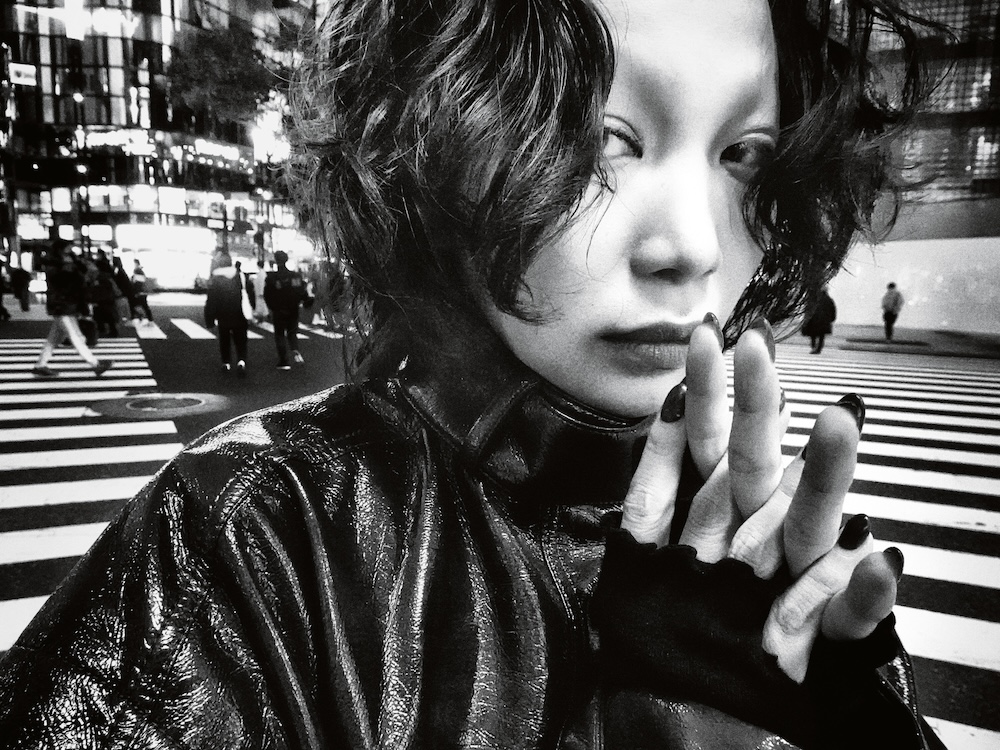
And in an adjacent pavilion at that very same fair, the Norwegian artist, Hannah Ryggen, showed textiles of similar scale that made a similarly devastating impact. Ryggen focused on the Italian invasion of Ethiopia. In a series of extraordinary tapestries, she held an unforgiving mirror up to a Western world that had turned its back as a quarter of a million Ethiopian troops were slaughtered trying to defend their nation. Ryggen refused to let us forget that the world did nothing as 78,500 Ethiopian resistance fighters were killed during the occupation, as 17,800 Ethiopian women and children died in the bombing campaign, as 35,000 people lost their lives in concentration camps, as 24,000 men were executed after the war. When 300,000 civilians died in the aftermath, there was only a mild ripple of outrage, and little else. But then, there was Hannah Ryggen.

Two appalling acts and two utterly fearless creative responses to fascism. What must that have been like to witness? One of those rare, rare moments when art does not just reflect the ambient mood, it somehow becomes a prescient bellwether, it hints at things that are yet to come.

1937 might be a high bar, but I would argue that London, 2024, should be on our list too. 2024 has been a truly extraordinary year for the visual arts in London. In a year like 1937, when culture did not reflect our mood, it seemed to gallop ahead and shine a light for us to follow. Against a backdrop of global instability, of bitterly contested racialised-elections, of economic uncertainty, of populism and political polarisation – we were treated to some deeply affecting art. There was a moment over the summer in London when Yinka Shonibare’s exquisite Suspended States was at the Serpentine, The Time is Always Now had opened at the National Portrait Gallery, there was a James Baldwin season at the Barbican, Joy Labinjo bestrode the Camden Arts Centre, Zanele Muholi’s work graced Tate Modern, Ernest Cole at the Photographers Gallery, Nick Cave, Ghada Amer and Yinka Shonibare in Cork Street – and so it went on. Commercial, national, independent galleries were all celebrating artists of African descent. Not in a coordinated season, just a timely response of near ubiquitous programming: the British art establishment reflecting on long overdue questions of equity, race, identity and the legacies of empire. A moment when a whole sector simply said, we cannot continue to remain silent.

And amongst that astounding body of work spread across an unforgettable year, the practice of Tavares Strachan lingers in the mind. This is work that does that bigger thing of not just making us think, but encouraging us to dream. Strachan is an artist who understands history and emotional damage – he’s spent time not just mapping the past, but reflecting on how its shadow continues to corrupt and contaminate our world. And whilst his work is robust, disciplined, impactful – he somehow also gives us desperately needed comfort. He throws an arm around us. ‘We are in this together,’ encourages one neon text piece, while another states ‘You Belong Here’. And I believe him.

In February of 2024, the Royal Academy of Arts opened Entangled Pasts, Art, Colonialism and Change. In RA tradition, it was both a magnificent historical survey and formidable sweep of contemporary practice. But unusually for the institution, it was uncompromising in its confrontation of issues of empire, race, distorted narratives and pervasive legacies of that past. And as a greeting in the courtyard of Burlington House (a Neo-Palladian temple that houses the Royal Academy), in a spot that could be seen by anyone who walked or drove up Piccadilly, the curators sited Tavares Strachan’s The First Supper: an unforgettable reinterpretation of da Vinci’s enigmatic The Last Supper. In the The First Supper, an animated Haile Selassie sits in the space taken by da Vinci’s Christ – his disciples are Mary Seacole, Marcus Garvey, Harriet Tubman and other heroes and heroines of Black history – and the place of Judas is taken by Strachan himself. Life size, cast in bronze and finished in black and gilt, it is an astonishing object.

The First Supper (Galaxy Black) (2023) is a bronze sculpture by Tavares Strachan, measuring 85 1/2 × 365 5/8 × 105 1/2 in. Courtesy of the artist and Perrotin, from the Glenstone Museum Collection, Potomac, Maryland. Installation view in the courtyard of the Royal Academy of Arts. Photo by Jonty Wilde

When I ask Tavares why he chose to take the seat as Judas in this tableau, his answer surprises me. “Judas was born to be a traitor,” he says. It was his destiny – and yet, he was forever blamed for playing a preordained role in fulfilling Christ’s purpose. Christ’s message was about his own sacrifice, but Judas also had to sacrifice himself for the Christian narrative to be tenable. “What choice did Judas have?” Strachan asks. “I like thinking about him as a kind of hero. Without him, the crucifixion and Christianity do not really happen.” And that was the moment when I fell for Strachan’s work. This is art for the rest of us. This is art for those whose destiny was not to end up on the plinth; it is for those whose histories were conventionally not taught in schools or celebrated in traditional libraries. This is an arm around your shoulder – You Belong Here.

Strachan is an unusual man. Although his work is a vivid map of contemporary concerns, he is, in so many ways, of another age. He is the sort of complete artist-intellectual who would have been successful in the 16th or 17th centuries. He has worked in varied creative media from lost-wax bronze casting to drawing, from video to photography, from installation to fashion, with artworks sitting at the fascinating intersection of art, science and technology. As he beautifully puts it, “I need to think poetically about the world, but I also need to think scientifically about the world.” He is interested in how things work as much as what they mean and how they look and is keen to deconstruct our understanding of the things we take for granted.

You Belong Here (2014) is a mobile neon installation by Tavares Strachan that travelled down the Mississippi River via a barge as part of the Prospect.3 Biennale. 30 ft × 80 ft on 100-ft barge. Courtesy of the Artist. Photo by Joe Vincent Grey

But he is also an uncompromising explorer. His curiosity has taken him to the Arctic four times, he has travelled to the North Pole, journeyed to the bottom of oceans and is one of a tiny number of people who have been trained to leave the orbit of the earth and travel beyond the pull of its gravity. He even founded scientific research platform BASEC (Bahamas Aerospace and Sea Exploration Center) to develop the technologies to further satisfy his appetite for tackling these old-new frontiers. And as you might guess with Strachan, even the equipment and accoutrements that he sourced and designed for these expeditions was utterly exquisite and covet-worthy. And so, in 2024 he began to retail his BASEC wear as a clothing line. In London, it is stocked by stores like Dover Street Market.

Perhaps, at heart, he is a figure of the 21st century – a cultural cartographer, a collector, interrogator and investigator of histories, someone who questions the systems and accepts axioms upon which we base our understanding of the world. He is unafraid to suggest beautiful alternatives and build the knowledge systems and narratives to respond to the most telling questions of identity, history and race. Strachan dedicated a decade to creating a vast leather-bound volume that shines a light on the overlooked and forgotten areas of knowledge. He called it The Encyclopedia of Invisibility. As he explains, “I think it just started off with a very simple question: if everything in the world had somewhere to go, then where were the things that didn’t have a place?” This is a kind of fascinating query, but once probed, how could you not want it to be answered? “And then I just thought, what if the project grew and grew and grew? I didn’t imagine it would get as big as it has. Now, we’re 3,000-plus pages and over 17,000-plus entries.” And, of course, it is spellbindingly beautiful.

Strachan is an indefatigable force, voraciously taking on new and complex projects that sometimes require new training and knowledge or might even incur great personal risk. But almost everything he engages with seems to deliver astonishing output. “I am always making,” Strachan says, “and I think that if I didn’t have those outlets, maybe some of that impetus to come up with stuff might manifest itself in my mental health. So, I will just keep making things up, even though there’s nothing to make up.” And perhaps that empathic, beautiful, contagious drive is why one of Strachan’s great inspirations is Matthew Henson, the earliest Black Arctic explorer. As Tavares explains, Henson was a hero, an “avid sailor and an explorer. And this was in 1909, which meant, in America, (as an African American) you’re on the brink of slavery. So embarking on these perilous endeavours set you within a treacherous framework.” Henson possessed an odd, almost supernatural drive to take on marathon-scale things. He began life as a cabin boy but is thought by many to have crossed Greenland and reached the North Pole. Understandably, Henson is one of the guests invited to join the pantheon of Black heroes in Strachan’s The First Supper scene. Henson takes a seat to the left of Haile Selassie, visually connected to the figure that is based upon Strachan at the top of the table. They both wear hoods and face in opposite directions, linked by symmetry and spirit.

Photography Davey Adésida

Whilst Tavares might need to create, in a world on fire, I think we also need Strachan. When Derek Chauvin knelt upon George Floyd’s neck, there was confidence with which he did so – the desire to ensure Floyd’s complete supplication and utter silence, even beyond the moment when George stopped asking to stand up, beyond the stage when he ceased pleading for a breath, beyond that heart-chilling moment when he called for his mother, beyond the point when George’s body let go, the knee remained. That pathological confidence was based upon a deep, hard, bedrock of prejudice that will require profound effort to challenge. Perhaps the reason that Chauvin was so assured in his actions was because he felt he was acting on our behalf. And what do we do in the face of that? Well, Strachan offers us a beautifully crafted conceptual corrective toolbox with the power to engender pride, to furnish us with missing histories and omitted context, and to perhaps make us feel a little braver in the face of the ambient craziness. “I’m just so elated to be an artist making artwork at a time when we’re saying, ‘Enough of that bullshit,’” he says. “I am making work that creates a new kind of proposal, that is reflective of the kinds of experiences that people living in a non-western reality are constantly living.”

Strachan was born in the Bahamas in 1979. “I was raised by a lot of Rastas,” he tells me, “and for us the Western world does not have the authority to steal any history. Every art form over the last 200 years has been created as the result of something being taken away. And the universe then gives these groups the tools to create new art forms.” The Bahamas is one of the most beautiful parts of the world, but as Tavares acknowledges, “I am coming from a place where there was this kind of desert, this emptiness of resource.” And anyone who has visited the Bahamas will understand what he means. The Bahamas is naturally blessed, but not a place that has a space programme or an exploration centre. Tavares was, from a young age, deeply determined to use whatever means he could to acquire the skills, tools and gain the experience that he craved.

It felt right that in this particular auspicious year of global climacteric that the Hayward Gallery would dedicate an exhibition to Strachan; three floors that included his monumental heads, galleries of terracotta, his vast encyclopaedia and delicate neon signs. There is Light Somewhere is an extraordinary mid-career statement; it traverses and deconstructs art history, with work inspired by ancient cultures, by vast empires and the migration of millions. “I think we’ve exhausted the ideology of modernism,” says Strachan. The reactions to the exhibition have been extraordinary. As Strachan tells me, “I was dumbfounded by the number of people who were in tears, because as someone making the work behind the curtain, I think to a certain extent, I’m a little bit desensitised to the kind of emotional punch that the work may deliver.” As you climb the last few stairs onto the top floor of the Hayward Gallery exhibition, the space opens up and out. And after the intense, almost domestic intimacy of smaller spaces beneath, suddenly you feel like an explorer, cresting a mountain through clouds. You wander amongst a pantheon of ceramic afroed deities, there is daylight and the rooftops and the distant London skyline. It allows for an exhalation of breath, before the wind is again sucked from your lungs by another incongruously beautiful thing. On the balcony outside the gallery, there’s a large-scale model of a ship silhouetted against the sky; a replica of the SS Yarmouth, the flagship of Marcus Garvey’s Black Star Line (a Black-owned shipping line that was founded after the First World War). “You know, we talk a lot about how society needs to change, right?” exclaims Tavares, before I say goodbye. “It’s not just about society itself needing to change. I think the framework by which we judge, manage and imagine society also needs to change. I think that putting the boat on the roof is just a way to offer an unexpected narrative.” That is impossible to argue with. 2024 was a year when artists spoke with great eloquence of deeply acculturated and embedded patterns of problematic thinking, but they also found ways of getting so many of us to look up and out – and perhaps to set sail for new horizons.

Photography Davey Adésida

This article is taken from Port Issue 35. To continue reading, buy the issue or subscribe here