Will Gregory’s Moog Ensemble

Goldfrapp’s keyboardist and producer Will Gregory on his new synthesizer ensemble project and pushing the limits of the electronic instrument

Moog Ensemble York Tillyer4

The idea of multiplying up all the great qualities that vintage synthesizers have into a large group seemed, to me, long overdue. The seminal record Switched On Bach by American composer Wendy Carlos showed us what one fantastic performer could achieve by using multi-tracking in new ways. This was really the catalyst for forming the Moog Ensemble. It seemed that the time was right to assemble a roomful of amazing musicians with these instruments to see what would happen in a live situation.

We have a slightly floating number of nine to eleven players in the Ensemble. Nine is the number we need to play Bach’s Brandenburg Concerto No. 3, which is the first piece we learned, so all the arrangements or new compositions we create tend to be for this number of musicians.

Moog Ensemble York Tillyer

Moog has become a blanket term for a vintage synthesizer, a bit like ‘Hoover’ became interchangable with vacuum cleaners. But we don’t just have Moogs in the Ensemble – there are Korgs, and Rolands ARPs and all kinds of lesser-known keyboards. They all share the characteristic of being monophonic, analogue and covered in knobs and sliders for direct and instant access to the sound, which is the beauty of them.

Synthesizers are wonderfully flexible and therefore very expressive when you get to know them. They don’t have presets like later electronic keyboards that let you summon a sound at the flick of a switch, but then neither do violins or trumpets. You have to become familiar with them to be able to coax out the sound you want. In the hands of an experienced performer, the sounds produced by synths can vary in subtle ways that keep your ear interested on a par with conventional acoustic instruments.

Moog Ensemble York Tillyer3

When we play live we often explore electronic soundtracks and music written especially for the group, but a good sci-fi soundtrack is always inspiring. The composer gets their chance to exercise the extremes of their range as they speculate about what music might be like in the future. For example, Jerry Goldsmith’s Planet Of The Apes, Lalo Schifrin’s THX1138 and John Carpenter’s Escape From New York.

Although we’re interested in using these instruments to explore ways of composing and performing new music, we do play some classical pieces. Admittedly, some purists might argue against this. However, if you use these instruments to bring something of value to the music – rather than using the music as a vehicle to show off the synth – you will be respected for the honesty of your intentions, even if the result is not successful. Many classical composers were fascinated by new instruments and even helped in developing their technology. I think Bach would have gone nuts for Moogs if his enthusiasm for church organ design is anything to go by.

Moog Ensemble York Tillyer5

Will Gregory’s synth-track playlist

1) John Carpenter – Escape from New York

All of John Carpenter’s soundtracks were made by himself on analogue synthesizers. Because the person making the films is making the music, there’s a wonderful synchronicity between the soundtrack, the image, and the instruments. It’s basic and simple, but very atmospheric and characterful. The lines, all the sounds, are wonderfully chosen. Lean, tough and exciting. His Assault On Precinct 13 is also iconic.

2) Kraftwerk

Kraftwerk were writing music that was all lines because there were no polyphonic synths back then – no instruments that would play like a piano with lots of notes at once – so they had to be very careful about the lines they chose. Musically, it’s wonderfully constructed; it’s an example where the instruments have brought something extra to the music because of their limitations.

3) Georgio Moroder – I Feel Love

One of the things these synthesisers had on board was an external control voltage that would determine pitch and the envelope or how fast the sound would happen, which enabled you to precisely sequence events. Suddenly, and for the first time, this kind of mechanistic music could happen because you could impose an radically tight clock on the rhythm. It is the first time anyone had created this completely robotic and inhumanly groovy feeling. You can trace all electro and techno back to this song.

4) Vangelis – Blade Runner OST

Vangelis’ vision of some sort of terrible urban environment shaped by evocative, long, morphing sounds, created an amazing score. The roles of the music and the sound effects are continually blurred and merged throughout the film. It’s an education for anybody who wants to write for cinema; a masterclass in sound design before the concept was even invented.

5) Gil Melle – The Andromeda Strain

The Andromeda Strain uses synthesizers as sound effects really – more like the Stockhausen approach – and it’s very purist because there are no traditional instruments in there at all. There’s not even a traditional melody or pitch, so it’s quite bleak and perfectly in synchronisation with this horrible virus that starts to infect everybody. It’s almost like an alien vision of music. I think that’s why composers for film have been allowed to explore the potential of these instruments further than anybody who’s trying to make, for example, pop music. In sci-fi especially, they’re allowed to hide behind the idea that we’re not supposed to understand the music because it comes from another world or some future vision. It makes for an inspiring use of synths.

Moog Ensemble’s new album is available now on Bowers & Wilkins’ Society Of Sound, a subscription-only music download club focused on high quality audio files.

Soundtrack: Andreya Triana

London-born singer and Flying Lotus collaborator Andreya Triana explains how a Lauryn Hill album helped shaped her career

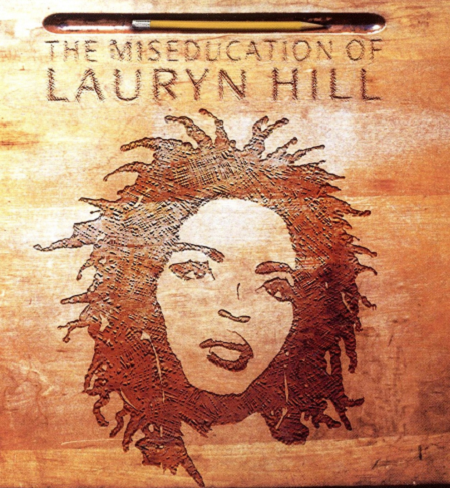
The Miseducation of Lauryn Hill - Ruffhouse Records and Columbia Records

At the age of 14 I was uprooted. I was taken kicking and screaming from the comforts and discomforts of inner city London life. But nonetheless these discomforts were reassuring and familiar. Sat with my two little brothers in the back seat of a battered motor, my family drove for hours up the motorway waving goodbye to our West Indian family of countless cousins and endless aunties, leaving behind the noise, the high-rise flats and the crime.

We arrived at our new home in Worcester in the West Midlands and into an ever engulfing void of strangers with stranger accents. No noise. No high-rise flats. Definitely no crime. It hurt, a lot, and I felt alone. Very alone. I’d always been a curious kid with an appetite for music, which grew bigger as my bones did. It seemed that in this unknown place music filled the space which familiar faces used to.

On my 16th birthday I was given a gift. Wrapped up in all its worldly glory was The Miseducation of Lauryn Hill. I listened to the album for the first time while laying on the floor of my messy teenage bedroom. From the moment I pressed play I cried. A lot. It felt like someone understood. The melodies wrapped me up in a warm blanket and the lyrics told me that everything was going to be alright. That album was to soundtrack the years that followed and became instrumental in encouraging me to become a singer and songwriter.

As fate would have it, I recently got to meet Lauryn Hill. Beforehand I tried to plan what to say, but how do you find the exact words to tell the person whose album has influenced your life? When it’s opened your mind and helped you to pursue dreams that ultimately came true…

With my heart beating loudly in my chest I reached out and shook her hand. ‘Thank You,’ I said. ‘Thank you for finding me.’

Andreya Triana’s new album ‘Giants’ is available for pre-order on iTunes.