Sebastian Stan

Beloved for Captain America, I, Tonya, and his recent Emmy-nominated role in Pam & Tommy, Stan reflects on a career shaped by diverse characters. Now, with A Different Man and The Apprentice, he’s exploring deep questions about identity, ambition, and the complexities of portraying one of America’s most influential (and controversial) men, Donald Trump
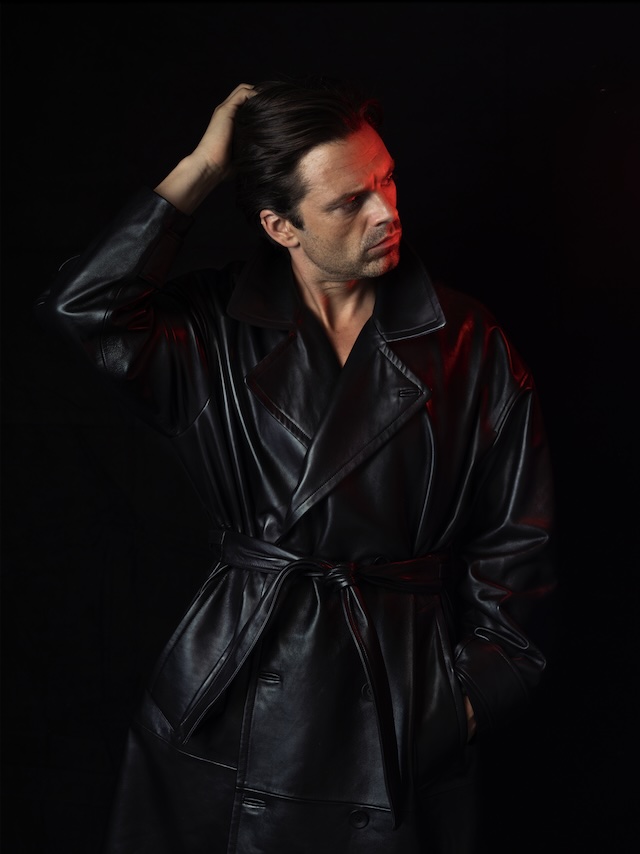
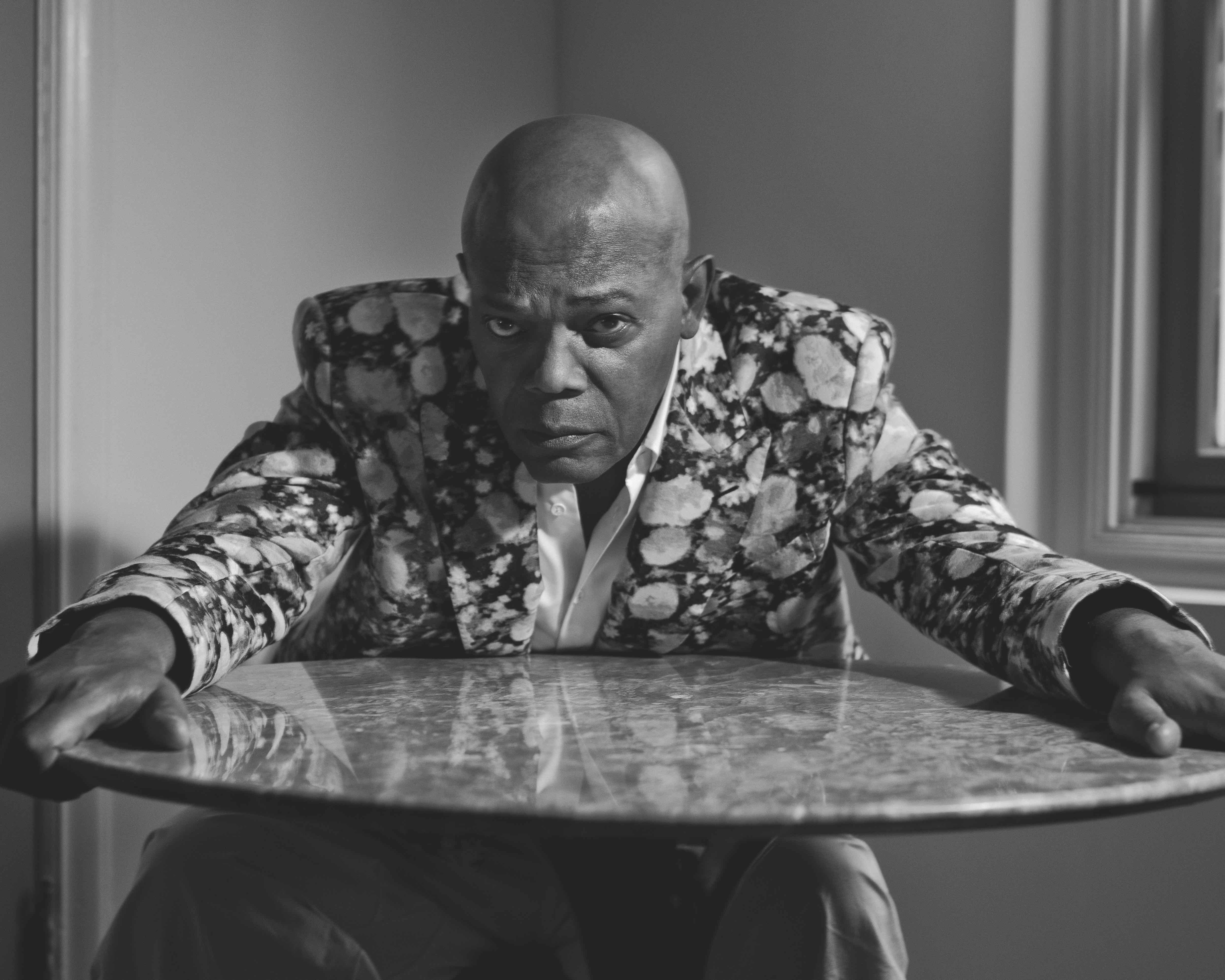
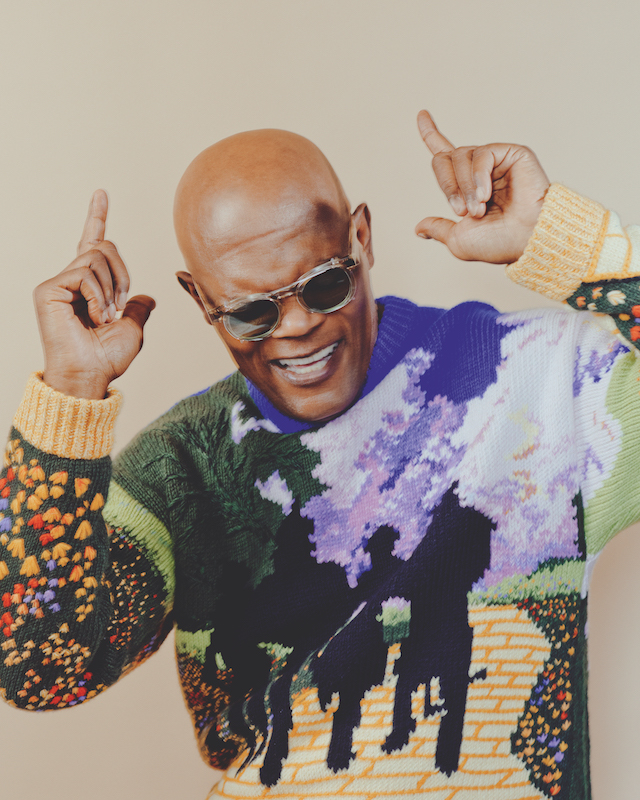
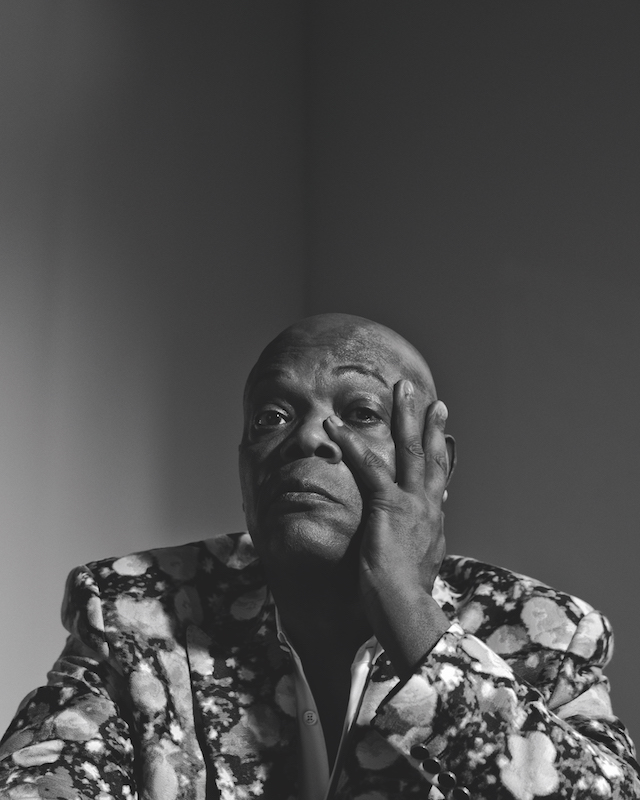
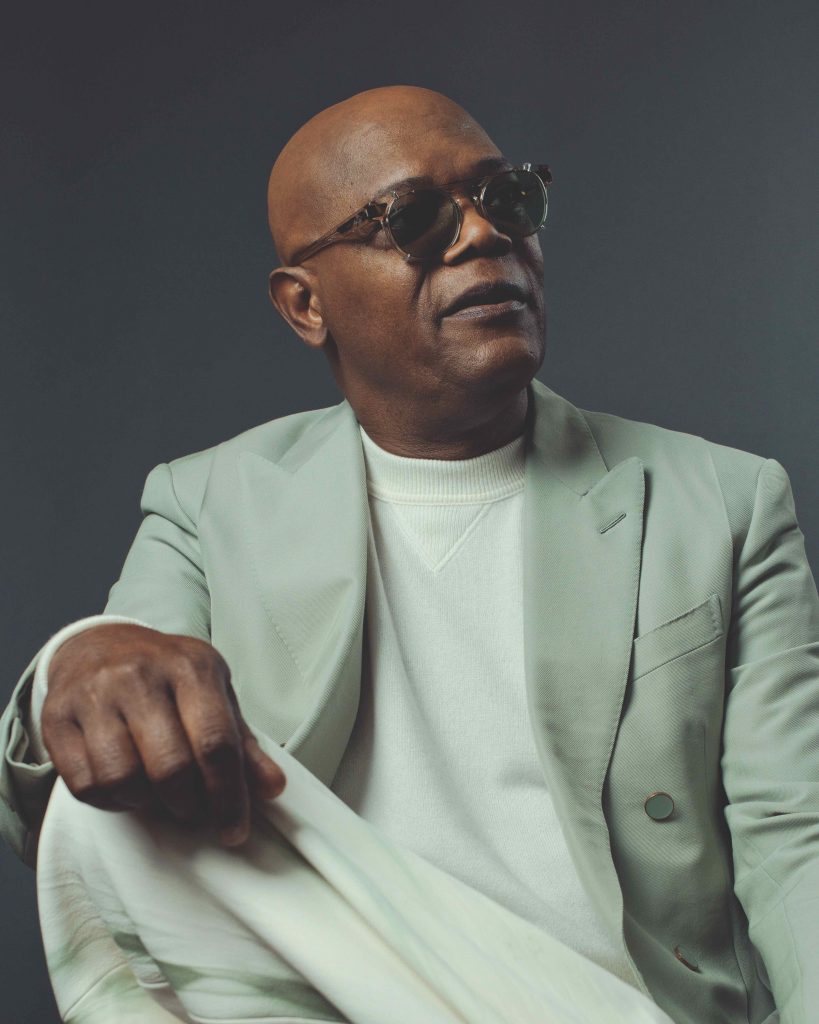
Sebastian Stan wears Rag & Bone throughout. Photography Jim Goldberg

The first time Sebastian Stan tried acting, he hated it. At 9 or 10 years old, he played a Romanian orphan in an Austrian film called 71 Fragments of a Chronology of Chance (1994). Between the waiting around, night shoots, and general pressure-cooker energy, the whole experience had been pretty anxiety-inducing. “I think the idea of a set was just really terrifying,” he recalls. The 42-year-old mainstay admits to being a Leo, but a rather reluctant one, he says, not that extroverted or hypersocial. “I know my mom always thought I was creative simply because I would impersonate the people in our family, or birds or whatever I would see around me.” Nowadays, when he does speak, it’s with the compelling ease of someone who’s spent equal time commanding impressive rooms and in their own head trying to crack the great questions of the world – sounding off passionately about the perils of social media (“there’s so much noise in today’s world”) or the last incredible film he watched (Sing Sing and it was “pure heart”).

Born in Romania and raised in Vienna until he was 12, it wasn’t until immigrating to America as a preteen that Stan found his way back to the craft at all. Attending Stagedoor Manor summer camp aged 15, in the Catskill mountains of upstate New York, his spark was reignited. “That place was really magical and made me fall in love with (acting again); I couldn’t think of anything else as exciting to me as performing was,” he says. “Some of it was about not ever being sure of what to be when I grew up. I kept thinking that you could be a lot of things if you did this.”

So far, he’s been a wayward socialite, a cannibal, a space surgeon, a ski patrol villain, a heavy metal drummer, a supernatural student and a World War II veteran turned brainwashed Soviet operative, to n ame but a few. He’s not an actor you’ll find in the same role twice. With that said, his name has reached household status through a decade-long Marvel stint, with the two films Stan finds himself at the helm of this year being his most ambitious forays yet. 33 years on from his awkward beginning, the actor’s commitment to film appears to still be very much in bloom. “I think I’m at a point in my life where I’m trying to understand things on a deeper level,” he explains. “I can’t say I know everything, you’re always growing, always having to explore. I think it’s important to stay curious, to stay in a certain degree of healthy discomfort… I want to be part of important storytelling that’s asking important questions and reflecting our time.”

In A Different Man, an A24 production directed by Aaron Schimberg, Stan takes on the role of an aspiring actor called Edward with neurofibromatosis, a genetic condition that results in the extensive growth of benign tumours. He undergoes a clinical trial that cures him of his physical symptoms, but his new life turns out to be far from what he dreamed for himself. It’s a winding surrealist investigation into the social impacts of disability, alienation, representation and self-image: its gaze is unflinching, its narrative self-referential and its humour pitch-black. Stan has already won the Silver Bear for Best Leading Performance at the Berlin Film Festival for A Different Man.

The second release, The Apprentice, follows a wildly different arc. Directed by Iranian-Danish filmmaker Ali Abbasi, it tracks a young Trump as he falls under the nefarious mentorship of infamous legislator Roy Cohn. Dubbed ‘an American Horror Story’, it’s a sobering yet deeply entertaining snapshot of the making of one of America’s most influential men. Yet even within the dynamic, prescient story, the actor’s take on Trump is subtle and human, and the tone of the film is less moralising and more matter of fact.

Though the narratives of these two projects are starkly different, you can’t help but find the common threads. Both are set in New York and document a transformation, and both centre a feverish pursuit of some ideal imagined self. A Different Man was filmed back in 2022, and The Apprentice only wrapped in February of this year, but Stan agrees it’s a curious double-header. “I’m weirdly finding parallels between them that I never thought I would. Identity, self-truth, self-abandonment. This idea that we’re always chasing in America, whether it’s image or status or an inability to accept failure and to take ownership over mistakes.”

For the Trump film, that real-life denial was almost the ending of their work of fiction. After years of false starts, Trump’s legal team attempted to block the film’s release in the US altogether and they struggled to find a distributor willing to take on the risk of pissing off a potential President. “For to edit it and get it to Cannes in some finished version itself in five months was just insane. There was no idea if the movie was going to come out,” Stan says. On an individual level, the task felt equally murky and intimidating at first. “You’re trying to tell a story about somebody that’s so famous, who everyone has an opinion about: either extreme love and adoration or hate and animosity. And everyone’s got a version of the guy, so you think, well what do I…” he shrugs, “how do I find my way into it?” Ultimately, they landed on this film as a means of peeling back the layers of one of the most polarising figures of our time. It’s less caricature and more character study as it explores his relationship with his father, his ambitions, the man he was before the slogans and affectations.

Executive producer Amy Baer has spoken about the choice to call on a non-American director to provide a new lens on the intricacies of American culture, propaganda and patriotism. With Stan’s own immigrant story, his perspective adds another dimension to that prism too. Memories of walking down Fifth Avenue in awe and wonder as a kid, staring up at all the big buildings – he tapped into a hunger and drive to portray early Trump as a young man desperately trying to be a part of The Club. “I guess with my experience coming to this country, it was communicated to me even from Eastern Europe that this is the place where you can make something of yourself, you can have a good idea… and you could just succeed,” Stan says. The Apprentice asks, “but at what cost? What happens to a person’s humanity?”

Throughout the film, you witness Trump espousing about “bringing back New York”, even remarking on Reagan’s campaign slogan ‘Let’s Make America Great Again’ towards the end, an ideology he would go on to repurpose for his own candidacy. It’s a fascinating yet depressing origin story of a nationalistic rhetoric that echoes today as a Trojan horse for corruption and greed. “It’s complicated. That’s why I think there’s value in exploring it,” Stan urges. “This American Dream idea is a really powerful driving force that also comes with consequences.”

Perhaps the most complex part was the toxic relationship with his sometimes-partner-in-crime played staggeringly by Jeremy Strong. “I think he was the best partner I’ve ever had in anything I’ve worked on,” Stan declares with a smile. “You know when you’re standing in front of a fire and you feel the heat of it and there’s crackling in the air? That’s how it felt.” Amidst quite a gruelling, isolating filming schedule, it’s the aspect Stan speaks about most fondly.

Clothing Fendi, Necklace & Bracelet Cartier, Boots Givenchy

Swinging between dominant and intimate, transactional and paternal, from comical to devastating, both stayed in character throughout the shoot and undertook a colossal amount of research to be prepared for infinite possible improvised routes. “Creatively, makes things interesting is when you’re not in control. You do all this preparation to be prepared to be surprised,” Stan says. Shot documentary-style in moments, Abbasi might give each of them notes in private to shift the tone of a scene, and they’d find themselves responding instinctively within their roles. “The only way you can achieve that is if, to some degree, you find that person in you. And I can certainly tell you,” he pauses briefly to consider his landing. “There is a version of Trump that existed in me. And I’ll make the argument that there’s a version of Trump that exists in all of us. And that part of our job, part of our interest, should be figuring out what that is. I think we have to acknowledge and expose the things in us that are not so easy to admit, in order to further protect the things we need to fight for. You can’t ignore it.”

In that moment, it’s clear that it’s an argument as true of our discourse on Trump as it is of Stan’s other role in A Different Man. His character Edward is driven to obsession and madness when he witnesses the thriving life of a person with the same disfigurement he was quick to shed, the very thing he believed to be the root of all his misfortune. Right before his transformation, Edward has been ignoring a leak in his ceiling for weeks, and the damage is getting worse. When he’s finally forced to call for a repair, the super arrives and is appalled at how bad he’s allowed it to get. He tells Edward frustratedly, “you should have fixed this sooner”. In that moment, it feels as though he’s talking about a hundred things at once. From Edward’s own issues with doubt and self-acceptance that cling to him even when he is no longer ‘different’ to our own society’s discomfort with, and the misunderstanding of disability altogether. We cannot be afraid to look.

“Edward makes a decision that he thinks is going to improve his life, but he’s not making it for himself. He’s making it because he’s watched other people and he’s grown up in a society that’s told him this is what works,” Stan explains. “Essentially, he abandons himself and he spirals down trying to further live with that painful acknowledgement. I think we have to be conscious of when we’re making decisions that go against who we are and what we truly want.”

In true indie style, squeezing in around the schedule of their makeup artist who was on another project at the same time, Stan had some hours to kill most mornings in prosthetics before filming which he’d spend navigating the city he calls home: “one of the gifts that I was given which I’m very grateful for was the experience that I had walking around New York City as Edward.” With reactions to him ranging from invisibility to hypervisibility, it shifted his entire understanding.
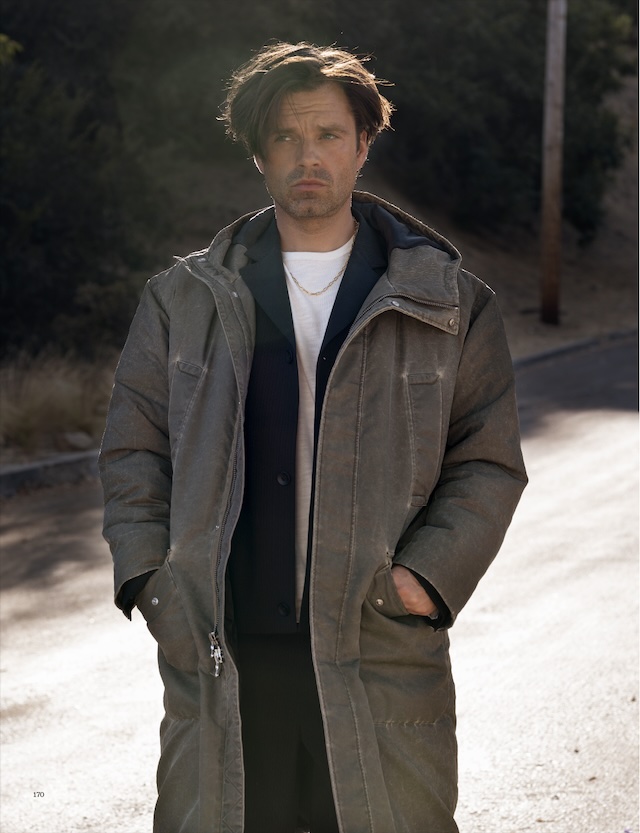
“I’ve been there like everybody else thinking, oh, if I had that. Or you see someone on Instagram and you’re like, oh my God, look at that life, they have the best life; you get caught up in these things.” It’s both reassuring and a little disheartening that, unlike his superhuman alter ego, a star like Stan is still not immune to the very human insecurities us civilians face of joy-stealing comparisons. “There’s this idea I’ve been thinking about a lot with my therapist actually,” he laughs. “He was saying ‘I am me and you are you.’ I was like… yeah! But you forget. We have to understand our own experience and then understand someone else’s. But we have to try to understand it not through our own emotional… vomit.”

When I ask Sebastian what he does for fun, to unbecome his characters and shed their existential weight, he cites reading (mostly non-fiction) and travel (to see other cultures). “I always feel like I’m not learning enough,” he laughs. You get the sense that this year is a juncture for Stan, always revered for being grounded and likeable, but perhaps waiting for opportunities like these to enrich and express other sides of himself as an actor and voice within culture. “Both of these films came at an interesting time where I’m thinking about if I’m at mid-life, this second half of my life. What is it that I want to be a part of and one day look back and be proud of?”

And that’s not to say fun is off the table for Stan. He’s passionate about laughter as a release in a difficult world. “I think it’s just as important, we have to protect humour,” he tells me with an urgency. “I love comedies, romantic comedies, action.” In fact, there’s a top-secret action movie passion project that he has in the works and hopes will come together in the right way. “There are also things in Marvel I want to do and explore with ol’ Bucky Barnes,” he smiles, presumably in reference to the new Marvel film Thunderbolts, slated for a 2025 release, in which he stars alongside Florence Pugh, Harrison Ford and David Harbour. “Otherwise I just want to keep learning how to be a human being. I’m telling you,” he laughs, “I feel like it’s pretty hard.”

Photography Jim Goldberg

Styling Reuben Esser

Production Hyperion LA

Hair Jamie Taylor using Augustinus Bader

Hair Erica Adams

Represented by A-Frame Agency


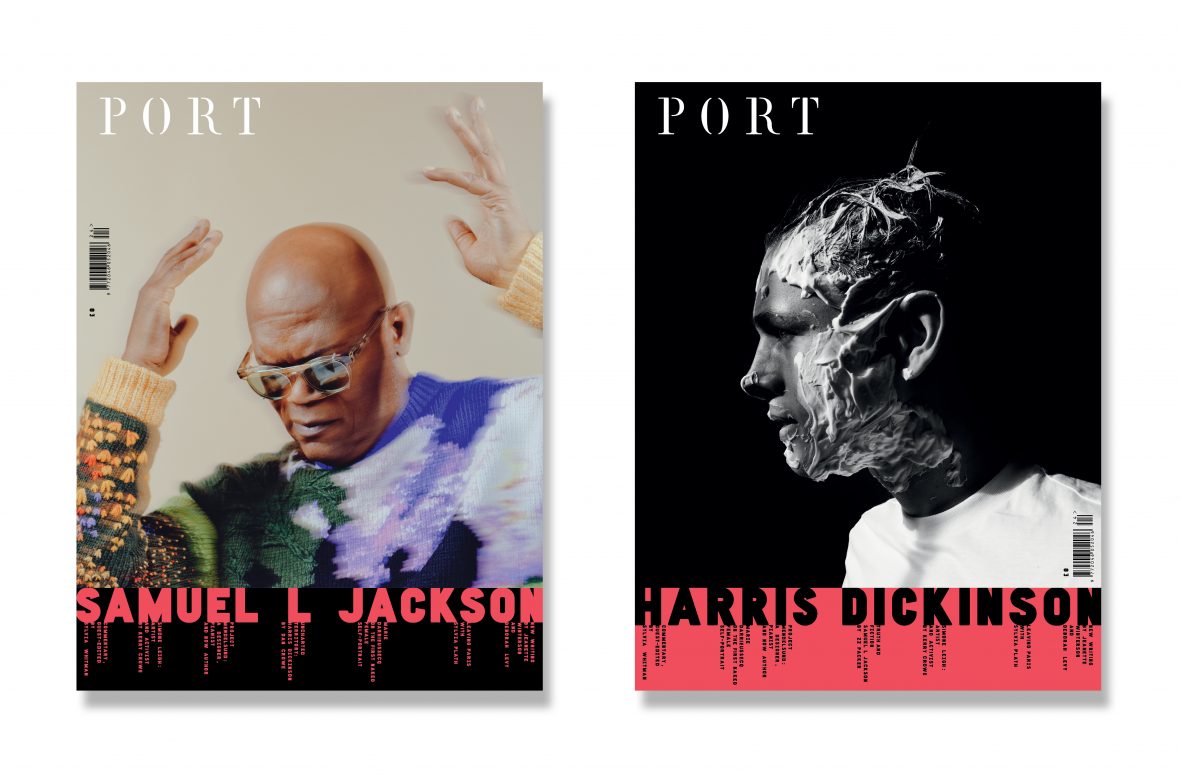
This article is taken from Port issue 35. To continue reading, buy the issue or subscribe here

Pull the Fruit Apart

A visit to the first of California’s orange trees

Photography MARIUS W HANSEN

In 1873, three citrus seedlings arrived in Riverside, California. They had travelled far. Originating in Sao Salvador de Bahia, Brazil, they were carried northward at the request of the US Department of Agriculture. In the US capital, the saplings were re-christened the Washington Navel orange and, now American, they headed west to Eliza Tibbets’ garden in the city of Riverside, 50 miles east of Los Angeles. Planted in Californian soil, one sapling was trampled by a cow, but the other two grew into fruit-bearing trees, nurtured by the sun and Eliza’s dirty dishwater. The sweet, seedless fruit was so popular that Eliza cut buds from her trees to be grafted to other citrus rootstock. By 1910, over a million Washington Navel orange trees had sprung up in Riverside, each tracing its lineage back to one of Eliza’s two parent trees.

One of these orange trees still grows in Riverside. In the armpit of Magnolia and Arlington Avenues, the 150-year-old tree stands behind a screen cage to protect it from disease, insects and greedy hands. I found myself standing before it in January, California’s peak orange season, and so ripe fruit hung from its branches like golden ornaments. I circled its breadth slowly, taking in its peeling, grey trunk and bushes of glossy evergreen leaves. Like Eve’s apple and Persephone’s pomegranate, California’s oranges are as much myth as they are fruit. They tell a story of California as a paradise of empty land waiting to be worked into groves of ripe fruit by a new generation of Anglo-Americans. But they also tell other stories: of Indigenous genocide, of immigrant workers, of land seized, of orange barons, of capitalism, of manifest destiny. Oranges created California. Once you start to pull the fruit apart, you pull apart a nation’s self-mythology.

I was in town to visit the University of California Riverside’s Citrus Variety Collection, one of the most extensive citrus collections in the world. I had been emailing its curator, Dr Tracy Kahn, for a few months and she had agreed to show me around the collection. I took an early morning train from Los Angeles to Riverside, rattling along hills and freeways into the rising sun. In Riverside’s small station, I waited for Tracy beside an abandoned plastic bag that had spilled its insides – tiny easy peel oranges – across the sidewalk. It seemed I was in the right place.

Tracy had picked me up in her car and as we drove, she asked me to explain why I was in Riverside again. I told her I was writing a book about oranges and my research had led me to the Citrus Variety Collection. She seemed amused that a writer – and one who was adamantly not a science writer – had travelled all the way from Scotland to Southern California to visit the collection. Even though I had only asked to see the collection’s fruit, Tracy decided that I should get the full tour of Riverside’s citrus history for my bother. So, to Eliza’s tree we had driven. 

“Look down there,” Tracy pointed to the tree’s base. Rather than a single trunk, multiple thick branches curved from the tree into the earth. Tracy explained that this is called inarching. In 1918, the tree became ill, suffering from a rot-rooting fungal disease. Inarching – a process in which rootstocks from other citrus trees are grafted to the original tree to create a new root system – was delivered by three scientists, so that no single man could be blamed if the operation failed and Riverside’s beloved tree died. Lemon and orange seedlings were inarched successfully by the three scientists, with several more grafted in 1951. The citrus genus is cultivated through grafting, whereby rootstock and budwood from different fruit trees are brought together to create a single, stronger tree. Grafting surpasses reproducing citrus from seed – a laborious process which can take seven years to bear fruit – and it gives the genus its versatility and its endless fruit-bearing possibilities. A single tree can host different varieties, so that blood orange can be grafted to pomelo to lemon, and pink, green and orange fruit can thrive together.

The Citrus Variety Collection is fenced in from the freeway in the south-east of Riverside. After we visited Eliza’s tree, Tracy drove us to the compound which encompasses 22 acres of land and over 1,000 varieties of citrus. Trees – tall and short, heavy and thin – ran into the distance in perfect straight lines, one after the other, in every direction. Oranges grew in their tens of thousands. I had never seen so much citrus.

We moved towards the trees. Tracy carried a heavy blue binder of papers with her, flipping through its pages to find her map of citrus. When she located the numbered citrus variety she wanted to show me, she set off, moving fast through the rows of trees with me stumbling after her. We stopped at a Washington Navel, which began life as a bud on Eliza Tibbets’ parent tree. Tracy pulled a fruit from its branches and quartered it with a pocket knife. She handed me a segment and I bit into the fruit, which turned to sweet juice and stringy flesh in my mouth. It would have tasted good anywhere, but pulled fresh from its tree, grown in a citrus grove under the Californian sun, its taste was pure pleasure. Tracy handed me another quarter, and when we were finished, we discarded the rind at the base of the tree. I shook droplets of juice from my fingers as Tracy strode on to the next tree. I hurried behind her.

Tracy was keen for me to sample as much as I could stomach. I bit into an acidless Vaniglia Sanguigno that tasted like candy and then nibbled at a Boukhobza that made my lips and eyes sting. The juice from a Moro, a Sicilian blood orange, ran down my hands and a sticky residue gathered beneath my jewellery. “This is a popular one.” Tracey pulled apart two citrus halves to reveal splotchy red flesh in a heart-shaped rind. “It’s called a Valentine.” I ate yuzu from the Philippines and pomelo from Tahiti and soon my lips were numb. “You’ll be glowing in the dark later,” Tracy said with a satisfied smile.

As we explored the collection, Tracy told me about its history, going back to its life as the Citrus Experiment Station on the slopes of Riverside’s Mount Rubidoux in 1907. Eliza’s Navel oranges had sparked a booming orange industry, which called for more experimentation into fruit cultivation, and researchers sought greater knowledge of citrus diversity and genetics. The collection expanded rapidly in the 20th century, and the site is now as much a conservation project as a laboratory. Close to the grove, an enormous translucent structure is being built. Tracy explained that it’s called a Citrus Under Protective Screen (or CUPS), and it will function like a bigger version of what guards Eliza’s Navel tree in downtown Riverside. One of each variety in the collection will be stored inside the living archive, protected from disease-carrying pests which threaten not only this historic grove, but the US’s citrus industry at large. On the way into the Citrus Variety Collection, we had passed signs warning against carrying outside plant life into the compound, which could carry the Oriental fruit fly, citrus’ latest threat. Orange trees in Riverside’s neighbouring country, San Bernardino, were being stripped of their fruit in an escalating war between the fruit fly and the California Department of Food and Agriculture. An invasion of disease into the collection would be devastating.

Tracy sliced her knife into a thin Australian finger lime and squeezed the rind until tiny lime-coloured vesicles of juice spilled out. “Citrus caviar,” she called it. The collection’s researchers had been using Australian finger limes to crossbreed with other citrus, hoping that they will bolster other, more disease-prone species. I nibbled at the end of the strange fruit and its tiny balls popped between my incisors. We tossed away the peel.

In 2006, the collection partnered with the fragrance and flavour company Givaudan. The collection provides a treasure trove of citrus, and Givaudan provides much-needed cash – the CUPS structure is funded by a Givaudan donation. In California, the cultivation of citrus has always been intertwined with commercial industry. In the 1870s, Eliza Tibbets understood that a product of nature could also be a product of capitalism. Southern California’s booming citrus industry was a gold rush. While white Americans cultivated their citrus-exporting businesses, the orange pickers were mostly Chinese immigrants, until the Chinese Exclusion Act of 1882 when Japanese and Korean, and later Mexican, immigrants replaced them. California’s landscape was remade by these orange groves. Dams and canals, railroads and factories shaped towns and cities. Riverside’s wealth flourished from a small round fruit, and a nation’s collective hunger for it.

Before I departed Riverside, Tracy drove me out to the California Citrus State Historic Park, which includes 200 acres of citrus groves, growing Navel and Valencia oranges. The Santa Ana winds had discarded palm leaves across the deserted parking lot. Tracy left me to wander round the visitor’s centre, which outlines California’s small but significant part in citrus’ global story.

Before my trip to California, I had been researching the orange fruit for two years for a book, but that was all theory, history and concept. I knew its journey intimately, but I still followed the trail of museum placards that told me how the orange is the hybrid offspring of the pomelo and mandarin; how it was originated on the Tibetan Plateau, and made its way across Asia; how it travelled the Silk Roads to arrive in Europe, where it gave its name to a colour; how it was cultivated in Versailles’ orangeries for the French king; how it was carried in Christopher Columbus’s ships to the new world, taken to California by Spanish missionaries searching for El Dorado. There were two gold rushes that founded the state: the discovery of golden nuggets in 1848 and the planting of Washington Navel orange trees three decades later.

The orange’s long history led me to Riverside. I was surprised by how moved I was to be so close to the fruit, to be in Riverside, the home of the orange in the US. It is one thing to read a science paper on the taxonomy of citrus, and it is another to pull an orange from its tree, slice into its flesh and place a segment between my teeth. Each bite felt like I was encountering that history with my body, making it familiar.

Before we got back into the car, Tracy pointed out a line of tall palm trees that careened overhead, swaying violently in the breeze. They receded into the distance, in exact increments. “That’s how workers knew where they were.” In the thicket of the orange grove, the palms were a map of the land along the horizon. These two plants – the palm and the orange – have become synonymous with southern California, but neither are native to the region. Instead, they are foreign imports that cultivated the state’s mythology as a tropical paradise at the end of the wild west. Oranges built an empire of industry in California, but the industry waned in the 20th century as groves were razed to make way for highways and amusement parks. Now, citrus farming has moved to northern California, and the southern region finds itself memorialising its formative industry. In Riverside, historical re-enactments of groves and living archives keep the memory alive. But in my mind, I keep returning to Eliza’s tree. It stands alone in the city, a ruin of California’s citrus past, behind a screen and between two congested streets. Eliza’s last tree will never be allowed to die because it embodies Riverside’s 150-year-old history in its boughs. It is a sickly tree kept alive by grafted roots. And yet, every January, it still grows oranges. The people who maintain the tree pick some of its fruit to take home, but mostly it piles up behind its safety screen. Each orange ripens until it falls from its branch, hits the earth, and begins to rot.


Sources

Orange Empire: California and the Fruits of Eden by Douglas Cazaux Sackman, University of California Press, 2005

‘Citrus Production in California’ by Daniel Geisseler and William R. Horwatch, published by University of California Davis, 2016. Accessed 15 March 2024.

California Citrus Park website (www.californiacitruspark.com). Accessed 15 March 2024

The Givaudan Citrus Variety Collection at UCR website (www.citrusvariety.ucr.edu). Accessed 15 March 2024


This article is taken from Port issue 34. To continue reading, buy the issue or subscribe here

Truth and Fiction

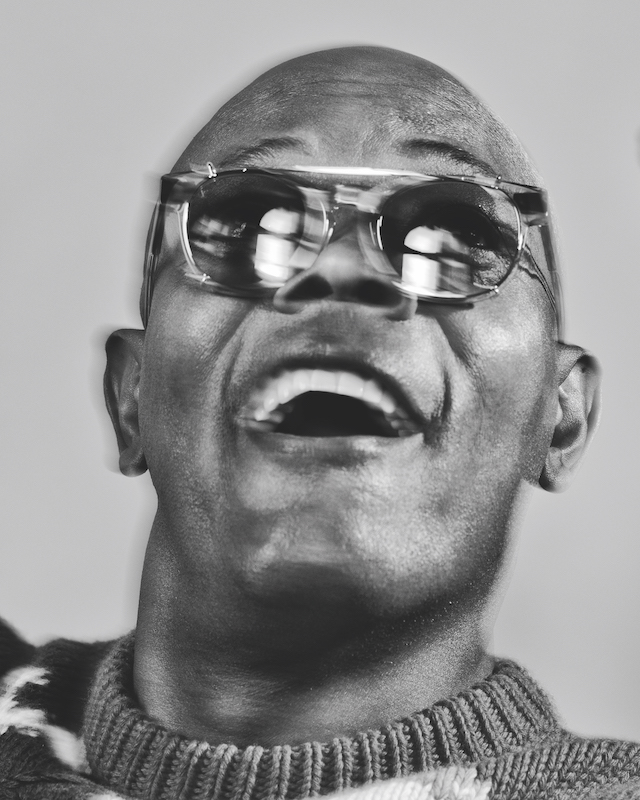
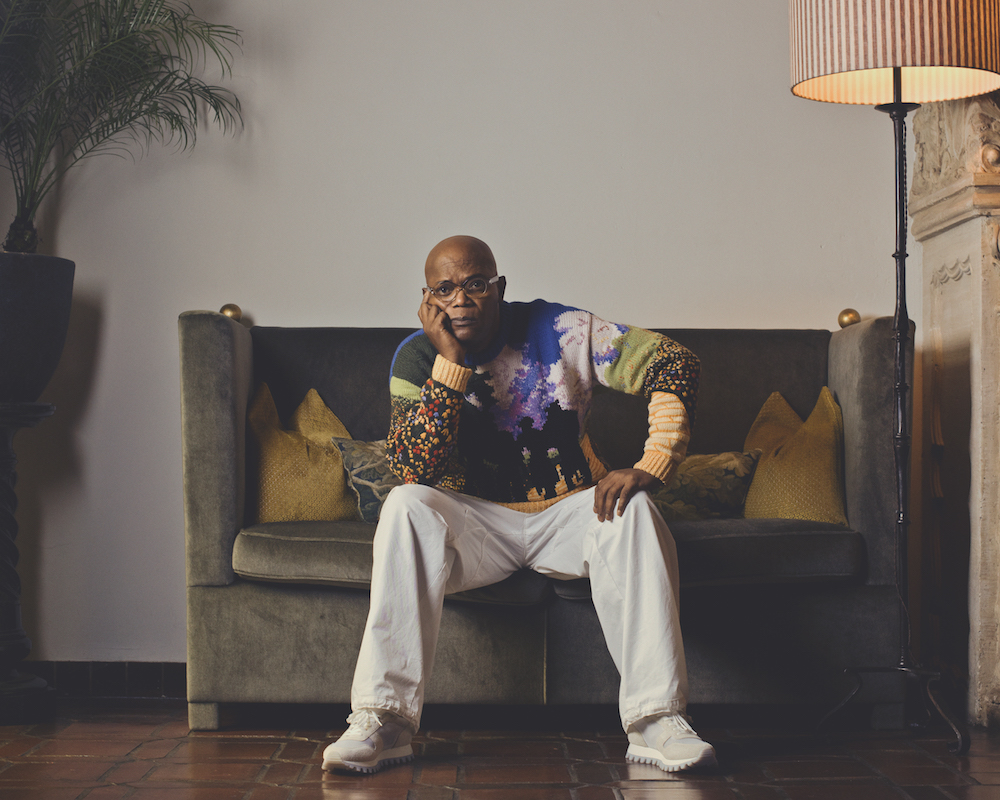
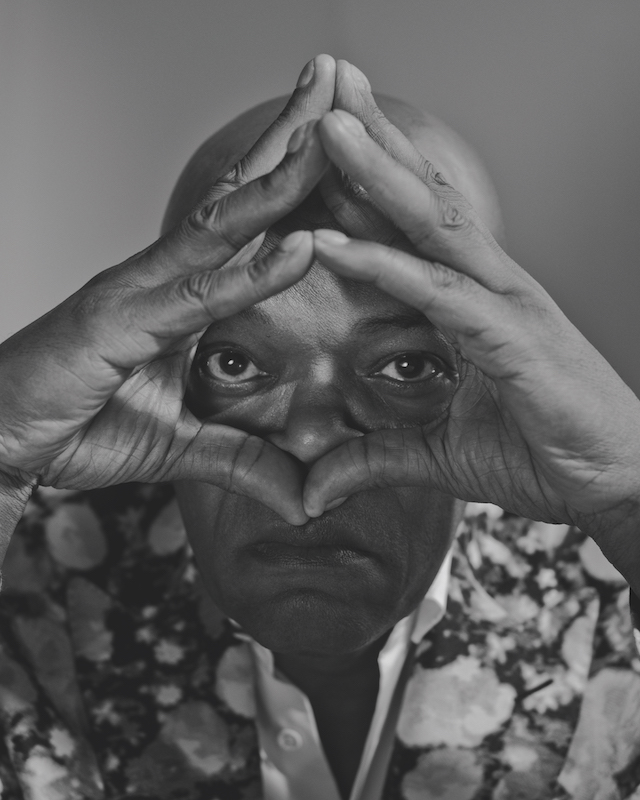
De facto Coolest Man Alive Samuel L Jackson is a rare breed of film star who defines every film he is in, but it is a mantle that belies the personal and social struggle he has faced. Port travels to LA to talk to him about race, mayhem and a Hollywood career spanning five decades 

1.
It’s not every day that Spike Lee catapults himself on to you – and expects you to catch him. But not every day is the 91st Academy Awards. Nor is every man who hurls himself on to you overjoyed at winning his first Oscar after having been snubbed by the academy for 30 years. And not every man on the receiving end of 150 pounds of amped-up, blissed-out Spike Lee-turned-projectile is Samuel L Jackson: Bringer of Bad Ass, Preacher of Profundities, Keeper of the Copacetic.

The moment quickly went viral: There’s the 70-year-old Jackson standing like a tuxedoed tree, catching the incoming, purple-suited Lee – at 61 no kid himself – with the ease of flypaper. After a few seconds of dangling with his feet in the air, Lee returns to earth, and the two of them hug it out like newly minted Super Bowl champs. This, however, was not merely one Hollywood celeb congratulating another on a win. This was the merging of two supernovas.

Between them, Samuel L Jackson and Spike Lee represent six decades of struggle against the myopic, genteel, often unacknowledged racism latent in the Hollywood system – all while working within it. Long-time friends, with occasional hiccups of disagreement, they have collaborated on six films, beginning with Do the Right Thing, in 1989.

There were reminders of Oscar night three decades ago, that evening. Moments earlier, Jackson had stood with his Captain Marvel co-star, Brie Larson, both gaping at the news that the controversial Green Book had just won best original screenplay. The story of a black pianist touring the segregated South while shepherded by his white driver, Green Book seemed to reprise the 1989 film Driving Miss Daisy – yet another movie hinting that chauffeur-client camaraderie is all it takes to solve the rebus of racial inequality. When the safe, sentimental Driving Miss Daisy won, over Do the Right Thing, Lee’s paean to black urban life and protest, neither Jackson nor Lee minced words about their ire. “All I know,” Lee said prior to the 2019 ceremony, “is that whenever somebody’s driving somebody else, I lose.”

It was not the first time Jackson had found himself on the losing end of the academy’s penchant for set-pieces of nostalgia. In 1992 he’d hoped to win for his breakout role as drug-addicted Gator Purify in Lee’s Jungle Fever. While the film got mixed reviews, the consensus was that Jackson’s portrayal was a winner. The Cannes Film Festival deemed it so epic that a new best supporting actor category was created just for him. Yet no nomination from the Academy Awards.

Jackson wears Louis Vuitton SS19 throughout

By 1995, surely, all would be different. There was every expectation Jackson would win best supporting actor for his iconic portrayal of a mob hitman in Pulp Fiction. When the prize went instead to Martin Landau, as Bela Lugosi in Ed Wood, Jackson let out an unapologetic, “Shit.”

Unwilling to don the Oscar-rictus of false felicity then, he certainly wasn’t doing so this year. Yet early in the evening something happened to shift his mood. He had been asked to present the best adapted screenplay prize, alongside Brie Larson. When she opened the winning red envelope, Jackson speed-read the contents and thundered, “The H-H HOUSE!”

In other words Lee had won, for BlacKkKlans-man, though the shout-out to Jackson’s and Lee’s shared alma mater likely went over the heads of most of the audience. The House – short for Atlanta’s all-male, historically black Morehouse College – was founded by ex-slaves after the Civil War. Morehouse educated a generation of civil rights leaders, among them Dr Martin Luther King, Jr. After King was assassinated in Memphis, his body was brought back to Atlanta. Jackson, then a Morehouse student, was one of the pallbearers.

But that was more than 50 years ago, when Jackson played the flute, had a stutter and wore a modest afro. Today, shaven-headed and six feet two inches of muscle, Jackson is so preternaturally self-possessed it’s easy to imagine that in some prior life he must have been a sage, mage, high priest, warrior chief or some combination thereof. Given liberties to concoct his own look for a role, he’s been known to use this magnetic shamanistic quality to great advantage.

Quentin Tarantino says Jackson came up with the “mad kung fu priest on the mountain” look he sports in Jackie Brown. For that 1997 thriller, Jackson plays Ordell Robbie, a murderous arms dealer whose long Confucian chin-beard-in-front and ponytail-in-back combo comes off more Shih Tzu than OG. Jackson’s Ordell is smart but not wise, cunning but not careful. He aspires to the sage’s culture of honour, but his lack of a moral centre renders him merely a master of malice. Then there’s Jackson as the DJ Mister Señor Love Daddy in Spike Lee’s Do the Right Thing, where his character is part palindromic word mix-master, part Greek oracle warning of the forthcoming heatwave and escalating racial tensions. As Mace Windu in the Star Wars prequels, Jackson’s Jedi master is the ultimate galactic sage, wielder of the only amethyst lightsabre in the galaxy.

Yet it’s his turn as the formidable Nick Fury in Captain Marvel that cemented his reputation as Coolest Man Alive. The role allows Jackson to combine the sexy swagger of his updated Shaft (coming in June) with the gadgetry and super-hero prowess of the Marvel Comics Universe. Not everyone’s likeness becomes so central to a franchise’s foundational character that Marvel gives them a nine-picture deal.

Then again, not everyone is Samuel L Jackson.

2.
I meet up with Jackson at Los Angeles’ Villa Carlotta on the one day a year it rains in LA. From the windows of the suite, we can see the Medi- terranean courtyard replete with Jacarandas and Spanish-style flagstones, but even when the rain finally stops we can’t go out: The hotel staff seem to think we’ll melt.

Besides, post-photo shoot, Jackson’s make-up artist is busy slathering him down with what appears to be the best moisturiser on earth. She begins at the top of his head and kneads the stuff into the entirety of his face, over his eyes and nose and mouth, as if she’s a potter at the wheel, shaping him into existence. When she finishes, he glistens – glows. He looks… oracular.

But once Jackson starts talking, he shifts gears from oracle to sphinx. Before I know it, he’s pelting me with questions. If you’ve ever watched a Samuel L Jackson movie before, you’ve likely witnessed the rapid-fire interrogation, the sizing-up silences, the laser beam of intelligence that won’t shut off.

First come questions about my short stories: Are they thrillers? Love stories? Hate stories? Soft- core porn? Hard-core porn? Then a bit of probing into my writing affiliations: New York Times? New Yorker? New York Times bestseller list? Yes. Yes. Sadly, no. “So you don’t have a niche?” is his summation of my entire writing life. I think about this a little and despair.

Jackson moves on to describing his own reading habits. He consumes at least three papers a day, maintains a strict script-reading schedule, then reads to fall asleep – often kung fu crime novels and comic books. “I do a lot of ‘mayhem reading’.” He laughs, tickled at having coined his own catch-all term for thrillers, spy novels, comic books and other male-driven, adrenaline-charged action lit. “I was really stoked the other day, coz I got the latest instalment of Orphan X, which I’ve been waiting for two years.”

It has always been this way. Jackson reportedly went nearly a year of his southern childhood avoiding humanity, lost in books. Far from the too-cool-for-school type, he was an excellent student consistently at the top of his class. “Reading has always taken me to this place. Being an only child and spending a lot of time at home, reading was my travel. I could go in my head anywhere I wanted to go, I was immersed.”

Jackson traces a straight line from this immersion to his process as an actor. “When I get a character, unless there’s source material, a book or whatever, telling me who that person is, I can do whatever the hell I want. I can sit there and decide how smart he is, how dumb he is, how many brothers and sisters he has. I can decide if he was in the military. I can decide if he talks a lot. What kind of people he likes, or doesn’t. All those things make a difference.”

Jackson crafts full-fledged biographies for all his roles, no matter how small. The result is that once he walks into a scene, he ignites it. In Coming to America, he’s on camera for a mere one-and-a-half minutes, as a drug addict stick-up man, but you can’t forget him: He swings open his trench coat to brandish a sawn-off shotgun – aims one blast to the ceiling to announce his intentions, with a hail of sheetrock crashing to the floor. The setting is a McDonald’s knock-off in the middle of Queens, but you might think you were watching a John Ford-era Western. Except Jackson won’t relegate even a stick-up man to the role of mere villain, or consign a drug addict to villainy.

“Everybody always goes, ‘Well, he’s a junkie.’ (Jackson does a passing imitation of some priggish, judgmental type.) “Well, no! People do things for a lot of different reasons. I wasn’t playing ‘a drug addict’. I was playing a desperate dude that was coming in there with a purpose. There was a kid at home that needed food, and there was a woman at home that was pressurising him,” Jackson says of the backstory he invented. “I could have gone into McDowell’s and just stuck a gun in his face and done whatever. But, for me, dude had a sense of urgency.”

Jackson’s performances can be so realistic that it seems almost too easy. Online comments abound: “I don’t think Samuel L Jackson was acting here,” or “Jackson was born for this role.” He takes these as compliments. “You want people to look at you when you come on screen, and bring a dynamism that makes them remember you. So even if you get bored with the rest of the movie, you say to yourself, ‘I wonder where he is.’”

Jackson is less forgiving of professional critics who underestimate him. “‘He talks loud and he cusses,’” as he describes one frequent put- down, and, “‘You know he plays the same character all the time.’” He adds: “But if you pay close attention, the people all have different speech cadences. They all walk differently, they hold their body differently. The tone of their voices is different, different levels of anger, how they get angry is different.”

The unapologetically black intensity of Samuel L Jackson can be like a hit job on white sensibilities. No wonder detractors associate him with a single emotion: righteous anger. They miss the point. His filmography showcases a semi-chameleon-like ability to play every role imaginable: from Captain Marvel’s badass Nick Fury, to the unctuous womanising father of Eve’s Bayou, to the failed hold-up man in Goodfellas. There’s his turn as an FBI agent in the irresistible cult classic Snakes on a Plane (“I have had it with these motherfucking snakes on this motherfucking plane!”).

As Major Warren, in The Hateful Eight, he is a former army officer who can make a white Confederate blanch at a story about fellatio. He has played a hostage expert in The Negotiator, a computer scientist in Jurassic Park, an avenging father in A Time to Kill. As Elijah Price, aka Mr Glass, in M Night Shyamalan’s Unbreakable, and its sequel Glass, he is the quintessential master- mind, which perhaps comes the closet to capturing the essence of Samuel L Jackson. As Tarantino once said of Jackson’s performance in the final scene of Pulp Fiction: “Who else can be seated and move people like pieces on a chessboard?”

That’s pretty much what Jackson does with a script. “I break it down and see the whole movie in my head,” the actor says. “I go through a whole thing of, ‘This is to move the script from this point to this point, to inform the audience of this thing.’”

Whereas method acting prizes shedding one’s own consciousness to inhabit another, Jackson embodies characters. He studied theatre for years at the Negro Ensemble Company in New York, then worked as a stage actor before moving to Hollywood. In acting-speak, Jackson is less Strasberg – who concentrated on purely psychological techniques for extracting verisimilitude – and more Stanislavski, who believed in a holistic, psycho-physical approach. “I’m not a method actor,” Jackson says, amused by the whole prospect of it. “When they say ‘Cut’, I’m done. Coz I gotta talk on the phone with people or do shit. But that’s why you do homework at home, so when you get to work you don’t have to cage yourself with that bullshit.”

Dustin Hoffman’s autistic savant in Rain Man and Daniel Day-Lewis’s quadriplegic Christy Brown in My Left Foot are the sort of roles made for bravura portrayals that border on exhibitionism. Jackson is after a different kind of virtuosic performance: one that opts for resonance. The result is a certain immortality for his characters. When he plays the bad guy, no one wants to see him get his just deserts. When he plays the buffoon, no one wants the joke to be on him. And when Star Wars’ Mace Windu goes to that galaxy far, far away, it’s hard for us to accept that his death is final.

For Pulp Fiction to work, you have to believe that Jules Winnfield will leave his life of crime – not because he’s been caught or regrets having killed others, but because he’s come out of a hail of bullets alive and feels he’s been spared so as to spare others. Pulp Fiction presents Winnfield and his sidekick Vincent Vega (John Travolta) as a kind of hapless Rosencrantz and Guildenstern, with Jackson’s character delivering Hamlet-style soliloquies: That requires a great deal of internal consistency to pull off. And if Tarantino is our hipster Shakespeare, then Jackson is his Laurence Olivier.

“Quentin’s dialogue is not easy,” writes Pulp Fiction co-producer Richard Gladstein, “and I have seen very gifted actors stumble in auditions. It’s not the amount of words or length of the scene; it’s a specific cadence that Quentin creates and ultimately demands the actor to discover. And if they do, they seem to fly. And no one flies higher than Sam.” But dialogue requires somebody to dialogue with. For Jackson, the biggest challenge is often fellow actors.

“Sometimes you meet the person on the other side the day you’re getting ready to shoot. You’ve never seen them before. If they’re not like an A-list actor – not as in good, but [as in] comfortable being on set – they say, ‘Oh my god it’s you!’ and I’m like, ‘Come on man, we’re here to work.’”

With Jackson, working always wins out over stardom. “I remember I was doing Sphere with Dustin Hoffman. We finally had our big scene where we’re face to face. ‘Stop, stop,’ he says, ‘I see it in your face.’ And I’m like, ’What’re you talking about?’ And he’s like, ‘Oh my god, it’s the Dustin Hoffman look on your face.’ And I’m like, ‘Get the fuck out of here.’” He laughs. “And we’d been working together for months by then so it’s like, ‘Dude, I am not impressed by you.’”

Jackson has acted in more than 120 films, so he has a few ideas about directors. His favourites are those who come closest to reproducing the exacting stage conditions he knew as a theatre actor. “Quentin rehearses,” he says, “so when we did Pulp Fiction, for instance, we rehearsed to the point that, by the time we started shooting, we knew how many steps there were from the car to the front door of the apartment, the front door to the elevator, and back. We rehearsed that scene around the table. That’s a luxury; that’s a rarity.”

To continue reading the full interview, order issue 24, out 8th May

Words ZZ Packer

Photography Ryan Pfluger

Creative direction and styling Dan May

Photographic director Max Ferguson

Hair and makeup Autumn Moultrie at The Wall Group

Photography assistants Nicol Biesek and Ryan-Walker Page

Shot at Villa Carlotta, Los Angeles

Special thanks Brian McGrory

This article is taken from issue 24. To buy the issue or subscribe, click here

Chasing the Light: Marvin Rand

Port discovers the architectural photographer who immortalised Los Angeles’ iconic Modernist buildings

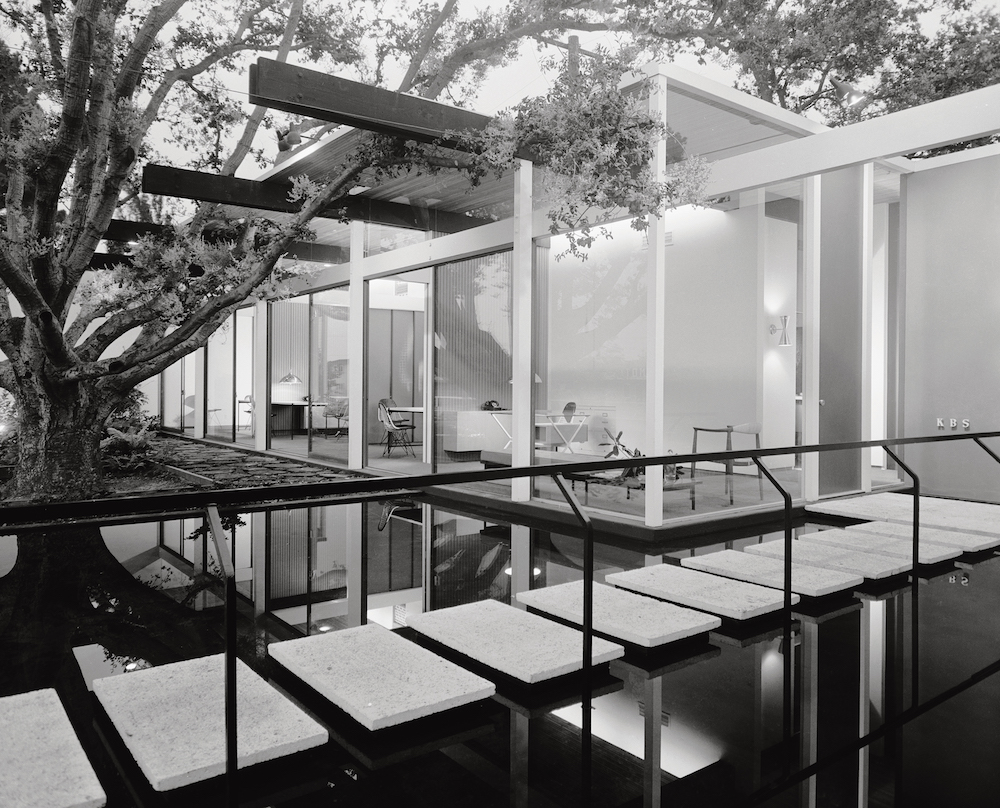
Killingsworth, Brady & Smith, Killingsworth, Brady & Smith’s own office, Long Beach, 1957. Courtesy of the Estate of Marvin Rand

Marvin Rand was a native Angeleno. In a city where most people have come from somewhere else in search of something better, Rand’s photographs – many lost to time since the mid-century – reveal the perspective of an insider. The images he produced reflect a career that celebrated the city’s most important contributions to architectural history, particularly that of California Modernism.

In the mid-twentieth century, Los Angeles was characterised by stunning urban growth, industrial expansion, and a populace of open-minded design patrons. These factors spurred a period of incredible architectural innovation that established this urban conglomerate as a pacesetter on the international design scene. The city’s lush relationship with the outdoors, graceful steel-frame structures, and apparent ease of living also captured the imagination of a broad populace – and continues to do so. LA has been rightfully regarded as one of the world capitals of the Mid-Century Modern.

Welton Becket & Associates, Capitol Records, Hollywood, 1956. Courtesy of the Estate of Marvin Rand

This LA can’t be fully understood without examining Rand’s seminal role in launching architectural careers and shaping how the city was pictured and marketed. Importantly, his understanding of this period wasn’t based on a reductive idea of what Mid-Century Modern entailed, in terms of a particular way of living or even a specific moment in time. As a sympathetic Angeleno, Rand understood his hometown as a dynamic entity that fostered continuous experimentation. Ever curious, he was a perfect match for the city as a perpetually changing place. He sought out the newest contributions to its built environment while also working to salvage early Modern buildings that had laid the historical groundwork for more recent innovations. Rand entered the scene at an opportune time. An effervescent publishing industry had embraced the creed that design was indeed within reach for the masses and that it represented the zeitgeist of the postwar California citizen. While Rand’s career must be understood as bridging Modernism to the new approaches that followed, his contribution to promoting Mid-Century architecture is a vital one.

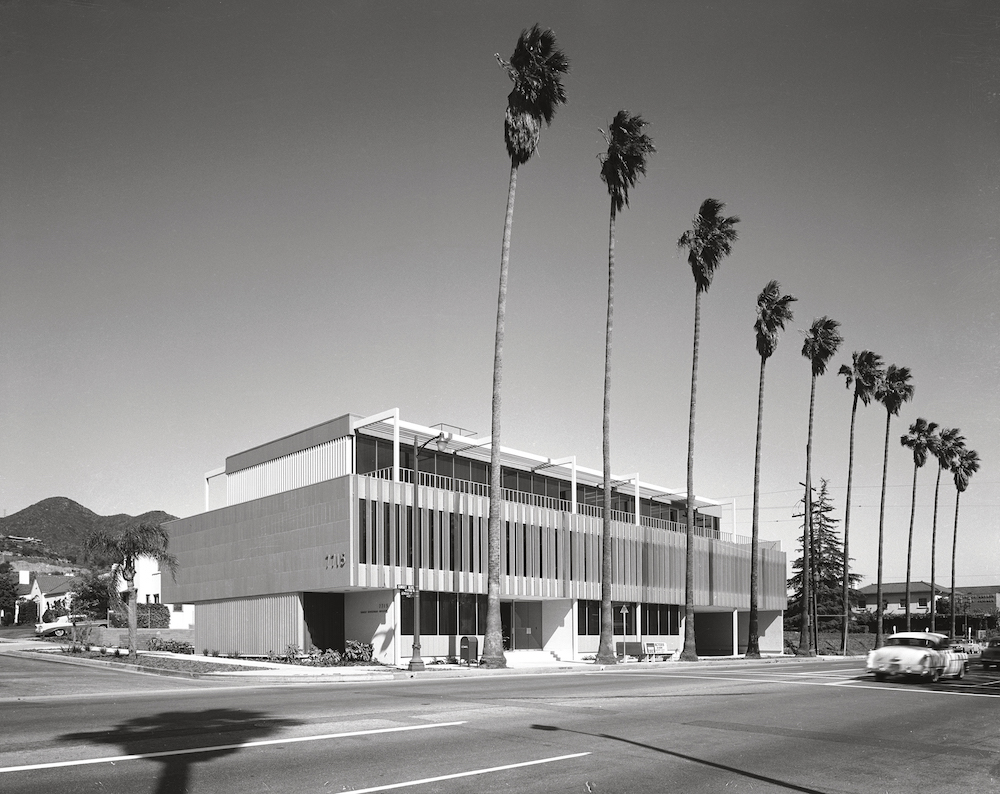
Honnold & Rex Office building on Sunset Boulevard, Los Angeles, 1961. Courtesy of the Estate of Marvin Rand

Rand’s signature was both distinct and sought after in mid-century Los Angeles’s burgeoning architectural scene. The proliferating practices spatialising the technological achievements of the military for a postwar society, such as the development of plastics, plywood, and glues for the aircraft industry – and their increasingly progressive client base – found in his pictures a profoundly impactful representation of the city’s visionary designs. These new construction technologies widened dramatically the design vocabulary of architecture, allowing longer spans between structural elements, open plans, large expanses of glazing, and an overall lightness of the building massing.

From the early stages of his career in 1950, Rand contributed authoritatively to a total rethinking of how to depict the urban and suburban architecture. The great accomplice in Rand’s output is the Southern California sun, casting hypnotic shadows on Modernist surfaces all year round. The tropical vegetation topped it off. Palm trees and cars became inseparable companions in the iconography of the modern in southern coordinates captured in 4-by- 5-inch negatives.

Killingsworth, Brady & Smith, Killingsworth, Brady & Smith’s own office, Long Beach, 1957. Courtesy of the Estate of Marvin Rand

A Rand hallmark was shooting in natural light. He saw himself as the first recipient of the architectural experience, and his mission was to broadcast his awe to everybody else. After all, by his own description, his mandate was “the recording of contemporary architectural projects for publication.” Behind this detached description of his professional purpose was a passionate advocate of the modern in all aspects of design, from textiles to industrial design to signage to the city.

Rand believed that “the architectural photographer should never be set up as a critic. Our role is to enhance and state the content of the building in an aesthetic way.” He did, however, buy into the possibility of architecture of its own time, particularly design that was within reach of the working class as well as the elite. His photographs, full of conviction for Modernism, helped build consensus for this new idiom and bridged the gap between the pioneers and the multitude.

California Captured: Mid-Century Modern Architecture, Marvin Rand, published by Phaidon, is out now