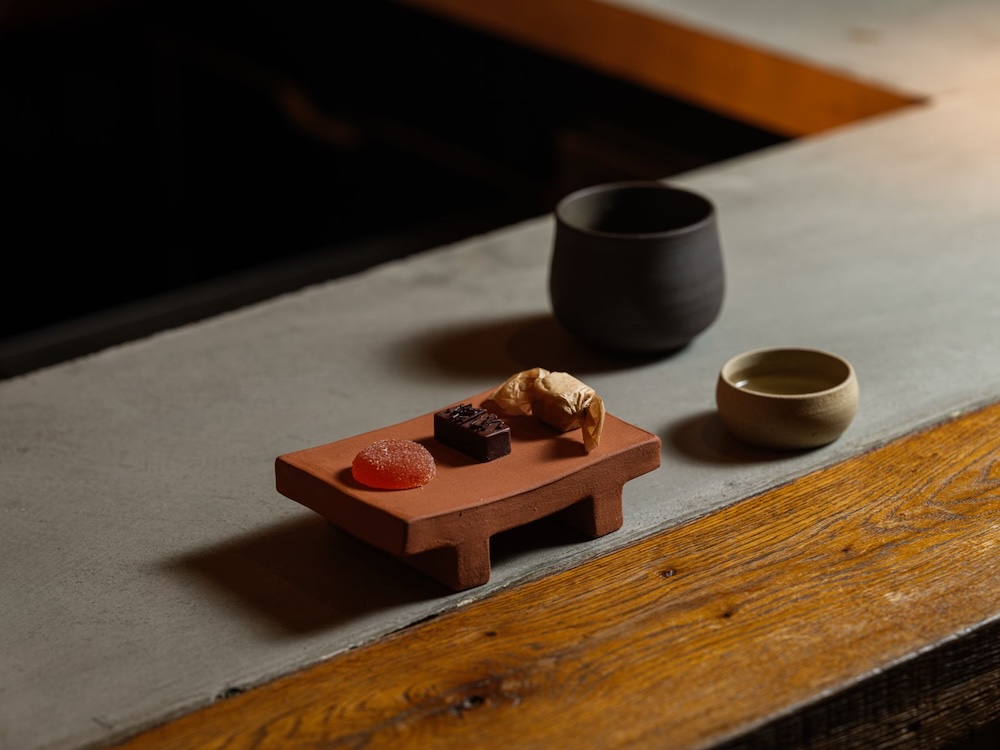
As a child born into a West African immigrant household, the concept of being of both and of neither has always held significant weight.
Costa Chica, a sparkling coastal crown on the Pacific, also symbolises this duality. Extending south from Acapulco to the bioluminescent lagoons of Chacahua, Oaxaca, this land is now witnessing severe loss of biodiversity, dried-up fishing communities, and land grabs by foreigners and wealthy white Mexicans. It is also a treasured place known for sovereign birds that dart through mangroves, and seaside settlements of self-emancipated Afro-descendants. I have watched terracotta-brown fishers, elders and swimmers moving through water with textured hair coils, recalling those who escaped colonial ships to create new life in Mexico.
After immigrating to Mexico 10 years ago, my sense of belonging has finally rooted in the ways I trace pieces of my West African ancestry to everyday life. Being raised on stews rich in red palm oil and goat, I can smell and taste natal flavours that bind me to this new home.
In Tenochtitlán, now Mexico City, vestiges of Costa Chica and Guerrero’s roots are manifested in the Michelin-starred Expendio de Maíz. Chef and owner Jesús Salas Tornés operates the kitchen as a collective, refusing hierarchy or dictatorship – a likely reverence to the cyclical societies of Afro-Indigenous traditions that endured entrapment and erasure. There is no menu, no head chef, no reservations and zero arrogance. Despite its high-grade culinary concepts, this is a restaurant grounded in fair pricing for patrons and investment in a microeconomy of hyper-local farmers and providers. On my first visit with a girlfriend and her daughter, we started with pig-shaped blue tortillas and queso de campo rolled into tiny hands. I was served the most divine maize-wrapped barbacoa, piled high with flowering coriander, and sitting in a rich bath of sauce.
The term barabicu – translated to ‘fire pit’ in Taíno, an ancient language of the Caribbean’s first nations – is a technique reflected in Central and West Africa, when food is wrapped with flame-resistant foliage like agave and palm leaves, and later braised in the earth for harvest ceremonies and communal eating. Traditional Guerrero and Costa Chica-style barbacoa starts with sirloin cap or goat (a meat with a smaller carbon footprint), smothered in tomatoes and chillies, and fragranced with aromatics like clove and cinnamon, wrapped and cooked in banana leaves. The cooking process renders the most tender meat in a slick, spicy sauce and ready to be gently tucked into tortillas.
Every time I take a small savoury bite into barbacoa, fried plantains or even okra, I’m reminded of all the Afro-descendants that brought over their heritage of foodways to Mexico: slim seeds of rice and black-eyed peas secretly braided into hair; centuries’ worth of recipes kept safely stored behind the cloudy eyes of great-grandmothers who made the voyage to Latin America, all just to whisper that ‘I belong everywhere’. That we are everywhere.
Photography David Hanes-Gonzalez, shot on location at Mercado Jamaica in Mexico City
This article is taken from Port issue 37. To continue reading, buy the issue or subscribe here
At Kaum in Bali’s Desa Potato Head, Wayan Kresna Yasa brings ancestral recipes from over 600 Indonesian islands to the table – and shares one with us. Here, the celebrated chef talks tradition, technique and how a spicy pomelo salad can carry the soul of a celebration
On a humid afternoon in Bali, I take a seat at a long central table, stretched beneath warm timber, natural light, and some very welcomed air conditioning. Sunlight filters through a geometric grid of tall glass windows, catching on the fronds of potted palms and broad-leafed plants that skirt the room, reminding myself and other visitors of the tropical landscape beyond the glass. Plates pass by with colourful salads dusted in herbs, rice layered with aromatic spice pastes, and soup finished with coconut cream and Moringa leaves. The scent of turmeric and galangal hits my nose, while wood smoke drifting from the kitchen sets me wondering what’s on the grill.
This is Kaum – its name meaning “clan” or “tribe” in Indonesian – set within Desa Potato Head’s beachfront complex in Seminyak. The restaurant is rooted in Indonesian food and flavour, with a menu drawing on generational recipes from over 600 islands, brought to life using techniques like bamboo grilling, fermentation, slow cooking, pit roasting and hand grinding. At the heart of Kaum is Chef Wayan Kresna Yasa, who was born in a fishing village on Nusa Penida, the small island off Bali’s south-east coast. His early life was shaped by the immediacy of what was caught, picked or grown that day. Meat was a rare treat, reserved for ceremonies, while seafood and vegetables formed the base of everyday meals. At 28, he took a leap across oceans to train in the US, working in Michelin-starred kitchens like Acadia in Chicago and Blue Hill Stone Barns in New York. There, he developed a precision that would later graft onto the abundance of Indonesian food.
Now back in Bali, Wayan brings that experience to Kaum, marrying fine-dining discipline with the richness of Indonesia’s regional cuisines. He does this by honouring the country’s complex geography through the menu, which spans the creamy, spice-laden dishes of Sumatra, with its Indian and Arabic inflections, to the tangy, sambal-bright flavours of Bali and the simpler, sea-forward cooking of the eastern islands. Roughly half the menu is Balinese, while the rest draws from other islands, stitched together through his knowledge of spice, smoke and texture. Many of the dishes he recreates at Kaum trace back to offerings made during religious ceremonies, including meals that, until now, tourists would never have the chance to taste unless invited into someone’s home.
As well as a recipe on how to make Kaum’s Rujak Pomelo – a refreshing and zingy Indonesian fruit salad – what follows is a conversation with Chef Wayan, drawn from a long afternoon at Kaum and a discussion around the delectable dishes on the table, traditional Balinese flavour, his time abroad and the joy of turning a ceremony into a meal.
Photography by Ola O. Smit
The freshness of Moringa
“On the table, you’re eating Moringa soup with coconut cream. The combination of the cream and fresh Moringa makes it like a superfood. Not many chefs put this on the menu – mostly they dry it into a powder. For me, the fresh one is better; you can see it, taste it and it’s different.”
Blending techniques from the US with Indonesian flavours
“What I brought back from my time in the US was mostly cooking technique. Indonesian food is usually deep-fried, grilled or steamed, but here I also play with a wood-fired grill. It’s about texture. For example, you can’t really cook fish until it’s chewy and well done. All the flavours are still original from Indonesia, especially Bali. Around 45–50% of the menu is Balinese, and the rest comes from Sumatra, Java, Sumba, Maluku and the Sulawesi Sea.”
Understanding Balinese spice
“Balinese food is rich in spice. For example, the pork dish uses a lot of root spices such as galangal, ginger and turmeric. All the heat comes from the spices, not chilli. Normally it would be very intense, but I make it medium. If you want something lighter, there’s the salad which is more spicy, tangy and fresh.
Ceremonial ingredients and palm sugar
“We have a type of snack that normally uses shrimp paste, but here it’s fresh. The sugar is special, made just by us chefs with no artificial ingredients. It comes from the palm tree. The sap is taken and fermented for 24 hours and we call it tua. You can drink it, or cook it down, reduce and caramelise it until it becomes solid with a caramel texture. We use it in cocktails and for cooking. It’s completely pure.”
The geography of Indonesia
“Rendang, the beef dish, is from Sumatra. The Moringa soup is from Central Java or Bali – but this one, because of the bold use of coconut flesh, I’d say is more Central Java. The fish soup is from West Nusa Tenggara to Sulawesi. The further east you go, the simpler the food – just celebrating the product. The further west, the more complex, using more spice and cream, influenced by India and the Middle East. Central Java is sweeter. In Bali, you have fresh sambal, spicy like sambal matah, and fruit salsa with grilled fish – that’s more eastern.”
Cooking with inspiration from the road
“This rice is usually used for offerings during ceremonies, served with condiments like crab, fish, tofu, fried peanuts and coconut. I take inspiration from that rice and think about how to serve it with meat or fish. I add dishes either because I like them, or because I’ve seen them while travelling around Indonesia and they’ve caught my eye. I change the menu regularly, not because I have to, but because I want to introduce dishes from other islands.”
From everyday to ceremonial feasts
“Growing up, I only ate chicken once every six months, at a ceremony. We’d save money for celebrations. Day to day, we ate a lot of vegetables, and we were almost vegetarian, though we didn’t call it that. Everything we needed was grown behind our house. I was born and raised on the beach, so I ate seafood every day and didn’t even know what bad seafood tasted like.”
Cooking in bamboo
“Only one region in Bali, Tabanan, cooks with bamboo – it’s called timbungan. We season and marinate the protein, put it inside bamboo, and stand it upright to cook over a fire for two to three hours, depending on the protein. Next week we’re doing a Saturday barbecue focused on cooking in bamboo.”
Launching the menu
“Next week I’ll launch the new Balinese Journey Menu, which will be a taste of Bali. The inspiration is a particular ceremonial dish that’s only made after preparing offerings. Once the offering is complete, everyone sits down together to celebrate. This happens at weddings, temple ceremonies, children’s birthdays, or a baby’s six-month celebration. There are seven dishes, usually served on the floor rather than a table. Pork and chicken are the main proteins for celebration in Bali.”
Kaum’s Rujak Pomelo by Chef Wayan
Serves 6
“This is a really fast and simple rujak. The Pomelo is cool and fresh and pops nicely against the sweet, hot, tangy sauce. I haven’t included terasi, but you could throw in a teaspoon for a more pungent dressing. This recipe calls for two chillies, which depending on the power of your peppers, provides a nice consistent burn. For milder results, just use one. The finer the jicama is sliced, the better. You might want to use a mandolin.”
175g palm sugar, very finely shaved 40 g tamarind paste/ Tamarind water 2 birds-eye chillies, crushed 6 2 tsp sea salt 6 tsp 100 ml water 300 20gr lime juice 600gr red pomelo pulp 200gr shredded green papaya/ Jicama 100gr cherry tomato 60gr red radish thinly sliced 60gr peanut (fried or roasted)
“Combine the shaved palm sugar, chillies, tamarind, and salt in a mixing bowl. Squeeze them together using your fingers until they form a rough paste. You’ll need to give the chillies a little extra attention to make sure they break down completely. Remember not to touch your eyes. Then, add the water bit-by-bit and keep massaging the ingredients together until all the sugar chunks and tamarind have dissolved and a watery sauce has formed. Add the Pomelo, green shredded papaya, tomato cherry, fresh mint, additional baby romaine if needed, mixing it and tossing it through the sauce lightly, being sure not to squeeze or crush it too much. Make sure all the ingredients are nicely dressed and serve top with fried peanut or cashew.”
Photography by Port’s kids – Laurie, Mungo & Clay – using disposable cameras
When you think of your dream home – or perhaps even your more flawed, but tangible actual home – what do you consider to be the heart of it? When you were growing up, did your family congregate in the living room, or in the crumby, over-lit mess of the kitchen? And do you do the same? None of these questions are Hinge prompts, although they ought to be. There are, perhaps, two kinds of people in this world: living room people and kitchen people. Finding out who is who is, I believe, the crux to getting to know someone well, and quickly. How can you truly judge your compatibility with someone if you don’t know whether they see a kitchen as the heart of their home? I was recently relieved and delighted to find out my boyfriend is also a kitchen person.
In my fondest recollections of growing up, it was always the kitchen – my granny’s kitchen, in fact – that we congregated in, that hummed with life and energy and love. My earliest memories are sitting there, eating thick toast slathered in Kerrygold and trying to get involved, while around me the people I knew best in the world gossiped, laughed, played card games and smoked incessantly (It was the 90s!). If we ever decamped to the living room, this meant something very bad and wrong was happening. Possibly a funeral. It’s little wonder that as an adult I’ve attempted to recreate this, eating breakfast perching on shared counter space, constantly running the radio in the background while trying to entice stray cats through the back door.
That the shared kitchen has become a necessity is, if not a silver lining of the housing crisis exactly, then at least a serendipitous, pleasant quirk of private renting. Having left our family homes, we find ourselves moving into increasingly anonymous spaces, dividing our living spaces into smaller and smaller boxes (landlords would call these ‘rooms’, although sometimes I am not sure that they can be legally named as such). Sequestered into bedrooms, with living room politics too sensitive to breach – how to divide a Netflix account between six people, and ensure that they all avoid spoilers in unison? – we’ve found ourselves in the kitchen again. The only truly shared space for a generation resigned to eternal communal living, it’s in kitchens that we pre-drink and cook together, gossip over toast in the morning, squabble over who’s used whose KeepCup before rushing out to work – everything that I remember from my childhood except chain-smoking (it is no longer the 90s).
It’s an understatement to say millennials’ endless shared living is not perfect. There are times when it feels like a life sentence. There are other times when it feels like the platonic ideal of a commune, a WhatsApp group with your friends briefly brought to life. Our kitchens are hubs of family – chosen or blood – and community. It is why it’s so easy to put your hands on so many quotes about the space, from the literary to the saccharine. From your mum’s painfully unchic “in this kitchen we dance, sing, laugh…” corkboard, hanging next to a fridge overladen with kitsch magnets and family photos, to Alfred Hitchcock’s often-attributed kitchenalia quote: “Happiness is a small house, with a big kitchen.” Anthony Bourdain went so far as to designate the space its own language: “kitchenese”. I, for one, am fluent.
This article is taken from Port issue 36. To continue reading, buy the issue or subscribe head here
Marking ten years of Silo, chef Douglas McMaster hosted a one-night celebration with artist Joost Bakker, broadcaster George Lamb and chef Thomasina Miers to reflect on food, climate and what comes next
Silo 10 year anniversary dinner in partnership with Ruinart
From fermenting on rooftops to grinding flour in-house, Silo has spent the past decade rewriting the rules of dining. When chef and founder Douglas McMaster opened the restaurant in Brighton in 2014, it was billed as the world’s first zero-waste restaurant – a bold claim backed by equally bold action. In its current Hackney Wick home, Silo continues to challenge industrial food systems with a menu built from whole, locally sourced ingredients, a refusal to own a bin and a deep belief in circular design. It truly is an operating system for how food might work in the future.
To mark ten years of this radical vision, Silo hosted a one-night-only celebration in partnership with Ruinart, pairing its new Blanc Singulier Édition 19 with six fine-crafted courses. The evening brought together friends and collaborators old and new – from McMaster’s early mentor Joost Bakker to regenerative farming advocate George Lamb and chef-restaurateur Thomasina Miers – for a conversation on zero waste, soil health and what a second civilisation might look like. Below, we hear from each of the panellists.
“When I was a kid and a teenager, I was very, very shy and afraid of the world… I always felt like an outcast, like there was something wrong with me at school. I couldn’t understand what the teachers were teaching, and all the other kids just grasped these subjects effortlessly. So of course, I dropped out and dropped into the local kitchen, washing dishes.
“When you feel dumb for a decade or more, when you feel like you don’t fit into the world, you kind of build up a sense of resentment – a sadness, a void. That was there throughout my whole childhood. It sounds kind of metaphysical, but it was very real. And then I was working around the world in world-class restaurants, and it was probably worse than how I felt in school – the bullying, the violence, even waste.
“Just as I was about to give up, I left a lunch service in Sydney and heard this loud thumping rock and roll music. This construct had appeared – like something out of Mad Max. It was the Greenhouse. I remember thousands of terracotta pots carpeting the exterior with wild strawberries, a big stainless-steel tank doing something magical, and tons of different plants hanging off the sides. I got inside and met Joost that same day. He told me he wanted to bring this to London, and asked, ‘Would you be interested in being the chef?’ I didn’t know what this project was, but I had this innate sense that this was the rest of my life. I said yes.
“I felt completely unseen and kind of worthless throughout my education. That void I carried for years – not in that moment, but in that experience – disappeared. Psychodynamically, that was a lack of meaning, a lack of purpose, a lack of place in the world. Joost gave me that. That’s why Silo exists.”
Silo 10 year anniversary dinner in partnership with Ruinart
Joost Bakker – Artist, designer and visionary behind the Greenhouse project
“I grew up in the Netherlands in a polder – land drained in the 1700s – which was known as the most fertile land on Earth. I remember watching a plough being pulled, and thousands of seagulls following it. My dad said, ‘Worms mean happy people.’ I didn’t understand what he meant until years later when I was in the Himalayas. I saw another plough, the worms again, and realised: that’s what he meant. That started me on a journey to understand how critical soil health is to the health of the population.
“In the mid-90s, I started a worm farm. I was working as a florist in Melbourne restaurants and saw how much waste they were producing. I started creating projects and installations to show restaurants that what was going in the bin was actually really precious. Twenty-five years ago, it was impossible to have a conversation with anyone about this stuff – people just weren’t interested. Now, everyone’s waking up to how critical this is. That gives me hope.
“One of the most powerful examples was Future Food System, a two-bedroom house we built in Melbourne’s Federation Square. It was off-grid, zero-waste, and we grew over five tonnes of food in less than 100 square metres – from fish and shellfish to crickets and hundreds of edible plants. It showed that a city like London could feed itself. We just need to eat differently.
“We recently completed a school built from hemp we planted in October 2023 – on soil that had previously grown cotton and potatoes. That hemp became the school desks and doors. We also used compressed straw and timber from agroforestry systems. Farmers can be builders, regenerators, rewilders. To me, that’s the future.”
Silo 10 year anniversary dinner in partnership with Ruinart
“I used to be a TV host – in fact, I hosted BBC Young Chef of the Year in 2004, which Dougie won. We’ve known each other for over 20 years. But at a certain point, I started to feel like nothing was really changing. I wanted to work upstream, at the system level.
“So I set up a project in a struggling comprehensive school in North London. There were supposed to be 1,200 students – they were down to 450. I said, let’s turn this into a Jedi training school for kids. We created a six-acre ecological farm next door and started teaching the students how to grow food, how to think philosophically, how to be expansive. The biggest moment for me was kicking out the school’s catering company – I nearly had a stand-up fight with the regional manager. But by doing that, I brought in Chefs in Schools, and it transformed everything.
“After that came Wildfarmed. We don’t own land – we work with conventional farmers and say: we’ll pay you a premium if you farm regeneratively. Now we’re supplying Shake Shack, Tesco, M&S. And the farmers love it.
“The commodities market doesn’t value ecosystem services, so we’ve built something that does. Better farms are wild farms. Our definition of regenerative farming is simple: quality food grown in nature-rich landscapes. We don’t want it to become a meaningless word.
“We’re on the long road to Greggs. That was our homepage slogan. We’re not trying to build a niche product for wealthy people – we want to democratise real food. And if we set our North Star around that, I think we’ll be alright.”
Silo 10 year anniversary dinner in partnership with Ruinart
Thomasina Miers – Chef, founder of Wahaca and Chefs in Schools
“I co-founded Wahaca 18 years ago, and from the beginning we were trying to recycle food waste and push for more vegetarian food – a third of the menu then, half now. We’ve proven you can have a group of 14 restaurants and still do things that are positive for the environment.
“But for me, one of the greatest solutions – especially in a society that feels stressed and disconnected – is cooking. If people don’t understand the joy and pleasure of food, they won’t eat in harmony with the environment. That’s why I helped set up Chefs in Schools. You put one trained chef into a school kitchen and you can completely transform how hundreds of children think and feel about food.
“I also think we’re going to hear more and more about nutrient density – the link between how something is grown and how nourishing it is. I recently met an incredible farmer in Scotland – a Nuffield scholar growing wheat for Wildfarmed – who wrote a major paper on this. We’re overfed and undernourished. We need to restore that link between soil health and nutrition.
“And then there’s creativity. One of our most hopeful dishes came from trying to use up cauliflower hearts that would otherwise be thrown away. We made a dip with roasted cauliflower and carrots, beans, and leftover cheese – and it was delicious. I love food like that. It tastes good, and it feels good.
“Every meal is a decision. Ask yourself – am I supporting a farmer working in harmony with nature? Or giving my money to big food? Every bite is a vote.”
Trapani-born chef brings the sea to the table at Villa Sant’Andrea, A Belmond Hotel, Taormina Mare’s barefoot beachside restaurant Brizza
Villa Sant’Andrea, A Belmond Hotel, Taormina Mare, perched on the pebbled shores of Mazzarò Bay beneath the ancient Greek Theatre of Taormina, began in 1919 as the private summer villa of Cornish railway engineer Robert Trewhella. Encircled by lush subtropical gardens, marble halls and Moorish-inspired décor, the villa has retained the intimacy of a private residence while evolving into a seaside sanctuary. Once a celebrity haunt during the Taormina Film Festival – with guests including Liz Taylor, Richard Burton and Peter O’Toole – it was later taken over by Belmond in 2010. The hotel today features 66 rooms and suites, all with sea-facing balconies or terraces, plus an infinity pool, a private beach club (recently awarded Italy’s finest in spring 2025), wellness and fitness facilities, boat tours, and a courtesy shuttle to the storied Grand Hotel Timeo for when the holiday sandals start rubbing. In spring 2025, its celebrated beach club, Lido Villeggiatura, earned top honours as Italy’s finest, a recognition of its dreamy cabanas, sunrise‑to‑sundown local wellness treatments and views overlooking crystalline Mediterranean waters.
But at the heart of this Adriatic idyll and of all our foody fantasies lies Brizza, the hotel’s exclusive pieds‑dans‑l’eau restaurant seating just 16 guests. Here, Executive Chef Agostino D’Angelo channels his Trapani childhood, marked by mornings spent fishing with his father and his experiences in professional kitchens in England and France, into a menu that blends innovation with Sicilian tradition. In our Questions of Taste conversation, he reveals the genesis of his signature Mosaico – a mosaic of local fish – the way the sea breeze and the tactile warmth of wood and ceramics at Brizza shape his dishes, and what constitutes that elusive “perfect bite”.
What are your earliest food memories?
My earliest food memories are with my family: the Sundays spent cooking and eating all together, but especially the mornings fishing with my father.
How did you get to where you are today, and how did you end up at Brizza?
Passion first of all, ambition, school and early work experiences brought me to where I am today and made me realise how much I love this job. Regarding Brizza, I created its culinary offer thanks to my knowledge of cooking techniques and the experience I gained on an international and national level, also working alongside star chefs in England and France to deepen certain preparations. With time and experience, I have acquired a solid background that has led me to create this restaurant concept in which I can express my attention to detail and the excellence of raw materials in a more exclusive setting.
How would you describe the flavour of Sicily?
Everything around Sicily describes it: the culture, the flavours, the landscape, the excellent raw materials, the smells… especially the scent of the sea and plants during a walk, already in the gardens of Villa Sant’Andrea, A Belmond Hotel, Taormina Mare.
Brizza is an incredibly sensory experience – the sea breeze, wood and ceramics on the table. How does this setting inform the way you cook and the menu?
Brizza, being just a few metres away from the sea has a strong influence on my cooking, it gives me many sea-related inspirations. Everything is curated to recreate a marine effect for an experience to be lived barefoot in the sand. In particular, the tables are illuminated by arched floor lamps made of the so-called “nasse”, the fishing nets that are still used today in the area of Trapani where I grew up.
Not only the setting influences the way I cook, but everything: who I am, my background, my career and my travels. All this has led me to value even more what we have in Sicily and what is difficult to find in other parts of the world.
What ingredient or flavour are you most drawn to right now – something you keep reaching for?
What attracts me most is the explosion and combination of flavours. I am always looking for new visions and new forms of raw material to express myself and communicate to guests through my dishes.
Much of your cooking at Brizza balances innovation and tradition. How do you decide when to stay true to the past and when to push forward?
If there was no tradition there would be no innovation. Tradition is the basis of my dishes, I consider it fundamental. In my dishes I emphasise the marine elements and the typical products of the Sicilian land revisiting them in an innovative way. I look at innovation as a challenge, with curiosity and this leads me to push myself forward.
Is there a dish on the menu that’s particularly exciting, or holds a personal meaning for you?
Definitely the Mosaico, when I created it I thought of a dish in which I could combine as many types of fish as possible, paying great attention to details but without distorting the raw material. Even if the dish may seem simple, it contains all the smells and flavours of Sicily: the Mazzara shrimp, the lemons, the orange, the tuna… all the ingredients describe Sicily through their simplicity and combination.
Do you collect cookbooks, and if so, do you have a favourite?
For the dried fish proposal at Brizza, I was inspired by the books of Josh Niland, who in 2019 invented a technique for aging fish, which is very reminiscent of the drying process that has been done in the Trapani area for years. I also treasure a book by Auguste Escoffier, one of the greatest chefs of French gastronomy, that I found at a flea market in England.
Can you describe a perfect bite?
A perfect bite must excite and to do so, it must have the right combination and balance of sweet, salty, sour, bitter flavours and a mix of crunchy, creamy, aromatic, chewy sensations.
After a decade of pop-ups, husband-and-wife duo John and Desiree Chantarasak opened their first permanent restaurant in late 2024 – a 44-cover space in Marylebone that earned a Michelin star within three months. Here, John speaks about balancing Thai and British ingredients, the power of patience, and how the kitchen became a reflection of his dual heritage
Supper begins with a single bite of Comice pear, candied beetroot and roasted Suffolk rapeseed. Cool, sharp, sweet and nutty, slowly oozing its flavour across the tongue. The beetroot, cooked down into something sticky and almost jam-like, tastes earthy and just a touch fermented, while the pear cleanses and lifts the palette in preparation for the next dish: the winter radish cake. When plated, it looks humble, though it is anything but. A crisp golden crust gives way to a tender, almost gelatinous centre – dense yet silky, like a savoury mochi with a vegetal heart. The cake carries the umami of fermented daikon, grounded, slightly tart and a little funky, layered with house-made vegetable treacle and a herby snap of tarragon. There’s also a side dish of whole grain farro that’s smoked and peppered, flecked with laab spice. A winter salad dressed in Black Bee Honey and salted duck egg complements the table with a sense of richness, the honey lingering at the back of the throat. Then, for me – a very well catered-for vegetarian – the Lion’s Mane mushroom is the standout. Thick as a steak and as spongy as a dessert, this course is pan-fried and basted in butter before being soaked in wild garlic. It’s then dusted in puffed ancient grains, Scottish seaweed and toasted seeds – a nod to Thai furikake – and paired with a satay made from roasted British sunflower seeds and freshly pressed coconut cream.
These are some memorable moments from the winter tasting menu at AngloThai, the debut restaurant from husband-and-wife duo John and Desiree Chantarasak. Opened in November 2024 after nearly a decade of pop-ups and residencies, their 44-cover space on Seymour Place was awarded a Michelin star just three months later. With a seasonal and local menu, the restaurant brings together the flavours of Thai cuisine with British ingredients – a pairing shaped by John’s own heritage, with a Thai father and British mother, and years of cooking experience in both Bangkok and London. Rice doesn’t grow in the UK, so instead they use ancient grains like naked oats and spelt. Tamarind and lime are swapped with foraged sea buckthorn berries. Holy basil is grown hydroponically in east London. Chillies and honey are sourced from the UK. Even the outer leaves of cabbage are pressed to replace banana leaves. In this conversation which took place not long after the restaurant opened its doors, John speaks about his long-burning vision, the relationship between British and Thai ingredients, the evolution of his signature dishes, and the small daily improvements that earned this culinary star.
AngloThai restaurant tasting menu. Photography by Ben Broomfield
Congrats on the opening. How have things progressed since then?
I think it’s gone well. It’s generally gone to plan. I’ve been involved in a few restaurant openings before – not my own – but I took a lot from those experiences. We had a big build-up, so we had time to think and gestate about what we wanted to achieve. We went into it with the right mentality, setting ourselves up for success, and tried to make it as smooth as possible. So far, it’s been smooth.
I’ve been cooking a version of this concept for over nine years now. The catalyst to open a restaurant started about four years ago with my wife – we began approaching landlords, speaking to agents, and trying to figure out the process. We were probably a bit naive about it, and originally, the idea was on a smaller scale than what it’s become.
We’ve been plugging away with pop-ups all over – London, Jersey, Edinburgh even further afield – and tried to grow the brand organically. That slow burner approach is frustrating and tiring, but the organic following it built has been amazing. People are coming in saying, “I came to your pop-up two years ago”. That’s incredible – that they still care, that they believed we’d open one day and now want to see it for themselves.
The slow pace clearly paid off. There’s a real appreciation for time in everything you’ve built – does that sense of pace filter into the restaurant experience too?
Definitely. Time has been our friend in this. Watching everything come together – the wood treatments, design, the music – after pouring blood, sweat and tears into it for so long, we really feel like people notice that. It’s more than just the food being good or the wine list being nice. Diners sit down and say, “Wow, you’ve thought about everything”. That was always the goal.
We didn’t want it to be just a place to eat food. It’s an experiential style of dining. Even the interiors are part of that. There’s a nod to Thai Art Deco, but we also worked with independent Thai craftspeople who are revolutionising design back home. It’s a modern approach, with deep respect for what came before. That’s the whole idea behind AngloThai; it can feel at home in London, Bangkok, New York, Barcelona. It’s a modern interpretation of Thailand.
AngloThai restaurant tasting menu. Photography by Ben Broomfield
It’s interesting how that modern Thai identity runs through both the food and the interiors.
It’s our chance to share more than food – we’re talking about culture. My wife and I have travelled around Thailand, scratching away at those layers, and we worked really closely with our designer May Redding, who’s now a close friend. She’s half American, half Thai, born and raised in Thailand. She understands what’s kitsch or cliché in restaurant design, and what feels respectful and contemporary.
We weren’t trying to make something “thematic”. We wanted to work with craftspeople pushing their fields forward. Like the seats – people sit down and say, “These are like nothing I’ve seen in the UK”. They were made by a company called Moonler in Chiang Mai. It was a mission to get them here, but worth it. It’s all about that feeling of a well-loved home, with order to the chaos. We didn’t want uniformity. One size tables, all the same colour – you end up with a canteen. We wanted individuality and a sense of home.
Has cooking always been part of your life? Was it always the plan?
I was fortunate. I grew up in a household where home-cooked meals were the norm. My mum made everything from scratch. We had vegetable patches, baked our own bread. I do the same with my kids now – my son’s three, and he’s involved in the kitchen already. It’s just what we do.
But I came to cooking late. I retrained about 12 years ago. Before that, I was into music, living in London, doing gigs and day jobs. Then I moved to Bangkok, trained at Le Cordon Bleu and studied the classical French diploma. Towards the end, they started to integrate local Thai ingredients, so it was this fusion of French technique and Thai produce.
After graduating, I interned at a restaurant called nahm. When it moved from London to Bangkok, it became a huge deal and won a Michelin star, got into the World’s 50 Best. That experience was a mind-meld. I thought I knew a lot from my training, but being in that kitchen opened my eyes.
AngloThai restaurant interior. Photography by Charlie McKayAngloThai restaurant interior. Photography by Charlie McKay
Was it at nahm that you knew you wanted to cook Thai food?
Yeah. I came back to the UK after two years and connected with Andy Oliver, who was opening Som Saa as a pop-up in Climpson’s Arch, where Brat is now. It was a rapid, exponential journey; training in Thailand, then straight into something that became a huge hit. It exposed London to a different style of Thai food. I was hooked.
I stayed at Som Saa for five years. Left at the end of 2018, and from then on, it’s been the journey to AngloThai.
How did you and your wife meet – and how do you work together?
She came to Som Saa during the early days at Climpson’s Arch. She tagged along to a friend’s date night. We saw each other, exchanged numbers, went on a date the next week and never looked back.
She understood what I was trying to do. I retrained and moved my whole life to go to Bangkok. When I came back, I was sleeping on my cousin’s floor, working on pop-ups. She never questioned the chef lifestyle. Her support was unwavering.
She was a graphic designer for Amazon when we met, but she started moonlighting in wine bars, studied WSET wine qualifications, and eventually transitioned into hospitality. During COVID, she was made redundant, and that became the sign. We decided to go for it and fully commit to opening a restaurant. She now does our wine list.
AngloThai restaurant tasting menu. Photography by Ben BroomfieldAngloThai restaurant tasting menu. Photography by Ben Broomfield
Are there any challenges working with your partner?
It’s a lifestyle. We talk about the restaurant 80% of the time. Our relationship was built on dinners out, wine bars, travelling for food. I don’t really have many interests outside food and drink, so it doesn’t feel like a job.
Of course it’s hard work – I was butchering three hoggets yesterday for six hours – I still enjoy it. And now, with kids, we’ve got a better sense of balance. I take Sundays off to play Lego and hang at the playground.
Let’s talk about ingredients. AngloThai is a blend of British and Thai, how do you source, and how do you keep it authentic?
To me, it is authentic, because it’s about my dual heritage. If you’re opening in central London, most of your diners are Western, and you have to acknowledge that. We’re very produce-driven. We work closely with a few trusted suppliers. One butcher covers a lot – we’ve had a ten-year relationship, so we get their best cuts. They even helped us source sheep from my wife’s family farm – non-commercial, just 20 a year, but incredible quality.
We’ve replaced palm sugar with a specific honey from Black Bee Honey near Glastonbury. It has this intense flavour, like artisanal Thai palm sugar, but it’s local. Same for grains – we removed rice from the menu two years ago. We don’t grow rice in the UK, so we use naked oats, spelt and ancient grains. We’re probably the only Asian restaurant in London that doesn’t serve rice.
AngloThai Carlingford Oyster, Sea Buckthorn & Fermented Chilli. Photography by Ben Broomfield
What do guests say about that?
Some don’t get it – they miss the rice. But we’re telling a different story. It’s still curry and rice… just not literally. We work with farms who’ll grow for us now. We’re trying to build sustainability into the supply chain and invest in growing specific things locally.
Chillies are a good example – they grow here, but only in summer. So we dehydrate them, use dried versions for winter curries like massaman or penang. Fresh green chillies return in spring. That seasonality guides the menu.
What are some key dishes on the menu right now?
There’s a snack called ma hor, traditionally a royal Thai dish: pineapple with candied pork or prawn, and toasted peanuts. We do a vegan version on pear, with candied beetroot, British pumpkin seeds and raw rapeseed. It’s sweet, salty, nutty, balanced and the fruit refreshes the palate.
We have a really nice Lion’s Mane mushroom dish which is good for your brain but also very delicious. It’s like a big sponge, essentially. We cut it into portions, pan fry it, baste it in butter. We glaze it in vegetable treacle we make from scraps, then coat it in a kind of furikake mix – puffed grains like quinoa and millet, different kinds of spices, seeds and Scottish seaweed. It comes with a pickled mushroom purée and a satay-style sauce that we pour table side, made from roasted British sunflower seeds and fresh coconut cream.
AngloThai restaurant tasting menu. Photography by Ben BroomfieldAngloThai Delica Pumpkin, Fig Leaf & Pumpkin Seed Ice Cream. Photography byBen Broomfield
That sounds incredible. And dessert?
I spent a lot of time in the pastry section because it was my weakest for a long time, so before opening I did pop-ups in Europe just focusing on desserts. Now we have two I love. One is based on sangkaya fak thong – Thai pumpkin custard. We make a brown butter honey cake with pumpkin puree, roasted pumpkin seed ice cream, and thin shavings of pumpkin soaked in syrup with elderflower vinegar. It tastes a bit like mango. Then there’s a duck egg coconut cream custard.
We never want to lose sight of the fact you’re in a restaurant – you just want delicious food.
Is there anything you want to add about what’s next?
We’re taking it day by day. I ask the team to come in each shift thinking about one thing they can do 1% better than last time. Do that every day for a year – you’re 365% better. We’re building something that, hopefully, lasts.
Anglothai portrait of John Chantarasak Desiree Chantarasak. Photography byBen Broomfield
Msakhan is a living archive of Palestinian tradition and family
Photography by Port’s kids – Laurie, Mungo & Clay – using disposable cameras
The first time I packed msakhan for my children’s school lunches, I felt like I was breaking some unspoken rule of my childhood. Growing up, msakhan wasn’t portable. It was sprawling, messy and meant to be eaten in a group, with olive oil dripping down your arms and chicken bones piling up on the table. Msakhan was never meant for neatness or convenience; it was meant to be a feast.
But there it was, neatly rolled in flour tortillas – the only option I could find at a neighbourhood supermarket in Philadelphia – wrapped carefully in foil, crossing time, borders and even form, in ways I couldn’t have imagined as a child.
Msakhan, you see, is not just a dish: it’s a living archive of Palestinian history, geography and ingenuity. Its story begins with the land – bread and olive groves pressed for their oil.
The word msakhan translates to ‘heated’ or ‘reheated’, a nod to its origins as a solution for day-old bread. Villagers would brush olive oil over stale taboon loaves and warm them on a fire, turning what might have gone to waste into a meal rich with flavour. Over time, this simple act of preservation became something more – a base for onions slow-cooked in copious amounts of olive oil, bright and citrusy sumac, roasted chicken and toasted pine nuts or almonds atop the bread.
Each of these additional ingredients speaks to the rhythm of Palestinian life: white onions gathered in the summer, dried and stored for later use. Almonds that went through a similar process, prepared and preserved for future meals. Sumac which ripened toward the end of summer, followed closely by the olive harvest in the autumn or early winter, when fresh oil became abundant. Chicken, once a staple of backyard farms, was available year-round but often saved for special occasions.
With these ingredients, what began as a practical way to sustain villagers through lean times has become a symbol of festivity and national identity. Yet what makes msakhan endure isn’t only its ingredients, but how it has evolved to meet the needs of a changing world.
Growing up, msakhan was a whole-day affair. Fridays at my grandmother’s house began early, with dough kneaded, left to rise, then baked in an outdoor oven. I can still picture her scooping handfuls of incredibly wet dough, allowing it to dance between her palms until it was large enough to be spread over the hot river stones in the oven. Then, chicken was simmered on the stovetop, onions were cooked down in olive oil and nuts were fried. Finally, right before eating, the towering platters of bread and chicken were grilled to golden perfection.
But as life changed, msakhan adapted too. I still remember the first time I had msakhan in the form of a roll – I was in high school and we had been invited to a lunch gathering at a family friend’s home. On the table were these paper thin shrak (or marqooq) rolls – they were glistening and golden. I had no idea what they were and yet when I took a bite, there was no mistake: this was msakhan. It had the familiar taste of sweet onions and sour sumac with the tender chicken and crispy nuts, but the form was entirely foreign.
Msakhan rolls, made with traditional paper thin shrak or marqooq bread, are now a common sight at gatherings. Abroad, substitutions like tortillas or even spring roll wrappers have become popular – showing how far this dish has traveled.
Then there’s the ingenious msakhan fatteh, which flips the dish’s foundation entirely. Fatteh – derived from the Arabic word meaning ‘to crumble’ – is a category of dishes that layer bread, yoghurt and various toppings. In msakhan fatteh, the traditional bread is traded in for toasted bite-size morsels of pita bread, leaving the chicken, onions and sumac to shine atop before being smothered with a garlic yoghurt sauce. The irony isn’t lost here: a dish that once relied on reheated taboon bread has now been reimagined in a form that sometimes skips its key ingredient altogether.
Rather than diminishing msakhan’s cultural significance, I believe these transformations expand its reach, keeping the spirit of msakhan alive. Whether served on a towering platter of bread with bone-in pieces of chicken or rolled into neat, golden parcels, each new version tells a story of the land and the people who shaped it.
Perhaps what makes msakhan so enduring is its ability to cross borders and generations while staying true to its roots. It holds memory in its layers, each bite a delicious reminder of how food can both preserve and progress in a world where cultural traditions risk being forgotten or diluted.
So the next time you taste msakhan – whether it’s the classic recipe served open-faced or a reimagined roll passed around at a party – know that you’re participating in a history much larger than any one plate. It’s a story of land, resilience and adaptation. And like all good stories, it’s one that continues to grow with each retelling.
This article is taken from Port issue 36. To continue reading, buy the issue or subscribe head here
In 2020, a three-metre-high statue of a Turkey Twizzler was unveiled outside Great Witchingham Hall in Norfolk, engraved with just two words: “THEY’RE BACK!” For those with long enough memories, this resurrection of the pig tail-shaped fried meat might have seemed designed to haunt one man alone. In 2005, celebrity chef Jamie Oliver waged war on Turkey Twizzlers via Jamie’s School Dinners, his campaign to reform the diets of British schoolchildren, and for a while, it seemed that Jamie had won. Now, they were back on shelves, though it was unlikely they would be warmly received. Things had changed, and Twizzlers would have to be defended within the context of a nutritional landscape dominated by warnings of ‘ultra-processed food’, a phrase barely conceived of back in 2005, but increasingly ubiquitous today. Weren’t these breadcrumbed spirals a relic of times gone by, of ignorance and noughties additive abandon?
The world of Jamie’s School Dinners might seem a distant dream, but there are lessons still to be learnt. If you switch on the TV in Britain, it’s likely you’ll soon see Dr Chris van Tulleken, author of Ultra-Processed People, a bestselling account of how ultra-processed foods (UPFs) have taken over our lives. For some, he is a revolutionary. For others, the smiling face of the nanny state, beamed into your living room to chastise you for eating white bread.
Though Van Tulleken himself has been careful to emphasise choice, the class dimensions of a processed food crackdown are not difficult to discern. A straightforward equation between beige foodstuffs and socio-economic status only serves to flatten the actual diversity of Britain’s working class. Still, it is undeniable that contemporary food processing appeals most to those time and resource poor, seeking pleasure and convenience where they can. Ridley Scott’s iconic 1970s adverts, which imagine Hovis bread as a staple of flat-capped, nostalgic, working-class dream life, now seem a touch ironic. Pre-sliced white bread is said to be one of the worst UPF offenders, and nothing (we are told) to be proud of.
“Food, in England, is rarely about food,” penned the writer and critic Huw Lemmey in 2021 for Vittles magazine. The same goes for the symbolic Turkey Twizzler – always more meaningful in relation to questions of class, identity and mass entertainment than anything particularly scientific. The era of Jamie’s School Dinners may have energised a new interest in mass nutrition, but it also marked a new role for it, now the fodder for mass entertainment. The problem for the anti-UPF cause is how to overcome outdated, condescending stereotypes, but this is extremely difficult when questions of health are perceived not as belonging to education, generous policy making or collaborative intervention, but simply the raw ingredients for high viewing figures. A greater literacy is needed, not only of the relevant science, but of the politics of nutrition on screen. A depressing history might survey Kay Mellor’s Fat Friends, a drama about working-class lives ruled by subscription-model slimming clubs, the wild cruelty of Fat Families’ Steve Miller and endless, exploitative documentary programmes, most often focusing on low-income families. You are what you eat, so said TV personality Gillian McKeith, but only if your circumstances dictate it. Meanwhile, self-ordained domestic goddess Nigella Lawson was shown to gorge herself on the contents of her pantry after dark every night, in an oddly sexualised, firmly middle-class, and therefore utterly permissible form of indulgence.
The likes of Lawson, or more accurately how we frame her, matter to these debates. Cultural theorist Stuart Hall wrote that popular culture was a site where “the struggle for and against a culture of the powerful is engaged”. What if television had brought us not the crude neoliberal sensationalism of individual worth based on individual consumption, but a mode through which we might all be better educated about the choices we make, and who dictates the terms on which we make them? Even Jamie Oliver himself, no stranger to an exploitative frame, and described by journalist Owen Hatherley as an “immense construction of grotesque neo-Victorian snobbery”, has spoken in recent years of his frustration with structural barriers. So-called nutrition programming is often funded by, or otherwise complicit in the dominance of, billionaire corporations that make profit from poor health. So long as such hypocrisies continue, televised health interventions will never be more than cruel, vacuous spectacles.
UPFs present an obvious danger. Yet more pressing are the underlying crises of choice that surround them. They thrive in the context of a globalised food chain, in which the motive is almost always financial gain at the expense of meaningful choice. The real alternative is to start thinking hard about structural change, and the forms through which these issues are presented. If we are to tackle the ultra-processed issue in Britain, we must prioritise affording agency to those that most lack it. But we must also actively resist the positioning of this issue as merely the latest episode in a punitive saga, broadcast for laughs.
Talking to the lauded chef as he makes his London debut
You might encounter Akira Back’s award-winning cooking in any number of cities – Paris, Beverly Hills, or Istanbul; his birthplace, Seoul, as well as Aspen, Colorado, where he grew up. His contemporary approach to Japanese cuisine hopes to balance a willingness to experiment with accomplished technical precision.
His first steps into the UK include an eponymous restaurant alongside ABar Lounge, serving mixed drinks and thoughtful snacks. Dosa will join them at the Mandarin Oriental later this year, alongside a rooftop expansion of ABar. He told Port about his path to cooking as well as his hopes for the new space.
Firstly, what was the moment that made you decide you wanted to be a chef?
I was a professional snowboarder and after injuries and changes within the industry I found a new passion in gastronomy. I did not always want to be a chef, but over the years, I have found that it takes even more dedication than snowboarding to reach the highest level and I have loved it ever since.
You’ve got kitchens all over the world, but this is your first in the UK. What excites you about London, and how does location affect your thinking when opening a new space?
I have always been fascinated with London and have loved the city since travelling here as a teenager with my family. From the fast-paced energy to the fashion and architecture, the city has always held a special place in my heart. It has long been a dream of mine to open a restaurant in the city and I am delighted to finally do so with Mandarin Oriental Mayfair. It’s so important to always want to create something special and unique when planning a new opening but it is also essential to ensure that you maintain consistency; I always want service standards, flavour and local ingredients to be at the heart of what I am creating.
It seems like your thinking aims to balance playfulness with tradition – how do you go about that?
I was trained in classic Japanese techniques but also like my food to be a melting pot of culture to reflect my Korean-American heritage and global travels. I enjoy every aspect of life which heavily influences my menus, from sounds I hear to aromas and different flavour profiles, I thoroughly appreciate the creative process whilst incorporating my classical training.
Is there one dish you could explain layer-by-layer to give us an insight into your cooking philosophy?
Braised Short Rib: We have reimagined the classic Korean Galbi Jjim by combining its signature flavours with modern Western slow-braising techniques.
Our journey begins with the careful selection of the finest Wagyu beef, specifically between the 6th and 8th rib bones, ensuring the perfect balance of marbling and flavour. The beef is marinated in a blend of aromatic vegetables and braised with a pear-infused soy sauce and veal jus, creating a deep and savoury taste with a hint of sweetness from Korean pears.
After braising, we meticulously remove excess fat and connective tissues, leaving only the most tender and flavourful portions. Each piece is precisely cut to size and elegantly presented to our guests, offering an unforgettable culinary experience that celebrates both tradition and innovation.
Between your travelling and snowboarding it seems like you’ve experienced quite a lot – are there any surprising ways that influences your menus?
My mother and the food we ate as a child has greatly influenced me as a chef. For example, when I was a child I was actually a bit of a fussy eater, so to entice me, my mother would add candy to my food! This is what inspired me to make my ‘Pop Rockin’ sushi roll, which features pop rocks candy.
ABar is a core part of this new space – do you have a favourite cocktail from the menu?
I highly recommend the Paloma in the Jungle – it’s the perfect cocktail that showcases sweet, sour and savoury flavours through the harmonious blend of Altos Blanco tequila and passion fruit Campari – its orange hue makes the cocktail match the ambience of the room and makes you feel like you are far away, in an exotic jungle.
The hamburger. An enduring staple of American fast food and a much-loved addition to menus across the globe. Not an item one would usually associate with the glistening world of jewellery, but for Singapore-based designer Nadine Ghosn, it has proven to be the ultimate muse to inspire her playful talismans, rendered in solid gold and colourful, vibrant combinations of gemstones.
Her bestselling jewel, the Veggie Burger, is a shiny stack of six rings – including a gem-dusted ‘gluten-free’ top bun and a burger patty – that puts a high-end twist on everyday food with diamonds, sapphires, tsavorites and rubies. “I loved the idea of taking an ordinary universal food that reminds us of our childhood: the famous burger. It was an unexpected fine piece of jewellery at the time because it was stackable and colourful. We all can relate, and it often puts a smile on our faces,” says Ghosn. “The stackable component – so people can customise their burger – was an arduous manufacturing practice, to make sure they fall in the right place once stacked.” Ghosn, who founded her namesake brand in 2015, has long brought a light-heartedness to the fine jewellery space with collections inspired by different foods, like her edamame, sushi and croissant charms, as well as her YOUtensils line, that applies a golden touch to the humble fork, spoon and disposable straw. Today, she is one of a handful of jewellery-makers working up appetites with food-inspired designs that riff on the work of artists like Hayden Kays and Andy Warhol by translating commonplace objects into precious trinkets, while paying subtle homage to heritage jewellers like Carl Fabergé, whose exquisite, bejewelled eggs have delighted and intrigued since the 19th century.
Mish Tworkowski, the founder of the US-based label Mish Fine Jewelry, is a leading name in the niche market today. Playing with size and scale, Tworkowski dreams up tasty jewels like his Strawberry Flower collection, which brings precious expression to his favourite fruit, the strawberry. On earclips, bracelets and pendants, every detail of the strawberry, from its dainty seeds to its stalk, has been replicated in gold, lending each design a delightfully tactile and vibrant appeal.
Much like Tworkowski, Dolce & Gabbana has paid recent homage to the delicacy of berries with one of its most spectacular jewels to date. The Cherries set, unveiled as part of the Italian fashion giant’s Alta Gioielleria offering, includes a high jewellery necklace and bracelet modelled with two ruby-encrusted cherries and yellow gold leaves. Enamelled by hand, the pieces recreate the atmosphere of an enchanted forest with a lustrous pavé of emeralds, rubellite tourmalines, peridots and rhodolite garnets set into twisted gold wire.
Meanwhile, for Rosh Mahtani, the founder of the London-based jewellery line Alighieri, creatures from the sea provide ample inspiration. Sculpted in bronze and plated in the brand’s signature 24-carat gold, her Gone Fishing earrings celebrate the wonders of the seaside with a shimmering gold fish suspended on a single hoop. Other delicacies include Alighieri’s Olive earrings (pictured), which replicate the oval fruit in freshwater baroque pearls from London’s Hatton Garden, and the Flickers of the Sea necklace, a bronze fishbone pendant on Indian cotton cord.
And who could forget the candy-coloured creations of Rosie Fortescue? Founded in 2015, the London-based demi-fine jewellery brand specialises in failsafe jewels that can be styled from day to night, like her silver pendants and mix-and-match charm hoops that hug the lobe with gem-set treats, from sweets to zirconia-studded chillies.
With its mood-boosting colour palette and talismanic qualities, the trend for food-inspired bijou speaks to a shelving of old styling rules and traditions. In 2024, jewellery should spark joy, and as our love of playful treasures shows no sign of abating, we can expect many more delectable trinkets to infiltrate our jewellery boxes in the coming years.