The Next Frame

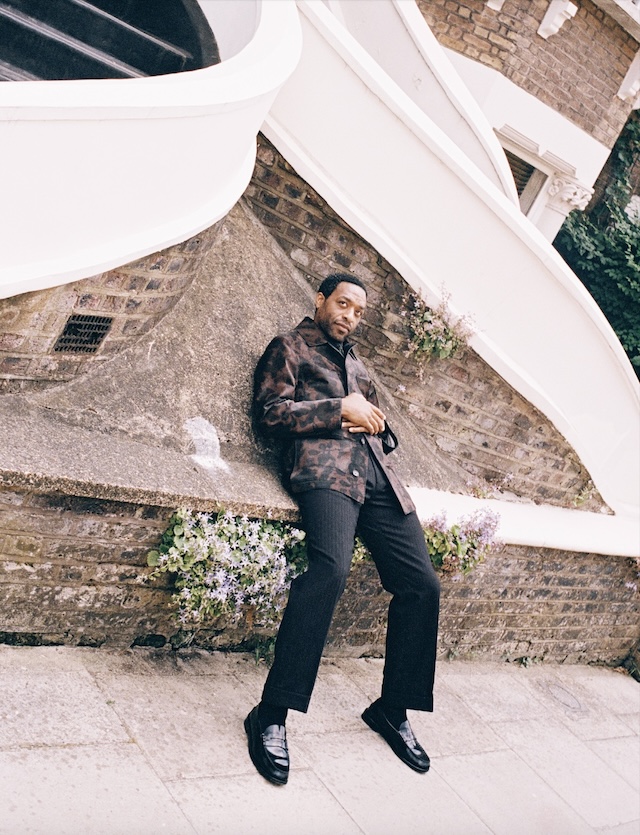
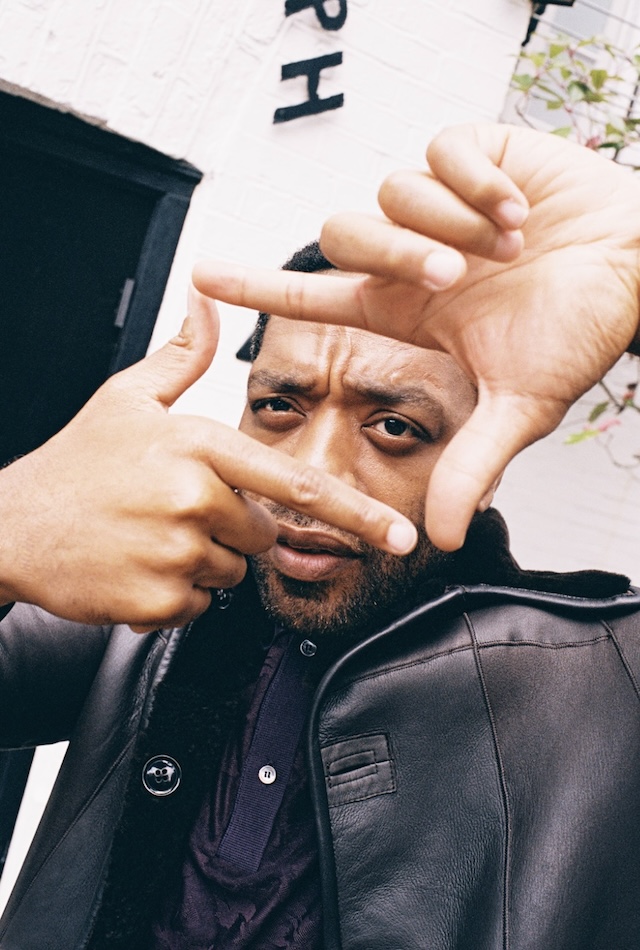
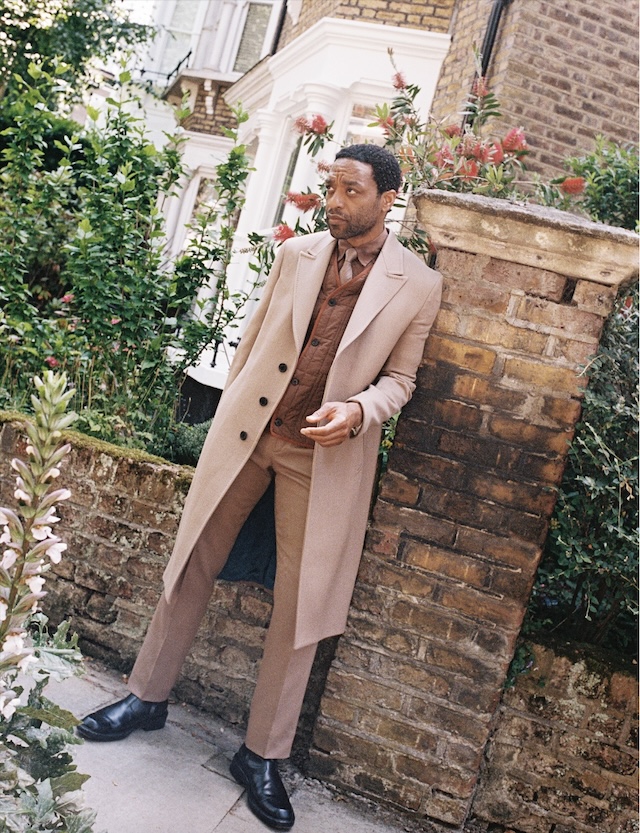
As part of the Spike Lee Film Production Fund, four rising filmmakers – Kwesi Jones, Vincent Mocco, Joecar Hanna and Hunter Redhorse Arthur – speak about their work, their influences and the stories they feel compelled to tell. Filmmakers wear Stone Island throughout

The filmmakers wear Stone Island throughout, photography Satchel Lee

Kwesi Jones
Hometown: Atlanta GA
Films: BITE, Lake Lanier

Kwesi Jones is a filmmaker and multidisciplinary artist whose work spans cinema, writing and painting, all of which is underpinned by a deep engagement with history, identity and the politics of representation. Growing up in Atlanta, Georgia, Jones was immersed in film from an early age, with frequent trips to local theatres – especially the now-shuttered Magic Johnson Theater near Greenbriar Mall – laying the foundation for a lifelong love of storytelling. His parents’ selection of films, from Malcolm X to The Wiz and Roots, provided an early education in how Black narratives could shape cultural memory and collective understanding.

Now based in New York, Jones’ work is shaped by a thematic and conceptual approach, often interrogating the personal and the political through genre and experimental form. His short film BITE reimagines horror conventions to explore racial appropriation, while his latest project, Lake Lanier – supported by the Spike Lee Film Production Fund and the Black Family Film Prize – draws on the haunted history of Georgia’s infamous reservoir. Alongside developing his own feature film, Jones plans to continue his projects and return to his visual art practices. As a Black queer filmmaker, Jones is committed to creating space for marginalised voices and envisions a future where artists can create freely and sustain themselves without structural limitations.


Bite, by Kwesi Jones


Your work spans various art forms, including writing and painting. How do these different mediums influence your filmmaking approach?

I believe filmmaking is inherently interdisciplinary, as it is a collaborative merging of various forms of art and craftsmanship. As a writer, I am always thinking about the ways in which language creates and troubles meaning. Writing is an act of discovery for me and although I often find myself ripping out my hair during the process, I also find joy in the reiterative practice of writing and rewriting: the craft of using language to clarify and activate ideas and images. With painting, I can similarly think about how all the large things of our world can be distilled within basic elements like colour and composition that also create meaning. As a filmmaker, I use the lessons learned from other disciplines as ways to enrich the sensorial and conceptual experience I hope to conjure with my films.

How do your experiences as a Black queer filmmaker shape the narratives you tell?

As a Black queer person I find that I must be hyper conscious of the ways that shame and repression can inadvertently seep its way into my personal expression and stunt my creative work. I try to honour my Black queer ancestors who had to cultivate the strength and courage to be themselves in the face of power structures that exploit our interlocking identities. I hope my narratives reflect the expansive potentialities of Blackness and queerness.

Your short film BITE tells a wordless story of an envious white vampire who “wants more than just the blood of his Black victims”. What sparked this concept, and how does the film engage with horror’s historical relationship to race?

My film BITE was inspired by my lived experiences of being at once lauded and imitated for Black cultural expression while also being the object of criminalisation. At my undergrad at a predominantly white institution, I remember constantly seeing non-Black students from all over the world donning culturally specific clothes derived from Black American expressive traditions, while I, and my other Black classmates, were targeted and scorned for wearing the same items. With BITE, I wanted to explore the feeling of being the object of a vampiric appropriation by making use of satire and horror conventions.

Your upcoming short Lake Lanier has received both the Spike Lee Film Production Fund and the Black Family Film Prize. Can you tell us more about it?

While researching the history lying beneath the mysterious Lake Lanier, a young documentarian is haunted by ghosts that threaten to reveal the truth about her own past. With Lake Lanier I am interested in exploring the ways we experience history and memory as a haunting, a spectre that reappears in the present to reveal hidden truths of the past.

The philosophy of Ubuntu – ‘I am because we are’ – is something you’ve cited as important to your creative practice. How does this idea manifest in your work?

For me the Ubuntu philosophy of the Bantu people is a reminder to centre connectivity within my artistic practice. While art can be a vehicle of personal expression, I am also always thinking about what my work offers others. Whether that offering is knowledge, a reflection of shared experience or the creation of a new sensorial experience, I would like my art to be in service to others in some sort of way.

Vincent Mocco
Hometown: Bernardsville NJ
Films: Double Down, Piedi Nudi

Growing up as the seventh child in a big Irish-Italian-American family in Bernardsville, New Jersey, storytelling was second nature to Vincent Mocco. In a household where quick wit was currency, he learned early on that a well-told story could grab attention, diffuse tension or simply make sense of the chaos.

His love for performance began at Phillips Academy Andover, which paved the way for his filmmaking journey. At Villanova University, Pennsylvania, Vincent contributed to Sankofa (2019), a social justice documentary filmed in Ghana that won a Student Academy Award. After moving to New York City, Vincent worked as a freelance actor, cinematographer, editor and graphic designer, collaborating with clients such as Birddogs, Liberty Harbor and Marin Blvd. Enterprises. He also trained in improv comedy at Upright Citizens Brigade, and is currently an MFA candidate at NYU Tisch School of the Arts. With a deep interest in his Italian heritage and a growing desire to return to documentary work, he strives to embrace the absurd and the deeply human through his storytelling.


Double Down, by Vincent Mocco


What inspires your work?

I love the intersection of comedy and tragedy – where humour sneaks into dark situations and vice versa. Maybe that’s a side effect of growing up in a chaotic household where yelling was just another love language. I’m fascinated by the dissonance of tragicomedy and aspire to make films that invite the audience into a world of spectacular contradictions.

You’ve worked as an actor, cinematographer, editor and now director – how have these varied experiences shaped your vision as a filmmaker?

Having worn all those hats (sometimes at the same time), I appreciate every aspect of the filmmaking process. Acting taught me to respect performances, cinematography gave me an eye for composition, and editing reminded me that I can make the worst mistakes disappear. As a director, I try to bring all that together while keeping the set from catching fire.

You trained in improv comedy at the Upright Citizens Brigade – how does this inform your directing style?

Improv forces you to embrace spontaneity and not panic when things go off-script – both of which are crucial on set. It also helps me guide actors in a way that feels organic, especially when I need to make them believe a last-minute change was always part of the plan.

Your short film Double Down is set in the 1970s and shot on 16mm film. What motivated you to choose this period and medium?

It’s a 1970s period piece and love triangle set in the elite world inhabited by arrogant prep school narcissists. The 70s had a great mix of grit and glamour, which felt perfect for a dark comedy. Shooting on 16mm added a raw, nostalgic quality that digital just can’t fake. Also, there’s something humbling about working with film – it forces you to pause and consider before you hit ‘record’ because every second is expensive.

What can you tell us about Piedi Nudi?

Piedi Nudi is my thesis at NYU Tisch, set in 1940s southern Italy, shot in black and white on 16mm. I wrote and directed it, and I’m currently in post-production. It is a true story about my grandmother’s unexpected friendship with a local orphan and a harrowing experience in an abandoned WWII minefield.

What advice would you give to someone looking to break into the film industry?

Work on as many sets as possible, be easy to collaborate with, and never underestimate the power of buying someone coffee. Get your hands dirty and break a sweat. Don’t be afraid to fail – just make sure you fail in an interesting way. Go to the theatre and watch movies. Don’t be afraid to ask a stranger what they thought about it afterwards. At the end of the day, you have a camera in your pocket so if you really want to make a motion picture, write a script, get some friends together and shoot it already!

What are your plans for the future, and what stories or genres are you excited to explore next?

I’m currently in development for a feature film set in the Jersey Shore and the Hamptons – a dark comedy that explores social climbing, friendship and the sacrifices we are willing to make for status. This year I founded a performing improv group in New York City called Steam Room Etiquette and will have completed my debut show on April 26th. In the future I hope to explore my Italian heritage further and am excited to get back into the documentary world after completing my feature film.

Joecar Hanna
Hometown: Valencia
Films: Deliver Me, Talk Me

Joecar Hanna is a Chinese-Lebanese filmmaker raised in Valencia, Spain, and is currently a fourth-year MFA student in the Graduate Film programme at New York University. Before moving to New York he built a strong background in film editing, working on a TV series and six feature films, including El Desentierro and Bikes, The Movie, the latter earning a Goya nomination. 

His multicultural upbringing, shaped by a Lebanese-Guinean father and a Chinese mother, instilled in him a deep awareness of identity, displacement and belonging – which became central themes in his work. His 2023 short Deliver Me, which premiered at SXSW, examines toxic love and self-obsession through a character who clones and marries himself. His thesis film, Talk Me, which has been selected for La Cinef at the Cannes Film Festival, is set in a world where words replace physical intimacy, exploring notions of human connection and isolation. As he gears up for Cannes, Hanna plans to continue bringing cultures, language and storytelling into his work.


Talk Me, by Joecar Hanna


You grew up in Spain with a multicultural background – how did this experience shape your perspective as a filmmaker?

I always felt I hadn’t found a true home, even though Valencia is where I grew up and where my main core of family and friends still live. Born to a Lebanese-Guinean father and a Chinese mother, growing up in Valencia was challenging. Spain has changed significantly since then, but back in the day, being one of the only mixed-heritage kids around was profoundly isolating. Even the most subtle racist experiences or expressions get under your skin. When your parents also carry that pain from their past, you absorb both theirs and your own, quickly learning to blend in – becoming an even greater expert at blending in. 

I never fully belonged anywhere because people always needed to label me. I don’t look Spanish, Chinese or Lebanese – so wherever I went, I was always the ‘foreigner’. Ironically, I’ve never felt more at home than since I moved to New York – a true Tower of Babel – where I finally feel like just another citizen of the world.

Although growing up this way was traumatic, the isolation it created sharpened my sensitivity toward anyone struggling with identity or feeling like an outsider. I’m especially good at breaking down and creating complex characters who are – or feel like – outsiders but pretend otherwise, as I did in my film Talk Me. After all, I’m a professional hider myself.

Your short film Deliver Me tells the story of a person cloning and marrying himself. Can you tell us about this concept?

With Deliver Me, I explored a prison familiar to all of us at different levels: love. But love in its toxic form, which can be more destructive than any belief system, especially when it makes us lose sight of who we are. This toxicity always originates within ourselves, and that’s the core of the story. What if we could literally create our ideal partner – ourselves? Would marrying ourselves be utopian, conflict-free – or would it become toxic and lonely? Imagine having the ability to duplicate yourself, with identical memories and experiences. How would you interact intimately with yourself? Would the ‘other you’ stay identical, or would they inevitably change?

You’re currently working on your first feature film and your thesis, supported by the Spike Lee Film Production Fund – can you tell us more about this?

I began working on my feature right after Deliver Me was selected for SXSW. Even before making the short, I knew this story would evolve into my first feature. The short allowed me to explore only a fraction of the larger story, but I want to depict the entire relationship, from beginning to end. It’s scheduled to enter production in the second half of 2025. 

My thesis, another example of my imaginative approach to world-building, takes an even crazier but more personal and metaphorical turn. It’s called Talk Me, set in a reversed world where words replace physical intimacy. In a small Spanish village, a local ‘outsider’ must choose between a loveless marriage and true connection with a kindred stranger.

How do you see the representation of multicultural identities evolving in cinema, and what role do you hope to play in that shift?

The blending of cultures is unstoppable. Although we’re experiencing dark times again, drawing borders and shutting gates, there’s no turning back from the increasingly mixed world we live in. I’ve always said I wanted to create bridges, connecting cultures uniquely because of my diverse background. Specifically, I hope to link Hispanic and East Asian worlds while also connecting them with English-speaking audiences. This triple bridge is central to my storytelling and collaboration goals. That’s why all my films naturally incorporate multiple languages, such as Cantonese, Mandarin, Spanish and Catalan (as my characters do in Deliver Me). My goal is to normalise such linguistic coexistence, reflecting the blended future already taking shape around us.

Hunter Redhorse Arthur
Hometown: Phoenix, AZ
Films: Hunter

Hunter Redhorse Arthur, a filmmaker and member of the Diné community, grew up in Phoenix and Scottsdale, Arizona. He was surrounded by oral storytellers – elders, relatives and community members – whose tales would shape his understanding of the world and instil in him a deep appreciation for narrative. Though he never initially set out to be a director, cinema became his escape – a space where he could experience something beyond himself. That same sense of wonder now fuels his filmmaking.

Alongside his sister, Shenise Arthur, he co-founded Redhorse Media, a production company dedicated to reshaping Indigenous representation in film and television. With a shared vision of breaking stereotypes, the siblings are committed to telling stories that reflect the depth and complexity of Indigenous experiences. His latest work, Hunter, a deeply personal short film exploring masculinity, identity and family, was selected for the Spike Lee Film Production Fund and is an apt example of how he strives to create stories that challenge, entertain and offer new perspectives. As he prepares for its release, Arthur continues to carve a path for authentic Indigenous narratives – both in his own work and within the industry at large.


Two Worlds, by Hunter Redhorse Arthur


What inspires you as a filmmaker?

As I near the completion of my graduate studies at NYU’s Tisch School of the Arts, I’ve come to realise that I’m only just scratching the surface of what I truly want to say through my films. What I’ve learned is that filmmaking is about honesty – deep honesty. It’s not a quick process; it takes time to dig into the truths that matter. No matter what theme I explore, I strive to tell a story that is raw, personal and human. I’m excited to bring that truth to larger audiences in the future, telling stories on a grander scale that challenge not only the world around us but the way we view ourselves.

As a member of the Diné (Navajo) community, how do your cultural roots influence the narratives you choose to tell and your approach to filmmaking?

The Diné people have a rich tradition of matrilineality, where women are seen as the backbone of leadership. My mother, in particular, exemplifies this principle. Her strength, compassion and selflessness are traits that shaped me and continue to guide me in my work. Growing up I saw how my mother put others first, even in the toughest times. That spirit of leadership and courage, of stepping into the unknown even without certainty of the outcome, is a core lesson I carry into my filmmaking. As a director, I believe in the importance of supporting my crew and cast, putting them before myself. Leadership isn’t about being at the front – it’s about being in the trenches, working side-by-side with your team to bring the vision to life.

Your short film Hunter explores traditional Diné philosophy and ways of seeing. What drew you to this subject?

Hunter is my graduate film thesis, and it’s also a deeply personal project for me. It’s a story about my relationship with my father and my first hunting trip, marking a rite of passage. It’s a coming-of-age narrative, but it’s also a story that reflects on what it means to grow up as an Indigenous man. The film explores themes of masculinity, identity and family. I wanted to create something personal that reflects my own experiences, but also to show an Indigenous story that doesn’t necessarily conform to the typical narrative we often see in mainstream media. It’s an intimate exploration of my life, and I couldn’t be prouder that Hunter was selected for the 2024/25 Spike Lee Film Production Fund. This project has challenged me to dig deep and speak truths that are both universal and unique to my experience.

What do you think the film industry is getting right – and wrong – when it comes to Indigenous representation?

The film industry has made progress in showcasing Indigenous voices, but there are still many missteps. Indigenous people have been part of cinema since its inception – our stories are as old as film itself. However, for much of the 20th century, we were reduced to stereotypes, cast as the ‘other’ or relegated to historical relics, as seen in films like The Searchers. While there has been a push for more Indigenous representation – what I call the ‘Native American Renaissance’ – we still face many challenges. One of the biggest issues is the lack of resources and leadership in Indigenous storytelling. Too often, Indigenous stories are told without Indigenous people in key positions of power – producers, directors, writers – who can ensure the stories are told with authenticity and respect. Our stories are sacred, and they need to be guided by Indigenous voices who understand their true meaning.

The filmmakers wear Stone Island throughout

Photography Satchel Lee

Production Juice House Creative

Executive producer Jackson Lee

Executive producer E. “Kellogg” Kellogg for Juice House

Producer Sasha Yimsuan for Juice House

Producer Zena Khafagy

Production coordinator Max Acrish

DirectorSatchel Lee

Photographer assistant Rowan Liebrum

Lighting assistant Josh Jiminez

Styling Moses Zay Fofana

Make up Tatiana Menendez

Retoucher Migjen Rama for @atelier_99

Production assistant Sakib Hossain

This article is taken from Port issue 36. To continue reading, buy the issue or subscribe head here

Celeste

From Brighton to the Brits, Celeste’s voice has always carried weight. As she prepares for the release of her long-awaited sophomore album, the singer-songwriter reflects on the complexities of identity, creative intuition and reclaiming her narrative

Jewellery by Cartier throughout, photography Clare Shilland

Celeste Epiphany Waite has spent a lot of time in the studio lately. She’s working dedicatedly on her new album which is due out in September, but when we speak she’s taken the day off. “I was singing last night and I was there till really late,” says Celeste with a tired chuckle, before remarking that I remind her of her half-sister. “Even the way you finish your words is similar, it’s so nice. I was thinking, I need to call her.”

It’s a clichéd trope to define someone as an old soul but Celeste has a perceptiveness about her that’s difficult to define otherwise. She’s more softly spoken than I anticipated, considering she sings with a rich vocal timbre reminiscent of a time long before the 30-year-old was born. After performing at the Queen’s Platinum Jubilee in 2022, she met Diana Ross’ creative director. “Apparently, said to him that I reminded her of Lady Day, meaning Billie Holiday,” Celeste mentions with noticeable humility. It’s her emotion-laden voice with its distinctive rasp that led her debut album Not Your Muse to be nominated for both the Mercury Prize and Album of the Year at the BRIT Awards in 2021. Just listening to the lead single ‘Strange’, where she details the unravelling of a romantic union, had me longing for a past love with a visceral ache that only heartbreak can conjure.

Her mother is the person she credits for her intuitive nature. “My mum sought out a freedom that wasn’t necessarily the norm for where she was growing up,” Celeste explains, describing her mum as having an unconventional “bohemian lifestyle” while living in Romford, during the 1980s. After venturing to Hong Kong and Thailand at 21, on a subsequent trip to Los Angeles her mum met Celeste’s Jamaican father. “They didn’t stay together very long,” Celeste says. She and her mother then moved to Dagenham in east London – which is in close proximity to Romford – to live with her maternal grandparents.

After a few years, by happenstance, a former boss offered her mum a job and flat in Brighton. “That was where my mum found her healing. It was about the aftermath of breaking up with someone and finding your confidence,” she says. The two of them “had our own independent bubble there,” Celeste sentimentally remarks, noting that it was the first time she found real friendships. Now settled in London, she reflects on those formative years as influencing, but not defining, who she presently is. “Identity is ever-growing and ever-changing for me because it’s something I find within creativity more so than in a place.”

It’s this tendency to feel into her artistry that makes her songwriting so affecting. “I have to keep this very specific openness. It’s an alignment down to the gut,” she says. “I’m accessing a stream of emotional information and memory that exists within me. It’s from my own experiences but also being a witness to other people’s experiences.” She explains that she can pick up a vibe from passing a stranger on the street. “Sometimes, a form of body language can tell as much of a story without needing to be verbalised.” Suddenly, the roles shift between us. “Do you ever have something like that?” In the act of turning the question around, she demonstrates this propensity to seek out the inner worlds of those around her.

Despite thinking she had a late start breaking into the industry, Celeste’s songwriting talent got her noticed at age 17. She wrote the grief-imbued song ‘Sirens’ about the passing of her father a year prior and uploaded the track to YouTube, which caught the attention of a manager. At age 18, the record and publishing deals came flooding in. “I didn’t take any of it because it was all geared towards me working with certain musicians and I just knew it wasn’t quite who I was.”

The choice wasn’t without consequences. “All of these offers came to me within a year of focusing on music, so I had this idea as a young, naive person feeling a bit cocky that these opportunities would come again in three months’ time.” Essentially, her unawareness of the industry back then and “how fickle it can be” stalled her dreams.

Years passed while Celeste worked at her local pub in Brighton, hoping for a change in circumstances. She moved to London in 2017 with £100 to her name and promptly got fired from her new job for spending as much time as she could making music. Her diligence eventually paid off; in 2016, she secured a record deal with Lily Allen’s Bank Holiday Records, and in 2017 she released her EP The Milk & The Honey before signing with Polydor in 2018. “At 23, I was still super young but I felt a bit more aware and knew who I wanted to be and what not to say yes to just to get somewhere.”

Although she now feels more well-versed regarding the convoluted nature of the music industry, she says it’s a continuous balancing act between herself and her label. She recalls a time when she had to convince her team to allow her to play ‘Strange’ over another song at the BRITs. “You have to let other people feel trusted but also know when to be like ‘I need to shine here, so let me have this piano chord like this’.” She describes the negotiation process as a journey towards greater creative freedom and self-belief. “I have that feeling of ‘Let me be careful because I don’t want to fuck this up and end up with nothing’ but I find my moments and just try to let my singing do the talking at the right times.”

Celeste’s self-confidence is still susceptible to the opinions of others. “I felt like all of the accolades and all of the excitement around my voice came before the album release. Then when it came out, I felt like people didn’t feel it was very good.” She’s convinced that most people only like her best-known song ‘Strange’, which has undeservedly become her Achilles heel. “When people think success has come to you instantaneously because a record label is pushing it, they’re a bit cynical about how talented you must be,” she says. Celeste tells me about a review in The Guardian that came out after her debut. “The writer said I had no backbone in my songwriting.” The way she recounts the story suggests the hurt lingers.

Momentum slowed after the album release. “I went from that high moment of everyone being interested to feeling like very few people were,” she explains. It was when director Steve McQueen cast her in his film Blitz (2024) that Celeste’s confidence had an upswing. “I’d been depressed for quite a long time, so it was great that people could see that someone like that would want me in their film.” McQueen’s conscientiousness has left a lasting impression on Celeste. “When I saw him being very specific on set, I thought, ‘don’t compromise on your sense of intuition and values within your work’.” Although she still feels sensitive to outside opinion, she’s working on reframing the narrative. “I remember Skepta used to speak about underdog psychosis, where people thought he was the shit but he didn’t think they did. He always had to be proving himself, so I feel like maybe I’m that person.”

Celeste sees a clear opportunity to prove herself in the making of her sophomore album, which admittedly comes later than she’d hoped. She’s working with Matt Schaeffer, who previously partnered up with Kendrick Lamar, and another producer who’s collaborated on two albums Celeste holds in high esteem: Kanye West’s My Beautiful Dark Twisted Fantasy and 808s & Heartbreak. Although there have been teething problems, the songs are taking shape. “The album is about womanhood and recognising ourselves as complex beings. Even if you can’t undo the riddle of exactly what that means, it’s at least about taking the first step and acknowledging that you’re a person with complicated feelings.” This time around, there’s less worry about how her output will be received. “I trust that I will perform my songs live and that’s where people will hopefully understand my intent and the weight of the pieces of music.”

While she’s currently preoccupied with working on the album, Celeste has bigger long-term plans. “My sense of wanting to express emotions has shifted onto other mediums a bit,” she says. Earlier this year, she directed her first video for ‘This Is Who I Am’, the theme tune for the thriller series The Day of the Jackal. “It wasn’t acting, it was just about going outside and screaming,” she tells me, the result a disturbed, short film noir. This project seems to be just the beginning. “I still have this greater ambition, even if it’s not the most attractive thing to mention,” she says, her most confident comment so far. “You can’t decide what people’s perception of your artistry will be,” she notes, before adding in true empathic fashion, “but it’s about always trying to be more authentic.”

Jewellery by Cartier throughout

Photography Clare Shilland

Styling Natasha Wray

Studio Lock Studio 5

Producer Thea Charlesworth

Hair James Catalano for The Wall Group

Make up Fey Carla Adediji using Elemis

Nails Saffron Goddard

This article is taken from Port issue 36. To continue reading, buy the issue or subscribe head here

Spike Lee

In a rich and rollicking conversation, longtime friends and collaborators Spike Lee and John Turturro reflect on their first film together, Do the Right Thing, the influence of Akira Kurosawa and Lee’s remaking of High and Low, and a shared creative history shaped by trust, teaching and time. From stories of Sinatra and Spielberg to lessons passed down in Lee’s NYU classroom, the two trade memories from their lives in cinema

Lee wears Stone Island throughout, photography by his daughter, Satchel Lee

John Turturro: I know you’re a Kurosawa fan, even before you got involved with High and Low.

Spike Lee: That’s my guy.

JT: Is that one of your favourite Kurosawa films?

SL: Yes. But I also have to give love to Rashomon, because I saw Rashomon during my first year in graduate film school – Ang Lee and Ernest Dickerson were my classmates. The way Kurosawa did it, with people telling their version of a rape and a murder? That really stuck with me.

JT: That’s a big influence. Do you remember the second Kurosawa film you saw?

SL: To tell the truth, I saw Kurosawa films before I even knew who he was. I had an older friend who would take me to see Kurosawa’s samurai films. I loved the action, the blood squirting. It wasn’t until my first year of film school that I really understood who the great master Kurosawa was.

And just the other day, we found out Highest 2 Lowest was selected for the Cannes Film Festival. We’re out of competition, but I’m just happy. This will be the first time Denzel Washington has a film at Cannes. He’s been to Cannes before, for The Mighty Quinn, but this is his first time with a film in the festival.

JT: I’m excited to see it! So when you came to this new project, you had seen High and Low probably a long time ago?

SL: A long time ago. I’ve shown High and Low several times in my New York University classes – this is my 30th year teaching at the graduate film school. Denzel was already attached, and he reached out to me and said, “Do you want to do this?” This is our fifth time working together: Mo’ Better Blues, Malcolm X, He Got Game, Inside Man and now this.

But the crazy thing is, I didn’t even realise Inside Man was 18 years ago. Time goes fast. Sometimes you have that kind of relationship where you don’t need to see somebody every day. You’ve got that connection. It’s just there. We’ve got history.

JT: Was Denzel a fan of the original?

SL: Oh, absolutely. He wouldn’t have done it otherwise. And it’s a real collaboration, like Kurosawa and Toshiro Mifune – they did 16 films together. That’s how I feel about me and Denzel. That kind of creative partnership is like a marriage. Would you agree with me, my brother?

JT: Yeah, that’s right. You’ve got to have a good friendship to survive all of that.

SL: You can say that again.

JT: You’ve been a professor for 30 years now. I know your mother was a teacher.

SL: My father taught bass too. My grandmother was an art teacher in Georgia during Jim Crow. She taught for 50 years, never had a single white student. Van Gogh was her favourite painter. She saved every Social Security cheque to pay for her grandchildren’s education. I was the oldest, so she put me through Morehouse and NYU and gave me the seed money to start.

JT: That’s incredible. You really are the child of teachers.

SL: I just love it. What I’ve done over 30 years is just tell the truth about the industry, and introduce to the films, artists, directors and actors they might not have seen. And I learn from them, too. If you’re a professor and not learning from your students, you’re doing it wrong.

JT: It’s a hard business to make a living.

SL: I tell them this ain’t no joke. This is hard as fuck. Last week I took my class to see Sunset Boulevard on Broadway. Next week we’ll watch Billy Wilder’s film version. Before that, we watched A Face in the Crowd. That film was made in 1957 and it predicted everything.

JT: You met Billy Wilder, right?

SL: He kept an office at Paramount and I cold-called him saying, “Mr. Wilder, this is Spike Lee.” He said, “Oh, I like your things very much.” I asked to come by – he left my name at the gate. We had lunch. He signed two things for me. I also met Elia Kazan. I got On the Waterfront signed by both of them.

I also got a beautiful self-portrait signed by Kurosawa – he signs autographs with a paintbrush and white paint. We’ve met some great people who are no longer here. Let me ask you this – when you put in the work and meet these people and they know who you are, not just from the press, and they saw your work – that shit is, woo!

JT: I don’t think it gets better than that. They influenced you, and you gave that back.

SL: That’s why I love having guests like you in my class. One time I brought in Spielberg. I didn’t tell the class. We snuck in the back. They were bugging out.

JT: Is there one person, musician or writer that you haven’t had the chance to work with yet?

SL: I’ve had the pleasure of working with Stevie Wonder, Michael Jackson, Prince, Miles Davis, Aretha Franklin… the one person I wish I’d met was Frank Sinatra. I did a film called Do the Right Thing.

JT: I’ve never heard of it! Must be a cult classic or something.

SL: You were in it, playing Pino, who didn’t get along with Mookie, but I got along with your brother. There’s that scene in Sal’s Famous Pizzeria where Bugging Out asks why there are no brothers on the wall. Eventually, my character Mookie throws a garbage can through the window, and Sal’s place burns down with all the celebrity photos on the wall, including Frank Sinatra.

Of all the people on that wall – De Niro, Shields – Frank was the only one who had a problem. Years later, I was making Jungle Fever (you were in that too) and I wanted to use three Sinatra songs, including ‘Hello, Young Lovers’. I reached out to Tina Sinatra, his daughter, and she told me flat out: “Spike, I’m sorry, but you can’t have them. My father’s still mad that you burned his picture.”

JT: I never heard that before. That’s still funny, though.

SL: It went on for months. Tina just kept saying, “My father says no.” Eventually she told me, “Spike, you’re wearing me out. Why don’t you write him a letter?” So I wrote a 10-page letter telling him how much I respected him and loved his music. And we got the songs. Later, I heard that Sinatra screened Malcolm X in his home theatre in Palm Springs. Pierce Brosnan told me Frank really loved the film. That meant the world to me. I never met him, but that moment stayed with me.

Oh, and let me tell this story. I’m getting ready to do the casting for Do the Right Thing. I’m thinking about who I want to play Vito. I see this guy in Five Corners, I don’t know who he is. He’s dancing with his mother, doing the waltz, then he throws her out the motherfucking window, then he sneaks into the Bronx Zoo and beats a penguin with a baseball bat. I said, “That’s my guy!”

JT: I was in Venice, California, and I remember getting the script from Studio Duplicating on vinyl leather, a beautiful dark print. I read it and thought, this is the guy who did She’s Gotta Have It. I was excited. I remember meeting you at 40 Acres . You had a desk and you had scripts piled up really high, I could barely see your face. You asked who I wanted to play. I said Pino would be better. It felt like the right role.

SL: Richard Edson wanted to play Pino too. But that role – you rode the subway with it.

JT: Is there a movie that you feel didn’t get the proper love when it came out?

SL: Bamboozled.

JT: That’s what I was going to say. You showed me a rough cut. It stayed with me.

SL: People thought I’d lost my mind. But look, plenty of great works get pissed on when they first come out. Then, as time goes by, stuff gets rediscovered. You lick your wounds, keep stepping. That’s what I tell my students.


Lee wears Stone Island throughout

Photography by Lee’s daughter, Satchel Lee

Production Juice House

Executive Producer Jackson Lee

Executive Producer E. “Kellogg” Kellogg for Juice House

Producer Sasha Yimsuan for Juice House

Producer Zena Khafagy

Production Coordinator Max Acrish

Director Satchel Lee

Photographer Assistant Rowan Liebrum

Lighting Assistant Josua Jimenez

Stylist Moses Zay Fofana

MUA Tatiana Menendez

Retoucher Migjen Rama for Atelier 99

222 Production Assistant Sakib Hossain

This article is taken from Port issue 36. To continue reading, buy the issue or subscribe head here

John Malkovich

The actor has designed fashion collections, directed plays and starred in films stretching from Of Mice and Men to Being John Malkovich. His latest, Opus, is a psychological thriller in which he portrays Alfred Moretti, a reclusive pop star who invites journalists, including Ariel Ecton (Ayo Edebiri), to his remote compound under the guise of a listening party for his long-awaited album. Here, he speaks to Port about his instinctual approach to craft, the theatre’s enduring pull, and why the best roles are often the ones still unwritten

John Malkovich wears Dior throughout, photography Alec Soth

What’s it like being John Malkovich?

It’s fine. Busy.

When you’re not playing yourself, how do you get into character?

I never play myself, as I don’t have much in common with the characters I’ve portrayed. I’ve never been in their shoes or done the things they’ve done or often even lived in the time periods that they’ve lived. I read the script and simply try to imagine. In a movie, you are a figure in someone else’s dream, so one of the first things I would try to do is understand how the director views the material and the story.

Do you think of style as something one chooses to have, to craft over a lifetime, or are you born with it?

I suppose if style is something that interests someone, it has probably arrived over time, I would think. I would doubt one would be born with it; I would imagine one would develop or refine it over time, providing one even has an interest in it. I’ve always referred to style as being the only constant in life, but I meant it more in the sense of style as being the way one moved through life – a way of regarding the world and perhaps a way of perceiving the world around you, and maybe even a way of behaving in that world.

Do you ever become obsessed with things: pens, or clothes or shoes? If so, what are you currently looking at?

I’ve been obsessed, I suppose, with all kinds of things and the way they look. That could be cars, tiles, chairs or fabrics or just about anything. I bought a pair of ankle-high, what used to be called après-ski boots, in Bulgaria six to eight years ago. My wife makes fun of me because I’ve never actually worn them, although I’ve dragged them to several countries over time. I would rather them not get ruined, so I am still just waiting for the right occasion, which I’m pretty sure will turn out to be the 12th of never.

What is it about theatre that you value over film?

I don’t know that I think much about valuing one or the other over or under. Theatre is living, and film is not. Film might be able to capture and show something that lived or was once living, which is obviously not the same thing. I think I’m probably just more suited to theatre. If one were to think of theatre and film as instruments, I would think of them as two different instruments, sort of distant cousins.

What drew you towards your new film Opus – was it the character of Moretti, the film’s meta-approach to fame, or something else entirely?

I met and liked Mark Anthony Green, the writer and director of Opus. That’s actually the reason I did it. It wasn’t really about the character or who or what he was, nor what he did or didn’t do. I like Mark Anthony’s calmness and his manner and his vision. I’ve had some excellent experiences with first-time directors, and the experience with Mark Anthony was a real pleasure.

What did the role demand from you that felt new or unexpected?

Though I used to sing when I was young – in choirs and then at university in coffee houses and bars and what have you with my guitar – I hadn’t sung much in 40 years except in an opera a bit, and once on a Russian TV show some years ago. So, recording and performing songs, both in a studio and live in the movie, was quite a new experience, and my dancing career was launched with the release of this film – though I suspect that career will be mercifully brief. In truth, there aren’t tons of things in the human experience that could seem incredibly new to me at my age, though there may be ways of expressing them that might be unfamiliar, or at least not commonplace to me. I often somehow end up doing things that are unexpected to me, but then I think to a certain extent that we are constantly being born, and I have a tendency to let my instincts and impulses guide me in work, rather than having everything be carefully planned beforehand.

How has your approach to acting evolved over time?

I’m not so sure that my approach has changed over time. I devote more time to preparation now, but I think the approach is really the same. Show up, be prepared and let my instincts lead.

Which roles have been the most rewarding or meaningful to you, and why?

Generally speaking, those roles would be in the theatre because those are the roles which one explores most profoundly. One lives next to that character for several months, or longer, whereas in movies, you do each scene – generally speaking – for one day. Sometimes scenes last a whole two days. In a movie you may do three takes or 10, or even 15, but in the theatre, you could easily do that in a single rehearsal and often do. It’s the difference between a passing acquaintance or encounter, and an enduring love or friendship – both can be beautiful, but they are not the same thing.

The meaningful ones would just be meaningful to me, perhaps not to anyone else. It’s meaningful to me if I think or feel beforehand that I may not be able to do it. Any well-written role is rewarding, I would say. I’ve been afforded the opportunity to play some interesting characters, sometimes ‘serious’ ones – if characters in movies or plays can be considered serious – and sometimes decidedly less serious ones. I’ve enjoyed both and enjoyed playing both.

As for favourites, maybe John Wilmot, the second Earl of Rochester in Stephen Jeffreys’ play The Libertine; Buck Howard in the film The Great Buck Howard; Alan Conway, the grifter queen in the film Colour Me Kubrick; the Vicomte de Valmont in the film Dangerous Liaisons; Lennie in Of Mice and Men; an android and his creator in the film Making Mr. Right (though enjoy is maybe not the word I would use here), Tom in The Glass Menagerie; Pale in Burn This and Gustav Klimt in the film Klimt. I enjoyed many others as well, but of course, just because I enjoyed them doesn’t make them good or not good, it just means they were interesting for me or interesting to me, often because of the people directing them, and my colleagues or the writers, of course.

Is there a character you would love to play?

Yes, the one not written yet.

You’ve always seemed more interested in the work than in fame. Has that been a conscious choice?

No, I don’t think it’s a choice at all, actually. The work is interesting to me, fame not so much.

What’s something about acting that still surprises you?

How much fun it can be, how quickly it makes the time pass and how easily it can be forgotten by me.

Is the current political climate in the US something that surprises you, or do you think it’s part of a wider and perhaps predictable global trend?

I would say the latter.

Who currently is your favourite writer and why?

I am not up on current writers. I was emailing with an old friend a few days ago who is in a book club, and she mentioned a number of books her club had read, and I knew none of the books and only one of the writers. That is not good. I have been a big fan of DeLillo, Faulkner, Naipaul, Bolaño, Márquez, Sabato, Anne Tyler, Vargas Llosa, among many others. I’ve been working on a Bolaño piece as a classical music collaboration for the last three to four years, but favourite is a big word.

Do you have a hero?

My dad, probably. Václav Havel, kind of. Both are no longer with us. Hero is a big word too, though.

What is your most treasured possession?

Sanity.

What is the future of cinema? Will people still be going to public cinemas in 100 years?

I doubt it, but I’m usually wrong. I’m not a gifted prognosticator.

John Malkovich wears Dior throughout

Photography Alec Soth

Styling Alexander Fisher

Grooming Allison LaCour

Production Hyperion

This article is taken from Port issue 36. To continue reading, buy the issue or subscribe head here

David Oyelowo

From his breakout performance as Martin Luther King Jr in Selma to playing Henry VI at the Royal Shakespeare Company, David Oyelowo has consistently sought roles that challenge both himself and the narratives that surround Black actors. In Government Cheese he takes a turn into surrealist comedy, playing a man caught between redemption and survival. He speaks about risk, reinvention, and why every performance should feel like a leap into the unknown

David Oyelowo wears Dunhill throughout, photography Quil Lemons

In the surrealist comedy Government Cheese, actor David Oyelowo’s character, Hampton Chambers, breaks into a synagogue. Desperate to live a more honest life post-incarceration and hoping this will be his last immoral act before committing entirely to the straight and narrow, the father of two insists this misdeed must be done “respectfully”. Starting with a small prayer, he and his friend don black yarmulkes before entering the religious institution to rob its safe. “I can’t wear this, it’s blasphemy,” his friend protests. “It’s blasphemy if you don’t,” he replies. The scene perfectly exemplifies the show’s absurdity while highlighting how desperation can lead someone down a dark path. For Oyelowo, that tension – between morality and survival – was what drew him to the project. “It is indicative of his character – caught between a rock and a hard place of his own making,” Oyelowo says over Zoom from his home in Los Angeles. “He needs to go down the path of righteousness, and he just can’t quite stay the course.”

For many fans it will be a pleasant surprise to see the British actor in something so whimsical, having made a name for himself through a number of hard-hitting roles on film and stage. But what Apple TV’s Government Cheese reveals is how the 48-year-old is unafraid to step outside of his comfort zone. “The script was unlike anything I’d read before,” he says. “What I loved was how Bible stories – whether the flood or Jonah in the whale – somehow intersected with this guy’s life in a parabolic, surrealist way.”

After relocating to California from the UK in 2007 in search of more opportunities, Oyelowo found his breakthrough role in the US in 2014 when he portrayed Martin Luther King Jr in the historical drama Selma. The film follows Dr King during his 1965 march from Selma, Alabama, to the state capital of Montgomery, in a bid to secure equal voting rights. “I had loved the film Malcolm X growing up, so being central in a film like that was a big deal for me,” he says. Before Selma, he says, there were few portrayals of Dr King in film despite him being “arguably, one of the most important figures in the 20th century”.

That same year HBO’s streaming film Nightingale was released, which IndieWire dubbed the best performance of Oyelowo’s career so far. In this film, Oyelowo plays a war veteran descending into madness after committing a heinous crime. The one-man movie, which won him a Critics’ Choice Television Award for Best Actor, takes viewers on a harrowing journey as his character’s breakdown becomes increasingly more unpredictable. “That’s a prime example of me wanting to scare myself. I remember I walked into my agency at the time and said, ‘Look, I really want to shake things up. I want to do work that is unexpected to me and the audience,’” he explains. “And then they sent me this script, which had me going, ‘Oh dear – I may have finally got more than I can do here,’” he jokes.

Oyelowo’s exceptional talents extend beyond the screen. In 2001, he made history as the first Black actor to play the King in the Royal Shakespeare Company’s production of Henry VI. At the end of last year, he starred as Coriolanus at the National Theatre, where he transformed into a man with distinctively bulging muscles for the role. He sees this as part of the job. “How I feel in my body, how I look, how I sound, whether it’s the quality of the voice or the accent, these are all the tools for stepping towards the character,” he explains. “If you are heavier on set, you carry your body in a slightly different way. Your voice even sounds a little bit different and the way other characters react to you is different.”

For Oyelowo, theatre can be a true test of an actor’s abilities. “Doing plays, especially Shakespeare, is the Everest for actors; if you can do that you feel like you can do almost anything,” he says, noting that being on stage is also when he feels most connected to viewers. “There’s this unspoken contract made between the audience and the actors that we are going on this journey,” he adds. “We’re all going to stick with it and see where we land on the other side of these two to three hours, and that’s a very special thing.”

It’s no surprise that Oyelowo feels at home on stage, given its role in his early acting career. A film and TV enthusiast growing up, he had done a few plays but never saw acting as his future. That changed at 15 when a girl from his church invited him to the National Theatre – on what he hoped was a date. “I’d done a few plays that I’d really enjoyed, but it was never something I thought I was going to spend my life doing,” he says. While romance didn’t blossom with her, he fell in love with the craft instead. At the National Theatre he was struck by “a bunch of young people who really took it, I don’t want to say seriously, but they were passionate,” he says. “I eventually got cast in the lead for a play.”

He points out my Nigerian background and similarity in the views our parents might have had of the creative industries. “I actually think it’s changed now, but certainly when I was younger, the idea of being an actor or being in the arts was not something that my parents were over the moon about,” he says. “I can spot from your name that you are probably Nigerian like me, so you’ll know what I mean.” I did. That said, a turning point in gaining his parents’ support came at the National Theatre when his late mother visited one of his performances. “I just remember her looking at me a little bit differently. I think she had seen something in me during that play that she didn’t know was in there.”

In every role that he plays, Oyelowo hopes to move away from the negative stereotypes about Black people. “As a Black person and a very proud African person, I am drawn to stories that reveal the other side of the narrative,” he says. Society still carries “too many negative stereotypes and misconceptions of who and what we are” he adds, citing this as a result of what has been seen on TV and in film. “I was so proud to play Dr King because he’s an aspirational character as opposed to a criminal, slave or despot, which I think we’ve seen too much of,” he says. “It’s also why I’m so proud of A United Kingdom, where I play an African king who’s in love with his wife, but also loves his people and fights on their behalf.”

Ironically, Government Cheese is about a criminal, yet it feels like an understandable exception to Oyelowo’s rule. The series teeters between both a crime and a redemption story, but never fully settles with either. Based in southern California in the 1960s, the eccentric Wes Anderson-esque show is created and directed by writer and filmmaker Paul Hunter, and executive produced by Oyelowo himself under his production company, Yoruba Saxon. It follows Hampton Chambers, who tries to get his life on track and win back the love of his disappointed family after being formerly incarcerated for low-level crime. “He’s constantly trying to cheat his way into his future, but his heart is in the right place in relation to wanting to provide the best for his family, wanting to move ahead and wanting to be successful,” Oyelowo explains.

Chambers creates a unique invention which is sure to lift him out of his financial struggles: the Bit Magician, a self-sharpening power drill. “Woven into his coding is this thing of ‘just take this little shortcut’.” Alongside this storyline “you have this very quirky family that don’t think of themselves as quirky, but as an onlooker, you’re going, what is this family? And I can relate to that,” he says. Oyelowo himself has four children and admits that his family is “quirky in their own way”. He adds, “Like most families, if people were to have a lens on us when we assume no one’s watching, it would be like, what the heck is this family?” he jokes. “So I relate to Government Cheese, less on the criminal side, which is something I’m glad to be able to say. But I also relate to his spiritual journey within that; I’m a Christian and anyone who’s been on a spiritual journey knows that it’s not a straight line.”

On many occasions, Oyelowo described Government Cheese as a story about making something out of nothing. “It’s called Government Cheese because it’s hinting at ingenuity, aspiration, making the most of what you have,” he says. “It’s indicative of what so often happens for people who have less.” In some capacity, it feels as if Oyelowo is speaking of himself, having gone from growing up on a council estate in north London to being a household name in many countries across the globe. “What I love about the show is it’s a celebration of people who have little, but live full lives on the basis of being able to punch above their weight.”

David Oyelowo wears Dunhill throughout

Photography Quil Lemons

Styling Von Ford

Grooming Vonda K Morris

Production Hyperion LA

Set design Carlosa Lopez @WinstonStudios

This article is taken from Port issue 36. To continue reading, buy the issue or subscribe head here

Joseph Quinn

After months in a high-intensity boot camp for his new film Warfare, Joseph Quinn is finally coming up for air. The actor, known for his breakout role in Stranger Things and an impressive run of period dramas, reunites with friend and Fantastic Four co-star Ebon Moss-Bachrach to talk about navigating Hollywood, the weight of portraying real-life stories, finding confidence, and the importance of camaraderie on set

Joseph Quinn wearsSolid Homme throughout. All ties vintage. Photography Samuel Bradley

Ebon Moss-Bachrach: So, where are you right now, Joseph?

Joseph Quinn: I’m at home in a very sunny south London. Are you in Chicago?

EB: Yeah, it’s sunny here too, but cold. I’ve been back and forth and going home on the weekends, shooting pickups . It’s weird – it’s like trying to remember what we did a year ago and filling in the gaps. Almost like reshoots, but not really.

JQ: Pickups? You’re not that kind of artist.

EB: No, I just want to play from the beginning to the end. How are you, man? What’s going on?

JQ: I’m good. I’m enjoying London, which is rare since I’ve only been here about a week this entire year. Dodged quite a gruelling winter, apparently – I was in Los Angeles and Paris. Don’t feel too sorry for me. When I came back it felt like the first weekend of spring. There’s a magical thing that happens in this city after a winter; people come out and share war stories, because you sail pretty close to the wind of disaster here. It can be relentless. But it’s nice to see the sun shining and see some smiles on people’s faces, and to be around some English people, to be honest.

EB: I’ve been in London around this time of year before. It’s like a collective exhale.

JQ: The transitional seasons in this city are the best. There’s something about layers and shades here. You can layer up somewhere, people are mooching about. I’m full of London love at the moment, because sometimes it’s not like that.

EB: I think you’re usually full of London love, you’re pretty patriotic of your city. I’ve seen your London; I love walking around with you, because you know so much about it and you have such enthusiasm and passion for the town. In New York, with people that have been in the city long enough, there’s a love but it manifests in cynicism and complaining.

JQ: I see a lot of New Yorkers roll their eyes at the state of gentrification and the inaccessibility of New York, which I don’t think is exclusive to New York. These big cities are becoming so expensive. People say, ‘Oh, that used to be a great dive bar’, and now it’s a bank.

EB: I suppose that London suffers from the same thing. One of the things I like about Chicago too, is how you feel the past in a way. It looks back, as opposed to New York which is always so forward looking. Could you live in New York?

JQ: Maybe Brooklyn – near you would be nice.

EB: Should we talk about acting now? So, when does Warfare come out?

JQ: It’s out in April. We start press for it next week, so I’ll be heading back to LA. We shot it in five weeks at Bovingdon Studios in the UK, where we recreated Ramadi, Iraq. The set was incredible – some Iraqis who saw early screenings thought we’d actually filmed on location. That’s how realistic it was.

EB: You showed me, it’s crazy. So that was 25 days, and Fantastic Four was shot over 90 days. Do you prefer one to the other, in terms of ‘fast and furious’, or more novelistic and slower?

JQ: I think there’s virtue in both. If you’re aware of the time pressures and the fact that you only have a limited amount of resources, and you’re not going to have any reshoots, there is something that makes the moments sacrosanct and quite adrenaline-fueled. There’s something quite guerilla about it. But at the same time, when there’s a bit more time and grandeur in scope, you can have chit-chats, which I think we made the most of. You’re able to bond with your classmates more, and you’re able to see these incredible set builds.

EB: How was it working with Alex Garland? His style must be completely different from when you worked on Ridley Scott’s Gladiator II.

JQ: There’s a very specific kind of adrenaline pumping through you on a Ridley Scott set. Both are incredibly prepped in their own way. Alex was very clear about getting the film done on time with the schedule and the budget allowed, so we had to be incredibly prepared, especially as we were playing Navy SEALs. We rehearsed like a play for three weeks before shooting, as the movements, the non-verbal interactions, all had to be second nature. Alex used two cameras, and the camera operators were very nimble. On our first day we shot nine hours of footage. It felt like we were constantly filming. Since the movie takes place mostly in one house, we all had to be there for continuity. Going into something like that, where you’re aware of the time pressures, but you’re very prepared, is quite thrilling.

EB: When you’re working so intimately with a group like that, did it gel? Or did people have different feelings about the way they wanted to work?

JQ: Individual processes were all respected, it was very much a collective culture. We were all staying in the same hotel, travelling to set together, working out and eating together. There was nothing individualistic about it. It wouldn’t have worked. We were all there in service to this story. It was co-directed by this ex-Navy SEAL named Ray Mendoza, and it’s an anecdotal story about something that happened to him and his SEAL mates on this day. We were all very protective over the memory and we were all there to muck in.

EB: When it’s somebody’s story, you want to honour it. You have to show up in a way that is maybe less indulgent than, say, making a superhero movie. I think back on the months we spent together on Fantastic Four. Our process of figuring out who we were mirrored the story – our characters figuring themselves out after this life-altering event.

JQ: I agree, every film set is a social experiment. Your role is different on each set that you go to. You’re consistent in who you are, but the dynamics are different.

EB: I held on to our relationship for dear life, because it was like a life raft. The movie was so big and it was so hard to contain in my little consciousness. It was in outer space, battling villains that are the size of planets. It’s hard to imagine that, play it and take it all in. I was grabbing onto the most terrestrial human stuff. To some extent, it was our job to humanise this story. To ground it, in a way.

JQ: I can relate to what you said about clinging onto each other. We were a constant amongst the chaos.

EB: How did you like flying as Johnny Storm?

JQ: It was good fun, I like being on the wire. My stuntman Joe was very effusive and would give me validation when I didn’t feel like I was flying very well.

EB: He was lying to you.

JQ: He’s a good one.

EB: When we filmed together, you were learning Italian. How’s that going?

JQ: Perfetto. I had very large ambitions for using our downtime. I anticipated there was going to be a lot of waiting around, so I thought, great – I’m going to get a fucking Italian tutor, do all of that stuff. But there was lots of talking, coffee, and we played some music.

EB: You played a lot of guitar on set. Still playing?

JQ: Yep, but that ended up being my Italian, I guess. Are you still playing piano?

EB: No, I haven’t been playing at all. What are you travelling around with, what’s your guitar of choice right now?

JQ: I’ve got a Gibson and a Fender that I’m travelling around with – they’re welded to me. Got a little Orange travel amp, too.

EB: Do you play with anyone?

JQ: Not yet. I used to be in a band when I was younger called Black and White. We played weddings, doing covers and sometimes our own songs, which may have surprised a few brides.

EB: You in touch with those guys?

JQ: Not as much. But I’d love to play with people again. I just need to get my confidence back. Do you miss playing with people?

EB: I miss it like crazy. I would jam with friends weekly, and then COVID hit and it was a victim of the pandemic – people moved away, people got married and life just squashed it. There’s an obvious connection between what we do and playing music, in terms of collaborative art forms. I found that doing something that didn’t have any kind of professional pressure felt so fun. I’m always trying to bring that level of freedom to when I’m working on set.

JQ: It’s the permanence of it, isn’t it? Ideally you want to be completely unflappable and impervious to the stakes on a film or TV set. You want to be spontaneous and not too aware of the permanence of a performance, because otherwise you’re shackled to outside perceptions and you’re not being creative. In my experience, when I’m doing theatre, it’s like you’re aware of the fact that tomorrow you know you’re going to have to do it all again, and you can rip it up and start again. That’s not to say there’s a preciousness about screen work, but I think that you’re aware of the fact you know the choices you make in that scene are there forever.

EB: You seemed quite relaxed on our set, or was that just an illusion? You seemed to be loosey-goosey.

JQ: You want to keep it spontaneous, but you’ve got to stick with a decision, I suppose. I wasn’t too nervous, there were moments where I was touching on that – where the scale of things can feel like you’re aware of it, and it can feel inhibiting. Regardless, the first week I’m not sleeping well, I’m nervous. It doesn’t matter what I’m on. Do you find that?

EB:It’s like the first day of school. I’m working on the fourth season of The Bear – I know everyone really well, and I still feel it in my stomach. I think we’ve covered everything? I only have a couple of minutes and I have to go to work, we’re doing splits today .

JQ: I really appreciate you, thanks, Ebon. Love you, mate. Let’s catch up soon.

Joseph Quinn wears Solid Homme throughout

Photography Samuel Bradley

Styling Mitchell Belk

Studio Made @SpringStudios

Producer Ems Pearson at The Production Factory

Grooming Josh Knight, represented by A-Frame Agency, using Make Up For Ever

Set design Staci Lee at Bryant Artists

This article is taken from Port issue 36. To continue reading, buy the issue or subscribe head here

Theaster Gates on Jordan Peele’s Us

Us: The Complete Annotated Screenplay, a new release from Inventory Press, pairs Peele’s critically acclaimed screenplay with in-depth annotations from cultural commentators such as artist Theaster Gates. In one of Peele’s iconic scenes, Gates outlines his personal reflections, exploring themes of identity and horror, and how the doppelgänger is used as a lens to examine the self and society’s deepest fractures


Act 3

EXT. BOARDWALK — DAY

Adelaide walks briskly down the empty boardwalk. A few bodies litter the ground.

EXT. BEACH BY BOARDWALK — DAY

In the near distance, a line of people hold hands, facing away from her. The line extends from the water’s edge to past the amusement park and into the distance. One of the men on the line is the man Jason saw earlier. He has the same face as the homeless man who was stabbed in the beginning.

Courtesy of Universal Studios.

Adelaide turns to the Merlin’s Forest entrance and walks inside.

INT. MERLIN’S FOREST — MIRROR ROOM — DAY

Adelaide walks into the dark maze. It’s the same as before inside. She retraces her steps from twenty-five years earlier. She finds her way to the same corridor where the attack occurred.

Courtesy of Universal Studios.

She walks through the dark opening Young Red came from. She finds a wall and pushes the surface, it opens a crack, and then the door swings open. A white rabbit hops out of the open door at Adelaide’s feet. Adelaide steps over the rabbit and cautiously into the empty dark space. NOTE (This is the location of Gates’ annotation)

INT. CONTROL ROOM — DAY

She’s ready to strike. Inside is a maintenance and technical control room.

At the end of the control room there’s a wall. She pushes it and it opens like a door revealing…

INT. ESCALATOR ROOM(TOP) — DAY

Courtesy of Universal Studios.

Adelaide gets on a downwards escalator.

INT. ESCALATOR — DAY

Adelaide stands and waits. She moves down through the darkness. Eventually she sees light below.

INT. THE UNDERPASS — ESCALATOR LANDING — DAY

Adelaide exits into a room that looks like a corner of an underground mall. She turns a corner into—

INT. THE UNDERPASS — MAIN TUNNEL — DAY

Courtesy of Universal Studios.

The tunnel feels like a publicly funded underground compound. The only beings are rabbits that hop around freely. All the doors are open.

Adelaide walks cautiously, stepping past and over rabbits, down the hallway.

INT. THE UNDERPASS — DAY

She passes the first open door. The cafeteria is empty of people. The rabbit cages are all open and empty. Adelaide keeps walking.

EXT. STREET — DAY

Zora helps Gabe hobble toward the boardwalk. Bodies are scattered. The sun rises. She holds her golf club and Jason’s geode. They get close to the boardwalk. An abandoned ambulance is parked in the street, its rear doors open.

GABE: Here. We can hide here. They got bandages and stuff. Mom knows what to do.

ZORA: Look. It’s the line.

Gabe does. Far head of them is the line of people holding each other’s bloody hands. The line starts at the shore and disappears through the city.

GABE: What is that, some kind of… fucked up performance art?

Courtesy of Universal Studios.

Zora looks at her dad like, “You’ve got to be kidding me.”

Notes from Theaster Gates

The bunnies, a sign of ongoing scientific experimentation and genetic mutation, are the first things we see as Adelaide descends the escalator to confront her double, Red, and where one of the engrossing complexities of Us takes place. We begin to understand that she has entered a world gone wrong, an industrial underworld of doppelgängers just below the house of mirrors. The bunnies have been released from their cages and the early reflections on this underworld are made more substantial because Adelaide is confronting her adult self. Adelaide’s doppelgänger, Red, speaks, explaining the scientific experiment, the underworld that mimics the things and people above, but in the experiment, those below become mad, unable to live true lives like those above. The doppelgänger says, “God brought us together that night,” and immediately after, we see the biblical quote Jeremiah 11:11, which states, “I am about to bring on them disaster that they cannot escape. They will cry out to me, but I will not hear them.” Adelaide confronts Red as a deconstructed version of “I’ve Got 5 On It” begins to play. This scene is core to my own reflections on Jean Paul’s interpretation of the word doppelgänger which means the one who walks by the side and usually denotes a double or an evil twin. In this scene, we later learn that through a very sophisticated turn of events, Red switches with Adelaide in the house of mirrors when they are young, leaving the original (Adelaide) in the underworld and Red to live in the world above. This turn of events forces me to think about the nature versus nurture debates and the ways the simulacrum within the Black filmic milieu creates its own horror and self-awareness.

When Adelaide’s son, Jason, announces to his parents that there’s a family in the driveway, it is the first moment we realize that Adelaide did not simply have a horrible encounter in her youth, but that her youth continued to grow alongside the family. Adelaide and Red become both synonymous and demonstrative of the ways in which the underworld changes the moralistic and sociological personifications of an individual. Red, who plays the role of the maternal psychopath, is, in fact, simply the by-product of the conditions of the underworld. Whereas Adelaide, who immediately after the switch at the house of mirrors was able to use silence to gain empathy, had the opportunity to understand the full family structure enough that the underworld could infiltrate the real world without any threat.

Theaster Gates is an artist and professor in the Department of Visual Arts at the University of Chicago.

Us: The Complete Annotated Screenplay is available to purchase here.

Andrew Garfield

Fresh from watching his latest film, We Live In Time, Daisy Edgar-Jones is still processing the emotional impact of Garfield and Florence Pugh’s performances. In this conversation, Garfield – known for his roles in Tick, Tick… Boom! and The Amazing Spider-Man – opens up about how the film’s exploration of grief and joy parallels his own life story, and the pair discuss everything from working together on Under the Banner of Heaven to regret, loss, vulnerability, and the beauty of fleeting moments

Garfield wears Loro Piana AW 24 throughout. Photography Liz Collins

Daisy Edgar-Jones: I’ve already texted you this, but yours and Florence’s performances were so breathtakingly beautiful. I know you hate compliments, but this film needs to be seen by as many people as possible. It’s gut-wrenching and sad, but it’s also so romantic, so full of joy. Every moment where I thought it was going to get too heavy, it brought us back into light. I think that in life, with all of the darkest moments, you also have moments of unbelievable joy and levity. You and Florence brought that in spades. I really was inconsolable.

Andrew Garfield: It’s a British sensibility, isn’t it, to try for gallows humour, but also you’ve got to laugh to keep from crying. I’m discovering this more as I age. The more I accept grief, loss, sorrow and the hard stuff, the more I feel it, the more capacity I have for joy, love and proper connection. We’re so conditioned to the opposite now because the world is so horrifically divided and scary. The future is so uncertain, it’s really hard to have an open heart. There are so many good reasons to be defensive, to be closed off, to have our hearts be really calcified, to be full of irony and to be full of unwillingness to be truly vulnerable. It’s so scary to be honest, how fragile we all are.

This film shows two people, and it represents all of us. They are everyday people; they are universally acknowledged. They are faced with the reality that there’s only one way to have a meaningful life, and it’s by having an open-heartedness to the slings and arrows of life and just accepting this is the setup, this is the way it is. There’s no circumnavigating. There’s no ascending over the top of suffering. The only way through is through, and then, in going through and down, we get to the heart of things.

DEJ: That’s so beautifully said and so true. I know that you’ve experienced grief in your life, and I have too at an early age, and I think the fullness of that feeling, that pain, like you said, does crack you open to experiencing the fullness of all emotion. It’s a gift, and it’s also painful to be able to be that open. What this story does so well is show you that, ultimately, what really matters in life are the people in it, and the moments that you share, because they’re fleeting. There’s a beautiful scene in the petrol station where you and Florence drove away in the ambulance, and it lingered on the two petrol workers, and it was just a moment in their life. But for all four of those people, it’ll be something that they have shared, that no one else will have. It’s just so beautiful, those small, little ripple effects. I love films that celebrate that and play with time in that way. I was wondering, did you film sequentially? Or was it all out of order?

AG: Because Florence had three hairdos – she had one with bangs, which was a wig, I think, and then the shaved head, and then there was one without bangs. It was as chaotic as any other film. In sequence, out of sequence, location-based, time-based. It was an eight-week shoot, so it actually felt like we had quite a lot of time to do it, relatively speaking. But the writing was so great, and Florence is so good that, with those two things, you know where you are at all times.

How great is it when you get to completely tune in to your scene partner and feel like you’re on a ride together and you’re supporting each other. Occasionally we don’t get that, but when we do, it’s the most beautiful. Even hard scenes become really pleasurable.

DEJ: It’s like singing together. How did you find your chemistry with Florence? Did you rehearse a lot together?

AG: I love working with Florence, because she’s very spontaneous and alive; she wants to be surprised, and she wants to surprise. She’s courageous in that way. When we both acknowledged that in each other, we could really let go every single time.

We didn’t do a chemistry read, and I think we were both really nervous. Having read the script, we realised the film was going to require some nakedness – emotionally, physically, literally and spiritually. I don’t know about you, but I think I can speak for her and me in the sense that I think safety is paramount – when you’re like, ‘oh, I can really be vulnerable here’, and I’m not going to be judged, and I can make mistakes and I’m not going to judge that person. I want to create a work environment where there is no failure, where it’s a playpen. I spoke to John, the director, about that very early on; we had worked together before on the second film I made, called Boy A for Channel 4. But I’m a very different person on set now, and I’m a very different actor. The same, but hopefully a bit more expanded and competent.

DEJ: What was it that drew you to this first and foremost, was it the Florence element? Was it the script? Was it working again with John?

AG: I was on a sabbatical. After we worked together for Under the Banner of Heaven, and I had to promote Tick, Tick… Boom! and The Amazing Spider-Man, I was just a bit tired. After mum had died, I was also very reflective. I lost some of my mojo, or some of my drive and desire.

It was just a really interesting, mysterious shift that happened in my body that was just unexpected. I didn’t know what mattered anymore or where I was supposed to be. In those moments, the hardest thing to do is to wait, be still and to not try to rush and fill the time with stuff that will distract from rest or being present with people. I really tried to slow down and be quiet, process and just be a person. And, of course, it’s a privilege and very lucky. I wasn’t necessarily intentionally taking two-and-a-bit years off, but then a year into that break from acting, this script came, and it felt like I’d been waiting for it. It was all the themes that I had been sitting with for a year. About time, ageing, middle age, loss, the deepest longings that are kind of inborn in us, and what matters. It’s a film that asks what matters and where we want to put our time, where we want to put our energy.

Now that I’m 41, I’m able to feel that so much more acutely. I’m looking back and I’m looking forward to where I’m at. The film is just part of my sabbatical. This is part of my break. This doesn’t feel like work. This feels like I get to go and put all of the work I’m doing in my own life into art. How much better does it get? I don’t think it gets much better for an artist than to feel like you’re making something personal.

DEJ: It’s interesting that time is something that you’re curious about in both the art you consume and then the work you connect with and want to make. It is for me too. Maybe it’s in part because with what we do, we’re so presented with fate, or we are an agent of our own fate, in that you could have chosen not to do this job. Then you wouldn’t have had that moment with Florence and realised that you have this amazing dynamic with each other that you’ll hopefully play with again. You might not have learned or healed through this in the way that you did. If you could turn back time, would you?

AG: Fuck, that’s such a good question, Daisy.

DEJ: Thanks.

AG: I think we’ve seen enough time travel films to realise that it’s a bad idea, ultimately. But it might be tempting.

DEJ: Is there anything in particular you would redo or change?

AG: Girl, coming in with the hard ball. But existential questions are my thing. Whenever I start pulling on that thread, I quickly realise there’s nothing I would change. If it could have been different, it would have been. I think about regret sometimes, and I think it can be really guiding and healing. If you have a regret about something that you could have done differently or that you know you’ll have an opportunity to do in a different way in the future, it can change behaviour. I think that regret is a beautiful gift. I don’t think I could go back and change anything. Hopefully we get another go around. I’m praying that reincarnation is a real thing.

DEJ: I think I use my work as an ability to feel things, because I’m too scared to feel them myself. I use characters as a way to voice or sink into that feeling whilst always knowing there’s a disconnect. Do you find the opposite?

AG: I feel like our work has the potential to be healing for us as individuals, and therefore for an audience. It’s like that wounded healer thing. A therapist is only a great therapist if they’re also getting therapy, if they’re bringing their own woundedness. The beauty of actors, or the job description of an actor, is that we get to be the wounded healers. We get to be the ones that dig into the wounds of humanity, the universal things that bind us. I feel like it’s a vehicle to connect to self, to audience and to proper community.

DEJ: Whenever I get asked the question of whether the experience of fame is overwhelming, I always say that it’s your attitude to it. I learned that from you, because I remember meeting you in a really formative time in my life. I think I was 22 when we met, I’d been away from home for a whole year and I’d just been launched during COVID. I was very unsure of the world, really, and what it meant to be moving into a space I wasn’t used to. I remember you hopping on an electric scooter and scooting around Calgary and just being yourself. I remember people being like, ‘Is that Spider-Man?’ And you just kept scooting. I learned so much from observing you do that. You were being completely normal, lovely, fun and light and never making it a thing. You just had far more control over it. I remember being really moved by that.

AG: Thank you for sharing that. I’m in a constant process with that, and I can go all over the map with my relationship to being a recognisable face in public. I’m so imperfect with it, and I really struggle with it a lot still. It’s hard to trust people in certain ways because of it, and it’s hard to really connect again. You see it happening more and more now with certain people that I’m inspired by as well, where there’s a real honouring of our ordinariness. I’m going to make sure that I don’t over-identify with a false image, or how people treat me, because they don’t actually know me. And if they got to know me, it would be very, very different. To not over identify with looking stunning and made up on a red carpet, and having people you know respond in whatever way they’re responding is a silly, fun thing. Then there’s an inevitable crash and drop in energy, back into ordinariness. I have to work really hard to keep that connection with myself, because otherwise it’s a soul sickness.

DEJ: That’s the beauty of the film that you just made, because it sits in the profundity of the domestic, like the simple cracking of an egg. Moments that actually matter.

AG: doing something so ordinary, but in that moment, it’s like I’m watching the goddess of the cosmos moving planets around, playing with planets. That’s what I’m seeing. I think about Simone Biles and Chappell Roan setting boundaries with the world and a toxic culture that wants to harvest and suck out all of your life force for the benefit of commodification. It’s been going on, obviously, for decades, since the Golden Age of Hollywood and before. But now more than ever, we have to respond like warriors and put guards at the gates to retain our souls, the simplicity of our lives, and live the way we want to live. That benefits everyone.

Photography Liz Collins

Styling Naomi Miller

Production The Production Factory

Groomer Emma Day at The Wall Group using Officine Universelle Buly 1803


This article is taken from Port issue 35. To continue reading, buy the issue or subscribe here

Colman Domingo

Philadelphia-born Domingo steps into his latest role as Divine G in Sing Sing with the same integrity and depth he’s brought to every performance, from his unforgettable turn as Ali in Euphoria to portraying Bayard Rustin. Here, he reflects on his journey, the responsibility of storytelling and the moral compass that guides his work

Domingo is shot with the Montblanc Meisterstück pen. Blazer Zegna, Cardigan Gucci. Photography John Edmonds

Colman Domingo says West Philly like it’s the only option for his origin story, balling his face up at the idea he might have hailed from anywhere else. When we speak on Zoom, I’m in his hometown and he’s at the Chelsea Hotel. He rocks an oversized black tee across the screen from me, thick cotton draping down past his elbows as I prepare to mind his business. He likes the beauty of black and gold on brown skin, and while our near-matching fits are accidental, the fact of Philly as a particular kind of provenance is not. The star of such roles as Victor Strand in Fear the Walking Dead and famously mean Mister in The Color Purple reminisces on his night prior at a Ralph Lauren show in the Hamptons. “I’d never been so moved at a fashion show,” he says. We both recall the many Black kids from way back, clawing their way into self-possessed style through the damn-near attainable tutelage of Ralph Lauren. And from this aspirational moment, he reflects on his own journey – one marked by scrupulous ethics and perennial labour – and how he’s now basking in the glow of long-overdue recognition.

He wasn’t always first on the call sheet, but his long-standing dedication as Equity Deputy on set served him well towards playing a man like Bayard Rustin with reverie. More than three decades from when he began, Domingo is now an over-50 baddie, thanks especially to his role as Ali in Euphoria, and set to star in everything from Netflix’s The Madness – as the wrongfully accused media pundit Muncie Daniels – to Joe Jackson in the Michael biopic next year.

But to be clear, Domingo didn’t wake up like this. He was the doted-upon namesake of a father from Belize, and a mother who made Domingo feel his name could have just as easily been Somebody Loved. What they lacked in the grandeur of material resources, they made up for with tireless devotion to their children who, in turn, continue to wash each other down with affection. Picture Domingo’s older sister, Ave, whooping ass down the street all summer long in defence of his softness, and how the retention of that tenderness has allowed him to become the man and actor we see today, fawning over his now-grown, six-foot-four younger brother Phil, in deeply abiding love with his husband Raúl, and setting new standards for the warmth of other men in the theatre. “‘Cause I had a hood sister,” he says, laughing. And praise be to all the no-nonsense-on-my-kin older sisters of too-soft Black boys the world over who, without such a stalwart figure, might have otherwise turned to stone as gargoyles in the bright light of summertime.

Shirt jacket Canali, trousers Brioni, notebook Montblanc, Pen Montblanc Meisterstück

I understood immediately how important his sister was in his life; you could feel Domingo’s inner child, Jay, they called him, reaching out to hold her, to be beheld by her. “And she’s great,” he went on. “Calmed down now and has a family.” Domingo’s big brother, Rick, was no slouch either, scooping up young Jay’s heartbreaks and public fits, and informing him and whoever else that such immense emotion had warrant. And so, Domingo was able to liberate himself from the worst kind of masculine expectation before it was too late.

This is to say he was a shy boy a year behind Will Smith at Overbrook High and with much less money. “I went to the Overbrook where you either caught the bus, or you drove your parents’ BMW,” he recalls with the clarity of what we might call working-class memory. Contrary to the American mythos, the rarity, to this very day, with which such a person might change class positions or enter the discursive field of art should be lost on no one; nor should the formal labours, luck or love that such a feat demands, be passed off as inevitability. Domingo had to find art on his own, walking to the University of Pennsylvania from his family home on 52nd and Chancellor in the pre-metal detector days when anyone could peruse the stacks in the library; he’d even browse the shelves at queer bookstores like Giovanni’s Room in search of himself, before anyone dreamt of his role as Mr. Rivers in If Beale Street Could Talk. And though he knew nothing of who James Baldwin was back then, his most beloved text from that archive would soon become the 1964 collection of essays, Nothing Personal.

When I’d asked him earlier whether he was exposed to art in high school, Domingo laughed with a “no” and leaned most easily into painters he’d discovered on his own like Jacob Lawrence and Henri Matisse, or photographers Robert Mapplethorpe and Diane Arbus. He resists telling the too-easy story, that a teacher handed him transformation, or that he was drowning since birth in the awe-inspiring prominence of any particular aesthetic tradition. Domingo’s mother loved soul music, of course, though she also encouraged in him an extension of seeing that went beyond his immediate surroundings, which gave him the space for curiosity regarding classical. The carefulness of his self-narration befits that of a serious writer. And a writer he would be. Refusing roles such as, say, “Drug Dealer #2” as often as he was conscripted to them, Domingo instead has been trying to write the roles he wanted to play since his early 20s. He has that never-scared-of-work attitude and swagger you see in lots of folks from Philly, that “if you’re going to do anything you damn sure better do it well” mode of being – a dedicated, though never fetishised, hustle, that quintessential Black role of making magic in the background of American history since its inception. He’s worked in the music department at Barnes & Noble on Walnut, woken up at 4am for years as a baker’s assistant, put to work some manner of his photojournalism studies at Temple to build a clientele for headshots that included De’Adre Aziza, and snapped photos backstage at Our Little Miss pageants. But his favourite job, the one he revels in for helping him become a reformed introvert, was bartending.

Cardigan and sweater Givenchy, notebook Montblanc, Pen Montblanc Meisterstück

Most recently, though, Domingo does his thing as Divine G in Sing Sing, next to his day-one brother from another mother during his San Francisco theatre days, Sean San José, who’s playing his friend Mike Mike, and a cast of formerly incarcerated actors who participated in Katherine Vockins’ Rehabilitation Through the Arts programme. The problem with prison arts programmes is how they remind you, constantly, of the enduring despotism of our punishment-only moral economy, while also drafting our hearts into the service of possibility on a lower frequency, in observing first-hand the fecundity of thought and feeling in subjects otherwise unspeakable to the bourgeois art world. Grotesque displays of power, warranting what can be read and said or how, and the wide-eyed hindsight whispering in your ear: what if these men would have found art sooner? Rather than asking after the immense structural barriers preventing anyone from doing so or the standard set of prescribed culpability plaguing damn near everyone who has ever been imprisoned. The double-edged tragedy of witnessing transformation through true aesthetic education and play that should exist everywhere, sustained within a place that shouldn’t exist at all.

Domingo as Divine G is innocent, as the story goes, but this disinterests the state. The film’s most fascinating shots surround the micro-transactions embedded in looks and gesture, the tightening or otherwise unravelling of formerly stiff comportments, the intimacy between these men. It is the film’s thematic heartbeat, dramatised through movement exercises, ad-libbed dancing between sequences, and deliberate training in mindfulness – memory work. Domingo, and each and every man cast as themselves, transforms the expectant into the sublime. Amongst the most memorable scenes in Sing Sing is one of mutual recognition between would-be enemies. Divine G, a de facto leader in the RTA program, pulls aside a newcomer, a more wayward member, Divine Eye, to talk through his frustrations. Divine Eye is, of course, suspicious of being pulled aside by Divine G into what the former describes as a dark corner, which is in no way a dark corner. But we know what he means in the mind. We have seen or been implicated in such scenes before. We’re looking over both men’s shoulders, and as the pace of discourse and Eye’s hands pick up, the camera bounces back and forth faster, as if inching towards the time-honoured tradition of fisticuffs, or worse.

Coat Dior, shirt Dunhill, bag Montblanc, sunglasses Montblanc

Divine Eye tells G all manner of shit he definitely ain’t here for, until G’s like, “I know you got a knife in your waistband.”

“Of course,” Eye says. And the two men’s faces feel like they might touch. Divine G switches pace, desperate to maintain the sanctity of the interaction, a symbol of the RTA programme as a whole.

Eye is not at all becalmed by Divine G and instead says what we feel: “you don’t get to tell me what to do in no fuckin’ prison. And don’t bring me in no dark corners no more, this shit make a nigga nervous.”

And I realised then, that the one word I’m so endeared towards had been absent the entire film. “We don’t use nigga in here,” Divine G says. “We use beloved. You feel me on that?”

Divine Eye, full of rage, stares at G for a few seconds, just a beat or two too long, before walking away. The camera pans around Divine G’s face, sullen, but poised, light shifting behind the chain-link fence to a blurry outside, and just then Domingo lets out the deep breath he’d been holding with the viewer, for the viewer, the whole time. Whew.

“And you can see the word working on him,” Domingo says to me on Zoom. He’d asked the director to extend that very moment and to linger on the word: beloved. It’s a quest for mutual recognition you might find stifled by all manner of state power, but one in which two men too often denied that vital transformation of the flesh are granted on screen just this once.

Coat Dior, shirt Dunhill, bag Montblanc, sunglasses Montblanc

The scene is beautiful, which is what Domingo tells me to write – “something beautiful.” We’re reminded how well the film plays with the counterweights of tragedy and humour more broadly. It’s also funny how it’s juxtaposed with Domingo’s home life. Him floating butt naked in the pool; floating, not swimming, to be clear. Him in Carhartt and Home Depot swag on a ladder attending the overgrown bougainvilleas. Colman the cook, driving back from the farmer’s market to dream up a spin on French cuisine which, in his ease of manner, reminds me of the quietly delicious food pornography in A Taste of Things. Picture Domingo’s face pressed against the glass of his screen door staring down an ostentatious raccoon who may or may not have been party to the obliteration of his old vegetable garden, now survived by the lavender, sage and those California drought-resistant cacti. He has an enduring wish for the outdoors and a curiosity about the inner lives of things, a set of daily practices for the mind, body and soul, and a desire – shared with my daughter, who marches in from school toward the end of our conversation – to one day own a horse.

“Hey you!” he says to her, sweetly.

I ask Domingo how he feels to be on the receiving end of such well-earned praise, and he pauses for a beat. “I’m in awe, man, every day,” he says. And this seems different than the usual turn to perfunctory gratitude that stars make; you could feel the distance from where he started pouring out at the release of his posture. And in this, I thought all too easily for the first time, we are too. In awe that is, beholding the work, and letting it work on us, together.

Photography John Edmonds

Styling Mitchell Belk

Production Hen’s Tooth Productions

Groomer Jessica Smalls

Set design Jesse Kaufmann


This article is taken from Port issue 35. To continue reading, buy the issue or subscribe here

Chiwetel Ejiofor

From the National Youth Theatre to Hollywood, Ejiofor talks about the influences that shaped him, the challenges of his roles and his responsibility as an artist

Ejiofor wears Paul Smith AW24 throughout. Photography Anton Gottlob

It’s a bright, warm day when I arrive at the photoshoot in Hampstead, north London, and though he’s wrapped in layers – the shoot is for the AW edition of this magazine – there’s a soft and comfortable smile on Chiwetel Ejiofor’s face. He crosses the room to meet me with a firm handshake. He’s got a calm, easy presence. Despite being born in east London to Nigerian parents, I recognise the movement and rhythm of a man raised in south London – his slow, considered walk, the urgency with which he attends to and listens. Our time together quickly confirms what comes to mind when I think of him, see him acting on screen or watch his directorial work: to be in the presence of Ejiofor is to be in contact with a quiet, devastating stillness. I say quiet and not silent because I think to be quiet is to inhabit a certain frequency, one which contains presence and invitation, rather than absence and refusal. So much of this emerges in the honesty with which he confronts each moment. “One cannot evade themselves,” he tells me, and in turning inward, he encourages those around him to do the same.

This theme of self-confrontation can be traced to Ejiofor’s early years, when he was around 10 or 11. An introverted child, artistic channels began to feel like the only places he could express himself. Through the muddle of prepubescence and into adolescence (those ages where words don’t ever seem to be enough for the emotions we experience), he found in performance there was space, not only for the complexities of emotions, but the exposure of them too. In this way, early on, he was already practicing a type of vulnerability required to express emotions in front of loved ones and strangers alike. Teenagers find their worlds growing at a rapid rate; Ejiofor’s grew exponentially. He found his audience as he worked with the National Youth Theatre, travelling up and down the country, featuring in shows, noticing how life opened up for him in a tangible way. “That feeling of going up on stage, and meeting people after a performance,” he says, “your life and whole point of view expands at such an interesting rate… I was hooked.”

Ejiofor cites Lennie James as a major inspiration in his early years. “I remember watching him in Lynda La Plante’s Civvies,” he says, “and it was the first time I’d seen a dramatic performance by a Black actor; I was puffed up when I came into school, doing all his lines.” When I press him on what affected him about James’s performance, he says, “role models. Seeing people who look like you, who you can relate to; relating to the complications of their experiences was so valuable.” As a child born in the ’90s, for me, Ejiofor was that role model. His performances have always struck me as dexterous, grounded yet expansive, from playing a family member in Black mob movie American Gangster to his award-winning role as Solomon Northup in 12 Years a Slave. All his roles traverse a range of genres and requirements, each with their own intensity of labour. When I ask about his preparation process and how he approaches each role, he explains he spends a long time circling, hovering and trying to figure out what’s right for the character. This can be research-based, physical or method, and often he’ll try to inhabit the most mundane moments of a character’s life in his own day-to-day. But regardless of how he travels towards his characters, it has to be with the utmost intention. “Once you start down a particular method, it turns up in the performance.”

“But it’s different,” he continues, “when I’m writing and directing, because I’ve been living with a character so long, I’m already on the inside.” This brings us to Ejiofor’s most recent artistic expression as an auteur. His first feature, The Boy Who Harnessed the Wind, which he also starred in, and which premiered at Sundance Film Festival, tells the story of a young man trying to build a wind turbine to prevent famine in his village in Malawi. His second film, Rob Peace, treads a similar ground but marks clear growth and confidence, as we follow the titular character across a couple of decades, trying to exonerate his father of a crime he may not have committed. In anticipation of our conversation, I watched his second film twice: once in the seclusion and comfort of my own home, the other in transit, surrounded by strangers on the way to meet the man himself. On both occasions, I find myself undone, watching just how far people will go for those they love. Ejiofor’s handling of a complicated, sensitive text – the film is an adaptation of a biography on Peace by his Yale roommate – is tender and considerate, while not shying away from the range of emotions and experiences which might denote Blackness. This is what becomes clear on the second watch: the care and intimacy with which Ejiofor treats his characters. The eye with which he sees, and invites the audience to see, is one without judgement, one which seeks only to explore who Black people are, what we do and why we do it.

While reading the original text, Ejiofor felt he had a real connection with the character, and he tried to foster that same sense of connection with the audience. “[By creating a] rich tapestry around Peace, the characters around him, the push and pull of his life… you get totally engulfed in the story.” The story also made space for Ejiofor to consider what it means to be grounded and rooted in a community, and to grow higher and further than anyone else around you. In the film, Rob Peace is sharper than most of his peers, and through his labour and a series of fortunate decisions, he makes his way to Yale. But even with this seemingly upward mobility, Peace always returned home, not so much because he felt indebted or weighed down by his community, but because of a desire to bring all his people with him. It’s complex, rarely trodden ground to cover. As Ejiofor says, “we didn’t make the world… but we do carry around a certain amount of responsibility for the world around us. To what degree, that’s for each of us to decide.”

Ejiofor’s work is a manifestation of this notion. As an acclaimed actor, writer and director, it would be easy for him to pull the ladder up as he goes, climbing higher and higher until he’s in the sky and out of reach – the star that he is. Instead, he’s turning back, reaching out. He wants his art to include, not to be exclusive. Each new piece he works on acts as a bridge for connection, rather than something that isolates him. He knows there are real points of relation and understanding in the work he throws himself into, in the joyous moments, the struggles and conflicts – experiences we’ve all had. And the work, as I understand it, is not just in the expression, but in the making of space for an audience to connect, to reach out for the hand that he’s extended back. It raises a question, that I, and I assume many of us, love being asked, explicitly or implicitly, when engaging with any artistic medium: “do you know this feeling?”

It’s clear this is a man who derives not just pleasure, but real joy from his work. “There’s no sudden strike when I look out of the window… the artistry is not in the clouds,” he says. “It’s labour.” Towards the end of our conversation, when I ask what he’s working on at the moment, he says, “I’m waiting.” And I understand what he means. So much of our artistic output is trying to shorten the gap which exists between what we feel and how we express it. Expression can often feel like a wrestle, a wrangle, to find the most pertinent means for that moment and, sometimes, it can feel like a rush to get it off your chest. “You don’t want to die with the music in you,” he says. But recently, he’s been waiting, circling, trying to get things right with himself before he expresses his ideas. “It’s a delicate balancing act,” he tells me, as we’re finishing, “because there’s a restless creative animal that has guided me all of my life, right from the point that I wanted to make work. I might be getting older, but it feels young and energetic. It’s still as hungry, which is great. It’s the best feeling.”

Photography Anton Gottlob

Styling Stuart Williamson

Producer Katie Beddoe

Groomer Alexis Day using Armani Beauty, Babyliss Pro and The Ouai


This article is taken from Port issue 35. To continue reading, buy the issue or subscribe here