Silo: A Decade Without Waste

Marking ten years of Silo, chef Douglas McMaster hosted a one-night celebration with artist Joost Bakker, broadcaster George Lamb and chef Thomasina Miers to reflect on food, climate and what comes next

Silo 10 year anniversary dinner in partnership with Ruinart

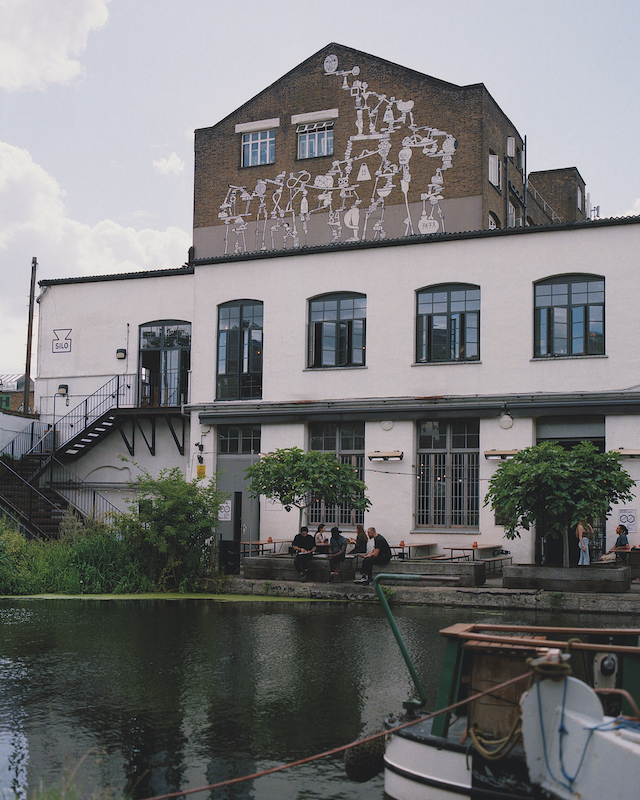
From fermenting on rooftops to grinding flour in-house, Silo has spent the past decade rewriting the rules of dining. When chef and founder Douglas McMaster opened the restaurant in Brighton in 2014, it was billed as the world’s first zero-waste restaurant – a bold claim backed by equally bold action. In its current Hackney Wick home, Silo continues to challenge industrial food systems with a menu built from whole, locally sourced ingredients, a refusal to own a bin and a deep belief in circular design. It truly is an operating system for how food might work in the future.

To mark ten years of this radical vision, Silo hosted a one-night-only celebration in partnership with Ruinart, pairing its new Blanc Singulier Édition 19 with six fine-crafted courses. The evening brought together friends and collaborators old and new – from McMaster’s early mentor Joost Bakker to regenerative farming advocate George Lamb and chef-restaurateur Thomasina Miers – for a conversation on zero waste, soil health and what a second civilisation might look like. Below, we hear from each of the panellists.

Douglas McMaster – Chef and founder of Silo

“When I was a kid and a teenager, I was very, very shy and afraid of the world… I always felt like an outcast, like there was something wrong with me at school. I couldn’t understand what the teachers were teaching, and all the other kids just grasped these subjects effortlessly. So of course, I dropped out and dropped into the local kitchen, washing dishes.

“When you feel dumb for a decade or more, when you feel like you don’t fit into the world, you kind of build up a sense of resentment – a sadness, a void. That was there throughout my whole childhood. It sounds kind of metaphysical, but it was very real. And then I was working around the world in world-class restaurants, and it was probably worse than how I felt in school – the bullying, the violence, even waste.

“Just as I was about to give up, I left a lunch service in Sydney and heard this loud thumping rock and roll music. This construct had appeared – like something out of Mad Max. It was the Greenhouse. I remember thousands of terracotta pots carpeting the exterior with wild strawberries, a big stainless-steel tank doing something magical, and tons of different plants hanging off the sides. I got inside and met Joost that same day. He told me he wanted to bring this to London, and asked, ‘Would you be interested in being the chef?’ I didn’t know what this project was, but I had this innate sense that this was the rest of my life. I said yes.

“I felt completely unseen and kind of worthless throughout my education. That void I carried for years – not in that moment, but in that experience – disappeared. Psychodynamically, that was a lack of meaning, a lack of purpose, a lack of place in the world. Joost gave me that. That’s why Silo exists.”

Silo 10 year anniversary dinner in partnership with Ruinart

Joost Bakker – Artist, designer and visionary behind the Greenhouse project

“I grew up in the Netherlands in a polder – land drained in the 1700s – which was known as the most fertile land on Earth. I remember watching a plough being pulled, and thousands of seagulls following it. My dad said, ‘Worms mean happy people.’ I didn’t understand what he meant until years later when I was in the Himalayas. I saw another plough, the worms again, and realised: that’s what he meant. That started me on a journey to understand how critical soil health is to the health of the population.

“In the mid-90s, I started a worm farm. I was working as a florist in Melbourne restaurants and saw how much waste they were producing. I started creating projects and installations to show restaurants that what was going in the bin was actually really precious. Twenty-five years ago, it was impossible to have a conversation with anyone about this stuff – people just weren’t interested. Now, everyone’s waking up to how critical this is. That gives me hope.

“One of the most powerful examples was Future Food System, a two-bedroom house we built in Melbourne’s Federation Square. It was off-grid, zero-waste, and we grew over five tonnes of food in less than 100 square metres – from fish and shellfish to crickets and hundreds of edible plants. It showed that a city like London could feed itself. We just need to eat differently.

“We recently completed a school built from hemp we planted in October 2023 – on soil that had previously grown cotton and potatoes. That hemp became the school desks and doors. We also used compressed straw and timber from agroforestry systems. Farmers can be builders, regenerators, rewilders. To me, that’s the future.”


Silo 10 year anniversary dinner in partnership with Ruinart

George Lamb – Co-founder of Wildfarmed

“I used to be a TV host – in fact, I hosted BBC Young Chef of the Year in 2004, which Dougie won. We’ve known each other for over 20 years. But at a certain point, I started to feel like nothing was really changing. I wanted to work upstream, at the system level.

“So I set up a project in a struggling comprehensive school in North London. There were supposed to be 1,200 students – they were down to 450. I said, let’s turn this into a Jedi training school for kids. We created a six-acre ecological farm next door and started teaching the students how to grow food, how to think philosophically, how to be expansive. The biggest moment for me was kicking out the school’s catering company – I nearly had a stand-up fight with the regional manager. But by doing that, I brought in Chefs in Schools, and it transformed everything.

“After that came Wildfarmed. We don’t own land – we work with conventional farmers and say: we’ll pay you a premium if you farm regeneratively. Now we’re supplying Shake Shack, Tesco, M&S. And the farmers love it.

“The commodities market doesn’t value ecosystem services, so we’ve built something that does. Better farms are wild farms. Our definition of regenerative farming is simple: quality food grown in nature-rich landscapes. We don’t want it to become a meaningless word.

“We’re on the long road to Greggs. That was our homepage slogan. We’re not trying to build a niche product for wealthy people – we want to democratise real food. And if we set our North Star around that, I think we’ll be alright.”

Silo 10 year anniversary dinner in partnership with Ruinart

Thomasina Miers – Chef, founder of Wahaca and Chefs in Schools

“I co-founded Wahaca 18 years ago, and from the beginning we were trying to recycle food waste and push for more vegetarian food – a third of the menu then, half now. We’ve proven you can have a group of 14 restaurants and still do things that are positive for the environment.

“But for me, one of the greatest solutions – especially in a society that feels stressed and disconnected – is cooking. If people don’t understand the joy and pleasure of food, they won’t eat in harmony with the environment. That’s why I helped set up Chefs in Schools. You put one trained chef into a school kitchen and you can completely transform how hundreds of children think and feel about food.

“I also think we’re going to hear more and more about nutrient density – the link between how something is grown and how nourishing it is. I recently met an incredible farmer in Scotland – a Nuffield scholar growing wheat for Wildfarmed – who wrote a major paper on this. We’re overfed and undernourished. We need to restore that link between soil health and nutrition.

“And then there’s creativity. One of our most hopeful dishes came from trying to use up cauliflower hearts that would otherwise be thrown away. We made a dip with roasted cauliflower and carrots, beans, and leftover cheese – and it was delicious. I love food like that. It tastes good, and it feels good.

“Every meal is a decision. Ask yourself – am I supporting a farmer working in harmony with nature? Or giving my money to big food? Every bite is a vote.”
Silo: Closing the Loop

In an industry plagued by excess, Douglas McMaster’s zero-waste restaurant is an exercise in imagination


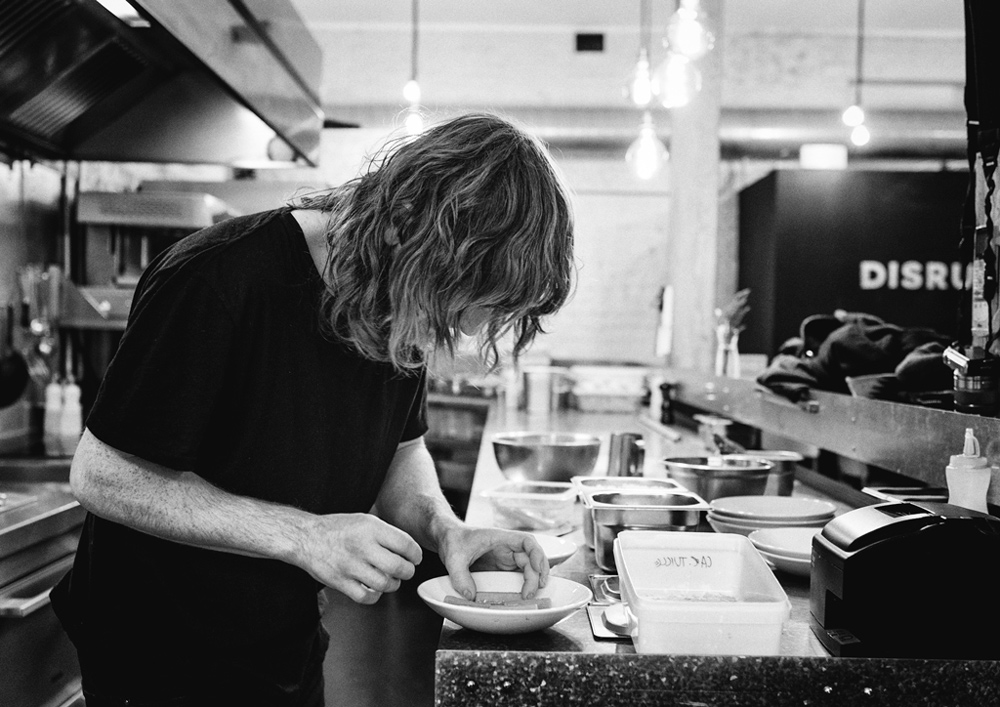
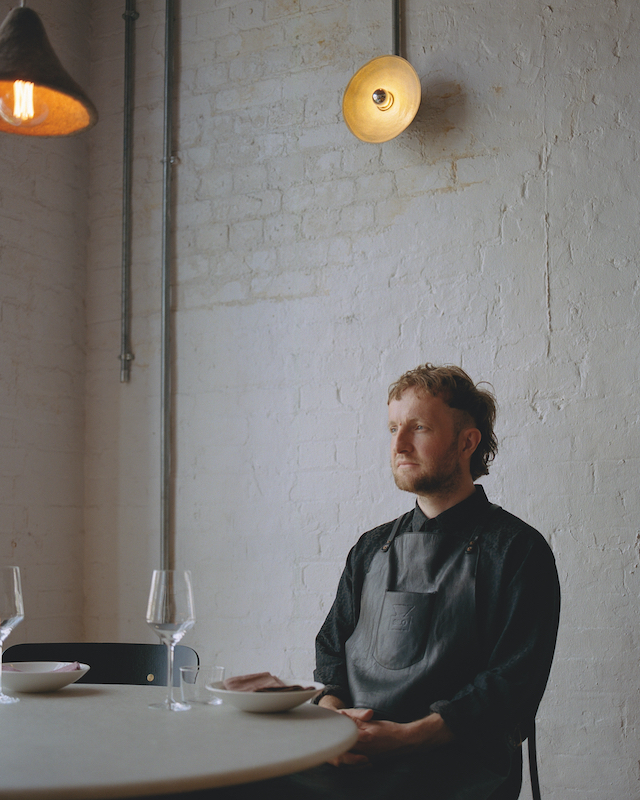
Douglas McMaster, all photography Sadie Catt


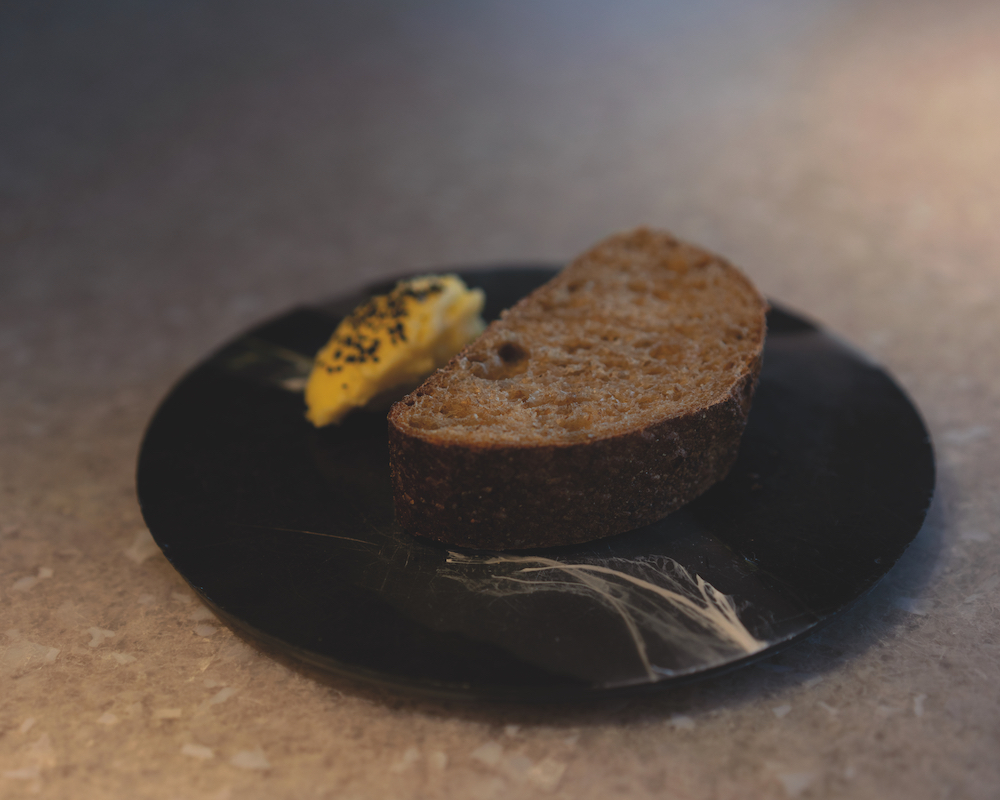
The lampshade above me is made from mycelium, a branching fungus grown with used brewing grains. Underfoot, the floor is carbon-negative cork, and the bar is comprised of leather shoe pulp. My plate was previously a plastic bag. This up-cycling reverie is the site of Silo, the ambitious Hackney restaurant, perched next to the River Lea, by Douglas McMaster. It quietly states that there is another way to run a kitchen, namely, producing zero waste. In practice, this means hard graft: butter is churned by hand; retired beasts are consumed nose to tail, and anything not eaten is fed into an aerobic composter. There is no bin. “It all matters because everything comes from nature, therefore it has value,” McMaster tells me over coffee on a grey May morning. “We need to honour these materials in every way we can, every bit of energy. They deserve respect.”


Originally from Worksop in Nottinghamshire, the head chef dropped out of school after years of struggling with dyslexia, dyscalculia, and being lost in an education system that was “as homogenous and sterile as a cardboard box”. Disillusioned further after placements in a string of masochistic Michelin kitchens, he would go on to find solace in the “safe haven and original expression” of Fergus Henderson’s St JOHN. Joining in 2008, McMaster was named Great Britain’s best young chef by the BBC a year later. A brief stint at NOMA soon followed, before he travelled and cooked in Australia, crucially meeting the artist and farmer Joost Bakker (pronounced like ‘toast’ with a ‘y’).Together they launched the world’s first entirely waste-free café, quickly winning hearts, minds, and awards. At the start of our talk, McMaster is keen to stress the creative concept of present-day Silo is indebted to the Dutch-born eco-activist, now one of his closest friends: “Zero-waste is because of him. He had the vision and gave it to me on a plate – I ran with it.”


Returning to the UK, he was determined to realise the circular vision he’d crafted down under. Though with no business plan or money, he was laughed out of every bank he tried. McMaster rolled the dice and remortgaged his family home in 2014 to secure a warehouse in Brighton that he’d chanced across. “I wasn’t ready for London,” he confides, “so this first iteration of the restaurant acted as a seaside training dojo.” Silo made immediate waves by “swimming against the current”, employing what the chef dubbed “pre-industrial” systems. Wasteful, carbon-heavy suppliers were cut out – no middlemen meant trading directly with farms. No single-use plastic was used in-house or for transporting produce, only reusable containers such as urns or pails. Staff were trained to mill flour, bake bread, and the art of whole-food preparation, so that no flora or fauna was wasted. And, crucially, the dishes were delicious.


Silo, London


The exhaustion from maintaining this operation, all while winning over critics and a loyal following, often led to McMaster sleeping on the floor. “There’s no rule book about how to open a restaurant,” he reflects. “And there is certainly no rule book about how to open a zero-waste restaurant. It pushed me to the brink of sanity. I fell many times, but every trip has given birth to what it is now. I wouldn’t change that, but I wouldn’t go back. My attention to detail is meticulous now because I felt an overwhelming burden of shame for every single one of those mistakes. Through not being good at school, I have this burning desire to prove somebody that doesn’t exist wrong, this imagined shadow.”


For a proposition founded on a tightly closed loop, it’s noteworthy that the chef sees creativity – which the Brighton restaurant had in abundance for its five-year lifespan – being fed by missteps and improvisation: “I was in an absurd flow, making sense of nonsense, stumbling across miracles. Vegetable treacle, plates made from plastic bags, sourdough miso – it was special to have somehow survived all that, and for those things to live on to tell the tale.”


Silo, London


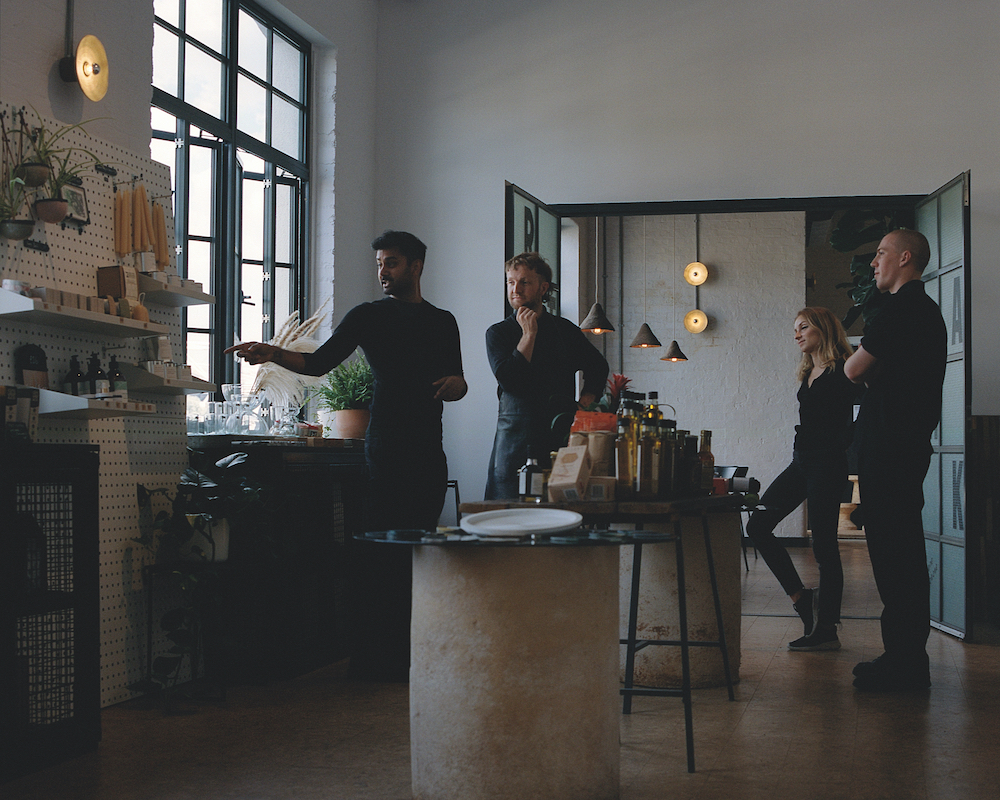
These small marvels now have their home in London thanks to a crowd-fundraiser greatly exceeding its £500k target. Opening at the end of 2019, the sleekly designed space by studio Nina+Co had its grand arrival disrupted due to the pandemic, but is now back to serving imaginative, thoughtful food. Standing on the shoulders of Brighton, an immense amount of discipline is evident in Hackney. Chefs work quickly and diligently, the coal-black kitchen extending out into the dining area like a ship’s bow. There is a formula for everything. How much salt goes onto the smoked Pink Fir potato, how long the tomatoes are brined for – all is preordained and fixed down to the exact gram and second. McMaster concedes it may not sound like the most glamorous way of cooking, but it has proved to be the most effective zero-waste hymn sheet to sing from.


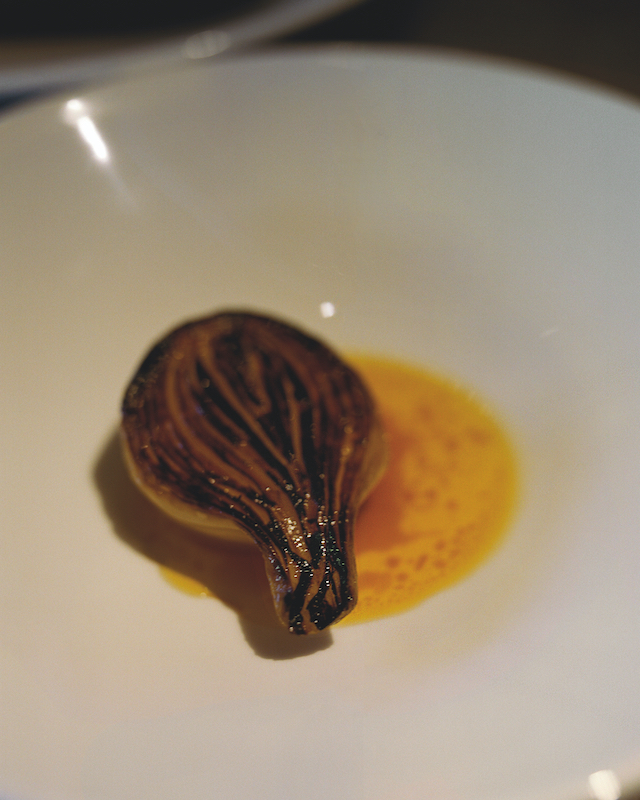
Balancing this control, the hyper-seasonal kitchen is at the whim of whatever is available from nearby farms. For example, a recent drought considerably altered its opening menu (projected onto the wall and updated in real time), and such limitations are embraced, encouraging experimentation. A vein of Asian techniques and flavours runs through its palate. Humble Lisbon onions are elevated with a richly aged fish sauce, while bavette steaks sing with Sichuan pepper. Koji, miso, and amazake recur throughout – due to their circular preparations that maximise resources – while delivering decadent hits of umami. “If I ever opened another business,” McMaster notes, “it wouldn’t be a restaurant, but a fermentation studio. I want to up-cycle all of that surplus into liquid gold.”


The 34-year-old has realised, late in life, that his brain is wired differently. “I’m a neurodivergent, which isn’t a disability,” he tells me. “It’s simply an alternative operating system. Now, I bask in that difference. I’m proud of it. I feel I’ve got this macro lens that allows me to detach from the nuance and look at the whole landscape, the entire ecosystem.” Indeed, McMaster’s sights stretch further than Silo. During the pandemic he launched an online cooking school, short videos ranging from how to transform Japanese knotweed into something edible, to making a sous vide alternative without plastic. A couple of days after our conversation, he will be delivering a lecture at Copenhagen’s MAD Academy, the school established by René Redzepi that aims to reform hospitality and our (currently broken) food systems. His talk will be a schematic of sorts, outlining how Silo’s structure can be applied to any restaurant if they are prepared for the added labour. This thinking was cogently laid down in his 2019 book – Silo: The Zero Waste Blueprint – and I ask what’s needed to establish a healthier relationship between rapidly multiplying humans and the natural world? “Sustainability isn’t enough,” he replies. “We can’t sustain what we’ve got, because it isn’t enough. We need localised agrarian societies feeding people in the immediate area, as well as regenerative agriculture, to fix what we’ve done. Every person, chef and non-chef, needs to realise that the natural world is being depleted. Before we learn how to do simultaneous equations, we need to understand that nature is not an endless resource that we can keep pillaging. Composting, natural materials – these are all choices. When we buy new plastic, we’re choosing for nature to be suffocated.”


If McMaster’s words sound dramatic, it’s because the situation demands it. Our lives are plagued by waste. Ten per cent of global carbon emissions are linked to unconsumed produce, and the enormity of the problem often leads to eyes glazing over – how do you compute 931 million tonnes of food waste per year? While the majority comes from high- and middle-income households – those with the material means to make the choices McMaster cites – a quarter of that figure derives from food services, highlighting the significant and untapped role restaurants must play in the coming years. What is the most effective means to counter this inertia and encourage zero waste? “Make it better than the alternative,” he states. “Make it beautiful, delicious. If it was the optimum way to live hedonistically, more people would be attracted to it. I don’t believe zero waste or Silo is a trend. If it is, it’s also the future. It can’t be anything else.”


‘Silo’ comes from the Greek σιρός, meaning ‘pit for storing grain’, and doubles in business jargon as an insular cell withholding information. McMaster’s creation, as a storehouse and celebration of natural materials, is a poetic reimagining of the former, and a rejection of the latter. Because although the restaurant is in many ways standalone in its singular vision, it is concerned with our whole ecosystem – of how and what we eat – and the intricate play between these channels. It shares its learning because it truly believes in the alternative: that waste is a modern, man-made invention, and ultimately, “a failure of imagination”.

silolondon.com

Photography Sadie Catt


This article is taken from Port issue 29. To continue reading, buy the issue or subscribe here

Questions of Taste: Douglas McMaster

Meet the pioneering chef and restaurateur behind the UK’s first zero-waste restaurant 
 
Douglas McMaster has to think more creatively than many chefs today. With his Brighton restaurant Silo, the 27-year-old is leading the country’s zero-waste movement. From sourcing to serving, his mantra is: ‘Waste is a failure of the imagination.’ Everything arrives to the restaurant directly from the farmers, cutting out processing, packaging and food miles. Compost machines are used to turn scraps and trimmings into compost that is then used to support the growth of even more produce. Given his uncompromising approach, the finesse of his dishes is even more impressive.
 
McMaster dropped out of school and, for him, the kitchen was the only place to go. He found it an environment he could be himself. ‘It was liberating as I hated that school made me feel like I was just another brick in the wall,’ he says. Since then he has gone on to win BBC Young Chef of the year and has worked at a handful of high profile restaurants such as St. John Bread & Wine in Spitalfields, London. He also ran a pop-up restaurant called Wasted in Sydney and Melbourne where he trialled his zero-waste techniques before opening Silo in 2014. ‘I worked under the grandmaster of zero waste – Joost Bakker. It was his idea, I just made it happen from day one,’ he explains. ‘I believe it is my mission to continue carrying the flag and I love to see other innovators in the industry doing the same.’

McMaster’s menus are driven by season and the environment. ‘If there is a large crop of cucumbers, we put cucumbers on the menu. If the forager finds mushrooms, then mushrooms it is. We don’t dictate nature, nature dictates us.’ Recently, he collaborated with Patron Tequila for a Secret Dining Society event, and alongside Mr Lyan founder Iain Griffiths, presented a zero-waste cocktail pairing menu. ‘We even printed the menus on 100% recycled agave to save the agave fibres from tequila production going to waste,’ he says. 

The Nottinghamshire native is intent on spreading the zero-waste message and believes that even small actions can be effective in making a difference. ‘Start by looking at every purchase as a vote. If you buy fast food you are voting for fast food to exist, if you buy organic food you are voting for an organic future, if you buy something with no packaging you are voting for zero-waste.’ 
 
Silo is located in Brighton’s North Laines
 
Photography by Xavier Buendia