Daido Moriyama

Daido Moriyama is a Japanese photographer known for his black-and-white, avant-garde imagery, famously seen in the pages of his magazine Kiroku, then referred to as Record, which he launched in June 1972. Documenting tension and transformation in post-war Japan, the magazine now stands at 50 issues, 30 of which were edited by Mark Holborn into a 2017 photobook of the same name. Now, in a direct sequel, Record 2, edited by Holborn and published by Thames & Hudson, picks up where his 2017 volume left off, presenting raw, high-contrast snapshots from issues 31 to 50 of his cult magazine. Below, in an exclusive extract from the book’s introduction, titled Time Tunnel, Holborn discusses themes of memory, history and impermanence, and how Moriyama captures Japanese city life through his gritty, transient lens
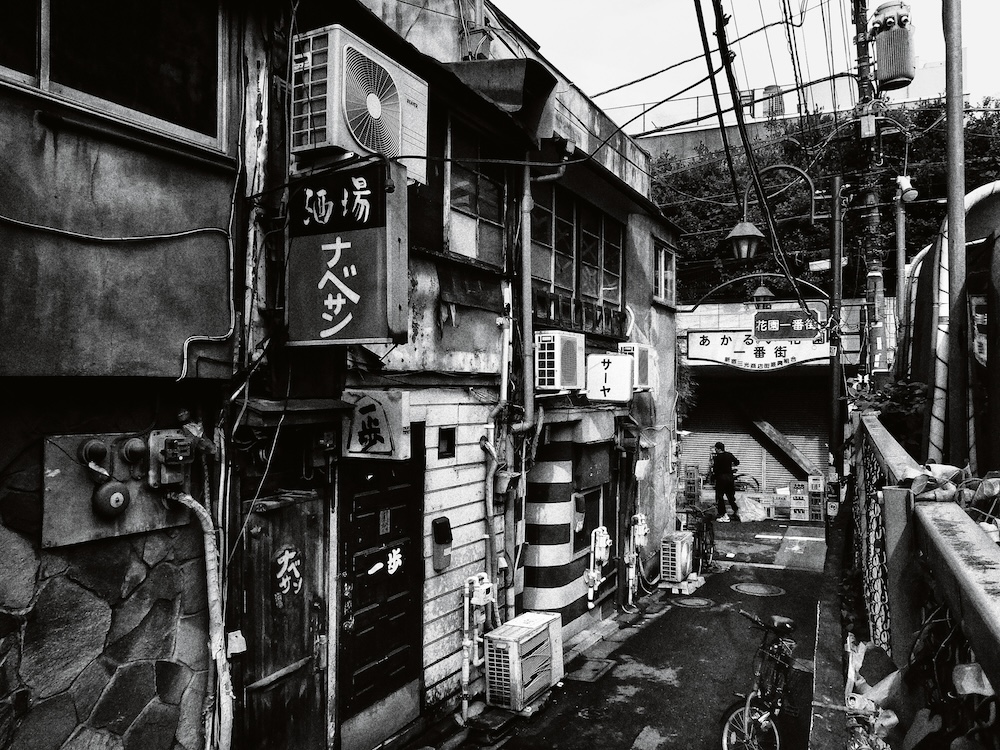
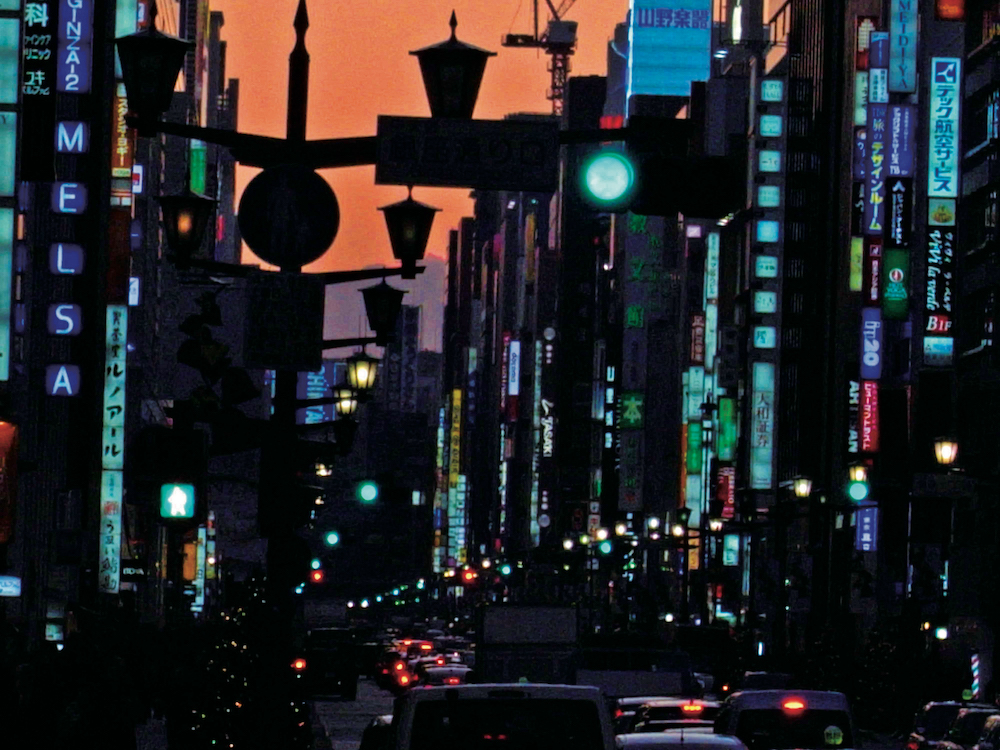
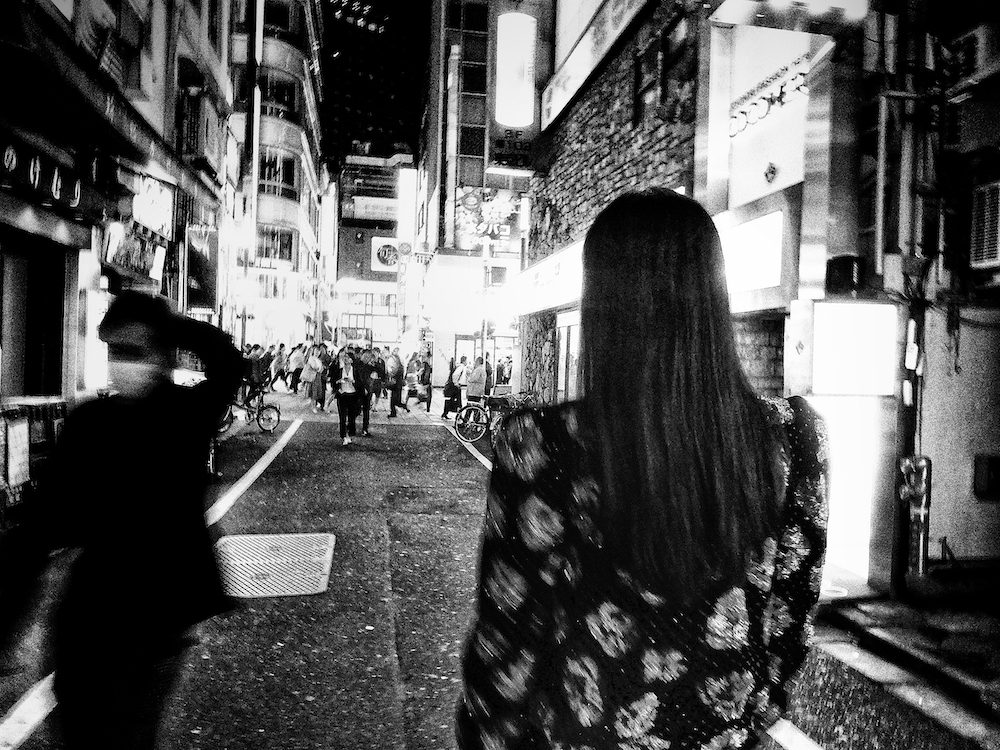
© Daido Moriyama Photo Foundation. Record No. 31

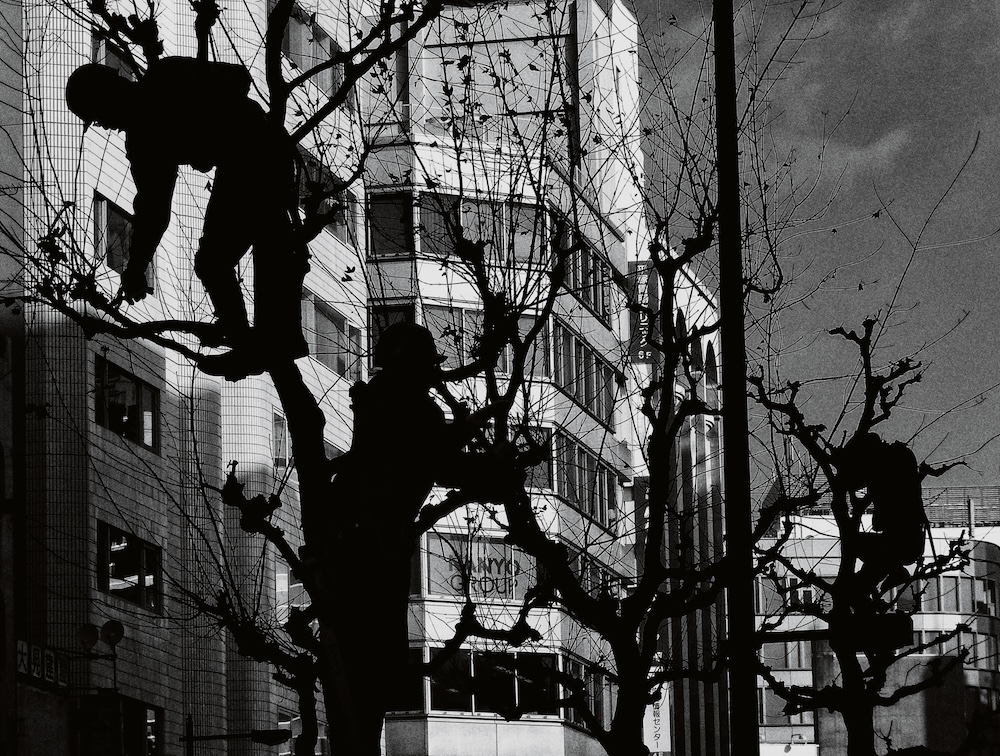
Daido Moriyama could be described in future histories of photography as a stalker on the streets of Japanese cities, where he claimed his zone – a dense, harsh, high-contrast territory. He probed the surfaces, piercing the apparent dream within which the inhabitants moved. He returned with fragments or shards of experience gathered on mundane daily rounds. A simple trip to the coffee shop could be revelatory. The street has provided him with a lifetime of visual nourishment. The cities in Moriyama’s pictures appear not as inanimate constructions but as vast breathing and growing entities sprouting towers and tunnels, railway tracks and highways along which humanity passes. His photographic language was born in an age of unprecedented change.
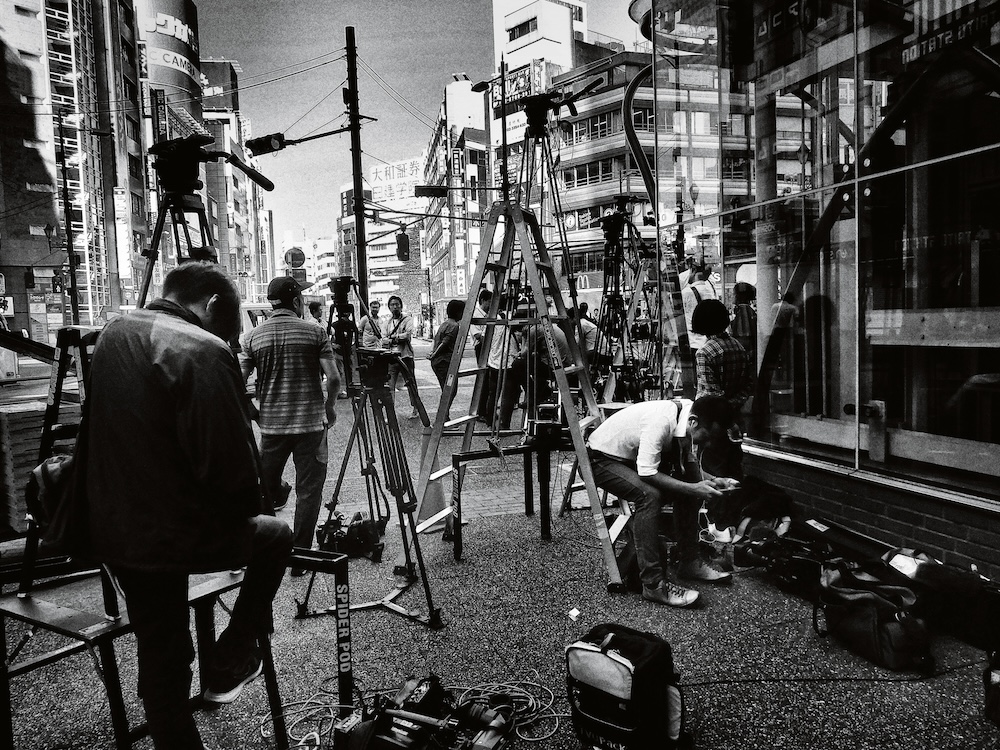
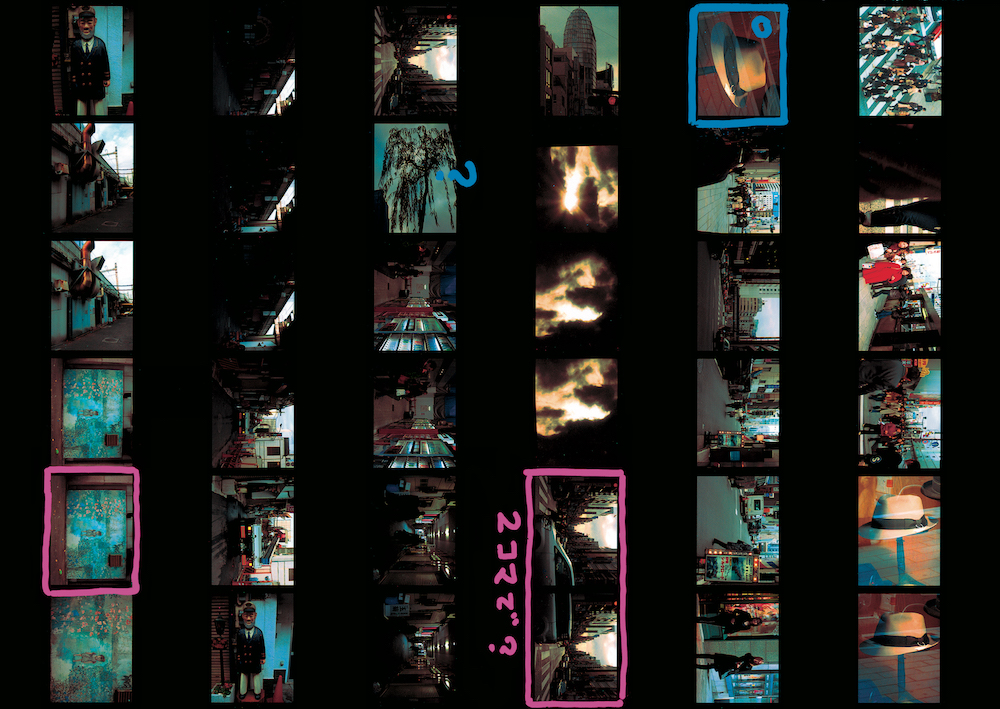
© Daido Moriyama Photo Foundation. Record No. 50

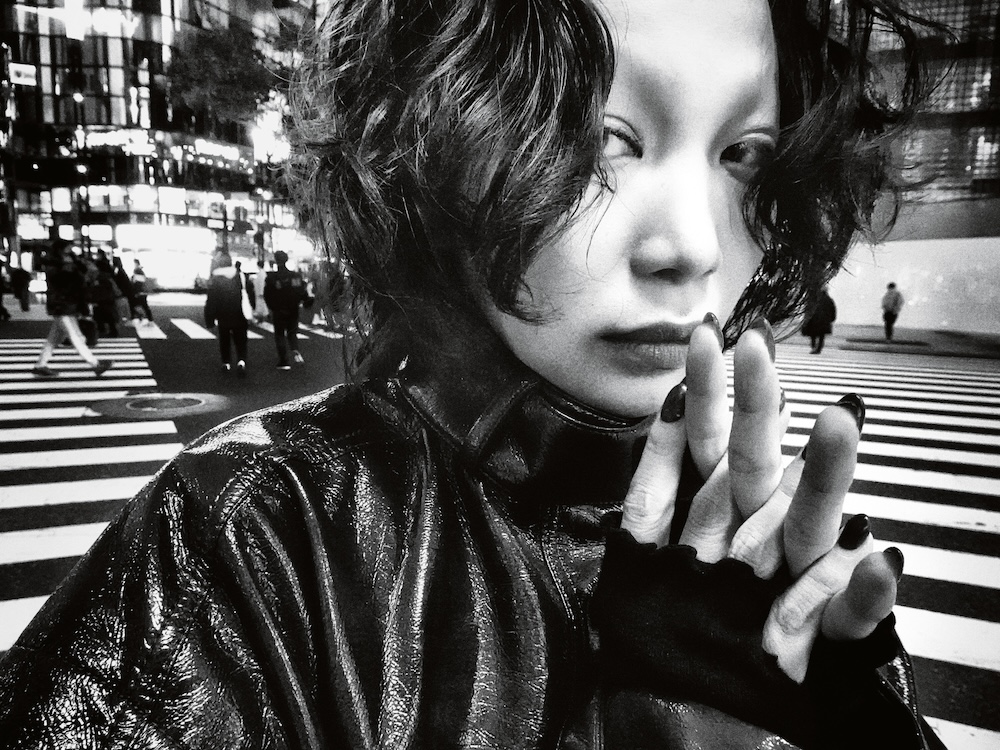
His first book, Japan, A Photo Theater, was published at the end of the sixties and was marked by a theatrical convention. Much of the work was made among the theatre groups on the cultural peripheries of Tokyo. Moriyama had entered this fringe under the guidance of avant-garde writer and filmmaker Shūji Terayama. The sense of performance persists. The city has since become an enormous backdrop. The urban surface is adorned with sign language and poster imagery, against which the populace is framed – in motion, in costume, masked and comatose. Moriyama’s book was greeted with acclaim. Its grain and fragmented form, as rough as any discarded newsprint or torn magazine pages, echoed a mood that challenged convention. An appetite existed for a new language that corresponded to the prevailing sense of tension and transformation. The first issue of the magazine Provoke, a visual manifesto for that language, was published in November 1968. The second issue, to which Moriyama contributed, appeared in March 1969, and the third and final issue in August 1969. To place these publications in a wider context, huge demonstrations took place across Japan on International Anti-War Day on 21 October 1968. At Shinjuku Station in Tokyo, seven hundred were arrested. On the same day a year later, 25,000 riot police were deployed in Tokyo alone. Moriyama was present. “That day was my moment; on that day I lost my belief in everything. My worldview, my standards, everything disappeared without resistance,” he said in a conversation with his friend, the photographer, theorist and co-founder of Provoke, Takuma Nakahira. The conversation was published in Moriyama’s 1972 landmark book Farewell Photography. A photograph of the crowds in Shinjuku that day appears towards the end of the book. It is as resonant an image as, say, an Eisenstein shot of the storming of the Winter Palace. History itself is portrayed. But in this case, the scene was not staged for the camera. The centre had snapped. Who knew what would be unleashed?
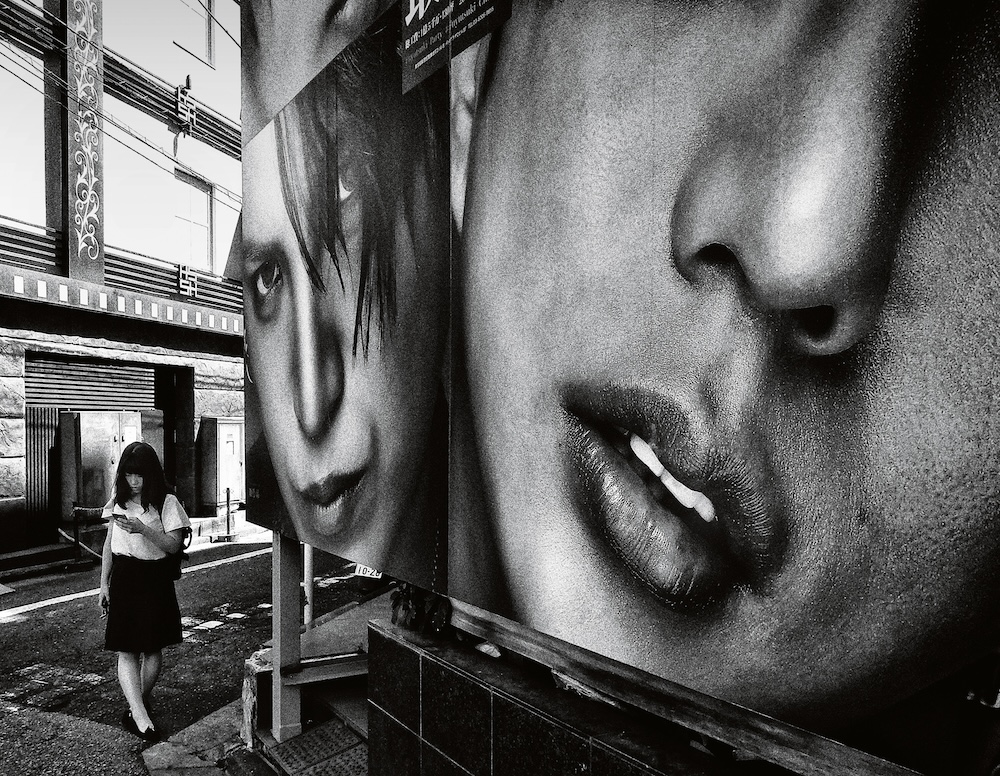
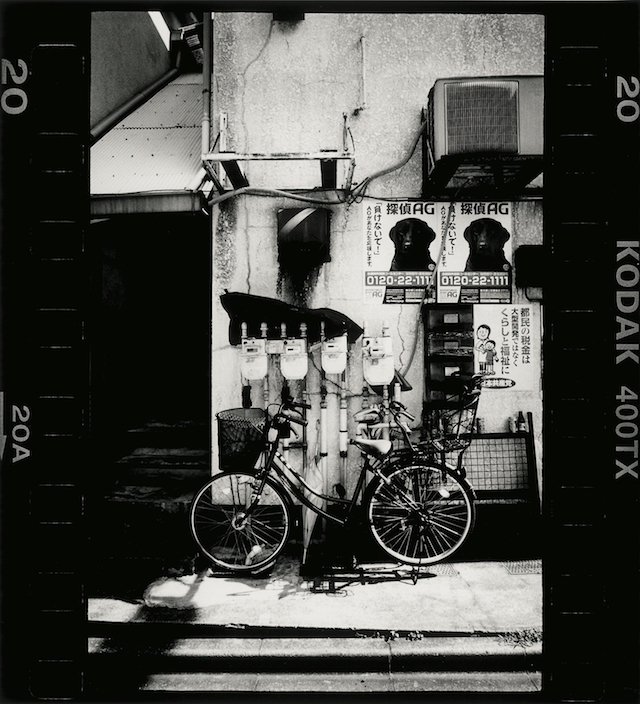
© Daido Moriyama Photo Foundation. Record No. 31

Out of this moment of confrontation, Shōmei Tōmatsu, the elder photographer and great influence on Moriyama, published his book Oh! Shinjuku (1969). Beside the strippers of Kabuki-cho, Tōmatsu photographed the rioters in action. There is an overwhelming impression of silence, like a newsreel in slow motion, as history unwinds. Beside the collective force of student armies encountering armoured police is the smell of tear gas, the sight of burning petrol bombs and the feel of shattered glass. The faces of the demonstrators are contorted on the pages in a soundless grimace. From these volatile elements, a new photography would surface.

For a period of a year, from the summer of 1972, the first five issues of Record were published by Moriyama as an ongoing diaristic project. Volume 6 and the re-launched series appeared decades later in 2006. Record originally followed in the wake of Provoke. Moriyama had been a witness to the storm. After the rage followed an eerie, widespread, but unspoken acceptance that the years of post-war austerity were over. A revised national identity had to be forged. The Osaka Expo of 1970 heralded the new era of an economic miracle. The American bases, the presence of which had been the target for the rioters of the late sixties, remained, but by 1975 Saigon had fallen and the map of East Asia had to be redrawn. Everything had changed.
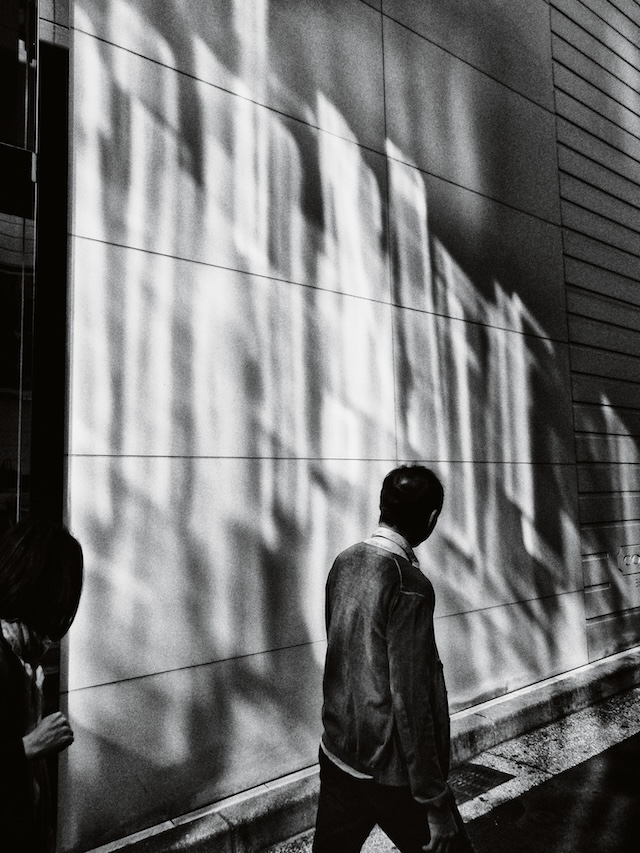
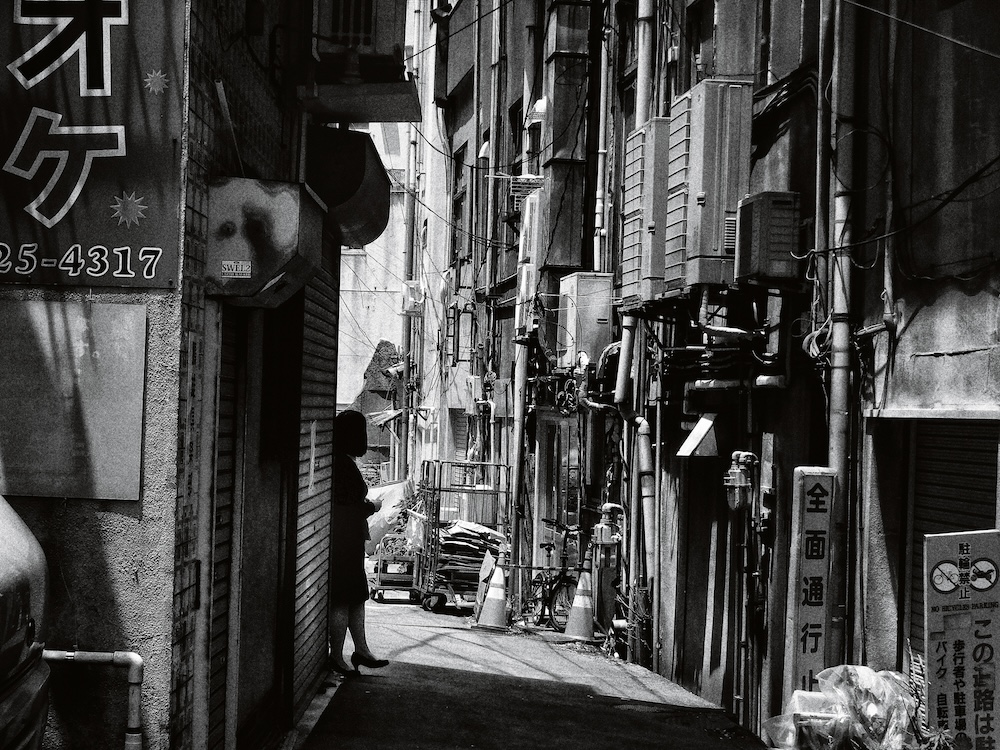
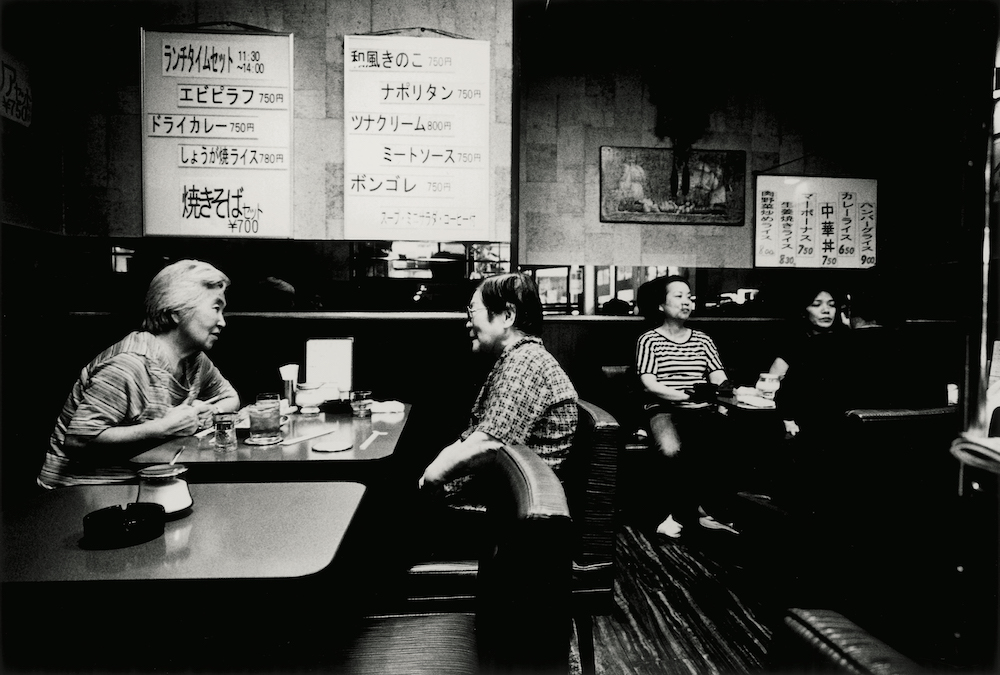
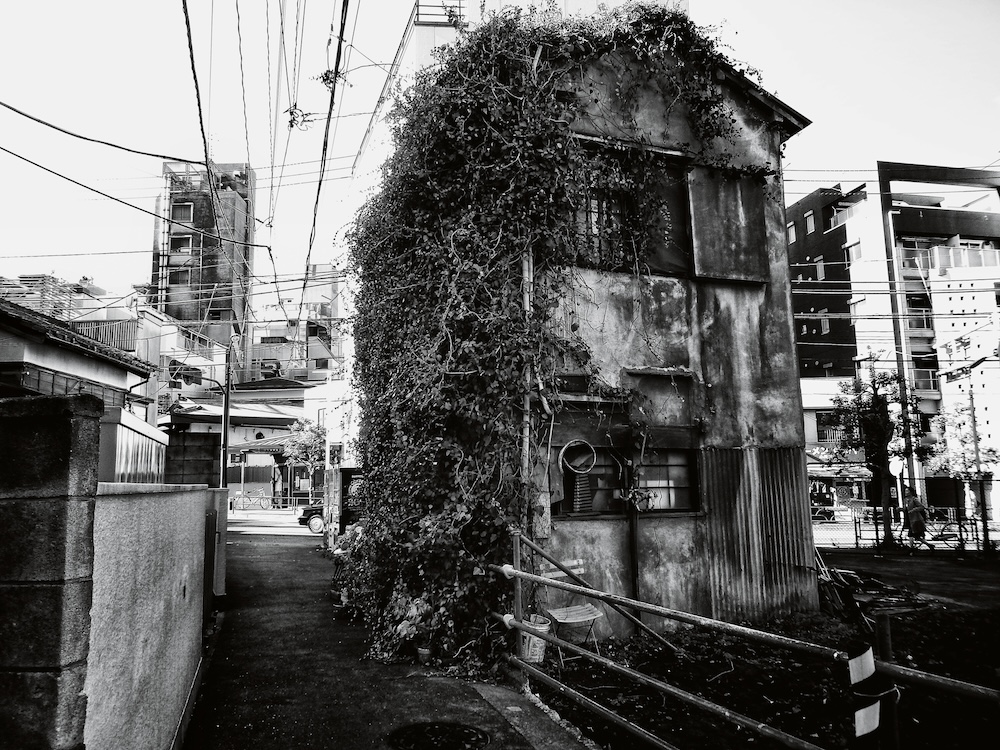
© Daido Moriyama Photo Foundation. Record No. 32

Record today reveals how that language forged some fifty years ago equipped Moriyama with a foundation. The streets are even denser. The facades are slicker. The shabby ferro-concrete of post-war reconstruction has given way to more polished exteriors. Yet, the alleys and the maze of the city provide the perfect habitat for the photographer who prowls like his chosen alter-ego, the backstreet dog. The photographer groping for a path through the fury of the late sixties and early seventies has changed, as have we all, with the perspective that ensues with ageing. What now distinguishes the tone of the work is a melancholic cloud. The sense of transience, a quality at the core of Japanese perceptions, is deepened. Terayama is long dead. Tōmatsu has passed, as has Moriyama’s fellow photographer and friend, Masahisa Fukase. So, too, has Moriyama’s companion, Takuma Nakahira. Photography, derived from the “freezing” of a moment, was often misconstrued as a mirror on the present, when, inescapably, it can never be anything other than a token of the past. Moriyama’s Record today offers a sense of elegy. Moriyama is not only confronting what he sees; he is also remembering what has vanished.

Daido Moriyama – Record 2 is published by Thames & Hudson and available here.
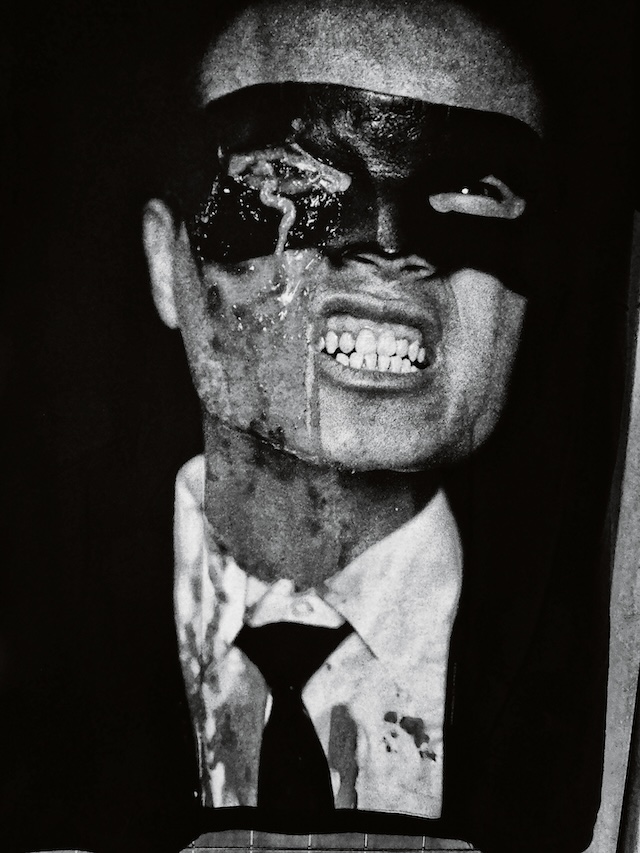
© Daido Moriyama Photo Foundation. Record No. 35
© Daido Moriyama Photo Foundation. Record No. 36
© Daido Moriyama Photo Foundation. Record No. 39
© Daido Moriyama Photo Foundation. Record No. 48
© Thames & Hudson


Daido Moriyama: How I Take Photographs

In an excerpt from the new book on Japan’s leading photographer, Takeshi Nakamoto asks – who is the real Daido Moriyama?

‘Oh come on, get real….’ In the ten years I’ve known him, I’ve noticed Moriyama has a habit of saying this – then giving a dismissive snort. I’ve heard him come out with it on all sorts of occasions, and I realise now that it’s the photographer’s way of demonstrating that he thinks the person he is talking to is being ridiculous. Some upstart (like myself, for example) will be mouthing off about something, or making some crazy request, and rather than putting them down with something stronger like ‘That’s total crap!’, he’ll come out with this expression.

‘I’ve never felt that I should conform to any particular set of rules – and not just in photography. I have no truck with what passes for the normal way of doing things….’

Moriyama steers clear of any preconceptions in snapshot photography and he has a similar aversion to rules, standards or normal practices in any area of life. You might say that, for him, the only criterion is that there should be no criteria. And when it comes to photography, it’s clear that many things that are generally regarded as common sense are, for Moriyama, non-sense.

Perhaps the best example of this would be the idea of originality – which he rejects out of hand. As someone who has always held that photography has never been anything other than mere copying, it’s a lost cause, he thinks, to try to argue for the originality of a photograph. Hence his lack of compunction about taking shots of posters he happens to see in the street – even when that poster contains an image by another photographer. He makes no bones about publishing it either. All he is doing, he says, is taking a copy of something that is itself already a copy.

‘I’ve even considered doing away with the copyright symbol from my own photo books. Of course, the publishers would object, there’d be all sorts of problems. But basically I think everyone should be free to copy anything they want to. What else is a photograph but a copy to begin with? When I hear people getting all hot under the collar, making the argument for photographs being original, being “art”, and so on, I always think to myself, “Oh, come on, get real….”’

A person of evident conviction, the thing to which Moriyama is clearly most committed is his own desire. The snapshot epitomizes this desire. A spur-of-the-moment shot that he takes the instant that he feels the urge. Point and shoot, point and shoot. Simply, without thinking.

But, of course, there is another Daido Moriyama: the Moriyama who in Sunamachi stares into the viewfinder lost in thought, the Moriyama who on our highway photo shoot feels compelled to interrogate what he is doing. This Moriyama is definitely not so simple, and is more open-ended.

In this scrupulous commitment to his desire, Moriyama never stops questioning the world he is shooting, never stops questioning the photographs he takes, and never stops questioning the self that is trying to take those photographs – even as he relentlessly continues to do so. The questions he asks go on well beyond that tiny split second – the 1/250 of a second – in which the shutter opens and closes. In every shot he takes, in that one brief moment, there lies an eternity of questions, and conflicting points of view, and journeys back and forth. Small wonder, then, that he refuses to waste his time or energy fretting about common sense or convention.

Excerpt from Daido Moriyama: How I Take Photographs by Daido Moriyama and Takeshi Nakamoto, published by Laurence King

Self: Daido Moriyama

A new collaboration between Saint Laurent and the iconic Japanese photographer Daido Moriyama celebrates the art of self-expression

This year marks half a century since student protests in Paris galvanised youth movements around the world. In Japan, 1968 saw universities become the focus of protest against corruption and the continued American military presence in the country, and it was in this atmpooshere of counter-cultural unrest that the influential photography magazine, Provoke, was founded.

A quarterly magazine that ran for three issues, with a print run of only 1,000 copies, Provoke nonetheless had a profound effect on Japanese photography in the 1970s and 80s, establishing a revolutionary alternative to the traditional and entrenched ideas of photography. Joining for the second issue, it was at Provoke that a young Daido Moriyama would develop his now iconic style, rejecting photography as a purely visual sign. Conscious that the camera was not able to create a perfect record of a moment, Moriyama celebrated the true, partial nature of photography through are, bore, boke – grainy, blurry, and our-of-focus images.

Born in Osaka in 1936, Moriyama moved to Tokyo in the 1960s to study graphic design and photography, making a name for himself in the latter and receiving the Most Promising Photographer award from the Japan Photography Critics Association. In the ensuring decades – he has just turned 80 – Moriyama has developed a style that, despite his unquestionable mastery of the medium, remains couched in an amateurism: snapshots snatched at without using the viewfineer, or when running or in a moving car, all capturing the blurred, glimpsed-at experience of modern life.

Presented at the Palais Royal for this year’s Paris Photo, Saint Laurent will be exhibiting a selection of Moriyama’s work curated by the brand’s creative director, Anthony Vaccarello. Forming the first instalment of SELF, a project celebrating freedom of self-expression, the series will see artists, photographers and filmmakers coming together to form an artistic statement on society.

SELF 01: Daido Moriyama runs at the Palais Royal until 11th November 2018