A conversation with the chef on building KOL, translating Mexican flavour through British ingredients, and why research, fermentation and intuition sit at the heart of his cooking

Walking into KOL on a sharp, winter-cold Friday in late November – its four degrees and unseasonably biting – feels like crossing a threshold. Outside, Marylebone is brisk and grey, while inside, the warm woods, clay-toned walls in shades of red, ochre and burnt orange, soft leather and travertine surfaces raise the temperature. There is the steady sizzle of tortillas cooking on the open grill, smoke rising gently towards the chimney. I’m yet to visit Mexico (it’s on the list!) but I imagine this is what it feels like to enter into a Mexican home.
The open kitchen is the heart of the space. Dishes draw from Mexico but are realised almost entirely through British produce. Aside from dried corn and chillies sourced directly from Mexican farmers, everything from vegetables and grains to fruit and dairy comes from the UK. Flourish Farm appears often on the menu, alongside heritage orchards, cider producers and small-scale growers whose focus on flavour mirrors the kitchen’s own. Designed by A-NRD Studio, the room includes handmade ceramic vessels created by UK-based craftspeople, alongside selected artworks that alternate between Mexican folk art and contemporary British-made objects.
Founded by chef Santiago Lastra in 2020, KOL is the culmination of a journey shaped as much by research as by cooking. Born in Mexico City and raised in Cuernavaca, Lastra once imagined a future in mathematics before turning to the kitchen, carrying with him a curiosity for systems and problem-solving. His career has taken him from Michelin-starred kitchens in Spain to the Nordic Food Lab in Copenhagen, from pop-ups in 27 countries to project-managing Noma’s seven-week Mexico residency in 2017 – an experience that reshaped his understanding of his own country’s ingredients and food cultures. Awarded a Michelin star in 2022, KOL centres on Mexican cooking reimagined through the land, seasons and sensibilities of Britain.

On my own visit to KOL, lunch begins with a margarita made with fermented grapes rather than lime or triple sec. It’s sharp, distilled, smooth and a little bracing. A bowl of dried chillies is placed at the centre of the table – not to eat, we’re told, but to gain an understanding of the ingredients that are imported from Mexico. The first course arrives as a soup intended to be sipped like an aperitif: kelp and corn oil for my vegetarian option, lobster oil for my companion. A corn quesadilla follows, filled with braised beef or spaghetti squash, served theatrically off the bone. Despite the substitution, nothing feels compromised, and the dish is delightfully immersive without heaviness.
A soft pairing comes next – English heritage pear fermented with koji – which nods to KOL’s in-house fermentation techniques. The next dish is caviar (or grape seed) served on mother-of-pearl atop a bed of corn, which comes with a small pot of corn jelly, the custard-like texture revealed only once you dig your spoon deep. A Brut Nature from Weingut P. J. Kühn accompanies a celeriac dish that tastes uncannily of coconut, finished with smoky notes and gorse flowers. Then comes the langoustine taco – KOL’s signature and a personal favourite. Soft corn tortilla, milk pearls and sweetness offset by chilli heat. For meat eaters, the head of the langoustine is squeezed over the taco, releasing briny acidity in place of lime; for me, a cucumber performs the same role. The pairing is a soft drink of habanada pepper, carrot and chilli oil, which smells deeply of fruit and spice. We’re then greeted with a cider from Find & Fosters orchards which is paired with a celebratory Mexican dish built around corn and Scottish lion’s mane mushroom – and cricket salsa for meat eaters. A Chianti Classico Riserva arrives alongside duck breast – carrot with mole for me. An off-menu street taco follows, with duck and port chorizo or lion’s mane and Braeburn apple for the meat-free option.
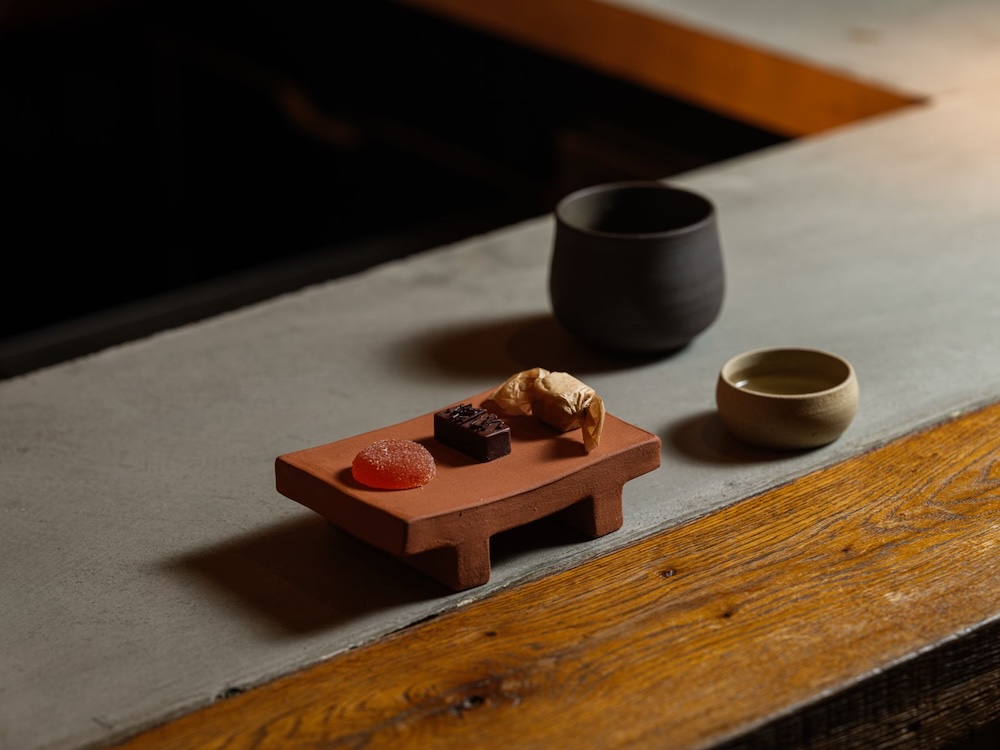
Dessert is a yoghurt sorbet lollipop, pink and dusted with Scotch bonnet chilli and foraged wood ants. A sweet wine from Jurançon with a final pudding built around koji and caramelised apple arrives next – dense like sweetcorn cake, but also cloud-soft and reminiscent of coconut flesh. The flavours echo earlier courses. The meal ends with a box of petits fours, our favourite a fudge that tastes like popcorn, studded with rye crunch. The final drink is KOL’s house mezcal, Verde, sourced from Mexico and poured from a bespoke bottle produced for the restaurant.
Measured, thoughtful and modestly radical, KOL holds Mexican cooking traditions, British ingredients and experimentation in careful balance. Below, I speak with Lastra about building KOL, translating flavour across continents, fermentation as a creative language, and what it means to cook Mexican food far from home.

What was the moment or experience that encouraged you to launch KOL and why was London the right place for it?
I think KOL was born out of a need rather than an ambition. When I was travelling and doing pop-ups around the world, I realised how misunderstood Mexican cuisine often was. It was seen as something rustic or street-based, but not as something that could express depth, terroir, or emotion. I wanted to show that Mexican food could have the same level of refinement as any great cuisine in the world, while still feeling real, human, and soulful.
London made sense because its incredibly open-minded people here are curious, fun, and already have a deep love for Mexico. This openness allowed me to reinterpret Mexican flavours using British ingredients without constantly being compared to what the cuisine “should” be. It gave me the freedom to create something honest and new – something that could represent my country with true quality.

Your path spans research labs, pop-ups in 27 countries and Noma Mexico. How did those chapters shape the philosophy you brought into KOL?
Every project I’ve done has been a kind of research – not just food-related, but also human-driven. When I travelled, I became obsessed with understanding what people like, and I find the best way to understand culture is through its food.
Noma Mexico, for instance, taught me that true luxury comes from connection and from working with people who care deeply about what they produce – from potters and artists to farmers, foragers and Indigenous people. The pop-ups showed me adaptability and how to create flavour out of limitation.
So KOL became this place where all of that converged: science, anthropology, nature, art and design. The philosophy is that cuisine is a language – it’s how we express who we are through what we have around us. Something I love the most is that a fine-dining restaurant at the highest level can create a community and have a voice. Our voice is to represent a new generation of fine dining and represent Mexico to the world. This is a big responsibility but also a huge honour.

Besides corn and chillies, all of your ingredients are sourced in Britain. Can you talk more about this and how you manage to preserve the soul and flavour of Mexican cooking?
For me, it’s never been about copying Mexico – it’s about translating it. The flavour of Mexico doesn’t come just from ingredients; it comes from intention, from the way things are cooked, and from patience and love. The real meaning of cooking and creation is using what you have to nurture others and have a good time.
I love how much attention to detail British farmers and producers have when it comes to quality; This country might not be as diverse as Mexico, but the produce here is truly fantastic. Every year, as I understand these ingredients more deeply, I fall in love with them even more.
Is there a dish on the menu that is particularly meaningful to you? Why so? How did it come together?
I think it would have to be the Langoustine Taco. It’s our signature dish and the very first dish I created for KOL, long before we opened – it’s my lucky dish. It was inspired by one of my favourite things in the world: eating lobster tacos in Baja California. I have interpreted that memory with British ingredients – mainly from Scotland.
The langoustines are roasted with garlic and smoked chilis and served with sauerkraut and a sourdough tortilla. The heads are grilled over the barbecue and then compressed with sea buckthorn juice – a super-healthy, sour berry that grows along the coast. We ask guests to use the head almost like a lime, squeezing it over the taco to release the acidic juice and all the flavour inside. Every time I see guests having them for the first time or any time really, it makes me super happy. I’ll never get tired of that dish.

You apply techniques like fermenting, foraging and grain-based experimentation. What recent discovery has excited you the most?
Lately, I’ve been working a lot with koji – using it almost like a bridge between ingredients and to develop umami in places where you wouldn’t expect it. We’ve also been experimenting with local grains in a nixtamalized form, like barley and heritage wheat, to see how they behave in masa. Those discoveries make me feel like we’re writing a new chapter of Mexican cuisine that truly belongs to this land.
Some discoveries are chocolate made with roasted rye koji and tamales made with nixtamalized buckwheat. Also, something super simple that I recently came across while doing research for my book is potato-mash masa. It’s such a simple thing, but also super handy. I can’t wait for the whole world to try it when my book comes out in April.
You work closely with British farms for everything from peppers to koji to heritage pears. What guides your decision when choosing producers for KOL?
It’s very instinctive – I look for people who are obsessed in the best way. Farmers or producers who care so deeply that their work becomes part of who they are. Regardless of the scale, what matters to me is the energy behind what they do. We build relationships, not transactions. When someone grows something with care and curiosity, you can taste it – and that’s what makes a dish feel alive.
The menu evolves constantly; where do you begin when you’re developing a new dish?
It used to be dishes that I discovered in my travels, but now I am guided more by intuition – by feeling inspired, happy, and motivated. I try to find something that will make people happy, and the answers are always there, inside the ingredients. I love that I just let the ingredients speak to me, or I often experience ideas coming to me in moments of peace, like a train ride, a long run or a shower or a dream.
You just need to be present and aware. You don’t have to wait for creativity; creativity is our natural state. What we have to do is live naturally and stay present, and understand the real meaning of our craft: to create delicious things for people to enjoy.

The restaurant feels warm and intimate, almost like stepping into a home in Mexico. Can you talk about the design and atmosphere of KOL, and the inspiration behind it?
KOL is my dream house in London – I designed it that way.
I asked myself: If I could have a house in London that expresses Mexico in a refined, elegant way, what would it look like? Everything began with the open kitchen. I wanted it to be the focal point, a beautiful, open kitchen at the centre of the dining room, with a chimney and guests gathered around it. The inspiration came from Luis Barragán and the grand casonas of Mexico City in the late ’70s: warm tones, an indoor-outdoor feeling, and simple Danish design lines. That was the brief I gave to Alessio, our interior designer.
Every time I come to work, I feel like I’m stepping inside my dream. Sometimes I still can’t believe it. I spent years imagining this restaurant, and I couldn’t be more proud or more grateful to everyone who supports us and keeps it alive.

The open kitchen, the colour palette, the mezcalería downstairs – how do these elements support the kind of experience you want people to have?
The open kitchen removes the barrier that restaurants often have between the front of house, the kitchen and the guest. It’s an invitation, a way of showing that everyone is here for the same reason: to have a great time cooking, serving and dining together. You can see the cooks working and feel the energy and rhythm. From the moment you walk in, you sense the vibe and the energy of the team.
KOL is precise but also fun, elegant yet inviting. It feels like the house of your dreams.
And the Mezcalería downstairs is like the restaurant’s subconscious – darker, more intimate, more introspective. After their meal upstairs, guests can go down and connect on a deeper, more emotional level. It’s a continuation of the journey.

What’s next for KOL, can you tell me about any upcoming plans, menus or dishes, or how the restaurant might evolve?
KOL will continually evolve because we’re constantly learning. The goal isn’t to make it bigger; it’s to keep making it more alive and to let it grow naturally and consistently. We’re deepening our connection with British producers, experimenting with preservation and fermentation for our winter menus, and exploring new ways to express hospitality. We’re focused on going deeper, refining what we do, and keeping it fun and a little bit sexy. Every dish and every season is a new opportunity to understand the dialogue between Mexico and Britain more clearly. I can’t wait to see what comes next.
On a personal level, I’m launching my book in late April. It’s called Mexican Soul, and the idea is to give people a tool for cooking Mexican food at home using local ingredients. I had so much fun creating it and learned so much along the way – I can’t wait for everyone to read it and cook from it.


