Digital platforms are changing how we discover, judge and read books, but what does that mean for the art of cover design? Below, Ayla Angelos speaks to Na Kim, Alex Merto, Coralie Bickford-Smith and Rush Jackson who each share their insights

You step into a bookshop – perhaps Daunt Books or Libreria, if you’re in London. Your hand glides across a row of spines, fingertips catching on raised titles, debossed illustrations, the gloss of a foil-stamped name. A single book catches your eye. The cover is bold, enigmatic, resisting instant interpretation. You pick it up immediately and take it to the till.
Online, it’s different. Probably on Amazon, you scroll too fast and everything blurs into a sea of thumbnails, covers designed for algorithms. At the moment, book design is being pulled in two opposing directions; one towards clickable, hyper-optimised visuals, the other back to the tactile, crafted forms. Somewhere in that tension, the book cover is shifting.
Before book covers were designed to sell, they were built to protect. Early books were bound in leather, embossed with gold leaf, sometimes clasped shut like vaults. They were objects of rarity, more sacred than commercial. That changed with the rise of mass printing. Dust jackets emerged in the 19th century, first as disposable wrappers and then as a canvas for design. By the mid-20th century, the modern book cover had found its form with bold, abstract graphics designed to grab attention.

Penguin’s classic tri-band paperbacks are perhaps the most well-known example of effective book cover design. Introduced in 1935 by founder Allen Lane, the covers became an early exercise in branding. Designed by Edward Young, who also drew the penguin logo, they featured a standardised layout with three horizontal bands, colour-coded by genre – orange for general fiction, green for crime, blue for biography and so on – allowing readers to instantly recognise the type of book they were picking up.
Meanwhile, designers like Alvin Lustig revolutionised book covers in the 1940s and 50s, bringing modernist abstraction to the form. His influence continues today in figures like Irma Boom, dubbed the ‘Queen of Books’, who treats each project as an object rather than just a container for text.
Today, book cover design is at a crossroads. AI-generated imagery and algorithm-driven marketplaces have reshaped how covers are created, producing efficient but often generic designs. And yet, there has been a resurgence of craft – a digital resistance of sorts, keeping the art of book design alive.

Na Kim, creative director at Farrar, Straus and Giroux and art director of The Paris Review, is part of this movement. A painter as well as a designer, she draws inspiration from the physical world: “I don’t find too much inspiration behind the screen,” she says. Instead, she seeks out sensory details – like certain moods, the colour of the sky on a particular evening, or a texture of an object – and uses them to shape her creative instincts. “Cataloguing these things helps me in my process and pursuit of making something feel true or real. You have to practice noticing things, and finding beauty in the world.”
Kim always reads the book before designing, and lets the author’s writing guide her – the structure, pacing, mood and message. She begins by establishing the book’s tone, absorbing the rhythms and atmosphere before translating them visually. For Yiyun Li’s The Book of Goose, a novel she describes as “cutting, deft, vivid yet simultaneously lyrical and lush”, Kim sought to capture that duality with graphic elements and a pastoral image. Designing Sheila Heti’s Pure Colour felt like “a meditation, or entering a flow state”, which translated into a simple and large green splodge centred on the page. Justin Torres’ Blackouts evoked “layered thick air and discovering new things from room-to-room”, inspiring a cover that mirrors that sensation – dark, smoggy and unsettling.
But as much as Kim’s process is rooted in intuition and deep engagement with the text, she’s also aware of how digital culture has reshaped book design, and therefore our relationship with consumption. “It’s become the filter for everything. Even if somebody buys a hardcover book, their first contact with it is probably digital. The speed in which the digital world is evolving also requires us to constantly consider how to capture the attention of a potential reader.” She cites a study by the American Psychological Association that found the adult attention span has dropped from two and a half minutes in 2004 to just 8.25 seconds in 2024. “It’s a hard gap to accommodate. It requires constant repositioning and reinventing the way we make books.”
This shift has made designers more conscious of marketing-driven aesthetics and the pressure to conform. “Maybe taking risks isn’t affordable anymore,” Kim reflects, acknowledging how algorithmic trends can stifle originality. “But I bet if designers were given more trust, the covers would feel less homogeneous.”


Alex Merto takes a similar stance and argues that book covers should stand in contrast to the fast-paced digital world, offering a sense of permanence and legacy. “I’m inspired by my daughter and the idea of leaving behind work I’m proud of,” he says. “I love designing books because they have such a long life – maybe one day she’ll see one of my covers on a shelf and feel that connection.”
Known for his graphically bold covers for publishers like Picador, Penguin Random House, and Farrar, Straus & Giroux, Merto’s work often relies on striking typography and unexpected colour choices to distill a book’s essence. Notable projects include Blind Spot by Teju Cole, in which he took a more minimal approach: “Teju’s writing style is so visual already that I wanted the cover to have a quiet depth, something that invites you to look closer.” Merto also enjoys reimagining classic works, like reissues of Elias Canetti, Susan Sontag and Jamaica Kincaid. “There’s a built-in audience, so we can experiment more with image-driven ideas, bolder colours or unusual layouts without worrying that a new author won’t stand out,” he says. “It’s about drawing in fresh readers while still honouring the existing fan base. That balance of respect and reinvention keeps it interesting.”
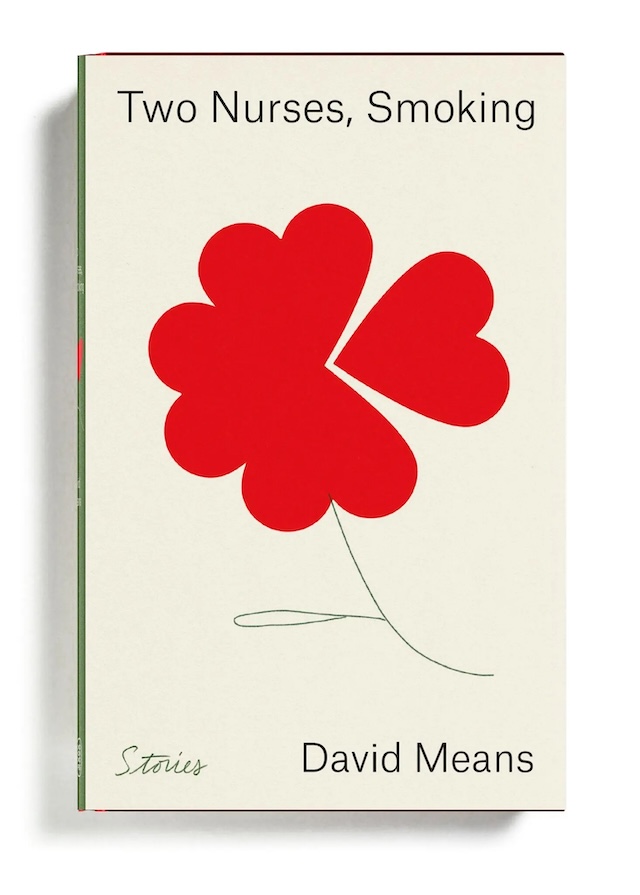
When asked about AI’s role in book design, Merto explains he’s cautious, viewing it as a potential disruptor rather than an aid to creative originality. “I’m definitely worried about AI. Part of me hopes people will push back against it,” he says. While he acknowledges its usefulness in summarising text, he doesn’t believe it can replace the human process of reading, interpreting and responding to a story. “If everyone types in the same prompts, we’ll end up with a flood of covers that look alike,” he warns. For Merto, originality in book design stems from human insight, which is something that AI, no matter how advanced, cannot replicate. “AI isn’t the source – we are.”

Rush Jackson shares this sentiment, recognising AI’s ability to streamline workflows but insisting it cannot replicate human creativity. “I’m not too worried about AI gaining the skills to autonomously design a book by itself,” he explains. An artist, designer and educator, and founder of Jackson Studio, Jackson is drawn to projects with a socially reparative quality. He’s also influenced by Black design history and pre-colonial African design systems, which he values as highly as the Bauhaus movement. “I find the history of African rhythmic practices, writing systems and performance as important to design history as anything that’s come out of European modernism.”
His approach is intuitive rather than formulaic, allowing space for unexpected moments. “For me, the process of arriving at a cover design is always different, every time,” he explains. This openness has shaped striking works such as Notes Towards Becoming a Spill for artist Shikeith and Keep the Kid Alive for photographer Arielle Bobb-Willis, both published by Aperture. He also designed In the Black Fantastic, edited by Ekow Eshun, which saw Jackson develop a bold, type-driven cover that honoured the book’s subject matter. “Ekow was extremely open and trusting throughout the process,” he notes. “I love how the typography carries the rhythm of the book.”
Despite the growing presence of AI, Jackson has observed an increasing emphasis on materiality in book design, from cover textures and production techniques to unconventional formats. “I think a great book, and a great cover, has the potential to feel like an art object,” he says. “I think the best covers arise as unexpected moments, and should surprise you.”

Coralie Bickford-Smith, a designer known for her work on the Penguin Clothbound Classics Series – in which she created custom patterns stamped on linen cases, colourful endpapers and ribbon markers – also emphasises the importance of tactility in book cover design. Much of her inspiration comes from art history, nature and classic design, particularly the work of William Morris and William Blake. “Their ability to blend text and imagery to tell a deeper story has always fascinated me,” she says.
For her, materiality is just as vital as imagery in shaping the reader’s experience. Her Fitzgerald collection, for instance, channels the glamour of the Jazz Age into mechanical patterns and metallic foiling, as seen in the cover for The Great Gatsby. “The design reflects the novel’s themes of destruction and disillusionment, capturing the moment when Gatsby’s dreams fall apart.” A more recent project, White Holes by Carlo Rovelli, pushed her conceptual approach further. “With this cover, I took a step back, zooming out to offer a fresh perspective on space,” she says. “It mirrors the way Rovelli’s writing guides readers through complex ideas – conveying depth and exploration.”

Though technology continues to shape visual trends, Bickford-Smith – like Kim, Merto and Jackson – treats books as objects of beauty rather than mere vessels for stories. “Minimalism and bold colour choices have gained prominence due to the way books appear online as thumbnails,” she says. “But I believe the physical experience of a book – its cloth binding, foil stamping – remains irreplaceable.” She is also mindful of AI’s expanding role in design. “AI can be a powerful tool, but it shouldn’t come at the expense of human creativity and rights. The key will be ethical guidelines that protect original work.”
Even as AI continues to reshape industries, book design, for the time being, feels like a space where human creativity, intuition and lived experience will always have the upper hand. And perhaps the most exciting shift is the resistance to homogenisation, where designers are creating covers that feel excitingly fresh, raw and real, all while balancing clarity with craftsmanship. As Merto notes, the best book covers should be “something eye-catching and enticing”, setting the tone and leaving space for discovery. Bickford-Smith emphasises the harmony of typography, imagery and layout to create an “inviting, balanced design”, while Jackson sees the cover as “a thoughtful and intelligent response” to its content. Ultimately, the most successful designs spark both delight and recognition, feeling inevitable but at the same time unexpected – making us, as Kim puts it, wish we had thought of them ourselves.
This article is taken from Port issue 36. To continue reading, buy the issue or subscribe head here