Tracey Emin provides an inside look into her lives lived. Now on display at Tate Modern.

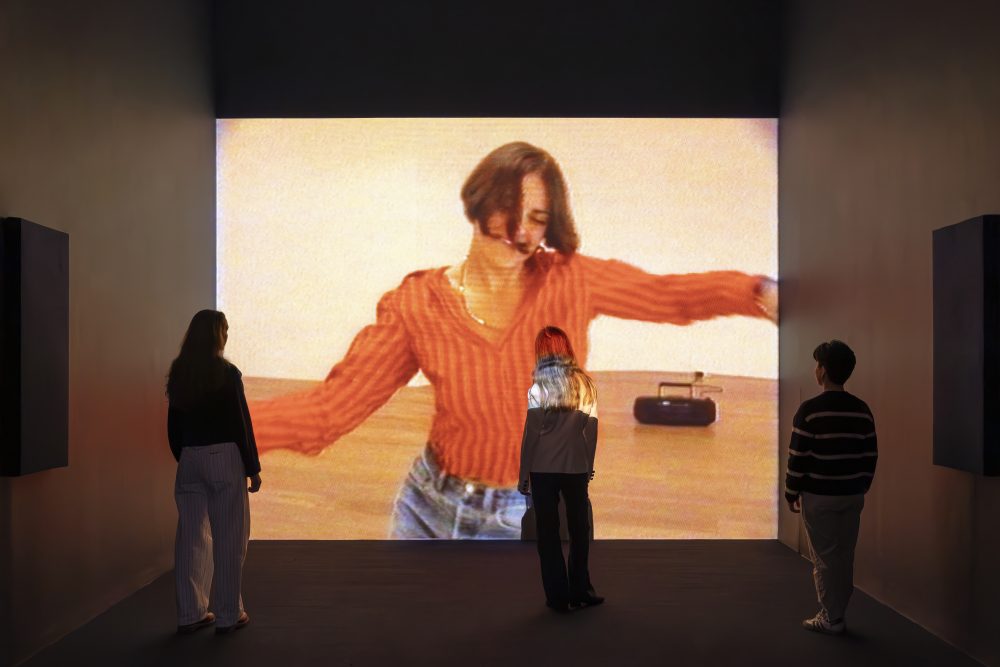
In 1995, Tracey Emin made ‘Why I Never Became a Dancer’. Washed-out views of Margate flicker on screen as she describes leaving school at thirteen, sex with men twice her age, and heckling boys chanting “slag slag slag.” What begins as testimony tilts into a redistribution of shame and liberation. “Shane, Eddie, Tony, Doug, Richard, this one’s for you,” she declares before dancing to Sylvester’s ‘You Make Me Feel (Mighty Real)’. Shot on grainy Super 8 in a nondescript hall, Emin twirls and twirls as her bob bounces to the disco beat. The video is heartbreaking, heart-warming, raw, guttural, and disarmingly alive. A thesis, perhaps, for her life’s work now laid bare in her latest exhibition.
Tracey Emin: A Second Life at Tate Modern (27 February – 31 August 2026) is the largest survey of her work to date, gathering over 90 pieces across her career. Unlike a typical retrospective, it is not chronological. No polite procession along white walls. Rather, the show is curated by feeling, divided by a distinct shift in personal consciousness. The expected Emin signatures are here: neon scribbles, gestural canvases, text in tapestry, her enviable handwriting, and even cat hairs (if you look close enough!). But what I didn’t have on my bingo card was the unexpected sucker punch this show delivers.
Emin, of course, is a true British superstar who first came to public attention in the 90s with her installation ‘My Bed’ (1998). Shown as part of the 1999 Turner Prize exhibition at Tate Britain, the infamous unmade bed, surrounded by the detritus of everyday life, sparked national outrage and challenged what could be considered art. This propelled Emin into the spotlight, where she has continued to make unapologetic and deeply personal work ever since.
The exhibition is loosely divided into two halves, echoing the two lives its title suggests. In the first, or former, life, Emin works through trauma in close proximity to pain. She grapples with her lost youth, rape, pregnancy, abortion, depression, her mother’s death, and a cancer diagnosis. Harrowingly raw, this section is a personal unravelling driven by a need to make sense of her harm. For example, ‘Mad Tracey from Margate’ (1997) is a blanket stitched with appliqué imperatives such as ‘leave him Trace’ and ‘fuck off back to your weak world.’ In ‘How It Feels’ (1996), Emin faces the camera, speaking of her abortion with a composure that makes the words near unbearable. Softer works appear too, but the prevailing atmosphere is being inside her pain. This is most clearly literalised in the recreation of her studio and the declaration that, after her pregnancy and its termination, Emin forced herself to stop painting as a form of punishment. Peering into the studio, you are drawn into both the physical and psychological space of hurt.

In the second act, there is a shift. The subject matters remain the same, yet the volatility recedes and what emerges instead is a palpable self-awareness. “I couldn’t have carried onwards otherwise. I would have died.” she reveals in an interview with soon-to-be-former Tate Director, Maria Balshaw. Emin stopped smoking and drinking, replaced chaos with discipline, and set clear boundaries in place. “I have done more in the last five years than in the rest of my life.” In this time, she has opened an art school, housed artists without access, received the Dame honorific, and returned to painting. It is here, in the second part, that Emin’s legendary bed sits. Walking into the gallery, I realised I had never seen this totem in person before. It provoked neither outrage nor revelation, only a quiet self-reflection. Recontextualised in this setting, the bed carries a certain knowingness. Both the artist’s and the viewer’s awareness meet there, held somewhere between the sheets.

Despite the shift in mood, what threads through every room is, as Emin puts it, “strangely enough”, an underlying feeling of heartbreak. “Even when it’s really good. Even when it’s at its best, it’s still heartbroken.” She continues, “Maybe that’s what binds me, that’s what keeps me, that’s the glue of me, knowing that things hurt, and being able to feel that. I think the worst thing in the world is to be numb.”
The weekend before the exhibition opened, Gisèle Pelicot appeared on the front page of The Observer’s New Review to promote her memoir Shame Has to Change Sides. Watching Emin move to Sylvester, it’s hard not to think to Pelicot’s words. Pelicot made her trial public, speaking out to free herself from the atrocities she endured. In naming her abusers and dedicating her dance to them, Emin rejects her shame, physically embodying Pelicot’s act of resilience. Though drawn from different experiences, the shared wrongly placed shame and the pained liberation parallels in a heartbreaking act of defiance.
Perhaps ‘Why I Never Became a Dancer’ contains this exhibition in miniature. It opens with a raw confrontation of trauma and moves into a sad yet joyous dance of liberation. Made thirty years ago, it seems to anticipate a second life now lived. Over the years I have seen Emin’s work countless times, and yet never has it punched me in the face, left me winded and wounded, quite like this show. Tracey, you make us feel. Mighty real.