Empires fall, but symbols endure. In cloth, structure, language and form, Samuel Ross channels centuries of defiance and reinvention. After stepping into the role of artistic director at the London Design Biennale, a new chapter begins
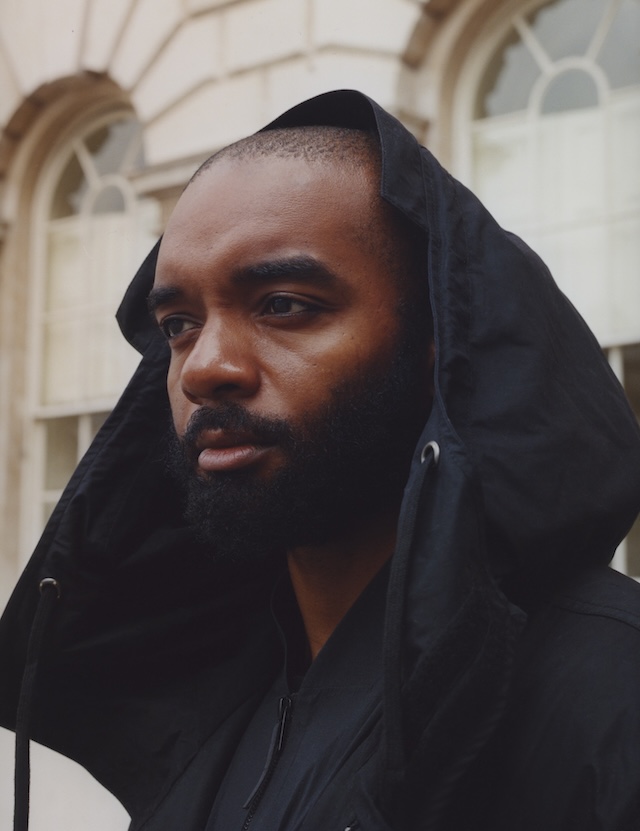
The building of empires demands particular personality types. In the final quarter of the 19th century, as the Scramble for Africa began, a generation of young, sharp-elbowed and exceptionally skilled soldiers began to percolate up into the most senior ranks of the British Army. Many identified the colonies as the arena within which they might prove themselves, and perhaps fill their boots. One of the most successful specialists in the execution of these complex campaigns was Garnet Wolseley, a veteran of many punitive imperial expeditions and one of the most decorated soldiers of the colonial era. He was not only a brilliant tactician: he seemed to relish these kinds of operations. In 1857, as a member of the British forces sent to suppress the Indian Rebellion, Wolseley expressed a longing to exterminate the “beastly” locals, of a wish to shed “barrels and barrels of the filth which flows” in their veins. For many, the colonial project was not about control of territory, and for men like Wolseley, this was never just a job.
By 1874 Wolseley had honed and hardened his strategic skills, and around him the army had assembled a team of exceptionally effective insurgency specialists. He was called upon to lead what would become a career-defining assignment. His orders were clear: invade the Gold Coast, the uniquely resource-rich West African region, and defeat its armies, bring its leadership to heel and lay waste to its lands. Wolseley was nothing if not scrupulously thorough, and within months of arrival his forces had burned the capital city of Kumasi to the ground, destroyed the Asante royal palace – the Asante is an Akan ethnic group native to Ghana – incarcerated the king and plundered the state treasury. Garnet Wolseley would be knighted on his return to London. Upon the smouldering ashes of the old Asante kingdom, the British constituted a Crown Protectorate, led by a British governor and underwritten by British laws. But the British were not wholly satisfied; although they searched, although they interrogated and threatened the local population, they could not find the spiritual symbol of the Asante state: the legendary Golden Stool. To complicate matters, the civilian populace were almost perversely indefatigable; they simply would not fully capitulate. Even as the British instituted their new colony, the inhabitants of the Gold Coast began to push back, writing petitions, crafting newspaper campaigns, training their own lawyers to fight for their freedom. In what could have been a time of humiliation, the local populace found a renewed pride, and in what should have been a time of victory, the British seemed frustrated. And when the exasperated British governor demanded the Golden Stool so that he could publicly sit upon it, the local population simply ignored him.
The people had lost their leadership, their independence – but they refused to give up their dignity, their sense of self. They would coalesce around powerful symbols of continuity; they would seek unity in their heritage, art and customs. Cloth became a badge of pride and defiance. And when, two generations later, Africans began to broker for independence, it would be Ghanaians (the children of the very communities attacked in 1873) who would emerge from the old Gold Coast as the people of the first sub-Saharan African country to break free. On the evening that President Kwame Nkrumah took up the baton of leadership as Africa’s first post-colonial head of state in 1957, his whole cabinet would join him on the podium – not wearing Savile Row suits but proudly decked in African cloth. Every Ghanaian – not just those present, but the millions of Africans who watched and read about the independence celebrations, the millions who could draw some genealogical, spiritual, emotional link to West Africa, and the millions yet to be born – knew what it meant. They knew how cloth, that most fragile of creative media, had, like the African spirit, found ways to endure.
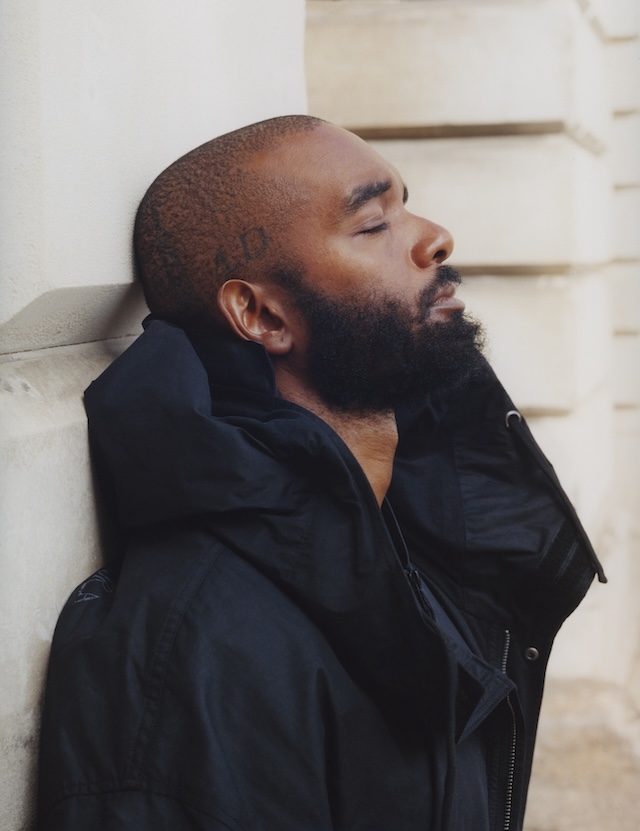
That irresistible power of African cloth continues to pervade down generations, continues to ripple out across geography, forging connections between peoples: Kente, a symbol of pride; Adire, a symbol of continuity; resist-dyed batiks material evocations of the past. Thwarting empires also requires particular personality types and sophisticated tools – and that wider, deeper campaign of aesthetic resistance spread upon the cultural winds to touch disciplines like the visual arts (the glorious El Anatsui and Yinka Shonibare immediately come to mind). That beautiful spirit of dignified defiance would cross geography and generation from Ozwald Boateng to Grace Wales Bonner, to the formidably thoughtful polymath Samuel Ross, each deploying cloth, shape, form and spirit to evoke these same poignant histories.
This year Ross adds another role to his impressive portfolio of projects, as he takes on the role of artistic director of the London Design Biennale. Ross is the right choice for this time. He is a man with a story to tell in a time when the world needs new narratives. He is steeped in these histories, this heritage, but has found ways to deploy them to shape his vision for the future. An eloquent and hugely charismatic designer, Ross says he feels compelled to “oratise”. He is an unusual fashion designer. He has used fashion as a foundation upon which to craft compelling bodies of practice in a variety of creative disciplines, whilst always finding mental space to mentor and sponsor younger generation designers. And with every manifestation of his formidable talent, it is evident his innovation is steeped in history.
Ross was born in Brixton, where his family lived in a flat above the market. When he was young the Ross family relocated to Northamptonshire. Raising a child in the countryside offered his parents the freedom to immerse their son into their unusual world. His father was a stained-glass artist and an activist who preached in churches. His mother came from a line of pastors: she had studied at Goldsmiths before becoming a painter. Ross was home-schooled, his parents augmenting the traditional school curriculum with philosophy, politics and the histories of struggle and liberation. From that unusual, loving beginning, Ross acquired a reinforced concrete moral compass and a passion for change. His parents would inculcate him with their race consciousness, their love of history and Pan-African politics, but also their healthy disrespect for traditional disciplinary boundaries.
This upbringing and this closeness to his parents imbued Ross with the feeling of being part of that older Windrush generation. He inherited their wisdom, learned from their historical perspectives and observed their quiet rage. Every year the family would visit the Caribbean, where they would spend long afternoons debating, discussing politics, deliberating upon passages of the scriptures and pre-colonial African history. Ross might be told stories of the Kingdom of Kush or muse upon African philosophy. He remembers it as an “idyllic, nurturing, unique upbringing”. As he says, “growing up was all about reinforcing our connection to West Africa and the Caribbean – I learned to first think and feel in patois, and then in English.” It is this history that would inform his fashion output in ways that are overt and subtle. It was an upbringing that offered Ross an unusual perspective on the world. He would go on to study graphic design at De Montfort University, before coming to the conclusion that fashion was where his destiny lay; fashion as the platform through which he might best deliver his ambition for wider change.
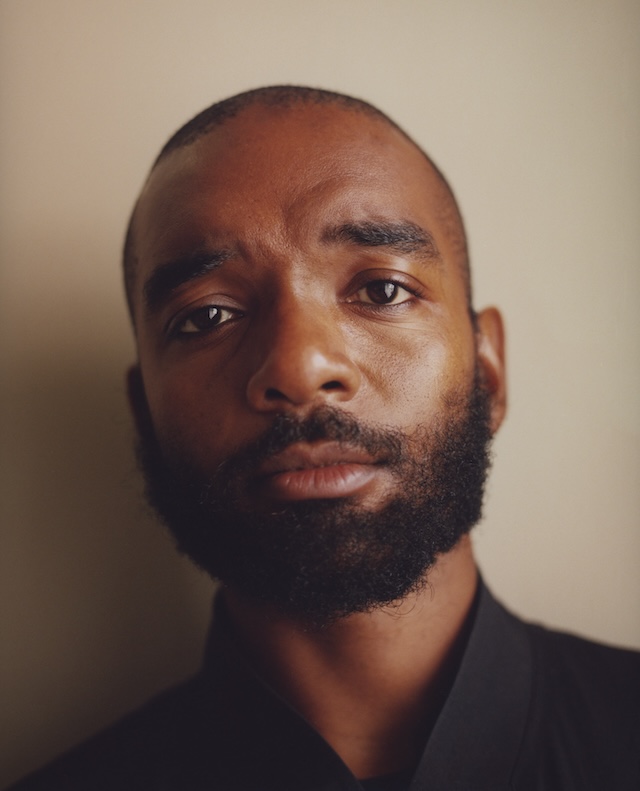
If Ross’s career hinged upon a single moment, then it would be an encounter in 2012, not long after graduating, when Ross connected with Virgil Abloh on Instagram. It was an immediate meeting of minds. In his early 20s, just out of university, Ross would begin a professional collaboration with Abloh, one of the most influential and sought-after figures in the fashion industry. Abloh was in the process of building a team and on an upward trajectory: he had just launched his label Pyrex Vision, and had begun working with Kanye West. It was the perfect start for Ross. They shared an African sensibility, as Ross put it: “Virgil was a West African, and I’m not quite first generation, but perhaps a 1.5-generation immigrant – we had things to say.” They shared a mission to communicate, “to tell that African story, and to do so through abstraction, modernism, minimalism.” It was a match made in heaven. Abloh possessed some of the inspirational traits of Ross’s parents. He brilliantly combined unlikely skills and modes of thinking and he was driven by a passion for social justice. Abloh was a Renaissance man with a moral agenda, who had studied civil engineering and architecture before becoming a designer, and he possessed an uncanny ability to distil complex ideas and capture the zeitgeist. “We spoke about the areas of the arts where we might contribute – we talked about new vernaculars and new religious thinking, but of course we focused on design and architecture”. And as with Ross’ childhood learning, much of the intellectual inspiration came from West Africa and figures like Francis Kéré.
Although their professional relationship would not endure with the same intensity, what Ross learned in those years with Abloh would open up Ross’ mind to how to work effectively in multiple disciplines. They would remain close friends. Abloh would go on to found Off-White, work with figures like Jay Z, lead Louis Vuitton’s menswear and have his work collected and displayed in renowned museums. Shockingly and tragically, Virgil Abloh would die in his prime, succumbing to cancer at 41. But one of Abloh’s many legacies would be the resetting of the bar. He had proved that fashion could be the arena for the kind of change that Ross had envisaged.
This was the perfect apprenticeship; the perfect catalyst. Ross would go on to design collections that armed their users for contemporary life, crafted and cut with a couturier’s eye and an artist’s vision. He would veer towards a dark palette but create visual richness and complexity through cut and line, through texture and fold. His work is a form of sartorial sculpture. You can detect layers and layers of history in his aesthetic, but the materials and the cutting feel of the future.
His two main commercial enterprises are A-COLD-WALL*, his fashion label which he has now sold, and SR_A SR_A, his industrial design company. His fashion serves to arm a generation; perhaps his signature garment is the reimagining of the gilet. Though crafted with Savile Row precision, it borrows from the aesthetics of body armour whilst having the lightness of a fencer’s lamé. These are clothes that speak to the 21st century. They are practical, unfussy, but quietly beautiful. They look bulletproof and they make you feel it too, but whilst balancing some of the aesthetics of utilitarian-ware, they are made with finesse, crafted from materials that speak of luxury.
In Ross’s industrial design output he also collaborates with the very best, working with companies like Apple, and their subsidiary, Beats. Getting close to design aristocracy like Marc Newson and Jony Ive, but wherever we went he carried that ‘Ross’s design integrity and wider consciousness. One of his most marked interventions in the Beats range was the mahogany headphones: a pair of headphones crafted in a sumptuous, melanin-rich tone echoing the skin of a person of African descent. As Ross would proudly say, “it’s the first headphone that sits comfortably upon Black people’s skin”. In an industry where content and consumers are deeply ethnically diverse, this feels important. Ross takes this kind of sensitive integrity into every project that he works on, creating an industrial design practice defined by striking beauty and moral authority.
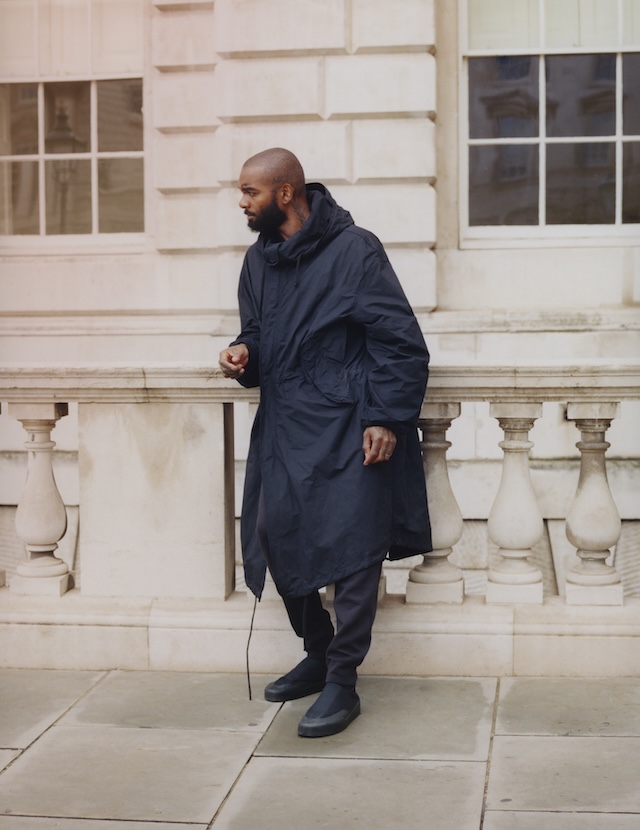
As ever Ross wants more, pushing his industrial ideas and imagination further. He has begun moving into what he calls ‘functional sculpture’, working with volcanic ash and found objects. He has begun creating ranges drawing inspiration from West Africa to root us all back in these important stories.
Although Ross is hugely in demand, he has somehow found time to give back. He has established a foundation to support global majority and Black creatives. He has funded more than 60 young artists with 100 grants. This year he has taken on the role as the artistic director of the London Design Biennale. He wanted to use it as a platform to ask: how do we recontextualise what design means? As he says, “Design should be rooted in empathy – political but non-political.”
The building of empires demands particular personality types. If Ross is on his way to building an empire then it is one that answers many of the needs of today. He has the sensitivity, the guile and the bravery to take on big challenges, but he is armed with a deep knowledge base and a rock-solid moral compass. He has inherited that gift of understanding how to re-shape swords into exquisite ploughshares, to take anger and fashion it into beauty, to arm us with tools that draw inspiration from our past, and to remain fearless and optimistic about the future. And for the future, Ross continues to build his reputation in the atelier space with new seasonal collections. But as ever his imagination is uncontainable, that ambition to test and change discipline is undimmed. After overseeing the London Design Biennale, he is creating new large sculptural steel artworks for shows in Miami, and for Saatchi and Sculpture in the City. But one senses he is most excited about what lies beyond the immediate horizon. He has just purchased a Grade II-listed rural property surrounded by three acres of land and various annexes to house his new artistic and fashion projects. “I’m quite keen to establish a destination of sorts, gradually over time,” he explains. If the rebuilding of empires requires particular personality types, then Ross has the imagination and the indefatigability.
Photography Christian Cassiel
This article is taken from Port issue 37. To continue reading, buy the issue or subscribe here


