From her breakout in Queen & Slim to portraying Anne Boleyn, Jodie Turner-Smith has never shied away from roles that test boundaries and spark conversation. In the years since, she’s moved with ease between imagined galaxies in Star Wars: The Acolyte, Kogonada’s meditative sci-fi After Yang, and Bahamian folklore in Apple TV’s Bad Monkey. She joins Disney’s Tron: Ares as Athena, an antagonistic AI program, in the latest chapter of the cult sci-fi franchise. Next, she’ll return to the screen in series 2 of the high-stakes spy thriller The Agency, playing an anthropologist drawn into webs of deception opposite Michael Fassbender. Across worlds both real and imagined, Turner-Smith continues to expand her universe – exploring womanhood, power and resilience with a voice that feels wholly her own
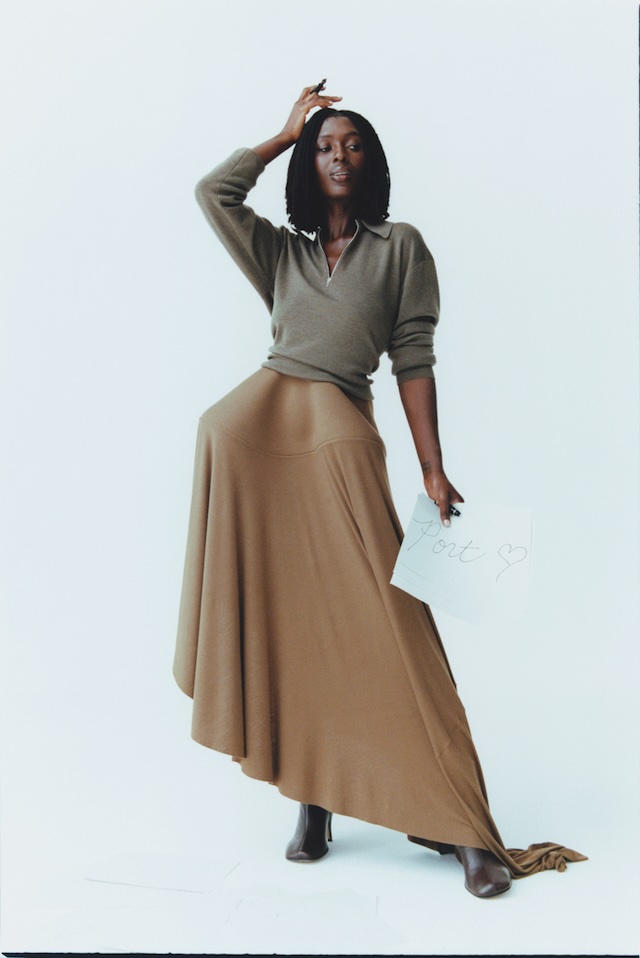
When Jodie Turner-Smith answers the question of what she misses from the US when she’s in the UK, it’s at lightning speed. “I definitely miss Erewhon ”, she declares. Immediately after that, she laughs and apologises for sounding “so LA”. Right now, she’s here in London for the next month or so shooting series 2 of The Agency, an action-packed labyrinthian spy thriller about the perils of untangling the webs we weave. A remake of renowned French series The Bureau, the show is produced by George Clooney and Grant Heslov and stars Michael Fassbender. In it Turner-Smith plays Samia Zahir, a Sudanese professor of anthropology, with Turner-Smith learning and speaking Arabic for the role. The show is shot partially in the UK, where Turner-Smith spent the first 10 years of her life, and while her tastebuds might have surrendered to the ‘health nut’ culture of the West Coast, to the ear she still sounds distinctly British.
After a brief corporate stint and years split between modelling and acting, the actress rose to fame in 2019 with her breakout performance in runaway tragedy Queen & Slim. Since then, she’s embodied roles across a whole host of imagined worlds, periods, geographies and galaxies: the leader of a witch coven from the Planet Brendok in Star Wars: The Acolyte, an adoptive mother in Kogonada’s sci-fi study After Yang, an Obeah-practicing Bahamian in Bad Monkey or the infamously wronged Anne Boleyn. From the set of The Agency, she’ll be off to do international press for upcoming Disney blockbuster Tron: Ares, in which she plays an antagonistic AI program called Athena.

Back here in present-day London, however, she breaks down her hack for concocting her own version of Erewhon’s Green Goddess ice cream at home (the real stuff retails for $20 at the superfood mecca). “Really, I just go [to Erewhon] to look at the menu,” she laughs. Every question, big or small, she dives into with a fervour, theorising in tangents on everything from smoothies to gratitude to Agnès Varda, with her British accent impressively intact. In fast-paced moments she almost sounds transatlantic, the edges of her received pronunciation only slightly softened by an American lilt, like the leading lady in a 1940s Hollywood picture.
“I didn’t go to drama school but I studied films through watching them. And before the streaming wars truly kicked off, my first subscription was to the Criterion Channel,” she says. At the intersection of her identities as both a cinephile and a Francophile, what naturally followed was a love of the French New Wave and the classic simplicity with which its films approached life’s complexities. “They weren’t doing super fancy things, they were just looking at life in really interesting ways. I think that Agnès is probably the first person who really made me want to be a filmmaker.” Her favourite film of Varda’s is Cléo from 5 to 7, a classic about a woman awaiting news about her health. In it we see a sliver of her life, as the title promises, between the hours of 5-7pm, as her fears and worries intensify. “The movie has messages about life, death, beauty, what it means to be a woman; the whole thing just feels like a bit of a prose poem sometimes. It’s just so magical,” says Turner-Smith. “And the themes are still so relevant for a woman today. Honestly I even felt that way when I did Anne Boleyn, that’s why I wanted to do it.”
She continues, “So much of Anne’s power and her work was tied to the capabilities of her womb. Tell me that’s not still a modern conversation.” There’s a sharp edge to her tone as she deadpans, “I dare you to tell me that’s not still relevant.”
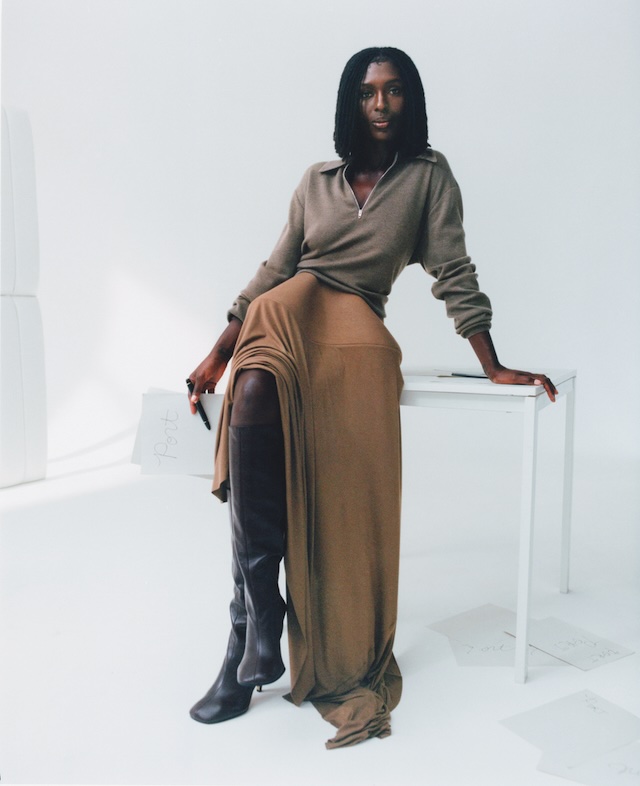
After her marriage to fellow actor Joshua Jackson ended in a public divorce in 2023, Turner-Smith is no stranger to the experience of having your womanhood dissected on the stage. Still, she excitedly finds every opportunity to weave in stories about their daughter, Juno, and credits motherhood for bringing her closer to her own mother again as well as transforming her perspective on the world. “What’s next after is being a ‘Valley mum’ in Studio City,” she laughs at one point. “I’m really excited about pick-ups and drop-offs and circle time and popcorn Fridays.”
In the next breath, she peppers in frequent mentions of the patriarchy, the ‘Herculean task’ of motherhood and the ways in which the former often minimises the latter. “ involves so much invisible labour, which is why I believe it’s been discounted so much – people often discount things that they cannot quantify,” Turner-Smith says. “Women are owed so much reverence but… if we truly acknowledged their power then we’d have to do a lot of things differently, wouldn’t we?”
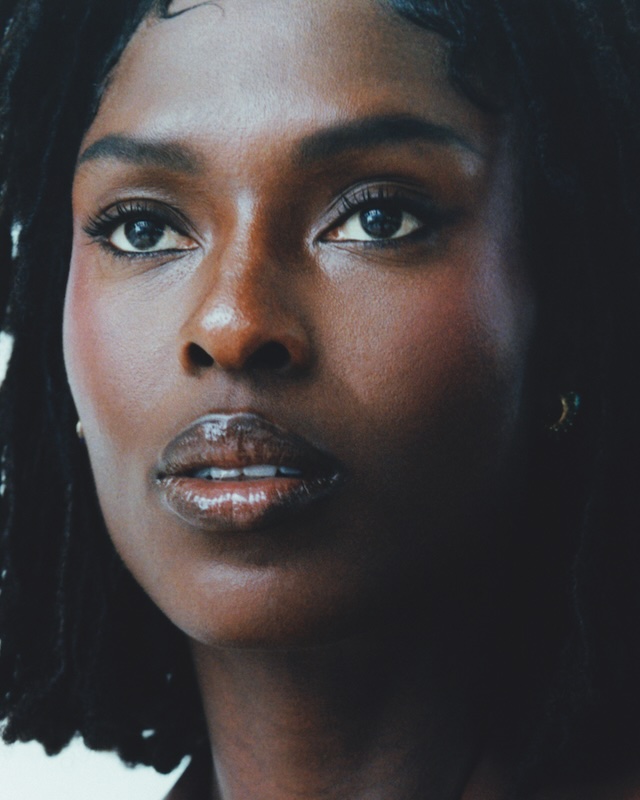
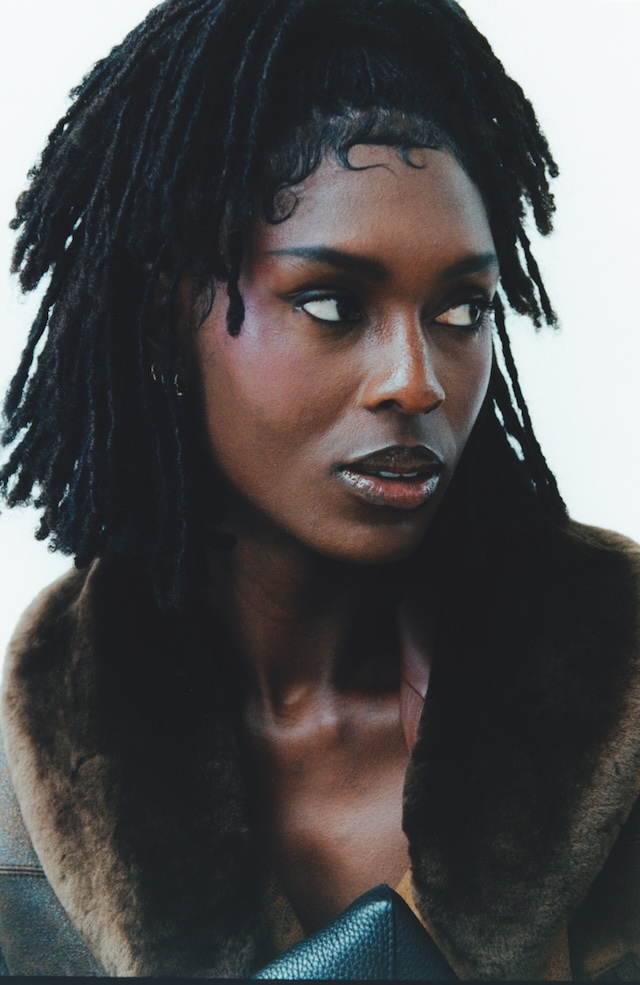
Unfortunately, her talent for finding the universal threads in the human experience isn’t something that’s always been shared by her potential audiences. The colourblind casting of Turner-Smith in the historical role of Anne Boleyn ended up opening her up to significant backlash for its ‘inaccuracy’, and it wasn’t the last time she’d encounter that kind of discourse. When starring alongside Amandla Stenberg in the Disney+ series The Acolyte, which is, crucially, set in a fictional universe, both came under fire from racist pockets of the Star Wars fandom who were unhappy with its diverse cast. Turner-Smith remains vocal about failures of the studio to protect actors and condemn the extreme harassment. “The issues of race, and the limitations that people put on that are not unique to my industry, but my industry has a unique opportunity to – by setting the image of what the social mores are dictating – either move the conversation forward or just affirm the same bullshit,” Turner-Smith says bluntly.
Despite multiple run-ins with the hard edge of visibility, she remains optimistic about the state of things in Hollywood, still viewing her career as a proof of a changing tide, not an exception to the rule. “As with many things, there’s still further to go but I do think that I’ve seen progress. The fact that I’m here doing the work I’m doing is evidence of that,” she says. “It’s also just an opportunity for me to continue to keep that door open, the way that the dark-skinned women before me did, you know? When they were truly trailblazing, playing roles of helpers and nurses and mammies, they were opening the door for me to be able to do what I’m doing right now… to be playing a woman with a PhD who is fighting for the rights of her people. It’s a big deal, I don’t take that for granted.”
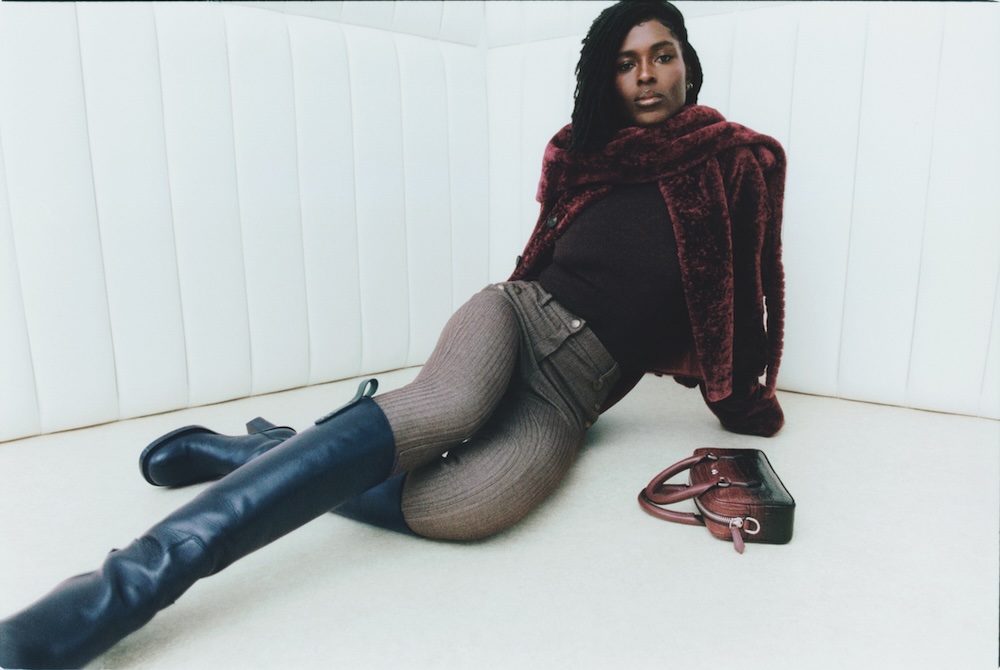
And if you consider her origin story, it’s no surprise that Turner-Smith feels fortune-favoured. The story of the making of her first on-screen credit flows like the plot of a farfetched coming-of-age film. In fact, it takes almost 10 minutes to recount. It starts with Turner-Smith as a college student with tickets to see one of her favourite artists, Common, in concert. When he pulled out of the tour with Kanye West, she almost didn’t make it to the show, she tells me. But ultimately she went, somehow ending up in the front row – even though her tickets were in the nosebleeds – and then naturally got invited backstage after her striking presence grabbed the attention of someone in the band. That night sparked the start of a friendship with West’s cousin, Tony Williams, and a number of concert-fuelled adventures post-graduation. At the same time, Turner-Smith was on track to become a corporate banker after landing a graduate job from an internship. But as her eyes opened up to the possibilities of the creative industries, that future began to look shaky. “I just thought, I do not want to go and be a corporate banker, I don’t think that’s what I’m meant to do with my life,” she laughs. She went and gave it a go anyway. But when she met Pharrell Williams backstage at a NERD show in Miami in 2009, he confirmed her bubbling suspicions. “He was like, ‘you need to be in front of the camera,’” Turner-Smith recalls. “Then he calls Hype Williams on my phone that night and tells him, ‘you’ve gotta meet this girl, she’s so beautiful. You need to put her in one of your videos.’”
Nothing came of it immediately, but on her next trip to LA the friend she was visiting encouraged her to reach out again. The award-winning director, Hype Williams, responded and told her to swing by his office straight off the plane. When she got there she found herself on the set of a huge production. He took one look at her and brought her back into the studio: “There’s this white convertible and two guys are standing behind it: Kanye West and The-Dream.” Without explanation, Williams gives her an outfit to try on, another crew member ushers her through to hair and makeup, and before she knows it, she’s starring in their music video. “And that was my first time being on camera,” she says. Trawl backwards through the YouTube archives to The-Dream’s ‘Walkin’ On The Moon’ single and there she is: channelling an aptly dazed and confused supernatural being, wrapped in a white Hervé Léger swimsuit and draped on the arm of who was soon to become one of our generation’s most influential artists.
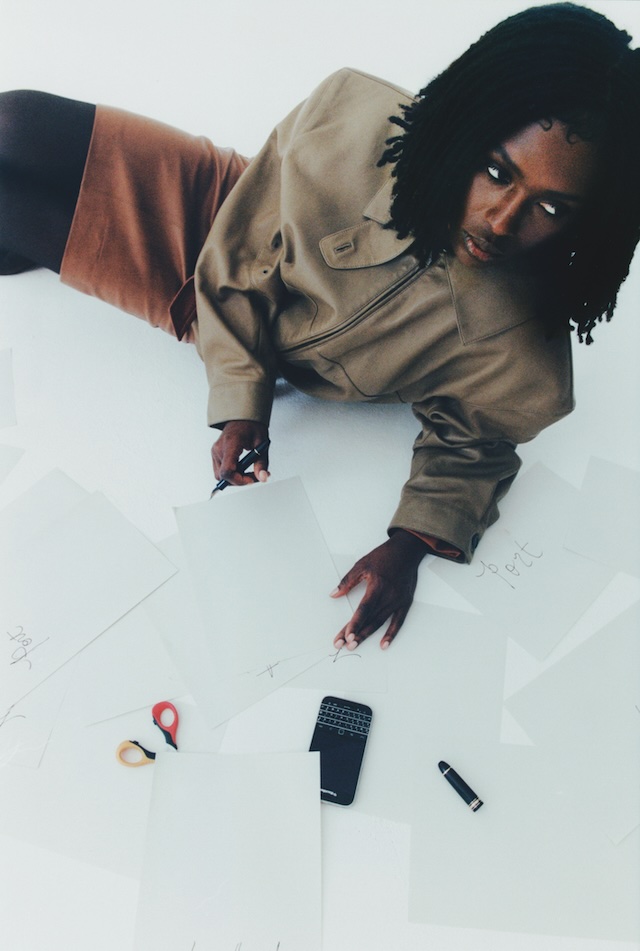
From that first appearance as an extraterrestrial beauty to her subsequent career in film and TV, there’s a consistent thread of otherworldly charm to many of the roles Turner-Smith inhabits. At a first glance you might attribute that to her statuesque appearance alone, but speaking with her and hearing how her life has unfolded, you get the sense that the true source of that ethereality actually comes from within. “I think we see things, not as they are, but as we are,” Turner-Smith offers. “If you’re looking for magic, you’re gonna find it everywhere. I believe the same with love and I believe the same with God.” She seems to hold whatever’s in her hands at any given moment as sacred, and so far it’s served her well. As our conversation sprawls, she gushes with the same refreshing enthusiasm about her motherland of Jamaica, the divine feminine, the beauty and commonalities of the Black experience worldwide – “you know when you see a tree bursting through concrete, people have paved over it but nature finds a way,” she marvels – and all the lessons she gets to learn through the worlds of the characters she plays. “I do believe that magic is present in my own life,” Turner-Smith smiles, “and I like to affirm it, because I don’t want it to stop.”
Turner-Smith with Montblanc pen
Photography Charlie Gates
Styling Georgia Thompson
Hair Marcia Lee using As I Am
Make-up Joey Choy @ The Wall Group
Nails by Megan Cummings using Nailberry
Set design Po Tsun Lin
Production The Production Factory
Post production lamina.studio.london
Photography assistants Oliver Matich, Alice Abbey-Ryah
Styling assistant Taylor Ahern

This article is taken from Port issue 37. To continue reading, buy the issue or subscribe here