- Words Chris Sheppard
America’s ‘Somme’ changed the course of US history. Chris Sheppard visits Gettysburg as they mark 150 years since the start of the Civil War..
 Above: One of the original war photographers Timothy O’Sullivan documents the aftermath of Gettysburg
The battle of Gettysburg is the bloodiest ever fought in the western hemisphere. You could say it was America’s Somme. Over three days, beginning on July 1st 1863, over 90,000 Union soldiers and 75,000 Confederate troops bludgeoned each other mercilessly with the future of the United States of America at stake. When ammunition ran out, hand-to-hand combat took over. Bayonet charges were common. At the end of its final day, more than 20,000 dead and dying soldiers lay in the fields and throughout town. The town mobilised to remove dead from the fields and deliver medical attention to the wounded. Soldiers from both sides thought too grievously wounded to survive the ambulance train home were left where they fell. The carcasses of 5,000 horses lay amongst them.

- Willing combatants were plentiful, doctors scarce. The devastation was overwhelming; for every resident, there were almost 1,000 wounded and dead soldiers. The stench was horrible. Women became instant nurses. Sanitary medical practices were non-existent. Many died of infection and disease. Public buildings and private homes overflowed with wounded. Amputated limbs piled up, blocking views from second-floor windows.
I recently travelled to Gettysburg to interview some of the descendants of the battle. I arrived on a cool, misty morning. The fields were serene. The farms and woods where the battle took place were dedicated in 1895 as the Gettysburg National Military Park.Two blocks from Gettysburg College, I stopped for lunch at a small café with Lynyrd Skynyrd and Paul McCartney playing on the jukebox.
“Over three days, beginning on July 1st 1863, over 90,000 Union soliders and 75,000 Confederate troops bludgeoned each other mercilessly”
Hipster baristas that could be found anywhere in Brooklyn sat behind the counter, talking music and college classes. A few sipped coffee on the porch, and read the Gettysburg Times or USA Today.Two large flat-bed trucks passed by, each one transporting a massive Abrams M1-A1 tank. I sipped my coffee and read an article about CIA drones spotting Osama Bin Laden in the courtyard of his Abbottabad compound.
This year marks the 150th anniversary of the start of the American Civil War, and millions will visit its battlefields and historical sites over the next four years.When most of America’s wars today are fought far from home, Americans will contemplate the incredible acts of violence committed against one another over the future of their country – fellow citizens, neighbors, even family relatives.
- At the time of Gettysburg, anti-war sentiment in the north was high and President Abraham Lincoln’s presidency was increasingly unpopular. In the months before Gettysburg, Lincoln’s military drafts were deeply unpopular.
“Southern defeat at Gettysburg doomed Robert E Lee’s plan to beat the Union on its home turf, gain foreign recognition, and turn northerners against the war”
Anti-war sentiment was spreading throughout the north. Draft riots broke out in New York City.But southern defeat at Gettysburg doomed Robert E Lee’s plan to beat the Union on its home turf, gain foreign recognition, and turn northerners against the war, was consigned to history.
After Lee’s major victories at Fredericksburg and Chancellorsville, momentum shifted back in the north’s favour. Northerners now believed Lee could be defeated and the war could be won. Many historians believe that the country was kept from breaking in two at Gettysburg. Bill Troxell is the mayor of Gettysburg. He’s also a licensed battlefield tour guide. Ribbons and medals from World War I and II hang in a glass-covered case behind his desk. Military mementos fill a few shelves around his office. Troxell can connect his family history to most of America’s wars. His great-great-great grandfather, John Troxell, was a Revolutionary War veteran and one of the first settlers at Gettysburg. Another ancestor, Tilgham Troxell, was killed at Gettysburg. His father fought in France during World War I, his brother in France and Germany during World War II.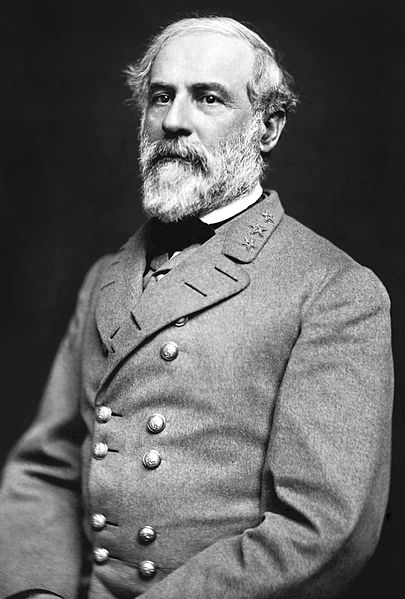 Above: General Robert Edward Lee, officer of the Confederate Army, taken by Julian Vannerson
“Thomas Jefferson wanted to get rid of slavery. George Washington wanted to get rid of it, but Mount Vernon was maintained by slaves… they wouldn’t do it when their economy was dependent on it”

Above left: Gen. Winfield S. Hancock of the Union Army. Above right: Maj. Gen. George G. Meade of the Union Army.Bill served at the tail end of World War II, but much closer to home, in Florida.
“My great-grandfather had a carriage factory about a block and a half from here,” he says. “Confederate snipers took it over, and fired at Union troops from the second floor. Union cannons opened up and destroyed it.” To be compensated, the Troxells had to sue the federal government. He showed me a hand-written original copy of the federal government’s damage report. Because Union troops destroyed the building, the family got their money. “If Confederates had done it, not a chance.”
Perhaps because of the apocalyptic amounts of carnage that occurred here, fuelled by simple and absolute convictions, Gettysburg seems to attract its fair share of nutters.
On the way to meet Troxell, on a road at the south end of the battlefield, I spotted a “Doomsday Cadillac.”
Proclamations painted on its doors warned: “The Bible foretold of the Great Tribulation” and “Revelation Chapter 6. December 2012.”Four very large adults rode inside, the car barely skimming above the pavement. I was then stuck behind a slow moving bus with North Carolina plates and “Jesus is watching, and we will all be judged” painted in large red letters on the back.I ask Troxell about “fringe elements” that descend on Gettysburg. Any Tea Partiers, perhaps? “The only groups of that type that I’ve seen are the Klu Klux Klan,” he says. “Of course, they have to have permits like everybody else. They were supposed to come last year, but never showed up.”
The real problem, Troxell says, was “getting them protection from people opposing them.”
 Above: Abolitionist Thaddeus Stevens
The Civil War, as much as it was about anything, was a fight over slavery and Gettysburg was a fairly prominent stop on the Underground Railroad for runaway slaves coming north. The town had 200 freed slaves living in town at the time of the battle.
“Go right down the list of historical figures, people on our dollar bills,” says John Archer. “Thomas Jefferson wanted to get rid of slavery. George Washington wanted to get rid of it, but Mount Vernon was maintained by slaves,” Archer says. The south’s economy was “based on slavery” and “they wouldn’t do it when their economy was dependent on it,” he says.
Archer, whose great-grandfather’s cousin was Confederate General James Archer fought at Gettysburg and was captured by Union troops, teaches at Gettysburg College and is the author of two books.
I met Archer for a coffee at Gettysburg College’s student union, located at the centre of this genteel campus with neatly manicured lawns. The hype of graduation had ended days earlier, with the school settling into its summer slumber.
The college was founded in 1832 by anti-slavery theologian Samuel Simon Schmucker. In 1837, it expanded onto land provided by abolitionist Thaddeus Stevens, a congressman who helped draft the 14th Amendment, which guaranteed full civil rights to citizens of all states. Without which there could not have been a black president.
Given the legacy of Gettysburg and its contribution to the abolition of slavery, does the place get a large number of black visitors? “In terms of individual tours, which is more what I’ve been doing here the past ten years, I’d say more are coming now than in the early 2000s,” says Mr. Archer.
- “But I get the impression that not a lot of African-Americans came here.”
A small town in the hills of rural southern Pennsylvania, many wonder why Gettysburg was so strategically important to the Union and Confederate armies. A close look at a map from that era is revealing.Gettysburg was a vital crossroads for moving men and material quickly between the north’s industrial centres. It connects with Baltimore and Washington to the southeast, Philadelphia to the east, and the state capital, Harrisburg, to the north. The south coveted these routes and access to northern supplies. The Union would protect them at all costs.

Above right: 1863 map of the Field of Getty illustrating the strategic importance of the area to both sides
Like many parks in America where tourists converge in summer, there’s a tacky element to the surroundings here. Just outside the military park, a McDonalds is located near the site of Pickett’s Charge, the final collision of armies on July 3, 1863 where thousands died and the south decided they’d had enough.But Gettysburg seems less guilty than most, and the town is pushing back against developers and chain stores. The architecture of the old town centre is largely unchanged from Civil War times. Many Federal-style, Greek Revival and Victorian structures remain in excellent condition.
The train station where Lincoln arrived the night before making the Gettysburg Address is pristine. It will soon be turned over to the federal government to become part of the National Military Park.
Despite how seminal that speech now is to American oratory, Lincoln wasn’t even the first choice of speaker.
The man they wanted to dedicate the national cemetery was Edward Everett. Internationally known in the 1860s, he was a congressman and senator from Massachusetts, and president of Harvard.“Lincoln wasn’t even the first choice of speaker”
“The Park Service immediately set up an area around it and recovered everything they possibly could, which was then reburied in the National Cemetery in town.”With thousands of improperly buried men, many vaporised in an instant by withering cannon fire, Gettysburg also attracts its share of ghost hunters. Before I left, I spotted a group one afternoon, their very high-tech camera placed in an area of heavy fighting between Union and Confederate lines.“They’re definitely out here,” a ghost hunter told me. “I’ve seen three.”
.
Chris Sheppard is a copywriter based in New York
Subscribe to Port Magazine annually and receive each issue to your door.
Get PORT in print


